How to Help Clients Change the Narrative of Aging

'I want to tell people approaching and perhaps fearing age that it is a time of discovery. If they say – ‘Of what?’ I can only answer, ‘We must each find out for ourselves, otherwise it won’t be discovery.’

(Florida Scott-Maxwell, The Measure of My Days)

Psychotherapy and Ministry: Trafficking in Metaphor

Who doesn’t relish the odd adventure to spice life up, be it bungee jumping, looking for love online, or watching a thriller on TV? Major or minor, firsthand or vicarious, adventures are essential, it’s been said, to a robust sense of self.

But might aging itself be an adventure?! The very idea seems a contradiction in terms. Before I propose that it isn’t, let me make a confession.

Prior to becoming a gerontologist, I was a protestant minister. In that capacity, I did my fair share of counseling, seat-of-the-pants though my listening skills were, but I’m no psychotherapist. What follows, then, are thoughts from the sidelines alone and should be taken, if not with a grain of salt, then with this admission in mind.

My sense, though, is that the two fields, therapy and ministry, share a key thing in common. They both traffic in metaphor; by which I mean, for instance, that there is always the possibility for a chance turn of phrase leading to an image that can be enlisted to help someone gain insight into their situation and move forward with their lives.

Given the profile of the average congregation, those I dealt with were mostly older adults. This might well have turned me off, as it can some psychotherapists — the feeling being that they are simply too old, and their problems too entrenched to benefit from counselling of any sort. However, I had no choice. They were “my people” and it was my job to get to know them. What I realized, though, was that they were often the most fascinating to work with.

Compared to my younger parishioners, these older adults had richer stories to listen to and learn from. And in attending to them as closely as I could, less as a professional, really, than as a friend, I felt that I was providing them with something that was implicitly healing. I call it “narrative care,” a concept that takes in everything from full-on psychoanalysis to soulful conversation. And because they had that many more memories under their belts, they had that much more inner material on which an aptly deployed metaphor that emerged amid our exchanges might work its magic, enticing them to re-story a little their way of looking at life. The metaphor of aging as adventure, I suggest, can do just that.

Growing Old: A New Narrative About Aging

Since switching from ministry to gerontology, my appreciation for the role of metaphor in both language and life has only intensified. The best example is my 30-year interest in the metaphor of “life-as-story," or what Ted Sarbin calls the “root metaphor” of narrative. This led me into a sub-field known as narrative gerontology.

Drawing on insights from narrative psychology, Narrative Therapy, and (in my own case) narrative theology, narrative gerontology focuses on the biographical dimensions of aging as opposed, say, to its biological ones, dimensions to which gerontologists, certainly geriatricians, devote a disproportionate attention. It focuses on how human beings are hermeneutical beings — makers of meaning — and how our main means of doing so is by making up stories, big or small, about events, the world, and ourselves. And it focuses on how our self-stories, these meandering works of imaginative non-fiction, these myths by which we understand ourselves, change over time, and the effects of that change, for better or worse, on our overall well-being. It looks, too, at the storyline we subscribe to about aging per se.

Whereas gerontology remains dominated by a biomedical paradigm, which, with the best of intentions, pathologizes aging as a problem to be treated with all the anti-aging strategies we can muster, narrative gerontology represents a different starting point for exploring the complexities of later life.

Rather than defaulting to a storyline of aging as a downward drift to decrepitude and death, as an intrinsically tragic trajectory or “narrative of decline” (which older adults can unwittingly internalize, as can therapists too), narrative gerontology looks at aging through the lens of a more optimistic narrative, a better story. It views aging as a matter of growing old, potentially, and not simply getting old. It views aging as a way to the light and not the darkness alone, as a narrative not merely of decline but of discovery, of adventure.

Depression, Decline and Narrative Foreclosure

Before proceeding, let’s consider the narrative challenges that older people often confront. These can underlie and, if unaddressed, exacerbate the many other challenges that later life brings. Since I’ve written elsewhere on these challenges — which go by labels like narrative loneliness, narrative loss, narrative dispossession, and narrative imprisonment — I won’t go into them here except for one that deserves singling out. It is narrative foreclosure.

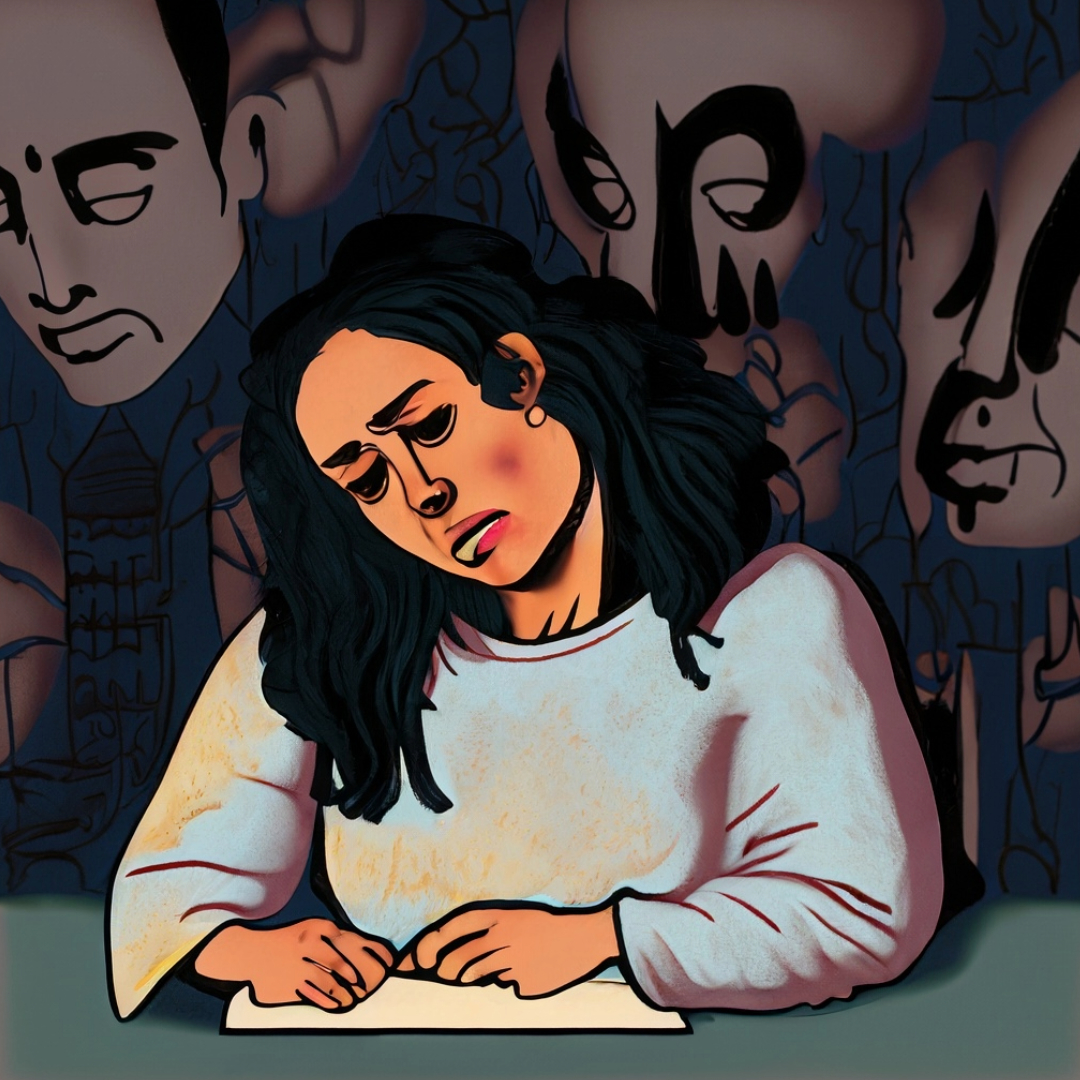
Narrative foreclosure is the premature conviction that our story has effectively ended, that no new chapters are apt to open up, no new characters or themes will thicken the plot and take it in fresh directions. While our life itself — talking, eating, going here, going there — continues apace, our “story” of it is over. Granted, narrative foreclosure can befall us at any age.

When you’re 20 and your lover bids goodbye, you can suffer an acute case of it, and hurling yourself into the river seems a reasonable course of action. Why go on? The story of you riding off into the sunset together and living happily ever after will not come true! But later life, I fear, renders us unduly vulnerable to this condition, and thus the depression we may be diagnosed with and the pills we’re prescribed, when a dose of narrative care might work equally well to re-open our story. Here’s how it happens…

We retire from the career that defined our identity and our self-story loses a vital source of support. Our children get work in other parts of the country, taking our grandchildren with them, and our story-world shrinks still more. Our life partner departs this life and with them goes our raison d’etre. Our vision and hearing, mobility and autonomy grow more limited until we’re relocated to a nursing home where our world is reduced to whatever we can squeeze into one little room.

Though our life itself keeps plodding along, “the story” is all but over. Intensifying our sense of loss is, of course, the narrative of decline that permeates our culture and quietly penetrates our hearts. But, real as the decline surely is, it’s not the only narrative in town. Our stories aren’t stuck in stone, in other words. We get to choose the ones by which we live and age.

Alternative Narratives of Later Life

In The Wounded Storyteller, sociologist Arthur Frank reflects on his time as a cancer patient and identifies three broad storylines by which people facing such conditions can make sense of their experience. First is the restitution narrative, where you reason “this too shall pass; I’ll be back to normal in no time.” Second is the chaos narrative, when the doctor says the tumor is inoperable and you have mere months to live, and the story of your life is thrown into a state of foreclosure from which you might never recover. Third is the quest narrative, where you interpret your illness, however serious, as — at the bottom — an opportunity to learn and an invitation to live life on a deeper level.

I’d like to build on Frank’s typology and propose that aging itself (often implicitly perceived as “a sickness unto death”) can be experienced in these three same ways. The restitution narrative goes like this: “If only I exercise more, do more puzzles, and drink less liquor, I will extend my life … indefinitely.” Such a storyline feeds emphasis on “successful aging” or “healthy aging” that are regularly promoted and obviously have their place.

Then there is the chaos narrative: “I’m old; I can no longer do X, Y, and Z, so my life is basically over.” This narrative can fuel the depression, if not despair, to which many older adults — especially men perhaps — may succumb. It's a recipe for narrative foreclosure.

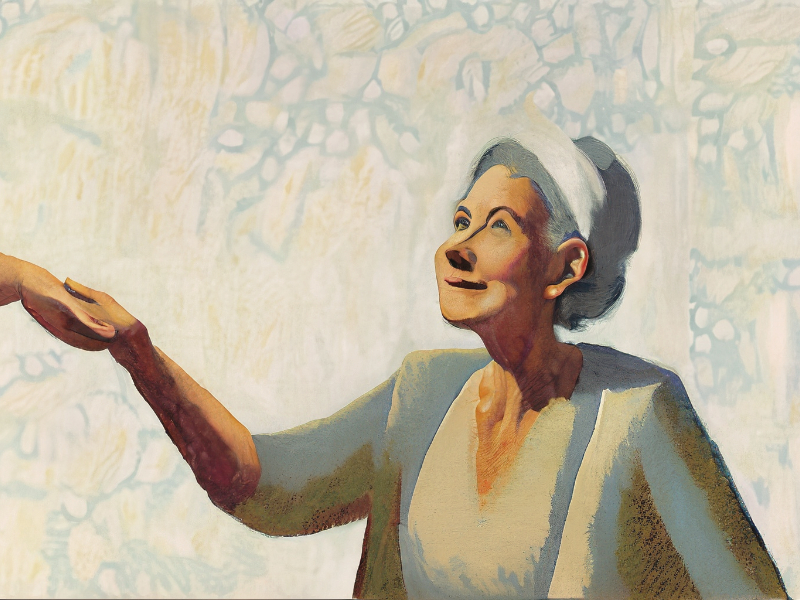
Third is the quest narrative. “True, I can no longer do X, Y, and Z, but, as frustrating as it is, this is just one more chapter in my story. And there’s something to be learned in it, things to see that I couldn’t see before. This is new territory with new horizons to approach.” I see this narrative as underlying the positivity which, however “wounded” they might be otherwise, many older adults exude, despite (often because of) the troubles they’ve seen. It’s as if — as Wise Elders, perhaps? — they’ve taken those troubles and fashioned them into a good strong story: a narrative of adventure even…

Near Death Experiences and New Adventures in Aging

Aging as adventure — while not the whole story, I believe, warrants consideration. In fact, I’ve spent the past two years doing precisely that, reading and scribbling to where I have over 250 pages of single-spaced, typewritten notes that I hope someday to work into a book.

At present, these are grouped around four broad directions that I see the adventure leading: outward, inward, backward, and forward.

I’ve been toying with aging as adventure downward and upward too, but I’ll sketch just these four here. I see them, though, as tightly entwined. Movement in one direction is eventually movement in another. Also, movement in certain directions may come more naturally for some, with certain personality traits (like “openness to experience”) than for others. But I’ll leave such permutations and combinations for future reflection.

Outward and Inward

Depending clearly on our income and our health, aging can usher us into a phase of life where we’re open to fresh endeavours. This can mean, upon retirement for instance, if not bungee jumping, then learning a new language, or taking up the piano, or trying our hand at painting, or going on that long-dreamed-of cruise, and generally cruising outside our comfort zone. In the process, we may become acquainted with sides of ourselves that we barely knew existed, thus thickening the plot of our lives in ways not feasible when raising our families and keeping the wolf from the door — whatever form or forms that wolf takes.

Every person has their own unique kind of wolf and/or wolves. With each such venture, we open new subplots, welcome new characters, weave new themes into the stories we are. Our horizons keep widening, including our horizon of self-awareness.

Concerning the adventure inward, we have more time (if not inclination) to tackle what’s been dubbed the “philosophic homework” of later life, something that may be neither easy to do nor appreciated by those around us. Sooner or later, though, it is our duty, Jung insisted, to turn inward. The longest journey, the saying goes, is the journey inward. Longest, often loneliest, but perhaps also most pressing, and sooner or later, it has us looking back.

Backward and Forward

The adventure inward leads to the adventure backward. It leads to an examination of our past, or at least the stories in which we’ve enshrined it. It leads to life review, which for Erikson is a core developmental task of later life, and a very narrative one at that. I call it “the autobiographical adventure.”

This adventure — fraught, like any undertaking worthy of the word, with both revelation and risk, promise and peril — can come to us naturally, of course, insofar as time-past becomes more compelling for us to contemplate than time-future. But it may be prompted, too, by changes in our brains themselves, improved cooperation, for instance, between left and right hemispheres, plus increased openness to paradox and contradiction, to uncertainty, ambiguity, and metaphor — all of which, it’s argued, heightens the autobiographical drive.

Going with that drive and accompanied by a skilled listener, gazing back across the years, there are discoveries to make, patterns to discern, secret corners (not always cozy) to investigate, issues around trauma or abuse, legacy or grief to be acknowledged, and overall, pieces of the puzzle, positive or negative, to try and fit together. As we ponder “the mystery in my story,” to quote a former student, we may well find that we’d gotten the story wrong, that the past wasn’t as horrible as we’d assumed.

The adventure forward, however, could seem the most controversial, and cruelest, to consider. In what universe does aging as an adventure forward even make sense!? We’re born, we suffer, we die. End of story. What is there to look forward to?!

To speak of the adventure forward requires looking at the links between aging and spirituality. A few years ago, I did so in a public lecture in which, intrigued by literary scholars’ insights into the problematic nature of “endings” in narrative generally, and by research into Near-Death Experiences (NDEs), I mused on the process of aging as a near-ing death experience. As such, it possesses several of the transformative elements that NDE’rs routinely report.

Besides the panoramic life review that the experience commonly entails, these include a decreased attachment to material possessions, a deepened appreciation for the preciousness of life, a sense that this world is not finally our home, and a major reduction in our fear of death. Death is viewed as transition, not termination, as a horizon beyond which we can’t yet see, a doorway to an even greater adventure maybe; the very sort of view which, in one form or other, the world’s great spiritual traditions have long espoused.

More recently, I’ve been reflecting on aging as a process of going slower, deeper, and wider into the landscape of later life. By “wider,” I mean a broader horizon of understanding — a bigger story — that moves aging out of a biomedical worldview and situates it amid the multi-dimensional mysteries of the cosmos itself.

Narrative psychologist Mark Freeman, writes openly, for instance, about “the transcendent horizon of the life story,” a theme which, despite gerontology’s reluctance to broach it, theorists of “gerotranscendence” and “transpersonal gerontology” are more than open to entertaining. It is one, certainly, that author Florida Scott-Maxwell alludes to when, writing in her 80s, she asks rhetorically, “Is life a pregnancy?” To which she answers, “That would make death a birth.” And it is one which scientist-mystic, Teilhard de Chardin, hints at with his cryptic phrase, “the hidden mystery in the womb of death.”

If such language has any merit beyond that of fanciful phrasing or wishful thinking, then it points, I think, to the need for a significant reconfiguration — a major re-genre-ation, if you will — of what aging is ultimately about. A shift, in short, from tragedy to adventure.

Helping Older Clients Shift Their Narratives

These are early days in what, itself, is proving to be a vast adventure: an adventure of ideas. Who knows where it will lead me? I’m certainly uncovering many questions in my quest.

For instance, how to enlist the adventure metaphor in a group setting versus one-on-one, or with the deeply depressed, or those at death’s door? And where on earth is the “adventure” in dementia?! So, my efforts might well turn out to be a wild goose chase. We’ll see.

Is this not, though, the mark of a bona fide adventure? We set out with no exact knowledge of where we’ll end up. Amidst the twists and turns, setbacks and surprises that are invariably involved, we don’t know — can’t know — how things will turn out. Yet we press on all the same, with curiosity and courage, humility and hope … and hopefully a bit of wonder too.

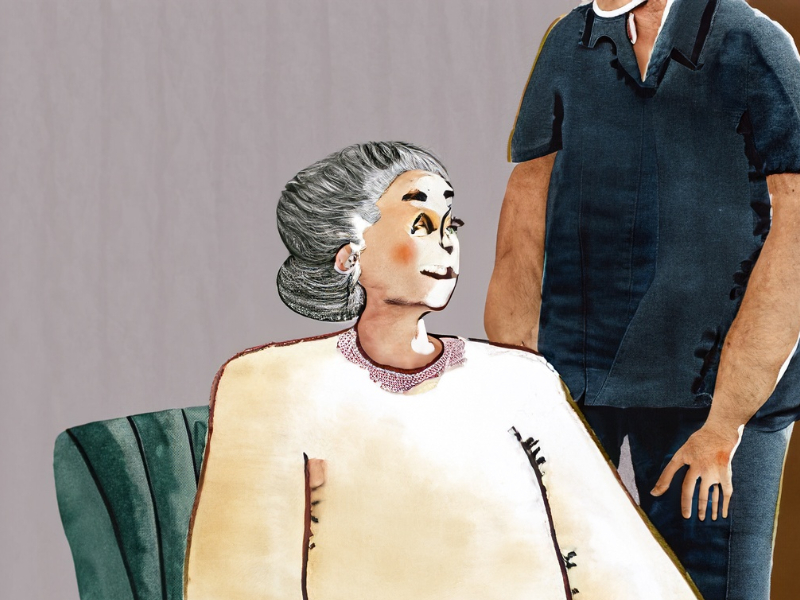
Naturally, the metaphor of aging as adventure will not be everyone’s cup of tea, nor every clinician’s either. But as agents of restorying in your older clients’ lives, as story companions walking beside them for a while, whether you buy into it yourself, you might find them open to giving it a try. And why not? If it nudges them toward a more inviting myth by which to live and age, then what’s there to lose?

Questions for Reflection and Discussion

How does the author’s notion of the narrative of aging impact you?

How might his ideas help you in your work with elderly clients?

How does your own relationship with aging impact your clinical work with the elderly? The dying?

What countertransference experiences have you had with clients who are dealing with aging, mortality, and dying?

* Editor’s Note: While he is not a therapist, I asked Dr. Randall to write this essay with you (the therapist, the clinical supervisor, the trainee) in mind.

Psychotherapy with a WW II Survivor: Bearing Grief with Grace

An Incalculable Loss

Sakura was born in 1931, in the Japanese city of Nagasaki, a major port city and center for shipbuilding. She enjoyed a pleasant childhood with many friends and family. The early years of her adolescence were overshadowed, though, by the increasingly grim circumstances of her country being at war.

Like what you are reading? For more stimulating stories, thought-provoking articles and new video announcements, sign up for our monthly newsletter.

On August 9, 1945, the day seemed ordinary for the 14-year-old Sakura, until in a flash, nothing ordinary remained, after an atomic bomb was dropped on her city by the U.S. Upwards of 80,000 people were killed directly, and many more later. Nagasaki was attacked, in part, for its role in shipbuilding.

I felt a cold chill of fear the first time Sakura told me about having survived that unspeakably horrific event and its devastating, life-altering aftermath. I felt ashamed that she had suffered indescribable losses, and that my country had made that assault on her home city.

The Shadow of Grief

Sakura was in her late 80s and lived in a nursing facility where I was working. She always smiled, was impeccably dressed, and stayed active socially, having many friends among the other residents and the staff with whom she joined in on the many group activities. She was referred to me for psychotherapy, and although she had not been formally diagnosed with depression, she suffered depressive reactions during anniversaries associated with her losses.

Working with Sakura, I had assumed that she might feel great anger towards America and Americans. My assumptions were upended when Sakura shared that she had married an American soldier several years after the end of the war, that she had lived in America, raised her children and grandchildren here, and had enjoyed a mostly happy life. Sakura deeply grieved over the death of her beloved husband a few years earlier.

Sakura’s remarks about Nagasaki were always brief, factual, and matter-of-fact. I never heard her verbalize blame or vent feelings of anger, and I never saw her publicly display her most deep and personal (painful) emotions. Sakura would discreetly weep as she spoke of the sad events in her life during our private therapeutic conversations. On the occasions of major anniversaries, she would spend the day fully dressed while lying still and sad and silent on her bed. Thus, on August 6th, the anniversary of the atomic bomb attack on Hiroshima, on August 9th, the anniversary of the attack on Nagasaki, and on the anniversary of the death of her husband, she did not speak and would barely eat or move. Yet, she would be up and smiling and greeting others the following day. Those were the days she set aside for her most public showings of grief and perhaps even protest, although neither were likely her intent.

There were so many things I wanted to know about her wartime and life experiences, but I curbed my curiosity and attended to her choices of what to reveal or not. The importance of her dignity outweighed my inquisitiveness. I work with many persons who have been deeply traumatized, and for some, a probing therapeutic approach might undermine the fragile balance of their defense mechanisms. Some people have lost so much control it can be important to respect the choices they make about what or when to disclose or discuss traumatic topics.

I thought of Viktor Frankl and his comments about the many ways persons responded to the horrible circumstances they shared with him as prisoners in Nazi concentration camps during World War II — the same war that had forever changed Sakura’s life on the other side of the world. Frankl recalled how some prisoners turned against their own fellow sufferers, seeking advantages by aligning with their captors. Some collapsed inwardly and died soon after. Some chose an entirely different course by becoming the best person they could be.

Sakura was one of those remarkable individuals who could see good, remain good, and live fully, despite inexpressible suffering.


Krista Tippett on the Immensity of Our Lives

Dignification of the Person

Lawrence Rubin: Over these last two decades, your always fascinating and deeply provocative interviews on your show, On Being, have spanned the disciplines from genetics to cosmology. And despite the similarly broad range of thinkers and doers who have represented these disciplines, you’ve never strayed in your attempt to provide your global audience with answers to three seemingly simple questions: What does it mean to be human? How do we want to live? And who will we be to each other?Our readership is comprised largely of psychotherapists of varying disciplines, theoretical orientations, clinical specialties, and populations served, all of whom I think are attempting to help their clients, trainees, and students answer similar questions. My guess, however, is that most of them have not followed your podcast.

With that said, how do you think that your attempts to answer these three questions can guide psychotherapists in their clinical work? Sort of an open letter to psychotherapists.

Krista Tippett: I’ve heard a lot across the years from psychotherapists and from people who are in therapy, that therapists often recommend that people listen to On Being. I’ve been so honored by that, and I’ve also wondered about it. I’m told that some of the ways I listen and construct my conversations are in sync with things that one learns as a therapist, so that’s just kind of intriguing to me.I guess what I’m saying to you is that I’ve always been intrigued by the fact that my work does seem to be valuable for some people. What I’ve heard even from young journalists — which feels a little bit to be part of kind of a kindred phenomenon — is that I’m talking about things in a way in public that that kind of honors and elevates the basic struggles and challenges that we must figure out as we seek to understand what it means to be human, and then how that takes so many distinctive forms in any given life.

I also think that I try to have a conversation with the whole human being. So, I interview people who may be very well known, maybe not, but are just incredible influences and mentors in their disciplines or in their communities. And sometimes, these people who I interview are renowned for what they do or what they’ve done. I always try to get at the full dimensionality of who they are as a person and how they’ve learned and grown through these things that they know. I’m also as interested in the questions that they hold and the questions that keep emerging for them, as I am in the answers and the certainties and the knowledge that they possess.

I think the interviews I’ve had also model the reality and integrity, as well as the dignity and beauty of the adventure of being human. And isn’t this like the adventure that people are on in an individual way when they’re working with a therapist?

LR: As I’m listening to you and the way that you work with your interviewees, I recall a word invented by David Epston, the co-creator of Narrative Therapy — “dignification”. It is the process of seeking out and validating the dignity of the person on the other end of either the microphone or the couch. You are also intrigued by those that you interview which resonates with the work of good therapy — along, of course, with good listening. The last thing you said is that irrespective of how famous they are or how much they’ve contributed, you value the whole person. You seem to have this wonderful skill of finding the deep threads of humanity that run through all the people you’ve worked with. And I think that’s important for therapy as well.Ok, I’ll stop the shameless fawning and ask the next question. Existential psychotherapy attempts to help clients address fundamental issues related to being alive, to being human. What do you regard as some of the core existential challenges that we face as a species?

KT: What’s interesting as I’m letting that question kind of sink into my body, is how differently I think I would answer it right now, both in terms of where I am in my life now in my early sixties, but also where we are in the life of the world in 2023. So obviously sometimes — not always, but sometimes — at the very end of my interviews, my final question — and this kind of emerged a few years ago, this wasn’t always true — is “given this life you’ve lived and these particular fascinations you have, how would you begin to talk about what you’ve come to understand about what it means to be human?”But anyway, the thing is, as I said, it’s going to be a very partial answer because it’s vast. But the two things that come to mind to me, this time, is that the older I get, the longer I live, the more fascinating and perplexing the question of ‘what it means to be human’ becomes. I know that the discipline of psychotherapy understands this — how the crucible of our lives — our origins and original experiences and family lives so profoundly influence us. But also, that imprint doesn’t have to mean that they were shaped in a certain direction. Because there’s so much that can happen, with what that becomes, and what we do with it.

I think it’s fascinating that we’re in this century and at this juncture as a species where it becomes clearer and clearer to me that this matter of origins and telling the truth about the story of where we came from, and what we went through, and what our shadows are, and what we struggled with as individuals is also reflected in our national life, right? So, I think there is this never-ending dance with where we started, where we began, and what we do with that and make of it that defines our humanness. And there’s so much drama to that, and there’s so much possibility in it, but it never ends.

Getting back to this century and the post 2020 world we live in, I don’t know if it’s harder to be alive now as a general statement, or that we’re in a greater state of distress in 2023 than we were in 1918 or 1945. But the challenges before us, certainly our ecological one which gets at our bodily origins, is about being human in its most primal sense. Our challenges are truly existential.

And so, I actually have this feeling in myself, and I see it and others at this time, that the question of how to be present to the world has similarly become this existential question at an individual level. But I don’t think that we know what to do with it, but I think it’s become implicated kind of in the personal journey in a way that may be new.

Certainly, people before us have lived in times of war and genocide and holocaust, right? But now, in so many profound ways, we’re faced with those three questions both at the individual and societal level of what it means to be human, how we want to live, and who we will be to each other. And the answers to these questions get reflected at the personal and individual levels in how we behave, what we do, and how we orient ourselves in order to make the difference between surviving or finding a way to flourish.

The Science of Awe

LR: I think that “good therapy” is about helping clients understand and live in their stories, but to survive in society, I think it’s important to help them connect their stories to those of others. Instead, we isolate and divide ourselves along racial, cultural, age, and gender lines. I also think that your three existential questions might aid clients in this quest. From among the folks you’ve interviewed, which of their disciplines seem to be most closely related to the practice of psychotherapy?
KT: I always find it very hard when people ask me to think about a favorite interview, or even an example, because I’m usually very steeped in the most recent conversations I’ve had. So, what comes to mind is a conversation I had with a social psychologist, which is going to be featured in our first podcast of our new season.I’m not sure this is what you’re looking for, but there’s a lot of direct application of what I sometimes think of as spiritual technologies, like meditation, to mental health and to psychological growth. And I’ve seen that accelerate in these 20 years, in a way that is completely fascinating.

Dacher Keltner is a social psychologist who also works in neuroscience at Berkeley. He’s not a psychotherapist, but what strikes me is an offering towards vitality. He’s been working on the science of awe and wonder, and the neurophysiology and the immunological boost that we’re learning of experiences of awe and wonder, and kind of breaking that down.

They interviewed 2,600 people in 60 countries, around the range of the human experience of awe related to being in the natural world. It is very importantly about what they ended up calling our perceptions of moral beauty, which is the single most common thing that gave people a sense of awe. These researchers were blown away by the courage and resilience or acts of other human beings.

LR: Moral acts.
KT: Moral acts, right? But it’s also what they call experiences of “collective effervescence.” And it can be a sports event, or it can be singing in a choir. But it’s these experiences when we just know ourselves connected to other human beings, when we have this experience of being part of something larger than ourselves.

I’m completely fascinated by how science is taking aspects of human flourishing into the laboratory

And all these things I’m describing are aspects of psychological health and well-being, right? And so, I’m completely fascinated by how science is taking aspects of human flourishing into the laboratory. And what I love about this, this practice of awe is that we’re taking seriously an aspect of human experience and naming it as something that we can actively seek out. And that when we actively seek it out, we are investing in greater vitality.

I think you’ve alluded to this a little bit and it’s something we are in our time are filling out or correcting, is this bias towards attending to dysfunction and not attending to greater vitality and greater health. And what I love about the science of awe is that even the spiritual technologies, like meditation, that people have turned to in droves, also have physiological and psychological effects.

There’s so much being used remedially in lives of incredible stress, to get calm, to get grounded, to make it through the day, so what this other kind of science is doing is giving us tools for expanding, for not just getting calmed down, but planting the right life-giving kind of energy in ourselves.

A Place at the Table

LR: I love the idea of connecting with a sense of awe — a fascination with something so small as the heartbeat to the way the stars seemingly line up in the sky. I think you’ve answered that question quite nicely, without directly answering it. Krista, that’s the beauty of conversation, as opposed to just formulaic interviewing. Something new always happens, and I appreciate you for your willingness to be interested enough and awed enough in our conversation to make it grow.What have you taken away from your interviews with faith leaders and healers that might be useful for psychotherapists who traditionally have not incorporated faith or spirituality or religion into their practice?

KT: This was my big focus when I first started this work in the early part of this century. One of the things that’s been really fascinating in these decades is how this human experience of faith identity, religious identity, has been so rapidly evolving from something that not that long ago was just a given — you know, people were born into this. And it could be good, bad, or different, but depending on the tradition and the context, it was almost like genetic inheritance, right? This identity, these rituals, these communities.And especially in the US and in Western Europe — not everywhere in the world in the same way — but that’s just fallen away in such a short period of time. I think that’s one of the things that keeps rising in my conversation and then reintroduces the question of, “if this container for spiritual experience, for the human religious experience, is completely shape-shifting and falling away, then is there anything left? And I think the answer is yes that even the containers, the forms, the inherited identities don’t mean what they once did.

Then there’s this freshness to the question of, “what is this religious part of us?” And the experience of awe is one of those things that points people back to the notion that life is mysterious. I think mystery is a common human experience. And in some ways, we’re not as connected to the traditions that gave names to that and ritual to that, but that experience doesn’t diminish. I think to me the interesting question that we’re now able to pick up is, what is human wholeness, right? And this is an aspect of human wholeness. There is a lot of dysfunction in terms of official religion or the religious voices that are in the news or that become….

LR: Politicized?
KT: Right, what gets politicized, like the violence that is done in the name of religion. And that tends to be what people think of. And that is what respectable fields and intellectuals have distanced themselves from. But what I have sought out across the years are people who live this with deep integrity.In my mind, these traditions that have carried across time and generations are essential human experiences that we need, like rituals, like sacred stories. Stories that make sense. Community song. And really these traditions are a conversation across generations. And also, I think there is a deep, deep intelligence in this part of the human enterprise. Religion is a part of the human enterprise just as science is a part of the human enterprise. There’s a deep intelligence in language and practices around language, that we simply don’t have in other parts of our life together, that to me has never felt more relevant. Language like repentance, confession, lamentation, repair, mindfulness, and other language that emerges from religious and spiritual tradition.

And so, I’ve seen this fascinating thing happen. That even as these forms and the institutions are in total flux, there is essential intelligence, there’s essential vocabulary, and spiritual and social technologies that absolutely have their place in life together, in being fully human. And yeah, in living into the challenges before us, kind of communally as well as individually.

LR: I think that while the field of psychotherapy has evolved, there has been a reluctance to embrace spirituality and religion, aided perhaps by the polarizing effects of politicization. I think good psychotherapy, like if I can say good religion, is about going back to those basic existential and transcendent issues related to your three questions, what does it mean to be truly human? So, I’m hoping that some of the psychotherapists who are reading this interview will look a little bit more differently or openly into the possibility of seeing that psychotherapy is just one branch of knowing, one way of knowing the experience, and it really is diminished if it excludes others like religion and spirituality.

In COVID’s Wake

LR: In addition to the medical, of course, what does the field of psychotherapy need to focus on when it comes to the epidemic of anxiety and depression that has arisen and continues in COVID’s wake?
KT: As you were saying just a minute ago about, all our disciplines have kind of walled themselves off from each other others, right? And psychotherapy, the Academy, and journalism have been suspicious of religion for all kinds of good reasons that we can name. And those separations have been made culturally over the last few hundred years. What has intrigued me, and what I feel COVID has kind of called us to — a track we were already on — is for these disciplines to all agree that the other one is wonderful, and that we need them to be in conversation with each other. Each of these disciplines are essential aspects of this human enterprise. What I’ve become aware of in my investigations across these years of COVID, as I try to use my interviews, not just to be offering something up that would be helpful for my listeners, but even for me to investigate what was going on in my own body, my own psyche; is how there are these fields that have offered new insight about the human nervous system. All this wonderful research has been happening about the fear response, and the vagus nerve, and the stress response. And this is despite this being a little off to mainstream medicine, and I suspect a bit off to psychotherapy.

And yet I think when we’re talking about anxiety in this time, there’s as much that has happened in our bodies below the level of consciousness, below the level of anything that we know is happening — much less could talk about — that is interacting with what we can in a more traditional way identify as aspects of mental health. So, I think to me that’s felt like an urgent call. We’ve lived through this period where the ground shook beneath our feet. And we’re learning about the effects of uncertainty, which is as stressful for us as when something goes wrong.

All of this is happening inside our bodies, and some of it comes out and expresses itself psychologically. Additionally, we are not in the natural world, we are of the natural world. And I think that the ecological disarray of the natural world, of our planet, is something that we feel at a cellular level.

What we need in this time regarding anxiety is a whole analysis and for our disciplines to be talking to each other. We need to gather this scattered intelligence because there is so much coming together that can be healing in a broader way than we’ve been able to do. So, I mean, that’s what this time has surfaced for me.

On Death and Dying

LR: One way or another, clinicians, either explicitly or implicitly, address issues of death, dying, and mortality. Is there hope that we will get better as a society at allowing death inside our lives? And what can psychotherapists do to open the door to these universal concerns?
KT: I absolutely agree that that is imperative, and I am finding in new generations a real openness to this — a kind of insistence. All our disciplines in the West have bought into this weird idea of “up, up, up.” And with this came the idea that we were on this track of always forward progress, which meant denying that things end, and that we are so fragile. And along the way, we seem to have developed a very brittle understanding of human strength and success.I think that illusion just doesn’t hold anymore. And younger people, even pre-COVID — but Covid has certainly just intensified this big reality check. There are these things called “death cafés.” Have you heard about this?

our religious traditions have been the only place — again, in the human enterprise — that addressed mortality and finitude

There’s a movement that was led by people in their twenties who are now in their thirties called the “Dinner Party,” which is all about people bringing death and dying and grief, like, wearing it on their sleeves. That this is something that happens. Yeah, it’s absolutely fascinating. And our religious traditions have been the only place — again, in the human enterprise — that addressed mortality and finitude.

LR: And we’ve excluded them.
KT: And we’ve excluded it, right? We said, ‘no, we don’t want that, and we will pretend like it’s not true.’ So, there’s health in returning to this reality and honoring it. I do see new generations doing that because it’s just the truth. There are certain lies we’ve told in the name of progress that are exposed as fallacies now.
LR: Based on that, Krista, what advice would you give to therapists who work with clients whose focus on happiness comes at the expense of acknowledging their brittleness, their vulnerability, their mortality, and their limited time in this universe? Or am I being too morbid?
KT: No, I mean, again, it sounds paradoxical, but acknowledging fragility and things failing, as much as our strengths and things that go well, is how we become whole. This is how it works. I think one thing I’ve really been privileged by has been interviewing tremendously wise people. I think about somebody like the late Desmond Tutu, who absolutely had seen the worst of humanity, right? He knew what it was to suffer and lose, many times along the way to achieving something astonishing.It’s not like people who become wise and whole have it better than the rest of us, or had it easy, right? Like, hadn’t had the adversity? It’s what we do with that. It’s not about overcoming it so much as …

LR: Integrating it.
KT: Yes, how you walk with it and through it, and integrate it into your wholeness on the other side. I’ve seen that over and over and over again. I think about this Buddhist monk who actually started out his life as a scientist, a molecular biologist. He’s French, and his father was one of the great atheist philosophers of France. He’s talked a lot about happiness, this notion of happiness, and how in spiritual perspective — I would say in an enlightened spiritual perspective — happiness is not a state of being that you achieve, sustain, or return to. It is a way of moving through whatever happens, which will include sadness, loss, and failure. It’s an orientation. And you know, I think the language of flourishing is much more useful than that. I think, really, we have so many pathologies as a nation that are just out on the surface now, but I think it was probably a real tragedy for us, that the pursuit of happiness was given to us as a right when we don’t have…

LR: Tools?
KT: Yeah, and we don’t even have a working definition of happiness that is actually good for us. But psychotherapists and spiritual teachers owe it to each other to formulate that meaningful definition of what happiness can be.
LR: And it’s not just happiness — it’s not just about more.
KT: It’s not just about more.
LR: It’s not just about better.
KT: It’s not a mood. It’s not just about something you can achieve and then you have it forever. What a recipe for always being depressed and anxious if that’s what you think life is going to be like.
LR: The recipe that life begins when your symptomatology ends, as opposed to life is in part built on the stories that carry with them symptomatology. What tips would you offer psychotherapists, based on your intimate interviews with these people like Desmond Tutu that you’ve described as “wise.”
KT: I feel so humbled to be telling psychotherapists to do anything. But here’s what I want to say. I wrote an entire book called Becoming Wise, and I realized after I finished that I had not ever defined what “wisdom” was. So, when I went out talking about the book, people have asked me, “So what’s your definition of wisdom?”Achieving a state of wisdom is different from, say, becoming knowledgeable or accomplished. A wise person might be both knowledgeable and accomplished. Whereas I think the measure of a wise life starts with the imprint they’ve made on other lives around them. And if that is the measure of a wise life, then people who are wise are also at home in themselves, in their bodies, and their experiences. I never met a wise person who doesn’t know how to laugh and smile. And that’s not because everything is funny or they’re always happy in that simplistic way, but they understand that the capacity for humor and joy is actually part of our birthright. It’s part of resilience. It’s life giving, its resilience-making, and it belongs in a life alongside all the other things.

So, if that is a good life, then how do we talk and work towards that? Is it a different direction from feeling better every day? Or how do you accomplish your goals? I’m not saying those things become unimportant, but this is a different orientation, and it’s more fulfilling and grounding than much of what we aspire to and are better at training in each other. But it does not take us where we want to go.

My definition of spirituality at its best is befriending reality, and surely that’s also a goal of psychotherapy. But I don’t know if it’s what people come to psychotherapy for, so there’s a there’s a little challenge for your profession.

LR: Thank you so much, Krista. I can’t wait to share your wisdom with my colleagues.

A Therapist Uses Her Grief as a Resource for Working with Trauma

A Place of Emotional Safety

My Mom recently posted photos on a social media site of birthday flowers that my and my sister’s family sent this year, along with others from years past. One of the photos showed flowers sitting in my grandparent’s kitchen.

Seeing the yellow cabinets and green tiles again brought back memories of cooking and baking with my grandmother in that kitchen. I can no longer smell the warm, sweet, and all-encompassing aromas that wafted effortlessly through their home but, as I remember them fondly, a sense of calm washes over me. My grandparents’ home was a safe place for me, where my creativity reined. When I was a young adult, my grandfather reminded me that I called their house “the happy place” when I was little. That description still fits for me today, though I can never revisit that place and time again like it was in my mom’s photo. After my last grandparent’s death, their house was sold to another family.

In the wee hours of this morning, I revisited that kitchen in the small interstice between sleeping and waking, simultaneously sensing the welcomed echo from my Mom’s flowers post and an invading sadness, tinged by a dull ache of homesickness from living so far from my family of origin and missing those who have died (several anniversaries of which have just recently passed). When the alarm on my smartphone sounded, I hit the snooze button to remain in the tenderness of the memory of that time where everyone still lived and gathered in that happy place, if only for a few more minutes.

The tinge of sadness, grief, and disenfranchised grief that grew as my consciousness expanded through the end of my intentionally prolonged dream reminds me that that place, as it was, and that time, when I was carefree and loved ones lived on, can no longer exist in my current reality.

The Privilege of a Happy Childhood

As I write this, I am aware of the privilege I carry to having had loving family members and safe places to rest my head, with food on the table every day and dessert in the oven on some of those days. That is not the case for many of my therapy clients, the majority of whom have experienced multiple forms of abuse embedded within precarious living situations that stagger fine lines between poverty and unintended negligence. Their grief, embedded within traumatic life events, is permeated by a kind of disenfranchisement that holds an invisible but unyielding grasp on their wellbeing and potential to positively evolve.

If grief could be described as ice cream, I would say it is quite like vanilla, a standard flavor, the most standard flavor. Everyone will eventually be served a scoop alongside some other more desirable option, whether they ask for it or not. Disenfranchised traumatic grief, then, would be like ribbons of lemon sorbet being folded into the mix with filaments of tart lemon zest that are neither easily seen (recognized) nor able to be dissociated from the rest of the scoop. The sting of the tartness sharpens the senses as one eats the part of the dessert, they neither ordered nor wanted in the first place but couldn’t push away once it was in front of them, either.

Several of my past and present child clients live in care situations outside of the homes occupied by their families of origin. They did not choose to be born; they did not choose to be neglected or abused; and they also did not choose to be removed from their families of origin, which represents another form of grief for them, though their circumstances did not promote healthy wellbeing or allow for a normal course of development. Often, their ambivalence oscillates between longing for the happy days they lived with their loved ones, which may have been few and far between, and wishing for something that never existed for them, in a mother that held them, made them feel wanted and loved or in a father that fixed boo-boos rather than creating them.

However, holding on to that place in my memory serves as a resource when I’m feeling down, discouraged, or otherwise off balance.

Memory as Resource

As Easter is nigh, revisiting my grandparents’ kitchen reminds me of dying eggs, baking cookies, and blending homemade orange slushies at the countertop with my grandmother. The sliding glass door from the kitchen opened to a small wooden porch at the back of the house. On that porch, I remember rubbing “motion” (my word for “lotion,” which was sunscreen) generously and gingerly on my grandfather’s head before he took me on the riding mower to cut the grass around the yard and over the hills behind their house.

At every turn past a small pompom tree that grew in the front yard, I would pull off a budding white flower or a leaf and squeal in delight as I put it on the hood of the riding mower and watched it shake off to the side with the vibration of the motor. I would usually finish the ride asleep on my grandfather’s lap, soaking in the sun from a warm summer’s day, not feeling a care in the world.

My grandmother’s death preceded my grandfather’s by 11 years. After my grandfather died, a young couple bought their house and land and made changes and new additions. Some changes were voluntary, like repainting the kitchen and rebuilding a bigger, sturdier deck onto the back of the house as an outdoor extension to the kitchen in summer months. Some changes were involuntary, but necessary, like removing the vestiges of trees that had died, which opened the landscape to reveal different views of the house and land.

My family has remained in contact with the new family in the house, and my mom has been on a walk-through tour of the updates and renovations they have made to the over-100-year-old house that she grew up in. I, however, do not believe I will ever be able to walk through it again, not because I wouldn’t be invited, but because I am afraid that it will change my capacity to continue to hold my happy place in my mind and heart.

As an expat living thousands of miles away, I count on my happy memories as resources to wash away the vanilla- and lemon-tinged grief that shows up on the dessert plate of my current existence, unwanted and unexpected, across the oceans and continents that divide me from my family back home. These memories, and the soul-nurturing feelings I can still feel upon revisiting this place and these people in my dreams, provide palate-cleansing relief to the sharp contrast of my therapeutic work with traumatized individuals and families.

So, in that short interstice between the still-sort-of-sleeping and not-quite-waking early hours of the morning, when a visit to my grandparents’ kitchen is ever-so-real and still possible, hitting the snooze button becomes a worthwhile endeavor, if only to hang on to a place and a time that does not exist anymore, except in my mind.

Addressing Countertransference in Grief Counseling

Jordan’s Angry Grief

Jordan walked into my office, smiled, and sat down in the chair across from me. Then she burst into tears. She sobbed uncontrollably for about two minutes, but it felt like hours. Ripping tissues from the box on the small table in front of her, she seemed intent, perhaps aggressively so, on showing me just how much she was suffering. When she finally looked at me, her face was blotchy, her nose was still running, and she hiccuped with the last of her sobs. “I’ve been waiting for days to be able to do this,” she said.

I asked her if she could tell me what she was so upset about. “You know!” she said, “we’ve talked about it so much. I’m still mourning my dad’s passing.”

Jordan was right. We had talked about her father’s illness and death many times in the course of our work together. But I found myself wondering if our talking was doing any good. Jordan’s father had died when she was in her mid-twenties. She was now in her early thirties. There was no question that his death had been painful and perhaps even traumatic for Jordan, but it seemed to me that it sometimes became more significant when Jordan needed to avoid dealing with a present-day difficulty. Further, I found myself thinking — with some guilt for even having the thought — that Jordan became particularly distressed about having lost her father when she felt criticized, whether at work or by someone with whom she was in a relationship, for instance, her mother, sister, or girlfriend.

As these thoughts passed through my mind, I asked myself, not for the first time since I’d begun working with Jordan, what was the matter with me? What kind of therapist was I that I couldn’t feel sympathy for a client who was so clearly suffering? I’m not normally so hard-hearted, so as I listened to her sobs and murmured sympathetic words, I wondered how to explain what was making it so hard to empathize.

As a psychotherapist, I recognize that my reactions to clients are based on a complex combination of factors, including their personalities, psychodynamics, personal styles, and histories — both mine and theirs. The interaction between who I am and who they are, what I have experienced and what they have experienced, and what we both expect from and see in our relationships can create a fascinating, complicated, and often confusing experience for both me and the client. The image I find most helpful when I’m thinking about this co-created experience is Winnicott’s concept of “the squiggle.”1

Winnicott worked for a time with young children, and during that time he devised a game that he called “the squiggle.” He used it to explain to therapists how we and our clients co-create an experience that has part of each of us in it but is not created or owned by either of us. In this game the therapist and the child each have a pen or a pencil, and they have a piece of paper between them. The child makes a mark on the paper, and the therapist makes a mark connecting to the child’s mark. Taking turns, they gradually make a design over the entire paper. It’s a design that they create together. Winnicott suggested that this is what happens in therapy.

In the room and in our work, Jordan and I were not yet able to talk about — or even formulate for ourselves — the ways that we were co-creating an experience that in some ways replicated old experiences, and in some ways represented new possibilities for us both. My job was to step back enough from what we were creating to be able to be curious about it. That curiosity, as the relational psychoanalyst Stephen Mitchell suggested in much of his writing, is a huge part of what makes therapy therapeutic.2

Changing the metaphor, Mitchell likened therapy to a dance. He suggests that a therapist’s job is to stop every so often, and ask “Why are we dancing to this music? And why this step?”

Instead of asking myself what the matter with me was — or, as I might also have done, what was the matter with Jordan — my job was to ask why Jordan and I were engaged in this particular relational interaction; this particular dance step, so to speak. But when you have a visceral reaction to someone, as I was having to Jordan’s pain, it’s hard to take that step back. It’s hard to ask those questions, and harder to get a reasonable response from yourself.

Magda’s Quiet Pain

As I was struggling to understand my powerful reaction to Jordan, Magda, a client of mine in her fifties, was grieving and trying to put her life back together after her husband died of a massive heart attack. I remember how she had walked into my office and started to cry. Unlike Jordan, Magda was embarrassed about crying and quickly got her tears under control. She smiled and said, “I don’t cry anywhere else but here. You keep encouraging me to let myself cry, so I do, with you. But I’m not sure what the point is.”

My reaction to Magda was very different from my reaction to Jordan. It wasn’t simply that I felt more sympathy toward Magda than Jordan. I felt something angry or aggressive in Jordan’s pain, almost as if she was trying to push it onto or into me, and I wanted to ward it off. Magda, on the other hand, was careful with what she brought into my office and gave to me to hold. With her, I had more of an impulse to let her know that I could handle her sadness, and that I thought she would find it helpful to share it rather than keep it inside her.

In other words, I wanted to stop Jordan’s outburst and I wanted to encourage Magda to allow her emotions into the room.

Among my psychodynamically-oriented colleagues, there is a recognition that our responses to our clients contain helpful information about them as well as about us. What did my reactions have to tell me that could help me work differently with each of them?

Many clinicians suggest the use of diagnoses to help clarify what techniques are most useful with what clients. While I agree that an assessment of a client’s personality structure and psychodynamics can help pinpoint important factors that will influence their ability to respond to one sort of intervention over another, I also think it’s important to remember that assessments of clients can — and should — change over time. As a relationship with a client deepens as we get to know them and, conversely, they get to know us, some of the dynamics that may initially seem paramount turn out to be part of a temporary self-protection or façade that kept other things out of our awareness.

Further, diagnosis may capture our own hostility or negativity about a client. For instance, I found myself diagnosing Jordan as having a personality disorder, but when I questioned myself about this diagnosis, I realized it was a way of giving myself permission to keep my distance from her. The most obvious truth was that because of my own personality structure and dynamics, I was more comfortable with Magda’s sadness than with Jordan’s angry grief.

Dueling Countertransference

But there was, of course, more going on. Interestingly, I identified with the losses both women were facing. Like Jordan, I was mourning my father, who had died sometime before her father died. Our relationships with our fathers were quite different, but the sense of loss had many parallels. On the other hand, Jordan told me that she had always been “daddy’s little girl,” and that she didn’t think she could live without his constant praise and reinforcement that she was special. My relationship with my own father had been different, and I asked myself if I was envious of the special connection Jordan kept talking about.

As I opened myself up to the possibility that some of my reaction to Jordan was related to envy, I began to hear some of her words and view her actions differently. I began to wonder if Jordan unconsciously wanted me — or someone I represented — to feel envious of her relationship with her father. And if so, why? Was she angry at, or hurt by that other person? Did she need that reaction to get revenge on them? Or did she need to see their (my) envy to feel special? Was there something she had not internalized about the special relationship? Or was the relationship really not so special after all?

For quite a while I didn’t say anything about any of my thoughts to Jordan. As I was letting these ideas begin to gel, I was also working with Magda and exploring some of my countertransference reactions to her. While it’s easy to coast with positive feelings about a client, it can also be useful to try to understand what makes that person so much easier for us than someone else. I asked myself why I was so much more empathic to Magda’s quiet grieving than to Jordan’s loud, almost aggressive pain. There was the fact that it fit better with my own personality structure, but was there more to it?

I tried to put into words for myself what I admired about Magda’s way of expressing her feelings, and the words that immediately came to my mind were “elegant, self-contained, quiet dignity.” I realized that there were several personal connections in my life to those words, and that my countertransference to Magda also had something to do with my relationship with my own father. But as I was thinking more about some of these issues, I was also reading more about grief, and I realized that perhaps even more than the most obvious relational dynamics that were emerging in the work with each woman was the question of each of our relationship to grief itself.

I have always found the idea of stages of grief simultaneously useful and disturbing. On the one hand, it can be useful to know that some of the difficult emotions that emerge after a loss are a normal part of a process, and that many of them will gradually diminish as the process moves forward. On the other hand, I have never known anyone who goes through a neatly organized process of grieving that follows a particular outline. Of course, many of the current experts on grieving point this out as well. But once I began to add the idea of grieving to the “squiggles” that were emerging in my work with each client, our discussions took on more shape.

Making Space in Therapy for Pain

I began to gently explore with both Magda and Jordan some of the complexities not only of their relationships with the people they were mourning, but also with their respective feelings of loss. Not surprisingly, Jordan reacted angrily, telling me that I was trying to push her through the stages of grief, not letting her manage them on her own time. She was surprised when I replied that she might be right. “I’m not really sure what stage you’re in right now,” I said. “Can you tell me?”

Jordan turned out to be well-read in grief literature. “I think I’m in denial,” she said more quietly than usual. “I don’t want it to be true.” It turned out that Jordan had been angrily fighting the feeling of sadness, despite all the tears and sobbing.

Magda, too, had been fighting her feelings of grief. “If I don’t cry,” she said, “I think I won’t feel it. But when I come into your office, I get hit with all those feelings.”

“Is that a good or bad thing?” I asked.

“Probably good,” she said. “I think I need to let myself feel them.”

Listening to both women talk in very different ways about their styles of mourning made me realize that an important part of my countertransference had been about my own ways of dealing with grief. According to some grief specialists, the hardest thing for most of us is to make emotional space for grief, and yet, making space for it is the only way to let ourselves move forward. As many of these specialists tell us, making space for grief allows us to make room to grow and to live, even with loss. Paying attention to my countertransference reactions to each of these very different clients’ grieving styles allowed all of us to find a new way to make space for this painful but unavoidable emotion. And making space allowed for growth. Jordan and I continued to struggle with many distinct aspects of our relationship, while Magda and I felt like a much more comfortable fit. But as we made space for the pain in our different ways, Jordan and I found moments of connection, while Magda and I found moments of difference. And all of us grew in a variety of interesting and often different ways.

References

1 Winnicott, D.W. (1989) “The Squiggle Game.” In Psychoanalytic Explorations, Routledge.

2 Mitchell, S. (1995). Hope and Dread in Psychoanalysis. Basic Books, Inc.

Current Developments in Clinical Suicidology and Mental Health Crisis Management

* If you or someone you know is struggling or in crisis, help is available. Call or text 988 or chat 988lifeline.org. Text MHA to 741741 to connect with a trained Crisis Counselor from Crisis Text Line. 

There are significant developments in the world, the United States, and our field in recent years that are significantly impacting contemporary clinical suicide prevention. The Covid-19 worldwide pandemic, the launch of the 3-digit 988 Suicide and Crisis Line in the U.S., and recent SAMHSA and Centers for Disease Control data are all examples of major forces that are fundamentally transforming the field of clinical suicidology. Many of these contemporary developments are spawning necessary and overdue changes and adaptations as to how mental health providers can more effectively work with suicidal risk. And to this end, I will explore these major developments and their impact on clinical suicidology.

Telehealth Care and Suicidal Risk

An impressive development in response to the coronavirus outbreak was the remarkably rapid embrace of telehealth to deliver mental health care. As the worldwide pandemic spread rapidly in early 2020 there was an initial hesitation of widespread use of telehealth with people who were suicidal. Indeed, there were certain large healthcare systems who moved, suspended, and even discontinued screening for suicidal risk with patients online because of a flawed presumption that one can only work with a person who is suicidal face-to-face. In other words, if you cannot tackle the patient at risk who is fleeing your office to take their life it is better not to ask! In response to this naive notion, certain leaders in the field of suicide prevention made significant efforts to identify key adaptations to working with suicide risk remotely. These adaptations mostly involve using informed consent carefully, identifying third parties who could intervene in case of an acute emergency, and anticipating issues such as a poor Wi-Fi connection and what to do in such an event (e.g., having a phone number to call if online connectivity is an issue).

Like what you are reading? For more stimulating stories, thought-provoking articles and new video announcements, sign up for our monthly newsletter.

As we were all collectively compelled to learn to provide care online perforce, many unexpected developments followed. For example, telehealth now offers a genuine opportunity to democratize the delivery of care to rural, frontier, and potentially more diverse populations. Another development in psychology was the advent of PSYPAC which enables providers to increase clinical care across state lines. Another notable Covid-based development was the common practice of instructing people who are acutely suicidal to go to their nearest emergency department for care.

With emergency departments brimming with coronavirus patients, such a recommendation became ethically and clinically dubious. Common reliance on inpatient care similarly posed the increased risk of patients contracting Covid during the pandemic's height. As the developer of the Collaborative Assessment and Management of Suicidality (CAMS), I have long been a vocal advocate of keeping patients who are at risk of suicide out of hospital emergency departments and inpatient care (if at all possible) by providing proven suicide-focused care supported by randomized controlled trials (RCTs). In response to the early stages of the pandemic, our training company CAMS-care converted the training and delivery of CAMS to online modalities (including the use of CAMS in three RCTs). We soon discovered that both training and clinical care can be effectively rendered online, and this development is helping to transform clinical care for those at risk for suicide.

The 988 Suicide and Crisis Line

In July of 2022, a major federal law was put into effect that is profoundly transforming how we must think about suicide risk and mental health crises. The “National Suicide Hotline Improvement Act of 2018” is one of the most significant legislative developments in the history of U.S. mental health care. Suddenly, we have an easy-to-remember 3-digit number that connects callers who are suicidal or otherwise in a mental health crisis to crisis professionals who are ready and able to effectively deal with them. With the knowledge that the pre-existing Lifeline was already having capacity issues, millions of dollars were subsequently allocated to help better support the new 988 mental health crisis line.

While all of this is very encouraging, the launch of 988 has created some growing pains and posed various challenges to policymakers, systems of care, and clinical providers. For example, how well do Americans know the difference between calling 911 and 988? There is a need to educate the public as to how to re-think emergencies that would have previously prompted calls to 911. There are significant issues related to “wellness checks” or “safety checks” that are primarily conducted by law enforcement officers who may have limited to no training as to how to deal effectively with mental health care crisis. For a person of color, having a police officer show up uninvited to protect you from yourself has inherent issues. 988 also brings a major focus to our existing healthcare model that is overly reliant on emergency departments and inpatient hospitalizations that too often may not be altogether therapeutic.

Fortunately, alternative models of crisis response are emerging. For example, “The Hope Institute” in Perrysburg, Ohio, provides intensive outpatient suicide-focused care using next day appointments (NDAs) wherein either CAMS or Dialectical Behavior Therapy (or both) can be provided up to four times a week to help stabilize a person who is suicidal as they await weeks — sometimes months — `to engage in available outpatient care. Within this model, adults are stabilized in six weeks while youth at risk are stabilized in just over five weeks. This is but one promising model that is re-imagining working with suicidal crises. Other promising approaches include mobile crisis response, respite care, retreat centers, certain crises-oriented technologies, and extensive use of peer support which can help reshape crisis responses.

Recent Trends in Suicide-Related Data

Over the last several years there have been notable developments in suicide-related phenomena. While we were initially encouraged when suicide rates declined a bit in 2019 and 2020, this decline was erased by an increase in 2021 (the most recent data reported by CDC). And with Covid-19 becoming a leading killer, suicide is no longer a top ten leading cause of death with 48,183 lives lost to suicide in 2021. But what has preoccupied my attention has been steady increases in the number of Americans who report having “serious thoughts of suicide” within 30 days of a survey completed by SAMHSA. Indeed, in 2021 this amounted to 12,300,000 adults and another 3,300,000 teens, altogether a whopping 15,600,000 Americans with serious suicidal thoughts! This number is over 300 times greater than the number who died by suicide in 2021.

While we grieve the loss of Americans to suicide, I would argue that we must do a much better job of identifying, assessing, and treating millions of those who suffer such that they seriously consider suicide. In truth, the suicide problem we have in the U.S. is a suicidal ideation problem — by a lot. It therefore behooves all mental health professionals to learn proven interventions like Dialectical Behavior Therapy (DBT), suicide focused cognitive behavioral therapy (CT-SP and BCBT), CAMS, or Attachment-Based Family Therapy (ABFT) to name a few of the rigorously proven interventions for suicide risk. Moreover, there have been other demographic developments of note. As suicide rates among white males have decreased, we have seen in recent CDC data that suicide ideation and behavior is on the increase among young people, particularly those of color. We certainly know the pandemic has been tough on all of us with clear increases in depression, anxiety, substance abuse, and suicidal ideation.

***

Given these recent developments in our world, I would assert that it is critical for mental health providers to become a part of the solution to suicidal suffering. We are uniquely positioned to make a life-saving difference and help decrease suicide-related suffering by keeping abreast of major developments in the field and learning to use evidence-based approaches to suicidal risk.

Questions for Thought and Discussion

In what ways did this article impact you personally and professionally?

How have you modified your own approach to suicidality in recent years?

How have you collaborated with colleagues in and around the mental health community to improve your services to suicidal clients?  

Why Effective Psychotherapy is a Full-Body Contact Sport

The other day, I attended a case consultation webinar with Psychotherapy.net’s founder, Victor Yalom, who demonstrated, and then discussed, supervision with a beginning therapist. As he was addressing the importance of creating a therapeutic atmosphere in which both client and clinician are fully engaged, he described the intricacies of learning table tennis. Almost as an aside, he suggested that, like his time on the table tennis mat with his instructor, therapy — good therapy — is a “full-body contact body sport.” Currently trying to learn the torturous game of golf with the assistance of my own instructor, I fully resonated with his aside.

Like what you are reading? For more stimulating stories, thought-provoking articles and new video announcements, sign up for our monthly newsletter.

Body and Mind

Whether on the table tennis mat or golf course, the student must not only integrate their own mind and body, but must also be fully open to the instructor, who is doing the same within their own skin — as they mold, model, and instruct their student. So, a good “lesson” involves a balanced and delicate dance between student and teacher, where both simultaneously merge self-awareness with an awareness of the other. Full-body contact sport!

You probably knew where this essay was going. To therapy, of course! And first to Carl Rogers, who understood that effective therapy was built on a relationship between client and clinician in which congruence, or full presence, was a prerequisite. The person-centered clinician asks the client to be open to — and willing to share — their most intimate thoughts and feelings in search of unity between their “real” and “ideal” self. Similarly, the clinician, to provide a space in which the client is willing to take this step, must be congruent — fully present, self-aware, and open to the client’s experience. Fully-embodied contact!

Existential psychotherapist Irvin Yalom teaches us that for a client to venture into the realm of challenges and concerns that define their humanity and allow them to relate healthily to others, the clinician must help them focus on the here-and-now. This notion, while simply said, is not always easy to achieve with a client who comes to therapy in distress, deeply conflicted, and struggling to meaningfully connect with others. The clinician encourages the client to take the risk to be fully present — body and mind — in the therapeutic relationship while also making the same demand of themselves. The in-the-moment therapeutic relationship becomes the table tennis mat, or golf course, on which clinician and client move together towards healing and growth. Full contact!

Few have illustrated this notion of full body contact better than Peter Levine, developer of Somatic Experiencing. For Levine, who is doubly credentialled in psychology and biophysics, clients who have been traumatized benefit from learning how to control the flow of energy through their body. The goal of effective intervention with them — and with others struggling to self-regulate — is to learn how to stay centered, calm, and present within themselves. To help their client to achieve these goals, the therapist must travel down a similar path, listening to cues within their own bodies that resonate with, or are triggered by, those of the client. Full body to full body contact. Co-regulation if you will!

Isn’t this co-regulation, full-body contact, embodied connection, or whatever you choose to call it, also part and parcel of effective countertransference management — a state of delicate full-bodied self-awareness in response to that of another. A moment of reciprocal “I-Thou-ness."

So, perhaps the next time you sit with a client, or trainee, or supervisee, and wonder if you have made a deep and meaningful connection in the service of healing and/or learning, do a full-bodied self-check-in as you encourage your client to do the same. And as in any “sport,” whether it be golf, table tennis, or some other, give yourself permission to evolve as you practice, and the consolation that in this sport of psychotherapy, practice will never make perfect. But you’ll get better at it.

Questions for Thought and Discussion

What does the notion of therapy as a full body contact sport mean to you?

With which kind of clients do you find it easier to work in this full-body contact way? Which are more difficult for you?

What techniques do you use in and out of therapy to be in full-body contact with yourself? With others?


The Truth About Professional Growing Pains from a Novice Psychotherapist

A Novice Therapist

I remember my first session as a therapist. Walking into the waiting room and wondering if the blonde in the pink cashmere sweater was Susie. Meeting a patient for the first time felt — and sometimes still does — like a blind date.

I recall thinking to myself, she could be there for another therapist who shares the office suite. Do I awkwardly call out “Susie?” Or do I wait for the other therapist to retrieve her patient from the waiting room to prevent me from calling out Susie when in fact this may not be Susie but rather, the other therapists’ patient? I wouldn’t know — I’ve never met Susie before.

Like what you are reading? For more stimulating stories, thought-provoking articles and new video announcements, sign up for our monthly newsletter.

Who I saw that day in the waiting room matched the description of the individual on the screening sheet, a 19-year-old female. In that moment, I reminded myself that I was trained and also clinically-oriented toward not making assumptions. But I wasn’t trained not to doubt myself. Fast forward to the present era of telehealth when meeting a patient for the first time feels less like a blind date and more like a fifth date — when you are already invited to the persons’ home — even if just through a screen. There is a certain level of “intimacy” joining someone via telehealth versus in an office setting.

Working in an office feels more like a meeting at a neutral place, like a coffee shop, rather than over a digital medium, which creates the sense that you are picking someone up at their apartment. I gain entry into their life and can observe their decor, see books they read, notice whether or not they are messy or neat and if there are any pictures of family and friends nearby.

Therapeutic Alliance

In my career thus far, I have had patients’ parents say to me after I finish treatment with one of their children, “I think you’d be a good fit for my other child. I’d like for them to be in therapy with you.” As my supervisor has told me, finding a therapist is like dating. Some people shop around for a therapist until they find their match.

What works for one patient may not work for another, which is why there is no “one size fits all” approach to therapy. I’ve had another patient say to me, “I didn’t want to come to therapy today. I was upset after our last session, but then I realized you hit something within me.” I have also had patients blame me and “break up” with me due to transference or feelings about something explored in the therapy space.

I have had patients doubt my expertise and skills due to my age. Their questions about my competency trigger my own insecurities as a clinician. Patients who are older than me, and some who are parents themselves, have still chosen to work with me. Some have exhibited ambivalence regarding my skills and capabilities. I have utilized psychoeducation and have experience, schooling, and training to allow patients to understand that I have the tools to support their needs.

I have one patient, whom I have been working with for many months, who was skeptical of my age when we first began together. Now she embraces my age because she feels I am able to inform her on “the current generation” and allow her to better understand her children and their habits, behaviors, and thought processes in relation to herself.

On the other hand, I had a patient who was close in age with me who no longer wanted to continue sessions together due to wanting someone “older with more life experience.” This patient identified as Black and also wanted a Black therapist, which made sense to me.

I value patients’ wishes of working with someone with shared experiences. I also reflected on my own about how therapeutic alliances are formed. My thought is that therapy is not always a “been there, done that” relationship. Rather, therapy is about accomplishing goals and finding deep meaning and exploration through shared vulnerability.

I have also had male patients verbalize finding me physically attractive, which has made me uncomfortable. I even had a female patient who was around my age comment on my appearance during almost every session. While these moments were flattering, my focus with these particular patients remained on helping them to better process and understand their thoughts and feelings toward me, and their relationship with thoughts and feelings towards other significant figures in their lives.

I too have found a patient attractive and often ponder whether I show up in the treatment room in a different manner than clients who present as less attractive. I also wonder whether patients who admit to finding me attractive are doing so to curry favor with me. Even with complimentary statements from patients, I sometimes doubt the support I offer, the guidance I provide, and my clinical perspective — all while trying to figure out my own life.

Progress Notes and Clinical Supervision

I have always considered myself to be a writer, so I never anticipated that clinical documentation as a therapist would be a “skill” that I would need to acquire, let alone hone. I am grateful for my first supervisor who allowed me to learn clinical-case note documentation language. In the past, I’ve felt that I was unable to develop my own clinical voice due to needing to follow strict guidelines on what a “proper progress note” looks like. Another form of self-doubt and self-scrutiny came to fruition when told that I was not documenting in the “correct way.” Progress notes being professional, concise, and readable is more than sufficient.

Just as we do not conduct our therapy sessions in one way, why should all progress notes rely on the same verbiage? What about diversity in patient care and treatment? I once had a supervisor who required clinicians to draft progress notes several times until she approved them. While I understand that I was working under my supervisor, I also felt that time spent with patients was taken away by tedious paperwork. I doubted my intuition because the supervisor was more experienced. However, I sometimes wondered if I had more experience than the supervisor because I was the one who was working directly with the patient. To this day, I’m still uncertain as to what a “correct” progress note is.

As I have gained clinical experience and confidence, my priority sometimes shifts from meeting patients’ needs and working to understand and achieve their stated goals, to over-fixating on writing treatment plans that may or may not reflect the work that is done in the therapy space. While supervisors have an obligation to the agency or practice, they also have, or should have an equal commitment to the therapists that they supervise.

It is my hope that any future supervisor or mentor I have recognizes my strengths while simultaneously challenging me. I believe that supervisors and their quality of supervision can contribute as much to a therapist's negative self-talk and self-doubt as the therapist bestows upon themselves.

My Imposter Syndrome

When in session, I sometimes experience imposter syndrome, negative self-talk, self-doubt, or all of the above. As a new clinician, feeling uncertain, ambivalent and/or in disbelief of the work I am doing with a client or patient is normal — or at least I truly hope it is. Which therapeutic modality do I use? Which intervention am I using without yet being aware? Am I speaking enough? Am I speaking too much? Am I too gentle? Not gentle enough? Am I truly understanding patients’ agency, or am I asking them to consider what I think is right? I have so many blanks in my intake paperwork.

Being a new therapist feels just as vulnerable to me as patients letting us into their lives may feel. The negative self-talk and self-doubt that I may experience mirrors that of patients who may bring their own insecurities and uncertainties into session. Perhaps, my own internal voice, sometimes filled with ambivalence, mirrors those of my patients.

The parallel process of therapists and patients work in tandem. I often support patients in challenging their negative thoughts when I may be experiencing my own negative self-talk relating to the work that I do with patients. Therapists who demonstrate negative self-talk regarding their work with patients may be impacting the therapeutic relationship in a negative way. How can I support a patient with less negative self-talk when I am doing exactly what I am helping them not do?

If a patient and I discuss their negative self-talk and doubts, perhaps I will become more aware of my own both in and out of the therapy room. I must address my own ambivalence, negative self-talk and self-doubt in order to best support patients and myself. Patients may be able to sense when I am exhibiting self-doubt and negative self-talk, even if I am not articulating this.

My patients feed off my energy, and vice versa. However, I have learned, sometimes painfully, that it is my job as a therapist to take note of when patients’ experiences, doubts, and negative self-talk affect me. I continually attempt to be self-aware when these areas come to the surface for me. Being a new therapist comes with much to balance. Placing time to be with family and friends, clean and do chores becomes a juggling act.

***

As both a young person and novice therapist, I am simultaneously learning to “adult” and find my professional identity. I am grateful for the growing experiences that I have had in my career, and I look forward to more reflection, learning and time to come spent with patients!  

How to Use Play Therapy in Prisons to Create Hope

Imagine this scene with me: 15 men sitting across from each other at a long table, deeply engrossed in building with LEGOs. Joking and laughter punctuate moments of serious concentration as pieces of LEGOs are found and various minifigures find their place within the emerging structures. In another group, there is the eruption of victorious joy and the groan of agonizing defeat as the men play a variety of board and skill-based games in small groups and pairs. Two of the men simply throw a rubber ball to each other, a timeless game of catch.

Common Therapeutic Themes in Inmates

Grown men playing and telling stories from their play?! Yes, the scenes described above take place in a prison, a place where themes of “play” and “play therapy” are not usually enacted.

This work was born from my realization that if play could heal wounds in my adolescent and adult private-practice clients, it could be a powerful agent in reconnecting a former inmate with his child. After witnessing that reconnection firsthand, I could not get the thought out of my head of how many fathers there must be sitting behind bars, isolated from their children.

I discovered that there are many. There is also a great deal of recidivism, as incarcerated men face not only the daunting task of assimilating back into life outside of prison walls and the demanding requirements of parole, but also of rejoining families, rebuilding careers, and adjusting to a new chapter post-incarceration.

For many, it is overwhelming and confusing. Low self-worth, lack of self-awareness, deficient resources for self-repair, and difficulties in self-regulation contribute mightily to probation violations, inability to establish steady jobs, and difficulty reassimilating into their families and communities.

I soon discovered that prior to their time in the penal system, many of these men had spent time in foster care. I heard stories of abandonment, abuse, and self-rejection, often resulting in alcohol and drug abuse. It became painfully clear that many of the men were in desperate need of self-repair, and that these unresolved wounds played a large part in not being able to rebuild their life after leaving prison.

I experienced firsthand through my visits that prison is terrifying and chaotic. I have never witnessed a more stressful and unpredictable environment. For each visit, I passed through four checkpoints with buzzers, and the ominous and jarring sound of iron and steel slamming behind me. I would then walk a quarter mile surrounded by razor wire that gleamed in the sun like wolf teeth. I was constantly reminded of the utterly unforgiving conditions and lack of beauty that embodies this place.

I was, and still am, continually alert for the unpredictable, while at the same time, buoyed by my playful interactions with the men. Deep within this place there is a room where something miraculous happens. It is where play transcends the bonds of despair, transporting men — if only for brief moments — to a place of inner freedom and exploration.

How to Use Play Therapy in Prison

The Play in Prison Project that I developed is multi-faceted. It is scaffolded within the framework of “self-development” built upon the psychic Lego pieces of self-regulation, self-understanding, self-acceptance/forgiveness, and self-repair. Group members are taught self-regulation skills, how to identify negative schemas and change them, and how to build tools to identify and express feelings in an adaptive, prosocial way.

Play is woven throughout each of the group activities which incorporate the use of building toys, toy figures, games, and expressive art material (drawing and painting) designed to create a sense of safety, while also stimulating a curious mindset as new narratives of self are created. Overall, play is the glue and the foundation, making it possible for these men to be anchored in the here and now, looking at the self through the lens of this very moment while staying regulated and processing emotions and thoughts in real-time with the other men in the group.

Within the structure of this group, my role is that of a play therapist: tracking, reflecting, affirming, and even joining in play if invited. Through the group processing, I facilitate discussion using summaries, reflections of content and meaning, and affirming the observations and insight of the group members.

As a play therapist, I have spent years observing and joining others in play. I play regularly as an open-water swimmer, basking in the feeling of being lost in something huge while adapting my body to whatever the ocean offers me that day. Play lessens defenses. After just a few minutes, the men are laughing and conversing; even those that are silent often emit a smile.

Play allows for self-expression and ownership with no apologies, as evidenced by a victory whoop, and the feeling of mastery as a creation finds its way to completion. Play creates pathways for language. The men share stories through their creations, identifying emotions, and expressing themselves without shame or pretense. Play breeds a spirit of authenticity and presence. During our play, many of the men have new realizations of their worth and value as they can be present and comfortable.

Play is healing. The men can return to something awful that occurred in their pre-prison life, playing it out sometimes non-verbally, and changing the outcome based on what they know about themselves in the present moment. Play allows for connection and relationship building.

An all-too-common theme within prison walls is the lurking paranoia of being unsafe and the urge not to trust anyone. The men practice bonding through play, and elements of rough and tumble play within competitive gaming allow for the testing of these bonds.

Finally, play allows for self-repair. Through storytelling, the men engage in working through conflict with others, opening pockets of shame and self-rejection, and finding forgiveness that comes through creative and intentional play.

Clinical Case Study: Hope Shatters the Darkness

Jimmy has three years left to serve on a 15-year sentence. He is a father of two adult children and has grandchildren.

Jimmy was raised by his grandmother after his own mother lost her parental rights due to drug use and incarceration. Jimmy never knew his father. His grandmother passed away when Jimmy was nine, and he went to live with extended family members.

Eventually, Jimmy ended up in foster care where he remained until he turned 18. This period of his life was turbulent and involved many foster placements, poor school performance, and return stays in various juvenile detention centers. As Jimmy entered adulthood, he became involved in street life, leading to arrests and eventually long-term incarceration.

Jimmy was drawn to the Play in Prison Project because of his desire to rebuild his relationship with his adult children. He admitted that he carried shame and suffered daily from remorse and self-loathing. Life had hardened him, and he wore that hardness as a shield.

The toy he chose to represent himself in the first session was a big truck with blacked-out windows. “I’m big, people see me coming, but I keep everything hidden from everyone. When things get hard, I drive away.” During LEGO play, Jimmy created a tall building and used LEGO minifigures to represent guards. “I’ve tried my whole life to protect myself because nobody was there to protect me.” During a play session using expressive arts, he drew a dark cave with a solitary figure. “My brain tells me I’m living the life I deserve. My choices have put me here and there’s no light in sight.”

Halfway through The Project, Jimmy told the group that he wrote a letter to his children and had received one back in return. He wept as he read part of it aloud — it contained words of anger and hurt. The group helped Jimmy see that even though the letter was painful, it was at least an opportunity to communicate.

Play in the form of competitive games helped Jimmy to see and slowly accept himself in the moment. Playing a game in which he and a partner were paired together, he realized that it was not realistic to judge himself based on his past. Using LEGO bricks and minifigures, he built a large house with windows and an open door. The minifigures represented his children, grandchild, friends, and other family members.

He told the group he felt empowered to respond to the letter he received because of slowly learning to evaluate himself more fairly and positively in the present, as opposed to the horrible and painful events of his past. “The old me would have just stayed away. I don’t want to do that anymore.”

At the final session of the group, Jimmy drew a shattered cave with light streaming out of it, emanating from the solitary figure. At the end of the rays of light were people that represented his family and community. At the top of the picture, he wrote the words, “Free in My Light.”

Final Reflections on the Healing Power of Play Therapy

The Play in Prison Project has provided me with a rare opportunity to witness the power of play in a dark place with forgotten people. At this stage in The Project, I am volunteering because I saw a need in my community.

I am gathering data with the hope of submitting a grant to expand this work with other practitioners of play into other facilities. I have learned to be particularly mindful of being respectful of the institution, its employees, and its residents.

There are far too many examples of good programs that were started in prison settings for the purpose of research but ended abruptly when the researchers moved on. Because play and play therapy are novel and nourishing experiences, they were quickly, and perhaps not unsurprisingly, embraced during participation in The Project. Group members enjoyed the opportunity for safety and self-expression in an otherwise hostile environment where self-defense, hopelessness, and a constant state of vigilance were necessary for survival, both emotional and physical.

Some of the incidental comments in the surveys I collected and positive behavioral outcomes of The Project were a testament to the power of play in creating self-understanding and self-regulation. “For the first time in my life, I have learned to stay relaxed and not react.”

Comments about play creating a pathway for self-forgiveness and self-repair often surfaced: “I finally understand that I’m not the person who did the things that got me here; it’s part of my story, but I am who I choose to be in this moment.”

Play for some of these men led them closer to authenticity, intentionality, and connection in their everyday lives, helping to step closer to erasing shame, isolation, anger, and despair. Not uncommonly, I heard comments like, “I reached out to my children/grandchildren; I rebuilt the relationship with my wife/family members; now I know how to play with my kids, and I look forward to seeing them at visitation because I’m not ashamed of who I am anymore.”

Psychotherapy and Multiple Sclerosis: Behind The Mask of Joy

Marion was the last of seven children in her family who grew up in a rural part of Maine. Family and schoolmates formed her social world, and she delighted in the freedom, adventure, and playfulness of her childhood. She loved boating, fishing, bike riding, star gazing, and silent walks in the woods. Marion spoke lovingly of her family, their home, and the natural beauty and peace where they lived. As a secure and robust and cheerful child, Marion had earned the nickname “Joy.”

Like what you are reading? For more stimulating stories, thought-provoking articles and new video announcements, sign up for our monthly newsletter.

Marion completed high school and briefly worked different jobs until receiving a diagnosis of Multiple Sclerosis and experiencing a gradual diminishment of her physical capabilities. She grieved over the loss of her dreams of marriage and a family of her own through which she might show and teach her children the many things she had learned and loved. The dreadful progressive disease had eroded many of her hopes and dreams and abilities, as she became increasingly dependent on others for all daily care and mobility.

The Burden of Multiple Sclerosis on Joy

When I began meeting with her for supportive psychotherapy at the nursing facility where she lived, Marion was limited to moving her neck and one arm. While she could speak, Marion experienced mild cognitive deficits, which to a degree further increased her dependence. Over time she lost contact with her siblings, who were older, and who had either died or had health problems of their own.

As in childhood, Marion continued to be known to family, friends, and both the residents and staff of the nursing facility by her childhood nickname due to her usually cheery outlook. Sustaining a public image of cheerfulness allowed her to retain a central component of her personality, and to preserve a partial degree of control in her life.

As the burden of life’s troubles weighed more heavily on “Joy,” which began as an appropriate nickname, it gradually came to reflect a mask over her sorrow more than an expression of her native temperament.

Everyone at the nursing facility knew her simply as Joy. They believed her to be genuinely joyful because she would always greet others with an almost exaggerated cheerfulness and claims of feeling happy. “Hi Joy, how are you doing today?” would be cheerfully met with “I’m great, super, I’m good.” Some staff persons would marvel at her upbeat demeanor, despite her debilitating disease.

The nursing aides would use a mechanical lift to move her from bed to a wheeled recliner, and then I would wheel her to the facility library where we would meet for psychotherapy. On the way to the library, passing staff would smile and greet Joy and ask how she was doing, and she would respond by stating, “I’m fantastic, terrific!”

But when the library door closed behind us, Marion would cry or rage as she shared her feelings about her predicament and her losses. “I need you to know how I feel inside, but I don’t want the others to know,” she desperately explained.

Finding Grace in Grieving Through Psychotherapy

Marion felt so little control over her life circumstances, over her body, and over her privacy. It offered her a bit of control, though, to publicly maintain her lifelong persona as someone happily delighting in life. At the end of therapy sessions, she would ask to pause so it might not look like she’d been weeping, and so she might regain her composure. Then, during the ride back to her room, she would again sing out her cheerful assurances to others that she felt “wonderful.”

Marion got along nicely with some of the nursing aides who cared for her, yet she would squabble with some of the others. One day the aide with whom she sometimes quarreled asked me, “Why does she like the others, and not us?” In our next session, I offered Marion feedback about the observations and concerns of her caregivers, and she was willing to explore the matter.

“What do you do differently with the aides that you get along with?” I asked. “Well, I give them compliments,” she answered. Maybe you could experiment, I suggested, and try giving compliments rather than criticisms to the other aides. Within a few days, Marion and all her aides were pleasantly working together. “I guess they’re like me; you like someone more when they’re nice to you,” she said.

In retrospect, that particular session, and our psychotherapy in general, provided Marion with the opportunity to verbalize and learn from her emotional reactions to the situation. Adjustment to a disability condition is always a complicated and painful process.

For Marion, her M.S. had been slowly progressing over decades. She felt some resentment towards others who could walk, whom she thought might take their good luck for granted. At moments, she felt cheated by her illness.

Generally, the process of adaptation includes grieving the losses that result from an illness or injury. During therapy with Marion, we focused on her personal strengths: her resilience, her humor, her motivation to keep trying without giving up. We also repeatedly talked through her feelings of loss and grief, while highlighting the truly exciting and delightful experiences she had enjoyed as a child. We focused on the meaningful ways that she strove to be herself, even under such difficult circumstances.

Marion felt she had a supportive alliance through psychotherapy, a relationship that helped her to cope in her own ways, and that allowed room for the full range of her emotions.

Final Questions for Thought and Discussion

What was your reaction to the author’s work with Marion?

How might you have worked similarly or differently with her?

What challenges have you experienced working with physically challenged clients?