How to Help Veterans Haunted by War Reclaim Their Humanity

“I try to not fall asleep, because then I’ll just have another nightmare.”

Rick was a sniper in the Vietnam War. He was sent on “high-low” missions in which he was taken by plane at night to a “high” altitude (above radar) where he would jump out with his rifle, and his parachute would automatically open at a “low” altitude of 1000 feet. He was given a photo of a high-level North Vietnamese commander who was his target on the mission. After completing his mission, Rick would run through the jungle, then swim down the river where he was picked up by an American patrol boat. Rick successfully completed six of these incredibly dangerous missions. He subsequently suffered recurrent nightmares in which he would see the dreadful sights in his rifle scope at the moments of successes, and then be chased through the jungle by groups of North Vietnamese soldiers.

After returning from war Rick became alcoholic, lost his marriage and relationships with his two young daughters, became homeless, and suffered degradation to his health. Now, in the nursing facility, Rick was gaunt, wheelchair-bound, with straggly hair and beard, and largely mute, rarely speaking to anyone. He did begin to speak with me after a few months of my quietly and patiently talking to him.

Rick talked of how he and his sister grew up with alcoholic and abusive parents. To escape, he would shoot tin cans for hours at a local quarry. In our therapeutic work together, Rick was willing to explore the associations with his recurrent nightmares. Even though Rick knew he had acted under the command of superior officers, had skillfully fulfilled his military duties, and was viewed as a hero, he had deep feelings of guilt and shame about his role as a sniper. In part, his guilt stemmed from fantasies he had as a teenager that involved shooting his parents as he took aim at the tin cans. Rick felt remorse over the killing of targeted enemy commanders, even though he knew they were directing their own troops to kill him and his comrades. Rick had imaginary conversations during therapy with the men he had shot.

Rick felt deeply ambivalent about being labeled a “hero.” We considered if it was heroism to jump repeatedly from a plane over enemy territory at night, or to fulfill six sniper missions, or to overcome his trauma and recover his human concern for others, or to begin communicating with others at the nursing facility, or to have a meeting with one of his now-adult and long-estranged daughters, or to reconnect lovingly with his sister.

Rick came to laugh as we speculated that maybe it should be the North Vietnamese soldiers having nightmares after an invisible American sniper jumped from the sky six times and killed their commanders then escaped unseen. As therapy continued over the next two years, Rick reported gradual reductions in the frequency of nightmares from nightly, to once weekly, to “only once in a while now.”

In working with Rick, and others who shared similar trauma, I have come to learn that war is truly hell on earth, and that while heroism surely revolves around the strength and valor to fight, it also includes the courage to reclaim one’s humanity and one’s relationships, and to regain some degree of peace within a wounded soul.

McMindfulness: How Mindfulness Became the New Capitalist Spirituality

What Mindfulness Revolution?

Mindfulness is mainstream, endorsed by celebrities like Oprah Winfrey, Goldie Hawn and Ruby Wax. While meditation coaches, monks and neuroscientists rub shoulders with CEOs at the World Economic Forum in Davos, the founders of this movement have grown evangelical. Prophesying that its hybrid of science and meditative discipline “has the potential to ignite a universal or global renaissance,” the inventor of Mindfulness-Based Stress Reduction (MBSR), Jon Kabat-Zinn, has bigger ambitions than conquering stress. Mindfulness, he proclaims, “may actually be the only promise the species and the planet have for making it through the next couple hundred years.”

So, what exactly is this magic panacea? In 2014, Time magazine put a youthful blonde woman on its cover, blissing out above the words: “The Mindful Revolution.” The accompanying feature described a signature scene from the standardized course teaching MBSR: eating a raisin very slowly indeed. “The ability to focus for a few minutes on a single raisin isn’t silly if the skills it requires are the keys to surviving and succeeding in the 21st century,” the author explained.

I am skeptical. Anything that offers success in our unjust society without trying to change it is not revolutionary — it just helps people cope. However, it could also be making things worse. Instead of encouraging radical action, it says the causes of suffering are disproportionately inside us, not in the political and economic frameworks that shape how we live. And yet mindfulness zealots believe that paying closer attention to the present moment without passing judgment has the revolutionary power to transform the whole world. It’s magical thinking on steroids.

Don’t get me wrong. There are certainly worthy dimensions to mindfulness practice. Tuning out mental rumination does help reduce stress, as well as chronic anxiety and many other maladies. Becoming more aware of automatic reactions can make people calmer and potentially kinder. Most of the promoters of mindfulness are nice, and having personally met many of them, including the leaders of the movement, I have no doubt that their hearts are in the right place. But that isn’t the issue here. The problem is the product they’re selling, and how it’s been packaged. Mindfulness is nothing more than basic concentration training. Although derived from Buddhism, it’s been stripped of the teachings on ethics that accompanied it, as well as the liberating aim of dissolving attachment to a false sense of self while enacting compassion for all other beings.

What remains is a tool of self-discipline, disguised as self-help. Instead of setting practitioners free, it helps them adjust to the very conditions that caused their problems. A truly revolutionary movement would seek to overturn this dysfunctional system, but mindfulness only serves to reinforce its destructive logic. The neoliberal order has imposed itself by stealth in the past few decades, widening inequality in pursuit of corporate wealth. People are expected to adapt to what this model demands of them. Stress has been pathologized and privatized, and the burden of managing it outsourced to individuals. Hence the peddlers of mindfulness step in to save the day.

But none of this means that mindfulness ought to be banned, or that anyone who finds it useful is deluded. Its proponents tend to cast critics who hold such views as malevolent cranks. Reducing suffering is a noble aim and it should be encouraged. But to do this effectively, teachers of mindfulness need to acknowledge that personal stress also has societal causes. By failing to address collective suffering, and systemic change that might remove it, they rob mindfulness of its real revolutionary potential, reducing it to something banal that keeps people focused on themselves. 

A Private Freedom

The fundamental message of the mindfulness movement is that the underlying cause of dissatisfaction and distress is in our heads. By failing to pay attention to what actually happens in each moment, we get lost in regrets about the past and fears for the future, which make us unhappy. The man often labeled the father of modern mindfulness, Jon Kabat-Zinn, calls this a “thinking disease.” Learning to focus turns down the volume on circular thought, so Kabat-Zinn’s diagnosis is that our “entire society is suffering from attention deficit disorder — big time.” Other sources of cultural malaise are not discussed. The only mention of the word “capitalist” in Kabat-Zinn’s book Coming to Our Senses: Healing Ourselves and the World Through Mindfulness occurs in an anecdote about a stressed investor who says: “We all suffer a kind of A.D.D.”

Mindfulness advocates, perhaps unwittingly, are providing support for the status quo. Rather than discussing how attention is monetized and manipulated by corporations such as Google, Facebook, Twitter and Apple, they locate the crisis in our minds. It is not the nature of the capitalist system that is inherently problematic; rather, it is the failure of individuals to be mindful and resilient in a precarious and uncertain economy. Then they sell us solutions that make us contented mindful capitalists.

The political naiveté involved is stunning. The revolution being touted occurs not through protests and collective struggle but in the heads of atomized individuals. “It is not the revolution of the desperate or disenfranchised in society,” notes Chris Goto-Jones, a scholarly critic of the movement’s ideas, “but rather a ‘peaceful revolution’ being led by white, middle-class Americans.” The goals are unclear, beyond peace of mind in our own private worlds.

By practicing mindfulness, individual freedom is supposedly found within “pure awareness,” undistracted by external corrupting influences. All we need to do is to close our eyes and watch our breath. And that’s the crux of the supposed revolution: the world is slowly changed — one mindful individual at a time. This political philosophy is oddly reminiscent of George W. Bush’s “compassionate conservatism.” With the retreat to the private sphere, mindfulness becomes a religion of the self. The idea of a public sphere is being eroded, and any trickle-down effect of compassion is by chance. As a result, notes the political theorist Wendy Brown, “the body politic ceases to be a body, but is, rather, a group of individual entrepreneurs and consumers.” 

Mindfulness, like positive psychology and the broader happiness industry, has depoliticized and privatized stress. If we are unhappy about being unemployed, losing our health insurance, and seeing our children incur massive debt through college loans, it is our responsibility to learn to be more mindful. Jon Kabat-Zinn assures us that “happiness is an inside job” that simply requires us to attend to the present moment mindfully and purposely without judgment. Another vocal promoter of meditative practice, the neuroscientist Richard Davidson, contends that “wellbeing is a skill” that can be trained, like working out one’s biceps at the gym. The so-called mindfulness revolution meekly accepts the dictates of the marketplace. Guided by a therapeutic ethos aimed at enhancing the mental and emotional resilience of individuals, it endorses neoliberal assumptions that everyone is free to choose their responses, manage negative emotions, and “flourish” through various modes of self-care. Framing what they offer in this way, most teachers of mindfulness rule out a curriculum that critically engages with causes of suffering in the structures of power and economic systems of capitalist society.

If this version of mindfulness had a mantra, its adherents would be chanting “I, me and mine.” As my colleague C.W. Huntington observes, the first question most Westerners ask when considering the practice is: “What is in it for me?” Mindfulness is sold and marketed as a vehicle for personal gain and gratification. Self-optimization is the name of the game. I want to reduce mystress. I want to enhance myconcentration. I want to improve my productivity and performance. One invests in mindfulness as one would invest in a stock hoping to receive a handsome dividend. Another fellow skeptic, David Forbes, sums this up in his book Mindfulness and Its Discontents:

Which self wants to be de-stressed and happy? Mine! The Mindfulness Industrial Complex wants to help you to be happy, promote your personal brand — and of course make and take some bucks (yours and mine) along the way. The simple premise is that by practicing mindfulness, by being more mindful, you will be happy, regardless of what thoughts and feelings you have, or your actions in the world. 

Of course, this is a reflection of capitalist norms, which distort many things in the modern world. However, the mindfulness movement actively embraces them, dismissing critics who ask if it really needs to be this way. 

The Commodification of Mindfulness

Mindfulness is such a well-known commodity that it has even been used by the fast-food giant KFC to sell chicken pot pies. Developed by a high-powered ad agency, KFC’s “Comfort Zone: A Pot Pie-Based Meditation System” uses a soothing voiceover and mystical images of a rotating Colonel Sanders sitting in the lotus posture with a pot pie head. The video “takes listeners on a journey,” says the narrator: “The Comfort Zone is a groundbreaking system of personal meditation, mindfulness and affirmation based on the incredible power of KFC’s signature pot pie.”

Mindfulness is now said to be a $4 billion industry, propped up by media hype and slick marketing by the movement’s elites. More than 100,000 books for sale on Amazon have a variant of “mindfulness” in their title, touting the benefits of Mindful Parenting, Mindful Eating, Mindful Teaching, Mindful Therapy, Mindful Leadership, Mindful Finance, a Mindful Nation, and Mindful Dog Owners, to name just a few. There is also The Mindfulness Coloring Book, a bestselling subgenre in itself. Besides books, there are workshops, online courses, glossy magazines, documentary films, smartphone apps, bells, cushions, bracelets, beauty products and other paraphernalia, as well as a lucrative and burgeoning conference circuit. Mindfulness programs have made their way into public schools, Wall Street and Silicon Valley corporations, law firms, and government agencies including the US military. Almost daily, the media cite scientific studies reporting the numerous health benefits of mindfulness and the transformative effects of this simple practice on the brain.

Branding mindfulness with the veneer of hard science is a surefire way to get public attention. A key selling and marketing point for mindfulness programs is that it has been proven that meditation “works” based on the “latest neuroscience.” But this is far from the case. As many prominent contemplative neuroscientists admit, the science of mindfulness and other forms of meditative practice is in its infancy and understanding of brain changes due to meditation has been characterized as trivial. “Public enthusiasm is outpacing scientific evidence,” says Brown University researcher Willoughby Britton. “People are finding support for what they believe rather than what the data is actually saying.” The guiding ethos of scientific research is to be disinterested and cautious, yet when studies are employed for advocacy, their trustworthiness becomes suspect. “Experimenter allegiance,” Britton worries, “can count for a larger effect than the treatment itself.” There is a great deal of momentum in the mindfulness movement to override the caution that is the hallmark of good science. Together, researchers seeking grant money, authors seeking book contracts, mindfulness instructors seeking clients, and workshop entrepreneurs seeking audiences have talked up an industry built on dubious claims of scientific legitimacy.

Another marketing hook is the distant connection to Buddhist teachings, from which mindfulness is excised. Modern pundits have no qualms about flaunting this link for its cultural cachet — capitalizing on the exoticness of Buddhism and the appeal of such icons as the Dalai Lama — while at the same time dismissing Buddhist religion as foreign “cultural baggage” that needs to be purged. Their talking points frequently claim that they offer “Buddhist meditation without the Buddhism,” or “the benefits of Buddhism without all the mumbo jumbo.” Leaving aside the insulting tone, to which most seem oblivious (although it’s the same as saying: “I really like secular Jews without all the Jewishness… you know, all the beliefs, rituals, institutions, and cultural heritage of Judaism — all that mumbo jumbo…”), they are stuck in a colonial mode of discourse. They lay claim to the authentic essence of Buddhism for branding prestige, while declaring that science now supersedes Buddhism, providing access to a universal understanding of mindfulness.

Some Buddhist responses make challenging points. To quote Bhikkhu Bodhi, an outspoken American monk, the power of meditative teachings might enslave us: “Absent a sharp social critique,” he warns, “Buddhist practices could easily be used to justify and stabilize the status quo, becoming a reinforcement of consumer capitalism.” While I could argue whether mindfulness is a Buddhist practice or not (spoiler alert: it’s not), that would only distract from what is really at stake.

As a management professor and a longstanding Buddhist practitioner, I felt a moral duty to start speaking out when large corporations with questionable ethics and dismal track records in corporate social responsibility began introducing mindfulness programs as a method of performance enhancement. In 2013, I published an article with David Loy in the Huffington Postthat called into question the efficacy, ethics and narrow interests of mindfulness programs. To our surprise, what we wrote went viral, perhaps helped by the title: “Beyond McMindfulness.”

The term “McMindfulness” was coined by Miles Neale, a Buddhist teacher and psychotherapist, who described “a feeding frenzy of spiritual practices that provide immediate nutrition but no long-term sustenance.” Although this label is apt, it has deeper connotations. The contemporary mindfulness fad is the entrepreneurial equal of McDonald’s. The founder of the latter, Ray Kroc, created the fast-food industry. Like the mindfulness maestro Jon Kabat-Zinn, a spiritual salesman on par with Eckhart Tolle and Deepak Chopra, Kroc was a visionary. Very early on, when selling milkshakes, Kroc saw the franchising potential of a restaurant chain in San Bernadino, California. He made a deal to serve as the franchising agent for the McDonald brothers. Soon afterwards, he bought them out, and grew the chain into a global empire. Inspiration struck Kabat-Zinn after earning his doctorate in molecular biology at MIT. A dedicated meditator, he had a sudden vision in the midst of a retreat: he could adapt Buddhist teachings and practices to help hospital patients deal with physical pain, stress and anxiety. His masterstroke was the branding of mindfulness as a secular crypto-Buddhist spirituality.

Both Kroc and Kabat-Zinn had a remarkable capacity for opportunity recognition: the ability to perceive an untapped market need, create new openings for business, and perceive innovative ways of delivering products and services. Kroc saw his chance to provide busy Americans instant access to food that would be delivered consistently through automation, standardization and discipline. He recruited ambitious and driven franchise owners, sending them to his training course at “Hamburger University” in Elk Grove, Illinois. Franchisees would earn certificates in “Hamburgerology with a Minor in French Fries.” Kroc continued to expand the reach of McDonald’s by identifying new markets that would be drawn to fast food at bargain prices.

Similarly, Kabat-Zinn perceived the opportunity to give stressed-out Americans easy access to MBSR through a short eight-week mindfulness course for stress reduction that would be taught consistently using a standardized curriculum. MBSR teachers would gain certification by attending programs at Kabat-Zinn’s Center for Mindfulness in Worcester, Massachusetts. He continued to expand the reach of MBSR by identifying new markets such as corporations, schools, government and the military, and endorsing other forms of “mindfulness-based interventions” (MBIs). As entrepreneurs, both men took measures to ensure that their products would not vary in quality or content across franchises. Burgers and fries at McDonald’s are predictably the same whether one is eating them in Dubai or in Dubuque. Similarly, there is little variation in the content, structuring and curriculum of MBSR courses around the world.

Since the publication of “Beyond McMindfulness,” I have observed with great trepidation how mindfulness has been oversold and commodified, reduced to a technique for just about any instrumental purpose. It can give inner-city kids a calming time-out, or hedge fund traders a mental edge, or reduce the stress of military drone pilots. Void of a moral compass or ethical commitments, unmoored from a vision of the social good, the commodification of mindfulness keeps it anchored in the ethos of the market.

A Capitalist Spirituality

This has come about partly because proponents of mindfulness believe that the practice is apolitical, and so the avoidance of moral inquiry and the reluctance to consider a vision of the social good are intertwined. Laissez-faire mindfulness lets dominant systems decide such questions as “the good.” It is simply assumed that ethical behavior will arise “naturally” from practice and the teacher’s “embodiment” of soft-spoken niceness, or through the happenstance of inductive self-discovery. However, the claim that major ethical changes intrinsically follow from “paying attention to the present moment, non-judgmentally” is patently flawed. The emphasis on “nonjudgmental awareness” can just as easily disable one’s moral intelligence. It is unlikely that the Pentagon would invest in mindfulness if more mindful soldiers refused en masse to go to war. 

Mindfulness is the latest iteration of a capitalist spirituality whose lineage dates back to the privatization of religion in Western societies. This began a few hundred years ago as a way of reconciling faith with modern scientific knowledge. Private experience could not be measured by science, so religion was internalized. Important figures in this process include the nineteenth-century psychologist William James, who was instrumental in psychologizing religion, as well as Abraham Maslow, whose humanistic psychology provided the impetus for the New Age movement. In Selling Spirituality: The Silent Takeover of Religion, Jeremy Carrette and Richard King argue that Asian wisdom traditions have been subject to colonization and commodification since the eighteenth century, producing a highly individualistic spirituality, perfectly accommodated to dominant cultural values and requiring no substantive change in lifestyle. Such an individualistic spirituality is clearly linked with the neoliberal agenda of privatization, especially when masked by the ambiguous language used in mindfulness. Market forces are already exploiting the momentum of the mindfulness movement, reorienting its goals to a highly circumscribed individual realm.

Privatized mindfulness practice is easily coopted and confined to what Carrette and King describe as an “accommodationist” orientation that seeks to “pacify feelings of anxiety and disquiet at the individual level rather than seeking to challenge the social, political and economic inequalities that cause such distress.” However, a commitment to a privatized and psychologized mindfulness is political. It amounts to what Byung-Chul Han calls “psycho-politics,” in which contemporary capitalism seeks to harness the psyche as a productive force. Mindfulness-based interventions fulfill this purpose by therapeutically optimizing individuals to make them “mentally fit,” attentive and resilient so they may keep functioning within the system. Such capitulation seems like the farthest thing from a revolution and more like a quietist surrender. 

Mindfulness is positioned as a force that can help us cope with the noxious influences of capitalism. But because what it offers is so easily assimilated by the market, its potential for social and political transformation is neutered. Leaders in the mindfulness movement believe that capitalism and spirituality can be reconciled; they want to relieve the stress of individuals without having to look deeper and more broadly at its social, political and economic causes. 

Some might wonder what is wrong with offering mindfulness to corporate executives and the rest of society’s dominant 1%? Aren’t they entitled to the benefits of mindfulness like anyone else? The more relevant question is what sort of mindfulness is actually on offer. Corporate executives get the same product as anyone else, and what it provides is an expedient tool for assuaging stress without wisdom and insight about where it comes from. A truly revolutionary mindfulness would challenge the Western sense of entitlement to happiness irrespective of ethical conduct. However, mindfulness programs do not ask executives to examine how their managerial decisions and corporate policies have institutionalized greed, ill will and delusion, which Buddhist mindfulness seeks to eradicate. Instead, the practice is being sold to executives as a way to de-stress, improve productivity and focus, and bounce back from working eighty-hour weeks. They may well be “meditating,” but it works like taking an aspirin for a headache. Once the pain goes away, it is business as usual. Even if individuals become nicer people, the corporate agenda of maximizing profits does not change. Trickle-down mindfulness, like trickle-down economics, is a cover for the maintenance of power.

Mindfulness is hostage to the neoliberal mindset: it must be put to use, it must be proved that it “works,” it must deliver the desired results. This prevents it being offered as a tool of resistance, restricting it instead to a technique for “self-care.” It becomes a therapeutic solvent — a universal elixir— for dissolving the mental and emotional obstacles to better performance and increased efficiency. This logic pervades most institutions, from public services to large corporations, and the quest for resilience is driven by the dictum: “Adapt — or perish.” The result is an obsessive self-monitoring of inner states, inducing social myopia. Self-absorption trumps concerns about the outside world. As Byung-Chul Han observes, this reinvents the Puritan work ethic:

Endlessly working at self-improvement resembles the self-examination and self-monitoring of Protestantism, which represents a technology of subjectivation and domination in its own right. Now, instead of searching out sins, one hunts down negative thoughts. 

The marketing success of mindfulness often makes it seem seductively innocuous. Besides, it appears to be helpful, so why pick holes? Isn’t a little bit of mindfulness better than none? What’s wrong with an employee listening to a three-minute breathing practice on an app before a stressful meeting? On the surface, not much, but we should also think about the cost. If mindfulness just helps people cope with the toxic conditions that make them stressed in the first place, then perhaps we could aim a bit higher. Why should we allow a regime to usurp mindfulness for nefarious corporate purposes? Should we celebrate the fact that this perversion is helping people to “auto-exploit” themselves? This is the core of the problem. The internalization of focus for mindfulness practice also leads to other things being internalized, from corporate requirements to structures of dominance in society. Perhaps worst of all, this submissive position is framed as freedom. Indeed, mindfulness thrives on freedom doublespeak, celebrating self-centered “freedoms” while paying no attention to civic responsibility, or the cultivation of a collective mindfulness that finds genuine freedom within a cooperative and just society.

Of course, reductions in stress and increases in personal happiness and wellbeing are much easier to sell than seriously questioning causes of injustice, inequity and environmental devastation. The latter involves a challenge to the social order, while the former plays directly to its priorities, sharpening people’s focus, improving their performance at work and in exams, and even promising better sex lives. Pick up any issue of Mindful, a new mass-market magazine, and one finds a plethora of articles touting the practical and worldly benefits of mindfulness. This inevitably appeals to consumers who value spirituality as a way of enhancing their mental and physical health. Not only has mindfulness has been repackaged as a novel technique of psychotherapy, but its utility is commercially marketed as self-help. This branding reinforces the notion that spiritual practices are indeed an individual’s private concern. And once privatized, these practices are easily coopted for social, economic and political control.

As originally argued in “Beyond McMindfulness,” this is only the case because of how modern teachers frame the practice:
Decontextualizing mindfulness from its original liberative and transformative purpose, as well as its foundation in social ethics, amounts to a Faustian bargain. Rather than applying mindfulness as a means to awaken individuals and organizations from the unwholesome roots of greed, ill will and delusion, it is usually being refashioned into a banal, therapeutic, self-help technique that can actually reinforce those roots.

***

This book explores how that occurs, and what might be done about it. There is no need for mindfulness to be so complicit in social injustice. It can also be taught in ways that unwind that entanglement. This requires us to see what is actually happening and commit ourselves to trying to reduce collective suffering. The focus needs to shift from “me” to “we,” liberating mindfulness from neoliberal thinking.

To that end, the critique that I offer is uncompromising, intolerant of unfairness, selfishness, greed, and the delusions of empire. It seeks to bring to light the unmindful allegiances in the mindfulness movement that obscure the relationship between personal stress and social oppression. It provides a much-needed critical counterbalance to the celebratory and self-congratulatory presentation of mindfulness by its boosters. I seek to illuminate, and thereby bring to mind, a shadow side that has been buried under the hype and anti-intellectual sentiment of much of the mindfulness movement. This process combats the social amnesia that leads to mindful servants of neoliberalism. The true meaning of mindfulness is an act of re-membering, not only in terms of recalling and being attentively present to our situation, but also of putting our lives back together, collectively.

Copyright © 2019 by Ronald Purser. Used with permission of the publisher, Repeater Books, a Division of Watkins Media Ltd. All Rights Reserved. [Editor’s note: References for the cited material in this excerpt can be found in the above-referenced book].


Using the Power of Play Therapy to Free a Frightened Child

Play is the child’s language and toys are their words

Garry Landreth   


Play therapy hasn't always been taken seriously in academic and clinical settings. After all, it has play in its name. However, those who regularly use it in their clinical work and/or are trained as registered play therapists fully understand its healing power. I have always been attracted to play as a natural medium for self-expression in which the child can address and work through complex and often painful feelings, conflicts, and experiences in a place of safety and security, free of judgement and pressure. I have been particularly drawn to the non-directive approach to play therapy pioneered by Virginia Axline and later Garry Landreth, which relies on building a trusting therapeutic relationship with the therapist and letting the child lead the play without adult direction.
 

Like what you are reading? For more stimulating stories, thought-provoking articles and new video announcements, sign up for our monthly newsletter.

Jasmin

Four-year-old Jasmin* was referred for play therapy to the children’s hospital outpatient clinic in Dubai, United Arab Emirates where I work. She was struggling with severe anxiety and was unable to tolerate being around other people, including family members. She experienced panic attacks if someone spoke to her and was unable to play in crowded areas. Jasmin’s mother was deeply concerned that, because her daughter had missed her chance to start school, she would not be able to live a normal life or have friends.

I gathered from her history that Jasmin’s life journey had begun in the shadow of severe separation anxiety. Her parents were immigrants from a neighboring Arab nation and had extended family living nearby, ultimately settling down in Dubai where Jasmin was born. Jasmin experienced many medical complications directly after her birth: she spent almost four months in the neonatal intensive care unit (NICU), with only one day out of 100 with skin-to-skin contact. Jasmin’s mother became highly protective of her fragile infant daughter, shielding her from other people and giving her anything she wanted. This was likely related to guilt from the experience that they shared ever since Jasmin’s birth.

In our earliest play therapy session, Jasmin’s mother was fearful and pessimistic that her daughter could be helped to overcome her — or perhaps I should say “their” anxiety and fears. Jasmin arrived for that session crying, screaming, and saying she wanted to go home while hiding her face and clutching her mother in intense fear. She did not accept any direct communication from me.

In the coming weeks I maintained a consistency in my quiet and patient presence, with hopes of reducing Jasmin’s fear and providing a predictable environment for her. Eventually her crying stopped, and Jasmin seemed more comfortable in my presence, showing a burgeoning interest in some of the toys and materials in the playroom. Perhaps the seeds of trust were being sown.

In the following five to ten sessions, she once again began hiding her face and regressed to avoiding any direct speech on my part, instead choosing to hold on to her mother. I’m not sure what changed this early course of “progress” for the better, but after a few more sessions in which I was consistent, respectful of her need to withdraw, and validating in small verbal and non-verbal ways, Jasmin once again shared eye contact with me. However, she continued to only communicate non-verbally despite this progress.

After a few dozen sessions — which may seem like a lot to those who have not relied exclusively on a non-directive approach — there was a breakthrough. Jasmin spoke! She seemed to slowly accept my presence, engaged in play, grew more visibly comfortable in our relationship. From that session onwards, she laughed, giggled, asked me to draw, commented on my drawings, and shared her toys with me. She began speaking openly about her thoughts and feelings, and at one point, even gave me a high five! Yet, while these were indeed huge steps for Jasmin, she was still speaking only through her mother, telling her what she wanted to play instead of asking me directly. It’s important to note that during the initial sessions, Jasmin used the sand tray to explore and express her thoughts and feelings.


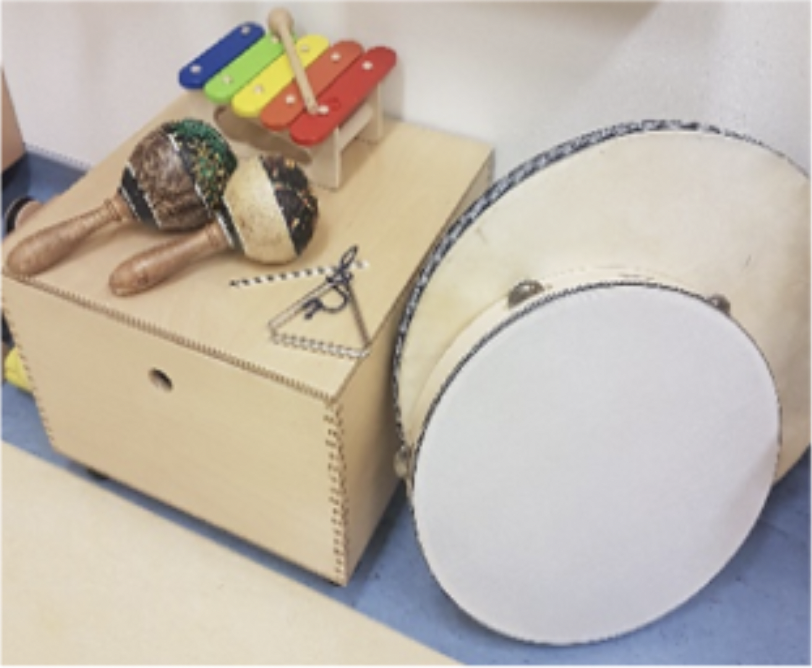
My Play Therapy Room


Puppets


Musical Instruments

As our time together went on, Jasmin slowly solidified her confidence, using puppets to speak for her so that she might maintain a safe distance from her problems. Similarly, she became increasingly comfortable using the creative arts materials, paint, and messy play to work through the difficult feelings she was experiencing, mostly around fear. After four months of attending play therapy, Jasmin felt safe enough to physically separate from her mother and join me unaccompanied. She was testing the limits of her coping skills and taking a brave step towards a new level of security and developmentally appropriate autonomy. Towards the very end of our work together, Jasmin used the baby doll to role play the nurturing mother, while also addressing her feelings around friendships through parallel enactments of shared play in the playground/school yard.  

Jasmin now attends our sessions and often proclaims that she is the teacher, stating that “it is now time for a music lesson!” She plays the instruments, sings, dances, and performs with confidence. It has been such an incredible transformation! At the beginning of this journey, Jasmin’s mother did not think it was possible for her daughter to change or live a normal life. But with the right environment, trust in the process, and using play as a medium to bring us together, alongside clear communication and teamwork between the parent and child, such seemingly unattainable goals became achievable. 

 Testimonial

Jasmin’s mother wanted me to share some words about her experience of play therapy:

“Play therapy simply took me out of the darkness into the light. At the beginning of the journey, I was not completely sure that I would reach my goal and that my only daughter would be like the rest of the children. But I had faith in Allah that made me take the risk. In my first meeting, I saw everything that was said like a dream that was difficult to achieve. The therapist told me that in a year from now, Jasmin will be in school. I muttered to myself ‘just a dream. Allah, please help me to achieve it.’ My child was diagnosed with severe anxiety.

The next day, the journey began with the therapist, Gemma. When I looked into her eyes, my eyes filled with tears. I waited for her to confirm what the doctor had said; that the diagnosis was anxiety and not something else. Gemma greeted me with a smile that gave me hope that my daughter would be cured of that anxiety. Every day while she was assuring me that we would arrive at that goal, my patience was tested.

On our daily trip for the whole year, I saw the light coming from a small gap, and that gap started to widen more, and I saw that light growing stronger. It was a challenge getting to the sessions every day at nine in the morning, on time and in the same chair awaiting victory.

I believed in play therapy. I stuck to it, as a child clings to her mother, and I held onto it with all my strength. Gemma's whispers of confidence never left me. Her support, clarification and understanding were so important. While she was treating my child, she did not realize that she was doing so in a very culturally sensitive and experienced manner, embracing the mother and child together.

Yes, there were many challenges, with those many moments of Jasmin closing her eyes and crying when she saw Gemma (therapist), ending with her running towards Gemma. Yes, it's play therapy but don't underestimate the word. It’s a new hope for every child who is suffering.

And now, after a year, I am looking at the end, exactly as they promised me. My child is now entering her first school year. It is an amazing treatment that is not based on the use of chemical medicines, especially with such young flowers.”   

*Names have been changed for anonymity  

The Existential Importance of the Penis: A Guide to Understanding Male Sexuality – Daniel N. Watter, EdD

Existential Sex Therapy in Practice

The practice of sex therapy and psychotherapy can be done utilizing many different modes and theoretical orientations. Yalom reminds us that existential psychotherapy does not represent a standard set of techniques, styles, or protocols. The concepts of existential therapy can be best understood as a lens or guide by which psychotherapy is practiced. Practitioners of all theoretical philosophies can bring an existential perspective to their treatment process. 

When I treat my male sex therapy patients, I follow a similar pattern with all as a starting point. Whether I am treating an individual male or a couple, I like to begin by asking about what brings them in to see me and allow the story to unfold in whatever manner they choose. I am particularly interested in the description of the problem, the conditions under which the problem manifests itself, and the timeline regarding when the symptom first presented. My goal is to begin to get an understanding of the meaning and protective/adaptive purpose the sexual difficulty may represent. Typically, men will present with little to no insight as to the reason for their sexual shutdown. They often describe a generally satisfying relationship with a partner they find attractive. Most of the men I treat, especially those experiencing erectile difficulties, will report relative ease at attaining penile tumescence, and engorgement will be maintained through extended periods of sexual foreplay. But the erection fades as intercourse approaches or shortly after penetration occurs. Typically, these men reveal a current history of satisfying and frequent masturbation. They will often express a vague notion of being anxious about sexual function and a firm belief that their penile difficulties have some medical basis. However, they are at a loss to explain how a physical or medical issue allows for erections that are fully functional during masturbation but not penetrative sex. Their partners are similarly stymied. 

Following the initial consultation, I will focus on family and developmental history. If I’m treating a couple, I will ask to do three individual sessions with each before resuming couples’ work. It is important to me to develop a good understanding of each person’s experience in his or her family of origin and to identify any patterns of trauma that might be getting triggered in the current relationship. I want to learn about the personalities of family members, their relationship with each of them, and their relationship with each other. I want to know if this was a family that was able to communicate about and/or demonstrate emotions, or if theirs was a family of secrets and repressed suffering. I want to know if there was any presence of substance abuse or domestic violence and/or parental neglect/over-involvement. In essence, I am looking to gain an appreciation for any family dynamic that may have felt threatening that could be reenacting itself in the current relationship and, thereby, creating a threat to the man’s existence and well-being.

Many highly regarded sex therapists will spend a great deal of time taking an in-depth sexual history. I do not, as I find much of the information in a standard sex history to be irrelevant, particularly in those men who have had a prior history of good sexual functioning. Through an existential lens, the sexual “problem” is often not about how the man feels about sex per se. The sexual problem is more typically understood as an attempt for the man’s penis to communicate some deep anxiety, concern, and existential threat to his existence. Therefore, to more fully comprehend the message the penis is sending, a comprehensive developmental/family-of-origin/ relational history will be of greater value. Let’s consider the case of Russ from the perspective of an existentially oriented sex therapist. 

The Case of Russ

Fifty-one-year-old Russ came to see me shortly after his wedding to Sarah. This was a first marriage for Russ and the second for Sarah. Both had come from traumatic families of origin, and Sarah’s first marriage was to a man who regularly abused her. Russ’s primary complaint was a lifelong inability to ejaculate. I began by asking Russ for a timeline regarding his ejaculatory difficulties. I have found that the time of onset of problematic sexual symptoms is often of great significance in understanding what may be triggering the current inhibition. While most men presenting with this complaint have their ejaculatory difficulty limited to their time with a partner and have little to no difficulty ejaculating during masturbation, Russ reported that Sarah was his first sexual partner, and ejaculation during masturbation was problematic as well, although it would occur on occasion. Given the unusualness of this situation, I asked if Russ had consulted a urologist or other physician, and he indicated that it was his urologist who provided him the referral to me. His urologist did not detect any medical explanation for Russ’s ejaculation problem. 

We next began to talk about Russ’s upbringing and family of origin. Russ came from a family with two professionally educated parents, both of whom enjoyed great professional success and respect. They also were rather puritanical and punitive. Russ was the oldest of four children, and the siblings all have minimal interaction with each other. Despite the fine professional reputation his parents possessed, Russ recalls them as constantly fighting, explosively angry, sleeping in separate rooms, engaging in multiple infidelities, and hardly being civil to each other. Neither had much to do with the children, his father due to excessive alcohol use and his mother using her work to avoid being at home. He recalls his mother telling him in a fit of rage that she never wanted to be a mother and blamed his father for forcing parenthood on her.

Russ also reported that laughter, enjoyment, and pleasure were not only absent in his home but were considered sinful and to be averted at all costs. Any expressions of joy were severely reprimanded and punished. As a result, Russ learned as a young boy to repress any feelings or demonstrations of delight, joyfulness, and pleasure. He recalled that to the present day, if he is enjoying a television show or a musical piece, he will turn it off. He does not enjoy comedians or most other forms of entertainment. His free time is spent reading serious, nonfiction books and tinkering with electronic devices. Regarding the specifics of sex, he reports a strong libido and easy arousal, but he begins to panic as he approaches ejaculation and, thus, ceases all stimulation. In addition to shutting down all sensations of pleasure, Russ reports learning to be exquisitely attuned to the displeasure of his parents. He was constantly scanning the home environment to head off any actions or commotions that would rouse the ire of his chronically unhappy and volatile parents. Russ grew up a very lonely child. Despite having three siblings, the home was minimally interactive, and Russ did all he could to avoid other family members. He spent a great deal of time alone in his bedroom or in the local branch library. He recalls few friendships with schoolmates, as his parents discouraged such contacts. His activities were primarily solo, and this pattern continued through college and his career. In high school, Russ discovered a love of the sciences, and he decided to pursue a career in medicine. While he enjoyed his studies, he found his clinical rotations to be laborious. For a time, Russ thought he had made a poor career choice until he discovered the field of pathology. Pathology afforded him the solitude he found comforting as well as the opportunity to pursue his interest in lab sciences. In addition, being a pathologist required minimal interaction with colleagues, offered steady, predictable hours, and relieved Russ of the burden of having to deal directly with patients. He had a reputation at work as a hardworking and dependable physician but also as a loner who showed little interest in the lives of his co-workers. Oddly, his workplace was where he met the person who would dramatically alter his life’s course, Sarah.

Sarah was a pathologist in the same lab as Russ. She was also a serious- minded and reserved person, but she was more social and outgoing than was Russ. She found Russ to be appealing for several reasons. She liked that he was smart, hardworking, and seemingly uninterested in office gossip and politics. She also discovered Russ’s dry, witty sense of humor as being particularly self-effacing and clever. She decided to ask him to join her for dinner one evening, and Russ, to his surprise, accepted.

Russ did not date and reports no prior relationships before meeting Sarah. He was quite taken aback when Sarah invited him to dinner, as no other women had ever pursued him. He liked Sarah, thought she was beautiful, and found her laugh to be quite charming. She always seemed to genuinely enjoy her conversations with him, and this was a most unfamiliar experience. Russ recalls being nervous before the date but also excited to go. He reported they had a surprisingly nice evening, and he felt a lightness that was both strange and pleasing. He very much wanted to continue dating Sarah. Fortunately, Sarah, too, recalled enjoying her evening with Russ, and the two began to spend a considerable amount of nonworking time together. Sex proceeded slowly, which was fine for them both. Russ was unable to ejaculate during intercourse and soon began to develop erectile difficulties. Russ found erections fairly easy to achieve and maintain until it was time for vaginal penetration. Russ would then begin to lose tumescence. Sarah was unflustered and patient, but Russ was frustrated. He wanted to be able to fully experience sex with Sarah, mostly because he did not want her to feel bad or worry that he wasn’t attracted to/interested in her.

It seemed readily apparent to me that Russ’s traumatic upbringing was affecting his sexual functioning. His penis was speaking to him and cautioning him against allowing himself to be vulnerable to others. We spent a good deal of time discussing his family of origin and how his penis might be trying to send him a message of prudence. Existentially, Russ suffered from fears of mortality and isolation. Specifically, Russ found his existence threatened by his feelings of vulnerability with Sarah. His past relationships with family left him vigilant against allowing others to get close and potentially harm him. He had spent most of his life as a loner, and this allowed him to feel protected and safe. However, meeting Sarah made him aware of the depth of his loneliness, and he longed for companionship and love. While his conscious mind was telling him how wonderful life with Sarah would be, his protective unconscious was alerting him to the peril and fragility of his existence should he allow himself to be exposed and laid bare to another. The threat of hurt, rejection, and grief was palpable as Russ continued to deepen his affection and connection to Sarah.

In addition to the threat of annihilation, Russ also was becoming increasingly aware of his isolation from self. His perpetual scanning of his childhood home environment and vigilance for any signs of upset from his parents made him unaware of what his own needs were. That, combined with the family’s disdain for anything pleasurable, left Russ in a constant state of anxiety during partnered sex. When in sexual situations with Sarah, Russ was so preoccupied with whether Sarah was responding positively that he was oblivious to his own sense of sexual arousal. Psychotherapy focused on Russ allowing himself to become comfortable with experiencing nonsexual pleasure and then moving to sexual pleasure during solo masturbation. A combination of dealing with the trauma of his childhood environment along with some directed behavioral suggestions allowed this to be accomplished over a period of several months.

Allowing himself to ejaculate during his time with Sarah proved more challenging, and improvements came about in small, inconsistent increments. Russ’s ability to fully let go when in the presence of another was (not surprisingly) difficult to overcome. Russ’s childhood home taught him to self-protectively be on guard against the ire of his warring parents. Hypervigilance in the presence of others became his lifelong strategy for survival. Overcoming the trauma of his childhood took considerable work in psychotherapy, but eventually, Russ was able to ejaculate in Sarah’s presence. First, he was able to ejaculate in her presence via solo masturbation. This then progressed to Sarah being able to bring Russ to ejaculation using her hand, and eventually, Russ was able to ejaculate during sexual intercourse. Each of these successive advances occurred inconsistently for quite some time but gradually became easier and easier to achieve. During times of emotional stress/dysregulation on either of their parts, Russ will regress, but such regressions are temporary and typically resolve in a matter of days to weeks. Both Russ and Sarah are pleased with their movement, and treatment is ongoing.

Russ and Sarah’s story illustrates many of the seminal points in existential sex therapy. Note the existential concerns of a threatened existence and the penis speaking through a self-protective shutdown of sexual functioning. Russ feared his existence would be snuffed out if he allowed himself to be emotionally close to Sarah or allow himself to feel joy/ pleasure. In addition, Russ became increasingly aware of his isolation from himself. When with Sarah, he was so consumed with scanning her reactions that he completely lost sight of his own desires. Russ’s anxiety about displeasing another meant that the only time he felt sexually comfortable was during solo sexual activity, when he could focus exclusively on himself with no distraction.

Russ was a man who was deeply untrusting of others, and this, along with his isolation from self, negatively affected his budding relationship with Sarah. While what makes psychotherapy work is always somewhat mysterious, it seems clear to me that a significant aspect of Russ’s improvement was the quality of the therapeutic relationship built between the two of us. Over time, Russ came to trust that my interest in him and his well-being was genuine. As his comfort with me increased, Russ was able to take more risks in therapy and reveal more and more of himself. In addition, he was able to venture into unexplored territory as he began to learn more about himself, his feelings, his fears, and his desires. Existential sex therapy, like existential psychotherapy, is rooted in the depth of the therapeutic relationship. The elements of connection, genuineness, compassion, and safety are the most potent tools available to the practicing sex therapist.

I am often asked if behavioral sex therapy exercises have a place in existential sex therapy. While I tend to use them sparingly, they certainly have an important place in providing some immediate relief of symptoms and encouraging patients to take risks and move forward. However, I believe that a therapy that was primarily based in behavioral exercises would have been ultimately ineffective for Russ. Russ had suffered so much damage from his family of origin that without doing deep trauma work with an existential lens, he would not have allowed himself to move toward tolerating the experience of pleasure. In addition, exercises that focused directly on the functioning of his penis would have been of little value until Russ better understood the messages of anxiety and trauma being communicated to him through his penis. Frankl’s process of dereflection allowed Russ to focus on triggering of childhood trauma and allow his protective unconscious to loosen its grip. Still, behavioral suggestions clearly had a place in Russ’s treatment, as merely working through the trauma of childhood would not have given him the sexual skills he required. I am often reminded of one of Yalom’s most important axioms: “Insight without action is merely interesting.” All good therapy needs to move the patient beyond the point of insight to take the necessary emotional risks to make use of such insights and awarenesses. As a result, even though the bulk of my therapy focuses on deep reflection and insight to assist the man in better understanding the message his penis is sending him, I often find behavioral exercises or suggestions to be of great value.

Let’s examine another case that illustrates the principles and process of existential sex therapy. 

The Case of Ascher

Ascher was a 44-year-old man who had been married for 21 years to Marcie. Both reported a generally satisfying relationship that had recently become distressed due to Marcie’s discovery of Asher’s many infidelities. Ascher admitted to frequent use of pornography, chatrooms, and sex workers. Marcie discovered Ascher’s transgressions after being diagnosed with a sexually transmitted infection at a routine GYN exam. 

Both Ascher and Marcie were religiously observant, and sexual intercourse was not attempted until after marriage. Sex seemed to proceed smoothly with little complication for the first 12 to 24 months of marriage. Both reported a high level of sexual satisfaction during this time. However, Ascher began to pull away from Marcie sexually, and their sexual frequency quickly diminished. When Marcie questioned Ascher about his apparent sexual avoidance, he offered some vague explanations and vowed to increase the frequency of his sexual initiations. Ascher did begin to initiate sex more often, but then he often would experience erectile loss just prior to vaginal penetration. Both Ascher and Marcie found this distressing, but Ascher was reluctant to consult his physician and instead just drifted further away from Marcie sexually. Marcie was troubled by Ascher’s lack of interest in pursuing an answer to this conundrum, and the two began to fight repeatedly. It was later discovered that Ascher’s reluctance to consult his physician was due to his awareness that his erectile difficulties did not occur during solo masturbation or inter- actions with sex workers. Had Marcie not been diagnosed with an STI, this cycle of sexual avoidance may have continued indefinitely, as divorce was not a consideration for either of them.

Ascher agreed to begin psychotherapy and consulted a “sex addiction specialist.” Sex addiction therapy proceeded for about a year, but improvement was minimal. Therapy focused primarily on behavioral interventions designed to control Ascher’s urges to sexually “act out,” as well as regular attendance at a 12-step sex addiction group. Ascher reported enjoying both the individual therapy and the group meetings and found the support he received from both to be very meaningful. However, Ascher felt that his issues were not being adequately identified and addressed, and change was negligible. Both Ascher and Marcie were frustrated by the lack of progress, and they were referred to me for an alternative approach to the problem.

My initial meeting was with both Ascher and Marcie, but their wish was for Ascher to receive individual psychotherapy. Marcie attended the session to be supportive and offer to be helpful in any way she was needed. However, Ascher felt he needed to “confront his inner demons” and wanted to do this via individual treatment. I agreed, as I thought Ascher’s difficulties preceded and were separate from his relationship with Marcie, and we agreed to begin individual therapy with the idea of bringing Marcie into the therapy at a later point if necessary.

Ascher and I began by discussing the onset of his problematic behavior. He reported that he had never felt sexually conflicted or compulsive prior to his marriage to Marcie. He reported loving Marcie and thought she was an outstanding wife, mother, and friend. He found his behavior puzzling, as he found her sexually attractive and enjoyed sex with her greatly. We also discussed his prior psychotherapy and what he found helpful and not helpful about it. Ascher recalled liking his therapist and felt great relief at being able to discuss what he had been keeping hidden for so long. He also enjoyed the support and camaraderie of the 12-step group but had a nagging sense that as inconceivable as it was to him, his problem was not really about sex, which was the sole focus of his prior therapy and the 12-step group. I asked him if his problem was not about sex, what did he think it was about, but he had no answer and found his situation to be quite puzzling.

We next began to talk about Ascher’s family of origin and childhood memories. Ascher was the oldest of five boys born to a religiously observant mother and father. He reports a generally happy home environment in which the laws and rituals of Judaism were practiced, celebrated, and enforced. Ascher was educated in Jewish day schools, where he received both secular and nonsecular education. He recalls enjoying school and being a very good and popular student. Ascher was very much committed to his religious teachings and practices but recollects always fighting a desire to rebel. He didn’t mind or object to any of his religious obligations but always felt an objection to being “controlled.” Ascher described himself as being an intensely curious youngster who frequently questioned the absoluteness of rabbinic authority and wanted to know what the “forbidden” experiences would be like. He had questions about the laws of kashrut (the requirement to keep a kosher diet) and often felt a strong urge to sample non-kosher food and, on occasion, did secretly indulge. As an adolescent, Ascher experienced the expected sexual urges and desires and would occasionally allow himself to masturbate. These transgressions left him feeling guilty but pleased by his displays of autonomy and independence. Again, it was not that Ascher felt forced into a life of religious observance that he did not want, but Ascher abjured feeling controlled, stifled, and limited.

Ascher reported that while he was eager to marry Marcie, he felt rather quickly like marriage was “suffocating.” This feeling was quite surprising to him, since he believed he enjoyed being with Marcie a great deal. Nevertheless, marriage quickly felt confining, limiting, and controlling. Since Ascher did not engage in premarital sex, he did not know how he would have behaved sexually in another relationship with someone besides Marcie, but he suspects he may have felt suffocated in any relationship that removed his ability to feel as if he had choices.

It was becoming increasingly clear that Ascher was reacting to feelings of being controlled (losing his autonomy) and suffocated. Existentially, this would correspond to Yalom’s dilemmas of freedom and mortality. Ascher’s problematic sexual behavior was likely his response to these internal and unacknowledged conflicts, much like his desire to sneak non-kosher foods when a young boy.

When I mentioned this to Ascher, he responded immediately and enthusiastically that this conceptualization resonated strongly. Ascher then described the strong obligation he felt to not disappoint his parents or to be a poor role model for his brothers. Throughout his life, he felt both proud of and burdened with these responsibilities. The combination of family and religious obligation often made Ascher feel as if his life was not his own, and he struggled with his desires for freedom and autonomy against the perceived constraints imbedded in so much of his life. He reported never having expressed these feelings to anyone before, and this was never explored in his prior therapy. As our discussion continued over the weeks and months, it became increasingly clear to Ascher why he was behaving as he was, and he felt that now that he had a substantially greater insight into the meaning behind his actions, he would have an easier time dealing with them. It was now time to ask Marcie to rejoin the therapy.

Marcie was pleased to participate in the therapy, and she had been doing important work on herself in individual therapy. She reported being pleased with Ascher’s new understandings and insights but found herself struggling with issues of trust. Her existence now also felt threatened, as she saw Ascher as not only someone she loved but also as someone who had the ability to do her great harm and destroy the life that she loved. It was determined that they would be best served by another psychotherapist for couples’ therapy, since Ascher wished to continue his individual therapy and growth with me. Both Ascher and Marcie agreed that this was the best way to go, and I referred them to one of my colleagues who did couples’ work. At the time of this writing, Ascher continues a productive individual psychotherapy with me, and the two of them are doing well in couples’ therapy, having recently begun resuming their sexual relationship.

The case of Ascher again highlights how the penis speaks for distressed men. Ascher shut down sexually when he began feeling suffocated and constrained. First, he pulled away sexually from Marcie. This was of great concern for her, and she began to push Ascher for an explanation. Since Ascher felt unable to express his feelings for fear of acknowledging his “less than pure” urges, he subordinated his emotions and tried to bypass them. He then tried to accede to Marcie’s wishes and continue to interact sexually with her, but his protective unconscious would not let his penis function, and the sexual shutdown took a much harder-to-explain path. All of this was further complicated by Ascher’s frequent use of pornography and sex workers. These outlets, while making Ascher feel extremely guilty, also provided him with the “reassurance” that he was not being controlled and still possessed the autonomy to rebel against expectations. Given the internal conflicts Ascher was battling, it is little wonder that a therapy primarily focused on behavioral exercises designed to increase sexual interest and improve erectile functioning fell short. Ascher’s protective unconscious would thwart all efforts to move into territory that created an existential threat to him. Until those unacknowledged and unexpressed conflicts had been exposed, Ascher was unable to understand, and therefore change, any of his problematic behaviors.

Oftentimes, behavioral sex therapy’s treatment failures alert us to the possibility that something else is going on, and it is in these cases that an exploration of existential issues may be most helpful. In the case of Ascher and Marcie, we see that once again, the penis speaks and, according to well-known psychologist and sex therapist Kathryn S.K. Hall [with whom I had personal communication, sometimes it yells!

***
 

In this chapter, we have explored many of the most salient features of existential sex therapy and how sex therapy with an existential lens differs from most traditional forms of sex therapy. Ascher’s case provides us with an excellent transition to our next chapter, hypersexuality, or what is often referred to as sex addiction. Many of the patients we see in sex therapy practice are not suffering from a sexual shutdown but what appears to be quite the opposite — a pattern of sexual behavior that they find difficult to control and manage. The existential issues in cases of hypersexuality are often most closely aligned with fears of death and mortality. Let&

5 Time Tested Methods for Attracting New Referrals and Building Your Brand

Suggested Tips for Clinicians:

  • Learn SEO (search engine optimization) to bring foot traffic to your practice’s site.
  • Build your advertising savvy by mastering Google business tools.
  • Consider consulting with a business coach to build your clinical practice’s brand.
For most psychotherapists in private practice, the pattern of the past two and a half years has followed a similar trajectory:

March 2020: Move to 100% teletherapy, and watch as new referrals suddenly become frighteningly scarce.

April 2020: The phone is still not ringing.

May 2020: Referrals start coming back…and then explode. In the summer, waiting lists become commonplace because clinicians can’t handle all the people who need help during the pandemic that is killing thousands of people every month and forcing businesses and schools to go all virtual.  

Like what you are reading? For more stimulating stories, thought-provoking articles and new video announcements, sign up for our monthly newsletter.

In 2020, Mental Health America reported that nearly 500,000 people struggled with a mental health disorder such as anxiety or depression. The organization offered online screenings from January through September, stating that anxiety screens increased by 634% while depression screens increased a staggering 873%. In just one year, the number of mental health visits attributed to new patients increased by 27 percent in July 2020 compared to July 2019.

The pandemic has deepened the mental health crisis, the report noted. The number of US adults expressing symptoms of major depressive disorder increased from 24 percent in August 2020 to 30 percent in December 2021, per CDC figures, and a recent article in the New York Times discussed the serious shortage in the US for child therapists.

As both an owner of a group practice as well as a business coach for psychotherapists and other group practices, I have had a birds-eye view of these patterns as they unfolded across North America. Many clinicians never had a waiting list before and were not sure how to process these inquiries. For some insurance-based group practices, the glut of referrals became a nightmare with waiting lists of over 100 people. Many potential clients were frustrated that no one in their city had any openings. Attempts to automate the process only created more feelings of depersonalization for clients and frustration for clinicians.

Yet despite these hardships, the pandemic also made marketing unnecessary for many private practices. It made it easier than ever before for licensed psychotherapists to go out on their own, working from home without even paying for an office. Spending $29.95/month for a Psychology Today ad was all that many practitioners needed to fill their schedules with new clients.

For group practices, the tricky balance of referrals, therapists and office space has been turned on its head by the pandemic. Referrals have been plentiful, but a significant number of sessions are still being conducted virtually, making decisions about future office space a guessing game. Availability of therapists has been the scarce resource of late, fueled by the sheer number of group practices and the deep advertising pockets of numerous online providers such as BetterHelp and TalkSpace.

But now there are signs that the glut of referrals is slowly diminishing for many private practitioners. As part of my business coaching service, I set up and maintain Google Ads campaigns for psychotherapists. The common refrain in the summer of 2020 was, “Turn the ads off! We can’t handle the inquiries we are getting!” That was great news because everyone could save a lot of money on marketing and still have plenty of referrals to fill caseloads. Suddenly, however, I have begun hearing the opposite from quite a few people: “Hey Joe, can you turn my ads back on? My waiting list is finally down to nothing.”

This trend is especially true for fee-for-service practices with rates over $200 per session. The combination of inflation, higher interest rates, and perceived easing of the pandemic may be leading more people to forgo therapy—especially expensive therapy—and return to other satisfying pre-pandemic activities such as indoor dining, music, travel, and visits with family and friends. Such activities may be serving as a natural antidepressant compared to the stark isolation and Zoom life during the peak of the pandemic.

So what’s a practitioner to do if a few holes suddenly appear in their caseload? As always, it’s wise to prepare for a storm when the first few clouds appear on the horizon. Interest rate increases and inflation are here to stay for a while, and fee-for-service providers are most at risk when consumers tighten their belts. To get ahead of these challenges, here are some of the time-tested methods for attracting new referrals:

     1. Improving Your Search Engine Optimization (SEO): Google is still the biggest source of referrals for most private practitioners, and nothing beats showing up on page one of Google for free. The bad news is that page one is more crowded than ever, and newer websites have a harder time competing against sites with years of immersion in the Google system. A good overview of best SEO practices you should follow can be found in numerous free resources online which can give you an idea of how to improve your ranking in Google’s search priority.

     2. Using Google Business Profile: Google still offers a wonderful free resource, the Business Profile, which includes a description of all your services, displays for photos and videos from your site, free messaging, opportunities to show up on the top half of page one with a Google Map link, and the ability to make free posts with links to your website. Note that managing individual Business Profiles will be moving to Search and Maps in the near future.

     3. Enabling Google Ads: This is still the best and easiest way to show up at the top of page one in Google search, but you’ll have to pay for the privilege. Recent improvements in automated bidding have reduced cost-per-click in many locations, and the ability to have potential clients call your office directly from an ad on their cell phone makes conversions easier than ever.

     4. Posting an Ad in Psychology Today: This grandparent of online directories for therapists still generates consistent referrals for many practitioners, and spending under $30 a month almost guarantees a positive return on investment even if you only get a few referrals a year.

     5. Community Networking: Now that more people are back in offices, marketing to referral sources in the community can offer a unique, inexpensive way to build a practice. Connect with medical professionals, educators, attorneys, and others who often need referrals for psychotherapists in their work.

     6. Creating Email Newsletters: Connecting (with permission) to past and present clients can be a wonderful way to get the word out about your services. Programs such as Constant Contact and MailChimp offer inexpensive ways to generate attractive email newsletters.

     7. Offering Lectures and Workshops: Offering lectures and workshops is a great way to attract people who may initially be resistant to psychotherapy. In my group practice, we have consistently found at least 20% of workshop attendees follow up with a therapy appointment. These can be offered in a variety of settings in the community, as well as in your own office if you have the space. And of course, if you can stomach it, you can also do them on Zoom.  

***

Attempting to read the tea leaves of psychotherapy practice is always a risky and imperfect task, especially in volatile times when unexpected events can quickly change the trajectory. Nonetheless, it seems clear that the peak of mental health referrals for some practitioners has passed. Preparing for this now will never hurt, and in fact will help to smooth out the transition if referrals drop to pre-pandemic levels.

 Questions for Thought

  • How did the pandemic challenge you to think differently about the way you practice?
  • What is your strategic short and long-term plan for building and maintaining referrals?
  • What can you do to revitalize your brand through internet marketing, pro bono workshops, and podcasts?
  • What is the feasibility of consulting with a marketing expert for you?
  • What about this article challenged you to do or think something differently to increase the client flow in your practice?  

In a Volatile Post-Roe World, Morals and Medicine Clash

Having kept in touch with one of my former clients (EN), an OB-GYN, I (LR) was curious about the personal and professional impact on him of the recent Supreme Court decision in the Dobbs v. Jackson Women’s Health Center case that overturned Roe, and with it, federal protection of womens’ reproductive choices.

While EN neither sought me out for counseling, nor was the following conversation part of a therapeutic interchange per se, I hope that excerpts from that conversation might be useful to fellow psychotherapists, counselors, supervisors, and trainees who are or will be working clinically with medical health care professionals who serve women.

***

Morals, Ethics, And Medicine

LR: I was thinking of you and wondering, as a practicing OB/GYN, how the Supreme Court’s decision to overturn Roe has affected you both personally and professionally.

EN: It's challenging because there's EN, who has very strong political views, and then there's Dr. N, who is supposed to separate his political views from his medical practice — and EN doesn't necessarily care about offending people. But Dr. N doesn't want to offend anybody because people are entitled to their opinions. With that said, as a women's health care provider, obviously my first concern is women's care, women's health, women's access to care, what women can do with their own bodies. And having anybody try and place limitations on that is disconcerting.

In Florida, the new rule is 15 weeks. But there are loopholes, and you can read into it, and read around it; but it's up to the doctor's discretion. I personally don't perform terminations anywhere near that gestational age, but we’ve certainly had plenty of patients who have required it for one reason or another. It's one thing to refer somebody down the street; it's another to have to refer somebody out of state. And we've had that issue.

Typically, when you're referring somebody for those reasons, they're not happy about it because they've already likely been dealt a somewhat devastating diagnosis for their desired baby. Then they have to make a very challenging decision, and are forced to do so in an uncomfortable, unfamiliar environment, likely without the support of their family and friends that they would have at home. So, it's easy to say, “Sure, just travel to this state or that state,” but not everybody has the means or support to do that. There are so many different angles that you can come at which create their own additional set of problems.

LR: In thinking of the last one or several women that you had to refer out of state for pregnancy termination, what were some of those interactions like for you — since many of them, I would imagine, you've had ongoing relationships with?

EN: Fortunately, there haven’t been many, but those I’ve referred were due to major fetal anomalies that were diagnosed after the legal limit for termination. That in and of itself was a tremendous challenge. Most of our conversations were focused on their devastation and processing of the diagnosis — not about having to travel to get it done. I think that part of it was a bit on the backburner. But that was just for them. I think that the more cases one has the more complications that are going to arise.

LR: How did these conversations impact the relationship you had with these particular women as well as you personally?

EN: I don't think they impacted our relationship because they know that I don't perform the procedure anyway. It is a challenging procedure with more risks and more complications, regardless of where you have it. And many of us have chosen not to do it for that reason. I'd rather have someone who has quite a bit of experience do it. So, whether I'm referring them down the street or three states over, they know that I'm not the one who's going to do it. And so, I don't think that has any negative impact on our relationship. It's more just a matter of the logistics of finding somebody — helping them to locate somebody and them having to arrange their plans.

LR: Have you stopped performing procedures completely or just after 15 weeks?

EN: My limit was always about eight weeks. And it's never been something that I advertised doing. It's more if I have an existing patient who finds herself in that situation, it's something that I can offer to my existing patients. There are plenty of other resources. There are plenty of physicians who welcome referrals for it. That's a controversy that I've tried to avoid. But for my own existing patients, my preference has been, “I'd rather be the one to help you through this than have to refer you elsewhere.” But I have my limits also. And that's just out of comfort medically for the procedure and nothing else.

LR: Have you grown more wary or vigilant that somehow, you'll raise attention of a regulating body, or someone will launch a complaint, or someone will hear or mis-hear this or that and report you? I guess what I am asking is, have you become more fearful or threatened in this post-Roe environment?

EN: Not yet, because again my practice routines are well within the limits of current legality in the state. Should that change? Yeah, of course I'm concerned about the ramifications. But like I said before, I try to limit my exposure. I don't want it necessarily out there well known in the community that this is something that I do or offer, because no matter how you look at it, there's a stigma and there's controversy associated with it. And it's just something I'd rather avoid. I want to be there as a physician for my patients, and offer them what they need, and avoid all the other drama that might come with that.

LR: Have there been clients or patients you've consulted with or treated where your political and personal views clashed and were difficult to suppress?

EN: Yes, but not necessarily for that patient's particular healthcare needs, but more so because we'll strike up a conversation and they'll make an offhanded remark, not necessarily understanding all the medical implications. You know, it's very easy for somebody to pass judgment and say, well, 15 weeks seems very reasonable. But the reality is, it's incredibly challenging to diagnose a genetic abnormality, a chromosome abnormality, a major fetal abnormality prior to that time. And so, there are medical limitations to what we can do and when we can do it. So those tests aren't really available and they're not confirmable. You can't confirm it until right around that time at the absolute earliest. So, it's easy to say, ‘well, 15 weeks sounds reasonable’, and patients have had plenty of time to make a decision. That may be the case for an elective termination. But for medical purposes—which once you're extending into the second trimester, the great majority of them are for medical purposes anyway. It's not enough time to make that decision.

LR: Is it the case that genetic anomalies might not be manifest in an observable way at 15 weeks?

EN: We typically begin screening for chromosomal abnormalities — the most common example being Down syndrome — at around 12 weeks.

LR: Tight margin, but that’s a screening test which is by definition non-definitive.

EN: Correct! So, if that test comes out abnormal, the typical recommendation is for amniocentesis, which historically was performed after about 16 weeks. You can't make a screening test any more than it is, and they are inherently designed to have false positives. And so, you can't make a definitive diagnosis and a definitive management plan with just a screening test. And if you don't have the ability to confirm, then, you know, you're stuck. That's for chromosomal abnormalities.

In the case of fetal anomalies — let's just call them birth defects — the first full anatomy ultrasound is done somewhere between 18 and 20 weeks (about 4 and a half months). So, yes, you can see some vital anatomy earlier than that for sure. But not all the structures, not everything.

LR: And neurological sequala of these chromosomal or genetic anomalies won't show up until after birth?

EN: Right! That, there’s no way to screen.

LR: Do you get a sense that this 15-week window was determined after comprehensive consultation with medical specialists or the result of political footballing?

EN: I'm sure it was some kind of a behind-the-scenes compromise, and I don't know who came up with that 15-week gestational age. But, you know, I'm sure there was something behind the scenes.

LR: What about the overflow of the Roe decision into your personal life—conversations with your wife, with your friends, with family members, where the EN who is free to express his political views is not tethered by his professional obligations? How has it affected you outside of the consulting room?

EN: For the most part, the people I converse with are like-minded people. And even if some of these people vote Republican — which some of them do — they’re voting Republican for other reasons like Israel and taxes. And so, when we talk about this, it's easy to have a room of like-minded people, and just get angry, and talk about how ridiculous it is.

LR: In your deepest, most personal place, what has been your visceral reaction as a person, as an OBGYN, or some combination of the two? What has it been like for you since the overturning?

EN: It's frightening because there was always the threat that Roe would be overturned. But most people felt it would never happen, that it was established law. Look, even the most recent Supreme Court nominees would say it’s established law, and yet here we are. So, we all were fearful that it could happen but didn't really think it would happen. Now that it has happened, it's frightening. And then for a while afterwards, it was the thought of what's next? Is gay marriage next on the docket? Or contraception? You know, where are we going here?

LR: So, frightening in terms of what rights would be taken away from women and other groups next—frightening ideologically, frightening from a humanistic standpoint. What about this is personally frightening to you, perhaps as a father? I know you have sons.

EN: This country is regressing. I have sons who are perfectly capable of impregnating someone else. But, you know, we try to teach them responsibility. I don't have any intention or feel like I'm ever going to have the need personally to have a termination. And so, my fears and my anger are more because of how it affects others and because of the type of practice that I'm in and it affects me at work. So no, this is one of those issues that doesn't have a direct impact on me as a person, but I feel incredibly strong about it. And that's the part that has the deepest effect.

LR: So, the most frightening personally is, as a citizen of a country that seems to be going backwards?

EN: How about as a conscientious human recognizing that not all political issues are personal? I have no intention to marry someone of the same sex as me. But I feel unbelievably strongly that everybody should have the right to marry whoever they want. That's not affecting me directly. But that's deep down in my core.

LR: Do you see yourself as an active or increasingly active outward advocate in some way in your professional future?

EN: I’ve always emphasized prevention because I think it’s the right way to go anyway. So, I think termination is a choice. And you've got the morals and you've got the ethics and then you've got the medicine, right? So, from a strictly medical perspective, prevention is better. And so I've always pushed that, I've always emphasized it. But now, I'm doing so even more because while there might be certain limits now, those limits might become stricter down the road. And so, patients should want to be proactive in prevention anyway. Number two, they may not have the same options later. And who knows what kind of access they're going to have to birth control later on? You know, is that in jeopardy as well?

It's a ridiculous hypocrisy, because they want to limit access to birth control; they want to limit access to pregnancy termination. But they also want to limit the social programs that might help with these unwanted children once they're forced to be born to parents who can't afford to have them and don't want to. I don't think I am going out on a limb to say that a solid, substantial number of those who advocate pro-life have somewhere at some point in their life been in a situation either directly or indirectly where they probably needed a termination.

LR: In closing, are there particular patients that you've had over these last few months that have really struck a chord in you and sort of torn you up inside? And if so, how did you deal with it?

EN: How I dealt with it personally is different. Professionally, it's hard not to have empathy. It's hard not to feel for someone who was given the diagnosis that their baby, who they wanted, is not going to survive the pregnancy. And so now they had to make a very difficult decision, and it was just made that much harder for them.

I'm grateful that I don't have that many patients yet who I’ve had to refer out for terminations due to chromosomal anomalies. A fair number of those end in early miscarriage before you get to that point. But it's still there, and it's always going to be there. It's the nature of the field.

LR: Thanks so much for sharing with me today.   

5 Simple Questions to Improve Your Work with Elderly Clients

In the long-term care setting where I work, residents have a far greater amount of life experience than they do control and influence. This might contribute to many of them losing their sense of worth and appearing frail, or even foolish, to the younger workers entrusted with their care. Wisdom is the distillation of lessons learned from life experiences and evidenced in fleeting comments or responses rather than in detailed and articulate expressions. This wisdom, however, may be lost or obscured by cognitive impairment or language problems.  The idea for our Wisdom Project arose in the course of uncounted hours of psychotherapy, during which I was privileged to hear the lessons and insights derived from the long and often quite challenging life experiences of the residents with whom I have worked. I’ve found that all too often, these residents have feared that their invaluable life experience has gone to waste because they are no longer in what most would consider to be an active stage of life. Or that a young staff person might overlook the depth of background and knowledge still present in an otherwise faltering and frail man or woman under their care.  I developed a simple questionnaire for select residents—those who seemed most able to verbalize responses. I believed that gathering their thoughts would provide them with a sense of validation and empathy, which would, in turn, provide workers with a glimpse of the wisdom that is all too often obscured by their physical and cognitive frailty. The following are some of the questions I developed, and several select responses.  What have you learned from your life experience? I’ve learned to be more patient. I’ve learned to be quiet and listen to other people. It helps me to not be selfish. At the time you don’t think things matter, but they do. The choices you make are more important than you think. So, make good choices. I’ve learned to communicate with people. I was too shy and reserved and passive. I should have more strongly pursued my dream to sing. I learned to love. I think it is very important to have a good marriage. My ability to love has grown as I’ve gotten older. Hold close, but not too close, the ones you love. I learned that the important things in life are marriage, children, friends, and an active life. Those are the things that teach you appreciation of life. I learned how valuable it is to have a loving, caring family. Everything else comes second. I have learned that life is brutal; it is hard on your soul and body and mind. It is hard to comprehend why life must include illness and death, but life still has its bowls of cherries. You can’t answer the questions of life with simple answers; you need heart.  What does illness teach you?   Illness teaches you that you have to be strong. I try to understand the meaning of illness, medically and spiritually. It has made me stronger. I had to learn to rely on others. Before, I thought leaning on others was cowardly. When there is illness, you want to help, to remove suffering. But you cannot always do that. I should just talk to myself, and just turn my feelings around the other way. Learn to take better care of yourself. But you cannot rely only on yourself. You sometimes need others. Even when you are ill you can still help yourself, to a certain degree. Don’t expect people to do everything for you just because you are ill. Illness has taught me a lot about caring, about understanding, and soul searching. You learn how a person can endure the trials of illness. You learn that you don’t give up. Illness teaches you that you shouldn’t try to take on too much at one time.  Who taught you important lessons in life, and what did you learn from them? I lost my mother when I was 4 years old. I had to rely on my father and we became close. He taught me what to expect from life. He taught me not to believe everything you hear; you have to experience it for yourself to know if something is true or right. I had a doctor who pulled me through a bad part of my life. He taught me to take one day at a time. To deal only with today’s problems today. That helped me to not be overwhelmed by the problems I had then. My mother taught me that it is important to be honest and kind. To be kind and try to help; that is what matters. To be honest no matter how much it hurts: but it pays. My sister taught me to stand up for myself. My father loved us. He put his arms around us and provided and protected us. He taught me honesty and responsibility, and to be kind to others. I worked for someone once who taught me to keep going despite pain and problems. My mother taught me to work hard on my education and to prepare to take care of myself, and to take care of my appearance. My brother and I helped each other through hard times. That taught me a lot. My father taught me to always reach higher.  What would you like to teach others? Patience is one thing. You’ve got to have patience. You will be able to do many things if you believe in what you really like, and really put your mind to it. Have more faith in yourself. Don’t be afraid to ask for help; there’s always more available than you know. Learn all about finances and how to manage money. Be honest and don’t lie. It’s very important not to lie. To be kinder. Staff people should be kinder because your attitude toward a resident is noticeable, and it really influences how I feel. You should mix in with others. Get involved and stay active. If you take a job, follow through with it. Don’t drop short or give up on it. I would like to teach people how to listen to others. How to care and be kind and gentle.  What lessons or advice would you like to offer to the workers at the nursing home? Be more patient. Get in bed and try being a patient for a while. I want to tell the young women to not give away yourself too easily to men. It will lower your self-esteem. There are too many pregnancies and too few marriages for young women now. That means there are too many irresponsible and immature men. Don’t go sleeping around when you are young. Hold out for a better man. It is important to have a good marriage. Life is about more than their boyfriends, and cigarettes, and time off and on at work. I’m here as a patient. Do what you can for me. Just pay attention to me and do what you can for me. Make sure this work is what you want to do, being around sick people. If you just want it because there’s no other job, forget it. Have patience with the residents. Don’t always say I’m too busy. Listen more closely. Make time for individuals. If you’ve had a divorce don’t jump quick into many relationships. Stay within limits with your money. Buy a house or a car and save your money. Be more content with what you already have. 

**** 

In the course of developing and implementing the Wisdom Project, I have learned how important it is to see the individual resident not just in their symptoms of today, but also in the story of their full life, and to help her or him find and affirm the lessons in that story. It is important to look respectfully at all a person may have been prior to the needfulness of now, and to be open to learning from the painfully acquired wisdom of each person. 

How to Successfully Navigate Cultural Challenges with Filipino Clients

Linda came into the office with an anguished look on her face, lamenting that her mother had given her the “cold shoulder.” The reason: Linda hadn’t taken her children to see their lola (grandmother in Filipino) for weeks. Through a wrinkled brow she continued, “my mom thinks I owe her a visit even though we’re trying not to catch COVID. I know she took care of the kids when they were younger, but she makes me feel like my obligation is a string that is never to be broken. I’m grateful to her, but…” 

In Filipino culture, the sense that a past or recent good deed or favor must be remembered (and repaid) is called utang na loob. Utang is “debt” and loob is “inner self.” Filipinos are collectivistic in nature. The physical proximity that exists (the bubble) between two people is so much closer than is customary in American culture. The young American child is taught to articulate her needs and to orient herself within her own space. That child is taught to say, “Johnny, I got this toy first. Wait your turn.” On the other hand, the Filipinx child’s orientation is to empathize, which may or may not result in her sharing the toy with Johnny. But if sharing takes place (“Here’s the toy, Johnny”), positive reinforcement is given. The adult smiles approvingly at the behavior of the mabait na bata (kind kid). Often, the adult in Filipino culture also teaches the child empathy by narrating non-verbal cues and gestures: “Look at Johnny, he’s very sad. He wants to play with the toy too.” 

The Filipino American in Session

One of the challenges to the Filipinx American is to reconcile cultural opposites. I remember when I first immigrated to America, I saw a popular Filipina student from my school soften her otherwise deep, bright, red lipstick in the school bus each time we were on our way home. I later realized that she was struggling to bridge the cultural divide, attempting to appear American to the outside world and Filipina inside her home—a daunting task, especially for a young adult who is trying to make her way in the social realm. 

It might be easy to assume that a Filipino has assimilated into the American culture once they have learned the language—most are bilingual. However, this bilingualism also creates myriad possibilities for miscommunication, not just in the therapy room but in the Filipino home. While a born-and-raised Filipinx American client may be more comfortable with English, their older relatives may not. Such was the case with Linda’s mother, her grandmother and her uncle. To help Linda in her familial struggles around utang na loob in the therapy room, I had to make space for the conflicted familial energy that came with the linguistic and cultural divide separating the generations.

A Westen-trained therapist might immediately focus on supporting a client like Linda by assisting her in setting boundaries and helping her to assert herself in the face of what she regarded as her mother’s unrealistic demands. While doing so might be a reasonable route to take later in therapy with her, it could very well backfire while working within her collectivistic familial system. Borrowing from Emotional-Focused Therapy, discovering our loved ones’ emotional longing can transform how we respond to them. However, this can be tricky because it’s important not to put your clients in a position where they carry the burden of changing the familial system by accommodating and flexing their emotional muscle at the expense of their own psychological well-being. I didn’t want to do that with Linda and her family. 

The Linearity of the English Language

To help Linda set boundaries with her mother and other family members, it was important for me to further explore the concept of utang na loob with her. As a debt, utang is typically a quantifiable exchange, such as a defined amount of money that both parties agree upon. In contrast, although it is inextricably linked to external exchange, or debt, loob describes the inner workings of the Filipinx psyche, an unquantifiable. The phrase lakas ng loob roughly translates as persistence on the inside.” But the word “inside” gets lost in translation. Sensing (pakiramdam in Filipino) is a core value rarely explored in Filipino American psychology. Pakiramdam is to sense someone beyond their verbal assertion and articulation.

In Filipino culture child-rearing, there is rehearsing that occurs between caregiver and child, which teaches the child that communication relies not solely on explicit language, but also, and deeply, on bodily movements such as the motion of the eyebrows, the breathing pattern, and bodily posture. Trained in Western notions of communication, a therapist might initially be curious as to why their client can’t just speak directly to mitigate misunderstanding—in this case, Linda with her mother. The assumption that verbal assertion trumps all other types of communication is the equivalent of seeing the world from a particular cultural perspective that in this case does not represent the Filipinx worldview or practice.

The history of the Philippines is complex. It ancestral roots were embedded in the rites of animism prior to colonization by the Spaniards. I believe that a history of oppression teaches the colonized to communicate implicitly with each other to maintain freedom of expression and to avoid imprisonment, both literal and emotional. Jose Rizal, the national hero of the Philippines spoke in codes through his literary manuscripts because it was safer to do so during its colonialization by Spain. Executed at 35 by firing squad, his work is studied to date by students who learn to decode his writings for their true underlying meanings. Speaking in code was a functional way to adapt to psychological threats, real and perceived. But it’s also a way to speak when people are in closer proximity. Despite Filipinxs’ bilingualism, concepts that aim to be translatable into English—in this case, utang na loob—can, and very often do, lose their meaning. 

Lost in Translation

A debt can be paid with a simple, explicit transaction, often, at least from a Western perspective, by a transfer of money. While utang literally translates to “debt” in Filipino, the word used in the native language rarely means “to pay” but to tanaw. Tanaw in Filipino means “to glimpse back on, to look back and not forget.” Regarding the immigrant who leaves the motherland in search of greener pastures, the young Filipinx American often carries a sense of obligation or burden to repay favors done for them by their elders. And because loob is the unquantifiable sense of the otherwise measurable utang, immigrants often bring with them and carry the unsettling feeling of not knowing the extent of the debt—how much and how long they need to pay for it, or what the repayment was—when they didn’t ask for or agree to the loan in the first place. They are simply expected to remember that they are in debt, and despite their gratitude and wish to honor their parents, struggle with the indeterminate nature of that debt.

It is as if upon leaving the motherland, the immigrant is given a rope with which they can metaphorically climb the steep mountain ahead of them. The rope is securely tied to the parent, who hopes their child will use it to the best of their abilities in the new land by striving for the highest goals, perhaps in the form of receiving straight A’s in their new schools. This rope is the bond between parent and child, and in essence ties the child to the parent in debt, utang na loob. This binding translates, so to speak, into an honoring through appreciation; a thank you and even a showcasing and sharing of one’s financial accomplishments.

This can be a deeply unsettling experience for the immigrant or Filipinx American who views this material—and sometimes immaterial and unmeasurable—tabulation as superficial. However, it’s important to remember what the material transaction represents. It allows the immigrant to satisfy their emotional needs (the sense of honoring the debt to the parent) and to feel like a hero in the parent’s eyes. When, on the other hand, the parent, who is still holding tightly to the rope feels forgotten or their generosity or sacrifice diminished, they often become sour, passively resentful, and pull out a lengthy list of all they’ve done for their child who is now successful in their new life and the new world because of what they provided. In turn, the now-grown child feels confused and attacked. 

The Shadow Side of Utang Na Loob

I’ve found that there are many reasons for the giving of favors. While kagandahang-loob (a Filipino core value of inner goodness shared with others) stands out, it is not always the case that favors are altruistic. I have seen generosity through giving favors used as emotional and financial investment (“You owe me money or gratitude for what I have given you or sacrificed for you”), a means of controlling the recipient, and as an ensnaring that keeps someone close at all costs. When the recipient of a favor is perceived by the giver (usually a parent or other close relative) as being successful in navigating the American culture by virtue of a stable job or possessions, including home ownership, that “giver” may expect something in return, either materially/financially or emotionally, such as in dependence or a never-ending thanks and the return of favors or satisfaction of demands or expectations. 

In general, Filipino immigrants learn to self-soothe through connection, as opposed to Americans, who seem to do so through independence and materiality. When an immigrant learns to navigate the American culture through self-care and self-soothing strategies, they can, in turn, better assist their own children in exploring their own worlds, rather than fostering in those children a sense of indebtedness or a thirsting for parental attention and affection. When, however, that parent begins to experience disconnection from their now independent-thinking child, they may invoke utang na loob to counter that sense of emotional distancing. They may, in turn, come to rely on their children to define their own happiness, in essence putting all their emotional eggs in one basket, and fear that the independence of their children may mean an empty emotional basket. 

In Linda’s case, any “sensed” or “felt” lack of appreciation by her mother was experienced as resentment, typically passive in nature. In all likelihood, Linda’s mother felt forgotten when COVID separated her from her child and grandchildren. For the mother, Linda’s disconnection (actually because of COVID) was felt as a personal rejection, and she reacted with resentment toward her daughter for a lack of gratitude. Verbally appreciating her mother and telling her how much her help meant went a long way in bridging the gap that had developed between Linda and her mother. Repetition of and consistency in communicating her appreciation became that much more important in shoring the rift. In a culture where politeness and kindness towards the debt holder supersede directness and self-assertion, repetition is critical and interpreted as sincerity. 

Because Linda hadn’t shown this “gratitude with sincerity” in a while, she decided to give it a shot, although she knew it was not likely that her mother would readily or eagerly accept it. She was more likely to give Linda a hard time following the first few attempts. It was also likely that when she called home, her mother would sound aloof and even sarcastic, so it was up to Linda to reach out with consistency to give her mother and the relationship the chance to pivot. Oftentimes, this is all that is necessary for Filipinx clients in a comparable situation. 

It’s possible that despite her consistency and expression of affection, Linda and her mother had become trapped in a negative emotional cycle from which it became difficult to escape. At the point when Linda came to see me, I believed that it was important to give her a gentle nudge in the direction of exploring the setting of healthy boundaries while discussing utang na loob with her. 

Final Thoughts

The concept and evocation of utang na loob has evolved over time; however, Filipinos may continue to use it in attempt to reel someone in or collect an explicit or implicit material or emotional debt in the name of a cultural or familial norm. However, from the depths of its ancestral roots and its connection to the culturally derived, deep unspoken sensing of “the other” (pakiramdam), it has also served the purpose of helping to maintain the integrity and survival of the Filipinx cultural ecosystem across the diaspora. In the process, this deeply-rooted belief and practice, despite the familial tension it can engender (as it did in Linda’s case), also encourages the child to give without concern about exchange or debt—with the faith that doing so will be remembered in one form or another today or into the future, keeping family members connected.

Author Note: Articulating the nuances of utang na loob for a clinical audience has been a feat. I tried to provide service to my fellow-practitioners/healers but am also mindful that my description of this dynamic concept continues to breathe and change with and for each Filipinx American client and their family.

How to Learn from Painful Early Career Failures

A friend's adult son recently returned home after a failed relationship. When his parents questioned him in hopes of understanding the relationship’s demise and to help him process the experience, they were quite discouraged to learn that from their son’s perspective, “she (his now ex-girlfriend) was always on me for not taking my clothes out of the washing machine when the cycle was done so it had to be rewashed or else it would become mildewed.” Had the son been unfaithful or did the infidelity lie with his girlfriend? Was it financial strain? Immaturity on one or both of their parts? Had the stress of childbearing done them in? Or was it, as the girlfriend claimed, relationship death by a thousand spin cycles? 
 

Like what you are reading? For more stimulating stories, thought-provoking articles and new video announcements, sign up for our monthly newsletter.

Since hindsight is 20/20, metaphorically speaking, the story of my friend’s son gave me pause to reflect on a couple I worked with many years ago. In looking back, I regret not having had the confidence, skill, or comfort in using metaphors at the nascency of my clinical career when a couple was referred to me for counseling. And yes, perhaps I should have referred that ailing dyad to a more seasoned clinician, but I was, after all, receiving supervision. In retrospect, my supervisor was very task-oriented, not particularly emotionally focused, and to add just the right pinch of irony, I had recently graduated from a behaviorally- inspired clinical Ph.D. program. At the time, behaviorism seemed like very powerful magic to me, and my supervisor’s cock-suredness provided the necessary added ingredients I needed to help this couple. Ah, 20-20 hindsight! 

The husband had come to counseling with his wife under duress — more likely threat of who knows what. He didn’t perceive anything to be wrong in the relationship and couldn’t — truly couldn’t—understand why his wife was “so damn upset with me” over the chicken.” Ah, the chicken! According to the aggrieved wife — and I am paraphrasing from remote memory, “all he ever wants to eat is chicken, whether we eat at home or go out to a restaurant…I’m fed up!” She went on, “he doesn’t even want me to spice it up!” 

Although my graduate training and clinical supervision at the time blended to offer me what I thought was the right recipe for clinical success, I’m almost embarrassed to admit to what I did in those tense two or three sessions I had with this couple. I attempted (and you probably have already guessed where this is going) to build a behavioral contract which included small steps the husband would take to diversify his poultry paltry palate which would then be reinforced by the wife. God only knows what I cooked up for them in that ridiculous contract. But they were willing customers, and of course, the counseling predictably ended as quickly as it takes to flash-fry chicken wings. True to form and quite predictably, my supervisor lambasted me for failing to create a sufficiently detailed contract.  

What might I have done differently? Well, I might have used the husband’s singular food choice as a metaphor for his desire for certainty and predictability, maybe going as far as he would let me in exploring the basis for that need. I might have reframed his diet as the desire to make it easier for his wife to prepare meals. I might have shifted focus to his wife’s frustration and encouraged expression of what about her husband’s restricted food choice was particularly distressing for her. Or, I might have worked within the metaphor of spicing up the relationship. I certainly would have worked harder to create a therapeutic atmosphere in which emotions could flow freely to the top.  

I often wonder whatever happened to that couple who had the misfortune of falling under my care all those years ago. Did the marriage survive my ineptitude? Did the husband ever learn why his wife was so upset about his unrelenting choice for chicken? Did they find their way to a therapist who was able to salvage the meat from the decaying bones of their frayed bond? 

   ***


Questions for Reflection 

How did the author’s reflections impact you personally? Professionally? 

How have you framed/re-framed some of your early therapeutic mistakes?

What might you have done with the couple depicted in this narrative?

What are some of the resources you rely upon when confronted with a challenging case? 

Self-Esteem is Overrated. Here’s Why Self-Compassion is Better


For decades, hordes of psychologists and those of similar ilk and inclination, have preached the gospel of self-esteem as the agreed upon hallmark of sound good mental health. Admittedly, haven’t most of us been persuaded by the cogency and utility of this lionized concept? Its strongest advocates boast that it is the lone-star indicator of psychological and emotional health. Can you think of any other sole criterion of mental health that has the same gutsy, enveloping reach? But what exactly is self-esteem and how is it best achieved? In short, most would likely agree that’s a global assessment that yields a zero-one type metric — an either-or proposition. Simply, the esteem I have for myself is either “good” or “bad.” 


Those of our clients who are fortunate enough to have “good self-esteem" are to be admired and emulated while those who don’t have it are in need of psychological repair. Not surprisingly, low self-esteem is “transdiagnostic,” meaning its threads run throughout the fabric of many mental disorders. Still, how do we help our clients achieve it? Are there evidence-based methods for acquiring it? To me, and other critics, there is one big, seemingly obvious question ominously hovering over the traditional concept of self-esteem — shouldn’t one’s self-appraisal reflect the reality of one’s uneven and multifaceted development, which is rarely if ever, binary, and vastly more complicated and nuanced? Of equal concern; if one’s self-evaluations are too dichotomous, too rigidly black or white, cognitive inflexibility could easily upset the proverbial emotional applecart. 
 

One in 76 Trillion

Besides being problematically binary in concept and application, the conventional notion of self-esteem faces another problem in that it subsists upon a steady diet of interpersonal comparisons; in short, it “makes its living” on “I’m better (or less) than you — I’m special (or not).” One must see themself as set apart in some way, above average — where mediocrity is decried and even anathema. Imagine complimenting a friend by saying, “Good job! That was so average!” Further, all our clients can’t be above average; this is statistically illogical. However, whether they like it or not, their judgements of “better” or “worse” are entwined in the minefield of interpersonal politics and deeply embedded in everyday social commerce. Moreover, this “who is better, me or you,” juggernaut can be so thoroughly baked into their thinking that it steamrolls everything in its path. And clients are not always fully aware they’re doing it. Commonly, without a speck of thought, their esteem for themselves instinctively balloons when others praise them, and conversely, their egos deflate with the explosive speed of a pricked balloon the instant they are targeted with criticism or perceive any one to be more attractive socially, physically, professionally, financially, or otherwise.  
 

Further, self-esteem can have an insatiable appetite that feeds upon an unending influx of accolades, the conspicuous trappings of social success — e.g., prestigious professions, high-paying jobs, big homes, luxury cars, and the like. Measured in these terms, the warm glow of success is rarely permanent and must be continuously re-lit, just as a healthy economy thrives upon never-ending consumerism.  
 

Of course, this familiar business of making comparisons flourishes across an expanse of social functions and activities of every kind both formal and informal. Classic example: On the sports field, scorekeeping is a precise and indispensable numerical gauge of the competition among individuals or teams — a comparison of athleticism. Imagine gauging the degree of sportsmanship or fun with the same precision. However, consider the plausible illegitimacy of making person-to-person comparisons from another perspective, one conducted on the larger “playing field” of our everyday lives. To explain, statisticians have calculated the probability of genetically duplicating any one of us is one in 76 trillion (the exception is homozygous or identical twins). Nature has gone to great lengths to ensure each of us is genomically unique. Given our uniqueness, should person-to-person comparisons be regarded as a valid metric?  
 

Granted, many of our clients make comparisons and for a variety of reasons, but isn’t it arguably more legitimate to make a “me-to-me” rather than a “me-to-you” comparison given that each of us has a unique set of genes — not to mention, a unique history of experience and learning which are even more individualizing? By this logic, none of us occupies the same exact “playing field.” For instance, compare two distinct types of self-dialogue: “I did better this time than I did the last time — maybe I’m improving” (a me-to-me” comparison more akin to the reasoning of self-compassion). As opposed to this, “I did better than John…but will I do better next time” (a me-to-you comparison more akin to the reasoning of self-esteem). 

The Ideal Self vs. The Real Self

Carl Rogers dubbed the terms “ideal self” and “real self” to mean the person we would like to be, in contrast to the de facto person we are, respectively. In sync with Roger’s reasoning, self-esteem is tightly bridled to our aspirations. Our clients (and we, their therapists) are indeed aspiring creatures who set goals which, by contrast, differ from who they are, or what their abilities are, or what they currently possess. However, this chasm between what they would like to become or attain verses what they have attained, generates tension, and often desensitizes them to any fulfillment stemming from our past accomplishments. Or worse, it can discourage or even disable them by fomenting a crippling, demotivating discontent with themselves. And we often see the fruits of this painful labor in our clinical sessions, particularly with depressed and anxious clients. 

Maybe at their best, these same tensions create a “deficit motivation” that can energize goal-directed action. Certainly, many assume this deficit motivation or tension-filled chasm is necessary to mobilize our clients to take actions in pursuit of their goals. Again, however, the opposite often occurs, and they can become discouraged as their esteem is hinged to the achievement of the next success or accolade. But at their worst, unrealized goals, especially chronic ones, can breed a sense of failure leading to despair and self-contemptuousness. Despite all the homage we pay it, self-self-esteem has a discernable dark side: It promotes all or nothing, either or, forced choice self-evaluations, coupled with its “who’s better than who,” social comparisons and its insatiable appetite for unending social success, all of which may be self-esteem’s kryptonite. Fortunately, research on self-compassion, even amid personal failings, can spawn strong motivation that can be used in the pursuit of our goals without self-esteem’s clear pitfalls.  


Conspicuous vs. Inconspicuous Outcomes

Self-compassion, on the other hand, delivers all the benefits of self-esteem without its cognitive rigidity, its “either or’s” and “better than’s.” For example, self-compassion is not an either you have it, or you don’t proposition. In fact, it’s not an evaluation, or a comparison, nor is it contingent on fleeting social success. Instead, it is a deeply non-judgmental love relationship with the self for who and how I am. Further, this affirming self-approbation promotes how I am like others, not set apart from them. This sense of similarity and belonging is strongly correlated with feelings of well-being and is served with a healthy topping of deepening self and other understanding and forgiveness. Thus, self-compassion’s enrichments are not characterized by the usual metrics of success, the conspicuous outcomes we expect or hope for, but the inconspicuous ones as measured by a stable, enduring, and positive relationship with oneself.  
 

For example, consider this episode of “personal failing” couched within several subtle but far-reaching successes: As an adolescent, my son loved to play baseball. Once during a championship playoff, he struck out in the bottom of the ninth with two men on base with his team behind two to four. Had he hit a homerun or even a base hit, his team might have won a critical game with a dramatic comeback — a conspicuous outcome of success. But as is often the case, it didn’t happen, and my son was devastated. Days after the game, once his acute frustration and self-disappointment had softened, I surprised him by telling him I was proud of his unflinching determination and courage at home plate where he had made his best effort to hit the ball, despite the enormous personal and team pressures on him and that he had done this in the face of an uncertain outcome. I told him these were the inconspicuous outcomes or successes that had escaped his recognition and that of the crowd of spectators (mostly other moms and dads). I tried to explain that these qualities defined success in broader terms and were the very ones that would serve him best over time, even more than a self-exalting memory of a heroic hit. I remember thinking at the time, I hope I’ve planted a seed of self-compassion in my son’s fourteen-year-old brain that will germinate, even flourish into his adulthood 
 

A Quick Recipe for Self-Compassion

When genuinely “friending” others, aren’t we, and our clients in particular, unconditionally accepting, warm, supportive, respectful, and generous with praise, understanding and encouragement? The answer is unequivocally yes. Now, simply by reversing the flow of this patently compassionate prescription and dosing themselves with it, our clients have an excellent recipe for self-compassion. So, quiz them by asking these pertinent questions: Are you as compassionate to yourself as you are to your friends? Specifically, can you turn inward to your own internally siloed resources for self-compassion and reliably draw upon them to nurture and uplift yourself, especially during times of personal stress? Further, are you more likely to criticize than to praise and accept yourself? Similarly, are you as quick to exonerate yourself for your inevitable missteps and shortcomings as you are ready to forgive your friends? 
 

I am a true believer, a devout but amateurish practitioner/proselytizer of self-compassion in both my professional and personal life. I’ve found self-compassion to be a challenging but worthy lodestar that very gently nudges me and my clients upward to the highest quality of self-care and love. When self-compassion is most needed, it can be elusive, difficult to access or apply. Here is another personal example to further explain what I mean: I treated a severely abused adult survivor of intense and chronic early childhood trauma. Sadly, her symptoms would peak and trough unpredictably and, all too often, would overwhelm her diminished abilities to regulate her emotions. During one never-to-forget session, after making what I thought was a kind, empathic comment, the patient suddenly erupted in a firestorm of crude expletives, dropping the “F-bomb” repeatedly throughout her intense diatribe. All this full-throated venom was launched at me because I had inadvertently jabbed at a raw, and extremely sensitive psychological nerve.  
 

While under attack, the sheer volume and malicious content of her verbal salvos made them especially transmissible, and I was instantly infected with deep self-doubt about my professional abilities. For what felt like a brief eternity I agonized in recriminating self-interrogation: “Had I committed a ‘clinical crime’ of some type. Had my clinical clumsiness harmed my patient?” For a painfully embarrassing moment, I convinced myself that other clinicians never find themselves in these same indignant circumstances; they don’t make the same mistakes.  
 

Almost as quickly as it had started, my patient's fury ended with a remorseful, “I'm really sorry, I just go crazy sometimes.” With her contrite admission, my abrupt and steep dive into self-reproach was replaced with a moment of mutually felt awkwardness while we stared at each other as if to say, “So, what do we do now?” Mercifully, her sincere apology, combined with my prior efforts to learn self-compassion, sped the retrieval of my professional composure, despite the maelstrom of emotion we'd both just endured. Before the session was over, I was fully recovered and back to the business of trying to accurately empathize. Most importantly, I awoke to the fact that my first negative reactions were self-esteem based they were the regrettable by-products of comparing myself to a nonexistent, illusory ideal clinician. You know, the one who is always unerring, competent, confident, and who never reacts, or in this case, overreacts to their emotionally dysregulated patient. 
 

                                                                 *** 
 

A much-welcomed calm began to settle back over me. Practicing self-compassion had worked (I acknowledge that it came easier following her apology). I pictured myself digging out from under a needless and self-imposed misadventure of being buried alive in the debris of self-condemnation. Further, I focused on my therapeutic intentions and how they had been benevolent and forced myself to remember that all therapists make mistakes. With these efforts, empathy for myself rose, like Lazarus from the dead. But self-empathy came first, a necessary precursor followed by a revival of my empathy for my patient in that order. It's cliche but still valid to say, relationships require work, but the relationship with our self-compassion is the one needing the greatest amount of never-ending work. And when done well, it can change how we view others, even “difficult others.” In fact, we may be no more compassionate to others than we are compassionate towards ourselves. I highly recommend it. 


Final Questions for Thought 
 

How important is the concept of self-esteem in your own clinical work? 
 

How did the author’s argument “sit with you” regarding the concept of self-esteem? 
 

In what ways does the concept of self-compassion resonate with you personally? Professionally?