Preserving Connection in the Age of Polarization and Commodification

As a psychotherapist and social worker, I was often uncomfortable while watching The Social Dilemma, a new Netflix documentary (2020).

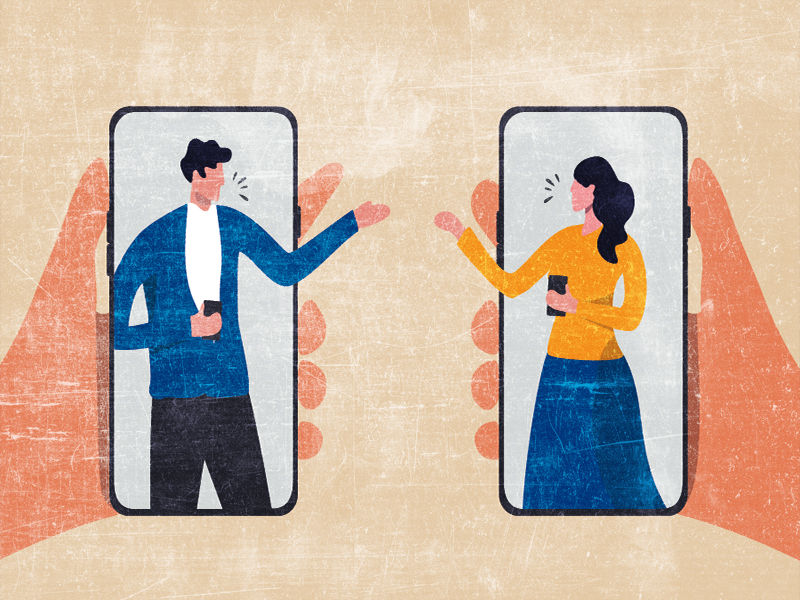
The film focuses on the challenge and threat of social media to individual mental health, family stability, and to the worldwide social fabric. Featuring interviews with technical experts, innovators, and ethicists from Facebook, Google, Instagram, and Twitter, the film takes a deep dive into the impact and repercussions of contemporary technology. These former employees speak directly to how the industry, which is perceived as serving users, is instead turning them (us) into product, and how the financial success of social media is built around manipulating us into feelings, thoughts, and actions that can be predicted and monetized.

Like what you are reading? For more stimulating stories, thought-provoking articles and new video announcements, sign up for our monthly newsletter.

These Silicon Valley industries originally framed their work around missions of helping people to connect—with each other and the world. Many of their innovators were motivated by desires to increase positive interaction and to encourage networking, facilitate personal expression, and empower underserved and disenfranchised communities. All of which utilizes language virtually identical to the terminology I absorbed as a social work student 25 years ago.

The documentary’s interviews (sporadically interrupted with less effective dramatizations) congeal over the 93-minute running time into a message that reviewers have called “genuinely scary,” “bleak,” “dire,” and “essential.” It speaks to the relationship we have all developed with technology and pointedly distinguishes the current breed of technical innovations from prior technical tools; namely, it emphasizes that a tool is a passive object with which we may choose to engage or not. The current technologies pursue our attention, draw us in, and are motivated to manipulate our usage. The constant pursuit of increasing the user’s online time not only feeds the monetary needs of the industry, but it inevitably reshapes our responses, as patterns of usage evolve into habits, and habits become addictive patterns. They may even be reshaping our world view.

Unfortunately, these arguments are consistent with what we in the mental health field accept as fact, from Skinner’s behavioral principles all the way to contemporary understanding of neuroplasticity and mirror neurons. Our expertise offers no escape hatch, it only reinforces the concerns and leaves us with our own professional dilemma: how then, within our mental health practice, are we to respond?

It’s not my job to give advice. But it is my job to help clients access information and resources that have the potential to empower them in their own pursuits.

I can raise awareness about the power of phone notifications and how they are used to shape responses.

I can repeatedly encourage folks to reach beyond what their internet stream provides them as news, facts, and history, noting that these industries have a bias toward polarization and that the feed you are getting is designed to make you more extremely biased in whatever direction you are leaning.

I can inform parents that middle school suicides have increased over 100% since the availability of cell phones and internet service.

I can affirm my client’s need for connection and a sense of community. I can affirm the ways that Facebook or other social media might serve some of those ends, and I can balance that by raising concerns about how it falls short and has been shown to increase fear of missing out (FOMO), which can create fertile ground for depression to take root.

I can work to demonstrate what human connection looks like. Yes, even on telehealth!

For over six months I had been providing counseling to a couple, both of whom struggled with issues of trust and security stemming from difficult childhood experiences, triggering each other regularly at home and in most of their shared sessions. Progress, however, was being made, and it was evident in a decrease in the severity and duration of conflicts at home. In sessions, they were increasingly capable of tolerating vulnerability with one another, and each had begun to embrace the belief that their partner’s upset was a defensive response rather than an attempt to hurt or control. Each had begun to see the other in a new way: outside of the polarized, good vs. evil worldview generated by injury, betrayal, and rejection. They were learning to accept and consider the ambiguity.

I asked the couple to turn their chairs to face one another and, once I could see they had settled, I asked them both to close their eyes and to focus attention on breath. After guiding them through a simple grounding technique, I directed their attention to their love for each other and, with eyes still closed, encouraged them to feel this love both truly and intensely and to channel it all through their eyes to their partner. I then asked them to open their eyes, to pour their love into the eyes of the other and, simultaneously, to absorb the love being gifted to them as well. After thirty seconds they both laughed, as young children might when delighted. I encouraged them to stay with it, and with broad smiles they beamed at one another. After another thirty seconds I encouraged them to conclude with a hug. The embrace was a long, sustained, fully embodied and clearly emotional connection.

With individuals I have recently begun incorporating Diane Poole-Heller’s Kind-Eyes Exercise, in which the therapist asks a client to close their eyes and imagine the eyes of someone greeting them with warmth and kindness, indicating they are happy to see them and extending enthusiastic welcome. The client is encouraged to hold that gaze and to notice the changes in sensations in their body, including effects on their breathing and heart rate, and then to introduce and try to hold the notion that they are, in fact, deserving of the warmth and kindness seen in those eyes.

Learning to embrace the other or to allow one’s self to feel treasured is learning to accept the premise that love, connection, and joy are found in the ambiguity and nuance of this imperfect moment.

In contrast, The Social Dilemma is, in part, a portrait of the hostile environment in which we all live and work. This environment constantly objectifies us. The exercises I describe here and the way I provide therapy are my attempts to hold true to what we know to be the path to human connection, wellness, and possibility. To adequately offer these services, I need to hold an awareness that the very basics of what therapy has to offer are fundamentally antithetical to many cultural norms.

And if this film has it right—that polarity is intensifying. The type of connection I facilitated and witnessed with this couple may just be an interpersonal means to resist dystopian ends.
 

2020, The Summer of No

The calendar has turned to September, and leaves have begun to change color, but before completely turning my attention to fall, I want to reflect on how strange a summer it’s been. Due to COVID-19, I have had to grapple with more unwanted changes in my psychotherapy practice than ever before. It is best summarized as the summer of “No.” In an attempt to capture the breadth and depth of my experience, I’ve created a list of the Nos that have been hardest for me.

Like what you are reading? For more stimulating stories, thought-provoking articles and new video announcements, sign up for our monthly newsletter.

No break. As a psychotherapist, summer is typically the time of a reduced schedule for me. Between my own vacation plans and those of my patients, I usually have more openings in my schedule. Typically, the warmer weather also decreases the number of new patient inquiries. For those like me who practice in parts of the country where summer sun invites us to be outside, there is less demand for psychotherapy. In contrast, during the summer of 2020, the demand for psychotherapy increased as people tried to cope with the impact of the pandemic. It was hard to say no to those seeking help when the need was so great.

No office. I, like many other therapists, became a front-line responder even as I moved out of my office and online. The scramble to learn Zoom, fashion a home office offering some semblance of professionalism, and establish new protocols with patients I’ve never met in person was a steep learning curve. Questions about HIPPA and collecting co-pays electronically became a common thread on listservs. As I lost the separation between my private and professional domains, my life became limited by lock-downs. The line between working and not-working was blurred. The dreaded commute looked less awful from the rearview mirror of nowhere to go. Six months out, my beloved office has become a very expensive post office box where I go and collect my mail on a weekly basis. Each time I open the door, I feel a bit like Miss Havisham in Great Expectations—the calendar says March, and the magazines are out of date. The water in the cooler is no longer cool or potable, most likely.

No variety. One of the deep satisfactions of my work is the individuality of my patients. The variability of the human experience set against the sameness of my physical space has kept me engaged in my work. But this summer, each session was characterized by universal angst about the pandemic. The particulars were different—the patient who was stuck in an unhappy relationship versus the mother surrounded by bored children—but the plea for reassurance was similar. Even more striking was the lack of separation between my own worries and those of my patients. I suffered from pandemic dreams and changed my routines to avoid falling ill.

No reset button. Every therapist I know complained of feeling burnt out, with little prospect of finding a way back to equilibrium. With gyms closed, travel out of the question, and social activities greatly curtailed, I found it increasingly challenging to practice self-care. As I lost track of the date and the day of the week, it was difficult to determine how to take care of myself. With no museums, movies, or plays, finding ways to let my mind rest and reset took unusual effort.

No way to meet new people. People struggled with the isolation of living alone. Figuring out how to date during the pandemic made dating apps feel even scarier than usual. Women worried about the window of fertility closing without an opportunity either to find a partner or feel safe to get or be pregnant during the pandemic. All of these fears were real, and trying to sort out how to encourage growth for my patients while respecting the reality of living through a pandemic was painful.

No joy. There was so much loss—deaths unattended, weddings canceled, and newborns not held by grandparents. There were no graduations, no proms, and no parties. Summer holidays were scaled back or nonexistent. It was hard work to find the joy in activities that now required masks and social distancing. Four of my patients, however, did get married this summer. After scaling back their plans, in the end, each celebration was a testament to flexibility and changed priorities.

No faith in our leaders. People searched for answers they could trust. Mask or no mask? Six feet apart or ten? Was flying safe or not? The discouragement and at times outrage about the failure of our leaders to lead kept our sessions focused on current news cycles with an abundance of hopelessness.

No more only pretending that Black Lives Matter. Pretending no longer passed as good enough, and although this was a positive change, the challenge was great. The reckoning of how to understand our country’s long, sordid history of racism was dissected within the safety of the therapy relationship. For many of us, especially those of us who are white, the painful and raw experiences of racist feelings and behavior were relatively new to include in our conversations.

No jobs. As patients were furloughed or laid off, economic worries became paramount. Some careers all but disappeared, such as event planners who found themselves not only without a job, but also without a career future. Recent graduates’ dreams of starting a new life were dashed. Older patients felt the sting of ageism in the workforce. For some people, it became a matter of choosing between their jobs and risking their health.

No end in sight. There was no timeframe I could offer for when things would be better. Future plans remained uncertain, and even now there is still no end in sight. Exploring topics of mortality and challenging our very American notions of invincibility and superiority evoked existential crises about the meaning of life. Patients pleaded with me for assurance that things would be all right. Holding out hope, but not false promises, for the future required striking a tenuous balance.

As I and others steel ourselves for the one-two punch of the pandemic and the election this fall, it is worth pausing and acknowledging the toll COVID-19 has taken on our own well-being, not just that of our patients. It has been exhausting. I am committed to find a way to greet the crisp, cooler autumn air and fulfill my professional responsibilities. For despite all the “Nos,” one thing I do know is that human connections are what make life worth living, especially during challenging times like these.

20 Seconds: Coming Out to a Client

“Were you in the Olympics?”

               The statement gave me pause. Just as I was looking to build rapport, my client was earnestly wanting to know more about me. He was, of course, referring to the rainbow rings dangling from my pride necklace.

A delicate moment.

Like what you are reading? For more stimulating stories, thought-provoking articles and new video announcements, sign up for our monthly newsletter.

I’ve been out and proud long enough not to worry too much about casual disclosure. When I was younger, I protected my gender identity, and even my sexuality, as something precious and fragile. Fast forward through a decade of resilience, self-actualization, mindfulness and graduate school. I’m an affirmative therapist with a rainbow necklace.

My client however was a blatantly straight young man. His priorities were football scholarships, drinking buddies and hot babes, in that order. Like a lot of hyper-masculine dudes I’ve worked with in therapy, he was reluctant to tackle his emotions, but self-aware enough to acknowledge his tendency to self-sabotage. Depth was sidetracked by sexual humor, vulnerability was hidden by pride and as our sessions progressed, he liked to deflect from himself by trying to “bro-out” with me. This of course, also revealed his deep desire to connect, as he valued fraternity a great deal. It’s only natural to hunt out similarities and differences in order to relate to someone, and he was doing that now. In his world, colorful rings meant sport.

Typically, I recommend LGBTQ+ therapists tack on a little about themselves in the very first session. A brief statement in your informed consent paperwork describing your office as a safe space can make a natural segue. Cisgender and heterosexual therapists have a unique privilege here, as they need not address issues of gender or sexual orientation with their client on day one. It is largely a non-issue. LGBTQ+ professionals, however; often have to contend with a delicate but necessary balancing act, as not everyone is comfortable having a queer counselor. For some, there may be a moral, religious or cultural objection to our identity. For other prospective clients, our “outness,” which is to say our open authenticity, maybe too challenging for where they’re at in their process, especially if they’re wrestling with issues of denial. Admittedly, this can be disappointing but it’s important to maintain a sense of unconditional positive regard. We have to meet a client where they’re at, which is why I believe in goodness-of-fit, first and foremost. If a client is not comfortable, I find it’s healthier for all parties involved to refer them out.

I usually give a quick twenty second nod to who I am noting how “as a nonbinary person, I understand the importance of confidentiality” or “as an active member of the LGBTQ+ community, I value emotional safety.” This is usually enough, and if I do forget to mention it in our first session, my rainbow necklace is a decent clue. With my young adult clients, a nonbinary pin or a pansexual T-shirt is like carrying a little safe-space bubble with me wherever I go.

Regrettably, I’d missed my twenty seconds in our first session, and now my client thought I was an Olympian.

Having dropped into our first session red hot and fuming, we had to regulate his rage and prioritize his pain. He was angry at his parents, his coach, his ex-girlfriend, himself and that had consumed the hour. Obviously, we addressed safety and confidentiality, but we’ve all had that fiery intro where the paperwork has to be set aside momentarily for crisis management. Addressing the nuances of who I am simply wasn’t relevant at the time, as the only thing that mattered was my ability to hold a safe container for his process. Round one was damage control. We didn’t even identify any long-term therapeutic goals until round two. Now, in round three, he was opening up and showing his curiosity.

Keep in mind, LGBTQ+ therapists don’t go around introducing our sexuality or gender any more than heterosexuals walk around saying: “Hi, I’m Straight Robert but my friends call me Vanilla Bob.” Sure I market myself as a Queer Counselor, and sure I published ACT for Gender Identity: The Comprehensive Guide, but my gender and sexuality aren’t the fulcrum of my identity. Important, yes, but not my every waking thought. So when my client asked about my necklace, I found myself scrambling, for the first time in years.

I have learned that it’s important for LGBTQ+ therapists not to hide who we are as our lived experiences are incredibly valuable to clients in need of personal insight, relational connection or a rainbow role model. These days, because of my reputation, people tend to seek me out when they’re wrestling with genderqueer liminality, transgender self-actualization, shame, shame, and more shame, queer trauma, queer euphoria and the excited limerence of forbidden love. Being out and proud, I kind of expect people to know who I am and that was my mistake.

My client wasn’t the sort to read my website. He was here because his parents—the architects of his academic career—were also the architects of his mental health journey. His mom literally drove him to and from our sessions. To my amazement, he didn’t know anything about rainbows or transgender people, and for a second my closeted inner child wanted to lie. I should just tell him I used to throw the javelin. What am I saying? Just tell him you like gymnastics!

I was finding out first hand how hard it can be to check my own transference as a queer therapist working with a very straight client. In twenty seconds, his inquiry had brought up all my outdated evasion tactics so I answered his question with a question. Rather than simply out myself, I asked if he’d ever been to a pride parade. This roundabout response was a defense mechanism designed to gauge his open-mindedness while shifting myself away from the focal point. If this maneuver seems contradictory to being out and proud, just know that I, like a lot of queer people have spent a lifetime being bombarded by unsolicited opinions and inappropriate questions. When our very existence is deemed politically polarizing, we have to develop little ways to gauge safety and evade conversational traps. On the street, that’s quite easy as we can be fierce and forward, but in professional settings?

We’re ten seconds into this exchange now.

In no uncertain terms he told me about spirit day, back in high school, and how everyone wore colors, because that’s what he thought I meant. School pride.

We’re just getting muddled.

When I finally found my community after years of isolation, I wrapped that sense of belonging around me like a cozy blanket. My social circles marched and still do with me so I honestly hadn’t encountered someone this sheltered in a very long time, nor had I ever had to deal with it in session. My rainbow references had no power here. My wink and nod meant nothing, and in our short back and forth I worried about alienating my client. Would our differences present a divide too vast to bridge? Was our budding rapport doomed from the start? Did he open up to me so readily because, in his eyes, I looked like a man? Would my authenticity jeopardize our ability to work with each other?

So much happens in twenty seconds of conversation. So many thoughts flit by when we have to assess disclosure. My task is not to give my client a crash course on Queer studies, nor counter his views of the world, however contrary they may be to my own. This makes labels and micro-labels tricky, as they can sometimes spur more questions than answers when people have never encountered them before. If I tell him I'm nonbinary, we may spend way too long defining what that means. Yet, as both a person and a professional, my authenticity is paramount, as it is the authenticity within the therapeutic relationship which is so healing.

So as not to get bogged down in lingo, I told him that I never really connected with school pride, and that I was a part of the LGBTQ+ community.

“Oh, so you’re like a fag.”

I corrected this in my ally-trainer voice. If you’re unfamiliar with the tone, pay attention the next time someone asks a diversity trainer a wholly uninformed question and note how diplomatically they answer. My client wasn’t trying to be offensive. In his world that’s what people like me are called, yet I must also humanize myself, so I told him quite simply how disrespectful the term was.

And he apologized. And he flip-flopped. And he gave me his two-cents, telling me about a friend of his who came out last year, but how he was definitely straight himself, in case anyone was wondering. I asked if it would be an issue. He said no. In the long run, the details of my sexual and gender identity were irrelevant to his process, but not the disclosure itself. We would refer back to this moment a few times during the course of our work together, as an example of giving someone the benefit of the doubt, of reaching across the aisle, and of connecting with people very different from ourselves. For my client, struggling with his sense of anger and impulsivity, this brief exchange exemplified compassion, curiosity and how to make amends.

Given all my therapeutic concerns pertaining to disclosure, I sometimes have to remind myself that it’s the authenticity of the therapist that encourages the authenticity of the client. Mental health professionals have to navigate the ethics of disclosure on a case-by-case basis, and there are many effective approaches one can take. I know some masterful person- centered therapists who become pure mirrors for their client, just as I know a few gestalt therapists with very vibrant personalities. In kind, I know a few affirmative therapists who share anecdotal stories to normalize and humanize their client's lived experiences just as I know a few affirmative therapists who prefer a more psychoeducational route so as not to get too personal. Yet regardless of our therapeutic approach, people will inevitably react to who we are whether we like it or not. And in just twenty seconds of disclosure, one can gain a great deal of insight, not just about the client, but about the whole therapeutic relationship itself. Curiosity, distinction, concern, alienation, alliance, amends and acceptance can all happen concurrently just as we may not understand someone, but still like them anyway.   

When a Client Resists, I Persist

When it comes to client resistance, I should know better than to blame the client. The burden is on me, the clinician, to adjust my approach, search for my hidden personal biases, repair a therapeutic breach, and empathize more effectively with the client. It is my job to remedy clinical stuckness, to take that responsibility head on, and for good reason. I am the service provider. I am in the position to help. It is not the client’s job to transform my deficiency or blind spot into effective help. I get this on an intuitive level. So why do I get stuck personalizing resistance and harboring secret negative judgements of my clients? Psychiatrist David Burns, author of Feeling Good, suggests that counselors struggle with client resistance because their egos get in the way. He says we are too fragile, therefore strive to protect our pride and identity, forcing us to match the client’s resistance with our own. Thus, to help the client and enhance the clinical work by taking their critical feedback, we must, according to Burns, “put our egos to death.” What he means by this is that I, as a clinician, need to drop my defensiveness so I can truly hear what the client is trying to communicate. Once I am no longer defensive, I am then free to see the client’s resistance for what it really is—information, rather than a personal attack, although it may feel like one. And I can use that information to adjust my approach and hopefully enhance the overall clinical work. In my experience, ego doesn’t go down without a fight; it doesn’t even like surrendering. When I have felt slighted or diminished by a client, my first impulse is to prove them wrong; I want to show them I’m right or that I’m superior, or smarter. This is the dark side of my clinical self. I find it far more clinically useful to expose this darkness to the light. This is no easy task, but the pain of putting my ego to death is worth it. A dead ego means I can engage with the client’s criticism and defensiveness without taking it personally, without being threatened, without having to argue back. The client can no longer offend or wound me. I can harness their criticism and use it as information that changes the therapeutic work. That’s empowering! But this is easier said than done, so below I provide 5 suggestions from my own clinical experience on how to do this: Reframe the client’s criticism/resistance: It is my work to reframe the client’s resistance and criticism as information. They aren’t resisting me; they are, in fact, communicating with me. And what they are saying is valuable information uttered in the hopes of making the relationship better. I try never to ignore this useful information because of my ego. The stakes are too high. Take responsibility: I am the service provider. If the client is resisting, the responsibility falls on me, not them, to remedy the situation. I will not become a defeatist or a helpless blamer of the client. I can make things better. I can directly change the situation. I am not powerless. In order to serve the client, I will own the situation and take concrete steps to address the client’s resistance. The client is a person: The client is in a vulnerable position. They aren’t trained mental health professionals with high-powered degrees, certifications, and letters after their names. How are they supposed to tell me that counseling isn’t working? Their main vehicle for feedback is resistance. Therefore, I strive for compassion for my client and for their need to resist. The client could be teaching me something: It is possible that resistance is the result of venturing into an area of my weakness or ignorance, which is not the client’s fault. I am not all-knowing and comprehensively skilled—becoming a competent clinician is a life-long endeavor. I learn just as much from my clients as they learn from me. Counseling offers me the potential to expose my ignorance. And the possibility of that shouldn’t threaten me; rather, it should excite me. Exposure of ignorance can be gentle; it can also be harsh; but within are lessons that can be used for my growth and the client’s benefit. Modeling: I can demonstrate health to my clients by receiving their resistance in a respectful manner. My goal is leading my clients and modeling healthy give-and-take. The client’s resistance can be a teaching moment where I show them how to offer feedback in a more kind and respectful manner. I recall working with a young man who taught me how to see the benefit of resistance. I remember that anytime we tried to discuss the content of his assigned workbook exercises, he would do everything in his power to change the subject, to mock the content of the workbook, to say it was boring or that it didn’t matter. He would say the exercises were “stupid.” And when he did complete the assigned work, he would write down one-word answers. This always came as a surprise to me, because our conversations at the beginning of sessions were usually engaging and positive. At the beginning of our relationship, we could spend an entire session hour talking about why he didn’t do the homework. I grew tired of the run-around and finally asked if he thought the homework was helpful. He answered honestly. He said doing the homework felt like school. And when it came time to discuss it in session, it ended our positive conversation. He added that I was the only positive male figure in his life. When he was young, his father had abandoned his family, and his mother dated a series of angry and controlling men. All of his teachers at school saw him as the “problem kid.” So it was a huge relief and comfort to be with a man whom he liked and with whom he could have fun, lighthearted conversations. In that moment, I realized that working through the content of a workbook was secondary, and what this young man really needed was a caring relationship from a man with whom he felt safe. I thanked him for his honesty and feedback and adjusted my approach. I focused more on relationship building and made the workbook exercises completely optional. I would only discuss them if he brought it up. From then on, the young man’s resistance was gone, and he voluntarily put more effort into the workbook. Understanding my client’s resistance helped me understand him at a deeper level and, in turn, improved our therapeutic relationship and its outcome. His resistance offered us both the opportunity to grow in our respective roles.

Us Versus It: Racism, Family Treatment, and Eco-Systemic Considerations

As an Eco-Systemic Structural Family Therapist (ESFT), I help families establish and learn new patterns of interactions both within and outside of their homes by creating a contextual frame in the form of “Us versus It.” Using this frame, which refers to the family (Us) versus the impacts of racism (It), I attempt to help each member of the family to view their problems and possible solutions in the context of broader issues related to race and racism. Hence, here I will reflect on my work in the therapy room from the perspective of my child client, their caregivers, the therapists, and the ESFT model.

The Child

“It should not be like this; it should not be like, this Miss Paula.” I sat quietly as I listened to my 14-year-old Hispanic client Valentina express her agony over the recent killing of George Floyd, the racially charged incidents surrounding police brutality, and the global protests in support of the Black Lives Matter movement. As I sat quietly, listening to Valentina’s innocence being diminished at this sensitive stage of development where her sense of self, identity, and beliefs about herself and the world are being shaped by the horrific reality of what she described as “not normal,” I began reflecting on my role as a therapist of color. Identifying the truth of Valentina’s distress did not bring me comfort as I realized uncomfortable conversations about race and racism needed to be had.

Not knowing what response I was expecting from this 8th grader who wants to live in a world where she does not have to be “the adult” in her father’s household and where her mother does not have to devote all her time to working multiple jobs in order to take care of her and her younger brother, I asked Valentina, “What do you understand about what is going on in the world today?”

As we discussed the differential treatment of people of color, Valentina began to identify that she herself belongs to a marginalized group. Drawn to tears, I felt empathetic as I heard Valentina describe her hurt over possibly being racially profiled or being told to “go back to her country” because she speaks fluent Spanish. With the decades of individual and systemic racial injustice and inequality that people of color, specifically black people, have experienced in the United States, a significant negative impact on the mental health and wellbeing of the members of this racial outgroup has occurred as well.

From differences in socioeconomic status, to impoverished conditions of living, to discrimination within organizations where there are limited opportunities and resources for African Americans to grow professionally, racism is very much still prevalent today, as affected families are still disproportionately disadvantaged in their access to opportunities for wealth, education, employment, and housing.

As a black female myself, as I reflected on this not-so-surprising inequality and injustice black people are subjected to, I thought about the families who come each week to my therapy office looking to change systems and patterns within their family and establish better attachments with their children. A significant portion of these families are African American, and in one form or another are a representation of the experience of all black people in America. Early in his life, my 10-year-old African American male client learned social cues signaling to him that he was different from his classmates from other racial groups simply because he looked different from them. My 6-year-old female client refers to her mixed-raced skin color as “ugly” and her white mother’s skin and hair as “pretty.”

The Caregiver

The more I have felt challenged to create the space to conceptualize my clients from a broader sociocultural perspective, the more I have acknowledged the “hard truths” that my African American family clients bring into the therapy room every week. Some of these hard truths include my 12-year-old African American male client Andre’s grandmother/legal guardian, who has been raising him since he was a toddler, sharing her fears about raising two African American men from different decades. She experienced the same fears for Andre’s father when she was raising him that she now experiences while raising Andre.

I recall feeling cold as I listened to Andre’s grandmother narrate her feelings as she recalled watching and re-watching the video recording of the killing of George Floyd. I personally could not bring myself to watch the complete video, as I was overwhelmed with sadness and hurt from the injustice and perpetration of violence against black people—especially black men—by the police and criminal justice system. However, I sat in the session hearing my client as she narrated the events that occurred in this video as if it were Andre’s father or Andre. As I heard her, I saw her “hard truth” that she saw Andre’s father and Andre in George Floyd.

Discussing her feelings about raising a young African American male in a world where racism is not only prevalent but inescapable because it is being recorded, she expressed how much effort she has put into raising a “kind, caring, intelligent” young black boy, but also how that is not enough to guarantee his safety or access to the best opportunities. It appears that Andre’s grandmother may have some regret around how she raised Andre’s father, as she recalled “sheltering” him out of fear, which contributed to his not being responsible or self-sufficient.

To understand why Andre’s grandmother felt that it was safer to “shelter” his father when raising him helped me to better understand the connection between impoverishment and segregation, and the high levels of crime, substance abuse, mental illness, and violence that she had attempted to protect Andre’s father from and was now trying so desperately to protect Andre from.

When I think about impoverished neighborhoods, I also think about my 13-year-old African American female client Tracy’s biological mother, who lost her son in a “suspicious” car accident a few years back about which my client reports, “There is more to the story we will never know.” Tracy’s mother, who since losing her son became very active in seeking justice for him and other young black males like him, has also acknowledged that her son often got into trouble and that their “unsafe” neighborhood had a significant impact on how he lived his life.

Although well aware of the effect one’s environment and upbringing can have on them, I still found it difficult hearing Tracy’s mother express the disadvantaged conditions of living she and her family have experienced, and how they cost her the life of her son. Tracy’s mother’s grief sits with her every day, as this was not only her child, but a child whose life she continues to prove to anyone who will listen…mattered!

The Therapist

As the recent racially charged incidents in the country made me reflect, perhaps anew, on what role I am currently playing as a therapist of color in and outside of the therapy room, I went back to the ACA Ethics Code, which says, “The primary responsibility of counselors is to respect the dignity and promote the welfare of clients.” It also directs counselors to actively understand the diverse cultural backgrounds of the clients they serve, and to explore their own cultural identities and how these affect their values and beliefs about the counseling process. These words are the core of competent and compassionate multicultural practice.

In the context of these ethics, “it is even more important for me to see my clients not how I want to see them, but rather how they want to be seen”. If I have a African American single mother of two who is managing two jobs and unable to remember session times, my first conceptualization of that client should not be of her as “lazy” or “forgetful,” because it may just be she is a mother trying to provide for her family and may need a little extra support from me, such as a twice-weekly rather than weekly session reminder.

Former NFL player, motivational speaker, and pastor Miles McPherson believes that every consultation should be a race consultation. The problem comes when you have assumptions based on a social narrative stemming from your own beliefs and upbringing. Putting them aside and having a race consultation allows us to let our clients tell us who they are. I view McPherson’s ideology as a positive and useful one in that it allows me to enter the therapy room viewing it as a “race consultation” with the goal of setting aside my preconceived race-related notions about my clients. This orientation also frees me of the fear of acknowledging my “blind spots” because it gives me room to learn as well as see where I may be falling short. Not acknowledging the racial elephant in the room is like being comfortable doing the wrong thing.

I have come to realize the importance for therapists who belong to non-black racial groups, specifically white racial groups, to be more knowledgeable around the historic and systemic disadvantage African Americans have experienced for decades and how that plays a role on their mental and physical health. Culturally competent therapists who are knowledgeable around the impact of systemic and intergenerational racism may be in a better position to “buy-in” with their clients, that is, to recognize their own privilege and take the extra step, like making an extra phone call to a client when needed, advocating for a client who needs extra resources from the community, or exploring their own cultural identities beliefs as they help their client identify their own.

The Model

The Eco-Systemic Structural Family Therapy (ESFT) framework identifies certain overlapping and interacting individual, systemic, and societal patterns that contribute to the interactions, hardships, and coping strategies of the African American families with whom I frequently work. This framework posits that the symptomatic child is reflective of the breakdown of family life as an adaptive response to hardship. Using this collaborative, strength-based, and trauma-informed model, my work with families applies the four pillars of ESFT—attachment, co-caregiver alliance, executive functioning, and self -regulation—to help develop caregiver-to-child attachment, strengthen the level of functioning and skills caregivers have in order to perform day-to-day tasks for managing their lives and the lives of their child, identify social support systems that help the family build caring and stable environments, and observe how the family makes meaning of and copes with emotional and affective experiences.

Take, for example, my 9-year-old African American male client Tyree, whose “Core Negative Interactional Pattern” (CNIP) includes Tyree’s getting “easily frustrated” and instigating fights with his sister, which leads to Mom yelling, Tyree being punished, and then Tyree’s “shutting down” or engaging in emotional outbursts such as yelling, crying, or screaming.

When I think about what hardship, tragedy, and trauma that may contribute to these presenting problems Tyree exhibits, I think about his witnessing domestic violence between his father and mother on several occasions. Additionally, his father is currently incarcerated, and his mother now occupies the single-parent role and is busy ensuring that she is able to financially provide for Tyree and his siblings. Given these changes in Tyree’s family system, it is useful for me to recognize his interactional pattern within the family as a reaction to the loss of having his father in the home and the burdens on the entire family unit against the racial/cultural backdrop of their lives.

In such cases where caregivers may suddenly take up the role of single parent or have been upholding the role for a very long time, ESFT promotes executive functioning and caregiver-to-child attachment with concepts like “Ennoblement,” where caregivers are able to view themselves as competent, caring, and able to keep their child safe. For instance, my work with my 11-year-old African American male client George’s mother included a consistent level of “Ennoblement,” as she needed a reminder and affirmation that she was competent, caring and able to keep George safe even though she did not currently have the support from his father. Because of the hardships experienced by George and his mother, many sessions with this family included George’s mother expressing the difficulties of being a single mother and lacking a support system.

I have learned that it is essential for African American mothers and their families in particular to be empowered, as research indicates that most African American homes are female-headed homes helmed by mothers, grandmothers, and aunts. According to the United States Census Bureau, the percentage of White children under 18 who live with both parents almost doubles that of Black children. This data is very reflective in my therapy room, as a large proportion of the African American families I see are single-parent families which are female-headed.

***

In thinking about the various children and family members with whom I have and will work and reflecting on my role as a therapist of color using the ESFT model, I aspire to bring deeper and more meaningful racially-informed conversations into the therapy room. I hope to do so by creating a safe space for more racially-sensitive and race-oriented conversations between caregivers and their children. In doing so, I also hope to join more authentically and empathetically with African American families while together we construct more adaptive narratives.

Consigned to Virtual Therapy

Tensions had been mounting inside and around me. “It is time,” I decreed to no one listening. “I need to call Estelle, it’s time to get back into therapy.” As always, Estelle responded immediately. Always there for me. We traded availabilities and landed on an appointment. I felt an ever-so-faint welling sensation of relief. I couldn’t wait to get back on the couch, both literally and figuratively.

Then came the blow. “I’m seeing clients virtually,” she said.

Like what you are reading? For more stimulating stories, thought-provoking articles and new video announcements, sign up for our monthly newsletter.

I first met Estelle when, nearly three decades earlier, I had, with her help, finally extricated myself from a very painful and self-destructive relationship. Ever since, I have been seeing her on an as-needed basis, during fair and foul emotional weather, for issues great and small, and at times just for a well-check. I have followed her from one location to the next, until she finally landed in a charming little 1920s Florida cracker house in the old-town section of Fort Lauderdale. Aptly named “Serenity Place,” Estelle’s office was inviting and warm, a throwback to a past era. Wood floors, rattan furniture, and that wonderfully perfect, just-short-of-mildew smell of “old” that permeated houses of that period.

It was a comfortable little space where I felt room and permission to spread out in all directions. While Estelle practiced a disarming blend of client-centered, Gestalt, existential, and systemic techniques, she was in essence, an Estellist; competent, genuine, and genuinely caring. She knew my backstory. It was her warm, confrontational, engaged, and creative personae that attracted and kept me coming back to that place of serenity. It was a package deal—therapist and space, inextricably bound. And it was to that space I wanted to return when I reached out to her for an appointment.

But virtually? No Serenity Place? No rattan couch, no creaky wooden floors, no lush foliage vying for my attention just outside her windows? And what about the basket of scarves she would cajole me to choose from to express my feelings? And how would she walk behind me to offer a counterpoint to the self-defeating prattle in my head?

Ironically and in the interim, I had taken on two former brick-and-mortar clients with whom I had worked over the years. COVID and all its related discontents had worn them down. When I first met with each of them, I had, of course, asked them how the transition to the small screen was for them. One, a physician who had expanded his telehealth services, and the other, a university professor granted the privilege of teaching from home during the pandemic, concurred that they were “used to it.”

The small screen had become second-nature to them, as it had for me as therapist, teacher, and editor; for in the latter role, I had and continued to solicit articles for Psychotherapy.net on the transition to virtual therapy. And a reading of the various blogs and essays on this topic indicated that therapists “out there” have, of necessity in many cases, adapted to the many challenges of this new mode of service delivery. For others, it was already a part of their therapeutic tool box. But I don’t think any of those who have written on the transition to telemental health have shared personal experiences of being a client during this new wave. Sure, they’ve shared some of the challenges of working with particular clients online, but that is as far as it has gone.

My hope is that each of them has created the space in their therapeutic work to explore the changed dynamics of intimacy between themselves and their clients, rather than presuming that all clients have adjusted similarly or optimally. The closest any of the therapists has come to addressing this was Matthew Martin and Eric Cowan, who wondered about the I-Thou relationship in the era of telehealth.

So here I am, now at this juncture in my 30+ year relationship with my own therapist, wondering if the “I” of me can still connect as deeply and intimately with the “thou” of her, or even if I want to try. I know the therapy outcome literature, particularly the key roles that alliance, collaboration, congruence, and empathy play; and I embrace the burgeoning literature on the efficacy of teletherapy compared to face-to-face encounters.

I acknowledge the privilege of having my choice of therapists, the money to pay her handsome fee, and the state-of-the-art technology to do so. The double standard is not lost on me, but I want to wail on Estelle’s couch, and I want to stand before her, eye-to-eye, as we role-play, and I want to have the option of refusing those gut-wrenching Gestalt exercises before petulantly conceding.

I wonder what will be sacrificed in that seemingly artificial moment, or what will be lost in the existential “here-and-now,” should I decide to pay a digital visit to Estelle. And along the way, I hope that therapists out there wonder the same.

The Uneven Effects of the Pandemic

I will not be able to see my grandchildren, 6 and 4, once school and daycare begin. Each of them will be interacting with other children. I don't know if the parents of the other children wear masks; I don't know if the parents of the other children wash their hands frequently or use sanitizer after they put gas in the car. So I won't be seeing my grandchildren for my birthday next month.

Like what you are reading? For more stimulating stories, thought-provoking articles and new video announcements, sign up for our monthly newsletter.

On the other hand, I'm sitting in my house in the foothills of the Berkshire mountains, looking out a picture window at a cardinal perched on my birdfeeder. Last weekend, my husband and I went to Maine and stayed at a B&B. We wore masks when we entered the house, but we had breakfast outside on our own little porch overlooking the garden. We had lunch and dinner outside at lobster pounds or restaurants with large, open porches. Last night, we went to a local restaurant to celebrate our anniversary. It was raining, so we had to sit inside, but the tables were much more than six feet apart, and the server wore a mask. We had a wonderful dinner and felt entirely safe.

I am working with patients by phone, so I don't have to be in my office. We have been in Connecticut for six months now and have no plans to return to New York. I have a patient at 8:30-9:15, drive five minutes to the tennis court, and play doubles for an hour and a half. Then I return home, shower, and have two more patients before lunch.

An online nationally representative survey of 1,004 U.S. adults aged 18 and older by the New York public relations firm of Porter Novelli found that nearly half of Americans (48%) reported that they are anxious about the possibility of getting coronavirus (COVID-19), and nearly 40% are anxious about becoming seriously ill or dying from it. A high percentage (62% of those surveyed) are anxious about the possibility of family or loved ones being infected. The survey also found that more than one-third of respondents (36%) said that coronavirus is having a serious impact on their mental health, and a majority (59%) feel that coronavirus is having a serious negative impact on their day-to-day lives.

These results are compatible with the common-sense assumption that the COVID pandemic has been detrimental to our mental health. But that's not true for me. And it's not true for many of my patients.

My patient Patricia, for example, loves being housebound because when she was a child, her parents insisted she get up in the early morning hours and join them when they opened their retail store. As a result, Patricia hates to leave her house and struggles to get to her place of employment by 10 A.M. Now, because of the pandemic, her office is closed, and she has to work at home. She's in heaven!

Barbara, unlike Patricia, initially complained that she had to work from home. She wanted to go to the office and see her colleagues. She resented having to learn how to use Zoom to work with clients, and she resented having to learn a new app to document her time. But that has changed. In our phone sessions, she has been coming to terms with her resistance to learning technology. She has been talking about her assumption that no one will help her and exploring the ways in which she refuses to ask for help. After discussing this with me, she asked her supervisor for help and was happily surprised at her positive response. Barbara has mastered Zoom and several other programs that she uses for work. She has changed a core belief about herself and her relationship to the world.

We find a similar divide when we look at the impact of the coronavirus pandemic on families. Those who are unemployed because of the crisis—particularly families with young children—are suffering both financially and emotionally. Research shows that increased stress levels among parents is often a major predictor of physical abuse and neglect of children.

The resources many parents rely on—extended family, child care and schools, religious groups and other community organizations—are no longer available because of the pandemic. Child-protective organizations have fewer workers available, and they may be unable to conduct home visits in areas with stay-at-home orders.

On the other hand, many parents who have the luxury of being able to work at home earning their usual salaries and have access to or do not need child care are thriving during the pandemic. My patient Karen, is working from home and her daughter, Becca, is at home taking her college classes via Zoom. Usually, when Becca is at home during college vacations, Karen doesn't see her much because she is out with her friends. But now, Becca cannot go out with her friends. She is having dinner with her parents and spending evenings at home with them.

Karen has always worked full-time and employed a full-time nanny to care for Becca. Karen never cooked dinner for her family; she never liked playing games with Becca; she never wanted to watch movies with her; she never wanted to play outside with her. She relegated all that to the nanny and to her husband. But now, Becca is confronting her. "Why don't you want to play Scrabble with Dad and me?" Karen wants to retreat to her bedroom to read her book or shop online. She doesn't want to play Scrabble with her daughter and her husband. For the first time in many years of treatment, Karen is facing her resistance to intimacy with her daughter and her husband. We have talked about this issue many times over the years, but now Karen is facing it head-on. She is asking herself, “Why do I retreat from my family?”; “Why do I refuse to do the things that would make me closer to my daughter?”

There is a great divide in this country in terms of race and class that has been exacerbated by the coronavirus. But there are other subtler divisions as well that have resulted in the uneven impact of the pandemic on communities and within communities. Some people are drowning from the loss of health, income, and education, others are adapting in growth-promoting ways, and still others are thriving. As therapists, we must keep sight of the unevenness of the effects of the pandemic, empathizing with those who are suffering and encouraging those who are thriving (even ourselves) to not feel guilty.

References

COVID-19 Pandemic is Taking MH Toll, Finds APA Poll. (2020, April 24). Psychiatric News

Dangerous Intimacies: Racism, Risk, and Recovery

I Have These Fantasies

“I have these fantasies,” Ivan told me, his voice low and cold as stone, his eyes sliding away from mine and fixing on the wall behind me. “I wait for one of those women outside the building. I get her alone, and then I strangle her with my bare hands.” As he said this, his hands tensed and grasped, as if wrapped around someone?s throat. “I can almost feel it,” he said.

An African-American man in his early 60s, Ivan (a pseudonym) was in therapy with me for PTSD when he made these statements. I was surprised he expressed these feelings to me. Not because of the intensity or violence of Ivan?s words, but rather by the mere fact that he actually allowed himself to utter them out loud. We had been working together for over two years at that point, and this was the first direct expression of anger he had ever shown in session. Ivan had talked often about feeling angry—stating it in a vague and matter-of-fact way—but he had refused to do more than that. When I would encourage him to elaborate, he would just shake his head, press his lips tightly closed, and wring his hands. As I later learned, this was not resistance in the classic psychotherapeutic sense—it was something altogether different. By the time Ivan finally spoke his anger, I had come to appreciate what was at stake for him in doing so.

Resentment: A feeling of indignant displeasure or persistent ill will at something regarded as a wrong, insult, or injury (Merriam Webster)

Three years before this encounter, Ivan—a thirty-year seasoned social worker and substance abuse counselor who had received numerous commendations—found himself in an unexpected situation. During a session, a client told him she had herpes and was planning to go out to spread it to as many men as she could. Alarmed, Ivan told her that was unacceptable, and that she absolutely could not do such a thing. The client became angry and stormed out. On her way past the front desk, she told the receptionist that Ivan had grabbed her and sexually assaulted her. Rather than come to Ivan and ask him what happened, or asking anyone else if they saw anything untoward during Ivan?s session (he always left the door part way open during sessions with female clients), the site manager broke protocol and went directly to the police. Ivan, unaware of the accusation, went about his day.

The following day, the police came for Ivan, hauled him down to the police station, and harshly interrogated him for four long hours. They pressured him. They threatened him with violence. They yelled in his face. They laughed as they told him they could plant drugs on him and throw him in jail anytime they wanted to, so he might as well just confess to what he had done. This kind of scenario would be a harrowing event for anyone, but for Ivan—a black man who grew up in the inner city—interrogation by the St. Louis police was especially fraught. “I really didn?t know what they would do,” he told me. “”When you grow up in the city like I did, you stay away from the cops at all costs”. I was completely at their mercy. I honestly didn?t know what would happen to me in that room.”

Ivan was eventually released and, following a thorough investigation by both the police and the Department of Mental Health, was completely exonerated of any wrongdoing. Meanwhile, the client in question had recanted, admitting that she made up the allegation because she was angry. But it was too late—Ivan?s life was in tatters. Word had gotten out among both the professional social work community and the neighborhood that Ivan was a “sexual deviant” of some sort, though in typical gossip fashion, the details became contorted. He came home to see “child molester” spray painted on his garage. He had rocks thrown through his windows. Neighbors crossed the street to avoid him, and he was asked to leave neighborhood gatherings. His girlfriend of two years left him because of the rumors.

But worse than all of this were the symptoms of PTSD Ivan developed in the wake of his interrogation at the police station. He had nightmares and flashbacks. He would spontaneously start shaking uncontrollably and pouring sweat. He paced incessantly. He became completely unable to function, let alone work. And most intense and troubling for Ivan was his absolute terror of women. “I can?t be anywhere near women,” he told me. “I?m terrified of what they?ll do, if they might accuse me of something, of what would happen then. I can?t go back to that police station. So, I stay as far away as I can from females.” This might strike you as ironic, as I am a woman, and Ivan was telling all of this to me. In fact, we talked about this often, and I will return to it in a moment.

Ivan, understandably, harbored a great deal of resentment about everything that had happened to him. Notably, however, he was not upset with the client who accused him: “The client is, well, a client. You don?t expect them to act rationally,” he said. Nor was he upset with the police who interrogated him: “The police were doing their jobs. I was just some guy they thought had done this thing.” Rather, his resentment became directed at the coworkers—all of them women—who called in the police rather than following company protocol. “That?s what I don?t understand,” he said. “My coworkers, those women—they knew me. I had worked there for six years. That?s what really gets me.” In other words, Ivan?s resentment derived from the intimacy and vulnerability he had cultivated with the people—women—who then turned on him and put him in danger. The fact that some of these women were Black women particularly upset him. “They know exactly what calling the cops on a Black man can mean,” he stressed. “They put me directly in harm?s way. I can?t believe they did that.”
Re-Sentiment:
To feel something again, to experience the past in the present.

The Burden of Being Black

In contemporary American psychotherapeutic practice, therapy is supposed to be a safe space where clients can connect with and express their deepest and most vulnerable thoughts and feelings. The reigning ideology is that many of the troubles that people experience can be ameliorated by talking through what is bothering them, expressing unexpressed emotions, giving voice to submerged or disavowed feelings. Feeling again—or maybe for the first time—sentiments that have been foreclosed for any number of reasons. This is often a frightening prospect for clients, but for Ivan it took on additional significance.

When we first began meeting, about six months after the incident in question, Ivan insisted we keep the door open—not just a crack, but wide open. He was afraid to be alone with me behind closed doors. As he explained it, “What if you felt uncomfortable or just decided to interpret something some way and accused me of something? The police told me I could get twenty years for sexual assault. Twenty years! I?m 62—that?s a lifetime. If there was another accusation, they would put me away for the rest of my life.”
Given Ivan?s fear of women and his refusal or inability to become angry in session, it quickly became clear to me that the standard therapeutic interventions for PTSD were not going to be helpful. Not because Ivan didn?t have PTSD or that they wouldn?t have helped to relieve the internal push of some of his most troubling feelings, but because these interventions assume that a person is situated in a particular way in the social and relational world… or, rather, NOT situated in a particular way. As a Black man, some of the many harmful stereotypes Ivan had to contend with were that of being construed as scary or threatening, prone to violence or loss of control, hyper-sexed. Not only is it likely that such stereotypes prompted his coworkers to call the police, it affected Ivan?s relationship with his own emotionality, especially his anger.

One day, as he sat in my office trembling and sweating and talking about how his life had become a shambles, I tried to get him to express his anger about what had happened to him. After a few minutes of this, he looked up at me, incredulous. “I?m sitting here in this room with a White woman and you?re telling me to get ANGRY? You?ve got to be kidding me. I can?t do that.” I assured him that it was ok, that this was part of his process of healing, and he just scoffed. “Doc, I know you mean well but seriously, you don?t understand. I just can?t do that. I?m a Black man. You?re a White woman. I can?t get angry around you. I?ve learned my whole life that that?s a dangerous thing to do. I just can?t do it.” Despite my assurances that it really was ok to do so, Ivan was adamant. It was, he said, for my own protection. “Not that he would ever actually hurt me, but, rather, that I might become afraid of him”. And that, he felt, would be its own kind of violence. It could also put him in danger. “What if you get scared? What if you call the cops? I?d be right back down there looking at twenty years.” Anger, in other words, was not a discrete, personal emotion or feeling for Ivan, at least not in the context of his relationship with me and others who look like me. It was part of an interpersonal anger/fear dynamic with deep social and cultural roots steeped in race, gender, and sexual bias that shaped not only how Ivan expressed his anger (or didn?t) but also how he experienced himself as a person and how others experienced him—as a potentially threatening, scary force, regardless of his actions or intentions.
Ressentiment:
The persistent indignation of the historically oppressed
(Nietzsche)

“In Ivan?s case, it was obvious to me that race likely played a role in his coworkers? assuming he was sexually dangerous and calling the police”, and that it also likely played a role in how he was treated at the police station. But Ivan himself did not bring up these issues. I waited for many months for him to do so, but he didn?t. So after about a year, as he became somewhat more stabilized, I did.

One day, as Ivan sat on my couch jiggling his leg and wringing his hands, I said, “I wonder how your being a Black man might have figured into what happened to you. Do you have any thoughts about that?” He immediately stopped jiggling his leg and looked up at me, intently. I worried that perhaps I had offended him. “Doc,” he said. “It has everything to do with it. But I didn?t know if it was ok to talk about that in here.” I assured him that it was, and this opened up a whole new line of exploration in our work together. It was only in the wake of this that he was able to tell me why he was afraid to get angry in session, and for us to work toward making that a safe thing for him to do.

Ivan doesn?t blame racism for everything, though. “I keep thinking I must have done something to bring this down on me,” he said. “I must have. Otherwise, why me?” Though at the same time he is adamant: “If I had to do it all over again, I wouldn?t do anything differently. Not one single thing. You cannot go out and spread herpes to a bunch of people. No! You cannot do that! So, I would tell the client the same thing. I wouldn?t do anything different. That gives me comfort.”

Resentment, Race, and Recognition

We have, then, three facets of the feeling of “resentment” with and within which Ivan is operating (resentment, re-sentiment, and ressentiment), each having to do with his positionality as a Black man in 21st century St. Louis, MO, and each significantly impacted by the relational context of being in therapy with me, a White woman. This reminds us that affects such as anger, fear, and resentment don?t just function in one certain way for all people, at all times—or even the same person at different times. Affects and emotions are not stable, whole, inviolable states that we either have or don?t have, like the flu. They have texture, context, and dynamism. Importantly, how we experience and express affects and emotions is deeply culturally and historically shaped. Therapies that isolate and target them as abstract phenomena (“anxiety,” or “depression,” or “fear”) dislodge these feelings from their lived realities and can, as in Ivan?s case, compound a client?s sense of alienation and disconnect rather than foster recognition and healing.

As I write this now, Ivan is doing well. We are down to one session every three weeks. He still gets triggered and has moments of intense rage or panic, but now he can go to the grocery store and complete a shopping trip without having to leave if a woman walks too close to him, and he can ride the bus without having to sit way in the back to make sure no women are behind him. He?s even considering dating again. “I never would have believed it,” he told me. “When we first met, I thought ?Oh Lordy, how is this White girl going to help me?? I thought, ?God has a pretty sick sense of humor.? But you know what, Doc? I?ve learned a lot; you?ve taught me a lot.”

Perhaps. But Ivan taught me a great deal as well. Among other things, he taught me that, even as we care for our clients, they care for us, too, and often in ways that remain invisible. But more than this, Ivan?s caring for me by “protecting” me from potential fear (and, by extension, protecting himself from the possible consequences of that fear) led me to reflect on the fact that all emotional expression is not created equal, and not everyone has the freedom or the luxury to “get in touch with their feelings” or “use their words to say how they feel.” Affect and emotion are highly racialized in the United States, and for some people, the honest expression of those feelings can be literally—even fatally—dangerous. This understandably can evoke deeply ingrained cultural scripts about who is allowed to feel what feelings and in the presence of whom, which can affect the process and course of therapy in ways that are both subtle and profound. Clients of color, and especially Black clients, carry with them not only their personal histories but also centuries of oppression, racism, and accommodations to White privilege. It?s not enough for a therapist to be informed or to feel they are open-minded and treat all clients equally. Because the world is not an equal place. “Equal” is not what clients of color have grown up with and live on a daily basis. It?s not the world they walk into when they leave the therapy room.

So what to do? Does this mean that clients of color should only see therapists of color, and white therapists should only see white clients? No. But it does mean those of us who are White clinicians are ethically obliged to educate ourselves about racial dynamics and injustices and be prepared to discuss them from a place of respect and openness with clients of color. We need to be willing to take an honest and hard look at our own privilege and how it shapes our beliefs about health and healing. And we must recognize that the theories and interventions we have learned as “best practices” are based on White norms and do not take into account the legacies of bias and oppression that shape Black clients? emotional experiences and expression. This does not make these tools useless or ineffective. But it does make them partial and in need of active interrogation and adjustment (for a collection of excellent resources on where to begin, see Race and Racism: Resources for your Practice).

I am incredibly fortunate that Ivan took a chance on me. He was traumatized and vulnerable and he took an enormous risk working with a woman, and a White woman at that. He says I taught him a lot, but what he has taught me is infinitely more valuable: he taught me to recognize how much I don?t yet know.

References

Merriam-Webster. (n.d.). Resentment. In Merriam-Webster.com dictionary. Retrieved July 7, 2020, from https://www.merriam-webster.com/dictionary/resentment.

Nietzsche, Friedrich. (1989). On The Genealogy of Morals. (W. Kauffman & R. J. Hollingdale, Trans.). Vintage Books. (Original work published 1887)


The Double Standard

“Of course, I wouldn’t say that to a friend!” My patient, Alice, has come to me for help with depression and procrastination, and we’ve identified her long-standing habit of calling herself “a lazy fuckup” when she gets stuck on an assignment. We’ve been using David Burns’ version of the “Double Standard” method of challenging this harsh negative self-talk. In this role-play method, I play an imaginary best friend who is a clone of her – with her same genetics, childhood background and adult circumstances – who has turned to her for help with her negative thoughts. She’s given me the name “Gina.”

Like what you are reading? For more stimulating stories, thought-provoking articles and new video announcements, sign up for our monthly newsletter.

 “Alice,” I say as Gina, “I’ve been feeling so stuck on this work project and feeling down on myself about it. I’ve been telling myself that I’m a lazy fuckup. Isn’t it true, that I’m a lazy fuckup?”

 “Of course, that isn’t true!” Alice rises out of her slumped position and leans forward, almost as if she were going to lay a hand on ‘Gina’s’ knee. “You aren’t a lazy fuckup. That is such an unkind thing to say.”

“So, it’s not true? Are you just being nice to me because I’m your friend?”

Absorbed in the role play, Alice shakes her head without flinching. “Of course, it’s not true.”

I had a feeling this method would be helpful to Alice, as she has demonstrated plenty of compassion for the others in her life, reserving her harshness for herself, and she had already made progress identifying the distortions in her thoughts. But despite seeing that her thoughts were distorted, she wasn’t quite connecting with her positive, encouraging thoughts. Roleplay methods are often a powerful way to bring home a change at the gut level. I continue with the role play, encouraging her to get specific.
“But Alice, I’m so stuck on this project. What makes you think I’m not a lazy fuckup?”

This takes her a bit more time, and I can see her brain shifting gears, as she starts to engage the work of compassion, work that involves seeing what is there rather than reaching for a label.

“Well, it’s true that you haven’t gotten as far in on the email copy as you would like. And you spent most of the morning doing the New York Times crossword puzzle. It sounds like you are feeling pretty stuck,”

I nod along in character, encouraging her.

“But you did finally sit down to work on it. You haven’t given up,” she continues, “and that is important.”

We both smile.

Why are we kinder to our friends than we are to ourselves? Why do we poke at ourselves with hurtful labels and lash ourselves with should statements, those whips of the mind that create anxiety, guilt and shame? In TEAM therapy, “A” stands for “Agenda Setting,” or “Analysis of Resistance.” In this step, we walk with a patient to see what is positive about negative self-talk and the painful feelings it generates. Alice has come to see that the anxiety, guilt and shame that rise up when she starts to criticize herself for procrastinating, stem from deep-seated values to be productive, to move forward on projects she cares about, to engage instead of to withdraw. Telling herself she is a lazy fuckup is a way to keep herself from enjoying her procrastination too much, a kind of guard rail that protects her from the consequences of not getting her work done.

So, knowing that there are good reasons for her to stay stern with herself, I test her again, giving another one of her harsh thoughts, in my role as Gina. “But Alice, shouldn’t I just get over myself?”

“No, no,” Alice’s eyes are warm. “You want to move past this, I can see that. But name-calling and pressuring yourself won’t be helpful. You can get past this place where you are stuck. It’s going to be hard, and scary, and you might be tempted to believe you can’t do it. But I believe in you, and you can always call me for encouragement.”

“Wow,” I say, wanting to linger as ‘Gina,’ and bask in her kind encouragement, “that feels incredibly good hearing you say that. I feel so seen and supported and encouraged.” Reluctantly, I add, “can we hit the pause button?” She nods and sits back. She is calmer, sadder, tears in her eyes. She seems fuller.

“Wow, indeed,” she says. “I know where you are going with this. Can I talk to myself that way?” She considers this. “It should be a no-brainer. I mean, right now at this moment I feel so connected to you as Gina – it seems easy to want to stay present with her and encourage her. But somehow, when it comes to me, I feel hesitant.”

“Yeah, go on. There is something important in your hesitation. Why would you be hesitant to stay encouraging instead of punitive with yourself.”

“I really, really love to procrastinate. If I’m kind to myself the way I am with Gina, I will feel better, and then how do I know that I won't just get soothed and feel better and jump on the couch with another crossword puzzle? Being strict with myself is the only way I can stay on task.”

“So, your worry is that if you let up on yourself, that you’ll become self-indulgent?”

“Yes, exactly,” she nods.

“And what would your self-indulgent voice be telling you. What are the thoughts that tempt you to the couch?”

“Oh, I’d tell myself that I can totally do this tomorrow and that I deserve a break.”

“Can we go back into the role play?” She nods, and I resume again as Gina, “Alice, thanks so much for those kind words about my project. I feel so much better that I’m going to grab that crossword and go sit on the couch. I deserve this break.”

Alice starts to crack up.

“Oh no, you don’t my friend! I love you too much to let you do that. This project is really important to you! You won’t have time later, now is the time to do it! You can do that crossword after you finish this email copy and after you confirm your plans with Diana.” She breaks from the role play, “I get it now, kindness and accountability are all wrapped up together.” She sees me open my mouth, and beats me to it, “Now that’s something I would say that to a dear friend, and to myself.” 

The I-Thou Relationship in the Age of Telehealth

Clinicians have long understood the therapeutic relationship to be the most powerful meta-intervention supporting client change and transformation. As Carl Rogers observed, the prerequisite for therapeutic change is that the client and therapist be in psychological contact. But when a computer mediates between counselor and client, how much does that impair this contact and obstruct the potential for therapeutic movement? In a world increasingly reliant upon telehealth services, we are challenged to preserve the authenticity of meeting if we hope to effectively combat the challenges to real connection inherent in technology-mediated relationships. Luckily for us, philosopher Martin Buber dedicated his entire life to uncovering the invisible potential embedded in relationships, and much of what he discovered can help us to remedy some of these relational complications in the age of telehealth.

Like what you are reading? For more stimulating stories, thought-provoking articles and new video announcements, sign up for our monthly newsletter.

Martin Buber believed that we have the capacity to relate to each other in two distinct ways. When we actively and authentically engage each other in the here and now, Buber believed that we open up to ourselves and orient towards another as a “Thou,” which he characterized by mutuality, directness, presentness, intensity, and ineffability. He saw the I-Thou relationship as a bold leap into the experience of the other, while simultaneously being transparent, present and accessible to one’s own experience. I-Thou encounters in therapy occur when we are able to truly “show up” for our clients, which then affords them the possibility of embodying themselves. Martin Buber designated this meeting between I and Thou as the most important aspect of human experience. He viewed our capacity to confirm and be confirmed in our uniqueness by others as the source of growth and transformation that structures the foundation of our shared humanity.

However, to confirm another as a Thou is no simple task. We must be willing to embody the fullness of our own experience and release ourselves to the ambiguity of the moment if we are to open up the space for an I-Thou relationship. Instead, we tend to slip into seeing the person as an “It.” When we do this, the other person is experienced as an object to be influenced or used, or a means to an end. The world of I-It can be coherent and ordered, even efficient, but inevitably lacks the essential elements of human connection and wholeness that characterize the I-Thou encounter. When an extreme I-It attitude becomes embedded in cultural patterns and human interactions, the result is greater objectification of others, exploitation of persons and resources, and forms of prejudice that obscure the common humanity that unites us.

Buber emphasized the importance of holding a balance between these two necessary poles of existence. However, in the current age of telehealth, the computer itself fundamentally alters the medium through which an I-Thou meeting can emerge and tips the scale towards an I-It interaction. As technology pulls interactions toward I-It orientations, we increase the risk that our clients will miss the authentic growth and transformation that blossoms out of a real meeting between client and therapist. The process of trusting another person with one’s vulnerabilities and sharing a lived-in experience held and expressed through one’s body is much more dimensional than two talking heads communicating through a screen with words and ideas only. We must resist the danger inherent in telehealth, so the therapeutic encounter does not become abstracted, experience-distant, and limited to language spoken from the neck up.

I feel the gravitational pull towards I-It orientations when I find myself leaning into the comfort of familiar habits while facing a client on my computer screen. The presence of the technology tends to pull me into thinking about all the relevant interventions I could implement with my client in order to help them remove their suffering. This orientation is useful at times; however, it also encourages a lack of presence in the teletherapy session that bends attention away from the invisible elements of therapy that foster human connection and growth. Instead, therapy becomes centered on the visible elements of practicality that can distract client and therapist from the deeper therapeutic aim. However, I’ve noticed that I can counter this natural bending of attention by remaining centered in my body and trusting my intuition to guide me. Technology inherently obstructs the therapeutic relationship, but it does not destroy its potential. There still exists an invisible bond that can survive the medium of pixels, a power that can be actualized if we can trust our intuition to guide us towards opening up spaces for its potency. To do this, our presence must remain oriented towards the possibility of an I-Thou encounter.

However, I find that this new technology-centered therapeutic process can be much more draining than in-person therapy because of the extra effort needed to attend to elements that would otherwise be naturally apparent and expressed. The lack of ease in reciprocity in engagement is also dually draining for the therapist, as the usual “beats” of body-to-body communication are absent. I must remember to replenish myself with moments of deep connection and meaningful engagement outside of the therapy room if I am to sustain spaces for I-Thou encounters during the age of telehealth. Though the demand for therapists to pull clients into real participation requires us to hold an age-old responsibility in a new and complicated way, the taking up of that responsibility has the power to foster a type of healing that extends far beyond the therapy room. As Martin Buber once said, “In spite of all similarities, every living situation has, like a newborn child, a new face that has never been before and will never come again. It demands of you a reaction that cannot be prepared beforehand. It demands nothing of what is past. It demands presence, responsibility; it demands you.”

***
 

Part 2 will continue the conversation on how Martin Buber’s philosophy can help to remedy some of the relational complications in the age of telehealth, while expanding his concepts to include challenges from a client’s perspective, personal examples of my struggle to remain faithful to the I-Thou relationship, and the broader sociocultural implications of technology-mediated relationships.