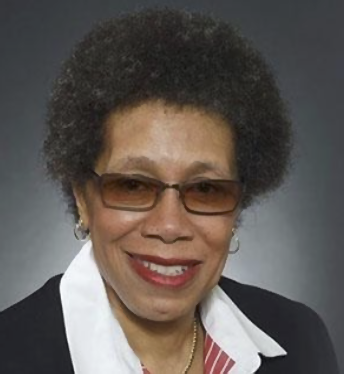
Race, Racism, and Privilege
Lawrence Rubin: At this particularly charged moment in the history of race relations in our country, what is the primary message you want to share with psychotherapists, particularly white psychotherapists working with clients of color?
Beverly Greene: I think one of the charged characteristics of this particular time, and there’s a corollary to this in our history, the Civil Rights Movement and the marches during the Civil Rights Movement, is the way technology affects a movement.At that time, it was television. Many people across the country probably didn’t believe that black people were being brutalized just because they were trying to register to vote until it was in everybody’s living room on television and being beamed all over the world. This beacon of democracy, the United States, held a group of its own citizens hostage in terms of civil liberties that are presumably granted to everyone. So I think it pushed some legislation along because it was an embarrassment to the government. It also became undeniable when it became visible over over and over again to people sitting at home in the middle of Paducah or wherever, who were not surrounded by that kind of activity, or hadn’t previously had contact with black people.
And we’re in that moment now, in terms of cell phones. Suddenly, if you step outside your house, YOUR privacy is gone. Everybody has a camera, and all these things are recorded. I think the sort of synergistic effect of all these killings and the power of George Floyd’s murder has resulted in an unambiguous, unassailable level of evidence that says, this is a serious problem, and this is real.
One of the challenges that people of color often face is that when they talk about their encounters with racism, they’re not believed, or it’s minimized, even in therapy
One of the challenges that people of color often face is that when they talk about their encounters with racism, they’re not believed, or it’s minimized, even in therapy. Therapists may want to explore all the other things that could have been going on in addition to, rather than race, which may seem so completely foreign in the life of a white therapist. In actuality, racism is an everyday occurrence for a black person or another person of color. The existence of racism is a real social phenomenon and not just something black people make up to make white people feel guilty or uncomfortable.
It is something that is connected to real challenges and obstacles that people of color must negotiate both practically and psychologically. In order to fully understand their patients of color, therapists need to appreciate that racism, as a form of social inequity, may be an unrelenting challenge to that client.
LR: What personal barriers might stand in the way of a white therapist fully grasping the reality of living as a black person in a racist society?
BG: Well, I think that we live in a society that is, in some ways, dominated by race, but also surrounded by a denial of that fact. I still see discussions on news programs in which leaders of various parties and contingencies are asked, “Do you think there is systemic racism in policing? In criminal justice?” Well, if anybody’s still asking that question, hello, where have you been?
LR: They’re not getting it.
BG: I think the simple answer is that many people don’t want to get it because it makes them feel uncomfortable, and this includes therapists. I don’t know that all institutions do an equally good job at training prospective therapists to have that conversation. It can be highly variable. Even though race is a clear and evident social phenomenon in this country and has been for 400 years, there is a mutual denial of it, and so there is a pressure to not talk about it. It’s a difficult dialogue. It’s not something people have learned to have conversations about. If anything, it’s something about which conversations are avoided. And so,
in therapy, many therapists don’t know how to have that conversation, and are not comfortable with the notion; what if they say something that may be racist?
in therapy, many therapists don’t know how to have that conversation, and are not comfortable with the notion; what if they say something that may be racist?
LR: Or offensive.
BG: Yes, but those are things therapists need to be addressing in their own professional development. If you’re not having that conversation, why aren’t you? What does it mean to the therapist to have that conversation? What if you do say the wrong thing? I mean, as therapists, sometimes we don’t always get it right. So, what does that mean to the therapist? It’s about looking at, as you would many other issues, why would the therapist need to avoid that? Why might the patient have reluctance raising it? Patients may expect that they’re going to be told, “It’s you. There must have been something else going on. You must have done something wrong because people don’t behave that irrationally.”Therapists must be able to confront their own reluctance or unwillingness to engage with a patient of color who has had experiences that are very different from their own.
LR: Why is race that much more of a challenging issue than some other ones like sexuality, gender, or religion? They are all important.
BG: I think that for many therapists, discussing matters of sexuality is fraught with challenges as well, but therapy is a place where we discuss difficult things. I mean, we discuss things that one would think are much more emotionally laden than race. Perhaps therapists are afraid of finding something in themselves that they don’t want to see. Racism, despite its ubiquity, along with racist beliefs and practices, is not something people want to cop to. Even people who in fact are, will say no, they’re not racists, they just believe in white supremacy, or that they’re some other thing, but no one wants to be considered racist. For the most part, that’s not something you want to be. That’s not a positive thing. That’s not a neutral thing. And so, if people are afraid that it may be in them and it’s going to slip out, what does that make them? Psychoanalyst Kirkland Vaughans observes that race has the capacity to evoke so much anxiety that it blocks the capacity to think. If the therapist is blocked in this way, a productive exploration cannot take place.But again, exploring difficult material like race is part of the work of being a therapist; you do so as you would any other tender or charged issue. We are obliged to ask, what is there that we fear finding in ourselves that is triggered by what the patient is raising? We are responsible for putting our own needs or distress on hold and exploring that which is in the patient’s interest, regardless of how it makes us feel in the moment. We must ask ourselves, what is there that you’re afraid of finding in yourself that may be raised by a patient? And some of that gets back to the practice issue. Typically, there isn’t enough practice in having that conversation.
LR: You have quoted Cornel West who says, among other things, that “The challenge of being elite is to avoid the practice of elitism.” This seems to be related to what you’re saying now because for a therapist, especially a white therapist, to acknowledge that they are an elite just by virtue of the color of their skin may be very, very difficult and uncomfortable for them; so much so that they avoid the conversations completely, and in turn, minimize their black client’s experience.
BG: Well, he was using the terms “elite” and “elitism.” One could say that
no matter what color you are, if you’re a therapist, you’ve benefited from a level of education and opportunity that probably puts you in a group of, you know, maybe less than 10% of the general population
no matter what color you are, if you’re a therapist, you’ve benefited from a level of education and opportunity that probably puts you in a group of, you know, maybe less than 10% of the general population. And that is a kind of eliteness, because you’ve had access to things that many people don’t have access to, some being knowledge, but also just the ability to access certain institutions and the resources of those institutions.
I think he’s talking about acknowledging having a certain level of privilege, which is the ease of access that one did not deserve, that one acquired by simply having a characteristic that the world values for probably the wrong reasons, but which just makes life easier. I don’t think that most, not just white therapists, but that most white people don’t walk around thinking about being white and what that’s apt to trigger in someone, and what they may need to do to manage that.
In contrast, people of color have developed an anticipatory intelligence, they are socialized to develop a kind of anticipatory intelligence around being very aware that they are people of color—which may exist at various levels of consciousness. For some people, it may operate on an unconscious level, while for others, it’s the very conscious and deliberate practice of considering what their skin color is going to evoke when they walk into a room or when they’re interacting with white people. What is it your race is going to evoke in someone? What will you have to manage in response to that which gets evoked?
That’s what having “the talk” is about among black families. It’s understanding what your children evoke in a police officer that their white counterpart does not evoke. Black children are often socialized around the notion of, “You’re as good as anybody, but you can’t get away with what white kids can get away with, so remember that. If you do something, it’s going to be seen and judged differently, and the punishment may be much harsher.”
All that highlights the difference between being privileged and not.
If you’re privileged around something, you don’t have to think about it
If you’re privileged around something, you don’t have to think about it. You don’t have to think about how that’s going to negatively affect something you’re about to do, or how it could get you hurt, or how it’s going to transform an understanding of how you’re responding to something. For example, during the initial COVID crisis back in March, I remember seeing some articles in response to the requirement to start wearing masks. What happens if you are a black person wearing a mask and you go into a store, or you’re out in the street? How are you going to be perceived? Might you be perceived as suspicious? Might you be perceived as a criminal? Something that in a pandemic is a perfectly appropriate thing to do, may be seen differently if that mask is on a white face or a black face.
Hated, Unsafe, Unprotected
LR: I went into a gas station wearing a mask in a very white North Carolina town a few weeks ago, and the white guy behind the counter raised his hands in mock surrender and said, “Don’t shoot.” I know he was being facetious, but maybe not. It went right through me in a way that I couldn’t even comprehend. I knew it was a joke, but there was this bizarre presumption that because I had the mask, I was up to no good. So, I imagine that if I was a black man walking into that same gas station in that same town, I might have carried the additional burden of fear. That’s the closest I’ve come to being identified in that way.
BG: To being niggerized?
LR: Please say more.
BG: One could say, based on Cornel West’s use of that term and definition, that you were niggerized in that moment. You can take a mask off, but you can’t take your skin off, and skin color for black folks leads to the presumption that you’re up to no good all the time. You never have the benefit of the doubt. Your skin color says to them, “This is somebody who’s up to no good.” So you get followed around stores, or you get treated differently if you’re asking to see certain merchandise.I think it’s important to be aware of the intersections of class and other identities around race,
and how it can transform that experience, but the notion that social class and having money means people no longer experience racism is nonsense. Nobody knows how much money you have when you walk into a situation. The first thing they see is your color, and a range of judgments are made about that which supersede other considerations, and which can trigger behavior that you then have to manage, you know, whether you have other resources.
LR: So, what would a white therapist experience working with a black client who has been niggerized have to be aware of and look for, so they can respect and address it?
BG: First, let me explain what I think West meant when he coined that term. He first used that term in the aftermath of the 9/11 attacks, and the way the country was reeling in shock; feeling frightened, taken off balance, feeling unsafe. He said, “America has been niggerized.” Because
to be niggerized is to be hated, to be unsafe and unprotected
to be niggerized is to be hated, to be unsafe and unprotected. But that’s the status under which black people have lived in America for 400 years. And suddenly, America was made to feel hated, unsafe, and unprotected. He suggested that America could learn something from black Americans about how you manage being hated, unsafe, and unprotected. Because that is a part of the socialization of black folk, and that’s what black families do with their children. They’re teaching them, “There’s this thing you’re going to have to manage.” Every black parent knows that they cannot protect their child from it, but they teach them how to recognize it, how to manage it, when you do something, when you don’t, what you can do, and all those things.
But black Americans have survived. I often look at the ways that black people are vulnerable to less than optimal health and mental health outcomes, and I think it’s important to flip that question and ask, “Why isn’t that more so?” Because if you look at the kinds of challenges that black Americans face, many of them are the same that were faced in the past. Why are they not more damaged or riddled with problems?
In ‘68, not long before his murder, Martin Luther King gave the keynote address at the annual meeting of the American Psychological Association, and everything he talked about in that keynote speech in terms of things that we needed to address at that time, a series of social problems, could have been written two weeks ago. On the surface, there is a great deal that has changed, but systemically, many of those things have not changed.
LR: So, when a black client comes into the office of a white therapist, they may carry with them a history of feeling hated, unsafe, and unprotected. Are they at further risk by a white therapist of being pathologized for those very characteristics that are part of having been niggerized?
BG: Well, yeah. I’ve heard therapists in training incorrectly presume a level of paranoia on the part of the patient, a black patient, who was responding to what it is like to walk around as a black man, in ways that the therapist was clueless about. They weren’t paranoid, they were appropriately vigilant. There is a difference between fearing something that isn’t there and being appropriately vigilant about something that’s real, that you have to manage, and that your patient has had experience having to manage.I think it’s also important to not disregard indications of potential pathology, because you don’t help patients by doing that either. But you also have to look at every patient in terms of the nature of the social milieu that they walk around in. What happens when they walk around your neighborhood, as opposed to when you walk around your neighborhood? That’s something that should be understood before the patient walks through the door.
You don’t assume that whoever walks into your office is you or a reincarnation of your experiences
You don’t assume that whoever walks into your office is you or a reincarnation of your experiences.
But when we view a patient, a posture of ignorance is where you should be. You don’t know this person. You have everything to learn, and the more you assume you know about them or the more you assume you know about their experience, the fewer questions you’re going to ask. And the questions you ask people are, I think, what is most important in therapy, not the answers that you come up with for them.
Presumptions and Pitfalls
LR: Is that what you refer to as the clinical pitfalls of assuming homogeneity among black clients?
BG: Well, there’s an assumption you make about a person when you say they are “overly suspicious.” Compared to what and whom? If you live in a country that is as racist as this one, how much suspicion is warranted? For a therapist to make uninformed assumptions about that, I think, is already an error. It depends on that person’s life. What is that person’s milieu like? What is their history? And, in some ways, what is their parents’ history? If you’re dealing with someone whose parents have had really traumatic experiences around racial discrimination, around police brutality, or other kinds of things, we know damn well that’s going to affect parenting. So how did it affect the parenting of your patient? What kinds of things or strategies have they internalized that may be useful or may be less useful?Black patients address a real phenomenon in racism. But like any other thing that people address in therapy, some forms of solutions that they’ve derived can be useful; some may not be. And so that’s kind of what you’re looking at. And good racial socialization in families addresses that. You’re helping kids figure out, well, in Situation A, what do you do if that happens? How do you have a template for figuring out when you say something and when you don’t? What does it mean if you let it go? What is it going to mean if you say something? Who are you saying it to? Does this person, if they’re made uncomfortable by your challenging them, do they have the power to hurt you? If it’s a police officer, they do, so you don’t challenge them. You become obsequious and compliant.
That’s just one example. But that’s what “the talk” is about. It’s like in this situation, you may be in the right, but this person has the power to hurt you and, as we’ve seen in the legacy of this country, take your life and get away with it. And I hear that in conversation we’re having in our family with my father’s great-grandson, that my grandmother had with him. So, even in terms of the post-traumatic stress model of understanding racism, it’s not post.
Racism is an ongoing stressor and potential trauma for people
Racism is an ongoing stressor and potential trauma for people. It’s not like a discrete entity or experience, and now it’s over, and you’re not going to have that again. It’s part of a way of life. Managing it is part of a way of life.
LR: We started this piece of the conversation around white therapists’ assuming a certain level of paranoia in a black client if they’re not aware that it’s frightening and life-threatening to live as a black person in our society. Might a white therapist make similar presumptions around depression or trauma?
BG: Well, you know, I think some of the questions you’re asking are relevant in terms of what good therapy is, and what is sort of symptom-focused….
LR: Diagnostic?
BG: Reductionist, lazy kind of therapy. I don’t treat depression. I treat a person who is depressed. And that means learning everything about that person to understand what this means in that person’s life. Because what it may mean in another patient’s life may be completely different.
What does it mean to be depressed? When I see black women, for example, who often feel like they have to be ubiquitously strong all the time for everybody—well, you know, if that’s kind of their model of what they need to be, then it becomes important to address their depression in that context in order to understand what that means in terms of that person’s inability to function in their milieu. It’s not just, “Okay, you’re depressed, here’s the prescription.”In therapy, I’m trying to understand that person’s experience of the world. What is it like for them to navigate the world every day? To get up, to do whatever it is they have to do, the challenges they face. What do they have to do to negotiate those challenges? To what extent is the external world helpful and supportive? To what extent is it part of the problem? To what extent are familial and community relationships helpful and supportive? To what extent are they part of the problem?
I guess one of the earliest things that I learned in psychology courses, probably before I necessarily thought I wanted to become a psychologist, was that you don’t analyze behavior outside of understanding its context. Behavior is contextual. And the notion that this thing is a thing that’s located in the person and it’s their defect, I think is the hallmark of what is problematic in what has been the history of institutional mental health.
We problematize the person and fail to try to understand how this person is interacting with the social world at many different levels. And sometimes, what people of color are doing is trying to cope with social pathology. They’re not pathological. They’re trying to cope with pathological situations in which they may have an inadequate range of resources. And so their solutions are not optimal. Or they may be trying to cope with social racism or something in a workplace and have a certain amount of baggage that they’ve accumulated from a family where they didn’t really get helpful instruction around how to manage these things and how to recognize them, or they have been complicated by family pathology or dysfunction.
All these things are going on, and they go on differently for every individual. Even when people belong to the same racial group, pretty much any black person I see, I assume they’ve been confronted with racism at some point. It doesn’t mean that I know anything about how they experience it, what they attribute it to, how they understand it, what they think they’re supposed to do about it; all those things are different for every individual.
There’s no cookie-cutter kind of assumption that you can make that says, “Okay, now I know about that.” You must ask patients about their experiences in that way. Even if you’re not a white therapist, it is important to ask patients if they think you can understand what the world is like for them? And if they think you can, why do they think you can? And if they think you can’t, why do they think you can’t? And it’s not for the purpose of convincing them that you can because there are going to be things that you won’t understand because nobody understands anyone perfectly. But it helps to say, “What is the world like for you? What would having my understanding of that look like? What are the things you think I wouldn’t understand, and why is that?”
Because the assumption is that a black therapist will ipso facto understand. Well,
if you’re a black therapist, you understand racism, because you’ve seen it. That doesn’t mean it gets experienced in the same way in the patient
if you’re a black therapist, you understand racism, because you’ve seen it. That doesn’t mean it gets experienced in the same way in the patient. And you’re trying to understand the patient’s experience, you do not impose your idea of their experience onto a patient.
LR: So, a black therapist may misread a black client, just as a white therapist may misread a black client, out of failure of curiosity, out of failure of empathy, out of their own internalized messages of racism. It cuts across races.
BG: Yeah. Or a black therapist’s own internalized sense of what one is supposed to do when one encounters racism. That may range for some people from nothing and just keep moving along to the other extreme, which may be, “Well, you have to confront it every single time.” There is no one size fits all solution to addressing social inequity when you encounter it. It always is situational. It always depends on who you are, what your resources are, what you’re up against. And at some point, do you want to do this?It’s like, okay, how much do you have to do today? Do you want to exert the time and energy on responding to this thing? Because at some point, in any patient’s life or in any therapeutic moment, you make decisions about what you’re going to respond to and what you’re not. This is where location and context are important for someone, let’s say, who was living or working in a really racist environment. If a person feels compelled to respond directly to every single racist thing that happens in their life, it’s exhausting. And what’s going to be accomplished?
But then, the therapist needs to understand also, what does it mean to that person if they’re not responding? Why do they think they’re supposed to respond to every single thing? Again, the sense of, well, what do people think they’re supposed to do, and why do they think that? Where did they learn that? And if they learned it from family members, you know, was there a discrepancy between what family members told them they’re supposed to do and what they saw family members doing? That sort of “Do as I say and not as I do,” as we all know, doesn’t work so well because kids see what you do before they understand anything you say.
A Way of Knowing
the issue of race with their black client?
BG: I never get why there’s a debate. The question is how you explore it. Because if you were seeing a transgender client, why wouldn’t you ask any questions about that? Wouldn’t you think that has some relevance to this person’s experience? We ask LGBTQ clients about when they first experienced their sexual orientation, what they think it meant. We ask about coming out stories and the like. But
we make the assumptions about race that because people are born black, they’re born with a black identity, when in reality, they’re born with a black demographic
we make the assumptions about race that because people are born black, they’re born with a black identity, when in reality, they’re born with a black demographic. They’re not born with a black identity. Identity takes time to develop and does so in interaction with the environment.
I think it’s appropriate to ask questions like, “What was your earliest experience knowing you were a black person? When did you understand what that meant, and was there a connection between the two? Or do you ever remember not knowing? How old were you? What was the situation? What was the experience? What was the experience that you connected that gave race meaning? This thing, being black, means something. It’s connected with, among other things, subordinate social status. That means there are limitations on you in some way. How did you find out? Were you able to talk to anybody in the family about it? What did they tell you? What had their experiences been like? What was the most transformative experience you’ve ever had around race or racial inequity? What encounter really sticks out in your mind in terms of when you were growing up?”
When you’re taking a person’s history, it’s important to be asking questions about family and who the family was, where the family came from, what their experiences were like. I am still an old school therapist who believes you want to understand something about somebody’s history and their family before you jump in talking about symptoms and what you’re going to do ostensibly to address the “problem.” Part of it is understanding the history of the problem. It’s understanding the history of the person and how that’s related to this thing that they’re bringing in as the problem. What, if any, are the connections there? What was the most recent experience or encounter with racism? What was it like for them?
You had asked earlier whether the therapist should raise the issue of race when the patient walks in the door the first time you start talking about it. Well, you don’t do that with a lot of things that you think are important to raise in therapy. You look for natural openings to do that. It’s reasonable to ask those kinds of questions when you’re doing a history. The notion of what’s it like working with a white therapist? That’s not the first question I’d ask someone. That may or may not be the issue for them. So you ask a broader question first about being understood. “What things do you think I’ll understand? What things do you think I won’t understand? Would you be willing to tell me at times that you think I don’t understand, or I don’t get it?”
The patient may say something about race, and if they do, you can follow that up. And if they don’t, there may be other opportunities to raise it around the general issue of difference. But I think an important thing is that often
when black people have been asked questions about race and racism by a white person, not just in therapy, but in their life experience, they never know if that person really wants to know the answer, because sometimes the answer is not pretty
when black people have been asked questions about race and racism by a white person, not just in therapy, but in their life experience, they never know if that person really wants to know the answer, because sometimes the answer is not pretty.
If what that person wants is for the black person to say something that makes them feel better about who they are, then if they talk about how painful it is, and it makes them uncomfortable, are they then going to want to argue with you about, “Well, but it’s really not that…”; are they going to get angry with you? We are often asked this question, but people really don’t want to hear the answer. Not the truth, anyway. Because the truth is often painful, and it may evoke feelings of guilt or shame. And when people feel guilt or shame, they seek to do what they need to do to get rid of that as quickly as possible. In a therapist, that’s dangerous. When these feelings of guilt or shame get evoked in a therapist, it is their job to understand why that’s happening. If the white therapist is feeling uncomfortable, they need to figure out why; and not with the patient, but in their own therapy, supervision, consultation, or in other ways.
LR: I was going to ask you about racial countertransference and transference, but as you speak, I realize that whether it is about race, the therapist’s own discomfort or unresolved issues must be addressed—period.
BG: What you’re saying is, one of the things you don’t get to be if you’re a therapist is lacking in self-awareness. And that kind of goes with the job. If you’re not willing to do that, then probably another line of work is more suitable for you. Our obligation is to understand how we’re being affected by the process, what that’s evoking in us and why, and to be aware of those things and not just act on them. It involves the capacity for self-reflection and restraint. You don’t just act on your feelings, but you have to be able to recognize them.Therapy is a complex process. You’re monitoring what’s going on between, but you also have to monitor what’s going on within and have some sense of what can get evoked in you and why it gets evoked, and in this case, it is about race and racism. How much of what’s going on is really about a response to the patient or how the patient evoked something in you that you struggle with?
What is often surprising to me is when I started my career, it was around having this discussion. And now, you know, 30 years later, it’s sort of like we’re still debating talking about race in therapy? Really? How do you not? It also, by the way, presumes that white patients don’t have feelings about race. When you ask “What do we do with black patients?” that’s important, but I
don’t think you can assume that white patients don’t have feelings of all sorts about race, many of which the therapist may not share and may not like
don’t think you can assume that white patients don’t have feelings of all sorts about race, many of which the therapist may not share and may not like.
Fishing with a Net
LR: So we can’t presume that a black patient does have feelings about racism, and we can’t presume a white client doesn’t. Just like we can’t presume a straight person doesn’t have feelings about homosexuality and vice versa. It’s about good solid curiosity, appreciation for context and good tracking, the same basic skills that go into any type of therapy.On a related note, Monica McGoldrick recently interviewed Elaine Pinderhughes, a prominent black social worker, on the intergenerational legacy of slavery. I’m wondering whether and how this should be a part of the conversation with black clients.
BG: Well, you’re talking about history. What is the nature of this patient’s history? Who is their family? Where did their family come from? Where did people grow up? Something I learned from Nancy Boyd Franklin is that “Who raised you?” may be a more relevant question than “Who are your parents?” “Who did you go to when you were in trouble?” That gets at something more basic than who you were biologically connected to, which is important, but it may not have the kernel of emotional significance for everyone in the same way.Any patient that I see, I’m thinking, who was their family? Who were their parents? What kind of struggles did those people have raising them? Did they have enough or sufficient resources? Did they get, when they were growing up, some sense of how to help that patient understand who they are as a black person and what racism looks like; how you determine when it’s racism as opposed to when it’s something else? How deeply were they loved and cared for, and by whom…
Again, what do you do in response to encounters with racism? When do you respond? How do you respond? How do you figure all of that out? Well, how those parents were raised and what they experienced is going to affect that. How their parents were raised and where, and what kinds of choices they had or didn’t have, is going to affect your client as well.
All of that is part of the transgenerational process of racial socialization. But it also includes other kinds of socialization within a family. Were people struggling to barely make ends meet? Because the more tangible tasks a family has to do to have basic resources, the less time and emotional wherewithal parents may have to look at the picture of, “Well, was your teacher mean because you’re black?” They may respond poorly by dismissing their child’s concerns, e.g., “I don’t know. Just ignore it. Go watch TV. Go do whatever.”
So all those things matter. The history of the patient’s relationships with their parents and other significant figures. Were those generally positive and beneficial connections? Were they fraught with conflict? All those things are part of the picture, and so I would think you don’t have to ask about slavery.
LR: It’ll come up.
BG: Yeah, you’re asking about a family’s history, so you will get something that will lead you to ask other questions, or you’ll have the question answered. But you don’t start there because not every black person’s family goes back to slaves.
LR: I wonder if white therapists can fumble over their lack of racial awareness by presuming the inevitable presence of niggerization, by presuming slavery, by presuming transgenerational trauma; and in doing so, stack the interview with such racially charged questions that it becomes assaultive and oppressive to the black clients rather than illuminating, safe, and engaging?
BG: That’s why I’m saying
you ask about history, not about slavery
you ask about history, not about slavery. What’s your family’s history? Of any patient. Because often if you don’t ask a question you don’t get an answer, but ask a question, and you get information that you hadn’t expected to get. At least that’s often been my experience. My assumption about what the answer would have been is not what it was. Even with patients who have specifically asked for a black therapist, I ask them why that was important. The reasons that I thought might be? That has never been so.
Once I start exploring that, I learn that sometimes it’s not really about race per se, that’s not where it’s at. That thing about blackness means something different to different people. It means something different to those who felt they’d be better understood. Once we’re exploring the why, often the why doesn’t necessarily mean the client feels better understood. The therapist may mistakenly presume that because they and the patient share a skin color that they also share a narrative around blackness. While all black folks share aspects of history and treatment, every person’s individual narrative is unique. As a therapist, it is the patient’s unique narrative that you seek to understand.
LR: So a black client might presume a certain level of safety with a black therapist that is as unwarranted, perhaps, as a feeling of unsafety they feel about a white therapist. It’s what the black client brings in that the therapist must be curious about, rather than just accept.
BG: You can’t assume that you know anything. Be curious. I know when patients have asked for a black therapist, that’s the route that got them to me. And so I know that was a request, and I can ask about that. But again, it goes back to that question of “Do you think I can understand what the world is like for you? And in what ways, what kinds of things will I understand? What kinds of things won’t I understand?”You’re getting at what’s most important to the patient in terms of how they need to be understood. For some patients, it may not be their blackness that their concerns about being misunderstood are organized around. It could be their sexual orientation. It could be their class background and the way it intersects with their blackness. So you don’t assume. You ask a question. It’s kind of like you’re fishing. If you just want one fish, you use a line and a pole. If you’re fishing and you don’t know what you’re going to get, but you want to get as much as possible, you use a net, and then you’ll get something. And what you get may then tell you what other kinds of questions you need to ask.
Working with the Family
LR: In working with black families, especially those with young children, how would a white therapist help that family to have “the talk” when the caretakers may not be willing, ready, or able to have that talk?
BG: You start with broader questions. I would ask parents about their relationship with their kids and what they want to see for their children. What are their fears for their kids? What are their concerns about their growing up? What are the things that they think are really important for them to know? How do they communicate that? Have they talked about that? Sometimes parents think they are communicating something to their kids that is not so clear, and sometimes it’s their discomfort around not knowing how to do it.You can ask, “Do you think your parents had those concerns for you? How did they communicate them with you? Was that helpful? Would you choose to do that in the same way? Or would you think, ‘I need to do this differently’?” Because everybody has feelings about things their parents did when they were raised that they thought were helpful, or things they thought were less helpful and they thought something else would be more helpful. So you can get at it in that way.
In working with black parents, you do start getting their fears for their kids around race and what’s going to happen to them
In working with black parents, you do start getting their fears for their kids around race and what’s going to happen to them. For some parents, you may hear, “Well, I don’t want them ever to use race as an excuse for not being successful.” That’s valid. How might that happen? Let’s look at that. How might that happen? How would we tell the difference between when it’s them or when it’s somebody or something else? Is there a sense of how to do that? How do they do it when they’re in the workplace or whatever?
And sometimes what you may hear from some people is their defensive way of managing racism, which is to be in denial about a certain level of it. Well, what is that? It’s a defense. So you try to understand what the defense is protecting them from, although in some cases, it’s fairly obvious. Is it control? If you allow that there’s this thing out there that can have such a powerful effect on one’s life that you can’t control, do you assume more responsibility for what happens to you than is necessarily yours because that feels better than acknowledging there are these places where you really don’t have control? And that depends on who the individual is and what makes them feel more vulnerable. Because we know that certainly in some people who are traumatized or abused, early on in treatment, their understanding is often, “Well, I permitted that to happen. I brought it on myself.” There is a way that they take inappropriate levels of responsibility for something that happened to them. Because that may feel safer than the feeling that you were helpless and you could not have stopped it. But in fact, it highlights a way in which you’re vulnerable in the world that for some people may be less tolerable than saying, “I was responsible for this bad thing that happened to me.” At least that gives a person a feeling of agency.
LR: You have written about narrative development among black children on their road to becoming adults. What are the therapeutic tasks for helping black families raise their children?
BG: Well, you have to understand how the parents have done that, and what they learned from their own parents about doing that. Did they get the message that this is a crazy world, and sometimes we have to negotiate things that are unfair? But in those moments, we can’t change that. So the question is, what we do that leaves us with as much agency as possible while also keeping us safe? “Is this a situation that you can leave? What’s the price of leaving? Is this a place that is hostile, but you’re stuck there? Then how do you figure out how to manage that hostility so that you don’t internalize it and minimize the injurious effects of it?” And anywhere in between.
LR: And that’s a privilege of being a white parent—never having to have those conversations with their kids. Never having to prepare their children to live in a hostile world.
BG: That’s one of the privileges, yes. I read someplace in the family therapy literature that
one of the challenges for black families is to raise their children to live among white people without becoming white people
one of the challenges for black families is to raise their children to live among white people without becoming white people. That theirs is not a dominant cultural narrative, and how to hold both of those narratives in your head but understand and appreciate the difference and hold your own narrative in as high esteem as possible. We know that people who belong to marginalized groups often can see the center and the dominant group more clearly than it sees itself, because it’s at the center of itself. It’s like you don’t have to think about whiteness if it doesn’t get in the way for you.
People are more aware of the identities that are apt to cause problems for them when they interact with broader society. It’s not unlike the way sexual minority individuals—although they don’t have the benefit of getting that socialization from their families—understand how to be in a world that has a different narrative than their own. It is about being able to hold on to your own narrative, see the flaws in the dominant cultural narrative, understand when and how to challenge it, and when not to.
But therapists can help black parents who, if they can express trepidation or apprehension or concern about having “the talk,” can have it in therapy with that parent. “What would you want your child to know? What would you say to them? What is it that makes you apprehensive? What is it that somehow you think you’re not going to get right? What would getting it right look like?”
You can roleplay in those situations. I have a colleague who was working with an adolescent black male and his grandmother. The teen was getting his driver’s permit, and, of course, she was apprehensive about that but couldn’t quite articulate that it was about more than just driving. Her unspoken message was that “You can get into an accident if you’re driving.” It was about now he’s in the crosshairs of the police. He’s out there exposed to danger in a different kind of way.
LR: Vulnerable.
BG: Yes. Some of the challenges for black families are heightened during adolescence, when there is a natural move towards autonomy in children.
Some families, in this instance black families, may appear to be overly protective or intrusive during these periods because they’re scared for their children
Some families, in this instance black families, may appear to be overly protective or intrusive during these periods because they’re scared for their children. There are realistic dangers out there for their children around which the parent may have apprehensions and fears due to lack of preparation.
That tendency to be seen as overprotective, to be interfering with a normal developmental move towards autonomy, has to be understood in terms of each individual family. For some families, there may be overprotectiveness that has other kinds of dynamics attached to it, but one of the things that happens in black families is that their fears are realistic. There are realistic things that happen to your kids if they’re out there driving that have to do with police brutality, that sometimes I don’t think some white therapists recognize. Having an appropriate level of concern for your children but allowing them age-appropriate autonomy is a difficult balance to strike under normal circumstances. And for black parents, it can be particularly fraught, because there are other dangers out there that are real for black kids because they are seen as older than their chronological age, more aggressive, and possessing other kinds of negative traits that put them at risk.
This colleague of mine asked this grandmother what she was afraid of. I think in this instance she was talking about him getting his driver’s permit. As the therapist asked what was going on and what were her concerns, the grandmother started to weep and said, “The police.” The therapist then said, “Have you had that talk with him about how to conduct himself when he encounters the police? This is likely to happen. This is something that happens to young black men. It may be that he’s stopped unfairly…” and she said no. She just didn’t even know how to approach that. The therapist said, “We can talk about it here. Would you like to have that talk with him here?” So that’s also another thing that therapists can do.
LR: So a white therapist might falsely interpret a black parent’s efforts to protect their children as stymieing their autonomy, and that would not be a sensitive way to make that interpretation.
BG: No, nor is it an accurate interpretation. It’s not motivated by an attempt to stymie autonomy. It’s motivated by, for some parents that I’ve worked with, an abrupt realization that when a child is a certain age, it’s like, “Oh, this is what you look like out in the world, and this is what’s going to be made of that, and people are going to try to hurt you.” Particularly as boys move from childhood to adolescence and start looking more like young men than boys. But even as boys, black boys are adultified. In much of the research,
black children tend to be seen as more sexually precocious, aggressive, and older than their chronological age and less worthy of protection
black children tend to be seen as more sexually precocious, aggressive, and older than their chronological age and less worthy of protection.
Training Better Therapists
LR: What must clinical educators of all races do to better prepare therapists to work with black clients…to be better therapists?
BG: I often say to my students that the very thing required of us to reach a high educational/professional status is the same thing that undermines being a good therapist. To get into a clinical Ph.D. program in psychology requires demonstrating how much you know and how smart you are. But in therapy, you’re not so smart. The patient’s the one who has all the information about who they are. You don’t. And
the more you can tolerate your own ignorance, the better the therapist you’ll actually be
the more you can tolerate your own ignorance, the better the therapist you’ll actually be, because you’ll ask questions as part of that process to help give your patient an organized way of understanding things and problem-solving so that they begin to ask themselves those questions.
As therapists, we have to be comfortable not having the answers, not needing to be right. Sometimes we’ll get it wrong. Part of what we’re also modeling for patients is humility. That none of us gets it right all the time and that they don’t have to either. There can be self-forgiveness for making mistakes. That’s part of being human. That doesn’t mean you can just do sloppy half-assed therapy and say, “Oh well, I made a mistake. That’s okay.” We have a certain responsibility to our patients. But the sense that we should have the answers? Well, we don’t have the answers.
Thriving Through Adversity
LR: It seems that traditional western medicalized psychotherapy is an oppressive ideology, or an oppressive regime designed to subordinate marginalized people.
BG: Historically, if you think about sexual minority group members and African Americans, three of the major institutions in our society have been used to maintain their subordination and to maintain the domination of the groups that are dominant. That’s religion, law, and medicine. In religion, if you’re deemed a sinner, you’re regarded as defective or deficient, and it’s okay for people to ill-treat you. If a person is legally deemed a criminal, then things can be done to that person that can’t otherwise be done in a civilized society. And medically, when the person is deemed ill, they are pathologized. The illness is in this person rather than in the interaction between the person and society. Often, it is not that the patient is pathological, but they’re in an environment that’s pathological, and they don’t always have the resources that they need to fulfill social contracts. By not fulfilling those contracts, then they’re seen as defective or pathological in some way.In the history of mental health, those two groups (sexual minorities and African Americans) have been subordinated through each of these dominant institutions. And if you look at immigrants and the history of psychological testing, there is sufficient evidence that they, too, have been marginalized as being intellectually sub-standard. Let’s not talk about restricted educational opportunities or any of those things. Let’s just pathologize the person. It’s a way of avoiding looking at systemic inequity. It’s rather saying, “This person is the problem,” or “The problem is in them.”
LR: It seems that psychotherapy’s salvation lies in postmodern approaches, narrative approaches, that allow for a real hearing of the client’s narrative, the client’s history, and how they interact within the contexts of their lives, rather than a top-down reductionistic way of pigeonholing people.
BG: These groups of subordinated people have had to come up with solutions to problems that are very real and make us wonder, “Why isn’t it much worse than this?” Because
if you look at all the systemic assaults that have taken place on African Americans from the inception of slavery, there was never a respect for the integrity of the African American family
if you look at all the systemic assaults that have taken place on African Americans from the inception of slavery, there was never a respect for the integrity of the African American family. Social policy has been organized around the kinds of practices that are destructive to black families. And so, if you look at slave families, you are compelled to ask, how did they manage to survive in situations in which their children were literally taken and sold, never to be seen again? Well, somehow informal adoption became this thing that black families did to claim children beyond biological ties and protect their groups’ children from this practice.
In slavery, the children on the plantation found parents among other slaves whose children had been given away. There have always been these kinds of adaptive mechanisms within African Americans that have never received much attention, that Robert Hill and Nancy Boyd Franklin later studied. Despite all the destruction, they wondered, how was it that African Americans in many cases not only survived but thrived?
I don’t mean that they were unaffected by the destructive aspects of racism, but despite that, they thrived. Despite prohibitions against learning, people were determined to learn how to read. They were determined that their children would get an education. Why do we see that? That points to understanding the strengths of people as well as understanding their vulnerabilities. That’s important and other groups can learn from it.
LR: Especially white therapists working with black clients.
BG: We can learn something from black clients about how to negotiate hostile environments. Successful black people have negotiated hostile environments. They’ve had to get to where they are, for the most part. And so, in terms of mental health as an institution, we might want to understand something about how survivors and thrivers in marginalized groups manage to do that and what the constituents of that were to help other people who have not.
Despite all the assaults, African Americans are not inevitable psychological cripples
Despite all the assaults, African Americans are not inevitable psychological cripples. The question then is, well, why is that? Given everything, why wouldn’t they be? Why wouldn’t people have just given up? Why did slaves have hope, for God’s sake? What was there to be hopeful about? Certainly there were some who did give up, but for the most part, we’re all here because mostly they didn’t. But why didn’t they? There was no sign that there was any reason to be hopeful.
I think another important piece is, given what we’re seeing in terms of this movement against police brutality, therapists need to understand this is not new for black folks. This is a long continuation of something, and the constant exposure to this may impact black clients differently than white clients for whom it’s like, really? This really happens?
Black folks have been living with this interminably. For us, this keeps happening. This is kind of a pile-on, and it might help people to better understand that there’s perhaps a different response taking place among black people. This isn’t new. So why is it that this has come up before, it’s been discussed before, and it’s dropped?
And is that going to happen again? Are those new-found coalitions really going to hold when the people who join us in those coalitions become niggerized, when they begin to be treated, you know, in destructive ways, as we are often used to being treated? When they begin to be negated in ways that we’re used to being negated. Are those coalitions going to hold? Because we know what to expect. We know how bad it can get. People who are just joining these coalitions may not fully appreciate that. Is that clear?
LR: Depending on their history. Depending on how they were raised. Depending on their personal experiences. Yes, it is. Am I hearing you?
BG: This is something black families prepare their children for. This isn’t new. So, what are the implications of that? Again, when the stress trauma isn’t post, but it’s ongoing.
LR: Ongoing. Continual. As we close, I am wondering if I did a good enough job of listening to you? Not as a black woman, not as a psychologist, just as a person in conversation.
BG: Yeah. Do you doubt that you did? Are you feeling reasonably satisfied?
LR: I am. This is so much bigger than I could have imagined. I mean, I haven’t been a recipient of racism, and I see what’s going on, and I want this to be an important conversation, and I want the therapists to really get these messages, so I guess I’m carrying the burden, not for white therapists per se, but for therapists in general who aren’t aware yet. I came into this interview with the greatest sense of burden on my shoulders.
BG: When you say you’ve never experienced racism, you’ve never experienced anti-Semitism?
LR: Perhaps I have somehow skirted it. Maybe one or two comments somewhere. People have told Jew jokes to me. And I’ve sort of laughed them off or corrected them.
BG: Did you think they were funny?
LR: No.
BG: Then you’ve experienced a microaggression of anti-Semitism. Did you feel you could say, “That’s not funny, and I’d rather you didn’t tell me those kinds of jokes”?
LR: Yes.
BG: Did you feel you could say that?
LR: I did. Because it’s usually some white person, whom I disregarded because of their ignorance, and I did feel powerful enough to say that. So, I haven’t felt that I didn’t have the right to say that.
BG: Well, but that was nevertheless a form of microaggression. That person was in the wrong. But if you were the dominated one, you would have to not say anything because their dominance in some way would be likely to prevail. They’re small examples, but nonetheless, that is a form of anti-Semitism.
LR: Yes. So I have.
BG: And what made it OK for someone to think it was OK to say that to you…?
Go Deeper in Your Practice
Get unlimited access to 350+ real therapy demonstration videos, CE, webinar replays, and more with a Psychotherapy.net membership.
