Training in Microexpressions

There is a growing movement in psychotherapy towards reading clients’ facial microexpressions and body “tells”.  One of the leaders in this movement is Stan Tatkin, PsyD, who teaches a Psychobiological Approach to Couples Therapy (PACT).  I recently talked with Dr. Tatkin about how he uses microexpressions to enhance couples therapy.

Dr. Tatkin uses microexpressions to read subtle shifts in his clients’ moment-to-moment autonomic nervous system arousal.  Using visual cues in the eyes, nostrils, mouth/lips and skin tone, he can tell whether a person is open and receptive (“regulated”) or in a threat-response (“dis-regulated”).  He points out that people often aren’t aware when or why they shift into a threat-response in relation to their partner, because it happens so quickly, and involves parts of the brain that don’t give explicit thoughts as explanations. 

Dr. Tatkin notes that people will unconsciously make up (“confabulate”) reasons for their sudden anger or fear of their partner, based on old stories about themselves and their partner.  He calls this “dirty data."  His therapy down-plays the importance of sorting through narrative in favor of helping couples attend to each other's moment-to-moment physiological arousal level. 

Most therapists focus on narrative content in therapy.  Dr. Tatkin notes that therapy training focuses on narrative, and the human brain tends to get caught up in language, as a function of the left hemisphere.  In contrast, he trains his students to pay close attention to their own bodies and self-regulation; to use themselves as a “tuning fork” to help their clients learn to self-regulate.

Dr. Tatkin uses an innovative teaching approach:  he sits perpendicular to a trainee in a therapy role-play.  This lets him give moment-to-moment instructions on reading and adjusting autonomic nervous system arousal levels.  He calls this “regulating the regulator." 

How can therapists learn to read microexpressions?  Dr. Tatkin recommends the training programs by Paul Eckman.  Advanced training can be found from Erika Rosenberg.  

Dr. Tatkin also suggests that training in drama or psychodrama can be helpful to learn how to read movements from the whole body, and how voice prosody can affect emotions.  Pat Ogden and Peter Levine do body-oriented psychotherapy training.

Additionally, Dr. Tatkin also recommends reading the work of Steven Porges regarding polyvagal theory. 

Dr. Tatkin points out that it is important to remember that all microexpressions are idiosyncratic to the individual, and thus we need to know each individual’s “baseline” in order to know what a specific microexpression means to that person.

Peter Levine on Somatic Experiencing

An Unconscious Image

Victor Yalom: So Peter, you’ve spent most of your life working with trauma and traumatized patients, and have developed an approach called Somatic Experiencing® that focuses on including, and putting emphasis, on the physiological aspects of trauma. You believe that working with the trauma through the body is necessary to any trauma resolution and a required step before addressing emotional and cognitive issues. We’ll get into this in more detail, but let’s first start with: What got you there? How did you get interested in trauma in the first place?
Peter Levine: My career began somewhat accidentally. In the 1960s I started a practice in the fledgling field of mind-body healing. Around that time it was completely in its infancy. I had been developing a protocol to use body awareness as a tool for stress reduction. I would teach people how to relax different parts of their body and they would have a very deep relaxation that was much deeper than I had expected. And so I was referred a patient—I’ll use the name Nancy—by a psychiatrist, and she had been suffering from a host of physical symptoms including migraines, severe PMS, what would now be called fibromyalgia and chronic fatigue, pain in most of her body. And the psychiatrist reasoned that if I could help her with some of my relaxation techniques, it could help with her anxiety or at least with her pain.
VY: Now, were you a psychologist at that point, Peter?
PL: At that time I was finishing a degree in medical biophysics. And again, there was not a field of bodywork at that time, but I had met some influential people including Ida Rolf and Fritz Perls, and I was hanging out at Esalen—I took a leave of absence—and that’s where I really got exposed to these different mind-body approaches.
VY: And this was a heyday where all sorts of things and discoveries were happening?
PL: Crazy stuff. Yeah, exactly. It was both exciting and a chaotic free-for-all in some ways. So anyhow, this psychiatrist sent this woman, Nancy, to see me, and she was extremely anxious. And she was with her husband because she couldn’t go out of the house alone. She had, again what would be called now, severe agoraphobia. So anyhow, she came into my office and I noticed her heart rate was really quite high—it was probably about 90, 100 beats per minute. So I did some work with her breathing and then with the tension in her neck. And her heart rate started to go down. And I thought, “Oh, okay, this is great.” And it went down and then all of a sudden, it shot up to, I don’t know, 140-150 beats per minute. I could see this from her carotid pulse.
VY: Not what you were going after.
PL: Not exactly. I had gone from success to abject failure and, really, fear of putting her into extreme panic attack. So I said something, probably the most stupid thing anybody could say. I said something like, “Nancy, just relax. You need to relax.” And her heart rate started going down. And it went down and down and down. And it went to a very low level, probably in the mid-50s. And she looked at me. She turned white, and she looked at me, and she said, “I’m dying, I’m dying. Doctor, don’t let me die. Help me, help me, help me.” And at that moment of stress, I kind of was prompted by an unconscious image, a vision of a tiger crouching at the other side of the room and getting ready to spring. And I said, “Nancy, Nancy, there’s a tiger, a tiger’s chasing you. Run, climb those rocks, and escape.”
VY: And this was just a spontaneous kind of image that came from your imagination or unconscious?
PL: This was a spontaneous image. My unconscious. Yeah, because I had really, truly no idea what to do. I was in a state of, well, near panic myself. So to my amazement, to both of our amazement, her legs started moving as though she were running. And her whole body started to shake and to tremble. And this occurred in waves. And she went from being very very hot to extremely cold. Her fingers turned almost blue. And the shaking and the trembling and the waves of coldness and heat went on for almost 30-40 minutes, maybe. And after that, her breathing was free and spontaneous. She opened her eyes and she looked at me and she said, “Do you want to know what happened, Doctor? Do you want to know what happened to me?” And I said, “Yes, please.”This was one of the first patients. This was certainly the first one where something like this had happened. I worked with a lot of people in getting them to relax, and there were some kinds of things like that, but never anything nearly as dramatic. So anyhow, she reported how during the session she remembered a long forgotten event: as a four year old child, she was given ether for a tonsillectomy—at that time, ether was routinely used for tonsillectomies—and she remembered feeling suffocated and completely overpowered by the doctors and nurses who were holding her down to put on the ether mask while she was trying to scream and get away. As I discovered later, many people who had anxiety disorders had also had tonsillectomies as children with ether. So anyhow, that was the last panic attack that she had. And many of her symptoms abated. Others disappeared completely. We did a few sessions after that where I was actually able to do different relaxation procedures with different muscles and different parts of her body. So of course I was curious about the image—where did that come from?

Marie-Helene Yalom: The tiger image?

The Polyvagal Theory

Peter Levine: Yes, the tiger image. At that time, I was taking a graduate seminar, and some brief mention was made of a phenomenon called tonic immobility. If animals were physically restrained and frightened, they would go into a profoundly altered state of consciousness where they were frozen and immobilized, unable to move. And it turns out that this is one of the key survival features that animals use to protect themselves from threat—in this case from extreme threat. Actually there are three basic neural energy subsystems. These three systems underpin the overall state of the nervous system as well as the correlative behaviors and emotions, leading to three defensive strategies to threat.
MY: That’s the polyvagal theory developed by Stephen Porges?
PL: Yes. These systems are orchestrated by the primitive structures in our brainstem—the upper part of the brainstem. They’re instinctive and they’re almost reflexive. The tonic immobility is the most primitive system, and it spans probably over 500 million years. It is a combination of freezing and collapsing—the muscles go limp, the person is left without any energy. The next in evolutionary development is the sympathetic nervous system, the fight-or-flight response. And this system evolved from the reptilian period which was about 300 million years ago. And its function is enhanced action, and, as I said, fight-or-flight. Finally the third and most recent system is the social engagement system, and this occurs only in mammals. Its purpose is to drive social engagement—making friends—in order to defuse the aggression or tension.
VY: So this is when we’re feeling threatened or stressed we want to talk to our friends and family?
PL: Yeah, exactly. Or if somebody’s really angry at us, we want to explain what happened so they don’t strike out at us. Obviously most people won’t strike out, but we’re still hardwired for those kinds of expectations.
VY: Most people have a general sense of the fight-or-flight, but would you just say a few words on it?
PL: Basically, in the fight-or-flight response, the objective is to get away from the source of threat. All of our muscles prepare for this escape by increasing their tension level, our heart rate and respiration increase, and our whole basic metabolic system is flooded with adrenaline. Blood is diverted to the muscles, away from the viscera. The goal is to run away, or if we feel that we can’t escape or if we perceive that the individual that’s trying to attack us is less strong than we are, to attack them. Or if we’re cornered by a predator—in other words, if there’s no way to escape—then we’ll fight back. Now, if none of those procedures are effective, and it looks like we’re going to be killed, we go into the shock state, the tonic immobility. Now the key is that when people get into this immobility state, they do it in a state of fear. And as they come out of the immobility state, they also enter a state of fear, and actually a state in which they are prepared for what sometimes is called rage counterattack.
MY: Can you say more about that?
PL: For example, you see a cat chasing a mouse. The cat catches the mouse and has it in its paws, and the mouse goes into this immobility response. And sometimes you’ll actually see the cat bat the mouse around a little bit until it comes out of the immobility, because it wants the chase to go on. Now, what can happen is that the mouse, when it comes out of the immobility state, goes into what is called nondirective flight. It doesn’t even look for where it can run. It just runs as fast as it can in any direction. Sometimes that’s right into the cat. Other times, it will actually attack, in a counterattack of rage. I’ve actually seen a mouse who was captured by a cat come out of the immobility and attack the cat’s nose. The cat was so startled it remained there in that state while the mouse scurried away. When people come out of this immobility response, their potential for rage is so strong and the associated sensations are so intense that they are afraid of their own impulse to strike out and to defend themselves by killing the predator. Again, this all goes back to our animal heritage.So the key I found was in helping people come out of this immobility response without fear. Now, with Nancy, I was lucky. If it were not for that image, I could just as easily have retraumatized her. As a matter of fact, some of the therapies that were being developed around that time frequently retraumatized people. I think particularly of Arthur Janov’s Primal Therapy, where people would be yelling and screaming out, supposedly getting out all of their locked-in emotions, but a lot of times they were actually terrorizing themselves with the rage and then they would go back into a shutdown, and then be encouraged to “relive” another memory, and then this cycle would continue.

MY: It becomes addictive sometimes, right?
PL: That’s correct. It literally becomes addictive. And one of the reasons is that when you do these kinds of relivings, there’s a tremendous release of adrenaline. There’s also a release of endorphins, which is the brain’s internal opiate system. In animals, these endorphins allow the prey to go into a state of shock-analgesia and not feel the pain of being torn apart. When people relive the trauma, they recreate a similar neurochemical system that occurred at the time of the trauma, the release of adrenaline and endorphins. Now, adrenaline is addictive, it is like getting a speed high. And they get addicted not only to the adrenaline but to the endorphins; it’s like having a drug cocktail of amphetamines and morphine. So when I was at Esalen I actually noticed that people would come to these groups, they would yell and scream, tear a pillow apart that was their mother or their father, and they would feel high. They would feel really great. But then when they would come back a few weeks later, they would go through exactly the same thing again. And that’s what gave me a clue to the fact that this might be addictive.

Releasing Trauma from the Body

VY: So getting back to Nancy, from what you observed and what you learned from the animals’ various responses, what was your understanding of what happened with Nancy and what you did that was actually helpful?
PL: What was helpful is that her body learned that in that time of overwhelming threat she could not defend herself. She lost all of her power. Her muscles were all tight. She was struggling to get away—this was the flight response—to get out of that, to get away from those people who were holding her down and to run out of the room and back to her parents. I mean, that’s what her body wanted to do, her body needed to do—to get out of there and get back to where she could be protected. So what happened is all of this activation, this “energy” that was locked into her body when she was trying to escape and then was overwhelmed, was still there in a latent form. When we’re overwhelmed like that, the energy just doesn’t go away—it gets locked very deeply in the body. That’s the key. It gets locked in the muscles.
MY: And that’s the foundation of your understanding of trauma—this locking of energy?
PL: That’s right, exactly. How the energy, how this activation gets locked in the body and in the nervous system.
MY: And so your objective is to help the person release that energy?
PL: Yes, to release that energy, but also to re-channel that energy into an active response, so then the body has a response of power, of its own capacity to regulate, and the person comes out of this shutdown state into a process in which they re-own their own vital energy—we use the term “life energy.” It’s not generally used in psychology but I think it’s a term that is profound in people’s health, that people feel that they have the energy to live their life fully, and that they have the capacity to direct this energy in powerful and productive ways.
VY: Now obviously you’re just giving a snapshot of the case and we can’t capture the depth and the nuances of it. But someone who doesn’t know about this could think it sounds a little simplistic. This woman had a tonsillectomy decades ago, and you’re having this one session with her and somehow you’re freeing up some energy that was trapped back then. How would you respond to that?
PL: Well, it was simplistic, and of course I was to learn that one-time cures were not always the case. However, over the years I started to develop a systematic approach where the person could gradually access these energies and these body sensations—not all at once, but one little bit at a time. It’s a process that I call titration. I borrowed that term from chemistry. The image that I use is that of mixing an acid and a base together. If you put them together, there can be an explosion. But if you take it one drop at a time, there is a little fizzle and eventually the system neutralizes. Not only does it neutralize but after you do this titration a certain number of times, you get an end result of salt and water. So instead of having these toxic substances, you have the basic building blocks of life, I use this analogy to describe one of the techniques I use in my work with trauma patients.
You’re not actually exposing the person to a trauma—you’re restoring the responses that were overwhelmed, which is what led to the trauma in the first place.
VY: And you’re doing it very slowly, one little step at a time.
PL: Very slowly.
VY: Would you say that is the key?
PL: That’s the key. So you get a little bit of discharge, you get a little bit of a person’s body, like their hands and arms, feeling like they want to hold something away from them, that they want to push something away. So they feel that energy, that power into the muscles in their arms. If they want to run they feel the energy, the aliveness in their legs. The ideas are extremely simple, but the execution of them is much more complex. Actually we have a training program and the training program is a three-year program.

Working with an Iraq Vet

VY: I think this is really nicely demonstrated in the video that we’re just releasing at the time of this interview, where you demonstrate five sessions with Ray, who’s an Iraq vet, who was in an IED explosion. And when he first presents, his body is visibly twitching every few seconds, and you came up with an explanation that he’s actually trying to reorient himself to the original trauma, that he was never able to face the trauma.
PL: Yes, well, exactly. This was a young Marine. While he was on patrol two explosive devices blew up right near him and he was thrown into the air, and woke up two weeks later in Landstuhl, at the military hospital in Germany. Afterwards he was diagnosed with traumatic brain injury and PTSD and also Tourette syndrome, and this was, I think, because of this extreme twitching. You saw this kind of twitching, these neurological presentations in the World War I soldiers. Some of them could barely walk, and they were twitching and in near convulsion. And I think these people who are exposed to these bombs actually have similar presentations. But let’s go back to the day when he’s on patrol. The bomb blows up. Now what happens whenever there’s a loud sound is that it startles us, right? And we arrest what we’re doing and we try to localize that sound because that sound could be a threat. That’s something that’s hard-wired in our bodies. These responses were actually discovered by Pavlov in the 1920s. So there’s an explosion and what we do is we turn toward the source of the explosion.
VY: That’s how we know where it’s coming form.
PL: Exactly. And so what we do is we start to turn our eyes, our neck and head, turn towards that source to try to localize it. In Ray’s case, as soon as his eyes and head began to orient, in milliseconds, he was thrown up into the air and this defensive response, this orienting response became completely disorganized and kept repeating itself. It’s what many psychologists see in people who are perseverating. They’ll go over something…
VY: So your understanding of his constant visible twitching which presented in the first few sessions was that he was still trying to orient himself to the trauma. He’d never been able to complete that orienting response.
PL: Exactly. Because as soon as he began to orient, as soon there was that pre-motor impulse and before that orientation could be felt—much less executed—he was thrown into the air, and in the air his whole body was trying to say, “What can I do?” And so all of his muscles contracted together. Again, this is an archaic response that we’ve inherited from monkeys. For example, if a monkey falls out of a tree, its whole body flexes. And it does that to protect the vital organs. So in a situation like this, if we’re thrown into the air, or even with extreme startle, all the muscles in the front part of our body, the abdomen and the leg flexors and so forth, go into this protective response. So that also contributed to Ray’s symptoms, to his chronic pain, because his whole body was locked to protect himself from falling. And of course there were also many emotional issues, such as a tremendous amount of loss and survivor’s guilt—he saw many of his best friends killed—that grafted themselves onto the physical trauma.
VY: So in terms of titration that you were talking about, your goal initially in therapy, in the treatment, is to do what?
PL: The goal is to very gradually help him get in touch with the sensations that precede the twitching and that will eventually enable him to complete the orienting responses that were interrupted. It wouldn’t have worked if I had said: “We’re going to work on controlling the tics.” If you tell somebody with Tourette, for example, to not twitch, they may be able to control it for a while, and they do it generally, because in social situations they don’t want it to happen. But then the more they try to control it the more explosive it becomes. It is similar to glowing embers—if you blow on the embers, it ignites into a flame. So the key is to cool the embers before they ignite into flame. The flame is this convulsive response.This is a concept that exists in migraines or epilepsy. Before a seizure, a person experiences prodromal symptoms. So for example, before they get the migraine attack, they may see flickering lights or they may have a particular smell or a body sensation. And they know when they experience those symptoms that they will go into a seizure or a migraine or even an anxiety attack. I focus on something I call the pre-prodromal, because once the person experiences the prodromal, then they go into the attack, the paroxysm. So if you are able to get them to just feel before that—in the pre-prodomal stage, they can redirect that energy, and as they do so they begin to complete the orienting responses that were overwhelmed by the trauma. And in the video, you see Ray little by little begin to reestablish his orienting responses, and this triggers very profound sensations of cold and heat, coolness and warmth, tingling and relaxation.

MY: And that’s the energy being released.
PL: Yes, that’s the energy being released that’s shifting from one system to another.
VY: And you gradually help him to spread that energy, rather than just being in the neck or head, so he experiences it going through the rest of his body.
PL: Exactly, exactly. At first these sensations are only local, mostly in the head or the neck. Then as we do this repeated times, and you’ll see this is done several times in each of the first four sessions, gradually the convulsive reaction attenuates and then almost disappears. And in its place he feels pleasure in his body. I was able to invite him to Esalen at one of the workshops I give once a year titled “Awakening the Ordinary Miracle of Healing.” By then he had been able to resolve the physiological aspect of the trauma, he was able there to address the emotional aspects of it. Two things happened in that workshop. First of all, he dealt with the different emotions—his loss, his anger, and his guilt that he survived and that many of his comrades did not. But he was also able to reenter and engage with a group of people around feelings of goodness and of social engagement, of hunger for being able to relate to people in a non-aroused….
MY: In a nonviolent way.
PL: In a nonviolent way, exactly. And you see so many vets now—when they come back, they go into maybe not complete convulsions like he did, but into an exaggerated fight-flight-freeze response which can lead to attacks on their children or their spouses. And they do it in an involuntary way, and are helpless to change that. And unfortunately there’s little help available for these soldiers to resolve their trauma reactions and be able to reintegrate….

Emotional Processing with Trauma Survivors

MY: Peter, you talked about how it’s only in session five that Ray started expressing his emotions. You approach trauma in a very different way than most traditional psychotherapists would, where they would focus probably sooner on dealing with emotions.
PL: Yes.
MY: And you have strong feelings about that.
PL: Actually, what you are alluding to is the whole idea of bottom-up processing. So maybe let’s get back to that, okay? In top-down processing, which is normally what we do in psychotherapy, we talk about our problems, our symptoms, or our relationships. And then the therapist often tries to get the client to feel what they’re feeling when they talk about those kinds of things. Or they try to work with them to become more aware of their thoughts so that they can change their thoughts. In this model the language that you’re talking with the client is in the realm of symbols, of thoughts, of perceptions. The language of the emotions is the language of the emotional brain—the limbic system. And in order to change emotions, people have to be able to touch into the emotions, to express the emotions.In the case of trauma patients, we have a person who is locked in the fight-or-flight response and as I explained earlier in the Polyvagal theory, a person who is functioning primarily in the brainstem, and the language of the brainstem is the language of sensations. So if you are trying to help the person work with the core of the trauma response, you have to talk to that level of the nervous system.

MY: So what you’re saying is a person who has been traumatized cannot really process emotions if they are in the early stages after the trauma until they have dealt with their physiological traumatization.
PL: Right, until the person has dealt with and sufficiently resolved the physiological shock, they really can’t deal with the emotions because the emotions actually will throw them further back into the shock, if the emotions occur at all. Many of these people are so shut down that it’s very difficult to get at any emotion. But if some kind of therapy forces them into the emotions, that can have a deleterious effect. That can cause them to further withdraw into the immobility, into the shock reaction. So you have to dissolve the shock first.
VY: What you’re saying, though, flies in the face of most of conventional therapy, which goes straight for the emotions. Do you think that most therapies are actually not helpful, or is something else happening during that time?
PL: Many therapists are doing something different from what they think they’re doing. And if you’re working with emotions in a very titrated way, then you can actually go from the emotions to the sensation, and begin to resolve things at a sensation level. But therapies that really work to provoke emotions or the exposure therapies… I know that they do get some results, but I think that they can easily lead to retraumatization.
VY: How so?
PL: One of the things that Bessel van der Kolk showed when he first started to do trauma research with functional MRIs is that when people are in the trauma state, they actually shut down the frontal parts of their brain and particularly the area on the left cortex called Broca’s area, which is responsible for speech. When the person is in the traumatic state, those brain regions are literally shut down, they’re taken offline. When the therapist encourages the client to talk about their trauma, asking questions such as, “Okay, so this is what happened to you. Now, let’s talk about it,” or, “What are you feeling about that?” The client tries to talk about it. And if they try to talk about it, they become more activated. Their brainstem and limbic system go into a hyperaroused state, which in turns shuts down Broca’s area, so they really can’t express in words what’s going on. They feel more frustrated. Sometimes the therapist is pushing them more and more into the frustration. Eventually the person may have some kind of catharsis, but that kind of catharsis is due frequently to being overloaded and not being able to talk about it, being extremely frustrated. So in a sense, trauma precludes rationality.
MY: So what do you think is the hardest thing for traditional talk therapists to learn when dealing with trauma patients?

Experiencing the Body

PL: I think the most alien is to be able to work with body sensations. And again, because the overwhelm and the fight-or-flight are things that happen in the body, what I would say is the golden route is to be able to help people have experiences in the body that contradict those of the overwhelming helplessness. And my method is not the only way to do that. It’s certainly one of the most significant. But many therapists, for example, will recommend that their clients do things like yoga or martial arts.
MY: Or meditation?
PL: The thing about meditation, though…. With some kinds of trauma, meditation is helpful. But the problem is when people go into their inner landscape and they’re not prepared and they’re not guided, sooner or later they encounter the trauma, and then what do they do? They could be overwhelmed with it, or they find a way to go away from the trauma.
And they go sometimes into something that resembles a bliss state. But it’s really an ungrounded bliss state. I call that the bliss bypass. It’s a way of avoiding the trauma. It was very common in the ‘60s when people were taking all of these drugs, and a lot of these people were traumatized from their childhood. And what they would do is they would go into these kinds of dissociated states of bliss and different hallucinatory imageries, but in a way it was avoiding the trauma. So in a way the trauma became even a greater effect, and then often people would then wind up having bad trips in which they would go into the trauma but without the resources to work them through.
MY: I guess that’s what I find inspiring about your approach. Ultimately you really want to enable the traumatized person to regain their autonomy, not just find palliative methods of dealing with their trauma.
PL: Yes. One thing therapists are really good at, I think, is they’re good at helping people calm. We set up our offices so they’re conducive, so they’re friendly, they’re cheerful, there are things in the room that would evoke interest and curiosity. And many therapists can actually help calm the traumatized person. This is something that’s a necessary first step, but if it’s the only thing that happens, the clients become more and more dependent on the therapist to give them some sense of refuge, some sense of okayness. But when therapists are helping the clients get mastery of their sensations, of their power in their body, than they are truly helping them develop an authentic autonomy. And from the very beginning, the client is beginning to separate.So this is a gradual process, where the client really becomes authentically autonomous, authentically self-empowered. And if we don’t do this, the client tends to become more and more dependent on the therapist, and this is when you see these transferences where all of a sudden the client depends on the therapist for everything. At this point the therapist can go from being the god or the goddess up on this pedestal to being thrown down and the client having rage about the therapist for not helping them enough. So the key out of these conundrums is through self-empowerment, and I know of no more direct and effective way of doing this than through the body.

A Personal Experience of Trauma

MY: You use an accident that happened to you—you were hit by a car—and your own experience of trauma as a way to demonstrate some of the principles of Somatic Experiencing®. You describe how some people were helpful to you and some were not. It seems like a good example to illustrate what to pay attention to when interacting with a traumatized person. Would you say more about that?
PL: Actually I got a good dose of my own medicine. Thankfully. I was walking a crosswalk five or six years ago, and a teenage driver went through the stop sign. I didn’t see her because there was a large truck parked waiting at the stop sign and she didn’t see the stop sign and she was passing the truck. So she hit me at about 25 miles an hour, and I was splatted out on the pavement. And in shock, disoriented, I didn’t know what had happened. And at that moment, or probably shortly thereafter, an off-duty paramedic came and he sat by my side and said, “Don’t move.” Now remember how previously I was talking about Ray, and his orientation to the explosion when he heard the blast. Well, similarly my survival response is to orient towards where that command came from. But then he’s telling me, “Don’t move.”
MY: So it’s a contradiction.
PL: Exactly, it’s a complete contradiction. So I go into a freeze, into a panic. And at that moment, I dissociate from my body—it’s like I’m out of my body and I’m looking down and seeing this man kneeling by my side and seeing me in this frozen state. Of course, somebody called on their cell phone for an ambulance. But then after a little while, he kept asking me questions, and I was able to get enough orientation to say, “Please just give me time, I won’t move my neck,” and I didn’t want to answer questions about what my name was, where I was going, what the day was. I needed to collect myself, and all of those things were making things much worse. So I was able to set enough of a boundary to have him back off. Then miraculously, serendipitously, a woman came, much calmer, sat by my side, and she said, “I’m a doctor. I’m a pediatrician. Can I do anything?” And I said, “Please just sit here by my side.” And she touched my hand with her hand, and we folded our hands together.
VY: She worked with kids so she probably knew how to calm children down.
PL: Exactly. And that’s what we need when we’re traumatized. We need that kind of direct contact where we know somebody is protecting us. Because when we’re in trauma, we go back to a pretty infantile state of feeling completely unprotected. So it was really, really important, and I know I couldn’t have done what I did without her being there. I could have done some of it, but her presence really was very important. And then what I was able to do was recollect myself. I was actually able to experience being hit by the car, being thrown in the air, how my arms and hands went out to protect myself first from the window of the car, and then protect my head from getting smashed on the road.
MY: When you say experience, do you mean mentally, or do you mean literally by moving your arms?
PL: I literally experienced my arms as though they were moving. I mean, you could barely see it. These are what are called micro-movements. But as I felt that, I felt that instead of my body becoming limp, I started to get more strength in my body. As I started to get more strength in my body, my physiological systems started normalizing. When the guy first took my blood pressure it was about 170, and my heart rate was 100 beats per minute. When I was in the ambulance, by re-experiencing those movements and letting my body shake and tremble and feel the different emotions—one was the rage at this woman, the desire to kill this girl—I was again able to ground these feelings in my body. That was the key. I could ground them in my body. And by doing this, my heart rate and blood pressure went to a normal level when I was in the ambulance—it dropped to 120/72.
MY: And you said to the paramedic “Thank God, I won’t be getting PTSD.”
PL: There was actually some research done in Israel with people who went into the emergency room. Of course, everybody’s heart rate and blood pressure is recorded. And people who had a normal heart rate and blood pressure when they left had a very low likelihood of developing PTSD. Those who left with a high heart rate and blood pressure were very likely to develop PTSD.
MY: So what caused some of them to leave with a lower heart rate versus high?
PL: Well, that’s hard to know, and unfortunately this wasn’t studied. It could have been that somebody there actually helped them calm down, saying things like, “It’s okay, I’m here to help you, we’re going to take care of you, we’re going to help you.” I mean, I don’t know that. That’s a guess. These people may have been more resilient; the other people may have had more trauma. These variables weren’t controlled for. But the basic idea is that if we’re able to reset our physiological system, able to reset our nervous system, then we don’t develop the symptoms of trauma. That’s a little bit of oversimplification, because some people, instead of going into the sympathetic response, go into the shutdown state more directly. That’s a little bit more complicated. But in my case, by being able to reestablish that my body knew what to do—to protect itself—I&allowed my body to come back into present time, to re-orient and to get through this unscarred. And I’m sure if I hadn’t been able to do that, I would have been highly traumatized from that event. I have no question about that.
VY: You mention in the ambulance trembling and shaking. What’s the significance of that?
PL: That was similar to what I described with Nancy, my first client. The shaking and trembling has to do with the resetting of the autonomic nervous system. I was so curious about this that I interviewed a number of people who work with capturing animals and releasing them into the wild. And they described to me very much the kinds of shaking and trembling that I see with my clients and that happened to me. A number of these folks said that they knew that if the animals didn’t go through this kind of shaking and trembling when they were captured and put in cages, they were less likely to survive when released into the wild. So it appears to be a way in which the physiological autonomic nervous system resets itself. Very often this shaking and trembling can be so minute that you barely perceive it from the outside. And the client or the person experiencing it, experiences it in a very subtle, nonthreatening way. As a matter of fact, after a short period of time, they often experience it as being pleasurable. Exactly what it is, we don’t know, but again, I’ve talked to Stephen Porges, who is probably the preeminent psychophysiologist working with these kinds of nervous system states, and it does appear that this occurs as the autonomic nervous system shifts, particularly out of the shutdown states into the mobilization states and then into the social engagement states. So it’s something that goes on as the nervous system comes out of shock.

PTSD & Medication

MY: Peter, you mentioned PTSD earlier. You’ve worked with numerous clients who had PTSD. Many of them heavily medicated. Has there been any research done about the impact of somatic therapies versus medication, and what is your experience of the effect of medication in cases of PTSD?
PL: Well, first of all, I’m not against medication.
MY: Sure. And actually, Ray is taking quite a lot.
PL: He was. But he felt like he was just completely blotted out. He was put on an antipsychotic medication and antidepressant medication. Medications that help stabilize clients enough so that you can begin to access and work with them can be important. For example, the SSRIs are sometimes helpful in that regard. However, with many of these people, most of the SSRIs are so activating that it actually makes things worse. But if it works, if it helps a person even a small percentage, that can be of real value.Benzodiazepines, which are often prescribed, in my experience, interfere with the healing process. Some psychiatrists have prescribed very small doses of the atypical antipsychotic Seroquel to help PTSD people sleep. And that seems to be helpful, —because if the person can get some restorative sleep, then they can begin to process the trauma. But just drugs by themselves—the person will very often have to take the drug basically forever. There’s a saying: meds without skills don’t do the trick. So the key is for the person to be self-regulating.

Comparison to EMDR

VY: How would you compare Somatic Experiencing® from EMDR?
PL: Well, EMDR basically works with one technique. And actually, many of the people who have studied EMDR have trained with us, and vice versa as well. The key here, and nowadays I think EMDR is doing this more, is to reference things as sensations in the body. Again, I think without the body things are limited. It’s really, really key to work with the body, or to reference in the body. I do some work with the eyes, but I do it in a different way from the EMDR movement—it’s actually quite different. And EMDR has had research, and they have often had good results. We haven’t had the same kind of extensive research that EMDR has. My approach is a much older approach—I developed that in the late ‘60s and early ‘70s—but we haven’t had the extensive research.
VY: We’ve covered a wide span of your fascinating career. What’s exciting you now? What are you working on now?

Current Work

PL: I just completed two books on preventing trauma in kids—one for therapists and medical workers and teachers, and the other for parents. The one for parents is called Trauma-Proofing Your Kids: A Parents’ Guide to Instilling Confidence, Joy, and Resilience. And the book for therapists, teachers and medical people is called Trauma Through a Child’s Eyes. And then I am just in the process of completing my main work, really. It will be released in September. It’s called In an Unspoken Voice: How the Body Releases Trauma and Restores Goodness. So those are my big projects right now, and I’m actually kind of under piles of chapters right now doing the final completion on that book.
MY: Do you still have time for patients?
PL: Not really. Most of my time is with teaching. I do see people… Occasionally people will come from out of town or out of the country and then I work with them for a few days, I do intensive work with them. But I don’t have any kind of a regular practice anymore.
MY: I have one more question for you, Peter. You were telling us before this interview that you are coming back from Esalen where you were teaching a group of therapists who were primarily talk therapists with little somatic therapy experience. And you said they were like kids. What was so exciting for them?
PL: Actually this is a class I teach with Bessel van der Kolk, and Bessel is one of the leading researchers in the field of trauma research. He’s done some of the main core studies in the neuroscience of trauma. He and I teach a workshop together every year. I think we’ve done it for ten years. In the group we had this time, there were about 60 to 65 people, and almost all of them were talk therapists of one kind or another. And it was really tremendously exciting and gratifying for both of us, for Bessel and me, and also of course for the students, for them to realize, “Oh my gosh, there’s a whole other universe beyond just using talk.” And I think we also gave them some simple tools that they could begin to incorporate into their conventional psychotherapy practice. And that’s another thing that we’re doing with my institute— programs for different kinds therapists where they don’t have to have full training for working with trauma, but they begin to get some simple tools that they can incorporate into whatever kind of therapy they do, whether it’s cognitive therapy, psychodynamic therapy…
MY: You think it works with most therapies?
PL: Yes. There’s no therapy that can’t be made better by referencing the body. Actually Eugene Gendlin, who coined the term “the felt sense” in his seminal book, Focusing, did his PhD thesis on what therapies worked best. And he found that there was very little correlation between whether a patient improved and what kind of therapy he had. So he said, “Well, maybe it’s the experience of the therapist.” Well, there was a small correlation. “Well, maybe it’s the relationship between the therapist and the client.” And again, there was a small correlation, but really nothing that explained why some clients really got well in therapy and others didn’t. And what he discovered was that the single variable that was the most robust was whether clients were able to reference different changes, different experiences they had in their bodies. So any kind of tools that therapists have to be able to help clients reference their body, and particularly to find the ways that their body experiences power and mastery, are going to dramatically inform the type of therapy they’re doing.

VY: Well, I understand that talk alone cannot heal all, but certainly our talk has been tremendously informative to us and hopefully to those who have a chance to read this. So thank you very much for taking the time to explain this all to us.
PL: Gladly. I hope it was of value.

Ernest Rossi on Mind-Body Therapy

Breakthroughs in Mind-Body Research

Rebecca Aponte: As students of psychology and psychotherapy, we think and read and talk a lot about the mind—perception and memory, identity, and cognition. Can you convince me that it’s important in psychotherapy to think about the body?
Ernest Rossi: You say you want me to talk about the importance of the body? Wow. About time somebody asked. Well, ours is a fantastic generation. We've discovered what the mind-body connection is really all about. This comes from the middle 1990's—neuroscience found that experiences of novelty, enrichment, exercise, both mental and physical, turn on activity-dependent gene expression, and that turns on brain plasticity, modulates the immune system, and activates stem cells throughout the body. And we've just completed a study, published last year for the first time—we used DNA microarrays to evaluate therapeutic hypnosis in psychotherapy. For the first time, we've established that therapeutic hypnosis in psychotherapy does change gene expression—specifically activity-dependent or experience-dependent gene expression.
RA: What are DNA microarrays?
ER: DNA microarrays are a new genomic technique of measuring in a single test with a few drops of blood (or other body fluids) all the genes that are being expressed in a moment of time. Our Italian-American team was the first to use DNA microarrays to determine a "molecular-genomic signature" (something like a genetic fingerprint) of therapeutic hypnosis. Other researchers have also used DNA microarrays and found that meditation, music, and Qi Gong can also turn on experience-dependent gene expression.

PTSD also turns on gene expression; we are now exploring which therapeutic techniques are most effective in turning off the genes that are turned on by PTSD as well as other psychiatric diagnostic categories like anxiety, depression, and so forth. The most exciting aspect of this research that relates psychological states to experience-dependent gene expression is that it bridges the so-called "Cartesian gap" between mind and body! I believe DNA microarray research together with innovative bioinformatic software is a new way of defining and identifying any psychological state – including creative states associated with live, here-and-now experiences of art, beauty, and truth. A variety of my books and papers that discuss this new neuroscience worldview can be found on my website at http://www.ernestrossi.com.

So
for the first time in our generation we're seeing the whole connection—mind, thoughts, feelings.
for the first time in our generation we're seeing the whole connection—mind, thoughts, feelings. Excitement turns on our genes in our brain and our body and immune system. Those genes make proteins, and in the brain, those proteins make new synaptic connections, turn on stem cells, and create new neural networks, which now create new thoughts. So we've got the complete circle. The Cartesian gap between mind and body no longer exists.

Humble Beginnings

RA: It’s so interesting to see you light up like that when you talk about it. Of course, our readers won’t be able to see that unless they’ve seen you on a video—but what is it that makes you light up about it like that?
ER: Well, I'm just a little guy. My father immigrated to this country in '06, never went beyond the eighth grade; same with my mother. As a child, I was fascinated with chemistry—wine. My father's Italian. He'd make wine in the cellar. He'd crush the grapes and then he'd make a ferment. The fumes were so strong I'd go down there, get drunk, and almost fall down the stairs. "What is that?" I wanted to know.

My father used to have these little bottles of flavoring for wines and liquor. He also made and sold veterinary medicines the farmers loved. We had shelves all around our cellar, stocked with drugs and mysterious balms and pharmaceuticals. So as a little boy my first toys were those empty little bottles. I'd fill them with water and I'd try to make colors. But my parents indentured me to the local shoe repairman. At seven I went to work after school everyday, learning how to become a shoe repairman. But it got boring after a while.
RA: Yeah, I can imagine.
ER: On the way home from school, I would pass this little library. I'd go in and start browsing in the books. I fell in love with fairy tales, myths, until one day I finished all the books in the children's section, and I was terribly sad. Then I idly noticed in another section of books—they were adult books, they weren't for me—but one of them had little lightning bolt on the back binding, and I said, "Ah, must be a fairy tale book." I picked it up: Electricity for Young Boys. I opened it up and it was a little book about Tesla coils, electricity, and how to make sparks come out of magnets—for young boys to make experiments. So to make a long story short, I did all those experiments.
I was a little physicist. I made little radios. I used my tips from my shoeshine to buy my first chemistry set.
I was a little physicist. I made little radios. I used my tips from my shoeshine to buy my first chemistry set. In the eighth grade I was so proficient that on the last day of school, we'd all lined up ready to file in for graduation, and just to celebrate with great exuberance, I set off one of my homemade bombs. It went, Boom! Kids went flying, dogs jumped around. The teachers expelled me the last day of school.
RA: The last day of eighth grade you were expelled?
ER: I had perfect attendance for eight years. The last day of school they expelled me. My mother had to go in and see the principal.
RA: So then what happened?
ER: Well, I was never a very great student academically because I spoke Italian, you know—we came from an impoverished home. But nonetheless, I continued my library readings so that by the time I went to high school downtown… That's another nice story. Let me tell you the story.

All the kids would take the buses downtown where the big school was. It was on Main Street in Bridgeport, Connecticut. The bus stopped, all the kids rolled out, and now our archetypal situation manifested itself. All the smart kids who were planning to go to college went up the hill to Central High. All the dumb kids destined for trade school went down the street to an industrial area where there was a trade school for industrial workers, for kids like me. Well, I was enrolled to go to the trade school, but as luck would have it, I was in love with Beverly Slavsky. She didn't know it, of course. My first day, she rushed out in her beautiful flouncing skirts with all her friends and jabbering, and they started walking up to high school.
RA: And away from you.
ER: I started to look across Main Street where I had to cross to go down, and I took one long, lingering look, and I saw her with her flouncing skirts and happy faces. I said, "Damn it," and I just followed her. I followed her right up to high school. She didn't know me from Adam.

I followed what the kids did—they went to the auditorium where they had to go toward their names. When it came to me they said, "We don't have your name here." I said, "You don't have my name here? Oh, I guess there must be some mistake, huh?" And they said, "Oh, yes, there must be an error. Well, let me take down your name, Ernest." And that's all I heard of it.

So I registered in regular high school. My parents didn't know it.
All hell broke out three months later when the first report card came out. "You're going to high school! You're not going to trade school! What are you, crazy?"
All hell broke out three months later when the first report card came out. "You're going to high school! You're not going to trade school! What are you, crazy?" How was I going to earn a living? But I stuck. I eventually did date Beverly the last year of high school.

RA: So the story has something of a happy ending.
ER: Yeah. We went for a bike ride. But the unhappy part is I was so shy, all I could talk to her about is how I wished I had a dog and stuff like that.
RA:

A Secret Weapon

ER: In high school I was still working for the shoe repairman, but by this time my tastes had become more academic. I discovered in the libraries all about fairy tales, electricity and chemistry, so I was a little genius making my chemistry. I didn't always make bombs. I made radios and electric vacuum tubes. I was a real little protégé. I didn't know it—I thought it was just natural. But I would go to the library for these technical books on electricity and eventually mathematics. And I discovered yoga. Boy, what a story that is.

So now I was maybe twelve or thirteen. And I was reading all of these yoga books and I felt I was dumb, especially compared to Beverly Slavsky. I wasn't really so dumb—I was like a C student—but she was more than just pretty skirts. I saw one day next to the yoga books—it must have been the philosophy section—a book by Immanuel Kant,The Critique of Pure Reason. I thought, "That book is going to teach me how to reason." So I picked up The Critique of Pure Reason, not knowing who Immanuel Kant was. And I began studying that book. It was very hard to read, and you know how dense the Germanic prose is, especially in translation. So for years through high school I was just a mediocre student, but I was reading Immanuel Kant and then many of the classics in physics and early mathematics. None of it applied to my school, though, so I never got good grades.

By this time I also had a newspaper route, so I had to get up at four o' clock in the morning, fighting the snow in Connecticut. It was terrible. And what I would do is I would get up and sit in a lotus posture in my bed. I'd read about the experiments of the yogis, how they did mind-body things, miracles. And by this time I was in love with Janet Tallcouch. I went to my mother one day as she was stirring the soup. I said, "What color are my eyes, Ma?" I knew Janet would look into my eyes, and I couldn't tell what color my eyes were. "Your eyes? Your eyes are shit-brown," and she shrugged. Completely crushed, I went to the mirror. My god, how did I not notice that they were shit-brown! It was worse with the black spots, and there were even green spots—really terrible. So I continued my meditation. Then it occurred to me in my yogic meditations that maybe I could change the color of my eyes so Janet, when she looked at me, would fall in love with me. So I looked at my eyes: "Well, the green is nice. What if I could change my eyes from shit-brown to green? There already is a little green there." So I decided that I would sit in my yoga posture at four o' clock in the morning, just before I had to go out to deliver papers, and say, "Green eyes, green eyes, Ernie has green eyes." And I did that every morning, I don't know for how long—maybe half a year or so. But like kids will, you forget about it.
RA: Right. So eventually this accumulation of knowledge and the discovery of yoga opened your eyes to the mind-body connection?
ER: I really believed all those miracles of yogis. This was the beginning of my interest in higher consciousness.

Meanwhile, graduation time came, and there was no chance for me to go to college—I was a C student. But nonetheless, as luck would have it, my parents went to Italy for a visit for the first time in their lives, just around graduation time. So to make a long story short, I asked my grandfather to loan me 25 dollars so I could take the college entrance exam. He said, "You, Jack?" He called me Jack—it was short for jackass. It was my childhood name.

"Yeah, I want to take them."

"What the heck." So they loaned me the 25 dollars, I took the exam, and I did so well. What happened was that on the exam they had reading comprehension. Soon we hit those paragraphs where you have to read, then check off A, B, C, or D. It was a miracle: all those paragraphs I studied in Immanuel Kant, there they were! I didn't bother reading the paragraph. I just looked at the answers, and well, check, check. Looked to the next one—check, check. I went through the whole section, just rapidly clicking off the answers without even reading. I thought, "Oh my god, this is crazy." And I'd go back and I started to read some of them, but yeah, it was all correct, so I put that aside and I went on to the next thing. So I really had a secret cheat sheet.

So I got a scholarship to college. And that started a pattern. By the time I got to college I'd done all my studying in chemistry. I went to pharmacy school. I hardly had to go to take the exams because I already knew all that stuff.

But we have to get back to the yoga. So now I was in college for the first time, in a fraternity. In fraternities the first thing they do is set you up on blind dates with the sorority. I really never had a date except for Beverly Slavsky and that bike ride. So I have a date with a lovely young thing. We meet, and she's in beautiful flouncing skirts, and she's kind of short, and she looks up at me. "Oh, Ernest. What beautiful green eyes you have." Green eyes! I hadn't looked at my eyes since the shit…
RA: You had completely forgotten about the green eyes.
ER: Forgot it. After the date, I went and looked at my eyes, and they are kind of green.
RA: Yes.
ER: I think a little greener than yours, as a matter of fact.
RA: I think so.
ER: Now, did I change my eye color? I don't know. It might have been a natural thing. My father had brown eyes, my mother had blue—who knows.

Introduction to Mental Chemistry

RA:
ER: But you asked a question—how did I get interested in body and mind?
RA: Right.
ER: You see, I went to pharmacy school. And there I was clearly outstanding, and so now I got scholarships to go to graduate school. And there again I was pretty good, but I was neurotic—I still wasn't dating girls. So one day while I was working in the pharmacy department to earn some money,
a fellow graduate student in psychology gave me Freud'sInterpretation of Dreams. And that book completely knocked me out cold.
a fellow graduate student in psychology gave me Freud'sInterpretation of Dreams. And that book completely knocked me out cold. I saw suddenly, this was mental chemistry. I loved all that. My first book turned out to be about dreams too.

I immediately decided to switch into psychology, and of course in psychology they welcomed me with open arms—I was a scholarship student, and had all this good physical chemistry background. So that's how it continued. I got my first degree in psychology, then my PhD. I landed a U.S. public health postdoctoral with Franz Alexander, this famous psychoanalyst out here on the West Coast, so I studied with him two years. And of course he was a profound gentlemanly scholar.

Now that I'd got my postdoctoral done, I had my first proper office in the Berkeley hills, and one of my first clients was this elderly schoolteacher. What was his problem? Sexual impotence. So I worked with his dreams, and by this time I was writing my own dream book, and he thought I was very clever. After a couple sessions, he was improving. And he'd walk out of the office, and he'd wink at me. I thought, What the hell's happening that he would wink at me? So I asked him the next day, "What is all this winking at me as you leave?" And he tells me, "Oh, I know what you're doing. You pretend to be interested in my dreams but you're using hypnosis on me, aren't you?" I never said hypnosis. In short, he had Haley's early book on selected pages of Milton H. Erickson. He loaned it to me. He said, "You pretend to be interested in my dreams, but as I talk about my dreams I get sleepy, and you're hypnotizing me. That's how you're curing my impotence, and it's working."
RA: Were you working with the body back then too, or was this strictly talk therapy?
ER: No, I was just working with dreams. I was trained as a Freudian analyst. While I was getting my PhD in the daytime, I secretly went to a psychoanalytic institute at night. Of course, you can't tell that to the academic people—they'dfire you! But my client gave me that book, the selected papers of Erickson. I took it home, and it was a weekend and I began reading it. Actually, this is a different one but this is my own copy [pulls book off of bookshelf]. I bought this when it was new. You'll see notes on just about…
RA: Oh my god. It’s tattered!
ER: Look, can I find a page where there aren't notes? Let me see how enamored I was of Milton H. Erickson, making these notes…
RA: What was it about hypnosis? Is there something about it that speaks to that mind-body connection?
ER: Exactly. I was so taken up with this that I read it all. I had a wife and two lovely little girls at this time. I read it all that Friday night. Saturday, I still was buried in the book. My wife went out with the kids to the park. She came back and said, "You're still reading that?!" I said, "Yes, yes, yes, I've got to finish this." I read all Saturday night. Sunday came around—I was still reading the book. My wife was beginning to think this was crazy. Finally, Sunday night, I was lying in bed next to my beautiful, lovely wife, and I was still reading the book. I wanted to put the book down, so I said, "Okay, I just want to finish this paragraph." Finally I felt a pain in my stomach, and I just dropped off to sleep. Next day I had a hot poker in my stomach.

A couple days later I went to a doctor. He said, "What are you doing, Ernest? Stop whatever you're doing. You're giving yourself an ulcer." Now I had an ulcer. I needed a cure for my ulcer. Who could I call? Milton H. Erickson.

So I called Erickson. He said, "Well, sure, you can see me." I told him I'd written a book. He said, "Okay, you mail me the book." So within a couple weeks I drove eight hours from California to Milton's office in Phoenix, and he began working with me. We had about four or five sessions like that. But on the drives there and back, I would start to write papers in my mind, because every time I left Erickson's office, I went into my car and wrote down everything I thought he said and what the hypnosis was.

Finally, he looked at me quizzically one day.
He was this gnarled little man in purple robes and paralyzed, mostly. Finally he wagged his head. "You aren't a real patient, are you?" He found me out.
He was this gnarled little man in purple robes and paralyzed, mostly. Finally he wagged his head. "You aren't a real patient, are you?" He found me out. So I said, "Aw, yeah, when I go out I write down everything you say. And I drive home and I'm starting to write papers in my mind with you, Dr. Erickson." He wanted to know what those papers were, so I explained. I really had about four or five in my mind. He said, "Okay. I want you to write those papers. But I want you to remember one thing. On those papers, I will be the senior author and you will be the junior author, because I am your senior, you know!" You think of Milton H. Erickson, the lovely old man. But he had a little bite to him.
RA: Oh, yes. I’ve heard stories. Now when you had those initial sessions with him, was he talking about dreams with you?
ER: No, he just did hypnosis. And there came this day when he had this conversation. All this time my first book, Dreams and the Growth of Personality, was sitting between us. Erickson had this little office, about eight by eight. So he's sitting here, I'm sitting there, and this book was right on the corner of the desk, right between us. We went through four or five sessions with that book just being there, closed. I knew it was my book, but he never said anything, I never said anything, until finally, one day when I was walking out the door, I looked back at him shyly, and I felt now I had license. "Oh, by the way, my book's there. Did you look at it, Dr. Erickson?"

He turned, slowly looked at the book, as if he'd never seen it before. "Oh." He looked at me. By this time I had the door half open, just about to step out. He looked up at me. "Well, it's kind of elementary, isn't it?"
RA: Ouch.
ER: Bang! I closed the door. I didn't mean to bang it. I just banged the damn thing. Went home and I started writing the papers. But you know, he's a master of one-upmanship—rousing that expectation having that book right there, until I finally have to ask him, and then he's in the up position.
RA: Of course.
ER: And then, "It's rather elementary." I thought it was the latest thing since Freud, obviously. But "kind of elementary."

Novelty, Numinosum and Neurogenesis

RA: Shifting gears a little bit to the present, I read something recently that you wrote about dreams and constructed memory.
ER: Yes, I got a prize for that.
RA: Excellent. Can you explain what constructed memory means?
ER: Yes. The classic theory of memory, of course, is that memory is to recall the past. This is the basis of psychoanalysis: as you recall the past, you hit upon sources of stressful memories, you go into catharsis, cry and weep, and that catharsis leads to healing. Same thing with hypnosis. All the classic books of Pierre Janet, the 1880's classic, all case histories of how therapeutic hypnosis is used to access memory, you get those early troublesome memories, and, ah… suddenly their symptoms disappear! And I had some success with that, working the psychoanalytic mode. I also shifted later and became a Jungian analyst, where there's more of a focus on consciousness. But it wasn't until the 1990's that neuroscientists created a new theory, which I talk about in that paper. The new theory is that,
although the very word "memory" means from the past, really these functions of memory, from an evolutionary perspective, are actually tools, resources that evolution selected for to help you create dreams, and in the dreams you create a better future.
RA: So it’s using memories of things that have actually happened, but applying them to novel situations in a dream?
ER: Yes. In the 1970's I wrote a couple papers on dreams. I proposed the theory that dreams are tapping our RNA and they're making the proteins that lead to new structures of the mind. That idea was floating around someplace. Neuroscientists were discovering that when they give a rat a rich environment, the brain's actually heavier. Why? Because it has more proteins, and proteins are the heaviest part of the body. So there was the idea that RNA was somehow related to neural activity. So in that first paper I proposed half a dozen lines of things that could really investigate this hypothesis. It wasn't until 20 years later—1995, 96, 97—that neuroscientists actually established that enriching life experiences turn on genes in our brain and those genes make the proteins for the new neural networks for presumably new levels of consciousness.
RA: Can constructed memories act as enriching life experiences in such a way that they activate the genes that lead to new neural pathways in the brain—in the way that neuroscientists now understand waking events to do?
ER: I certainly believe this will be true. But no one has tested this possibility yet, as far as I am aware.
RA: Now, for therapists who don’t have a strong science background like you do, how can they harness that?
ER: That's what I'm working on day and night. Most of my books—for example, The Psychobiology of Gene Expression, orA Discourse with our Genes—really, these are terrible titles. Most psychotherapists don't pick it up because it looks like biology. But it's not biology—it's the connection between psychology and biology, and now psychology and gene expression.

The important thing to recognize is that this innovative bioinformatic field of research with DNA microarrays, which I now call "psychosocial genomics,"is helping us break out of the limitations of the cognitive-behavioral worldview that has dominated psychology and psychotherapy over the past generation. Every time a client enters your consulting room and sits within arm's length of you—that simple act of behavior and positive expectation turns on your mirror neurons, experience-dependent gene expression, and the possibility of creative brain plasticity.
If you have an interesting session that engages your client's sense of wonder, novelty, fascination, enrichment etc.—what I call the "Novelty-Numinosum-Neurogenesis Effect"—that actually evokes heightened consciousness and neural activation to facilitate brain plasticity.
If you have an interesting session that engages your client's sense of wonder, novelty, fascination, enrichment etc.—what I call the "Novelty-Numinosum-Neurogenesis Effect"—that actually evokes heightened consciousness and neural activation to facilitate brain plasticity. We no longer presume to "analyze" and "interpret" or "suggest" things to our clients! That's really an impossible task. How could even the wisest therapist hope to accomplish that—with billions of neurons and synaptic connections changing every microsecond within our clients? Rather, psychotherapists help people access their sense of awe and wonder to heighten their consciousness and neurons to evoke "experience-dependent gene expression and brain plasticity" so people can provide themselves with the kind of self-care and self-direction that only they are sensitive enough to perceive and modulate appropriately with their own behavioral self-prescriptions. This is rather a different point of view of what psychology and psychotherapy is all about, is it not?
RA: And this is the very mind-body connection that’s always fascinated me.
ER: So finally we found the truth, the real signs of mind-body connection. But you see, I'm still governed by the primacy of molecules, so I'm very proud of my books. The Psychobiology of Gene Expression—wow, what profound ideas!
RA: The names might scare away the biologists and the psychologists.
ER: It falls between the cracks and gets lost.
RA: Right.
ER: So this is why I'm so enthusiastic. I'm that little kid who studied this way back with yoga, you know, when he was 12, 13, and then again as I became a young man in my late twenties and thirties. So I've done a lot of original thinking in this area. My books are very highly respected, but they're not exactly bestsellers, because psychologists still think of me… Well, they don't think of me!

There's an article, "Art, Beauty and Truth," where I talk about how experiences of art, beauty and truth are turning on gene expression, brain plasticity, and new levels of consciousness. Evolution has selected for states of consciousness that are very aware of any change in environment, because that has survival value. Someone like Richard Dawkins, a neo-Freudian, talks about sexual selection, the mechanism of evolution in which a female bird, for example, finds males with a little bit of color in their tail attractive because that color detail means it's a healthy male and it's going to have better babies and so forth. So females will select more and more of males that have those tails, and this evolves into the peacocks.

So sexual selection is one of the dominant modern theories of evolution. But what I'm formulating is consciousness selection, and it has the basis in this new neuroscience that says evolution has a survival mechanism, and that's being sensitive to any changes in your environment, because it could be dangerous or it could be good food and so forth. This is the "Novelty-Numinosum-Neurogenesis effect." Anything that's novel turns on your genes, fixes your attention, and gives you a certain emotion, and that's what Jung called the numinosum. This is where my background as a Jungian analyst comes in.

The numinosum was invented by German theologian Rudolf Allers. He studied all the religions of humankind: was there any common denominator in the experiences of Christ, and Moses, Buddha, Mohamed? He found, yes, they all had a big experience: Buddha with the waking up in this meditation and realizing the universe and I are one; Moses going up to the mountain and getting the tablets of God, a symbol of consciousness. So Rudolf Allers said, "What is the numinosum? It's the experience of fascination, mysteriousness, and tremendousness." All the major religions of humankind were founded by someone who had, if we rely on historical documents, a big experience of this fascinating, tremendous and mysterious. Well, in my mind, fascination, tremendousness, and mysteriousness are very similar to novelty, enrichment, and exercise. So I put them together. In the humanities they called it art and beauty that fixes our attention—a witness and fixation of attention, but a heightening of consciousness.
Anything that heightens consciousness turns on gene expression and brain plasticity and new neural networks and therefore consciousness.

And this is what I try to write about in my books, but I'm always trying to bring the evidence, and half the evidence is in biology and half is in the humanities—Jung, visions, the spiritual. Even today, I just wrote a chapter of a prolegomenon to the philosophy of evolution. A bunch of philosophers in India are writing this book. I give them workshops, they hear about me, so they invite me to make a contribution, and my contribution is: what does neuroscience have to offer philosophy?—a new view of what the human condition is. So in that paper, which will be out later this year, I hope, I lay out this theory of art, truth, and beauty. From the humanities to numinosum, from all the spiritual humanistic literature to the neuroscientists' novelty, excitement, enrichment, activity—they're all one, I'm saying. So this is how I integrate all of the humanities and sciences.


RA: That’s great. There’s a current trend right now where therapists are starting to use the language of the brain and biology, referring to the limbic system and so forth. Maybe some of these therapists don’t have a great fundamental knowledge in science…
ER: They're still using neuroscience, and neuroscience merges into genomics and the new field that I've created called psychosocial genomics. So most psychologists think that they're doing great with neuroscience. That is wonderful. But there's still this other level, the genomic level. They're interested in neurons. Well, how do you get new neurons? I had a stroke—I've had an experience of it. Your neurons die. When there is any injury to cells in a tissue, those cells send out emergency messenger molecules that signal neighboring stem cells to turn on gene expression that will generate the new proteins that are needed for the stem cell to differentiate, that is, mature into new cells that will replace the injured and dying cells. This is how normal wound healing and rehabilitation take place in the brain and body.

Of particular interest to psychotherapists is that the new neurons that develop in response to brain trauma and stress require about four weeks to evolve from stem cells in the hippocampus of the human brain where memory and learning are encoded. It then takes another three or four months for these new neurons to become fully functional. That's just about the time required for "brief psychotherapy!" Recent neuroscience research demonstrated that these new neurons encode the most refined nuances of new learning. I hypothesize that the new consciousness and ineffable states of being are also encoded by these sensitive young neurons. They are the source of all original art, beauty, and truth!

A New Theory of Art and Beauty

RA: It’s interesting that you mention that the things that we love—art and beauty and truth—we’re naturally drawn to.
ER: Yes, why do we love them? Evolution has selected art, truth and beauty, anything that heightens our consciousness, I mean,
even a bird will pick up a bright-colored stone hoping to attract a female bird. Anything bright that sparkles turns on your senses.
even a bird will pick up a bright-colored stone hoping to attract a female bird. Anything bright that sparkles turns on your senses. So this is a new theory of art and beauty—it's a new theory of aesthetics. What do the arts and sciences have in common? You have all these talking heads, "Oh, art is just like the sciences." Now they're saying, "What they have in common is a sense of wonder." Wonder motivates the scientists just as it does the humanistics. It is wonder of the transcendent god that is really the most sophisticated. Nobody believes there's a god in heaven, but they believe in a transcendent god. And how do we know but because we have a sense of wonder that goes beyond our experience, our empirical experience. And so once again they're trying to keep these fields separate.

I'm saying, "Dumbbell, the sense of wonder is like fascination—it turns on the genes that makes new neural networks. And as it makes these new neurons, it pours out young hormones, making you feel good." So evolution has selected for a sense of wonder, and yet the very ultra-conservative, not too well educated, I'm afraid, or religious would say, "The wonder goes beyond science. And that's the spirit and soul." Give me a break!
RA: Do you suggest that exposing ourselves to new experiences is a way to keep our brains young and to maximize our neurological regenerative capacities? Is this something you would advocate for the general population?
ER: Yes, and for the general population there is a new industry of computerized games of skill to choose from. I also see this as the essential function of the psychotherapist. We optimize experience-dependent gene expression and brain plasticity by facilitating novel and numinous states of heightened consciousness and creativity that actually keep us young with the new neurons such interesting experiences tend to evoke. This is what I do! I'm always searching for the most numinous and fascinating experiences my clients have in dreams and fantasies as well as real life. How can I encourage people to have the courage (and good sense) to go with their bliss—whatever their growing edge may be? That is always the central question and focus of my creative approaches to psychotherapy.
RA: Now, in the way that we’re naturally drawn to art—we don’t know what it’s doing for us, but we’re drawn anyway.
ER: Yes, exactly—because it's intriguing, it's novel, it's different. It leaves you with a profound "I don't know. What is this, what is this, what is this?" And your focusing, and that "What is it? What is this?"—that's turning on gene plasticity and new neural networks.

An Exercise in Curiosity

RA: Since most therapists don’t have the background that you have in hypnosis and chemistry, is there a way that they’re still getting to the right end without knowing it?
ER: Yeah, I think so. With hypnosis, there's a sense of wonder, for example. The very concept of the unconscious—it's mysterious, it's strange. The whole theory of archetypes and so forth. Study mythology and you get the underlying patterns of human behavior, and you'll see all the metaphors. Certain Jungian analysts, for example, are still in the thirteenth century: "Alchemy, alchemy, alchemy." They don't know there's a new alchemy called DNA today. But I'm developing what I call the activity–or experience–dependent exercises for hypnotic induction, only I don't call it hypnotic induction unless the person believes that nonsense.

But I will say, for example, "Look at those hands almost as if you've never seen them before." Just that simple thing starts to pull for a dissociation. "Look at my hands almost as if I've never…" starts stimulating a sense of wonder—the beginning of the four-stage creative process. Leonardo da Vinci called it curiosity. The mother of science is data collection—you've got to collect data. But it's the "I don't know" that leads to wonder and those first two stages. And when you start wondering, inevitably in every creative process, you hit the middle stage or stage two: despair. See, smoke is coming out of his head. His brain is overheated. He has activity-dependent gene expression that's being turned on by this "I don't know." He doesn't know how to do it. But the very "I don't know" starts the mind wondering, and he actually gets pink in the face until that stimulates the neurons stimulating the different connections, until, "Ah!" Stage three: he gets a new idea. He drops his pencil. Every artist, every scientist talks about their creative process. They always talk about the struggle. Have you ever seen a movie where there wasn't a problem in the beginning? All love songs, what are they about? All operas? There's always a problem. Lovers can't get together. So this is the common feature of curiosity: "I don't know—how am I going to solve this problem?" So this is a hook. Every day we go through this process. You're asking me questions, you're trying to learn something, right?
RA: Right.
ER: You get the new idea, and then, "Ah." It's like magic. "Why didn't I think of this before? It's so simple!" That's what I'm saying: it's so simple.
RA: You call that stage “verification.” Is that your cerebral cortex verifying what your body knows?
ER: Yes. You have to go in and do the experiments, you have to verify the equation, write the musical.
RA: Right. That makes me wonder—as someone who focuses on the mind and body the way you do, if you teach a client how to look inside and feel curious about themselves, how do you help them integrate it to their life?
ER: I've got what I call the creative psychosocial genomic healing experience. I've actually got a scale so that I can teach it to other therapists. It's what I tried to show you with the hands. The typical thing is: What's your problem? You don't even have to tell me what your problem is, okay? Just look at those hands and tell me, which hand seems a little warmer or cooler? Lighter or heavier? And people start actually getting the sense. And then I move on to: Which hand would be more like your mother? Which would be more like your father? Now, no hand is really your mother or your father, yet most people will say, "Well, this would be my mother. Yeah, this would be my father." Then I go on: Which hand is more like you as you are here today, and which is more like you as a child? Can you tell me that right now?
RA: Yes. This one is more like me. And my left is more like me as a child.
ER: Of course, you're having a hallucination. But yet I do believe for processes in your brain that you're projecting into your hands. So we get the brain, the mind, out into observable behavior. And now I can ask a whole series of questions of how that child and the adult are going to get together for a mutual benefit. But you see, already, was this a hypnotic induction I've done on you? You said, "This is the child and this is me." That is it. It works that quickly.

So we can say, "Oh, Rossi's turned into a Gestalt therapist." Yeah, I worked with Fritz Perls, but instead of putting the mother out in the chair, I put it in your hands. Or if not your hands—I got some people who have crippled hands, so I said, "Are you more in your head or your heart? Which is more like you today, your head or your heart? Which is the child?" So you see, I can take different parts of the body. The value of using the body instead of out-there projection like Fritz did is that you immediately get sensory feedback from your hands. And this is what our research has shown—these processes turn off immune system dysfunction, tend to turn off molecular oxidation at the genomic level, and tend to turn on stem cell activity for healing.

And we have practical techniques. These are the techniques that we used for that study. So we published the first DNA study showing that these psychological techniques, this little simple thing you're doing, is affecting you at the genomic level. That's the new exciting thing.

The Opposite

RA: Is there any type of client that this wouldn’t work for?
ER: Yes. Some people just don't get it, like the Marlboro man. You know what I mean? The ones don't know how to introspect. I've had men come in here, beautiful types, and they put out their hands, and I can see immediately they don't. I say the things that I say to you and they stare at their hands. They stare up at me. They look down. They're waiting for lightning to strike. What happened to you? It took you less than a minute. They don't have your sensitivity. You've got wonderful introspective powers. Did you know that?
RA: I did know that.
ER: A lot of people, actors, most people in the humanities—you're into literature, you're into writing, you're a journalist or a psychologist. We have good mirror neurons, not only for picking up on the outside, but what's going on inside.
RA: Are there specific challenges with this technique if you’re working with trauma?
ER: Trauma are my best clients because whatever the trauma is, I can say, "Which hand would be the hand that's experiencing the trauma?" And they say, "Oh, this one." I say, "Good. Continue experiencing. Now, what do you experience in the other hand that's the opposite of the trauma? You don't even have to tell me."
What's the opposite of every trauma? It's got to be inner resources that can heal the trauma.
What's the opposite of every trauma? It's got to be inner resources that can heal the trauma. You don't ask them, "What are the inner resources?" They're going to say, "Yes, yes, I've got them." You just say something simple like, "What's the opposite? If you're feeling your anxiety here, what do you feel in your other hand?"

I can give you an anecdote about how I learned this process maybe 30 years ago. I was working in Malibu at the time. Your classic teensy-weeny little bitty sweet secretary comes in, a first-time client. And what's her problem? "Oh, stress, doctor. Stress, stress." Stress at her job, how terrible her boss is, this that and the other thing. I don't want to admit this, I wouldn't admit it in public—but this particular afternoon, it's getting late, around four o' clock, I'm tired so I'm losing my verbal fluency. So I say, "Can you put your stress in one hand?" And she starts, like you, only she takes her time and I see her sitting back in the couch and I think, "Wow, she's really taking it seriously." So seriously I start becoming interested now. So finally she says, "This hand, Doctor." And I say, "Okay, now, in the other hand… " I'm looking for the word like relaxation or calm, the opposite of the stress, only I'm tired and I stumble. "You know, the opposite of your stress. What's the opposite of your stress you put in the other hand?" I'd never said it that way before.
RA: Open-ended like that?
ER: I always told the patient what to feel here in the second hand, which is what I thought was the opposite. But here, by accident, I happen to say "the opposite." And now I see her look, almost with a hypnotic stare, from her stressed hand to her other hand. And I see her eyes widen, her jaw dropping. At this time I realize she's falling into a trance. And I say, "That's right. Really continuing to receive that as your eyes are getting droopy, continue…" And to make a long story short, finally, both hands go down and she starts to curl up on the couch in a very sweet way. And there's a pillow there and she tucks herself in, and she goes on just quietly in her inner trance. I say nothing until, after about 20, 30, maybe even 40 minutes, she comes to and she looks at me. And I look at her. And suddenly I'm realizing, this is no teeny-weeny little secretary. Actually, I wouldn't want to say it, but this is quite an attractive woman I'm looking at. Well, of course, with the relaxation her face changes her voice. Her pupils are dilated. I just noticed she was very lovely.

As she comes out, she says, "Oh, Doctor, thank you. That's so wonderful. I've never felt so wonderful in all my life." And I pick up my book and am going to start setting up for the next appointment, but before I can ever ask her for the check or anything, she picks up her pocketbook, she opens it, she pulls out her checkbook, says, "Doctor, what is your fee? I'm going to tell all my friends about you. I didn't know psychotherapy could work so wonderfully in just one session." I give her my fee. She writes out the check, hands it to me, and I notice she isn't a bent, fearful secretary. Now she stands—she really is a lovely woman—and she starts walking to the door. I'm thinking she's this lovely creature that's going to leave my life forever. And so just as she's going out the door, I finally am able to say, "Oh, by the way, what was it that was the opposite of the stress?" And she says, "Oh, Doctor, it was wonderful." She looks back. "It was sex, doctor. That was the opposite. Thank you so much." And she closed the door and was out of my life forever. And there I learned, the therapist should not project.

To go back to your question on trauma—what's the main problem in working with traumatized patients?
The big debate in the literature: "Aren't you going to retraumatize your patient when you have them reactivate the memories?" No, I've never retraumatized the patient. Why? Because I never have a person go into the trauma.
The big debate in the literature: "Aren't you going to retraumatize your patient when you have them reactivate the memories?" No, I've never retraumatized the patient. Why? Because I never have a person go into the trauma. As soon as they say, "The trauma's here," before they go any further, I say, "Now, what's in your other hand that's the opposite?" It's going to be invariably something positive even though I don't know what it is. So you see, the typical therapist makes this mistake of just going into the traumatic side, reliving it, and they think reliving it just like Freud's catharsis—and there's some truth to it, it does work pretty good sometimes—but yes, people can get stuck in stage two. They keep reliving. They never jump to stage three.
RA: Right.
ER: But my clients are always in the safety basket of a positive something. It's only part of their mind. The other part of their mind is in their resources and how to deal with it. They go through a psychodrama. Sometimes they don't have to talk about it. So it's a nonverbal psychodrama where they resolve their own problem in their own way. A trauma's coded here, the resources are here, and with this process in projection they're putting together the traumatized part of their brain with the inner resources, even though I don't know what they are.

And they don't know. But they come out with unique solutions. So this is how I can resolve a person's problem without programming, without so-called suggestion.
RA: The traditional hypnotherapy, right?
ER: Yeah. I don't have to use that. It works for 5 or 10 percent of the population wonderfully. But what about the other 95 percent?
RA: Right.
ER: Well, I'm not saying all subjects will do this process, but 80, 90 percent. And those that don't, there's a solution for that. What's the solution? You have to work with them in a group. You give the same instructions to everyone in the group and have everybody go through the process. And then when they're done: "Does anyone want to share? How far did you get in the creative process?" Well, the people who have talent like you will immediately want to say something. They don't have to go into personal detailsAll this work can be done privately. I ask the magic question: "Anything that was surprising, unusual for you?" Because that will pull for stage three. And so they come to surprising, unusual solutions.
RA: So you look for the surprise.
ER: Yes. And now these people who are the untalented will see people all around them coming out with their very simple stories. They do the process again, and now they've learned how to do it.

So psychosocial learning. I don't consider myself a group therapist, but I acknowledge that, yes, the best way to learn these creative processes is in a group where the slow learners can immediately pick up that it's nothing mysterious.

Lighting the Lamps of Human Consciousness

RA: So to wrap up, your work has spanned over 40 years. What do you wish you knew 40 years ago? What would you tell yourself 40 years ago in your career?
ER: The same thing as Joseph Campbell: Follow your own passion. And what was your passion since you were a kid? The mysteriousness of chemistry, transformation—and that became, with the yogis, mental transformation; with the philosophers, philosophical transformation. So now I'm doing the ultimate transformation: I'm learning how mind can impact our gene expression to change our proteins, make new neural networks, immune system—the mind can generate gene expression and brain plasticity. So this is the true alchemy.

But for your question, when I was going to psychoanalytic school, the big word was the unconscious. Catherine interviewed me in a video format, and it was mostly a spontaneous interview like we're having. The title isTherapeutic Hypnosis in Psychotherapy: The New Neuroscience Paradigm. And now we added a subtitle because the very last thing I say in this video is, "In other words, this is what we do: we light and we brighten the lamps of human consciousness." I made up this phrase spontaneously, but it's very satisfying to me. I made it up right in the moment when we made this video. Why is this? Well, that's what the young kid was doing who was trying to—"Green eyes, Ernie has green eyes." And it was under the impulse of love, beauty.
RA: Art.
ER: The divine. Here's another part of the anecdote. I was always falling in love with girls, especially in high school. I can remember, back to fifth grade, a series of girls. I remember all their names. What did they all have in common? You've got to remember, I'm a dirty—not an immigrant, but like an immigrant. Dyes were on my hands. The little girls, when they played checkers or Monopoly, they didn't want me to play with them because my hands were always so dirty. Imagine going into your teens with this. But the common denominator before I knew I was smart, myself, was the girls I fell in love were not just the prettiest but they were always the smartest. Just because her father owned the best jewelry store in town, that wasn't why I was casting sidelong glances at this girl in sixth grade or something, but it was because she was the smartest. And that also motivated me to start taking school seriously. Of course, I was already doing it with my private reading.
But love, beauty was my path to truth, science, all these things.
RA: That’s fascinating. Well, again, I so appreciate you taking the time today to talk with me. Thank you.
ER: You're very welcome, it's been really quite a pleasure.
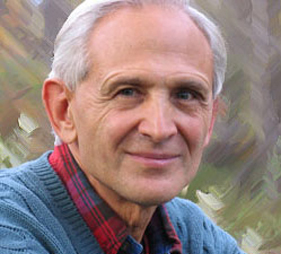
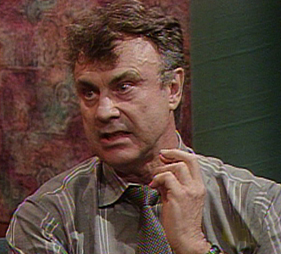
Ron Kurtz on the Hakomi Method

“Who are you?”

Serge Prengel: A lot of people in our audience know Hakomi, and many have been trained in it, but some people may not know. Would you define what Hakomi is?
Ron Kurtz: Hakomi uses several particular, unique approaches to helping people study themselves.
We believe–or I believe, anyway–that self-study, as it’s practiced even in the East, is about reducing the unnecessary suffering that comes from not knowing who you really are.
We believe–or I believe, anyway–that self-study, as it’s practiced even in the East, is about reducing the unnecessary suffering that comes from not knowing who you really are. In fact, Hakomi means, “Who are you?” So, the way we do it is to establish a safe relationship–a “bubble,” we sometimes call it–within which the therapist helps the client feel comfortable, safe, and cared for. That’s done by training therapists to be in the right state of mind when they work, and that state of mind is very similar to what Buddhists might call compassion. We call it a loving presence: to have a loving feeling about the person, which you actually practice developing, and to be totally present.

To be totally present is to be aware of the fact of the moment, to be aware of what’s happening–actions, physicality. That relates us to body psychotherapy; we’re constantly aware of the bodily signs of the client’s present experience, and we’re interested in accessing the client’s implicit beliefs–the beliefs that are operative through the client’s habits. We see the signs of those behaviors; we even see the signs of some of those beliefs in the person’s present behavior.

We don’t generally think about taking a history; we don’t listen very much to what people try to explain to us about themselves. We just use this method to help the person realize who they are and how they organize their experience.
SP: So it’s really “Who are you?” in the sense of how you organize your experience.
RK: Yes, and how you do it unconsciously, automatically—things that go on, as John Lennon would say, while you’re doing something else. There are wonderful new books about the adaptive unconscious, and that’s an essential part of my thinking.

SP: That most of the processes happen unconsciously, and that there’s a reason behind that.
RK: Yes. There’s usually a habit that was learned as an adaptation to a situation, and these habits are not necessarily verbalized or even made aware; we have to bring them into consciousness. Sometimes they come in as a memory or an emotional reaction, and then we have to spend a little time getting the verbal descriptions of it. A child will learn the grammar of its native tongue by the time it’s 18 months old. It could not tell you about nouns and verbs, but it uses them perfectly. That’s the kind of adaptation I’m talking about.

And we work with the surface indications of those adaptations. I’ll give you a very simple example: there are people who interrupt themselves when they’re speaking, as if they had an editor who was watching what they said and would stop them and make them change their words. Well, that’s an indicator; that’s immediate behavior that happens with this person all the time. It’s an indicator of something like trying to avoid making a mistake because they were punished for making mistakes. So we can go right to that. If I can just listen to a person for a minute or two, I can see that behavior.
SP: So really what’s happening is you’re not paying a lot of attention to the story of people’s lives, but focusing on how they are and tracking what you call “indicators.”
RK: Indicators, exactly. [Wilhelm] Reich said that the client’s history walks in with him; it’s the way he shakes your hand and holds his body. The adaptations are written in the posture; they’re written in the muscle tension. The kind of posture where a person looks at you with a slight angle of their head, they don’t look directly at you–that’s an indicator, a postural indicator. As in Bioenergetics and Reichian work, locked knees are an indicator of orality, or a puffed-up chest is an indicator of a psychopathic personality. So all the character patterns, to me, are a subset of indicators. And these indicators are indicators of implicit beliefs, like the puffed-up chest: “I have to be tough, I can’t let people in, I can’t be honest with people.” All those things are written in the posture; you just have to know how to read it.
SP: So what the posture tells you, it’s an embodiment of the belief.
RK: Yes, but the belief doesn’t come first. The adaptation comes first. The belief may not even be conscious. It may never have been verbalized. When I give feedback, they’re shocked that these beliefs are there, but they recognize them.
SP: So this unconscious belief is a result of this unconscious adaptation, and it takes a special kind of attitude on the part of the therapist to notice it.
RK: And the client.
The client has to be devoted to this idea of self-study. They have to be willing to allow the therapist to experiment, which will evoke some of these early, painful situations.
The client has to be devoted to this idea of self-study. They have to be willing to allow the therapist to experiment, which will evoke some of these early, painful situations. They will just come up as emotions first, where the person will get very emotional and not know why, and then a little while later they start to have a memory that fits that emotion. It takes courage to be a client.

Assisted Self-Discovery

SP: You used the word “experiment”–do you want to talk a little bit about this concept of “experiment”?
RK: Absolutely. For example, I was giving a talk at a psychology conference in Vienna one year, and there were maybe two or three hundred people, Germans and Austrians, in the audience. I asked them to become mindful; I gave them some time, and I helped them work themselves into mindfulness. First, though, I told them that I was going to give them a statement while they were in mindfulness, and I told them what the statement would be. I was going to tell them that each was a good person–in German, “a Mensch.” And I asked them, “Tell your neighbor what you think your reaction will be when I say that to you when you’re in mindfulness.” So they talked about that, and then they got mindful. And out of two hundred people, 80 percent or more had incorrectly predicted it–they hadn’t known what their reaction would be. About 60 percent of them got suddenly sad; some got teary-eyed; some felt relief.  It’s because there’s an implicit belief in those cultures that “we’re not good people.”

So that’s an experiment. I study a person, I study their indicators, and make a guess about what their beliefs are. From that guess, I create an experiment that I hope will evoke a reaction that has significant information for that person about who they are.
SP: So that’s very much related to that notion that Hakomi is about, “Who are you?” And by creating the experiment, you give the person a chance to actually realize the belief that they carry inside.
RK: Sometimes they call it “self-discovery.” Assisted self-discovery–that’s how I like to think of it.
SP: That’s a very different approach from the more medical-oriented model of pathology.
RK: Yes, it’s totally not a pathological model. It’s a model of, “You want to study yourself? I’ll help you.”

Teaching Mindfulness

SP: You mentioned several times the word “mindfulness,” and that it’s very much a part of the experiment function. Could you talk a little bit more about mindfulness?
RK: Traditionally, mindfulness is the method for self-study and meditative practices.
Mindfulness is a state where you’re focused and concentrated on the flow of your experience moment-to-moment, and, as much as possible, without interfering with it.
Mindfulness is a state where you’re focused and concentrated on the flow of your experience moment-to-moment, and, as much as possible, without interfering with it. For example, it takes years of practice, but some people can watch their breathing without interfering. That’s mindfulness. And the smart way they train mindfulness is to have you pay attention to your breathing. The idea is that there’s no organization around controlling it. You’re not controlling it, so if I say something while you’re in that state, it directly evokes a reaction. You’re not protecting yourself against it; you’re allowing these things to happen. And that’s one of the reasons that there has to be this connection with the client, where the client understands and feels the compassion of the therapist.
SP: So in the example you were giving earlier of this talk where you had asked a question to the audience, and their inability, in most cases, to predict how they would feel, the reason is that they had not been connected to themselves, and in mindfulness, they suddenly had the raw experience.
RK: Yes, you could say that. That’s true. And the reason I chose that statement, “You’re a good person,” is I understand that culture doesn’t promote that. The culture promotes original sin, and “You’re the bad guy,” so I just guessed that that would work.
SP: Yes, and as you said, when you’re dealing with the client you pay attention to who the client is through these indicators.
RK: Absolutely. And then the statements I offer to clients, or other kinds of physical experiments I do, are designed particularly for that client at that moment.
SP: You mentioned that in order to reach that moment where the client is able to be in a mindful state, the attitude of the therapist includes compassion and a loving presence. How do you help somebody who is not trained in mindfulness to become mindful for these experiments?
RK: Well, almost everybody can do it for a moment or two. Almost everybody. You’d have to be quite wired up and nervous not to notice something, and so most people can do it. Of course, it gets easier for clients once they have practiced a little bit. The key to it is what you might call “limbic resonance”–by timing and pacing, by being silent when the client needs you to be silent, by noticing simple things.  
What I train my students to do is, when you sit down with somebody, study them for what you like about them, for what makes you feel good, and that will be reflected in everything you do.
What I train my students to do is, when you sit down with somebody, study them for what you like about them, for what makes you feel good, and that will be reflected in everything you do. So they’re trained to do that: to look at somebody and know to just start liking this person and see how beautiful they are. They’re all beautiful, somehow. Everybody was somebody’s baby.
SP: So what I’m hearing is that if we are making mindfulness something that’s intimidating, it’s going to be difficult. But if we focus on the fact that most of us can access mindfulness for a few seconds, then it’s much easier. And what happens is that the therapist actually eases the client into that mode by limbic resonance–by focusing on what they like about the client.
RK: Yes, that’s true. And I may not even mention mindfulness to the client. I may just say, in a very soft voice, something like, “Well, why don’t you just get as calm as you can get, and I’ll say something and you notice what happens when I say it.” Just as simple as that, and it works. They don’t have to know about mindfulness; they just have to get calm and study their experience.
SP: Very much that sense of just being in the moment and creating the present experience.
RK: Yes, exactly–studying reactions for information, what it tells you about who you are. And there are people who are too nervous–they had too much coffee or something like that–and they can’t get into mindfulness right away. So they have to get a massage, take a hot tub, something like that. But I’ve only run into maybe two or three people in a 30-year career who couldn’t. That’s how easy it is.
SP: Maybe it’s a testament to how wired we are to resonate with other people, that the therapists themselves are able to create some of that.
RK: Absolutely. Sometimes we’ll trigger a traumatic memory, because you have no idea what’s going to pop up when you do an experiment–you’ve got an idea about an indicator–and the person can go right into a traumatic memory. And in times like that, I talk very softly and gently and calmly to the person; I have them look right in my eyes, I hold them with my vision and my softness, and I talk to them, this human hijacked by a memory, and I say, “You know you’re really safe right here, right?” It’s an appeal to the rational mind. And that seems to help them come around, quite a bit.
SP: So instead of talking about relationships, you are in a relationship at a very basic, limbic level.
RK: That’s true.

Building Loving Presence

SP: What is it that helps therapists practice being able to offer this kind of loving presence?
RK: That’s a good question. For me, it popped up many years ago when I was working in Germany. I had done nine straight days of therapy sessions in a group, over and over, and I was exhausted. I was so tired I couldn’t think very well, and I just stopped thinking for a while, even though I couldn’t tell the client. I didn’t interrupt the client; they were just talking and I sort of went blank.
In this blank state, looking at this person, I saw a certain kind of beauty in them. And I realized if that person knew that I was seeing this, they would feel it.
In this blank state, looking at this person, I saw a certain kind of beauty in them. And I realized if that person knew that I was seeing this, they would feel it. And I realized, “It shows. I’m looking like I’m feeling this.” And I had the person look at me (he had his eyes closed). He looked at me, and immediately his process changed into something deeper and emotional. And that’s when I realized, “Oh, yeah, that’s the basic engine of the relationship: it’s just appreciating this person to the point where you feel compassion and you feel loving towards them. And that will move the process by itself.”

I get plenty of that for myself, too. I have a wonderful family that supports and sustains me.
SP: So, in other words, it would be very difficult to offer this sustaining sort of presence to clients if you didn’t experience it yourself and in your own life.
RK: Yes, you have to find a source for all that. You have to find a beauty in everything. You have to be really careful about getting hung up on what’s wrong with the world, because there’s a lot.
SP: Maybe that’s also related to mindfulness, in the sense that it’s about the ability to focus or not focus on some things.
RK: Right. Sometimes it’s called “concentration training.” It’s the ability to focus in the present.

The Missing Experience

SP: So you, as a therapist, have this sense of loving kindness; you are tracking the client’s reactions, discovering indicators, conducting experiments. What is it like for the client to go through that? You mentioned earlier there is a certain sense of courage, and it must take a certain kind of client to take this–or is it something that’s applicable to everybody?
RK: I think almost everybody. But in self-study, there has to be a willingness to take an honest look at yourself. The experience for clients–we think of it this way: if they adapted to a situation that is still painful to them in some way, or still running them in some way, defensively, compensating, they didn’t get the kind of emotional nourishment that they needed. There was something missing. We talk about the “missing experience”–and “missing” because either they don’t believe it’s possible, or they feel like they have to defend against it.

For example, we can do an experiment where I ask a person to be mindful and to watch me as I move my hand very slowly towards them and touch them, and then to notice their reaction. Well, that will trigger a memory; if they have been abused, this typically will trigger that. What’s missing for them is this perfectly gentle, sweet touch. When they realize that, they become emotional, and then they can allow the hand to touch them and they can feel the sweetness; they can feel what’s been missing for years and years. That missing experience is so delicious, and so healing, that once you experience it–or even if you just see it happening with somebody else, like when I do therapy intensives and there’s 25 people out there watching me, five of them are going to be crying in somebody’s arms when I’m done. The people watching get moved because they have similar issues; these issues are very general. The nourishment that was missing is just like the Germans.
SP: That’s something that I want to make explicit: we’re talking about something like an experiment and using an analogy with a scientific process, but at the end of it, the moment of change, the moment of healing is the emotional healing that happens when people connect to that missing experience.
RK: Exactly.
SP: The emotional healing you just described happened in a workshop. Could you give some experiences and other recent examples of an experiment and the kind of missing experience that it revealed?
RK: Very often, I’ll tell somebody, “There’s a little bit of technique involved here, to invoke these memories and to invoke these emotions.” I remember working with somebody–a psychiatrist, or I think she was just a medical doctor–who had been severely abused. We worked together for several sessions until she reached a point where she was containing her rage and couldn’t release it. It would just choke her up in her throat. And I said, “Okay, why don’t you come back tomorrow, and I’ll have people here to assist me, and we’ll contain you.”

So she came back; we brought her right to the same edge, and they were holding her very tightly because she would contain herself if she was alone. But when she reached a point the second day, I had people hold her very tightly so that she could feel safe enough to compress herself. She went into this rage, and I don’t know how long it lasted. I have a tape of it; it probably lasted at least five or ten minutes. Afterwards, after this explosion, she lay down with her head on one of my assistants’ laps, and she was feeling really great. She had released the anger and went into kind of a sweet melancholy about it all. Then she looked at me and said, “I never did this before.” She had never let herself be comforted; she had never rested her head in somebody’s lap before. That’s delicious, it’s wondrous. I forgot the question, but that was the answer.
SP: Yes. I was asking you to relate an example of that, and what’s become very apparent in this example is the role of containment and support, including physical support.
RK: Exactly. It’s still part of the body-centered aspect of it.

Taking Over

SP: So, where other people see things in terms of resistance, you actually support people.
RK: Yes, I see it as emotional management behavior, experiential management behavior. So I’m going to help them manage it. I’m going to support their behavior so that they can relax a little bit, let me help them. Then what they’re managing has a better chance of coming through as expression.
SP: In other words, you don’t go into a battle with the clients, describing a behavior as dysfunctional, but you see it as a way they are managing their behavior. And as you help them, something else happens.
RK: Absolutely. It’s amazing. We call that technique “taking over.” We take over a person’s management behavior. For example, if I give somebody a probe that says, “You’re a good person,” and they have a thought that says, “No, I’m not,” we’ll have somebody take that over because that’s a management behavior. They’re managing their fear of thinking of themselves as a good person, and that’s not a good idea. I have somebody take that over by saying a few times, “You’re a good person,” and having an assistant of mine say, “No, I’m not.” Then the person is again in mindfulness. And as we do this two or three times, there’s a memory; a memory comes up about where they learned this adaptation. And
once you’ve got it in memory, it’s changeable. Once they see why they did it, they have some more control; they can change it, they can change that behavior. But they have to understand it first. You can’t force it to change. It changes through insight and practice.
SP: The words “insight” and “practice” are very evocative also of Buddhist practice.
RK: Absolutely.
SP: And I assume that is an area where some of that wisdom, some of that approach, has permeated your approach and your methods.
RK: It was there from the beginning. I was enamored with and studied Buddhism and Taoism long before I started doing Hakomi. It’s part of the inspiration for the method.
SP: I would like to use the word “inspiration” to say that this has been an inspiration. Unfortunately, we’re coming to the end of the interview, but I would like to suggest to people who are hearing this to carry with them some of this compassionate and experimental attitude in their work.
RK: A loving presence.
SP: Thank you, Ron, for your loving presence.

Healing Trauma Through the Body: The Way In is the Way Out

Suzanne: A Case Study

Suzanne* arrives in my office due to a long history of anxiety, mild depression, problems sleeping, and relationship issues. She is 43, successful in her marketing career, and divorced, with a child in high school. She is a tall woman, but something about the way she carries herself makes her seem smaller than she is. She is wearing loose, dark clothing that doesn’t reveal much of her body. As she walks into my office for our first session, I am struck by the animation in her upper body, but I notice that she moves awkwardly because of the tightness in her shoulders, neck and upper spine. As I invite her to sit down, I notice that her eyes shift back and forth as if she’s looking for something. She seems uncomfortable meeting my gaze and looks quickly down at the floor each time our eyes meet. I can see by the way her shirt lies that her solar plexus area is very tight. It is clear that this tightness prevents her from taking a full, deep breath. She seems to be fighting upward against gravity, as if attempting to levitate. At the same time, I see and sense very little connection to her lower body. Her legs are almost completely still; they appear lifeless and detached. This gives her a weak and tenuous connection to the earth. “It’s as if everything from above the waist is surging wildly upward, like a thousand bees swarming skyward, out of a hive, centered above her navel.”
 
She complains of rapid heart rate, shallow breathing, food sensitivities, digestion problems, and difficulty staying asleep. As she talks, I can hear her mouth is dry. It makes sense to me that she is experiencing anxiety—my understanding of how the nervous system works lets me know that her system is stuck in a constant state of fear and readiness. As a Somatic Experiencing® (SE) practitioner, I can tell that Suzanne is in a common feedback loop that occurs in people who are attempting to manage their internal nervous system dysregulation. Shallow breathing and tightness in her chest keep her body in a constant state of oxygen deprivation. This escalates the anxiety, so she tightens the muscles in her chest even more. I take a mental note—I’ll need to address this pattern.
 
Suzanne begins to tell me about a recent conflict she experienced at work with a male co-worker. As she describes the situation, she cries easily but not comfortably, trying to hold back the tears. When she does begin to cry, she holds her breath and squints her eyes tightly, as if trying to squeeze the tears back into her eyes. She swallows repeatedly and her shoulders tighten even more. She’s working hard to keep the emotions in check. At one point in her description, she chastises herself for being so reactive. “I should be able to handle these types of situations,” she says. “Instead, when there’s conflict, I get totally emotional. Even though my mind is racing with thoughts, I can’t do or say anything. I feel paralyzed. I don’t act like a competent professional. I just sit there and cry like a little girl.”
 
She looks down, rounds her shoulders, and holds her breath. I listen to her words and make a note of how she describes her experience, but I am especially paying attention to what her body is telling me. “As I listen to her, I’m receiving a lot of information about her by paying attention to my own bodily experience.” I feel a little breathless and pulled upward in my own body—I need to keep reminding myself to breathe, soften my belly, and feel my feet and pelvis.
 

Approach

It is obvious from the above description that my attention is heavily focused on the physical presentation of the client.  Of course, I am not ignoring the content of her narrative, but I am especially attuned to the story her body is telling. My approach is guided by the principles of Somatic Experiencing, developed by Peter Levine from his research into the stress responses of animals in the wild. Physiological responses to stressful situations arise from what is classically called the sympathetic or “fight-or-flight response.” Levine noticed that once an animal was out of danger, its body automatically shifted to “parasympathetic” rest and recovery with gentle trembling, shaking, deep breaths, sweating, and sometimes more aggressive fight-reenacting behaviors—a process called discharge. These behaviors reset the nervous system to a pre-threat level of functioning. This discharge cycle appeared to be essential to recovery: experts repeatedly told Levine that if animals were unable to complete the discharge process, they would die.
 
Given that humans should be equipped with the same restorative capacities, Levine pondered, what makes us different? What gets in the way of our recovery? 
 
Through hundreds of hours of client sessions, Levine began to witness how clients’ bodies told their stories of trauma, even if the clients had no specific memories. Once Levine guided them into the sensate experience of trauma, the body then took over and finished what was unprocessed, or incomplete, much like the animals he’d observed. Clients receive the added gifts of increased body awareness, a stronger connection to self, a shift in deep-seated patterns, a more regulated nervous system, and a sense of mastery.
 
Why do humans need to be guided at all? The biggest obstacle is how inattentive and unfamiliar we are with our physical sensations. Our big, sophisticated brains constantly out-think and override our bodily needs. We are trained to ignore signs of hunger, pain, discomfort, injury, danger, as well as pleasure, saturation, and fulfillment. What’s astonishing is how forgiving and responsive the body is. As soon as we tune into it, shifts begin to happen.
 

Getting Unstuck

Within my framework as an SE practitioner, Suzanne’s symptoms imply something in her system is stuck, unfinished. I can assume that during some traumatic experience in her past, she froze or was overpowered by someone or something bigger, stronger, or faster. 
 
Suzanne’s array of emotional and physical complaints is typical of autonomic dysregulation. Dysregulation shows up in basically two extremes: stuck “on” and stuck “off.” The former can manifest as anxiety, panic, mania, hypervigilance, sleeplessness, dissociation, attention deficit, OCD, emotional flooding, chronic pain, hostility/rage, etc. This is the sympathetic branch of the nervous system, responsible for moving us out of danger. When traumatic material is unprocessed, the residual activation keeps a person locked in a constant state of readiness and reactivity. The client has an ongoing sense that “something bad can happen at any moment.”
 
Being stuck off shows up as depression, flat affect, lethargy, exhaustion, low impulse/motivation, chronic fatigue, dissociation, many of the complex syndromes, low blood pressure. This is the parasympathetic branch of the autonomic nervous system. In a healthy state of functioning, it is designed to bring the body back to rest and recovery after surges of sympathetic activity. When it goes awry, the system slows or shuts down too much, or “depresses” itself at the slightest trigger.
 
Clients may present with one extreme or oscillate between the two. At first glance, Suzanne presents more on the sympathetic scale, excepting her legs. I’ll want to guide her inward so we can begin to sense more deeply into her pattern.The goal of SE is to work through traumatizing events in non-traumatizing ways. If I can ease her through whatever defenses or strategies her body has taken on to manage the dysregulation, her body will take over and complete the necessary response that was not able to occur when she was initially traumatized. It will be part of my treatment plan with her to assist her body in feeling all possible impulses. She may want to cower self-protectively, defend herself, or run from the danger.
 
“SE therapists have to learn to watch, not just listen; to know when to slow down, when to point out and explore a physical response.” We must learn how to ask open-ended questions that invite curiosity about one’s experience in the moment. Our job is to support the client in accessing what is happening inside at the physiological level, and then to assist in the return to self-regulation. We are restoring the client’s system back to an organic level of functioning. The client grows in self-mastery, and the therapist is merely the guide.
 
SE uses a variety of techniques that are presented at a pace that helps the client to stay with every moment of the event without flooding, compensating or dissociating. Slowing everything down and keeping Suzanne focused on her bodily sensations will help us do this. It’s a bit like watching the event on a video, pausing at every single frame, and allowing each detail, emotion, sensation, bodily reaction, impulse, and defensive reaction to be felt and processed. Connecting to the physiological responses also prevents her mind from coming in and doubting or worrying.
 
In this sense, we can see that, for a traumatized person, going into the body and coming into contact with their physiological experience is the way out of their distressing symptoms. The way in is the way out. Many models of treatment focus on eliminating symptoms and behaviors, but SE takes the client into the symptoms knowing that the symptoms are the key to healing trauma. With Suzanne – as with all of my clients – I will begin my work with her wherever she is and with whatever her body is displaying in the moment. By focusing on one aspect of her physical sensations, we will be led into her body’s memory of the trauma. By moving slowly, and utilizing various techniques that prevent re-traumatization, her body will guide her through her own natural set of experiences, and gradually release the stuck pattern.
 

The Work: Careful Amplification, Attentiveness

To begin my work with Suzanne, I will want to take her into a direct experience of the physical sensations in her body. I first want to be sure that Suzanne has the capacity to work somatically with the material she is presenting. I will be able to assess Suzanne’s overall nervous system stabilization when I see how her body reacts initially as we begin to explore bodily sensations. I will also be able to get clear information on how she attempts to manage the sensations by watching her response to them. As she begins to feel her body, does she brace, collapse, tighten all over, hold her breath, dissociate, shut down, get angry or become judgemental?
 
As she is finishing her description of the conflict with the co-worker, she begins to tell me again of her general anxiety, in part, she says, because she can’t trust herself to respond in situations where she needs to. I feel as if this is a good time in the session to begin to tune into her sensations, so I ask her permission to explore her experience a little.
 
She agrees, a bit hesitantly, and I ask her to notice where in her body at this moment she is sensing the anxiety. She looks down and then says, “In my belly.” As she focuses her awareness on the sensations in her belly, she escalates quickly—her shoulders tighten, she holds her breath. She looks frightened. I remain calm and unalarmed because I have seen this many times. “Can you give me some words to describe the sensations?” I ask her. She puts her hand on her belly, and says, “It’s churning, hot, and it’s moving really quickly.”
 
At this point, “I know that I need to broaden her awareness and to help her know that she can touch into the intensity of her experience without becoming overwhelmed by it”, as well as to help her move her attention to areas of less intensity. To do this, I ask Suzanne if she can also notice the chair supporting her thighs, and the floor beneath her feet. My goal here is to build resilience and confidence, and dispel any belief Suzanne may have that she can’t handle this experience.
 
Secondly, by asking her to feel outside of an energetic hot zone, her body recognizes that there is more square footage for the intensity to inhabit. This naturally makes a little more space for the concentration of the sensations; they spread out. Thirdly, by contacting the periphery of her body, it helps Suzanne feel solid, reliable areas, which provide the sense of a container.
 
Suzanne closes her eyes and I see her body visibly settle into the chair. Her shoulders drop slightly, the muscles in her face soften and she is breathing more deeply. She seems to allow the chair to hold her a bit more, rather than holding herself up and off it. This is a very important moment and I want to grab it.
 
Suzanne looks up at me, surprised. I smile at her. “Tell me what you’re experiencing now.”
 
“Things are relaxing,” she says, her voice is softer and her words come out more slowly.
 
“What does relaxing feel like in your body?” I ask her. 

“My stomach has softened," she tells me. "I feel more air in my belly and I don’t feel as afraid.”
 
Another important moment. This is the first shift in Suzanne’s breathing pattern—a crucial element in the stuck anxiety pattern in her body. Remember, when breathing is rapid, tight and fast, it actually triggers the body’s fight-or-flight reaction. As the body goes into this reaction, the breathing becomes constricted, fast and shallow—a frustrating chicken-or-egg phenomenon. I want to expand on Suzanne’s feeling of being able to breathe. So I ask her to sense into her belly, noticing how it feels to have more air.
 

Relating to Anxiety

This experience lays the groundwork for Suzanne to be able to enter into intense sensations and then find a way to regulate them. I want her to really have a felt sense of this, so I decide to guide her into it a few times as practice. I ask her to consciously bring up something that triggers her feeling of anxiety, like her co-worker. As she thinks of him, the anxiety begins to rise again and I guide her into the sensations in her belly, then down to her feet. As we do this repeatedly, Suzanne discovers that if she moves into noticing her feet whenever the sensations of anxiety get too intense, she can stay longer and longer with the anxiety and the intensity subsides drastically.
 
I feel that we have done enough work in this area and I want to check in with Suzanne to see how she is handling this. Her face appears to be shining a bit; there is more blood flow and a pinker color to her cheeks and for the first time in the session. She smiles. I ask her about this. She looks a little sheepish, averting her gaze for a moment. Then she looks back at me and says, “This is cool. I feel so much more in charge.”
 
I want to anchor her bodily sense of being “in charge” so that she can access this when her anxiety arises. “I am hoping to help change her relationship to this anxiety—to become curious about it.” I want her to recognize that when she actually pays attention to it, at the sensation rather than emotional level, it usually subsides, rather than increases as most people fear.
 
This process of touching into her sensations of the anxiety, then shifting her awareness to the rest of her body, helping her notice any moments of settling or any shift that occurs naturally, is one of the many ways that SE supports the nervous system to re-establish its natural, inherent rhythm—one that flows seamlessly between excitation and relaxation, between contraction and expansion. This is the first step Suzanne and I have taken to restoring regulation in her system.
 

Unfinished Business

The second step we’ll need to take is to access what’s unfinished. Many traditional therapies focus on feeling, reliving, and ultimately putting behind many of the bad things that occur in childhood. While this can be an important part of the therapeutic process, and is definitely something I am concerned with, my SE orientation leads me to seek to explore this experience with Suzanne somatically. “By following the body’s wisdom, we are led to what didn’t get to happen in a client’s past.” We provide clients with the opportunity of re-doing the event—finding in the present the way that the body would naturally, organically respond if it was left to its own devices. This renegotiation is done almost entirely through visualization, and slow, intentional movements, deeply connected to sensations and procedural movement patterns. This allows the discharge process to complete, and the trauma symptoms are moved out of the body, while the nervous system is allowed to return to pre-trauma functioning.
 
To get to what is unfinished in Suzanne, I want to access the brainstem and the survival responses. The way in is via sensations, noticing physiological shifts, and sensing impulses. My work with Suzanne so far has tapped into a little (but not too much) of the activation, or the charge of the anxiety. Now it’s time to check in to the rest of her body—in particular her extremities. The extremities naturally spring into readiness and action when we feel threatened. When a person is unable to carry through with the impulse to flee or fight, these thwarted impulses interrupt hard-wired sensorimotor patterns. This is often the place where the system gets stuck.
 
Capitalizing on Suzanne’s feeling of excitement and mastery, I ask her if she’s willing to explore a bit further. This time, when she gives her assent, she doesn’t hesitate. I ask her to sense into the rest of her body to notice what else is going on.
 
She immediately reports, “I feel tightness in my legs and shoulders.”
 
Deciding to bring awareness to the less accessible lower body, I ask her to tell me where she feels the tightness in her legs. She reports feeling tension and tingling in her ankles and thighs. Suzanne’s lifeless legs indicate a parasympathetic orientation in her lower body—a common pattern in clients with a history of physical or sexual abuse, bullying, early surgical procedures, or any events that involve being restrained. Earlier she had described herself as “feeling paralyzed” and “crying like a little girl” in response to the conflict and perceived threat of her co-worker. It’s clear to me that at least some of this sense of paralysis originates in her legs. I encourage her to stay with the sensations and see what happens next as she does that.
 
“It’s getting tighter,” she says.
 
Wanting to gently encourage her, I murmur, “Stay with it, if that’s okay.” I see her legs jump and tense slightly and then become very still.
 
“I’m scared,” Suzanne says. “I want to move my legs, but I can’t.”
 
This is a very important moment in SE work—an experience that Levine describes as the brake and accelerator both floored at the same time—the core of the freeze response. It is high-level sympathetic mobilization, coupled with parasympathetic shutdown, similar to what happens when a circuit breaker blows when there’s too much charge going through a line. It will be necessary to separate the two impulses so that Suzanne’s defensive response can be completed.
 

Follow the Impulse

Before I can say anything else, Suzanne says again, “I’m scared. I know this feeling. This is like when my uncle would do things to me in the attic.”
 
While I am certain that we will need to explore the content that is beginning to naturally arise as a result of feeling into Suzanne’s sensations, at this point I want to stay grounded in her physiological experience. In my experience, if I chose to explore this reference to her uncle by asking her to tell me more about what happened in the attic, Suzanne would likely shift into an intellectual telling of the story. This would take us away from her body and what her body wants to do. In fact, her body has been telling this story from the beginning, now showing us the connection between her anxiety and paralysis in her conflict with her co-worker and her past experience of trauma.
 
I ask Suzanne if it’s okay to sense the energy in her legs.
 
She says yes, a little uncertainly. She pauses for a moment and then responds, “It feels very intense, like a strong humming feeling.” My initial impression of her “wild bee” energy seems accurate. I ask her to feel the energy and sense where it wants to go. I also ask if she can feel how she is holding it back. I encourage her to very slowly move her awareness back and forth between the wanting to move and the holding back. This technique helps to separate the conflicting impulses. 
 
Suzanne is alert and somewhat alarmed, but not overwhelmed, mostly because we have done good preliminary work earlier, where she learned to trust her body somewhat, and learned to trust her ability to handle intensity. As Suzanne tunes into the energy wanting to move, the holding begins to ease, and the impulse to move increases. I see her upper body relax slightly, while her legs begin to twitch. I point out the twitching in her legs and invite her to slowly feel that and follow what wants to happen. Her body wants to move in reaction to a threat (her uncle), but it can’t because the threat is larger, stronger and familiar. Several intense, involuntary impulses are happening at the same time: anxiety because of the danger, hormones racing through her system preparing for action, tightness and bracing in many parts of her body, feelings of helplessness, hopelessness and shame, to name a few.
 
I can see underneath Suzanne’s clothes that her thighs are contracting slightly; her feet jerk almost imperceptibly upward. I also feel the readiness in my own body, which I experience as tension in my legs; my heart rate increases. I am feeling a sense of excitement in my  body—these impulses are contagious, and many-less experienced practitioners initially make the mistake of getting swept up in the sensations, unintentionally pressuring the client and causing resistance. Not wanting her to feel pushed, I sit back, settle into the chair, and move my attention back slightly, to allow her to experience her own impulses uninfluenced by mine.
 
I ask her to feel into the tightness of her thighs, and to sense her calves and ankles. They very slowly begin to move on their own, and I encourage her to notice that.
 
““My legs feel powerful and strong, like they could leap over any mountain,” she says, her voice sounding stronger and more commanding than I’ve heard it yet in this session.”
 
“Stay with those sensations of strength and power,” I suggest to her. I can see that she is enjoying the strength she feels. She pushes her feet down into the floor, her thigh muscles contracting visibly. I see that her feet and legs continue to move very slightly, this time with larger movements. I stay alert for signs of dissociation, bracing, breath-holding—anything that would indicate that too much is happening too fast.
 
As Suzanne continues to experience the movement of her legs and feet, she says, “It feels great to move them.” Her legs pump slightly beneath her seat. “ I don’t think I’ve felt my legs for years. Its like I’m coming into them.”
 
I ask her to tell me a little bit more about what she is sensing. “Heat. Waves of heat coursing through my legs.” Her feet and ankles continue to move as she describes this. I know that the release of heat is a sign that her nervous system is coming into a greater degree of equilibrium. To continue to expand on Suzanne’s experience of becoming unfrozen, I ask her, ”What does it feel like your feet are doing?”
 
“I can walk away. I know I can walk away. I can run away if I need to.”
 
Her legs begin to tremble very slightly. Her face is flushed, radiating pleasure. I know we have done plenty for one session.
 
At this point, it's time to process some of what we’ve done. We talk about her experience and I educate her a bit on the SE model I’ve been using, explaining the fight-or-flight process of the nervous system and what happens when those natural reactions are unable to be completed. She shares some memory flashes that arose during the running, and we talk about ways she can play with the process of checking into her belly when she feels anxious—moving between the sensations in her belly and the sensations in her legs.
 

The Next Step

Future sessions with Suzanne would focus on fine-tuning the newfound skill of sensing the anxiety somatically,  and learning how to recognize it, and settle it before it overtakes her. We would look at other situations in which anxiety shows up, such as in the work place or during  moments of conflict, and see if we can generalize the skill in other settings. We would explore the abuse by her uncle, concentrating on what is unprocessed physiologically and emotionally, especially incomplete defensive responses. SE therapists learn to trust the body, more than the memory or recall of events. We know not to assign meaning or assume causality to what arises in the therapy session. Details of events change as they are worked out at the somatic level. Memory is unreliable at best, but the body holds the key to what is unfinished and needing to heal. We focus on allowing those physiological responses to unfold, which makes room for the body to organically return to homeostasis.
 
In the SE model, we consider our work to focus on resolving the strategies for coping with nervous system dysregulation. This dysregulation can occur as the result of trauma, but may occur even in the absence of specific traumatic events—early attachment issues, for example. What is primary to us is to restore the nervous system to a natural state of regulation. To this end, SE is well integrated with many modalities of therapy, adding richness and depth to other methods that may have a more primary focus on the emotional or cognitive aspects of experience. What is most important about the SE way of working with a client is our focus on the physiological, the sensations, the body.
 
A wealth of information can be found at the Foundation for Human Enrichment web site. A comprehensive SE Training program is available for those seeking to learn how to apply this method in their work. A vivid demonstration of SE is seen in Resolving Trauma in Psychotherapy: A Somatic Approach.