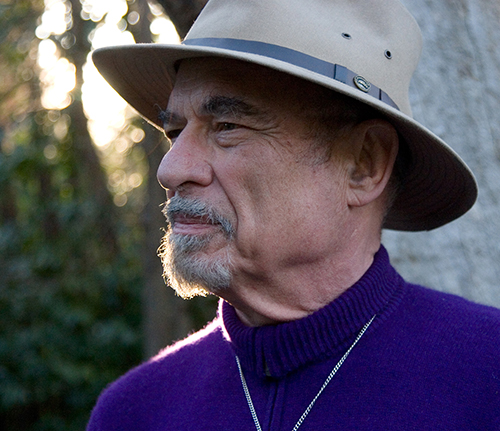
Grief and Gratitude: Working with Stroke Survivors

Together

May we sit with wisdom and compassion

at the ancient fires
of dashed hopes
and lost dreams.
May the pain which brings us together
become the cave we enter
in reverent descent
and surrender
to what
IS.
May we have the courage
to bear this rebirth
together.
—Carol Howard Wooton


An Interruption

In 2005, our circle of six met in a poorly lit room of a community hospital. This afternoon, Tom had the floor. A former surgeon, he had been looking forward to cutting back his practice to spend time with his grandkids.

Tom had lived his life in constant motion. He had been a football star in high school and college before going to medical school. Now, at 67, he was paralyzed on his left side: his left forearm contracted in spasm, his once-dominant left hand clenched into a permanent fist in front of his belly, his left leg rigid below his knee. His chiseled face still handsome, he sat straight in his wheelchair, strong muscles supporting his torso—a powerful presence. But his eyes always gazed down; he barely looked at anyone.

“I used to be able to ski, drive, do everything around the house,” he said. “I loved my work. This summer, I planned to take the grandkids to the ocean, show them how to dive into the surf. What can I show them now? Nothing.” The other group members listened quietly to his grim litany; all of us recognized his truth.

One day in 2004, Tom had come home from work and eaten dinner as usual. His wife was in the next room when he felt himself lose balance and topple over. He called out to her.

“I’ve had a stroke. Call 911,” he told her from the living room floor. She made the call, then came back into the living room and sat her petite frame on Tom’s head until the paramedics came, knowing he would try to get up.

“I had it all planned out,” Tom said to us. “And now I can’t do any of the things that I want to do. All that time I spent in medical school and working hard while my wife raised the kids—this was supposed to be my time with my grandchildren.” Each week he repeated these thoughts while gazing at the fingers of his left hand, pulling each one out as straight as possible, then resting it on the arm of his wheelchair or in his lap. On this day, the door banged open, interrupting him.

In barged a large woman in a motorized wheelchair, which she drove fast and well. Her left leg was swollen huge, the bare right foot discolored, her skirt hem hardly covering the Foley catheter bag strapped around her calf. In a croaking voice, she declared, “There’s only two kinds of people in the world: keepers and assholes. And you’re all keepers!”

Everybody, including Tom, guffawed. Amidst the belly laughter, she zoomed over to our small circle, which had opened to give her room. She told us she had been sitting outside in the warm air for 45 minutes, thinking she was early. When no one else arrived, she’d opened every unlocked office door until she found us, arriving with only 30 minutes left in the session.

“Hi there,” she said with a wide grin. “I’m Alexandra.”

None of us could have guessed that day how much Tom and Alexandra would change each other’s lives.

The Group

When I’d spoken to Alex on the phone for the group screening, I hadn’t been sure whether I should allow her in at all. I could tell immediately that she would be a handful. She spoke nonstop. Her history included two violent deaths in her family and probable childhood verbal and physical abuse. There was no way to determine what aspects of her personality resulted from the innumerable medications she was taking, and what was caused by her stroke and or by PTSD. The nurse case manager referred her to me because of her complex medical conditions and because the psychosocial situation at home was especially difficult. Along with the stroke, which had left her completely paralyzed on her left side, she suffered from diabetes and lymphedema. Her husband was away at work or commuting during their waking hours, leaving Alexandra isolated at home with only the companionship of a part-time caregiver.

Any group therapist would have been concerned about the severity of her situation, her apparent need for attention, the feasibility of containing her, and the unpredictable impact she could have on others. However I also realized that she needed the group and had many stories that needed witnessing, as well as much wit and spice to offer her groupmates. And this was my mission: to create a community of belonging for stroke survivors to grieve, heal, grow, and keep hope alive—the space I wished I’d been able to find in the first years of my own “recovery.”

The Beginning

“I had a stroke in 1985. I was 38, with no high-risk factors.” Having just been minted as a licensed MFT, I was living a typically stressful existence building a practice and taking whatever jobs I was offered. It happened at a work-related event, a friendly barbecue for a support group of women Vietnam veterans which I co-facilitated. All of a sudden, I grew dizzy and wasn't sure if I was sitting up straight; the world receded to a distant buzz. I slept on the hostess’s couch that night, unable to drive home. When I woke to find I couldn’t stand, or even crawl, she brought me to the ER, where my husband met me.

The neurologist diagnosed me with a cerebellar stroke or CVA, etiology unknown, and gave an excellent prognosis: I would be fine, and it would take a while to learn to move again, to walk, to have a brain that worked at “normal speed.” When I asked what “a while” was, he hedged. “Six months from now, you and your husband will know,” he said finally, “but other people probably won’t be able to tell.”

Six months later, that was not true. Two colleagues who had suffered a stroke and a traumatic brain injury, respectively, told me, “Don’t worry about your progress for at least a year or even two. Just keep at it, no matter what.”

“You Don't Get It”

Before my stroke, I’d consulted with a therapist named Helen on my own cases. She was a smart, warm, empathic woman several years older than me with a well-established practice. Within 24 hours of my hospital admission, I asked my husband to call her: I needed her help in formulating a plan for handling my caseload. After we made arrangements, she continued to call me during my rehabilitation. Our regular contact reminded me of my professional-self while being a patient.

Returning home a month later brought me face to face with my new limitations outside the safe hospital environment. I was frequently overcome by waves of strong emotion, mostly frustration and sorrow. I determined that weekly psychotherapy would assist my physical recovery. My therapy with Helen began on the phone; when I was able to leave the house, my husband or a friend would drive me.

My neurologist had advised to me to wait six months before driving. After about nine months and many practice drives with my husband, I drove myself for the first time to Helen’s office. “During the entire drive from San Francisco to the East Bay, I held onto the steering wheel so tightly that my knuckles turned white”—not out of fear, but because I wanted the pressure of my hands against the steering wheel to anchor my attention. Without that strong sensation reminding me to keep my eyes on the road, I might have become so riveted by anything moving alongside me—the beauty of leaves dancing in the wind or the blue BMW passing me—that I might forget about looking straight ahead.

I was drained by the time I reached Helen’s office. “You made it! How was it?” she asked.

When I mentioned that it was hard for me to concentrate, she replied, “Oh, that sometimes happens to me, too. I’m driving and thinking about what I’ll buy at the grocery store or the calls I need to make.”

With a pit in my stomach, I realized, “She doesn’t get it. It’s not like that now.” I didn’t have words yet to tell her how it was for me, or to explain to her what she was missing. So I said nothing.

It happened that I also knew a therapist who had suffered a traumatic brain injury in a car accident. I knew he would understand, so I began to meet with him. Together we explored and named the difficult parts of our experience: slow thinking, unreliable memory, trouble concentrating, having to relearn everything, wanting to be “normal” while also being impaired. He supported me with anecdotes from his own experience and comments indicating that he understood. This was enough to allow me to go back to Helen and have the words to talk with her about our rupture.

“No, no, no, you didn’t understand,” I told her when I returned. “Part of me wanted to pass as normal, as someone who’s simply distracted by making a mental shopping list. Not being able to rely on my capacity to direct my attention was frightening.” As we talked, I came to understand that her well-intended response grew from her wish to join with me to help me feel understood and less flawed. Later, we also spoke of her fear and grief in the face of all my sudden losses.

Be Curious

As I learned with Helen and would keep learning in my group work, it’s essential for a therapist to acknowledge discomfort in the face of the sudden profound loss of physical, communicative, and cognitive capacities, all highly valued abilities that may lead to loss of social, family and vocational roles—loss of identity. Making assumptions that he or she understands is a great defense against that discomfort, but it doesn’t help the client.

Therefore, it is especially important to practice curiosity. When clients say something’s hard for them, ask, “How,” or, “What’s that like?” or “What’s that mean to you? Exactly what part of it is hard?” “Asking questions like these gives the survivor an opportunity to attend to inner experience and attempt to articulate it.” Stroke survivors’ process of authoring their own new stories enlarges rather than diminishes their sense of self.

The process of articulating a narrative doesn’t happen during rehabilitation, which currently averages 16 days in the U.S. There, the focus must be on the rapid regaining of lost function so the discharged patient can perform as many ADLs (activities of daily living) as possible: the basics like sitting up, transferring from bed to wheelchair, standing up, walking, toileting, climbing up and down stairs, swallowing, feeding yourself, putting your pants or bra on.

Since there is little time and training for rehabilitation staff to focus on enhancing the patient’s new identity, we therapists have a big job. It is all too is common for patients to feel diminished and “less than” in medical settings: imagine having to focus most of your attention on exactly what you can’t yet do. How we respond as therapists, friends, and family makes a big difference in the healing process.

Sometimes it can be hard for a therapist to remain curious when a client seems to simply repeat the same story over and over, as Tom did. But consider this: it’s exhaustingly hard work for an already injured brain to develop new neural pathways. This spurt of neuroplasticity is nonetheless necessary for both physical and emotional recovery. No wonder survivors often repeat the same stories; pure neurological exhaustion can lead anyone to opt for the better-established neural route. If you keep hearing the same story, you might want to say, “I hear you. You are working so hard just to stand up again.” Follow-up questions will prompt clients to experiment with new thoughts and stories.

Finding a Community

Even though I had loving friends and a devoted husband and family, I felt isolated when I returned home. After the crisis, my life consisted of weekly physical therapy—learning to walk again, regaining strength—and resuming tasks like buying groceries, balancing my checkbook, making dinner. Meanwhile, my friends and family went back to their busy lives. I was left moving through my day incredibly slowly, and mostly alone.

“I began to wonder: “Where do I fit now?” What were my chances for a career, or any role in society?” Would I be able to resume a full professional life like my colleague who had a traumatic brain injury?

Three months later, with the help of my therapist Helen’s consultation, I resumed seeing one client a day in my home office. Despite lingering but outwardly subtle attentional difficulties, I discovered that I could still listen deeply and skillfully to one person at a time. After walking my client to the top of my long stairwell, I had to rest for several hours before a simple dinner with my husband and bed. Still, this was a personal triumph, and the beginning of reclaiming my professional confidence.

I also began to search for a community group where I might find guidance and a place I could belong. City College of San Francisco had a program for Acquired Brain Injury survivors, but the organizer told me I was too high-functioning. Yet I was not high-functioning enough to occupy my own life in the way that I had before.

Through friends, I found my way to the Stroke Club, which met monthly at a local YMCA. First I was a guest speaker, then I became the volunteer co-leader. The group provided the opportunity to test my ability to perform professional functions I had used before my stroke. I was pleased to find that my attentional difficulties didn’t interfere with my ability to lead the group. In fact, I proved to myself and to others that I could still conduct a group class for a few dozen adults, using my skills as a counselor and educator as well as my personal experience to serve others as we learned to cope with life after stroke.

The Stroke Club provided social connection, education and some support. It was perfect for some, but it didn’t satisfy the therapist in me. My professional experience as a therapist working in a psychiatric halfway house and with Vietnam vets had taught me how potent small group intervention is for marginalized and stigmatized populations. I wanted to start a small group for stroke survivors. But how?

After hearing a local neuropsychologist give a talk to mental health professionals about his group work with brain-injured adults, I called him and told him my idea to organize a group for folks who’d had strokes. He suggested we talk more over lunch. He was very encouraging.  After we discussed logistics and recruitment, he asked me, “Are you going to volunteer to do this?”

“Well, I’ve been volunteering for the last two years and seeing clients in my private practice,” I responded. “I’d like to ask people to pay me. I am a therapist, after all.” In response, he expounded on the rewards of volunteering. It was as though he was saying, “Oh, you’ve had a stroke? I’ll let you volunteer. Oh, yes, I think you’re competent, but you want to charge money?” I held my ground, and was proud of myself for doing so, despite my own still-shaky sense of self-efficacy.

To his credit, he listened, thought about it, and said he would try to work out payment. A few weeks later, there was an envelope waiting for me in the staff mailroom of his hospital, St. Mary’s, where my group had begun. He had written me a personal check.

When I asked him about it, he told me, “We can’t get the money from St. Mary’s yet and I often make donations. I know you and think this is a good idea, why not help you launch this? Seems more important than giving to United Way.”

This was a pivotal moment. Not only was it a kind and generous gesture, but even more than that, it was a sign of the neuropsychologist’s professional dedication and esteem. Neither of us knew for sure where I belonged in the medical model—star patient or competent professional. The donation moved us both across an invisible threshold.

A Different Kind of Challenge

The loss of competence and control over his daily life was understandably trying for Tom, the former surgeon. During his first years with the group, he said no to every suggestion that his loving family offered, most especially his wife. He refused physical therapy. He refused occupational therapy, though his wife had already arranged his eligibility and prescription. “No, no, no, no.” The only suggestion he took was coming to this group, which his wife had also recommended, worrying about how little he left the house. She had to learn to tolerate Tom’s “no.”

It was easier for me, as the therapist, than for Tom’s family to see that “saying no was the only control Tom could exert in his life.” Still, I advised them that if they could just let it be and stop pushing, maybe he would say yes, but on his own schedule.

Of course, I did break my own rule occasionally. Countless times over the course of the group, I had given Tom the name of an extremely talented and competent physical therapist who specialized in neuro-rehabilitaton. Each week, I would ask him, “Did you call her?” And, like a high school student, he always had an excuse. “I spilled coffee on it.” Or, “I’m going to call. I just haven’t gotten to it.”

Finally, I called the physical therapist and asked her if she would come to the group in order to provide a short lecture and demo to all the members. She knew that I had referred her to Tom. When she came, she made a special pitch to him. We watched her use all her strength and skill to pull his contracted left arm as straight as she possibly could against the resistance of all its spasticity. His look of surprise grew into a smile as she uncurled his fingers one by one and placed them on his lap. It helped, of course, that she was confident and attractive. Finally, he asked her in front of the group, “When can you come over?”

Over the next several months, Tom progressed from being wheeled into the room in his wheelchair, to walking while holding onto the chair with his caregiver nearby, to using a four-pronged cane while his caregiver wheeled the chair in behind him.

The group witnessed and applauded his progress week after week. Nevertheless, Tom’s grief trumped all: “Yeah, but the wheelchair’s still here.” “Yeah, but this isn’t really walking. Walking would mean that I would be out there on my own again.”

Tom’s despair did lead him to make a suicidal gesture. I classify it as a gesture, not an attempt, because he did it at home, with his wife in the other room and the physical therapist scheduled to come.

After this incident, Tom didn’t return to the group for a while. When he did, it was clear something had shifted. Before his stroke, he had always been healthy and well adjusted. He had lots of great coping skills that had enabled him to focus on achieving external goals; he hadn’t had a reason to reflect on his interior life. Now, even though it was physically and emotionally painful, Tom was learning how to face and cope with his own despair. He began to see a cognitive-behavioral therapist who helped him utilize his intellect to gain insight into his own thoughts and feelings. In this way, he learned about depression.

When Tom came back, he was initially subdued, and at the same time, sardonic—a new sign of energy appeared in his eyes and voice. His mantra became, “Well, I guess I’m not going to be taking the grandkids to the ski slopes,” as opposed to wishing he could. He hadn’t yet fully accepted his new life, but he was getting there.

The arrival of a new group member soon afterward gave Tom the push he needed. George was also in his late sixties, a medical professional, and paralyzed on his left side. Only several months post stroke, he was still wheelchair-bound. But George had explored his dark side prior to his stroke: he’d been in a 12-step program for years.

One day in group, George addressed Tom point-blank. “You were a surgeon,” he said. “You knew what to do if you wanted out.”

Tom had met his match. No more BS. George called him on his actions, and set him some new expectations. He wanted Tom to be a role model. “How long did it take you to stand up on your own?” George would ask him. “What do you think about stem cell transplants? Neuroplasticity?”

They met man to man, and began swapping golf and football stories and off-color jokes. With George’s support, Tom not only became the group’s in-house physician and renewed his medical license: he had found a new role for himself.

Look for Wholeness

Tom’s struggles exemplify the profound grief and loss that can engulf a stroke survivor’s perspective. As the facilitator and a fellow survivor, it was hard for me to hear Tom’s despairing litany week after week. While the group had made space for Tom to speak his dark truth, I also knew from personal and professional experience that it was possible to move beyond the focus on what had been lost.

It is crucial for survivors and their therapists to know that recovery doesn’t stop at six months or a year, or even at two years. Now, with new research into neuroplasticity, we know that people can continue to progress 10, 15, even 20 years after a stroke. Although, there is no way to know how much healing is possible for an individual survivor.

Oftentimes, people become focused on regaining their capacity to ski, like Tom, or to go back to work. But if the goal is too concrete and narrow, they might be severely disappointed. It took a couple of years to go from mastering the stairs to my apartment to being able to walk six miles; in order to appreciate my successes, I had to stop comparing myself to who I had been.

Grieving is necessary, along with the acceptance that there’s a new normal. That’s why I hate the word “recovery”: it implies a return to a prior state. But moving forward from a stroke is not as simple as trying to get your life back to the way it was before, because it will never be the same.

So instead of aiming for the impossible goal of returning to a previous state, clients must re-imagine themselves and their lives. The term I have chosen, for lack of a better one, is “revisioning.” And neither feeling—the sense of loss nor the sense of possibility—ever goes away completely for a stroke survivor. “I think that the best outcome for folks with strokes is that grief and gratitude live side by side.”

A Good Boy and a Bad Girl

As the group progressed, Tom and Alexandra formed an unexpected bond. They seemed like polar opposites: he was the quintessential altar boy, the high school football star, the successful surgeon. He did the best he could at whatever was in front of him. On the other hand, Alex was a troublemaker who questioned authority, and who gave everybody a hard time probably from her first words. Tom and Alex had actually gone to the same religious school, but Alex had been suspended for asking questions about birth control.

When, week after week, Tom was stuck in his “yeah, buts”—“I walked a little further with my physical therapist this week, but it’s still not throwing a football” —Alex would finally be the one to say, “I’ve had enough of that. You’re just feeling sorry for yourself. Come on, I’m happy for you! You’re out there walking. If I could walk, I would be really happy.”

Tom would break his self-absorbed downward gaze at his spastic left hand and look at Alex, in her motorized wheelchair, who hadn’t stood on her own two feet in who knows how long and wasn’t going to be walking two inches. That stopped him dead in his tracks.

Alexandra’s directness and her outrageous sense of humor unfailingly got her the attention of the group, along with her stream of hilarious stories about her past traumas and clever triumphs during her checkered career. Her level of her socioeconomic dislocation and physical disability was also the most profound in the group. Her husband ended up losing his job, so they lived on food stamps and MediCal.

When Tom had been absent from the group following his suicidal gesture, I used the opportunity of that emotional upheaval to ask, had they ever felt suicidal? We all talked about our own moments of despair and discouragement. Alex’s half-joking response was, “Suicidal? Heck no. I might have felt homicidal.” And the truth was, that’s how she dealt with things. Because of the extent of her disability, she was constantly undergoing humiliating and painful medical treatments. Instead of becoming passive and defeated, she chose to be a “difficult patient.”

Alex had a suprapubic catheter, which went through a hole in her abdomen directly into her bladder and had to be changed weekly. Sometimes, predictably, this routine procedure was very painful. Once, Alex related a story about a nurse who replaced the catheter especially roughly, jamming his elbow in her face in the process. She begged him, “It hurts! Stop! Please stop.” When he ignored her, she bit his elbow hard enough to draw blood. She laughed raucously as she told us this story. And while we appreciated the comic relief, we were horrified at what she had been put through, and awed by her behavior.

Though I had initially worried about Alex dominating or disrupting the group, I learned to let her have her way and to let her speak. She also learned to restrain herself when I glanced her way. The group’s attention began to transform her. Alex was always self-aware enough to know that she played the role of the bad girl, and that she used her own humor as a defense. Over time, she began to able to talk about what was really difficult for her, without the defenses.

For instance, in order for Alex to get out of bed and be put in her wheelchair, because she was large and because she was completely paralyzed  on one side, a machine called a Hoyer lift had to be used to move her around. After several years, Alex began to talk more about her own sense of humiliation and discomfort around this device. She once told us that, moving her from her chair to her bed, her husband had dropped her by mistake. She told this story without her normal humor and outrage. She let her sense of vulnerability be seen and felt. The empathy and resonance in the other group members as she shared was palpable.

She also began to name some of the things that were especially difficult for everybody to talk about: What it’s like to be incontinent. What it’s like to wake up in a bed filled with your body fluids, and have to wait for somebody to come change you. Her bringing up these difficult moments in turn freed up some of the more reticent men to comment on the reality of those experiences for them.

So, as it happened, Tom, the good boy in the group, was learning from the “bad girl” about how to resist passivity and defeat in the face of his condition. And at the same time, the bad girl had gained the attention, respect, and admiration of the surgeon, the archetypal good father. Thanks to these relationships and the support of the group, Alexandra gradually moved from being the negative leader who challenged authority—mine and everybody else’s—to becoming a positive leader and thinking about herself in a constructive way. I believe that the group’s curiosity and openness to her perspective of the world allowed Alex to fully own not only her story but her personality, her own way of being.

Warrior Heart

The extent of Alexandra's transformation became clear to me when she organized an award ceremony for the group. She came up with the idea of awarding a former group member with the Warrior’s Heart Award. The award had been inspired by a group conversation I initiated about what it means to have a strong heart and be courageous. In that discussion, most of the members, including Alexandra and Tom, had agreed on John.

John was in his early forties, with red hair and an elfin smile. He used to be a chef, and still loved food. He was partly paralyzed and had expressive aphasia, which means he understood almost everything, but his verbal capacity was limited. He spoke primarily with gestures and facial expressions: his hand on his heart, wide smiles, quizzical looks. He had joint custody of his eight-year-old son, for whom he prepared meals with his one functional hand. And even though he was partly physically disabled and his speech was limited, he was always out in the community, swimming, grocery shopping, helping with events at a local community center. When people saw him around, he was always happy.

When Alex brought up the idea of the ceremony, I agreed it would be wonderful. I decided to wait and see if she was serious about putting effort into helping to make this happen. Several months later, Alexandra approached me about it in the group. “What about the celebration, Carol? Are we going to do this? I really want to.”

And so, with the group’s help and Alexandra’s leadership, we put on the First Annual Keeping Hope Alive Warrior Spirit Award Ceremony. It was moving to see her in her new role: as a leader, an organizer, an eloquent writer. For the award ceremony, she composed a poem that captured for all of us the strides we continue to make together as a group:

“John, you stand tall
your head above others, your back straight.
You are universally liked, your friends, legion. You inspire
us with your dogged
persistence in the face of challenges that defeat others.
Your warrior spirit proves to the rest of us, you are our representative
as we stand upright against the vagaries
of our conditions, and proof we will recover,
and contribute to each other’s success.
Thank you for being who you are:
Our warrior spirit.”

[This article was written with the consent of the group members portrayed therein.]

 

Molyn Leszcz on Group Psychotherapy

Core principles of Group Therapy

Victor Yalom: To get started, Molyn, can you give a general definition of what group therapy is, and what are some of the core principles of the way group therapy works? I know those are broad questions.
Molyn Lesczc: I think that the first statement to make is that group therapy is not a monolith; it is a range of different approaches that utilize the group. Some groups tend to be more skill-building and psycho-educational, for example, and use factors of peer presence support, camaraderie, and economy of scale to deliver an intervention. Then there are therapists who use the group as an agent for change, in which we aim to make better use of the processes of interaction, feedback, and learning from one another that occur within the group.
VY: That, in and of itself, is quite a different idea in terms of how we tend to think about therapy. Most of us are trained initially as individual therapists, so we think of the therapist and the therapeutic relationship as the agent of change. Here, we’re suddenly thinking the whole group is part of the change process.
ML: Absolutely. The group is an entity of its own shaped by the multiple relationships that occur between people in the group. The complexity is so much greater in groups like this, but the power comes from that as well.  The bread-and-butter group therapy is the kind of work that we describe in The Theory and Practice of Group Psychotherapy, where

The group becomes a social microcosm: an opportunity for people to learn about the interpersonal underpinnings of their psychological distress.

the group becomes a social microcosm; an opportunity for people to learn about the interpersonal underpinnings of their psychological distress; an opportunity for interpersonal learning—insight, feedback—and behavioral skill acquisition.

I see group therapy, really, as the ultimate integrative model, because it’s a treatment that provides an opportunity for people to gain insight, self-awareness, and behavioral skill and practice. It integrates cognitive, emotional and behavioral elements.
I think we’re always aspiring to do that in our work, but group therapy really delivers on that as effectively as any treatment.
VY: Right. Of course, you’re referring to the text originally written by my father, Irvin Yalom. And you came aboard as co-author for the latest, the Fifth Edition, of that book.
ML: That’s correct.
VY: He primarily espouses an interpersonal model of group psychotherapy.  Could you say a few words to summarize the core concepts of this approach?
ML:

Sure. First, let me say that the interpersonal approach has become more popular of late, and it’s important to distinguish the interpersonal approach to group therapy and other versions that have more to do with IPT—the Myrna Weissman approach to interpersonal therapy—which is non-here-and-now, but rather more skill-building and educational. I’m going to focus on the interpersonal model of group that that was really pioneered by your father. I had the great privilege of working with him, and then contributing to the Fifth Edition of this text.
In essence, what that work does is build upon a long tradition that focuses on our need, as relationally determined people, to engage, and how our engagement in our contemporary world is shaped by early life experiences.
Harry Stack Sullivan, through his influence on other people in Baltimore at Johns Hopkins, had a big role, as you know, in your dad’s view. He impacted Frieda Fromm-Reichmann and Jerome Frank. And your father took it to a remarkably accessible level. In essence, how I understand it is like this: every person operates in this world with a certain kind of roadmap, which consists of our beliefs about ourselves and the world that emerge from early life experience, and the interpersonal behaviors that follow from those beliefs.
If we are healthy and resilient with good self-esteem, then our behaviors reinforce adaptive beliefs about ourselves, and we engage a healthy, productive loop in our relational world.
VY: Right. And speaking of self-esteem, I recall some statement by Sullivan that our own sense of esteem is really, in some sense, a collective mirroring of the feedback we perceive from others.
ML: That’s right, the reflective self-appraisals.
VY: Do you agree with that, or do you think that’s overstated?
ML: Absolutely.
VY: Isn’t there also something we bring to our personhood that we’re born with?
ML:

Certainly there are constitutional and temperamental factors. How our early life environment reacts to that and reinforces that, I think, is pivotal.
You can take a highly energetic child—temperamentally a bit reckless, aggressive, assertive—and in a family that is able to corral that and harness it and see it as self-determination and strength of will, that person will grow up with a stronger sense of self and self-esteem than a child that grows up in a family where that is viewed as being burdensome, a nuisance, and something that a depressed parent doesn’t have time for.
So the pathogenic beliefs, which are the starting point of the roadmap, are shaped by early life events, the environment, culture, personal psychology, family psychology, temperament, constitution—all these things together.
But they have powerful influence, because they then shape the interpersonal behavior that follows:we seek what is familiar, not necessarily what nourishes our growth. Group therapy becomes a very powerful way to illuminate that link between pathogenic beliefs and interpersonal behaviors. And many contemporary models of psychotherapy echo that.
VY:

So an energetic, maybe excitable child in an optimal environment would be supported, maybe gradually shaped, so that he can succeed in the world; and in another set of circumstances, his development might go awry.
So, group therapy, of course—or any form of therapy—tries to deal with the situations where something goes awry, so they’re not functioning fully effectively, and also having some internal problems—distress—about what’s happening in their life.
ML: Right.
VY: If you start with this interpersonal model that asserts that we’re basically social animals, how does group address the situations when things go awry?
ML: I think the group therapy addresses that by creating an environment in which people are able to bring themselves as they genuinely are in the world at large. That’s the social microcosm. The group would not be useful if what happened in the group didn’t reflect what happens in people’s lives at large.
VY: The social microcosm refers to the idea that however people are in the world, including their behaviors that cause them problems, will get played out or enacted in the group.
ML:

And the more you’re able to get people to look at interpersonal processes and communication in the here-and-now, the more the microcosm comes to life.
If you had a highly structured group where people were given specific tasks, you’d have much less opportunity for people’s interpersonal style and interpersonal processes to emerge. I’m sure you’re familiar with the background at National Training Laboratories, the original work by Kurt Lewin in the late ‘40s.
VY: It was a bit before my time, but I’ve heard of NTL.  Weren’t they referred to as T-groups, or training groups?
ML: Yes, they were training groups for executives. In essence, they were being taught how to be better leaders. At the end of the day, all of the facilitators would meet and talk about the group dynamics, and how hard it was to get this guy to see things from other people’s perspective and the like. What emerged then is that executives found out that they were being discussed in the evenings. They said, “Give us access to that information.” So that really became the start of the encounter group mentality, where people were given feedback in the moment, rather than a focus on the transmission of content material alone.
VY: And I assume they found that feedback useful.
ML: Well, they found it useful and challenging.

Working in the Here-and-Now

VY: Getting back to the social microcosm, say I have a client who’s aggressive, has difficulty maintaining relationships, or another client who is a people-pleaser, never gets his or her needs met. A naïve reaction might be, “Well, we don’t want them to repeat that behavior in the group. We want them to change it.” But this model is saying, “First, we want to see what that behavior looks like.”
ML: That’s right. It begins by manifesting itself. We obviously don’t want it to persist, and we’re looking for every opportunity for change. But people are more likely to make changes when they have hard evidence for what the problem is.A classic example is the man who reports in the group how his wife is always hard on him, critical, and he doesn’t feel he gets a break. In fact, it’s illuminated even in the Schopenhaeur Cure video to a certain degree, with Gil and Pam. If you’re not careful, the group may sympathize with him and give him advice such as, “You’re married to a miserable woman. Get away from her.”

Whereas if you look at what’s happening in the here-and-now and ask this very powerful here-and-now question—if you asked the women in the group, “Based upon on what you know of this man, in his time in the group, what would you think it would be like to be married to him?”—then you get the feedback about what it would be like being married to an inanimate object:”He seems like a decent guy, but if I was married to him, I’d be withering on the vine because he’s so unresponsive and gives so little of himself.” It’s an intervention that your dad has used, and I’ve used many times.

VY: You’re referring, of course, to this video demonstration that we’re just releasing, which was an enactment of the characters in my father’s book, The Schopenhaeur Cure, which occurs largely in the context of a therapy group.
ML: Exactly. So

making things come alive in the here-and-now is, I think, the most important skill a group leader can develop.

making things come alive in the here-and-now is, I think, the most important skill a group leader can develop. It’s the most challenging aspect of the work, but I think once you’re able to do that, I think you really are able to move things to a very effective level in which, I think, people really make meaningful change.

VY: You’re describing one of the core skills of group therapists—according to this model, at least—which is how to bring the group into what’s called the here-and-now. Now, that’s a term that’s been bandied around a lot from Fritz Perls onwards. But in this model of group therapy, it has a very specific meaning.
ML: Yes, it does. What is meant by that is moving away from people telling their stories into talking about the experience of telling their stories—getting the group to reflect on itself, and the members’ experience with one another.So, for example, instead of you and I doing this interview in this way—you asking questions, me making comments, you making comments, me responding—a here-and-now approach would be, “What do you really think about my answers? How am relating to you?”

In a chapter I recently wrote I used the example of walking down the street and asking someone for directions. That’s a simple transaction at the level of content. But if we were working at that at the level of a here-and-now, what we’d be looking at is the following:How do I feel asking for directions? Am I concerned that my wife, kids, girlfriend will have a negative reaction to me for needing to ask for directions? When I ask somebody for directions, of all the people passing by, what am I using to determine who I will ask? What is it about their demeanor, about how they carry themselves that leads me to ask them the question?

VY: So if you take that lens of looking at group interactions, you’re thinking of how people engage in the group. Do they monopolize? Are they quiet? Are they assertive? Who are they drawn to? Who are they distant from, or afraid of?
ML: Exactly. What is the meaning of their behavior? What is driving them? And when I talked earlier about the roadmap, I believe that a group therapist needs to have a very good sense of each person’s roadmap in the group. I aspire to operate in this way:that,

in a moment-to-moment fashion, I’m thinking that whatever is happening in the group is either part of the solution or part of the problem. It is either creating opportunities for growth or it is reinforcing pathological behavior.

in a moment-to-moment fashion, I’m thinking that whatever is happening in the group is either part of the solution or part of the problem. It is either creating opportunities for growth or it is reinforcing pathological behavior.

VY: Can you give an example of that?
ML: A woman came into a group, and the important elements of her story were that when she was a youngster, her older sister was diagnosed with leukemia. And the family was concerned, understandably, that this daughter would die. So, they threw all of their resources into caring for this daughter.My patient grew up with the sense that no one had interest in her; no one was invested in her; that her job was just to make things better for others, and not to ask for anything for herself.

So she comes into treatment with a history of disappointing relationships; failure to advance at work; chronic depression and self-harm. And at the heart of it is her belief that she is to be seen and not heard. In the group, that becomes the important focus of her work.

VY: How is that visible, then, in the here-and-now of the group interactions?
ML: Because she’s always helpful to other people. She rarely asks for time for herself. When somebody is crying, she is crying. When somebody is laughing, she is laughing. So she becomes like a Greek chorus rather than a person there in her own right, with her own entitlement.
VY: Now, I imagine that this is a likeable trait in some way, at least initially. People like someone who’s attentive to them.
ML: There’s a lot of positive reinforcement for her. But ultimately, you have to ask the question, “What is it like for you to be in this group, always giving support and not asking for much back? How do you think others in the group feel about you doing this? What’s it like for you coming to the group knowing that that’s what’s going to happen? What would it be like for you to actually ask for some time? Compare and contrast meetings where you’ve asked for things from us, and how you felt in the evening afterwards with those meetings where you come and just look after others.”
VY: So all of those are ways of getting her to focus on process—her experience of being in the group.
ML: That’s correct.
VY: And you do this with other people to give her feedback. Although they may like her attentiveness at first, I imagine they grow tired of it. They don’t feel like they ever get to know her.
ML: Exactly. And ultimately, it begins to feel inauthentic.Another incident occurred recently in a group—a man who had been badly sexually abused as a child came into a meeting feeling very annoyed, angry at how upbeat everyone was about the idea that the group leader presented. This was an early-stage meeting of a group that I supervised. The group leaders proposed that one task of the work in the group therapy was to emancipate themselves from the past. And everyone had been excited about that. But this man was then plagued that whole week with a resurgence of flashbacks and re-experiencing phenomena of the sexual abuse.

He came into the meeting saying, “I have to tell you how angry I am at you that you think it’s so easy to escape from the past. I’ve been reliving my past every day for the last 30 years.”

First, that was important because that was the opening for him to talk about the sexual abuse. It was also important because what he went on to say was that he was terrified that expressing his disagreement with us, disagreement with those in the group, would lead to attack. That was his experience, always. Whenever he protested the abuse, it resulted in more abuse.

So that was the first part. And this leads us to the next issue, which is the corrective emotional experience. Once you bring people into the social microcosm—once you illuminate their interpersonal processes, once people begin to push against their roadmap—it’s important then to reinforce that, and create an experience that this confirms their pathogenic beliefs, by virtue of insight and a relational experience.

Though with this man, we dived into what was it like for him coming to the group today, knowing that he was going to tell us he was angry with the way the meeting had gone the week before? Who did he think was going to be supportive? Who did he think might be challenging? What does he feel about the job that he’s done in protesting his opinion in the meeting today? And so on and so forth.

VY: These are, again, all process-oriented questions.
ML: All process-oriented questions.
VY: And this is done by the leader.
ML: It’s done by the leader, and ultimately, as the group matures, it’s done also by members of the group.
VY: So you’re shaping the group to start doing that work on their own.
ML: That is correct. The mature groups are able to do that on their own.
VY: And the corrective emotional experience you referred to is what? How does this help him?
ML: It helps by virtue of reinforcing the risk-taking, helping him to actually see that although making a protest in his youth led to a crushing attack, the group welcomes it now, and we do not want to silence him or marginalize his experience; we’re very interested in the meaning of things for him. And that taking this risk, in fact, makes him better known and closer to us, rather than the opposite—which is his fear that it’s going to lead to further abuse.

Training Group Therapists

VY: Let’s back up a sec. You’ve been training group therapists for how many years now?
ML: Thirty years.
VY: And I think you probably run, at the University of Toronto, perhaps the largest group therapy training program anywhere in the world?
ML: I don’t know about that. I’d be reluctant to say that because I can’t measure it against others, but we have the largest psychiatric residency program in North America, the second-largest in the world. We train about 25 to 30 residents in each of five years of training.
VY: And in your program, how many groups are going on at any one point in time?
ML: I think residents are doing groups of different sorts all over. It would be hard for me to estimate, but I would probably say residents are involved with maybe 30 groups a week.
VY: Let’s start with the skill of helping groups get into the here-and-now and talk about their experiences in the group with other members and their feelings about each other. This is a challenging skill to learn—both for beginning therapists and even experienced therapists who aren’t group therapists.
ML: It sure is, yeah.
VY: What does it look like actually getting the group to work that way? You’ve given a lot of examples of the types of questions you ask, but how does that happen, and what’s hardest thing for group therapists to learn in terms of doing that?
ML: I think that it’s difficult work. And one of the projects that I worked on in the last several years—through AGPA [American Group Psychotherapy Association]—was the creation of a document of clinical practice guidelines for the practice of group psychotherapy. What we’ve tried to compile in that are all of the elements that I think go into proper running of groups, and hence, proper training of group leaders.To run effective groups, you have to plan for them wisely, and you have to have support—of the system, of the administration. You have to be aware of how to use the therapeutic factors in group therapy—the importance of cohesion, and the principles that help to achieve and sustain cohesion. You need to be able to select wisely and prepare people properly. You need to be aware of the developmental stages that groups go through. You need to work well with group process. And you need to know how to use yourself effectively as a group therapist, and be mindful of the ethical demands of doing the work.

VY: I just read through this document and it’s quite comprehensive. And it does address initially a lot of the institutional challenges of getting groups going—administrative challenges. Just getting enough referrals, if you’re in a private practice setting, to start a group—that’s a real challenge. What are some of the key considerations and challenges to actually forming groups?
ML: People’s resistance to group therapy.
VY: Both patients and systems?
ML: Yeah. I think that there’s a general undervaluing of the effectiveness of group therapy. And group therapists suffer because their work is efficient; and people assume if it’s efficient and economical, then it’s going to be of lesser quality.

The research shows pretty convincingly that for most people, group therapy and individual therapy are equivalent, in terms of their effectiveness.

The research shows pretty convincingly that for most people, group therapy and individual therapy are equivalent, in terms of their effectiveness.

VY: And in terms of that, patients think, well, if there are eight people in the group or nine people in the group, I’m only going to get to talk an eighth of the time, so I can’t possibly get as much out of it as if I had the undivided time of the therapist.
ML: Right. They don’t have an appreciation yet—and that’s where preparation comes in—about how the group works, and how the synergies in the group can make that 90 minutes relevant. Each minute can be relevant to each person.Also, many of the people who really need group therapy don’t have positive experiences in their social groups. They haven’t been the most popular kid in high school. They’ve often felt, earlier in their life, that relationships were hard; or, because of depression, relationships have become hard. So the group is daunting for them.

Take a look at how groups are portrayed in the media and TV and movies. There’s a lot of the theme that we throw people out of groups. All the reality shows have to do with people getting extruded. It really feeds into people’s apprehension about being the weakest link, or being the first one thrown off the island.

VY: So those are patients’ fears. Then there are challenges of getting patients referred your way. Now, if you’re working in an institution or a setting where there are lots of patients, it’s easier. But if you’re in private practice, if you’re just relying on your own referrals—unless you have an extremely healthy practice—it’s quite challenging to get enough suitable people to get a group going.
ML: For sure. So you weigh it. You think, “Well, I can see these people individually and get paid for each of them by the hour rather than put them together into a group.” Groups are not necessarily more lucrative for practitioners in private practice. There’s great interest in their applicability in institutional settings, where there’s a high volume of patient flow. But it’s challenging to get started.
VY: So what advice would you have for a therapist who is, say, in private practice and really excited about doing groups, but doesn’t know how to get them off the ground?
ML: I would say get as connected as possible with other providers who will see you as an ally and a resource—whether it’s family physicians, primary care providers, or other mental health professionals. And think of a group that has something useful, both as a stand-alone, and also as something to be applied conjointly with other interventions. But you have to be deeply connected.Something else that I tell all of my trainees is, whenever somebody asks you to see somebody, whenever you have a consultation, make sure you send a note back to the referring professional. Those things really cement the relationship, and increase the likelihood of that person remembering to send people your way.

VY: I’ve always done one or two groups in my private practice, and always with a co-leader, for a couple of reasons. I enjoy the process of co-leading. So much of our work as therapists is solo, it’s been a richly rewarding experience to be able to share and learn from another therapist. But also, just logistically, if we’re both drawing on our own referrals, it’s been a lot easier to maintain the group over the years.
ML: That makes great sense.
VY: Let me just add one more point. As you well know, in major metropolitan areas, there’s a lot of competition among therapists. I’ve found that doing group therapy is one way to distinguish yourself, since not that many therapists in private practice are offering that.
ML: I think that’s a great point. At the University of Toronto, at my hospital, we get a real flow of referrals, because people recognize this is the place where people will be seen and get a good group therapy experience. In our hospital, I typically get 10 or 12 referrals a month for group therapy. So we’re able to start each year probably five or six time-limited groups, with eight or nine or ten people in them.
VY: I would guess if you’re doing that many groups, you have some different types of groups, or groups that are for people who are at different levels of functioning, so you’re able to assess people and place them into appropriate groups.
ML: Right, we do about five or six groups a year, time-limited, interpersonal group therapy. In addition, we run groups for trauma, groups in our day hospital program, groups in the inpatient setting, groups in our geriatric program, women with post-partum depression in our perinatal mental health program. We have a whole range of groups.And one of the things about groups is that they’re very malleable, that you can change your focus and emphasize homogeneous concerns. So I’ve done lots of groups with seniors with depression; with medically ill patients, women with metastatic breast cancer. We just published an article about using interpersonal group therapy to help people with alcohol abuse to maintain sobriety, and we showed that by dealing with these psychological interpersonal vulnerabilities effectively, we’re able to reduce heavy drinking and substance abuse.

VY: So even though many of these are what you called homogeneous groups—in that they revolve around a topic, a symptom, a life challenge—you still put a heavy focus on interpersonal here-and-now relations in the group.
ML: That’s right, absolutely.

Group Selection and Preparation

VY: Can you say a little about the selection and preparation of group members, because that’s so important to developing healthy, sustainable groups?
ML: I think a shorthand answer is to funnel everything that you do through the therapeutic alliance. The therapeutic alliance is the best predictor of outcomes, across all kinds of psychiatric treatment and psychotherapy. What we look for is the degree of agreement, between the treater and the patient, about the goals of treatment, the tasks of treatment, and the nature of the relationship.
VY: You’re doing that in the first assessment meeting?
ML: Yes, that’s something we’re doing right from the start. If their goals are not in sync with our goals, then the group’s not going to be an effective experience for them. They may need to be in another kind of group.Now, what do people need to be able to do to engage in the tasks of treatment? They need to be able to come reliably. They need to be able to sit in the group. They need to be able to speak. We’re talking about having the logistical, intellectual, and psychological ability to actually make use of what the group provides.

So I find it very helpful to be able to ask and answer the question, “Do we have convergence on the goals of treatment? Do you have convergence about the tasks of treatment?” Then I talk a little bit about what they can expect from me in terms of the therapeutic relationship and from the relationships in the group.

VY: But if someone is coming to you or your clinic because they’re depressed, for example, and you’re suggesting, “Gee, rather than go into individual therapy, I think you might really benefit from a group,” you need to explain to them how a group works, and how it might be helpful.
ML: Exactly.
VY: What are some ways you do that?
ML: Well, I think virtually everything that we’ve talked about in the interview so far, Victor, I would share with them:the research that shows it’s an effective modality of treatment; how it would work; how I think it would work for them specifically, with regard to understanding how their difficulties—with passivity, assertiveness, anger, self-esteem—contribute interpersonally to the difficulties that they’re having in their life at large; and that the lens that we’re going to look through is what’s happening at the level of interpersonal relationships.Then I’ll talk about the microcosm of the here-and-now, interpersonal learning, the corrective emotional experience.

VY: So you really lay it out for them—how the group works, how it might benefit them.
ML: Absolutely. There is an appendix in the Fifth Edition, of a preparation document that therapists can give to their clients. You can personalize it, but it really covers and nuts and bolts of what we feel needs to be communicated to people.And

there’s robust research evidence that well-prepared clients do much better in group therapy. They stay longer, they work better, they understand the tasks, they’re more popular group members and much less likely to drop out.

there’s robust research evidence that well-prepared clients do much better in group therapy. They stay longer, they work better, they understand the tasks, they’re more popular group members and much less likely to drop out.

VY: Right. And dropouts can be a big problem in groups—not only for the clients who drop out, but it can be demoralizing, or threaten the very existence of the group.
ML: Yeah. It’s very hard, in particular when people are beginning to do group therapy, to have dropouts. The residents that I supervise are heartened by two comments. One is that dropouts are inevitable, and that no one in the literature, even in the most experienced hands, is able to eliminate dropouts, and the range is anywhere from 10 to 40 percent.The other point is that if you never have any dropouts, then it means you’re setting the bar for entry into your group too high, and you’re like a surgeon who only operates on people without any risk factors. And it means that you’re missing the opportunity to be helpful to a lot of people who would otherwise benefit from treatment.

VY: But if the bar is too low, and you let a lot of people into the group who don’t stay very long, it can be disruptive and demoralizing to the group.
ML: No question.
VY: You talked about preparation and the research showing how important that is. One thing I’ve heard about in some institutional settings people are doing intake over the phone and are sent to a group without much screening or meeting with the therapist. That seems like it can cause a lot of problems.
ML: I have to say, I understand the pressures that some organizations are under; but to me, it’s being penny-wise and pound-foolish. If you want preparation to really take hold, it should be provided by the person who is actually going to be doing the group. Part of the rationale for preparation is to begin to establish the therapeutic relationship, and you want to screen people in a more meaningful fashion. So I think if you cut the front-end short, you end up paying at the back-end.

Co-Leading Groups

VY: Another problem that I’ve heard about is interns in agencies being matched up with a staff member, a more experienced therapist—which is great, in theory. I mean, most of the time in our training we’re thrown in the room alone with the client, and we don’t have the chance to learn directly from working with experienced practitioners—which is how professionals generally are trained, whether in fields of law or surgery or accounting.But it often seems that interns are thrown into co-leading a group, and there isn’t sufficient time allotted to meet with the senior therapist for several sessions prior to starting a group to make sure they’re on the same wavelength. Or they may not have time to meet after the group to debrief. And there can be tensions between the group leaders that aren’t worked through.

ML: All those things happen, but I think they are by and large avoidable if people, number one, are working in good faith, and if there’s a commitment on the part of the more experienced group leader to promote the growth and development of the trainee. And the only way to enact that good faith is to actually have time to meet before the group and after the group. If you’re not doing that, then you’re not giving yourself a chance to be successful.
VY: In your training program, is there a lot of co-leading that goes on? Do you pair residents with staff or with each other?
ML: Mostly with each other. But for 30 years, I’ve led at least one or two groups a year with the residents. I often tell them that my first real experience leading a group involved, I think, the greatest gradient imaginable between my experience level and the experience level of the person I was co-leading with, which, of course, was your dad.When I began to do groups with your father, at the beginning of my fellowship at Stanford, I had had very little experience in groups. And I remember vividly—and I tell this story often—that one of the groups I co-led with your dad that he brought me into was a group he was leading for mental health professionals, all of whom had done group work. Some of them were even teaching group therapy.

I remember one group session when somebody came into the group with The Theory and Practice of Group Psychotherapy that they were using in a class that they were teaching. And I felt really de-skilled, small and marginalized, which was a very uncomfortable feeling.

But I talked about it with your dad, and he responded, in essence, “This group is too dependent on me, and that’s why they’re not making any room for you. It’s not good for you, it’s not good for them, it’s not good for me. So look for an opportunity.”

Ultimately, after several weeks, I identified that I felt no one in the group was paying any attention to what I had to say. And this goes to show you that there is an unconscious—I meant to say that people were just waiting and deferring for this “wise old therapist,” in reference to Irv.

But I didn’t say wise, I said wizened, and I didn’t realize it! Irv, afterwards, when we rehashed it, had a great laugh

But I didn’t say wise, I said wizened, and I didn’t realize it! Irv, afterwards, when we rehashed it, had a great laugh and teased me about the Oedipal strivings that were evident in that slip of the tongue.

I think in co-therapy you have to anticipate competition, rivalry, tension. But hopefully, as I say, if people are working in good faith, these don’t become insurmountable problems, but, in fact, become learning points.

I often tell residents, if you are a passive co-leader with a more active co-leader, what message does that give the quiet members of the group? It models for them that it’s okay to take a backseat. And that often has a powerful impact.

I think most people are also heartened to hear that I was able to address the gradient of my limited experience working with your father at Stanford in 1980. If I can do that, they can do what they have to do here.

VY: I hadn’t heard that story before from you, but we share that experience, because I led a group with him very early in my training, and certainly had similar experiences—that I knew very little and felt I had little to offer. It was a challenge for me to speak up and feel that I did have something to contribute.
ML: Absolutely. It’s part of the consequence of the very large shadow that your dad has cast.
VY: Indeed.You’ve trained many, many therapists over the years, group therapists. What are some of the things that are most challenging for them to learn about being effective group therapists?

ML: I would say the most difficult thing has to do with learning how to use oneself effectively as a therapist, and how to use language effectively—how to be able to communicate meaningfully with our patients; the risks that we need to take sometimes; how to be appropriately transparent, including the limits of transparency.
VY: What kind of risks?
ML: The risk of giving feedback to a patient. Oftentimes, especially young therapists are very reluctant to do that, because they feel that it’s going to fudge the boundaries.
VY: Do you think there are still some vestiges of the blank slate?
ML: Still some—and now with the added overlay of, “If I’m too personally present in the group, is that a slippery slope that’s going to lead to some boundary issues later?” Still dealing with the aftermath of the ’90s and all the focus on boundary crossings and boundary violations.
VY: What’s your take on that?
ML: I think that it’s impossible for a person to be in a room with another person and not to disclose. So I would rather be proactive and mindful about it rather than think it’s not happening.
VY: Rather than think that the way to avoid the possibility of some kind of inappropriate behavior is just to set a hard-and-fast rule that we’re neutral and we’re impartial bystanders.
ML: Exactly—to be stilted, distanced. I think fundamentally group therapy is a human experience, and we have to be humans in it.I think that probably the best line that a patient ever articulated in a group—this was a senior person who was close to leaving the group, who was welcoming somebody new into the group—she said, “You know, you’re beginning now. Likely, you’re going to be skeptical about this, the way I was skeptical for the longest time. My first impression was that the group was a very natural place for unnatural things to happen. And then,” she said, “with a little bit more time, I realized that, in fact, the group is an unnatural place—it’s constructed for this purpose—but that what happens here is very natural.”

A real endorsement of the meaning and the value of the relatedness.

VY: Yeah, because it is a contrived situation. People are paying money to be there. And yet the nature of the relationships, and the events that occur in the group, become extremely meaningful to people in a successful group.
ML: Incredibly so.

I’ve had many, many patients say to me that the group is what anchors them, and that they carry the group with them. They think about the group all the time.

I’ve had many, many patients say to me that the group is what anchors them, and that they carry the group with them. They think about the group all the time.

In fact, one woman in a group that I run commented that she holds onto images of people in the group during the week to help her deal with adversity. And when that woman graduated from the group—a very successful ending; she was leaving to get married, having previously—a woman in her thirties—having never had any sexual contact—one of the other members of the group, who is an accomplished artist, gave her, as a going-away gift, these beautifully crafted popsicle-stick figures of each of the group members, made out of material and wood and painted. Just a beautiful embodiment of the internalization of the members of the group. Touching.

The Best Kind of Work to Do

VY: And, needless to say, as this has been the focus of your professional life, it can be a deeply rewarding experience for a group therapist.
ML: Absolutely. I think it’s the best kind of work to do.
VY: How has it been rewarding for you?
ML:

I think that we grow as our patients grow. You can’t do this work and be static.

I think that we grow as our patients grow. You can’t do this work and be static. All of the things that I’ve learned about people, about the world, have shaped me in very constructive fashions. Even dealing with people who are facing death—our metastatic breast cancer research—has made me more existentially aware; the meaning of their experience, I think, has added meaning to my experience.

Your father has written extensively, of course, about existential approaches to psychotherapy, and I think there is enormous value in that. Life is short. Make use of it. Author your life in a way that is meaningful to you; you’re personally responsible for authorship.

I often tell the story of the woman that I first encountered in the metastatic breast cancer group who subsequently graduated from that group. She is one of the long-term survivors from that group. Most of those women died within a year or two. This woman was diagnosed with metastatic breast cancer when she was 26, if you can believe it, and she’s still alive and thriving twenty years later.

I saw her September 12, 2001, right after 9/11—and she comments to me what a terrible tragedy the World Trade Center attacks were. But it crystallized for her that if she had been in the World Trade Center on 9/11 and had died, she took heart from the fact that she would not have had one moment’s regret of how she lived her life on September 10.

I think that’s something that I aspire to, and I think, if we’re able to help our patients aspire to that, then we’re going to help them a great deal.

VY: Well, I think that’s an inspiring and encouraging note to end on. I want to thank you so much for taking the time to share your wisdom and passion about group therapy.
ML: If we speak for a moment, too, Victor, about our here-and now, it’s a remarkable sequence. I’ve benefited so much from my relationship with your father, and to be able to talk about that work with you in your career, in this way, feels like another good loop.
VY: It feels absolutely that way for me. And that’s an example I can’t help noticing from a process lens:when you shifted the conversation away from the content—group therapy—to making it a personal connection between you and me, I found myself moved in an emotional way that I hadn’t previously in this conversation.
ML: I feel that, Victor, and I’m glad that it touched you in the same way. I would have not wanted our conversation to end without making the comment.
VY: Thank you very much.

Irvin Yalom on Existential Psychotherapy and Death Anxiety

From Chapter One: Origins

Ruthellen Josselson: This was your first case presentation.
Irvin Yalom: Right. I was pretty anxious about it. I remember my patient very clearly—a red-headed, freckled woman, a few years older than I. I was to meet with her for eight weekly sessions (the length of the clerkship.) In the first session she told me she was a lesbian.

That was not a good start because I didn't know what a lesbian was. I had never heard the term before. I made an instant decision that the only way I could really relate to her was to be honest and to tell her I didn't know what a lesbian was. So I asked her to enlighten me and over the eight weeks we developed a close relationship. She was the patient I presented to the faculty.

Now I had been to several of these conferences with other students and they were gut- wrenching. Each of these analysts would try to outdo the other with pompous complex formulations. They showed little empathy for the student who was often crushed by the merciless criticism.

I simply got up and talked about my patient and told it as a story. I don't think I even used any notes. I said here's how we met. Here's what she looked like. Here's what I felt. Here's what evolved. I told her of my ignorance. She educated me. I was profoundly interested in what she told me. She grew to trust me. I tried to help as best I could though I had few arrows of comfort in my quiver.

At the end of my talk there was a loud long total silence. I was puzzled. I had done something that was extremely easy and natural for me. And, one by one, the analysts—those guys who couldn't stop one-upping each other—said things to the effect of, "Well, this presentation speaks for itself. There's nothing we can say. It's a remarkable case. A startling and tender relationship." And all I had done was simply tell a story, which felt so natural and effortless for me. That was definitely an eye-opening experience: Then and there I knew I had found my place in the world.

This memory is perhaps a life-defining moment for Yalom. As he remembers and talks about it, he is deeply moved. In some ways, his work ever since has been about telling stories, stories about his encounters with people as a therapist, stories that instruct us about how to connect meaningfully with others. He has retained his essential humility—he still allows others to teach him about their reality as he tries to encounter them in their deepest being and offer them a relationship in which they can heal. This moment also marked for Yalom a route out of the anonymity he had experienced throughout his education. Despite his academic successes, no one had recognized that he had any particular talent and he had only the vaguest sense that he had some special ability. For the first time, he was recognized—and for doing something that his teachers had never seen done before.

RJ: Where did you get the courage to do that?
IY: It didn't feel like anything courageous, as I recall—but this is over fifty years ago—I didn't have other options. It was my turn to present a case, this was my way to present a case. Whenever afterward I presented a case, whenever I presented at grand rounds or a lecture, I had the audience's full attention. I always had that ability.
RJ: So this moment when you told the case to the analysts and they were silent, they were unable to respond in their usual ways and start to compete with each other with formulations, you felt that they saw in you and that you had done something worth noticing, something important?
IY: Oh, yeah, for sure. If I try to understand it now across all those decades, I think it was because I was talking about a psychiatric case, but speaking in a whole different realm, a literary, story-telling realm. And their formulations had no sway. The jargon, the interpretations, all that had nothing to do with the story I told them. Of course that's my view: I'd love to go back in time and learn what they were really thinking.
RJ: There are so many different ways to tell a story, including the usual case presentation which is also a way to tell a story. But this was a different way to tell a story.
IY: I didn't know anything about telling a story or what telling a story meant in any kind of technical way, but I somehow knew how to put things together to create a drama.
RJ: With yourself in it.
IY: Oh, with myself in it. How I met her, how I didn't know anything about her being a lesbian, how baffled I was, how I guessed she must feel to work with a therapist who's admitted that he's totally ignorant of her lifestyle, how she must have worried about my accepting her, how I must have given to her some representative of the whole world who knew nothing about her and who possibly might ostracize her in some way.
RJ: You didn’t judge her, or pathologize her, or do something like that. You were able, in fact, to engage with her in a very human way.
IY: Yes. I think that's true. I did not ostracize her—just the opposite, my confessing my ignorance drew us closer together—a relationship forged in honesty.
RJ: As opposed to the psychiatric way or psychoanalytic way that would look at her as a carrier of symptoms and pathology.
IY: That's right, case formulations which focus narrowly on pathology were very distasteful to me.
RJ: It was distasteful even in medical school.
IY: Even in medical school—I didn't like the distant disinterested stance of many psychiatrists I encountered.
RJ: But you were still clear you wanted to go into psychiatry even though what they were doing was not something that you felt was at all appealing.
IY: That's right. Once or twice I wavered because there were so many things I liked about medicine. I liked taking care of people, liked passing on to them what Dr. Manchester had passed on to me. But I never seriously entertained doing anything else in medicine. So I was committed. At this point, I was already starting to read a lot about psychiatry.

From Chapter Six: Yalom’s Reflections on His Work

RJ: I am impressed by how much philosophy you have read and integrated in your work as a therapist and a writer.
IY: I spent 10 years reading philosophical works and writing Existential Psychotherapy. It was a good friend, Alex Comfort (a man known for The Joy of Sex but who wrote over fifty scholarly books) who advised me it was time to stop reading and start writing. But I've continued to read philosophy ever since. Existential Psychotherapy was a sourcebook for all that I've written since then. All the books of stories and the novels were ways of expanding one or the other aspects of Existential Psychotherapy.
RJ: But you don’t think about Existential Psychotherapy as being a school of psychotherapy?
IY: No. I never have. You cannot simply be trained as an existential psychotherapist. One has to be a well-trained therapist and then set about developing a sensitivity to existential issues. I've always resisted the idea of starting an institute or a training program. I have such a strong pull towards writing. I really love to write.
RJ: With the widespread success of your case story books and then your first novel, did you then start writing more to the general public?
IY: No, I always thought my audience was the young therapist, young residents in psychiatry and student psychologists and counselors.
RJ: So you never thought about writing to the general public? They would be eavesdropping as you spoke to therapists.
IY: Yes, they would be eavesdropping because they had been in therapy or were interested in the topic of therapy. I think the Love's Executioner book description proclaimed that this book was for people on both sides of the couch. And I also thought people in philosophy would be interested, especially in the Nietzsche book and the Schopenhauer. That psychobiography of Schopenhauer was original—there's no other work like that.
RJ: How come you chose Schopenhauer? With Nietzsche it’s clearer to me, because you are so close to his philosophy.
IY: Schopenhauer was always in the background. You have to remember that he was Nietzsche's teacher. (I mean intellectually—they never met.) But Nietzsche turned against him eventually and that break fascinated me for a long time. It was of great interest to me that they started from the same point, the same observations about the human condition, but one became life-celebrating and one life-negating. So what was that all about? I suspected it was driven by character, or personality, issues.

And also Freud was interested in Schopenhauer. He was the major German philosopher when Freud was educated. A great many of Freud's major ideas are sketched out in Schopenhauer's work. His work was very rich. He wrote voluminously about so many other topics such as politics, musicology, and esthetics but I concentrated solely on his writings about life and existence.

You have to recognize the human condition before you can figure out how to deal with it. Schopenhauer can inform us about the futility of desire and the inevitably of oblivion, but eventually it's the Nietzschean idea of embracing life that is the viable answer to this dilemma.
RJ: In so many of your stories as well as the novels, there is a recurrence of the themes of sex obsession and love obsession. Can you tell me about how come this captured your interest?
IY: I've always been struck with the idea of romantic love and losing oneself in the other in that way, which I've often characterized as "the lonely I dissolving into the we." And therefore you lose the sense of personal separateness and find comfort in the lack of loneliness. That's why I've always been intrigued with Otto Rank's formulation of going back and forth between the poles of life anxiety and death anxiety. And also Ernest Becker, who is very Rankian, and developed Rank's ideas in his wonderful book, The Denial of Death.

So I've always been interested in this idea of romantic love and also in religious submission, which is similar—both relate to the ultimate concern of isolation. And this issue of obsession was a predominant theme in Nietzsche.

I had a patient recently who was obsessed about a woman who had broken off with him but he couldn't get her out of his mind and he went and read the Nietzsche book and came back and said it did him more good than the two years of therapy we had done.
RJ: So we strive to be autonomous but have difficulty dealing with our separateness?
IY: Yes, and also underneath much compulsive activity is a lot of death anxiety. Often the death anxiety is overlooked because of other issues such as rage.
RJ: So in the pain of existential isolation, the lonely I is connected to rage which is connected to death anxiety. And the fear and the rage is about both aloneness and death. We are thrown into this finite existence alone. In your Nietzsche novel and in some of the stories, the aim is to help people give up the obsession.
IY: Helping them find some more authentic way of relating to others.
RJ: Do you see love obsession and sex obsession as the same thing?
IY: I see them as first cousins. In The Schopenhauer Cure, Phillip's anxiety was assuaged by the sexual coupling, but the relief was evanescent. In romantic love, life can't be lived without this person and if you lose her, you're in continual grief—that's been the problem for many of my patients.
RJ: How do you distinguish between authentic meaningful connection and love obsession?
IY: The basic distinction lies in rationality, not thinking in irrational terms. A love obsession is highly irrational. It's ascribing things to the other that aren't there, not seeing the other as the other is, not being able to see the other person as a finite, separate person who doesn't have magical powers. A love obsession comes from the same stuff as religion, ascribing powers to the other.
RJ: Don't you think that when people love one another, they do some of that's a certain amount of idealizing, making the other person very special?
IY: I think that a true love relationship is caring for the being and becoming of the other person and having accurate empathy for the other person where you are trying to care for the other person in every way you can. But that may not be the focus of a love obsession. Like the first story in Love's Executioner—where one of the dyad did not even know the other was having a psychotic experience. People will fall in love with someone they hardly know. In true love, you see the other person accurately as a human being like yourself. You fall in love with someone by seeing who they are and what they are so they aren't forced to be someone they're not. For me, the kind of love relationship I want to espouse is one where one's eyes are wide open.
RJ: So that would be a measure of the rationality of the relationship.
IY: Yes.
RJ: In your most recent book, Staring at the Sun, you return to the theme of death. I wonder why now?
IY: I'm dealing more with this because of my age. I'm 76 now, an age when people die and I see my friends aging and dying. I see myself on borrowed time. I spoke about much of this in Staring at the Sun.
RJ: What has it meant to write this book at this age?
IY: I've been so inured, so plunged into the topic. Originally I was going to write a series of connected fictional stories about dealing with death anxiety. I had been reading a lot of Plato and Epicurus and I thought I would write a series of stories with some connection. I was inspired by a Murukami book called After the Quake in which all the stories were connected by one thing: the Kobe earthquake. I had six stories in mind and my plan was to start each story with the identical nightmare about death. In each story the dreamer wakes up in a panic about dying, leaves the house and searches for someone who can help him with his death anxiety. The first story was set in 348 BC and the dreamer goes out in search of Epicurus. A second story would involve a minor Pope of the middle ages, then in Freud's time, then more contemporary stories. But I spent so much time researching the first story on Epicurus, reading about what the ancient Greeks had for breakfast—what's a Greek café like, what clothing was worn, then I started reading novels about ancient Greece, a novel about Archimedes, and about the priestesses at Delphi—until six months had elapsed and I realized that the background research would take years and I reluctantly gave up the idea, which I thought was a splendid concept. Perhaps one of the readers of this interview will write it some day.

So I went to the other project I had in mind, a revision of Existential Psychotherapy. I reread it carefully and underlined things I wanted to change and organized a course of students who would read it with me and help me to select the dated material, but, in the end, I was overwhelmed by the task, especially the scope of the library research looking up the empirical research on the ultimate concerns that has been accumulating in the twenty-five years since I first published this book. So I gave that up and wrote a book on what I had learned about an existential approach in the years that have passed since I wrote the textbook. Next my agent, noting that seventy-five per cent of the book addressed death anxiety, suggested that I might write a tighter book if I concentrated only on death anxiety. Finally the book underwent one more metamorphosis when my publisher suggested I direct it more to the general public. I agreed to do so but insisted upon a final chapter directed at therapists. I believe the strongest chapter is a personal chapter dealing with the development of my own awareness of death.
RJ: Would you say that doing this book makes you even less fearful about death than when you started it?
IY: I think so. But writing about death anxiety wasn't an effort to heal myself about it. I've never been that consumed with death anxiety. It was more of an issue a long time ago when I started working with cancer patients. I don't think I've been unusual in my degree of death anxiety. Now I feel like I've become effective in dealing with patients with death anxiety and am confident that I can offer help.

Irv shared with me a number of email letters he gets daily from people all over the world. These are heartfelt (often heart-rending) letters from people expressing their appreciation of the ways in which his writings have changed their lives.

"It is not enough to say that your words moved me or affected me. When at the end [of The Schopenhauer Cure] Pam placed her hands on Phillip and told him what he needed to hear—the words on the page began to blur, all I could do was lean my head back, swipe at the onslaught of tears and wait for my faculties to return. It was the catharsis I needed." Or from another: "I know I am alone and finite, but I feel connected to the rest of humanity in reading your books because everyone else, I realize, is in the same boat—and thanks for that insight/comfort." And from a professor in Turkey: "I'm writing to you in appreciation of keeping me excellent company through the rough hours of the day: when you are alone, or even worse (better?) when you think you are alone . . . I usually start my lessons with a saying or a thought of yours in order to boost my class—and me—to open a new window and see things a little bit different."

Other letters are from people longing to find some salve for their emotional pain, some of what he has provided his own patients. He answers each of these letters personally, acknowledging their meaning for him or, when he can, offering counsel.

RJ: What have these letters meant to you?
IY: I feel I have another, a second therapy practice. I know I mean a lot to some of my readers. I'm aware that they imbue me with a lot more wisdom than I have and they long to connect with me. I try to answer every letter, even if it's just to say thank you for your note. This correspondence makes me unusually aware of my readership. I took an early retirement from the Department of Psychiatry ten years ago. One of my main reasons was that psychiatry had become so re-medicalized that my students had little interest in psychotherapy and instead were far more interested in biochemistry and pharmacological research and practice. I didn't really have students who were interested in what I had to teach. So I now feel that my teaching is done through my writing. I don't miss classroom teaching because I feel that I now have this whole other way of teaching. I consider my writing teaching and getting this correspondence keeps me aware of that all the time.
RJ: What message do you try to convey in response?
IY: As I said, some simply express appreciation for the writing or tell me it was meaningful to them and I simply state that I feel good that my writing had a positive impact. Sometimes I say that writers send their books out like ships at sea and that I'm delighted that a book arrived at the right port.

There are other readers who ask for help for some personal issue and, if appropriate, I urge them to seek therapy. Some write a second time thanking me for being instrumental in their obtaining help. Some readers comment that their current therapy isn't helping and ask for email therapy. I don't do therapy by email and urge them to be direct with their therapist and to express these sentiments openly. I even suggest that concealing these feelings may be instrumental in their therapy not being useful. Their job in therapy is to share all their feelings and wishes with their therapists. Able therapists will welcome this forthrightness. My main message though is to let them know that I've read their letter.
RJ: It makes me so sad to hear that you had students who didn’t want to learn what you had to teach. What does this say about the future of psychotherapy?
IY: I do feel there is a pendulum swinging, even in psychiatry. I do hear about more programs starting to introduce therapy again. Many contemporary therapists are trained in manualized mechanical modes—all of which eschew the authentic encounter. After some years of practice, however, a great many of these therapists come to appreciate the superficiality of their approach and yearn for something deeper, something more far-reaching and lasting. At this time therapists enter postgraduate therapy training programs or supervision. Or they learn by entering their own therapy. And I can assure you they never never seek a therapist who practices mechanical, behavioral or manualized therapy. They go in search of a genuine encounter that will recognize the challenge inherent in facing the human condition.
RJ: From Afterword
IY: In 2005, Irv and I went to visit Jerome Frank, Irv's mentor and friend, who lived in a nursing home nearby my own home in Baltimore. We had been visiting him, separately and together, over many years, as he steadily declined with age. Even as his physical and mental impairments progressed, Jerry was always professorially dressed in suit and tie. "Tell me what you're working on," Jerry would usually ask Irv when we arrived, and they would embark on lively conversation about Irv's work and whatever Jerry was reading at the time. (My role was usually to sit and smile and enjoy the warmth of their connection. I knew Jerry far less well and for less long, of course.) On this particular occasion, Jerry was not wearing his suit and, after a few moments, it became clear that his mental decline was far worse. In fact, we soon realized that he didn't know who we were. I was very embarrassed and unsure what to do, and I left the conversational challenge to Irv. He tried a few topics to engage Jerry and found that Jerry could still remember some people from the distant past and they talked some about them. But then, Irv's genius asserted itself in the flow of this difficult interaction and he asked, kindly and compassionately, "What is like for you, Jerry, to be sitting here talking to people when you aren't sure who we are?" Always the here and now! And Jerry understood and responded to the care in the question. "I'm glad of the company," he said, "and you know, it's not so bad. Each day I wake up and see outside my window the trees and the flowers and I'm happy to see them. It's not so bad." Once again, Irv had penetrated to the existential core of Jerry's experience, and he did so by daring to speak the simple reality of our being together. Perhaps the message of his whole corpus of work is just this. It's all we have.