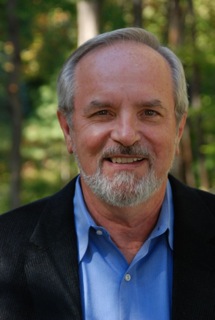
Deb Kory: Thomas Moore, you are a writer, a theologian, a psychotherapist, a musician, a former monk, and a professor. You lecture widely on incorporating aspects of the soul into daily life, and have written many books on the subject, including the bestseller, Care of the Soul. You've just released a book called A Religion of One’s Own, which seems in part intended to bring meaning back to the word and to argue against the secularization of modern life. Since our audience is primarily psychotherapists, I'd like to first ask you about psychotherapy: How you define it and what role do you see it playing in bringing soul back into the world, and into your clients?
Thomas Moore: I go back, as I always do in my books, to etymologies. I like to think about how people first thought about the use of the word since the very beginning. The word therapy has been around for a couple of thousand years at least, and originally among the Greeks it meant to care for or attend to. I like that meaning of the word. It never meant to heal or to fix or anything like that. In fact, there's a passage in Plato where a student asked Socrates what he means by therapy, and Socrates says, "It's like someone who takes care of horses. They give them water and food and take them for some exercise and clean their stalls. That kind of thing is therapy."
So it's an interesting definition of the word. Then if you put psyche with it—psyche is the word for soul—you get psychotherapy, to care for the soul, to attend to the soul. That's how I see therapy.
I'm not interested in helping a person get along in life, and I'm not interested in helping them improve or get better as a person. That's more of an ego kind of project. I'm interested in the soul, which is deeper.
I'm not interested in helping a person get along in life, and I'm not interested in helping them improve or get better as a person. That's more of an ego kind of project. I'm interested in the soul, which is deeper.
When someone comes to me for therapy, I'm always listening at a very deep level, because I want to know what their soul is hungry for. I listen to their stories and look for where they are getting in the way of their soul’s unfolding. What is trying to emerge? Where are they headed in spite of themselves?
DK: So you are against the whole idea of therapists being healers?
TM: Yes, pretty much.
DK: Can you say more about that? Is it because it’s too omnipotent a role?
TM: Yes. I think the idea of care is different from helping or healing. Healing sounds like you're really going to once and for all fix this person and resolve their problems or get rid of their pain. Sometimes, in fact most of the time, what I feel I have to do is be with the person in their suffering or their pain, and in the moment I may hope that we get to the point where they don't suffer anymore, but I don't think I can get there by being the hero and thinking that I can get rid of their pain. I can't. But together what we can do is see what's going on and, as they get to be closer to their deeper life, their attitude in life shifts and they usually make different life decisions. Those things tend to resolve the pain and the suffering.
DK: So you don’t necessarily feel responsible for what happens in therapy?
TM: I don't feel responsible, no.
I'm rather shocked when I hear from some of my clients that they've been in therapy with people who tell them what they should be doing. I can't imagine it because I don't know—who am I?
It’s tempting at times to tell people what I think they should do, but I don't think that's my place. I'm rather shocked when I hear from some of my clients that they've been in therapy with people who tell them what they should be doing. I can't imagine it because I don't know—who am I? I don't have any special insight or any kind of revelation about people's lives. So what I do is I go with them and I try to get a glimpse of who they are and what's wanting to emerge.
DK: That’s in striking opposition to all of the manualized and “evidence-based” psychotherapy that’s currently in vogue.
TM: I'm not interested in any of that.
DK: You're kind of outside of that system altogether.
TM: Totally on the outside of that system.
DK: It sounds like part of what you've been trying to do throughout the course of your career is to critique that system, because it's in every profession in one way or another. Perhaps that’s what you mean by secularization?
TM: Yes, it is.
DK: It’s almost as if science, itself, has become a religion.
TM: I think when you secularize, the ego comes to the foreground, in the sense of, “I know what's going on. I need to be in control.” My approach has been more what I would consider a religious approach, in the deepest sense—not as part of any particular religion, but rather appreciating and acknowledging that there are things going on that I don't understand and can't control, but I can help with by being an attentive listener. I respect what's happening in a person, and I try not to listen to it with the thought that I know what's best or I know what's healthy. I never use words like that—“healthy” or “correct” or “right.” I watch my language carefully and try to let the soul of a person be revealed. When they see who they are at that soul level, they can make better decisions for themselves.
A lot of people have not had much education in psychology, and they don't really understand too much what's going on with their emotional life or their relationships. So we have to go deep into it where they can see what's happening, and then make their own decisions.
“Who Wants to Adapt to a World That is Crazy?”
DK: You also said that you're not interested in helping people get by in the world. Is part of that because the world is kind of nuts?
TM: That's certainly a part of it. Who wants to adapt to a world that is crazy? I've been saying ever since I first wrote
Care of the Soul that if you do care for your soul you're going to be quite eccentric because, for one thing, that's where your individuality is.
If you do care for your soul you're going to be quite eccentric because, for one thing, that's where your individuality is.
The more you get in touch with your own soul, the more individual you become. Jung called this work individuation, and I think that makes sense because you become more of an individual from being in tune with who you are.
Another piece of this modern approach that I don't agree with is this idea of having some kind of standard for normalcy. We have these standards that are expressed in these lists of disorders, the DSM-5, but behind all of that is the assumption that there is such a thing as being normal and well-adjusted. I would probably have a very different type of DSM myself because I'm not interested in adjustment and being normal so much as really being in touch with that deep place. People may not fit in very well when they do that. They may be odd, and their friends may wonder what's going on with them.
DK: Do you see yourself as radical?
TM: No, not at all. But I was in Berkeley a couple of months ago, and I was at what was considered, I guess, a radical radio station, and I was just talking about things that, to me, seem quite ordinary. Afterwards the two people interviewing me said that I fit into their program quite well because it was also radical. But I don’t see myself as radical; I’m quite traditional.
DK: Am I right that you didn't get any kind of traditional psychological training? You didn't go through a psychotherapy school, right?
TM: Well, my training was actually in Rogerian therapy. I did a lot of counseling work when I was doing my PhD in religion. I did my religious studies work at Syracuse University, which is a very broad program. I studied world religions in one phase of it and depth psychology in another phase and the arts, especially literature, in the third part. These three parts came together to be the focus of my study of religion. When I was doing that, it occurred to me—I don't know why—that the only way I could really learn psychology would be to also train as a therapist. So I did.
A lot of my work was in counseling psychology, which was mainly based on Carl Rogers' approach. I did a lot of coursework and supervised practice, practicums, and led groups. Usually you can get a license if you have a PhD in religion or if you have some background in religion plus some psychological training, and I had both, so I put those together and got my counselor’s license.
DK: Did you decide at a certain point to leave the constraints of being licensed or are you still licensed?
TM: No, I just moved to another state, and the state I moved to requires the kind of therapy that I just don't understand or really want to do. So I no longer do therapy as such as a licensed therapist. I counsel people on this work of the soul based on my books, and I tell people that I'm not a therapist in the sense that people do it today and that I can't do that kind of therapy anymore. I mean, I probably would do it if the system were set up in a way that I could fit in, but I can't, so I don't. In fact, it’s just not what I do at all.
DK: What is it about the system that you can't abide?
TM: Well, a number of things. I'm not interested in quantified studies at all. That's never been a part of my life. I'm trained in the classics. I know Greek mythology very well. I know history and the history of philosophy and theology and medicine.
I’ve never become a Jungian analyst because I feel it’s too narrow for me. I don't want to have to fit in with the language and ideas of Jungianism.
That gives you a great deal to work with. Anyone who knows Jungian psychology would know that my background in religion and mythology are perfect for a Jungian analyst. I've studied Jung for years. In fact, a week ago I was in Canada speaking to a Jung society, and I'm going in a couple of days to a Jung society in the Southern United States. I speak to Jung groups frequently because I do know Jung well. They're interested in my background in religious studies and the arts and also my work over all these years, all these books about the soul. So that’s an area where I could fit in more easily, but I’ve never become a Jungian analyst because I feel it’s too narrow for me. I don't want to have to fit in with the language and ideas of Jungianism.
DK: Your most recent book, A Religion of One's Own, is that a play on Virginia Woolf?
TM: Yes, it is.
DK: My sense from reading it and from reading many of your works is that every system of belief or philosophy is too narrow, that you're fundamentally ecumenical. You love to dive deeply into various traditions, but you’re not interested in being a certified member of anything.
TM: I don't think anyone should be confined to one particular system of belief.
If you really want to be someone who is alive in what you're doing and not just following a system, then you want to make it your own in some way.
I wrote A Religion of One's Own to make that clear. It could also be “a psychology of one’s own.” It’s important to honor the traditions and you can study any branch of psychology you want, but I think if you really want to be someone who is alive in what you're doing and not just following a system, then you want to make it your own in some way. I happened to take it pretty far in making it my own.
DK: You're a little eccentric.
TM: Yes. That's exactly it, and that's just the way it is. I'm surprised because I'm not a radical type. I'm kind of an easygoing person. I don't challenge the world too much except in my writing. In my style, I write a lot of things that go against the themes of the times and the spirit of the times, but I don't do it in a style or a manner that is confrontational. I simply present and say, "Well, if you want this, great. If you don't, forget it."
DK: So your style isn't confrontational, but your ideas are or could be perceived as such.
TM: Yes.
DK: I’m imagining with this recent book you’re being critiqued both from the Left and the Right.
TM: Yes.
DK: There’s a fair amount of religiophobia on the Left and there are a lot of therapists, in my experience, who harbor a not-so-subtle contempt for religious people. Or rather, some religions are considered okay: Buddhists are fine, Mormons are not. This really goes unchallenged in therapy culture.
TM: Yes, I agree.
DK: And then on the Right you’re probably just seen as an apostate. Are you getting challenged on that at all on this book tour?
TM: A little bit, but very little actually. People get the idea right away, and they're interested in it. The majority of people who hear this idea say to me, "Well, this is what I've been doing and thinking all along, and it's really helpful for me to have it articulated."
I’ve had feedback from people saying that they don't need religion. The secular world is all they need.
That's the response I get most of the time. Now, maybe there are people out there who are more traditional in their religious practice who just aren't interested and so aren't talking to me. On the other hand, I’ve certainly had feedback from people saying that they don't need religion. The secular world is all they need.
DK: I'm thinking of people like Bill Maher, and a lot of these so-called “new atheists” who think that religion is the root of all evil.
TM: The problem I have with them is that they usually pick a very childlike or fundamentalist type of religion and critique it as if it stands for all religions. Take me on, you know? Years ago, actually, I tried to have a debate with Carl Sagan because he was saying that a lot that goes by the name of religion is superstition. We had set up a debate, but then just at the point when we were making the arrangements he developed cancer, so it never happened.
Critiquing the most simple-minded and fundamentalist forms of religion is easy. I critique them, too, and have a lot of that kind of atheism in me as well. I have no problem with that; but when you look more deeply at the richness and depth of so many traditions, when you get right down to the subtleties, I'd hate to see us turn into a totally secular world.
DK: How do you deal with the reflexive antagonism that people have toward religion? If you were speaking to a group of therapists who were more of the secular type, how would you argue for integrating more of this soul work into therapy?
TM: I have worked with psychiatrists and other kinds of therapists, and a lot of them come to me and they want to open up. They want something more in their practice, but they don't know what that would be. I try to give them background, history, a lot of examples, a lot of material—to let them see the intelligence of the spiritual traditions. I present it to them as someone who really loves these traditions, but I'm not a member. I'm not defending them. I'm not that kind of person.
DK: You're not an “ist” or into “isms.”
TM: I don’t actually participate in the Catholic Church, but that’s because I think they don't want me. I'm not sure it's because I don't want them.
No. I'm not. I'm not in one of these traditions either. Though I sometimes call myself a Zen Catholic, because in my own life, I was born into Catholicism. It's not something you just set aside intentionally; it's something that's just part of you. I don’t actually participate in the Catholic Church, but that’s because I think they don't want me. I'm not sure it's because I don't want them.
DK: Do you think you'd be excommunicated?
TM: Oh, yeah. There is plenty of grounds for that.
With therapists, though, I try to give them an intelligent approach to how to include spiritual matters in psychotherapy. I try to show them that you can't really separate spirit from soul. I talk about the difference between those things and how you can't separate them.
DK: Can you talk about the difference between spirit and soul?
TM: Well, it's dicey in a way. In the traditions that I follow, the spirit takes us away from our bodies and our appetites and our relationships and our everyday lives in order to have a big vision, a cosmology, a cosmic vision to ask questions about how the world came to be or how to live and to meditate and pray. These are all things that take us up and away.
DK: Those are spiritual.
TM: Yes, and these things are good, very valuable and important.
The spirit takes us away from our bodies and our appetites and our relationships and our everyday lives in order to have a big vision, a cosmology, a cosmic vision to ask questions about how the world came to be or how to live and to meditate and pray.
But the soul at its depth has not been developed very much. There are many traditions that deal more with the depth of our everyday life, like the importance of home and the deep fantasies and emotions connected with home. Memories of home and the need to be at home and to feel at home with what we're doing, the importance of family and feeling family even if it's not literal. It might be the family spirit at work or in your town, to be living a sensual life or a sexual life. A lot of spiritual people have trouble with sexuality because it's in another direction. It seems to be a problem. So what I try to do is speak for those things, for the soul. I'm also someone who loves the spiritual as well. I value both of those directions.
DK: So the soul is more grounded. It's more earthbound.
TM: Yeah, definitely grounded.
DK: Is there more of an ethical dimension to it?
TM: Yes, there are ethics, but it's a different kind of ethics because soul ethics are rooted in, let's say, your love of the planet or your love of your place, your home, or your appreciation for the individuality of people because you know people directly. That's a more heart-centered ethics. But there is another important kind of ethics, which is spiritual, which would mean you have a vision about the planet and about history and people and how we need to behave. All of that kind of thing could be very spiritual. So I like to have those two together. You need both motivations for an ethical life.
DK: Given you're deeply rooted in your own ecumenism and ethics, what do you think our role is in trying to make the world a better place? You say we aren’t healers, that we help people only in the sense of getting people connected to their soul’s hunger. What about the world beyond the therapy room? Are we bound by ethics to try to, for example, fight against climate change and all the ways humans are destroying the planet and each other? Or is that separate from our work as therapists?
TM: Let's go back to the definition of therapy: care of the soul. One interesting aspect of soul is that in the traditions about the soul, it's not just humans. The planet itself has a soul. I’ve got some documents here in my study from five or six hundred years ago that say that the planet has a soul and that the things on the planet have a soul. So if psychotherapy is care of the soul, the care of the planet is a kind of psychotherapy. Do you know what I mean? You don't just care for people or individuals.
I do a lot of work with hospitals and have been for a long time. I go into a hospital and I try to talk to the doctors and nurses especially about the importance of family because the illness a person has is a soul illness as well as a body illness, and the family plays a role because that's part of a person's deep life. It's a very important part. So we try to talk to hospitals about the importance of including the family. Not just tolerating them, but really seeing them at the very center of illness, both to heal and even being partly responsible in some ways.
A Psychotherapy of One's Own
DK: I have been licensed for about a year after a very long process, many thousands of hours of unpaid labor and studying and writing a dissertation and post-doc hours and licensing exams, and I feel a little bit like after all that time I'm starting from scratch in a way. There was a lot along the journey that simply wasn't useful and I almost had to fight to keep my soul. There were things that I brought to my clients from the very first day that I value—just a certain way of loving and being with people that I feel is the most fundamental part of the work I do—more than any theories or techniques. Yet hardly anyone ever mentioned the word “love” in all my years of training. I felt like I had to fight to retain the soul of my own work and to not get all weird and rigid and overwhelmed with the whole professional side of being a therapist.
There are people I know who are seeing 10-12 clients a day, trying to pay off school loans, pay the mortgage—it can become a real grind. In private practice therapists often don’t see other therapists at all except in passing on the way to the bathroom between clients. It can be a very lonely business and it’s easy to feel isolated from the more systemic problems of the world. I do see myself as a bit of a radical and an activist, and it doesn't align very well with this ten-clients-a-day paradigm that keeps us from connecting with each other and leaves us too exhausted to think about larger world issues.
TM: Well, you might have to define psychotherapy as your own. For example, after doing therapy for a number of years I discovered I could be a writer and live that way. But I've seen myself as a therapist-writer, in the writing itself, which I try to do in a therapeutic way. Some people don't like that, but that's just the way it is.
DK: What don't they like?
TM: People think it's not substantive enough because I don't write academically or reference research studies. I'm writing therapeutically, so it doesn't look so substantive, but the average reader knows. I get feedback all the time from people saying, "This book came to me when I really needed it." I must have heard that a hundred times in the past week.
DK: That's all the evidence you need, right?
TM: It’s a different way of being a therapist. I also learned when my books began being read around the world—today it's a small globe so the books get out there—that therapy is not a narrow thing. When I work with an individual then, I really like it because it's a piece of a much bigger work that I'm doing.
After publishing Care of the Soul twenty years ago, immediately I began getting invitations to speak at medical conferences and hospitals and medical centers. I never intended to do that.
DK: That must have been surprising.
TM: It was very surprising, but you see, that's another example of what I do.
After doing therapy for a number of years I discovered I could be a writer and live that way. But I've seen myself as a therapist-writer, in the writing itself, which I try to do in a therapeutic way.
I go into a hospital or go to a medical conference. I'm the therapist really, and I'm representing the soul of the situation. So I try to work with doctors and nurses, and I listen to them and see what's going on there and I talk to them the way I would as a therapist. I talk to them about the soul of their building, "It's not doing well right now. What can we do to make it fit into this whole process more?" So all of that, to me, is therapy. Just as Socrates says that taking care of your horses and feeding them, that's what he means by
therapeia or therapy, I'd say going into a hospital or going into your own home and looking it over and seeing how it is and what it needs also is therapy.
Looking at the planet and saying the planet needs us too, and we're not going to solve the problem of global warming just by convincing people that it's a moral need or your life is at stake. We need a therapy of the world. We need to be able to say, "There is reason for this. This is your home. Get motivated. Take care of it."
DK: That's not confrontational, right? Because that's not your approach.
TM: No, I don't agree with that approach.
DK: Can you say more?
TM: When we take the confrontational approach, we polarize right away. We tend then to see ourselves as right and the other person as wrong. And then we get into some type of moralistic debate that goes nowhere.
The Passion of James Hillman
DK: I think it would be interesting for our readers to know a little bit your relationship with
James Hillman. It sounds like you two were very close. He was one of your teachers?
TM: He wasn't a teacher exactly, but he was a mentor. He was a friend more than anything. I met him in 1970 and I started corresponding with him in about 1973. He was living in Zurich at the time, and was sending me articles he was writing. I had been studying Jung very intensely, but I really liked Hillman's revision of Jung, the fresh direction that he took Jung's work. Then, just by accident, he and I ended up in Dallas, Texas. I was teaching at Southern Methodist University, and he got a job at the University of Dallas. So we both ended up in the same city by a fluke and that’s when we became very good friends. We did a lot of things together socially, spent a lot of time together the two of us, and we have a very similar type of temperament. Well, not temperament, but background and interests. He was very confrontational, and so when working together it was interesting because we had two very different styles. But we were passionate about the same things.
DK: What were those passions?
TM: We were passionate about psychology moving into the culture rather than just being individual. In fact he gave up doing individual therapy after a while.
DK: I didn’t realize that.
TM: He didn't agree with it.
DK: Then what did he do?
TM: “Therapy of the world,” he would call it. There's a tradition in the old writing, it's called anima mundi, the soul of the world. He picked up that theme, and he would give lectures and work with city governments, and give talks at political meetings and he would say he was bringing a “soul orientation” toward those kinds of subjects and those concerns. When we weren't in the same place, we exchanged a lot of letters and postcards because we didn't have email in those days. We were friends for over thirty-five years.
DK: You presided over his funeral, right?
TM: I did, yes. He was Jewish and he always had interesting things to say about my Catholic background, so it was kind of surprising that he would ask me to officiate at his funeral, but I think it was based on our friendship and his knowledge that we shared so many ideas about religion and psychology.
DK: My sense is that you can feel like you have much more in common with people from other religions than your own when you come from this more ecumenical place.
TM: That could be what it was, yeah. In our conversations he was always being the depth psychologist and trying to see in a deeper way what was happening in the world around him, so I learned a lot from him just being with him and used his work pretty directly at first. One big difference between us in our work was that he didn't have a very positive opinion of the spiritual dimension. He was good at criticizing it, but didn't have a real appreciation for the spiritual—and I do. So in that way we were very different.
DK: But he was into the concept of soul, right?
TM: Yes, but not in a spiritual or religious context.
“To really love a soul, even if it's weird and strange”
DK: Can you give us a sense of how you work with clients?
TM: Well, I started off by saying before that I'm not so interested in managing a person's life. That's not what I want to do. That's not how I see psychotherapy. That's something else. Psychotherapy is care of the soul. It's therapeia, serving the soul. So when someone comes to me, from the very beginning I'm interested in their soul. What are they coming in with? What's not visible? Not even what they tell me because they don't often know that deep level of themselves. So I don't just take everything at face value, but I do look for signs and try to join them. I agree with you that it’s based on love—love of the person and love of the material and what they're going through. There's a love. I learned that from Hillman—to really love a soul, whatever's going on, even if it's weird and strange.
DK: And dark.
TM: Yeah, dark. Whatever it is, you appreciate it. So I do that, and then I would say most of the time I spend working with dreams. My work is almost all dreams. It's not interpreting dreams. I don't say, "Give me your dream, and I'll tell you what it means, and we'll apply it." But I do ask people to bring their dreams because what I hear from their dream is this deeper level. That soul level comes through in their dreams. At first it takes a while to get it because the dream images are confusing initially. After a while you get to know the individual person's set of images in their dreams. I absolutely need them. I couldn't do the work without them. The dreams give us the direction to go in and what to talk about and how to understand what's happening.
DK: Does your interest in dreams stem from your study of Jung?
TM: I've studied the imagery in religions, their stories and narratives and rituals, so when I hear a dream, I see a lot of those rituals and stories in the dream.
I think it came from Jung, yes. When I first started reading Jung, I was really taken by his own dreams, especially what he talks about in his memoir,
Memories, Dreams, Reflections. He talks there about his own dream work being central to his life. Instead of talking about what's going on in the external world, most of what he writes about is this dreamland, this deep fantasyland. It was very substantial and really made an impression on me. There was so much more there than if you just talk about what's happening on the surface.
His other work, especially his alchemical work, also draws on dreams and shows the connection between alchemy, mythology, and the dream. I've studied the imagery in religions, their stories and narratives and rituals, so when I hear a dream, I see a lot of those rituals and stories in the dream. This was Jung's method too, to compare an individual's dream to what you know about religion and mythology and even art.
DK: Do you bring those associations into the therapy and give them some context?
TM: Yes. You compare them or just see them interact with each other, and that helps you see much more of what's going on in a dream, which otherwise could be quite confusing. Jung felt that if you know myth and religion and the arts well, then you'll have a much better chance of working with dreams, and that’s just what I did. The first thing I did in my studies of religion was to read Jung’s collected works. After that I was able to study all of these religions and their traditions with Jung in mind. I was always thinking, "How do they speak about what's going on in the psyche and the soul?" I bring that background in religion to the dream work. Then I see what's going on in a person's life, and I can see the roots of it more.
DK: Can you give an example?
TM: Sure. I write about this one in my book, and I got permission from the dreamer to make it public. This was a young man who came to me with some OCD, some obsessive compulsive practices, little rituals that he did.
The first dream he told me was that he saw these sharks in a river, and he originally wanted to go down to the river. It looked like a nice thing to do. But then when he saw the sharks, he backed away and went away from it. That was the first dream. Well, that tells us quite a bit really. Right away you've got a river, and a river itself is a tremendous image in the history of religion. There are so many great rivers. I'm not saying that his river was one of those, but knowing about those rivers you have a deeper sense of what it means in a dream to have to approach a river.
Very often it might be something like this river is the stream of your life or the stream of your time going on as you experience it. If there are sharks in it, you may not want to go into it. Obsessional practices sometimes look like people are afraid to really live. They have these practices that keep them at a distance, that keep them protected. So that gave us a lot of help right away in the very first ten minutes of working with him. Then we just keep going, more dreams, more stories, and we get deeper and deeper. Not just the surface behavior, but what's going on deep. We discuss the person's family life, childhood, and you see the themes there. A person only has so many themes in life, and they remain, they don’t change radically over the course of one’s life.
DK: And they remain in the dreams?
TM: They come and go. Dreams tend to be cyclical. You may have a series of dreams that have a certain type of imagery in them for maybe six months or up to four or five years, but then they may shift. Or they may come back again later in life. For example, I could talk about my own. I had a series of airplane dreams that lasted maybe eight years, and then they just stopped coming. So the dreams may not last forever, but it’s interesting when they stop. You can ask yourself, "Why did they stop right now?"
DK: Were yours plane crash dreams?
TM: No. My dreams were about trying to take off in a city. The planes would try to get into the air, but they weren't on an open runway. They were in a city trying to take off.
DK: And what did you come to understand about that?
TM: Well, I felt all along that I needed to adjust to the world more. I had to grow up, essentially. I had to live in the culture more. In fact, my books got me more and more into society, into people's lives. As I got more grounded in the world and in society, that dream no longer appeared.
DK: I also have recurring airplane dreams. I was just going to ask you about them.
TM: Yes, go for it.
DK: Mine are also usually in a city, and I witness a terrible plane crash. The context is always different but basically I witness these horrifying plane crashes over and over again, and I can't do anything about it, and I'm completely freaking out. It's devastating every time.
TM: See this is interesting. Can we talk about that for a minute?
DK: I would love that.
TM: So my first reaction to it is that the interesting thing about it is that you freak out. It's not that the plane crashes. I think it's okay that planes crash in the dream because sometimes that high-flying, that airy kind of existence has to come down and you crash. I would connect that with the Icarus myth, the story of Icarus who flew too high to the sun and his wings melted, and he crashed down to the earth. So there's a kind of crashing that takes place when you fly too high or when you're flying too long, that kind of thing. I wouldn't explain this dream that way, but these thoughts would be in my mind as I thought of our continuing conversations. So I would think, "Well, this is an issue where it may be necessary for planes to crash, but that really bothered you. You really have a hard time with that.”
DK: With the fall?
TM: Yeah, with the fall.
DK: That resonates with me.
TM: You used the word fall. That would take us into all that mythology of the fall that's in the book of Genesis, you know the fall of Adam and Eve. There's a lot written about the fall, a fall from innocence, or a fall from whatever. So there's so much there already just without even knowing anything personally about it. There's a lot there to think about before we go too far.
DK: It's so different from the experience of having someone go, "Well, that sounds like depression." So often we therapists get habituated to using language that really lacks imagination. Even in this one minute improvisational therapy that we just did, the myth and the story and the way that you responded just now was almost with a kind of excitement. As opposed to, "Tell me about your sleep hygiene” or “what are your automatic thoughts?" That kind of rote diagnostic way of relating to clients.
TM: Yes, exactly.
DK: Do you tend to see people for a long time? How does therapy end? You don't want to make them better, so how do you know that they're done?
TM: There's no done.
DK: There's no done?
TM: No. There's no done. There can't be.
DK: I like that.
TM: Therapy is care for the soul, so it's not about seeing a particular person or using a particular method. A person may decide, "I'm not going to do this anymore," but one hopes they'll continue to care for their soul in some way.
Therapy is care for the soul, so it's not about seeing a particular person or using a particular method. A person may decide, "I'm not going to do this anymore," but one hopes they'll continue to care for their soul in some way. They may find another therapeutic thing to do. They may take up gardening or make movies or something that will really be good for their soul. In going through that process, they're going through a process very similar to what therapy is.
That's the beauty of Jung's idea of alchemy. He thought that alchemy was the model for the therapeutic process. We can go through any kind of alchemy any place in life. Getting a new job, that's an alchemical process to some extent. You have to process it, go through various stages, and so the therapy never has an end. That doesn't make any sense.
DK: Do you ever fire people?
TM: That's a good question. I don't recall that happening. No, I never did that. Most of the time when people want something, there are a couple of reasons why they would stop. One is that they want something they think I'm not giving them. They want something more specific. They wanted just the practical stuff. I tell them I can't do that. That's not what I do. I don't just say that. I try my best to go deeper into whatever it is they bring up.
On the other hand, some people just don't want to face it. If we had an hour talking about your dream, you'd have to face some things that are not so easy to do. When people hear about dream work, they think “oh, that sounds fun!” But it turns out to be very challenging and some people find it to be too much and so they just leave. I usually think that it's too bad because the process seemed to be getting somewhere.
DK: So you've been fired, but you've never fired anyone.
TM: No, I don't think so.
DK: Well, thank you so much for taking the time to share a bit yourself with our readers. It’s been fascinating.
TM: Thank you, it’s been a pleasure.