Psychotherapy and the Care of Souls

To Serve the Soul

In Greek mythology, the wise healer and teacher Cheiron is part horse and part human, a centaur of sorts, but quite different from his wild and hardly civilized half-horse/half-human brothers. He did his work of healing and teaching in a cave. As a therapist, I sometimes think of myself as part animal, sitting in my cave, dealing with primal aspects of human existence, barely able to distinguish healing from teaching.

The modern therapist seems to think of the problems that come to him or her as deviations from the standard of normalcy and health. The point is to restore a person to a point where the presenting symptoms have been removed, as if by psychological surgery. I don’t see it that way. People come to me because deep down they can’t experience the joy of being who they are. They don’t feel in the positive flow of life. They may feel stuck in some repeating pattern that seems to go back far into their history. They may be focused on, or better, mesmerized by some symptom like an obsession or paranoia or anxiety. Generally, it’s the nature of life to flow, like a river, and not to be stuck or stopped.

Whenever I want to get on track with my work as a psychotherapist, I think back on the word. It is made of up two key Greek terms: psyche (soul) and therapeia (serve). “Psycho-therapy” means “to serve the soul.” Psyche is not mind or behavior, and therapeia does not mean healing or making better. I always keep in mind that my job is to serve the soul, or care for it. When I used an ancient phrase, common in Platonic literature, as the title of my most popular book, Care of the Soul, I was simply putting the word “psychotherapy” into English.

I think of the soul as the life in us that is immeasurably deep. Sometimes it feels like a spring or font of existence, making us feel alive and giving us something of a direction and identity. To a large extent it is autonomous, having its own purposes, desires and intentions. When you delve deep into it, you encounter basic human themes and patterns, what Plato and Jung and others call “archetypes.” The need for love, the desire to create, the comfort of home, the excitement of travel—these aren’t the characteristics of any particular person. They are, at least potentially, ways in which all people may experience life.

When these archetypal patterns come to life in a person, they usually have a strong force and allure. You are happy to be in love and can think of nothing else. You fear illness and death, and that emotion, with its clinging thoughts, gets hold of you. You glimpse a certain career, and you go after it with a passion.

Soul is intimate, embedded in life, vital and energetic. It seems to constantly want more life and vitality and therefore can be a threat to the status quo. “As you tend your soul, you may try to sense what it needs and wants, and you may discover that its needs may not dovetail with your own wishes.” In that spirit, the Irish poet W. B. Yeats said that his poetry came out of a tension between his own ideas and those of an antithetical self he felt inside him.

As I see it, this other being in us, the soul, is vaster than our small minds can contain. It’s strong and mysterious, and at times a true adversary. Our job is to get to know the soul and cooperate with it, understanding that our happiness and peace on earth depends on a positive and creative response to it. Psychotherapy may entail simply living in a way cognizant of the soul and its purposes.

Soul offers a deep and powerful sense of identity that counters any tendency to be caught in the limited understandings and values of the family or the culture. It asks that we each become individuals, not so identified with the structures around us. This need is so strong that I imagine it in the familiar imagery of rebirth: we are born into biological life and culture, and then we have to be born again into our own individuality and uniqueness. Along with Socrates, I would describe psychotherapy as a kind of maieutics, or midwifery. We have to assist at the birth of the soul into life, which implies the arrival of a unique person. Socrates said: “My concern is not with the body but with the soul that is in the travail of birth” (Theatetus, 150 b).

The Travail of Birth

The travail of birth is exactly what happens in therapy, to one degree or another. Travail means labor, but I see it more as a process. In formal therapy you reflect openly and seriously on the past, on dreams, on emotional difficulties, on relationships and a number of other issues, the material of a life, and process them. As you look more deeply and imaginatively at them, you see better what wants to be born and what hinders the birth. For many people, early traumas and bad parenting and unfortunate adult influences and threatening injunctions keep their longstanding hold and stand in the way of the soul’s movement into life.

Years ago I read the religion scholar Mircea Eliade’s unsettling description of a primitive rite of passage, and it has stayed with me. Young people would be placed in the earth, naked, perhaps under a pile of leaves, overnight or for several days, within a ritual context of masks, drums, body paint and dance. Then they’d be taken out and washed and clothed, adults now and fully part of the community.

I see therapy along these lines. “To be born into your individuality is no light matter. You need an impressive experience of death and rebirth.” Most of the time a real and transformative round of therapy is a step-by-step process of being reborn. The therapist is the elder in charge of the rite, but he or she is only the guide, not the healer. The point is to arrange an effective rebirth, letting the person then go on to discover his life. The therapist does not decide what life is best for the person, whether to be more dependent or independent, emotionally contained or effusive, whether to be married to a different person or to live somewhere else. The therapist doesn’t know what is best for the person, he or she can only assist at the birth of the soul.

Above all, a therapist needs purity of intention, the capacity to hear stories of suffering without responding unconsciously out of his own prejudices. A therapist has to know himself so well that he will pass on any temptation to engage in his own typical reactions. He will not take credit for any progress, and in fact will not think in terms of progress, but only care. Care is not heroic, it isn’t getting anywhere and it has no need to solve problems. A good therapist doesn’t see life as a problem to solve but as a gift to be observed closely and supported.

A therapist will not be deluded by the delusions of his patient. He will not be taken in by any loose complexes in his patient that try to trip up the therapist. If a patient says, “You haven’t given me your full attention today,” a good therapist won’t defend or explain himself. He might simply say, “You’re right. I’m preoccupied with my own situation today. Let’s start again.” He will not feel the guilt the patient wants him to feel and will not accept any adulation the patient tosses his way. Both are traps. He is neutral, not willing to get pulled away from his center by a patient’s neurotic need. In the face of sober and heavy influence, he may find neutrality in lightness of spirit and good humor. He may laugh easily but never sardonically.

Overcoming Our Complexes

A good therapist has moved past his need to help. While it’s true that doing therapy is being in therapy—the therapist may work through some of his own issues while being with another—the therapist is also neutral about his life work. He is not thrown when a patient doesn’t respond well to the therapist’s ideas and efforts. He doesn’t himself need a patient to get better or to go through the therapeutic process the way the therapist thinks is best. The therapist surrenders any pet enthusiasms, such as hoping that his patient will become more independent, artistic, self-aware, or emotionally expressive.

This neutrality is not indifference but an achievement in the therapist’s own opus, the work of his soul. He is not led on by his complexes in relation to his patients, the deeper meaning of the interesting classical notion of counter-transference. He is not at all perfect, but he is not acting out with his patients. He has an unusual degree of self-possession. He can reflect effectively on his own allegiances, philosophies, theories, techniques and ideals. He has developed his own approach and is not completely identified with a given figure in psychology or with a special theory.

A therapist also has to know how to deal with complexes of the people he assists. Jung described a complex as a sub-personality. I would put it differently: a complex has a face. Acting out a complex is like putting on a costume, though you don’t know that you’ve put it on. These figures of the deep psyche that take over a person, like Dr. Jekyll swamping Mr. Hyde, are unusually intelligent, convincing and full of shadow.

A person with a mother complex may strike you at first as being caring, thoughtful and capable of deep emotion. Only later do you see that this figure, this daemonic possession, dominates the person and may suffocate and overpower others who come into its domain. A mother who is atrociously critical of her daughter may believe that she is only doing what is best. Others may tell the daughter how lucky she is to have such a wonderful mother, and the daughter is thrown into painful confusion. Should she be grateful, or should she run away?

The therapist has to deal cautiously with the complex that enters his consulting room. He must not get caught, but that kind of neutrality is not easily achieved. He may be especially susceptible to certain complexes and not see them for what they are.

Complex is not the best word, perhaps, but it is traditional and important. A complex is more like a powerful presence that can assume the cohesion of a personality, although sometimes it is only an urge or an impulse. It can completely overwhelm a person or it can be merely an influence. In any case, a therapist needs courage and circumspection to deal with one, whether in his patient or in himself.

Religious traditions teach as much about these presences as psychology does, and it might help a therapist to do some study in religions and even see his role as being both psychological and spiritual. Religion specializes in rituals that help us meet the complexes in highly symbolic ways. In traditional Catholic confession, for example, you acknowledge dark spirits that invade your life, and the confession of these presences goes a long way toward dealing with them.

Personally, I have cultivated powers of intuition, skill at working with images, and knowledge about traditional spiritual rites and images so I can be prepared for images people use in telling their life stories and reporting their night dreams. I have drawn on the model of C. G. Jung, who was concerned both to be an intelligent, rational thinker and researcher and at the same time to go to great effort to employ the non-rational methods of the spiritual traditions. He was a stone-cutter, calligrapher, painter, and architect in his own way, making his personal environment link closely with his inner life.

Guide of Souls, Leader of Rituals

My mentors—Jung, James Hillman, and Rafael Lopez-Pedraza—have emphasized the role of the mythic Hermes in the work of therapy. Jung said that the work or opus begins and ends in Mercury (the Roman name for Hermes). This means that in this work you have to be imaginative, clever, quick-witted and skilled with language. You appreciate paradoxes and apparent opposites. You see past and through any material that is presented, and you go beyond the modern notion of the highly educated, trained expert. You need a deep and probing appreciation for the intricacies of the psyche, and your preparation has to be both scholarly and personal.

I have a deep appreciation for the work of therapists and I honor and support any therapists I meet. They have a key role in modern life as they address matters of the soul and spirit. In some ways they are the modern priest, priestess, guide of souls and leader of ritual. Their work is challenging for all its depth and mysteriousness, but it is equally rewarding precisely because it goes so deep.

But some therapists make a mistake in thinking of their position as one of a trained advice-giver or aid to adjustment and smooth living. Their job, rather, is to be courageous enough to face the demons with their patients and get tangled in the complicated mysteries of a human life. To do their job effectively, they need to know depth psychology, philosophy, solid religious thought and art. They should be at home with dreams and extraordinary fantasies. They should be able to see through aggression and masochism to glimpse the positive mysteries trying to be expressed and lived.

This kind of therapist has thought deeply about the mysteries of human personality and doesn’t reduce them to simple patterns. Throughout his life and career this therapist continues to explore complex matters, prizing any resources that help, and faces his own complexes. He is always on the border, Hermes-like, between the inner and the outer, the personal and the universal, ordinary life and the sacred, and the surfaces and the depths. He is shaman-like, able to traverse levels of reality and experience. He has adapted to the mysterious nature of his work by being himself a mysterious person, not too easy to read and comfortable being neutral in the face of another’s passion.

The Cheiron therapist works in a cave, a place set apart from the normal way of seeing things. He needs a lot of animal in him to sense the many messages from his patient and from within himself. He has to take on the mythic dimensions of a centaur because work with the soul is too much for the human mind. “The therapist is willing to be bigger than life and almost other than human, a person of huge imagination, able to hold almost any manifestation of human struggle.” He has to be naturally religious, in the sense of honoring the natural life flowing through himself and his clients and responding effectively to the great mysteries that only the best art and religious forms have been able to grasp. He is a person able to contain the immense joys and sorrows that visit every human life. And all of this in an ordinary person, humble in the best sense, in love with life and able to love those in distress. It’s a wonderful calling and a grace to those who accept it.

Lynn Ponton on the Challenges and Joys of Working with Teens

A Delicate Balance

Rachel Zoffness: Lynn Ponton, you are a practicing psychiatrist and psychoanalyst who has been working with teens for over thirty years, and are author of the books, The Romance of Risk: Why Teenagers Do the Things They Do and The Sex Lives of Teenagers: Revealing the Secret World of Adolescent Boys and Girls. Let’s start with some of the salient issues that come up when you’re working with children and teenagers. I find that confidentiality when working with kids and teens is often a tricky subject because teenagers have rights as clients and they want to maintain their privacy, which is critical to the alliance. But at the same time parents want to know what’s going on with their children. How do you maintain this delicate balance?
Lynn Ponton: I think it begins with the first session, and even before, when you talk with the parents on the phone—you have to alert them about how you run your therapy practice and your work with kids. I almost always say that I try to encourage privacy with the teens so that they feel open to talk with me, and I will tell their child during the first session that I’m going to try to keep things confidential, but that there will be some exceptions, and I let parents know that right away on the phone. In general, I meet the teen with the parents before I even start and I alert everybody to the parameters and the boundaries around confidentiality.
RZ: So that both the teenager and the parent are on the same page and know exactly where you stand.
LP: Exactly. The kinds of things I would need to share with parents, which I’m clear about right from that first session, would be drug use that was risky or risky behavior that would result in serious self-harm. And sometimes other things—abuse when it’s disclosed has to be shared with the parents for a variety of reasons, and because I’m a mandated reporter.

It’s often hard for a teenager to tell their parents these things directly, so I’ll offer to meet with them and their parents and we’ll work together to help them disclose this material. Collaboration with the young person assures them that even if they do tell me something, it’s not going to be reported over the telephone to their parents. They’re not going to find out about it by surprise. Instead, we’re going to collaborate together as a team to make sure that parents know this.

Of course there are times when this doesn’t always work perfectly. Having worked with kids for more than 35 years, there have been exceptions where I’ve found out quickly that a teenager is suicidal and I have to let the parents know. Maybe we have to work toward a hospitalization period or something like that, but I try as much as I can to have the teenager be part of this process and be involved with it.

Cutting

RZ: You mentioned a very hot button and interesting topic, cutting, which to me seems to have become almost a contagious and trendy behavior among teenagers. What’s your thought about that?
LP: Well, self-mutilation in all of its forms is something that therapists have to learn to feel comfortable with working with teenagers. It’s a big part of our work to connect with them, to know about it, to seem comfortable with it and not put off by it when we hear about it in a session. I first saw it about 30 years ago and wrote a paper on it in the ‘80s, which talked about self-mutilation as a communication. As you point out, it’s a contagious risk-taking behavior. In a group of teenagers, one will do it and the others will copy. They’ll think, “I’ll try it and see what I can learn from it.” That’s how that process really starts. In the ‘80s there were big concerns about self-mutilation because of sharing of implements and a lack of understanding around HIV risk, so we had to be very careful about that until we better understood it.

I think it’s often scariest for parents. So how do you work with teens around the cutting for parents? How do you help a teenager who is cutting really find other ways to cope with some of their feelings and to develop identity in a healthier way? In general I try to educate teens about cutting. I often employ them to get involved in it, to look online, look up articles about cutting. We’ll have conversations about it so that it’s really an educational process with them.

Some teens don’t want to engage in that process.
They may tell you they’re cutting, but they don’t want to learn about it, they want to do it.
They may tell you they’re cutting, but they don’t want to learn about it, they want to do it. This is something private that they’re going to do to help themselves feel better, so I’ll respect that, but I’ll still engage in conversations with them about it. I want to make sure that if they are cutting that it is safe in other ways. There’s significant risk of scarring, of infection—there’s a whole lot of risks that are associated with it.

Many teens cut because they say they feel better afterwards. A number of papers point to the beta endorphin release with cutting—the focus then becomes the physical cut and not the emotional pain that they’re feeling. So it accomplishes a lot for teenagers, but it is an unhealthy coping strategy and risk-taking behavior that you have to work with teens to limit. There are many different ways to do that.
RZ: The way you talk about cutting, it sounds like it might serve an important function for the teenagers who are doing it. What would you say to people who say that it’s just an attention-seeking strategy?
LP: Your question is well placed because I think a lot of times therapists who work with teenagers are faced either by teachers or parents or even other therapists who say, “I don’t want to work with those teens. They’re engaged in a lot of attention-seeking behaviors. How do you handle that?”

I think many behaviors in life are attention-seeking, and often we’re seeking greater attention from ourselves, that we pay attention to our own pain. Teens usually cut because they’re in pain and they don’t necessarily understand their own emotional pain but when they cut, it allows them to at least understand that it’s a painful thing that they’re dealing with. So, yes, it is attention-seeking, and adults will often be drawn in to it. Teachers at school are shocked when they find out about it and they’re worried other kids will cut.

But I think there are a lot of other factors that play in to cutting besides seeking attention. I’m also interested in questions about molestation with cutting. Were they ever hurt? Did they ever suffer abuse? Are they using that in the context of cutting? Has it become very ingrained, so it’s a behavior that they use as a coping strategy that they may have done thousands of times and they find themselves unable to stop? How does it fit in with their family?

Does their family know much about it?
There are many, many reasons why young people cut, and attention-seeking is only one of them.
One of the cases that I worked on for a long time, a girl cut because her father was a surgeon. He talked about cutting all the time, a different kind of cutting, but she imitated him in a kind of identification with her father. It took a long time to unravel, as it wasn’t obvious at the beginning of her treatment. There are many, many reasons why young people cut, and attention-seeking is only one of them. And it’s not often the major one. You have to address the complexity of the behavior and also the feelings that go with them.

Five Perspectives

RZ: I think some professionals are concerned that giving too much time and attention to cutting might be positively reinforcing. So it seems to me that as a clinician addressing it you want to find a balance between over-reacting and under-reacting.
LP: I think that’s more of a strict cognitive behavioral model way of looking at it, and it gets to the question of models and how they affect our work. Cutting is a behavior, but it’s attached to many other perspectives that we look at when we’re engaged in therapy. I try to look at things from at least five perspectives.

One is the more dynamic-relational, where you engage and are looking at aspects of the relationship—how it affects you, the parents, the cutting behavior, all of that. How disclosure plays a role in that. Attachment. Therapeutic alliance. Then there’s the behavioral model. A lot of therapists don’t use that model, but I think it helps to focus on the behavior. I often have kids keep a timesheet or a workbook on their cutting behavior and have them draw their feelings at the time that they’re cutting in addition to recording the number of times they cut. It’s a kind of cutting journal that we look at from a behavioral perspective. We also look at their thoughts that are occurring at the time that they’re cutting, so we can target really negative thoughts.

Then there is the family system. Cutting is usually very much connected with parents in some way or another—they’re worried about the parent’s reactions; they’re worried about feelings they have that they feel the parents can’t help them with. A lot of our kids have trouble with self-soothing, so they’ll cut to self-soothe. The parents might like to learn how to help soothe their teen, or help their teen gain self-soothing mechanisms, but they don’t even know the cutting is going on so they can’t focus on that area with them. Or they, themselves, may be unable to self-soothe and not know that it’s an important skill that you need for raising teenagers.

Carl Whitaker always said, "You lose the parents, you lose the family, you lose the case."
And then there’s the aspect of meaning for the teenager. What does cutting mean to them? Do they think about suicide? Some cutting is related to suicide. Self-harm that is related to suicide is very important to pay attention to, not just for our board tests but in our office with our kids.

Lastly there’s the biological perspective. With some kids that I work with, they carry biological conditions which may lead to increased cutting behavior. Prader-Willi Syndrome is one of those that has some increased cutting and self-harm. You want to be thinking about underlying conditions that might contribute to this behavior.

All of those things are going through my mind, so I’m not thinking, “if I pay attention to this behavior I will reinforce it.” Instead I’m working on all of these levels if I can. I didn’t start with this in the first year or two of being a therapist working with kids, but the longer I’ve worked with kids, the more I’ve been able to see the complexity of so-called simple behaviors.
RZ: I really appreciate that more systemic approach to working with families because when you work with children and teenagers you’re never just working with a child. You’re always working with the family and the larger system.
LP: One of my greatest teachers was Carl Whittaker, a well-known family therapist I worked with as a young medical student therapist in Wisconsin. He always said, “you lose the parents, you lose the family, you lose the case, Lynn.” I kept that in mind and it’s really helped me with all of these cases.

Manualized Treatments

RZ: Apropos of what you just said, I was trained in manualized treatments and I do see a use for them. But a lot of therapists think they’re mumbo jumbo and that they don’t address and can’t respond to the spontaneity of what happens in treatment face to face with clients. How would you make a case for manualized treatments, if at all, or what would you say to people who don’t believe in them?
LP: Well, there are now manualized treatments in dynamic relational work. There are over 400 manualized treatments that I know of in working with children and adolescents from a behavioral modality. Family therapy, too, has manualized treatments. I don’t think there are any in the more existential perspective, because it kind of runs counter to manualization. In biological therapies they have always had manualized treatments for how you evaluate symptoms and work with things.

When I work with young therapists—and I supervise a lot of residents, fellows, psychologists, psychiatrists who are at all stages of training—I really encourage them to pick one or two manualized treatments and really learn them—go away for a day or a weekend, learn the strategy, practice it, and try to become familiar with it. Even if you’re going to be a strict psychoanalyst or family therapist, I think they’re valuable because they teach you how to focus on specific things, how to evaluate. Often manualized treatments have an evaluative component built in, so you have to look at your actions and evaluate how they’re working at the end. That’s a very important part of all therapy.
RZ: Measuring one’s progress?
LP: Exactly. That’s the key, I think, in mastering some of our work. Now, which ones would I recommend? I think one of the best ones to know about is the basic cognitive behavioral therapy approach as developed by Aaron Beck at Pennsylvania. He was my supervisor when I trained there as a resident, and it’s a very successful modality to use. It helps us understand the impact of negative thinking. Another supervisor of mine was Joe Weiss, who worked on Control Mastery theory—which is about negative thoughts and ideas and the power of unconscious beliefs. I admire Marsha Linehan a great deal and the Dialectical Behavioral Therapy model. I’ve had some wonderful conversations with her about her work with adolescents and I think she really grasps what it’s like to work with high-risk adolescents. I would encourage almost anyone to look at her book on working with high-risk adolescents. It’s a wonderful model and it adds much to the work we do with young people. A third area that I think people should look into is trauma. We work so much with trauma as child and adolescent therapists. There is a trauma focused interview that we can do with kids that I use all the time. It’s very useful in diagnosis and at looking at symptom category.

I think learning a little bit about any one of these models helps any child and adolescent therapist function in a more complete way.
RZ: So it sounds like what you would advocate for is an understanding and knowledge of these manualized treatments because it gives you, as a clinician, more tools in your tool belt to pull out for individual clients as they come to you with their individual differences.
LP: It’s one of the reasons the tool belt concept is helpful. But it also makes you feel more comfortable as a therapist, knowing that you have some grasp of these different ideas. Knowing that you’re not following one dogma, but are open to new ideas, because I think ultimately as therapists we end up constructing our own way of working. The theories that we use to support our work, the collection of tasks and techniques that we define and use—these form the basis of our work . It’s very valuable to look at other people’s constructions, integrate them into our own work and say, “hey, this is useful for me. It works with these patients. I can really take this and run with it.” I mentioned five perspectives that I’ve accrued over maybe 35, 40 years of work, but I anticipate over the next 40 years there are going to be others that will greatly benefit our work as child and adolescent therapists.
RZ: There are therapists and other mental health practitioners who would say that defining yourself as eclectic dilutes your work. Do you believe that that’s true? How do you define your theoretical orientation when asked?
LP: I remember that same question from 35 years ago in residency. I think having multiple perspectives strengthens our work, and there are multiple perspectives within each of these theories, so it’s not like people who belong to one model are necessarily doing some ossified therapy that was created by some individual or group of individuals. In my work, I want to stay open and patients open me up.

One reason I like adolescent work, even though I feel like I’m getting older, is that it keeps me young. It keeps me open to new ideas. My patients actually taught me how to text on my cell phone; my patients are coded in by their first name so that they can call me and have a relationship with me.
My patients actually taught me how to text on my cell phone.
I remember one of my other supervisors, Hilda Brook, who worked a lot with eating disorders, was working with teens into her 70s and early 80s in a wheelchair, and she had greater facility with them than even I have today in my 60s. We can continue to grow in our work with teens if we stay young in other ways.

Texting

RZ: You bring up a very important and hot button issue when working with teenagers, which is texting. And I think doing therapy with teenagers and kids today is a whole new world because teenagers and kids are used to communicating through their technology. What are the upsides and downsides of deciding to be a clinician who texts with your clients as you are?
LP: I think it’s important to be aware of some of the legal parameters around texting. Many of us work with large organizations, and it’s important to be aware of HIPAA regulations and such. HIPAA doesn’t regulate all therapists, only certain therapists who are involved with electronic billing, which you might be if you work in a large institution and you bill electronically. In that case you are HIPAA regulated and with regard to texting, HIPAA states that you cannot be sending clinical decisions through a texting modality or an unsupervised modality. You have to have some regulations around it.

When I worked at UCSF for 35 years, I was in a large system that was HIPAA regulated. My texts, which I did with teenagers for 10 years during that period, dealt with scheduling, and if they texted me about an issue that I was clinically concerned about, I’d have them come in so that we could then talk about it and then work on it in person.

But the texting connection I think is very, very important with teens and therapists. Not all therapists can do it for a variety of reasons. Not everyone feels comfortable with it and not all teens have phones. I’ve done a lot of work with homeless teens, who usually don’t have phones, so you have to figure out other ways to communicate with them.

But the bulk of teens out there today do have access to texting and they will communicate that way, often just to check in with you. They may just want to know you’re there and I think that sets up a relationship with them. I don’t always respond to those texts, but they know that I’m receiving and reading them.

But let’s say you’re not HIPAA regulated, so you can put anything on text. I would still say if you’ve got a big clinical concern with a teen—let’s say they text you, “I’m cutting, I think it’s out of control, I’m feeling really anxious”—I’m going to call them immediately rather than text, and most likely try to get them in to see me if I can. So it’s not that I’m sending long texts back and forth about that type of behavior. I’m really using it as a way to communicate to stay in touch.

Other ways that teens will keep me informed, they’ll often text me, “Saw an article you should be reading, doc,” or “thought you’d like this.” Those things are important because it is a reciprocal relationship. I’m largely involved in educating young people, but they help me a lot, too, and I get a lot from them.
RZ: For therapists in private or group practice who don’t work for large organizations, is there a downside to texting? For example, what if you lose your phone?
LP: I think that gets back to just have their first name, maybe an initial afterwards, but no way that they could really be identified. And if they’re very sensitive texts you can also erase them, although we all know that things are out in the cloud forever. So be aware that that information is out there.

This is also one of the things that you should discuss in the first session. I often discuss with my patients my availability, how they can get a hold of me, so they know that I will have their first name on the cell phone, and their phone number, and that I’m fairly easily accessible. I believe one of the reasons I’ve been so successful with teenagers and their parents is because I have very good accessibility. I take my cell phone all over the world when I travel. I do have somebody on call to cover, but I’m available in that way. But let’s say that cell phone is lost, and I’ve never lost my cell phone, though I fear it all the time, Rachel. I’m looking around for it and I worry about memory loss and loss of cell phone. But if it’s lost I think you have to alert the patients, especially those that you’re texting with, that there is a risk and the cell phone was lost. Most of them are not that concerned about it because their whole name is not out there. There’s not a lot of information out there. But I think it’s important to do that. But I also know from forensic cases that you can actually remove data from a distance off of a cell phone, which might actually be required if you work for a university or large organization.

Sexting

RZ: Technology and internet use seems to be a primary source of conflict between parents and kids. Do you see this a lot in your practice? And how do you go about addressing it both with the parents and with the children?
LP: Very young kids, 9, 10, 11, 12 are using the internet or videogames or other media for large periods of time, and parents are often seeing symptoms—kids are struggling with school, their concentration is impaired, and they’re not engaged in other activities or relationships.
Some boys are being prosecuted for texting sexual photos and parents of boys are very concerned about this.
I think that that’s a very important area to be aware of. Parents need education around the signs to be looking out for when kids are struggling. We need to think about their media profiles, how much time are they on TV, how much time they are playing videogames, how much time are they on internet, and what different modalities they’re involved with.

When families come in, I’ll have both the kid and the parents keep a journal and write their feelings down about what’s happening when there’s a confrontation at home regarding this behavior. And all of that comes back into the session. I often will use the family modality to meet at that point and we’ll talk about what’s going on in that type of interaction.

The other area that comes up frequently with teenagers is sexting—texting sexual material. During the past five years I would estimate I’ve had 50 teenagers referred to me who have been involved in sexting activities.

In general, the girls are involved in sexting pictures, nude photos of themselves that have caused some great difficulty. These are often selfies where the girls will hold the camera out in front of themselves, often in their bedroom or bathroom, sometimes partially clothed, sometimes not, and then they’ll text the photo to a friend or friends, and then it gets texted everywhere. That type of interaction is very important to pay attention to and I’ll generally work with the teenage girl alone and talk with her about what happened. The feelings around sexual development are very private and tender, and it’s deeply shocking that this is suddenly exposed to a large group of people. I work with the family around this behavior, too, and sometimes will meet with parents alone to help them understand why this behavior might have taken place.

I would say a smaller number of the sexting cases, roughly 20%, are boys texting nude photos of themselves, but they’re mostly texting nude photos of girls. There are also laws involved with this and I’ve been involved with the FBI and other law enforcement officials around how to handle these cases. There’s awareness in high schools now that they have to report these cases when they discover that boys are texting sexual photos of girls. Some boys are being prosecuted for texting sexual photos and parents of boys are very concerned about this.
RZ: How do you handle those cases when they come in?
LP: First be aware of the legal ramifications. Second, encourage them to get legal advice, because we as therapists can’t provide all of that. Third, I often will meet with the boy individually and try to get a sense of what happened and work with them around that. Many boys are shocked that this has happened. They may have thought they were doing what the other guys at school were doing, that it was cool, they were getting more status. But I’ve also seen boys who’ve had long-standing problems and the texting of the sexual photos is connected to other sexual difficulties that they’ve been struggling with. They may have been molested. They may have molested another person. So to be aware of that, to be open to hearing about that is very important.

Parents of boys are often very angry about this process. They feel that the boy is at a disadvantage because though he sexted the photos, it was the girl who originally sent the photos out so it should be her responsibility. Helping the parents see that we have to take a deeper look at what’s going on with their son under these circumstances is really, really important and not easy to do. You have to stay open to their feelings about their boys being scapegoated, but at the same time point out this is something we have to pay attention to.

The intersection of online work and sexuality is really a key area to focus on, to get as much help as you can as a therapist. Sometimes if I have a question, even today I’ll go to another therapist that I think has more expertise in this area and get supervision.
RZ: Are there particular resources for therapists who want to learn more about how they can be better clinicians when addressing something like sexting?
LP: Yes. I’m not going to toot my own horn about this, but I’ve written an article that’s online about sexting and working with clinicians that I think is very helpful. It has a literature review of a couple of cases and ten guidelines for parents and therapists around this area. There are not recent and current books because it’s a fairly new topic, but I think it’s something we’re going to see more of in textbooks and articles. A lot of young psychologists’ dissertations have been done on sexting, and those are valuable if you can get a copy and read them.

Learn to Like Kids

RZ: What advice do you have for beginning clinicians treating kids and teens?
LP: The most important thing about doing this work is that you have to be knowledgeable about your own childhood and adolescence. You have to have thought about it, its impact on your own development, the issues that you might bring to the work, questions and preconceptions about it, etc. I encourage almost all therapists to have their own experience in therapy and to explore some of these issues.

Second, what helps the most in this work is really loving children and adolescents. Having a strong love for that age group or working toward it. Let’s say you don’t love it, you’re kind of afraid of it, maybe you’re going to work toward a passion in that area. You’re going to learn why you’re afraid of that age group and you’re going to try it out and get supervision with somebody who is really very good at it. It is a group that is fun to work with, is very challenging, and can really be a growth opportunity for you as a therapist. But I’d say try to develop a passion for it. Learn to like kids. Learn a lot about child and adolescent development. I think either being a parent or playing a role with your nieces and your nephews and other kids is really important.

Third, you’ve got to be able to work with parents. When I was younger and starting out one of my mistakes was that I thought I knew what it was like to be a parent long before I was a parent, and I was often angry with how parents treated kids. By now I’ve gone through decades, I’ve had my own kids and I see it differently. I see myself as a valuable resource to parents and I have great empathy for them.

Sometimes I have to do very difficult things with parents.
Once I had to climb through a glass window when a young mother was holding her new baby and was psychotic and trying to do something to the baby.
Once I had to climb through a glass window when a young mother was holding her new baby and was psychotic and trying to do something to the baby. The police were there and there was obviously a lot involved with this, but we had to save the baby and rip the baby out of the mother’s arms. So there are things that you often have to do in this work that are not very easy with parents and I think I’ve learned how to do those with concern and empathy as I’ve grown older and become an older therapist. But at the beginning I would say stay open to the work with parents. Keep your eyes open. Realize you don’t know everything.

Fourth, Don’t just accept a dogma. Try to integrate and construct your own idea of how to do the work. I talked earlier about the five perspectives I use but think about those that work best for you, yourself, as a therapist, and with the patients you’re working with.

Lastly I’d focus on the first session and developing a good alliance with kids relatively quickly. That first session is really important—how you connect to your passion, staying open, not being judgmental. Watching tapes of other therapists do first sessions can be really helpful, or being in a study group where you share information about your sessions with kids. Or even observing preschool teachers, who are often very good with kids, welcome kids into the classroom, integrate them, and get them playing and involved in activities. All of that adds to our abilities in that area.
RZ: What do you think has helped you become a better clinician?
LP: Years of experience have helped a lot. Reading widely has helped a lot. Having my own children has helped a lot. I have four—two step sons and two daughters—and I’ve learned from all of them. It’s not been easy.

Supervising younger therapists has also been really helpful, because I’ve listened to their problems and I really try to figure out what they’re going through, which keeps me more in touch with what it’s like to start this work. This is not easy work. There’s a lot to learn. We make a lot of mistakes in it, but we do a lot of good.

Maybe the last thing I’d say about it is I’ve been so impressed over all the years of working with adolescents how many return. They bring their own kids back for treatment. That keeps me in it more than anything—having the kids come back with their own children, and seeing that they’ve shared things I said to them. This is not everybody, of course, because I’ve had over the course of my career two adolescents who killed themselves. I’ve gone through a lot of difficult experiences, as have my patients, but I am impressed with this type of work and how much we can help kids if we stick with it.

It’s wonderful work that makes you feel very good about your life’s work at the end of it. I don’t see myself at the end of it, but I have talked with others, like James Anthony, a role model of mine who was a wonderful child therapist who worked with Anna Freud. When I was a very young student I had the opportunity of working with him in London. He loved the work and he still continues to teach me things—and he’s in his late ‘90s. He talks about having patients come back and treating the grandchildren of the children he saw. That is an amazing thing. It’s a chance to be very connected with others in life really.

Suicide

RZ: It sounds incredibly powerful to have had such a positive impact on someone as a teenager that they want to bring their own teenagers to you once they have had children. It also sounds incredibly powerful to have lost an adolescent client to suicide and I’m wondering if you feel comfortable talking about that a little bit.
LP: It’s a reason that a lot of therapists seek out supervision.
RZ: It’s admittedly my worst fear.
LP: I think it is for all of us. It’s not just the legal aspects of it. We all carry liability insurance and we’re worried about that part of it—but it’s also just the connection. I will say that I really remember these patients and their treatment very, very well because of going through this and thinking about it a lot. The first was a young man who killed himself when I was the director of the adolescent unit at UCSF.
RZ: How old was he?
LP: He was 19 and he had very severe bipolar disorder. He stopped his medicines when I went on vacation and then went into the woods and shot himself. I had arranged for somebody to cover me during this period of time. It was a short vacation, but still enough for this to happen. I’ve thought about it a great deal, of course. It’s changed the way I take vacations. I still take them, but I’m very alert, thinking about coverage and concern about these teenagers and children when I leave.

I spent several months working with his family. They had anticipated it more than I had and that surprised me. I went to the service and worked with them in a collaborative mode, which I did not charge them for, and they were very grateful. I’ve stayed in touch with them in some ways, though that happened I’d say roughly about 30 years ago now.

The other suicide was about 20 years ago and was a patient I’d worked with for years. She had a chronic psychotic condition. She was a very bright young woman and I had spent a lot of time with her. She had promised me that she would not harm herself until she was 30 years old, and then she killed herself not long after her 30th birthday. So she stayed alive working with me for years I think to try to get better, and we tried everything. Family therapy, medications—and it was clear that she was going to be living with a chronic psychotic illness that was incredibly painful for her.

I still think about her all the time. I think she helped me in many ways to understand that sometimes we work with individuals who are suffering so much that from their perspective, their life is really not worth living.
Sometimes we work with individuals who are suffering so much that from their perspective, their life is really not worth living.
We can discuss that with them, we can work to help them, many different things can be done, but there are limits to the work that we do. She left me a number of drawings she drew and painted. I think a lot about her family. I worked in much the same way that I described with the earlier boy. I met with her family and had contact with them for a long period of time. I still think about her all the time.
RZ: I bet. I think this is particularly important to talk about for young therapists who are, as you mentioned before, maybe put off entirely by cutting because they’re so scared of it, or don’t want to work with suicidal clients because they’re so afraid of losing a patient. It’s really valuable for me as a young therapist to hear you talk about having gone through this worst fear with a couple of your clients and not only did you get through it, but it made you a stronger clinician ultimately.
LP: I think ultimately it did. Of course, a big part of this was questioning what I had done with them and if I had made the right decisions.
RZ: Of course.
LP: Had I done something wrong?
RZ: That’s natural.
LP: I think any therapist who has had a patient suicide question their work. Families question their interactions with their children after suicide. We all think about it. I work with many teenagers, especially here in the Bay Area, who have had friends suicide, and the young teens question what they could have done to help their friend. It’s not only us as a group of therapists who question ourselves, but it’s really the world that comes forward to question itself around suicides.
RZ: It seems like that’s the first question people ask friends, family, and therapists alike: What could I have done? Could I have done something different or better? And I think that is a real challenge.
LP: It’s natural and appropriate to ask those questions and explore them, but it’s also important to really understand that there are limits in life to what we can do. It’s important in this line of work to talk about this aspect of it.
RZ: That’s a very realistic and compassionate perspective. Thank you for your time and for your wisdom.
LP: And thank you for your good questions, Rachel.

Francine Shapiro on the Evolution of EMDR Therapy

When a Cup Isn't Just a Cup

Ruth Wetherford: Francine Shapiro, you are the originator of EMDR therapy, the founder and executive director of the EMDR Institute, and author of numerous books, articles, and other interviews about this process. I want to begin by asking you a basic question: What is EMDR therapy?
Francine Shapiro: Eye Movement Desensitization and Reprocessing, or EMDR, is a form of therapy that focuses on memory and the brain. Every different form of therapy has a different model, a different way of conceptualizing cases and different procedures. For instance, in cognitive behavior therapy (CBT), pathology is based on inappropriate beliefs and behaviors. In psychodynamic therapy, it’s intra-psychic conflicts. In EMDR therapy, pathology is based on unprocessed memories that are stored intact—so if someone has some irrational beliefs or negative behavior, that’s not the cause but rather the symptom.

For example, let’s say we’re humiliated or bullied in grade school, and instead of the brain digesting it and making sense of it and letting it go, it actually gets stored in the brain with the emotions and the physical sensations and the beliefs that were there at the time. One of the functions of the information processing system of the brain is to make sense of the world, so if something happens 30 years later as an adult that is similar in any way, it has to link up with the memory networks to be made of sense of. In other words, if I’ve never seen a cup before, I don’t know what it is or what to do with it. The perceptions that we have about something in the present link up with the memory networks, and if it connects with that unprocessed memory, it gets triggered, and the emotions, physical sensations, and beliefs—“I’m terrible, I’m not good enough, I can’t succeed”—get triggered as well.

People may have no idea why they continually feel anxiety in social situations or when they talk to somebody at work, because the situation is linking them to an unprocessed memory, and those feelings are coming up automatically.
People may have no idea why they continually feel anxiety in social situations or when they talk to somebody at work, because the situation is linking them to an unprocessed memory, and those feelings are coming up automatically. We really are at the mercy of our memory networks, and if an experience hasn’t been processed, we’re just buffeted hither and yon by all of these negative emotions and feelings. With EMDR therapy, we identify what those earlier experiences are and we process them. We bring that information processing system back online. And what happens during an EMDR therapy session is that very rapid associations and connections or insights are made, and the emotions, physical sensations, beliefs—all of those shift to a level of learning and resilience, so we simply aren’t triggered that way any longer.
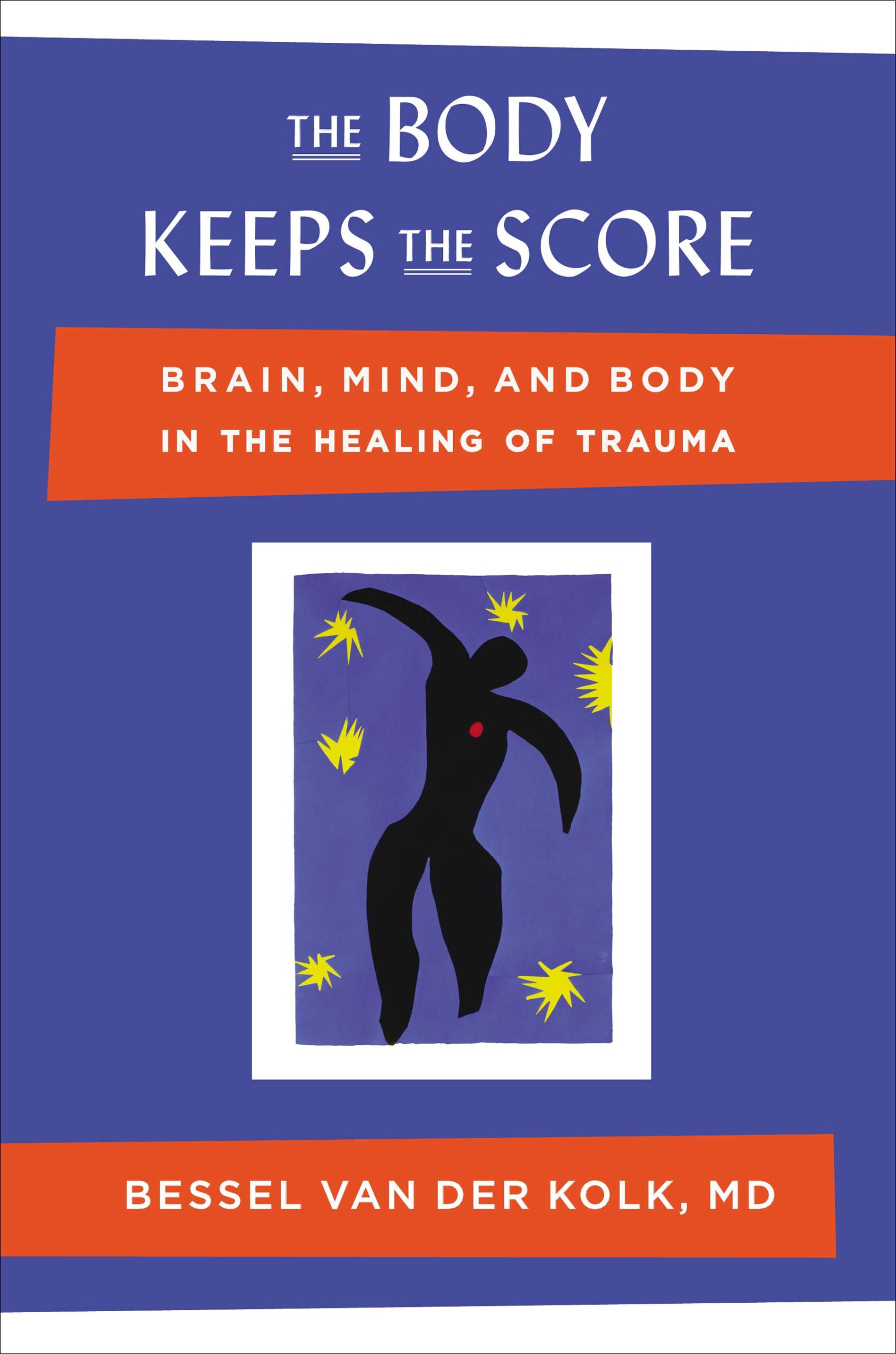
RW: You’re making the point that the mind and body connection cannot be separated. The cognitions, feelings, and other thought activities of our minds are so integrated with our bodies. This is not new, of course, but it does seem to be getting a lot more attention lately. In a recent interview with Bessel van der Kolk on Psychotherapy.net, he describes having done the only NIMH funded study on EMDR, and as of 2014, the results were more positive than any published study of those who developed PTSD in reaction to a traumatic event as adults. He goes on to talk about the impact of trauma on the somatosensory self, that it changes the insula, the self-awareness systems—which is exactly what you’re saying.

But EMDR therapy is also very easily integrated into other kinds of therapies. In fact, I saw that you won the Sigmund Freud award from the City of Vienna.
FS: People who have been trained as psychodynamic therapists say that EMDR lets them use what they know. They use EMDR therapy to help identify the earlier memories that cause maladaptive defenses and intra-psychic conflicts, and it helps people process those memories and experiences. It’s the same with those who practice cognitive behavioral therapy. EMDR therapy is used to process the memories that are causing dysfunctional behavior and irrational cognitions.

It’s a remarkably efficient treatment. There are three studies that have indicated that for single trauma victims there’s an 84 to 100% remission of PTSD within about five hours of treatment.
RW: That’s great.
FS: A study with EMDR therapy in combat veterans found that after only 12 sessions, 78% no longer had PTSD. Of course, the amount of treatment time it takes depends upon the number of memories that have to be processed, but you don’t have to process each and every event because memory is connected. Instead, you choose one that represents a whole group, and then you have a generalization effect. It rapidly shifts.
RW: This is the phase that has so much in common with all approaches to trauma. Learning self-soothing skills is consistent with all mindfulness meditation and stress reduction methods. It gives people a sense of confidence that they’re not going to be lost when they leave the session. It’s remarkable how fast the dysfunctional beliefs can shift from “it was my fault that I was abused” to “I didn’t deserve that.” It doesn’t happen all in one session, but—
FS: Well, it can.

The 8 Stages of EMDR

RW: Perhaps you could tell us a bit more about the stages of EMDR therapy?
FS: EMDR therapy is an eight-phase approach. During the first phase, the clinician takes an appropriate history of the client, finding out what the current problems and symptoms are, how long they’ve been going on, what the systems issues and the relationship issues are, etc. Then we begin to identify what earlier memories are causing many of these problems.

If you’re coming in with relationship issues like, “I always overreact to criticism,” we try to see what’s causing the overreaction. What earlier memories might there be that are pushing it? Does the sound of your husband’s voice remind you of your father’s voice before he hit you? We have specific techniques to identify these problematic memories.

The second phase involves preparation. We teach a variety of self-control techniques so that people learn to shift from negative feelings to positive ones.
You don’t have to process each and every event because memory is connected. Instead, you choose one that represents a whole group, and then you have a generalization effect.
These techniques can be very useful for everyone, but ultimately we’re trying to lessen the need for them. That is, if I’m always buffeted by these unprocessed memories, and I’m constantly needing to shift out of negative feelings into positive feelings, what I really want to do is process these memories so I’m not getting triggered by them any longer. A preparation technique will allow the person to feel in control so that when we start the processing, if a disturbance comes up, and they feel like they want to stop, we just stop. We use the technique to shift back into feeling good, and then when they’re ready, we go back and continue the processing.

The amount of preparation depends on how debilitated the client is to be begin with. Some people have never had good experiences—they had a terrible childhood, were beaten, ignored, neglected; they didn’t have anyone in their life that they could turn to or count on. These folks can be extremely debilitated emotionally, so we may need to spend more time preparing them. For most people it doesn’t take very long at all, maybe a session or so.
RW: That’s true, it can.
FS: For an individual trauma, it might take two or three sessions. And you simply want the client to be in the best possible state, not only during the processing but also in between sessions.
RW: So they can shift into and out of the self-paced imagery?
FS: Exactly. It’s not homework, as you would get with cognitive behavioral therapies for trauma. But let’s say it’s going to take three sessions to finish an individual trauma—you can do that morning and afternoon, or you can do it three consecutive days. In other words, the treatment can be done in days or weeks, rather than months or years.
The treatment can be done in days or weeks, rather than months or years.
And because all of the therapy is done with the clinician, they don’t have to go out and confront negative feelings and experiences on their own in order to try to make things change.
RW: So the history, identifying the memories, and preparation are the first phases. What happens next?
FS: Then we move into processing. We identify a memory that has been causing the symptoms and then we identify different aspects of it—the image, the negative thoughts associated with it, where they’re feeling it in their body, what the emotion is, etc. And once we access the memory in a certain way, we start the processing, which involves stimulating the brain’s own information processing system that allows the different connections to be made.

One of the procedures in the processing involves a form of dual attention stimulation—meaning the client follows the clinician’s fingers with their eyes as they move rapidly back or forth, or it can be tones or taps. It seems to stimulate the brain’s information processing system, and the client then has different, rapidly moving associations. They may have new thoughts about the memory, or other memories may emerge, or new insights can come up. It allows the brain to do the digesting by making all of the appropriate links that it hadn’t been able to make before.

Eye Movement

RW: After the preparation phase, I usually introduce the eye movement component. First I do the protocol, the target image. Many people don’t want it to be a memory—they’re coming in with some anxiety that they’re dealing with right now, and they don’t necessarily make the connection to memories. So I might start with a target image like, “when my husband’s face gets angry and frowny, I go into a panic.” Then I write down the negative self-beliefs after and rate their anxiety on a scale of intensity from zero to ten. I see where that anxiety is felt in the body. While they’re doing this protocol, they’re identifying what they’re feeling, what their beliefs are—“I’m a bad person. I’ll be a failure. I’ll be humiliated. I’ll be punished.”

And then I draw a line across the tablet and say, “What beliefs would you like to have?” This is straight out of your protocol. It’s often surprising to people, but once they get it, they can really elaborate. “I’d like to feel confident that I can handle this moment.” “I’d like to feel certain that I can stay calm and reasonable”—that sort of thing.

It’s a powerful moment when I move my ottoman over in front of the person and hold my hand up after customizing it for them. The rapidity of the motion back and forth, how wide the sweep is—these are custom tailored for each person, and then they go into that image—they’re seeing the husband’s face, angry and escalating, and they can actually feel their beliefs: “I’m getting ready to be demolished.” It is phenomenal. It’s very different.
FS:
It’s been demonstrated in about 16 randomized controlled trials now that the eye movement also rapidly causes the vividness to shift and emotion to decrease.
It’s been demonstrated in about 16 randomized controlled trials now that the eye movement also rapidly causes the vividness to shift and emotion to decrease. So they may start out with a disturbance, but it very rapidly decreases and shifts to that new understanding—from “that’s how my father used to look at me” to “that was wrong of him” to “It wasn’t my fault” to “it was his fault.” It’s getting liberated from how they felt as a child so that they can see the present more clearly.
RW: It’s so true.
FS: Of course there might be a need for couples counseling, but in many instances, these overreactions are caused by early childhood events stored as unprocessed memories.
RW: We all know that when our sympathetic nervous system gets aroused, clear thinking goes out the window.
FS: Right, exactly.
RW: The point here is that when you’re doing the eye movement part of it, after having prepared the self-soothing and the cognitive component of the beliefs and the desired beliefs, the shift is so remarkable.

The person may have four or five associations: “I see my parents fighting. I see myself hiding behind the door. I feel terrified. I feel like I should stop their fighting. It’s my fault.” The therapist picks out one of those, which I think is an area of the art of the therapist, knowing which one to pick that will lead to the next set of associations. But when it’s very, very accepting, no judgment, no anxiety on the part of the therapist, that calmness is often rewarded. After the next set of repetitions, the person says, “I do not have to rescue. It’s not my fault.” They’ll say it. You never have to say it. They get to it themselves.
FS: Very often the therapist can stay completely out of the way and foster and support the client nonverbally. We’re conveying acceptance because we do accept it. We are conveying unconditional regard because that’s part of the therapy process, so the clients don’t have to be afraid of their own emotions. They don’t have to be afraid, and they can reveal as much as they want.

With other forms of therapy, you have to describe the memories in detail. With EMDR therapy, that’s not necessary. The client says as much or as little as they want to.
With other forms of therapy, you have to describe the memories in detail. With EMDR therapy, that’s not necessary. The client says as much or as little as they want to. As a matter of fact, in many instances, you can do it content free, and the client just gives you enough information to know that it’s changed. So rape victims, molestation victims, who may feel so much shame and guilt that they don’t want to talk about it initially—they don’t have to. You don’t have to force the client to do or say anything that they don’t want to.
RW: Your point about the calm, accepting, unconditional regard is a component you’ve emphasized in the trainings, but I don’t know that it comes across to some people who think EMDR is technique-y.
FS: There are specific procedures about when you continue the associations and when you return to the target, but the beauty of it is to allow that internal, intrinsic healing mechanism to take over and to make the appropriate associations and not take a clinical stance that you know more than the client, that you are the one that has to give the answers. In most instances, the connections are all there for the client and when they’re not, we have specific EMDR therapy procedures to kick start it again. It’s not about clinicians imposing themselves on the client, but rather allowing the appropriate healing to take place.
RW: So what is the next stage?
FS: Assessment is the third phase, where you’re identifying the memory and the different components of it, and then you move into a phase that we call Desensitization, which is allowing the insights and connections to be made until they’re a zero on the Subjective Units of Disturbance Scale (SUDS). It could start off at an eight or nine, but it’s down to a zero.

Then we move to a phase we call Installation, which has to do with concentrating on that desired positive belief the client wants and seeing if we can strengthen it so that it feels completely true to the client.

Then we move to the Body Scan phase, where we have the person think of that memory, think of the positive belief, and scan to see if there’s any disturbance in the body; and if there is, we process it.
We process the memory, evaluate, reevaluate, reassess, and see what else needs to be done until we've basically addressed all of the issues, and the client is feeling empowered.
For instance, a molestation victim who is feeling good and powerful scans her body and notices that there is a strange sensation in her back, and we focus on that. It turns out that’s where she was held down when she was raped. So we process that.

At the end of the session, the Closure phase brings the clients back to the full state of equilibrium. We remind them of their self-control techniques and the in-between-session processing they can continue to do. We also suggest that if a disturbance comes up, to just write down what happened very briefly—“I walked into X situation and I got triggered”—so that they can be targets for next time.

Then the eighth phase at the next session is Reevaluation, where we bring back the memory and see how it feels. See if there’s anything else that needs to be addressed. For instance, I worked with a girl who had been molested by her grandfather, and by the end of the session she was saying, “He was really weak. I ran into the bathroom and he tried to get in, and I just kept telling him to go away, and he went away.”

At the next session when I saw her, she felt fine. She didn’t feel dirty. She didn’t feel shameful. She didn’t feel powerless. She had a good grip on it. But in asking her what else might be coming up, she said, “Well, I was thinking of my grandmother, that she didn’t believe me when I told her I was molested.” So that’s the new target. We identify what else needs to be processed, and that’s how the therapy continues.

We process the memory, evaluate, reevaluate, reassess, and see what else needs to be done until we've basically addressed all of the issues, and the client is feeling empowered. It’s not only that the major symptoms are gone, but they feel like a positive, healthy, resourceful human being and are now able to establish and maintain positive relationships in their life.

Death by a Thousand Cuts

RW: In my own practice, the vast majority of my clients don’t come in to do EMDR therapy. They are coming in with other problems in living—anxiety, depression, relationship problems, etc.—and then I introduce it to them. It’s looking at the current target image, the current source of the anxiety, that then leads to association with past memories of actual trauma. But another source of trauma is the reaction of the social environment to the trauma. Like in the example you just gave, the woman’s grandmother, in her disbelief, was another source of trauma in addition to the molestation.

This is a common consideration in most trauma therapies—that it’s not just the trauma, it’s everybody’s reaction to the trauma that makes it worse, so I think that’s such an important component. It’s all interconnected.
FS: PTSD has commonly been thought of as a response to major traumas—earthquakes, rape, molestation, combat, etc. But the research now is very clear that general life experiences can cause even more PTSD symptoms than major trauma. Childhood experiences, humiliations, divorce, conflicts in the home—these things can be a source of chronic PTSD.
RW: Death by a thousand cuts. All the micro traumas that get accumulated.
FS: It doesn’t even need to be accumulated. You can have individual childhood events, like an individual being pushed away, being left behind, being humiliated in grade school, having people laughing at them. Any of these things can get stored in the brain with terrible feelings and thoughts of, “I’m not good enough. I can’t succeed. I’m not powerful.”
PTSD has commonly been thought of as a response to major traumas—earthquakes, rape, molestation, combat, etc. But the research now is very clear that general life experiences can cause even more PTSD symptoms than major trauma.
They get locked in and run the person for the next 30 years. So it’s important for people to have some compassion for themselves and not just dismiss their anxiety or their depression or their insecurity just because they don’t know where it came from. Many of us simply don’t remember because it’s a long past childhood event, and we don’t recognize that the problems we’re having in relationships or at work are influenced by these earlier events.

Also there’s a lot of research now showing the negative impact parents can have on the lifelong health of their children. There was a study done at Kaiser Permanente that clearly showed that adverse childhood experiences were the leading causes not only of mental health problems in adults, but of physical health problems as well—cancer, lung problems, etc. So I think we need to be more aware of how these experiences are being stored in our brain and constantly pummeling us with negative feelings that impact not only our minds but our bodies. These problems are transferred easily to children because research has clearly shown that mothers who have posttraumatic stress disorder are more likely to mistreat their children—not purposely, but they simply react more harshly.

Research has also shown that highly disturbing experiences within two years before childbirth can prevent the mom from bonding with her child, which has extremely negative effects. Maternal depression is one of those factors that Kaiser Permanente identified as causing these lifelong negative effects for adults because depressed mothers may not be able to bond with their children. It’s not only major traumas that are the problem—all kinds of experiences can have long-lasting detrimental effect on individuals.
RW: That is certainly corroborated by all the new imagery and radiology advances that have been made in which various autonomic processes—not only the body but the brain—are shown to react during negative interactions with people. There is this whole cascade of activity—everything from cortisol to high blood pressure to galvanic skin response to a change of blood flow to the frontal cortex and the amygdala. We all have this sympathetic arousal over traumatic interactions.

What is the latest research on how neurological reprocessing of trauma actually works?
FS:
EMDR processing seems to link in to the same processes that occur during rapid eye movement sleep.
EMDR processing seems to link in to the same processes that occur during rapid eye movement sleep. REM sleep processes the events of the day in order to make sense of them, and it moves them from episodic memory to semantic memory, where you can remember what happened, but you no longer have those emotions and physical sensations locked into memory. Until that happens it’s stored in episodic memory, which seems to get triggered with PTSD.

People who have posttraumatic stress disorder often wake up in the middle of a nightmare. That’s the brain attempting to process the event, but it’s too disturbing, so they wake up in the middle of it. What EMDR therapy appears to do is to take the brain further than it’s able to go in its natural state. The eye movements tax working memory and stimulate REM processes, which allows the rapid shift in imagery, emotion, cognition and sensation.
RW: A possible physiological analogy would be how insulin produced by carbohydrates causes the pores of fat cells to open and take in fat, and it’s only when we have proteins that the cells open and the fat comes back out so that we can lose weight. Similarly, there’s some unlocking of synapses where the memories of the trauma are stored. The anxiety has to go down, but there’s something about the bilateral movement that not only allows the memory to be stored, but also then connect with current, more rational, more safe feelings that give people a sense of identity and agency. It connects together and desensitizes the memory, which loses its power, while the current situation gains power. The current sense of self gains power.
FS: What we say is that it arrives at an adaptive resolution. What’s useful from the event is incorporated and the learning takes place. What’s useless is let go, so the negative emotions and physical sensations and beliefs are basically all gone. But it’s different than the concept of “extinction” employed in cognitive behavioral therapies, where the person is asked to describe the memory in detail as if they’re reliving it, making sure they don’t think of anything else but just stay there with that memory. It allows desensitization to occur, but the original memory that’s being targeted doesn’t change; rather a new one is created. The theory is that the person has been disturbed because of avoidance behavior—they haven’t allowed themselves to stay with it because they believe they’ll go crazy, they’ll die. And as their therapist causes them to tell the story over and over again, they realize they won’t die, and that creates a new memory that competes with the old one—but the old one is still there.

With EMDR therapy, there’s a short exposure where you ask the person to think about it, have the eye movement for about 30 seconds or so, and then you specifically elicit associations. They often move right to another memory.
It appears that the original memory is transformed as these connections are made, and the new learning and the new insight is made, and then it’s stored in this changed form.
It appears that the original memory is transformed as these connections are made, and the new learning and the new insight is made, and then it’s stored in this changed form. They no longer feel terrible about themselves. The transformed memory is stored and the original form it began with no longer exists. We call that “reconsolidation,” not extinction. So with exposure therapy, the original memory is still there, but in EMDR therapy the original memory is no longer there in its old form. This may be responsible for certain differences that we’ve seen in treatment.

For instance, there was a study comparing exposure therapy and EMDR therapy for those who had complicated mourning—intense grief that wasn’t changing. When somebody dies suddenly, very often the person who is bereaved continues to have negative imagery, negative thoughts of the person dying, seeing them in pain, guilt about what they should’ve done, could’ve done, etc. When individuals were treated with EMDR therapy and with exposure therapy, the EMDR was more rapid with better outcomes. Interestingly, there was twice the positive recall of the deceased than after treatment with exposure therapy. The fact that the original memory was still intact might be the reason for that.

Another example is the EMDR therapy treatment of phantom limb pain, where accident victims and combat veterans, who lost limbs in a traumatic experience continue to feel pain in a limb that’s no longer there. What we’ve found from the articles that have been published so far is that by identifying the trauma in which the leg was damaged, for instance, and processing it with EMDR, at the end of the treatment, 80% of people either no longer had any pain or it was substantially reduced.
No other form of therapy has reported elimination of chronic phantom limb pain.

One last example. In a treatment of psychotic people who had suffered trauma, when treated with EMDR therapy that targeted the trauma, not only were the PTSD symptoms eliminated, but a majority of those who had started out with auditory hallucinations reported that they were completely gone at the end of treatment, which was only about six sessions. That had never been reported with CBT. So there’s a lot more to explore over the next decade or so.

Neurons That Fire Together…

RW: Particularly as we learn more about specifics of the neurophysiological underpinnings of each mind function, like the functions you were talking about just now—extinction and consolidation. This reminds me of the work of Norman Doidge, the Columbia psychiatrist and psychoanalyst who wrote the book about neuroplasticity, The Brain That Changes Itself. He believes that EMDR therapy is one of the greatest breakthroughs in psychology in his lifetime. He would say that there’s probably a neuroplastic underpinning to each one of these very dramatic changes. He talks about how when we are really listening to something, the auditory cortex will make acetylcholine. And when we have a sensation of pleasure or decreased anxiety, there’s a little bit of dopamine secreted, and it’s that combination of acetylcholine and dopamine that creates the brain’s dendritic growth factor, which causes the dendrites to grow a few microns per hour.

Over time these dendrites find each other, which is why a dog will salivate at the sound of a bell once he learns that he’ll be fed after the bell rings. The auditory cortex has absolutely nothing to do with saliva, but the bell creates salivation because those dendrites have found each other. In other words, neurons that fire together, wire together. During EMDR therapy, there must be a lot of firing going on—self-soothing and the reduction of anxiety is getting wired together with the old memories and the new sensations of agency and safety and new cognitions. They somehow get wired together, and that really does replace the old wiring. I believe at some point we’ll be able to confirm this on the molecular level.
FS: I think ultimately that’s where the field is going, but the field of neurophysiology is still in its infancy, so as of yet no one has ever seen a memory network. But there are more than a dozen studies showing how the brain functions both before and after EMDR therapy, and you can see many differences including growth of the hippocampus as well as changes in cortical and limbic activation after EMDR therapy. Why and how that happens will probably take another decade or so to discover, since imaging will need to become much more sensitive.
RW: I just read, I think in Wired magazine, that the new MRI machines can measure 10,000 times greater detail than the current ones, so they can actually see the electrochemical impulse go down the neurons. Isn’t that wild?
FS: Yes. We have a very exciting decade to look forward to.
RW: What about critics who believe that the research is weak because the dependent variables are all self-report? It makes me think about how innovations are accepted in any field, but particularly scientific fields. There are the early adopters, who are just a few, then the middle adopters as more people hear about it, and then there’s a tipping point where everybody jumps on and incorporates the new learning or the new innovation. It seems to me like you’ve been working on this now for 25-plus years. Where do you think we are in that curve of adoption?
FS: I think we’re in the latter stage now. Those critics you’re talking about were responding to research from 15 years ago. At this point, there are more than 25 randomized controlled trials that have demonstrated the positive effects of eye movements, and a recent meta-analysis has shown there’s a significant effect. In fact, one of EMDR’s original vehement critics has completely turned around and stated that it’s clear that the eye movements have been demonstrated to be effective. Critics who make derogatory statements are very much out of date.

The same is true about the research on EMDR’s effectiveness. There are now more than two dozen randomized controlled trials that have demonstrated the positive effects of EMDR therapy with all of the bells and whistles of good research, including standardized measures, interviews, etc. The World Health Organization (WHO) has even stated that trauma focused cognitive behavior therapy and EMDR therapy are the only psychotherapies recommended for the treatment of PTSD across the lifespan. That is for children, adolescents, and adults.

The Trauma of Everyday Life

RW: I want to return to this idea that is so prevalent in our society that if you didn’t have any major traumas, then you should be all right. In fact, that’s not the case at all, as you pointed out. There are so many life events that become traumatic based on cultural influences. There are so many traumatic and worsening aspects of our culture—the increase in poverty and unemployment as wealth is sequestered in smaller and smaller groups; the emphasis on extroversion and positive feelings over fear, anger and grief; the pathologizing of normal problems in living. All of these things are enormously traumatizing, but we don’t think of it as something that our culture needs to look at.
FS: That’s one of the reasons I wrote the self-help book, Getting Past Your Past—to bring attention to the many things that can be causing our negative reactions and symptoms in the present and explain what to do about it. There are so many events in life and so many things about our relationships that can cause anxiety, depression, insecurity and PTSD. It is explainable and it’s treatable.

We have a nonprofit organization that came into being after the Oklahoma City bombing in 1995. We got a call from a FBI agent, who said, “Can you please do something because the mental health professionals are dropping like flies.” There were no empirically validated treatments for trauma back then. We sent out clinicians to do free treatment for the frontline providers and victims, and the program evaluation showed that it had the same positive effects—about an 85% success rate within three sessions—as a randomized controlled study that was published that year. Since that time our Trauma Recovery/EMDR Humanitarian Assistance Programs, has been providing free treatment for victims of natural and manmade disasters throughout the world and low cost programs for inner city areas in the U.S.
RW: How many people do you have volunteering or doing low cost treatment?
FS: There are hundreds. We have responded to all the major disasters in the US such as Katrina, Sandy, the Boston Marathon Bombing and Newtown shootings. Trauma Recovery Networks have been established in about 30 cities throughout the country. And we’ve also sent teams out after the tsunamis and earthquakes around the world. EMDR Asia came into being a couple of years ago, so now they’re able to do the humanitarian work on the continent themselves.

But there are so many more that need help. People who have been hurt can hurt others. Child molesters, for instance, are often viewed as intractable. Many people don’t want to have anything to do with them. We basically keep them ostracized from society.
RW: Further traumatizing.
FS: But a director of a program incorporated six sessions of EMDR therapy for those molesters who seemed the most incorrigible. They themselves had been molested in childhood—which is often the case with those who molest children—and when their own molest was targeted and processed, they came in contact with how they felt at the time.
We can take people that seem intractable and transform them into positive human beings so they’re no longer hurting others.
They recognized that they hadn’t wanted it and empathy emerged for their own victims. They no longer felt sexually attracted to children. It was measured by something called a penile plethysmograph, which measured their arousal, and 90% no longer exhibited deviant arousal towards children. So we’re attempting to conduct more research in this area.

The bottom line is that we’re looking at the potential that no one needs to be left behind. We can take people that seem intractable and transform them into positive human beings so they’re no longer hurting others. We want to make sure that we’re able to get the treatment to all who need it, so that we stop the pain for future generations.
RW: For any clinicians who are reading this and are interested in getting EMDR training, what’s the best way for them to do so?
FS: It’s extremely important that clinicians who are interested in being trained go to a program certified by the EMDR International Association in the U.S or the EMDR Europe Association in Europe. There are people out there offering programs that are not up to snuff. Certified trainings are six days plus consultation. There are international standards that have been developed to make sure that clinicians know what they’re doing before they treat any clients. Non-profit agencies can arrange for low cost trainings from the Trauma Recovery/EMDR Humanitarian Assistance Programs.
RW: Any final comment you’d like to make before we sign off?
FS: I’m hoping that interviews such as this will really allow people to get a better understanding of EMDR therapy and its potential for healing. The unimaginable amount of suffering that’s going on out there does not have to continue. People can truly heal in a comparatively short period of time and move to a state of happiness, strength and resilience, with healthy relationships.
RW: Thank you so much, Francine, for a very good interview.
FS: Thank you.

When the Therapist Loves and Hates

That creatures must find each other for bodily comfort,

that voices of the psyche drive through the flesh

further than the dense brain could have foretold,

that the planetary nights are growing cold for those

on the same journey who want to touch

one creature-traveler clear to the end;

that without tenderness, we are in hell.

—Adrienne Rich

The Embrace

She looked deeply into his eyes and he looked into hers. Their bodies were very close, melding with one another. He touched her breast, grazing, and then holding it. Responding with her all, breathing in his fragrance, she embraced him. They were enthralled with one another, the love chemical flowing with the delight that they shared.

Although this may sound like a description of lovers in the first phase of their sexual relationship, it is a description of a mother-infant embrace. Many mothers, myself included, can easily call to mind and re-experience the intensity of having newborn infants. Longing for skin-to-skin contact, needing to engage in the reciprocal dynamic of breastfeeding (the baby needs her empty belly to be filled, the mother needs to have her swollen breasts emptied), the baby’s absolute dependence on the mother and the mother’s experience of total responsibility for the baby—in the earliest days between mother and child, only the other exists.

This “altered state” of consciousness, shared by new lovers and the mother-infant dyad alike, is also commonly experienced by the psychotherapeutic “couple” in much the same way—with longings for contact, a desire to feed and be fed, and the shared experience of total dependence on the other, as if no one else exists during the therapeutic hour. Yet unlike the merging love experienced by mother and infant, this love between therapist and client remains somewhat taboo in therapeutic culture. Because of this, clinicians often unwittingly (and unconsciously) let their clients carry all of the loving feelings for the dyad. “We’ve all heard many stories of therapists abusing their power and acting out sexually with clients in the name of “love.” But what of the damage inflicted by avoiding, denying, or otherwise minimizing love in the therapy relationship?”

Hate

And then there’s hate.

We have all felt critical, angry, hateful, and exasperated toward others at some point, so it only makes sense that therapists have both hateful and loving feelings toward our clients. We need to be flexible feelers, comfortable with the variety of feelings we experience and also wiling, when appropriate, to express these feelings with clients. But feeling hateful toward clients is extremely uncomfortable for therapists; it is defensive in its very nature when we are expected to be open, undefensive, unreactive, thoughtful.

In the history of psychoanalytic ideas, aggression has generated enormous controversy and continues to be the subject of sustained and intense interest. Sigmund Freud wrote extensively about aggressive impulses and, for him, they were more than a mere branch of human motivations. In Civilization and Its Discontents, he characterized antagonistic tendencies as the primary, dominating, “central and abiding part of human experience.”

Like love, hatred is enormously complex, and warrants serious reflection when it comes up with clients. Without self-awareness, hateful feelings can lead us to hurt and blame our clients, to harm them. How therapists understand and relate to aggressive feelings is critical in the clinical setting, but too often we suppress and repress them, just as we do with love.

In my experience, making room for—welcoming, even—our deepest feelings of love and hate for and with our clients is what makes the relationship truly transformative. If we can bear the vulnerability (which, frankly, we should), our work can be deeply healing for both our clients and ourselves. I present my therapy with Lucy to illustrate the depth of feeling that arises in our work, and to caution against repressing and denying these feelings out of a mistaken belief that we are somehow serving our clients by staying more “neutral.”

Lucy

My new patient was a hooker. She spit this out right after my conventional introduction of “Hello, I am Chris Peterson. Please come in.” There it was, right up front, as if Lucy needed to get past this, deal with whatever she might have expected my reaction to be, and move on.

I felt an immediate liking for Lucy. She was 30, beautiful in a Bohemian way, and sported multiple piercings on her ears, eyebrows, and nose. Her face looked younger than her years, her eyes sparkled, and she practically bounced with energy. She talked about the various men she serviced in lurid detail in an attempt, I surmise, to shock (and test) me. I was rapt, but not ruffled. This was the third time a sex-worker had found her way to my consulting room and, like the others, Lucy was dealing with a past that included abuse, abandonment, and conflicted relationships. All such patients struggle with their own histories, which can include an abusive parent or parents, a competitive relationship with their mothers, and/or leaving home at an early age to escape further pain or degradation. These women want to be loved and to be healed, but are often “looking for love in all the wrong places.” Growing up in an emotionally volatile and abusive family, Lucy had little experience with feeling loved and nurtured. Love came to her through pain, abuse, and incestuous boundary violations.

I focused intensely on her stories, trying to understand her perceptions of herself and her fear of and longing for relationships with others and the greater whole of life. She seemed to have a sense of engagement with me and it seemed like she was open when we were in session, but for many months there was little carryover from one session to the next. She struggled with exposing herself and being vulnerable, and so did I.

I often found myself frustrated—sometimes to the point of utter exasperation—with what seemed like the snail's pace of Lucy’s progress. The stagnation and endless repetition of highly predictable and ritualized patterns in each session were difficult to tolerate. When she was feeling vulnerable and too dependent on me, she would attempt to control the situation and create distance between us by moving into a blatantly seductive role. She would arrive to session dressed in provocative attire, and when the end of the session drew near, she would jump up to leave, announcing that both of us had someone waiting.

This kind of behavior happened most consistently when there was a break in our usual session time or when I left on a scheduled vacation. I wondered aloud with her about how she experienced these changes and absences. Initially she responded to my queries with a look of stunned astonishment, a negation of the importance of the break, followed by a cavalier comment discounting any connection between our separation and her behavior. My attempts to connect with her in a loving way were effectively blocked, and I was aware of how I began distancing myself from her.

After many months of treatment, however, I grew more optimistic and heartened by the increasing depth and overall sense of warmth and engagement that began to evolve in many of our sessions. Lowering my own distancing defenses—and my heightened awareness and sensitivity to how these functions served Lucy—helped me to do a better job of helping her modulate her responses, which in many instances recapitulated her early childhood traumatic experiences and painful feelings. At the beginning of treatment she knew no other way to respond to invitations of what she thought was intimacy; she knew no other way to survive. Yet gradually she developed an awareness of the sources of her difficulty in maintaining relationships.

These obstacles to relationship intimacy had begun during her earliest childhood, followed her through her grade school years, and continued into adulthood; consciously she did not recognize the empty and often self-degrading aspects of her encounters with others. Lucy had been a prostitute for close to 15 years, having started at the age of 15 in a desperate attempt to survive in a very primary way. With few exceptions, her experiences of sexual intimacy were comprised of her being penetrated in an abusive manner. Sexual vulnerability and human dependency carried risk for Lucy and challenged her sense of her capacity to survive.

The Breakthrough

In the real world of therapy there are few “breakthroughs” of the Hollywood kind. However, Lucy and I did experience such a moment in our work, which we both continued to recreate in later sessions. In the beginning of the third year of our work, following a month of increased focus on her longings for and terror of close and loving connections, a silence fell on us during one session. It was not an awkward and painful silence; rather, we both felt it as a deep and meaningful stillness. As we sat together, she looked up at me and I met her gaze directly. We held this gaze for several moments, both enthralled with each other, both moved to an almost orgasmic connection. The long months of avoiding emotional attachment began to give way to a new and intimate connection between us. The energy she had so desperately needed to use to hold me at arm’s distance was now more available for the task at hand—to begin to get critical needs met and to experience a safe, nurturing, and healing relationship.

Throughout the course of my work with Lucy I was brought to the brink of both love and hate. We had to navigate through both extremes in the service of helping her first allow dependence and then to separate. As a psychotherapeutic “couple” we both longed for contact, wanted to feed and be fed, and initially feared one another, but with time enjoyed the occasional shared experience of total dependence on each other. I came to understand the frustration I felt initially as my longing to have her work at my pace and to accept me quickly as a safe and reliable mother. Her defenses against that kind of merging were difficult for me to withstand. I wanted her to taste how sweet and warm my breast milk was and to know I would feed her well—to trust me and depend on me. Her resistant defiance enraged me at times, and as much as I intellectually understood some of what had occurred in her life to create this defensiveness, emotionally I felt rejected. She triggered feelings in me of inadequacy and powerlessness—feelings that, I came to appreciate, she had carried throughout her life. With time we could begin identifying what feelings were hers, mine, and ours.

The more loving feelings arrived gently, but grew steadily. These did not completely replace the hateful feelings, but balanced them in such a way that while both were in play, they were more tolerable and open to a deepening analysis. Lucy initially enacted a bit of sadomasochism in her mode of relating with me, creating pain for both of us. In response, I felt her resistance to my attempts to care for and nurture her, which triggered a sense of impotent, hopeless rage in me.

Lucy and I were able to explore the sexualization of her aggression, along with its possible roots. She recalled moments of intense longing for her withholding mother. The transference-countertransference enactment that occurred early in treatment was interesting and demonstrated an aggressive but essentially erotic interplay. When I was able to ask what she noticed when the seductive behavior took over, she could only say that she worried I was frustrated with her (and I was) and seduction was her way of dealing with that worry. In time, we were able to explore this. Lucy was moved to frustrate me or make me angry in some way so as to defend against the longings she felt at the beginning of many sessions. She also added that she became more certain of where she stood with me if she made me angry.

Her seductive relating was a defensive effort to change negative experiences into positive ones. As noted by Harriet Wrye and Judith Welles in their book The Narration of Desire: Erotic Transferences and Countertransferences, this idea is based on an associative model, which claims that both positive and negative experiences occur together in childhood and can become fused so that seduction (sex) is in the service of an irresistible pull toward a destructive interplay. This destructive interplay had been the only way Lucy could make contact with people, and her aggression projected the illusion of strength. It summoned the armor surrounding and hiding her vulnerability, making her feel self-protected rather than relying on my goodwill. But, to paraphrase Ellen Liegner in The Hate That Cures, although at times the therapeutic relationship might be characterized by a mutual hatred, the patient wants a positive relationship. The therapist must not act upon his/her own feelings of outrage, vexation, or exasperation, but through self-analysis recognize her intense emotions and use them in the service of authentically understanding and connecting with the patient.

Lucy’s feelings of hate subsided and, in time, were replaced by feelings of appreciation. She began to act like a loving person. It is likely that the narcissism of her early caretakers and their failure to act in mature and loving ways toward her were responsible for the development of her pathology.

The Primacy of Love

Why is it challenging to honor the healing potential of loving feelings in psychotherapy? What gets in the way of valuing and expressing love? Is it easier to abandon the issue than to be vulnerable and do the self-reflection and analysis that such feelings call upon us to do?

The capacity for love and concern on the therapist’s part is actually evidence of a healthy and thriving individual, and was considered by Winnicott to be an accomplishment that “develops out of the simultaneous love-hate experience, which implies the achievement of ambivalence, the enrichment and refinement of which leads to the emergence of concern.” In other words, a clinician’s ability to love is vital to the therapeutic endeavor, no matter what theoretical model is being used.

If we as therapists value others and are genuinely interested in serving their well-being without displacing or diminishing our own, we don’t respond first from within a theoretical model—we respond with our hearts and let love guide us. Having our needs felt by an influential and trusted other is critical when we are children, and dynamic, loving relationships remain important throughout our lives. Healthy dependency is embedded in Winnicott’s capacity for concern; it is needed to prevent psychological rigidity and to foster a willingness, and even enthusiasm, for being influenced by others. Loving is a distinct way of perceiving and being with our patients, ourselves, and others. It is rooted in vitality and wonder, and in therapy this feeling comes alive in an emotionally interactive, mutually transformative dance.

People have been grappling with definitions of love for thousands of years and there is no uniform agreement on what exactly love is. Erich Fromm defined loving as commitment of oneself to another without a guarantee. That is hard work. It means trying again and again despite pain and hurt, teaching others how to help us, extending a helping hand toward others at the exact moment we need a hand extended toward us. Is it possible that love is often sidelined in our field not because it is ineffective, but because it is so demanding?

Whereas there is considerable lip service given to what Carl Rogers referred to as “unconditional positive regard,” it is often misconstrued as neutralized affect, not the deep and authentic love and caring Rogers meant it to be. There is an undercurrent flowing steadily through many psychoanalytic tributaries that whispers, “Care less, keep your distance, don’t work too hard.” The implication is that if we as therapists care too much, believe too readily, or get pulled in too deeply, we are foolish. But love is an experience of a deep human connection—on an unconscious as well as a conscious level—that involves generosity, recognition, acceptance, and something like forgiveness.

Being with patients in the therapy room, allowing for an intimate exchange (intercourse, in fact), holding them with words rather than with arms, and containing their intense feelings as they learn how better to contain these themselves is the very essence of my work. It is important that we as therapists devote our clinical, educational, and personal consideration to our love for the client within the therapeutic context as an essential and valuable element of effective therapy, regardless of our theoretical orientations. Psychoanalyst Judith Vida, when asked how love contributes to psychoanalysis, responded:

"It is not possible for me even to enter my office in the morning of a clinical day without the hope and the possibility of love. How can I say what it 'contributes' when it is not an option or a conscious choice whether it is there or not? This is like saying, 'Does it contribute to the therapeutic action that the analyst draws breath, has a blood pressure, and a pulse?' For me, the proper question is not 'whether' or 'if' but 'how.' How is love present—and absent—in the therapeutic situation, and how is it manifested?"

In essence, it is love that makes psychotherapy work. It is the element, beyond theory or technique, that makes transformation possible. And there is no love without hate, as they are inexorably linked. We must we willing to experience all of it so that our clients can too.

The Body Keeps the Score: Brain, Mind, and Body in the Healing of Trauma

The following is an excerpt from The Body Keeps the Score: Brain, Mind, and Body in the Healing of Trauma by Bessel van der Kolk, MD. Reprinted by arrangement with Viking, a member of Penguin Group (USA) LLC, A Penguin Random House Company. Copyright © Bessel van der Kolk, MD, 2014.

****

Marilyn was a tall, athletic-looking woman in her mid-thirties who worked as an operating-room nurse in a nearby town. She told me that a few months earlier she’d started to play tennis at her sports club with a Boston fireman named Michael. She usually steered clear of men, she said, but she had gradually become comfortable enough with Michael to accept his invitations to go out for pizza after their matches. They’d talk about tennis, movies, their nephews and nieces—nothing too personal. Michael clearly enjoyed her company, but she told herself he didn’t really know her.

One Saturday evening in August, after tennis and pizza, she invited him to stay over at her apartment. She described feeling “uptight and unreal” as soon as they were alone together. She remembered asking him to go slow but had very little sense of what had happened after that. After a few glasses of wine and a rerun of “Law & Order,” they apparently fell asleep together on top of her bed. At around two in the morning, Michael turned over in his sleep. When Marilyn felt his body touch hers, she exploded—pounding him with her fists, scratching and biting, screaming, “You bastard, you bastard!” Michael, startled awake, grabbed his belongings and fled. After he left, Marilyn sat on her bed for hours, stunned by what had happened. She felt deeply humiliated and hated herself for what she had done, and now she’d come to me for help in dealing with her terror of men and her inexplicable rage attacks.

My work with veterans had prepared me to listen to painful stories like Marilyn’s without trying to jump in immediately to fix the problem. Therapy often starts with some inexplicable behavior: attacking a boyfriend in the middle of the night, feeling terrified when somebody looks you in the eye, finding yourself covered with blood after cutting yourself with a piece of glass, or deliberately vomiting up every meal. It takes time and patience to allow the reality behind such symptoms to reveal itself.

Terror and Numbness

As we talked, Marilyn told me that Michael was the first man she’d taken home in more than five years, but this was not the first time she’d lost control when a man spent the night with her. She repeated that she always felt uptight and spaced out when she was alone with a man, and there had been other times when she’d “come to” in her apartment, cowering in a corner, unable to remember clearly what had happened.

Marilyn also said she felt as if she was just “going through the motions” of having a life. Except for when she was at the club playing tennis or at work in the OR, she usually felt numb. A few years earlier she’d found that she could relieve her numbness by scratching herself with a razor blade, but she had become frightened when she found that she was cutting herself more and more deeply, and more and more often, to get relief. She had tried alcohol, too, but that reminded her of her dad and his out?of?control drinking, which made her feel disgusted with herself. So instead she played tennis fanatically, whenever she could. That gave her a feeling of being alive.

When I asked her about her past, Marilyn said she guessed that she “must have had” a happy childhood, but she could remember very little from before age twelve. She told me she’d been a timid adolescent, until she had a violent confrontation with her alcoholic father when she was sixteen and ran away from home. She worked her way through community college and went on to get a degree in nursing without any help from her parents. She felt ashamed that during this time she’d slept around, which she described as “looking for love in all the wrong places.”

As I often did with new patients, I asked her to draw a family portrait, and when I saw her drawing, I decided to go slowly. Clearly Marilyn was harboring some terrible memories, but she could not allow herself to recognize what her own picture revealed. She had drawn a wild and terrified child, trapped in some kind of cage and threatened not only by three nightmarish figures—one with no eyes—but also by a huge erect penis protruding into her space. And yet this woman said she “must have had” a happy childhood.

As the poet W. H. Auden wrote:
Truth, like love and sleep, resents
Approaches that are too intense.

I call this Auden’s rule, and in keeping with it I deliberately did not push Marilyn to tell me what she remembered. In fact, “I’ve learned that it’s not important for me to know every detail of a patient’s trauma. What is critical is that the patients themselves learn to tolerate feeling what they feel and knowing what they know.” This may take weeks or even years. I decided to start Marilyn’s treatment by inviting her to join an established therapy group where she could find support and acceptance before facing the engine of her distrust, shame, and rage.

As I expected, Marilyn arrived at the first group meeting looking terrified, much like the girl in her family portrait; she was withdrawn and did not reach out to anybody. I’d chosen this group for her because its members had always been helpful and accepting of new participants who were too scared to talk. They knew from their own experience that unlocking secrets is a gradual process. But this time they surprised me, asking so many intrusive questions about Marilyn’s love life that I recalled her drawing of the little girl under assault. It was almost as though Marilyn had unwittingly enlisted the group to repeat her traumatic past. I intervened to help her set some boundaries about what she’d talk about, and she began to settle in.

Three months later Marilyn told the group that she had stumbled and fallen a few times on the sidewalk between the subway and my office. She worried that her eyesight was beginning to fail: She’d also been missing a lot of tennis balls recently. I thought again about her drawing and the wild child with the huge, terrified eyes. Was this was some sort of “conversion reaction,” in which patients express their conflicts by losing function in some part of their body? Many soldiers in both world wars had suffered paralysis that couldn’t be traced to physical injuries, and I had seen cases of “hysterical blindness” in Mexico and India.

Still, as a physician, I wasn’t about to conclude without further assessment that this was “all in her head.” I referred her to colleagues at the Massachusetts Eye and Ear Infirmary and asked them to do a very thorough workup. Several weeks later the tests came back. Marilyn had lupus erythematosus of her retina, an autoimmune disease that was eroding her vision, and she would need immediate treatment. I was appalled: “Marilyn was the third person that year whom I’d suspected of having an incest history and who was then diagnosed with an autoimmune disease—a disease in which the body starts attacking itself.”

After making sure that Marilyn was getting the proper medical care, I consulted with two of my colleagues at Massachusetts General, psychiatrist Scott Wilson and Richard Kradin, who ran the immunology laboratory there. I told them Marilyn’s story, showed them the picture she’d drawn, and asked them to collaborate on a study. They generously volunteered their time and the considerable expense of a full immunology workup. We recruited twelve women with incest histories who were not taking any medications, plus twelve women who had never been traumatized and who also did not take meds—a surprisingly difficult control group to find. (Marilyn was not in the study; we generally do not ask our clinical patients to be part of our research efforts.)

When the study was completed and the data analyzed, Rich reported that the group of incest survivors had abnormalities in their CD45 RA?to?RO ratio, compared with their nontraumatized peers. CD45 cells are the “memory cells” of the immune system. Some of them, called RA cells, have been activated by past exposure to toxins; they quickly respond to environmental threats they have encountered before. The RO cells, in contrast, are kept in reserve for new challenges; they are turned on to deal with threats the body has not met previously. The RA?to?RO ratio is the balance between cells that recognize known toxins and cells that wait for new information to activate. In patients with histories of incest, the proportion of RA cells that are ready to pounce is larger than normal. This makes the immune system oversensitive to threat, so that it is prone to mount a defense when none is needed, even when this means attacking the body’s own cells.

Our study showed that, on a deep level, the bodies of incest victims have trouble distinguishing between danger and safety. This means that the imprint of past trauma does not consist only of distorted perceptions of information coming from the outside; the organism itself also has a problem knowing how to feel safe. The past is impressed not only on their minds, and in misinterpretations of innocuous events (as when Marilyn attacked Michael because he accidentally touched her in her sleep), but also on the very core of their beings: in the safety of their bodies.

Note: Find out about Bessel’s new in-depth, online Trauma Certificate Course

Bessel van der Kolk on Trauma, Development and Healing

Talking About it Doesn’t Put it Behind You

David Bullard: Bessel, you are the medical director and founder of the Trauma Center at Justice Resource Institute and professor of psychiatry at the Boston University School of Medicine. You have been one of the most influential and outspoken clinicians, educators and researchers contributing to our understanding of trauma and its treatment.
I don’t remember reading a professional book in several intense sittings like I just did with your new book, The Body Keeps The Score: Brain, Mind, and Body in the Healing of Trauma. It’s been praised by everyone from Jon Kabat-Zinn and Francine Shapiro to Jack Kornfield, Peter Levine and Judith Herman, who called it a “masterpiece that combines the boundless curiosity of the scientist, the erudition of the scholar, and the passion of the truth teller.” (Read an excerpt from the book accompanying this interview.)
Let me start with some basics: Could you say something about why talk therapy alone doesn’t work when treating trauma?
Bessel van der Kolk: From my vantage point as a researcher we know that the impact of trauma is upon the survival or animal part of the brain. That means that our automatic danger signals are disturbed, and we become hyper- or hypo-active: aroused or numbed out. We become like frightened animals. We cannot reason ourselves out of being frightened or upset.
Of course, talking can be very helpful in acknowledging the reality about what’s happened and how it’s affected you, but talking about it doesn’t put it behind you because it doesn’t go deep enough into the survival brain.
DB: Would you say that is one of the distinctions between your work and Edna Foa’s “prolonged exposure therapy”? In a New Yorker article on trauma, Foa talked about rewriting memories, rather than destroying them, and describes her work with a patient with PTSD who had been raped years before: “We asked her to tell the story of that New Year’s Eve (when the rape occurred) and repeat it many times….to distinguish between remembering what happened in the past and actually being back there…and when, finally, the woman did that she realized that the terror and her rape were not her fault.”That sounds like cognitive learning.
Bv: That’s a lovely example of the ability of talk to get a better perspective. But there is a mistaken notion that trauma is primarily about memory—the story of what has happened; and that is probably often true for the first few days after the traumatic event, but then a cascade of defenses precipitate a variety of reactions in mind and brain that are attempts to blunt the impact of the ongoing sense of threat, but which tend to set up their own plethora of problems. So, trying to find a chemical to abolish bad memories is an interesting academic enterprise, but it’s unlikely to help many patients. It’s a too-simplistic view in my opinion. Your whole mind, brain and sense of self is changed in response to trauma.
In the long term the largest problem of being traumatized is that it’s hard to feel that anything that’s going on around you really matters. It is difficult to love and take care of people and get involved in pleasure and engagements because your brain has been re-organized to deal with danger.
It is only partly an issue of consciousness. Much has to do with unconscious parts of the brain that keep interpreting the world as being dangerous and frightening and feeling helpless. You know you shouldn’t feel that way, but you do, and that makes you feel defective and ashamed.

EMDR and Body Awareness Approaches to Trauma Treatment

DB: You are a big proponent of body awareness approaches to trauma treatment—and for a fully lived life. For example, you’ve done research on yoga for trauma survivors and recommend yoga for patients. I saw recently that your Trauma Center offers trainings to yoga teachers in working with the trauma of their students. You also speak very highly of the body-oriented therapies of Peter Levine and Pat Ogden, and especially of EMDR. You devote a whole chapter to your learning EMDR and examples of your use of it.
Bv: We have done the only NIMH-funded study on EMDR. As of 2014, the results of that study were more positive than any published study of those who developed their PTSD in reaction to a traumatic event as an adult.
There are opinions and there are facts.
Traumatized people often become insensible to themselves. They find it difficult to sense pleasure and to feel engaged. These understandings force us to use methods to awaken the sensory modalities in the person.
The facts are that the EMDR study was spectacularly successful in adults, a bit less with childhood trauma–at least not in the short period of time (eight 90-minute sessions) in the research protocol. But our research found that the impact of trauma is in the somatosensory self, trauma changes the insula, the self-awareness systems. Traumatized people often become insensible to themselves. They find it difficult to sense pleasure and to feel engaged. These understandings force us to use methods to awaken the sensory modalities in the person.
DB: The following quote from your book beautifully addresses some of this:
“The neuroscience of selfhood and agency validates the kinds of somatic therapies that my friends Peter Levine and Pat Ogden have developed…. [In] essence their aim is threefold:

  • to draw out the sensory information that is blocked and frozen by trauma;
  • to help patients befriend (rather than suppress) the energies released by that inner experience;
  • to complete the self-preserving physical actions that were thwarted when they were trapped, restrained, or immobilized by terror. 

Our gut feelings signal what is safe, life sustaining, or threatening, even if we cannot quite explain why we feel a particular way. Our sensory interiority continuously sends us subtle messages about the needs of our organism. Gut feelings also help us to evaluate what is going on around us. They warn us that the guy who is approaching feels creepy, but they also convey that a room with western exposure surrounded by daylilies makes us feel serene. If you have a comfortable connection with your inner sensations—if you can trust them to give you accurate information—you will feel in charge of your body, your feelings, and your self” (p.96).

EMDR trainers now seem to be focusing more on sensory modalities than when I first was taught about EMDR, and they also use “resource installation” (Leeds) and more recently “dyadic resourcing” (Manfield). But if there has been an identified single trauma that doesn’t resolve after several sessions, they look for an older “feeder memory,” and get there by asking the patient to focus on body sensations to see if he or she has ever felt those sensations before. It often is a gateway to an earlier trauma.
Bv: A lot of different schools do that, where the body is a pronounced part of therapy. My own teacher, Elvin Semrad, in the early 1970s in Boston, was very somatically oriented; same thing for Milton Erikson and many schools of hypnotherapy. Most people I hang out with who work with traumatic stress are somatically oriented.

The Limits of CBT

DB: The popular media are often puzzlingly ignorant about the nature of trauma and its treatment. You are very well aware of this, but an otherwise interesting article in the May, 2014 issue of The New Yorker magazine stated that a study “published in Nature in 2010, offered the first clear suggestion that it might be possible to provide long-term treatment for people who suffer from PTSD and other anxiety disorders without drugs.” That article never even mentioned EMDR, which was listed in a 1998 task force report of the Clinical Division of the American Psychological Association as being one of three psychological therapies (together with exposure and stress inoculation therapy) empirically supported for the treatment of PTSD. How could they miss that?
Bv: Well, they often get things not quite right! It intrigues me how the public is much more fascinated with the potential of false memories in patients than in the gross distortions of our society’s memory of trauma.
Articles like the one you cited often relate to the study of memories in mice. It is a huge leap, of course, from rodents to human beings, which not only leads to misinformation about the nature of traumatic stress and its treatments, but also about the rather trenchant differences between humans and mice. Humans are profoundly social animals—everything we do and think is in relation to a larger tribe. Our brains are cultural organs. It probably has something to do with people’s temperaments; people who do rodent research are drawn to the simplicity of rodent brains. In order to work with humans you need to have a taste for culture, complexity and uncertainty. People would be astonished if a psychotherapist gave advice to rodent researchers on how to run their labs! But the popular press takes the liberty of making these misinformed leaps with the general public all the time.
DB: How best to treat trauma is a crucial question, of course. You saw CBS’ 60 Minutes television show that first aired in November, 2013, describing a Veterans Administration program treating war veterans using “cognitive processing therapy” and prolonged exposure treatment methods. Your understanding of and approach to treating trauma is very different. Can you address a couple of points that distinguish your views from those presented by that VA treatment program?
Bv: Cognitive Behavioral Therapy (and “Trauma Focused CBT”), talk therapies, and prolonged exposure therapies can make some changes in people’s distress, but traumatic stress has little to do with cognition—it emanates from the emotional part of the brain that is rewired to constantly send out messages of dangers and distress, with the result that it becomes difficult to feel fully alive in the present. Blasting people with the memories of the trauma may lead to desensitization and numbing, but it does not lead to integration: an organic awareness that the event is over, and that you are fully alive in the present. The VA seems to be surprised by how many veterans drop out of prolonged exposure therapy. It would be helpful for them to find out why, but the likely answer is that it is re-traumatizing them.
DB: More recently, there was the profile of your work with trauma in the Sunday Magazine of the New York Times (May 22, 2014). The author shadowed you for a month, and it seemed to me that the article minimized the outcome of the clinical demonstration you did with an Iraqi war veteran at an Esalen Institute workshop.
Bv: The current Family Therapy Networker magazine just ran a piece about all the inaccuracies in that article, and the difficulties journalists have in getting the story straight. “Eugene” was the participant in the workshop, and he said “The takeaway when I read [the New York Times article] was that I was confused by the experience and that it didn’t help, which just isn’t true…When I spoke with the reporter, I said very positive things about the concrete ways that it helped me in terms of physical symptoms that disappeared, and also the fact that Dr. van der Kolk recommended people for me to work with afterward. He really spent some time finding a good recommendation for EMDR, and it really helps.” He wrote a letter to that effect and they wouldn’t publish it. I just got an email from him with a picture of my new book saying, “Thank you for helping me to regain the capacity for calmness and focus to be able to engage, and read books again.”
DB: The New York Times article also quoted sound bites from some other researchers, seemingly questioning your work, but later corrected some misinformation.
Bv: That’s another intriguing issue. There seems to be a tendency among therapists to become very religious about their own particular method—some seem to be more committed to their method than to the welfare of their patients. When patients don’t improve, they blame their resistance, and slam the people who point out that one size never fits all. The New York Times article also alluded to the Roman Catholic Church’s problems with clergy abuse and trying to defend itself by claiming that these plaintiffs suffered from “false memories,” and were the victims of “repressed memory therapy.” Testifying on behalf of pedophiles became a whole industry that seems to have entirely disappeared now that these trials are over.
DB: The newspaper did publish your brief (and, I thought, restrained!) rejoinder clarifying the issues presented, and you received an overwhelmingly supportive response in other letters to the editor and online comments. Here’s an excerpt from your letter to the New York Times:
Trauma is much more than a story about the past that explains why people are frightened, angry or out of control. Trauma is re-experienced in the present, not as a story, but as profoundly disturbing physical sensations and emotions that may not be consciously associated with memories of past trauma. Terror, rage and helplessness are manifested as bodily reactions, like a pounding heart, nausea, gut-wrenching sensations and characteristic body movements that signify collapse, rigidity or rage…. The challenge in recovering from trauma is to learn to tolerate feeling what you feel and knowing what you know without becoming overwhelmed. There are many ways to achieve this, but all involve establishing a sense of safety and the regulation of physiological arousal.
Bv: I also mentioned in the Networker article, “What happened …is a reflection of the incredible difficulties society has with staring trauma in the face and providing people with the facts of what happens, how bad it is, and how well treatments work.”

Talent and Compassion Aren’t Enough

DB: I appreciate your emphasis on research and fact-based discussions versus theoretical ones. Along those lines, George Silberschatz, a past-president of the international Society for Psychotherapy Research, said in a recent interview that the between-therapist effects were as large if not larger than the between-treatment effects in current psychotherapy research, and this is perhaps from non-specific treatment effects.
Bv: Well, talent and compassion are central elements of being an effective therapist, but learning to feel your feelings and be in charge of your self, and working with someone who knows how to deal with bodily sensations and impulses can make all the difference between visiting an understanding friend once a week, and actually healing your trauma.
DB: Could it relate to Stephen Porges’ description of the Polyvagal Theory and the social engagement system? The nonspecific treatment effects from psychotherapy research seem to be powerful about the therapist helping to create a safe environment.
Bv: I have been very much inspired by Porges’ work. The reason that Porges has become an important part of our world is his finding that trauma interferes with face-to-face communication. It is very important how you get regulated in the presence of other people. We need to learn very specific ways to activate the social engagement system. Sitting in your chair and chatting might not always be the most effective way of doing that.

Porges’ work was very helpful and clarifying about where in the brain trauma makes it difficult to feel comfort, to feel intimate and connected with other people. Knowing those things can help therapists to become more conscious about the specifics of their interactions, and should become part of the training of therapists. For example, I recently took a month-long intensive training course for Shakespearean actors to learn how the modulations of my voice, the configurations of my facial muscles, and the attitudes of my body affect my self-experience, and that of the people around me.
Porges’ work points to the importance of working with the reptilian brain—the brain stem, as well as the limbic system. We need to teach breathing and movement and work with the parts of the brain that are most impacted by trauma—areas that the conscious brain has no access to.
So I am dubious about the nonspecific relational impact of treatment on benefiting traumatized individuals. Seeing someone nonspecifically does not help the fear circuits and that collapsed sense of self. We need to learn very specific ways to activate the social engagement system. Sitting in your chair and chatting might not always be the most effective way of doing that.
DB: A colleague of yours from your Harvard days, neuroscientist Catherine Kerr, recently writing about mindfulness research, said:
The placebo effect is usually defined, somewhat tortuously, as the sum of the nonspecific effects that are not hypothesized to be the direct mechanism of treatment. For example, having a face-to-face conversation is not hypothesized as what makes psychotherapy work—you could have a face-to-face conversation with anybody. But for some reason, if you go every week to therapy, you are going to get better. But you could talk about the weather! When we perform these rituals with a desire to get better, we often do. We now know that a lot of the positive therapeutic benefit from psychotherapy and from various pain drugs may come from that initial context; it often has nothing to do with the specific treatment that is being offered. It is really just about the person approaching a situation with a sense of hope and being met by something that seems to hold out that hope (October 01, 2014, Tricycle Magazine).
And I think Allan Schore at UCLA would say that there is “unconscious right brain to unconscious right brain communication” going on, between therapists and patients, or between any of us in close relationships that might be what is otherwise thought to be “nonspecific” in therapy research. A deep ability to be present and connect empathically with patients is easier for some individual therapists than for others. Perhaps we are discussing a situation in therapy of “necessary, but not sufficient!”
Bv: I can’t really comment on all that—you’ll have to ask Catherine Kerr and Allan Schore. I have always been a bit puzzled about that “right brain to right brain” stuff. The research shows that the part of the brain most impacted by trauma is the left hemisphere, and I would imagine that every single part of the brain is necessary for effective functioning and feeling fully alive in the present.
DB: Well, I will be interviewing Schore next month, so we now have some good material to discuss!
Bv: I’ll look forward to reading that.

Neurofeedback & Yoga

DB: Is there anything in your own thinking that you feel has significantly changed in the last couple of years due to your continuing growth in the work and in all you are exposed to?
Bv: The biggest has been my exposure to neurofeedback (a type of biofeedback that focuses on brain waves, instead of peripheral phenomena like heart rate and skin conductance). In neurofeedback you change your brain’s electrical activity by playing computer games with your own brain waves. Learning how to interpret quantitative EEG’s helped me to visualize better how the brain processes information, and how disorganized the brain becomes in response to trauma. What made it necessary to look for other, non-interpersonally-based therapies was the realization, followed by research that dramatically illustrated how being traumatized may interfere with the ability to engage with other human beings to feel curious, open and alive.
Learning how to interpret quantitative EEGs allowed me to actually visualize what parts of the brain are distorted by traumatic experiences, and this can help us target specific brain areas where there is abnormal activity and where the problem actually is.
The trauma is not the story of what happened long ago; the long-term trauma is that you are robbed of feeling fully alive and in charge of your self.
For example, for the part of the brain supposed to be in charge, after trauma it will have excessive activity, keeping people in a state of chronic arousal—making it difficult to sleep, hard to engage and to relax. We find neurofeedback can change the activity in parts of the brain to allow it to be more calm and self-observant.
In another example, the frontal lobes of traumatized people often have activity similar to that of kids with ADHD, which makes it difficult to attend with the subtlety that we need to lead nuanced lives.
DB: So would the neurofeedback be with or without exposure to a particular traumatic memory?
Bv: Again, traumatic stress results in not being able to fully engage in the present. The trauma is not the story of what happened long ago; the long-term trauma is that you are robbed of feeling fully alive and in charge of your self.
DB: You would say that also is a positive outcome from yoga and other body awareness exercises, activating and strengthening the parasympathetic nervous system?
Bv: In our NIH-funded yoga for PTSD study we saw people did considerably better after 8 weeks of yoga. It can make a contribution to help people be more present in the here and now. The whole brain gets reorganized. Some quotes from participants in that study included:

  • “My emotions feel more powerful. Maybe it’s just that I can recognize them now.”
  • “I can express my feelings more because I can recognize them more. I feel them in my body, recognize them, and address them.”

This research needs much more work, but it opens up new perspectives on how actions that involve noticing and befriending the sensations in our bodies can produce profound changes in both mind and brain that can lead to healing from trauma. When we understand these things about the brain, how it works, we learn more about how to adjust our treatments.

DB: I’ve heard you say that you do not identify as belonging to any one particular school of therapy; that you do not even identify as an EMDR therapist even though you often utilize it.
Bv: Well, that would be like a carpenter saying he was a “hammer carpenter.” We need many different tools that will work for different patients and different problems.

Meaningless Pseudo-Diagnoses

DB: Can you talk a bit about your battles to get deeper and more sophisticated understandings of trauma treatment into the professional arena? Your book recounts the research you did that identified a traumatized population quite distinct from the combat soldiers and accident victims for whom the PTSD diagnosis had been created.
Bv: Yes, well, in the early 1990’s our PTSD work group for the Diagnostic and Statistical Manual of Mental Disorders voted nineteen to two to create a new diagnosis for victims of interpersonal trauma: “Disorders of Extreme Stress, Not Otherwise Specified” (DESNOS), or “Complex PTSD” for short. But when the DSM-IV was published in May 1994 the diagnosis did not appear in the final product.
Fifteen years later, in 2009, we lobbied to have “Developmental Trauma Disorder” listed in the DSM-5. We marshaled a lot of support, such as that from the National Association of State Mental Health Program Directors, who serve 6.1 million people annually, with a combined budget of $29.5 billion.

Everybody who holds forth should have a practice, otherwise you get seduced by your ideas and don’t get confronted with the limits of your ideas in clinical practice.
Their letter of support concluded: “We urge the American Psychiatric Association to add developmental trauma to its list of priority areas to clarify and better characterize its course and clinical sequelae and to emphasize the strong need to address developmental trauma in the assessment of patients.”
It was turned down also, and a lot of criticism of DSM-5’s approach has since been levied and they have lost credibility from a variety of professional sources.
DB: You recently published the results of an international survey of clinicians on the clinical significance of a Developmental Trauma Disorder diagnosis. Can you tell us why it might be so beneficial to have such a diagnosis?
Bv: Because it would help us to start focusing on helping kids feel safe and in control , rather than labeling them with meaningless pseudo-diagnoses like oppositional defiant disorder, impulse control disorder, self-injury disorder, etc.
DB: A significant part of your career at the Trauma Center has been working with traumatized children. There is a lot in your book relevant to work with children.
Bv: Yes, with Joseph Spinazzola and Julian Ford, we are involved in studies through the Complex Trauma Treatment Network of the National Child Traumatic Stress Network, which now is comprised of 164 institutions in almost all States.
DB: You are doing so much traveling with international teaching, you are involved in ongoing research, and you have quite a large staff at the Trauma Center in Boston to manage.
Bv: About 40 people are working at the trauma center now.
DB: Are you still personally able to do one-on-one clinical work or only have a supervisory role?
Bv: Everybody who holds forth should have a practice, otherwise you get seduced by your ideas and don’t get confronted with the limits of your ideas in clinical practice.

Posttraumatic Growth and Aliveness

DB: I’ve always liked the subtitle of Peter Levine’s book Waking the Tiger: Through Trauma Into Aliveness. Others are talking about “posttraumatic growth.”
Bv: That’s what the New York Times article should have been about. The guy they described so poorly actually recouped his life. People get better by befriending themselves. People can leave the trauma behind if they learn to feel safe in their bodies—they can feel the pleasure to know what they know and feel what they feel. The brain does change because of trauma and now we have tools to help people be quiet and present versus hijacked by the past. The question is: Will these tools become available to most people?
DB: You are certainly doing your part, Bessel, by being so very active and productive. I counted 35 workshops out-of-town on your calendar for 2014, in addition to your teaching at the various medical schools in Boston, at the Trauma Center and a new certification program. Right now you are about to embark on a 10-day bo

Brad Strawn on Integrating Religion and Psychotherapy

The New Conversation

Greg Arnold: You're a professor of integration of theology and psychology at Fuller Theological in Pasadena. You’ve written extensively on the integration of psychology and theology and just co-edited the book, Christianity & Psychoanalysis: A New Conversation. From the perspective of religion on the one hand and psychology on the other, tell me about this new conversation. What was the old conversation, and how does this new conversation set itself apart?
Brad Strawn: Well, there are a lot of conversations going on in this area, and one of the points of this book is to try to be particular and specific. So we're not talking about all of clinical psychology, but about psychoanalytic psychology or psychotherapy, and we asked each of the contributors to be specific about their own Christianity because there are Christianities. There is Catholicism, Anglicanism, Anabaptism, there's Reform, Wesleyan, and the list goes on and on.
GA: Yes, of course.
BS: Part of what we mean by new, however, is that in the history of the relationship between psychoanalysis and Christianity, beginning with Freud, religion has been considered a way that we protected ourselves from the anxiety of fate and those things that we can’t control.
In the history of the relationship between psychoanalysis and Christianity, beginning with Freud, religion has been considered a way that we protected ourselves from the anxiety of fate and those things that we can’t control.
He ultimately captured all of this in his understanding of the Oedipal Complex—the God in the sky is the great patriarch that we project things into. As we grow up, just as a child grows up and eventually doesn't need the father, we also as a society and as a culture would grow out of our need for religion. Science for Freud becomes the new religion, the new way of knowing.

What we argue in the book is that changes in philosophy, in theology and in psychology have allowed for a much more relational understanding of all of those areas. So now we don't have to pathologize religion, but we can recognize that religion serves important functions in culture and there is actually room for it to be considered a viable way of knowing. This allows new conversations to emerge; it’s no longer about psychopathology, but about human flourishing, human knowing, human relatedness, and health. So religion can be a healthy way of interacting with the world.
GA: When you say it like that, it illustrates the common ground between the ostensible purpose of psychotherapy and psychology at large, and what we traditionally consider the goals of religion: Human flourishing.
BS: Right.
GA: It’s good to hear that modern philosophy has shifted to facilitate that. But you did hit on one important criterion for the new conversation, and that’s Christianities. When Freud was saying we're going to grow out of this, how did that contrast with what you're aiming for, which is integration?
BS: Freud had this image of religion as fairly primitive. There were a lot of complex intersecting realities going on at the time, and he was reacting to a number of them. It wasn't a great time to be a Jew, obviously. He ended up fleeing to England to save his own life, which many of his colleagues also had to do, and saw Christianity as part of the problem, which it was.
GA: Sure, but he characterized it as this singular monolithic Christianity with a capital C. How does that get challenged in this new conversation?
BS: It would have been difficult for him to conceive of religion that had a mature component to it. What’s helpful about Christianities is that it opens up the conversation to many other ways of seeing things. There are immature forms of religious experience and mature forms. Erich Fromm was a disciple of Freud, but he went in a very different direction, allowing for the idea of mature religions. D.W. Winnicott is another psychoanalytic thinker who conceives of the maturation of religion. He himself grew up in a Wesleyan tradition and held to it throughout his life to some degree, even though he doesn't espouse much particularity in terms of faith per se.

I think that’s what we get when philosophy, theology, and psychology begin to open up this idea that there are different ways of knowing. We can borrow from the ways that people talk about culture these days. We no longer see certain cultures as being “primitive,” but instead talk about the particularities of a culture. What are the indigenous psychologies within a particular culture or ethnicity or race that cause people to see the world in particular ways? We wouldn't want to talk about them as being immature or primitive. We would want to say, "What do they add to the conversation?"

When I talk to people who aren't religious I say,
"Think about religion as a form of culture that brings particular ways of seeing the world and conceptualizing things."
"Think about religion as a form of culture that brings particular ways of seeing the world and conceptualizing things." It's not true or false. It's just what it is. I think that's been helpful for people, particularly those outside of the religious dialogue.

Therapy is a Moral Discourse

GA: I love the idea of borrowing from our evolving vocabulary about culture, especially in our profession of psychotherapy. We've got a huge vernacular for talking about culture in the therapy room and we can think of religion as a culture and treat it the same way. Intersectionalities, all these blossoming identities, and there's no one integration of psychology and faith because there's no one faith. They're all situated. Let’s take it a step further. Can we, as therapists, view our handling of our own religion and our clients' religion as one more facet of multi-cultural competence, or is there any reason we want to treat it differently than the other trainings we have about multicultural competence?
BS:
I tend not to use the word “competent.” I don't think we can become competent because there are too many cultures and too many religions.
I tend not to use the word “competent.” I don't think we can become competent because there are too many cultures and too many religions. I think we sometimes fool ourselves that we can know enough. When my African-American client who is Muslim is talking, what I know is that this person has a particular way of seeing the world, and my job is to try to understand to the best of my ability how they see the world and where they’re experiencing problems. Where they’re getting caught up in ways of seeing the world that are in conflict with their culture—for example being religious in a secular culture—and helping them figure out how to navigate that conflict.

I believe that psychotherapy is essentially a kind of a moral discourse between two people. The therapist has a particular way of understanding the oughts and shoulds of the world, and the client does as well. We don't do ourselves any good pretending that we can bracket that and leave that out of the room. We have to be honest about that, and at times bring it into the room so we can have open and honest conversations. Not that we as therapists impose that on our clients, but if we don't own where we're coming from, we may in fact be more likely to unconsciously or covertly impose our views on our clients. That's what colonialism was, right? A “white” and “right” way of seeing the world that we now know isn’t the truth.
GA: So it’s important to identify where you're coming from in your own faith tradition, no matter where it is.
BS: Exactly.
GA: Where does the non-religious practitioner fit into this? Can they contribute to the effort to integrate psychology and faith? What does the interfaith dialogue need to be?
BS: A former colleague of mine who is now passed, Randy Sorensen, did some research where he found that good therapy impacted religious clients positively based not on whether the therapist was religious or not, but how open the therapist was to the client's religious experience.
It's the way they approach their clients' religion rather than whether they are religious or not. It's the respect they show for it, the same way they would show respect for a client's culture.
If they didn't pathologize the client's religious experience like you wouldn't pathologize someone's cultural experience, but welcomed it hospitably and made it a place where the client could then explore that in a non-judgmental way, people came out feeling more positive and open about their religious experience than with those practitioners who didn't allow it to be an open and non-judgmental kind of dialogue. I think that's very helpful for non-religious therapists to keep in mind—it's the way they approach their clients' religion rather than whether they are religious or not. It's the respect they show for it, the same way they would show respect for a client's culture.

Religion can, of course, be used in pathological ways, and good therapy ought to help people disconnect from that. But that's not going to be possible if the therapist doesn't want to talk about it or comes in with too many a priori assumptions about religion. So that's where a secular or non-religious therapist can actually contribute to this dialogue, and particularly contribute to good psychotherapeutic work by welcoming a client's religion the same way they would welcome the client's culture or gender or sexual orientation.
GA: So multicultural awareness and sensitivity is going to put us in good stead there. There are lots of ways we can mess therapy up by being closed, rigid, biased, not having identified our own location. Can you talk more about what you see being the positive outcomes for the client when the therapist is aware and open?
BS: What some of the research seems to indicate is that clients are able to examine not only their religious tradition in the way that impacts their psychology and vice versa, but their image of God can also be transformed over the course of therapy. Religious people, like everyone else, often come to therapy because something has happened in their life, or life isn’t working out the way they expected it would. Well, for a religious person, that raises issues of, "Who is God then and where is God and how does God function in the world?" It may be that they've come in with some ideas about God and religion that were functional and helpful for a while, but now are not helpful and functional anymore. That doesn't mean that their earlier thoughts are bad or pathological, but it means that they've got to expand and develop and grow like anything in our lives. It doesn't mean they have to jettison their faith—I think some people feel like they have to leave their faith or say that there is no God anymore—but they can evolve their understanding of God and religion. It's not throwing the baby out with the bathwater, but sifting through the dirty bathwater. A good therapist, whether he or she is secular or religious or of a different religion than their client, can create the space that allows that to happen in ways that are therapeutic.

So Many People Believe in God

GA: So we can get over feeling guilty about religion being on the table, or this idea that it’s not valid to bring religion into the therapy process. It's appropriate for psychotherapy to really work with that.
BS: I think so. We have data that suggests so many people believe in some kind of God—in the United States at least. People are religious. We could get into a whole debate about religion versus spirituality, but in general many people have these religious-spiritual inclinations. So to feel guilty that we're talking about religion seems to be a major mistake. It's part of people's identity, so it needs to be on the table. To leave it out is like leaving out talking about sexuality. How can we do that? That's a whole part of what makes people who they are.
GA: Would you agree that it’s kind of taboo, though, to bring religion into psychotherapy? From the secular side religion is often seen as a kind of pathology, but even on the religious side, people may feel like those issues are better dealt with in a church or a synagogue or a mosque. What has your experience been?
BS: I think sometimes for the religious and even maybe the non-religious, we don't always know what to do with the APA ethic codes. We're so afraid of imposing our views, of taking away the client's autonomy, but we’re beginning to learn how we can hold a client's autonomy in mind even as we're helping them think about the variety of issues they are dealing with. I don't think we do them a favor by not bringing things into the room. I had a professor who would say, "We can expose things without imposing." Of course, that's an art form. There's always a danger that we're going to impose. But I think there is plenty of evidence that therapists impose without even saying things at times, or their very theories have implicit ethics within them that we never think about—for example, the ethic of individualism or autonomy. Those are ethics. Those say things about how people ought to live their lives. So all of our underlying points of view need to come under this more post-modern lens. We need to own what we’re doing.

It’s true that some religious practitioners think that these issues should be left for the church, but I also think that some religious practitioners don't want to bring up religion because it becomes personally challenging to them. It challenges their own countertransference. So if their client is questioning, say, the existence of God or how God works in the world and it's uncomfortable to the religious practitioner, he or she may unconsciously avoid it because it's anxiety provoking. That's something that they need to work out in their own therapy and supervision.
GA: Because they're getting in the way of what's best for the client. I'm glad you admit it's really hard and it's a danger to impose. It's an art. You've got to really do a lot of work. How are we doing as a field at including this in the therapy room, at not imposing, and what can a practicing clinician out there do if they're not in training anymore to advance this effort to integrate faith and psychology and to be more culturally sensitive?
BS: The good news is there are a lot of good resources out there—everything from various models of integrating faith and psychology to how people actually work clinically from various modalities. You can find cognitive behaviorists and how they work with religion, or psychoanalytic or family systems practitioners. Even the American Psychiatric Association is publishing resources about the language of spirituality. I think that's a good way to start and it helps clinicians listen in different ways for issues of spirituality, but the larger issue is still this fear of imposing.
How do we manage the issue that morality and ethics are a part of every psychotherapy?
How do we manage the issue that morality and ethics are a part of every psychotherapy? The most responsible thing we can do is own that and figure out how we use it in appropriate ways that doesn't become coercive, what one of my colleagues would say violent to the therapy.
GA: Absolutely.
BS: But that doesn't mean falling back into this kind of Freudian myth that we can be objective blank screens. I think this is true even with cognitive behavioral people. They pretend that they are not bringing themselves to the work, but they are. So how do we most effectively bring ourselves to the work? That would be the question I'd like to spend more time thinking about.

Talking Out of Both Sides of Your Mouth

GA: This idea of an objective blank slate is a liability. It's made us at risk for this kind of violent idea that we're mechanics operating on machines and we've just got to get out the owner's manual and look up in the appendix of how to fix this machine. Morally, we have to own what we're bringing to the room. But how do you integrate your whole individual philosophy of embodiedness and embeddedness with the DSM and empirically supported treatments and evidence-based practice? How has that balancing act gone for you personally and professionally?
BS: That’s a great question. I hedge my bets by rarely using insurance as a clinician, which means I rarely have to provide a diagnosis. I think that's how a lot of people work these days because they're so disillusioned. Unfortunately there are a lot of people working in settings where that's not possible for them, and I always wonder if they are just talking out of both sides of their mouths as a necessity. They use the language they need for the reimbursement but they continue to think a different way. I think that's probably how a lot of clinicians tend to operate.

I think there's a whole subset of people who want to keep thinking about therapy as art and to do that we have to be creative in other ways. So maybe we don't take insurance, but maybe we have sliding scales that are ridiculously low at times. I see people at times working for well under the going rate for Pasadena. I work a lot with students from other clinical programs who are in training who I hope are going to go out and do the same kind of thing because they've experienced that with me. Here at Fuller we think a lot about how our students can use the best clinical training they can with underserved populations.
It's almost a Trojan horse model—they do the work that they have to do, but they're still bringing their deeper vision to the work.

Good therapies always have this core of humanism in them. They're real-life people here that we're trying to help and we're creative and we're flexible, but maybe there are some things that some people just can't do. They won't do. I can't see myself ever working in a setting where I had to use an empirically validated treatment manual. But that's me. That's not everyone's story. I'm not trying to be dogmatic about this.
GA: The medical model has brought about a real identity crisis in the field. A lot of people are talking out of both sides of their mouth.
BS:
Morality is not just a concern of religious people. There is secular morality.

I came to psychology because my experience in the church, the Christian church, was that there was a lot of good information about what one shouldn't do, but its models for transformation were a bit thin. You might argue that’s because my particular Christian tradition had disconnected itself from some of the ancient wisdom of Christianity.

What I discovered studying psychology in college was that it was offering models for how people transform and change. I thought, if I could bring that together with my Christian faith, what a powerful model that would be. So that's one of the ways I've understood what psychology could bring to religion.
GA: So what could a church pastor learn from studying psychology?
BS: Well, think of group therapy and all of the wonderful tools it has brought to church communities. Most churches now have therapeutic support groups for people struggling in various ways, and the psychological issues get pretty tricky in groups, really fast. Yalom’s theories on interpersonal processes in group therapy have been tremendously helpful for both lay people and professionals in helping to guide group work. We think about group dynamics, about transference, about procedural learning, about behavior.

Sometimes the church can be just as prejudiced and afraid of psychology as psychologists can be of religion, so we’ve needed translators who could bridge the gap and show that these secular theories are not dangerous or bad or a threat their faith.
GA: Do you think it’s useful for pastors to get psychotherapy training?
BS: Well, I think one of the things you have to dig down into is their presuppositions about truth. At Fuller, where I teach, we say all truth is God's truth. So it doesn't matter if Freud or Ellis or Skinner discovered it. Or a contemporary neuroscientist discovered it. If it's true, then it's useful. Of course this can be used in improper ways as well, so again we're back to ethics.

Some Christian groups dichotomize between nature and grace—God is involved in grace, but nature is something entirely different; psychology is nature and therefore not useful. All we need is in the Bible. That’s one example.

Other Christianities—and this is why Christianities is a really important concept—would say there is no dichotomy between God and nature. The person who discovered penicillin may or may not have been a Christian, but who cares? Penicillin cures and heals people, and curing and healing and restoring humans is part of the religious impetus some groups would argue.

If I were working with a pastoral care group, I would try to assess how they think about nature and how they think about how God works in the world and would try to tease out whether they think that all truth is God's truth or only the truth that comes from scripture.

Community and Interconnectedness

GA: But this inclination to dichotomize is not just a religious inclination. There's this sort of militaristic atheism that states: "We're science. They're not." And that's just as damaging and unproductive.

But I think also where I'm seeing it from my non-religious side of the fence is this call to morality or this idea that Christianities, many of them modern, mature, intelligent, contemporary Christianities, have a great authority and ability to speak to the call to humanism and bringing morality back into our endeavor.
BS: One of the things that modern Christianity can also help with is a call back to community and interconnectedness. Ethics can become very individualistic. The great philosopher Alasdair MacIntyre says our ethic is primarily what he would call emotivism, which is “whatever feels good to me is right.” I think a lot of psychological theories have that ethos embedded within them, whereas many religions posit that your individual rights end at your communal responsibility. Victor Frankl said this years ago in one of his books.
GA: The counterpart is this kind of just reification of the individual, a kind of inward, isolating journey to health. That mental health is achieved inwardly. So your work is saturated with this sensitivity to how healing relationships are and can be. It has to happen between persons, not within persons.
BS:
One of my frustrations with contemporary spirituality is that it tends to be, at least in the United States, so individualistic and inward—"Well, as long as I'm not hurting anyone else it's okay."
One of my frustrations with contemporary spirituality is that it tends to be, at least in the United States, so individualistic and inward—"Well, as long as I'm not hurting anyone else it's okay." But what counts as hurting people? It may not seem like you’re hurting people by consuming all these resources, but in truth you really are hurting people. We've got to come back to this communal ethos. One of the things that's essential to me as a psychologist and a Christian is this idea that we are always inextricably linked to others, and that's both how problems come about and how healing comes about. There's just no isolated self. We are always selving and always contextualized and always embedded and always embodied.

I suppose some would call me radical in that sense. I have colleagues who really cling to an individualistic psychology and spirituality. I think you can make the argument that much of contemporary evangelicalism in the US is quite individual and that the worship experiences they have are in fact quite consumeristic. They're just consuming Jesus—it's sort of the person and God or the person and Christ—which I don't really think is what the gospel is all about.

Folks who think more like me tend to be theologians and hopefully more will come into the integration-of-psychology conversation. In the book I wrote with Warren Brown, The Physical Nature of Christian Life, we talk about how there really is no isolated Christian, no isolated person, and that religion is always going to be experienced and needs to be experienced in these communal sorts of ways.
GA: Before reading your work I'd never encountered a fully Christian thinker espousing this deeply relational embodied philosophy. I'm finding I'm confronting my own prejudices about Christianity as I do more investigating. I think that my former critiques of Christianity have been toward this more immature Christianity, the more consumerist Christianity, not having been aware of the more mature Christianities, as you call them.
BS: I think that Christianity, like anything else, is also a sort of developmental process. James Fowler, who taught at Emory University, compared his work with Kohlberg's work on stages of moral reasoning and suggested that there are stages that religious people go through. So maybe thinking about faith as individual and private is a developmental phase. Maybe as people grow and develop and have more life experience, they will come to recognize that life is more interconnected, relational, communal. However, Fowler would say, and I'd agree, that not everybody moves to the same level.

I think those Christians who embrace this relational theology may be better at being hospitable to people who are not of their faith tradition than those who don't. I think there's a more protective defensive way of viewing others when you see religion as kind of ethereal, as spiritual, as otherworldly, as “what I do now to get to another place.” If bodies don’t matter and we’re just waiting for the afterlife, then I don’t really care about my body or your body; I don’t care if you’re hungry or poor or living in an oppressive regime. In other words, the here and now is not my focus. But if I think of religion as experienced in the here and now, as embodied not just in the soul but in the body, in the senses, then the call of God is more of an action, a call to love all people, whatever they believe, or whatever they come from, or whatever they look like.

Seeing Beyond the Soul

GA: So it’s seeing beyond the soul?
BS: Right. If bodies are important, if souls aren't saved but humans are saved, then humans need to be fed and clothed and protected and not raped and not abused as children and not under the oppression of a dictator. The implications of the two ways of thinking can be profound. I have some friends who ruin my theory, however. They cling to an individualistic soul concept with fervor, and yet they're the ones visiting people in prison, bringing food to the hungry. So there are no absolutes here.
GA: Do you have any closing thoughts you want to leave our readers with about why this is important, what they can do, what you've learned in your efforts?
BS: I think just that there is a lot of room for both religious and non-religious clinicians and researcher to help each other. At the end of the day we're trying to help people live more productive, healthy, flourishing lives. But we need to ask what we mean by healthy and flourishing, and where did we get those ideas? There are all of these underlying belief systems that we’re not owning.
A lot of therapists who say they care about relationships might not realize that some of the theories they're practicing are highly individualistic.
A lot of therapists who say they care about relationships might not realize that some of the theories they're practicing are highly individualistic. But if they could take a look at that, I think they could then begin to make some adjustments and think about it differently.

Erich Fromm, in his book on psychoanalysis and religion, made a distinction between cure of the soul and social adjustment therapy. For him, social adjustment therapy was just helping a person function better in the crazy society they already live in. His question was: Is that really what psychotherapy is supposed to be about, or is it about creating people who flourish and can become thinkers and can transcend some of the disease that might be in the culture around them? So one of the things I'd like to end with is this idea that psychologists are in a particularly interesting position to think about ourselves in the area of social justice as people who work for social equality. But to do that we're going to have to step back and critique our own discipline.
GA: Beautiful. I for one welcome the inclusive conversation, the new conversation. I'm happy to be a part of it. Thank you so much for sharing your time.
BS: Thank you. It's been a pleasure to chat with you.

Counseling Kids: When a Cigar Is Just a Cigar

Nine year old Malcolm was one of the fortunate clients. Because his family had a very modest income a local counseling center with a sliding fee scale was seeing Malcolm on a pro bono basis. Better yet, the agency was providing free transportation for him on a school bus. His emotional difficulties began two years ago after his parents got a divorce. He was now living with his natural father and his new step-mother.

Treatment seemed to be working well. Then it happened and it changed everything. One day while riding to the agency, he pointed out the window at a very upscale, plush shopping center and exclaimed, "My mother owns that shopping center."

The bus driver (who was trying to talk some sense into the young man) said, "Now Malcolm, that's not true. You know your parents don't have a lot of money and they surely do not own that shopping center. You lied. Now you need to admit to the other kids you a not being honest and apologize."

Malcolm began crying and insisting his family really did own this center. The kids on the bus starting yelling at Malcolm and insisted he owed all of them an apology. The incident ended with Malcolm screaming at the top of his lungs at the children who taunted him.

The bus driver dutifully reported the entire incident to the clinical director of the organization who thanked him and swung into massive therapeutic action. They knew Malcolm was depressed since the divorce, nevertheless, the clinicians had never seen anything resembling this seemingly psychotic like break from reality and tendency to lie, combined with extreme hostility.

The treatment plan was stepped up to a whole new level. Instead of Malcolm seeing only an individual counselor, he would also be placed in group counseling and play therapy. He was also referred for an extensive battery of psychological tests, a medical management session with their psychiatrist, and a session with the neurologist at the agency. He was also referred to a therapist specializing in anger management. Malcolm's progress (or lack of it) would be assessed 30 days later at a case conference in which all the aforementioned psychotherapeutic players would be present.

Finally, it was the day of the big staffing but there was one new treatment player on the field. David, a graduate student serving his practicum at the facility.

The meeting began with the clinical director turning to David and asking, "David, this is a fascinated case. How do you think we should proceed with our intervention with Malcolm?"

"Well sir," said David, "since this is my first day here I haven't had time to read the record. Like everybody else, I just recall that his natural mother is filthy rich. I'm sure we can all remember the firestorm of publicity in the newspaper and on television when she built the upscale giant mall down the street from us. Right?"

The room was dead silent for what seemed like eternity. You could hear a pin drop even if you were using construction worker grade ear plugs during the staffing. Score one for Malcolm!

Since Freud was the master of symbolism, the story goes that around 1920 somebody wanted to know about the symbolism of Freud's own propensity to smoke upwards of 20 cigars a day. The Freudian interpretation at the time was that a cigar was a phallic symbol. When confronted by his fellow analysts about his own behavior Freud remarked, "Sometimes a cigar is just a cigar."

As of late, scholars have come to the conclusion that the famous "sometimes a cigar is just a cigar" statement attributed to Freud is false. Or to put it forthrightly, Freud never said it. My humble two-cents regarding Freud is that even if he never said it, he should have!

But here's the point. If 20 years from now Malcolm is lying on an analyst's couch babbling on about his tendency to smoke cigars, the analyst would do well to keep the notion in mind that sometimes a cigar really, truly is . . . well just a cigar.

Psychotherapy with Transgender and Gender Nonconforming Clients

The Unbearable Otherness of Being

Imagine making your way in a world where your physical appearance makes others uncomfortable, anxious, confused, or uncertain about themselves. Your very presence may be perceived as a threat to another individual’s sense of self or sexual orientation. Everywhere you go, people stare at you—sometimes discreetly, often blatantly—leaving you very little room to walk unselfconsciously through life. The reactions you experience from others, while the result of ignorance and sometimes mere “curiosity,” do nonetheless harm you, for you are perceived as “Other.” At times, people’s reactions are more hostile, the result of conscious and unconscious fears about what it means to deviate from gender norms, and you may be verbally or physically assaulted just for being you.

This is what it’s like to be a gender nonconforming or transgender individual in today’s world. Though there is increasing awareness and tolerance around gender issues in certain small segments of American culture, the truth is, the level of misunderstanding, ignorance and prejudice that surrounds gender nonconforming people as they go about their lives has created a mental health crisis in our society. To illustrate the epidemic nature of this crisis, here are a few statistics from the American Foundation for Suicide Prevention’s 2014 Report, “Suicide Attempts among Transgender and Gender Non-Conforming Adults.”

In a pool of 6,000 self-identified transgender respondents:

  • 41% had attempted suicide
  • 60% were denied health care and/or refused treatment by their doctors.
  • 57% had been rejected by their families and were not in contact with them.
  • 69% had experienced homelessness.
  • 60-70% had experienced physical or sexual harassment by law enforcement officers.
  • 65% had experienced physical or sexual harassment at work.
  • 78% had experienced physical or sexual harassment in school.

For gender nonconforming individuals, the very nature of their sense of “self” lies in marked conflict to society’s gender identity “ideals” and social scripts. The resulting prejudice (transphobia and homophobia), whether explicit or covert, often manifests in forms of denial, invisibility, harassment, bullying or, in more extreme cases, assault and murder. As if this weren't enough, gender nonconforming and transgender persons may be further marginalized by their ethnic and racial identity, economic status, physical abilities, and age.

More subtle forms of discrimination exist, many occurring within the helping professions, including mental and medical health, nonprofit support services, legal and government institutions and public schools. Overpathologizing, misdiagnosing, maltreatment (including refusal of services), neglect and demonization are just some of the ways transgender individuals are routinely discriminated against within systems whose mission is to support and serve. These discriminatory practices are carried out by providers who fail to become educated and respect, protect, or provide treatment that is appropriate, impartial, and equal to the care given to other clients. Following, I will attempt to provide the nuts and bolts necessary for aspiring clinicians who wish to work in a culturally competent manner with their gender nonconforming and transgender clients.

Gender and Language

I often remind my colleagues, students and clients that we all have a gender identity and diverse manners in which we choose to engage in self-expression. As a cisgender female (i.e., I identify with the gender I was assigned at birth—female), I am conscious of the great extent to which I can embrace the everyday conveniences of being privileged. I am not ostracized for my gendered self, and no one questions my choice in using a public restroom. For gender nonconforming and transgender clients, this problem is known as the “bathroom issue.”

We practitioners need to become fluent and speak the same language as our gender nonconforming and transgender clients. In doing so, we demonstrate the intention of promoting respectful communication that expresses an intricate set of thoughts, ideas, and feelings associated with sex, gender, sexuality and identity. The language used among this diverse community is multifaceted because finding words to articulate complex notions of identity is arduous. In fact, the youth in my office frequently inform me, a gender specialist, how some of the language and concepts I use are now outdated. Nonetheless, staying current with the language being used within the gender nonconforming community is an important part of being not only a culturally competent therapist, but an empathically attuned therapist. Such language literacy also enables mental health professionals to understand concepts, organize thoughts, foster discussion, exchange ideas, and support the community in the least confusing, shameful, and harmful way. Familiarity with the community’s positive expressions of self and identity not only helps clients feel understood, but ensures that therapists don’t rely on clients to educate them—an all-too-familiar experience for cultural minorities.

The following list presents a very general overview of how we come to understand the meaning of sex, gender/gender identity, gender roles, and sexuality for our gender diverse clients and ourselves. It’s important to remember that these terms are constantly evolving within the gender nonconforming, transgender, queer or transsexual communities, as well as by the practitioners who intend to help them. Gender nonconforming and transgender identities include but are not limited to: Transgender (TG), female-to-male (FTM), male-to-female (MTF), transgirl or transboy, girl/woman (natal boy), boy/man (natal girl), they/them, bigender, gender fluid, agender, drag king or queen, gender queer, transqueer, queer, two-spirit, cross-dresser, androgynous. The terms FTM (female-to-male) and MTF (male-to-female) encompass a spectrum or continuum from those who identify as primarily female or male, to those who identify somewhere in the middle or both (e.g., queer). Between these two posts or “extremes” (female and male) lie most gender nonconforming individuals.

The sexual orientation of gender nonconforming and transgender clients is a separate identity and should never be presumed or assumed. It refers to the gender one is typically romantically and sexuality attracted to (e.g., homosexual, heterosexual, bisexual/pansexual, polysexual, asexual etc).

Becoming Gendered

It’s important to think about how we become “gendered.” In part we do this by the way we organize and construct language. Most of the English language is “gendered,” constructed in a way that makes it difficult to deviate from strictly binary conceptions of male and female. We tend to acknowledge and refer to one another through pronouns, and consequently become gendered in our relational experiences. For example, when we frequent our local coffee shop, “Excuse me, Sir…Mam…May I have a large coffee?” Here is a simple example of how we have already ascribed gender to a complete stranger.

As clinicians, we need to learn to ask and address our clients appropriately. More importantly, we need to develop the capacity to become conscious of our own gendered ways. Specifically, we need to ask all our clients about their gender identity and development as well as their gender pronoun preferences. The youth that show up in my office often challenge this binary model most of us are so accustomed to, and request to be referred to as: ze, hir, one, or the plural “they” “their,” “them.” Interestingly, I often find myself arguing with my cisgender colleagues, who get caught up in grammar policing, about the importance of honoring the self-identification of these clients. The English language is constantly evolving, after all, and human and civil rights struggles play an important part in its evolution. At the same time, it’s important to not make any assumptions about people’s identification preferences. Plenty of gender nonconforming or transgender clients prefer to be referenced by conventional pronouns such as “him” or “her” because it feels congruent with their internal identity.

People tend to be preoccupied with gender long before a child is born. “Do you know your baby’s sex?” is a constant question for pregnant parents. Sex, in this case, refers strictly to the external genitalia of the child rather than their potential internal gendered self. “Gender is assigned prenatally and from that moment it determines—and severely limits—acceptable gender expressions and desires.” Our early training begins with our parents’ color selection for our nurseries, the names we are given, and the activities we are encouraged to enjoy, and because we want their love and approval, we emulate what is desired of us. We internalize the societal roles, behaviors and beliefs ascribed to us by the culture around us (including that of our family) and may not know that any other way of being is possible. Boys get blue items, are given toy trucks and guns, and are prompted to be assertive and confident. Girls wear pink, are given dolls to play with, and are encouraged to be empathic and compromising. These behaviors, beliefs and customs are socially constructed—situated in the context of historical time, social class, ethnicity, culture, power, politics, physiology, and psychology—but they are deeply entrenched in our psyches and ways of being.

Clinical Practice

As the presence and experience of transgender people has entered both public consciousness and mental health facilities, clinicians are now beginning to think about transgender/gender issues. However most clinicians are not trained to identify clinical themes prevalent for transgender and gender nonconforming individuals, and consequently misunderstand their mental health and their global treatment needs. Our traditional training fails to address gender and sexuality development for transgender persons from a nonpathological perspective. In addition, negative countertransference from providers and institutions is common and lends itself to discriminatory practices or, worse yet, thoughtless analysis of clients’ needs that may lead to irreversible medical interventions. Common feelings and attitudes for inexperienced clinicians toward these clients may include anxiety, fear, disgust, anger, confusion, morbid curiosity, and rejection, all of which can severely compromise the therapeutic relationship, our ability to help, and an individual’s identity development and transition process.

The journey of self-discovery for gender nonconforming and transgender individuals is laborious and often lonely because, simply put, the desire to become more congruent with their “True-Self” in body and mind may require a shift in physical identity. Children tend to be the most disadvantaged in this phase of life as they may be required to repress their desires to play with “cross” gendered toys and are left feeling ashamed to admit their favorite colors and activities (e.g., the boy who is prohibited from playing with dolls and having a pink bedroom).

As gender nonconforming individuals become more psychologically distressed they often feel the need to have a more congruent experience of their internal and external selves. They may need to first embrace a social transition—choosing an alternative name that reinforces their internal identified gender, dressing in a stereotypical fashion that supports their gender identification and engaging in “cross” gendered behaviors. In my clinical experience, when given the permission and support, gender nonconforming children and adults tend to become less anxious, depressed and gender dysphoric as a result.

However, some gender nonconforming and transgender individuals have a persistent need to modify or transition the physical attributes of their body to the opposite of their ascribed birth gender. This process is often too confusing for most people to comprehend, and is especially difficult because one’s gender expression and behaviors are typically the initial identifying marker for organizing one’s relational experiences among others. The clients with whom I work often desire bodily change not only to feel more congruent with their internal self, but with the hope of being experienced relationally as they truly are. For example, my transgender FTM clients use heavy-duty binders to flatten and contain their breasts so that they will not be mis-recognized as tomboys or lesbians. This experience of congruence tends to reduce gender dysphoric intrapersonal and interpersonal experiences. Our transgender clients need additional support around the use of physical and medical interventions, so it’s all the more important that we be well-educated and sensitive to these issues.

Gender Dysphoria

The new addition of the Diagnostic and Statistical Manual of Mental Disorders (DSM-V), released in May of 2013, has removed the diagnosis of Gender Identity Disorder and has re-classified Gender Dysphoria as a clinical condition that gender nonconforming, transgender and transsexual clients may experience. Gender dysphoric symptoms arise when one’s self-concept and expressed gender in relation to their ascribed gender is “incongruent.” The psychological distress that results from these internal and external conflicts can lead to dysphoria, depression and a host of other conditions commonly experienced by transgender or gender nonconforming individuals. This turmoil is often created by internalizing the “gaze” of the world around them, i.e., they experience a great deal of psychological discomfort due to being publicly misgendered. Yet, it is also important to note that many gender nonconforming and transgender clients do not experience Gender Dsyphoria. They tend not to make it to our consulting rooms.

What of the clients who do end up in our offices? If a gender nonconforming or a transgender client and his or her family seek our support, are we available to console them, educate and advocate on their behalf, and offer culturally informed and sensitive treatment to the client and the family without getting caught up in our own agendas? How do we determine whether a child is an appropriate candidate for social transition, hormone blockers or even cross-hormone interventions? How do we determine whether the child is an appropriate candidate for genital reassignment surgery, which is often irreversible? How do we think about their fertility options and future family plans? How do we help a transgender child assigned female at birth who is in distress after his first menstrual period? Some of these interventions may seem radical, but if we fail to educate and train ourselves adequately around these issues, we can actively cause harm to our clients. Self-harm (body mutilation), substance abuse, homelessness, suicidal ideation or even suicide attempts can result.

A number of other conditions emerge in gender nonconforming children, particularly when their families aren’t able to provide the support and unconditional love that is necessary for them to thrive. These include adjustment issues, depression and anxiety disorders, trauma, substance dependency, and characterological pathology. Clinicians must be aware that families, too, must be educated about transgender issues, learn skills for coping with the child’s gender change, and be able to mourn and seek social and emotional support for themselves. And, of course, many clients may have co-occurring conditions, such as Autism spectrum disorders, that are beyond the scope of this article.

When treating a client with a gender nonconforming or transgender identity, clinicians may find themselves involved in a few situations unique to these clients. They may be asked to assess and substantiate a client’s preparedness for various biomedical interventions—usually involving the Real-Life Test/ Real Life Experience or a Gender Readiness Assessment—which involves encouraging a gender nonconforming client to begin living in their self-determined gender role and then assessing the impact of that experience. For example, some clients might experience a reduction in gender dysphoric distress, while others—say those whose family or community context is hostile to their nonconformity—may experience an increase in symptoms. Though this assessment is no longer required by the Standards of Care for the Health of Transsexual, Transgender, and Gender Nonconforming People published by The World Professional Association for Transgender Health, many medical providers and insurance agencies require it for coverage.

Bridging the Gap

A transgender or gender nonconforming individual’s psyche and the issues they face are very complex—and at times, convoluted—with complications in the psychological, medical, legal, and social realms. Because of this complexity, and the severity of their suffering, it should not be left solely in the hands of clients to educate their clinicians, nor should these clients be put in the vulnerable position of relying on their clinician’s empathy to determine whether they will receive the care they require. An ignorant clinician who responds negatively to such clients—even if only at an unconscious level—can cause untold harm and make it that much more difficult for clients to seek the help they so desperately need. We need to take responsibility for becoming educated and seek guidance from gender specialists—trained providers who can inform clinicians about transgender history and integrate traditional psychoanalytic and psychodynamic perspectives with queer theory.

Diane Ehrensaft, PhD, director of Mental Health at the Child and Adolescent Gender Center in San Francisco, and her colleagues are doing groundbreaking work in this area, bridging the gap between developmental, biological, queer and psychoanalytic theory using what she calls a “Gender Affirmative Model.” She draws upon Winnicott’s ideas of “true gender self” and “false gender self” in formulating her notion of gender creativity to better understand gender nonconforming and transgender children and adults. Turning prevailing wisdom on its head, she argues against labeling gender nonconforming invidividuals as dysphoric and instead views their varied gender expressions as fluid, dynamically intertwined between biology, development, socialization, and cultural context in time. Gender is not binary and may change over lifespan.

Understanding the issues that gender nonconforming clients face creates the possibility of an authentic and empathically attuned treatment that can be a true corrective emotional experience. Having the competence and confidence to administer a Real-Life/Gender Readiness Assessment can make all the difference in our patients’ lives, allowing them to socially transition and integrate their gender identity with other aspects of themselves. Thinking of the client as whole is instrumental to their overall well-being.

Not until we as clinicians grapple with our own gender identity, behaviors, and attitudes can we begin to utilize our assessment skills in developing diagnostic impressions, identify and observe our countertransference feelings, and implement treatment interventions that will lead to a balanced internal and external sense of self that improves a client’s overall quality of life. I encourage all my fellow colleagues to become more cognizant of the their own identities, values, and beliefs, and particularly to confront their fears and prejudices when working with transgender individuals. We must become mindful of what we ask—and do not ask—in our clinical interviews.

We also mustn’t assume that gender nonconforming clients are coming to us because of their gender or sexual identity and be open in creating our hypthotheses about our clients’ needs and desires. Let us accurately reflect the true clinical condition with which our client’s struggle. As I noted at the beginning of this article: imagine making your way in the world where your very sense of being makes others anxious, confused, and uncertain of themselves. By becoming culturally competent, we will be better able to provide an empathic approach to treatment that considers a range of gender nonconforming expressions and behaviors as healthy, as an authentic gender identity and bodily presentation, albeit variant from societal expectations. Gender deviation is not pathological, and if you think it is, you’ve got some work to do. On the other hand, it’s important to not be reflexively “progressive” and mindlessly support a transition that is not first deeply understood clinically.

Reflections on the theory of gender development, diagnostic conditions, and clinical treatment implications must include the role of the clinician as a gatekeeper to another’s self-determined gendered body, heart, and mind. The exploration of the transference-countertransference relationship is paramount, regardless of whether you are a case manager, a medical doctor, or a psychotherapist. Let us play with gender, and in our journey, discover the kaleidoscope of possibilities for clients as well as for ourselves. As providers, it is our social responsibility to change the role of the clinician from a gatekeeper to one who can form a therapeutic relationship that offers a way for clients to integrate their sense of self in relationship to the other that can hopefully be emulated in the outside world. A solid sense of self is likely to build confidence and self-esteem that will foster healthier relationships and diminish uncertainty and fear, decreasing the risk of self-harm and—hopefully—violence toward gender nonconforming and transgendered individuals.

Recommendations for Clinical Practice

  • Ask your clients about their gender identity and preferred pronoun. Explore their internal experience and how it impacts them interpersonally.
  • Foster multiple and integrated identity development: race, ethnicity, gender, class, sexuality, profession etc.
  • Educate parents about the importance of not pathologizing the gender expression of their children.
  • Treatment interventions should include allowing children the space to explore their gender expression, family education and support, as well as parental support to mourn the loss of their fantasies about their birth child's ascribed gender.
  • Collaborate treatment efforts with the providers involved, e.g., social workers, endocrinologist for hormone blockers and hormone treatment, family therapist, and treatment team staff.
  • Remember: Gender nonconformity is a natural expression of human development and experience.
  • Do No Harm: Seek consultation from a gender specialist. Monitor countertransference and refer out if you are not able to act fully in the best interest of your client.

Clinical Resources

  1. Report of the APA Task Force on Gender Identity and Gender Variance.
  2. Standards of Care for the Health of Transsexual, Transgender and Gender Nonconforming People, Version 7.
  3. Achieving Optimal Gender Identity Integration For Transgender Female-to-Male Adult Patients: An Unconventional Psychoanalytic Guide For Treatment (2008), Karisa Barrow.
  4. Gender Born, Gender Made: Raising Healthy Gender-nonconforming Children (2011), Diane Ehrensaft.
  5. The Transgender Child: A Handbook for Families and Professionals (2008), Stephanie Brill & Rachel Pepper.

Deconstructing Gender: Self-Exploration Exercise

  • What is your own gender identity?
  • How old were you when realized you were a “girl” or a “boy?”
  • Who and what made this clear to you?
  • Did you agree with your parents clothing choices for you as a child?
  • What activities did/do you enjoy?
  • Have you expressed your own gender identity differently over the course of your life?
  • How do you feel about your body? Your genitalia?
  • What messages have you received about your gender and from whom (e.g. parents, media, religion etc.)? Were you “policed” by others around your identity, gender roles and social practices or body?
  • How has your gender shaped your beliefs, social engagements and practices?
  • What have you been allowed/encouraged to do because of your gender identity and what limitations have you faced (e.g. social sanctions/promotions)?

Thomas Moore on the Soul of Psychotherapy

Therapy Isn't Healing

Deb Kory: Thomas Moore, you are a writer, a theologian, a psychotherapist, a musician, a former monk, and a professor. You lecture widely on incorporating aspects of the soul into daily life, and have written many books on the subject, including the bestseller, Care of the Soul. You've just released a book called A Religion of One’s Own, which seems in part intended to bring meaning back to the word and to argue against the secularization of modern life. Since our audience is primarily psychotherapists, I'd like to first ask you about psychotherapy: How you define it and what role do you see it playing in bringing soul back into the world, and into your clients?
Thomas Moore: I go back, as I always do in my books, to etymologies. I like to think about how people first thought about the use of the word since the very beginning. The word therapy has been around for a couple of thousand years at least, and originally among the Greeks it meant to care for or attend to. I like that meaning of the word. It never meant to heal or to fix or anything like that. In fact, there's a passage in Plato where a student asked Socrates what he means by therapy, and Socrates says, "It's like someone who takes care of horses. They give them water and food and take them for some exercise and clean their stalls. That kind of thing is therapy."

So it's an interesting definition of the word. Then if you put psyche with it—psyche is the word for soul—you get psychotherapy, to care for the soul, to attend to the soul. That's how I see therapy.
I'm not interested in helping a person get along in life, and I'm not interested in helping them improve or get better as a person. That's more of an ego kind of project. I'm interested in the soul, which is deeper.

When someone comes to me for therapy, I'm always listening at a very deep level, because I want to know what their soul is hungry for. I listen to their stories and look for where they are getting in the way of their soul’s unfolding. What is trying to emerge? Where are they headed in spite of themselves?
DK: So you are against the whole idea of therapists being healers?
TM: Yes, pretty much.
DK: Can you say more about that? Is it because it’s too omnipotent a role?
TM: Yes. I think the idea of care is different from helping or healing. Healing sounds like you're really going to once and for all fix this person and resolve their problems or get rid of their pain. Sometimes, in fact most of the time, what I feel I have to do is be with the person in their suffering or their pain, and in the moment I may hope that we get to the point where they don't suffer anymore, but I don't think I can get there by being the hero and thinking that I can get rid of their pain. I can't. But together what we can do is see what's going on and, as they get to be closer to their deeper life, their attitude in life shifts and they usually make different life decisions. Those things tend to resolve the pain and the suffering.
DK: So you don’t necessarily feel responsible for what happens in therapy?
TM: I don't feel responsible, no.
I'm rather shocked when I hear from some of my clients that they've been in therapy with people who tell them what they should be doing. I can't imagine it because I don't know—who am I?
It’s tempting at times to tell people what I think they should do, but I don't think that's my place. I'm rather shocked when I hear from some of my clients that they've been in therapy with people who tell them what they should be doing. I can't imagine it because I don't know—who am I? I don't have any special insight or any kind of revelation about people's lives. So what I do is I go with them and I try to get a glimpse of who they are and what's wanting to emerge.
DK: That’s in striking opposition to all of the manualized and “evidence-based” psychotherapy that’s currently in vogue.
TM: I'm not interested in any of that.
DK: You're kind of outside of that system altogether.
TM: Totally on the outside of that system.
DK: It sounds like part of what you've been trying to do throughout the course of your career is to critique that system, because it's in every profession in one way or another. Perhaps that’s what you mean by secularization?
TM: Yes, it is.
DK: It’s almost as if science, itself, has become a religion.
TM: I think when you secularize, the ego comes to the foreground, in the sense of, “I know what's going on. I need to be in control.” My approach has been more what I would consider a religious approach, in the deepest sense—not as part of any particular religion, but rather appreciating and acknowledging that there are things going on that I don't understand and can't control, but I can help with by being an attentive listener. I respect what's happening in a person, and I try not to listen to it with the thought that I know what's best or I know what's healthy. I never use words like that—“healthy” or “correct” or “right.” I watch my language carefully and try to let the soul of a person be revealed. When they see who they are at that soul level, they can make better decisions for themselves.

A lot of people have not had much education in psychology, and they don't really understand too much what's going on with their emotional life or their relationships. So we have to go deep into it where they can see what's happening, and then make their own decisions.

“Who Wants to Adapt to a World That is Crazy?”

DK: You also said that you're not interested in helping people get by in the world. Is part of that because the world is kind of nuts?
TM: That's certainly a part of it. Who wants to adapt to a world that is crazy? I've been saying ever since I first wrote Care of the Soul that if you do care for your soul you're going to be quite eccentric because, for one thing, that's where your individuality is.
If you do care for your soul you're going to be quite eccentric because, for one thing, that's where your individuality is.
The more you get in touch with your own soul, the more individual you become. Jung called this work individuation, and I think that makes sense because you become more of an individual from being in tune with who you are.

Another piece of this modern approach that I don't agree with is this idea of having some kind of standard for normalcy. We have these standards that are expressed in these lists of disorders, the DSM-5, but behind all of that is the assumption that there is such a thing as being normal and well-adjusted. I would probably have a very different type of DSM myself because I'm not interested in adjustment and being normal so much as really being in touch with that deep place. People may not fit in very well when they do that. They may be odd, and their friends may wonder what's going on with them.
DK: Do you see yourself as radical?
TM: No, not at all. But I was in Berkeley a couple of months ago, and I was at what was considered, I guess, a radical radio station, and I was just talking about things that, to me, seem quite ordinary. Afterwards the two people interviewing me said that I fit into their program quite well because it was also radical. But I don’t see myself as radical; I’m quite traditional.
DK: Am I right that you didn't get any kind of traditional psychological training? You didn't go through a psychotherapy school, right?
TM: Well, my training was actually in Rogerian therapy. I did a lot of counseling work when I was doing my PhD in religion. I did my religious studies work at Syracuse University, which is a very broad program. I studied world religions in one phase of it and depth psychology in another phase and the arts, especially literature, in the third part. These three parts came together to be the focus of my study of religion. When I was doing that, it occurred to me—I don't know why—that the only way I could really learn psychology would be to also train as a therapist. So I did.

A lot of my work was in counseling psychology, which was mainly based on Carl Rogers' approach. I did a lot of coursework and supervised practice, practicums, and led groups. Usually you can get a license if you have a PhD in religion or if you have some background in religion plus some psychological training, and I had both, so I put those together and got my counselor’s license.
DK: Did you decide at a certain point to leave the constraints of being licensed or are you still licensed?
TM: No, I just moved to another state, and the state I moved to requires the kind of therapy that I just don't understand or really want to do. So I no longer do therapy as such as a licensed therapist. I counsel people on this work of the soul based on my books, and I tell people that I'm not a therapist in the sense that people do it today and that I can't do that kind of therapy anymore. I mean, I probably would do it if the system were set up in a way that I could fit in, but I can't, so I don't. In fact, it’s just not what I do at all.
DK: What is it about the system that you can't abide?
TM: Well, a number of things. I'm not interested in quantified studies at all. That's never been a part of my life. I'm trained in the classics. I know Greek mythology very well. I know history and the history of philosophy and theology and medicine.
I’ve never become a Jungian analyst because I feel it’s too narrow for me. I don't want to have to fit in with the language and ideas of Jungianism.
That gives you a great deal to work with. Anyone who knows Jungian psychology would know that my background in religion and mythology are perfect for a Jungian analyst. I've studied Jung for years. In fact, a week ago I was in Canada speaking to a Jung society, and I'm going in a couple of days to a Jung society in the Southern United States. I speak to Jung groups frequently because I do know Jung well. They're interested in my background in religious studies and the arts and also my work over all these years, all these books about the soul. So that’s an area where I could fit in more easily, but I’ve never become a Jungian analyst because I feel it’s too narrow for me. I don't want to have to fit in with the language and ideas of Jungianism.

A Religion of One's Own

DK: Your most recent book, A Religion of One's Own, is that a play on Virginia Woolf?
TM: Yes, it is.
DK: My sense from reading it and from reading many of your works is that every system of belief or philosophy is too narrow, that you're fundamentally ecumenical. You love to dive deeply into various traditions, but you’re not interested in being a certified member of anything.
TM: I don't think anyone should be confined to one particular system of belief.
If you really want to be someone who is alive in what you're doing and not just following a system, then you want to make it your own in some way.
I wrote A Religion of One's Own to make that clear. It could also be “a psychology of one’s own.” It’s important to honor the traditions and you can study any branch of psychology you want, but I think if you really want to be someone who is alive in what you're doing and not just following a system, then you want to make it your own in some way. I happened to take it pretty far in making it my own.
DK: You're a little eccentric.
TM: Yes. That's exactly it, and that's just the way it is. I'm surprised because I'm not a radical type. I'm kind of an easygoing person. I don't challenge the world too much except in my writing. In my style, I write a lot of things that go against the themes of the times and the spirit of the times, but I don't do it in a style or a manner that is confrontational. I simply present and say, "Well, if you want this, great. If you don't, forget it."
DK: So your style isn't confrontational, but your ideas are or could be perceived as such.
TM: Yes.
DK: I’m imagining with this recent book you’re being critiqued both from the Left and the Right.
TM: Yes.
DK: There’s a fair amount of religiophobia on the Left and there are a lot of therapists, in my experience, who harbor a not-so-subtle contempt for religious people. Or rather, some religions are considered okay: Buddhists are fine, Mormons are not. This really goes unchallenged in therapy culture.
TM: Yes, I agree.
DK: And then on the Right you’re probably just seen as an apostate. Are you getting challenged on that at all on this book tour?
TM: A little bit, but very little actually. People get the idea right away, and they're interested in it. The majority of people who hear this idea say to me, "Well, this is what I've been doing and thinking all along, and it's really helpful for me to have it articulated."
I’ve had feedback from people saying that they don't need religion. The secular world is all they need.
That's the response I get most of the time. Now, maybe there are people out there who are more traditional in their religious practice who just aren't interested and so aren't talking to me. On the other hand, I’ve certainly had feedback from people saying that they don't need religion. The secular world is all they need.
DK: I'm thinking of people like Bill Maher, and a lot of these so-called “new atheists” who think that religion is the root of all evil.
TM: The problem I have with them is that they usually pick a very childlike or fundamentalist type of religion and critique it as if it stands for all religions. Take me on, you know? Years ago, actually, I tried to have a debate with Carl Sagan because he was saying that a lot that goes by the name of religion is superstition. We had set up a debate, but then just at the point when we were making the arrangements he developed cancer, so it never happened.

Critiquing the most simple-minded and fundamentalist forms of religion is easy. I critique them, too, and have a lot of that kind of atheism in me as well. I have no problem with that; but when you look more deeply at the richness and depth of so many traditions, when you get right down to the subtleties, I'd hate to see us turn into a totally secular world.

DK: How do you deal with the reflexive antagonism that people have toward religion? If you were speaking to a group of therapists who were more of the secular type, how would you argue for integrating more of this soul work into therapy?
TM: I have worked with psychiatrists and other kinds of therapists, and a lot of them come to me and they want to open up. They want something more in their practice, but they don't know what that would be. I try to give them background, history, a lot of examples, a lot of material—to let them see the intelligence of the spiritual traditions. I present it to them as someone who really loves these traditions, but I'm not a member. I'm not defending them. I'm not that kind of person.
DK: You're not an “ist” or into “isms.”
TM:
I don’t actually participate in the Catholic Church, but that’s because I think they don't want me. I'm not sure it's because I don't want them.
No. I'm not. I'm not in one of these traditions either. Though I sometimes call myself a Zen Catholic, because in my own life, I was born into Catholicism. It's not something you just set aside intentionally; it's something that's just part of you. I don’t actually participate in the Catholic Church, but that’s because I think they don't want me. I'm not sure it's because I don't want them.
DK: Do you think you'd be excommunicated?
TM: Oh, yeah. There is plenty of grounds for that.

With therapists, though, I try to give them an intelligent approach to how to include spiritual matters in psychotherapy. I try to show them that you can't really separate spirit from soul. I talk about the difference between those things and how you can't separate them.

The Planet Has a Soul

DK: Can you talk about the difference between spirit and soul?
TM: Well, it's dicey in a way. In the traditions that I follow, the spirit takes us away from our bodies and our appetites and our relationships and our everyday lives in order to have a big vision, a cosmology, a cosmic vision to ask questions about how the world came to be or how to live and to meditate and pray. These are all things that take us up and away.
DK: Those are spiritual.
TM: Yes, and these things are good, very valuable and important.
The spirit takes us away from our bodies and our appetites and our relationships and our everyday lives in order to have a big vision, a cosmology, a cosmic vision to ask questions about how the world came to be or how to live and to meditate and pray.
But the soul at its depth has not been developed very much. There are many traditions that deal more with the depth of our everyday life, like the importance of home and the deep fantasies and emotions connected with home. Memories of home and the need to be at home and to feel at home with what we're doing, the importance of family and feeling family even if it's not literal. It might be the family spirit at work or in your town, to be living a sensual life or a sexual life. A lot of spiritual people have trouble with sexuality because it's in another direction. It seems to be a problem. So what I try to do is speak for those things, for the soul. I'm also someone who loves the spiritual as well. I value both of those directions.
DK: So the soul is more grounded. It's more earthbound.
TM: Yeah, definitely grounded.
DK: Is there more of an ethical dimension to it?
TM: Yes, there are ethics, but it's a different kind of ethics because soul ethics are rooted in, let's say, your love of the planet or your love of your place, your home, or your appreciation for the individuality of people because you know people directly. That's a more heart-centered ethics. But there is another important kind of ethics, which is spiritual, which would mean you have a vision about the planet and about history and people and how we need to behave. All of that kind of thing could be very spiritual. So I like to have those two together. You need both motivations for an ethical life.
DK: Given you're deeply rooted in your own ecumenism and ethics, what do you think our role is in trying to make the world a better place? You say we aren’t healers, that we help people only in the sense of getting people connected to their soul’s hunger. What about the world beyond the therapy room? Are we bound by ethics to try to, for example, fight against climate change and all the ways humans are destroying the planet and each other? Or is that separate from our work as therapists?
TM: Let's go back to the definition of therapy: care of the soul. One interesting aspect of soul is that in the traditions about the soul, it's not just humans. The planet itself has a soul. I’ve got some documents here in my study from five or six hundred years ago that say that the planet has a soul and that the things on the planet have a soul. So if psychotherapy is care of the soul, the care of the planet is a kind of psychotherapy. Do you know what I mean? You don't just care for people or individuals.

I do a lot of work with hospitals and have been for a long time. I go into a hospital and I try to talk to the doctors and nurses especially about the importance of family because the illness a person has is a soul illness as well as a body illness, and the family plays a role because that's part of a person's deep life. It's a very important part. So we try to talk to hospitals about the importance of including the family. Not just tolerating them, but really seeing them at the very center of illness, both to heal and even being partly responsible in some ways.

A Psychotherapy of One's Own

DK: I have been licensed for about a year after a very long process, many thousands of hours of unpaid labor and studying and writing a dissertation and post-doc hours and licensing exams, and I feel a little bit like after all that time I'm starting from scratch in a way. There was a lot along the journey that simply wasn't useful and I almost had to fight to keep my soul. There were things that I brought to my clients from the very first day that I value—just a certain way of loving and being with people that I feel is the most fundamental part of the work I do—more than any theories or techniques. Yet hardly anyone ever mentioned the word “love” in all my years of training. I felt like I had to fight to retain the soul of my own work and to not get all weird and rigid and overwhelmed with the whole professional side of being a therapist.

There are people I know who are seeing 10-12 clients a day, trying to pay off school loans, pay the mortgage—it can become a real grind. In private practice therapists often don’t see other therapists at all except in passing on the way to the bathroom between clients. It can be a very lonely business and it’s easy to feel isolated from the more systemic problems of the world. I do see myself as a bit of a radical and an activist, and it doesn't align very well with this ten-clients-a-day paradigm that keeps us from connecting with each other and leaves us too exhausted to think about larger world issues.
TM: Well, you might have to define psychotherapy as your own. For example, after doing therapy for a number of years I discovered I could be a writer and live that way. But I've seen myself as a therapist-writer, in the writing itself, which I try to do in a therapeutic way. Some people don't like that, but that's just the way it is.
DK: What don't they like?
TM: People think it's not substantive enough because I don't write academically or reference research studies. I'm writing therapeutically, so it doesn't look so substantive, but the average reader knows. I get feedback all the time from people saying, "This book came to me when I really needed it." I must have heard that a hundred times in the past week.
DK: That's all the evidence you need, right?
TM: It’s a different way of being a therapist. I also learned when my books began being read around the world—today it's a small globe so the books get out there—that therapy is not a narrow thing. When I work with an individual then, I really like it because it's a piece of a much bigger work that I'm doing.

After publishing Care of the Soul twenty years ago, immediately I began getting invitations to speak at medical conferences and hospitals and medical centers. I never intended to do that.
DK: That must have been surprising.
TM: It was very surprising, but you see, that's another example of what I do.
After doing therapy for a number of years I discovered I could be a writer and live that way. But I've seen myself as a therapist-writer, in the writing itself, which I try to do in a therapeutic way.
I go into a hospital or go to a medical conference. I'm the therapist really, and I'm representing the soul of the situation. So I try to work with doctors and nurses, and I listen to them and see what's going on there and I talk to them the way I would as a therapist. I talk to them about the soul of their building, "It's not doing well right now. What can we do to make it fit into this whole process more?" So all of that, to me, is therapy. Just as Socrates says that taking care of your horses and feeding them, that's what he means by therapeia or therapy, I'd say going into a hospital or going into your own home and looking it over and seeing how it is and what it needs also is therapy.

Looking at the planet and saying the planet needs us too, and we're not going to solve the problem of global warming just by convincing people that it's a moral need or your life is at stake. We need a therapy of the world. We need to be able to say, "There is reason for this. This is your home. Get motivated. Take care of it."
DK: That's not confrontational, right? Because that's not your approach.
TM: No, I don't agree with that approach.
DK: Can you say more?
TM: When we take the confrontational approach, we polarize right away. We tend then to see ourselves as right and the other person as wrong. And then we get into some type of moralistic debate that goes nowhere.

The Passion of James Hillman

DK: I think it would be interesting for our readers to know a little bit your relationship with James Hillman. It sounds like you two were very close. He was one of your teachers?
TM: He wasn't a teacher exactly, but he was a mentor. He was a friend more than anything. I met him in 1970 and I started corresponding with him in about 1973. He was living in Zurich at the time, and was sending me articles he was writing. I had been studying Jung very intensely, but I really liked Hillman's revision of Jung, the fresh direction that he took Jung's work. Then, just by accident, he and I ended up in Dallas, Texas. I was teaching at Southern Methodist University, and he got a job at the University of Dallas. So we both ended up in the same city by a fluke and that’s when we became very good friends. We did a lot of things together socially, spent a lot of time together the two of us, and we have a very similar type of temperament. Well, not temperament, but background and interests. He was very confrontational, and so when working together it was interesting because we had two very different styles. But we were passionate about the same things.
DK: What were those passions?
TM: We were passionate about psychology moving into the culture rather than just being individual. In fact he gave up doing individual therapy after a while.
DK: I didn’t realize that.
TM: He didn't agree with it.
DK: Then what did he do?
TM: “Therapy of the world,” he would call it. There's a tradition in the old writing, it's called anima mundi, the soul of the world. He picked up that theme, and he would give lectures and work with city governments, and give talks at political meetings and he would say he was bringing a “soul orientation” toward those kinds of subjects and those concerns. When we weren't in the same place, we exchanged a lot of letters and postcards because we didn't have email in those days. We were friends for over thirty-five years.
DK: You presided over his funeral, right?
TM: I did, yes. He was Jewish and he always had interesting things to say about my Catholic background, so it was kind of surprising that he would ask me to officiate at his funeral, but I think it was based on our friendship and his knowledge that we shared so many ideas about religion and psychology.
DK: My sense is that you can feel like you have much more in common with people from other religions than your own when you come from this more ecumenical place.
TM: That could be what it was, yeah. In our conversations he was always being the depth psychologist and trying to see in a deeper way what was happening in the world around him, so I learned a lot from him just being with him and used his work pretty directly at first. One big difference between us in our work was that he didn't have a very positive opinion of the spiritual dimension. He was good at criticizing it, but didn't have a real appreciation for the spiritual—and I do. So in that way we were very different.
DK: But he was into the concept of soul, right?
TM: Yes, but not in a spiritual or religious context.

“To really love a soul, even if it's weird and strange”

DK: Can you give us a sense of how you work with clients?
TM: Well, I started off by saying before that I'm not so interested in managing a person's life. That's not what I want to do. That's not how I see psychotherapy. That's something else. Psychotherapy is care of the soul. It's therapeia, serving the soul. So when someone comes to me, from the very beginning I'm interested in their soul. What are they coming in with? What's not visible? Not even what they tell me because they don't often know that deep level of themselves. So I don't just take everything at face value, but I do look for signs and try to join them. I agree with you that it’s based on love—love of the person and love of the material and what they're going through. There's a love. I learned that from Hillman—to really love a soul, whatever's going on, even if it's weird and strange.
DK: And dark.
TM: Yeah, dark. Whatever it is, you appreciate it. So I do that, and then I would say most of the time I spend working with dreams. My work is almost all dreams. It's not interpreting dreams. I don't say, "Give me your dream, and I'll tell you what it means, and we'll apply it." But I do ask people to bring their dreams because what I hear from their dream is this deeper level. That soul level comes through in their dreams. At first it takes a while to get it because the dream images are confusing initially. After a while you get to know the individual person's set of images in their dreams. I absolutely need them. I couldn't do the work without them. The dreams give us the direction to go in and what to talk about and how to understand what's happening.
DK: Does your interest in dreams stem from your study of Jung?
TM:
I've studied the imagery in religions, their stories and narratives and rituals, so when I hear a dream, I see a lot of those rituals and stories in the dream.
I think it came from Jung, yes. When I first started reading Jung, I was really taken by his own dreams, especially what he talks about in his memoir, Memories, Dreams, Reflections. He talks there about his own dream work being central to his life. Instead of talking about what's going on in the external world, most of what he writes about is this dreamland, this deep fantasyland. It was very substantial and really made an impression on me. There was so much more there than if you just talk about what's happening on the surface.

His other work, especially his alchemical work, also draws on dreams and shows the connection between alchemy, mythology, and the dream. I've studied the imagery in religions, their stories and narratives and rituals, so when I hear a dream, I see a lot of those rituals and stories in the dream. This was Jung's method too, to compare an individual's dream to what you know about religion and mythology and even art.
DK: Do you bring those associations into the therapy and give them some context?
TM: Yes. You compare them or just see them interact with each other, and that helps you see much more of what's going on in a dream, which otherwise could be quite confusing. Jung felt that if you know myth and religion and the arts well, then you'll have a much better chance of working with dreams, and that’s just what I did. The first thing I did in my studies of religion was to read Jung’s collected works. After that I was able to study all of these religions and their traditions with Jung in mind. I was always thinking, "How do they speak about what's going on in the psyche and the soul?" I bring that background in religion to the dream work. Then I see what's going on in a person's life, and I can see the roots of it more.

Airplanes and Rivers

DK: Can you give an example?
TM: Sure. I write about this one in my book, and I got permission from the dreamer to make it public. This was a young man who came to me with some OCD, some obsessive compulsive practices, little rituals that he did.

The first dream he told me was that he saw these sharks in a river, and he originally wanted to go down to the river. It looked like a nice thing to do. But then when he saw the sharks, he backed away and went away from it. That was the first dream. Well, that tells us quite a bit really. Right away you've got a river, and a river itself is a tremendous image in the history of religion. There are so many great rivers. I'm not saying that his river was one of those, but knowing about those rivers you have a deeper sense of what it means in a dream to have to approach a river.

Very often it might be something like this river is the stream of your life or the stream of your time going on as you experience it. If there are sharks in it, you may not want to go into it. Obsessional practices sometimes look like people are afraid to really live. They have these practices that keep them at a distance, that keep them protected. So that gave us a lot of help right away in the very first ten minutes of working with him. Then we just keep going, more dreams, more stories, and we get deeper and deeper. Not just the surface behavior, but what's going on deep. We discuss the person's family life, childhood, and you see the themes there. A person only has so many themes in life, and they remain, they don’t change radically over the course of one’s life.
DK: And they remain in the dreams?
TM: They come and go. Dreams tend to be cyclical. You may have a series of dreams that have a certain type of imagery in them for maybe six months or up to four or five years, but then they may shift. Or they may come back again later in life. For example, I could talk about my own. I had a series of airplane dreams that lasted maybe eight years, and then they just stopped coming. So the dreams may not last forever, but it’s interesting when they stop. You can ask yourself, "Why did they stop right now?"
DK: Were yours plane crash dreams?
TM: No. My dreams were about trying to take off in a city. The planes would try to get into the air, but they weren't on an open runway. They were in a city trying to take off.
DK: And what did you come to understand about that?
TM: Well, I felt all along that I needed to adjust to the world more. I had to grow up, essentially. I had to live in the culture more. In fact, my books got me more and more into society, into people's lives. As I got more grounded in the world and in society, that dream no longer appeared.
DK: I also have recurring airplane dreams. I was just going to ask you about them.
TM: Yes, go for it.
DK: Mine are also usually in a city, and I witness a terrible plane crash. The context is always different but basically I witness these horrifying plane crashes over and over again, and I can't do anything about it, and I'm completely freaking out. It's devastating every time.
TM: See this is interesting. Can we talk about that for a minute?
DK: I would love that.
TM: So my first reaction to it is that the interesting thing about it is that you freak out. It's not that the plane crashes. I think it's okay that planes crash in the dream because sometimes that high-flying, that airy kind of existence has to come down and you crash. I would connect that with the Icarus myth, the story of Icarus who flew too high to the sun and his wings melted, and he crashed down to the earth. So there's a kind of crashing that takes place when you fly too high or when you're flying too long, that kind of thing. I wouldn't explain this dream that way, but these thoughts would be in my mind as I thought of our continuing conversations. So I would think, "Well, this is an issue where it may be necessary for planes to crash, but that really bothered you. You really have a hard time with that.”
DK: With the fall?
TM: Yeah, with the fall.
DK: That resonates with me.
TM: You used the word fall. That would take us into all that mythology of the fall that's in the book of Genesis, you know the fall of Adam and Eve. There's a lot written about the fall, a fall from innocence, or a fall from whatever. So there's so much there already just without even knowing anything personally about it. There's a lot there to think about before we go too far.

DK: It's so different from the experience of having someone go, "Well, that sounds like depression." So often we therapists get habituated to using language that really lacks imagination. Even in this one minute improvisational therapy that we just did, the myth and the story and the way that you responded just now was almost with a kind of excitement. As opposed to, "Tell me about your sleep hygiene” or “what are your automatic thoughts?" That kind of rote diagnostic way of relating to clients.
TM: Yes, exactly.

There's No Done

DK: Do you tend to see people for a long time? How does therapy end? You don't want to make them better, so how do you know that they're done?
TM: There's no done.
DK: There's no done?
TM: No. There's no done. There can't be.
DK: I like that.
TM:
Therapy is care for the soul, so it's not about seeing a particular person or using a particular method. A person may decide, "I'm not going to do this anymore," but one hopes they'll continue to care for their soul in some way.
Therapy is care for the soul, so it's not about seeing a particular person or using a particular method. A person may decide, "I'm not going to do this anymore," but one hopes they'll continue to care for their soul in some way. They may find another therapeutic thing to do. They may take up gardening or make movies or something that will really be good for their soul. In going through that process, they're going through a process very similar to what therapy is.

That's the beauty of Jung's idea of alchemy. He thought that alchemy was the model for the therapeutic process. We can go through any kind of alchemy any place in life. Getting a new job, that's an alchemical process to some extent. You have to process it, go through various stages, and so the therapy never has an end. That doesn't make any sense.
DK: Do you ever fire people?
TM: That's a good question. I don't recall that happening. No, I never did that. Most of the time when people want something, there are a couple of reasons why they would stop. One is that they want something they think I'm not giving them. They want something more specific. They wanted just the practical stuff. I tell them I can't do that. That's not what I do. I don't just say that. I try my best to go deeper into whatever it is they bring up.

On the other hand, some people just don't want to face it. If we had an hour talking about your dream, you'd have to face some things that are not so easy to do. When people hear about dream work, they think “oh, that sounds fun!” But it turns out to be very challenging and some people find it to be too much and so they just leave. I usually think that it's too bad because the process seemed to be getting somewhere.
DK: So you've been fired, but you've never fired anyone.
TM: No, I don't think so.
DK: Well, thank you so much for taking the time to share a bit yourself with our readers. It’s been fascinating.
TM: Thank you, it’s been a pleasure.