On the Therapeutic Power of Presence

I’ve been a psychologist for almost 40 years, and I am constantly amazed at just how much neuroscience research is enhancing my clinical understanding of what psychotherapy clients may really need most. What I would like to talk about here is how the concept of presence—a state of grounded awareness of the present moment—can inform clinical practice and enhance the everyday lives of our clients.

Why Presence Is Important

Presence is a state of mind of selective and sustained attention where one is intentionally and nonjudgmentally receptive to one’s own senses, is active in reflecting on them, and is consciously directing their awareness to the present moment (1, 2). Presence first requires an awareness that we have, a capacity to experience it, and second, it requires the skills to make it happen. All clients—and clinicians—are on a continuum of both, so each client requires interventions tailored to their individual level of awareness and skills. But I am discovering more and more just how crucial it is to help clients learn how to be present with both difficult and life-affirming emotions. That is, how to sit with, better tolerate, and more fully embody those moments without reactively fighting them, distancing themselves from them, or becoming frozen by them.

Psychotherapy interventions are almost always chosen in the moment, because the timing of them is believed to be most helpful to the client. Cognitive-behavioral therapists may highlight a cognitive distortion, like all-or-none thinking; psychodynamic therapists may bring attention to a protective defense, like projection; Gestalt therapists may suggest the use of an I-statement to replace impersonal or blaming language. Even though the clinician’s application of their theoretical approach may be executed with textbook precision, the intervention can fall short.

For example, if a client repeatedly returns to a conditioned or protective response to difficult situations by jumping to unwarranted conclusions, by blaming themselves or others, or by characteristically pushing away or distancing themselves from their feelings, the best interventions of the clinician may not be enough. This is particularly true if developmental trauma or significant episodic injuries have occurred. When a client has difficulty taking in, processing, or applying the clinician’s intervention, or when emotional underpinnings of their symptoms may be so severe that access to the resources needed to make use of the clinician’s interventions are not available, building skills of presence may be needed.

The concept of presence is foundational to all psychotherapies but especially to somatic psychotherapies. From the early developers like Wilhelm Reich’s Orgone Therapy, Thomas Hanna’s Hanna Somatics, Alexander Lowen’s Bioenergetic Analysis, Moshé Feldenkrais’s Feldenkrais Method, and Ron Kurtz’s Hakomi Method to more modern approaches like Lisbeth Marcher’s Bodynamic Analysis, Pat Ogden’s Sensorymotor Psychotherapy, Peter Levine’s Somatic Experiencing, Raja Selvam’s Integral Somatic Psychology, and from the diverse work of Bessel van der Kolk, clinical practitioners have learned that using mind-body practices opens up new ways to strengthen their effectiveness—particularly for clients with chronic, unresponsive, recurrent, or refractory symptoms.

The Physiology of Presence

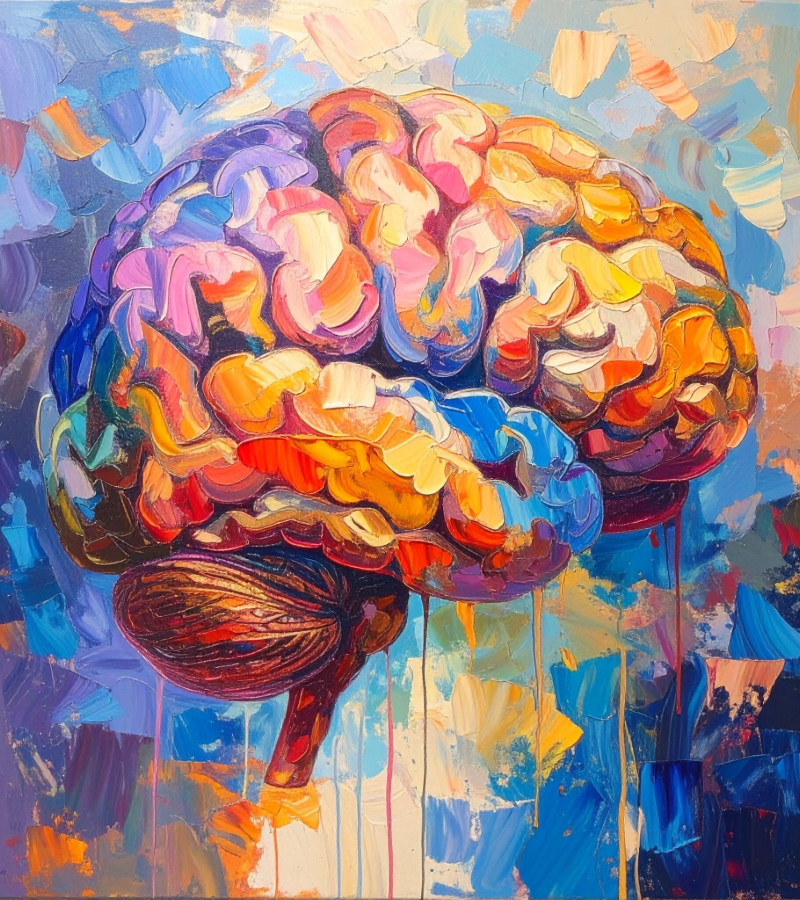
Modern neuroscience has provided a wealth of understanding of how presence operates and how it can be fostered. Being present in the moment causes neural and biochemical changes in the visual and prefrontal regions, causing increases in alpha and theta brainwave activity, reductions in autonomic nervous system activation, and changes in how information is processed and monitored. Research has shown that presence causes a cascading series of interactions between several identifiable regions of the brain, which sets in motion the activation of neurological and neurochemical changes that induce felt states of well-being.

More specifically, by setting our intention to be present, we activate a top-down process beginning in the dorsolateral pre-frontal cortex, which causes changes in two organizing cortical and subcortical superstructures known as the Default Mode Network (3) and the Salience Network (4). These superstructures coordinate distinct regions of the brain that are responsible for decreasing emotional arousal, reducing unpleasant self-referential thinking, and more effectively tolerating painful affect.

Merely intending to be present facilitates greater calm. When we begin to exercise greater presence, the Default Mode Network slows response reactivity. Additionally, substructures within the Salience Network (the anterior insular cortex and the anterior cingulate cortex) work synergistically with the Default Mode Network to a) detect mind-wandering to distressing thoughts and b) bring us back to a greater felt sense of calm and physiological homeostasis.

If our focus wavers, the Salience Network helps sustain our attention; it filters distractions; it slows our heart rate and breathing and decreases blood pressure and muscle tension; it increases heart rate variability; it downregulates the activation of our amygdala; and quite critically, it enhances our ability to monitor affective body states relative to actual occurrences in our external world. Stated somewhat differently, the neural circuit between the Salience Network and the amygdala allows us to accurately monitor the functional and dysfunctional interpretations we make about our outer world. For example, if we become frightened for no rational reason, presence triggers the Salience and Default Mode Networks that help bring us back to center.

Inducing Presence

There are literally hundreds of ways to induce presence in ourselves and in our clients. There may be several techniques that stand out and really work well for a particular client, and other clients may prefer using a wider variety of methods. Here are a few examples of ways clinicians have helped clients manage their physio-affective arousal by helping them make more consistent contact with the present moment.

Geller and Greenberg (5) believe that therapeutic presence is foundational to the therapeutic relationship, where the therapist’s whole self invites the client to become their whole self. The authors suggest the acronym P-R-E-S-E-N-C-E to organize a series of methods, where the client is asked to:

PAUSE (P)—stopping and creating a moment of stillness

RELAX/REST (R)

EMPTY (E) their mind of thoughts and judgements

SENSE (E) their physical and emotional state

EXPAND (E) their awareness of their external environment

NOTICE (N) the relationship or the connection between their inner and outer worlds

CENTER (C)—reconnecting with their core self and bodily groundedness,

ENTER (E) back into their immediate space or resume their actions or intentions prior to inducing the state of presence.

A method like this can be especially useful as an introduction to the notion of presence, as some clients may be quite unfamiliar with self-reflective and interoceptive processes.

In Somatic Experiencing (6), presence is induced when the clinician encourages the client to notice, observe, and become a witness to attendant body sensations, images, actions, impulses, emotions, or movements. If a calming or relaxing state is needed to temporarily offset the client’s overwhelming level of arousal, SE practitioners are encouraged to invite their client to slowly vocalize the sound “voooo,” which is reported to vibrate the vagus nerve, activating the parasympathetic (rest and digest) nervous system, and deactivating the dorsal vagal freeze response (7).

In addition to activating parasympathetic activity, the practitioner is also instructed to induce presence by prompting their client to notice their belly vibrating, to feel it do so, and to observe their overall physical reaction to making the sound. Levine also describes the use of Jin Shin Jyutsu, a Japanese mind-body system of self-regulation, where stronger states of presence and relaxation occur from better “energy flow” after performing a sequence of three body holds—placing one hand under the opposite armpit and placing the other hand over the opposite outer arm below the shoulder, placing one hand on the forehead and the other on the chest, and finally placing one hand on the chest and the other on the stomach.

For clinicians and clients who may be more familiar with interoception, Raja Selvam (8) highlights eight techniques for tolerating unpleasant emotions that also can enhance the experience of pleasant emotions. Each technique fosters greater presence with oneself and with one’s emotions:

a) breathing into and with the emotion

b) resonating with the emotion

c) heightening awareness of the emotion

d) visualizing the emotion dissipating, spreading more evenly in the body

e) vocalizing sounds that are congruent or resonant with the emotion

f) using self-touch to both support and make deeper contact with the emotion

g) enhancing one’s intention to make contact with, expand, or support the emotion

h) making very small body movements to release felt stuckness of the emotion

Applying these methods of presence to address an unpleasant emotion softens it and helps to better tolerate it. For clients with low tolerance for unpleasant emotions, the method is used in very shorts durations. At some point in the process, the client becomes aware they are tolerating the targeted emotion, when, at that point, they are prompted to notice the relief of having achieved it. Through the continued use of focused awareness and presence, the client is then guided to expand and make deeper contact with their relief. This typically results in a greater openness to and eventually a welcoming acceptance of the difficult emotion.

Other commonly employed presence inducing methods include inviting clients to:

a) name several things in their environment they can see, hear, smell, taste, and physically feel

b) scan and bring awareness to different parts of their body

c) take a long and audible sigh

d) gently stretch any part of their body

e) to look at something pleasurable in their environment and then to soften their eyes—relaxing their eyelids and facial muscles—while looking at it

f) simultaneously observe objects in their peripheral vision while focusing on a fixed point

g) toggle back and forth between looking at an object at a far distance—becoming curious about its nature, its history, its function—and then to notice how they are feeling about observing the object

Presence can also be fostered using the many forms of pranayama—a yogic breath control technique—an example of which is the mantra meditation So’ham, where on each in-breath one visualizes taking in all the positive energy of the universe and on each out-breath imagining expanding that positive energy to every part of the body. The very act of observing and reflecting on one’s internal states without judgement quiets the mind. Eastern philosophies and practices that emphasize living in the present moment are central to the many forms of meditation practiced throughout the world, which neuroscientific studies have shown similarly affect the brain superstructures discussed earlier (9).

As clinicians monitor their clients’ presence in sessions, they may already be well acquainted with when and how it fluctuates, and they may already be creatively using effective but less structured methods than those I have suggested. For example, I recently observed one of my client’s arousal level waxing and waning throughout a session, influenced by small things that were said by either them or me. By tracking these remarks along with correlated changes in their breathing, movements, and muscle tension, I was able to get subtle clues about what may be fostering or inhibiting presence. Monitoring my client’s real-time physio-emotional arousal, I was able to determine when the client was sufficiently present or needed support to do so—that is, whether they needed to build tolerance for a difficult emotion, rest from the unpleasant emotion, better regulate their arousal level, or expand their resources to address the emotion.

Lin: A Case Study

Lin had been my long-time client, who experienced significant developmental trauma from his father. At one point in our work together, he went through an extended period of unemployment in a vapid job market. Despite his considerable insight about his father’s impact on him and the substantial progress he had made with this issue, the stress of his unemployment was producing exacerbated and pronounced anxiety, which had brought him to the point of helplessness, exhaustion, and withdrawal. Lin’s precipitous overwhelm was also making it extremely difficult to calm him in the sessions, as he became more prone to unending ruminations about his difficulties, almost as if I were invisible to him. He was intellectually aware that his pondering was crippling him, but he could not relent from compulsively engaging in it while shaming himself for doing so. Despite my best efforts and those of his psychiatrist, something more was needed.

I decided to better employ the methods I have been discussing here to enhance Lin’s self-attunement. Although some aspects of what I was witnessing in Lin were related to his childhood, he was not in a resourced enough state of mind at that time to process interpretations about it. He was also not resourced enough to process feedback about cognitive distortions he was caught in, so I proceeded to address his immediate moment-to-moment, physio-emotional dynamic. He needed to become better present with how he was fanning his own flames, shutting me out as a support, and cutting himself off from his own psychic resources.

Because Lin seemed to need the simplest, most easily understood and tolerated intervention, I decided to begin the next session by encouraging him to take his time and look around the room, letting his eyes move the way they wanted to. . . and name five things he could see, then asking him to name two things he could hear, then one thing he could smell. Then I asked him how it felt to do so, to which he responded, “a little better.” I said, “That’s good, Lin.” He then quickly changed the focus and began characteristically ruminating on his troubles.

After empathizing with how tough a time he was having, I asked him how it felt at that moment in the session, and he responded, “Upset.” I then asked him if he noticed the shift he made, which he was able to acknowledge. I replied to him, “It’s excellent that you observed that, Lin.” Then I asked him to take a long, slow, audible sigh, where I could see him begin to settle. I could also feel myself settle a bit, which, in the resonance, helped me confirm I was on a good path in that moment with him. Although he soon began to agitate himself again with self-shaming accusations, it took him a little longer to start doing so. I’ve seen these delays occur with other clients, so it confirmed my intuition that his resilience for, and tolerance of, his troublesome emotions were growing.

I try to continuously monitor in real time my clients’ presence and their tolerance for unpleasant feelings. I think it helps me make better decisions about whether I should help them better tolerate their arousal or help them become better aware that they are tolerating it on their own. Sometimes clients need us to be their resource when they are having trouble maintaining access to their own inner resources. Sometimes it’s more important for them to see and feel our pride in them when they are handling their arousal just fine without us.

Gale: My Experience with Therapeutic Presence

This essay would not be complete without discussing the variety of ways clinicians wax and wane in maintaining their own steady presence with clients. Every day I work on learning how to be with my clients—to be awake, to how I repeatedly lose and regain attunement to them, to vacillations in my own internal emotional and physiological states, and to the subtle effects my degree of presence has on them. Being present is relationally essential: it facilitates empathic resonance, it prevents interpretive and empathic errors, and it makes my work and my life more enjoyable.

Like many, I grew up without being taught about emotions. It wasn’t until my late thirties that I realized I had feelings that I could identify and discuss. Through the study of academic psychology, through my clinical practice, and through my personal psychoanalysis, I have met many emotional mentors, some of whom, paradoxically, have been my clients.

Gale was a middle-aged, divorced client of mine, who regularly attended his sessions but who was highly reactive and talked incessantly without reflecting on his words or actions. Managing my own unpleasant internal reactions to him took some time. Although I recognized my countertransference reaction was stemming from my relationship with my father, this insight alone didn’t provide enough real and lasting emotional relief.

To regroup, I decided to take my own advice—that is, to apply to me and my own process with Gale, the recommendations I was making to my clients. In fact, this essay is a reaffirmation of what I continue to learn—how to authentically embody a better moment-by-moment attunement to “me” when being with my clients;how to give myself flashes of time to breathe, a moment to be with myself, to attend to me, to care for me, and to have an instant where I can honor and affirm my own existence.

As I permitted myself to focus on my needs while with Gale, a variety of methods to be more fully present spontaneously emerged. My next thought with Gale was to experiment with my own movement, so I consciously authorized myself to change my posture. Because I was so intent on focusing my attention on Gale, I realized that I wasn’t aware enough of my muscle tension and joint discomfort. As I crossed my legs, stretched my back, shifted my weight, I found myself quietly sighing. At first, it felt like a release, but it soon evolved into a wondrous return to a safe and grounded place—a place where I could give myself room to be with Gale’s loquacious tangentiality, without judging it or reacting to it.

From this place of peaceful inner calm, I started feeling more genuinely grateful for the relational space Gale and I were co-creating, and with it arose a greater sense of compassion and appreciation of his struggle. As I described in the earlier section on the physiology of presence, I could experience my arousal level diminishing, my dysfunctional interpretations of my outer world with Gale quieting, my capacity to accurately monitor my own body states increasing, and my tolerance for enduring my illusion that I was being ignored strengthening.

As if divinely inspired, my brain’s higher-order functions suddenly kicked in, and I realized at a visceral level that, not unlike myself growing up, Gale had no one in his childhood he could talk to about the things he wanted, for as long as he wanted. He never had anyone who wanted to be with him in the way he needed, to play with him on his terms, who conveyed to him that he was important, that he mattered. So, I sat with Gale, sometimes for whole sessions at a time, intently listening, staying present, breathing with intention, unobtrusively sighing, shifting my posture. . . until one day he began to slow and settle and finally voice, “I’ve had a lot to say,” to which I simply smiled and nodded.

At that moment, I could feel the resonance of his attunement with me and mine with his. Paradoxically, I became aware of what I believed I really wanted with Gale all along—not only for him to be aware of himself, but for me to be truly present with him, to connect with him, and to feel his connection with me.

References

(1) Kabat-Zinn, J. (2003). Mindfulness-based interventions in context: Past, present, and future. Clinical Psychology: Science and Practice, 10, 144–156. https://doi.org/10.1093/clipsy/bpg016

(2) Koch, C., & Tsuchiya, N. (2007). Attention and consciousness: Two distinct brain processes. Trends in Cognitive Sciences, 11, 16–22. https://doi.org/10.1016/j.tics.2006.10.012

(3) Malinowski, P. (2013). Neural mechanisms of attentional control in mindfulness meditation. Frontiers in Neuroscience, 7, Article 8. https://doi.org/10.3389/fnins.2013.00008

(4) Philip, N. S., Barredo, J., van ‘t Wout-Frank, M., Tyrka, A. R., Price, L. H., & Carpenter, L. L. (2017). Network mechanisms of clinical response to transcranial magnetic stimulation in posttraumatic stress disorder and major depressive disorder. Biological Psychiatry, 83, 263-272. https://doi.org/10.1016/j.biopsych.2017.07.021

(5) Geller, S. M., & Greenberg, L. S. (2012). Therapeutic presence: a mindful approach to effective therapy. American Psychological Association. https://doi.org/10.1037/13088-000

(6) Levine, P. A. (2010). In an unspoken voice: how the body releases trauma and restores goodness. Berkeley, CA: North Atlantic Books. https://www.northatlanticbooks.com/shop/inanunspoken-voice

(7) Porges, S. W. (2011). The polyvagal theory: neurophysiological foundations of emotions, attachment, communication, and self-regulation. New York: W. W. Norton & Company. https://wwnorton.com/books/9780393707007

(8) Selvam, R. (2022). The practice of embodying emotions: a guide for improving cognitive, emotional, and behavioral outcomes. Berkeley, CA: North Atlantic Books. https://www.penguinrandomhouse.com/books/673734/the-practice-of-embodying-emotions-by-raja-selvam-phd

(9) Bauer, C. C. C., Cabral, J., Stevner, A. B. A., Kirchhoff, D., Sousa, T., Violante, I. R., … & Kringelbach, M. L. (2022). Mindfulness meditation increases default mode, salience, and central executive network connectivity. Scientific Reports, 12, 13219. https://doi.org/10.1038/s41598-022-17325-6
Zerka Moreno on Psychodrama

“Don’t tell me. Show me!”

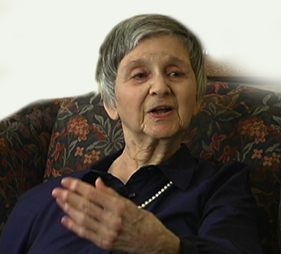
Victor Yalom: You look wonderful. You’re really 83?
Zerka Moreno: Next month. 13th of June. I remember when I was 8, thinking, "I'll be 13 on the 13th of June. Won't I be old?"
VY: I’m so happy that you agreed to be here with us and to share with our readers your life and your work in Psychodrama which was originally founded by your late husband, J.L. Moreno. It’s hard to believe you’re 83; you’re so full of life. You have a lot left in you.
ZM: Thank you. I'm happy to be here, too. I always like to talk about my work.
VY: And your life.
ZM: And my life. The two are interwoven.
VY: I think the best place to start would be to tell me a little bit about what psychodrama is.
ZM: The easiest way to think about it is "the mind in action." Instead of talking about your concerns, we come from Missouri and say, "Don't tell me. Show me!" Showing means to act it out. Show me an action-in that way you show me what your concern is. That's the shortest way to describe it.
VY: And the reason?
ZM: Life produces its own constraints. Many of us can't deal with these very comfortably. I'll tell you why.
We claim that the most central thing about the human being, is spontaneity and creativity. There's no culture that lays stress upon spontaneity and creativity of the individual.
We claim that the most central thing about the human being, is spontaneity and creativity. There's no culture that lays stress upon spontaneity and creativity of the individual. Children have a lot of it, and they get squelched somewhere along the way, distorted, pushed under, rejected. We greatly believe in teaching children to have good motor control, memory, and we measure their intelligence. But what about their spontaneity? There are people who are very highly intelligent and yet have very little spontaneity and creativity. It's a twin principle:   the child represents for us spontaneity. Saying "yes!" to life. Wanting to live life. If you watch a small child, they're full of life. We stop them from making noises, from stamping, from laughing, even though this is the way they live. But we don't understand it very well. We want them to conform and to behave and to be like all the other nice people in the world. And so what happens to many of us is that we have to work very hard as we get older, to recapture that beginning of our selves.

VY: And psychodrama can help with that?
ZM: Yes, it helps you to express yourself in a new way. In a way that life doesn't usually permit. In a way, we live in two worlds, you know. We live in the world of reality, of objective reality. You and I can agree we're here, right? But you have another world, and I have another world that's invisible. Psychodrama makes that other world visible.
VY: And for what end?
ZM: To make you a more complete person. To make you more productive, to make you more integrated. We believe in the integrated personality.
VY: What are some ways that you go about doing that? How is psychodrama used? What is the structure of psychodrama?
ZM: Well, I first want to say that it's not only used as a form of psychotherapy. That's just one application. A very useful way of using psychodrama, as you probably know, is in role-playing. It's used in education, in administration, in many, many fields today. It comes from psychodrama originally. But the source is your mind, whatever roles you play in your life; that's where we start.
VY: How do you go about doing it?

Psychodrama Explained

ZM: Ok. Let's say someone comes and says, "I'm having a terrible problem. My husband drinks, he beats me, he gambles, he's irresponsible, and he doesn't want to change." Bad situation all around. "What do I do? I can't divorce him, I'm Catholic. I'll be thrown out of the church, and will be isolated altogether. What do I do?" Well, that's very big, very serious problem. "Show me what your husband is like, since we don't have him here. Would he come?" "No, probably not. He doesn't believe in any of this stuff." So I have to assess:   what can I contribute to the welfare of this woman? Is there something in this relationship that's still viable, or not? . But I may have to help her, unfortunately, to see that it's not a viable relationship, if she wants to stay sane.
VY: Stay sane, or stay alive?
ZM: Absolutely. So, I would begin by saying, "I don't have your husband here; all I have is your perception of your husband." By the way, that perception may be distorted, but that's the only one we have. That's the one she lives with. So then I ask her to reverse roles and become her husband. I usually make them sit in a different seat, so that the body is moved as well. That's important. Because we're not just working up here in the head. We're working with the whole body; we're actors. We say that the human being is an improvising actor on the stage of life. Unlike in the theater, you don't have a script; I don't have a script. We have to interact on the spur of the moment, here and now. With whatever we have between us.
VY: And your late husband, the founder of Psychodrama, Jerome Moreno, coined the term, “here and now?”
ZM: Right. He coined the term and later many others used it, Perls and his Gestalt theory, Irv Yalom and the Existentialists.
VY: Yes, the phrase continues to express the immediate moment of human interactive experience.
ZM: So then I interview her as if she is her husband. And, by the way, she's learning a lot about her husband that she didn't know before. She comes very much closer to the reality of this man.
VY: How so?
ZM: The philosopher Wittgenstein said something like "To learn about the self, step outside the self." So what she's doing is, in the role of her husband, she's perceiving herself. I ask her what's wrong between them. "What do you think is going wrong between you. I've heard what your wife says. Now I'd like to hear what you think." Now you begin to find out the way they interact with one another.
VY: So she takes on the role of her own husband talking back to herself?
ZM: Eventually, she might. If there's someone else available to be an actor, then we bring in that person. If not, I keep role reversing her back and forth. She plays both roles. Sometimes, as this goes on, I may take the role of the patient and she may take on the role of the husband.
VY: Does that help her then to empathize more with the husband?
ZM: Let me explain what we're dealing with. We're dealing with two people, but three entities. Husband, wife, and the relationship between. We postulate that you cannot influence a psyche directly, except through a significant relationship. And so what we're dealing with, is that we're not only exploring the relationship, but trying to heal it. Can this be healed or not? That's the crucial decision to be made. It's also very possible that in the role of the husband, she suddenly learns-although he's told her about his miserable childhood, and how he was abused–, she suddenly begins to see and feel him in a different way. His humanity comes through. And because she sees and perceives in a different way, when she goes back in her own role, she has to change how she relates to him. What we're talking about here is behavior change. Not only cognitive insight. We don't really think that intellectual insight cures so well.
VY: Not cognitive insight by itself.
ZM: Not by itself. It needs to be coupled with an emotional part. Psychodrama deals with both. People use it often for insight-giving. I think that's only half the job. I'm not so concerned about what's going on up here [points to her head]. Because what's going up here is…
VY: If you experience in your body, or emotionally, then it’s much more powerful.
ZM: For instance, when she sits over here, I'll say, "How do you sit? Show me with your body how you sit." And he may sit half-turned away from her, rejecting her in a way. Or he may be sitting very close to her because he wants to re-establish contact with her. So you get all kinds of information, simply by making a role reversal. Now, later on, it may be possible that I do actually get to see him. You know, Moreno, way back in 1957 wrote an article called, "Psychodrama and the Psychopathology of Interpersonal Relationships," in which he used himself as a mediator between husband and wife. He didn't treat them together to begin with. They each had a complaint about the marriage. He saw the wife alone, and the husband alone. That was an entirely new way of proceeding. Freud never did that. He analyzed husband and wife, but never in reference to each other, but only in relation to their own life.
VY: Dr. Moreno wouldn’t see them together?
ZM: Not yet. He would interpret the wife to the husband, and the husband to the wife.
VY: With their permission, of course.
ZM: Of course. They were both working at the relationship. Sometimes he was able to create a new bridge between these people. Sometimes it became clear that what they really needed, for both of them to stay sane, was to separate.
And then he might produce what we called a "divorce catharsis," and that was a new idea. That you can produce a therapeutic divorce, without mangling the people involved. To bring them to the point of recognition that there's no return.
VY: Back then, divorce was much less accepted. Was he successful in doing that?
ZM: Yes, a number of times. Also a number of times he was able to resuscitate the relationship.
VY: Did he do anything resembling traditional psychotherapy?
ZM: He began to discard traditional practice. Eventually, he developed psychodrama and put it into an interaction with each person.
VY: But was he trained in traditional psychoanalysis?
ZM: No, he was never trained in it. He was anti-analytic. He did not believe in Freud's model?Freud came from biology. Moreno was inspired by the great religions of this world. Freud was atheistic. Moreno was not. He said that the great religions of this world, and the prophets of this world, inspired him. It's an entirely different approach. Also, he did not believe, for a good scientific reason. He said that from the view of the individual, and the point of view of the human race, speech is a fairly late development. You learn to sit up, you learn to crawl, you learn to walk-all this before you speak. That means that for approximately two to three? years, you have lived very intensively pre-verbally.
VY: In the body.

The Double Life and Surplus Reality

ZM: With the body, in the body, and in interaction with other people. We're in interaction with other people from the moment of birth on. Obviously that influences us. But let's face it:   words can lie. Look at TV. Look at the politicians. They are lying through their teeth. And we're supposed to believe that? So, there's a more primordial level, beneath the level of speech, and that's the level of the act and the interact. And that's why he picked drama. But not the legitimate drama, but a new form of drama:   improvisational drama. Which is the way we live in life. I don't know if you saw in my book, the patient that says to me, "I know what psychodrama is:   it's the double of life." That's a very interesting, profound statement.
VY: How so?
ZM:
The double life! In other words, you can have one life, and have another life in psychodrama.
VY: You're referring to your new book that just came out. Congratulations, by the way. A very interesting title: Psychodrama: Surplus Reality and the Art of Healing.
ZM: What is surplus reality?
VY: You took the question right out of my mouth!
ZM: Yes, I saw where you were going. What this woman was doing, was she was entering her husband's reality. She's in surplus reality. Role reversal is a surplus reality technique-it's the reality beyond everyday reality, which is not visible, but very real. See, it's the not-visible-but-very-real that we're dealing with a great deal. That could be mythical. It could be almost anything. I t can be a fairy tale. It can be your life as you want it to be. The old movie, The Secret Life of Walter Mitty had a psychodramatic idea, right? So, what are we reaching for? What is it that's crucial in catharsis? Well, we believe it is those scenes, those interactions, those realities, that life does not permit us, but which we need in order to be fulfilled. I call it the "If onlys!" Think of all the "if onlys" in your life. If you could lift those all out-you know how much time and energy you spend on these?
VY: A lot of energy, that’s for sure.
ZM: A tremendous amount. Which deviates you from what you should be doing in actuality, here and now. In your mind you're somewhere else, with the "if onlys.".The phone calls you didn't make, the phone calls you did make where you're thinking, "If only I hadn't made that phone call." The letters you should have answered. The email you should have sent.
VY: It’s amazing we can attend to anything!
ZM: (laughing) Yes, well. You can really almost translate every aspect of life into a psychodrama, and use this to explore how you would have liked to change your childhood or your adolescence or your professional life. It's an attempt to find yourself in a new realm, in a new way. To be spontaneous and to be creative in a way that you weren't before. That's a way of healing the self, too. It may not always work. I often think that in psychodrama we're dealing with the fringes of life. This is a new idea that I'm just getting now, really.
VY: Isn’t it amazing how we
ZM: Over 60 years.
VY: And you’re having a new idea about it right now.
ZM: Yes, it's an interesting thing:   new ideas keep coming up. Creativity is like that.
It's the twin principle:   spontaneity is defined as a new response to an old situation, or an adequate response to a new situation. Creativity, which is its twin idea, is creating something that wasn't there before.
It's the twin principle:   spontaneity is defined as a new response to an old situation, or an adequate response to a new situation. Creativity, which is its twin idea, is creating something that wasn't there before. Think of this guy Bill Gates. He's created a whole new world! It wasn't there before.
The whole idea that "things don't change" in this world is nonsense! Things are constantly being created.

Who could have dreamt about the internet 20 years ago?
VY: Very few apparently.
ZM: So that's a particular form of creativity. I mean, of course, he's a good businessman, too. He likes to make money. I don't know that his ways of making money are so benign, but that's not the issue. The issue is here is something creative-someone creating something entirely new, and we had no idea how important it was going to be for the world.
VY: So, speaking of creating lives?
ZM: We need to recreate our life?

Meeting and Loving Dr. Moreno

VY: I’d like to hear a little more about your life. And how you met Jacob Moreno.
ZM: I brought my psychotic older sister to him to be treated. I had brought her from Europe.
VY: You brought her all the way from Europe to be treated? How did that come about?
ZM: I first came here by myself, from England, just after the Second World War was declared. I was 22 years old. I knew nothing about Moreno or psychodrama. I had studied art and psychology. My sister became psychotic when I was 19. I was going to be an artist, a fashion designer, especially for the stage, costumes and scenery. You know, London is a wonderful place for theater. Then my sister became desperately ill, psychotic. And somehow I knew; I understood what had gone wrong. And I thought, "Oh, I must look into this," and began to study psychology. But none of the classic psychology taught me what my sister was like. And the fact that I grasped her so well, understood it, without speech, I thought that there is something here. There was no combination possible. When I met Moreno, the combination was possible.
VY: And how did you meet Moreno?
ZM: The war broke out. My sister was living 25 kilometers from the German border in Belgium. Very dangerous.
VY: Not a good place to be.
ZM: Terrible. But I came to this country. I said to my mother and father, "Let me go. I may be able to save my sister." My only sister, five years older. The war progressed also on the continent and I finally managed to collect the money to bring her over in1941. And she was again psychotic. And she needed hospitalization, because she was not without suicidal ideation. This time she had a small child to take care of. So my brother-in-law found a home for the little boy, and I found a hospital for my sister.
VY: Where was this?
ZM: In Beacon, New York. It's about 60 miles north of New York City on the Hudson River.
VY: This is where you live now?
ZM: Yes, where I live now. I tell my students, "My life is a fairy tale. I came here as a helpless little refugee, unhappy because of my sister's illness. I came here to find a new life for my sister. I found a new life for me. You know what the lesson was?
In this lifetime Zerka, don't look for anything for yourself. Look to help other people, and you shall find happiness. It was a profound lesson.
In this lifetime Zerka, don't look for anything for yourself. Look to help other people, and you shall find happiness. It was a profound lesson. It really became the basis of my life; that's where my happiness comes from.
VY: Your happiness comes from??
ZM: I'm very content with my life. The older I get, the more content I get. We live in a nutty world, let's face it. Absolutely crazy! In my young days, I would be infuriated with this and that. Now, no matter how crazy the world is, I feel fine. I'm doing what I can, what I'm best at. How can anybody be happier than that? Anyway, Moreno discovered my talent.

Belgium to New York City

VY: Your talent for??
ZM: For his work. He tested me. When my sister was well, I became his student. I lived in New York city and worked as his private secretary in Beacon, New York. yHe offered me a scholarship. I said, "Yes, but I want to work for it." Because I was a great, fast typist. I had always wanted to work with a creative writer, and he said, "Fine." So I worked for my scholarship, my training. The war progressed; all the males on the staff disappeared into the army. He opened his Institute in New York, and I became his research assistant and lived in New York.
VY: New York City?
ZM: One Park Ave., just one block away from Grand Central Station. I commuted five days a week, and then eventually he asked me to come and live in Beacon because he needed the help there.
VY: When was this?
ZM: August, 1922. My sister was sick again the next year after having a second child. Ten days after her second child, she's back in Beacon. Now I have two children to take care of. So, my whole life was taking care of someone, you know? I don't have to do that anymore. Imagine, I'm now almost 83, and all I have to take care of is me. Isn't that wonderful?

I Did All the Wrong Things.

VY: All the Shalt Nots!
ZM: Anyway, eventually I became his wife. He was married at the time, and had a child.
And, since confession is good for the soul, I did all the wrong things. I did all the things a nice, middle-class Jewish girl doesn't do. All the "thou shalt nots."
And, since confession is good for the soul, I did all the wrong things. I did all the things a nice, middle-class Jewish girl doesn't do. All the "thou shalt nots." Getting involved with a man who's the father of a child, who's married. It was a very complicated situation. And he wasn't willing to let me go. I tried to break it off, and he said he couldn't. That he would follow me wherever I would go.
VY: He fell for you.
ZM: Absolutely. I'll tell you what he said when we met. When we walked into his office to present my sister as a patient, sitting behind his desk-I even remember the color of his shirt-I looked at him and thought, "I know this man." My inner voice was saying, "Zerka, you're really crazy."

You're getting into my history, and not into psychodrama, although it's all connected together-is that what you want?
VY: You’re doing fine.
ZM: Ok. I walk in there; I look at him and I think, "Wait a minute. He looks familiar. I know this man." And my inner voice is saying, "You're as crazy as your sister. You've never been in Beacon before."
Moreno gets up from behind his desk, spreads his arms and says, "Yeeessss." And I think, "That is the strangest greeting I have ever heard."
VY: I heard he wore a cape.
ZM: You know what? Later on, he told me that he had thought, "This is she." He was looking for a muse. And I became his muse.
VY: What do you mean?
ZM: A muse, an inspiring goddess. You know, the muses? The muse of music and dance. All his life he was looking for a muse. A muse who would be an inspiration to him. The extraordinary thing was, I was 24 years old, I didn't think I was particularly well-educated. I would make some kind of throw-away remark about something that was happening in the world, and he would say, "What did you say?" Would you repeat that? That's very important." And I would repeat it. And he would say, "Great. Come," and we would go to the typewriter. And out would come so many pages of dictation. Now, I defy any young woman not to be absolutely tied to a person she could inspire with some off-handed remark.
VY: It makes you feel very important.
ZM: I never had anyone listen to me like that, who thought I was important. I was the youngest of four; my mother was much too busy to think that what we were saying was terribly important. And even if she did, European parents didn't pat you on the back like American parents, because that might make your head blow up.
VY: Were you attracted to him right away?
ZM: Absolutely. To his mind, especially. He was a very exciting person to be with. And he was a fun person. He also had a dark side, of course. Don't we all? But that you only get to learn gradually, don't you, the dark side.

The Master's Dark Side

VY:
What were some of the crazy, flamboyant, things he did? His dark side, as you say.
ZM: He would fight people. I thought he spent a lot of energy fighting. But some of it is motivated because he was so anti-Freudian-and at the time, everybody was Freudian. So that anybody who was anti-Freudian was an enemy, or an outcast. And they would pooh-pooh his ideas. But they would take them, just the same, without giving him credit. That is still happening today. And that would hurt him, and he would get very obstreperous about that. I think he spent a lot more time and energy that might have been saved to do other things. But that was the way he was. Some of his concern was correct. Some of it may have been a little bit magnified in his mind, because he had so little support. I think he got quite frantic at times that he wasn't being really heard. There was another problem. When I heard him lecturing, I knew that he wasn't being heard. He was talking above people's heads. I made up with mind when I first saw him working with psychotic patients. No one was working actively with psychotic patients at that time. I'm talking about early '40s. And I remember thinking to myself, "I'm never going to be able to be a director. I'll never know enough, I'll never be smart enough."
VY: A psychodrama director?
ZM: Yes. Never. I'll be a therapeutic actor, that's all. But I'll also be his interpreter, because he needs interpretation. He needs to be brought down to a level where people can understand. He has an important message, and it's not getting through.
VY: He had a hard time communicating to the common folk.
ZM: And that's really what happened. My writing, they tell me, is more cogent. His writing is very dense, very heavy, very charged, very Germanic. Every sentence is loaded with ideas.
VY: So you were translating his ideas into a form that could be better understood.
ZM: Yes, the more I learned, the more I got into the work, the more readable his books became.
VY: And you became more involved in directing yourself.
ZM: I became more involved, and finally married him in 1949.
VY: How long did that take?
ZM: Eight years.
VY: And you were in love with him all that time.
ZM: You know, I've often thought, I was not "in love" with him. I loved him. There's a difference. I adored him. I loved him. I don't think I was "in love" with him. That's an entirely different feeling. I know what the difference is. I've been "in love." This was more important than being in love. My older brother used to say, "I know what love means; it's the thing you fall in and out of." It was not like that. It was a very steady love. He said to me one day, "Our relationship is largely built on faith:   faith in each other." And I think that was true.

So I began to learn to the method. I had seven years of apprenticeship. And that's what you had in the old days when you went to a master, as an artist. You studied for seven years.
VY: Really? What was it about seven?
ZM: I don't know. But you went and had at least seven years of apprenticeship before you could become an actual artist.
VY: That’s about what it takes many people to get a Ph.D.
ZM: That's right.
VY: After you get that, at least in our field, then you start learning a little bit about therapy.
ZM: Well, I learned it as I went along, fortunately. What struck me about psychodrama was the combination of science and art. That's what I loved about it.
VY: Where was the science? The art is obvious.
ZM: Well, there's a lot of technical stuff to learn, obviously. Method, theory, ideas.
VY: You have learned it well, really. The student has turned instructor.
ZM: To become passionate about such learning, to immerse oneself in such a path, has made life a wonderful journey for me.
VY: Thanks for letting me and those who read this in it. Your passion and energy for your life and work are infectious.
ZM: Thank you, I have enjoyed it.