Working Towards Therapeutic Solutions with Men

In my experience, men typically and stereotypically really don’t like opening up about their feelings and prefer not to admit there’s a problem in the first place. So how to help get them into therapy becomes a compelling challenge.

Like what you are reading? For more stimulating stories, thought-provoking articles and new video announcements, sign up for our monthly newsletter.

Many years ago, I read a report that found that one in three of the young men polled within it would rather smash things up than talk about their feelings. It was a tad extreme, I thought, but there you go. Thankfully, things have moved on a bit since then. However, men are still reticent. For instance, it turns out that they would rather talk to their barber about their problems than talk to their doctor, which is why the Lions Barber Collective exists. An international organisation that recognises the unique bond formed between a man and the bloke who clips his hair, it trains members up as mental health first aiders. Not only do they listen to the guys who sit in their chairs, but they can also spot the early warning signs of a developing mental health condition and then point them in the right direction for help. This usually means a psychotherapist. Which means we are back to talking about feelings. Which, as we know, men are not wont to do.

The problem is complex. But a big part of it is that talking about their feelings is still seen as a sign of weakness among many men. And despite the prevalence of metrosexual men in our media, the strong and silent male myth still pervades. Also, when men do talk, because of said stereotypes, what is more than likely depression can often be written off as a “bit of a low mood” instead.

Another problem, to my mind at least, is that when a man who doesn’t like talking about his feelings goes looking for a therapist, he goes looking online. And practically every single therapist’s opening statement will say something along the lines of “I offer a safe and non-judgemental space in which to explore your feelings.”

Egad!, as the exclamation goes. Are you trying to scare them away? Do you want men to come to see you for help? And, if you do, how do you reel them in? (Big hint: male-orientated metaphors help.) Enter then, any form of solution-oriented therapy.

I’m a rational emotive behaviour therapist (REBT) and have found that as a form of cognitive behaviour therapy (CBT), its philosophy and structure are easily explained and understood. As an active and directive approach, it offers me a way of being actively involved in the therapeutic process rather than sitting back and offering a safe space in which my client can talk whilst I sit passively by. As a form of solution-oriented therapy, I can even discuss SMART goals from the outset. And, before it starts exploring all the emotional consequences of a person’s dysfunctional beliefs, REBT can challenge them empirically, logically, and pragmatically.

I explain REBT to prospective clients in a very matter-of-fact way. My webpage is plain and straightforward. It attracts a large proportion of potential clients (including men) who want their therapy delivered in a similar style. This has been very helpful to anybody who is nervous about, or unable to, talk about their feelings.

Many years ago, a highly anxious man was brought to my clinic. In fact, he was so anxious that he was having a panic attack in the waiting room and was breathing deeply and slowly into a brown paper bag. It wasn’t having much effect, and it was clear his anxiety was not going to go away any time soon. I brought him into my clinic room anyway.

“Would it help if you just sat there breathing into the bag while I explain what this therapy is all about?” I asked.

He nodded. And so I discussed both REBT and the ABCDE model of psychological health, as well as the roles played by dysfunctional and functional belief systems. After a while, I simply asked him if he had noticed anything. He nodded slowly.

“What have you noticed?” I asked.

“I’ve stopped panicking,” he said.

I asked him why that was.

“Because I can see a way out,” he replied. “I’ve not been able to see one before.”

Fast forward a few years to a man who came to see me for psychosexual dysfunction, a tricky subject at the best of times. In my initial telephone consultation, before I engaged with him for therapy, this man described himself as a typical alpha male type who didn’t like all that touchy-feely stuff. He’d been living with his particular form of anxiety for over five years, hadn’t had any form of sexual contact with his wife for over three years, and was only speaking to me because his wife had delivered him an ultimatum. He’d had several courses of therapy already, including sessions with a sex specialist.

“I didn’t like it,” he said. “They were all sympathetic, but I wasn’t looking for sympathy. And they were all trying to get me to open up about my feelings, but I either couldn’t or didn’t want to.”

“So, what’s going to be different this time?” I asked.

“I really liked your website,” he said. “It was very direct. I know I will have to speak about how I feel at some point, but there’s a format there that appeals to me.”

Studies have shown that men aren’t averse to therapy per se, but they are averse to therapy that is loose, conversational, and exploratory. One study found that the best treatment styles for engaging the menfolk were, “collaborative, transparent, action-orientated, goal-focused” (Seidler, 2018).

When delivered in the correct way, I have been able to encourage men to talk about their feelings. I haven’t had to get all stoic and blokey myself, I just have to explain myself in a clear and concise way, preferably without mentioning either safe spaces or feelings. In my experience, if a man phones me up for therapy and I ask him what his goal is, he will usually commit to the process. And together, we venture forward on a journey of change

References

Seidler, Z. E., Rice, S. M., Ogrodniczuk, J. S., Oliffe, J. L., & Dhillon, H. M. (2018). Engaging Men in Psychological Treatment: A Scoping Review. American journal of men's health, 12(6), 1882–1900. https://doi.org/10.1177/1557988318792157 

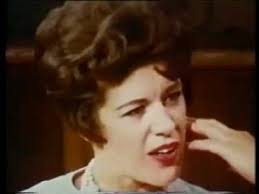
The Gloria Films: Candid answers to questions therapists ask most

When I penned an article and a book chapter on the classic Gloria Films some years ago I never dreamed these pieces would continue to bring me a seemingly endless string of correspondence. Indeed, this classic video influenced the psychotherapy training and subsequent practice strategies for thousands and thousands of helpers.

To this day the battle rages on about whether this work of art was the savior of psychotherapy, or psychotherapy’s worst nightmare.

Recently a graduate student contacted me with a string of seriously good questions. In this blog I shall share those questions with my answers to shed a tad more light on this major artifact of the 20th century counseling and psychotherapy movement. Okay, let’s do this!

Question: Is the Gloria Film the actual name of the training video? I couldn't find an official reference for it?

Answer: No, the actual title was Three Approaches to Psychotherapy I, II, and III, but folks dubbed it the Gloria Films.

Question: Is the work really as old as it looks? I mean it comes across as ancient.

Answer: That’s because it is ancient. The actual filming took place in 1964 and the movie was released in 1965. In 1964 the Beatles made their first appearance on the Ed Sullivan Show and in 1965, "The Sound of Music" was a big hit at the box office, and the mini-skirt was just released.

Question: Who came up with the idea for the project?

Answer: The mastermind (aka the producer and director) behind the flick was a California psychologist and psychotherapist of note, Everett.L. Shostrom. He created some self-actualization inventories and two years after the Gloria films he authored a successful book, Man the Manipulator.

Question: Why do you think Dr. Shostrum got involved in this project?

Answer: At that time a shroud of secrecy had permeated professional psychotherapeutic helping. The books gave mountains of information about theories, but there was very little literature about what therapists actually said to clients. In 1950 Shostrom recorded the late, great Carl Ransom Rogers with a client on a magnetic wire (yes, go ahead and laugh, this predated digital, cassettes, reel to reel, and eight-track recordings). But: It was not to be. The recording was lost forever when the head of the history department recorded his own presentation of Adam and Eve on the wire recorder! I mean seriously, could I make that up?

Question: Why did Dr. Shostrom choose Albert Ellis, Carl Rogers, and Frederick (Fritz) Perls as the therapists?

Answer: Well, quite frankly, it was an all-star line-up. A lot of folks in the field felt these three helpers were the dream team . . . the best in the world, if you will. Perls created gestalt therapy; Ellis pioneered RET or rational emotive therapy (abbreviated RT at the time of the filming); while Rogers was the father of nondirective counseling which in today’s world is often called person-centered counseling.

Question: Why do my professors always call the approach by Ellis REBT? Is that the same thing as RET?

Answer: Late in his career Ellis added the “B” to stand for behavior based on the longstanding recommendation of a well-known psychologist and psychotherapy book author Raymond J. Corsini.

Question: Had Gloria met Perls, Rogers, and Ellis prior to the filming and what did she know about them?

Answer: No. She just knew they were prominent therapists and would each have approximately 15 or 20 minutes to cure her of what ailed her.

Question: Was Gloria a real client or merely an actress pretending to be a client?

Answer: Oh definitely, a real client. In 1963 Shostrom put together a film titled "Introduction to Psychotherapy." The film featured an actress who was pretending to be a real client. Shostrom was not happy with the movie, nor the acting, hence a real client, Gloria, was cast for 1965 project.

Question: I thought Perls acted like a jerk during his session. Do you have any evidence that Perls was aware of how he was coming across? I am totally sure my current internship supervisor would never allow me to treat a client in such a mean manner.

Answer: I can say with great certainty that Perls was aware of his actions. At one point in the session he quips, "Well, Gloria, can you sense one thing? We had a good fight?"

Question: So how do experts who practice gestalt therapy defend the practice of this theory?

Answer: Well, generally speaking, they say something like, "You don't need to do therapy exactly like Perls to be a gestalt therapist." To be fair, I have heard top practitioners say precisely the same thing about Ellis, though to be sure they are not talking the way Ellis came across in this movie. If you ever witnessed a therapy session or workshop conducted by Ellis he was often prone to use a little off color language, and that's putting it mildly!

Question: Okay, well here is my biggest question and the one I really want to know the answer to. In the movie, Rogers comes across in a very warm moving way. Ellis, is seemingly a tad less empathic, but not bad, while Perls is flat out mean to her. After Gloria experiences therapy sessions with all of them she is asked which therapist she would most like to continue therapy with and she chooses Dr. Perls. I was shocked. I mean, I just thought Rogers was the hands down winner. What in the world was going on here?

Answer: You were surprised, I was surprised, my entire graduate class at the time we viewed the films was surprised, and seemingly countless others who viewed the sessions were in shock and awe. There was just something not quite right about her choice of Perls. I didn’t buy into it then and I sure don’t buy it now. In fact, it was her strange choice of Perls which piqued my interest in researching the movie.

Personally, I thought it was the strangest response (from a client who was not psychotic) I had come across in the entire field of psychotherapy, and that's saying a lot!

Question: Did you find it difficult to research this film?

Answer: Do birds fly? Absolutely. Lots of people were trying to piece this puzzle together with very little success. Perhaps the most remarkable was a fellow I corresponded with in another country who was actually offering small rewards for information. Seemingly folks with connections to the film just were not talking. On one occasion a person who actually knew Shostrom told me he insisted I share anything I came up with him before I had it published! He wanted to approve or disapprove of what I was going to write. What? (Excuse me, but when did America stop being a free country? Just asking.) He also refused to give me any information and told me it wasn't relevant why Gloria chose Perls. This made me even more suspicious and made me want to research this even more!

Question: Did Gloria ever see Perls after the interview and if so what transpired? I hope the transaction was more cordial than the therapy session.

Answer: Yes they saw each other, but no it wasn't pleasant! According to Gloria, after the cameras stopped rolling and the experts and movie crew were preparing to depart, Perls used Gloria as a human ash tray (not a misprint). He motioned for her to hold her hands cupped with her palms facing up. He then flicked his cigarette ashes into her hand.

Question: Geez, that's downright abusive, wouldn't you agree?

Answer: Yeah! At the very, very least I could safely say it is behavior that was unbecoming of the father of a major psychotherapy modality.

Question: Lots of folks on the web accuse Gloria of having an affair with Rogers or Ellis. Some even suggest she married one of them. Any truth to the rumors?

Answer: Totally false. Junk science. Not a shred of evidence to support these claims. In fact, to the contrary, Gloria became very close to Rogers and his wife.

Question: Okay, so I can't wait another moment. Why did Gloria pick Perls as her favorite? Rogers came across so empathic. Wasn't he surprised when Gloria did not choose him? I have heard therapists say that Perls was chosen because she realized she needed a tough helper and he would not allow her to remain disturbed.

Answer: Rogers did admit he was baffled. In my mind Rogers gave a flawless performance. I'd give him five stars. Six if I could. As the session began to wind down Gloria says, "Gee, I'd like you for my father." Rogers replies, "You look to me like a pretty nice daughter." As you remarked earlier, it was very moving and Rogers came across as an ideal billboard advertisement for his own theory. Moments after the session with Rogers Gloria announced that, "All in all I feel good about this interview."

Three years before he passed away, Ellis told me that Gloria hated Perls for the rest of her life. Ellis revealed that the movie was "a fake" in the sense that, prior to the filming Gloria had seen Shostrom for four years of psychotherapy. When the film was produced Rogers didn't know this either. At the time, Shostrom was a supporter of Perls. To quote Ellis, "He [Shostrom] got her to say it was Perls who helped her, when he actually didn't." Was Gloria experiencing positive transference toward Shostrom? Was it just that she didn't want to disappoint her therapist? Could it have been that she was petrified of Perls? I don't have the definitive answer, but I think all of the aforementioned issues most likely entered into this. Just for the record Ellis felt he tried to cover too much in his own session with Gloria, and thus while his intervention was not horrific, he was clearly not at the top of his own psychotherapeutic game.

Question: So what is the take-away message you think counselors and therapists need to know?

Answer: Well, first let me be 100% crystal clear that there are occasions when a helper must be direct and use confrontation. No argument about that. Not now, not ever. However, after watching the movie, countless generations of therapists came away with the false notion that a sarcastic, up in your face, card carrying mental judo therapist (in this instance Perls) will walk away with the grand prize. Over the years I routinely heard therapists, supervisors, and my own students brag, "I got right up in the client's face and came across like Perls in the movie," thinking that was the best approach. According to Gloria's daughter (referred to as Pammy, just a fifth-grader at the time of the film), who authored Living with the 'Gloria Films': A daughter's memory in 2013, these Perls wannabes got it oh so wrong. After perusing her book it is safe to say the brief session with Perls negatively impacted her for the rest of her life.

Question: Is Gloria still alive?

Answer: Sadly, Gloria passed away in her mid-forties after a battle with cancer. I believe Gloria said it best herself as she was fond of saying, "Believe half of what you see and none of what you hear." Every aspiring and practicing therapist who wants to complete the emerging gestalt should see this film.

Howard Kassinove on Anger Management

“I can see your bald head”

Christian Conte: Dr. Howard Kassinove, how did anger management became a central focus for you?
Howard Kassinove: When I went to graduate school, the central focus seemed to be anxiety, and the physiological or biophysical aspects of emotion. So we studied heart rate, sweating, pupillary response to light—but all with regard to anxiety. I then went out to study with Joseph Wolpe and of course his major area was anxiety. But he really put me in touch with this notion of approach versus avoidance behaviors—moving towards, moving against, or moving away from. I was also trained by Albert Ellis and he was very interested in emotionality in general.
But with that background, once I went into private practice what I discovered was that lots of my patients were angry at each other. Husbands angry at wives, parents angry at children, adolescents angry at their parents, and I had been ill trained. I really didn’t know much about it, because anxiety was the major focus of my training. So I began to study and read and my practice moved along. But then in about 1992, I really decided I had to get some kind of a handle on this. So with my then Ph.D. graduate student Christopher Eckhardt, now a professor at Purdue, he and I just started cold calling people in the field of anger: Charlie Spielberger, Jerry Deffenbacher and a range of figures. We put together an edited book, which included all aspects of anger from Spielberger’s measurement to Sergei Tsytsarev and Junko Tanaka-Matsumi’s cross-cultural perspective, and this was the beginning of me becoming centrally involved.
Then I started doing more cross-cultural research—in India, Russia, Romania and many other countries. We collected data on anger in all these other countries and I did a number of doctoral dissertations on anger. One of the most important was with my colleague Chip Tafrate, who of course is doing books with me and did the video released this month by psychotherapy.net. He did a very interesting study in which we would try to insult people—“I can see your bald head!”—and Chip would ask people to respond in different ways. One was, “How could you say that to me? That’s terrible. I can’t stand it!” And the other was, “It’s unpleasant that you’re saying that. I wish you weren’t saying it, but I can tolerate it.”
CC: The old Albert Ellis stuff.
HK: Albert Ellis, exactly. We even had a controlled condition where I would kind of insult you like that, and you would say things like, “A stitch in time saves nine.” What we found was that both the Ellis rational ideas and the distracting statements led to anger reduction.
CC: So for you it centers on cognitive behavioral techniques—on changing the thoughts around and having people learn different forms of self-talk.
HK: Yes, but my original training was at Adelphi University, which is a very psychodynamic place. One of my great heroes always was Karen Horney, because she spoke about the tyranny of the shoulds well before Ellis did. She spoke about moving against, moving away from, and moving towards people. So I also have that background.

What Exactly is Anger Management?

CC: Obviously anger has been around as long as there were human beings, but in the news over the last several years it seems like anger management in particular is getting more attention than it has in the past. From your perspective, what exactly constitutes anger management?
HK: Let’s go back to the beginning of modern anger management—Ray Novaco’s 1975 book, Anger Control. Prior to that we were not really dealing much with anger management. Ray came on the scene and became a major figure, but the word “control” has kind of disappeared and now we talk about “anger management.”
I think of it as developing less intense disruptive responses to aversive stimuli. The fact is that we live in a world where there are lots of aversive stimuli:
People take our parking spots, students tell us we’re lousy teachers, our wives and husbands tell us that we didn’t mow the lawn correctly. We are kind of bombarded with this aversive stimulation environment. Lots of good things occur in the environment, of course, but the bombardment with the aversive stuff leads us either to be angry—”How dare you say that to me?! You know you don’t have any right! You should treat me with more respect!”—and it can also lead to anxiety, when we’re being threatened by someone in authority or someone with a knife or gun.
CC: Sure.
HK: So I think that anger management in a broader sense is emotion management or emotion regulation. I try to live my life in the most mellow way possible. Most of the time these days I succeed. But it’s not only anger or annoyance I want to bring under control; I also want to bring anxiety under control. This is where Rational Emotive Behavior Therapy (REBT) has played such a central focus in my own life. Lots of abrasive events occur in life that are overwhelmingly unpleasant. These days I try and leave them there—whether it’s difficulties with my own children or difficulties with my students or my car or whatever. So in the broader sense, it’s emotion management.
CC: That’s exactly the word I use: emotional management. You’ve developed what you call the “anger episode model.” Can you talk a little bit about the evolution of that?
HK: As the years were going by, I found myself becoming kind of disgusted with the notion that kids are lazy, people are stupid—this kind of broad overarching condemnation of people. Instead, because I became more and more of a behaviorist as time went along, I wanted to speak about how people behave in particular situations. You might become angry at your wife, let’s say, when she does something wrong, and you might yell at her and maybe even demean her verbally in some way. But I bet you wouldn’t do that if you were at a state dinner with President Obama, because in that environment you’re going to behave very differently.
So I found myself moving away from the notion of “he’s an angry person,” “she’s such an angry woman,” to the idea of—how can we deal with individual situations? We started to develop the notion that people have “anger episodes” and that led to the anger episode model. The more episodes we can help them bring under control, the more likely it is they will become more generally controlled.
It’s kind of like an incremental model. I don’t think we can really change broad-spectrum personality. If I define personality as the cross-situational stability of behavior, then what I’m trying to do is change behaviors in a number of situations with the hope that eventually through generalization people become less angry.
CC: That’s fantastic.
HK: We needed a very specific and relatively simple model that we could teach to our patients.

Triggers

CC: I really identify with what you’re saying. You put people in different situations, they respond in different ways. I say to people all the time, “If I gave you a million dollars, would you respond in the same way?” They say, “Well, I don’t know if I’d be that angry if somebody cut me off in traffic if I knew I was getting a million dollars.” So we really get at the heart of those thoughts.
You talk about triggers, and I wondered does it always, from your perspective, take an outside trigger to set someone off into an anger episode?
HK: I wouldn’t necessarily say it takes an outside trigger. Something has to initiate the sequence, but it can be an inside trigger. It can be a memory of what you did to me yesterday, how you treated me as a colleague or as a student or as a professor yesterday. I remember when you gave me the mid-term examination and you were unfair then. I’m quite sure you’re going to be unfair now. That’s an inside memory. But most of the time, I still see anger as a social, interpersonal process.
Most of the time, I’m going to become angry at a person or a group of people because of something that I perceive they did wrong. Let’s face it—I’m looking around in your office right now; I bet you don’t get angry at your bookcase.
You don’t get angry at your doorknob. You don’t get angry at your carpet. But you might get angry at your wife or your children or something like that. It’s always the social, interpersonal process. But it could be what the kids are doing today, or it could be you’re lying in bed and remembering what they did yesterday.
CC: That’s so powerful. I’ve specialized in working with people convicted of violent crimes and people are always really fascinated by the intense experiences I’ve had. I wonder if you could recall for us memorable and intense situation you encountered throughout your years in anger management.
HK: That’s an interesting question. I run an anger management program at Hofstra, and it’s housed in a generic building that has little children who are learning how to read, people who are having marital problems, and kids who are there all day as part of a child care center. So we’re always worried—is there going to be an intense anger problem? I’m always worried about my students, who are upstairs behind closed doors with anger patients, many of whom come from the probation department, and they’ve been convicted of anything from pushing and shoving to murder. They have histories. I’m always concerned. But I have to tell you that in the last nine years, we have had zero intense anger problems.
CC: Many new therapists are intimidated whenever it comes to working with angry patients. They’re scared of dealing with angry people, so I have my own approach to orienting them to the work. What’s something that you teach new therapists to do if they find themselves intimidated by the anger of their clients?
HK: Well, look at how I approached you, Christian, before we started this interview. I even made fun of your bald head.
CC: Yes, you did.
HK: Right? This is really important. The interpersonal therapeutic relationship, for me, is critical. You have to know how to not make every interaction into the most serious problem in the world. Most people, I find, are willing to kid around with me. They’re willing to take my barbs, my probes, my jabs, and that’s really what I say to students. Let your clients know that you’re in their corner. You know, “I understand you have been sent by your wife, sent by your husband, sent by the judge, from the probation department, and I’m going to be as respectful of you as I can, but I’m also going to jab you a little bit.” Then I ask, “Christian, would it be okay if I jabbed you a little bit? Can we play together like that?”
I think the only way people really get better is if we engage in reinforced practice in the office. So if I’m going to consider you as my patient for a moment, I might say things like, “Well, Christian, we’ve learned a bit about your life. You’re married and you have two children, and I know that you’re having troubles with your wife, who sometimes calls you lazy. Would it be okay if I called you lazy?”

The Comeback

HK: I’d talk to you a bit about that, and then I’d say, “Well let’s start off with some deep muscle relaxation.” I would make sure that you and I are on the same page, but then I would think about some kind of a hierarchy of insults. I’d start off with, “Well, Christian, take a deep breath. Just let your body relax. Consider what a nice day it is. I can see the sunshine behind you there. It’s really a nice day. Are you ready?”
CC: Yes.
HK: Here it comes. “You know, Christian, you seem very immature today. Take a deep breath in, and out.” So that was very mild.
CC: Very, yes.
HK: As the weeks go along, it’s going to escalate to, “Christian, you’re damned immature. Do you know that?” Then I’m going to go up to, “Christian, what the hell is wrong with you? How could a man of your age be so goddamned immature?”
CC: That’s awesome.
HK: And we’ll do two things. One, I’m going teach you to engage in those cognitive coping responses. So for example, say it to me.
CC: All right. Howard, you seem awfully immature.
HK: I understand what you’re saying. Thanks for sharing it with me.
CC: So you’re kind of putting me off there. That’s a sure sign of immaturity. You seem really immature.
HK: You have a real firm impression. It’s unpleasant to hear it, but I do want to thank you for sharing with me. It shows we have an honest relationship. Thank you.
CC: That’s great. That was a good comeback.
HK: What I’m trying to do is teach the patient a way of responding that, first of all, does not inflame, because—actually come at me again.
CC: Howard, you seem awfully immature.
HK: What about you? I mean, look at that shirt that you’re wearing. It’s like something I would wear around the supermarket or something, and here we are being interviewed! There’s that come back. Or, I could teach you another comeback—try it again.
CC: Boy, Howard, you really are immature.
HK: Yes, Christian. I bought a new hard drive for my computer yesterday.
You don’t know what to do with that, right?
CC: No, that totally threw me off.
HK: In my therapy, I try to, first of all, focus in on in your particular family or life, what are the adverse verbalizations that you might be receiving? That’s what I want to hone in on. I try to teach you either to relax deeply and not respond, to say something that’s really totally silly like, “I got a new hard drive,” to thank you for being honest, to say, “It’s unpleasant. I don’t like to hear it, but I can tolerate it.” So I’m teaching a variety of responses, you know?
CC: That’s great. It’s fantastic. I love the immediacy of the role-play right there in the moment.
HK: It works pretty well. Not all the time, obviously. I’m so interested about your work in the criminal justice system. Some of those people are kind of tough cookies.
CC: Yeah. Some of them are tough to crack, but overall, even though we’ve never met before this interview, there are so many things that you’re saying that I’m putting into practice. It’s so fun to be even in a role-play on the other end of that for even just a moment. It’s just great.
Tell me about your co-author. How did you get involved with Raymond Chip Tafrate?
HK: That’s kind of a funny story. Chip was originally my PhD student, and he was just going to become a practitioner and open up a mental health center. But then when he and I did this dissertation together on anger, we started to form this close bond. He went on to become a professor in a criminology and criminal justice department in Connecticut. We just bonded. He’s a wonderful man. If there is one thing I’ve learned—I’m sure you’ve been a professor also—there are just lots of things I don’t think about. We are both experts in the field, but you and I can really learn from each other.
And I thought I could learn from Chip. He’s thoughtful. He’s grounded. He comes out of a literature base now in criminology, that’s a little bit different from mine. Even though I taught him originally about REBT or relaxation training, he also studied with Ellis and he taught me about motivational interviewing. He really turned me on to that. So it’s just been a synergistic relationship.
CC: Well the book you wrote together, Anger Management: The Complete Treatment Guidebook for Practitioners, is extremely well done.
What’s something that you know now that you wish you could go back and tell yourself as a new therapist?
HK: I think I’d tell myself to be happy with small gains. If I can just teach that person not to rebel when the boss says, “I’d like you to stay an extra two hours tonight,” and not to flip off the boss, I’m happy with that these days.
CC: I think that’s so deep for people to get and really understand. Those little things, when people have been thinking one way their entire lives and all of a sudden now they can go that extra two hours and look at it differently, I think that’s big. I think learning to appreciate that is really big.
HK: I’m kind of unhappy when I go to some of the professional meetings these days. I hear about one-session or three-session or five-session treatments for Disorder X. I think we have a lifetime of learning. We have all kinds of reinforcements and punishments and incentives that are with us all day long. You really need time, and that’s something I didn’t understand as a young person.
Many times the judges here will mandate people to come see us for twelve sessions, twenty-four sessions. It’s not enough.

CC: I totally agree.

HK: I have a cousin who is a family court judge in California, and she says she recommends people for fifty-two sessions. I said, “I’m praying for that.”
CC: I just moved back to Pittsburgh, Pennsylvania, a year-and-a-half ago, but I was a professor at the University of Nevada before that. I co-founded a center for violent offenders in South Lake Tahoe, California. So in California, if they commit a violent crime, they are sentenced to fifty-two weeks of anger management. That’s standard. But in Nevada, just on the other side of state line, if they get in trouble there they were only sentenced to twenty-six weeks. I found in my own research that people did not make the kind of changes in twenty-six weeks, not even close, to the ones who were sentenced to fifty-two weeks. So I am a big proponent of a long treatment. Here in Pennsylvania, I’ve have judges say, “If they need a session or two.” A session or two to change a lifetime of anger? That’s just funny.
HK: Sometimes we ask patients, “How much anger management did the judge tell you you need?” “Today, just today.”
CC: “I just need to come to this one class.”
HK: If there’s anything I’ve also learned it’s that change comes about not from a class, not from education, but from practice. I teach my students practice makes better. We have to get these people into our offices and practice better behaviors with them. I even had one case, one of my students, where we started to transition from kind of barbing him and insulting in the office and frustrating him in the office, to out in the real world. So this patient happened to have worked as a shoe salesman, and what my student did is he went to the shoe store and without the patient seeing, pushed over a whole batch of shoes. This guy used to respond with great anger, but we wanted to see if we had done anything. Indeed, he responded very well. So I think practice makes better, starting in the office, going to the natural environment. That’s one thing I’ve learned that I really didn’t fully understand as a beginning therapist.
CC: I wholeheartedly and really sincerely appreciate this interview and this time with you because it’s tremendous to listen and hear and say I agree. I mean, two people practicing in totally different parts of the country and our experiences sound so similar. To me, that’s grounded in truth. There’s an essence to that change that obviously is just there regardless of words.
HK: Thank you.

Philip Kendall on Cognitive-Behavioral Therapy

Working with the Masters

Deb Kory: Hi Philip. You’re a researcher, scholar, clinician, and a professor at Temple University. You’ve done a great deal of seminal work on treating anxiety disorders in children and adolescents, as well as cognitive behavioral theory, assessment and treatment. In doing research for this I opened up your CV and noticed that it was 127 pages long. You’ve been rather prolific over the course of your career and have worked with some of the great masters in the field of cognitive behavioral therapy. This month we’re releasing two DVDs that contain interviews with Albert Ellis and Aaron Beck. Can you tell us how these guys influenced you and what it was like working with them?
Philip Kendall: Tim [Aaron] Beck had an influence because my first job was at the University of Minnesota and I was hired to do research on children and adolescents in treatment and outcome. I worked with Steve Hollon there, whose office was adjacent to mine and he had just finished working with Beck on the first outcome study for cognitive therapy for adult depression. So I was influenced, in part, by Beck through that process.
Years later I now live about 10 or 15 houses from where Tim Beck lives here in suburban Philadelphia. He’s 91 now and moving into a townhouse in the city, but up until a few months ago we were neighbors and I’ve seen him at movies and restaurants and such. But the intellectual influence was the manualization—or manual-based approach—to treatment and its systematic, organized evaluation, which I was doing with kids and he was doing with adults.
DK: And how about Albert Ellis and Rational Emotive Behavior Therapy (REBT)?
PK: A number of years ago I did a paper with Albert Ellis that was intended to correct a slight trajectory difference. Tim Beck had succeeded nicely in pursuing the research side of cognitive therapy, whereas Al Ellis had succeeded beautifully in the practice side of rational emotive therapy, but not quite as much on the research.
So we collaborated on a paper that was intended to outline what was known and what were the next needed studies in REBT to try to correct its trajectory, which didn’t include as much research. I would say the focus is similar. Al Ellis focused more on neurotic styles and Tim Beck focused more on the diagnosis of depression. But, interpersonally Al Ellis was much more the New Yorker and in your face and Tim is not. And so, you have some therapist personality differences.
DK: What was it like working with Ellis?
PK: I guess I would say this: I found him to be very true to his view. His theory would say things, many of which are very insightful and smart, like, “you can’t be liked by everybody,” and “you can’t worry about what someone else is going to say if you say what you think is true.” And I found in my interactions with him around several things that he didn’t pull punches.
DK: He “called a spade a spade,” as he was fond of saying.
PK: Yeah, and I found it a likeable quality. And to be candid, in the paper that I ended up writing, it included some comments that were less than supportive, so we had a little back-and-forth and he accepted my criticisms.
I would say he was a little bit more inclined to want to look at the literature from a view that supported what he thought. I would say he [Ellis was a little bit more inclined to want to look at the literature from a view that supported what he thought.] And I would come from a perspective that says, “let’s look at the literature and think about what we know based on what we found.” That’s a slightly different read on how you process information.
DK: What other major intellectual influences would you cite?
PK: Don Meichenbaum was probably just a few years past his PhD at the University of Waterloo and he was working with kids. He had written some materials and they were literally printed on an old dot matrix printer and when he and I were communicating it was snail mail. So I would get these correspondences in the mail and I would send him our papers. I didn’t realize at the time that he was a leading thinker on this theme and that I was involved early in a major shift in our discipline. Mike Mahoney, Al Kazdin and Ed Craighead were colleagues at Penn State at the time and some of their work was also important and influential.

“These Kids Think

DK: How did you come to psychology and to CBT in particular?
PK: I would say my initial training in psychology was with learning. First with animal learning, where you study the acquisition of behavior patterns in fish, mice, monkeys, white rats, that kind of thing. One of the features that we were studying was called “avoidance learning,” where animals learn to make responses that they think are helpful but, in fact, aren’t. And they just can’t unlearn those unhelpful avoidance responses, which is a very behavioral learning theory view of anxiety.
Then in graduate school, while doing a lot of behavioral work, the animals were no longer the animals. The animals were people. And it became apparent not just to me but to others that these kids think. And how they think alters their behavior. So we started talking about cognitive behavioral therapy as a way to take learning theory and still pay attention to the cognitive processing of the participants.
DK: Did you have any psychoanalytic training?
PK: I never had graduate level psychoanalytic training, but I did have several courses that were psychoanalytic and I remember reading a book that was about children and adolescents that was psychoanalytic, but it kept blaming the parents, and showed no reflection of normal development. It seemed like everything a normal kid would do or say was seen as a symptom, and that’s very disrespectful of the fact that normal development includes times of sadness, times of anxiety, times of conflict. Psychoanalysts didn’t seem to be informed by what we know about human development.
Psychoanalysts didn’t seem to be informed by what we know about human development. So I kind of rejected it, thinking it’s a rich theory and a couple of things seem right about it, but so much of it seems not based on what we already know.I hate to say it, but I think that was in 1974. Oh my goodness.

DK: That was the year I was born.
PK: And I was getting my PhD, oh my God.
DK: Well…and 450 publications later here you are.
PK: Yeah, it seems to have gone by quickly because time does pass quickly as you age.
DK: I’ve noticed that.
PK: But it also seems to have been relatively cumulative. What we know now is informed by studies that were done in the last two decades. And that’s a good feeling.

CBT Then and Now

DK: That leads to my next question. How have you seen cognitive therapy change over that time? Looking at Aaron Beck’s cognitive therapy and what you today call cognitive behavioral therapy, are there any majors differences?
PK: My hunch is it’s very, very similar. For example, in cognitive therapy for depression, even though the word “behavioral” isn’t in the title, it’s in the implementation of the therapy. There’s homework, there’s practice, there’s even scheduling and rewards. Those things are out of the behavioral tradition. In cognitive behavioral therapy there’s certainly practice and reward and homework, but there’s also the cognitive part. It’s just the title that was popular at the time.As far as what’s changed, there’s the good and the bad.

One of the dilemmas is that CBT has become more accepted and more popular—that’s a good thing—but in the popularization, more people seem to misunderstand it than understand it.

One of the dilemmas is that CBT has become more accepted and more popular—that’s a good thing—but in the popularization, more people seem to misunderstand it than understand it. I think our profession is well informed, but people outside the field have some long-standing misconceptions. “CBT—Isn’t that the power of positive thinking?” No, it’s not. “Oh, isn’t that where you tell yourself not to be depressed?” There are these simplistic, if not buzz-word answers that are just wrong and a misperception.

In addition, you have a sort of knee-jerk reaction among some—“Oh yeah, I read about that. I tried it. It doesn’t work.” But when you actually ask them, they didn’t really experience it or try it. Those things are unfortunate.

What’s changed for the better, I think, is the cumulative part. Psychology and clinical psychology is not a breakthrough science. It doesn’t change overnight based on one study. It’s a cumulative process that takes decades, not days, for things to go from point A to B to C to D. And when I see the American Psychiatric Association say they require clinically supported treatments such as CBT taught to their residents, and I see empirically supported treatments reviewed at a government level or by a state like California, and the programs that qualify as empirically supported are largely CBT, it’s showing the positive progress of cumulative knowledge.

DK: You’re being generous in stating that most therapists really know what CBT is. That’s not been my experience. We didn’t get a lot of CBT training in my graduate program. I’ve found in professional circles that CBT is often conveyed as kind of wooden, lacking in spontaneity, not focusing at all on the quality of the relationship, etc. Can you speak to that conception or misconception?
PK: Sure. And I’m kind of smiling. If we were on Skype you’d see a big grin because we just finished two large and, I think, important papers on the role of the relationship in CBT for anxiety in youth. The first is based on 488 kids treated at six different universities by close to 40 different therapists. The supervisors rated the therapists. The therapists had to send us tapes, which we watched and rated. The methodology of the study is really good.The bottom line is that therapists who are “teachy”—as in “Hi, Johnny, you’re anxious about this. Here’s what you should do”—don’t do as well as therapists who are more like coaches.

Therapists who are “teachy”—as in “Hi, Johnny, you’re anxious about this. Here’s what you should do”—don’t do as well as therapists who are more like coaches.

A coach would be more likely to say, “Johnny, you’re anxious about that. Hmm. What are some things we could try? What are some things that might have worked for other kids? Which one of those do you want to try?” And then try it out and say, “Hmm, that one seems to work okay for you. What do you think?” The coach style had better outcomes than the teachy style. Clearly that reflects different therapeutic relationships, different ways of interacting.

When you do an exposure task in treating anxiety, you take an anxious kid and you put them in a situation that makes them anxious. For years people thought, “Oh, that damages the relationship.” But the second study we did, also looking at the relationship, found that conducting exposure tasks does not rupture the therapeutic alliance. The challenges that are brought to a kid in CBT do not damage the relationship. It holds up pretty well. The relationship’s important. There’s variability in the way therapists do treatment. But relationship alone is not sufficient. It may be necessary, but not sufficient.

DK: There’s a lot of emphasis these days on more experiential, emotion-focused therapies that draw upon the adaptive potential of emotions and work to elicit deeply emotional responses within the framework of an empathic therapy relationship. CBT seems to focus primarily on cognitions and behaviors, but there is a fair amount of empirical support for the efficacy of emotion-focused therapies. How does CBT work with emotions?
PK: Again I have a little bit of grin on my face. Although the words are different—“expressed emotions” and “emotion focused” might not be the way we describe it—we’re doing much the same thing. For example, a child says, “I’m afraid to talk to people I don’t know.” So on Thursday at two o’clock, if she has an appointment, we set it up so that there are three other kids who are going to be there and this child is going to have an opportunity to meet one of them and have a conversation.And we say to this child who’s coming for the two o’clock appointment: “We have it set up that you’re going to meet someone else. What do you think is going to happen? How are you going to feel? What happens if you get all nervous? What happens if you feel your heart racing? What are you going to do if you get confusing thoughts? What are you going to do if you have to go to the bathroom? What are you going to do if you can’t think of what to say? What are you going to do if they ask you a question?”

Then we’ll go into the room. We’ll have the child being treated meet a new kid and every minute or two during that experience we’re going to say, “How are you feeling now? What’s your set rating? How anxious are you?” And then we’ll keep those ratings. Then when it’s over we’ll go back to the therapy room and say, “How’d it go? We can talk about it here. That was great! You said you were uncertain about what you were going to say, but you were able to come up with questions and he had the same interests you did in comic books.”

If you were to not call it CBT, you would see that anxiety, which is an emotion, was the primary focus. We were in the experience totally. We were getting their set ratings on a minute or two minute interval and we were very much focused on how he was reacting and feeling. It’s just somebody’s lack of understanding that contributes to the misperception of differences.

DK: So you’re saying there’s not a real split here between CBT and EFT?
PK: Right. There’s a common undertaking with the use of different descriptive language.
DK: Exposure therapy throws you right there into the midst of whatever really intense emotions you have.
PK: Exactly, but with proper preparation.
DK: But there certainly are some real differences in how emotions are conceptualized and responded to. In EFT or psychodynamic or existential therapies, the therapist often will dig into the emotions to better understand the meaning underneath the emotions. Isn’t there a real risk in trying to change the emotional response before it is fully understood?
PK: There are different opinions, with many folks saying that there is a degree of understanding within CBT, but in other schools of thought, the understanding alone is not enough. I would fall in this group.
DK: What about the unconscious? We certainly have plenty of empirical evidence that there is much outside of our conscious awareness, and as you know, in psychodynamic therapies excavating and bringing to light our unconscious beliefs, desires, drives, etc. is seen as an essential part of healing and becoming an integrated person. How does CBT conceptualize or make use of the unconscious—if at all?
PK: When asked if I believe in the unconscious, I answer “Not that I am aware of.” Kidding aside, the “underlying cognitive beliefs” are exposed as part of CBT. But, again, simply getting this to be more aware is not the end point, only a part of the goal.

CBT with Kids

DK: You’ve done a tremendous amount of research over the course of your career. In fact, you are one of the most frequently cited individuals in all of the social and medical sciences. I noticed that pretty much all of your research has been with children and adolescents. What’s the name of the clinic you founded and is that where the majority of your research is done?
PK: It’s called the “Child and Adolescent Anxiety Disorders Clinic” and I started it in 1985. Every child or adolescent who comes into the clinic pays a fee, but it’s a reduced fee. In exchange for the reduced fee, they agree to participate in research and complete all of the measures. So literally every child who comes through our clinic is a participant in research. And that allows for them to get carefully monitored services, including very detailed analysis of what’s going on and what happens in the end and pre- and post- and follow-up measurement and things like that. But it also allows us to have real clinical data with real patients. We have a small group of graduate students who are doing their master’s or their dissertation with funding we receive from NIMH, who are able to do a lot of pretty sophisticated work. So I think that helps the research productivity a great deal to have external funding, a real clinic, and bright, motivated staff and colleagues and graduate students.
DK: What was it about working with children that appealed to you?
PK: There’s a professional answer and then there’s kind of a silly one. The professional answer is that if you’re going to have an impact on how someone experiences life and thinks about the world, if you wait until they’re 20 or 30 or 40 years into it and have established biases and perceptions, your task is quite daunting and challenging.If you get to them early you can prepare them for these life experiences and catch—if not correct—some of the potential misperceptions when it’s developmentally appropriate. A first sleepover at age 12 is a meaningful social event; a first sleepover at age 30 is a different thing, you know.

DK: Indeed.
PK: The silly answer—and I have to be careful how I use the word patience here—is that I lose patience with adults. They can be rigid, misguided, less motivated and not quite as willing to try things. And I find with kids, they’re more willing to try things when they’ve got an adult who’s giving them some confidence to give it a try. And then it’s their own experiences that convince them to go forward. With adults there’s a lot of interference and baggage.
DK: I don’t automatically think of kids as having a lot of meta-consciousness around their thoughts and ideas. I think of therapy with children as being play therapy, where the therapist is making meaning of symbols and introducing ideas and concepts through a reparative relationship based in play. Do you still play with kids in CBT therapy? How do you incorporate concepts like homework and exposure into the play? Do they get homework?
PK: I’m going to do the homework part of the question first. We definitely have homework. Kids are accustomed to workbooks at school. They have math problems or other homework. So they also have homework in the “Coping Cat” workbook we developed, which they use as they go through their anxiety treatment.Rather than making treatment complicated and difficult, I try to make it acceptable to kids. So we’ll talk about a cafeteria of things like relaxation or talking back to your anxiety or trying things out to see how they work. You kind of walk through the treatment as a cafeteria, where you don’t have to eat everything that’s offered.

At first the homework is easy: remember your therapist’s name; write down a time that you had fun; write down a TV show that you’ve watched and enjoyed. You know, simple things.

But gradually that homework becomes the very challenge they need to do to overcome their anxiety. So homework later on in treatment, let’s say after 14 weeks, might be to enter a new group at school. Join the drama club, join the chess club, try out for a play, start a club with remote control cars. The aim is to do something that’s an initiation that might have been something they were so afraid of even thinking about months before.

So the homework becomes the practice of the skills that we teach them. It’s a very important part of CBT, because one hour a week sitting with us in a safe environment isn’t the real world.

So the homework becomes the practice of the skills that we teach them. It’s a very important part of CBT, because one hour a week sitting with us in a safe environment isn’t the real world. But if they’re out there doing what they’ve learned with us multiple times a week in the real world, that’s got some punch.

The other half of it you mentioned was play. And I have to be careful how I say this because I often put my foot in my mouth, meaning I misspeak. We do play with kids. But play is not the goal or the vehicle that’s crucial. Play is just part of what you do with kids to communicate with them. It’s more the context of building a relationship onto which you’re then going to add the challenges.

So as an example, if we’re talking about a misperception, a social misperception or a probabilistic misperception—and I wouldn’t use these words with kids—but the kid will think, “Oh, I can’t do that because lightning will strike me.” We might say, “Oh, yeah, lightning. What would happen if you got struck by lightning? Let’s look it up on Google or let’s do some homework. What are some things that increase the chances? What are the things that decrease the chances? Holding a metal rod increases the chance. Golfers hold golf clubs. Let’s see how many people play golf, how often, that have how many clubs,” and then you’re playing. But in the game you come up with the conclusion that it’s one in 64 million people who might get a bolt of lightning on a golf course with a golf club. The probability isn’t that high.

DK: So you’re disconfirming the fear.
PK: Right. And again it goes by that coach notion. When a kid comes in and says, “I can’t call a friend on the phone. I don’t interact with peers at school. I don’t raise my hand. I’m scared of what’ll happen,” we think of it as, okay, in 16 weeks we want the kid raising his hand, calling a friend to ask about homework and having a sleepover.In other words, the things that are difficult are the things we’re going to do. And how would a coach get there? A coach wouldn’t say, “You have to do it today,” because you haven’t taught them how. Just like a piano teacher wouldn’t say, “Perform your recital” the first day of your lessons. You have lessons, you practice and then you have the recital at the end.

So in our 16 weeks we’ll have lots of practice at pretend-calling people, at pretend-raising your hand, actually raising your hand in front of a staged audience, having catastrophes happen and helping you deal with them. So that when the kid goes to school and part of their homework is to raise their hand and ask a question, they’re kind of into it and practiced and know what to do. And that’s part of that coach notion that we allow them to have practiced at the things that may or may not happen so that they know how to deal with them if and when they do happen and it’s no longer so frightening or new or novel, it’s, “I’ve done that before.”

DK: Well that sounds different from one of the conceptions or misconceptions that people have about CBT, which is that the therapist is the “expert”–as opposed to, say, a more non-directive Rogerian approach or even the semi-directive approach of motivational interviewing, which guides clients with open-ended questions and seeks to “meet clients where they are.”
PK: In our approach we look at it a little differently. We say, “You’re the expert on you, Johnny. I’m sort of the expert on what other kids have tried and learned from. But I can’t do it without you and maybe you can’t do it without me. So we have to really collaborate on this. And I can give you some ideas for you to try out, but you have to tell me what works and what doesn’t work.”
DK: These approaches certainly make a lot of intuitive sense, especially when there is some clear behavioral change that is desired. But how does CBT think about situations where the emotional response of the clients seems appropriate—e.g. a girl is understandably distressed about her parents’ divorce, and she really just needs someone to talk to and work through her own feelings. Does CBT have anything specific to say about a situation like this?
PK: In general, the goal of “treatment” is to remediate an identified problem. For emotional disorders, for example, there may be irrational thinking or illogical processing that is interfering and maladaptive. These problems need to be treated.In cases where someone has a “genuine and real” reaction to a real situation that is not excessive (though reasonably distressing), the rationality isn’t faulty nor is the thinking illogical. Rather, these are relatively normal processes that don’t meet criteria for disorder and don’t necessitate treatment.

If someone wants to have “personal growth” and learn about their thoughts, feelings, and behavior, that’s fine, but it’s not the same as effective treatment for an identifiable problem.

“I Must Be Doing Something Right”

DK: Of your many roles—teacher, researcher, writer, clinician—what’s your favorite?
PK: How do you pick a favorite child?
DK: Well, parents usually secretly have one….
PK: I don’t think I can pick a favorite. I can maybe rank them on different dimensions. I get a great deal of satisfaction from mentoring and seeing people go on and have their own careers flourish. I get a great deal of pleasure out of kids who were scared shitless (pardon my language) when they came in, going on to do things and 16 years later we’re in touch with them and they’re doing well. I like that stuff. That’s very satisfying. And then professionally I like doing good research and publishing it in good journals because I feel like that communicates to my colleagues, even though I recognize that the impact takes a long time.
DK: Okay, final question. I’m just starting out. I’m about to get licensed and I’m just wondering what advice you have for new therapists in the field.
PK: Every happily married person had been turned down prior when asking for a date. Every successful book author has had a proposal not go perfectly well. Every successful scientist has had a paper not accepted on first submission. And the best basketball player on the planet, Michael Jordon, shot 49.9 percent for his career. So having things not go well should be expected. And doing the best treatment you can might mean four or five out of ten get better. And if you do that, you’re doing better than most. Our profession is such that we remember the ones that don’t work and we blame the treatment we’re doing for its failures, rather than an objective view which states that this treatment response rate of 60 percent is 20 percent better than anything else, so I must be doing something right.
DK: That’s lovely. Thank you.