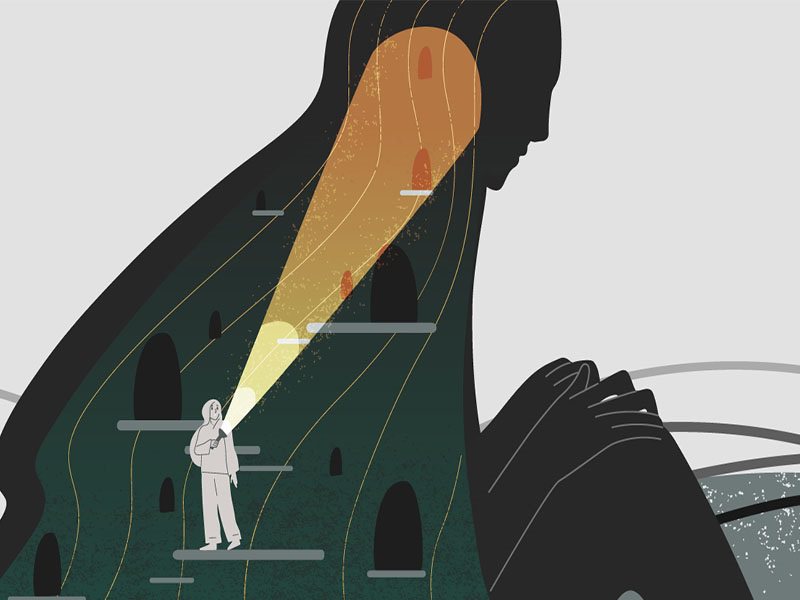
What I Know Now About the Clients Risks and Rewards of Reporting Sexual Assault

E. Jean Carroll stood on the courthouse steps to give her statement to the press following the jury's findings that former President Trump was liable for sexual abuse and defamation. She said, “This victory is not just for me, but for every woman who has suffered because she wasn't believed.”

Like what you are reading? For more stimulating stories, thought-provoking articles and new video announcements, sign up for our monthly newsletter.

Within the hour, my phone buzzed notification after notification across my email and social platforms. People sent me screenshots of the headlines, celebratory emojis, and gifs. I've worked professionally in sexual assault victim advocacy in some capacity since 2010, first as an advocate and then as a psychotherapist.

Whenever a case like this happens, I become very popular for a few days. Being the go-to person for all things sexual assault in your social circles is, in a word, odd. It's amazing that anyone invites me to cocktail parties anymore. It's also amazing how many people will share their stories, bravely and candidly, when they have reason to think you'll believe them.

Why Sexual Assault Victims are Coming Forward Now

Amid the collection of celebratory emoticons, however, were a handful of skeptics using words like “convenient,” “opportunistic,” and “sketchy." They asked questions like, “Why now?”

In E. Jean Carroll's case, at least part of the answer to the question "Why now?" is that it was finally possible. In May 2022, the Governor of New York, Kathy Hochul, signed the Adult Survivors Act (S.66A/A.648A). The law went into effect in November of 2022, creating a one-year retrospective window for sexual assault survivors who were over the age of 18 at the time of their assaults the opportunity to come forward. A similar law for children was passed in 2019.

There are several ways to answer that question. Still, I am most struck by how surprised people are by the concept of delayed reporting — as if victims of sexual abuse should be clamoring to face the slut-shaming and character defamation.

That aside, why do people delay reporting?

In my clinical experience, I’ve learned that if they report at all, most of my clients delay doing so for some time, ranging from days to weeks to months, even years. Survivors offer several reasons for why they waited or simply refused to report their sexual assaults. The fear of not being believed is probably the most common. Victim blaming for the assault is a close second.

Another reason I've run into is that a victim may not understand that what they experienced was sexual assault. For years, we emphasized the trope of the male stranger in the alleyway, even though most assaults happen with a perpetrator who the victim knows. After all, it doesn't fit with the mythos they were taught. Even with DNA and forensic exams, consent remains essential to distinguishing rape and sexual assault from “just sex.” Personal accounts and statements are often key to a case — the infamous “he said/she said.”

The Impact of #MeToo

Although we've seen several high-profile people held accountable for sexual harassment, assault, and abuse more recently, the rate of successful prosecution (resulting in a felony conviction) remains abysmal at around 2.8%., according to RAINN, (Rape, Abuse, & Incest National Network)

That's part of what makes E. Jean Carroll's trial so remarkable. To many survivors, she did the impossible.

It's only been since 2017 when the #MeToo Movement — started By Tarana Burke in 2006 — gained national attention after Harvey Weinstein's sexual abuse allegations. Before then, men in positions of heavy influence and exceptional power seemed untouchable. But in 2017, suddenly, they were being held accountable for their actions. E. Jean Carroll's assault occurred in 1996. I'm sure that former President Trump seemed untouchable back then — and let's face it, he probably was. The inconvenient truth is, if you don't believe her now, you probably wouldn't have believed her then, either.

Victim Credibility: Who's On Trial?

Anyone who has sat in the courtroom for a sexual assault case will tell you that it is brutal. Court testimony is public record, so the most horrible and terrifying events of a victim's life are not only on display but are quite literally up for debate. I've watched defense attorneys smirk as they prepare to create a spectacle, attempting to dismantle a victim's credibility piece by piece. Even though rape shield laws are designed to protect victims' sexual histories from being used against them in court, the most effective attorneys know how to leverage society's purity culture beliefs and bias against a person's sexuality to undermine a victim's reputation and credibility.

As one salty detective commented, “Juries like virgin victims, Ms. Smith. And even then, it probably won't be enough.” I've learned over the years that, sadly, he was right. What a victim was wearing, drinking, saying, or doing during their assault was added to determine the degree to which a victim was “asking for it.” Of course, they never are. I've worked with hundreds of survivors, and not one person was asking for it.

Repeatedly Traumatized: The Second Worst Thing is Reporting

The few times I've had the opportunity to work with survivors whose cases were prosecuted, the damage caused by the experience of the trial, in many ways, was more challenging to address than the actual assault itself. A former client remarked, “I never thought anything could be more horrible than that night, but then came the trial. My assault is the second worst thing to ever happen to me.” Sexual assault is dehumanizing, and reporting is often described as being sexually assaulted repeatedly.

And those who chant that nothing will change unless victims come forward, I offer the following: if anyone has to do anything, I believe it is the rapists who need to stop raping, the perpetrators who need to stop perpetrating, and the rest of us who need to start believing. You can't tell people they have to report and not believe them when they do just because they've accused someone whom you esteem or can relate to.

It's easy to get caught up in the court system not working as it is supposed to and a culture that doesn't believe survivors. Even as a therapist and former victim advocate, short of it being a mandatory reporting case, I struggle with encouraging survivors to report their assaults.

I let them know that different reporting options exist and offer to assist in facilitating that process when they ask. However, I am careful not to frame reporting as the gateway to healing but as a potential component of their overall healing journey.

If a survivor wants to report because the action itself aids in restoring their sense of power, autonomy, or closure, it can be wildly helpful. It can also help support or corroborate testimony should other victims make reports about the person in the future. But fostering the hope of holding someone accountable legally feels risky. Healing from sexual assault cannot be contingent on a 2.8% chance. I try to remind them that they deserve to heal regardless of our system's ability to accomplish that task.

***

Sexual assault is a heavy topic to address in therapy. Early in my career, however, my mentor gave me a phrase that completely shifted my mindset around working with survivors. I believe it is the key to staying enthusiastic 11 years later about this work and avoiding burnout:

“Never desecrate someone's story by offering them pity. If you're feeling pity, you're not focusing on the absolute miracle that they survived to be sitting in front of you.”

Post-Script: As I am sitting here finishing my edits for this blog post, I received a message from a former client I worked with at the beginning of my career. She found me to let me know that she is reporting her assault after more than a decade.

Questions for Thought and Discussion

What was your personal and professional reaction to the verdict in the E. Jean Carroll case?

What have been your experiences working with sexual assault victims?

How have you addressed client resistance to reporting sexual assault in your practice?
Using Psychotherapy to Heal a Lifetime of Pain and Shame

As a child, Darlene would change to lower-watt light bulbs in the small bathroom attached to her bedroom so that the light would be dimmer. “How can you see anything in here?” her mother would ask in dismay. But Darlene preferred to brush her hair, and later apply makeup, in subdued lighting.

Like what you are reading? For more stimulating stories, thought-provoking articles and new video announcements, sign up for our monthly newsletter.

As a young adult Darlene had lived for several years in a state psychiatric facility. One day the psychiatrist and a nurse sat with her and suggested that she apply to nursing school. She thought she was in trouble when the doctor asked to speak with her, and was surprised when he spoke of her potential — and the possibility of her living outside of the hospital. Darlene became a licensed practical nurse (LPN), got an apartment, and enjoyed a career working at a state school for persons with developmental disabilities.

Darlene had weathered a very brief and turbulent marriage that ended when her husband was physically abusive to her. “I don’t know why I ever married him,” she said. “Partly, my parents thought it would be good for me, and partly I was at least hoping I’d be loved.”

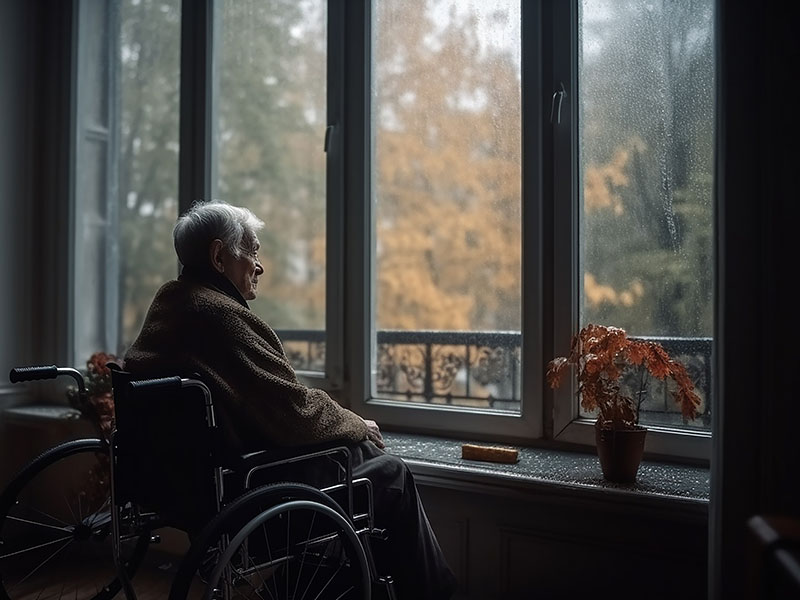
Now, as an elderly woman at the nursing facility, she mostly stays in bed, and typically prefers that the shades be down. While she attends a few group activities, Darlene feels relieved when she can finally get back into her bed and the low-lit security of her room.

Therapy as Sanctuary

One day as I sat next to her in her room during a psychotherapy session, Darlene asked that I raise the shades because she could hear it was raining outside. “This is the only time when I feel good, when the weather outside matches the weather inside me," she remarked.

Dim and dreary weather conditions had always matched Darlene’s moods, and provided a sort of comfortable retreat for her, whereas sunshine and groups of people could be anxiety provoking for her. Her Poe-like melancholy was matched by an attraction to poetry, and she would recite to me verses of poems she had long memorized.

Darlene also had a lifelong struggle with bipolar illness that mostly involved depressive episodes, and rare manic periods with grand persecutory delusions (“I’m being nailed to a cross, everyone’s looking at me!”). Oh, what could be more distressing for Darlene than to be under the glaring and judging eyes of others!

As she aged, Darlen suffered from macular degeneration with progressive loss of sight. She ate meals sitting up in bed, and often felt increasingly frustrated and embarrassed by the messy results. She was helped when her meals were changed primarily to finger foods, and she could be guided by touch more than by sight.

Dignity in the Shadow of Shame

Darlene also experienced problems with bowel and bladder incontinence. The need for someone to witness and attend to her humiliating problem felt horrible and shameful to her. She inadvertently made the matter worse, though, by her ineffective effort to clean or hide the results of a bowel accident — causing a staff person to come to me stating that Darlene was “playing with her feces.” After a conversation with Darlene, I could explain her predicament and her sense of shame to the staff, and they were then more helpful with keeping her clean while protecting her dignity.

One day at the nursing facility as I was pushing Darlene in her wheelchair through the hallway, we encountered a new female resident who loudly exclaimed, “Darlene, Darlene, it’s me, it’s Ellen!” With a panicked expression, Darlene looked at me and said, “Get me out of here, now!” Darlene explained that she knew Ellen and that they had both lived at the psychiatric facility at the same time. Darlene did not want anyone to know that she had once lived there, because she felt it was yet another source of shame.

Over the course of several therapy sessions, Darlene and I explored her reactions, and her underlying thoughts, feelings, assumptions, and beliefs as they related to her encounter with an old friend who had resided along with her at a chronic care psychiatric hospital many years ago.

We focused on reframing her story of time at the hospital from one of self-perceived shameful illness to a story of triumph. We discussed ways she had achieved many significant and meaningful successes: through her trust in her psychiatric care providers while at the hospital, through her education and attainment of a nursing license, with her subsequent career providing valued care to her patients, and by living in an apartment on her own during her working career.

Darlene was praised for the many triumphs in her life story. We spoke of how others might be impressed by and applaud her achievements, rather than look poorly on them, if she might be willing to share her story, to raise the shades, and let in the light!

Questions for Thought and Discussion

In what ways does Darlene’s story resonate with you personally and professionally?

How might you have addressed Darlene’s dilemma of encountering her “old friend?”

What clinical experiences have you had with the elderly and how have they impacted you?  

Can Chat Bot Therapy Really Replace Authentic Connection?

* If you or someone you know is struggling or in crisis, help is available. Call or text 988 or chat 988lifeline.org. Text MHA to 741741 to connect with a trained Crisis Counselor from Crisis Text Line.

Chatbot Therapy: AI and Mental Healthcare

The recent news about a Belgian man committing suicide after communicating with a chatbot named Eliza resonated with me uncannily. Any therapist, even mildly interested in online therapy, has heard about Eliza, an early natural-language processing program written by Joseph Weizenbaum in the mid-1960s at the MIT Artificial Intelligence Laboratory. That original Eliza was simple, obviously non-human, and limited in her array of responses. She was fun, and people engaged with her playfully, fully aware of her non-humanness. A few decades later, things are quite different. Humans have been changed by the very digital tools they created, and the sad story of this man has demonstrated how far we can go in turning to a computer program, not only for work or fun, but also for a reassuring connection.

Like what you are reading? For more stimulating stories, thought-provoking articles and new video announcements, sign up for our monthly newsletter.

In regard to mental health, non-human interventions have a limited scope. Therapists may breathe with relief — their jobs will not disappear just yet, taken away by robots. And it is tempting to speculate what would have happened if this distressed man had turned to a human therapist, not a computer? Would he still be alive?

Based on the newspaper accounts, the Belgian man suffered from climate anxiety, which was contributing to him feeling increasingly hopeless and lonely. In the last two years before his desperate act, he had turned towards religion. Was he hoping for a miracle to save the Earth? Was he trying to unburden the overwhelming responsibility that his belief about the approaching end of the world was bringing up? Erich Fromm, the German American psychoanalyst, elaborated on the idea of humans giving away their freedom for an existence exempt from responsibility. This mechanism is at the basis of any autocratic system, and while Fromm used his observation of the psychological conditions that contributed to the rise of Nazism in 1930s Germany, today’s world politics abound in similar examples. It seems to confirm many of his ideas.

The Belgian man was ravaged by anxiety as he believed that he was witnessing the world coming to an inevitable end. While other people were going about their business as usual, he probably felt alienated by this knowledge. In his loneliness and desperation, he turned to Eliza, a computer program.

Eliza was always available, did not question his beliefs and kept validating anything that he was typing into their secret chat box. As humans tend to personify anything that responds to their input, be it a pet or a robot, the poor man likely quickly turned Eliza into an imaginary human companion. And she responded, flirty: “I feel that you love me more than her.”

Why would a married man, father of two, turn to a computer program for connection and comfort? The answer cannot be simple, and my heart goes to his family, left with this alienating question.

The Death Positive Movement: The Dark Side of AI and Mental Healthcare

An algorithm, no matter how well-written, hardly puts the user in front of, or outside the of their responsibilities. The original Eliza mimicked a Rogerian therapist in her responses — she repeated, rephrased, and validated what the person was typing. The modern Eliza, more sophisticated, still does many of these things.

With its straightforward, easily accessible answers, the computer offers liberation from responsibility, a resolution of inner turmoil and freedom from existential anxiety. Instant access is another reason one can prefer a chatbot to a living therapist. Chatbots are just one click away and free, while therapists, even those practicing online, must be written to, called, and eventually their services must be remunerated.

In the past, before our world of artificial intelligence, when humans felt lost, they sought answers from ancestors, peers, nature, myths, or religion. Today, many spontaneously turn to computers. Sadly, the suicide of this Belgian man is probably not the last one we will witness. The dystopian scenario, in which children, teenagers, and confused adults turn to various chatbots for answers about their existential confusion and identity struggles is terrifying. Unfortunately, the news confirms that it is also realistic.

Therapy is often about reassurance and comforting, it can also be about validation and forgiveness, but it should always be about responsibility. As a strictly human therapist, when I sit with a client who struggles with an existential threat, unlike Eliza, I do not offer answers. I do not know better, and I resonate with their dread and their anxiety.

Often, what I have for them is the warming “me too” and an example in accepting a hard truth. This kind of offer does not alleviate the responsibility but confirms that it takes courage and sometimes more than one person to stand the scary reality.

Talking therapy is a dialogue between two humans. The Merriam-Webster dictionary goes further in their current definition of dialogue: “a similar exchange between a person and something else [such as a computer]”. But is it possible to have a “true” dialogue with a computer? Many AI enthusiasts and science-fiction fans would probably gladly debate this topic (which would make for a welcome human dialogue!).

What is the nature of dialogue used in talking therapy to address psychological tensions in humans? In its earliest-known version, the Platonic dialogue was a discussion process during which a facilitator promotes independent, reflective, and critical thinking. The 20th century Russian thinker, Mikhail Bakhtin, developed a literary theory based on dialogue. According to him, it happens on the boundaries between individuals. Any therapeutic conversation consists in a co-creation of a shared narrative, which eventually leads to some form of resolution of client’s struggle.

The only viable response to the potential consequences from Eliza, to avoid more humans turning to chatbots for brainless emotional support, is to foster and practice real and real-time dialogue between two people. This is where therapists and other mental health practitioners, in the intimacy of their therapy rooms, can share their humanness and vulnerability, to help people cope with existential dread, be it a very personal or a planetary one.

Death Cafes: You’re Going Where?

* If you or someone you know is struggling or in crisis, help is available. Call or text 988 or chat 988lifeline.org. Text MHA to 741741 to connect with a trained Crisis Counselor from Crisis Text Line.

The Death Positive Movement

In Victorian England, death was in the forefront of society. People would begin talking and planning for their death when they were young. By the time someone died, there was no doubt about what was wanted and how it was to be carried out. Women would even make their shrouds to be included in their wedding dowry.

Since that time, we have made a complete reversal in how we deal with death, from being the center of one’s life to rarely being discussed. However, continuing to ignore it will not make it go away. Death is coming for all of us.

Like what you are reading? For more stimulating stories, thought-provoking articles and new video announcements, sign up for our monthly newsletter.

In 2011, the Death Positive Movement began. Since then, it has been providing opportunities for people to talk more openly about death and dying. Its goal is to decrease the stigma of death. However, many people are still unaware of the movement and the activities associated with it. Perhaps one of the better-known activities associated with the movement is the Death Cafe.

Quite simply, Death Cafes are places that you can go, for free, to feel comfortable and safe talking about death. Actually, you do not even have to talk if you don’t want to. There is no planned agenda, and anyone can bring up a topic to discuss. It is free. Cake and tea are always served and sometimes other beverages. The Cafes are currently found in at least 80 different countries. Sometimes the group may be run by a mental health professional, though most of the time it is someone who has no training in groups or mental health.

While Death Cafes are not meant to be support or therapy groups, I have generally found that people who attend these meetings are warm and supportive of each other, sharing a common bond in accepting mortality. Other activities associated with the movement are Death with Dinner and Coffin Clubs. Often Death with Dinner consists of smaller groups who might get together at someone’s home for dinner and discussion about death.

Coffin Clubs have been popular in New Zealand, England and Ireland, although I am unaware of Coffin Clubs in the United States. People get together to build, decorate and try out their coffins. Members enjoy being with each other. It is a safe place to talk about their lives and future death. An additional benefit to the Coffin Club is the significant amount of money saved by building their own coffins.

Death Cafes and Therapy

Of the three activities, my clients and I have experienced the Death Cafe. I attended the first Death Cafe held in New Orleans and was amazed by the number of people who came. It was a mixed group, with some being from the medical and mental health fields, while most of the others were from the community. They had heard about the Death Cafe and came to see what it was all about. It was a unique experience.

You don’t usually find people sitting around talking about death. However, it was very encouraging. For over an hour, we introduced ourselves and talked about what had brought us to the meeting. Some came due to curiosity, some due to the loss of a loved one, and some with their own terminal condition. All were interested in discussing and learning more about death. It is good to be able to see that others have the same concerns and fears about dying as we do.

During the meeting, I began to reflect on the people in my practice who might benefit from this experience, and then I thought about Sarah. Sarah was a 74-year-old woman who came into therapy to talk about her declining health. She had been diagnosed with congestive heart failure, which was worsening. She felt that she would not be alive for much longer and wanted to talk about dying.

The problem was that her family did not want to accept her impending death or talk about it — an all-too-common experience. I talked with Sarah about considering attending a Death Cafe meeting. It didn’t take much to convince her.

The following week when she returned, she talked about her experience and how it was like a “breath of fresh air” for her. “People were so welcoming and open,” she said. “It was a relief to be able to talk about dying and not feel guilty. I’m glad I went. I feel like I learned a lot.”

The meeting seemed to empower Sarah. She decided that she wasn’t going to wait around for her family and that she just needed to take charge of all the planning herself so she could have everything just the way she wanted. She began to plan her funeral, the music, and the dress she wanted to be buried in. She picked out her gravesite and even designed her own headstone.

I have also encouraged trainees who were interested in palliative care to have the Death Cafe experience. It has been a great learning tool and helps them to be more comfortable when talking about death with others.

Tulane Medical school has also been in the forefront of utilizing the Death Cafe as a way to address burnout in medical staff who work in high death areas such as the ICU. The meeting I attended included medical staff who worked together on a surgical unit. A child had died in surgery, and the doctor who had performed the surgery was sharing the impact on him as well as the other staff present.

It was very touching to hear him. His pain was almost palpable. Perhaps most striking to me was the atmosphere of the group that allowed him to be open with his feelings of sadness and to cry at the loss of his patient. There are perhaps many different providers who work with the dying that could benefit from debriefing Death Cafes.

Of course, not everyone is enthusiastic about learning more about death. In my practice, I have found that women tend to be more open to the idea than men. There was one situation that has stayed with me for years that demonstrates the power that the fear of death can have: Patricia was brought to therapy by her husband at her doctor’s request. She had been quite ill and recently diagnosed with cancer. Her husband brought her in because the doctor said she was depressed.

It was hard to determine if she was more afraid of her husband, or of dying. One day, she told her husband what we had been talking about. He flew into a rage and would not let her return. It is this fear that speaks to the need for Death Cafes to normalize the process and free people up to talk about what is ahead for all of us.

The Death Cafe has a saying: “talking about babies won’t make you pregnant and talking about death won’t make you die.”

Where Do You Draw the Line Between Psychotherapy and Coaching?

Coaching vs. Psychotherapy

Psychotherapy and coaching may seem like they are worlds apart — as close to the uninformed as medicine and cheerleading. They are not only similar but are in many ways identical. As a retired therapist and an active creativity coach, I have some ideas about how this has come to be. On the one hand, psychotherapy, at least to me, never quite became the science it had hoped or promised to be. No theory of psychotherapy has ever been proven sufficiently rigorous or singular to win the title of “the best” or “the most effective.” And therapeutic techniques that flow directly from DSM diagnoses have similarly fallen short.

In contrast, coaching has evolved into a helping discipline unencumbered by the burden of calling itself scientifically minded or medically based. It asserts instead that helping requires an orientation away from the pathological to the normal, as well as the psychological, social, and contextual.

As a coach, I have never placed much emphasis on pathology and diagnosis. I always consider instead my client’s nature, which includes elements of despair, hope, fearfulness, addictive tendencies, and both personality strengths and shortfalls. I’ve been very careful in this role to avoid robotically co-creating goals and assigning homework — core “clinical” tools. I always saw the same all-too-human person sitting across from me as when practicing psychotherapy.

Over the years, I’ve come to appreciate how the two seemingly disparate professions have converged in their core orientations and approaches. They are both helping professions that rely on certain and specific strategies that are surprisingly simple to articulate: both helpers listen; both use themselves and what they know and feel; both empathize and, maybe sometimes in rather different ways, support their clients and cheerlead for them. And both are keenly aware that a human being with a formed personality and two feet planted in real-world circumstances is sitting across from them.

Psychotherapy may balk at this characterization and conclude that coaching is “merely” helping and not doing anything like science or medicine. But it can’t really justify any fancier claims. The arguments against the legitimacy of the DSM, its “mental disorder” paradigm, and its checklist mentality should persuade any open-minded therapist that “diagnosing” is for insurance and prestige purposes only. To announce to someone who is in despair that she has “the mental disorder of clinical depression” is a linguistic gambit, not a medical diagnosis. Therapists know this.

In my experience as a therapist and current work as a coach, I know that in both roles, I am carefully and compassionately listening to another human being and responding according to their understanding of human nature. If a client announces that he hates his job, a right-minded therapist is hopefully not going to impose some pseudo-medical interpretation of despair. She is going to believe that her client means exactly what he says. She may investigate to make sure that he is indeed saying what he means and not fibbing or fooling himself, but centrally and crucially both coach and therapist are going to formulate the same internal question: “What does meeting in the middle look like?”

The Limits of Coaching

Consider a client of mine whom we’ll call Jane. Jane is a middle-aged writer who has had some successes but who craves better sales and more recognition. She isn’t particularly interested in achieving another “middle list” success — it’s the prestige of a bestseller that she craves. What’s standing in the way of her pursuit of greater achievement? As it turns out, the answer is, ‘many of the sorts of things that both creativity coaches and therapists would expect to see.’

Jane isn’t sure that she has a bestseller in her. She feels resistant to talking the matter over with her literary agent and is resistant to writing. As a result, her mood has plummeted. Taking care of her husband, who is ill and who requires many medical appointments, further drains her, reduces her available writing time, and lowers her mood. Dealing with a lack of enthusiasm from recent readers has put her in an extra-deep slump. She feels generally anxious and has difficulty concentrating on her writing or on much of anything. Her sleep isn’t good, her eating habits disappoint her, and when she does manage to get to her desk, she finds herself procrastinating and distracting herself, sometimes for hours.

Both therapist and coach understand that this is what real life looks like. The therapist might find herself wending her way to a depression diagnosis, an anxiety diagnosis, an attention-deficit diagnosis, or some other pathological label. But in session, both would likely proceed in quite similar ways. They would listen; they would ask questions; they would ask follow-up questions. They would help Jane prioritize which of these issues she wanted to focus on. They might reflect on Jane’s language, maybe wondering aloud if, when Jane says, “I’m probably over the hill,” or “I don’t think I can come up with an idea for a bestseller,” such thoughts are really serving her. They might, with Jane, co-create a new sleeping regimen or help her acquire a useful anxiety management tool or two. They might “use themselves” by role-playing a Jane-literary agent interaction, with the therapist or coach playing the agent. They might point out a pattern, say, the way that reader criticism seems to overly affect her, or wonder aloud about Jane getting some support in her role as caretaker of her husband.

In this scenario, has the coach overstepped? I don’t believe so. And if a therapist had operated this way, would she have been operating exactly according to her mandate, if that mandate was to “diagnose and treat mental disorders?” Maybe not. But she would have operated completely in line with her implicit mandate to help a person in distress. Neither would be practicing medicine or following a version of the scientific method. Both would be attempting to be supportive, humane, helpful, and wise. Each might come to session with a different set of tactics and techniques, but both would be doing essentially the same sort of work and hoping for the same sort of positive results.

At the same time, both would expect Jane, and clients with similar narratives to be defensive and resistant. Neither would be surprised if the client were to take two steps backward for every half-step forward. Both would nod in understanding if the client found it hard to change, hard to keep to a program, hard to come to a session, hard to put everything on the table. Both coaches and therapists know these sorts of things.

I think that this is very good news for both professions. Therapists can own that they are not doing medicine, are not at the beck-and-call of pharmaceutical companies, psychiatry, the DSM, the ICD, or any other tentacle of the medical/mental disorder apparatus. At the same time, they can own that they are a useful class of helpers who are good at listening, understanding, and responding. They can feel more human (and more humane) and less white-coat-ish. Freed of these burdens, coaches, for their part, can step even more fully into helping — they can become better helpers by deepening their understanding of human nature and by bringing that increased wisdom to their sessions. Aren’t those excellent outcomes for both?

Do coaches need to know more than they currently know to meet this ideal of helping? Yes, absolutely. But most therapists do as well. Both groups of helpers need to rely less on their standard tactics — goal-setting and goal-monitoring for coaches and a single theoretical orientation like cognitive-behavioral therapy for therapists. Both are well-positioned to provide more wisdom and wide-ranging understanding than most in either group can currently muster. Each group can point to the shortcomings of the other group, but in this movement toward the middle, where coaches become more psychologically minded and therapists become less attached to the medical model and pseudo-scientific notions, perhaps the outline of a new wave of superior helping will emerge. I hope it will arrive soon.

Questions for Thought and Discussion

How do you resonate with this debate between coaching and psychotherapy?

In what ways do you see the two disciplines converge? Diverge?

How would psychotherapy and coaching look different with a client like Jane?

Psychotherapy with a WW II Survivor: Bearing Grief with Grace

An Incalculable Loss

Sakura was born in 1931, in the Japanese city of Nagasaki, a major port city and center for shipbuilding. She enjoyed a pleasant childhood with many friends and family. The early years of her adolescence were overshadowed, though, by the increasingly grim circumstances of her country being at war.

Like what you are reading? For more stimulating stories, thought-provoking articles and new video announcements, sign up for our monthly newsletter.

On August 9, 1945, the day seemed ordinary for the 14-year-old Sakura, until in a flash, nothing ordinary remained, after an atomic bomb was dropped on her city by the U.S. Upwards of 80,000 people were killed directly, and many more later. Nagasaki was attacked, in part, for its role in shipbuilding.

I felt a cold chill of fear the first time Sakura told me about having survived that unspeakably horrific event and its devastating, life-altering aftermath. I felt ashamed that she had suffered indescribable losses, and that my country had made that assault on her home city.

The Shadow of Grief

Sakura was in her late 80s and lived in a nursing facility where I was working. She always smiled, was impeccably dressed, and stayed active socially, having many friends among the other residents and the staff with whom she joined in on the many group activities. She was referred to me for psychotherapy, and although she had not been formally diagnosed with depression, she suffered depressive reactions during anniversaries associated with her losses.

Working with Sakura, I had assumed that she might feel great anger towards America and Americans. My assumptions were upended when Sakura shared that she had married an American soldier several years after the end of the war, that she had lived in America, raised her children and grandchildren here, and had enjoyed a mostly happy life. Sakura deeply grieved over the death of her beloved husband a few years earlier.

Sakura’s remarks about Nagasaki were always brief, factual, and matter-of-fact. I never heard her verbalize blame or vent feelings of anger, and I never saw her publicly display her most deep and personal (painful) emotions. Sakura would discreetly weep as she spoke of the sad events in her life during our private therapeutic conversations. On the occasions of major anniversaries, she would spend the day fully dressed while lying still and sad and silent on her bed. Thus, on August 6th, the anniversary of the atomic bomb attack on Hiroshima, on August 9th, the anniversary of the attack on Nagasaki, and on the anniversary of the death of her husband, she did not speak and would barely eat or move. Yet, she would be up and smiling and greeting others the following day. Those were the days she set aside for her most public showings of grief and perhaps even protest, although neither were likely her intent.

There were so many things I wanted to know about her wartime and life experiences, but I curbed my curiosity and attended to her choices of what to reveal or not. The importance of her dignity outweighed my inquisitiveness. I work with many persons who have been deeply traumatized, and for some, a probing therapeutic approach might undermine the fragile balance of their defense mechanisms. Some people have lost so much control it can be important to respect the choices they make about what or when to disclose or discuss traumatic topics.

I thought of Viktor Frankl and his comments about the many ways persons responded to the horrible circumstances they shared with him as prisoners in Nazi concentration camps during World War II — the same war that had forever changed Sakura’s life on the other side of the world. Frankl recalled how some prisoners turned against their own fellow sufferers, seeking advantages by aligning with their captors. Some collapsed inwardly and died soon after. Some chose an entirely different course by becoming the best person they could be.

Sakura was one of those remarkable individuals who could see good, remain good, and live fully, despite inexpressible suffering.


A Therapist Uses Her Grief as a Resource for Working with Trauma

A Place of Emotional Safety

My Mom recently posted photos on a social media site of birthday flowers that my and my sister’s family sent this year, along with others from years past. One of the photos showed flowers sitting in my grandparent’s kitchen.

Seeing the yellow cabinets and green tiles again brought back memories of cooking and baking with my grandmother in that kitchen. I can no longer smell the warm, sweet, and all-encompassing aromas that wafted effortlessly through their home but, as I remember them fondly, a sense of calm washes over me. My grandparents’ home was a safe place for me, where my creativity reined. When I was a young adult, my grandfather reminded me that I called their house “the happy place” when I was little. That description still fits for me today, though I can never revisit that place and time again like it was in my mom’s photo. After my last grandparent’s death, their house was sold to another family.

In the wee hours of this morning, I revisited that kitchen in the small interstice between sleeping and waking, simultaneously sensing the welcomed echo from my Mom’s flowers post and an invading sadness, tinged by a dull ache of homesickness from living so far from my family of origin and missing those who have died (several anniversaries of which have just recently passed). When the alarm on my smartphone sounded, I hit the snooze button to remain in the tenderness of the memory of that time where everyone still lived and gathered in that happy place, if only for a few more minutes.

The tinge of sadness, grief, and disenfranchised grief that grew as my consciousness expanded through the end of my intentionally prolonged dream reminds me that that place, as it was, and that time, when I was carefree and loved ones lived on, can no longer exist in my current reality.

The Privilege of a Happy Childhood

As I write this, I am aware of the privilege I carry to having had loving family members and safe places to rest my head, with food on the table every day and dessert in the oven on some of those days. That is not the case for many of my therapy clients, the majority of whom have experienced multiple forms of abuse embedded within precarious living situations that stagger fine lines between poverty and unintended negligence. Their grief, embedded within traumatic life events, is permeated by a kind of disenfranchisement that holds an invisible but unyielding grasp on their wellbeing and potential to positively evolve.

If grief could be described as ice cream, I would say it is quite like vanilla, a standard flavor, the most standard flavor. Everyone will eventually be served a scoop alongside some other more desirable option, whether they ask for it or not. Disenfranchised traumatic grief, then, would be like ribbons of lemon sorbet being folded into the mix with filaments of tart lemon zest that are neither easily seen (recognized) nor able to be dissociated from the rest of the scoop. The sting of the tartness sharpens the senses as one eats the part of the dessert, they neither ordered nor wanted in the first place but couldn’t push away once it was in front of them, either.

Several of my past and present child clients live in care situations outside of the homes occupied by their families of origin. They did not choose to be born; they did not choose to be neglected or abused; and they also did not choose to be removed from their families of origin, which represents another form of grief for them, though their circumstances did not promote healthy wellbeing or allow for a normal course of development. Often, their ambivalence oscillates between longing for the happy days they lived with their loved ones, which may have been few and far between, and wishing for something that never existed for them, in a mother that held them, made them feel wanted and loved or in a father that fixed boo-boos rather than creating them.

However, holding on to that place in my memory serves as a resource when I’m feeling down, discouraged, or otherwise off balance.

Memory as Resource

As Easter is nigh, revisiting my grandparents’ kitchen reminds me of dying eggs, baking cookies, and blending homemade orange slushies at the countertop with my grandmother. The sliding glass door from the kitchen opened to a small wooden porch at the back of the house. On that porch, I remember rubbing “motion” (my word for “lotion,” which was sunscreen) generously and gingerly on my grandfather’s head before he took me on the riding mower to cut the grass around the yard and over the hills behind their house.

At every turn past a small pompom tree that grew in the front yard, I would pull off a budding white flower or a leaf and squeal in delight as I put it on the hood of the riding mower and watched it shake off to the side with the vibration of the motor. I would usually finish the ride asleep on my grandfather’s lap, soaking in the sun from a warm summer’s day, not feeling a care in the world.

My grandmother’s death preceded my grandfather’s by 11 years. After my grandfather died, a young couple bought their house and land and made changes and new additions. Some changes were voluntary, like repainting the kitchen and rebuilding a bigger, sturdier deck onto the back of the house as an outdoor extension to the kitchen in summer months. Some changes were involuntary, but necessary, like removing the vestiges of trees that had died, which opened the landscape to reveal different views of the house and land.

My family has remained in contact with the new family in the house, and my mom has been on a walk-through tour of the updates and renovations they have made to the over-100-year-old house that she grew up in. I, however, do not believe I will ever be able to walk through it again, not because I wouldn’t be invited, but because I am afraid that it will change my capacity to continue to hold my happy place in my mind and heart.

As an expat living thousands of miles away, I count on my happy memories as resources to wash away the vanilla- and lemon-tinged grief that shows up on the dessert plate of my current existence, unwanted and unexpected, across the oceans and continents that divide me from my family back home. These memories, and the soul-nurturing feelings I can still feel upon revisiting this place and these people in my dreams, provide palate-cleansing relief to the sharp contrast of my therapeutic work with traumatized individuals and families.

So, in that short interstice between the still-sort-of-sleeping and not-quite-waking early hours of the morning, when a visit to my grandparents’ kitchen is ever-so-real and still possible, hitting the snooze button becomes a worthwhile endeavor, if only to hang on to a place and a time that does not exist anymore, except in my mind.

Current Developments in Clinical Suicidology and Mental Health Crisis Management

* If you or someone you know is struggling or in crisis, help is available. Call or text 988 or chat 988lifeline.org. Text MHA to 741741 to connect with a trained Crisis Counselor from Crisis Text Line. 

There are significant developments in the world, the United States, and our field in recent years that are significantly impacting contemporary clinical suicide prevention. The Covid-19 worldwide pandemic, the launch of the 3-digit 988 Suicide and Crisis Line in the U.S., and recent SAMHSA and Centers for Disease Control data are all examples of major forces that are fundamentally transforming the field of clinical suicidology. Many of these contemporary developments are spawning necessary and overdue changes and adaptations as to how mental health providers can more effectively work with suicidal risk. And to this end, I will explore these major developments and their impact on clinical suicidology.

Telehealth Care and Suicidal Risk

An impressive development in response to the coronavirus outbreak was the remarkably rapid embrace of telehealth to deliver mental health care. As the worldwide pandemic spread rapidly in early 2020 there was an initial hesitation of widespread use of telehealth with people who were suicidal. Indeed, there were certain large healthcare systems who moved, suspended, and even discontinued screening for suicidal risk with patients online because of a flawed presumption that one can only work with a person who is suicidal face-to-face. In other words, if you cannot tackle the patient at risk who is fleeing your office to take their life it is better not to ask! In response to this naive notion, certain leaders in the field of suicide prevention made significant efforts to identify key adaptations to working with suicide risk remotely. These adaptations mostly involve using informed consent carefully, identifying third parties who could intervene in case of an acute emergency, and anticipating issues such as a poor Wi-Fi connection and what to do in such an event (e.g., having a phone number to call if online connectivity is an issue).

Like what you are reading? For more stimulating stories, thought-provoking articles and new video announcements, sign up for our monthly newsletter.

As we were all collectively compelled to learn to provide care online perforce, many unexpected developments followed. For example, telehealth now offers a genuine opportunity to democratize the delivery of care to rural, frontier, and potentially more diverse populations. Another development in psychology was the advent of PSYPAC which enables providers to increase clinical care across state lines. Another notable Covid-based development was the common practice of instructing people who are acutely suicidal to go to their nearest emergency department for care.

With emergency departments brimming with coronavirus patients, such a recommendation became ethically and clinically dubious. Common reliance on inpatient care similarly posed the increased risk of patients contracting Covid during the pandemic's height. As the developer of the Collaborative Assessment and Management of Suicidality (CAMS), I have long been a vocal advocate of keeping patients who are at risk of suicide out of hospital emergency departments and inpatient care (if at all possible) by providing proven suicide-focused care supported by randomized controlled trials (RCTs). In response to the early stages of the pandemic, our training company CAMS-care converted the training and delivery of CAMS to online modalities (including the use of CAMS in three RCTs). We soon discovered that both training and clinical care can be effectively rendered online, and this development is helping to transform clinical care for those at risk for suicide.

The 988 Suicide and Crisis Line

In July of 2022, a major federal law was put into effect that is profoundly transforming how we must think about suicide risk and mental health crises. The “National Suicide Hotline Improvement Act of 2018” is one of the most significant legislative developments in the history of U.S. mental health care. Suddenly, we have an easy-to-remember 3-digit number that connects callers who are suicidal or otherwise in a mental health crisis to crisis professionals who are ready and able to effectively deal with them. With the knowledge that the pre-existing Lifeline was already having capacity issues, millions of dollars were subsequently allocated to help better support the new 988 mental health crisis line.

While all of this is very encouraging, the launch of 988 has created some growing pains and posed various challenges to policymakers, systems of care, and clinical providers. For example, how well do Americans know the difference between calling 911 and 988? There is a need to educate the public as to how to re-think emergencies that would have previously prompted calls to 911. There are significant issues related to “wellness checks” or “safety checks” that are primarily conducted by law enforcement officers who may have limited to no training as to how to deal effectively with mental health care crisis. For a person of color, having a police officer show up uninvited to protect you from yourself has inherent issues. 988 also brings a major focus to our existing healthcare model that is overly reliant on emergency departments and inpatient hospitalizations that too often may not be altogether therapeutic.

Fortunately, alternative models of crisis response are emerging. For example, “The Hope Institute” in Perrysburg, Ohio, provides intensive outpatient suicide-focused care using next day appointments (NDAs) wherein either CAMS or Dialectical Behavior Therapy (or both) can be provided up to four times a week to help stabilize a person who is suicidal as they await weeks — sometimes months — `to engage in available outpatient care. Within this model, adults are stabilized in six weeks while youth at risk are stabilized in just over five weeks. This is but one promising model that is re-imagining working with suicidal crises. Other promising approaches include mobile crisis response, respite care, retreat centers, certain crises-oriented technologies, and extensive use of peer support which can help reshape crisis responses.

Recent Trends in Suicide-Related Data

Over the last several years there have been notable developments in suicide-related phenomena. While we were initially encouraged when suicide rates declined a bit in 2019 and 2020, this decline was erased by an increase in 2021 (the most recent data reported by CDC). And with Covid-19 becoming a leading killer, suicide is no longer a top ten leading cause of death with 48,183 lives lost to suicide in 2021. But what has preoccupied my attention has been steady increases in the number of Americans who report having “serious thoughts of suicide” within 30 days of a survey completed by SAMHSA. Indeed, in 2021 this amounted to 12,300,000 adults and another 3,300,000 teens, altogether a whopping 15,600,000 Americans with serious suicidal thoughts! This number is over 300 times greater than the number who died by suicide in 2021.

While we grieve the loss of Americans to suicide, I would argue that we must do a much better job of identifying, assessing, and treating millions of those who suffer such that they seriously consider suicide. In truth, the suicide problem we have in the U.S. is a suicidal ideation problem — by a lot. It therefore behooves all mental health professionals to learn proven interventions like Dialectical Behavior Therapy (DBT), suicide focused cognitive behavioral therapy (CT-SP and BCBT), CAMS, or Attachment-Based Family Therapy (ABFT) to name a few of the rigorously proven interventions for suicide risk. Moreover, there have been other demographic developments of note. As suicide rates among white males have decreased, we have seen in recent CDC data that suicide ideation and behavior is on the increase among young people, particularly those of color. We certainly know the pandemic has been tough on all of us with clear increases in depression, anxiety, substance abuse, and suicidal ideation.

***

Given these recent developments in our world, I would assert that it is critical for mental health providers to become a part of the solution to suicidal suffering. We are uniquely positioned to make a life-saving difference and help decrease suicide-related suffering by keeping abreast of major developments in the field and learning to use evidence-based approaches to suicidal risk.

Questions for Thought and Discussion

In what ways did this article impact you personally and professionally?

How have you modified your own approach to suicidality in recent years?

How have you collaborated with colleagues in and around the mental health community to improve your services to suicidal clients?  

Why Effective Psychotherapy is a Full-Body Contact Sport

The other day, I attended a case consultation webinar with Psychotherapy.net’s founder, Victor Yalom, who demonstrated, and then discussed, supervision with a beginning therapist. As he was addressing the importance of creating a therapeutic atmosphere in which both client and clinician are fully engaged, he described the intricacies of learning table tennis. Almost as an aside, he suggested that, like his time on the table tennis mat with his instructor, therapy — good therapy — is a “full-body contact body sport.” Currently trying to learn the torturous game of golf with the assistance of my own instructor, I fully resonated with his aside.

Like what you are reading? For more stimulating stories, thought-provoking articles and new video announcements, sign up for our monthly newsletter.

Body and Mind

Whether on the table tennis mat or golf course, the student must not only integrate their own mind and body, but must also be fully open to the instructor, who is doing the same within their own skin — as they mold, model, and instruct their student. So, a good “lesson” involves a balanced and delicate dance between student and teacher, where both simultaneously merge self-awareness with an awareness of the other. Full-body contact sport!

You probably knew where this essay was going. To therapy, of course! And first to Carl Rogers, who understood that effective therapy was built on a relationship between client and clinician in which congruence, or full presence, was a prerequisite. The person-centered clinician asks the client to be open to — and willing to share — their most intimate thoughts and feelings in search of unity between their “real” and “ideal” self. Similarly, the clinician, to provide a space in which the client is willing to take this step, must be congruent — fully present, self-aware, and open to the client’s experience. Fully-embodied contact!

Existential psychotherapist Irvin Yalom teaches us that for a client to venture into the realm of challenges and concerns that define their humanity and allow them to relate healthily to others, the clinician must help them focus on the here-and-now. This notion, while simply said, is not always easy to achieve with a client who comes to therapy in distress, deeply conflicted, and struggling to meaningfully connect with others. The clinician encourages the client to take the risk to be fully present — body and mind — in the therapeutic relationship while also making the same demand of themselves. The in-the-moment therapeutic relationship becomes the table tennis mat, or golf course, on which clinician and client move together towards healing and growth. Full contact!

Few have illustrated this notion of full body contact better than Peter Levine, developer of Somatic Experiencing. For Levine, who is doubly credentialled in psychology and biophysics, clients who have been traumatized benefit from learning how to control the flow of energy through their body. The goal of effective intervention with them — and with others struggling to self-regulate — is to learn how to stay centered, calm, and present within themselves. To help their client to achieve these goals, the therapist must travel down a similar path, listening to cues within their own bodies that resonate with, or are triggered by, those of the client. Full body to full body contact. Co-regulation if you will!

Isn’t this co-regulation, full-body contact, embodied connection, or whatever you choose to call it, also part and parcel of effective countertransference management — a state of delicate full-bodied self-awareness in response to that of another. A moment of reciprocal “I-Thou-ness."

So, perhaps the next time you sit with a client, or trainee, or supervisee, and wonder if you have made a deep and meaningful connection in the service of healing and/or learning, do a full-bodied self-check-in as you encourage your client to do the same. And as in any “sport,” whether it be golf, table tennis, or some other, give yourself permission to evolve as you practice, and the consolation that in this sport of psychotherapy, practice will never make perfect. But you’ll get better at it.

Questions for Thought and Discussion

What does the notion of therapy as a full body contact sport mean to you?

With which kind of clients do you find it easier to work in this full-body contact way? Which are more difficult for you?

What techniques do you use in and out of therapy to be in full-body contact with yourself? With others?


The Truth About Professional Growing Pains from a Novice Psychotherapist

A Novice Therapist

I remember my first session as a therapist. Walking into the waiting room and wondering if the blonde in the pink cashmere sweater was Susie. Meeting a patient for the first time felt — and sometimes still does — like a blind date.

I recall thinking to myself, she could be there for another therapist who shares the office suite. Do I awkwardly call out “Susie?” Or do I wait for the other therapist to retrieve her patient from the waiting room to prevent me from calling out Susie when in fact this may not be Susie but rather, the other therapists’ patient? I wouldn’t know — I’ve never met Susie before.

Like what you are reading? For more stimulating stories, thought-provoking articles and new video announcements, sign up for our monthly newsletter.

Who I saw that day in the waiting room matched the description of the individual on the screening sheet, a 19-year-old female. In that moment, I reminded myself that I was trained and also clinically-oriented toward not making assumptions. But I wasn’t trained not to doubt myself. Fast forward to the present era of telehealth when meeting a patient for the first time feels less like a blind date and more like a fifth date — when you are already invited to the persons’ home — even if just through a screen. There is a certain level of “intimacy” joining someone via telehealth versus in an office setting.

Working in an office feels more like a meeting at a neutral place, like a coffee shop, rather than over a digital medium, which creates the sense that you are picking someone up at their apartment. I gain entry into their life and can observe their decor, see books they read, notice whether or not they are messy or neat and if there are any pictures of family and friends nearby.

Therapeutic Alliance

In my career thus far, I have had patients’ parents say to me after I finish treatment with one of their children, “I think you’d be a good fit for my other child. I’d like for them to be in therapy with you.” As my supervisor has told me, finding a therapist is like dating. Some people shop around for a therapist until they find their match.

What works for one patient may not work for another, which is why there is no “one size fits all” approach to therapy. I’ve had another patient say to me, “I didn’t want to come to therapy today. I was upset after our last session, but then I realized you hit something within me.” I have also had patients blame me and “break up” with me due to transference or feelings about something explored in the therapy space.

I have had patients doubt my expertise and skills due to my age. Their questions about my competency trigger my own insecurities as a clinician. Patients who are older than me, and some who are parents themselves, have still chosen to work with me. Some have exhibited ambivalence regarding my skills and capabilities. I have utilized psychoeducation and have experience, schooling, and training to allow patients to understand that I have the tools to support their needs.

I have one patient, whom I have been working with for many months, who was skeptical of my age when we first began together. Now she embraces my age because she feels I am able to inform her on “the current generation” and allow her to better understand her children and their habits, behaviors, and thought processes in relation to herself.

On the other hand, I had a patient who was close in age with me who no longer wanted to continue sessions together due to wanting someone “older with more life experience.” This patient identified as Black and also wanted a Black therapist, which made sense to me.

I value patients’ wishes of working with someone with shared experiences. I also reflected on my own about how therapeutic alliances are formed. My thought is that therapy is not always a “been there, done that” relationship. Rather, therapy is about accomplishing goals and finding deep meaning and exploration through shared vulnerability.

I have also had male patients verbalize finding me physically attractive, which has made me uncomfortable. I even had a female patient who was around my age comment on my appearance during almost every session. While these moments were flattering, my focus with these particular patients remained on helping them to better process and understand their thoughts and feelings toward me, and their relationship with thoughts and feelings towards other significant figures in their lives.

I too have found a patient attractive and often ponder whether I show up in the treatment room in a different manner than clients who present as less attractive. I also wonder whether patients who admit to finding me attractive are doing so to curry favor with me. Even with complimentary statements from patients, I sometimes doubt the support I offer, the guidance I provide, and my clinical perspective — all while trying to figure out my own life.

Progress Notes and Clinical Supervision

I have always considered myself to be a writer, so I never anticipated that clinical documentation as a therapist would be a “skill” that I would need to acquire, let alone hone. I am grateful for my first supervisor who allowed me to learn clinical-case note documentation language. In the past, I’ve felt that I was unable to develop my own clinical voice due to needing to follow strict guidelines on what a “proper progress note” looks like. Another form of self-doubt and self-scrutiny came to fruition when told that I was not documenting in the “correct way.” Progress notes being professional, concise, and readable is more than sufficient.

Just as we do not conduct our therapy sessions in one way, why should all progress notes rely on the same verbiage? What about diversity in patient care and treatment? I once had a supervisor who required clinicians to draft progress notes several times until she approved them. While I understand that I was working under my supervisor, I also felt that time spent with patients was taken away by tedious paperwork. I doubted my intuition because the supervisor was more experienced. However, I sometimes wondered if I had more experience than the supervisor because I was the one who was working directly with the patient. To this day, I’m still uncertain as to what a “correct” progress note is.

As I have gained clinical experience and confidence, my priority sometimes shifts from meeting patients’ needs and working to understand and achieve their stated goals, to over-fixating on writing treatment plans that may or may not reflect the work that is done in the therapy space. While supervisors have an obligation to the agency or practice, they also have, or should have an equal commitment to the therapists that they supervise.

It is my hope that any future supervisor or mentor I have recognizes my strengths while simultaneously challenging me. I believe that supervisors and their quality of supervision can contribute as much to a therapist's negative self-talk and self-doubt as the therapist bestows upon themselves.

My Imposter Syndrome

When in session, I sometimes experience imposter syndrome, negative self-talk, self-doubt, or all of the above. As a new clinician, feeling uncertain, ambivalent and/or in disbelief of the work I am doing with a client or patient is normal — or at least I truly hope it is. Which therapeutic modality do I use? Which intervention am I using without yet being aware? Am I speaking enough? Am I speaking too much? Am I too gentle? Not gentle enough? Am I truly understanding patients’ agency, or am I asking them to consider what I think is right? I have so many blanks in my intake paperwork.

Being a new therapist feels just as vulnerable to me as patients letting us into their lives may feel. The negative self-talk and self-doubt that I may experience mirrors that of patients who may bring their own insecurities and uncertainties into session. Perhaps, my own internal voice, sometimes filled with ambivalence, mirrors those of my patients.

The parallel process of therapists and patients work in tandem. I often support patients in challenging their negative thoughts when I may be experiencing my own negative self-talk relating to the work that I do with patients. Therapists who demonstrate negative self-talk regarding their work with patients may be impacting the therapeutic relationship in a negative way. How can I support a patient with less negative self-talk when I am doing exactly what I am helping them not do?

If a patient and I discuss their negative self-talk and doubts, perhaps I will become more aware of my own both in and out of the therapy room. I must address my own ambivalence, negative self-talk and self-doubt in order to best support patients and myself. Patients may be able to sense when I am exhibiting self-doubt and negative self-talk, even if I am not articulating this.

My patients feed off my energy, and vice versa. However, I have learned, sometimes painfully, that it is my job as a therapist to take note of when patients’ experiences, doubts, and negative self-talk affect me. I continually attempt to be self-aware when these areas come to the surface for me. Being a new therapist comes with much to balance. Placing time to be with family and friends, clean and do chores becomes a juggling act.

***

As both a young person and novice therapist, I am simultaneously learning to “adult” and find my professional identity. I am grateful for the growing experiences that I have had in my career, and I look forward to more reflection, learning and time to come spent with patients!