
Using the Power of Play Therapy to Free a Frightened Child

Play is the child’s language and toys are their words

Garry Landreth   


Play therapy hasn't always been taken seriously in academic and clinical settings. After all, it has play in its name. However, those who regularly use it in their clinical work and/or are trained as registered play therapists fully understand its healing power. I have always been attracted to play as a natural medium for self-expression in which the child can address and work through complex and often painful feelings, conflicts, and experiences in a place of safety and security, free of judgement and pressure. I have been particularly drawn to the non-directive approach to play therapy pioneered by Virginia Axline and later Garry Landreth, which relies on building a trusting therapeutic relationship with the therapist and letting the child lead the play without adult direction.
 

Like what you are reading? For more stimulating stories, thought-provoking articles and new video announcements, sign up for our monthly newsletter.

Jasmin

Four-year-old Jasmin* was referred for play therapy to the children’s hospital outpatient clinic in Dubai, United Arab Emirates where I work. She was struggling with severe anxiety and was unable to tolerate being around other people, including family members. She experienced panic attacks if someone spoke to her and was unable to play in crowded areas. Jasmin’s mother was deeply concerned that, because her daughter had missed her chance to start school, she would not be able to live a normal life or have friends.

I gathered from her history that Jasmin’s life journey had begun in the shadow of severe separation anxiety. Her parents were immigrants from a neighboring Arab nation and had extended family living nearby, ultimately settling down in Dubai where Jasmin was born. Jasmin experienced many medical complications directly after her birth: she spent almost four months in the neonatal intensive care unit (NICU), with only one day out of 100 with skin-to-skin contact. Jasmin’s mother became highly protective of her fragile infant daughter, shielding her from other people and giving her anything she wanted. This was likely related to guilt from the experience that they shared ever since Jasmin’s birth.

In our earliest play therapy session, Jasmin’s mother was fearful and pessimistic that her daughter could be helped to overcome her — or perhaps I should say “their” anxiety and fears. Jasmin arrived for that session crying, screaming, and saying she wanted to go home while hiding her face and clutching her mother in intense fear. She did not accept any direct communication from me.

In the coming weeks I maintained a consistency in my quiet and patient presence, with hopes of reducing Jasmin’s fear and providing a predictable environment for her. Eventually her crying stopped, and Jasmin seemed more comfortable in my presence, showing a burgeoning interest in some of the toys and materials in the playroom. Perhaps the seeds of trust were being sown.

In the following five to ten sessions, she once again began hiding her face and regressed to avoiding any direct speech on my part, instead choosing to hold on to her mother. I’m not sure what changed this early course of “progress” for the better, but after a few more sessions in which I was consistent, respectful of her need to withdraw, and validating in small verbal and non-verbal ways, Jasmin once again shared eye contact with me. However, she continued to only communicate non-verbally despite this progress.

After a few dozen sessions — which may seem like a lot to those who have not relied exclusively on a non-directive approach — there was a breakthrough. Jasmin spoke! She seemed to slowly accept my presence, engaged in play, grew more visibly comfortable in our relationship. From that session onwards, she laughed, giggled, asked me to draw, commented on my drawings, and shared her toys with me. She began speaking openly about her thoughts and feelings, and at one point, even gave me a high five! Yet, while these were indeed huge steps for Jasmin, she was still speaking only through her mother, telling her what she wanted to play instead of asking me directly. It’s important to note that during the initial sessions, Jasmin used the sand tray to explore and express her thoughts and feelings.


My Play Therapy Room
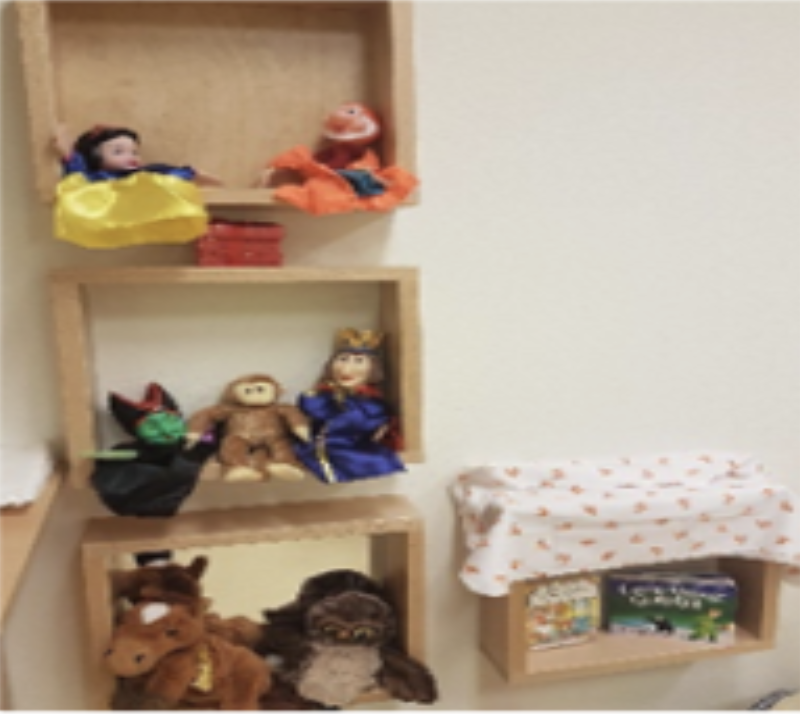

Puppets
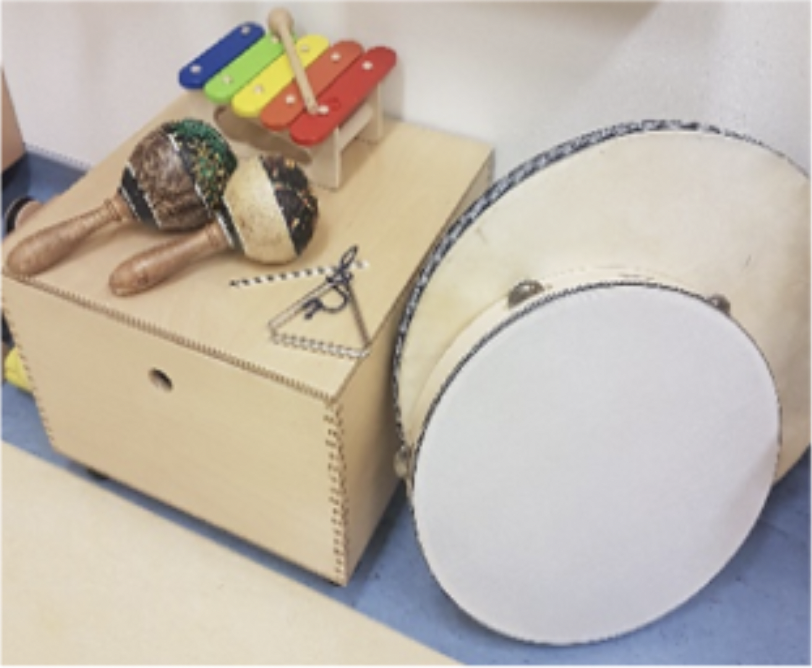

Musical Instruments

As our time together went on, Jasmin slowly solidified her confidence, using puppets to speak for her so that she might maintain a safe distance from her problems. Similarly, she became increasingly comfortable using the creative arts materials, paint, and messy play to work through the difficult feelings she was experiencing, mostly around fear. After four months of attending play therapy, Jasmin felt safe enough to physically separate from her mother and join me unaccompanied. She was testing the limits of her coping skills and taking a brave step towards a new level of security and developmentally appropriate autonomy. Towards the very end of our work together, Jasmin used the baby doll to role play the nurturing mother, while also addressing her feelings around friendships through parallel enactments of shared play in the playground/school yard.  

Jasmin now attends our sessions and often proclaims that she is the teacher, stating that “it is now time for a music lesson!” She plays the instruments, sings, dances, and performs with confidence. It has been such an incredible transformation! At the beginning of this journey, Jasmin’s mother did not think it was possible for her daughter to change or live a normal life. But with the right environment, trust in the process, and using play as a medium to bring us together, alongside clear communication and teamwork between the parent and child, such seemingly unattainable goals became achievable. 

 Testimonial

Jasmin’s mother wanted me to share some words about her experience of play therapy:

“Play therapy simply took me out of the darkness into the light. At the beginning of the journey, I was not completely sure that I would reach my goal and that my only daughter would be like the rest of the children. But I had faith in Allah that made me take the risk. In my first meeting, I saw everything that was said like a dream that was difficult to achieve. The therapist told me that in a year from now, Jasmin will be in school. I muttered to myself ‘just a dream. Allah, please help me to achieve it.’ My child was diagnosed with severe anxiety.

The next day, the journey began with the therapist, Gemma. When I looked into her eyes, my eyes filled with tears. I waited for her to confirm what the doctor had said; that the diagnosis was anxiety and not something else. Gemma greeted me with a smile that gave me hope that my daughter would be cured of that anxiety. Every day while she was assuring me that we would arrive at that goal, my patience was tested.

On our daily trip for the whole year, I saw the light coming from a small gap, and that gap started to widen more, and I saw that light growing stronger. It was a challenge getting to the sessions every day at nine in the morning, on time and in the same chair awaiting victory.

I believed in play therapy. I stuck to it, as a child clings to her mother, and I held onto it with all my strength. Gemma's whispers of confidence never left me. Her support, clarification and understanding were so important. While she was treating my child, she did not realize that she was doing so in a very culturally sensitive and experienced manner, embracing the mother and child together.

Yes, there were many challenges, with those many moments of Jasmin closing her eyes and crying when she saw Gemma (therapist), ending with her running towards Gemma. Yes, it's play therapy but don't underestimate the word. It’s a new hope for every child who is suffering.

And now, after a year, I am looking at the end, exactly as they promised me. My child is now entering her first school year. It is an amazing treatment that is not based on the use of chemical medicines, especially with such young flowers.”   

*Names have been changed for anonymity  

5 Time Tested Methods for Attracting New Referrals and Building Your Brand

Suggested Tips for Clinicians:

  • Learn SEO (search engine optimization) to bring foot traffic to your practice’s site.
  • Build your advertising savvy by mastering Google business tools.
  • Consider consulting with a business coach to build your clinical practice’s brand.
For most psychotherapists in private practice, the pattern of the past two and a half years has followed a similar trajectory:

March 2020: Move to 100% teletherapy, and watch as new referrals suddenly become frighteningly scarce.

April 2020: The phone is still not ringing.

May 2020: Referrals start coming back…and then explode. In the summer, waiting lists become commonplace because clinicians can’t handle all the people who need help during the pandemic that is killing thousands of people every month and forcing businesses and schools to go all virtual.  

Like what you are reading? For more stimulating stories, thought-provoking articles and new video announcements, sign up for our monthly newsletter.

In 2020, Mental Health America reported that nearly 500,000 people struggled with a mental health disorder such as anxiety or depression. The organization offered online screenings from January through September, stating that anxiety screens increased by 634% while depression screens increased a staggering 873%. In just one year, the number of mental health visits attributed to new patients increased by 27 percent in July 2020 compared to July 2019.

The pandemic has deepened the mental health crisis, the report noted. The number of US adults expressing symptoms of major depressive disorder increased from 24 percent in August 2020 to 30 percent in December 2021, per CDC figures, and a recent article in the New York Times discussed the serious shortage in the US for child therapists.

As both an owner of a group practice as well as a business coach for psychotherapists and other group practices, I have had a birds-eye view of these patterns as they unfolded across North America. Many clinicians never had a waiting list before and were not sure how to process these inquiries. For some insurance-based group practices, the glut of referrals became a nightmare with waiting lists of over 100 people. Many potential clients were frustrated that no one in their city had any openings. Attempts to automate the process only created more feelings of depersonalization for clients and frustration for clinicians.

Yet despite these hardships, the pandemic also made marketing unnecessary for many private practices. It made it easier than ever before for licensed psychotherapists to go out on their own, working from home without even paying for an office. Spending $29.95/month for a Psychology Today ad was all that many practitioners needed to fill their schedules with new clients.

For group practices, the tricky balance of referrals, therapists and office space has been turned on its head by the pandemic. Referrals have been plentiful, but a significant number of sessions are still being conducted virtually, making decisions about future office space a guessing game. Availability of therapists has been the scarce resource of late, fueled by the sheer number of group practices and the deep advertising pockets of numerous online providers such as BetterHelp and TalkSpace.

But now there are signs that the glut of referrals is slowly diminishing for many private practitioners. As part of my business coaching service, I set up and maintain Google Ads campaigns for psychotherapists. The common refrain in the summer of 2020 was, “Turn the ads off! We can’t handle the inquiries we are getting!” That was great news because everyone could save a lot of money on marketing and still have plenty of referrals to fill caseloads. Suddenly, however, I have begun hearing the opposite from quite a few people: “Hey Joe, can you turn my ads back on? My waiting list is finally down to nothing.”

This trend is especially true for fee-for-service practices with rates over $200 per session. The combination of inflation, higher interest rates, and perceived easing of the pandemic may be leading more people to forgo therapy—especially expensive therapy—and return to other satisfying pre-pandemic activities such as indoor dining, music, travel, and visits with family and friends. Such activities may be serving as a natural antidepressant compared to the stark isolation and Zoom life during the peak of the pandemic.

So what’s a practitioner to do if a few holes suddenly appear in their caseload? As always, it’s wise to prepare for a storm when the first few clouds appear on the horizon. Interest rate increases and inflation are here to stay for a while, and fee-for-service providers are most at risk when consumers tighten their belts. To get ahead of these challenges, here are some of the time-tested methods for attracting new referrals:

     1. Improving Your Search Engine Optimization (SEO): Google is still the biggest source of referrals for most private practitioners, and nothing beats showing up on page one of Google for free. The bad news is that page one is more crowded than ever, and newer websites have a harder time competing against sites with years of immersion in the Google system. A good overview of best SEO practices you should follow can be found in numerous free resources online which can give you an idea of how to improve your ranking in Google’s search priority.

     2. Using Google Business Profile: Google still offers a wonderful free resource, the Business Profile, which includes a description of all your services, displays for photos and videos from your site, free messaging, opportunities to show up on the top half of page one with a Google Map link, and the ability to make free posts with links to your website. Note that managing individual Business Profiles will be moving to Search and Maps in the near future.

     3. Enabling Google Ads: This is still the best and easiest way to show up at the top of page one in Google search, but you’ll have to pay for the privilege. Recent improvements in automated bidding have reduced cost-per-click in many locations, and the ability to have potential clients call your office directly from an ad on their cell phone makes conversions easier than ever.

     4. Posting an Ad in Psychology Today: This grandparent of online directories for therapists still generates consistent referrals for many practitioners, and spending under $30 a month almost guarantees a positive return on investment even if you only get a few referrals a year.

     5. Community Networking: Now that more people are back in offices, marketing to referral sources in the community can offer a unique, inexpensive way to build a practice. Connect with medical professionals, educators, attorneys, and others who often need referrals for psychotherapists in their work.

     6. Creating Email Newsletters: Connecting (with permission) to past and present clients can be a wonderful way to get the word out about your services. Programs such as Constant Contact and MailChimp offer inexpensive ways to generate attractive email newsletters.

     7. Offering Lectures and Workshops: Offering lectures and workshops is a great way to attract people who may initially be resistant to psychotherapy. In my group practice, we have consistently found at least 20% of workshop attendees follow up with a therapy appointment. These can be offered in a variety of settings in the community, as well as in your own office if you have the space. And of course, if you can stomach it, you can also do them on Zoom.  

***

Attempting to read the tea leaves of psychotherapy practice is always a risky and imperfect task, especially in volatile times when unexpected events can quickly change the trajectory. Nonetheless, it seems clear that the peak of mental health referrals for some practitioners has passed. Preparing for this now will never hurt, and in fact will help to smooth out the transition if referrals drop to pre-pandemic levels.

 Questions for Thought

  • How did the pandemic challenge you to think differently about the way you practice?
  • What is your strategic short and long-term plan for building and maintaining referrals?
  • What can you do to revitalize your brand through internet marketing, pro bono workshops, and podcasts?
  • What is the feasibility of consulting with a marketing expert for you?
  • What about this article challenged you to do or think something differently to increase the client flow in your practice?  

5 Simple Questions to Improve Your Work with Elderly Clients

In the long-term care setting where I work, residents have a far greater amount of life experience than they do control and influence. This might contribute to many of them losing their sense of worth and appearing frail, or even foolish, to the younger workers entrusted with their care. Wisdom is the distillation of lessons learned from life experiences and evidenced in fleeting comments or responses rather than in detailed and articulate expressions. This wisdom, however, may be lost or obscured by cognitive impairment or language problems.  The idea for our Wisdom Project arose in the course of uncounted hours of psychotherapy, during which I was privileged to hear the lessons and insights derived from the long and often quite challenging life experiences of the residents with whom I have worked. I’ve found that all too often, these residents have feared that their invaluable life experience has gone to waste because they are no longer in what most would consider to be an active stage of life. Or that a young staff person might overlook the depth of background and knowledge still present in an otherwise faltering and frail man or woman under their care.  I developed a simple questionnaire for select residents—those who seemed most able to verbalize responses. I believed that gathering their thoughts would provide them with a sense of validation and empathy, which would, in turn, provide workers with a glimpse of the wisdom that is all too often obscured by their physical and cognitive frailty. The following are some of the questions I developed, and several select responses.  What have you learned from your life experience? I’ve learned to be more patient. I’ve learned to be quiet and listen to other people. It helps me to not be selfish. At the time you don’t think things matter, but they do. The choices you make are more important than you think. So, make good choices. I’ve learned to communicate with people. I was too shy and reserved and passive. I should have more strongly pursued my dream to sing. I learned to love. I think it is very important to have a good marriage. My ability to love has grown as I’ve gotten older. Hold close, but not too close, the ones you love. I learned that the important things in life are marriage, children, friends, and an active life. Those are the things that teach you appreciation of life. I learned how valuable it is to have a loving, caring family. Everything else comes second. I have learned that life is brutal; it is hard on your soul and body and mind. It is hard to comprehend why life must include illness and death, but life still has its bowls of cherries. You can’t answer the questions of life with simple answers; you need heart.  What does illness teach you?   Illness teaches you that you have to be strong. I try to understand the meaning of illness, medically and spiritually. It has made me stronger. I had to learn to rely on others. Before, I thought leaning on others was cowardly. When there is illness, you want to help, to remove suffering. But you cannot always do that. I should just talk to myself, and just turn my feelings around the other way. Learn to take better care of yourself. But you cannot rely only on yourself. You sometimes need others. Even when you are ill you can still help yourself, to a certain degree. Don’t expect people to do everything for you just because you are ill. Illness has taught me a lot about caring, about understanding, and soul searching. You learn how a person can endure the trials of illness. You learn that you don’t give up. Illness teaches you that you shouldn’t try to take on too much at one time.  Who taught you important lessons in life, and what did you learn from them? I lost my mother when I was 4 years old. I had to rely on my father and we became close. He taught me what to expect from life. He taught me not to believe everything you hear; you have to experience it for yourself to know if something is true or right. I had a doctor who pulled me through a bad part of my life. He taught me to take one day at a time. To deal only with today’s problems today. That helped me to not be overwhelmed by the problems I had then. My mother taught me that it is important to be honest and kind. To be kind and try to help; that is what matters. To be honest no matter how much it hurts: but it pays. My sister taught me to stand up for myself. My father loved us. He put his arms around us and provided and protected us. He taught me honesty and responsibility, and to be kind to others. I worked for someone once who taught me to keep going despite pain and problems. My mother taught me to work hard on my education and to prepare to take care of myself, and to take care of my appearance. My brother and I helped each other through hard times. That taught me a lot. My father taught me to always reach higher.  What would you like to teach others? Patience is one thing. You’ve got to have patience. You will be able to do many things if you believe in what you really like, and really put your mind to it. Have more faith in yourself. Don’t be afraid to ask for help; there’s always more available than you know. Learn all about finances and how to manage money. Be honest and don’t lie. It’s very important not to lie. To be kinder. Staff people should be kinder because your attitude toward a resident is noticeable, and it really influences how I feel. You should mix in with others. Get involved and stay active. If you take a job, follow through with it. Don’t drop short or give up on it. I would like to teach people how to listen to others. How to care and be kind and gentle.  What lessons or advice would you like to offer to the workers at the nursing home? Be more patient. Get in bed and try being a patient for a while. I want to tell the young women to not give away yourself too easily to men. It will lower your self-esteem. There are too many pregnancies and too few marriages for young women now. That means there are too many irresponsible and immature men. Don’t go sleeping around when you are young. Hold out for a better man. It is important to have a good marriage. Life is about more than their boyfriends, and cigarettes, and time off and on at work. I’m here as a patient. Do what you can for me. Just pay attention to me and do what you can for me. Make sure this work is what you want to do, being around sick people. If you just want it because there’s no other job, forget it. Have patience with the residents. Don’t always say I’m too busy. Listen more closely. Make time for individuals. If you’ve had a divorce don’t jump quick into many relationships. Stay within limits with your money. Buy a house or a car and save your money. Be more content with what you already have. 

**** 

In the course of developing and implementing the Wisdom Project, I have learned how important it is to see the individual resident not just in their symptoms of today, but also in the story of their full life, and to help her or him find and affirm the lessons in that story. It is important to look respectfully at all a person may have been prior to the needfulness of now, and to be open to learning from the painfully acquired wisdom of each person. 

How to Learn from Painful Early Career Failures

A friend's adult son recently returned home after a failed relationship. When his parents questioned him in hopes of understanding the relationship’s demise and to help him process the experience, they were quite discouraged to learn that from their son’s perspective, “she (his now ex-girlfriend) was always on me for not taking my clothes out of the washing machine when the cycle was done so it had to be rewashed or else it would become mildewed.” Had the son been unfaithful or did the infidelity lie with his girlfriend? Was it financial strain? Immaturity on one or both of their parts? Had the stress of childbearing done them in? Or was it, as the girlfriend claimed, relationship death by a thousand spin cycles? 
 

Like what you are reading? For more stimulating stories, thought-provoking articles and new video announcements, sign up for our monthly newsletter.

Since hindsight is 20/20, metaphorically speaking, the story of my friend’s son gave me pause to reflect on a couple I worked with many years ago. In looking back, I regret not having had the confidence, skill, or comfort in using metaphors at the nascency of my clinical career when a couple was referred to me for counseling. And yes, perhaps I should have referred that ailing dyad to a more seasoned clinician, but I was, after all, receiving supervision. In retrospect, my supervisor was very task-oriented, not particularly emotionally focused, and to add just the right pinch of irony, I had recently graduated from a behaviorally- inspired clinical Ph.D. program. At the time, behaviorism seemed like very powerful magic to me, and my supervisor’s cock-suredness provided the necessary added ingredients I needed to help this couple. Ah, 20-20 hindsight! 

The husband had come to counseling with his wife under duress — more likely threat of who knows what. He didn’t perceive anything to be wrong in the relationship and couldn’t — truly couldn’t—understand why his wife was “so damn upset with me” over the chicken.” Ah, the chicken! According to the aggrieved wife — and I am paraphrasing from remote memory, “all he ever wants to eat is chicken, whether we eat at home or go out to a restaurant…I’m fed up!” She went on, “he doesn’t even want me to spice it up!” 

Although my graduate training and clinical supervision at the time blended to offer me what I thought was the right recipe for clinical success, I’m almost embarrassed to admit to what I did in those tense two or three sessions I had with this couple. I attempted (and you probably have already guessed where this is going) to build a behavioral contract which included small steps the husband would take to diversify his poultry paltry palate which would then be reinforced by the wife. God only knows what I cooked up for them in that ridiculous contract. But they were willing customers, and of course, the counseling predictably ended as quickly as it takes to flash-fry chicken wings. True to form and quite predictably, my supervisor lambasted me for failing to create a sufficiently detailed contract.  

What might I have done differently? Well, I might have used the husband’s singular food choice as a metaphor for his desire for certainty and predictability, maybe going as far as he would let me in exploring the basis for that need. I might have reframed his diet as the desire to make it easier for his wife to prepare meals. I might have shifted focus to his wife’s frustration and encouraged expression of what about her husband’s restricted food choice was particularly distressing for her. Or, I might have worked within the metaphor of spicing up the relationship. I certainly would have worked harder to create a therapeutic atmosphere in which emotions could flow freely to the top.  

I often wonder whatever happened to that couple who had the misfortune of falling under my care all those years ago. Did the marriage survive my ineptitude? Did the husband ever learn why his wife was so upset about his unrelenting choice for chicken? Did they find their way to a therapist who was able to salvage the meat from the decaying bones of their frayed bond? 

   ***


Questions for Reflection 

How did the author’s reflections impact you personally? Professionally? 

How have you framed/re-framed some of your early therapeutic mistakes?

What might you have done with the couple depicted in this narrative?

What are some of the resources you rely upon when confronted with a challenging case? 

Improving Your Clinical Presence with Receptivity and Gratitude

Suggested Tips for Clinicians: 

  • Practice methods for strengthening your therapeutic presence.
  • Ask yourself if you are or are not empathically attuned with each client.
  • Explore barriers to full presence and empathy with more challenging clients.


A capacity crowd in the large conference hall rose to its feet in applause. Daniel Siegel, renowned author, clinical professor of psychiatry at the UCLA School of Medicine and Executive Director of the Mindsight Institute, had finished his presentation. I too stood with enthusiastic appreciation, not only for this lecture, featuring the clinical significance of therapists’ mindfulness, but for all the ways his research and writing about developmentally informed parenting, neuroplasticity, and the incorporation of science into the practice of psychotherapy. All of these had influenced my thinking and work over the past ten years.   
 

Like what you are reading? For more stimulating stories, thought-provoking articles and new video announcements, sign up for our monthly newsletter.


Dan had begun to move away from the podium when he seemed to catch himself and walked back to centerstage. He stood, fully facing the hall, hands clasped in front, nodded his head and bowed. For our part, the applause of several thousand therapist attendees showed no sign of relenting. Then an event unfolded I have carried with me since. 


It began with the simplest of gestures. Dan took and held Tadasana, a standing yoga pose. His feet parallel and facing forward, Dan released his fingers, opening his hands which moved to the sides of his legs, palms open, shoulders relaxed as he appeared to empty himself and stand receptive before the crowd.  
 

The audience responded with delight and gratitude at this embodied receptivity. The volume of the applause rose, and Dan, smiling gently, took a deep breath. The crowd responded again. Waves of mindful presence, enthusiasm and gratitude rolled through the large hall back and forth, until Dan took a final bow and joined the crowd he had just helped to unify.  
 

Gratitude is amplified by its reception. Reception is its own expression of gratitude. A feedback loop, formed by gratitude and receptivity, generates a mindful, compassionate field that feels very much like love.  
 

Tears rolled down my professional cheeks. I quickly brushed them away hoping the strangers around me noticed neither my intense emotion nor its expression. Unleashed by the power of that loving field, my tears flowed freely and powerfully, apparently straining for release. I felt seen, heard, and appreciated. I was included, a true part of this collegial, communal event. There was a transcendent quality in which this loving field was not so much being created but being acknowledged as existing before this moment. All of us stumbled into an awareness of a much larger and enduring field of love.   
 

I was awed by the immediacy and goodness of the human family. But it was an ecstasy undifferentiated from loss and longing. My tears expressed my grief at how seldom I had been aware of my presence in such a space. Having often felt unseen, unheard, and unappreciated, I suddenly experienced a sense of loneliness and despair of enduring connection. The pangs of longing and the shame of my dissatisfactions with self and others were ignited by my embrace of this mass symbiosis. Yet, there was also relief at the quenching of my childhood thirst for an uninhibited expression of mutual affirmation and solidarity.   
 

In the religious experiences of my young adulthood as a youth minister, a shared faith and religious ritual turned what might have been merely an experience of communal intimacy into an encounter with the metaphysical. My peers and I tasted, not merely the immediate experience, but elements of a universal interconnectedness: with one another, with the Church, and even, it seemed, with God.     


As I grew older and my religiosity subsided, the felt importance of that faith and my need to participate in a loving field never waned. If Dan Siegel had continued off stage to privately appreciate the applause, he may very well have experienced a profound sense of what his work meant to us, he may have been moved to tears and even been motivated to write another great text, but his personal experience of appreciation and inspiration would not have generated the mindful, compassionate field of love we all shared. To generate such a field, he had to turn around and move back to the edge of the stage, putting himself on display. He needed to make the mindful choice to allow his body to express his emotional state, ultimately taking a posture of reception easily understood by the community before him.  
 

As an audience member, I too had a role in creating the moment. While Dan closed his presentation, I might have remained seated, turned to a neighboring attendee and, in a relatively hushed tone, remarked upon an outstanding insight or application. My neighbor may have responded with her own insight and drawn my attention to aspects of the presented theories elucidating my thinking. This might all have had a positive impact on my practice, but none of it would have generated the field of love.   
 

 All of us that day physically manifested our emotional reaction by standing, applauding loudly, and maintaining focus on Dan. We allowed his gestures to carry meaning and translated that meaning into action with vocalizations of delight and even louder applause.  
 

After any professional conference I strive to identify the clinical application of what I have learned, knowing that for me to retain information I need to utilize it. While I came away from that conference with much information, it was this personal, emotional experience that I most wanted to incorporate into my life and work.  
 

But where would this powerful manifestation of gratitude and receptivity play out in the consultation room? Although, as a psychotherapist I am sometimes the recipient of heartfelt expressions of appreciation, I have never received a standing ovation. Nor do I often feel deserving or desirous of one! The emotional waves of gratitude between therapist and client are smaller and quieter and, as a possible result, the loving field we generate is more easily dismissed or completely overlooked.  
 

It is a process that unfolds in many sessions. It unfolds with the subtlety of a raised brow, a silence, the slightest of gestures. It is carried by a word, a smile, a tear. We know it as empathic attunement and the creation of a therapeutic space. It is enacted when a client experiences acceptance in response to long held shame. I wonder how open my stance is in receiving such gratitude. Does the client feel my reception and the gratitude I feel for their gracious expression?  
 

Recently, in a relational-process group I co-facilitate with my colleague Aisha Mabarak, a field of love made a surprising appearance. Sheila* arrived late due to complications at her job that held her past the end of her shift. She reported being exhausted and ill-prepared to share her feelings with the group. 


“I’m in a fog,” Sheila said with an uncharacteristically flat tone. I responded by thanking her for making it to the session and affirming her inclination to take a restful, though present, pose. Aisha, however, had a different approach. Not wasting any time, she asked: “Sheila, why don’t you share with the group a little more about this fog you feel stuck in?”  
 

Sheila proceeded to describe, with increasing emotional range, how deadened she felt by a sense of invisibility in multiple facets of her life. Examples spilled forth of her efforts to meet the needs of others only to be met with thoughtlessness and a glaring absence of gratitude from family members, friends, colleagues, and bosses.  
 

Other group members expressed empathy and support. One member voiced these sentiments succinctly, saying that she felt Sheila’s pain and she was, at that moment, imagining how hurtful and difficult it must be to feel so unappreciated by people who care for you. In approximately fifteen minutes Sheila had gone from a depression-based brain fog to expressing her anger and upset assertively, leading to smiling and expressions of appreciation for her fellow group members.  
 

My inclination to support Sheila by giving her space was intended to express, both to her and to the group, that it was acceptable to feel your pain in session and to choose to set self-protective boundaries. This intervention may have been simply wrongheaded, or it may have, by reminding members of their autonomy, laid the foundation for co-facilitator Aisha’s fruitful follow-up. While I had responded to Sheila’s verbal communication and her depressed presentation, Aisha responded to another expressed impulse—this one non-verbal.  


Sheila expressed her impulse to participate in the group by showing up and letting us know how bad she felt. Rather than disappearing off stage, a space she was also entitled to occupy, she had moved her body to a visible place. Rather than closing herself off, she showed us how she felt, as Daniel Siegel had opened his hands and exposed his palms.  


Aisha’s response might be analogous to the convention applause. This applause was an essential welcoming saying: “Sheila, your sadness, hurt, embarrassment and anger are all welcomed here!” Group members said: “This is your group! Take the time you need. We are here for you. We see you. We hear you.”  


Hearing and feeling this welcoming presence, Sheila responded at first with tears, then with expressions of anger and ultimately with smiles and the laughter of gratitude for the group’s support. The faces of the other members lit up with warmth and solidarity.  
 

*** 


Facilitating such moments of conscious gratitude and receptivity is something I try to bring to all my sessions. Of critical importance is my understanding that my role in this regard is that of facilitator, not creator. It is a powerful, organic experience that can only be had within the context of a collaborative effort. Daniel Siegel, for all his talents and wisdom, could not create that field of love by himself. Nor could the audience of thousands of therapists, even if they were consciously working in unison to do so!  


As a therapist, my receptivity to gratitude only increases the availability to the client of a mindful, compassionate field. A field, that I argue, has the healing qualities of love.  
 

While love is not “all we need” in the consultation room, it is a quality of human experience necessary to both healing and health.  


*This client’s name has been changed.  

How to Overcome Self-Doubt as a Therapist

“Steve, I’ve decided to stop talking to Marc,” said Sheila, starting the session without the usual pleasantries. I could hardly contain my excitement. 
 

I had been working with Sheila for two years, attempting to help her develop a sense of self-worth. She had been in and out of multiple abusive relationships and thought very poorly of herself. This was despite having two master’s degrees, a rewarding career, and being highly attractive (all societal markers of success). 
 

Like what you are reading? For more stimulating stories, thought-provoking articles and new video announcements, sign up for our monthly newsletter.


Sheila had permitted Marc to enter her life and erode what little self-confidence she had left in the wake of the abuse she had suffered prior to meeting him. She complained of his manipulation tactics and how he had recently “gotten a prostitute pregnant behind my back.” I was ecstatic that she was finally standing up for herself. 


I decided to follow up with a Rogerian type of approach. I feared that questioning might be too confrontational. Instead, I wanted Sheila to reflect on where she got her courage from to finally cut Marc off. Secretly, I wanted to be praised for being a world-class therapist. I wanted to hear that our work had paid off and that she felt stronger. So insecure and immature of me, right?! 


“Say more about that,” I gently nudged. “Well, my psychic told me not to do it,” she replied flatly. Two years of weekly 45-minute sessions invalidated by a single 15-minute psychic reading. It felt as though I had been punched in the stomach. I could feel my face getting numb. I was at a loss for words. 


“She told me that Marc is bad news and has wicked intentions for me,” Sheila continued quite proudly. While I was pleased that she was no longer tolerating oppression, I felt small and insignificant. I also thought of it as a flight into health. One discussion, and now Sheila was cured. It made me reflect on countless times that my therapeutic efforts were dismissed by a client who just so happened to be influenced by a friend, clergy member, or some insight they received on TikTok. 
 

This case caused me to reflect deeply on my role as a helper. Why did I feel the need to be the sole agent of change for Sheila? Why wasn’t I more open to all (other) avenues of support that Sheila could receive? Doesn’t it take a village? I also wondered about how often clients come to me for direct advice. Sheila was no exception. 
 

So many times, I have non-directively responded to “What do you think I should do?” with “What would you like to do?” It is not that I am afraid to answer questions from my clients. I do it often. However, I have found it to be ineffective to give clients direct answers when their presenting problems are highly nuanced—such as relationship dynamics in the case of Sheila. If the advice works, I’m heralded. If it fails, I’m demonized. I find it much more effective, as well as in their interests, to help clients come up with their own solutions. 


Within two weeks, predictably, Sheila was sending Marc a barrage of text messages and outwardly professing all his admirable qualities. There was no longer any mention of the psychic. “What good is that psychic now?” I wanted to cry out but restrained myself. Instead, I maintained a calm, nonjudgmental demeanor and allowed Sheila to tell me all about what led her to reach back out to Marc. 


By the end of that session, Sheila thanked me for “always being there for me.” That was all the validation I needed. She reminded me that while all the men in her life—including her father — were inconsistent, I was the one man who stood by her side. It wasn’t necessarily about giving or not giving her advice. Sheila is smart enough to make her own decisions and deal with the consequences. It was more about the fact that I was the one person who had been there for her. 


I had spent two years of therapeutic effort wondering when I would say something that might resonate with Sheila. However, the true work has revolved around being a consistent and supportive presence in her life. My work with Sheila is far from over, but I do feel that I am on the right track for us to make meaningful progress together. 
 

Questions for Therapeutic Thought 

  • What about the author’s experience with this client challenged you to think about your own clinical work? 
  • What types of clients trigger your own self-doubt and how do you address that discomfort? 
  • How might you have addressed this particular issue with Sheila? 

Powerful Ways to Improve Your Presence with Suicidal Clients

Suggested Tips for Clinicians:

  • Explore your own preconceptions of suicidality and how they impact your interventions
  • Meet clients where they are rather than where you think they should be
  • Manage your own fears and anxiety around client suicidality
  • Develop a strategic therapeutic plan including supportive clinical resources


***
 

In our first session together, I asked Judy if she had had any thoughts of wanting to die or of suicide. She looked at me as if she wasn’t sure what to say, and then seemed to decide to be frank. “I’ve had serious thoughts about killing myself for a long time now.”

Like what you are reading? For more stimulating stories, thought-provoking articles and new video announcements, sign up for our monthly newsletter.

Revealing her thoughts of suicide was a moment of extreme vulnerability for Judy as she let me know that her pain was so deep that not existing was actually an attractive option. There is a strong stigma attached to suicide, despite greater mental health awareness in recent years, and I’m sure Judy knew that thoughts of self-harm are still considered taboo. She probably knew as well that I had the power to take away her freedom if I thought it was necessary; my consent form let her know as much.

It was a vulnerable moment for me, too. I didn’t know exactly how great Judy’s risk was for imminent self-harm, and the potential costs were high in either direction if I misjudged the situation. Underestimating the risk could contribute to her death, while overreacting could result in a rupture in our relationship or an unnecessary involuntary stay in a psychiatric ward, which is not a benign experience.

These perils and apprehensions notwithstanding, a unique opportunity opened to me when Judy told me she was suicidal. This moment invited me to meet her as a full human being in a deeply human encounter.

Meeting Clients Where They Are

When one of my clients is suicidal, I know they’re in extreme pain, whether physical or emotional. But research and my clinical experience show that pain alone doesn’t invariably lead to suicidality — it needs to be paired with hopelessness. Believing that the pain will never end, however, is strongly linked to becoming suicidal. Having strong connections to other people buffers against the risk of suicide in the face of pain and hopelessness, while feeling disconnected from others predicts more severe thoughts of suicide. When someone I’m treating is in a suicidal crisis, the best I can hope to offer them is hope and connection.

However, I’ve often struggled to give my clients what they need in these moments which are fraught with anxiety. I felt my stomach drop when Judy told me that she had been suicidal. I had lost a patient to suicide about a decade earlier, and the reassurances from everyone around me that it wasn’t my fault didn’t make it any less heartbreaking or traumatic. Since that loss, I feel an even stronger sense of responsibility to help my clients and to do everything I can to keep them safe, while at the same time balancing safety with not wanting to overreact and encourage or require that the person go to the emergency room if the risk is not that severe. The threat of legal liability also looms large if I underestimate the risk and my client ends their own life.

As a result of these competing tensions and fears, there have probably been times when I unwittingly diminished hope, short circuited therapeutic connection, and left a client alone with their deepest pain. I was taught during my master’s program to be sure to “contract for safety,” which meant having the client sign a form that said they promised not to kill themselves. Even as a new trainee I could feel in my core that something was fundamentally wrong with this approach, which seemed like the ultimate gesture of pointless self-interest. It was clear to the client, too, that the agreement was meaningless, and that it was designed to protect me and the clinic where I was working as a practicum student.

Even though safety contracts are largely a thing of the past, I still need to be careful not to give more subtle indications that my focus is on mitigating risk, perhaps not mostly out of concern for my client. Without intending to, I could send the message that I care more about the possibility that my client might end their life than about the pain and hopelessness that are making their life unbearable.

Perhaps I might signal my nonverbal disapproval when a client describes being suicidal and react more positively when they reassure me that they’ll be OK. Or I might try to nudge a client toward agreeing that they “would never act on their urges,” or show with my body language that this conversation is making me extremely uncomfortable. In one way or another, I could discourage future openness.

It's easy to understand my fear in these situations. There is a widespread assumption that if a client ends their life, the therapist must somehow be to blame. I’ve witnessed organizations where there was a presumption that the therapist must have messed up unless they could prove otherwise. This toxic mentality burdens therapists with the illusion of an absolute ability to prevent suicide, but the truth is that a client may decide to end their life even when I’ve done everything possible to prevent it. Not surprisingly, I’ve found it hard at times not to focus on risk mitigation at the expense of the therapeutic alliance and the hurting human being in front of me.

Looking Back

Months later, Judy told me that my equanimous response to her confession in that first session was the main reason she continued in therapy with me. “I was afraid you might have me locked up,” she said, “or that you’d say you couldn’t treat me.” Instead, she felt she could trust me, and that I cared about her and not just about “covering your ass,” as she put it.

But there was a moment when I was less receptive to Judy’s suicidal thinking, which I didn’t understand (or share) at the time. In one of our later sessions a couple of years after that first meeting, she said with conviction that nobody in her family would care if she killed herself. I reacted with an intensity that surprised both of us.

There was no validation of Judy’s feelings, no gentle Socratic questioning to test the evidence. Instead, I replied, “I have to tell you, that is categorically untrue.” I was nearly shaking with emotion. She looked taken aback. I continued, “I can guarantee that your family would be devastated, and the effects would ripple through multiple generations.”

Judy told me later that she was startled by the fierceness of my words and tone of voice, which I attributed to my own family history of suicide. My dad’s dad, a veteran of World War II, died from a self-inflicted gunshot wound seven years before I was born. That loss colored not just my dad’s adulthood but my parents’ relationship and our family’s emotional life. But while I don’t doubt that the echoes of my grandfather’s suicide were in the room when I snapped at Judy, there were more recent and personal forces at play.

For the past few months, I had been in a moderate major depressive episode following a prolonged illness, which included a frequent desire to die. I was plagued by recurrent thoughts that I was letting down my wife and three young kids, and that they would be better off without me. I knew rationally that the last thing my family needed was my suicide, but the thoughts came with such conviction, as if they were established fact, that they were hard to dismiss. When I responded to Judy in that session, I wasn’t speaking just to her. I was addressing my own ambivalence about staying alive.

Based on my clinical experience with Judy and other clients who have shared their suicidality with me, I offer the following self-awareness exercises to enhance your therapeutic presence when you encounter these challenging moments with your own clients.

Foster Awareness

My lived experience inevitably affects my work as a therapist. The more aware I am of my thoughts and feelings around suicide, the more constructively I can put them to use in the therapy room. Just as I might encourage my clients to develop greater self-awareness, I can practice mindfully attending to my own reactions when a client has suicidal thoughts.

Try this: Notice what’s happening in your body when a client is suicidal — are you tensing? Is your breathing restricted? Are you moving away, or adopting a self-protective posture? You can mind your emotions, too. Are you anxious? Annoyed? Sad? Fearful? Take an easy breath in and out and see what it’s like to observe those reactions with a bit of distance, rather than letting them necessarily drive your words or actions.

Question the Story

What I feel often comes from the stories my mind is telling me. By noticing my thoughts, I can recognize that the stories may not be true.

Common thoughts I’ve had in reaction to a client’s suicidality include:

  • I don’t know how to handle this
  • This is going to end badly
  • I’m going to get sued

The thoughts may come as wordless impressions rather than actual statements, such as:

  • Images of the client’s death
  • Being questioned by investigators
  • Feeling inadequate to the task

Try this: Notice when the mind is creating stories. It’s often not necessary (or practical) to do formal cognitive restructuring to change unhelpful beliefs; just noticing that we’re having thoughts that may not be true helps us to hold them more lightly, and to realize there are other ways things could turn out.

Open Continually

My automatic impulse in the face of vulnerability is to shut down: to close my heart, resist discomfort, quickly resolve ambiguity, and fall back on well-worn habits. These default reactions may be effective at managing my anxiety, but they can shut down my flexibility, creativity, and ability to connect with the person in my care.

Try this: When you sense the urge to shut down, take a slow breath in and out, feeling the points of contact between your body and your chair. Then ask yourself, “Can I open to this?” Even if part of us is resisting the experience, another part wants to stay present and to seek connection. Gently nurture that willingness.

Embrace Uncertainty

My mind doesn’t sit easily with not knowing how something I care about is going to turn out—especially when the outcome could be catastrophic. My automatic reaction is to try to resolve the uncertainty as quickly as possible, and to make sure things turn out okay. But when my client is thinking of suicide, the only thing I can know for sure is that they’re in real pain and are looking to me for help.

Try this: Rather than trying to know the unknowable, lean into not knowing what will happen. Accept that you have imperfect knowledge, and that you can decide only with the information in front of you. Make as much space as possible for the outcomes you fear—not because you’re indifferent to what happens, but because uncertainty is the reality you’re faced with.

***

Self-awareness and greater openness are the foundation for all the effective risk-management techniques I’m trained in such as asking about desire, plans, preparatory steps, access to means, and documenting what my clients tells me. I still collaborate with clients to make safety plans, which reduce suicide attempts by over 40 percent — one suicide attempt is prevented for every 16 clients who receive a safety plan — and I aim to take these lifesaving steps in the context of nurturing lifegiving connection.

***
 

Questions for Thought:

In looking back on your clinical work with suicidal clients, what might you have done differently with a few in particular?

What is it about working with suicidal clients that you find most challenging both professionally and personally?

What about this blog touched you or challenged you in a way you hadn’t anticipated?

What might you do differently next time you take on work with a suicidal client?  

How to Improve Your Therapy with Playfulness

Let me tell you the relief I felt when it clicked for me that acting like a therapist with patients was not the way to go — that actually being a real person would be far more therapeutic. The idea of needing to look, sound, and even dress a particular way was the perfect storm for imposter syndrome. And I was constantly fearful that I would be found out in the act. It was clearly unsustainable. I watched my peers gain confidence in their own therapeutic work and realized that it was not just increasingly necessary, but quite possible to find my own style, and have it be unique.

Like what you are reading? For more stimulating stories, thought-provoking articles and new video announcements, sign up for our monthly newsletter.

But being freed of that anxiety naturally brought with it a whole new feeling of uncertainty. While helping my patients find their own sense of self, I had to find my own. And quickly! Coming from an immigrant South Asian background, I grew up with the message that praise follows being able to figure out unsaid expectations and meeting them, prioritizing the collective rather than myself. I became far too skilled at fitting into a mold. I hadn’t stopped to think about who I was or how I wanted to relate to others and myself. I really didn’t have to until I was sitting across from my patients, one on one, and they looked to me to discover their own sense of self. Working with my patients and being more mindful in my personal relationships has been so instrumental in figuring out the parts of me that could also exist. A big part of this is my playfulness.

Ask anyone who knew me before my 20s, and they wouldn’t exactly describe me as funny or playful. I had been highly judgmental of these parts of myself in efforts to tone them down. But in challenging these judgments, I finally found an affinity for sarcasm, cleverness, and wit. I enjoyed gently teasing others in a way that helped them to feel seen as well as better about themselves, not worse. This side of me has been tremendously helpful in my work to the point of becoming a crucial clinical intervention and the hallmark of what it means to work with me. For starters, playfulness as an approach to hot topics has been a way for me to move past sticky spots with the intention of revisiting them with more seriousness at a later juncture. It has also allowed me to foster a sense of trust so that my patients have been willing to take on deeper and more painful topics. Doing so has also allowed them to prepare for addressing difficult emotions and pacing those experiences. Playfulness through metaphor, chuckling, and coyness have opened doors to more, rather than less therapeutic progress. And this has been especially so when patients have been resistant or apprehensive, opening them to the guidance I have been able to provide.

Playfulness and humor are parts of real and healthy relationships, especially those I form with people naturally. Relating to my patients as authentically and therapeutically possible means having to let this come through in some way. I’m very aware that I have an affinity for puns and cheesy humor. I get excited by thought exercises and how metaphors can be extended to perfectly capture added experiences. I don’t shy away from these parts of me; I own them. I want my patients to experience me as comfortable in my own skin so they can laugh at me and with me at first, and then at and with themselves. This is especially helpful with patients on my caseload who are struggling with depression. These patients usually harbor intense judgment and criticism toward themselves. Demonstrating an alternative way to approach the self can be reparative.

Authentic relationships also have a playfulness to them that can function as a reprieve. People generally present to treatment to feel better, to be able to experience feelings opposing chronic distress. Relationships, much like individual people, have range, with seriousness on one end and humor on the other. A therapeutic space must have range, too. The therapeutic space is not simply a reflection of what a patient’s inner experience currently is, but what it could be and hopes to become as well.

In deciding between a tone of playfulness rather than seriousness as an intervention, I often take the lead from my patient. Some patients bring entirely new material altogether, seemingly unrelated to what we’ve been working on, signaling some heightened discomfort and a need for a break. Others directly ask for a lighter session, subtly warning me that they can’t handle more that day. Some patients may need to be pushed, but some simply need to be held. My instinct is to highlight the growth in expressing their needs and implementing boundaries, especially with me. I joke that we could talk about shoes if it would be more therapeutic. I’ve had a few patients actually take me up on it.

I have found that this range in the therapeutic space may even help with patients’ attendance to session and that the playfulness I encourage contributes to a relatively low attrition rate. While at the start, I’m the one to introduce levity into the session, as patients tend to increasingly benefit and join in the playfulness, they begin to initiate this on their own, and the space already begins to feel lighter. That lightness can then be internalized over time when patients are ready.

The intervention is successful when we start playing together. The goal of any treatment includes using the therapeutic work between sessions, a result of being able to internalize the therapeutic relationship. When patients begin to refer to earlier sessions, observations I’ve made with them, or metaphors we’ve developed together, I know something is working. They may pay more attention to my reactions or anticipate what I might ask and answer the question before I pose it. Patients may even introduce their own language or metaphor, presenting with excitement to share with me, knowing I will very obviously appreciate it.

My work with Vaani is a nice example of how effective playfulness can be in breaking through self-imposed barriers to progress. Vaani presented to treatment feeling completely defeated and at odds with herself. She struggled to make sense of her opposing emotions, citing mood swings and difficulty showing her needs and, thus, feeling unsupported by others. Vaani tried to distance herself from her thoughts and feelings by criticizing herself, leading instead to an extremely negative self-view.

At the start of treatment, Vaani looked to me for direction and approval, some sign that she was doing therapy right. I sensed her discomfort with focusing inward and could feel her need to have the spotlight on me. In addition to my usual emphasis on affect, language, and thought patterns, I started to respond with inquisitive and teasing facial expressions when Vaani escaped into not knowing. I would lightheartedly suggest, “That’s such a Vaani thing to say,” and she would laugh along and try again. She started to anticipate moments I would challenge her further, eventually anticipating these stuck points and refusing to take any more comfort in her resistance. She seemed to find some relief in finding metaphors and analogies; in fact, she typically lit up when she could express herself more effectively than ever. Through our work together, Vaani has come to express a feeling of wholeness, a result of being able to approach the judged parts of herself with curiosity, compassion, and humor, rather than shame. Our relationship remains playful as she continues to reflect inward from a place of safety and security.

***

We all want to play. I did for so long but didn’t know I did or didn’t know how, in part due to my cultural upbringing. In realizing this, and the powerful reflection that came with it, I was able to find an authenticity that felt right. I wouldn’t be the same without it, and neither would my work. I thoroughly enjoy working with people who might benefit from this or a similar discovery to feel better, gain perspective, and move toward healing.  

Can Psychotherapy Really Survive the Onslaught of Venture Capitalism?

Maybe you, like me, have been receiving solicitations inviting you to join various mental health platforms. Maybe you’ve seen online ads for these new companies with endorsements from the likes of Michael Phelps or Simone Biles and got curious about what they are offering potential clients. Or maybe, just maybe, you’re a dinosaur like me with an established private psychotherapy practice and thought none of this applies to you. In fact, there has been a huge influx of private equity funds into the world of mental health to the tune of over 2 billion dollars in 2020 (an increase from 275 million dollars in 2016) with the goal of changing how mental health services are delivered. Ignoring this reality risks an end for psychotherapy as we know it. Similar to the fate of the dinosaurs—it’s a moment of adaptation or extinction. When private equity funds target a market, it is because they see the potential for profit and growth. Analogous to the consolidation of hospitals and other health care services, the decentralized offering of most mental health services is ripe for the roll-up strategy used by investors to buy and build larger networks, thereby allowing them to wield more bargaining power with insurance companies and providers. Whether or not we realized it, many of us felt this change when insurance companies shrank the clinical hour from 50 minutes to 45 minutes, thus enabling providers to see 2 clients in 90 minutes. The existence of these mental health platforms creates many complex scenarios for clients and providers alike. After doing research and talking with providers who have worked for one of these companies, it is now clear to me that the lines between what is legal and what is ethical are blurred. What is also clear is that when the delivery of mental health changes, the “product” itself changes. We know people are struggling mightily to find mental health providers, especially those in rural areas or those who want to use their insurance. The pandemic only intensified a pre-existing problem of matching clients to clinicians. The ability to use telehealth and receive insurance reimbursement was certainly a godsend for many of us during the pandemic. In some cases, clinicians could even practice across state lines, opening up the potential for new client markets as well as allowing for continuation with clients who relocated. For many of us, this change was nearly seamless. But for the most part, we continued to function as individual providers. The thrust of telehealth platforms is to channel individual providers into what is ostensibly a virtual group practice. The owners of the practice—private equity or venture capital firms—benefit from amassing a large number of practitioners under one umbrella to help leverage reimbursement rates from insurance companies as well as set fees for prospective clients. The benefit for providers is not having to pay for office expenses, billing services, or marketing. But key questions remain as to who “owns” the clients, especially around issues of liability. The most obvious questions arise if a client commits suicide, but there are other important issues in this arena. From my research, there appears to be no consensus about how clients are vetted or if providers can take clients with them if they leave the company. One clinician I spoke with described a virtual speed dating-like service offered to potential clients. They received free 10-minute sessions with a number of clinicians to help them select a best-fit therapist. Other companies just match clients with clinicians who have availability. Some companies require a noncompete clause, in effect maintaining “ownership” of clients when clinicians leave. On the surface, none of these practices are illegal, but it is important to consider how these practices could easily be manipulated to become unethical. What is promised to clients about how treatment will be delivered? And, just as importantly, is this the kind of work that we signed up to do when we chose to become therapists? Adding to these concerns is the pay structure used for clinicians. Many of the companies have a matrix where reimbursement rates are higher if you see more clients. In addition, one practice owner I spoke with who was offered a buyout by one of these companies said that although the initial offer was well above market rate for his practice, the fine print made it clear that he would need to stay on as director and hit various target goals in order to realize his compensation. In the end, he recognized it was a case of “too good to be true.” Losing control of how many clients you need to see and discretion about which clients you will see raises serious ethical questions about quality of care delivered. It most certainly also goes to the heart of job satisfaction. If, as it appears to be, there is high burnout working for one of these companies, which leads to high turnover of clinicians, then what happens to the continuity of care for clients? And if providers’ reimbursement is linked to incentives that run the risk of reducing or compromising patient care, how can we avoid being in a potential conflict of interest? Sidestepping these changes by not joining one of these groups has consequences, too, as the marketplace changes. Individual providers or small group practices may not stay competitive with the reimbursement rates of larger groups in a geographical area. We need look no further than the changes that have come from the consolidation of insurance and hospital markets to see the array of problems that arise when the delivery of health care resides in the hands of MBAs rather than MDs. Despite the glaring fact that there is no clear evidence that consolidation actually improves quality of care, the trend toward changing the landscape for how people will receive mental health services is underway and it is worrisome. Health care has become a data-driven market, from the quantity of services provided to the choice of prescriptions offered. What happens to all the data that is collected? There is a lack of transparency about who owns patient data and how it will be used by companies to increase their profitability. The backbone of therapy is confidentiality, but how can we protect our clients from the accrual (and potential sharing) of data required by these companies? For this dinosaur, the transition to telehealth was an important and welcome adaptation to a pandemic. I benefited from being able to continue to work and not lose income. More recently I have adopted a hybrid practice, seeing clients either virtually or in person. Returning to in-person work reinforces my belief that for some people, telehealth is a poor substitute for the intangibles that come from sitting across from one another in an office. I think back to an earlier adaptation I made when I used to handle all my own billing, when life was simpler and Blue Cross/Blue Shield was basically the only game in town. Eventually, I decided that paying someone to do my billing was cost effective and certainly improved my own mental wellbeing. However, unlike what is happening through this influx of outside money today, none of these changes have threatened my autonomy as a clinician. I am in the twilight of my career and able to be selective about my caseload. It is easy for me to say that I would choose extinction rather than work for someone else. If, instead, I were just starting out, I am not sure how I would manage the current market trends for establishing a practice. But regardless of my individual choice, as a profession we need to be active and aware that simply locking the doors is not going to keep us safe from the real and present threats to the practice of therapy as we know it. Psychotherapy as a field has adapted over time from the early days when psychoanalysis was the mainstay of treatment to the present day when many theoretical orientations are available to clients. As our field confronts the inevitable forces of change, we need to remain vigilant that even if these changes are legal, that the ethics of our profession remain intact. For psychotherapy is an art as well as a science, and the essence of our work has always been about the relationship between provider and client.

***

I am grateful to Dr. Laura Feder and Dr. John Lusins for their time and insights on the questions raised in this essay. For further reading on this topic, I suggest: Mental Health, Meet Venture Capital (APA) The Toxic Impact of Venture Capital on Psychotherapy (AMHA) Venture Funding for Mental Health Startups Hits Record Highs as Anxiety, Depression Skyrockets (Forbes)

Psychotherapy Behind Prison Walls. Does it Really Help?

Despite working in the field of corrections for the past seven years and in mental health for ten, there are still aspects of this work that I find jarring. One of the most distressing elements of my work is when working with individuals who have been diagnosed with Autism or some form of neurodevelopmental disorder in which their thinking and relating is impaired. Oftentimes, these clients present as adults but function at a prepubescent to early adolescent level, all while being confined to an environment with other adults whose intellectual functioning remains age-appropriate. This is the equivalent of placing a juvenile with an incarcerated adult.

Like what you are reading? For more stimulating stories, thought-provoking articles and new video announcements, sign up for our monthly newsletter.

I wish that I could say that my experience in working with these individuals has been limited, but the sad reality is that this is an area in which I have unfortunately become well-versed. Not understanding social norms, the criteria for healthy relationships, the importance of consent, and boundaries have been the most common characteristics shared by these particular clients. The challenge of working with these neuro-atypical individuals within the prison setting centers around discussing and helping them address issues of sexuality, not only their own, but as they impact relationships with other inmates who are often far more sophisticated, opportunistic, and at times predatory.

I’ll never forget the day I met Ronald (a fictitious name) because my immediate thought was, “How did we get here?” Ronald functioned much lower intellectually than his stated age, and as a result entered the penal system after misunderstanding social and relational cues. Ronald was then admitted for more specialized treatment after he was taken advantage of while housed in the general population setting. This is not uncommon when impaired individuals like Ronald live side-by-side, day-to-day with others whose primary interests are their own needs, oftentimes sexual. Ronald would often parrot the phrases he heard from other residents, even when they were racially charged or otherwise provocative. He didn’t do these things because he was prejudiced, but because doing so was a symptom of his condition and something that he often did when he felt uncertain of how to fit in. He would then begin emulating those around him that he perceived to be “cool.” In a correctional environment, this is particularly dangerous because it often results in the neurodivergent individual’s being either severely assaulted or deliberately used as a pawn to antagonize someone else or a group of individuals.

Another challenge I’ve noticed with these individuals is when they openly discuss or share their money or possessions without making sure that either or both are returned or made good on in some fashion. Ronald struggled immensely in this domain, as he would often buy things for others who would never return the favor and who wanted to take as much from him as possible. Fortunately for Ronald, staff members became aware that this was occurring, and he was moved to a smaller pod with a focus on psychiatric well-being.

In this regard, the best that neurodivergent individuals entering correctional environments can hope for is attentive staff members and genuine peers who look out for them and help protect them from becoming victimized or taken advantage of. Unfortunately, these helpers are not omnipresent, leaving these residents vulnerable for no other reason than their difficulty interpreting social cues and relating to others who would intentionally hurt them.

I remember talking with Ronald about how he came to the psychiatric unit, and wondering aloud about his understanding of the situation. Ronald was not at all aware of the risks that existed in his peer interactions while in the general population, but did understand quite quickly that he felt more comfortable in a smaller, more specialized, protective unit. Treatment of Ronald has included basic social skills, education around the topic of consent, and continuously openly discussing what a healthy versus unhealthy relationship looks like. Ronald was very clear that he had never before had such discussions, which solidified for me the importance of ensuring that people who are neurodivergent are not left out of conversations that have to do with sexuality. Therapists in the carceral system can be life-altering for these individuals when they take the time to go over the “basics.” It is critical that we put our own egos aside and look at the ways we can be most effective with these particular clients, rather than quibble over which therapy or technique is more effective than the other. When I have opened myself to creative treatment interventions that addressed the developmental needs of my clients, I have done some of my best work and influenced these clients in unexpected and at times very wonderful and rewarding ways.

The treatment unit where I work strives to provide a close knit, therapeutic milieu that allows for individuals with major mental illness and neurodivergence to feel safe, cared for, and to receive the highest possible quality of care. And this has happened when I haven’t been afraid to step outside of the box.