Thinking of You Too

I don’t typically assign homework to patients, at least not in the traditional sense. But when patients ask for something to work on during the week, something that would help maintain the momentum they’ve gathered in resolving distress, I suggest they think about our work—to reflect on the themes we’re uncovering and how they apply to their current experiences. I emphasize that while growth starts in session, it is a process that continues after.

Like what you are reading? For more stimulating stories, thought-provoking articles and new video announcements, sign up for our monthly newsletter.

The work of therapy is not limited to 50-minute sessions every week; it’s happening during all that time in between, too—for both patients and therapists. I think about my patients after sessions as well; it is only natural when we’re working persistently, week after week, to understand sources of distress and facilitate change. Some of my own insights about my relationships with patients occur when I’m off the clock. And in the same way I ask patients to make sense of their thoughts, it’s equally important that I do the same.

The Regulars

While picking up the living room the other night, it suddenly occurred to me: my patient earlier in the day had spent the entire session attempting to get my approval in the same indirect way he tried to engage with his mother in the past. Amaan* and I had been working together for almost two years, and a large theme in our work has been recognizing his mother’s limited capacity for offering emotional support and the impact this has had on his efforts in current relationships. Amaan has made great progress in integrating his experiences of his mother, coming to terms with what she may never be able to give him; I realized suddenly that he was trying to cast me in that now-vacant role. In session, he had listed the areas in which he felt he had grown, the insights he had fostered about himself, and the clarity with which he felt he could move forward. I actually agreed entirely with him, but there was something about the way he expected me to corroborate his own opinions, as though anything but clear agreement on my part would undermine all his progress.

I thought about why this did not occur to me during session; after all, this is someone I’ve come to know very well, and was part of a conversation related to the exact theme we’ve been identifying for quite some time. I’ve gathered that at times, my patients’ ways of relating directly complement my own—I enjoy validating their experiences and highlighting progress we’ve made together. Recognizing Amaan’s progress would also mean an opportunity in recognizing my own as his therapist, but I have to remind myself this is not about my own ego. With this discovery, I can return to future sessions with even more awareness of what Amaan is attempting to reconstruct in our relationship and identify his efforts in real time. More importantly, I can encourage him to take faith in his own progress as he recognizes it, not through me.

Realizing blind spots are not the only reasons I find myself thinking about patients, though. Sometimes I find myself thinking about them out of genuine care, concern, and curiosity for what they are going through. Did their husband take the news well? They were grappling with whether to call their mom—what did they decide? Did our session help provide any clarity? When I find myself wanting to know more, I think about what this says of the patient more than it says of me. Perhaps the patient’s general motivation is to keep others engaged by employing a “stay tuned” attitude—and it certainly works. Maybe it is unlike a patient to attract this much concern, which is even more telling of the gravity of their distress.

Other times, a patient stays with me in a gnawing way, long after the session is over. I wonder if they’re feeling it, too. This feeling lingers after sessions where it felt like a patient was not feeling something enough. These moments feel like a dramatic irony, in which I see the whole story but they’re not yet ready to. Depending on the patient, I may use these thoughts to motivate an intervention—point out distorted thinking or question their assumptions. But if it feels so strong, I may realize that this patient needs me to hold on to the feelings they cannot yet own until they are fully capable of doing so. And that guides our work—preparing them for a realization instead of directly handing them one.

The Absentees

What about the patients who regularly cancel or forget? The patients who are ambivalent about therapy, saying that they really want to be here, but their attendance say otherwise. How is it that the patients we see less often seem to take up the most space in our minds? I’ve gathered that they use their absence to communicate something to me—to shake things up, to make me feel more toward them, to get me more engaged, only for them to walk away. When patients cancel repeatedly, or even no-show, I’ve learned that rather than take feelings toward them at face value, it’s more beneficial to use these feelings as a cue to their ambivalence about treatment.

Melanie* is a newer patient of mine, unknown to therapy in the past. In session she would often say she wasn’t sure if therapy would be helpful and was confused as to why she was here in the first place. After her initial distress regarding her relationship with her father had subsided, she grappled with how to use the space, minimized other stressors, and looked to me for direction. Her anxiety about being in therapy but not knowing how to make use of the time likely explains her frequent cancellations without request to reschedule.

Initially, I offered to reschedule and was usually met with the impossibility of doing so. Over time, I began to feel resentful of the way in which she treated our relationship and disappointed in being more interested in her experience than she was. These feelings stayed with me, and I wondered for a while how to make sense of them. Why did I seem to care more than she did? I remembered how she had a “one foot in, one foot out” attitude at the start of most sessions but eventually warmed up after a few minutes. Her ambivalence made sense all of a sudden—she needed validation for the pain she felt so deeply before being able to commit to the space and herself.

The Graduates

And then there are the patients I’ve worked with in the past. I wonder so often how they are doing—if they ever married that guy we spent so many sessions talking about, if they ever found what they were looking for that we could not seem to find together, if they think about the relationship we shared at all. For some time in both our lives, we were constants for each other. For as much as I was a part of their lives, they were a part of mine. Therapeutic relationships coming to an end means coming to terms with possibly never hearing from our patients again. But I still let myself wonder how they’re doing. When I think of these patients, I am reminded of what seemed to be most helpful, what wasn’t, what they learned, and what I did. I think about how much I’ve grown and changed because of every relationship I have had with a patient and how to make meaning of this growth for myself and other patients.

From time to time, I have run into some previous patients. Pauline* stands out to me, since I ran into her at a time when I was going through some personal life transitions and was caught off guard in seeing her. But in the few minutes we spoke, she shared that she had made many steps forward in ways we hadn’t even spoken about but in ways she was very proud of. And I was so proud of her, too. I remember when our work ended, I wondered if I could have done more to foster more insight and self-compassion. She had not accomplished her goals in the ways she intended at the start and our work had to end abruptly. In running into her, I learned that even if our relationship ended, the work continued. She too was changed because of it, and it continued to impact her motivation to take steps toward herself.

***

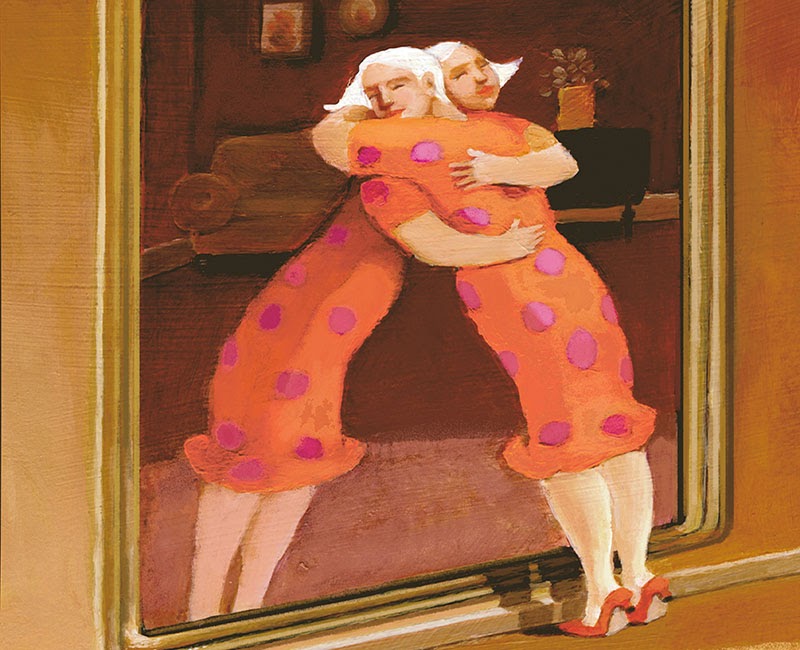
Patients wonder if we think about them just as they are thinking about us. When I tell patients that I think of them or disclose that something they said has stayed with me since the last session, I can detect both surprise that they are remembered and relief for finally being seen. We want our patients to make meaning of therapy and take in the work. I think that when they realize we’ve internalized them, they’ll finally do the same.

A Revealing Moment

Each week, my interns submit a summary of their clinical hours along with a “process note,” pretty standard training fare. These notes are supposed to document their internal ups and downs; the good, bad, and ugly of their week with clients whose challenges and pathologies are probably a bit above their current pay grade. Good learning opportunity, I often rationalize, especially since they have competent on-site supervisors who are there to teach, train, and support their burgeoning yet fragile clinical identities.

Like what you are reading? For more stimulating stories, thought-provoking articles and new video announcements, sign up for our monthly newsletter.

If the academic/clinical interface were a bit tighter, I would have these folks work their way up from simple and acute disorders to the more severe and chronic pathologies as they evolved through their training. But such is not always possible. So, for most of my trainees, this entails some arduous hikes on those steep and unmarked learning curves that we more seasoned clinicians have experienced—and still may.

Sure, we process some of the more complex clinical challenges in class, and they are in resource-rich learning environments at their sites, but for the most part this is boots-on-the-ground OJT-101. Such was recently the case, when one of my interns wrote in his process note, “I find myself dealing with [a] therapeutic boundary [with a client who] was giving signals of perversion [related to] the dress code. I felt uncomfortable and reported [this] to my supervisor, and the client was confronted. I felt supported and protected.”

I was curious about what he actually meant by the word “perversion,” given the loaded and historically pejorative nature of the term. Upon follow-up, I discovered that in this intern’s culture, women are quickly and quite aggressively shamed and oftentimes punished by family and community if they act or dress in a way that is considered immoral and violates biblical principles.

The client was a 32-year-old female attendee in a day-treatment program who, in the intern’s words, had chosen to wear “a cut-off shirt without a bra and see-through sport leggings without panties.” In that moment of discomfort, my intern abruptly ended the session by telling the client that he had to attend an intake session. He then went to his supervisor for guidance. While I was very glad that the intern took this immediately to his supervisor who gave him the support and protection he needed at the time, I was dismayed that in that very uncomfortable moment, perhaps understandably, he simply told the client that he had an intake to perform and abruptly ended the session. He lied to her.

Apparently, this was not the first time this client had approached therapy with a male clinician in this manner; she was subsequently transferred to a seasoned female clinician after her brief visit with my intern.

In retrospect, my intern understood that this might not have been the best way to handle the situation, but he had clearly been taken off guard by this “attractive woman,” was intensely uncomfortable, and expressed concern that if he did not act immediately that his “imagination” might get ahead of him. While he momentarily considered the possible role of transference in this client’s wardrobe choice, he was even more relieved that his supervisor and the clinical director handled the situation “sensibly and professionally.”

This scenario brought me back to an incident during my own training when, during a practicum placement in a state psychiatric hospital, my supervisor decided it would be instructional to set up an intake for me with one of the “chronic” patients. Soon after being ushered into the seclusion room with me—a strange choice of setting—the patient sat down facing me with her bathrobe open and nothing underneath. All I remember about that tortuous moment in time was that I froze. As then, as if from thin air, my supervisor emerged from behind the one-way mirror and into the room. Upon my supervisor’s entry, the patient immediately sat erect, closed her bathrobe, and had the most delightful conversation with my supervisor, who later said to me, “I can write a book about any patient after meeting with them once.”

In retrospect, I believe, knowing what I later learned about this man, that it was an exercise designed to humor him and shame me. After my initial embarrassment and sense of ineptitude receded, the shame set in.

Getting back to my own intern, I was very aware of not wanting to shame him and wanting his own moment of torture to be a learning opportunity for him and the rest of the class. So I asked them all to consider what they might have said in that moment, while my intern listened in and then reflected upon their responses. These included, “I probably would have done something very similar,” “I would have told her about boundaries and that I was not comfortable continuing the session,” and “I would have ended the session and rescheduled after telling her that her attire was inappropriate for the setting.”

Each of their responses was appropriate given their level of experience, but in retrospect, I was a bit disappointed, perhaps unrealistically, that none of them had considered the possibility that this client’s choice of attire might actually not have been a choice, at least not a conscious one. So, I wondered out loud with them about the possibilities that she had been sexually assaulted or trafficked or both, and/or had come to rely on seduction to navigate relationships of power imbalance, particularly with men. It might have been erotic transference. Or perhaps, it might have been none of these, and she was simply proud of her body, and had chosen not to heed past messages around the inappropriateness of this behavior.

***

As I write this, I am an hour out from my supervision class in which I hope the incident will come up again; if it doesn’t, I will bring it back into focus. I’ll be most interested to know what about that client’s behavior triggered my intern to consider it a “perversion.” Hopefully, he will not feel the shame I did many years ago, and we will have a rich discussion.

What would you have done?
 

Ancestral Narrative Building: A Path to Healing Generational Trauma

“I am so afraid to be like the men in my family when I am angry. I find myself holding in so much rage because I do not want to be like my dad or my grandfather. I also refuse to be part of the angry Black man stereotype.”
“What didn’t you like about their rage?” I ask my client to examine his narrative of his ancestors’ rage in order to understand his own.
“The way it was framed in my family is that it got them in trouble. It got them both killed.”

Like what you are reading? For more stimulating stories, thought-provoking articles and new video announcements, sign up for our monthly newsletter.


We take time to process these situations about the men in my client’s lineage. Both his father and grandfather had been killed at the hands of the state, and my client began to believe at an early age that if he had less rage inside of him, he would live longer and safer.

I tell him I am not convinced that their rage was unwarranted, knowing that the United States has unjust systems that impact the lives of Black and Brown people daily. I believe that micro- and macro-aggressions pile up and that our reactions, or non-reactions, to them can be survival tactics or indications of insidious trauma. And we can still create new narratives around their deaths and “rage.” We have to understand the social and physical contexts they were born into and living in, to make sure we can make these claims about their rage, since it is coming up in therapy. Although I can guide him through it, my client needs some deep ancestral healing, and he has to do it himself. He has to be the one who is committed to researching, asking questions, and making meaning.
 

I start by creating a reading list for the client. I read the books, too. At first, he doesn’t quite see the point. I explain that we have to study the time and place in which both of these ancestors lived. We read Isabel Wilkerson’s The Warmth of Other Suns, Langston Hughes’ The Ways of White Folks, James Baldwin’s The Fire Next Time, and Zora Neale Hurston’s Their Eyes Were Watching God in order to get a sense of the time periods his family lived through. We research articles from the relevant time periods in the cities his family resided in and take a deep look at the cultural climate of the cities. We find research about the impacts of Jim Crow laws, the GI Bill, and redlining, policies that impacted his family directly and indirectly.

“I have only heard the stories and the warnings from my mom, aunts, uncles, and grandma. Stay inside! Stay calm! Don’t be too forward! Don’t speak up! We don’t want you to get killed out there! Reading about other people from the same time period gives me more information than what was passed down to me. Black people were unsafe even if they did stay calm and remained inside. My family was so fearful of more death that they played into the respectability politics—‘Be good and nothing will happen.’ But the truth is, things still happened.”

This kind of ancestral digging creates a new narrative that allows the client to build, expand, and contextualize his sense of self. Prior to our research, he had limited information from which to make sense of his childhood and the messages he received both implicitly and explicitly. The messages he received growing up are important and tell him a lot about his lineage, but he needs to do more digging to get a fuller story. Intentionally getting new information about people similar to him and his generational trauma allows him to make space for new framing of his paternal lineage.

“I learned about the political climate my grandfather was living in. I saw an article about a man killed for looking at a White woman the wrong way in the city we lived in. I realized that my grandfather might not have been angry, he might have been just living his life, and that there are not actually any stories about him being angry or reactive at all.”

Though he has limited people alive to discuss this with, we create a list of questions he has for his extended family. My client is able to make new meaning about his father by doing some interviewing of distant family members. He asks about the time periods, the rituals they had in their family related to his Black American culture, and anecdotes about his grandfather and father. He records their responses to his questions in order to keep a record of what he found for his future son. He reckons with the fact that after his grandfather was unjustly killed by the county police, his father became an advocate to make changes in his community. His father became an activist and fought for the rights of Black Americans in his city.

“My mom always made it sound like when we speak up we are likely to be hurt, because we are putting ourselves at risk, but that is because she had trauma from my dad’s dying during a protest. She always seems so strong, but my aunt told me she was different after my dad died. She didn’t want him to go that day, and he told her he had to make a better life for his kids. Understanding that my father was fighting for what is right has totally changed what I understand about my anger.”

***

The old adage of becoming your parents is more than just a saying. Clients and therapists alike carry forward and live ancestral history and messages that have the power to impact and influence triggers. We may find ourselves reacting similarly to our ancestors, or reacting completely opposite from the way they did, without a lot of knowledge about why they acted the way they did in the first place.

Ancestral trauma impacts us in ways we don’t realize, and we need to investigate our lineages, whether we have direct access or need to gain access through texts and articles, to make sense of who we are and who we want to become. And therapists, along with developing an anti-racist framework that appreciates the racial climate of the country in which the client resides, must guide the ancestral trauma towards ancestral resilience when the client is ready to do their deep exploration.

When Psychotherapist and Client Share Similar Crises

It’s been almost nine months since I found out that my husband has been unfaithful, and my life and world have been turned upside down and inside out. It has been almost nine months of being in a seemingly unrelenting state of shock, disbelief, distraction, exhaustion, and overwhelm. From the start, sitting in my psychologist chair and doing my psychologist thing have felt fraudulent. How can I listen, really listen and comfort another, when I am in this raw and vulnerable place? I can’t say for sure, but I have been. In fact, my job has been the one consistent thing in my life that hasn’t really changed. It has been a welcomed distraction to focus on others rather than spending all of my waking hours being lost in my thoughts and the vast array of emotions that I feel on a daily basis.

Like what you are reading? For more stimulating stories, thought-provoking articles and new video announcements, sign up for our monthly newsletter.

I am an empathic, highly sensitive person who also happens to be a psychologist who can become engrossed in the feelings and pain of others. This is likely why I was drawn to the field. Over time, however, I have learned how to create boundaries between myself and those for whom I care so that I don’t burn out. Yet as a caretaker, the potential for burnout remains ever-present.

Let’s take this one step further. In the midst of learning what the red flag signs were and are and understanding what my legal rights are as a divorcing parent, I recently began working with a woman who is slowly awakening to her sense of unhappiness in her marriage—a woman whose story is eerily familiar to my own. In one breath, it is difficult to reflect back on all of the accusations, fights, and sequences of events that she is facing, and that I have faced and continue to. In another, I can judiciously share some insights with her that I’ve gained in hopes of helping to foster her sense of self, her self-confidence, a trust in her instincts, and to acknowledge and respect her feelings of marital dissatisfaction.

Just as I was met with scare tactics and threats about my own marital relationship and its dissolution, she is too. Rather than becoming intimidated, my hope is to help her find her strength to do her own research and gain her own information to help reach her own conclusions.That is because if her story is anything like mine, she may be thrown off by inaccurate information that will disempower and wear her down.

These sessions have not been easy. On some days, they’re painful, as I listen to her story and feel the visceral reactions that I have and still experience and that she is having now. I experience flashbacks after the sessions, but my hope continues to be to try to change her story in an effort to process my own. On the flip side, I have found that being able to help another person in a similar position is cathartic and empowering for me. If I am able to give another woman a little bit of direction so that she is not blind-sided by the upcoming phases she may pass through, I can begin to find solace in my horrific experience.

Although I am still in the midst of the divorce and grieving process, there are a few things that are helping to keep me chugging along.

Self-Care

As a psychologist, I continually reflect on the need for self-care. However, it didn’t really click with me until I arrived in this very place. Self-care means different things for me right now:
It’s okay if I don’t cook dinner every night
It’s okay if my house is not as neat as it usually is
It’s okay to want to sleep more
It’s okay to want to be left alone
It’s okay to give myself a break and not beat myself over it
It’s okay if I didn’t accomplish as much as I intended because I’m fatigued
It’s okay to cry often

Self-care has also taken on the additional meaning of being forgiving and stopping when I think I should keep going on my to-do list. My sense of self-care has taken on the additional and much-welcomed elements of self-compassion and self-forgiveness for the upheaval that is now my and my children’s life. Self-care is the growing understanding and appreciation that this won’t be forever, but it is for now.
Self-care, at a more basic, moment-to-moment level is also:

Drinking enough water to stay hydrated on the days when I don’t wish to eat or drink
Getting enough sleep
Taking my vitamins
Exercising—walking, jogging, lifting weights, stretching, yoga
Taking a shower
Changing out of my pajamas even on the days when I’m not seeing patients in person or virtually, and accessorizing too
Dying my roots and getting a haircut
Scheduling a manicure and/or pedicure
Scheduling a massage and/or facial

Know When to Take a Break

I like to consider myself a diligent, persevering individual who can push beyond fatigue for the sake of learning something new or helping another person to find emotional relief. That high level of motivation and ability to delay gratification is what helped me to get through earlier challenges, including comprehensive exams, dissertation, licensing exam, post-doctoral training, and all of the other intensive training we psychologists have completed. The downside, if there is one, to my diligence is that I haven’t always acknowledged the importance of slowing down, pausing, putting on hold, rescheduling, or just stopping. My personal and professional experiences have centered around the axiom, “Keep on going until I reach the finish line.”

One thing I’ve learned is that I need—I mean really need—breaks on a daily basis. I need time to stare out my window or sit in the sun. I need to sometimes leave my desk and work on something monotonous like laundry because it’s a welcomed break from thinking so much. It’s okay to take that break even when there are phone calls, emails, texts, case notes, and invoices to prepare. That list will never be short, nor will it ever be “all done.” I’m embracing the unfinished nature of my work and realizing that it’s okay to walk away from my desk or office.

Grieving, Boundaries and Growth

Logically, I know that divorce is a loss, a huge loss. Now that I’m in it, I deeply understand that it is the true death of the life that I thought I was going to have, the life I thought I had, and the loss of the family unit that we created together. The sadness that I feel is quite unbearable on certain days and it drains my energy and results in physical pain (i.e., headaches, stomachaches, joint pain, muscle soreness). This experience gives me a new perspective on having a broken heart. Not only in divorce, but in loss by death and break-ups for people of all ages. Loss is loss.

And now, more than ever, in the shadow of this immense sense of loss and emotional exhaustion, it is an incredibly important time for me to set boundaries around when I start my work day and when I will end it. I am a bit of a workhorse, and I balance my practice with my three children and home life by keeping a hand in all three arenas—all day long. I can’t do this right now. I’m learning to understand that if I invest a few hours into a work project, then I won’t get to the items for my home. I need to let it go for another day or enlist the help of my children. And vice versa; if I invest a few hours into a project in my home, I will not be able to also accomplish work tasks.

This also means saying no to social plans or volunteer opportunities for my children’s school or activities. It means prioritizing what I need to get done and what I have energy for.

***

As a psychologist, I, like many of my professional colleagues, believe that I need to “pull it together,” because that’s what we do and because that’s the implicit expectation our clients have. We are “available” to others, and sometimes, that means our “stuff” has to take the side or perhaps even the back seat. However, what happens when personal issues and conflicts take over? It has and will continue to happen, because we are all humans, and psychologists are no different
 

Finding a New Normal in the Era of COVID

As I scrolled through the cartoons on our website, an image flashed through my mind. A therapist sits pensively across from their patient, framed by a newspaper caption on the wall behind which proclaims, “The pandemic is receding!” The therapist says to the patient, “OK, let’s talk about your new normal,” to which the patient laments, “But Doc, I didn’t even have an old normal.”

Like what you are reading? For more stimulating stories, thought-provoking articles and new video announcements, sign up for our monthly newsletter.

I am fully aware of the dangers and COVID-related challenges that linger, so am not proclaiming the pandemic’s recession, nor its end. However, I have directly experienced and am aware of the many ways in which the world is attempting to right and re-balance itself—from individuals to institutions to cities, states, and countries. People seem desperate to throw off the oppressive cloak of darkness and fear that the pandemic ushered in, as well as the emerging threats on all fronts, both medical and non. At the same time, people seem a bit less resistant to feeling their way down unfamiliar corridors, both public and private, even in the shadow of lingering uncertainties and elusive futures. We seem to be at an inflection point, or perhaps a liminality—a time of existential crisis on scales both small and large, not just for our patients and trainees, but also for ourselves as healers.

In a recent blog entitled Fellow Travelers During the Coronavirus Pandemic, Victor Yalom wrote, “There is nothing like a pandemic to put us on equal footing with our clients! To even pretend otherwise, to not acknowledge to our clients that we are living on the same planet, that we are going through this epic crisis along with them, seems to me entirely disingenuous.” He couched this statement in the context of his father, Irvin Yalom’s notion that we, along with our patients, are fellow travelers. And as fellow travelers, I think that we have a two-fold obligation to find our way to a new normal, whether or not we or our patients had a firm grasp on an old one.

I like the idea that we and our patients are fellow travelers; however, the roads we travel may be very different from theirs, especially so for those who struggle day-to-day around the basics and don’t enjoy the privileges familiar to many of us and our professional colleagues. I have no doubt that COVID has been merciless for many of us and our colleagues, requiring adaptation and forcing upon us losses at many levels. But, as Roberta Satow said in The Uneven Effects of the Pandemic, “there is a great divide in this country in terms of race and class that has been exacerbated by the coronavirus…[and] as therapists, we must keep sight of the unevenness of the effects of the pandemic, empathizing with those who are suffering and encouraging those who are thriving (even ourselves) to not feel guilty.” So, as we return to a previous normal or attempt to construct a new one both for ourselves and our patients, I think it important to take this opportunity to explore deeply exactly what that means.

One of the more common return-to-normal phenomena that clinicians face is how to re-balance their therapeutic relationships between face-to-face and virtual interactions. From the perspective of the clinician, Matthew Martin’s The I-Thou Relationship in the Age of Telehealth- Part II suggests that “teletherapy holds the potential for new horizons for therapeutic gain. However, client and therapist must both be willing to cultivate the process of being together in authentic relation for these gains to find fruition.” Here, Martin addresses the seeming inevitability of telehealth as a newly-ubiquitous mode of psychotherapy delivery, and how, perhaps, it can evolve into a meaningful bridge for connection with our clients despite the geographic separation. This directly challenges the fear (or concern) therapists have historically and more recently voiced about telehealth’s inability to create real connection with clients or, as Lori Gottleib described it, of “doing therapy with a condom on.”

From the other side of the couch, Martin, in The Quarantine Void: A Reminder of the Central Role of Being, asks us to consider how COVID has forced many of his clients to reconsider the balance between “being” and “doing.” He says, “How my clients and I choose to respond to this new normal has the power to restore the centrality of being, along with our shared humanity, or bring us back into the dizzying energy of a doing-centered world.” Will we, as citizens both of the world and shepherds of our patients’ well-being, consider that balance alongside our clients as the shroud of COVID slowly lifts?

And what of our patients who entered the pandemic already struggling for balance in their lives, such as those whose lifelong relationship with introversion in a society that values its opposite left them feeling alone, different, alienated? While they may have struggled less than extroverts during the pandemic, many may have and are still struggling for the new balance that accompanies re-entry. In Pandemic Lessons for Introverts (and their Therapists), F. Diane Barth reflected on her clinical work with Melissa and shared, “the gradual ending of the isolation resulting from the pandemic has brought on some concerns, including what Melissa and several other clients call ‘fear of re-entry,’ that is, fears about returning situations in which interpersonal interactions stir up discomfort and anxiety.” How will we help those Melissas out there whose pre-pandemic normals were elusive?

Then there are clients whose pathologies and challenges were more unsettling and disruptive, not only for themselves, as they struggled for balance and normality, but for their intimates, who were often at a loss in the turbulent wake of their loved one’s personal battle. In a thought-provoking essay by Dana Harron, Eating Disorders, Couples, and COVID-19, we met Jamie, who had long struggled with Anorexia, and her partner Lyndon, who had become increasingly aware of Jamie’s disordered eating because of the forced isolation. With the aid of couples therapy, Lyndon became better “able to notice, and to share with Jamie, how out of control and alone he felt [and, with therapeutic support] became much better able to sit with his vulnerability [which] made him able to sit with Jamie’s vulnerability, too, and ask her about her feelings and experiences when he noticed her having difficulty with food.” In this case, it took a village to help Jamie and Lyndon wrestle a new normal from COPVID’s grip.

***

For some of us and our patients who have been fortunate, or perhaps privileged, enough to sidestep COVID’s unswerving trajectory, we have experienced an unavoidable and involuntary inflection point. Whether this inflection point was or has become an opportunity for growth, self-awareness and change certainly depends upon the way it has landed in our and their lives. Whether for better or worse, new normals await…hopefully!

Psychocardiology: Psychotherapists Helping Cardiac Patients

According to the Centers for Disease Control, one person in the U.S. dies every 36 seconds from cardiovascular disease (CVD). And heart disease is the leading cause of death for men and women of most racial and ethnic groups.

Obviously, this is a huge challenge for cardiologists. But cardiologists aren’t the only ones working to slow the encroachment of these deadly diseases. The psychotherapy community is also getting involved through a field known as psychocardiology. Researchers in this area are interested in understanding how psychological factors, such as depression, anxiety, stress disorders and substance abuse, contribute to CVD and vice versa.
 

Like what you are reading? For more stimulating stories, thought-provoking articles and new video announcements, sign up for our monthly newsletter.

For example, a study in the European Heart Journal by Sripal Bangalore and colleagues found that individuals with a history of CVD are more likely to experience symptoms of depression than those without such a history. Conversely, the risk of developing CVD increases by as much as 65% in individuals with depression. And in those who are already being treated for heart diseases, psychological problems can cause further complications. All of this suggests a deep, bi-directional connection between the heart and the brain.

Let’s consider what therapists need to know to put this information into practice.

What we Know About the Brain-Heart Connection

We’re only just beginning to understand the deep connection between the heart and the brain. We know, for instance, that psychological stress can put extra strain on our hearts. When our bodies are in “flight-or-flight” mode, our blood pressure increases and our brains release adrenaline, along with other chemicals that can cause our hearts to spasm.

Although these physiological changes can help us survive immediate threats to our lives, when we spend most of our time in “flight-or-flight” mode, as is the case with most of our patients, the odds of developing heart disease greatly increase. In fact, one large scale study by Salim Yusuf and his team which involved 25,000 participants in 52 countries, found that psychological factors accounted for about 30% of heart attacks and strokes.

One explanation for the increase here is that stress hormones can cause damage to our hearts when constantly released into our bloodstreams over long periods of time. Additionally, mental stress increases inflammation of the brain and the heart, which can also lead to further complications.

The Need for New Interventions

Stress Management
Armed with the information above, many psychocardiologists are focused on stress management. The hope here is that cardiac patients who learn how to better manage stress through behavioral change will not only improve their symptoms of depression, but will also see improvements in their heart symptoms.

Such findings suggest that stress management training administered by therapists and psychologists would be beneficial for every cardiac rehabilitation patient. And when compared to the cost of other interventions, like angioplasty or bypass surgery, stress management is quite cost efficient.

Improved Quality of Life
Other psychocardiologists look for ways to improve quality of life. Yes, many heart patients end up with depression after surgery or other medical treatment for cardiovascular disease. And yes, depressed people often don't exercise, eat well, or take their medications. But there may also be physiological connections between CVD and depression.

Because we know that cognitive behavioral therapy combined with talk therapy can effectively reduce depression and anxiety, there is reason to believe these interventions can also reduce levels of stress hormones, decrease elevated heart rates, and calm hyper-active responses to physical stressors.

Challenges Remain
Unfortunately, while acceptance of psychocardiology is growing among the medical community, there are still challenges. For one thing, it’s difficult to get insurance companies to pay for any cardiac rehabilitation, let alone adding a psychological component. And with hospital stays getting shorter in the U.S., there’s little hope for inpatient rehabilitation and outpatient rehabilitation tends to focus on physical therapy, since insurance refuses to pay for other services.

However, none of the above has to get in the way of therapists’ treating their own patients, inquiring about heart disease symptoms, and making them aware of the heart-brain connection. Additionally, we all need to look for ways to treat the whole patient and to partner with cardiologists or other clinicians to ensure that our patients receive the best care possible.

Case Application

Jeffrey, a 48-year-old male with symptoms of depression, was referred to my office by his cardiologist for an evaluation. Jeffrey presented with both anxiety and depressive symptoms. His symptoms of depression had been present for nine months. Jeffrey was an avid cyclist who had recently suffered a myocardial infarction (MI) that required a cardiac catheterization, medication management and a cardiac rehabilitation program. Even though Jeffrey recovered from the MI, it left him with damage to his heart muscle, and he was advised by his cardiologist to continue to exercise but that he must also “slow it down.” This meant that Jeffrey could no longer ride with his buddies, something he used to look forward to all week long, since they rode at a level that would cause too much strain on his heart.

Even though Jeffrey was given clearance by his cardiologist to ride again, over the past nine months he had been struggling to get started. Jeffrey was becoming increasingly anxious that riding would put too much strain on his heart and possibly cause another cardiac event to occur. He worried about what would happen to his wife and two children if he had another MI and did not survive. He would ruminate over the possibility of never being able to keep up with his cycling buddies, a group that he had been riding with for over ten years.

The worry was starting to negatively impact Jeffrey. He now had low energy during the day, no motivation to exercise or join his family and friends in weekend activities, difficulty concentrating at work, poor sleep, weight gain, and feeling “down” on most days.
After taking Jeffrey’s medical and psychological history, I explained the mind-body connection, the concept of psychocardiology, and the comorbidity between psychiatric disorders and heart diseases. I also explained the bi-directional relationship between the heart and mind and how his heart problems were negatively impacting his mental health state, and that by working with him to help his mood, he would feel better physically.

To alleviate some of his anxiety and to highlight his body–mind connection, I incorporated breathing exercises and other relaxation techniques, such as guided imagery and body scanning to reduce stress and muscle tension. Body scanning is like meditation; it enabled Jeffrey to get in touch with his physical symptoms and their meaning. Jeffrey started to realize that cycling was a coping mechanism that he used to alleviate his anxiety and that now he needed to discover new methods. He identified his all-or-nothing thinking, e.g., “If I cannot ride my bicycle a certain way, I would consider myself a failure.” In sessions we addressed how this rigid thinking made it difficult to recover when something unexpected occurs.

CBT exercises helped Jeffrey explain the link between cognitions (beliefs that he would never be able to keep up with his riding buddies) and emotions (fear, failure) and safety (he may have another MI and not survive this time). Cognitive restructuring helped to identify old and new stressors, understand what response they trigger, and find alternative responses. During sessions, Jeffrey identified and processed the negative feelings that surfaced during his forced time away from riding. To increase self-confidence and reduce anxiety, measurable, realistic, performance-based goals were developed and monitored in each session.

***

Jeffrey’s unexpected cardiac event resulted in an immediate imbalance and disruption to his life. The inability for him to continue cycling was devastating and hindered his recovery process and negatively impacted his mental health. Jeffrey’s deeper understanding of the role psychological well-being played in his physical functioning resulted in greater motivation to work on his mental and physical health. The collaboration between two specialties, cardiology and mental health, enabled Jeffrey to have his psychological and physical needs managed simultaneously.
 

Exploring Our Client’s Multiverse

Whether you ascribe to Jung’s theory of archetypal selves or follow Richard Schwartz’s Internal Family System’s (IFS) theory of parts, clinicians likely agree that the human consciousness contains multitudes. Consciousness—collective or otherwise—is multifaceted. IFS or the clinical practice of inviting a client’s different parts to engage in both internal and external change can offer something to even those clients who report a life free of both pathos and pain.

Like what you are reading? For more stimulating stories, thought-provoking articles and new video announcements, sign up for our monthly newsletter.

For clients who make meaning of their lives through stories, we prefer to call this work Internal Fandom Systems (IFans). We have used the power of fanfiction to make IFS more inviting to our pop culture-fan clients, and still appreciate the canon that Schwartz created. We made this change to help our story-loving clients become curious about the wide cast of characters who inhabit their inner world. Inviting clients to notice and then engage with these different parts of themselves can be the beginning of a mythic adventure. But how do we get clients to notice the different parts that exist within them?

First, we engage the client in a brief psycho-education dialogue explaining the theory behind parts. For clients who are particularly interested in psychodynamic theory, we take a heaping spoonful out of the collective unconscious and explain the ways that the work of other great thinkers both paved the road for and are consistent with IFS. Once the logic of parts starts to become clear, we invite the client to get curious about the parts of themselves that are currently present. This differs from our standard Therapeutic Fanfiction approach in two important ways:

We are using fandom characters to help the client get to know an aspect of their own personality rather than using fandom characters and archetypes to help a client build competency and/or skills to meet an external challenge, and

Rather than learning to access the power of a fandom character in the greater collective unconscious, we are helping clients to get to know the characters of their personal unconscious. In IFans, the client learns about their own multi-verse rather than channeling a character or learning a skill from fandom.

As the client describes different thoughts, feelings, and sensations, we begin to get curious with them about the identity of a particular part. Clients often come up with fandom characters on their own, but when they struggle to describe the part, we might ask them if there is a character or fandom object that matches with the part they are currently noticing. If a client continues to struggle, we might offer a fandom character or archetype that comes to mind for us.

In a recent session with a client, I (Larisa) offered, “It sounds like this part is really worried about you but communicates in almost a condescending tone. It’s making me think of Tony Stark from the Marvel Cinematic Universe.” While the client agreed that Tony is someone who shows he cares through quips and snarks, they reported that this didn’t feel quite like their part. In this case, the client ended up choosing a different fandom character. But sharing the character that came to my own mind helped the client continue to sit with what felt most authentic to them, ultimately leading to the character who resonated most with this part—Sam Wilson, once the Falcon and now Captain America. In Therapeutic Fanfiction, the next step would have been for me to ask the client to share the skills, values, or attributes of Sam Wilson that appealed most to them. Then, we would get specific about which aspect of Sam might be able to help them face their current external challenge. But in this scenario, my goal was to help the client practice listening to their parts. Their Sam Wilson part turned out to be a protector, who was working to keep the client’s adult consciousness or Self away from the part we would eventually come to know as the Winter Solider, i.e., the shadow side of their Bucky Barnes part.

Just as in IFS proper, when using the Therapeutic Fanfiction lens of Internal Fandom Systems, clinicians help ensure that both client and therapist are getting curious about different parts, avoiding the blending of Self and other parts that can sometimes occur. As Sam observes to Bucky, “You have to stop letting other people tell you who you are.” Of course, Sam is correct. It isn’t our job as therapists to tell our clients who they are. It is our job to help them learn how to listen to their parts, to support them in learning who they are at present, and then to get curious about who they’d like to become.

The Pregnant Correctional Practitioner: Challenges and Benefits

In my previous blog, I addressed my own personal growth and development that occurred during my time as a clinical social worker specializing in the area of correctional mental health. Working in a correctional environment has taught me valuable lessons about compassion and empathy, who I am, and how to sit with others who are attempting to heal in the long shadow of the darkest moments of their lives. My own experience of having been twice pregnant while working in this capacity has deepened my appreciation of the human condition.

We clinicians know full well how demanding graduate and post-graduate training are, and how these demands don’t simply stop while we are moving forward professionally. And this includes family-building. However, despite the fact that 83% of social workers identify as female, the topic of pregnancy and how clients respond to a pregnant clinician is rarely discussed in the confines of a classroom. As a result, most clinicians who experience pregnancy will out of necessity learn how to navigate these 40-plus weeks in an on-the-job-training fashion.

Like what you are reading? For more stimulating stories, thought-provoking articles and new video announcements, sign up for our monthly newsletter.

Having to navigate pregnancy as a professional was challenging in its own right. Both my experience and research have suggested that women often experience far fewer advancement opportunities as a result of preconceived and outdated notions about their ability to simultaneously manage their professional and family lives. This concern often occupied my thoughts as I wondered what my professional life would look like after my children were born. These thoughts and concerns were often unwelcome add-ons to the actual physical challenges that occurred during and after pregnancy, including nausea, extreme fatigue, and decreased reliance on caffeine to provide that occasional boost. I often experienced periods of heightened anxiety with regard to my baby’s fetal growth and health. As my body changed, revealing the undeniable reality of pregnancy, my body was on greater and greater display, which made for an interesting addition to the already demanding emotional and physical nature of my correctional work.

Deciding how to respond to curious clients was always a challenge for me. This was brought into bold relief when working with those clients who, because of separation from their own families, experienced grief and deep feelings of sadness and loss. Sometimes that grief was profoundly complicated in younger clients who faced the prospects of never becoming parents due to extended prison sentences. Others, whose incarceration followed child abuse, frequently faced the possibility of never seeing their children again. As a clinician, this was always difficult to witness while I was, at the same time, navigating my own journey toward childbirth and parenthood.

My first pregnancy occurred while I was working in a women’s correctional facility. The experience was interesting, albeit complicated. I had just transitioned from working in a men’s facility and all of my rapport building in the women’s facility was done while I was pregnant. Working in this environment, I was constantly in the presence of women who had lost custody of their children, been at odds with their children due to chronic incarceration and substance use, killed their children, miscarried after a violent interaction with a male counterpart, were themselves pregnant, had given up their children for adoption, and/or had stillbirths. The questions were never-ending regarding where I was in my pregnancy, how I was feeling, and what it was or would be like to be a parent. My growing belly was always the elephant in the room, and quite honestly, practically a constant reminder for these women of what they had lost.

I worked with several women who were due around similar time frames to myself. One of the women, we will call her Melody, looked at me one day and said something that put this into perspective for me. She angrily lamented, “I can’t even look at you, it’s not fair! You’ll get to keep your baby, and I will have to give my baby up as soon as I’m ready to leave the hospital!” Before this comment, I didn’t realize how significantly impactful my own pregnancy was on the relationship I had with Melody and others in similar situations.

Fast forward to my second pregnancy, in which I was back working with incarcerated men. There were fewer questions, but the stares were more frequent and the outlandish comments about my reproductive choices would fly frequently. Since I had my two children 22 months apart, there were a few times I was asked about what I wanted for a family size—“Do you want a big family?” Or, “Are you just going to be one of those people who pops a lot of kids out?”

However, despite the loaded commentary, both the men and women I worked with showed a lot of compassion during my pregnancies. Despite the pain that this pregnancy evoked in them, particularly around their own losses and desires to themselves be parents, the clients always took care to make sure I was safe from harm and didn’t do any heavy lifting, and they were extremely understanding if I had to leave early for an appointment and their schedule was changed.
                                                                ***
Ultimately, my experiences as a pregnant practitioner have taught me more about empathy and the depths of a parent’s love. They have also taught me about the trauma and tragedy that abound when pregnancy and parenting intersect with unmanageable circumstances, restricted choices, and limited resources. Working clinically while pregnant has taught me how to sit with discomfort and the pain that life offers, which ultimately has made me a more compassionate, empathetic, and astute social worker. I encourage pregnant practitioners, regardless of whether they work in corrections or elsewhere, to lean into the experience so that they can develop as yet undiscovered skills and qualities.

Fellow Therapists: Do You Work With Sex Offenders?

I have had a career-long commitment, or understanding, primarily with myself, but also with insurance companies, that I choose to not work with child-abusers. It is not that I can’t see redemptive possibilities. It is just that I know I have a strong bias and am not willing to forge a pathway to empathy for those who molest children. It is a boundary I set when deciding whom and who not to treat. My thoughts about this dilemma came to the forefront very recently.

Like what you are reading? For more stimulating stories, thought-provoking articles and new video announcements, sign up for our monthly newsletter.

Yesterday, a man who had been on my therapy waiting list finally arrived at my office. On his intake he noted a recent breakup with his girlfriend of several months. He stated he experienced depression and needed help to “get over the relationship.” It was only in session that the rest of his concerns emerged. At the beginning of their relationship, he told her that he had been married and had several children, but lost custody of them in the divorce. At that time, he was in deep financial trouble, having lost his then recently-purchased home, cars, and his wife to her drug addiction. Nevertheless, the Department of Children and Families (DCF) had determined that neither he nor his ex-wife were capable of raising their children, who were subsequently placed into foster care.

The divorce and subsequent foster placement of the children occurred several years prior to my meeting with him. Several of the children had since reached the age of majority. For a seemingly inexplicable reason, the foster parent who later became the adoptive parent of several of the children took it upon herself to contact my client’s girlfriend (I have no idea how she learned about her) in order to warn her that my client had been accused by his then young daughter of inappropriately touching her. True? Not true?

My client vehemently denied that this ever happened and maintains that position to date. According to him, there had been no legal proceedings, and instead, four hours of reported verbal assault by the local police. He was then purportedly presented with paperwork which he signed without reading. Why? As it turned out, he could not read. He only recently discovered that the paperwork was an affirmation of his guilt, precipitating removal of his contact privileges with his children. The most important sentence, that he could not read and was not read to him, was that he was (and possibly still is) forbidden to be around all children under a certain age. He was later told by his ex-wife that he had been placed on the state Registry of Sex Offenders. Boundary alert! But there was something about this man that compelled me to search a bit deeper.

It was easy for me to confirm that he had never been placed on that Registry through a simple request form and a phone call to the state. But what about the other accusations? I suggested he engage an attorney to find out whatever he could from the DCF offices in his state. As stated, he and his wife had been deemed unfit and the children were placed in foster care, from which they were eventually adopted. He has not seen these children since.

If he was and still is a concerned parent, I wondered why would he not have fought this and tried for all these years to see his children? He did admit that one of his older children had recently contacted him and said that the child abuse was a fiction delivered to DCF by his mother, no doubt out of anger and rooted in her addiction. This child, now an adult, refuses to make a legal statement.

As it turns out, DCF initially denied him access to any of the historical paperwork, reportedly stating that it was too late that they could not find electronic versions of it. As the children were no longer “his,” no documents could or would be turned over to him. Nevertheless, his newly-retained attorney persisted and indicated that there was indeed a document my client is not aware of indicating only that in saying goodbye to his children he was “observed hugging his daughter tightly.” This seemed appropriate to me, as he was saying goodbye to her for an indeterminable length of time. As per the attorney’s suggestion, I have not disclosed the existence of the document to my client. There may be more information forthcoming, and while I trust my intuition and am fairly accurate in “reading” my clients, I would be profoundly sad to learn that these accusations of child abuse against this man are true. It will be up to his attorney to share any “new” findings of legal significance. For now, my client is very relieved to know that he is not listed on his state’s offender registry.

Given that he has recently lost another relationship, I believe that my job at this point is to help this man try and understand why that relationship ended and to move forward if possible. His only response in this context thus far is that he just feels more broken. In light of my long-term and deeply-held conviction to not treat child abusers, I question whether I am comfortable treating him. Or, I wonder, am I too far in right now to bow out should more information come forth indicating that the charges of child abuse were indeed valid? As a parent, I intellectually appreciate how the trauma and drama of those events converged in a legal mess for this naïve, then-illiterate man who struggles to date, but am disturbed by his seeming inability or lack of initiative to have fought for custody and have found a way to hold on to his children.

***
 

As a therapist, I have asked myself new questions about how to set professional boundaries as to who I do and do not choose to treat. Do I believe everyone deserves a second chance? No—not when it comes to abusing a child. But this is not a matter of another shot at life. This is partly a story of a man who carries with him the stigma of assuming he was listed as a sex offender in the state for all these years. That was simply not true. A victim of a vicious ex-wife, a potentially inept police team, the inability to read, and the lack of good legal counsel at the time, conspired to trap this man, holding him hostage for wrongs not committed. Had he been found to be an abuser, DCF would have reported him to the state and he would have been on their list. That was never the case. And what about when these boundary lines become blurred? How do I (re)define my role in order to help a client like this one to establish new goals in the center of a complicated and lingering legal morass that may never be resolved? I have decided, at least for now, to continue to meet with him. But what if information does indeed emerge that implicates him? Do I search for redemption or reestablish my professional boundaries? I do not have that answer, at least at this moment in time.
 

Gratitude and Grit

What can we, as therapists, use in our work with clients to promote positive mental, emotional, physical, relational, and spiritual health? This can sometimes be a frustrating pursuit, as those who come to us for help often carry confusing and contradictory messages regarding what they need to become more resilient and improve their overall well-being. In my therapeutic work, I have found that many clients already do things in their daily lives in the hope of staying or becoming healthier. I have often noticed that one of the most beneficial things I can do is to build on two qualities that my clients already have within them—gratitude and grit.

Like what you are reading? For more stimulating stories, thought-provoking articles and new video announcements, sign up for our monthly newsletter.

Gratitude
Many of us have been taught from our early days from grandparents, elders, or other teachers that part of living well includes paying attention to what we are grateful for in life. Taking time to notice, name, and express gratitude has now become a studied phenomenon as well, with results showing that there can be many positive impacts:
Reduction in stress, depression, and hopelessness
Improved sleep and overall mood
Increased sense of motivation and agency in life
Expanded sense of positive self-esteem
Improved relationships and greater appreciation of others
Deepened sense of spirituality
Increased creativity and openness
Increased hopefulness

I often use this wisdom in my work with clients to encourage them to cultivate a positive outlook and take time to really notice, absorb, and express gratitude, thereby deepening an important state in mind and body. The benefit of this can be readily apparent—as is often evident in my conversations with one client, Casey, a single parent managing her own mental health challenges and navigating layers of stressors from physical health challenges, difficult family relationships and the exhaustion of raising a lively child on her own. It would be easy to focus on the problems in Casey’s life, and the daily distress. Casey, however, has a natural tendency to flip the conversation to the positive, and to notice what she loves about life and the “blessings” she counts as numerous and abundant. Casey has taught me more about gratitude than I have read in any book, as she visibly changes in front of me in our counselling sessions when her smile breaks out and the mood in the whole room shifts.

However, one catch is that gratitude is notably fleeting. Although it is readily accessible for Casey, gratitude is also easy to lose hold of. Her attention can move quickly to focus more on what is stressful in her life. Her natural survival instincts push her back toward watching out for what worries her, and problems resurface and grab her attention. Indeed, a session with Casey is often a bit like a two-step dance—smiles and laughter one moment, and just a few minutes later, tears and waves of anxiety. Casey has also taught me the importance of tools for managing this shift.

Which brings me to the other quality that has been helpful for Casey to cultivate: grit.

Grit
What do people rely on to get through a tough day? What behaviors, supports, or messages does a client reach for to help them continue to show up and carry on? Each person will have patterns of coping—in how they think, collaborate, or sustain themselves when facing challenges. One word for this quality, supported by the research of Angela Duckworth, is grit. Each person’s grit will look different, and everyone may use it to different degrees. Duckworth’s research, as well as what I have witnessed in clients, supports that when people are able to tap into their grit, the benefits include:
Increased ability to persevere
Expanded response and ability to adapt to challenges
Persistence to face fears
Growth in self-esteem and confidence
Increased hopefulness
Development of a growth mindset
Increased likelihood of achieving positive change
Long-term success and satisfaction

Grit is fueled by what matters to a person—do they have particular goals they’re pursuing? What do they care about and feel passion for?

When I sit with Casey through these waves of emotions as she shares the experiences in her life, this theme is apparent. Her intense emotional responses to all her life also demonstrates her incredible passion and tenacity for living well. Casey can become overwhelmed with helplessness at times, but connects back to her grit by remembering why things matter to her, and particularly what she hopes to pass on to her son. I’ve seen her pull herself up time and time again, landing solidly back in gratitude.

The more aware she is of her purpose and passion, the grittier she will become!

Building on Grit and Gratitude
In some ways, these two qualities can seem somewhat contradictory. Gratitude requires people to pause, relinquish any push for change, and shift to noticing the positive things that are already in their lives and relationships. Grit, on the other hand, allows people to keep moving, to notice and confront what might be challenging or feel negative in their lives, propelling them into more adaptable change.

I think there is an interesting and symbiotic relationship between these two qualities. When I have a hard time accessing gratitude, it’s my grit that I rely on to cope with a challenging situation. When I feel depleted and far from gritty, pausing to connect with gratitude refuels my hope and energy for perseverance.

What is encouraging to me about the benefit of both these qualities is how accessible they can be. Just as Casey naturally seems to have them both at the ready, I’ve come to appreciate how it’s possible for others to be intentional in turning toward each of these states to deepen their connection to them.

Here are some steps I have found helpful to encourage clients to use to be able to access more of the benefits of their grit and gratitude:
Observe it. Take a moment to name one thing you are grateful for and one thing that helps you persevere.
Express it. Journal, write it down, or say it out loud to yourself or a friend. Draw it, sing it, or build or sculpt it. Making it a bit more tangible in some ways will deepen its meaning and help you absorb the benefits.
Practice it. Choose a way to regularly practice the first two steps. The more regularly we dip into gratitude and grit with intention, the deeper the patterns and habits that bring us to connect more openly and regularly in line with these qualities.
***
I’ve come to believe deeply that taking a small amount of time to consistently notice what already matters can greatly increase mental, emotional, physical, relational, and spiritual well-being. Encouraging my clients to notice what they are grateful for and what they find challenging allows them to tap into this powerful tension between gratitude and grit—building on one helps fuel and nurture the other. In the end, I believe well-being and relationships will be strengthened by tapping into these inherent qualities.