Consigned to Virtual Therapy

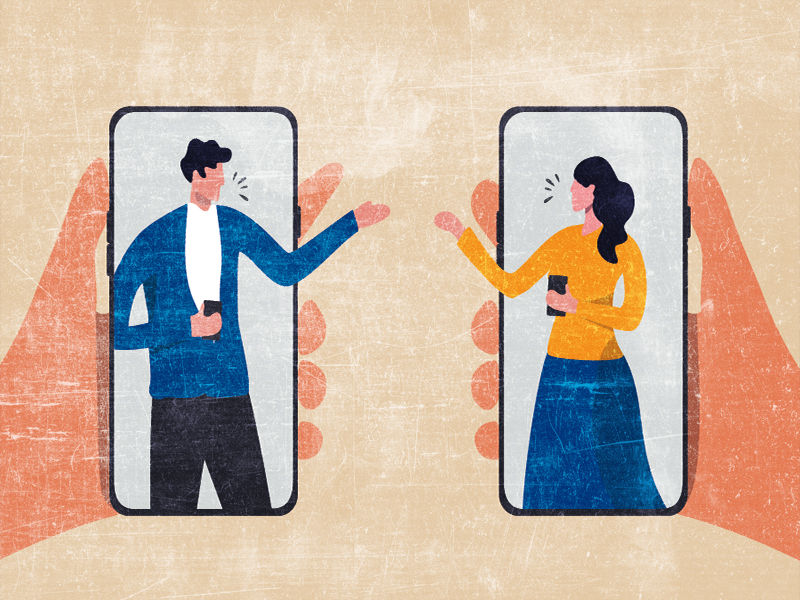
Tensions had been mounting inside and around me. “It is time,” I decreed to no one listening. “I need to call Estelle, it’s time to get back into therapy.” As always, Estelle responded immediately. Always there for me. We traded availabilities and landed on an appointment. I felt an ever-so-faint welling sensation of relief. I couldn’t wait to get back on the couch, both literally and figuratively.

Then came the blow. “I’m seeing clients virtually,” she said.

Like what you are reading? For more stimulating stories, thought-provoking articles and new video announcements, sign up for our monthly newsletter.

I first met Estelle when, nearly three decades earlier, I had, with her help, finally extricated myself from a very painful and self-destructive relationship. Ever since, I have been seeing her on an as-needed basis, during fair and foul emotional weather, for issues great and small, and at times just for a well-check. I have followed her from one location to the next, until she finally landed in a charming little 1920s Florida cracker house in the old-town section of Fort Lauderdale. Aptly named “Serenity Place,” Estelle’s office was inviting and warm, a throwback to a past era. Wood floors, rattan furniture, and that wonderfully perfect, just-short-of-mildew smell of “old” that permeated houses of that period.

It was a comfortable little space where I felt room and permission to spread out in all directions. While Estelle practiced a disarming blend of client-centered, Gestalt, existential, and systemic techniques, she was in essence, an Estellist; competent, genuine, and genuinely caring. She knew my backstory. It was her warm, confrontational, engaged, and creative personae that attracted and kept me coming back to that place of serenity. It was a package deal—therapist and space, inextricably bound. And it was to that space I wanted to return when I reached out to her for an appointment.

But virtually? No Serenity Place? No rattan couch, no creaky wooden floors, no lush foliage vying for my attention just outside her windows? And what about the basket of scarves she would cajole me to choose from to express my feelings? And how would she walk behind me to offer a counterpoint to the self-defeating prattle in my head?

Ironically and in the interim, I had taken on two former brick-and-mortar clients with whom I had worked over the years. COVID and all its related discontents had worn them down. When I first met with each of them, I had, of course, asked them how the transition to the small screen was for them. One, a physician who had expanded his telehealth services, and the other, a university professor granted the privilege of teaching from home during the pandemic, concurred that they were “used to it.”

The small screen had become second-nature to them, as it had for me as therapist, teacher, and editor; for in the latter role, I had and continued to solicit articles for Psychotherapy.net on the transition to virtual therapy. And a reading of the various blogs and essays on this topic indicated that therapists “out there” have, of necessity in many cases, adapted to the many challenges of this new mode of service delivery. For others, it was already a part of their therapeutic tool box. But I don’t think any of those who have written on the transition to telemental health have shared personal experiences of being a client during this new wave. Sure, they’ve shared some of the challenges of working with particular clients online, but that is as far as it has gone.

My hope is that each of them has created the space in their therapeutic work to explore the changed dynamics of intimacy between themselves and their clients, rather than presuming that all clients have adjusted similarly or optimally. The closest any of the therapists has come to addressing this was Matthew Martin and Eric Cowan, who wondered about the I-Thou relationship in the era of telehealth.

So here I am, now at this juncture in my 30+ year relationship with my own therapist, wondering if the “I” of me can still connect as deeply and intimately with the “thou” of her, or even if I want to try. I know the therapy outcome literature, particularly the key roles that alliance, collaboration, congruence, and empathy play; and I embrace the burgeoning literature on the efficacy of teletherapy compared to face-to-face encounters.

I acknowledge the privilege of having my choice of therapists, the money to pay her handsome fee, and the state-of-the-art technology to do so. The double standard is not lost on me, but I want to wail on Estelle’s couch, and I want to stand before her, eye-to-eye, as we role-play, and I want to have the option of refusing those gut-wrenching Gestalt exercises before petulantly conceding.

I wonder what will be sacrificed in that seemingly artificial moment, or what will be lost in the existential “here-and-now,” should I decide to pay a digital visit to Estelle. And along the way, I hope that therapists out there wonder the same.


The Uneven Effects of the Pandemic

I will not be able to see my grandchildren, 6 and 4, once school and daycare begin. Each of them will be interacting with other children. I don't know if the parents of the other children wear masks; I don't know if the parents of the other children wash their hands frequently or use sanitizer after they put gas in the car. So I won't be seeing my grandchildren for my birthday next month.

Like what you are reading? For more stimulating stories, thought-provoking articles and new video announcements, sign up for our monthly newsletter.

On the other hand, I'm sitting in my house in the foothills of the Berkshire mountains, looking out a picture window at a cardinal perched on my birdfeeder. Last weekend, my husband and I went to Maine and stayed at a B&B. We wore masks when we entered the house, but we had breakfast outside on our own little porch overlooking the garden. We had lunch and dinner outside at lobster pounds or restaurants with large, open porches. Last night, we went to a local restaurant to celebrate our anniversary. It was raining, so we had to sit inside, but the tables were much more than six feet apart, and the server wore a mask. We had a wonderful dinner and felt entirely safe.

I am working with patients by phone, so I don't have to be in my office. We have been in Connecticut for six months now and have no plans to return to New York. I have a patient at 8:30-9:15, drive five minutes to the tennis court, and play doubles for an hour and a half. Then I return home, shower, and have two more patients before lunch.

An online nationally representative survey of 1,004 U.S. adults aged 18 and older by the New York public relations firm of Porter Novelli found that nearly half of Americans (48%) reported that they are anxious about the possibility of getting coronavirus (COVID-19), and nearly 40% are anxious about becoming seriously ill or dying from it. A high percentage (62% of those surveyed) are anxious about the possibility of family or loved ones being infected. The survey also found that more than one-third of respondents (36%) said that coronavirus is having a serious impact on their mental health, and a majority (59%) feel that coronavirus is having a serious negative impact on their day-to-day lives.

These results are compatible with the common-sense assumption that the COVID pandemic has been detrimental to our mental health. But that's not true for me. And it's not true for many of my patients.

My patient Patricia, for example, loves being housebound because when she was a child, her parents insisted she get up in the early morning hours and join them when they opened their retail store. As a result, Patricia hates to leave her house and struggles to get to her place of employment by 10 A.M. Now, because of the pandemic, her office is closed, and she has to work at home. She's in heaven!

Barbara, unlike Patricia, initially complained that she had to work from home. She wanted to go to the office and see her colleagues. She resented having to learn how to use Zoom to work with clients, and she resented having to learn a new app to document her time. But that has changed. In our phone sessions, she has been coming to terms with her resistance to learning technology. She has been talking about her assumption that no one will help her and exploring the ways in which she refuses to ask for help. After discussing this with me, she asked her supervisor for help and was happily surprised at her positive response. Barbara has mastered Zoom and several other programs that she uses for work. She has changed a core belief about herself and her relationship to the world.

We find a similar divide when we look at the impact of the coronavirus pandemic on families. Those who are unemployed because of the crisis—particularly families with young children—are suffering both financially and emotionally. Research shows that increased stress levels among parents is often a major predictor of physical abuse and neglect of children.

The resources many parents rely on—extended family, child care and schools, religious groups and other community organizations—are no longer available because of the pandemic. Child-protective organizations have fewer workers available, and they may be unable to conduct home visits in areas with stay-at-home orders.

On the other hand, many parents who have the luxury of being able to work at home earning their usual salaries and have access to or do not need child care are thriving during the pandemic. My patient Karen, is working from home and her daughter, Becca, is at home taking her college classes via Zoom. Usually, when Becca is at home during college vacations, Karen doesn't see her much because she is out with her friends. But now, Becca cannot go out with her friends. She is having dinner with her parents and spending evenings at home with them.

Karen has always worked full-time and employed a full-time nanny to care for Becca. Karen never cooked dinner for her family; she never liked playing games with Becca; she never wanted to watch movies with her; she never wanted to play outside with her. She relegated all that to the nanny and to her husband. But now, Becca is confronting her. "Why don't you want to play Scrabble with Dad and me?" Karen wants to retreat to her bedroom to read her book or shop online. She doesn't want to play Scrabble with her daughter and her husband. For the first time in many years of treatment, Karen is facing her resistance to intimacy with her daughter and her husband. We have talked about this issue many times over the years, but now Karen is facing it head-on. She is asking herself, “Why do I retreat from my family?”; “Why do I refuse to do the things that would make me closer to my daughter?”

There is a great divide in this country in terms of race and class that has been exacerbated by the coronavirus. But there are other subtler divisions as well that have resulted in the uneven impact of the pandemic on communities and within communities. Some people are drowning from the loss of health, income, and education, others are adapting in growth-promoting ways, and still others are thriving. As therapists, we must keep sight of the unevenness of the effects of the pandemic, empathizing with those who are suffering and encouraging those who are thriving (even ourselves) to not feel guilty.

References

COVID-19 Pandemic is Taking MH Toll, Finds APA Poll. (2020, April 24). Psychiatric News

The Double Standard

“Of course, I wouldn’t say that to a friend!” My patient, Alice, has come to me for help with depression and procrastination, and we’ve identified her long-standing habit of calling herself “a lazy fuckup” when she gets stuck on an assignment. We’ve been using David Burns’ version of the “Double Standard” method of challenging this harsh negative self-talk. In this role-play method, I play an imaginary best friend who is a clone of her – with her same genetics, childhood background and adult circumstances – who has turned to her for help with her negative thoughts. She’s given me the name “Gina.”

Like what you are reading? For more stimulating stories, thought-provoking articles and new video announcements, sign up for our monthly newsletter.

 “Alice,” I say as Gina, “I’ve been feeling so stuck on this work project and feeling down on myself about it. I’ve been telling myself that I’m a lazy fuckup. Isn’t it true, that I’m a lazy fuckup?”

 “Of course, that isn’t true!” Alice rises out of her slumped position and leans forward, almost as if she were going to lay a hand on ‘Gina’s’ knee. “You aren’t a lazy fuckup. That is such an unkind thing to say.”

“So, it’s not true? Are you just being nice to me because I’m your friend?”

Absorbed in the role play, Alice shakes her head without flinching. “Of course, it’s not true.”

I had a feeling this method would be helpful to Alice, as she has demonstrated plenty of compassion for the others in her life, reserving her harshness for herself, and she had already made progress identifying the distortions in her thoughts. But despite seeing that her thoughts were distorted, she wasn’t quite connecting with her positive, encouraging thoughts. Roleplay methods are often a powerful way to bring home a change at the gut level. I continue with the role play, encouraging her to get specific.
“But Alice, I’m so stuck on this project. What makes you think I’m not a lazy fuckup?”

This takes her a bit more time, and I can see her brain shifting gears, as she starts to engage the work of compassion, work that involves seeing what is there rather than reaching for a label.

“Well, it’s true that you haven’t gotten as far in on the email copy as you would like. And you spent most of the morning doing the New York Times crossword puzzle. It sounds like you are feeling pretty stuck,”

I nod along in character, encouraging her.

“But you did finally sit down to work on it. You haven’t given up,” she continues, “and that is important.”

We both smile.

Why are we kinder to our friends than we are to ourselves? Why do we poke at ourselves with hurtful labels and lash ourselves with should statements, those whips of the mind that create anxiety, guilt and shame? In TEAM therapy, “A” stands for “Agenda Setting,” or “Analysis of Resistance.” In this step, we walk with a patient to see what is positive about negative self-talk and the painful feelings it generates. Alice has come to see that the anxiety, guilt and shame that rise up when she starts to criticize herself for procrastinating, stem from deep-seated values to be productive, to move forward on projects she cares about, to engage instead of to withdraw. Telling herself she is a lazy fuckup is a way to keep herself from enjoying her procrastination too much, a kind of guard rail that protects her from the consequences of not getting her work done.

So, knowing that there are good reasons for her to stay stern with herself, I test her again, giving another one of her harsh thoughts, in my role as Gina. “But Alice, shouldn’t I just get over myself?”

“No, no,” Alice’s eyes are warm. “You want to move past this, I can see that. But name-calling and pressuring yourself won’t be helpful. You can get past this place where you are stuck. It’s going to be hard, and scary, and you might be tempted to believe you can’t do it. But I believe in you, and you can always call me for encouragement.”

“Wow,” I say, wanting to linger as ‘Gina,’ and bask in her kind encouragement, “that feels incredibly good hearing you say that. I feel so seen and supported and encouraged.” Reluctantly, I add, “can we hit the pause button?” She nods and sits back. She is calmer, sadder, tears in her eyes. She seems fuller.

“Wow, indeed,” she says. “I know where you are going with this. Can I talk to myself that way?” She considers this. “It should be a no-brainer. I mean, right now at this moment I feel so connected to you as Gina – it seems easy to want to stay present with her and encourage her. But somehow, when it comes to me, I feel hesitant.”

“Yeah, go on. There is something important in your hesitation. Why would you be hesitant to stay encouraging instead of punitive with yourself.”

“I really, really love to procrastinate. If I’m kind to myself the way I am with Gina, I will feel better, and then how do I know that I won't just get soothed and feel better and jump on the couch with another crossword puzzle? Being strict with myself is the only way I can stay on task.”

“So, your worry is that if you let up on yourself, that you’ll become self-indulgent?”

“Yes, exactly,” she nods.

“And what would your self-indulgent voice be telling you. What are the thoughts that tempt you to the couch?”

“Oh, I’d tell myself that I can totally do this tomorrow and that I deserve a break.”

“Can we go back into the role play?” She nods, and I resume again as Gina, “Alice, thanks so much for those kind words about my project. I feel so much better that I’m going to grab that crossword and go sit on the couch. I deserve this break.”

Alice starts to crack up.

“Oh no, you don’t my friend! I love you too much to let you do that. This project is really important to you! You won’t have time later, now is the time to do it! You can do that crossword after you finish this email copy and after you confirm your plans with Diana.” She breaks from the role play, “I get it now, kindness and accountability are all wrapped up together.” She sees me open my mouth, and beats me to it, “Now that’s something I would say that to a dear friend, and to myself.” 

The I-Thou Relationship in the Age of Telehealth

Clinicians have long understood the therapeutic relationship to be the most powerful meta-intervention supporting client change and transformation. As Carl Rogers observed, the prerequisite for therapeutic change is that the client and therapist be in psychological contact. But when a computer mediates between counselor and client, how much does that impair this contact and obstruct the potential for therapeutic movement? In a world increasingly reliant upon telehealth services, we are challenged to preserve the authenticity of meeting if we hope to effectively combat the challenges to real connection inherent in technology-mediated relationships. Luckily for us, philosopher Martin Buber dedicated his entire life to uncovering the invisible potential embedded in relationships, and much of what he discovered can help us to remedy some of these relational complications in the age of telehealth.

Like what you are reading? For more stimulating stories, thought-provoking articles and new video announcements, sign up for our monthly newsletter.

Martin Buber believed that we have the capacity to relate to each other in two distinct ways. When we actively and authentically engage each other in the here and now, Buber believed that we open up to ourselves and orient towards another as a “Thou,” which he characterized by mutuality, directness, presentness, intensity, and ineffability. He saw the I-Thou relationship as a bold leap into the experience of the other, while simultaneously being transparent, present and accessible to one’s own experience. I-Thou encounters in therapy occur when we are able to truly “show up” for our clients, which then affords them the possibility of embodying themselves. Martin Buber designated this meeting between I and Thou as the most important aspect of human experience. He viewed our capacity to confirm and be confirmed in our uniqueness by others as the source of growth and transformation that structures the foundation of our shared humanity.

However, to confirm another as a Thou is no simple task. We must be willing to embody the fullness of our own experience and release ourselves to the ambiguity of the moment if we are to open up the space for an I-Thou relationship. Instead, we tend to slip into seeing the person as an “It.” When we do this, the other person is experienced as an object to be influenced or used, or a means to an end. The world of I-It can be coherent and ordered, even efficient, but inevitably lacks the essential elements of human connection and wholeness that characterize the I-Thou encounter. When an extreme I-It attitude becomes embedded in cultural patterns and human interactions, the result is greater objectification of others, exploitation of persons and resources, and forms of prejudice that obscure the common humanity that unites us.

Buber emphasized the importance of holding a balance between these two necessary poles of existence. However, in the current age of telehealth, the computer itself fundamentally alters the medium through which an I-Thou meeting can emerge and tips the scale towards an I-It interaction. As technology pulls interactions toward I-It orientations, we increase the risk that our clients will miss the authentic growth and transformation that blossoms out of a real meeting between client and therapist. The process of trusting another person with one’s vulnerabilities and sharing a lived-in experience held and expressed through one’s body is much more dimensional than two talking heads communicating through a screen with words and ideas only. We must resist the danger inherent in telehealth, so the therapeutic encounter does not become abstracted, experience-distant, and limited to language spoken from the neck up.

I feel the gravitational pull towards I-It orientations when I find myself leaning into the comfort of familiar habits while facing a client on my computer screen. The presence of the technology tends to pull me into thinking about all the relevant interventions I could implement with my client in order to help them remove their suffering. This orientation is useful at times; however, it also encourages a lack of presence in the teletherapy session that bends attention away from the invisible elements of therapy that foster human connection and growth. Instead, therapy becomes centered on the visible elements of practicality that can distract client and therapist from the deeper therapeutic aim. However, I’ve noticed that I can counter this natural bending of attention by remaining centered in my body and trusting my intuition to guide me. Technology inherently obstructs the therapeutic relationship, but it does not destroy its potential. There still exists an invisible bond that can survive the medium of pixels, a power that can be actualized if we can trust our intuition to guide us towards opening up spaces for its potency. To do this, our presence must remain oriented towards the possibility of an I-Thou encounter.

However, I find that this new technology-centered therapeutic process can be much more draining than in-person therapy because of the extra effort needed to attend to elements that would otherwise be naturally apparent and expressed. The lack of ease in reciprocity in engagement is also dually draining for the therapist, as the usual “beats” of body-to-body communication are absent. I must remember to replenish myself with moments of deep connection and meaningful engagement outside of the therapy room if I am to sustain spaces for I-Thou encounters during the age of telehealth. Though the demand for therapists to pull clients into real participation requires us to hold an age-old responsibility in a new and complicated way, the taking up of that responsibility has the power to foster a type of healing that extends far beyond the therapy room. As Martin Buber once said, “In spite of all similarities, every living situation has, like a newborn child, a new face that has never been before and will never come again. It demands of you a reaction that cannot be prepared beforehand. It demands nothing of what is past. It demands presence, responsibility; it demands you.”

***
 

Part 2 will continue the conversation on how Martin Buber’s philosophy can help to remedy some of the relational complications in the age of telehealth, while expanding his concepts to include challenges from a client’s perspective, personal examples of my struggle to remain faithful to the I-Thou relationship, and the broader sociocultural implications of technology-mediated relationships.

My Psychotherapist, My Guru

Kito is not just my pet, my best friend, and my loyal companion. He is also my attending amateur psychotherapist, providing me support and improving my mental well-being. Over the past seven years, he has even become my spiritual teacher and my guru. He has taught me important things about life.

Like what you are reading? For more stimulating stories, thought-provoking articles and new video announcements, sign up for our monthly newsletter.

But there is so much more than companionship, loyalty, and unconditional love that I have learned from him. In fact, Kito has taught me some of the most important lessons in life. These teachings exceed the ideas of other spiritual teachers, such as Walsch (Conversations with God) and Tolle (The Power of Now); as well as clinical teachers such as Rogers (On Becoming a Person) and Yalom (Existential Psychotherapy). He probably picked up his profound knowledge through meditating every day for at least four hours.

My guru cannot be portrayed as a religious dog, and he wouldn’t fit well within a spiritual institution. Nor are his insights all-encompassing or built on scholarship. But anyone open to his deep wisdom will be enlightened. If only we could walk in his footsteps, we could change our lives and become more at peace with ourselves in this chaotic world.

Words cannot convey all his profound knowledge. In fact, he is almost always silent. Words, in his mind, just complicate things. Words come from the head, rather than from the body. Instead, my guru instructs through modeling. By observing his behavior, there is a lot to learn, because he really lives according to his own principles. Whatever he does, we know that he really means it. It comes directly from the heart. We don’t have to be dog whisperers like Cesar Millan to know what he wants. When he is hungry, he will eat. When sleepy, he will sleep. When he needs affection, he will come and let us know it.

He even senses when we need affection, and may then approach us and lick us in the face. In fact, his ability to sense our mood equals the most empathic psychotherapist. His body language, from the curve of his tail to the shape of his eyes, will convey his genuine responses to who we are to him. Understanding his talk, and walking his walk, may help us develop a relationship of trust and respect for one another.

To build such a relation, we have had to become his servant for some time. When he embarks on a walk, we have to join in his search for new experiences. During these times of exploration, we will often experience our greatest insights, along with opportunities for some health-promoting exercise.

Every journey becomes a new exploration of the world. He is always curious and eager to try new things. Kito will examine the odor of every tree and every corner to identify the scent of other dogs that were there before him. He may even put his own personal mark on the world when a suitable location is found.

My guru takes a special interest in animals and people we meet on the way. On these occasions, he remains unprejudiced and open-minded. He doesn’t judge others based on their looks but on their scent and the energy they emit. If he likes them, he will wag his tail, and even jump up and greet them with enthusiasm. But if he finds them repulsive or dangerous, he will bark and distance himself from them. There is no political correctness and no fake politeness in such relations.

Even though Kito is mostly a well-behaved and balanced dog, he can also be mischievous if there is something he badly wants. Usually, however, he is playful and enjoys fooling around. In short, he seems to love being alive.

As for a source of mental strength, he is a master. The past doesn’t bother him, and the future is of no concern. Living only in the here-and-now gives him a resilient edge that is hard to beat. He is always present, his communication genuine, both verbal and non. My life and my work have become more enriched and endurable through the bond I have established with my psychotherapist-guru dog Kito. He has become a role model for me that matches that of any distinguished bipedal psychotherapist.

Bio

Kito lives and works in Israel with the author and his wife.

Reference

Lundqvist, M., Carlsson, P., Sjödahl, R., Theodorsson, E., and Levin, L. Å. (2017). Patient benefit of dog-assisted interventions in health care: a systematic review. BMC complementary and alternative medicine, 17(1), 358. 
 

Center of the World

“She tells me I’m completely self-absorbed, that I’m acting like I’m the center of the world. I’ve spent our last three years trying to figure HER out and how to connect with her! How on Earth is that self-absorbed?”

Like what you are reading? For more stimulating stories, thought-provoking articles and new video announcements, sign up for our monthly newsletter.

David Burns, creator of TEAM-CBT (which stands for Testing, Empathy, Agenda Setting, Methods), teaches us that a key moment in diffusing a conflict comes when we use the Disarming Technique. Instead of defending ourselves, we lay down our shields and find something to agree with in what the other person has said. But however much we may tell ourselves we want a good relationship, many of us find this step challenging. How can we agree with something that feels so wrong and unfair? And what happens when we see the kernel of truth in an accusation?

“It wouldn’t be honest for me to agree with her that I’m completely self-absorbed.”

“I have to agree with you,” I tell my patient, and we both smile as he recognizes me using the disarming technique with him. “You aren’t completely self-absorbed, or you wouldn’t be trying to improve the relationship.”

He sits back in his chair, tilts his head and motions for me to keep talking.

“So, is there anything you could find to agree with in what she said. I mean, really whole-heartedly agree with?”

“Well, I can agree that she seems to think I’m self-absorbed!”

He’s making a common mistake in the disarming technique—we call this a ‘faux disarm.’ “How would you feel hearing that from someone?” I ask him. “Suppose I said to you, ‘Dave, I can see that you really seem to think I’m self-absorbed.’ Would you feel heard and validated?”

“Um, no,” he said with a touch of sulkiness. “I just don’t feel like I’m being self-absorbed! I’ve been working so hard to figure out how to connect with her. When she throws that at me, I feel so taken for granted.” The muscles in his jaw tightened. I see I may have pushed him too far. In TEAM-CBT, the correction for this is to ‘fall back’ to empathy and what is called ‘paradoxical agenda setting’ in which we support someone’s good reasons not to change.

“You have been working really hard on this,” I agree. “You said you feel taken for granted. I can imagine you must have felt pretty hurt and angry when she said that to you. And maybe you are also feeling hurt and even a little annoyed with me right now. Am I reading you right?”
He nods, silent, his face shifting from anger to sadness; his jaw relaxes. “I was a little annoyed at you, but I get it, you are trying to help me. It’s okay, let’s keep going.”

I’m hearing that he’s trusting me, so I move forward, but rather than continuing to push him directly as I did before, I shift to using paradox to support his resistance, and give voice to what I think is holding him back. “Maybe at a moment when you are feeling that hurt and angry, it’s understandable that you aren’t wanting to get close to her or see where she is coming from. Your priority is to protect yourself.”

This seems to have landed. He nods ruefully. “That’s right.” He puts his hands over his eyes for a moment, turns inward. “When she hurts me like that, I do want to defend myself.”

I stick with supporting his resistance. “Ouch. That makes sense to protect yourself from that pain.”

He doesn’t respond right away. I let the pause linger, sensing that something is shifting. “But I care about her, and I do want to understand where she is coming from, not just protect myself.”

He’s starting to convince me that he is ready to lay down his defensiveness, but I stay paradoxical to see if he’s really committed to working in that direction. “But is that wise? You said she hurts you.”

“It does hurt, but I don’t think she really wants to hurt me.”

“Where does the hurt come from?”

He makes a face. “Oh, you’d probably say it’s because I’m stuck on the idea that I should never be self-absorbed.”

I shrug an acknowledgment, “Yup, I probably would say that a belief like that would cause pain.”

He gives me a small smile. “Thanks, as it happens, I agree with you. And I get it. Of course, she’ll experience me as self-absorbed if all I’m doing is defending myself. But I don’t always do that. Isn’t she giving me one of those distortions you talk about, all-or-nothing thinking? I still don’t want to agree that I am completely self-absorbed.” He chews on this for another moment. “Maybe I don’t have to agree that I’m completely self-absorbed, just that I’m being self-absorbed at that moment?”

“I like where you are going with this—it sounds like you have found a kernel of truth in what she said. What would that sound like if you told her that?”

“Well, how about ‘Samantha, you are right, I’m being self-absorbed right now.’”

“Nice,” I respond. “How does it feel to imagine saying that to her?”

“It’s humbling,” he replies, and I see a mix of feelings on his face. “I feel sad realizing how many times I’ve been too busy defending myself to hear what she’s saying. No wonder she feels like I’m always being self-absorbed. And at the same time, I’m noticing that I’m actually starting to feel curious about what is going on with her. And that feels much better than defending myself.” His face opens as he looks at me. “Have you ever heard that expression, ‘I’m the piece of crap at the center of the world?’” I give a laugh, and he continues, “It’s a relief not to be the center of the world!” 

Tools to Help My Patients

Coping Strategies and the Paradox of Change

When patients come to me, they are already using various coping strategies to regulate their emotions, improve their mood and deal with challenges. Their strategies—such as drinking, withdrawing, gambling, eating, or hoarding, as maladaptive as they might be—are seemingly essential to their survival. And they are effective… until they aren’t, which is generally the point at which I meet many of my patients for the first time. In fact, their coping strategies can and often do become the major source of their adjustment problems.

Like what you are reading? For more stimulating stories, thought-provoking articles and new video announcements, sign up for our monthly newsletter.

The paradox of change—“Doc. Please help me to change, but change is scary so I’m going to stay put. Accept me as I am.”—can be more readily seen when viewed in this context. It is vital for the therapeutic relationship to recognize that I am essentially asking my patients to strip away the very things that they have been clinging to for survival.

Among other goals for therapy, such as learning to manage emotions, making sense of their past, and assisting with the other changes they desire, therapy is also about “tool replacement”: I’m helping people replace harmful coping strategies with new, healthier ones.

However, if patients have experienced a great deal of trauma, I must sometimes collude with my patients’ denial to maintain their existing coping strategies before beginning to help dismantle them. To illustrate, I must first work with a patient who has experienced complex trauma to resolve some of the trauma while they continue to drink. Otherwise, a premature referral to AA could be a set-up for therapeutic failure.

Reducing the Layer of Judgment

Not only do my patients have various coping strategies, but they often judge themselves harshly for having to rely upon them. A way of explaining the layer of judgment is to use the metaphor of the panopticon, Jeremy Bentham’s 18th century semicircular prison design that allowed one guard to simultaneously watch all prisoners without their awareness of being watched. In the case of therapy, the all-seeing guard is also the patient. The layer of judgment that patients see as they look down on themselves from the guard tower includes:

“What’s wrong with me?”

“Why can’t I be like other people?”

“Why can’t I just get over it?”

There is a common emotional thread woven through these self-statements, and it is often shame. Therefore, I have to help them identify how they feel. Also, I try to help them understand what shame feels like and what it is. I tell patients that shame feels like “embarrassment times 10.” I also distinguish guilt from shame: “Guilt is feeling bad for what you do. Shame is feeling bad for who you are.”

These self-statements, along with embarrassment, remorse, and shame, create the layer of judgment that can make their difficult situations worse. This layer is like a lid on a pressure cooker: it keeps the entire mechanism in place.

To illustrate, I often use the example of obesity. Obese people generally know about the mechanics of weight loss better than people who have never struggled with weight gain. But if weight loss were about simple mechanics, no one would be obese. For that matter, no one would engage in any unhealthy activity.

But obese people often use food as a coping strategy to regulate their emotions. When they subsequently tell themselves how awful they are, it generates more emotions that they have to manage. And how do they best know to do it? By consuming more comfort. The next day they are filled with remorse and shame—which then needs managing. The result is a vicious cycle: the very coping strategy they feel ashamed of is prolonged.

So, for change to occur, this layer of judgment must be challenged with as much compassion I can offer and self-compassion they can muster. Change comes not from self-condemnation, but from greater acceptance and higher self-regard.

Achieving the “No Wonder” Goal

To achieve greater acceptance while reducing self-condemnation, my role is to help patients find healthier coping strategies both through the process and from the material. One way to ease the layer of judgment and reduce the concomitant shame is to propose working toward what I call the No Wonder Goal.

The aim of the No Wonder Goal is to have an emotional understanding of how and why their coping strategies picked them. Please note the specificity of the language. I often tell my patients, “You didn’t pick your coping strategies. They picked you.” In other words, no one starts out drinking to become an alcoholic or begins collecting to become a hoarder. Rather, the psyche says, “Aha—relief! I found what I need to calm down.” What starts out as a social activity, a hobby, or an adventurous undertaking can turn into a destructive addiction, compulsive activity, or manic behavior.

The purpose of working toward this emotional understanding is to thin the layer of judgment and to soften their self-condemnation. I recently had a patient who developed a driving phobia who was condemning herself for her irrationality. I said to her, “It makes no sense that you’re afraid to drive. It used to be no problem. However, these days, just going to the store can be scary! Your psyche is trying to protect you from harm, perhaps even trying to save your life from COVID. What a better way than to stop going places. Your home is where you are safe, so it’s no wonder that this particular coping strategy picked you.”

I also try to transform what has been concretized back into a metaphor. As an example, a porn actor with severe OCD went through an entire bottle of hand soap daily and washed his face at least 25 times per day. During one session, I said, “Could it be that you wash so much because you feel ‘dirty’ being a porn actor?” Through the No Wonder Goal process, he realized that he felt dirty inside, and no amount of washing would make him clean. He was then able to transform the concretized activity back into a metaphor, and as a result, became less judgmental about his OCD.

Of course, it takes months and possibly longer for this idea to sink in (to be an emotional understanding). But many patients have mentioned without solicitation that in the one session when I introduced the No Wonder Goal, they felt a sense of relief and a little less shame.

For greater acceptance, I can also ask, “Does this self-condemnation sound like someone from your past?” Most of the time, patients will tell us that it sounds like their mother or father. Let’s say the patient’s mother’s name is Katie. I will say something like, “OK, so this is your Katie-brain talking to you. Katie was trying to protect you, but in a misguided way.”

The other intervention is to call the self-condemner a committee member (with a caveat for dissociative patients). “What is this committee member saying to you? Can you let the committee member know that you appreciate the protection but that you don’t need it right now?”

Over time, patients realize that this part of their psyche serves a very important function, and its purpose is to protect them against a real or perceived threat. And how can they hate themselves for that?

Tool Replacement

I’m not going to elaborate on the actual tools, since they are generally known—avoiding withdrawal or being controlling, asserting themselves more, connecting with others, expressing emotions, just to name a few. However, it would not be therapeutic nor practical to try to dismantle patients’ coping strategies without helping them build healthier ones or build onto the ones they already have in place. Sometimes I provide them with new tools while their old coping mechanisms are still in place. At other times, as they use their new tools more, the older ones organically diminish.

One tool that I value is to ask patients to use their feelings. Frustration and anger can be transformed into determination, jealousy can produce striving, and sadness can be used to find acceptance. The example I like to give is MADD, Mothers Against Drunk Driving. They gathered their anger, pain, and despair to become the most effective group to educate others and strengthen drunk driving laws.

Recall that tool replacement exists in the process as well as in the material. The process of opening up about their shameful coping strategies, crying over them, and acknowledging missed opportunities and lost relationships is a form of grieving. Grief must happen for greater acceptance. This process, plus exposing their vulnerability as we accept them as they are, can lead them to feel better about themselves, have greater peace of mind, and enjoy more satisfying relationships.

Reducing harsh self-judgment, knowing how they got to the place where they were when they walked through my door for the first time, and managing their emotions with new coping strategies can truly be transformational.  

Barriers and the Black Experience in Mental Health Care

Initially, I struggled with writing this piece. After a couple of weeks of writing, rewriting and tossing, I finally locked in on my block. The issue is this: it is nearly impossible to write a short blog piece about the black experience in mental health. This goes for both my perspective as a black physician and the perspective of the black patient. I worried about being reductionistic with an incredibly important and deeply layered topic.

Like what you are reading? For more stimulating stories, thought-provoking articles and new video announcements, sign up for our monthly newsletter.

There is no simple way to condense the experience of being black in any context. As I considered the different factors that influence the black experience in mental health care, I realized that the histories of discriminatory practices, unethical research, denial of care, racially biased diagnosis and treatment, and poor representation among mental health care providers each deserve volumes of exploration.

That being said, I know that discussing the foundation of racism and discrimination in mental health care is a start. This is the legacy upon which many black patients sit when they come to our offices each day. Three issues in particular have been substantial barriers to my own patients’ seeking care: lack of resources, distrust, and mental illness stigma.

Lack of resources

Jared, a 20-year-old black male, arrived at my office with his mom. Jared, who was living with his mom and younger sister, was unemployed and spent most of his time in his room. They had traveled nearly an hour to see me, as there were limited mental health resources in their community. Jared wanted to see a black psychiatrist but struggled to find any in his city.

Low-income communities and communities of color typically have the fewest mental health resources. To find care, residents often travel far outside of their communities, creating an unnecessary burden. For those with limited finances, arranging transportation, time off from work, and childcare can make access difficult.

When resources aren’t available, information and education aren’t brought into these communities. Mental health practices and clinics not only provide clinical services, but often are the center of knowledge about mental illness and support for those dealing with these conditions. When those resources are absent, members of a local community may not understand their conditions or their options for care and support.

Also absent from the black community are black mental health professionals with a similar lived experience and background. Many black individuals are interested in working with a black therapist or psychiatrist. However, only 4% of psychologists and less than 4% of psychiatrists are black. Non-black mental healthcare providers are less likely to provide racially sensitive and culturally competent care. Black providers are more likely to understand how blackness has impacted the black mental healthcare experience. There’s no need to explore the racial differences between the provider and patient. The focus can be on the reason the individual is seeking care. More importantly, black providers are more likely to understand and be sensitive to the problems black clients experience accessing mental health services.

For some patients and clients, there is a sense of pride in seeing one’s own people successfully navigate the training and career pathway involved in becoming a therapist or psychiatrist. Many black patients feel strongly connected to the success and accomplishments of other members of the black community.

Distrust

Dustin, a 24-year-old black male, had recently moved to Austin. He had dealt with anxiety since childhood. Now living with his aunt, he struggled to go to work each day and rarely socialized. After a long discussion, we agreed to start a low dose SSRI. He missed his first follow-up appointment. He came to his next appointment only to disclose that he had not started his medication and didn’t believe that it would help.

The history of medicine in the United States is fraught with racially discriminatory practices against black people. From non-consensual sterilization to the syphilis experiments, black people have been dehumanized and harmed by unethical medical practices. On the flipside, more recent medical research often fails to include representative black populations and often underrepresents the impact of disease and treatment in the black community.

In mental health, studies have consistently shown bias in diagnosis in black patients. Black patients are more frequently diagnosed with schizophrenia rather than mood disorders when compared with white patients presenting with the same symptoms. Even when a correct diagnosis is made, black patients are less likely to receive evidence-based care than their white counterparts.

These deeply embedded practices and history have cultivated a mistrust, and at times a fear of health care and mental health care institutions in the black community. There is legitimacy in the black community’s concern about misdiagnosis and inappropriate care. Unfortunately, some have chosen not to seek care when needed.

Mental Health Stigma

Erica, a mid-30’s black woman, presented with depression for most of the past year. Raised by two loving parents, she had attended graduate school after college and now worked as an assistant professor at a local university. She had never sought professional help for her mood symptoms, but worried that they were interfering with her work and home life.

Stigma surrounding mental illness is pervasive in the black community. When Erica opened up to her mother about her mood concerns, her mother advised her to talk to her pastor. She discouraged her from seeking professional help worried that people might think she was “crazy.”

Mental health stigma and misinformation has created a reluctance for many in the black community. Holding shame around mental illness means that individuals are less likely to seek appropriate care. When they do look for help, black individuals are more likely to seek counsel from places of worship or family and friends. Unfortunately, their help-seeking often stops there.

Culturally sensitive care recognizes these issues and makes space within the therapeutic relationship for these issues to be acknowledged honestly to the degree that each individual needs.

***

Consider all the spoken and unspoken concerns that accompany your clients or patients into your office. The basics of accessing care, trusting the intentions and guidance of care providers, and trusting the legitimacy of their own health concerns complicate the black experience in mental health care. Psychiatrists and therapists should examine their own beliefs about and around issues of race. Understand what influences your practice and informs how you bring cultural sensitivity into your patient or client interactions.
 

I’m So Glad My Parents Are Dead

“I’m so glad my parents are dead,” he casually offered, as if telling me the day’s weather forecast or some similarly innocuous and inconsequential news. Raising more than a little bit of concern in my mind that was already reeling with possibilities, all of them quite dark, I decided to sit back, breathe, and let him lead the conversation. This, despite bursting with questions, centering mostly on the possible ill fate of this new patient’s deceased parents. “All things considered,” he said, without discernible affect, “I’m glad it’s over… I’m glad they’re dead, and I’m not afraid or ashamed to say it.” This is the kind of stuff that patients save for the doorknob experience; you know, that profound, therapy-altering utterance the otherwise reticent, resistant, or un-ready patient leaves you with on their way out of session, leaving you wondering if they will return to complete the story. However, this was clearly not one of those mysterious or seductive therapeutic mic drops designed to keep me wondering what would come next, nor was it a planned device strategically designed to keep me at therapeutic bay. This was an opening to, or perhaps an invitation from this 60-something man, who seemed to have his act together—except, of course, for this most disturbing utterance. So I wondered silently, at least for now, “How and when did his parents die, why was he glad they were dead, what role if any, did he play in their deaths, and why did he so quickly and emphatically share that relief over their deaths with me, a stranger?” Murder, suicide, murder-suicide, euthanasia? Was he the culprit, the victim? The greatest challenge for me in the moment was trying to quiet my mind and let him share his story, which I was sure was going to be a whopper. Surprisingly, he went on to talk not about his parents, but about the pandemic, which he said initially “hadn’t really hit me in any significant way.“ He was a late-career professional with a few stable income streams that allowed him to work remotely. He said he and his family were healthy, and that he had not taken any hit in income or status. He seemed content in the telling, but considering the opening salvo about his parents, I felt the need to dig a little further. Anxiety, perhaps, or maybe a masked depression because, after all, this pandemic infects everyone at one point or another, in one way or another; perhaps not physically, but emotionally. As his story unfolded, and however much I tried to ferret out this man’s hidden symptomatology, I was left with a nagging question of “Why is he here?” As the session ended, I was left with more questions than answers, which is probably a good thing because it left me in a state of curiosity, looking forward to the next visit when more would hopefully be revealed about this man who clearly was carrying a great burden with him. But in what form and to what extent was he burdened? That was the $64,000 question. The next session came, and as it began, I broke with my own personal and professional protocol by deciding to lead the session with a question. I asked him what he meant when he said that he was relieved that both his parents were dead. He seemed to look past me, fell into his chair as if a great weight were pulling him backwards, and then released what seemed to be a years-long held breath. His parents, as it turned out, had died of natural causes four and eight years ago; first his father and then his mother. He spoke with neither sadness nor regret, spending little time relaying the details of their passings. As much as I wanted to ask him, I refrained. It seemed that his relief came from the fact that his parents, who lived to 97 and 98 respectively, had passed well before the COVID pandemic, not only freeing him of the burden of their care during its clutches, but also without concern of having to do so during this period of quarantine and forced isolation. He recalled how important it was for him to be at their sides during their final descents, and how grateful he was to have been there with and for them to usher them out of their lives with the same constant and gentle compassion with which they had ushered him into his. He had become painfully aware of how families had not only been ravaged by the deaths of loved ones during the COVID pandemic, but tortured by their inability to visit family members in hospitals, convalescent homes, and hospices. Unlike his own parents, these people were dying in the care of strangers. While these events deepened the relief he expressed when we first met, his life had recently been upended when he and his wife took over the care of her 91-year-old parents, who now resided at two different extended-care facilities; neither of which allowed visitors. Unlike his own parents for whom he and his wife had cared up to their deaths, his in-laws might very well spend their last months or years in the care of strangers—isolated from family. The relief he felt at the passing of his parents, and the gratitude he harbored over being able to care directly for them, was slowly being eclipsed by profound sadness, anger, impotence and fear. That is why he came to see me, and it now made perfect sense. He hadn’t come to share his relief, but to express a deep guilt over abandoning his in-laws, even though that abandonment was compelled by circumstances beyond his control. When possible, phone calls, the occasional Skype, and window visits dulled the pain, but could not replace the care and comfort that comes with holding hands, hugging, caressing, bedsides visits, and vigils. His forced inability to attend directly to his in-laws had also rekindled the fears of mortality that he thought he had buried along with his parents. His personal narrative around dying while he was caring for them was one of hope, because he envisioned that like them, he would pass in the arms of loved ones. Now, that narrative had shifted, and death seemed to be a dark and lonely place, and the path towards it frightening. And that was where our therapeutic journey would begin.

Don?t Worry, Be Happy!

When we feel down and out, we may hear someone say—we may even use it ourselves in our personal or clinical lives—“Don?t worry, be happy!"

But we still feel miserable. And so may those to whom we direct it.

Like what you are reading? For more stimulating stories, thought-provoking articles and new video announcements, sign up for our monthly newsletter.

Perhaps we, as either friends, family members, or clinicians have also said these words to someone. We just wanted to cheer them up, to give them hope that everything is going to be fine. Or, just because we didn?t know what else to say.

These words are also repeated in the famous song by Bobby McFerrin, which he quoted from the Indian mystic Meher Baba: “In every life, we have some trouble. When you worry, you make it double.” And then he repeats it again and again: “Don?t worry, be happy!"
It?s as if in repeating this Mantra, again and again, it will finally sink in.

But does it? Will anxious people stop worrying just because someone tells them to? Will sad people become happy just because they are told to? Really?

Similar well-meaning words of advice are readily available. They tell us to get busy, to get a dog, to do exercise, not to be alone, not to think about it anymore, to rely on God?s mercy, or just to drink a glass of water. When that doesn?t help, they try to make us feel better by telling us that many others are much worse off than us and that we should know better than feeling sorry for ourselves.

But the words don?t sink in. We still worry. And we still do not feel happy. In the face of trauma and loss, people tell one another all these things. But for the person listening, it?s all very frustrating to hear, especially when we are tormented by terror and feel that the end of the world is coming.

Even though there is no comfort in these recommendations, the chorus line is repeated again and again: “Don?t worry, be happy!"

As if anxiety and happiness was a choice. Some say that if we only stop thinking about it, it will get better. But whatever is bothering us is always on our minds. Oh, I wish they could at least remain silent. It?s almost like hearing “May the Force be with you!” (from the film Star Wars). When the Force has disappeared, however, we need something else.

But what?

If we or our clients have had a bad experience, should we/they not be upset?

If we survived a war, a famine, or a pandemic, should we not worry and be sad? To trauma survivors, most well-meaning advice doesn?t make much difference. Nothing anyone says can undo what was done. Coming from those who have not “been there” and not “seen that,” the words become nonsense rhetoric.

When emotions are the main thing that troubles us and/or our clients, we/they need to find a way to express it. If they have built up for a long time and are threatening to suffocate us, we need to find a way to let them out. We need to be permitted to feel what we feel, think what we like, and be who we are for as long a time as needed. Rather than getting advice, people need to feel understood, supported, validated. But there are no magic formulas that can promise us that if we only do this or that, everything will be just fine.

A few years ago, I participated in a seminar on trauma therapy in Jerusalem with some “experts” in the field who tried to summarize what we had learned about the best clinical practices for trauma survivors. We presented different kinds of “evidence-based” therapies, abbreviated with popular acronyms including EMDR, CBT, ACT, PE, NLP, PD and PMT, and explained how they worked in neuroscientific terms.

At one point, Leah Balint (a child survivor of the Holocaust) voiced her own understanding of the subject. She shared the story of a fellow survivor who was weeping heavily after recalling the loss of her parents during the war. Leah suggested that the woman take a hot shower with a lot of body lotion. Leah ensured us that it had been immediately effective.
We clinicians first smiled at one another and teasingly called this the “Leah Lotion remedy” because, after all, it can?t be so simple. Later, however, I reflected that there was a profound message to her story.

It?s of course impossible to come to terms with things that are lost forever. So, what else can we do, except to take a shower, literally and/or figuratively, and go on with our lives? It may even be another way of saying “Don?t worry, be happy!,” without actually using those words.

When nothing will ever be the same again, life still goes on. It will be an incomprehensible journey. It?s sometimes short, sometimes long, sometimes a lifetime—and then we may suddenly find ourselves “on the other side” without really understanding how we got there.
It will include many hot showers.

With time, the words of Meher Baba may become our own inner voice. We and our clients may suddenly stop worrying about the future, think less about the past, and even start to enjoy a hot shower in the present.