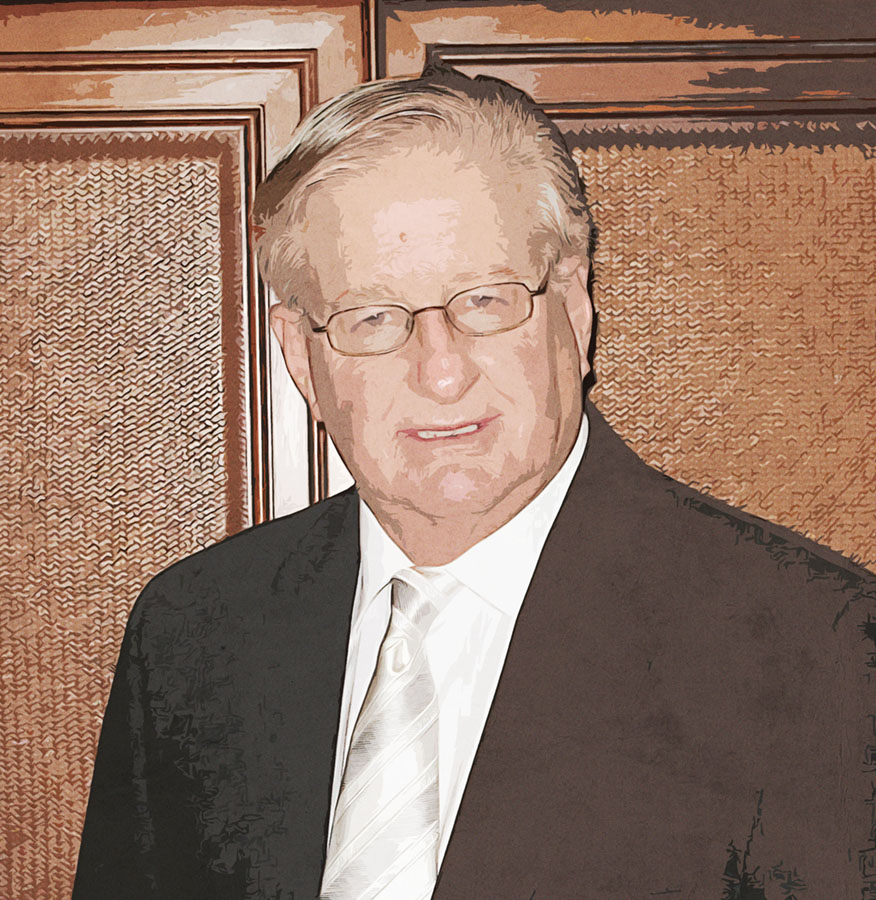
Donald Meichenbaum on Coping with Loss and Traumatic Bereavement

Lawrence Rubin: Hi, Don. Thanks so much for joining me today. You are most widely known for your foundational work in developing CBT but it is equally important that our readers know that for these last 35 years, you have been the director of research at the Melissa Institute for Violence Prevention and Treatment in Miami, Florida.
Donald Meichenbaum: (DM) Thank you for the invitation.
LR: You had previously requested that my first question be about the tragic and unexpected death of your wife, Marianne?

The Irony of a Trauma Specialist’s Tragic Loss

DM: We were married 58 years. My wife and I were vacationing in Clearwater, Florida, escaping the snows of Buffalo, where our permanent home is. My wife was tragically hit by a car at a pedestrian crossing. You know they have flashing lights, and this is sort of a warning sign. She was hypervigilant about not trusting people to stop, so obviously she would not have stepped off the curb if the vehicle had not stopped. But for whatever reason, the vehicle continued on and hit her. And in fact, she was lifted by a helicopter from Clearwater down to the trauma center in Saint Pete.I had called her on her cell phone thinking that she was late because she had a Zoom yoga meeting that she usually attended. I got a male voice, and he indicated that she had been hit and taken by helicopter down to the trauma center, but they would provide me with a police car to drive to the trauma center. I got there and the trauma physician indicated that she had already died. I asked to see her, went in and she was covered by a sheet. I pulled down the sheet, and she was pretty messed up from the accident.

I’ve worked with head injured, so I’ve been involved in seeing such incidents. Remarkably, her hand was still warm when I caressed it. There was a chaplain sitting next to us and I asked her to take a picture of me holding her hand. I actually sent that picture to my daughter-in-law who made it into a pillow. So, it was a traumatic bereavement kind of situation.

The irony is that morning I was giving a Zoom lecture for therapists in China on how to cope with traumatic bereavement and prolonged and complicated grief. And by four o’clock that afternoon, I was living my lecture. So, one of the interesting aspects of all this, and I’d be happy to discuss it with you, is what is the immediate and more long-term impact on an individual such as myself, who is in some sense is an expert on the area of interventions — having developed cognitive behavioral techniques.

Interestingly, there are hundreds of these kinds of accidents, many in Florida, of people — for whatever reason, where the driver is not complying with the pedestrian crossing. And there are multiple accidents and deaths in this particular way. So, the issue of traumatic bereavement as compared to a kind of prolonged complicated grief is an issue that I have been preoccupied with. And moreover, I’ll just add this final note before we open it up for your further questions. There are two aspects that are really quite fascinating in the aftermath of such traumatic bereavement.

One has to do with dealing with the grief. And the other aspect that is not readily discussed by clinicians is the sequelae that follow the sudden death of a loved one. And I will give both you and the readers to this presentation, a keyword that will change your life forever. This is the most important thing you should take away from our discussion. And the one word that you need, Larry, that will change your life if you do not already have it in your repertoire, is “passwords.” If you do not have the password of your significant other who died in a traumatic fashion, you are screwed.

LR: You’ll lose access to everything.
DM: Yeah, right. So, at a moment of intimate repose for your listener, they should lean over to their loved one and say, “I love you, but do you know our passwords and how to retrieve them?” So, you know I can fill you in and turn this into a kind of therapy session? And tell you the kind of trauma events, both dealing with the aftermath of the loss of my wife, but also the police reports, the autopsy reports, the life insurance, the banking, all of the credit cards — everything that goes with it.And the interesting thing is, if you are a clinician, one of the things you do in helping me is assessing, what is the lingering impact of this, what was the aftermath like? But it’s unlikely that you would have done that and asked does your social life change, and then a whole bunch of other questions that I’ve put together. In fact, the lecture that I was giving that morning to Chinese therapists, that entire 80-page handout that I provided them with is available to your listeners.

So, if they go to Google – Meichenbaum, Donald, Melissa, Institute – they will be able to download my 80-page tool plus other items on how to treat individuals who have traumatic bereavement and prolonged and complicated grief. So, if there’s anything I say that might be of help, I’m glad for that. And moreover, if there are people who want to contact me, they could do so through the Institute.

LR: I’m fascinated by the one word that you said clinicians, spouses, partners, family members should know, which is “password.” What’s the significance of imparting that piece of wisdom of knowing your partner’s password? And how did it play out in your journey?

DM: To access a number of accounts, my life was such that my wife Marianne was a wonderful wife, a very competent person. She was an actress, and she was a June Taylor dancer. She looked after all of our finances. I’m not a very competent person other than psychology. I’m a really good psychologist. I know a lot.

But when it comes to life, she was what I would characterize as my surrogate frontal lobe. And therefore, I never knew how to run appliances or bank machines or any of these kinds of things, and she looked after it. So, to gain access to that information, you really need the passwords. Fortunately, I have four wonderful children who are competent and loving and supportive, and that helped a great deal. So, we were able to, over a lengthy period of time — trust me, it took more than an entire year — to settle accounts related to adaptive functioning and financial issues and the like.

I won’t trouble you and your audience, but to highlight how unfriendly, how totally unfriendly the system is, to the 1,000,000 people who lost loved ones due to COVID. You know, the 20,000 individuals who died by interpersonal violence. You know, the incidence of mass shootings and all the other kinds of episodes, you know, the 48,000 who have to survive the suicidal death of a loved one. So, this discussion is absolutely remarkably timely, let alone the loss of natural disasters. I mean, just think of all the people at Maui whose lives are just upturned, and the many wars and the like. So, dealing with loss, grieving, traumatic bereavement, and mourning has to be on the top agenda of every clinician.

Difficult Therapeutic Conversations

LR: Working with adult children of elderly parents, clinicians have to enter conversations about what their plans are with and for them. And it seems to really behoove clinicians to engage these clients about the possibility of traumatic loss and unanticipated loss without pre-traumatizing them. How can we do that?

DM: We have to remind ourselves that what makes us effective therapists is the quality and nature of the therapeutic alliance that we establish, maintain, and monitor with our clients. So, to answer your question, I would advise clinicians to not enter that discussion without the permission of their clients. If I were in that situation, I would say something like, “I recently had a personal loss and I had a lot of lessons that I learned. And I was wondering if you would be interested or willing for me to share those.” So, my notion of being a good therapist is always to solicit permission from my clients, no matter what it is I want to ask. The third thing I would do is to say that, “you should feel free if this is not a good time or this is what we want to do, to put you in charge.” Remember that we, as therapists, need to be person-centered rather than protocol driven.

So, it sounds like, Larry, you had a whole bunch of to-do tasks that you think this elderly client or loved one should go through, right? You said you don’t want to traumatize them. Well, I agree totally. You know, so treat them with the same respect that you would want.

LR: How do we have conversations with our clients who may not even have elderly parents, but who are aware that they live in a world where there are dangers around every corner. How do you help clients prepare for the unpredictable without pre-traumatizing them?
DM: I have a kind of style of therapy, and I’ve actually highlighted this. I just put together a legacy course on what makes people expert therapists. As it turns out, 25 percent of therapists get 50 percent better results and have 50 percent fewer dropouts. So, my legacy course is, what characterizes those 25 percent of people and how can I elevate clinicians to that level? I have a kind of interpersonal style of respectful curiosity. And I really want to convey that to the client and wonder if they’re curious as well.I might say things like, we live in — how should I describe it — precarious times. With the COVID epidemic, with unpredictable violence, with multiple disasters and I must confess that I personally wondered to myself, and I wondered if you wondered to yourself about, given the unpredictability of life ever occurring, are we and our loved ones prepared for that? I mean, that’s my style of interacting. So, what I’m doing in that is actually sharing the rationale, and I’m extending an invitation.

My client might choose to take that invitation or not. And moreover, if I am going to see that person again in the future, all I want to do is plant the seed, then I will be able to follow up. I would say maybe this isn’t the right time or I’m not the right person. But as I look around, I think it might be advisable. And even something as simple as knowing the password of your loved one might be a good starting point. So that’s my way of engaging people.

LR: As simple as that. Simple, but complete.
DM: The key, or perhaps the challenge, is to deal with difficult issues in a non-traumatic engendering fashion.

Lessons on Grieving through Personal Loss

LR: In what ways, looking back, has your own clinical work and research helped you in your journey of grieving?
DM: Now that I’ve talked about the sequalae, let me take a moment and talk about the grieving thing. One of the things that’s really important for your audience to know — and there’s good research by George Bonanno and others that in the aftermath of loss — is that whether it’s due to traumatic, violent episodes like this, or whether it’s due to more prolonged, complicated grief as a result of having someone who’s been ill for a long period of time; there’s an expectation and different kinds of deaths have different kinds of impact.The bottom line is you need to recognize that most people are highly resilient. If you look at the data, most people don’t develop prolonged and complicated grief. So, the key aspect is, what distinguishes those who do versus those who don’t? And I even wrote a book called Roadmap to Resilience, that examines this and deals with it. In fact, your audience is welcome, in honor of my wife’s death, to view this and also my legacy course in her memory. So that’s one way of transforming pain into something good that will come of it.

And in fact, the Roadmap to Resilience has been downloaded for free on the Internet by 45,000 people in 138 countries. So now, let’s get to the heart of your question. In fact, George Bonanno wrote a really nice book called The Other Side of Sadness, which I recommend. It’s a nice little extrapolation on the kind of resilience engendering behavior. Therese Rando has also developed a concept that I’d like to comment on, that she calls “STUGs,” Sudden Temporary Upsurges in Grief.”

And in monitoring my own behavior, since I’m a psychologist and good observer, I’ve tracked my own STUGs. These kind of substantial or sudden kinds of upsurges of grief. And there are two kinds of STUGs in my life that I’ve discovered that have important clinical implications. The first STUGs are sort of sudden and unexpected. A song comes up, an invitation comes up to go to dinner with someone who doesn’t know about my wife’s loss. A couple walks by holding hands and lovingly convey their intimate connection.

And that hits me in an unexpected way. I’m moved to tears, and I have a sense of loss and the like. And there’s nothing wrong with that. In fact, I’ve come to believe that each tear that I experience in loss is not only a reflection of the loss and the grief and how much I miss her and the like, but it’s also a tear of appreciation. Of how lucky I was and grateful to have her in my life all these years. And then, I would have never had this career and all that without her. I’m a cognitive behavior therapist, so the whole thing is not that you cry, not that you feel losses.

It’s what is the story you tell yourself and others about that emotion? Each of us, each of your readers of this interview are not only Homo Sapiens, but they’re Homo Narrans. That we’re actually all storytellers. And the nature of the story we tell will determine — I’m going to suggest — whether you fall into the 20 percent who develop prolonged and complicated grief, or you’re part of the 70 to 80 percent who, in spite of the loss, everlasting loss, your STUG is this kind of sudden reminder.

LR: Unexpected!
DM: I sort of expect them, but they come out of the blue, right? The other kind of STUG which is interesting is something that’s a reflection of a prolonged type of routine or activity that we would have engaged in. So, I’m in Cape Cod, one of the things we would do is go down and have our sunset drink on the beach. A saxophone player would often be playing in the background from their beach house, you know, some Cape Cod song that we would have toasted to, kind of thing.Or we have our favorite restaurant, or our favorite hike or something like that. And I’m now doing those activities on my own. There’s another really interesting aspect to this, and that is, is the person who’s surviving the death, male or female? Okay, so most of my social contacts here in Cape Cod, and in other places, are a derivative of my being a partner of Marianne. So, she had a remarkable social network. She was just lovable and likable. There wasn’t anyone who didn’t fall in love with my wife.

And when she died, those social contacts sort of evaporated. People sort of give you occasional email and a “how are you doing?” But you don’t get invited to the same social occasions or dinners or other kinds of activities, so your network is really an important issue. And the important predictor here, especially among men, is loneliness. Okay, and there’s a higher incidence of husbands dying soon after the death of their wife, about 30 percent and so forth, and having other kinds of physical ailments than the other way around.

And then you need to distinguish between loneliness and isolation. Some people choose to isolate — they like being alone and so forth. Loneliness is yearning for this. And so first of all, in the aftermath of both traumatic bereavement and in terms of the mourning process, that becomes important. The other thing that your readers should take away is that there are no stages of grieving. So Kubler-Ross and Ron Kessler’s stuff about going through stages has no scientific basis for it.

And not only do you not have the five stages, but the expectation on the part of the clinician that people need to go through stages, and the failure to do so is a sign of pathology, is indeed problematic and possibly stress-engendering. So, when people don’t get angry, okay, then it’s deniable or they can’t handle their emotions. And I had a pretty good cause to be angry. This happened in Florida, okay? So, the guy who killed my wife got fined 160 dollars and lost his license for three months.

That was the total consequence. Not only that, in Florida — this is a wonderful state to live in if you’re going to retire — you don’t have to have liability insurance on your car. Okay? All you need to do is pay insurance up to 10,000 dollars. The helicopter cost of taking my wife from Clearwater to the trauma center was 68,000 dollars. So not only do I have, look, how much time do we have? You want me to go on and on? So, what am I going to do? And anger we know, gets in the way of processing trauma memories. Of all the emotions, that’s the one you don’t want to give up to. And that’s the one that clinicians should ask about in the aftermath.

So, if you go to the handout that I have, I have put together the most important diagnostic questions that clinicians should ask. Yeah, I give workshops on grief, and I actually bring my pillow and tell people. And I ask, if I’m your client, Larry, what questions do you think you should ask me? You’re a gifted clinician. What do you think are the most important questions you should ask me to see whether I’m going to develop prolonged grief disorders? Because there are now effective treatments. Shearer and others have created really good cognitive behavioral interventions, when I go on and on and review all the literature. So, I can make this a two-way street. I could ask you, what question do you think you should ask me first?

LR: What comes to mind is, how has your life changed?
DM: Wrong question!
LR: Okay, I could probably guess 20 times wrong.
DM: No, no. The first thing you should ask is, “how long ago has this occurred.” Okay, if this happened like last week or last month, that’s different than if it occurred a year ago. Okay? You know, and then there’s a whole set of questions you could ask about the circumstances, like you did at the outset. Okay, so getting to the notion of how you handle this has a kind of implied judgment on your part that I should be handling it.So, am I going to tell you how bad off I am or am I going to say oh, it’s not that bad, right? So, you have to establish a good therapeutic alliance with me, where I’m going to be open and honest. You know, I have trust engendering things, so I don’t know what your agenda is. Anyway, go to my handout.

LR: I will. I will.
DM: Please, I didn’t mean to put you on the spot.

LR: It’s refreshing and intimidating at the same time. What other guidance are you offering to clinicians who maybe are sheepish about asking the questions, or will not openly receive or seek out clients who have experienced loss? 

DM: The first thing — over and above the comment on stages — is that the field of psychotherapy is absolutely filled with bullshit. I wrote an article with Scott Lilienfeld called, How to Spot Hype in the Field of Psychotherapy. The next thing for therapists to understand is that the various therapeutic procedures are equivalent in outcome, and that there are no winners in the race. So that’s the next thing, just don’t believe the hype in these workshops where these people are saying that, “X, Y, and Z works better.”That traumatic bereavement is a common response, will lead to grief and mourning that leads to deteriorating performance is just not the case. So, the second thing that’s really important is that you need to ascertain from the client how to do therapy in a culturally and religiously, and gender-related kind of fashion. You need to ask the person — in my case, whether I’ve had other losses besides Marianne. You need to make me a consultant to you. Okay. And then you need to probe. How did I handle those? And is there anything I learned from them? So, you need to see me as a client as a resource person rather than someone you’re going to treat because you went to some workshop. Okay!

And apropos of the loss and transition website by Neimeyer and colleagues, they have a lot of techniques. Some of them are expressive. Some of these are customary activities that people engage in. So, you, the clinician, need to honor the way in which I want to cope with grief. Okay? And I recently went to a workshop by Mary Francis O’Connor who wrote a book on the grieving brain. And you need to recognize that some of the losses that people experience are natural and a reflection of love.

So don’t pathologize people’s grief or their coping techniques. If I want to avoid certain activities, I don’t go and get rid of the clothing and so forth. And there was a movie that Tom Hanks made that his wife produced called, A Man Called Otto. It’s a bit of a Hollywood version, but they did a really good job on talking at the gravesite. And doing the thing on the clothes. Here’s a wonderful thing that happens. When I cleaned out my wife’s closet, I found out that for the five years that we courted each other, we had written letters. And mind you, that was 1961. She saved all those letters. In 1961, a stamp was four cents. I read those letters as if she was present, each night I take out a couple. I’m now up to 1963, you know that stamps now cost $0.08 in 1963? Her presence, my storytelling, my doing this interview, my reading the letters, are all my own personal ways to honor her memory. The fact that I put the Roadmap to Resilience online for free in her memory.

If you go to the Melissa Institute website, if you’re interested, if you like this interview, go there and make a donation in my wife’s name. We’ve already raised 25,000 dollars for the Institute against violence prevention for her. I’m now in the midst of having done this legacy course of ten one-hour lectures on what makes someone an expert therapist, and then how to take those core principles and the transtheoretical behavior change principles and apply them to a whole host of diverse problems like grief and PTSD and anger and the like.

Each of those courses is only going to cost 150 dollars. Okay, that’s 15 dollars per CEU. All that money is going to go to the Institute in memory of Marianne. So, if you want more of what we’re talking about, track down this legacy course. If you do, there’s the likelihood you’ll be in the 25 percent group and you’ll be able to honor my wife’s memory. You get CEU’s for cheap.

The Role of Resilience in Healing through Grief

LR: You mentioned something earlier on, Don, about resilience as one of the really powerful predictors of how someone will move through their grief journey. Can you say a little bit about what a resilient griever looks like?
DM: In the aftermath of trauma or victimization, and with regard to whatever form it takes, resilience has been equivalated with notions of the ability to bounce back and with dealing with ongoing adversities. And it deals with the notion of personal growth. Margaret Stroebe and her colleagues have an interesting distinction within which people oscillate. That is, they have a variety of coping responses that are loss-oriented or restorative, and future-oriented. One of the things that’s interesting is that people can deal with it as a kind of Viktor Frankl type of observation.That people could deal with any kind of how in their life, as long as they have a kind of why in their life. Some sense of meaning, making purpose. This fits into my constructive narrative perspective that everyone is a Homo Narrans, or a storyteller. So, one of the things that becomes really interesting is how people transform their loss into some kind of effort to help others. So how did the Melissa Institute come about and my involvement therein? So, in the tragic killing of their daughter, Melissa, when she was at college in Saint Louis at Washington University, they have transformed the last 28 years – her loss — into a meaning-making activity.

You can go to the Trevor Project on suicide. You can go to Mothers Against Drunk Driving. There are numerable examples, I give multiple websites of how people have transformed their pain into something good. That doesn’t mean that you don’t continue to have an everlasting sense of grief. There’s nothing wrong with grief. It’s like any other emotion. The key is, what do people do with that emotion? Do they withdraw? Do they isolate? Do they become lonely? Do they use addictions? Do they self-medicate?

So, the key question is not, apropos of the resilience, or that people grieve. The fact that people are in touch with their grief is, in fact, a sign of resilience, right? It’s coming to, how do they honor? How do they memorialize? I deal a lot with returning soldiers. And the other kind of thing is that there are different kinds of losses. There’s loss of people, but there’s a thing called missing loss also. Like imagine people who have individuals who go missing in action. You don’t know if they’re dead right, or in Maui — you know, they haven’t found certain bodies. I mean, does that mean, is there more?

How do I, do I sort of get preoccupied and ruminate about the loss of my loved one, and how I wasn’t there? If I have guilt, shame, humiliation, if I have anger, if these kinds of negative emotions are that which drives me, then that’s the person, those are the folks who are going to be more likely to get stuck, who have hot cognitions and the like. So, you can talk about resilience being the absence of negative stuff, or resilience could be the restorative process on the other end. I don’t know if I’m getting close to your concerns, but…

LR: That resilience, and there are certain personality attributes and certain experiences that predispose people to resilient ways of being, and those people are probably in a better place to move forward in their lives after a loss.

DM: Here’s one of the things I failed to mention. The research indicates that people who have had a prior major depressive disorder are significantly more likely to develop prolonged and complicated grief. So, when I was asking the question, I ask, “Have you had similar losses in the past” and so forth? What we could do is look for vulnerability factors, okay, that are red flags as another tip. To see who would warrant evidence-based interventions, we’re pretty good.

If you look at my core task, there’s a whole way of how we, as therapists, do psychoeducation to educate people about grief. Or how do we help them develop various kinds of coping strategies? And how do we get them to follow through? The big thing is how do you get people who need help to want to come for help? And help them stay there? That’s the artistry of therapists.

LR: Is it more likely that those who have historically reached out to others for help, who have built lives that are rich in community, are just naturally predisposed?

DM: Well, a lot. There’s a fair amount of research by Camille Wortman and Roxanne Silver. Obviously, one of the building blocks for resilience is relationships. I mentioned I have four loving kids who really came to support, I have other people — professionally and others — who’ve come to support. But Wortman then really found a whole bunch of things that people do that are unproductive, that actually make people worse.

They have identified a variety of things that people provide support for, and actually make people worse. Like moving on statements. Things like, “You’re still a young, attractive, bright guy. You’ll find someone. How much longer before you die, You’ll be able to join him. This was God’s mission, He knew something.” So, there are lots of things that social support people offered, so that’s one of the questions you need to ask.

What, if anything, have people done or failed to do that you found helpful or unhelpful, right? Because you want to make sure that you, the therapist, aren’t doing something that I perceive as being unhelpful. So, if you’re a really good therapist, let your patients teach you how to do therapy. Don’t think just because you went to graduate school or took some workshop that you know how. Ask your patient, “What do you think is causing you to still have this lingering grief? And what do you think it will take to help you to move on? And what is it that I, the therapist can do to help you in that process?”

LR: You know, Bob Niemeyer suggests that therapists working in the arena of grief need to be what he calls the guide on the side, rather than the sage on the stage.

DM: Yeah. I like that. That’s a good metaphor. I like him a lot. I’ve read all his stuff. And, you know, my thing is, don’t be a surrogate frontal lobe for your patients. Don’t let the person’s emotions hijack their frontal lobe.

LR: And don’t, as the therapist, let your emotions hijack your presence in therapy. What about those therapists who themselves have had complicated losses, or unfinished business with their own children, parents, and spouses who have died?

DM: Well, I guess those therapists need to be honest with themselves and wonder how it impacts their therapeutic process. Those therapists need to be honest with themselves and decide whether, in fact, they need some therapy. That could help them deal with the issue. And the third kind of issue is, can they strategically use that self-disclosure in a way that facilitates or benefits the patient’s recovery? Rather than saying, you think you’ve got problems with your wife? You want to know what living with cancer has been like? And not only that, my father has Alzheimer’s, and now all of a sudden I have to listen to your shit, right?

So, you can judiciously, strategically say words are inadequate to describe what grief is like. I’ve been there myself. It’s not the occasion for me to share the details, but I want you to know I’ve felt the pain. Okay, I don’t know what the right words are, and you have to say it in an effective way. You can’t say, you think you got problems?

LR: In what way are you — are there any ways that you’re still practicing as a therapist now?

DM: I do a lot of consulting. I work with the head injured thing when people have cases, I train therapists who are doing supervision. I’m not seeing patients now like I did in the past, because I’m not in one place. I’m kind of a peripatetic clinician, so it’s hard to make a commitment to someone being there. I do some consultation with patients by telephone, since COVID.

LR: We could talk for hours Don and I do I hope we talk again. I appreciate your kindness and generosity.

DM: Thank you for the compliment and for inviting me on this journey.

©2024, Psychotherapy.net
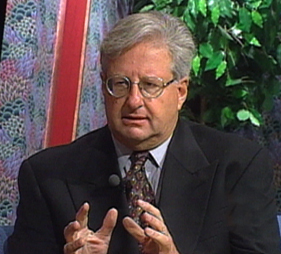
Donald Meichenbaum on Cognitive-Behavioral Therapy

The Interview

Victor Yalom: Dr. Meichenbaum thanks for meeting with me today.
Donald Meichenbaum: I welcome the opportunity to be part of your interview series.
VY: I am interested in knowing what got you into the field of clinical psychology.
DM: I started my undergraduate career at City College of New York and from there I went to the University of Illinois in Champaign where I obtained my Ph.D. in Clinical Psychology. I started out in graduate school as an industrial psychologist and I was hired as a research assistant to conduct group observations at a local veteran's psychiatric hospital. I became fascinated with the patients and decided to switch to clinical.
VY: Why did you go into psychology?
DM: I grew up in New York City where one naturally becomes a "people watcher." I was always fascinated by the process of trying to understand human behavior. As a youth, I was interested in how people come to engage in destructive aggressive acts like the Holocaust. On the other side, I grew up in a home where caring for others was important. These two influences led me to choose psychology.

VY: How did you end up at the University of Waterloo in Ontario Canada?
DM: From Illinois I went to Waterloo, in part because they offered me a job. Waterloo was a new University and it had much promise. Also, the Chairman of the Psychology Department was Richard Walters of Bandura and Walters fame. He was a brilliant psychologist and I had an opportunity to work with him. Unfortunately, he died soon after I arrived, but Waterloo turned out to be a wonderful setting and I have stayed for 33 years until I took early retirement a few years ago.
VY: What are you doing now?
DM: If you live in Ontario, Canada, and you retire, one of the things you do is go to Florida for the winter (with a large percentage of the Canadian population). Besides the weather, the main activity that brings me to Florida is that I have become the Research Director of The Melissa Institute for Violence Prevention and the Treatment of Victims of Violence, in Miami, Florida.

Trauma and Hope: The Melissa Institute

VY: Can you tell us about The Melissa Institute? How did it emerge? What does it do? Why Melissa?
DM: Melissa was a young lady who grew up in Miami and she was going to Washington University in St. Louis. A tragic thing occurred. She was car jacked and murdered. Now when such a tragedy befalls a family, their relatives, friends and neighbors, one of the ways people try and "cope" is to transform their pain.
There is no way to allay the emotional pain of such trauma, but rather they try and find some meaning in the tragedy.
There is no way to allay the emotional pain of such trauma, but rather they try and find some meaning in the tragedy. Hopefully, some good can come out of such a profound loss.

As you know, one of my areas of specialization is studying the impact of trauma (as I discuss in myClinical Handbook on Treating Adults with PTSD). A friend of Melissa's parents read the handbook and attended one of my workshops. She put me in touch with Melissa's parents and one thing led to another and with the friend, Dr. Suzanne Keeley, we established an Institute in Melissa's name.

VY: What does The Melissa Institute do?
DM: The Melissa Institute is designed to bridge the gap between scientific findings and public policies, clinical and educational practices. The Melissa Institute is designed to "give psychology away" in an effort to reduce violence and to treat victims of violence. It is not a direct service Institute. Instead, it provides services in three areas. First, it provides graduate student scholarships in support of doctoral dissertation work in the areas of violence prevention and treatment of victims. Second, it provides training and education in the form of workshops and conferences. We hold an annual May conference, (next year will be a conference in New York on the aftermath of September 11), and conduct other trainings for various members of the community, as well as school children (e.g., on bullying). Third, and most importantly, The Institute provides consultation to various public agencies in the area of violence prevention.

On a personal note, it has been fascinating for me to consult to the Mayor's office, the Public Defender's Office, the District Attorney, the Juvenile Assessment Center and to other agencies. After some 30 years of research and clinical practice, I have been struggling with how I can have a larger impact. How could I use all that I have experienced and learned to make the world less violent for my new grandchildren? (For more information on The Melissa Institute activities, please visit the website www.melissainstitute.org).

As you can see, I have not fully retired. I do not just spend my time on the beach.
VY: What do you miss about the academic setting, if indeed you do?
DM: I do spend the summer months in Waterloo, so I have maintained contact with the University. I miss my colleagues and the daily research activities with my graduate students. I also cut back on my clinical practice and I now spend my time engaged in consultations with a wide array of clinical populations in various settings including psychiatric facilities, residential programs, centers for treating individuals with brain injury and individuals with developmental delays. I am still a "people watcher."
VY: You mentioned that you also are involved with trauma patients.
DM: Yes, I was involved in consultations on an array of traumatic events including the Oklahoma City bombing, the Columbine school shootings, and now the aftermath of the September 11 events. These various forms of violence have led me to write a Clinical Handbook on Treating Individuals with Anger-control Problems and Aggressive Behaviors. This practical therapist manual fits well with my efforts as Research Director of The Melissa Institute.
VY: Your work sounds both gratifying and intellectually stimulating, but it doesn’t sound like you’re retired.
DM: It is rewarding. I cannot think of a more important problem to focus my attention on than the reduction of violence.

The Desire to Help and a Story about Mom

VY: Getting back to your desire to help people. Therapists often go about helping people in ways that are based on their own experiences in life. Do you have a sense of how personal experiences in your life have affected your clinical work?
DM: A couple of years ago, I wrote a chapter entitled "A Personal Journey of a Psychotherapist and His Mother". In it, I began with an anecdote that may answer your question. My mother, who lived in New York, came to visit me in Canada soon after I took early retirement. I had to tell her the news about my early retirement. My mother looked a bit puzzled upon hearing of my retirement and then paused and asked, "What am I supposed to tell my friends? I'm still working and my son, the Professor, is retired!"

Now when my mom visits she comes with stories. She is a big "story teller". But, she has a special way of telling stories. She not only tells you about an incident in her life, but she also tells you about the feelings and thoughts she had before, during, and after the incident. Moreover, she provides editorial commentary on what were useful thoughts and what were stress-engendering thoughts and moreover, what she could have done differently. On one recent visit, it dawned on me that I ate dinner with my mother each day of my formative years and listened to such stories. For example, my mother would say:

"I said to myself, Flo, so you moved the heavy box? I knew I shouldn't have done that. Then, I got down on myself for making such a foolish decision. 'What will I tell Donny?' But, then I thought why get down on yourself, because all you were doing was trying to help."  And so the story continued.
VY: What did you learn for this story with your mother?
DM: I came to realize that the form of cognitive-behavioral therapy that I have been working on for my entire career was in some sense a way to validate my socialization process.
As my mom would say what you do is "New York Therapy". You try and teach people (schizophrenics, hyperactive children, aggressive individuals, traumatized individuals) to talk to themselves differently, to change the stories they tell themselves and others. "For this you get paid?"
VY: I didn’t realize your mom was one of the originators of Cognitive-Behavior Therapy (CBT).
DM: I think she would be willing to share credit with others. I could give a scholarly answer about the origins of CBT ranging from Immanual Kant to Freud to Dubois to Adler to Kelly to Ellis and to Beck. But, I like to give credit to my mom who recently died of cancer. You can trace the scholarly lineage in my Handbooks.
VY: I know the intellectual roots of your inspiration also run deep, but it is particularity refreshing to hear you speak outside of the traditional academic jargon and learn of your personal connection to your work. That is what we expect of our clients, namely, their ability to learn from their lives, so why not therapists.

Paradigm Shifts in Psychotherapy

DM: I have become fascinated with the nature of story telling that patients offer themselves and others and how their stories change over the course of therapy.
VY: It sounds like this relates a lot to the ideas of narrative constructions.
DM: If you look at the evolution of cognitive behavior therapy you can find a shift in the models employed to explain the nature and role of cognitions. In 1960's and early 1970's, I (and others) was viewing cognitions within the framework of learning theory. Cognitions were viewed as "covert behaviors" subject to the same so-called "laws of learning", as are overt behaviors. Now, I don't believe that there are laws of learning" that explain overt behavior, let alone cognitions. In the 1970's and 1980's, the computer metaphor became prominent and cognitions were viewed within the framework of social information processing. Concepts of decoding, mental heuristics, attributional biases, self-fulfilling prophecies, and the like were used to explain the role of thoughts and feelings played in overt behavior.

These first two conceptual stages were heuristically useful, as they yielded the development of self-instructional training, stress inoculation training, and various cognitive restructuring procedures. (See Meichenbaum's Cognitive-Behavior Modification : An Integrative Approach for a discussion of these origins.) More recently, as the role of meaning, with all of its developmental and contextual-cultural influences, has come to the fore, I (and others) have begun to explore the usefulness of a constructive narrative perspective. I have written about the importance of this theoretical shift in various places, including the two Clinical Handbooks.
VY: In terms of theoretical shifts, you are one of the few writers to directly confront how to treat co-existing anxiety and depression, which is so common in clinical practice. Indeed, in the video training film you demonstrated how CBT can be applied when these clinical conditions co-occur. What were you attempting to illustrate in this video?
DM: This teaching film was an interesting exercise because the producers wanted me to demonstrate short-term CBT intervention (12 sessions) with a patient who experienced both anxiety and depression. Not only that, they wanted me to reduce all 12 sessions into a one hour film. If you had to make such a one-hour film, what would you put in it? What exactly would an "expert" therapist demonstrate? What does the research literature suggest as being critical to include?

I should note, parenthetically, that the area of "expertise" interests me a great deal. With a colleague, Andy Biemiller, we wrote a book called Nurturing Independent Learners (Brookline Books Publishers) in which we reviewed the literature on expertise in various areas such as athletes, musicians, teachers, students and clinicians.

People Have Stories to Tell

VY: Can you speak more about nature of stories and change in therapy?
DM: If you work with people who have been victimized as a result of having been raped or sexually abused, or exposed to intimate partner violence, or some other form of violence, you soon come to see that the nature of their "stories" changes over the course of therapy.
VY: How so?
DM: One of the things that becomes apparent when you work with people who've been victimized is they have a story to tell. One of the things we know is that people who have been victimized and have shared that story do better than those who have not. Moreover, if you work with those clients over a period of time, as I have, one of things you come to realize is that the nature of their story changes.

At the outset of therapy, they may view themselves as "victims", as "prisoners of the past", as "soiled goods". This is more likely if the individual has been repeatedly victimized. At the outset of therapy, they may see themselves as "unlovable and "worthless" and view the world as being unsafe and their situation as being "helpless" and "hopeless". As one patient observed, "My life is a glob of misery, a total personal tragedy." The patients' beliefs in themselves and others have been "shattered".
VY: That reminds me of a song by Sting to this effect: “I’ve been shattered, I’ve been scattered I’ve been knocked out of the race, but I’ll get better.” As you describe patients’ feelings as expressed in their stories, it becomes clear how important the therapeutic alliance is to this change process.
DM: Very much so. In the safety of the therapeutic alliance, the therapist listens compassionately, emphatically, and in a nonjudgmental manner to the patient's accounts. One of the things that becomes very interesting is that collaboratively, in the safety of the therapeutic relationship, you start to see the story of the trauma change.

But more is involved as the therapist can help the patients attend to features of their "stories" that are often overlooked. What did the patients do to endure and survive the abuse? In short, the therapist helps the patients tell the "rest of the story" and to consider the implications of such survival skills for coping in the future.

The therapist helps the patients move from viewing themselves as a "victim", to becoming a "survivor", and even to the point of becoming a "thriver", as patients come to help others and transform their pain into something good that may come from their experiences. The therapist can use a number of clinical skills and the "art of questioning" to help nurture the patient's sense of personal agency in this transformation process. The "thriver" is someone who still remembers, but can use that pain more effectively. Patients learn to develop their own voice and not repeat the "stories" that were conveyed by victimizers.

Change in Trauma Clients

VY: Can you give an example of this change process?
DM: Take Melissa's parents as an example. Their daughter was victim of a senseless brutal murder. The emotional pain and loss that surviving members experience do not go away as attested to by the survivors of the events of September 11. The question for patients is how to muster the courage and to transform their emotional pain into something good that will come of it. As I discuss in some detail in the PTSD Handbook, the adage that "thou shalt not forget", becomes a personal directive; for forgetting would dishonor the memory of the lost one. Instead,
how individuals use the memory of the loss to make changes is a task of therapy.
how individuals use the memory of the loss to make changes is a task of therapy. In Melissa's case, her parents helped establish an Institute in her name. If they could prevent one more Melissa from dying, then maybe she did not die in vain. Patients do not need to create an Institute to heal. Their Institute may be a small personal way to "find meaning". This constructive narrative perspective that I am advocating is not unique to cognitive-behavior therapy. A number of psychodynamic therapists such as Schafer and Spence have been strong advocates of a narrative perspective, as has the developmental psychologist Jerome Bruner.
VY: How does your concept of narrative construction fit in with the narrative therapies of Michael White and David Epston?
DM: I think there is some overlap theoretically, but there are also differences in terms of specific interventions. My commitment to cognitive-behavioral interventions highlight the role of behavioral change, namely, the value of helping change the nature of the "stories" patients tell themselves and others as a result of personal behavioral experiments they engage in. As a cognitive-behavioral therapist, there is still a critical role for skills training and relapse prevention in the therapy regimen. So the focus of therapy is not delimited to just trying to have patients change their stories. There is also a need for the therapist to collaboratively address the other clinical needs that patients experience, especially in those instances when comorbid disorders occur. Since PTSD often co-occurs with such additional problems as anxiety, depression, substance abuse and anger, there is a need for therapists to attend to these clinical areas.
VY: You mention anger in passing yet I know you have spent quite a bit of time and study on anger which resulted in your writing new book, Clinical Handbook in Anger Control.
DM: Yes, in a number of settings in which I consult the patients (children, adolescents and adults) have a history of victimization (up to 50%) and they evidence problems with emotional dysregulation, where anger comes into play. I am often called upon to help frontline staff and therapists to deal with potentially violence and aggressive patients. The Anger Handbook provides practical examples of how to assess, and treat such patients.

The Search for “Expert” Therapists

VY: What did you learn about what works in therapy from you research and study of expert therapists?
DM: In general, three features characterize experts.
Experts know a lot, and moreover, their knowledge is organized in an efficient, retrievable fashion.
Experts know a lot, and moreover, their knowledge is organized in an efficient, retrievable fashion. They have a good deal of knowledge – declarative ("knowing what", strategic ("knowing how") and conditional ("knowing if – then relationships"). Secondly, they use this knowledge in a strategic flexible fashion. Third, expertise develops as a result of deliberate practice – practice that is designed to achieve specific goals. In fact, there is some suggestion that expertise does not develop until you have been at an activity for several years.

One very interesting thing that comes out of the literature on expertise: -whether you study chess players or chefs- you are unlikely to become expert until you're at it for several years. Why should it take so long to become an expert? Or, for some, they might say "so little." So a good, expert therapist has a lot of knowledge about patterns, about strategies. And they hang in there.
VY: So I get a sense of what the qualities of an expert therapist are, but in your view what do they attend to or do differently in the session?
DM: Let me enumerate what my research has shown to be the core tasks of therapy. I have discussed them in detail in the Anger-Control Handbook. First, the "expert" therapist needs to establish and maintain a therapeutic alliance. This is the "glue" or key ingredient for nurturing change. Second, inherent to all forms of therapy is some form of education. I don't mean didactic instruction, but rather Socratic interactions. I spell out the innumerable ways that therapist can engage in the educational process over the course of treatment. These include the "art of questioning", the use of patients' self-monitoring, modeling films, the use of "teaching stories", and the like.

Other core tasks of therapy include nurturing patient's hope, teaching skills and ensuring the likelihood of generalization. I have included in the Anger-Control Handbook a checklist of how to increase the likelihood of generalization, as well as ways to engage in relapse prevention and self-attribution training (i.e., making sure that patients take credit for change).

The therapist needs to ensure that not only do patients have intra- and interpersonal skills, but also that they apply them in their everyday experience. Patients also need to come to see the connections between their efforts and resultant consequences. Moreover, given the high likelihood of patients re-experiencing their problematic behaviors and given the episodic nature of chronic mental disorders, there is a need to help patients develop relapse prevention skills.
The expert therapist attends to these core tasks in a consistent, creative manner, tailored to each patient's needs.

VY: Are there additional core tasks that need to be considered when working with patients who have been victimized?
DM: If the patient has been traumatized, then there are five additional core tasks that need to be considered. These include addressing the specific needs in terms of safety and the specific PTSD or complex PTSD symptomatology, as well as any comorbid features. There is also a need to help patients share their stories and consider not only what they experienced, but also what are the implications, what are the conclusions they draw about themselves and others as a result of having experienced trauma. What is the nature of the "story" that patients fashion as a result of having been victimized?

It is not just that "bad" things happen to people, but what people tell themselves and others as a result of having been victimized that is critical.
It is not just that "bad" things happen to people, but what people tell themselves and others as a result of having been victimized that is critical. Out of the sharing of these accounts, the therapist helps patients co-construct "meaning" and transform their pain into some activity that permits them to continue functioning. Other core tasks include helping patients develop strategies in order to avoid victimization. Patients also have to be encouraged to associate with and nurture relationships with prosocial non-victimized others. Not delimiting their life to being a "victim".
VY: Can these same core tasks be applied to other clinical populations besides individuals with PTSD?
DM: Yes. For example, in the recent Handbook on Treating Individuals with Anger-Controls Problems, I discuss various ways to establish a therapeutic alliance with aggressive angry individuals who may be persistent perpetrators. There is a need to understand the "mind-set" of individuals who engage in such aggressive behaviors. There is also a need to educate clients about the distinction between anger and aggression. By use of collaborative goal-setting, the therapist can nurture hope. There is a need to teach self-regulating skills and interpersonal skills and to take the steps required to increase the likelihood of generalization or transfer. I enumerate a variety of skills that may be taught including relaxation, self-coping skills, relapse prevention skills, and the like.

In the Handbook, as I noted earlier, I have included a behavioral checklist so therapists can assess how "expert" they are in implementing these core tasks. Moreover, since a percentage of individuals who engage in violent behavior have been victimized themselves, there is a need to address therapeutically the impact of such experiences on the development of their belief system.

How Meichenbaum’s Work Has Grown

VY: Do you think you are a better therapist now than say 20 years ago?
DM: I would like to think so. Remember it takes about seven years to become an "expert" at any activity.
VY: In what ways do you think you are a better therapist?
DM: Before answering, I wish I had hard data that the patients outcomes are better now than when I began. The data on level of therapists' experience and treatment outcomes may give one pause in drawing any conclusions. On the other side of the equation, I believe that the patients I am now seeing are more distressed than those I saw 20 years ago. They also have fewer resources and supports.

In terms of specific changes in my approach, I believe I have become more strengths-based in my therapy approach.
I now focus more on what patients have been able to accomplish in spite of the exposure to multiple stressors and how patients can use such resilience to address present needs.
I now focus more on what patients have been able to accomplish in spite of the exposure to multiple stressors and how patients can use such resilience to address present needs. I have come to appreciate the value of having patients be collaborative, and in fact even one step ahead of me, offering the advice I would otherwise offer. I have written a book (with Dennis Turk) on Facilitating Treatment Adherence that convinced me of the need for the "expert" therapist to anticipate and address issues of noncompliance, resistance, and barriers to generalization throughout therapy. One cannot "train and hope" for transfer, but must build these issues into treatment from the outset.
VY: I can see that many things have changed in your work. What has stayed the same in your work?
DM: I have still maintained my desire to help and to respect my patients. I have always had a commitment to integrate empirically-sound treatment approaches with a clinically sensitive compassionate approach. I have tried to be sensitive to the role of racial and cultural factors and the need for an ecologically sensitive treatment approach. I have always been hopeful about human behavior and the ability of psychology to make a difference. My current involvement with The Melissa Institute provides me with an opportunity to implement that dream. For example, The Melissa Institute recently had a conference on ethnic diversity and the implications for assessment and treatment. I became supersensitive to the issue of culture when I taught at the University of Hawaii on several occasions. The "expert" therapist needs to be sensitive to how culture impacts on the expression, course and treatment receptivity of patients. For example, research indicates that depression looks different cross-culturally – a lesson I learned in Hawaii. Or what constitutes risk and protective factors among delinquent youth in the Miami Juvenile Assessment Center varies by age and gender. I believe it is crucial for the clinician to develop an appreciation of the role of culture and a questioning of what makes someone an "expert" therapist.
VY: I am really struck by the scope of your work. To take a wide angle view of your career paints quite a picture, so please indulge me for a moment. Your studies range far and wide covering varied clinical populations of psychological trauma, head injury, medical and psychiatric patients. You have pushed the field ahead in terms of developing new cognitive behavioral treatment approaches such as stress inoculation training and self-instructional training. And now you are in the midst of refining cognitive therapy from a cognitive narrative perspective. Professionally, you have extended yourself to influencing public policy and clinical and educational practices with The Melissa Institute. You may be “retired”, but your curiosity and passion still seem very much alive.
DM:
The sense of inquiry and the desire to help that were there when I began this journey in the 1960's are very much alive in the year 2002.
The sense of inquiry and the desire to help that were there when I began this journey in the 1960's are very much alive in the year 2002. The urgency for social action is even more pressing.
VY: It has been a pleasure speaking with you and thanks for sharing your thoughts with our readers.
DM: Thank you very much.