
Existential-Humanistic Therapy in the Age of COVID-19 in Vulnerable Populations

Challenges

COVID-19 has been a sudden, unexpected, and existentially shattering experience for many individuals, resulting in their questioning their sense of safety and security in the world. Whether facing actual illness or loss, fear of getting sick or infecting others, forced isolation, lack of personal space, or economic hardship, people have now been facing unprecedented stressors for close to a year. With a second wave upon us and new variants emerging, there may be a sense that anyone is vulnerable. While vaccine distribution offers promise for individual immunity, there is protracted uncertainty about the duration of the crisis and its psychological, economic, political, and societal consequences.

These COVID-19 phenomena may exacerbate challenges for individuals with a history of chronic medical conditions and trauma, including feelings of vulnerability, stigma, and lack of control. Having previously confronted and accepted existential truths such as life’s uncertainty, the random nature of events, and the inevitability of death, these individuals may, at the same time, be better equipped to cope with aspects of the pandemic (Gordon, 2020). Existential-Humanistic (E-H) therapy can provide effective therapeutic interventions to aid vulnerable populations in optimizing adjustment, coping, and quality of life during the COVID-19 pandemic.

Existential-Humanistic Therapy

Developed in the 1960s, E-H therapy consolidates central ideas from European existential philosophy—the power of self-reflection, taking responsibility for decisions, and confronting freedom and death—with the American tradition of spontaneity, pragmatism, and optimism (Schneider & Krug, 2017). E-H therapists emphasize several core aims that enable patients and therapists to become more present in the moment: increasing awareness of self-protective patterns that block and restrict presence and personal agency; taking personal responsibility for the construction of one’s life and self-narratives; and choosing or actualizing ways of being in the world that are consistent with values. E-H therapy strives to be a catalyst for individuals to develop their level of curiosity, generate experience that is felt to be enriching, and expand their capacity for personal agency, commitment, and action.

The model emphasizes the “whole-bodied” (e.g., cognitive-affective-kinesthetic) ability to choose, within limits, who one will become, and that fundamental change takes place through experiential learning. Bugental (1987) depicted resistance as analogous to wearing a spacesuit which helps sustain life but also narrows one’s experience of the world. E-H therapists believe that when life-constricting protections are reduced, more meaning, purpose, and joy can emerge. E-H therapists focus on the here-and-now experience of the past as manifested in the present moment, including the patient’s body posture, level and quality of presence, tone or voice, and self-protective patterns.

Viktor Frankl (1992), an Austrian psychiatrist and Holocaust survivor, observed that we do not get to choose our difficulties and challenges, but do have the ability to select our attitudes and responses, decide what we make of them, and maintain a sense of dignity. Rollo May (1985) believed that it takes courage to move forward in life despite adversity.

An E-H theme developed by Irvin Yalom (1980) is the idea that individuals have a basic need to construct meaning through tolerating uncertainty, a passionate engagement in life, and living in the moment. He describes existential anxiety as the result of the confrontation with the givens of existence, including death, freedom, isolation, and meaninglessness. Existential anxiety occurs because of the conflict between these challenges and a desire for its opposite. These universal conflicts include the awareness of death and the desire for immortality, a sense of groundlessness and the wish for structure to provide safety and security, feeling of isolation and the need for connection, and the awareness of meaninglessness of life and the need to construct meaning. As a result of facing death, individuals experience the urgency of time and setting priorities. For Yalom, psychotherapy during times of crisis can heighten existential awareness and help clients put current and ongoing life crises into perspective.

Yalom incorporates the concept of “rippling” into his many writings on existential therapy. This is the notion that we pass parts of our self onto others, even to others we never met, much like the ripples caused by a pebble in a pond—whether a personality trait, an act of kindness, a quote or saying, the impact of our work—which tempers the pain of transiency. Along related lines, Hoffman (2021), guided by the work of Rollo May, discussed the existential guilt that accompanies failure to live up to one’s potential or taking responsibility, while in contrast finding that meaning can transform pain. And finding this meaning, according to Remen (2000), does not require us to live differently, but instead to see our lives differently.

It is in this context of seeing life differently that I ask you, as we might ask our clients, to imagine the consequences of living in a house with only one window. For all intents and purposes, the view from that window will define your reality. Only by experiencing the view from a new window, built perhaps on the other side of the house, will you gradually internalize a degree of perspective and relativity, a sense that vision and meaning involve choice and agency. And with that, I now offer the case of Michael.

The Case of Michael

Michael is a 35-year-old aspiring artist who was referred to me for psychotherapy to develop effective coping skills in his adjustment to his recent diagnosis of Multiple Sclerosis (MS). MS is an autoimmune disease that attacks the central nervous system, which can cause a variety of symptoms, including numbness, fatigue, vision loss, and walking difficulty. He was living with his grandmother and mother and had a strained relationship with his father, whom he had never lived with. He entered therapy three months before COVID-19 rattled the city and shut down services.

At the beginning of treatment, “Michael reported multiple symptoms, frequent incidents of falling and losing his balance, a long-standing history of anxiety and panic attacks, and inhibitions in his ability to commit himself to intimate relationships and professional goals”. Since his adolescence, his anxiety had often resulted in shortness of breath that triggered fears of a heart attack and impending death. He was particularly worried that his physical symptoms would continue to get worse and that he would be totally dependent on others for his physical care.

During his initial sessions, he expressed a great deal of frustration that it took a number of years to get a definitive diagnosis of MS. He felt his family and friends thought he was exaggerating his symptoms to avoid pursuing his educational and vocational goals, which resulted in lack of confidence and trust in expressing his own feelings, needs, and opinions. Even when he was given a definitive diagnosis six months before entering treatment, he experienced others as not fully understanding the impact of his “hidden disability.” He was angry that he developed his medical condition at such an early age, started to doubt his belief that “bad things do not happen to good people,” and felt that he was being punished for his lack of motivation and accomplishments.

Capitalizing on meaning-centered and post-traumatic growth perspectives, therapy began by exploring his strengths—deep-seated values and qualities that did not change due to his medical condition—in order to help him feel more empowered. He identified his compassion for others, creativity, and a sense of humor that could help him cope with his multiple challenges. The only moments when he felt passion in life were when painting or taking pictures of landscapes and city architecture.

In these initial sessions, “Michael was able to express a deep sense of loss and sadness over his physical functioning, as he felt his athleticism had formed a core component of his identity during his adolescence and young adulthood”. He grieved the loss of not being able to play sports with his children, if he became a father in the future. These feelings of sadness triggered memories of his paternal grandfather, who had died of cancer during his adolescence. He was one of the few figures in his life who had confidence in Michael’s talent as an athlete and that he would succeed in the future. Michael identified his grandfather’s resiliency and perseverance in the face of his terminal illness as two of his special qualities. The sessions involved asking Michael open-ended questions, including “What advice would your grandfather give you right now in how to handle your MS?” and “How are you similar to your grandfather?” Michael became more aware of feelings of gratitude toward his grandfather and that he too was a survivor and a determined individual.

When the news of the spread of COVID-19 in March 2020 caused a city-wide lock down, Michael agreed to continue sessions via telehealth. At that time, now on top of his anxiety, panic, and fears of dependency resulting from his medical condition, “he identified the virus as compounding his fears of dying or becoming totally dependent on others”. Shortly after, Michael recalled a series of unsettling dreams. He reported that since his diagnosis of MS approximately nine months before, he had a recurring dream where “Martians shot people and then placed them in upright coffins. They had blank faces and appeared as if in an altered state and could only move their hands in front of them.” Michael’s associations to the dreams were fears of not being able to move, ending up in a wheelchair, and being totally dependent on others. He was asked to retell the dream in the present tense and how he would want the dream to end in order to develop a sense of agency. He said he wanted to be able to fight the Martians like his grandfather had fought his cancer and scare them away.

Two weeks later, Michael reported another frightening dream where he was “trapped in a glass cube in [his] home that was invaded by bad guys who were pumping gas into the cube, and [he] had no way out.” He said he felt terrified of dying and feeling helpless. He was asked to visualize and re-experience how he felt in the dream. He recalled that he felt trapped, his lungs were burning, and he was going to suffocate to death. Michael then spontaneously recalled a memory of escaping from the scene of the World Trade Center Attack. He was at breakfast in a diner across the street and saw the plane hit the building. Michael was numb and could not process what had happened. He was paralyzed by fear, but eventually ran down the street when told to leave by a security guard. He did not remember what happened next, but eventually arrived home covered in ashes and debris, and had difficulty breathing and sleeping for several days. He had not thought about this traumatic event in years.

During this phase of treatment, Michael became more aware of how this traumatic confrontation with the possibility of dying, which occurred shortly after his grandfather’s death, contributed to his panic attacks and fears of dying during his adolescence, which in turn impacted his ability to pursue his educational, vocational, and interpersonal goals. Michael became more aware that his strong needs for safety, security, and protection inhibited his pursuit of taking risks in many aspects of his life. Michael further realized that his avoidance of taking chances and exposing himself to failure and rejection was, as Bugental reminded us, analogous to wearing a spacesuit which is life-affirming but also narrows and inhibits one’s experience of the world.

A major focus of the middle phase of therapy involved his fears of dying and what was meaningful in his life. “Michael acknowledged that part of his death anxiety was that he had wasted many years avoiding pursuing his goals of being an artist and having close relationships”. When asked to project himself a year from now and what new regrets he might accumulate, Michael tearfully stated, “Not completing my college degree and becoming an art teacher, and not living up to Grandfather’s belief in my potential.”

This was a pivotal point in Michael’s treatment, which brought him to enroll in a local college, where he took and succeeded in a number of online courses. He continued to realize on a more experiential level that he had been fearful of taking risks and failing since his adolescence, but that he was paying a significant price for pursuing his strong need for security. When asked “What have you discovered about yourself through the challenge of the pandemic?” Michael reflected that, while the pandemic had added new layers of anxiety, it also had provided him with the space to step back and evaluate what really mattered to him. Rather than continuing his past patterns of avoidance, self-doubt, and comparing himself unfavorably to others, he was determined to focus on his creativity and having an impact on others through teaching. He also realized that his previous contemplation of death anxiety and perseverance in coping with his MS served as protective factors in dealing with COVID-19.

Within a few months, Michael transitioned from feeling overwhelmed and vulnerable in the storm of his MS symptoms and COVID-19 threat to feeling more focused, determined, and resilient. Although he had to maintain cautiousness due to his medical condition and COVID-19, he was able to take the initial steps in pursuing a meaningful career that was consistent with his values and identification with his grandfather. Through the therapeutic process, he came to recognize his own power to choose how he wanted to view and respond to life’s major challenges, including his MS.

Concluding Thoughts

This essay describes my flexible application of E-H approach to psychotherapy when working with a patient with a chronic medical condition and a history of trauma during COVID-19. The case vignette highlights different aspects of the E-H approaches, including cultivating presence in the moment, choosing one’s attitude toward challenge and adversity, increasing awareness of what is most meaningful in life, living in manner consistent with one’s values, and expressing gratitude toward others.

For patients who have chronic and life-threatening medical conditions and a history of trauma, COVID-19 may increase their level of anxiety, fear, vulnerability, and social isolation. On the other hand, “these individuals may have developed a degree of psychological protection and resiliency in having already experienced a prolonged sense of insecurity and uncertainty” involving fears of body integrity and mortality.

In my therapeutic work, E-H therapy provides a safe place for patients to reflect on how COVID-19, while frightening and potentially traumatic, is changing them in unanticipated positive ways, including living life with greater meaning, purpose, and sense of urgency. It is my hope that in reading this, that you may experience this new context as an opportunity to explore existential issues such as uncertainty, vulnerability, meaning in life, and death anxiety with patients in deeper ways than before.

References

Bugental, J. F. T. (1987). The art of the psychotherapist. Norton. https://doi.org/10.1037/h0085349

Frankl, V. (1992). Man’s search for meaning (4th Ed.). Beacon Press.

Gordon, R. M., Dahan, J. F., Wolfson, J. B., Fults, E., Lee, Y. S. C., Smith-Wexler, L., Liberta, T. A., & McGiffin, J. N. (2020). Existential-humanistic and relational psychotherapy during COVID-19 with patients with preexisting conditions. Journal of Humanistic Psychology. Published online: November 2020, https://doi.org/10.1177/0022167820973890

Hoffman. L. (2021). Existential-Humanistic therapy and disaster response: Lessons from the COVID-19 pandemic. Journal of Humanistic Psychology, 61, 33-54. http://doi.org/10.1177/0022167820931987

May, R. (1985). The courage to create. Bantam Books.

Remen, R. N. (2000). My grandfather’s blessings: Stories of strength, refuge, and belonging. Riverhead Books.

Schneider, K. J. & Krug, O. T. (2017). Existential-humanistic therapy (2nd Edition). American Psychological Association. http://dx.doi.org/10.1037/0000042-000

Yalom, I. D. (1980). Existential psychotherapy. Basic Books. 
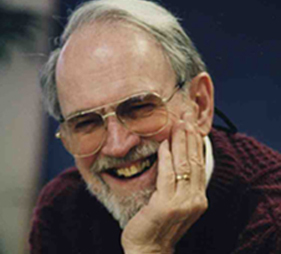
James Bugental on Existential-Humanistic Psychotherapy

The Interview

Victor Yalom: I’ll get this started with the question you always ask: are we live or are we on tape?
James Bugental: Good question. Now, can we edit the interview?
VY: I’ll have someone type this up, and then I’ll e-mail it to you, and then you can look through and see if there’s anything that you don’t like or things you want to change, and I’ll honor whatever requests or deletions you have. It will be a joint project.
JB: And this is not on video, so I can be as sloppy as I'd like.
VY: Sure. And thanks for reminding me I want to get a couple of candid photos of us to put on the website, before we stop. I recall when we made the videotape of you, "Existential-Humanistic Psychotherapy in Action." In the introduction you started off by pointing out the actual reality of the situation—that even though you were doing a real session with a client, you wanted to acknowledge that there were other people in the room influencing the situation, the videographer, and the sound crew, the lighting, etc. It reminded me of your maxim "Everything is Everything,"—that is, we must take into account the real context of any situation.
JB: It's astonishing to me even now how often people join in a conspiracy to deny that there's a camera or a camera crew—that it doesn't count.
VY: The reason I mentioned this is I wanted to acknowledge the context of our interview, and recall that that video project was the genesis of Psychotherapy.net, which we’re just launching; and I’ve invited you to be the first featured therapist of the month. For that reason, and also because you’ve had such a profound impact on my life personally and professionally, I thought it was suitable that you be the premier therapist of the month.
JB: I feel that with real appreciation.
VY: So you wrote a new book, another book, this one called Psychotherapy Isn't What You Think. Tell me about that title.
JB: What do you think it is?
VY: What do I think the title is?
JB: Yes, or what do you think psychotherapy is, either way you like.
VY: What do I think?
JB: Uh-huh.
VY: I’d like to hear from you about that title.
JB: Well, I think—see how that word just pops up over and over. What's that word doing in there? Why do I put it in? Well, I think I put it in, see, that's the way, sort of crossing your fingers, saying: Don't hold me to it too tightly; I'm tentative; I want to see what I say, how it sounds and whether I want to stand behind it. And so much in our personal intercommunications is of that order.

VY: Hedging our bets?
JB: Yeah, by not putting all our chips on it. And so much of our lives we live that way: I had my fingers crossed, it didn't count. Think of all the different ways in which we say we're living tentatively for the moment.
VY: What do you think you’re getting at with that title, Psychotherapy Isn’t What You Think?
JB: See, that's what I was just answering when I took you on this little side trip about thinking and so on. What we do is tentative, we don't want to be held to it too tightly, and particularly in the therapist's office we need to be free to sort of speculate, to think, but not commit. But also we need to know there is a difference. Psychotherapy isn't what I think. It's what I live, when it's the best—when it's the psychotherapy you really want to believe in.
VY: In this book and in your previous one, you attack a lot of the fundamental, the traditional thinking about kind of a logical, or as you say a “detective” or problem-solving approach to psychotherapy.
JB: The whodunit school of psychotherapy.
VY: Then what should psychotherapy be?
JB: It's the pursuit, it's the process of always leading somewhere beyond to somewhere fresh.
VY: And making that process fresh?
JB: Yeah. Well, you, I'm sure, like me, sometimes you get into a rut with a patient; if you listen for some time you realize you're stuck in a familiar pattern, and that pattern is what you think, not what you live. That's why it's so important to feel alive in the therapeutic hour, to be aware of what we're living in the actual moment.
VY: When you look back in your life, what are the things that have really helped you become more alive?
JB: That's a tough question.
VY: Well, the reason I ask is that the thing that most impresses people about you when you’re talking about or demonstrating psychotherapy, is not just the concepts you espouse about being alive and being present, but how you put these principles into action, how you embody them. So I’m wondering….
JB: How did I get there?
VY: Sure, maybe how you got there. What do you think helped you with that?
JB: That's an intriguing question. Let me chew on it a minute. Well, I'll tell you some of the things that come to mind. I don't know whether they're a complete answer. My parents were for some time very into Christian Science, Unity viewpoint, all those sorts of things, quasi-religious I guess you'd call them. Very well-intended and not without merit, but for me it seemed that we were just saying the words. I'm sure this happens in any religious system. You say the words in the absence of genuine presence to the words. I don't want to just indict Christian Science. It has many good things, and other things have similar sets of words, all of which is often very benign, even useful. But somehow the magic, the dynamic has slid away from the living experience of the person, and become words.
VY: Which for you weren’t truly alive?
JB: Well, for me, and I think for many others. But I don't even want to make that sharp a distinction between saying the words and what is truly alive. I think it's a gradient.
VY: But you started upon this topic in explaining how you got to be more alive.
JB: Good point, thank you. Now right there is an example of what I teach about psychotherapy: by bringing attention to my process, you helped me stay with what's more alive right now.
VY: I’ve learned a few things from you.
JB: Thank you, that moves me. It's so hard as a human being in an interaction with other humans to be open, to receive and give communication without some of the communication replacing the living. Does that say it? You know what I mean.
VY: Yes, yes.
JB: I think being alive involves constantly finding a balance for being in and out of relationship. Being in front of an audience, boy! it's easy to get sucked totally out of full aliveness. You complimented me a minute ago that I often can be alive, but I have to be wary because, once I step away from myself and realize "Hey, I'm doing it now," then I'm already not doing it. It's a very slippery slope.
VY: But sometimes you can revel right in the moment, being self-aware, and at the same time appreciate what is happening.
JB: That's right, and that's the best countermove. You know, when I step out of myself to comment on it, that can be losing my footing or regaining it.
VY: I’m going to ask you the third time, Jim. Can you think of what are some things that have helped you personally to become more alive, more embodied?
JB: My experience with the quasi-religious sects that my parents were in and….
VY: S-e-c-t-s?
JB: S-e-c-t-s (laughter). Well, let's play with that for a minute because I think in sex you have the same thing, in physical, bodily sex—that if you're feeling very sexy, if you start trying to talk about it, and describe it, there is one point at which it augments the excitement, and then another point at which it dampens the excitement. That's really an intriguing thought, isn't it?
VY: Are you avoiding talking more about yourself personally, or do you just keep getting sidetracked?
JB: I feel these were very personal things I just said.
VY: No.
JB: No?
VY: Oh, they are, but not in terms of my original question of what do you think helped you to become more alive or embodied. You mentioned Christian Science. Are you implying you reacted against this, and were propelled to find another way?
JB: Rather I would say, the various kinds of religious, quasi-religious, semi-religious experiences I have been exposed to have helped me tremendously to experience the difference between the word, the information, and the living experience.
VY: So early on in life this is something you were very aware of, this distinction?
JB: No, not very early on. I would say about high school. By that time I was beginning to be aware of it. It wasn't a sudden boom; it was a very gradual process. I suspect it's still going on in a way. I don't suspect, I know that's so, now that I say it.
VY: You’ve focused so relentlessly on this topic of presence and the importance of the human subjective experience for the last 40 years or so.
JB: If you don't have presence, what have you got? What are you working with?
VY: You’re preaching to the choir, of course. I’m convinced that this is important, but I’m wondering if you have some sense of why this particular topic held such a grip on you.
JB: Well, I think that goes back to things like the quasi-religions. I don't know why I keep insisting on putting "quasi." They are religious groups.
VY: What’s held your interest and fascination with presence for all these years?
JB: My reaction when you ask that is: Without that, what have we got? I'm surprised how can you ask that question. Without that it's all mumbo-jumbo, or – what comes into my mind – you know when you get a package, it's got these little plastic things that fill it in so the contents won't break.
VY: Styrofoam peanuts?
JB: Yes. Without that we're reduced to Styrofoam peanuts to subsist on.
VY: I can see in your facial expression that presence is just as important to you right now as it has been for the last 40 years.
JB: I'm not sure if I can quantify it like that.
VY: In either case, it’s still very important.
JB: Very important, oh, yeah. What have you got if you don't have presence?
VY: Styrofoam peanuts?
JB: Exactly, and too many therapeutic interviews are filled with Styrofoam peanuts. Don't you think?
VY: Yes.
JB: But sometimes you do depend on those peanuts. I wouldn't get rid of them.
VY: I've often had the impression that for you living through the Depression profoundly impacted your life.
JB: True, absolutely right.
VY: Anything more about that?
JB: It's such a broad question, I don't know. Let me think just a minute. See, so many of my formative years as one approaching adulthood…
VY: How old were you…
JB: I was just trying to think of that.
VY: …during the Depression?
JB: Well, 1929 was the crash. In 1929 I was what… 13, 14 but we didn't feel it totally for several years. Let's see, when was my brother born? I don't remember. He's nine years younger, so he was born by that time but was very small. And for a while my dad couldn't support us, so we went to live with my mother's mother.
VY: Where was that?
JB: In a small town in southern Michigan, Niles, Michigan. That was important, first not having Dad there. Dad's a whole other chapter, a whole other story. But, second, because it was a small town. Mother gave piano lessons and that brought us a little income, and then she got a job playing in the movie theater.
VY: Playing the piano or organ?
JB: Playing piano, and also she took organ lessons and played organ for the Catholic Church I think when their organist was ill, and that brought in some money. I always remember that the movie theater where she played most, once in a while I could slip in and sit on the bench with her while she played, and that was fun, you know. And she just improvised as she watched it. Sometimes it came with suggestions for the pianist.
VY: She’d improvise to the movie?
JB: Yes (laughter). And I'm not sure this is true – you know how some memories you're not sure about – but that was the movie that also had—oh the name just slipped past me, "Flaming Youth," or something like that. It had scenes about bad young people who danced and pulled their skirts up and things. It was sexy in a very cautious way, but you might even see the girls' thighs or something. But I never got to go sit on the bench when that was playing, although I was always trying to. Frustrating. Maybe Mom wouldn't have let me. Those were times, perhaps because my grandmother was such a dear lady, who pitched in and supported us for a while but who was a very staunch Methodist or Baptist or Presbyterian, one of those, in a way that my family was not. And she was amazingly progressive about my not going to Sunday school every Sunday. I went a lot of times, though.
VY: How do you think the Depression impacted you—then and later on in your life?
JB: Oh, God, so many ways. The splitting up of the family, the whole family for a while, and then when we finally were able to get back together, that was such a wonderful thing. Not without its problems, though. When we first went back, you know, we went by train, of course, in the coach in the cheapest way, and it was three days and two nights, or something.
VY: That’s from Chicago?
JB: No, we went to Chicago and then out to California. Dad had come out here to L.A., and so Mom packed food in a basket and we ate sandwiches and whatever she'd put in the basket. When the train was in station, she ran off and got some more supplies, and then we were sleeping in our seats, of course, and it was a big adventure. Also in the car with us were a couple of advance men, I guess they were, for the L. G. Barnes' Circus, and I got acquainted with them and they were young, and I don't remember much detail except they were very friendly to me. I think of those times with sadness and with joy. There was lots of both, and I think what it did, thinking more in terms of your question, I think those times demanded that I grow up in some way, not be so dependent as I might otherwise have been. Dad wasn't there, Mom had her hands full trying to earn some money and take care of my brother, who was much smaller, and be there for me as well.
VY: Just the two of you?
JB: The two boys, uh-huh.
VY: No girls?
JB: No girls. But what it did was—I never thought of it quite this way—it demanded I be a separate person, more than if the family had been intact and in an intact home. One thing that helped very much was Boy Scouts, after we came to California. Let's see, you had to be 12 in those days to join, and I was born in 1915, so that would be 1927, actually 1928. And I had read novels about Boy Scouts and studied about them, and, oh, I was so eager for that. Now, what was so big about that same time was doing papers. I sold papers on the street corner.
VY: Where?
JB: In Lansing.
VY: Michigan?
JB: Uh-huh. And that was good. I earned practically nothing, I know now…
VY: How much would you make?
JB: Well, they were daily papers so we sold them every day, and my guess is I might make 50 cents, but that's only a guess. It wasn't any big money. After we came to California I had a paper route, bigger stuff, regular. Had to have a bicycle, which I loved. Oh, I loved my bike.
VY: Did you have enough to eat?
JB: Yeah. Sometimes it was scrimping, and I vaguely knew in the back of my mind that my mom wasn't taking as much, that she was shorting herself some. Hard times. Dad always had such grand plans, and they mostly didn't pan out, you know. But I learned from him optimism because he'd bounce back wonderfully. The only thing, sometimes he'd go off on a binge and get drunk, and he wasn't mean but he was unavailable.
VY: Do you think the deprivation or fear of the Depression lingered with you and impacted you later in adulthood?
JB: I'm sure it did, yeah.
VY: How so?
JB: Well, to always be concerned about income, and my earnings from my paper route sometimes helped us tie over. Both of my parents felt bad about that, and Dad went back to Chicago, didn't come to Michigan because he and Grandmother didn't get along very well. But he gradually was able to earn more, send us some money, until we finally could come to California. That wasn't the end of the money worries, though. There were federal projects, you know. I can't remember the details now. He did some things on a work project, and Mom did some teaching on a federal project. It's so amazing looking back how kids can know and not know so much of what's going on with the adults.
VY: Despite that economic uncertainty, you chose to go into psychology, which I imagine was by no means a guaranteed income in those days.
JB: Well, actually, it was pretty good. Now, we came to California about 1931, and 1932, I guess, was the Olympics in Los Angeles, and I got a job as an usher, and that was neat.
VY: Do you remember anything from those Olympics?
JB: Oh, yes.
VY: What stands out?
JB: Well, the first thing to pop up was not really because of the Olympics. There used to be, every year – I guess it was called the Electrical Parade. All the major movie studios would have floats, and there were marching bands from USC and UCLA. And I guess PG&E, maybe, and some other industries would have floats. The thing I remember most about that [laughter] was that the studios, the big movie studios often had floats with maybe a Grecian scene, or something, with starlets or would-be starlets with very little clothing on them.
VY: You keep getting back to that.
JB: Yeah, keep getting back to that. I always loved that. And the ushers would always get people seated, and then when the parade came and when those floats came in, we all got down in the boxes and looked up [laughter].
VY: So you’d get the good view?
JB: So we would get the good view.
VY: Those seem to be the memorable moments in your life?
JB: That's one of the memorable moments (laughter). And also I guess there was a flood. I think it was in the La Crescenta, Cucamunga area, and I went up there with a group of boys and we helped people dig out or helped them in various ways, and I was beginning to feel some authority because as an older boy they reported to me, and I worked with the officials. That's a little more grandiose than it was. I might have said "Hey, Kid, have you got anybody that can run an errand?" and so on.
VY: Do you remember the first client you saw?
JB: Oh, you're jumping way ahead. Am I taking too long?
VY: That’s okay.
JB: Don't hesitate to tell me. I'm enjoying reminiscing. Let's see. Got through junior college, worked some, I can't remember doing just what now. Oh, I worked for the Bank of America Trust and Savings Association, which we called Bank of America Mistrust and Slaving Society. That taught me I didn't want to stay in the banking business. And then in the meantime, I'd say about 1935, I got married. No, it would be later than that, early 1940s. I got married to a girl I'd been going steady with since junior college. In the meantime, we both graduated from junior college and she went to UCLA. Her family had more money so they could do that. I worked, and now I can't unwind it all, too many strands all mixed in. Anyway, she was from Texas, that was it, and at some point her family invited us to come back there, and a distant cousin was the Registrar at Western State Teachers' College. He said "We can get you in here." My grades were not good enough to get a scholarship, I'm sure, but somehow or other I got in and finished up my last two years of college in one calendar year, by taking extra courses and so on. And then I did well enough to get a scholarship to Peabody—do you know Peabody?
VY: In Georgia?
JB: No, in Nashville, Tennessee. It's now affiliated with the Vanderbilt University School of Education. It had a long, excellent history, particularly in psychology. Names we don't hear much any more: Garrison and Boynton and so on. so think we were getting support from my wife's family, we must have been. Oh, by that time I had been in and out of the Army, that's right, so I had the G. I. Bill. I was only in the Army, God, I don't know – 11 months, 13 months, right around a year.
VY: Did they send you anywhere?
JB: Virginia. In the meantime we moved to Atlanta. I don't know just how that came about now, but I got to know the chief psychologist at the Army Hospital there, and so when I went through my training he requisitioned me. I went through basic and I was assigned there, and had the great fortune to be put with a Gray Engleton, who had been for many years a psychologist in the New York City schools. Gray, I remember him. He was such an encouraging, sponsoring, teacher. He opened up my whole vista on what a psychologist was and what they could do.
VY: You’re getting emotional when you talk.
JB: Yes, I do.
VY: What’s the feeling?
JB: It's hard to identify. It's sadness, great appreciation for him. He opened a door that I didn't even know existed within the practice of psychology, what it means to be a psychologist.
VY: You were in the Army then? If you hadn’t met him, you might not have become a psychologist?
JB: No, I'd already taken my Master's in psychology, but I might not have taken the path that I did, I don't know. Someplace in there my second child, James, was born, and the war ended. Without trying to detail just the sequence, the thing was that with two children and having a year of service, I became eligible for discharge. I don't know, something about that—I don't think it was the discharge. It was the change in my life. In a relatively short space of time, five years – I'm just grabbing the number, it's not precise at all- my whole vision for myself, my whole vision of what was possible, what the world was going to be, radically changed. I began to think I wouldn't have to be a salesman like Dad, that I might be able to do something more. I always wanted to be an author, to write fiction. Well, I'm getting too caught up in details here.
VY: No, not at all.
JB: That's okay? And then I got discharged and went back to Georgia Tech to the counseling center; but in the meantime a former professor of mine at Peabody, had become the director of the counseling center, and with his encouragement I began casting around and looked for fellowships and scholarships or something. Ohio State accepted me, and I liked Carl Rogers, who was there, and it sounded like the place I should go, so, without worrying about the details, I accepted that, and we moved there.
VY: You entered the PhD program?
JB: Um-hmm, and we moved to Columbus, Ohio, even as Carl Rogers was moving to Chicago. So instead of studying with Carl Rogers as I intended, I found I was with George Kelly, and it was the luckiest break of my life. No, not the most, but one of them. George is not well known but he was a splendid teacher, encourager, and he'd brought Victor Raimey, another name you probably don't know, but Vic was one of Rogers' Ph.D.s and was at the University of Colorado. Vic was so encouraging. I was his first graduate student, his first doctoral candidate. Let's see, I passed all the tests the night before…. what? I don't remember – before something or other, maybe passing my orals, that was it, and I guess somehow we were in a celebratory mood and Victor came by my house and picked me up and we went out, and he got drunk and I had to take care of him (laughter). But I was his first candidate, and it was too much for him, I guess (laughter). Oh, he died too soon. Nifty guy. I had my basic degree by that time. New Ph.D.s in Clinical were very sought after and you could almost name your school, and name your price within reason, and UCLA meant coming home in a way, so I took UCLA. And the rest is history. Why did I go through this whole thing? What did you ask me that set me off?
VY: I asked you if you remember your first client.
JB: My first clients were counseling clients, some who we really did brief therapy with, though we didn't know it by that name then, but therapeutic counseling. I set up the counseling center at Georgia Tech—no, not Georgia Tech, but UCLA – I don't know. Anyway, I found I loved to do that.
VY: Despite that and your desire for economic security, you did the bold thing, quitting a tenured position at UCLA?
JB: That's right.
VY: To go into clinical practice, whatever that was.
JB: Al Lasco, do you know Al? He and Glen Holland and I were all teaching at UCLA, and we started a practice on the side, Psychological Services Association. Good academics that we were, we'd have regular staff meetings, and we'd study books together, sometimes bring people in to teach us. It was a very rich diet, out of which we all three eventually left UCLA and developed our practices.
VY: I’ve heard you say that at the time all the books on psychotherapy, including psychoanalysis, fit onto one bookshelf.
JB: Oh, yeah. Not even a full shelf. I can't remember them now, but there were a couple from the twenties that still had some currency, and of course Carl Rogers' books, a couple of those, and just one or two others. There just was hardly any literature in the field.
VY: Were you aware of being real pioneers?
JB: Yeah, to some extent, uh-huh.
VY: Exciting?
JB: Oh, yeah, yeah. And a lot of support, too. Not only the two people in practice with me, but at that time we were starting the Los Angeles Society of Clinical Psychologists in Private Practice. There was another group practice, three guys that we had very congenial swapping relations with, and then maybe a half dozen others in town in solo practice, most of them having some other connection, as private practice wasn't supporting them solely. But rapidly that changed and new people came in. LASCPIPP, that's it, Los Angeles Society of Clinical Psychologists in Private Practice, and it's still very much in existence. And there's the Southern California Psychological Association, which overlaps with them.
VY: Any memories that stand out of a particular client you’d like to share just as you were kind of learning how to do this thing called therapy?
JB: Also a guy I'd known in high school, we'd been in high school together, was a psychiatrist, and I think he was in training analysis, and we got together and I used his office some and he gave me sort of coaching. I don't know whether we ever had a formal supervisory relationship. I don't think so, but just sort of coaching and he taught me about some of my work and he'd tell me about some of the things that he was learning, and that was very helpful. My whole understanding of the phenomenon of resistance traces back to Jerry Saperstein. I'm moved now and I can't think quite why. We weren't big buddies or anything, we were just good friends, our paths only sort of bumped together for a while, but it was congenial.
VY: Are there some moments with clients that stand out when you look back and think: Here’s where I learned some important things about therapy?
JB: There are a number of them. There was Mildred, who was an older woman, who—how would you characterize Mildred? Very needy. Looking back I know how much I fostered her need. I needed her to need me, and I think I did a lot to help her, but I didn't do much that was forward looking. I didn't know about that even. I gave her support. It taught me a very important lesson, not just to soak in positive transference, not just to feed it and feel that everything's going great.
VY: What about the therapy with her helped you learn that you needed to do more than support? Did you get to that point with her where you started to do more?
JB: Oh, yes, and she fought it, hated it, and then I'd slack off. I think the thing I learned most importantly was that it's not too hard to get a positive transference if you don't keep setting limits and having a formal sense of what you're doing. It doesn't have to be stiff and distant, but just yielding to the neediness of the client is not therapy, and I'm afraid that's a lesson many of us have to learn probably not just once. I struggled with that a lot.
VY: Therapy isn’t what you think.
JB: You got it [laughter]. Now where do you want me to go from here?
VY: Before we move on, you said several came to mind that you thought of, clients who have helped you learn about what therapy is.
JB: I mentioned Jerry teaching analytic concepts and particularly about process as opposed to content, one of the most fundamental things I learned. Oh, someplace in there I went into analysis myself. That was a very important learning experience, five times a week.
VY: How so?
JB: Oh, the analyst I had, and I think many others too are very disciplined, very formal, and somehow in that respect very evocative. I know many new therapists are hesitant to be formal and disciplined and so on, feeling that they will drive the client out, but that formality, those limits, actually can encourage intensity. That was an important discovery.
VY: What did you learn about yourself in psychoanalysis?
JB: About myself? I think I learned my neediness, my emotional neediness, and how important it was to not suppress it but give it some structure.
VY: We all have a lot of neediness.
JB: Structure and ethics, because I think one of the most important things for a therapist to learn, and one that I worry that too many of our younger therapists don't get to understand, is the reciprocal relationship of affect and form.
VY: What do you mean, they don’t understand? What don’t they understand?
JB: That affect itself, the display and release of it….
VY: Catharsis?
JB: Yeah, catharsis unbridled is not psychotherapy. Catharsis bridled—the bridle is a good metaphor because you steer with it. Catharsis bridled is a powerful therapeutic vehicle. It's not therapy, it's a vehicle for therapy. Emotional discharge is incidental to therapy, not prerequisite for therapy, but without structure affect is counter-therapeutic actually.
VY: You don’t really believe that affect is incidental? Don’t you need to get to some point of strong affect?
JB: Oh, sure, but affect with structure. Affect provides the engine, but the engine doesn't know where to steer.
VY: I’d just to like shift for a final part to taking a look at where you are in your life now. A lot of the theoretical existential literature talks about death, death anxiety, and how it impacts one’s life. You’re getting old.
JB: I used to just have great terror around death.
VY: Yeah?
JB: Oh, yeah.
VY: When was that?
JB: At a guess, I'm saying the 1940s and '50s—that's a guess. Probably when I was in my thirties and forties. That's not very precise. Just god-awful. I couldn't breathe.
VY: You were worried about dying?
JB: Not about dying. About oblivion, nothingness.
VY: What do you think that was about, looking back?
JB: It was about oblivion and nothingness [laughter]. I think that's what it was about. It was about confronting how limited is our knowledge and our purview, about confronting that finally I had the Ph.D. and I'm a psychotherapist and I'm the president of this and something of that, and I don't know where the escape hatch is. I'm still going to die, and I still don't know what's happening to me. I think that's finally the existential reality coming home, and I didn't welcome it.
VY: And now?
JB: It's funny, no not funny, but in an odd kind of way those things are still true. The feeling I'm discovering even as we talk is very difficult to put in words. What comes to mind though, is a celebration of the not knowing. That's got too many overtones that I don't want, but it's something like that. It feels right that I don't know. I hate it that I don't know, all at the same time.
VY: It’s not terror then?
JB: Not terror. But I can see terror back of it a ways, like it's waiting, it might come back. But there are other things in back, too, so I don't think I'll just be captive of it.
VY: You complain about your memory a lot.
JB: That's a pain in the ass. If you press me on what year was that, or where were you living at that time, or informational, factual, objective information, I just can't do it.
VY: But right at the moment you’re still very lucid and present?
JB: Yeah, that's the saving grace.
VY: Maybe letting go of that helps you to be even more present?
JB: Oh, I think, yeah, very definitely. If I grapple with that, I'm not present. I'm off in a private wrestling match.
VY: Any awarenesses about life….
JB: Endless.
VY: ….that you could share with me that will save me a little pain?
JB: Nope. That's one important awareness!
VY: What are you going to do the rest of the day?
JB: Well, probably I'll alternate between trying to find my desk under all these things—I know it's there and I remember once I saw it. And who know, I may play with an idea for a new book.
VY: Good luck.
JB: Thank you
VY: I’ll take a couple of photos.
JB: Okay. I haven't shaved or anything. Is that all right?

In Search of Self: My Therapy with Rogers, Satir, Bugental, Polster, Yalom, & Maslow

Have you ever wondered what would it be like to work with psychotherapists who most of us have only read about, heard speak at a conference, or watched on video? Like many psychology students, I have often pondered the question of what it would be like to meet with the masters in our field. At critical crossroads of my life, I have wished for the guidance of these sages. In my mind, over the years, I have assembled my own personal therapist dream team: Carl Rogers, Virginia Satir, James Bugental, Erving Polster, Irvin Yalom, and Abraham Maslow. (I suspect each of us could construct our own cadre of master therapists.) What these therapists have in common is that they all value the importance of self-determination, autonomy, and the intrinsic potential for growth. They all seek to provide the optimal conditions for individuals to heal and grow, despite the pressures and circumstances of life. By helping to remove any obstacles towards growth, these therapists empower individuals as they let go of their symptoms and engage more fully in their lives.

I have imagined what it would be like if each of these renowned professionals could share with me their unique approaches and help me understand myself, confront my struggles, and achieve my potential. I invite you to join me now, in eternal time and space, as I begin my psychotherapy encounters with my dream team. But first, here's a little background.

In Search of Acceptance

For as long as I can remember, I have always been a high achiever. My relentless drive for perfection earned me countless academic awards and recognitions. I knew that as long as I succeeded academically, I would be accepted in the eyes of others. Continuing to persevere, I earned a master's degree in chemistry from Stanford University. I was proud of my academic achievements, but I had always sensed that my heart wasn't  there.

For the next several years, I was on a mission to find my passion in life. Although I had not been successful in finding a fulfilling career, I was determined to find a relationship that would make me feel whole. Depressed and frustrated, I entered therapy when I could not convince my ex-boyfriend Brian to give me just one more chance. I was determined to be the person I needed to be so that he would accept me and come back into my life. I was convinced that if he could accept me, then I could finally be happy.

Carl Rogers: Conveying the Core Conditions

Rogers Intro: During Deb's first therapy session with me, she tearfully commented, "I have lost my direction in life, and I do not know where I am going." She explained that her job as a researcher was "just not me" but she did not know what else to do. She described how the security of having an income helped her overlook the reality that she did not enjoy the work. After the first half of the session, Deb started to describe her "on-and-off" relationship with her ex-boyfriend Brian.

Deb: From the moment I met him, I knew he was the person I had been searching for. We had so much in common and we seemed to understand each other pretty well. I remember him telling me how I was one of the few people who could really understand him and be on his wavelength. I still remember how nice it felt on our first date when I made him laugh. After that first date, I knew I was hooked.

Rogers: It sounds like that first date with Brian was a really special time for you. He recognized you as someone who could understand him, and when he laughed you felt as if he could really appreciate you.

Deb: Yes, that's exactly how I felt. And I felt so safe with him. I know this may sound kind of silly, but I took so much comfort in the fact that he was so tall and strong. When I was in his arms, it felt like nothing else mattered. Being with him provided me an escape from the rest of my life…and from myself.

Rogers: That does not sound silly at all. By escaping to Brian, you felt as if you could escape from your problems. But, in doing so, it sounds like you also lost parts of yourself.

Deb (crying): You're right. I used to feel so strong and have such a clear idea of who I was. But since I started depending on him to be the source of strength in my life, I've had no clue as to who I am. All I can think about now is doing what I need to do to get him back into my life again.

Rogers: Your tears show what a compassionate and sensitive person you are. I see how much pain you are in now, but I also hear how determined you are to discover your true self. Just the fact that you are here shows that you are ready to find your "direction in life."

Rogers Wrap-up: My main goal with Deb was to create a growth-promoting environment by helping her identify and remove the internal and external obstacles blocking her inherent growth. Conveying the core therapeutic conditions of accurate empathy, unconditional positive regard, and genuineness, I helped Deb realize and accept her congruent self and begin her growth process toward self-actualization. As Deb started to move in the direction of growth, I noticed she was developing openness to experience, gaining a trust in herself, developing an internal locus of evaluation, and demonstrating a willingness to continue to grow. She was beginning to discover her own strength—instead of escaping to that of her ex-boyfriend. During our final session, Deb mentioned that she was even considering her long-term goal of enrolling in a psychology graduate program.

Virginia Satir: Engineering the Self

Satir Intro: After attending one of my personal growth workshops, Deb approached me about helping her in the process of rediscovering and rebuilding her self. Always enthusiastic to help an individual in the area of personal growth, I agreed to see Deb right away. When I met with her during our first session, I had the sense that she had the motivation to grow, but she just needed a little direction to help her stay on her path.

Deb: I know that I should be ready to move on, but I still find myself feeling so sad over the end of my relationship with Brian. I wish I could just ignore my feelings, but it seems there's no escape.

Satir: I think that it is great you are so in touch with your feelings now. Maybe it would help if you could think of these feelings as the "juice" that keeps you in a whole piece and gives you the abilities to see better, to think better, to feel better. By owning these emotions, you can actually feel more alive.

Deb: That sounds much better than trying to fight these feelings. But as I am dealing with all of these feelings, how do I get unstuck? I just don't understand why I can't move on with my life!

Satir: Anytime we try to change something that has been a part of our life for so long, it's so tempting to stay with what's familiar. Often when we try to take one step forward, the familiar brings us right back. This struggle you are having is certainly a common one. Just ask anyone who has ever tried to quit smoking, or change any kind of habit.

Deb: That definitely helps me put things in perspective. But, how do you suggest I break my "habit"?

Satir: Changing oneself is one of the most difficult things in the world to do. I think the most important tools you need to have now are faith in and forgiveness for yourself. Your faith will help you move forward in your commitment to grow, and your forgiveness will save you during the backslides. I see just how committed you are, and I know that you're going to keep on moving ahead, and eventually you're going to be able to make it.

Deb: Thanks for the encouragement. But, I have to admit it's those backslides you just mentioned that scare me the most. I am just not sure how to find the strength and courage to move on when I feel like I've taken a step backwards.

Satir: The pulls back into the familiar are indeed powerful. If you find yourself doing the familiar, my advice would be to give yourself an "A" for being so aware. Then, you can give yourself the choice about what you want to do next. After all, you own yourself, and therefore you are the engineer of yourself.

Deb: Oh, I really like that idea. So if I don't like the way I am doing something, I have the choice to do it differently.

Satir: Exactly. I think the key to life is to change when the situation calls for it, and to find ways to accommodate to what is new and different. It's important to keep the part of the old that is still useful, and discard what is not.

Deb: So your advice is to change what no longer works, but to hold on to what still does. That means I don't have to completely start over.

Satir: That's right. You already have a great start on your journey. Let me read you something that I wrote a few years ago that may encourage you as you continue in your process of change: "I am Me. I own my fantasies, my dreams, my hopes, my fears. I own my triumphs and successes, all my failures and mistakes. I have the tools to survive, to be close to others, to be productive. I am me, and I am okay."

Satir Wrap-up: During our next sessions, I helped Deb to develop ways to cope with the ending of her relationship. I helped her understand that in our lives, problems are not the problems—coping is the problem. I pointed out to Deb that life is not what it's supposed to be. It's what it is. The way one copes with it is what makes the difference. She eventually saw the ending of her relationship as an opportunity for positive change, which would ultimately make her stronger for the upcoming "bumps in the road." Over the next few months, Deb developed the strength and self-esteem to directly confront many of the everyday challenges she faced in life. I enthusiastically watched her become stronger and stronger with each of these encounters. During our last session she admitted, "It's much easier to face a problem directly than to try to find the energy to avoid it."

James Bugental: Experiencing the Moment

Bugental Intro: Before she left for the Esalen Institute in Big Sur to develop their Human Potential Development Program, Virginia Satir referred her client Deb to me. She felt that Deb was beginning to trust herself and her feelings, and she thought that I might be able to help her tune into her "Wisdom Box" to access her inner truth. During our first few sessions, I realized that Deb was more in tune with the needs of others than with those of herself. Then, during our fourth session, we had a major experiential breakthrough.

Bugental: When you were in the waiting room, I noticed that something seemed different with you today.

Deb: Oh, really? That's interesting you sensed that. I think I'm okay…

Bugental: Right when I saw you, I had this feeling that you had contact with Brian this week.

Deb: Wow, you're right. I did. That's kind of freaky you could pick up on that!

Bugental: I notice you are shaking right now.

Deb: I am? Oh, you're right, I am. Maybe it is because my blood sugar is low or something…

Bugental: And?

Deb: So, you're right. I did see Brian this weekend. But, everything is fine. I feel totally in control, and I am not afraid of spiraling backwards again. I think I'm ready to have him in my life again.

Bugental: Did you realize that as you said that your leg started shaking even more?

Deb: Uh, yeah. I can't quite stop that.

Bugental: What do you think your shaking is trying to say to you?

Deb: I don't know.

Bugental: Can you ask it?

Deb: Well…maybe it's trying to tell me that I'm not ready to have him in my life again. Perhaps it's a reminder of all the pain I have been through before, and a warning not to go there again.

Bugental: It's almost as if his being in your life threatens your stability and "shakes" your foundation of strength, and even chips away at your bedrock of self-esteem. Does that sound right to you?

Deb: Wow, you know I didn't think of it that way. But, yes, there is definitely some truth in that.

Bugental: Now I see you're shaking even more. What are you feeling now?

Deb: Oh, so many feelings are going through me now, I don't even know where to start.

Bugental: What if you just close your eyes now and breathe in and out. Now imagine what your shaking leg is trying to tell you. With all of that energy, it must have an important message for you. Just concentrate on what it is saying.

Deb (tearfully): It is saying that it is time for me to be seen, heard, and respected. It is realizing that I've been so busy taking care of other people's needs that I have not been in tune with my own. Brian really has no respect for me, and I'm so sick of being a doormat!

Bugental Wrap-up: During my next several sessions with Deb, I assisted her in tuning into what she was experiencing in the moment. In essence, by helping Deb to focus on the present and become mindful of what was happening in the here-and-now, I helped her become more self-aware. Then, by reflecting her newfound awareness back to her, I assisted her in better comprehending her situation, and ultimately increasing her choices so she could begin to make a change. It was also essential for me to enter into Deb's world without disrupting it and changing her personal experience. I wanted to help Deb discover her own images, without intrusively bringing in my ideas. I also wanted to challenge her to look at her own attitude towards herself. This process was aimed at facilitating Deb in taking charge of her life, and ultimately claiming her power to engage in her journey toward self-actualization.

Erving Polster: Gaining Awareness through Gestalt

Polster Intro: I received a call from Deb, a graduate student in psychology, who was interested in learning about how my Gestalt approach might help her achieve a new level of awareness. She explained that she would like to get in touch with and unleash the anger that she had been internalizing all her life. I agreed to help in her process. Right when I met Deb, I sensed she was ready to get to work.

Polster: I'm wondering how you have been able to get in touch with your anger in the past.

Deb: To be honest, I've always been afraid of getting angry at people. It just seems more natural to keep it locked inside.

Polster: What if we could try something that might help you unlock this anger before it breaks down the door on its own?

Deb: I'd be up for that. But how would I do that?

Polster: How about you just imagine that Brian is sitting there in that empty chair right now. Get in touch with how you feel that he just entered and left your life again. What do you want to say to him?

Deb: Um, that I'm mad.

Polster: Tell it to the chair. And say it like you really mean it.

Deb (angry): You just don't have a heart. I was trying to understand how your coming into my life again could make sense to you. And then I realized you didn't just think—you knew, you totally knew, that you were going to come into my life for a limited amount of time, and then just leave. There was no thought in there of me at all except what I could do for you. It's all about you!!

Polster: That's it. Now go even deeper into that anger.

Deb: I just don't get it. And I'm just really mad that you could just come into my life again, and show me the side of you that I missed. Then, when you were no longer lonely, you just left my life again. I'm so sick of this!

Polster: Go to the core of your anger. What do you really want to tell him?

Deb: I've always been there to support you. I've never ever, ever let you down. I've always been there for you and there have never been any consequences for you. But you're never here for me, Brian! It's such a one-way thing. I can't count on you for anything except to be a fleeting part of my life. That's all that I can expect from you, and I'm done with you! I deserve better!!

Polster: Where is your anger now? Where do you feel it most? Let it out.

Deb (raising her voice): Stay out of my life! Stay out of my life, Brian!!!

Polster Wrap-up: Gestalt therapy served as an effective means for Deb to become more fully present with her unexpressed emotions. When she could be more in the "now," she developed a clearer sense about the growthful direction in which she needed to move—i.e., away from her ex-boyfriend—and her change naturally unfolded. Her previously alien anger was transformed into an acceptable expression, which ultimately led to new possibilities in her life. During the next few months, Deb's increased self-awareness enabled her to take back her power and restore her self-support. Her new awareness also allowed her to experiment with new behaviors, which, in turn, facilitated further growth. Deb realized that finally giving a voice to her anger allowed her to focus her energies on her interests and passions, instead of on her regrets and fears.

Irvin Yalom: Confronting the Existential Givens in the Here and Now

Yalom Intro: I received an enthusiastic email from Deb who explained to me how my book, Existential Psychotherapy, had made quite an impact in her life. Since she was living nearby, she expressed her desire to consult with me on her existential quest, and I agreed to meet with her. When we met in my office, I could not help but notice that Deb seemed a bit star-struck. (And, of course, I have to admit that this is indeed a nice reaction for a man in his 70s to encounter.) But these stars soon faded, and we got down to the business of her life.

Yalom: Hi Deb—it's really nice to meet you in person.

Deb: Wow, thanks. Uh, I'm feeling a bit nervous right now. I've been admiring your work for so long, and I just can't believe that you are right here in front of me now!

Yalom: It's nice to know that you've been able to appreciate my work.

Deb: Not to sound like a groupie or anything, but in many ways that book changed my life. Especially my ability to really begin to let go of a painful relationship I was having with my ex-boyfriend Brian.

Yalom: Now you've got me curious. What in the book helped you the most in being able to move on with your life?

Deb: Where do I begin? Let's see…well, your whole premise that underneath all of our motivations and experiences lies this "existential bedrock" which forces us to be aware, on some level at least, of life's existential givens of death, isolation, freedom, and meaninglessness, really hit home with me. At first this concept was just an intellectual one to me, but as I drank in each word of your book, I realized that these concerns lie at the origins of my major life challenges.

Yalom: Yes, I have observed time and time again how both on a conscious and unconscious level, these "givens of existence" constitute the core struggles of humankind. It is these ultimate concerns that provide both the process and content for therapy.

Deb: Your book convinced me of that! While I was in the midst of reading through the chapters on death, I did a lot of thinking—and dreaming—about death. In fact, one night I had the most terrifying nightmare that death was literally at my door, and I had to use all of my energies to protect myself from it. Until that dream, I did not realize how fearful I actually was of my own death. And, that's when I realized that my "death grip" on Brian represented my attempts to assuage my death fears by believing that he was my "ultimate rescuer" who would protect me from death.

Yalom: Wow, what an insight.

Deb: Interestingly enough, when I was able to confront the inevitability of my own death on such a deep level, I became more engaged in my life.

Yalom: That's the paradox of accepting death—although the physicality of death destroys us, the idea of death saves us.

Deb: I also discovered a similar paradox regarding existential isolation. I realized that my irrational quest for unconditional (and unrealistic) acceptance from Brian was actually a form of denying my existential isolation. But once I was able to confront the reality that I was ultimately alone, I have felt so much less lonely!

Yalom: As you've discovered, the fear of existential isolation is the driving force behind many interpersonal relationships. But true relationships do not use the "other" as the functional "it" to guard against existential isolation. Once a person can accept that they are ultimately alone and can not have all of their needs met by others, then they can develop richer, more tolerant, and more loving relationships based on a deeper sense of communion. When we are able to stand alone and dip within ourselves for our own strength, our relationships with others are based more on fulfillment, not on deprivation.

Deb: Wow, what a comforting thought!

Yalom: Indeed it is. It is only by facing aloneness that we can meaningfully and authentically engage with another. Love—although it doesn't take us away from our existential isolation—is our best mode for coping with the pain of separateness.

Deb: So in a sense, we are all together in our separateness.

Yalom: Yes, that's very true. We are separate but can still connect to each other.

Deb: In addition to helping me gain personal insight into the existential concepts of death and isolation, your book also gave me the opportunity to process my thoughts about freedom. Your concept of freedom—that everyone is ultimately responsible for their (and only their) life and has the choice to make (or not) decisions and change their life as needed—is pretty much the very core of my whole outlook in life.

Yalom: Good for you. I've found that many people are actually frightened by the concept of freedom which implies that beneath them exists a "groundlessness" lacking any form of structure. But you seem to have to come to a place in your life where you are accepting this freedom and realize that you can create your life by the process of feeling, wishing, willing, choosing, acting, and changing.

Deb: My recent realization based on this concept—that I am the one who is responsible for both my needless suffering over Brian as well my solution to search for alternatives that really honor who I am and what I want—has brought me an incredible sense of empowerment! Your idea that we are responsible for our own lives and well-being has become my new mantra!

Yalom: As I've always said, until one realizes one's own role in contributing to one's problems, there can be no motivation to change.

Deb: I'm a true believer in that idea! And the final section of your book on meaninglessness really gave me plenty of food for thought too.

Yalom: Oh yes, the riddle of the meaning of life…Since the beginning of time, people have struggled with the classic existential dilemma of seeking meaning and certainty in a world that can offer them neither.

Deb: I loved your idea of engagement in life as the antidote to meaninglessness.

Yalom: Yes—it's better to embrace the solution of engagement rather than become preoccupied with the problem of meaninglessness. I have discovered that one must immerse oneself in the river of life and let the question drift to the background, attending to it when necessary.

Deb: I completely agree. And, I've found that approaching life's inherent meaninglessness with the realization that it's up to each of us to create and aspire to fulfill our own meaning is quite a satisfying way to live.

Yalom: Wow, so I see that you have really explored these existential concepts in a way that makes sense for you. Sounds like you've been able to put theory into practice.

Deb: I think so. If the whole point of theory really is to serve as a foundation and help one achieve a sense of order and control in an otherwise chaotic world, then I think I'm finding mine!

Yalom: It is so nice to know that my books have been able to offer you so much insight into your life. Now, I'm wondering how that felt for you to share with me how much you've enjoyed my work and put it into practice in your own life.

Deb: Hey, that sounds like an attempt to bring our session back to the "here-and-now"!

Yalom (laughing): Okay, now I'm convinced that you may have read a few too many of my books. But it was a serious question. You must have had some image of what this would be like. So, how has it been for you to meet with me in person? Any surprises so far? Any disappointments?

Deb: I admit I was nervous prior to our meeting. I guess I was intimidated by all the books you have written, and by the fact that you're, uh, Yalom! I was hoping that I would not embarrass myself. But, much to my surprise, soon after we met, it was easy to open up and talk to you about myself and existential issues.

Yalom: So it sounds like you are pleasantly surprised that you feel comfortable talking with me. Anything else that you wanted to share today, but have not?

Deb: Well, let me think about that for a moment. I guess we have been talking a lot about existential issues and struggles I have dealt with in the past. Maybe I was trying to impress you with my knowledge (smiles sheepishly). But I have not revealed much about what I want to work on in my life now.

Yalom: I appreciate you telling me that you wanted to impress me. You have succeeded on that count! But it sounds like your desire to impress me might have gotten in the way of you sharing more pressing needs. Maybe I played some part in that as well, but we don't have much time left today, so maybe we should use that time to begin talking about what you would like to work on now in your life.

Deb: Yes, I would. This is little harder for me, but here goes…

Yalom Wrap-up: Deb continued to meet with me on a weekly basis until the end of the summer. As our sessions progressed, she focused less on intellectual topics and more on the here-and-now space between us. During our last session, Deb explained to me why our therapeutic relationship had been so valuable to her. With tears in her eyes, she told me that she could now truly understand my maxim of psychotherapy that "It is the relationship that heals."

She explained how she particularly enjoyed my approach where I saw us as "fellow travelers" in a world full of inherent tragedies of existence, and she appreciated how I could be both an observer and a participant in her life. She mentioned that although she had previously read how I entered each therapeutic relationship with openness, engagement, and egalitarianism, she was amazed to personally experience the true power of these therapeutic ingredients. Deb realized that what had been most helpful about our sessions was how my authenticity, genuineness, and transparency eventually allowed her to discover these same qualities in her self. I explained to her that this is precisely why I have always believed that therapist authenticity is ultimately redemptive. She also realized that my being able to enter into her world and see her as she truly was enabled her to do so herself. As she hugged me at the end of our last session she said "Thank you for giving me the gift of therapy."

Abraham Maslow: Journeying toward Self-actualization

Maslow Intro: When I ran into Irv Yalom at the Evolution of Psychotherapy conference, I mentioned to him that I was in the process of revising my book Motivation and Personality. After he got over the shock of seeing me (he really did look like he had seen a ghost!), I expressed to him that I have always enjoyed how his textbooks read more like novels with their captivating vignettes, and that I was currently using this technique to revise my text. When I mentioned that I wanted to work with people who were on their journey toward self-actualization, he told me he knew of a person who might be interested in meeting with me.

A few days later Deb called me, and her pursuit of self-actualization was evident right away. I decided that it would be helpful to meet with her a few times to discuss what was on her mind. I met with Deb for the first time after she just finished a day full of play therapy sessions with young children. I could not help but notice that she was sparkling—both literally due to all the glitter she had on her from doing art therapy with the children, and also figuratively from finding work that allowed her to shine from the inside out.

Maslow (jokingly): Wow, it looks like you're really getting into your work with the children!

Deb: Oh yes—and on so many levels too! I've always been drawn to children. When I'm with them, I just feel myself light up.

Maslow: And I'd guess that illumination lights the path for both you and them.

Deb: It certainly feels that way to me. I noticed that being able to see them has also given me the ability to see myself. When I was working with children at my school's expressive arts camp this summer, I discovered that what the kids needed most was to be seen, heard, and understood. Soon after, I realized that that's exactly what I need to give myself as well.

Maslow: So the work you are doing with children reflects and invigorates the work you have been doing with yourself.

Deb: Yes, I feel that what I have been able to provide the kids is also what I am learning to give myself. In the therapy room, I give each child the freedom to be themselves while I honor, reflect, and validate their individuality. In life, I try to give myself these same opportunities.

Maslow: It sounds like being in tune with the children has helped you to become in tune with you own inner voice.

Deb: Exactly. And, paradoxically enough, I'm discovering that listening to the child inside of me has been the best way for me to navigate through my life as an adult. Now I trust my feelings. If something doesn't feel right with me, I know that it's not. It is also increasingly clear to me when I am doing something that is congruent with who I truly am inside.

Maslow: That reminds me of the quote "To thine own self be true."

Deb: That quote really resonates with me. Before I started therapy, I measured my successes in education, career, relationships, and life choices through the eyes of others. I was motivated by external rewards. But now, I just follow my heart.

Maslow: It sounds like you have discovered that the only way for you to lead an honest life is by following your own inner truth.

Deb: Yes, that has been my most powerful discovery.

Maslow: How would you describe your life now?

Deb: Well, I feel like all of my life I've been carrying around these unopened gifts. And, now, I've reached a place where I can finally unwrap them. Being able to enjoy these gifts with myself and share them with others has given me such a sense of inner peace.

Maslow: Wow. You seem to have discovered your true self.

Deb: And, I'm happy to say that I really like my discovery.

Maslow Wrap-up: When Deb started on her therapeutic journey several years ago, she was motivated by what I have termed the "deficit needs," or "D-needs." Although her physiological and security needs had been met, she was struggling to fulfill her higher needs of love/belonging and esteem. Lacking a satisfying relationship as well as a sense of community, Deb was increasingly susceptible to loneliness and relationship difficulties. Furthermore, not feeling respected by others (or even herself at times) Deb experienced an all-time low in her self-esteem. Fortunately, through her hard work in therapy, Deb has been able to make changes in her life—including pursuing her graduate studies in psychology and moving away from her relationship with her ex-boyfriend—which allowed her to satisfy her love/belonging and self-esteem needs.

Since I started my work with Deb a few months ago, I have noticed that she has devoted herself to fulfilling her potentials. Instead of being motivated by deficits, she is now motivated by growth. Striving to satisfy her "being needs," or "B-needs," she has reached the self-actualization level of the hierarchy of needs. As she feeds these higher needs, they are becoming increasingly stronger, as is her desire to realize her potentials. Whereas Deb once relentlessly strove to gain the acceptance of others, she now enthusiastically thrives in being true to her own nature. Deb has recently discovered that what she can be is also what she must be.

Discovery of Self

My therapeutic encounters have inspired me in my search to discover more about myself. When I started my therapeutic journey, Carl Rogers' use of accurate empathy, unconditional positive regard, and genuineness facilitated my ability to begin to see my true self. Next, my sessions with Virginia Satir helped me to understand and embark upon the process of change. My sessions with James Bugental allowed me to recognize my unvoiced anger, while my Gestalt work with Erving Polster encouraged me to express this anger. After Irvin Yalom's book, Existential Psychotherapy, provided me a valuable framework for understanding my life, my here-and-now encounters with him allowed me to experience the healing power of the therapeutic relationship. Finally, my work with Abraham Maslow offered me an opportunity to reflect on and appreciate my journey toward self-actualization.

While it was my search for external truth that brought me to therapy, it was the discovery of my internal truth that brought me back to life. My therapeutic journey has allowed me to identify and overcome obstacles to my growth, while recognizing my inherent potential. By pursuing a path of self-reflection, self-examination, and openness to new experiences, I have been able to engage more fully in meaningful goals and fulfilling experiences in my life. As I continue on the path of my life, I take with me a greater sense of my authentic self that my therapist dream team helped me discover.

Resources on Deb's Psychotherapists

Branfman, F. (1996). "A matter of life and death." (Interview with Irvin Yalom.) Salon.
Retrieved November 20, 2006, from: http://www.salon.com/weekly/yalom960805.html.

Bugental, J. F. T. (1992). The art of the psychotherapist (1992). W.W. Norton, NY.
Zeig, Tucker & Theisen.

Bugental, J.F.T (2006). Existential-Humanistic Psychotherapy in Action. San Francisco: Psychotherapy.net.

Bugental, J.F.T (1997). Existential-Humanistic Psychotherapy, in Psychotherapy with the Experts Video Series. San Francisco: Psychotherapy.net.

Bugental, J.F.T (2008). James Bugental: Live Case Consultation. San Francisco: Psychotherapy.net.

Bugental, J. F. T. (1999). Psychotherapy isn't what you think: Bringing the psychotherapeutic engagement into the living moment. Phoenix, AZ: Zeig, Tucker & Theisen.

Bugental, J.F.T (1988). The search for authenticity: An existential-analytic approach to psychotherapy. NY: Irvington Publishers.

Maslow, A.H. (1968). Toward a psychology of being. NY: Van Nostrand Reinhold Company.

Maslow, A.H. (1987). Motivation and personality. NY: HarperCollins Publishers Inc.

Polster, E. A. & Polster, M. (1974) Gestalt therapy integrated: Contours of theory & practice. NY: Vintage.

Polster, E. A. (1990). Humanization of technique. Phoenix, AZ: Milton Erickson Foundation.

Polster, Erving (2006). Psychotherapy with the Unmotivated Patient. San Francisco: Psychotherapy.net.

Rogers, C. R. (1961). To be that self which one truly is: A therapist's view of personal goals.
In Rogers, C. R. (Ed.), Becoming a person (pp.163-182). Boston: Houghton Mifflin.

Rogers, C.R. (1977). Carl Rogers on personal power. NY: Delacorte Press.

Satir, V. M. (2001). Self esteem. Berkeley, CA: Celestial Arts.

Satir, V. M. (1988). The new people making. Palo Alto, CA: Science and Behavior Books.

Satir, V. M., and Baldwin, M. (1983). Satir step by step: A guide to creating change in families. Palo Alto, CA: Science and Behavior Books.

Yalom, I. D. (1980). Existential psychotherapy. NY: Basic Books.

Yalom, I.D. (2008). Irvin Yalom: Live Case Consultation. San Francisco: Psychotherapy.net

Yalom, I. D. (2000). Love's executioner. NY: First Perennial Classics.

Yalom, I.D. (2003). The gift of therapy. NY: HarperCollins Publishers Inc.

Yalom, I.D. (2006). The Gift of Therapy: A Conversation with Irvin Yalom, MD. San Francisco: Psychotherapy.net.

Yalom, I.D. (2006). Understanding Group Psychotherapy, Volumes I – III. San Francisco: Psychotherapy.net.
 

Psychotherapy Isn’t What You Think: Bringing the Psychotherapeutic Engagement into the Living Moment

Prologue

Psychotherapy isn't what you think. It isn't a healing of an illness. It isn't guidance from a wise counselor. It isn't the mutual sharing of good friends. It isn't learning esoteric knowledge. It isn't being shown the error of one's ways. It isn't finding a new religion. Psychotherapy isn't what you think.

Psychotherapy is not what you think. It surprises many people because it is not primarily about your childhood . . . or about what has hurt or traumatized you . . . or about the germs in your body . . . or about destructive habits you've acquired . . . or about negative attitudes you carry . . . .

Psychotherapy is not what you think. It is about how you think. It calls attention to unrecognized assumptions in how you think. It makes a distinction between what you think about and how you do that thinking. It is less concerned with looking for causes to explain what you do and more concerned with discovering patterns in the meanings you make of what you're doing.

Psychotherapy is about how you think. It is about how you live with your emotions. It is about the perspectives you bring to relating with the people who matter to you. It is about what you aspire to in your life and how you may unwittingly make it harder for yourself to reach those goals. It is about being helped to see that the change you seek is already latent within you. It is coming to recognize and appreciate the spark of something eternal that is your core.

Psychotherapy is not what you think; it is about how you live with yourself right now.

Psychotherapy Freshens How We Perceive Our Living

. . . It is appropriate to take several steps back in order to view in broader perspective what it is that is the focus of our concern. When we do so we are demonstrating the very theme we are expressing: Life is lived as a perceptual experience. How we "see" or define our own nature and the nature of the world in which we find ourselves is a crucial element in determining what our lives will mean to us and to those with whom we share this epoch of living.

The opportunity, necessity, and challenge of living is that each of us must create and live out a life. Ultimately this is an individual responsibility—even though that often may not seem to be the case. Many influences press us to disavow or, at least, to try to delegate this responsibility.

Recognition of this basic life truth of our ultimate self-responsibility is sometimes misunderstood as a kind of "blaming the victim" philosophy and in other instances is thought to be an absurd "Pollyannaism" which promises that anyone can do anything if only he will set his mind to it. Of course, neither of these is sensible, and certainly neither is accepted by the stance here presented.

It is obviously and irrevocably true that we live in a multifaceted reality which profoundly affects what we experience and what opportunities and obstacles we encounter in carrying out this basic responsibility for our lives.

When and where one is born, whether female or male, healthy or ailing, intelligent or of limited potential, into what sort of family, society, and times; and much else influence our lives' courses. Yet each of these factors—and the many others, including some of which we are only partially aware—open out into further arrays.

Literature, both popular and technical, provides many accounts of individuals who overcame crippling environmental and chance-inflicted handicaps to live rich and contributing lives. To be sure, often such stories also recognize how exceptional native talents were called into action and in turn facilitated the exceptional outcomes. But it would be naive to attempt to so dismiss all such instances as simply products of random gene combinations. Indeed there is the real possibility that the exceptional talents were in some measure the products of human will as it confronted those very handicaps.

Candidly, almost any of us who soberly examines his own history is likely to discover occasions on which he failed to use his powers effectively and other times when he stretched to go beyond what were his usual life patterns. Popular idiom says it, "If life hands you a lemon, make lemonade."

Yet by no means does this homily assure a happy ever-after outcome. We simply don't know the stories of unnumbered men and women of great potential who were overwhelmed by circumstances and never realized their potential.

The Therapist's Mission

Our work, as we view it in this book, is to engage with the client's way of grappling with his life, or in other words, with the patterns through which the client seeks to be safe, fulfilled, in relation. "To engage" not to learn about them; "engage" signals a more experiential process. That, in turn, implies that the therapist cannot simply be a detached observer but needs lived experience of how her client grapples with her life.

Those patterns constitute the client's implicit conception of his own nature, powers, vulnerabilities, and all else that is implicit in his way of experiencing his own being and employing his powers in life—i.e., the client's self-and-world construct system as it is structured to deal with possibilities, hazards, resources, and much more.

What underlies this stance is the recognition that the self is always defined in terms of its interaction with the environing world, and the world is always perceived in terms of its actual or potential effects on the self.

Another aspect of this conception needs to be made explicit: We are speaking here of perceptions, of how the self and its attributes and the world and its many aspects are perceived. Of course, perception here does not mean only visual or even sensory perceptions as independent existents. Although the sensory facets of our perceptions may prove of great importance at times, they always do so in larger contexts.

We live in a perceptual world—that is, in the world which our perception reveals. As we experience our lives we form percepts about this world's elements and aspects. These become de facto definitions, and rightly or wrongly they do much to determine how we will relate to that which they name.

Is the world a safe place? Can a woman deal with this kind of problem as well as would a man? How will this art authority respond to my paintings? Must I cultivate the big shots to get promoted in my job or will doing a good job be enough?

The Omnipresence of Death

The disease which results in 100-percent fatalities is called "Life." Life is lived between the brackets of birth and death, and that very stark reality subtly or openly affects much that we think and do. In earlier years we implicitly claim immortality, but even then the shadow falls from time to time. As we age, that warning is more frequent and demanding.

Death accompanies life day by day, moment by moment. It isn't an event that will occur in the future; it is an actuality in each moment now. Each moment's life lives on the dead corpse of the previous moment. My lover today dies in tomorrow's kiss.

Recognizing this, anticipation, apprehension, remembrance, and regret are appropriate but not if they obscure what is in this present moment. The very fact of ending can give vitality to that which is in fact now and therefore in some measure accessible, and it counsels action rather than delay.

Psychotherapists need to be aware—and to help their clients be aware—that the resistance is an attempt to delay the death of possibilities. Becoming genuinely aware of that inexorable fact may impel one to claim the life of what is immediately possible and avoid the death of inaction.

Searching is the life force (chi) being its own nature. Case formulations can so easily become like butterflies impaled on pins and put in display cases.

Psychotherapy and Changing

It is time to try to bring together the chief elements of the existential-humanistic perspective on life-changing psychotherapy, as I envision it. Other psychotherapists will, of course, have points of difference, and that is as it should be. We are considering an art form, and by its very nature, all art is not to be captured by any one artist. Thus each person must, perforce, produce a masterwork, and no explanations can ease that responsibility.

Effective Ingredients in Psychotherapeutic Change

To begin with a synoptic statement of this existential-humanistic perspective: Essentially and experientially, life is subjective awareness. Without awareness, we are not truly alive. The conditions for which we seek therapy (e.g., anxiety, impulse control, meaninglessness in life, difficulties in relationships) may usefully be thought of as likely to be the products of shrunken and distorted ways of being aware—that is, of being alive.

The range and depth of our awareness constitute the settings of our self-and-world construct systems. When that system is too confining or too poorly corresponding with the consensual world view, we experience anxiety, pain, futility, or other symptoms which may lead us to seek psychotherapy. The task of such therapy is, then, to explore the client's self-and-world construct system and then to facilitate the client's making needed revisions in it.

This system is the way in which the client survives, seeks fulfillment, and avoids harms; yet it is this same system that must be investigated and in which changes must occur as a result of the therapeutic work. Understandably, the work of therapy inevitably encounters resistance from the client's way of being in the world (i.e., that same self-and-world construct system). Thus psychotherapy must encourage and support confrontation with the negative effects of this system while supporting its positive contributions to the client's life.

The two chief ways in which the therapeutic process carries out this work are through (a) intensive attention to the actual way the client explores and utilizes her/his own capacities as manifested in the client's self-presentation in the consultation room and (b) coaching the client to improved skill and range in self-exploration in order to better understand his/her own self-and-world construct system. These tasks are best carried out in a setting of mutual respect and dedication.

This approach to the therapeutic work may be called life-coaching to contrast it with notions of psychotherapy as repair of injuries or curing of diseases. Coaching seeks to increase the positive life skills of the client rather than focusing on negative patterns as such.

Restating the Central Thesis

From Freud on we have been governed by the myth of historic determinism. This implied emphasis on the need to try to discover what happened in the past has brought us to today's information-centered approach. In so much of our work as therapists we tend to be caught up in collecting and disbursing information about the client. Such information may be the client's history, his current concerns, her relationships, and what she hopes to gain from the therapy. Our clients soon get caught up in this information about process.

However, all information is abstracted from the flow of time—i.e., the flow of life. The only truly actual element is the process of the moment in the client; yet clients and therapists have come to discount the momentary and seek "the long view."

What is advanced here is that therapists need to give greater attention to what is, in fact, actual. This means the subjective experience of the client in the moment. This means (in line with Hillman's views) abandoning the notion of finding causes. This means disclosing to the client her/his immediate experience.

I do not reject the notion of historical sources of much in our living, but I do insist that while history equips us with habit systems that can be useful (speech, social intercourse, and much else), these habits are at a level similar to muscle habits—available, repetitive, continually evolving, incompletely conscious, and only semi-voluntary. I can and need at times to adapt or override some habits to type these words, to drive a car, to do most of the physical activities of daily life. I can change and override emotional patterns when I am aware of them in the moment of their activation. However, so many of my emotional habits I only know about incompletely and after their functioning—i.e., as information about myself and information about what is past.

An emotional habit is a set or predisposition to respond in patterned ways to certain situations
What is here proposed is that pointedly identifying in the moment that which is activated but unregarded introduces a new element in one's internal governance. When this is done, a change process is initiated which can have far-reaching results.

What Is Life Coaching?

Life coaching is a mode of psychotherapy. It is, as the name suggests, a combination of concepts and practices through which a trained and dedicated person may provide a facilitating and renewing perspective and experience to another person. The recipient of this aid may be termed a "client" or "patient," but what is important is to emphasize the centrality of this person's own responsibility and self-direction.

Central to this conception is the conviction that many—perhaps most, possibly even all—the distresses which bring people to psychotherapy are at base the product of ineffectual and counterproductive life assumptions and the patterns of action and reaction deriving from them.

A similarly central assumption insists that relief or recovery from such distresses is only to be had when the distressed person comes to fresh perspectives on her/his life—its assumptions, patterns, and internal conflicts.

Reflections About Our Work

  1. The people with whom we are engaged are living all the time they're with us. They bring that-with-which-they-are-not-content to us. They live it out in our offices.
  2. We are not physicians, repairmen/women, or substitutes available to direct others' lives.
  3. We are coaches for those who are not satisfied with their experiences of being alive.
  4. The only change agency which produces lasting results is a change in a person's perception of her/his self and world.
  5. That change will only occur when we help them see more fully how they are living their lives right now, right in the room.
  6. The only reality about one's self is that which actual in this moment. All else is static, is without power, is only information.
  7. Recognition, insight, interpretation, and similar, familiar therapeutic products that are often mistaken for the goal. They are useful to the extent they evoke or express an immediate experiencing.

The Central Drama of Depth Psychotherapy

I will sketch here, in greatly over-simplified terms, the core processes as they are conceived in this orientation. This will permit reviewing key terms. It will also, I hope, foster a more energetic or dynamic sense of the therapeutic engagement than I (quite biasedly) think of as the "whodunit" approach to therapy—i.e., those modes in which primary attention is given to seeking cause-and-effect relations among elements of the client's history and complaints and then to teaching those connections to the client in the hope that the complained-of conditions will be eliminated or at least radically modified.

The basic drama of depth psychotherapy is carried out as a struggle between two opposing forces: on the one hand is a sense of possibility in combination with feelings of concern. These impel each of us forward in all venues of our lives. On the other hand, these positive impulses come up against other subjective elements in the form of forces or structures which seek continuity and predictability. These latter influences can be lumped together under the name resistances. As we explore them further it becomes manifest that they are chiefly expressions of our self-and-world construct systems, the very ways we define our own nature and the nature of the world in which we live. Obviously threats to these definitions, at the most extreme, are experienced as threats to our lives.

What is evident from the foregoing is that our lives are lived at the level of perception. How we see ourselves, our world, our needs, our powers, our potentials—this is the key to our living.

It follows then that psychotherapy must be concerned with perceptions. And, of course, that concern must not be limited solely to the conscious and verbalizable perceptions. Thus in the therapy work described in this book, we attend scrupulously to implicit perceptions as they are manifested in the living moment.

The phrase, "in the living moment," is particularly important. It is no exaggeration to say that the only reality we have is that of this living moment—the moment in which I write these words and the quite other moment in which you read them.

Even were we talking together in the same room, we would not have precisely the same "living moment" because of the multiple and contrasting histories we would bring to our engagement. Another implication of this recognition is that when the client tells about his experience, it is always a different experience than it was when it occurred.

The particular merit of the perspective I'm presenting here is expressed by references to "the actual." What is actual is what is at the very moment; therefore therapeutic attention and efforts need to be focused at the immediate now.

A Semi-Final Recognition

This book has attempted to summarize my thinking and experiencing about psychotherapy as of early 1998. It has fallen short of doing so. Thank the good lord!

Psychotherapy is concerned with life, with living. That means it is concerned with what is going on, what is changing and evolving, what is about to be recognized. A book is much more static than is actual, vital psychotherapy. What I have written has taught me about what I have written. When I rewrite the account of some point I want to express clearly, the point has changed somewhat. When I try to capture the new perception, it has already gone on ahead of me.

That is the way with life. That is the way with our thinking about life. Therefore that is the way with psychotherapy. We are—and we should be—always running to catch up.

You must excuse me now. I've got to hurry to find out what is next.

LIFE ISN'T WHAT YOU THINK*

Life isn't what you think. Life is.


Does the yolk know the shape of the shell?
Does the foaming crest know the power of the wave?

Life isn't what you think.
Life is going on . . . now.
Life is impending even as I write
and as you read.

Life is experiencing, but not experience.
Life isn't what you think.
Life isn't future, past, or even now.
For even that now is now past, now-past.

Life isn't what you think.
Life isn't what will be in the future
for when that future has become now
it will be now and not the now we foresaw.
Life is what is before it becomes what was.

Life isn't what you think . . . or what I think . . .
or what ever it might be.
Life is.