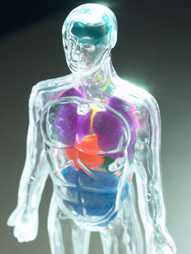
Treating the Somatic Sequelae of Moral Injury

Moral Injury

I recently read a terrific Psychotherapy.net article about moral injury entitled “Beyond Resilience: Addressing Moral Distress During the COVID-19 Pandemic,” and it resonated with me in a way few articles have lately. It was an interoceptive resonance that was simultaneously cognitive, emotional, visceral, kinesthetic and proprioceptive. Some of these words are quite new to my vocabulary, as I am a clinical psychologist trained in the depth psychology traditions of classic and modern psychoanalytic thought — Gestalt therapy and Jungian analysis. But more recently, I was trained in a 3-year program of trauma resolution developed by Peter Levine called Somatic Experiencing, and I began to develop some powerful new perspectives on the human condition that, in this piece, I would like to apply to the understanding of moral injury.

Moral injury is a term coined by Jonathan Shay¹ that describes a traumatic act of omission or commission that crosses a personal boundary of conscience. Shay, a psychiatrist, developed the concept of moral injury through his long and meaningful work with Vietnam veterans and other combat veterans at the Department of Veteran Affairs. The primary feelings of moral injury are shame, dishonor and ignominy. Frequently cited examples of how moral injury can occur include military personnel electing to follow an illegal or immoral order, law enforcement officers engaging in the use of deadly force, people participating in state-ordered executions, doctors and nurses involved in end-of-life decisions or with a decision to save one?s own life while another?s is lost.

Shay?s writings and perspectives are compelling and contribute immensely to broadening our understanding of trauma. His conceptions have developed almost exclusively from his work with adults, but the psychological literature on child development is replete with evidence that conscience and the “moral self” develop at a very early age, primarily from the internalization of parental values and the quality of the parent-child relationship. Studies have shown that infants as young as 3 months can show a preference for shapes that behave “prosocially” to ones that behave “antisocially.”

Two distinct dimensions of conscience have been identified: a) one relating to the emotional capacity to experience guilt and to be empathic to others and b) one relating to rule-oriented compliance to authority and authority figures. The child?s sense of themself as a moral being — with feelings of pride, guilt, shame, and embarrassment — is believed to be clearly developing by the age of 5. Findings like these from developmental psychology become especially important when considering the impact that incidents of childhood trauma can have on the delicately budding moral self. For example, research has shown that Adverse Childhood Experiences (ACEs) are predictive of moral injury in adulthood. Furthermore, survivors of childhood abuse may seek out positions in the military, law enforcement and other danger-filled professions in order to escape the perpetrators of their abuse, making them more likely to expose themselves to life-threatening situations and consequentially to exacerbation of their original trauma.

“The spiritual, emotional, or physical scarring of a child wounds their conscience as well and is deeply damaging”. Endemic to these woundings are important somatic sequelae that bind the guilt- and shame-filled experiences, making them long-lasting and difficult to undo later in life. It is my proposition that a somatic examination of these sequelae can enhance our understanding of moral injury, how to ameliorate it and how to help resolve it. After providing a brief overview of a somatic approach to healing trauma, I would like to discuss a case that I hope will bring to life the application of somatic psychotherapy in resolving the wounds of shame and injury to the moral self.

A Somatic Approach

For years, somatic practitioners like Peter Levine², Pat Ogden and Bessel van der Kolk³ have appreciated that the wounds of trauma do not linger simply in the form of cognition or within the limbic system, but are also stored in the body in muscular, skeletal and visceral forms and structures — stored in what is commonly known as “muscle-memories.” And while there has been a great deal of research supporting the perspective that trauma takes a cognitive-emotional form and can be resolved through a process of exposure and catharsis, the conceptualization of how human beings retain and reenact past trauma took an evolutionary leap forward with the development from neuroscience of Stephen Porges? polyvagal theory?.

Up to this point, we had believed that the autonomic nervous system had two functions operating in two branches: the sympathetic (energizing) branch and the parasympathetic (calming) branch. Polyvagal theory states that there are actually two branches to the parasympathetic nervous system that are activated during the threat response that developed in evolutionary sequence. The most primitively formed of these parasympathetic branches defends the organism by simply shutting down, immobilizing and conserving its energy to survive — death feigning, “playing possum,” thanatosis, or “freezing.” Co-developing in early vertebrates and reptiles was the capacity for the fight/flight response — defensive responses activated by the sympathetic nervous system. Finally, the “social engagement system” developed, through which mammals became capable of identifying areas of danger and safety and communicating this information about what was safe and what was unsafe to others. This second branch of the parasympathetic system gave mammals an additional way of managing their threat response. What was revolutionary about Porges?s work was that it identified two distinct anatomical structures of the vagus nerve corresponding to each of these parasympathetic functions. What was previously thought of as a single parasympathetic system was actually two separate structures and functions — each of which plays their own essential role in the management of threat.

“Whenever we are threatened in any way, our body goes through a rapid sequence of automatic responses that are hard-wired into our nervous system”: a) movement stops, b) we orient ourselves to the environment and begin scanning it, c) we evaluate whether it?s safe or dangerous, d) we begin to initiate protective responses, if needed, like flight, fight, freeze, or reaching out to others for help, and e) when the danger has passed, the arousal dissipates and we naturally discharge our excessive energy and begin to settle. Based on millions of years of evolution, the human body knows how to do this automatically. This defense cascade — arousal, intentional motionlessness, flight, fight, tonic or collapsed immobility (freeze), and then rest — corresponds to unique neural patterns in the amygdala, hypothalamus, periaqueductal gray, ventral and dorsal medulla, and spinal cord.

When it comes to everyday experiences, we have long known that they are stored in two ways: in explicit memory and in implicit memory. Explicit memory stores the general knowledge of facts, ideas, and concepts (semantic memories), and it stores the memories of event locations, times, and sensory images that can be explicitly stated (episodic memories). Implicit memory stores things like how to ride a bike, use a hammer, walk, or button our shirt — what are called procedural memories. Explicit memories are available for conscious recollection; implicit memories are not, and it is in these implicit procedural memories where trauma is stored. With experiences that feel life threatening, we can become stuck somewhere in the defense cascade and procedurally fail to complete it. Implicit memory is where the memories associated with these incompletions are stored, and they are out of our conscious awareness. By attending to the somatic sequelae of a traumatic event, a client is able to gently release the somatic constriction and associated emotion-laden reminders of the experience by completing uncompleted defensive action sequences.

“While somatic trauma practitioners may vary in the particular categories, they all typically encourage their clients to notice their own bodily experience” — what?s called interoceptive awareness — they all try to attend to a derivative of the following somatic aspects of humanness:

a) sensations coming from inside the body (kinesthetic awareness of muscle tension, movement impulses, bracing, involuntary sensations like heart rate and respiration, and awareness of posture, balance and other proprioceptive processes)

b) inner images (memories, dreams, symbols, and input from the five primary senses)

c) behavioral movements (facial gestures, rocking, emotional expressions, postural shifts, yawning, tearing, swallowing, trembling, shifts in breathing pattern and stillness)

d) emotions (including those expressed and unexpressed by the client and those sensed by the therapist)

e) meaning-making (beliefs, judgments, thoughts, analyses, and interpretations)

To illustrate some examples of the interoceptive awareness integral to somatic trauma therapy, I would like to describe some of my somatic reactions while reading the essay “Beyond Resilience” mentioned at the outset of this essay. As I began reading, I quickly noticed a heaviness developing in my chest and a feeling that my face and shoulders were opening. An image of a butte or plateau came to mind, where I was imagining a new level of understanding, and the thought came to me, "What a fascinating line of thinking about something I have been familiar with for years but never really thought about in this very succinct way." I found myself leaning into the computer screen, my back arching backwards, and I noticed feelings of excitement emerging from within me, especially in my cheeks and jaw, where I felt a subtle tingling sensation. I began to feel grateful to the authors and to Psychotherapy.net for publishing their piece. I could also feel little micro-movements, movement impulses really, in my arms and hands, which were anticipatory responses later manifesting when I wrote Victor Yalom to tell him how much the article deepened my understanding of this very important aspect of trauma. As I noticed the richness of my own internal life, a memory came to mind. It was of Jessie.

Jessie

Jessie was 38 and had been raised by a family in the Ku Klux Klan. He was the oldest of three children and had been conscripted to parent his younger siblings in his parents? frequent absence. He also was a survivor of severe childhood physical abuse, which he had been indoctrinated to believe was his fault. Somehow he survived and, in his teens, managed to escape the family clutches, learning a specialized trade in healthcare and, remarkably, developing and maintaining, by the time he came to me, a healthy marital relationship of some 18 years.

When Jessie first came to my office, you could feel the frozenness in his gait. As he told his story, there was a stiffness in his posture and there were very few facial movements, but I could see, almost imperceptibly, the muscles in his lower legs flexing and tightening with a kind of rhythmic regularity. His authenticity about the life he had lived was both touching and tragic. As I took comfort in developing my bond with this man, I could feel my own visceral reaction to his story, which elicited my empathic responses while simultaneously interfering with my ability to do so. My own humanness was on full display.

Despite all that he had been through, Jessie was remarkably adept at learning how to reflect on his own somatic experience. While a client?s narrative themes are essential to track, a greater emphasis in somatic trauma work is placed on the story that the body tells. Two fundamental principles guided my somatic work with him: a) to focus first on what traumatic material was most available and accessible and b) to titrate and process only small changes in arousal level before proceeding to deeper levels of emotion. This is one of the biggest distinctions between somatic approaches to trauma work and exposure therapy. Somatic psychotherapy pays meticulous attention to taking small but manageable steps in order to avoid excessive cathartic releases that, while seemingly helpful, can themselves be retraumatizing. The goal of somatic trauma work is to assist the client in learning how to reregulate their own nervous system in the context of their traumatic memories.

Like all other psychotherapeutic approaches, somatic psychotherapy does not progress linearly, and there were ups and downs in my work with Jessie. At one point, though, we began to deal directly with more of the core of his moral injury, which for Jessie was two-layered: a) the stubborn belief that because he did not fight back against his father?s physical abuse, he was a living betrayal of what it meant to be a man and b) his belief that he had betrayed his younger siblings by failing to protect them from their abusers. As a society, as a culture, and even cross-culturally, we tend to shame others who don?t fight back, who cry for help, or who run away. We are expected to fight our perpetrators (or at least flee from them) but never cower, collapse, or freeze. This is consistent with Porges? notion that survivors are shamed and blamed because they didn?t mobilize, when in actuality, their bodies were involuntarily incapable of movement.

When we have transgressed, episodic shame is a healthy response. Awareness of our shame motivates us to apologize, to acknowledge our wrongdoing and to repair the injury we may have inflicted on another. Likewise, when we witness someone doing something harmful to another, we call it out. We inform them of their wrongdoing. Their momentary shame is healthy because it encourages peaceful cooperation and fosters a sense of social fairness. But when we call out someone?s wrongdoing, it is imperative that we also exercise our responsibility to repair their momentary shame by honoring and reinforcing their human dignity—to communicate to them that they are much more than the identified transgression. For example, when we interrupt a child from intentionally hurting their sibling, we are guiding them about what is acceptable in a family and in a society. But we must also commit ourselves to repair their shame by letting them know we continue to love and respect them. It?s chronic shame — the kind of shame we stay stuck in and can?t shake — that?s not healthy. Chronic shame demeans, degrades and obliterates human dignity — it kills the spirit. “Many clients who have been chronically shamed carry these wounds with them…and this was true for Jessie”.

My therapy with Jessie progressed, and in a particularly important session I noticed he began it with his eyes looking downward, his head lowered, his back curved forward and his breathing shallow. This kind of kinesthetic and postural presentation is typical of the shame-based, collapsed immobility (freeze) characteristic of moral injury. I asked Jessie if he noticed that his gaze was averted, which he acknowledged, so I asked him if he could become curious about it and see what might happen next. At first, he was out of touch with what he was introceptively trying to observe, until he said, “It?s kinda comfortable to look down … and not be judged for it.”

I asked Jessie how it might be for him if we were to just sit with and notice the comfort together. As we did, his breathing became fuller, which we both acknowledged. When addressing such potentially powerful traumatic states — which are being expressed somatically and almost certainly out of the awareness of the client — it?s so important to help them first establish a strong-enough connection with their own inner resources — what one of my Somatic Experiencing teachers described as “islands of safety.” Pausing on these soft places to rest and to moderate and titrate traumatic pain is essential to anchor and center a client and to stay off, for the moment, the rush of feeling overwhelmed that is almost certainly waiting in the wings.

I then asked Jessie if he noticed his downturned posture and invited him to take his mind?s eye and go into his curved back and see what he noticed. After a time, he said, “It feels dark … I know this feeling, but I can?t name it … I don?t like it.” Because traumatic emotions are stored in implicit memory and not readily accessible to awareness, they often cannot be identified with semantic labels like anger, sadness or shame. As I mentioned earlier, emotions are only one of the critical memory elements of trauma. Equally important to somatic trauma work is accessing the procedural memories themselves — those kinesthetic, proprioceptive and neuroceptive containers of trauma. I sensed Jessie was adequately tolerating his discomfort, but I asked him anyway to be sure, which he confirmed. I then suggested a little experiment to see what might happen if he were to curve his back downward a little further, but only just a very small amount. As he did so, a memory emerged of himself kneeling, pleading with his father not to beat him as his father yelled, “You?re a pussy! Quit your cowering! Take it like a man!”

As he recalled his humiliation, Jessie became aware of greater tension in his back. I asked him, “If your back could move in any way it wanted, what might it want to do right now?” When he said he didn?t know, I invited him to become curious about what it might be like if he were to very slightly lower his head even further. As he did so, his hand became tremulous as he said, “He hurt me so badly!” I wondered if I might have been pushing him past his window of tolerance, so in order to lower his activation level, I then empathized with his pain. This is a good example of an important choice-point in psychotherapy, and in somatic work in particular — that is, I made the decision to go a little deeper into what Peter Levine calls the “trauma vortex.” This is reliably going to raise the client?s level of arousal and can be quite helpful, but a) only when it?s done slowly and in small steps and b) only when the client is ready and able to contain the added arousal. To gauge the appropriateness of this kind of intervention, the clinician must rely on their observations of their client?s somatic markers and the clinician?s own felt sense.

I asked Jessie to consider what it might be like to raise up his head and back a bit. Doing this calmed his tremble, more color returned to his face, and his breath became more regular as he stated clearly and with some conviction, “I wish I would have stood up to him.” “I asked him what it felt like to raise his head and back, and he said that it felt “freeing” and that he “felt taller.”” We took the time for his nervous system to reregulate to what he had just experienced, and we just sat with his calm sense of freedom and taller-ness for the rest of the session. This was a big part of Jessie?s moral injury — the notion that he had abandoned being true to himself by not confronting his father and not fighting the abuse he was forced to endure. For years, he had worn his valueless humiliation as a scarlet letter of his own worthlessness, until he returned to an essential element of his trauma that was yet to be completed — physically embodying the posture of standing up for himself.

As my sessions with Jessie proceeded, he became better able to honor and stand up for his own moral beliefs of fairness and respect. He also became more comfortable with articulating his belief that what his father had perpetrated against him and his siblings was wrong, while moderating his nervous system activation and later feeling the calm and peaceful presence of embodying his budding moral convictions.

* * *

Everything in the universe oscillates — the tides come in and they go out, day turns into night and into day again, the seasons change, the breath goes in and the breath goes out. This is the natural way of things. With trauma though, that pendulation — the natural flow between physiological polarities — gets shunted and needs to be repaired. With Jessie, there was much work that followed, but a key to his recovery was embedded in his newly acquired ability to regulate his arousal and return to a safe-enough place so he could repair and repair again what he had been forced to internalize.

References

Shay, J. (2011). Casualties. Daedalus, 140, 179-188.

Shay, J. (2014). Moral responsibility. Psychoanalytic Psychology, 31, 182–191.

(2) Levine, P. (2015 June 10). Peter A Levine, PhD on Shame – Interview by Caryn Scotto D?Luzia [Video]. YouTube.

(3) Van der Kolk, B. A. (2014). The body keeps the score: Brain, mind, and body in the healing of trauma. New York: Viking.

(4) Porges, S. W. (2001). The polyvagal theory: phylogenetic substrates of a social nervous system. International Journal of Psychophysiology, 42, 123-146 

Peter Levine on Somatic Experiencing

An Unconscious Image

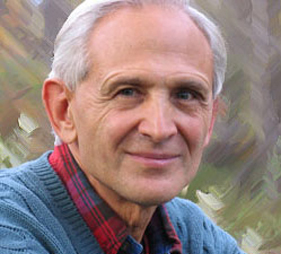
Victor Yalom: So Peter, you’ve spent most of your life working with trauma and traumatized patients, and have developed an approach called Somatic Experiencing® that focuses on including, and putting emphasis, on the physiological aspects of trauma. You believe that working with the trauma through the body is necessary to any trauma resolution and a required step before addressing emotional and cognitive issues. We’ll get into this in more detail, but let’s first start with: What got you there? How did you get interested in trauma in the first place?
Peter Levine: My career began somewhat accidentally. In the 1960s I started a practice in the fledgling field of mind-body healing. Around that time it was completely in its infancy. I had been developing a protocol to use body awareness as a tool for stress reduction. I would teach people how to relax different parts of their body and they would have a very deep relaxation that was much deeper than I had expected. And so I was referred a patient—I’ll use the name Nancy—by a psychiatrist, and she had been suffering from a host of physical symptoms including migraines, severe PMS, what would now be called fibromyalgia and chronic fatigue, pain in most of her body. And the psychiatrist reasoned that if I could help her with some of my relaxation techniques, it could help with her anxiety or at least with her pain.
VY: Now, were you a psychologist at that point, Peter?
PL: At that time I was finishing a degree in medical biophysics. And again, there was not a field of bodywork at that time, but I had met some influential people including Ida Rolf and Fritz Perls, and I was hanging out at Esalen—I took a leave of absence—and that’s where I really got exposed to these different mind-body approaches.
VY: And this was a heyday where all sorts of things and discoveries were happening?
PL: Crazy stuff. Yeah, exactly. It was both exciting and a chaotic free-for-all in some ways. So anyhow, this psychiatrist sent this woman, Nancy, to see me, and she was extremely anxious. And she was with her husband because she couldn’t go out of the house alone. She had, again what would be called now, severe agoraphobia. So anyhow, she came into my office and I noticed her heart rate was really quite high—it was probably about 90, 100 beats per minute. So I did some work with her breathing and then with the tension in her neck. And her heart rate started to go down. And I thought, “Oh, okay, this is great.” And it went down and then all of a sudden, it shot up to, I don’t know, 140-150 beats per minute. I could see this from her carotid pulse.
VY: Not what you were going after.
PL: Not exactly. I had gone from success to abject failure and, really, fear of putting her into extreme panic attack. So I said something, probably the most stupid thing anybody could say. I said something like, “Nancy, just relax. You need to relax.” And her heart rate started going down. And it went down and down and down. And it went to a very low level, probably in the mid-50s. And she looked at me. She turned white, and she looked at me, and she said, “I’m dying, I’m dying. Doctor, don’t let me die. Help me, help me, help me.” And at that moment of stress, I kind of was prompted by an unconscious image, a vision of a tiger crouching at the other side of the room and getting ready to spring. And I said, “Nancy, Nancy, there’s a tiger, a tiger’s chasing you. Run, climb those rocks, and escape.”
VY: And this was just a spontaneous kind of image that came from your imagination or unconscious?
PL: This was a spontaneous image. My unconscious. Yeah, because I had really, truly no idea what to do. I was in a state of, well, near panic myself. So to my amazement, to both of our amazement, her legs started moving as though she were running. And her whole body started to shake and to tremble. And this occurred in waves. And she went from being very very hot to extremely cold. Her fingers turned almost blue. And the shaking and the trembling and the waves of coldness and heat went on for almost 30-40 minutes, maybe. And after that, her breathing was free and spontaneous. She opened her eyes and she looked at me and she said, “Do you want to know what happened, Doctor? Do you want to know what happened to me?” And I said, “Yes, please.”This was one of the first patients. This was certainly the first one where something like this had happened. I worked with a lot of people in getting them to relax, and there were some kinds of things like that, but never anything nearly as dramatic. So anyhow, she reported how during the session she remembered a long forgotten event: as a four year old child, she was given ether for a tonsillectomy—at that time, ether was routinely used for tonsillectomies—and she remembered feeling suffocated and completely overpowered by the doctors and nurses who were holding her down to put on the ether mask while she was trying to scream and get away. As I discovered later, many people who had anxiety disorders had also had tonsillectomies as children with ether. So anyhow, that was the last panic attack that she had. And many of her symptoms abated. Others disappeared completely. We did a few sessions after that where I was actually able to do different relaxation procedures with different muscles and different parts of her body. So of course I was curious about the image—where did that come from?

Marie-Helene Yalom: The tiger image?

The Polyvagal Theory

Peter Levine: Yes, the tiger image. At that time, I was taking a graduate seminar, and some brief mention was made of a phenomenon called tonic immobility. If animals were physically restrained and frightened, they would go into a profoundly altered state of consciousness where they were frozen and immobilized, unable to move. And it turns out that this is one of the key survival features that animals use to protect themselves from threat—in this case from extreme threat. Actually there are three basic neural energy subsystems. These three systems underpin the overall state of the nervous system as well as the correlative behaviors and emotions, leading to three defensive strategies to threat.
MY: That’s the polyvagal theory developed by Stephen Porges?
PL: Yes. These systems are orchestrated by the primitive structures in our brainstem—the upper part of the brainstem. They’re instinctive and they’re almost reflexive. The tonic immobility is the most primitive system, and it spans probably over 500 million years. It is a combination of freezing and collapsing—the muscles go limp, the person is left without any energy. The next in evolutionary development is the sympathetic nervous system, the fight-or-flight response. And this system evolved from the reptilian period which was about 300 million years ago. And its function is enhanced action, and, as I said, fight-or-flight. Finally the third and most recent system is the social engagement system, and this occurs only in mammals. Its purpose is to drive social engagement—making friends—in order to defuse the aggression or tension.
VY: So this is when we’re feeling threatened or stressed we want to talk to our friends and family?
PL: Yeah, exactly. Or if somebody’s really angry at us, we want to explain what happened so they don’t strike out at us. Obviously most people won’t strike out, but we’re still hardwired for those kinds of expectations.
VY: Most people have a general sense of the fight-or-flight, but would you just say a few words on it?
PL: Basically, in the fight-or-flight response, the objective is to get away from the source of threat. All of our muscles prepare for this escape by increasing their tension level, our heart rate and respiration increase, and our whole basic metabolic system is flooded with adrenaline. Blood is diverted to the muscles, away from the viscera. The goal is to run away, or if we feel that we can’t escape or if we perceive that the individual that’s trying to attack us is less strong than we are, to attack them. Or if we’re cornered by a predator—in other words, if there’s no way to escape—then we’ll fight back. Now, if none of those procedures are effective, and it looks like we’re going to be killed, we go into the shock state, the tonic immobility. Now the key is that when people get into this immobility state, they do it in a state of fear. And as they come out of the immobility state, they also enter a state of fear, and actually a state in which they are prepared for what sometimes is called rage counterattack.
MY: Can you say more about that?
PL: For example, you see a cat chasing a mouse. The cat catches the mouse and has it in its paws, and the mouse goes into this immobility response. And sometimes you’ll actually see the cat bat the mouse around a little bit until it comes out of the immobility, because it wants the chase to go on. Now, what can happen is that the mouse, when it comes out of the immobility state, goes into what is called nondirective flight. It doesn’t even look for where it can run. It just runs as fast as it can in any direction. Sometimes that’s right into the cat. Other times, it will actually attack, in a counterattack of rage. I’ve actually seen a mouse who was captured by a cat come out of the immobility and attack the cat’s nose. The cat was so startled it remained there in that state while the mouse scurried away. When people come out of this immobility response, their potential for rage is so strong and the associated sensations are so intense that they are afraid of their own impulse to strike out and to defend themselves by killing the predator. Again, this all goes back to our animal heritage.So the key I found was in helping people come out of this immobility response without fear. Now, with Nancy, I was lucky. If it were not for that image, I could just as easily have retraumatized her. As a matter of fact, some of the therapies that were being developed around that time frequently retraumatized people. I think particularly of Arthur Janov’s Primal Therapy, where people would be yelling and screaming out, supposedly getting out all of their locked-in emotions, but a lot of times they were actually terrorizing themselves with the rage and then they would go back into a shutdown, and then be encouraged to “relive” another memory, and then this cycle would continue.

MY: It becomes addictive sometimes, right?
PL: That’s correct. It literally becomes addictive. And one of the reasons is that when you do these kinds of relivings, there’s a tremendous release of adrenaline. There’s also a release of endorphins, which is the brain’s internal opiate system. In animals, these endorphins allow the prey to go into a state of shock-analgesia and not feel the pain of being torn apart. When people relive the trauma, they recreate a similar neurochemical system that occurred at the time of the trauma, the release of adrenaline and endorphins. Now, adrenaline is addictive, it is like getting a speed high. And they get addicted not only to the adrenaline but to the endorphins; it’s like having a drug cocktail of amphetamines and morphine. So when I was at Esalen I actually noticed that people would come to these groups, they would yell and scream, tear a pillow apart that was their mother or their father, and they would feel high. They would feel really great. But then when they would come back a few weeks later, they would go through exactly the same thing again. And that’s what gave me a clue to the fact that this might be addictive.

Releasing Trauma from the Body

VY: So getting back to Nancy, from what you observed and what you learned from the animals’ various responses, what was your understanding of what happened with Nancy and what you did that was actually helpful?
PL: What was helpful is that her body learned that in that time of overwhelming threat she could not defend herself. She lost all of her power. Her muscles were all tight. She was struggling to get away—this was the flight response—to get out of that, to get away from those people who were holding her down and to run out of the room and back to her parents. I mean, that’s what her body wanted to do, her body needed to do—to get out of there and get back to where she could be protected. So what happened is all of this activation, this “energy” that was locked into her body when she was trying to escape and then was overwhelmed, was still there in a latent form. When we’re overwhelmed like that, the energy just doesn’t go away—it gets locked very deeply in the body. That’s the key. It gets locked in the muscles.
MY: And that’s the foundation of your understanding of trauma—this locking of energy?
PL: That’s right, exactly. How the energy, how this activation gets locked in the body and in the nervous system.
MY: And so your objective is to help the person release that energy?
PL: Yes, to release that energy, but also to re-channel that energy into an active response, so then the body has a response of power, of its own capacity to regulate, and the person comes out of this shutdown state into a process in which they re-own their own vital energy—we use the term “life energy.” It’s not generally used in psychology but I think it’s a term that is profound in people’s health, that people feel that they have the energy to live their life fully, and that they have the capacity to direct this energy in powerful and productive ways.
VY: Now obviously you’re just giving a snapshot of the case and we can’t capture the depth and the nuances of it. But someone who doesn’t know about this could think it sounds a little simplistic. This woman had a tonsillectomy decades ago, and you’re having this one session with her and somehow you’re freeing up some energy that was trapped back then. How would you respond to that?
PL: Well, it was simplistic, and of course I was to learn that one-time cures were not always the case. However, over the years I started to develop a systematic approach where the person could gradually access these energies and these body sensations—not all at once, but one little bit at a time. It’s a process that I call titration. I borrowed that term from chemistry. The image that I use is that of mixing an acid and a base together. If you put them together, there can be an explosion. But if you take it one drop at a time, there is a little fizzle and eventually the system neutralizes. Not only does it neutralize but after you do this titration a certain number of times, you get an end result of salt and water. So instead of having these toxic substances, you have the basic building blocks of life, I use this analogy to describe one of the techniques I use in my work with trauma patients.
You’re not actually exposing the person to a trauma—you’re restoring the responses that were overwhelmed, which is what led to the trauma in the first place.
VY: And you’re doing it very slowly, one little step at a time.
PL: Very slowly.
VY: Would you say that is the key?
PL: That’s the key. So you get a little bit of discharge, you get a little bit of a person’s body, like their hands and arms, feeling like they want to hold something away from them, that they want to push something away. So they feel that energy, that power into the muscles in their arms. If they want to run they feel the energy, the aliveness in their legs. The ideas are extremely simple, but the execution of them is much more complex. Actually we have a training program and the training program is a three-year program.

Working with an Iraq Vet

VY: I think this is really nicely demonstrated in the video that we’re just releasing at the time of this interview, where you demonstrate five sessions with Ray, who’s an Iraq vet, who was in an IED explosion. And when he first presents, his body is visibly twitching every few seconds, and you came up with an explanation that he’s actually trying to reorient himself to the original trauma, that he was never able to face the trauma.
PL: Yes, well, exactly. This was a young Marine. While he was on patrol two explosive devices blew up right near him and he was thrown into the air, and woke up two weeks later in Landstuhl, at the military hospital in Germany. Afterwards he was diagnosed with traumatic brain injury and PTSD and also Tourette syndrome, and this was, I think, because of this extreme twitching. You saw this kind of twitching, these neurological presentations in the World War I soldiers. Some of them could barely walk, and they were twitching and in near convulsion. And I think these people who are exposed to these bombs actually have similar presentations. But let’s go back to the day when he’s on patrol. The bomb blows up. Now what happens whenever there’s a loud sound is that it startles us, right? And we arrest what we’re doing and we try to localize that sound because that sound could be a threat. That’s something that’s hard-wired in our bodies. These responses were actually discovered by Pavlov in the 1920s. So there’s an explosion and what we do is we turn toward the source of the explosion.
VY: That’s how we know where it’s coming form.
PL: Exactly. And so what we do is we start to turn our eyes, our neck and head, turn towards that source to try to localize it. In Ray’s case, as soon as his eyes and head began to orient, in milliseconds, he was thrown up into the air and this defensive response, this orienting response became completely disorganized and kept repeating itself. It’s what many psychologists see in people who are perseverating. They’ll go over something…
VY: So your understanding of his constant visible twitching which presented in the first few sessions was that he was still trying to orient himself to the trauma. He’d never been able to complete that orienting response.
PL: Exactly. Because as soon as he began to orient, as soon there was that pre-motor impulse and before that orientation could be felt—much less executed—he was thrown into the air, and in the air his whole body was trying to say, “What can I do?” And so all of his muscles contracted together. Again, this is an archaic response that we’ve inherited from monkeys. For example, if a monkey falls out of a tree, its whole body flexes. And it does that to protect the vital organs. So in a situation like this, if we’re thrown into the air, or even with extreme startle, all the muscles in the front part of our body, the abdomen and the leg flexors and so forth, go into this protective response. So that also contributed to Ray’s symptoms, to his chronic pain, because his whole body was locked to protect himself from falling. And of course there were also many emotional issues, such as a tremendous amount of loss and survivor’s guilt—he saw many of his best friends killed—that grafted themselves onto the physical trauma.
VY: So in terms of titration that you were talking about, your goal initially in therapy, in the treatment, is to do what?
PL: The goal is to very gradually help him get in touch with the sensations that precede the twitching and that will eventually enable him to complete the orienting responses that were interrupted. It wouldn’t have worked if I had said: “We’re going to work on controlling the tics.” If you tell somebody with Tourette, for example, to not twitch, they may be able to control it for a while, and they do it generally, because in social situations they don’t want it to happen. But then the more they try to control it the more explosive it becomes. It is similar to glowing embers—if you blow on the embers, it ignites into a flame. So the key is to cool the embers before they ignite into flame. The flame is this convulsive response.This is a concept that exists in migraines or epilepsy. Before a seizure, a person experiences prodromal symptoms. So for example, before they get the migraine attack, they may see flickering lights or they may have a particular smell or a body sensation. And they know when they experience those symptoms that they will go into a seizure or a migraine or even an anxiety attack. I focus on something I call the pre-prodromal, because once the person experiences the prodromal, then they go into the attack, the paroxysm. So if you are able to get them to just feel before that—in the pre-prodomal stage, they can redirect that energy, and as they do so they begin to complete the orienting responses that were overwhelmed by the trauma. And in the video, you see Ray little by little begin to reestablish his orienting responses, and this triggers very profound sensations of cold and heat, coolness and warmth, tingling and relaxation.

MY: And that’s the energy being released.
PL: Yes, that’s the energy being released that’s shifting from one system to another.
VY: And you gradually help him to spread that energy, rather than just being in the neck or head, so he experiences it going through the rest of his body.
PL: Exactly, exactly. At first these sensations are only local, mostly in the head or the neck. Then as we do this repeated times, and you’ll see this is done several times in each of the first four sessions, gradually the convulsive reaction attenuates and then almost disappears. And in its place he feels pleasure in his body. I was able to invite him to Esalen at one of the workshops I give once a year titled “Awakening the Ordinary Miracle of Healing.” By then he had been able to resolve the physiological aspect of the trauma, he was able there to address the emotional aspects of it. Two things happened in that workshop. First of all, he dealt with the different emotions—his loss, his anger, and his guilt that he survived and that many of his comrades did not. But he was also able to reenter and engage with a group of people around feelings of goodness and of social engagement, of hunger for being able to relate to people in a non-aroused….
MY: In a nonviolent way.
PL: In a nonviolent way, exactly. And you see so many vets now—when they come back, they go into maybe not complete convulsions like he did, but into an exaggerated fight-flight-freeze response which can lead to attacks on their children or their spouses. And they do it in an involuntary way, and are helpless to change that. And unfortunately there’s little help available for these soldiers to resolve their trauma reactions and be able to reintegrate….

Emotional Processing with Trauma Survivors

MY: Peter, you talked about how it’s only in session five that Ray started expressing his emotions. You approach trauma in a very different way than most traditional psychotherapists would, where they would focus probably sooner on dealing with emotions.
PL: Yes.
MY: And you have strong feelings about that.
PL: Actually, what you are alluding to is the whole idea of bottom-up processing. So maybe let’s get back to that, okay? In top-down processing, which is normally what we do in psychotherapy, we talk about our problems, our symptoms, or our relationships. And then the therapist often tries to get the client to feel what they’re feeling when they talk about those kinds of things. Or they try to work with them to become more aware of their thoughts so that they can change their thoughts. In this model the language that you’re talking with the client is in the realm of symbols, of thoughts, of perceptions. The language of the emotions is the language of the emotional brain—the limbic system. And in order to change emotions, people have to be able to touch into the emotions, to express the emotions.In the case of trauma patients, we have a person who is locked in the fight-or-flight response and as I explained earlier in the Polyvagal theory, a person who is functioning primarily in the brainstem, and the language of the brainstem is the language of sensations. So if you are trying to help the person work with the core of the trauma response, you have to talk to that level of the nervous system.

MY: So what you’re saying is a person who has been traumatized cannot really process emotions if they are in the early stages after the trauma until they have dealt with their physiological traumatization.
PL: Right, until the person has dealt with and sufficiently resolved the physiological shock, they really can’t deal with the emotions because the emotions actually will throw them further back into the shock, if the emotions occur at all. Many of these people are so shut down that it’s very difficult to get at any emotion. But if some kind of therapy forces them into the emotions, that can have a deleterious effect. That can cause them to further withdraw into the immobility, into the shock reaction. So you have to dissolve the shock first.
VY: What you’re saying, though, flies in the face of most of conventional therapy, which goes straight for the emotions. Do you think that most therapies are actually not helpful, or is something else happening during that time?
PL: Many therapists are doing something different from what they think they’re doing. And if you’re working with emotions in a very titrated way, then you can actually go from the emotions to the sensation, and begin to resolve things at a sensation level. But therapies that really work to provoke emotions or the exposure therapies… I know that they do get some results, but I think that they can easily lead to retraumatization.
VY: How so?
PL: One of the things that Bessel van der Kolk showed when he first started to do trauma research with functional MRIs is that when people are in the trauma state, they actually shut down the frontal parts of their brain and particularly the area on the left cortex called Broca’s area, which is responsible for speech. When the person is in the traumatic state, those brain regions are literally shut down, they’re taken offline. When the therapist encourages the client to talk about their trauma, asking questions such as, “Okay, so this is what happened to you. Now, let’s talk about it,” or, “What are you feeling about that?” The client tries to talk about it. And if they try to talk about it, they become more activated. Their brainstem and limbic system go into a hyperaroused state, which in turns shuts down Broca’s area, so they really can’t express in words what’s going on. They feel more frustrated. Sometimes the therapist is pushing them more and more into the frustration. Eventually the person may have some kind of catharsis, but that kind of catharsis is due frequently to being overloaded and not being able to talk about it, being extremely frustrated. So in a sense, trauma precludes rationality.
MY: So what do you think is the hardest thing for traditional talk therapists to learn when dealing with trauma patients?

Experiencing the Body

PL: I think the most alien is to be able to work with body sensations. And again, because the overwhelm and the fight-or-flight are things that happen in the body, what I would say is the golden route is to be able to help people have experiences in the body that contradict those of the overwhelming helplessness. And my method is not the only way to do that. It’s certainly one of the most significant. But many therapists, for example, will recommend that their clients do things like yoga or martial arts.
MY: Or meditation?
PL: The thing about meditation, though…. With some kinds of trauma, meditation is helpful. But the problem is when people go into their inner landscape and they’re not prepared and they’re not guided, sooner or later they encounter the trauma, and then what do they do? They could be overwhelmed with it, or they find a way to go away from the trauma.
And they go sometimes into something that resembles a bliss state. But it’s really an ungrounded bliss state. I call that the bliss bypass. It’s a way of avoiding the trauma. It was very common in the ‘60s when people were taking all of these drugs, and a lot of these people were traumatized from their childhood. And what they would do is they would go into these kinds of dissociated states of bliss and different hallucinatory imageries, but in a way it was avoiding the trauma. So in a way the trauma became even a greater effect, and then often people would then wind up having bad trips in which they would go into the trauma but without the resources to work them through.
MY: I guess that’s what I find inspiring about your approach. Ultimately you really want to enable the traumatized person to regain their autonomy, not just find palliative methods of dealing with their trauma.
PL: Yes. One thing therapists are really good at, I think, is they’re good at helping people calm. We set up our offices so they’re conducive, so they’re friendly, they’re cheerful, there are things in the room that would evoke interest and curiosity. And many therapists can actually help calm the traumatized person. This is something that’s a necessary first step, but if it’s the only thing that happens, the clients become more and more dependent on the therapist to give them some sense of refuge, some sense of okayness. But when therapists are helping the clients get mastery of their sensations, of their power in their body, than they are truly helping them develop an authentic autonomy. And from the very beginning, the client is beginning to separate.So this is a gradual process, where the client really becomes authentically autonomous, authentically self-empowered. And if we don’t do this, the client tends to become more and more dependent on the therapist, and this is when you see these transferences where all of a sudden the client depends on the therapist for everything. At this point the therapist can go from being the god or the goddess up on this pedestal to being thrown down and the client having rage about the therapist for not helping them enough. So the key out of these conundrums is through self-empowerment, and I know of no more direct and effective way of doing this than through the body.

A Personal Experience of Trauma

MY: You use an accident that happened to you—you were hit by a car—and your own experience of trauma as a way to demonstrate some of the principles of Somatic Experiencing®. You describe how some people were helpful to you and some were not. It seems like a good example to illustrate what to pay attention to when interacting with a traumatized person. Would you say more about that?
PL: Actually I got a good dose of my own medicine. Thankfully. I was walking a crosswalk five or six years ago, and a teenage driver went through the stop sign. I didn’t see her because there was a large truck parked waiting at the stop sign and she didn’t see the stop sign and she was passing the truck. So she hit me at about 25 miles an hour, and I was splatted out on the pavement. And in shock, disoriented, I didn’t know what had happened. And at that moment, or probably shortly thereafter, an off-duty paramedic came and he sat by my side and said, “Don’t move.” Now remember how previously I was talking about Ray, and his orientation to the explosion when he heard the blast. Well, similarly my survival response is to orient towards where that command came from. But then he’s telling me, “Don’t move.”
MY: So it’s a contradiction.
PL: Exactly, it’s a complete contradiction. So I go into a freeze, into a panic. And at that moment, I dissociate from my body—it’s like I’m out of my body and I’m looking down and seeing this man kneeling by my side and seeing me in this frozen state. Of course, somebody called on their cell phone for an ambulance. But then after a little while, he kept asking me questions, and I was able to get enough orientation to say, “Please just give me time, I won’t move my neck,” and I didn’t want to answer questions about what my name was, where I was going, what the day was. I needed to collect myself, and all of those things were making things much worse. So I was able to set enough of a boundary to have him back off. Then miraculously, serendipitously, a woman came, much calmer, sat by my side, and she said, “I’m a doctor. I’m a pediatrician. Can I do anything?” And I said, “Please just sit here by my side.” And she touched my hand with her hand, and we folded our hands together.
VY: She worked with kids so she probably knew how to calm children down.
PL: Exactly. And that’s what we need when we’re traumatized. We need that kind of direct contact where we know somebody is protecting us. Because when we’re in trauma, we go back to a pretty infantile state of feeling completely unprotected. So it was really, really important, and I know I couldn’t have done what I did without her being there. I could have done some of it, but her presence really was very important. And then what I was able to do was recollect myself. I was actually able to experience being hit by the car, being thrown in the air, how my arms and hands went out to protect myself first from the window of the car, and then protect my head from getting smashed on the road.
MY: When you say experience, do you mean mentally, or do you mean literally by moving your arms?
PL: I literally experienced my arms as though they were moving. I mean, you could barely see it. These are what are called micro-movements. But as I felt that, I felt that instead of my body becoming limp, I started to get more strength in my body. As I started to get more strength in my body, my physiological systems started normalizing. When the guy first took my blood pressure it was about 170, and my heart rate was 100 beats per minute. When I was in the ambulance, by re-experiencing those movements and letting my body shake and tremble and feel the different emotions—one was the rage at this woman, the desire to kill this girl—I was again able to ground these feelings in my body. That was the key. I could ground them in my body. And by doing this, my heart rate and blood pressure went to a normal level when I was in the ambulance—it dropped to 120/72.
MY: And you said to the paramedic “Thank God, I won’t be getting PTSD.”
PL: There was actually some research done in Israel with people who went into the emergency room. Of course, everybody’s heart rate and blood pressure is recorded. And people who had a normal heart rate and blood pressure when they left had a very low likelihood of developing PTSD. Those who left with a high heart rate and blood pressure were very likely to develop PTSD.
MY: So what caused some of them to leave with a lower heart rate versus high?
PL: Well, that’s hard to know, and unfortunately this wasn’t studied. It could have been that somebody there actually helped them calm down, saying things like, “It’s okay, I’m here to help you, we’re going to take care of you, we’re going to help you.” I mean, I don’t know that. That’s a guess. These people may have been more resilient; the other people may have had more trauma. These variables weren’t controlled for. But the basic idea is that if we’re able to reset our physiological system, able to reset our nervous system, then we don’t develop the symptoms of trauma. That’s a little bit of oversimplification, because some people, instead of going into the sympathetic response, go into the shutdown state more directly. That’s a little bit more complicated. But in my case, by being able to reestablish that my body knew what to do—to protect itself—I&allowed my body to come back into present time, to re-orient and to get through this unscarred. And I’m sure if I hadn’t been able to do that, I would have been highly traumatized from that event. I have no question about that.
VY: You mention in the ambulance trembling and shaking. What’s the significance of that?
PL: That was similar to what I described with Nancy, my first client. The shaking and trembling has to do with the resetting of the autonomic nervous system. I was so curious about this that I interviewed a number of people who work with capturing animals and releasing them into the wild. And they described to me very much the kinds of shaking and trembling that I see with my clients and that happened to me. A number of these folks said that they knew that if the animals didn’t go through this kind of shaking and trembling when they were captured and put in cages, they were less likely to survive when released into the wild. So it appears to be a way in which the physiological autonomic nervous system resets itself. Very often this shaking and trembling can be so minute that you barely perceive it from the outside. And the client or the person experiencing it, experiences it in a very subtle, nonthreatening way. As a matter of fact, after a short period of time, they often experience it as being pleasurable. Exactly what it is, we don’t know, but again, I’ve talked to Stephen Porges, who is probably the preeminent psychophysiologist working with these kinds of nervous system states, and it does appear that this occurs as the autonomic nervous system shifts, particularly out of the shutdown states into the mobilization states and then into the social engagement states. So it’s something that goes on as the nervous system comes out of shock.

PTSD & Medication

MY: Peter, you mentioned PTSD earlier. You’ve worked with numerous clients who had PTSD. Many of them heavily medicated. Has there been any research done about the impact of somatic therapies versus medication, and what is your experience of the effect of medication in cases of PTSD?
PL: Well, first of all, I’m not against medication.
MY: Sure. And actually, Ray is taking quite a lot.
PL: He was. But he felt like he was just completely blotted out. He was put on an antipsychotic medication and antidepressant medication. Medications that help stabilize clients enough so that you can begin to access and work with them can be important. For example, the SSRIs are sometimes helpful in that regard. However, with many of these people, most of the SSRIs are so activating that it actually makes things worse. But if it works, if it helps a person even a small percentage, that can be of real value.Benzodiazepines, which are often prescribed, in my experience, interfere with the healing process. Some psychiatrists have prescribed very small doses of the atypical antipsychotic Seroquel to help PTSD people sleep. And that seems to be helpful, —because if the person can get some restorative sleep, then they can begin to process the trauma. But just drugs by themselves—the person will very often have to take the drug basically forever. There’s a saying: meds without skills don’t do the trick. So the key is for the person to be self-regulating.

Comparison to EMDR

VY: How would you compare Somatic Experiencing® from EMDR?
PL: Well, EMDR basically works with one technique. And actually, many of the people who have studied EMDR have trained with us, and vice versa as well. The key here, and nowadays I think EMDR is doing this more, is to reference things as sensations in the body. Again, I think without the body things are limited. It’s really, really key to work with the body, or to reference in the body. I do some work with the eyes, but I do it in a different way from the EMDR movement—it’s actually quite different. And EMDR has had research, and they have often had good results. We haven’t had the same kind of extensive research that EMDR has. My approach is a much older approach—I developed that in the late ‘60s and early ‘70s—but we haven’t had the extensive research.
VY: We’ve covered a wide span of your fascinating career. What’s exciting you now? What are you working on now?

Current Work

PL: I just completed two books on preventing trauma in kids—one for therapists and medical workers and teachers, and the other for parents. The one for parents is called Trauma-Proofing Your Kids: A Parents’ Guide to Instilling Confidence, Joy, and Resilience. And the book for therapists, teachers and medical people is called Trauma Through a Child’s Eyes. And then I am just in the process of completing my main work, really. It will be released in September. It’s called In an Unspoken Voice: How the Body Releases Trauma and Restores Goodness. So those are my big projects right now, and I’m actually kind of under piles of chapters right now doing the final completion on that book.
MY: Do you still have time for patients?
PL: Not really. Most of my time is with teaching. I do see people… Occasionally people will come from out of town or out of the country and then I work with them for a few days, I do intensive work with them. But I don’t have any kind of a regular practice anymore.
MY: I have one more question for you, Peter. You were telling us before this interview that you are coming back from Esalen where you were teaching a group of therapists who were primarily talk therapists with little somatic therapy experience. And you said they were like kids. What was so exciting for them?
PL: Actually this is a class I teach with Bessel van der Kolk, and Bessel is one of the leading researchers in the field of trauma research. He’s done some of the main core studies in the neuroscience of trauma. He and I teach a workshop together every year. I think we’ve done it for ten years. In the group we had this time, there were about 60 to 65 people, and almost all of them were talk therapists of one kind or another. And it was really tremendously exciting and gratifying for both of us, for Bessel and me, and also of course for the students, for them to realize, “Oh my gosh, there’s a whole other universe beyond just using talk.” And I think we also gave them some simple tools that they could begin to incorporate into their conventional psychotherapy practice. And that’s another thing that we’re doing with my institute— programs for different kinds therapists where they don’t have to have full training for working with trauma, but they begin to get some simple tools that they can incorporate into whatever kind of therapy they do, whether it’s cognitive therapy, psychodynamic therapy…
MY: You think it works with most therapies?
PL: Yes. There’s no therapy that can’t be made better by referencing the body. Actually Eugene Gendlin, who coined the term “the felt sense” in his seminal book, Focusing, did his PhD thesis on what therapies worked best. And he found that there was very little correlation between whether a patient improved and what kind of therapy he had. So he said, “Well, maybe it’s the experience of the therapist.” Well, there was a small correlation. “Well, maybe it’s the relationship between the therapist and the client.” And again, there was a small correlation, but really nothing that explained why some clients really got well in therapy and others didn’t. And what he discovered was that the single variable that was the most robust was whether clients were able to reference different changes, different experiences they had in their bodies. So any kind of tools that therapists have to be able to help clients reference their body, and particularly to find the ways that their body experiences power and mastery, are going to dramatically inform the type of therapy they’re doing.

VY: Well, I understand that talk alone cannot heal all, but certainly our talk has been tremendously informative to us and hopefully to those who have a chance to read this. So thank you very much for taking the time to explain this all to us.
PL: Gladly. I hope it was of value.

Healing Trauma Through the Body: The Way In is the Way Out

Suzanne: A Case Study

Suzanne* arrives in my office due to a long history of anxiety, mild depression, problems sleeping, and relationship issues. She is 43, successful in her marketing career, and divorced, with a child in high school. She is a tall woman, but something about the way she carries herself makes her seem smaller than she is. She is wearing loose, dark clothing that doesn’t reveal much of her body. As she walks into my office for our first session, I am struck by the animation in her upper body, but I notice that she moves awkwardly because of the tightness in her shoulders, neck and upper spine. As I invite her to sit down, I notice that her eyes shift back and forth as if she’s looking for something. She seems uncomfortable meeting my gaze and looks quickly down at the floor each time our eyes meet. I can see by the way her shirt lies that her solar plexus area is very tight. It is clear that this tightness prevents her from taking a full, deep breath. She seems to be fighting upward against gravity, as if attempting to levitate. At the same time, I see and sense very little connection to her lower body. Her legs are almost completely still; they appear lifeless and detached. This gives her a weak and tenuous connection to the earth. “It’s as if everything from above the waist is surging wildly upward, like a thousand bees swarming skyward, out of a hive, centered above her navel.”
 
She complains of rapid heart rate, shallow breathing, food sensitivities, digestion problems, and difficulty staying asleep. As she talks, I can hear her mouth is dry. It makes sense to me that she is experiencing anxiety—my understanding of how the nervous system works lets me know that her system is stuck in a constant state of fear and readiness. As a Somatic Experiencing® (SE) practitioner, I can tell that Suzanne is in a common feedback loop that occurs in people who are attempting to manage their internal nervous system dysregulation. Shallow breathing and tightness in her chest keep her body in a constant state of oxygen deprivation. This escalates the anxiety, so she tightens the muscles in her chest even more. I take a mental note—I’ll need to address this pattern.
 
Suzanne begins to tell me about a recent conflict she experienced at work with a male co-worker. As she describes the situation, she cries easily but not comfortably, trying to hold back the tears. When she does begin to cry, she holds her breath and squints her eyes tightly, as if trying to squeeze the tears back into her eyes. She swallows repeatedly and her shoulders tighten even more. She’s working hard to keep the emotions in check. At one point in her description, she chastises herself for being so reactive. “I should be able to handle these types of situations,” she says. “Instead, when there’s conflict, I get totally emotional. Even though my mind is racing with thoughts, I can’t do or say anything. I feel paralyzed. I don’t act like a competent professional. I just sit there and cry like a little girl.”
 
She looks down, rounds her shoulders, and holds her breath. I listen to her words and make a note of how she describes her experience, but I am especially paying attention to what her body is telling me. “As I listen to her, I’m receiving a lot of information about her by paying attention to my own bodily experience.” I feel a little breathless and pulled upward in my own body—I need to keep reminding myself to breathe, soften my belly, and feel my feet and pelvis.
 

Approach

It is obvious from the above description that my attention is heavily focused on the physical presentation of the client.  Of course, I am not ignoring the content of her narrative, but I am especially attuned to the story her body is telling. My approach is guided by the principles of Somatic Experiencing, developed by Peter Levine from his research into the stress responses of animals in the wild. Physiological responses to stressful situations arise from what is classically called the sympathetic or “fight-or-flight response.” Levine noticed that once an animal was out of danger, its body automatically shifted to “parasympathetic” rest and recovery with gentle trembling, shaking, deep breaths, sweating, and sometimes more aggressive fight-reenacting behaviors—a process called discharge. These behaviors reset the nervous system to a pre-threat level of functioning. This discharge cycle appeared to be essential to recovery: experts repeatedly told Levine that if animals were unable to complete the discharge process, they would die.
 
Given that humans should be equipped with the same restorative capacities, Levine pondered, what makes us different? What gets in the way of our recovery? 
 
Through hundreds of hours of client sessions, Levine began to witness how clients’ bodies told their stories of trauma, even if the clients had no specific memories. Once Levine guided them into the sensate experience of trauma, the body then took over and finished what was unprocessed, or incomplete, much like the animals he’d observed. Clients receive the added gifts of increased body awareness, a stronger connection to self, a shift in deep-seated patterns, a more regulated nervous system, and a sense of mastery.
 
Why do humans need to be guided at all? The biggest obstacle is how inattentive and unfamiliar we are with our physical sensations. Our big, sophisticated brains constantly out-think and override our bodily needs. We are trained to ignore signs of hunger, pain, discomfort, injury, danger, as well as pleasure, saturation, and fulfillment. What’s astonishing is how forgiving and responsive the body is. As soon as we tune into it, shifts begin to happen.
 

Getting Unstuck

Within my framework as an SE practitioner, Suzanne’s symptoms imply something in her system is stuck, unfinished. I can assume that during some traumatic experience in her past, she froze or was overpowered by someone or something bigger, stronger, or faster. 
 
Suzanne’s array of emotional and physical complaints is typical of autonomic dysregulation. Dysregulation shows up in basically two extremes: stuck “on” and stuck “off.” The former can manifest as anxiety, panic, mania, hypervigilance, sleeplessness, dissociation, attention deficit, OCD, emotional flooding, chronic pain, hostility/rage, etc. This is the sympathetic branch of the nervous system, responsible for moving us out of danger. When traumatic material is unprocessed, the residual activation keeps a person locked in a constant state of readiness and reactivity. The client has an ongoing sense that “something bad can happen at any moment.”
 
Being stuck off shows up as depression, flat affect, lethargy, exhaustion, low impulse/motivation, chronic fatigue, dissociation, many of the complex syndromes, low blood pressure. This is the parasympathetic branch of the autonomic nervous system. In a healthy state of functioning, it is designed to bring the body back to rest and recovery after surges of sympathetic activity. When it goes awry, the system slows or shuts down too much, or “depresses” itself at the slightest trigger.
 
Clients may present with one extreme or oscillate between the two. At first glance, Suzanne presents more on the sympathetic scale, excepting her legs. I’ll want to guide her inward so we can begin to sense more deeply into her pattern.The goal of SE is to work through traumatizing events in non-traumatizing ways. If I can ease her through whatever defenses or strategies her body has taken on to manage the dysregulation, her body will take over and complete the necessary response that was not able to occur when she was initially traumatized. It will be part of my treatment plan with her to assist her body in feeling all possible impulses. She may want to cower self-protectively, defend herself, or run from the danger.
 
“SE therapists have to learn to watch, not just listen; to know when to slow down, when to point out and explore a physical response.” We must learn how to ask open-ended questions that invite curiosity about one’s experience in the moment. Our job is to support the client in accessing what is happening inside at the physiological level, and then to assist in the return to self-regulation. We are restoring the client’s system back to an organic level of functioning. The client grows in self-mastery, and the therapist is merely the guide.
 
SE uses a variety of techniques that are presented at a pace that helps the client to stay with every moment of the event without flooding, compensating or dissociating. Slowing everything down and keeping Suzanne focused on her bodily sensations will help us do this. It’s a bit like watching the event on a video, pausing at every single frame, and allowing each detail, emotion, sensation, bodily reaction, impulse, and defensive reaction to be felt and processed. Connecting to the physiological responses also prevents her mind from coming in and doubting or worrying.
 
In this sense, we can see that, for a traumatized person, going into the body and coming into contact with their physiological experience is the way out of their distressing symptoms. The way in is the way out. Many models of treatment focus on eliminating symptoms and behaviors, but SE takes the client into the symptoms knowing that the symptoms are the key to healing trauma. With Suzanne – as with all of my clients – I will begin my work with her wherever she is and with whatever her body is displaying in the moment. By focusing on one aspect of her physical sensations, we will be led into her body’s memory of the trauma. By moving slowly, and utilizing various techniques that prevent re-traumatization, her body will guide her through her own natural set of experiences, and gradually release the stuck pattern.
 

The Work: Careful Amplification, Attentiveness

To begin my work with Suzanne, I will want to take her into a direct experience of the physical sensations in her body. I first want to be sure that Suzanne has the capacity to work somatically with the material she is presenting. I will be able to assess Suzanne’s overall nervous system stabilization when I see how her body reacts initially as we begin to explore bodily sensations. I will also be able to get clear information on how she attempts to manage the sensations by watching her response to them. As she begins to feel her body, does she brace, collapse, tighten all over, hold her breath, dissociate, shut down, get angry or become judgemental?
 
As she is finishing her description of the conflict with the co-worker, she begins to tell me again of her general anxiety, in part, she says, because she can’t trust herself to respond in situations where she needs to. I feel as if this is a good time in the session to begin to tune into her sensations, so I ask her permission to explore her experience a little.
 
She agrees, a bit hesitantly, and I ask her to notice where in her body at this moment she is sensing the anxiety. She looks down and then says, “In my belly.” As she focuses her awareness on the sensations in her belly, she escalates quickly—her shoulders tighten, she holds her breath. She looks frightened. I remain calm and unalarmed because I have seen this many times. “Can you give me some words to describe the sensations?” I ask her. She puts her hand on her belly, and says, “It’s churning, hot, and it’s moving really quickly.”
 
At this point, “I know that I need to broaden her awareness and to help her know that she can touch into the intensity of her experience without becoming overwhelmed by it”, as well as to help her move her attention to areas of less intensity. To do this, I ask Suzanne if she can also notice the chair supporting her thighs, and the floor beneath her feet. My goal here is to build resilience and confidence, and dispel any belief Suzanne may have that she can’t handle this experience.
 
Secondly, by asking her to feel outside of an energetic hot zone, her body recognizes that there is more square footage for the intensity to inhabit. This naturally makes a little more space for the concentration of the sensations; they spread out. Thirdly, by contacting the periphery of her body, it helps Suzanne feel solid, reliable areas, which provide the sense of a container.
 
Suzanne closes her eyes and I see her body visibly settle into the chair. Her shoulders drop slightly, the muscles in her face soften and she is breathing more deeply. She seems to allow the chair to hold her a bit more, rather than holding herself up and off it. This is a very important moment and I want to grab it.
 
Suzanne looks up at me, surprised. I smile at her. “Tell me what you’re experiencing now.”
 
“Things are relaxing,” she says, her voice is softer and her words come out more slowly.
 
“What does relaxing feel like in your body?” I ask her. 

“My stomach has softened," she tells me. "I feel more air in my belly and I don’t feel as afraid.”
 
Another important moment. This is the first shift in Suzanne’s breathing pattern—a crucial element in the stuck anxiety pattern in her body. Remember, when breathing is rapid, tight and fast, it actually triggers the body’s fight-or-flight reaction. As the body goes into this reaction, the breathing becomes constricted, fast and shallow—a frustrating chicken-or-egg phenomenon. I want to expand on Suzanne’s feeling of being able to breathe. So I ask her to sense into her belly, noticing how it feels to have more air.
 

Relating to Anxiety

This experience lays the groundwork for Suzanne to be able to enter into intense sensations and then find a way to regulate them. I want her to really have a felt sense of this, so I decide to guide her into it a few times as practice. I ask her to consciously bring up something that triggers her feeling of anxiety, like her co-worker. As she thinks of him, the anxiety begins to rise again and I guide her into the sensations in her belly, then down to her feet. As we do this repeatedly, Suzanne discovers that if she moves into noticing her feet whenever the sensations of anxiety get too intense, she can stay longer and longer with the anxiety and the intensity subsides drastically.
 
I feel that we have done enough work in this area and I want to check in with Suzanne to see how she is handling this. Her face appears to be shining a bit; there is more blood flow and a pinker color to her cheeks and for the first time in the session. She smiles. I ask her about this. She looks a little sheepish, averting her gaze for a moment. Then she looks back at me and says, “This is cool. I feel so much more in charge.”
 
I want to anchor her bodily sense of being “in charge” so that she can access this when her anxiety arises. “I am hoping to help change her relationship to this anxiety—to become curious about it.” I want her to recognize that when she actually pays attention to it, at the sensation rather than emotional level, it usually subsides, rather than increases as most people fear.
 
This process of touching into her sensations of the anxiety, then shifting her awareness to the rest of her body, helping her notice any moments of settling or any shift that occurs naturally, is one of the many ways that SE supports the nervous system to re-establish its natural, inherent rhythm—one that flows seamlessly between excitation and relaxation, between contraction and expansion. This is the first step Suzanne and I have taken to restoring regulation in her system.
 

Unfinished Business

The second step we’ll need to take is to access what’s unfinished. Many traditional therapies focus on feeling, reliving, and ultimately putting behind many of the bad things that occur in childhood. While this can be an important part of the therapeutic process, and is definitely something I am concerned with, my SE orientation leads me to seek to explore this experience with Suzanne somatically. “By following the body’s wisdom, we are led to what didn’t get to happen in a client’s past.” We provide clients with the opportunity of re-doing the event—finding in the present the way that the body would naturally, organically respond if it was left to its own devices. This renegotiation is done almost entirely through visualization, and slow, intentional movements, deeply connected to sensations and procedural movement patterns. This allows the discharge process to complete, and the trauma symptoms are moved out of the body, while the nervous system is allowed to return to pre-trauma functioning.
 
To get to what is unfinished in Suzanne, I want to access the brainstem and the survival responses. The way in is via sensations, noticing physiological shifts, and sensing impulses. My work with Suzanne so far has tapped into a little (but not too much) of the activation, or the charge of the anxiety. Now it’s time to check in to the rest of her body—in particular her extremities. The extremities naturally spring into readiness and action when we feel threatened. When a person is unable to carry through with the impulse to flee or fight, these thwarted impulses interrupt hard-wired sensorimotor patterns. This is often the place where the system gets stuck.
 
Capitalizing on Suzanne’s feeling of excitement and mastery, I ask her if she’s willing to explore a bit further. This time, when she gives her assent, she doesn’t hesitate. I ask her to sense into the rest of her body to notice what else is going on.
 
She immediately reports, “I feel tightness in my legs and shoulders.”
 
Deciding to bring awareness to the less accessible lower body, I ask her to tell me where she feels the tightness in her legs. She reports feeling tension and tingling in her ankles and thighs. Suzanne’s lifeless legs indicate a parasympathetic orientation in her lower body—a common pattern in clients with a history of physical or sexual abuse, bullying, early surgical procedures, or any events that involve being restrained. Earlier she had described herself as “feeling paralyzed” and “crying like a little girl” in response to the conflict and perceived threat of her co-worker. It’s clear to me that at least some of this sense of paralysis originates in her legs. I encourage her to stay with the sensations and see what happens next as she does that.
 
“It’s getting tighter,” she says.
 
Wanting to gently encourage her, I murmur, “Stay with it, if that’s okay.” I see her legs jump and tense slightly and then become very still.
 
“I’m scared,” Suzanne says. “I want to move my legs, but I can’t.”
 
This is a very important moment in SE work—an experience that Levine describes as the brake and accelerator both floored at the same time—the core of the freeze response. It is high-level sympathetic mobilization, coupled with parasympathetic shutdown, similar to what happens when a circuit breaker blows when there’s too much charge going through a line. It will be necessary to separate the two impulses so that Suzanne’s defensive response can be completed.
 

Follow the Impulse

Before I can say anything else, Suzanne says again, “I’m scared. I know this feeling. This is like when my uncle would do things to me in the attic.”
 
While I am certain that we will need to explore the content that is beginning to naturally arise as a result of feeling into Suzanne’s sensations, at this point I want to stay grounded in her physiological experience. In my experience, if I chose to explore this reference to her uncle by asking her to tell me more about what happened in the attic, Suzanne would likely shift into an intellectual telling of the story. This would take us away from her body and what her body wants to do. In fact, her body has been telling this story from the beginning, now showing us the connection between her anxiety and paralysis in her conflict with her co-worker and her past experience of trauma.
 
I ask Suzanne if it’s okay to sense the energy in her legs.
 
She says yes, a little uncertainly. She pauses for a moment and then responds, “It feels very intense, like a strong humming feeling.” My initial impression of her “wild bee” energy seems accurate. I ask her to feel the energy and sense where it wants to go. I also ask if she can feel how she is holding it back. I encourage her to very slowly move her awareness back and forth between the wanting to move and the holding back. This technique helps to separate the conflicting impulses. 
 
Suzanne is alert and somewhat alarmed, but not overwhelmed, mostly because we have done good preliminary work earlier, where she learned to trust her body somewhat, and learned to trust her ability to handle intensity. As Suzanne tunes into the energy wanting to move, the holding begins to ease, and the impulse to move increases. I see her upper body relax slightly, while her legs begin to twitch. I point out the twitching in her legs and invite her to slowly feel that and follow what wants to happen. Her body wants to move in reaction to a threat (her uncle), but it can’t because the threat is larger, stronger and familiar. Several intense, involuntary impulses are happening at the same time: anxiety because of the danger, hormones racing through her system preparing for action, tightness and bracing in many parts of her body, feelings of helplessness, hopelessness and shame, to name a few.
 
I can see underneath Suzanne’s clothes that her thighs are contracting slightly; her feet jerk almost imperceptibly upward. I also feel the readiness in my own body, which I experience as tension in my legs; my heart rate increases. I am feeling a sense of excitement in my  body—these impulses are contagious, and many-less experienced practitioners initially make the mistake of getting swept up in the sensations, unintentionally pressuring the client and causing resistance. Not wanting her to feel pushed, I sit back, settle into the chair, and move my attention back slightly, to allow her to experience her own impulses uninfluenced by mine.
 
I ask her to feel into the tightness of her thighs, and to sense her calves and ankles. They very slowly begin to move on their own, and I encourage her to notice that.
 
““My legs feel powerful and strong, like they could leap over any mountain,” she says, her voice sounding stronger and more commanding than I’ve heard it yet in this session.”
 
“Stay with those sensations of strength and power,” I suggest to her. I can see that she is enjoying the strength she feels. She pushes her feet down into the floor, her thigh muscles contracting visibly. I see that her feet and legs continue to move very slightly, this time with larger movements. I stay alert for signs of dissociation, bracing, breath-holding—anything that would indicate that too much is happening too fast.
 
As Suzanne continues to experience the movement of her legs and feet, she says, “It feels great to move them.” Her legs pump slightly beneath her seat. “ I don’t think I’ve felt my legs for years. Its like I’m coming into them.”
 
I ask her to tell me a little bit more about what she is sensing. “Heat. Waves of heat coursing through my legs.” Her feet and ankles continue to move as she describes this. I know that the release of heat is a sign that her nervous system is coming into a greater degree of equilibrium. To continue to expand on Suzanne’s experience of becoming unfrozen, I ask her, ”What does it feel like your feet are doing?”
 
“I can walk away. I know I can walk away. I can run away if I need to.”
 
Her legs begin to tremble very slightly. Her face is flushed, radiating pleasure. I know we have done plenty for one session.
 
At this point, it's time to process some of what we’ve done. We talk about her experience and I educate her a bit on the SE model I’ve been using, explaining the fight-or-flight process of the nervous system and what happens when those natural reactions are unable to be completed. She shares some memory flashes that arose during the running, and we talk about ways she can play with the process of checking into her belly when she feels anxious—moving between the sensations in her belly and the sensations in her legs.
 

The Next Step

Future sessions with Suzanne would focus on fine-tuning the newfound skill of sensing the anxiety somatically,  and learning how to recognize it, and settle it before it overtakes her. We would look at other situations in which anxiety shows up, such as in the work place or during  moments of conflict, and see if we can generalize the skill in other settings. We would explore the abuse by her uncle, concentrating on what is unprocessed physiologically and emotionally, especially incomplete defensive responses. SE therapists learn to trust the body, more than the memory or recall of events. We know not to assign meaning or assume causality to what arises in the therapy session. Details of events change as they are worked out at the somatic level. Memory is unreliable at best, but the body holds the key to what is unfinished and needing to heal. We focus on allowing those physiological responses to unfold, which makes room for the body to organically return to homeostasis.
 
In the SE model, we consider our work to focus on resolving the strategies for coping with nervous system dysregulation. This dysregulation can occur as the result of trauma, but may occur even in the absence of specific traumatic events—early attachment issues, for example. What is primary to us is to restore the nervous system to a natural state of regulation. To this end, SE is well integrated with many modalities of therapy, adding richness and depth to other methods that may have a more primary focus on the emotional or cognitive aspects of experience. What is most important about the SE way of working with a client is our focus on the physiological, the sensations, the body.
 
A wealth of information can be found at the Foundation for Human Enrichment web site. A comprehensive SE Training program is available for those seeking to learn how to apply this method in their work. A vivid demonstration of SE is seen in Resolving Trauma in Psychotherapy: A Somatic Approach.