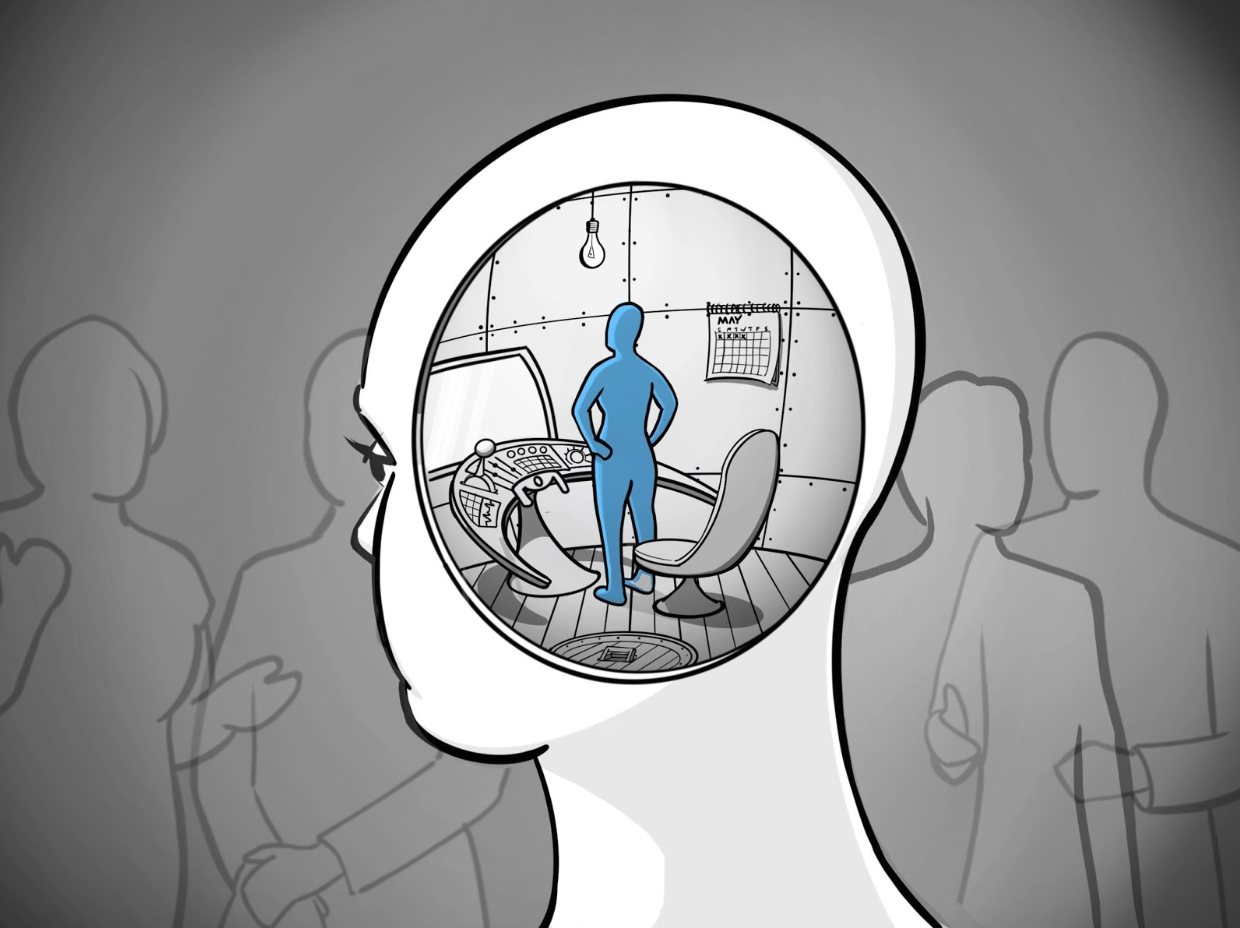
Healing Conversations: Giving Life to the Life of a Person Who Died by Suicide*

If you or someone you know is struggling or in crisis, help is available. Call or text 988 or chat 988lifeline.org 

Rushing to work for an early start at the Shriners Hospitals for Children–Canada, I decided to listen to my messages in the event an important call had come in. I often have young people consulting me at 7 am, either because of an operation that day and a child needing help facing ‘fears’, or because a conscientious young person does not want to miss school. I knew I had one such conscientious person that morning. There was a call from the mother of a young woman I was to meet that morning. She had called late the night before.

Linda, can you call me back as soon as possible; this is an emergency.”  “Oh, no,” I thought to myself. I only gave the number to Shriners patients who talk of suicidal ideas because other calls could be screened by the hospital.

This young woman had expressed such ideas but had felt certain she would not act on them. As she was 21 years of age, and had assured me they were only ideas, not to be put into action, I had not informed her parents. We had worked out a list of people she could call if she felt unsafe, and she had said she would go to emergency if uncertain she could control such ideas. We had discussed vulnerabilities, as well as reasons to stay alive. “What could this emergency be?” I tried calling back, but there was no answer.


When I arrived at work, feeling extremely worried, I saw the young woman. She asked to speak to me immediately. “Linda, I want to give up my appointment this morning for Trevor’s parents”. She then hesitated before adding: “Trevor took his life early Sunday morning, and they really need your help”.

Trevor – Prologue

My thoughts flew back to the few consultations I had had with Trevor, a lovely and talented young man who had been so sad and disturbed about falling away from the Christian beliefs of his parents. He had just gone through an extremely complex and quite perilous chest surgery for a deformity. He had assumed such risks in order to live a better life. He was booked to see me the next day.

I was in shock and soon realized that I would have to immediately pull myself together for his parents. I urged myself on with deep breaths; “Be strong, be brave,” I instructed myself. Although I did not know Trevor’s parents, I could only imagine what they had been through these past weeks with Trevor so very despondent while not understanding what led to such despair in their son.

“They must be wondering why he had chosen to have this surgery if he had not wanted to improve his life and to live,” I thought to myself. I reminded myself to be curious about what they were thinking and feeling, to ask them how they were living through this experience and not assume that my thoughts were their thoughts.

The young woman introduced his parents to me in the waiting room. I told them how very sad and sorry I was. I asked myself, “What does one say in such a situation?” I made sure not to say that I was sorry for their loss. 

That was said to me when my sister had died, and at the time it felt very wrong, “Does that mean I can soon find her?” I had thought at the time. Little did I know that, yes, I could find her in a new re-membered way(1). I reminded myself to keep that in mind. 

I have accompanied parents through the death of a child in my work in palliative care(2,3) and also in oncology with unexpected deaths(4) but I had never accompanied parents through a death of a child by suicide. This had never happened to me.

My thoughts immediately went back to Trevor. I had helped so many other children make legacies when they knew they were dying, and I knew they were dying(2)  but I really had come to believe that Trevor was planning to live. I did not think from our conversations that he was planning to die. Yes, he had told me about feeling suicidal and even about those two weeks of desperation a month or so ago during which he made some attempts, but more recently in our sessions, he spoke so fervently about living.

He explained to me that when he tried to suicide, first by pills and alcohol, that combination made him feel terribly sick. His next attempt a week later by carbon monoxide poisoning involved driving into a garage on a cold Montreal night thinking he would just fall asleep. However, he began feeling so sick and dizzy that he abandoned his car. It was then, he informed me that he decided this was a message from God. He was fated to live!

He told his parents of his attempts and assured them that he had work to do in this world and must live. He was going to help other young people. His parents told the young woman, who had generously given up her session for them, about the suicide attempts and that was when she suggested he meet me for help.


Reading the medical notes in his file, I felt extremely sad since it was clear that he had had a very strong psychological reaction to his deformity, that had been expressed to the surgeon. This contact and discussion about his negative psychological reactions had occurred eight months prior and no one had made a referral for psychological support.

I regretted that we could not have met earlier. “If so, might he have found a way to keep on with his life?” I wondered. “Did I miss something? Did I do something wrong?” We had spent some of the first session talking about warning signs that a crisis might be developing. He talked of memories of his ex-girlfriend, who had said that she was Christian but was behaving in ways that he found immoral. He said certain smells, senses, and even songs might bring up the memory of her which could lead to suicidal thoughts.

This young woman was finding worrisome ways, according to Trevor, to secure money. Trevor was trying so hard to assist her to find another way to resolve her financial needs. He prayed at length as well as read the Bible. He told me that under these circumstances he was reluctant to consult his pastor as he might have for other matters to protect her confidentiality.


When God did not answer his prayers for a way to assist this woman, he began to doubt his God. The more he lost his faith, the sadder and more desperate he had become.

We also talked about what he had been doing to manage the thoughts recently. He mentioned running, playing video games with his best friend, watching movies, drawing and playing his guitar. I referred him to art therapy because of his interest in drawing.

At the end of that last conversation, he had stated categorically, “However, I will not try. Period! This is over”. When I asked what was over, he replied, “This trying to take my life is over.” 


He stated that he had felt very sad and hopeless after trying to bring this young woman, whom he felt in love with, to believe in Christianity in the way that he had been taught to believe in it. His decision for surgery had been because he had decided that he needed surgical correction to live and to help others, including his ex-girlfriend. 

Trevor did not know how to tell his parents that, although he still believed there was a God, he did not believe in the way they believed. “I am a theist,” he said. “There is a lot of good to follow in my previous learnings, being kind, forgiving, learning from mistakes.

Seeing the best in this world is something that I will not follow.” Trevor’s family belongs to a very close-knit religious community. He felt that leaving this faith would mean losing his family and friends. We discussed the subject of love and wondered together whether the love might be great enough to outlive a change in his beliefs. He decided it was a possibility.

Trevor did believe that he was loved. He related a story of another young man of his community who had left the faith and was still part of his family. However,
Trevor was still certain that he would disappoint his parents greatly with this loss of faith

He felt that his ‘deformity’ now with scars from the corrective surgery, (“deformity” was Trevor’s own word regarding his chest difference), would not be accepted by others. Thus, he felt with the loss of faith he also lost an accepting community regarding ‘deformities.’ We explored the possibilities that there are others in this world who accept ‘deformities’ even if they were not of his faith.

We wondered together what he might be able to do for Shriners Hospital for example, where every patient has a ‘deformity’ of some kind? We explored the implications of ‘deformity’ and how his negative feelings about having a different body from others might be culturally developed from our Canadian society and did not have to be taken for granted as true. That even the word ‘deformity’ is a culturally created word. He thought maybe he could be of help to other Shriners patients.


Regarding accepting deformity, I contemplated inviting a past colleague as an outsider witness(5) to speak with us. She is a young woman who is wheelchair bound, due to what is known colloquially as ‘brittle bone disease.’ She is currently studying to become a clinical psychologist.

As a prior Shriners’ patient and later part of our employee community, she had assisted me several times previously, telling her story of how she managed to escape from shame of deformity and fear of others’ judgements. Those consulting her had found these conversations helpful. She is such an inspiration and has many humorous stories. But now, he had died. Taking his own life. None of these ideas could be put into action. 


When Trevor and I had further conversations together we spoke at length about his plans for life and for living. We explored the idea that even with his altered faith, he was creating his own but slightly different moral code.

These discussions seemed to give him hope for finding a new life without his former religious beliefs. I had written in his notes that he had said, “I can take what I have learned and try my best to be a good person”.
When I asked how he thought he could use this new moral code he replied with, “I have to find new hopes.”

I learned that Trevor was a musician, an artist and a writer. He had planned to use his talents to promote his past faith and now he had lost his goal in life. I remembered in detail his creativity. “I was writing a book trying to get through my current life story troubles. My character had to redeem himself for mistakes he had made. That person is really me.”  “Are you thinking that you have made some mistakes for which you need redemption?” I asked. Trevor answered, “Maybe I could go and take fine arts at Concordia University.” I realize now that he did not answer the question of redemption and mistakes.

I now think that in a manner of speaking, I had been doing palliative care practices with him as might all narrative therapists in that we are always creating legacies. The book he was writing might now become a legacy that his parents could appreciate. Trevor had planned that his main character, really himself, who lived in a completely different Trevor-created world, would die. We talked of what the ending might be now that he planned to live.

He stated when he left this last session; “I have some ideas that I can use to write a new ending to this book. Do you want me to bring this to our next session?”  I replied with a hopeful, “Yes.”  Maybe I was too presumptuous. I truly expected to see him another time.


All these memories were going through my head in a whirlwind as I invited Trevor’s parents into the room. I felt that it was probably too soon to discuss legacies with his parents, even though Trevor and I had discovered resources, hopes and dreams, which could now allow him to leave legacies. He had written a book, he had his art, and he told me that he had recorded music with his guitar. There were the plans of finding a way to use these arts to help others.

However, in this beginning of our journey together with his parents, I needed to listen to their pain, listen to their story. We were challenged that morning, because at least three times there was a knock at my door. This was very unusual because when my door was closed, most of my colleagues knew I was with someone.

Finally, I answered the door since the knock was so insistent and persistent. I discovered my lovely supervisor standing just outside. She explained that she and my colleagues wanted me to know that they were there to support me at any time. This knowledge gave me strength to return to the room and have courage to start my uncharted journey with Trevor’s parents.


How does one start such a journey on the day after a child has died by suicide?

Linda and Brian – First Session

LINDA:
Again, I want you to know how sorry I am. How do you feel that I might be of help to you?

Trevor’s mother (MANDY): I need you to hear what happened. We were so sure he had decided to live. (I identified with that). He had made an appointment with you for tomorrow, and also made an appointment with the art therapist.

Trevor’s father (BRIAN), interjected: I asked him how strong the suicidal thoughts were, just Saturday morning, the day before he died. He died in the middle of the night sometime between three and four am. Trevor reassured me by saying, ‘Dad, you know I have decided to live’. And he went to the church youth group.

LINDA: It sounds like you were working really hard to be sure that he was safe. Is that so? (This felt like such a feeble response).  

However, Trevor’s dad’s answer seemed to suggest appreciation of this question:

I don’t know what else I could have done! He was sleeping in our room for the first few nights after he told us about his suicide attempts; then he asked to sleep back in his room. He had his computer set up there and he liked to play both games and his guitar late into the night, and we thought he was better. He seemed better. We had taken him to see a psychiatrist a few weeks ago and they kept him over night and then discharged him the next morning.

We figured if the psychiatrist thinks he can come home, he must be OK. Actually, two psychiatrists sent him home, first from our local hospital, they sent him home with medications, then we took him to the city psychiatric hospital, and they sent him home. We asked for a diagnosis and they said, ‘Well, here we are not big on diagnoses. They just suggested he keep seeing the psychologist.


LINDA: Would you say that you were trying your best to get professional help for him and thus thought you could relax a little and let him sleep in his own room?

BRIAN: He was almost 19 years old and had confided in us. We had to trust him at some point, though we would both wake up in the middle of the night and go down to his room and check on him. I asked him almost daily, ‘On a scale of 1 to 10…’ and every time Trevor answered with ‘Zero’. The local counseling center would call him every day and ask him how he was doing. His youth pastor contacted Trevor regularly and took him out to coffee to talk with him. I took him out a few times for coffee to talk to him outside of the home. We couldn’t keep him in our room forever.

MANDY: I woke up about three am that morning. I prayed and prayed to God to guide me in how to keep him safe. I prayed for nearly an hour. Then I got up. I thought of checking Trevor’s room and then I felt, no, he went to the church group last night, he said he was fine, so I decided not to check. In some ways I am so glad I did not check. I do not think I could have stood it, to find his room empty and know that he was dying while I was praying.

I thought it might be helpful for her to understand more about this.

LINDA: Mandy would you be willing to help me understand what it means to you that you prayed that whole time? 

MANDY paused as she considered my question, she seemed to want to think about this question: 

God was telling me that it was his time to go. Trevor had been suffering so. He could not stand it. That is what he said in his note. He told us not to blame ourselves, that we were good parents, but that he was suffering too much, so he had to go. The file where he wrote the note was called, ‘I am sorry’. I know that he is no longer in such pain, but I am in so much pain now. If only he had known how much I love him. 

I worry for my husband, Brian, who found him hanging in the garage and had to cut him down. He dropped Trevor because he was so heavy. I worry that my husband will not be alright.

BRIAN: I didn’t know how I would tell my wife. How will she stand this? She is not so strong physically and has many family members not so strong psychologically. I went to try to gently tell her and she insisted on seeing the body. She wanted to see him before we called the police. I didn’t want her to remember him like that.

MANDY: I had to see my son. I had to hold him one last time. 

LINDA: Does that mean you were showing him your motherly love or were you trying to figure out how your heart would not break, how to hold your heart together or something I totally could not even think of?

MANDY: I think it was a bit of it all. I didn’t want the police touching him and moving him but now I don’t know what to do because I cannot get that image out of my mind. That was not my son lying there on the floor. 

LINDA: Sooo that was not your son lying on the floor. What are your thoughts about what your son is like now, or where he is now?

MANDY: I know that he is with God. He is no longer in harm’s way; he is safe.

I tried to formulate my next question.

LINDA:  So, (so is a word I realized I use as I try to organize my thoughts and think of what I want to ask), if you wanted to replace the image of something that is not your son with another image that is your son, what image would you want to be thinking of?

Mandy paused and then she actually laughed. What a lovely sound for this moment. I truly felt it was not that the situation was in anyway lightened, but I could see her eyes go off to the side and she was for a moment somewhere else.

MANDY: He used to say, even sometimes recently, “Mum, look at me, see how fast I can run”. That is the image I want to hold on to. That was a bit of the Trevor that we lost when he was about 12 years old. He changed then. He withdrew from us, isolated himself in his room. Maybe something about his deformity at a time when boys care so much about their bodies. But sometimes he would come out of his room and say, “Mum watch me”. Just like that lovely little boy he used to be. That is my ‘true boy’. 

I do not know whether you know or not, but we have a lot of mental illness in my side of the family. I was especially concerned about his hatred of his brother. I thought he had experienced some trauma he was too afraid to share with us that kept him isolated and angry. He denied it when I asked him. I kept searching for anything else I could think of and asking everyone I could think of like doctors, counselors, social workers, other people who had sibling hatred in their family.

Yes, he had this deformity and I know that for teens that can be terrible. But it seemed to me to be something more. Then we found you, and I felt hope, he was coming for therapy; he was even going to start art therapy; he had seen a psychiatrist; he was going to get better. But then, it was too late.

LINDA:   If you could hold that image of that little boy, your ‘true boy’ and that young adult who is saying, “mummy watch me, see how I can run”, what difference might that make to this horrible pain that you are experiencing now, and that horrible image of something that is not your son? 

MANDY: Yes, it would make a big difference. That is what I need to remember.

LINDA: Would you be interested in having some more conversations so that we could re-member Trevor as Trevor used to be before he withdrew from you and to learn what you appreciate about him?

Mandy responded with a strong “yes.” Brian said that he felt that Mandy was the one who really needed the help.

BRIAN:  I think I will get the help that I need from my community and from my pastor.

I asked Mandy if she might want to bring some pictures, or other memories of Trevor to the next session, cautioning her to do so only if she wanted to and thought it might be helpful to her.

LINDA:    I don’t know that person who asks his mum to watch him run, your ‘true boy’, and maybe the pictures could introduce him to me.

After this session, I reviewed the chapter that Michael White(6) had written called ‘Engagements with Suicide’ to get some ideas regarding how best to work with this family. Michael stated that often the person who took his or her life could become invisible, and the suicide could be cloaked in shame. I did not want this to happen.

I thought about how I could discover from the parents the values or skills required of Trevor to both live and to take his life? What kind of decision would this have been to make? Was the suicide mindful of what Trevor gave value to throughout his life? And thereby, we could try to link his living life and the decision to take his life to what he stood for so these parents could still feel connected to Trevor.

I also remembered Michael saying that some cultures think differently than ours about death by suicide. I remember the old Japanese Samurai movies where suicide was considered an act of honour. And as Michael had suggested, perhaps it would be possible to investigate and honour the ‘insider meaning’ of suicide. 


I also wondered if a book I had co-authored with parents whose child had died of a medical condition, might provide helpful ideas for the family(7).


Trevor’s Created World

The next session, both parents arrived for our therapeutic conversation together. They wanted to know what Trevor had told me in our sessions together. Again, my thoughts went into a bit of a whirl. “Do I let them know that it was a change in faith that was troubling him? What about what he had told me about this girl who he was so worried about? They may know her.”

I decided to begin more generally and to refrain from discussing the information about the girl that Trevor did not want to tell the pastor about. I did not know whether they would have the right to read his file because we are a children’s hospital even though he had turned 18. I had given no such details. (I always work out with the adolescent I am consulting regarding what they agree can be placed in the medical file, after explaining the limits of confidentiality and the way we, at the Shriner’s Hospitals for Children, work as a team). I was conscious that this was all new to me.

I had never, even after many years of working with those who expressed suicidal ideas, experienced someone who had consulted with me end their life by suicide
. “How do I navigate this? What are Trevor’s rights? What difference does it make if I do not tell them about his change in faith? Could telling cause them potential harm?”  
 

However, I soon found out that they had read what was on Trevor’s computer. They knew about the young woman in Trevor’s life and how he felt so hurt because of decisions that she was making. They also knew that he questioned their faith. I decided to discuss the potential legacies that Trevor and I had discovered together. In particular, I thought of the book he told me he was writing. 

LINDA:   Did you find the book that he was writing, and the ‘Trevor-created new world’?

MANDY: No. We did not find that on his computer. I wonder where he put that book. I would love to read it. However, what I really want to know is what diagnosis you gave him. Did he have a mental illness?

It was evident that Mandy was interested in other things than legacies right now. In narrative therapy, we want to follow the lead of the person who is consulting us.

This question, however, produced another dilemma for me. I wondered what it meant to them to have a diagnosis.
Psychologists have the right to diagnose mental illness, but this is not my usual way of working and I had not been thinking in diagnostic terms but in therapy terms. When working with a young person I am aware of how diagnoses can make it hard to distinguish the young person from the problem(8). I wondered if a diagnosis could help these parents heal from their grief.

LINDA: What would it mean to you if there had been a mental illness? 

MANDY: Well, I have a sister who has been diagnosed with bipolar, an aunt and my grandmother had agoraphobia and my father may have had depression, so it runs in the family. Having a diagnosis would mean a lot to me because someone else who met with Trevor would have insight into his life and I so desperately want to know everything about my son, especially now that there are no new things to ever learn about him.

LINDA: Well Trevor and I named the problem ‘Trauma’. He felt that some of his experiences with his ex-girlfriend were very traumatic, and he felt that having a deformity was traumatic. When his ex-girlfriend did not want anything more to do with him after he tried so hard to help her, that felt like trauma for him. But he also told me in our last session, “It seems pretty amazing with all that ‘trauma,’ I still want to try to live”. Do you think, ‘trauma’ just got too strong for him? 

BRIAN: I think that trauma got stronger when he was playing his videogame with his best friend and the game died. His friend whom he was playing with said that the last thing Trevor said to him was that on his screen it said, ‘Fatal Error’. He then wrote a letter to the girl asking her if it was worth it not changing her life and doing wrong actions. He actually used much stronger language. That also was so unlike him.

We have another letter he wrote this girl that was just beautiful. Then he wrote us a most beautiful letter. He can write beautiful letters. In his goodbye letter he said he was only trying to survive so that he could join the military and die in battle. But he was too ‘tired of fighting’ and gave up and that is why he committed suicide. He had to have had the idea of hanging because we discovered that he had studied knots on his computer and he had a rope, so I don’t know if trauma was what it was or not?


LINDA: Might it help to think that ‘trauma’ had gotten too strong, and that the game ‘dying’, and ‘fatal error’ somehow gave trauma its hold on him and these ideas of suicide or something different?

Brian thought that this would be better than thinking he had planned suicide all along and was being devious to them all in making them believe he planned to live.

MANDY: The letter we have that he had written before is of grace and love and kindness and mercy. 

LINDA: Could it be a bit helpful to remember how he was able to write such beautiful letters? Could that be more helpful than trying to understand whether he was planning this or not? Or maybe, do you think Trevor was a ‘mindful’ young man? A ‘true boy’ of grace and love and kindness and mercy? It seems that ‘mindful’ might be a word to describe the beautiful letters and the having a rope and studying knots?

MANDY: I actually have his note here to his friend. He just said there was some sort of error. At 2:57, the game ‘died’ – I do not like that word anymore but that is what they use. At 3:08 he wrote to this girl. And at 3:21 he wrote to us. I think he was going through a spiritual battle. It was Trevor’s own will to go through with the decision of death. Yes, I think he was mindful all his life. But I think his death was really something like depression trapping much of him inside a sick mind. Maybe that was trauma caused.

LINDA: Might it be helpful to find your own term for this feeling of Trevor being trapped – trauma caused or something different?

MANDY: I woke up at three am that night and I prayed and prayed for Trevor. I prayed for angels to circle him wing to wing. Angels are ministers sent to help. I wanted them to help break the chains that bound him. I realize now that the angels were also for my benefit. The breaking of the chains I thought were to free him from pain. I just did not know that this freedom would be for him to die. I do need some help with the memory of his body and how it looked after the hanging. It haunts me.

LINDA:  Well might that be something that we can work on next session if that is something you would want? 

The Issue of Diagnosis

Mandy came to the next session with a photo book. She had created a photo book of her family every year and wanted to show me the year that Trevor changed. She also wanted me to see some of the pictures of the beginning of that year when he was the happy little, ‘watch me run mummy’ boy, her ‘true boy’.

There was a note to Mandy written by Trevor saying, ‘I love you the most in the hole world’. Written exactly like that. I discovered from Mandy that even his voice changed that year. He would speak, either in a robot voice or in a kind of baby voice when he was asking, ‘Mummy, come see me’. She discussed how she so much wanted to help her son. She had searched and searched for help. Mandy said that she and her husband had telephoned the psychiatrist from the psychiatric hospital which had kept Trevor overnight. The psychiatrist
stated that Trevor had been diagnosed with ‘major
depressive disorder’. Both Mandy and Brian seemed relieved to get such a diagnosis.  

(Trevor’s dad later explained the meaning of diagnosis for him:

Trevor’s suicide provoked not only trauma and grief, but an investigation. Suicide was not something we, in our wildest nightmares, would ever think our family would struggle with. Trevor was so talented, so full of life and self-confidence. He was the first to get a full-time job on his own, buy a car, buy his own cell phone, get a bank account.

When we got the diagnosis from the psychiatrist that he had a Major Depressive Disorder we felt that it explained so much to us. In his last weeks I saw his feelings of worthlessness and inappropriate guilt. He felt he was a failure. Suicide presents multiple layers of trauma and inquiry that are not present with a simple tragic death. 

During this session Mandy explained that she was feeling very upset having to live in this world where her son had hanged himself. She wished she had a chance to get help for him early enough. 

(Brian later recounted that he felt similarly: 

This has been hard for me too. Now that we have a diagnosis, every fatherly instinct in me craves the chance to go back in time to help him through this illness, and to explain it to him. He suffered all those years thinking he was just a jerk. He couldn’t help it. He was suffering and didn’t know it had a name. This had to play into his perception, somehow attaching to his deformity. He suffered alone, in my home, under my care, without any help. That destroys me inside. This is an added layer of severe grief in my heart, almost unbearable).

Mandy and I did some work around the image of seeing her son dead and how it made her feel that she failed because she could not save him. She also, in times of great distress, would feel that she was not loveable enough because it felt at times that Trevor did not love her. We discussed the possible relationship of this, ‘I am unlovable’ thought to her thoughts as a young child when her mother left the family for another man. 

Mandy wanted the little boy Trevor, who needed her to watch him run, to stay with her. She remembered again praying for her son during the time that he was organizing to take his life. She believed that praying was for God to protect him and to protect herself. She kept going over and over what Trevor must have done that night. But she came to the realization during our conversations, that she was praying him out of this life and into another life without pain and with God.

She stated that this realization was helping her feelings of panic reduce in intensity. She also explained that she believed it was Trevor’s responsibility to make his own decisions now that he was almost nineteen, and it was her responsibility to pray for him. 


When I arrived at work the next week, I had a telephone message from Brian. He was concerned that Mandy might have the same diagnosis as Trevor. She had been very upset that morning and wanted to climb on the roof to be closer to Trevor. Brian restrained her and asked her if she was feeling suicidal. She said that she was feeling sixty percent suicidal.

I phoned him back and suggested that Mandy might be feeling intense grief. I told him of other parents I had worked who had a child die explaining to me such very strong feelings, especially at first. It had only been a few weeks since Trevor died. I also stated after talking to Mandy, that
if either of them were worried about being suicidal they could go to the same psychiatric hospital where Trevor had been admitted. They did decide to go. 

God’s Peace

Mandy came to her next session saying that the psychiatrist told her that she was having a normal grief reaction. I was beginning to like the psychiatrists at this hospital who were not so ready to think of DSM diagnoses and medications. Mandy had been given Ativan by her family doctor after Trevor’s death and Mandy believed that maybe these medications were making her have suicidal ideas. She therefore had decided to take no medications for now and was feeling better. 


LINDA:  Mandy, are you worried for your life now?

MANDY:  No, I am not worried that I will actively do something, but I sometimes wish that I would get the Coronavirus and die. I have weak lungs and I could just die. I miss my boy so much.

LINDA:  Does that mean that you feel that you do not have reasons to live anymore?

MANDY:  That is exactly what my pastor said. He reminded me that it is not my time. That my work is not over here on earth. I have three other children and many other reasons to live. I am reminded that Mary, mother of Jesus, suffered too. She had to watch her son be tortured and to see him die tragically. I was watching my son in a different sort of torture. I just need peace. I just need God’s peace and I find that in scripture.

LINDA:  How can you live God’s peace?

MANDY:  Knowing that Trevor is in heaven with God, and I will be there with him some day, but he will be waiting so long, too long. I can read the Bible and it brings me peace. But that long time of waiting hurts me. However, I will see him again.

LINDA:  Do you believe that the time in heaven will be the same as the time on earth? Might it be that Trevor will only feel it as minutes when you feel it as years, or something at least differently than here?

MANDY:  Yesss. Time would be different. He is in heaven after all. And here I am and here I will stay, even if it will be hard to live in a world without Trevor. I know I tried. At least I do not feel guilty.

LINDA:  Do you see this as a gift, knowing that you did the best you could and tried so hard to help him?

MANDY: It IS a gift. I never thought of it that way. It is truly a gift; I tried so hard.

LINDA:  Mandy, what are some of the many ways that you think the pastor was thinking of when he told you that your work on earth is not over?

MANDY:  Well, we have decided to help others who might have problems like Trevor’s and use his life and him taking his life as an example and a message for others. We want to help parents to find help for their children. We are working on suicide prevention. Thank you for giving us that document that can be used in the youth group. We plan to have his funeral as both a homage to Trevor and as a message about youth problems and ideas for how to get help.

LINDA: Do you think this is showing some of your heart’s concern that you showed for Trevor now being used to help other young people in difficulty? Trevor wanted to help others as well.

MANDY:  Yes, I must not forget that this is my plan for life, and this was Trevor’s plan. I need to help other children to get the services that they need. 

Sun on Wood

Our fifth session started just after isolation for the coronavirus began. Mandy was having the telephone session in Trevor’s room where she could have privacy and thoughts of Trevor’s death felt very close to her heart. 


MANDY: I am having a lot of incorrect thinking. I wake up every night at the time he died. I am so sad. 

LINDA: Mandy, could you help me understand something? When ‘incorrect thinking’ tries to take over, what is it saying to you and how do you respond to it?

MANDY: It is that coronavirus idea thing. I could easily go into public and expose myself to the virus. ‘Incorrect thinking’ keeps saying, this could be good, this virus. I would probably die with my lung problems. 

LINDA: Might ‘incorrect thinking’ be kind of ‘missing Trevor’ thinking? You said last week, ‘I am here to stay’, but staying might still be pretty challenging? 

MANDY: Yes, I AM here to stay. I just don’t like a world that I have to stay in when my son died by suicide. We were looking for the book and for notes about it. We did find some little notes and a long letter. I printed them out. They are precious. That was my ‘true boy’- those notes and letters.

LINDA:    Mandy, I wonder if you would be so kind as to describe that precious ‘true boy’ for me?

MANDY:  I remember two-year-old Trevor with his red tennis shoes. He had a scooter, and he was so agile that even at that age, we put him on the scooter, and he rode in circles, his little shoes so eye catching. His bright blue eyes so sparkling. I always wanted a fair boy who looked like my side of the family, the others are dark haired. I began praying, asking God specifically if my next baby could please have blonde hair, and blue eyes, and if it weren’t too much to ask, curls on top of all that. God gave me it all!

He had a yellow and black coat. He was so happy and thoughtful then. He asked such hard questions about God. I am so blessed to have been his mum.

LINDA:  Is that one of Trevor’s legacies to you, to give you the opportunity to be so blessed to be his mum? Do you have some ideas how to get even closer to the reasons why you are so blessed to be his mum, while still living in this world that you have decided to stay in and find the precious ‘true boy’?

MANDY (very tearfully): I blogged daily, writing little stories about all my children. I was recording it for my family who were far away. They are invaluable now. I sleep with his two stuffies (soft toys) called Nache and Thunder that he always slept with. I kiss them on the nose and tell Trevor that I will take care of them for him. 

LINDA: Mandy what do the tears speak to?

MANDY:  That I forgive him. I am in his room and his smell is disappearing. That frightens me.

LINDA:   Do you have some ideas how you can keep his smell closer to your heart and soul?

MANDY:  I have no idea; it scares me. I am losing him.

LINDA:     Could you describe the Trevor smells?

MANDY:  The smell is a bit of outdoors, like sun on wood; it is warm skin, Trevor’s warm skin. Independence.

LINDA:  We are creatures of words. Would it be helpful if I write this down on a separate paper that I can give to you when we are out of this coronavirus isolation or mail to you now?

 (I always make notes during the session that usually those consulting me can take with them, but I am doing these sessions by telephone, and I wanted to write these beautiful ways of re-membering Trevor very carefully. I thought I might type or send all our re-membering in a written narrative letter 9-13 .

LINDA: Mandy, I am curious, what does independence smell like? 

MANDY:  It smells like sun on wood. That’s my ‘true boy’, independence. Oh yes, please write it all down.

LINDA: I am writing this, ‘sun on wood, a bit of outdoors, warm skin, Trevor’s skin, independence’. 

Do you think he can feel that forgiveness?

MANDY (very softly): Yes, he knows that I forgive him.

LINDA:   What do you think that would mean to Trevor to hear you saying that you will look after Nache and Thunder for him?

MANDY: He would know that there is nothing he could tell me that would make me love him any less. But it is a bit painful to think of bringing him back to hear what I am saying. I don’t want him to know that pain I feel of his loss. You know, a mother is only as happy as her saddest child.

LINDA:  You don’t want him suffering through knowing the pain that you feel. Do you believe that he is suffering now?

MANDY: No, he is at peace. His body and mind are healed, in the presence of God. HE NO LONGER IS SUFFERING. His place and his job is in heaven. But he left us with a job on earth.

LINDA: What is that job on earth?

MANDY:  My job now is, as is part of his job, to help others who suffer like him. I was reading Genesis 50:20. It is the story of Joseph. His brothers wanted to kill him, and he managed to escape and save Egypt. He said to his brothers when he saw them again, ‘You meant evil, but God meant it for good to bring this about’. 

LINDA:  Mandy, can you help me understand your meaning of Genesis 50:20?

MANDY:  Well, we are going to help others benefit from Trevor’s experience and his death. God meant it for good. I hope he knows now that what he did was not him but the illness, and we will help other young people who are suffering like he was. 

LINDA: If he were to hear you now, even though it is a bit painful as you told me, what might he think of your idea of carrying on his wish to help by helping other young people who might be suffering like he was?

MANDY: He would feel relief that he did not ruin our lives. If he could have stayed on this earth longer, he would have been able to turn around the voice of depression, he would have had more tools in the toolbox. If he only will know that his dying was not for nothing. That we are going to use his life and his way of dying to help others. He would know that he didn’t ruin our lives, and his life had meaning. He actually is going to help others live a better life than he was able to live.

LINDA:  Mandy, I can’t imagine a better legacy for Trevor than the one you plan to bring to us all. I am so curious about your ideas, how are you going to make Trevor’s life and death be helpful to other young people who are suffering. (I realized that in my role as a narrative therapist, I need to lead people to find their own legacies of their child. This was a much more powerful legacy than what I had first considered, which was the book Trevor was writing).

MANDY:  Well, we have developed this website. It is to help others find hope. We are discussing what tools he had and what tools we wish he had. We are going to give resources, where you might go. 

LINDA:  Yes, you told me about how you organized his service to be both a memorial to Trevor and a help to others. Would you be willing to describe this in a bit more detail?

MANDY:  Well, we had twelve counsellors come to be there for the young ones of our congregation. They are all so close we were concerned about them. The counsellors talked to the young ones on an individual basis and gave them ideas of where to go if they need help. We had moved here from another country and did not know what services existed.

The surgeon who did Trevor’s chest surgery asked if he could have Brian’s talk at the memorial service. Brian talked about what it was like to be a parent of someone with such problems that Trevor had suffered from. The surgeon hopes to use this in some way to help other children at the Shriners with deformities as a way to try to prevent such an outcome as happened to Trevor. 


LINDA:  Oh, I am very interested in how he might use this. I will talk to him, perhaps I can be of some assistance to your ideas and to his, in relationship to the Shriners Hospital for Children. 

What would you like to do about appointments?

MANDY: Well, I know you are so busy, Linda.

LINDA:   It is truly up to you.

MANDY:   I think I would be OK for two weeks. 

Keeping Her True Boy

Mandy called and cancelled her next session. I had planned to spend our last few sessions exploring ideas about how she and Brian could help other young people. We were still in isolation for coronavirus isolation when we began to co-write this article.

Mandy told me again about blogs when Trevor was so happy and living what she called a wonderful life. She was reading books to understand suicide and discussed them with me. She would still question the cause of Trevor’s challenges. She talked some more of all that she had done to try to find the cause when he was alive and to get help for him. With a few questions she came to the conclusion that Trevor died to protect his parents from more pain, pain that he lost his beliefs, pain that he couldn’t feel better.  

She also talked of her ‘true boy’ who could be around even later in life. For example, she mentioned how he wanted to be so independent, he wanted to pay for his own counselor. He even wrote in his ‘I’m sorry’ note that they could sell his car, perhaps to pay for his funeral.

She suggested this was his warmhearted way of showing that he did not want them to be in debt by his death. And most importantly she discussed how she believed Trevor had a healed mind and a healed body and that now he is free. She read to me his wonderful, kind letters. She told me beautiful stories of navigating the parenting journey as Trevor developed from childhood into adulthood and of walking alongside him even when he was making choices she would have preferred that he not make.

But mostly Mandy described her hopes and dreams for being of service to other youth, to follow Trevor’s hopes and dreams. She understood better what Trevor stood for. Mandy believed that God has a purpose for every life, and both her purpose and Trevor’s purpose was to call greater awareness to youth challenges and help youth with this calling. There was no more talk of catching the coronavirus and meeting Trevor sooner.

Mandy felt that she and Trevor now had a common, earthly goal that her husband and her complete congregation were getting involved with. She felt that this was keeping her ‘true boy’ in her heart and soul. Mandy requested that we do one last bit of work together when the isolation due to the Coronavirus was over.

This was to work to help her manage better some of what might be called day and night dreams of the last image of ‘her boy who was not her boy’. She planned to replace these images with her ‘true boy’ and with other young people who were living instead of dying. Finally, Mandy explained to me, that somehow, Trevor did not disappear but will live on in the helped lives of others.

Brian wrote to me when I asked him to edit this paper. In his letter he expressed words similar to those I have heard from others who have had a child die. They were so poignant and heartfelt that I wanted to honour his thoughts here. This is Brian’s perception of his particular experience of having a child die by suicide.

“I am not the man I was before February 8, 2020. When Trevor died my life changed. My wife changed. My family changed. I changed. And I’m trying to come to grips with the new me and my new world. Life has a different meaning. My faith has more gravity. My perspective on my life in this world has been elevated beyond the temporal in a way it has never been before.

When I walk beyond the curtains to grief and back into life where my heart and mind are released from the shadow of my son’s suicide, who will I see when I look in the mirror? My grief is not just grief. A transformation is occurring. A lot of people who lose children have a very difficult time getting past the loss, as if their legs have been cut off from under them, and they will never stand on their two feet again. I have been in the depths of these waters, but I will not stay there. I know that these ashes that cover me now will be redeemed by God.”

I feel so honoured to be a part of such conversations which could explore what Trevor gave value to and then to witness Mandy and Brian finding ways to use what Trevor gave value to help others. I was able to assist them to develop Trevor’s legacy and to carry it forward with their family and others who loved him. I feel that this journey that we took together was also a healing journey for me.

I got to know both parents so much more through our co-creation of this paper. I have co-written papers before with those who consult me and am always so appreciative of the experience. I am happy to add Mandy’s final remarks when she returned this final draft to me:

“I also just want to say thank you again. As I was reading through the paper as a whole, it helped to be ‘counseled’ again. In grief, your mind so quickly forgets what you've determined, or learned. Now I will have this paper to get a quick reminder of the progress and conclusions you've helped me with. Brian wants to say he really enjoyed working with you on this paper. Me too! Blessings.   

All names are changed at the request of the parents. The young man’s parents have read this version of the paper and feel comfortable for it to be published so others can learn how they managed to survive the almost unsurvivable and to carry on their son’s legacy wishes.

Reprinted with the consent and express wishes of the parents, Linda Moxley. and the editors of the Journal of Contemporary Narrative Therapy

[If you or someone you know is struggling or in crisis, help is available. Call or text 988 or chat 988lifeline.org]  

References 

(1) White, M (1988). Saying hullo again. The incorporation of the lost relationship in the   

            resolution of grief. Selected papers (pp. 37-46). Dulwich Centre Publications. 
 

(2) Moxley-Haegert, L. (2015a). Leaving a legacy. Using narrative practice in palliative care  

           with children. The International Journal of Narrative Therapy and Community Work, 2,  

           58-69. 
 

(3) Moxley-Haegert, L & Moxley Haegert, C. (2019). Little steps toward letting the legacy live: Fine traces of life to accompany families grieving the death of a child. Journal of Narrative Family Therapy, 28-53.  
 

(4) Moxley-Haegert, L. (2012), Hopework. Stories of survival from the COURAGE progamme: Families and children diagnosed with cancer. Retrieved from narrativetherapyonline.com/moodle/mod/ resource/view.php?id=577  
 

(5) White, M. (1995). ‘Reflecting teamwork as definitional ceremony.’ In M. White: Re-Authoring Lives: Interviews and essays (pp.172-198). Dulwich Centre Publications.  
 

(6) White, M. (2011). Narrative practices: Continuing the conversations. Engagements with suicide. (pp.135-148). Chapter 10. David Denborough (Ed). W.W. Norton  
 

(7) Moxley-Haegert, L. (2015b).  Petit Pas/Little Steps. www.hopitalpourenfants.com/patients-et-familles/information-pour-les-parents/petits-pas (French) and www.thechildren.com/patients-families/information-parents/little-steps (English)  
 

(8) Marsten, D; Epston, D., Markham, L. (2016). Weird science, Imagination lost. In Narrative Therapy in Wonderland; Connecting with children’s imaginative know-how. (Chapter 7, pp. 157-173). W.W. Norton & Company.  
 

(9) Bjoroy, A., Madigan, S., & Nylund, D. (2016). The practice of therapeutic letter writing in Narrative Therapy, In B. Douglas, R. Woolfe, S. Strawbridge, E. Kasket, & V. Galbraith (Eds.). Handbook of Counselling Psychology, 4th Edition. Sage Publications. 
 

(10) Epston, D., & White, M. (1992). ‘Consulting your consultants: The documentation of alternative knowledges.’ In D. Denborough (Ed.). Experience, Contradiction, Narrative and Imagination (pp. 11-26). Dulwich Centre Publications. 
 

(11) Ingamells, K., (2018) My romance with narrative letter: Counter stories through letter writing. Journal of Narrative Family Therapy, Special Release 4-19. www.journalcnt.com 
 

(12) Pilkington, S.M. (2018). Writing narrative therapeutic letters: Gathering, recording and performing lost stories. Journal of Narrative Family Therapy: Special Release 20-48.  
 

(13) Palijakka, S., (2018) A house of good words: A prologue to the practice of writing poems as therapeutic documents. Journal of Narrative Family Therapy, Special Release, 49-71. 


* Dedicated to the young man who chose to take his life and to his parents who chose to survive

his death.


Author Note: “Parents I worked with in palliative care co-wrote a resource document with me and the nurse practitioner in palliative care at the Montreal's Children's Hospital in Montreal. This might be a resource that could be added for reference if you thought it might be helpful to the readers.  


Questions for Reflection

How did this clinical narrative impact you?

What are your thoughts about the therapist’s approach?

Which techniques might you use in your own clinical work?

What about the way the therapists worked with Linda and Brian would you change? How?

What are your own strengths and challenges when working in the shadow of suicide?  
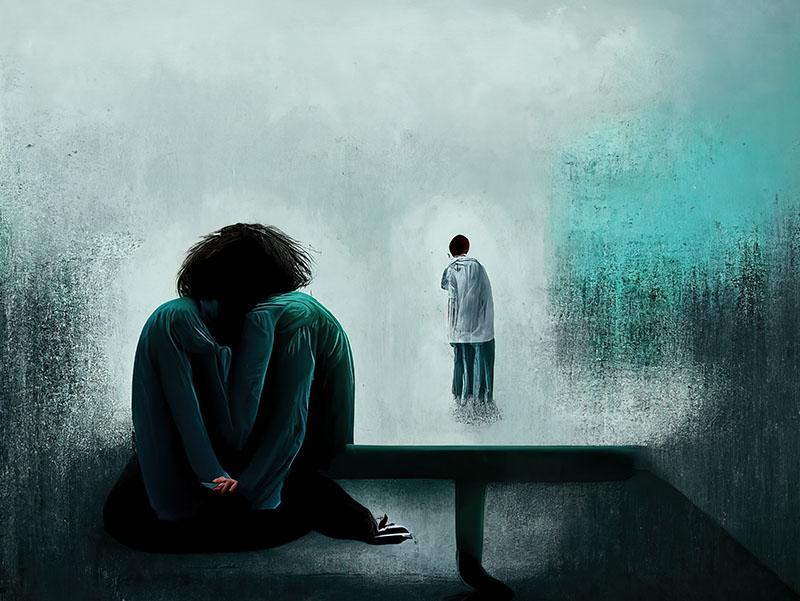
Powerful Ways to Improve Your Presence with Suicidal Clients

Suggested Tips for Clinicians:

  • Explore your own preconceptions of suicidality and how they impact your interventions
  • Meet clients where they are rather than where you think they should be
  • Manage your own fears and anxiety around client suicidality
  • Develop a strategic therapeutic plan including supportive clinical resources


***
 

In our first session together, I asked Judy if she had had any thoughts of wanting to die or of suicide. She looked at me as if she wasn’t sure what to say, and then seemed to decide to be frank. “I’ve had serious thoughts about killing myself for a long time now.”

Like what you are reading? For more stimulating stories, thought-provoking articles and new video announcements, sign up for our monthly newsletter.

Revealing her thoughts of suicide was a moment of extreme vulnerability for Judy as she let me know that her pain was so deep that not existing was actually an attractive option. There is a strong stigma attached to suicide, despite greater mental health awareness in recent years, and I’m sure Judy knew that thoughts of self-harm are still considered taboo. She probably knew as well that I had the power to take away her freedom if I thought it was necessary; my consent form let her know as much.

It was a vulnerable moment for me, too. I didn’t know exactly how great Judy’s risk was for imminent self-harm, and the potential costs were high in either direction if I misjudged the situation. Underestimating the risk could contribute to her death, while overreacting could result in a rupture in our relationship or an unnecessary involuntary stay in a psychiatric ward, which is not a benign experience.

These perils and apprehensions notwithstanding, a unique opportunity opened to me when Judy told me she was suicidal. This moment invited me to meet her as a full human being in a deeply human encounter.

Meeting Clients Where They Are

When one of my clients is suicidal, I know they’re in extreme pain, whether physical or emotional. But research and my clinical experience show that pain alone doesn’t invariably lead to suicidality — it needs to be paired with hopelessness. Believing that the pain will never end, however, is strongly linked to becoming suicidal. Having strong connections to other people buffers against the risk of suicide in the face of pain and hopelessness, while feeling disconnected from others predicts more severe thoughts of suicide. When someone I’m treating is in a suicidal crisis, the best I can hope to offer them is hope and connection.

However, I’ve often struggled to give my clients what they need in these moments which are fraught with anxiety. I felt my stomach drop when Judy told me that she had been suicidal. I had lost a patient to suicide about a decade earlier, and the reassurances from everyone around me that it wasn’t my fault didn’t make it any less heartbreaking or traumatic. Since that loss, I feel an even stronger sense of responsibility to help my clients and to do everything I can to keep them safe, while at the same time balancing safety with not wanting to overreact and encourage or require that the person go to the emergency room if the risk is not that severe. The threat of legal liability also looms large if I underestimate the risk and my client ends their own life.

As a result of these competing tensions and fears, there have probably been times when I unwittingly diminished hope, short circuited therapeutic connection, and left a client alone with their deepest pain. I was taught during my master’s program to be sure to “contract for safety,” which meant having the client sign a form that said they promised not to kill themselves. Even as a new trainee I could feel in my core that something was fundamentally wrong with this approach, which seemed like the ultimate gesture of pointless self-interest. It was clear to the client, too, that the agreement was meaningless, and that it was designed to protect me and the clinic where I was working as a practicum student.

Even though safety contracts are largely a thing of the past, I still need to be careful not to give more subtle indications that my focus is on mitigating risk, perhaps not mostly out of concern for my client. Without intending to, I could send the message that I care more about the possibility that my client might end their life than about the pain and hopelessness that are making their life unbearable.

Perhaps I might signal my nonverbal disapproval when a client describes being suicidal and react more positively when they reassure me that they’ll be OK. Or I might try to nudge a client toward agreeing that they “would never act on their urges,” or show with my body language that this conversation is making me extremely uncomfortable. In one way or another, I could discourage future openness.

It's easy to understand my fear in these situations. There is a widespread assumption that if a client ends their life, the therapist must somehow be to blame. I’ve witnessed organizations where there was a presumption that the therapist must have messed up unless they could prove otherwise. This toxic mentality burdens therapists with the illusion of an absolute ability to prevent suicide, but the truth is that a client may decide to end their life even when I’ve done everything possible to prevent it. Not surprisingly, I’ve found it hard at times not to focus on risk mitigation at the expense of the therapeutic alliance and the hurting human being in front of me.

Looking Back

Months later, Judy told me that my equanimous response to her confession in that first session was the main reason she continued in therapy with me. “I was afraid you might have me locked up,” she said, “or that you’d say you couldn’t treat me.” Instead, she felt she could trust me, and that I cared about her and not just about “covering your ass,” as she put it.

But there was a moment when I was less receptive to Judy’s suicidal thinking, which I didn’t understand (or share) at the time. In one of our later sessions a couple of years after that first meeting, she said with conviction that nobody in her family would care if she killed herself. I reacted with an intensity that surprised both of us.

There was no validation of Judy’s feelings, no gentle Socratic questioning to test the evidence. Instead, I replied, “I have to tell you, that is categorically untrue.” I was nearly shaking with emotion. She looked taken aback. I continued, “I can guarantee that your family would be devastated, and the effects would ripple through multiple generations.”

Judy told me later that she was startled by the fierceness of my words and tone of voice, which I attributed to my own family history of suicide. My dad’s dad, a veteran of World War II, died from a self-inflicted gunshot wound seven years before I was born. That loss colored not just my dad’s adulthood but my parents’ relationship and our family’s emotional life. But while I don’t doubt that the echoes of my grandfather’s suicide were in the room when I snapped at Judy, there were more recent and personal forces at play.

For the past few months, I had been in a moderate major depressive episode following a prolonged illness, which included a frequent desire to die. I was plagued by recurrent thoughts that I was letting down my wife and three young kids, and that they would be better off without me. I knew rationally that the last thing my family needed was my suicide, but the thoughts came with such conviction, as if they were established fact, that they were hard to dismiss. When I responded to Judy in that session, I wasn’t speaking just to her. I was addressing my own ambivalence about staying alive.

Based on my clinical experience with Judy and other clients who have shared their suicidality with me, I offer the following self-awareness exercises to enhance your therapeutic presence when you encounter these challenging moments with your own clients.

Foster Awareness

My lived experience inevitably affects my work as a therapist. The more aware I am of my thoughts and feelings around suicide, the more constructively I can put them to use in the therapy room. Just as I might encourage my clients to develop greater self-awareness, I can practice mindfully attending to my own reactions when a client has suicidal thoughts.

Try this: Notice what’s happening in your body when a client is suicidal — are you tensing? Is your breathing restricted? Are you moving away, or adopting a self-protective posture? You can mind your emotions, too. Are you anxious? Annoyed? Sad? Fearful? Take an easy breath in and out and see what it’s like to observe those reactions with a bit of distance, rather than letting them necessarily drive your words or actions.

Question the Story

What I feel often comes from the stories my mind is telling me. By noticing my thoughts, I can recognize that the stories may not be true.

Common thoughts I’ve had in reaction to a client’s suicidality include:

  • I don’t know how to handle this
  • This is going to end badly
  • I’m going to get sued

The thoughts may come as wordless impressions rather than actual statements, such as:

  • Images of the client’s death
  • Being questioned by investigators
  • Feeling inadequate to the task

Try this: Notice when the mind is creating stories. It’s often not necessary (or practical) to do formal cognitive restructuring to change unhelpful beliefs; just noticing that we’re having thoughts that may not be true helps us to hold them more lightly, and to realize there are other ways things could turn out.

Open Continually

My automatic impulse in the face of vulnerability is to shut down: to close my heart, resist discomfort, quickly resolve ambiguity, and fall back on well-worn habits. These default reactions may be effective at managing my anxiety, but they can shut down my flexibility, creativity, and ability to connect with the person in my care.

Try this: When you sense the urge to shut down, take a slow breath in and out, feeling the points of contact between your body and your chair. Then ask yourself, “Can I open to this?” Even if part of us is resisting the experience, another part wants to stay present and to seek connection. Gently nurture that willingness.

Embrace Uncertainty

My mind doesn’t sit easily with not knowing how something I care about is going to turn out—especially when the outcome could be catastrophic. My automatic reaction is to try to resolve the uncertainty as quickly as possible, and to make sure things turn out okay. But when my client is thinking of suicide, the only thing I can know for sure is that they’re in real pain and are looking to me for help.

Try this: Rather than trying to know the unknowable, lean into not knowing what will happen. Accept that you have imperfect knowledge, and that you can decide only with the information in front of you. Make as much space as possible for the outcomes you fear—not because you’re indifferent to what happens, but because uncertainty is the reality you’re faced with.

***

Self-awareness and greater openness are the foundation for all the effective risk-management techniques I’m trained in such as asking about desire, plans, preparatory steps, access to means, and documenting what my clients tells me. I still collaborate with clients to make safety plans, which reduce suicide attempts by over 40 percent — one suicide attempt is prevented for every 16 clients who receive a safety plan — and I aim to take these lifesaving steps in the context of nurturing lifegiving connection.

***
 

Questions for Thought:

In looking back on your clinical work with suicidal clients, what might you have done differently with a few in particular?

What is it about working with suicidal clients that you find most challenging both professionally and personally?

What about this blog touched you or challenged you in a way you hadn’t anticipated?

What might you do differently next time you take on work with a suicidal client?  

Stephen Schueller on the Power and Promise of Mental Health Apps

Mental Health Apps 101

Lawrence Rubin: Thanks for joining me today, Stephen. I first became familiar with your work when I took a deeper dive into mental health apps and came across your work with One Mind PsyberGuide, a system for evaluating these tools. For those of our readers who may not yet be familiar with or worked with them personally or professionally, can you define a mental health app?
Stephen Schueller: A mental health app is essentially a software program that can support people in their mental health journeys. There are various kinds of mental health apps, with estimates suggesting that there are somewhere between 10,000 to 20,000 of them out there. Some of them are intended to be used on their own, so a consumer might use a product to self-manage facets of their own condition, like anxiety, depression, or trauma. And others are really meant to be used in conjunction with standard therapy.
So, for example, the Veterans Administration and the Department of Defense have developed a suite of different apps that are designed as adjuncts to standard evidence-based treatment. For example, CPT Coach for cognitive processing therapy. PTSD Coach for PTSD treatment. PE Coach for prolonged exposure. These are meant to be tools that help support a therapist and a client who are engaged in a specific type of treatment, like prolonged exposure or cognitive processing therapy.
LR:  Are the apps themselves subjected to the same type of empirical validation standards as the therapies they are adjunctive to?
SS: I think it is an appropriate question to ask. To consider what level of evaluation is needed depends on the type of product, the type of app. Those apps that are meant to be therapy adjuncts for example, are designed to replace worksheets or other supplemental content that would go along with an established evidenced-based treatments. Cognitive Processing Therapy Coach, developed by the VA and DOD, is meant to support cognitive processing therapy. Its various homework assignments, tracking components, and capacity to record the actual sessions so that clients can listen to them later and do some of the exposure exercises, all get done in the context of the app. And so, to the same degree that you probably don’t need to evaluate every new version of a worksheet associated with an established treatment protocol, you don’t need to undergo the same types of rigorous evaluations as you would do to the treatment itself.As opposed to apps that are therapeutic adjuncts, there are those that are meant to be more treatments unto themselves. And if they’re not some type of formal treatment like the ones I mentioned, they might be like self-help or self-management products, which opens some interesting questions. Like if these are replacing the self-help books of the past, do we need an evaluation of every single self-help book out there? Or is it sufficient that a self-help book aligns with evidence-based treatments and evidence-based principles if it does not have a formal evaluation?

And so, I think for these adjunctive apps, it’s important to distinguish between direct and indirect evidence. Direct evidence would entail an evaluation of the app itself that explores whether it has been subjected to clinical research studies that show effectiveness for the target condition or goal that that app is trying to change. Indirect research would be based off a pre-existing evidence-based practice, where we would be looking for fidelity of the app to that evidence-based practice.

In this latter case, the app would be evidence-informed rather than evidence-based. An app like that might be a digital CBT tool, that has some fidelity to Cognitive Behavioral Therapy principles. And I would argue that there are various levels of evidence that we should be looking at for with these apps. Obviously, I would love it if every app out there had a clinical trial showing its benefit, but I will tell you that’s not the case. Research suggests that about only 1 to 3 percent of mental health apps have any direct scientific evidence behind them. But I think if it doesn’t, an app that is evidence-informed is probably better than an app that is not based on evidence-based treatment. I think, again, it’s degrees of evidence, and that’s one of the things that we explore at One Mind PsyberGuide, is trying to look at the various degrees of evidence that are supporting various products.

LR: So, what you’re saying is that just as there is a hierarchy of what are considered highest levels of empirically backed treatment research, from randomized control trials down to anecdotal evidence, there are different levels of scientific evaluation that apps can be subjected to.
SS: That’s right. And I think I would add one other point, which is that in a lot of places we see that when treatments are adapted to new mediums, they often maintain their effectiveness. So, Cognitive Behavioral Therapy for depression has evidence that it works in person. It also works via teletherapy, in a group therapy format, as well as through self-help books. And so, to some degree, to continue to conduct the same level of studies as we move to new mediums may not be the most efficient use of our resources.When we’re taking something to new mediums and apps, is this really a new treatment, or a new practice that’s being developed through this technology? Or is it taking something that’s worked before and packaging it in a new way? And so, I think that’s the thinking around the evaluation of indirect evidence. That an established intervention already works in various realities and formats gives a lot of confidence that it would likely work in this digital delivery format, as long as it shows fidelity to those evidence-based principles that that treatment involves.

LR: We briefly mentioned self-help books. John Norcross, as an example, has done treatment outcome research at the highest empirical levels, but he has also written self-help books based on the same principles that drive his research. So that’s what you mean when you say if a therapeutic modality is robust and valid, we shouldn’t be that concerned with the transition into a different medium, such as digital technologies and apps.
SS: That’s right. Or at least we should be less concerned. The situations I worry most about are where new, innovative treatments are made possible using technology. I think those do need to meet really high standards of evidence to support their benefits.
LR: What would be an example of this?
SS: I think there’s a lot of work to do around chatbot apps, where you would interact with the app as if you’re chatting with a person, or potentially a therapist. Although they’re often based on evidence-based principles, I have some questions about the benefit of chatting with a computer program

And similarly, I’m also curious about some of these virtual care platforms using text message-based interactions with a therapist. Does that work? And what is the benefit someone gets from text-messaging back and forth with someone, even if they don’t have credentials? How do we distill evidence-based psychotherapy practices into these very brief back-and-forth interchanges?

So, I think there’s a lot of places where we do need new evidence to suggest that these things are beneficial. And I think that there is some promising evidence supporting both chatbots and text message-based interactions as potentially being clinically efficacious. But I do think these are places where we need more research to support these practices.

LR: Are these chatbot apps like virtual assistants, driven by artificial intelligence programs designed to provide human-type responses?
SS: There definitely are products like that. Three examples would be Woebot, Youper, and Wysa. All of these are apps where a user who downloads the app would be able to message back and forth with this virtual agent that is going to provide back full-text answers. Again, they’re often based on therapeutic principles. But I think that these are types of things that were not possible just a brief time ago. This is not like taking a self-help book and digitizing it. This is a very new type of thing that is possible because we have computer programs and software that can do these types of interactions.
LR: Would these types of virtual assistants be programmed with keywords that might be sent off to a therapist if the person is simultaneously working with a “live” therapist, or are they completely asynchronous standalone surrogates for therapy?
SS: It’s a little of both. You couldn’t take this program and bring it to your therapist and say, “Okay, I’m going to use this on the side, and it’s going to reach out to you if these certain words come up.” Some of the programs are designed to communicate directly with a therapist. Or they are a gateway. One way to think about these is as a low-intensity first step that can then introduce or connect someone to a therapist if necessary. And some of these programs do have that model, where if there is need for a therapist, they can step up to that higher level of care. But these aren’t the types of things where you as a client would say, “Okay, I’m going to use this in conjunction with a therapist I’m seeing.”
LR: I know that there are apps for medical care. For instance, those that monitor cardiovascular activity and then send that data to a physician or a physician’s assistant. Are there ways for some of these apps to communicate directly with a therapist, who then would respond to the client?
SS: There definitely are some apps that try to digitize measurement-based care, to allow some communication or transmission of data based on symptom tracking or logging, or other types of things that people would be doing or as part of the treatment that they’re receiving and feeding that information back to their therapist.

The Wild Frontier

LR: In the “old days,” people crowded the self-help aisles at Barnes & Noble or other bookstores. Today, in contrast, e-consumers routinely scroll through platforms like Amazon. How do folks who may not be ready or interested in taking the step into therapy find their way through this labyrinth of 10,000 to 20,000 apps? Is there some sort of roadmap, or a central directory?
SS: I think it’s hard. And I’ll say that there’s no one centralized hub. But I think most consumers go to the app stores and they put in keywords like depression, anxiety, or stress, or whatever they’re struggling with. But I think that the app stores do a very poor job differentiating these products, because most of the search results bring up apps that have four-and-a-half to five stars. That doesn’t really provide a lot of information about the difference between these apps, or which are the evidence-based ones. Relatedly, a lot of people hope or think that the FDA is going to solve this problem. I will say that the FDA has cleared some mental and behavioral health apps, starting with Reset back in 2017, which was an app focused on substance use disorders. But since then, there’s only about a handful of mental health apps, about 10, that have been cleared by the FDA. But that’s 10 out of 10,000 to 20,000 over a period of about five years, which is about two products per year that are being evaluated and cleared.

There is a class of products about which the FDA has said that “they are exercising enforcement discretion,” which means, “We probably could regulate these, but given our assessment of the risk-benefit ratio, we’ve decided not to.” Examples of apps in that category are those that allow consumers with diagnosed mental health conditions to self-manage their own symptoms, such as by providing a tool of the day or different behavioral coping skills. A lot of people think that the FDA regulation shows that something is efficacious or effective, but in actuality the FDA is mostly concerned about safety. They’re looking at the risk profile of these products, and then clearing it based on that. This is all to say that FDA is not really doing much or has not done much in this space. At the beginning of the pandemic, they paused their review of products in this space given the potential need for digital services to help support mental health problems in the pandemic. So, this is a space that’s been traditionally messy and has gotten even more so over the past couple of years.

I think a couple of places that I would point to as being better able to provide more information for consumers are the Veterans Administration and the Department of Defense. While they are mostly focused on veterans, their apps and evaluation procedures are also useful to diverse consumers, especially for therapists who are providing some of these evidence-based practices. And my project, One Mind PsyberGuide, which really tries to collect and provide some of this information for consumers to help them make informed decisions.

LR: So, with the exception of the small handful of apps the FDA and the VA and DOD have approved, publishers of mental health apps do not have to post any black box warnings.
SS: That’s exactly right. There’s little regulation of this space outside of the area that the FDA decided that they’re going to regulate, which, as you mentioned, is quite small.
LR: What are some of the criteria that a consumer should be looking at when they go to the app store?
SS: I think there are three main buckets of elements that are important to consider when searching for a mental health app. Credibility or evidence base, user experience, and then safety, especially related to privacy and data security.Credibility or evidence base goes back to the conversation we were having earlier around the evaluation of the evidence behind these products. Is there either direct (evidence-based) or indirect (evidence informed) support of the app’s effectiveness?

User experience, which is subjective, is about whether the app is easy to use, easy to learn, aesthetically pleasing, free of technical glitches, engaging, something you would come back to? Based upon this criterion, users can narrow down a set of apps to a selection of three to four and then try each of them out to see which works better for their needs.

Lastly, safety and security issues are related to data security and privacy. What is their privacy policy? What do they do with your data? Who is it accessible to? A few years back, we did a review of security policies on 120 depression apps and found that about half didn’t have any policy whatsoever, so they told you nothing about what they did with your data, which was a major red flag to us. And of the half that did have data security and privacy policies, using our scale that we developed at One Mind PsyberGuide, half of these were deemed unacceptable. These apps didn’t provide their data security and privacy policies until after you already put in information about yourself. So, for example, you would create a user profile by putting in your personal information, only after which the app would tell you, “Okay, now we’ll tell you what we do with our data.” That would be a pretty easy red flag for a consumer.

LR: In this Wild West of the internet, what entities might data be shared with?
SS: Often, it’s back to some of the big tech companies—the Googles and the Facebooks, where one’s data might be used for advertising or other marketing purposes. That would make me a little uncomfortable with mental health apps, although, honestly, I do use products that are associated with those worlds. With some of these apps, consumers just won’t know.I talk a lot about the importance of transactional value for data in this space. So, what do I get back, and does that align with what I’m using the data for? With Google Maps, for example, I’m sharing my location information, but in return, it’s helping me navigate to somewhere based on my location. That’s the transactional value, but it feels a little bit different when it comes to mental health apps. Why do they need to know my location?

LR: And since the FDA has only regulated a very small percentage of the apps, I imagine the potential for consumer deception is very great.
SS: That’s right. I think another thing is that sometimes there is a misconception where some people assume that if there’s data present, these apps must be regulated under HIPAA. But it’s important to realize that HIPAA is related to data that’s coming from covered entities, which in our case would be traditional health care providers. If an app is sharing information with a health care provider like your therapist, it should be, and hopefully is, following HIPAA regulations. But if there’s not a covered entity, then a lot of these apps are not regulated by HIPAA regulations, and they can change their terms of services or privacy policies without having to get approval from you. I’m much more comfortable with apps that are not collecting or sharing data, like a lot of the VA and DOD ones that don’t collect or share your information.

LR: I would also imagine that if a therapist assigns or recommends a particular app to a client, there’s the issue of potential vicarious liability. It would therefore behoove the clinician to become aware of all these different elements of the apps, particularly their privacy policies.
SS: That’s exactly right.
LR: Have you found that there are particular mental health conditions or client types that are more amenable to the use of mental health apps?
SS: There’s a lot of evidence to support the use of these tools for depression and anxiety. That doesn’t necessarily mean that these conditions are more amenable to apps. It’s more a reflection of where the research started and what information has accumulated. What I often say is that everything that has been treated with a psychosocial intervention has a digital tool or app that might be useful.

LR: And relatedly, some of the most effective treatments for anxiety and depression are cognitive behavioral. Have you also found some useful trans-theoretical mental health apps or those that capitalize on other types of interventions like Gestalt, or Psychoanalytic, or Existential?
SS: A lot of the apps out there are based on Cognitive Behavioral Therapy principles, but I do think there are some that could be amenable to some of the other treatments like you mentioned. Especially if we think about some of the general aspects of some of these apps. For example, you might be interested in tracking your mood or your symptoms, or different goals or values you have over time. You could imagine an app like that could be useful in a variety of different treatments.It has more to do with the theoretically aligned goals that you’re trying to achieve in those treatments and what products might support those goals that you’re trying to accomplish. But you’re right in suggesting that a lot of the tools out there are CBT-based. We recently did a study in which we reviewed apps with different features of thought records for Cognitive Behavioral Therapy. Traditionally, a therapist using CBT would give their client paper thought records to keep between sessions.

Since there are now all these digital tools that are promising or promoting that they can do this, we went back to see how faithful they were to traditional paper-and-pencil thought records. What we found is that although the set of apps we reviewed all had some elements of thought records, very few had all the elements. So, I think this is an important call for, if you’re a therapist or if you’re a consumer, to look under the hood of the app and to see what’s present in it. Pilot it, so you know what’s there. Just because it says it’s a cognitive behavioral therapy app doesn’t mean it has all the elements that you would want to be using, either as a provider or as a consumer.

LR: Have you found that to be an “optimal consumer” profile for users of mental health apps, defined by a certain set of characteristics?
SS: I think we see that people who are young, tech-savvy, and motivated tend to do better with these apps, especially on their own. In my own experience, older clients or those with less digital literacy might be a little bit more challenging to onboard. If you can train them and work with them, essentially providing a little bit of digital literacy training, these particular clients become most excited and engaged in using one of these tools. And for some of these clients, some basic digital literacy training or support can be useful in other areas of their life. I often tell clinicians to do some sort of assessment of their clients regarding their digital literacy skills, their interests, their previous experiences using apps, and health apps specifically. That information would help clinicians guide clients to the most appropriate and useful digital tool.

If they’re interested and willing to learn and excited to do so, that person might become a client who would be a good fit for a mental health app. I don’t think these tools are for everyone, and I would never, nor should a clinician ever force them on anyone. These should simply be a tool in the toolbox. It’s not the only thing we have available. But don’t assume if someone doesn’t fit the perfect profile, that there might not be some other ways to support them in using these tools. They might eventually end up being a very great fit and a very great client for it.

Challenges

LR: So, young, motivated, tech-savvy—got it! What about marginalized clients? Those that have been and/or continue to be disenfranchised, whether due to SES, education, race, culture, age?
SS: Yeah, well, I’ll say this is a place that I think the field has really failed so far. There’s a lot of promise, and a lot of dialogue like, “Oh, we’ll build these technologies, and we’ll reach people who haven’t been reached otherwise. And we’ll expand access.” The reality of the situation currently is that a lot of these products are made for White majority individuals, in terms of the language (English), the imagery, and the style of the dialogue that’s present.I think that’s shifting a little bit. I think there definitely are developers and entrepreneurs who are creating products that are tailored for traditionally marginalized and underserved groups. And I think that’s important. It’s something we’ve seen in both research studies and in our experience talking to consumers. Products that are tailored to specific populations are more effective and engaging, and those consumers see them as more appealing. But I think the reality of the situation is if you try to find a Spanish-language app or one tailored to another underserved group, there are far fewer out there. So, I think it’s a place where it’s an unfulfilled promise right now in this space, and more work needs to be done.

LR: Sort of the digital equivalent of the finding that specialized populations need specialized services by professionals who are most familiar with their needs?
SS: I think that’s exactly right, despite there being a lot of rhetoric of like, “Oh, we’ll have these products, and it gets around this problem, because we don’t have to rely on the provider. We’ve got technologies. But you still have to design it. It’s not technology—the apps must be able to meet the needs of these distinct groups. It’s not just going to be a one-size-fits-all and we can create a product without consideration of racial, ethnic, and cultural diversity.
LR: And availability is a self-limiting issue, because not everybody has an iPhone. Not everybody who has an iPhone knows what to do with it. And not everybody has a computer. If they do, it may just be for simple functioning. I don’t know if I’m overstating it when I suggest that mental health apps and digital technology like this really favors the educated, the employed, the informed, the digitally familiar.
SS:  I don’t think it’s overstated. Even if we look at research studies, the most common participants are middle-aged White women. So, I think that’s the group we know a lot about who these tools work for.
LR: What role do you see mental health apps playing in working with suicidal clients or those in crisis?
SS: I think there’s a couple places where these tools can be useful. I think one is having these apps be collections of crisis resources. I know, for example, in the case of PTSD Coach that there was a safety planning tool and crisis support services tool directly in that app. And it was such a popular feature that they developed a standalone version of that containing provider resources. So, I think some of it is putting the resources in the pockets of people at the places and time that they need them the most and that they can save lives. I’ve been part of a team that has done a little bit of work in using these tools while a person is undergoing acute treatment. We were working with people who were on an inpatient unit, learning Dialectical Behavior Therapy skills, who used this app or got the app after leaving the setting as a reminder to use the tools.We often talk about these tools as being on-ramps and off-ramps to mental health care. On-ramps to introduce people to what is this whole therapy thing about, and what are some of the things I’m going to be learning in therapy? So, not replacing treatment, but getting someone ready so that they might be more willing to go and have started learning some of those skills. And then off-ramps being the booster sessions, or the reinforcement of the skills. And I think the same thing applies to individuals who are dealing with suicidal ideation or who have been through a suicide attempt, in that these tools might be ways to provide them reinforcement of some of the skills that might be able to help support some of the things that they learned.

LR: So, mental health apps can have a wide range of usages for suicidal clients and other clients in crisis, but not as standalone resources.
SS: I think that’s exactly right. And a great point, and I think that’s something I should really emphasize and just say directly. I don’t think that these apps are replacements for therapists. But I also don’t think this is an either/or. This is a yes/and. I think that these tools can be useful in the toolboxes of therapists, as well as in toolboxes to provide mental health services broadly. And that we must think about ways in which technologies can really augment and support therapists to give them skills. Or give them resources to do things that they weren’t able to do before. But in all, I think that putting resources in the hands of clients at the times they need them is one of the biggest potentials of these tools.
LR: There’s a wide body of research that examines the impact of therapeutic relational variables on treatment outcome. When it comes to apps, that relational connection is absent. How might mental health apps, especially those that are asynchronous or not connected to a therapist, take the place of relationship? Or is it, again, not an either/or, but a yes/and?
SS:Yeah, I think it is a yes/and. We’ve done a little bit of research, as have others, looking at relational variables or therapeutic alliance to these products specifically. And we find that people do form relationships to products—in this case, apps. I think that people have attachments to their phones. It’s something I do often during in-person talks. I might say, “Everyone, hold up your phone,” and everyone whips their phone out of their pockets and shows like, hey, everyone has one of these. And I’m like, “Okay, now pass it to the person on your left.” And everyone looks at me like, “Why would I do that? I’m not giving up my phone. I’m not letting someone else touch it.” We can form attachments or feelings… I mean, not the same that we would to a therapist, but there are relational aspects that occur. I think sometimes with these apps, it’s to the authority or the sense of who developed this, and do we trust them? There are various aspects that come up. So, I think that’s one aspect.

I think another aspect, and this applies more to the products that do have some sort of human support or human component to it, is that having the smaller interactions sometimes can actually create a sense of connection or relationship. There was a study that a colleague of mine did where they had someone reach out to people. And they referred to this as mobile hovering. It was a daily text message from a person—not a therapist, not their therapist, but just someone who checked in—and would start out with three questions. Did you take your medication today? Have you had any side effects? And how are things going for you? And those were the three messages they got every day, and they got a response back. This was what was called mobile hovering. They had their therapist and their psychiatrist as well. And at the end of the study, they asked about relational variables, and the person felt most connected to the person sending them those three text messages every day, because they felt like they were really invested in them, and they were checking up on them. We’ve also done some work with automated text messaging — just pushing notifications to people every day. And clients will respond to them. And they’ll say, “Thank you.” We’ll tell them, “Hey, no one’s monitoring this. This is automatic.” Like, “Yeah, I just felt like I had to respond.” So, I do think it’s not the same. But there are relational things that come up, even with automated programs.

LR: What about mental health apps for children and teens?
SS: Some research suggests that a lot of teens have used these types of tools. There was a nationally representative survey of folks 14 to 22, and about two-thirds had used a health app. And a lot of those were focused on mental health conditions, stress, anxiety, substance use, or were apps that used interventions that related to mental health, like mindfulness. Interestingly, if you looked at those with elevated levels of depression, those who met clinical cutoffs on standard measures, three-fourths of those teens had used a help app.So, we find that they’re using these types of tools. I think one thing that is disappointing to me is that there aren’t a lot of apps that are really tailored for teens. And this goes back to some of the conversation we had earlier around traditionally underserved or marginalized populations. And I think the same thing occurs for teens, which is that a lot of the products that have been developed were developed for adults. And we typically youthify it by adding different images without really designing it with teens in mind.

we need to develop more products that are specifically designed for teens, with teens

So, I think it’s a place where there’s a lot of promise, and there’s a lot of potential. You mentioned some of them. Teens are on their phones often. They’re digital natives. They’re comfortable using technology. But we need to develop more products that are specifically designed for teens, with teens, in ways to make them better fits for that population.

Evaluation

LR: Circling back to the early part of this discussion when we addressed the evaluation of mental health apps, can you describe what One Mind PsyberGuide does?
SS: I can refer to One Mind PsyberGuide like a Consumer Reports or Wirecutter of digital mental health products. We identify, evaluate, and disseminate information about these products to help consumers make informed decisions. And we operate a website that posts all the reviews that we’ve done on them. We evaluate them on three dimensions related to the categories I mentioned earlier. We look at their credibility, user experience, and transparency around data security and privacy. And we say “transparency,” not “data security and privacy,” because we don’t do a technical audit of the app. We review their privacy policies. So, for example, if an app says that their data is safe and it’s encrypted, we don’t try to hack into their system so we can say, “Is it really encrypted?” We say, “Okay, we’ll take that at face value.” Our guide is designed to be mostly consumer-focused, geared toward people looking to use those products themselves. But we also know that a lot of clinicians turn to our product to be able to better understand what the evidence is base behind these tools.We also provide professional reviews for some of the products that we review, by which I mean we have a professional in the field use the product, review the product, and write up a short narrative review about what are some of the pros and cons, and how might you use this tool in your practice or your life. That’s like a user guide or a user manual for these tools, because a lot of these apps don’t come with instructions like, “Well, this is how you might be able to use it to help benefit clients or yourselves.” So, we provide some of that information. And that’s one of the more popular sections of our website — those professional reviews around specific products.

LR: Like what the Buros Mental Measurement Yearbook provides for psychological instruments.
SS: That’s right.
LR: I know the APA, the American Psychiatric Association, has its App Advisor. Is that similar or equivalent to One Mind PsyberGuide’s system?
SS: Yeah, I think it’s similar. The difference between the App Advisor at APA and what we do at One Mind PsyberGuide is the App Advisor is a framework that talks about the different areas you should be considering when you are evaluating an app. At One Mind PsyberGuide, we’re doing some of the evaluation and providing scores. The two systems can be quite complementary. What I often recommend for clinicians and providers is that you might use One Mind PsyberGuide as a narrowing tool, to be able to go from those 10,000 to 20,000 to a smaller subset that might be reasonable for you to look at. And then you could use the APA’s framework, to pilot and evaluate them yourselves.

As I mentioned, or as we’ve talked about, there’s a lot of ways these are like self-help books. And I wouldn’t recommend a clinician to give out a self-help book if they hadn’t read it or at least looked at it. So, I think the American Psychiatric Association’s framework is a good way to think about when you’re evaluating and looking at these apps, to identify the different features that you should be considering in your own review and evaluation of it.

LR: As we close, Stephen, I recall your saying that you were working on and had just submitted a grant to SAMSHA. Are you at liberty to share what the grant was about?
SS: It’s loosely related to mental health apps, although it will be more exciting if we get the grant. SAMSHA is starting a Center of Excellence on social media and mental well-being. So, effectively, developing a clearinghouse to help summarize the research and the evidence-based practices that might help protect children and youth who are using social media and support them in being empowered and resilient in using those tools effectively. And providing technical assistance to youth and parents and caregivers and mental health professionals around what they might be able to do around children and youth and social media.I think that it will be a great resource to help better understand what risks that social media plays, and how we might better help kids navigate that space. Because I do think that it’s an interesting challenge that was not present in my youth, in terms of the dangers, but also the opportunities that social media presents.

LR: What are you most excited about now in this whole area of mental health apps? What really gets your blood flowing?
SS:One thing I’m really interested in is how we can better use these tools to empower people who are not professionals to be able to support people in evidence-based ways. Or to embed them with extra skills that they don’t have. So, something that I’m really interested in is, as we’ve seen a lot of peer certifications programs develop across the country, how we might be able to better empower peers to connect or use mental health apps or digital products in their support of other people to bring evidence-based practices into the work that they’re doing.

So, how do we really scale with technology? Because I think that the current technologies we have, the most effective ones are those that have some form of human support. Although there’s a promise of scalability in technology, it’s not currently actual. That’s one aspect that I think is really exciting.

And another aspect that just kind of touches on the place that we’ve talked about a couple times is, how do we develop better products for different populations? For ethnic and racial minorities, for youth, for LGBTQ individuals? And I think that there are a lot of really exciting groups that are supporting that. The Upswing Fund, Headstream, different funding, and innovation platforms that are really trying to empower people from these groups to develop and evaluate products to show their benefit. Hopefully in a couple of years, I won’t have to say this is an unmet promise of this field.

LR: In a related vein, is venture capitalism something that might really boost mental health apps to the whole next level? Or is it something that might undermine the quality of mental health apps?
SS: That’s a great question. Venture capital funding in this space has grown exponentially over the past decade. So, I am excited to see people excited. And excited to see people investing money in this space. But I think ultimately it will be determined whether this is going to lead to more effective resources for those in need.
LR: Stephen, I appreciate your time. But even more, your incredible breadth of knowledge and passion in this burgeoning field. I’m going to close by thanking you.
SS: I appreciate your interest in the area.

Survival Strategies

Survival Strategies

Stories have to be told or they die, and when they die,
we can’t remember who we are or why we’re here.
–SUE MONK KIDD
 

A few years ago, I was giving a presentation about mental illness to a group of schizophrenic clients and their families. My hour-long talk included a description of symptoms, medications, and various forms of available treatment. After I was done with my talk, I took some questions, the group had a brief discussion, and we ended for the evening. As I was putting away my notes, one client came up, vigorously shook my hand, and said, “Good job, Doc. You’re just a suppository of information!” He then spun on his heels and left.

At first, I thought this might be a loose association. Then I began to suspect that he was telling me where I could put my “expertise” concerning his illness. Regardless of his true intent, whenever I begin to take myself too seriously, remembering that I am a suppository of information helps me to put things into perspective.

We do serious work. At times it can overwhelm us. Too often we are left to discover the risks and pitfalls of the profession on our own. Therefore, it is helpful to begin training with some strategies to increase our chances of having long and enjoyable careers. Following are a few “survival strategies” that I have found to be particularly helpful.

Don’t Panic in the Face of the Pathology

When I reflect on my past experiences, the clinical situations that have most challenged my ability to remain calm and centered have involved the following:

  • Suicidal threats and behaviors
  • Self-mutilation
  • Child sexual or physical abuse
  • The reporting of traumatic experiences
  • Dealing with a client’s sexual interests and/or advances
  • Bizarre psychotic beliefs

If you are facing any of these, you need to remember survival strategy Number One: Don’t panic! A competent clinician remains competent in the face of these kinds of challenges. Anxiety is the enemy of rational problem solving, and panic leads even experienced clinicians to operate from survival reflexes instead of therapeutic knowledge.

Clients with painful experiences and frightening symptoms are accustomed to living in a world where others avoid and reject them. Our ability to remain empathically connected to them through the expression of their suffering sets the stage for therapy to be a qualitatively different relationship experience—?one where they are accepted, pain and all. Whether they are telling stories of their traumas or acting out their struggles in the therapeutic relationship, remaining centered, attentive, and connected is the foundation of our ability to provide a healing relationship.

Another reason not to panic is more subtle and more profound. Victims of trauma and abuse often find that sharing their experiences is extremely upsetting to listeners, so much so that they end up having to take care of the very people who are supposed to be taking care of them. Many victims report that others can’t tolerate knowing what they have been through and, sadly, this is often true. Victims learn to edit or silence themselves to avoid upsetting others, being rejected, and having to cope with the emotional reaction their victimization engenders. Not telling their story is the most untherapeutic outcome possible. By not panicking, you allow your clients to share their painful experiences, which frees them from slipping into the familiar but untherapeutic caretaker role.

One of my first clients was a young man named Shaun. He had a flair for the dramatic and would stride around the consulting room making grand gesticulations while wrapping his problems in eloquent words. On one occasion, he threw open the window and sat on the sill. He took the cord from the blinds, performed some clever knot making, and came up with a perfect hangman’s noose. He dangled the noose from his hand, swinging it back and forth like an executioner. Every so often he would look over to check out my reaction to his nonverbal communication. Alternately, he would lean out the third-?story window to the point where most of his torso hung outside.

This was my first clinical panic. I thought, “Oh, great, I’m going to be known as the intern with the client who jumped out the window during a session. There will probably be a famous lawsuit with my name on it. How will that look in my evaluations?!” Each time his head disappeared out the window, I turned around to look at the one-?way mirror, behind which my supervisor and other students were observing the session. With the expressiveness of a tragic opera character, I mouthed the word “help!”

In his wisdom, my supervisor chose not to intervene, and Shaun, fortunately, never jumped out the window. I later came to realize that Shaun was testing my ability to cope with his behaviors; he knew he was a handful. He wanted to see if I had the courage and centeredness to remain calm and stick with him in ways that his family and friends could not.

Over the years, I have had to deal with clients showing up at my door with gashes in their wrists, fathers threatening violence because I reported them for abusing their children, and tales of the most depraved human behaviors (the latter while working with victims of political torture and sadistic child abuse). Clients have had seizures, gone into diabetic comas, and experienced long and painful flashbacks during sessions. Although I haven’t always known the best thing to do, I always remember survival strategy Number One – – don’t panic. If I don’t panic, I can think about what is happening and what I can do.

Experience counts. The more you deal with situations like this, the easier it is to stay calm. Part of this is developing a “memory for the future” – – ?meaning that, over time, we become accustomed to facing frightening and dangerous situations, which are followed by conscious problem solving and good outcomes. Repetitive experiences like this form an emotional memory that we have access to in crisis situations and that reminds us that things will work out.

In addition to a growing sense of confidence, it also helps to have crisis – situation action plans prepared in advance. For example:

  • Early in supervision, discuss with your supervisor, in detail, what you should do in case of various emergencies such as when a client is a danger to himself or others.
  • Put emergency phone numbers, including your supervisor’s, on speed dial.
  • Schedule potentially problematic or dangerous clients for times when your supervisor or other backup professionals are present.
  • Alert others around you when you are meeting with a client who makes you uneasy so that they are on alert and can serve as backup if needed.
  • Pay attention to your subtle feelings and instincts about a client and discuss them in supervision

Expect the Unexpected

Never underestimate the value of preparation in being able to successfully deal with crises and problem situations. This leads to survival strategy Number Two: Expect the unexpected. When extreme situations do arise, keep some of the following principles in mind:

  • Don’t catastrophize. A client’s strong emotions such as angry outbursts and uncontrollable sobbing tend to shift in a matter of a minute or two.
  • Maintain boundaries. If a client has a feeling, it does not mean you also have to have it.
  • Stay centered. If you sit calmly, it will provide a sense of safety and calm to your client.
  • Provide structure. When a client is emotionally out of control, it is often helpful to provide gentle but firm instructions, such as “I think it would be helpful if you would sit down and focus on your breathing – – let’s do it together.”
  • Provide hope. While understanding your client’s feelings, also remind him or her that things will get better. Many clients find hope in the fact that you have helped others with problems similar to theirs. Tell them stories of clients similar to them who had positive outcomes.
  • Discuss strengths and resources. It is easy to forget our strengths, resources, and accomplishment when in a crisis. Taking a couple of minutes to discuss these at the end of a difficult session not only provides hope but also yields clues for additional interventions, such as the reestablishment of relationships and activities that have been forgotten during difficult periods.

I received a call on a Sunday morning with a request that I meet a young girl for an emergency consultation that afternoon. When I arrived at my office, I found Sandy slumped down in a chair, looking half asleep and half in shock. She looked so emaciated, her color so bad, that I felt immediate concern for her physical health. Once in my office she told me in an emotionless tone that she thought that she had been raped the night before in a parking lot outside of a nightclub. She was home for a week from her East Coast prep school and had gone out dancing with some friends. As was her habit, she had drunk to the point of unconsciousness, so she couldn’t recall whether the sex she had was consensual or not.

Sandy’s words flowed like water from a cracking dam; she wanted and needed to tell me everything on her mind and in her heart. She described a long history of bulimia, cocaine use, binge drinking, a number of serious automobile accidents, failing grades at school, and her victimization at the hands of numerous boyfriends. Sandy also told me of her loveless childhood and her parents’ sending her off to boarding schools from a very young age. She spoke for almost 90 minutes and I didn’t interrupt because I sensed her need to finally share all of her pain with someone who might be able to help.

Sandy said that she had “half a dozen” problems, many diagnoses, needed to be in several support groups, and felt that there was no hope for her. What had happened to her the night before wasn’t atypical for her; what was different was her feeling of hopelessness and thoughts of suicide. After this, she became silent, glanced over at me, sat back into the couch, and gave me a look that said, “Okay, your turn.” I was so immersed in her story and so impressed with her emptiness and pain that it took me a while to turn my attention to what I would say.

Sandy’s life clearly felt out of control. What I wanted to do was to take all that she had told me and to present it back to her in a way that demonstrated to her that I had heard what she said, understood the depth of her suffering, and could provide a perspective and plan that would give her hope of having a better life. I thought about all she had told me and came up with some ideas. This is what I told her: “Sandy, although it feels like you have many different problems, it seems to me that you have one core struggle – – the need to feel loved and cared for.” I thought that this might be correct because I could see Sandy’s posture change as the first tears poured from her eyes. “My sense is that although your eating disorder, alcohol and drug use, and bad relationships all seem like different problems, they may all be attempts to cope with the loneliness and anxiety you feel every day. Even your car accidents, where you drive your new car into a tree, may be a way to tell your parents something is wrong. With each accident, instead of hearing your pain, they only have another car delivered to your school.”

Having one central problem as opposed to “half a dozen” made Sandy feel a sense of hope. She took off time from school and I began to work with her and her family around issues of attachment, bonding, parenting, caring, and love. Sandy’s family wasn’t ideal for her, but she needed to learn that many of her parents’ emotional inadequacies were not because she was unlovable but because of their own limitations. They needed to learn that their daughter needed more than money from them and Sandy had to learn a healthier way of asking for what she needed.

Having one central problem as opposed to “half a dozen” made Sandy feel a sense of hope. She took off time from school and I began to work with her and her family around issues of attachment, bonding, parenting, caring, and love. Sandy’s family wasn’t ideal for her, but she needed to learn that many of her parents’ emotional inadequacies were not because she was unlovable but because of their own limitations. They needed to learn that their daughter needed more than money from them and Sandy had to learn a healthier way of asking for what she needed.

Crisis as Communication

As with Sandy, crises are often forms of communication–ways of communicating when words can’t be found or aren’t heeded. Many clients struggle with suicide and there are few clinical situations more difficult to deal with. Suicidal acts, gestures, and ideation make us concerned for our clients and ourselves. We are all told that we have a duty to protect our clients, but what is the best way to do this and still preserve the therapeutic relationship and the client’s confidentiality? These are difficult clinical situations that we learn to cope with but never get easy.

Roberta had been depressed for years. She told me that every few years she would try to kill herself in ways that were fairly lethal. Over the years, Roberta had come to understand that her suicidal actions were desperate attempts to gain the love and attention that she never felt she was given by her parents, siblings, or friends. Although it was clear to me that she wanted to live, I was concerned that she would someday miscalculate these calls for help and accidentally kill herself. One afternoon, she came to my office with a clear plan to commit suicide later that evening. As she described her detailed plan of getting a gun, going down into her basement, and setting the stage for her death, I grew more and more frightened. Her description was so detailed, I could vividly picture every stage of the process. I raced through options in my mind: barring her from leaving my office, calling the police, taking her to a hospital, and so on. I tried not to panic, stay calm, and think through the logistics, complications, and risks of these options. All of the interventions that came to mind had been done by Roberta’s previous therapists and had led to her ending each relationship. Was there something else I could do?

Still struggling to remain calm, I asked Roberta what she hoped to accomplish by attempting suicide. As she spoke, it became clear that she wanted her brother to know how alone and hurt she felt. She wanted him to feel guilty for not paying better attention to her. This soon flowed into a discussion of her wanting me to know these things about her inner experience and my empathic shortcomings. Roberta somehow felt that a suicide attempt was the only way she could make me understand the intensity of her pain.

By the end of the session, I had somehow assured her that I understood the depth of her suffering and why she would commit suicide, but that a suicide attempt (as a form of communication) would be redundant to what I already knew. I also assured her that I wanted our relationship to continue and that her past hospitalizations always resulted in so much shame that she discontinued her work with her therapist. Roberta and I made a standard suicide contract and scheduled extra meetings to help her through this difficult time. For me, the most important aspect of this session was my ability to avoid panicking, remember my training, stay in the role of a therapist, and hang in there with Roberta’s experience.

Don’t Try to Reason with an Irrational Person

This is survival strategy Number Three. It will save you hours of wasted energy and keep you from missing the important emotional realities behind much irrational behavior. Although we can generally rely on reason to aid us in finding solutions to complex problems, it doesn’t always work. Some people have such a firm image of what is true that they cannot be swayed by reason. The emotional circuits of the brain are easily capable of inhibiting or overriding rational thought; some clients only see things that fall in line with their prejudices and beliefs. Those fighting with God on their side seldom stop to think about the god leading their enemies into battle.

For a number of years, I worked in a hospital ward with actively psychotic individuals. I saw clients in both individual and group therapy and participated in many ward activities. During a session with a woman named Wanda, I became aware that she believed she was a few months pregnant. In discussion with the nurses, I was assured that this could not possibly be the case and that Wanda was suffering from a delusional belief. It made no difference that the nurses had told this to Wanda; she remained steadfast in her belief that she would soon be a mother.

To complicate things even more, during one of our sessions, Wanda revealed to me that she was pregnant with a cat! I liked cats, but this one caught me by surprise – – I still hadn’t learned to expect the unexpected–and I decided that I definitely needed to do something. I suggested that she bring this belief up in group therapy later that day, assuming that when the other group members heard her story, they would help Wanda to realize the impossibility of her belief.

Based on my suggestion, she waited her turn in group and made her joyous announcement. Although there were some doubters at first, by the end of the hour Wanda had convinced the group that it was possible for a woman to become pregnant by a male cat if the conditions were right. Amazed and impressed by her skills of persuasion, I nevertheless refused to give up my reality campaign. After the group meeting, I asked the nurse to schedule a pregnancy exam so that Wanda could hear from a physician that she was not pregnant. That had to work!

The next week Wanda came back from her pregnancy test just beaming! She told everyone that she had been to the doctor and was happy to announce that her kitten was doing fine. In fact, she had even spotted a few whiskers during the pelvic exam. The group began planning a kitten shower and, under some pressure, I agreed to contribute a litter box. The nurses cried with laughter when I told them about the kitten shower my group was planning for Wanda. They had learned long ago not to argue with Wanda’s delusional beliefs. Apparently, I was not the first intern who had tried to get her to engage in “reality testing.” Wearing a sympathetic smile, one of the nurses suggested that I might have bumped up against the limits of psychotherapy.

We run into irrational beliefs all the time. The chronic alcoholic client will insist he can drink in moderation; the emaciated anorectic client will adamantly claim to be obese. Rather than feeling compelled to impose your reality, sit back and discover what the world looks like through their eyes. Be patient and understanding. As most people go through the process of therapy, they steadily reevaluate their beliefs with gentle, strategic, and well-timed doses of reality. As Wanda demonstrated, “in your face” reality testing doesn’t always work. Even very delusional clients often realize that their reality differs from yours. Your empathic availability may do more to bring them to consensual reality than any rational argument, and it will protect you from feelings of frustration that may be counterproductive.

Instead of trying to impose my reality on Wanda, I needed to learn that, despite her mental illness, she desired to be loving and nurturant. Wanda was coping with other realities – – separation from her family, getting older, and never having children of her own. Her needs to nurture and be fulfilled as a woman were the eventual foci of therapy, as they should have been from the beginning. She needed to take her medication on a regular basis, so she could be home with her family, and her family needed to know how to care for her illness. Perhaps now I would have started therapy by going to the animal shelter and getting Wanda a kitten.

Don’t Forget a Client’s Strengths

After you’ve spent years in classes focusing on abnormal psychology, diagnosis, and treatment, it is easy to see pathology in every action and behavior. But, as Freud suggested, not every cigar is a phallic symbol. Because people are coming to therapy for their problems, it is easy for both client and therapist to get tunnel vision and forget to see the positive aspects of their lives. If your client has struggled with anxiety, depression, or trauma for a long period of time, they may have lost sight of the people, accomplishments, and good things in their life.

In your quest to diagnose and treat pathology, remember that every client possesses at least one strength. Whether that strength is a musical talent, the love of a pet, or a burning passion to ride motorcycles, it may boost self-esteem or motivate change. A desire to see lions in their natural habitat–or to show up a high school counselor who said they would never amount to anything-can be used as leverage to take on new challenges and inspire new behaviors.

Describing resources and strengths may help to put the problems you plan to focus on in perspective. Keep in mind, however, that this needs to be done with great care. You run the risk of having your client think that you are not taking their problems seriously and that you want to avoid their negative feelings. They may actually have a point if, based on your discomfort with their troubles, you try to steer the therapy in a way that communicates to them “just look at the bright side” or “keep a stiff upper lip.” With this caution in mind, try to balance your attention to “problems” with attention to “strengths.”

I have been pleasantly surprised on a number of occasions at the positive results I’ve gained from encouraging (and sometimes even harassing) clients into describing their strengths. I’ve found that encouraging clients to review their past accomplishments, positive relationships, interests, hobbies, and passions will actually lift their spirits. Having them reconnect with activities of interest as soon as possible in the process of therapy can also enhance their receptivity to what is focused on during sessions. When people feel sad and guilty, they often deprive themselves of positive experiences. If you prescribe these as part of the therapy, they may feel less guilty about doing them and rationalize their enjoyment as “doctor’s orders.”

Setbacks in Psychotherapy

Introduction

When I was in graduate school learning about psychotherapy, I read a lot about how to do therapy, but I found myself yearning to see clinicians doing the work as models to emulate or reject. Now that I am a university professor training graduate students in clinical psychology, I expose my students to as many clinical video recording demos as I reasonably can. In my first-year interview and psychotherapy courses and in my second-year practicum, my grad students watch hours of clinicians doing psychotherapy. In turn, they seem to really benefit from watching the work and seeing the full range of styles, techniques, and theoretical approaches. We all agree that seeing clinicians in video demonstrations makes our readings on assessment and psychotherapy come to life as we appreciate and critique excerpts from my library of videos. Like me, they find it helpful to see models of how this kind of work is done. Moreover, they also have a yearning—like I had in graduate school—to actually see work that does not go well, in order to discern how clinicians react and recover when there are setbacks in the course of psychotherapy.

To this end, as the creator of the Collaborative Assessment and Management of Suicidality (CAMS), an evidence-based framework for effectively engaging and treating suicidal risk, I can now satisfy and promote my early yearnings to see and understand what to do when faced with a clinical setback. However, this particular article is not about extolling the virtues of CAMS or its extensive supportive evidence base (including nine published clinical trials, five published randomized controlled trials, and a rigorous and convincing meta-analysis of nine CAMS trials). Rather, my emphasis here is focused on an aspect of a training video that has been offered for several years by our training company, CAMS-care, LLC.

The Setback Session

Over the course of my career, I have routinely done live roleplay demonstrations, recruiting someone out of the audience to roleplay a case they know well. Obviously as an unscripted and spontaneous demonstration, it always puts a bit of pressure on me to “perform” with a variety of different roleplay “clients” that I encountered. There have been many times over the years when a volunteer audience member plays an especially difficult or provocative case, and everyone then gets to watch me squirm and struggle—just like what happens in real life! Beyond my early yearnings to see clinical demonstrations, I also wanted to see demonstrations of things not going perfectly as well—just as in real life. Overwhelmingly, most clinicians at my workshops have appreciated these live roleplay demonstrations and my taking the risk to demo techniques even when they do not go perfectly. It follows that when CAMS-care moved to scale up our training of CAMS, we shot a 12-session role play video in a studio with a former grad student—now colleague—named Dr. Kevin Crowley, who played a difficult client he saw during his VA internship.

Over two days in the studio, we shot unscripted segments of the first session of CAMS, portions of the second session, a latter interim session, a rather provocative setback session (where the patient has a major suicidal crisis), and the final outcome disposition session of CAMS. This online course has proven to be quite popular and has held up quite well over the years since we shot it. It has now been viewed by thousands of clinical providers being trained in CAMS around the world. Moreover, we know from an unpublished doctoral dissertation project defended last year that this three-hour online course has a notable and meaningful impact on clinicians learning to use CAMS within our integrated training model.

But, getting to the point of this article, what has been most popular—and contentious—about this online course has been Session 9, the “setback session.” I would say overall that 80-90% of those we train praise, appreciate, and feel quite positively about the setback. In contrast, there is a small minority who emphatically do not like the setback demo and share critical comments, with some even feeling offended by it! In any case, the setback session evokes a lot of strong reactions. I have often reflected on why this might be.

The online course provides overview portions of me talking about the model, but most of the course features various demo excerpts of Sessions 1-12, depicting a successful course of CAMS-guided care. My “client” Kevin plays a tricky case—he behaves peculiarly and is extremely wary of being in therapy at all. What emerges is a significant trauma history and a lifelong preoccupation with suicide. More to the point, he does not generally trust people, as he has experienced extensive interpersonal betrayal, one of his “drivers” of suicide (in CAMS parlance) and thus a major focus of his treatment. After making steady clinical progress, depicted in the video training over the first eight sessions, Kevin comes into the ninth session of CAMS angry and belligerent after a series of disappointments since his previous session that evoked an acute suicidal crisis. Clearly upset, Kevin immediately goes on the attack, accusing me of “lying” to him, “letting him down,” and “not having his back.” At first, I patiently hear his accusations but gently observe that he did not follow his CAMS Stabilization Plan, which involves engaging in predetermined coping strategies and ultimately contacting me on my cell phone. But as he repeatedly accuses me of lying to him and betraying him, I became increasingly angry myself. As my voice raises, I point out that he did not even give me the chance to have his back—a critical therapeutic issue within his suicide-focused treatment.

There is an awkward pause in a kind of “gotcha” moment, and his head drops in shame as he sees that we are experiencing a re-creation of a dynamic that he has experienced repeatedly. Seeing this clear shame response, I immediately drop and soften my voice, regroup, and apologize and endeavor to clarify the therapeutic moment: that we can do this differently and it could be a corrective experience! The session quickly settles down, eye contact is regained, and we both discuss and learn about what did and did not happen. I also quote my research mentor, Marsha Linehan, who famously would say in such situations, “The patient never fails the treatment, only the treatment fails the patient!” I have to work hard to move Kevin from a position of embarrassment and shame following this contentious exchange. By the end of the session, we clearly do come back together with smiles and an obviously increased bond for having weathered the intensity of our intense exchange. In our final outcome-disposition session (Session 12), when asked what made the difference, without hesitation Kevin notes the breakthrough in Session 9 and the insights gained in that setback session.

Takeaways

So what exactly are viewers reacting to when they see our setback demo? Many say they like how real it is and that my anger shows how much I care. Others are relieved to see an expert lose their cool because it has happened to them, and still others appreciate my recovery and reasserting of the model in a therapeutic manner. Detractors of the setback are not happy with my getting angry at the patient and raising my voice and shaming the client. There are sometimes comments about my being a privileged white male who is asserting my power in a paternalistic way. There are some native cultures in Australia and the United States who find my approach offensive towards a vulnerable client. My UK colleague and friend Dr. Zaffer Iqbal reviewed the setback in isolation (not having seen the previous sessions) and noted, “Oh, the Brits will never go for that!” Incidentally, while we have heard some negative feedback from our UK colleagues, the overall take has been quite positive (also, seeing the setback within the context of a demo of a full course of care is very important). Still others object to my personalizing the crisis and focusing on Kevin’s not calling me on my cell—and notably many clinicians are not comfortable sharing their personal cell phone number. And some say it is never okay to let the client see the clinician get upset.

Recently for suicide prevention month (September 2020), our training company posted a new video on our website of the same setback session, with Dr. Crowley reprising his role of Kevin. But this time the clinician is Dr. Blaire Ehret, who is a VA Staff Psychologist (Dr. Ehret got her Ph.D. at Catholic U and worked in my lab and is now a CAMS-care consultant). The goal was to show that within this same provocative session, a different clinician could handle the same situation quite differently and still adhere to the CAMS model. Dr. Ehret did an outstanding job; she never once lost her cool. She was empathic to Kevin’s anger and validated his feelings of betrayal with no particular pushback. Kevin the client eventually comes around and responds to her earnest appeals to look more closely at what has happened. I watched it and marveled at how reactive I still felt towards Kevin’s pointed attacks of the clinician, and I appreciated her composure and patience. We have received very positive feedback about this redo of the setback session, and it shows there is more than one way to do this kind of work and the model still prevails in both versions. And unlike my version, it is hard to imagine anyone being offended by the way Dr. Ehret does the same session!

So what is the point? The setback clearly evokes a lot in those who see it. Do I regret having reacted so strongly in the original rendition? Yeah, a bit; I wish I had not raised my voice quite as much as I did. But then again, no, because it is me—warts and all—and who among us is perfect at doing this? I certainly know that I am not perfect! How about you? What is plain to me is that being real, earnest, honest, and responsible matters a lot. My reaction was real, my attempts to apologize were earnest and honest, and I calmed down and recovered. I gently pushed to achieve a therapeutic breakthrough, and, in the end, I think I was quite responsible, owning my imperfection but still endeavoring to achieve a “teachable moment” which my client ultimately appreciated as the turning point within this demo of using CAMS.

*****

Who among us is perfect at doing something as complex as psychotherapy? Is it better to train by showing relative perfection, or is it better to be real in showing a setback and then recovering? Clearly, I favor the latter. But I respect those who disagree and have strong opinions otherwise. Perhaps it is useful to reflect on the evolution of psychoanalysis during the 20th century. Early analysts saw clinicians’ reactions (like becoming emotional) as countertransference and evidence of poor training (i.e., time to go back into analysis to rid oneself of such reactions). Then there was a notable shift as drive theory psychoanalysis split off into various relational models (e.g., the British School of Object Relations and Self Psychology).

I am a fan of these relational models, particularly as they relate to the evolving notion of countertransference, as increasingly such reactions have been seen as data about the client. What the client evokes in the therapist can be helpfully used to directly inform and shape interventions. Rather than being admonished as an imperfect clinician in need of further psychoanalysis, the relational models emphasize using the clinician’s own reactions as a valuable part of the therapeutic exchange. Perhaps not surprisingly, I love Kohut’s argument that invariably there will always be empathic failures; the key is how one handles such failures in order to create a therapeutic moment. Believe me, such a view is music to the ears of beginning clinicians. And for my part, I want the people I train to see that while all of us are imperfect, there are appropriate ways to work within our imperfections for therapeutic good. Should beginning clinicians and even seasoned clinicians actually see a setback and consider the range of ways of responding? There is no doubt in my mind. And until I finally master being perfect, I will continue to show struggles in my trainings and how such struggles can ultimately be made into therapeutic gold!

Helping Domestic Abuse Victims During Quarantine

In a time when most Americans have been asked to stay home in an attempt to control the spread of the novel coronavirus, many domestic abuse victims are finding themselves trapped with their emotional, sexual, financial or physical abusers. Distance is the primary strategy for many victims of domestic violence. For them, shelter-at-home means no shelter at all. They cannot leave home to go to jobs, to work out at gyms, visit friends or family, attend regular therapy sessions or join support groups.

During this pandemic, most therapists are adjusting to online therapy and all the challenges it presents. Many client populations lend themselves well to telehealth options. One that doesn’t is victims who are stuck at home in abusive relationships. Confidentiality and privacy are challenging when someone lives with an abuser. But services for those stuck at home in volatile environments are essential. Finding a private place at home or in their car to participate in online therapy is only one of the many difficulties in providing help to those isolated with their abusers.

Clinical Challenges in Domestic Violence

As a therapist, one of the most challenging populations for me to work with has been victims of domestic violence. I still remember the client I treated in a psychiatric hospital 37 years ago. She’d agreed to inpatient treatment for her depression and severe PTSD and to an escape plan, only to leave the hospital AMA and be picked up curbside by her abuser.

I was young and idealistic. I could not understand how this was possible after all our work together.

I now know that domestic abuse is an extremely complicated dynamic. One complication is that those close to a victim, as well as the victim themselves, often minimize the abuse and blame the victim for what is happening. Their friends and family are unlikely to know the extent of the abuse, and the few who may are so tired of hearing the same old story that they begin to blame the victim for not leaving. “If you’re not going to do anything about it, quit talking about it,” I often hear victims report their friends and family having said to them. This only adds to the guilt and feelings of worthlessness. Victims then feel more alone and emotionally dependent on their abuser. Worse still, it can lead to a victim’s not talking about the abuse all together.

Another challenging aspect of domestic violence is that the abuser often holds a past mistake or shortcoming over the victim’s head. This past error or genetic weakness (i.e., “Your family is full of deadbeats”) is often embarrassing and leads the victim to doubt their own worthiness. Often, an abuser will convince a victim that no one else will ever love them and life with the abuser, however painful, is as good as the victim can hope for or deserves. If the victim feels guilty or indebted, escape is even more unlikely.

Many abuse victims have been raised in abusive childhood homes where belonging, food, clothing and shelter were inextricably interwoven with emotional, verbal, sexual and physical abuse. Many of these childhood norms and assumptions retreat to the unconscious. They may never have been revisited, questioned or replaced with more healthy internal models of "family.” If an abuse victim was told repeatedly throughout their childhood, “I do this because I love you,” the confusion of that message may not even be in their awareness. Part of effective therapy with abuse victims is examining these toxic, yet impactful, childhood messages.

Victims of abuse who have children at home are truly in a double bind. Staying in the volatile environment is damaging to children, but leaving often presents even scarier situations. If they leave and divorce, the odds are, with a couple parenting classes, an anger management course, a few monitored visitations and an expensive attorney, their children will be spending half the time with the abuser without supervision. Just the thought of their children being unprotected with an abusive parent can keep many victims immobilized. Supportive education and legal representation can help mitigate some of these terrifying possibilities.

Another disturbed and disturbing aspect of these toxic relationships that keeps friends and sometimes therapists and law enforcement from intervening is that after a well-intentioned person assists the victim in getting away, the recently escaped is highly likely to return to the abuser. After this occurs, both the victim and the abuser turn on the helper as a way of re-establishing the bond in the abusive relationship. This can leave those who have sacrificed time, emotions and finances feeling used and resentful. Many friends and family members of abuse victims distance themselves from the person who needs them most, because they are just exhausted and discouraged.

It is important that as therapists, we try to remember that the victim is not staying in the relationship because they like the abuse. They are staying in the relationship for the upside (extended family, the “honeymoon” phase after a fight, the generosity, the flattery, the social community, the hope of a better future and stability for the kids), not for the downside. Many abuse victims are enticed by the kindness shown them after an abusive episode. They believe if the abuser can be nice for a short period, it may be in them to really change and show long-term kindness in the relationship. “Victims often believe they can influence the abuser into this state of kindness permanently”. They hope that if they accommodate enough, provide adequate logic, apologize sufficiently, and anticipate the wants and needs of the abuser, then they will be able to have the emotional safety and generosity they have only experienced periodically. In chasing this idealized fantasy, victims find themselves trying to take responsibility for the actions and emotions of their abusers.

Assisting a client in learning that they can survive, even thrive, without the upside of the abusive relationship will go further than continuously trying to get them to view the painful aspects of their circumstances. They are aware of the pain in the relationship. What they need to know is they can create or replace the good parts of the relationship.

Therapists who are working with abuse victims must focus first on immediate safety. This is not always easy to determine, as abuse victims often know the keywords that would trigger a mandated report. At times, I have called colleagues or even the attorneys through my professional organizations and professional liability company to ask questions about what is reportable and what would be breaking client privilege. These parameters are different in each state, and it is important to stay current with reporting laws. If I must make a report, I always tell a client that I am going to, why I must, and what they might expect from social service and law enforcement.

If the victim is not in immediate danger and nothing has recently happened that a therapist needs to report, the therapeutic focus then needs to be on increasing self-confidence and self-trust and creating a plan of safety for the victim.

While developing self-confidence, a sense of efficacy and self-worth are important parts of treatment, these may take time. “One way for a victim to work on these is to establish relationships with other survivors”. This may include reading others’ stories online or in books, feeling a sense of community by following social media dedicated to domestic violence, or joining web-based support groups for domestic abuse victims. Knowing that they are not alone and that others have found ways out are essential parts of treatment for victims. Reading that others have found ways of forgiving themselves for things that were held over their heads, or have learned that they are not worthless even though their heritage or pasts were not perfect, are emotional doors to freedom.

While building a support system and gathering other victims’ success stories, a therapist can help a victim develop practical plans. Strategizing is an important aspect of leaving, but also of staying safe before they leave. Plans can cover emergency shelter, food, money, and safety for themselves and their children.

Pandemic-Related Challenges

While providing treatment to victims of domestic violence is always challenging, the current pandemic exacerbates treatment issues. Not only are victims trapped in a confined space with their abusers, but financial issues, job loss, social isolation, loss of access to outlets like sports or hobbies, and an unpredictable future can increase the acting out behavior of an abuser who already does not possess good strategies for coping with stress. When important aspects of life are actually out of control, people who blame others for their emotions and behaviors are less equipped to problem-solve in healthy ways. Abusers who feel this loss of control may actually become more volatile and hostile.

“Victims also have fewer options during this pandemic”. They have fewer job choices, fewer treatment options and more financial and social restrictions. They may fear that domestic violence calls will not be a priority for law enforcement and the courts will not issue restraining orders. The choices for alternative residences with children may seem impossible. With so much uncertainty and schools and businesses closed to in-person contact, victims may feel hopeless to change their unsafe situations.

A client whom I am treating during this pandemic (details have been changed) must meet for our video therapy sessions locked in his car to keep his partner from listening through a closed door in the house. He and his partner have been together for five years. When my client’s partner found out the venue and caterer would not refund the money for their upcoming wedding after shelter-in-place orders made the event impossible, the partner became enraged, broke valuables in their home and threatened their dog. The partner blamed my client for the financial hit and took his anger and feelings of loss of control out on my client. My client was raised in a household where he was beaten and eventually thrown out due to his sexual orientation. His fears of abandonment and history of violence added to his tolerance of his current abusive situation. My client quit his job six months ago to help his partner start a new business, a business that is not viable in the current climate. He has tried to leave several times; after the most recent time, his partner promised to change and proposed marriage. Now with no job, all finances gone, isolation from friends, and a family that offers no safe haven, my client feels trapped and hopeless.

The following list contains strategies I use when working with domestic violence victims during the COVID-19 crisis.

Therapeutic Planning

I have found the following to be highly effective when planning with my clients impacted by domestic violence.

1. Seek shelter with someone else. “If possible and safe, find an excuse to stay with another close family member or friend”. Maybe they need help working from home or with their children or pets. Maybe the neighbor’s dog needs to go for a walk. Maybe your kids need a playdate with another child. Maybe you need to take food to someone who cannot cook for themselves. Find a reason to get out, at least for a while.

2. Stay prepared. Hide an extra car key, jacket, credit card and walking shoes. Keep your phone charged. If things escalate, you need a way to leave. Planning is essential because when you are under pressure with adrenaline pumping through your brain, you may not be able to think as clearly.

3. Avoid escalating things with your abuser. Many arguments escalate faster (and may become violent more quickly) when you try to explain yourself. Let your abuser believe false things about you, i.e., “You always…,” “You never…,” “You think that…,” “You didn’t keep your word about…,” “I always give you…” “I do everything for you, you don’t…,” etc. Let them view you incorrectly, at least for the time you are stuck at home. Note: If your abuser has ever been violent, or you think they may become violent, this is not a suggestion to allow or put up with harm. If you are in danger, leave the situation and/or seek help from someone you trust as soon as you judge it safe to do so.

4. Don’t try to resolve this fight. Remember that this won’t be your last fight. Often abusers rope victims into arguments threatening that “this is your last chance, or…” You will most likely have this argument again. If they threaten to leave or divorce, remember they will probably say it again in the future. This will not be the last argument. Allow the tension to not be resolved. Do not chase them to “understand” you or your perspective.

5. Reach out to people you can trust. Tell people who care about you. This is the time to reach out to those who love you. “If you don’t have trusted friends or family, call the National Domestic Violence Hotline” at 1-800-799-7233. If your abuser forbids you to continue therapy with your current provider, there are other therapists offering phone or video sessions during this crisis. Some counselors are even offering discounted therapy sessions during the pandemic. If for any reason you can’t continue therapy with your current provider, search for a trustworthy therapist here. If you feel suicidal or have thoughts of hurting yourself, call the National Suicide Prevention Lifeline at 800-273-8255, call 911, or go to a local emergency department for help.

6. Practice self-care. Take care of your emotions. Switch activities up if your abuser clamps down on one or two. Exercise, listen to music, play video games, go for walks/bike rides, garden, do creative projects, or join online groups. Your feelings are legitimate. You are not overreacting. Pour your emotions into a healthy activity.

7. Avoid being trapped. Try not to be stuck in a car with your abuser. Try to avoid confined places where you cannot leave. Make excuses to get away or take separate cars. Call 911 if you feel in danger.

8. Don’t let your abuser pull you back into an argument. When you stop responding in an argument, don’t get pulled back in by “See, you don’t care, you’re just walking away,” “There you go giving up on us,” “Come back here, I’m not done talking to you,” or “See, you’re not interested in resolving this!” Walk away anyway. Don’t explain why. Remember that you can tell your therapist about this in your next session. You don’t have to process it with your abuser.

9. Remember the abuse is not your fault. Remember that “an abuser isn’t abusive because they don’t understand you or the facts, they are abusive because of who they are”. And no matter what you do or don’t do, say or don’t say, you can’t change them. This is extremely difficult; it may seem like you caused their anger and are responsible for it, but you didn’t and you aren’t.

10. Get help if you feel threatened. Go to a neighbor’s home or call 911 if you feel threatened. There are many domestic violence safe houses that can pick you up and keep you safe from your abuser and help you with legal issues like restraining orders. Many have accommodations for children as well.

***
 

Let your clients know they deserve to be compassionate to themselves even if they feel they are not making progress fast enough. Remind them that they did not cause anyone to treat them in an abusive way. They are never to blame for someone else’s behavior. They deserve respect, no matter how they have reacted in the past. As their counselor, you can model this and help build their sense of self-worth in therapy.

As a therapist, you have a unique role. In that role, you may be able to demonstrate compassion and kindness the victim has never experienced before. Even if you feel disappointed that the victim has once again returned to their abuser, demonstrate that you believe they will eventually leave and that you are there to support them on their journey. Don’t be discouraged. The seeds you plant may grow to fruition long after your client has discontinued therapy with you.
 

Ego Liberation: A Buddhist Guide to Escaping Your Mental Prison

Awakening

In 2016, I decided I wanted to become a therapist. After years of soldiering silently through unexplainable sadness, I found my way out of that headspace long enough to see hope for myself and others. I didn’t know what it meant to be a therapist at the time I enrolled in my master’s program. I had never really engaged in therapy before enrollment. But for some reason, I believed in the philosophical cure of self-discovery. Now I think self-discovery, on its own, might be part of the problem.

I used to equate therapy to individuation. And that’s partially true. Many therapists, including myself, use self-excavating questions and assessments to help people filter out expectational forces that keep us from “becoming who we are.” But as I’ve grown into this field, I’ve started to believe that self-defining and reframing tools have a limit in their helpfulness, and that perhaps the next philosophical remedy is not in ego defining but rather ego liberation.

When I say ego, I’m not talking about narcissism or prideful thinking. I’m talking about ego as in our sense of self—especially a sense of self that is unchanging and completely autonomous and independent from our environment. I have found the ego has a way of limiting myself and the clients I attempt to help. I specifically remember seeing a student-client I’ll call Olivia, who was living with chronic and severe depression. Olivia wasn’t attending any of her classes, experienced regular dissociation and suicidality, and could barely muster the energy to leave her house. Unfortunately, our counseling services did not have the resources to assuage her advanced depression. I pleaded with her to look into more intensive treatment options. Olivia cried in my office and admitted she was resistant to trying anything new because she was afraid of who she might be without depression. She had no context for her ego outside of her depressive thoughts. I’ll return to Olivia later in this discussion.

We become comfortable in our own mental maze. Even if our maze is limiting and painful, at least we know how to navigate it. All behavior makes sense in context. A healthier sense of self can be reconstructed, but sometimes even that reconstructed self keeps us trapped. If we see ourselves as creative and smart, then what does it mean for us when we make a mistake? “Taking ourselves too seriously and wrapping our identities around positive attributes can have its pitfalls too”.

Our sense of self also has universal implications when we consider how it impacts our understanding of common humanity. In an age of political, racial, sexual, generational, physical, gender, economic and religious othering, maybe the answer to our problem with power, oppression and polarization is not individuation. Our egos like to categorize our attributes and compare them to others, creating a feeling of separateness from our neighbor. It’s no wonder we’re exhausted from a continuous “us vs. them” dialogue. Perhaps there’s another way. Perhaps understanding the synthetic nature of our “self” is what we most need to feel more connected with others, less polarized and less serious about maintaining our identity

Freedom

Buddhist psychology and acceptance-based therapy invite us into recognizing the synthetic nature of our egos so that we may be free of the mental maze. This concept of the synthetic self or synthetic ego is what the Buddhists call anatta, or the doctrine of dependent origin¹. The main idea behind the doctrine of dependent origin is that the ego only feels real because the ego decided it was so. The ego is its own architect, and it desperately wants to be known and understood by others and itself. But the feeling we have of separateness from others and our environment is an illusion the ego creates to examine itself in relation to its environment. Mark Epstein, a famous Buddhist psychotherapist², often references this quote from a Mongolian Buddhist lama: “It’s not that you’re not real. We all think we’re real, and that’s not wrong. You are real. But you think you’re really real, you exaggerate it.” Buddhism attempts to break down that feeling of being really real and helps us see our person as it is, without attaching ourselves too much to our identity.

Seeing through our illusory mental prisons of individuation allows us to explore the mystery of ourselves and not be so attached to the idea of our minds being separate and individualistic. Mindfulness and meditation help with this nonattachment to self. Being grounded and present with our physical world helps liberate the ego. The moment our minds wander off, we regress into autopilot and forget our connection with our environment. The challenge to escaping the mind is that we’re stuck in it. As Sylvia Plath, the famous poet, so beautifully pondered, “Is there no way out of the mind?” “Seeing our egos as illusionary is metaphorically akin to a dog chasing its own tail”. How do we use our ego to liberate itself? This can be an especially difficult task in Eurocentric cultures and schools of psychotherapy, where the rugged individual archetype is widely understood and rewarded.

I’ve found it helpful to look at the ego and ego liberation on three levels. These three levels are essentially stages of thinking and working toward seeing the synthetic ego. Because each level is predicated on the one below it, you cannot skip a level without experiencing the one below. However, people slide in and out of different levels as the mind attempts to deconstruct and reconstruct its own reality. These levels act as a spiral upward, with the level you experience operating in continuous existence with those below it. Meaning, if you are experiencing level 3, you are simultaneously experiencing levels 2 and 1. But you can experience level 1 without experiencing levels 2 and 3. Confused yet? Let me explain.

The first and most basic level of awareness involves perception and reality management. Imagine your ego sitting back in your head with a control panel, responding to and interpreting reality and holding the mind as an independent entity. That’s level 1 thinking. We tell ourselves stories about experiences and what our experiences mean for us. For example, when we experience pain, we may create a suffering story around that pain and tell ourselves, “This happens to me all the time because I’m worthless.” Level 1 thinking is always interpreting life and assigning meaning to life’s events. In many ways, level 1 is judging external events and people by making assumptions about the value, purpose and motivations of these external experiences. The level 1 ego is not self-reflective in understanding its own role within the judgements it makes.

Level 2 ego functioning is self-reflective. Level 2 is more sophisticated than level 1 ego functioning. Level 2 looks down at ego level 1 and evaluates how level 1’s functioning affects the internal world of the ego. Self-reflection is where we would normally find therapists helping clients engage in self-discovery. Questions like “How do you think this judgement about your divorce impacts how you see yourself?” are the essence of level 2 ego functioning. Self-reflective functioning engages in a more critical way of seeing the world, because it is evaluating how seeing the world affects how the ego sees itself. In essence, level 2 is the mirror the ego uses to see and judge its functioning at level 1. Self-reflection is also where the level 2 ego scaffolds itself to create our identity as separate, which is the very thing level 3 sees as synthetic.

The highest level of ego functioning, level 3 or mindful observation, is where the ego understands its false or synthetic nature. It is the ability to step outside the mind, while paradoxically inhabiting it. This is where mindfulness skills are used to achieve their fullest potential. If level 2 is judging level 1 in the mirror, then level 3 is the silent observer noticing level 2 judging level 1.

Mindful observation notices the spiral of self-reflection to reality perception without judgement and analysis. Level 3 ego is perched on top of the ego spiral, looking down at the dog chasing its tail and noticing it, but not in any kind of pejorative way. Mindful observation does not attempt to change or judge level 1 or 2, because the minute it engages in judgement, it is by nature slipping into level 1 or 2 ego functioning. Level 3 sees the process of engaging in self-discovery, and it knows interrupting this process is futile because the mind, by nature, never stops its external and internal self-analysis.

There’s a peace level 3 ego has in accepting the process and synthetic nature of level 1 and 2’s judgement and self-discovery. It understands and accepts the schema level 1 and 2 have built that create the synthetic ego. This understanding is the foundation of mindfulness. It’s the ultimate form of observation. Level 3 sees the purpose of level 1 and 2’s functioning and takes it a step further by integrating the self with the environment. Level 3 is feeling connected to everything. It is also finding the barriers between self and environment to be much more porous than previously imagined. The mindful observer understands that the self is much more flexible to behave and think beyond the barriers level 1 and 2 constructed through their analysis and critique of life and self.

Seeing the illusionary self and getting to level 3 is a long and sometimes arduous process. There are no shortcuts, and I’m not sure if anyone ever fully “arrives.” People must engage in some serious level 2 functioning and self-reflection before they can begin to conceptualize themselves as not being exaggeratedly real and separate. You can’t see the synthetic nature of yourself until you’ve first mapped out your ego’s identity through self-discovery. Jumping straight to understanding the synthetic self is impossible without first constructing the ego. “Identity is important, and it needs to be integrated within relationships and the environment”.

I constantly have to remind myself to practice mindful observation. Level 3 requires not just a philosophical understanding but, more importantly, an experiential understanding of equanimity through mindfulness and meditation. The goal is to behave in such a way that we understand our minds as being deeply connected and integrated with each other.

Olivia

Returning to my work with Olivia, integrating these three levels was essential to her movement toward a meaningful life. When Olivia saw me that day, she had already been engaged in level 2 work. She had reflected, constructed and analyzed all her behavior and thought patterns. Olivia knew her mental maze and was well aware of how her maze never served her needs. When she told me she didn’t know who she’d be without depression, she was really saying, “I don’t know if I’ll have an identity outside of depression.”

“I invited Olivia to consider the reality that her depressive thoughts and feelings were not her identity”. I asked Olivia to consider the perspective that her depression symptoms were not the enemy. Olivia found this was a difficult reality to accept, especially when thoughts and feelings felt painful and overwhelming.

I proposed that the goal of therapy should not be focused on fighting depression, but instead be redirected toward living a meaningful life while being depressed. For some clients, especially those with acute symptoms, this goal doesn’t sound like a good alternative. But for Olivia, a wave of relief came over her in considering living a life of meaning even if happiness was not guaranteed. This realistic goal is often a refreshing perspective for those with chronic symptoms, especially when the elimination of those symptoms seems unattainable. The non-judgment and acceptance that inform this goal are wrapped up in level 3’s mindful observation. It’s creating a different relationship with depressive thoughts and feelings, but not through a position of denial or naiveté. It’s accepting that the symptoms are there, acknowledging that pain, and acting according to your values without symptoms dictating your every move.

As Olivia became mindfully aware of her thoughts and feelings and accepted them without judgment, she began to free up mental space to be present in her school work, music and friendships. Olivia began to see her identity as tethered to her people, her hobbies and her environment through cultivating a commitment to meaning through action. The focus of her attention was no longer on the symptoms within her mind; instead, her focus was turned outward. This attention helped Olivia experientially understand her mind’s integration with others rather than see it as a self-contained, autonomous ego. We’re all hardwired for connection, and we need to step outside of ourselves to get there.

Through Olivia’s work in mindful observation, she approached her patterns and behaviors with more curiosity and mystery. Before, she felt locked in her self-constructed, unchanging identity. Oliva found a way out of that perspective, which gave her permission to exercise more psychological flexibility even in the face of unrelenting sadness. Olivia learned that not all thoughts and feelings needed to carry so much meaning; some thoughts and feelings are better off left alone through mindful observation.

I suppose that’s one of the greatest areas of discernment in psychotherapy — when to self-reflect on thoughts and when to just leave them be. I can’t say there’s any matrix to figuring out that balance other than noticing when you’re becoming exhausted from self-examination and deciding to let thoughts be when self-examination isn’t serving you well.

“Returning to Sylvia Plath’s and humanity’s ubiquitous question, “Is there no way out of the mind?,” I believe we can find our way out”. I think we can be liberated if we choose to see our synthetic self. I think that liberation might help bring us back to each other. The sooner we realize that our brains embody and exchange energy and information through relationships in our environment, the more quickly we will understand the porousness of self and the interdependent nature of the mind³. With this understanding, we cannot help but find ourselves in a deeper place of compassion, empathy and common humanity.

References

¹Mick, D. G. (2017), Buddhist psychology: Selected insights, benefits, and research agenda for consumer psychology. Journal of Consumer Psychology, 27, 117-132. doi: 10.1016/j.jcps.2016.04.003

²Epstein, M. (2014). The trauma of everyday life. New York: Penguin Books.

³Siegel, D. J. (2017). Mind: A journey to the heart of being human (First ed.). New York: W.W. Norton & Company.

Illustrations by Drew Brandt.

Grasping at Optimism: When Helping a Suicidal Client Means Letting Life Happen

A Woman Named Charlie

I tend to think of the initial few sessions with clients as a delicate endeavor, not so different from cooking a soufflé. If I ask them to dive too fully into a painful topic, or challenge their defenses too soon, the person may fold in on themselves, and the therapeutic process, like a rising cake whose oven door is opened too soon, haplessly deflates. But when we proceed gently and slowly during this early phase, a client who is in real trouble may allow her reality to surface, even revealing a serious crisis that might otherwise have been missed.

“My most delicate soufflé was a woman named Charlie”. I was just five years post-practicum when Charlie, ten years my senior, sat across from me for her first appointment. She held a strong, upright posture and bravely deliberate eye contact that didn't square with her disheveled appearance. It was as if her combination of long, scraggly hair, wrinkled clothes, slouched posture and no make-up were deliberate tools used to give the middle finger while at the same time beckoning for help. Her voice was menacing with this tone that was a combination of critical professor and sincere consumer. As we got to know each other, she rattled off effortless soundbites about her position as a president of research development with one of the world's largest technology corporations. She then detailed an exhausting list of stressors, including frequent eighteen-hour workdays, nightmares, loneliness, bereavement from a recently ended relationship and admitting that she knew, given the way she lived and what she did, that there might be no end to the pressures.

The more we talked, the more I marveled at how my conversation-style intake questions were answered with explicit brags about her academic and career accomplishments. This chance to let a new client explain why she’d come to therapy started to feel like a verbal tennis match, with each volley of words leaving me a little more bowled over by her intelligence and concerned that I had nothing to offer her.

And yet, I could hear in her voice a tinge of high-pitched panic just beneath the surface. It surfaced in response to her commenting about my arms being crossed. My gut told me this was a test to see if she could put me in the spotlight so that she might feel safe and no longer the focus. I responded by asking her what her incentive was for investing her precious little surplus time and energy in therapy. What was in her life or what did she want to have in her life that would make this worthwhile? “She stared at me for just a second, but looked right into my eyes and said, “I want to not want to die.”” She then said, “I ‘m not sure you can handle this, and, in a way, I apologize for being here.” My gut told me not to bluff and so I told her what was true; “I can handle hearing about your hell here on earth. I can handle learning what that is like for you. There is an unknown beyond this, because we are just starting, and the work and the process remains to be seen. I can handle someone feeling like giving up. But to handle you actually giving up is something I will do my best work to spare us both from.” Now I had the most important piece of information that was so well hidden under layers of success. This super-powered woman was in desperate pain, and for this, I vowed she would get my best efforts. Even if she did scare the crap out of me.

Playing Emotional Poker

One of the perks of being a therapist is that honesty and transparency are prime capital. I like how free clients and I are to ask each other deep questions, and I think there is something inherently optimistic about a conversation focused on learning how to heal and grow. In that first session, Charlie seemed to tune into that optimism herself. She said she was surprised that she didn’t feel like leaving, adding with a grimace, “at least not yet.” Soon she was telling me about her father's death when she was twelve, and how her mother reacted by shutting down, quitting her job, and beginning a new existence of voluntary confinement to her house.

Charlie sat forward and exhaled slowly before saying, "My mother made me promise not to go out after school so instead I kept to myself and read. It was my freshman year of high school when I checked off three months of not talking to anyone outside of school besides her."

It was nearing the end of the first session and besides forming the frame of therapy with the set weekly time and day, I continued to stay almost solely in the information gathering mode. By doing this, I stayed with Charlie as I let her know what she could expect from me and that she could refuse to provide any information she did not want to at any time by just telling me no. I assured her that the fact that she didn’t want to discuss something was enough of a reason to stop. During a pause in our dialogue, I wanted to tell her she was brave, that it wasn't too late for her to live life with happiness, but the immediate therapeutic silence won out.

Two reasons prompted me to keep my encouragement unspoken. Even though my optimism was sincere, I had no idea of how to create a plan of action for her, nothing specific on a clear behavioral goal level to point to as a potential defining path. Also, “I ran the risk of her perceiving my optimism as evidence of my failing to appreciate the magnitude of her pain”. The timing was off as what was relevant in that moment was that she endured hardship and was hurting and wanted these two points acknowledged without any competition. I was the port in the storm, and I was acknowledging her pain. Regarding adding anything more, this was one of those times when more would he the enemy of good.

Once we were there with the sadness of her early life out in the open, something shifted in Charlie, and she began testing me by admitting to a problem and then pelting me with a personal question. First, her voice inched up a register and she said, " I've never had sex. Not until three months ago when I met…his name is Daniel and he is not available. I knew he was married but I hooked up with him anyway. You would never do anything like that, would you?"

The way she stared at me in that moment I knew she wanted to see if I would judge her and was also letting me know that she was not afraid to shift focus and put me on the spot.
"You know, I can't really delve into my personal life, Charlie, but I’m curious. What makes you so sure about what I’d do? What makes you so sure that when or if faced with a mirage in the desert at a time when I’ve reached a breaking point, I might not try to drink the water?”

The staring continued but was now accompanied by silence.

“Look, I get it,” I said. “Sometimes the world makes professional therapists out to be mascots of all that's socially ideal, when in reality, I may be just as isolated as you. And capable of making similar choices."

"Sure, you are," she said, settling her gaze on my diploma on the wall.

“Was Dan…” I stopped myself for a second. I wanted to ask about Dan, but not have her feel defensive or think I was trivializing, “can you tell me about him?”

“I can’t. He’s a father, husband, son, best friend, author, researcher, gym rat, middle class. Cute, more than handsome. He needed braces and never got them. I can’t talk about him any more than that. Oh, except he’s my co-worker on certain projects we work together.” She was being vulnerable with me. “She was sharing something that hit on such a universal theme: unrequited love” of sorts. I saw an opportunity to bridge the gap between her and the general public by my relating. Since I was the mascot for the public at large, if I related, it would be a start to her being less removed, separated.

“Charlie, there are many things I would do differently if given a second chance. It sounds like we may have that in common," I told her. “And you have this is common with so many women and men”, I wanted to say, but didn’t for the sake of being too much the salesperson for society at large. She sat quietly. Then leaning forward, she said,

"Well, I hope you're nicer to yourself."

With that her eyes grew soft and she gazed at me with friendship. I chose not to hit any more balls back to her at that point. Instead I smiled, and told her, “Thanks.”

Being Both Therapist and Client

For her second appointment, Charlie sat again with hands folded and posture strong, and then began the session by telling me that my arms were again crossed, and I seemed like I didn't want to really talk with her. This test, I thought, may have been an attempt to obtain reassurance that she hadn't overshared at our last meeting. Perhaps she also needed me to know what it felt like to be evaluated, in case I was doing a similar thing to her. My reply, I decided, would be measured kindness, but I needed her respect too. Instead of saying "my guess is you're scared, but I promise, I'm safe,” I went with what felt like cliché boundary setting 101.

"You seem concerned about making sure I'm really interested in talking with you. I'll confess, I tend to be on the cold side temperature wise, you may see my arms crossed at times."

I decided then that giving her the overview of early therapy would be better than either continuing to spar or immediately picking up with what she said last session. I did this because I was concerned the deep, candid disclosure she made last time might be a sort of self-sabotage whereby she made herself too uncomfortable to return, while at the same time getting some small relief by having shared. She might even see my bringing any part of this disclosure up as challenging or even shaming. In other words, way too soon for the soufflé!

I kept going. "Now, it's time for us to get to recent history. Probably like your field, which I know next to nothing about, we need to create a baseline and the first step is getting all the remaining important information out on the table."

She looked frozen and I grew concerned that at any moment her critical parent persona would return to challenge me. So, I quickly continued. "Recent-history is an oxymoron. It's a phrase to encapsulate my question of what life is like for you. In the back of my mind at this point, is the question of why decide to meet with somebody now?"

She didn’t move and didn’t answer me for what might have been a full minute. Finally, she said, "Do you like to get lost in all these little lives around you or just dismiss them by the time you leave?"

"Ouch, wow." I said.

I resisted my own people pleasing tendency—the residue from my own family of origin-—and just sat there, with my eyes as expressionless as possible. “I wanted, in that moment, to address her need to matter”. I did my best active listening pose and moved slightly forward, leaning in to communicate non-verbally without looking overly deliberate, like a perched egret.

She stepped up.

"I had to take a shower to come see you and it was the first shower I took in days. After my co-worker ended things, I started drinking at night. Every night. He would call all through the night and the next day saying he was worried about me, but that I had to stop calling him and that he could no longer respond. I don’t remember any of my calls to him, but he once sent me a call log. He disconnected our private phone line, but we still talked at work. To get through it I made myself more available for the bigger overseas meetings and wound up spearheading our entire overseas communications. Others have the in-person meetings, but everything starts and stops with me. That’s how everything at work changed. I now only work from home, with little exception. My world is my phone and computer. I have no time to eat or bathe. I hardly go to the bathroom. But I always walk Yoda."

“Her dog, Yoda was her love supply and a reminder that kindness existed in the world”.

I took a deep breath and but before I could exhale, she continued, "So now you have the following: alcoholism with blackouts for over six months, so Alcohol Dependency on Axis I, abandonment by father, then death and bereavement, oh, emotional incest is missing in the DSM, clinging relationship with obsessive features with anger outbursts, I'm saving that outburst detail for next session, so, that gives us a rule out of BPD, attachment disorder, co-dependency and intermittent explosive disorder on Axis II. There. I laid it all out for you. And I'm sorry."

While some of her diagnostic summary was surprisingly on point, I did not want to discuss that. She next told me she was valedictorian of her doctoral class at one of the top ivy league schools and studied psychology for her electives. In a way it seemed like she wanted to impress me. In another, it was possible she was fearful of her own problems.

"What are you sorry for?"

She paused for a moment. Therapeutic silence sometimes feels so long.

"I guess I'm sorry I'm here."

My interpretation was that either Charlie concluded that based on my young age I would find working with her overwhelming, or she liked me and felt guilty for bringing in “darkness.” Maybe a combination of the two. She was used to being smarter than everyone else, being the one with the information as opposed to the one seeking it. I told her that for therapy, she was doing exactly what she was supposed to be doing—albeit in a much more organized manner! She allowed us this humor and laughed out loud. I told her about the multi axis of 1-IV and how it is the format for putting everything together to map out a problem and solution. She didn’t chime in about being familiar with this. I continued by saying that I'd like to develop this together with her in session.

My goal was to take away any perceived armor she may have assigned me and by unmaking the work, she would feel safer. I described the importance of ruling things out and stabilization. Those two terms would be the focus before anything else. I didn’t want to go right back into what she said about wanting to die because I wanted her to tell me electively. We spoke about the hierarchy of her more negative circumstances and when I asked her which was the riskiest in her mind, I was prepared for her to face alcoholism in tandem with her upfront style.

"Oh, probably that I am very suicidal at times."

Suicide Enters the Room

I tried not to appear shaken and went into question mode to assess suicide risk. With each new question I tried to communicate care without sounding patronizing.

“Can you tell me what that’s like?”

Long pause.

“Do you ever think about how?”

Long pause. It would not have surprised me if she knew about passive and active ideation, but I didn’t want to get into an intellectual conversation, so I did not use those terms or ask.

“No, just that I want quiet and then I drink and take Yoda and go to sleep.”

“Does anyone in your life now know or even have hunches about your pain? ”

“My best friend, my one friend who I’ve known since undergrad is a psychologist in Beverly Hills. She’s like family and I consider her, her husband and sons my cousins.” She then started laughing.

I wanted to bring things back to my questions about safety but knew that would be too schoolteacherish.

“Something about her work in Beverly Hills always makes me laugh. We don’t talk as often anymore. Southern California gets crazy.”

I let the rest of the session go towards her friend’s work and the “imperfections” of the people of Beverly Hills. She seemed to enjoy this.

The next session, Charlie was ready to focus. She painted a picture for me of her day-to-day life: wake up between six and seven a.m., brush teeth, splash water on face, walk Yoda or let him out in the backyard, feed Yoda, sign in online, make coffee, take out a frozen something to microwave. The next few hours would be a blur of vomiting, coffee, mild level of shakiness, combined with conference calls, emails and other various computer-based tasks. Then after Yoda's second trip outside and a few hours post-lunch, she would begin drinking vodka. Sometimes in Diet Coke, sometimes straight. She would do this slowly while still working all through the night. Voice communication typically ended completely by 2am. At this point, her drinking continued and eventually she would "wind up in bed" after a shower, energy permitting. Occasionally, she had visits by phone with her cousin in California.

“I kept thinking, "start where the client is at."” Because I was not hearing about deliberate self-harm on a planned or immediate level, self-care became my target pitch with Yoda at the center. If I pointed out that I was concerned about black outs, the level of her drinking, the level of her depression, she would have shut down, possibly discontinued and perceived me as a critical parent. I would wait for just one or two more sessions.

"You want to be around for Yoda. She's dependent upon you, right? I'm not out to preach sobriety. My goal is to help you get what you want and for you to be happy—or at least feel less pain. But, I need your help on this.” She gave me a look that indicated an inner reply of “bull” and so I added that her drinking is risky and dangerous and that seeing what she wants in her life, such as caring for Yoda, is a step towards sobriety because it would be a by-product of it.

She responded by shifting away from the here and now and going into her teenage years with her mother, when she would read her schoolwork to her mother, working to get an eventual smile. This would be followed by cooking dinner, cleaning up, watching TV with her mother and helping her into bed. Often, her mother would wake her during the night in tears and she would do her best to comfort her.

“I would pretend that my mother had pneumonia and my father was stuck working late.”

“So that made it a more comfortable situation. Very resourceful and creative. You worked with what you had.”

“I got good at creating alternate circumstances. I did this when I made my speech to our graduating class. I pictured myself as a scientist wishing them well. I had no family in the audience.”

I did zero redirecting and just let her lead. Eventually she paused, looking sad.

"Is it me, or does it seem that I have more to deal with than most people?"

I nodded, "You have been through a lot and pain is the by-product. And you're still here."

"So, what does that mean?" she asked, her eyes boring into me.

"It means you can give" —ugh! beginner's mistake—better to have asked her what it meant for her, but too late to shift. “You can give love to Yoda, to your cousin. To the world you live in and are part of.”

"Oh God, you're one of those people," she laughed.

Our time was suddenly up and despite the bomb she’d dropped, she left my office a little bit happy.

I hoped at this point that the therapeutic alliance, combined with Yoda, seemed enough for the time being to compete with any desire to die. My experience at that point of working with suicidal patients was limited to practicum work in a residential facility, where supervision of the patients was constant. On the one hand, my assessment was that her ideation was passive, and she was not at risk of intentional self-harm. On the other, she could possibly hurt herself unintentionally while under the influence of alcohol, or her tolerance for her pain could escalate along with a decrease in impulse control, making it tempting for her to torment herself. My next worry was along the lines of “who was I to determine such a thing?” I was afraid to trust myself, but at the same time, if I continued with that thought process, I would not be able to do my work at all. I needed to permit myself to trust my instinct. “I white-knuckled it until she returned for her next session”, convincing myself in the intervening days that she’d just need to avoid alcohol clumsiness or an impulse emotional reaction to something, such as a conference call where Daniel was a participant. Thankfully, none of that happened.

I did not disclose my concerns because I did not want to seem controlling, but in hindsight, this would have solidified my role as a professional and communicated care. A novice mistake, I wanted her to see me as an ally or possibly even a friend on some level, though I was not aware of this at the time. This personal state of mind may have interfered with expressing my concerns directly at that time.

Atypical of my work style, I placed stability and structure as the focus of the initial sessions and her life, while not touching the alcoholism-in-the-room. I was afraid that if I tried to finesse recovery beyond minimal references to it, she would terminate therapy. It seemed to work. Charlie made every meeting with me and was actively engaged in her therapy. I’d asked her to try expanding and deepening her support network and she tried. We talked about developing a curiosity of others and using this a fuel for practicing casual conversation. She reported more conversations with her cousin in California and she stopped and chatted enough to get on a first name basis with a couple of her neighbors whom she met while walking Yoda. My plan was for her to achieve a set routine of basic self-care, physical hygiene, and an emotional hygiene of having a “no fly zone,” where she dedicated a set space and time to be work-free, even if just a half hour in her living room. From this, we’d then work on social hygiene—a routine interval of basic conversation with neighbors or others. Once these forms of care were in place and working with me was more familiar, then the odds of a conversation about alcohol being productive were greater.

“But then one day this optimistic effort all came to a screeching halt”. Her drinking escalated once again after Daniel began refusing to answer even her work calls. She had been redirected to a new administrator every time she tried to speak with him. Sessions were never the same. Her depression was escalating and riding right along with it was active suicidal ideation. She attended therapy without fully emotionally attending. She had this blank stare and even left early a few times, telling me she needed to go. I increased her sessions to twice a week, and to my surprise, she complied, no longer leaving early. Her disheveled look returned and gone was the new ponytail and barrette she began wearing just a few sessions ago. I felt like I was watching a flower shrivel up in anticipation of the inevitable. I wished she had better care than what I was providing, to then have better results—less pain. I knew referring her out would be seen as abandonment. I also knew she had made progress.

Though she kept showing up, she was becoming more and more zombie-like in sessions. One day she had a mark on her cheek, but shrugged her shoulders when I asked about it. It matched dark circles under her eyes. Next I asked about her drinking and got the same shoulder shrug in response. And then I asked about wanting to live. Void of emotion, she shook her head no.

"But what becomes of Yoda?"

"I'm thinking about taking her with me."

That's when I knew I needed help.

I asked her to help me understand what that meant. She said that was a “nice try,” but that she had already said too much about it. She then said that she “must leave” but would be back for her next appointment.

The Ground That Was Gained

After Charlie left that session, I broke her confidentiality by speaking with the psychiatrist from her company’s HR network. I had a release from her original paperwork and did not mention this to her at her next appointment. She sat down, looking slightly more rested. I told her she needed intensive treatment and that residential detox and weekly group therapy were my minimum requirements for us to continue working together. She refused and tried to talk me into keeping things as they were. I terminated our work, making it clear she could contact me any time after completing the two requirements. She denied any ideation during this last session.

I felt a combination of self-serving relief from a challenge being taken away from me, second guessing what else could benefit her right then as some sort of discharge plan, and some faith that she had an inner resilience.

To me, this was not a complete failure because, in my experience, people never lose the ground they gained while in therapy. They may disregard it, but the experience of having learned cannot be deleted—it happened, learning happened. I knew this logically, but this was sad for me. The magnitude of her suffering, the factual collective meanness in her experiences of the world, felt sad to witness. I wanted to alter it, or rather, have her alter it, and for me to be able to provide what was needed to empower her to do this. No matter the logical argument that some progress was made, pain won that day. I felt sad, scared for what she might do—but I did believe she would survive. I questioned my motives—did I want to end the risky work for my own benefit? Though she could make it less risky with compliance. In a way, I did feel some relief, but not enough to acknowledge at the time.

Epilogue

Five years later, the mystery of what happened to Charlie would be solved quite by happenstance, when I ran into her on one particular sunrise. We literally crossed paths as I was headed to my car after a run. Charlie seemed happy and calm. She was walking her dog, a new puppy she introduced as Chewy, and told me she was married to an artist. We briefly joked about the unofficial pre-sunrise running/walking community. With the laughter in place, I smiled and said it was good to see her, and resumed my morning activities. I wasn’t able to grasp the meaning of that encounter at that time beyond an intellectual level. The significance was that this was someone who once wanted to die and now was walking her puppy, happily married and healthy in appearance.

I’ve thought often about the weeks it took for Charlie, someone so successful and yet struggling so much, to express her suicidal feelings to me. Since suicidality has an aspect of masking, it is only natural for a client to keep it hidden at first. We therapists get it—why would someone who feels so little power be eager to turn over the one thing they have control over? And to a stranger, no less? It makes sense that they’d feel it might be too early to know what this relative stranger would do with the information.

But then, what can we really do once a patient does make the declaration? Yes, we can thoroughly access the ideation. Is it active or passive? Longstanding or reactionary to something recent? If active, how likely is the plan to be attempted and, if passive, how likely to progress to active? But really, we are just people, with our own subjective views, painful memories and blind spots.

We have the capability as therapists to gain entry into our patient's lives, learn the particulars of how they see themselves, who they want to be, what they want in life, what they see as impasses, how they feel. We are given access to the personalities and relevance of spouses, partners, exes, family, friends, co-workers and neighbors. We offer validation to people who feel misunderstood. Sometimes we help them to connect the dots, making what feels confusingly fragmented into related parts that share a pertinent life-theme. We do this by offering clinical explanations for what they describe as struggles, helping them see the relationship between what they are experiencing and their own internal motivators. At once we are both the motivational cheerleaders and the "Keepers of the Gloom" (borrowing from Robert Plant). But at no time are we mystical fortune tellers and at no time can we clap with one hand. “When it comes to suicidality, we aren’t the only link to staying alive”. We’re one in a chain of a system of care that’s there not just for them, but for us too.

In retrospect, I told myself that breaking Charlie’s confidentiality those years before was supposed to feel like being clinically responsible. Despite my direction, at that time, I felt like I was some kind of a turncoat traitor, even as I was dialing. After some exchanges and being transferred, put on hold and transferred again, I was trading information with the director of human resources for the entire company. He was a clinical psychologist who had an Ivy league quality. From my Philly background, I placed his accent as having a familiar quality, from what I always saw as the “other” Philadelphia, and I later learned that he was adjunct faculty at Penn. I gave him a full overview of Charlie, her progress, her impasse and the status quo. I felt a phone version of “active listening” and from his prompting, I felt comfortable continuing. He continued to ask questions that encouraged more information from me. Finally, I had said it all. The specifics of what he said escape me now, other than one surprising thing. He said that he thought I would benefit from looking at why I accepted this case in the first place. His direction felt like it should feel uncompassionate, but it did not, rather it felt sincere and matter of fact. Surprised, sad, somehow oddly feeling vindicated, I thanked him for his time, and without asking the actions he would take-or not take, we ended the call. 

The Murder of Hope

Hope

During my short time as a mental health therapist, I have become aware that when a client enters my office for the first time, they are not alone. I am no longer surprised to find that they bring with them a crowd. Sometimes the client is young, as April was, not quite a teenager but perhaps not quite a child anymore either. She brought with her a myriad of people—family members, friends, classmates, crushes, and her abuser. I saw some of them immediately as our eyes first met, and I instantly recognized the power that they held over her, in her consciousness, daydreams and nightmares. They sat down with her and I could feel their grip, I could feel the fear in my own chest over what they had done.

There was another being that I had only recently become acquainted with. Her presence was not quite as potent but was steady from the start. She entered the room as soon as April did and invited me into a dance of both creativity and pain.

“It was not until this presence was murdered that I came to know her as Hope”. In the weeks that passed after April chose to end her life, I got to know the heavy stone of grief that had settled in my stomach. I spent hours resting my hand on chest, on my belly, breathing in this pain that felt more complex than just the loss of April. I turned it over in my hand, wondered what was there, in my grief with her. In the weeks that followed, I realized that this rock was not just holding April, but another being: Hope.

When I look back on my time with April, I can distinctly remember the first time that Hope made herself known. April had come into my office as if it was her own and flung my blanket onto the ground, spreading it flat with the tips of her fingers. She pressed her cheek onto it and traced the shapes below her. “We can lay on it as long as we don’t put our feet on it,” she told me. I laid next to her and she spoke of her dreams. So easily, she named her abuser as he was and told me about her body. As she did, I could feel the terrified child in me reach toward the terrified child in her, and then she was there. Hope made her entrance in this easy connection, breathing into me what could be. I began to feel, in this tangled mess of articulate children, the beginnings of an older woman.

Even before Hope was murdered, I spoke to her. It began in my car, after we met. I left each session and imagined what Hope was like—a bold, creative, quirky teenager who loved her friends ferociously and spoke to her pain with tenderness when it arose. She dressed in ways that made her feel empowered and felt safe to express her creativity, her passion, her fears. I imagined an adult woman who lived her days with gentle passion, unafraid of her desires and longings. A woman who wrapped others in her own sense of embodiment, who believed that healing was possible, who advocated for herself as fiercely as she did for others. It was easy to see the ways that this energetic, playful, imaginative child could become a wildly creative and embodied woman.

I must admit that in many ways Hope was not only made of the girl. She was made of the girl that I once was, who was much more withdrawn and fearful. She was made of some of my creativity, my passion, my wildness. She was made of some of the woman I am and some of the woman that I also long to become. Hope was free and tender in ways that I sometimes am not, and she was made of the sort of reckless dreams that I held around this beautifully courageous child.

Pain

Therapy with children is a wonderfully playful mess composed of hours of Jenga, making houses out of shoeboxes, outbursts, laughter, and moments of stunning articulation. Some children enter therapy tentatively, but for April it was not the case. With April, every activity involved a story, involved imagination and intricate webs spun between characters, both fictional and real. Amidst these stories, she’d tell me her own: about the abuse, and the terror that gripped her at night, and the maddening ways that one tries to make sense of such harm. She wondered about her fear, her desire, and how these things become intertwined. She asked questions that my child-self would have been far too scared to ask: “Am I still loved?” “Do I still belong?” “Is there something wrong with me?” In these questions there was no escaping my own fear, my own history with assault, my own terror that something is wrong with me. Questions I’d asked and supposedly answered as an adult, and yet.

And so, in these ways she began to ask me into her pain and demanded that I also acknowledge my own. As my own therapist put it so clearly, “there are some clients who invite you into more of your own healing.” I felt Hope here, too. As we stood in the lobby and said goodbye, April easily rested her hand in mine. I could feel two children speaking to each other, holding their own pain, holding each other’s pain. I could feel my own, adult hand, and I could feel Hope. I could feel the beginning of an exhale I longed so much for April to have. A type of exhale that is kind and purposeful and full of her own hopes and dreams—what a feeling it would be to witness. I knew, and Hope knew, it would not be easy to get to this exhale. And yet we believed that she was capable of it—perhaps not of entire days or weeks or years of settling into her own breath, but moments. Moments where joy and freedom were allowed.

And perhaps this is where the ache of death was felt the strongest. That when April decided she could not live any longer, she took with her two beings that I had grown to love fiercely. I have spent so much time thinking of the girl who sat in my office, the girl who played and laughed and bellowed at the top of her lungs in the lobby, completely unashamed. I have thought about the girl who spoke with astonishing clarity about those who harmed her, who bravely revealed her fears and her pain without looking away from me. I have thought about her hand in mine and her loudness and her lovely oddities. And I have missed these things fiercely.

As I have sat with my grief, as I’ve held the ache and numbness, I have been angry. I’ve been angry that when she killed herself she also murdered Hope, a being who I needed for April, but who I also needed for myself. As I’ve continued since April’s death, I’ve often wondered about Hope. I’ve wondered if she matters, now that she’s dead. I feel angry that I did not get a say in her departure—perhaps this is unwell of me, to have tangled myself up in April’s Hope so much that now it feels as if a part of me has died, too.

I’m furious because this is not what I signed up for. I signed up for pain, and for a long, difficult battle towards some sort of wellness, but I did not sign up for this. I did not sign up for creating this beautiful being with another person who gets to decide if they want to die and take Hope with them. The tangle of grief becomes nearly unbearable as I think of Hope. The girl and I, “we made her together, we crafted her from laughter and tears and imagination”. She was formed from a goodness I can still feel sitting at the base of my throat, a goodness that I have yet to let go of. As I live and know that she is dead, I want to cling to Hope and ask her to stay somehow, without half of her being. Without the girl, Hope is dead. And with her, the goodness.

It’s been nearly impossible for me to grasp that perhaps the heartbreaking truth is that Hope, for her, is dead. As much as I have taken this rock of grief in my stomach and wanted to smash it into the ground and say, “No! You cannot take Hope with you, too!” it must be true that Hope has also been killed, and there is so much grief in that. Letting go of April and her Hope will perhaps forever be molded into the being of my own Hope; the woman who I am and who I hope to become. Letting go of the girl means that Hope lives in me as an ache. She continues to grieve and rage and long for the goodness that once was. She sits and cries with those who also grieve the loss of the girl, and she keeps going, still holding the ache. In some ways it feels easier to stay in the anger, to argue with the girl, with Hope, to hold them here with my grief. Settling into the despair is harder, is a continuous reminder that yes, she is gone. They are gone.

Risk

Shortly after April’s death, I read these words in a blog by Jerusha Dressel: “Hope is a choice to stay.” The months after her death marked a death for me—in my personal life, and in my work as a therapist. I struggled to believe that I would ever feel connected to another client again. I sat in this feeling of death and wondered, where is Hope? Months after she would begin to make an appearance, for just a moment. I would see her after a productive session, and I would hiss at her: “get out of here.” Connection with my current clients brought a newfound sense of risk and dread: if I care about them, if I love them, they could die. And if they do, a part of me will die again. I wanted to do everything in my power to keep this from happening again. Perhaps if I don’t allow myself to love, to feel deeply connected and hopeful, then therapy will not hurt so much. I will not risk losing a piece of my soul again.

In the same breath that I hated Hope, that I wished I would never see her again, I also longed for her to return. I longed to feel connected again but feared so much the consequence that most of my being would not allow it. When I could not find her in myself I thought back to those words: “Hope is a choice to stay.” In this way therapy feels like a constant entering into the terror of Hope: afraid of the death and the grief that connection might bring, and yet. Hope is a choice. To keep listening, to keep feeling, to keep holding the trauma of our lives and each other’s lives. There is an excruciating beauty in the invitation to enter these spaces of pain and betrayal, and I began to center myself again in that truth. We are wired for connection. Amidst tremendous suffering, we are not required to see the ending—to see Hope of recovery or health or happiness. Somehow, in the despair, we can choose again just to stay. To behold each other’s stories. To feel the pain deeply and fully and remain with each other in it.

Hope and I will continue to be on hiatus. As I grieve and rage, I do not want to see her. And yet I know that every day as I choose to re-enter all that is therapy, she is around. A part of her has died. A part of me has died. And still, we stay.
 

The Instant Replay: Reliving a Critical Moment

In doing psychotherapy, I sometimes feel like I am wandering with my client through a dense forest of brush and brambles, trying to find a pathway out. Often there is no clear direction or clue, and the way ahead may be difficult. However, there are also times when I have found it particularly helpful to ask my client to return with me to a salient event in his or her life and look at it once again in considerably more detail. This might involve, for example, reexamining a triggering experience or an incident that brought the client into therapy. I call this process of reexamining an earlier event—exactly as the client remembers it happening, moment by moment—the “instant replay.”

Like what you are reading? For more stimulating stories, thought-provoking articles and new video announcements, sign up for our monthly newsletter.

You might do this when the client first brings up such an experience, but often it is best not to do so right away. The event may be too raw and painful when it first comes up in therapy; and additionally, you may not yet know enough about the client to grasp the full significance of this landmark in the larger terrain of his or her life. Consider the following case.

Beth, a fifteen-year-old, had been admitted to the hospital due to explosive outbursts, depression and suicidal ideation. Her anger toward her family seemed inexplicably intense, and her worst outbursts were directed toward her mother. For example, on the day she was admitted to the hospital, she had planned to run away, and when her mother found out and tried to stop her, Beth had threatened to “deck” her mother, had refused to return home and had threatened to jump out of the car when her mother tried to bring her back. When asked about her anger in family sessions with her mother—and sometimes in individual sessions as well—Beth would withdraw into a seemingly impervious and almost catatonic silence. When she did talk about her anger, Beth expressed feeling criticized, and stated a belief that everyone in her family blamed her for all the family’s problems, including the breakup of her mother’s marriage to her stepfather, and the fact that her biological father had stopped all contact with her. She was not convinced by attempts at reassurance that her mother and stepfather had had their own marital problems and that her biological father had stopped contact not only with her, but with other family members as well.

As time went on, another side of Beth began to emerge. Her mother revealed that at times, Beth had written letters expressing unbearable remorse about her behavior and a desperate wish to change. One letter, which was four-pages long, was entitled “The Unconditional You.” It described a story from a book Beth had read about a girl who was ungrateful and cruel toward her mother until she realized with shock that her mother still loved her unconditionally. The letter went on to express Beth’s belief that she and her mother were like the girl and mother in the story. Beth’s mother voiced exhausted confusion about letters like this and the fact that her daughter could still explode into rage toward her, even after writing them. Beth’s mother seemed to have difficulty accepting that her daughter could have such seemingly contradictory feelings.

At about this time, Beth opened up, first in group and then in individual therapy, about her history with her biological father. He and her mother had separated when Beth was very young, but he had continued to visit Beth, and had remained close with her until he moved to another state when she was 11. They had promised to write each other every week. They did so for a while, but a few months later he remarried and without explanation stopped responding to her letters. Beth’s behavior worsened after this.

The day after she told me about this, I found Beth crying in her room when I came to meet with her. She had spoken to her mother on the phone and was feeling hopeless about ever returning to her family. We talked about the phone call, and then I told her that her mother had showed me the letter about the story she had read. I said that I knew how badly she wanted unconditional love but that I believed that her mother couldn’t always give her this kind of love because her mother was dealing with her own problems.

At this point, the time seemed right to do an “instant replay” of the events that had brought Beth into the hospital. I reminded her of what had happened the day of her admission—how her mother had tried to stop her from leaving, how they had argued, and how she had exploded and eventually been taken to the hospital. I asked her to tell me what they had actually said to each other and we reviewed their argument, step-by-step and word-for-word. She described how her mother had attempted to talk her into returning home. Beth had refused, and after more attempts to persuade her, her mother had finally grown exasperated and said “You can just stay [away]! I’ve tried for seven years, and I give up!” That was the moment when Beth exploded and threatened her mother.

“It sounds like it really upset you when you mother said that. It really hurt you and made you angry.”

“Yes,” she said.

“It scares you when your mother says things like that.”

“Yeah.”

“Can you say why?”

“Because I’m afraid my mother is going to leave me like my dad did.”

This was the first time Beth had ever explicitly made a connection between her behavior toward her mother and her hurt about her father.

In the next few sessions, we clarified and extended this insight. Working individually with Beth, I pointed out that when she had felt hurt by some of her mother’s actions, the hurt had been supercharged by the past pain related to her biological father’s rejection. In parent work with Beth’s mother, I explained that Beth’s battle for distance was accompanied by a fear that she would lose her mother completely, leading her to do things that forced her mother to take greater parental control, while simultaneously pushing her mother away. And in family sessions, we explored together how Beth’s feelings about both of her parents had come to be focused on her mother. As Beth said to her mother in one of these sessions, “It’s easier to get mad at the parent who is there for you.”

Somewhere within us, painful memories are frozen in time. Unexpectedly, they may leap to life, opening old wounds. But under the right conditions, we can gain the upper hand over time—revisiting and re-running those painful experiences, freeze-framing the exact moments when we gave them power, and clearing a path to healing.