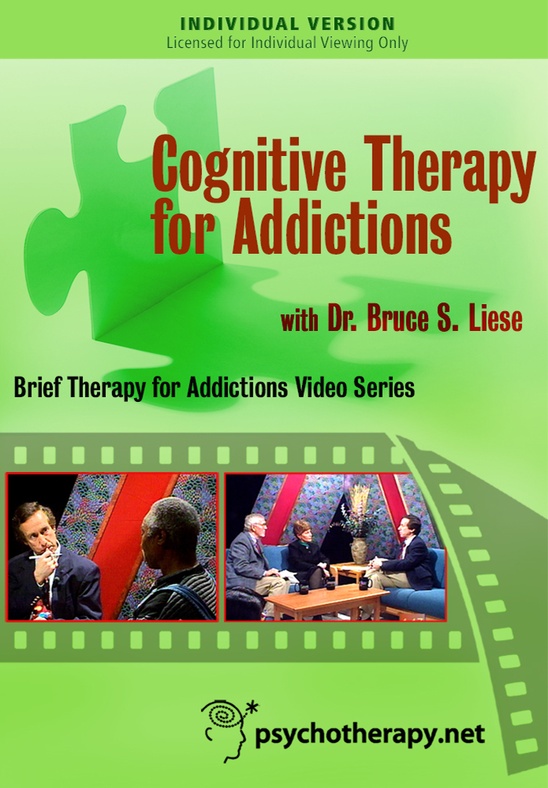
Cognitive Therapy for Addictions
Video
with
Bruce S. Liese, PhD
Video

Cognitive Therapy for Addictions

See Bruce S. Liese utilize his Cognitive Therapy approach in an actual counseling session with a client struggling with addiction.
Video length: 1h 55m
Buy a Membership
COURSE DETAILS

Overview

Watch Dr. Liese demonstrate his cognitive therapy approach for addictions as he collaborates with the client to identify and change the thought patterns and maladaptive beliefs that relate to addictive behaviors and lead to substance abuse. In this video, Dr. Liese works with a client whose issues include alcohol abuse, cocaine abuse and involvement in the criminal justice system. Jon Carlson and Judy Lewis introduce Dr. Liese, and facilitate an in-depth discussion of the further impact and uses of the model.

About the Experts

Bruce S. Liese, PhD
Expert

Bruce S. Liese, PhD

Bruce S. Liese, PhD is an Associate Professor of Family Medicine at the University of Kansas Medical Center. He has extensive experience as a cognitive therapist and has been in the forefront of practitioners who have successfully applied this model to addiction related issues.

View full profile

Disclosures

Bruce S. Liese was compensated for his contribution. None of his books or additional offerings are required for any of the Psychotherapy.net content. Should such materials be referenced, it is as an additional resource.

This Disclosure Statement has been designed to meet accreditation standards; Psychotherapy.net does its best to mitigate potential conflicts of interest and eliminate bias in all areas of content. Psychotherapy.net offers training for cost but has no financial or other relationships to disclose. Additionally, there is no commercial support for this activity. None of the planners or any employee at Psychotherapy.net who has worked on this educational activity has relevant financial relationship(s) to disclose with ineligible companies.

Psychotherapy.net defines ineligible companies as those whose primary business is producing, marketing, selling, re-selling, or distributing healthcare products used by or on patients. There is no minimum financial threshold; individuals must disclose all financial relationships, regardless of the amount, with ineligible companies. We ask that all contributors disclose any and all financial relationships they have with any ineligible companies whether the individual views them as relevant to the education or not. Each experts’ specific disclosures can be found in their biography.

Meth Inside Out: II. Brain & Behavior
  • Video

Meth Inside Out: II. Brain & Behavior

Cognitive-Behavioral Therapy with Donald Meichenbaum
  • Video

Cognitive-Behavioral Therapy with Donald Meichenbaum

Treating Alcoholism in Psychotherapy: The Developmental Model in Action
  • Video

Treating Alcoholism in Psychotherapy: The Developmental Model in Action

Stages of Change for Addictions
  • Video

Stages of Change for Addictions

Solution-Focused Child Therapy
  • Video

Solution-Focused Child Therapy