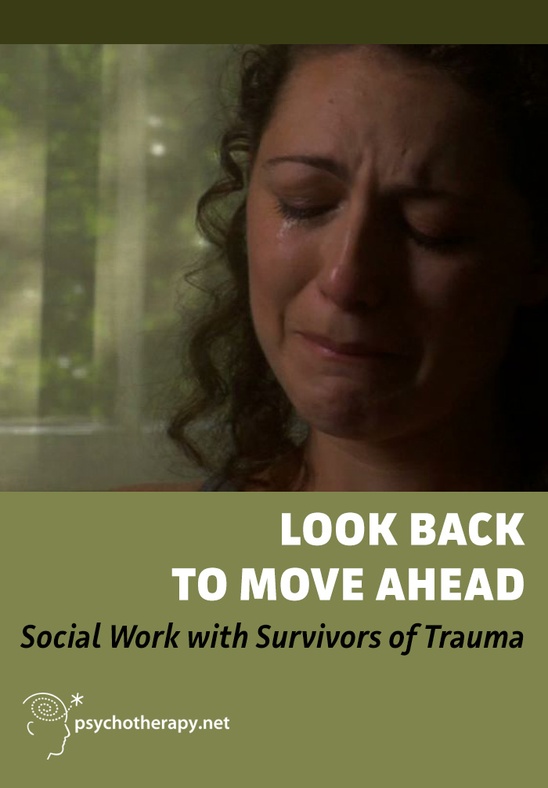
Working with clients impacted by trauma can be overwhelming for new social work students. Look Back to Move Ahead presents two vignettes which focus on interns new to the treatment of trauma. The video follows their experiences meeting new clients, hearing their difficult stories, and working with supervisors for guidance in handling these sensitive cases.
The first vignette shows the initial session between Nicole, a Caucasian second-year social work student, and Diane Johns, an African-American survivor of Hurricane Katrina. Diane is experiencing symptoms of post-traumatic stress disorder and shares her frightening memories of the storm with Nicole. She also makes allusions to the racial difference between them, leaving Nicole uneasy and with many questions. The video then shows Nicole meeting with her supervisor to address not only ways to help trauma survivors like Diane, but also how to handle sensitively work with racial differences between a client and a counselor.
The second vignette features two meetings between social work student Rasheen and her new client, Caroline. Caroline is a college student who seeks help from her school’s counseling center where Rasheen is placed. She tells Rasheen that she is uncomfortable in her new relationship because of disturbing memories she has of her stepfather sexually abusing her. These clips show Rasheen’s discomfort with such serious information, and the many questions she has for her supervisor. Rasheen’s supervisor helps her understand several important facts about trauma treatment, including the unique way traumatic memories are processed and the prevalence of negative coping skills among trauma survivors. Rasheen uses her supervisor’s insights to approach her next session with Caroline more confidently.
Look Back to Move Ahead is wrapped up by the two featured supervisors, Dr. Tosone and Dr. Figley, who discuss key points in the treatment of trauma and how this work affects social work students. Finally, the video summarizes ten key points to keep in mind when working with survivors of trauma, including the need for a client’s experience to be validated and the importance of self-care for the clinician.