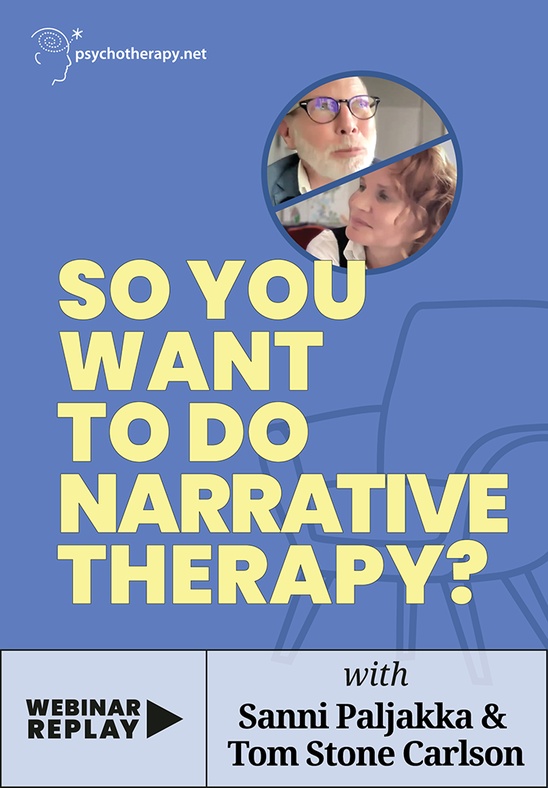
Narrative Therapy founders Michael White and David Epston created an invaluable trove of concepts and tools for clinicians worldwide, but just as “language has a shelf-life,” so does widely accepted clinical theories and techniques.
In contrast to an earlier cultural rejection of diagnostic labels, contemporary clients are actively seeking them out as validation of their struggles in life––even at the expense of their own lived experiences and stories. To meet client wants tied to this cultural shift, therapy practices must evolve and adapt, calling on the need for a new way of doing Narrative Therapy. In this rich online experience, Psychotherapy.net’s Travis Heath, along with renowned clinicians and authors Tom Stone Carlson and Sanni Paljakka, return storytelling to the heart of Narrative practice, and in the process provide fresh insights, new language, and powerful clinical tools for immediate use with your own clients.
Clinicians are, or should be, tasked with helping clients open stories and ideas that reveal their histories, possible futures, purposes, and morals, as opposed to prescriptions that reduce their struggles to easily treatable medical disorders, and tell them how they ought to live. By sharing insights, and an actual transcript from their book, So You Want to do Narrative Therapy?: Letters to an Aspiring Narrative Therapist, Carlson and Paljakka will give you not only new insights into contemporary Narrative practice, as well as a way of engaging with clients struggling with a wide range of real-life challenges. Along the way, you will learn how to help clients:
- replace their character-less, plotless, medicalized “unstory” with one that centers around self-empowerment and their resistance to oppression
- embrace the challenges in their life as opportunities for growth, rather than view them simply as problems to externalize and vanquish
- become “agents of turn;” or protagonists in their own lived stories who have the power to shape events in, rather than be defined by events around them
As you will learn by watching this webinar, therapy is not a business, toolbox, technique, simple answer, or endeavor to render people to become better, but instead a dynamic and intimate means of helping people engage in cultural subordination and “return the big questions to the heart so they can question their purpose in living.” Whether you are a beginning or veteran Narrative practitioner, you will come away with fresh ideas and tools that you can seamlessly integrate into your practice.