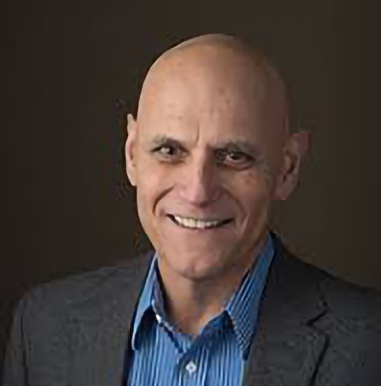
Tara Brach on Mindfulness, Psychotherapy and Awakening

What is Mindfulness

Deb Kory: In this day and age a lot of people are throwing around the term mindfulness. Many therapists—particularly in the Bay Area—describe their approach as “mindfulness-based,” but I have a feeling that most people don’t actually know what that means. What exactly is mindfulness? What does it mean to be a mindfulness-based therapist?
Tara Brach: Mindfulness is a way of paying attention moment-to-moment to what’s happening within and around us without judgment.

Mindfulness is a way of paying attention moment-to-moment to what’s happening within and around us without judgment. So, said differently, when we attend to the moment-to-moment flow of experience, and recognize what’s happening…fully allowing it, not adding judgment or commentary, then we are cultivating a mindful awareness.

DK: So, it’s non-judgmental awareness of the present moment?
TB: That’s another way to say it, yes.
DK: How does that relate to being a mindfulness-based psychotherapist? What does that mean?
TB: It means that intrinsic to the psychotherapy is a valuing of cultivating that kind of attention, and an encouragement of the person you’re working with to cultivate it, and a use of it yourself. It can be sometimes formally woven into the therapy, but sometimes it’s just implicit.

Meditation and Psychotherapy

DK: Where does meditation come in? Is that a necessary part of mindfulness work?
TB: Meditation is the deliberate training of attention. So, when you do a mindfulness meditation, you are deliberately cultivating mindfulness by using strategies to enter the present moment and to let go of judgment and so on.
DK: So, it’s a way to help cultivate awareness of the present moment, and I would imagine that’s especially important for therapists. Does that mean that you actually do meditation in your sessions with people?
TB: Well, some people do, and some people don’t. I’m not in active clinical practice right now. I was, for several decades, seeing clients regularly and then turned to mostly writing and teaching and training therapists in how to weave mindfulness into their practice. So, I’m no longer seeing clients myself, but when I did see clients and when I work with people and do sessions that are related to meditation training—I would often, as part of a process of them getting in touch with what was going on inside them, invite them to pause and just simply use a period of time to quiet the mind, to just notice the changing flow of experience, or maybe to do a particular compassion practice. So, I would weave particular styles of meditation into a therapy session.
DK: Would you suggest that people do it in their day-to-day lives also?
TB: It very much depends on the client that you’re working with. For some people, talking about meditation, suggesting that they meditate, is a set-up for failure and shame. They’ll try to comply because they think, “Oh, Tara is this well known meditation teacher and this is what she’s into, so I should do it,” and so on; whereas it’s not a fit for them at that particular time.

Many therapists already, just by the nature of who they are, have a natural sense of coming into presence and a deep sensitivity to other people, but all of us get help by training.

So there were many people I would see where it would be much more of an implicit part of the process. I’d be encouraging attention to what was going on in the moment, encouraging them to just notice their experience without adding any story—all things that we would associate with meditation practice without saying, “Hey, we’re meditating.” What makes meditation meditation is that it’s an intentional process of paying attention on purpose to the present moment.

DK: And it doesn’t necessarily mean sitting in the lotus pose, right? It’s something that you can do in your daily life walking out in the world?
TB: Absolutely. Meditation is a training of attention that you can do in any posture, at any moment, doing anything that you’re doing on the planet. In fact, for us to have the fruits of meditation, we have to be able to take it out of a compartment or a particular context and have it just be, you know, here’s Deborah and Tara doing a Skype call. So, we’re not leaving meditation behind just because we’re in the midst of an activity.
DK: Thanks, that helps me relax a little bit!
TB: Yeah, it helps to name what we’re doing. I think psychotherapy and meditation are incredibly synergistic and they fill in for each other in some important domains. There are many things that come up when we’re meditating that we really actually don’t have the resilience or the focus to untangle, and a therapist can help us do that. The relationship itself, a trusting respectful relationship, creates a sense of safety that can enable us to unpack things that we might not be able to work on when we’re on our own, especially if there’s trauma.There are increasing numbers of people who are recognizing they have trauma in their bodies, and when they start to meditate and feel like they’re kind of coming close to that, they can get flooded, overwhelmed. In therapy it’s possible for people to establish safety and stability so that they can just begin to put their toe in the water and go back and forth between being with the therapist and touching into their resourcefulness and then dipping a little into the places in their body and their heart where they’re feeling this more traumatic wounding. That kind of a process, if we tried it on our own just in a meditation setting, could potentially re-traumatize us.

DK: So the therapist offers a safe container for the traumatic feelings.
TB: Yes, and the relationship that really enables a person to have the support in untangling. What meditation offers to therapy is a systematic way of training the attention. Where the therapist might help a person focus and stay focused on the present moment when encountering a painful issue, meditation training teaches us to do it on our own. It builds that muscle of being able to come back to this moment, even if it connects us with something we have habitually resisted.Meditation also trains us to, on our own, get the knack of offering ourselves compassion or forgiveness so that we can leave the therapy setting and continue in a kind of transformational way to be with the contents of our own psyche and wake up from limiting beliefs and the painful emotions.

DK: It seems at least as important for the therapist to have that ability to stay present, because there’s a transmission that happens. There is an energetic quality to what we do.
TB: Exactly right. Many therapists already, just by the nature of who they are, have a natural sense of coming into presence and a deep sensitivity to other people, but all of us get help by training. All of us.

The Alive Zone

DK: One of the things I was going to ask you was about how you differentiated your roles as psychotherapist and spiritual teacher, but you’ve said you actually are no longer in clinical practice. What led to that decision to leave that particular role and go more into teaching and writing?
TB: Well, I had done clinical practice for many years and, I think, the place where I felt most needed and most alive is in the process of teaching people how to wake up their hearts and minds, and with that I mean both the practices and the whole inquiry about what really serves freedom. That realm was much more alive for me. For many, many people—most of us I’d say—meditation and therapy are incredibly juicy. They weave together beautifully. So it wasn’t that I was thinking therapy wasn’t an alive zone—it was just that I had put my energies really into the teaching side of things, and I was writing and that took a lot of time.
DK: Aren’t there some areas of the profession that are a little bit deadening though? I’m just about to get licensed myself after an 8-year-long process, and I have been somewhat disheartened at times by the way the profession is organized—its restrictions, the whole 50-minute-hour, the billing and diagnosing, the legal and ethical structures that can at times seem very fear-based and a bit paranoid. I’m curious about what might have felt restricting to you.
TB: Well, the culture does not support the kind of processes of transformation that I’m most excited about, and they take time and immersion. I love retreat settings where people can really give themselves to a very deep attention. I like working with people when there is a longer period of time for people to be together and really have the inquiry and the experience, have the time to unfold. So, as you mentioned, with the slot of a 50-minute-hour, there’s a kind of rigidity that is necessary in some ways, but not so much to my liking.
DK: In my experience—and I live in Berkeley, CA, which is considered progressive and rather “woo woo”—spirituality and religion were not incorporated into our professional training. We aren’t taught to value it except in a kind of multicultural, “let’s be tolerant of other points of view” kind of way. There’s an emphasis on scientific methodology, assessment, empirically validated research, etc., that feels very split off from what you’re talking about. I wonder if that was your experience at all?
TB: Well, what’s alive about therapy is the therapeutic relationship and, like any other two humans connecting, nothing can really flatten that. If you know you want to show up and be with somebody and really know that you’re there to see the goodness in the other person, you’re there to help recognize the patterns that are getting in the way, you’re there to hold a container moving through difficult material—that all is beautiful, and that can happen regardless of the structure around it.That said, I find that I do that more effectively with people in sessions that are more focused on how to bring meditation to difficult experiences. My interest is not so much to do with coping strategies or too much emphasis on the storyline;

I’m more interested in our potential to realize the full truth of who we are beyond the story of a separate self. Most therapy is not geared in that direction. People that end up working with me, or working individually with me doing what I might call spiritual counseling, are kind of a self-selected group of people that are interested in a more transpersonal kind of work–not in any way to ignore the issues of the personal self, but to have the personal be a portal to the universal, and an expression of our awake heart and awareness.

DK: Where did you go to get your degree in clinical psychology?
TB: I did my undergraduate work at Clarke University, and I did my graduate degree at Fielding Institute, which is out on the West Coast in Santa Barbara.
DK: What was your plan at the time?
TB: Well, even then—I had lived in an ashram for 10 years—I was approaching psychotherapy in a very holistic way. I was doing yoga, teaching yoga, and weaving yoga and meditation into any work I did with people. So I’ve always been blending East and West together, right from the get-go.My plan was to keep doing this, to be able to have a degree so I could afford to have this as a profession. I have a fascination with the psyche. I mean, I’m totally interested in how we create limiting realities about ourselves, and our capacity to see beyond the veil to the vastness and mystery of who we are. So my plan was just to keep on weaving these worlds together in whatever way would be most alive.

The Trance of Bad Personhood

DK: I read somewhere that you wrote your dissertation on eating disorders?
TB: Yeah. I had struggled with an eating disorder for a good number of years—probably 5 years—and meditation was really helpful; basically, it taught me how to pause. There’s a wonderful saying that between the stimulus and the response there is a space, and in that space is our power and our freedom. That’s Viktor Frankl. So the practice of meditation taught me how to pause and open mindfully to the space so that there’d be a craving or fear, but there would be some space between that and action.It also taught me a lot about self-compassion. I found that addiction is fueled by blaming ourselves. In Buddhism, they call it “the second arrow.”

The first arrow is the craving or the fear or whatever; the second arrow is, “I’m a bad person for having these feelings or doing these behaviors.” The “bad person” arrow actually locks us into the very behaviors that are causing suffering. So, in both Radical Acceptance and True Refuge, I emphasize a lot about how to wake up from that trance of bad personhood.

DK: One of the things I like about your work is that it’s very integrative. I get a sense that you’re really open to cognitive science, to philosophy, to various wisdom traditions, to 12-step programs—essentially to whatever seems to work for people. As someone who has benefited a great deal from the twelve-step model, I’m also well aware that it doesn’t work for everyone and that we have to have a big tool box available to help clients—particularly those struggling with powerful addictions. What’s your approach when working with addicts?
TB: Well, my inquiry is always, what have you been exploring and what helps? Humans are really resourceful, so I always try to find out what works for you. Of course, there are so many different approaches. I did my dissertation on binge-eating and meditation practice, but it became very clear to me that without having a relational component, without having a group and people to support you, nothing would hold. Whether it’s a 12-step group or in the Buddhist communities we have the kalyana mitta groups, or spiritual friends groups—the great gift is that we really get that suffering is universal, that we’re not alone in it, that it’s not so personal, that there’s hope, there are ways that we wake up out of it, and that we’re there for each other. We’re kind of in it together.
If there’s any medicine in the whole world, it’s that sense of belonging, of connection with others.I think that on the spiritual path, meditation—learning to be here in the present moment—is critical; but equally essential and interdependent is the domain of sangha, or community. We need to discover who we are in relationship with others. Whether it is addiction or any other form of suffering, a mindful relationship with our inner life and with each other is what de-conditions the contracted beliefs, feelings and resultant behaviors.

What gives hope is described in recent science as neuroplasticity. The patterns in our mind that sustain suffering can be transformed. And how we pay attention is the key agent. A kind and lucid attention untangles the tangles!

Will This Serve?

DK: In your work, you really make a concerted effort to share your own fallibility, and I think that for psychotherapists that’s a really tough one. I feel quite committed to that in my own practice, and yet I notice that I’m often pulled to frame things as, “long, long ago, when I was sick,” you know? But I’m not that old, so it couldn’t have been that long ago.
TB: Right…as long as there’s a 10-year gap between now and when I was really confused…
DK: Exactly. So it’s something I really try to work on, because I know in my own experiences as a client in therapy and in supervision, that I feel safest and most connected when people are willing to share with me not just that they were screwed up in the past, but that they’re still screwed up, because we all are.
TB: Yeah, the vulnerability, the fear, the shame—it all continues to rise throughout life. I’ve made that kind of vulnerable sharing a deliberate practice for a few reasons. One is, it’s the truth. I mean, there’s no way there’s not going to be projection when you’re a teacher or a therapist, but I really feel like mindfully sharing about our personal foibles serves. I regularly get caught up in self-centered thoughts, impatience, irritability, anxiety, the whole neurotic range. And…the truth is that I’ve been blessed to have increasing freedom, you know? That pain and difficulty and stuff keeps arising, but so does a mindful, compassionate way of relating to what’s happening. The result is there’s less and less of a sense that it’s happening to a self or caused by a self. I know how valuable it is for people to see that as a therapist or as a teacher that you have a certain amount of happiness or freedom in your life and that you’re still working on things. It gives hope.
DK: Yes, it’s a fine balance.
TB: It’s a fine balance. I think the inquiry is always, will this serve? We’re not doing it to unload; we’re not doing it to be a certain kind of person. It’s just, will this serve? But, I have found for myself that leaning in that direction is usually beneficial.

What We Talk About When We Talk About Love

DK: You also talk a lot about love. I felt very clearly that I came into the profession in order to practice love—to practice it and to practice it, learn about it. But in my training, I literally never heard the word uttered. I made a point to bring it into discussions at school and at training sites, but in my experience it was a lot easier for people to talk about hate—“hate in the counter-transference” and love as just “positive countertransference.” Obviously there have been terrible abuses of power by therapists in the name of love, but it seems like the response has been an over-correction, and has left us without a proper vocabulary for what we are actually doing.
TB: Well, as you were speaking, I was thinking that it’s beginning to change. That’s the good news, Deborah. I mean, there is so much research now on self-compassion and compassion for others. There are universities like Stanford, which has a whole institute—The Center for Compassion and Altruism Research and Education (CCARE)—dedicated to compassion studies. Compassion is love when we experience another person’s vulnerability or suffering. Love, in terms of loving-kindness, is described as love when we see the goodness in what we cherish. Gratitude and appreciation and love and beauty are all words and places, domains of attention that are actually becoming more common in the psychotherapeutic community.And I feel like it’s really important that we consciously take this one on. For instance, I have made a point of talking about prayer and talking about calling on the beloved and calling on loving presence when I feel very, very separate…really reaching out to that which feels like a source of loving presence and then discovering it wasn’t outside of me, but I first have to go through the motions. So it starts with a dualistic sense, and then it ends up revealing unity. I’ve made a point of talking about that when I’m doing keynotes at professional conferences, because I really want there to be an increasing acceptance and comfort with the language of prayer.

How could it be that we all have these longings? I mean, every one of us longs to belong. Every one of us longs for refuge. We long for feeling embraced. We long to feel bathed in love. We long to touch peace.

That’s prayer. That longing, when conscious and expressed, is the fullness of prayer, and for us to acknowledge the poignancy of it and invite people to recognize it and have it arise from a depth of sincerity, actually is a very powerful part of healing. Prayer is a powerful part of healing. It helps us step out of a small and separate ego kind of sensibility, and recognize a larger belonging.

So I feel like we’re at a very juicy kind of era in psychotherapy where more and more of the profession is opening itself to intentional training and training in self-compassion. It has definitely opened its doors to that. It’s opened the doors to mindfulness in a big way, and when you open those doors, people become more embodied and there’s more creativity, more possibility.

The Squeeze

DK: The title of your new book is True Refuge, and it speaks to, I think, both the longing and the possibility for refuge inside of ourselves that we create in relation to others, as part of the human community. What’s the relationship between this new book and your first book, Radical Acceptance?
TB: Well, I wrote Radical Acceptance because I was aware in my own life and with most everybody I connected with that probably the deepest, most-pervasive suffering is that feeling that something is wrong with me.I called it the “trance of unworthiness,” because most people I know get it that they judge themselves too much and they’re down on themselves, but are not aware of how many moments of their life that assumption of falling short is in some way constricting their behaviors and stopping them from being spontaneous. You know, it could be that here we are doing this interview, but there’s some nagging sense of, “Oh, I should be doing this better,” and how that in some way blocks the heart from being as open and tender. It’s just, we’re not aware of how many parts of our life are squeezed by a sense of deficiency.

I’ve found that until we are aware of that squeeze, we’re caught in the trance. So I wrote the book because I wanted to say, “hey guys, we’re all going around feeling bad about ourselves,” and explore how practices of freedom—cultivating a mindful awareness, cultivating compassion, cultivating a forgiving heart, learning to turn towards awareness itself to begin to recognize its formless presence that’s always here—help to dissolve the trance and reveal who we are. This vastness and this mystery is looking through our eyes right now, even though we’re just looking at a computer screen—there’s this sentience and it’s so cool. So the purpose of Radical Acceptance was to very much draw attention to that trance.

DK: And what was the purpose of writing True Refuge?
TB: In True Refuge, I enlarged the scope because in addition to unworthiness, our basic trance of separateness gives us a very profound sense of uncertainty and loss. I think it becomes more vivid as we age that, “okay, these bodies go, everyone we love goes, these minds go.” Right now, for example, I’m watching my mother lose her memory as dementia is setting in. Just watching that happen is painful and sad.But what directly motivated me to write True Refuge was a period of about 8 years of a steady decline in physical health. There was a time that I had no idea whether I’d regain any of my capacities I had lost. I have a genetic disease that affects my connective tissue, so I had to give up running, give up biking, and give up a lot of the recreational activities I most love. I remember at one point being completely filled with grief at the loss and sensing this deep longing, a very poignant longing, to love no matter what. Really I just wanted to find some refuge, some sense of peace and okay-ness, openheartedness, in the midst of whatever, including dying. That feels important to me. So True Refuge was approaching a broader domain: How do we find an inner sanctuary of peace in the midst of all the different ways that life comes and goes? How do we come home to that?

DK: When the pain of life brings you to your knees…
TB: Exactly. I remember being very struck by William James, who wrote that “all religions start with the cry, ‘help.’” Somehow deep in our psyches there is always some part of us that’s going, “Okay, how am I going to deal with this life? How am I going to deal with what’s around the corner?” What happens for most people—and this is kind of the way I organized True Refuge—is that we develop strategies to try to navigate life that often don’t work. I call these false refuges. This is in all the wisdom traditions. We know that the grasping and the resisting and the overeating and the over-consuming and the distracting ourselves and the proving ourselves and the overachieving… just don’t create that sanctuary of safety and peace and well-being. It just doesn’t work.So in the book I talk about our false refuges and then explore what are really three archetypal gateways to homecoming. You can find them in all the different world religions including Christianity, Judaism, Hinduism, and it’s most clear for me through Buddhism. These three gateways are: truth (arising from mindfulness of the present moment), love and awareness. In Buddhism these are ordered differently and called Buddha (awareness), Dharma (truth) and sangha (love).

So the architecture of the book is based on that, and I used a lot of stories—my own stories, and other people’s stories—to address the pain of feeling deficient, but a lot of other struggles also.

No Mud, No Lotus

DK: The parts of True Refuge that were most moving to me were the descriptions of your struggle with your disease, because there is just no getting around how painful and difficult that must be. You really share your cry for help and the fact that you’ve been able to make some peace with it is both awe-inspiring and hopeful, since all of us, as you say, will face our own physical demise. But it does seem like living with chronic pain that severely limits your mobility is one of the deeper sorts of spiritual challenges that we face. Do you feel grateful for what it’s taught you?
TB: Yeah, I do. You know, I’ve heard many, many people say from the cancer diagnosis or the heart wrenching divorce or whatever it is that they wouldn’t trade it for the world. I feel the same way. “No mud, no lotus,” as the Buddhist saying goes. We wake up through the circumstances of our life, and the gift is that when it gets really hard you have to dig very, very deep into your being to find some sense of where love and peace and freedom are. Our experience of inner freedom is not reliable if it is hitched to life being a certain way. If I’m dependent on my body being able to run to feel good, I’m going to be in trouble. I’m actually better than I was before physically, but there were times when I couldn’t leave my house. I couldn’t do much of anything, and there was a growing capacity to come into a beingness and an openheartedness that allowed me to feel just as alive and present and happy as if I could have been romping around outside and running through the hills.I think of that as freedom. I think of freedom as our capacity to be openhearted and awake and have some spaciousness in the midst of whatever is unfolding. The gift of it is that we start to trust who we really are. There’s a sense of trust in the awareness that is here, the tenderness of our heart, the wakeful openness of our being. This becomes increasingly familiar, rather than the identify of a self-character that is able to do this and doesn’t do that and is great or terrible at such and such. We are living from a sense of what we are that can’t be grasped by words or concepts, but can be realized and wholeheartedly lived.

So, that is the fruit of True Refuge—that our true refuge is our true nature. Our true refuge is our true nature. It’s none other. The three gateways are just different energetic expressions of true nature.

DK: How did getting a degenerative chronic pain disease change your work with people?
TB: Before this happened, I was pretty much an athletic jock type that had some vanity around my fitness. And I’ve emerged much more humble, and also much more compassionate towards others. I know what loss is. There’s something I sometimes call the “community of loss,” where each of us has lost something deeply important—whether we’ve lost a partner, or lost a job, or lost our health, our home. I just got back from teaching a weekend at Kripalu Retreat Center in Western Massachusetts, and a number of people there had been hit by hurricane Sandy. One woman was telling me what it was like to have her home totally demolished. The community of loss. The more awake we are to realizing we’re part of it, the more we’re holding hands with others, really the more compassionate a world we have.

Awakening to the World’s Suffering

DK: Speaking of which, I know that political activism has been a big part of your work. You bring issues of social justice into your teachings. One of the things that comes to mind is a talk that you gave about racism within your spiritual community—not overt racism, but a more subtle but nonetheless insidious kind of racism that we find just about everywhere in our culture. It was painful for you to be made aware of it and you shared it as a way to bring awareness into your community. I have also appreciated the way that you struggle with modern politics in your work—trying to remain open-hearted but still having a coherent political voice. How important is it in the work that you’re doing? How has that changed over time?
TB: Well, it only becomes increasingly clear to me that the awakening of our heart and mind means awakening to our belonging to the world and that there’s not a spiritual path that can be extricated or isolated from that belonging. This means that not speaking is in fact making a statement. Our thoughts, our speech, and our actions in terms of the broader community completely matter. They matter. They express our awakeness and then they affect what happens in the world.It feels essential that those who value being spiritually awake recognize that that includes being engaged consciously in our larger world, wherever it is that we feel particularly drawn.

We have to recognize that our earth is dying, that denial is the biggest danger in the world for our planet. We have to be willing to be touched by the suffering of the earth, the air, the creatures that are going extinct, to be touched by the pain that people experience when they’ve been discriminated against and shamed and isolated in different ways, marginalized in our culture—that’s part of being awake and open in the world.

DK: What kind of social or political activism are you currently involved in?
TB: I try to respond to what goes on in our own community, and our community is involved with a number of domains. There are some green activities that are, I think, pretty cool. We’re fumbling around on the diversity front, sometimes in a painful way. Like most communities that have a majority of white people, the big question is how to wake up and be more responsive to the racism that is just naturally there. It’s just part of the culture. I’m also very much supporting getting the mindfulness curriculum and mindfulness in schools around here. And we have a lot of activity around teaching in prisons. So the best I can do as a leader in the Washington area is to support those kinds of activities. As you can tell, I do feel passionately that it’s not meant to be just on the cushion.
DK: So it’s not separate at all—any of it.
TB: Nothing is separate. We belong to this world, and it’s part of the way we’re trying to bring compassion to these bodies and hearts and minds. We need to bring compassion to those that are suffering from an unjust society, and we need to bring compassion to the earth.
DK: Is there a place for anger in this struggle?
TB: Absolutely. We all are wired to have a range of emotions that are just life energies, and to not regard them as wrong or unspiritual is really important, to respect them. They all have an intelligent message, we wouldn’t have been rigged with them if they didn’t. Our work is to learn how to be in relationship with them in a way where we can listen, where we can embrace the life energy and not get identified with the storyline they may elicit.What happens with anger is we can get fixated on, “You did something wrong to me.” When this happens, the practice is, instead of believing the story, to instead see if we can honor the energy and feel what’s going on inside us.

This usually involves bringing real kindness and mindfulness to the feeling of being hurt, the feeling of vulnerability, the feeling of fear, but not buy into the storyline of, “you’re bad and I need to get you back.” Because if we can pay attention to the message of anger—“there’s some threat, I need to take care of it”—and feel where we feel threatened inside, we’ll reconnect with the natural intelligence and compassion of our own heart-minds, and then respond with more wisdom. So go ahead and create boundaries, go ahead and speak your truth, but from a place of presence and intelligence and kindness, not from a burst of reactivity.

DK: Which takes a lot of practice over a lot of time.
TB: Huge practice, because we’re basically moving against our more primal reflexive reactivity, and learning to cultivate a response from the more recently evolved part of our brain. Our conditioning is to have an impulse arise and act out of it, so as to release the tension and feel soothed. It’s coming back to that quote from Victor Frankl. This is saying, “Pause….First come home to the experience that is here and pay attention.” That is the heart of the training, and it takes practice. In True Refuge, I use the acronym RAIN, and I’ve added some different dimensions than are usually emphasized in much of the Buddhist teachings. It’s a really simple and powerful handle to, instead of react, come into a relationship with what’s going on in a much more wise and balanced way.

RAIN

DK: Can you briefly go through what you mean by RAIN?
TB: Sure. RAIN is an acronym to support us in cultivating mindful awareness, and the basic elements of mindfulness are to recognize what’s going on in the moment and to allow it. That’s the core of RAIN: to Recognize and Allow. What happens often is we’ve got a tangle going on—let’s say it’s anger. We’ve got a storyline of the anger, and we’ve got the feelings, and we’re wanting to do something, and it’s all jumbled up. What we’re doing with RAIN is saying, “Okay, I Recognize anger is here and I Allow it.”But it’s still feeling very sticky and very demanding of attention. So we deepen attention with the “I”—Investigate. But it has to be a compassionate investigation because if we investigate as a detached observer, or we investigate and there is some judgment and aversion, then the more vulnerable places within us will not reveal themselves to the investigation. For investigation to unfold to truth, we need to bring real compassion. I sometimes think of it as the rain of compassion or self-compassion, because we really need that quality.

DK: Yeah, it’s so easy to bring a subtle kind of judgment into that kind of investigation. Like, “why do I always trip out on this?” or “here’s my damn depression again.”
TB: If you think of a child who’s upset and you want to find out what’s going on, if there’s not a sense of caring, if you just ask questions, it’s not going to work. So we begin to investigate within ourselves, ”Okay, anger. What am I believing right now?” If we ask that question, it can easily veer off into concepts. But the more we bring a gentle presence, a caring presence, a clear presence to the actual experience of what’s going on, the more there is a shift in a sense of our identity. If you’re very, very present with the anger, you’re no longer the angry person believing in the story; you’re the presence that’s present. You are the awareness that’s noticing. That shift in identity is the whole key to the transformation that Buddha talked about in awakening to freedom. And the body is the major domain of investigating—the throat, the chest, and the belly. Just really arrive and sense, “how is this experience playing out through this body?”After the “I” of RAIN gives us that presence, the “N” is “Non-identification.” Another way to say it is the “N” is “Natural awareness.” We are re-embodying or reestablished in our natural, vast, compassionate awareness.

DK: So, it’s really the opposite of dissociating?
TB: Exactly right. Neither dissociating nor getting possessed. When we’re identified with an experience, either it grabs us and we become the angry person, or we disassociate and become kind of numb and cerebral. Either one of those is, in a way, moving away from the reality of the present moment. RAIN is the way to come into the present moment. We can bring it into our relationships so that when there is conflict with another person, or with another country, or with some “other” that we consider kind of unreal or bad, if we’re able to first bring RAIN inwardly and just sense what we’re feeling and be with that presence and open up our sense of identity, we can then look at another person with the possibility of inquiry. What is really going on here? What is the unmet need? What is your vulnerability? What are the fears or hurts that might have led you to that behavior? We get to see through the eyes of wisdom. RAIN, or more broadly speaking this capacity for mindful awareness, is actually the grounds of compassion for ourselves and each other. It gives us a chance to really sense who we are beyond the mask.
DK: Thanks so much. It has been a joy to talk with you.
TB: Thank you.

Continuous outcome assessment

One of the enjoyable side-benefits of attending international psychotherapy trainings is the opportunity to meet bright clinicians and discover exciting new projects. At a recent training on ISTDP by Allan Abbass in Halifax, I met two British psychotherapists and researchers, Stephen Buller and Susan Hajkowski, who are starting an innovative project in the United Kingdom: the Psychotherapy
Foundation
. The overall goal of the Foundation is to promote procedures that improve the quality of psychotherapy. One aspect of their project I find particularly interesting is the focus on the  importance of continuous self-supervision and peer-supervision by therapists, via videotapes of therapy sessions and continuous outcome assessment. In my opinion, it is vital for therapists to get continuous critical feedback on their work from peers or mentors after formal training has ended: your last day in school should be your first day in consultation. Work in any field that does not include  frequent objective (and ideally data-based) assessment is inherently prone to quality deterioration, and psychotherapy is no exception. Our field in particular has a propensity for isolation, with so many therapists working alone in solo practice. For example, it has always seemed strange to me that therapists are required to get Continuing Education training but not required to get feedback on their actual work. Additionally, as has been discussed previously on this blog, a side-benefit of practice-based outcome assessment is that it provides a data set that can be used to inform the public about the benefits of psychotherapy, and help potential clients make informed decisions about which therapist they want to work with.

The Healing Power of Writing

I’ve been a writer longer then I’ve been a therapist, and so it comes to me as no surprise that writing, and narrative, have seeped into my work. What I want to share with you are some thoughts on how you can encourage clients to tap into the healing power of writing and narrative, and some good reasons (in my humble opinion) for doing so. Many clients may already be keeping a journal even before they come into therapy, but I find that people often limit themselves in journal writing to either venting their emotions, or simply recording the day’s events.

There is nothing wrong with venting feelings or recording events, and either of these uses of writing can be therapeutic. What I’m interested in, though, is helping clients to “shift their story” through writing. What do I mean by this? Many people, by the time they finally decide to seek therapy, are often in crisis and “stuck in their stories.” In the tradition of narrative therapy, I like to pay attention to what people tell me when I meet with them for the first time, and I’m very interested in how they “story” their lives. Usually it goes something like this: “I’m a horrible loser, and I keep doing the same thing over and over and I don’t want to but I can’t stop.” They usually tell the worst version of their life story.

The interesting thing is that these “stuck” stories that clients express are usually true! They simply aren’t the whole story. I often think that I wouldn’t want someone to write a story about my life with only the negative parts, and leave out any of my strengths. This is precisely what someone stuck in depression or addiction usually does—express a somewhat factual but only partial account of their lives. What I find is that when someone who is stuck like this keeps a journal, it usually only serves to reinforce their “stuckness” and goes something like this: “Well, I messed up again today. That’s no surprise, given that a loser I am.” (This would NOT be a therapeutic use of writing!)

If a client expresses that they have an interest or willingness to try writing in a journal, I will ask them to imagine the blank page as a safe space where they can try out new ideas and new stories about themselves without being judged. And this is where I feel that writing can be most therapeutic. I will ask clients to write about a success that they had during the week, no matter how small that success is, and write about it in great detail. Additionally, it can be useful to ask a client to explore who they would be if they didn’t feel so stuck in their problem. Most important, I ask the client to imagine themselves as being on a journey, where they can travel away from their current story about themselves and end up somewhere else. And through writing, they can explore that “somewhere else” in a safe manner. No one else ever has to see what they write.

More important than any particular writing technique or style is the power of allowing a blank page to become much more than a blank page. When a person truly allows a piece of paper (or blank screen) to become a safe space for exploring dreams, wishes, hidden strengths and values, an amazing transformation occurs. Suddenly the horrible story of being stuck is revealed to be just that, a story. And since stories are written, they can be revised, especially if we are the ones who wrote the story in the first place. Writing then becomes an empowering act that sparks the client’s creativity and imagination.
 

Philip Guerin on Bowenian Family Therapy

The Family of Origin

Ruth Wetherford: So, Dr. Phil Guerin, give us your background. What is your current situation? How have you gotten into family of origin work?
Philip Guerin: Well, my family of origin work goes way back. I’ve been in practice now about 45 years. I was a medical student at Georgetown, and the program was primarily a psychoanalytic program, so I spent my medical school time using psychoanalytic-psychodynamic models, transference models. I didn’t meet Murray Bowen until I was a resident, and he was my introduction to family of origin work. His whole model is mostly family of origin work, so that was a good introduction.By the time I met him I was already somewhat impatient with what in those days was called “the working through process” in the transferential model. I myself had been in therapy as part of the training and was somewhat dubious about how much the working through process really took place. In my own analytic therapy, I didn’t see much attention being given to it. And in working with patients, I found that things tended to drop off and never quite got through the working through process. And as a result, people often had dredged up a lot of negative affect and feelings about their important objects during their individual therapy and were then left with no place to work that through, other than to hold on to negative precepts about those people which resulted in exaggerated distance and a lot of blaming of those people for their own neurotic hang ups.

RW: That is a common complaint of people in therapy as well as of therapists. We do all this digging, we excavate the woolly mammoth—now what do we do?
PG: Exactly. So I found that trying to find a way that one could put some structure on the family of origin, and then define the field that those people occupied, look at the key conflicted processes, the important triangles, the cutoffs—all those things that we know about from our family system training—and really actually work through some of that process with somebody who knew the terrain. I was fortunate enough to have a guy through my terrain in the person of Bowen. And I did some significant relatively long-term work with him on my own family of origin. So that’s how I got into it. And I have found that it has been a real help in my own personal life. And, on the other hand, difficult to sell to people in terms of being relevant to their everyday lives.So I had to learn to not sell it, but to integrate it somehow around the symptoms of the relationship conflicts that came up so that people could see and learn its relevance. I don’t know what you think, Ruth, but I think in our current culture there’s even less investment in family of origin as an important and valuable asset in people’s lives.

There’s so much fragmentation of families, in particular the multi-generational families, that I think people, now that I’ve been in the business long enough, they kind of self-select in terms of coming to see me. So I either end up with somebody that’s coming in with the family of origin problem or somebody that isn’t awfully interested in it and we end up focusing on their symptoms and maybe working the family of origin in as part of that process.

RW: What are some of the basic concepts that you really like about this approach that help you organize your observations and your moves as a therapist?
PG: I think that the two things that are key, in terms of helping people with this clinically, is that much of the developmental and/or situational stress in our lives emanates from family of origin stuff. You know, you haven’t seen your mother in 15 years and she suddenly has a terminal illness. Something happens to your brother and he loses his job—there’s any number of those kinds of situational things. And the developmental things are obvious—when somebody gets married they are supposed to shift their loyalty from their parents to their loved one as their primary object of choice, but that’s actually very difficult to do.And what that brings up is a triangle right out of nowhere, which you also had when you were a little kid—just born into a family and you started out somewhere caught up between your mother and father. So those kinds of things and contextualizing them into the larger family I find really helpful as a road map to develop people’s treatment plans.

RW: So there’s the concept of the triangle and the other concept is…?
PG: Well, I think the triangle is obviously very central. But when I see a clinical situation that comes to me I make an assumption that it’s based on an increase in stress in the people’s lives.
RW: Stress is a key concept.
PG: That manifests itself in an exacerbation of relationship conflict or some physical symptoms that’s returned or depression or anxiety. And those things are best understood if you can put them into context of a family—the family of their spouse and kids or the family they came from.

Triangles

RW: In your book, Working with Relationship Triangles, which you wrote with Fogarty, Fay and Kautto, you go into great detail about the nature, structure, and process of triangles. It’s a working manual about how to apply your theories and ideas into action. One of the things that you say in the book is that a triangle is not a threesome. A threesome is not a triangle. What is the distinction you’re making here?
PG: I think that’s a distinction that Fogarty makes and it’s something he puts very high on the list of things that people have to be able to do. What it means is that a threesome is three individual relationships in which there isn’t a lot of reactivity among the folks. There’s nobody on the outside looking in. There isn’t an intense conflict in a dyad that the third person is getting distance from. He used to talk about it as an equilateral triangle in which there was calm in each of the three relationships. And if there’s calm, then all kinds of good things can happen.But triangles are very pervasive. You don’t have to put three people together very long before they fall into triangles.

RW: So you’re saying that the term “triangle” itself implies not just that each of the dyads that you’re in with two other people is affected by their relationship with each other, but that it has become dysfunctional in some way.
PG: Yeah, and that can be by excluding one person. The concept of triangle has built into it that it’s dysfunctional and inhibits people in the system from finding ways to uncover and deal with their difficulties.

Differentiation of Self

RW: How much do you use and think about the concept of “differentiation of self”?
PG: Differentiation of self is one of those things that obviously was one of Bowen’s original concepts. And he stuck with that through his whole career and believed it to be of primary importance because he believed that if individuals could increase their level of differentiation—which in concrete clinical terms means that they are less emotionally reactive and can think their way through their problematic relationship road blocks—then everything would fall into place. Symptoms would go away. Functionality in relationships would improve. I find that it’s abstract enough that it’s difficult to stay focused on that.And so one of the things that I developed was the whole idea that we are mostly left with the level of differentiation that we’re born with. We can make some progress on it over time, but mostly by finding ways of working within that to improve our ongoing level of functioning. It’s kind of like functioning in spite of your level of differentiation.
RW: When we add to that definition the internal ability to feel and think what is true for oneself’ separate from the pressures of your closest social environment and separate from coercion, that eliminates many people who are dependent for their survival, their food, etc. on the dominating power of others.But for that subset who can have the freedom to think and feel what might be true for them, and in so doing reduce the emotionality that you were just talking about, that strikes me as something that one can do, slowly and incrementally throughout one’s life if one knows how liberating and freeing it can be. In fact, the first time I was reading about differentiation of self with Bowen, I thought, “What a light bulb for humanity because it rescues us from the prevailing power dynamics in most families—that the rights and needs of the many are meant to be sacrificed for the good of the few.” And this concept that we’re equally entitled to our own subjective experiences, that seemed so new.

PG: I think you put it very succinctly and I think you put it in a way that is very useful for folks. I have been struck over the years by the power of emotional forces and how easily they can overwhelm even the best of strugglers who are trying to get to a differentiated perspective.
RW: Yes, that’s so true.
PG: It’s out of respect for the power of emotionality that I put some qualifiers on differentiation as the central process of family of origin work. I think it’s also one of those things that people hide behind a lot; they talk about how much they’re differentiating themselves but, frankly, I don’t see it, right?From the work I’ve done in my own family, I’ve found how easy it is to kid yourself for five years that you are rolling along increasing your differentiation when it finally hits you over the head that you haven’t been. You’ve been playing the side game, but it doesn’t have much to do with differentiation.

RW: Right. Just following up on what you said about how easy it is to think we’re differentiating, to me the cue of the power of that emotional force is anxiety. I’m getting ready to go visit my family—why am I so anxious? And it’s so helpful to think about who are the two people with whom I feel most anxious and why, and then go into those thoughts. I think you’d call it an application or a “thought experiment.” What kinds of applications have you used that that might help people understand how to go about thinking about this more deeply?
PG: Well, I like to use the concrete behaviors in people’s relationships and develop them into experiments with some kind of modification of a behavioral pattern. And while you’re doing that, pay attention to what’s going on internally. And if you start to get anxious, that’s important information. And pay attention to the reactive behaviors and the important other people in your family. And sometimes you’ll find that the reactivity that they have shuts down your ability to even think.
RW: So you ask for observations.
PG: I do.
RW: And you help people identify what in particular they’re going to be looking for to observe?
PG: You mean like if they’re making a trip home?
RW: Yeah, or a phone call, email, text or any contact with the person who is the trigger for anxiety.
PG: Yeah, or outside of the therapy session as well. Because you often end up working with one family member in a lot of this.
RW: Yes. And you do make a point that the work is best with those people who are open to the approach of taking control of their own calming and who understand that they can try to change their participation and the repeating sequences of interaction. Have you asked people to identify the repeating difficult sequence of interaction that makes their anxiety shoot up?
PG: Well, if they’re going to be going to a family of origin visit, I would be probably more generic than that and just have them go and really try to keep their own anxiety in check and observe what they see around them. And then bring what they observe back and we’ll put it together and talk about it and maybe design something that goes on over time—combination letters, telephone, other visits, etc.And I think that that does help people get a sense of mastery and a sense that they don’t have to be so anxious and frightened about moving into the relationship and changing their responses to difficult interactions.

Techniques

RW: You said in your Bowenian family therapy video that Bowen sneered at the word “technique.” I wonder do you have techniques?
PG: I think that in Working with Triangles and in some of the stuff that I’ve done in the form of chapters in other people’s books, I spell out a number of techniques that I think are important to the method. And I think there’re seven of them. I probably couldn’t even come up with more than three of them now. But I certainly have techniques that I think are just applications of observations and theories about the way relationships work.
RW: Donald S. Williamson, who wrote The Intimacy Paradox, and Betty Carter and others do have explicit sequences of moves to help people identify the toxic triangle and calm themselves, notice the repeating patterns, identify their own reactions to things that are said, and then develop a self-stated goal for their own change in behavior. Then they take a step, however small and metaphoric, toward that goal and report back on how it went. In this way they differentiate themselves gradually and hopefully humorously.When people do this there’s an enormous amount of emotion that’s released which, according to those family therapists, needs to be expressed outside the family—the hurt, the anger, the intensity—so that through the release of pent-up emotion there’s less pressure to have it come out in interactions. How much of that emotional release have you experienced using such a cognitively based therapy?
PG: Well, I think that in all those paradoxical ways if you ask people to put their cognitive apparatus to work and observe and experiment with the relationship process they’re a part of, the emotion surfaces in very dramatic ways. And if it’s going to be external, I hope it’s in a context with somebody who is a coach or a therapist because otherwise, you know—I was just watching a movie over the weekend which was a remake of a 1939 movie called Women, in which part of what was going on was the group of women that surrounded Meg Ryan when she found out her husband had an affair. And they had more opinions about what she should do and ways to deal with her upset. And so that can be somewhat questionable in terms of its helpfulness, but I think if it gets spilled to your coach or your therapist, it can be very beneficial. You somehow neutralize the negative power and then go back into the relationship that is the source of it and get it talked out.
RW: Yes.
PG: That would be the best outcome. But I still think that the emotional vulnerability in each of us that triggers us to respond in an emotional way is very profound. And all the designs that Betty or Donald and myself come up with are ways of helping with this, helping the moment, helping the month—but over a long-term process of life it’s very easy to get pulled back in on an emotional basis and to be unaware of it.And so it becomes kind of a lifetime work. It’s very different than being in therapy for life, you know. I think that the difference is that therapy ties you to the individual, who is the therapist, and that the process of working it through is in that relationship. There’s nothing wrong with that. It works. But if it doesn’t get back into the natural relationships of your system, it’s going to be limited in the impact of that.

RW: Yes. You make the point in the book that when the therapy progress seems to be bogged down it’s useful to look for invisible triangles that may be holding the person’s behavior in a stuck place. And you mention that sometimes it can be the individual therapist or the couple therapist. So you’re alluding to the fact that we therapists ourselves have our own levels of differentiation and sometimes we tend to side with the client or patient against the people they’re complaining about. And what a mistake that is in that the therapist needs to work toward his or her own differentiation. Say more about that.
PG: Well, I think if you don’t develop an ability to empathize with your individual patient about what they’re struggling with and to hear them out and to validate them that the struggle is real and there’s justification for their feelings, then you’re not going to have too many patients for very long.That’s the first phase. And the second phase is, well, now that you know those feelings are natural and that maybe 90% of the folks on the planet would have them, well, how are you going to put them into a context that helps you develop a way to go work them through with that person? We therapists have to watch for that very fine line between being supportive and validating and just providing no real motivation to go do something about it.

RW: That’s right. If I see your point of view and validate your feelings, that does not mean I agree the others also have a point of view and that to do nothing about it. It doesn’t mean you can’t change your own reaction to it.
PG: It also doesn’t mean that part of your response doesn’t have its own negative set in it, you know? That’s a big part of the problem actually.
RW: Yes. You mentioned that this thinking leads you to ask questions that help the person see how their own interaction is negatively influencing the others and that we think of ourselves as innocently going along reacting to others, but we forget that they’re reacting to us. Say more about that.
PG: Well, it’s like the whole concept of constructive criticism. How many people do you know who are good at accepting constructive criticism?So I think an awareness of yourself and the toxic parts of you and how you trigger people into their own stuff is essential as a therapist,

An awareness of yourself and the toxic parts of you and how you trigger people into their own stuff is essential as a therapist.

The Invention of Genograms

RW: You coined the term genogram, is that right?
PG: Well, there’s a rumor to that effect, yes.
RW: Well, talk about the genogram and how useful that’s been to you.
PG: Bowen started using what he called “the family diagram.” And if you look at his writings and you watch his speeches, he never converted that over to genogram. Until the day he died, he talked about the family diagram. When I had left Georgetown and was at Einstein teaching the residents and fellows and medical students and the like, I did a lot of what you were talking about Don Williamson doing. I had what we called “TOF groups”—therapists’ own family groups—which was a practical way of trying to get people to learn the theory and the idea of the impact of the people in your family on your emotional functioning. And part of it was for people to, in seminar style, put their genogram up on a board, either a blackboard or an easel pad. And it just seemed to me that we were also teaching about generational repeats all the time.We were talking about intergenerational triangles and it was impressive how much the issues and the relationship patterns repeated themselves generation to generation. So I just thought people might relate to this and the notion of a genogram might stick in their head. It kind of gives you a structure with the membership of your system and the major issues in your system and the cutoffs and where they are and what drove them.

I think it’s been very helpful to people over the years and it’s probably one of the techniques or structures that people from other therapy approaches use.

RW: So after you create a genogram with people—whether you’re working with one person or a couple or a family—it helps you to understand the different forces that hold the system in place.
PG: Yes.

Functional and Dysfunctional Attachment

RW: In Working with Relationship Triangles, you say, “Quite apart from how people feel about the closeness or distance between themselves and others, we should make another distinction between kinds of closeness and distance. Closeness can be a kind of functional attachment. This allows people in a relationship to preserve their boundaries and their autonomy in thinking, feeling and action while they remain connected in a personal way to each other. Alternatively, closeness can be reactive and driven by anxiety, a kind of dependent clinging or anxious attachment that says implicitly or explicitly, ‘Please don’t leave me. I’ll do anything to keep you. If you leave, something terrible will happen.’ Similarly, distance can be a deliberate and planned exercise to deal appropriately with a developmental or relationship problem” (page 59).I quote this because it jumped out at me as very consistent with what a decade and a half later is the very important focus on attachment and the patterns of attachment—secure versus anxious and avoidant. Because you’re making the point, I think, that once we excavate what the core issue is—and it will often emanate from the marriage that then creates the nuclear family—the dynamic has to do with the tension around closeness and distance, in being able to get access to a feeling of connection or “are you there for me?” Functional attachment, anxious attachment, those are precursors to this new attachment conversation that’s going on. When you work with people, how do you focus on that issue, that struggle in them to find a happy, close enough, but not engulfing, far-enough-away-without-abandoning equilibrium?

PG: That’s a very good question. And I think if you realize that most attachments that people have with one another is of the anxious attachment variety that gets called love—as opposed to the kind of functional attachment where you add to that an ability to be open about your feelings for the other person. That’s different. And that is the root towards the kind of intimacy that all of us are looking for. I was thinking while I was listening to you read that section, “Yeah, that’s pretty good. I agree with that.”You were talking about techniques before—one of the techniques becomes the use of the process question: “Do you think that the importance of being connected to your husband comes from a need for a kind of closeness that will benefit you both in your ability to be intimate with one another and to function as individuals and as a dyad? Or do you think it’s kind of a clingy attempt to hide out behind him or in the relationship itself?” They’ll say, “Will you repeat that?”

I think that you take that notion and you try to get people to think about it. And you try to get people to think about it by asking some fairly brief—a lot briefer than that last question came out—questions to focus them on how much of their attachment is being driven by their anxiety, being driven by a fear of a loss of the other, being driven by a way of toning down what they’re experiencing as criticism. I think that can be very helpful to people.

Each of us has a different allergy in this regard. I mean, some people just have an emotional allergy to somebody who is clingy and wants to have their arm around them all the time and wants to exchange intimacies. Other people have an allergy to too much distance and too much avoidance and an inability to talk about the personal in the relationship itself. And how much of that is testosterone versus estrogen driven or whatever? I don’t think we know.

RW: No.
PG: But it remains something that’s consistent over the decades that that is a part of the problem and also can be a part of what feels good in a relationship. We used to have arguments at Einstein family study section where we’d talk about, “I don’t care if it is emotional fusion; it feels too good to let go of it!”RW: How have you been evolving professionally and philosophically since the publication of your last book?

PG: Well, I’ve gotten involved in a whole bunch of stuff that mainly has to do with being the grandfather of 11 grandchildren.And that has taken away the drive and the energy to write another book. But it’s been worth it. I mean, the kids are terrific and watching them—my oldest grandchild is 19 now and my youngest is 15 months—watching them continues to teach me about myself in ways that are very important. But I’ve been thinking, you know, not a bad idea to start getting back to some of that.

RW: Do you have another book in you? And if so, what would be the message of that book?
PG: I think the ideas that are in The Evaluation and Treatment of Marital Conflict, book that we put out in the middle ‘80’s, and even some of the stuff that was in the original textbook you were talking about before, are only partially developed. I think that the concepts develop most clearly when you’re putting them to the test with your students. And we still do that, but not with the kind of intensity and frequency that we used to. In recent years as managed care has come in, training programs are kind of atrophying. There used to be a battle between five or six models of doing things, and the debate and the discussion and the application to clinical situations of the models were very enriching, very enlightening, very energizing.If I was going to put another portion of my energy into my work as opposed to my grandchildren—they’re going to probably tell me to do that pretty soon—I would try to work towards applying the models that were developed in the late ‘80’s and early ‘90’s and see if they can hold up, you know? Try to make distinctions between ‘70’s and ‘80’s versions of intimacy and attachment and present day. Are they different? What are the differences? Can there be an evolution that provides more refined and sharper models that improve clinical outcomes?

Flying-By-the-Seat-of-Your-Pants Therapy

RW: And would you include integrating the various models?
PG: I think as much as they can be integrated, yeah, absolutely. I think that there’s a need for that. And the question is how do you do the integration without getting the lowest common denominator? And I think that some concepts go together and others don’t. But it’s rare that there’s been one way of thinking about these things. Ego psychologists had a structural way of approaching things just like Minuchin and others have had a structural way of approaching things, you know? And I think that the analytic psychodynamic models really evolved into the multi-generational systems whether it’s Bowen and Fogarty and myself and Carter and Monica and all those folks or if it’s a more strictly psychodynamic approach to things, or Haley and some of those people who really came out with a totally different perspective.So all that stuff that was done kind of side-by-side in the ‘70’s and the ‘80’s. I think if people had time and the interest in the information, more developing could take place. And hopefully that development would provide a refinement that could be taught to people that are doing therapy because it seems like folks are flying by the seat of their pants a lot in doing therapy these days.

Some of therapy has kind of dwindled down to giving advice, you know, from your own particular perspective, which isn’t bad unless it’s the only thing you know. I would love for a day to return where people were working together to define models and refine them and make them reproducible.

Maybe that’s not possible in this time-crunched era that we’re in now, but I would like it.

RW: Many people are calling for a broader dissemination to people. The APA, for instance, is looking for ways to teach psychology outside of clinics, hospitals, private practice and academic settings, using the internet, for example. What are your thoughts about that?
PG: I am intrigued by it. I think folks my age are a little intimidated by the technology, but I think it’s crucially important. What my kids can do with a computer in terms of scope and rhythm and efficiency is so far ahead of what I can do. The grandchildren are even better at it.
RW: I agree and I’m glad to hear it. Are there any final thoughts you would like to share before we close?
PG: Well, I think that making the family of origin work relevant is important, without trying to shove it down people’s throats. A long time ago in our work we saw it as essential to not try to sell a particular approach, but to start with where clients are feeling the pinch, where they’re feeling the pain, and to proceed in a way that first and foremost helps them with their symptoms—whether that’s prescribing medication or using cognitive techniques or incorporating family system theory into the work.And then continuing to check back in with them about what makes sense for them because they’re putting in time and putting in money, so they ought to have some say about where our focus is and where we’re trying to take them.
RW: That makes good sense. Thank you so much. I have greatly enjoyed our discussion and appreciate your body of work and your willingness to share this with us now.
PG: Well, thank you for asking me.

Encounters with Suicide: A Psychotherapist Remembers Not to Forget

Forgetting Begins

Back when phones had cords and I was sixteen, my mother’s friend called our house one afternoon and told me that she had a shotgun across her lap and asked me if I could give her one good reason why she shouldn’t blow her head off with it. I was alone in the house because I had not joined my family that year on our annual summer vacation in Maine. Instead, I was flirting with an eating disorder by trying to live on iceberg lettuce with low-fat blue cheese dressing and getting up each morning at 4:30 to ride my bike two miles to the Holiday Inn just outside town where I was working as a waitress on the breakfast shift. So there I was, all by myself, trying really hard to think of the right good reason. Already I was imagining the explosion roaring through the headset, the result of my inadequate and faulty answer.

I am quite certain that I did not give her one good reason, but I must have said something that furthered the conversation, because I remember her saying, “Do you know what it is like to live with a man who hasn’t touched you in years?”

Well, no.

I think we talked for a while. I tried to imagine what a compassionate adult would say to her, and tried saying it. I offered her my mother’s phone number in Maine. There was not a telephone in the cabin, but the owners could deliver a message. My mother’s friend refused. “Oh no, I couldn’t bother her on vacation.” I was thinking that bothering my mother on vacation was the best possible idea under the circumstances, but clearly it was not going to happen. My mother’s friend told me that she was feeling desperately lonely now that her youngest child had gone to college. She told me her husband of thirty years was having an affair with a woman in her twenties. I did not want to know any of this, at least not first hand.

Gradually she came out of herself and seemed to remember that I was the kid her daughter used to babysit for. “I shouldn’t be saying all this to you,” she said. I couldn’t disagree. I made her promise that she would not shoot herself.

“You don’t need to worry,” she reassured me. “I’ll be fine. It has been a really bad couple of weeks, but I’ll be fine. My neighbor will be home from work soon. I’ll go see her.” I felt a lack of sincerity in this. “It is quite a distance from blowing your head off to visiting a neighbor, and I was quite sure our conversation had not traversed it.” But there was nothing I could do, so I said, “I’ll tell my mother to call you when she gets home.”

“Don’t call her,” she said. “Don’t bother your mother. I’ll be fine.”

I hung up the phone and put this conversation so thoroughly out of my mind that I nearly forgot to mention it to my mother when she returned from vacation, and when I did tell her I found myself experiencing a sort of delicacy and shame that precluded any mention of the shotgun. I suspect I did not even mention the threat of suicide. I can’t quite remember, but I imagine myself saying that her friend seemed unhappy.

Forgetting Returns

I remembered this incident only recently when I was sitting in session with a client who was telling me about how she was going to buy a gun in order to shoot herself. This client, now in midlife, has been suicidal to varying degrees since she was sixteen, so her thoughts were not new, but the method she was proposing was far more likely to be lethal than anything she had considered before. At one level, I was working hard to assess her immediate safety and devise a plan. At another I was aware that I was feeling oddly wooden, disconnected, and ashamed. I knew I was irritated with her, as well as anxious. She is coy, deceitful, challenging—there is a way in which she teases me with the drama of her death, a drama she has been crafting with loving care for decades, a narrative in which her final explosive act of rage sears all of us who know her. It is a story she caresses like a beloved, spoiled pet, but also one that frightens her, and I have found over the years that she is readily diverted by small gestures of empathy on my part, or that she inserts her own delaying tactics, such as the need for a pretty death dress, or her plan to be honest on the permit application for the gun regarding the purpose of her purchase.

What she will not do is explore how this story serves her, what its purposes are in her life, what it helps her to avoid. I struggle to find some way toward this conversation, but as often happens, my own thinking is muddled by anger, anxiety, and that odd sense of shame. The only question I seem to be able to articulate clearly to myself is, “Will she kill herself now?” I believe she would not, and extract a promise to that effect. The promise comes easily, almost too easily, and prompts a new discomfort: I worry she is lying because, after many years of experience, she knows what would happen if she acknowledges an active plan. In the end, we contact her husband together, and afterward I let her leave.

And when she leaves, I forget completely—not about her, but about her thoughts of suicide. At our next session, fortunately before I have a chance to reveal my forgetfulness, she reminds me, but I forget again anyway. Or maybe forgetting is not quite the right word. It just seems to fall out of my mind. I start having defensive little conversations with myself about this forgetfulness. Maybe, I tell myself, it is because I am not really worried. After all, I am as confident as I can be when she leaves that she will not kill herself. She has been doing this for over 30 years. She can’t live in a hospital. But then I worry that I should be more worried. And then it falls out of my mind again, until our next session.

Of course it is hard for all of us who are clinicians to think about suicidal clients. It is frightening. It is a sad, hostile, violent act, in which we stand to lose a great deal at many levels: most importantly our client, but also self-esteem, self-trust, and professional reputation. We fear losing our livelihood if we fail these clients. We fear blame from ourselves and others. We choose not to think about it in many ways, including by resorting immediately to hospitalization as a way of ensuring not only our client’s physical safety but our own emotional safety. We insist on safety contracts before exploring deeply with the client. We find excuses and the means to get rid of them. “We rush to make repairs before we have the courage to examine the injury, slapping bandages on wounds so deep we are afraid to see them.” We increase medications, we loosen boundaries, we are afraid to ask questions, we demand answers we want to hear. With those who make chronic threats, we can become impatient and irritated. Some of these actions are of course sometimes necessary and desirable. But often what we are feeling first and foremost is a need to put a lot of distance between ourselves and the thought of a client’s suicide. These intense feelings and avoidances are common in one way or another at one time or another to all of us as clinicians, and certainly in this case they were part of mine, but I was beginning to suspect that for me, there might be something else coming up as well.

The Roots of Forgetting

On the surface, it seemed obvious. My father’s family worked very hard to forget my grandfather’s suicide. This dramatic issue, however, seemed so far from my direct experience I wasn’t sure if I could legitimately connect it in any way to what I was noticing about my feelings and behavior with my client. On the other hand, it seemed risky to assume my own even indirect personal experience with suicide was irrelevant, so I gave it some thought.

“My grandfather hanged himself when my father was four, and my grandmother did all she could to erase every memory of him.” I know a couple of things about my grandfather that I am pretty sure are true. He was a rumrunner in Pennsylvania during Prohibition, and he brought big bands like the Dorsey brothers to local hotels and night clubs. I have seen only one photograph. He is a broad-shouldered, dark-haired man standing next to a three-year-old version of my father on a merry-go-round horse. Once after my grandmother died I went on a search of her house for evidence of his life. I thought I had hit the jackpot with a pile of photo albums in the closet of an extra bedroom. It turned out that in each of the scalloped-edged photos from the 1930s, every one held carefully in place with little black corner pockets glued to the page, she had ripped out the images of my grandfather, leaving the others standing and laughing and smiling in front of buildings and cars, unaware of the torn edges framing the emptiness where he had been.

My grandmother lied about her husband’s death for more than 30 years, claiming he had died of a variety of unlikely ailments, including back problems. Nonetheless, her feelings of abandonment, rage, and shame were palpable to everyone who knew her. Even once she had admitted the real cause of his death, her explanations were dislocated and strange, and for me, always at least secondhand. In one version my grandfather was in a mental hospital and had what we now call bipolar disorder. In another, less likely but still my preferred version, he was also in a hospital, but possibly hiding from mob associates who murdered him.

There is no one left now who knows what really happened to my grandfather, or who can really even guess why. Like in the children’s game of telephone, the stories I have heard are probably distorted beyond recognition from their original source as they have been whispered down an almost century’s long lane. Even my own memory is confused by odd and inexplicable distortions and images. I remember with crystal clarity, for example, driving with my father and hearing him tell me that my grandfather probably had an affair with one of my grandmother’s many older sisters. I remember seeing the colors out the passenger side window, rural New York in the fall: the fields yellowing, bark darkened with rain, leaves brown and drifting, hints of lavender and red, the steady green of conifers. There was only a little gray in my father’s beard. I remember not just envisioning but knowing, remembering, the dark-haired older sister I never met, more settled than the younger, more beautiful red-haired one my grandfather married. I imagined her specifically. I could see her hanging laundry on a warm day in her flower-patterned dress. I could see the intense sexiness of the seam of her stockings drawn along her slim calves from the fall of her skirt to her square-heeled shoes.

But my father is bewildered by my memory of this conversation and has no recollection of any such affair. Why have I imagined it? Why has he forgotten? I am reminded of another children’s game, where one child draws a head and folds the paper over so the drawing can’t be seen, another draws the arms and folds her part in turn, another the legs, another the feet. Once unfolded, a figure is revealed, a crazy patchwork of imaginings. This is my portrait of my grandfather.

He is for me essentially fictional, his only reality in my life the shadow he cast on those he chose to leave behind. There is no pain in his release of any claim on me, although the long, slow-burning coals of the suppressed rage that were his legacy have in their way come down to me. Yet I think that in these odd moments—with my mother’s friend, with my client—I become aware of something else my grandfather has left with me. He lives with me in my unreasonable, inherited loyalty to my cranky little gnome of a grandmother, who demanded that my father never remember, never even try to remember, his father. He lives with me when my client’s words obediently fall out of my mind. In my father’s family, it is an act of loyalty to erase my memory and bury my anger and fear. Even though he died 20 years before I was born, my own memory of my grandfather is in its way constant and precise: “I remember him by forgetting.”

Awareness and Remembering

As so often happens in therapy, it is hard to be certain that this subtle, internal shift in awareness that I experienced thinking about my inability to hold my client’s suicidality in mind produced a change in my client. The role of therapist self-knowledge and self-awareness in the course of therapy is really immeasurable, in both senses of the word—certainly not readily quantified, but equally certainly a source of lasting, profound growth for ourselves and for our clients. I know it has become easier to get past my anger, fear, and denial when my client is suicidal, and this has created a change in the quality of our conversations about it. We are less focused on management and more focused on meaning. Usually by the time we wrap up with a safety plan it has become unnecessary, more of an addendum than a centerpiece of our conversation. Between sessions, I do not forget how she has been feeling. I know I will feel deeply angry, sad, betrayed and, yes, guilty, if she kills herself one day, but whatever happens, it will not be because I have allowed that possibility to fall out of my mind. She still holds on to her fantasy of killing herself, but for some time now speaks of it not as a plan, but as a feeling. “I am feeling suicidal” for her is no longer a threat of immediate action, but a description of despair. Like partners in a dance, we have both taken steps away from the concrete and into the symbolic, for I have replaced the concrete act of forgetting with engagement and curiosity.
 

The Truth About Facebook and Your Practice

Many marketing professionals point to the 900 million worldwide users on Facebook and say you must have a strong presence there to have a successful practice. They discuss the myriad ways you can use Facebook: your profile; a business page; advertising and frequent posts. They tell you how to get more “Likes” and “Fans” and the referrals will come. As a psychologist who has experimented with everything Facebook has to offer a private practitioner, I totally disagree with this common advice. You can waste a great deal of time and money on Facebook and have very little to show for it if you go into it naively. In this post I’ll discuss why this is so, and review one area I have found that does work well to generate referrals from Facebook.

Yes, Facebook has millions of users, and it also has the longest time per visit of any website (about 20 minutes). But monetizing those eyeballs is not easy, since few people go on Facebook with a primary purpose of seeking information. People go to search engines to find information, and go to Facebook to socialize, play games, look at pictures and videos their friends have posted, and comment on those posts. This means the only way you can successfully promote your practice on Facebook is to return to the 20th century model of “interruption Marketing,” where you do what the major TV networks, newspapers and magazines of that era did: you interrupt people's attention from what they are focusing on to check out your product or service. But we're in the 21st century, where the prevailing advertising model is “permission marketing” (see Seth Godin's brilliant 1999 book by the same name). As consumers we now get to choose what we want to see and hear. We give people, businesses and networks permission to tell us about their wares—and get annoyed or angry when this permission is violated. And on a rapidly-updating newsfeed such as Facebook, a post about your practice will usually elicit far less interest and attention than the photos from a friend’s vacation or the video of a sibling’s new puppy.

While every practitioner should have a free business page on Facebook (see https://www.facebook.com/pages/create.php), gathering “fans” for your page or getting people to “like” your posts is almost always a complete waste of time. Becoming a “fan” of a psychotherapist page or liking one of their posts is a quick, superficial action that implies a very low level of engagement with your work (aside: what does imply more engagement is when someone gives you their email address; building an email list is a very wise practice-building activity).

The one unique advantage that Facebook has over the search engines involves pay-per-click advertising. Unlike Google, who is forced by their business model to let everyone play the search game, Facebook has an exact way to segment who sees your ads. Thanks to the remarkable amount of personal data Facebook users put on their profiles, Facebook can offer the most highly targeted advertising in the history of business. Pick your target market very precisely—by age, gender, education level, city of residence, marital status, age of children or personal interests—and Facebook has a way for you to get your message out only to that specific niche of people. Specialize in working with children between the ages of 12-15? Want more referrals from women between the ages of 35-55 with a college degree who live only in two very affluent zip codes? Have a new workshop for Baby Boomer retirees? No problem; no one else but those people will ever see your ad. Combine that with an emotionally engaging photo and a problem-oriented headline (i.e. "Panic Attacks?" or "Still Arguing?" or "Defiant Teenager?") and you have a great chance of interrupting focus from the social activities to your service.

One important note: when people click on your ad, Facebook gives you the option of having the person visit your Facebook business page or leave Facebook and go to a specific page on your website. Get them off of Facebook to your website! There are far too many distractions on Facebook that greatly reduce the chances of someone focusing on your services for more than a few moments.

In summary, approach Facebook with caution and experiment with pay-per-click ads—but only if you have a very specific, targeted niche. For all others, create a business page, update it when necessary, and enjoy the social aspects of Facebook. Just don’t expect it to fill up your practice.
 

Mental Illness in Politics

In a recent debate about mental health services in Britain’s House of Commons, a Member of Parliament paused and laid aside his prepared notes, departing from the abstractions of rhetoric, the lingua franca of all legislative bodies since antiquity, and spoke at length in concrete terms of his own past experience with debilitating depression. The very next speaker, possibly prompted by his colleague’s candor, decided to see and raise the ante on a past history of mental health challenges, revealing that he presently deals daily with the symptoms of obsessive-compulsive disorder and has done so, sometimes more successfully than others, since childhood. In the course of this rather remarkable Thursday afternoon an additional two members chipped in, relating personal stories of dealing with mood disorders.

The use of gambling terms to portray the day’s events may strike the reader as being somewhat flippant, but considering the stakes, also apropos. These four individuals each took a sizable risk in revealing information that could quite possibly effect their future electability in a negative way. Those in the political class rarely reveal weaknesses to the electorate if it can at all be avoided; and, of course, the stigma endemic in a mental health diagnosis, past or present, need not be elaborated upon. Yet, at least initially, the wager has paid off for those involved, as press accounts speak of their courage and statesmanship in dealing with such an issue so honestly. Reportedly, comments emanating from their various constituencies have been overwhelmingly favorable as well. At least one mental health advocacy group has praised the day’s events as a shining moment for the parliamentary government system.

Just now in the United States, public discourse is much noisier but less substantive. We are, of course, in the final months of one of our multi-years long Presidential campaigns and have just completed the nominating convention phase. Party conventions have largely outlived their usefulness in an age when the nominee of each party is almost always known months before they convene. Today they serve primarily as a sort of infomercial designed to sell or re-sell a particular candidate to the populace. Due to the lack of any real suspense and a general disillusionment with government at present, the vast majority of Americans may simply be glad there are so many more viewing options than there used to be when the conventions first began to be televised in 1948. Still, despite the largely ceremonial and theatrical nature of the political conventions, at the end of the process one of the two men celebrated will be the next President of the United States.

It used to be a common practice to accord the nominee’s home state delegation the honor of putting the candidate over the top in the delegate count. Typically, the state in question would abstain from awarding its delegates until the appropriate moment, passing in the roll call so that they can be returned to at the appropriate juncture. This tradition was set aside at both conventions this year. Had it not been, President Obama’s home state of Illinois would have had the honors at the Democratic Convention. Absent from that state’s delegation was a man much in the news of late, Representative Jesse Jackson, Jr. Mr. Jackson is now reportedly back at home with family but had been in treatment in a number of facilities, most recently, the Mayo Clinic since June of this year for physical and emotional issues the latter eventually identified by medical personnel as being Bipolar II.

During the time of Rep. Jackson’s inpatient hospitalization, his opponents in the fall election have somewhat predictably attempted to call into question his ability to adequately represent his district due to his supposed mental status. (Jackson’s emotional collapse reportedly occurred following his primary victory and he has remained on the ballot as the Democratic Party’s nominee.) The usefulness of this tactic seems limited, as Jackson is widely expected by observers of the local political scene to retain his seat in Congress in November. The opinions from more relevant quarters—state and local Democratic Party VIPs and prominent elected officials have generally been guardedly supportive of Mr. Jackson during his hospitalization. Similar courtesy was extended to one of Mr. Jackson’s high-profile visitors to the hospital, former Rhode Island Congressman Patrick Kennedy, when he also acknowledged and sought treatment for mental health issues several years ago. Kennedy continued to serve in Congress following his diagnose until choosing to retire in 2010 to devote his time to a brain health research initiative.

Knowing what we know as trained professionals about the efficacy of modern treatment for Bipolar illness, this optimism and slowness to judgment seems perfectly sensible. It is quite reasonable, after all, to assume that Mr. Jackson, his physicians and family have all collaborated in the best manner possible to ensure his recovery and, considering his continued status as a candidate, his ability to successfully withstand the continued rigors of public service at minimal or no detriment to his wellbeing.

The importance of this relatively new attitude of acceptance in regard to political clay feet cannot be overstated, I believe. A single generation ago the current Republican Presidential nominee Mitt Romney’s father, George, a candidate for the same office in the 1968 election effectively crippled his campaign when an offhand remark he had made to a reporter the previous year came to light in which he had explained that his prior but since renounced support for the Vietnam War had come about as a result of a “brainwashing” by Pentagon officials. In the 1972 Presidential campaign, the Democratic Vice Presidential nominee, Senator Thomas Eagleton of Missouri, was summarily dropped from the ticket after damaging press scrutiny of his history of hospitalization for depression and treatment with electro-convulsive therapy.

The turning point, when a mental health diagnosis ceased to be politically fatal, may perhaps be traced to Lawton Chiles’ 1990 campaign for governor in Florida. Rather than attempting to conceal his treatment for depression (as Eagleton allegedly had after being invited on to the ticket by nominee George McGovern), Chiles spoke openly about it and extolled the virtues of the then-revolutionary Prozac, which he felt benefitted him greatly. He went on to win his party’s nomination and won the governorship with nearly 57% of the vote in the fall election, going on to serve two terms.
Odds are that there are more than 4 members of 650-member British House of Commons and more than 1 member of the 435-member United States House of Representatives dealing with mental health issues.

Perhaps others in these august legislative bodies will now be comfortable in sharing their trials and success stories, further normalizing the experience of living with a mental illness. Those of us concerned with advocacy can possibly take heart that as the elected class comes to understand that mental illness is not an automatic disqualification for service and that it can strike anyone, and that those able to successfully avail themselves of treatment dealing with it are quite capable of carrying out tasks as important as governing large Western democracies, policy makers may begin to be more receptive to arguments on the importance of adequate funding for mental health and expansion of preventive services. Time and helpful affirmation from the ballot box will tell.

Who Cares About Creativity?

“Who cares about creativity? I have real problems to deal with!” This is a common reply that I get from clients (and sometimes from colleagues!) when I bring up the topic of creativity. However, the more I have a chance to write and reflect on the subject of creativity, the more convinced I become that creativity is an essential part of the healing process.

I recently had an opportunity to interview Dennis Palumbo, a therapist and writer in private practice in Los Angeles, CA. Dennis brings a unique perspective to therapy, as a former Hollywood screenwriter (he was a staff writer for “Welcome Back Kotter” and wrote the film “My Favorite Year”) and now therapist to up-and-coming and established writers, artists and Hollywood executives. The topic that came up was the connection between creativity and anxiety. Dennis mentioned that his clients will often say the following: “If only I could get rid of my anxiety and self-doubt and depression, then I could finally write!” To which Dennis invariably replies:” Write about what?”

The clients I work with often don’t see themselves as creative, but they certainly also express the wish to get rid of all the things that they see as “bad”—their anxieties, sadness and losses—and sometimes express the hope that I can “fix” them. And certainly, an important part of the work that we do is helping clients achieve symptom reduction. However, there are some things in life that can’t be “fixed” or “reduced,” such as the loss of a loved one, or a chronic illness, or the anxiety that we all face knowing that we are finite beings. And sometimes, the only thing there is left to do, beyond accepting the situation, is to “use it.”

“Using it” is a term I’ve heard many times in theatre, as a direction to actors who are facing various feelings that may be coming up in their lives. So, if an actor has an angry breakup with his girlfriend prior to getting onstage to play Hamlet, he can use his anger or sadness and allow it to inform his performance. However, in my experience, clients don’t need to be actors or writers to creatively transform their painful emotions. For example, a client who loses a child to a drunk driver, and then reaches out to other parents to form a support group is using the power of creativity to transform their feelings of grief into empathy and social action. It is my experience that people aren’t satisfied with symptom reduction. Their depression or anxiety may get them into the room but the question remains: What am I going to do with myself, with this person that I am, with all of my strengths and weaknesses?

In this way, anxiety and depression become more than symptoms to be reduced. Instead, they become an invitation into the creative process, an opportunity for a client to create a new and more satisfying life. I am always interested in questions that stimulate the client’s imagination, asking them to imagine who they would be without their problem, or what message they think their problem might be sending them. And I firmly believe that if we, as therapists, care about creativity, our clients will come to value it as well.
 

Reid Wilson on Strategic Treatment of Anxiety Disorders

What is Anxiety?

Victor Yalom: So, Reid—good to be here with you. I guess a good place to start would be to define what anxiety is and how you distinguish between normal, healthy anxiety and irrational or counterproductive anxiety?
Reid Wilson: Well, that’s a broad question. We’re programmed to be anxious when we feel threatened—whether it’s an immediate threat or a distal threat—so anxiety disorders break down, in some ways, like that. Someone with panic disorder is threatened by an immediate danger; someone with generalized anxiety disorder tends to worry about things coming far in the future. We define people who have anxiety disorders, loosely, as those who have irrational fears of those kinds of threats.But the body responds impeccably to false messages. That’s part of the trouble of trying to help people get better—so much of the anxiety disorder symptoms have to do with naturally occurring responses to a perceived threat. So in many ways, as we do the treatment, we work against nature for a while until we can bring someone into balance.

VY: Before we get into treatment, let me try and understand that a little better. Anxiety is a natural mechanism to protect us against threats, but when it becomes counterproductive, or when our sensation of anxiety doesn’t match what’s going on in our environment, it becomes a disorder.
RW: Right.
VY: And the range of anxiety disorders is quite diverse, right? You have general anxiety disorder, panic attacks, specific phobias, OCD, PTSD. Is there a commonality among those? Is it useful to think of those together, or are there things that are quite discrete?
RW: I think that the most difficult one to sort out is post-traumatic stress disorder and there’s a tremendous number of researchers who are trying to figure out what the common denominators are within post-traumatic stress disorder. With the other disorders, there is a great deal of commonality. People with anxiety disorders have an intolerance of uncertainty and distress, and much of what we need to address in treatment is about resistance—about all the fighting and pushing away of symptoms that people with anxiety disorders use to stay out of discomfort. It’s not so much that someone’s having uncomfortable symptoms, it’s their response to their symptoms. Their tendency is to go, “This is terrible. I can’t handle this. I need to escape,” and we need to change that response.What varies is the contribution of genetics. Obsessive-compulsive disorder is almost completely genetic, whereas someone with a specific phobia of animals can have little or no genetic influences and be much more influenced by traumatic experiences or environmental factors.

In terms of how people respond, there’s a lot of commonality as well. That’s why part of what I’ve been trying to work on over the years is how to peel away all these innovations and exercises and structures that we use for people with anxiety disorders down to the lowest common denominator.

VY: I’ve seen you work with clients, and this idea about changing their response to their symptoms seems to be a core of your approach, but it’s kind of counterintuitive to clients as well the therapist. Can you say a little bit more about that?
RW: Sure, but it’s not like I have invented a system that hasn’t been around for a while. If we look at what’s been going on with mindfulness approaches to treatment, some of the work that’s been done in Buddhism for a couple of thousand years has to do with stepping back and observing the present moment, not reacting to it personally, and not taking the events to heart, as most people do. Part of what I have been trying explore is how you get people from point A to point B as efficiently as possible.

From Resistance to Detachment

VY: And what’s point A? What’s point B?
RW: Point A is what we’ve been speaking of, which is the resistance, the fighting, the trying to get away—“It’s bad or wrong that I’m experiencing this.” Point B is detachment. When people resist their experience of anxiety or panic, there is a significant amount of psychic energy invested in that resisting. When working with people, I try to respect the degree of energy that’s going into the fight.To expect our clients to move from the intense energy of resistance all the way to detachment is too grand an expectation. That’s why we have a lot of trouble keeping people in treatment, or even having people begin the treatment to start with. When you’re shopping around for help with your anxiety, what you hear is, “You’re going to have to do exposure over a number of weeks or maybe months. You’re going to have to go toward these terribly uncomfortable feelings and sit with them for a length of time, and then you will begin to notice a change.” But people who suffer from anxiety disorders are concerned with the immediate moment. Everything gets very tight for them. Their concern is, “but what do I do right now?” That’s what I want to present to people.

VY: Just so I understand, when you talk about resistance and all the energy that goes into resisting, how would this work with panic disorders? Is it that lot of time and discomfort is about anticipating and fearing the panic attack rather than the panic attack itself?
RW: Certainly. A panic attack, which lasts for 30 seconds—actually that is a relatively long panic attack—is less than .1 percent of the day, but people will focus the entire day on trying to prevent themselves from experiencing another panic attack. Somebody with obsessive-compulsive disorder may only wash their hands for 25 minutes a day, or check the doors and locks and windows for a half hour a day, but when you ask them how long they spend obsessing, they might say, “eight hours.” It’s very consuming psychically. All that bracing is the energy that needs to be redirected toward getting better.
VY: So how do you get from A to B?
RW: I attempt to honor and respect the energy of the resistance and help clients use that energy in a different way. The opposite of being frightened and bracing against a sensation or a pending dangerous experience is to let go. But letting go doesn’t represent a change in the emotional state. I believe we need to maintain the degree of emotion—so the opposite of terror is, to some degree, excitement or desire.In other words, we’re going to move toward that which we fear with a sense of zeal. It really gets crazy. It’s already paradoxical to move toward it and here we’re doubling down. It’s not, “Oh what I need to do is face my fear, therefore I’m going to step into that crowded elevator”; it’s, “I’m seeking out that state that I’ve been afraid of.”

Exposure Plus

VY: So that’s what you mean by “strategic therapy” or “paradoxical therapy”—encouraging people to go towards their fears with a kind of relish?
RW:

Strategic therapy is messing with patterns. So we’re going to find the pattern, and then mess with it.

Strategic therapy is messing with patterns. So we’re going to find the pattern, and then mess with it. Telling people to go toward what they fear is exposure, but we’re trying to do exposure plus. Go toward it and change my emotional state to, “I want this feeling. I want this experience.” But we need to be clear about what we are asking people to seek out. People with anxiety disorders have an intolerance of uncertainty and distress, so what they need to seek out is not that crowded elevator, not that battery they perceive is contaminated, but the generic sense of uncertainty and distress.

That’s a really the hard sell for people because it requires them to separate from the content of their worries and invite in more generic uncertainty and distress. And then the frame becomes, “I want to get better. I want to be with my family again. I want to be able to take the job on the 23rd floor. I want to fly to my cousin’s wedding in three months.”

Habituation is a fundamental element of exposure therapy and we know from the research that it takes three variables to get fully habituated and get better: frequency, intensity and duration. So if they want to get better they need to have enough distress, frequently enough and for long enough to make this practice count.

But I want to teach them the most generic way to do this as possible, because what we know is that anxiety disorders run the life cycle. Somebody can finish treatment with us and be doing great and be down to “normal” in terms of anxiety, and then three years later have a whole other brush with either the same disorder or another anxiety disorder. So we want to train people in a protocol that they can brush off again and start using if and when they encounter the disorder again.

The Art of Persuasion

VY: How do you propose this to your clients in the first place, and how do you get them to that state of wanting to go towards their fear?
RW: Persuasively. That’s my job—to find any and every mechanism to help change their mind. So I’m going to work at the level of frame of reference and I’ll use examples of other patients. I’ll use metaphors, I’ll give analogies, I’ll use logic, whatever I can use. I told a woman the other day, “If your son were in fifth grade and had to play the guitar every night, you could imagine him going, ‘Darn, I have to practice now.’ But if he sat down with his high-school cousin who plays in a rock band, and saw how cool it was, this fifth grader would begin to want to practice guitar every night. You can imagine the difference between a fifth grader having to practice for an hour, and a fifth grader wanting to practice for an hour.” That is the kind of shift I’m seeking for my clients and I’ll use these kinds of analogies to help them understand it on a deeper level. Every angle I can find to start loosening up their rigidity and resistance.
VY: We recently filmed you treating two clients for a new video series on Strategic Treatment of Anxiety Disorders that we’re releasing along with this interview, and one thing I noticed about you is you really take charge. You’re very directive. You tell the clients what to do. You tell them what may happen.It’s very different than a lot of therapists are trained. I think whether we’re trained from a more client-centered or psychodynamic point of view, that legacy of therapists being somewhat passive and letting the client lead the way has seeped into so much of our training as therapists. I’m wondering if you’ve observed that therapists have a hard time with taking charge in the way that you do.

RW: I would challenge what you’re saying because, yes, I’m dogmatic and I boss people around and I can be very dominant. On the other hand, I also try to come across one-down in certain situations.

Yes, I’m dogmatic and I boss people around, but I also try to come across one-down in certain situations.

“I’m not sure about what I’m saying right now, but what do you think?” I turn back to them to find out whether they’re starting to understand what I’m saying. I give them a protocol but say, “It’s an experiment. Let’s gather information about it.” There is a balance between coming on very strongly to somebody and, at the same time, accessing a sense of curiosity.

When I train therapists to do this, it’s somewhat intimidating to them and counter to how they have learned to do treatment. But we’re also talking about therapists who come in to get trained because the patients or clients that they see are pretty tough nuts to crack and they need some therapeutic leverage to help people move along. So I think they are also receptive to the ideas.

VY: One client that we see you working with in Exposure Therapy for Phobias, presents with a fear of flying, which, upon exploration with her, you narrow down to claustrophobia—a fear of enclosed spaces and suffocation, not being able to breathe. You do classic exposure therapy with her—which I had heard and read about but never seen in action—where you actually put a nose clip on her, put a pillowcase on her head and wrap that pillowcase with tape. Later you get her to go inside an enclosed box. That requires, first of all, that therapists get out of their cozy chairs and stand up and move around. That’s something that many therapists have no experience doing.
RW: Sure, it’s a big step but people are relatively motivated because we have a certain percentage of people with anxiety disorders that have very rigid belief systems. If you don’t find a way to start cracking that belief system open, it’s very frustrating for you as a therapist.

Chasing the Anxiety Boogeyman

VY: So give us a sense of how this works over time. I get the general principals, but how does it actually play out over sessions?
RW: Well, I work at the level of principles so I am not technique-focused, and that already makes me a little different than other CBT therapists. I don’t start with, “Here’s how you get better.” I start at the level of, “Here’s how I perceive what’s going on now for you. Help me understand. You know yourself—let’s see if we’ve got a match here.”

Psychoeducation is a big part what I do, particularly around the physiological and neurological aspects of these disorders. I talk about the neurology of fear and what happens with the amygdala when we are scaring ourselves.

Psychoeducation is a big part what I do, particularly around the physiological and neurological aspects of these disorders. I talk about the neurology of fear and what happens with the amygdala when we are scaring ourselves. It’s important for everyone to understand this aspect, which has to do with bringing the amygdala into the threatening situation and letting it just sit there and experience the situation and discover that it’s secreting too much epinephrine. We do that by quieting the prefrontal cortex. We need to stop scaring our amygdalas so that we can be present in the elevator, in the grocery store, with our heart rate accelerated, and discover that it doesn’t need to make me us excited.

A lot of the crazy kind of talking we engage in has to do with refocusing the attention of the prefrontal cortex so that it doesn’t keep continually saying, “Uh oh.” We’re trying to override that message with an executive voice that says, “I can handle this. Let’s go toward this.” So we need that in place.

And then we’re sending people out with experiments to do in which they notice those thoughts popping up or have that sensation in their body that’s been scaring them and then step back enough to go, “It’s happening—it’s okay this is happening,” and then transform it to, “I want this. Give me more.”

My orientation is a set of principles founded on the notion that content is irrelevant. That’s the first step that I need to get across to everyone. Then I personify the anxiety disorder to help them detach from the content of their worries. I’ll say something like, “The anxiety disorder hooks you by picking a topic that is personal to you. That’s how it creates doubt and resistance in you.”

So, for example, if you’re a single mother with three kids and have just lost your job and are not sure how you’re going to pay the rent in two months, that’s very stressful for you and it certainly is going to cause you to worry. But if you develop a sub-routine of worrying throughout the day about it, there’s no redeeming value in that process. So in your case I’ll say, “the anxiety disorder picks the fact that you’re going to have a hard time paying your rent and taking care of your kids. That’s a topic that’s threatening to you as a parent with young children.”

VY: But why do you personify? Why do you say, “it picks?” Do you actually believe that, or is that a tool that’s helpful?
RW: Do I actually believe that? What we’re trying to do is put into language something that’s unconscious, so I believe not so much that as—
VY: There’s no an anxiety boogeyman out there trying to get us, right?
RW: Well, maybe. What I believe is that to perceive it in that manner is therapeutic. It is a way to begin to get a sense of what’s going on. That’s what I want to do—help clients get ownership in comprehending the disorder. What is the nature of the disorder? Why is it running me? In many ways, I’m unconscious of the game that’s being played on me, so I want to bring that up to consciousness.
VY: Alright. So going back to the example of the single mother and her worrying throughout the day, what do you do with that?
RW: First off is to distinguish the content. If I don’t distinguish the content from the process, she’s going to think I’m crazy, because she should be worried. So first we isolate out worries that are signals: “I need to go find another job and I need to go to the government to see if they can help me for this period of time”—these are worries that she actually has a responsibility for and can take some action on, and now is the right time to take action. That would be the definition of a worry that is a signal, and we’re not working on those so much, though we certainly have to problem-solve.
VY: That’s what you would call normal or adaptive anxiety.
RW: Right, exactly. We’re separating that out. We do need to do problem-solving. If I can help you with that, then I’m going to work with you on that too. But on the other side is the worry that is just noise—repetitious, unproductive thinking that causes distress. That’s the content that is irrelevant and that’s what we want to isolate. So we’ve got the circumstances of your life, and then we’ve got how the anxiety disorder has come in and taken hold of that.Another example: If you’re afraid to fly, I’m going to try to teach you interventions to relax on the plane; but if you think the bolts are going to fall off the wings, there’s nothing I’m going to do to help you be comfortable. That would be inappropriate.

If instead we can change the story and get somebody who has a fear of flying to understand that the discomfort they’re feeling is inside them, is their responsibility—it’s not about the pilot or bad mechanics—then perfect. That’s what I want. People come in with a list of 15 things they don’t like about flying, but if they can say, “basically it comes down to feeling out of control,” we’re in business. That’s a theme of all anxiety disorders that we want them to understand.

The second piece is coming to accept their obsessive thoughts. Whether it’s, “when can I pay my bills?” or “was that battery contaminated?” their job is to accept them, to be fine with them. That can seem like a crazy intervention for people because we don’t go the route of reassurance around content. Instead we’re asking them to say: “It’s fine. That thought popped up because I have an anxiety disorder. That’s what we do. We generate thoughts that freak us out. And so instead of freaking out about it, when it shows up, I’m going to accept it.”

In order to get to the place of acceptance, we’re going to play some kooky games, like, “Give me your best shot” and “I’m not worried enough—make me more worried.”

The Anxiety Game

VY: You use the term “games” a lot. What do you mean by games?
RW: Perceiving the disorder as a mental game. Personifying the disorder. When I have an obsessive thought or an anticipatory worry or dread that I know is noise, I want to step back and notice it. That, in itself, is an intervention: “Oh, I’m worrying again. Oh, there’s that thought.” Now the next thing I am asking people to do, if they’re going to play the game vigorously, is to ask the disorder to increase those reactions that they’re having.So, for example, if I’m having a worry about not being able to pay the rent at the end of the month and that’s scaring the bejeezus out of me, I’m going to step back and notice it, acknowledge I’m feeling afraid about it, and request that the anxiety disorder increase my worry: “Please give me another fearful thought. That really scares me, but not quite enough.” So I’m always turning to the disorder and requesting it increase what it just gave me.

Viktor Frankl was the first person to write about paradoxical intention, and how he framed it was: Look for your predominant uncomfortable sensation and ask that sensation to increase.

VY: This is what was referred to as “paradoxical therapy.”
RW: “Paradoxical intention” was what Frankl wrote about in Logotherapy. And I did that for 20 years or so, but about 10 years ago I made a little switch—from asking my heart to beat faster to asking panic disorder to make my heart beat faster.That does an interesting thing which is, “I’m no longer responsible for increasing my heart rate. The panic disorder is responsible for it. I can now turn my attention back to my task of the moment.” Now, when you’re really anxious, you’re not going to get very far away from your fear; your obsession may show up again in eight seconds. But my position is to return to that request—”Please make my heart beat faster.”

VY: It sounds kind of ludicrous.
RW: It’s absurd.
VY: Right.
RW: And that’s what we’re looking for.
VY: And how do clients respond to that, typically?
RW: Well, as long as I have them long enough. If they heard me in a lecture hall, they might walk away shaking their head, but if I have enough time with them, they can see what it’s like. We go through it for a while and, if I can convey it to them well enough and convince them to try it out, in low-grade experiences where they’re not highly threatened, they can experience themselves getting better. Experience is the greatest teacher. That’s why I want to convince them to experiment with it to one degree or another.You really have three choices: Resist, permit or provoke. And I think much of the treatment of anxiety disorders over the last years has been to “permit” symptoms, to “allow” myself to be anxious. Allow things to sit there inside me. Allow the worries to show up. But that’s where people are going to finish the work; it’s not where I think people should begin the work—which is to provoke that which they’re afraid of.

VY: I had the pleasure of getting to know you a bit making these videos with you and I must say you’re a funny guy. When you do these paradoxical interventions, there’s a humorous side to it that fits with your personality. But does that work for everyone? Can therapists who have more sober personalities find a way to play with this?
RW: I don’t know how much humor is required in these protocols, but it’s a resource that I have and we use what we have. The most important thing, I think, is the resource of making contact and getting rapport with people and you can do that from the very beginning; and then it’s trying to access curiosity. I don’t think you have to have humor in order to authentically invest in being curious about, “What will this do for you if you try this out?” You know, I do talk about principles, but this is psychotherapy and it takes some finesse to help someone. I think people who have a lot of training in psychotherapy know how to do some of that stuff.
VY: I know it’s very hard to make generalities in therapy, but do you have a typical length of treatment for certain types of disorders?
RW: We typically have a 12-session intervention for people with panic disorder but we’ve got new data published that they’ve brought it down to five sessions. If we can unbundle what we’ve been doing and go to that lowest common denominator for intervention, we can shorten things up. It takes longer with Axis II disorders because those are woven into the fabric of the personality, so even though we can create a protocol, and they can use that protocol, it may take months for them to finish off that work for themselves, versus somebody with panic disorder who, in a very brief period of time, can be up like a phoenix.The interesting research that’s being done now is on ultra-brief treatment of panic disorder—even of post traumatic stress disorder—where they have been able to put a protocol in place successfully in five sessions with somebody with PTSD, which seems pretty remarkable to me.

VY: But many therapists, whether they’re in private practice or some kind of agency or other setting, tend to see clients that are a mixed bag. They come in for relationship problems or work issues or some anxiety and depression and, whether they’re Axis II or just have general life problems, their anxiety disorder is only a part of the clinical picture. How do you use these techniques within the context of a longer-term therapy?
RW: When I do presentations for therapists who are treating clients with anxiety disorders—whether they have other comorbid disorders or not—I try to get them to think about how they can structure their sessions in such a way that clients leave each session looking for an opportunity to experience some degree of uncertainty and distress regarding the themes of their anxiety.That’s a pretty simple protocol for the therapist. It doesn’t take a rocket scientist to figure out how to do this work—look at me. It’s a difficult treatment, but it’s not a complex treatment

VY: What makes it difficult for therapists? What’s hard to learn about this?
RW: It’s difficult because you’re looking at somebody who’s been entrenched in their way of solving the problem for a long time. You’ve got a client who does not tolerate not knowing how things are going to turn out. You’ve got a client who, as they try to experiment with something you’re suggesting, must trust you and trust the protocol without knowing how it’s going to turn out.That is the difficulty, because the disorder doesn’t allow them to feel confident. And if you listen to clients when you talk to them as they’re intently trying to learn what you have to give to them, they’re looking for security in what you offer them. “I’ll be glad to do what you tell me to do as long as you’ll give me a 100 percent guarantee I’ll have zero symptoms ever again.” And that’s not going to work. Einstein said: ““You cannot solve a problem from the same consciousness that created it. You must learn to see the world anew.” That’s the thread that runs through all of the treatment.

VY: I would imagine it’s also hard for therapists because they’re natural caretakers, they’re empathic, they want their clients to feel better…
RW: We do have this tendency in our field to keep rapport and be gentle, to not get people too upset. I think a lot of people gravitate to the treatment of anxiety disorders because they have an affinity to that arena. They know what it’s like to be anxious, they may have anxiety problems themselves, they’ve figured out some techniques and want to help others with it. But this is a contact sport. It’s aggressive. It works better when you’ve got a therapist who is already a risk taker.

This is a contact sport. It’s aggressive. It works better when you’ve got a therapist who is already a risk taker.

It’s like the primary care physician who’s trying to help you decelerate from a benzodiazepine that you’re dependent on. When they’re really kind and gentle with you, it sometimes takes forever to get off of them. When they’re a little tougher with you and push, then sometimes it works out better for you.

VY: So you need to be comfortable pushing a client into discomfort.
RW: That’s right.

The Meaning of Anxiety

VY: Existentialists such as Rollo May, who wrote the classic text, The Meaning of Anxiety, and other existentially-oriented psychotherapists would and have argued that there’s meaning in anxiety and we can learn about ourselves, about life, have insight, by delving into it—that it’s not something that should be brushed aside. Do you think that there’s meaning in anxiety?
RW: Well it’s fine to look at it that way, and on an individual-to-individual basis you may have to delve into that. But it does not mean that someone has to continue to express their anxiety in such a primitive fashion. People with panic disorder are expressing conflict very primitively. I certainly believe with panic disorder—and I’ve written about this—that there are benevolent purposes of the symptoms. And to look at those and understand those are helpful, but once we understand them, let’s negotiate another way to get those needs met.
VY: What are the benevolent purposes of the symptoms of panic disorder?
RW: It’s often to keep from being abandoned. There’s some data that a certain percentage of people with panic disorder suffered early childhood loss. Let’s say my father died when I was four, and my mother got severely depressed and laid on the couch every day. There are a lot of ways that I would have learned to cope as a child with that kind of loss. As I grow up, that stuff, existentially, kind of becomes who I am in the world. If my mother turns away from me because my dad left or my father left and never talked to me about why he left, I begin to think that I am not worthy as a human being. What parent, who loves his child, would abandon his child? There must be something inherently wrong with me. Some people with panic disorder use it unconsciously to maintain relationships so that their partner, their parent, whoever, won’t abandon them. That’s a benevolent purpose.
VY: So there’s secondary gain in that.
RW: That’s kind of a derogatory term, but it’s something like that. If we can step back and look at how the unconscious might have stepped in to take care of me, based on my belief about who I am from long ago, then there is a benevolent purpose behind why it showed up.I had a patient who came to me with OCD. She had two children with a workaholic physician who didn’t help with the kids at all. Her biological clock was ticking. She wanted to have another baby, but was concerned about her ability to take care of three kids instead of two. One day, she saw her son chasing her daughter with a kitchen knife and instantly she developed obsessive-compulsive disorder. She couldn’t stop thinking, “Oh my God. Could I hurt someone with a kitchen knife?” She had to get rid of all the knives in the house, everything sharp, all the scissors; no children could come over and be in her home for fear she would harm them. And of course, she was then too sick to have another baby.

So that’s another example of a benevolent purpose of the disorder. I think we do want to look around for some of those things and begin to take care of those, too. If the unconscious is driving some of this stuff that we aren’t aware of, then we’re going to have trouble helping people get better. The other definition of “strategic treatment” is doing whatever is necessary to help somebody get better. So if we need to do some family therapy or psychodynamic work or couples work or Sullivanian work—whatever it takes to help them turn the corner.

VY: It’s nice that there are cognitive-behaviorists who acknowledge unconscious psychodynamics. You’re very integrated. It seems like you really strive to hone in on what works.
RW: I hope that’s true. We just got some new data that suggest that that can help people more rapidly change their relationship with the disorder. We just did a study of people with obsessive-compulsive disorder going through this protocol, 80 people at a time, for two days. And the changes that took place were pretty remarkable, in terms of the measurements of the reduction of their obsessive-compulsive disorder and in altering their beliefs.If you just think about OCD being one standard deviation beyond the mean, where people get so totally caught up in obsessions and rigid belief systems, it’s quite amazing that we can bring about lasting change after only a few days.

Getting to “Aha”

Some folks have done some interesting research on what we called “applied relaxation,” which is learning relaxation skills and applying them to a variety of situations. In six sessions of an hour and a half each, then another six sessions of 45 minutes each, with practice homework throughout that time period, the major thing that these people changed after all this work was their beliefs.

If that’s true, then

I think we should be leading with belief change instead of leading with interventions that require a great deal of time to give someone insight and then for them to go, “Aha.”

I think we should be leading with belief change instead of leading with interventions that require a great deal of time to give someone insight and then for them to go, “Aha.” That’s how exposure and response prevention happens. We’re going to run them through this protocol until weeks or months later they go, “Oh, I see now. I don’t have to do my compulsion to get rid of my obsession.” Can we speed that up? I think we can.

VY: Final question. What advice would you give for students or early career therapists treating this population? Any pearls of wisdom?
RW: Look for any way to sit in on someone doing treatment with someone using these kinds of protocols. See how this works. That’s part of our motivation to get these anxiety disorder videos out there, so that people can immerse themselves moment-by-moment in this protocol. Whenever I do a workshop to teach these skills for therapists, it would be totally and completely fine for clients to be sitting in on the workshop as well because they can understand it just as easily.When I was in training and working with couples or borderline personalities for the first time, I’d go into supervision and say, “Okay. She said this. Now what do I say?” And he would help me figure that out. And then I would say, “Yeah but what if she responds like this? Then what do I say?” It can be daunting if you’ve not done this and observed it directly.

VY: Well I have always felt that we are a strange profession. You wouldn’t have dental students read about doing a filling and then send them off to do it without watching someone and then come back a week later to meet with a supervisor in a closed room and try to recall how they did their fillings. In fact, that was one of the reasons I started making training videos in the first place.I’m grateful that you consented to have your sessions recorded and I’m excited to release them and make them available for people who want to learn about the innovative approaches that you developed. So thank you so much for taking the time to go into this level of detail.

RW: Well, thank you as well for giving me the opportunity.

Emotional Healing Through Creativity (Or: How Creativity Got a Bad Name and What We Can Do About It)

As a therapist and theatre instructor, I hear many stories about creativity. It usually goes something like this: Creativity is something you either have or don’t have, and if you have it, you’re probably manic, anxious and neurotic. Certainly, very few clients come to me complaining that they don’t have enough creativity in their lives. However, I’ve come to experience that healthy creativity (and yes, I believe that this exists!) can help in the process of emotional healing.

For the past several years, I’ve hosted an internet radio show about creativity and healing, and this has deeply informed my therapy practice. The stories that my guests have shared go against the narrative that creativity is associated with madness and neuroticism. One guest who continues to inspire me is Ray Johnston, and I’ll share his story to illustrate the power of creativity.

Ray Johnston grew up with one dream: to play professional basketball. However, he went to a small college, was not drafted or even scouted by an NBA team, and eventually graduated from college and found himself working in real estate. However, Ray was living in the Dallas area, and would get tickets to see the Dallas Mavericks. As he began attending games as a fan, he started connecting with former NBA athletes, who encouraged Ray to try out for the Dallas Mavericks summer league. Ray did try out and was eventually chosen to be on the summer league.

If that were the end of the story, it would be remarkable enough, but that’s not where the story ends. Soon after being chosen to play on the summer league, Ray was playing a pickup game of basketball with some friends and banged his shin. The next morning, Ray woke up and his shin was swollen to twice its normal size. Ray went to the hospital and as he recalls, “It was July 2004, and I passed out in the emergency room. When I woke up, I was in a hospital bed and George Bush had just beaten John Kerry for the Presidency of the United States.”

Ray was horrified when he learned that he had been in a coma due to leukemia. He was even more horrified to learn that seven of his toes had been amputated and that he would never play basketball ever again. Ray fell into a deep depression, and wondered what he would do now that his only dream had been taking away from him. Ray could have stayed in that depression, but as he lay in his hospital bed, he decided that he was going to create a new life for himself, given his new circumstances and conditions. Ray decided that he was going to pursue his only other passion—music—and decided to start a band. His doctors and friends told Ray that the stress of creating a band and touring would be too much for his body, and they urged him to stay home and rest.

But Ray did not stay home. He went out and started a band, created music and began touring. As he did this, his depression began to lift. Ray felt like he had a new purpose and mission in his life. He began donating a portion of his proceeds towards leukemia research. And much to the dismay of his doctors, he is still very much alive and touring with his band, the Ray Johnston Band, and working towards his dream of playing in the Dallas American Airlines Center. He has been able to overcome his depression and lives a life of joy, meaning and purpose.

To me, Ray’s story illustrates the power of creativity to overcome emotional pain. Ray made a choice to create, rather than to stay stuck in his depression. Whether or not he becomes a famous singer, he is already successful. Likewise, in my work with clients, I want to know more not only about their symptoms, but also about their hobbies, their dreams and their creative interests. And for all the people who have told me they are “not creative,” I’ve yet to meet a human being who does not possess the ability to be creative in some way.

As therapists, we can be advocates for creativity, and pay attention to the ways in which our clients are already creative. We can hold the possibility of creativity as an asset that helps our clients thrive, instead of as a burden that they need to live with. Finally, we can see the therapeutic process itself as a creative practice, something which I’ll write further about in future posts!