Voices Are Nourished by Fear

Laura and I would like to share some of our experiences and considerations concerning voices or energies that we have wondered how best to understand. Were we dealing with a meaningless illness or perhaps a spiritual phenomenon? And regardless of which they may be, how does one manage them? Particularly if they are extremely transgressive and frightening. Early on, Laura arrived at the realization that “fear is something that voices eat. It makes them stronger. Instead, one must practice curiosity. That leads to a positive feeling”. This is an understanding which Laura put into practice on her own and we also made such a curiosity as she recommended the leading principle for our common exploration.

Our conversations took place at Aalborg Psychiatric Hospital (Denmark) between August 2019 and February 2023. The present paper is based on our collective recollections, notes written underway and a number of sound recordings of our conversations in 2019 and 2020. Laura had asked to consult with me in order to better understand her voices and in order to share her own experience. Word had reached her of the work of documenting knowledges concerning voices that I was then engaged in. She desired to contribute to this and some of her voices had also encouraged her to do so.  

The Voices Make their Appearance

Laura began to be able to hear voices when she was 19 years old and found herself in difficult life circumstances. She had been orphaned at 16 and had been in a poor romantic relationship for a few years, while also busy attending school. She occasionally smoked cannabis during this time. Then it happened that a number of voices began to speak to her and comment on her appearance. This was also associated with a sudden experience of being observed. Suddenly a private life no longer existed for Laura.

Christoffer: Being constantly, invisibly observed and hearing voices commenting on you and having nowhere to hide would have many people end up sitting in a corner, rocking back and forth! 

Laura: I did. I wasn’t able to do anything. I couldn’t undress. I couldn’t shower. I showered fully dressed sometimes. I knew there was no turning back. I had cried so many times. There was nothing I could do. I couldn’t put a blanket over myself; they were still there. Then they would be in my head. No matter what, they were there. I recall one day I was wearing a summer dress and waiting by a traffic light, and I could feel someone looking up under my dress, but no one was there! I went home and got in front of the mirror and undressed. Then I said to myself “they are looking at you because you are a pretty girl”.

Christoffer: Was that a seminal event? 

Laura: Yes. Every time they would say “oh, you naughty girl” or something, I would say to myself, “they say that because you are a pretty girl”. I made it who I am. I also felt that actual people looked at me and then I would hear their thoughts. I also made that into “they are looking at me because I am a pretty girl. They think that because they are human, and you think that way too and that is okay”. Every time I felt they could hear my thoughts, I would think “they think that way too”.

Christoffer: Amazing.

Laura: You look positively stunned.  

Christoffer: Experiencing something that frightening and such a loss of control and privacy, and then doing what you did. It sounds paralyzing. And maybe the reason I am sitting here wide-eyed is that as far as I can tell, it seems you went through this alone and figured this out by yourself.

Laura: I did. I am immensely proud of myself. Changing how you look at yourself—that is gold.

In addition, Laura had the experience that the voices were able to take control over her body. She strove to come to terms with that as well and to see it in a positive light. It required her to accept not being in charge of her own body; otherwise the recurring losses of control would constitute a destruction of her reality every time it happened. Instead, she opted for a kind of permanent destruction of her reality so that she could rebuild herself from there.

Christoffer: A permanent destruction of your reality—was that what you did?

 Laura: Yes. Incredibly hard, but that is what I did. I then existed in a world where someone controlled me. I could do anything because nothing was impossible now. I made it a positive thing once again. I was suddenly able to draw like I never could before. And paint like I never could before. Everything just flowed. It was the sensation of being taken by creativity and the feeling that everything is just beautiful. Everything could be painted on.

I painted the underside of my table, lying on the floor, and I painted the top of the table. There was also something with mirrors. My voices would sometimes see through my eyes and show me what they saw. They can see me as being incredibly beautiful, or fat or something else. Then I see myself that way, like you would see me. Or how someone else would see another person. I said to myself “see the world with new eyes”.

Laura did other things to handle these phenomena as well. Around the time of these events, she developed a spiritual approach to life, and consequently it was also meaningful for her to view these speaking entities and influences on her body as being spiritual in nature. She oriented herself by an understanding of spirits as being the souls of the deceased that for some reason cling to the physical reality and influence the living. Her understanding of such spirits was that they were really supposed to move on in their spiritual development and let go of physical reality, but spirits that are insufficiently evolved may struggle to realize this and experience difficulty letting go.

She intuitively sensed that these voices perhaps needed to learn something from her. She developed a strategy on this basis: If the spirits perceive the physical world through Laura, then perhaps she could contribute to their development by means of what impressions she provided them with? She began to frequent beautiful places and go for walks in natural surroundings so that the voices could share in beautiful and edifying sensory experiences.

However, some of the voices were very violent towards Laura. During a period of time, whenever she went to bed to sleep, voices would approach and molest her. This was extreme and Laura discovered that she was powerless against these nocturnal attacks. She attempted to wrap herself up in blankets, sleeping fully dressed, keeping her legs pressed tightly together, but this did not prevent the assaults. When the attacker is not physical, it is no use to lock the door. They could always reach her. One night she desperately prayed to God for help, and suddenly she heard a voice that was different from the others. It said to her that God told her to do two things:

To fix her auditory attention to the sounds of the radiator and to spread her legs as far apart as possible. She did this and the assault stopped immediately for the night! She attempted this strategy several times and it was effective for several weeks, but less effective than the first time. Around this time, some of the voices became involved in protecting Laura. Some voices assaulted her, while others were concerned with expressing themselves through her and teaching her things, and finally, some wanted to protect her. She positioned these protective voices around her body, and consequently they served as a guard against attacks.

Having An Illness

These overwhelming experiences finally led to Laura being hospitalized at the psychiatric hospital. Here, she was told that her experiences were due to schizophrenia, and she was administered an antipsychotic. She continued to be able to hear voices and experience her body being taken over by them. She would allow them to temporarily control her body so that they could use it for dancing, writing or painting. Her perception of herself changed. She was divided into present and past selves and there was a prominent sad self which she did not experience as being her own conscious identity. Her core was covered by layers of voices and on top of all those layers was Laura’s consciousness. Well-meaning voices took it upon themselves to protect Laura's body and core and to take over control because Laura herself was unable to do so. To Laura this was an experience of letting go of herself due to intense emotional pain.

This new understanding of her experiences as being the result of an illness also changed Laura’s relationship with herself and the voices:

Laura: I discovered that I myself was important. The voices can be whatever they want to be. They weren’t as important anymore after I found out I have an illness. Now I was important. I could help the rest of the world rather than them being the ones to do so. I could before as well because I did believe that I had a message to deliver. That is what I believed in. I still do, really, because everyone has messages to deliver, but it is not about the voices all the time. Now it is more about me.

It was after this that she began to deal with them as “voices” rather than “spirits”.

The violent attacks ceased over time and the experiences of being controlled by the voices became less frequent and intense. The voices did not disappear, however, and Laura continued to experience a division of herself into multiple selves, surrounded by different voices, some of which were unpleasant, possessive and sexually transgressive, while others were protective and guiding, or just kept her company. She also experienced her mind differently after receiving psychiatric treatment in the form of an absence of thoughts. She used to have a creative and active inner life, but this was now significantly reduced. Likewise, she began to distance herself from the spiritual world view she had before. Some of the voices were displeased with this.

Brazilian Associations

Our collaboration began in 2019, six years after the voices first appeared. Laura told me her story as described above. The first thing that occurred to me when I heard all this was that it reminded me of Spiritism! This spiritually oriented approach that she had initially taken, her attempt to help the spirits to evolve and the sexually transgressive behavior of some of the spirits, as well as the experiences of them taking control of her body for dancing and writing reminded me of phenomena described in the anthropological literature that I was familiar with. I asked her if she was spiritually inclined. She confirmed that she certainly was earlier, but less so now that she considered it to be schizophrenia.

Asking about any prior knowledge of Spiritism, she denied any formal involvement or training in anything of that sort. I silently considered whether it might be helpful to consider conceptual possibilities and structures that might be available to us in spiritual frameworks. Such an approach has been suggested by a number of psychologists (1-4). I therefore inquired with Laura whether she would be interested in considering spiritual conceptual frameworks. Indeed, she was. I now shared with her the associations that had coming to me regarding her story:

(I) Her understanding that the spirits needed to learn through her, which she strove to provide by means of positive impressions, reminded me of Spiritist practice. Spirits of the deceased may lack sufficient spiritual insight and moral integrity to let go of the physical world. They then try to fulfil their desires by attaching to a living person and attempt to sway that person in the direction of what the spirit wants. The solution is moral teaching and spiritual insight called ‘doctrination,’ which intends to evolve the spirit so that it may move on to its destination in the afterlife. Similarly, more evolved spirits may function as guides and helpers to the living in order to promote their own evolution through moral work. Laura’s intuitive practice appeared to have something in common with the Spiritist concepts of doctrination and spiritual/moral evolution (5, 6).

(II) Laura’s experience of spirits controlling her body reminded me of possession phenomena in both Spiritism and Afro-Atlantic religions such as Santería and Candomblé. For example, Spiritists make use of automatic writing where a spirit controls the hand of a medium and thereby delivers messages (5). In Brazilian Candomblé, possession by a spirit is desirable under the right circumstances, and these African spirits enjoy dancing through the bodies of their worshippers (6, 7, 8).

(III) In the worship of spirits like Exú and Pomba Gira in Brazil, there is a tendency for strong erotic expressions and desire for bodily sensuality from these spirits. Sexual intercourse is also a metaphor for spirit possession in Candomblé (6). Might the sexually oriented attacks and desire from the spirits that Laura described be meaningful in such a light?  

I also told Laura that while Spiritism and these Afro-Atlantic religions have common features and have influenced each other, they do also tend to differ in some regards: Spiritism aims at assisting spirits to let go and move away from the physical towards transcendence, while Candomblé rather strives to help certain spirits to obtain a stronger connection to the physical world. Such understandings and practices are a prominent part of the culture in some places in Brazil, and there are even Spiritist psychiatric hospitals (8, 9).

Then something remarkable happened! Laura now informed me that a number of her voices were quite interested in what I was describing and that indeed they desired for Laura to travel to Brazil. She did not share that desire, however, nor was it what I had in mind. I suggested that these understandings might inspire some ideas as to how Laura might establish a more acceptable relationship with the voices. It is common for spirits in Brazil to be initially violent or cause trouble in people’s lives until the right relationship is established (10, 11). Perhaps it all had some meaning?

Laura had surprising news when we met one week after this conversation. An entire group of voices had informed her that they would now leave her and go to Brazil. And so, they did. They were gone now. Many other voices remained, but a whole group had disappeared! I found this to be indeed puzzling, and I was curious to know how this was possible! Some of Laura’s remaining voices were likewise interested in this question and even asked during our conversation; “how do we go to Brazil?” Laura’s own impression was that it is something voices may choose to do, but probably only voices that have reached a sufficient level of awareness – something Laura believed she had contributed to developing. During the following couple of weeks, more voices similarly said farewell to Laura and told her that they were going to Brazil. It was very mysterious.

However, one voice reacted differently to these considerations. A couple of weeks after our discussion about Brazil, Laura paid a short visit to the psychiatric emergency room. She was not hospitalized on this occasion. The reason was that she had become concerned about a voice that had attempted to control her body and wanted her to call him/her god. Considering how our perception of the voices seemed to have the capacity to affect them, just as Laura had experienced them being affected by the shift to a psychiatric perception of them, I became worried about our considerations. Might it pose a risk to Laura to consider various possibilities for what voices may be and how to interact with them?  

Might we risk shaping them in problematic ways? Laura assured me, however, that it was okay and that she wished to explore different ways of perceiving things. She wanted knowledge of as many understandings as possible in order to better make up her own mind about it. In addition, she told me that so much had happened since we started that she definitely wanted to continue.

Over the coming weeks and months, we explored the connections between voices and selves and how Laura had developed certain systems for managing the voices. These systems proved rather difficult to put into words, however, and difficult for Laura to even recall clearly. She was able to describe a system for dismantling the voices’ control of her body, and she employed this system during part of our collaboration: First she had to notice subtle shifts in the body that indicate that a movement is not her own but controlled by voices.

Then she would consciously allow the voices to perform this control and then interfere with it by making a deliberate action contradicting theirs. By doing so, she nonverbally communicated to the voices that this was something she wanted to control herself. Over time, some voices learned in this way to step back and transfer control to Laura, a control that they had initially assumed in order to help her when she was unable to do so herself. We discovered that some voices were associated with particular selves that were in turn associated with particular periods in Laura’s life.

They were cut off from the present Laura and for that reason not necessarily up to date concerning her present situation. Laura had the feeling that they were listening in on our conversations, but as someone occupying a separate room and putting their ears to the wall to listen. Some of the voices turned out to appreciate tea and coffee, which I started serving them. Laura sensed how the voices, lacking hands, would suck the beverage from the edge of the cup.  

Assault and Mana

In early 2020, Laura and I considered whether a reduction in antipsychotic medication might alleviate her experience of being detached from her thoughts. She worried about reducing the dose for fear of the voices that wanted to touch her to once again becoming violent like they were leading up to her hospitalization.

I suggested two ways of understanding voices: 1) They are external entities that come to you for some reason. 2) They have their origin inside yourself and reflect something in your life. Laura inclined towards the second option. If the voices that desired her sexually reflected something in herself, what could it be? Was there something related to love, intimacy or sexuality that Laura was not on good terms with? Laura didn’t immediately think so.

Christoffer: Perhaps some of the voices know something about this? Voices, do you know anything about this desire to touch Laura? 

Laura: A voice says “yes”.

Christoffer: Why do you have this desire to touch her? What is the meaning of it?

Laura: A voice says, “you have been raped.” But that isn’t true. I have never been raped.

Christoffer: Are any of the voices that have been involved in touching you, and who have this erotic attraction to you, present today? Are they listening in?

Laura: Yes.

Christoffer: Why do you want to touch Laura?

Voice: I want Laura.

Christoffer: Why?

Voice: I want her to become sexually aroused.

Christoffer: Why?

Voice: Because she likes it.

Laura told me what she thinks of erotic desire, trust and consent and I informed the voice that Laura did not appreciate being touched without consent. The voice said it didn’t care. Laura went on to describe how she felt when that group of voices assaulted her while she desperately and despairingly tried to cover herself up to prevent it, and how she had to conclude that she could do nothing to stave them off. She never spoke to anyone about this while she was hospitalized because it was too intimate. Her attempt to see it in a positive way was a desperate survival strategy.

Christoffer: This sounds like traumatic events to me, and as far as I can determine, it constitutes rape. Voice who touches Laura, you have to stop this. Do you understand? You cannot do this to Laura anymore.

Voice: I don’t care.

Laura: Now my sad self is sort of over here to the one side and the voice is over at the other side and the sad self is screaming at the voice and saying, “you raped me!”

Christoffer: How is the voice responding to that?

Laura: He looks sad and he is crying. He says, “that wasn’t my intention”. But then he dries his eyes and says, “but I still don’t care”.

Christoffer: Was he actually affected, but then he puts on a hard face like a tough guy?

Laura: Maybe.

Christoffer: We have to find a way to stop this. Make a deal with these voices or convince them to change their minds.

Laura: He isn’t interested in any deals.

Christoffer: Right. Nonetheless, we have to find a way. I wonder what the circumstances were that led up to all this. Back when these voices started gaining access to your body, what went on at that time? Was your personal power to resist or spiritual barrier damaged, allowing them to enter? Does that make sense—the idea that you have an inner power that protects you and that it can be damaged?

Laura: Well, I smoked cannabis at the time.

Christoffer: Yes, but there was more. Your mother died when you were a teenager, and your father wasn’t around. And difficulties even before that.

Laura: Yes. My mother died and I moved away from home before I was 18. I lived with a guy who was hard on me and made threats to leave me. The thought of being abandoned was like being left behind in a black hole.

Christoffer: I imagine you had to adapt to him and submit yourself?

Laura: Yes, I did that. I couldn’t bear the thought of being alone.

Christoffer: I wonder if your personal power and barriers were weakened by these circumstances.

Laura: I don’t quite follow you.

Christoffer: Right. I am reading a book about a collaboration between a psychiatrist and a Māori healer in New Zealand. This healer talks about ‘mana’—that personal power and spiritual authority that a person possesses. It can be weakened, and then you become receptive to negative spiritual influences. For example, influences that try to corrupt a young person’s talents and contributions to life. The healer uses certain prayers to separate these influences, but that is not sufficient. He focuses on supporting the person to build her or his mana so that you are protected and able to push away negative forces. I can’t help but think of the concept of ‘mana’ in relation to your story. If your mana was stronger, maybe these voices could not reach you.

Laura: Oh, this is really strange.

Christoffer: What is strange? These ideas?

Laura: It is as if everything just changed. As if I stepped into another dimension. There is a wall between me and the voices, and it is like they are at a distance. I can still contact them if I want to, but I am separate from them.

Christoffer: Wow! What is happening?! Is this a good state to be in?

Laura: Yes!

Christoffer: How did that happen? This is fantastic! Was it something we were talking about? Something I said?

Laura: I don’t know. Sometimes these shifts occur.

Christoffer: Such uncanny things have happened. It is as if we sometimes push a button without knowing it. Like when all those voices went to Brazil. I wonder what it is this time. Was it something to do with mana? Or prayer?

Laura: I am interested in this mana.

Christoffer: Shall we try to find a way to restore your mana?

Laura: I would really like that, but I don’t know how.

Christoffer: Let’s give it a try.

The following week, Laura told me that this different state had faded after this conversation and that there had been no reactions from the voices. She was unable to point to any particular trigger for the event, but stated that she sometimes had experiences like that, seemingly out of the blue.

Guardian Spirits and Dreams

During our collaboration, we often discussed spiritual conceptual frameworks and particularly wondered how to make sense of the violent voices in such a light. Laura understood the spiritual realm to be full of love and in light of that, the voices’ assaults were difficult to comprehend. She also had an understanding that the souls of some deceased people could cling to the living and attempt to satisfy their own desires—for example, a desire for intoxication. Such spirits really ought to let go of this world. I made reference to widespread ideas in many cultures that the spiritual realm contains both helpful as well as dangerous forces, and that the individual often enjoys the protection of a guardian spirit. Perhaps some spirits are damaging, and humans may be particularly vulnerable to them if there is a problem with your guardian spirit or if something has happened with your mana? While we were entertaining such ideas, Laura had a recollection:

Laura: Actually, I had a strange dream. A long time ago, I dreamed that I was running along a path and a giant grey wolf was chasing me. I turn around and look into its eyes and see that… I get a feeling. I just can’t remember what it was, but then the wolf throws a fit. I get the feeling it doesn’t want to hurt me, but then it does anyway. It has an outburst of rage. Then I run down a path and a big green hill in bare feet and wearing a soiled white dress. I reach a rampart made of stones. I run past it and can feel the wolf hot on my heels. It is gigantic. Twice, thrice the size of a normal wolf. Then I reach a group of farmers holding pitchforks and torches. I run through the crowd, and they shield me from the wolf. Then I think I woke up. And the funny thing is that just recently I had another dream about this wolf. The head was on a spike, and it was blue. The eyes were still yellow. It was in a castle or something. I could see the spike through its mouth and then it spoke.

Christoffer: It was separated from the body?

Laura: Yes, it was only the head. And then it spoke.

Christoffer: Could you hear what it said?

Laura: No, I don’t remember it, but it said something. It was as if it was too far away for me to hear it, but I saw its mouth moving.

Christoffer: That means something!

Laura: The first dream felt extremely real, as if I was really running. I had the first dream just when I started hearing voices.

She didn’t know what to make of the dream, but it seemed intriguing that the dream of being chased by a wolf occurred just as the voices had started to speak to her. The second dream happened shortly before this conversation. We did consider the possible meaning of it at the time, for example whether it might reflect the bad relationship she was in leading up to the arrival of the voices, or if it had something to do with fear. It is also notable, however, that Laura recalls these dreams precisely in the context of speaking of guardian spirits.

One may interpret such a dream in several ways, whether one is partial to Freudian or Jungian frameworks. Nonetheless, I find the connection to guardian spirits particularly interesting, not least because Laura dreamed of a supernatural wolf again at a later time and because Laura received a message that the wolf was her guardian spirit while in an altered state of consciousness in connection with a meditation practice in 2022. In that case, her interaction with the wolf in these dreams should perhaps be understood very differently than as a metaphorical expression of her own fears.

Something Else for the Voices to Desire

In March 2020, Laura and I had arrived at a perception of her selves as being connected to various periods of her life, and that various voices co-existed with these selves in partially compartmentalized mental spaces. The violent voices who had assaulted Laura were now contained together with one of her past selves. It was all the pain and suffering at that time that had caused the compartmentalization as a way for Laura to protect herself. Thus, the attackers had been encapsulated. Our hypothesis was that a reunion of the selves could put Laura at risk of new attacks. We therefore needed a way to manage this group of voices before a reunion and healing was possible.

We now endeavored to solve this problem. Speaking about this, some voices opined that they had no interest in any deals and that I should mind my own business. This made me think of my collaboration with Alice (12). Alice’s voices were preoccupied with violence and gore, but Alice and I discovered that their bloodthirst could be sated by having them watch gory movies. We didn’t even have to watch it with them. I asked Laura; “would you say that these voices are attracted to things sexual or erotic?” which she confirmed. I described the experiences with Alice’s voices and continued,

Christoffer: As you have said, the problem with these voices is that you cannot lock the door on them or call the police. What to do, then? May I be frank here? This idea is forming in my head, but it may be outrageous or just far out. Would it be okay if I say something that sounds crazy, and if it doesn’t make any sense, then we just drop the idea?

Laura: You just go right ahead.  

Christoffer: Well, bloodthirsty voices like gory movies, so maybe voices with sexual interests like… erotic material? Not for us


From Darkness to Hope: Using Compassion-Focused Therapy

The most authentic thing about us is our capacity to create, to overcome, to transform, to love and to be greater than our suffering – Ben Okri

“It’s a head-heart disconnect,” were the words of my supervisor when I asked her why my client, who seemed to ‘know’ or agree with our cognitive reframe of their traumatic experience, didn’t feel it. I’ve repeated those words countless times since—to clients, to colleagues, even to myself when reflecting on my own processes. The head-heart disconnect, when we know something intellectually, but don’t feel it emotionally.

As a newly qualified cognitive behavioural therapist at the time, I was still grappling with the difference between cognitive change at the head level versus the deeper, felt shift that happens when change touches the heart. When I encountered that disconnect in sessions, I felt helpless and confused.

Sarah: Freedom from Shame and Guilt through Self-Compassion

Many clients stand out in my memory. This is a fictional account inspired by them, but not representing any particular person in order to protect their privacy. Sarah was in her late twenties and had been grappling with intense self-blame following a traumatic online sexual experience. She would nod in agreement when we explored the lack of control she had over the situation and when we challenged the beliefs she held about herself as “naive and pathetic.” Yet, despite these rational shifts, her emotional reality remained unchanged. “I know you’re right,” she’d say, “but I still blame myself for what happened.” It was difficult to witness how much guilt Sarah carried, as though she were the perpetrator.

In supervision, I shared my helplessness, feeling as though I were missing something essential. It seemed like no matter what we did—whether we used Socratic questions, conducted an anonymous survey of other people’s opinions, or used thought experiments about whether she would judge anyone else who had been in the situation as harshly—Sarah’s guilt persisted.

My supervisor, with the same gentle wisdom she’d shown me before, said, “is it guilt or is it also shame? I think it is shame you are dealing with, and what do we do with shame? We bring compassion to shame.”

That statement, and what it helped me to learn, changed my practice and my future research interests all at once. Up until then, I’d understood compassion as an element of the therapeutic relationship, but I had not yet worked with it as a core intervention. I began to understand how emotional change requires more than cognitive insight; it requires an internal felt sense of warmth, safety, and connection.

Shame relates to how we see ourselves through others’ eyes, or a lens through which we view ourselves. It can create a powerful urge to hide, even when there’s nothing to hide from. Compassion helps counteract this by fostering a body-mind sense of safeness, belonging, and acceptance.

In the following sessions, I introduced Sarah to the concept of her compassionate self. We practiced guided imagery, inviting her to imagine a nurturing, wise, and courageous part of herself—a part that could hold her pain without judgment. At first, she resisted. “This feels silly,” she said. “Why would I give myself compassion when I caused this?”

Together, we explored that resistance, gently uncovering her fears about compassion: that it might let her ‘off the hook’ or make her weak. Over time, she began to understand that self-compassion wasn’t about denying responsibility or making excuses. It was about recognising her suffering and meeting it with wisdom and strength.

Compassion-Focused Therapy in Action

The shift didn’t happen overnight, but gradually, Sarah started to replace feelings of numbness and the extreme discomfort of shame with the underlying pain and the caring feelings she needed to heal. As part of this process, we introduced soothing rhythm breathing—a core Compassion Focused Therapy practice that activates the parasympathetic nervous system and fosters a sense of inner safety. Sarah practiced breathing slowly, finding her own soothing rhythm that settled and calmed her. This simple, embodied exercise became an anchor for her, helping her regulate overwhelming emotions and connect to a felt sense of stability.

One day, during an imagery exercise, we identified what fuelled Sarah’s shame was the isolation she had experienced at the time of the trauma. She had hidden what had happened to her from everyone close to her, while knowing that hundreds of people, possibly more, online, were aware and might be judging her. This isolation was, in part, the source of the intense shame she carried.

Together, we created a new image. Drawing on her knowledge that her close-knit group of friends did not blame her and would have surrounded her with solidarity and love if they had been there years ago, Sarah allowed herself to develop a felt sense of protection and connection instead of ostracisation and stigma. As she did so, the head-heart disconnect dissolved.

By shifting our attention away from guilt and blame toward shame and acceptance, Sarah was able to acknowledge that she had felt tricked and that it had been a painful experience. She learned to relate to her past self with wisdom, gentleness, and acceptance, replacing the internalised feelings of social danger and the urge to hide with an internalised feeling of social safeness and being deserving of care.

This experience profoundly shaped my clinical practice and research interests. I realised that, like Sarah, there may be more people who carry shame and hide because of online sexual experiences. I dedicated my doctoral research to developing a compassionate self-help programme and testing whether it might help individuals become more open to seeking support and relating to themselves in a kinder way.

There is still much work to be done in this area, but this experience taught me an essential lesson: the head-heart disconnect is not a sign of resistance or failure in therapy—it’s a sign that the heart hasn’t yet felt what the logical brain understands. Compassion is the bridge. And sometimes, we may find the work stems from the question “What would it take to feel safe enough to receive compassion?”

Transformation, creativity, love and the overcoming of suffering through compassion. This is what gives me hope in the darkness in my work at the Oak Tree Practice.

Questions for Thought and Discussion

  • Have you encountered a ‘head-heart disconnect’ with your clients? What interventions helped bridge this gap?
  • How do you distinguish between guilt and shame in your clinical work, and how might compassion help address each?
  • How might incorporating embodied practices, like soothing rhythm breathing, support clients in connecting with a felt sense of compassion?
  • Are you able to find compassion for yourself when you feel helpless at times? What helps you to do so?

Getting Started as a Therapist: 50+ Tips for Clinical Effectiveness

New therapists are eager to help, which can be a strength and a deficit. To gauge the mindsets of supervisees or students, I ask, “What do you do in psychotherapy?” A common response is some form of, “People come in with problems. I need to have the solutions to make their problems go away.” It’s as if therapy is perceived as a special forces operation, picking off the bad guys.

It has been my experience that students and new therapists, when asked about their theoretical preference, express wanting to develop a cognitive-behavioral (CBT) skill set. This is likely, at least in part, because it’s what they are primarily exposed to in today’s graduate programs. Further, I’m told, “It gets right to fixing the problem.”

Upon further examination, their expanded definition is sometimes nothing more than identifying symptoms and providing coping skills. Psychotherapy is thus reduced to the fastest possible symptom reduction, as if it were a paint-by-number procedure. While seemingly efficient, there are inherent and fatal flaws in this approach, perhaps most thoroughly examined by Enrico Gnaulati in his, Saving Talk Therapy (1).

Over the years I’ve noticed an increasing assumption that therapy is not, or should not be, an exploratory process. Rather, there is an idea it should be neatly packaged solutions ostensibly remedying problems in short order. This is no doubt further fueled by the uptick in manualized, short-term (8-12 sessions) interventions, implying therapy is supposed to be short.

Despite the implication of these popular tools, psychotherapy is not a race. What’s more, it does not take long in the field to realize that it’s not unusual for any level of meaningful, lasting change to takes six months to a year, regardless of theoretical approach (2).

Sure, therapists wish to relieve patients’ symptoms as soon as possible, but it’s important to realize that ground must be broken to accomplish this. While therapists can offer immediate objective interventions, like diaphragmatic breathing to combat panic, or grounding techniques to interrupt dissociations, it is still necessary to examine the uniqueness of each person’s experience. Do we not need to get to know the person, and allow the person to get to know themselves?

Getting to understand the meaning behind people’s experiences can help unveil the foundational complication for ultimate resolution. This is not a Victorian relic. Modern psychoanalysts and existentialists operate as such, and traditional cognitive-behavioral therapists explore thought processes behind behaviors on the principle that thoughts drive feelings, which drive behaviors.

From its inception, psychotherapy was an activity in exploration and allowing the patient to unfold. By helping a patient explore their being, we help them come to realizations, make painful or shameful confessions, and share intimate details that almost certainly have a bearing on the problematic feelings and symptoms that led to seeking therapy. It is then that the more substantial work may begin of pulling up the anchor of deeply seated dilemmas, and allowing the person to work towards sailing freely once again.

While symptom reduction is relieving, symptoms are just the fruit of a deeper-rooted conflict. I’ve yet to meet, for instance, someone with illness anxiety (hypochondriasis) who simply developed the symptoms, which in turn can simply be given replacement behaviors, and life goes on happily.

While working with patients on reducing their preoccupation with perhaps having a serious illness, I’ve many times discovered they have an unusually pervasive fear of death. This tends to be correlated with a feeling they are not living authentically and fear dying because they have not truly lived. In effect, the hypervigilance for serious illness serves as a check to catch any illness that may prematurely terminate their chance to live authentically. Clearly, helping this type of patient recover from illness anxiety also involves resolving the driving conflict.

Even in this age of increasingly popular, ultra-brief CBT protocols, icons in the CBT field have illustrated that deeper exploration provides a foundation for more substantial work to begin. For example, Jeffrey Young created the “Young Schema Questionnaire” to help such exploration. This is a standardized tool created to help patients with deep-seated maladaptive beliefs explore the troubling way they conceptualize their world and how that leads to their struggle (3). Thus, this insight becomes a springboard for patients to identify and accept what needs changing, and bolsters a collaborative intervention environment.

While people come to therapy for symptom relief, it’s not always as easy as categorical symptom reduction with intensive exposure therapy or teaching them to be responsive and not reactive through a Dialectical Behavioral Therapy (DBT) skills manual. Even DBT, considered a relatively quick and effective approach to borderline personality disorder, involves some deeper exploration for sustained success, and averages six months to one year of treatment.

While successful ultra-brief and single-session therapy does occur, it’s usually a very specific issue with a very motivated person that makes it successful. Most patients are going to need to unfold.

Perhaps the fastest way to psychotherapeutic success is taking the required time, which will vary amongst patients. Before deep work can begin, a therapeutic alliance must be forged, where patients come to trust that the therapist is interested and cares. It is necessary to establish a dynamic where patients may be vulnerable and reveal themselves to expose the conflicts to resolve that will ensure long-term symptom relief.

People in therapy are seeking lasting change. What is the point of quick symptom reduction if the therapist does not work with the person to make sure improvement is sustained, and this newfound way of being has not been woven into the fabric of their lives?

Find Value in Silence

The poet Thomas Carlyle wrote, “Silence is the element in which great things fashion themselves together; that at length they may emerge, full-formed and majestic, into the daylight of Life, which they are thenceforth to rule.” It is no different in psychotherapy, but many therapists squirm in silence, and opportunities for things to emerge can get lost.

When I was new in the field, the most anxiety-provoking encounters in a session were periods of silence. I felt I must have something to say, lest I wasn’t being helpful. Even worse, perhaps it painted me as inept in the eyes of the patient. In time, I learned this was mostly projection, or the assumption others perceived me the way I was viewing myself, as an insecure new therapist.

Today, I’m often reminded of how disquieting silences can be at the outset, as practicum students confess or demonstrate a similar fear. While reviewing student’s practicum videos, palpable discomfort may follow the briefest silence, and there’s a desperate attempt to fill the void. The follow-up supervisory meetings are always rich as the student digests their experience, only to be surprised to discover that filling the void can threaten the therapeutic process.

Once meeting their “silence threshold” a therapist might tell themselves, as an excuse to break the silence, that the patient’s momentary quiet means they no longer want to discuss the topic. Panicked, the therapist offers impulsive commentary or abruptly changes the topic to have something to say. After all, who wants to see a therapist with nothing to offer?

Upon inspection, however, silence is not always indicative of, “It’s your turn to talk.” The patient could be contemplating something the therapist said. Perhaps, while silent, they are mustering the guts, or finding the words for, something that requires attention. Can you think of a time, perhaps in a meeting, when you had something to say but weren’t sure if you should, or how to say it? Now imagine having something critical to share, such as disclosure of abuse, or revealing something one feels ashamed about, and the space that could require to confess or articulate.

With that space in mind, when it seems like the right moment for clients to bring to light an uncomfortable item, any excuse to not have to might be capitalized on. If the therapist becomes talkative during such a pregnant pause, the patient might not try to bring up the topic again, at least not that session, Clearly, providing patients with an ample silence berth is a valuable gesture. With enough silence, they are more likely to crack and use the moment. Like a buried seed, once the shell breaks, new growth begins to emerge.

Indeed, try giving the silence an opportunity to resolve on its own. This will be less of a task with some patients than others, and will become easier as you get to know them.

I frequently sat in silence for up to five minutes with Corrine, a patient I knew well. She would trail off and become contemplative, sometimes spontaneously. At the same time, she began to rhythmically draw her fingertips of one hand down her fingers of the other hand and across her palms in a self-soothing activity. I learned to let Corrine be and focused on watching her hand motions for their hypnotic relaxing effect, which broke any of the silence discomfort I may have experienced as minutes ticked away. More often than not, she would start to reflect on something poignant we touched on immediately prior.

If she did not speak after some time, Corrine would look up and produce a pained smile. This was my cue to coax her. “If I know anything about you,” I’d begin, “when you get quiet and play with your fingers this long, something is brewing inside, and you’re either not sure how to say it or are a little afraid to.” Merely getting her to acknowledge this was usually enough to spur her on. It was as if my reminder of how well we knew each other assured her it was safe to broach any concern.

Being someone ashamed of her body and who generally didn’t think highly of herself, the material sometimes related to intimacy with her boyfriend. Other times, Corrine, afraid to disappoint me, struggled to let me know she had re-engaged in self-destructive activity like drinking benders. Both items were important grist for the therapy mill, which would have been lost if Corrine was not allowed to engage in her process.

When a therapist is just getting to know a patient, it can be helpful to be especially careful not to force away silence. This might occur with an observation like, “What are you thinking about?” It could seem you want to know too much, too fast. It is less confrontational to offer an observation, like, “It’s been my experience that when someone sits quietly in here, there’s something knocking that wants out.” If affirmed, helping the patient partner with their silence can help the state of arrested expression. Posing the paradoxical question, “If that silence was words, what would it be telling me?” has been notably productive over the years.

Other scenarios that can generate patients’ silence as if they are unused to talking about themselves, or are fearful of exposing themselves and appearing weak. This could be related to cultural matters, machismo, or fear of vulnerability. They might answer your questions as briefly as possible, and offer no spontaneous dialogue. Not surprisingly, this terse presentation is a common scenario in males, who are often socialized to feel negatively about help-seeking (4, 5). Autistic people, given the inherent social deficits, can present similarly. It’s important to know your audience, for, in these cases, prolonged silences that were beneficial for others could be very difficult to endure. A therapist would do well to seize these opportunities to teach a patient to interact and communicate.

In situations like this, the patient honestly may not know what to say, awaiting the therapist’s prompts. To promote a forum of focused sharing, the therapist can be productive by blowing on the embers that have begun glowing with simple persuasion, like asking for clarification or other details. Simply being curious and using the most open-ended questioning style is invaluable. “What more can you tell me about that?” “How has that affected you?” or “What’s been helpful to deal with that?” can gain discussion traction.

Showing those prone to this behavior that we’re interested in what they have to say, or gradually exposing them to self-revelation and having them see that it is not disastrous, can work wonders.

Clearly, if someone is not good at sharing themselves, a goal of therapy may have to be improving their ability to be more articulate and willing to share, so we can better understand and address the chief complaint.

Lastly, surely there will be purely oppositional silence, like with rebellious teenagers who see therapy as “stupid,” and they feel they’re forced to be there. No amount of cajoling is likely to make them participate, and it has nothing to do with being an unworthy therapist. Patients like this take significant rapport building, and supervision is often invaluable.

Ask About Meaning

“How does that make you feel?” has its place in the psychotherapist’s arsenal, but it’s not the sharpest tool. If therapists want to cut deeper, asking “What does that mean to you?” or “What’s that like for you?” can engender more robust revelations and therapeutic exchanges.

It’s been my experience that asking about feeling can be a perfunctory activity leading to a dead-end answer. Great, the therapist knows the patient is anxious, depressed or feeling betrayed, but then what? There might be a great leap from “how does that make you feel?” to offering depression or anxiety management skills. Perhaps the therapist attempts to reason with the patient that they have a right to feel betrayed. There is then a comment that the patient doesn’t deserve that, rendering the therapist a cheerleader. Then what?

Although well-meaning, these responses miss a major point of therapy. That is, the necessity to explore the patient’s experience. Whether analytic, cognitive, or person-centered-based approaches, patients must get to know themselves if they are going to change. Thus, feelings are not always the most lucrative query.

Therapists need to be able to mine for, and work with, substantive data for clinical gains. Thankfully, a little curiosity can go a long way. For instance, talking to someone grieving a close relative or friend, their feelings of sorrow and emptiness are often palpable. Asking what the loss means to them, however, can open new therapeutic doors. The emotional turmoil is not only the effect of the deceased’s absence, but the death causes reflections that instigate anxieties about their own mortality or unresolved conflicts.

One patient with this experience offered that since her parents died, it was as if there was nothing between her and the grave now and there is so much more she wanted to do. This revelation made it clear that the loss, though more than a year prior, stirred her own existential angst. Exploration of her life satisfaction and how to achieve goals to feel she had “lived more” followed. Another individual, in therapy after losing a long-term, close friend, lamented that the friend’s absence meant they could never better resolve a conflict that lurked in the shadows. Clinical focus turned towards self-redemption for his role in the conflict.

In another example, Jackson, a 16-year-old teen, while working through his parents’ divorce, discovered his girlfriend cheated on him.

“She said she was only sticking around because she felt bad for me,” lamented Jackson, tearing up.

“What’s it been like for you the past week since it happened?” I asked.

“So angry my head spun. I’m drained. I’ve got no energy to be angry anymore. I want to scream, but I don’t have the energy.”

“Sounds like insult to injury,” I offered. “You were already dealing with so much.” He nodded.

“Jackson,” I continued, “what does all this mean to you?”

“It means I’m on my own. I can’t trust anyone. My parents are too wrapped up in their mess to care about the mess they made for me, and, I guess, I just suck. I give my heart to someone for the first time, and without warning, it doesn’t matter.”

Asking Jackson about the meaning of his experience led him to put words to his internal landscape. This inside-out synopsis provided more than focusing on feelings could provide. His description created an opportunity to examine the maladaptive beliefs that germinated from the problematic experiences, which only served to compound his bad moods. Navigating these beliefs became part of the plan to relieve Jackson of depression.

Therapists working with trauma may also find it a therapy-accelerating question to help understand how trauma affected someone. Therapists can ask about symptoms and provide coping skills and guidance for achieving goals, but wouldn’t it also be helpful to know how a patient is shaped by the meaning they assigned to their experience? Having a patient share that their traumatic experience made them feel “forever broken,” for example, is more fertile ground than an inventory of symptoms to assign coping skills to for a treatment plan.

Asking this “forever broken” patient, “What exactly do you mean by ‘forever broken?’” was crucial to our work. They described an overidentification with the role of victim, perpetuating the other symptoms. Hypervigilance soared, nightmares involved reaching for goals, only to be sabotaged. Understanding this schema helped treatment in that the focus centered on empowerment; cultivating and magnifying other components of her life that negated the role of victim.

Often the juveniles I interview for court are enmeshed in daily marijuana use, binge drinking or vaping nicotine. Problems follow like infractions for marijuana possession in school, perhaps public drunkenness, or getting caught stealing vaping paraphernalia. During the assessments I ask not only about their use history and how it affects them, but what sort of meaning do they assign to the substance use?

I’ve been given answers that it is how they identify with their family, or that they can control how they feel and when. In the cases involving drug dealing, while the money is a motivator, drug culture guarantees excitement in an otherwise dull existence.

In each instance, asking about meaning yielded more potent information than “why” or “how” was likely to. Inquiring about meaning encourages an answer that captures more of the experience. This includes revealing deeper causal factors than self-medication or boredom, or at least factors that encourage the substance use under the circumstances.

Be Attentive to Your Intuition

My colleague, Joseph Shannon, a psychologist specializing in personality, once told me that “listening with the third ear” is a top skill to hone as a therapist. According to author Lee Wallas, the term was first used by the existentialist Friedrich Nietzsche in his 1886 book, Beyond Good and Evil. Given my lack of familiarity with the term I was intrigued, but quickly discovered it’s simply an elaboration of something most people are familiar with: intuition.

While this clinical skill might sound unusual, if you have ever sensed there is more than meets the eye to what the patient is relaying, you’ve experienced it. Clinically, the third ear quietly deciphers indirect communication, helping the therapist read between lines. Just as Spiderman heeds his tingling “Spidey sense” that something is askew and someone needs help, it’s important for clinicians to heed their “Spidey sense.”

Sometimes supervisees confess to encountering situations where it seems their patient is indirectly trying to say something. However, they wonder if it’s too speculative or confrontational to heed the tingling and “go there.” Usually, they fear they may be off the mark, deeming them incompetent and pushing the patient away. Some have justified their defensive unwillingness to consider their intuition by noting, “When the patient is ready, they’ll tell me.”

Or not. Not regarding the intuition could inadvertently prolong misery and unnecessarily perpetuate treatment.

Is it not part of therapist’s duty, part of the therapeutic process, to explore and help patients learn about themselves so they may advance? Is it not poor practice to potentially be encouraging internalization of things that need saying; to not help patients discover and deal with, emerging elephants in the room?

It’s not unusual that patients are on the couch due to some such ineffectual coping strategy as internalization or denial. Thus, the very thing the therapist might be apprehensive of doing is just what they need, and perhaps are even carefully, consciously, asking for. Would you be surprised to learn that sometimes patients (consciously or unconsciously) guide us to make the observation so they don’t have to say it? Something that requires purging may be too painful or embarrassing to mouth, and it’s easier to acknowledge than to explain in order to get it out there. Consider the case of Rob, a successful 34-year-old, who entered therapy for “feeling emptier with age.”

As we explored his life, Rob disclosed an early history of social anxiety that he overcame with therapy. He confessed he was a late bloomer for dating given his teenage angst, but had managed a few, year-long relationships as he emerged from his shell in his 20’s. “As a kid, all I wanted was a nice girlfriend, but I didn’t get that young adult dating experience. The older I get, the harder it is meeting eligible ladies,” Rob lamented. Not about to let it sink him, he accepted singlehood as best he could, travelling abroad and exploring locally on his own.

Rob occasionally traveled with friends, but the ones he had traveled with began having children and were no longer available for adventures. “My friends had to go have kids,” he’d joke, “They don’t know what they’re missing!” Despite this, he regularly spoke of being “Uncle Rob” and beamed when talking about his friends’ toddlers. Other times Rob said, “I do love kids, I just like to give them back. Kids aren’t for me,” noting they’d be hang-ups for his ostensible free spirit.

Soon, my Spidey sense tickled that Rob’s emptiness may well stem from being childless, and I had enough evidence to justify exploration. In a subsequent session, I said, “Rob, we’ve met a few times now, and I’d like to review a bit deeper. Given your history of social anxiety, it’s impressive you’ve become so social and had some successful romantic relationships. It’s got to be disappointing to have progressed exponentially with social comfort, just to encounter the frustration of not securing the relationship you always wanted. While talking about your frustrations with the romantic void, though, you’ve also made some curious comments about kids that I feel deserve exploration. On the one hand, you depict how kids cramp your style. On the other, your happiness is palpable when you bring up kids that are in your life. Correct me if I’m wrong, but I can’t help wondering if there’s an internal conflict regarding kids of your own contributing to that complaint of increasing emptiness.”

Rob eventually confessed, “It’s much easier to say you don’t want kids than to admit you can’t pull it together enough to make it happen.” What followed was an unfolding of Rob’s fear he’d be like his father, plus he feared his own children could be tormented with anxiety as he was. Being in denial allowed him to save face about imperfections. As Rob reflected, he realized that while he enjoyed the women he was with, when talk of longevity and family surfaced, he invariably sabotaged the relationship. He was capable of getting what he wanted, but subconscious security guards only let romance go so far.

Rob isn’t unusual in that patients may be avoiding the truth as ego damage control when they aren’t procuring what they want. As we explored over time, it came to light that the more Rob could not find someone, the more he traveled solo to prove he did not need anyone and to convince himself of his rationalization defense that kids just complicate things. He needed an excuse not only for himself, but as deflection for appearing defective to others.

Imagine if I had not shared what was on my mind about Rob’s material? Clearly, selective hearing for the third ear could have grave consequences to patients. Further, it is important to note that, unlike therapists we might see on the screen, it’s not about trying to shake sense into someone by saying, “Listen to yourself! You’re not finding a relationship because you’re in denial about wanting kids.”

Framed in a disarming way that makes patients see it’s to their benefit, your hunch can be explored and will likely make them interested in examining the idea and weighing its merit. Even if it’s off the mark, that’s not synonymous with therapist incompetence. It demonstrates the need for curiosity about the self, urges willingness to explore, and shows the therapist wants to get to know and understand them, which only strengthens the therapeutic foundation.

***

This content is excerpted and adapted from Smith, A. (2024). Getting Started as a Therapist: 50+ Tips for Clinical Effectiveness. Routledge., with explicit permission from the publisher.  

(1) Gnaulati, E. (2018). Saving talk therapy: How health insurers, big pharma, and slanted science are ruining good mental health practice. Beacon Press.

(2) Shedler, J. & Gnaulati, E. (2020, March/April). The tyranny of time. Psychotherapy Networker. https://www.psychotherapynetworker.org/article/tyranny-time

(3) Yalcin, O., Marais. I., Lee C.W., & Correia, H. (2023). The YSQ-R: Predictive validity and comparison to the short and long form Young Schema Questionnaire. International Journal of Environmental Research and Public Health, 20(3).

(4) Cole, B.P., Petronzi, G.J. Singley, D.B., & Baglieri, M. (2018). Predictors of men’s psychotherapy preferences. Counselling and Psychotherapy Research, 19(1), 45-56.

(5) Wendt, D. & Shafer, K., (2016). Gender and attitudes about mental health help seeking: Results from national data. Health & Social Work, 41(1), 20-28.

(6) Wallas, L. (1985). Stories for the third ear: Using hypnotic fables in psychotherapy. Norton.

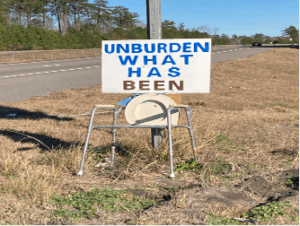
Unburden What Has Been

It was like most mornings; a brisk walk in the local nature preserve, downing the last drop of coffee, and heading off on whatever adventure I could create for myself before settling in for the day.

On the way out of the preserve is a very homemade road sign, one I pass so frequently it has blended almost imperceptibly into the surroundings. I remember questioning its purpose the first time I saw it, saying something to myself like, “gotta be a religious statement.” It checked all my boxes for a roadside reminder of God’s ubiquitous presence in our lives: simple statement, homemade sign, profound deeper meaning (if a passerby chose that option)—check, check, check!

Unburden What Has Been

“Unburden What Has Been,” it boldly proclaimed, standing out in sharp contrast to its brown wintery surround. For whatever reason, on that particular penultimate day of the year, I looked down (instead of up to the heavens), and boy howdy was I surprised by what was holding up that sign. A portable commode! A damn potty chair.

Unburden what has been! Donning my clinician’s cap, I thought, “so simple in theory, but so hard in practice,” regardless of which side of the couch you are on. Although for now, I’ll position myself on the clinical side of that couch and ask myself—and you—to look beneath the common factors that undergird successful psychotherapy for the ur-factor, that one therapeutic ring to rule them all. Yes, yes, perhaps a bit reductionistic, but no more so than that fateful sign that birthed this musing.

The goal of psychoanalysis is to penetrate the unconscious and its myriad of defenses to free repressed thought and emotion so the patient can have full insight into and resolve conflict. Unburdening in its fullest form.

The goal of Cognitive-Behavior Therapy is to release the client from the torturous grip of self-defeating thoughts and repressive behavioral patterns, so the client can finally achieve freedom (and dignity?!). Unburdening, once again.

The goal of Rogerian treatment is to use the presence and person of the therapist to close the gap between the client’s ideal and actual self so they may become more fully functioning. I imagine there is no better state of unburdened(hood) than that.

And what about the goal of Narrative Therapy? Isn’t it to unburden the client from the pre-scripted demands of their self-defeating stories that were often created in systems of oppression? And then of course, there are the Systemic Therapies, a more challenging venture, where the goal is to cancel out the noise, empty out the closets, and shoo away the ghosts, so couples and family members can peacefully, safely, and lovingly co-exist. A shared unburdening project.

I could go on. . . but in short, we clinicians, regardless of therapeutic orientation and methods, are all in the business of helping our clients, our patients, or in the words of Irvin Yalom, fellow travelers, to slow down, take a breath, look inside and around, and unburden themselves.

A worthy goal, not one so easily achieved, but definitely one worth the journey—one I’m reminded of every time I walk through that nature preserve.

Questions for Thought and Discussion

  • Can you think of an incidental inspiration such as this one that has impacted your clinical thought or practice?
  • What do you think are some of the common factors in therapy that drive your own practice?
  • Can you think of a client with whom you’ve worked that has deepened your appreciation for the power of unburdening in therapy?

Josh Coleman on the Roadmap to Healing Family Estrangement

Lawrence Rubin: I’m here today with Joshua Coleman, a psychologist in private practice in the San Francisco Bay area, and a senior fellow with the Council on Contemporary Families. He’s the author of numerous articles and book chapters, and has written four books, the most recent of which is The Rules of Estrangement. Welcome, Josh.
Joshua Coleman: Thank you for having me. Pleasure to be here.

The Face of Family Estrangement

LR: I’ll just jump out of the gate by asking you, why do you describe estrangement within families as an epidemic?
JC: Well, there’s a variety of reasons for that. One is, and I don’t know about you in your practice, but in the past few years, my practice, as well as those of my colleagues, has become flooded by clients dealing with this estrangement. Another reason comes from a recent survey by Rin Reszek at Ohio State, who found that 27% of fathers are currently estranged from a child. That’s a new statistic. While we haven’t really been tracking these statistics, non-marital childbirth is also a big cause of estrangement, which is 40% currently compared to 5% in 1960.Divorce is also a very big pathway to estrangement, especially in the wake of more liberalized divorce laws. When you look at the effect of divorce on families once there’s been a divorce, the likelihood of a later estrangement goes way up. This is especially so when you add social media as an amplifier, our cultural emphasis on individualism, influencers talking about the value of going ‘no contact’ after the divorce, and family conflict around politics, especially in the recent election. All these point to a rise in family estrangement, particularly parental.
LR: in the past few years, my practice, as well as those of my colleagues, has become flooded by clients dealing with this estrangementI know the there is a historical rise in divorce. Is there a parallel rise in estrangement with the rising divorce rate?
JC: I don’t think it’s a 1 to 1 relationship, but I think both occur in the culture of individualism, which prioritizes personal happiness, personal growth, protection and mental health. Prior to the 1960s, people would get married to be happy, but more often for financial security, particularly for women as a place to have children. But today, people get married or divorced based on whether that relationship is in line with their ideals for happiness and mental health and the like.The relationships between parents and adult children are constituted in a very similar way, people don’t stay in touch or close to their parents unless it’s in line with their ideals for happiness and mental health. It’s what the British sociologist Anthony Giddens calls pure relationships. Those are relationships that became purely constituted on the basis of whether or not they were inline with that person’s ambitions for happiness and identity. So, it’s a parallel process. I don’t think it’s completely dependent on divorce because there’s many pathways to estrangement.
LR: if the adult child cuts off the parents, they also cut off access to the grandchildren which can cause marital tensions for couples that are still marriedWhy is estrangement so different from other problematic family dynamics?
JC: Because of how disruptive it is to the adult parent and because of the cataclysmic nature of event and its consequences for the rest of the family. Once there’s an estrangement, it isn’t just between that adult child and that parent. It also can cause one set of siblings, or one sibling, to ally with the parent, another with the adult child. Typically, if the adult child cuts off the parents, they also cut off access to the grandchildren which can cause marital tensions for couples that are still married. So, it’s really a cataclysmic event in the whole family system.
LR: In your clinical experience, are there identifiable risk patterns for the eventuality of estrangement?
JC: Divorce is a huge risk, especially when it is accompanied by parental alienation, where one parent poisons a child against the other parent. Untrained or poorly trained therapists sort of assume that every problem in adulthood that can be traced back to a traumatic childhood experience. There seems to be no shortage of those therapists who think everything that is problematic in adulthood is due to some kind of family dysfunction or trauma.Another pathway to estrangement is when the adult child married somebody who’s troubled and says, “choose them or me.” Mental illness in the adult child is also potentially destructive. And last, when parents have been doing something much more psychologically destructive over the years, certain adult children just don’t know any other way to feel separate from the parent beyond cutting them off.
LR: Before we move forward, can you give us a clear definition of estrangement?
JC:  It’s when there is little to no contact. If we’re just thinking of the parent-adult child relationship where there’s little to no contact, and underlying is some kind of, complaint or disruption in the relationship, the adult child is typically the one initiating the estrangement. They determine that it’s better for them not to be in contact with the parent or to grossly limit the contact. Maybe they send a holiday card or something, otherwise they have no contact with their parent.
LR: t’s a complete cut off.
JC: Complete cut off, or a nearly complete cut off. Exactly.
LR: the adult child may not be as motivated to solve the problem as the parent isAnd is the focus of your clinical work mostly on estrangement between adult children and their parents?
JC: Typically, because they’re the ones who are reaching out to me. Occasionally, I’ll have siblings reach out to me, but more typically it’s the parents who are estranged. From their perspective, they’re the ones who are in much more pain. The adult child may have cut off the parent because of their pain, but by the time the parent reaches me, the adult child has concluded that it is in their best interest to estrange their parent. So, the adult child may not be as motivated to solve the problem as the parent is.
LR: Do you have estranged grandparents reaching out to you?
JC: Yeah, and a lot of grandparents say, ‘look, I could probably tolerate estrangement from my child, but not from my grandchildren.’ This feels intolerable, particularly for those who have been actively involved with their grandchildren, as many of these grandparents have been.
LR: This “grandparent alienation syndrome” must be particularly tormenting for them. Have you experienced different cultural manifestations of estrangement?
JC: The data from the largest study, which was by Rin Reczek at Ohio State, found that, for example, Black mothers were the least likely to be estranged. White fathers are the most likely to be estranged. Latino mothers are also less likely to be estranged than White mothers. Fathers in general are very much at risk for estrangement regardless of race.There’s relatively low estrangement in Latin American families as well as Asian American families. And similarly, within Asia, we assume that there’s not a lot of estrangement because the culture of filial obligation is still quite active. So, estrangement tends to predominate in those countries and cultures, like ours, that have high rates of individualism and preoccupation with one’s own happiness and mental health.

Detachment Brokers

LR: That’s interesting. So, there’s a parallel between estrangement and the value particular cultures place on either individualism or commutarianism.
JC: Exactly. Some are much more communitarian, emphasizing the well-being of the family and the group, while others are much more individualistic, like we are here. The sociologist Amy Charlotte calls American individualism ‘adversarial individualism,’ which is the idea that you become an individual through an adversarial relationship with your parent, or you rebel against that. But not all cultures have that kind of adversarial positioning as the way that you become an adult.
LR: You had mentioned earlier that some therapists can actually make things worse.
JC: I think that all therapists want to do good, but some simply don’t think through all of the factors. We have to not only think about the person in the room, but also the related people, because estrangement is a cataclysmic event that affects many beyond the person sitting in front of you. Grandchildren are involved and get cut out from their grandparents’ lives. Siblings typically get divided into those who support the estrangements and those who don’t. It’s also very hard on marriages. It’s easy to get sidetracked into focusing on the mental health of the adult child who is cutting off their parent(s) in the name of self-care and self-protection. We have a rich language in our culture around individualism, but a poverty of language that’s oriented around interconnectedness, interdependence, and care.It’s easy to pathologize someone’s feelings of guilt or responsibility for a parent that may just be a part of their own humanity. By giving them the language and moral permission to cut off a parent without doing due diligence on whether or not that parent really is as hopeless as their client is making them to be, contributes to this kind of atomization.Therapists can contribute to the tearing apart of the fabric of the American family, acting as accelerants to that process. We become what the sociologist Allison Pugh calls detachment brokers in her book, Tumbleweed Society. When we support clients’ absolute need or desire to estrange their parents due to their need for happiness and personal growth, we help them detach from the feelings of obligation, duty, responsibility that prior generations just assumed one should have.

LR: Do you ever encourage or facilitate estrangement as a solution?
JC: The same way that I would never lead the charge into divorce with a couple with minor children because of the long-term consequences, I wouldn’t charge ahead with estrangement either. But I do try to help the person to do their due diligence on the parent. Let’s say the parent who is completely unrepentant and constantly shames the adult child about their sexuality, their identity, who they’ve married, or what their career is every time that adult child is around the parent. It’s sort of hard for me to ethically say, “give them a chance!”But I do think it’s our responsibility to ask them: what other relationships will be impacted if you decide to go no contact, is there some way to sort of have some kind of a relationship where you are protected from their influence, or why don’t we think about why is it so hard on you? A newly reconciled adult child recently suggested to me that, ‘if the adult child is insisting that your parents are the ones that need to change to have a relationship, maybe you’re the one that needs to change.’ I liked that because I don’t think everybody has to stay involved with their parents.I do think parents have a moral obligation to address their children’s complaints and empathize with them and take responsibility. Just like the adult children have a moral obligation to give their parents a chance. I work with parents every day who are suicidal or sobbing in my office, and that really gives you a different view of this.
LR: I imagine the most deeply wounded adult children are the most difficult ones to work with around reconciliation. Can countertransference enter the clinical frame at that juncture?
JC: There have been a few occasions where the adult child was so self-righteous and contemptuous of the parent, despite the parent’s willingness to make amends for their so-called crimes––which were more on the misdemeanor side than the felony side––they remained unforgiving. Even when the parent showed empathy and took responsibility in the ways that I insist that parents do, the adult child remained in this very censorious, self-righteous, lecturing place.There haven’t been very many times when I felt provoked on the parent’s behalf, but there have been a couple times where the adult child was earnest, open and vulnerable, and the parent was not willing to do some basic things at the request of the adult child, like accepting basic limits. The parent was insistent. I just felt like you can’t have it both ways. I remember thinking, ‘You can want to have your child to be in contact with you, but you’re going to have to accept the limits that your child is setting, otherwise, I can’t really encourage your child to stay in contact with you in the way that you want me to.’ The transference is worked on both sides of the equation.

A Roadmap for Change

LR: Is there a roadmap for healing estrangement as you suggest in your book?
JC: Typically, if the parent has reached out to me for the reasons I was just saying, the roadmap begins with taking responsibility and the willingness to make amends. I ask that they try to find the kernel, if not the bushel of truth in their child’s complaints. They can’t use guilt or influence or pressure in the way that maybe their own parents might have used with them, and they can’t explain away their behavior. They have to show some dedication to reconciling. It must come with some sincerity. The challenging part for parents is often that they can’t really identify with what they’re being accused of, particularly since emotional abuse is the most common reason for these estrangements.A lot of parents say, ‘wow, emotional abuse, I would have killed for your childhood.’ The threshold for what gets labeled as emotional abuse is much lower for the adult child than it is for the parents. So, a lot of the roadmap for the parent is just accepting that difference and learning how to understand why the adult child is labeling it as such and not really debating it with them or complaining about it. Instead, that roadmap includes a way to empathize with that and understand that those are the most key aspects.
LR: What about when the road to reconciliation has been damaged by physical/sexual abuse?
JC: You have to go there if you have any chance of healing the relationship. If a parent is lucky enough to get an adult child in the room after that child being a victim of more serious traumas on the parents part, the parent has to be willing to sit there and face all the ways that they have failed their child and how much they hurt and wounded them.And it’s not an easy thing to do, typically, because hurt people hurt people. There is high likelihood that the parent who did the traumatizing was traumatized themselves, but if anything is going to happen, it’s going to be because the parent can take responsibility and do a deeper dive and not sweep it under the rug. And that’s very hard work, especially for the adult child who must expose themselves.
LR: Would you work with the adult child separately from the parent and then together by collaborating with all the players in the same room?
JC: Typically, I will meet with each side separately because I want to see what the obstacles are, what each person’s narrative is, assuming that I think everybody’s ready to go forward, I’ll bring everyone together. I usually don’t keep them separate for more than one session, but not everybody is ready to go forward at the same time. If I think that people are sort of ready to engage, then I’ll do a session separately and then everybody together. I tell parents that this is not marriage therapy. The therapy is around helping the adult child feel like their parent is willing to respect their boundaries and accept versions of their narrative sufficiently that they feel more cared about and understood. It’s not going to be as much about the parent getting to explain their reasons or decisions, at least not early into the therapy. If therapy goes on long enough, and people are healthy enough to have that conversation, then it can happen. But it doesn’t always.
LR: What do you consider to be a successful outcome, and at what point do you say that’s enough for now?
JC: I think when they’ve all had enough time outside of therapy, and they were able, to debrief if there was conflict, and if I feel confident that they have the tools to walk them themselves through the conflict and resolve it. I try to help each person set realistic goals and let them know that they are going to make mistakes going forward. The goal isn’t to be perfect, but instead to communicate around feelings and taking each other’s perspectives so all members feel safe and skilled enough to overcome whatever conflict arises. I don’t want anyone feeling discouraged and helpless.
LR: What protective factors do you look for when working with estrangement? The glimmers of hope that you search for with your therapeutic flashlight?
JC: The biggest one is a capacity for self-reflection on the part of both the parents and the adult children. In the parent, I look for a willingness to take responsibility, the capacity for non-defensiveness, vulnerability, and tolerance for hearing their child(ren)’s complaints without being completely undone. For the adult child, I look for acknowledgment that what they’ve done is difficult for the parent, and that their own issues might have contributed to their decision to estrange them.I look for an adult child to say things like, ‘I acknowledge that I was a really tough kid to raise,’ ‘I’ve been a tough as an adult,’ ‘I can give as well as I get,’ or ‘I know that I have an anger issue.’ Those help me, as the therapist, to feel like, ‘okay, you’re not just here to blame and shame the others.’ It’s about a willingness and ability to come to a shared reality, which is important for these dynamics.
LR: At what point might you suggest stopping with a client?
JC: I’ll keep working with people as long as they want to get somewhere. I don’t usually fire clients. But, for example, if I have an adult child who is just insisting that their parent has to change, and it’s clear to me that the parent has changed as much as they’re going to, my goal would be helping them shift towards radical acceptance, rather than to keep beating their head against the wall. And similarly with a parent, if their adult child is just not willing to reconcile, then it isn’t useful for the parent just to keep trying and banging their head against the reconciliation wall either.
LR: Recognizing not only your own limitations, but those that the family system brings to you.
JC: Exactly! I think an important part of our work is to help people to radically accept what they can’t change and influence. As painful as that is to reckon with.
LR: What does radical acceptance mean in this context?
JC: The term came from Marsha Linehan who developed Dialectical Behavior Therapy. It’s not sort of a soft acceptance, but instead a deep dive that you have to do. She has a great quote that says, ‘the pathway out of hell is your misery.’ It’s a great quote because you must first acknowledge that you’re miserable and accept it and maybe not even hope for change. But it does mean you have to acknowledge that you’re currently in hell. And unless you can really accept that reality, nothing good is going to come of it. The other saying that I like that comes from mindfulness or Buddhism is that pain plus struggle equals suffering. That the more you fight against the pain, the more you’re going to suffer. So, I think those are useful concepts.
LR: In this context, at what point does grief and loss work enter the clinical frame?
JC: Grief work is really part of it. Even if I can’t facilitate a reconciliation, it is important helping parents to feel like, ‘yeah, I think you’ve turned over every stone here.’ At that point, it is important to help them accept it and focus more on their own happiness and well-being, and on other relationships. This would include working on self-compassion while mourning the loss of the relationship that may never be.
LR: In closing, Josh, can someone who’s trained in individual therapy do this kind of work?
JC: If you are an individual therapist, you can’t just sort of suddenly start doing couples therapy. You have to have some facility at keeping two subjectivities in your mind at the same time. You know, being able to, to speak to both people in a way that shows that you’re neutral, even when you’re temporarily siding with one person over the other. I think it’s important to have a sociological framework for this part. You also need to set your own limits and boundaries. Doing family work is a very different sort of orientation and requires a unique skill set.
LR: On that note, I’ll say thanks. Josh, I appreciate the time.
JC: It was my pleasure, Lawrence.
*******
Joshua Coleman, PhD, is a psychologist in private practice in the San Francisco Bay Area and a Senior Fellow with the Council on Contemporary Families, a non-partisan organization of leading sociologists, historians, psychologists and demographers dedicated to providing the press and public with the latest research and best practice findings about American families. He is the author of numerous articles and chapters and has written four books: The Rules of Estrangement (Random House); The Marriage Makeover: Finding Happiness in Imperfect Harmony (St. Martin’s Press); The Lazy Husband: How to Get Men to Do More Parenting and Housework (St. Martin’s Press); When Parents Hurt: Compassionate Strategies When You and Your Grown Child Don’t Get Along (HarperCollins). His website is www.drjoshuacoleman.com/.

Moving Beyond ‘How Do You Feel’ in Therapy to Release Client’s Pain

“My granddaughter wants to spend Christmas with her other grandma.” Doris looked out the window while slowly chewing on a piece of gum. “She’d rather be with Fun Grandma,” she huffed as though trying to imitate laughter.

Armed with good intentions and extensive training in cognitive-behavioral therapy, I had been a therapist for just a few months. Doris told me during our first session that she hadn’t been truly happy since her divorce 20 years earlier, and she had spent every subsequent session describing how unimportant she felt to her children and grandchildren.

“And these are supposed to be the golden years,” she continued. I felt the need to change the direction of the session and asked if she had researched local meet-up groups, something we had discussed the week before. “I had trouble getting on the internet,” she said.

Doris, I believed, needed to take action if she was going to feel better, and I believed it was my mission to motivate her to take that first step.

“It’s just that I know you’re happiest when you’re with people,” I said, “and I think one of these groups could be part of the answer.”

“I don’t think I’m very approachable anyway.”

“Why do you say that?”

“I have an uninviting face.”

“I don’t think there’s anything uninviting about your face.”

“You’re very kind.”

“I’m serious. Has anyone ever told you that?”

“They don’t have to say it. I can tell.”

Moving Beyond ‘How Do You Feel’ in Therapy

I proceeded to initiate a detailed discussion about her face. I badly wanted to lead her out of her misery and to help her to evaluate her thoughts (helping her to recognize that her face was really not so uninviting and that others were probably not judging her as harshly as she imagined) seemed like the best path to take.

That intervention, like the others I had tried, proved to be ineffective, although I kept at it for the remainder of the session. Imagine Winnie the Pooh trying to cheer up Eeyore, Pooh making one reasonable point after another while Eeyore just keeps making excuses, the conversation finally ending when Eeyore realizes he has again lost his tail.

Later that week I discussed the session with Ari, my clinical supervisor. “I’m trying so hard,” I told him, “And I feel like she’s not doing her part. She’ll ask me what she should do to feel better, but when I offer an idea, she always has an excuse.”

Ari inhaled deeply as though attempting to fully absorb what I had said. “Sometimes,” he finally said, “our clients tell us they want one thing, but deep inside they’re pulling for us to do something else. When she made that comment about her face being uninviting, I think she was trying to tell you something important about herself.”

“I get that she’s unhappy.”

“There’s a depth to her pain. I wonder if she needs you to really understand that.”

“I think I do understand that.”

“You understand her suffering on a cognitive level, but I wonder if she needs more. I wonder if she needs you to understand it on a deeper, visceral level. What’s often most helpful to our patients is the experience of being truly understood.”

The truth of his words stung. I thought back to my own times of distress and how others had often told me to cheer up and look on the bright side. Rather than cheering me up, those exhortations usually made me feel like a burden. They made me feel that my distress was intolerable and that, as long as it remained, I too would be intolerable.

I now saw that, by being the Pooh Bear to Doris’ Eeyore, I had inadvertently given her the exact same message. “She must feel so alone,” I said to Ari. “She tells me that her children are always telling her to stop being so negative. And now I’m doing the same thing.” When I next saw Doris, I asked more questions and tried to more fully understand her. When she again complained that her granddaughter didn’t want to spend Christmas with her, instead of inquiring into what exactly the girl had said, I said, “Help me to understand what that feels like, being rejected like that.” As soon as those words left my mouth, I feared that I had set something dangerous into motion, as though I had given Doris permission to step into a black hole from which she would not be able to escape.

But she did not step into a black hole. What she did instead was describe what it felt like to be a nuisance to her granddaughter, and she then shared how she had felt like a nuisance to people most of her life. She continued to open up and share more associations. While our previous sessions had started to feel like repetitions, I was now learning new things about her.

Our sessions over the next several months were too complicated for me to summarize here, but I will say that exploring her most painful emotions proved essential to the gains we made. I would later discover that Doris had developed an attachment to certain aspects of her pain that would require additional interventions. However, before these interventions had any chance of succeeding, Doris first needed to feel understood.

Questions for Thought and Discussion

  • How do you resonate with the author in recounting the work with Doris?
  • Can you think of one of your clients who struggles in similar ways to Doris?
  • How might you have intervened differently with Doris?

A More Compassionate Approach to Juvenile Evaluations

During a recent question-and-answer panel discussion I was asked, “What do you consider the most important qualities for therapists entering the forensic field?” It dawned on me that, while providing psychotherapy is in stark contrast to performing forensic evaluations, in terms of requisite clinical skill, it’s not so different.

Sure, it’s quite a change going from a therapy dynamic to meeting strictly for assessments. Then, of course, there’s the weight of your work having legal consequences. And the work is pretty sedentary and often solitary, as a lot of time is spent sifting records and writing long evaluations. However, if you can perform therapy well, and you’re open to learning to navigate the mental health/legal nexus and style of writing it demands, you’re more than halfway there.

I’ve worked in the forensic arena for 22 years, which is the bulk of my career. My graduate school internship was at a local house of correction, which attracted me because it sounded much more interesting than doing therapy in an outpatient office or inpatient unit. Within the correctional environment, I was quickly immersed in performing crisis assessments, psychotherapy, and diagnostic assessments. Coupled with the fact that many inmates suffered from chronic and severe mental illnesses presented significant characterological disturbances. It was a baptism by fire.  

After nine years of the correctional work, and moonlighting in my private psychotherapy practice, an opportunity arose for me to apply my enjoyment of assessment work within the forensic arena I had developed quite an interest in. In 2012, I had the good fortune of transitioning to the juvenile courts where I went on to provide psychological evaluations that help the court work more effectively with troubled kids and their families.

From their inception in Victorian era England, juvenile courts have viewed children as more malleable and therefore more “correctable.” Before there were mental health courts, and even mental health care in jails, juvenile courts maintained a focus on rehabilitation while also holding children accountable.  

Juvenile Court Evaluations

In juvenile courts, psychologists provide competency to stand trial and criminal responsibility evaluations, while master’s level clinicians perform a range of diagnostic assessments. In this case, diagnostic doesn’t necessarily mean providing a DSM or ICD diagnosis, though that is not unusual when second opinions are requested, but rather diagnostic in terms of understanding the dynamics that contribute to the child’s problematic behavior and what might help remedy them. Other evaluations might be for aid in sentencing, such as suggestions the judge might consider for the type of setting best suited for rehabilitation while holding the child accountable.

Still other evaluations could regard specific dangerousness assessments, such as when problematic sexual behavior or fire setting is involved. There is also the occasional psychiatric crisis assessment a judge may order, like if a child unravels in the court, is presenting acute symptoms, or makes threats during the proceeding. Evaluations for involuntary commitment for substance abuse treatment, known in Massachusetts as “section 35,” also arise.

All evaluations have similarities, but eventually veer into their respective, specific territory. There are always interviews with the kids and parents/guardians, about not only the present concern, but developmental matters, family, mental health, medical, substance abuse, educational history, and current mental status. The court clinician then collects data from collateral sources like mental health and medical providers, schools, and social service agencies. Years worth of these documents are reviewed, their information added to the material from the interviews, and recorded into a document wherein the information is first categorically organized, then synthesized into the evaluator’s clinical formulation/opinions and recommendations to the court.  

How this all gets pulled together relies on skills any good therapist is familiar with, as it involves solid rapport building, interviewing and listening skills, and a great dose of curiosity.

A considerable hurdle to overcome for some therapists entering the forensic evaluation arena is that, unlike practicing therapy, there’s not a lot of time to develop a relationship with interviewees. Breaking the ice and getting to business happens quickly when you only have a couple of hours, but it can’t be too businesslike. We want an interview, not a regimented interrogation that’ll leave the person feeling defensive. Keeping it business-casual and starting with a social tone is likely to build faster rapport, like with Danielle (conglomerate identity), whom I visited in a juvenile detention facility for her evaluation.

Danielle’s Interview

“Did you have to wake up early for this?” I asked Danielle as she entered the interview office.

“Nah,” she clucked, looking me over.

“I’m Tony, from the Court Clinic. Did anyone tell you I’d be coming to see you?”

“You’re the guy for my psych eval?”

“That’s me.”

“Cool. My lawyer said you’d be coming. It might help me get out of here.”

“Well, I can’t really speak for that. That’s up to your attorney and the judge to work out, but the good news is you have court again next week, so you’ll find out soon. Is this your first time in a place like this?” Danielle, forlornly, said it was. “Wow. Must be quite a change. How have you been managing being away from home like this?”

Danielle explained she kept it together knowing she could talk to home on the phone, and she was to get a visit from her grandmother and sister that weekend.

Edging towards the more formal interview, I transitioned with, “It sounds like you’re in pretty good shape for the shape you’re in for such a big shift from home,” I smiled at her.

Then, I explained to her that the evaluation was meant to help the court effectively work with her and her family, and not because she was in any extra trouble, as some have wondered. Danielle nodded her understanding.

“Danielle, before we really jump in, there’s a few things I need to fill you in on, so I’m going to ask you to listen carefully, and then to repeat back to me your understanding of some of the stuff, OK?”  

She was then provided with details about how the information would be used, along with her right to refuse to participate and matters of confidentiality. Specifically, confidentiality is not the same as in a therapy relationship, as the purpose is to inform the judge, attorney, and probation officer so they can better work with the kid/family. Also, given the pretrial nature of the case, I informed her not to give me details about the current accusations.

“Do you have any questions about all that?”

With a shake of her head, Danielle fired the starting gun for the evaluation.   

Like most initial meetings, it makes sense to start slow, asking basic information to keep the tension down. Sitting in front of a therapist for the first time can be nerve-racking for anyone, never mind when someone is evaluating you for the court. Picking up where the small talk left off to merge into the interview more naturally, I began, “Earlier we were talking about it being your first time in a place like this. Tell me about where you were living before you got here.” Leaving the questions as open ended as possible makes for a more comfortable conversation where someone doesn’t feel interrogated, and I’ll likely get a more detailed picture.

Danielle laid out a complicated history, bouncing between her parents’ respective houses early on, then, for the past couple of years, in residential programs after her mother’s whereabouts were unknown and her father relapsed. Danielle revealed that she was “always pissed” during this time because her mother would be high, and her father would say he’d come get her and half the time he didn’t. Danielle recently landed at her grandmother’s house, with whom she always got along, and who was now retired and had the time to help.

“How was it being able to live with your grandmother after all that moving?” I asked. Danielle explained that she felt more connected to someone, but that her grandmother couldn’t handle her.

“Couldn’t handle you, like . . .”  

“Look, she’s old and just retired. She dealt with my mom’s shit all these years. She deserves a break. I know I’m not an angel and she worries about me.”

“Fill me in about that last part, not being an angel and she worries about you.”

Looking away, Danielle revealed she is prone to getting in trouble at school.

“The school calls her very time I fart because the school hates me. Yup, I might have a fight or be mouthy with a teacher sometimes, but they just remember my mother who was worse than me. One even says, ‘apple didn’t fall far’ when they accuse me of ‘acting up.’ I hate it. I’ve got enough to deal with, so I just leave sometimes.”

“What do you do when you get home?”

“Not much. I might call my friends when school gets out and they come over.”

“Do you ever go out into the community with them, or to their houses?”

“Sometimes. I’d rather be home.”   

After some probing, it came to light that last school year her grandmother fell and damaged a knee, requiring serious surgery and a long recovery. Danielle shared that she was worried about her and did everything she could. At the same time her mother, in a period of sobriety, visited off and on, and she enjoyed getting to know her mother in a different light. Unfortunately, Danielle’s mother began stealing her grandmother’s pain pills, and once outed, was not welcomed back.

“Ouch,” I sympathized. “This might sound like a silly question, but how did that affect you? What did it mean to you?”

“It seemed I might have a relationship with my mother, and I lost my chance.”

“I couldn’t help but notice the way you worded that. ‘I lost my chance,’ makes it sound like how it played out was somehow your fault.”   

Danielle, in an air of confession, reflected, “I was the responsible one for my grandmother. I should’ve been watching her medications. I knew my mom was an addict, but I didn’t know those pain pills were almost the same as heroin. If my mother couldn’t have gotten to them, she wouldn’t’ve have relapsed, and she maybe would still be OK.”

“Thanks for explaining,” I went on. “I’m not clear how that has to do with why you’d rather stay home now, though.” 

“Ugh. I don’t know. I don’t like leaving her. What if she falls again, or my mother comes around looking for pills? She threatened my grandmother when she was kicked out. I don’t think she would do anything, but, like, what if she did come around?”

“Correct me if I’m wrong, but what I’m hearing is you feel like you need to protect her?”

“I guess,” said Danielle.

“It’s sort of like if you get sent home you can be there for her, and if you don’t get sent home, you can send yourself by walking out?”

“I never thought of it that way, but I feel a lot less nervous when I’m home with her. I also don’t have to feel like an idiot trying to concentrate and not get anything done.”

Somewhat ironically, given her wish to protect an elderly person, Danielle was in a juvenile detention facility for shoving a teacher over 60 years old who tried to get in her way as she exited the classroom. It was noted in the police report that the teacher felt the full load of an incensed, athletic-statured teen’s shove, and sustained injuries. When the police caught up with Danielle as she walked home, she was arrested and charged with assault and battery on 60+ with bodily injury. The school also filed a child requiring assistance (CRA) habitual truancy petition as her unexcused absences were piling up since the start of the new school year. In Massachusetts, a CRA, a civil matter, renders a child to have court oversight to get them back on track.  

At the time, Danielle was accused of being a delinquent and assumed to be an “angry kid with problems at home,” but school is where Danielle’s story became more three-dimensional, delivering just the kind of information that can get overlooked in helping a troubled child.

“Danielle, part of what I like to know about is peoples’ learning experience in school. You mentioned you can feel like an ‘idiot’ about academic work. Without talking about the incident that got you here, tell me about your general school experience.”

“Not great,” she replied. “I mean, I like my friends, and even some classes, but doing the work isn’t my thing.”

“Not your thing? Like keeping up with class lessons or homework, or . . .”

“Yeah. All of the above.”

“How so?”

Danielle answered, “I get irritated because I can’t remember the lessons well, then I don’t do great on homework. I used to get good grades, but the past couple of years, 7th and 8th grade, I just don’t focus.”

We talked about a variety of other topics, including any history of mental health care. Danielle said she took an antidepressant from her pediatrician, which seemed to just help with sleep. Her only other treatment was a dialectical behavioral therapy (DBT) group her grandmother enrolled her in at the school’s urging and she was on a wait list for an individual therapist for the past couple of months.   

Upon review, Danielle’s academic records indeed reflected better grades. The picture became clearer, however, about what was contributing to her global downfall.

Collateral Information

Danielle’s grandmother, Emma, was a gracious lady and eager to help.

“The girl has had her share of difficulties,” said Emma. “Even though I’ve not always had custody of her, I’ve been there for just about everything.”

Emma was able to give me details about Danielle’s gestation and birth, early development and family dynamics. “Despite her parents’ neglect, she actually seemed OK until the last couple of years,” Emma reflected.

“What do you think accounted for that earlier resilience?”

“Well, I can’t take all the credit,” Emma laughed, “but she looked up to me and I encouraged her to be educated. She used school as a respite from that house. She got praise from teachers for being a bright kid. Danielle got the good attention she wasn’t getting at home.”

“So, what happened?” I wondered aloud. “Did she start really struggling when she was removed and placed in residential settings?”

“It certainly correlates,” Emma replied. She detailed how Danielle was placed in settings where she had to be around other troubled kids, couldn’t stay after like she had been because of the program’s transportation schedule, and didn’t have as much access to Emma.

“Emma, Danielle described that you got hurt last summer and needed surgery, and her mother came around at the same time. What can you tell me about that?”

Emma replied, “I did take a spill tripping on a low branch in the yard. It was two months of getting back on my feet after the knee surgery. Her mother got wind of it and wanted to visit. I saw she was clean; she came after work, wearing her uniform. She seemed OK.”

“How did Danielle get along with her?”  

“It had been some time since she saw her mother stable, and I could tell she was trying to forgive her and finally have something with her,” said Emma, her tone trailing off in a pregnant pause. “Danielle probably told you, however, that her mother discovered the pain pills I was prescribed, and she couldn’t resist. I told her to never come back around us.”

“What was her mother’s reply?”

“I know she was high and would never hurt me, but she said, ‘You’re killing my relationship to my daughter. Maybe I’ll kill you someday.’ Danielle heard it.”

As we talked further, I asked if, given Danielle’s abrupt downturn in performance with everything going on if the school ever provided psychoeducational testing or if Danielle had an individualized education plan (IEP).

“No. Her mother had that years ago, so I asked if the school could do it for Danielle. They said, ‘Look at her achievement history. She’s too smart. She doesn’t have a learning disability. She just doesn’t want to cooperate these days and would rather walk out.’”

Upon obtaining records from the school and talking to personnel, the sentiment was indeed that Danielle was smart and given to “acting out” as she aged. Because Danielle was understandably defensive, she was stubborn and didn’t talk to the counselor or administrative staff; Danielle thus remained a bit of an enigma.

Emma unfortunately didn’t know that she could request psychoeducational testing and that the school legally had to oblige. Some school districts, struggling with resources, may keep mum on making suggestions that could increase their workloads in the areas they are lacking. Knowing the struggles this district experienced over the years, I suspected that was the case. Nonetheless, they also were likely making things more difficult for themselves. An IEP could improve Danielle’s outcomes and de-escalate her challenging activity.  

The Clinical Formulation

As readers are probably seeing in the case of Danielle, more often than not, there is more to it than a kid simply trying to be a problem. It is a court clinician’s job to illustrate this not only for specific recommendations to help keep them court-free, but helping tell the child’s story can be conducive to generating an empathic lens through which the court decides to work with them, whereas they may just know the child otherwise through school rap sheets and parental or police complaints.

To provide such a three-dimensional experience of the child to the court, evaluations are written in a data and formulation section, similar to an “intake” form at a provider’s office, but more detailed. While documenting data to inform clinical decisions is generally important, in a legal arena, which operates on evidence, communicating data collected is a particularly meticulous process. In Massachusetts, court clinicians undergo two years of training, complete with supervision, mentoring, and an exam, to master collecting and conveying data and creating effective clinical formulations and recommendations to satisfy the court’s needs to better work with the child/family.

The court clinician creates a detailed narrative, drawing from, and referencing, the data, which helps answer the question(s) the court poses about the child’s psychological profile, behaviors, needs, or other opinion requests. Cour clinicians then pull all of this information together in as ordinary a manner as possible given the vested parties requiring it are not going to be psychology. While in general clinical settings a formulation may be a large paragraph or two, usually to justify a diagnosis/treatment plan within that clinical setting, court clinic clinical formulations are pages long given the need to clearly explain, cite data, and paint the bio-psycho-social-legal nexus picture.

In this case, it was explained to the court that Danielle’s attachment anxiety made it hard to be at school. Add to this that she felt stupid given that the anxiety pervaded her and she couldn’t focus, and that some staff compared her to her mother––what incentive did she have to attend? Being at home assuaged her separation anxiety. For Danielle, her mental resources were spread thin tending to everything else going on outside of school, and clearly she didn’t have the ability to apply herself.  

Acting out and walking out sheltered her from tasks that reminded her she wasn’t as academically capable as she once was, and once she was off school grounds, she could avoid being compared to her mother which, while not to justify her violent reaction to the teacher, is what led to her court clinic evaluation.

The court was informed that Danielle required psychoeducational testing to work towards accommodations that could help her successfully learn despite her emotional impairments. It is a fact that children can receive an IEP not only for specific learning disabilities like dyslexia, but also for social-emotional complications that make learning difficult. Further, it was recommended that Emma reach out to an educational advocate to help navigate any challenges the school might present along the way. Lastly, suggestions were made for specific therapists that might work well with Danielle, so she was not beginning work with one only find out it was not a good fit and have to move to another––never good for a child with attachment complications.   

The Effects of Court Clinic Evaluations

Being neither loyal to prosecution nor defense, court clinicians provide an unbiased opinion that can provide another level of intervention for more thorough growth, to both to the child/family and the community. The uniqueness of court clinicians is not only in them being mental health professionals that provide assessments for legal proceedings, but also that help expose barriers that community providers, including schools, may not have realized or acknowledged. This could be due to anything from it being impossible for therapists to review years’ worth of records and interview other parties to sift for details for missing links, or because of schools towing the district’s agenda and walking careful lines with budgetary and staffing matters.

Understanding these limits, court clinicians sometimes suggest, in the recommendations, that the evaluation be released to a certain provider or school if they feel it will help accelerate the child/family’s gains. While I can only speak for Massachusetts, providers, if they are aware of a court clinic diagnostic evaluation, can request a copy from the court if they feel it might help in treatment or education. While the evaluations are HIPAA protected, they are also considered legal documents and thus owned by the state. Therefore, parents/guardians cannot simply sign a release of information form or provide a “third party release” of the document if they happen to have a copy.

Providers seeking copies must contact the clerk’s office or judges’ lobby of the particular juvenile court and completed paperwork as to the reason they want to review the document. This in turn is reviewed by a judge, who, if they feel it is appropriate for the requesting party to read the evaluation, may order portions redacted, and send other instruction such as forbidding third party release, that it cannot be copied, and/or ask for its return to the court after a certain amount of time. 

***

Danielle’s case may seem starkly in contrast to popular culture ideas of court psychology work, full of interrogations and profiling ostensibly for maximum accountability. The truth is, even the criminal allegation-related evaluations such as for competency and responsibility have a human side. They’re meant to understand the accused three-dimensionally and what struggles may have contributed to the allegation(s) or what struggles might keep them from participating in their own defense. 

Courts aren’t only judicial, but part of the correctional system. Without evaluations to understand the dynamics of the accused, whether civil or criminal, there would only be punishment and no corrections. Consequences alone do not serve to correct. Without addressing the issues that kindled the court involvement, and providing guidance on resolving those issues, there would be no rehabilitation.

Imagine if Danielle was before the court, accused by finger wagging officials about struggles that she didn’t even understand and being expected to somehow learn to act more constructively by being told to “behave, or else!” She would be back in the same classrooms without special education accommodations, utilizing the same defenses, for that’s all she knows. The same behaviors would continue, creating a revolving door of “bad kid” accusations, reifying her already poor image, potentially leading to dropping out or self-medicating, and the inherent complications of each.

If that was to occur, what’s the real crime?

Ultimately, court involvement can truly be an opportunity as there is not only more understanding of dynamics and what’s needed, but with court oversight, steps to obtain what is needed are more likely to be carried out.  

Repairing Self-Neglect in Clients with Complex PTSD

The Somatic Legacy of Complex Trauma

People who experienced complex post-traumatic stress disorder (C-PTSD) or ongoing ‘complex’ childhood trauma consisting of neglect, abuse, and invalidation, develop strategies and defenses designed to make sense of the painful truth that their caregivers failed to provide essential emotional and physical attachment needs. These protective strategies, though geared for survival, become obstacles to overall health, self-expression, healthy relationships, and fulfilling careers.

Clients who endured abuse or invalidation during childhood developed exquisite sensitivity to external cues that helped them manage chaotic or unpredictable environments. This hyper-attunement to external inputs, a kind of hypervigilant codependence, evolved while clients were simultaneously repressing internal cues like hunger, thirst, fatigue, toileting, and comfort as a result of needs repeatedly going unmet. It becomes a survival strategy to not feel or acknowledge them. By having suppressed their basic physical needs, these clients experience ongoing internal tension expressed as anxiety and depression, dysregulation, and codependent behaviors.

Growing up surrounded by reactive adults who did not provide functional emotional modeling, clients’ emotional tools are restricted. They became over-focused on external sources of validation which contribute to ongoing anxiety and reactivity. This situation fundamentally disrupts clients’ capacity for implementing self-care and other functional behaviors necessary for a healthy life.

Developing in an unsafe environment, clients’ ongoing somatic experience is of underlying danger and unpredictability. With porous boundaries and distorted perceptions, they look for confirmation of this bias in every interaction, are poised to identify danger, and experience unbearable flooding. This frequently leads to hypersensitivity to criticism and rejection along with perfectionistic tendencies as a defense against chaos.

In multiple cases, I have found that encouraging these clients to pay attention to and satisfy cues like hunger, thirst, physical discomfort, and toilet needs as a primary intervention is transformational. Providing a supportive container to address their needs evokes a crucial new experience in which to foster change.

In session, I routinely encourage clients to make themselves physically comfortable, whether we meet online or in person. My office has yoga mats, pillows, a physioball, chairs, and a long sturdy Pilates table. Throughout sessions, I cue them to check in with their sensations using direct questions with non-threatening words like, “what’s coming up for you now,” “are you still comfortable or do you need to move,” “feel free to adjust, move, or make yourself more comfortable,” “what would feel safer in this moment?” My aim is to highlight internal sensations and give explicit permission to foreground their physical needs over anything else—something that their upbringing did not allow or was not safe for them to do.

Because breathing is foundational to life, breathwork can also be a powerful tool for addressing dysregulation, though it requires careful implementation with Complex PTSD clients. Some clients may find breath-focused exercises triggering due to their trauma—for instance, one of my transgender clients rejected breathwork entirely due to traumatic experiences in a religious cult.

I begin with gentle, non-invasive approaches like observing the difference between nose and mouth breathing to help regulate anxiety. From there, I guide clients to simply notice physical sensations: the feel of air moving through their nostrils, the natural expansion and release of their lungs and abdomen. To demonstrate healthy breathing mechanics, I use a Hoberman Sphere to illustrate what I call “three-dimensional breathing”—showing how the thorax can move in all directions: length, width, and depth.

While advanced breathing techniques like those used in Kriya Yoga can create profound physiological and psychological changes through specific patterns of inhalation, exhalation, and breath retention, my primary goal with CPTSD clients is more fundamental. Simply helping them feel safe enough to take full, unrestricted breaths often begins to release long-held patterns of physical tension and armoring.

Attending to the Body in Therapy

A 23-year-old man in graduate school was recently diagnosed with bipolar disorder and had a history of physical abuse. In session he would frequently jiggle his leg. I noticed this becoming more intense when we discussed an upcoming exam. I used immediacy to bring his attention to his movement and invited him to tune into what his leg might be saying. He expressed anxiety and wanting to flee. I said, “feel free to run out of the room. I will be right here waiting for you whenever you are ready to return.”

Though surprised, he got up and left the room. A few minutes later, he came back, grinning. That completed escape and safe reception upon his return was a lynchpin to his future empowerment and ability to connect with his deepest desires. Further work around hunger ignited a passion for cooking that helped him solidify connections with friends.

During a session with a 19-year-old non-binary client, they revealed that at work they were so overburdened they didn’t urinate for up to 8 hours. When I expressed surprise and concern, they reported their boss often neglected to allow breaks. Not only due to the questionable legality of this situation, but due to this client’s habitual self-neglect, I encouraged them to insist on being allowed to take care of their bathroom needs.

In case clients don’t feel empowered to stand up for their needs, I encourage them to blame it on me, their therapist. In this way, therapy helps them repair personal boundaries caregivers often neglected to help them build. Over the course of our ensuing sessions, this client reported on the transformation they experienced because of this new awareness. Not only were they able to stand up for themselves in other interpersonal situations, they went on to become stronger advocates for animal welfare.

A 45-year-old woman was seeking therapy for chronic illness and overwhelming guilt around leaving her mother and sister, both addicted to methamphetamines. By attending to her basic physical needs, especially hunger and rest, she was able to reframe her “abandoning” of her family into the recognition that as a child, she was abandoned by them.

Paying attention to basic physical needs begins to reverse codependency dynamics of over-focusing outward and under-focusing inward. According to codependence expert Nancy L. Johnston, external focus and emotional suppression are two of the four hallmarks of codependent behavior, along with self-sacrifice and interpersonal control.

***

Helping clients become aware of biological needs is a critical first step in healing. Empowering them to satisfy these needs is the next step in helping them feel safe and grounded enough to pursue life satisfaction. Providing validation for these unmet physical needs can, at times, be challenging. As much as possible, I guide clients in session to check in with their inner experiences. I am repairing the attachment function of attending to a child’s most vital requirements.

My experience has taught me that in cases of childhood neglect and abuse, not only is there the tension of feeling needs but also accompanying grief, shame, and rage elicited by not having needs met by caregivers. Validating and normalizing having needs while providing opportunities to feel and satisfy them mitigates fears evoked by vulnerable feelings. Healing trauma through this attention can repair the split clients were forced to assume when they buried or negated crucial survival needs.

Questions for Thought and Discussion In what ways do you resonate with this author’s premise? In what ways do your PTSD clients neglect their basic bodily needs? How do you integrate these needs into your therapeutic work with these clients?

The Challenge of Therapy During War: Psychotherapy in Ukraine

The Emotional Ravages of War

The ongoing crisis in Ukraine has placed immense psychological strain on its population, creating a heightened need for mental health support amidst war, displacement, and uncertainty. Therapists working in Ukraine face unique challenges requiring resilience, adaptability, and innovative approaches. The war has caused massive, widespread trauma with millions displaced and exposed to violence. Therapists working either face-to-face or remotely with their clients encounter acute and chronic PTSD symptoms, anxiety, depression, and grief due to loss of loved ones, homes, and stability. There is also considerable intergenerational trauma in families with histories of oppression.

While Ukrainians have a history of resilience, the impact of intergenerational trauma and mental health stigma persists. Many of my clients attempt to minimize emotional distress or express it through physical symptoms. They have historically hesitated in seeking help, viewing it as a sign of weakness. However, online therapeutic platforms like Soul Space, the one through which I work, offer easily accessible and safe resources for support and self-help tools that empower these individuals.

The Challenge of Therapy During War

Therapists, such as myself, often face secondary traumatic stress (STS) from absorbing clients’ pain, leading to symptoms similar to PTSD. High caseloads also contribute to burnout and emotional exhaustion. Therapists often work with limited supervision, professional development opportunities, or access to private therapy spaces. Displaced populations pose additional logistical challenges to on-ground clinicians. Balancing professional neutrality with personal feelings about the war, while addressing clients’ immediate needs and maintaining a therapeutic frame, are frequent concerns that challenge clinicians under these circumstances.

While teletherapy has been invaluable to Ukraninans under seige, and has allowed me to support more clients than had I been on the ground, power outages, poor internet connections, and client inexperience with technology often impede its effectiveness. It has also been critical for me to prioritize self-care, emotional hygiene, peer support groups, and supervision to process my own emotional experiences as I serve those devastated by the war. I have also found it useful to limit daily trauma-focused sessions to prevent emotional fatigue. Techniques like grounding and meditation have helped me to maintain strength and clinical endurance.

I have learned to respect clients’ cultural coping mechanisms in order to build trust and support empowerment, resilience, and self-efficacy. I have relied on trauma-informed approaches that begin with safety and stabilization techniques such as grounding exercises and psychoeducation about trauma, while also processing with practical problem-solving to meet clients’ immediate needs. Soul Space provides psychoeducational workshops to maximize reach, provide structured, and self-guided mental health resources.

Case Example

A displaced family of four sought therapy after relocating from a war-affected region. The parents reported anxiety, irritability, and hypervigilance; while the children displayed regressive behaviors and nightmares. My approach required the establishment of safety and routine in therapy, psychoeducation to normalize trauma responses, and activities that built resilience and mutual support. Nighttime relaxation rituals helped the family with wartime-related sleeplessness, while gradually igniting bonds of trust and security due to invasive interruptions of regular routines. The parents practiced simple grounding techniques to contend with their own anxieties.

The parents learned about trauma responses in adults and children, and were increasingly able to reframe the children’s behaviors as survival mechanisms instead of simply seeing them as defiance. Several grounding exercises were also introduced to the children utilizing sensory modalities by asking them to say five things they see, hear, or touch when feeling overwhelmed.

To strengthen family bonds, I introduced therapeutic play and storytelling to allow the children to articulate issues of fear in a safe and imaginative way. The parents were given the chance to have planned conversations to foster emotional conversations and model healthy expressions for fear and grief. We also created a “Family Strengths Tree” where they could record examples of salvaged resilience to remind themselves of their survival capacities.

The family finally began processing their experiences. The children created a storybook representing their journey, necessitating a shift in the focus from fear to resilience. The parents explored their guilt and grief using cognitive processing techniques, reframing self-blame into self-compassion. Throughout the intervention with this family, and as with other wartime displaced clients, I integrated formal online training available through Soul Space with my direct face-to-face work.

During our work together, the family experienced reduced anxiety, improved communication, and renewed hope. The mother’s panic attacks became less frequent, and the father started to emotionally reconnect with his children. The daughter began socializing again, and the son had a drastic decrease in nightmares and bedwetting. Coping mechanisms and family bonds improved. Working with this family, as with others, I have come to rely upon additional training courses in trauma-informed interventions, networking, and the importance of adapting my therapeutic techniques to meet the realities of life in conflict zones, including shorter sessions or combining therapy with referral for humanitarian aid.

Questions for Thought and Discussion

Whether or not you’ve worked with clients in war-torn areas, how do you resonate with the author’s sentiments?

Which of the challenges raised by the author are similar or different from those you have experienced with traumatized clients?

What are some of the core techniques that you have found successful in working with traumatized clients?

Helping Clients to Understand and Overcome Traumatic Reenactment

As a psychotherapist who has specialized in working with trauma victims for almost 40 years, I have experienced many clients who are suffering from traumatic reenactments—the phenomena that occurs when people expose themselves to situations reminiscent of an original trauma, placing themselves at emotional risk or in physical danger in a compulsive mimicking of the past. For example, a woman who was physically abused by her father may continually find herself being attracted to abusive men. A man whose mother emotionally abused him may continually become attracted to women who are overly critical toward him. Yet when I attempt to help these clients make the all-important connection between these current reenactments and past trauma I’m often faced with reactions like, “but I didn’t experience any trauma growing up” or “I’ve already dealt with my past abuse, it’s not still affecting me.” Clients tend to minimize, deny, or “forget” their past trauma experiences.

Why Do People Reenact Trauma?

While reenactments are experienced by many people, those who were traumatized as children (including neglect, abandonment, and abuse) have a tendency to re-enact or relive past trauma more than the average person. Other types of traumas can also create the need to repeat what happened to us as a way of understanding it and bringing closure. This includes acts of nature such as floods, earthquakes, and tornadoes; the death of a loved one; as well as fatal accidents. Several theories have been suggested to explain the phenomenon of traumatic reenactments.

  • Many experts understand reenactments as an attempt to achieving mastery. This means that a traumatized individual reenacts a trauma in order to remember, assimilate, integrate, understand, and heal from the traumatic experience. (1)
  • Some experts perceive reenactments as spontaneous behavioral repetitions of past traumatic events that have never been verbalized or even remembered. For example, Freud noted that individuals who do not remember past traumatic events are “obliged to repeat the repressed material as a contemporary experience instead of … remembering it as something belonging in the past.” (2)
  • Others suggest that reenactments result from the psychological vulnerabilities characteristic of trauma survivors. For example, as a result of a range of ego deficits and poor coping strategies, trauma survivors can become easy prey for victimizers. (3)

Ongoing reenactments usually indicate that a former victim is emotionally stuck and can be interpreted as a “call for help.” They are attempting to work through some aspect of past trauma by repeating it with another person, hoping that this time the result will be different.

We don’t consciously and deliberately set out to repeat a parent’s behavior, get involved with a replica of an abusive or neglectful caregiver, or repeat a trauma over and over. These are unconscious actions on our part. Sigmund Freud stated that such unconscious processes may affect a person’s behavior even though he or she cannot report on them. For example, Freud and his followers believed that dreams and slips of the tongue were really concealed examples of unconscious content too threatening to be confronted directly. Reenactments can be seen as this type of unconscious behavior.

In addition to Freud’s concept of reenactments being a need to repeat the past in order to get a different result, I would add that reenactments are often an unconscious need for people to understand what happened to them and why. Those who are caught up in reenactments are often troubled (consciously and unconsciously) by events that occurred in their past. Some are confused about why people treated them the way they did. Others blame themselves. Still others are in denial about these events. They are overwhelmed by emotions such as shame, anger, fear, and pain, emotions that are often suppressed or repressed. All this confusion and denial work together on an unconscious level, causing them to reenact troubling events in an effort to gain understanding and closure. For example, a girl whose father abandoned her will likely be preoccupied with discovering why he did so and may blame herself in some way. As an adult, this will likely affect her relationships with men, causing her to both doubt her ability to keep a man interested in her and to be attracted to unavailable men.

Reenactments often lead to re-victimization and with it, related feelings of shame, helplessness, and hopelessness. For example, it has been found that women who were sexually abused as children are more likely to be sexually or physically abused in their marriages. Therefore, gaining an understanding and control of reenactments is a primary way to avoid further re-victimization and shaming.

The Reasons Why Clients Deny Having Been Abused

Even though they may suffer from reenactments, some people insist they have not suffered from trauma or are not sure whether they have or not. The reasons for this are many.

Denial and Minimization

Many people don’t label their experiences as traumatic, even when they are. Others minimize the damage an event or series of events had on them. In fact, the majority of trauma victims tend to deny or minimize traumatic experiences. As humans, we will do almost anything to avoid facing the feelings surrounding being traumatized, feelings such as fear, pain, shame, and anger. One of the best ways to avoid such emotions is to deny that the trauma ever happened. For example, even if a client is able to admit to himself that he was physically abused by his father, he may still be in denial about various aspects of the abuse. He may have convinced himself that “it wasn’t all that bad,” (minimization) or that his father didn’t mean to harm him (rationalization). In the case of a client having been sexually abused they may have even convinced themselves that it wasn’t actually abuse because they enjoyed it or because they believe they were the one who initiated it (denial).

Denial is a powerful, unconscious defense mechanism intended to protect us from having to face intense pain and trauma. It can even allow us to block out or “forget” intense pain caused by emotional or physical trauma such as childhood abuse. The denial process is designed to prevent us from facing things that are too painful to face at the time. But it also defends us against the truth and can continue way past the time when it served a positive function.

Former victims of child abuse often deny that they were abused, deny that it caused them any harm, and deny that they need help. The following are the most common reasons why victims of child abuse tend to deny what happened to them and/or minimize the damage it caused them:

  • They don’t want to feel the pain, fear, betrayal, and shame that acknowledging the abuse would cause them to feel. The abuse is either walled off from conscious awareness and memory, so that it did not really happen; or it is minimized, rationalized, and excused, so that whatever did happen was not really abuse. Unable to escape or alter the unbearable reality that they were abused, some children alter it in their mind.
  • They don’t want to admit that they were a helpless victim. It can be humiliating and degrading to acknowledge that another person can overpower you or have control over you. Instead of admitting either of these two things, victims often prefer to take responsibility for the abuse. This is especially true of male victims since males are raised to be tough and strong and to always defend themselves.
  • They don’t want to admit that someone they cared about could harm them and cause them damage. For those who were abused by a family member, a close friend of the family, or an authority figure they respected such as a priest, a teacher, or a coach, to face the fact that they were abused is to experience the sometimes unbearable pain of admitting that someone they respected or loved could treat them in such horrendous ways. The most common way for children to explain behavior on an abuser’s part, especially if it is someone they respect or love, is for them to blame themselves.
  • Another reason some former victims deny that they were ever abused is that they repeated the cycle of abuse by abusing other children. In this situation they may have an investment in believing that parents have a right to discipline their children, even if it causes physical harm. Those who were sexually abused often convince themselves that children are never really “forced or manipulated” into sex with an adult or older child, but they do so willingly and that they get pleasure from doing it. This kind of denial not only keeps former victims from admitting that they themselves were abused but that they became abusive.

Repression vs Suppression

Repression (unconsciously blocking out traumatic events) and suppression (consciously choosing to “forget” traumatic events) are survival skills that help former victims of trauma to move on with their lives instead of being so completely overwhelmed with feelings of fear, shame, or guilt that they can’t function. Unfortunately, these defense mechanisms can make it difficult for clients to allow themselves to remember and process a trauma.

Painful feelings and memories can be very upsetting. Instead of facing them, clients often unconsciously hide them from themselves in hopes of forgetting about them. That does not mean that the memories disappear entirely. They can influence behaviors and can impact our relationships without us realizing it. Most important, repressed memories can show up in our lives in the form of reenactments.

It can be especially painful for clients to admit that someone they loved, and who they believe loved them, could traumatize them by being abusive or neglectful. Sometimes, instead of facing the truth they consciously suppress the memories of what happened. This was the case with my client Chloe:

“It’s not like I ever forgot about the sexual abuse. I just chose to lock it away and throw away the key. I couldn’t handle the fact that my own father, who I loved dearly and who was the only person in my childhood who was kind to me, could harm me in that way—could be so selfish to put his own needs ahead of mine like that.”

Dissociation

Another reason a client may have no memories or only vague memories of a trauma is the common practice of victims to dissociate. Some victims dissociated, while others were traumatized so severely that they lost all memory of the attack—much like car accident victims often experience amnesia after the crash (repression).

According to the Diagnostic and Statistical Manual of Mental Disorders 5th edition, dissociation is a “disruption of and/or discontinuity in the normal integration of consciousness, memory, identity, perception, body representation, motor control and behavior.” Dissociation is a normal phenomenon that everyone has experienced. Examples of mild dissociation include daydreaming, “highway hypnosis,” or “getting lost” in a book or movie, all of which involve “losing touch” with an awareness of one’s immediate surroundings.

During traumatic experience such as crime victimization, abuse, accidents, or other disasters, dissociation can help a person tolerate what might otherwise be too difficult to bear. In situations like these the person may dissociate (detach or disconnect) from the memory of the places, circumstances, and feelings surrounding the overwhelming event, thus mentally escaping from the fear, pain, shame and horror.

When faced with an overwhelming situation from which there is no physical escape, a child may learn to “go away” in their mind. Children typically use this ability as a defense against physical and emotional pain or fear of that pain. By the process of dissociation, thoughts, feelings, memories and perceptions of the trauma can be separated off in the mind. This allows the child to function normally.

For example, when a child is being sexually abused, in order to protect themselves from the repeated invasion of their deepest inner self they may turn off the connection between their mind and body creating the sensation of “leaving one’s body.” This common defense mechanism helps the victim to survive the assault by numbing themselves or otherwise separating themselves from the trauma occurring to the body. In this way, although the child’s body is being violated, the child does not have to actually “feel” what is happening. Many victims have described this situation as “being up on the ceiling, looking down on my own body” as the abuse occurred. It is as though the abuse is not happening to them but just to their body.

While dissociation helps the victim to survive the violation, it can make it difficult to later remember the details of the experience. And it can make it difficult for a victim to come to terms with whether or not they were actually abused. If someone was not in their body when the abuse occurred, it will naturally affect their memory. For example, in the case of sexual abuse, if the person doesn’t “remember” the physical sensations of what the abuser did to their body or what they made to do to the abuser’s body, it can cause them to doubt their memory and add to their tendency to deny what occurred.

Tragically, ongoing traumatic events such as abuse are often not one-time events. For those who are repeatedly exposed to abuse or neglect, especially in childhood, dissociation is an extremely effective coping mechanism or skill. However, it can become a double-edged sword. While it can protect clients from awareness of pain in the short-run, a person who dissociates often may find that in the long-run his or her sense of personal history and identity is affected.

Grounding is a very effective practice to teach clients to help them come out of this dissociative state.

Basic Grounding Exercise

  • Find a quiet place where you will not be disturbed or distracted.
  • Sit up in a chair or on the couch. Put your feet flat on the ground. If you are wearing shoes with heels you will need to take your shoes off so that you can have your feet flat on the ground.
  • With your eyes open, take a few deep breaths. Turn your attention once again to feeling the ground under your feet. Continue your breathing and feeling your feet flat on the ground throughout the exercise.
  • Now, as you continue breathing, clear your eyes and take a look around the room. As you slowly scan the room, notice the colors, shapes, and textures of the objects in the room. If you’d like, scan your eyes around the room moving your neck so you can see a wider view.
  • Bring your focus back to feeling the ground under your feet as you continue to breathe and to notice the different colors, textures and shape of the objects in the room.
  • This grounding exercise will serve several purposes:
  • It brings awareness back to the body, which in turn can prevent being triggered or dissociating.
  • It brings us back to the present, to the here and now; again, a good thing when being catapulted back into the past by a memory or a trigger.
  • Deliberately focusing the attention outside yourself by being visually involved in the world helps bring a person out of a dissociative state and into reality where they can get in touch with their emotions and their memory.

Dissociative Amnesia

Dissociative amnesia is the inability to recall autobiographical information. For example, Betrayal Trauma Theory holds that for incest survivors, dissociative amnesia serves to maintain connection with an attachment figure by excluding knowledge of the abuse (betrayal blindness). This, in turn, reduces or eliminates anxiety about the abuse, at least in the short run.

Betrayal Trauma Theory is based on attachment theory and is consistent with the view that it is adaptive to block from awareness most or all information about abuse (particularly incest) committed by a caregiver. Otherwise, awareness of the abuse would acknowledge the fact that a betrayal occurred, and this acknowledgement would likely endanger the attachment relationship. Betrayal blindness can be viewed as an adaptive reaction to a threat to the attachment relationship with the abuser and thus explains the underlying dissociative amnesia in survivors of incest. Under these circumstances, survivors often are unaware that they were abused, or will justify, or even blame themselves for the abuse. In severe cases, victims often have little or no memory of the abuse or complete betrayal blindness. Under such conditions, dissociation is functional for the victim, at least for a time. (4)

Due to dissociation, dissociative amnesia or betrayal blindness, someone experiencing reenactments may have to trust the fact that they wouldn’t have the symptoms they have and wouldn’t have the deep sense that “something happened” unless they actually experienced a trauma. Other times some education can help clients to come out of denial:

The Lack of Specific Memories

The lack of specific memories can cause former victims to question their sense that something happened to them and even the flashes of memory that they do experience. Let’s compare this lack of specific memories with what often happens when someone has been in a traumatic car accident. Let’s say that you wake up to find yourself in the hospital. You notice that one of your arms is in a sling and that one of your legs is in a cast and that you have cuts and bruises all over your body. There’s no one around and you feel panicked, thinking, “what happened to me?”

Then someone you know comes into your hospital room and tells you that you were in a horrible car accident. You feel shocked because you have absolutely no memory of it. Not only that, but you can’t remember anything just before the accident. Just because you have no memory of the accident doesn’t mean that it didn’t happen, right? You have the broken bones and the bruises to prove it.

The same is true of childhood abuse. A client may not have any memories, but they have the results of the abuse as proof that it actually did happen. They have nightmares, flashbacks, and triggers, and they have self-destructive behaviors. If they were neglected or emotionally abused they may have low self-esteem, a tendency to be self-critical, or a tendency to push people away or, conversely, a fear of abandonment. If they were physically abused, they may have a tendency to be defensive or have rigid posture and a startled reaction when someone comes up behind them. They may have the habit of gritting their teeth, or tension in their jaw from all the repressed anger they are holding. In the case of child sexual abuse, they may have the unexplained pain in their vagina or anus, a negative reaction to being touched on certain parts of their body, powerful reactions when they see a movie about someone being raped or about a child being molested. Certain types of sexual acts or positions, or certain kinds of touches may repulse them, or they may dissociate when they are around certain people, places and things. These are, in essence, their “memories.”

The bottom line is that a client may never have actual “memories” in the sense of being able to “remember” or “recall” actual events. But that doesn’t mean they weren’t abused. Many of the clients I have worked with who do not have tangible memories have other indicators that they were abused. Some have flashbacks, others have what are called “body memories.” Those who were physically abused often have pain in the places where they were beaten, such as their back and buttocks. They often have a “startle reaction” when someone raises their hand in front of them due to the fact that they were slapped or hit in the head so often.

Those who were sexually abused can have pain in their genitals, anus, or breasts for no apparent (or medical) reasons and vaginismus (involuntary contractions of the vaginal muscles preventing penetration or making penetration extremely painful). Still others have such tell-tale symptoms as being repulsed by thoughts of sex, a fear of sex, an inability or repulsion to being touched, obsessive rape fantasies (either of someone forcing sex on you or you forcing yourself on someone else), or sexual addictions.

A Real Compulsion

It is important to understand that traumatized people experience a true compulsion to repeat repressed experiences. Even if the person attempts to keep the memory repressed, there is an opposing need on the part of the psyche to force the repressed material into consciousness. Thus, the repressed and dissociated events emerge to be re-experienced, often in dreams and nightmares (during sleep when conscious control must be let go), and then in waking hours as well. Clinical experience suggests that the compulsion to repeat takes on an almost biologic urgency, such as our need to urinate. We can hold our urine for only so long.

Examples of the Emergence of Repressed and Dissociated Experiences

Flashbacks are the most striking examples of repressed and dissociated trauma, and are frequently observed in clients with posttraumatic disorder, and some dissociative disorders. Flashbacks are involuntary recurrent memories in which an individual has a sudden, usually powerful, re-experiencing of part of a trauma or elements of a past trauma. These experiences are often frightening, catapulting the person back in time.

Those who are experiencing flashbacks are thrust back into the traumatic events both in their dreams and while awake. The reliving of the trauma is experienced as a real and current event. The traumatized person does not feel as if they are remembering the experience but instead, they feel the experience in the present. When someone is experiencing a flashback, they often lose awareness of their surroundings and are thrust back into the trauma, visualizing previous surroundings and people, and feeling they are the same age as when the trauma originally occurred. This points to the ability of the psych to repress and dissociate overwhelming experiences, as well as to bring them back into consciousness with full force.

Implicit Memories
Trauma “memories” often manifest in intense physical, perceptual, and emotional reactions to everyday occurrences and objects (triggers). These emotional and physical responses, called “implicit memories,” keep bringing the trauma alive in a former victim’s body and emotions again and again, often many times a day. Their bodies tense up, their hearts pound, they see horrifying images, and they feel fear, pain or rage. They freeze in fear or feel a sudden wave of painful shame and lose the capacity to speak. They feel an intense impulse to run away and hide from others.

Decades of research on the effects of trauma confirm that overwhelming experiences are less likely to be recalled as a series of images that we can describe or in a clear coherent narrative. Trauma is more likely to be remembered in the form of sensory elements without words—emotions, body sensations, changes in breathing or heart rate, tensing, bracing, collapsing, or just feeling overwhelmed. (5) When implicit memories are evoked by triggers, we re-experience the sense of threat, danger, humiliation or impulses to flee that we experienced at the moment of threat—even if we have no conscious verbal memory of what happened.

Those who insist that they do not remember any trauma often don’t realize that they are, in fact, remembering when they suddenly feel startled or afraid, when they feel shame or self-hatred, or when they start to tremble or shake. Because trauma is remembered emotionally and somatically more than it is remembered in a narrative form that can be expressed verbally, former victims often feel confused, overwhelmed or crazy. Without a memory of words or pictures, they do not recognize that what they are feeling is memory.

Most people also do not realize that we remember in different ways. With the thinking brain we can remember the story of what happened but without a lot of emotion connected to it. With our sensory systems we can remember how something felt. Our bodies might remember the impulses and movements and the physical sensations (tightening, trembling, sinking feelings) experienced at the time.

For example, many former victims feel uncomfortable stating that they were sexually abused because they do not remember whole events. Their memories are fragmented or unclear or consist of a few images, rather than an entire mental video of the events. They doubt themselves and think, “it can’t be true because I don’t remember exactly what happened” or “I must be making this up or I would remember more clearly.” But it is important to explain to clients that trauma cannot be remembered the same way other events are recalled because of the effects trauma has on the brain. When clients feel the impulse to doubt their memory or intuition that something happened to them, remind them that recalling events as a story or narrative is not the only way to remember. They may be remembering a lot more than they think.

Triggers

Your clients may feel surprised to learn how much they remember when they include the feelings, thoughts and physical reactions they experienced when triggered. Generally, a trigger can be defined as any stimulus that causes a reaction, often an emotional response such as anxiety, sadness, panic, feeling overwhelmed, flashbacks, nightmares, or severe emotional distress. A trigger is sufficiently reminiscent of a past event or process that it activates implicit (feelings, sensations, and nonverbal thoughts) or explicit (the what, when, and where of remembered events) memories in the present.

Types of triggers 
There are various types of triggers, including:

  • Sensory: sounds, smells, textures, or physical sensations
  • Time-related: certain times of day or seasons
  • People or places: people or places that remind them of a negative experience
  • Bodily sensations: pain or touch that reminds them of a negative experience
  • Substance-related: cravings or urges to use substances

Clients may also feel surprised to learn that there is an explanation for their seeming “overreaction” to certain things. For example, maybe they aren’t an “angry person,” but are simply experiencing feeling memories of anger that have been triggered when someone is selfish, controlling, or domineering.

Exercise: Discovering Your Triggers

My aim, in part, of writing this article is to help those of you fellow therapists who have clients who can’t make the connection between their past trauma and their current negative patterns of behavior either due to lack of memory, denial or minimization.

The following exercises and lists can help your clients discover their triggers:

  • Begin by asking your clients to notice the events, sensory experiences, or people that tend to trigger them (catapult them into the past, remind them of an abuse experience or some aspect of an abuse experience). For example: those who were traumatized by parental abandonment may become triggered every time a friend doesn’t respond to a phone call or text or every time their partner goes away on a business trip.
  • Next, ask them to begin making a list of these triggers.
  • As time goes by ask your clients if they see patterns regarding the things that trigger them.

Triggers List 

The following is an extensive list of triggers common for those who were traumatized by child abuse, abandonment, and/or neglect. Sharing this list with your clients and asking them to put a check mark next to the items that trigger them will help them become familiar with their triggers and in turn help them make the connection between their past trauma and their present reenactments.

  • Feeling abandoned or rejected
  • The sound of someone crying
  • Criticism
  • Someone being very angry
  • Someone saying mean or abusive things to you
  • Someone yelling at you
  • Someone raising their hand or fist near you
  • Someone threatening to hurt you
  • Mean or dirty looks
  • Seeing violence on TV, at the movies, or on the Internet
  • People in authority
  • Competition
  • Being lied to
  • Someone acting like they are better than you
  • Someone who reminds you of your mother
  • Someone who reminds you of your father
  • Being let down by someone
  • Being laughed at
  • Being accused of something you didn’t do
  • Being ignored
  • Feeling alone

Remind your clients that their symptoms and triggers are their memories. This is what my client Briana figured out after reading the triggers list from above:

“I was shocked to realize how many triggers I experience, almost daily. In some cases, I had been aware that some situations were upsetting for me, but in other cases I was completely surprised when I realized I was being triggered. For example, I’d been aware for a long time that I had abandonment issues due to my mother leaving me all alone with our father. I hated to be alone, and I always reacted strongly when my Dad went somewhere for any period of time. But I had blocked out the memory of what it was like before my mother left me.

When I read “the sound of someone crying,” on the trigger list, I became really upset. I suddenly realized it had always been a trigger for me, and I understood why. I suddenly remembered my mother crying for hours, almost every night. I’d completely blocked that out. Suddenly I not only remembered her crying but the reason she was crying. I remembered hearing my father yelling at her, accusing her of being unfaithful, of being a horrible mother, telling her I would be better off without her. That simple realization and the memory of how often I am triggered by hearing someone cry made it all so clear. My mother left me because she believed what my father had told her. Suddenly it all made sense.

“For years I’ve been reenacting the fact that my mother abandoned me. I always chose men who ended up leaving me or I would push men away who loved me, out of fear that they would abandon me. I knew on some level that it had to do with my mother’s abandoning me. But even knowing that didn’t stop me from behaving the same way. I’d always questioned how my mother could have done such a horrible thing. And I always blamed myself in some way. I assumed that I wasn’t loveable—that my mother couldn’t love me because I was such a bad kid. I acted out a lot as a kid, missing school, getting into trouble at school, that kind of thing. I assumed she left to get away from me, away from all the trouble I was causing.

“But remembering my parents’ constant fighting, and the horrible accusations my father threw at my mother explained it all to me. I knew how it felt to have him throw out accusations like that—he did the same to me all the time. And I knew how hard it was not to believe what he said. I could see how my mother had taken it all in and had come to believe that in fact, I would be better off without her. It wasn’t my fault at all. And it some ways it wasn’t hers’ either. It was my Dad’s emotional abuse that caused her to leave.”

Often, as it was in Briana’s case, what triggers your clients the most could be pointing towards what needs healing. Flashbacks can be messengers reminding us of what happened to us. In that way they should be considered our friends. They help us become aware of memories and feelings we have buried. In Briana’s situation, her reenactments had been due to her mother’s abandonment but more specifically her need to understand why her mother had abandoned her. Once she remembered why her mother left her, she no longer blamed herself and no longer needed to punish herself. She no longer needed to reenact the trauma of abandonment.
***

Hopefully, the information and exercises offered in this article can assist you in helping your clients determine whether they were, indeed, traumatized as a child or adolescent due to the abuse, abandonment or neglect they experienced and why they may be reenacting that trauma.

References

(1) Miller, A. (1984). Thou Shalt Not Be Aware. Meridian.

(2) Freud, S. (1961). Beyond the Pleasure Principle. Norton.

(3) Herman, J.L. (1992). Trauma and Recovery. Basic Books.

(4) Freyd, J. (1998). Betrayal Trauma: The Logic of Forgetting Childhood Abuse. Harvard University Press.

(5) Ogden, P., Minton, K., & Pain, C. (2006). Trauma and the Body: A Sensorimotor Approach to Psychotherapy. W.W. Norton.

©2025, Psychotherapy.net