
When I began my practice over thirty years ago, more than half of my clients were older than I was. Now, in my sixties, only a handful of my clients are older than I am. When I look back on my early work, I cringe at my rudimentary understanding of how aging changes one’s outlook and opportunities. What was once an academic understanding of this stage of life has morphed into a personal one. Recently, I have taken more of an interest in learning about what makes for a good retirement and how to help my clients manage this transition. My interest is fueled by the age of my clients and the impact of COVID-19 on people’s work lives. In addition, my husband, along with a number of our friends, recently retired, which brings the topic close to home. Through my research, I’ve learned that there are two major paths for retirement. They are typically labeled the “cliff” versus the “transition.” There are positives and negatives about each one, but the path taken is not always a function of choice by the retiree. External circumstances, including the type of job one holds, play a major role in how one will cross the threshold into retirement. The cliff version of retirement was more common when the mandatory age for retirement was 65. The advantage of this type of ending is that it is clear and expected. You can make plans for the days and weeks after. I have seen people prepare for the cliff by relocating, joining volunteer organizations, and/or planning long-awaited travel. One patient of mine, a physician, left the day after his retirement on a six-week cross-country road trip with his wife. What he wanted most was not having to plan or live by a schedule after years of being bound to a pager. After their adventure, he returned with a new perspective about how he wanted to spend the next chapter of his life, one he could never have conceptualized while he was fulfilling the demands of his job. You can prepare if you know you are going cliff-jumping, but when the cliff appears unexpectedly due to illness or a layoff, it can easily lead to depression or anxiety. Another patient of mine was forced out of her job three years earlier than she expected due to a change in leadership at her company. As a single woman with no children, her work life doubled as a major component of her social life. To make matters worse, most of her friends were still working, so she suddenly found herself with empty days and no social contact. COVID-19 protocols exacerbated how isolated she became, and doing more things on Zoom was not an antidote to being home alone every day. Together we mourned an unceremonious end to her career and brainstormed how she could continue to feel relevant and engaged in the world. The transition path, one most therapists in private practice seem to choose for themselves, allows for cutting back on one’s hours while still working in the same position. Not all careers are flexible in this way, and sometimes a decision to go part-time means losing more than just income, but stature in the workforce as well. The positive side of transitioning into retirement is that it allows one to try out new endeavors slowly and to ease into a different schedule. The risk is that a gradual leaving can feel more like fading out rather than having a capstone moment to acknowledge one’s work life. Retirement is a phase of life and not a solitary moment in time. The retired clients I see who have fared the best have found a cohort group. Similar to Maslow’s hierarchy of needs, if health and finances are in order, then the next step is building community. Whether it’s meeting a walking partner or offering to read to young children, being counted, and counted upon, can help counteract depression and isolation. Like most therapists in private practice, for me, deciding when to retire has always felt like a decision that would be in my control. But, now older and wiser, I have seen colleagues forced to retire unexpectedly either for personal health reasons or to become caretakers for loved ones. Unfortunately, I am also privy to a few rare cases where therapists did not retire soon enough and their performance at the end of their careers was substandard. Sometimes clients ask me directly when I am planning to retire. They ask the question with a mix of curiosity and trepidation. I have promised them that unless there is a dramatic change in my health, I will give them a year’s notice. The depth of our work as therapists warrants allotting time for a thoughtful ending. The pandemic has certainly impacted my thinking about when I will retire. On the positive side, the ability to work remotely has changed the calculus around some of the aspects I like least about my work (commuting, for example) and made the thought of working longer a real possibility. On the negative side, the current mental health crisis makes finding appropriate referrals for clients right now seem impossible, which by default extends my sense of responsibility to my clients. Thinking about my own retirement, I am aware that unlike other life experiences that have shaped my work as a clinician, ironically, I will not be able to draw on my personal experience after the fact to the benefit of my clients. Whenever my last day of work is, I hope it will be my choice. Turning out the lights and saying goodbye will not be easy. Despite that reality, I hope that the way I prepare both my clients and myself for the end of our work together will be an opportunity for growth for each of us.
Author: Psychotherapy.net Team
Whose Exposure Is It, Anyway?

My guess is that most therapists, even if neither trained in or actively practicing CBT, are familiar with the technique of Exposure with Response Prevention (ERP). Simply put, it is one in which the client, typically struggling with OCD, is systematically exposed to thoughts, objects, images, or situations that fuel their anxiety, which in turn triggers their obsessions and compulsions. As they are guided through the exposure scenarios, which can be imaginal, “real,” or more recently through the use of VR technology, they are provided with alternative skills for coping with and reducing the triggering anxiety. Over time, the anxiety diminishes, as do the obsessions and compulsions.
Like what you are reading? For more stimulating stories, thought-provoking articles and new video announcements, sign up for our monthly newsletter.
I had been working for a relatively short time with my newest clinical supervisee, S, who shared a heartrending account of a childhood scarred by parental instability and early sexualization, profound feelings of vulnerability and insecurity, and his subsequent trajectory beginning in adolescence along a painful path of sexual compulsion and risk-taking behavior, including high-risk sexual hookups with strangers.
This was quite distressing to hear, considering that he was working in a treatment facility with highly disturbed clients, half of whom were referred for “mental health” issues and the other half for substance use disorders. Triggers abounded for this emerging clinician, who thankfully and much to his credit was simultaneously receiving counseling, attending Sex Addiction Anonymous (SAA), and supervision with me.
And then came C, an attractive, thirty-something, HIV-positive client with an early family history not very different from S’s, and who like him was a self-described “sex addict,” was involved in a BDSM relationship with someone considerably older, who worked in a sex shop much like the ones S historically frequented, and who also sought sexual hookups with strangers like he had (up until only recently).
While my primary obligation was to my supervisee, I was also technically accountable to his client. And in light of the similarity of their early adversities and subsequent behavior, I was compelled to carefully monitor what I considered to be the inevitable emergence of countertransference.
As a clinician, clinical educator, and supervisor, I am familiar with the many manifestations of countertransference, especially among freshly-minted therapists and those who may not yet have met, let alone confronted, their own demons. And I know that although clinicians sometimes benefit psychologically from their work with clients, there is a powerful edict in our field that says, “thou shall not use your clients for self-healing.” But it happens, and sometimes, as they say, the universe sends us the clients we need, although it remains important that the clinician not use or exploit the therapeutic relationship for their own psychological gain.
At the outset of his work with C, and much to his credit, S immediately recognized similarities between his and his client’s story and problematic behaviors. He knew that a minefield lay ahead, saying to me, “My mind was racing 100 miles per hour when he told me about his life.” C was the kind of person—young, attractive, needy—that he might have hooked up with on the outside, although he very quickly recognized that crossing this particular boundary would be career suicide and would leave everyone devastated in its wake. While he wasn’t concerned that he might cross that particular line, S was deeply concerned that his client would trigger him to act out in his own life, so had to be vigilant for feelings and thoughts that heightened his own anxiety and which were historically triggers for his compulsive use of pornography and search for hookups. I was very relieved that he had broached this difficult topic with his own therapist, was sharing it with me in supervision, and had been attending a local SAA meeting.
Along this path of inquiry, I have conceptualized S’s treatment of C as his own, rather than his client’s exposure with response prevention (ERP). In this case, the ERP is not being used directly, or even consciously, in the service of the client’s sexual obsessions and compulsions as it might otherwise be, but instead as S’s own means of monitoring the triggers that the therapeutic work has evoked, and thus as a way to mitigate the impact of those triggers within himself so he is able to control his own sexual obsessions and compulsions. While I initially thought it might be more effective to keep this insight to myself, I decided that sharing it with S might aid the supervision, and in turn positively impact his therapeutic work with C.
And so, I inquired and learned that in addition to his own therapeutic and supervisory work, S was doing some powerful internal work when in the room with C. Like himself, C had survived, albeit scathed, from a traumatic earlier life and had stopped growing in early adolescence. It helped S to conceptualize him as a vulnerable teenager who needed a deeply supportive and empathetic clinician who could relate, although not project. Only in this way could he simultaneously help C to develop more mature, effective, and developmentally appropriate intrapsychic and behavioral coping skills for addressing his own intra and interpersonal challenges. My supervisee and his client, both wounded and fragile in their own right, are growing together.
***
As of this writing, I have yet to speak with S’s therapist and may or may not, but I am very appreciative to know that together they are discussing, among his other issues, countertransference matters and how they are factoring into his therapy with C. I felt and still do that it is my role to carefully explore the countertransference for the purpose of helping S recognize not only the triggers in the therapeutic work, but to become as aware as possible of the ways they impact not only that work but his own personal life.
The Subtle Art of Therapeutic Rudeness

Beginning therapists typically struggle with a particular issue that can be the cause of much consternation given that they tend to be “nice” people. You might already know where I’m going with this—therapists struggle with interrupting, cutting off, butting in, or engaging in any kind of behavior with clients that might be perceived as rude.
Like what you are reading? For more stimulating stories, thought-provoking articles and new video announcements, sign up for our monthly newsletter.
Under what conditions would a therapist ever need to resort to anything that resembles rudeness? I could give you a number of reasons, but I’ll limit myself to just one. A client could consciously or unconsciously avoid a certain topic for fear that it will be overwhelming for them, or because they don’t want to own up to something or acknowledge the impact of X on their life. A “nice” therapist will not want to upset their client; they will indulge the client’s avoidance by following the client-led conversation along a subject-hopping surface-level path. But ultimately, this is not to the client’s benefit.
We are not in the business of being nice, we are in the business of healing. And healing can hurt. If I am truly committed to the healing of my clients, I have to be willing to be rude, or at least act in a manner that may strike the client as such—to interrupt their avoidance and redirect their attention, sometimes kicking and screaming, to the topic they are sidestepping. My motivation is not to be sadistic, for I know that those areas that clients avoid are usually those that contain the greatest potential for growth and healing. But by indulging in their avoidance, I potentially infantilize my client. I reinforce the implicit notion that they are weak and incapable of facing the issue. Therefore, I have to notice the niceness tendency within myself and purposely tell myself that what feels comfortable is not for the ultimate good of the client. I then have to step outside of my comfort zone and act out a behavior that in most circumstances would be considered rude. This might include talking over my client by raising my voice and refusing to stop until they relinquish the reins of the conversation.
Now, this is where the art comes into play. When interrupting, I am trying my best to be artfully rude, but never disrespectful. I never denigrate or judge my client. I never put them down or do anything that undermines their dignity. Rather, my rude interjection comes from a place of empathy and understanding. I get it! I avoid hard stuff, too! It’s painful to look in the metaphorical mirror and face yourself. But avoiding the mirror only elongates my problems; it only gives more time and space for my issues to grow. So, if I truly love myself, I must drag myself over to the mirror and force myself to look. I need to love my clients in the same way.
I remember working with a middle-aged mother who had recently suffered a number of setbacks in her life. I remember looking at her and thinking to myself that she seemed so sad. Despite my best efforts to focus on and build up the positives in her life, no footing could be found in anything resembling hope. I remember one session in particular, where she kept talking about her knitting group and one group member’s relationship problems. I asked why it was important to discuss this person and not what was going on in her life. She said she was worried about her friend and was really trying to help her. I kept pressing my client to get a better sense of what she was thinking and feeling.
Over the course of our conversation, it became clear to me that my client felt as if her life was over—she had no sense of a future, and she was just trying to help someone, anyone, before she took her own life. She didn’t say this outright, but I could read between the lines that my client was considering suicide. I felt an internal panic when I realized this. I really liked this client. She reminded me of my own mother in some ways. I also felt a tremendous urge to keep the conversation away from the topic of suicide, to indulge my client’s wish of focusing on her friend in the knitting group. I also knew I could not let her leave my office without assessing her risk level. I took a deep breath, and as kindly as I could, I interrupted her and asked if she had been or was currently thinking about hurting or killing herself. The tears started rolling down her cheeks. What followed was a very helpful conversation that involved a safety plan, engaging with a support network, providing contact information in case of an emergency, and pulling in additional services. The conversation shed light on her under-the-radar risk for suicide that had developed over the last few weeks and provided a space for planning and support. That conversation needed to happen.
And I thank the art of rudeness for giving me the insight and words to respectfully interrupt my client and ask a tough question.
Existentialism and the Environmental Crisis: The Urgency of Meaning

Many years ago, while taking a summer class at a local university, I happened upon a copy of Existential Psychotherapy by Irvin Yalom, a title which appealed to me given that I was a newly graduated philosophy major. Reading that book was the tipping point in my decision to go to graduate school. Throughout my graduate studies, I kept searching for a faculty member or practicum site supervisor to engage me in mutual exploration of the existential concerns that were elaborated in that work. Unfortunately, those discussions never really materialized in the way that I envisioned or hoped, as at that time Cognitive Behavioral Therapy was emerging as the predominant school of thought informing most psychology graduate programs.
Like what you are reading? For more stimulating stories, thought-provoking articles and new video announcements, sign up for our monthly newsletter.
Since then, my clinical work with children, adolescents, and adults who have experienced complex trauma has brought me face-to-face with these fundamental human concerns, in particular with the need for meaning and purpose and for a sense of belonging in a sustaining community where we work out our identity and contribute to the welfare of others. Many of the leaders in the trauma field have emphasized the critical importance of these most basic human needs, which have also been identified and expanded upon by the work of clinicians, teachers, and researchers in the fields of constructive developmental psychology, mindfulness, and social neuroscience.
Recently I have started re-reading Existential Therapy, motivated by the ever-increasing number of clients with whom I have worked who struggle with existential concerns arising out of the unfolding environmental crisis. While my own understanding and confrontation with the “givens of existence,” as Yalom refers to them, has evolved significantly over the decades, his work and that of others such as Frankl and Buber assume heightened significance for me today. Clients struggling with often debilitating anxiety in the face of climate change span a wide range of ages, occupations, socioeconomic statuses, and cultures. Perhaps they are somewhat over-represented by younger adults and adolescents, but questions of meaning, purpose, and belonging are common, pressing concerns for many persons who have sought psychotherapy with me.
The COVID pandemic, the ongoing traumas associated with colonialism, systemic oppression, discrimination, and marginalization of people of color and others, political and social unrest, economic injustice, and now the invasion of Ukraine, impact our individual and collective health and well-being in significant and interacting ways. As such, I realize that I cannot isolate the environmental crisis apart from other highly stressful conditions of our time that my clients share with me. I believe, however, that the environmental crisis is unique in that it serves as the broader context or background against which other challenges play out, and that its impact on these other factors is both pervasive and at times subtle, factors which invite us to avert our gaze from the potentially catastrophic and irreversible effects of climate change. This latter dynamic heightens the distress felt by many.
While I approach diagnosis with healthy doses of skepticism and caution, I believe that a good argument can be made for a new DSM diagnostic category, “existential anxiety disorder,” one that recognizes the serious, traumatic impact of climate change on mental health—an impact that I believe will only increase in the coming years. I think it important that psychotherapists recognize and address the very real, oftentimes terrifying, fears and anxieties associated with climate change that clients bring into therapy.
***
Co-authored by 270 prominent researchers from 67 countries, the most recent report (2022) from the United Nations’ Intergovernmental Panel on Climate Change is a 3000+ page document with which a surprising number of my clients are familiar. They are aware of the disproportionate impact of climate change due to social factors such as economic inequities, marginalization, and colonialism, especially for indigenous peoples and those whose basic daily needs are directly dependent on the local ecosystem. The report addresses the unsustainability of natural resources related to both consumption and production, and how this contributes to a situation where half of the world’s population experiences water shortages, where increased incidence of flood and drought lead to acute food insecurity and malnutrition, as well as where forced displacement and immigration have disproportionately impacted those parts of the world with the least ability to supply basic infrastructure needs and provide a safety net for residents. Issues of justice and morality are evident here, and I often witness aspects of moral injury as my clients recount their struggles living as witnesses to and participants in actions that they find ethically and morally unacceptable.
This situation is only going to grow more urgent as the reality of an ever-degrading environment finally breaks through our collective denial and we can no longer avoid the reality of what we have wrought upon ourselves. Several of my clients have expressed a fear that as a species, we are collectively committing suicide, and they struggle with hopelessness, despair, depression, and a genuine lack of purpose and motivation. For many of them, existing meaning-making narratives are inadequate to the task of grounding oneself in a time of great uncertainty. At the core, these clients are experiencing a crisis of meaning, one that calls to mind the words of William Butler Yeats from The Second Coming:
“Things fall apart; the centre cannot hold;
The best lack all conviction, while the worst
Are full of passionate intensity.”
It has been personally challenging for me to serve these clients, especially as the collective “we” are all facing the same increasingly dire situation. My ability to maintain consistent self-care and sustaining connections with others, and my own spirituality and meaning-making narratives, are frequently challenged.
***
I do not believe that manualized treatment protocols targeting cognitive distortions and maladaptive schema are up to the task of adequately addressing our clients and their fears over the possible extinction of humanity. I suspect that this might be a very opportune time as a profession to refamiliarize ourselves with some of the grounding ideas of existential psychotherapy that have been elaborated in the fields of psychology, philosophy, and spirituality.
As an illustration of what I am seeing in my practice, let me introduce Maria, a young professional who initially came to therapy describing herself as “quite anxious” and concerned by increasing difficulties in maintaining focus and motivation at work. At the time, she was employed as an organizational consultant in a field that she finds intrinsically rewarding, and until recently had found her work highly satisfying. In the initial session she described a tendency to “overthink everything,” a gnawing self-doubt that was both new and troubling, anxiety related to health concerns, and a vague sense of purposelessness.
Maria also shared that she had started asking herself the question “Is this all there is?” when reflecting on her chosen career and lifestyle. Maria had begun to seriously question notions of hard work, productivity, and success in life and career, questions that cast doubt on the inherent value of the ideals of progress, advancement, and acquisition underlying our capitalist society. Indeed, as her awareness of the factors contributing to the environmental crisis broadened, she had given voice to a growing conviction that this worldview was itself toxic, unsustainable, and as it has played out, immoral. Her developing recognition of the interdependence of people, and indeed of all life and the planet itself, had further served to catalyze her current crisis of meaning.
Aware of the disproportionate burden that residents of the world’s least resourced countries are bearing, she became increasingly uncomfortable with her privileged position. She was actively involved in advocacy efforts at raising awareness of the need for more urgent, far-reaching and impactful action to protect our environment through comprehensive, long-term adaptation planning and implementation. Nonetheless, Maria often felt an almost paralyzing guilt that, coupled with the realization that she could do very little to directly affect significant change, had seriously impacted her ability to appreciate life. Maria’s anger over the lack of resolve on the part of world leaders and governments alternated between increased irritability and open expressions of frustration, and times where she felt stuck, powerless, and hopeless. She and her partner also struggled with the question of whether to become parents, painfully aware of the moral implications of bringing children into a world where the future appears so uncertain.
Throughout the course of our work, Maria has explored questions of purpose and meaning, of personal values and considerations of social justice, and how these might guide her daily life. Against the finitude of human existence, the question of whether and how our individual lives matter has been a prominent theme. While not religious, she is a deeply spiritual person, and this has been an important aspect of our work together.
Questioning the dominant Western view of the autonomous, independent self and developing a more nuanced appreciation for human altruism and the self within the context of neuroscience have challenged traditional notions of the “selfish” self by providing Maria evidence that one’s sense of self can contribute to a broader social cohesiveness. Finally, recognizing the impact of small, personal acts of kindness flowing outward like ripples on a pond, interacting with other ripples, changing one another as they interact and spread out across the water, have all been important aspects of a therapy seeking to address existential concerns arising out of the environmental crisis.
***
Like Maria, many of my clients are struggling to fashion a coherent framework for meaning-making, one that accounts for our interrelatedness with the Earth and her creatures, one that recognizes and honors that we are part of an interdependent whole, a living organism where the fate of one is tied inextricably to the fate of all. They recognize, some explicitly, others on an intuitive level, that many of the religious traditions that they are familiar with do not adequately address these relational, contextual realities. Neither do the guiding myths of hard work, resource exploitation, unsustainable consumption, and success that are embedded within capitalism. Not in a world where these notions have run amok and have brought us collectively to the precipice of an unimaginable environmental crisis, which is simultaneously a crisis of meaning and purpose.
It is my hope that professional training opportunities will develop to help prepare therapists for what I suspect is going to be a growing number of clients who are struggling with issues of meaning, hopelessness, and despair as they attempt to find the motivation to get out of bed in the morning and put one foot in front of the other. I am constantly running into these issues in my private practice, and I suspect that I am not alone.
On the Continuum of Real to Imagined Abandonment

Real or Imagined Abandonment
Real or imagined abandonment. I read the words out loud in time with my ex-fiancé Dan’s index finger as it moved along his computer screen. The DSM pages that had been all too familiar to me since graduate school felt like a loved one’s obituary following a car accident. The term borderline personality disorder has fit many of my clients over the years and, at the risk of sounding cliché or contrived with “some of my best friends are,” well, some of my best friends have shown signs of BPD. And I have experienced these signs in myself. While my long-standing self-diagnosis of Complex PTSD has often felt like a badge of honor, attachment issues have always been my true Achilles heel. The dull ache of a relationship’s potential for derailment and deterioration has been etched on my mind and present in the throbbing headaches that often settled between my brows. Headaches and worry became as familiar—and as distressing—as red lights and waiting in line.
A glass of ice-cold water in the face could not rival the moment when the man you love asks you to read the word “abandonment” in conjunction with all the associated components of borderline personality disorder, the condition that is the zenith of the experience of pain-by-abandonment. BPD is a testament of pain. Just the phrase stirs in me that same kind of sadness as whenever I look at old family photos, watch the movie Of What Dreams May Come or listen to the song “As Tears Go By” by Marianne Faithful.
My whole body trembled as I forced myself to remain standing steadily enough to continue reading the rest of the diagnostic criteria out loud. We were technically in his living room, which sometimes felt like our living room, standing in the aftermath of one of our all-too-regular fights.
My tears, the white flag of surrender, bonded us. Again. I fell into the warmth of his familiar, coffeeshop-scented Saturday sweatjacket and strong heartbeat as his arms tightened around me, his hands first locked on the middle of my back, gently patting me until finally finding their way to my face in order for him to gently pull the hair away from my tear-bleached eyes until those tears finally stopped.
After a childhood derailed by my parent’s and stepparent’s drug use, along with the twists and turns of moving in and out of assorted relatives’ homes, I had earned my black belt in therapy patienthood by the time I was twelve. And while my vocational pathway was not a carefully pre-planned collaboration but a mystery left for me to solve on my own, I condensed what I knew of life to that point and studied counseling psychology in order to become a therapist. My torturous family history prepared me well to hone in on the essence of what those around me were feeling and what their state of mind was. My direct familiarity with how invalidation stung empowered me with a stance of caution in my work that, paired with curiosity, became a starting point for my work with clients through which I could offer validation and encouragement. With caution, I could spare clients from the therapeutic experience of being pathologized for circumstances that were beyond their control.
The adages of the shoemaker’s children having holes in their shoes or the hairdresser’s hair never quite looking good always seemed to ring true for me. In my personal life, I could not access my own therapy skill set. The never-ending question “What would you tell one of your clients?” was posed like clockwork by those well-meaning people I confided in during moments when my pursuit of comfort overshadowed practicality.
Understanding another’s life is risky business, even with the best of intentions. As a therapist, I have asked clients struggling with abandonment issues to try to make sense of the very same message Dan was trying to convey to me after our most recent fight as he attempted to quiet my own abandonment fears. Even our own couples therapy sessions, which initially seemed promising, resulted in my pained response to Dan’s distancing, deafening silence; with that, those sessions failed to yield a secure structure for the relationship we had co-created.
Why was Dan immersed in his phone at all times, especially right before and during that very therapy session, why was the therapist not acknowledging this, why did we have a constant rotation of bonded togetherness followed by cold detachment, without any seemingly clear catalyst? Why was this the one relationship on any level that I could never figure out? And, most of all, how could a union hold so much potential and goodness, only for me to then feel fleeting and irrelevant to Dan before cycling back to calm and contentment?
The deeper my intimate feelings for Dan became, the more urgent it seemed for me to safeguard our relationship by vigilantly monitoring its emotional climate—and his commitment to me. Priority one was seeking out potential threats along with warning signs of betrayal, loss of interest in me, or perceived slips in my relational ranking compared with his family, friends and co-workers. While Dan brought me into his family fold and once said he would make me part of whatever he was part of, he also said he wanted to protect me from the meanness of the world. And there was always something about his whiskey bar associations that felt like exactly that—the meanness of the world. I suspected that he interpreted my stance as that of the insecure and controlling female who wanted to dominate her guy’s friend time. I’d argue with him that even a broken clock is correct twice a day, but our relationship security, or at least mine, repeatedly seemed to plummet until my frustration turned to rage, and I was then the screaming woman ranting about a few hours at a bar or a house party planned for the weekend. Validation became too emotionally expensive, no matter how much I wanted to participate in making my point of view clear and appreciated for its well-meaning intent.
My favorite quote in Who’s Afraid of Virginia Woolf, “What we are talking about is not what we are talking about,” always seemed to apply during one of these moments. What I was focused on was not what I was focused on. I had my appointment book, my pen-to-paper lists always at the ready in order to securely defend my position of insecurity. And I had my “tangible and legitimate” complaints. His nephew didn't want us to marry or be in a relationship; Dan treated me differently after his nephew called or they spent time together. His friends wanted to see him often and I wasn’t fitting in, his work was demanding, his mother needed him on Sundays. These were real reasons for stress for me, but they weren’t giving us the real reasons for our seemingly predictable conflicts. Even his fluctuating treatment of me felt impossible to describe, except for my feelings about it. Life was the equivalent of reading accurate directions for finding a building, but still not finding its entrance even after circling the building with a Quonset light overhead.
Focusing on Survival Can be a Liability
“In your childhood, you were forced to live a borderline life,” I once said to a client who responded by saying how true it was. The image of baking a cake with the needed ingredients came to mind. Past events, such as her father not showing up to pick her up from the first grade on his various visitation days and a mother who was always traveling for work, were like toxic ingredients in her upbringing used to bake the cake of her later pain, problems, and pathology.
With similar clients, I have been able to offer understanding and to then use this to set goals, but I could never quite develop the same traction in my own relationship with Dan. With my clients who were trauma survivors, I always felt like there was a clear linear strategy that guided the order of our work—first, build rapport; second, accumulate recent history and present life circumstances; third, explore assets and resources, such as friends, talents, finance, hobbies; fourth, assess liabilities, including symptoms, people, events, debt, health; and last was the hook, the motivation. What was it in their darkest and most painful eleventh hour that motivated them to seek the safety net that kept them from hitting bottom and giving up? Could they share this with me? And could I help them to recognize that I valued this very private and fragile inner faultline they’d given me access to?
For trauma survivors, the asset of being good at surviving and focusing on keeping the safety net secure can also be a liability. I have to carefully keep this in mind with my clients. The risk is that the frame of therapy, along with my validation of their status quo and past pain, can become too much of a lifeline. If this happens, a client who is accustomed to getting by on little comfort and relatedness from others may become too comfortable to take social and emotional risks outside of therapy. Here is where the balance of minimal confrontation over avoiding fun or healthy risks must be met with continued acknowledgment of their survival skills and circumstances.
Cindy, my smart and savvy managing director client, was often reluctant to go to her company's happy hours. She emphasized how different she felt from her coworkers because of her family background. She resented the feelings that came up for her whenever others spoke about their lives but, at the same time, she hated feeling alone. Curiosity about others helped create an emotional bridge strong enough for Cindy to give the happy hour—and others—a chance. While she didn’t find much to feel compassion about, she continued acting curious until doing so took her focus from herself and onto the social world around her. Cindy liked this feeling. We named it “Moment Therapy.” We then established a Moment Therapy Quota, where she scheduled three moments per week where she would attend an event that she could bring curiosity to, and through which she could begin to cross the bridge to a safe connection.
Sacrificing Sanity for Connection
My client David wanted his wife to be on his team. He often returned home well after dinnertime, which was upsetting to his wife and led to conflicts. He felt distanced from her at those times but felt more at peace and secure in their relationship whenever he bought her jewelry. Six months into therapy, he described this cycle as one of conflict, followed by estrangement and then presentation of the jewelry, much like a cat triumphantly bringing home its catch of the day to its owner. Then all of a sudden, presents no longer worked. He would try to help around the house, even when he wouldn’t get home until 8 PM, even though his wife was a self-described stay-at-home pet-parent. He always felt like he was failing her until finally, when he would start to give up, she’d turn around and embrace him.
David’s scenario evoked memories of my relationship with Dan, particularly when he would hang out with his friends in whiskey bars. I believed that Dan's relationship with these particular friends was ripe for trouble and fueled my own insecurities, I could just feel it. Being around them made me feel the way I did many years before when I did my internship at a state-run drug and alcohol facility. While some attendees did hard work and were honest, there were also the court ordered system-savvy patients who offered little more than mock compliance at best. The whiskey bar hangout of his friends was a breeding ground for gambling and other so-called hobbies that pair accordingly with sinister people masquerading as friends. Some of the whiskey bar guys were okay, some very likable and even charming, but the setting was rough and some of them were rough with it. Dan had an ability to access people with a combination of book and street smarts. This did not include the people from this whiskey bar party-based petri dish. I believed that I had a right, an obligation, to share my concerns with urgency. The problem was that I was a one-trick pony. My mind had its doctorate in domestic trauma, but not in the imperfections of regular life. I couldn’t communicate to Dan my concerns with an emotional delivery that didn’t push him away.
With my clients such as David, I easily described their behavior as blocking old punches in real time. They typically appreciated and quickly understood this phrase and worked on compiling a weekly list of such events where the analogy applied. Many eventually learned to recognize their pattern of reacting from past conditioning as if it were happening in the present. We would then work on finding the similarities within each event and then the meaning—the core essence that they were responding to. Once my clients demonstrated security in feeling validated and were comfortable challenging their impressions, we questioned the meanings they assigned to the events and wondered together if they could be exchanged for other, less destructive interpretations. Did the original meanings still feel accurate? Or were past meanings from past events being recycled, like a hand-me-down-sweater from a relative that never quite fit and nevertheless compelled wearing during visits from them?
The Illusory Promise of Diagnosis
While I permitted Dan to highlight my flaws in our review of the DSM, I remember having fantasies in which he underwent psychological testing which would provide us with some insight into his behavior and relational style and move the focus from me to him. Dan and I would sit holding hands as a team, ready to face the results as the psychologist spoke. In the calm of this fantasy office, the psychologist would reveal a truth about Dan that lay hidden from him and me that would explain so much about our quixotic relationship and offer it hope for survival.
Asperger’s Disorder—Marked impairment in the use of multiple behaviors such as eye-to-eye gaze, facial expression, body postures and gestures to regulate social interaction, a lack of social or emotional reciprocity. Encompassing preoccupation with one or more stereotyped and restricted patterns of interest. A psychological diagnosis is an odd thing to wish for anyone, let alone your significant other. But more than anything, I wanted answers for why Dan felt out of reach when we were together, why even our phone calls could deteriorate into mini verbal landmines, and why I couldn't somehow find some way to get us to have a shared emotional experience, a mirrored sentimentality of love and life or home and hearth. Something so seemingly trivial as a kiss outside a restaurant where we had just had dinner could be risky. I would be heading home, and Dan wanted to stop off at the bar. I’d make a silly, playful comment about parting being such a sweet sorrow, and Dan found it irksome. Finally, I’d call him out for not caring. “It's not true, Pamela.” That's what he would say to me whenever I accused him of not loving me or wanting me. I missed him much of the time even when we were together, and somehow, I would blame myself in the process. After all, it was me with the diagnosis, not him! Yet when he would leave to meet his friends, I felt like the warden helplessly watching a prisoner escape. I wanted something—anything—a diagnosis to make our reoccurring disconnect make sense. I wanted a diagnosis to take on wearing the hat of the culprit. I wanted a diagnosis to blame, something instead of Dan and me. And though I had my own challenges to still work through, I wanted the diagnosis to belong to Dan.
In retrospect, and into the present, the clarity a diagnosis promises is illusory because ultimately, we all find a way to do what we want in life, especially within our closest relationships. Actions speak the loudest, by themselves. Under the refracting and distracting prism of diagnosis, explanation, or etiology, as we professionals call it, still falls woefully short of explanation. Emotional matters like attachment and love cannot be solved solely by looking at someone’s actions or solely through the lens of a diagnosis. Even combining a person’s actions and their diagnosis doesn't promise all the answers. Nothing can offer that promise, not even time.
Sometimes a diagnosis is validation, affirmation, confirmation. Sometimes, a diagnosis tells a patient, “You've been heard. And here is tangible evidence.” In working with couples, if we all get on the same page as to agreeing about the specific problems and, if then, each is capable of articulating the other’s point of view as well as their own, then we can effectively talk about symptoms of a disorder and what each is experiencing. The result is a combination of mutual personal responsibility and empathy.
Jane felt anxious every time Ben didn’t call on time. The two had recently married after a year of dating. Both were in their early forties. It was Ben’s second marriage and Jane’s first. On the heels of Ben’s ultimatum that Jane seek therapy, she called me for an individual appointment. Following an initial double session, per Jane’s request, I scheduled a session for both her and Ben.
The two sat together on my couch and eagerly faced me. They looked prepared, Jane wide-eyed and Ben holding a notebook and pen. Jane was clear that she was looking for understanding from Ben about her recent behavior, however, she then said that even she didn’t fully understand why she did the things she did. Her latest self-identified “stunt” was shutting off her cell phone and checking into a hotel room when Ben failed to call as scheduled. Jane had waited an hour for Ben to break from hanging out with his friends. By the time an hour passed with still no phone call, Jane made herself unavailable until the middle of the night when she came home.
Ben was not experienced with therapy, but said he was open to trying anything in order to save his marriage or come to terms with another divorce. The last part of his statement led to a marked change in Jane’s physical appearance. She became almost feral, in what seemed a ready- to-pounce position. I let the therapeutic silence communicate my acknowledgment of what Ben said and how Jane reacted. Each looked uncomfortable but ready to continue, waiting for my lead.
We agreed that the initial goal was for Jane’s experience of Ben and life in general to be understood—not declared right or wrong, sustainable or not, but solely to hone in on uncovering what her life and her interactions with Ben felt like. We agreed that our focus did not mean Ben was less important or was exempt from responsibility for contributing to their problems and that, in time, we could shift the spotlight to him. We also agreed that I could take license to use psychological material to help strengthen the meaning of what we would be uncovering. They accepted my request to be seventy-five percent clients and twenty-five percent psychology students, learning terms and doing assigned research online.
Fantasy (and Reality) Therapy
Many people plan fantasy vacations, ones that they never take but experience internally at the mere sight of a palm tree or the fleeting sound of notes from a favorite song. In my mind's eye, I used to picture a therapy session that never happened. A session where Dan went alone and met with a male therapist about ten to fifteen years older, just enough to earn the status of wise older brother. Instead of the therapist taking a passive position, providing a psychoeducational lecture on boundaries and intimacy or encouraging Dan in an unfettered, free association-driven monologue, Dan would be challenged to explore his own role in our tumultuous relationship and not engage in diagnostic finger-pointing at me.
My fantasy therapy session for Dan would also include his feeling the same pain I experienced whenever that familiar and predictable disconnect occurred, and deeply breathing into and accepting his own role in that painful process. After a moment of therapeutic silence, Dan would be encouraged by the therapist to describe the disappointment he felt when his father was preoccupied with work and his own financial struggles to the point that he was unavailable for his family, and the disappointment when his first wife started working long hours and decided that married life was interfering with her career. Where was the pain, the abandonment that Dan felt from his own father and later his wife? Letting my fantasy tape roll, the therapist would highlight Dan’s experiences of having felt let down by his own parent and, later, his spouse, and how those painful feelings and memories played out in his future relationship with me. Empathy would follow, and we would be freed to have a relationship grounded in mutual understanding and respect, and the relational skills needed to weather whatever storms lay ahead.
***
The most valuable part of the fantasy therapy session with Dan has been the way that I have since then been able to apply it in both my own personal life and in my therapeutic work. I have learned how it is essential to help clients, particularly those in tumultuous relationships, to understand the other’s point of view. How the emotional upset in one must be met not with withdrawal and distancing, but with even greater empathy and attempts to remain connected. I have come to appreciate that raw and deeply pained emotional and angry outbursts can be, and often are, pleadings for acknowledgment, validation, and acceptance. I have also come to appreciate how avoidance and distancing are just as credible forms of emotional expression as anger and sorrow. With these insights, hard-earned through my own subsequent relationships and my own therapeutic growth, I have had more to offer clients who are playing out similar cycles of withdrawal, anger, and re-connection within their relationships. Where I might have previously rushed to diagnose the shut-down client, in the shadow of my own experiences with Dan, I now lean forward with far greater empathy and hope that they can learn to do the same. I have also learned the importance of expressing my own pain whenever the specter of abandonment rears its ugly head in my intimate relationships, and teach my clients the importance of remaining whole, even when feeling fractured.
Taking Care of My Own Mental Health

In August 2021, history was made at the rarely visited intersection of the worlds of Olympic sport and mental health. Renowned gymnast Simone Biles intentionally chose to self-select out in an effort to protect her emotional well-being. Wow. Just wow. She respected that she was not strong enough emotionally to be able to perform at her best and decided to support her team from the sidelines.
I often ask myself, “When was the last time that I, as a clinician, ‘sat out’ because it was creating too much of an emotional struggle for me? And what does it mean to ‘sit out’ as a therapist? To not take on a new client? To limit the time I spend in my practice? To block out thoughts of clients when I am not with them? To do less? To be less?” While it may not always seem so, especially when clients are not in crisis, therapeutic stakes are typically high for them most, if not all, of the time. And I don’t want to do less at the cost of the therapeutic relationship, let down my guard or put either my client(s) or myself at risk or in a potentially libelous situation. Yet how this constant pressure to perform at the highest clinical and professional level does impact my physical and mental health.
Like what you are reading? For more stimulating stories, thought-provoking articles and new video announcements, sign up for our monthly newsletter.
Being a caretaker to my patients, my practice, and my own personal and familial obligations requires an ongoing Olympian effort. No breaks, no holidays, no weekends, no sick days. Always on. Always watching. Always watched. I don’t often have the luxury of turning off my mind, letting the next steps or decisions play out on their own. I don’t easily turn off my mind as I am always thinking about the next step or, even worse, what could happen.
I can’t just turn off and not take care of my patients, my child(ren), my family, my job, my house. And I don’t typically ask myself to make big shifts, as they can be too scary and abrupt. Instead, I try to think about changing the way I can more seamlessly (when possible) build in mental and physical breaks. I’m not suggesting that I regularly schedule weekend yoga retreats or hours at the spa. That kind of thing doesn’t work for me, although it sounds lovely. And these activities aren’t realistic for me at this point in my life.
My concern is with burnout, which I have come to recognize in myself in the following ways. It’s not an all-or-none thing, as I may experience variations on these themes at different times:
- Fatigue
- Agitation
- Feeling sad
- Difficulty formulating thoughts or sentences
- Struggling to make simple decisions
- Feeling waves of anxiety without a known trigger
- Overeating
- Undereating
- Waking up in the middle of the night and not being able to return to sleep
- Not being able to turn thoughts off at night
- Staying busy and distracted all day
- Feeling overstimulated—it’s too loud, it’s too bright, feeling over-touched
- Not being able to start and finish a task
- Noticing daily routines, like showering, seem complicated and laborious
Shifting My Mindset
As a psychologist who has a strong sense of responsibility, I set unrealistically high standards for what I “should'' be doing on a daily basis. I am often anxious in my attempts to stay on top of it all. I attempt to anticipate and accommodate the needs of my children, family, friends, my employees, and my patients. You could call me an over-functioner. My natural tendency is to give, give, give, and I have a hard time receiving. This mind contributes at times to a feeling of being burned out, depleted, and resentful. These are some of the mental tactics I have tried:
Instead of thinking…“I have to get this done today.”
I try to think…“If I don’t get this done today, I will get it done tomorrow or the next day.”
Instead of thinking…“I didn’t get enough accomplished today.”
I try to think...“I got as many things as I could get done today, and that is good enough.”
Instead of thinking…“I didn’t anticipate that well.”
I try to think…“I’m not a fortune teller, and I will manage whatever situation arises as it arises.”
Instead of thinking…“I can do more.”
I try to think…“I need to stop when my body and mind tell me I’m done.”
Instead of thinking…“Everyone needs me.”
I try to think…“I need to satisfy my own needs first so that I can be there for others. I need to fill my cup first.”
Case Example
I have been working with a particular woman, a mother of two children with special needs whose anxiety mimics mine. Sometimes her anxiety triggers mine. She is often in tears during a session and feels like the demands of her world are many and overwhelming. She is burned out from her daily internal high demands that she believes she simply can’t meet. She feels that she has a “role” and “job” to complete each day, which is to tend to her children, husband, mother, siblings, friends, and her children’s school as a PTA member. Her self-care is forced and difficult for her to implement. During our sessions, I am very aware of how her experiences are very similar to mine, and how difficult it is to help her find good outlets for her anxiety and to help her set boundaries in her life. I often think, “I can dish it, but it’s so hard to take my very own advice.”
Find Boundaries and Set Them
Setting boundaries has always come hard for me when it comes to choosing myself over others. However, I have had some success with practice in saying (and sticking with) practicing some of the following:
- “Thank you, but I’m going to pass.”
- “I appreciate you thinking of me, but not this time.”
- “Thank you, but that’s not going to work for me.”
- “That sounds good, but I’m going to take a raincheck.”
Setting boundaries has also come for me with a ton of guilt. I have come to expect these feelings and so have learned to respect them, honor them, and let them pass. I have resisted the urge to return to the person I said “no” to and change my response. And the more boundaries I set, the more comfortable I have become. It has gotten easier. These have been important lessons that I have been able to impart to some of my clients who are willing to try to be different—for their own sakes. Sidestepping my own burnout has been the payoff. Helping my clients do the same is a bonus.
Data Mining: The Brave New World of Mental Health

‘There will come a time when it isn’t ‘They're spying on me through my phone’ anymore. Eventually, it will be ‘My phone is spying on me.’
Philip K. Dick
Our smartphones spy on us day and night. They know where we go, who we know, what we buy, what we read, how much we exercise, our vital signs, the meds we take, even our patterns of sleep. So it's no great leap for savvy tech entrepreneurs to hype the idea that our smartphones can be the missing link to better mental health.
Like what you are reading? For more stimulating stories, thought-provoking articles and new video announcements, sign up for our monthly newsletter.
Numerous therapy apps are already available. Most were developed for profit, with greatly varying quality, little testing, and no regulation. Commercial apps often push outlandish claims: “Once you download our app, our technology starts to get an idea for how you tap, scroll and type on your smartphone—a new way to measure things like your stress, mental health symptoms, and well-being.” “You can track your measurements in the mobile app, and they’re shared with your clinical team, so they can provide you with more personalized care.” Therapy apps are pretty scary stuff, but it’s the mining of big data sets using machine learning that really terrifies me.
The idea seems so superficially appealing. Machine learning allows computers to analyze huge data sets, revealing patterns too subtle and obscure to be picked up by us mere humans. Promoters promise a brave new world of more rapid, rational, and personalized diagnosis and treatment for mental and substance use disorders. Why depend on error-prone humans when we can substitute the precision of hi-tech data science?
The possible benefits are so obvious.
Tracking how people use the internet might identify who has psychiatric problems even before they become aware of them; might help prevent suicides or violent behavior; might determine risk factors for mental illness; might improve treatment selection; and might be used to evaluate progress and identify relapse.
The hype is so easy to spin. Data mining is an inexpensive way to improve the individual patient’s mental health and the overall mental health of our society. Machine learning can even predict the future—identifying people at risk for later mental disorders, allowing us to intervene to prevent them.
Well, folks, what looks too good to be true is almost never true. In my view, mining big data sets with machine learning to diagnose psychiatric disorder is a disaster waiting to happen.
Why is it so scary and potentially evil? First off, follow the money. Big private equity money is being put into the big data mining startups. This encourages the exuberant “fake it until you make it” hype pumping up future technical potentials and ignoring obvious risks. The main customers for findings of big data analytics will be drug companies, insurance companies, and big healthcare systems—industries that have in common a terrible track record when it comes to choosing greedy profit over patient welfare.
Second, the hype is hype. Screening for psychiatric disorders in the general population has a long and doleful record of inaccuracy, misuse, and misallocation of scarce resources. There is always a huge false positive rate, falsely identifying as mentally ill individuals who have some psychiatric/psychological symptoms, but not at a level of severity or duration to produce clinically significant impairment or to require professional attention.
My nightmare scenario: the worried well will be misidentified as psychiatrically sick and start receiving repetitive pop-ups announcing that their pattern of smart-phone use suggests they may need mental health help. Soon they are flooded with ads promoting therapy apps, treatment centers, and psych medications. An incredible 12% of adults already take psychotropic medication, many without clear indication, often causing more harm than good. Data mining will help dig out an ever-larger pool of people stigmatized by false diagnosis and mistreated by psychotropic over-medication. And meanwhile, services for people with severe mental illness (who desperately do need help) will continue to be shamefully underfunded (because there’s no profit to be gained in treating them).
And finally, data mining digging for psychiatric disorders is an incredible invasion of privacy and a very slippery slope toward a dangerous surveillance state. The idea of an ever-vigilant Big Brother monitoring your every click to determine your state of mind terrifies me and should terrify you.
It is very easy to make diagnostic mistakes, very hard to correct them—and people are often haunted for life by the mislabels they carry. Rather than improving precision, I fear that machine learning will provide a pseudo-precise profusion of mistaken mislabeling. Diagnoses should always be individual, cautious, carefully done, and written in pencil—not based on untried, unregulated, overinclusive, obscenely profitable, computer algorithms.
Reclaiming Our Artistry, One Session at a Time

“Who, me, an artist? But I’m not going to drop an album, release a book, or be in a movie anytime soon.”
Yes, you, an artist! Hear me out before you wave this one away, as did Irvin Yalom when I initially posed the question to him at a Psychotherapy Networker conference. I had asked him if he realized how he had taught so many therapists to be artists like himself, when he quickly demurred that he wasn’t really an artist in the way we usually think of it and in the way he admired so many artists himself. In a subsequent communication, he acknowledged the connection I had attempted to make when I posed the question to him at the conference.
Like what you are reading? For more stimulating stories, thought-provoking articles and new video announcements, sign up for our monthly newsletter.
Wait, master clinician Irvin Yalom doesn’t see himself as an artist, either, at least not in the traditional sense or strict definition of the word, or the way in which I am asking you to consider in this essay? That’s right, even the best therapists out there don’t always appreciate the “artistry” in what they do. Sound familiar?
So many of us fail to see ourselves as artists, and yet it’s also crucial so we remain solidly confident and regularly inspired in our day to day work. And don’t even get me started on how it cushions against the rampant burnout happening on both sides of the couch during this pandemic.
We conduct intakes for a reason. We are implicitly asked all the time to figure out the unique music our clients are playing without even having a score or knowing the key, tempo, or composer. Imagine yourself as a jazz player reading the chord changes, making something interesting and musical out of the sadness, anxiety, fear, pride, and desire all trying to express themselves in your client’s unique pain and possibility.
Isn’t this what we do?
Every day, we summon ourselves like actors into the role of deeply imagining and empathizing what our clients are experiencing and playing it back to them, so they can vary it and try on new roles, so they can have more freedom, fulfillment, and hope.
It’s easy for us to see ourselves as authors, helping clients tell their stories more fully, switching back from present drama to flashbacks and, of course, the future dreams they only wish someone could help them see more clearly. What is it that I really wish to happen, and why, like a dream, can’t I grasp it? We write and revise with and alongside our clients, and it’s about time that we see ourselves as the artists we truly are.
Starting to get convinced? Don’t feel bad, even the high-level musicians I work with at the Manhattan School of Music don’t see themselves as artists, either. In their personal lives, that is. As a culture, we lop off our personal creativity from our artistic creativity and only reserve the term “artist” for a small subsegment of the population: painters, actors, musicians, dancers. But this is a disservice, not only to the general public but even more so to we therapists who need to lead the way, showcasing mental health as the art of living life creatively.
Therapists, like artists, make new forms out of old, familiar ones and, better yet, they take liberties and become subversive with them. Think Bansky. His punny painting Show Me the Monet reimagines and refashions Monet’s iconic Waterlilies strewn with toppled grocery carts and a jarring orange construction-site cone. It’s a tour de force commentary of the ways in which humankind pollutes the environment it wishes to glorify and how we overconsume and lose contact with what is most essential. And yet it also echoes and builds on the work of the masters, paying homage to Monet’s capacity to see the beauty in his world and challenge it with his realism. As therapists, we, too, help our clients to both connect and complicate what is both possible and real in their family stories, relationships, and unfolding selves.

We are neurologically built to be artists, as Pablo Picasso once noted when he suggested that all children start out being artists but merely forget as adults. Our right brain’s capacity for imagination, empathy, metaphor, humor, and dreams is the true maestro, to paraphrase writer Iain McGilchrist, and our left brain, the home of our vaunted logic, language, and linear view of ourselves, is the emissary. Albert Einstein once said, “The intuitive mind is a sacred gift, and the rational mind is a faithful servant. We have created a society that honors the servant and has forgotten the gift.” Nowhere is this more important and more lacking than in therapists.
We need to reclaim the notion of our work as art and take pride again in the unique music, narrative, and drama that our work produces, and how it changes us, them, and our world, one session at a time.
If not now, when?
Do Psychotherapists Need to Buy DSM-5-TR?

There is no need to waste $156 buying DSM-5-TR, the minor text revision of DSM-5 that went on sale on March 18th of this year. All its codes are exactly the same as those already provided in DSM-5, and the nine years since DSM-5 have produced no new research justifying publication of a revised edition. Planned obsolescence is the sole purpose of DSM-5-TR, tricking people into buying more books so that the American Psychiatric Association can reap even greater publishing profits.
Like what you are reading? For more stimulating stories, thought-provoking articles and new video announcements, sign up for our monthly newsletter.
There’s only one significant change in DSM-5-TR, and it is a big mistake: adding the new diagnosis “Prolonged Grief Disorder.” There can never be a uniform expiration date on normal grief, and APA should not feel empowered to set a limit of one year. People grieve in their own ways, for durations that vary widely depending on the person, the loss, and cultural/religious practices.
Mislabeling grief as mental disorder stigmatizes grievers, exposes them to unneeded psychiatric medication, and insults the dignity of their loss.
The decision to declare “Prolonged Grief” a psychiatric disorder was based on minimal research by just a few research teams, has not been field tested in a wide array of practice settings to smoke out harmful unintended consequences, and, perhaps most importantly, creates many new problems while serving no useful purpose. If a diagnosis is needed for prolonged grievers, “Major Depressive Disorder” and “Adjustment Disorder” are already available.
My belief that DSM-5-TR is worthless, and my numerous previous critiques of DSM-5, do not in any way put me in the same camp with those who say all psychiatric diagnosis is worthless. Quite the contrary. I equally distrust clinicians who worship DSM and those who deride it.
Psychiatric diagnosis is never sufficient for creating an accurate case formulation and choosing the best treatment plan—but it is always necessary. Psychotherapists who don’t know their clients’ psychiatric diagnoses will have worse results and sometimes do a grave disservice to their clients.
The crucial step in differential diagnosis is to ensure that symptoms are primary—i.e., not due to a medical illness, to a medication side effect or withdrawal syndrome, or to substance intoxication or withdrawal. Primary causes of psychiatric symptoms are missed far too often, putting to lie the claims of some psychotherapists that diagnosis is unnecessary. Psychotherapy doesn’t work well when the client’s problems are caused by a compromised brain—and neglecting the primary problem can lead to devastating medical consequences.
Treatment planning is never fully determined by psychiatric diagnosis, but it is always heavily influenced by it. The range of suitable treatment techniques and durations will vary greatly depending on whether the diagnosis relates to anxiety, mood, eating, substance, sleep, psychotic, personality, or other disorders. DSM disorders are heterogeneous both in presentation and treatment choice, but diagnosis helps establish the most likely best approaches.
DSM diagnosis describes features clients share with other clients. It is complementary to, not competing with, formulation, which describes what is unique in each person’s presentation. Diagnosis without formulation is general and vague. Formulation without diagnosis is often off point.
So good formulations begin with accurate diagnosis, but don’t end with it. It is essential to know DSM diagnosis, but also its limitations—and also to know a lot more about the client beyond the diagnosis.
DSM-5-TR is a publishing trick, not the least bit essential to good psychotherapy practice. If you already use DSM-5, you can safely ignore DSM-5-TR and put its hefty purchase price to some far better use.
Feedback-Focused Couples Counseling
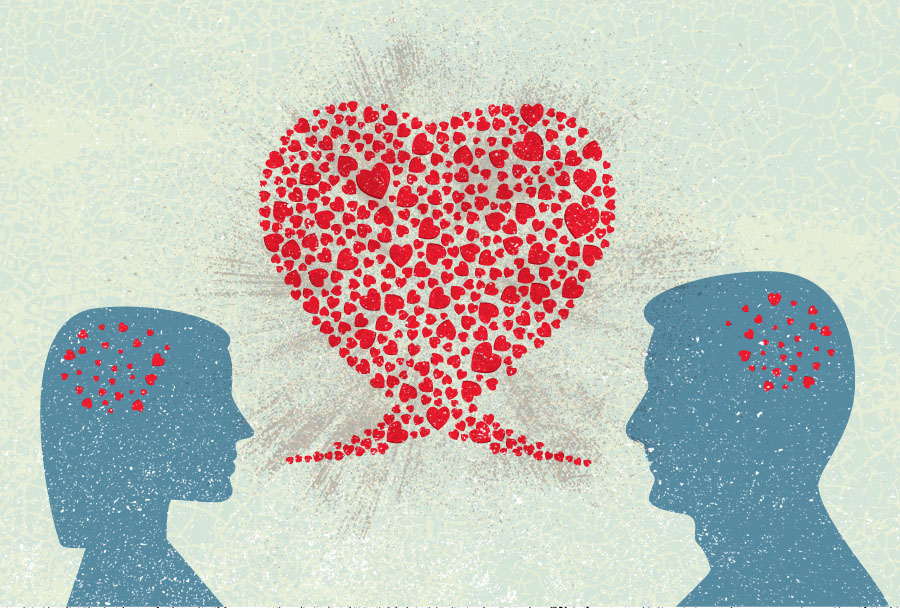
In couples counseling, I often share with clients that feedback functions like a two-way street in intimate relationships. There’s a steady flow of information traveling in both directions. If that flow of information were to stop and the cars metaphorically crashed, it would be cause for concern and immediate redress. Therefore, in order to maintain the vitality of their intimacy, each partner must be open to feedback and willing to give it. Most importantly, the goal of feedback is to positively and constructively share needs, requests, desires, and observations for the benefit of the relationship. Yes, there is an element of influence taking place, but it's important to distinguish influence from manipulation. The simplest way to draw a line between these two concepts is by pointing out that influence comes at a cost. To influence your partner, you must, in turn, be willing to be influenced.
Like what you are reading? For more stimulating stories, thought-provoking articles and new video announcements, sign up for our monthly newsletter.
Some time ago I was texting back and forth with a prospective client on whether or not he should engage in counseling. He didn’t see the need for sessions but was willing to do so in order to prove to his wife that he didn’t have a problem. Great reason for counseling, right?! I texted him, “If it matters to the ones who matter to you, then it’s worth doing.” I think the candidness of my message and the practical wisdom behind it caught him off guard. He quickly texted me back and said that was reason enough to try.
Intimate relationships can be catalysts for personal growth. We develop as a people and attune to the rhythm of our partners to greater and greater degrees. Certainly, there are limits to this idea—if your spouse is asking you to become a drug dealer, terrorist, or contract killer, then yes, maybe rethink the relationship. However, couples often get stuck and struggle to really listen to each other when there is a request for change on the table. At these stuck points, I purposely slow the pace of conversation and ask my clients to boil down what their partner is saying. If someone can get past their defensiveness, they realize their partner is, in actuality, asking them to be more consistent, be a better listener, follow a budget, back them up on parenting choices, or equally contribute to household chores. When blame is removed and defensiveness is quieted, partners are typically offering genuine feedback and making reasonable requests of each other. I remind couples that feedback is offered with the intent to make the relationship better, not subordinate one partner to the whims of the other.
Back to the story of the client I was texting. His wife wasn’t willing to continue the relationship because she viewed his behavior as abusive. He strongly disagreed. If he wanted to keep his marriage, he was going to have to reevaluate his behavior. This, as you can imagine, would be a difficult and or challenging thing to do. He asked again why he should do this. I repeated what I said to him in the text: “If it matters to those who matter to you, then do it.” My text exchange was enough to intrigue him, and his wife was impressed with his openness to my challenges, so they decided to come in for a “trial run.”
Sitting down with the two of them, I made the case that out of all people we have to change for, why not your spouse? Every day, we make constant adjustments and changes to our behavior and routines for co-workers, bosses, family members and friends, but when it comes down to spouses, we throw a fit? How does that make sense? I went on to say to the husband, if you aren’t going to receive your wife’s feedback, then who are you going to listen to? She of all people he should trust, especially since she had his best interests in mind. He struggled to receive what she said not because of what the feedback was or who it was from, but because he perceived her feedback as a threat and attack, which always put him on the defensive. He couldn’t hear what she was trying to say. He couldn’t understand the intent behind her words. She gave the feedback that he was not a good listener and it hurt her when she felt unheard. Instead of trying to understand, he’d argue that was actually an excellent listener and it was her fault they couldn’t communicate. That, in fact, she was the problem, not him. His comments betrayed his underlying, hidden assumptions. He did not believe that his relationship was an opportunity for growth, or that he had anything to improve upon. He did not think feedback was necessary for a vital relationship. He could not see the noble intent behind his wife’s feedback. Sad to say, their relationship did not survive.
I keep this unfortunate case in mind when I work with couples. It serves as a real-life example of how important feedback is to the vitality of an intimate relationship. This case motivates me to impress upon my clients early in the therapy process the absolute necessity of feedback.