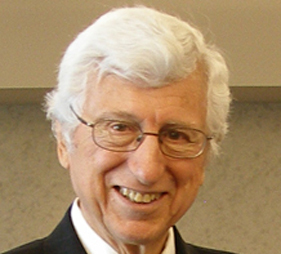
Nick Cummings on the Past and Future of Psychotherapy

A Psychotherapy for the People

Victor Yalom: Well, Nick, good to have you here at the Brief Therapy Conference in San Diego, 2008. I believe you’ve long been a proponent of brief therapy and intermittent therapy throughout the lifespan.
Nick Cummings: Correct. In fact, I started that in the 1950's.
VY: Really? Tell me about that.
NC: I was trained as a psychoanalyst and went into a psychoanalytic practice in San Francisco. I did this for a number of years and decided that if I were lucky—I had an epiphany one night—that by seeing patients four times a week for seven years, in my entire lifetime, if I live long enough, I might touch 70 lives. And it occurred to me that that's not why I became a psychologist.
VY: Now, for some people, touching 70 lives deeply would seem like a good thing.
NC: Well, in those days there was no prepayment, so it was essentially treating the diseases of the rich–people who could pay. And to pay for four sessions a week, you had to have some money. It occurred to me that there was a great need out there among working people that didn't have these services available.  If they had mental health issues—in those days all you had was psychoanalysis—they didn't go into it. Minority groups—for example, African-Americans—turned to religion when they had distress, because psychotherapy wasn't available to them. We were the first program to make it available to them for free. And the idea that African-Americans didn't go into psychotherapy turned out to be a myth, because when we provided it, we had many African-Americans in the late 1950's in our program in San Francisco. So after practicing psychoanalysis for a while, and butting up against the psychoreligion of the San Francisco Psychoanalytic Institute, which was absolutely rigid in those days, I decided this was not what I wanted to do, and I was wondering what I was going to do. 

My wife said to me one day, "Kaiser Permanente is looking for a chief psychologist." So I applied, found out there were some 56, 58 people that applied, and I made the final cut of half a dozen finalists. In my interview with the founders of Kaiser Permanente, which was very young in those days—Kaiser Permanente was formed post-World War II—they said to me, "If you take this job, you've got to agree that for the first six months we can fire you with no questions asked." I found out later I got the job because the other five finalists said, "No way," and they withdrew. To me, that was like waving a red flag in front of a bull.

VY: You liked the challenge.
NC: I loved the challenge. "I'm going to take this job and I'm going to show you that I can succeed." After I started, I found out why they had made this challenge: my predecessor had been Timothy Leary. Do you remember Timothy Leary, the High Priest of LSD? He was the chief psychologist of Kaiser Permanente before me.
VY: Wow, who would’ve thought that?
NC: This was before he went to Harvard and got into LSD and so forth. But he was so interested in doing research that they couldn't get him to send one of his people over to the hospital to do a bedside consult. So one day, Sidney Garfield told me—Dr. Garfield was the founder of Kaiser Permanente—he came to work and the second thing he did was hang up his coat. The first thing he did was pick up the phone and fire Tim Leary. And then he decided that he didn't want anything more to do with psychologists. They went for a couple of years without them, but then decided they couldn't get along without them. And Dr. Garfield, interestingly, although he was a physician, didn't want the department vested in psychiatry. He wanted psychologists doing the work, because Kaiser Permanente was beginning to realize that a lot of the so-called medical conditions were really emotional problems translated into physical symptoms. And they said, “A psychiatrist is ultimately a physician”–wearing white coats in those days—“and it's just going to ingrain in the patient that this is a physical issue.” So he wanted it done by psychologists. Two years later he decided he was going to try again; I was interviewed, and I stepped into that post.

Throwing out the Couches

VY: You’ve had obviously a long, illustrious, and sometimes controversial career; we could spend hours going through all of it. So to be brief, what were a few of the things you did at Kaiser that you thought were instrumental?
NC: The first thing: in those days, you never started therapy until you did a social worker intake. Then, after the social worker intake, you did a battery of tests. Those were absolutely mandatory before therapy could start.
VY: Was this just at Kaiser?
NC: No, this was the United States! And the battery of tests were the ubiquitous Wechlser Intelligence Scale, Rorschach, Thematic Apperception Test, the Bender Gestalt, and the Machover Draw-A-Person. You had to do those five tests—it was written in the bible of psychotherapy in those days.
VY: Wow. I had no idea.
NC: Before you did the battery of tests, you had a social worker do an intake interview. By the time the therapist saw the patient, the patient had told his or her story two other times. Now this was the third time. We eliminated the first two. Everybody said, "They're going to be sued up the kazoo. This will not work." We never got sued. The first person to see the patient was the therapist.
VY: Makes sense.
NC: Which is what we do now! That was radical in 1957. It worked. So that's one of the things we did.

I had the power to hire eleven psychologists, twelve of us in all. And I had my own psychoanalytic couch, being trained as a psychoanalyst, so I ordered eleven more psychoanalytic couches, all with nice tufted black leather, just like Freud's. We started seeing plumbers, carpenters, bus drivers, restaurant servers…
VY: How many times a week? Would you see them more than once a week?
NC: We insisted in the beginning we had to see them twice a week at least. And we'd ask them to lie on the couch, but they were uncomfortable. They'd want to get up off the couch. So I had another epiphany.

I saw a working class man that had back trouble. He’d exhausted all 33 orthopedic surgeons at San Francisco Kaiser, and they all decided, "This is all in your head; go see the shrink." I asked him to lie on the couch. He said, "Sure, Doc," and he lay on the couch face down. I said, "No, no, you don't understand. I want you to lie on your back." He turned over and said, "Sure, Doc, but how are you going to examine my back if I'm lying on it?" I said, "No, no, no, I'm not going to examine your back." He said, "What are you going to do, Doc?" I said, "We're going to talk." "Oh!" He jumped up off the couch, grabbed a chair, put it opposite me, sat down, and said, "OK, Doc, what do you want to talk about?"
It suddenly hit me that everybody in the world knows that when you talk to people, you talk face-to-face–except psychoanalysts.
It suddenly hit me that everybody in the world knows that when you talk to people, you talk face-to-face–except psychoanalysts. You have to sit behind the couch so the patient can't see you.

So we decided to get rid of the couches. We called up Goodwill and when they came out to pick them up they looked at them and said, "What are these? Nobody can sleep on them: they slope. You can't sit on them because they don't have a back. We don't want them." They refused 12 couches! So I called up the Salvation Army. They came out and they said the same thing: "These are ridiculous, what are we going to do with these?" So I called up St. Vincent de Paul. And I told them we had 12 nice black leather tufted couches that we wanted to give away. I got my staff—we were on the third floor—and I said, "We're going to take these couches and we're going to carry them in the elevator and stack them up on the street on the corner. And I'm going to stand out there." When the truck pulled up at the appointed time, they said, "We don't want these." I said, "They're yours. I'm going to walk away, and if I have to call the police that you're littering the sidewalk… Because they're yours, you agreed to take them." That's how we got rid of the couches! So we started seeing patients face-to-face. I was immediately declared a traitor from psychoanalysis.
VY: So your traitor status started early in your career.
NC: Very early in my career–actually much earlier, before I became a psychologist, but anyway, that's another story.

Your Therapist for Life

So we started seeing patients face-to-face, and instead of asking them to free-associate, which working people didn't know how to do… See, up until that time, the only people we treated were the educated class who had read about psychoanalysis and were eager to try it. So when you'd say, "Free-associate," they would do it. These people didn't know how to free-associate. They knew how to talk. We started listening to them and began to develop focused, targeted therapy addressing the problem. Do you remember a man named Michael Balint?
VY: Heard the name.
NC: Michael Balint helped found mental health in the British universal health system after World War II. In his 1950 book, The Doctor, the Patient, and the Illness, he said that physicians have to become more like psychologists, and psychologists have to become more like physicians. He said that the idea that a psychologist is going to treat a patient so that for the rest of his life he will never have another neurotic symptom is insane. It's crazy. Physicians don't practice that way. You come in, you have the flu, you're treated for the flu. After the flu is cured, you're dismissed. But two or three years later, you may come in with a leg injury, with a fall, with whatever. And you're treated for that. Psychologists should treat people for the condition that brings them in.
VY: There’s no magical, comprehensive cure.
NC: That's right. So we started doing that, and the hostility was enormous. We never terminated a patient. When we got to the place where the patient said, "Gee, Doc, I'm feeling great, do I have to come in?" I'd say, "No, we're going to interrupt our treatment. Just like you go to your doctor for your physical problems, you come here if you ever have another problem that you can't solve yourself."
VY: People don’t have the idea if the doctor cures an illness or a virus, that that’s the end of their relationship with the doctor.
NC: Exactly. We extrapolated that into psychotherapy. This was absolutely heresy in those days. I was attacked, not just by psychoanalysts, but by colleagues. And it worked because the patient could come in for life. We began calling itbrief intermittent psychotherapy throughout the life cycle. "I am your doctor for the rest of your life." And the interesting thing was we found out it was transferable—that patients who might not have come in for four years would start talking as if they'd been in last week.
VY: Kind of like old friends: if you don’t see a friend for a long time, you pick up where you left off.
NC: Exactly. I might not remember the last conversation that well, but they did. And it worked. Now, they didn't know that there were other forms of treatment, but for what we were doing, it worked. And Kaiser said, "How do we know that these people are doing well?"–because calling them up and asking them "How are you feeling?" is unreliable.

Kaiser got interested in psychotherapy because they found out that 60 to 70 percent of their physician visits in primary care had psychological, not medical, conditions. So we decided to follow these people the year after they'd been in, the second year after, the third year, and see what their overutilization of health care was, because they would be running to the doctor when they actually had psychological problems. We found that we were reducing medical overutilization by 65 percent within five years after the initial contact, with no further therapy. And that's how the medical cost offset attracted the National Institute of Mental Health, the Veterans Administration, and so forth. We started a series of research.

The acceptance in medicine was terrific. The acceptance from government in Washington was terrific.
The rejection from my colleagues was intense. I was accused of destroying psychotherapy singlehandedly.
The rejection from my colleagues was intense. I was accused of destroying psychotherapy singlehandedly. And I said, "Well, it's just a pleasure to learn I'm that powerful." But nonetheless, this is what I had to put up with. I contacted Michael Balint and asked if he could come to San Francisco and spend a week with us. And I wanted him to meet with our psychologists and physicians. He asked, "Can I bring Alice?"—his wife. Victor, we got both of them for one week and we would go from morning, have dinner, and go into the evening. We got him and Alice for one week, not counting airfare and hotel, for $1000. Both of them, in the late 1950's.

He convinced us that we were going in the right direction. A lot of my staff was beginning to chafe under the attacks, but all of this bolstered our resolve and we kept going, and we'd write about it and we'd publish. All of us became consultants in Washington, D.C. over this. For example, I became a consultant to Ted Kennedy when he was head of the Senate subcommittee on healthcare. At the same time, I was in private practice.

So this is how we developed the model of brief intermittent psychotherapy throughout the life cycle. Later we changed it to focused intermittent psychotherapy because our adversaries had made such a dirty word out of "brief." We decided to call it "focused" or "solution-based" or whatever.

Strange Bedfellows at the State Capital

VY: Now, how did you get from there to starting the California School of Professional Psychology, the first independent professional school?
NC: I found out, in talking to students in the late 1960's, that the same conditions were extant with them that were there when I went through a doctoral program. Clinicians were not allowed to join the faculty. They had to have lots of publications, etc. etc.—all things clinicians don't do, because clinicians are busy seeing patients. So I started working with the education and training board of the APA to try to change the rules of APA accreditation to allow clinical faculty to be brought on board with the same status as nonclinical faculty. I utterly failed. Finally, one night in the middle of the night, I couldn't sleep and I had another epiphany. I said, "I have to start our own school." I was president of the California Psychological Association at the time; Don Schultz was our executive officer. The next morning I could hardly wait to tell Don my idea. And Don started saying, "You know, Nick, you're working a little bit too hard. I think you should maybe take a rest." I suddenly realized Don was treating me like I was having a psychotic episode or something with my idea.
VY: It seems work is what drives you and keeps you alive.
NC: It's invigorating. Especially if it's innovative.
I have to change careers every seven years because once I succeed at something, administration bores the dickens out of me.
I have to change careers every seven years because once I succeed at something, administration bores the dickens out of me. I have to go out and create again. This is why we're forming this new program.
VY: We’ll get to that in a second.
NC: So anyway, Don says, "How are you going to pull this off?" Ronald Reagan was governor of California in those days. No friend of psychology. But Reagan was having a fight with the University of California on the Board of Regents. And I knew that he might listen to this idea, not because he liked psychology, but because he wanted to do something to the Board of Regents.
VY: They say politics makes strange bedfellows.
NC: Absolutely. He had an administrative assistant named Dr. Alex Shariffs who had been Dean of Students at Berkeley, and I knew Alex. So I called Alex up and said, "Can you give me an appointment with the governor?" "Oh, what's this about?" When I told him, he said, "Hey, that sounds like a great idea!" So he arranged it. When we walked in, the governor said, "Dr. Cummings, today is very busy." They were having the eruption on the San Francisco State College campus.
VY: Yeah, late 60’s.
NC: Yeah. "You've got 20 minutes." We were there for almost two hours. Once he heard it, he kept asking questions. Finally he said, "Dr. Cummings, I'll make a promise to you. You get a first-class faculty, a first-class library, you get an endowment and a curriculum that makes sense, and I will order the head of the department of education in the state of California to accredit you."
VY: That’s a dramatic story.
NC: I thought, "How do I get a first-class library? This takes millions of dollars." I discovered in my research that any Ph.D. in the state of California had complimentary access to the Berkeley and UCLA libraries. So I got a card and all of my students got duplicates. And they all used the University of California libraries, using my card.
VY: So they were all using Nick Cummings’s card!
NC: We got it later amended that any doctoral student could use the state facilities. When we got it changed, they had their own cards as bona fide doctoral students. So we solved the library problem. We got a first-class faculty because I got 200 psychologists to volunteer to teach for free for 18 months—they would all teach one course. And they loved it. And this was sort of like our endowment. Teaching free for 18 months launched us, because we didn't have the money up front.
VY: That’s a lot of free labor.
NC: A lot of free labor, but it was very productive free labor. They loved it, and they loved interacting with our students. And we had a very innovative program.

Originally we started with the San Francisco and Los Angeles campuses. The San Francisco campus was above a machine shop.
VY: I heard about that. I heard there were pillows on the floor and all the students had to be in group therapy.
NC: Yep, absolutely. But when the big machines were running on the first floor, the whole second floor would shake and vibrate. The Los Angeles campus was in a condemned Elks Lodge, and the building was right on MacArthur Park and was due to be torn down. We got it for nothing. But the problem was, right in the middle of class there could be plaster falling off the walls. But within a year we got enough money, got our own facilities, and moved out of these. And then we founded the San Diego and finally the Fresno campuses. And this launched the professional school movement in the United States. So today, even though the APA has accredited doctoral programs, there are clinician faculty members in universities.
VY: Before we get to the new program you’re launching, what are your thoughts on the status of professional school education now?
NC: It has failed.
VY: How so?
NC: I formed the National Council of Schools of Professional Psychology—NCSPP. And I had set it up with Washington, the department of education, that it would be the accrediting body for the professional schools. Remember that our first classes at CSPP were in the 1970's; I founded it in the '69-'70 school year. We held our first meeting, and I said, "I'm doing the last thing for the professional school movement." We had to ratify the articles of incorporation, etc., etc., and elect a president. They elected Gordon Derner, who was my mentor at Adelphi. Gordon had run three times for APA president and lost, and he wanted APA respectability. He talked the group into going for APA accreditation, which was the biggest mistake–they signed their death knell at that point because the APA made them hire full-time faculty. Now, I could get ten to 12 part-time faculty to teach 12 courses for the same cost of hiring one faculty member who taught two courses. So we had created the business basis for the professional schools to succeed even though they were tuition-dependent. But once they had to get full-time faculty, they couldn't make ends meet. What they're doing now, unfortunately, is turning out hoards of master's-level practitioners and PhDs. They're accepting 900 GRE scores—it used to be if you weren't 1600, you couldn't get in. And they're flooding the market because they need the tuition. In that sense, they've failed.
VY: You’re known for making strong statements, and to say “failed” seems… There are certainly lots of good programs, and lots of good psychologists coming from these programs.
NC: And there are lots of very poor psychologists coming from these programs.  I say about them that some of the best psychologists I've ever worked with came from the professional schools, and some of the worst have come from these same professional schools. The range of ability is incredibly large.  The old saying that you can't make a silk purse out of a sow's ear also applies that you can't make a sow's ear out of a silk purse. The bright students do well, and they flourish in the professional schools. And then there are students that limp through.

The New Behavioral Health Providers

VY: Jumping ahead, you’re starting a new program this coming fall: the Nicholas Cummings Doctorate in Behavioral Health. What’s the idea behind this?
NC: The idea behind this is we have launched a plethora of professions out there. We not only have psychologists; we have social workers, we have MFTs, and we have MA-level counselors. All of these organizations fight each other. And when the newer organizations are looking for licensure, the older organizations fight them, just like psychiatry tried to prevent psychology from getting licensure. We tried to prevent social work from getting licensure. We now try to prevent MFTs from getting licensure, master's-level counselors from getting licensure. So we have created a very antagonistic atmosphere with a profession called psychotherapy that is fractionated into organizations that are fighting each other.

Also, we have drifted so far away from health care that we have created two silos. We have a huge silo called health care, and it gets a trillion dollars a year. And over here we have a tiny silo called mental health that gets the crumbs. In the last ten years, where we've passed parity in 44 states, the portion of the budget that goes to mental health has dropped from 8 percent to 4.5 percent—almost half.
VY: Parity hasn’t helped.
NC: Parity has done nothing, because when you pass parity, the managed care companies either create more herculean hurdles for mental health and for physical health, or they drop mental health altogether from their package. So we have declined by almost 50 percent in funding; the mental health silo's getting smaller and smaller. The American people pay for health care. They do not pay for mental health care on federal funding. That is an afterthought; it's the crumbs.
Until we become an integral part of health care, we will always, always get the crumbs.
VY: So how are we going to do that, and how is your program going to help with that?
NC: Our program trains master's-level psychotherapists who've been in the field for several years and are savvy. They've been up against the world of hard knocks; they know what it's like out there. They know that psychotherapy has declined by 40 percent in the last decade. They are ready to upgrade and learn a new profession called behavioral health provider, to work in medical settings side by side with primary care providers, with equal status. You can't work in a medical setting unless you're called "doctor"—there is that chauvinism.
VY: So how are they going to get equal status? Even psychologists don’t get equal status.
NC: Psychologists go into medical settings and they make fools of themselves. They don't know a type-II diabetic from a type I-diabetic. They make so many errors, they don't know what medical protocol is, and they don't know how the health system works–they've been isolated in this other silo. So they're not accepted. Then they become defensive. They see that medicine is relegating us to a lower status. When we integrate behavioral care providers into primary care settings on a ratio of one BCP to six PCPs—BCP being behavioral care provider, PCP being primary care physician…
VY: One behavioral care provider to six physicians?
NC: In some systems they've loved it so much they've upped it to three—twice as many as our original model.

You always have to have at least two BCPs in every medical setting, because one is doing the treatment while the other is doing what we call the “hallway handoff.” When a physician is seeing one of the 60 to 70 percent of her or his patients that have severe psychological issues, instead of writing out a prescription and getting the heck out of the office—because they've learned that if this patient opens up and collapses and cries, they're stuck there for the next hour, and they have a waiting room full of patients—they can say, "You know, Mr. Smith, Dr. Jones, my colleague down the hall, I think can help us with your case." And the physician walks Mr. Smith only a few steps down the hall to Dr. Jones's office. And Dr. Jones is a behavioral care provider. The physician introduces the patient to Dr. Jones, and they sit down–the primary care physician doesn't dump the patient–they sit down, but only for a couple of minutes. And then he excuses himself, goes back to his office. The BCP takes over and does a 15- to 20-minute interview. They have been trained to engage the patient in treatment.

Now, Victor, the amazing thing is, we've done this with the U.S. Air Force, we've done this with several VA centers, we've done it in TRICARE [U.S. Military Health Plan], with returning veterans, and in community health centers. I named it the hallway handoff and the term has stuck. Eighty-five to 90 percent of patients who experience the hallway handoff will follow up and get into treatment, whereas when the physicians makes a referral to an outside therapist…
VY: They’ve got to first have the courage to call the person, set up an appointment, go across town.
NC: Only 10 percent get there.
VY: Wow.
NC: Literally only 10 percent. So this increases our patient flow by 900 percent! It's amazing. And it's consistent. Cherokee Health System in Tennessee has adopted this model. It's going great guns. Native Americans are really getting engaged in treatment because there's no stigma. This is a seamless part of the health system. You're not being abandoned by your physician and thrown into a mental health system where, "Oh gosh, my doctor thinks there's something wrong with my head." Even if they know this is a behavioral care provider, they see it as part of the health system, and the stigma is gone. It solves access, for crying out loud. You know, I have decided that we perpetuate stigma and access in our current practice, inadvertently.
VY: How so?
NC: Patients have a hard time getting to us. They have to call, make an appointment, go across town, leave the health system, go into a mental health system. The stigma becomes an issue, so they deny their own access because they don't want the stigma. We make it harder for the patient to get to us because psychologists do not congregate in health centers. If you look, physicians are herd animals. Every community has a medical plaza.
VY: They have a hospital and a medical office building next to it, or in the hospital.
NC: That's where podiatrists practice; that's where optometrists practice. Psychologists are across town in a solo office.
VY: Well, a lot of psychologists don’t think that they’re medical providers. We’re having conversations, as you said, with people about life—about their relationships, about their family, about their work.
NC: That's why we get the crumbs: because the American financial system pays for health care; it doesn't pay for psychosocial care.
VY: You said earlier that when professional schools joined with APA, I forgot your wording, but it was something like they made a pact with the devil. Don’t you think that, by identifying ourselves as medical providers when we’re really not, in some sense we’re making a pact with the devil, despite the financial gains of it?
NC: You just mentioned the fallacy. You said, "Wouldn't we identify ourselves with medical care?" There's no such thing now. When you talk to a nurse, they're not in medical care. They're in health care. When you talk to a podiatrist, they're not in medical care. They're in health care. Every health care profession recognizes that: "Oh, no, we're apart. We're not going to be medical care." Psychology has not caught up to the fact that, in 1985, the Supreme Court ruled that health care was subject to the same anti-trust laws as every business, and medicine lost their stranglehold on health care. You have these independent professions. And you know who figured this out first?
VY: Who?
NC: Nurses. Nurses used to be the lapdog of physicians. They'd do all the scutwork. Nursing now has established nurse practitioners. Only two percent of physicians go into primary care because that's not where the money is. The money is in specialties. Within 10 to 15 years, the primary care physicians in the United States are going to be nurse practitioners. Nurses know this. So the 26 nurse practitioner programs and nursing schools in the country this fall, 2008, upgraded their nurse practitioner program from an MA to a doctorate, because they're getting ready to be the primary care physicians. They've already done that. They own emergent care. You go to a doc in a box, it's going to be a nurse. The nurses are going full-blast, because they say, "It's not the medical system anymore! It's the health care system, and we're going to lead the way in health care."

The Hallway Handoff and other How-tos

VY: Let’s get back to your program in behavioral health. What are people going to learn in this program, and how are you going to teach it?
NC: They're going to take survey courses in the basic sciences. They're going to learn chemistry, they're going to learn physics, they're going to learn biochemistry, they're going to learn organic chemistry—not to the extent that they’re proficient in these, but they have a working acquaintance.
VY: In a year and a half they’re going to learn chemistry, physics?
NC: The mission of this program is to train skilled practitioners who are intelligent consumers of science—the opposite of what the APA does.
The APA trains scientist-professionals. So while they're trying to do both, they end up with second-rate scientists and piss-poor professionals.
VY: Don’t mince your words, here.
NC: I'm not! I'm not. You know that.
VY: Tell me how you really feel!
NC: So for once, we say, "Let's do what all the health care professions do." We train skilled professionals that are intelligent consumers of science. That's what medicine does, that's what nursing does, that's what podiatry does, that's what optometry does, that's what dentistry does. Psychology hasn't figured this out yet.
VY: OK. So they’re going to get some survey, some general understanding, and what else? What are they going to do with this?
NC: During those 18 months, you spend two days a week in a medical setting and you rotate from outpatient to hospitals to cancer clinics, on and on. You learn the lingo of health care. Psychologists do not know the lingo of health care, and this is why they're fish out of water when they try to work in medical settings. They're going to become proficient in working like physicians work, but on the psychological side.
VY: So you’re assuming that these people–they’re master’s-level therapists, they’ve had quite a bit of experience–they have good therapy skills already.
NC: Yes.
VY: So you’re not there to teach them more therapy skills.
NC: No, we are not.
VY: So they know something about science; they learn about the medical system.
NC: Yeah.
VY: What do they need to know that they don’t know already? In other words, how do you take your existing clinical skills and modify them so that they work? Because I assume they already know a lot.
NC: They don't know how to do the hallway handoff.
VY: So what are three keys to doing the hallway handoff?
NC: They're chained to the 50-minute hour. The managed care companies always pay us on what we do in a 50-minute hour. And the more they squeeze the fee on that 50-minute hour, the more they squeeze us. So number one: abandon the 50-minute hour. It is archaic. As I say in the foreword to my latest book, the 50-minute hour is outdated in our nanosecond generation.
VY: Well, I’d say in that kind of setting I can see the disadvantage. But for ongoing depth, life-changing therapy, it works pretty well. And a lot of people do still want that.
NC: Then we're going to do what David Barlow recommends: that we should have a health care when we're part of health care. And that's called behavioral care. Then we have something called psychotherapy that continues to do what it's doing. But it's going to have to figure out how it gets paid, because under health reform, medical necessity is going to prevail, not life change. Americans are not going to pay taxes to fund a life-change system.
VY: Makes sense to me. So back to the hallway handoff: break the 50-minute hour. What else? What are the other skills?
NC: Role modeling. When you start, you sit in and watch an experienced person do the hallway handoff.
VY: Right. So what does the experienced person do, what do they know, that therapists need to learn?
NC: It's a skill that's hard to describe in words.
VY: I’ve never seen you at a loss for words, so do your best.
NC: There's no word for it; you are actually role modeling. And by role modeling, you learn to zero in very rapidly on the patient's presenting problem, which is something physicians do routinely because they have seven minutes with a patient. The average PCP visit in America is seven minutes. And in that, they've got to make a diagnosis and a treatment plan and so forth. We're not asking students to do it in seven minutes. We're giving them 15 to 20. But they learn to do it. And third, you learn what physicians need to do their job. And that's when they become so dependent on us that we achieve equal status.
VY: Well, this sounds good. It sounds like there’s a need for that.
NC: We're trying to respond proactively to where we see health reform going.

The Pits

VY: You’ve been a visionary in our field, an innovator, so let’s get you on record here. Where do you see health reform going?
NC: I see that
psychotherapy's either going to have to become part of the health system or lose out entirely.
psychotherapy's either going to have to become part of the health system or lose out entirely. Medical necessity will prevail. Marriage and family therapy, marriage counseling, occupational counseling is out. Look at the federal parity law that was passed last month.
VY: What you’re saying is it’s out of being paid for by tax dollars.
NC: Yes. MFTs are out. As David Barlow has seen, he said there are going to be these two systems: the traditional system, which we'll call psychotherapy…
VY: So that’s going to continue.
NC: That's going to continue, but they're going to have to figure out how to fund it. And it'll have to be funded out of pocket because it's not going to be part of health care. So if you want a life change, pay for it. Now, if the American people want it badly enough, they'll pay for it out of pocket, just like they do for alternative medicine.
VY: And there will still be some form of community medicine and various nonprofit counseling centers.
NC: Absolutely. But it will not be the golden age of psychotherapy that we've had in the past.
VY: When was the golden age?
NC: I'd say the 1950's.
VY: Private insurance was paying for it then?
NC: No. Private insurance came later.
VY: So we’ll be going back to the golden age, then.
NC: In the golden age of psychotherapy, there was a tremendous shortage of psychotherapists. People would wait sometimes for weeks and months for an interview.
VY: A golden age for therapists! Not for the public.
NC: Not for the public, absolutely not. I'm thinking you're asking me, "What's the fate of psychotherapists in the future?" And I'm talking about how the golden age is over. The competition is fierce. We now have 700,000 licensed psychotherapists in the United States. We only have 750,000 physicians! So we have almost as many psychotherapists as we have physicians, and they're all competing for a declining number of patients.
VY: So, in economic terms, you think we have an oversupply?
NC: Terribly. I call it a glut. A glut is more than an oversupply. I talk to students nowadays; they graduate and they can't pay their student loans.
VY: Yeah, it’s tough. But you’ve made some dire predictions before. When I started graduate school, I heard you speak, and you said something to the effect of, “Private practice is dying.” And it doesn’t seem to be, although the economics is not as attractive as it used to be.
NC: Now what year would that have been, Victor?
VY: That was about 1984.
NC: Because the book I published–I'm trying to remember the name of it–but at any rate, it predicted the decline of solo practice and why we had to succeed in doing group practices, which we didn't succeed in. Consequently, we're working at the same fee scale that we had in 1980, 1990.
VY: Exactly. So in real dollars, fees are half what they used to be.
NC: So my prediction—OK, it didn't die, but it sure is limping. It's the walking wounded.
VY: Right. Now, as I said, you’ve been a visionary and you’ve started a lot of new things, but let me be devil’s advocate for a minute.
NC: Oh, you can't do that, Victor.
VY: Sounds like you made some great changes at Kaiser, but if you look at where Kaiser’s at now, they provide very limited mental health services.
NC: Absolutely.
VY: If people are suicidal, they can get in. If not, it will take a few weeks, and they may not get back in for a month. And they’ll get a few sessions in most places.
NC: Correct.
VY: I imagine that must be somewhat disappointing for you.
NC: Terribly. But we're now in the third generation from the founders of Kaiser, and each succeeding generation becomes less like the Kaiser Permanente vision and more like the managed care routine.
VY: All right. You started the professional schools and you’ve said they’re a failure.
NC: Yes.
VY: You started American Biodyne, which was an innovative managed care organization.
NC: It was the only managed care organization where it was completely run by psychologists.
VY: Right. And that was bought out by Magellan. And what’s the status of it now?
NC: It's the pits!
VY: It’s the pits. So, you started three great things with great promise, and they’re all the pits. What makes you keep going and trying something new?
NC: I'm very proud of the fact that clinicians can be on faculties in psychology. I'm very proud of that. Maybe the professional school movement went astray, but there were some gains there. Kaiser Permanente is in its third generation; it doesn't have the vigor and vitality of the founders. I mean, Sid Garfield and Morris Collen, those people were fantastic physicians who saw that psychology was more important than psychiatry, and so forth. Naming a psychologist chief of mental health for all of Northern California was unthinkable.
VY: Thanks for balancing out your record. You’ve had some lasting successes as well.
NC: Yeah. So at any rate, there have been great disappointments because people tend to—what should I say—return to the mean.

I Hate Golf so I Can’t Retire

VY: So you told me at the beginning that you’re 85 years old.
NC: Yes.
VY: You look fantastic.
NC: Well, thank you.
VY: You still have a great deal of energy.
NC: Thank you.
VY: What keeps you going?
NC: Productive work. I love it.
I hate golf, and when you hate golf, you're not allowed to retire, because all retirees have to move to Florida and play golf.
I hate golf, and when you hate golf, you're not allowed to retire, because all retirees have to move to Florida and play golf. I hate golf so I can't retire. But I joke about that. I really, really enjoy productive work. This month, my 47th book is coming out.
VY: Wow.
NC: All my books do well. Eleven Blunders That Cripple Psychotherapy in America: A Remedial Unblundering is shaking up the APA. People are reading it. I get invited all over to talk at meetings and state conventions and so forth on the subject. So maybe I was put on this earth to be an agent provocateur. I don't know. But nonetheless, I am proud of my profession. I love this profession. I have never left it. I want it to succeed. It dismays me that we've created a profession that is full of economic illiterates. They don't think that private practice is a business, yet they have a product called psychotherapy. They have a place of business called their office.
VY: A unique skill set.
NC: A unique skill set. They collect a fee. They pay taxes on that fee. It has all the attributes of a business but they say, "No, no, I'm not in business."
VY: I heard recently that a lot of psychotherapists are reluctant to accept credit cards because they feel they’re enabling their clients to get into debt, rather than use the preferred method of payment in this country.
NC: Hippocrates said it is the obligation of the physician to do no harm, and he lists a number of things that the physician has to do. Then he talked about the obligations of the patient, and the first one was to pay the fee. Now, that was Hippocrates in 300 B.C.! And psychologists haven't learned that. You go to a physician's office, and when you check out, you pay the fee. At many physicians’ offices now, you pay the fee when you check in. Psychologists haven't learned that, and they say, "I didn't become a therapist to make money."
When I ask them, "Did you become a therapist to lose money?" they don't know what to say.
VY: So what parting words of advice would you have for young psychologists, students wanting to get into the field, people in mid-career to ensure their continued success?
NC: Pick your graduate school carefully.
VY: OK. If you’re going to graduate school, pick it carefully
NC: Make sure that they are teaching business courses, teaching you where the profession is going and how you have to evolve to keep up—all the things that most ivy-covered professors have no idea about. And drop your anti-business bias. Drop your guru worship. We're at a conference right now that is founded on guru worship. There was a time when we worshiped our leaders because we had no evidence-based therapy. If you wanted to prove something, you'd say, "Well, Sigmund Freud said…" or "Anna Freud said…" or "Carl Jung said…" Now, under health reform, if you don't do evidence-based therapy, you won't get reimbursed. So pick your graduate program carefully. I would say most of them are worthless. Again, I'm mincing my words, I know.
VY: You mentioned evidence-based treatment. What’s your general thought about that, and manualized treatment as well?
NC: The problem with evidence-based treatment as it's going now—it's very recent—I refer to the three E's of psychotherapy. We need to do what the IOM has told medicine it has to do–we have to catch up to that.
VY: What’s IOM?
NC: The Institute of Medicine. Their "Closing the Quality Chasm," one of the greatest reports ever written about health care, alludes to this: that there's too much non-effective treatment going on out there. But at any rate, Chambliss has called our attention to the need for evidence-based, the first E. Barlow has come along and he said, "Now wait a minute, what often works in the laboratory doesn't work in the treatment room. So we also have to look ateffectiveness. Does the evidence-based that worked in the laboratory work now in real life?" That's the second E. And the third E was developed by some guy named Nick Cummings, and it stands for efficiency: that we not only need evidence and effectiveness, but we also need efficiency.

Let's take an example in medicine. There was a time when everybody got a coronary bypass: expensive, intrusive. It took months to recover. Now we find out that a lot of the people can be treated with a stent instead of a coronary bypass. That's efficiency. The coronary bypass was effective, but it wasn't efficient. Psychotherapy does not look to develop efficiency. And this is one of the things we're doing in this program: we're creating the kind of efficiency that goes from getting 10 percent of the patients referred to 90 percent. Those are the three E's that I use. Stopping at evidence-based would be a mistake. It has to be proven in the field.
VY: And what about manualized therapies that are being taught? How do you manualize a human relationship, especially given that everyone is different?
NC: At American Biodyne, we had 68 proven group interventions or therapies–all time-limited, manualized psychotherapy. And they were guidelines; they were not cookbooks.
Ultimately, therapist ingenuity, insight and decision trump the manual.
VY: I’m glad to hear you say that.
NC: Too many manuals are considered sacrosanct. That's a mistake. The word "manualized" to me is a dirty word because it denotes, "Here's the bible that you can't deviate from." I don't believe in that. The guidelines we had for our programs were based on our research. For example, if I can give you one innovation that was just absolutely fantastic…
VY: Sure, why not?
NC: Borderline personality disorder—the scourge of all therapists. If you see borderlines, get ready—someday you're going to be sued, as Bryant Welch, who defends psychologists all over the country, said. We developed a program for treating borderlines. We created an esprit de corps where the borderlines would police each other, which a therapist can't do. And we created an atmosphere where, "If I can't do this, I'm not going to let you get away with it."
VY: These are in groups.
NC: These are in groups. And our research showed how effective this was.
VY: Was the group identified as being for borderlines?
NC: Yeah.
VY: So they accepted their diagnosis?
NC: "You're a borderline." The first such group we did we called the "last-chance group." We had a group of borderlines that, for one of the Blue Cross plans, were so egregious that Blue Cross was considering dropping their health insurance. And I said, "Give me one more chance." They were all borderline women. See, male borderlines are scarce in psychotherapy because they go into the criminal justice system. They do things that get themselves in jail. Female borderlines disrupt the mental health system, not the criminal system. So most of our borderlines were women. And we called this the "Losers Group." "If you flunk this therapy, you're out of the health plan. I have prevailed upon the heads of Blue Cross Blue Shield to give you one last chance. I want to let you know that I have a side bet that you're all going to flunk. It's a sizable bet and I don't think I'm going to lose, because I don't throw my money away." So they're motivated: "I'll show this SOB." But then you create an atmosphere where they police each other. And then from there—and we would only have 20 group sessions, two hours each—they start to be able to form boundaries for themselves for the first time. And then we allow them brief intermittent psychotherapy throughout the life cycle. "Whenever you can, come back." It works. My therapist said, "I'm terrified when I have one borderline in my office. You want me to have eight??"
VY: Well, that could get into a whole other discussion about why there’s so little group therapy going on when it’s such an effective mode of treatment. But before we wrap up, getting back to words of wisdom, one was for therapists to pick their grad schools carefully if they’re going; the second was, if they’re practicing, to think of themselves as businesspeople. Any more words of advice?
NC: Be flexible and innovative. Unfortunately, too much of psychotherapy has been carved in stone. It is turning itself into obsolescence. Patients are ultimately our customers. The main characteristic of a customer is if they don't like your product, they don't buy it. And that's what we are now. Patients have been misled into now saying psychotherapy takes too long. They accept medication.
VY: I don’t know that they’re not buying it. I think the demand is still there and probably stronger than ever. I think its more an oversupply, as you said.
NC: That's one. But the actual number of referrals for psychotherapy have declined by 40 percent. Let me give you a very concrete figure. In 1995, 92 percent of all patients discharged from a psychiatric hospital were referred for outpatient psychotherapy. In 2005, it dropped to 10 percent. Ten percent!
VY: They’re not being referred–not that they’re not wanting it.
NC: They're put on a medication regimen. They're not being referred, but… If a customer wants the iPod, they're going to get it. If they really wanted psychotherapy, they'd get it. They say they're satisfied with the medication. Psychotherapy is not in its golden era; we would see articles in 1950 that psychology was going to solve the world's ills.
VY: And in the 60’s, drugs were, and in the 70’s, encounter groups were; and then it was the decade of the brain. Hope springs eternal.
NC: Yeah. But if a product keeps up… Nobody is going to buy a 1980's Apple computer.
If Apple hadn't kept up, if they hadn’t made the iPod, etc., they would have gone out of business. We also have to innovate.
VY: You’ve certainly walked the walk in your life. It’s been a pleasure to review your lifetime of innovations, creativity and contributions, even if they occasionally disrupt things and annoy people. It’s been a great pleasure talking with you, so thank you very much.
NC: Thank you very much, Victor.
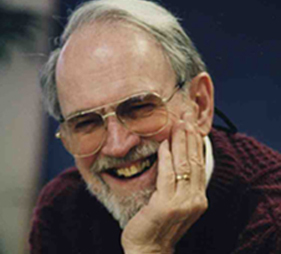
James Bugental on Existential-Humanistic Psychotherapy

The Interview

Victor Yalom: I’ll get this started with the question you always ask: are we live or are we on tape?
James Bugental: Good question. Now, can we edit the interview?
VY: I’ll have someone type this up, and then I’ll e-mail it to you, and then you can look through and see if there’s anything that you don’t like or things you want to change, and I’ll honor whatever requests or deletions you have. It will be a joint project.
JB: And this is not on video, so I can be as sloppy as I'd like.
VY: Sure. And thanks for reminding me I want to get a couple of candid photos of us to put on the website, before we stop. I recall when we made the videotape of you, "Existential-Humanistic Psychotherapy in Action." In the introduction you started off by pointing out the actual reality of the situation—that even though you were doing a real session with a client, you wanted to acknowledge that there were other people in the room influencing the situation, the videographer, and the sound crew, the lighting, etc. It reminded me of your maxim "Everything is Everything,"—that is, we must take into account the real context of any situation.
JB: It's astonishing to me even now how often people join in a conspiracy to deny that there's a camera or a camera crew—that it doesn't count.
VY: The reason I mentioned this is I wanted to acknowledge the context of our interview, and recall that that video project was the genesis of Psychotherapy.net, which we’re just launching; and I’ve invited you to be the first featured therapist of the month. For that reason, and also because you’ve had such a profound impact on my life personally and professionally, I thought it was suitable that you be the premier therapist of the month.
JB: I feel that with real appreciation.
VY: So you wrote a new book, another book, this one called Psychotherapy Isn't What You Think. Tell me about that title.
JB: What do you think it is?
VY: What do I think the title is?
JB: Yes, or what do you think psychotherapy is, either way you like.
VY: What do I think?
JB: Uh-huh.
VY: I’d like to hear from you about that title.
JB: Well, I think—see how that word just pops up over and over. What's that word doing in there? Why do I put it in? Well, I think I put it in, see, that's the way, sort of crossing your fingers, saying: Don't hold me to it too tightly; I'm tentative; I want to see what I say, how it sounds and whether I want to stand behind it. And so much in our personal intercommunications is of that order.

VY: Hedging our bets?
JB: Yeah, by not putting all our chips on it. And so much of our lives we live that way: I had my fingers crossed, it didn't count. Think of all the different ways in which we say we're living tentatively for the moment.
VY: What do you think you’re getting at with that title, Psychotherapy Isn’t What You Think?
JB: See, that's what I was just answering when I took you on this little side trip about thinking and so on. What we do is tentative, we don't want to be held to it too tightly, and particularly in the therapist's office we need to be free to sort of speculate, to think, but not commit. But also we need to know there is a difference. Psychotherapy isn't what I think. It's what I live, when it's the best—when it's the psychotherapy you really want to believe in.
VY: In this book and in your previous one, you attack a lot of the fundamental, the traditional thinking about kind of a logical, or as you say a “detective” or problem-solving approach to psychotherapy.
JB: The whodunit school of psychotherapy.
VY: Then what should psychotherapy be?
JB: It's the pursuit, it's the process of always leading somewhere beyond to somewhere fresh.
VY: And making that process fresh?
JB: Yeah. Well, you, I'm sure, like me, sometimes you get into a rut with a patient; if you listen for some time you realize you're stuck in a familiar pattern, and that pattern is what you think, not what you live. That's why it's so important to feel alive in the therapeutic hour, to be aware of what we're living in the actual moment.
VY: When you look back in your life, what are the things that have really helped you become more alive?
JB: That's a tough question.
VY: Well, the reason I ask is that the thing that most impresses people about you when you’re talking about or demonstrating psychotherapy, is not just the concepts you espouse about being alive and being present, but how you put these principles into action, how you embody them. So I’m wondering….
JB: How did I get there?
VY: Sure, maybe how you got there. What do you think helped you with that?
JB: That's an intriguing question. Let me chew on it a minute. Well, I'll tell you some of the things that come to mind. I don't know whether they're a complete answer. My parents were for some time very into Christian Science, Unity viewpoint, all those sorts of things, quasi-religious I guess you'd call them. Very well-intended and not without merit, but for me it seemed that we were just saying the words. I'm sure this happens in any religious system. You say the words in the absence of genuine presence to the words. I don't want to just indict Christian Science. It has many good things, and other things have similar sets of words, all of which is often very benign, even useful. But somehow the magic, the dynamic has slid away from the living experience of the person, and become words.
VY: Which for you weren’t truly alive?
JB: Well, for me, and I think for many others. But I don't even want to make that sharp a distinction between saying the words and what is truly alive. I think it's a gradient.
VY: But you started upon this topic in explaining how you got to be more alive.
JB: Good point, thank you. Now right there is an example of what I teach about psychotherapy: by bringing attention to my process, you helped me stay with what's more alive right now.
VY: I’ve learned a few things from you.
JB: Thank you, that moves me. It's so hard as a human being in an interaction with other humans to be open, to receive and give communication without some of the communication replacing the living. Does that say it? You know what I mean.
VY: Yes, yes.
JB: I think being alive involves constantly finding a balance for being in and out of relationship. Being in front of an audience, boy! it's easy to get sucked totally out of full aliveness. You complimented me a minute ago that I often can be alive, but I have to be wary because, once I step away from myself and realize "Hey, I'm doing it now," then I'm already not doing it. It's a very slippery slope.
VY: But sometimes you can revel right in the moment, being self-aware, and at the same time appreciate what is happening.
JB: That's right, and that's the best countermove. You know, when I step out of myself to comment on it, that can be losing my footing or regaining it.
VY: I’m going to ask you the third time, Jim. Can you think of what are some things that have helped you personally to become more alive, more embodied?
JB: My experience with the quasi-religious sects that my parents were in and….
VY: S-e-c-t-s?
JB: S-e-c-t-s (laughter). Well, let's play with that for a minute because I think in sex you have the same thing, in physical, bodily sex—that if you're feeling very sexy, if you start trying to talk about it, and describe it, there is one point at which it augments the excitement, and then another point at which it dampens the excitement. That's really an intriguing thought, isn't it?
VY: Are you avoiding talking more about yourself personally, or do you just keep getting sidetracked?
JB: I feel these were very personal things I just said.
VY: No.
JB: No?
VY: Oh, they are, but not in terms of my original question of what do you think helped you to become more alive or embodied. You mentioned Christian Science. Are you implying you reacted against this, and were propelled to find another way?
JB: Rather I would say, the various kinds of religious, quasi-religious, semi-religious experiences I have been exposed to have helped me tremendously to experience the difference between the word, the information, and the living experience.
VY: So early on in life this is something you were very aware of, this distinction?
JB: No, not very early on. I would say about high school. By that time I was beginning to be aware of it. It wasn't a sudden boom; it was a very gradual process. I suspect it's still going on in a way. I don't suspect, I know that's so, now that I say it.
VY: You’ve focused so relentlessly on this topic of presence and the importance of the human subjective experience for the last 40 years or so.
JB: If you don't have presence, what have you got? What are you working with?
VY: You’re preaching to the choir, of course. I’m convinced that this is important, but I’m wondering if you have some sense of why this particular topic held such a grip on you.
JB: Well, I think that goes back to things like the quasi-religions. I don't know why I keep insisting on putting "quasi." They are religious groups.
VY: What’s held your interest and fascination with presence for all these years?
JB: My reaction when you ask that is: Without that, what have we got? I'm surprised how can you ask that question. Without that it's all mumbo-jumbo, or – what comes into my mind – you know when you get a package, it's got these little plastic things that fill it in so the contents won't break.
VY: Styrofoam peanuts?
JB: Yes. Without that we're reduced to Styrofoam peanuts to subsist on.
VY: I can see in your facial expression that presence is just as important to you right now as it has been for the last 40 years.
JB: I'm not sure if I can quantify it like that.
VY: In either case, it’s still very important.
JB: Very important, oh, yeah. What have you got if you don't have presence?
VY: Styrofoam peanuts?
JB: Exactly, and too many therapeutic interviews are filled with Styrofoam peanuts. Don't you think?
VY: Yes.
JB: But sometimes you do depend on those peanuts. I wouldn't get rid of them.
VY: I've often had the impression that for you living through the Depression profoundly impacted your life.
JB: True, absolutely right.
VY: Anything more about that?
JB: It's such a broad question, I don't know. Let me think just a minute. See, so many of my formative years as one approaching adulthood…
VY: How old were you…
JB: I was just trying to think of that.
VY: …during the Depression?
JB: Well, 1929 was the crash. In 1929 I was what… 13, 14 but we didn't feel it totally for several years. Let's see, when was my brother born? I don't remember. He's nine years younger, so he was born by that time but was very small. And for a while my dad couldn't support us, so we went to live with my mother's mother.
VY: Where was that?
JB: In a small town in southern Michigan, Niles, Michigan. That was important, first not having Dad there. Dad's a whole other chapter, a whole other story. But, second, because it was a small town. Mother gave piano lessons and that brought us a little income, and then she got a job playing in the movie theater.
VY: Playing the piano or organ?
JB: Playing piano, and also she took organ lessons and played organ for the Catholic Church I think when their organist was ill, and that brought in some money. I always remember that the movie theater where she played most, once in a while I could slip in and sit on the bench with her while she played, and that was fun, you know. And she just improvised as she watched it. Sometimes it came with suggestions for the pianist.
VY: She’d improvise to the movie?
JB: Yes (laughter). And I'm not sure this is true – you know how some memories you're not sure about – but that was the movie that also had—oh the name just slipped past me, "Flaming Youth," or something like that. It had scenes about bad young people who danced and pulled their skirts up and things. It was sexy in a very cautious way, but you might even see the girls' thighs or something. But I never got to go sit on the bench when that was playing, although I was always trying to. Frustrating. Maybe Mom wouldn't have let me. Those were times, perhaps because my grandmother was such a dear lady, who pitched in and supported us for a while but who was a very staunch Methodist or Baptist or Presbyterian, one of those, in a way that my family was not. And she was amazingly progressive about my not going to Sunday school every Sunday. I went a lot of times, though.
VY: How do you think the Depression impacted you—then and later on in your life?
JB: Oh, God, so many ways. The splitting up of the family, the whole family for a while, and then when we finally were able to get back together, that was such a wonderful thing. Not without its problems, though. When we first went back, you know, we went by train, of course, in the coach in the cheapest way, and it was three days and two nights, or something.
VY: That’s from Chicago?
JB: No, we went to Chicago and then out to California. Dad had come out here to L.A., and so Mom packed food in a basket and we ate sandwiches and whatever she'd put in the basket. When the train was in station, she ran off and got some more supplies, and then we were sleeping in our seats, of course, and it was a big adventure. Also in the car with us were a couple of advance men, I guess they were, for the L. G. Barnes' Circus, and I got acquainted with them and they were young, and I don't remember much detail except they were very friendly to me. I think of those times with sadness and with joy. There was lots of both, and I think what it did, thinking more in terms of your question, I think those times demanded that I grow up in some way, not be so dependent as I might otherwise have been. Dad wasn't there, Mom had her hands full trying to earn some money and take care of my brother, who was much smaller, and be there for me as well.
VY: Just the two of you?
JB: The two boys, uh-huh.
VY: No girls?
JB: No girls. But what it did was—I never thought of it quite this way—it demanded I be a separate person, more than if the family had been intact and in an intact home. One thing that helped very much was Boy Scouts, after we came to California. Let's see, you had to be 12 in those days to join, and I was born in 1915, so that would be 1927, actually 1928. And I had read novels about Boy Scouts and studied about them, and, oh, I was so eager for that. Now, what was so big about that same time was doing papers. I sold papers on the street corner.
VY: Where?
JB: In Lansing.
VY: Michigan?
JB: Uh-huh. And that was good. I earned practically nothing, I know now…
VY: How much would you make?
JB: Well, they were daily papers so we sold them every day, and my guess is I might make 50 cents, but that's only a guess. It wasn't any big money. After we came to California I had a paper route, bigger stuff, regular. Had to have a bicycle, which I loved. Oh, I loved my bike.
VY: Did you have enough to eat?
JB: Yeah. Sometimes it was scrimping, and I vaguely knew in the back of my mind that my mom wasn't taking as much, that she was shorting herself some. Hard times. Dad always had such grand plans, and they mostly didn't pan out, you know. But I learned from him optimism because he'd bounce back wonderfully. The only thing, sometimes he'd go off on a binge and get drunk, and he wasn't mean but he was unavailable.
VY: Do you think the deprivation or fear of the Depression lingered with you and impacted you later in adulthood?
JB: I'm sure it did, yeah.
VY: How so?
JB: Well, to always be concerned about income, and my earnings from my paper route sometimes helped us tie over. Both of my parents felt bad about that, and Dad went back to Chicago, didn't come to Michigan because he and Grandmother didn't get along very well. But he gradually was able to earn more, send us some money, until we finally could come to California. That wasn't the end of the money worries, though. There were federal projects, you know. I can't remember the details now. He did some things on a work project, and Mom did some teaching on a federal project. It's so amazing looking back how kids can know and not know so much of what's going on with the adults.
VY: Despite that economic uncertainty, you chose to go into psychology, which I imagine was by no means a guaranteed income in those days.
JB: Well, actually, it was pretty good. Now, we came to California about 1931, and 1932, I guess, was the Olympics in Los Angeles, and I got a job as an usher, and that was neat.
VY: Do you remember anything from those Olympics?
JB: Oh, yes.
VY: What stands out?
JB: Well, the first thing to pop up was not really because of the Olympics. There used to be, every year – I guess it was called the Electrical Parade. All the major movie studios would have floats, and there were marching bands from USC and UCLA. And I guess PG&E, maybe, and some other industries would have floats. The thing I remember most about that [laughter] was that the studios, the big movie studios often had floats with maybe a Grecian scene, or something, with starlets or would-be starlets with very little clothing on them.
VY: You keep getting back to that.
JB: Yeah, keep getting back to that. I always loved that. And the ushers would always get people seated, and then when the parade came and when those floats came in, we all got down in the boxes and looked up [laughter].
VY: So you’d get the good view?
JB: So we would get the good view.
VY: Those seem to be the memorable moments in your life?
JB: That's one of the memorable moments (laughter). And also I guess there was a flood. I think it was in the La Crescenta, Cucamunga area, and I went up there with a group of boys and we helped people dig out or helped them in various ways, and I was beginning to feel some authority because as an older boy they reported to me, and I worked with the officials. That's a little more grandiose than it was. I might have said "Hey, Kid, have you got anybody that can run an errand?" and so on.
VY: Do you remember the first client you saw?
JB: Oh, you're jumping way ahead. Am I taking too long?
VY: That’s okay.
JB: Don't hesitate to tell me. I'm enjoying reminiscing. Let's see. Got through junior college, worked some, I can't remember doing just what now. Oh, I worked for the Bank of America Trust and Savings Association, which we called Bank of America Mistrust and Slaving Society. That taught me I didn't want to stay in the banking business. And then in the meantime, I'd say about 1935, I got married. No, it would be later than that, early 1940s. I got married to a girl I'd been going steady with since junior college. In the meantime, we both graduated from junior college and she went to UCLA. Her family had more money so they could do that. I worked, and now I can't unwind it all, too many strands all mixed in. Anyway, she was from Texas, that was it, and at some point her family invited us to come back there, and a distant cousin was the Registrar at Western State Teachers' College. He said "We can get you in here." My grades were not good enough to get a scholarship, I'm sure, but somehow or other I got in and finished up my last two years of college in one calendar year, by taking extra courses and so on. And then I did well enough to get a scholarship to Peabody—do you know Peabody?
VY: In Georgia?
JB: No, in Nashville, Tennessee. It's now affiliated with the Vanderbilt University School of Education. It had a long, excellent history, particularly in psychology. Names we don't hear much any more: Garrison and Boynton and so on. so think we were getting support from my wife's family, we must have been. Oh, by that time I had been in and out of the Army, that's right, so I had the G. I. Bill. I was only in the Army, God, I don't know – 11 months, 13 months, right around a year.
VY: Did they send you anywhere?
JB: Virginia. In the meantime we moved to Atlanta. I don't know just how that came about now, but I got to know the chief psychologist at the Army Hospital there, and so when I went through my training he requisitioned me. I went through basic and I was assigned there, and had the great fortune to be put with a Gray Engleton, who had been for many years a psychologist in the New York City schools. Gray, I remember him. He was such an encouraging, sponsoring, teacher. He opened up my whole vista on what a psychologist was and what they could do.
VY: You’re getting emotional when you talk.
JB: Yes, I do.
VY: What’s the feeling?
JB: It's hard to identify. It's sadness, great appreciation for him. He opened a door that I didn't even know existed within the practice of psychology, what it means to be a psychologist.
VY: You were in the Army then? If you hadn’t met him, you might not have become a psychologist?
JB: No, I'd already taken my Master's in psychology, but I might not have taken the path that I did, I don't know. Someplace in there my second child, James, was born, and the war ended. Without trying to detail just the sequence, the thing was that with two children and having a year of service, I became eligible for discharge. I don't know, something about that—I don't think it was the discharge. It was the change in my life. In a relatively short space of time, five years – I'm just grabbing the number, it's not precise at all- my whole vision for myself, my whole vision of what was possible, what the world was going to be, radically changed. I began to think I wouldn't have to be a salesman like Dad, that I might be able to do something more. I always wanted to be an author, to write fiction. Well, I'm getting too caught up in details here.
VY: No, not at all.
JB: That's okay? And then I got discharged and went back to Georgia Tech to the counseling center; but in the meantime a former professor of mine at Peabody, had become the director of the counseling center, and with his encouragement I began casting around and looked for fellowships and scholarships or something. Ohio State accepted me, and I liked Carl Rogers, who was there, and it sounded like the place I should go, so, without worrying about the details, I accepted that, and we moved there.
VY: You entered the PhD program?
JB: Um-hmm, and we moved to Columbus, Ohio, even as Carl Rogers was moving to Chicago. So instead of studying with Carl Rogers as I intended, I found I was with George Kelly, and it was the luckiest break of my life. No, not the most, but one of them. George is not well known but he was a splendid teacher, encourager, and he'd brought Victor Raimey, another name you probably don't know, but Vic was one of Rogers' Ph.D.s and was at the University of Colorado. Vic was so encouraging. I was his first graduate student, his first doctoral candidate. Let's see, I passed all the tests the night before…. what? I don't remember – before something or other, maybe passing my orals, that was it, and I guess somehow we were in a celebratory mood and Victor came by my house and picked me up and we went out, and he got drunk and I had to take care of him (laughter). But I was his first candidate, and it was too much for him, I guess (laughter). Oh, he died too soon. Nifty guy. I had my basic degree by that time. New Ph.D.s in Clinical were very sought after and you could almost name your school, and name your price within reason, and UCLA meant coming home in a way, so I took UCLA. And the rest is history. Why did I go through this whole thing? What did you ask me that set me off?
VY: I asked you if you remember your first client.
JB: My first clients were counseling clients, some who we really did brief therapy with, though we didn't know it by that name then, but therapeutic counseling. I set up the counseling center at Georgia Tech—no, not Georgia Tech, but UCLA – I don't know. Anyway, I found I loved to do that.
VY: Despite that and your desire for economic security, you did the bold thing, quitting a tenured position at UCLA?
JB: That's right.
VY: To go into clinical practice, whatever that was.
JB: Al Lasco, do you know Al? He and Glen Holland and I were all teaching at UCLA, and we started a practice on the side, Psychological Services Association. Good academics that we were, we'd have regular staff meetings, and we'd study books together, sometimes bring people in to teach us. It was a very rich diet, out of which we all three eventually left UCLA and developed our practices.
VY: I’ve heard you say that at the time all the books on psychotherapy, including psychoanalysis, fit onto one bookshelf.
JB: Oh, yeah. Not even a full shelf. I can't remember them now, but there were a couple from the twenties that still had some currency, and of course Carl Rogers' books, a couple of those, and just one or two others. There just was hardly any literature in the field.
VY: Were you aware of being real pioneers?
JB: Yeah, to some extent, uh-huh.
VY: Exciting?
JB: Oh, yeah, yeah. And a lot of support, too. Not only the two people in practice with me, but at that time we were starting the Los Angeles Society of Clinical Psychologists in Private Practice. There was another group practice, three guys that we had very congenial swapping relations with, and then maybe a half dozen others in town in solo practice, most of them having some other connection, as private practice wasn't supporting them solely. But rapidly that changed and new people came in. LASCPIPP, that's it, Los Angeles Society of Clinical Psychologists in Private Practice, and it's still very much in existence. And there's the Southern California Psychological Association, which overlaps with them.
VY: Any memories that stand out of a particular client you’d like to share just as you were kind of learning how to do this thing called therapy?
JB: Also a guy I'd known in high school, we'd been in high school together, was a psychiatrist, and I think he was in training analysis, and we got together and I used his office some and he gave me sort of coaching. I don't know whether we ever had a formal supervisory relationship. I don't think so, but just sort of coaching and he taught me about some of my work and he'd tell me about some of the things that he was learning, and that was very helpful. My whole understanding of the phenomenon of resistance traces back to Jerry Saperstein. I'm moved now and I can't think quite why. We weren't big buddies or anything, we were just good friends, our paths only sort of bumped together for a while, but it was congenial.
VY: Are there some moments with clients that stand out when you look back and think: Here’s where I learned some important things about therapy?
JB: There are a number of them. There was Mildred, who was an older woman, who—how would you characterize Mildred? Very needy. Looking back I know how much I fostered her need. I needed her to need me, and I think I did a lot to help her, but I didn't do much that was forward looking. I didn't know about that even. I gave her support. It taught me a very important lesson, not just to soak in positive transference, not just to feed it and feel that everything's going great.
VY: What about the therapy with her helped you learn that you needed to do more than support? Did you get to that point with her where you started to do more?
JB: Oh, yes, and she fought it, hated it, and then I'd slack off. I think the thing I learned most importantly was that it's not too hard to get a positive transference if you don't keep setting limits and having a formal sense of what you're doing. It doesn't have to be stiff and distant, but just yielding to the neediness of the client is not therapy, and I'm afraid that's a lesson many of us have to learn probably not just once. I struggled with that a lot.
VY: Therapy isn’t what you think.
JB: You got it [laughter]. Now where do you want me to go from here?
VY: Before we move on, you said several came to mind that you thought of, clients who have helped you learn about what therapy is.
JB: I mentioned Jerry teaching analytic concepts and particularly about process as opposed to content, one of the most fundamental things I learned. Oh, someplace in there I went into analysis myself. That was a very important learning experience, five times a week.
VY: How so?
JB: Oh, the analyst I had, and I think many others too are very disciplined, very formal, and somehow in that respect very evocative. I know many new therapists are hesitant to be formal and disciplined and so on, feeling that they will drive the client out, but that formality, those limits, actually can encourage intensity. That was an important discovery.
VY: What did you learn about yourself in psychoanalysis?
JB: About myself? I think I learned my neediness, my emotional neediness, and how important it was to not suppress it but give it some structure.
VY: We all have a lot of neediness.
JB: Structure and ethics, because I think one of the most important things for a therapist to learn, and one that I worry that too many of our younger therapists don't get to understand, is the reciprocal relationship of affect and form.
VY: What do you mean, they don’t understand? What don’t they understand?
JB: That affect itself, the display and release of it….
VY: Catharsis?
JB: Yeah, catharsis unbridled is not psychotherapy. Catharsis bridled—the bridle is a good metaphor because you steer with it. Catharsis bridled is a powerful therapeutic vehicle. It's not therapy, it's a vehicle for therapy. Emotional discharge is incidental to therapy, not prerequisite for therapy, but without structure affect is counter-therapeutic actually.
VY: You don’t really believe that affect is incidental? Don’t you need to get to some point of strong affect?
JB: Oh, sure, but affect with structure. Affect provides the engine, but the engine doesn't know where to steer.
VY: I’d just to like shift for a final part to taking a look at where you are in your life now. A lot of the theoretical existential literature talks about death, death anxiety, and how it impacts one’s life. You’re getting old.
JB: I used to just have great terror around death.
VY: Yeah?
JB: Oh, yeah.
VY: When was that?
JB: At a guess, I'm saying the 1940s and '50s—that's a guess. Probably when I was in my thirties and forties. That's not very precise. Just god-awful. I couldn't breathe.
VY: You were worried about dying?
JB: Not about dying. About oblivion, nothingness.
VY: What do you think that was about, looking back?
JB: It was about oblivion and nothingness [laughter]. I think that's what it was about. It was about confronting how limited is our knowledge and our purview, about confronting that finally I had the Ph.D. and I'm a psychotherapist and I'm the president of this and something of that, and I don't know where the escape hatch is. I'm still going to die, and I still don't know what's happening to me. I think that's finally the existential reality coming home, and I didn't welcome it.
VY: And now?
JB: It's funny, no not funny, but in an odd kind of way those things are still true. The feeling I'm discovering even as we talk is very difficult to put in words. What comes to mind though, is a celebration of the not knowing. That's got too many overtones that I don't want, but it's something like that. It feels right that I don't know. I hate it that I don't know, all at the same time.
VY: It’s not terror then?
JB: Not terror. But I can see terror back of it a ways, like it's waiting, it might come back. But there are other things in back, too, so I don't think I'll just be captive of it.
VY: You complain about your memory a lot.
JB: That's a pain in the ass. If you press me on what year was that, or where were you living at that time, or informational, factual, objective information, I just can't do it.
VY: But right at the moment you’re still very lucid and present?
JB: Yeah, that's the saving grace.
VY: Maybe letting go of that helps you to be even more present?
JB: Oh, I think, yeah, very definitely. If I grapple with that, I'm not present. I'm off in a private wrestling match.
VY: Any awarenesses about life….
JB: Endless.
VY: ….that you could share with me that will save me a little pain?
JB: Nope. That's one important awareness!
VY: What are you going to do the rest of the day?
JB: Well, probably I'll alternate between trying to find my desk under all these things—I know it's there and I remember once I saw it. And who know, I may play with an idea for a new book.
VY: Good luck.
JB: Thank you
VY: I’ll take a couple of photos.
JB: Okay. I haven't shaved or anything. Is that all right?

Larry Beutler on Science and Psychotherapy

The Making of a Psychologist

Hui Qi Tong: Good morning, Larry.
Larry Beutler: Good morning.
HT: So I’ve known you in different capacities for a couple of years, and I have to confess that it’s always been on my mind over these years that one day I might have the opportunity to just sit across from you and interview you.
LB: Well, I'm glad to get a chance, myself. It's nice to have you here.
HT: I’m always kind of intrigued with people’s passions–their choice of profession. How did you come to choose to be a psychologist?
LB: That's a good question. Subjectively, I'm not sure I chose. I think the profession kind of chose me. My first year in college, I had probably four different majors. I started out in chemistry because my cousin was in chemistry. And then in the middle of the quarter I think I switched to physics. I went through math. By my second year I think I'd been in art, I'd been in social science, I'd been in sociology, I'd been in pre-law. But I transferred from a junior college to a university, and on a whim, I'd taken one psychology course and I'd really enjoyed it, and they asked for my intended major and I wrote down "psychology." And I've never looked back.

But I'm sure that it's more complex than that. I think there are other some other hidden issues. I had struggled for a long time, as most adolescents do, trying to find a place for myself, and….

HT: To establish your identity.
LB: And a lot of my identity was built in regard to my family's very conservative values. And part of their conservative religious values put them at odds with what I came to be learning in high school and college, in particular, around the role of service. My family's values emphasized the role of service, but only within the confines of a religious organization. And it really had a very hierarchical kind of structure. And I became very concerned with what it did to disenfranchise certain people–people who were outsiders, people who by virtue of their skin color, by virtue of their ethnic background, by virtue of their gender, were given a different role within my family's value structure. And I struggled with that for many years and ultimately made some very significant changes. quote[:I made specific decisions about wanting to build into my life a view of people that was infused with more equality than I had seen.] I don't mean to say that my family wasn't respectful and interested in people's assets, but they regarded people only based on their religious beliefs, and infused in those religious beliefs were a lot of attitudes about gender and race. Within their religious view, for example, people whose skin was darker colored than Caucasians came from a place prior to their birth that was less righteous than those of us with white skin. And that was a real troubling aspect for me as I came into my early twenties, and became an organizing theme for what essentially became a break with my family and a break with my traditions.
HT: Have you had any opportunity to voice your own opinions within your family?
LB: Oh yeah, I did What it meant was that nobody in my family would talk to me for a number of years!
HT: That’s hard.
LB: When I was going through this struggle, we had strong words. I was not slow to voice my objections. And I did so in a very clumsy, awkward and hostile way. And what it did was disenfranchise me from my family, my sister, my father, and all my relatives that I'd been raised with. And some of those relationships have survived, some have healed at least partially, and some never healed. So I would have to say it was in some ways costly, but it was also freeing. I did become very much my own person in that regard, in how I set my values. But by the same token, what I set as a value, to live what I considered to be a good life, was very different from what I'd been raised with, and there have been periods in my life where I've had to struggle with, and really make sure I was doing what I had vowed myself to do. And you know, I haven't always been successful in that. I find little pieces of bigotry and rigidity and other kinds of things hidden in my persona that I have to expunge from time to time. It has been an organizing theme for me.
HT: What was your family’s religion?
LB: Our religion was Mormon. And the reason I guess that this comes up right now is I've just been in a conversation with a childhood friend that I have resurrected a relationship with. We haven't talked to each other for 50 years. But over the past year, we've developed a friendship again. And he has had a lot of similar experiences that I had in regard to family struggle, and now I'm in contact with his brother, and I've just gone through a week of revisiting some of these old issues. And resurrecting some of the feelings that occurred to me back when I was going through this in my twenties and thirties. So it's very raw to me right now. But I think that it was very pointedly involved in my decision, happenstantial as it might have been, to get into the helping fields, and ultimately to become a clinical scientist and practitioner in psychotherapy.
HT: So that’s really profound, your experience during adolescence and young adulthood, how you moved away from the old frame of view and broke some bonds to free yourself to establish your own identity. You mentioned that before you entered psychology, you were exposed to math, chemistry, physics. I also believe that no experience is wasted.
LB: Oh, no, I enjoyed it.
HT: And you’re such a hardcore scientist in the field of psychology. I just wonder whether the experience of being immersed in basic science had an impact on your research in psychology.
LB: I think so. I think I gained some appreciation for science in that process, although my original aims in psychology were to be a private practitioner. I didn't make the decision to be a scientist until I was well into my doctoral studies. But it occurs that that is a theme in my life: I wind up making decisions that, it feels to me, are really not made decisively. But as I look at my life it's almost as if I had planned it from the beginning.
HT: That’s a wonderful feeling.
LB: It's a curious phenomenon to observe that one does make something of their life, and sometimes their brain is the last part of them to know.

The Challenge of Training Psychologists

HT: You mentioned you started out wanting to be a practitioner, then later on became a researcher, a scientist-practitioner. I wonder–at our school (Palo Alto University) our training model is more practitioner-scientist–if you were to design a training program, how would you design it?
LB: Well, that too is a good point, because I struggle with that still. I struggle with it now as I teach my Introduction to Psychotherapy class, because I designed that as I have thought for years would be the best way to teach people how to be good psychotherapists. But I'm finding now that I may be wrong, that I have to relook at how I develop the steps to becoming a good scientist-practitioner, practitioner-scientist.

I wound up moving from being a clinical researcher with, as most psychologists want, a practice on the side. I've always had a practice, and sometimes it's been a very big part of my life, but other times it has not been. But always there since receiving my PhD, has been the clinical scientist. My practitioner world has been taking what I find in the laboratory and then trying it out. And there have been people who have talked about their research–good scientists like Hans Strupp, for example. He's a remarkable man. But he's always said that his research findings, his science, really never had any influence on his practice. And see, I find just the opposite–what I found in my research had a very direct impact on it. And that being the case, I see that what has occurred as I have thought about the third role, which is education, that I have changed a lot in how I think the concepts need to be given or provided for students. And I'm still changing, and I'm not certain about that right now. Because I'd say what I have been doing the past three or four years isn't working as well as I'd hoped it would.
HT: What have you been doing the past three years?
LB: I've been trying to teach the students from the beginning what the core basic concepts are in psychotherapy, independent of the theoretical model they apply. The core basic principles, the most fundamental ways of looking at an individual and constructing the interaction that will have a beneficial effect. This is what I've derived from my research, looking at others and so forth. The fundamental core principles of psychotherapy.
HT: Do you mean the principles of change or…
LB: The principles of change, the principles of how one person can interact in a closed environment with another person to facilitate change. And I put a lot of stock in those principles. And the more I find out about them, the more I find that there are more principles, but there are some really good ones. I just wish I could articulate them better. But I have been operating on the assumption that if I taught them the basic principles first, and then taught them their theoretical models, that then they would be better practitioners. But this is just the opposite of what I did for years at the University of California: we would teach the theoretical models first and then teach them how to integrate concepts out of those models and principles.
HT: So now you’re adopting an approach that is broader to start with–just lay the foundation, then later on students will study the specific models.
LB: That's the idea. And it sounds good. But it's not working. It's really not working.
HT: How can you tell it’s not working?
LB: My students tell me. I mean, I am going through a period where students, I am finding, are very resistant to the methods that I am applying. And so it makes me want to return to some of the ones that worked before, and to redo the educational process. So in answer to your question, I don't have a handle on how to go about teaching people at this point. I have little glimpses of how to teach people. The real problem that you have in trying to teach people psychotherapy is you can't just teach them about it–you have to expose them to it. And in the beginning processes, that is a very tender, fragile kind of interaction, to teach people to interact with a client. Because the therapist is afraid, the client is afraid, and bad things might happen. Good things might happen, and most of the time they do. But bad things might happen. So one has to be careful in that initial interaction. I haven't found a way to do that in a way that students feel safe enough to try it.

I don't like the way that psychotherapy is conventionally taught. I don't think it works well. I think out of it we have produced one third of therapists who are ineffective at best and maybe harmful. That's not a good track record. We have an article that just came out, for example, in one of the APS [American Psychological Society] journals from some old colleagues of mine,1
that most psychologists simply don't practice anything based upon any scientific evidence whatsoever.
that most psychologists simply don't practice anything based upon any scientific evidence whatsoever. And we know that. We've known that for years. And what they propose is that we begin to make our training programs reflect specifically how well students are able to incorporate scientific findings into what they do. I think it's important. But then, just this morning I was interacting, I'm a member of APA Council and I was interacting with people on the Web about this very article. And one of the very strong themes in that is, "These people are all wrong. Science doesn't matter to clinical practice." And these are very senior people. Some of the former APA presidents and leaders are saying this, that science doesn't really matter to practice. These people are all wrong.

Making Science Matter

HT: You have a paper just published this year about making science matter and redefining psychotherapy. What I see that’s interesting is that bidirectional communication is disconnected. Some clinicians do whatever they want, and disregard what scientific evidence is there. And some researchers actually don’t pay attention to what’s really going on in the room.
LB: They don't. They don't.
HT: They come up with narrow, rigid focuses of the scientific inquiry, as well as the way they design their research.
LB: That's very true. We have, I think, in the course of our experience as a budding science, defined ourselves almost out of… not out of existence, but out of value. We try to adopt, in the psychotherapy field, a model of research that was being used very successfully in psychopharmacology, was being used somewhat less successfully in medicine, but was highly advocated and highly regarded. And it was a model that to many people looked really good. It's the medical analogy that you consider the treatment to be like aspirin: we need to know the ingredients of it, and the person who gives it shouldn't matter. So we give cognitive therapy disembodied from the therapist. And we studied in a disembodied fashion. Now people are giving lip service, finally, to the inappropriateness of that, but they haven't changed the method. They still rely upon that narrow method that says we will train people to follow a prescription, we will train them to do it so it doesn't matter who is delivering it. And then we will study the outcome.

And the one thing that these people are wrong about is they make a big case out of the fact that they have discovered that cognitive therapy worked well with all of these groups. Now, they're right. But what they don't say is that they've discovered that cognitive therapy is better than something else. Because we haven't discovered that. What we've discovered is cognitive therapy works. But people hear the implication that it works better, and therefore we should be doing it. But that's only because we have in our research model excluded characteristics of the therapists, nondiagnostic characteristics of the patient, qualities of the context, and certainly qualities of the relationship. And so the paper you're talking about is one in which I try to make the argument that
psychotherapy is not just what the therapist does. It is, in fact, who the therapist is, how the therapist interacts, who the client is, how they interact, and the nature of the relationship.
psychotherapy is not just what the therapist does. It is, in fact, who the therapist is, how the therapist interacts, who the client is, how they interact, and the nature of the relationship. And all of those components can be scientifically studied. But they can't be studied using the research designs that we're currently using. Interestingly, out of that, I've gotten an invitation to present a paper at the SPR conference in June at Asilomar.
HT: What’s the SPR?
LB: It's the Society for Psychotherapy Research, an international society. I've been president of it. But it was the place in which Gerald Klerman, who was head of the National Institute of Mental Health, made his first pronouncement that we were going to study psychotherapy as if it were aspirin, and initiate the randomized clinical trials model for psychotherapy research. And at that point we began forgetting about therapists and patients and relationships.
HT: That reminds me of evidence-based practice in psychology–it’s really parallel with evidence-based practice in medicine.
LB: Well, that's what they try to make it.
HT: Tell me about your opinion of the EBPP [evidence based practice in psychology] movement. There are so many different terms coming out of that, and now there’s also research-informed practice. I’m a bit confused about all these forms.
LB: I'm confused too. I strongly believe that practice should be research based, and should certainly be more than research informed. "Research informed" is where the American Psychological Association has now taken this with their task force a few years ago. This was discussed just the other day in the council exchange that I was talking about a moment ago, where James Bray, who is currently the president of APA, tried to make the case that psychotherapy is not research based, and should not be. According to him, it should be based upon research knowledge, plus patient values, plus the personal impressions, feelings and judgment of the therapist. And that to me is a scary thought, but that's where we are in psychology.

It's the one thing that makes this whole thing into a soup rather than a science, because it says there are three equivalent ways of knowing something is true: one is through patient values, one is through the observations and judgment of the clinician, and the third is through science, and they are to be equal as they go into this soup. Well, to me that makes a soup that has no character. Because if we don't keep the research base–not just research informed, but research grounded–we are back to the point in our history that anything goes as long as you're sincere. The patient values guide us. Those values may be quite disturbing and distorted. Certainly we know that therapists' judgment is often very poor. If one third of therapists produce more patients that get worse than get better, well, I'm not sure I want to trust my children to those therapists. And that means that we need to do something to improve their judgment, and I don't know any better way to do it than through scientific grounding.
HT: It seems to me that all of these three components–the patient’s values and preferences, the clinician’s wisdom or experience, as well as the scientific evidence– should be integrated and tested.
LB: They should be integrated. If we could adopt research, plans, programs and methods that incorporated the investigation of how patient values affect clinical judgment and treatment procedures that would be psychotherapy. But as long as we are conceptualizing it as separate, it will stay separate and it will stay ineffective. The common finding is still that all therapies are the same. It doesn't matter too much whether it's therapy as usual or whether it's a therapy constructed out of the theoretical research model or what. They're all pretty much the same as long as all you do is study them in a disembodied way, separate and independent of the patient's values and of the therapist's judgment, experience, background, etc.
HT: That reminds me of the Dodo bird verdict2, that everything works.
LB: It is a Dodo bird verdict. All have won and all must have prizes. Everybody wins. The problem is also that everybody loses.
HT: Yeah. So if in the near future there would be a new research design which is not as narrow, incorporates every factor that is important, relevant…
LB: I'm cautiously optimistic. I want to be alive when it happens.
HT: But you’re doing it now.
LB: Well, I have tried very hard to make it happen. If I have a mission in the world, this is the mission I would like to accomplish.
HT: Can you state your mission so we capture it here clearly?
LB: To redefine what we are studying in psychotherapy, to be more inclusive rather than exclusive, to be inclusive of the common factors, to be inclusive of the therapist factors, patient factors, etc., that are not bound within these narrow definitions of diagnosis and treatment model. Now, it seems periodically that we have made some headway in doing that. People are interested in this paper I published3, they're citing it and so forth. But it's not the one that's getting on the front page of the New York Times. This is the one that's getting on the front page of the New York Times: Psychotherapists are not practicing scientific methods and they won't. And again, there are two things wrong with that. One is that that is a sad shame if it's true, and second is that our definition of psychotherapy almost makes it impossible for psychotherapists to do otherwise.
HT: So in this particular paper, “Making Science Matter,” you said something really salient. You said, “Despite all the evidence or lack of evidence that science matters so far, I still believe that scientific methods offer the best way of finding optimal and effective ways to intervene with behavioral health problems.”
LB: That's right. That takes me back to my chemistry and physics. There are connections between things, and the best way to find them is to control variables and allow other variables to vary, and systematically evaluate the outcome.

Matching Therapists, Treatment and Patients

HT: What are the variables you think are important to study in a more broad kind of approach?
LB: There are so many of them. I think, increasingly, the evidence as I read it says
the maximal amount of change that we'll be able to account for is going to be embodied in the way therapist characteristics, treatment, and patient characteristics interact
the maximal amount of change that we'll be able to account for is going to be embodied in the way therapist characteristics, treatment, and patient characteristics interact–algorithms, essentially, that bring those three things together. Those will be the strongest contributors. It will not be therapy procedures, it will not be patient diagnosis, it will not be these other isolated variables. It will be the interaction among them.

And so I am very tied to looking at ways to match patients to therapists and match patients to treatment. And those are two different things, but they have to be incorporated within the same research model. There are certain things we find very difficult to randomly assign. The gender of the therapist, you know, that's difficult. We can assign male and female therapists, but we can't assign to a therapist a different gender and separate out of that connection what the therapist is from the gender the therapist assigns. So we've got to find more flexible research models that don't throw away the randomized clinical trial but add to it more correlational kinds of variables to put into that mix and evaluate the outcomes. And that, I think, is where science needs to go to become really relevant.
HT: I’ve taken your course twice, and in the class we read your book Systematic Treatment Selection4. And that model is what you’re talking about: to try to capture the patient’s characteristics, the therapist’s characteristics, and to match them, and also looking at what kind of treatment approach will work best for a certain patient depending on the stage of their condition. Can you tell more about therapist and patient matching? What do you match them on?
LB: Well, again, the potential is limitless. But what we look at are four basic kinds of variables. And sometimes it's difficult to assign the ownership of those. Are they characteristics of the patient, the therapist, or the treatment? They should call it intervention, not treatment, because it describes what the therapist does, and we can only roughly categorize those into groups. Of the variables that we look at, the first one is really the impairment level of the patient. Now, the impairment level of the patient isn't just something owned by the patient. It's also owned by the context in which they live, the social environment, the culture, the value system that exists in that culture to define what is adaptable and not adaptable. So we can't just study functional impairment disembodied from the culture in which it lives.
HT: So it’s really beyond the DSM-IV.
LB: Oh, way beyond the DSM-IV. But we can take functional impairment and say, once you have defined it within a cultural context, then there are a couple of things we can clearly say we know about that; one of them is that the more impaired the person is, the more treatment they require, the more varied kind of treatment they need to get, and the more it needs to extend into the environment in which they live. There's some real implications with this. This means family treatments need to be involved based on the impairment level. That means groups–social groups, not just therapy groups but social groups–need to be involved, and that the intervention needs to be more life consuming the more impaired the person is. But you need to start with how you define the impairment in the culture in which it's done.
HT: By life consuming, you mean more sessions, longer sessions?
LB: More sessions, longer sessions, and sessions out there, not in the office.
We need to help take the person out into the world in which they live, and therapists are still reluctant to do that.
We need to help take the person out into the world in which they live, and therapists are still reluctant to do that. The second variable we look at is the patient's coping style, but that too is a culturally defined variable. It reflects what works within the culture that one lives. It's clear to us now that at least people in many Asian cultures, certainly Japan and probably China, tend to cope with things in a much more internalized and self-reflective fashion. And the concept of collectivism becomes very important in the whole concept of coping. So we need to understand coping within the context of the culture it occurs in.

But within that there is variability, and it varies along this dimension of how one copes, how one deals with the self versus others, how one accommodates to others versus defends against others. Once we know that, then it can tell us a little bit about how we need to intervene, what kind of focus we need to take. And again, the effect sizes of this cut across cultures pretty well right now. Compare the effect size of cognitive therapy to interpersonal therapy: the mean effect size is zero. But if you can compare what we call a good match between the focus and the coping style of the patient, and a poor match between the focus and the coping style of the patient, we get effect sizes on average of 0.6 to 0.7. That's good–those are high effect sizes. That means that we're having a much more significant effect upon that patient by taking into account coping style than we are by identifying their diagnosis.

Then we take the next variable, which is a patient's resistance. And this is where we get some real problems. We've always thought that if a therapist can identify and deal with how the patient wards off efforts to persuade them or change them, then the therapist can adapt to that. And we find, in fact, that this only works in some contexts. For example, we just did an analysis of the effect size related to coping style and directiveness of the therapist. We've always thought that if the patient was very resistant, then if the therapist was less directive and confrontive they would be able to persuade them. But that seems like it may only work in North America. And it may only work with relatively serious problems. People with less serious problems and people that are outside of the North American value system may not always relate to that. In fact, very resistant patients in some cultures may respond well to a very directive, authoritative therapist. We don't know yet. And we don't know whether the therapist is able to change their level of directiveness. We don't know if it's a characteristic of the therapist or a characteristic of the therapy, or if you can even make those distinctions.
HT: Yes, I can see that–even with different therapists the resistance level would be different.
LB: Then the final thing we look at is the distress level. This is an aspect of patient adjustment, obviously. It becomes a problem of separating that concept from functional impairment, because your distress level changes functional impairment. People can't function well if they're highly distressed. On the other hand, they don't get motivated very well if they don't have some distress. So the real clinical struggle is to find that window in which they are motivated for change, because they are uncomfortable and they want to become comfortable. They're motivated for change but they're still functional.
HT: Distressed but not overwhelmed.
LB: And then if you're successful in therapy and help them lower their distress, what does that do? Does it take away their motivation to continue to work? There are some interesting answers with this that we don't know, but what we do know is that motivation, as embodied in concepts of arousal, are important in trying to facilitate and negotiate this road of psychotherapy. There is something here about the management of patient emotions. Helping them manage their emotions so they stay within a window, an optimal range that is very important. And many therapies talk about that, but it's real hard to define what the window is.

Lessons from Horse Training

HT: At the VA (Veterans Administration) we often say it’s not only the distress but also the functional impairment that will bring the veterans in. So they will avoid seeking service until their relationship doesn’t work.
LB: Things crumble.
HT: Yeah. They lost their job. And of course they’re subjectively distressed, but they avoid that due to different reasons. But it’s not until they’re really impaired in their social or interpersonal occupational functions that they come in.
LB: Some people have a lot of tolerance for distress, and other people have very little tolerance for it. The levels of impairment and disruption in their lives become an additional factor in helping them. In fact, there's a principle in horse training that has been articulated by several different people in what's called the natural horsemanship movement. It says: Distress motivates, release teaches. But to take that analogy further–and I do find the analogy an interesting one–I got back into working with horses when I moved to California in about 1990. For the twenty years prior to that, I'd been flying airplanes and interested and enjoying airplanes, and then it just got too expensive to do, so I thought I'd get back into a cheaper kind of thing.
HT: And you didn’t find a good analogy.
LB: I didn't find a good analogy in flying airplanes. It's very interesting because I used the airplane functionally. I used it to go from Point A to Point B, and it was fun to do. I traveled all over Texas trying to recruit students to our graduate programs and talking to them about psychotherapy and so forth. But the plane was a way to get there and have fun while I was doing it.

When I got back into horses I discovered that there are so many parallels with psychotherapy. And it has changed so much–it gave me some hope for the field. When I was a kid doing horses, we broke them. We really tried to bend their wills, and we forced them into positions. It took a long time, and it was hard to do, and they were always resistant. As I got back into it, I discovered a whole new movement had occurred, in which what was important in horse training was the relationship you had with the horse, not the technology you used to make the horse do something.
When I got back into horses I discovered that there are so many parallels with psychotherapy. And it has changed so much–it gave me some hope for the field. When I was a kid doing horses, we broke them. We really tried to bend their wills, and we forced them into positions. It took a long time, and it was hard to do, and they were always resistant. As I got back into it, I discovered a whole new movement had occurred, in which what was important in horse training was the relationship you had with the horse, not the technology you used to make the horse do something. So it was the development of a relationship that became important and that gave you the avenues to do all kinds of other things. And I saw people doing some marvelous things with horses that I'd never thought we could do when I was 15 years old and trying to do these things. And I started to apply some of that to psychotherapy.
HT: Like what?
LB: Like this concept of managing their arousal level. For horses, that becomes a central component of any training experience–to be able to raise it up and be able to release it, to stop it. With horses that's relatively easy to do once you get the concept and the additional one that says, well, if it doesn't work in big steps, take small steps. If we could apply just those two concepts to psychotherapy, I think we'd have greater levels of effectiveness than we do now. But we don't; we couch them in all kinds of other things, and the human condition makes it harder to observe when a person is optimally aroused, and it also makes it more difficult for a therapist to relieve that arousal, because they're responding to so many things out there.

I began to note that in a small, enclosed area anybody can train a horse to come to you when you ask it to. All you have to do is control those two basic principles. You control their arousal and you break it down into small steps. I could teach anybody to do that. But then when I said, "Okay, generalize that principle, take it out of that small, enclosed area, and teach a horse to do the same thing out there in a hundred acres," some people could analyze it and decide how to do it, but most people could not. I began to observe how psychotherapists learn to do something. To most psychotherapists, they see it as a technique, but to some psychotherapists, they see it as a principle. And that means that they can change it and still be true to the principle and apply it in a new situation to a new patient in a new environment. The difference between a technician and a therapist, an artist, is not that they don't follow the same principles. It's that they are able to translate them into new settings, new environments, and new ways of operating. And that's where the real art and science of psychotherapy come together: to identify what the scientific principles are, and then learn to use them creatively in new environments with new people under new circumstances. It's happened in horse training.
HT: But the challenge is how to apply these principles to human behavior.
LB: If it can happen in horse training, it may be able to happen in psychotherapy. We've got bright people working in psychotherapy. Can't they just move beyond that narrow view to be able to see the creative way of applying scientific principles?

Therapy Research Across Cultures

HT: So we’ve come back to evidence and science. And I know you’ve been working in Argentina, Japan, China. Any findings from the STS (Systematic Treatment Selection) approach? Any preliminary data that shows that it’s a better alternative to the traditional “gold standard” of manualized treatment? What does the data say so far?
LB: The data is pretty clear, so far, that we can do a better job of predicting outcome and even controlling outcome by controlling things that include the context and the environment. I point to the coping style focus of therapy, for example. This seems to be a construct that does nicely moving across cultures. We don't know about all cultures, but many–we've tried in Northern Europe, we've tried in North and South America, we're beginning to try it in Asian countries. It's a general principle that cuts across culture, that
if you can identify variation in the coping style and then begin to fit the focus of therapy as either insight-focused or symptom-focused based upon that coping style, then we can facilitate change.
if you can identify variation in the coping style and then begin to fit the focus of therapy as either insight-focused or symptom-focused based upon that coping style, then we can facilitate change. Therapists seem to be able to change what they do, at least a little bit, to become more insight-focused or more symptom-focused. It is not a characteristic that's so closely bound to the therapist that they can't alter it.

The relationship between resistance and directiveness with therapy, that seems to be more difficult to generalize. That seems to be a characteristic that's very tied to the therapist–can they be both directive and non-directive? No. It's hard for them to do. The way that people resist and the way they respond to directiveness also varies across cultures.
HT: So you’re identifying that some principles are universal but some are more culturally bound.
LB: That's the important aspect of all of this: being able to define what is generalizable from one place to another, and what is not. And what makes it generalizable and what inhibits it from being generalizable. People talk to some degree about this model of mine, this STS model, as being a common factors model, because it looks at the same variables across all of treatment. But it doesn't apply them the same. It asks specifically for variation in what one does as a function of the patient characteristic. It's not common across and it doesn't fit all therapeutic models, it doesn't fit all cultures. But we don't know all of the limits yet, so that's really where we're going.
HT: One thing that occurred to me is I’ve heard over the years that therapy is about what, when, who. But what you’re talking about is the how. You’re not talking about therapy itself, but rather what you’re using with whom and when to use it. STS sounds to me like you’re figuring out how to take all these factors into consideration.
LB: Yeah, that's what we're trying to do. We're really still addressing Donald Kiesler's concern of 1967, that there is still the myth of homogeneity of therapists and patients and so forth. And a real central question that Kiesler raised at that point was what treatment works with what patient under what conditions by whom. And we're still trying to do that. What psychotherapy as a field has done is move away from everything but the what. We want to incorporate the what, but we want to keep the who there, and for whom, by whom, under what conditions.
HT: That’s amazing.
LB: It will be amazing if it works. Well, it does work. It will be amazing if it catches on. People, psychotherapists in particular, continue to look for something more simplistic than that.
HT: I’m thinking about China, where we have a limited number of therapists. It’s really hard to do this matching, because many of them were trained in one approach, for example, a more dynamic approach, and they use this approach with everybody. And some of them were trained in CBT and they do CBT with everybody. And I think in the beginning of this kind of developing stage, it’s almost inevitable.
LB: Yes, but the nice thing about the STS model that defines all of these principles is that you don't have to use all of them at once. If I could just give you one principle that could make a significant impact on your treatment that you could follow, for example, the fit of the impairment level of the patient to the intensity of treatment. The more impaired they are, the more they need a wide variety of different treatments, the more they need treatments that involve other people, the more they need treatments that involve the society out there. If I could just give you that principle, you could do substantial things to your effectiveness rates.

The other principle I could give you has to do with the coping style of the patient and the focus of treatment. If you could just change that–and you could do it within any model. I mean, Freud talked about symptom-focused kinds of interventions versus more insight-oriented interventions. The range of what the therapist does within a particular model is not as great as what they might do if they had a wider range of therapeutic models at their disposal. But they have some variability, and thus they have some choices, and could improve their effectiveness if they were just to apply one or two principles. I have no hope that people will apply more than five, because I don't think people can keep more than five in their head at once. The best thing we know, the closest thing to truth we have out of this whole field, is that they could make a very substantial difference in how effective they were in working with a wide range of the people by just taking one or two of the principles. You don't have to take the whole thing.
HT: But from an STS approach, the therapist needs to have expertise in more than one approach, right?
LB: Well, to be optimal, it would be nice. But it's not more than one approach. They have to have a toolbox that's filled with more things than screwdrivers. If you're going to do a job, you need to have a toolbox that's full of tools. So you don't just have reflection. You don't just have interpretation. Or you don't just have behavior reinforcement or contracting. You try to have a toolbox full of many of those things. And ideally you need to have a toolbox that's filled with individual interventions plus group and multi-person interventions. You need to have a toolbox that has in it both tools to increase distress and lower distress, that both focuses upon indirect change through insight versus direct change through behavioral reinforcement, and that gives you variation in being reflective versus being directive. If you have a toolbox that has some of those tools, you don't need the whole model. You don't need to buy psychoanalysis and have the whole training in psychoanalysis to do an interpretation. You have some tools to do it, and then what STS tells you is when you might optimally use each of those tools.
Don't use a hammer for every job you have. I mean, around the ranch I like to say, I can fix anything with a hammer. But you know, it's really not true.

The Future of Psychotherapy

HT: So if I may, I have two more questions. One is more practical, and one is more broad and general. Let’s go with the more practical one. If you’re speaking to a group of entry-level therapists who are just starting their career in this business, what would you say to them about what they can do to be more effective therapists?
LB: The central theme: first is relationship. That's what I would tell the horse trainer, and that's what I would tell the psychotherapist. If I have one thing to tell them: learn to listen. And you'd be surprised at how difficult this is. But it's the one thing that they need to start with, the ability to sit and listen to another person without an agenda, without inserting some salesmanship, trying to sell a point or a point of view or a perspective. Don't sell a perspective. First, learn to listen. Now, for more advanced ones, then they can learn one principle at a time. The next principle I would say…
HT: How many do we have? How many principles do we have?
LB: We can have a hundred principles.
HT: Eighteen?
LB: Well, we've got 18 in STS, but we know there are more principles than that. But the ones that are going to have the most powerful impact are the principles having to do with the quality of the relationship, because most of the patients that you see will benefit just from that. They don't need anything else. So learn to listen. If you just learn to listen–I'm talking to you as everyone. You're a collectivist, right?
HT: I’m integrative.
LB: Integrative. All right. This perspective, if people could just learn to listen and to do it without inserting. It's called motivational interviewing, it's called client-centered therapy, it's called humanistic therapy. If you could learn that concept of listening, most people that you see would benefit from it without adding anything else.

And then if you were to add the principle of intensifying therapy with the level of impairment that a person has. Just those two concepts. If I could get that across to new therapists out there, they would make a huge difference. But they don't believe me. They say, "research be damned." They don't believe me.
HT: How many years did it take you to come up with these ideas?
LB: What am I? I'm almost 69.
HT: It’s 50 years of wisdom.
LB: At least.
HT: At least. No, every year counts–69 years. Okay, one last question–it’s kind of a broad one. What do you think of the future of psychotherapy, or the best possible approach to psychotherapy?
LB: Well, those are two different questions. My greatest fear is that psychotherapy will continue to persist in this fragmented way, and that we will see an increasing schism between the science of psychotherapy and its practice. And people will continue, as practitioners, to try to sell a point of view that is needed and will be valued, but which society will not ultimately support because society has a price tag attached to everything. And what the price tag is going to say is that you have to be able to prove what you do, and you have to be able to replicate it. That means we're going to have to move increasingly towards a broad view of science. Though I don't know, frankly. Back in 1970, George Albee, then president of APA, was asked to write an article on the future of psychotherapy. And I believe completely what he wrote, which was four blank pages. It has yet to be written.

I believe there will always be a place for people who can listen and who can provide, through whatever means they can, the experience of help to other people. There will always be a place for that. I don't think that we will continue to support it through health care indefinitely, because we will have to accept the fact that it is not health care–it is life care. Society is forcing us into that in part by credentialing all these other quasi-therapists–you know, life coaches, etc.–that have taken away the things that we used to call psychotherapy, and now they use them under a different label. And it tells us something: that our view has been too narrow. Within the narrow view that we use–psychotherapy to treat psychopathology–we're going to have all kinds of medical, biological, chemical treatments to do away with symptoms. What we won't be able to do is change a lot, through this chemical interjection, some of the basic angst that people experience in not being connected to other people, not being heard, not feeling relevant. Having another person, someone who is be trained to do something that is helpful and optimal, who will listen and care for them, is going to continue to be very important.
HT: Thank you so much, Larry. Thank you for your time and wisdom.
LB: Well, I don't know how wise it is, but you got it.
HT: Thank you.

Insoo Kim Berg on Brief Solution-Focused Therapy

White Rats to Social Work

Victor Yalom: You were not born in this country?
Insoo Kim Berg: You think so? (laughter)
VY: Your vita says that you went to college in Korea.
IB: Yeah, yes I did.
VY: How did you end up coming to this country?
IB: To go to school, of course. To get better educated. I came in 1957. I was a pharmacy major in Korea. I came, supposedly, to continue my pharmacy studies. And my parents let me go.
VY: That was a way to get out of Korea, or get out of the family?
IB: To get out of the family, yes. But I thought seriously I wanted to study pharmacy, further my education. One thing led to the other. I did quite a bit of work as a tech because of my pharmacy and chemistry background. I was very comfortable working in an animal lab. I worked for a guy who did stomach cancer research at the medical school. I was very tempted to stay because I was getting good money. I was writing papers with him. I have to tell you, though, I did a lot of work with white rats—surgery on white rats! And I was very good at it because of my delicate hands. They have such a tiny, tiny veins. And you have to cannulate them.
VY: Which means?
IB: You cut a little slit in the throat and put a tube into the bleeding vein. I was pretty good at it! That kind of stuff is fun. One of the things I learned working with white rats is that the rats die on you sometimes. And if you stop at about 2 p.m. it’s too late to get started with a new rat because it takes so many hours for the real experiment to get going. Sometimes I worked there until 8, 9, 10 o’clock at night, because once you get going you really want to stay with it. Sometimes you just say, “I’m so tired….” So I found out that if you put a little air into your vein, it kills you. It does.
VY: Their veins right, not yours?
IB: You know if you shoot air into them it kills them.
VY: So I’ve heard.
IB: So, I would do that. At 1 o’clock or so, I’d say, “I’m done for the day. I’m going home.” That’s my confession. I hope I didn’t kill too many rats. I didn’t keep track. That’s one of my secrets that nobody knows about; but here I am telling you!
VY: So you had such a good scam going, what encouraged you to go into social work, which is much harder work?
IB: Yeah, and much less pay! I really did have a good scam going. I could make my own hours, work late if I wanted to.
VY: So how did you get interested in social work and therapy?
IB: I had never heard of social work before. I got into pharmacy studies because my family was in the pharmaceutical manufacturing business. That was one of the reasons I was selected to be the family pharmacist—that was the scheme of things. I was really shocked when I first came to this country and talked to people younger than I was. They would talk about how they decided they wanted to study something.I thought your parents decided for you and then you obeyed your parents’ wishes. Students in the US had a choice in their area of studies. I was absolutely shocked by that. The idea just blew me away. And so then I got this idea: my parents are 7-8,000 miles away. They have no idea what I’m doing here. So maybe I could do the same. It kind of slowly dawned on me. So I actually switched to social work.

VY: What attracted you to that?
IB: The idea of helping people.
VY: Rather than killing rats!
IB: Rather than killing rats. Make up for all the rats I’d killed! So I switched majors, and I didn’t tell my parents. I thought, “They won’t know.” I didn’t tell them for about two or three years. Eventually I did tell them, and they had no idea what social work was. They’re dead now, but I think even until they died, they had no idea. Pharmacy they understood. Medicine they understood. The rest of the stuff—all the soft stuff, they had no concept of that. So I got away very easy. They didn’t give me any grief. I didn’t tell them about anything. Why talk about something? Why create tension? So I just did my stuff. It was pretty nice. Coming to the United States was a good thing personally as well as professionally.

Phenomenal Failures

VY: What was your initial training in social work and therapy?
IB: I went in the direction of family therapy. That really attracted me. I commuted to Chicago for a couple of years after I got out of graduate school. Those were exciting days in family therapy—the late ’60s and early ’70s. Haley’s work, MRI work, and on the East Coast people like Lyman Wynne were doing some amazing stuff as well.
VY: So your initial training was in some of the briefer, strategic therapies?
IB: Not at all. During my initial family therapy training I had to keep a family in treatment for a year. That was a condition for graduation. It’s very hard to do with a family.
VY: That’s a different incentive. Your approach now is to solve the problem as quickly as possible.
IB: Absolutely.
VY: But your mandate at that point was to keep them in treatment as long as possible.
IB: Yes, and I did. I had one family in treatment—I have no idea how I did that. Of course, I didn’t meet with them every week. One year could have been maybe 10 times. But I did it.
VY: Today you make a point of not continually asking about clients’ problems. Instead, you focus on asking them how they’ve been solving their problems. But at that time you had to keep making sure they had enough problems to keep them in treatment.
IB: In those days, family therapy was still very much like Murray Bowen’s ideas. It’s a literal translation from psychoanalytic concepts to family concepts. So, he had stuff like, what was the word? “Undifferentiated ego mass —if that isn’t psychoanalytic? So that’s what was available in those days. That’s all there was. People who were pioneers in family therapy came from that kind of psychoanalytic background themselves. It was a natural transition. Of course, I was trained in that as well, so it was a very comfortable transition for me.
VY: When did you realize it did not fit for you?
IB: I realized that it was just not helping the families, not helping the clients. I pretty much worked with working class families. I don’t understand all of it, since I come from a fairly financially well off family background, but I felt so comfortable working with working class families. They’re not interested in “insights” or “growth,” or “development”—they’re interested in getting the problem out of the way. Here I was using a very psychoanalytically-oriented family therapy model with these clients.It was such a bad fit. It wasn’t working very well. So I had some phenomenal failures with families, which disturbed me terribly; I wasn’t used to failing. Academically all my life I had been successful, and here I was with all this education and I felt like I was such a failure. I couldn’t stand it.

VY: Where did your ideas go from there?
IB: So I searched and looked around and came across Jay Haley’s writings. It just blew me away. Because I was raised as a Presbyterian. I read the Bible many times, because that’s one of the things you do when you’re a Korean Presbyterian! Anyway, Jay Haley had this article called, “Power Tactics of Jesus Christ.” I said, “What the hell is this?” It’s such an upside-down way of seeing the old Bible stories about Jesus that I had grown up with. I thought, wow, what is this? I became fascinated with this. I just kept reading and reading. And then I came across the MRI approach. I lived in Wisconsin and commuted to Palo Alto, California, to train there. That’s where I met up with Steve; he was living in Palo Alto at the time. He came from Milwaukee, so somehow we got together.
VY: You’re referring to your husband, Steve De Shazer?
IB: Right. He says I put a spell on him. But somehow I convinced him to move to Milwaukee. Can you believe that? Palo Alto to Milwaukee! And he did. And we formed a little group, a team of us. That’s how we got started. Our initial goal was to create a Midwest MRI, in Milwaukee.

Solution Focused Model

VY: This is probably difficult, but can you say in a nutshell what are some of the basic principles of solution-focused therapy?
IB: Instead of problem solving, we focus on solution-building. Which sounds like a play on words, but it’s a profoundly different paradigm. We’re not worrying about the problems. We discovered, in fact, I don’t say that just for an audience today, but we discovered that there’s no connection between a problem and its solution. No connection whatsoever. Because when you ask a client about their problem, they will tell you a certain kind of description; but when you ask them about their solutions, they give you entirely different descriptions of what the solution would look like for them. So a horrible, alcoholic family will say, “We will have dinner together and talk to each other. We will go for a walk together.”
VY: These are the solutions.
IB: Yes. We kept hearing this and we asked, “What is this?” No matter what the problem is, the solution people describe is very similar. Whether it’s depressed people or people who fight like cats and dogs, they still describe the solution in a similar way. They will get along, talk to each other.
VY: The solution being the outcomes. But to get from A to B,that must vary a lot from person to person.

The Miracle Question

IB: That’s where we learned the miracle question, as the quickest way to get there.
VY: And the miracle question is?
IB: “Suppose a miracle happens overnight, tonight, when you go to bed. And all the problems that brought you here to talk to me today are gone. Disappeared. But because this happens while you were sleeping, you have no idea that there was a miracle during the night. The problem is all gone, all solved. So when you are slowly waking up, coming out of your sleep, what might be the first, small clue that will make you think, ‘Oh my gosh. There must have been a miracle during the night. The problem is all gone?'” And that’s the beginning of it. People start to tell you, and they add more and more descriptions.”How could your husband tell that there was a miracle for you during the night? What about your children? What would your colleagues do?” You keep expanding the social context wider and wider.

VY: So then they can start to visualize some concrete steps that could get them to a better place?
IB: Right. Then the followup is, “What do you have to do to get this started?”
VY: To play devil’s advocate, these people may have had other people in their life give them very sensible advice, or asking them, “Why don’t you try this?” or “Why don’t you stop drinking?” Evidently, they have not been able to make those changes, up to the point of seeing you.
IB: Right. That’s why they show up.
VY: So, it sounds so simple.
IB: It is.
VY: So, but why haven’t they made those changes already? How does asking these questions help?
IB: Because we are asking them about their own plan. Not my agenda for you, but your plan. You didn’t even know you have a plan. You actually don’t when you first walk in. You tell me you have no idea what to do. And then in the process of talking, you start to gradually, through this building process, to develop a blueprint.
VY: So you think people have some kind of blueprint to help them grow and change?
IB: No, I think they have all the necessary bricks and lumber, somewhere lying around, but they don’t know how to put it together. I think that talking to me helps them figure out how to put it together. Not only create the blueprint, but which lumber goes where, which piece goes where. That’s how I see it.
VY: Isn’t this somewhat similar in its underlying philosophy to, say, a humanistic approach to therapy? That people have these innate abilities inside them for growth that somehow are blocked.
IB: Yes, I suppose. I’m not familiar with the humanistic approaches. As I said, my background is very psychodynamic.
VY: Well, even from a psychodynamic point of view, people have various strengths and capabilities. But the psychodynamic approaches tend to focus on what the defenses are, or what the blocks are, to people growing and blossoming, and then attempt to help clients remove those blocks. And that’s very different than your approach. You don’t focus on the blocks.
IB: Right. We assume people want to have a better life. We trust that people want to have a better life.
VY: Some people would criticize your approach by saying that clients may not be ready to make those changes, or they may not feel understood. They’re feeling depressed and hopeless, and you’re talking about all the things they can do—or you’re helping them talk about it. But perhaps they need you to first understand how depressed and hopeless they feel. When I see you on videotapes, you’re very optimistic, you’re very enthusiastic. Some people would say you’re not meeting clients where they’re at. How would you respond to that?
IB: That’s not my experience of clients.Clients don’t complain to me, “You don’t understand. Why don’t you listen to me?” They feel very listened to. Because I think that when they decide to do something about their problem, they already recognize that whatever they’re currently doing is not working. So there is this hopeful side of them. If they didn’t have any hope that this could be solved, for example, they wouldn’t even bother. But they must have hope, otherwise why would they go to the trouble of calling up for an appointment, showing up, and paying for it. So I am addressing the hopeful side of them. Otherwise they would have given up a long time ago. Some of these people have been suffering from the same kind of problem for years and years.

VY: So you are allying with their strengths and their hopes.
IB: Absolutely! Right.
VY: I think you have an unusual ability, because you have a natural kind of energy, enthusiasm, and hopefulness that is contagious.
IB: I’m not aware of that. People tell me that, but I’m not aware of that.
VY: I guess another danger that could occur in Solution Approaches is that it is focused so much on techniques: the miracle question, scaling, and so on. Do you think there’s a risk that, like any technique, a therapist could grab onto the technique and apply it without a greater context?
IB: Sure, but that’s the first step. When you learn piano, you have to teach finger technique first. Then after they master that, then go to the next level, the artistic side of it. But without the technique, how can you get to the artistic side of it?
VY: You work with some very difficult clients. Do you think this approach is generally useful for all types of clients? Or do you think there are some types of clients it’s not as useful for, who would benefit more from longer-term approaches?
IB: Steve talks about this. I wasn’t there, but he was doing a workshop for two or three days, and at the end of the workshop somebody raised their hand and said to Steve, “Does this work with people with normal problems?” (laughter) So Steve said, “No,” with his usual humor, “It will never work with normal problems.”So that’s what makes me laugh. So, yes and no, it depends on what you mean by work. If work means, they are going to be living happily ever after, then no. We have a very narrow sense of the goal. We really insist on that from the beginning: very small, achievable, realistic goals. So our job is to carry the client to there. No happily ever after. Then, at least we got them on the right track. The rest of the journey is on their own.

VY: And what happens if someone wants to shoot for a larger change, say, someone who has never been in a successful relationship due to character difficulties. They want to make some more fundamental changes in how they relate to people so they can have a successful, intimate relationship. Would you work with someone like that? Or do you think other types of therapies may be better suited for that?
IB: I would work with that person. Let me give you an example of how I would do it with such a client. I would say something like: “You want to have a good relationship with someone of the opposite sex. So tell me what’s been good about the relationships you’ve had. How did you get that to happen? (Then I negotiate with that.) So you know how to get involved with a relationship?”The client might say: “I am able to get into relationships but they never work out. The beginning is fine, I know how to do that.”

I would respond with something like: “So it’s the middle part of the relationship and onwards that’s bad. Okay, I want you to go out and meet someone that you are serious about. Come back and talk. You do the first part, and we’ll do the second part together.”

That how I do it. So I don’t have to hold their hand every step of the way. Why would I hold her hand when she knows how to do the first part?

VY: Why not?
IB: Why? Why would you want to do that?
VY: It can be helpful. If someone never had a positive, trusting relationship in their life and they can spend 50 minutes a week with one person who can help them, what’s the harm?
IB: I suppose. So if a female client were coming to me with that kind of problem I would say, “How do you know this is a positive relationship? What will tell you that it’s a positive relationship?”And she responds, “Well, he would not steal money from me. He will not two-time me.”

Leading me to say, “That sounds pretty reasonable. So you know how to look for those?”

She says, “Yeah, I think I can tell how to look out for those.”

So I’m trying to be as minimalistic as possible, not so intrusive: “What you have going is wonderful. It just needs a little helping hand.” That’s what I do. I’m not interested in overhauling personality, because what’s wrong with her personality? Most people just have a little quirk here or there that doesn’t work.

Dr. Rubin Joins In

VY: Are there other areas of your work with solution focused therapy that I have not addressed that you think are relevant?
IB: I don’t know. I can’t think of any. (Dr. Berg then turns to speak to Bart Rubin, Ph.D., a psychologist and family therapist who has been observing the interview). Do you have any questions you’d like to ask?
Bart Rubin: Starting where Victor was at when he was playing devil’s advocate. The solutions model is so different than traditional models, and for you it makes so much sense. You throw out so much. You don’t bother with it. And other people are bothering with that stuff as if it’s really important. So I guess I wonder what do you know that they don’t know? What do you make of all these other people who are doing that other stuff?
Insoo Kim Berg: I don’t try to persuade them or try to compete with them. What they’re doing works, and that’s helpful for some people. What I do works and it’s helpful to some people. I’m not 100% successful. We’re still trying to figure out what is the other 20% that it’s not successful with. We have no idea.
BR: When you have self-doubts about the model, what are the doubts that you have? Can you critique it yourself?
IB: Well, self-doubt has to do with, let’s see…in the middle of December there was this brief therapy conference in Orlando. I felt that these people would be really similar to where I am, to how I’m thinking. I tried to attend as many of the other people’s presentations as possible. Those are the kind of times that make me doubtful, when it seems like the whole world thinks like this. And I’m way out here all by myself.
VY: Even among brief therapists?
IB: Yes, I’m way out on the left side. But at the same time there were some disturbing things about what I was seeing and hearing. They were just doing case presentations, going on about what’s wrong with these people.Especially the panel discussions I watched—it was like they were competing with each other about how much they each knew about what’s wrong with the client. I was very discouraged by that. That we’re still, in this day and age, we’re still talking about what’s wrong with people. So on the one hand I got very upset and discouraged by it, and on the other hand, I thought, “Do they know something I don’t know? Do they know something I should know?”

That used to be the way I thought about clients, but I have since I rejected all of that, turned my back on all of that. I have tried not to look back. Most of the time I don’t. But the big name therapists and presenters, they all seemed to be there. In a way, we have come a long way, but in another way we haven’t come very far. So that was pretty discouraging, and at the same time it made me wonder, “Oh, my God. Am I so way out there?” (laughter)

BR: Am I a radical pioneer, or am I missing the boat?
IB: Right. I was thinking about that. I still come back to, “No, I don’t want to join that pack.” It’s so distasteful. They were just going on and on and on and on about what was wrong with this client and that client. How is that going to be helpful? If the client were sitting there in the audience, listening to them talk about him, I wonder what he would say? I think he would get very upset. That’s not how they see themselves.
BR: In your work the therapeutic relationship seems to be important to the extent that you need to do the work.
IB: What’s the relationship for? It’s to do your work better. To do your job better. That’s what it’s for. You’re not paid to bond with someone. You and I are never going to be bonding for life, why would I want to do that? You should go out and have some real life out there.
VY: But when you’re doing longer-term work where you’re doing character or personality change, for lack of a better term, you can examine the relationship. It can give you a lot of data that can help you understand more what’s going on in that person’s relationships.
BR: One model assumes understanding is terribly useful; and another model would see understanding as not necessarily useful.
IB: You’re right. But you get a lot of feedback from the people around you, right? Your neighbors, your co-workers, your friends tell you about how you come across to them.
VY: People don’t usually tell you as directly as in therapy.
IB: But people let you know you’re an ass, right? You get the clue that you’re an ass, that they think that. They don’t invite you to go out to lunch together, that kind of stuff. So you don’t think that you get that?
VY: Well, yes, I do think people in life can give you feedback if you’re an ass. People usually don’t know why they don’t have friends. They may know something very basic. But say in a relationship you find that that person is very dependent, they’re always looking to you for the answers, or they put themselves above other people. Experiencing and understanding that relationship in the room with the client can really bring those issues alive to really help them in their life outside therapy.
BR: I think that in a long-term model, one would spend a lot of time talking about why you don’t have friends, whereas in your model you’d be focusing to get them to started on making friendships work.
IB: Yes, for the most part, we want to get them moving.

Cultural Similarities Matter More than Differences

VY: Let’s switch gears. You travel around the world a lot and teach in many different cultures. And you’re from a different culture originally than most of your clients, I assume.
IB: Yes.
VY: So what have you learned about applying these techniques in different cultures? How do you have to modify them?
IB: I think there are some modifications. Small ones. Again, I have a lot of gripes about the way that cultural differences are talked about in this country.My main gripe has to do with emphasizing the differences between cultures—what is different between you and me, instead of talking about what is similar between you and me. That we are all human beings with the same aspirations, same needs, same goals. When I look at those things, it’s very easy to translate. It’s the same everywhere you go. Everyone wants to be accepted, validated, supported, loved, and to belong to a community. That’s not different at all, no matter where you go.

It’s a different way of belonging to the group, but that’s a small difference. But even among the same culture, like among the white middle class, there’s so many variations. Just because you went to college and I went to college doesn’t mean we came from the same kind of families. Even some Jewish families, some Korean families are so different.

So I think too many people talk about culture/ethnicity as being a bigger difference than is necessary. I feel very comfortable no matter what culture I go. I just look at you as another human being rather than I am this group and you are that group. I think it’s very divisive. So that’s my main gripe.

VY: So you don’t pay a lot of attention to it.
IB: I don’t pay attention to that. People ask me, “Aren’t you feeling discriminated against because you’re Asian, and a woman?” I think “so what?” Some people get discriminated against for being too short, too tall, too blond. So what? It’s not that different from any of those things. I don’t really pay attention to that.
VY: So you focus on the solutions.
IB: Yes, on what works. Because that works. If you didn’t like me, if you really hated where I come from and couldn’t stand it, we probably wouldn’t be good friends very long anyway. I know there are some friends I like, I’m thinking of a couple I know; I love the wife but I can’t stand the husband. So I don’t see the two of them together very often. So we solved that problem that way! There are different ways for getting around that.

Living and Dying with Meaning

VY: I heard that you’re 68 years old, although, I would never have…
IB: Don’t say that! (laughs)
VY: One would never know it by your energy and enthusiasm!
IB: Yes, I am.
VY: So what do you think you know about life and about therapy that you didn’t know 20 years ago? Or 30 years ago?
IB: Oh, a lot. There are good things about getting old. You are much more comfortable with yourself.Take me or leave me, I’m an old hag. What do you expect? I’m old. Take it or leave it. I feel more comfortable with myself than when I was younger. That’s very nice. I figure if you don’t like me, well, that’s too bad, I’ll somehow go on, and you will go on. That’s kind of a comfortable feeling. I think you get a different perspective about life, too. You become much more aware of your body; it’s not what it used to be. I get tired easier. I used to be a very energetic person. I still am, but used to be even more so. I’m one of these very high-energy people; I’m just made that way. But I can tell I need to slow down a little bit more than I used to. You think about end of life more.

VY: What kind of thoughts do you have about that?
IB: How do I want to die? As if I have any control over that. I don’t have any control over that, unless I decide to commit suicide. That’s the only control I could possibly have. But I don’t think I would do that. I don’t have any control.So I’m still trying to accept that, that I don’t have control over how I die.

VY: You learned the trick with the white rats!
IB: I suppose I could use that! I may do that, because it worked! But you think about what is the meaning of life in a very different way when you get older.
VY: For example?
IB: What am I living for? What is the purpose of living on? What do I want to do with the time I have left? That kind of stuff. I’d like to be able to… I don’t know whether I’ll have the opportunity or not… to say on my deathbed (this picture of one dying, surrounded by friends and family…who knows? It may never happen that way). I’d like to be able to say I had a good life. And what’s the definition of a good life? I made some difference. That’s it. If I could just say that. I’ve made some difference because I’ve been here in this world. Life is a little bit better and I contributed to that. I think that would be a good life.
VY: You look a little bit emotional right now as you say that.
IB: Yeah,I’m getting tearful about that because I think it’s really important. I’d like to be able to say that to myself, and believe it, that I lived a good life. I don’t know if I’m going to do that or not. We’ll see.

VY: If you had to answer that using the scaling question that you ask so many people, on a 1 to 10 scale, where would you place it right now?
IB: I don’t know about people like you… you learn something and then you quickly turn it! (laughter)
VY: I didn’t think I was turning it against you!
IB: I don’t know about that.
VY: You can take a pass. You can email me your response.
IB: I am going to take a pass on that, for now at least.
VY: To step back to your life’s work, what do you see as the qualities that therapists need to become really seasoned, skilled therapists, and what are the ways to develop these qualities?
IB: Just keep doing it, doing it, doing it. Like a pianist, for hours and hours and hours. We did that. We used to work from 9 am to 10 pm at night; we’d have cases, cases, cases. We’d be exhausted, go home and collapse, and start over again the next day. Again and again. I tell you, we did that for years. I think that’s what it takes.
VY: How have you used whatever life learnings or wisdom that you’ve acquired to become a better therapist?
IB: Oh, God. You assume that I’ve acquired some wisdom.
VY: Well, some, I would certainly imagine. How do you think you’re a better therapist than you were 20 years ago?
IB: When I was younger I used to think that I was very accepting of people, because of my training. I’m realizing that I still have to learn a lot, and to let people be themselves and let go of that idea. If anything, I think I’m still learning to be more accepting of other people as they are. I’m just learning all the time.
VY: So maybe being less confident that you know so much makes you a better therapist.
IB: Maybe. I think that’s one of the marks of our profession is being very accepting of the other person, where they’re at right now. That’s been something that we try to instill in our students in our trainings. Golly, it’s really hard.
VY: You can’t learn that in a weekend workshop.
IB: I don’t think so. It’s a lifelong learning.

“I am Korean… You Dumb Ass”

BR: In terms of you learning over the course of your career, are there ways in which your earlier experiences with psychodynamic work affects your work now, or lead to your being more solutions-focused?
IB: Yes. Having been there, it’s easy for me to turn my back on that. Having had that experience, and those failures with cases.One experience was especially important. It was in the mid 1970s when soldiers started coming back from Vietnam. I went to Menninger for training in group therapy to work with a Vietnam vets group. We had a horrible case. One young man thought that the Viet Cong was coming after him. So he always slept with a shotgun under his pillow. And in the middle of the night, he shot his wife who was sleeping next to him. I thought, my God. I was a teenager when the Korean War started and was in the middle of it. So I had some experience of being in the middle of a war. I volunteered to work with these returning Vietnam vets because they would not go to VA hospitals. I organized this group. I sit with them week after week after week, and they tell horrible stories. About how they themselves killed women and children, how their buddies next to them had their heads torn off, and that kind of stuff.

VY: What did you do with these groups?
IB: I didn’t know what to do with them. So I made a videotape of a session and took it to Menninger, to a supervision group. This very famous psychoanalytic supervisor was there. I showed him the tape and said, “I need help. I don’t know what to do for these people.”He turns to me and says, “What is your countertransference issue?” I said, “What? What are you talking about?”

I was sort of shocked by this because I was asking for help. He said, “These are veterans, these are people who shot and killed your kind of people.” I was just absolutely floored. Never expected something like that. To turn my plea for help, to turn it around and suddenly it became my problem, that it was my countertransference issue. I thought, “You ass. My kind of people — I’m Korean! These are Vietnamese! You dumb ass.”

I thought, that’s it. That was the beginning of my end with psychoanalysis.

VY: Well perhaps it’s good that you walked away from that, because it allowed you to create a model of therapy that obviously has helped many people, and resonates with your personality. It’s been a pleasure talking with you today.
IB: It’s been a lot of fun.

Staring at the Sun: Overcoming the Terror of Death

THE MORTAL WOUND (from chapter 1)

Self-awareness is a supreme gift, a treasure as precious as life. This is what makes us human. But it comes with a costly price: the wound of mortality. Our existence is forever shadowed by the knowledge that we will grow, blossom, and, inevitably, diminish and die.

Mortality has haunted us from the beginning of history. Four thousand years ago, the Babylonian hero Gilgamesh reflected on the death of his friend Enkidu with the words from the epigraph above: “Thou hast become dark and cannot hear me. When I die shall I not be like Enkidu? Sorrow enters my heart. I am afraid of death.”

Gilgamesh speaks for all of us. As he feared death, so do we all—each and every man, woman, and child. For some of us the fear of death manifests only indirectly, either as generalized unrest or masqueraded as another psychological symptom; other individuals experience an explicit and conscious stream of anxiety about death; and for some of us the fear of death erupts into terror that negates all happiness and fulfillment.

For eons, thoughtful philosophers have attempted to dress the wound of mortality and to help us fashion lives of harmony and peace. As a psychotherapist treating many individuals struggling with death anxiety, I have found that ancient wisdom, particularly that of the ancient Greek philosophers, is thoroughly relevant today.

Indeed, in my work as a therapist, I take as my intellectual ancestors not so much the great psychiatrists and psychologists of the late nineteenth and early twentieth centuries—Pinel, Freud, Jung, Pavlov, Rorschach, and Skinner—but classical Greek philosophers, particularly Epicurus. The more I learn about this extraordinary Athenian thinker, the more strongly I recognize Epicurus as the proto-existentialist psychotherapist, and I will make use of his ideas throughout this work.

. . . Had I been a citizen of ancient Athens circa 300 B.C.E.(a time often called the golden age of philosophy) and experienced a death panic or a nightmare, to whom would I have turned to clear my mind of the web of fear? It’s likely I’d have trudged off to the agora, a section of ancient Athens where many of the important schools of philosophy were located. I’d have walked past the Academy founded by Plato, now directed by his nephew, Speucippus; and also the Lyceum, the school of Aristotle, once a student of Plato, but too philosophically divergent to be appointed his successor.

I’d have passed the schools of the Stoics and the Cynics and ignored any itinerant philosophers searching for students. Finally, I’d have reached the Garden of Epicurus, and there I think I would have found help. Where today do people with unmanageable death anxiety turn? Some seek help from their family and friends; others turn to their church or to therapy; still others may consult a book such as this. I’ve worked with a great many individuals terrified by death. I believe that the observations, reflections, and interventions I’ve developed in a lifetime of therapeutic work can offer significant help and insight to those who cannot dispel death anxiety on their own.

. . . Why, you may ask, take on this unpleasant, frightening subject? Why stare into the sun? Why not follow the advice of the venerable dean of American psychiatry, Adolph Meyer, who, a century ago, cautioned psychiatrists, “Don’t scratch where it doesn’t itch”? Why grapple with the most terrible, the darkest and most unchangeable aspect of life? Indeed, in recent years, the advent of managed care, brief therapy, symptom control, and attempts to alter thinking patterns have only exacerbated this blinkered point of view.

Death, however, does itch. It itches all the time; it is always with us, scratching at some inner door, whirring softly, barely audibly, just under the membrane of consciousness. Hidden and disguised, leaking out in a variety of symptoms, it is the wellspring of many of our worries, stresses, and conflicts.

I feel strongly—as a man who will himself die one day in the not-too-distant future and as a psychiatrist who has spent decades dealing with death anxiety— that confronting death allows us, not to open some noisome Pandora’s box, but to reenter life in a richer, more compassionate manner.

So I offer this book optimistically. I believe that it will help you stare death in the face and, in so doing, not only ameliorate terror but enrich your life.

OVERCOMING DEATH TERROR THROUGH CONNECTION (from Chapter 5)

THE POWER OF PRESENCE

One can offer no greater service to someone facing death (and from this point on I speak either of those suffering from a fatal illness or physically healthy individuals experiencing death terror) than to offer him or her your sheer presence.

The following vignette, which describes my attempt to assuage a woman’s death terror, provides guidelines to friends or family members offering aid to one another.

Reaching Out to Friends: Alice

Alice—the widow whose story I told in Chapter Three, who was distressed at having to sell her home and her memory-laden collection of musical instruments—was on the verge of moving into a retirement community. Shortly before her move, I left town for a few days’ vacation and, knowing this would be a difficult time for her, gave her my cell phone number in case of an emergency. As the movers began to empty her house, Alice experienced a paralyzing panic that her friends, physician, and massage therapist could not quell. She phoned me, and we had a twenty-minute talk:

“I can’t sit still,” she began. “I’m so edgy I feel I’m going to burst. I cannot find relief.”

“Look straight into the heart of your panic. Tell me what you see.”

“Ending. Everything ending. That’s all. The end of my house, all my things, my memories, my attachments to my past. The end of everything. The end of me—that’s the heart of it. You want to know what I fear. It’s simple: it’s no more me!”

“We’ve discussed this in other meetings, Alice, so I know I’m repeating myself, but I want to remind you that selling your house and moving to a retirement home is an extraordinary trauma, and of course you’re going to feel major dislocation and major shock. I would feel that way if I were in your place. Anyone would. But remember our talks about how it will look if you fast-forward to three weeks from now—”

“Irv,” she interrupted, “that doesn’t help—this pain is too raw. This is death surrounding me. Death everywhere. I want to scream.”

“Bear with me, Alice. Stay with me—I’m going to ask that same simplistic question I’ve asked before: what precisely is it about death that so frightens you? Let’s hone in on it.”

 “We’ve gone over this.” Alice sounded irritated and impatient.

“Not enough. Keep going, Alice. Humor me, please. Come on, let’s get to work.”

“Well, it’s not the pain of dying. I trust my oncologist; he will be there when I need morphine or something. And it has nothing to do with an afterlife—you know I let go of all that stuff a half century ago.”

“So it’s not the act of dying and not the fear of an afterlife. Keep going. What is it about death that terrifies you?”

“It’s not that I feel unfinished; I know I’ve had a full life. I’ve done what I’ve wanted to do. We’ve gone over all this.”

“Please keep going, Alice.”

“It’s what I just said: no more me. I just don’t want to leave this life . . . I’ll tell you what it is: I want to see the endings. I want to be here to see what happens to my son—will he decide to have children after all. It’s painful to realize I won’t ever be able to know.”

“But you won’t know you’re not here. You won’t know you won’t know. You say you believe (as I do) that death is complete cessation of consciousness.”

“I know, I know, you’ve said it so many times that I know the whole litany by heart: the state of nonexistence is not terrifying because we won’t know we are not existing, and so on and so on. And that means I won’t know that I am missing important things. And I remember also what you’ve already said about the state of nonbeing—that it’s identical to the state I was in before I was born. It helped before, but it just doesn’t help now—this feeling is too strong, Irv—ideas won’t crack it; they won’t even touch it.”

“Not yet they won’t. That only means we have to keep going, keep figuring it out. We can do it together. I’ll be in there with you and help you go as deep as you can.”

“It’s gripping terror. There is some menace I cannot name or find.”

“Alice, at the very base of all our feelings about death there is a biological fear that is hardwired into us. I know this fear is inchoate—I’ve experienced it too. It doesn’t have words. But every living creature wishes to persist in its own being—Spinoza said that around 350 years ago. We just have to know this, expect it. The hardwiring will zap us with terror from time to time. We all have it.”

After about twenty minutes, Alice sounded calmer, and we ended the call. A few hours later, however, she left a curt phone message telling me that the phone session felt like a slap in the face and that I was cold and unempathic. Almost as a postscript she added that, unaccountably, she felt better. The following day she left another message saying that her panic had entirely subsided—again, she said, for reasons unknown.

Now, why was Alice helped by this conversation? Was it the ideas I presented? Probably not. She dismissed my arguments from Epicurus—that, with her consciousness extinguished, she wouldn’t know that she’d never find out how the stories of people close to her ended, and that after death she would be in the same state as she was before her birth. Nor did any of my other suggestions—for example, that she project herself three weeks into the future to gain some perspective on her life—have any impact whatsoever. She was simply too panicky. As she put it, ““I know you’re trying, but these ideas won’t crack it; they don’t even touch what’s here—this anguished heaviness in my chest.””

So ideas didn’t help. But let’s examine the conversation from the perspective of relationship. First, I spoke to her on my vacation, thereby indicating my full willingness to be involved with her. I said, in effect, let’s you and I keep working on this together. I didn’t shrink from any aspect of her anxiety. I continued inquiring into her feelings about death. I acknowledged my own anxiety. I assured her that we were in this together, that she and I and everyone else are hardwired to feel anxious about death.

Second, behind my explicit offer of presence, there was a strong implicit message: “No matter how much terror you have, I will never shun or abandon you.” I was simply doing what the housemaid, Anna, did in Cries and Whispers. I held her, stayed with her.

Although I felt fully involved with her, I made sure that I kept her terror contained. I did not permit it to be contagious. I maintained an unruffled, matter-of-fact tone as I urged her to join me in dissecting and analyzing the terror. Although she criticized me the following day for being cold and unempathic, my calmness nonetheless steadied her and helped allay her terror.

“The lesson here is simple: connection is paramount. Whether you are a family member, a friend, or a therapist, jump in.” Get close in any way that feels appropriate. Speak from your heart. Reveal your own fears. Improvise. Hold the suffering one in any way that gives comfort.

Once, decades ago, as I was saying goodbye to a patient near death, she asked me to lie next to her on her bed for a while. I did as she requested and, I believe, offered her comfort. Sheer presence is the greatest gift you can offer anyone facing death (or a physically healthy person in a death panic).

SELF-DISCLOSURE

A great deal of a therapist’s training, as I’ll discuss in Chapter Seven, focuses on the centrality of connection. An essential part of that training should, in my opinion, focus on the therapist’s willingness and ability to increase connection through his or her own transparency. Because many therapists have trained in traditions that stress the importance of opaqueness and neutrality, friends willing to reveal themselves to one another may, in this regard, have an advantage over professional therapists.

In close relationships, the more one reveals of one’s inner feelings and thoughts, the easier it is for others to reveal themselves. Self-disclosure plays a crucial role in the development of intimacy. Generally, relationships build by a process of reciprocal self-revelations. One individual takes the leap and reveals some intimate material, thereby placing himself or herself at risk; the other closes the gap by reciprocating in kind; together, they deepen the relationship via a spiral of self-revelation. If the person at risk is left hanging without the other reciprocating, then the friendship often flounders.

The more you can be truly yourself, can share yourself fully, the deeper and more sustaining the friendship. In the presence of such intimacy, all words, all modes of comfort, and all ideas take on greater meaning.

Friends must keep reminding one another (and themselves) that they, too, experience the fear of death. Thus, in my conversation with Alice, I included myself in discussions of death’s inevitability. Such disclosure is not high risk: it is merely making explicit what is implicit. After all, we are all creatures who are frightened at the thought of “no more me.” We all face the sense of our smallness and insignificance when measured against the infinite extent of the universe (sometimes referred to as the “experience of the tremendum”). Each of us is but a speck, a grain of sand, in the vastness of the cosmos. As Pascal said in the seventeenth century, “the eternal silence of infinite spaces terrifies me.” The need for intimacy in the face of death is heartbreakingly described in a recent rehearsal of a new play, Let Me Down Easy, by Anna Deavere Smith. In this play, one of the characters portrayed was a remarkable woman who cared for African children with AIDS. Little help was available at her shelter. Children died every day. When asked what she did to ease the dying children’s terror, she answered with two phrases: “I never let them die alone in the dark, and I say to them, ‘You will always be with me here in my heart.’”

Even for those with a deeply ingrained block against openness—those who have always avoided deep friendships—the idea of death may be an awakening experience, catalyzing an enormous shift in their desire for intimacy and their willingness to make efforts to attain it. Many people who work with dying patients have found that those who were previously distant become strikingly and suddenly accessible to deep engagement.

RIPPLING IN ACTION

As I explained in the previous chapter, the belief that one may persist, not in one’s individual personhood, but through values and actions that ripple on and on through generations to come can be a powerful consolation to anyone anxious about his or her mortality.

Alleviating the Loneliness of Death

Although Everyman, the medieval morality play, dramatizes the loneliness of one’s encounter with death, it may also be read as portraying the consoling power of rippling. A theatrical crowd pleaser for centuries, Everyman played in front of churches before large throngs of parishioners. It tells the allegorical tale of Everyman, who is visited by the angel of death and learns that the time of his final journey has arrived.

Everyman pleads for a reprieve. “Nothing doing,” replies the angel of death. Then another request: “Can I invite someone to accompany me on this desperately “lonely journey?” The angel grins and readily agrees: “Oh, yes—if you can find someone.”

The remainder of the play consists of Everyman’s attempts to recruit someone to be his companion on the journey. Every friend and acquaintance declines; his cousin, for example, is indisposed by a cramp in her toe. Even metaphorical figures (Worldly Goods, Beauty, Strength, Knowledge) refuse his invitation. Finally, as he resigns himself to his lonely journey, he discovers one companion, Good Deeds, who is available and willing to accompany him, even unto death.

Everyman’s discovery that there is one companion, Good Deeds, who is able to accompany him is, of course, the Christian moral of this morality play: that you can take with you from this world nothing that you have received; you can take only what you have given. A secular interpretation of this drama suggests that rippling—that is, the realization of your good deeds, of your virtuous influence on others that persists beyond yourself—may soften the pain and loneliness of the final journey.

The Role of Gratitude

Rippling, like so many of the ideas I find useful, assumes far more power in the context of an intimate relationship where one can know at first hand how one’s life has benefited someone else. Friends may thank someone for what he or she has done or meant. But mere thanks is not the point. The truly effective message is, “I have taken some part of you into me. It has changed and enriched me, and I shall pass it on to others.”

Far too often, gratitude for how a person has sent influential ripples out into the world is expressed not when the person is still alive but only in a posthumous eulogy. How many times at funerals have you wished (or overheard others express the wish) that the dead person were there to hear the eulogies and expressions of gratitude? “How many of us have wished we could be like Scrooge and eavesdrop on our own funeral?” I have. One technique for overcoming this “too little, too late” problem with rippling is the “gratitude visit,” a splendid way to enhance rippling when one is alive. I first came upon this exercise at a workshop conducted by Martin Seligman, one of the leaders of the positive psychology movement. He asked a large audience to participate in an exercise that, as I recall, went along these lines:

Think of someone still living toward whom you feel great gratitude that you have never expressed. Spend ten minutes writing that person a gratitude letter and then pair up with someone here, and each of you read your letter to the other. The final step is that you pay a personal visit to that person sometime in the near future and read that letter aloud.

After the letters were read in pairs, several volunteers were selected from the audience to read their letters aloud to the entire audience. Without exception, each person choked up with emotion during the reading. I learned that such displays of emotion invariably occur in this exercise: very few participants get through the reading without being swept by a deep emotional current. I did the exercise myself and wrote such a letter to David Hamburg, who had been a superbly enabling chairman of the Department of Psychiatry during my first ten years at Stanford. When I next visited New York, where he lived at this time, we spent a moving evening together. I felt good expressing my gratitude, beamed with pleasure when reading my letter. As I age, I think more and more about rippling. As a paterfamilias, I always pick up the check when my family dines at a restaurant. My four children always thank me graciously (after offering only feeble resistance), and I always say to them, “Thank your grandfather Ben Yalom. I’m only a vessel passing on his generosity. He always picked up the check for me.” (And I, by the way, also offered only feeble resistance.)

Rippling and Modeling

In the first group I led for patients with terminal cancer, I often found the members’ despondency contagious. So many members were in despair; so many waited day after day listening for the approaching footsteps of death; so many claimed that life had become empty and stripped of all meaning. And then, one fine day, a member opened our meeting with an announcement: “I have decided that there is, after all, something that I can still offer. I can offer an example of how to die. I can set a model for my children and my friends by facing death with courage and dignity.”

It was a revelation that lifted her spirits, and mine, and those of the other members of the group. She had found a way to imbue her life, to its very end, with meaning.

The phenomenon of rippling was evident in the cancer group members’ attitude toward student observers. It is vital for the education of group therapists that they observe experienced clinicians leading groups, and I have usually had students observing my groups, sometimes using TV monitors but generally through a one-way mirror. Although groups in educational settings give permission for such observation, the group members generally grumble about the observers and, from time to time, openly voice resentment at the intrusion.

Not so with my groups of cancer patients: they welcomed observers. They felt that as a result of their confrontation with death, they had grown wise and had much to pass on to students and regretted only, as I mentioned earlier, that they had waited so long to learn how to live.

Note: Signed copies of Staring at the Sun and other Ivin Yalom books are available here.

Emotional Flashback Management in the Treatment of Complex PTSD

Early in my career I worked with David,* a handsome, intelligent client who was a professional actor. One day David came to see me after an unsuccessful audition. Beside himself, he burst out: "I never let on to anyone, but I know that I'm really very ugly; it's so stupid that I'm trying to be an actor when I'm so painful to look at."

David's childhood was characterized by emotional abuse, neglect and abandonment. The last and unwanted child of a large family, his alcoholic father repeatedly terrorized him. To make matters worse, his family frequently humiliated him by reacting to him with exaggerated looks of disgust. His older brother's favorite gibe, accompanied by a nauseated grimace, was, "I can't stand looking at you. The sight of you makes me sick!"
“David was so traumatized by the contempt with which his family had treated him that he was easily triggered by anything but the most benign expression on my face.” If he came into session already triggered, he would often project disgust onto me, no matter how much genuine goodwill and regard I felt for him at the time.

I have come to call these reactions, typical of David and of many other clients over the years, emotional flashbacks—sudden and often prolonged regressions ("amygdala hijackings") to the frightening and abandoned feeling-states of childhood. They are accompanied by inappropriate and intense arousal of the fight/flight instinct and the sympathetic nervous system. Typically, they manifest as intense and confusing episodes of fear, toxic shame, and/or despair, which often beget angry reactions against the self or others. When fear is the dominant emotion in an emotional flashback, the individual feels overwhelmed, panicky or even suicidal. When despair predominates, it creates a sense of profound numbness, paralysis, and an urgent need to hide. Feeling small, young, fragile, powerless and helpless is also common in emotional flashbacks. Such experiences are typically overlaid with toxic shame, which, as described in John Bradshaw's Healing The Shame That Binds, obliterates an individual's self-esteem with an overpowering sense that she is as worthless, stupid, contemptible or fatally flawed, as she was viewed by her original caregivers. Toxic shame inhibits the individual from seeking comfort and support, and in a reenactment of the childhood abandonment she is flashing back to, isolates her in an overwhelming and humiliating sense of defectiveness. Clients who view themselves as worthless, defective, ugly, or despicable are showing signs of being lost in an emotional flashback. When stuck in this state, they often polarize affectively into intense self-hate and self-disgust, and cognitively into extreme and virulent self-criticism.

Numerous clients tell me that the concept of an emotional flashback brings them a great sense of relief. They report that for the first time they are able to make some sense of their extremely troubled lives. Some get that their addictions are misguided attempts to self-medicate. Some understand the inefficacy of the myriad psychological and spiritual answers they pursued, and are in turn feel liberated from a shaming plethora of misdiagnoses. Some can now frame their extreme episodes of risk taking and self-destructiveness as desperate attempts to distract themselves from their pain. Many experience hope that they can rid themselves of the habit of amassing evidence of defectiveness or craziness. Many report a budding recognition that they can challenge the self-hate and self-disgust that typically thwarts their progress in therapy.

Emotional Neglect: A Primary Cause of Complex PTSD?

Early on in working with this model, I was surprised that a number of clients with moderate and sometimes minimal sexual or physical childhood abuse were plagued by emotional flashbacks. Over time, however, I realized that these individuals had suffered extreme emotional neglect: the kind of neglect where no caretaker was ever available for support, comfort or protection. No one liked them, welcomed them, or listened to them. No one had empathy for them, showed them warmth, or invited closeness. No one cared about what they thought, felt, did, wanted, or dreamed of. Such trauma victims learned early in life that no matter how hurt, alienated, or terrified they were, turning to a parent would actually exacerbate their experience of rejection.

The child who is abandoned in this way experiences the world as a terrifying place. I think about how humans were hunter-gatherers for most of our time on this planet—the child's survival and safety from predators during the first six years of life during these times depended on being in very close proximity to an adult. Children are wired to feel scared when left alone, and to cry and protest to alert their caretakers when they are. But when the caretakers turn their backs on such cries for help, the child is left to cope with a nightmarish inner world—the stuff of which emotional flashbacks are made.

Because of this, “emotional flashbacks can best be understood as the key symptom of Complex Post-Traumatic Stress Disorder, a syndrome afflicting many adults who experienced ongoing abuse or neglect in childhood.” As described by leading trauma theorist Judith Herman (Trauma and Recovery) and renowned PTSD researcher Bessel van der Kolk, Complex PTSD is caused by "prolonged, repeated trauma" and "a history of subjection to totalitarian control" such as happens in extremely dysfunctional families. It is distinguished from the more familiar type of PTSD in which the trauma is specific and defined; because of the prolonged nature of the trauma, Complex PTSD can be even more virulent and pervasively damaging in its effects. (Complex PTSD has not yet been included in the DSM.)

Ongoing experience convinces me that some children respond to pervasive emotional neglect and abandonment by over-identifying or even merging their identity with the inner critic and adopting an intense form of perfectionism that triggers them into painful abandonment flashbacks every time they are less than perfect or perfectly pleasing. When I encourage such clients to free-associate during their emotional flashbacks, I frequently hear a version of this toxic shame spiral: "If only I were perfect. If only I were an ‘A' student . . . a baseball hero . . . a beauty queen . . . a saint. If only I weren't so stupid and selfish, then maybe they'd love me. But who am I kidding? I'll never be anywhere near that, because I'm just a piece of shit. Who in the world could ever care about someone so pathetic?"

Responding Functionally to Emotional Flashbacks

Emotional flashbacks strand clients in the cognitions and feelings of danger, helplessness and hopelessness that characterized their original abandonment, when there was no safe parental figure to go to for comfort and support. Hence, Complex PTSD is now accurately being identified by some traumatologists as an attachment disorder. Emotional flashback management, therefore, needs to be taught in the context of a safe relationship. Clients need to feel safe enough with the therapist to describe their humiliation and overwhelm, and the therapist needs to feel comfortable enough to provide the empathy and calm support that was missing in the client's early experience.

Because most emotional flashbacks do not have a visual or memory component to them, the triggered individual rarely realizes that she is re-experiencing a traumatic time from childhood. Psychoeducation is therefore a fundamental first step in the process of helping clients understand and manage their flashbacks. Most of my clients experience noticeable relief when I explain Complex PTSD to them. The diagnosis resonates deeply with their intuitive understanding of their suffering. When they recognize that their sense of overwhelm initially arose as a normal instinctual response to their traumatic circumstances, they begin to shed the belief that they are crazy, hopelessly oversensitive, and/or incurably defective.

Without help in the midst of an emotional flashback, clients typically find no recourse but their own particular array of primitive, self-injuring defenses to their unmanageable feelings. These dysfunctional responses generally manifest in four ways: [1] fighting or over-asserting oneself in narcissistic ways such as misusing power or promoting excessive self-interest; [2] fleeing obsessive-compulsively into activities such as work addiction, sex and love addiction, or substance abuse ("uppers"); [3] freezing in numbing, dissociative ways such as sleeping excessively, over-fantasizing, or tuning out with TV or medications ("downers"); [4] fawning codependently in self-abandoning ways such as putting up with narcissistic bosses or abusive partners.

I find that most clients can be guided to see the harmfulness of their previously necessary, but now outmoded, defenses as a misfiring of their fight, flight, freeze, or fawn responses. In the context of a secure therapeutic alliance, they can begin to replace these defenses with healthy, stress-ameliorating responses. I introduce this phase of the work by giving the client the list of 13 cognitive, affective, somatic and behavioral techniques (listed at the end of this article) to utilize outside of the session. I elaborate on these techniques in our sessions as well.

As clients begin to respond more functionally to being triggered, opportunities arise more frequently for working with flashbacks in session. In fact, it often seems that their unconscious desire for mastery "schedules" their flashbacks to occur just prior to or during sessions. I recently experienced this with a client who rushed into my office five minutes late, visibly flushed and anxious. She opened the session by exclaiming, "I'm such a loser. I can't do anything right. You must be sick of working with me." This was someone who had, on previous occasions, accepted and even been moved by my validation of her ongoing accomplishments in our work. Based on what she had uncovered about her mother's punitive perfectionism in previous sessions, I was certain that her being late had triggered an emotional flashback. In this moment, she was most likely experiencing what Susan Vaughan's MRI research (The Talking Cure) describes as a gross over-firing of right-brain emotional processing with a decrease in cognitive processing in the left brain. Vaughan interprets this as a temporary loss of access to left-brain knowledge and understanding. This appears to be a mechanism of dissociation, and in this instance, it rendered my client amnesiac of my high regard for our work together.

I believe this type of dissociation also accounts for the recurring disappearance of previously established trust that commonly occurs with emotional flashbacks. This phenomenon makes it imperative that we psychoeducate clients that flashbacks can cause them to forget that proven allies are in fact still reliable, and that they are flashing back to their childhoods when no one was trustworthy. Trust repair is an essential process in healing the attachment disorders created by pervasive childhood trauma. PTSD clients do not have a volitional "on" switch for trust, even though their "off" switch is frequently automatically triggered during flashbacks. “The therapist therefore needs to be prepared to work on reassurance and trust restoration over and over again. I have heard too many client stories about past therapists who got angry at them because they would not simply choose to trust them.”

Retuning to the above vignette, I wondered out loud to my client, "Do you think you might be in a flashback?" Because of the numerous times we had previously identified and named her current type of experience as an emotional flashback, she immediately recognized this and let go into deep sobbing. She dropped into profound grieving that allowed her to release the flashback—a type of grieving the restorative power of which I have witnessed innumerable times. It is a crying that combines tears of relief with tears of grief: relief at being able to take in another's empathy and make sense of confusing, overwhelming pain; and grief over the childhood abandonment that created this sense of abject alienation in the first place.

My client released some of the pain of her original trauma and of the times she had previously been stuck in the unrelenting pain of flashing back to her original abandonment. “As her tears subsided, she recalled to me a time as a small child when she had literally received a single lump of coal in her Christmas stocking as punishment for being 10 minutes late to dinner.” Her tears morphed into healthy anger about this abuse, and she felt herself returning to an empowered sense of self. Grieving brought her back into the present and broke the amnesia of the flashback. She could then remember to invoke the self-protective resources we had gradually been building in her therapy with role-plays, assertiveness training and psychoeducation about her parents' destruction of her healthy instinct to defend herself against abuse and unfairness. The ubiquitous childhood phrase of "That's not fair!" had been severely punished and extinguished by her parents. She reconnected with her right and need to have boundaries, to judge her parents' actions unconscionable, and to fiercely say "no" to her critics' subsequent habit of judging her harshly for every peccadillo. Finally, I reminded her to reinvoke her sense of safety by recognizing that she now inhabited an adult body, free of parental control, and that she had many resources to draw on: intelligence, strength, resilience, and a growing sense of community. She lived in a safe home; she had the support of her therapist and two friends who were her allies and who readily saw her essential worth. I also observed that she was making ongoing progress in managing her flashbacks—that they were occurring less often and less intensely.

Managing the Inner Critic

In guiding clients to develop their ability to manage emotional flashbacks, my most common intervention involves helping them to deconstruct the alarmist tendencies of the inner critic. This is essential, as Donald Kalshed explains in The Inner World of Trauma, because the inner critic grows rampantly in traumatized children, and because the inner critic not only exacerbates flashbacks, but eventually grows into a psychic agency that initiates them. Continuous abuse and neglect force the child's inner critic (superego) to overdevelop perfectionism and hypervigilance. The perfectionism of Complex PTSD puts the child's every thought, word or action on trial and judges her as fatally flawed if any of them are not 100-percent faultless. Perfectionism then devolves into the child's obsessive attempt to root out real or imagined defects and to achieve unsurpassable excellence in an effort to win a modicum of safety and comforting attachment.

The hypervigilance of Complex PTSD is an overaroused sympathetic nervous system fixation on endangerment that comes from long-term childhood exposure to real danger. In an effort to recognize, predict and avoid danger, hypervigilance develops in a traumatized child as an incessant, on-guard scanning of both the real environment and, most especially, the imagined upcoming environment. Hypervigilance typically devolves into intense performance anxiety on every level of self-expression, and perfectionism festers into a virulent inner voice that manifests as self-hate, self-disgust and self-abandonment at every turn.

When the child with Complex PTSD eventually comes of age and launches from the traumatizing family, she is so dominated by feelings of danger, shame and abandonment that she is often unaware that adulthood now offers many new resources for achieving internal and external safety and healthy connection with others. She is unaware that a huge part of her identity is subsumed in the inner critic—the proxy of her dysfunctional caregivers—and that she has had scarce room to develop a healthy self with an accompanying healthy ego.

This scenario arises frequently in my practice: A client, in the midst of reporting some inconsequential miscue of the previous week, suddenly launches into a catastrophizing tale of her life deteriorating into a cascading series of disasters. She is flashing back to the danger-ridden times of her childhood, and her distress sounds something like this: "My boss looked at me funny when I came back from my bathroom break this morning and I know he thinks I'm stupid and lazy and is going to fire me. I just know I won't be able to get another job. My boyfriend will think I'm a loser and leave me. I'll get sick from the stress, and with no money to pay my medical insurance and rent, I'll soon be a bag lady on the street." “It's disturbing how many catastrophizing inner critic rants end with the bag lady on the street. What a symbol of abandonment!”

Teaching such clients to recognize when they have polarized into inner-critic catastrophizing, and modeling to them how to resist it with thought stopping and thought substitution, are essential steps in managing flashbacks. In this case I reminded my client of the many times we had previously caught the inner critic laundry-listing every conceivable way a difficult situation could spiral into disaster, and I invited her to use thought stopping to refuse to indulge this process. I suggested that she visualize a stop sign and say "no" to the critic each time it tried to scare or demean her. I reminded her that she had learned to catastrophize from her parents, who noticed her in such a predominantly negative and intimidating way. I also reinvoked the thought substitution process we had practiced on numerous occasions, encouraging her to remember and focus on all the positive things she knew about herself. Finally, I reminded her of all the positive experiences she had actually had with her boss, and I listed the essential qualities and accomplishments we were working to integrate into her self-image: her intelligence, integrity, resilience, kindness, and many successes at work and school.

Rescuing the Wounded Child

Over the course of a therapy, I often reframe emotional flashbacks as messages from the wounded inner child designed to challenge denial or minimization about childhood trauma. It is as if the inner child is clamoring for validation of past parental abuse and neglect: "See this is how bad it was—how overwhelmed, terrified, ashamed and abandoned I felt so much of the time."

When seen in this light, “emotional flashbacks are also signals from the wounded child that many of her developmental needs have not been met. Most important among these are the needs for safety and for Winnicottian good-enough attachment.” There are no needs more important than those of a parent's protection and empathy, without which a child cannot own and develop her instincts for self-protection and self-compassion—the cornerstones of a healthy ego. Without awakening to the need for this kind of primal self-advocacy, clients remain stuck in learned self-abandonment and rarely develop effective resistance to internal or external abuse, and seldom gain the motivation to consistently use the 13 tools for managing emotional flashbacks at the end of this article.

When clients recognize that their emotional storms are messages from an inner child who is still pining for a healthy inner attachment figure, and when they are able to internalize the therapist's acceptance and support, they gradually become more self-accepting and less ashamed of their flashbacks, their imperfections and their dysphoric affective experience. When the therapist repeatedly models feeling-based indignation at the fact that the client was taught to hate himself, the client eventually feels incensed enough about this experience to begin standing up to the inner critic and of investing in the extensive work of building healthy self-advocacy. When the therapist consistently responds compassionately to the client's suffering, the client's capacity for self-empathy and self-forgiveness begins to awaken. He gradually begins to desire to comfort and soothe himself in times of cognitive confusion, emotional pain, physical distress, or real-life disappointment, rather than surrender to an inner torture of self-hate, self-disappointment, and self-abandonment.

Around this time in therapy, the client also solidifies her understanding that the lion's share of the energy contained in her intense emotional flashbacks are actually appropriate but delayed reactions to various themes of her childhood abuse and neglect. Gradually—often at the rate of two steps forward and one back–-she is able to metabolize these feelings in a way that not only resolves her trauma, but builds new, healthy, self-empowering psychic structure as well. This, in turn, leads to an ongoing reduction of the unresolved psychic pain that fuels her emotional flashbacks, which subsequently become less frequent, intense and enduring. Eventually, a person experiencing an emotional flashback begins to invoke a sense of self-protection as soon as she realizes she is triggered, or even immediately upon being triggered. As flashbacks decrease and become more manageable, the defensive structures built around them (narcissistic, obsessive-compulsive, dissociative and/or codependent) can be more readily deconstructed.

Moving through Abandonment into Intimacy: A Case Study

A sweet, middle-aged male client of mine from an upper-middle-class family had suffered severe emotional abandonment in childhood. Both parents were workaholics and therefore unavailable; as the youngest of five children, my client was hamstrung in the sibling competition for scarce parental resources. His adulthood reenacted the relational impoverishment of childhood. He was hair-triggered for retreat and isolation. He had never experienced an enduring relationship. As a result of our long-term work, however, he became more motivated to seek a relationship, and successfully dated a healthy and available partner. For the first six months of their relationship, her kind nature, along with my coaching, enabled him to show her more and more of himself, and he was rewarded by increasing feelings of comfort and love while relating with her.

When he accepted her request to move in together, however, it became harder to hide his recurring emotional flashbacks to the overwhelming anxiety and emptiness of his childhood. He was more convinced than ever that the abandonment melange of fear, shame and depression at the core of his flashbacks was the most despicable of his many fatal flaws. As we worked with this belief in therapy, he remembered many times when even the mildest dip in his mood triggered his psychotherapist mother to turn her back on him and flee to the inviolability of her locked room. He saw that the occasional utility his mother found in him depended on his keeping her buoyant and lifting her spirits. He was traumatized into a staunch conviction that social inclusion depended on his manifesting a bravura of love, listening and entertainment. A codependent defense of fawning and performing had been instilled in him. Now he could not shake off the fear that if he ever deviated from being loving, funny and bright, his new partner would be disgusted and abandon him. He reported that, in fact, his flashbacks at home had increased, provoking a desperate need to isolate and hide. His freeze response was activated and he increasingly disappeared from her into silence, the computer, excessive sleeping, and marathon TV sports viewing. “During his most intense flashbacks, his fear and self-disgust became so intense that his flight response took over and he invented any excuse to get out of the house. He was besieged by thoughts and fantasies of being single again.” His inner critic was winning the battle; he was sure his partner was as disgusted with his affect as his mother had been. He was on the verge of a full-fledged flight response into the old habit of precipitously ending relationships, as he always had in the past when the brief infatuation stages of his few previous relationships came to an end.

We spent many subsequent sessions managing these emotional flashbacks to his original abandonment. He understood more deeply that his silent withdrawals were evidence that he was flashing back, and he committed to rereading and using the 13 steps of flashback management at such times. With my encouragement and gentle nudging, he grieved over his original abandonment more deeply and more self-compassionately than ever before in our work together. Over and over, he confronted the critic's projection of his mother onto his partner. He practiced grounding himself in the present, and at home began talking to his girlfriend about his experiences of flashing back into the abandonment melange. A crowning achievement occurred when he was finally able to disclose to her that talking vulnerably made him feel even more afraid and ashamed—and deserving of abandonment.

To his great relief, he was rewarded not only by her empathic response but also by her gratitude for his vulnerability, and she began to share an even deeper level of her own vulnerability. For the first time, he began talking to her while he was actually depressed. Their love then began to expand into those special depths of intimacy that are only achieved when people feel safe enough to communicate about all of their cognitive, emotional and behavioral experiences—the good and the bad, the gratifying and the disappointing, the loving and the mad. (One of the great rewards of this kind of recovery work is that the individual achieves a depth and richness of communication and contact that many non-traumatized people miss out on because wider social forces have scared and shamed them out of ever sharing anything truly vulnerable.) As my client became more skilled at being vulnerable, he was rewarded with the irreplaceable intimacy that comes from commiseration—another gift that many less-traumatized members of our culture never get to discover. The degree to which two individuals mutually share all aspects of their experience is the degree to which they have real love and intimacy.

“As clients learn to identify flashbacks as normal responses to abnormally stressful childhood conditions, they become free of the fear and shame that have made them isolate, overreact, or push others away at such times.” Most clients experience tremendous relief when they learn to interpret their overwhelming or excessively numbing experiences as emotional flashbacks, rather then as proof that they are bad, defective, worthless or crazy. Such realizations—as rapidly evaporating as they can be in early recovery—heal the fear and shame so central to emotional flashbacks. As clients learn to stay in contact and communicate functionally from their pain, they begin to heal their core abandonment depression; they gradually discover that they are not detestable but lovable and acceptable in their deepest vulnerability. This begins to heal their attachment disorders, the most deleterious part of Complex PTSD. It allows them to evolve toward what some traumatologists call an earned secure attachment. For many people this first secure attachment is achieved with the therapist, which in turn allows the client to know that such an invaluable experience is possible. With ongoing psychoeducation and coaching from the therapist, this first safe-enough relationship can become the launching pad for seeking such a relationship outside of therapy. The ending phase of therapy is typically characterized by the client building at least one good-enough, earned secure attachment outside of therapy—one relationship where she has learned to manage her flashbacks without excessively acting out against others or herself.

Challenges and Rewards for the Therapist

What I find most difficult about this work is that it is often excruciatingly slow and gradual. Nowhere is this truer than in the work of shrinking the toxic inner critic. Progress is often beyond the perception of the client, especially during a flashback, and flashbacks are unfortunately never completely arrested.

“The hardest thing of all is getting the client to see that emotional flashbacks, a bit like diabetes, are a lifetime condition that will always need a modicum of management.” Good-enough management creates a good-enough life—one where flashbacks markedly and continually decrease but inevitably recur from time to time. Failure to accept this reality typically causes the client to reinvoke her old reactions to flashbacks, which in turn cause her to get lost in the self-abandonment of blaming and shaming herself.

What I love most about this kind of trauma work is seeing clients with a long history of developmental arrest, as well as feelings of helplessness and hopelessness, begin to become empowered. I am delighted every time a client responds to her own suffering with kindness or reports an action of self-protectiveness in the world at large. I love witnessing the gradual growth of self-confidence and self-expression in my clients. This inevitably seems to grow out of their recovered ability to get angry about what happened to them in childhood and to use that anger to empower and motivate themselves to face the fear of trying on new, more assertive behavior. I am also especially moved when a client learns to cry for himself in that fully functional, unabashed way where tears release fear and shame. In my experience, nothing catharsizes fear and catastrophizing obsessiveness like egosyntonic tears. I have, on thousands of occasions, witnessed clients grieving in a way that resurrects them from a flashback, back into their growing self-esteem and resourcefulness.

Another highlight of this work for me comes in the early and middle stages of therapy. I like to call it rescuing the client from the hegemony of the critic. I believe there is an unmet childhood need for rescue that I help meet when I "save" my client from the critic—unlike Mom who didn't save him from his abusive dad, or unlike the neighborhood that didn't rescue him from his alcoholic family. Decades of trauma work have taken me to a place where my heart no longer allows me to be silent, and hence tacitly approving, when clients verbally and emotionally abuse themselves in a gross overidentification with the inner critic. I am additionally motivated to do this because of the failure of my own first long-term experience of psychoanalytic therapy, where my "blank screen" therapist let me flounder and perseverate in endless iterations of my PTSD-acquired self-hate and self-disgust. Never once was it pointed out that I could and should challenge this anti-self behavior. UCSF trauma expert Harvey Peskin would call this a failure to bear witness to the traumatization of the child. I have learned to take this a step further by not only vocally witnessing the client's flashback into the helplessness of his original abandonment, but also giving him a hand to climb out of that abyss of fear and shame.

The term rescuing and what it represents has become a taboo in the 12-Step Movement (e.g. Alcoholics Anonymous, Adult Children of Alcoholics, Incest Survivors Anonymous, etc.) and many psychotherapy circles. The word is often used in such an all-or-none way that any type of active helping is pathologized. However, I think helping clients out of the abyss of emotional flashbacks is a necessary form of active helping, or rescuing. The rescuing I refer to is different from the kind that many therapists correctly view as disempowering and unhealthy for the client. One example of this type of countertherapeutic rescuing is inappropriate or excessive advocacy. Colluding with or encouraging personal irresponsibility, such as exonerating a client's regressed or infantile acting out without steering him towards learning to interact more responsibly and salubriously with himself and the world is also a common type of problematic rescuing.

A final great reward I experience in helping clients manage their emotional flashbacks is witnessing the development of their emotional and relational intelligence. At the risk of sounding Pollyannaish, I believe Complex PTSD actually has a silver lining: the potential to reconnect with these intelligences at much deeper levels than those who are not traumatized in the family, but who suffer a truncation of their emotional self-expression and relational capacity. Wider social forces can strand individuals in the loneliness of superficial relating and can cause them to hide significant aspects of their emotional experience. A number of my clients in the later stages of recovery work have built and earned relationships that exhibit a depth of intimacy I rarely see in the general population.

*All names and identifying information have been changed to protect client confidentiality.

Managing Emotional Flashbacks: A Handout for Clients

1. Say to yourself: "I am having a flashback." Flashbacks take us into a timeless part of the psyche that feels as helpless, hopeless and surrounded by danger as we were in childhood. The feelings and sensations you are experiencing are past memories that cannot hurt you now.
2. Remind yourself: "I feel afraid but I am not in danger! I am safe now, here in the present." Remember you are now in the safety of the present, far from the danger of the past.
3. Own your right/need to have boundaries. Remind yourself that you do not have to allow anyone to mistreat you; you are free to leave dangerous situations and protest unfair behavior.
4. Speak reassuringly to your Inner Child. The child needs to know that you love her unconditionally—that she can come to you for comfort and protection when she feels lost and scared.
5. Deconstruct eternity thinking. In childhood, fear and abandonment felt endless—a safer future was unimaginable. Remember the flashback will pass as it has many times before.
6. Remind yourself that you are in an adult body with allies, skills and resources to protect you that you never had as a child. (Feeling small and little is a sure sign of a flashback.)
7. Ease back into your body. Fear launches us into "heady" worrying, or numbing and spacing out.

  • Gently ask your body to relax. Feel each of your major muscle groups and softly encourage them to relax. (Tightened musculature sends unnecessary danger signals to the brain.)
  • Breathe deeply and slowly. (Holding the breath also signals danger.)
  • Slow down. Rushing presses the psyche's panic button.
  • Find a safe place to unwind and soothe yourself: wrap yourself in a blanket, hold a stuffed animal, lie down in a closet or a bath, take a nap.
  • Feel the fear in your body without reacting to it. Fear is just an energy in your body that cannot hurt you if you do not run from it or react self-destructively to it.

8. Resist the Inner Critic's catastrophizing.

(a) Use thought-stopping to halt its exaggeration of danger and need to control the uncontrollable. Refuse to shame, hate or abandon yourself. Channel the anger of self-attack into saying no to unfair self-criticism.
(b) Use thought-substitution to replace negative thinking with a memorized list of your qualities and accomplishments.

9. Allow yourself to grieve. Flashbacks are opportunities to release old, unexpressed feelings of fear, hurt, and abandonment, and to validate—and then soothe—the child's past experience of helplessness and hopelessness. Healthy grieving can turn our tears into self-compassion and our anger into self-protection.
10. Cultivate safe relationships and seek support. Take time alone when you need it, but don't let shame isolate you. Feeling shame doesn't mean you are shameful. Educate those close to you about flashbacks and ask them to help you talk and feel your way through them.
11. Learn to identify the types of triggers that lead to flashbacks. Avoid unsafe people, places, activities and triggering mental processes. Practice preventive maintenance with these steps when triggering situations are unavoidable.
12. Figure out what you are flashing back to. Flashbacks are opportunities to discover, validate and heal our wounds from past abuse and abandonment. They also point to our still-unmet developmental needs and can provide motivation to get them met.
13. Be patient with a slow recovery process. It takes time in the present to become un-adrenalized, and considerable time in the future to gradually decrease the intensity, duration and frequency of flashbacks. Real recovery is a gradual process—often two steps forward, one step back. Don't beat yourself up for having a flashback.

When the Therapist Leaves: A Personal Account of an Unusual Termination

Often when we present a case, we present only the best of ourselves, or only those aspects that we feel confident will not be questioned. And sometimes we hide in the theoretical aspects of a case, rather than exposing ourselves more. I have always found our work to be more engaging, richer and more useful when we share not only the content of our cases, but what goes on inside ourselves. And so I have tried to be very open and honest about my own process, rather than hiding it, and hope that the material will generate valuable thought and reflection.

Several years ago, after years of building a psychotherapy practice on the West Coast, I closed my practice and moved to the East Coast. It was a very hard decision, one I made in support of my husband rather than one I initiated. Sometimes, I call that period my practice interruptus, a feeble joke, but it does hold some of the sense of what happened between my client, Louise1, and myself—an act of communion between two people, which is all too hastily cut off. Our therapy had been unusually intense and uniquely rewarding; it had tested my clinical skills and pushed me beyond what anyone had prepared me for in graduate school or in my post-graduate training. The process of our termination would prove to be just as challenging, as Louise would soon make three very extraordinary requests.

Anticipating the move

Before telling of the unexpected turns our therapeutic relationship took, I want to give some context to our work by outlining my own mixed reactions to my impending move even as my clients flailed about with their own reactions.

I was devastated. I was terrified of moving, of moving back to the East Coast, and being close to my childhood terrain. I was terrified of coming into the orbit of the depression I had grown up around, of drowning in it again. “I was scared at the idea of new beginnings, of losing my friends and my work, of having to start over; of losing my center, my ground.” I had trained for 10 years in the Bay Area with Jim Bugental, an existential-humanistic psychotherapist, and colleague of Rollo May and Irvin Yalom, and I had developed a broad referral base and a close-knit therapeutic community. My friends were almost all either therapists or involved in some sort of spiritual work. I was terrified of not being able to speak the language we shared with anyone on the East Coast.

Some part of me was also excited. I relished the idea of putting away my practice for a period of time, of not having to carry so many psyches with me day out and day in. The previous few years had been emotionally exhausting as I tried to balance the needs of a family, clients, and a mother with Alzheimer's. As I began to think about not working for a while, the sense of daily obligation began to feel heaver and heavier, the constant checking of phone messages, the hours of reflection and consultation, the concerns for my clients. I began to feel them like sucking entities, forever tied to my breast, weighing me down, eating me alive. Sometimes I didn't think I could last through the next few months. Then I would shift and feel my equally real concern for them, how tied I was to their lives, how much I learned from and valued their bravery and their struggles, how much I stabilized myself by learning to stay stable with them, and how much my life was enriched by my work.

I began to anticipate the loss of not knowing how my clients were, what they were doing, how they were struggling. I would feel the loss of connection deeply. I had seen most of my clients for several years. Some of them left for a while, and then returned. Some of course, I never really made contact with, or our relationship floundered early on and ended. But it was the long deep relationships that I both cherished and felt burdened by. I was often scared to tell them, not wanting to add pain or disappointment to their already difficult lives, and not wanting to field their reactions and add pain and disappointment to mine. I had only three months between the time of the decision and the move, three short months to process what should have come as a mutual and gradual decision and instead had come so abruptly.

I struggled to understand the best ways to handle these endings. I sought additional consultation, talked about it in my peer group, read what I could find. Most of the research material that I located focused on how to deal effectively with normal termination issues in the clinical hour: how to handle client anger or denial, the difference in termination of brief and long-term therapy, and the need for supervision. These terminations were all instigated by the client, planned for, prepared for. Very little focused on premature termination, except in the context of a year-long training rotation, and premature termination was what I had initiated with my clients. There was even less material on countertransference issues and the therapist's own reaction to termination, particularly, again, when the therapist initiated the termination and the therapy was not finished.

“I had expected to experience tremendous sadness myself, but I was struck by how often my grief was tinged with a sudden sense of relief, and toned with a measure of numbness.” My reactions were more complicated and confusing than I expected, and I had to monitor myself constantly. The most consistently challenging part lay in addressing both the reality of the nature of the relationship, the roles of therapist and client, and the more interpersonal aspect or mutuality of the situation. I wanted to acknowledge the real losses that we both faced while watching for what the client needed. This premature termination seemed to require more self-disclosure than I had anticipated, and I had to be watchful to contain my personal material so that any self-disclosure was always in the service of the client. Not any different than at any other point in the therapy, obviously . . . yet now the drama that was being played out and the intensity of the transference and countertransference made the entire process thrilling, exhausting, and overwhelming.

She watched herself watching me

I needed to terminate my work with Louise O, but it was not as simple as what the readings and consultations on termination suggested. Six years previously I had begun work with Louise. She was referred to me by a colleague who lived in a small town about 40 minutes away and it was clear she wanted to see someone who was not connected to her community. The safety I afforded was worth the inconvenience of the commute.

Louise was 32 and a single parent of an eight-year-old boy. She was well educated and worked at a demanding job. She initially came in because of feelings that had arisen as a result of her parents' recent separation and conversations with her father. She wasn't sure if she wanted to open up what might be a bottomless pit of feelings, but she wondered if there could be more pleasure in her life than just work. She spoke flatly and quite matter-of-factly about her life, about being a good teacher, and good at taking care of others and how she had no one bigger to lean on. Someone whom she had considered a friend had just turned on her after she had confided in her. I have to do it all myself, she said, and I am tired.

The second session she arrived with a very small puppy with a broken leg. She looked at me and with dry irony said, "Hmm, seems appropriate, don't you think?" There were hints of what was to come in these first hours together. “She was scared to look at me. Her eyes roamed the room, trying to familiarize herself with the details, trying to get comfortable. She watched herself watching me.” It was hard for her to self-initiate, and there was much silence.

A few months into our sessions, our work took a sharp turn. I had seen hints of her terror, but now we had built enough safety and trust in the room that she could fall headlong into it. Louise began every session the same way. She would spend several minutes looking silently around the room. Often within a few minutes, she had curled into a ball in the corner of the sofa, hiding her head. When the terror was most extreme, she hid altogether, pulling the cushions or the blanket over her. Sometimes, I would trigger it, by asking a question. Sometimes, it came with no obvious trigger. She would walk into the room, take off her shoes, and without a word collapse into the pillows.

I tried different strategies. Nothing could pull her out of it and I could coax no words. I was scared, impatient, angry, confused. “I began to dread our sessions. Was I being manipulated? What did she want from me? What was she re-enacting?”

I was a young intern when I began seeing Louise, just out of grad school. Fifty minutes of silence like this was difficult, and nothing in my training thus far had prepared me for what I came to realize was an unimpeded regression. My anxiety was enormous. What concerned me first was that my own discomfort as I sat in the room with her could become so great that I wanted to crawl out of my skin, or refer her out. Was I feeling some of what she felt inside, I wondered. How could I find my way through this unless I could tolerate it myself?

Tolerating my fears, entering hers

So what I began to do was to work first with my own anxiety. I would ground myself, imaging my body as a pyramid with a wide and stable base, dropping my attention into my belly. It was a kind of meditation, dropping the thoughts and simply working with the sensations in my body, until what felt unbearable softened and melted into a spacious quiet. I would gather my attention in the hara, or belly point (in Chinese and Japanese traditions, the hara is considered the seat of one's spiritual energy and the vital center of the self) and as I relaxed I could tolerate my fear and anxiety and enter into hers.

“I had to completely enter her internal world while staying firmly rooted in mine. It was the hardest work I had ever done.” I was reading some of Winnicott's papers to help me with this case and I came across Margaret Little's book, Psychotic Anxieties and Containment: A Personal Record of an Analysis With Winnicott, which is an account of her own analysis with Winnicott. She had herself worked through what she termed a psychotic regression, while still functioning as an analyst. I was struck upon reading her description of the work of sitting with a patient in this state: The analyst has to be able to give up his defenses against the same anxiety, the dread of annihilation, of loss of identity, both for himself and for his patient. At the same time his own identity must remain distinct and his reality sense unimpaired, keeping awareness on two extreme levels. He is in the position of a mother vis-a-vis her infant, but where neither he nor his patient is in fact in that situation. This calls for the same qualities as those of a good-enough mother: empathy with the infant on his level, and an ability to see him as a separate person. Not relying on his "professional" attitude to accept a direct relationship with him as distinct from the mirror image; psychically to merge with him, accepting the delusion of oneness with him; to tolerate his hate without retaliating when the original traumata are relived and to stand his own feelings when they are aroused.2

It was a confirming experience to read her work. It gave me courage and it expanded my understanding of the nature of the beast.

I began to imagine what her experience was and to try to articulate it for her, the one with no words. I was at sea here, moving into my own uncharted waters. My words did not come from my intellect but from some deeper place within, the same place from which I focused inwardly and from which I stabilized my attention. It is hard to describe . . . a type of merger state, which I could only sustain by deep relaxation and steady attention. I spoke very simply, as if to a child, making the implicit explicit. I put words to her black hole of experience: "You are frightened, your terror is so big, and you are so tiny." Sometimes I would try to describe her feeling in more detail, the sense of falling in space, of not being able to find her body, and to feel that even to move an inch or blink her eyes might result in complete annihilation: “"This experience is very old—it goes way back before you could talk, before you could put sense or words onto feeling."” Sometimes she looked at me blankly, and sometimes the glimmer of understanding would cross her face. As Margaret Little aptly puts it:

Such things arise from anxieties earlier than those of psychoneurosis; they concern survival and identity (Freud 1917), and for those who suffer from them the sound of words spoken may be important but not their meaning, so that verbal interpretation is of little use and other means of dealing with the anxiety need be found.3

I did not try to interpret with my words, but to translate. If my articulation matched her wordless experience, she might slowly raise her eyes, and look at me with terror and a just a whisper of trust. If I was inaccurate, she would shrink further into the sofa. If she was able to speak at all, they were simple phrases, a child's image of a bad thing, a bad thing waiting to grab her, to hurt her, but she could only whisper so softly that I could not hear her in my chair. She could not dare to speak up for fear that the bad thing would get her. I struggled fruitlessly to catch the phrases and so ultimately I began to sit beside her so I could hear her tiny words. “Sometimes I asked her to try to make contact with me through the terror, so she could begin to keep one foot in each reality, even if at first it was not a foot but maybe just a little toe.”

Holding Louise . . . the metaphorical and the literal

She could not make contact unless I initiated first. I would have to articulate some portion of her experience before she would chance a look at me. Sometimes I would ask, "Can you peek out?" Eventually she used her gaze to indicate a particular need, looking at my fingers and then away, sneaking a quick glance at my face for a clue if I had understood her desire for my finger, this link to another reality; at times she was unable to see through her internal darkness to even know where my finger was. We might sit through half a session with our little fingers interlocked. Margaret Little comments on this aspect of literal holding:

I feel it is appropriate to speak of the two things about which there has been the most misunderstanding—holding and regression to dependence. Winnicott used the word holding both metaphorically and literally. Metaphorically he was holding the situation, giving support, keeping contact in every level with whatever was going on, in and around the patient and in the relationship to him. Literally, through the long hours he held my two hands clasped between his, almost like an umbilical cord, while I lay, often hidden beneath the blanket, silent, inert, withdrawn, in panic, rage, or tears, asleep, and sometimes dreaming. . . . "Holding" of which "management" was always a part meant taking full responsibility, supplying whatever ego strength a patient could not find in himself, and withdrawing it gradually as the patient could take over his own. In other words, providing the "facilitating environment" where it was safe to be.4

I hardly fashion myself a Winnicott with his remarkable insight and skill, but breaking the boundary of no physical contact seemed not only appropriate, it seemed essential. To leave her alone in there would have been monstrous, and a replication of her original trauma. It was not a step I took lightly, however, and the responsibility of it weighed on me. Indeed, I also made use of consultation and supervision which I sought throughout this case.

There were of course other factors that made this work frightening. Louise had cut and burned herself for several years. At home, when her terror overwhelmed her, she would hide in her bed under the covers or lie for hours in the bath. She frequently felt suicidal. I worried for her son, though Louise was a responsible parent and careful to protect him from these patches of madness. Louise's job gave her summers off, and so summers were our most intense months, as Louise could devote more time to her healing. She kept a journal and wrote poetry. When the terror began to have form and she could not yet name it, I gave her paper and color and she drew the images. She wrote me letters on the days we did not meet, alternating between the voice of the exhausted Ms. O, that part of her that was capable of work and that drove to my office twice a week, and the voice of the child.

I read her children's story books as she lay curled on the sofa next to me. We called this fragile creature "the little one," in contrast to Ms. O who was so competent and so completely numb. It was like lifting veils of reality, so tenuous, so palpable.
“I held her hands in my lap at the end of each session for several years, talking to the little one who lay mute and terrified, wanting to be seen but terrified of the exposure.” She told me in our final weeks that more than anything else, it had been my willingness to hold the little one that had given her a tenuous thread to life.

Many years later, the day I told Louise that I was moving, I shook before I saw her. I was terrified. I was afraid of her fear, of going back to those sessions in the first few years when I had sat with her in silence. That would be the best, the silence. I was more afraid of what the worst might be. She had made tremendous progress in the last year, choosing life, she said, for the first time. "There are birds outside my windows singing," she said in that droll way of hers, "and birds are a good thing." Her episodes of regression were less frequent, though she could still be catapulted back into them, and it became easier to move in and out of them. She still wanted her hand-holding at the end of each session, though by now it had became a few minutes rather than half the session.

But as life would have it, her own situation that spring was very difficult. There were power plays in the administration at work, and her relationship was ending. She came in several weeks in a row in that completely retracted state, mute and unresponsive, and I knew from experience that I could not thaw her or draw her out any more quickly than she wanted. Pushing her in such a state previously had had consequences that had taken us weeks to unravel. So I had to postpone telling her my news for several weeks. This only heightened my own anxiety. Was I postponing telling her because I was afraid, or because it was too much for her to take at that moment? Each week I was torn between my fear of her overwhelm, the reality of her overwhelm, and my fear of shortchanging our time to process the termination.

Telling Louise

When I felt she was stable enough, I told her I had something difficult to tell her, and that I had had to make a very hard decision about my life that impacted her. I could feel her terror rising with my opening words. Before she even knew the content, she had pulled deep inside herself to receive it. Her eyes had lowered: she shrank into the sofa. From many years of being with her this way, I knew that as dissociated as she was, she could still hear my words. She could not respond in the moment, but she could listen. My voice was still the thread that tied us together.

So I talked. I told her that I would be moving and that I would be closing my practice. I told her why, and that I had not anticipated this when we began our work together. I spoke of the unexpected, the promise I had made to her so long ago that, barring the unforeseen, I would stay with her as long as she wanted me to; and now the unforeseen had come to pass.

I talked about the tie that we had, that had brought us this far. I brought up what was different now than when she had first come to see me. But mostly I talked about what I imagined she was experiencing, and tried to breathe through my own desperate fear that this would decimate her, that I would lose her, that she would begin cutting again, threaten suicide, and succeed. “I sat quietly with her in my silences, anchoring myself for both of us. She was shaking under her cushion cave, eyes like stone.” As the hour came to a close, Louise was still silent. I reminded her that we still had many weeks to deal with this. I stood up and went to the door. She picked up her bag without looking at me and moved heavily out of the room.

An extraordinary final request

Louise returned three days later, sat on the sofa, looked at me and said, "”I want three things, and I don't want you to say anything until I'm done. You know this is devastating for me.” We have always met in this room and I am not sure that you exist outside of this room. The only way that it will be okay for me to have you to leave is if I can know that you exist in the rest of the world as well. If I know that you are out there in the world, then you can still be with me in some way. I will have seen you out there, so that when I walk in the hills or come here, I can remember you in that surrounding and remember us together out there, and know that you still exist." She paused, gazed at me for a second then continued. "So I want to take a walk with you outside of this office. You can decide where; that really doesn't matter. Second, I want you to come to my house and see my room and my garden, and third, I want to see your garden."

“She had completely taken control of the session, and taken me by surprise.” I never had a client ask anything like this, nor would I anticipate anything like it again. What she was asking was further boundary-breaking and I needed to think it through. We spent the hour exploring her requests, and I told her I needed to think it through myself.

My gut response was to do it, but my intellect balked. I was afraid here, the same fear as when I was holding her. Was I doing more harm than good? Was I destroying the integrity of the container we had created? Was I gratifying her unnecessarily instead of working through her resistance to losing me? I talked about it in consultation, and in my own therapy.

From our conversations, I knew that she was not trying to change the nature of our relationship, or to turn me into a friend. She was trying to let go of me as her therapist, but internalize me at the same time. The natural process had been shortchanged, and she was, I think quite creatively, trying to effect what would have normally taken more years. The walk would bring us out into the real world, the place she had the most difficulty traversing. Walking was also a way she stabilized herself, even on the worst of days.

The second request was to see her garden. Our gardens were symbolic energies for both of us. Over the years she had described to me her garden's progress from a soil-less, rocky and barren lot. It was a pretty good metaphor, yes? Many of her colleagues had given her seedlings and cuttings, and several years before she had wanted cuttings from my garden as well. We had talked about what that meant to her, about alchemy, the magic and transformation of soil and plants and water, and the alchemy of what we were doing together in our little room, the internal garden. The symbolic and the real, the metaphors that made the future a viable possibility rather than an unbearable sentence. The mystery of the bulb that lies dormant all winter, hidden and unseen, no way to verify its existence except through faith, and then the magic of its growth and beauty each spring. It had been important to have some of the same plants that I had in my garden, the same flowers I had brought into my office every week, and important that I had been willing to share them with her.

For me to see her garden now, I knew, would be a verification of all she had gained. It was also, she said, a chance for her to show me what was calm and normal and settled in her, rather than the dissociated and broken self she most often brought to the office. And when she sat in her garden, she said, she would remember me there, too.

What she wanted from seeing my garden encompassed her first two requests. She could see me in my real world without impinging into my privacy. She did not want to see my house, which would be too real and scary. It was my garden, my creation, that held my essence for her. It was the third leg of the tripod.

The next session Louise asked me what I had decided. I told her that I thought it was a good plan and reiterated that we needed to keep talking more about each aspect as the time got closer. Again, I expressed my concern about not being finished. “She cut me off quickly and impatiently, as she did when she felt I was stating the too-obvious. "I know we aren't finished and that I have to find someone else," she professed boldly.” "I already called the woman whose workshop I went to last year and I have an appointment tomorrow to meet with her, but she isn't sure that she will have room for me in her schedule. If you will give the names of some therapists you think I could work with, that would be good, too. I know that I can't replace YOU and I also know that I am not ready to do this on my own. So I have to find someone who somehow I can continue with, and I want to have all of it, or as much as I can, in place before you leave."

It was astonishing to see the shift in her in a few days' time. Was this a resistance, a flight into health? It was what we called the Ms. O face of Louise: capable, high functioning, and often quite wise, but as cut-off from her true self as the little one. Ms. O could usually rally when needed and state her truth in a flat and practical way, but without much affect. I wondered if I should tag the resistance. Yes, she was finding a way to protect and minimize her loss, but she was also honoring our work by acknowledging her need to continue, by immediately looking for a something, without having to denigrate me in any way. She knew the depth of her grief, and knew that she could only let it trickle through or she would decompensate.

When we discussed her feelings over the next few weeks, she expressed sadness, disappointment, envy, fear, and numbness, but not anger. Anger she had shown me before when I truly misunderstood something important, or tried to impose my will on hers, as when I had strongly pushed her to be evaluated for medication when her escalating cutting and burning had been most frightening for me and most physically perilous for her. Yet anger at my leaving was too dangerous and too threatening for her to consider directly. Although I was quite sure that she did, indeed, feel anger towards me, I was also quite sure it was currently inaccessible, and I chose not to pursue it. It would be up to Louise and her new therapist to address such feelings down the road if and when it made sense to do so. On a more practical level, it did seem that Louise was constructively making use of her anger and intense feelings by taking action, suggesting plans about our endings, and taking active steps to find another therapist.

I was actually quite impressed by how she had taken charge of the situation. Yes, she relieved me of some of my burden, and I was wary of this. I was sometimes afraid she was taking care of me, protecting me from her terror and her anger, and from some of my own. Because of the strong psychic bond that we had, she, of all my clients, perceived the intense fear and ambivalence I had about my move. She asked me many direct questions about my decision and my feelings. I acknowledged my fears about the move, but presented them as something that I had to struggle with, as the challenge that they were (and still are), as the call into the unknown.

Louise was taking a sabbatical year, with the hope of not returning to her work at the end of it. It was a year we had both looked forward to, as a time of great healing and renewal for her, and I had drastically changed the look of that year. What I tried to do, without minimizing the extent of her loss, was to equalize to some degree the challenge we both faced with the unknown beckoning, so that I could model a way of standing next to, if not embracing, that which we feared. Louise had often said that she felt I was the first face she had imprinted on, and that she sometimes watched me to see what it was that humans did or were supposed to do, just the way a baby bird will imprint on its mother, surrogate or real. So I walked carefully between my self-disclosure and deflecting her questions back to her.

I wish there were some way to know if we did it right or not. One clue helped calm some of my fears. Louise came to see me soon after her meeting with her new potential therapist. The night before she had a dream. She was in the new therapist's office and there were two closets on opposite sides of the same wall, covered by lovely iridescent lavender satin scrims. Though she couldn't see inside them, she knew that the closets were huge and connected inside, so that in reality it was one large closet. And just in the doorway of one side of the closet, she could see a large ball of thread sitting on the floor . . .

“When I asked her to tell me more about the dream, she looked at me as if I was completely dense and stupid.”

When I asked her to tell me more about the dream, she looked at me as if I was completely dense and stupid. Louise taught using story and myth and she knew the story of Ariadne and the thread that she had given to Theseus to escape the labyrinth. She did not want to talk more about the dream, and there are of course many ways to understand and explore it. Most important was that it had profound meaning for her; it was her thread out of the labyrinth, and that there was no separation behind the lavender scrim, between any of the many dualities that we might consider. It was the end of our session, and we left it at that.

Entering the garden

During our last session, we met at my office, and she drove me to my house a few blocks away. We avoided the house and entered the garden gate, and she walked through the garden, noting the plants. I briefly told her the story of my garden's growth, from an empty plot of weeds to the lush Mediterranean retreat it was now. She recognized some of the irises that I had divided and given her. We didn't talk much. She soaked the garden in and after 10 minutes or so, she nodded she was ready to leave. We drove next to the marina. “We walked the trail that edges the water. We were not friends, not companions, but we were comrades. We had fought together.”

I was not comfortable. Many voices chattered in my head, many questions, many doubts. Again we did not talk much, but continued to walk along the path. There was no pretense of friendship. We were still therapist and client. A parafoil-propelled cart raced by on the path and we laughed in astonishment. We had no script for any of this.

The following Saturday I drove 40 minutes to her house. She made me coffee and took me through her garden. It was wilder than mine, with tall grasses and tumbling masses of hardy perennials, with rock-lined paths and a mosaic bird bath. I could imagine the slow transformation from scrabble soil and a weedy lot to this most imaginative garden spot. We meandered our way through her backyard, periodically stopping to listen to the birds. I was hyper-aware, as I had been in my garden and on our walk, of every second ticking away. She pointed out the plants I had given her, and showed me others that had been given by friends or started from seed. A mockingbird flicked its tail as it rested on the branch of a tree and a hummingbird swooped past on its way to feed at a scarlet Mexican sage. As I stood with her I realized that I had never listened so intently to the sound of buzzing bees.

We re-entered the house and she took me into her room. Part bedroom, part study, part cocoon, her room was draped with dyed swaths of silk scarves, the walls hung with her artwork, overflowing bookshelves. She had created a true retreat, a nest of safety, filled with color and form and whimsy. Look, she said and pointed behind me. I turned to see what she was pointing to: a statue. In my office, I have always had a small statue of Kwan Yin, a representation of the Chinese goddess of compassion. There on the floor next to her bed was a larger version of the same statue. "The parents of my students got together and gave her to me," she said. "And they didn't know anything about the one in your office." Her eyes were wide as she said, "They gave you to me."

As I left her house and walked to my car, I was struck by how in fact I was doing the final leaving, not her. The enormousness of our ending hung on me in the way that time seems to stop for a moment. My own mother had died that winter and I had been blessed with the grace and good fortune to be with her as she took her last breath. As I left Louise's house, I had the same sense of leaving the hospital after my mother's death: grief, gratitude, and an appreciation of the infinite mystery of life.

The client's side: Louise responds

Prior to publishing this article, I sent it to Louise, asking for her permission to tell the story of our work together. It has been eight years since we had our last session in the garden. This is Louise's response, which she also gave permission to publish here:

I've read your paper through twice now and have many thoughts. Yesterday, after the first time I read it through, my first response was one or two tears. Very basically, I was sad I had caused you pain (anger). And then I woke up in the night and asked myself all-important questions: What else were those tears about? They were definitely the little one's tears. She still exists, of course, tucked in very safe within myself. And then, also, I began to go through the times you talk about and ask, "How did that coin look from my side?" “I remember why I started therapy, the absolute clarity that I was not willing to live without feeling.” That the feelings were there somewhere and must be gotten to if I was going to be alive.

I also know that I had a picture of what therapy would be like that was not in any way what happened. What I expected was something involving talking . . . out loud. You would ask I would answer. The work would go somewhere. All would be revealed. All would be healed. Uh-huh. And at the same time, yep, that's true.

When I teach adults I often work through with them pictures of the twelve senses. The first of the senses is touch. "Touch" is not tactile. It is a sense located in the organ of the skin, an awareness of the skin as a boundary, a boundary that gives you certainty that you exist and are an entity, something real. The place your spirit can exist on the earth. "Touch" is what allows you to take in and perceive the world and form memories. Memories that you can access and name. Without a sense of touch a soul has no boundary, no container. Memories have no place to live and the feelings cannot coalesce into something cognizant and meaningful. They are just pure emotion swirling around, nameless, overwhelming, annihilating.

“To live without a functioning sense of touch is to live in constant fear. Fear of imminent annihilation, fear you are not real. I know about this. You know about this.” I know about this. You know about this. This is where I used to go. There were lots of feelings. Huge feelings. None of them nameable. None of them in context. All of them outside of me, surrounding me, bigger than me. If I could describe it at all it would be a feeling of all encompassing destruction by terror. Blown apart by terror.

I wanted to talk to you about my feelings. I assumed it would be in words an ear could hear. What happened was as soon as I began to access the feelings they were so big and so unnameable and so much outside of me that to even try to move around in them would have shattered me. Or at least that's how I felt. I had to freeze in them to make it through them. You know this.

The immobile silence I fell into in your office was the only way I could describe how I felt. I had no names and so could find no words, but! That silence, that frozenness, is still the most eloquent communication I have ever had with anyone about my experience. I never doubted you heard me. I have never been able to say it so clearly to anyone else. It was the language of gesture, but it was language. I would make it to your office, kick off my shoes and fall into that place because after a week of being emotionally silent I needed to talk. It felt like talk. It felt like rivers of words. Words in the normal sense had no connection to feeling for me. I did not have names for them, for the feelings, and so they did not exist. They were not a means to communicate.

What you did was give me names. Each time you named a feeling for me it became a letter, something that could be worked into words, written inside, where I could at least make some jumbled start at sorting things out, forming a narrative. Holding it and not being overwhelmed by it. You gave me a vocabulary. You taught me "fear," "sad," "angry."

In what you wrote about that time, where is the part where you acknowledge what you did? You speak of feeling frustrated, fearful, angry. The reason for the little one's tears. But then when I think on it, I think about your face, and the being of you that you brought to therapy, and I cannot find a scrap of frustrated, fearful, angry in it. I don't mean you did not feel those things. But I can smell those things coming for miles away. I can hear them in the tones of someone's voice. If you had brought them with you the little one would have seen that coming a long way off. And you would not have known her. My point is that “while your intellect may have been sifting through lint, your heart was always as smart as they come.” You might say, "Ah yes, but I needed to project such perfection on you." Maybe.

Maybe not. When you were not perfect, I believe I mentioned it. You did not need to be perfect. You loved me. You saw me. You trusted your heart and so you saved me, because you gave me the vocabulary to begin to make for myself a skin. A container. A place I could live and do live. That simple. Whatever you felt outside the room, however much you might have doubted yourself, the greatest part of what you did bring was strong and true. If it was not so, the little one would have known it. I would have known it. And I trust my instinct.

And then about the leaving. We worked together for six years. It's been eight years now that you have been gone. When you left we were not done. And yet we had to be. Whether or not I had reached bottom it became bottom because there was no more time. Yes, it was terrible. Yes, it was devastating. Yes, it broke my heart. But at least I could feel it. And because it had to, something began to happen at just that moment. I did not know it then, but I know it now when I look back and try to trace something. This is my side of that coin.

Have no doubt that I was protecting you when you left. I remember that very clearly, committing myself to not letting you in to all that I felt about it so that you would not feel worse than you already did and I knew you did. This was a very clear choice made because it was the only way I knew to honor what you did for me. But something else happened too.

“The day you told me and I picked up and left without a word, I knew there was a choice. I could give up or go on.” And I went on. I picked going on. Partly for you and partly for me. I couldn't or didn't ask you what to do, but inwardly I looked around for someone to ask and someone showed up. In retrospect, that was the first time Ms. O showed up for me. Not in Ms. O teacher drag, but in PJs. Cozy so I didn't recognize her then.

I know I used to hate Ms. O, I know I raged at her for appearing to have no needs, so that my needs never got met. I know she was not real to me or for me. Not there for me. You used to try to interest her in me, in the little one. It didn't fly then. I remember feeling this. I have not thought of myself in these terms for a very long time, but if asked I would say now that I am Ms. O. I like her. The little one has a nice little home very deep but not hidden in her heart. Ms. O became my inner mother. Maybe she always was, but she and the little one had a horrible mother-daughter relationship. There's lots of talk about inner child; somewhere around forty-two or so I stumbled across my inner adult. A mother who would always figure out what to do. That's Ms. O for me now. The same one who takes care of many, and the one I can always ask and she has the answer. So in the night after I read your paper I started to think, when did this begin? How?

“But I asked myself what I needed and that part of me showed up with an answer about how to bring Amy outside the room.” When she's gone, no one's going to let you in this office any more. There won't be an office that is Amy's office, but there will be times you need her to be tangible. You will need to find her. Where can she go? And the answer was into the things that I love. I remember very clearly asking myself what I needed and myself answered.

What I remember about that walk was the light and the sparkle on the water. The wind. A friendly wind. Enough was let loose into that wind that I never did lose you. And by letting you see my room, my garden, enough of my strength was let loose, made visible, made real that I never did lose that either. Ms. O became for me an Amy. Not THE Amy, but something like one. An answerer of questions. I trust her as I trusted you then. I can ask her anything and she knows and it's the truth. My next therapist became somehow the witness to this. How strong I was got repeated in her office until it didn't need to be said again.

Were we done? No. Was there more we could have done? Yes. Could the bottom point have been deeper? Most likely. But it was enough.

Was I angry? In the sense that anger for me in those days was immediately directed inward, yep. But something else happened too. The only way to explain it is to tell you a parallel story. One year ago last summer I saw my father again. We emailed and then finally met face to face. First alone and then briefly with my therapist. I had plenty to say and I said it. I was angry. He knew it. He took it. He listened. He cried. And then he wrote me an email and he apologized. That was good. He said he took responsibility for all the bad that happened to me. That was better. And in that moment something happened. Call it alchemy. Or forgiveness. It happened in an instant, but it was real. I see my father now, quite often. My mother died and my father remarried and I like his wife. We talk on the phone several times a week.

There's still a part of me that holds stiff, that doesn't trust all the way through, but I'm sticking around to work that out. Was I angry at you for leaving? Yes. Hugely but briefly.

I knew your weren't choosing to leave me. I knew you were sorry. I have to say it was hard to read that you were relieved as well, but in all honesty there are days in my work to where I think, "Oh, to hell with this, I'm going to quit and write cheap novels." The point is the part of you that was sorry to leave me, to cause me pain, made it possible for me to be angry intensely and then get over it. In that sense there was a forgiveness. Long long ago. If I was angry through these years or still was I would know it because part of me would go "blah" inside (imagine tongue sticking out) when I thought of you.

If we had continued to work together eventually you would have been there for the meeting of Ms. O and the little one. Two things brought them together. Desperation precipitated by your leaving and the start of work where I could use my experience to heal others. A few years after you left I learned a new word: "happy." You weren't there to tell me the name of that feeling, but without "sad," "fearful," "angry," I would have never got to "happy." You weren't there but someone was in here who I could ask and she let me know.

Notes

1 "Louise" is a psuedoynm.
2 Little, Margaret I. Psychotic Anxieties and Containment: A Personal Record of an Analysis With Winnicott (NY: Jason Aronson, 1990), pp. 88-89.
3 Little, p. 86.
4 Little, pp. 44-45.

Tyranny of Niceness: A Psychotherapeutic Challenge

For many people, niceness is the accepted way of being and interacting. In this article I express the view that rather than facilitating psychological and relational health, niceness stands in the way of personal satisfaction and healthy relating. This formulation of niceness in which I outline its inherent conflict with authenticity is useful for working with some people who present for psychotherapy with depression, anxiety, addictions and relationship difficulties, problems not typically associated with the tyranny of niceness.

From Niceness to Authenticity

Personal experiences often provide psychotherapists with insights that are useful in our work with clients. Such is the way my conceptualization of niceness got its start. There was a long period in my life when I accepted that I was a nice person. I had buried the more testy aspects of my personality, at least outside the privacy of my home, in the hope that I would be accepted by everyone I met. It didn't work. After years of this behavior there were still people I was unable to win over with my smile and silence. Worse, I was losing the ability to express my thoughts and feelings. With increased frequency I began to experience anxiety before I spoke.

My silence grew, as did my discomfort with the person I was becoming. There was a black hole in my existence, an interruption of my authenticity that manifested in a real disconnection between what I felt and thought and what I said. And the more I prevented myself from voicing my authentic thoughts and feelings the more I lost opportunities to hone the skills of honest, direct expression delivered in ways that are kind and respectful of the other person. “When I did speak, my words were often fueled by anger—appearing as irritation, sarcasm, impatience—that blanketed a fear of rejection.”

Through self-reflection and observations of others I made the connection between silencing/suppressing my authenticity and being nice. Later, I saw that the connection applied to many of my clients. I saw the same patterns: suppression of thoughts and feelings, deep wishes for acceptance with a concomitant fear of rejection or judgment, anxiety, depression, and erupting frustration. These features were bound together by guilt, shame and fear.

To be nice is to silence aspects of one's authenticity. Niceness means giving up honesty in relationships because entrenched fear of judgment or disapproval overrides the inclination to be forthright. The nice person speaks and acts in ways that he or she believes will guarantee approval or at least not elicit disapproval. “I have learned that degrees of niceness are not possible since silence does not exist in degrees, but this does not mean that rude and disrespectful behavior—which is what one may think is the only substitute for being nice—is acceptable.” On the contrary, openness and honesty delivered with respect and kindness is the healthy alternative to oppressive, silencing niceness.

How did we get to be so nice?

Children are not born nice. Far from it, infants are noisy and demanding. Children are taught to be nice as the way to get along with other people. The essence of niceness training is obedience to authority. The first teachers are parents but the message is supported and promoted by our educational and religious institutions, by our legal and medical systems, and by governments. Thus, niceness supports the status quo. This social organization may facilitate a subdued and acquiescent, if tightly wound, society where people are accepted for the face they present to the world, but compliance does not guarantee contentment, good relationships, empathy for other people or recognition of our individuality.

In the interest of promoting niceness as a primary method of social interaction something is lost, and that is the expression of honest and authentic thoughts and feelings.
“As parents are teaching niceness they do not always realize they are also teaching their children to silence their authentic thoughts and feelings.” In all likelihood they would be appalled at the idea that they were doing such a thing but at a loss to know how to change their methods.

A great deal of the niceness training occurs incidentally (I provide an example of this later in the article) but some is direct, a clear message: be a nice girl, be a good boy, share your toys (even though the children may not understand what it means to share), be seen and not heard, don't cry, what will anyone think? When parents apply the teaching consciously, they regard it as a way of encouraging children to become cooperative adults. Their intentions are the best: they want their offspring to be accepted and since acceptance is a universal desire and need, this seems like a good idea. The difficulty arises in the tension that exists between our wishes both for acceptance and an appreciation of our differentness.

Niceness as a Diagnostic and Therapeutic Tool

At the simplest level of understanding, niceness is a way of silencing ourselves that keeps us out of touch with our authentic thoughts and feelings. When it is engaged as our way of relating to others it prevents us from speaking with openness and honesty, thus silencing our words or hampering our ability to act in our own best interests if that means possible conflict or disapproval. In order to spot the identifying features that signify deep disconnections that are typical of niceness, one must understand the language of niceness. “Niceness is a language of apology and politeness, ubiquitous and therefore familiar, as is any social norm, and it is a powerful deterrent to authentic relating, a mechanism of distancing rather than connection.”

You may have already noticed the language or even the behavioral difficulties of niceness but had no framework for understanding its implications for your clients. Maybe you have a client who can't say "no" or goes overboard to please people even when it is inconvenient or unnecessary. Maybe the client secretly fears the judgments of others and agrees with them rather than expressing an opinion that might be controversial. You might have noticed that in therapy the client seems too compliant, is too careful of your feelings, talks about parents who advocated that children be seen and not heard, or mouths clichés such as "you've got to keep a stiff upper lip." Maybe the client avoids confrontation and defers decision making to others. Your client thinks these concessions are necessary to facilitate relationships. Your client wends his or her way through life feeling burdened by, but compliant with, authority figures. He or she withholds honest expression for fear of offending anyone, then feels like a doormat.

In my private psychotherapy practice I have found that niceness is expressed, as well, through certain common interactions that function as a disguise covering up the inclination for self-silencing of authentic thoughts and feelings. These are the alarm bells that awaken the therapist to the presence of niceness:

  • False altruism: I didn't want to hurt his feelings so I didn't tell him I wanted to break up; I told her the dress looked nice rather than say what I really think.
  • Rationalizations: I knew my opinion wouldn't make a difference anyway; somebody said it better than I could have.
  • Submissiveness: It was easier for me to just do it/agree/accept what was offered or proposed than to protest or disagree or ask for something else.Over- or under-acceptance of responsibility: Doing too much or, in contrast, avoidance.
  • Self-disempowerment: He was good to me most of the time, between beatings, so I couldn't leave.

When these hallmark behaviors appear in therapy it is a signal for you to probe more deeply, to first identify the behaviors such as false altruism that signal a problem, then identify the link between their silence, niceness and the relevant underlying emotions such as fear, shame or guilt. For example, in probing you might ask questions like these:

  • Why was it so important to avoid hurting another person's feelings that you would be dishonest? Was there anything you feared for yourself if you told the truth?
  • Are there events in your past that have led you to believe your opinion would not have made a difference?
  • What do you think would happen if you were to protest?
  • What would happen if you left work for home at the time stated in your job contract?
  • What is the fear that keeps you from leaving your (abusive) relationship?

Delving into stories from the past in which the significant teachers of niceness are unearthed, whether they are specific people or incidents, can lead to a deeper understanding of the ways that particular aspects of relating came to be problematic for the client. A good example is Brad's story.

Learning to be Nice: Brad's Story

Niceness is taught both directly and indirectly. The inadvertent ways it is taught and, thus, the incidental ways it is learned are illustrated by the story of my client Brad.

Brad was in his mid-thirties and working in therapy to resolve a lifetime of pleasing people at great emotional costs to him. Initially, he presented in a deep depression after the woman he felt was the love of his life broke off their relationship. In the course of exploring his past, he told a story from his childhood that had etched itself into his psyche.

One day, when he was five years old, his mother brought him a coloring book as a gift. Brad was thrilled until he opened it up and saw that it was a color-by-number book. “"I don't like this book," he declared."The numbers make the pictures look bad."” Upon hearing his words, his mother became upset, started to cry, and left the room. His father, who had witnessed the scene, scolded him.

"Look what you've done now," the father chided. Horrified, Brad picked up his crayons and began to color furiously. After a time his mother returned to the room.

"Look Mommy," he said, holding his work up for her to see, "I really like this book now."

Brad's devastation at his mother's reaction was heightened by his father's stern chiding. What could this little boy do to calm the powerful feelings of anxiety inside him but express the behavior that was so clearly expected? He colored in the book he did not like hoping that the terrible hurt he had inflicted on his mother would be relieved. He needed his mother and panicked when she left him in tears without reassuring him. He regretted that by telling her what he thought, he had hurt her and chased her out of the room where she was not available to him.

Brad had learned one lesson in being nice: to silence his opinion about gifts he received if he was not happy with them. At a deeper level, he learned that his words might chase away someone he needs and that he must suppress words he really means to keep the person with him. At the time of the incident Brad was too young to know that the problem was his parents', not his, and that his mother's problems determined her reaction to Brad, as did his father's. When Brad came for psychotherapy he still held the belief that he was the one who had been wrong—wrong to say what he really felt about the coloring book. That belief became generalized for Brad and still determined his response to situations that presented any threat of emotional abandonment.

Had Brad's parents been more able, they would have encouraged him to express his preferences without fear of recrimination or losing them. “In psychotherapy, this is the task of the therapist: to encourage the expression of thoughts and feelings without fear of recrimination or loss, and with appropriate, illuminating discussion to replace fear with the assurance that the client will continue to survive even when he or she expresses authentic thoughts and feelings.” This discussion can proceed in a cognitive way, addressing mistaken beliefs of helplessness in adulthood that originated earlier in life, and identifying the resources now available to the client that were not available as a child when the disabling view was learned and entrenched. Of equal importance is the therapist's ability to identify, contain and help dissipate the fear, shame and guilt that will emerge during the discussion.

With Brad I worked on dispelling his belief that his mother cried and left the room solely because of his comment. Even though, as an adult, he understood that his mother was troubled and that his comment was merely a catalyst, his childlike omnipotent belief that he was to blame was resilient and sprang into action unbidden at times of stress. His response was to be sure he did not repeat the type of event that had devastated him, inadvertently creating a new problem. Coupled with this was his enduring guilt at hurting his mother and his shame at needing her so much, replayed in his adult relationships. (This one incident was symbolic of other events and experiences in his life, yet much emotion and pain had crystallized around this event.)

Often the adult manifestations of problems with niceness appear most painfully in intimate relationships. Brad told me about a weekend away with his lover Jane, with whom he began a relationship while in therapy, that describes this well. At her invitation he had flown to Washington where she had business. She had work to do but they planned to spend a full day together visiting the Smithsonian Institute during the weekend. By Sunday, the last day of their three-day weekend, they had spent almost no time together and Jane had another appointment that morning. As she left the hotel room she said she would be back in two hours and they would go then to the Smithsonian.

Brad waited… and waited. He ate breakfast and read a newspaper in the hotel lobby. He ate lunch and continued to wait. Jane called after she'd been away three hours to say she'd be another half-hour.

“The bellman and Brad were beginning to establish a relationship. "Brad," said the bellman,"you are one patient dude."”

An hour later Jane called saying, again, that she would be there in a half-hour. Brad weighed the possibility of going to the museum alone and meeting her there but the logistics seemed too complicated and he continued to wait. When Jane finally arrived there was no possibility of going to the museum because they had only two hours before heading to the airport. Jane was apologetic and Brad was forgiving, but later that week he told her he felt he needed the freedom to see other women. As we explored the feelings he had as he waited for Jane that day, Brad commented,"I've got to stop being Mr. Nice Guy. People just walk all over me. I should have gone on my own when she didn't arrive at the time she originally promised."

Brad was full of anger at Jane but wanted to preserve the relationship and so he covered his anger by being silent. Unfortunately, his behavior did not achieve the intended goal. The relationship ended soon after this incident and Brad never told Jane that he was angry at her failure either to keep her promise to him or let him know that she could not keep her promise. If it had been the first time she had kept him waiting it may not have been so upsetting, but this had been part of the pattern of their relationship. Brad could have released himself from the bondage of waiting had he not been such a"nice guy." It is worth noting that his niceness did not save the relationship. It is also worth noting that Jane made promises, called, and apologized. In this instance, at least, she wore a mask of niceness, too nice to admit she would not be available to him in a misguided attempt to avoid Brad's judgment or be the one to disappoint.

In our discussions of the weekend and other incidents in his life I often referred to the coloring book incident to remind him of the fear that kept him hamstrung. It became clear that a layer of profound anxiety was activated in any situation that even hinted at the possibility of abandonment such as he experienced with his mother that day. I helped him find examples from his experiences that showed he was capable of understanding situations in different ways and that, no longer dependent on his parents for his survival, he had agency and choice to determine his own course in life. “The coloring book incident became a signifier of all that he shrouded with his niceness: the fear, anxiety and guilt, and the utter helplessness he felt when under threat.” It also became a marker by which he could remind himself of the emotional progress he had made as he learned to master difficult situations.

Brad's is a powerful lesson in learning to be compliant with parent/authority figures and the impact on later relationships. But how powerful is niceness with its implicit obedience to external and internalized authority figures, really? Growing from childhood to adulthood we learn the lessons that turn us into people who have lost touch with what it means to live authentic lives and to relate with honesty. As adults, we call up niceness as needed, without conscious effort. We say or do the nice thing as if it were our nature to do so. The behavior—to silence our opinions, protests, and feelings and instead comply with the situational or internalized authority—is automatic.

Authority Pressure to Be Nice: Terry's Story

Terry's story is a good example of just how powerful this cultural silencing into social compliance can be. Terry, 43 years old, reinforced for me the power of the physicians' words. She had been taking antidepressant medication for a long time but felt ambivalent about it. She was also in psychotherapy, had made good progress with her depression and had been working on relationship issues that had troubled her for years. Even though she was feeling much better, the physician who prescribed the medication advised her to continue with it through the winter and then return to him for advice about weaning off, a process that he said must be slow.

Three days before Christmas Terry ran out of the pills and did not renew the prescription. By Christmas Eve she was experiencing symptoms—heart palpitations and anxiety—and on Christmas Day she sought out a pharmacy hoping to get even one pill to carry her through to the next day when her usual pharmacy was open. The pharmacist she found cooperated and gave her a small supply of the medicine. Terry left the store, got into her car and swallowed a pill using saliva to wash it down. It was only halfway down her throat when her symptoms disappeared.

Of course, it is not possible for such a pill to be effective so quickly, and Terry knew that. As we explored the possible reasons for her remarkable recovery she said it was her doctor's words—his cautions about staying on the antidepressants over the winter and weaning off them gradually—that had the greatest impact on her. She believed she should not have disobeyed the doctor and her recovery was a direct result of re-compliance with his instructions, not of taking the pill. This phenomenon suggests that the symptoms were a product of her guilt about her disobedience. A short time after this event Terry decided to stop taking her medication and did so, at a slowed pace. The insight she gained gave her the strength to discuss difficult issues with her husband. “She told him her secret, a secret she held during their entire 15 years of marriage: that she had not wanted to be married but felt pressured to go through with the wedding.” When she risked talking with him about what she really felt, her deep shame and guilt lifted and she was able to begin moving forward in her life. Her marriage remained intact and her relationship with her husband improved. The strain of her long-harbored secret shame was gone and no longer distorted the relationship.

Terry's experience underscores what any good psychotherapist knows: that the words of an authority figure carry a lot of weight, for better or worse, for the people whose lives they touch. Because of their special position in our culture, physicians must speak with care and never underestimate the impact of their words on patients. The same applies to psychologists, psychotherapists, psychiatrists, counselors or anyone working with a vulnerable client. We need to be realistic about the power our positions hold in the minds of the people we treat, positional power that is deeply embedded in our social structure. In full awareness of this aspect of the professional-client relationship, we must practice with caution and compassion.

One of the most important things professionals can do is encourage their clients' search for personal wisdom with words and actions to give them a forum for expression. For this to be possible we must always question the tacit messages we are sending. Clients who have experienced abuse as children are especially vulnerable in therapy and we must pay close attention to their responses to us whether they are compliant or reactive.

Dangers of Niceness: Lisa's Story

Niceness creates difficulties relating in all kinds of relationships and the results can be profound and hurtful. Sometimes it puts people in dangerous situations, especially children.

Lisa, for example, was a 38-year-old professor when she first came to see me. She presented for psychotherapy when her mother's illness and death left her in a deep depression. As we worked through her grief it became clear that its depth had been exacerbated by events that had taken place much earlier. Her mother's death brought her face to face with a problem that had long been buried in the person of her stepfather, who survived her mother. Her parents separated when she was four years old and her mother married another man soon afterwards. This man, Mr. P., was the one she knew as her father because her biological father was not a participant in her life. Her mother and stepfather had had a difficult marriage beset by several separations. During one of these separations, when she was about 12 years old, her stepfather negotiated with her mother to have Lisa stay with him for a weekend at his cabin in the north. Lisa did not hesitate because she had spent some good times with him. Preparing for bed the first night of the weekend she noticed that Mr. P. had made up a bed only in the main bedroom.

"Where am I going to sleep?"she asked him.

"Right here,"came the reply. He patted the bed. Lisa was startled. She was bothered by the thought that she would be sleeping in the same bed with him. Yet Mr. P. was the only father she had known and she trusted him. He had taught her to ride her bicycle, stayed with her when her mother was working, cooked for her, helped her with her homework and sometimes cuddled with her. All the same, she felt uncomfortable with the sleeping arrangement.

As a 12-year-old adolescent, Lisa was obedient to the authorities in her life. That night at the cabin she did what she was taught to do: She remained quiet rather than question Mr. P. or insist on sleeping in another room by herself. She climbed into bed with him despite her feeling that something was not right about the arrangement. That night, he molested her.

When children are being nice they are attempting to keep themselves safe by pleasing others—in most cases the adults or older children in authority. They are remaining obedient, as they have been taught. When children who are most affected by the oppressiveness of niceness find themselves in situations such as Lisa's they are unable to protect themselves because the mechanisms of protection have been distorted by the message of niceness. Their ability to act on the feelings they experience when something seems wrong has been impaired because those feelings have been overridden by messages of propriety. Acting on their own initiative when it is in conflict with the authorities in their lives has never been encouraged. They either fear disciplinary action or, like Brad with his coloring book, are afraid they'll hurt their parents' feelings and risk their disapproval or abandonment.

When we teach children to be nice or, more precisely, “when we teach children to substitute obedience and niceness for their own intuitive wisdom, we render them incapable of trusting their sense of danger in situations where they may need to run from exploiters wearing masks, often personae that mimic niceness.” The sexual abuse that has been exposed in recent years bears horrifying witness to this truth. Boys have been unable to tattle on the helpful and befriending coach at the hockey arena who molested them. Indeed, the word "tattletale" is meant to silence. Hundreds of children have been molested by priests whom they were taught to respect and obey. It is a feat that very few children can accomplish: to protect themselves when the natural inclination to detect danger and act on that inclination has been socialized out of them. This is especially true when danger comes in the form of either a friendly or an authoritarian adult.

For Lisa, exploring widely in the wake of her mother's death led to her disclosure of sexual abuse and the profound impact of niceness in her life. I helped her make links between the abuse and her current relationship, and that which she had never faced, her difficulty accepting that the man she wanted to marry might very well be trustworthy. Previously, she had unnecessarily found many reasons to distance herself from him, including her bereavement. Also, Lisa was often inhibited and, in particular, found directness on a personal level more difficult. She made jokes to cover her anxiety and was quick to tears. Working with her on understanding the impact of her past and its impact on her present life allowed her to be more assertive and direct in standing up for herself and getting her needs met in a healthy way.

Using the Concept of Niceness in Psychotherapy

Many nice people who present themselves in therapy do not know that niceness is a problem. They tell the therapist about their partners, about being anxious or depressed or unable to control their tempers with their spouses, about stress-related health problems, about their addictions to substances or electronic diversions, and they talk about other self-soothing ways that dominate their private lives. Even though they may give lip service to authenticity, they do not realize what it means to be out of touch, to be inauthentic. They are unaware of the behaviors that keep them distanced from their loved ones: the refusal to admit feelings, to ask hard questions or simply be transparent and honest. They do not grasp the depth and breadth of the effect on them of being nice and expecting the niceness of others, that is, being inauthentic and expecting—even tacitly encouraging—the inauthenticity of others.

They have never thought that being nice was anything but beneficial even though from time to time they may blurt out, "I've got to stop being so nice!" They do not recognize the links between niceness and shame, guilt and fear. Niceness, when introduced to them, may seem like a trite concept, but as the layers are explored that misconception is dashed.

As a result of the training to be nice and concomitant lack of training to express difficult thoughts and feelings, people suppress and endure, often with serious impact on their health and relationships. If they release the resulting pressure it is often away from the eyes of those with whom they feel most vulnerable. For some this will mean hiding true feelings from a romantic partner. For others it may mean pleasing an employer beyond reasonable expectations. Or it may mean shallow relationships with parents, siblings, or friends. They may release the resulting tension in intermittent angry explosions, and abrupt shifts of mood or sarcasm with deleterious impact on relationships and self-esteem.

In hindsight Brad knew what he had to do that day in Washington, to avoid falling into the trap of silencing his needs. He had to act on his sense of what was right in the situation, which was to go ahead to the museum on his own. Instead, he silenced himself by failing to act. As it happens so often, in that moment he was emotionally the child again, caught up in his fear that he would lose someone important to him. As we talked it was clear he knew what he could have done, to simply tell Jane he would go on his own if she was delayed and meet him there if she could. I asked what prevented him from acting in his own best interests, but he was mystified. I reminded him of the words he had uttered several times in sessions: "I've got to stop being Mr. Nice Guy." He'd spoken the words but thrown away the insight, like an actor flubbing his best lines. He was, at that time, too nice to act from his inner wisdom so he silenced his wishes and his intuitive sense of what was right for him. But that didn't stop the anger that continued to bubble and fester beneath the surface compliance. His anger was more acceptable than the shame he endured for feeling so needy and helpless that day.

Brad's dilemma illuminates the aspect of character development that must be supported in therapy if clients are to give up niceness and become more authentic in their relationships. They must be helped to find their own wisdom and then supported to accept, trust and act on it despite their fears of disapproval, rejection or abandonment, or the guilt and self-hatred they have accumulated as they have yielded their lives to niceness. They must be helped through the intense anxiety that accompanies new, risk-taking behavior that touches on a deep human fear—isolation.

“One way to assist clients' progress is to identify an occasion when they did act on their inner wisdom, and ask them to describe the event in full detail, focusing on the emotions that accompanied it.” They will very likely talk about anxiety and fear occurring at the onset of the event and a sense of calm or even slight euphoria at its completion. These emotions and the progress through them can be conceptualized as a memory template to be applied to new situations in order to mitigate regression into niceness and facilitate movement into more authentic behavior. The therapist can encourage the client to remember the event and the progress through it when he or she feels paralyzed in new, threatening situations, cautioning that the hoped-for change may require many attempts.

Nice children grow into adults who share a serious deficit—no language for the honest expression of thought in a way that others can receive. As a small test, try helping a client express an honest reaction to a partner's request for a comment on a less-than-flattering new garment. More often than not, I have watched as beads of sweat form, hands flail or are wrung, bodies shift in the chair and gasps of frustration emanate from their wordless mouths, capped with the comment, "This is really hard." “Near-panic sets in at the thought of being honest because they cannot perceive of a way of being honest yet kind.” Beneath the altruistic responses, they often fear being seen as too critical or rude. Emotionally they feel they are destroying someone close to them, whose presence they need if only to maintain their own sense of being accepted. Although everyone makes judgments, large and small all the time, people feel they are "judging" and that they are disentitled to do so because they fear being isolated and judged themselves.

A great deal of anxiety accompanies attempts to express unsayable but honest thoughts and feelings. This is to be expected, so the psychotherapist can be prepared for it and offer empathic support for any attempt the client makes. The therapist can normalize the anxiety as something that occurs any time we undertake to change some familiar part of ourselves, especially when change involves interactions with other people or the forfeiting of some comfort-giving, though debilitating, behavior.

The therapist might ask the client for examples when the client was able to be successful with a new behavior. Extrapolating from those, the therapist can offer and explore examples of sentences that might be used, as if the client is learning a new language, checking to be sure the client can imagine himself saying the words. Together therapist and client can create a language of honesty and authenticity that is delivered with kindness. So, rather than say "that's nice" because he doesn't want to say what he thinks—that his partner looks fat in her new dress—the client can try a new approach. He might think about a conversation he's overheard in which someone else was honestly expressing a critique that was well received. He can attempt to understand the tone that was used and the phrasing. He may practice saying, with a kind tone, things like "I think the dress is a good color for you (if it is) but the cut is not so flattering."

As part of this process, the client must be helped to get a clear understanding of his own feelings, to explore his own reactions to critiques, his feelings of attraction to his partner especially if they have changed, and any other feelings he may bring to such a situation. Ultimately, he may not say exactly what the partner expects to hear but she will know she can depend on him to say what he means (and it may validate what she secretly thinks). Through this process in therapy he will understand much better the extent to which he has silenced himself and the fear and anxiety that have contributed to the silence, and he will become more comfortable putting authentic words into his own mouth.

In summary, the psychotherapist uses the following types of interventions, bearing in mind the need to be a gentle but appropriately challenging and authentic presence.

  • Notice the alarm behaviors alerting to the presence of niceness and its silencing.
  • Explore feelings that underlie the silencing.
  • Delve into the history to identify the events and messages that promoted niceness.
  • Find optional ways of relating that express an authentic position. Using specific situations, identify client strengths and previous success stories.
  • Practice new ways—new language—for expressing the authentic position.

Niceness Fails to Live Up to its Reputation

Children are dependent on adults in their lives for their survival. They have been taught that pleasing adults is important and that displeasing adults brings unpleasant consequences. As therapists we can help clients who retain and act from this fear to learn to say "no," something that is often discouraged in childhood. With the therapist's help, clients can learn to honor their own internal—not internalized and feared—authority. Sometimes that means clients will need support to say "no" to the therapist.

“Niceness fails to live up to its reputation. It does not make relationships easier, does not guarantee a stamp of approval nor improve the quality of life.” On the contrary, niceness often causes confusion in relationships because of the dishonesty implicit in suppressing one's authentic thoughts and feelings. Being nice increases one's sense of alienation from oneself, by far the harshest consequence of all. Niceness detracts from one's quality of life by contributing to health and addiction problems that are an outgrowth of stressful internal conflicts. In contrast, any difficulties that occur in achieving the essential honesty of authentic acts and speech are overridden by the internal calm that prevails in its wake.

At the same time, moving out of niceness into authenticity can provoke anxiety, especially before the first benefits have been savored. Attempts by clients to accomplish this change are to be honored. It is a pleasure to witness them moving on in their lives as they stop second-guessing themselves, as they rid themselves of debilitating fear, shame and guilt, and start living openly and with dignity.

When Psychotherapists become Nice!

Finally, I have a caveat. Therapists may realize that they are nice and that niceness is adaptive in their work. It is a requirement of the work that we exercise appropriate caution in making our responses and we are accustomed to withholding our thoughts and opinions as we weigh what is best for our clients. It may also be the case that if a therapist is too cautious it will be perceived that holding back is a good thing to do despite our words to the contrary. Therapists and clients can benefit if the therapist, acting authentically, can be spontaneous and expressive within appropriate therapeutic boundaries.

Never underestimate the impact of the cultural silencing that is niceness on the well-being of your clients. Be aware that its tentacles move insidiously into health and relationships and squeeze out authenticity. The acceptance and encouragement of niceness as a vehicle for relating renders it more destructive than you might imagine. Be aware and resist perpetuating it as you support clients to relate in honest, authentic and meaningful ways that will serve their relationships and themselves well. 

Lessons from the Depths: Scuba Diving and Psychotherapy with Men

I've had my psychology license long enough to have acquired a reasonable amount of confidence practicing my craft. But as a recently licensed scuba diver, I'm quite conscious of my limitations underwater. When I joined friends last year for a dive in Monterey Bay, I knew I would face cold water, rough surf, a rocky coastline, entangling kelp forests, limited visibility—and the unlikely but nonetheless unnerving prospect of encountering a great white shark. But I didn't predict the exhilarating, challenging and frightening events that would shake up and later clarify my sense of self, my relationship to others, and my goals as a psychotherapist.

Diving deep

Our first dive was beautiful but exhausting. The surf was rough, and we had to swim a couple hundred yards in choppy seas before our descent and after resurfacing. Because of exhaustion and cold, three from our group opted to stop after one dive. The fourth participant said he was "50/50" about doing a second dive. I knew I was tired, and that it would be a challenge to complete another dive. But I also realized that we had a rare opportunity, because we had two highly skilled dive masters who would accompany us (in attachment terms: a very secure base). I let them know I was 60/40 in favor of going, which tipped the scales and off we went.

We navigated through gorgeous kelp beds, dropped down to about 70 feet, saw stunning marine life—and then I got slightly entangled in kelp. After one of the dive masters helped disentangle me, he and I realized we were separated from the other two divers.

After a brief underwater search, we followed protocol and surfaced to look for the others. Then things got hairy. Ironically, diving can be more dangerous at the surface of the water than below it, because it is difficult to stay afloat and breathe in heavy, choppy swells. I switched my breathing source from the regulator to the snorkel, to conserve air in the tank and keep from taking in mouthfuls of seawater amidst the choppy surf.

Unfortunately, it is hard to breathe through a snorkel while dog-paddling in a nearly vertical position. Waves splashed into the snorkel, mixing water into the air I was breathing. I began taking short, quick breaths—which is the opposite of what is desired while diving. The surf and currents were stronger than earlier, and I quickly became exhausted… and cold… and scared.

Then something happened that I've never experienced before: I began to hyperventilate, which made everything worse. The more frightened I felt, the more frantic my breathing became, and the less air I was receiving.

Fortunately, scuba diving has many safety procedures built into it, including considerable dependence upon one's diving partner. In this case, I knew my partner was a highly trained expert. By verbally assuring me, coaching me to relax and breathe deeply, and assisting me in the long swim back, the instructor helped me get ashore.

Initially I felt embarrassed about needing to be assisted, even rescued. I don't like feeling incompetent, particularly in life-threatening situations. I also have decades of experience in being ridiculed or humiliated, generally by guys, when I've tried and failed at one activity or another. But during and after this situation I received not one iota of criticism or ridicule. Instead, my dive masters and friends offered encouraging suggestions about future learning opportunities. Gradually, after I knew I was out of harm's way (physically and interpersonally), I realized that I felt pleased to have experienced the series of events.

How strange: to feel embarrassed, and yet pleased, about taking risks and then struggling, particularly with a group of guys. That encapsulates a combination of thoughts and feelings that I've experienced more and more often in recent years.

My experience diving symbolizes a gradual and critical shift in my experience and conception of being a man. Throughout my adulthood, but particularly in recent years, I've experienced a similar mixture of feelings—embarrassment about struggling, and yet a sense of pride in having taken on a personal challenge—in a wide range of situations with men, including cycling, playing music, raising kids, repairing dry rot at home, mourning the death of friends, and various professional activities. These events were noteworthy in that “they lacked the oftentimes ruthless competitiveness and putdowns that permeate so much of a boy's and young man's world.” Several such experiences resulted from men banding together with the intention of supporting and inspiring one another. These were, in essence, attachment experiences that altered my perception of the world and of my self.

As I've reflected further about it, the entire diving experience captures a great deal about my values and aspirations as an adult, as a man, and as a psychotherapist.

Probing wishes, intentions and the will

I vividly recall a key statement from my diving instructor when I first became certified. Within the first five minutes, he told us, "If anyone is taking this certification course to please a spouse, parent, child, friend or anyone else, you should leave now. Diving skills can be learned, but only if your heart is in it."

Therapy is an organic process that must be fundamentally linked to our clients' deepest wishes, feelings, and needs. As psychotherapists, connecting with our clients' hearts and wishes is equally critical.

During my initial assessment process with a male client, I ask him about his wishes, intentions and willfulness. While I'm committed to empathizing and hearing about the struggles and sources of pain in a man's life, I find it essential to explore what he would like to be different, what he hopes to get from therapy, and his level of commitment or dedication to this endeavor. This can be a complex and nuanced process, particularly with those men who can't identify wishes, don't know what they are feeling, or don't know what they would like to be different.

In conducting psychotherapy—as with scuba diving—it is important to be realistic in terms of assessing internal and external resources so we don't guarantee failure by establishing unrealistic hopes. I persist in my efforts to tease out a man's wishes, intentions and willfulness, knowing that the ensuing discussions often strengthen the therapeutic alliance and help diminish a man's resistance to "talking forever about my feelings and my childhood." I may inquire, for example:

  • "Given the abuse you experienced, what kind of father do you want to be?"
  • "Although you feel furious and cynical, what do you need to do to live up to your own integrity as a husband (or manager, father, employee, elder, etc.)?"
  • "Although you feel worthless and depressed, how do you think it would affect your children if you moved out of state, quit your job, or killed yourself? Are you interested in learning more constructive alternatives?"

Many men feel shame about being in pain, and even more so about seeking help; “I try to appeal to their honor and pride while developing a therapeutic alliance and contract.” I also present a realistic description of the personal commitment required, in terms of time, money and heart, if therapy is to be of benefit.

Using stories to identify and expand narratives

Even with a structured buddy system and safety carefully built into the equipment, scuba divers face many dangers. Overreacting in a crisis can be disastrous, for example if someone abruptly drops their weight belt and shoots to the surface without stopping to decompress.

I often explore the manner in which a man relates to the myth of Icarus, the Greek boy whose father, Daedalus, hastily attached wings to their bodies so they could fly away and escape the labyrinth in which they were imprisoned. Icarus, in his excitement and wonder, ignored his father's warnings not to fly too close to the sun, with disastrous results: the wax melted, his wings fell off, and he crashed to his death into the sea below.

Many highly constricted (and shame-filled) men identify with the story of Icarus. They know in their bones about youthful inflation, subsequent failure and the accompanying humiliation, shame and despair; they know about a devastating loss of self-esteem and assertiveness, although they may not use this language. They know about the death of dreams, of hope, of playfulness and spontaneity.

Many driven, highly inflated men relate to the Icarus story from another perspective: their fear is that if they stop pushing so hard, if they let go of their efforts to control their environment, if they stop beating themselves up or if they loosen their perfectionism, they too will crash and burn. Still others convey deep anger, sadness or envy as they describe feeling that there was no one there to help them fly.

I emphasize to these men that in many cultures the death is not the end of the story. Borrowing from the poet Robert Bly, I link the myth of Icarus with the Phoenix story: out of ashes comes not only a rebirth, but potentially a wiser, more compassionate survivor. Soulwork, Bly argued, begins in the ashes. Building upon this, “I may talk with men about the difference between "cool" versus "soul," or explore their relationship to "the blues".” These references, as well as the use of mythology, help men see the universality of their struggles and thereby help diminish shame.

Hearing the Phoenix story, and sensing my ability to relate to the journey, brings a palpable sense of relief, and sometimes a newfound glimmer of hope, to many men. I inquire about how a man has dealt with risk-taking and struggles. Was he met with derision and humiliation? Can he imagine empathy and compassion? Has he ever experienced resilience and rebirth after failure? I make clear, with my spoken and unspoken messages, that I understand their pain and despair, that I know something about the journey they are undertaking, and that I view risk-taking and failure as essential aspects of being alive. I also try to convey that while I know this intellectually, I have to relearn this lesson repeatedly in order to counterbalance my own inner critic, which evolved in response to experiences of humiliation and shame in my earlier years.

From the depths

I often encourage men to read about other
men's psychological journeys and struggles, and to see movies that explore similar material. My goal here is twofold: to facilitate continued psychological reflection outside of the therapy hour, and to overcome the sense of isolation that plagues so many men. For example, with many covertly depressed men, I recommend Terry Real's I Don't Want to Talk About It, which addresses the cycle of depression that is often passed on from father to son. (Just hearing the title elicits a smile from many men, who immediately feel known in an important way.) For men who are struggling with identity issues, I may recommend Frank Pitman's Man Enough: Fathers, Sons and the Search for Masculinity, or Aaron Kipnis's Knights Without Armor. With men who recall very little about their adolescence, I may encourage them to see Stand by Me, or to read or see This Boy's Life.

I discourage men from trying to read books from cover to cover, and encourage them to see which (if any) vignettes trigger subjective reactions. I'm usually trying to promote a sense of identification, not simply a cognitive grasping of concepts. I also make it clear that it's fine with me if they dislike any given book or movie—but that I'm going to probe a bit in order to understand their reactions. My goal in part is to "prime the pump," that is, to help them reflect upon experiences that may have been buried or dismissed. I sometimes encourage them to discuss their reactions with supportive family members or friends, particularly their spouse or partner.

Armor and metaphors

My experiences diving help me appreciate that masks and armor serve essential functions, yet they can easily be abused. One's protective gear, such as gloves, fins or diving knife, might be helpful, yet at the same time make one insensitive to one's environment. Consequently, knives and even gloves are sometimes outlawed, such as near some coral reefs that are easily damaged by being touched. At times I use these analogies with men regarding dealing with highly sensitive friends or family members. The roughness, even callousness, that men need to survive in some environments can be quite destructive in other contexts.

Boys and young men learn endless ways to armor and defend themselves; as adults, they need to see the psychological cost of wearing armor that no longer serves its intended function. I often borrow a potent analogy from Jim Bugental wherein he described the life-saving function of a spacesuit for an astronaut—and the reality that the very thing that saved his life must be shed when he returns to earth.

Many men who can barely recognize or identify emotions welcome the opportunity to talk about their use of masks or armor. Rather than pathologizing them for not being adept at describing their emotions, I normalize the need to protect oneself during the trials of childhood, adolescence and adulthood. I try to provide men language that helps them see the value of protecting oneself—which sets a stage for later examining the conscious and unconscious uses of such protection. I explicitly address the radical cultural changes in a post-feminist world, including the reality that many men (along with women) find themselves in roles, situations or relationships for which they have had little or no constructive psychological preparation.

Taking this a step further, “I've found that many men—myself included—feel liberated by the metaphor of the Wounded Healer.” Henri Nouwen, who mentored me when I first seriously considered becoming a psychotherapist, helped me appreciate that by acknowledging and exploring my wounds, I could better appreciate my gifts and strengths. As a therapist today, I continually try to help men understand that as they come to grips with their psychological wounds, they become valuable role models for other men and boys. My clinical work with Carlos exemplified these themes.

Carlos, a 45-year-old refugee from an oppressive Latin American dictatorship, entered my office with a pronounced limp and an enormous chip on his shoulder. The limp resulted from medical neglect during his childhood, and the chip on his shoulder from years of defending himself from hostile putdowns. After initially conveying considerable anger and bluster, Carlos described a series of disappointing relationships with women and a desire to "learn some tips to keep a woman interested in me." He clearly felt humiliation and shame about his physical impairment, as well as self-loathing about his cultural background and lack of formal education.

I was deeply moved by his physical and psychological journey, his resilience, and his determination to provide better opportunities for his children than he had. Over a two-year period, Carlos gradually let go of his shame about his physical impairments and cultural background, developed a sense of pride in his accomplishments, and became an informal historian in his neighborhood regarding oppressive Latin American regimes. As he put aside his armor, he became a warmer and less hostile man. He came to understand the universal aspects of his individual struggles, which helped him take pride in his own psychological growth. When he ended his therapy he had not yet developed an ongoing relationship with a woman, but he had developed a healthier sense of self-esteem and a positive place for himself within his community.

Structured education about emotions

The danger inherent in diving means that the activity often evokes a range of intense emotion, from awe to fear to anger (e.g., when another diver does something irresponsible that jeopardizes others), so I have frequent opportunities to work with these intense emotions.

I directly and explicitly educate men about feelings, particularly in relation to anger, anxiety, guilt, and shame. “Numerous men have expressed relief as I've helped them comprehend the distinction between anger versus hostility”, and let them know that I don't consider their anger bad—although I emphatically condemn violence in their relationships with spouses, children, or others.

Richard, a partner in a prestigious law firm, entered therapy with only one goal: to reunite with his wife and three children. He had "accidentally" shoved his wife during an argument at home, badly bruising her. She obtained a restraining order and he had to move out of their home. Richard excelled at work, where he could be totally in charge. But he had no close friends, and no one, including family members, sought his company outside of work.

When Richard was angry, he was intimidating. At times in our sessions, I feared that he might become violent. I shared these concerns with him, and he was ultimately pleased to hear them; while I would not tolerate abusive or threatening behavior, it was okay with me if he was pissed off. He had never thought about the distinction between anger and hostility, or about the difference between feelings and behavior. Once we established a mutually safe therapeutic environment, we focused on what precipitated his anger. After many months of hard work, he slowly became aware of a pervasive, previously unconscious fear of abandonment that provoked his rage. He gradually realized that he had never felt safe revealing vulnerability to anyone, particularly his father. He also realized that, although his love for his wife had died, he desperately wanted to nurture his relationships with his children. During a lengthy course of therapy, he went through a divorce, re-established and strengthened ties with his children, and began to have far more fulfilling and respectful relationships with women.

I make a point of exploring whether or not men differentiate between guilt and shame. Addressing this concept is relatively simple, and many highly rational men appreciate hearing about the logical error of jumping from guilt to shame. Teasing this out in terms of their embodied experience obviously requires far more time and effort. Similarly, I educate men about the function of anxiety and its relationship to fight-or-flight. I emphasize that many of us have an anxiety thermostat that goes out of whack from time to time, prematurely triggering one action or another—and that through mindfulness and perseverance, one can fine-tune one's reactivity and impulsivity. I help them see the importance of reality testing prior to withdrawing or attacking. I may recommend forms of body work, daily walks or journaling to help men relate to their bodies and emotions.

I also talk with men about the importance of re-examining one's values in adulthood. For many teenagers and young men, competition was an essential and enlivening aspect of life; defeating someone else, for many men, is the primary source of joy in their lives. Further growth and development in adulthood, however, often entails turning away from competition with others and turning toward the exploration and pursuit of one's own dreams. Facilitating that shift in orientation becomes the core aspect of therapy for many men.

Ironically, competitiveness can be of great value once the aforementioned shift occurs. For example, for 15 years a friend of mine—another psychologist—met me twice a week to play racquetball. “In contrast to our typical behavior as therapists, on the racquetball court we frequently shouted and cursed (generally at ourselves) as our competitiveness was let loose.” But once the games were over, we typically felt gratitude for the encounter with a worthy adversary who provided additional incentive and support in our efforts to stay in shape and to have some laughs.

Collaborative therapy groups

When I go diving, I occasionally feel competitive with others. But I'm far more interested in collaborating than in competing. Since scuba diving entails potentially life-threatening situations, it highlights the importance of cooperation. Diving demonstrates that "survival of the fittest" has a collective meaning ("The better we function as a team, the safer we are") and not just an individual meaning ("To hell with everyone else, I just have to look out for my self"). The older I get, the more I appreciate this shift in consciousness in many aspects of my life—and the more determined I am to help other men make this shift.

As my clients begin to develop psychological-mindedness or convey a desire to hasten change, I encourage them to join support groups, such as a 12-step group, a men's group, or a process-oriented therapy group. Twelve-step groups and men's groups can serve as powerful antidotes to the isolation and shame that many men experience, yet may not put into words. I find that particularly helpful are groups with the commitment and expertise to address here-and-now dynamics, which is arguably the most critical therapeutic aspect of an ongoing group.

One of the most powerful and rewarding aspects of my practice is leading an ongoing mixed-gender therapy group comprised primarily of men and women whom I also treat in individual therapy. Groups give men countless opportunities to learn about the value of empathy and the (frequently unhelpful) tendency to try to solve others' problems.
It is fascinating, and enormously valuable, to compare how clients behave in the group and in their individual sessions with me. As just one example, a male client declared during his first group session that "men don't cry"—although for two years he began virtually every individual session by reaching for tissues because he knew he would be in tears as he dealt with his grief over his parents' recent deaths. This contrast between how he interacted with me and how he portrayed himself to others provided rich material for his individual sessions.

I encourage men to view the therapy group as a laboratory in which they can experiment with being vulnerable while simultaneously learning about protecting themselves. Individual sessions provide an excellent context to examine and refine these efforts.

A very successful executive I worked with individually and in group therapy suffered from a crippling addiction to pornography. After he gained control of the addictive behavior, it was clear that he continued to feel shame about his sexuality. In his individual sessions, he occasionally informed me of sexual fantasies he experienced about women in the therapy group. We worked on helping him talk about these fantasies in the group, while being sensitive both to his vulnerability and to the feelings of others. His sensitivity and courageous disclosures helped him develop transferable skills for his other relationships, and enriched the therapeutic experiences of the other group members.

Treating someone in individual and group therapy raises many complicated and challenging issues for a therapist. I've made mistakes, such as nudging an individual to join the group when he wasn't ready or motivated on his own; it became apparent, once this man was in group, that he was there to please me rather than to pursue goals of his own, and that guaranteed failure. I've been fortunate to have trained with two individuals—Jim Bugental and Irv Yalom—who are masters at utilizing this powerful combination of therapeutic approaches, and who have helped me on numerous occasions convert what I initially perceived as disasters into growth opportunities. I strongly encourage those therapists who are considering adopting this dual format strategy to get consultation from someone experienced in this approach.

Bringing in loved ones

Diving with my family has not only allowed us to share exciting and amazing experiences, but also to deepen our relationships by taking on new roles. This role shift occurred, for example, when my family and I went diving for the first time, before any of us were certified. I was surprised, when I cautiously reached the ocean floor, to see my son Cody, then 21, doing flips underwater less than five minutes into our dive. He gestured for me to do the same—but I let him know that his old man was content to simply observe his surroundings and keep an eye on his wife and two kids (all of us were closely supervised by an accompanying dive master). In this way I conveyed respect for his autonomy and appreciation for his sense of adventure, while simultaneously asserting my own wishes. Ten minutes later, after Cody took on a less active and more inquisitive role, he encountered a small octopus and his own sense of awe. I doubt that either one of us will ever forget that shared half-hour experience.

On numerous occasions, after extensive discussions with clients, I have conducted conjoint sessions with significant others in their lives. This has included meetings with spouses, partners, fathers, mothers, friends, and children. I will usually suggest such a meeting after a client has conveyed the desire to improve a particular relationship, or if I suspect that my client's psychological growth could be enhanced by improving an outside relationship. I make it clear that the client, not the significant other, is my primary client and as such I will keep their needs and wishes in the foreground. Sometimes clients bring up the wish for such a session, so we explore their hopes and concerns and act accordingly. On rare occasions I've conducted home visits.

My goal for such meetings is to gain a better perspective on key relationships in my client's life. My general intention is to facilitate a deepening of a current relationship, and is definitely not oriented toward allowing my client to dump on or otherwise attack his family member or friend. I try to get a sense of whether a parent is receptive, for example, to addressing issues and feelings from the past. Is a spouse open to the possibility of couples therapy (with a different therapist)? Does a parent, child or spouse have any information they think would be helpful for me to know as I provide ongoing individual therapy? My work with Luke illustrates this process.

Luke, a 35-year-old physician, carried himself with an air of invincibility. I had a difficult time understanding what he wanted from our sessions beyond his occasional statements that his fiancé thought it would be good for him to see a therapist and that he liked having a place to discuss random events in his life. Whenever I tried to get clarity about his concerns, he became evasive. Something, though, kept him coming; he attended sessions regularly and paid his bill promptly.

After a couple of months I raised the possibility of doing a conjoint session with him and his fiancé, in order for me to better understand Luke’s social life and to hear her perspective on their relationship. Luke was quite open to this, and we talked about what he might hope to get from such a meeting. During the conjoint session his fiancé conveyed great love and admiration for Luke, and excitement about them getting married. She let it be known that she had but one complaint, which was what initially led her to encourage Luke to seek therapy: their sex life had greatly diminished during the previous year. (Luke had not previously acknowledged this, despite my specific inquiries about his sexual life.)

Her comments opened up an immensely important aspect of Luke’s therapy. He refused, initially, to participate in couples therapy. However, in his ensuing individual sessions he began to talk candidly about his history of intermittent sexual difficulties, which seemed interwoven with his professional success. We spent considerable time helping him overcome the humiliation and shame which initially prevented him from addressing these issues with me, and which fueled his resistance to couple’s therapy. After several months of exploring his perfectionism and unrealistic expectations of himself, he became more comfortable addressing his sexual difficulties. Eventually he asked for a referral for a couples therapist who dealt with sexual issues. Within a year Luke reported that their sex life had regained its lost glory and he decided to terminate his therapy.


The Sea of Cortez

I've found that the core analytical work of therapy can be enhanced if I continually explore with my clients the intersubjective impact of these types of interventions. I look for opportunities to gently challenge men to explore or create new, less constrictive relationships in their daily lives. Without using the jargon of our profession, I encourage them to seek and promote healthier attachment experiences. I have found this to be a powerful and gratifying aspect of my life and work.

Last summer, while snorkeling with friends in the Sea of Cortez, an older friend hollered and let me know he needed help. We were only 200 yards from shore, in very calm water that was only slightly over our heads. Nonetheless, he panicked, because he had taken a good deal of water into his mask and was having trouble breathing. I grabbed him by the arm and pulled him to shore, similar to the way someone had helped me about a year before. I felt no competitiveness or bravado during or after this experience, but rather a heightened awareness of the risks inherent in the ocean and an appreciation for the caution we had exercised as we snorkeled together. I'm not a foolish daredevil. But I'm determined to sustain a sense of vitality by taking measured risks with cooperative friends.

Note: This article is an expanded version of pieces that were previously published in the May/June 2008 issue of Viewpoint, the newsletter of The Psychotherapy Institute, Berkeley.

The Man with the Beautiful Voice

A Welcome Diversion

Similarly, if, when I return the call, a person begins to tell me her life story seconds after she asks for an appointment, I know this is someone whose need is great and who has, what we call in the trade, boundary problems. If someone asks what kind of therapy I do and no matter how many questions I answer still has one more, I expect to meet a patient who’s untrusting and controlling.

Bruce Marins’s richly timbred voice on my answering machine caught and held my attention immediately, but it took several rounds of phone tag before we spoke one evening. Meanwhile, the messages he left, his wit, when on the third try we still hadn’t connected, suggested to me a man of considerable humor and intellect, one who was confident of his ability to charm and knew how to use his beautiful voice as an instrument of seduction.

I was intrigued. At the time I had what felt like more than my fair share of patients who came each week to do what I think of as storytelling, a repetitive recitation of their frustrations, sometimes a new story, sometimes an old one, but always the same themes and conflicts, which they seemed incapable of resolving. Everyone has such patients, and each of us finds her own way to deal with them, some more easily than others. But I’ve never met a therapist who doesn’t know what it’s like to look at the clock thinking surely this hour will soon be over, only to find that there are still forty minutes left. One colleague recently confided, “In my mind I split the hour up into ten-minute segments and try not to look at the clock until I’m pretty sure ten minutes have gone by.”

“Does it work?”

She replied with a laugh, “Only if the purpose is to find out just how long ten minutes can be.”

It’s in this context that Bruce Marins presented himself as a welcome diversion. From our telephone contacts, I assumed that I’d find myself in the presence of a man with a fairly heavy dose of narcissism, but I’d worked well with such men and looked forward to the challenge. I also knew that I’d have to watch my countertransference, which already was evident in the way he’d insinuated himself into my thoughts. My warning to myself notwithstanding, I found myself with images of a tall, dark, handsome man, someone whose appearance would match his marvelous voice, as I waited with a frisson of pleasant anticipation for the bell to signal his arrival for his first appointment.

When I opened the door that connects my office to the waiting room, I wasn’t conscious of the habitual welcoming smile on my face. I only realized it was there after I felt it slip away when I beheld the man before me and heard the same melodious voice say, “I wiped that smile off your face pretty fast, didn’t I?” Only this time the seduction was gone, replaced by an edge of mockery.

Me About Yourself

He laughed, an angry challenging sound, and said, “I see this is going to be fun.”

“Why don’t we go in and get started, then,” I said.

“Seems to me we already have,” he replied.

Another point for you, I thought, but I just smiled and said, “Yes, you’re right, so let’s sit down and be comfortable.”

With a nod he moved toward the door, his head bent, his shoulders hunched over the crutches with which he pulled his body along, each step of his withered legs seeming to be an exercise in will. As I watched his slow progress, I was struck by the sharp contrast between the breadth of his well-muscled upper torso and the puny look of the lower half of his body. Finally, his crutches laid carefully on the floor beside him, he sank into the chair I indicated and scanned my face intently as if to see what he could read there.

We sat quietly taking each other’s measure. He held my gaze with an enigmatic smile, and I knew that if I didn’t speak first we would end up in a power struggle that was a lose-lose proposition for the both of us. So I plunged in. “I’m sure you remember the question I asked when we were in the waiting room, and I wonder if you’d care to answer it now?”

“Don’t you want to know something about me first? Every other shrink I’ve ever seen started with some mealymouthed ‘Tell me about yourself.’”

I said I certainly did need to know a lot about him if we were to work together, but that he was right when he said we’d already started something, and it might be best if we tried to finish that first.

“So what do you think we started?” he asked belligerently.

“Well, as I said, I think you set me up to be surprised by your handicap…”

He interrupted sharply, “Dammit, don’t use euphemisms with me. I’m a cripple. Do you think you can say the word, or are we going to have to dance around it so you don’t have to be uncomfortable? Anyway, what would you have wanted me to do, announce on the phone that I’m a fucking cripple so you could get used to it? That’s your problem, not mine.”

He’s right, I thought; what could he have done? One answer, of course, was that he didn’t have to set out deliberately to seduce me. But then that, too, is a part of him, just as his crippled body, and there’s no reason why that part should have gone into hiding. The reality I wasn’t eager to look at, however, is that his refusal to hide his infirmity behind the usual polite civilities forced me into a confrontation with my discomfort in his presence, which until then I’d been able to displace into anger at his behavior.

I’d never had such close contact with a person who was so severely disabled. I was afraid I wouldn’t have the right words, or maybe even the right thoughts. But even as I explained my discomfort to myself, I knew it was more than that. In truth, my feelings were something akin to those I’ve had when seeing a homeless person on the street, a kind of fascination and revulsion at the same time—a sense of outrage that, in the wealthiest nation in the world, people are forced to live on the street, coupled with a wish to turn away, to block it all out of consciousness so as not to have to deal with the morass of guilt, anger, and helplessness the sight stirs.

Talk about countertransference issues to try a therapist’s soul. “As I looked into Bruce’s eyes, I knew that this therapy would be an ongoing confrontation with myself—yet another moment when I was reminded that the therapeutic enterprise can be as much a learning experience for the therapist as for the patient.”

The Ongoing Confrontation

I wasn’t without sympathy for the man who sat before me. But, angry as it made me then, I would learn that Bruce was right in rejecting that sympathy as patronizing, a way of dealing with my own guilt and discomfort and a way of categorizing him, a disabled person, someone to feel sorry for because he isn’t like the rest of us, a man but not quite a man.

Examining these feelings, however, was for another time. In the moment I had to respond. So after wrestling with myself for a few seconds, I replied, “You’re right, that is my problem, and I’ll deal with it. But how we handle this fact of your life and whether we allow it to dominate our relationship and disable our work is our problem.”

His body language softened and some of the tension seeped out of the room. “At least you didn’t throw it all back into my lap.”

I laughed. “I guess that means you have some hope for me.”

He relented, grudgingly allowed as how I deserved an answer to my question, and acknowledged that he had set me up. “It was important to me to see how you’d react because I get so damn much phoniness coming my way, people pretending they don’t see what they see. I didn’t want to have to go through that with another shrink who’s always tiptoeing around. But if you don’t mind, right now I’d like to talk about something else.”

I thanked him for his honesty and asked what was on his mind, assuming that some immediately pressing problem had brought him into therapy. But in fact there was no “something else.” “I don’t mean that he didn’t have problems and conflicts that needed resolution, but so many of them stemmed from his being crippled that this became the central fact of his life and of the therapy we would do together.”

Bruce Marins had the misfortune of lying in his mother’s womb at the time when doctors discovered that Thalidomide, a relatively new drug in this country then, would cure the morning sickness that plagues so many women, his mother included, in the early months of their pregnancy. Eight months after his mother swallowed the pills her doctor prescribed, Bruce was born with both legs deformed, one of the many thousands of children who would become known collectively as Thalidomide babies, some whose bodies were disfigured so grotesquely that any semblance of a normal life was forever closed to them.

Every parent experiences some measure of irrational guilt (What did I do wrong?) when a child is born with even a small defect. But the parents of Thalidomide babies, especially their mothers, bear a special burden of guilt and blame because they know what went wrong and are stuck with the should have, would have, could have scenario that nearly inevitably follows such a tragedy. No matter how often a woman may tell herself that she was following doctor’s orders, she’ll probably never fully escape the fact that she put the pills in her mouth.

Over the years I’ve treated some families of these children and have seen firsthand the psychological devastation the tragedy wrought. Fathers blaming mothers, mothers blaming themselves; couples unable to get past the guilt, blame, shame, and rage. I’ve seen a father turn away from a child because “looking at her hurts too much”; another whose rage at his wife for taking the pills, and at God for allowing his son to live, split the family asunder. I’ve worked with mothers who were so oppressed by guilt they contemplated suicide, and others so depressed that all light had seeped from their world. But Bruce was my first personal contact with an adult who was the victim of that notorious pill.

When I was able to get past my initial response, I saw a man whose dark curly hair, worn fashionably long and well coiffed, made an appealing frame for his strong, square, olive-complexioned face. Intelligence radiated from his blue-green eyes, which were so startlingly bright that I thought they must be the product of colored contact lenses. Not the beautiful prince of my imagination, but a man who could have been very attractive if anger didn’t mark every line of his face. He was impeccably dressed in an expensive charcoal-colored suit, light blue shirt, its sleeves fastened by silver cuff links, and a lightly patterned deep red tie that matched the gemstone adorning the links. “Everything about his appearance bespoke success, yet he oozed an air of anger that made me wonder how he got there.”

From the time he was a small child, he reported, he had been good with both words and images and spent many hours making up stories and drawing pictures to illustrate them. In adulthood, he got started in the advertising business because it was the best job offered to him after college. Now, fourteen years later, he was the West Coast creative director of a well-known ad agency. He still occasionally tried his hand at writing something more serious than advertising copy, but mostly he spent his very limited spare time painting, usually portraits. I listened carefully and admiringly as he laid out both his talents and his successes, and finally remarked in what I thought was a warmly supportive way, “That’s quite a list of accomplishments.”

“Why,” he snapped back instantly, “because I’m a cripple?”

I sighed. “Is there anything I might have said that wouldn’t have generated that response?”

“Not until I’m certain that’s not the unspoken message.”

Was it? My immediate impulse was to say, “No, that’s not it; I’m genuinely impressed.”

Which may have been true. But when I recalled my internal response when I first saw him, I knew it wasn’t the only truth.

I didn’t have to figure it out right then because we were close to the end of the hour and, as is my wont in a first session, I suggested that we stop and talk about how he felt about what went on and whether he wanted to come back. He wasn’t sure, he said; he thought I was “smart enough” but was uncertain whether I had “the stomach” for dealing with him.

“Why, because you’re crippled?”

“Okay, so you proved you can say the word, but it doesn’t tell me a damn thing about whether I can trust you. So the answer is yes, because I’m a cripple and also because I’m a hard-ass son of a bitch.”

I sighed, thinking how attractive his quick wit and keen intelligence could have made him if he didn’t use them like a sword. And I wondered for a moment whether I really wanted to take up the challenge he presented. I already had a couple of patients who were expert at denigrating everything I said and finding inventive ways to defeat our work. Did I really need another one? But in spite of his truculence, something about him caught and held me.

Who knows what mix of emotion and chemistry went into my response to him? Maybe it was, as he feared, pity; maybe it was respect for his struggle; maybe he touched the place inside me that had been a lonely child; maybe I identified with his anger and understood, as I had learned in my own life, that it was partly motivated by fear that a disabling depression lurked underneath it; maybe I sensed that below the surface lived a man I could really like; maybe I knew he had something to teach me about myself; maybe all of the above and more I couldn’t know then. I knew only that I didn’t want him to walk away. “I said as gently as I knew how, “That’s certainly the side you’ve shown me today, but I also see a man who’s dug himself into a hole and covered it up with rage so neither he nor anyone else would have to face his vulnerabilities.””

At this his arm flung out in a gesture as if to wave me away, then he leaned down, grabbed his crutches, pulled himself upright, and made his painful way out of the room, calling back over his shoulder, “I’ll call you.”

I watched him leave, feeling let down and angry with myself. I wasn’t surprised that he was upset, but I had bet that he was strong enough so that whatever anxiety my observation raised would be offset by the reassurance I offered that he was seen and understood. Clearly I’d lost the bet.

Was it too much, too soon? So much of therapy is in the timing, and I know I have a tendency sometimes to move too fast. The same comment or interpretation that’s helpful when a patient is ready can be met with resistance when he’s not. A psychiatrist I saw as a patient a few years ago remarked, when we were ending his therapy, that he had learned a lot about psychotherapy from our work together and that he was much more likely to respond openly to a patient than he had been before. But there were times, he said, when he thought I “shoot from the hip,” and although he could see that it worked most of the time, he wondered about the times when it must have been “disastrous.”

I thought about his words after Bruce left and wondered if this was one of those disasters he foresaw. I hated the thought. It wasn’t just my ego at stake, although I certainly didn’t feel good to think I’d blundered. I was hooked by the challenge Bruce presented, by what I could learn from him, and by my long-standing interest in resilience. I was, at the time, in the middle of a research project in which I was interviewing adults who had transcended seriously difficult childhoods. I had by then learned a good deal about what enables some people to surmount early traumatic experiences while others are felled by them. I was impressed with how Bruce had managed to overcome his infirmity in the professional world, and my clinical intuition told me he was ready to take the next step into his internal world. All I had to do was find the key. But first he had to decide to come back, and there was nothing to do now but wait.

Three days later the wait was over. Bruce left a message saying he wanted another appointment but would prefer not to wait a week. Fortunately I had a cancellation the next day and called back to offer him the hour.

Behind the Not-so-quiet Rage

I laughed, pleased with this indication of self-awareness, but before I could say anything, he leaned forward, his eyes holding mine, and explained that he’d seen three or four therapists before, never for more than a few visits, because none of them was “much of a brain” and “even when they talked, they never had anything interesting to say.” After checking me out he decided I was “smart enough to be worth a try.” Nothing about our first hour, nothing about his feelings when he fled from the room. All in all, not a ringing endorsement, but a beginning.

In the weeks and months that followed we examined his nighttime dreams, his daytime fantasies, his life in the present, and his past experiences in the family and the world outside. His was a middle-class family, financially comfortable enough to, as he said bitterly, “give their kids everything they needed and more, I mean, everything but what a kid really needs.” He had one brother, Pete, three years younger than he, a child who was conceived “to make up for them having me. How the hell can anybody expect a little kid to do that?” he asked, his voice dripping with rancor, as he reflected on Pete’s lifetime of failure.

His father, he recalled, “could never really look at me,” and he was convinced that he wished Bruce had died so he wouldn’t have to deal with having a crippled son. “Of his mother, he said, “As far back as I can remember, she’d look at me with blank eyes, like she couldn’t stand to really see me."”

As angry as he was with his father, it was easier than with his mother because “at least I knew what he wanted: a son who would be the athlete he could be proud of. But my mother just walked around like in a fog. You never knew what the hell would make it okay for her, and believe me, I tried. For years I tried.” He told of the time when he was twelve and spent days writing and illustrating a story, which he made into a book to give to his mother on Mother’s Day. “I thought for sure it would make her happy for a minute, but all she did was look at it and cry.”

Despite his efforts to speak calmly, his pain and sadness enveloped both of us, and I had to struggle to keep my feelings in check and hold back tears. Not that I think there’s anything wrong with allowing a patient to see me as human in that way, but because I knew that Bruce would see any display of feeling as born in pity rather than in empathy and identity, and it would bring down his wrath. So I made what I thought was an obvious comment. “You spent so much of your life trying to make it okay for your mother, it’s no wonder you were worried about having to take care of me.”

He looked startled, his face reddening as he fought to contain the feelings that rose up in him. He wasn’t ready yet to let me see the hurt too clearly, nor could he risk a confrontation with the needy child inside him. What if he let the guard down and found out I was no different from the rest? So he threw me a sidewise glance and said gruffly, “Yeah, I said you were smart.”

I noted, not for the first time, how much being smart meant to Bruce, how important it was to him to believe I was not just smart but smarter than others. It’s not unusual for patients, especially those who lean toward narcissism, to need to believe their therapist is the smartest of all. But it was something deeper for Bruce who, it was clear from the outset, was saved from disaster by the gifts with which he was born. And being smart was high among them. Like other children who transcend early difficulties, he made the most of what he had, using his artistic talent and intelligence to gain success and admiration, first in school then on the job where, unlike in his family, some people at least could see beyond his crippled body.

But none of his successes cooled his angry distrust of the people around him. When a child grows up, as Bruce did, with parents who see him as a cross to bear, he has two options. The most dysfunctional one is to keep knocking on the door that’s closed to him, to make winning their love and approval the cornerstone of his childhood. The other is to make an emotional separation from them long before any child should have to do so and try to compensate with whatever positive experiences and relationships he can find. It’s Bruce’s strength that he did the latter. But to accomplish this difficult psychological task, he bottled up his need for companionship, love, warmth, another’s touch, and corked it with his anger.

I had myself felt the heat of his anger, and I knew how hard it was to deal with his relentless testing. “Time and again, I came up against the barriers he erected to frustrate any approach I made, and I often marveled at how skillful he was at keeping me at bay.” I was certain, therefore, that, consciously or not, he had engineered the failure of at least some of his relationships. His rageful, distrusting behavior, designed to protect himself from the pain of rejection, practically assured the very outcome he feared.

His wariness reached its height around women, with whom he had no relationships at all, neither friendship nor sex. Twice, once in college and once soon after he got his first job, he met a woman who “seemed different.” But he saw deceit, pity, and rejection wherever he turned and the budding friendships ended “in disaster.” In his thirty-six years his only non-commercial sexual encounter was with a high school classmate who, he said, “came on to me so she could brag about doing it with the crip.” Since then, when he needed sexual release and masturbation didn’t satisfy, he sought out a prostitute who did what he wanted “with no pity and no questions asked.”

His relationships weren’t much better with men than with women. He became friendly with a couple of men at college with whom he studied occasionally, but soon bowed out of any social activities because he “felt like a drag on them.” On the job he did somewhat better than in his personal life, largely because he had no choice but to find some way to relate amicably, or at least not disruptively. He managed dealing with workmates by keeping a cool distance and by, he said with a caustic jab at himself, “my rapier wit.” He liked his boss, an older man who recognized and nourished his talent and whom he described as “the closest thing to a father I’ll ever have.” But despite the obvious attachment, except for the social events required by the business, he never allowed the relationship to go beyond the office door. When I asked why, he replied sourly, “Work’s one thing, but nobody wants a cripple hanging around and spoiling the party.”

By then, we had been working together for well over a year. I can’t say we’d established a close rapport, but he wasn’t always angry, he no longer denigrated everything I said, and we could occasionally engage in the kind of wordless communication that can happen when therapist and patient have developed a working alliance. So I said nothing, letting him listen to the echoes of his own words, hoping he’d hear them as I had.

A Turning Point

I shrugged, wordlessly. Finally, he shouted, “You still don’t get it, do you? You’re sitting there with that smug look thinking it’s my problem, but dammit, it’s not that way. You can be sure he wouldn’t want me marrying his daughter.”

It was hard to stay cool, hard not to respond with something like “How can you be so sure when you never gave him a chance?” But a voice inside stepped in with a warning that kept me silent.

“What?” he shouted.

I shrugged again, eyebrows raised, palms turned up.

“Christ, you know I hate it when you do that shrink number. What the hell do you want from me?” His hands raked his hair, his face a mask of the most profound weary pain I’d ever seen.

Inside I was in turmoil. I wanted to move to his side, to take his hand, hold his head to my breast, offer him the comfort and love I knew he needed. Outside I sat quietly, cautioning myself to wait to see where he would go. Finally, his eyes brimming with unshed tears, he spoke in a voice quieter and gentler than I’d ever before heard from him. “I know what you want; I don’t need you to say the words. But it’s so damn hard to give people that chance you’re always talking about. I did that with them [referring to his parents] over and over, and look what it got me. How do I know who to trust?”

It was a critical moment in his therapy, and I had a decision to make. It seemed to me that the time was right, that he wouldn’t retreat from a move, that he was ready for a deeper, more intimate relationship with me than he’d ever had with anyone in his life. But I couldn’t be sure whether it was intuition speaking to me or wishful thinking. I wanted to reach out to him as I would to anyone in such pain, to let him know I was moved by the emotional depth of his response. But what if I was wrong? What if it was too much, too soon? What if I awakened his fear and drove him back into his cave?

I can’t say I made a reasoned choice, but then I don’t think reason is what counts at a time like that. It’s that indefinable something we call clinical intuition that guides every good therapist in these decisive junctures in a therapy. And mine told me to do what felt right and hope it wasn’t one of those shoot-from-the-hip moments.

I can’t say I made a reasoned choice, but then I don’t think reason is what counts at a time like that. It’s that indefinable something we call clinical intuition that guides every good therapist in these decisive junctures in a therapy. And mine told me to do what felt right and hope it wasn’t one of those shoot-from-the-hip moments.I moved to the hassock that separated our two chairs, reached over, took his hand in both of mine, and said softly, “You knew enough to trust me. Why wouldn’t you be able to do that again?”

He looked away but left his hand in place, then, struggling to keep his voice steady, replied, “You’re paid to be trustworthy.”

“Really?” I asked, holding up our joined hands to his view. “Am I paid to do this, too?”

He squeezed my hand and said, “Sorry,” a word I wasn’t sure I’d ever hear him speak.

This was the beginning. Until now we had nibbled around the edges of his psyche. I saw some change in him, largely in the easier way he could relate to me. On the outside, however, his world remained as closed and isolated as ever. But this hour was a turning point. For the first time in his adult life he moved from emotional isolation to intimacy from which he wasn’t impelled to flee. For the first time he believed that someone could see his need and meet it.

Early in our work I had asked to see Bruce’s paintings, partly because I’ve always been interested in art and artists, partly because I thought it might help form a bond between us, and partly because I thought I’d learn something about him that wouldn’t be so easily accessible with words. But he was steadfast in his refusal. “I don’t show them to anyone; I paint them for myself.”

A few weeks after the session in which I’d held his hand and some of his defenses had crumbled, he arrived with a canvas, which he carried pinned against his body as he maneuvered it and himself into the room. “You wanted to see one of my paintings,” he said with no further explanation.

I took it somewhat apprehensively, knowing that this was a gift of trust and that much hung on how I received it. I turned the canvas to me carefully and stood awestruck by its power. It was a portrait of a woman, every line of her body speaking to an agonizingly profound dejection. When I could finally speak, I said exactly what I thought and hoped it was the right thing. “I can’t say it’s easy to look at, but it’s one of the most powerful portraits I’ve ever seen and an absolutely marvelous painting.”

From them on, his paintings became an integral part of the therapy. Every few weeks he brought another one in. Finally, after watching his struggle to get himself and the painting into the office, I asked if he’d like me to drive by his house and pick up a few at a time.

“You’d do that? Isn’t it against the rules?”

I laughed. “If you don’t tell, I won’t.”

It was another defining moment for him, a statement that I cared enough about him and what was clearly his heart’s work to go out of my way to see it. For the next several months we examined the portraits together, appreciated them, criticized them, analyzed them for what they could tell him about himself, his fears, his desires. Far more than his dreams, they held up a mirror to his internal life. His palette was somber, the occasional flash of red or orange serving only to highlight the darkness of the canvas.

Every one of the portraits was stunning, his enormous talent apparent in each stroke of his brush; all were frightening in his vision of his subjects. Over and over he painted his parents, looking, it seemed, for something he could never find. The women were all in some painfully depressive posture; the men cold, hard, often turned away as if to avert their eyes from what they didn’t want to see. But it was his self-portraits that were the most striking: gnarled, bent, crippled images of an ugly man whose eyes were filled with angry self-loathing.

It was chilling to see his vision of himself, to realize that this was not far off from what I had seen when we first met. Now, two-plus years later, these portraits no longer looked like the man I knew. Was it I who had changed? Or did he really look different? We hadn’t talked about his being crippled for a long time, and I was somewhat anxious about raising the issue now, fearful perhaps that I’d find out that I still hadn’t passed the test. Finally, I gulped one day and took the plunge. “These don’t look like you anymore, and I wonder whether you think it’s because I’ve changed, you have, or we both have?”

It was chilling to see his vision of himself, to realize that this was not far off from what I had seen when we first met. Now, two-plus years later, these portraits no longer looked like the man I knew. Was it I who had changed? Or did he really look different?He thought about that for a minute, then in a voice so tender it overwhelmed me, “I don’t know about me, but I know you have.” Then, returning to the more bantering style that marked our relationship, “Not a cringe in sight, not even one you thought I wouldn’t notice.”

“Thank you,” I replied, not trying to hide how deeply his words moved me. “But you haven’t looked very hard, either inside yourself or in the mirror, if you think you haven’t changed, too.”

A few months later he brought in a new piece, a self-portrait of a man who was crippled but not ugly, the first painting that actually resembled him. Even the colors were different, the same tones but lighter hues, reflecting a brighter, more hopeful view of the world.

We stood looking at it together, tears streaking both our faces. I turned and hugged him; he wrapped his arms, still holding his crutches, around me and held on tight. We didn’t need to say it; we knew our work was done. We continued to see each other for several more months while we processed where we had come from and where we were now. But except for saying goodbye, the active work of therapy was over.

I don’t mean he became a different person. “Despite the public press and our wish that we could do it, therapy doesn’t transform anyone. We leave therapy changed only in that we have a better understanding of who we are and how to deal with the troubled and troubling parts of ourselves.” But knowing, itself, important though it may be, is not enough to enable us to live life more productively. It’s what we do with the knowledge, how we manage to live with the scars life inevitably leaves, that counts. For no matter how long we’re in therapy, no matter how much we learn there, old scars will bleed when picked and new issues will arise to push us back into old responses. A successful therapy leaves us enabled to deal with both in a new and more fruitful way.

So it was with Bruce Marins, who left therapy as physically crippled as he was on the day he walked in. He still faced a world that turned away; his parents still couldn’t look at him without pain and guilt; the wounds of a lifetime, although scarred over, could still bleed when scratched. But he no longer allowed those realities to define him and control his life. With a new ability to trust, he could let go of some of the anger and let some people come close.

Three years after our last session, Bruce called to tell me there would be a showing of his work at a San Francisco gallery. A year after that I was invited to his wedding.