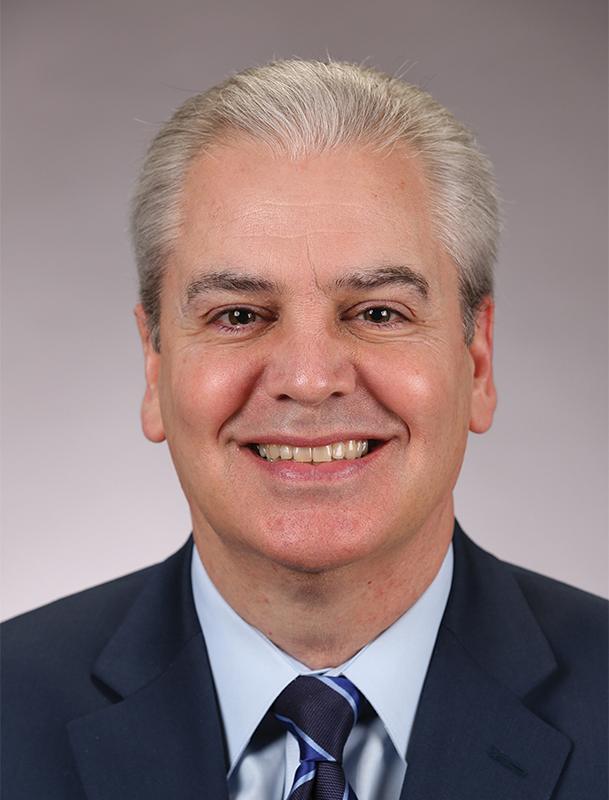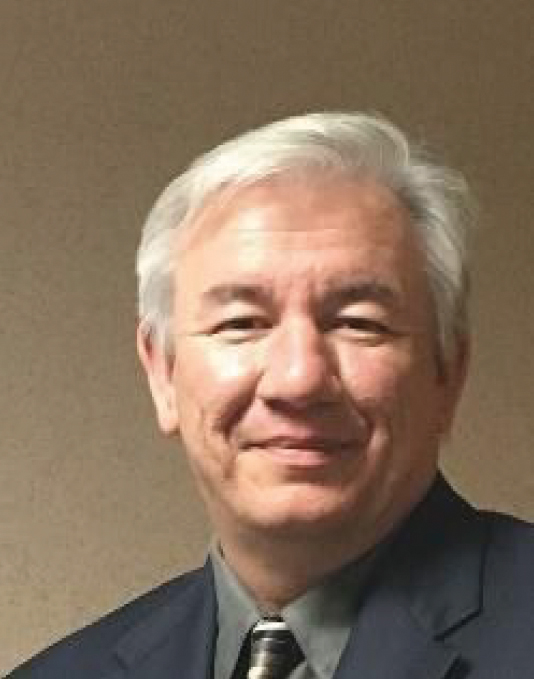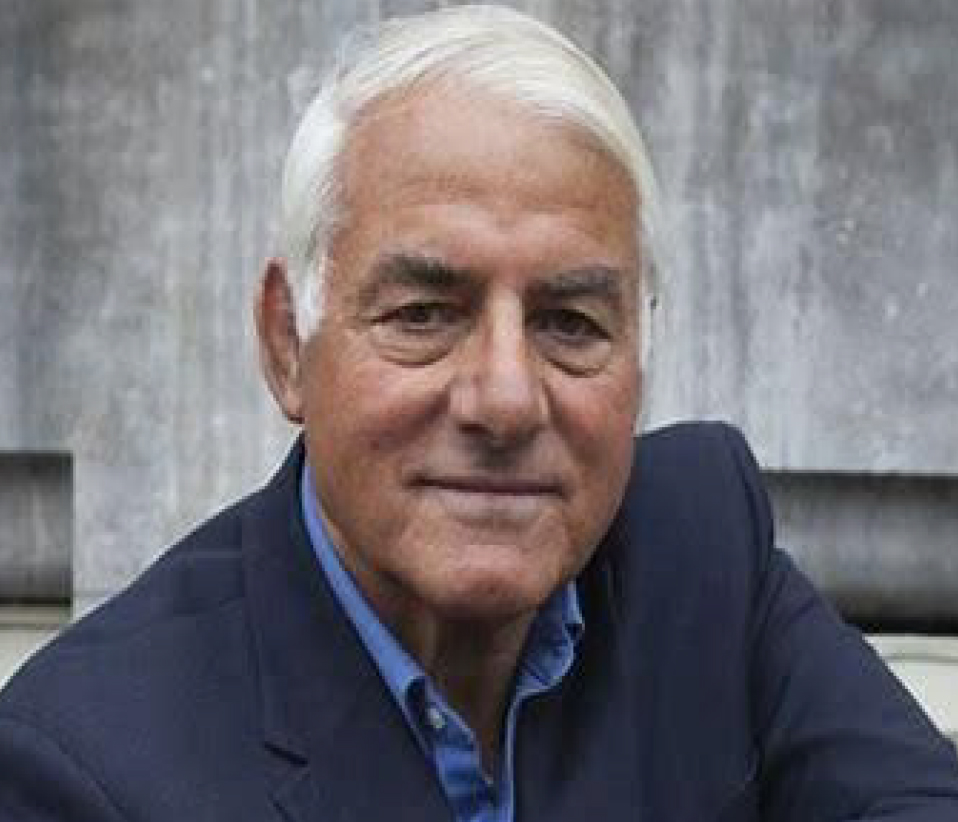
Daryl Chow on Reigniting Clinical Supervision

Supervision at the Crossroads

Lawrence Rubin: Good morning Daryl. Thanks for sharing your time with our readers. Your research and writing suggest that supervision as it has traditionally been practiced is in crisis. What is the crisis in the field of supervision that you are responding to in your work?
Daryl Chow: I think there are weaknesses in the status quo practice of supervision, and that is something that we should pay attention to and do something about. I think change needs to start to grow from what we know from the research, as well as from clinical practice in supervision. We need to do something that's closer towards two domains: helping therapists improve their performance and, while they're doing that, also emphasize what they are learning. So,
it's not just helping supervisors with what they're doing on a case-by-case basis, but also helping them to develop and evolve through time
it's not just helping supervisors with what they're doing on a case-by-case basis, but also helping them to develop and evolve through time.
LR: What does it mean to help supervisees or therapists grow and develop, as opposed to just performing in supervision?
DC: In my online course, Reigniting Clinical Supervision, we make an important distinction from the get-go between coaching for performance and coaching for development and learning. Coaching for performance is one way of doing clinical supervision where we help each therapist improve in the stuck cases they are presenting in supervision. This is indeed important in helping them work through the clinical issues that may be blocking progress or preventing them from making inroads in their work with clients.

But I also think what supervisors need to support is an undulating process of helping clinicians with their stuck cases, while also trying to glean general principles with which they can help clinicians then create or identify patterns that are showing up through these stuck cases. It is a matter of looking closely at the cases in which the clinician is not making progress in order to help them in their own personal and professional development. This transcends a case-by-case supervisory discussion in order to focus on the therapist’s growth edge; those skills and characteristics that are generalizable, or what Wendell Berry talks about in terms of agriculture, which is solving for patterns. So, these two worlds of coaching, or supervising for performance and development, need to come together in the supervisory relationship.

If you look at the literature right now from Edward Watkins and others who have done great work in the study of clinical supervision, we have not made any progress. If the outcome of effective supervision is reflected or measured in client improvement, we have not actually moved the needle.

Tony Rousmaniere and his colleagues wrote a paper in which they concluded that
the variance in client outcome accounted for by clinical supervision is less than 1%
the variance in client outcome accounted for by clinical supervision is less than 1%, which means not much, right? That's concerning, because we put so much time, effort, and money into supervision. So, while I don't think I would use such a strong word as crisis to describe the field of clinical supervision, there is definitely a need for change. I really think that we are seeing things slowly changing on the ground level and there are people who are trying to change what we have come to accept as standard practice in supervision. 

Supervising for Development

LR: Okay, so what is the supervisor actually working on when she is focused on the supervisee's development?
DC: Well, the short answer is specific stuff such as the supervisee’s learning objectives. And their learning objectives are based on their performance. I will give you an example. If a clinician was to seek help from a clinical supervisor, that clinician (the supervisee) would first need to have a baseline of their performance, not just at the client-by-client level, but based on a composite of cases that they're seeing that provides them with enough reliable client outcome data.

And then, from those results, they would try to figure out where they're at before deciding where they need to go and what issues they need to address in supervision. I think that's a critical first step, because better results in in clinical supervision as measured by client outcome are obtained sequentially, not simultaneously. By that I mean we need to figure out where the supervisee is at. If their clinical outcomes are average, that really doesn’t say much about what they need to do in order to improve their performance. It is a matter of taking the second step, which is zooming in or focusing on those areas of clinical practice and therapeutic relationship where that clinician needs to improve. Simply focusing on the fact that the clinician is “average regarding their clinical outcomes,” doesn’t tell the supervisor where she needs to focus her lens regarding the supervisee’s skills and development.

So, as an example, if a clinician’s performance was average compared to international benchmarks, the supervisor would then focus in on those cases in which the clinician was stuck. They might listen to some recordings of the clinician’s work to discover that the clinician and the client did not develop therapeutic goal consensus. And it is often the case that
goal consensus is one areas that's not often fleshed out or verified in the process of the first or even in subsequent sessions
goal consensus is one areas that's not often fleshed out or verified in the process of the first or even in subsequent sessions. You and I both know that the goalpost changes as we go, right?

Sometimes the goal is to figure out the goal, to figure out what is or should be the focus of the session. Then the therapist and supervisor work on that one specific area. And then—and this is the critical piece—if the clinician and client are indeed working on goal consensus, it's important for both the therapist and the client, as well as the therapist and the supervisor, to follow through with the work towards that goal and then determine if doing so actually had an impact on therapeutic outcome.  
LR: And just to define the outcomes variables you're talking about—are you talking about outcomes in the client progress, or in the supervisee’s behavior?
DC: I think you hit on an important note, because the feeling of benefit for the therapist does not mean actual benefit for the client that they work with. Remember, we're dealing with two steps removed from the office, so we need to make sure that the work we are doing with the supervisee translates into positive outcome for the client. It's almost like a paradox if you see two overlapping circles. Yes, it's about the supervisee’s performance, but if you focus purely on their performance, you're not going to go anywhere with the client. You're going to be riddled with anxiety. "Am I doing well? Am I doing badly?" And there's so much judgment involved.

We need to see the impact on our clients and see if our learning leads to impacting the people that we're working with. If the learning was focused on goal consensus, we want to see that it actually translates to an actual impact on the clients that you're working with on that level, on one client at a time. But we also want to see if that helps you to move up your effectiveness above your baseline. 
LR: It seems you're saying that, if a supervisor is good at his or her job and guiding the supervisee effectively in the deliberate practice of therapy, then the client will by definition improve.
DC: Wouldn't you expect that?
LR: I would, but isn't it possible that—and I'm not trying to be provocative—but that a supervisor may be very effective in guiding the supervisee or the clinician in deliberately practicing their craft, but the client doesn't improve? Does that mean that the supervision failed? Or might it just be that something was missed? In other words, can you have good supervision and still poor therapeutic outcomes? Or do poor outcomes in therapy mean that the supervision was not effective?
DC: That's a really good point that world-champion poker player, Annie Duke, talks about in her book, Thinking in Bets. She makes a very important distinction which I think we need to think about slowly and carefully. And the point that she was making is:
we tend to conflate outcomes with process
we tend to conflate outcomes with process.

She says that when we get a poor outcome, let's say in the game of poker, we think that our process is responsible for that outcome. She says we tend to conflate the two. If you take some time to think carefully about how you're making decisions, how you're building the process and making a good plan, then if the outcome is bad, don't make that conflation too quickly.

Because in the game of poker, just like in the game of life, there's a lot of random noise, a lot of things that are beyond your and my control. But if you understand with the help of a supervisor that you are working on something critical—in our case, goal consensus because we know the effect size for goal consensus is huge, then it becomes a matter of focusing more directly on building that particular skill in supervision, not other skills unrelated to goal consensus.

And if goal consensus is indeed important—even if one client doesn't work out well, you don't want to go and throw the baby out with the bathwater. You want to just go back and refine goal consensus building skills again. Close the loop. And this is one thing supervisors and therapists can do, is to make sure that, after a discussion, they close the loop.

It sounds so plain and simple, but I think it's really something that's lacking in supervision as well as clinical practice, that people don't really close the loop by figuring out ways to refine the important skills in supervision that actually impact client outcome. If you continue doing this with other clients, will this have an impact as well? 

Deliberate Practice

LR: Along these lines, you have an upcoming book, Better Results: Using Deliberate Practice to Improve Therapeutic Effectiveness, with Scott Miller and Mark Hubble. How can supervisors use deliberate practice to improve not only their supervisee's performance but their own performance as supervisors?
DC:
When we are working in supervision… we are really working within a multi-tiered structure that includes the supervisor, supervisee and the client.
It's a brilliant question, and I know, Lawrence, we've talked about this. My belief at this point is I think that it is critical. We are really in the early days of this type of investigation, but I think it's an important area to work on, and here's why.

My belief is that knowledge is multilevel. When we are working in supervision, we are doing just that because we are really working within a multi-tiered structure that includes the supervisor, supervisee and the client. And let me just use an analogy from the world of music. I'm always impressed by not just what the musician does in a music studio or how they work. I'm always interested in who else is in the room. And one of the things that comes up very often for me is the role of the producer. Sometimes it's the group of artists itself, and sometimes it's someone else.

And a couple of people that stick out to me are Brian Eno, who has worked with Talking Heads, Madonna, U2, and Rick Rubin who has worked with death-metal bands like Slayer. He's worked with many Hip Hop artists. He's also worked with the late Johnny Cash. There’s something about being in the presence of these types of producers that brings out the best in the musicians.

My question is twofold. One, what the hell are these producers doing that brings out the best in the musician? But I also am interested in how I can help others and myself be able to become more like a coach or mentor the likes of college basketball’s John Wooden. And the one thing that I think is becoming a little bit clearer as I go is that we really need a system of practice, a way to systematically organize ourselves around how we think about supervision. So, when I say system, it just means as simple as: how do we track outcomes?

My mentor and collaborator, Scott Miller, talks a lot about feedback-informed treatment. To me, measuring what we value is key, because measurement precedes professional development, so it is critical to help people, supervisees in this case, to systematically track their outcomes and to have a system of coaching already in place by the time they come into supervision.

And then we develop a taxonomy of deliberate practice activities so we know where they're at in the baseline, how to help them figure out a way to deconstruct the therapy hour and then pick up little things that they can work on. So, I guess my short answer, or rather my long answer is really, to figure out a system that can function as a platform from which we can begin to work on the more nuanced stuff in the role of supervisor. Am I making sense about this? 

A Portfolio of Mentors

LR: You are indeed, Daryl, and related to this notion of the producer and artist working in collaboration, you recommended that clinicians build a portfolio of mentors. Does that mean that, even though supervision is, as you call it, a signature pedagogy, that clinicians should build a production studio of sorts with other professionals? 
DC: As much as supervision is a signature pedagogy for our field, what's interesting for me of late is how people reaching out for consults or coaching often follows having given up on working with a supervisor for various reasons, unless they are in an agency setting where that is provided. But, yes, I think the idea of a portfolio of mentors is to say that
if you can figure out what's your leading edge or the gap that you're trying to work on, your default supervisor may or may not have the knowledge to help you
if you can figure out what's your leading edge or the gap that you're trying to work on, your default supervisor may or may not have the knowledge to help you.

And what you want to do is to create a community of people that you can turn to, that you can talk with, and then maybe a certain person you turn to more routinely. For instance, I've known a supervisor for more than a decade, and I always return to her. But if there was something else that was missing, or I wanted to stretch out and pick another mind to think of it from a different perspective, I would reach out to other people, even people who are so-called experts, and send them an email. I would ask them, "What's the fee? Can I come talk with you?" And most people are friendly. 
LR: In a way, isn’t that what you are trying to provide through your online supervision training, Reigniting Clinical Supervision?
DC: My focus for Reigniting Clinical Supervision is to help clinical supervisors design better learning environments that sustain real development for therapists, so as to achieve better client outcomes. The choice of an online learning platform is not a mere substitute for live teaching. Instead, gleaning from the best of what we know of optimizing learning, adopting a “one idea at a time” drip-based method of delivery of content and maintaining learner engagement, helps the busy practitioner weave what they learn into practice, and return to renew and reconsolidate new knowledge as a result of being in the course with me and other clinicians/supervisors.

Here’s how I think about the difference between a live training and how Reigniting Clinical Supervision is designed: A real-time training/workshop is like a river. It is a constantly flowing torrent of ideas. If the learner steps out of the river for a few minutes, or needs some time to think, he is now behind. The learner may be able to ask questions but needs to constantly try and catch up and not fall behind. A chance for a revisit of the content after some time of reflection is not possible, with only the notes or slides that you've captured.
Online learning, on the other hand, is like a lake. The learner can step in and out of the water at her own time
Online learning, on the other hand, is like a lake. The learner can step in and out of the water at her own time, and pace herself as she moves along; the water remains the same. This stillness allows for pausing, revisiting the material, reflecting, and connecting with past knowledge. Online learning at its best allows for the learner to ask questions, revisit the materials, and for the person to master a difficult segment before moving on.
LR: Within this community of mentors model, there are different factors that predict therapeutic outcome. They include goal consensus, alliance and repairing therapeutic ruptures. Can the same principles be applied to improve supervisor performance and development?
DC: Hopefully, that's paralleled or modeled within the supervisory work. I would encourage supervisors to also elicit feedback within the supervision. And most of us do that, but it is also important to do it in a way that's a little bit more about a ritual. This would mean using some quick check-ins that give the supervisee some space to think about it, and then to explore the nuances of the supervisor/supervisee relationship. It's much harder when you really know somebody well, like the supervisor knowing the supervisee, to give feedback.
LR: Have you experienced working with expert clinicians who are lousy supervisors?
DC: I'm thinking of the converse. So, let me look back in my mind. I don't mean this in any disrespectful way because I really respect this person's work. Jay Haley of the strategic school of family therapy talked about this and said that he was really good as a supervisor, but not as good as a therapist [laughs].
LR: I think of myself as being a better supervisor and teacher than therapist. In your language, perhaps that’s because I have not deliberately practiced therapy.
DC: Yes, right.
LR: I've performed therapy, but in the words of Scott Miller, I've not deliberately practiced it. So, it's interesting that just because someone may be a very competent clinician, it doesn't mean that they have the patience or skill to guide a fellow clinician as a supervisee, and vice versa.
DC: This harkens back to your question about the role of training supervisors in how they do deliberate practice, because, to me, there are overlaps, of course, but there are also distinct skills required in their roles as supervisors and therapists.
The role of a supervisor requires some skill to be able to articulate the concepts without getting lost in the weeds of abstraction
The role of a supervisor requires some skill to be able to articulate the concepts without getting lost in the weeds of abstraction.

Cardinal Supervision Mistakes

LR: Talking about getting lost in the weeds, you wrote an article for us about seven mistakes in clinical supervision. If you were to pick the top two cardinal mistakes from that list of seven that supervisors make, which ones flash red to you, and what can supervisors to do about them? 
DC: This is tough because the language around mistakes is all negative. I think, for me, the one that I've seen in my own experience and through my own mistakes is that of too much theory talk.
I think we talk too much. On the ladder of abstraction, talk is quite high up there
I think we talk too much. On the ladder of abstraction, talk is quite high up there. Bear in mind, when we're in supervision and in the absence of the actual client, we spend all our time talking in abstractions, at the level of theories about the client rather than about the therapeutic relationship.

When we're doing that, we've got to bear that in mind, that we don't have that person there, and we're talking at the level of theoretical abstraction, so many steps removed from what is occurring between the supervisee and the client. It's very easy to speak of it from whatever orientation or whatever philosophy you hold, without joining the dots of what's going to ripple down into the actual therapeutic relationship where the real work is happening.

Another big mistake in supervision is that when the clinical work is stuck and the supervisee and client are not making progress, the supervisor may say something in an attempt at being supportive to the supervisee like, "Well, at least they keep coming back, right?" In this instance, the supervisor is doing little more than what I call, patting them on the back–encouraging the supervisee without giving her any clear direction out of the stuck situation.

I'm really conflicted about that statement that I hear very often. Is that good enough for you, that they still come back? Or what else? What else can we be thinking of? How do we escape this domain of just talking on their level and to be able to make some real impact?  
LR:
Another big mistake in supervision is…encouraging the supervisee without giving her any clear direction out of the stuck situation
I know that being able to effectively conceptualize a clinical case, to think about it from different theoretical perspectives, is important. But you're saying, Daryl, that sometimes we err on the side of overthinking the theory at the expense of guiding the supervisee in building the relationship with their client, and then we congratulate the therapist for minimal progress? Seems like damning by faint praise.
DC: Yes and no. I think all prudent supervisors know that therapeutic relationship really matters. And by therapeutic relationship, let's be clear, it's not just about the emotional bond, even though that is one critical part. But the other part is the focus, which is about the goals, the directionality, where it's going. The next is also about whether there is a cogent method for both the therapist and the client. Are we in agreement? Is there a fit in where we're going? All those things relate to the therapeutic alliance.

I think most people are focused about that. But as you will see in the upcoming blog that I am writing for Psychotherapy.net, I will be talking about the three types of supervisory knowledge. One type of knowledge is about the content knowledge, about the clinical case, about the psychopathology. Those things are necessary but not sufficient. The second type of knowledge is the process knowledge about how you engage with somebody who's, say, depressed? How do you engage with somebody who's anxious? That's a process or type of relating kind of knowledge. How do you have that kind of conversation? As David Whyte, the poet and philosopher, would say, "the conversational nature of reality." How do you engage in that? How do you come into being with another person into that field? But the third one is conditional knowledge, which is; if you're working with somebody who's depressed due to bereavement, it's going to be very different than when you're working with somebody who is depressed as well but due to, say, domestic violence. The context is very different, and you need to figure out a way of relating with them given the different situation. So, by considering all three of these in supervision; playing into the content knowledge, process knowledge and conditional knowledge, I think the supervisor can synergize them for the benefit of both the therapeutic work and the development of the supervisee. The supervisor and supervisee having this multi-level conversation will benefit both the client and the supervisee. 

The Humble Teacher

LR: What do you see as some of the important personal qualities of an effective supervisor or a clinician who might become an effective supervisor?
DC: For me, of course,
a good teacher is somebody who is willing to be a good student
a good teacher is somebody who is willing to be a good student. If I'm picking a supervisor for myself, I'm always looking for somebody who implicitly—and it's not something that people would say explicitly, is willing to be wrong, willing to seek the counterfactuals, and then to have by default a stance of humility not just because they're trying to act humbly or bragging about their humility.

This humble teacher will say, “Hmm. Oh, hang on a second. I've really never thought of that.” And they're rethinking. That, to me, is interesting. And it's not because they don't have a wealth of knowledge. It's because this is dis-confirming what they know. And that's so exciting. That's like fresh air, you know, when you're working with somebody that way.

Additionally, somebody who has mental models or mental representations and concepts in their head about different ways to think about clinical situations and suggestions for the supervisee. They know that when they're facing this kind of situation, they have what Gerd Gigerenzer calls fast and frugal heuristics. They have little maps of how they will approach stuff. You know, they've thought it through before. They have ideas in their memory bank that they will pull into their working memory.

And you know that because when they're just giving off-the-fly statements, you know that it's off the fly. But if you know that they've thought about it, you realize their mental networks are vast. They know that it's an “if-then” situation, and they're thinking about it and all kinds of communications. That excites me because that shows to you this person has done some thinking before meeting with you. 
LR: Is this what you refer to when you say that true experts think like novices, or beginning therapists, while true novices think they're experts? Is it related?
DC: I think so. [chuckles] I think so.
LR: I like that idea that the expert supervisor, who may or may not be an expert clinician, has these—what did you call them—fast and frugal heuristics? Was that the term that you used?
DC: That's right, and I mean that's the term from Gerd Gigerenzer, who studies cognitive science. He talks of the importance of having these sorts of heuristics. You know, the way we've been terming it is mental representation. Things that happen might not just be easily explained using therapeutic models but by different ways of thinking. Like, what do you do if you meet somebody who is angry or depressed in the session? These heuristics or maps are not like stock answers but are based on clear principles that flow from these mental representations. What do you do with somebody who doesn't have a goal? How do you work with them? They have a rough and ready guide.

At the Cutting Edge

LR: So, the supervisor should aspire to flexible thinking, drawing on different belief systems, different ways of looking at the human condition, different interpretations of the same clinical presentation? It sounds like the advanced supervisor is out at this cutting edge of creativity, untethered to any one way of thinking.
DC: Yes.

This domain of creativity is something I'm really interested in. I think one thing we need to remember about creativity is that it's about something novel and something useful coming together? Wouldn't it be great if supervisors were not restricted to thinking solely in terms of the field of psychotherapy in the course of doing their supervision, and could bring in greater creativity?

Just thinking about architecture, music, art—thinking about other aesthetic forms and how all of these can inform ways of thinking. Coming back again to the example about goal consensus, why do we need to only think about this within the domain of psychotherapy? Why don't we learn about how other fields and business organizations think about creating focus? 
LR: So, we should consider using a flexible system of metaphors that transcend psychology and psychotherapy. When we first contacted each other, I mentioned that there seemed to be almost a spiritual undertone to the way that you described your personal philosophy of living and helping. Am I seeing it correctly, that there's a certain spirituality or spiritual dimension to your work as a clinician and a supervisor, and perhaps we should embrace that as well?
DC: Well, I'm grateful that you picked that up. To me, the answer is yes. And I think that's personally a deep embedment in my life. I was raised a freethinker from my Singaporean days. You know, this means I'm free to think or whatever that means. But I converted to become a Catholic when I was 21. When everybody else was running out of the Church, I was going back in. So, to me, that was my start.

But I think, fundamentally beyond religion, what's really driving me on a first principle level is human dignity. And the way I think about this is that
if a person comes to seek help and opens up to another person, that's a sacred moment
if a person comes to seek help and opens up to another person, that's a sacred moment. We need to honor that. We need to figure out a way that we can help each other come alive, because it's not just about creating purpose and meaning, but it's really to help each other come alive. And the therapist needs to come alive. The therapist needs to be alive and kicking and playful and to be able to ignite that. And the therapist also needs help and guidance from a supervisor. And for the supervisor to do that, the supervisor also needs to come alive. 
LR: I remember Bill Moyer’s interview with Joseph Campbell at George Lucas’ Skywalker Ranch. He said to Joseph Campbell, “So, you're saying that people are searching for the meaning of life?” And Campbell said, “No. People are searching for the experience of being alive.” How does that find its way into the world of supervision, that tripartite relationship between supervisor, supervisee, and client? Where does that element of being alive get infused in that three-level process? And whose responsibility is it?
DC: Sounds like a family.
LR: Yeah, doesn't it?
DC: Yeah. I think everybody is going to come into play. I think it is the interaction. It's this ecology of a systemic perspective that's going to be important. How does it come alive? You know, I think we need some kind of platform for this to work, which we have talked about. But I think it critical is to keep this conversation going. Once we see that therapists are working hard to improve in what they are doing—once they figure out the baseline, once they figure out what to work on based on the baseline, then they develop a system to help them do their practice on an ongoing basis. And that they see the payoff of what they're doing.

It's like your child who's worked hard for the math test and starts seeing see the result. There's the real payoff. I mean the whole temperature of the room changes. Their focus becomes more intrinsic. And at that point, the role of the guidance is going to evolve as well. There's always going to be state of change. You’re right when you pointed out that quote from Joseph Campbell as well. That's something I'm very familiar with, and I think it's important that we continue to keep the conversation alive within clinical supervision as well as at the level of the therapist and client. 

Fanning the Flames

LR: So, just as we encourage clinicians to take care of themselves and to grow and to rest and to seek meaning and a reason for being alive, so too must supervisors continually replenish and rest and grow and seek internal expansion, because if they wither, then the supervisee withers and the client withers. Who are the roots, and who are the leaves in this tree? It's a quite interconnected system.
DC: [chuckles] It is. It's just like our world now, isn't it? I mean I'm suddenly reminded about this teenager from Sweden that's really been striking me about what she's doing. I don't know if you follow the news about Greta Thunberg and how she's doing this protest about climate change and rallying a million teens around the world to protest about how the adults in this world had better take this seriously. And she's been going on global forums just speaking about this.

And I heard one of her speeches which she starts by saying, “Our house is on fire. What would you do if your house was on fire?” And she expands on that. And I think that's so important, that somebody her age is speaking about this. 
LR: So, supervisees must find ways to, in your words, reignite supervision. I have one last question. You were born in Singapore, you live and practice in Australia, and you've traveled the world doing training in therapy and supervision. What have you noticed about teaching and supervising cross-culturally?
DC:
I think the first thing that comes to my mind is how similar across culture we are in terms of helping people
I think the first thing that comes to my mind is how similar across culture we are in terms of helping people, trainings and our roles as therapists and supervisors. But, of course, each culture has its own subcultures that you're dealing with. But to me, really what's striking is how much similarity there is. We're all in the same boat.
LR: What do you mean, the same boat, Daryl?
DC: We're all struggling to get better. We all want to. I mean all therapists and all supervisors want to do a better job. And that propels us. That makes us stay hopeful. It makes us invest time, money and effort to go and do CPE [continuing professional development] activities. You know, we're all trying to get better. But what's implicitly underneath that wish to get better is worry. We do worry about, “Am I getting any better? Is what I'm doing really helping to translate?”

And people are asking this question as they are looking deep, long, and hard. And I think the onus is on us as a collective, as a field, to start to come together, to start to build this brick-by-brick, to help out from the therapist's level and the supervisor's level, and to help us build this house, build it up again, and to help us to get just that 1-2% better each step of the way. Because the payoff and the morale that comes with that is going to move us even further. 
LR: So, if everyone in that multilevel relationship strives to be a little bit better, then the whole system becomes better.
DC: That's right.
LR: If client outcome improves, then that goodwill is shared beyond the therapeutic space. If the supervisor is dedicated to practicing their craft, then they are in a better position to teach clinicians. And if clinicians practice deliberately, they are in a better position to help their client. And that is consistent across cultures.
DC: That's right. And, you know, I'm not the only one who is doing this, but I think I've started doing this whole thing about clinical supervision because I think we are a critical piece to the puzzle. And I think this one little story might help to illuminate this. You know, this gentleman, he knocks on his son's door, and he says, “Jamie, wake up, please. Wake up. You've got to get to school.”

Jamie then says, “I'm not going.” And the father says, “Why not?” He says, “Well, Dad, there are three reasons. First, school is so dull. And second, the kids tease me. And third, I hate school anyway.” And the father says, “Well, I'm going to give you three reasons why you must go to school. First, because it's your duty. And second, because you're 41 years old. And third, because you are the headmaster.”
LR: [laughs]
DC: I think we play that critical role. We do need to show up. And when we show up, we then need to think about what's our status quo and what's the one thing we need to start in order to refine our work to bring us alive again.
LR: To play that instrument a little better, to hit that tennis ball a little straighter, to run a little bit more efficiently. The supervisor must have a commitment to continued growth and development if the supervisee and the client are to improve.
DC: Yes, and I will say one last thing, if I may, Lawrence.
LR: Of course.
DC: If we use the musician analogy, I don't think it's to play the instrument a bit better.
LR: No?
DC: I think it's to play the instrument well enough but to be able to become better songwriters. I think that's a tougher job, because you can get technically better as a musician, but to write the next Hard Day's Night or Yesterday or Bohemian Rhapsody, I think that's a different skill. And I think we need to find a way to become better songwriters in our field.
LR: So, we can make better music together and because the audience is indeed listening.
DC: That's it.
LR: I think on that note, Daryl, I'm going to say goodbye, and on behalf of our readers, thank you so very much.
DC: Thank you.


Jay Lappin on Family Therapy—The Long View

A Social Justice Lens

Lawrence Rubin: Good morning Jay and thanks for sharing your time with me. You’ve been practicing and teaching family therapy for several decades, in which time certain issues affecting families continue to remain relevant while other hotspot issues have gained prominence. May we start off by addressing some of these hotspot issues that family therapists need to address?
Jay Lappin: Sure. I think that one of the constants has been around social justice and poverty. We see the effects of the political decisions being made by different administrations and their changing priorities, including most recently around immigration. One of the things that I remember from my interview with Sal Minuchin a few years ago was him saying that, back in the day when we first started doing family therapy, we thought that they could change the world one family at a time. There was this thoughtful pause, and then he said, “We were wrong.” And that’s what got him into doing larger systems work, and myself as well.There are wonderful efforts by non-profits like The Annie E. Casey Foundation who are really taking this on, and it also still continues with family therapists who are doing home visits in impoverished communities which built on the early years of social work, and then on the work of Sal and others like Braulio Montalvo back in the ’60s. But we haven’t changed the world just yet.

LR: For the average family therapist who is not on the Southern border or who’s not in one of those areas where he or she is likely to see these families impacted by immigration policies or poverty, what guidance can you give them around working with families suffering social injustices?
JL: I think just being aware that social injustice exists, that there are commonalities among all families and their circumstances, but also as unique differences between families. That systemic perspective helps a lot. I just had a case involving a young man, a minority kid in a school system where there was a big incident. Because of my good fortune of working at the local clinic and being aware of the systemic issues, the line of questioning I used for the parent took a different turn. It was more of a talk about what the community was like and what it was like to be a minority family within a majority-culture town. And it really felt like things changed in the sense that there was space for that conversation. And I think that we can all make that space about those differences and be aware of them.
LR: There’s so much of a necessary push these days for therapists to become sensitive to and aware of diversity issues affecting individuals and, of course, families. So, is it our ethical obligation when working with, as you say, a minority family in a majority system, to bring in these social-justice issues, even if the family doesn’t address them? Is it our obligation?
JL: I think so, especially for those of us that are majority-culture folks. I know enough that I know that I don’t know enough about a minority family’s location in society. And I think to pretend that it’s not there is doing a disservice to the family and to the process of therapy. And, you know, the thing in systems work and all therapy is that you read the feedback. So, what happens when we open up the space for that conversation and what does it lead to and how does it change what we’re doing in the therapy? At the end of the day, they still want things to be better for their children, and that’s cross-cultural. I think we can do better when we create space to have those conversations.
LR: Do we expand a social-justice lens beyond culture and race when working with families these days? Are there other hot-button social-justice issues—you mentioned poverty—that we need to open the door to and invite into the family therapy space?
JL: Well, income differences. The vast majority of clients in my private practice, are majority-culture folks—middle-income and well-situated. The issues of social position, money and resources are still there, although on the other end of the spectrum. It’s all a part of the soup that we live in. I don’t see there’s any downside to working with these clients necessarily, but it’s very easy to get kind of a narrow lens just because that’s who’s in front of you.I remember a story Sal told me years ago during an interview. When he was young he had a psychology teacher who was a fan of Rousseau who made the case that delinquents were part of a larger system and the social institutions in which they lived. During the time that Sal was in high school, his family went from very good circumstances to losing pretty much everything as a result of the Depression. They lived in poverty. Sal’s story was about reminding ourselves how lucky we are, but also the obligation we have to all members of society. As family therapists, we must be open to conversations with families around the issues that are important to them, ones around which we may have little direct experience.

The Temptation of Sameness

LR: Clearly then, family therapists must be humble, aware and sensitive to the needs of minority-culture families. What about other hot-button issues like the breakdown or denuclearizing of families, and the newer ways that families are coming together—gay and single-parent, step, adoptive and foster families?
JL: I think one of the great things about being a family therapist is that you get to bear witness, to be a part of that change that you’re talking about. In family practice I see more and more of those denuclearized families that come in with different combinations. The classic ’50s Ozzie-and-Harriet family is changing and in a big way. But at the end of the day, they are all still families. They still love their children, and that crosses those old boundaries. We still have to do our jobs, but the context is shifting, and I think it gives us more possibilities, too, to think outside of the box.
LR: So, these new ways that families are coming together present challenges and opportunities for family therapists to expand their core skills? Are there specific ways that family therapists can expand to open up to these changing ways that families come together?
JL: Yes, I think that one of the ways that we get to do it is by working with different populations, because there is always the temptation of sameness. We do what we know. But, you know, there’s that old saying, “if you want to know about water, don’t ask a fish.” We can put ourselves in situations in which we feel different and that we experience other families. Home visits, I think, are a great way to do that. You can tell a lot about families, about how they live together, and it also stretches us a bit. I think both young and old therapists need to have an opportunity to do that. I think it helps our work and stretches us.
LR: Are you saying that the changes affecting families and the way that families are adapting to those changes is a clarion call to family therapists to dig deep, push hard, keep climbing learning curves and look for new ways to connect with new families, because each family that walks through your door is different?
JL: I think it’s all about difference. A picture is worth a thousand words because the picture is what the talk and the words are about. So, for example, Sue Johnson‘s work with attachment understands that talk therapy is necessary, but it’s not sufficient—it’s really about the enactment. It’s the felt experience of those different situations and pushing ourselves that challenges limiting patterns. You have your bag of tricks and you get reliant upon them, and, why? Because they work, after a fashion. So, it’s about taking a risk.And, that’s fair because it’s a risk for a family to come for treatment. Sal had this great saying that families are wrong about two things when they come to see us. First, they’re wrong about the location of the problem. It’s not the kid. He or she is an identified patient, so it’s the family system that’s the patient. And second, families are mistaken about is who is going to fix it. They look to us, but our position is that the inherent strengths are there in a family, that they have all these over-determined patterns, which is what brings them to us. So, I think, in this respect, we’re not asking any more of the families than we are of our ourselves, and I think that’s more fair.

LR: If Sal said that families come in with two errors in thinking, one is who the patient is, and the other is who will fix it; what might be some of the fundamental thinking errors that family therapists bring into their work?
JL: Oddly enough, the same two things. It’s a challenge. Family therapy can be tough, because you have all these people in a room. One of my early fatal mistakes with a family was when I thought I was being this wise, young guy that could figure stuff out quickly. It was a family I’d seen only 10 or 12 minutes in which the father was a plumber. So, I start spouting off—“blah, blah, blah, you should do this, you should do that” and the man turned to me and said, “How can you tell? You only met with us for a few minutes.” And because I was young and even more stupid than now, I said, “Oh, well, you’re a plumber.” And he said, “Yeah.” And I said, “How long does it take you to figure out that there’s a leak in the basement?” And the guy just looked at me with a lot of anger. I never saw the family again. So, either it was a one-session cure, or it was an abysmal failure. But I remember that I really hadn’t respected them. I hadn’t taken the time to join, and I was trying to be show-off. “Look how much I know.”So, I think it’s always the read-the-feedback thing, and we learn from the families as much as they learn from us.

An Alphabet of Skills

LR: Sal Minuchin taught you (and others) the importance of enactment, joining and challenging. How do you teach these fundamental skills to new family therapists who may be intimidated or challenged by a family?
JL: We came from an academic tradition where you teach theory, you teach theory, you teach theory, and then you practice. And Jay Haley had this great idea that you have people do things first and then retrospectively go back and say, okay, what happened? What happened when you turned to the mother and asked her to talk with the son? What was going on with you?So, it’s more that style of teaching where you’re consistent with the model of having people do things. When I teach, it’s lots of role plays, making up families. And then I have just some basic rules that I’ve come up with over the years, like thinking of joining as a traffic light—you have a red light, a yellow light, and a green light—and when you’re working with a family, you should always be in the yellow.

For instance, in New Jersey, you go through the yellow lights, and in South Philly, people don’t stop at stop signs. You kind of roll through the intersection. And I say if it’s green, that means it’s a bit too easy—Lyman Wynne had this expression of the rubber fence where you’re working with a family and you think, God, I’m really joined well, like it’s really the strength of homeostasis. So, green, not so good. Yellow, perfect.

But I’ll tell them if it’s a red light, you have to rejoin. So, if you’re trying to frame something or get an interaction going and you’re just getting that red light, then you say, okay, I need to reconnect, find another way to make this happen. It’s that constant reading of the feedback, and when you do role plays or approximations of families, then you can say, “What was that like when the family wasn’t with you on that? What happened? What did you come up with?”

And then you’ll go deeper with the students, and they can say, “Well, you know, it reminded me of this, where I felt this way.” So, okay, how are you going to shift that, because you’re going to be working with families. You’re going to have that capacity to be flexible. It’s like muscle memory almost, that you have to do it over and over again.

LR: You had said that Minuchin also taught you about the strategic use of self in the room. How important is this in the teaching and learning of family therapy?
JL: You probably don’t have it down in Florida, but here in New Jersey and Philadelphia, we have row homes which all look very similar from the outside. They’re each the same size and distance apart from each other, have the same foundations and the same layout. It’s like a rectangle. But when I used to do a lot of home visits, going from one person’s home to the next could be completely different. The next person’s home could even be on the very same block. So, that for me was a metaphor because my foundation is in systems work and structural theory, but the larger framework, what’s in the house and how they live, is up to the families.I think you have to just do it or it would be like reading about how to play guitar. That’s great if you already know that “A” has three sharps, but unless you’re playing it and having somebody saying to you, “What was that? Where were you going with that? What did you want to do? Let’s see if you can come up with another way,” you’re not going to improve your skill set. I lament the loss of one-way mirrors and taping. It doesn’t happen as frequently as it did back in the day.

LR: My experience has been that there are a lot of people out there doing family therapy, charging for family therapy, writing about family therapy, lecturing about family therapy, and they don’t seem to understand or really appreciate systems theory. They’re not students of the foundational theory that drives all models of family therapy. And I lament that. Do you see that as a problem?
JL: I remember talking to Sal and Braulio about this. They had this idea that you could have what is called an alphabet of skills. The idea was if you taught these skills, you could be a competent family therapist. And, indeed, many people did and are.But Sal said, that having an alphabet of skills is like teaching somebody the alphabet and then expecting that they can write sonnets. Like the idea of putting a room full of monkeys at typewriters who would type a Shakespeare play, by chance, after thousands of years. Having an alphabet of skills is necessary but not sufficient to practice competent family therapy. So, people need a bigger container. I think that what you’re talking about is having the systems foundation. It’s a deeper, bigger container to hold those ideas and to have the freedom to experiment. You’ve got to know where this stuff comes from, and I think it helps to have that foundation.

And I Got Dinner

LR: What are some of the personal and professional obstacles that family-therapy trainees need to overcome in order to eventually practice effectively as family therapists?
JL: I think first is finding an agency that values home-based family therapy. Back in the early days of clinic work, especially in the cities, you’d have people come for outpatient therapy, crowd the waiting rooms, and then you there’d be a large population of people that you could see.The shift to home-based family therapy, which, as you know, followed in the social-work tradition of doing work in people’s homes, changed things, so that people, especially poor families, didn’t necessarily have to get to a clinic. By going to people’s homes, you very quickly get a sense of what is happening. When I first went into private practice, I only had a handful of clients, so when I saw families, one of my requests was that they invite me for dinner. It was great, because, literally, within minutes, moments, you would have a whole set of new ideas. The theories I had about families when I went to the house was…

LR: Out the window.
JL: Right exactly. It was very humbling at times. And I’d have the kids show their rooms and their stuffed animals and their toys. And it was just such a rich environment, and then we’d have a family session after dinner. I got dinner.
LR: And they got therapy. And you did a hell of an intake by wandering through their rooms and sitting at their dinner table.
JL: Yeah, it was great. I think that the home-based work is really remarkable, and it’s a challenge. I remember being a research therapist on one of Duke Stanton’s projects with heroin addicts and their families. In those days, you’d have these massive cameras and tripods and all that stuff that you’d be lugging into people’s houses.So, in the middle of these intense moments, you’d think, oh, boy, this is really it, we’re going to tip the scales here. And then the dog would run through the scene or somebody’s diaper was wet, or the phone would ring. So, you would have all these multiple things happening at the same time, and you would have to figure workarounds. And you would really get a lived sense, an experienced sense. As opposed to talking about it, you were experiencing it.

LR: Clinicians and trainees attend workshops where clinicians show these wonderful, rarified clips from magnificent and timed interventions; but the reality is that families are messy. Families are complex. Families are chaotic. And maybe that’s one of the reasons why some people run from family therapy like the plague while others run to it. I wonder if there’s a difference in would-be family therapists regarding their tolerance for complexity, chaos, and ambiguity.
JL: Yeah, you’re right. It could be very chaotic at times, noisy…I just think it’s such a privilege to see the family in total, because when you see the kids individually—and, certainly, there’s a place for that in the context of family work—it’s not the same. You get so much more if you can see the whole family. For me family work is the best, and one would hope, even from those rarified clips, that people get excited about it and want to do it.
LR: I’m a child therapist, a play therapist, and I always say to my trainees that when you see a kid, they’re going to bring their family along with them. You have to be open to inviting the family in. So, is child therapy, by necessity, family therapy.
JL: There was a recent piece in The Inquirer about a Yale study on children that were anxious. The bottom line of the study was that they figured out that one of the principal causes of the kid’s anxiety was the parents. And I thought, are you kidding me?

Appy Hour

LR: What a surprise!
JL: So, their treatment model was having the parents figure out ways to help the children tolerate anxiety so that they were no longer hovering or helicoptering. And, really, when you think about it, it’s more of a systemic version, but it’s under the heading of teaching the kids.Years ago at the clinic where I worked there was research on pain. This fellow Sam Scott, who was one of my supervisors, a brilliant guy, had studied some with Erickson. Sam and Ken Covelman and Bruce Buchanan, who was my partner in teaching at the clinic, were working with families to develop ways to have kids who were experiencing extreme pain through psychosomatic and physical illnesses, get calmer.

Sam and the crew had developed this wonderful script that accounted for systemic interactions between the parents and the kids. The parent would say, “What we’re going to be working on today is helping you to feel more relaxed.” And then, in parentheses, the parent would have something that they would read to themselves that would say something to the effect of, “And while helping my child to relax, I want to breathe more slowly and thoughtfully.”

Just inserting that spacing or that timing helped the kids and the parents simultaneously to relax, which is different from the kind of individualized mindfulness training where you’re just teaching a kid how to relax. The back and forth accounted for the relational context.

I was teaching a family therapy course a few years ago at Penn and Drexel, and I realized that there were no students in the class that were as old as our youngest child, and I thought, “Oh, God, I am so ancient.” So,I created this thing called Appy Hour. At the beginning of class, the students would present apps that were helpful in teaching relaxation skills. It’s corny, but it was great, because they were all about finding these very cool apps. And if I see a kid individually, I’ll have the kid teach the parent how to relax and show what they learned on an app. As you were saying earlier, having that systems foundation just helps you think differently in a situation.

LR: So, whether you’re working with an adult, a husband, a wife, a lover or a child, you can work with any individual within a family, and as long as you are thinking and acting systemically, you’re helping everybody. You’re not targeting one person, even though one person may be the person that you’re working with.
JL: Yeah, there was a really good, two-part CD that Alan Cooklin and folks from England put together, and I had the privilege of interviewing Braulio Montalvo for it. I asked, “What are some of the seminal ideas about Minuchin?” This tape is called “Inviting the Family Dance.” Braulio said, really, the most important thing for him was Sal’s idea about part to whole. When you’re working with part of the system, you always keep the whole system in view, no matter who is in the room. If you have the kid, a parent or both parents, you’re always thinking of the whole system as kind of a backdrop. So, it’s reflected in having a kid learn an app and then teaching it to his parents or teaching it to her brother, moving from that idea of part to whole.

Tango with Me

LR: You’re engaging and empowering the whole family. In the linear world of individual psychotherapy, the push is toward evidence-based practice and manualized treatments. Has this push been part of the story of family therapy?
JL: I think, historically, one of the reasons that family therapy is around today is because, in its early years, family therapists took on the challenging populations—eating disorders, schizophrenia, delinquency, minorities—ones that for a lot of reasons resided at the margins of the prevalent psychodynamic and psychoanalytic models of the day. It was as if family therapy was being told, “Fine, do what you will—see if you can do better! And boy, did they. For Structural Family Therapy (SFT), the challenge to the status quo began in the Sixties at the Wiltwyck School for Boys in New York. Minuchin, Montalvo and others frustrated by the poor outcome with individual treatment decided, “This isn’t working—we have to do something different…”With support from an NIMH grant, Structural Family Therapy researched the development of a family/systems-based model with poor, minority delinquents and their families. Their research and the early bones of SFT were published in the 1967, Families of the Slums. Absent the internet, there was tremendous synergy and cross pollination—Minuchin making his way out to MRI and meeting Bateson, Haley, Don Jackson; Murray Bowen doing his work with schizophrenics; Whitaker’s developing his Experiential model; Satir’s Conjoint Family Therapy published in 1964. It was as if a whole new language and culture were sprouting up, rules were broken, the one way mirror and the capacity to videotape changed everything. And, like Gil Scott-Heron said, “the revolution will be televised,” and it never stopped.

LR: Along related lines, is manualized intervention antithetical to family therapy?
JL: I think there is a place for manualized care. Ultimately, I think that every therapist has to make their treatment their own. Sal would talk about the family dance, a “Tango.” Sue Johnson also has embraced tango dancing as a metaphor. And there’s some of us who are old enough to remember Arthur Murray’s Dance Studios where they would have the feet painted on the floor.

The Long View

LR: Steps! Actual, certain, steps that are important to take, but also instilling the importance of the therapist bringing their own person and adapting to constant changes. You know, “Dancing with Arthur Murray,” that would be a good family therapy article.Jay, you’ve mentioned in our phone conversation and in this in this interview about your relationship with aging. How has this relationship with aging played into your work as a family therapist?

JL: I think it’s made me more appreciative and humble, and grateful for the work. It’s the best job ever, really, when you think about how lucky we are to be part of people’s lives. And I think being a parent and being married for 48 years has given me perspective that I didn’t have when I was younger and new to family therapy.I think the aging process, being married a long time, having kids and grandchildren, the good fortune of amazing supervisors, mentors, students and clients, alongside experiencing painful losses of family, friends and clients, all of it gives you a certain perspective. Also, reading the Persian poet Rumi and Thich Nhat Hahn’s wisdom has slowly but surely shaped my appreciation of time and impermanence. I really value those present moments with families and with couples and individuals. I just continue to pinch myself about how lucky I am to be able to have that, and that people invite me into their lives to help them, and I do the best I can.

LR: How has this appreciation found its way into your clinical work with families?
JL: Someone I see experienced a profound loss of a child. All of my own family-of-origin issues played out alongside the experiences of this particular family. My youngest brother was 5 when he died of leukemia, and it had a profound impact on my family. Our oldest son, after he graduated college, came down with non-Hodgkin’s Lymphoma and he’s fine, and I’ve had malignant melanoma.Years and years ago, Sal and Pat Minuchin used to host these summer events at the end of the externship. People would come to the clinic for training from all over the world and Sal would host barbecues and there’d be teaching and learning. I was sitting in a group of students, and he was going around asking them about their families and their kids and so forth. He skipped me and went to somebody else. Afterwards, I said, “Sal, I know that you asked everybody about their families, but you skipped me. How come?” He said, “Because you don’t have any children yet.” And then he said, “It makes a difference.” When you live that experience, your perspective, for better or for worse, changes. Of course, he was right.

Once you have children, once you’ve experienced those kinds of losses, how can it not affect your worldview?

I think I’ve been more appreciative of that, and I think that shows in the way that I still challenge overdetermined patterns in the family, and challenge the ideas people have about themselves and always assume a strength-based model. It’s the therapist’s responsibility to come up with a context for those different slices, or, as Dick Schwartz would say, those parts of themselves that can be more manifest in a room, and then to recognize them when they happen.

Forrest Gump Meets Jay Haley

LR: You’ve jokingly referred to yourself as the Forrest Gump of family therapy. It’s a great metaphor, since you’ve had these incidental but powerful moments with the likes of Sal Minuchin, Carl Whitaker, Paul Riley, Braulio Montalvo, Marianne Walters and Barbara Bryant-Forbes. But you also have to be a Forrest Gump in your clients’ lives in order to be fully engaged with them at their own pivotal points.
JL: Larry, did I tell you the story of how I became a family therapist? My Jay Haley story? It’s to your point of being Forrest Gump and just being aware. In 1972, my wife and I got married on September 2nd, and I was drafted into the Army on September the 20th. I was very lucky that one of the nice things that Nixon did, if we can say that, is that he said only people that volunteer to go to Vietnam would go to Vietnam. So, I thought, okay, I’ll take my shingle, you know, shovel shit for the next few years, at least I’m not going to ‘Nam.So, I got out of being sent, and through a series of, again, Forrest Gump-like events, I wound up in Fort Gordon, Georgia and was assigned to work in the Mental Hygiene in the stockade and in the maximum-security block. I was seeing prisoners and thinking, “I have no idea what the heck I’m doing with these guys.” I was sitting in cells smoking, 26 cents a pack, how could you not smoke, and thinking, “Shit, I’m really lost here.”

So, I went to our psychiatrist, who was a man by the name of Art Warwick, who looked like—even then, Alan Dershowitz, who smoked a pipe. He had kind of fuzzy hair and wire-rimmed glasses, a brilliant guy. And I said, “Art, I’m lost with this stuff about how to see these guys.” I said, “Is there anything I can read to help me be a therapist, because I have to counsel these guys?” So, he’s smoking a pipe in a very cliché psychiatrist way and he puffed a few and said, “Get Strategies of Psychotherapy by Jay Haley.”

So, I sent away for it and the thing finally arrived and I started reading about Haley and Erickson and I just thought it was incredible. I wanted to do this kind of therapy.

The years went by and lo and behold, I wound up working in Philadelphia Child Guidance Clinic. I meet Jay Haley, and my head was like a dirigible because I couldn’t believe I was getting to work at that clinic. So, Art and I stayed in touch. I went to see him and we were sitting drinking beers, and talking about Army days, and I said, “Art, by the way, when you recommended Strategies of Psychotherapy to me, is that because you saw me as a good, strategic, structural family therapist?”

So, Art had this shit-faced grin on. He was smoking a pipe again. He kind of looked at me and said, “No.” I said, “No? how come,” and he said, “Well, your name is Jay and Jay Haley’s name is Jay and I thought it was kind of funny.”

Parting Words

LR: That’s your illustrious, effing origin story! You are Forrest Gump, Jay.Would you offer some parting words for the people who are going to read this interview, whether they are brand-new family therapists, graduate students, seasoned therapists, or old horses like yourself? If you had to condense your wisdom into some Salvador Minuchin-esque type of statement that people will be quoting 50 years from now? No pressure though, no pressure.

JL: Yes. Sal was a poet, as was Braulio. I think I would say, do family therapy—it’s the best job you’ll ever have. And whatever job you have after that, it will help you. It will help you with the people that you serve. It’ll help your family. It’ll help your children. There’s no aspect of your life that it won’t touch, and in a good way. And it’s a gift, and you’ll say your thanks for it.
LR: You had me at hello, Jay. I really want to thank you for sharing your stories, your wisdom, your decades of experience, and I anticipate many more wonderful stories.
JL: Thank you, Larry.

Judith Grisel on Addiction, Neuroscience and Choice

The Age of Neurophilia

Lawrence Rubin: Hi Dr. Grisel. I first became aware of you when Terry Gross interviewed you on her NPR show, Fresh Air, about your book, Never Enough. You mentioned that after that interview, they led you through a room where they store the hundreds of books they receive each week for consideration. I’m wondering, why did they pick yours from that pile?
Judith Grisel: Three things I guess. One is that we are really in a time in history where we’re very interested in the brain and in science. So, seventh graders appreciate things about the brain that we didn’t even know 30 years ago, and
I think there’s a neurophilia going on
I think there’s a neurophilia going on. Second, addiction is so widespread, practically everybody is touched by it. And third, I also think on my part, being at a liberal arts university and having to speak to students about complex ideas on a daily basis, I must be able to mine the minutiae of scientific inquiry and translate and explain its general principles in a way that people can understand.
LR: That reminds me of Stephen Hawking’s tiny volume, A Brief History of Time. Bringing it to the people, so to speak. What do you hope your slender volume will do that others haven’t in this conversation around the neuroscience of addiction?
JG: My hope is that the readers who aren’t scientists will learn about and be able to appreciate the core principles of brain adaptation—how it adapts to every single drug-related repeated experience that alters the way we feel. Seatbelts and sunscreen were not considered life-saving before the research taught us differently. Now, we understand the risks of not wearing seatbelts or using sunscreen, and both are seemingly simple, but most definitely life-saving practices. I want people to develop that kind of understanding about the brain’s adaptive capacity and drug use. My secondary hope is that scientists who read it will come closer to appreciating what it’s like to be an addict. My hope is that I was able to explain that in a way that made sense to both audiences.

Our Brain on Drugs

LR: You use this term, “neurophilia.” The folks who are going to read this interview may have some neuroscience interest, background or even training. Some may be neurophobic, but many, I suspect are armchair neuroscientists using trendy brain-based buzzwords, but who don’t know how to integrate the fruits of neuroscience into their psychotherapy. How can your book and your work around the neuroscience of addiction help neurophobic psychotherapists?
JG: Well, the first thing I would say—even though I’m not a therapist (and neuroscientists don’t understand it all that well, themselves) is that
there’s a difference between understanding the implications for people suffering with addictions and simply collecting piles of data
there’s a difference between understanding the implications for people suffering with addictions and simply collecting piles of data. I think that there’s definitely a place for all voices and insights to come together and try to work on this problem. It’s certainly not as if neuroscientists have made any great strides. So, that should alleviate some fear.

I also think that scientists like me who are working at a chemistry bench top or with laboratory mice, are looking at little trees or even particular leaves on particular trees. In contrast, I think clinicians are more trained to see the big picture—the psychological and social factors beyond the brain chemistry. I think we need a lot more communication and interaction between the neuroscientists and social scientists and the clinicians actually working day to day with addicts. 
LR: I interviewed Jose Rey, a psychopharmacologist, a while back and he spoke similarly of the importance of communication between disciplines, especially behavioral scientists like therapists. But you are both neuroscientists and I worry that our psychotherapist audience needs a bit of a primer—addiction neuroscience 101, if you will.
JG: I’d first define addiction, even though there is some controversy over that, and the definition changes quite frequently as anybody who looks at the DSM would know. I would say that there are five characteristics of addiction: Tolerance, dependence, craving, the drug use or the activity needs to be detrimental to the person and to their community, and denial. Those five things coming together are what I’m interested in understanding better. And the tolerance, dependence and craving are due to the brain’s adaptive capacity.

Any experience or drug that alters our neutral or baseline affective state—and this is a little different for each person, forces the brain to adapt to try to bring the chemistry in the brain, and associated behavior, back to that neutral baseline. Some people are naturally lighthearted and happy and some are naturally a little depressive and melancholy. Whatever their particular neutral is, it is the brain’s business to try to figure that out and return to its neutral position. The pathology arises when that neutral baseline is going up and down like wild all the time because of constant ingestion of drugs, because, in part, the brain is unable to sort what’s happening and do something about it.

I drink coffee every day, and what is going on in my brain is a good example. I am completely addicted to coffee. The only good news is it doesn’t cause any problems for me, so you can say maybe I’m not addicted; I’m just dependent. When I wake up in the morning, I am unable to really think or communicate until I get the coffee. I don’t wake up like my 16-year-old does, hopping out of bed and ready to go. I wake up like I’m in a coma. I get a big cup of coffee, and then I feel normal. That is true for every drug. If you take benzodiazepines regularly to deal with anxiety, your brain produces tension and anxiety so that now the benzos make you feel okay and without them you’re a wreck. The brain does something similar, but in the other direction with opiates.

Opiates affect our neutral or baseline affective state. They make us feel great. The brain makes us feel crappy to counteract that and bring us back to an affective neutral. When we take away the opiates, then we just feel bad and miserable. And that’s true for any drug: alcohol, stimulants, marijuana. I think, if I were
working with clients, I would want them to understand that their using has diminishing returns as the brain adapts
working with clients, I would want them to understand that their using has diminishing returns as the brain adapts. 
LR: The brain is always trying to pull the body and affect back to neutral?
JG: That’s right. It’s necessary for survival.
LR: Can you quickly run through the different classes of drugs and how they affect the brain and behavior differently?
JG: Let's start with the most complicated drug, which is also the smallest molecule—alcohol. Because it's so small and can go anywhere, it diffuses easily through membranes, and acts very promiscuously throughout the brain, including making us sedated, euphoric and less anxious.

At the other end of the spectrum are the stimulants; the class of drugs that includes methamphetamine, amphetamine, MDMA. They act in particular spots in the brain to enhance the amount of monoamines—dopamine, norepinephrine, and serotonin—in the synaptic spaces. By acting locally that way, they do two things. They make you more active behaviorally, so that's why they're stimulants, and they also make you euphoric, because dopamine works more directly in the mesolimbic system.

THC also acts all over the brain, like alcohol, but unlike stimulants it has a unique mechanism of action. THC mimics the endocannabinoids which can swim upstream across a synapse—it's a really unique pharmacology. The presynaptic cell sends a message to the postsynaptic cell, which on occasion makes these endocannabinoids tell the presynaptic cell, "What you just told me was really important." It can do that all over the brain, because we never know which circuits are going to be responsible for keeping track of important things. And when it does that with THC, then the whole brain thinks things are important, which is why Rice-A-Roni is delicious when you’re stoned.

And then there is LSD and the psychedelics—mescaline, peyote, and DMT, or the stuff in ayahuasca; and those four chemicals are unbelievably selective. They're agonists, so they mimic serotonin at the serotonin 2A receptor, and that action causes the serotonin filter to turn off. So, we can think of serotonin normally as kind of dampening or inhibiting most of the neural activity in the cortex. It's like a widespread filter. And when the filter comes off, things go wild. And so, there's it's kind of unfiltered cortical activation.

The benzodiazepines and the barbiturates are basically alcohol in a pill. The difference between benzos and barbiturates is that the barbiturates can be lethal, and the benzodiazepines cannot, although they both make a mean dependence.
LR: Is this new craze around cannabidiol (CBD) products potentially problematic, because they're touted as non-addictive and non-pharmacological, but useful for everything—like pharmacological duct tape, I guess.
JG: Placebos work for everything, though it's very hard to sort the science from the hype, and I think people are completely lost. On the other hand,
CBD is not dangerous, as far as we know, and if anything, it inhibits the effects of THC
CBD is not dangerous, as far as we know, and if anything, it inhibits the effects of THC, which has been linked to psychosis. There is also some evidence that CBD can inhibit psychosis. So, CBD is not addictive and it's an antagonist to THC. There is great evidence that CBD blocks certain seizures in children. I think overall that the evidence for THC is 10 times messier than for CBD. And one important way it's messy is that we can see that acutely, it helps somebody sleep or it helps anxiety. But because you develop tolerance, my strong prediction is that those returns are going to diminish with time and, in fact, the drug will create anxiety and insomnia, which is what regular users say. They cannot sleep without it. They cannot get through a day without it.

Self-Regulation

LR: When I teach abnormal psychology to my graduate students, I discuss addictions, eating disorders, gambling and even obsessive-compulsive disorders under the broad umbrella of disturbances of self-regulation. Our society seems so hellbent on opposing the body’s natural need to regulate itself into a neutral state.
JG: I first want to point out that this is a terrific example of what we were just saying—that we need both sides. We need the information that neuroscience provides at the molecular level but also the broader perspective that your observation implies. Your broad perspective suggests that all addictive disorders can fall under the umbrella of obsessive-compulsive disorders. Maybe obsessive-compulsive disorders, in turn, are under the umbrella of self-regulation. So, I really think it’s helpful because we’re focusing on some little, tiny detail and missing the big landscape.

I do want to say that we’re absolutely clear in neuroscience that everybody’s innate capacity for self-regulation is not the same. So, some people are fortunate with metabolism of monoamines, for instance, in a way that makes them a little more cautious and less impulsive. Impulsivity certainly counteracts self-regulation. So does frontal-lobe capacity. If you have a large frontal lobe, you’re better able to do it. I think community support and teaching can contribute to that, so I think everybody’s capable of it. I’m still working on it, myself. It’s not easy for me.

I’m somebody who tends toward extremes right away. I think, just to point out another big-picture view of this, it makes sense from an evolutionary perspective that some of us would be tending toward self-regulation and conscientiousness and careful thought and consideration before acting, and some of us would be more likely to swim to the other shore right away without even considering the implications—whether it’s good for the population—because you need both extremes. So, I think if everybody were reserved or everybody was impulsive, it would be detrimental for the whole group.

I do think in certain conditions, like the ones that you alluded to now of our current social institutions, we definitely value more highly the ability to pause, and you’ll do better if you’re not too impulsive, especially with all these drugs widely available. They are high potency and easy to administer. It’s not a good time and place for people who are poor at self-regulation, that’s for sure. 
LR: You say opiates are popular because they are the perfect antidote to suffering. Are we allergic to suffering in this society? We rush to mask it. We rush to medicate it. We rush to therapize it. What is it about suffering that is so abhorrent that it drives millions to drugs and other addictions?
JG: I really love that question. It’s really out of my expertise, so it’s going to be my opinion that I give here, and I can do that best from my own experience. I really did suffer for no good reason as a child. I think I was overly sensitive and tuned in to other people’s plights and confused by the values that seemed to be expressed around me. I don’t know, but I think if I had had an opportunity to talk about this kind of existential confusion, maybe I wouldn’t have found marijuana and alcohol such a sell.

It’s almost a knee-jerk reaction among otherwise sober, sane people to suppress and deny and minimize and escape any feelings of discomfort. Maybe I’m too heavy handed here, but as someone who couldn’t afford to do that anymore, I really think my suffering was the very thing that led to the not so much happy, as the well person.
I think it’s impossible to be well if you can’t face darkness
I think it’s impossible to be well if you can’t face darkness. We don’t have a lot of ways—I know I didn’t find any—to help people face the darkness. If you’re not taking medicinal alcohol, you’re taking medical marijuana. And if you’re not taking either of those, you’re taking prescriptions. If we look at the percentage of people in western societies who are medicating their existence, we are not talking about a physical malady, so much as a psychological malady. I think it’s hard to find people who are models for walking through it. I think that might be a dead end. I have gotten a lot of notes and letters from young people who say, “This is so hypocritical. My parents say, ‘Don’t smoke weed’, My parents say, ‘Don’t do this,’ but they do these things.” I even had a therapist the other day tell me, “Well, alcohol’s not really a drug.” I think that we’re all in denial, I guess. Not maybe you, but many of us. 
LR: Well, it seems that—and I know you’ve studied evolution—that an anesthetized and a medicated society does not build a stronger society.
JG: So true. If there was ever a time not to check out, maybe you could say this at any time, but I’m saying it now.
This is not the time to escape our reality.

Choice Versus Addiction

LR: In the latter part of your book, you say the opposite of addiction is choice. Some would argue that’s a bit on the simplistic side; especially those who say it’s a disease.   
JG: I’ve gotten a fair amount of pushback about that. We were so bad at solving addiction and the NIH and NSF were funding all this research on addiction and Congress, probably about 15 or 20 years ago, said, “What’s wrong with you guys? Fix it.” At that time, we didn’t understand how the brain works. Like the “No Child Left Behind,” they thought if they made an edict, it would solve the problem.

So, scientists realized, “Well, we’re not going to fix it if our criterion is that people are well.” So, we’ve said, now, that you can minimize the harm—reduce the harm—and that’s partly strategic to say, “Look. We are being successful.” Suboxone is better than overdosing on fentanyl. I completely agree. So, I’m not dualistic about this; that you’re either clean or you’re not and too bad. I really think every single strategy should be employed.

I think we’re diminishing our potential by capitulating to this quasi-existence where we’re not really engaged with reality but we’re also not dying. So, I think short-term strategies are terrific, but I object to giving someone a prescription for a substitute drug and sending them on their way. The causes of their excessive use, I think, need to be looked at. For me, it was a really hard, multipronged effort on my part and on the part of a fair number of professionals before I was willing to take responsibility.

This may sound trite, but
in order to be free, you have to take responsibility
in order to be free, you have to take responsibility. I think, in some cases, people don’t want that. Initially, I sure didn’t want that. I’m so grateful for it today, because sometimes I have a really rough period or day and it does occur to me, “Oh, my gosh. I would just like a brief—” 
LR: Escape.
JG: Escape. I go to the movies or take a hot bath. That’s my option. I think that surviving that, awake, looking at the factors in me that contributed to that discontent, or those things I can’t control, I think that’s powerful.
LR: Can we get back to the notion of choice as a path away from addiction. The choice between addiction and what? What did you mean?
JG: What I meant comes from my experience. When I was using, occasionally I would think, "Mm, it's probably not a good idea to use today." Like, I was going to my grandfather's funeral or I was going to be traveling on a plane, or I had a final exam, or something pretty big, you know. So, the thought would come to my head, "I should not do this." And then I would compulsively steer right for it, recognizing for a moment that it was going to be bad. It was going to hurt, cost me, but I couldn't stop.
So, I think the obsession to use is still occasionally in my brain
So, I think the obsession to use is still occasionally in my brain. But what's different is I have some space now between the thought and the act. And I guess what I meant was that having that space is the opposite, because addicts often don't want to use but it’s just inevitable because they don’t have that space.
LR: So, it's a matter of expanding that space that's left if you confront the impulse, if you wait 5 seconds, although I know it's not as easy as counting to 10 to break an addiction.
JG: Are you kidding? No, I counted to 10 many, many times, and also walked around the block and, you know, chewed on spaghetti sticks and just kind of disconnect that habit part of my brain, the striatal part, which
by the time you become an addict, you might as well be a rat in a cage, because it's just press the bar, press the bar, press the bar
by the time you become an addict, you might as well be a rat in a cage, because it's just press the bar, press the bar, press the bar. Even if nothing is coming out.
LR: Like you said, helping build a tolerance to those spaces that feel like crap or those existential spaces where life doesn't have any meaning and life is still not going to have meaning after you stop using. It's how to deal with that lack of meaning.
JG: Yeah, or disappointment, which is a huge trigger for people like me, because disappointment is sort of low dopamine, you know? But I think that a therapist can have a great role here. Instead of trying to avoid the obsessions, to experience the obsessions with somebody who helps us get that distance would be useful. I remember it slowly dawning on me, wow, just because it occurs to me doesn't mean I have to do it, and that was a novel thought.
LR: Where do you land on the debate between those who advocate abstinence versus controlled use, and how can you help therapists understand that distinction?
JG:
I am not against drug use. I am really against addiction
I am not against drug use. I am really against addiction. I don’t think there’s good evidence that people who are addicted can manage a controlled use, ever. Sometimes, they grow out of it, if they’re young enough, so that can happen if they get stopped really early like before they’re 20. The way I think of controlled use is being on a perpetual diet at a holiday party. It’s just miserable because—and for me, it really would be. How can I control myself? There are all these tasty things. So, it’s just the cost—I think the goal should be freedom. I think that’s hard for most people like me to imagine if I was trying to manage my drug use. I’ve heard a million creative ways of doing it and they all look miserable.
LR: What about the difference between those who have a bone fide addiction and those who are midway down a punitive trajectory?
JG: I guess I would ask you a question about that. When I was in abnormal psychology—and this is in the ‘80s—I thought that my teacher told me that the understanding of pathology was qualitative. So, you’re either sick or you’re well, basically. I thought that seemed surprising, but it was a great relief because I was among the well, I thought, for most things. My understanding of the way it is now is that we see most disorders as spectra and at some point, normal functioning becomes pathological.

For addiction, I think that, at some point, the reward pathway—this mesolimbic dopamine pathway that mediates the pleasure we get from addictive drugs–becomes altered. For some people controlled, moderate use—making other things like your children’s wellbeing, for instance, more important than your getting high—those kinds of things become impossible. I guess I see that in my own life. What happened is all I really cared about was drugs. There was nothing—no consequence—that I wasn’t willing to pay. I basically gave it all away so I could have this momentary escape. I think that is so compelling for some of us, either at birth or as a result of experience or probably both, that it’s a point of no return. I think age might influence that. 

I’m really concerned for kids. We know 80 percent of substance abusers—people who have addictions—start before they’re 18. Using moderation or avoiding excessive use before their brain is done developing around 23 or 25 might be the way for them to avoid addiction. I think it’s possible, then, to grow out of it, if you can back away.
Maybe addictions that develop in adulthood might be neurologically different than the ones that come on early
Maybe addictions that develop in adulthood might be neurologically different than the ones that come on early.

Teens and Drugs

LR: That’s interesting because a lot of therapists in our audience work with adolescents who live in a very confusing world full of stress, contradictions, widespread drug availability and increasingly pro-marijuana legislation. What must these therapists understand?
JG: The one thing I didn’t understand was: since when do adolescents worry about death? Don’t they think they’re immune to it? Isn’t their ability to self-regulate naturally and appropriately diminished? Isn’t this the time in life when they’re supposed to be taking risks?

I just want to say to the psychotherapists working with adolescents that this seems to me to be incredibly important. For children growing up today, it is, as you say, unbelievably confusing and drugs are everywhere. You can smoke pot now in school right in your seat where you’re taking your math test with no one knowing it. I think that it’s a treacherous time to try to find yourself and a place for yourself in such a confusing world. I think that our future depends on these kids.
LR: How do we convey the information of neuroscience and addiction to adolescents without their eyes rolling back and them dismissing us? Do we do it through the parents? Do we do it through the therapists? Do we teach adolescents about neuroscience and about the vulnerabilities of their brain and their neurocircuitry?
JG: I think that the kids in my town are very interested in neuroscience and I think most kids are interested in information. One of the things that’s really had a big impact, surprisingly, because they don’t worry about their own death so much or their own mortality, is this idea of the transgenerational effects from epigenetics. There was pretty alarming data piling up and we don’t understand it so well.

We understand the mechanism but it just seems incredibly inconvenient that if an adolescent is exposed to a drug like marijuana or alcohol and then grows up normally—doesn’t get any more of the drug, the offspring of that adolescent partier are prone to anxiety and depression and higher self-administration of drugs of abuse. I have to wonder if the epidemic of anxiety and depression is in part due to what our parents were doing in the 60s and ‘70s. Talk about a complicated, systemic way of understanding suffering, so that you reap what you sow. Also, most of the blame has been on the mothers, on the women who, somehow, were crappy. In fact, we know that the pathway for the sperm through the epididymis is marked by these experiences. We have a mechanism for how this can happen. Fathers to sons and grandsons is clear in the lab. Another analogy for even younger people that I talk about—and I don’t know if this will impact them or not—but it’s almost like you have a bank.
You start out with a certain amount of money in your bank and that’s your affective state. When you use a drug to feel great, you’re withdrawing from that. It is always the case that you have to pay it back; quickly or slowly.
You start out with a certain amount of money in your bank and that’s your affective state. When you use a drug to feel great, you’re withdrawing from that. It is always the case that you have to pay it back; quickly or slowly. 

So, a hangover is a little payback of the great time you had last night but there is no influx of funds coming from any place else. They have to come from us, so that’s why, if you withdraw a little bit at a time and you put money in, maybe, by learning the kinds of self-regulation and purposeful nourishing of yourself and your goals, having a little treat every now and then isn’t going to cause bankruptcy. 
LR: So, parents of adolescents might benefit from a far less restrictive approach to substance use. It might be helpful for therapists to help parents of teenagers not get so crazy about occasional or small-dose usage, rather than talk to the parents about the importance of absolute abstinence.
JG: If we had a perfect world, I would say nobody would overdo it.

I think kids don’t listen to parents making rules so that’s not a great strategy because you cannot enforce this. They do what they do. I hesitate to say, “Help them do it at home,” or, “help them learn moderation,” because, really,
any time the brain gets a big enough taste of a drug to feel great, especially in adolescence, that’s likely to have a lasting impact in the opposite direction
any time the brain gets a big enough taste of a drug to feel great, especially in adolescence, that’s likely to have a lasting impact in the opposite direction.

So, I’m quite convinced that my brain is less sensitive to pleasure and reward, so that when I got married or had my daughter or any other kind of peak experiences, which were good, they might have been even better if I hadn’t dampened my sensitivity to that. While we know this to be the case, I agree with you, though, that coming down hard and fast is a waste of time.

It’s impractical. In general, I tried to bribe my children. I said, “If you can not get wasted until you’re 21, I’ll buy you a plane ticket anywhere.” That’s what I would like. I don’t think it worked but I do think they’ve, in some way, taken it to heart. I mean, we talk about it an awful lot. 
LR: I’ll bet you do.
JG: I put different pictures of the brain impacted by drugs in the book, by the way, because I think those pictures have an impact on kids. So, seeing how chronic pot smoking decreases the number of brain receptors that respond to pot, I think that might help.
LR: Well, there’s also the irony or maybe a paradox that—as you said in the beginning—teenagers are invincible. They see themselves as unbreakable. Unless they’ve had real adverse experiences with alcohol or pot, beyond a bad hangover the next morning, they haven’t been threatened with death. They don’t see their synapses deteriorating. They don’t see brain centers shrinking. So, at a point where the most damage can be done, they’re least amenable to contradictory information. It’s tough.
JG: I have heard, though, from dozens, maybe hundreds, of kids, 15, 16, 17, 18 who completely identify with the lost, empty feeling that they cannot get enough of a drug. If these kids can stop early, their brain is much more capable of restoring things than it would be if they wait ‘till their 30. So, on the other hand, just because they have an increased risk of developing addiction, they also have an increased aptitude for recovering. Maybe this is a unique opportunity for them to begin to understand that these drugs really are so potent and so widely used, that it really is a dead end.
LR: Are you suggesting that it may be more therapeutically useful to point out to adolescents how crappy they feel when they’re not using the drug because the brain is trying to adapt, than how crappy or perhaps stupid and self-destructive they were feeling and acting when they were using the drug?
JG: Absolutely.
LR: So, the real danger is in what their body is experiencing when it’s craving or when they’re doing ridiculous and/or destructive things to acquire the drug.
JG: For me and for many pot smokers, what that looks like is that everything is just completely boring and flat and uninteresting. I mean,
I remember not caring about anything unless I was stoned
I remember not caring about anything unless I was stoned. That is profoundly painful. It’s a big deal.
LR: So, it’s helping our young to build up resistance to feelings of loneliness. To existential pain. To sadness. To injustice. Giving them the skills not so much to battle addiction but to battle the natural response to the pains of life.
JG: I’m interested that you say battle it. I guess I wouldn’t expect that. Is it that we want them to battle the pains or do we want them to negotiate the pains?
LR: Negotiate.
JG: Yeah, and one way that’s helped me a lot is to realize it’s overwhelming if I look at everything. If I just pick something that’s important to me, one thing that’s important to me, and live my life to show that, then that’s enough. I don’t have to get overwhelmed by what’s going on in Yemen or what’s going on with the rising water—these are things that are beyond my scope, but I can do a little bit and that is, I think, maybe a message that’s lost to them right now. That there’s a place for each of us.
LR: I guess the irony, also, is that because they have increased cognitive ability and they can think about thinking and think beyond their skin, the problems of the world become their problems—they have to worry about everything at once. They’re not worrying about Yemen or Syria or rising tides or climate. They’re not doing their job, but it’s in taking on the world just because they can that they forget to take on themselves and what they can control.
JG: Then, you point out the incredible irony, which is that they’re aware of all of this, and how do they deal with it? They completely erase it all by getting high, and by becoming withdrawn into themselves and their own private mental state which is being further manipulated by the drugs they are using. It’s simply not functional or adaptive.
LR: It seems from what you’re saying is that the antidote to addiction is connection.
JG: I think so. Connection! I mean, this is probably, blatantly obvious, but requires another side. Others who need us. I don’t think we can do it outside of the support of wise people. Connecting to art. Connecting to our bodies. Connecting to the earth. Connecting to mentors.
LR: Therapists can play a very powerful role, there.
JG: Absolutely.

Loose Ends

LR: May we shift gears here for a bit because I have, and I know our readers have, so many more questions, like about the recent FDA approval of esketamine nasal spray for severe depression.
JG: Every new drug, when it comes out, has all kinds of promise and no side effects and that turns out to be true for a few months, until we get some data. I think
it’s absolutely clear that the existing pharmacological treatment we have for depression is largely useless
it’s absolutely clear that the existing pharmacological treatment we have for depression is largely useless, and if nothing else, is really benefiting drug companies.
LR: Thomas Szasz’s notion of “pharmacracy,” government and control by and for the pharmaceutical industry.
JG: I don’t think we have good pharmacological interventions, going back to what you said earlier. I think we are a society always looking for a quick fix. I’m not against this. What I like about this new drug is it’s finally a novel mechanism of action. It’s also not something you take every day. The chemical esketamine, though, is a little bit of a baloney because the drug that it’s copying, ketamine, is cheap and old. What do they have to do, because the patent’s out on that? They have to develop a fancy version on that, which is no more efficacious, but it’s going to earn a lot more money.

I think people are desperate for treatment for depression. There are so many people who are pleading, “Please, let me have brain surgery to alleviate my depression.” So, we clearly need something. I don’t think that it’s going to be a magic bullet, but maybe it’s good to see some movement in that area. 
LR: We may start seeing esketamine clinics and esketamine overdoses and illicit copies of esketamine. It will be helpful to some perhaps, but will the societal consequences be far worse?
JG: You know, it’s possible. It’s a dissociative anesthetic. It’s Special K, basically, which is abused.
LR: You mentioned that women metabolize alcohol and some drugs differently than men because of the greater distribution and density of fat, as opposed to muscle. I know you’re not a therapist and I’m not asking you to be one, but you have some really good insights and you’re raising a young person. Do we have to work differently in therapy with girls and women as opposed to men and boys?
JG: Oh, my gosh. That is worth an hour in itself. I think it’s critical. We basically did 96 percent of our research until the turn of the century on white males. They are not the default population, so it turns out—especially with drugs of abuse,but much more than anybody suspected—women respond differently. That’s evident in the clinic because
women progress toward addiction and to toxic side effects much more quickly than men
women progress toward addiction and to toxic side effects much more quickly than men.

Women need lower doses. I think the reasons for using are different. I suspect—and it’s borne out by some data that’s accumulating—women use drugs more to cope and men use more to get off—to enjoy it. Those are really two different things. I think for men anger and resentment are big precipitating factors. For women, anxiety and insecurity are the precipitating factors. 
LR: So, as you said earlier in the interview, we need to address the core issues that girls and women struggle with by virtue of being girls and women in a patriarchal society. Do you have any final thoughts you’d like to share with our readers?
JG: I think the conversation was really enriching for me because I think we are both interested in the same goals but from different perspectives. I think it’s important to have these conversations, these bridges between what I know and what you know and our shared experiences from these different sides. So, I think that was really pleasant and novel for me because everybody only wants to talk about the brain molecules, evading these big, important, systemic, and social and spiritual questions.
LR: Did I betray my roots? My psychosocial roots?
JG: I hope so.
LR: You really have some powerful insights and I think your wisdom goes beyond mice and the lab. I think it also transcends neural circuitry. I think you understand the bigger issues and I hope more neuroscientists recognize the importance of the psychosocial elements of addiction and disease. I did an interview with Allen Frances a while back. He, like you, thinks that we really need to create bridges between the scientists—the behavioral scientists and the neuroscientists.
JG: Can I tell you, lastly, why I think you don’t have to worry about that? The neuroscience is not yielding answers. So, it’s going to be the data itself or the lack of data—the lack of understanding, the lack of impact—that brings us back to the wider community—to these connections outside of ourselves. As I say in the book, we thought that the brain was acting like Oz behind the curtain.
Now, we realize, “Oh, the brain is just a way that the environment influences us.”
Now, we realize, “Oh, the brain is just a way that the environment influences us.” We are coming full circle, I think, and we will, eventually, get to the same place where we realize everything’s social, psychological and biological.
LR: So, what do you say to those psychotherapists out there who are addicted to neuroscience research and who have fallen in love with the brain and who are rabid neurophiliacs?
JG: I would say they don’t understand it. I guess they’re selling something but it’s not understanding. It’s not wisdom.
LR: So, psychotherapists need, as you said, to position themselves along the spectrum somewhere between the extremes of neurophilia and neurophobia?
JG: Absolutely.
LR: On that note, Judy, thank you so much for sharing your time, research and wisdom with our readers.
JG: Thank you.

Joseph Burgo on Shame, Narcissism and the Art of Empathy

A Personal Journey

Lawrence Rubin: You’ve been a practicing psychotherapist for over 30 years and have authored several best-selling clinical books. You seem fascinated by the clinical concept of shame. What’s its appeal to you personally and professionally?
Joseph Burgo: I guess it begins personally because for the last 15 years I’ve been coming to terms with my own shame, learning to recognize the role it has played in my life that I didn’t quite understand even at the end of my analysis. During that time I’ve been applying my new understanding to my clients in my clinical practice, and writing a book about it that would be helpful to people who aren’t necessarily in therapy. So, I suppose it’s the case that when you’ve been researching, and writing and thinking about something for a while, it takes a central role in your life.
Right now, it seems to me like shame explains almost everything
Right now, it seems to me like shame explains almost everything.
LR: It seems to be a really elastic concept that can be applied to all forms of pathology and client presentation. What kind of therapist do you think you were before you worked through your own shame issues?
JB: I was a blank-screen, classical sort of psychoanalyst trained in the object-relations school—Melanie Klein, Donald Winnicott, those people. I focused on issues of need and dependency because, from the object relations framework, everything is viewed in the context of maternal-infant relationships—what it’s like for a baby to depend upon her mother and the emotional impact when dependency doesn’t go very well. This is when the infant must protect itself from unbearable feelings of pain and disappointment.

That was the old paradigm. I wouldn’t say that I don’t think that way anymore, but I focus more now on shame and self-esteem. I don’t like the word self-esteem but it’s the word we’re stuck with. I focus more on shame and defenses against shame, the way we protect ourselves against feelings of defect and unworthiness, rather than defending against feelings of neediness and helplessness. 
LR: If your personal work on shame has allowed you to be freer of its pull, would you say that, irrespective of the type of therapy you practice, you’ve become a better or different therapist as a result of your own resolved shame issues?
JB: I like to think so. I’ve become a more empathic therapist for sure. I’ve always been empathic and had the ability to empathize with what my clients were going through, but for too many years I regarded that as information I needed to use in order to formulate interpretations. I still do that, but often now it means that I need to say something a little more personal or more directly empathic like speaking to the agony of their shame and letting them know that I have felt that way too. I understand what they’re going through in a way that isn’t distant, isn’t intellectual, but is immediate and authentic.
I’m much more likely to communicate my affection for my clients because I think that feeling joy and interest from another person is a very healing experience
I’m much more likely to communicate my affection for my clients because I think that feeling joy and interest from another person is a very healing experience. It isn’t enough just to make interpretations.
LR: That’s interesting because somewhere in my readings about or by you, you said that clients must wait for their therapists to grow enough to be able to help them. Is that what we’re talking about here?
JB: It is, and when I wrote that I was thinking in particular about two of my very long-term clients who went through a fallow period in their therapy until I addressed my own shame, and then understood shame better and could help them address theirs. That took a while. And it’s interesting that one of them will sometimes refer back to that period when I hadn’t quite figured it out as a fallow period, when we were kind of spinning our wheels.
LR: That fallow portion of the therapy was in part influenced by the growth that you had not yet made!
JB: I think eventually I was able to communicate that to them. However, in the beginning of that fallow period, I defended myself. I had been giving the correct interpretations, but they weren’t making use of them. I didn’t say that, but I think that was my attitude, and it was a somewhat blaming attitude.
LR: It must have been very empowering for you and those particular clients to reach out of that fallowness and find your ways to growth.
JB: It was. It was very productive. It was very moving and relieving that we found a way through that impasse.
LR: You also mentioned that you’ve been most successful in helping those clients whom you have found endearing. Has your own growth around shame allowed you to find clients more endearing and maybe, by association, have you felt more endearing?
JB: I don’t think so. I think this has been a feature of my work from the very beginning. The longest-term client I’ve dealt with, who I’ve mentioned in some of my writing, is very difficult, very volatile, probably in the realm of borderline personality disorder. And yet, endearing to me from day one for some reason. I don't know why, and that was many, many years ago.
LR: Do you find that you’ve become more endearing as a person and a therapist as a result of the work you’ve done on your own shame?
JB: It’s something I hadn’t thought about before. I know I’ve become warmer, more accessible, less intimidating for sure. I don't know if I’ve become more endearing. I think to my closest friends, yeah, probably. They will remark on how I’ve changed.
LR: What are some of the signs that a therapist is being overly influenced by their own shame to the point that it’s adversely affecting their work?
JB: I would say that one of the most common ways is for the therapist to hide behind their professional role and to allow clients to view them in an idealized light–as if they’ve got it all together. This sustains a therapist’s own defenses against their shame. I think this is common, and you hear about therapists who are amazing to their clients, adored by them, and their personal life is a disaster.

The Value of Shame

LR: What do therapists need to understand about working with clients whose pathology is shame-based? Clients don’t come in wearing t-shirts saying, “I’m shame-based.”
JB: I think there are several things. First, I think we need to expand our idea of what shame is.
We’re stuck in this paradigm in which shame is viewed as this uniformly bad thing
We’re stuck in this paradigm in which shame is viewed as this uniformly bad thing, and it usually has to do with some intolerant social perspective, some way that people are influenced by perfectionism and intolerance in the broader culture, and the work of John Bradshaw and toxic shaming. That’s the way we view it. That’s one of the things I try to challenge in my new book, to help people, both clients and therapists, look at shame as something else. The other thing I’m trying to do in that book is to look at the ways that everybody defends against shame. There are a consistent set of defenses that people use when shame is unbearable in their lives. I talk about as avoiding shame, which is in the realm of social anxiety; denying shame, which focuses on narcissistic issues; and controlling shame, which is more in the realm of masochism and self-deprecation.

I think you have to learn to recognize a defense against shame, understand what it is, and then help the person to gradually, over time, defend less against it, understand what it is that they’re running from and learn from it. Sometimes, when we’re behaving in ways that we don’t respect, we have a lesson to learn about our behavior, and shame is a message to us that we need to take a look at ourselves. Sometimes shame is telling us we need to try harder and that we’re not holding ourselves accountable. Sometimes shame is telling us that we have some room to grow. That’s a way I really try to reframe shame as an opportunity for growth rather than this uniformly bad thing.
LR: If we look at shame as part of being a human, we can then consider whether it is serving us and how we can develop a new relationship with it so that there’s more room for growth.
JB: I think so. I think that’s a good description.
LR: You wrote about a client named Caleb, the one we highlighted in the excerpt on this site in a chapter called “Superiority and Contempt.” Upon reading, I didn’t like him and know that you struggled to feel connected with and empathetic toward him. What impact did he and clients like him have on you?
JB: It’s a challenge working with a client like that because your own feelings of worth are impacted. Intentionally and inevitably, when a client like Caleb is in flight from their own shame and defending against it, they will often project it onto other people and then hold them in contempt as inferior and defective. Even though I’ve evolved a lot, I still see the transference and the working relationship between therapist and client as a microcosm of the client’s issues, and often the best way to address them.

Caleb was always trying to make me feel inferior, that he was better than me, that I wasn’t very smart and that I wasn’t very insightful
Caleb was always trying to make me feel inferior, that he was better than me, that I wasn’t very smart and that I wasn’t very insightful. If you’re not aware it’s very easy to become defensive and to make the sort of interpretation that might be shaming to the client, or to sort of shore yourself up, and end up in a tit-for-tat relationship. It’s a conversation that’s being had beneath the conversation in therapy.
LR: Exactly. This very morning, I had to decide to delete a contact from my phone contact list, a guy that I’ve known for 50 years. We are in a constant tit-for-tat, but it seemed that at the core was his need to shame me. He finally stopped communicating with me, and then I texted him on his birthday and got no response. I texted him again yesterday with no response, and this morning I was thinking, and this was my own shame talking, “What can I say that will shame him the most deeply?” And I came up with a perfectly crafted text that would have probably put him through the roof, but instead I decided that that’s sort of a poison you take waiting for someone else to die, so I just said “the heck with it,” and deleted his contact.
JB: The difficult thing about that experience is when someone doesn’t communicate with you and ignores your texts, what they’re saying to you is that you are unworthy of their attention, which is shaming. It’s painful when you express interest in somebody else and they don’t return it. That’s a kind of shame, and it’s natural for people to want to retaliate in kind and to say, “No, you’re the one who ought to feel ashamed.” But you did really do the right thing, which was to recognize that you wanted to shame him, and then decide not to do it.

The Flip Side

LR: We seem to be in a golden age of narcissism. A few years ago, you wrote, The Narcissist You Know. Why are we all so fascinated by narcissism? 
JB: Well, I will start off by saying that nobody wanted a book on shame. I originally tried to sell a book on shame about 10 years ago. It was called Learning from Shame: The Less Traveled Road to Self-Esteem, and nobody wanted it. I was told by agents and editors that the book was a downer and that nobody wanted to read about shame. So, I said, well okay, I will then write a book about narcissism, which I see as the flip side of shame, because everybody’s interested in narcissism right now.

I think that
as a culture we’re fascinated by narcissism in the wrong way. I think we’re not horrified enough by it
as a culture we’re fascinated by narcissism in the wrong way. I think we’re not horrified enough by it. We’re not repelled enough by it. We’re fascinated by it because we really enjoy these images of people–particularly celebrities–who seem to have it all, who are beautiful, rich and successful, and we like to believe that somebody actually does get to have that ideal life. Then we spend our time on Facebook, Instagram, and Twitter convincing everybody else that we’re leading this incredible life, that we have these amazing vacations, and we go to these fantastic parties, and here’s this amazing meal I’m having at this incredible restaurant. It all feels really unhealthy to me. 
LR: So, narcissism is a destination for people in hopes that once they are on display and revered, they will be able to escape shame? So, as you say, narcissism the flip side of shame?
JB: Yes it is. It’s the primary defense against shame, to disprove to everybody else and yourself that you’re damaged in any way.
LR: What’s interesting to me is that both are equally illusory and not tangible, though both can have tangible impacts on the body and mind. They seem so illusory but so powerful in their ability to just take over a person and deprive them of a true sense of self.
JB: Well, I agree. I think the problem is that for the narcissist, shame feels like an actual condition, an actual state of being in which they’re damaged, defective, ugly. It’s felt on an almost physical level to be a real sort of damage, a deformity, and that’s unbearable. So, they try to create this opposite steady state, this idealized self, that’s perfect and complete, which completely denies the existence of that other steady state: shame and the sense of being damaged.

That’s the problem I see.
The quandary for the narcissist is that either you’re perfect and you’ve got it all together—you’re fabulous; or you’re so damaged and defective that you’re beyond hope and there’s nothing to be done
The quandary for the narcissist is that either you’re perfect and you’ve got it all together—you’re fabulous; or you’re so damaged and defective that you’re beyond hope and there’s nothing to be done. 
LR: And it makes sense that the dichotomy of shame and narcissism are part of borderline functioning, this either-or, black or white, idealized or brutalized images of others.
JB: Absolutely.
LR: Is that why in your writing and thinking you’re drawn to borderline pathology–because it is the epitome of this dual narcissism-shame quandary?
JB: I also see the same issue in bipolar disorder. You see people vacillating between thinking that everything about themselves is so damaged, so screwed up that it’s hopeless, and then going on a manic flight into some magical state in which none of that’s true; they’re super powerful, super capable, they can do anything. I see the polarity not only in borderline symptoms but also in bipolar symptoms.
LR: We seem to be so caught up in seeing bipolar disorder as a so-called emotional disorder of dysregulation, so we medicate people for it. But the medication is not going to modify the core dynamic that drives the bipolar behavior, which is the vacillation between shame and narcissism.
JB: Exactly.

The Challenge of Treatment

LR: What are the clinical challenges of working with narcissistic clients, especially those whose narcissism is considered toxic? It must be very trying and demanding for a therapist.
JB: Well, yes. But the truth is that the people who have extreme narcissistic symptomatology usually don’t come for therapy. They think they’re fine or they’ve got some other mechanism for dealing with it that doesn’t involve acknowledging their own difficulties and asking for help. But when they do come, it is a challenge, whether or not you’re dealing with someone like Caleb, the therapist client we were talking about who projected shame into me, or some of the clients who struggle with borderline symptom.s People who have struggled with borderline symptoms are challenging because they go back and forth between idealizing you and hating your guts. As the transference gets underway, it’s a very volatile and emotionally immediate relationship in which what’s going on between you and how you’re viewed is at the core of the work. It’s very painful to have clients say, “Fuck you. I hate your guts. You’re a leech feeding off my neediness,” and on and on and on. I’ve had clients say the most vicious things to me over my career, and the hard part is that the clients I’m describing often are very insightful in certain ways, like they’re able to identify something true about you but use it against you in a really hurtful way. So, your own issues get stirred up. Are you going to defend against that because it’s so painful? Or are you going to hear it and maybe learn something from it yourself? I don't know. I would say
I’ve grown the most with my clients who were the most difficult
I’ve grown the most with my clients who were the most difficult.
LR: I can imagine that a therapist who’s not done their personal work around shame and whose self-esteem vacillates would have the most difficulty and be caught up in the most damaging counter-transference relationships with clients like this.
JB: I think so, and I think those clients probably don’t stay very long with that type of therapist.
LR: I briefly had a client who I really messed up with because he was like Caleb, but younger and much more energetic, and I constantly found myself trying to prove myself. And there are some clients I’ve had that I wish I could call now and say, “I’ve grown. Can you come back and give me another try. I think I could help.”
JB: Oh, do I know that feeling. And the shame of failure. I feel that.
LR: Some people reify therapists, perhaps out of their own shame and inadequacy. We are the mental health celebrities, the equivalent of the celebrity athletes who they idolize. Then when we fail in their eyes we also fail in our own.
JB: Yes, absolutely. It’s kind of nice to be idealized in the beginning. It can easily feel great that somebody thinks you’re a really together person, and you’re full of insight and empathy, and they look up to you and want your attention. That’s flattering, right?
LR: Until it’s not.
JB: Until it’s not. Until they flip to the other side.
LR: You got that little thing there, doctor, in your teeth and now I’m going to just tear you to shreds.
JB: Exactly.
LR: It seems that working with these complex, characterologically involved clients is not about going to an evidence-based manual and pulling out a couple of techniques drawn from a meta-analysis. It’s not that kind of approach. Can you say a few words about the orientation, beyond technique, that’s necessary to work with narcissistically damaged or shame-influenced clients?
JB: It’s a very personal experience for the therapist because inevitably you’re going to be triggered and your own narcissistic issues are going to be stirred up. So, working with that kind of client means that you have to be paying a lot of attention to yourself. You have to be learning and growing from your shame experiences and acknowledging when you’re off base, when you make a mistake, when your interpretations aren’t helpful, and modeling a kind of ability to tolerate shame experiences and to learn from them for your client. So, it’s really personal, I think.
LR: I’m just sort of wandering back to this morning and how I spent 15 minutes crafting the most toxic, shaming message I could to someone who seemed hell-bent on diminishing me over the years, five decades, and how liberating it was, although painful, to delete his contact. Not that I couldn’t find him if I needed to, but the symbolic gesture of saying to myself, “I won’t allow myself to be shamed in this way anymore because I don’t need to pursue shame.” It came with the package.
JB: But they key element there, I think, is that you said it was painful.
Too often I think we want to take flight into some sort of superior position where we don’t feel any pain
Too often I think we want to take flight into some sort of superior position where we don’t feel any pain. We want to think “In fact, they weren’t worth wanting anyway. They were a terrible friend and I don’t really care about them.” That’s an understandable position to take. I always think that allegory of the fox and the grapes explains so many things. That’s one position we can take but what you said is, “Look, this isn’t good for me because this hurts me.”
LR: The allegory of the fox and the grapes?
JB: It’s the “sour grapes” story. There are some grapes hanging over the wall and the fox keeps jumping up to try and get them because they look so yummy. And then when he can’t he finally decides, well, they were probably sour anyway, I didn’t want them.

Rebuilding Esteem

LR: You have been interviewed by countless folks like me. You’ve offered your words in a public venue. You’ve written, so your words are out there. Does this feed your narcissism in a good way or bad way?
JB: I’d say both. In my new book I talk about how the real antidote to deep feelings of shame is to behave in ways and achieve things that build self-respect and pride to sort of off-set this sense of defect and damage. That has been absolutely true for me. I was at a low point in my life following the economic downturn in 2008 and 2009, following the end of my first marriage. I was just feeling bad about myself. The temptation was to sort of give up and to sink into despair. But I worked hard instead to build my website, rebuild my practice, write my first, second and third books, and to become an authority in some sense on a number of subjects that matter to me. I would call that healthy narcissism, building pride and self-respect, and I feel so much better about myself now than I did 10 years ago.

At the same time there’s a part of me that wonders: Why aren’t I Brene Brown? Why don’t I have my TED Talk?
At the same time there’s a part of me that wonders: Why aren’t I Brene Brown? Why don’t I have my TED Talk? And why aren’t I a public authority who’s making lots and lots of money off very similar ideas? So, I think there’s an unhealthy sort of narcissism that wants me to be bigger and better than I am. 
LR: I understand in ways that sort of transcend this interview. My work with Psychotherapy.net came at a really good time for me. I was a low point professionally, just tired and drained. Teaching but not giving, more withholding than anything else, and wondering how much I really knew and protecting what little was left of my energy and empathy. I feel good about what I do know and what I’ve learned. I feel better about myself, so I think there are those of us who, like you said, embrace opportunities to escape shame and others see shame as sort of a deceptive friend that we can’t quite let go.
JB: That illustrates exactly what I’m trying to say in the book. There was a choice point in your life. You could have continued in that kind of ungiving way. You could have abandoned your profession and looked for something else, or you could find this opportunity that allowed you to apply everything you knew in this new framework where you felt good about yourself. You built self-esteem by doing something you feel good about.

Exploring Defenses

LR: We’ve been talking about shame and narcissism, your training, and your own professional evolution. It seems that at the core of your understanding and your work is the notion of defense mechanisms. You wrote a book called, “Why Do I Do That?: Psychological Defense Mechanisms and the Hidden Way They Shape Our Lives.” Is it always necessary to attend to a client’s defense mechanisms? And if we don’t, is the therapy doomed to a lesser level of effectiveness?
JB: No, I don’t think so. We all have defenses. We couldn’t get through life without our defenses, and some defenses are healthy and helpful. I don’t think those need to be pointed out or challenged. But, when defense mechanisms are deeply entrenched and pervasive, they get in the way of everything. And that’s why we have to draw our clients’ attention to them and help them understand what they’re defending against, so that they can deal with the pain in a more constructive way. For example, narcissism is a defense against shame, and we need to help our clients see how their defenses—their narcissistic behaviors that are meant to defend against shame—are causing all sorts of trouble in their lives, and that the solution is worse than the problem.
LR: So, if a therapist is not psychodynamically trained, and does not understand how to work with defenses and is themselves shame-based or defended against shame through narcissism, is the therapy doomed to a lesser level of positive outcome if for whatever reason defenses don’t get acknowledged or worked through? Is it just going to be patchwork?
JB: I think that a lot of growth and development can occur even if somebody doesn’t think the way I do. Even if they don’t view people in terms of their defensive structures or they don’t see shame in narcissism the way I do, lots of growth can occur. There are a lot of great cognitive behavioral therapists who are helping people, but certain issues aren’t going to get addressed, that’s all. I think that the deeper, more profound issues aren’t going to be addressed. That doesn’t mean it’s not helpful.
LR: The book itself is a self-help manual. I agree, as you said, that a lot of good work has been done by CBT therapists. There are apps for CBT. There are self-help manuals for CBT. Is a self-help manual for dealing with defense mechanisms really going to be helpful without the supplemental work with a real live therapist?
JB: I have clients who have asked me the same question and challenged me on having written self-help books. I don’t know. I do know that I hear from people all the time who have read my book saying how helpful it was to them and how it opened their eyes to themselves and they saw things they hadn’t seen before. You know, I just feel that most people can’t afford therapy. That’s the bottom line. Are we just supposed to say, “Well, you can’t afford therapy, so you’re doomed?” Or do we try to find some way to bring these ideas that inform our practices into a book that people can read, and offer them exercises that they can work on? I feel kind of obligation to do that.

Digital Empathy

LR: As we wind down, I want to draw attention to your involvement with distance therapy for these last five years. What are some of the advantages and disadvantages that you see in this delivery method?
JB: Mostly I see advantages because it gives people the opportunity to have contact with a professional when there isn’t anybody they can see face-to-face. I’ve worked with ex-pats in other countries where there isn’t anybody available. I’m thinking of a client I work with who is married to a Japanese woman and lived and taught in Japan. He couldn’t find anybody there that really would be able to understand him and his culture. So, there’s that great advantage, or there are places where there just isn’t anybody.

It’s usually very convenient for everybody involved, but sometimes there are obstacles. The client might live with somebody else so privacy can be a challenge. When I was in analysis it was really time consuming because I had to leave enough time for traveling and parking. When you do it digitally, you can log on and have your session and then you’re done with it.

Other therapists are often very skeptical about the fact that you’re not in the same room and feel that that might mean there’s a lack of immediacy and lack of a real personal empathic connection. I understand that, and I understand that’s got to be true to some extent but, especially after researching how empathy works in my last book, it’s not magic, and it doesn’t necessarily have to do with physical proximity. When we empathize with other people, we are reading their emotional experience on their faces, and we are unconsciously bringing our own facial expressions into alignment with theirs, which stimulates an echo of their experience inside of us. You can do that on a video screen, and I do.
I do feel a deep empathic connection with my clients when we’re face-to-face over a computer
I do feel a deep empathic connection with my clients when we’re face-to-face over a computer. I have worked by telephone. I won’t do it anymore because it’s so inferior if you can’t see somebody’s face.

The other thing is there’s often an extra bit of information that comes with seeing a client in her own milieu that you don’t get when they come to your office. That’s your terrain, right? I wrote an article for The New York Times about some of my clients who have pets and who connect from their homes, and how I get to watch them interact with their animals and I learn things about them that way. You learn things about people by what they choose to include in the video frame for their sessions. You sometimes have intrusions from people who forget that your client is in session then and they’ll come into the room or there’ll be sound from another room in the home. There’s all these extra bits of information that make it a very rich experience.

I do understand the reluctance of some therapists to work this way, and the sort of mystical view of empathy as this kind of ESP that happens when people are physically in the same space, but my experience tells me otherwise.

One of the personal bonuses of working in distance therapy is just this exposure to all these people I never would have had the chance to meet and work with on the west side of Los Angeles. It affords me the freedom to transcend the only thing I have never liked about my job, which is that I’m stuck in one place. I spent two months in Europe this summer and I worked the whole time. It’s always been my dream to not be a tourist but to just go somewhere and have my daily life there. I would do what I would normally do but at the end of the day rather than being home in Los Angeles or Palm Springs, I’d be in London or Paris, which is what I did, and it was fabulous.
LR: So, doing distance therapy can be liberating in that you’re in many places by virtue of the clients with whom you’re working, but you can also be in many places and sort of get filled up in that way.
JB: That’s a good way of putting it.
Distance therapy feeds me, and it makes me a happier therapist to be able to do that
Distance therapy feeds me, and it makes me a happier therapist to be able to do that.
LR: A happier therapist is a better therapist.
JB: Yes.
LR: Has it expanded your world view as a therapist in addition to making you a happier therapist?
JB: I like to think so. It’s kind of a humbling experience. I remember I was working with a man who came from a wealthy family in India. He had grown up in India, then been educated at boarding school in England, and was presently working in a family business in Dubai. There were so many aspects of his experience that I had to keep reminding myself that my set of cultural assumptions really weren’t going to hold true for this guy. I just had to listen and learn a lot about his experience and not try and impose my own fully Westernized values on him. It was challenging.
LR: I would imagine that the ability to rise to that challenge is based on one’s humility, but as you said, it is about empathy–the willingness to open yourself to others no matter who they are, where they are, and how they struggle.
JB: People might have different sets of cultural values and assumptions but their faces all express emotion in the same way. That’s biological.
LR: I guess that is as good a place to stop as any. Thanks so much for your time today and the wonderful conversation.
JB: I really enjoyed this interview, it was different from many that I’ve had before. Thank you for reading my books and for giving me the opportunity just to go on at length about subjects that mean a lot to me. This was very enjoyable.

Erica Anderson on Working Therapeutically Across the Gender Spectrum

Transgender 101

Lawrence Rubin: Thank you for taking the time to speak with me this morning. Transgender issues have gained much attention in the last several years, but most therapists do not have experience working with these clients. What are some of the issues a therapist needs to know?
Erica Anderson: Thank you for this opportunity. I think it is a topic much discussed in society these days, and you're right that very few psychotherapists are trained to work with people with gender issues. One of the most important things to point out is that in years gone by, those of us in the mental health field were trained to understand gender development in a very limited, binary way, namely that one was born either male or female; "M" or "F" on their birth certificate, and then they just grew up. Puberty constituted a pretty significant change, and maybe at some point, someone would declare that they were gay, but otherwise there wasn't really much to do about the development of gender.

very few psychotherapists are trained to work with people with gender issues
What we now have come to appreciate is that gender identity exists on a spectrum, and that just as Kinsey pointed out more than half-century ago, many more people have complex sexual attractions or are bisexual than we ever thought. The same is true with gender differences. We used to think that transgender people were very rare, but in fact, people who are not binary in their gender identity or whose gender identity differs from the sex that they were assigned at birth, are in greater numbers in society than we ever really understood.

Society has become more accepting of some of these differences so more patients who are questioning their gender are coming forward to therapists. They are exploring who they are and may actually be willing to talk about some of their own self-doubts or self-realizations. So, therapists need to begin to understand how to work with such people by acquiring new knowledge, developing new skills and examining their own biases or potential biases around gender issues.
LR: Can you say more about the knowledge and skills therapists need to have when working with clients presenting with gender identity issues?
EA: The first point about knowledge is reflected in what I said a moment ago; that many people have presumed that gender really is simply a binary trait of human beings, and that is not the case. If you look at the history of human civilization, there have always been people who have not lined up in their gender identity with the sex they were assigned at birth. There have always been transgender people in society. Some of them have been acknowledged, and in some cultures, there is actually recognition of this. Many native peoples have something called "two spirit," which is a recognition of someone whose gender doesn't line up with their anatomical sex—it is a mixture of gender identities. And then there are some other cultures, in India, Brazil and Asia, where there have been transgender people recognized throughout history. We now know that, depending upon what you include in the category transgender, perhaps as many as one in 200 people in America could be said to be transgender (according to a recent study from UCLA).
LR: When we think of addressing diversity issues in counseling and therapy, we think of gender, race, age and religion. You're suggesting that within some populations, their spiritual-cultural practices may intertwine with gender identity issues?
EA: That's right and it’s a very important point here that gender identity cannot be dissected apart from the other aspects of a person. We talk these days about intersectionality and multiple identities, and that becomes acute when we then consider gender issues. This is because the experience of someone who is transgender of a certain cohort and a certain racial, ethnic or economic background might be very different from someone else whose identity is different in some of those aspects. So, it's not a situation where you can say, oh well, all transgender people are X or Y. In fact,
I say all the time, when you've seen one transgender person, you've seen one transgender person
I say all the time, when you've seen one transgender person, you've seen one transgender person. That is part of the challenge in terms of training and education in clinical practice.

One of the things I hear often is, "Oh, well, you know, coming out as transgender, well, that's like coming out as gay." Well, no, it's not. Gender identity has to do with every aspect of who you are. To equate the transition of someone who is trans from maybe being perceived as one gender into being perceived in a different way, is not exactly the same as someone who may have been closeted as a gay person and then comes out as gay and is living more openly as gay. But that's a common thought for some people who are not very well versed in these issues. It’s disturbing to some trans people to be thought of as, "Oh, well, at one point in time, you're just kind of revealing something about yourself." It's a lot more complex than that!

Beyond Binaries

LR: This suggests that clinicians need to be aware of the developmental trajectory, not just of gender, but the convergence of multiple trajectories across the lifespan that include, but are not limited to, gender.
EA: Absolutely. In fact, as we know from the traditional field of developmental psychology, people develop in lots of different ways, and that development is very uneven for most individuals through childhood and adolescence, and even into young adulthood. So, we know that we can narrow in on various aspects of development. I say all the time that everybody has their own individual developmental pathway, and that where they are at any given point in time is simply that, and it's subject to change.

The other takeaway from the emerging knowledge about transgender issues is that gender identity is something that's very fluid. So, there isn't a single narrative that explains the course of development of all transgender people. In fact, people can come to an awareness of themselves very early, in early childhood, or later in adulthood. And there's a mixture of factors in any individual case that may be contributing to those differences.
LR: It seems therefore that one of the core skills for a clinician to master is to think intersectionally—to broaden their case conceptualization and treatment planning to include these multiple converging trajectories.
EA: Exactly right, which is what makes the work so interesting for those of us who are doing it now. The evaluation process involves parsing, where we look at certain aspects of the situation, traits and historical trends of an individual, and interweave these factors. And because of the highly individual nature of gender identity, we really must listen carefully to each person, no matter what their age is. We must listen to what they say about themselves because gender, as identified by an individual, is a deeply internal and personal thing and we cannot assume that we wholly understand, in a simple way, what is going on with somebody unless we spend some time focused on it.
LR: So, one of the skills that a clinician should have is being able to move past not only binary thinking regarding sexuality and gender, but beyond binary thinking about people in general.
EA: I say all the time,
there's nothing about human beings that's binary
there's nothing about human beings that's binary. If you think about psychology as a field that has attempted to study individual differences, there's really no characteristic that is simply binary–yes or no, this or that, black or white, on or off. We're not machines. We generally think about individual differences and the intensity of various traits when we think about personality. Even in medicine, we think about laboratory studies, growth charts and laboratory ranges for all kinds of characteristics. So, there's nothing binary about human beings. But thinking about that in terms of gender requires a fundamental reordering of how we bring together all the aspects of who a person is, and a recognition that they have been evolving and changing and developing, and they're going to continue to do so.
LR: I joke sometimes with my students by saying that there are two types of people in the world, those people who believe in binaries and those who don’t.
EA: I love that. That's really cute and apt.

Words Matter

LR: Therapists not particularly trained or experienced with transgender or transitioning clients may be unsure how to start, what language or personal pronouns to use, or even how to broach the subject. What advice would you give them?  
EA: This is a big challenge for all of us, even those of us who have more experience, because society has been changing rapidly. People are bringing to these discussions whatever they've known or learned or thought they knew, as well as what information is circulating now in the world, on the Internet and in professional circles. And we don’t all mean the same thing when we use the same words. I’ve seen this evolve in my career.

I was trained on DSM II which listed homosexuality as a sexual disorder. That came out in a revision of DSM II. But today's clinicians who have been trained more in DSM-IV and DSM-5 don't think about the fact that there are huge numbers of people who are still alive who were reared in an era when homosexuality was considered shameful and a psychological disorder. I had a patient years ago who was expelled from medical school because he was arrested in a gay bar for soliciting—and that’s in my lifetime.

So, the words that we use continue to evolve. An example is "gay." You know, "gay" used to be a slur, a pejorative word. It still is in some circles. But now we have the word "queer." People are using the word "queer" all the time but don't know what anybody else means by the word. So, if somebody comes in my office—and this is a tip for therapists—and starts using some of the words that have to do with gender and sexuality, I routinely will ask them, "Well, what do you mean by that word? What do you mean by queer? What do you mean by trans? What do you mean by gender? What do you mean by attraction?"
LR: So, letting the client lead in creating the definitions, and even helping them to make peace with a definition that best fits them at that point in their life…
EA:
Dr. Seuss wrote, "You are the you-est you can be. No one is more you-er than you."
Exactly, and I love to invoke my favorite philosopher, Dr. Seuss, who wrote, "You are the you-est you can be. No one is more you-er than you." You know, we really fundamentally have to accept that people define themselves. And people who have deep-seated psychiatric disorders may be defining themselves in ways that are not helpful and maybe even toxic, but we must start there. We have to start with what's going on with someone. And there is no more significant area to do this in than gender and gender identity.

Gender Politics

LR: What if a client comes to you and doesn't broach the subject of sexuality or sexual identity or gender identity? What's the therapist's role? Is it their place to ask a pointed question? Or is it sort of a Rogerian thing, to just let the client be and go with wherever they are?
EA: As you infer, I see a lot of people who come to me because they are dealing with some of these issues that we're talking about today, but not always. I will sometimes see people who are straight who have anxiety or depression. In my long career as a psychologist I've treated people with many different conditions. I don’t assume anything about what someone wants to focus on. On my website, I have a section called "Permission to Be," where I write about my philosophy. If someone comes to me and says, "I'm coming to you because I think I'm trans, or because I am trans, or because I want to explore my gender expression and identity," then we're off to the races. By contrast some clients come to me and say, "Well, I know I'm trans. I don’t really need to deal with that. But I'm really depressed" So, it depends on the particulars of a client.

In terms of advice to other therapists, I would say, don’t assume that something having to do with sexuality or gender is a problem for someone. If it is obviously a problem and they're asking you to help them with it, help them. But if they are coming to see you for other reasons, their relationship with their gender and sexual identity doesn't necessarily require any intervention.

I want to say something else about this that I think is significant. Transsexuality, as it used to be called, was categorized as a sexual perversion, and was nested in the DSM in the section on fetishes-paraphilias. But now we're at a point where we are questioning whether it is true that everyone who has a different-than-heteronormative or cisgendered identity has a psychological problem at all. In fact, the current DSM lists "gender dysphoria" to describe those who are trans, basically. The International Classification of Diseases 11 (ICD-11) that's coming out from the WHO, will be using the term "gender incongruence," and they are taking this label out of the psychiatric section and putting it into the sexual health category.

For the first time, we’re going to see a dramatic shift in de-pathologizing transgender identity
There are several reports, including ones published by SAMHSA in 2015 and documents from the American Psychological Association concluding that differences in sexual orientation and gender identity are normal variations. There is no presumption of psychological disorder.

Interestingly, there is a task force on gender dysphoria constituted by the American Psychiatric Association. They are going to be looking at the disparity between the DSM, which does in effect pathologize trans identity, and the ICD. It is going to be a challenge to reconcile those differences. I predict that the APA will come into agreement or alignment with the rest of the world, which uses the ICD and not the DSM. For the first time, we’re going to see a dramatic shift in de-pathologizing transgender identity. And I, for one, am welcoming that change. 
LR: If a transgender client visits a therapist who's not particularly experienced in transgender issues, and presents with issues seemingly unrelated to gender such as anxiety, depression or even sexuality; is it a mistake for the therapist to assume that these other non-gender-related issues are the cause?
EA: I think assumptions of any kind about etiology are always suspect. I think we must examine our own biases and expectations. A co-occurring disorder is simply that. It may be a contributing factor to distress about gender identity. Gender dysphoria often is reflected in interpersonal conflict and anxiety, sometimes depression. But it isn't necessary to treat them separately. It also is a mistake to assume that they're related in some systematic way.
LR: Some argue that therapists need not have personal experiences similar to a client’s in order to be empathetic. How does that apply here?
EA: On the one hand, I think sometimes we take therapist-client matching a little too far. On listservs here in the Bay Area, requests for referrals to therapists usually list eight or ten characteristics that they're trying to match up. I think to myself, “whatever happened to general training and the recognition of one's competencies or limitations?” However, I also think that this is an area that one shouldn't enter cavalierly. There is a limit on the empathy that a cisgender person can have towards a transgender person. The level of complexity and the extent of personal transformation that happens when someone comes to terms with a trans identity and then embarks on a gender transition is so complete that it's hard to explain simply, and it's certainly hard to imagine.

I hear all the time lay and professional people alike, saying, "I don't understand how this person can be trans. I knew them before. There was no hint of an identity other than sex assigned at birth. I don’t understand." And I say all the time that it's not so important that you understand. What is important is that you accept that this is a deeply felt identity by this person. And if they are disclosing it to other people, they've probably been struggling with it for a long time. In fact, it's well established that, at least until now, transgender people in American society have suffered trauma and continue to suffer trauma, and some more than others. I believe that if you've been transgender for more than 15 minutes, you probably have complex trauma. And that's a joke. Thank you for laughing. Because nobody is transgender for 15 minutes or three weeks or a month. It's a long, long thing.

There's another controversy in that regard that is currently swirling. There's a term being thrown around, which is not a scientific term: rapid onset gender dysphoria. Have you heard that term?

Families in Transition

LR: No. Is that like acute stress disorder affecting gender?
EA: It's a term made up by parents who are concerned that their teenage children are asserting a trans identity from out of the blue. They are worried that there's some kind of social contagion going on with teenagers where it's cool to be trans. More kids are trans than ever before, and they wonder if maybe they catch it from each other. But
I can assure you, transgender identity is not something one catches. It's not infectious
I can assure you, transgender identity is not something one catches. It's not infectious.
LR: Toilet seats and door knobs won't do it?
EA: Nope, won't do it at all. Even sexual contact between two consenting adults will not affect someone with a transgender identity. But this term has been thrown around. And one of the key issues is that teenagers, as they always have, talk with each other about things that they don’t talk with their parents about. And so they're exploring this with each other. And now we have the Internet, so they're going online and finding out all kinds of stuff, and they have friends online, and so forth. They explore for a while, and they get affirmed by their peers, and they draw their own conclusions, and then maybe they tell their parents, "I think I'm trans." The parents are, in some cases, surprised. In many cases, they're not, because there were indications earlier in the life of this child. But for those who are totally surprised, they think this is a recent phenomenon. But in reality, probably it has been percolating with this child for a while, and finally they come forward.

One of the issues for us in evaluating kids, though, is to be cautious about offering medical interventions—you know, puberty blockers or hormones, certainly surgery—until we're pretty satisfied that this really is an enduring identity of this person, and that it's the right thing, it's affirming of them, and it's medical necessary. I work at the Child and Adolescent Gender Clinic at UCSF and we see kids and their families, all ages, young children, preschool children to older teenagers and young adults. And as I was saying earlier in our conversation today, there's no one narrative, there's no one pathway that explains everybody. So, we have to be cautious where there isn't an obvious track record of development of a gender different than the assigned sex. But it doesn't necessarily rule out the legitimacy of it. It may mean that we'll have to have a longer period of observation than with some other kids, where it's quite obvious to everybody that this is a trans kid.
LR: I wonder if there's a correlation in the literature between children with rapid onset transgender disorder and parental unawareness disorder?
EA: Yeah, that's a good one. Certain parents, as you were implying by your very cute comment, find it harder to accept the reality of a child whose identity is very different than what they expect. They may have somewhat rigid views of sex and gender, and they may subscribe to the dominant gender schema of binary, and they may be, as you say, unaware of the fact that gay and trans people have been around throughout human history.
LR: How can therapists help parents enter the conversation once the kid or teen begins talking about it, even though it may have been evolving for years?
EA: Some of the basic principles that have peppered our conversation so far are relevant here, and that is, as a therapist, try to avoid bringing your own bias into the situation or the conversation. Try to maintain an open mind and be focused around listening carefully to the various people. Everyone in the family—no matter what kind of family, if it's a traditional heterosexual couple with kids or whether it's any one of the many versions of "modern family"—is coming at this from a different perspective. The
older people are coming at it having grown up in an era that was less open and less aware of some of these issues
older people are coming at it having grown up in an era that was less open and less aware of some of these issues. Kids may be bringing their own perspective, which could be quite spontaneous and quite free and quite direct. And so we need to listen to each other.

The word that's often bandied around and disregarded is "transition." A trans person goes through a transition of sorts to bring their life and even their body into consistency with their identity. Everybody gets that. But everyone else around that person is also going through a transition, and it's very uneven. Some resist it, some embrace it, and some are more troubled by it than others. Literally, I've had parents of teenagers cry in the consulting room, saying, "I thought I had a daughter, and I guess I have a son, but now I'm grieving the loss of my daughter." Or the other way around, "I thought I had a son, and now I know I have a daughter, but I'm grieving the loss of my son." These are very personal and poignant moments when someone is really trying to come to terms with the reality of what's going on. It's a very tender time and we have to be kind to each other about what we're going through. 
LR: Everyone is in transition and may have been struggling to come out of their own mental closets in acknowledging and embracing that their child or their teen has been struggling for so long.
EA: Every family is different. There are some themes that are common and that are often shared, but the nuance can be so subtle and important. I had a trans teenager in my consulting room last night, and we were talking about the resistance of their mother to their identity and the struggles that this teenager has had for years with a mother who has not found it easy to accept her child on the child's terms. It was really quite a pivotal moment in my work with this young person in that they disclosed for the first time the extent of verbal abuse that their mother had given to them throughout the years. And the child's efforts to cope with this meant that they kind of shut down and are currently afraid of going forward with transition, because they’re worried that their mother is going to say, "I can't accept this," and that their father would side with the mother. And my client is saying to me, "I'm worried they're going to kick me out. They're going to kick me out of the house."
LR: So, these kids are sometimes put in the position of bearing the burden of holding the family together or reducing conflict by remaining silent? You must be so skilled as a therapist to address this once you open yourself up to the systemic and contextual nature of it.
EA: It's a challenging thing. But in the case of this young person, critical. I have to address the dynamics between the parents and between the parents and this teenager because they’re really hurting.

Complicating Issues

LR: You were just talking about transitioning, so I'm wondering if there are different clinical needs for clients who are in surgical transition as opposed to those who, for whatever reason—health, finance or choice—can't or don’t pursue surgical transition?
EA: Each of the phases of the transition has its own set of challenges. One of the things that I'm impressed with by those who get surgery is that the characteristics of the person are all-important. So, if they're healthy, have realistic expectations and a good surgeon, they have a good result and there are no consequences. That's one process. Another might be someone who has health issues, who might be a little more likely to have some kind of untoward consequence of a surgical procedure and are then frustrated afterward because their recovery is a little choppy, and maybe the result isn't exactly what they had hoped.

The differences between people are clear. Historically, surgery has been largely confined to adults 18 and over. But more and more, the trans kids that we're working with whose identity is clear at a young age and who have been on puberty blockers and cross-sex hormones as young teenagers, are getting surgery in their teenage years. This is, of course, with the full consent of their parents when everyone agrees that it's medically indicated.
These kids are being given a gift that someone in that situation a generation ago would never have had
These kids are being given a gift that someone in that situation a generation ago would never have had, which is to avoid some of the life experience in the gender they don’t want, and some of the physical changes in their body that they're not completely comfortable with. They're able to move ahead with their physical transition in such a way that by the time they're in middle to late teenage years, they're fully embodied as the person they see themselves to be and the gender that they assert. From that point on, all their experience is in that gender. So, they go to college and the people at college only know them that way. They've done their name and legal gender change, and so forth. That's a whole interesting set of patients.

By contrast, you also have people who are married, have children, have started a career or are deep into a career, and then they come to terms with who they are, and they transition. And I'm thinking of two people I’m currently working with who were assigned as male at birth. They are in their 30s and 40s, married with children, going ahead with the transition and all the complications that you would expect based on having to deal with the reaction of the spouse, the children and the people in their professional world. It's a whole different set of issues.

The Psychologist’s Role

LR: More and more, psychologists are being called on by doctors who are working with patients contemplating anything from gastric bypass surgery to—I don't know if I'm using the right word—gender reassignment?
EA: Currently, gender confirmation surgery.
LR: Thanks. These psychologists are being called on to perform evaluations to provide physicians with concrete validation that this person is psychologically ready for surgery. Do you have any recommendations for these psychologists?
EA: There are guidelines for this, we call such reports "letters of support." They're really what you and I would consider evaluation reports. They are a review of this person, their history, any co-occurring issues, and their life circumstances. In addition, as we would agree, a necessary part of this is essentially the informed consent, you know, to talk through what is going to happen with this surgery by a skilled surgeon who is well trained and experienced with this procedure. And then, does the person really understand the risks and the benefits of this surgical procedure? And what are their expectations of what it's going to be like for them after they have this surgery? I was referring to that earlier today as we were talking about how realistic the person’s expectations are about surgery.

Most people who think about gender confirmation surgery have done extensive research on it. So, I find that—maybe it's a selection bias—the people who come to me are those who are a little more sophisticated. But I must satisfy myself that they've gone through that process, and that they've asked and had answered all the questions that they have, and that they've thought through whatever the likely consequences are, and they've considered the possible unexpected consequences. And if they have, if we've done all of that, and if there isn't an outstanding psychological issue or an acute psychiatric problem, then I'm inclined to write the letter and say, yes, I recommend that this is medically necessary for this patient.

Surgeons do require such letters still, at least according to the standard of practice. There is an organization called WPATH, that has standards of care, currently in its seventh edition. These are standards of care for medical and psychological service to trans people. The 8th edition is currently under preparation. And just like everything else that we're talking about today, things are moving in the direction of de-pathologizing. The question in the future will be, "What is the purpose of the evaluation? Is it to screen for any contraindications? Is it to satisfy the psychologist and the surgeon that this person is a good candidate for this surgery?” Those are open questions as far as I'm concerned. But I do believe that because of the wide-sweeping consequences of a gender transition—and if you add into it gender surgery which is irreversible—that performing these evaluations requires serious skill and should not be done lightly.  
LR: Therapists and clinicians want to render the most competent services in a way that is correct, ethical and moral. So, it's not just laying a quick MMPI on someone and saying, "Yeah, ready to cut."
EA: Exactly.

Closing Thoughts

LR: What should therapists be wary of within themselves when working with clients who are either contemplating surgery or thinking and feeling deeply about gender identity?
EA: I have been doing a lot of thinking in the last few years about our whole paradigm of transference and countertransference, and how that might need to be adjusted for work with transgender people., I myself am transgender. I ask myself all the time, "Do I bring any bias to my work with an individual client or patient?" I try not to, of course. But, in a slightly different way, I know that some people come to see me not only because I'm a qualified psychologist, but because I'm trans. They want to know about me and will ask me personal questions which is historically seen as being out of bounds. And I wonder, how is that related to transference or not?
My inclination is that if client questions are not too deeply personal—nobody asks me about my sex life—I will answer them.
My inclination is that if client questions are not too deeply personal—nobody asks me about my sex life—I will answer them. These include questions like, "What is it like to go through hormone changes? What happens in the surgery?" And I will selectively tell them a little bit about me, because it does reassure them. It's kind of like, "Oh, yeah, she went through this, so I can do that too."

Some of the questions therapists can ask themselves could include, “What are you bringing to that discussion with someone? Do you really have empathy for what they're going through? Do you have a bias? Have you examined your perspective about this?” I think the therapeutic pitfalls are to assume that someone is too young to decide, to assume that someone is neglecting their family responsibilities if they transition and they're married with a family, to assume that someone is not going to be able to have sex if they change their body. There are a lot of potential assumptions, and we just have to be careful not to hold them because we have a bias.
LR: So, the same general concerns about countertransference, self-disclosure, presumptions and biases, but a little bit more finely tuned to the needs of clients who are in transition.
EA: I am concerned that therapists who are relatively inexperienced in this area may have a hard time parsing the co-occurring disorders. And so they might think, "Okay, we can't go ahead with hormones or anything else, or certainly not transition, until we deal with your depression. And we've got to cure all your psychological problems before I feel comfortable encouraging you to go ahead." That is, in my judgment, a mistake, and often kind of a rookie mistake. I think the literature on co-occurring disorders suggests that there are many situations where we treat concurrently, not consecutively. To pretend that we can separate aspects of a human being and treat one part and ignore the other or set aside the other for a while doesn't work very well in this area.
LR: We can’t surgically remove pieces of pathology, revealing the true issues—it is simplistic and naïve.
EA: Here's the challenge! We have inadequate empirical bases for a lot of the things that we're doing. We're doing what we're doing based on the data we do have. This includes longitudinal information we have about patients, comparing and contrasting patients who do well and patients who don’t do as well, and bringing into our work in this area what we know about other clinical challenges. If we waited until we had long-term treatment outcome studies on all these things, there would be a lot of people who would struggle.

As you know, the rate of suicidal ideation and suicide attempts is very high in trans people. So, we're going to lose a lot of people if we deny treatment to trans people until we have what the rigorous scientists consider to be adequate empirical justification for what we're doing. There is a five-year research study going on at UCSF, one of four sites for a multi-site NIH study of transgender kids and the first of its kind. But that's a five-year study. The research is looking at both medical and psychological factors having to do with how kids do when they go on puberty blockers and how kids do when they go on cross-sex hormones. And in five to ten years, we'll have some data that will help illuminate what we're doing.

Hopefully it's going to confirm what we think we know about best practices with kids. We're one of the more advanced centers in terms of embracing what we call the gender affirmative model. We're very interested in affirming kids and their gender, and not putting roadblocks in their way to living authentically. We work hard to reach consensus about the truth about any individual kid, and then a consensus about what we know about this kid and what we are going to do. We ask important questions including, “What's the timing of various things? Are we holding off on things for specific reasons?” It's a very individual matter with both kids and older patients and it’s about crafting a plan for the gender journey heading towards transition. It is about trying to responsibly approach each of the potential decisions and make the best decision that we can at the time based on what we know for each patient. And that is, I think, a sound approach, but it isn't necessarily justified by empirical findings.

Gender identity isn't something that easily lends itself to measurement. Earlier, you invoked the Minnesota Multiphasic Personality Inventory (MMPI). I was at the University of Minnesota for a number of years, and I interpreted thousands of MMPIs. I don't know that we're going to ever have, at least in my career, any kind of test for who's trans and who isn't, or what level of trans-ness exists, and, oh, this means that they should proceed at this kind of pace in terms of decisions regarding medical supports for identity. 
LR: You're a transgender woman. How has your own personal journey prepared you to work as a therapist? No easy question, right?
EA: Like most of us who have been psychologists or therapists for a long time, every chapter in our lives does inform who we are and gives us insight into how life is for other people. I emphatically believe that I could not do what I do without incorporating some of what I've learned about myself and the world.
I will tell you that it is amazing to have lived as a man in society and now live as a woman in society
I will tell you that it is amazing to have lived as a man in society and now live as a woman in society. Sometimes I joke with other women and say, “I’m on our team now, and I get it. I get what it's like to be treated differently by men.” I had another interview recently in which I was “mansplained” many times. It's really hilarious when I get mansplained.

The subtlety of what I've experienced is not lost on me or some of my clients in that I know what the experiential aspects of this are, exquisitely! And although I didn't keep a careful journal of what I went through, I remember many aspects of it very, very clearly. I sometimes bring this subjective understanding into my work. I'm sure you could appreciate this. Sometimes, when my clients or patients are really struggling, I lean in, and say, "You know, I really do understand what you're going through, and I want to help you." And they realize that I'm being honest and direct about it, and it means something to them.

I'll tell you one other little anecdote which is kind of special for me. When I see trans kids at the UCSF clinic, I'll say to them, "Do you know any other trans kids?" Sometimes they shake their head, and say, "No, I don't know any other transgender kids." I'll then say, "Well, do you know any other transgender adults?" They'll shake their head, and say, "No, I don’t know any other transgender adults." I look at them and say, "Well, honey, you can't say that anymore, because I'm trans." Their eyes get big, their jaws drop. Sometimes they gasp, sometimes they break into a big smile. And it's such a sweet, special moment for me. Sometimes the parents are not surprised and other times they say, "Really?" And then they say to their child, "See, honey, you can be a doctor. You can have a good life." And I feel, in that moment, like this is a gift to me, to be there with that child.
LR: A gift to you, indeed. I was reading a book by Fred Rogers who quoted someone something along the lines of, "You're not just your age; you're every age you've ever been." And that makes me think of what you just said. You're not just your gender; you're every gender you've ever been.
EA: Yep!

David Jobes on Collaborative Assessment and Management of Suicidality

Hospitalization Rarely Works

Lawrence Rubin: Thanks so much for making time today for this important interview Dr. Jobes. Let’s just dive right in: What you think are the greatest challenges for clinicians working with suicidal clients?
 
David Jobes:
we’ve got a mindset that a suicidal person belongs in the hospital
I think the greatest challenges are the ones of our culture and of our mindset about what’s most helpful to suicidal people. I think we’ve got a mindset that a suicidal person belongs in the hospital and that you help a suicidal person by treating the mental disorder. I’m a clinician/researcher so I lead with my clinical eye, but I am very much interested in things that’ve been proven to work.

I don’t think randomized control trials (RCTs) are the only way to go–I think there are many true kinds of validity. But I am partial to RCTs because they give more clarity about the causal impact of things. And there are a lot of well-intended interventions that are surprisingly unhelpful if not actually harmful.

there’s evidence that hospitalization is actually harmful for suicidal people
To that end, I think we’re now seeing a period where the use of hospitalization is under the microscope. There’s evidence that hospitalization is actually harmful for suicidal people. There’s a psychiatrist in Melbourne, Australia who talks about nosocomial suicides, which are those caused by the hospitalization. Marsha Linehan, the developer of Dialectical Behavior Therapy (DBT) has for many years been very critical of hospitalization. I began my career in inpatient care and so while I’m not anti-hospitalization per se, I am when the treatment focus is exclusively on the mental disorder, and kind of skips the bullseye which is the suicidal thoughts and behaviors.

If you look at the literature, most of the hospitalization centers around well-focused pharmacological interventions and very brief stays of a few days. And the clinicians are not really asking important questions about the patient’s suicidality. These might include: Do you have suicidal thoughts? Can you tell me about those thoughts? Can we embrace a stabilization plan? And, there are different flavors of stabilization plans which have been proven to be more effective than no-harm contracts. We can ask questions such as: Can we talk about your access to lethal means? Can you think about the use of a lifeline and other resources? And after discharge, can the community do some psychological education that’s suicide specific and then can we institute some kind of follow up?

You know, I was thinking about this before our interview that, when I take my dog to the vet, I get a follow-up phone call the next day about how she’s doing. We don’t necessarily get that from mental health care. My dog gets a nice follow up phone call and I’m delighted to respond to those calls. But there’s evidence that different kinds of follow up, like a phone call, or a letter, or a postcard, or even texting can be helpful in changing behaviors.

we tend to think that medication is more helpful than it actually is for suicide risk. The evidence is at best, mixed
So, that’s one of my soapboxes! I’m really trying to get the focus on hospitalization shifted to suicide-specific considerations. And then in a related way, we tend to think that medication is more helpful than it actually is for suicide risk. The evidence is at best, mixed. We actually have existing treatments that are psychological in nature that most mental health people don’t know about or use routinely. 
LR: If hospitalization is a quick in-and-out and doesn’t focus on a plan upon release and follow up, then it can be as destructive as whatever the suicidal person brings in with them? 
DJ:
hospitalizing a teenager for a second time creates a more lethal trajectory of their suicidal thinking
I know for a fact that many clinicians, from the trainings that I do, are paralyzed by fear of litigation–malpractice and wrongful death tort litigation. This creates a defensive kind of approach to practice–a better safe than sorry approach. But patients get discharged very quickly from hospitals and there’s evidence that the post-discharge period is very high-risk of suicide. There’s actually a paper that was published in the Journal of Affective Disorders last year at the University of Michigan stating that hospitalizing a teenager for a second time creates a more lethal trajectory of their suicidal thinking. And it’s not that hospitalization, per se, is a bad thing. It’s just that we’re not focusing on suicidal thoughts and behaviors.
LR: So, suicidal patients are out of the hospital after this immersive experience where they have 24-hour care by a team of caring professionals. And then, boom, gone. And if there’s not some really positive powerful bridge, then they may be at even higher risk.
DJ: Well, I would even gently challenge the notion of a team of caring professionals. I think what the literature shows is that patients end up spending a lot of time watching TV in the day room, and they go to a couple psychoeducational groups that they don’t find especially helpful. And the only treatment that really exists is pharmacological. And a lot of the medicines, as you know, don’t really have a full therapeutic effect until weeks after initiation.

What we associate with hospitalization actually is not typically the case. There are of course exceptions. I don’t mean to upset people with the idea that every hospitalization experience is iatrogenic or negative. But I think there’s a fair amount of evidence that it’s not really meeting the needs of suicidal people or their families.

Clinical Conundrums

LR: How do clinicians cull through this massive literature in order to find their way to the most effective treatment?
DJ:
we have a disconnect between proving an intervention works in a randomized control trial, and then actually disseminating and implementing that treatment
That’s a great question and challenge because we have a disconnect between proving an intervention works in a randomized control trial, and then actually disseminating and implementing that treatment. One model is Marsha Linehan’s DBT and the reason that DBT is so famous is that they’ve figured out the dissemination and implementation challenge.

It’s a very labor-intensive team treatment that clinicians can’t do on their own and it’s not for everybody. But if you want to learn about it, you can go to the Behavioral Tech website where there are training programs. The two empirically-supported cognitive therapy programs have effective treatments and associated books, especially for suicide attempters, but they don’t have training programs. And that’s a conundrum. You can’t really learn to do cognitive therapy for suicide prevention that was developed by Greg Brown and Aaron Beck at Penn or brief cognitive behavioral therapy (BCBT) developed by David Rudd and Craig Bryan, at the University of Utah, because these researchers haven’t taken their positive research findings to the next level. and developed a training component that clinicians can utilize.

On the other hand, research supported treatments like Acceptance and Commitment Therapy and some other really well-known therapies including cognitive behavioral therapy that are not suicide-specific. But paradoxically, there are training organizations that make it possible to learn these non-suicide-specific evidence-based interventions. In order to scale up a proven treatment and disseminate it to clinicians so they may learn it, you’ve got to have money to get to the corners of the world that you really want to have use this intervention.

So, for example, in our CAMS (Collaborative Assessment and Management of Suicidality) model and other well-disseminated models, there are books but also deep-dive online roleplay training components. Clinicians hate roleplay training even though it changes their behavior and is shown to be effective in terms of doing something different. And then a really critical element is the use of consultation calls to coach a clinician through a new treatment that they’re trying to learn.

We are in the business of training a lot of people all over the world and our CAMS model is gaining some traction, but a lot of what clinicians prefer in terms of training is not necessarily what’s going to change their behavior with suicidal clients, and that’s a real conundrum the field faces. 
LR: So, the challenge is bridging the gap between the research that proves treatment efficacy and disseminating it in a way that makes it likely that clinicians will effectively utilize it.
DJ: Right, and that’s a tough sell because a lot of us like to do what we know to do. I’m a middle-aged man, an old dog who doesn’t like new tricks, so I kind of get that. But in the case of suicide, it’s life and death. And you know, if the fallback is hospitalization or use of medication without support and there’s even the possibility that those might not be helpful, it’s incumbent upon us to do things that are effective.

clinicians need to be thoughtful about access to lethal means and having lethal means discussions with their suicidal clients
.And that doesn’t necessarily mean that clinicians working with suicidal clients have to learn adherence to intervention, but they do need to be thoughtful about safety planning and stabilization planning. Clinicians need to be thoughtful about access to lethal means and having lethal means discussions with their suicidal clients. These are examples of low-hanging fruit types of questions that any practitioner can embrace. There’s a task force that I was on that developed recommended standards of care for suicidal patients. And that’s available through the Suicide Intervention Resource Center and the National Action Alliance for Suicide Prevention. If clinicians just look up these organizations, they’ll see the low-hanging fruit that have an evidence-base and are relatively easy to incorporate into a standard practice.

The CAMS Program

LR: As a prelude to discussing your CAMS program, I’m interested to know how you developed an interest in suicide? Some clinicians stay away from suicide like the plague. Others run to it. You seem to have invested so much energy and resources in this topic over the years.
DJ: It was something I sort of bumped into. I was trying to get into a PhD clinical program and I wound up in a master’s program at American University here in Washington. My psychopathology professor was Lanny Burman, a leading figure in the field. I was really fascinated by his work in suicide, so he got me involved. I did my master’s thesis with him and I was of the cohort that got to meet the founders of my field–Ed Schneidman, Bob Litman, Norman Farberow and Jerome Moto.

I never felt comfortable having somebody promise they wouldn’t kill themselves
I was so blessed to meet the people that created my field, so I just stayed with it and I found out that it was my passion. Even when I was working early on in inpatient care or as a clinician, I never felt comfortable having somebody promise they wouldn’t kill themselves. That never made sense to me.] Early on, I started having some misgivings about the standard practices for suicidal cases and the seeds were planted to try to create something different that made more sense. 
LR: This leads me to your CAMS program which may not be familiar to psychotherapists in our audience who work with suicidal clients. Can you describe for those folks who might be interested in learning about and using it?
DJ: CAMS stands for Collaborative Assessment and Management of Suicidality. It’s not the typical intervention but instead a framework, a philosophy of care. The cornerstones of CAMS are that we’re empathic of suicidal states, collaborative with the suicidal patient, honest and transparent about the rules and laws about discussing suicide with a licensed provider who has statutes to follow, and that it is suicide specific.

The essential component of CAMS is the Suicide Status form–a multipurpose assessment, treatment planning, tracking and clinical-outcome tool. It consists of assessment, treatment and stabilization planning. Its major focus is keeping a suicidal person out of the hospital, which is a novel notion. But to do so, we have to develop a thoughtful stabilization plan. That means securing lethal means and developing a list of problem-solving skills or coping strategies and resources should a suicidal person get into an acute suicidal dark moment. And then a signature feature of CAMS, which I kind of chuckle at every time I say it because it seems so obvious, is that we ask a suicidal person “what makes you want to kill yourself?”

In CAMS, we call these reasons for wanting to kill yourself “drivers.” What suicidal people say when they are genuinely asked “what puts your life in peril?” are overwhelmingly treatable problems. They say things like: my wife is leaving me, I can’t live without her; I’m going underwater with my mortgage on my house and I’m going to lose it; I can’t get a job. Or they may be experiencing trauma from combat in Iraq. People have idiosyncratic problems that we have treatments for all day long.

We make the argument with suicidal clients that they’ve got everything to gain and nothing to lose by engaging in treatment. We typically see a positive response in six to eight sessions. But if you give us 12 sessions, we can probably reach a lot of what they’re struggling with and maybe give them a different way of coping with their situation than taking their life. 
LR: The buy in.
DJ:
I also tell clients that they can always kill themselves later, which is true
I also tell clients that they can always kill themselves later, which is true. But there’s a reality, which is that as a practitioner here in Washington, DC, there are laws about clear and imminent danger, so you need to know the implications of being suicidal. We’re very transparent and clear about following the law with our clients but that we don’t have to fight over whether they can kill themselves or not. And for a lot of suicidal people, that is comforting and validating. It doesn’t feel shaming. So, there are a lot of aspects of this that sort of capture the imagination of the suicidal person.
LR: So, CAMS is s not a technique but a program that allows clinicians to use techniques from their own particular model, which you refer to as the non-denominationality.
DJ: Exactly. What we typically see is a strong therapeutic alliance because we’re not adversaries and not fighting with whether they can or can’t kill themselves. I let them know that “I’m going to follow the law, but I’d like to collaborate with you.” We literally take a side-by-side seating for certain assessment and treatment planning activities and give the patient a copy of their documents including their suicide status form and stabilization plan.

So, the tone we’re trying to set is to not be shaming, to not be invalidating, to never wag our fingers, to understand that for a person who suffers, this is a viable way of dealing with their situation. And to get our foot in the door to say, “why wouldn’t you try this out? I mean, we all get to be dead forever and I’m not debating whether you can or can’t kill yourself, but I am saying that the problems that you’re describing are treatable problems.”

And the agnostic aspect of it is that the therapist can be psychoanalytic, behavioral or humanistic, we don’t really tell people how to treat. What we’re asking of the provider is that they treat the problems that the patient says puts their life in peril. 
LR: How much of the actual implementation of therapeutic techniques would be occurring during the eight, nine, or 12 weeks? Or, do you use whatever technical skills you have that are theoretically driven during the implementation of CAMS? And then do you refer to a clinician after the CAMS period is over? What’s the timing like?
DJ:
The idea is that if you’re suicidal, we’re going to tackle that and focus on that, and talk really about nothing else except the things that put your life at risk
We’re pretty much like a dog with a bone. The idea is that if you’re suicidal, we’re going to tackle that and focus on that, and talk really about nothing else except the things that put your life at risk. And so, that’s where I think the persistence bubble sometimes rubs certain patients the wrong way. While it’s meant to be a flexible and adaptive model in which we’re not telling clinicians how to treat, we remain focused exclusively on the suicide drivers even when clients don’t want to talk about suicide but instead something like the economy. Because unless it makes you want to kill yourself, we’re not going to really focus on that because we’re trying to take suicide off the table. And that persistence, I think, pays off. A big part of this is that we aren’t looking for somebody to eliminate any vestige of a suicidal thought. But when we wrap up CAMS, they’re managing those thoughts and feelings, and they’ve got a repertoire for coping differently rather than going to suicide as their first response.

And that’s held up well in the clinical trials as our operational criterion for resolution. And then all along the way what the CAMS model has extensive documentation, which is sort of the armor for litigation. People have tried to pursue malpractice lawsuits against CAMS providers, and to my knowledge, there’s never been a successful lawsuit because of the documentation. There’s no evidence of negligence around assessment or treatment planning or the clients falling through the cracks. So, that’s served very different functions in that the patient is a coauthor of their treatment planning. They see what their treatment plan is. They’re an active participant in developing their treatment plan. And we’re working with Microsoft to develop an electronic version of the Suicide Status Form (SSF) that mimics what we do by hand on our hardcopy because, of course, we have to work with electronic medical records. And we’ve got a prototype that will be fully developed in the spring that we’re testing at two medical centers to see if it interfaces with electronic records. So, we’re still working on it, and we still have clinical trials, and we’re learning about it as we go.
LR: What’s the evidence that CAMS is effective?
DJ: The big thing in science is correlational studies that are replicated. We have eight correlational published studies that have been replicated with basically the same findings. But that doesn’t really ring the bell. It’s randomized controlled trials that look at a causal impact. So, there are three published randomized controlled trials all supporting the intervention. There are two unpublished trials that are in review that have very supportive data. And there are three trials that are currently underway.

So, there’s a lot of replicated data showing that CAMS quickly reduces suicidal ideation, overall symptom distress, increases hope and decreases hopelessness. Patients like it and clinicians find it valuable. So, the data is actually quite robust. But as a clinician, it makes sense. At a lot of the trainings I’ve done over the years, people say, “you know, this just makes so much sense.” “You know, I’ve kind of been doing CAMS without realizing it.” And so, that’s always the greatest validation when a thoughtful clinician that says that CAMS worked with a particular client. So, it’s not just the research, it’s also clinical utility, a lot of which has been shaped by feedback from clinicians. 

Countertransference and Paralysis

LR: You write about countertransference with suicidal patients and how clinicians have referred to the experience of malice and hate along with fear and impotence. Can you say a little bit about some of the countertransference experiences that you’ve noticed and how clinicians who work with suicidal clients can effectively deal with these experiences?
DJ: I was dynamically trained and worked with a luminary in the field, John Maltsberger, who was at Harvard, and wrote the definitive and seminal work in countertransference back in 1974. It was a very famous paper about countertransferential hate and the suicidal patient. He didn’t waffle around and instead said that clinicians can hate these patients. And, what I think about that upon reflection is that you know they are threatening. For a lot of providers, it’s really scary to work with somebody who’s at the precipice and thinking about ending their life. It can be scary and anxiety provoking and a lot of providers are afraid of being sued if there’s a fatal outcome.

there’s a kind of head-in-the-sand mentality among clinicians around suicidality
But I also think there’s some data that backs up the idea that there’s a kind of head-in-the-sand mentality among clinicians around suicidality. They may think, I’m gonna kick this patient over to the real doctors who are the psychiatrists who see a lot more suicidal people than psychologists, social workers and counselors–it’s too much for me if I’m just a psychologist or just a counselor, and it’s over my head or I’m not competent. And my feeling is the ubiquity of the presentation requires some level of competence.

To me, it’s like an internist or a family primary care doctor saying, you know, I’ll give you a thorough exam, but I don’t do the heart thing. I mean, trust me on my competence, but I don’t really know about hearts. Because suicide and suicide presentations are very common, I don’t really see how a thoughtful and responsible clinician who aspires to be ethical and competent can say, “I don’t do this.” But the fear is significant. And it’s out there, and I get why people are afraid. It’s not like I relish these tough cases, but I feel like there’s a need to at least be knowledgeable about what’s effective and what we can do, which is actually a lot. 
LR: You mentioned the notion of paralysis that clinicians often experience along with anxiety surrounding work with suicidal clients. What do you mean by this paralysis, how does it manifest, and how can we help clinicians out there who experience it?
DJ: I think it’s a straightforward situation where the reality of malpractice tort litigation is important to understand. People think it happens a lot more than it does and that they’re a sitting duck if there’s a completed suicide. It’s a legal action where the burden of proof is on the plaintiff to prove that there was negligence in subsequent treatment and/or follow through. Both sides then hire experts. It’s a very unpleasant process, and I’ve been involved on both sides. But the reality is that if you’re doing thoughtful work and it’s well-documented, most plaintiff’s attorneys won’t take on the case because the documentation is so critical for these cases. And so, the plaintiff’s attorneys pretty much only take the cases on contingency, so they don’t get the big payoffs until they win or settle.

It doesn’t make the clinician bulletproof, but it decreases the likelihood of being successfully sued for malpractice for wrongful death. And then the other part, which is more up my alley, is the idea that there actually are treatments proven to work that have excellent evidence but are not widely used. These include dialectical behavior therapy and two forms of cognitive therapy that contain suicide-specific interventions. Each of these are highly effective and proof of their use, along with documentation, would greatly reduce the possibility of being found guilty of malpractice. 

Empathic Fortitude

LR: You said earlier that your back had been hurt by years of running and martial arts. I’m curious- do you see a connection between the strength that you have needed over your life to progress through martial arts and the strength that is needed to work with suicidal clients?
What I’m wondering is how have you brought your black belt qualities into this anxiety-eliciting and litigious clinical arena? 
DJ: I guess I don’t think of it that way. I guess there’s a courageous aspect to working with suicide, but I also think there’s just a commonsense-ness to it. When we see a suicidal person as a threat versus being empathic of the struggle, we’re already creating an adversarial dynamic. One of the things that I guess I have found in my experience is that when you tell a suicidal person DC mental health laws and rules regarding my obligation, I can simply say “this is what the law says.”

And when I say to somebody, “I can’t ultimately stop you from killing yourself and of course, this is something that you can do but I would hope that you don’t”, I essentially give them the playbook and put my cards on the table face up and let go of my illusion of control and power over this suicidal person. What I have found paradoxically is that it gives me much more credibility, influence and persuasive ability to offer this person a chance to find their way out of suicidal hell.

So, I appreciate the reference to courage but I think it takes a certain kind of empathic fortitude. I wrote a chapter with Maltsberger years ago that talked about empathic dread versus empathic fortitude. I thought of these dramatic kinds of notions of how out of empathic dread we would avoid working with suicidal clients or countertransference would take over. We’d get rid of these patients by hospitalizing them or transferring to another provider.

So, I do believe that there is a need for empathic fortitude I suppose. But at the same time, when you give the patient the playbook and say, “this is the deal; if you’re going to kill yourself today, I’ve got to call the police. I don’t want to do that, but I will.” You’re working with motivation. You’re working with paradox. You’re looking at counter-projection. And when you do it properly and thoughtfully and with a genuine heart and concern, most suicidal people in your office are relieved.
LR: I understand.
DJ: And they are suddenly less at risk. And, so I guess I discovered that empathic fortitude or courage helps, but being forthright and honest about the situation as it is decreases the tension in the therapeutic relationship dyad and can actually create motivation in the client.

Tailoring Suicide Treatment

LR: As I was watching your CAMS video, you referred to some clients having a love affair with suicide. What do you mean by this and how can a clinician identify it and address it?
DJ:
clients who have been suicidal for a long time are at the point where being suicidal becomes a way of life–it becomes ego syntonic and comforting
What I mean by that is clients who have been suicidal for a long time are at the point where being suicidal becomes a way of life–it becomes ego syntonic and comforting. It’s like surrounding yourself in a warm blanket and snuggling in. I don’t mean that pejoratively or cynically, I mean it descriptively. And we’ve all seen clients like this for whom it’s comforting because they can control their crazy life by having something to hold onto. It’s become a part of who they are and becomes deeply internalized as a comforting thought.

That’s very different than people for whom it’s ego dystonic. They’re fighting the thoughts and they’re anxious. It feels like a hot potato they want to get rid of it, but they don’t know who to throw it to. And those are very distinctly different kinds of suicidal people. Our intervention responds to those people in different ways. And the thing I really want to emphasize is that not all suicidal people are the same. We’ve got relatively good data now of ways to stratify different kinds of suicidal states, and we’re getting into the research now where we can match different treatments to different states.
LR: Can you say a little bit more about this stratification of suicidal patients?
DJ: Yes, this is like the heart of the research we’re doing right now, which is looking at people who are upstream ideators. They’re relatively new to thinking about suicide. It’s kind of a hot potato, ego dystonic kind of experience. They don’t like being suicidal. It makes them anxious or it’s frightening. Or, people who are a little bit further downstream who are kind of on a teeter-totter of thinking, “well, you know, I don’t want to kill myself because I hate what that would do to my kids. But, I would love to flip off my girlfriend.” There’s an ambivalence in place that’s well documented in literature. And then there’s the final group that we’ve got reliable data on, who are chronically suicidal with multiple attempts, who are highly dysregulated and have this ego syntonic relationship with suicide.

The first two groups are pretty treatable quickly. That’s what we’ve seen in our trials. The suicidal types who are mostly attached to living, or the ambivalent types respond quickly to CAMS and other treatments. It’s not that the latter group don’t respond, it just takes more than six to eight sessions. In that latter group there are multiple attempters, or borderline personality disordered clients, or chronically suicidal people with a lot of dysregulation. This group is sort of the sweet spot for DBT. We’re doing trials right now looking at differences between CAMS and DBT for different kinds of suicidal states. We’ve got some promising, exciting data about those different states and then matching different treatments to different states.
LR: In my ethics class a few weeks back, I was discussing informed consent and its various components. The CAMS consent is very different from the traditional ones endorsed by the ACA or APA.  
DJ: Well, I teach ethics and I’m married to a lawyer, so I think a lot about medical, legal, and ethical considerations. And of course, in ethics, informed consent is a huge consideration which has been a dynamic area in the field of ethics in more recent years. What I say to a suicidal person is some version of "you can always kill yourself, and that’s always an option to you, but you’ve got everything to gain and nothing to lose by engaging in treatment.

if you are going to kill yourself in the next 24 hours, I may be compelled to hospitalize you, even against your will
But there are laws that say that if you are going to kill yourself in the next 24 hours, I may be compelled to hospitalize you, even against your will. And I don’t want to do that, I’d rather not go there. I’d rather not fight with you about this. So, wouldn’t it be comforting to know if you do kill yourself, that you’ve done everything in your power and within your control to make this life livable? I’m suggesting that this treatment would be in your best interest and may help you decide whether your life is indeed livable. You can always kill yourself later. But, if you’re going to kill yourself while you’re in the treatment, I’ll have to stop you.”

When I say that in a training, a lot of clinicians are shocked, but then I ask them to take the role of a suicidal person. When they put themselves in the place of a suicidal person, they say “wow, that’s actually really comforting and validating and reassuring. It makes me curious about why you’re saying this to me and what your real agenda is.” And I’m very clear with suicidal clients that my agenda is to find a way to save their life and to make it worth living.

What’s fascinating about it is that everything I said is 100 percent true–it’s the playbook. And to me, it’s the cards faceup on the table. I think it is life and death, and when we give up the illusion of power, we have much more influence and credibility with the client.

The Setback Session

LR: In the training video you demonstrate what I thought was a masterful example of a setback session as you call it. What do you mean by a setback session and can clinicians expect to have those and if so, how can they be constructive or useful moving forward?
DJ: We shot that training video in two days without a script. A clinical psychologist who had been in graduate school and worked in my lab picked a patient he had worked with during his internship and channeled him. And he was not a very easy patient as you probably saw. I want very strongly as a trainer for everything to go perfectly and never make mistakes. However, I am not a miracle worker so feel it is very important to model a setback.

So, when we shot this scene, we were kind of nervous because the client got upset with me and I got upset back. I usually try to be calm, cool, and collected but I kind of lost my cool. I was, however, able to regroup, recover and reassert the model. Contrary to our fears, that setback video, which was session nine, is wildly popular with the thousands of people that have done this training.

I had a guy come to me last week at a training and say, “I really liked the setback session. It was real, I could see myself, you know, in you. And I appreciate your honesty.” So, contrary to our fear that it would be me acting out or my countertransference getting the best of me, it was an example of not doing it perfectly, but then using it as an opportunity to regroup and to reassert the model. And in the final session when we get the outcome disposition, I ask the client what was the turning point, and he said, “well it was that session where I came in here, you know, ready to tear your head off and you got mad at me, but then we kind of coalesced around what didn’t happen. And that was the pivot point.” I don’t like getting upset but, you know, it was a real thing that we shot, and it’s turned out to be really a popular part of the training. 
LR: So, while it was not a real client in the training video, the setback session was helpful to clinicians?
DJ: In my trainings, a lot of people ask if he was a real client because it’s so intense and it’s so realistic. And when we do our roleplay trainings, we’ll go into a group of 50 or 70 clinicians and say, “who wants to play a client?” And then we will demonstrate sections of the CAMS intervention with somebody who comes out of the audience, where obviously it’s not pre-canned or scripted.

I think that’s why people like our training, because we practice what we preach and sometimes people play impossible cases and kind of act out a little bit. So, those are tricky. But for the most part, it’s pretty convincing if I’m demonstrating to you something that isn’t perfectly scripted out. And that’s how we do our training, all of our trainers will basically recruit somebody from the audience to play somebody they’re working with. And it’s a very convincing way to say yeah, you know, we’re taking the risk here to be successful or to fail at the model, but we’re going to assert the model and then you can see what you think, as a provider, that if this is something that you want to try to do. 

Suicide in the Rearview Mirror

LR: You had mentioned earlier that successful outcome is determined by three successive sessions in which the suicide risk on the Suicide Status Form is low. When does a client really turn the corner on suicide so that a clinician can have a greater assurance that they will not end their life.
DJ: That’s a great question because it’s always idiosyncratic. I’ll give you a case example that really kind of nails it. It was a soldier who was in the army and deployed in Iraq–an extremely unstable, traumatized service member. I watched his early videos which was one of our clinical trials. I would lie in bed awake at night thinking “this man’s going to kill himself and he may take out a few people in his unit along the way.”

He was a scary guy. But he got traction and we identified his drivers and we determined that he really needed to leave the military. We started working on his VA benefits, but he was having legal troubles and he had PTSD that we were able to treat as part of the CAMS model. What he later described to me was a perfect metaphor. He said, “when I first came in here, I was in the Humvee and driving towards suicide with no other place to go.” Later, he said, “I was driving towards suicide and kind of pulled up alongside of it, and then I passed it, and now it’s in my rearview mirror. I can still see it, but I’m driving away from it. And now I’m going to turn the corner and leave it behind.” And that, to me, just nailed it and captured what we’re looking for in our resolution session. It’s not somebody who doesn’t see it in the rearview mirror, but who’s determined to leave it behind and turn the corner.

that is what we’re after: somebody who says “killing myself is not the number one way to get my needs met
Metaphorically and literally, that is what we’re after: somebody who says “killing myself is not the number one way to get my needs met. I’ve got these coping strategies. I’ve got this support now that I didn’t have. I’ve got treatment for things that made me want to kill myself that are now approved. And I don’t have to do this most desperate thing a person can do, which is end my biological existence forever. I can press on and pursue a life worth living because I’ve seen that this is not my only option.” 

Closing Reflections

LR: I’ll ask you a question that you can choose to answer or not answer.
DJ: I’ll certainly answer.
LR: Has suicide impacted you personally in your life?
DJ: Oh yeah, I have had many suicidal patients. I had a patient as an intern at the VA Medical Center where I interned who I gave a Rorschach to who killed himself the next week which was devastating. I spent two hours with this man and he laid down in front of a bus in front of the hospital. I mean, it has hugely impacted me. I’ve had colleagues that’ve taken their lives. I haven’t had a psychotherapy case, but I don’t think I’m immune.

So, absolutely it’s touched me and touched people that I care about. And we’ve had three suicides in two different clinical trials. That’s devastating because we’re watching videos of these patients that we’re trying to save. And one in particular last fall was extremely painful. But we’re not going to not do this because the overwhelming flipside to that is that we’re in the lifesaving business. We get cards and letters from clients, and clinicians thanking us. There are hundreds of examples of both clinicians and patients who’ve said, you know, “this saved my life.”

And the reward of that far, far washes away the pain of the individual losses and tragedies that I
I’ve personally experienced, or that my team’s experienced. It is not everybody’s cup of tea, I get that. But my lab is a big group of students, and we are excited about our work and it’s not a morbid topic for us because we’re in the lifesaving business. And what we do translates into people finding a different way to live.

One of my favorite cases was a woman in Oklahoma who’d been suicidal for 20 years in. She got 43 sessions of CAMS, which is a lot of care from a really adherent provider. And when she reached the resolution session after 20 years of being suicidal, she gave the clinician a card and said something to the effect of, “thank you for believing in me. Thank you for persevering. I now think before I act. I’ve changed how I feel about myself and about suicide because CAMS spoiled the milk I used to drink.”
LR: CAMS spoiled the milk I used to drink. What did that mean for you?
DJ: I just love that because this was a way of life for her that’s now been taken away, but in the best possible sense because it means that she’s a mother to her children. She’s a grandmother to her grandchildren, and she is in the world and finding her way. She’s not perfect, but after 20 years of being attached to suicide, she decided to leave it behind.

That’s just an “N of 1.” But when I get that kind of feedback, it makes all the pain, or the fear, or the anxiety sort of wash away because what we’re doing is so helpful and redemptive in the best possible sense.
LR: You know, empirically-oriented clinicians look at an N of 1 and say, okay, great, go out and find me another 17 and we’ll consider it. But when you had an N of 1 such as this woman who was so impactful, that has so much meaning.
DJ: I embrace both the nomothetic and the idiographic, and I am a clinician-researcher versus a research clinician. So, the N of 1 idiographic approach and those testimonials mean a great deal to me. But I also believe in the power of data. And both I think are valid windows into what’s true in the world of clinical practice, and in this case, what is central to the business of trying to save lives.
LR: One final question I would ask is for our readers who are new to the field. What advice would you offer to those who might be interested in working in the area of suicide treatment?
DJ: That’s a great final question. I would say, to the best of your ability, you shouldn’t try to avoid these patients. You don’t have to become a specialist. But there are proven interventions and techniques that you can learn about from the National Action Alliance or from the Suicide Prevention Resource Center that are not a bridge too far. You can learn about stabilization planning. You can learn about how to ask about suicidal risk. You can learn about lethal means safety.

I would also say to them, you can learn about care and contact and follow up, and about the National Lifeline. And every clinician should be conversant with those ideas. And then there’s dialectical behavior therapy, two forms of cognitive therapy, CAMS, and several other interventions that have been proven to work in randomized control trials that need replication. There are treatments that are effective. And I always talk about all the treatments, not just my own, because I believe in the power of data.

there’s more than one way to be in the lifesaving business
I believe in things that are effective and that no one holds a corner on truth. And so, I’m always talking about the other treatments in some ways as much, or more so than my own treatment because I don’t think that there’s one way to do anything. There’s more than one way to be in the lifesaving business.
LR: Thanks, so much David.
DJ: You bet.

Jose Rey on Psychotropic Medications: A Primer for Psychotherapists

Lawrence Rubin:  I recently had the pleasure of attending your lecture on psychotropic drugs at Nova Southeastern University in Fort Lauderdale where you are a pharmacologist and professor of pharmacy practice. I was impressed not only with your seeming encyclopedic knowledge, but also by your enthusiasm and understanding of the social, political, financial, and historical issues related to psychotropic drugs.

Therapists are not typically trained in the use of psychotropic medication beyond a graduate course or CE workshop or two, and even then, the training may be done by a representative of a pharmaceutical company. Beyond that, we may read articles in a journal or hear a story about these medications in the popular press, or learn from our clients what has worked and what hasn’t. At times we even hear horror stories about their misuse. With these things in mind, what would you say are some of the basic guidelines that therapists can follow when a client asks questions such as “should I consider medication for my anxiety, depression, or mood swings?” 

Give Psychotherapy a Chance

Jose Rey: That's an excellent question. I still would like to think that areas like mild to moderate anxiety and depression are very responsive to psychotherapy, and so that question would ideally come in the middle or late stages of treatment where frustration may have set in and therapeutic response is not occurring.
We should really give psychotherapy it's best chance to work first.

Medication might give us a little bit of a faster response, but it doesn’t seal the effect the way psychotherapy can. What I mean by seal the effect is that a drug doesn’t teach you anything. If you're taking a Xanax for anxiety and if you're so anxious and so distraught that you can't engage in therapy, well then by all means use something that helps you get into the room. But if you are only taking Xanax every day for your anxiety, for instance, then what have you learned about the cause of your anxiety? What have you learned about any coping mechanisms or other areas or ways to deal with the anxiety other than the behavior of popping a pill. I don’t like drugs alone, I prefer psychotherapy with medications.

Medications also are not curing anybody, they are tools. If you go with evidence-based medicine, you really don’t have a lot of great long-term information regarding the use of these medications. Yes, we know they can work in limited four to 12 week trials, but we really don’t always follow patients for 12 months or 24 months after treatment ends. And therefore, I think that using these agents up front to help a patient with more severe forms of anxiety or depression to engage in therapy is the best place for it, but you have to gauge the severity of the illness. Someone who is having the occasional anxiety attack should not be taking a Xanax or a Prozac every day. If you're having debilitating anxiety so that you can't engage in social or occupational activities, then you're already at a moderate to severe level in my book, and therefore the idea of pharmacotherapy seems attractive.

Our medications manage symptoms…but they don’t generally treat underlying issues.
I just don’t want to think of all of us as just bags of chemicals and that a new chemical like a Prozac, Xanax, Paxil or Buspar will somehow correct an underlying problem. Our medications manage symptoms. They do it very well, but they don’t generally treat underlying issues. Even if the underlying issue is biological like genetics, these drugs aren’t going to correct your genetics. You're always going to have that genetic aspect of the illness. They can only change the chemical availability of a neurotransmitter like serotonin, but even that wears off over time. And now we're back to where we started from.

Sometimes, these medications only work for a few months or a short period of time, and then your body finds a way to become tolerant to them. One of the smartest things I heard from a psychotherapist years and years ago about a person who was breaking through their antidepressants was, “if the brain wants to be depressed, it will find a way to be depressed.” And therefore, we can use multiple antidepressants with this individual, but they find a way to overcome them. And that does speak well to genetics and the other aspects of depression such as our view on the world and our expectations of the world. I don’t like to think that drugs can insert thoughts. Therefore, they can help our sleep or our level of anxiety but they won't teach us anything. 
LR: Just as a side note, does the research on the medication efficacy consider psychotherapy in the process?
JR: No, not at the point when you’re in phase one through three or in premarketing stages of drug development. It is extremely odd to see a drug go head to head with therapy. Historically speaking, for mild to moderate depression, psychotherapy and pharmacotherapy did very well. You only might see a separation for pharmacotherapy doing a little bit better than psychotherapy in the most severe cases. But in one of our best antidepressant trials, the STAR*D trial which was published more than 15 years ago, everybody had been given Citalopram, the drug Celexa. If they had done poorly on Celexa then they were then randomized to receive other treatments to see if they failed on one drug would they have a preferential response to the next drug. And in that case, they went from Celexa to Zoloft, Celexa to Wellbutrin, Celexa to Effexor, and there was a fourth arm, Celexa to cognitive therapy. And in all four of those arms, they had the same outcome, about 25 percent of the patients.
LR: Even with the cognitive therapy?
JR: Cognitive therapy did as well as any of those three antidepressants in achieving remission. And it was just fantastic to see that because we could argue that they had already failed Celexa, and even though they now met criteria for adding an antipsychotic,
cognitive therapy did as well as any of our medications.

Guiding the Prescriber

LR: Are you saying that because research suggests that a combination of medication and psychotherapy is a powerful tool, we must also consider where the person is in the trajectory of their symptomatology? So much so that medication may be useful upfront if they come in with severe symptomatology, and then we can back off a little bit and focus on the psychotherapy more. And there may be a need to revisit the medication at different points, depending on the severity, almost inserted as needed for a trial or period of time?
JR: I like that. That's a more concise way of saying what I was alluding to especially, when it comes to those periods where there might be more stress. Again, we're back to something like benzodiazepines like valium or Xanax. They're great on an as-needed basis, i.e. I need the effect to happen in 20 minutes or I need it to happen in 30 minutes,
but I don’t want the individual to take the medication every day in an almost avoidance behavior and not engage with that anxiety.
but I don’t want the individual to take the medication every day in an almost avoidance behavior and not engage with that anxiety. I prefer that benzodiazepines, for instance, be used only sparingly on a PRN bases and not on a regular daily basis.
LR: Perhaps the therapist can help the client develop a healthy relationship with medication and find a way to use the medication sparingly, but more intensely when necessary. Is the psychotherapist’s role in that venue right there, to help the client discuss their relationship with the medication, or is that more the province of the prescriber?
JR: That's a very good way to look at it or to ask that particular question, because I would like to think that the physicians would have that conversation with their patients.
LR: You would hope.
JR: But I don’t think they do. Most physicians these days are not engaging in any form of psychotherapy beyond 10, 15 minutes a session. Hopefully they are preparing the patient for medications, maybe what to expect including side effects and positive and/or negative types of outcomes. But they are probably not addressing these questions of how long will we be using this medication, when will we be using this medication, what does this medication represent? It should represent a tool and something to assist in the treatment outcome. But if you say a drug is all you need, then you're saying your problem is almost all biological. And let’s face it, it's not that.
LR: How can we best collaborate with the medical prescriber in the real world of clinical practice? 
JR: Some psychologists or some therapists may overstep the boundary and say, “I recommend we use this particular drug.” And the prescriber will almost immediately say, “you didn't go to medical school,” or “you didn't do this, and that sort of thing.” I wouldn’t approach it like that. I would approach it as “there are some aspects of our therapy sessions that make me think that along with the trauma that they may have gone through or the family issues that may be going on, they have some symptoms that might be very responsive to pharmacotherapy.”

The therapist can be recommending pharmacotherapy without a specific drug. But I think if the therapist could give [the prescriber] a list of the target symptoms, then that should guide their prescribing. Sometimes we lose sight of the fact that we're managing symptoms most of the time anyway. We could say for example that the patient is having this specific type of insomnia which is dominated by anxiety. The prescriber is then given a better assessment of the patient’s symptoms because it's hard for them to pick up on all the symptoms with a five or ten minute interaction with the patient.

There are primary and secondary selection criteria for a drug such as a psychotropic, and one of our primary selection criteria should be matching the patient’s clinical presentations to the other aspects of the drug, maybe its side effect profile. If the person is having insomnia, I might pick a sedating antidepressant. I have 30 antidepressants to choose from so why not pick a sedating antidepressant with a side effect that can have a therapeutic benefit to the patient. And therefore, instead of waiting four, six, or eight weeks for an antidepressant to kick in – when I match the side effects like sedation to an insomnia symptom of the patient, then that patient can sleep better today and tomorrow and they don’t have to wait a month to start sleeping better. When that therapist can give me the target symptoms that the patient is experiencing, that should guide the choice of the antidepressant. 

Speaking Their Language

LR: Many therapists may not work with prescribers or know how to find their way to prescribers other than through word of mouth. Can you offer a few tips for psychotherapists to help their patients find prescribers and what a therapist could recommend that their patient should look for in a prescriber? 
JR: It depends on the age of the patient. As I review the medical literature, I remember geriatrics. I know a good prescriber is someone who will stop a medication before they start a new one. Many of our patients have had multiple prescribers and have accumulated medications or accumulated disease states.
LR: Interesting. But how open will a prescriber be to a therapist who needs to know this information?
JR: That's hard to find. I won't say it's a unicorn, but it's a pretty rare situation. Of course, your patients are going to have to look at their insurance list.

Many of our physicians are specialized and they're very good at what they do, but I get worried about general practitioners, family practitioners and internists prescribing psychotropic medications because they weren’t specifically trained in that area. And unfortunately, but maybe fortunately depending on which insurance company you're talking to, they are the gatekeepers. A majority of our psychotropic medications are prescribed by non-psychiatrists and non-neurologists. They're prescribed by general practitioners and that is the system that we've developed.
LR: It sounds like psychotherapists really have to do their homework not only on prescribers but on what makes for good prescription practice. Elderly patients don’t clear medications quickly and there is potential for buildup and bad medication synergy.
JR: It is a very difficult situation when a patient is experiencing a problem due to accumulation and approaching levels of drug toxicity. It may be a non-psych drug, maybe a medical medication that they're not clearing either, but their presenting symptoms might look like depression or anxiety.
LR: You make it sound like psychotherapists really need to be savvy about medications, complications, side effects, medical illnesses, and the medications which may lead to pseudo- psychiatric symptoms. Therapists don't have the luxury of not being informed.
JR: If they're not going to become experts at pharmacotherapy, then at least maybe some psychotherapists could learn more medical terminology. If you're going to have a meaningful conversation with a prescriber, then use the same terminology that they're going to use. You can go online and take a course on medical terminology. At least when you're having conversations with those prescribers, you're better informed on the language.
LR: Not that we're trying to curry favor with prescribers, but at least if we're attempting to speak their language, and they're of course attempting to speak ours, then there's a better collaborative effort for the patient.
JR: Even courses in basic anatomy and physiology.
Let the therapist take it upon themselves to learn something about the medical world, as the medical world needs to take it upon themselves to learn more about the psychotherapeutic world.

A Place for Medications

LR: In your workshop, you said something about targeting diseases versus targeting symptoms. And now it makes more sense to me because if I'm hearing you correctly, depression has a trajectory. It may be time-limited, it may not be. It may be exacerbated and will have peaks and valleys. But if a particular depressed patient is experiencing significant insomnia at point A, then the prescription of a psychotropic that also assists with sleep might take a chunk out of the depression.
JR: Exactly.
LR: Or if their behavior is interfering with their appetite, a certain other antidepressant may stimulate the appetite.
JR: Stimulate the appetite or reduce the appetite.
LR: It's looking at the disease as having its own life in a sense, and how can we help the person by optimizing their functioning even when they're depressed or anxious. 
JR: Exactly.
LR: Even with someone in the throes of bipolar disorder or schizophrenia, we can help the prescriber by feeding them information about targeted symptoms and then work collaboratively to optimize the person’s functioning, even though, for example, it may not change their cognition or impact their executive functioning.
JR: Sure, especially with schizophrenia and bipolar disorder and other severe forms of mental illness, where it's an issue of whether the medications are managing symptoms. But we're back to an individual suffering from schizophrenia or having to deal with those issues, and they may not even be able to engage in therapy or even educational or occupational interventions until their level of paranoia or hostility or insomnia has been addressed. And so these medications manage symptoms so that the person can then achieve a level of functioning that will allow them to engage in other activities.
LR: Are there some psychiatric or behavioral conditions where you’ll want to refer for a medical evaluation right from the start? I mean someone who is blatantly psychotic is not going to come to see you. You may find your way to them in an emergency room but you're not going to see them on an outpatient basis.
JR: That's a great example. Let me give you a hypothetical, but a very common case. Let’s say that we are dealing with therapy and the therapist is doing everything right. Their therapeutic relationship has been established and the patient is coming to see them. They're doing the work, they seem to be engaged in therapy, but they are not fully responding.
LR: Improving, but not optimal.
JR:  Exactly. Now let’s say that despite the therapy, the patient is still very anergic, they're sleeping a lot, have no energy and a lot of fatigue. This therapist might actually be obligated to refer the patient for a medical workup because all the therapy in the world won't reverse hypothyroidism. It's a relatively common medical condition where the first presenting symptom is depression, but not including negative cognitive thought, just the physical manifestations.

When therapists are feeling that they’ve hit a wall, that therapy is no longer benefiting the patient or you're doing everything right and nothing is improving, well then yes let’s refer. Let’s work out anemia. Let’s work out hormonal dysfunction, whether it's hypothyroidism or low testosterone or estrogen occurrences. Maybe we're getting the person in the very beginnings of a perimenopausal state and hormones are changing but the person is feeling anxious. They don’t recognize anxiety as anxiety. They recognize sweating, palpitations and hot flashes. This is a great area where the therapist should say the target symptoms could be medical conditions. I think it does behoove a therapist to have more than a passing acquaintance with medical conditions that could present with symptoms of depression and anxiety. 
LR: We need to pay attention to those subsections in the DSM that talk about medical conditions because those should be on our checklists.
JR: Absolutely.
LR: In the DSM-IV there were the decisions trees and the first two categories were medical conditions and substance abuse. Are you saying that we should be very cognizant about some of those medical conditions that are likely to have psychiatric sequelae?
JR: Absolutely.
In an ideal world, every patient who is getting therapy should probably be medically cleared.
In an ideal world, every patient who is getting therapy should probably be medically cleared.  If they're not being seen on a regular basis by a physician then yes, I would love for things like hypothyroidism to be ruled out early so we don’t waste a lot of time engaging in certain activities when all they needed was some Synthroid or hormonal replacement.
LR: A testosterone shot!
JR: I had a case presented to me just a couple of weeks ago where this person was dealing with a lot of depression and anxiety. They also suffered from migraine headaches but sleep apnea was an issue. And really one of the roles of the therapist is to help the patient recognize their conditions that need to be addressed, and even use something as simple as motivational interviewing to get them to use a CPAP machines or to more be adherent to their medications. If we can address these medical conditions, their secondary depressive and anxious symptoms will be addressed as well. If you have sleep apnea and you're not sleeping well, you're fatigued during the day. You're not concentrating during the daytime. You're checking off a list of DSM criteria for depression but you may have sleep apnea.
LR: You said something which hit me paradoxically, that perhaps one facet of psychotherapy, from a motivational interviewing perspective, is that it can help the person develop a healthier relationship with all of their medications. I can see that being a challenge. If the clinician is not generally supportive of medication but is open to its utility on a limited basis, then they can use their therapeutic skills to help the person use the medication more optimally. It would be analogous to helping a client who was resistant to using cancer drugs or thyroid drugs.
JR: Absolutely.
Every time we take a pill, no matter what the condition is, we are at least briefly reminded of why we have to take that pill.
Every time we take a pill, no matter what the condition is, we are at least briefly reminded of why we have to take that pill. And sometimes the patient doesn’t want to be reminded that they have a medical condition.
LR: Or a psychiatric one.
JR: Exactly. Schizophrenia, bipolar disorder, depression, every day you take that pill, that Lithium or that Prozac or that Risperdal or that Haldol, and you're reminded of the problem. That is actually a barrier to adherence. If you don’t want to be reminded of your conditions every day, a good way to avoid it is to simply not take your medications.

Everything Old is New Again

LR: What do you think is important for practicing therapists to know about the rapidly changing field of psychopharmacology? For example, SSRIs were once seen as the great hope but there has been some recent research suggesting the addictive potential of SSRIs.
JR: Well, I think every therapist should engage in whatever continuing education that they can to try to stay on top of it. Our current and future therapies are still not offering cures, they are managing symptoms. If the patient stops taking these medications we see high relapse rates. We have not discovered a cure coming down the pike. Everybody wants the magic pill. And this is where I think a lot of our patients might engage in illicit drug use or using prescription drugs from somebody else off-label and without a proper indication. Everybody is looking for that but it's not going to happen for us anytime soon.

We are expanding the pharmacology so that the newer drugs that are coming in the pipeline are going to be working a little bit differently from our current medications. That makes for interesting and hopeful expectations regarding their efficacy, but they're not going to be changing the landscape in any significant way. You had mentioned SSRI’s, which were never shown to be superior to our older tricyclics or monoamine oxidase inhibitors. They were safer but not superior in efficacy. The newer SNRI’s [selective norepinephrine reuptake inhibitors] or our other antidepressants that have come out in the last few years are still working on serotonin and norepinephrine. We might be coming out with different medications, but we're still locked into a very simplified view of the problem.

That's what I love about psychiatry and depression, schizophrenia, bipolar disorder, no two patients are alike. We are different genetically and experientially; everything that makes us who we are makes us different. And therefore,
we can't just apply one drug to treat all problems.
we can't just apply one drug to treat all problems. We reach this wall where two out of three people get better meaning that a lot of our patients are still partial responders or resistant. And that is the research ground for our newer medications; trying to treat SSRI partial responders, the patients taking Prozac or Paxil who have gotten better but haves not achieved remission. Or our threshold can change for adding an antipsychotic to the patient’s medication list like Rexulti that you see advertised on TV. As an adjunct to an SSRI or SNRI partial responder, we can ideally achieve a greater level of symptom reduction.

It's interesting that if we were having this conversation in the ‘70s, and ‘80s, and ’90s, we wouldn’t have added antipsychotics. One of my favorite antidepressants is a drug called Amoxapine. It is kind of in the tricyclic group although it's a tetracyclic and it's a serotonin and norepinephrine reuptake inhibitor. It has some serotonin receptor antagonism as well. But one thing that everybody remembers about Amoxapine was that it was the antidepressant with EPS (extrapyramidal symptoms). It had a little bit of dopamine blockade because it was derived from an antipsychotic. And we said, “oh no,” I don’t want to use Amoxapine because it might cause EPS.” And now our threshold for that has changed because all of our drugs that are FDA approved for resistant or refractory depression have the ability to cause extrapyramidal symptoms because they all belong to the atypical antipsychotic class. 
LR: Back where we were.
JR: I think it's just very interesting that even some of our older drugs had the qualities then, and we found a way not to like them. And now 20, 30 years later, we're back to combining then in treatment for depression.

Enhancing Normal


LR: Everything old is new again.

Changing direction for a moment, could you share your thoughts on cosmetic psychopharmacology which some of our audience may not be that familiar with?
 
JR: Okay, now that's a bit of a soapbox for me. Cosmetic psychopharmacology as I define it and how it has been defined by others in other cases like cosmetic neurology or neuropharmacology, is using medications to enhance normal. Let’s not talk about pathology and medications that were created to either treat it or prevent it, but now let’s take whatever definition you want for normal and enhance that. We've been using cosmetic pharmacology for a great number of years. We used amphetamines in World War I and World War II allowing a soldier or pilot to stay awake longer than normal. The soldier or the pilot did not have pathology, but we gave them amphetamines. And we still do this today, by the way.
LR: Students?
JR: Students are a great example of using the Adderalls and the Ritalins. We all drink coffee when we, study which is cosmetic pharmacology. I have a problem with the excessive use of cosmetic pharmacology in certain areas. I worry about teenagers in high school and about the college students using Adderall and Ritalin; thinking and believing, an urban myth by the way, that it will enhance their grades or their test performance. That has not been proven because every medication becomes the means of getting a better grade and then they believe that “this gives me a better grade so I will take it for this test. But I need to make a good grade in this class, so every test matters. I need to make a very good grade in all of my classes, so every class matters.”

Every test including the MCATs, PCATs or some GRE becomes a high stakes exam. And now what we thought might have been occasional one time, as-needed medication use becomes weekly, if not daily, use of these medications over the course of high school, undergraduate, and graduate school. Some of our children and young adults might be taking these medications for a period of at least eight to twelve years. And I don't know what's going to happen to their brain because your brain isn't done cooking until you're about 25-years-old, so there is still neuro-development going on.
And I think it's interesting how some individuals have rationalized the use of stimulants for brain enhancement
And I think it's interesting how some individuals have rationalized the use of stimulants for brain enhancement for lack of a better word. Now, every time a professional athlete trying to make money, trying to win an award, using maybe some steroids or using some oxygen enhancement drug is getting an asterisk put on their names.

If you have the most home runs and you did an anabolic steroid designed to enhance muscle performance whether it's strength or conditioning, why is it that we have somehow criminalized the use of steroids for muscle performance, but we are not criminalizing the use of the stimulants for brain performance? 

Medicating Children

LR: When you have a kid graduating high school with a 6.2 GPA who has been on stimulants since they were six, perhaps their diplomas should have an asterisk.

Since we’re on this topic, I would like to talk about psychopharmacology for children. I was speaking the other day with psychiatrist Allen Frances who chaired the DSM-IV task force and who later criticized the DSM-5 particularly for its invention of the diagnosis of disruptive mood dysregulation disorder, or childhood bipolar disorder. He believes that this diagnosis justified the use of powerful medication for children for what amounted to tantrums. And then you have parents and teachers pushing for medications for young children for conditions like ADHD. 
JR: I worry that sometimes we're requesting medication for symptoms that could be easily managed behaviorally or through psychotherapy. I worry about the snowball effect in child psychopharmacology. I will refer to the typical ADHD child as Timmy. Little Timmy has developed or has demonstrated some symptoms of ADD or ADHD and someone prescribes Adderall or Ritalin or some other stimulant. Now Timmy is highly activated because those symptoms may not have been true symptoms of ADD or ADHD. Add to that that our teachers have a fairly low threshold and they want a perfect classroom. You can't deviate from the norm very often in a large classroom setting. Timmy is now looking highly agitated, revved up, a little manic and now we're having to give him something at night to help him sleep or to bring him down. I use the term that we're “speedballing” little Timmy or he won't eat and won't sleep.

And now the drug that we give him to help bring him down brings him too far down and now someone entertains the idea of depression. Little Timmy is now getting an antidepressant along with a stimulant and some kind of medication that would reduce the neurotransmitters, these newer agents like Guanfacine, Clonidine or an atypical antipsychotic also approved for children with bipolar disorders. Our prescribers can rationalize that they're approved for use in these children. Follow me here! You’ve started with a stimulant, you end it possibly with an antipsychotic or neurotransmitter decreasing agent which looks like a downer. The downer results in someone saying depression and now we're back to an antidepressant. Timmy is now on three drugs, but drug number two and three could have only been in response to the side effects generated by drug number one which may not have been necessary. Our threshold for using, what I think are powerful medications in 5, and 6 and 7-year-olds is both impressive and sad at the same time. We really aren’t wanting to invest as much time in the therapy and the behavioral modification options. It takes work.
Our threshold for using…powerful medications in 5, and 6 and 7-year-olds is both impressive and sad at the same time.
LR: The implication for the child therapists is that they really have to be very aware of what medications the child is on.
JR: Absolutely. And the side effects that those drugs cause might look like other therapeutic issues to be addressed.

Psychotropic Drug Dependence

LR: And help coach parents to ask better questions to the prescriber or help them not to over-rely on the pediatrician for a prescription of psychotropic medication even though it's easily done.

In a similar vein, psychotherapists often work with patients who have substance abuse problems and are typically trained to recognize not only the physical signs but also the psychological, social and behavioral symptoms. Can you think of a checklist of symptoms and/or signs a psychotherapist might consider for a patient whom she thinks is having a problem managing their psychotropic medications? 
JR: Oh, that's a very good question. Well, it depends on the psychotropic medication. For argument’s sake, let’s say a person has been prescribed Xanax and told to take it only as needed in more extreme situations of stress and anxiety. If they are refilling their prescription every 30 days as if they are using it and consuming it on a regular basis, then this sends a message to the therapist, as it should to the prescriber, that this person is having anxiety every day to the point to where either they are taking their medications even when they don’t need it to avoid anxiety, or their level of response is not where we want it to be, or physical dependence has set in.
Physical dependence on a drug like Xanax probably sets in as early or earlier than even addiction.
Physical dependence on a drug like Xanax probably sets in as early or earlier than even addiction. The reason why that is – and this is why I think benzodiazepines can be a trap for a lot of our patients, is that if I give you a benzodiazepine like a Xanax or an Ativan or a Valium for longer than two to four weeks, then when you don’t take the medication, the first symptoms that occur are anxiety and insomnia which are the very reasons why they were prescribed in the first place. Their continued use is reinforced and if this person is now having to take their medications on a regular basis and that was never the treatment plan, then you're looking at the signs of at least physical dependence.

Here’s an example. Grandma might have lost Grandpa 15 years ago. It was unfortunate and it was sad and she was having grief and couldn’t sleep. They gave her some medication for sleep or they gave her some medication for anxiety during the day. And 15 years later, she’s still taking that medication, way beyond the grief reaction time frame. Someone says to Grandma: “you know what I think, it's time that you stop taking the Halcion or the Valium or the Xanax.” First, she has a regular anxious reaction but then says, “you know what, you're a healthcare professional”, or “my daughter said something, so I will stop taking that medication as you recommend.”

That first night is the worst night of her life. It is insomnia and anxiety and it sends the message to Grandma that “I still need the medication. I've got the same problem I had 15 years ago.” Physical dependence sets in nicely with some of these controlled substances that we have.

If a person is demonstrating an avoidance behavior to stopping their medication, then they're avoiding withdrawal symptoms. Now if they are drug seeking and more overt and they’re taking more than prescribed, I think those symptoms are a little bit easier to see for individuals trained in substance abuse and addiction. It's the avoidance of withdrawal symptoms that look like the psychopathology for which we started the medications in the first place. That's why Grandma gets in trouble. That's why she’s still taking Ambien 10 or 20 years later or Xanax that much later.

LR: It goes back to this idea that as psychotherapists who work in the province of the mind in this age of medication and era of the brain, we have to be so much more aware of the relationship between the behavioral, cognitive and emotional changes in our patients and the possibility of their drug using behavior, whether licit or illicit. 

Health Literacy

LR: In 1997, the FDA lessened restrictions on advertising pharmaceuticals including psychotropics directly to the public. One of the results has been that people make specific medication requests to their physicians. What are your thoughts on DTC (direct to consumer) advertising?
JR:
direct to consumer advertising…told them they were not alone.
At first blush, I don’t like it. Okay, let me qualify that. The appropriate answer is that direct to consumer advertising when it was approved did one good thing to a lot of our patients which was that it told them that they were not alone. A lot of individuals are in their psychopathology-depression and anxiety, and they might think they're the only ones who feel that way and that no one understands them. They might even be fearful of seeking out treatment. Direct to consumer advertising usually casts a wide net of symptoms such as anxiety, depression or mania so the individual says: “wow, it looks like there are other people out there with this problem.”
LR: It provides them with a sense of community.
JR: Right. It might reduce their reluctance to seek out treatment, which is good. However, telling you a very specific drug is the drug for you is not a good way to go. These newer drugs that are in direct to consumer advertising are sitting in the sample closet of every prescriber and the prescribers may be thinking, “I don’t want the patient to spend a lot of money.” They give their patient a sample box with a seven, ten, twelve or thirty-day supply for free.

If that drug works then great. However, that drug might cost $100 or $200 per month. And who’s going to pay for it? If that patient doesn’t have the financial resources or the insurance, then why did we just pick an expensive drug that they can't use beyond seven or fourteen days? Now we have to go to our generically available medications that aren’t advertised. For this reason, I don’t like direct to consumer advertising about a specific drug. I prefer for patients to tell me about a disease state and not mention the name of the drug. That's the better advertising. 
LR: It sounds like therapists almost have a moral obligation to engage their clients in conversations about psychotropics and advertising and to help them be the smart consumers of media. And to be diligent in their choosing of prescribers. In other words, helping psychotherapy clients beef up their courage to ask the hard questions, otherwise they're just going to be victimized by marketing, medicine and medication.
JR: Health literacy goes beyond learning about your own disease state and your disease state’s management. I think it goes into this area of being informed consumers, asking the right questions to the prescriber. And therapists can help their patients become health literate by referring them to the right resource, or at least helping them ask those questions. Now, granted, what have we asked for our therapists to do in the last hour? We've asked them to be well- informed through continuing education regarding pharmacotherapy, prescribing, laboratories and basic medical terminologies. We want that for their patients as well.
I really wish more of my patients would take responsibility for their disease state and its management.
I really wish more of my patients would take responsibility for their disease state and its management. The patient really is the center and one thing that we don’t do as often as we probably should is let the patient be part of the decision-making process. Not just a recipient but an active member of the treatment team. Because all our efforts will be for nothing if they don’t do their part of the treatment plan.

Wrapping Up

LR: As we wind down, can you offer advice for the psychotherapist just starting out who is not particularly cognizant or even desirous of learning about medications, or is maybe even anti- medication?
JR: Well, given that we should ideally all belong to some interprofessional collaborative practice, I think that a psychotherapist really needs to do their very best at keeping up to speed, going to educational programming, continuing psychopharmacology education, and learning medical terminology so that they can have meaningful conversations with other practitioners. When they are referring a patient who is seemingly resistant to psychotherapy and the depressive symptoms are continuing, they could say this might be hypothyroidism. At least then we can do the thyroid function test, at least we can do iron levels, at least we can do a complete blood cell count, to make sure that the patient doesn’t have a certain anemia.
LR: So not only build a lexicon but nurture their relationship with the field of medicine.
JR: Yes.
LR: I can almost ferret from what you're saying, there there’s a the need to include mandatory biennial psychopharmacology continuing education for licensed clinicians. In Florida we have mandatory CEs for ethics, domestic violence, and medical errors, so why not chew off an hour of that and make it mandatory training around psychotropics?
JR: Given our world of psychotherapy, I think that would be prudent-absolutely.

Allen Frances on the DSM-5, Mental Illness and Humane Treatment

Where DSM-5 Went Wrong

Lawrence Rubin: I first became familiar with your work around five years ago when I was teaching abnormal psychology. So, I’ll start off by saying that you’ve had a very interesting professional evolution. You were involved in the preparation of the DSM-III series, chaired the DSM-IV task force, but then became a strident critic of its successor, the DSM-5. Were you as critical of the DSM-III and IV, as you were of 5?
Allen Frances, MD: Well, I worked on the DSM-III, and I was one of the conservative voices trying to restrict the enthusiasm for expanding diagnoses beyond what I thought would be reasonable. I did my best, mostly unsuccessfully to provide the check on what seemed to me to be an ever-expanding diagnostic system. For DSM-IV, we established very high thresholds for making changes. And it turned out that we included only two diagnoses from the 94 that had been submitted to us as suggestions. We told the people working on DSM-IV that they would have to prove with very careful literature, if you used data reanalysis in the field trials, that any change would do more harm than good. And when you have high standards, very few new innovations get included.So, my concern about DSM-5 was that the experts doing it were given just the opposite instructions; to take the diagnostic system more as a blank slate and to be creative.

And if I’ve learned anything during these 40 years I’ve worked on DSM’s, it’s that if anything can be misused, it will be misused, especially if there’s a financial incentive.

And pharma, the big drug companies, have a tremendous financial incentive in making sure that every DSM decision is misused by expansion, so that people who are basically checked well are treated as if they’re sick. They become the best customers for pills. And drug companies have become experts in selling the ill to peddle the pill. So, I was very concerned the DSM-5 would have the negative effect of opening the floodgates even further to what seems to me to be fairly wild diagnosing, excessive use of medication, especially in kids, but also in adults and geriatric populations.

LR: So get as many new diagnoses out there as we can; make money, comport with the drug companies.
AF: I think that’s a misunderstanding. The people doing this were not doing this as an effort to curry favor among the drug companies, although many of them had some connection, a financial connection with pharma. I don’t think that that’s the motivation that lead to the DSM-5 expansions. I think intellectual conflicts of interest are much more important, and much more difficult to control than financial. And the experts in the field are always in the direction of expanding their pet diagnosis. They can always imagine a patient they’ve seen, who couldn’t fit into the existing criteria, and they worried very little about false positives.They were much more concerned about missing a patient, than mislabeling someone who shouldn’t be diagnosed. I think the people working on DSM-5 were honest. I don’t think that they had any inclination to help the drug companies, but their own experiences as experts in the field don’t generalize well to average practice.So, if you’re working as a research psychiatrist on a very exotic condition at a university clinic seeing highly selected patients, having lots of time with every patient, using careful diagnostic instruments, you get an idea about what might make sense. That’s completely inappropriate for primary care practice, where most of the diagnosis is done, and most of the medication is prescribed. I think experts were making decisions that might be reasonable in their own hands, but that would be absolutely dreadful once used widely in general practice.

LR: So, just a seeming disconnect between the researchers in these rarefied atmospheres and those frontline folks seeing people day to day!
AF: Exactly. And I think that this goes for all manifestations; what we see in psychiatry is not at all special to it. That every single branch of medicine has an inherent systematic bias towards overdiagnosis. Recently, the new guidelines on hypertension resulted in something like 40 million additional people being called hypertensive.Guidelines should not be left in the hands of professional associations. They should be done by people who are neutral. And use experts, but don’t allow them to call the final shots

A Diagnosis Should be Written in Pencil

LR: Have you seen any discernible impact of your anti DSM-5 sentiments in the last five years since its publication? Has the field shifted back to listening to some of the concerns that you and others have had in terms of overdiagnosis and lowering thresholds?
AF: Yeah. And again, it’s not just psychiatry. This has been a problem in every single medical and surgical specialty. And there is an increasing chorus of Davids fighting the huge Goliaths. The huge Goliaths in this case are the drug companies and the professional specialty organizations who have vested interest. The medical industrial complex is now a $3 trillion-dollar industry. And it is most profitable when people who are basically well, feel sick, and get treatments they don’t need. And so, its tremendous budgets are expanded by the demand of all medicine in the direction of increasing patienthood and recommending ever more expensive treatments.The Davids fighting this are just a small group of people with very limited budgets, but sometimes right does make for might. And the medical journals in general have become much more aware of overdiagnosis. I’ll be at two meetings this summer, one in Helsinki, and one in Copenhagen, both focused not just on psychiatry, but across medicine and surgery on the topic of overdiagnosis. There’s an institute called the Lown Institute that’s working very hard to promote right care rather than excessive care. And there’s a wonderful initiative called Choosing Wisely, in which the various medical specialties are identifying those areas, where there’s excessive diagnoses and treatment.And I think in psychiatry and psychology, there’s been an increased realization that there are risks to diagnoses as well as benefits. And seeing any individual patient, it’s very important to adapt the general guidelines to that person’s specific situation, and to ensure that a diagnosis will be more helpful than harmful. It’s the easiest thing in the world to give a diagnosis. It only takes a few mindless minutes, and very often diagnoses are given precisely that way. Eighty percent of medication is dispensed in primary care practice, often after visits of less than ten minutes. A diagnosis once given, can have terrible consequences that haunt and last a lifetime.

And so, from my perspective, a diagnosis should be a very particular moment in a patient’s life. It should be, when done well, a very important positive moment.

A good diagnosis leads to feeling understood, to no longer having a sense of confusion and uncertainty about the future.  It helps the patient develop, with the doctor or the psychologist a treatment plan that may have a tremendous positive influence on their future. An inaccurate diagnosis carries unnecessary stigma and the likelihood of medication that will do more harm than good. And again, that haunting inability to ever get it erased. Because things evolve over time and people change from week to week, people usually come for help at their worst moment, and how they look at that moment may not be characteristic of their past or predictive of their future. I think it’s crucially important to take diagnosis seriously. A great way of putting this is a diagnosis should be written in pencil.

LR: I like that.
AF: Especially in kids.

On the Diagnosis of Children

LR: It seems that what you’re saying is that there’s this overt and covert attempt to enfeeble consumers. And you’ve written a lot online recently and seem really upset about what’s going on with children. Research seems to say that one in five are diagnosable, and one in 68 is on the autism spectrum. And you talked about stigma lasting a lifetime. Do you see that this is particularly the case when we hand out diagnoses to kids at very tender ages?
AF: First of all, never believe survey results that say one in X number of kids has the diagnosis. There’s an enormous systematic bias in all epidemiological studies. These are usually done by telephone, or by self-report, and they can never judge clinical significance. So, they’re only screeners that would at best provide an upper limit on the regular diagnosis, never a true rate but they’re not reported that way. And once it gets out, you know, it used to be that 1 in 2,000 or fewer kids had a diagnosis of autism. We changed that. One of the changes in DSM-IV was adding Asperger’s, which did dramatically increase the rate. But we expected the rate to increase by three times, not to go from 1 in 2,000 to 1 in 50, which has happened over the period of these last 20 years.And I think that some of that is identification of people who previously didn’t get the diagnosis and needed it, but a lot of it has to do with wild generalist diagnoses, and survey methods that are very misleading. I think that kids are very changeable, from week to week, and month to month. There are changes in development that are responsive to family stress and school stress, peer pressure. And what happens instead is we have wild overdiagnosis in attention deficit disorder and autism and this is done in a way that doesn’t respect the fact that these are young brains.We don’t know the impact of long term medication on the developing brain. It’s like a public health experiment that’s being done without informed consent. And all the indications for ADHD is that the beneficial results are short term. That academic performance over the long term is not positively impacted. That we should be a lot more cautious, both in diagnosis and in treatment, especially with young kids where diagnosis is so difficult, and where treatment may have negative as well as positive impacts. The most dramatic example of this is attention deficit disorder. There are five studies in different countries with millions of patients – not millions of patients, but millions of kids –and these have found that the best predictor of getting a diagnosis of ADHD and being treated for it with medication is whether you’re the youngest kid in the class. The youngest in the class is almost twice as likely to be diagnosed and treated than the oldest kid, which is clear cut proof positive, slam-bang evidence of overdiagnosis. Their immaturity is being turned into a disease, and kids are being treated with medication for basically just their immaturity. And the fact that the classrooms they’re in are too chaotic, and don’t have enough gym time, and don’t have enough individual attention.

LR: A woman wrote a chapter for one of my books, Mental Illness in Popular Media, on the use of adenoidectomies and tonsillectomies in the early part of the 20th century to deal with the seeming epidemic of kids who would today be diagnosed with ADHD. There seems to be this history of medicalization of childhood that you’re alluding to, and this perverse need we seem to have to enfeeble kids. And if anything, it seems that it will keep them more dependent, less productive, and less competent than ever before-an unintended side effect.
AF: I was one of the kids, who might have gotten the tonsillectomy.
LR: Me too.
AF: I remember that well. My father said “no, we’re not going to do that,” but the doctor recommended it, and all the kids on the block had gotten tonsillectomies. Medical diagnosis and treatment tends to run in fads. Over the course of history, there have been diagnoses and treatments that have sudden runs of popularity that now seem absurd. And some of our practices today will seem very troubling when looked at in the coming decades.
LR: Do you see Disruptive Mood Dysregulation Disorder (DMDD) as being part of this fad bandwagon? And even though it’s got this fancy name, it’s still considered child bipolar disorder, and that’s really damming.
AF: What happened here was really nuts. There had been suggestions by psychiatrists heavily funded by the drug industry to include the child version of bipolar disorder in DSM-IV. And we rejected those suggestions, fearing that it would lead to a tremendous overdiagnosis of bipolar disorder in kids. Despite our rejection, the diagnosis suddenly became popular, partly because the drug companies finance these guys to go around the country giving conferences and partly because child psychiatrists can sometimes be very gullible. And very young children, even infants were getting antipsychotics for a fake bipolar disorder diagnosed in the early years of life. The field of child psychiatry became concerned about this and wanted to correct it, but the fix in DSM-5 was exactly wrongheaded. What should have been done is a black box, a warning in DSM-5 about the overdiagnosis of childhood bipolar disorder. And the caution that the kids should be seen carefully and over long periods of time, and that they should meet criteria before a diagnosis of bipolar was made.
LR: A black box warning?
AF: There should have been a warning about the dangerous fad. Instead, they substituted a new diagnosis that essentially is childhood temper tantrums, hoping the kids who previously had been mislabeled bipolar would get this lesser diagnosis instead, lesser because it wouldn’t imply the need for mood disorder medications that would imply a lifelong course. But why substitute a new diagnosis for temper tantrums that can be so easily misused.The system tends to accrete, rather than to sunset diagnoses. It tends to always be adding new things, rather than warning about, or eliminating things that are already in the system that may be dangerous. So, parents have to be very well-informed about their kids.

LR: And they’re not.
AF: And the concern often is, if I don’t get my kid a diagnosis, say of ADHD and medication, he’ll be behind in school. I think parents have to have the opposite concern, as well that the medications are being given out way too loosely, and they need to protect their kids from medication that may not be needed.That said, I get more criticism, from people who feel I defend medication too much. I’m absolutely convinced that medication is useful, when given carefully to the few. That it becomes harmful only when it’s handed out carelessly to the many. And the people who go in either direction, either blindly supporting the use of medication, or blindly opposing it, I think of both as extremist, and they do harm to the real needs of the people. But there will be, and are, a large number of people who need medication and can’t get it, either because of inadequate resources or problems with financing treatment. And we have to worry about the people who are neglected very much. At the same time, we have to be mindful of the fact that we have the paradox of over-treating people, who are basically well, while we’re neglecting those who are really in need and desperately unable to get the treatment that would be helpful for them.
LR: You wrote a blog post titled, “Please empathize with me, doctor!” And from what you’re describing Allen, it seems that we are struggling with a societal empathy deficit disorder. There seems to be a preference for scientizing our relationship with kids and with our patients at the expense of understanding, at the expense of taking the requisite time. And at the really painful expense of not empathizing with these people, who are just going to be tossed into the system with labels and scripts. Empathy deficit disorder, maybe it will be in DSM-VI, or DSM-2.0.
AF: We could use it for our president.
LR: We’ll save that for later.
AF: Actually, the issue goes all the way back to Hippocrates, the father of medicine 2,500 years ago.

But First, Do No Harm

LR: Do no harm.
AF: Do no harm. He also said that it’s more important to know the patient who has the disease, than the disease the patient has. I don’t trust clinicians who only do DSM check lists. They don’t know the patient. I don’t trust clinicians who don’t know DSM and do free-floating evaluations that don’t take into account the ways that the individual may have a problem that’s been well described and has a set of guidelines that will be very helpful. I think that every clinical encounter needs to be a combination of close person-to-person collaboration, that the DSM guideline should never be applied blindly to each individual because they vary within themselves. It has to be customized for that particular person’s own situation. At the same time, not knowing the DSM diagnoses is likely to result in missing things that would be crucially important in treatment planning.
LR: False negatives.
AF: Good interviewers are people who are able to form great relationships with their patients, work collaboratively in understanding the diagnosis and planning a treatment and able to use the DSM without worshiping it.
LR: It seems that what’s needed, as you say is more time, a deeper understanding and a reluctance to jump into a diagnosis. This seems antithetical to the way that psychiatry and even psychology are practiced today. And clinicians are under more and more pressure to assign a rapid diagnosis and develop a treatment plan within the first session or two. What advice do you have for clinicians who are under this type of pressure, and may not have the luxury of flexibility and time that we know is necessary?
AF: Well, first-off, the system is crazy. Insurance companies do this because they think it will restrict costs, but it has the perverse effect of forcing people to make premature decisions that often will result in more costly treatment. Giving a person a medication is likely to create a commitment to see that patient over a long period of time. Diagnosis can increase the lifelong cost of taking care of that person. If the insurance companies gave more time for evaluation, many, many of the problems that get a diagnosis and long-term treatment would pretty much go away on their own with time and simple advice.The system is counterproductive; the more time we spend upfront with people in the evaluation process, before diagnosis and before treatment, the fewer diagnoses will be necessary, the less lifetime treatment will be needed. And it will actually be much more cost effective to give people time to get to know the situation at the beginning. I think for practitioners, it’s important always to underdiagnose. That it’s crucial to first of all rule out the possible role of medication and symptoms. You know, very often, hundreds and hundreds of times in my career, new symptoms have been due to medication.
LR: Iatrogenic?
AF: The average person over 60 to 65 is taking five, six, seven pills. Recent studies showed how many of them have depression and anxiety as side effects. And the older people particularly are less able to clear medications. So, you have a combination of a bunch of medications that can cause side effects, and a person not being able to clear those medications. And new symptoms are often treated with yet another medication, rather than realizing it’s a side effect. I think that it’s important to rule out medications. It’s important to rule out substances. It’s important to rule out medical problems. That has to be done during the first sessions. I think that’s crucial. But beyond that, I think it’s important not to jump to lifelong diagnoses based on very limited information. And to tend, at the beginning at least, to normalize, rather than to pathologize the situation.We see people on the worst days of their lives and tend to draw conclusions about them. And their futures are often inaccurate. They look very different days and weeks later.

Mind, Body or Both

LR: How can the average psychotherapist develop a healthier relationship with the biopsychosocial model? I know you said, you have to look for substance abuse. You have to look at the iatrogenic effects of medication. You have to look at the psychotropics that they’re on. So, how does the average psychotherapist, who is not particularly savvy when it comes to psychotropics, really have a full biopsychosocial understanding of these complex organisms that are people?
AF: I think one of the great losses over time has been the biopsychosocial model, particularly because of the mindless warring between people who have narrow views that are biological, or just psychological, or just social. I think that it’s impossible to understand the complexities of human nature and of how we function and dysfunction without taking into account the biological, the psychological, and the social, and sometimes there’s spiritual issues that people come with. And I think it’s just as important that psychiatrists be good psychotherapists and understand the way that social pressures result in symptoms. And it’s equally important that psychologists understand diagnosis and also the use of medication. Even if you’re not prescribing it, it’s very important to understand when to and when not to use medication. If for no other reason, to make sure the patient’s not getting too much medication, as well as knowing when to refer. I think every clinician needs to be complete. I don’t think that training in one discipline gives permission not to be aware of the tools that are available more widely across disciplines.
LR: Do you think there’s such a thing as a psychosocial reductionism? I know there’s biomedical reductionism. Do you see a danger at the other end of the extreme, of psychosocial reductionism?
AF: Oh, definitely. Psychosocial reductionism, yeah, it’s alive and well, particularly in Britain where there’s an ongoing back and forth. An active segment of British psychologists has taken a pretty radical view that psychosis is on a continuum with normal. That biological elements have been way over-emphasized in schizophrenia. And that most of the problems patients present have to do with childhood trauma. And again, every point of view has value, but no one point of view is necessary and sufficient.
LR: There are many truths. There’s just as much psychosocial reductionism as there is biological reductionism in many of these debates. You know, talking about biomedical and psychosocial reductionism, I remember when, around the time that DSM-5 came out, NIMH really took a stand and said, “Yeah, nice work boys and girls, but we’re going to pretty much move to the RDoC.” A lot of psychotherapists practicing day to day, who don’t work in academia, don’t read a lot of the scholarly journals, don’t have the bloodiest idea of what the Research Domain Criteria is. Do you see that system as useful or valid? Specifically, how useful do you see it in alleviating some of these ills of overdiagnosis and wrongheaded treatment?
AF: Well, the DSM had tremendous promise as a research tool, but it’s failed in that the complexities of brain functioning, of genetics, have been so enormous, the more we learn, the more we realize how little we understand.The brain is the most complicated thing in the known universe. It reveals it secrets very slowly.  And it turns out that there are hundreds of genes involved in schizophrenia and every other psychiatric disorder, not just a few. And all of the neuroscience research has been remarkably productive. One of the great intellectual adventures of our time is the research that’s been done on how the brain works; however it hasn’t helped a single patient!

I think we have to be aware of the fact that there are no low-hanging fruits. That we’re not going to have breakthroughs that will explain schizophrenia or bipolar disorder. That each of these conditions is probably hundreds of thousands of different conditions that share some clinical features, but probably have very different biological underpinnings. And we shouldn’t be so dazzled by the science that we lose track of taking care of real patients in the present. I think there’s so much promise, so many high promises in the future, and our NIMH budget is being spent almost exclusively on basic science research, almost not at all on clinical research, that we’re ignoring the needs of patient today.

To me, it’s a tragedy that we have 350,000 patients in prisons, and 250,000 homeless on the street that we’re taking minimal care of, we’re neglecting people desperately in need. And that most of the research has its head in the air trying to find out things that maybe are going to be helpful to a tiny percentage of patients in the future. Meanwhile, we know how to take care of people now, we’re just not doing it.

We’re not making the investment in community treatment, housing, recovery programs, that would be necessary to eliminate the shame on our country. Almost every other developed country takes much better care of their mentally ill than we do. The U.S. is the worst place in the country to be severely ill. And it’s not a matter of neuroscience or science in general, it’s just the common sense, practical taking care of people and treating them as citizens, not neglecting them. And what we do in this country is provide almost no funding for community treatment and support

LR: It goes back to this idea of empathy deficit disorder. You talk about science, I like the point you make about the RDoC. That it’s a magnificent academic tool, but maybe in the year 2635, we’ll find a gene for some component of bipolar disorder, but how many people are going to struggle and lose their lives before that?
AF: And I don’t think we will find the gene. I think what we’ll find, it’s like breast cancer, we’ll find that there are certain genes predisposed in a very small percentage of the people who have the disorder. And that’s the complexity. There’s a paper that came out that had 250 authors that found 105 genes for schizophrenia, each of them a tiny bit different than normal. And the permutations and combinations of those genes would be astronomical. What that says is that the complexity of these disorders is so great that there will be no simple answers. In the meantime, we shouldn’t be allowing people to not have treatment and not have housing and to wind up in jail. And the resources, the techniques, the ways of preventing this, of making our country less of a shameful outlier in how we treat the mentally ill are perfectly obvious, it’s just a matter of funding and political will. And the severely mentally ill are the most disadvantaged, the most vulnerable population in our country.

It is the Relationship That Heals

LR: I find a bizarre paradox in all this. When I think of psychosocial treatment, I think of the amount of money, time, resources, the human capital, that’s being spent to develop these empirically supported treatments, and ultimately you end up with cognitive behavior therapy at the top of the heap. There seems to be this manic pull in psychology and psychotherapy to develop empirically supported treatments, which many argue take the heart and soul out of the human connection, out of psychotherapy. Do you have any thoughts about this scientific perversion and how it’s affected the field of, and the practice of psychotherapy?
AF: I don’t think it’s so much scientific perversion. I think it’s economic pressures; that every therapy wants to gain a list of insurance companies who will pay for it. And this leads to a kind of competition to prove that your work is validated. I’ve been following this field now for 40 years. I was on the NIMH committee that used to fund psychotherapy projects that no longer exist, of course, because of NIMH’s current focus on the brain. But the overwhelming finding in the literature is that all of – this is a paper that was published 40 years ago by Lester Luborsky – all have run, all have won, and all deserve prizes. That all psychotherapies can be helpful. More of the outcome, of the variance in outcomes is returned by the therapist through a client relationship, than it is by specific techniques. That it’s kind of silly to have a competition amongst therapy techniques because all are necessary.I think to be a therapist, you should be well-versed in every single type of therapy, because patients vary between, and also even within themselves and what they need in a given moment. And it’s not as if one, as if cognitive techniques are inherently better than techniques that focus on psychology or the social situation. Different techniques are going to be different at different moments. And the technique in general is useful only in the context of a relationship that’s nurturing and healing. And the most important thing in the healing of psychotherapy is probably the nature of the relationship, and the need for a personal match between the two people. I think that it’s been an unfortunate – there’s been an unfortunate tendency to develop competitions. Competitions between medications versus psychosocial approaches. Competitions among the various psychotherapy techniques.A really well-rounded clinician has to be good at everything, and especially has to be good at relating to the people that they’re trying to treat.

LR: I have to tell you Allen, it’s refreshing to hear a medical man, a psychiatrist in particular, especially one who is that connected to the history of the DSM know about the Dodo effect, and to really appreciate that. So, you have the average therapist working in the average practice in a community mental health center, maybe even in a homeless shelter, recognizing that the technique is not nearly as important as the relationship. And then they come across a client, who seems psychotic in the moment, or seems to have a history from limited information of bipolar disorder or schizophrenia, and their knee-jerk reaction may be “I have to get this person to a psychiatrist. I have to find out what’s medically wrong with them.” What does that average line worker do, knowing in their heart that their relationship is critical, but that they have this biomedical pressure to refer to a psychiatrist, or even a primary care physician?
AF: Well, I think everything is important. You mentioned primary care physicians. People with schizophrenia die 20 years earlier than the rest of the population. And that gulf has increased in recent years and is much higher in the U.S. than it is in other country, because we neglect the people so much. There isn’t one answer.

Taking it to the Streets

There’s not one size fits all. And there isn’t one answer to people who have tremendous problems at every level. I mean, the first thing with a homeless person might be sharing some orange juice. It’s forming a relationship. It’s finding out a way where they can have housing. It’s not as if the answer to our blanket neglect is going to be getting an appointment once a month with the psychiatrist and getting a pill. That may be a necessary part of the plan, but certainly won’t be sufficient.

Los Angeles is now embarking on what may be the most encouraging experiment in taking care of the severely mentally ill that I’ve seen in this country in the least 40 years. It will be an approach that will be actually a combination of getting out to where the people are who need help, figuring out what they want, and helping them get it. You know, maybe the first step is providing showers, and a welcoming environment, and a place to have lunch. And the housing is going to be probably more important than treatment.

If you can’t get someone a decent place to live, the rest of the treatment is going to be very hard to carry out.

We have to figure out a way of getting the patients out of prisons and getting the people on the street into decent places to live. We had all of this until the Reagan Administration in 1980. The community mental health centers and housing were an increasing and exciting part of the care. We led the world in the ‘60s and ‘70s, in trying to devise community treatments. And now we are at the very bottom of the pack, one of the most heartless places in the world. One of the worst places in the world if you’re mentally ill. It’s not going to be a solution that takes into account just one need. It’s going to have to be a kind of total approach that includes the police, the sheriffs, the prisons, the district attorneys, the judges and the politicians. And that’s exactly what’s happening now in Los Angeles, and that may serve hopefully as a model for the rest of the country.

LR: As a psychotherapist, I listen to the inflections and the changing tone in your voice. And there’s such enthusiasm and energy when you talk about all that can be. And there’s a discernible lilt in your voice, almost a down-turning in your overall demeanor when you talk about the way things are.
AF: I think one of the things that’s crucially important to understand is that the symptoms we see in the very ill aren’t necessarily inherent to their condition, but rather maybe a reaction to the social context in which they’re living. The example 60 years ago was we kept people warehoused in terrible snake pit state hospitals. And the observation was that the hospitals were making them sicker, because of the social neglect within in. What’s happening now in the United States is that by neglecting people and leaving them without treatment and without housing on the street, we see much sicker patients here than in other countries that provide better care.So, the paradigm of good care here is Trieste. And I’ve heard over many years, how wonderful the Trieste system was in treating the severely ill, without hospitals, without restraint, and with minimal medication, but not the high doses and multiple medicines that are given in the United States. And I never believed it until I visited. And now I’ve been there three times over the last five years, and it’s an absolute miracle. Trieste takes good care of the people with severe mental illness and treats them like citizens. It has social clubs for them and a career path. The Trieste Mental Health System runs two hotels, five cafes, a car service, and a landscaping business, so that people who start out as patients, wind up working in the system. They have housing. They take good care, and they treat people with respect. And their patients are a lot less sick than ours.They just don’t get to the levels of psychopathology that we see in this country because there’s such neglect along the way. And the message in this is, treating the casualties, the train wrecks, is a lot more expensive and heart breaking than doing the right thing at the right time, earlier in the course before the illness progresses. I think there is a tremendous shame as a civilization that what we’ve done is fail to provide.

Ever since the Reagan Administration, we’ve failed to provide community housing and community treatment, rehab, and recovery. And instead we hospitalize hundreds of thousands of individuals in prison.  We’ve imprisoned hundreds of thousands of individuals, who should be in community programs, and maybe very occasional inpatient stays. We see them on the street every day and I just pass them by. My hope is that Los Angeles will be a beacon that things can be different.

LR: Is the Trieste system similar to L’Arche?
AF: It actually started in the ‘60s, with the closing of the large mental hospitals in Italy. And the system is based on the idea that everyone can be helped, everyone’s a citizen, everyone deserves respect, and that the community funds adequate social programs and treatment programs, and housing programs, and job programs. And they make the assumption that each person can be a useful citizen in the community. And when people get sick, instead of throwing them in a hospital and keeping them there for a long time or throwing them into prison which is what we do, or instead of keeping them on the street, there is tremendous concern for them and individual attention for them in figuring out a way back to health. And it just works. It’s miraculous. And people don’t ever get as sick as the people we see on the streets and in our prisons and our emergency rooms, because they’re treated with respect and care.

Reaganomics and Mental Health Care

LR: What do you think happened back in the Reagan era that directed us away from compassion, and away from potential? What happened?
AF: I mean, it’s very clear, this history couldn’t be more explicit and disheartening. The Kennedy Family, because they had mistreated one of their family members, had a huge personal interest in this themselves. In the ‘60s, there was the first use of medications to help people who were previously hospitalized to live in the community. And there was a bill, the Community Mental Health Center Bill that established all across America, the notion that we could help the individuals better in the community than by warehousing them in state hospitals. The money was meant to come from the state hospitals, so it seemed like and was a tremendously cost-effective transformation that we would close the state hospitals, and instead spend the money on community services and housing. And with the provision the medication people could be managed, creating for them to live much better lives outside of hospitals than within, and it would be cheaper.All of this was working. I worked in places in the ‘60s and early ‘70s that were quite remarkable in helping people find new lives outside the hospital. What Reagan did in the ‘80s was to send block grants, and this should sound familiar because it’s exactly what Trump wants to be doing now. Instead of providing federal support for these programs, Reagan said we’ll take this money and send it back to the states and them let them spend it the way they want to spend it. And what the states did almost uniformly was either use the money to reduce taxes, or use the money for other priorities or general funds. And the community mental health centers were gradually defunded and privatized. And private systems will never take care of the severely ill, because they’re expensive to take care of. So, the community mental health centers that survived, did so by restricting themselves to healthier patients, who had more money and fewer needs.And some went out of business altogether, some switched into behavioral health centers, treating people who were much healthier and neglecting those who were really ill. So, what we did in the ‘80s was destroy what in the ‘60s and ‘70s was the most innovative and one of the most effective [community mental health] systems in the world. The rest of the world continued to care for the mentally ill in a much more humane way, and it gets much, much better results. And the paradox in the states was that with the closing of the community mental health centers, many of the individuals untreated on the street committed petty crimes and sometimes not so petty crimes that resulted in their being in prison. And we’ve had this tremendous increase in the number of prison beds so that the LA County Jail is the biggest psychiatric facility in America. And in many states, the biggest psychiatric facility is now a prison. That the money that should have been spent on community treatment that had been spent on snake pit hospitals is now spent on prisons, and there’s kind of prison industrial complex that keeps that going.

LR: So, it’s a reactionary swing back to the early part of the 20th Century, when criminals and the mentally ill were merged. And a misappropriation of funds.The Republican agenda to decentralize the federal government, combined with various historical, sociological and financial factors, and these poor people were and are just caught in the crosshairs.
AF: Yeah, until the early 1800s, psychiatric patients were criminalized, along with prisoners and the poor in horrible facilities. The father of psychiatry is Pinel. And in the early 1800s, he freed the patients from the chains, treated them like decent human beings and citizens, and got remarkable results. And that led to the state hospital movement which was originally a positive movement…
LR: A community.
AF: Yeah, gave people a place to live and work. And they usually had farms, they had workshops. And it was only if these became overcrowded in the early parts of the 20th Century, that they turned into snake pits and asylums. That led to the deinstitutionalization movement that began in the late ‘50s and early ‘60s. And it led to a community mental health center movement that was really quite encouraging and effective in the ‘60s, ‘70s, and early ‘80s. And that was pretty much destroyed from the mid ‘80s on. And at this point, we have very few effective community mental health center initiatives in our country, and we have lots of prisons treating the mentally ill, and the mentally ill on street corners in all the major cities.
LR: A reactionary swing back to the past.
AF: Privatization doesn’t work. I mean, if we’ve learned anything about healthcare, mental healthcare, and healthcare in general, it is that a for-profit system will result in way too much treatment for people who don’t need it, and way too little treatment for the people who do.
LR: So, we need psychotherapists out there as social workers more or less. Maybe more training at the graduate level, at least in psychology and counseling in the direction of community mental health and social advocacy.
AF: In all of the mental health fields, there’s been way too much attention to treating the easy patient and the well-paying patient, and way too little of taking care of the people, who really need our help. And I think that the most wonderful experiences of my life have been the saves of people who seem to be beyond saving. And anyone can treat someone who doesn’t really need treatment.
LR: Right.
AF: We should be trying to focus our attention on those who really need us.

The Twilight of American Sanity

LR: We’re sort of winding down and I wanted to ask about this irrepressible current in you…about the impetus for writing Twilight of American Sanity: A Psychiatrist Analyzes the Age of Trump, and what you think is going on in government and in our society? I see Trump as a symptom rather than the disease, but would you mind talking about what you think is going on, from a psychiatric, psychological point of view?
AF: I started writing the book well before Trump began running for office. I’m concerned for my children and grandchildren, and the future generations more generally, about the fact that our society was delusional in ignoring global warming, overpopulation and resource depletion. And a bunch of other problems that are so obvious and common sense just sliding right by, as if we can hand on to the next generation a world that’s degraded and dangerous. And so that was before Trump. Trump is a mirror to our soul and the reflection ain’t pretty.And he is a symptom, not the cause, but he’s certainly making the disease much worse. I think there has never been a threat to American democracy like this one since 1860. And this election, this midterm election is to me the third most consequential election in the history of our country, the other two being 1860 with Lincoln’s election, and 1932 with Roosevelt. I think that Trump is a direct danger to our democracy. His attack on the free press, on the court systems, on the institutional checks and balances is not a joke. And that at this point, the sides are fixed. I don’t think either side is going to give into the others. And I think the crucial thing will be the vote, getting out the vote. And anyone who cares about this country, and cares about – I think that Trump could be responsible for more deaths in the next century than Hitler or Stalin and Mao combined. I think global warming is an existential threat to our species. And that we don’t know where the tipping point is, but we’re likely approaching it without taking out an insurance policy.People in their individual lives have insurance policies even though they don’t expect to die tomorrow, or have a fire, or an accident, you just protect the future. And we’re tripping over the cliff of global warming without taking an insurance policy for our kids and grandkids, that the world will be livable for them. I feel a sense of despair if our country is not able to right itself. And it was a wonderful thing that we were able to elect a black president ten years ago. It will be a much worse horrible terrifying future if at this point we re-elect the people who have been willing to give Trump such a wide leeway in destroying our country and our world.

LR: Well said. I think that we have a responsibility as therapists, as mental health clinicians to be aware of what’s going on because many of our clients are the day-to-day recipients of some of the changes in policy that are being created. I think psychologist, psychotherapists, psychiatrists, need to be politically aware without becoming politically depressed.
AF: I think it’s important not to be psychologically name-calling Trump. Thinking of Trump as crazy, tremendously underestimates his evil and cunning. We have to fight Trump with political tools, not with psychological tools. I think as therapists, we need to help most of our patients – I think you can’t politicize treatment.And so, a good therapist should be able to treat someone who is a Trumpists and should not try to get into political discussions with their clients and patients. I think as citizens, it’s an important thing for every therapist who cares about the social safety net of our country. The biggest factors with mental illness don’t come from within psychology and psychiatry. The biggest factors of mental illness come from social forces.Inequality or poverty are tremendous drivers of mental illness. I think it’s a responsibility for therapists to be political, not in calling Trump names but rather in getting out the vote. There’s the Kansas thing and getting their friends to register, getting their family members to register. Because I think everything has to do at this point with the numbers of people who show up in November. And I think there may be some therapists who support Trump, it’s hard to imagine, but by and large, most therapists and most people they know will be on the side of trying to protect democracy and protect our environment. And so, I think the most important thing a therapist can do at this point is to help get out the vote.

LR: Do you think mental health treatment and funding for mental health at the community level is in danger, with this and similar administrations?
AF: Oh, yeah, Trump recently, yesterday, there was a news report that what the Republicans are going to try to do to cut Obamacare is to cut out the [mental health] parity elements in plans.
LR: All that work! All that work!
AF: And the Medicaid funding of the original Trumpcare bills was to do block grants, rather than to be supporting mental health, which is exactly what Reagan did.Our patients are being targeted by the irresponsible GOP Congress and by Trump.

LR: We don’t want to end this conversation on a depressing note.
AF: Well, the good news is that things are flexible, and that ten years ago we elected a black president, two years ago we elected a black-hearted president. And the country is fickle, and things are very much in the balance. And it is conceivable to me that we’re heading down the drain to a fascist autocracy. And billions of people dying in global warming in the next century. It’s also conceivable to me that there are fixers, and that this is a temporary worst moment and things have to look better. And really, I think it’s in the hands of who votes in November.

The Relationship is All

LR: I guess this is sort of a summary question – if you were to look back and advise a younger Allen Frances, what advice would you have given him early on his career that might have changed his direction, or are you pretty content the way it’s played out?
AF: It played out mostly by accident, and then it’s just doing your job. I don’t think that there’s – I think, there’s actually one advice to people; it’s listening to the clients/patients you’re working with and learn from them.
LR: They’re our best teachers if we let them.
AF: And be yourself. You can learn everything, but also be yourself.
LR: It’s refreshing, again coming from a psychiatrist, just on a personal note, my brother is a psychiatrist, retiring at the end of this month after 40 years. He’s cleaning up his slate of 350 patients. And I wonder what it will be like for him as he looks back on his career. How many did he help, and which ones stand out. Do you have any one particular client story that inspires you?
AF: I think this is the most telling thing, and this might be helpful to people. That I’ve treated people for 14 years and had no impact on their lives. I’ve worked in emergency rooms my whole career. And I’ve seen people for five minutes and they’d come back years later and said, you said that and it changed my life. You never know when what you say may have a tremendous impact on someone. And so, every contact with every person you see, at every moment, you should be thinking about what can I say that may make a difference. And if you treat people as humans, then every moment can be potentially impactful, not every pill, not every symptom, not every diagnosis. I guess the core message in our conversation has been that you really have to focus on the person.I mean, the two words that have had the most impact on people that I remember over the years is “do it,” because people would come in concerned, should I do this, or should I do that? I just say “do it.” And somehow at that moment it crystallized their energy and their motivation to do something that they wanted to do. We shouldn’t be shy in trying to figure out what it is that might help someone do something they couldn’t do.The relationship is all.

Eliana Gil on Play Therapy and Working with Traumatized Children

What is Play Therapy

Lawrence Rubin: Eliana, you are perhaps most well-known for using art and play therapy to help traumatized children. But first let’s take a step back by opening the conversation around play therapy, because many of the people who will be reading this interview may not have had formal training or experience with this form of intervention or may work with children but still may have questions about how play therapy works. What exactly is play therapy and how can play be used therapeutically?
Eliana Gil: I think that there are so many misunderstandings about play therapy.
I have a very good friend who always says, “I can see where the play is, I just don’t get where the therapy is.”
I have a very good friend who always says, “I can see where the play is, I just don’t get where the therapy is.” In other words, I think because play is such a generic activity – a worldwide activity – and people are so used to children playing in the parks and the playgrounds, that it is very difficult for them to think that such a spontaneous behavior can have any therapeutic benefit.

So, I always say to people that play inherently has some very curative qualities, as Charlie Schaefer has discussed so well. Play gives kids the ability to solve problems, to pretend, to compensate for feelings that are very difficult to express, to have fun, and to delight in. All of those are really positive things and it’s clear that play tends to release endorphins. You’re also forming bonds with the person that you’re playing with. So, there are all kinds of inherent qualities that a child is engaged in when they’re using play.

When kids come to a therapeutic relationship there’s a relational piece that’s built in where the therapist is viewing the child’s play and interpreting that play in a different way than an untrained person. A therapist is going to look at the child’s play with a different lens and begin to interpret it as the child’s way of releasing emotions or trying to process things that are difficult for them to express because they may be worried about something or they may be feeling conflicted about something.

In other words, I think what ends up happening with kids when they come into that therapeutic environment is that there’s an expression of things that are very internalized that begin to make their way out into the open so that therapists can learn about them. I always trust that whatever is on the child’s mind will come forward – and that if we give them specific kinds of props then there are things that are really going to be much more amenable to symbolic play. What we’re trying to do is gain an understanding of something that’s internalized and that children may not have words for. So, again, the context of a play therapy environment is much more structured than free play, and the therapist is focused on the child’s play in a different way than you would be if you were simply playing with a child.
I think what ends up happening with kids when they come into that therapeutic environment is that there’s an expression of things that are very internalized that begin to make their way out into the open so that therapists can learn about them.

Free play tends to have very few goals. I think the intent when you’re doing play therapy is to advance certain goals that have to do with a child’s growth, or removing obstacles that they may be experiencing towards development, or helping them deal with traumatic events that they can’t figure out what to do with except they have big feelings or they have thoughts that they can’t really make sense of. So, the therapeutic relationship is intended to help create this environment of trust and comfort so that the child can do some of the things that they will do naturally if given the time, space, and proper context. 
LR: You talk about play therapy as such a natural outgrowth of play in the hands of someone who appreciates it, understands it and uses it intentionally with children. What do you think are some of the essential ingredients that make for a good play therapist?
EG: Yes. That’s a really good question. I think that for the most part it has to be somebody who feels really comfortable with children who can find some benefit of their own in the experience of sitting with a child. I think they have to be relationally-oriented and comfortable with connections that are emotional. It’s interesting because you meet so many different kinds of play therapists. Every now and then I say, “Wow. It’s hard to believe that they do play therapy.” When I say that it’s usually because I find a person who is a little bit more rigid in her thinking or looks a little bit physically uncomfortable or shy, and yet that same person with a child could be completely different, you know?

I think many of our play therapy colleagues are by nature very playful, maybe take more risks, and think a little bit more openly. I also think that they are oftentimes well-prepared. I think that play therapists can get a little bit defensive about the potshots that come about “it’s not a credible field,” or it’s “hocus pocus.” I think because of that we tend to be more serious about how we prepare ourselves for the job. Mostly now I see the young people wanting more and more courses, and even more and more certificates in this and that, and they really want to prepare themselves to do the best job that they can do. But the qualities that I seem to think of when I think about the play therapists I know are flexibility, and the ability to be warm, connected, emotionally present, and playful with the child.

First Play Therapy Experiences

LR: I remember the very first play therapy experience I ever had was as college psychology intern in the Child Life Program center of a New York pediatric hospital. I was mesmerized by the playroom and how the children gravitated to play during very serious moments in their medical treatments. Would you share one of your earliest experiences when you realized that play was a pretty cool thing to be able to do in a therapeutic context?
EG: Yes. I remember this very clearly. My first internship was at the Children’s Trauma Center in Oakland, California. All of those children had very severe experiences of physical abuse and neglect. One of the first kids that I got was a little boy who had been malnourished. So, he was really small, he didn’t look well, and he had been in the hospital for a few months. He was now going into a foster care placement. I remember feeling like I wanted to do the very best job that I could do. I had no idea really what I was doing or what to expect, I just had read so much about him and already had so much empathy for him. I remember that he walked into the room and just grabbed me around the knees and just wanted to hug me.

I didn’t know what to do, and was just patting him on the back. Then he grabbed my hand right and wanted to walk me around the room. I hadn’t been in the room enough to really see everything and it was interesting to see the things that he was pointing out. But eventually he got over to a little kitchen and he wanted me to sit down. Then he sat in front of that kitchen and started making soup with a spoon and then he wanted me to open my mouth and eat the soup. So, there was I was going, “wow,” I didn’t quite even have enough time to think about what was happening.

I just was so amazed by the fact that he immediately found what he needed to do, and that this was so important to him, and that he was immediately showing me the things that were on his mind and they had to do with the fact that he was malnourished, and he hadn’t been given enough food, and he was completely over-focused on food. So, for the next few months, this was his play. It was about making the food and about feeding me. Eventually, he became the person that would be fed, but it took awhile for him to allow himself to be in the position of showing that he was hungry or wanted to be fed. It was an amazing process to behold – my first experience with being led through this room with this little child who eventually just knew exactly what he needed to do and really was able to show me what he needed from me right away. From then on, I was just completely hooked.

I couldn’t wait to get back in there and started having all of these fantasies about should I bring real food in, or should we make this, or what should happen? It was very interesting because he eventually wanted to be given a bottle. So, there was a baby bottle, and then we were feeding the baby bottle to the babies, and then suddenly he started sucking on the baby bottle, and then he wanted to come into my lap and suck on the baby bottle. I remember having so many questions at that time about should I let this happen, is this okay, or is he getting regressed. It was such an amazing first case for me to have.

Luckily, I had a woman supervising me who wasn’t necessarily a play therapist, but definitely knew a lot about children’s behavior and some of the ways that they acted out some of the traumas that they had endured, and so she was completely willing to follow the child’s lead and to deal with my questions and anxiety about whether this was helping the child. She just kept saying, “Eventually, you’re going to trust that this is going to be helpful to the child.” I was in a program where they let you see the child long enough, so I worked with the child for something like two and a half years. It was so gratifying just to see this child eventually be able to receive the nurturing he needed from his foster parent who eventually adopted him, and to watch him act out all of the changes in the play that he was going through.

It was incredible, but it all came out through the play because he really was very much language-delayed given the fact that he had so much neglect in his early life, so the play was really how he spoke and how he showed me everything that was important to him. The relational aspect of play therapy was in the forefront because it was clear to me that there was a lot of countertransference that was going on. Luckily, as I said, the supervisor was able to help me navigate through all of that. That was my first and my most memorable play therapy experience.

Play Therapy as a Creative/Expressive Modality

LR: What strikes me the most is there was a beautiful parallelism between your relationship with the child and your supervisor’s relationship with you. You trusted that the child would take you where he needed to go, and your supervisor trusted that you would go where you needed to go with this child. So, the whole relationship – that three-part relationship – was this wonderful teamwork of trust and security.

Art, music, dance, drama and play therapy are described as creative/expressive modalities, but I thought that all therapies involve a certain degree of creativity and expressivity. Why the divide?
EG: I agree with you that, yes, I think we need to be creative and promote expression in almost any therapy that we do. But I think that it is the utilization of some of the creative arts that some therapists simply don’t choose to do. There are so many. For example, I got my doctorate in family therapy and I saw some of the most creative family therapists in the world. They were verbally creative. I mean, I remember Peggy Papp and some of the family therapy sessions that she would do. She would get people up and she would do family sculpting. There was so much creativity involved in that.

However, if you said to them anything about, “Well, you know, maybe we can do some artwork during the therapy,” there was less of a tendency to want to do that because the emphasis was so much more on verbal communication and people just didn’t feel as comfortable. Oftentimes, they would say, “Well, I don’t know what to do after somebody makes a piece of art.” I would watch, for example, some of those family therapists put the kids – little kids like under six – sort of in a corner, give them a paper and pencil, and ask them to draw something or just kind of be quiet while the therapy took place with the parents. If the kids were older, they were very interested. There’s so much creativity, for example, in circular questioning and different things that family therapists do, but the kids were in the corner making these pictures.
I was always interested in pictures they made. You know, let me go through that trashcan and see what they threw out.

So, I think it really is a different focal point. It’s saying I value the artwork that people can create, I value the process of doing it, and I value the product that they come up with. I think it has therapeutic benefits to allow people to engage in those activities and then to process those activities. It’s a different kind of punctuation, as it were.

I love watching movement therapists because they get people off the seats. And then suddenly they access a different kind of energy that’s available when you start doing that. In music therapy now, there’s so much research that’s indicating that it can be really incredibly therapeutic for people. Then there’s the access issue – that a lot of people feel, “Well, I can’t do that because I’m not trained to do that.” So, there’s a little bit of that separatism with each of those fields valuing that modality so much that there’s coursework required and practicums required. For example, to become a drama therapist, which my daughter recently became, you have to really study a lot about the history and development of drama as therapy, and how it is utilized in contemporary circles, and how it is different from psychodrama.

There’s a ton of stuff there that I don’t know anything about, but I watch her do it and it’s just – it takes your breath away because it’s punctuating the therapeutic process a little bit differently and it is valuing an activity or some kind of creative process in a different way. So, we, as play therapists, tend to do that with play. One of my little pet peeves is that almost every person that I know that works with children will have toys, papers and markers in their room, but the purpose of those things in the room is so much different when you’re trained as an art or a play therapist.

So, I really encourage people to decide how they actually even say what they’re doing because I think unless you’ve been really trained to be an art therapist you should say you’re doing art or using art in a therapeutic fashion, which is true. But to be either a trained play therapist or a trained art therapist, you are privileging that activity in a different way and you think of that as where the therapy is happening, not as a mechanism to get to a therapy process. I see so many people – they’ll get kids to start a painting and then as soon as kids are like spreading the paint around, they say, “So, how are you feeling?” 
LR: Right. “How are you feeling today?”
EG: Yes. “How are you and your mom doing this week or weekend?” So, what you do is you interrupt the process that art therapists consider so valuable because it is right hemisphere of the brain activity. So, you’ve actually invited someone to be in that area of their brain where there is symbol language, metaphor, and all this really important stuff going on, and suddenly you crash in with a question and you’re asking them to shift into this cerebral activity of responding to you. Now, you’re not doing either verbal therapy well or art therapy well. The same applies in cases of play therapy.
LR: So, it’s the difference between seeing the toys, games, and materials as sort of adjunctive as opposed to being the means through which we connect with the child –
EG: Exactly.
LR: – as opposed to really seeing that those are the means of communication?
EG: You’ve got it.
LR: Have you had any thoughts about the use of play therapy with adults and even perhaps the elderly?
EG: Yes. One of the things that became very clear to me being in the family therapy field before I got into child therapy was this lack of connection between, “hey, we’re here to work with the grown-ups and the older kids,” and the people mostly in the child development field who were seeing kids individually and/or with their parents. It just felt like this real disconnect where the family therapist didn’t feel comfortable with kids and the play therapist often didn’t really want the parents in the room. So, that was one of those bridges that I really felt needed to be built between those two fields. So, I started making a concerted effort to teach family therapists how to do play therapy, how to invite younger kids into their meetings, and vice versa with the individual play therapists to consider the possibility of dyadic work with parents and kids.

I started thinking about activities that could be done in systemic work and family play activities that could be brought in to invite everyone to engage. Thus, family play therapy was one of the things that I felt really was the connecting bridge, and there were simple things that could be taught to family therapists and to play therapists that could actually engage this systemic point of view and/or the expressive point of view. So, I totally see that. In the process of doing that, of course, I always invited everyone who was living in the home and that meant some of the grandparents and other people who happened to be staying with the families. So, I worked with a lot of people that were seniors, as it were.

The one thing I haven’t done which I think would be a wonderful thing to do is to actually go into senior centers. I know that that’s being done. I know that some of the senior programs that I’ve visited with my mom do playful activities, they do bingo, and they have balls that people throw around. I’ve seen video examples of these kinds of things. I think that would be a wonderful thing to interject because laughter is really important, as we now know, for the whole system to kind of get re-energized. I think it was Patch Adams who first started talking about the healing power of laughter and play. So, I think that that’s wonderful to incorporate with seniors.

Is it Evidence-Based?

LR: I feel compelled at this point to throw in this nagging question that I know clinicians, especially those just starting out, have. The creative-expressive therapies have – and maybe especially play therapy – have struggled for scientific recognition when compared to some of the more empirically informed practices, like cognitive behavior therapy. Does this tension in the field detract from or add to the legitimacy of play therapy? Are we just trying to prove ourselves in a way that we may not have to? Or do we have to?
EG: Yes. Those are really good questions. I have seen an evolution over the last 10 to 15 years about this particular question. I was concerned about was the defensiveness that came with this debate. In other words, those of us who are in art therapy or in the expressive therapies obviously were defensive because the research hadn’t been done and maybe can’t be done as well. I mean, I think CBT, for example, is one of the easiest things to research because it is such an obvious protocol, you apply it, and then you see what the outcomes might be. But art and music? I mean, that’s a little bit more difficult to figure out.

Over the years, though, something interesting has happened. I think that it’s been good for us in the play therapy world because it has prioritized some of us doing research in play therapy, especially trying to figure out a way to do it when you’re not in an academic setting. So, doing some of the smaller research studies is useful and it’s valuable for us as therapists to put on that other hat and say, “We can accumulate some data.” It may not be the gold standard of a research study, but we can do something, and we can contribute something. So, that’s happened. I think there’s been a shift to incorporating the collection of data or data analysis when that is at all humanly possible.
Some of these evidence-based programs that are now on the record or are SAMHSA approved as evidence-based – these things actually incorporate play therapy.

But I think the other thing is that some play therapists really took on this whole notion of trying to get the evidence support that we as a field need. So, I feel really comfortable now that the play therapy research has really advanced a lot. So, that’s all good. I think that’s positive in the end for all of us. For example, Parent-Child Interaction Therapy has a component of psychoanalytic play therapy. Theraplay was just recognized by SAMHSA as being evidence-based and now, filial therapy looks to be evidence-based at this point because people have been doing research for quite a while.

There has been sort of a movement towards “let’s put an external stamp of approval on this,” but it legitimizes everything we do in a way. It has rippling effects into the larger play therapy field. So, I do think that we can all pretty much say now that we’re using evidence-based and practice-informed types of play therapy 
LR: Even though we may not put the emphasis on play as the carrier of change, it clearly is an important component?
EG: Well, yes. In some of those. Now, in others – I think in Theraplay, obviously play is what it is all about – play and relationship – and I think filial therapy as well. But these other two that are a little bit more recognized outside the play therapy field – the child-parent psychotherapy as a model for working with domestic violence. CBT was originally designed to work with physically abusive parents, as I remember. But those are a little bit less connected to the play therapy world, and yet they are being recognized, valued, and they have a big inclusive piece that is play therapy. So, I think that’s interesting, but here’s where we are at. I think everybody is feeling a little bit settled, a little bit more able to justify what they do, and so I think that’s all good. It worked in the right direction.Then, just as a final comment, trauma-focused cognitive behavioral therapy, which many people were calling the gold standard for working with sexually abused children, is now a hybrid. 
LR: Trauma-focused cognitive behavioral therapy
EG: I’ve heard TFCBT people say that it’s a hybrid model. So, they use art, play, narratives, etc. to make the whole program a little bit more accessible to children. I think that’s interesting, too, that you can field test something, you can research it, and there’s a protocol that was researched. I think we’re very far away from using that rigid of a protocol anymore. I think that most people who use TFCBT are using it in ways that they have found is more accessible to the clients that they work with. But nevertheless, insurance companies and counties want to pay for is anything that is evidence-based, so there has been a financial push towards getting these evidence-based programs into effect as well.

Working with Traumatized and Abused Children

LR: On the heels of these comments about trauma-focused cognitive behavior therapy, I know that you have been in the process of developing trauma-focused integrated play therapy. May I take a step back and ask a question that may be self-evident? What is it about play therapy that you have found to be particularly useful for kids and teens who have been abused and/or traumatized who may not be free, so to speak, to play?
EG: Well, it’s funny that you use the word free because I think by definition a traumatic event sort of traps the person. The person experiences helplessness, no options, and vulnerability, and young children really don’t have the cognitive ability to sort out what just happened, what meaning does it have, and what does it explain about that person, or me, or whatever it is that’s going on. Language is problematic for young children in terms of being able to both perceive and then report out what just happened sometimes because they don’t have the language skills, but other times because they sense that this isn’t something you speak about – that there’s something about it that remains sort of in secrecy and they may be encouraged or threatened to keep something secret.

So, for all of those reasons, they’re really not free. They don’t feel free to come forward to knock on someone’s door and say, “Hey, you know what just happened to me?” It’s a very complicated kind of situation, especially when it is interpersonal trauma in the family. Now, we’ve got to add to all of the things I just said the relational issues with the person you love, or the person that takes cares of you, or the person that you’re dependent on. It gets extremely complicated. So, I think what play does is allow a child to come forward to take whatever that big feeling, or that big thought, or whatever that language might be and somehow externalize it so that it’s out here and he or she can look at it and the therapist also can at least take in what the child is showing.

So, for example, one of the phrases I always use with kids is “You can tell me, or you can show me in whatever way you want.” That’s a really important little thing that goes a long way because if you just say to kids things like, “Yes, and then I’m going to just ask you some questions,” or, “And then you get to talk to me about that,” that’s inconsistent with what they’re in a position to do at that moment in time. So, to say instead, “You can just show me in whatever you want – you can draw about it, you can play about it, or any way that you want to show me,” doesn’t feel like so much pressure on the child. Just being able to give them that message that you can work at your own pace, I’m not going to ask you a bunch of questions in here, and you can show me what’s going on inside of you – that is it.
One of the phrases I always use with kids is “You can tell me, or you can show me in whatever way you want.”

Then I honestly do believe, as I said earlier, that they’ll bring to you whatever is on their mind or whatever big question or big feeling they have. I have a little kid who came in – this is just a little example, but I must have hundreds of little miniatures on shelves for doing sandtray work. This little girl had just been removed from her mother and she for some reason she zoned in on a mother kangaroo that had a joey in her pouch. What she did in the therapy – and this was a little four-year-old – what she did immediately was she took the little joey out and buried it. The rest of the session she was walking this mother kangaroo around the room going, “Where’s my baby? Where’s my baby?”

I just thought, “Oh, my gosh, this is exactly what’s on her mind.” Is she going to be found? Will her mother find her? Is her mother looking for her? How’s her mother doing? All of that separation stuff was immediate. That was this remarkable ability that toys have to speak to children and for them to speak with the toys. So, I’m just absolutely a believer that given this environment of calm and inviting kids to look around and see what they want to see – that eventually they’re going to show you whatever it is they need. I trust them to do that. 
LR: That’s that same trust that you shared around that very first case that you described and that seems to be an elemental part of your personality when it comes to kids – this sense of trust and the desire to empower children.
EG: Yep.
LR: Do you think that there are core qualities that make for a clinician who might become a competent play therapist for traumatized and abused children?
EG: It’s funny that you say that about that initial case. I now trust that process a whole lot more because I’ve seen it so many more times, but even then there was a little quality that I was trusting that something good was happening. So, I think that that’s part of it – you’ve got to believe in the value of the things that you’re offering. I take a child into a play therapy office and I feel like, “Okay, I’m doing the very best thing that I know for this child right now. I know this will be in some way beneficial. Whether he can start doing it immediately or it’ll take him some time to do it, I believe that he will pace himself, and that he needs to slowly walk towards the things that he fears, and that sometimes we push him too hard.”

Some of the programs that involve psycho-education for kids in the first few meetings to me seem like…
LR: Too much. Too much.
EG: Yes, they’re not really taking it in, and they’re probably just nodding their head, but I don’t know that they’re really getting it. I also really believe in that neuro-sequential model of therapy – the thing that Bruce Perry does where he says, “You know, you have to really think about the functioning of the brain. When you meet a kid for the first time, what are the parts of the brain that are most activated at that point?”
If you’ve got a kid who is scared to death, it’s the brain stem, right? So, it wouldn’t make any sense for me to start talking to that child. I have to first make sure that they can self-soothe or that they can somehow comfort themselves.
If you’ve got a kid who is scared to death, it’s the brain stem, right? So, it wouldn’t make any sense for me to start talking to that child. I have to first make sure that they can self-soothe or that they can somehow comfort themselves. So, I might be more willing to blow bubbles with that child than to sit there and say, “Let me tell you what we’re going to do,” because as Bruce says, “I mean, cognitive behavioral therapy is great, but you’ve got to wait until that part of their brain is online and that’s usually later.” They’re not usually online immediately.

So, that part has really kind of helped support some of what intuitively I was doing without really understanding why. It’s wonderful when work comes out that really supports everything you’ve been doing. Bruce of course values TFCBT or any kind of cognitive behavioral work. He just says that it has to be done at the right time. He says that he never starts with that. That’s something that I would say, too – that that is not my go-to. It could be a long-term goal or certainly a goal in the third phase of treatment, but not necessarily where I would start.
LR: Right. In your recent book, Post-Traumatic Play in Children, you differentiate between play therapy with traumatized children that you just described, and post-traumatic play. Can you explain that difference for people who are not even familiar with play, let alone play with kids who have been or are being traumatized or abused?
EG: Yeah. I think over the years what we’ve been able to identify is that children who have traumatic experiences oftentimes have this resource available to them which is called post-traumatic play, which is a literal acting out of the things that have occurred in a very miniaturized way. It has some very distinct features. Oftentimes, it is incredibly repetitive, so the child is initiating and completing the play in the same fashion over, and over, and over again. Sometimes you see differences in how kids are interacting in that play. There’s very little joy or spontaneity and it almost looks very structured and very rigid. Again, I think that this is the child’s desire to bring this experience out, and then to be able to start seeing it gradually, and eventually be able to feel things associated to it in a safe environment, and be able to use what is more typical in play therapy like pretend play, to incorporate some changes into the play and some new options and possibilities.

This process ends up unfreezing some of the play and helping that child move beyond the rigid memory of what happened into maybe what they wished would have happened or seeing a part of what they did as resilient or fighting back. But there’s some real opportunities here for movement for the children in this miniaturized and externalized play where they’re really projecting stuff and eventually showing that they can go beyond what happened into what is more normal for kids, which is compensatory play, or pretend play, or something where they change the end of the story just because they can and that begins then to free the child up.
There are times in therapy where you might want to “tickle the defenses,” as Carl Whitaker used to say….
So, it’s a beautiful process to behold and it is very much self-initiated. There are times in therapy where you might want to “tickle the defenses,” as Carl Whitaker used to say, and provide kids with some of the literal symbols if they’ve had a specific traumatic experience. That sometimes helps them initiate the play. I’m pretty sure there are some kids who can’t access this play for a long time, so they may look very different in a play therapy situation. They may look unresponsive or as if there’s “not much going on,” and then they may eventually be able to do post-traumatic play. So, one of my goals with kids who have been traumatized is always to facilitate the environment of the relationship so that they can eventually start doing post-traumatic play because I think it can be such a release for them. 
LR: So, not the environment of the playroom per say, but the environment of the relationship with the play therapist? –
EG: Yes, exactly.
LR: – where children come to feel free to share the unsharable, to express the inexpressible.
EG: Most of the kids who do get into the door with an interpersonal trauma – boy, have they been already interviewed by people, asked a million questions, and had to meet four or five new people. So, that’s why if you can do child-centered play therapy initially, if you can take all of that pressure off and alleviate the sense that the child has to provide immediate information, then I think then the child can begin to relax a little bit and eventually access their own healing resources.

I’m really interested how people self-repair in any catastrophe or tragedy. I’ve been interested to see how in different cultures, people pray and sometimes sing together. I remember in the streets of New York after 9/11 they started these drama therapy programs where people would come together and do these little plays. After the tsunami in Sri Lanka, I was really struck that some of the children would actually go pick the rubble up and create little villages. So, that reconstructive task of putting together that which was destroyed, I mean, that’s one of the benefits of play, right? There were the kids doing that and then sometimes they would destroy it and put it back because that was what had happened. But it’s beautiful to behold prayer meetings and just all of the different ways that people came together to draw pictures and paint things after tragedies, to both acknowledge and express all of the different ways that things had affected them and then how they had responded to it.
LR: I recently heard a TED talk with Andrew Solomon about how African healers view Western therapists who sit in a dark little room and ask sufferers to talk about the most upsetting things when for them, it’s the sunlight, and it’s dancing and movement with others that heals.
EG: There you go. There you go.
LR: So, I get it.
EG: I completely agree with that and understand that. That’s why with kids we have this great ability to just invite them into lots of different kinds of things. We just recently got our first animal assisted therapist and I can’t wait. We had been doing an equine program and to watch the kids with the horses was amazing. There’s a lot of research that shows that these are mechanisms for healing. There are going to be a lot of therapists who are going to say, “What? How is that different from having a dog at home?” I know there’s skepticism for almost everything, but we have to keep inviting people in lots of different ways because you don’t know what their way is going to be.
LR: You don’t. Well, clearly, you are a lifelong learner. Are you also a lifelong player, Eliana? Is play something that is important in your life outside of the therapy room?
EG: Yes, absolutely. My structured play activity is tennis and I play a lot of it. But I just pick up things. Like my new thing is stone art. So, I’ve been going on walks with the dog and I pick up stones and now I’m making this art with the stones and I’m really, really, really enjoying that. So, I would say, yes, playfulness and – gosh, you should see me with my grandchildren. 
LR: Oh, I can only imagine.
EG: That’s a treat for me. Then a lot of the Theraplay activities I love with the kids. Whenever I have groups of people in the house I’m always wanting to do something Theraplay-based because I just think it is so much fun. So, I love charades. I’m really good at charades. We do a lot of stuff like that when we get groups together. My kids are great that way, too. They know they are coming to play.

Drug Dealer, MD: How Doctors Were Duped, Patients Got Hooked, and Why It’s So Hard to Stop

Editor's Note: The following is an adapted excerpt taken from Drug Dealer, MD: How Doctors Were Duped, Patients Got Hooked, and Why It’s So Hard to Stop, by Anna Lembke. Published by Johns Hopkins University Press © 2016.  Reprinted by permission of the publisher.

Neuroscientists speculate that brain changes that occur after continuous heavy use of addictive substances can cause damage that does not resolve even after years of abstinence. One of the ways these irreversible changes can manifest is that the brain is primed to relapse to addictive physiology even after a single exposure to the addictive substance. This is called “reinstatement” by neurobiologists, and “relapse” by those who are addicted.

Reinstatement is not triggered solely by the substance that the individual was previously addicted to. Reinstatement can occur with any addictive substance because all addictive drugs work on the same brain reward pathway. For example, animals repeatedly exposed to the addictive component of marijuana (tetrahydrocannabinol, or THC) and then not given THC for a period of time become addicted to morphine more quickly than animals not previously exposed to THC. This phenomenon is called cross-sensitization, or cross-addiction.

Although a history of addiction increases the risk of becoming addicted to opioid painkillers prescribed by a doctor, many people with no addiction history can become addicted to opioid painkillers in the course of routine medical treatment. Furthermore, they can become addicted quickly, in a matter of days to weeks. This is contrary to what doctors were told in the 1980s, 1990s, and early 2000s, when a pro-opioid movement in the medical pain community encouraged doctors to prescribe opioids more liberally and reassured them, based on false evidence, that the risk of becoming addicted to prescription opioids among patients being treated for pain was less than 1 percent. More recent studies reveal that as many as 56 percent of patients receiving long-term prescription opioid painkillers for low back pain, for example, progress to addictive opioid use, including patients with no prior history of addiction.

The gateway hypothesis of addiction posits that using cigarettes and alcohol, which are legal drugs, leads to experimentation with other, “harder” drugs, like cocaine and heroin. Whether this progression is due simply to opportunity costs and ease of access, or to some more fundamental biological mechanism based on the chemical composition of the drug itself, is still being debated.

In today’s world easy access to “harder” drugs through a doctor’s prescription has turned the gateway hypothesis on its head. For increasing numbers of people, especially young people, prescription drugs are the first exposure to addictive substances and the first stepping-stone to future addictive use. My patient Justin’s story provides an example of how a potent and addictive drug prescribed by a doctor can become a gateway to addiction.

Vicodin: A Gateway Drug

Justin had none of the classic risk factors of nature or nurture that we typically associate with increased risk of addiction. The only child of educated upper-middle-class Jewish parents, neither of whom smoked, drank, or used drugs, and with no family history of addiction, he seemed at average risk. (A prevailing misconception is that Jewish people are at lower risk than other ethnic groups for substance use disorders. As told so well by Rabbi Shais Taub in the introduction of his excellent book, God of Our Understanding: Jewish Spirituality and Recovery from Addiction, there are no data to support this stereotype.)

Justin’s childhood was also without trauma. His parents were loving, kind, and devoted to his well-being. He was in good physical health. Sometimes he was teased about his weight—he’d always been pudgy—but he never felt bullied. He had friends. He was neither impulsive nor prone to excessive emotionality. If anything his emotional expressions were muted. He was smart and schoolwork came easily to him. He especially liked science. He fondly remembers dissecting a cow’s eye, and mixing cornstarch and water to make “oobleck,” in the fourth grade. Anything having to do with computers was always of interest, in particular building computers and playing video games. He grew up in his parents’ single-family home in a white middle-class suburb of San Francisco.

The risk factor that Justin encountered, contributing to his later development of addiction, had everything to do with neighborhood, and not neighborhood in the strict sense of geography, but neighborhood in the sense of context, culture, and technology. Justin, like many teens today, especially compared with previous generations, had early exposure to scheduled drugs (opioids) through a doctor’s prescription, thereby developing a “taste” for them, followed by virtually unlimited access to drugs through peers at school and on the Internet.

During his sophomore year in high school, Justin went to the dentist to get his wisdom teeth removed. He lay back in the dentist’s chair, the bright white lights slowly fading into blackness as he lost consciousness from the concoction of drugs the dentist had given him. When he awoke, it took him a moment to realize where he was. He heard the high-pitched whine of the drill and smelled the pungent odor of burnt enamel, and then he remembered: wisdom teeth. “Despite his mouth being pulled apart by several sets of hands and a metal drill spinning near his flesh, he felt good—incredibly good, like no kind of good he could remember ever having felt before.” He soon floated back into unconsciousness.

In the waiting room after the procedure was over and the drugs had mostly worn off, Justin felt nauseated, and his mouth was sore. Through a residual haze of the drugs’ effect, he saw the dentist write out a prescription for Vicodin for pain relief. The dentist explained that Justin should take one pill every four to eight hours as needed for pain.

Once Justin and his mother arrived home, he took one pill and put the rest on his bedside table. He immediately felt relief from the pain in his mouth—and something else—an echo of that good feeling, that better-than-normal-for-him feeling. He lay in bed and again drifted off to sleep.

In the days that followed, Justin took one Vicodin every four hours. On the surface of things, his life had returned to normal. He was back at school, going through the motions of being an average high school student at the average California public high school in the mid-2000s. But inside, under the influence of Vicodin, he felt energized, worry free, and completely at ease with himself. He recalled the man who had visited their third-grade classroom to talk to them about the dangers of drugs and alcohol—part of the DARE project.* The man had told them that people took drugs to alter mood, to “feel good.” Justin knew the man had meant it as a warning, but thinking about it now, the idea sounded like pure genius.

Justin began doubling up on the Vicodin, seeking to maintain the good feelings that had started to wear off with repeated use. “When he ran out of his prescription, he asked his mother to take him back to the dentist to get more, telling her he still had pain.” (His pain was mild and tolerable. What he was really looking for was a way to extend that sense of well-being that Vicodin provided.) His mother took him back to see the dentist, and the dentist readily prescribed Justin another month’s supply. It surprised Justin how easy it was to get a refill and that no one questioned his motives.

An Epidemic of Overprescribing

The prescription drug epidemic is first and foremost an epidemic of overprescribing. Potions and elixirs have always been part of a doctor’s trade, but today the extent to which doctors rely on prescription drugs, especially scheduled drugs, to treat their patients for even routine, non-life-threatening medical conditions is unprecedented.

“In 2012, some 493,000 individuals aged 12 or older misused a prescription drug for the first time within the past twelve months, an average of 1,350 initiatives per day.” Of those who became addicted to any drug in the previous year, a quarter started out using a prescription medication: 17 percent began with opioid pain relievers, 5 percent with sedative-hypnotics, and 4 percent with stimulants. Prescription drugs now rank fourth among the most-misused substances in America, behind alcohol, tobacco, and marijuana; and they rank second among teens.

Teens are especially vulnerable to the increased access to prescription drugs. Adolescence is a time when the rapidly growing brain is more plastic, and therefore more vulnerable on a neurological level, to potentially irreversible brain changes caused by chronic drug exposure. Teens are more vulnerable to social contagion pressures to experiment with drugs. Also, most importantly, ready access to heroin and methamphetamine equivalents in pill form has blurred the lines between soft and hard drugs for today’s youth.

When the second refill ran out, Justin was reluctant to ask for more. But despite daily use for more than a month, he didn’t suffer any acute physical opioid withdrawal. However, that single exposure to opioid painkillers set him on a new course. He began experimenting with a variety of prescription pharmaceuticals, which was normative among his peers, who generally viewed prescription pills as safer than illegal drugs. He obtained all his pills from school friends, mostly for free, but sometimes for cash. His friends got pills from a combination of doctors, relatives, and drug dealers. Justin liked prescription opioid painkillers best of all.

Justin ingested drugs almost exclusively during school hours, so by the time he went home, the effects had worn off and his parents didn’t notice. Amazingly, neither did his teachers. One day in the middle of class, Justin took SOMA, a potent muscle relaxant. As he began to feel its effects, he had an uncontrollable desire to stretch out and extend his muscles. Sitting at the back of the class, he began gyrating in circles with his upper body, leaning far over his desk, to the right, then the left, then backward, almost sliding off his chair in the process. As he remembers it, no one noticed, or at least no one commented. Either way, it’s disconcerting to think such behavior can go unremarked.

“Justin was slated to graduate from high school in 2006, but he failed an English class his senior year, and never got around to making it up.” Instead he spent the next couple of years hanging out with friends and using drugs, mostly cannabis, alcohol, and whatever pills they could easily get from one another. He took a couple of classes at the community college, but didn’t really apply himself. He finally took and passed his GED in 2009.

His parents weren’t sure what to make of his desultory lifestyle in those years after high school. Justin believes they knew about the marijuana, which they were okay with because his dad had used pot on weekends in his youth; but they were oblivious to Justin’s use of other drugs and to the extent of the pot use, and they were unaware that the pot Justin smoked was much more potent than anything his dad had access to in the 1970s.

It’s easy in retrospect to condemn parents who seem not to notice that their kids are using drugs, but I’ve met too many caring parents over the years to stand in judgment. Kids using drugs go to great lengths to conceal their use, and even watchful parents can miss the signs.

Cyberpharmacies

After high school, Justin gradually lost contact with his drug-sourcing high school friends and thereby lost a ready supply of pot and pills. Being risk-averse by nature, he was reluctant to seek out drug dealers, try to get drugs from doctors by feigning illness (doctor shop), or do anything else overtly illegal to get drugs. Instead, he discovered a new source that was convenient, cheap, and didn’t require him to leave the safety and comfort of his own home: the Internet.

Justin’s parents were both at work, and though he was supposed to be spending time online looking at courses to enroll in the local community college, or looking for a job, he was instead typing “Vicodin,” still his drug of choice, into Google. That query pulled up links for online pharmaceutical companies. He clicked on Top Ten Meds Online, which looked like a legitimate pharmaceutical company, but just to be sure, he googled it on SafeorScam.com, an online resource that would tell him whether this site was some kind of sting operation or scam. It checked out, so he went back and searched for Vicodin. None was available. Next, he typed in “opioids” and found codeine as a cough medicine. He put it in his cart. He typed in “tranquilizer/hypnotic” and put Valium and Xanax in his cart. Just before heading to checkout, he added the dissociative anesthetic ketamine. He entered his credit card information and clicked the purchase button. “Within the week, his “medications” were shipped to his house, delivered by FedEx, no prescription required.”

Law enforcement agencies first became aware of online pharmacies selling controlled substances without a prescription in the mid-1990s, coinciding with reports on the rapid increase in prescription opioid abuse and misuse and prescription opioid–related overdoses, especially among young people. These websites conduct business in the United States in direct violation of the United States Controlled Substance Act (CSA).

Despite operating in violation of the CSA, websites that sell controlled medications without a prescription are difficult for law enforcement to monitor or prosecute. As described in the article by Forman and coauthors, “The Internet as a Source of Drugs of Abuse,” the web page for such a site may be physically located in Uzbekistan, the business address in Mexico City, money generated from purchases deposited in a bank in the Cayman Islands, the drugs themselves shipped from India, while the owner of the site is living in Florida. Law enforcement from multiple countries would have to collaborate to enforce and prosecute the owner of a single site, and the entire operation can be dismantled, erased, and reestablished elsewhere in a single day. Furthermore, marketing techniques used by the sites make it difficult to find them. Some of these no-prescription online sites camouflage themselves as something other than a drug-selling site. One such site went by the name “Christian Site for the Whole Family,” with links to “bible study group” and “Easter Drugs Sale: Buy Codeine without a Prescription.”

The international nature of the drug trade today gives the old opium wars a new twist, wherein cyberpharmacists are drug dealers for the modern age. Support for this claim comes from a report out of Columbia University, which gathered data showing that 11 percent of the prescriptions filled in 2006 by traditional (brick and mortar) pharmacies were for controlled (scheduled) substances, whereas 95 percent of the prescriptions filled by online pharmacies in the same year were for controlled substances.

The Internet is not merely a passive portal for controlled prescription drugs. Once Justin, for example, has purchased drugs online, the site remembers him and may send unsolicited e-mails alerting him to new products or special deals. This aspect makes it especially difficult for addicted individuals to stop using drugs. Short of changing his e-mail address or utilizing filtering software, Justin cannot avoid being found and targeted once again for drug use by Internet sellers.

Initially Justin looked only for prescription drugs through online pharmacies, but gradually he became interested in new and experimental drugs in the pharmaceutical pipeline, often sold as “research chemicals.” He learned about new drugs by spending time on the website Pipemania.com, a splinter group of Lifetheuniverseandeverything.com. Pipemania, one of many Internet communities like it, is a forum where users talk about what drugs they are using and what those drugs feel like, including lots of newly synthesized drugs and newer drug combinations. People using these sites refer to themselves as “researchers” and to their drug use experiences as “research findings.”

Examples of newer synthetic drugs include Methoxetamine, or MXE, an analog of the drug ketamine, labeled as a “research chemical product” and taken for its hallucinogenic and dissociative effects. Purple Drank, or Lean, another popular new mixture consumed primarily by young people, combines Sprite, Jolly Ranchers, and codeine (an opioid). If prescription codeine is unavailable, DM (dextromethorphan) cough syrup is often substituted.

The buying and selling of illegal drugs, outside of online pharmacies, occurs primarily in the “deep web,” a term used to refer to a clandestine part of the network where online activity can be kept anonymous. Most of these drug-selling underground sites use Bitcoin as their only currency, providing customers with anonymous access to drugs from all over the world, without even a pretense at legality. One such site, now dismantled, was Silk Road, allegedly operated by 30-year-old Ross W. Ulbricht, who went by the pseudonym Dread Pirate Roberts, a character from the movie The Princess Bride. Mr. Ulbricht was recently convicted of narcotics trafficking, computer hacking, and money laundering.

Heroin—the New Vicodin

In 2012, despite engaging in daily, now mostly solitary, drug use, Justin attended community college and got a job at Oracle in the shipping department. With his new job, he was suddenly in possession of cash, and much more than he had become accustomed to with his parents’ allowance. One night in the summer of that year, he went to a small get-together at a friend’s house, where he met someone whose brother knew a heroin dealer. Justin had never tried heroin before; he had always shied away from illegal so-called street drugs and from drug dealers. But he was curious, and eager to use opioids, which were increasingly difficult to obtain online in any form. Through friends he met Sean, the man who would become his heroin dealer, his business partner, and his housemate. Justin bought a gram of heroin, telling himself it was no big deal; it was just an experiment, and he could handle it.

Heroin was originally synthesized in 1874 by C. R. Alder Wright, an English chemist working at St. Mary’s Hospital Medical School in London. Wright added two acetyl groups to morphine to form di-acetylated morphine, which was largely forgotten until twenty-three years later, when it was independently synthesized by Felix Hoffmann in Germany. Hoffmann, working at what is today the Bayer Group’s Pharmaceutical Division, was instructed to find a less addictive alternative to morphine. Di-acetylated morphine was marketed by Bayer alongside aspirin from 1898 to 1910 as a non addictive morphine substitute and cough suppressant, as well as a cure for morphine addiction. Bayer named di- acetylated morphine “heroin,” based on the German “heroisch,” which means “heroic” or “strong.” Strong it certainly was. By the early 1900s an epidemic of heroin addiction raged in the United States, prompting passage of the Harrison Narcotic Act of 1914 to control the sale and distribution of heroin and other opioids. Today in the United States, heroin is considered a schedule I drug, meaning it is considered highly addictive and is not approved for any medical purpose.

Justin intended to use his heroin sparingly, just now and then. Instead he used it daily for two months, not stopping till he had run through the entire $1,600 he had earned and saved from his job at Oracle. He lost his job and quit school, unable to meet the demands of either. Then he went into acute heroin withdrawal. He remembers heroin withdrawal as “the most horrible feeling in the world, like you’re gonna die.” Elaborating further, “I wouldn’t wish it on anyone, not my worst enemy.”

“The number of Americans aged 12 and older who used heroin in the past month rose from 281,000 to 335,000 between 2011 and 2013, a significant increase from the 166,000 using heroin in 2002.” According to the Centers for Disease Control and Prevention, heroin-related overdose deaths also rose in that time frame, with a 39 percent increase between 2012 and 2013 alone. The majority of new heroin users cite prescription opioids as their first exposure to opioids, a clear generational shift. In the 1960s, 80 percent of opioid users reported that their first exposure to opioids was in the form of heroin. In the 2000s, 75 percent of opioid users reported that their first exposure to opioids was in the form of prescription painkillers. Increases in heroin use have been driven mostly by 18–25 year olds.

Justin went to Sean and told him he was out of money, but desperate for heroin. Sean offered Justin an arrangement in which Justin would work for Sean, and in exchange, get cheap access to heroin for his services. Sean wanted Justin to sell for him, but Justin wasn’t willing. As an alternative, Sean offered that Justin could work in “his lab,” an offer which Justin accepted.

For the next nine months, Justin spent most of his time at Sean’s house, running Sean’s lab. Sean lived in a rundown house in a rundown neighborhood in East Oakland, a place with hardly any furniture besides a TV, a plastic kitchen table with plastic chairs, and a couple of worn mattresses. Justin had dropped out of school, unable to keep up with his courses while strung out on heroin. He told his parents he was “staying with a friend,” and he returned home every two or three days for a visit, just to reassure them all was well.

On a typical day during those nine months between the summer of 2012, when Justin first tried heroin, and spring of 2013, when he would first attempt to quit, Sean and Justin would wake up around one in the afternoon and share a light breakfast. This breakfast did not consist of food; it consisted of heroin. They both preferred snorting to injecting. They lined the heroin up on a smooth, clean surface and passed it between them till they were sated, just as if they were passing a basket of rolls. Sometimes they “chased the dragon,” a way of ingesting heroin that requires putting the heroin on a bit of tin foil, putting a source of heat—a match or a lighter—below the foil, and inhaling the vaporized powder. The term “chasing the dragon” refers to the plume of smoke that rises up off the foil, like a mythical dragon’s tail, as well as the high that addicted persons seek, as elusive as the mythical creature whose name it bears.

“Justin recalls that he was never hungry when he was using heroin. In fact, he didn’t want anything. He didn’t want to eat, read, bathe, exercise, watch TV, or even play his beloved video games.” He was living in a “dump” with no furniture, no food in the refrigerator, no family, no job, and no prospects for the future, and despite the ever-present threat of legal consequences from dealing in illegal drugs, he felt “complete.”

He spent his days cooking heroin from morphine, and when the stink of the chemicals made his eyes burn, he joined Sean on the porch. Every hour or two they snorted heroin. “Because we were distributors, we didn’t even wait till we were feeling sick to use. We’d use to get even higher than we already were.”

The First Step to Recovery

One day in the spring of 2013, Justin was sitting in Sean’s house filling balloon bags of heroin for later sale, when he realized that he had been using heroin daily for exactly nine months. “I was thinking in my head, ‘Wow, it’s been almost a year. If I let this year go by, it’s going to be five years, ten years, maybe my whole life.’” At that moment he decided to quit. He also recognized that he would not be able to act on his decision without help, primarily due to the physiologic withdrawal associated with stopping opioids.

Again he turned to the Internet. While the latest batch of heroin was still cooking in the oven, Justin looked up treatment for heroin addiction on his laptop. He found a website for BAART (Bay Area Addiction Research and Treatment), a methadone maintenance treatment clinic in Oakland, and immediately set up an appointment. Justin recalls that BAART required their clients to be in active withdrawal when initiating methadone, so he stopped using in the hours before his appointment and was plenty sick when he went in and received his first dose of methadone.

Justin also decided to tell his parents. He realized he’d have to be living at home again, and traveling every morning to Oakland to get his methadone dose, and there was all the paperwork he needed to fill out. There was no way he could hide it from them any longer.

The same day he started on methadone, Justin told his parents that heroin was something he’d always wanted to try and thought he could handle. He said he’d been sucked in, and he blamed no one but himself. He knew his parents felt guilty anyway, as if they had failed him. Justin almost cried remembering their conversation. “They were very supportive,” he said. “They’ve always been very supportive.”

Justin did well on methadone. He enrolled at the community college again, made new non using friends, and joined a study group. When he did relapse six months after being in the BAART program, he relapsed hard—which is common—and was smoking crack at the same time he was using heroin. He dropped out of the methadone program at BAART, but bought methadone on the street to ease his comedowns. “For months he managed to use crack and heroin on the weekends and methadone to get through his classes during the week.” One day, unable to reach his methadone source, he started to go into withdrawal. “I realized ‘I’m at the whim of my dealer.’” He bought some Suboxone, a medication with similarities to methadone, also used to treat opioid addiction, from a friend, and used that the same way he had used methadone, that is, to tide him over when he couldn’t get heroin.

But Justin was getting tired. Tired of chasing down heroin, methadone, and Suboxone. Tired of feeling anxious and sick, wondering if he’d have enough drug to keep going. Tired of lying and living the double life—pretending, as he says, “to be sober, but having this second actual life where you’re keeping secrets from everybody, lying, and having to keep track of all the lies. It’s all just so hard to keep up.”

Again he looked on the Internet, this time for someone to prescribe Suboxone, which is how he found me. When he told me his story, I agreed that Suboxone made sense, given the severity of his opioid addiction. But Suboxone treatment requires close monitoring, including regular clinic visits and urine toxicology screens to test for the presence of other drugs. If other drugs are detected, I explained, ongoing Suboxone treatment might be compromised. I also encouraged him to seek some kind of psychosocial intervention to treat his addiction as well.

Justin agreed to Suboxone treatment and monitoring and to a Narcotics Anonymous (NA) meeting. He did not find twelve-step groups helpful; they just weren’t for him. He quit going after a few weeks. But Justin came to appointments regularly and never tested positive for other drugs, except for a couple of small slipups with benzodiazepines, the most recent when, while cleaning his room, he came across an old stash of Valium pressed between his bed and the wall. He took the Valium for sleep for the next several weeks, then stopped. He felt guilty about it. A year later, he is still doing well.

Justin ascribes his year of recovery from addiction to Suboxone, his relationship with his parents, and interactive role-playing tabletop games. “Suboxone stops the cravings and I can feel normal. I don’t lie anymore. Role-playing games help by giving me the escape and excitement that I would usually get from that whole street life.”

Today, Justin spends most of his weekdays studying. On the weekends, he spends some time on the computer, but he no longer visits online pharmacies or spends nearly the amount of time he used to playing video games. Instead, with some sweet irony, he is much more likely to be on a site called Penandpaper.com. There he is able to interact with other players of so-called tabletop, or role-player games. Tabletop games simulate the quest story lines so popular among video gamers, but without the video. There is often an online version of the role-player games, but Justin much prefers the face-to-face version. He claims the story is richer that way.

On a typical Saturday, Justin’s five tabletop teammates, now a stable crew he meets with on a regular basis for gaming, come to his house around eleven o’clock to spend the day playing. Collaborative storytelling is the essence of the game. They sit around a table, sometimes for as long as eight hours at a time, and together describe the world their characters will inhabit and what will happen to them in that world. Sometimes they may even act out a scene or engage in a small role-play, as if creating theater, though none of them would ever describe themselves as actors.

They are currently playing ShadowRun, set in a futuristic world populated by magical beings and cyborgs. Justin’s character is an Ork, a troll-like creature with robotic enhancements and cybernetic abilities named “J-Rez.” Their latest story line bears an uncanny resemblance to Justin’s own life—and it can be read as the narrative of Justin’s alter ego.

J-Rez has just heard from his female crime boss that his next mission is to travel to Seattle to obtain a new synthetic drug called Novacoke. In Seattle, J-Rez meets up with the other members of the organized crime ring, and together they venture into a high-crime neighborhood to deliver a package of research chemicals needed to make Novacoke. In exchange, they get a sample of the drug to take back to their boss. However, right after getting the package they came for, they are nearly killed by a detonated bomb, saved only by J-Rez’s robotic enhancements. The team then combs the neighborhood and, through diligent detective work, including deciphering a tattoo, identifies their would-be killer—a man who has eluded them because he has the ability to turn into a dragon. J-Rez and his gang embark on their next assignment: chasing the dragon.

Justin continues to chase mythical creatures, but for now, not through the medium of addictive drugs.

The Gateway Now a Runway

Young people today don’t just experiment with cigarettes, alcohol, and marijuana. They try everything, especially if it comes in the form of a pill. They even try chemicals newly synthesized in a laboratory without any idea of what these chemicals might do to them. They obtain these drugs from friends at school, from the Internet, from their own home chemistry kits. The gateway, in other words, has become a runway, telescoping the progression from recreational to addictive use. That first prescription for opioids, stimulants, or sedatives is the boarding pass, in some cases, to a lifelong struggle with addiction.

*The unintended consequences of drug use education are salient here. Drug Abuse Resistance Education (DARE) was a school-based prevention program, adopted throughout the United States in the late 1990s and early 2000s, in which police officers provided information on the dangers of drug use to students in the classroom. In retrospect, DARE was ineffective at preventing or even delaying drug use, and in some cases it may even have promoted use, as exemplified by Justin’s experience. DARE illustrates the broader challenge of using didactic and mass media educational campaigns to target drug use.