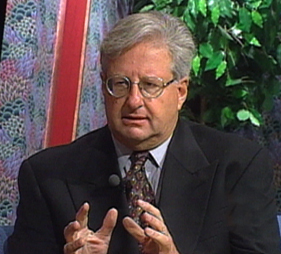
Eda Gorbis on Body Dysmorphic Disorder

Characteristics of Body Dysmorphic Disorder (BDD)

David Bullard: To begin, could you give us a little background on BDD for our readers who may not be familiar with it?
Eda Gorbis: I began learning about treatment for obsessive-compulsive disorder (OCD) when I was helping to create day treatment protocols at UCLA Neuropsychiatric Institute in 1992, and then I furthered my knowledge by studying with Dr. Edna Foa in 1994. In 1996, I began work with a patient who had both OCD and BDD and was addicted to plastic surgery procedures. After successful treatment that was specifically designed to ameliorate the stress associated with her BDD, we were able to work with her on her remaining OCD, and my interest grew in this patient population.

Body dysmorphic disorder is self-perceived ugliness. It is when a person feels ugly inside about a minute anomaly—usually invisible to the naked eye of another—or has a markedly excessive preoccupation with even a slight defect, together with the feeling of being unable to make it right.

DB: So it’s a feeling and self-perception. I’ve noticed that, for some people with BDD, there is a vivid visual picture in their minds. One study highlighted the intrusive visual imagery these people have in addition to negative self-cognitions and feelings.
EG: When they look into the mirror, they see themselves as ugly.
They do not perceive themselves in the mirror as we perceive ourselves. They see a distortion that is invisible to others.
They do not perceive themselves in the mirror as we perceive ourselves. There is something wrong in their visual fields, from the eyes into the brain, that gives them inaccurate feedback. They see a distortion that is invisible to others.

What people with BDD perceive is actually similar to the reflection we have all seen in carnival funhouse mirrors. This differs from the common feelings of insecurity or self-consciousness about one's appearance that most people experience from time to time. Many people who have had cosmetic surgery are happy with the results and can move on with their lives without continuing to obsess about the original defect. With BDD, however, any surgical "correction" will itself be seen as imperfect, or an obsessive fixation with another body part will take over.

There are some theories, but the specific causes of BDD are not known. Many experts agree that sociological and biological factors play a role in the development of BDD.

DB: And it can be extremely debilitating.
EG: Yes, one of the most disabling conditions I know of. People experience extreme self-consciousness, and often avoid social situations, feeling others are judging and criticizing their self-perceived imperfections. The more the fixations intensify, the more it seems rational that others are also focusing on the “defect.” It can be a kind of paranoid ideation.

Then a person’s relationships suffer, along with many aspects of daily life. They can repeatedly request reassurances from others, but with no relief from their certainty about the ugliness. These compulsive requests for reassurance actually reinforce the false belief system and fixations; this leads to further compulsive questioning in a continuing cycle. They get so focused on their appearance that much time is spent hiding or trying to perfect the “flaw” cosmetically. These people are often unable to leave the house to make appointments, or to hold a job.

DB: Can you tell us about co-morbidity?
EG: BDD has a high co-morbidity with other anxiety disorders. The research is not perfect, but it seems that more men are treated for BDD than women. Perhaps female BDD symptoms are more likely to be interpreted as "normal" female behavior in our culture and are likely to be overlooked and remain untreated. The onset of BDD is not exclusive to a particular age, though symptoms often emerge during the teen-age years.

Treatment Considerations

DB: Could you give our readers an idea of how you work with someone with this particular disorder?
EG: More often than not, BDD is intertwined and co-morbid with OCD. Both disorders must be targeted at the same time—the perfectionistic concerns or fear of being criticized on a performance level that are characteristic of OCD, and also elements of social phobia that are associated with BDD.

BDD has certain expected features: for example, an exaggerated physical anomaly would be chin, eyelids, cheekbones—oftentimes in males, it would be penile size—with symmetry and exactness issues. I have found that women compare and contrast their breasts or their arms—any body part can be compared with the corresponding part on the other side of the body. The self-perceived anomaly also has a tendency to move from one body part into another: it can shift from the nose into the ear, for example.

DB: You mentioned that the first patient you worked with had had multiple surgeries. That’s a good example of how it shifts from one body part to another, and they get the surgery based on that.
EG: Right. That patient had more than a hundred cosmetic surgery interventions.
There is an element of addictive behavior and impulsivity associated with BDD, which can be a great warning sign for the clinician.
There is an element of addictive behavior and impulsivity associated with BDD, which can be a great warning sign for the clinician, because you do not find this so much in strictly obsessive-compulsive disorder. Some of the patients with BDD have also met diagnostic criteria for sexual addiction and gambling. It is the exact opposite for people with OCD. Patients with OCD are not impulsive. They would be like Rodin's "Thinker."

With patients with body dysmorphic disorder, you have an overlap between impulsivity and compulsivity. Whereas people with OCD are extremely moral and truthful, people with this overlap of impulsivity and compulsivity would show no guilt or remorse. This overlap makes treatment extremely challenging. Some patients with BDD have also met diagnostic criteria for sexual addiction and gambling, which was a little bit surprising to me. Well, not really surprising, but interesting how impulsivity and the pleasure is associated with the alleviation of tension or excitation. For example, in gambling, it's not the reduction of anxiety that is the aim of the behavior. The aim is the attainment of tension release, like hair pulling or when they squeeze pimples, and excitation—the adrenaline rush in gambling or sexual addition. So you have very different aims of the behaviors that are intertwined in very complex ways.

DB: Some of the people who have written in the field make a distinction between delusional versus nondelusional BDD—for instance, someone who looks in the mirror and sees that his ears are too big, and he really thinks that they are too big, versus someone who looks in the mirror and knows he feels bad about it but accepts reassurance. He knows that his ears are really okay, and he recognizes that he has a problem in his perception. Do you see that distinction? Is it helpful to you in your work?
EG: Let's call it poor insight. That is a better term than "delusional." And it is classified along with other OC-spectrum disorders, such as Tourette's syndrome, eating disorders, trichotillimania, and compulsive skin picking. BDD is also often seen as part of the impulse control disorders—where impulsivity can be thought of as seeking a small, short-term gain at the expense of a large, long-term loss. People with BDD get completely dysfunctional, as I described earlier-becoming addicted to surgical procedures, getting stuck in front of mirrors, needing to ask constantly for reassurance, etc.

Cognitive-behavioral therapy

DB: Although each case is individualized, can you give us an overview of how a cognitive-behavioral approach can be utilized in treating OCD?
EG: With cognitive-behavior therapy (CBT) a person learns to change the way he or she thinks and acts. We know different people can have different attitudes about the same specific conditions: A large facial birthmark can certainly be noticeable to others, but may have no negative impact on someone who has accepted it, while being debilitating to someone with BDD. And, of course, even a nonexistent or minor flaw can be devastating to a person with BDD. It is important to help people change their thinking habits. Exposure and response prevention are taught to people with BDD to help them face their anxiety and any co-morbid BDD concerns. This means repeatedly learning to tolerate discomfort. Anxiety gradually subsides as they continue to confront situations without the avoidance response.

We also use the 4-step model of our colleague Jeffrey M. Schwartz, MD, as
outlined in his books Brain Lock and You Are Not Your Brain: The 4-step solution for changing bad habits, ending unhealthy thinking, and taking control of your life.

The steps we teach our patients to help them get freed from obsessional thinking are:
Step 1: Relabel (recognize that the intrusive obsessive thoughts and urges are the result of OCD).
Step 2: Reattribute (Realize that the intensity and intrusiveness of the thought or urge is caused by OCD).
Step 3: Refocus (Work around the OCD thoughts by focusing your attention on something else, at least for a few minutes: do another behavior).
Step 4: Revalue (Do not take the OCD thought at face value. It is not significant in itself).

The Role of Psychoeducation

DB: Yes, I've found that simple process very useful for some OCD clients, and it goes along with my favorite bumper sticker: "Don't Believe Everything You Think!"
How helpful do you find psychoeducational materials?
EG: I think psychoeducational materials are always very helpful and important, because then patients know they are not alone. In fact, we now believe 5 million Americans are afflicted with this very debilitating illness. It removes a lot of people from the workforce.
We now believe 5 million Americans are afflicted with this very debilitating illness. It removes a lot of people from the workforce.
DB: Isn’t it a characteristic of BDD that it feels so shameful that the majority have hidden it from the people who are closest to them?
EG: Well, the dysfunction is most often extreme, and usually afflicts young people by the time they are 18 and ready to get out of the house and into college. Then, because of the self-perceived ugliness, they are unable to get into social situations or attend lectures. They can't date. They camouflage themselves with glasses and excessive makeup. It is similar to an anorexic who is quite underweight and having cardiac problems and broken bones, and losing consciousness and so forth, but still worries that she's too fat. These people, in a very similar way, feel ugly, and there is a delusional component to this feeling ugly, as in anorexia. A distinction from anorexia, however, is that an individual with BDD would be preoccupied with the appearance of his or her face, while the anorexic will be more preoccupied with self-control strategies regarding weight and shape.
DB: Can you recommend some books for therapists who want to learn more about this disorder?
EG: The classic in the field of BDD is Dr. Katharine Phillips' The Broken Mirror: Understanding and Treating Body Dysmorphic Disorder (2005). She also has a newer one: Understanding Body Dysmorphic Disorder (2009). I have already mentioned the books of Dr. Schwartz. Other good ones are Feeling Good About the Way You Look (2006), The BDD Workbook (2002), and The Adonis Complex (2000).

We also have information on our website: hope4ocd.com. There are some other good ones such as Dr. Phillips' at www.butler.org; and the Massachusetts General Hospital BDD clinic; and www.bddcentral.com.

Mirror Externalization

DB: On the treatment end of it, would you say something about the mirror approach to your work?
EG: Because the physical anomaly is so exaggerated in the minds of these patients, I was thinking one day, "How do we externalize this self-perceived ugliness?" And I thought of the carnival funhouse mirrors, because they really exaggerate everything. It's a form of exposure. So we have a laboratory at the Westwood Institute in which a certain part is exaggerated when they're looking into a mirror. The room also has lighting controls, because different lighting and angles change our perception of the reflection. At this time the patients are just writing their anxiety levels.

We then cover all the mirrors for three days in a row, and all violations are recorded to track the compulsion. Compare-and-contrast behaviors—with those around them or with photos in magazines—are also counted as compulsive because they're done out of the anxiety. Or asking for reassurance: "Do I look good?"

The process of "externalization" works by causing the breakdown of maladaptive associations and repetitive manipulation of their external, material icons. In exposure therapy, BDD patients are provided with a symptoms list and must then induce the debilitating condition and self-monitor/rate objective signs, such as pulse rate, extent of nausea, dizziness, and cognitive distortions—for example, "My nose and forehead are too big." Cognitive restructuring through writing exercises and observational records are emphasized.

Our patients stay in the program from six to eight hours a day, and there are three clinicians working with them in shifts on a daily basis. After they work with the clinicians, I expose them in a controlled way to a regular mirror where they have to write a self-description, like someone in the police department is looking for them—a profile with no emotion associated with it.

We use cognitive-behavior therapy (CBT) with exposure and response prevention, and add mindful awareness training, cognitive restructuring, and Socratic questioning. We also use videotaping. Very often, I will use makeup artists to do an exaggerated prosthetic part. We have an interdisciplinary team. Treatment is tailored to each case. We also have six psychiatrists associated with us, who are OCD and anxiety disorder specialists.

DB: You have mentioned in the past that the model most clinicians have in private practice of the 50-minute session once or twice a week is inadequate for extreme cases of powerful dysfunctions such as BDD. It is wonderful that you are able to do such intensive work with those who are suffering with the most severe cases.
EG: We are able to do this work because we specialize only in OCD and BDD and other anxiety disorders. We don't treat anything else. And because of this narrow specialization, it is possible for one patient to work with three or four clinicians in a day. However, insurance companies just rejected one BDD case because they still don't accept the necessity for this intense treatment—they think it can be treated once a week, although this particular patient had been treated unsuccessfully once a week for years. It is a very debilitating illness—far more severe, I think, than OCD.

Medication

DB: That brings us to the issue of medications. SSRIs have been often prescribed to people with BDD. Would you say the majority of these people you work with are already on SSRIs, or do they end up on SSRIs?
EG: Based on my work with the six psychiatrists at the Institute, SSRIs alone do not seem to be helpful. There is no scientific evidence at this point for what really works with body dysmorphic disorder because of the delusional component and extremely poor insight. For people with high baseline anxiety, medication may be targeted to reduce anxiety. Depression and panic attacks can also be addressed with some medications, and atypical psychotic medications have also been used. But I have to emphasize that some kind of effective therapy is required, such as cognitive-behavioral therapy tailored to the individual case.

Families can also be a crucial part of the treatment.

It is important that family members see that this is a true debilitating disorder, rather than merely shallowness and self-absorption.
It is important that family members see that this is a true debilitating disorder, rather than merely shallowness and self-absorption. The love, support, and understanding of the family are very important, and they also have to be educated in how not to reinforce the obsessing and compulsions. Then, it is also important where they go after the treatment program.

Post-Treatment Care

DB: What are your experiences with post-treatment care?
EG: There are few referral possibilities for BDD patients to follow through. I think that these people are extremely high risk for relapse—maybe even more so than obsessive-compulsives, who have much greater compliance levels. Because of the impulsivity characteristic of BDD, you have less compliance, so even if patients do extremely well during the program, it is necessary to continue the self-therapy and self-treatment, because this illness is not really cured. I oftentimes give my patients examples: you can go through the best weight-loss program in the world, but if you then resort to your old eating habits, everything is going to come back right away. So really, I think it depends on finding out their interests or what they're best at while they're in the program, so that these dysfunctional compulsions can be immediately replaced with other activities. I tell them, "I don't care if you study Chinese, take a cooking class, or paint your house, as long as you get up in the morning and get going." Otherwise, all of the compulsions have a tendency to come back if the patients don't do anything that is productive.

Specialty Training in BDD

DB: I can see how important it is that they really understand what you're telling them about exposure and response prevention, and not reinforcing those dysfunctional behaviors. For any of the clinicians reading this who want to get the specific training needed to work in this arena, are you doing any training at the Westwood Institute or at UCLA?
EG: I would think that it's very important for them to go through training, but it would have to be hands on. It takes me approximately six months to train a good clinician for complicated cases, but I do specialize in extreme cases—patients who have failed a few other programs. Perhaps even a month of training would be sufficient if the clinicians saw a couple of cases that they would have to really work with intensively, because of the tailoring to the individual needs. It is not a cookie-cutter training; I couldn't tell you, "Here is a cookbook for any BDD case." Each case is like a snowflake. I've never seen two that were exactly alike, so we duly tailor the treatment to the individual needs of the patient.
DB: Absolutely. Finally, could you say something about the satisfaction you’ve gotten as a clinician in being able to help people who have experienced such terrible suffering and misery?
EG: My satisfactions are now taken with a grain of salt. Ten years ago, I was far more optimistic about the outcomes. I know now how debilitating and co-morbid this is with other illnesses, and how "feeling good" is dangerous for them. People with BDD have to be alert and vigilant to not fall into their old habits of dealing with their anxieties.

It's a medical illness that is extremely serious—like tremors of the mind. You could compare it a stroke or cancer that must be attended to. It is chronic; it waxes and wanes. People can definitely get to completely functional levels provided they attend to it on a daily basis. But, like a person with extremely high blood pressure or diabetes or even cancer, that person must be mindful and aware that there's a problem. Lately I've seen a few cases that had been in remission for 10 or 12 years and then they relapsed. I cannot tell you why. I don't even know if I have a hypothesis about the relapse after years in remission. And it sometimes takes longer to get them out of the condition the second time.

DB: That’s a very sobering indication of the great suffering and difficulty of having this disorder. I really appreciate your helping these people even without necessarily always having easy answers. On the other hand, I know of some people over the past several years that have made tremendous improvement in their functioning, even if they’ve had to come back and see you periodically. It’s made a big difference in the quality of their lives.
EG: I appreciate that, but the truth is I want to warn people against being extremely optimistic. There is no cure, and even if we ourselves have some of the highest levels of successful outcomes, let’s not forget that I’m extremely careful, having been trained by Dr. Foa to assess cases for hours and hours and to administer up to 15 tests to make our understanding of the individual even more precise. We also need to reject and refer elsewhere about 50% of the cases that come to us that I think we cannot help. People who come here are self-selected. We never have more than three cases at a time in the entire Institute, and we are able to pay a lot of personal attention to each individual and tailor the treatment. If something is not working from yesterday to today, we change it. We have that luxury. If I need to, I can dedicate the entire Saturday to this patient. That said, I don’t think other therapists have that luxury, and I think it’s very important to put this element into the level of success. It was never the quantity but the quality of the work that we have been focused on.
DB: I think that's one clear understanding that your patients have about your work—the intense dedication. Without being able to promise success, you are certainly one of the most dedicated people I know working in this challenging field
EG: You are most welcome.

The Gossamer Thread: My Life as a Psychotherapist

Below are three extracts from my book, The Gossamer Thread: My Life as a Psychotherapist (Karnac, 2010). The book describes my personal journey as a psychotherapist, how I started as a bumptious behaviour therapist, young, inexperienced and highly confident, and ended as a psychodynamic psychotherapist with a more reflective and intuitive way of working. Along the way I trained in Beck’s cognitive therapy although I found myself almost immediately doubting the rational simplicities of this approach.
The first extract describes my attempt to demonstrate the wonders of behaviour therapy to one of my students by treating an elderly lady, a chronic agoraphobic stuck in her flat on a run-down estate in south London.
In the second extract, Frances, a model cognitive therapy patient up to that point, becomes suddenly depressed and I behave in a not very therapeutic way.
In the third extract I take on my first psychodynamic psychotherapy patient, a charming, narcissistic young man, and discover how tricky it is to get through well-established defences.
 

Working as a behaviour therapist, London, 1970s

I park my car on the road that borders the estate, thinking that the safer option. Graham and I walk down the hill seeking to locate Arlington House where Mrs Hewittson lives. I’m aware that we stand out, dressed in our smart, professional clothes, each carrying a leather briefcase. But no one bothers us and we find No. 7, a ground floor flat fortunately, so we don’t have to negotiate what I imagine to be urine-smelling lifts or flights of bare concrete stairs. I ring the bell and wait.

I had briefed Graham beforehand. This is to be an assessment. Given that this is behaviour therapy, it would of course be a behavioural assessment. My plan was that flanked by the two of us, Mrs Hewittson would come out of her flat. Then we would send her off on her own as far as she could go until she couldn’t go any further. And I was going to be really scientific about this, for we would note down exactly how far she went, how long she took and how much anxiety she experienced on a scale of 0 to 100. This would be the baseline against which her recovery would be measured. In my mind, I fantasised Mrs Hewittson going further and further each week until we had her travelling all over London.

The door is opened cautiously by a young girl, no more than nine. I explain that we are psychologists and that we have come from the Maudsley hospital to see Mrs Hewittson.
“‘Nan,’ she yells back into the flat, ‘there’s two psychos from the hospital to see ya. Waddya want to do?’”
We hear the sound of talking from inside the flat, two voices, one female sounding very tremulous. Graham and I exchange looks. The door opens wider. ‘Nan says you can come in.’ The girl disappears into the gloom of the flat. When we get used to the darkness, for the curtains are drawn and the main lighting comes from a TV blaring away in the background, we see that the room is full of people. There are three girls, including the little girl who opened the door, playing around a Wendy house in one corner. A woman, barely in her teens, is seated at a table holding a baby who is guzzling milk from a bottle. A tiny, wizened man in an old grey suit sits on a huge settee, a cigarette dangling from his hand. And, in a rocking-chair in the centre of the room, there is a woman in her fifties, strands of mousy brown hair straggling down either side of a pale, thin face in which watery blue eyes stand out like on those odd goggle-eyed fish one sees in aquariums. She is staring at us unblinking. Mrs Hewittson I presume.

It is an unnerving situation, not what I’d expected. I’d imagined Mrs Hewittson stuck on her own, lonely perhaps, even pleased to have a bit of company. Not in the midst of a melee of people. But I’m the professional. So I take charge. ‘Mrs Hewittson?’ I say, addressing the lady in the rocking chair. ‘We’re psychologists from the Maudsley. We’ve come to help you get better.’
The woman says nothing. ” She rocks forward and back in the chair. I am uncomfortably reminded of the Bates motel in Psycho and the skeletal mother in the basement.”
‘Your daughter,’ I press on, ‘arranged for us to come and help you.’
‘Did she now?’ Mrs Hewittson says. It’s a rasping, throaty voice, the product no doubt of thousands of cigarettes smoked in the gloomy flat. ‘That was nifty of Jean.’
Somehow I feel that being ‘nifty’ is not something Mrs Hewittson approves of. The tiny man on the settee leans forward. ‘My Madge is not well, you know,’ he says confidentially as though she cannot hear him. ‘Trouble with her nerves. Had it a long time.’
‘That’s why we’re here,’ I say triumphantly. ‘To get her better.’
‘How are you going to do that then?’ puts in the woman with the baby.
‘First, we’ll go out for a short walk, say, to the post box.’ We’d passed the post box just twenty metres along the road. I turn to Mrs Hewittson. ‘You might have a letter you want to post and we could do it together.’
‘Sammy takes all my letters. He delivers them and takes whatever I’ve got. Don’t need to post anything, thanks all the same.’
‘Anyway, it’s an assessment, a sort of test, to see how far you can go. You don’t have to go far,’ I add hastily. ‘Just as far as you feel you can go.’
‘I can’t do that, doctor. Sorry, I can’t do that at all.’
‘Oh.’ This blanket refusal takes me back. ‘Well,’ I press on gamely, ‘what about going out of the front door and down the path to the gate? It’s only a couple of yards. I’m sure you could do that with our help.’
‘I would do it, sir. But it’s the fits, you see. Can’t risk it. I have these terrible fits.’
‘She does,’ interjects the man in the grey suit who I take to be her husband. ‘She has these fits. She’s a martyr to them.’

I sense I am losing the battle. What are these ‘fits’? Could they be epileptic fits? If they are, what do Graham and I do if she has one? I have never seen an epileptic fit. All I know is what everyone else knows from the films, how you have to grab the tongue, but then what? I curse myself. I should have read Mrs Hewittson’s case file before we came. Before I have time to say anything, the front door opens and in breezes another youngish woman with a two-year old in tow.
‘Madge, darlin’,’ she starts, then stops having spotted us. ‘Sorry, love, didn’t know you had visitors.’
‘They’re from the hospital. Psychiatrists,’ says Madge.
‘Psychologists.’
‘Sorry, didn’t mean to offend and all that.’
‘No offence.’
‘Thing is,’ says the new arrival, ‘I was hoping you’d look after Darren while I go to the Social.’
‘No problem, love. You leave him here with me.’ Mrs Hewittson turns to me. ‘Very sorry about the walk. But you see I’ve got my hands full. Another time, doctor.’
‘Yes. Right,’ I say decisively. ‘What about Friday morning? At 11?’
‘That would be ticky-tack. I’ll be more meself then, I expect.’
Unfortunately, that’s exactly what worries me.
 
Friday morning comes and Graham and I make our way back to the Dog Kennel Hill estate, to Arlington House, No. 7. I have found Mrs Hewittson’s case file. A bulging, tattered, beige-coloured, wallet with letters, documents, case notes, and other bits of paper loosely packed into it. I have waded through it all. There is no mention of epileptic fits. Just panic attacks, which I suspect is what Mrs Hewittson meant. As we approach the door, we see pinned on it a scrap of white paper, fluttering in the wind. I fold it down so we can read what is on it.
Too the Doctors. Very sorry, had too go to the dentists for me tootheyk really bad it is. Mrs Hewittson
We try to peer in through the windows but the curtains are closed. There is not a sound from inside. But I knock a couple of times anyway.
““It seems,” Graham says, “that a visit to the dentist is preferable to a visit from us.””
“Maybe it was an emergency.”
“Yes, of course that might be it.” He gives a half smile.
I take the paper off the door and, beneath Mrs Hewittson’s scribbled message, I write:
Sorry about your toothache. Hope you get it fixed. We’ll come again on Monday at 11.
I am not about to give in so easily.
 
On a bright, sunny Monday morning Graham and I are again standing outside No. 7 Arlington House. This time there is no scribbled note on the door. We knock but there is no response. The curtains are not completely drawn on one of the windows. Peering in, I see that the front room is empty and the TV is off. There is no sign of occupation. I step back and look at Graham. He shrugs. Just then a young girl, a similar age to the ones we had seen playing around the Wendy house, comes skipping down the street towards us. She skips right up to us and proceeds to skip round us as though we are part of some game she is playing.
“Are you,” she says as she skips, “the doctors?”
“I suppose so. Yes, I mean.”
“To see Mrs H?” Skip, skip.
“Mrs Hewittson, that’s right.”
Skip. “She left a message.” Skip, skip.
“And?”
Skip, skip. “She’s gone to the Isle of Wight.” Skip. “To visit her brother-in-law.” Skip, skip.  “For the whole week.” At that she skips off the way she came.
As we trudge back to the car, Graham says: “You could say we had a great success. After all, we got her out of the house.”
“Drove her out,” I say with a grin.
“And in one session.”
“We should write a paper. ‘One session treatment for agoraphobia: a breakthrough in behaviour therapy.’”
We did not write a paper, of course. Nor did we return to bother Mrs Hewittson again. It had taken me a while to get the message but I did get it in the end.
 

Training as a cognitive therapist, Oxford, 1980s

One week Frances fails to attend a session, something she has never done before. We are well into the therapy. We have moved on from changing negative thoughts to identifying the underlying beliefs, what Beck calls schemas. These are the major drivers of depression, ideas that are often formed in childhood and become reactivated in current crises. They can be encapsulated in key phrases or prescriptions like: To be happy I have to be accepted by everyone all the time, I must succeed in whatever I do, I have a fatal flaw in my personality, I am fundamentally a bad person. According to Beck, to produce lasting change it is essential to get to these core beliefs and deal with them.

In the session before Frances failed to attend, she had complained that her work as an administrator was boring. I asked why she didn’t try to get a more demanding and interesting job, something that drew more on her academic ability perhaps. She said vaguely that there was no point. Puzzled, I pursued this and we came to an example of a powerful underlying belief. Life is meaningless, she claimed. In the end we all die.
‘How do you know life is meaningless?’ I ask.
‘I just do.’
‘Come on. You know that won’t do. Let’s do some cognitive work on this. List ‘pros’ and ‘cons,’ for example.’
Frances says nothing. I try to read her face but I can’t. It’s expressionless.
‘Don’t you want to challenge this belief?’
‘I can’t see the point.’
‘To get better. To deal with your depression.’
Deal with it,’ she says sarcastically. ‘You don’t deal with the meaningless of our existence.’

I am startled by Frances’s tone. It’s the first time I’ve heard her talk in this angry way. I backtrack. ‘Okay. I’m sorry. A poor choice of words. But I do think we should examine this belief, don’t you? It seems central to your depression.’
Frances stares at me. For the first time in the therapy I feel unsure. More than that. I have a sense of unease.
‘Maybe,’ she says at last. ‘But not today. Can we leave it to next time?’
‘Okay.’
Later, I wonder if I should have agreed so readily. Was this avoidance on my part? Up to now the therapy had been going smoothly. Frances was the model patient. This was our first glitch. I’d told myself that it would be better not to push this. We could work on it in the next session. The only problem is that Frances failed to turn up for the next session.

I ring Frances. I don’t normally do this when patients fail to show up. I wait a couple of days and if they don’t contact me, I drop them a line. But Frances is a special case, my first cognitive therapy patient, and I’m worried about her. The phone rings on and on. I’m about to hang up when at last she answers, a slow ‘Yes, who is it?’ as though I have just woken her up.
‘Frances, it’s John. I was wondering if you were okay.’
‘What time is it?’
‘Just after two. Have you been asleep?’
A long pause. ‘Sorry. Just very tired.’
‘You didn’t make the session this morning. I wanted to know if you’re alright and if we should reschedule.’
Another long pause.
‘Are you feeling depressed?’
‘You could say that.’
‘Is that why you didn’t come to the session?’
‘What’s the point? I’m not going to get better.’
‘That’s your depression talking, Frances. You’ve had a downturn in mood. All the more important for you to see me at this time. We can work on it together and help you get out of it.’
‘I don’t know.’
‘I do.’ I’m being the decisive, no-nonsense therapist though it’s the last thing I feel at this moment. My shoulder muscles ache with tension. My heart is beating fast. At the back of my mind is the thought that Frances will kill herself. ‘How about later on today, at 6? Or tomorrow morning?’
‘No. I need a bit of space. I’ll come to next week’s session. Don’t worry, John. I’m not going to do anything stupid. I haven’t the courage to do that anyway.’
I try to persuade Frances to see me earlier but she’s adamant. She promises to come next week. I wring a further promise from her that she will contact me immediately if she feels suicidal.
What has happened? The therapy was going along really well. Is it just a blip, a random change in mood? Has something happened to Frances to trigger the increase in her depression? Was it related to our discussion of her core belief that life is meaningless? I ponder these matters but come to no conclusion.

When Frances comes to our next session, I immediately notice a change in her manner. There’s a slowness to her movements, a hesitancy that I have never seen before. She doesn’t look directly at me and when I study her face, all I can see is blankness. I ask her how she is. She takes a while to respond. She says she feels lousy, tired, depressed, no energy, completely zonked. All signs of depression.
‘I’m sorry you’re feeling so bad but I’m glad you came,’ I say. ‘It’s a chance to do some work and improve your mood.’
She looks at me and sighs. ‘The good doctor’s going to make me better. Hooray.’
‘Well, I’m going to try. Tell me right now and in all honesty what you think of coming here.’
‘A waste of time.’
‘Why?’
She shrugs. ‘Nothing works and anyway what’s the point. I get better for a bit and then I get worse. I’m just useless.’
‘Several very negative thoughts in that statement, I’d say. Do you remember how we dealt with, I mean, worked on your negative thought, I’ll never get better? We listed the ‘pros’ and ‘cons’ and came to a more realistic thought. I have it here.’
I search through my notes and read it out to her:
I can’t know that I’ll never get better and I recognise that this absolutist negative thought is a product of my mood state rather than a realistic appraisal of what will happen.
‘Do you believe that now?’
‘It’s irrelevant what I believe,’ she says in a lethargic tone. ‘Life’s meaningless anyway. We are microbes in the vast universe. Specks of cosmic dust. What does it matter? What does anything matter?’
‘Something mattered enough for you to come here today. You’re depressed, Frances. Something brought you right down in the last week. I don’t know what. But I am absolutely convinced that your view that life is meaningless is caused by your depression.’
‘It’s not,’ she says emphatically. ‘Life is meaningless. It’s not a product of depression. It’s true. And anyway I’ve always believed it so it can’t be a response to a change in mood.’
For the moment I’m stumped. I’m also feeling pissed off with Frances, with her certainty and resistance to my attempts to help her.
‘Always?’
‘Always.’
‘So you sprung from your mother’s womb with the thought Hey, why am I here? Life is meaningless. Let me back in?’ I have spoken without thinking. I’ve let my feelings show. I’ve broken a cardinal rule: don’t mock your patient. I’m a crap therapist. But a small smile appears on Frances’s face.
 

Training in psychodynamic psychotherapy, Oxford, 1990s

Sitting opposite me is Matthew, a tall young man, in a scruffy white T-shirt and faded jeans. In his hands he has a Rubik cube.  Each side of the cube is subdivided into nine coloured squares, the puzzle being to twist the arrangements to produce sides of all one colour. Matthew is fiddling with the cube, a frown of concentration on his face. He is my first proper psychodynamic psychotherapy patient. This is our first session.
“I wonder if it might be best if you put the Rubik cube down.”
I leave the faintest of inflections at the end of my remark to try and soften the suggestion. Matthew drops the cube into a battered shoulder bag that he has draped on the side of the chair.
“There,” he says, flashing me a brilliant smile. “I solved it yesterday. I thought I’d see if I could do it again. I must have gone wrong somewhere.”
I could pick up on the wider meaning of his last remark but decide that it is a bit too early to do so and, moreover, it is Matthew who should do the running, not me. I have already introduced myself and explained that we are to work together for up to a year, meeting once a week, holidays apart.
“How about you kicking off,” I say. “Just say whatever’s on your mind.”
We are seated face-to-face. There is a couch in the room but Matthew declined it. I was disappointed as the couch seemed so much a part of the psychodynamic approach.
“What do you want me to say?” he says brightly as though he is here to audition for a part in a play.
“The idea is for you to talk and we take it from there. Whatever is on your mind.”
This produces a long silence during which Matthew gazes around the room as though seeking something to latch onto.
“Crap painting,” he says pointing at a Monet print of a mother and young girl walking through a bright red poppy field. “I hate reproductions.”

Is Matthew saying something about himself in this remark, I wonder? That he is not a reproduction, but the real thing, a true original. Whether he is or not I decide not to comment. I think about what I already know about him from the assessment that Dr Franklin, the Psychotherapy Department’s senior registrar, carried out. He comes from a well-off, middle-class family. He is particularly close to his mother. She gives him a generous allowance and has let him stay, rent free, in a flat she owns in Headington. His father, a successful businessman, is largely absent from home. At school Matthew was regarded as very bright but dropped out in the 6th form. There are suggestions of drug taking and gambling. Since school, he has had periods of temporary work, mainly on building sites, though most recently he worked in an office. None of his jobs have lasted long. He is currently unemployed. Matthew’s major complaint is of extreme anxiety, often in the form of panic attacks. These have caused him to retreat to his flat, sometimes staying there for days on end, not seeing anyone.

My reverie is interrupted when Matthew says, looking quizzically at me: ““You’re not like Doctor Frankenstein. He asked me lots of questions, most of which, actually all of which, were stupid. In the end I just made things up. It seemed to make him happy.””
Jesus! Now I do not know what of Dr Franklin’s assessment is correct, which is, I suspect, exactly what Matthew wanted.
“I wonder why you did that.”
“I wonder why myself.” A cheeky smile, inviting me to join in the joke. I cannot help smiling back. There is something very disarming about Matthew. 
“When I was at school,” he says after a while, “I would make things up. Entertain the troops by telling a few fibs, playing the joker. It got to be a habit. I had this great ex-army greatcoat and me and the other lads hung about, doing dares and that. Wicked!”
He sounds about 16. Stuck in an adolescent time warp.
“Only I lost the coat. Then the bastards threw me out.”
Why did they throw you out?It’s on the tip of my tongue to ask but I stop myself. Above all, I want not to interfere, to let Matthew talk and me listen. So far he has not told me about anything serious. Not about his uncertain sexuality. Not about his intense feelings of panic. Nor about the time when he took an overdose of antidepressants (the tablets were his mother’s prescribed by the family GP). Dr Franklin had noted all these in his assessment but Matthew does not seem to want to talk about any of this. Of course they might all be fabrications (fibs to entertain the troops) but somehow I doubt it. Beneath the veneer of jokiness I sense his vulnerability and unhappiness. The difficulty might well be getting him to talk about it.

Matthew talks more about his school even though it is over three years since he left. He was brilliant at English and had two poems accepted by the school magazine. But he stopped working in the 6th form because it was all so puerile. Then the teachers tried to get him to see a school counsellor who turned out to be a real wanker. I am cast in the role of the eager listener to his tales of schoolboy derring-do. He tells a good story and I think I could just let him do that. But where would we have got to and what purpose would it have served other than to pass the time? The dilemma with the passive stance of the psychodynamic psychotherapist is that someone like Matthew could entertain the troops all day long. At a pause I venture to stir things up, unsure if I am doing the right thing and wary of how he will react.

“From what I’ve heard so far everything seems so hunky-dory that I wonder why you are here in psychotherapy at all. It hasn’t been all sweetness and light, has it?”
Matthew does not say anything, which causes my heart to beat faster. I run through the statement I have just made and castigate myself for its anodyne quality. Could I not have been more incisive?
Hunky-dory,” he says, drawing out the word in a laconic manner. “Now that’s not a word in the psychotherapist’s lexicon, I would have thought? Or is it?” ” He looks at me expectantly, all sweetness and light of course.I feel the stiletto sliding subtly into me.” I tell myself to stay mum and then wonder at my choice of words. Mum’s the word. The phrase floats through my mind as though magically Matthew has projected it into me. Is this an unconscious communication? Do the words mean that we will be okay as long as I mother him, admire his precocity and wit, but if I, taking the paternal role, challenge him, he will hit back? All this flits through my mind in seconds, a blur of semi-conscious thought, as Matthew looks me straight in the eye and waits for me to respond. I say nothing, holding his gaze until he looks away. My beating heart gradually slows. In my previous persona as a cognitive-behavioural therapist, I would have been more active. I would have probably said that hunky-dory was certainly not a psychotherapeutic term, just a word that seemed appropriate. I would have smiled, wanting to maintain good rapport. I would have asked Matthew whether he minded the word or if he preferred another. Why do I not do this now? Because my primary role is not to be Matthew’s friendly helper, not to make him feel at ease. As a psychodynamic psychotherapist I am seeking to create a space in which we can explore deeper feelings. For that to happen I have to dispense with the niceties and tolerate the discomfort just as Matthew has to do too. I am finding this difficult. It is not just that Matthew, with his air of vulnerability and his boyish charm, invites me (and others, I imagine) to look after him. I realize I like looking after people. That is why I am in this job. Only in this instance looking after people means something very different. It is not about making them feel better, at least not immediately, but getting through their defences to the heart of their problems. To achieve this I shall have to use a few stilettos of my own.

The session stutters on. Matthew’s breezy insouciance dissolves. He retreats into scowling silences. When he speaks, there is anger and more than a hint of despair. He rails against both his parents, his father for his crass insensitivity and his mother because she is a very silly woman. I hear nothing of his brothers and sisters. He brightens up only when he talks about his best friend, Tom, who is about to return from college. Tom is going to stay with Matthew and they’ll have fun together again. I cannot help thinking that the fun will be rather hollow. A feeling of sadness pervades the room. Matthew’s defences are pretty brittle, I realize. I feel daunted at the task of treating him. After all, I am a novice at this form of therapy. Yet I desperately want to help him, not just because I am on a course and anxious to do well, but because I sense his despair. I end by saying a few words about the task ahead.
“These are your sessions, Matthew. We have up to a year to work together.”
“But what’s the point? It’s just talking. What can talking do?”
“It’s an opportunity for you to take a look at yourself, to explore how you feel, to examine what has happened to bring you to this point.”
“But I’ve told you all I know.”
“I don’t think so,” I say more assertively than I had intended. “Do you really think you have?”
A pause. “No. There are other things. Stuff I haven’t talked about. Horrible stuff. But I don’t think I’ll ever talk about that.”
“Let’s see. Next week at the same time?”
“Okay,” Matthew says. A flutter of hope, faint and tenuous. “I sit for a while in silence after Matthew leaves. I feel drained and empty.” Then I pull myself together, reach for my pen and start making the detailed notes I shall need for supervision.
 
John Marzillier
28 February, 2011

Michael Yapko on Psychotherapy and Hypnosis for Depression

Understanding Depression

Rafal Mietkiewicz: Welcome, Dr. Yapko. I am delighted to have the opportunity to talk with you today. Let’t start off with the question of how do you understand depression? Where does depression come from?
Michael Yapko: Depression comes from many different places. There isn't a single cause for it; there are many contributing factors. And in a general way, the factors are grouped into three areas. There are biological factors that contribute: genetic contributions, biochemical contributions. There are psychological factors: your individual temperament, your coping style, your attributional style, your personal history, all those kinds of things and more. And then there's the social realm: the social factors that contribute to depression, the quality of your relationships, the culture in which you live. Those are all three contributive domains. Consequently, the predominant model in the field is called the bio-psycho-social model and simply acknowledges that there are many, many different factors that contribute. And it's because depression is a complex phenomenon, and the fact that there are so many different factors. When I started studying depression 30 years ago, we knew of only two risk factors—one was gender and the other was family history. Now we know there are dozens and dozens and dozens of risk factors, factors that increase your vulnerability to depression. And so we've learned a lot over the last 30 years.

RM: What is the role of childhood, including the first experiences of the child, along with family history?
MY: Childhood obviously is a time when socialization forces are the most intense. And so the quality of your attachments, the modeling that you learn from your family about how to cope with stress and adversity, the way that you are taught as a child to explain the meaning of life events are all factors that can make you quite vulnerable to depression. And so the childhood is important, but I think one of the things that we've learned quite well is that depression isn't about events that happen in people's lives. It's more about ongoing processes of how the person uses information, how the person forms relationships, how the person interprets the meaning of things that happen to them.
RM: Isn’t the way in which a person formulates interpretations determined by his own phenomenology, his own life history?
MY: It's partly determined by that, but socialization goes on your entire life. It doesn't stop when you're five years old; it doesn't stop when you're eight years old.
RM: Some people could say that these are the most crucial years, and that making any changes later is very hard.
MY: People could say that.
RM: Do you agree?
MY: Not entirely. If you look at the fact that some of the most successful therapies for depression never examine childhood, that should tell you something. You look at the three therapies that have the highest treatment success rate—cognitive therapy, behavioral therapy, interpersonal therapy—and right behind it, behavioral activation—none of those treatments focus on childhood.
RM: So, you’re saying you can cure people from depression without taking care of events that happened long ago in the past, without dealing with the big traumas?
MY: Clearly. It's not an opinion—look at the research. In fact, cognitive-behavioral therapy is the most widely researched treatment there is. And this is an approach that has no interest in the past. Now, people will come in and they will naturally talk about the past—"Here's what happened to me when I was eight years old." But a cognitive therapist is not going to sit around and talk about that in great detail, but rather will ask, "So what does that lead you to think, and how does it lead you to behave, and how can we change what you think and how can we change how you behave?" And guess what? It has the best treatment success. And when you look at the analytic approach, it comes in almost at the bottom of treatment success studies—for a reason. See, the problem is, it's a treatment model that you use with everybody, as if everybody's the same, as if everybody has the same pathway into depression. But in fact each person has their own individual pathway into depression. For one person, it's about failed relationships. For another person, it's about trauma as a child. For another person, it's about the surgery they just had and all the drugs they're on. And for somebody else, it's about the hormonal imbalance, and for somebody else it's because their diet is so terrible and they never exercise. There's no blueprint. The model of depression that came out of the analytic world was that depression was anger turned inwards.
RM: Yes…
MY: That was disproved 30 years ago.
RM: However, it’s still considered as something important and valid for many people…
MY: Well, that's wrong. You know, I rarely make a statement that's that flat. Usually there's an element of truth in something, and maybe the truth gets exaggerated, but the idea of depression as anger turned inwards has been disproved. It's an old, outdated concept that doesn't work in the face of modern research. And consider the fact, how many people get out of depression and stay out of depression without addressing anger and without addressing trauma and without addressing childhood. It's always interesting to me that when somebody says, "Well, I think exploring your past is vitally important." Okay. You think it's vitally important. That doesn't mean it is. You want to believe that? You can believe that. You're allowed. You can think whatever you want. But if we go into the realm of research and we compare different treatments and which ones have higher treatment success rates and which ones have lower treatment success rates, such as psychoanalysis—I don't mean to bash psychoanalysis in a global way—but if we ask the question, "Are there some treatments for depression that work better than others?" the answer is yes. It's not as if all treatments are the same. And when we look at which treatments are better, they're the ones that teach people specific skills, whether it's skills in how to use information, how to make decisions intelligently, how to form relationships in a way that's healthy, how to manage yourself and be self-efficacious, and learning skills of emotional self-regulation. And if you look at things that go on in analysis, they actually work against people getting better in two very specific ways. Part of the problem with people who suffer depression is they make meaning out of events and their style of making-meaning hurts them. So to give you a simple example, I call you. You're not home. I leave a message for you. I say, "Call me back."
RM: And I don’t.
MY: And you don't call me back. Now, if I'm a depressed person, how do I interpret that?
RM: Probably like “I’m not worthy…”
MY: "I'm not worthy, you don't like me."
RM: Yes…
MY: "You don't think I'm important. What's wrong with me? How come nobody ever likes me?" It's facing an uncertain or ambiguous situation and projecting negative meanings into it. Analysis is filled with making negative interpretations, negative projections in the face of uncertainty. "What does this dream mean? What does this symbol mean? What does this image mean?" And so much of what happens in analysis is teaching a person to make interpretations that are the same as the analyst. That doesn't help the person learn how to think and use information more critically. And then the second thing that happens in analysis, when we look at coping styles there's a particular style of coping called rumination: spinning things around and analyzing them and analyzing them and analyzing them, at the expense of taking effective action. And when you look at the people who ruminate, they have higher levels of anxious symptoms, more severe depressive symptoms. Ruminating, analyzing, works against getting better. Action is what helps people get better. And when you look again at the therapies that have the highest treatment success rates, it's not a coincidence that every single one of them gives homework. Every single one of them gives tasks to do in between sessions. Every single one of them emphasizes teaching specific skills, whether it's relationship skills, thinking skills, behavioral skills—but the emphasis is on movement, not analysis. That's why people in the other domains call it the analysis paralysis: instead of encouraging people to take effective action, instead, they spend more time thinking and analyzing and miss opportunities to do things that would help themselves.

Nobody Wants to be Depressed

RM: It sounds refreshing and optimistic, but I’m just wondering, if patients are willing to change their behaviors, learn new skills right away, are they ready for it– especially, when we consider secondary benefits from depression.
MY: Who said there are secondary benefits? You said that. I didn't say that. I don't believe that.
RM: You don’t believe the idea of secondary benefits from depression is true?
MY: No.
RM: Why not?
MY: Everything you experience has consequences. Everything. Going to a conference for five days has consequences. It means you're away from your family. Does that mean you want to be away from your family? You make choices. But to suggest that the consequences drive the pattern to me is so offensive because it blames the depressed person. Depressed people don't want to be depressed. What makes it look like secondary gain or secondary benefit is when you see depressed people who don't lift a finger to help themselves, the easiest conclusion is they must not want to change. They must be getting benefits from being depressed. And that is a fundamental misunderstanding that I wish people would let go of already. Nobody wants to be depressed. But the basis of depression is helplessness, hopelessness. Most depressed people don't go for help not because they want to be depressed, but because they don't think help will make a difference. Why would I go see a therapist if I believe that it's never going to help me? That's why depression has so few people who seek treatment. Only about 20 to 25 percent of depression sufferers seek help because they don't believe it's going to make a difference.
RM: So it sounds like you don’t really believe in the unconscious?
MY: You're going off in an entirely different direction now. Of course there are unconscious processes.
RM: I am not blaming a person for being depressed, or saying that it is the choice a person makes; however, there are many benefits of being depressed I could think of…
MY: But by saying it that way, you're suggesting that there is a motivation to stay depressed.
RM: Unconscious ones…
MY: And I'm suggesting that is incorrect. It's damaging. It's unfair to the patient. And it delays getting effective treatment. It's not a useful concept. And again, when you look at the therapies that work, none of them explore that domain because it is theoretically interesting but it isn't really what the nature of depression is about. And it's one of the things that every analyst needs to do, is be able to distinguish between their interest in a particular theory versus what the client's actual experience is. Instead of fitting the patient to the theory, how about if we learn something about how this person generates depression? It's a very different question—how does this person generate depression, instead of why. As soon as you ask why, you're now inviting theorizing.
RM: That is true to some extent.
MY: And what I'm interested in is, "Here's how this person does this. How can I interrupt that sequence so that instead of going from here to here to here to depression, can I introduce some new possibilities that move them in a new direction?"
RM: I see.
MY: That's the problem with when people make theories and then they actually believe themselves.
RM: What you are telling us is that you’re very concentrated on the individual, rather than generalized theories.
MY: Every person's different. And that's the point–
you have to generate a new theory for each person, instead of fitting the person to some preexisting idea.
you have to generate a new theory for each person, instead of fitting the person to some preexisting idea. And that's the problem with any approach that adapts the person to the theory instead of the reverse. And that's the danger for any model. You know, I wouldn't want a cognitive therapist to only read cognitive literature. I wouldn't want a behavioral therapist to only read behavior literature.
RM: The more you know the better for the patient?
MY: Yeah, when I said there are so many factors that have been proven to contribute to depression, it means that each practitioner needs to know something about genetics, needs to know something about epigenetics, needs to know something about biochemistry, needs to know something about social depression and the cultural contributions to depression, needs to know something about cognition, needs to know something about diet and exercise. You know, exercise has a treatment success rate that matches antidepressant medications and has a lower relapse rate. Now, that without ever saying a word to somebody. Doesn't that complicate the picture a little bit when you ask, "Well, how does somebody get better exercising if they never deal with their unconscious and they never deal with their traumas?" That's an important question.
RM: Good point!
MY: And that's where you would hope the people reading this would be curious enough to ask, "What is it that cognitive therapists have learned that have made the treatment so successful without doing any of the things that the people who are loyal to analysis think you should do?" And then, of course, part of the model is to dismiss it as superficial. "Well, that's not really therapy if they're only seeing people for six sessions." Well, you can take that position. It's a very arrogant position to take to say that you know what the right way is, other people are doing it the wrong way, when the other people actually have the data to show that it works better and lasts longer and prevents more episodes than any other approach.

Diagnosing and Treating Depression

RM: How long does it actually take you to cure someone from depression?
MY: When you look at the literature, you look at the science of what the studies have shown us, they're usually around 12 to 16 sessions.
RM: And these sessions are structured?
MY: They're structured and they're educational. There's a lot of teaching—what's called psychoeducation—that goes into the process of teaching people how to think and how to use information, how to think clearly. And the same is true with interpersonal approaches. Interpersonal psychotherapy has a treatment success rate that is even slightly higher than cognitive-behavioral. And it teaches relationship skills, social skills. And when you think about the skills that go into good relationships, and we've known for half a century that people who are in good relationships have lower ratings of depression. Why? And what are those skills that go into good relationships? And what about now, when we're seeing depression on the rise and relationships on the decline? So it's such a complicated picture, but spending more time thinking of depression as only in the person, only in the person's unconscious, misses that there are big cultural differences. There are big differences within demographic groups within one culture. And when you look, then, at how do families increase or decrease vulnerability to depression; how do marriages increase or decrease vulnerability; why is the child of a depressed parent so much more likely to suffer depression than a child of a non-depressed parent now that we know that the main reason is not genetic?
RM: Could you give some hints for beginning therapists on how to recognize a depressed client? It is pretty easy with major depression, but how to recognize the signs of it in ongoing therapy with a client who is experiencing moderate depression or dysthymia? And the second question is about masked depression: do you believe it exists and, if so, how do you recognize it?
MY: It's so interesting how your questions all contain the analytic viewpoint.
RM: Really?
MY: Where it's really hard for you to get outside that long enough to even ask the questions differently. But let's take the first…
RM: I wasn’t aware of this. Maybe that was my unconscious…
MY: Well, "masked depression"—nobody uses that phrase anymore.
RM: I’m sure I’ve heard it many times in Europe, where I live and practice.
MY: I understand, I understand. Well, there are people in New York who would probably use the same language—New York being one of the main centers where analysis is still practiced in the United States.

The first question was, "How do you recognize depression?" Depression takes many different forms, so there are many different ways to answer this. If you look at the DSM IV, which is our diagnostic system, there are 227 different symptom combinations that could all yield a correct diagnosis of depression. So depression is a soft diagnosis. It's not an easy diagnosis to make because of all these different combinations.. The United States government has been pushing physicians for almost 10 years now to recognize depression more frequently. When I said earlier that only 20 to 25 percent of depression sufferers seek help from a mental health professional, more than 90 percent of them have seen a physician within the last year, presented the symptoms of depression, and many physicians miss it. So the government's been asking physicians to just ask two questions. One question is about mood; "Have you been feeling down, sad, blue, or depressed for the last month or more?" And the second question is about anhedonia, or the loss of pleasure; "Have you lost interest in the things that usually interest you, or have you stopped deriving pleasure from the things that normally give you pleasure?" Now, if somebody says yes to one or both of those questions, it doesn't automatically mean they're depressed, but it leads you to take a closer look.

Sleep disturbance is the single most common symptom of depression, and the most common form of insomnia is early morning awakening, what's called terminal insomnia because it interrupts the terminal phase of sleep. But there are other symptoms as well. People who are depressed are most often suffering a coexisting condition. Anxiety disorder is the most common coexisting condition, but there are others including substance abuse problems—alcohol especially—medical problems, and personality disorders. So that complicates the diagnosis. But when you're talking with somebody who is feeling hopeless and helpless—the two biggest characteristics of depression—it leads you to look more closely.

Now, the second question was about so-called "masked depression." And the reality is that moods fluctuate. Depressed people aren't in the same level of depression every hour of every day. Typically there fluctuations, times when they feel a little worse—early morning, for example—times when they feel a little better, times when today they're feeling optimistic, and tomorrow they feel rotten again. Today they can barely get out of bed; yesterday they had a good day. So what is a masked depression? The assumption is that the depression is being hidden by some other symptom or some other behavioral pattern. And a good diagnostician, someone who understands what depression looks like in all of its different forms, would simply say instead of "masked depression" that this person has a comorbid condition. They have another coexisting issue, whether it's an anxiety disorder or alcohol abuse or something like that.
RM: It’s obvious for me right now that you don’t deal with the matter of transference and countertransference, but let me ask you about the role of the relationship between you and the patient.
MY: There are over 400 different forms of psychotherapy, and every single one of them emphasizes the importance of the relationship. If you don't have the connection with the person, then how do you attain the level of influence that it takes to teach them new skills, to motivate them to follow homework assignments, to share your sense of optimism that their life can be different if they do some things different and learn some things differently and approach some things differently? So for me, and I think any therapist would say this, the relationship is critically important.

Learning from People’s Strengths

RM: Let’s move to the area of core techniques. You write about so many different techniques that are useful with working with depressed persons. I’m wondering what are your favorite techniques.
MY: Well, my favorite technique is the one that works.
RM: You’re not attached to techniques.
MY: For me, what defines the work that I do is I respond to these questions. First question: "What is the goal? What does this person want?" And secondly, "What are the resources they're going to need to do it? What specific skills will this person need in order to be able to do this?" You know, I think one of my unique contributions to the field has been in asking how people do things well. Studying how somebody becomes depressed, asking the question, "Why does somebody become depressed?" Okay, that's interesting….
RM: But it’s half-baked?
MY: Yes. What I'm really interested in is people who have faced adversity and didn't become depressed. Why didn't they become depressed ? What's different about the way they think about it? How do they cope differently? For somebody who had a difficult family life or had traumas as a child but didn't become depressed, why not? And you can do one of two things. If you are prone to pathologizing people, then you would say, "Oh, they're in denial and they have great defense mechanisms." And if you're more focused on the strengths of people the way I am, then you say, "Okay, how do I understand these strengths so that I can teach the same strengths to other people?"
I'm focused on what's right with people rather than what's wrong.

So when I encounter somebody who's been through a terrible set of experiences and they're strong and they're motivated and they're positive and they're happy, I don't look at that as a defense. I look at that as health. I want to know how they did that so I can teach it to somebody else. So that's where the techniques that I've developed come from: studying people who cope well in the face of adversity, the people who manage intense stress well, who have lost people and then managed to love again instead of saying, "I'll never love again." The people who fall down and get back up again. And I think there's much, much, much more to learn from them than there is from analyzing people and talking everyday about how bad they feel and how crummy their childhood was. What a waste of time! It's like putting 10 people together in a group who all have airplane phobias. Now you have the blind leading the blind. You're not going to learn anything about how to get on an airplane comfortably by sitting in a room with nine other people who have the same fear you do.
RM: From your point of view the most they could do is just share similar experiences?
MY: There's so much that goes on in the name of therapy that's simply silly. So my focus is, "Okay, here's somebody who has a particular skill that helps them. This person could learn that skill and benefit from it." The techniques that I put in the books are about, "How have I found ways to teach somebody that skill?" Life is filled with uncertainties. The example that I used earlier: I call you, you didn't call me back–it's unclear why you didn't call me back. It is a skill to prevent myself from interpreting it negatively and saying, "He must not like me," because then I'll feel rejected and I'll feel hurt. But for all I know, you had an emergency, and simply forgot to call me back, or somebody else took the message off the answering machine and never gave it to you. But for me to interpret that it's evidence that you don't like me is a big jump, and one of the most important skills you can learn in life is to be able to recognize and tolerate uncertainty.
RM: Changing thinking and the way we make attributions will also affect our feelings or emotions?
MY: That's certainly a big part of it. Well, think about it. You apply for a job. You don't get the job. What does it mean? Well, if you're sensitive about your age, you'll say, "Well, it's because of my age." and if you're sensitive about your gender, you'll say, "Well, it's because of my gender." But you don't know that. You're never going to know that they hired the boss's nephew. You're never going to know that. So to form these explanations that hurt you is what depressed people do very, very well. So one of the skills is knowing when to analyze something and when not to. To be able to make a distinction, what question is answerable and what question can I ask that no amount of research is ever going to generate an answer to? When this woman is depressed because her two-year-old son died from leukemia, and she says, "Why did this happen?" Is there any answer you can give her that's going to make her feel okay?
RM: I guess not.
MY: What can you say? It's a tragedy. And the last thing that you want to do is say, "It happened because you had a drink when you were four months pregnant." We don't know that. Now, can she still find meaning in it that helps her? Can she say, "I want to start a support group for other mothers who have lost young children"? That would be a great thing to do. But it's different than asking, "Why did this happen to me?" It's a very different question than "What can I do about this that will enhance my life?"

Using Metaphors and Hypnosis in Therapy

RM: Let’s talk a while about metaphors.
MY: Okay.
RM: Do you like using metaphors? Do they just pop right into your head or is it hard work to make a metaphor?
MY: I wouldn't say it's hard work. The metaphors are all around us all the time. But let me back up a second. I like the use of metaphor, but not for everybody. And again, techniques don't have any value by themselves. What gives them value is the client. It's not the technique that works. It's the relationship between the technique and the person. No technique is worth anything if the relationship doesn't support it. There are people who will listen to the story and they'll be entertained by it; they'll find it interesting, but they won't learn anything from it.
There are some people who don't value deep thought; they're much more interested in who's going to win the big game this week.
There are some people who don't value deep thought; they're much more interested in who's going to win the big game this week. And then there are other people who listen to the story and they see a deeper meaning in it. What drives metaphor, what makes metaphor valuable, is when you have somebody who engages in what's called a search for relevance. They're willing to actively engage with the metaphor and ask themselves, "How does this apply to me? What can I learn from this? What can I learn from this other person's experience or from this situation?" But not everybody does that. There are some people that the metaphor goes in one ear and out the other, and they just don't think about it.

But the point about the use of metaphor—it has become so basic in the practice of hypnosis to be able to absorb people in a story and encourage multiple-level processing. The conscious understanding, and then stimulating the unconscious processes of the person to build new understandings, build new associations. I'm obviously a big fan of hypnosis. Many of my books are about hypnosis. And hypnosis is such an extraordinarily powerful context for teaching people things and helping people get focused on and absorbed in new ideas and new possibilities. And it helps to understand that hypnosis cures nothing. It's what happens during hypnosis that has the potential to be therapeutic—the new understandings the person develops, the new associations they form in their mind, the new perspectives that evolve for this person as they go through the hypnotic experience. So the hypnosis itself, where metaphor is most commonly used, simply provides a context in which this person can learn things in a much more concentrated way.
RM: You said during your lecture that the viewpoint that hypnosis cannot be used with psychotic patients is wrong…
MY: Somebody asked me that question. My answer was, "Of course it can."
RM: Yes. How so?
MY: There's a distinction that I make between formal hypnosis and informal hypnosis. Formal hypnosis, where you identify this procedure as hypnosis—"Now we're going to do hypnosis. Sit back, close your eyes, focus." But you don't need the announcement for hypnosis to occur. Every time you immerse someone in memory, you're doing age regression. Every time you say to somebody, "I want you to stay focused right here, right now, as you remember," you're doing dissociation. Every time that you focus someone on their feelings, you're focusing them. Every time that you offer interpretation, you're giving a suggestion. And the use of suggestion and how to use suggestion skillfully is what the study of hypnosis is about. But there's no form of treatment—especially analysis, which is a highly suggestive approach—where you're not using suggestions routinely. So the question is how much deliberate focus you create.

I worked in an acute care psychiatric hospital for three years, working with very psychotic patients, very chronic patients. Now with some of them, they could focus long enough, five minutes, ten minutes to actually, "Sit back, close your eyes, let's do an exercise here." And then there are others where it was just being very deliberate about getting their attention for a moment to say something in a way that would focus them and introduce another possibility. Now, that's not formal hypnosis, but it's using the same patterns, the same principles of hypnosis. And so that's what I was talking about.
RM: It seems like everyone can benefit from this form of treatment, this approach.
MY: Yes. What I'm really saying is, I don't know how to separate psychotherapy from hypnosis. They're so merged together because, you know, if you give me a transcript of one of your analytic sessions, I promise you I can highlight suggestion after suggestion and tell you what kind of response that suggestion was trying to create.
RM: So every psychotherapy is partly hypnosis.
MY: Involves suggestion, yes. And what hypnosis involves is the focused use of suggestion. For example, the most empirically supported application of hypnosis is in the realm of behavioral medicine, using hypnosis for pain management. Now, the idea that you can do hypnosis to create anesthesia with someone through language, and this person can now go into an operating room, have their body cut open, and have surgery—that's remarkable. But that's what I do, and that's what many people who practice hypnosis do. Here in the United States, I don't think there's a behavioral medicine program in the country that doesn't have people doing hypnosis, because it is so effective in helping people manage pain with reduced or no medication, to prepare people for surgery so they have better and faster recoveries, and fewer postsurgical complications.

And hypnosis now is such an obvious contributor to our understanding of the brain, and the relationship between brain and mind, because it's an obvious research question: "What changes in a brain when someone is able to go into hypnosis, generate an anesthesia, and have a surgery?" Using fMRI scanning techniques, PET scans, SPECT scans, the person has a scan, then they go through hypnosis and some procedure and then they have another scan, and you literally watch how their brain changes. We're learning about how brains change in psychotherapy or through suggestive procedures, whether it's cognitive therapy or some kind of hypnotic protocol. But the fact that hypnosis is now at the heart of the new neuroscience, this is how fields advance.

No form of therapy that I'm aware of doesn't include suggestion as a basic part of its procedures.
No form of therapy that I'm aware of doesn't include suggestion as a basic part of its procedures. Even the suggestion, "If you lie on the couch, you'll feel better. If you talk about your dreams, you'll feel better. If you feel your deep, innermost thoughts, you'll feel better." That's a suggestion. That "if you come here four times a week and talk about these things, you'll get better in a couple years"—that's a suggestion. And to say to somebody, "It'll take you a couple years to do this," is a very powerful suggestion. Because what you're now telling the person is, "You really shouldn't start to feel any better any sooner than that."
RM: That’s a strong statement.
MY: "And if you do start to feel better sooner than that, then that's a problem. That's a defense. That's a flight to health." It's an unusual way of framing it. But the point is, how is it that somebody can practice a form of therapy and not understand the role they play in how the therapy proceeds? That it's not just uncovering what's in the person. There are two people in the room; you're influencing this person whether you realize it or not. And the danger for me is when people are influencing someone and they don't realize it. It's like the big controversy we had here in the United States 15 years ago, about false memories.
RM: Oh, yes.
MY: You had therapists who didn't know that by digging for the memories, they could actually create them. They thought they were just uncovering memories. They didn't know that they were influencing what kind of memories came up and what the quality of those memories were. That's what's dangerous. That's when therapy goes badly–when people don't recognize they are a fundamental, unavoidable part of the process.
RM: It seems obvious that every therapy approach would benefit from learning something about hypnosis and suggestions…
MY: I certainly feel that way, yes.
RM: Can this approach be combined with any other therapeutic approaches?
MY: Well, it isn't a therapy, so the answer is yes. It is routinely incorporated by practitioners who use hypnosis in different ways. There is one form of hypnosis called hypnoanalysis, where therapists use hypnosis to enhance the processes of psychoanalysis. There are others who do cognitive-behavioral hypnotherapy, and they're doing hypnosis from a cognitive-behavioral framework. You name it and there are people who are doing it. So hypnosis isn't really a therapy.
RM: It isn’t an approach either.
MY: It's a tool. It's a way of organizing ideas, it's a way of delivering information, it's a way of creating a context where this person can listen to what you have to say and can talk about what they need to say. So how any one therapist would use the principles of hypnosis—that's going to be up to them. It's the equivalent of learning a language, and then each person expresses themselves in their own way. So some people will use hypnosis to give commands to someone: "You will do this, you will do this, you will do this." Personally, that's not my style, and I don't particularly care for that style. There are other people who simply introduce possibilities: "You might want to think about this."
RM: And this is your style.
MY: It's closer to my style.. The reason why I think people should study hypnosis is because hypnosis has studied the quality of communication between a therapist and client. It studies whether your approach should be more direct or more indirect, whether you should be more positive or more negative, whether you should give more detail or less detail, whether you should be more directive or less directive. It teaches you flexibility in how to adjust your style to the patient's need—"How does this person process information so that I can present information to them in a way that fits?"—as opposed to fitting the client to, "This is my theory, this is what I do. And if you don't benefit from it, it's because you're really sick."

Surprising Origins, Unexpected Discoveries

RM: All right. Let’s finish with the question that is usually asked at the beginning of an interview. What stirred your interest in depression, and how did your understanding and ways of treating patients evolve during that time?
MY: When I was studying and getting my degrees, it might interest you to know that I spent my first four years studying psychoanalysis and learning to speak that language fluently. I understand psychoanalysis. I've studied it at one of the finest academic institutions in the United States, the University of Michigan, which was at the time a very heavily psychoanalytic school.
RM: So it’s not like you’re rejecting some ideas that you’ve just heard about, but you’re rejecting ideas that you know profoundly well.
MY: I do definitely, profoundly. Some of the most distinguished analysts in the United States were my professors. But I was moved by the fact that depression was and still is the most common mood disorder in United States–indeed in the world. And there were no good treatments for it. A depressed person is never going to go into analysis anyway—they don't have the frustration tolerance, they don't have the ability to feel bad day after day after day for years waiting for the therapist to say something helpful—the problem doesn't fit the solution. Analysis isn't going to be valuable for most depressed people. They want an answer and they want it now. They want to feel better now. And it's part of the pattern of depression to want it now—it's called low frustration tolerance. Do we say, "Well, that's part of the problem and we shouldn't have to change what we do to fit their problem?" To me that is the opposite response I have, which is, "How do I help this person from within their own framework, instead of expecting them to somehow magically come to my framework?"

At that time, cognitive therapy was in its absolute infancy. It wasn't well developed yet. There were no good therapies, and there were no good drugs. And so to watch people suffer in depression, and to know that nobody's doing anything that really makes a difference, for me it was a challenge. "Can I make a contribution here? Here's the most common problem, and I want to be able to do something about it."
RM: You wanted to have some influence. You wanted to be able to help these people.
MY: I wanted to be able to help. I wanted to be a true clinician and help as many people as quickly as possible. And so the idea of developing short-term interventions was obvious in importance. It's how people use therapy. It's interesting that when you look at the studies of people in therapy, the average number of sessions is between six and seven. The most common number of sessions is one. Can you really do therapy in one session? You saw a video of my work, with 10-year follow-up.
RM: Yeah, it was pretty amazing.
MY: So what does that do to the psychoanalytic viewpoint? It challenges it. And that's the point–you can either dismiss it, or you can say, "There's something here worth studying," depending on how open and how flexible you are. If you're rigid, you pathologize it. If you're open, you say, "There's something there worth studying." And so I was very interested in studying people who have recovered from depression, and asking "What made the difference? What helped you overcome all the helplessness and hopelessness and all of that? What changed for you? How did you cope? How did you learn? How did you relate? How did you, how did you, how did you?" What I realized very quickly when I got into clinical practice was that
everything that I had been studying for the last four years was irrelevant in the real world.
RM: I think you had a lot of courage to make such a statement.
MY: To me it didn't seem like courage. It just seemed like common sense, that one of two things is going to happen: I'm either going to build my own little world and try to bring people to it, or I'm going to go out into the world and talk to people in terms of the way they think and the way they do things. So to me it didn't seem like courage—it seemed like common sense. And it took me years to unlearn everything I learned.
RM: Everything? Or is there anything left?
MY: If you ask me today, is there one thing that I learned then that I still use? I can't think of a single thing. It took me a long time to unlearn that because I had been intensely trained to continually look for symbolism, to continually look for deeper meaning, to continually speculate about unconscious needs and wishes. And those were all things that got in my way of actually helping desperate people who needed help now.
RM: Thank you very much for this very inspiring conversation. I hope our readers will enjoy reading it as much as I enjoyed talking with you.
MY: Well, predictably, readers are going to react in one of two ways. They're either going to get angry and conclude I don't know what I'm talking about, or hopefully they'll say, "Maybe now would be a good time to start to explore what other people have to say about dealing with these same problems," because then the question becomes "What is the most effective way to treat depression?" And there's no single answer for that.

But it's certainly interesting that, of the many different therapies that have good treatment success rate, it's interesting that none of them analyze childhood. None of them focus on symbolic meanings of things. All of them teach skills. All of them have an orientation towards the future that help the client come to understand how the future can be different in very specific ways. So instead of saying that the goal is insight, saying that the goal is change–that poses a direct challenge. And typically when people are challenged, they either get angry or they get open. I'm hoping at least some of the readers will get curious enough to see what else is going on that might inspire them to change some of what they do in ways that they feel good about.
RM: Any concluding remarks that you want to share with the therapists who might read this interview?
MY: You know, I am a clinician. I am treating the same kinds of patients, maybe even more severe patients than the average clinician treats. And I have a great deal of respect and appreciation for people who make psychotherapy their profession. It's almost as if it's a calling. You want to do something to reduce human suffering, and you are forced to make decisions about how you're going to practice and what the goals of practice are. Is the goal to be loyal to a theory, or is the goal to make a difference? Is the goal to continually filter things in life through your preexisting beliefs, or is the goal to be open and curious about what other people are doing to see if what they're doing works better? And for me, everything that I've learned has come from studying people who do things well, recognizing that they have abilities and strengths—even the people I treat who are severely depressed. Okay, they're depressed; it doesn't mean they're stupid. They have great wisdom, they have a great many skills, and we can learn from those. And especially from the people who handle things well, what can we learn from them? So if somebody recovers well from a loss, instead of saying they're in denial, why aren't we studying how they did that? When somebody bounces back from an adversity, why are we saying that's a defense mechanism instead of an asset? I firmly believe that what you notice and what you focus on, you amplify. And if you focus on pathology, you'll find it. And if you focus on strengths, you'll find them. So I would simply encourage therapists to look for what's right. I think they'll be better clinicians for it.
RM: You’ve raised some mind-opening questions at the end of our conversation. Thank you very much. It was a huge pleasure.
MY: Thank you. It was my pleasure.

Donald Meichenbaum on Cognitive-Behavioral Therapy

The Interview

Victor Yalom: Dr. Meichenbaum thanks for meeting with me today.
Donald Meichenbaum: I welcome the opportunity to be part of your interview series.
VY: I am interested in knowing what got you into the field of clinical psychology.
DM: I started my undergraduate career at City College of New York and from there I went to the University of Illinois in Champaign where I obtained my Ph.D. in Clinical Psychology. I started out in graduate school as an industrial psychologist and I was hired as a research assistant to conduct group observations at a local veteran's psychiatric hospital. I became fascinated with the patients and decided to switch to clinical.
VY: Why did you go into psychology?
DM: I grew up in New York City where one naturally becomes a "people watcher." I was always fascinated by the process of trying to understand human behavior. As a youth, I was interested in how people come to engage in destructive aggressive acts like the Holocaust. On the other side, I grew up in a home where caring for others was important. These two influences led me to choose psychology.

VY: How did you end up at the University of Waterloo in Ontario Canada?
DM: From Illinois I went to Waterloo, in part because they offered me a job. Waterloo was a new University and it had much promise. Also, the Chairman of the Psychology Department was Richard Walters of Bandura and Walters fame. He was a brilliant psychologist and I had an opportunity to work with him. Unfortunately, he died soon after I arrived, but Waterloo turned out to be a wonderful setting and I have stayed for 33 years until I took early retirement a few years ago.
VY: What are you doing now?
DM: If you live in Ontario, Canada, and you retire, one of the things you do is go to Florida for the winter (with a large percentage of the Canadian population). Besides the weather, the main activity that brings me to Florida is that I have become the Research Director of The Melissa Institute for Violence Prevention and the Treatment of Victims of Violence, in Miami, Florida.

Trauma and Hope: The Melissa Institute

VY: Can you tell us about The Melissa Institute? How did it emerge? What does it do? Why Melissa?
DM: Melissa was a young lady who grew up in Miami and she was going to Washington University in St. Louis. A tragic thing occurred. She was car jacked and murdered. Now when such a tragedy befalls a family, their relatives, friends and neighbors, one of the ways people try and "cope" is to transform their pain.
There is no way to allay the emotional pain of such trauma, but rather they try and find some meaning in the tragedy.
There is no way to allay the emotional pain of such trauma, but rather they try and find some meaning in the tragedy. Hopefully, some good can come out of such a profound loss.

As you know, one of my areas of specialization is studying the impact of trauma (as I discuss in myClinical Handbook on Treating Adults with PTSD). A friend of Melissa's parents read the handbook and attended one of my workshops. She put me in touch with Melissa's parents and one thing led to another and with the friend, Dr. Suzanne Keeley, we established an Institute in Melissa's name.

VY: What does The Melissa Institute do?
DM: The Melissa Institute is designed to bridge the gap between scientific findings and public policies, clinical and educational practices. The Melissa Institute is designed to "give psychology away" in an effort to reduce violence and to treat victims of violence. It is not a direct service Institute. Instead, it provides services in three areas. First, it provides graduate student scholarships in support of doctoral dissertation work in the areas of violence prevention and treatment of victims. Second, it provides training and education in the form of workshops and conferences. We hold an annual May conference, (next year will be a conference in New York on the aftermath of September 11), and conduct other trainings for various members of the community, as well as school children (e.g., on bullying). Third, and most importantly, The Institute provides consultation to various public agencies in the area of violence prevention.

On a personal note, it has been fascinating for me to consult to the Mayor's office, the Public Defender's Office, the District Attorney, the Juvenile Assessment Center and to other agencies. After some 30 years of research and clinical practice, I have been struggling with how I can have a larger impact. How could I use all that I have experienced and learned to make the world less violent for my new grandchildren? (For more information on The Melissa Institute activities, please visit the website www.melissainstitute.org).

As you can see, I have not fully retired. I do not just spend my time on the beach.
VY: What do you miss about the academic setting, if indeed you do?
DM: I do spend the summer months in Waterloo, so I have maintained contact with the University. I miss my colleagues and the daily research activities with my graduate students. I also cut back on my clinical practice and I now spend my time engaged in consultations with a wide array of clinical populations in various settings including psychiatric facilities, residential programs, centers for treating individuals with brain injury and individuals with developmental delays. I am still a "people watcher."
VY: You mentioned that you also are involved with trauma patients.
DM: Yes, I was involved in consultations on an array of traumatic events including the Oklahoma City bombing, the Columbine school shootings, and now the aftermath of the September 11 events. These various forms of violence have led me to write a Clinical Handbook on Treating Individuals with Anger-control Problems and Aggressive Behaviors. This practical therapist manual fits well with my efforts as Research Director of The Melissa Institute.
VY: Your work sounds both gratifying and intellectually stimulating, but it doesn’t sound like you’re retired.
DM: It is rewarding. I cannot think of a more important problem to focus my attention on than the reduction of violence.

The Desire to Help and a Story about Mom

VY: Getting back to your desire to help people. Therapists often go about helping people in ways that are based on their own experiences in life. Do you have a sense of how personal experiences in your life have affected your clinical work?
DM: A couple of years ago, I wrote a chapter entitled "A Personal Journey of a Psychotherapist and His Mother". In it, I began with an anecdote that may answer your question. My mother, who lived in New York, came to visit me in Canada soon after I took early retirement. I had to tell her the news about my early retirement. My mother looked a bit puzzled upon hearing of my retirement and then paused and asked, "What am I supposed to tell my friends? I'm still working and my son, the Professor, is retired!"

Now when my mom visits she comes with stories. She is a big "story teller". But, she has a special way of telling stories. She not only tells you about an incident in her life, but she also tells you about the feelings and thoughts she had before, during, and after the incident. Moreover, she provides editorial commentary on what were useful thoughts and what were stress-engendering thoughts and moreover, what she could have done differently. On one recent visit, it dawned on me that I ate dinner with my mother each day of my formative years and listened to such stories. For example, my mother would say:

"I said to myself, Flo, so you moved the heavy box? I knew I shouldn't have done that. Then, I got down on myself for making such a foolish decision. 'What will I tell Donny?' But, then I thought why get down on yourself, because all you were doing was trying to help."  And so the story continued.
VY: What did you learn for this story with your mother?
DM: I came to realize that the form of cognitive-behavioral therapy that I have been working on for my entire career was in some sense a way to validate my socialization process.
As my mom would say what you do is "New York Therapy". You try and teach people (schizophrenics, hyperactive children, aggressive individuals, traumatized individuals) to talk to themselves differently, to change the stories they tell themselves and others. "For this you get paid?"
VY: I didn’t realize your mom was one of the originators of Cognitive-Behavior Therapy (CBT).
DM: I think she would be willing to share credit with others. I could give a scholarly answer about the origins of CBT ranging from Immanual Kant to Freud to Dubois to Adler to Kelly to Ellis and to Beck. But, I like to give credit to my mom who recently died of cancer. You can trace the scholarly lineage in my Handbooks.
VY: I know the intellectual roots of your inspiration also run deep, but it is particularity refreshing to hear you speak outside of the traditional academic jargon and learn of your personal connection to your work. That is what we expect of our clients, namely, their ability to learn from their lives, so why not therapists.

Paradigm Shifts in Psychotherapy

DM: I have become fascinated with the nature of story telling that patients offer themselves and others and how their stories change over the course of therapy.
VY: It sounds like this relates a lot to the ideas of narrative constructions.
DM: If you look at the evolution of cognitive behavior therapy you can find a shift in the models employed to explain the nature and role of cognitions. In 1960's and early 1970's, I (and others) was viewing cognitions within the framework of learning theory. Cognitions were viewed as "covert behaviors" subject to the same so-called "laws of learning", as are overt behaviors. Now, I don't believe that there are laws of learning" that explain overt behavior, let alone cognitions. In the 1970's and 1980's, the computer metaphor became prominent and cognitions were viewed within the framework of social information processing. Concepts of decoding, mental heuristics, attributional biases, self-fulfilling prophecies, and the like were used to explain the role of thoughts and feelings played in overt behavior.

These first two conceptual stages were heuristically useful, as they yielded the development of self-instructional training, stress inoculation training, and various cognitive restructuring procedures. (See Meichenbaum's Cognitive-Behavior Modification : An Integrative Approach for a discussion of these origins.) More recently, as the role of meaning, with all of its developmental and contextual-cultural influences, has come to the fore, I (and others) have begun to explore the usefulness of a constructive narrative perspective. I have written about the importance of this theoretical shift in various places, including the two Clinical Handbooks.
VY: In terms of theoretical shifts, you are one of the few writers to directly confront how to treat co-existing anxiety and depression, which is so common in clinical practice. Indeed, in the video training film you demonstrated how CBT can be applied when these clinical conditions co-occur. What were you attempting to illustrate in this video?
DM: This teaching film was an interesting exercise because the producers wanted me to demonstrate short-term CBT intervention (12 sessions) with a patient who experienced both anxiety and depression. Not only that, they wanted me to reduce all 12 sessions into a one hour film. If you had to make such a one-hour film, what would you put in it? What exactly would an "expert" therapist demonstrate? What does the research literature suggest as being critical to include?

I should note, parenthetically, that the area of "expertise" interests me a great deal. With a colleague, Andy Biemiller, we wrote a book called Nurturing Independent Learners (Brookline Books Publishers) in which we reviewed the literature on expertise in various areas such as athletes, musicians, teachers, students and clinicians.

People Have Stories to Tell

VY: Can you speak more about nature of stories and change in therapy?
DM: If you work with people who have been victimized as a result of having been raped or sexually abused, or exposed to intimate partner violence, or some other form of violence, you soon come to see that the nature of their "stories" changes over the course of therapy.
VY: How so?
DM: One of the things that becomes apparent when you work with people who've been victimized is they have a story to tell. One of the things we know is that people who have been victimized and have shared that story do better than those who have not. Moreover, if you work with those clients over a period of time, as I have, one of things you come to realize is that the nature of their story changes.

At the outset of therapy, they may view themselves as "victims", as "prisoners of the past", as "soiled goods". This is more likely if the individual has been repeatedly victimized. At the outset of therapy, they may see themselves as "unlovable and "worthless" and view the world as being unsafe and their situation as being "helpless" and "hopeless". As one patient observed, "My life is a glob of misery, a total personal tragedy." The patients' beliefs in themselves and others have been "shattered".
VY: That reminds me of a song by Sting to this effect: “I’ve been shattered, I’ve been scattered I’ve been knocked out of the race, but I’ll get better.” As you describe patients’ feelings as expressed in their stories, it becomes clear how important the therapeutic alliance is to this change process.
DM: Very much so. In the safety of the therapeutic alliance, the therapist listens compassionately, emphatically, and in a nonjudgmental manner to the patient's accounts. One of the things that becomes very interesting is that collaboratively, in the safety of the therapeutic relationship, you start to see the story of the trauma change.

But more is involved as the therapist can help the patients attend to features of their "stories" that are often overlooked. What did the patients do to endure and survive the abuse? In short, the therapist helps the patients tell the "rest of the story" and to consider the implications of such survival skills for coping in the future.

The therapist helps the patients move from viewing themselves as a "victim", to becoming a "survivor", and even to the point of becoming a "thriver", as patients come to help others and transform their pain into something good that may come from their experiences. The therapist can use a number of clinical skills and the "art of questioning" to help nurture the patient's sense of personal agency in this transformation process. The "thriver" is someone who still remembers, but can use that pain more effectively. Patients learn to develop their own voice and not repeat the "stories" that were conveyed by victimizers.

Change in Trauma Clients

VY: Can you give an example of this change process?
DM: Take Melissa's parents as an example. Their daughter was victim of a senseless brutal murder. The emotional pain and loss that surviving members experience do not go away as attested to by the survivors of the events of September 11. The question for patients is how to muster the courage and to transform their emotional pain into something good that will come of it. As I discuss in some detail in the PTSD Handbook, the adage that "thou shalt not forget", becomes a personal directive; for forgetting would dishonor the memory of the lost one. Instead,
how individuals use the memory of the loss to make changes is a task of therapy.
how individuals use the memory of the loss to make changes is a task of therapy. In Melissa's case, her parents helped establish an Institute in her name. If they could prevent one more Melissa from dying, then maybe she did not die in vain. Patients do not need to create an Institute to heal. Their Institute may be a small personal way to "find meaning". This constructive narrative perspective that I am advocating is not unique to cognitive-behavior therapy. A number of psychodynamic therapists such as Schafer and Spence have been strong advocates of a narrative perspective, as has the developmental psychologist Jerome Bruner.
VY: How does your concept of narrative construction fit in with the narrative therapies of Michael White and David Epston?
DM: I think there is some overlap theoretically, but there are also differences in terms of specific interventions. My commitment to cognitive-behavioral interventions highlight the role of behavioral change, namely, the value of helping change the nature of the "stories" patients tell themselves and others as a result of personal behavioral experiments they engage in. As a cognitive-behavioral therapist, there is still a critical role for skills training and relapse prevention in the therapy regimen. So the focus of therapy is not delimited to just trying to have patients change their stories. There is also a need for the therapist to collaboratively address the other clinical needs that patients experience, especially in those instances when comorbid disorders occur. Since PTSD often co-occurs with such additional problems as anxiety, depression, substance abuse and anger, there is a need for therapists to attend to these clinical areas.
VY: You mention anger in passing yet I know you have spent quite a bit of time and study on anger which resulted in your writing new book, Clinical Handbook in Anger Control.
DM: Yes, in a number of settings in which I consult the patients (children, adolescents and adults) have a history of victimization (up to 50%) and they evidence problems with emotional dysregulation, where anger comes into play. I am often called upon to help frontline staff and therapists to deal with potentially violence and aggressive patients. The Anger Handbook provides practical examples of how to assess, and treat such patients.

The Search for “Expert” Therapists

VY: What did you learn about what works in therapy from you research and study of expert therapists?
DM: In general, three features characterize experts.
Experts know a lot, and moreover, their knowledge is organized in an efficient, retrievable fashion.
Experts know a lot, and moreover, their knowledge is organized in an efficient, retrievable fashion. They have a good deal of knowledge – declarative ("knowing what", strategic ("knowing how") and conditional ("knowing if – then relationships"). Secondly, they use this knowledge in a strategic flexible fashion. Third, expertise develops as a result of deliberate practice – practice that is designed to achieve specific goals. In fact, there is some suggestion that expertise does not develop until you have been at an activity for several years.

One very interesting thing that comes out of the literature on expertise: -whether you study chess players or chefs- you are unlikely to become expert until you're at it for several years. Why should it take so long to become an expert? Or, for some, they might say "so little." So a good, expert therapist has a lot of knowledge about patterns, about strategies. And they hang in there.
VY: So I get a sense of what the qualities of an expert therapist are, but in your view what do they attend to or do differently in the session?
DM: Let me enumerate what my research has shown to be the core tasks of therapy. I have discussed them in detail in the Anger-Control Handbook. First, the "expert" therapist needs to establish and maintain a therapeutic alliance. This is the "glue" or key ingredient for nurturing change. Second, inherent to all forms of therapy is some form of education. I don't mean didactic instruction, but rather Socratic interactions. I spell out the innumerable ways that therapist can engage in the educational process over the course of treatment. These include the "art of questioning", the use of patients' self-monitoring, modeling films, the use of "teaching stories", and the like.

Other core tasks of therapy include nurturing patient's hope, teaching skills and ensuring the likelihood of generalization. I have included in the Anger-Control Handbook a checklist of how to increase the likelihood of generalization, as well as ways to engage in relapse prevention and self-attribution training (i.e., making sure that patients take credit for change).

The therapist needs to ensure that not only do patients have intra- and interpersonal skills, but also that they apply them in their everyday experience. Patients also need to come to see the connections between their efforts and resultant consequences. Moreover, given the high likelihood of patients re-experiencing their problematic behaviors and given the episodic nature of chronic mental disorders, there is a need to help patients develop relapse prevention skills.
The expert therapist attends to these core tasks in a consistent, creative manner, tailored to each patient's needs.

VY: Are there additional core tasks that need to be considered when working with patients who have been victimized?
DM: If the patient has been traumatized, then there are five additional core tasks that need to be considered. These include addressing the specific needs in terms of safety and the specific PTSD or complex PTSD symptomatology, as well as any comorbid features. There is also a need to help patients share their stories and consider not only what they experienced, but also what are the implications, what are the conclusions they draw about themselves and others as a result of having experienced trauma. What is the nature of the "story" that patients fashion as a result of having been victimized?

It is not just that "bad" things happen to people, but what people tell themselves and others as a result of having been victimized that is critical.
It is not just that "bad" things happen to people, but what people tell themselves and others as a result of having been victimized that is critical. Out of the sharing of these accounts, the therapist helps patients co-construct "meaning" and transform their pain into some activity that permits them to continue functioning. Other core tasks include helping patients develop strategies in order to avoid victimization. Patients also have to be encouraged to associate with and nurture relationships with prosocial non-victimized others. Not delimiting their life to being a "victim".
VY: Can these same core tasks be applied to other clinical populations besides individuals with PTSD?
DM: Yes. For example, in the recent Handbook on Treating Individuals with Anger-Controls Problems, I discuss various ways to establish a therapeutic alliance with aggressive angry individuals who may be persistent perpetrators. There is a need to understand the "mind-set" of individuals who engage in such aggressive behaviors. There is also a need to educate clients about the distinction between anger and aggression. By use of collaborative goal-setting, the therapist can nurture hope. There is a need to teach self-regulating skills and interpersonal skills and to take the steps required to increase the likelihood of generalization or transfer. I enumerate a variety of skills that may be taught including relaxation, self-coping skills, relapse prevention skills, and the like.

In the Handbook, as I noted earlier, I have included a behavioral checklist so therapists can assess how "expert" they are in implementing these core tasks. Moreover, since a percentage of individuals who engage in violent behavior have been victimized themselves, there is a need to address therapeutically the impact of such experiences on the development of their belief system.

How Meichenbaum’s Work Has Grown

VY: Do you think you are a better therapist now than say 20 years ago?
DM: I would like to think so. Remember it takes about seven years to become an "expert" at any activity.
VY: In what ways do you think you are a better therapist?
DM: Before answering, I wish I had hard data that the patients outcomes are better now than when I began. The data on level of therapists' experience and treatment outcomes may give one pause in drawing any conclusions. On the other side of the equation, I believe that the patients I am now seeing are more distressed than those I saw 20 years ago. They also have fewer resources and supports.

In terms of specific changes in my approach, I believe I have become more strengths-based in my therapy approach.
I now focus more on what patients have been able to accomplish in spite of the exposure to multiple stressors and how patients can use such resilience to address present needs.
I now focus more on what patients have been able to accomplish in spite of the exposure to multiple stressors and how patients can use such resilience to address present needs. I have come to appreciate the value of having patients be collaborative, and in fact even one step ahead of me, offering the advice I would otherwise offer. I have written a book (with Dennis Turk) on Facilitating Treatment Adherence that convinced me of the need for the "expert" therapist to anticipate and address issues of noncompliance, resistance, and barriers to generalization throughout therapy. One cannot "train and hope" for transfer, but must build these issues into treatment from the outset.
VY: I can see that many things have changed in your work. What has stayed the same in your work?
DM: I have still maintained my desire to help and to respect my patients. I have always had a commitment to integrate empirically-sound treatment approaches with a clinically sensitive compassionate approach. I have tried to be sensitive to the role of racial and cultural factors and the need for an ecologically sensitive treatment approach. I have always been hopeful about human behavior and the ability of psychology to make a difference. My current involvement with The Melissa Institute provides me with an opportunity to implement that dream. For example, The Melissa Institute recently had a conference on ethnic diversity and the implications for assessment and treatment. I became supersensitive to the issue of culture when I taught at the University of Hawaii on several occasions. The "expert" therapist needs to be sensitive to how culture impacts on the expression, course and treatment receptivity of patients. For example, research indicates that depression looks different cross-culturally – a lesson I learned in Hawaii. Or what constitutes risk and protective factors among delinquent youth in the Miami Juvenile Assessment Center varies by age and gender. I believe it is crucial for the clinician to develop an appreciation of the role of culture and a questioning of what makes someone an "expert" therapist.
VY: I am really struck by the scope of your work. To take a wide angle view of your career paints quite a picture, so please indulge me for a moment. Your studies range far and wide covering varied clinical populations of psychological trauma, head injury, medical and psychiatric patients. You have pushed the field ahead in terms of developing new cognitive behavioral treatment approaches such as stress inoculation training and self-instructional training. And now you are in the midst of refining cognitive therapy from a cognitive narrative perspective. Professionally, you have extended yourself to influencing public policy and clinical and educational practices with The Melissa Institute. You may be “retired”, but your curiosity and passion still seem very much alive.
DM:
The sense of inquiry and the desire to help that were there when I began this journey in the 1960's are very much alive in the year 2002.
The sense of inquiry and the desire to help that were there when I began this journey in the 1960's are very much alive in the year 2002. The urgency for social action is even more pressing.
VY: It has been a pleasure speaking with you and thanks for sharing your thoughts with our readers.
DM: Thank you very much.

Edna Foa on Prolonged Exposure Therapy

Exposure Therapy Explained

Keith Sutton: Welcome, Dr. Foa. To get started, why don’t you tell us a little bit about what exposure therapy is. Many of our readers may be unfamiliar with, or may not remember much about, this type of therapy.
Edna Foa: Exposure therapy is used mostly with anxiety disorder. The idea is that people who suffer from anxiety disorders—who get anxious when they confront safe situations or objects—are taught through exposure therapy to become less afraid, or not afraid at all, of the things they’re fearful of. So if the fear is a normal fear—like the fear of driving on the track when you see the train whipping by very fast—you don’t want to teach people to get over it. You don’t want to change people’s fear of driving over the track just in front of the train, because normal fears protect people from doing things that will harm them. The idea behind exposure therapy is that the therapist helps patients to confront or approach what they’re afraid of, because the things they’re afraid of are intrinsically not dangerous. Through exposure to these situations, they learn that there is no reason to be afraid of these situations. The disaster they expected does not occur. Originally, exposure therapy was derived from animal studies. In these experiments, scientists condition a mouse to become afraid of a red light by pairing the light with electrical shock. And after a certain numbers of pairings, the mouse will start showing fear responses when the red light is presented, even when it’s not paired anymore with shock. We call this response a conditioned fear. Then if we want to eliminate the mouse’s fear of red light, we present it with a red light without the shock. After repeated presentation of the light without shock, the animal stops showing the fear reaction to the light. That’s called extinction. In the ’60s and the ’70s, several experts, in England and the United States, translated the animal results to human beings and said, "Let’s suppose that the anxiety disorders—such as claustrophobia or fear of heights—are like a response that was conditioned. The person was conditioned to be afraid of elevators even though being in an elevator is not dangerous. So how do we eliminate the fear of elevators? We instruct the person to ride on an elevator many times until the fear is extinguished."

KS: Is that what’s called the flooding of the anxiety?
EF: Well, it’s called flooding if the therapist conducts the exposure very abruptly. And it’s called systematic desensitization if the therapist is doing the exposure very slowly in small increments, and if he pairs the exposure with relaxation. There were big debates in the '60s and the '70s about what works better, and whether flooding is dangerous. Some experts, like Wolpe, thought it was dangerous to do flooding because the person will actually become more rather than less fearful.
KS: Yeah, common sense would make you think that, wouldn’t it?
EF: No, not really. According to some theories, flooding should make the patient feel worse. But according to other theories, abrupt exposure should extinguish the patient’s fear more quickly, so it is actually more efficient.
KS: One of the central ideas around the exposure is that the anxiety peaks within a reasonable amount of time and decreases. Is that right?
EF: Well, it depends. Not necessarily. Let’s say that somebody is afraid of going to the supermarket. People with panic disorder, you know, are afraid of going to places where they cannot escape quickly, like sitting in the first row at the movies. It takes longer to get out from the first row than from last row. Experts did abrupt exposure, getting patients to sit in the front seat from the start of the therapy, and other experts said, "Let’s do it incrementally—let them sit in the last row first, and then in the row before the last, and then two rows before the last, and then five rows before the last."
KS: Is that the exposure hierarchy?
EF: Exactly. Gradual exposure gets patients used to each one of those stages, and eventually the patient will sit in the first row. Now, studies have found that doing abrupt exposure is as effective as doing gradual exposure, except that the patients in the gradual exposure suffer less. But flooding doesn’t really make them worse, as Wolpe thought. So we know now that we can do flooding, or we can do systematic desensitization. Both work. Today, experts don’t quarrel about this issue anymore; all therapists use more or less a gradual exposure, but not as gradual as systematic desensitization, because that takes too long and is unnecessary.So that’s what exposure is. Now, how does exposure work? It works because of a mechanism that we call extinction. Extinction is not unlearning what you learned, but rather it’s learning something new—it’s learning that what you were afraid of is not dangerous. Some experts say that the mechanism is the reduction of the anxiety—that gradually you’re less and less fearful. This is called habituation. But habituation is not an explanation for why patients get less fearful with exposure therapy.My theory is that exposure reduces fear and anxiety because the patient learns that the bad thing he thought would happen to him does not happen. Therefore, it’s very important to plan in a way which will ensure that the thing the patient is afraid of will not happen during the exposure. Let’s say after being raped a woman starts to be afraid of going anywhere by herself after dark. The therapist then plans exposures to places that are not safe after dark, and she is attacked again. That’s not a good exposure, because it doesn’t teach the patient that what she was afraid of does not happen.I always give the example of a person that is afraid of big dogs, but not of small dogs. The therapist decides to treat him by exposure to dogs, and brings to the session a small dog. Well, because the patient is not afraid of small dogs, this exposure will not work. Exposure needs to include the things that the patient is afraid of. The therapist then brings a big dog to the therapy session to do exposure. The patient enters the room, sees the dog, and gets very fearful. With the encouragement of the therapist, the patient slowly approaches the dog, which the therapist holds on a leash. When the patient gets close to the dog, the dog jumps on him and bites him. This is again not a successful exposure, because what does the person learn from it? He learns that he was right all along, that big dogs are dangerous.
KS: It reinforces that belief.
EF: Exactly, it reinforces rather than extinguishes the fear. So that’s the way exposure works. In order to implement therapeutic exposure, the therapist has to find out what the person is afraid of, then make a list of these things and organize this list from the not-so-fearful situation to most fearful situation, in a kind of hierarchy. In order to create a good hierarchy, the therapist teaches the patient to assign a number, on a zero-to-one-hundred scale, to each situation. This number signifies how much fear the patient would have if he would be confronted with this situation. It is important that the therapist makes sure that the situations on the list are not really dangerous.The therapist chooses a situation by saying to the patient, "Let’s choose a situation that is about forty on the scale. Which of these situations do you think you are able to do for homework next week or in the session with me?" The patient selects a situation and begins to practice approaching it, staying in the situation until he feels that the anxiety goes down and realizes that the fear is not realistic.So exposure works through two mechanisms. The first is that the situation elicits the patient’s fear—there is a match between the situation that the therapist is presenting to the patient and the patient’s own internal fear. The second mechanism is that the exposure situation contains information that is incompatible with the information that the patient has in his mind. In the example I gave you about the dog-phobic, if the patient is afraid that large dogs will bite him and the therapist presents him with a large dog that, over several instances, does not bite, the patient will cease to be afraid of big dogs. Patients don’t really need to be in the situation a long time—they don’t need to wait until the anxiety dissipates completely. They just need to be in the situation long enough to realize that what they feared would happen does not happen.