Daryl Chow on Reigniting Clinical Supervision

Supervision at the Crossroads

Lawrence Rubin: Good morning Daryl. Thanks for sharing your time with our readers. Your research and writing suggest that supervision as it has traditionally been practiced is in crisis. What is the crisis in the field of supervision that you are responding to in your work?
Daryl Chow: I think there are weaknesses in the status quo practice of supervision, and that is something that we should pay attention to and do something about. I think change needs to start to grow from what we know from the research, as well as from clinical practice in supervision. We need to do something that's closer towards two domains: helping therapists improve their performance and, while they're doing that, also emphasize what they are learning. So,
it's not just helping supervisors with what they're doing on a case-by-case basis, but also helping them to develop and evolve through time
it's not just helping supervisors with what they're doing on a case-by-case basis, but also helping them to develop and evolve through time.
LR: What does it mean to help supervisees or therapists grow and develop, as opposed to just performing in supervision?
DC: In my online course, Reigniting Clinical Supervision, we make an important distinction from the get-go between coaching for performance and coaching for development and learning. Coaching for performance is one way of doing clinical supervision where we help each therapist improve in the stuck cases they are presenting in supervision. This is indeed important in helping them work through the clinical issues that may be blocking progress or preventing them from making inroads in their work with clients.

But I also think what supervisors need to support is an undulating process of helping clinicians with their stuck cases, while also trying to glean general principles with which they can help clinicians then create or identify patterns that are showing up through these stuck cases. It is a matter of looking closely at the cases in which the clinician is not making progress in order to help them in their own personal and professional development. This transcends a case-by-case supervisory discussion in order to focus on the therapist’s growth edge; those skills and characteristics that are generalizable, or what Wendell Berry talks about in terms of agriculture, which is solving for patterns. So, these two worlds of coaching, or supervising for performance and development, need to come together in the supervisory relationship.

If you look at the literature right now from Edward Watkins and others who have done great work in the study of clinical supervision, we have not made any progress. If the outcome of effective supervision is reflected or measured in client improvement, we have not actually moved the needle.

Tony Rousmaniere and his colleagues wrote a paper in which they concluded that
the variance in client outcome accounted for by clinical supervision is less than 1%
the variance in client outcome accounted for by clinical supervision is less than 1%, which means not much, right? That's concerning, because we put so much time, effort, and money into supervision. So, while I don't think I would use such a strong word as crisis to describe the field of clinical supervision, there is definitely a need for change. I really think that we are seeing things slowly changing on the ground level and there are people who are trying to change what we have come to accept as standard practice in supervision. 

Supervising for Development

LR: Okay, so what is the supervisor actually working on when she is focused on the supervisee's development?
DC: Well, the short answer is specific stuff such as the supervisee’s learning objectives. And their learning objectives are based on their performance. I will give you an example. If a clinician was to seek help from a clinical supervisor, that clinician (the supervisee) would first need to have a baseline of their performance, not just at the client-by-client level, but based on a composite of cases that they're seeing that provides them with enough reliable client outcome data.

And then, from those results, they would try to figure out where they're at before deciding where they need to go and what issues they need to address in supervision. I think that's a critical first step, because better results in in clinical supervision as measured by client outcome are obtained sequentially, not simultaneously. By that I mean we need to figure out where the supervisee is at. If their clinical outcomes are average, that really doesn’t say much about what they need to do in order to improve their performance. It is a matter of taking the second step, which is zooming in or focusing on those areas of clinical practice and therapeutic relationship where that clinician needs to improve. Simply focusing on the fact that the clinician is “average regarding their clinical outcomes,” doesn’t tell the supervisor where she needs to focus her lens regarding the supervisee’s skills and development.

So, as an example, if a clinician’s performance was average compared to international benchmarks, the supervisor would then focus in on those cases in which the clinician was stuck. They might listen to some recordings of the clinician’s work to discover that the clinician and the client did not develop therapeutic goal consensus. And it is often the case that
goal consensus is one areas that's not often fleshed out or verified in the process of the first or even in subsequent sessions
goal consensus is one areas that's not often fleshed out or verified in the process of the first or even in subsequent sessions. You and I both know that the goalpost changes as we go, right?

Sometimes the goal is to figure out the goal, to figure out what is or should be the focus of the session. Then the therapist and supervisor work on that one specific area. And then—and this is the critical piece—if the clinician and client are indeed working on goal consensus, it's important for both the therapist and the client, as well as the therapist and the supervisor, to follow through with the work towards that goal and then determine if doing so actually had an impact on therapeutic outcome.  
LR: And just to define the outcomes variables you're talking about—are you talking about outcomes in the client progress, or in the supervisee’s behavior?
DC: I think you hit on an important note, because the feeling of benefit for the therapist does not mean actual benefit for the client that they work with. Remember, we're dealing with two steps removed from the office, so we need to make sure that the work we are doing with the supervisee translates into positive outcome for the client. It's almost like a paradox if you see two overlapping circles. Yes, it's about the supervisee’s performance, but if you focus purely on their performance, you're not going to go anywhere with the client. You're going to be riddled with anxiety. "Am I doing well? Am I doing badly?" And there's so much judgment involved.

We need to see the impact on our clients and see if our learning leads to impacting the people that we're working with. If the learning was focused on goal consensus, we want to see that it actually translates to an actual impact on the clients that you're working with on that level, on one client at a time. But we also want to see if that helps you to move up your effectiveness above your baseline. 
LR: It seems you're saying that, if a supervisor is good at his or her job and guiding the supervisee effectively in the deliberate practice of therapy, then the client will by definition improve.
DC: Wouldn't you expect that?
LR: I would, but isn't it possible that—and I'm not trying to be provocative—but that a supervisor may be very effective in guiding the supervisee or the clinician in deliberately practicing their craft, but the client doesn't improve? Does that mean that the supervision failed? Or might it just be that something was missed? In other words, can you have good supervision and still poor therapeutic outcomes? Or do poor outcomes in therapy mean that the supervision was not effective?
DC: That's a really good point that world-champion poker player, Annie Duke, talks about in her book, Thinking in Bets. She makes a very important distinction which I think we need to think about slowly and carefully. And the point that she was making is:
we tend to conflate outcomes with process
we tend to conflate outcomes with process.

She says that when we get a poor outcome, let's say in the game of poker, we think that our process is responsible for that outcome. She says we tend to conflate the two. If you take some time to think carefully about how you're making decisions, how you're building the process and making a good plan, then if the outcome is bad, don't make that conflation too quickly.

Because in the game of poker, just like in the game of life, there's a lot of random noise, a lot of things that are beyond your and my control. But if you understand with the help of a supervisor that you are working on something critical—in our case, goal consensus because we know the effect size for goal consensus is huge, then it becomes a matter of focusing more directly on building that particular skill in supervision, not other skills unrelated to goal consensus.

And if goal consensus is indeed important—even if one client doesn't work out well, you don't want to go and throw the baby out with the bathwater. You want to just go back and refine goal consensus building skills again. Close the loop. And this is one thing supervisors and therapists can do, is to make sure that, after a discussion, they close the loop.

It sounds so plain and simple, but I think it's really something that's lacking in supervision as well as clinical practice, that people don't really close the loop by figuring out ways to refine the important skills in supervision that actually impact client outcome. If you continue doing this with other clients, will this have an impact as well? 

Deliberate Practice

LR: Along these lines, you have an upcoming book, Better Results: Using Deliberate Practice to Improve Therapeutic Effectiveness, with Scott Miller and Mark Hubble. How can supervisors use deliberate practice to improve not only their supervisee's performance but their own performance as supervisors?
DC:
When we are working in supervision… we are really working within a multi-tiered structure that includes the supervisor, supervisee and the client.
It's a brilliant question, and I know, Lawrence, we've talked about this. My belief at this point is I think that it is critical. We are really in the early days of this type of investigation, but I think it's an important area to work on, and here's why.

My belief is that knowledge is multilevel. When we are working in supervision, we are doing just that because we are really working within a multi-tiered structure that includes the supervisor, supervisee and the client. And let me just use an analogy from the world of music. I'm always impressed by not just what the musician does in a music studio or how they work. I'm always interested in who else is in the room. And one of the things that comes up very often for me is the role of the producer. Sometimes it's the group of artists itself, and sometimes it's someone else.

And a couple of people that stick out to me are Brian Eno, who has worked with Talking Heads, Madonna, U2, and Rick Rubin who has worked with death-metal bands like Slayer. He's worked with many Hip Hop artists. He's also worked with the late Johnny Cash. There’s something about being in the presence of these types of producers that brings out the best in the musicians.

My question is twofold. One, what the hell are these producers doing that brings out the best in the musician? But I also am interested in how I can help others and myself be able to become more like a coach or mentor the likes of college basketball’s John Wooden. And the one thing that I think is becoming a little bit clearer as I go is that we really need a system of practice, a way to systematically organize ourselves around how we think about supervision. So, when I say system, it just means as simple as: how do we track outcomes?

My mentor and collaborator, Scott Miller, talks a lot about feedback-informed treatment. To me, measuring what we value is key, because measurement precedes professional development, so it is critical to help people, supervisees in this case, to systematically track their outcomes and to have a system of coaching already in place by the time they come into supervision.

And then we develop a taxonomy of deliberate practice activities so we know where they're at in the baseline, how to help them figure out a way to deconstruct the therapy hour and then pick up little things that they can work on. So, I guess my short answer, or rather my long answer is really, to figure out a system that can function as a platform from which we can begin to work on the more nuanced stuff in the role of supervisor. Am I making sense about this? 

A Portfolio of Mentors

LR: You are indeed, Daryl, and related to this notion of the producer and artist working in collaboration, you recommended that clinicians build a portfolio of mentors. Does that mean that, even though supervision is, as you call it, a signature pedagogy, that clinicians should build a production studio of sorts with other professionals? 
DC: As much as supervision is a signature pedagogy for our field, what's interesting for me of late is how people reaching out for consults or coaching often follows having given up on working with a supervisor for various reasons, unless they are in an agency setting where that is provided. But, yes, I think the idea of a portfolio of mentors is to say that
if you can figure out what's your leading edge or the gap that you're trying to work on, your default supervisor may or may not have the knowledge to help you
if you can figure out what's your leading edge or the gap that you're trying to work on, your default supervisor may or may not have the knowledge to help you.

And what you want to do is to create a community of people that you can turn to, that you can talk with, and then maybe a certain person you turn to more routinely. For instance, I've known a supervisor for more than a decade, and I always return to her. But if there was something else that was missing, or I wanted to stretch out and pick another mind to think of it from a different perspective, I would reach out to other people, even people who are so-called experts, and send them an email. I would ask them, "What's the fee? Can I come talk with you?" And most people are friendly. 
LR: In a way, isn’t that what you are trying to provide through your online supervision training, Reigniting Clinical Supervision?
DC: My focus for Reigniting Clinical Supervision is to help clinical supervisors design better learning environments that sustain real development for therapists, so as to achieve better client outcomes. The choice of an online learning platform is not a mere substitute for live teaching. Instead, gleaning from the best of what we know of optimizing learning, adopting a “one idea at a time” drip-based method of delivery of content and maintaining learner engagement, helps the busy practitioner weave what they learn into practice, and return to renew and reconsolidate new knowledge as a result of being in the course with me and other clinicians/supervisors.

Here’s how I think about the difference between a live training and how Reigniting Clinical Supervision is designed: A real-time training/workshop is like a river. It is a constantly flowing torrent of ideas. If the learner steps out of the river for a few minutes, or needs some time to think, he is now behind. The learner may be able to ask questions but needs to constantly try and catch up and not fall behind. A chance for a revisit of the content after some time of reflection is not possible, with only the notes or slides that you've captured.
Online learning, on the other hand, is like a lake. The learner can step in and out of the water at her own time
Online learning, on the other hand, is like a lake. The learner can step in and out of the water at her own time, and pace herself as she moves along; the water remains the same. This stillness allows for pausing, revisiting the material, reflecting, and connecting with past knowledge. Online learning at its best allows for the learner to ask questions, revisit the materials, and for the person to master a difficult segment before moving on.
LR: Within this community of mentors model, there are different factors that predict therapeutic outcome. They include goal consensus, alliance and repairing therapeutic ruptures. Can the same principles be applied to improve supervisor performance and development?
DC: Hopefully, that's paralleled or modeled within the supervisory work. I would encourage supervisors to also elicit feedback within the supervision. And most of us do that, but it is also important to do it in a way that's a little bit more about a ritual. This would mean using some quick check-ins that give the supervisee some space to think about it, and then to explore the nuances of the supervisor/supervisee relationship. It's much harder when you really know somebody well, like the supervisor knowing the supervisee, to give feedback.
LR: Have you experienced working with expert clinicians who are lousy supervisors?
DC: I'm thinking of the converse. So, let me look back in my mind. I don't mean this in any disrespectful way because I really respect this person's work. Jay Haley of the strategic school of family therapy talked about this and said that he was really good as a supervisor, but not as good as a therapist [laughs].
LR: I think of myself as being a better supervisor and teacher than therapist. In your language, perhaps that’s because I have not deliberately practiced therapy.
DC: Yes, right.
LR: I've performed therapy, but in the words of Scott Miller, I've not deliberately practiced it. So, it's interesting that just because someone may be a very competent clinician, it doesn't mean that they have the patience or skill to guide a fellow clinician as a supervisee, and vice versa.
DC: This harkens back to your question about the role of training supervisors in how they do deliberate practice, because, to me, there are overlaps, of course, but there are also distinct skills required in their roles as supervisors and therapists.
The role of a supervisor requires some skill to be able to articulate the concepts without getting lost in the weeds of abstraction
The role of a supervisor requires some skill to be able to articulate the concepts without getting lost in the weeds of abstraction.

Cardinal Supervision Mistakes

LR: Talking about getting lost in the weeds, you wrote an article for us about seven mistakes in clinical supervision. If you were to pick the top two cardinal mistakes from that list of seven that supervisors make, which ones flash red to you, and what can supervisors to do about them? 
DC: This is tough because the language around mistakes is all negative. I think, for me, the one that I've seen in my own experience and through my own mistakes is that of too much theory talk.
I think we talk too much. On the ladder of abstraction, talk is quite high up there
I think we talk too much. On the ladder of abstraction, talk is quite high up there. Bear in mind, when we're in supervision and in the absence of the actual client, we spend all our time talking in abstractions, at the level of theories about the client rather than about the therapeutic relationship.

When we're doing that, we've got to bear that in mind, that we don't have that person there, and we're talking at the level of theoretical abstraction, so many steps removed from what is occurring between the supervisee and the client. It's very easy to speak of it from whatever orientation or whatever philosophy you hold, without joining the dots of what's going to ripple down into the actual therapeutic relationship where the real work is happening.

Another big mistake in supervision is that when the clinical work is stuck and the supervisee and client are not making progress, the supervisor may say something in an attempt at being supportive to the supervisee like, "Well, at least they keep coming back, right?" In this instance, the supervisor is doing little more than what I call, patting them on the back–encouraging the supervisee without giving her any clear direction out of the stuck situation.

I'm really conflicted about that statement that I hear very often. Is that good enough for you, that they still come back? Or what else? What else can we be thinking of? How do we escape this domain of just talking on their level and to be able to make some real impact?  
LR:
Another big mistake in supervision is…encouraging the supervisee without giving her any clear direction out of the stuck situation
I know that being able to effectively conceptualize a clinical case, to think about it from different theoretical perspectives, is important. But you're saying, Daryl, that sometimes we err on the side of overthinking the theory at the expense of guiding the supervisee in building the relationship with their client, and then we congratulate the therapist for minimal progress? Seems like damning by faint praise.
DC: Yes and no. I think all prudent supervisors know that therapeutic relationship really matters. And by therapeutic relationship, let's be clear, it's not just about the emotional bond, even though that is one critical part. But the other part is the focus, which is about the goals, the directionality, where it's going. The next is also about whether there is a cogent method for both the therapist and the client. Are we in agreement? Is there a fit in where we're going? All those things relate to the therapeutic alliance.

I think most people are focused about that. But as you will see in the upcoming blog that I am writing for Psychotherapy.net, I will be talking about the three types of supervisory knowledge. One type of knowledge is about the content knowledge, about the clinical case, about the psychopathology. Those things are necessary but not sufficient. The second type of knowledge is the process knowledge about how you engage with somebody who's, say, depressed? How do you engage with somebody who's anxious? That's a process or type of relating kind of knowledge. How do you have that kind of conversation? As David Whyte, the poet and philosopher, would say, "the conversational nature of reality." How do you engage in that? How do you come into being with another person into that field? But the third one is conditional knowledge, which is; if you're working with somebody who's depressed due to bereavement, it's going to be very different than when you're working with somebody who is depressed as well but due to, say, domestic violence. The context is very different, and you need to figure out a way of relating with them given the different situation. So, by considering all three of these in supervision; playing into the content knowledge, process knowledge and conditional knowledge, I think the supervisor can synergize them for the benefit of both the therapeutic work and the development of the supervisee. The supervisor and supervisee having this multi-level conversation will benefit both the client and the supervisee. 

The Humble Teacher

LR: What do you see as some of the important personal qualities of an effective supervisor or a clinician who might become an effective supervisor?
DC: For me, of course,
a good teacher is somebody who is willing to be a good student
a good teacher is somebody who is willing to be a good student. If I'm picking a supervisor for myself, I'm always looking for somebody who implicitly—and it's not something that people would say explicitly, is willing to be wrong, willing to seek the counterfactuals, and then to have by default a stance of humility not just because they're trying to act humbly or bragging about their humility.

This humble teacher will say, “Hmm. Oh, hang on a second. I've really never thought of that.” And they're rethinking. That, to me, is interesting. And it's not because they don't have a wealth of knowledge. It's because this is dis-confirming what they know. And that's so exciting. That's like fresh air, you know, when you're working with somebody that way.

Additionally, somebody who has mental models or mental representations and concepts in their head about different ways to think about clinical situations and suggestions for the supervisee. They know that when they're facing this kind of situation, they have what Gerd Gigerenzer calls fast and frugal heuristics. They have little maps of how they will approach stuff. You know, they've thought it through before. They have ideas in their memory bank that they will pull into their working memory.

And you know that because when they're just giving off-the-fly statements, you know that it's off the fly. But if you know that they've thought about it, you realize their mental networks are vast. They know that it's an “if-then” situation, and they're thinking about it and all kinds of communications. That excites me because that shows to you this person has done some thinking before meeting with you. 
LR: Is this what you refer to when you say that true experts think like novices, or beginning therapists, while true novices think they're experts? Is it related?
DC: I think so. [chuckles] I think so.
LR: I like that idea that the expert supervisor, who may or may not be an expert clinician, has these—what did you call them—fast and frugal heuristics? Was that the term that you used?
DC: That's right, and I mean that's the term from Gerd Gigerenzer, who studies cognitive science. He talks of the importance of having these sorts of heuristics. You know, the way we've been terming it is mental representation. Things that happen might not just be easily explained using therapeutic models but by different ways of thinking. Like, what do you do if you meet somebody who is angry or depressed in the session? These heuristics or maps are not like stock answers but are based on clear principles that flow from these mental representations. What do you do with somebody who doesn't have a goal? How do you work with them? They have a rough and ready guide.

At the Cutting Edge

LR: So, the supervisor should aspire to flexible thinking, drawing on different belief systems, different ways of looking at the human condition, different interpretations of the same clinical presentation? It sounds like the advanced supervisor is out at this cutting edge of creativity, untethered to any one way of thinking.
DC: Yes.

This domain of creativity is something I'm really interested in. I think one thing we need to remember about creativity is that it's about something novel and something useful coming together? Wouldn't it be great if supervisors were not restricted to thinking solely in terms of the field of psychotherapy in the course of doing their supervision, and could bring in greater creativity?

Just thinking about architecture, music, art—thinking about other aesthetic forms and how all of these can inform ways of thinking. Coming back again to the example about goal consensus, why do we need to only think about this within the domain of psychotherapy? Why don't we learn about how other fields and business organizations think about creating focus? 
LR: So, we should consider using a flexible system of metaphors that transcend psychology and psychotherapy. When we first contacted each other, I mentioned that there seemed to be almost a spiritual undertone to the way that you described your personal philosophy of living and helping. Am I seeing it correctly, that there's a certain spirituality or spiritual dimension to your work as a clinician and a supervisor, and perhaps we should embrace that as well?
DC: Well, I'm grateful that you picked that up. To me, the answer is yes. And I think that's personally a deep embedment in my life. I was raised a freethinker from my Singaporean days. You know, this means I'm free to think or whatever that means. But I converted to become a Catholic when I was 21. When everybody else was running out of the Church, I was going back in. So, to me, that was my start.

But I think, fundamentally beyond religion, what's really driving me on a first principle level is human dignity. And the way I think about this is that
if a person comes to seek help and opens up to another person, that's a sacred moment
if a person comes to seek help and opens up to another person, that's a sacred moment. We need to honor that. We need to figure out a way that we can help each other come alive, because it's not just about creating purpose and meaning, but it's really to help each other come alive. And the therapist needs to come alive. The therapist needs to be alive and kicking and playful and to be able to ignite that. And the therapist also needs help and guidance from a supervisor. And for the supervisor to do that, the supervisor also needs to come alive. 
LR: I remember Bill Moyer’s interview with Joseph Campbell at George Lucas’ Skywalker Ranch. He said to Joseph Campbell, “So, you're saying that people are searching for the meaning of life?” And Campbell said, “No. People are searching for the experience of being alive.” How does that find its way into the world of supervision, that tripartite relationship between supervisor, supervisee, and client? Where does that element of being alive get infused in that three-level process? And whose responsibility is it?
DC: Sounds like a family.
LR: Yeah, doesn't it?
DC: Yeah. I think everybody is going to come into play. I think it is the interaction. It's this ecology of a systemic perspective that's going to be important. How does it come alive? You know, I think we need some kind of platform for this to work, which we have talked about. But I think it critical is to keep this conversation going. Once we see that therapists are working hard to improve in what they are doing—once they figure out the baseline, once they figure out what to work on based on the baseline, then they develop a system to help them do their practice on an ongoing basis. And that they see the payoff of what they're doing.

It's like your child who's worked hard for the math test and starts seeing see the result. There's the real payoff. I mean the whole temperature of the room changes. Their focus becomes more intrinsic. And at that point, the role of the guidance is going to evolve as well. There's always going to be state of change. You’re right when you pointed out that quote from Joseph Campbell as well. That's something I'm very familiar with, and I think it's important that we continue to keep the conversation alive within clinical supervision as well as at the level of the therapist and client. 

Fanning the Flames

LR: So, just as we encourage clinicians to take care of themselves and to grow and to rest and to seek meaning and a reason for being alive, so too must supervisors continually replenish and rest and grow and seek internal expansion, because if they wither, then the supervisee withers and the client withers. Who are the roots, and who are the leaves in this tree? It's a quite interconnected system.
DC: [chuckles] It is. It's just like our world now, isn't it? I mean I'm suddenly reminded about this teenager from Sweden that's really been striking me about what she's doing. I don't know if you follow the news about Greta Thunberg and how she's doing this protest about climate change and rallying a million teens around the world to protest about how the adults in this world had better take this seriously. And she's been going on global forums just speaking about this.

And I heard one of her speeches which she starts by saying, “Our house is on fire. What would you do if your house was on fire?” And she expands on that. And I think that's so important, that somebody her age is speaking about this. 
LR: So, supervisees must find ways to, in your words, reignite supervision. I have one last question. You were born in Singapore, you live and practice in Australia, and you've traveled the world doing training in therapy and supervision. What have you noticed about teaching and supervising cross-culturally?
DC:
I think the first thing that comes to my mind is how similar across culture we are in terms of helping people
I think the first thing that comes to my mind is how similar across culture we are in terms of helping people, trainings and our roles as therapists and supervisors. But, of course, each culture has its own subcultures that you're dealing with. But to me, really what's striking is how much similarity there is. We're all in the same boat.
LR: What do you mean, the same boat, Daryl?
DC: We're all struggling to get better. We all want to. I mean all therapists and all supervisors want to do a better job. And that propels us. That makes us stay hopeful. It makes us invest time, money and effort to go and do CPE [continuing professional development] activities. You know, we're all trying to get better. But what's implicitly underneath that wish to get better is worry. We do worry about, “Am I getting any better? Is what I'm doing really helping to translate?”

And people are asking this question as they are looking deep, long, and hard. And I think the onus is on us as a collective, as a field, to start to come together, to start to build this brick-by-brick, to help out from the therapist's level and the supervisor's level, and to help us build this house, build it up again, and to help us to get just that 1-2% better each step of the way. Because the payoff and the morale that comes with that is going to move us even further. 
LR: So, if everyone in that multilevel relationship strives to be a little bit better, then the whole system becomes better.
DC: That's right.
LR: If client outcome improves, then that goodwill is shared beyond the therapeutic space. If the supervisor is dedicated to practicing their craft, then they are in a better position to teach clinicians. And if clinicians practice deliberately, they are in a better position to help their client. And that is consistent across cultures.
DC: That's right. And, you know, I'm not the only one who is doing this, but I think I've started doing this whole thing about clinical supervision because I think we are a critical piece to the puzzle. And I think this one little story might help to illuminate this. You know, this gentleman, he knocks on his son's door, and he says, “Jamie, wake up, please. Wake up. You've got to get to school.”

Jamie then says, “I'm not going.” And the father says, “Why not?” He says, “Well, Dad, there are three reasons. First, school is so dull. And second, the kids tease me. And third, I hate school anyway.” And the father says, “Well, I'm going to give you three reasons why you must go to school. First, because it's your duty. And second, because you're 41 years old. And third, because you are the headmaster.”
LR: [laughs]
DC: I think we play that critical role. We do need to show up. And when we show up, we then need to think about what's our status quo and what's the one thing we need to start in order to refine our work to bring us alive again.
LR: To play that instrument a little better, to hit that tennis ball a little straighter, to run a little bit more efficiently. The supervisor must have a commitment to continued growth and development if the supervisee and the client are to improve.
DC: Yes, and I will say one last thing, if I may, Lawrence.
LR: Of course.
DC: If we use the musician analogy, I don't think it's to play the instrument a bit better.
LR: No?
DC: I think it's to play the instrument well enough but to be able to become better songwriters. I think that's a tougher job, because you can get technically better as a musician, but to write the next Hard Day's Night or Yesterday or Bohemian Rhapsody, I think that's a different skill. And I think we need to find a way to become better songwriters in our field.
LR: So, we can make better music together and because the audience is indeed listening.
DC: That's it.
LR: I think on that note, Daryl, I'm going to say goodbye, and on behalf of our readers, thank you so very much.
DC: Thank you.
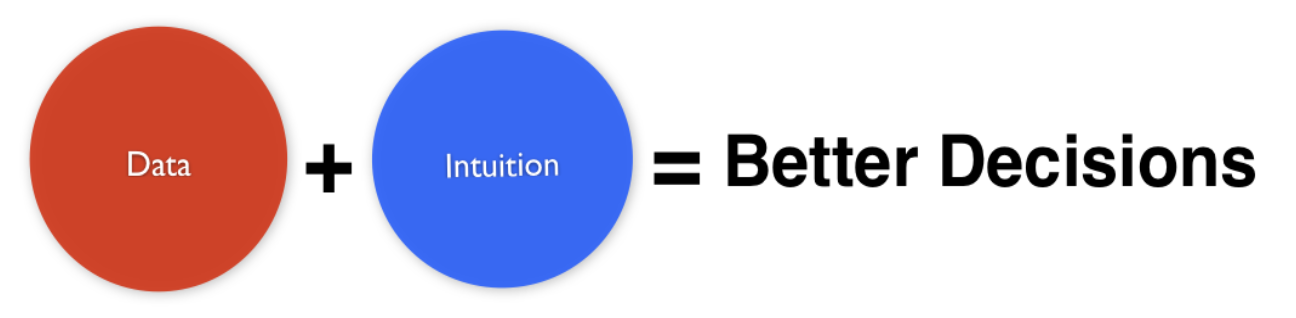
It’s Time for Supervisors to Help Clinicians Marry Data with Intuition

“It’s easy to lie with statistics, but it’s hard to tell the truth without them.”
—Andrejs Dunkels

Nearly every therapist I ask says that they regularly monitor the progress of their clients. Besides, why wouldn’t therapists check in and ask for verbal feedback?

Yet, given our clinical expertise, how is it that the assessment of our client’s progress is often inaccurate? In addition, why is it that therapists’ view of the process of clinical engagement is less predictive of outcome than that of their clients?

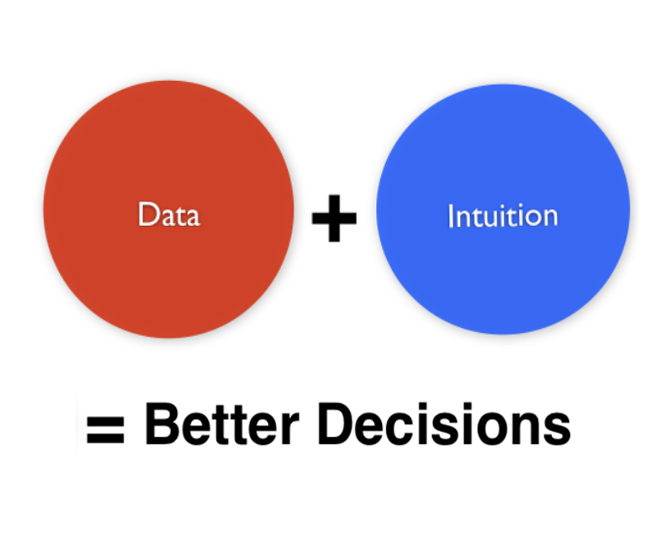
I believe this is because of our over-reliance on clinical intuition. We are trained to listen and take heed of our gut sense. Don’t get me wrong; intuition is critical, as scores of studies on this topic will attest (see Gary Klein’s body of work). Yet, relying solely upon clinical intuition is like asking a physician to treat a patient without the use of a stethoscope, a thermometer and the results from a bloodwork.

Like what you are reading? For more stimulating stories, thought-provoking articles and new video announcements, sign up for our monthly newsletter.

From Assessment Thinking to Conversational Thinking

It’s time that practitioners learn to use outcome measures and engagement tools as part of regular clinical practice. And not merely as assessment tools, but as conversational ones. And to make this happen, clinical supervisors need to be on-board, trying it for themselves (especially if they are also practitioners), learning as much as they can about how to integrate measures as part of treatment and then teaching them to supervisees.

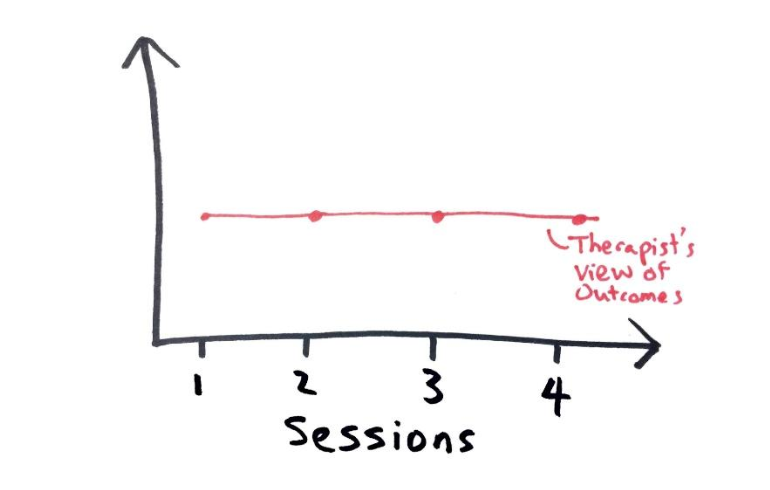
I once had a supervisee who wanted help getting “unstuck” with a client. We talked at length about the presenting concern, clinical background and what she had previously tried. The supervisee and client had just completed their 4th session when the therapist described that “things aren’t moving.” In other words, there was no discernable clinical progress.

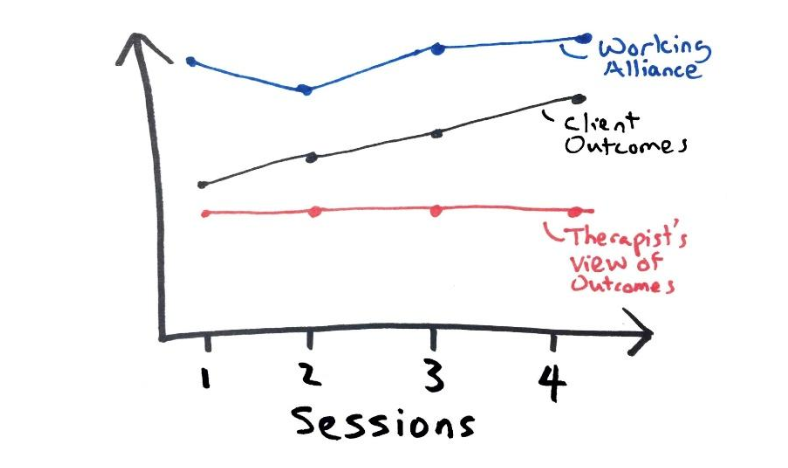
Therapist View of Progress in the First Four Sessions.

I asked if she used any form of measures in her work. I learned that this therapist had been using outcome and alliance measures in her practice, but had not reviewed the graphic description of those measures. She was using the measures only because the management team insisted that she do so. I suggested that she bring the graphs to our next supervision meeting.

Here’s what the graph looked like:

Therapist View of Progress Alongside Client’s View of Session-by-Session Progress and Engagement

Even though there was a dip in the alliance at the 2nd session— a rupture from which the clinician was able to bounce back—contrary to her perception, this client’s experience suggested that outcomes were gradually improving. Not only was the therapist’s appraisal off the mark, but the plans we had devised with which to repair the perceived rupture were not right for the context. It was like wearing winter clothes in anticipation of being in the frigid Alaskan north, but instead finding ourselves baking on a beach in Bali.

We went back to the drawing board. We spent time working through the supervisee’s uncertainty and anxiety about her perceived lack of progress, while keeping in mind that the client was clearly perceiving and experiencing benefit from the engagement. As it turned out, the therapist was torn between addressing the psychiatrist’s referral concern of OCD, versus the client’s implicit desire to improve his relationship with his father. Thankfully, the therapist maintained fidelity to the client’s rather than the psychiatrist’s concerns.

In supervision, we re-focused our attention around attending not only to this particular client rather than the referral source, but how to do so with future clients so we could also address the perceived need of their referring sources. More importantly, the therapist needed to unpack and clarify some inferences about what she was doing and thinking that might have contributed to this gradual improvement, despite thinking that none was being made, so that she could continue doing so.

In this instance, thankfully, the client was improving. However, the opposite can just as easily happen, i.e., when we think that improvement is being made, but the client reports that “things aren’t moving.” When intuition and real-time data are either out of synch with each other or not taken together into consideration, clinicians (supervisees in this case) are prone to self-assessment bias. While we are re-playing mantras in our heads that say, “The clients will get worse before they get better,” we quickly realize that our client has dropped out of treatment.

Quick tip: In clinical supervision, make sure that supervisees bring in graphs of the client’s outcome and engagement. This is one critical way to privilege the client’s view of progress and engagement across time, while incorporating it into supervision. In turn, we can also monitor the impact of the “backstage” conversation of supervision on client outcomes.

But Why?

Here are two primary purposes for weaving ongoing measures into therapy and using them in clinical supervision:

1. At the Client Level

a. Guide the treatment process: “Are we on-track, or are we off-track?”

b. Use the feedback to feed-forward: Real-time feedback allows you to tweak the service delivery to fit each client, each step of the way.

2. At the Therapist-Level

a. Effectiveness: If used systematically, session-by-session with every client, the
therapist can figure out the nagging question at the back of all our minds: “How
effective am I?”

b. Individualized Development: Once you figure out where you are with the help of a
supervisor who is attuned to this type of process, you can start the journey of figuring out
“where you need to go” in your individualized professional development. (More on this in an upcoming blog post).


There may be many reasons not to use routine outcome measures in therapy, and only a few good reasons to do so. Personally, I am not a fan of numbers. The irony is not lost on me being Chinese and failing math (and Mandarin) in my early years. Besides, it is not as if therapists around the world need another thing to pile onto their existing and ever-growing paperwork! Yet, the benefits far outweigh the costs of not integrating some form of measures—tracking what is of value to the client.* A groundswell of studies now show that the use of measures such as a real-time feedback tool not only reduce deterioration in client well-being by a third, but doing so cuts drop-out rates by half, and as much as doubles the overall effectiveness of therapy.

The use of intuition without high-value data** is like trying to drive in a foreign country without a GPS or an old-school map. It’s possible to still get to your pinpointed destination—especially if your sense of North is better than mine—but the journey is likely to be mired in and derailed by unwanted detours. On the other hand, the use of data in the absence of intuition is like blindly following your GPS into a ditch, when the new road, which is just to your left, has simply not yet been updated into the system.

The knowledge gained from the marriage of data and clinical intuition contributes to a type of dialogue that is richer and aids clinical decision-making. Sometimes, client-reported data confirms what we intuit. Other times, the data contradicts our gut sense. The point of monitoring progress and weaving it into clinical supervision is not to defer all judgement to cold and unintelligent data. The point is to wrestle with this tension in order to see and think more clearly.

To learn more about becoming a better supervisor, check out the in-depth online course, Reigniting Clinical Supervision.

Notes:

*It is highly possible to be measuring something systematically that is not relevant to your client. For instance, capturing data without integrating the measures to inform the treatment process. Second, dogmatically using a symptom-specific measure that may not make sense for all your clients. This is why it makes more sense to be capturing information about a person’s global wellbeing.

** Data is only valuable when you are not valuing whatever you measure but measuring what is of value. 

How to Master the Art of Developing Your Therapeutic Voice

Becoming an Artist

Surrounded by a sea of attendees at Psychotherapy Networker’s annual conference, I waited to ask my hero the question that had been burning inside. One man, with an uncanny resemblance to Sigmund Freud, entranced us yet again with a story of the work we’d all been celebrating and emulating in our own offices for so many years. Our master clinician and storyteller, group therapy guru, and most importantly, the single most generous and open discloser of his clinical process, Irvin Yalom was reflecting on his lifetime contributions.

It was now our turn to ask him questions. “Dr. Yalom, you’ve shown us how to embrace the process, and as the poet Rilke advised, to: ‘be patient toward all that is unsolved in your heart and try to love the questions themselves.’” Was I even talking into the microphone? The notes on my phone bounced out of focus, but I pressed on.

“Like jazz musicians, you’ve reminded us to enjoy the dissonances and savor the surprises we find within them. Can you talk about that, the role and importance of being an artist in our field?” I was grateful when he acknowledged that yes, he had thought of calling his book Letters to a Young Therapist after Rilke’s famous missives. “Even though I idolized so many, no, no, I never thought of myself as an artist. Even though I had wanted to be one, it wasn’t me!” It was like I had framed the wrong man. With him ready to quickly move on, I was stunned, stung, crestfallen. If Yalom couldn’t recognize being an artist, how could any of us?

Luckily for me — and us — Sue Johnson, the puckish British couples therapist and our evening’s interviewer, held him up a minute to take stock of his knee-jerk demurral. Wasn’t his work — its graceful storytelling and open embrace of the therapeutic process a testament to the power of our art to heal and enlarge? Was this any less artistic than the poet, musician, or actor’s craft?

Yalom’s initial objection ripened into delight on stage, and after the conference, in a private email, he thanked me, stating simply, “I’ll remember your comment for a very, very long time.” That’s what this essay is about: the artistry of our work and how we develop a therapeutic voice to help us get there. This is vital not only for ourselves and our supervisees, but even more so for our clients, who cultivate their own voice in the interplay with ours. Happily, there is ample scientific and empirical support for this artistic venture and cultivation of the voice, and I will use it to contextualize and illuminate our journey along the way.

Finding Our Voice

All artists — whether writers, musicians, or actors — must develop a voice, that hard-to-define yet distinctive style which runs like an invisible thread through their work, opening a space of creative possibility between their art and audience. As a supervisor of beginning therapists, I view this as essential, and liken it to the process we see on television each week on the show “The Voice.”

Just as Kelly Clarkson, Blake Shelton, and Adam Levine compassionately and thoughtfully mold, mentor, and inspire young talent, so too must we as supervisors help our beginning clinicians. Each has their own music and style they come in playing, and supervisors help them draw out their raw talent, experiment with new genres, and ultimately learn about how to make music that is, as Duke Ellington said, “beyond category.” This is therapy that transcends theoretical orientations, becoming a unique blend of the clinician’s theoretical and empirical knowledge, their personality, and emerging therapeutic repertoire.

There is a yin and yang here that, when in proper balance and harmony, lead to a fully developed artistic voice. This voice not only serves the therapist but promotes the opening and expansion of the patient’s own voice, becoming the driving force of creative therapeutic work. This also forms the basis for a lifetime of creating art. Yes, all of us therapists (veterans too!) do this daily, in the poetic and musical lines we shape in what others easily pass over as ordinary prose. Freud had it right from the beginning when he suggested, “When we can share that is poetry in the prose of life.”

Wouldn’t it be inspiring if all of us — beginning and veteran clinicians alike, supervisors and supervisees — could embrace the artistry of our everyday work? Wouldn’t it be illuminating if we had a working model of how to cultivate and deepen this?

Building a Voice

The model that I’ve arrived at is both simple yet expansive. A therapeutic voice is the combination and interplay of therapeutic presence and therapeutic authority, the complementary and seemingly contradictory elements that like yin and yang, enable us to create a three-dimensional picture of our patients and ourselves. Think of it like how our two eyes, each with their independent perspectives, magically create depth perception.

An ambitious supervisee recently confessed to me, “I have to anticipate everything before our session, and know exactly where I am taking my clients. I feel like a white-water rafting guide who’s one turn away from taking the whole crew down with me!”

This supervisee, like so many others, is proficient at being directive, setting goals, and moving quickly towards intervention. Unfortunately, they don’t offer enough room for the patient to openly explore and steep in their feelings or draw on the relational process to entertain new possibilities, which is why they so often feel up a creek without a paddle.

Therapeutic Presence

What they need more of is the yin of therapeutic voice, therapeutic presence — the capacity to be receptive, mindfully attentive, emotionally available, nonjudgmental and resonant with the client’s unfolding experience (1). Freud originated this concept in his earliest recommendation for practicing therapists in 1912, underscoring the vital importance of “evenly hovering attention.” Like a koan, the therapist should “simply listen and not bother about whether he is keeping anything in mind.”

Considered the foundation for tuning in to the patient’s unconscious, it provided a potent tool for opening one’s mind and heart to new possibilities for understanding and engaging the patient’s psyche. Like the Zen Buddhist notion of “beginner’s mind,” or mindfulness itself, therapeutic presence comes from the framework of “not knowing” in the service of creativity. To paraphrase the Nobel prize-winning poet Wislawa Szymborska, the point — like the poet’s main task — is to say I don’t know and keep on going. It’s to wonder aloud!

Therapeutically present therapists are understanding, open-minded, and comfortable with a range of different feelings and perspectives.These therapists have internalized Robert Frost’s prescient quip, “No surprise for the writer. No surprise for the reader!” Patients feel a sense of safety, trust, and warmth in their company. The space seems to open with them. This disarming quality makes it easy for patients to explore new subplots and turns in their stories. They find themselves surprised at how much they are saying and learning in just the telling itself.

Therapists who practice this kind of presence don’t have to know immediately and aren’t bothered by the ambiguity or complexity of what they are hearing; they “dwell in possibility,” as Emily Dickinson said, a “fairer house than prose.” They allow patients to be in the driver’s seat so that they can show them the territory first, and in so doing, instruct their therapist how to best be of service. This openness allows patients to take more risks in therapy, to deepen the exploration of their thoughts and feelings, and to get to genuinely enjoy the deeper waters of the psyche, even providing modeling for them to be more open to the various and contradictory sides of themselves! In short, to paraphrase Whitman, they are reminded that, “We are large. We contain multitudes!”

Owning A Voice

Plopping down in my office chair, and letting out a formidable sigh, another supervisee recently lamented: “Sometimes I feel like I’m taking it all in but then can’t get a word in edgewise, and I’m not even sure if what I’m thinking even makes sense. Am I really helping them at all, or are my own mixed-up feelings just getting in the way of making any headway?”

I know many fantastic supervisees who excel at being empathic, reflective, and thoughtful with their patients, but lack the confidence to make discriminating interpretations that take into account their valuable instincts and intuition regarding new creative possibilities.

These supervisees, understandably, worry that if they use too much of their authority, they will overwhelm or possibly hurt their clients.

They need more of the yang of the voice of therapeutic authority — which I define as the command of theory and technique and a discriminating awareness of how to put these into practice. It is the confidence to properly select, apply, time, and adjust one’s interventions in a multicultural and relationally sensitive manner (by relying on the yin of therapeutic presence, of course!).

The clinician with therapeutic authority is happy to show patients how to blaze a new trail and empower them to sort through the various aspects of their experience to find bigger patterns and new possibilities. Like an artist mentoring a new student, they can see the bigger and smaller picture and can help with the difficult passages encountered in putting new skills and pieces together. Most importantly, the therapist with a balanced dose of therapeutic authority knows how to do this with proper timing, tact and empathy. They are not going to break patients down like a military drill sergeant, but instead are going to be thoughtfully discriminating and penetrate deeper into problems and their implied solutions.

Supervisory Support

It is vital for supervisors to support beginning clinicians in developing their clinical intuition and instincts, the confident application of their theoretical and empirical knowledge, and a sense for having the “authority” to make therapeutic moves. Just as a singer needs to take risks with trying out new ways to expand their interpretation of a song, so too does the beginning clinician, and as supervisors, we are right behind them to encourage it!

Supervisors also need to model how to both be comfortable with and to chase the kind of not-knowing that makes creative therapeutic work possible. Like Yoda to Luke Skywalker, we help emerging clinicians to learn how to use “The Force,” showing them that, paradoxically, it is only by surrendering and letting go that we truly open the space for something new to emerge.

Just like our young poet needed Rilke to learn how to become an artist (and Rilke in turn was mentored by the great sculptor Auguste Rodin), so too do our beginning clinicians need us to illustrate how they can be balanced and integrated in their own unique therapeutic voice by uniting these two crucial faculties. And it turns out that all of us, no matter what level we are at, need to remember that we are always cultivating and expressing this artistry!

Empirically Supported Artistry

Art never needs more than its own justification, but as a scientist practitioner, you might need to be reminded of the scientific support for viewing therapy as an artistic enterprise. Look no further than Neuroscientist Antonio Damasio’s recent book, The Strange Order of Things, which eloquently showcases the way in which our “right-brained” feeling comes first, inspiring and motivating our greatest cultural innovations and products, and that joined together with the logic and language of our left-brains, becomes something truly extraordinary. Daniel Pink in In a Whole New Mind illustrates the 21st century’s cultural sea change from a left-brained leaning computer age, to a right-brained leaning conceptual age that integrates right and left to make the best of both worlds.

In my model, therapeutic presence is the right-brain dominant aspect of our therapeutic artistry, and therapeutic authority is the left-brain pilot, so to speak. Therapeutic presence is at once dreamlike and free-associative, holistic and big-picture, image and metaphor centered, and largely implicit and nonverbal. It undergirds the profound empathic connection between us and our patients, especially to those sides of our clients that have experienced trauma and yet still long for—even in secret — a more redemptive narrative.

Therapeutic authority flows from the language and logic-based sides of our brain with its highly developed executive functioning. More largely conscious and deliberate, this side enables us to zero in and edit the many clinical possibilities before us so that we can work with true specificity and discernment, tailoring our treatment for the unique person sitting across from us, and getting to the heart of the matter.

A 19th century poem by Frances Cornford sums up this lovely process best. Entitled “The Guitarist Tunes Up”, we learn that this musician leans into their instrument with ‘attentive courtesy’:

Not as a lordly conqueror who could

Command both wire and wood,

But as a man with a loved woman might,

Inquiring with delight

What slight essential things she had to say

Before they started, he and she, to play.

For a visual of this interplay, we can look to none other than that famous Renaissance man — Da Vinci and his iconic drawing of his Vitruvian Man. It is only by integrating the square of our logic with the circle of our feeling do we become something truly divine — artists in our own right.

Learning & Teaching from Art

If we are to find and develop a therapeutic voice, we must first look at how therapy itself connects to the arts and how, as supervisors and supervisees, we can attend to these important dimensions. We’ll look specifically to poetry and music as starting points.

Poetry Lessons

A poem, such as a sonnet, compresses a question or problem, its exploration, and a final statement of some revelation or new understanding into 14 lines. In Shakespeare’s famous sonnet, “Shall I compare thee to a summer’s day?” the speaker wrestles back and forth with how his love is and is not like summer. Initially, it seems very fitting to compare her to the beauty and splendor of the season, but upon further inspection, new ideas emerge. Among other things, she is much more constant, evenly tempered, reliable, and more lovely than the summer months.

Much like Shakespeare’s speaker, we wrestle with our initial diagnostic impressions of our patients: Shall I compare thee to a borderline personality, a depressive, or an adjustment disorder? It is not immediately clear, and so many of our first sessions entail testing out various hypotheses to determine who the patient is and is not.

As Shakespeare’s poem continues, surprises and new discoveries emerge and toward the final turn of the poem, the poet concludes that his love will be eternal as a result of the poetic act itself: “So long as men can breathe or eyes can see/so long lives this, and this gives life to thee.” This is the aim of a transformative therapeutic process. Much like a sonnet, by the end of the therapeutic experience, a patient will be able to make a few “turns” and come to a way of internalizing the therapeutic process so that it too will become eternal.

Music Lessons

Beethoven’s fifth symphony provides an immediately recognizable compressed musical idea. In only four notes, a focal theme is established that is explored, varied, and reharmonized much in the same way that occurs in therapy. The capacity of the therapist to articulate that melody — the dominant trend or relational pattern that pulls the various strands of a patient’s story together —goes very far in clarifying what has been troubling patients while it points them in the direction of how they can move forward. Much of the time, patients are playing the notes of their issues but are not aware of the melody and cannot synthesize it into a focal theme. They bring us their own invisible scores and hope we will give them feedback to recognize their own music.

About seven and a half minutes into the third movement of Rachmaninov’s Symphony in E minor, we hear the main theme played by the French horn, in the manner that a patient initially expresses when it is recognized by the counselor: “You hear me! This is the song I didn’t know I was singing.” Shortly after, the theme gets played by the violin with a melancholy poignancy: “I have been waiting a long time suffering with this alone.” This is the sense of sadness and mourning that the patient feels for having had to sequester this aspect of self in the service of protection and adaptation.

As the theme gets worked upon and elaborated, new instruments, such as the oboe and flute, come in to take on the line, with hope gathering. Calmer and with greater poise, a certain pride and expressiveness opens now that this very significant idea can be incorporated into the larger musical narrative of the patient’s story.

Let’s see how this artistry translates to a representative case and get a preview of putting all the pieces together.

A Case of You

I’ve named this “A Case of You” as a nod to Joni Mitchell’s heartbreakingly beautiful song because this patient seemed at first blush like she was too much to handle. Pretty quickly into our first session, I realized that, like for so many of our cases, the following lyrics truly applied:

“You’re in my blood, you’re my holy wine, you’re so bitter and so sweet, oh I could drink a case of you, and I’d still be on my feet!”

A student came to her intake appointment complaining that her friends did not understand her, that she couldn’t fathom why they were so turned off by the razor blade that she kept on her desk as a reminder that she could cut herself, and that she had been told to come to counseling many times, but it had never been helpful in the past. She asked, why should she bother now?

Previous counselors told her that she needed a higher level of care than they could provide, and those appointments left the student feeling misunderstood and blamed for troubles she could not fathom. She also felt a sense of hopelessness at not being able to make true contact, just as she had not with family and friends. Aiming right for the jugular, she also scoffed at me: “Counselors are incompetent and don’t really understand me. You probably won’t either!”

In addition to feeling interpersonally rejected on several fronts, as a first-generation college student, she experienced the pressure of well-meaning parents who hoped to see the family’s metaphorical stock rise with her success. At the same time, her family expected her to be at the ready when they called her to take care of her younger siblings. She was a painter who loved the darkest colors of her palette, with her works centering on Hopperesque misfits wandering in the night.

Initially, her cutting was a regular strategy to express and modulate her emotions, combined with a preoccupation with death, and the ways in which friends and other therapists had been repelled by her behavior made me wonder whether this student had borderline personality disorder. Like in Shakespeare’s poem, though, I was not sure whether this comparison truly fit.

Here we see the internal wrestling of therapeutic authority and presence. The first stab at therapeutic authority can have us all too quickly categorize or even pathologize what we are seeing before we get the full story. At the same time, this discriminating faculty provides crucial information that we really need to follow. Like a samurai warrior, psychologically speaking we need to forge the sword and learn how to use it appropriately. Toggling back and forth between this function and therapeutic presence — the open and receptive Buddha nature — allows us to see the big picture clearly while also focusing keenly on the supporting details that we need to assess and intervene incisively.

As I got to know more about the patient’s relational backdrop and leaned into my therapeutic presence, things looked a bit different. I learned about her parents’ difficulty tolerating fear, anger, and sadness, and their own struggles with managing chronically high levels of stress. I also learned about my client’s repeated experiences of the family being unable to acknowledge or stay with her emotional experience.

Just as the subject of the Shakespearian poem was no longer so much like the summer, it seemed more and more that she was no longer like a patient with a borderline organization and instead more like one with a neurotic organization or a possible adjustment disorder. She appeared to be in a conflict that could not be acknowledged squarely as she was in the midst of an important developmental transition, both issues coloring each other and placing her in an ever-tightening Gordian knot.

By trusting my therapeutic authority, a focal theme emerged. When this patient expressed negative emotions, people could not tolerate them and emotionally and physically abandoned her. This pattern was consistent with her emerging friendships — others were not interested in hanging out with her despite her charm and intelligence — and extended to her early family experience, in which her parents subjected her to the silent treatment for days whenever her emotions ran too hot. Taken together, the patient internalized a message that her emotions were problematic and disruptive and that they must be put aside and suppressed. In other words, they became “not-me” and funneled into the dissociative symptom of cutting.

Until I was able to home in on a focal theme, I, like the therapists before me, was part of the problem, imagining in my countertransference that it was the patient who had the major issue. Internally, I underestimated how much my feelings were part of an enactment, containing only a small piece of the story. Initially, I was bracing myself for difficult work, assuming that the student had a great deal of pathology and would make little movement. In a way, I was reenacting the dynamic of the student’s relational backdrop, finding her issues disruptive to my sense of authority just like her parents and her prior therapists had — “it is not me, it is her.” By maintaining a therapeutically present stance, I was able to observe this crucial dynamic and incorporate it into a new understanding and relationship with the client.

Therapeutic authority led me to a focal theme that helped me see that it was totally understandable for her to shy away from sharing her intense feelings and need to hide and express them in her not-so-secret ritual of cutting. She was protecting both myself and herself from “not-me” and letting the world know, with what seemed to be twisted pride, that cutting was her right and a very valuable part of her emotional life. Looking back on that detail now, it was very prescient in the way it encapsulated her attempt to express and independently resolve her bind.

Reading and Tracking Changes

Guided by a mindful application of therapeutic presence and a discriminating use of therapeutic authority, the student went through the kind of musical sequence referenced above. Initially, having a therapist who was able to respect and receive the fullness of her experience without mistreating or abandoning her by becoming critical or explosive or falling apart was a tremendous step toward a new relational experience. The recognition that her focal theme was understandable and heard enabled her to begin to speak of it without the kind of shame and dissociation that often accompanies a “not-me” experience. It also enabled her to begin to trust and hope again.

She became inwardly and outwardly relaxed so that she could begin to examine the many facets of her current and past experience and thus begin the riffing that is essential to the jazz improvisation that is therapy. In short, she began to find and develop her own voice as a patient!

The patient could view her behaviors as more comprehensible and expressive of the hidden conflicts she had been harboring and that had been left unformulated and disconnected. This expanding sense of self-compassion became an important antidote to her cutting behavior and provided an alternative avenue for exploring and containing her emotional experience. Interpersonally, she became less defensive and fearful of others abandoning her, having had a transformative set of experiences in which she felt the consistent presence of a reliable other. She began to show her pain not only in her words but in the artwork, she did as a painter.

When a poetic turn or musical theme has been established, shifts can immediately be seen in the patient and felt in the relationship. These can occur simply in the change of posture (often, a straightening of the back and sitting up in one’s chair), a richer tone of voice, a feeling of newfound connection and space in the therapeutic relationship, or in the spontaneity and flow of narrative or images that emerge in the therapeutic interplay

In the first session, trust was developed as the student began to see me as a figure who could understand and appreciate the depth of her pain and recognize the myriad ways in which she had been misjudged and pigeonholed by her family, friends and, most notably, other therapists. We also developed a focal theme centering on how this rejection led her to suppress and negate her important and precious feelings. Taken together, I believe that these turns led to decreased scores in hostility and emotional distress, each indicative of the fact that she was feeling more trusting, less defensive, and relieved at being able to begin to experience her emotions more directly.

These scores continued to remain significantly lower than baseline for the next few sessions, whereupon we worked on developing ways of shifting patterns in her relationships with friends and family. At around session five, the student’s depression scores started to decrease as she began to feel greater self-efficacy and agency in being able to affect change in her life inside and outside of the therapy space. Simultaneously, her levels of anxiety followed suit as they made a statistically significant drop from baseline in our final session of the semester. Our work together concretized the notion of making a more poetic and musical line in our therapeutic work, and the importance of drawing on artistic metaphors to inform treatment and expand both the therapist’s and the patient’s voice in that process.

A New Slant on Working Dynamically

We are very accustomed as clinicians to thinking vertically, troubling ourselves over quick diagnoses and assessments, especially given the limited time we often have. At some points, this may take away from focusing horizontally on the musical line and the movement of the intervention. In music, in order to play or sing a melody successfully, one needs to be as attentive to the horizontal motion of the notes carrying a melodic line forward as to the vertical axis of hitting the note itself.

In clinical practice, one can analogize the horizontal forward motion to the momentum of an intervention, the movement toward a new relational experience. The vertical playing of the note is the clinical equivalent of ensuring you understand the patient’s experience correctly and getting a proper diagnostic read. This horizontal motion is informed by therapeutic presence just as, conversely, the vertical movement is guided by therapeutic authority. Both are essential, and they need to be worked in concert to turn notes into music.

This musical way of approaching relational work helps us to be more efficient, fluid, and creative, focusing simultaneously on how to skillfully assess and intervene in our fast-paced culture. Moreover, it enables us to carry the themes of the patient’s past into new orchestrations and harmonizations in the present, providing a model for continued transformative possibilities in the future. Through this process, patients internalize working creatively with their own themes and then take us into new melodic and harmonic territory, stimulating further treatment progress and development. Taken together, this fosters a positive feedback loop in the creative matrix between patient and therapist, and from this synergy, transformative changes quickly follow. This is precisely what a well-tuned therapeutic voice does for the clinician and their client.

References

Cornfeld, F. D. (1965). Collected poems. Cresset Press.

Questions for Thought and Discussion

Who inspired you to find your voice?

What are some of the unique attributes of your therapeutic voice?

Which of your clients helped you to find your therapeutic voice?

In what ways do you compare psychotherapy to an art?

Circle of Development: How Clinical Supervisors Can Help You Get to Your Growth Edge

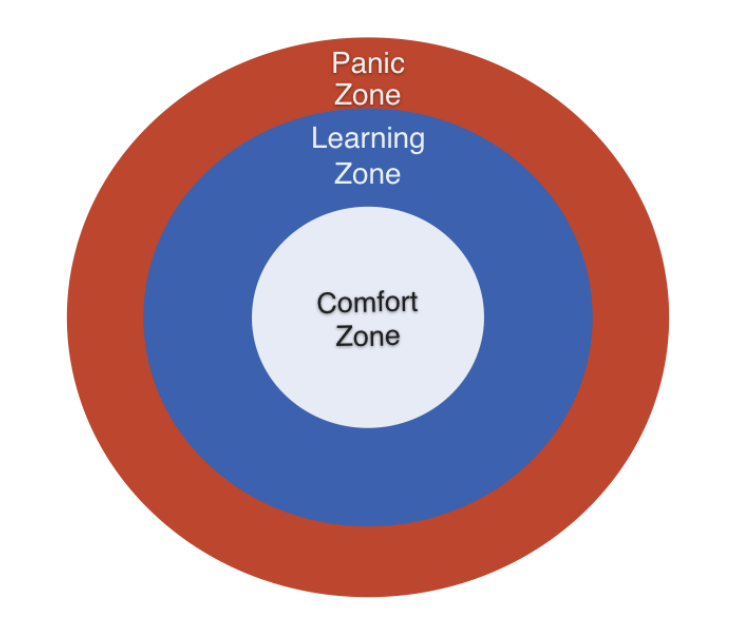
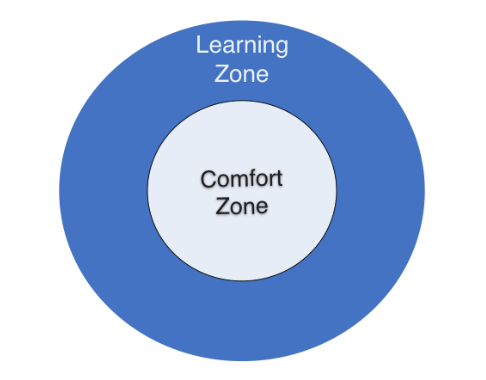
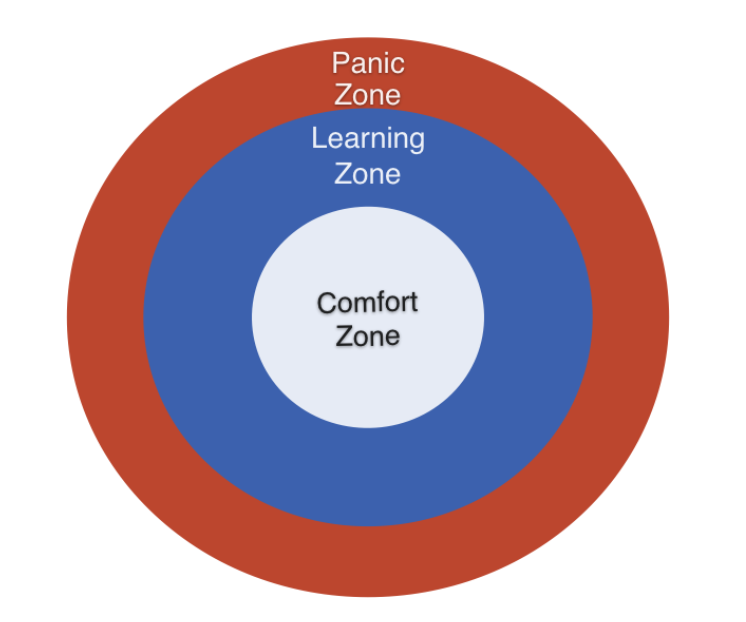
As a clinical supervisor, it is vital to help our supervisees move into their zones of proximal development, or that learning/experiential space just beyond their comfort zone (CZ)¹. But in order to do so, the supervisee’s current realm of abilities and limitations needs to be well-defined. This entails figuring out when they are at their best, how they conduct a typical session, what parts of them shines through, and how effective they are in aggregate. In other words, supervisors need to first help their supervisees figure out the bounds of their CZ so they can begin to push beyond it.

Supervisees must regularly pose questions to themselves such as, “What am I used to doing in sessions?” or “What did I do well” or even ”Was there something I did or said that stands out which might have contributed to the development of my client’s progress?”

Like what you are reading? For more stimulating stories, thought-provoking articles and new video announcements, sign up for our monthly newsletter.

We get comfortable with what we do well. Naturally so. The only problem is, if we fail to take the steps, our comfort zone can become our hell zone. What was once helpful with a particular client or type of client can become problematic or ineffectual. Think about your parents. If you were blessed with good enough parents when you were little, imagine if they used the same cuddly warmth and nurturing tendencies with you when you were a teenager. That wouldn’t have worked. You would have rebelled with angst. Past attempted and seemingly successful solutions can become today’s problems.

Here’s one of the axioms I have come to rely upon which defines the bounds of my current comfort zone (CZ): Provide clear and playful strategies to clients at the end of each session.

Over the last few years, I found myself drawn to being more playful and improvisational. This wasn’t how I used to be. I was constantly plagued with the question, “Am I doing this right?” Then I begin to realize that once I freed myself up to be more playful, I felt more flexible and less certain. This new mindset was unsettling and shook things up for me.

Other practitioners’ CZs that I’ve come across are founded in the following axioms:

“Be attentive and follow a clear treatment protocol.”
“Explore a person’s strengths and resources.”
“Develop clear treatment goals from the beginning.”
“Able to attune and empathize with my clients.”

First, and as noted above, it is critical that as supervisors, we help our supervisees to regularly ask themselves, “What did I do well?” “What stands out that I contributed to the development of my client’s progress?” This shall be your comfort zone.

Second, we need to help our supervisees to stretch out of their comfort zones and move into a less comfortable terrain that I call the learning zone (LZ). Our field has become obsessed with figuring out the how to improve, and less on taking the time to help individual practitioners figure out the what to improve. We need to get the sequence right. Figure out the what before the how. Especially in the realm of what we call clinical supervision, the supervisor plays a critical guiding role in helping to shape and identify learning objectives that are not only personalized, but ever evolving through the professional’s development over time.

It’s important to base your supervisee’s LZ on two critical pieces of information:

1. Their overall clinical outcome data, and

2. Feedback from a coach who knows their work.

By looking at the supervisee’s aggregated outcome data, you can begin to spot any glaring patterns. For example, early in my profession, I was shocked to find out that my own clinical outcomes for clients presenting with relational issues were the poorest compared to other presenting concerns, even though I was steeped in the systemic perspectives. Your role as a supervisor is to point out what the supervisee can’t see and lead them in the right direction.

Here’s my own current LZ as a therapist: I would like to learn to help clients face the feelings that they avoid. It’s so easy to continue validating and, as a result, getting lost in the interaction with my clients, while missing the opportunity to go deeper and help them with their difficult and painful emotions.

Other common LZs that I’ve come across in clinicians include:

“I would like to learn to improve the way I start my sessions.”
“I would like to learn to improve the way I close my first sessions.”
“I would like to learn to improve the way I elicit feedback at the close of a session.”


An excellent way to think about developing your supervisee’s LZ statements is to do this sentence completion exercise with them: “As a therapist, I would like to learn to…” Take it as a given that they will be struggling with this for a while. Give them time for this. Avoid non-specific definitions like, “I want to improve my engagement skills.” Narrow down to something more concrete and workable.²

For instance, if your supervisee’s data suggests that many of their clients come only for one session and drop out after that, you may be tempted to state that their LZ is “…to improve my return rates after the first session.” I see this more as an outcome goal. That is, you want X to influence Y, and “Y” is your outcome goal. In this case, you need to specify X and work on this.

Typically, when practitioners try to identify their own learning objectives, they tend to identify theoretically specific areas to work on (e.g., how to better conduct two-chair work on the inner-critic; how to employ a solution-focused approach when working with exceptions). Meanwhile, after examining their aggregated baseline performance metrics (more on this in upcoming blogs) and watching samples of their sessions, what I often end up proposing that supervisees work on is more fundamental and maybe even less revolutionary (e.g., how they begin a session, how they develop an effective focus, how they deepen the client’s emotional experience and how they end a session).

Most therapists and supervisors I know are life-giving and affirming. However, instead of simply bolstering their esteem with praise and consolation (A common refrain that I hear supervisors give, “Well, your clients came back to see you, didn’t they?”) without actually helping them identify their learning zones, we are doing our therapists and clients a disservice.

Finally, once we can identify our supervisee’s comfort zones and help them to move into their learning zones, we need to be able to guide them in articulating their panic zones (PZ). Panic zones tend to trigger feelings of being overwhelmed or may cause re-traumatization, which is not ideal for adaptive learning and personal growth. Panic zone materials are usually either too far a stretch in terms of the content to be learned, or the topic at hand might have triggered personal and/or professional ghosts of the past that have not been addressed.

Here are some common Panic Zones self-statements that I’ve encountered:

“Trying to learn what my supervisor says I should be focusing on, when I do not fully agree.”
“I know I should be working on difficult emotions like anger, but I do not feel ready at this point.”
“I tend to take critical feedback personally.”
“I just do not have the time and energy for this.”


It is important not to skip this step of helping your supervisee to identify their PZ. Doing so can help to remind them what not to do, or what not to focus on at various phases of their professional development.

Our circle of development is not static; it’s dynamic. If there is movement and directionality in the supervisee’s development, what used to be learning zone material might evolve to into the domain of the comfort zone. Likewise, what was previously panic zone materials can shapeshift into the realm of their learning zone.

The aim of helping our supervisees in figuring out their boundaries of their comfort, learning and panic zones is to clarify, magnify, and guide your supervisee’s messy and non-linear of professional development².

In the next blog post, I will address the critical value of teaching your supervisees to systematically monitor their clinical progress and how to use it beyond simply an assessment tool.

P.S.: My collaborators and I know how hard it is to figure out the key learning domains that therapists can spend their time and effort to deliberately practice. This is why we turned to what cutting edge research has to tell us, deconstructing the therapy hour, and we developed a comprehensive guide called the Taxonomy for Deliberate Practice Activities (TDPA) (Therapist’s and Supervisor’s version) (Chow & Miller, 2015). This is expanded upon in our forthcoming book, Better Results: Using Deliberate Practice to Improve Therapeutic Effectiveness (Miller, Hubble, Chow, 2020). But for now, if you are interested to receive a copy of the TDPA worksheets, drop me an email.

References

Chow, D. (2017). The practice and the practical: Pushing your clinical performance to the next level. In D. S. Prescott, C. L. Maeschalck, & S. D. Miller (Eds.), Feedback-informed treatment in clinical practice: Reaching for excellence (pp. 323-355). Washington, DC, USA: American Psychological Association.

Chow, D. (2018). The first kiss: Undoing the intake model and igniting first sessions in psychotherapy. Australia: Correlate Press. 

Three Types of Knowledge Clinical Supervisors Need to Know

In my previous article, Seven Mistakes in Clinical Supervision, I highlighted common pitfalls we make in our pedagogy of choice in professional development.

In this blog post, I will provide a pathway out of the first of the seven issues, Too Much Theory-Talk, by suggesting the regular use of recording and reviewing of the supervisee’s clinical work.


Clinical supervision typically entails case discussion, case conceptualization, theoretical formulation, treatment planning/implementation and a myriad of therapist/client-related variables. Most clinical supervision sessions are constrained by a prescribed theoretical construction, dictated by both the supervisor’s and therapist’s theoretical biases. When a “stuck” case, one in which clinical progress is not forthcoming, is being reviewed, it is important that the supervision have a sound base of content knowledge of a client’s presenting concerns (e.g., depression, obsessive-compulsive disorder, complex trauma, borderline personality), a critical form of guidance related to process knowledge (i.e., the moment-by-moment engagement between client and therapist), and finally, conditional knowledge (i.e., how the supervisee/clinician may work with a client who is depressed in the context of grief, compared to someone else whose depression results from domestic violence)¹. Even in our individual pursuits as therapists, those moments spent outside of our immediate supervisory role, much of our time spent learning to become more effective clinicians is anchored in the “content knowledge” domain. While it may be necessary, this isn’t sufficient.

Like what you are reading? For more stimulating stories, thought-provoking articles and new video announcements, sign up for our monthly newsletter.

When there is a gap in the supervisee’s clinical knowledge, the supervisor can impart specific content knowledge by adopting a didactic stance and providing “just-in-time” relevant corrective information. In addition, especially for beginning practitioners, supervisors can provide relevant reading materials and resources.

However, in order for supervisors to provide relevant and useful feedback and guidance regarding process and content knowledge, those more complex and dynamic elements of the therapeutic encounter, it is not enough to simply talk about the content of the case from the removed position of clinical information-sharing. Much like other fields (music, sports), it’s important for the supervisee to record their therapy sessions so the supervisor may provide feedback about actual in-the-moment performance with particular clients, rather than feedback about a perceived performance by the supervisee. Feedback is useful when it’s based on well-defined objectives, observables, and specifics.

Take the renowned basketball coach, John Wooden. In an analysis of Wooden’s teaching practices, researchers found that 75% of his active coaching time consisted of “discrete acts of teaching . . . pure information: what to do, how to do it, [and] when to intensify an activity.” Slightly less than 7% of his time was spent dispensing compliments or disapproval².

As an aside, it is important to note that most theories are developed after the fact. As Gregory Bateson once said, “The theorist can only build his theories about what the practitioner was doing yesterday. Tomorrow the practitioner will be doing something different because of these theories.”

The field of psychotherapy is less about “specialized” technical knowledge, than it is about deep relational mastery to resolve the client’s (and occasionally, the clinician’s) emotional wounds. We need to move beyond content knowledge and design our learning to improve our process and conditional knowledge. Recall when Carl Rogers (1939) said “…A full knowledge of psychiatric and psychological information, with a brilliant intellect capable of applying this knowledge, is of itself no guarantee of therapeutic skill.”

In the next blog post, I will tackle the second issue raised in the article Seven Mistakes in Clinical Supervision, the “pat-on-the-back” phenomena in clinical supervision.

This blog post was adapted from the original titled: Three Types of Knowledge and Why This Matters in Psychotherapy.

References:

(1) Chow, D. (2017). The practice and the practical: Pushing your clinical performance to the next level. In D. S. Prescott, C. L. Maeschalck, & S. D. Miller (Eds.), Feedback-informed treatment in clinical practice: Reaching for excellence (pp. 323-355). Washington, DC, USA: American Psychological Association.

(2) Gallimore, R., & Tharp, R. (2004). What a coach can teach a teacher, 1975-2004: Reflections and reanalysis of John Wooden’s teaching practices. The Sport Psychologist, 18(2), 119-137. doi:10.1123/tsp.18.2.119 

Chocolate, Jalape

On those two nights after leaving school following back-to-back, eye-opening and unsettling experiences in my graduate counseling classes, I had a strange feeling that I had arrived at the intersection of possible culture blindness, social discomfort and the questioning of my own clinical supervisory competence.

Like what you are reading? For more stimulating stories, thought-provoking articles and new video announcements, sign up for our monthly newsletter.

I reflected back on two absolutely unrelated but clearly convergent events in two separate graduate counseling classes on back-to-back nights—ethics and psychopathology. As it was to turn out, challenging, unanticipated and enriching lessons in diversity were in the making.

Scenario one: My back was to the class as I was about to write down their responses to a question I had posed. One of my students, located in the far back right corner of the classroom had offered a verbal response, and as I turned to make eye contact I wasn’t quite sure where the voice had originated. My eyes landed on one particular African-American woman who I thought had made the comment, but quickly the student sitting next to her, also African-American, quipped “it was me, but there is a lot of chocolate in the room.”

Instantly embarrassed, I did my best to conceal the painful feeling of embarrassment and the deeper thought that, in that moment of failed echo-location, I had conveyed the message that the voices of all black people sound alike. Or, had I?

Scenario two: Occasionally, I joke with students about the snacks they bring to class. A Latina student in the back of the room offered up a bag of potato chips, across the front of which was a green elliptical design that on quick glance I thought was meant to be a jalapeño. I thanked her and said, “I don’t eat jalapeños.” Just as quickly as in the first scenario, this student shot back, partly in humor but also likely in defense, “did you assume these are jalapeño-flavored chips because you know I’m Mexican?”

Still reeling from the chocolate event of the previous night, I was once again embarrassed, thinking that I had somehow awkwardly fumbled insensitively across a cultural divide, falling flat on my face in the process.

I knew that these were learning opportunities in the making, both for myself and my counseling students, who had each taken our program’s multicultural course with Judi Bachay, an international scholar and diversity expert here at St. Thomas. But, there is nothing quite like a live-action, and as Irvin Yalom puts it¹, “here-and-now experience,” for conveying an important concept. And while I made a nominal attempt to address my concerns in class each time, I could tell that the two students were equally uncomfortable.
Was it my cultural insensitivity that provoked their humor-cloaked defensive comments, or over-sensitivity to their own racial/cultural positioning in my class…in society? In either event, I believed that as their (white) teacher, I needed to do my best to find out, for them, for myself and for the class.

I was indeed able to speak in private with each of these two students on separate occasions and discovered the following. The formative educational years of the student in the first scenario was spent alongside white peers, where a sense of racial discomfort led to concern that she would be judged primarily by her skin color, rather than the qualities of her character. Racial invisibility as Darrick Tovar-Murray suggests², was in a sense, a psychological survival strategy. During her transition to college, the student in the second scenario attended classes in a less-Latinx environment compared to earlier years. She became less comfortable with her Mexican roots, often trying to conceal her accent—a different, but no less poignant form of invisibility. She lived with the fear of being called a chola.

I felt sadness for each of these students who grew up believing they had to trade elements of their racial and cultural origin for the security, or perhaps false security, that invisibility falsely promises. I have never felt that pressure—part of my privilege, I guess. I shared with each of them the guilt I felt, perhaps white guilt, and my concern that I had contributed unknowingly to their experience of invisibility. But in retrospect, perhaps their respective protestations were statements of visibility, and refusals to remain hidden. Lessons were learned on both sides of the divide those nights.

References

(1) Yalom, I. (2017). The gift of therapy: An open letter to a new generation of therapists and their patients. New York: Harper Perennial.

(2) Tovar-Murray, D., & Tovar-Murray, M. (2012). A phenomenological analysis of the invisibility syndrome. Journal of Multicultural Counseling and Development, 40(1), 24-36. 

Seven Mistakes in Clinical Supervision and How to Avoid Them

Clinical supervision is the “signature pedagogy” of choice in psychotherapy (1). I’ve benefited a great deal from the lessons of my supervisors. Some of their words from a decade ago not only still echo but have become first principles I keep close in my own clinical and supervisory work and teaching. Most of us regard clinical supervision as highly integral to our professional development. It’s hard to imagine not having someone to turn to for case consultation and guidance, especially when stuck in a rut and not making expected or desired progress with a particular client.

Supervision and Clinical Impact

Given the benefit we often feel from clinical supervision, the logical next question to ask is whether clinical supervision actually translates into meaningful impact on our client’s wellbeing? About 8 years ago, Edward Watkins Jr., a researcher from the University of North Texas, conducted a review of 18 empirical studies that examined the impact of supervision on client outcomes. Based on the big picture analysis, Watkins said “…the collective data appears to shed little new light on the matter. We do not seem to be able to say anything new now, (as opposed to 30 years ago), that psychotherapy supervision contributes to client outcomes.” (2)

More recently, a team of researchers set out to investigate this question based on a large five-year dataset comprising 6521 clients seen in naturalistic settings by 175 therapists and guided by 23 clinical supervisors (3). Not only did factors such as supervisors’ experience level, profession (social work vs. psychology), and qualifications not predict differences between supervisors, the role of clinical supervisors explained less than 1% of the variance in client outcomes. Said in another way, and contrary to expectations, clinical supervision as we know it has little to no significant impact on improved outcomes in the lives of our client’s lives.

Taken together, we may very well feel the benefit from clinical supervision, but it doesn’t seem to translate into improved clinical outcomes.

Rethinking Clinical Supervision

This begs the question. Why is clinical supervision not translating to actual improvement of client outcomes? Given that we invest so much time and effort in our “signature pedagogy,” perhaps we need to rethink our current practices in supervision. Drawing from the existing psychotherapy evidence and the development of expertise literature outside of our field (4), here are seven supervisory mistakes I see us making, along with speculation on how these relate to apparent clinical stalemate:

1. Too Much Theory Talk

2. Pat-on-the-Back

3. Lack of Monitoring Client Progress

4. Lack of Monitoring Engagement Level in Supervision

5. Not Analyzing the Game

6. Overemphasis on the Self and Neglecting the Impact on Client

7. Lack of Focus on Therapist’s Learning Objectives

8. Too Much Theory-Talk

Often, the clinical supervision encounter revolves around cases discussion, case formulation and theorizing about the clinical pathology. This fits under the umbrella of clinical conceptual knowledge and does not actually delve into moment-by-moment interactional patterns that unfold in a therapy hour. We often end up waxing lyrical on how a case may be conceptualized in a psychodynamic framework or in an emotion focused or from a CBT perspective. Not only does this disembody the conversational nature of reality in therapy, we assume that the key is to obtain a thorough case formulation of the problem at hand. In 1939, Carl Rogers aptly pointed out, “…A full knowledge of psychiatric and psychological information, with a brilliant intellect capable of applying this knowledge, is of itself no guarantee of therapeutic skill.” (5)

2. Pat-on-the-Back

In my work with supervisors and therapists, I often hear this chant, “…But your client still comes back to see you right?” In actuality, a small percentage of clients (~10%) account for the largest percentage (~60-70%) of behavioral health care expenditures, showing a continued use of services without successful outcomes (6).

While it is vital to take care of the supervisee’s sense of self, what feels good doesn’t equate to what helps us grow. About a third of our clients continue therapy without experiencing reliable improvement in their well-being. If we continue to bolster their esteem with praises or consolations without helping them identify their growth edge and improve the outcomes of “stuck” cases, we are doing our therapists and clients a disservice.

3. Lack of Monitoring Client Progress

We therapists are an optimistic bunch. In the absence of real-time monitoring of outcomes and engagement, session-by-session, we fail to detect deterioration and dropouts. A groundswell of studies now show that the use of measures such as a real-time feedback tool not only reduces deterioration in client well-being by a third, but cuts drop-out by half, and as much as doubles the overall effectiveness of therapy (7). Even when we use routine outcome monitoring devices, like the Outcome Rating Scale (ORS) & Session Rating Scale (SRS), Outcome Questionnaire (OQ-45),or Clinical Outcome Routine Evaluation-Outcome Measure (CORE-OM),we fail to meaningfully integrate this into the supervisory process. We stick to using the measures as an assessment tool, and not as a conversational tool.

4. Lack of Monitoring Engagement Level in Supervision

For those of you who are already using routine outcome measures as a source of feedback, you know that it’s hard for clients to give feedback to the therapist. It’s also hard, if not harder, for a supervisee to provide feedback about the engagement levels in supervision — especially if the supervisor is a colleague.

The reality is, supervisors have a tough enough job of ensuring that their input has a ripple effect not only on the therapist, but also on their clients. Having some kind of formal procedure to elicit what’s been working for the learner can help the process of focus. In addition, given that supervisors and supervisees might have overlapping roles or collegial bonds outside of supervision, having a formalized feedback procedure in supervision allows for both parties to take a pit stop and address issues in real time — not 6 months down the road when it’s too late — that might be brushed aside.

5. Not Analyzing the Game

In any other domain of performance (e.g., sports, music), if one were to seek a coach’s help in improving their game, it would be unheard of for the performer not to analyze her performance. Yet, in the field of psychotherapy, we do less of examining the moment-by- moment dynamics of the therapy hour and more theorizing (see point #1). Most supervisors do not use the practice of watching snippets-segments of the video recording highlighting specific areas that the therapist can work on.

Much like other fields (music, sports), it’s important to record sessions in order to receive feedback about actual performance rather than feedback about a perceived or reported performance. Feedback is useful when it’s based on a well-defined objective, observables, and specifics.

6. Overemphasis on the Self and Neglecting the Impact on Client

You may not agree with this point, but there is an over-emphasis on the self of the therapist at the expense of impact on the client. Too much supervisory time is spent on superfluous issues such patting the supervisee on the back (see # 2), while not enough time is spent on using real-time progress monitoring to guide the conversation (see #3).

7. Lack of Focus on Therapist’s Learning Objectives

Finally, I would argue that there is a lack of focus on the therapist’s learning objectives. This is one of the four tenets in deliberate practice (8). (Stay tuned as we will cover this in future blog posts). This may be the most vital yet lacking element in a practitioner’s professional development. Too often, we engage in clinical supervision on a case-by-case basis, with no coherent thread weaving in the therapist’s learning needs and clinical case concerns. Even when we do so, there is often a lack of systematic tracking of the supervisee’s development. As useful as client feedback is to clinical practice — spotting anything glaring or missing and pointing out if the session is on-track or not — this does not help therapists improve on their therapeutic skill, based on the developmental stage of their profession.

Consider another example: A top musical performer does not benefit from the feedback of the crowd (the decibels of the audience’s applause, the verbal comments about the performance, etc.), as much as the nuanced and specific feedback they might receive from their maestro or producer.

***

In the upcoming blog posts, I will cover each of the seven points raised about the flaws in our default ways in clinical supervision, and I will provide specific pathways out for each of them.

References

(1) Watkins, C. E. (2010). Psychotherapy Supervision Since 1909: Some Friendly Observations About its First Century. Journal of Contemporary Psychotherapy, 1-11

(2) Watkins, C. E. (2011). Does Psychotherapy Supervision Contribute to Patient Outcomes? Considering Thirty Years of Research. The Clinical Supervisor, 30(2), 235-256.

(3) Tony G. Rousmaniere, Joshua K. Swift, Robbie Babins-Wagner, Jason L. Whipple & Sandy Berzins (2014): Supervisor variance in psychotherapy outcome in routine practice, Psychotherapy Research, 26(2), 196-205.

(4) A. Ericsson, K. A., Hoffman, R., Kozbelt, A., & Williams, A. (Eds.). (2018). The Cambridge Handbook of Expertise and Expert Performance (2 ed.). Cambridge: Cambridge University Press. B. Ericsson, A., & Pool, R. (2016). Peak: Secrets from the new science of expertise. Houghton Mifflin Harcourt.

Miller, S. D., Hubble, M., & Chow, (2020). Better Results: Using Deliberate Practice to Improve Therapeutic Effectiveness. American Psychological Association.

(5) Carl Rogers, 1939, p. 284 The Clinical Treatment of the Problem Child.

(6) Lambert, M. J., Whipple, J. L., Hawkins, E. J., Vermeersch, D. A., Nielsen, S. L., & Smart, D. W. (2003). Is It Time for Clinicians to Routinely Track Patient Outcome? A Meta-Analysis. Clinical Psychology: Science and Practice, 10(3), 288-301.

(7) Schuckard, E., Miller, S. D., & Hubble, M. A. (2017). Feedback-informed treatment: Historical and empirical foundations. Prescott, David S [Ed]; Maeschalck, Cynthia L [Ed]; Miller, Scott D [Ed] (2017) Feedback-informed treatment in clinical practice: Reaching for excellence (pp 13-35) x, 368 pp Washington, DC, US: American Psychological Association; US, 13-35.

(8) Chow, D. (2017). The practice and the practical: Pushing your clinical performance to the next level. In D. S. Prescott, C. L. Maeschalck, & S. D. Miller (Eds.), Feedback-informed treatment in clinical practice: Reaching for excellence (pp. 323-355). American Psychological Association.

Questions for Thought and Discussion

What kind of clinical supervision do you value and why?

Which of the author’s seven mistakes have you or do you currently engage in?

What have you done recently to improve the quality of your clinical skills?

What style of supervision do you practice, or would like to practice?

Deliberate Practice in Psychotherapy

Editor’s note: The following is an excerpt taken from Mastering the Inner Skills of Psychotherapy, by Tony Rousmaniere, published by Gold Lantern Books © 2018 and reprinted with permission of the author.

“Could there be a better way for therapists to acquire the inner skills of psychotherapy?” To explore this question, let’s look to other fields. Most professions have developed specific exercises that help trainees acquire the capacity necessary for professional performance. For example, musicians rehearse challenging pieces repeatedly, so they will sound effortless during the actual performance. Pilot trainees spend hours intentionally stalling their plane, so they can practice recoveries. Athletes engage in physical conditioning, so they will have improved performance in competitions. In deliberate practice, therapists use practical exercises to build their inner skills and psychological capacity to improve their psychotherapy performance.

Deliberate Practice

I lead deliberate practice workshops around the world on developing therapists’ psychological capacity. Participants who are new to the idea of psychological capacity often ask, “How can this help me be more effective with my clients?” To answer this question, let’s begin with a case example of how deliberate practice helped me with a challenging case a few years ago.

My client was a man in his early twenties. He had recently been fired from his job and was discouraged about applying for work. He struggled with depression and had started to have thoughts of suicide. His goal for our work was to improve his mood and morale so he could find new employment.

My client and I formed a good working relationship in our first few sessions. However, despite my best efforts, he did not improve. Over the following weeks his mood gradually worsened, and he became more socially isolated. The outcome monitoring software I was using indicated that he was at a high risk of deterioration and possible suicide. With the client’s consent, I recorded a video of one of our sessions and showed it to my supervisor.

When we reviewed the video together, my supervisor noticed that the client looked disassociated during our session. He said, “Notice that after you ask your client a question, his eyes glaze over and he is slow to respond? Notice how he is nodding his head but not really engaging your questions? This could be a sign that your client is experiencing so much anxiety that he is disassociating. He may be politely going along with you but not fully understanding what you are asking him or benefiting from the therapy.”

As I watched the video closely, I could see what my supervisor was pointing out. My client’s eyes were unfocused, and his speech was slow. Although he was able to follow our conversation, his comments seemed superficial or compliant, like he was going along with me rather than really expressing himself.
I was surprised that I had not seen these obvious signs of disassociation in session with my client. I had learned about disassociation years prior and had successfully helped many clients with these symptoms. “Why was I unable to help this client?”

I said, “It’s so strange that I didn’t see these symptoms in session with my client. They seem so obvious when you point them out right now.”

My supervisor replied, “I wonder if you may be having an unconscious internal reaction that is blocking your conscious awareness?”

I said, “How can I tell if I am having such a reaction?”

He replied, “They often are accompanied by thoughts, emotions, physical sensations or behavioral urges. You can look for these as signals.”

“How?” I asked.

“I’ll show you,” he replied.

Seeing in Real Time

My supervisor said, “Play the video again. Turn the volume down low so you can hear the sound of your client’s voice but not get caught up in the content of the conversation in the video.”

I did as my supervisor instructed. It felt strange to watch the video without following the content of the conversation.

He continued, “Now, try to notice any thoughts, emotions, physical sensations, or behavioral urges you may feel while watching the video.”

I tried this for a few seconds and noted that paying attention to my internal experience while simultaneously watching the video was hard. I said, “My attention keeps trying to follow what the client is saying.”

“That’s normal,” he replied, “just keep trying.”

I watched the video while trying to tune in to my internal experience. After a few moments, I noticed I was clenching my fists. I told my supervisor.

“Great,” he said, “what else do you notice?”

“My chest feels tense,” I replied.

“What else?” he asked.

“I’m holding my breath.”

“What else?”

“As I tuned in to my internal world, I realized that I was having many uncomfortable reactions I had previously not noticed”. “My legs are tense, my mouth is dry, and my palms are sweaty. There’s also a slight ringing in my ears.”

He said, “Great that you can see all of these reactions within you. Let the video keep playing so you can continue. Do you notice any thoughts? You don’t have to tell me the details, but it’s important for you to see them.”

I noticed I was having strong doubts about myself as a therapist. How could I be effective if I was having all these unconscious reactions? Was something wrong with me? Should I give up and leave the profession? I felt some shame and didn’t want to reveal the details of all these thoughts to my supervisor. Instead, I simply said, “I’m having negative thoughts about myself.”

My supervisor could probably tell that I was experiencing some shame. He looked at me with kind eyes and normalized my experience, saying, “Great that you can notice those thoughts. Self-doubt, shame, or other negative thoughts about yourself are a normal and very common response to reaching your own psychological capacity limits. Consider these thoughts to be like how an athlete will sweat or get out of breath during a tough workout. It’s just part of the process.”

He continued, “Do you notice any behavioral urges? Again, you don’t have to tell me the details. Just try to notice them within yourself.”

I noticed I felt the urge to stop following his instructions. I was glancing at the clock out of the corner of my eye and hoping our consultation would end soon. I was also surprised to notice that I was starting to feel frustrated with my supervisor. This felt awkward, as I liked him a lot personally and trusted his advice. I didn’t feel comfortable telling him all of this, so instead I just nodded my head.

My supervisor paused the video. “Congratulations,” he said, “you were able to observe your own experiential avoidance in real time as you had it. This is not easy! However, it is a very important skill for effective psychotherapy.”

I took some deep breaths. I felt shaken from this experience and a bit confused. “How can this help me with my client?” I asked.

He replied, “Your ability to be empathic and attuned with this client is being limited by the discomfort and experiential avoidance that he stirs up in you. To address this, we need to increase your ability to see your own experiential avoidance in real time. This will let you downregulate your emotional state, so you can be more empathic, attuned and helpful.”

He continued, “You know how to assess and treat disassociation. You could write a paper about it. You can perform it proficiently with many of your other clients. You could teach it to beginning trainees. However, we have discovered that your proficiency in this skill is conditional on your psychological state. When you have particularly strong experiential avoidance—such as with this client—you lose your ability to be helpful. We call this your psychological capacity threshold.”

“How can I increase my threshold?” I asked.

He replied, “By practicing therapy skills with stimuli that provoke your experiential avoidance. This is called state dependent learning. For example, this video will work well for practice. I’ll show you how.”

Engaging the Client

My supervisor said, “You are going to practice engaging the client with anxiety regulation techniques while simultaneously noticing your experiential avoidance. Do you remember the somatic anxiety regulation techniques we reviewed last week?”

I replied, “The technique where I ask the client where he notices his anxiety in his body?”

“Yes, we’ll use that,” he said, “Start the video again at low volume. Now, while watching the video, take a moment to notice your internal reactions. Raise your hand when you notice any experiential avoidance.”

After a few moments watching the video, I noticed my chest tightening and breath restricting. I raised my hand.

“Good,” he said, “now use the first technique we discussed last week.”

“Just say it to the video?” I asked.

“Yes,” he replied, “just say it to your client in the video.”

Looking at the video, I said, “Right now, where physically do you notice any anxiety in your body?” I felt strange talking to the video.

“Good,” said my supervisor, “now watch the video for about twenty more seconds while noticing your inner reactions.”

My supervisor used his watch to count down twenty seconds and then said, “Now use the anxiety regulation technique again.”

“The same one?” I asked.

“Yes,” he said, “you can play with the words if you like.”

Looking at the video, I said, “Right now, where do you notice any anxiety, physically in your body?”

“Good,” said my supervisor, “do this process again: twenty seconds of self-observation, followed by engaging the client.”

I watched the video for twenty seconds while noticing my inner reactions and then said, “Do you notice any anxiety physically in your body right now?”

“Good,” my supervisor said, “again.”

I repeated the process.
“Again,” he said.

As I repeated the process, I noticed I had conflicting feelings toward my supervisor: I was simultaneously frustrated at him and appreciative of his help.
“Again,” he said.

I repeated the process and noticed I was starting to feel fatigued.

“Okay, pause,” he said. “What did you notice while repeating the exercise?”

“It got easier,” I replied.

“Great!” he said. “”You are building your psychological capacity to engage the client” while you have experiential avoidance.”
I asked, “Why does this client provoke such a strong reaction in me?”

He replied, “We don’t know yet. I’ll give you some deliberate practice exercises to do as homework, and maybe you’ll find out.”

Doing the Homework

My supervisor said, “Between now and our next supervision session, try to do an hour of the same deliberate practice exercise we just did together. Doing these exercises on your own may be more challenging than it was here with me, so try to be patient and self-compassionate. Remember that the goal is just to notice your reactions and practice engaging the video. Do not try to change or ‘fix’ any of your reactions.”

Over the following week I did the deliberate practice homework in three sessions of twenty minutes each. Doing it myself was much harder than it had been with my supervisor. I had to fight strong urges to avoid it. I scheduled practice in the morning but put it off until the afternoon. When I sat down to practice in the afternoon, I felt tired and decided to do it the following morning. The next morning, I was tempted to put it off yet again. However, I summoned the willpower and did the exercise.

When I started the video, I noticed a general tension throughout my body and fogginess in my mind. I kept losing track of time, so I set my phone to count down in twenty second intervals. I found it hard to say the anxiety regulation words out loud to the video. I felt awkward and had strong thoughts of shame and self-doubt. When I stopped after about twenty minutes, I felt discouraged by how much harder it had felt doing the exercise on my own rather than with my supervisor.

Two days later I did the exercise for a second time. Like my first practice session, this took considerable willpower. However, this time I had less fogginess and noticed more distinct internal experiences, including dry mouth, sweaty palms, and ringing in my ears. I felt clearer when saying the anxiety regulation words out loud. My shame and self-doubt were less pronounced. I ended the practice after about twenty minutes feeling more optimistic.

Three days later I did the exercise again. This time felt very different. As I watched the video, I noticed strong waves of tension rising from my stomach through my chest to my throat. I almost choked as I said the anxiety regulation words. The waves increased in intensity as I repeated the exercise. With surprise, I noticed tears forming in my eyes. “I felt a sharp spike in my shame and self-doubt and a strong urge to end the exercise”. However, I gathered my willpower and persisted. As I watched the video, I realized my client reminded me of times as a teenage boy when I had felt anxious and disassociated. I remembered the pain of those days, along with the social isolation and confusion. As I spoke the words of anxiety regulation to the video, I pictured saying them to myself as a teenager. I started crying out of sadness for my younger self as my shame melted into self-compassion. Resisting the temptation to stop the video, I continued with the exercise. I cried throughout the last ten minutes of the practice session.

Deliberate Practice Helped

This experience helped in multiple ways. First, my effectiveness as a therapist improved dramatically. I felt less tense and foggy sitting with the depressed young client whom I had videotaped. I was better able to help him see his own disassociation and use anxiety regulation techniques to reduce his anxiety. Over time, his mood improved, and he became more socially engaged. My effectiveness with other clients improved similarly.

Second, my morale and confidence as a therapist improved. I experienced less shame and self-doubt in my work. I felt optimistic about resolving other clinical impasses I was encountering and enthusiastic to practice more.

Third, the effects of the practice carried over to my personal life. I grew more open and engaged with my friends and family. I felt like I had further healed an old wound.

“The impact of deliberate practice on my personal life has been surprising”. I had previously done years of my own therapy, in which I had talked extensively about my teenage years. I assumed I had finished processing these old wounds. However, empathizing with this client stirred up painful memories that I had not recalled in my own therapy. Deliberate practice with my session videos helped me process those memories. After having many similar experiences myself and hearing of many from my trainees, I have come to see that deliberate practice with session videos can be a valuable tool for therapists’ personal growth. Deliberate practice helped me build my psychological capacity to be more effective with this client—and with my other clients.

Brian McNeill on the Art of Supervision

What is Effective Supervision?

Greg Arnold: Brian you’ve been in the field of psychotherapy for over thirty years and you’ve done a great deal of research and work in the area of supervision. My first question is kind of a big one. It seems to me there’s more disagreement than ever in the field about what works in psychotherapy. How do we know what effective supervision is if we can’t even agree on what effective therapy is?
Brian McNeill: That’s a very good question. I think my reading of the psychotherapy literature might be a little bit different from yours, in that I see research on effectiveness of psychotherapy converging into what’s known as the “common factors” across divergent therapies. Wampold and his colleagues did a great deal of research on these factors in his most recent edition of the Great Psychotherapy Debate. Their research suggests primarily that we need to get away from the idea of manualized treatments, especially for training programs, where there’s way too much emphasis on it. I know it’s easy, I know it gives students something to get a handle on, but it discounts those common factors that account for so much of the variance across diverging approaches—relationship building skills, therapist qualities, world view—things that are now consistent with what APA has adopted as evidence-based psychology practice.
GA: So if you focused on the common factors you’d be well in the wheelhouse of accepted clinical science?
BM: Yes
GA: But you said it’s harder than just teaching a manualized treatment. Why do you think there is such a strong pull to fall back on a mechanistic view of the work that we do and to teach it through memorization of knowledge. Why is that so attractive and easy?
BM: I think it’s very attractive particularly for beginning counselors, because it provides a template for what to do in a given session. For example, for many cognitive behavioral approaches we set the agenda in the first 10 minutes; the next 10 to 15 minutes we review homework, and then we get into the agenda for the session.

It has its place at times, but I think it’s overused because it helps reduce a lot of that initial anxiety in beginning therapists, which comes from not knowing what to do if a session doesn’t go as planned. If the client stops talking, for example, it gives them something to fall back on. It’s harder to go in and listen very closely, very carefully—to really attempt to understand what your clients are saying as well as what’s not said and what the meaning is behind non-verbal behaviors, voice inflection. In other words, what a client is not saying, but trying to communicate nonetheless.
GA: Is there an attraction to the manualized approach from the supervisor’s point of view?
BM:
A manualized approach is easier than trying to train your students to be more reflective, or to examine themselves in terms of who they are as a person how that impacts their professional practice.
I think it gives supervisors a break in the sense that if you’re promoting a treatment manual approach, it’s much easier to go in there and say, “Okay, you followed these directions correctly. You could maybe have included these items on your agenda, or reviewed things in a different way, or implemented these particular kinds of cognitive challenges, or engaged in more of a Socratic dialogue.” A manualized approach is easier than trying to train your students to be more reflective, or to examine themselves in terms of who they are as a person how that impacts their professional practice.
GA: Easier in terms of the supervisor’s anxiety?
BM: Yes, absolutely.
GA: So it’s more comfortable for each party—the supervisee and supervisor—to presume this mechanistic view of a manualized treatment and technical rationality, but they’re missing so much juicy, nutritious, formative development. What are they missing there?
BM: From the model that I work from, I believe that what they’re missing are the personal aspects that really play a large part in this journey to becoming an effective psychotherapist. I like the idea of competencies and the competency movement, and I think it provides good kinds of behavioral anchors for various stages of therapist development, but what they’re missing is the journey and the process of what it takes to become an effective therapist. That’s where therapists need to integrate their personal identity with their professional identity. To look at who they are as a person, how that impacts their work in this field, how it impacts their relationships with their clients, how they can engage in reflective practice and be self aware in their interactions with their clients.

Especially from an interpersonal process orientation, how they can use their self-reflections, their feelings in the session, in the moment, in a way that’s effective and helpful for clients, by sharing their perceptions, by giving clients feedback in the moment—those kinds of interactions.

Are Counselors Selected or Grown?

GA: Congruence, immediacy, using their human instrument, being a real person, being integrated—that’s hard work. What is the process of that journey you’ve identified through your research. Since it needs to be personal, and folks can’t hide behind their manuals, isn’t the success of the work tied to the actual person of the therapist? In other words, are counselors selected or grown? Who do we keep and who do we kick out? Are they a tomato plant or are they a diamond in the rough?
BM: Well, to me they’re grown. I know a lot of people gravitate to our field because they believe that they have some natural helping abilities or skills; they’ve maybe been told by friends that they’re good listeners and whatnot, but I think while that can be a nice start for folks, we still need skills and abilities that only training can provide. Becoming a therapist is different than becoming a biologist, or an engineer, in that it requires self-examination and a very high level of self-awareness.
GA: Can anyone undergo that process successfully?
BM:
I do believe that people who are motivated to really want to help others can learn the skills to be effective in this field.
Yeah, if you’re willing. If you are motivated enough, then just about anyone can go through that process. People who are resistant to self-examination are definitely going to struggle in this field. If you’re suffering from a personality disorder, it’s going to be much harder to engage in that kind of self-examination and be insightful. But for the most part, I do believe that people who are motivated to really want to help others can learn the skills to be effective in this field
GA: So barring real outliers, if you engage in this process of self-reflection and vulnerable, non-defensive engagement with training, you’re going to develop these capacities for using yourself and therapy in a way that is effective?
BM: Yes
GA: What does it say about the field that many doctoral programs in psychology are harder to get into than medical school? I’ve seen one spot per 360 applicants at certain programs and there are all these aptitude requirements to set you apart.
BM: I think that is where we’re still very far behind. I never have believed that the traditional selection variables of college GPA and GRE scores have ever been predictive of someone’s interpersonal skills or abilities to interact personally on the level that we do as clinicians and therapists.

With my program, and I know others out there as well, we try to expand those selection variables a bit, but it’s still very difficult. We try to read into what could be some of those qualities through letters of recommendations or statements of purpose, or past life experiences, a kind of outlook—variables that just aren’t very easy to quantify.

The Developmental Approach to Supervision

GA: So you’ve expanded the selection criteria, you get the individuals selected for this privilege, then how do you balance the inherent dual relationship built into supervision? If someone is operating on your license, there’s a tension between oversight—where you have to think of client safety and liability and the reputation of your clinic—and the more humanistic, nurturing role of standing behind trainees when they make mistakes, which are essential to learning, but they also pose a liability. So how do you balance your gatekeeping role and your role as a supervisor tasked with nurturing their development?
BM:
We are thankfully moving away from the idea that to be an effective supervisor you just need to be an experienced effective clinician.
We are thankfully moving away from the idea that to be an effective supervisor you just need to be an experienced effective clinician. Over the past 30 years we have come to understand that these are very different domains. It’s taken awhile, as you can see from the just recently published supervisor competencies that the APA put out.

We now have more of a developmental approach to supervision. We know that beginners are going to be exhibiting certain kinds of qualities and have certain needs, versus intermediate or advanced trainees. It takes a skilled supervisor to assess where a given trainee is at developmentally and to provide the appropriate supervision environment that is going to enhance acquisition of skills—not only in terms of interventions, but abilities to be self-reflective, to develop as a therapist personally and professionally.
GA: How does a person go from a lay person, totally uninitiated through the whole journey of maturation to a great clinician?
BM: We look at three levels of psychotherapist development. At the beginning level we have trainees that are obviously just entering the field. It’s a novel situation for them and they’re typically highly invested. In most programs, probably 80% of your students want to be clinicians, even though we do obviously take a scientist practitioner kind of approach.

It’s anxiety producing for beginners, and as supervisors we need to help them reduce that anxiety, to help them take the focus off themselves early on during sessions and give them some structure and support. We focus on formulating relationships with their clients and learning those important listening skills.

Then we look at dependency versus autonomy. Obviously a beginning student is going to be very dependent upon their supervisor for structure, direction, and support. We look at self-awareness, both in the cognitive and affective realms and, again, a beginner is not going to be very self-aware in terms of how they come off in a session.

We believe that if you attend to the appropriate level of structure, direction and support, especially at the beginning level, that helps them progress onto an intermediate level.
GA: Let’s hang out at level one for a second. What could go wrong at that level?
BM:
Students get anxious. They feel like they need to do something, that listening isn’t enough.
Students get anxious. They feel like they need to do something, that listening isn’t enough. And that’s when they want to fall back on a manualized approach, but even a manualized approach, at least in my mind, is not going to be effective unless you have that base of all effective therapeutic intervention and that is the relationship. Things can go awry if students aren’t acculturated to the research about the therapeutic relationship being the basis of all later therapeutic intervention.

That’s the thing that I harp on the most, because I think that that’s what I see going awry the most. The lack of appreciation for developing those basic interpersonal skills early on.
GA: Really believing and internalizing that value, that this relationship is really important to cultivate.
BM: Yes, and that I need to effectively listen and communicate empathy.
GA: What about for the supervisor in this level? What can get in the way of them providing what the student needs at level one?
BM: Well, much like the therapeutic relationship, the supervisory relationship serves as the base of any kind of supervisor effectiveness as well. If for whatever reason the trainee and the supervisor don’t hit it off personally, the supervision isn’t likely to go well. I see that the most where the supervisor is not focusing in on the beginning trainee’s needs; they take an old line perspective that they shouldn’t be providing advice to their supervisees.
GA: Let them squirm. Encourage autonomy.
BM: Yeah, sink or swim. Or we’ll also see supervisors get hung up on their approach to psychotherapy and apply it to supervision. So if they’re very psychodynamic or interpersonally oriented, they want to get in there with the beginning supervisee and start processing with them, whereas the supervisee is really more concerned about what do I do with this client in the next session.

The Adolescent Stage

GA: So assuming all goes well and the supervisor is able to build a great supervisory dyad, attending to the person as an individual in an empathic way that builds a relationship and then providing structure to mitigate their anxiety and then the supervisee is able to get out of their own head, cultivate some self-awareness. They’re starting to be able to balance the focus on the clients, all that stuff. We move into a new intermediate stage.
BM: They then move into second stage or level two. At this point they’ve had some experiences with success in their interventions with clients and they’ve also had some failures. In other words, they’ve been through a couple of semesters of actually seeing clients and engaging in clinical work, so they have a greater sense of the complexity involved in providing psychotherapy. They’ve come to the realization that maybe it’s not as easy as they thought it might be.

It’s hard at times. Clients don’t come back and you’re left asking yourself what happened. Or the client is very resistant. In these cases, the supervisee’s motivation then can fluctuate—they start to question themselves and in some cases they might question whether they’re suited for this field because of some of the failures that they’ve experienced.

At the same time, hopefully they’ve had some success and so they want to develop a sense of autonomy or independence. They are becoming more self-aware. They’re not only able to focus on what they’re experiencing during the session, but they start to be able to focus in and sometimes at this level maybe a little bit too much towards what the client’s experience is.
A pitfall for students in the intermediate stage is that they can get a little bit overly enmeshed in their client’s issues.

This calls for a different kind of supervisory environment—one where you have to give them a little bit more autonomy. You do have to allow them to try out things that they’re interested in. Let them make some decisions. Of course, overriding all of this is the concern of client welfare, so you constantly have to monitor client welfare and make sure that ultimately your trainees are still following what you would see as required kinds of interventions in the interest of client welfare. But, they want to be able to come up with some more things on their own. They’re less dependent upon the supervisor. And so you’ve got to give them some leeway here.

They’re also more open to some examination of who they are as a person and how that impacts their clinical work. In fact, at this stage they really want that kind of self-examination. They want to look at transference, counter transference kinds of reactions and those kinds of implications because they’re getting a little bit more advanced in their abilities, their skills, their knowledge. So you have to be flexible as a supervisor and be able to assess where your trainee is at.

The analogy we draw is that it’s almost like dealing with an adolescent. They’re gaining some skills and perhaps they want to demonstrate their autonomy.
The analogy we draw is that it’s almost like dealing with an adolescent. They’re gaining some skills and perhaps they want to demonstrate their autonomy. If you can’t lighten up a bit, or deal with that kind of therapeutic adolescence, it’s going to create some resistance, and even some rebellion at this point. If you want to just stay with a completely structured kind of approach of always directing your trainee, we’re saying that that’s not going to work at this stage. You have to help them through stages or periods where they feel like their motivation is low because they’re discouraged with some clients or certain client types. You have to be able to identify that when you’re reviewing recorded sessions.

In that sense it does take a lot of work on the part of the supervisor to accurately assess and intervene with their trainees to foster their continued development as a therapist.
GA: It sounds like it could be a really rewarding time for everyone involved.
BM: Yes, absolutely. It can be very challenging, but ultimately very rewarding.
GA: So take me through level three really quickly.
BM: At this point, we’re probably looking at a trainee at the advanced stage of level two moving off into internship. Typically what we would see as a level three trainee is in my mind developed during that internship year.

They’ve kind of weathered that storm of level two in terms of that dependency/autonomy conflict and they’re able to pretty much operate at an independent level. Motivation is high. They understand the complexities of this endeavor of our field. They go into their work with an understanding that, yeah, there’s going to be successes but there’s going to be some failures, there’s going to be difficult clients. There’s going to be some client types or populations or diagnostic categories that I work best with and others that maybe just push my buttons and that I’ve got to be careful with.
GA: We can’t help everybody all the time.
BM: Exactly. They demonstrate that high level of self-awareness and self-insight on both cognitive as well as affective levels. They’re self-aware enough to know that if there’s something that isn’t working for them, if they need some help on something, or if they don’t have the experience in a given domain—maybe marriage and family therapy as opposed to doing individual therapy—they know and have the awareness to consult with somebody run it past their supervisor.

And they’re not going to be reluctant to do that. They just understand that that’s really part of what they need to do to develop their skills, and that ethically that’s what’s called for. Hopefully that occurs by the end of internship or is fully developed out there with some post-doctoral supervision. That’s what we envision as the advanced psychotherapist and one that hopefully develops into later years as a master psychotherapist.
GA: Talk about post-doctoral supervision, where you’ve got your degree but you’re not yet licensed because you still have 1500 hours to complete [in some states].
BM: Post-doctoral supervision used to be in name only. As long as you had an identified supervisor, it really wasn’t necessary to meet or document. Maybe if you had a problem or some questions you’d go and consult with your post-doc supervisor. It was also the norm that your post-doc supervisor just had to be a clinician with three years of experience.

I think we have made progress on that front, too. For example, APA and our programs now requiring training in supervision.
GA: Many programs still don’t require that, though.
BM: It puzzles me how programs can get accredited by saying that they offer a workshop on supervision, or they implement a module during practicum training. That’s really not enough, but I think that’s the case with the majority of programs.

In that sense I’m happy to see APA publish the supervisor competencies, which I think is going to help a lot. More strictly enforcing that APA requirement that all trainees receive training in supervision is going to help.
GA: What’s the risk of this all-lip-service post-doctoral supervision? What’s the pitfall of someone who says, “Oh, I’m level three, I’m done growing. I don’t need consultation.”
BM: Well, if an advanced trainee has that attitude, that’s definitely problematic. More often than not there are areas where they need to develop and to grow, as well as weaknesses they need to attend to.

We run the risk of just assuming that because someone has completed their coursework and internship and training requirements that that’s all there is. The journey does continue to becoming a master therapist and some of those qualities manifest themselves later down the road. Experience matters and learning doesn’t stop. You can always learn from a mentor at any point in your career.
GA: Forever.
BM: Yes, absolutely.
GA: In closing, pretend I’m your student and I am thinking about what to do with my career and I’m saying, “This supervision stuff is a lot of work. It’s not compensated very well. The field doesn’t seem to value it very much. I’m not sure I’m going to pursue supervision in my career.” How would you talk me into it?
BM: I would say that a lot of clinicians gravitate to training programs at the internship and post-doc level because it’s tough work to just be seeing clients all the time. It’s easy to get burned out just seeing clients.
Supervising can be a nice break, a way to stay current, and also just really enjoyable to have the opportunity to work with trainees.
Supervising can be a nice break, a way to stay current, and also just really enjoyable to have the opportunity to work with trainees. The relationship with trainees can be long-lasting, and you may get calls from them in the future for advice not just about clients, but about their careers or other aspects of their lives. It’s very rewarding to have the wisdom that you’ve developed over a number of years valued later on.
GA: I’m sold. We all must go forth and propagate quality supervision.

Any closing thoughts to share with our readers, your wisdom from these 30 years of studying this and experiencing it personally?
BM: Well, I listen to a lot of music, a lot of jazz. And I draw a lot of parallels for how we operate in the moment as clinicians, as supervisors based on our accumulated experience and skills. One of my idols, a jazz bassist named Charlie Hayden, passed away recently, and I remember reading an interview with him in which he said, “to be a good musician, to really communicate as a good musician, you have to be a good person.” What he meant was a good, humble individual who is willing to look closely at him or herself and implement that humility in their work.

I strongly believe that as clinicians, and by extension trainers and supervisors, that if we work on being a good person—and that can take many forms in terms of personal development, spirituality, etc.—it helps us to be good clinicians, good supervisors, trainers of our students. And it affects our clientele. So I tell my students all the time to be a good clinician, try to do your best to develop yourself as a good person.
GA: It’s been an absolute pleasure. Thank you so much for sitting with me.
BM: Thank you so much for the opportunity.

Paul Wachtel on Therapeutic Communication

The Third Wave in Psychotherapy

Ruth Wetherford: Along with being the distinguished Professor of Clinical Psychology at the Graduate Center at the City University of New York, you’ve won many honors and awards throughout your career, including, in 2010, the Hans Strupp Award for psychoanalytic writing, teaching, and research. You’ve also been called one of the leading voices for integrative thinking in the mental health sciences. What does that mean?
Paul Wachtel: I think what that refers to is that for many, many years now, it has felt to me that psychotherapists operate like battling ethnic groups. They stereotype each other. They’re overly attached to their own language and make fun of the language of the other. They gather in their tribe-like congregations and miss a lot of value in the other orientations. So my interest has been not only looking at what has been called the common factors–the processes of change that are common to many orientations–but looking also at the differences, and how we can put together what’s similar and what’s different and create a more comprehensive approach to theory and to therapy.
RW: What are some components of what you want to be your message, your legacy?
PW: What’s important is getting ourselves out of the ethnic battles and thinking instead about what’s really of value to people. I was originally trained psychoanalytically, and then became interested in behavior therapy and then cognitive-behavior therapy, and then also family systems and emotion-focused approaches. One of the things I learned from the behavioral and cognitive-behavioral end that has profoundly influenced every moment that I think I’m working psychoanalytically is the absolute importance and compatibility of the exposure paradigm. Much of what promotes change is the experience of repeatedly confronting and being exposed in a full, emotional way to the aspects of our lives that we have turned away from in fear or guilt or shame. Sometimes those can be external stimuli like a phobic object, but very often, they’re our own thoughts and feelings and experience of self. What I’ve learned from cognitive-behavior therapists, and I never forget it for a minute in my sessions, is that

it’s not enough just to name it, interpret it, label it. You have to experience it. And that’s a place where the cognitive-behavioral and the psychodynamic can converge in powerfully important ways.

it’s not enough just to name it, interpret it, label it. You have to experience it. And that’s a place where the cognitive-behavioral and the psychodynamic can converge in powerfully important ways.

RW: This reflects, I think, what Dan Wile works toward in his collaborative couple therapy when he says that it’s important for the therapist to continually monitor internal thoughts, feelings, and impulses toward clients or patients we find in some way offensive–to continually look toward why that’s offending us and to look for what may be legitimate or reasonable. How can we understand it from that person’s point of view? It seems like it’s inherently about the therapist’s capacity to see things from another person’s point of view.
PW: I think job number one for a psychotherapist is to be able to understand how the world feels and looks to the people we work with. That’s another interesting point of convergence, by the way, in the larger realm of psychotherapy, that the ethnic waters are making less apparent than they should. In cognitive therapy, in particular, practitioners actually fall prey to the very errors that psychoanalysts fell prey to, which was thinking that if you just say the right words and label things and get people to think right, you’ll do the job. They will often treat the client’s thoughts as irrational and erroneous, and that’s very much the opposite of what you were just talking about.But there has been a trend in CBT in recent years that’s often been described as a third wave, that includes dialectical behavior therapy (DBT)–Marsha Linehan and her colleagues–and acceptance and commitment therapy (ACT)–Steven Hayes and his colleagues. Central to both of those are two things that create potential convergence with psychodynamic and experiential therapies: an emphasis on acceptance of the person’s experience, and a respect for emotion that was largely excluded from CBT for a 20- or 25-year period.

When I first got interested in behavior therapy, I was interested in it not because it was behavioristic, but almost for the opposite reason—that it was actually very deeply experiential. Instead of just talking about what you were afraid of, you actually put yourself there. I listened to what clients were saying and what they were feeling as they were confronting it. That experiential element was very important. I learned a tremendous amount from the early behavior therapists, so I was stunned to see tapes of the very people I had learned so much from, when they started to fall under the sway of this rationalistic approach to cognitive therapy. Suddenly they were trying to talk people out of their feelings, trying to tell them, “If you think right, you don’t have to be sad. If you think right, you don’t have to be angry.”

What DBT and ACT do, instead of trying to talk people out of the feelings, is they go into the feelings. They validate them. They accept them. They bring them forth much the way a good experiential or psychoanalytic therapy does. And that’s combined with an interest in eventually promoting change. There’s a seeming paradox there, but I think Marsha Linehan’s term “dialectical” captures it well. It’s a term, by the way, that’s also used by Irwin Hoffman, a relational psychoanalyst. It is that tension between acceptance and change, between following the protocol and varying from the protocol. Hoffman calls it going according to the book and throwing away the book. That’s how we work most effectively.

“What Should I Say?”

RW: One of your most important messages from your earliest works through the new edition of Therapeutic Communication: Knowing What to Say When is about our faulty assumption that if we truly understand the person, we will automatically say what we intend to say that will be effective in this dialectic between acceptance and change. Say more about how you want therapists to acknowledge this assumption, and what to do about it.
PW: The importance of that was something I learned almost incidentally, though powerfully, taught unwittingly by my supervisors on the one hand and my students on the other.My supervisors taught it to me by its absence. In other words, I became aware that asking questions like, “What should I say?” opened me up to charges of being superficial and literal. The message I often got was exactly what you’re saying: “If you understand it, you’ll know what to say.” So for a while, I was just feeling, “Well, maybe I’m stupid. But I think I understand the dynamics pretty well, and I seem to be understanding them much the way my supervisor agrees they are.” Yet sometimes I wasn’t sure what to say.

As I began to think about that more and talk about it more in my teaching, my students made me aware that they were getting something from me that they weren’t getting from any of their other teachers. They would say, “When we talk to you, you actually talk about what we should say. We’re not hearing that anywhere else.” That’s what first got me interested in writing about those details.

Then that got me really thinking, as I’ve continued to do over many years, about the ways we talk to people, and all the ways it can be problematic, the ways it can be helpful, and how it both shapes and is shaped by the ways we think about people.

RW: One of the ways you have demonstrated your gift for feeling is in your discussion of the implied message of different word choices. In other words, you talk about the focal message and the meta-message. You’re so attuned to the connotations of words and how they carry the meaning of respect or acceptance, versus accusatory, pejorative meanings. And this is the thing that so many therapists you’re trying to address seem tone-deaf to. They can hear a recording of an interaction they’re having. Others can see that it’s coming across critically or accusingly, and they can’t hear it. How do you address that?
PW:

Hearing and understanding the tone of what we’re saying is one of the hardest things for people to do. It’s one of the most important,

Hearing and understanding the tone of what we’re saying is one of the hardest things for people to do. It’s one of the most important, and I think people with good interpersonal skills do it naturally. I think it can be trained. But I do think it is hard.

One of the examples that I’m always struck by is if you’ve ever been in an unpleasant interaction with a sales clerk at an airport or something like that, often if you say something about what’s going on, they will say, “Why are you getting so upset? I haven’t said anything wrong.” And if you look at the manifest content of what they’ve said, that’s true. But if you listen to the tone of voice or you hear the way the sentence is constructed, you know you’re meeting with a hostile response. But the person who is being hostile or dismissive toward you often doesn’t understand that. That’s one of our real challenges.

On Modeling

RW: I read recently in a neuropsychology article that so much of our brains, particularly the right hemisphere, are designed to assess how we’re doing with another person, constantly monitoring, second by second, where we stand vis-a-vis that person. Tone of voice is one of the primary ways of doing it, along with facial expression, eye contact, body language, and that sort of thing.But we have a culture that is so dismissive, many people don’t know that tone is important, even though they’re constantly reacting to it more or less unconsciously. I like to use the phrase TODD: Tone of Disapproval and Disdain. I’ll point out to people when TODD has entered the conversation. And when people go from thinking tone is not important to realizing it is, that’s a huge opening. Bringing that message to people seems so elementary, doesn’t it? How do you cope with that?

PW: I think one of the things that we do, whether as teachers or as therapists–and here, I depart from the traditional psychoanalytic view’s emphasis on autonomy–
RW: Oh, no. You’d better not do that.
PW: I’m going to do it. Brace yourself.
RW: Radical!
PW: The idea of modeling is a very, very important one. We offer ourselves as models. Not that we’re model human beings, not that we’re any better as people or any more effective as people. But when we’re attending to the tone, to the effect, to the relationship, and when we do it well, our patients pick that up from us.I’ve had patients say to me without our ever to having talked about it explicitly before, “You know, you always manage to say what I’ve just said in a way that feels like you hear it, you care about what I’m saying. It sounds better in your words than it sounded in my mind. But I’ve begun to learn to say that to myself now.” And it’s not that I’ve asked them to. That would be an authoritarian, mechanical way. But the modeling or identification that goes on is selective. The patient will take what works for him or her.

And it occurs mostly implicitly. The set of patients who have talked about this mention it after they had noticed that they’ve begun to do it. In other words, they don’t sit down and intend to do it, but they begin to notice it. Just the way they gradually notice the way I’ve been talking to them, they later gradually notice how they have begun to talk to themselves or to other people.

RW: With a more empathic voice.
PW: Yeah. I’m often a critic of excessive explanations in terms of infancy because they contribute to the pejorative sometimes–described as pre-Oedipal and archaic and primitive and all that sort of stuff.
RW: Those are pejorative words for sure.
PW: Very much so. But if we think about the early attachment relationship, one of the things that’s interesting is that a parent’s interaction with an infant is almost completely about tone. It almost doesn’t matter what he or she says, because the infant doesn’t understand the words anyhow. But the infant does understand the tone, the feeling. So we develop very crucial skills in hearing the tone of others, which is part of what also is very central in good couples therapy, where the couple can have bad feelings keep reverberating between them. When you change the tone, good feelings start to reverberate.
RW: You give an example in your book: when therapist delivers an interpretation or comment without the accompanying meta-messages of acceptance or empathy, it’s like an organ transplant. It arouses the immune rejection by the body as if it’s foreign or alien. But with empathy, it’s not rejected. I call empathy the spoonful of sugar that helps the medicine go down.What are your thoughts about how this can be taught to therapists?
PW: Some of the teaching is explicit. Clearly, we need to articulate and point out that theory does have value. But some of it occurs through identification. With my students, as they hear my way of speaking and thinking, those for whom it’s not alien and rejected begin to take it in and make it theirs. What comes out in some ways sounds like me, but, very importantly, it also sounds like them. It isn’t a copy of me. It’s the aspect of me that’s of value to them, and they know implicitly what’s the kernel and what’s the husk.
RW: You were saying a minute ago that you were going to diverge from psychoanalytic thought, and we joked about being radical. That surprised me because 20 years ago I read, in a review of current issues in psychoanalysis, a segment along the lines that the optimal criterion of positive mental health in psychoanalysis has changed from autonomy and self-sufficiency to the capacity to interact with another person in ways that are mutually enhancing, and that analysts’ focus is shifting from accuracy of interpretation to quality of relationship. So I thought that was more or less widespread. Are you feeling like it is not widespread?
PW: I think you’re very accurately describing the direction of change in psychoanalysis. I, myself, identify very much with the relational point of view in psychoanalysis, and I’ve written from a relational point of view. And that point of view does embrace the very ideas that you were just mentioning. But when I wrote my book on relational theory and began to closely examine the relational thinkers whose ideas I felt fit well with mine, I also noticed that there were ways in which some of the older ideas continue to operate sub rosa, in a way that’s almost psychoanalytically validating in the sense that the early development of the field continues to influence it. The ways people talk about things explicitly is not necessarily the same as what is operating implicitly.It seemed to me that, for example, relational analysts who are increasingly the emerging dominant perspective in psychoanalytic thought operate nominally and explicitly from a two-person point of view, a point a view that emphasizes mutuality, reciprocity, the way in which we are both in the room co-creating the subjective reality, and so on. Those are the conceptual terms, and they are certainly a really important part of relational practice.

But

there are also ways in which relationalists continue to operate by the older one-person set of assumptions. They throw out terms like “pre-Oedipal” and “archaic” and “primitive” at almost the same rate that classical Freudians did.

there are also ways in which relationalists continue to operate by the older one-person set of assumptions. They throw out terms like “pre-Oedipal” and “archaic” and “primitive” at almost the same rate that classical Freudians did.

The Old Guard

RW: It reminds me of meeting a couple in which the man was a psychologist. I knew that he espoused principles of nonsexism and egalitarianism, and yet his wife did everything for him, and his interactions with her conveyed, “I’m the superior one.”Are you saying these relationists who do not see how their language and behavior toward their clients contradict their values of reciprocity and mutuality are emotionally dishonest in favor of maintaining a superior position, or for some other unconscious emotional reason that has to do with the relationship to the clients?
PW: I think “emotionally dishonest” would be a harsher evaluation than I would make.
RW: You’re right. It’s like saying we’re dishonest if we see that the emperor has new clothes when he pretends he’s naked and we’re caught up in the denial.
PW: All of us as fallible human beings are struggling toward ideals that we don’t always reach. But I think there’s value in the struggle, and I think we can move ahead. For example, there are very real ways contemporary relational analysts do practice very differently from traditional analysts of several decades ago.But there’s still a way to go. And I’m sure, for example, in my own work, there’s still a way to go that I’m not recognizing. It’s inevitable. But I do think that the idea of something deep underneath that’s being hidden is a very seductive idea. To say that my relational colleagues might have some unconscious motivations for the particular positions they hold is not necessarily a criticism, because we all have unconscious motivations. It’s part of being human. You can’t not have them. That’s not the problem. The problem is when there are aspects of the way we’re thinking and feeling that don’t have a place to evolve and be looked at and experienced and integrated and modified.

If I have an experience that the patient is being emotionally dishonest–let’s say the patient is talking about his feelings about his wife, and I am hearing that there’s a lot more there than he’s willing to acknowledge–my role is not to point out to him his contradictions, his self-deceptions, his illusions. My role is to make room for the full range of his experiences so that he can examine them more fully. I would not be inclined, even in subtle ways–at least if I’m working as I hope to work–to point out his dishonesty. But I might say, “I’m hearing the ways in which you admire your wife’s achievements and feel that she’s misunderstanding you when she says that you’re being competitive with her. I hear that part of it. I’m wondering if there’s another part of the experience that you’re feeling isn’t acceptable, the almost unavoidable experience of also being envious or competitive with her.”

RW: With the word “unavoidable,” you normalize it.
PW: Exactly. And that normalizing is not a denial–it’s an invitation. It’s not a way of shutting out the so-called unacceptable. It’s a way of inviting it in.I think the other crucial word there is “also.” In workshops, I’ve sometimes jokingly said that your functioning as a therapist could improve 31.6% if you would just substitute one word for another. And I ask partipicants to guess what those words are. “Both, and” is one way, or “also” versus “really.” Often either saying or thinking, “What you’re really feeling is…” implies, “What you think you’re feeling is false.” I would suggest that if you think you’re feeling it, you almost inevitably, necessarily are feeling it. But you are likely also feeling some other things that are harder to acknowledge and harder to accept. So I switch from “really” to “also.”

Shaming

RW: In the examples you give in the new edition of Therapeutic Communication, there is particular sensitivity to comments that are inherently shaming. And you have a very attuned ear. It occurs to me that so much training, particularly psychoanalytic training, at least in my experience of it back in the ‘70s, was extremely shaming and challenging. I wonder how much of the tone-deafness to that note of shaming is part of the training experience and modeling–we want to talk to our patients the way we were talked to?
PW: The ways that we actually talk to people and the feeling tone in the room often follows more from the tone we absorbed in our own personal therapy and supervision. And that that’s one of the reasons that older ways of practicing and thinking persist even after the official position has changed.I also think, apropos what you were saying about what training used to be like and how it sometimes still can be, that for many years psychoanalysis was organized in a rather authoritarian way.
RW: That’s an understatement.
PW: Yeah. You had self-contained institutes with very little check on them. You had a hierarchical structure, you had training analysts, and you often had a kind of thought control: you would go into analysis, and until you got it right, which meant you got it the way you were supposed to think and feel, you wouldn’t even be approved to work with patients. That was a very problematic structure. It’s certainly been changing, but there’s still a long way to go.

The Gold Standard?

RW: Speaking of structural changes, and returning to your original metaphor of ethnic battles, what is the value for the tribal leaders of our profession to embrace the more integrated view of therapy you advocate for?
PW: That is a big problem. I think the only thing that, by and large, brings tribes together is an external enemy. The fact that our whole culture is being increasingly dominated by nonpsychological thinking altogether, by corporate bottom-line thinking, will hopefully be a spur to seeing what our common interests are.
RW: In the article you wrote recently, “Are We Prisoners of the Past?” you end by saying, “In the practice of psychotherapy, much harm had resulted from the efforts of therapists to help their patients achieve autonomy. Being able to stand alone is the false ideal of the culture of Ronald Reagan. Patients who benefit from psychotherapy are those who learn the lesson of mutuality, who move beyond both helpless dependency and the false ideal of independence. Mutuality and interdependence are the lessons we must learn on a social level, as well. Our fates lie in each other.”This seems germane to what you were saying about what the tribal leaders need. A common enemy can create a sense of mutuality against the threat. But also it seems like a recognition of the fact that security is higher if we are mutually interdependent. That’s certainly true internationally–if I have a bunch of factories in your city, I’m not likely to bomb it. So how can the tribal influences in current psychoanalysis, behavior therapy, and the others you’re trying to integrate, continue to not see this when it’s so reasonable, so obvious?

PW: I think all psychotherapists know that people don’t always see what’s reasonable.

A lot of our work is trying to figure out how to get people to see what’s plain as the noses on their faces, but not evident to them.

A lot of our work is trying to figure out how to get people to see what’s plain as the noses on their faces, but not evident to them. Often, whether it’s working individually with a patient or client, or trying to produce social change, it’s an uphill battle, and you have to be in it for the long haul. It’s one of the reasons that I also think the current corporate-promoted trend toward very short-term therapies, which translates into cheaper therapies, is often a mistake. Producing really meaningful change often takes a lot of effort, and it takes time.

RW: Along with these financial pressures, there’s also the increasing manualization of psychotherapy. What are some of your thoughts and reactions to that phenomenon?
PW: I have two different concerns about manualization. My strongest concern is that recently, when people have advocated criteria for demonstrating that psychotherapy is empirically supported, one criterion that’s often introduced is manualization. I think that that’s a very misleading and problematic criterion. It’s not that manualization can’t help in establishing what therapists are doing. But I’ve written in a number of places recently about some of the fallacies in requiring a manual as a criterion. One of the things it does is it creates a kind of caricature of science.Science is supposed to be about finding creating ways to empirically investigate phenomena, but the criterion of manualization defines away any investigation of nonmanualized treatments. In other words, if your treatment isn’t manualized, then by the empirically supported treatments criteria that have been propagated in recent years, it can’t even be investigated. Therefore, it’s dismissed by definition rather than through research. And that’s very problematic.
RW: Give me an example of some of those criteria that you object to.
PW: In the recently consensual (almost consensual, because I don’t consent and some other people don’t either) definition of what it means to be empirically supported, there are three things, each problematic, that are usually introduced. One is manualization. And the rationale for that is if we’re going to say that a treatment has been empirically supported, we have to know that was the treatment being administered. That much is reasonable, as far as it goes. But the problem is that manuals aren’t the only way to do that. You can, for example, have practitioners of a particular approach rate blindly a series of sessions, some of which are and some of which aren’t the kind of approach being investigated. And you can get high reliability, and that way you can investigate treatments that are not manualized and still establish whether that is the treatment being practiced. That’s one reason that manualization is a foolish criterion.A second criterion derives from a kind of false precision. The idea is that we look only at patients defined by a particular diagnostic entity. So if you have a general pool of patients and they get better, that gets dismissed because the claim is that’s a nonspecific finding. The irony of that is by and large the vast majority of advocates of this empirically supported treatments paragon are cognitive-behavioral. And for many, many years, cognitive-behavioral therapists were condemning psychoanalysis for being supposedly a medical model. And now, here you have CBT people embracing the psychiatric DSM–a committee-wrought set of categories that have little to do with empirical science–as if it were the Bible. And there’s certainly a medical influence: requiring a specific diagnosis and slicing people up that way is aping physical medicine, in which you need to distinguish diabetes from rheumatoid arthritis because you treat them differently. But most of what we work with as psychotherapists is not usefully or validly understood as a series of discrete diseases. So to introduce that as a criterion is very problematic.
RW: It’s the same reductionistic thinking everybody’s been yelling about for decades, but we can’t seem to get past it.
PW: Well, right now we can’t get past it because it’s politically useful for people who are advocating a particular point of view.
RW: You say that with a fraction of the anger that Thomas Szasz says the same thing.
PW: I don’t know how my fraction compares with his, but I can get pretty angry about what is happening these days.

Psychotherapy research is crucially important, but it’s got to be done honestly, and I think a lot of it these days, it’s not.

Psychotherapy research is crucially important, but it’s got to be done honestly, and I think a lot of it these days, it’s not.

RW: In the last review I read of evidence-based treatment, which I think was John Norcross’s review commissioned by APA, the vast majority of the studies started at the beginning of the first session and ended with the third session. I just started laughing and dismissed the whole thing. I mean, we all know better than that. The forces that keep this model going are the desire not to know the truth, but to justify the status quo.
PW: And a part of that is this third illusory criterion, which is most seductive because there’s a lot that does make sense in it, but it’s, again, used politically rather than scientifically: the emphasis on randomized control trials (RCTs). That gets called the gold standard. Whenever I hear that, I like to think of the story King Midas, because turning everything into gold doesn’t always turn out well.I think here it’s a gold standard only under certain circumstances. For example, in the studies of drugs and medications that most psychotherapy RCTs are modeled after, one of the crucial elements is that nobody takes seriously a drug study that isn’t double-blind. Otherwise, the placebo effects are completely undetermined. In psychotherapy, it’s never double-blind. You can’t have somebody say, “We’re going to give half of you psychoanalysis five days a week and we’re going to give half of you an exposure therapy three times once a week. But we won’t tell which we’re giving.” Obviously, that’s absurd. People know what they’re getting, and people know what they’re giving.

So there, already, the RCT is overblown and misses something. But, more than that, in order to maintain the RCT, two things happen. One, the studies have to be very short term, because otherwise, the more it goes on, the more you have uncontrolled variables, which excludes what you can do research on.

RW: As if there are no uncontrolled variables in three sessions.
PW: Even in three sessions, they are an enormous number.
RW: Three minutes!
PW: Absolutely. And that’s, in fact, the other part of what’s problematic. Every psychotherapy offers us an opportunity to learn something. But if we are doing false homogenization and trying as hard as possible to give “the same thing” to each person in the group, we have very little opportunity to creatively learn from what we’re doing. And the crucial thing is that that’s not an anti-research view, at all.
RW: What advice you would have for a person who is working a clinic, hospital, or institution of any kind in which they’re being forced to adhere to evidence-based therapy, like the VA, where prolonged exposure therapy is institutionalized? The therapists don’t like it, but they have to do it anyway. What would you advise them to do besides quit their jobs?
PW: Social change is hard and slow, especially now that so many decisions are being made on an economic basis that secondarily justifies the psychological operation. So it’s hard to know what to tell them exactly. But the one thing I would say is that in making your case, understand really well the limits of the research that seems to support this truncated, limited, homogenized approach to things, because that research is very, very seriously flawed.
RW: It is. But what about all the research about the importance of the relationship? How does that factor in?
PW: That’s exactly the kind of thing that we need to emphasize. And this brings me back to why I was saying that I was not anti-research. I do think that because psychotherapy does create, almost instantly, a unique miniculture that evolves over time, it’s really hard for either party to understand or know fully what’s going on or to remember the sequences. You are recording this interview because if you try to reconstruct it a couple of hours after, it would be only a vague approximation of what’s actually going on between us. The same is true in psychotherapy.So I’m very much in favor of research based on audio- and videotapes that give us a database. But those tapes can be examined in the naturalistic process of psychotherapy, rather than in a homogenized, manualized treatment for one kind of research paradigm. There are a whole range of process outcome studies that teach us things that the other kinds of studies can’t teach us.
RW: You mentioned social change is slow. That reminds me of the curve of innovation, with the new innovators, and then the early adopters, and then the middle adopters, and then there’s the tipping point and everybody gets on board. It’s unfortunate that the new innovators are the people who were doing what the people did who discovered the importance of relationship 30 years ago. It’s the pendulum swung one way. Now it’s coming back.
PW: I think one of the problems in psychotherapy these days is that up until now, the people with the more narrowly mechanical ways of thinking have been more politically astute. And I think those of us who stand for serious research that addresses the true complexities of the phenomenon have got to do a better job of getting our point across.
RW: Tell us about your organization that you cofounded back in the 1980s, to create a forum for people who are interested in exploring the integration of psychotherapy. What are some of your goals, satisfactions, and frustrations?
PW: The name, Society for the Exploration of Psychotherapy Integration, is a mouthful, so we usually just refer to it as SEPI. It’s an international organization. It has members in 37 countries, and we meet all over the world. This May, we met in Evanston (Illinois). In 2013, we’re meeting in Barcelona.Our members represent all of the major orientations. We all have our identities as psychoanalysts or cognitive-behavior therapists or systems therapists or experiential therapists, but we also are interested in learning from each other and integrating other people’s ideas.

I thought of SEPI when you were asking earlier, “What do we do about this tribalism, and how can we get people to listen to each other and learn from each other?” It is hard within organizations devoted to a single point of view, because in those organizations, often the other points of view are experienced as Other.

In SEPI, there is no Other. There is a sense of coming and listening to each other. It is a place where we try to heal that breech.

I would be delighted if anybody reading this interview who was interested checked out the SEPI website, sepiweb.org.

I would be delighted if anybody reading this interview who was interested checked out the SEPI website, sepiweb.org. They can learn more about it from there.

Integration of Neuroscience

RW: One of the big new movements, with all the new technological advances in biochemistry, is the recognition of the connection between micronutrients and our brain’s capacity to make neurotransmitters that affect mood, thought, and behavior. How do you see that being incorporated into not only the integrative cultural, community, and interpersonal levels you’re talking about, but also in the intrapsychic and the physiological levels?
PW: I think we clearly are embodied beings. We’re not just abstracted minds. Anything that affects our bodies affect our minds. So all of our experiences at every level, whether they be cultural or nutritional, are part of this set of mutually reciprocal interactive processes that shape and reshape our experience. For example, if we think about the relation between psychological processes and neuroscience, neuroscience is only as good as psychology and vice versa. Mutual bootstrapping is the only way that we learn about, and even know how to look at, the differences between parts of the brain and what it means when one part of the brain lights up in a fancy fMRI study. Those lights are only as good as the psychological criteria that are showing what the lights are about.But that’s not psychological reductionism, because at the same time, the differences we see in parts of the brain lighting up can then re-attune us to notice differences in the psychological experience that we missed before, which in turn gives us still more refined tools for doing the next round of neuroscience studies. They keep going back and forth. It’s not just, “Neuroscience is the real thing and psychology is the surface.” They need to inform each other.
RW: The more we learn, the more we realize there are new unknowns.
PW: Yeah, and the more we can create new knowns. We keep building on both, as long as we’re not afraid of the unknown and we have the courage to acknowledge the known, in the sense of not having a kind of false modesty, but having the courage to say, “I’ve learned something. I know something.” On the one hand,

we need to be extremely modest as therapists. We need to be very careful about assuming we know, assuming an authoritarian position, assuming we understand.

we need to be extremely modest as therapists. We need to be very careful about assuming we know, assuming an authoritarian position, assuming we understand. That’s crucially important. But we also need to be able to acknowledge that we know something. When we speak to the patient in certain ways with a voice of authority, that’s the authority that just comes with having immersed ourselves in many lives in depth, and having been changed by that experience. We’re not just some new random element in the person’s life–we enter with some expertise. And if we can hold both our ignorance and our knowledge in tension with each other, then I think we can be more effective, more genuine, and more able to move forward.