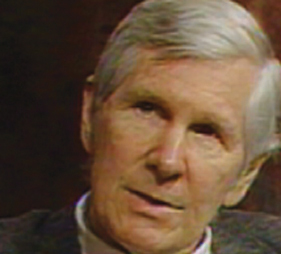
Philip Guerin on Bowenian Family Therapy

The Family of Origin

Ruth Wetherford: So, Dr. Phil Guerin, give us your background. What is your current situation? How have you gotten into family of origin work?
Philip Guerin: Well, my family of origin work goes way back. I’ve been in practice now about 45 years. I was a medical student at Georgetown, and the program was primarily a psychoanalytic program, so I spent my medical school time using psychoanalytic-psychodynamic models, transference models. I didn’t meet Murray Bowen until I was a resident, and he was my introduction to family of origin work. His whole model is mostly family of origin work, so that was a good introduction.By the time I met him I was already somewhat impatient with what in those days was called “the working through process” in the transferential model. I myself had been in therapy as part of the training and was somewhat dubious about how much the working through process really took place. In my own analytic therapy, I didn’t see much attention being given to it. And in working with patients, I found that things tended to drop off and never quite got through the working through process. And as a result, people often had dredged up a lot of negative affect and feelings about their important objects during their individual therapy and were then left with no place to work that through, other than to hold on to negative precepts about those people which resulted in exaggerated distance and a lot of blaming of those people for their own neurotic hang ups.

RW: That is a common complaint of people in therapy as well as of therapists. We do all this digging, we excavate the woolly mammoth—now what do we do?
PG: Exactly. So I found that trying to find a way that one could put some structure on the family of origin, and then define the field that those people occupied, look at the key conflicted processes, the important triangles, the cutoffs—all those things that we know about from our family system training—and really actually work through some of that process with somebody who knew the terrain. I was fortunate enough to have a guy through my terrain in the person of Bowen. And I did some significant relatively long-term work with him on my own family of origin. So that’s how I got into it. And I have found that it has been a real help in my own personal life. And, on the other hand, difficult to sell to people in terms of being relevant to their everyday lives.So I had to learn to not sell it, but to integrate it somehow around the symptoms of the relationship conflicts that came up so that people could see and learn its relevance. I don’t know what you think, Ruth, but I think in our current culture there’s even less investment in family of origin as an important and valuable asset in people’s lives.

There’s so much fragmentation of families, in particular the multi-generational families, that I think people, now that I’ve been in the business long enough, they kind of self-select in terms of coming to see me. So I either end up with somebody that’s coming in with the family of origin problem or somebody that isn’t awfully interested in it and we end up focusing on their symptoms and maybe working the family of origin in as part of that process.

RW: What are some of the basic concepts that you really like about this approach that help you organize your observations and your moves as a therapist?
PG: I think that the two things that are key, in terms of helping people with this clinically, is that much of the developmental and/or situational stress in our lives emanates from family of origin stuff. You know, you haven’t seen your mother in 15 years and she suddenly has a terminal illness. Something happens to your brother and he loses his job—there’s any number of those kinds of situational things. And the developmental things are obvious—when somebody gets married they are supposed to shift their loyalty from their parents to their loved one as their primary object of choice, but that’s actually very difficult to do.And what that brings up is a triangle right out of nowhere, which you also had when you were a little kid—just born into a family and you started out somewhere caught up between your mother and father. So those kinds of things and contextualizing them into the larger family I find really helpful as a road map to develop people’s treatment plans.

RW: So there’s the concept of the triangle and the other concept is…?
PG: Well, I think the triangle is obviously very central. But when I see a clinical situation that comes to me I make an assumption that it’s based on an increase in stress in the people’s lives.
RW: Stress is a key concept.
PG: That manifests itself in an exacerbation of relationship conflict or some physical symptoms that’s returned or depression or anxiety. And those things are best understood if you can put them into context of a family—the family of their spouse and kids or the family they came from.

Triangles

RW: In your book, Working with Relationship Triangles, which you wrote with Fogarty, Fay and Kautto, you go into great detail about the nature, structure, and process of triangles. It’s a working manual about how to apply your theories and ideas into action. One of the things that you say in the book is that a triangle is not a threesome. A threesome is not a triangle. What is the distinction you’re making here?
PG: I think that’s a distinction that Fogarty makes and it’s something he puts very high on the list of things that people have to be able to do. What it means is that a threesome is three individual relationships in which there isn’t a lot of reactivity among the folks. There’s nobody on the outside looking in. There isn’t an intense conflict in a dyad that the third person is getting distance from. He used to talk about it as an equilateral triangle in which there was calm in each of the three relationships. And if there’s calm, then all kinds of good things can happen.But triangles are very pervasive. You don’t have to put three people together very long before they fall into triangles.

RW: So you’re saying that the term “triangle” itself implies not just that each of the dyads that you’re in with two other people is affected by their relationship with each other, but that it has become dysfunctional in some way.
PG: Yeah, and that can be by excluding one person. The concept of triangle has built into it that it’s dysfunctional and inhibits people in the system from finding ways to uncover and deal with their difficulties.

Differentiation of Self

RW: How much do you use and think about the concept of “differentiation of self”?
PG: Differentiation of self is one of those things that obviously was one of Bowen’s original concepts. And he stuck with that through his whole career and believed it to be of primary importance because he believed that if individuals could increase their level of differentiation—which in concrete clinical terms means that they are less emotionally reactive and can think their way through their problematic relationship road blocks—then everything would fall into place. Symptoms would go away. Functionality in relationships would improve. I find that it’s abstract enough that it’s difficult to stay focused on that.And so one of the things that I developed was the whole idea that we are mostly left with the level of differentiation that we’re born with. We can make some progress on it over time, but mostly by finding ways of working within that to improve our ongoing level of functioning. It’s kind of like functioning in spite of your level of differentiation.
RW: When we add to that definition the internal ability to feel and think what is true for oneself’ separate from the pressures of your closest social environment and separate from coercion, that eliminates many people who are dependent for their survival, their food, etc. on the dominating power of others.But for that subset who can have the freedom to think and feel what might be true for them, and in so doing reduce the emotionality that you were just talking about, that strikes me as something that one can do, slowly and incrementally throughout one’s life if one knows how liberating and freeing it can be. In fact, the first time I was reading about differentiation of self with Bowen, I thought, “What a light bulb for humanity because it rescues us from the prevailing power dynamics in most families—that the rights and needs of the many are meant to be sacrificed for the good of the few.” And this concept that we’re equally entitled to our own subjective experiences, that seemed so new.

PG: I think you put it very succinctly and I think you put it in a way that is very useful for folks. I have been struck over the years by the power of emotional forces and how easily they can overwhelm even the best of strugglers who are trying to get to a differentiated perspective.
RW: Yes, that’s so true.
PG: It’s out of respect for the power of emotionality that I put some qualifiers on differentiation as the central process of family of origin work. I think it’s also one of those things that people hide behind a lot; they talk about how much they’re differentiating themselves but, frankly, I don’t see it, right?From the work I’ve done in my own family, I’ve found how easy it is to kid yourself for five years that you are rolling along increasing your differentiation when it finally hits you over the head that you haven’t been. You’ve been playing the side game, but it doesn’t have much to do with differentiation.

RW: Right. Just following up on what you said about how easy it is to think we’re differentiating, to me the cue of the power of that emotional force is anxiety. I’m getting ready to go visit my family—why am I so anxious? And it’s so helpful to think about who are the two people with whom I feel most anxious and why, and then go into those thoughts. I think you’d call it an application or a “thought experiment.” What kinds of applications have you used that that might help people understand how to go about thinking about this more deeply?
PG: Well, I like to use the concrete behaviors in people’s relationships and develop them into experiments with some kind of modification of a behavioral pattern. And while you’re doing that, pay attention to what’s going on internally. And if you start to get anxious, that’s important information. And pay attention to the reactive behaviors and the important other people in your family. And sometimes you’ll find that the reactivity that they have shuts down your ability to even think.
RW: So you ask for observations.
PG: I do.
RW: And you help people identify what in particular they’re going to be looking for to observe?
PG: You mean like if they’re making a trip home?
RW: Yeah, or a phone call, email, text or any contact with the person who is the trigger for anxiety.
PG: Yeah, or outside of the therapy session as well. Because you often end up working with one family member in a lot of this.
RW: Yes. And you do make a point that the work is best with those people who are open to the approach of taking control of their own calming and who understand that they can try to change their participation and the repeating sequences of interaction. Have you asked people to identify the repeating difficult sequence of interaction that makes their anxiety shoot up?
PG: Well, if they’re going to be going to a family of origin visit, I would be probably more generic than that and just have them go and really try to keep their own anxiety in check and observe what they see around them. And then bring what they observe back and we’ll put it together and talk about it and maybe design something that goes on over time—combination letters, telephone, other visits, etc.And I think that that does help people get a sense of mastery and a sense that they don’t have to be so anxious and frightened about moving into the relationship and changing their responses to difficult interactions.

Techniques

RW: You said in your Bowenian family therapy video that Bowen sneered at the word “technique.” I wonder do you have techniques?
PG: I think that in Working with Triangles and in some of the stuff that I’ve done in the form of chapters in other people’s books, I spell out a number of techniques that I think are important to the method. And I think there’re seven of them. I probably couldn’t even come up with more than three of them now. But I certainly have techniques that I think are just applications of observations and theories about the way relationships work.
RW: Donald S. Williamson, who wrote The Intimacy Paradox, and Betty Carter and others do have explicit sequences of moves to help people identify the toxic triangle and calm themselves, notice the repeating patterns, identify their own reactions to things that are said, and then develop a self-stated goal for their own change in behavior. Then they take a step, however small and metaphoric, toward that goal and report back on how it went. In this way they differentiate themselves gradually and hopefully humorously.When people do this there’s an enormous amount of emotion that’s released which, according to those family therapists, needs to be expressed outside the family—the hurt, the anger, the intensity—so that through the release of pent-up emotion there’s less pressure to have it come out in interactions. How much of that emotional release have you experienced using such a cognitively based therapy?
PG: Well, I think that in all those paradoxical ways if you ask people to put their cognitive apparatus to work and observe and experiment with the relationship process they’re a part of, the emotion surfaces in very dramatic ways. And if it’s going to be external, I hope it’s in a context with somebody who is a coach or a therapist because otherwise, you know—I was just watching a movie over the weekend which was a remake of a 1939 movie called Women, in which part of what was going on was the group of women that surrounded Meg Ryan when she found out her husband had an affair. And they had more opinions about what she should do and ways to deal with her upset. And so that can be somewhat questionable in terms of its helpfulness, but I think if it gets spilled to your coach or your therapist, it can be very beneficial. You somehow neutralize the negative power and then go back into the relationship that is the source of it and get it talked out.
RW: Yes.
PG: That would be the best outcome. But I still think that the emotional vulnerability in each of us that triggers us to respond in an emotional way is very profound. And all the designs that Betty or Donald and myself come up with are ways of helping with this, helping the moment, helping the month—but over a long-term process of life it’s very easy to get pulled back in on an emotional basis and to be unaware of it.And so it becomes kind of a lifetime work. It’s very different than being in therapy for life, you know. I think that the difference is that therapy ties you to the individual, who is the therapist, and that the process of working it through is in that relationship. There’s nothing wrong with that. It works. But if it doesn’t get back into the natural relationships of your system, it’s going to be limited in the impact of that.

RW: Yes. You make the point in the book that when the therapy progress seems to be bogged down it’s useful to look for invisible triangles that may be holding the person’s behavior in a stuck place. And you mention that sometimes it can be the individual therapist or the couple therapist. So you’re alluding to the fact that we therapists ourselves have our own levels of differentiation and sometimes we tend to side with the client or patient against the people they’re complaining about. And what a mistake that is in that the therapist needs to work toward his or her own differentiation. Say more about that.
PG: Well, I think if you don’t develop an ability to empathize with your individual patient about what they’re struggling with and to hear them out and to validate them that the struggle is real and there’s justification for their feelings, then you’re not going to have too many patients for very long.That’s the first phase. And the second phase is, well, now that you know those feelings are natural and that maybe 90% of the folks on the planet would have them, well, how are you going to put them into a context that helps you develop a way to go work them through with that person? We therapists have to watch for that very fine line between being supportive and validating and just providing no real motivation to go do something about it.

RW: That’s right. If I see your point of view and validate your feelings, that does not mean I agree the others also have a point of view and that to do nothing about it. It doesn’t mean you can’t change your own reaction to it.
PG: It also doesn’t mean that part of your response doesn’t have its own negative set in it, you know? That’s a big part of the problem actually.
RW: Yes. You mentioned that this thinking leads you to ask questions that help the person see how their own interaction is negatively influencing the others and that we think of ourselves as innocently going along reacting to others, but we forget that they’re reacting to us. Say more about that.
PG: Well, it’s like the whole concept of constructive criticism. How many people do you know who are good at accepting constructive criticism?So I think an awareness of yourself and the toxic parts of you and how you trigger people into their own stuff is essential as a therapist,

An awareness of yourself and the toxic parts of you and how you trigger people into their own stuff is essential as a therapist.

The Invention of Genograms

RW: You coined the term genogram, is that right?
PG: Well, there’s a rumor to that effect, yes.
RW: Well, talk about the genogram and how useful that’s been to you.
PG: Bowen started using what he called “the family diagram.” And if you look at his writings and you watch his speeches, he never converted that over to genogram. Until the day he died, he talked about the family diagram. When I had left Georgetown and was at Einstein teaching the residents and fellows and medical students and the like, I did a lot of what you were talking about Don Williamson doing. I had what we called “TOF groups”—therapists’ own family groups—which was a practical way of trying to get people to learn the theory and the idea of the impact of the people in your family on your emotional functioning. And part of it was for people to, in seminar style, put their genogram up on a board, either a blackboard or an easel pad. And it just seemed to me that we were also teaching about generational repeats all the time.We were talking about intergenerational triangles and it was impressive how much the issues and the relationship patterns repeated themselves generation to generation. So I just thought people might relate to this and the notion of a genogram might stick in their head. It kind of gives you a structure with the membership of your system and the major issues in your system and the cutoffs and where they are and what drove them.

I think it’s been very helpful to people over the years and it’s probably one of the techniques or structures that people from other therapy approaches use.

RW: So after you create a genogram with people—whether you’re working with one person or a couple or a family—it helps you to understand the different forces that hold the system in place.
PG: Yes.

Functional and Dysfunctional Attachment

RW: In Working with Relationship Triangles, you say, “Quite apart from how people feel about the closeness or distance between themselves and others, we should make another distinction between kinds of closeness and distance. Closeness can be a kind of functional attachment. This allows people in a relationship to preserve their boundaries and their autonomy in thinking, feeling and action while they remain connected in a personal way to each other. Alternatively, closeness can be reactive and driven by anxiety, a kind of dependent clinging or anxious attachment that says implicitly or explicitly, ‘Please don’t leave me. I’ll do anything to keep you. If you leave, something terrible will happen.’ Similarly, distance can be a deliberate and planned exercise to deal appropriately with a developmental or relationship problem” (page 59).I quote this because it jumped out at me as very consistent with what a decade and a half later is the very important focus on attachment and the patterns of attachment—secure versus anxious and avoidant. Because you’re making the point, I think, that once we excavate what the core issue is—and it will often emanate from the marriage that then creates the nuclear family—the dynamic has to do with the tension around closeness and distance, in being able to get access to a feeling of connection or “are you there for me?” Functional attachment, anxious attachment, those are precursors to this new attachment conversation that’s going on. When you work with people, how do you focus on that issue, that struggle in them to find a happy, close enough, but not engulfing, far-enough-away-without-abandoning equilibrium?

PG: That’s a very good question. And I think if you realize that most attachments that people have with one another is of the anxious attachment variety that gets called love—as opposed to the kind of functional attachment where you add to that an ability to be open about your feelings for the other person. That’s different. And that is the root towards the kind of intimacy that all of us are looking for. I was thinking while I was listening to you read that section, “Yeah, that’s pretty good. I agree with that.”You were talking about techniques before—one of the techniques becomes the use of the process question: “Do you think that the importance of being connected to your husband comes from a need for a kind of closeness that will benefit you both in your ability to be intimate with one another and to function as individuals and as a dyad? Or do you think it’s kind of a clingy attempt to hide out behind him or in the relationship itself?” They’ll say, “Will you repeat that?”

I think that you take that notion and you try to get people to think about it. And you try to get people to think about it by asking some fairly brief—a lot briefer than that last question came out—questions to focus them on how much of their attachment is being driven by their anxiety, being driven by a fear of a loss of the other, being driven by a way of toning down what they’re experiencing as criticism. I think that can be very helpful to people.

Each of us has a different allergy in this regard. I mean, some people just have an emotional allergy to somebody who is clingy and wants to have their arm around them all the time and wants to exchange intimacies. Other people have an allergy to too much distance and too much avoidance and an inability to talk about the personal in the relationship itself. And how much of that is testosterone versus estrogen driven or whatever? I don’t think we know.

RW: No.
PG: But it remains something that’s consistent over the decades that that is a part of the problem and also can be a part of what feels good in a relationship. We used to have arguments at Einstein family study section where we’d talk about, “I don’t care if it is emotional fusion; it feels too good to let go of it!”RW: How have you been evolving professionally and philosophically since the publication of your last book?

PG: Well, I’ve gotten involved in a whole bunch of stuff that mainly has to do with being the grandfather of 11 grandchildren.And that has taken away the drive and the energy to write another book. But it’s been worth it. I mean, the kids are terrific and watching them—my oldest grandchild is 19 now and my youngest is 15 months—watching them continues to teach me about myself in ways that are very important. But I’ve been thinking, you know, not a bad idea to start getting back to some of that.

RW: Do you have another book in you? And if so, what would be the message of that book?
PG: I think the ideas that are in The Evaluation and Treatment of Marital Conflict, book that we put out in the middle ‘80’s, and even some of the stuff that was in the original textbook you were talking about before, are only partially developed. I think that the concepts develop most clearly when you’re putting them to the test with your students. And we still do that, but not with the kind of intensity and frequency that we used to. In recent years as managed care has come in, training programs are kind of atrophying. There used to be a battle between five or six models of doing things, and the debate and the discussion and the application to clinical situations of the models were very enriching, very enlightening, very energizing.If I was going to put another portion of my energy into my work as opposed to my grandchildren—they’re going to probably tell me to do that pretty soon—I would try to work towards applying the models that were developed in the late ‘80’s and early ‘90’s and see if they can hold up, you know? Try to make distinctions between ‘70’s and ‘80’s versions of intimacy and attachment and present day. Are they different? What are the differences? Can there be an evolution that provides more refined and sharper models that improve clinical outcomes?

Flying-By-the-Seat-of-Your-Pants Therapy

RW: And would you include integrating the various models?
PG: I think as much as they can be integrated, yeah, absolutely. I think that there’s a need for that. And the question is how do you do the integration without getting the lowest common denominator? And I think that some concepts go together and others don’t. But it’s rare that there’s been one way of thinking about these things. Ego psychologists had a structural way of approaching things just like Minuchin and others have had a structural way of approaching things, you know? And I think that the analytic psychodynamic models really evolved into the multi-generational systems whether it’s Bowen and Fogarty and myself and Carter and Monica and all those folks or if it’s a more strictly psychodynamic approach to things, or Haley and some of those people who really came out with a totally different perspective.So all that stuff that was done kind of side-by-side in the ‘70’s and the ‘80’s. I think if people had time and the interest in the information, more developing could take place. And hopefully that development would provide a refinement that could be taught to people that are doing therapy because it seems like folks are flying by the seat of their pants a lot in doing therapy these days.

Some of therapy has kind of dwindled down to giving advice, you know, from your own particular perspective, which isn’t bad unless it’s the only thing you know. I would love for a day to return where people were working together to define models and refine them and make them reproducible.

Maybe that’s not possible in this time-crunched era that we’re in now, but I would like it.

RW: Many people are calling for a broader dissemination to people. The APA, for instance, is looking for ways to teach psychology outside of clinics, hospitals, private practice and academic settings, using the internet, for example. What are your thoughts about that?
PG: I am intrigued by it. I think folks my age are a little intimidated by the technology, but I think it’s crucially important. What my kids can do with a computer in terms of scope and rhythm and efficiency is so far ahead of what I can do. The grandchildren are even better at it.
RW: I agree and I’m glad to hear it. Are there any final thoughts you would like to share before we close?
PG: Well, I think that making the family of origin work relevant is important, without trying to shove it down people’s throats. A long time ago in our work we saw it as essential to not try to sell a particular approach, but to start with where clients are feeling the pinch, where they’re feeling the pain, and to proceed in a way that first and foremost helps them with their symptoms—whether that’s prescribing medication or using cognitive techniques or incorporating family system theory into the work.And then continuing to check back in with them about what makes sense for them because they’re putting in time and putting in money, so they ought to have some say about where our focus is and where we’re trying to take them.
RW: That makes good sense. Thank you so much. I have greatly enjoyed our discussion and appreciate your body of work and your willingness to share this with us now.
PG: Well, thank you for asking me.

Memories of Stonehenge, 1984: Conference of Women Family Therapists

In the summer of 1981 I was traveling around Ireland with Lynn Hoffman who was at that time- and for a great many years- a tremendous supporter of the work of a numerous others in family therapy. She was at that time especially supportive of therapy teams in many different places in the world and was telling me a good deal about all the creative women she had run into in her travels. I began to think about the need of women mentors in our field and what a good mentor she was to so many others herself, including two Irish women to whom I became very close: Nollaig Byrne and Imelda McCarthy. By the end of our trip I had hatched a plan to bring together women family therapists for a conference. I approached my friend Betty Carter, who agreed it was a great idea and asked if we could present it to her group: The Women’s Project (in which her compatriots were Marianne Walters, Olga Silverstein and Peggy Papp). I agreed and soon met with them to discuss the idea. They were, much to my surprise, not enthusiastic and decided against the idea. For some reason, they could not see the value of a meeting of women in the field. They were not the only ones. Virginia Satir, Mara Selvini, and Cloe Madanes were all negative about the concept when invited, and Lynn herself said she could not see the value of it and did not in the end participate.

In any case, I went to my handy-dandy sisters, Froma Walsh and Carol Anderson, who I knew would support the concept and we decided to do the conference together. I knew of a wonderful hotel in Ridgefield Connecticut called Stonehenge and we decided that would be our venue. It had space for a meeting of about 40 people so that was the number we decided on. We then began the planning through networking. We contacted women we knew or whose work we knew of and asked them to recommend others they knew and through that method of networking we eventually had a wonderful group of very impressive women family therapists who agreed to come to Stonehenge to share work, personal experiences and ideas for 3 days in September of 1984. It was a most impressive group of women- the outline of presentations and discussion emerged pretty organically as I remember from different ideas presented by various women. One that stood out particularly for me was Ellen Berman’s presentation of the “Glory-Work Ratio,” a presentation in which she proposed that we as women often under-sold ourselves when invited to do a presentation and would agree to meager terms, happy to be included and not realizing how much work, time, and energy were entailed in such presentations. She recommended that we always sleep on any invitation and not agree to it for at least 24 hours, by which time we might have had a chance to decide how much effort should be expended for what return. We all laughed, recognizing how many times we had found ourselves traveling to faraway places for micro-fees, while the men in the field commanded much larger honoraria, even when they did not prepare for the presentation.

Another highlight for me was a comment by, I think Kitty LaPerriere, still one of the unsung heroes of our field, who said at dinner on Saturday night how amazing it was that for so much of our lives we women always wanted a “date” on Saturday night–which meant with a man—and here we were and we all seemed to want to be where we were at that time and in that place and were so fine with it! We had amazing experiences hearing new voices from the field and also from experienced senior voices. the Women’s Project had decided to participate and even sponsored the welcoming cocktail party on the opening night of the conference and all of them shared many of their experiences as women breaking the glass ceiling of our field.

There were also difficult issues and discussions about why our group was almost all white and how could we do it differently—how could we change our thinking so we could become a more diverse group of women. For me the struggles with how to deal with the intersection of race and gender took many more years—many years to appreciate that we could not discuss gender without taking race into account at the same time. And the intersections of race and gender , along with class and sexual orientation—which have become such important parts of our conversation in the decades since that time—were just in their infancy and not well understood or dealt with. In the years since I have learned a lot about the naiveté and inaccuracy of trying to consider gender by itself rather than within the larger cultural contexts of race, ethnicity, religion, class, and sexual orientation.

At the same time that we made many mistakes in our efforts, there was something amazing that happened for many of us at that meeting, I think. From that point on when we saw each other at other meetings there was a sense of solidarity and of collaboration and support:we had acknowledged to each other at that meeting how isolated we often felt, competing with each other for the attention of the men in the field, and how much of our sisterhood we lost in that competition process. And we came to stand by each other better, to help each other out informally with writing and presenting and thinking about the research and clinical practice of the field. I think wee listened better to each other after that—I know I did, realizing how often I had not really appreciated the other women in our field.

In the years after that we held one other Stonehenge networking meeting (1986) and then an international networking meeting of about 100 amazing women in Denmark a few years later, where, once again, we relied on networking as the organizing principle, learning from each other about other voices in the field. And at that international meeting with women from as far as Israel, Japan and Africa, I remember being totally in awe of the amazing women presenters, one after the other, who taught us about ourselves and each other and how to think more creatively about families and about their experiences trying to be family therapists in different contexts. I think these meetings helped many of us develop our voices in the field and I am grateful to all the women who participated and shared their stories and their work in those earlier days of our field.

Harry Aponte on Structural Family Therapy

Putting Therapy in Context

Rebecca Aponte: First, just so our readers are not confused, we should clarify that neither of us knows of any family connection, despite our shared last name.
Harry Aponte: That’s correct.
RA: You primarily practice family therapy. It’s interesting, because family therapy seems to be in danger of disappearing–it doesn’t seem like most therapists do it at all. What’s your sense of the state of family therapy today?
HA: I think family therapy has gone through its phase of fanaticism. It’s like so many other perspectives on therapy: it went through a phase where people made a new discovery, and they got infatuated with it, and that became the answer to it all. I believe the thinking about working with families has matured so that it’s not such an exclusive focus. People are much more flexible about working with individuals and couples as well as families, and people are more flexible in terms of being prepared to work with some unit of a complex family system without necessarily seeing all the members of the family, while maintaining a broader perspective so that they understand that the individual or the couple in the context of not only family, but also of community. So I don’t think it’s dead at all. I just think it’s matured to the point that it’s been incorporated into the very large and complex field of therapy.
RA: Do you think that the perspective of keeping the broader sense of community is as integrated into most therapists’ minds as it should be?
HA: Well, to answer the last part of that question, I think it should be. I believe that we have become much more sensitive and knowledgeable and insightful about the impact of the broader social system on people’s personal functioning: the effect of people’s social economic circumstances, the effect of culture, the effect of people’s spirituality, and how all of those affect in a very intimate way how people think of themselves, how they relate to one another, how they understand their reality. Any therapist who wants to engage with another human being at any level at all–to understand that person, that couple, that family–has a lot of factors to take into consideration. And I think that’s happening. I think people are much more comfortable with looking at their clients from a variety of perspectives at the same time.
RA: Is that something you would actively reflect back to a client–that you have their broader context in your mind–although they might not be thinking about themselves in a broader context?
HA: What I reflect back to a client is what I think will be helpful to the client. I’m not there to give the client a lesson on what therapy should be. I’m there to be helpful to the client. I need to take responsibility for having all of those perspectives in mind and taking them into consideration as I explore what the issue is and the roots of the issue, and what resources are in that client’s life for that client to be able to make the necessary changes to solve the issue. I don’t need to explain that to the client, but I do need to be aware of it and work with it.
RA: I’m asking some of these from the perspective of therapists who primarily see individual clients, because that’s probably the most common today. If someone does come to you as an individual, how might you bring up getting their family more involved in the treatment? Is that something you would suggest right away, or does it happen over time?
HA: I’m a pragmatist, so what I do is I listen carefully to what the client’s issue is, and I try to understand the issue, and I try to understand the context of the issue: who’s involved, who’s touching on that issue of that particular individual, as well as what resources are available to that person in their context. And I will try to pull in whatever and whoever is necessary. Even if I need not pull them in, it doesn’t mean that I’m not going to work from a suspended ego complex or perspective. It’s rare that I not ask clients about the history of their issues. And if I ask about the history of their issues, I’m asking about them in the context of their current relationships, their past relationships, including their development within the family of origin. All of that helps me to get some deeper sense of what they’re struggling with and why they’re struggling with it the way they are.

Structural Family Therapy Defined

RA: Let’s back up a bit. What exactly is structural family therapy? Is the distinction from family systems therapy important?
HA: Structural family therapy is an aspect of systems thinking. You have to understand the origins of structural family therapy in order to appreciate its contribution to systems thinking. The work originated, of course, with Salvador Minuchin, Braulio Montalvo, and other people who were working together at the Wiltwyck School for Boys in New York. They were working primarily with all these youngsters who were black and Latino, and who were institutionalized. These therapists began to include the families of these boys in their efforts to be helpful to the boys, because they found that working with them in an institution, outside of the context of their families, they were not achieving the success that they hoped to achieve. As they included the families, they found their success rate change significantly.Well, what happened? Because they were working with boys and families that came from seriously disadvantaged circumstances, they found themselves working with families that were, more often than not, poorly organized, in that they didn’t have the kind of structure that normally helps families to cope with the challenges that life brings. A typical story for a therapist working with the families I’m describing is you find that when you begin to talk with them, they interrupt each other, they speak over each other, and very often it’s unclear who’s really in charge of the family. And if there is somebody in charge, they may be so totally in charge that other people don’t have a voice in the family. You don’t have an organization there that can identify a problem and come together in a way that can solve it.

It’s really no different from what one would be thinking of in another kind of system, such as a business, where when you see a problem in how that business is operating, you’re going to be thinking of the structure and organization of the people who are working within that business. If they’re not effectively communicating with one another, they don’t have a clear hierarchy, and they don’t have clear responsibilities, you’re going to find that things fall through the cracks and the system fails.

Well, that happens with families, and it particularly happens with families that come from disadvantaged circumstances because they also come from disadvantaged communities that are poorly organized. These families, then, suffer the effects of their community, and they’re not able to organize themselves in a way that normally enables families to meet problems and solve them. Every family has problems, but when you don’t have an effective organization, then it’s hard to talk about the problem, it’s hard to identify the problem, it’s hard to cooperate together, it’s hard to find leadership within the family so that you can work towards a particular goal and solve the problem.

That’s the first experience of therapists who worked with families from disadvantaged circumstances. The gift that Minuchin and his colleagues gave us was that they focused on that organization. They understood individual dynamics; they certainly understood the contributions of other systems therapists at the time. But they were dealing with a particular population that had a significant issue around family structure, and that is an aspect of systems thinking. When you are dealing with families that are well organized that still have problems that they can’t solve, you tend to take the structure for granted. You cannot take the structure for granted when you’re working with these families that come from disadvantaged circumstances and who themselves are not organized in a way that’s effective.

RA: It sounds like one of the things that they found was that the pathology of the boys they were working with existed within this much larger environment, far beyond what would have been within the control of the boys or even the therapists.
HA: That’s correct.

An Ecostructural Approach to Family Therapy

RA: You’re talking about major social issues that are much bigger than families as well. How do you overcome those obstacles in a family therapy situation?
HA: Early on, I wrote about an ecostructural approach to family therapy–“eco” referring to the social ecology of the family, highlighting how so many of these families’ problems had their roots in the community they lived in. You have schools that have not only poor resources, but that themselves may have gangs organized within them, that are physically dangerous places for the children there, that make it difficult for the teachers to run the classrooms and create an effective learning environment.When you are working in some of these neighborhoods, the street itself becomes a place that is dangerous. It becomes a place where children just cannot go out and mix together and play together and do the kind of social learning that is important for their development. They’re dealing with drug dealers and other kinds of factors in the community, in the street themselves, that affect how these children think about themselves and how they think about the world. They have to cope; they have to survive. They may have to be more aggressive than children under other circumstances. All of that affects their personal development. And in these neighborhoods, you have problems with getting proper healthcare as well as educational resources. So you have a lot of social factors that are impinging in very direct ways upon the ability of families to function well.

And these families cannot just put all of their energy into nourishing the family environment. They have to be thinking about how to deal with protecting themselves vis-à-vis the community, so they put energy out there that should be put more into the family itself. They’re dealing with difficult environments, and that affects the ability of the family to function successfully.

RA: It’s a lot to think about.
HA: It is a lot to think about. And when you’re thinking about the environment, and you’re thinking about the family, you really cannot offer families coming from these circumstances a service that is exclusively focused on the family unit itself. You have to take a broader perspective that says, “I’m dealing with a child that’s in the context of a family, that’s in the context of a community. So when I then conceive of the work that I’m doing with these families, I have to take all of these into consideration and organize my services so that I can mobilize various aspects of that complex ecosystem to support the goals that I have with this particular family.”My point, though, is that this work with disadvantaged families gave a gift to the whole movement of therapy. It highlighted the importance of this complex social ecosystem– its effect on individual functioning–and the need to be more sophisticated about the dynamics of these various levels, in terms of understanding how they work, and in terms of working with them so that we can achieve our goals. It opened up a whole area of thinking that had to be taken into account. I think it’s been incorporated naturally, and I think people today think in those terms much more readily than they used to.

If we go back historically to the psychoanalytic movement, that was a very intense focus on the individual and what was happening in the individual’s psyche. And that provided critical and wonderful insight. Then we realized, “Well, that’s not the whole person. We need to expand our perspective.” So we expanded it to the families. Then we worked with this particular population and said, “My goodness, we really need to be thinking about the context in which this family is developing.”

So it just broadens our perspective. And we’ve learned ways of understanding these dynamics so that we can actually work with them, not just as sociologists, but as therapists who can be quite focused on trying to obtain a particular objective.

RA: Particularly now that therapy is not just the realm of white, middle-class clients, as historically it has been, there’s a more focus on tailoring therapy to fit people from a multitude of different ethnic and economic backgrounds. Do you have specific advice for therapists who have worked primarily with middle-class individuals, on branching out and working with people who have these bigger issues? One aspect is just being cognizant of the fact that there are many aspects of someone’s development and someone’s selfhood that extends beyond them. But what do you do with that awareness?
HA: I think what we’ve seen now, as a very normal part of therapist’s training, is the therapist being more conscious of the factors of values, world views, culture, spirituality, how these affect the way they see their problems, and how they view a solution that is acceptable to them. We have a much more complex society today than we had 50 years ago or further back, where there was a generally accepted norm of what a family is, how a family should function, and what is acceptable behavior.Today, we have a society that is much more fragmented and often in conflict with itself about what is acceptable in terms of lifestyle and behavior. That changes what one may consider to be a problem, and it certainly affects what we think of as appropriate solutions to problems. That thinking–which was expanding already back in the ’60s, when The Families of the Slums was written by Minuchin and colleagues about the work at Wiltwyck–all of that has been incorporated into everyday, normal therapy.

Nowadays, I don’t know what therapist training doesn’t include some courses that say, “You need to be sensitive to race and culture, and sensitive in such a way that you understand how race and culture directly affect not only how we view the issues and how we work with them, but the very nature of our relationship with our clients, and how we join with our clients.” Therapists will have their own culture, they’ll have their own values, as well as certainly their own personalities and life experience. But how do these therapists relate and connect to clients who are always going to be different in some particular way or another, in a society that says we need to be more accepting of the differences among us? So we’re working in a more complex world today as therapists than we did in the past.

The Person of the Therapist

RA: Certainly. And it sounds like you’re saying, too, that it requires therapists to be more sensitive to themselves and to their own world views, and really have a clear idea of their own personalities and backgrounds and how they appear in the therapy.
HA: If you’re not aware of what you’re bringing to the therapeutic relationship and the therapeutic process, you can’t take responsibility for it.
RA: Is that essentially what “the person of the therapist” means?
HA: That’s exactly what “the person of the therapist” means. The therapy of today is a therapy in which therapists are certainly much more actively engaged with their clients or patients than what would have been the model in the psychoanalytic world. And certainly, if you read the writings on structural family therapy, you would see how therapists use themselves very actively to influence the dynamics within the family, and how they engage with individuals within the family. What I’ve done with the “person of the therapist” model is to try to take that a little deeper and say to therapists, “It isn’t just a matter of how you use yourself.” It starts with understanding yourself, not only from a psychological perspective, but also from a cultural and spiritual perspective. As a therapist I have to get in touch with what’s inside of me–and not only what’s inside of me, but because these are living, active dynamics, I have to get in touch with what I struggle with in my own life, what I struggle with psychologically, what I struggle with in my relationships with people, what I struggle with spiritually. I need to understand that, I need to be in touch with that, because all of those factors are active when I engage with the client. They’re going to affect how I see the client, how I hear what they have to say, how I connect with that person, how I even conceive of how we’re going to try to find some solutions.These factors are active even beyond our normal awareness as therapists. We need to get the kind of training that makes us experts on who we are and what’s happening within us, so that even as we are working with our clients, we’re conscious of what’s going on within ourselves, and we can take responsibility for what we communicate about ourselves and what we try not to communicate about ourselves and how.

RA: How do you practice that? Does that mean therapists do their own therapy, or is it more self-reflective?
HA: It’s a specific kind of training. Traditionally–certainly in the psychoanalytic world–therapists needed to undergo their own therapy. But that objective was one that said, “I need to try to solve my own personal issues so that I am freer to work more effectively with my clients. I’m not going to put on my clients my own hang-ups.” That way of approaching the work of the person of the therapist was continued and picked up by Virginia Satir and Murray Bowen, but again from the point of view of, “Let me identify my issues and try to resolve them so that I will become a more effective therapist.”What I’ve been emphasizing is that all of that is absolutely important and useful, but the simple reality is that we never resolve all of our personal issues. We struggle with ourselves the rest of our lives. We need to go through training programs where we become aware of ourselves in the context of doing therapy, not to resolve personal issues, but the primarily to understand ourselves in vivo: When I’m engaged with my clients, what’s going on inside of me? How do I get in touch with it? How do I decide how to use what’s going on within me in order to understand and empathize better with what’s going on in the client? How can I relate in a way that’s specifically useful to the client at this particular moment in time?

So it’s an approach to preparing the therapist to use this instrument that is me, in a way that is much more effective. Then I can use all of what I’ve learned technically and theoretically of other models of therapy, and I can use it through the person that I am in a way that amplifies the effectiveness of my work.

RA: So this model rejects the psychoanalytic idea of being a blank slate or completely neutral, and focuses instead on the therapist’s personhood.
HA: It certainly does. The advantage that classical psychoanalysis had was that the analyst was sitting behind the couch out of the view of the analysand, and wasn’t engaging eye-to-eye with the patient. Today, most all of our therapy is eye-to-eye, and we feel each other. We and our clients are engaged personally in the therapeutic process, and that’s a simple reality. The question is, how do I engage personally within the boundaries of my professional goals so that I can be of use to this person?

The Role of Spirituality in Therapy

RA: You’ve mentioned a couple of times the role of spirituality in therapy. How do you bring spirituality into the therapeutic relationship in a way that’s safe for clients who might have different views?
HA: It’s not a matter of bringing it into the process as much as it is of being aware that it’s there. Spirituality is just a normal aspect of who we are. We all have a morality of one sort or another. We all have a world view–a philosophical perspective on life and what’s important in life, what’s meaningful about life, what our goals should be in terms of moral principles. And that will certainly affect how we think about the issues that come up for us. A simple example that’s very relevant today is the postmodern view of reality, where reality is something that you cannot know directly, but only through what you sense–meaning that you cannot prove a truth, so truth is only in the eyes of the beholder. That’s a spiritual perspective; that affects the way we look at life.And if you do believe there is a reality that we can perceive, and that there is an objective truth that we can relate to, that’s very different from somebody who comes from a perspective that says, “It’s really what you perceive, more than it is what you think is out there.” That affects how we think of our problems; that affects how we’re going to try to solve our problems.

RA: So you’re trying to understand how clients perceive themselves and their problems, and having knowledge of yourself is primarily to keep you from being closed off from their world view when it’s different from yours?
HA: If I’m going to understand them, I need to try to understand them from an emotional perspective, but also from a cultural and spiritual perspective. So I’m listening for all of that. But I can’t listen to that and understand it unless I am aware of that within myself.You cannot see spirituality in somebody else unless you can see it within your life. How is it real for me? How does it affect me? The better I understand that, the more insight I’m going to have, and the better I’m going to be able to see how it relates to their lives. So that becomes something I normally look for as people present their issues. It also influences what kind of questions I’m asking them, so that I don’t just assume what their moral stance is on things.

For example, when you’re working with adolescents and their families, and their sexuality is an issue–which is almost inevitable when you’re working with adolescents–what is their moral view about sex outside of marriage? What is acceptable? What is not acceptable? That’s going to influence the work that you do; it’s certainly going to influence the goals that you determine are part of your work.

RA: I understand that you worked for some time with Sal Minuchin, and I’m sure some of our readers would like to know what he was like. How was it to work with him?
HA: Sal is a fascinating personality. The man is intellectually so bright and so original in his thinking, but he’s also very much a dynamic human being, and that influences his style of therapy. He always engaged with the clients very fully and emotionally–not only intellectually. It made his model a very dynamic approach to life, so that it could be challenging to therapists who tended to be much more reserved in how they relate to people. But Virginia Satir and Carl Whitaker were also individuals who had dynamic personalities, and used that dynamism in the way that they conducted their therapy. Sometimes people lost perspective and confused the dynamism of the individual with the theory and the technique that they were trying to teach.
RA: What’s your sense of yourself as you developed your own personal style of working in this frame of mind?
HA: Sal was more likely to be confrontive than I would be. My particular personality and style is that I tend to be very direct with people, but I also tend to be more inclined to want to join with people and relate empathically with them. You would get a very different feeling with me than you would have from Sal. Sal, as you see in his writing, talked more about unbalancing the system, and he would often unbalance that system in a more forceful way than I would. I would also unbalance it, but not in the same style.

This really emphasizes the importance of knowing one’s self personally and saying, “I’ve got to work through the person that I am, and not through the person of the guru that I admire.”
RA: Absolutely. You’ve been doing this for quite some time now; do you have a sense of your personal evolution and what’s changed? Do you feel yourself becoming more confrontive over time or less so, or just more refined?
HA: I think what has changed is that as I’ve matured, I’m more confident about myself when I’m with people, and I’m more confident about what my thinking is, so that I can risk being direct with people about what I see and what my opinions are about what’s going on, always allowing for the feedback and room for them to challenge me back. But the challenge is not so much a matter of me confronting as it is a matter of being able to state, “This is the reality that I perceive right now. Now give me your reality and react to what I’m suggesting to you.” That doesn’t work with certain clients, but I find it tends to work with people who are looking for results, and they say, “I can see what you’re saying and I can see why you’re saying it, and it does or does not make sense to me, but now I can give you back some feedback and we can work actively together to make something happen.”
RA: Do you have a sense of where you feel yourself being pulled in the future?
HA: As I look towards the future, I’m now continuing to focus on the person of the therapist and trying to develop that further, not only as an aspect of training therapists, but also as an integrating principle in the therapeutic process: we are integrating our technical and theoretical thinking around who I am and where I am in my life, so that when I do the therapy, it becomes very much my therapy. Even as I’m learning from other people, I’m moving more in that direction. But that also says to me that the common factors work being done by people like Sprenkle is an important contribution. I’m looking more at the common factors among the various models of therapy, and including these factors among the various views of the use of self. I’m thinking about how to highlight those common factors to encourage therapists to extract the essential elements of the therapeutic process, rather than having to choose between various camps of therapy, which I think is such a waste of time.
RA: We’ve definitely covered a lot of ground. Do you have any concluding thoughts you’d like to share with our readers about any of the topics we’ve discussed?
HA: We ended on the note that I hoped we would end on, which is the importance of therapists training to understand themselves more profoundly than they have in the past, not only from a psychological perspective, but also from a cultural and a spiritual perspective, so that they can use all of themselves more effectively in their therapeutic work, on the one hand; and on the other hand, the usefulness of thinking about common factors among the various therapeutic models so that people will not blind themselves to the contributions of the various models because they need to adhere to some particular school of therapy. From my perspective, there is no model of therapy that does not offer us an insight that is useful to all of us. I think it’s important that we open ourselves up to learning from the various schools and approaches to therapy, and then take that and integrate it within ourselves so we become effective therapeutic instruments.
RA: I think that’s sound advice. I appreciate you taking the time to talk with me today. I’ve very much enjoyed it.
HA: Good, I’m glad you did. It was a pleasure, Rebecca.

Walking A Tightrope: Family Therapy with Adolescents and Their Families

Beyond the Comfort Zone

“Clyde is spiraling out of control,” she cried.  “He’s begun to hang out with a bunch of do-no good, do-nothing hoodlums.” She was worried that failure—or worse, tragedy—was aggressively recruiting her only child. “He is a good kid,” she attempted to reassure me, “but I worry about him being in the wrong place at the wrong time.”  Although he’d had no brushes with the law, she was terrified of any potential encounters he might have with the police—an encounter she intuitively knew could be a matter of life or death. 

“Mrs. Gilyard, like so many other parents of color, was raising her child with the police foremost in her thinking.”  While she and her husband enjoyed a solid middleclass lifestyle, both were African American and understood all too well the rules of the streets, especially regarding young black males. Mrs. Gilyard was worried because she understood that the urban streets were unforgiving for many young black males like Clyde. Unfortunately, Clyde, according to his mother, “knows everything and won’t listen to me or his father.”  In fact, Clyde had, in a very short period of time, according to his mother, transformed from a “very respectful young man” to a disrespectful, self-centered, impulsive shadow of the human being he used to be. “He’s moody, often refusing to talk for days, and all he wants to do is sleep, text message, hang out with his friends, and download music.  To be honest with you, Dr. Hardy,” Mrs. Gilyard said, “although he is my God-given son…” She paused. “I am quickly getting to the place where I can’t stand to be in his presence. I am not sure I even like him anymore. I can’t tolerate his nasty attitude. I have no patience with him. I’m worried that I might hurt him, or someone else will, if he doesn’t get some help.”

As our telephone conversation progressed, it seemed to have no end in sight. Mrs. Gilyard needed to vent and was oblivious to time or circumstance. I tried numerous times to gracefully end the phone conversation that was dangerously slipping into a full-blown noncontractual, nonconsensual therapy session, but Mrs. Gilyard was too consumed by her utter sense of desperation, now flirting with panic. 

I commented that although she seemed to have moments where she felt disdain for Clyde’s behavior, her dominant feelings towards him seemed to be worry, fear, and a deep motherly love for him. I went on to suggest that I imagined the situation with Clyde was taking a huge toll on her, as well as the entire family, and although she was seeking treatment for Clyde, I thought it would be helpful for the entire family to attend.  My comment and suggestion apparently surprised Mrs. Gilyard and immediately earned her ire. Her tone and approach to our conversation changed instantly.

“Why do we need therapy?” she demanded.  “I don’t think there is anything wrong with Claude and me, and I honestly don’t know what there is for us to gain from coming into therapy. We will do whatever to help Clyde, but he has to find himself and nobody else can do that for him. As his parents, we have to provide him with love, support, and guidance, but he has to be willing to accept it. Right now, his friends and his music seem to be all he cares about!   I don’t see how us coming to therapy is going to help him get what he needs.”

My interaction with Mrs. Gilyard suddenly shifted from the emotionally intense, unconditionally accepting reflective listening phase of engagement to one of the most delicate and thorny areas of family therapy: problem definition and who should attend the session. These issues are always critical dimensions of family therapy treatment. Mrs. Gilyard and I suddenly found ourselves on a major collision course.  She remained convinced that Clyde was the problem and that whatever was going on with him needed to be fixed inside of him.  In her world, problems were individual and the solutions were simple: you found out what was broken and you fixed it. From her perspective, Clyde was broken, like a malfunctioning carburetor in a car, and in either case the solution was a simple matter of targeting it and repairing it.  She seemed to be oblivious to the fact that even the best mechanic in world could not repair a faulty carburetor without having access to the car! This was where our worldviews collided.

I believe that all problems are essentially relational and that we all are relational beings living our lives in a relational context.  As a family therapist, I believe that problems are delicately and seamlessly interwoven in a nexus of relationships.  “It is difficult for me, if not impossible, to envision any human interaction problem without considering the relational context in which it is embedded.” So, unlike Mrs. Gilyard, I assumed that the problems were embedded in relationships and the relationships were embedded in problems.  In this regard, in cases such as the Gilyards’, it is my contention that family members contribute to the formation of a problem, the maintenance of it, or both. And if problems are embedded in relationships, so are solutions! Thus, having the entire family participate in therapy is essential. 

However, from the perspective of Mrs. Gilyard, Clyde was the problem because it was his behavior that was problematic. It was he who was broken, malfunctioning, or deviating from family and societal norms. Accordingly, Mrs. Gilyard believed that the best solution to the problem was to treat the problem: Clyde! The dilemma was that if I dismissed Mrs. Gilyard’s definition in favor of mine, therapy could not occur. Yet on the other hand, if I abandoned what I believe, how could I possibly assist the family without further problematizing Clyde? Before ever meeting Clyde, it was crystal clear to me that he was considered the problem and would continue to be until his deeds, attitudes, and behaviors complied with his mother’s wishes.  So in a sense, the only problem was the problem that was asserted by the family. And, if I insisted otherwise–i.e. that my definition of the problem should overshadow the family's viewpoint–then that would only result in creating yet another problem! This is the tightrope that all family therapists have to gently and delicately traverse.

            Despite Mrs. Gilyard’s claim that she would do anything to assist Clyde “in getting his life back,” attending therapy with him was not on her immediate list. Because I often believe that a family’s refusal or reluctance to participate in therapy is usually a result of a tendency to think individually and not relationally, and an underlying fear of being blamed and/or exposed, I knew I had to tackle both of these issues with Mrs. Gilyard if family therapy were to ever take place.

I tried to reassure her that a family session would not be about finger pointing or keeping score about who did what to whom. “It will be a place where we can develop a deeper and better understanding regarding how the family operates and how each of you is affected by what everyone does,” I explained over the phone. “You know, families cannot function well when each member attempts to do what they think is right or best without considering how it affects others.”

At this point, although unfazed and unconvinced, she at least seemed willing to listen more carefully.

“You, along with your husband, seem to be concerned, involved, and loving parents. I imagine the two of you have an infinite reservoir of information about Clyde that you have been collecting since his birth. You, quite possibly unlike any other person on the planet, have cherished early life memories of Clyde that you have probably safely tucked away in the secure closets of your mind. I know you and your husband need my help, and I am honored that you are willing to trust Clyde in my hands. But I need you and your husband’s help as well. I need the infinite knowledge and wisdom that you and quite possibly only the two of you have about him as well. My time with him will be limited no matter how much time we have, and it would be great to have the two of you as resources. You know, I am sure you have heard that old African proverb expressed a million times that it ‘takes a village to raise a child.’ Well, if Clyde is struggling as much as you say he is—and I have no reason to believe otherwise at this point—he needs a village. And we will be Clyde’s village!” 

After an impregnated pause and a chilling silence, Mrs. Gilyard, in a much softer voice, said with a slight sigh of relief and perhaps resignation, “Yes, you’re right.  Clyde is a part of me. He is like my third arm or leg. I do know him. Or at least, I used to.  I will talk to my husband. Doctor, I hope you—er, I guess I should say, I hope we can help my son.”

It Takes a Village

Exactly one week later following our phone conversation, Mrs. Gilyard made good on her promise. She, her husband of 30 years Claude, and their son Clyde arrived at my office for our first session. My initial interactions with the family were pleasant and polite as we engaged in light-hearted conversations about the weather and traffic. Throughout it all Clyde remained detached, appearing disinterested but respectful.  There was an understandable tightness to the family. They seemed tense. Mr. Gilyard was noticeably uncomfortable and asked several times in the first few minutes about how long the session would last and how many sessions would it take before they would “see results.”

I thanked the family for coming and their dedication to finding answers to issues that were plaguing them. Then I turned to Clyde. “I’ve talked to Mrs. Gilyard on the phone and know that she is worried a great deal about you.”

He smirked slightly but refused to bite the bait and respond to me verbally. I was encouraged by the smirk because it was a sign of responsiveness to being engaged—a private mental note I made certain to record.  I turned to Mr. Gilyard and asked, “Do you share your wife’s concerns?” Then, turning to Clyde again, “What do you think about all of this?” To increase the probability of participation throughout the therapeutic process, “it is imperative in family treatment to acknowledge all family members as early as possible and to invite their participation even if and when they passionately refuse.”

The room was quickly filled with a breathtaking silence and discomfort. Finally, perhaps as a function of her discomfort, Mrs. Gilyard broke the mounting minutes of silence that must have felt like hours to the family, by inexplicably saying: “You are so much smaller than I imagined you to be. I for some reason expected a bigger, older man.”

After many years of clinical practice, I am seldom surprised by the disclosures that are uttered within the private walls of therapy, but I was surprised by Mrs. Gilyard’s comment and wasn’t immediately sure what to make of it. I simply responded: ‘Oh, well… Thanks for your honesty… I always find it an interesting task to imagine what someone looks like based on their voice and telephone personality.” 

It was of note to me that Mrs. Gilyard elected to make me the focal point at the precise moment that I was attempting to engage Claude and Clyde about their perceptions about the family. Maybe this was coincidental, but I wondered if I was getting a snapshot of how hard Mrs. Gilyard worked in this family.  Since I had spent an appreciable amount of time with her on the phone, I really wanted to make a concerted effort to interact with Claude and Clyde. So I returned to father and son and asked, “What is going on with the family from where you sit?” 

Mr. Gilyard then turned to Clyde and said: ‘The doctor’s talking to you. Tell him what you think. And sit up, please. And Clyde, take off the hat. And put that thing away,” she ordered, gesturing toward his son’s iPod. Clyde sat still and stoically, dressed in a blue-and-white NY Yankee baseball cap that he had on backwards, stylishly coordinated with an elegant blue silk tee shirt, and blue-and-white Jordan sneakers.  He looked at his father and slowly removed his baseball cap, never uttering a single word. 

 Mr. Gilyard, after thinking for a few minutes, said he was worried about Clyde and believed it was getting harder and harder to reach him.  He noted that he didn’t share his wife’s short fuse with regards to Clyde’s antics but was bothered by his son’s lack of direction.  “He doesn’t take life seriously. He thinks it’s a joke, a game!  He has no sense of the sacrifices that his mother and I and many who came before us have made for his benefit.  He is reckless, impulsive, and irresponsible. He thinks only of today, this minute—this second!  He has no goals or interest in anything. He wants to sleep his life away,” observed Mr. Gilyard, his voice rising. “I am so afraid that he is going to wake up one day and suddenly discover that life is indeed short, precious, and waits for no one—a realization that will come much too late for him to do anything about it.” 

As Mr. Gilyard’s lower lip began to quiver, and his right eye began to slowly fill with a single developing tear, I asked him to turn to his son and to tell him that he loved him and that he was worried about him.  The older man seemed stunned and paralyzed by my request.  Obviously overcome and perhaps even slightly embarrassed by his emotions, he could only say to me in a tone slightly above a whisper, shaking his head slowly and affirmatively, that Clyde knew. 

“But can you turn to him and tell him?” I asked again, to which he responded by repeating his earlier refrain: “He knows.” 

A New Conversation

“Once again, Mrs. Gilyard was in her familiar role of working overtime for the family while Mr. Gilyard was working hard to emotionally retreat from the interaction.” Maybe there was something to this dynamic: maybe Mr. Gilyard’s “low pulse” for engagement heightened his wife’s anxiety, which she ameliorated by becoming more actively involved in an interaction.  Her involvement in turn  reinforced his low pulse, and his low pulse heightened her anxiety and so forth and so on. 

Meanwhile, Clyde remained a central but peripheral figure in the family’s interaction.  He was the frequent subject of his parents’ reprimands, criticism, and attempts to speak for him. While it was Mrs. Gilyard’s good intention to make sure that Clyde was reassured of the love that his dad was having difficulty expressing directly, it was nevertheless counterproductive to what I was trying to accomplish with the family at this point. So I decided to re-engage Mr. Gilyard by simply turning my body towards him and pointing to Clyde. 

He started his interaction with Clyde by telling him, critically, why he needed to change. I immediately interrupted him. “I realize this is important fatherly advice you’re offering your son,” I said, “but I want you to suspend the advice giving for a moment and simply tell your son that you love him and that you’re worried about him.” 

For the first time during the session, Clyde looked at me and said, “Boy, you’re a trip! Just give it up. Why keep asking the same frickin’ thing over and over again? I know he loves me. There. Are you satisfied? Now can we move onto something else?” It was striking to me that this one seemingly benign and simple request sent so many reverberations through the family while giving me a front-row seat to the family drama that had necessitated the Gilyards coming to therapy.

I commended Clyde. “I like the fact that you’re so honest and direct. You didn’t feel like you needed to sugarcoat your feedback for me. I think I like you, Clyde!”  I hoped that my feedback would have some resonance with him and provide a small buffer against the barrage of negative feedback he was accustomed to getting from his parents.  Clyde responded with a very faint smile, a slight shrug of his left shoulder, but for the most part he continued to sit motionlessly and without much overt expression.

 The family’s process had been marvelously effective at maintaining their status quo. The climate in the room was much less intense and they seemed more relaxed, at least on the surface. Mrs. Gilyard scanned the room with a sense of anxious anticipation. She looked as if she was wondering, “What’s going to happen next?”  Mr. Gilyard retreated and seemed far away, while Clyde nervously patted his right foot and stared at the ceiling. I sat quietly observing the family as my eyes occasionally connected with Mrs. Gilyard’s. 

After a few minutes of silence, I commented to Mr. Gilyard, “It seemed like it was a little difficult for you to talk directly to Clyde a few minutes ago. Was it difficult?”  

“You know, Doctor,” Mr. Gilyard quickly responded,  “it is not difficult for me to talk to my son and I don’t really have a problem talking to him. It’s just sometimes it seems pointless because Clyde is going to do what Clyde wants to do. I feel like the things his mother and I say to him go through one ear and out the other. So sometimes my attitude is, ‘Why bother!’” 

I noted how frustrating and seemingly futile such a dynamic could be, especially when there are legitimate worries and wishes that they would like to seriously convey to Clyde. Then I made an observation to Mr. Gilyard, trusting that Clyde and Mrs. Gilyard were eavesdropping. 

“My early sense of Clyde so far is that he is self-reflective, contemplative, and a courageous communicator,” I said. “I have noticed the way that he has sat here very quietly but has been very attuned to what is going on here, though his words have been few.  Yet as you observed a few minutes ago, when he had something to say, boy, did he say it with force, conviction, and clarity. I think a good conversation is possible between all of you if you could each attempt to have the conversation differently. Trying to have new conversations the same old way you have been attempting to have them is not working for the family. If you continue to hold onto the old ways you have been trying to engage with each other, this process will take forever and Clyde will turn to his friends for the conversations he should be having with his parents!” 

Mr. Gilyard seemed intrigued, if for no other reason than my oblique reference to the timetable for treatment, which I knew was important to him. I then asked Mr. Gilyard, “So do you think taking a different approach to talking to Clyde is something that you would be willing to try?” 

 “I am willing to do anything that you think will help me reach my son,” he replied.  

“I appreciate your willingness to give this a try,” I responded.  “I would like to return to where we were earlier. When I listen to you, I feel a kind of underlying pain—almost haunt—that you have when you think about Clyde’s life. What I hear and feel from you is worry, fear, and pain, yet what gets communicated to Clyde, and probably what he hears, is criticism, rejection, and anger. I would like for us to try this differently this time around. Can you turn to your son and tell him you love him and that you’re worried about him?” 

Mr. Gilyard looked at me with a slight sheepish grin and nodded.  He then took a minute to collect his thoughts as he stared at something beyond the room in which we are sitting. Mrs. Gilyard fidgeted a bit and nervously rubbed her hands together.  I could tell Clyde was very tuned in, although he outwardly retained his cool pose of detached disinterest. 

The silence built and so did the intensity in the room. After a few more minutes, Mr. Gilyard turned to Clyde.

 “I don’t know why this has been so hard for me,” he said to his son. “I don’t want you to think it had anything to do with not loving you…because I do love you very much, my firstborn son.  I will always love you, and I am sorry if I have somehow ever given you the message that I don’t love you or that my love for you is conditional.”

“Can you also tell him about your worries?” I encouraged him.

Mr. Gilyard sighed. “I do worry about you.”

“Can you tell him about your worries?” I prodded. “The ones that keep you up at night.”

 “I guess I worry all the time. I worry about drugs, although I don’t think you would ever    be stupid enough to do drugs. I worry about you not giving your best in school and the ways that will hurt your future. I worry about…” “Mr. Gilyard’s breathing shifted; his words suddenly seem much harder to find.” His voice was beginning to break and he now seemed more hesitant to continue.

“You’re doing great,” I told him. “This is the type of conversation that you and Clyde have needed to have for awhile now. Please don’t hold back now. Tell him about all of the fatherly worries you have about him.”

 “I worry… I worry…” Mr. Gilyard began to cry. “About something awful happening to you. About you dying, and there is nothing I or your mother can do to protect you. I worry about the damn trigger-happy police. I am worried that life is short and I don’t know what I would do if anything ever happened to you,” he sobbed. “The streets are vicious. People are vicious. And no one seems to GIVE A DAMN about young black boys like you.” He pounded the coffee table with his hand. “I can’t tell you, Clyde, the number of times that I have awakened in the middle of the night sweating from the same bad dream—the same nightmare that you are lying on 22nd Street in a pool of your own blood which is OUR blood too.” He turned to his wife. “Tell him, Geraldine, how many times you have had to comfort me from the same goddamn dream. “ Mrs. Gilyard nodded in confirmation while I gestured to her to refrain from speaking at this point. Both Mrs. Gilyard and Clyde were now beginning to cry as well.

Clyde spoke. “I don’t know what’s wrong with you and Mom. All you do is accuse me of doing bad things and being a bad person. I go to school, I get decent grades, and yet I all I ever hear is, ‘You didn’t do this. You didn’t do that. This is going to happen. That is going to happen.’” Clyde was more animated than I had yet seen him, and his voice was raised; he was crying profusely .

“Clyde,” I said, “I am so glad to hear you say how all of this affects you. I would be surprised if your parents knew that you have been affected so much by their worries and criticism of you. Thank you for again being such a courageous communicator—you know, having the courage to say what needs to be said and not just whatyou think others think you should say. Your tears—who were they for? What were they for?”

 “I don’t know,” Clyde said softly.

“Clyde, honey,” said Mrs. Gilyard, “I am sorry that I have been so caught up in my own worries that I have not taken a second to think about how all of this has been affecting you.” She began to cry even louder as she walked over and draped one arm around Clyde while reaching out with the other for Mr. Gilyard.  As she held Clyde, sobbing, she repeated, “I am so sorry. I am so sorry.” I sat quietly, observing this pivotal and sacred moment for the family, and remained appropriately peripheral for the moment.

Mr. Gilyard broke the momentary silence. “Son, we didn’t mean to hurt you and put so much pressure on you. We don’t think you’re bad. We just worry about you.”

“I honestly don’t know why you are so worried,” said Clyde. “I feel like I can’t breathe without causing somebody—you or Mom—to worry.”

Finally I stepped in. “I want to thank each of you for all of your hard work today, and thank you, Mrs. Gilyard, for your hard work in getting everyone here today. Mr. Gilyard, I am so pleased that you were able to tell Clyde about your worries. Now he knows that there are real heartfelt worries beneath all of the criticism. My hope is that you and Mrs. Gilyard can be more diligent in expressing your worries without the criticism, and that, Clyde, you could remind yourself that somewhere beneath their criticism is an unexpressed worry. By the way, Clyde, I share part of your curiosity regarding the roots of your parents’ worries.” I turned to the parents. “I completely understand your worries about the police, school, and what happens if Clyde ends up in the company of the wrong crowd. I think it’s great that you are concerned and involved parents. But as I mentioned earlier, there seems to be a ‘haunt’ when it comes to your efforts to parent Clyde. It is particularly poignant with you, Mr. Gilyard.”

As I wrapped up our first two-hour session, I reminded the family that I am a firm believer in assigning homework between sessions. “Homework is a wonderful strategy for ensuring that families continue to work together outside of treatment and not rely solely on our weekly two-hour meetings to promote change.” The actual tasks to be completed are seldom as important as the spirit of cooperation, collaboration, and communication that is generated (or not) as a result of the assignment. The Gilyards’ first homework assignment was for each member of the family to generate a minimum list of three beliefs each of them had regarding why there was so much worry in the family. They should generate their respective lists separately and then share their beliefs in a brief family meeting that should be scheduled by Mr. Gilyard and must take place before our next session. Clyde was assigned the task of keeping track of whether all of the rules had been followed by all members of the family, including himself, of course. And finally, Mrs. Gilyard was assigned the task of taking a vacation day from all coordinating tasks associated with the homework assignment.

The Gilyards showed up for our next session on time, and not only had they completed the homework assignment but had done so by rigidly adhering to all of the specified terms. While the assignment failed to produce any revelatory moments for the family, it did lay down some important groundwork for several transformative future sessions.

A Haunted Past

“It was too much responsibility and too big of burden. How can you possibly protect your children from the perils of the world?  My parents were super parents and even they could not protect Clyde and Roger,” he often reflected.  “For many years of my life, the pain of losing my brothers was so painfully gut-wrenching, I couldn’t have imagined any greater pain had they been my children. And then Clyde was born. Everything changed. Suddenly I could imagine a greater pain than what I had already experienced. For a few years, especially the early ones, he actually helped to redirect some of the pain I felt about the loss of Clyde and Roger. Maybe he gave me something else to focus on that my own father never had after losing two sons. I know that both Mom and Dad never ever recovered from Clyde’s murder, and then when Roger was killed, they simply stopped living.” 

Mr. Gilyard’s protracted mourning and shame never allowed him to be honest with his son about his uncle and namesake. He created the story about Viet Nam because it allowed him to recreate his brother in an image that was more positive and less burdened by the all of the familiar stereotypes of black men. This, unfortunately, was a huge piece of his son’s burden—a burden he undoubtedly carried from birth. He was not only his fallen uncle’s namesake, but he was a psychological object of possible redemption for his father. Suddenly all of Mr. Gilyard’s worries made sense to me. How could he not possibly once again find himself facing the dawning of the period of adolescence, without re-living the traumatic loss of his two younger brothers?  How could he not worry about Clyde, the flesh of his flesh, possibly following the pathway of brothers Clyde and Roger? “After all, life had taught him a brutally cold and unforgettable lesson that young black boys don’t live beyond age fifteen”, and Clyde was now fourteen.

As our sessions continued, it was a bit unnerving to discover just how unkind the untimely death of young boys had been in the Gilyard’s family. Mrs. Gilyard also had a younger brother, Will, who was killed at age seventeen in a terrible car accident. Although Clyde knew of his Uncle Will, and the circumstances of his death, he did not know that his uncle was illegally intoxicated at the time of his death. According to Mrs. Gilyard, Will was a passenger in a car that was driven by his best friend who was also intoxicated at the time of the accident. As Mrs. Gilyard told the story of Will’s final moments, she wept as if it had just happened yesterday.  She maintained that had Will not been in a state of an alcohol-induced stupor, he could have possibly survived the tragic accident.  Clyde’s surge into adolescence had been a significant unintended catalyst for re-igniting the unresolved grief that haunted both of his parents. In a strange way, Clyde’s life was a powerful symbolic reminder of the Gilyards’ ongoing struggle to make peace with death and loss.

I continued to see the Gilyards for a total of eleven sessions, and I believe they made tremendous strides, though there was still additional work to be done. As a result of family therapy, the parents had a better understanding of how the tragic losses of their siblings were infiltrating and sabotaging their best efforts to be the type of parents that they ultimately wanted to be.  They were far less critical of Clyde, but still resorted to blame and criticism when they felt anxious about their son’s life.  The Gilyards had made significant progress in granting Clyde considerably more breathing room, and yet this was still a major challenge for them to completely master.  Our work together had also been instrumental in helping Clyde to see and experience his parents with far more complexity. While he strongly resented their “constant nagging,” he also now understood and felt more genuinely their love for him. From our sessions together, “he had the opportunity to experience his parents as human beings with real feelings—hurt, pain, and joy”—and not just as critical, robotic and detached enforcers of the rules. He was able to develop more compassion for his parents and them for him. The family sessions afforded Clyde the opportunity to both fight with them—something that the family excelled at—as well as to cry with them—something they were not very good at. Yet, on the other hand, and in spite of it all, Clyde also continued to live up to his reputation as an adolescent.  His failure to follow through with chores, spending too much time of his cell phone, and his frequent flashes of self-righteousness continued to be challenges for him and his parents. 

Providing the Map

Both Mr. and Mrs. Gilyard terminated therapy with the understanding that the difficulties that brought us together were much bigger and more complicated than what rap music Clyde listened to or “his no-good, do-nothing hoodlum friends.” While Clyde expressed a number of troubling behaviors that at times appeared depression-like, “his” problems were much more complicated and intricately embedded in family dynamics and history than he or his parents realized Clyde’s symptomatic behavior was as much an indication of a family system that was not functioning properly as it was a sign of his individual pathology.

While the issues that constituted the core of Mrs. Gilyard’s early concerns about Clyde were significant issues, they paled by comparison to the complex, systemic, and intergenerational issues that made the Gilyards’ task of parenting so challenging. Through my work with the family, I was able early on to get a poignant snapshot of how the family was organized and how they interacted. I was able to rely more on what I observed than what they told me. There is something powerful and transformative about the process of witnessing—having the ability to experience and re-live the stories of another’s life with them.  Had I complied with Mrs. Gilyard’s request and “treated” Clyde independently of his family, he would have probably continued to live his life in the shadow of his Uncle Clyde without him or the family acknowledging it, while the family simultaneously and unfortunately maintained that the uncle who had been murdered unceremoniously and without distinction on the streets of the inner city, was instead a Viet Nam veteran and hero.  It was interesting and prophetic that Mrs. Gilyard, before our first session, noted passionately that Clyde had “become a shadow of the human being that he used to be.” I guess he had.

During this pivotal moment of therapy, Clyde was able to bear witness not only to his father’s shame, humiliation and hurt, but to his pain and humanness as well.  It changed forever how he saw his father, understood him, and more importantly, experienced and related to him.  Mr. Gilyard, in return, was able to give his beloved son and the namesake of his twin brother a gift of humility and a context for better understanding his father’s worries. And Mrs. Gilyard was finally able to “catch her breath” and exhale. She, for once, would not have to over-function to compensate for Mr. Gilyard’s reticence and emotional blockage. Finding the lovingness in him as a father also allowed her to add depth to the lovingness that she had for him as a spouse, which had the unplanned consequence of further strengthening their marital bond as well. “This is the beauty of family therapy: when it works well, it helps families to recalibrate and to experience reverberations throughout the system even across generations.”  If Clyde someday decides to become a father, I believe that the shifts he experienced in the relationships with his father specifically, and with his parents in general, will impact how he parents.  As a result of the family’s involvement in family therapy, the generational and relational arteries that connected the lives of Clyde, Uncles Clyde, Roger, and Will, as well Mr. and Mrs. Gilyard and many others, have been refreshingly and painstakingly unblocked, but will require ongoing work to remain so. This, too, is part of walking the tightrope: helping families find ways to celebrate newfound highs while simultaneously keeping them grounded enough to confront the next new challenge.

Family therapy, especially with adolescents, is often about walking on a tightrope: dangerously and delicately walking the fine line between hazard and hope. The tightrope is ultimately about encouraging and exploring that undefined, often difficult-to-measure balance between clinically taking positions and imposition, between promoting intimacy and compromising safety, and between increasing intensity and fostering comfort.  Having a willingness to tiptoe along the tightrope often means that in my work with adolescents and their families, I have to stretch myself well beyond my zone of comfort and safety. As a family therapist I have to earnestly and relentlessly push myself in treatment to ask one question more than the question I am comfortable asking, and to take risks that might expose me to failure, while at the same time offering tremendous potential for the promotion of healing and transformation.  

Monica McGoldrick on Family Therapy

Monica’s Coffee Shop Transformation

Randall C. Wyatt: Monica McGoldrick, LCSW, family therapist, teacher, writer, and so much more, that’s what we’re here to talk about. Good to have you here.
Monica McGoldrick: Glad to be here.
RW: Monica, how did you first get into the field of psychology and social work?
MM: Well, I was studying Russian in graduate school and then I kind of dead-ended because I didn’t see myself becoming an academic. The day I finished the program, I met a guy in a coffee shop who was studying psychology, and I thought, “Wow. That’s the perfect field for me. I could study the life of Dostoevsky, my hero, and then could do something with it.” I really do think you could study Dostoevsky and learn most of what you would ever need to know about human psychology.
Victor Yalom: Who was this guy you met?
Monica McGoldrick: Yeah, actually, you probably know him. His name is Lowell Cooper.
VY: Lowell Cooper, of course. He was a professor at the California School of Professional Psychology where we both went to school. He teaches group theory and Tavistock groups.
MM: So, he was studying psychology at Yale, and we just started talking. And before the day was out, I went home and told my parents that I wanted to study psychology. My mother had always wanted to be an anthropologist but her mother wouldn’t let her do it. She was otherwise very difficult but when I told her about psychology, she just said, “If that’s what you want, you just have to pursue what you want. Do it.”I met with a psychologist, Jack Levine, who also part of the Yale system. And he said, “To make sure you really want to do this, why don’t you go work at the mental health center?” It was 1966, and they were just opening the first community mental health center in New Haven. I went and applied for the job with a nurse named Rachel Robinson who was the wife of the first African American ballplayer named Jackie Robinson. He was my hero from childhood because I come from Brooklyn and Rachel became my first boss.

All the boundaries were down. I was a psychiatric aide working on this brand new unit in the mental health center. And during the time there were quite a few people who said, “Why don’t you think about social work? It’s a lot more practical.”

The psychologists didn’t seem to do anything very interesting. They wrote psychological reports that nobody read.

VY: What do you mean nobody read them?

MM: Anytime we had a really hard patient, we’d send them to psychologists for a report. We had a really famous psychologist who did the assessments. A client would be raging around the clinic and after two weeks the psychologist would pass out the copies of the test report which said how rageful the patient was. There’d be some discussion about how messed up the client was; then the psychologist would leave and we’re still be left with the raging patient. What good was that? (laughter)
VY: Right. What are you going to do now? We know he’s raging? He’s a 4.9 on the test and we know his IQ. Hopefully, we have come forward from those days.
MM: And the psychiatrist would be there in the morning for the sort of group psychotherapy with the patients and would act very important and we’d have big meetings discussing what that person thought. But the psychiatrist had not seen the patient all day, the psychiatrists would know very little.
RW: So the people who knew the least and did the least had the most power, the psychiatrists and the evaluating psychologist. What a system!
MM: That’s right. Finally an overwhelmed social worker who had responsibility for all the clients and families on our unit, said, “Any psych aide who wants to help me, I’ll supervise you.” And I was like, “Me!” All afternoon and evening we would see the patient, and then we’d see the patient when the family came to visit. And it would be just unbelievable the things you would learn.And then the next morning, the psychiatrist would appear again knowing nothing about the patient and just spout off again about what he thought was going on. And I thought, “God. I don’t get it.”

RW: It’s obvious now why being a social worker was so attractive to you.
MM: Exactly. The social worker had the most interesting work because they got to actually work with families. So, I signed on to work with families and I just never looked back. I thought, “I’ll be a social worker and I’ll work with families.” So, I went to Smith College for social work and I worked. But in order to stay in New Haven, I had to either be married or in therapy. And I wasn’t married and had no prospects.
RW: Why did you have to be married?
MM: Well, if you were married they wouldn’t separate you from your husband. If you were not married, they could send you away for a summer program and they might send you to Denver or anywhere in the country.
RW: I see, but where does therapy come in?
MM: Psychotherapy was the other best alternative. I signed up for therapy, telling the guy the very first session, “I need a letter telling them that I need at least two years of your help, and that I can’t leave New Haven.” He agreed to do it. And I had a great social work experience because I worked at the Yale-New Haven Hospital unit, which was absolutely fabulous. Very family oriented.
RW: At that time, what was the state in the ’60s of family therapy when you entered into it?
MM: It was the most exciting time. And on this unit, probably of all the places I could have ever been, families were seen three times a week. This was for the rich and famous as well as anybody else. It was remarkable and it was totally integrated into whatever happened with the patients.

Where Have All the Families Gone?

RW: Nowadays, it seems like – at least in California, Northern California – it’s not easy to get a family in. Parents, even those who are together and have kids, they’re running around so much. Oftentimes it’s hard to get everybody in at once. What does it mean for family therapy, that it’s hard to get everybody in?
MM: I think what’s really made it terribly hard for family therapy, in my own experience, is not the families themselves. It’s what’s happened with managed care, insurance, the drug companies. The drug companies have totally taken over psychiatry. And managed care has totally taken over how mental health services take place, and they have no interest whatsoever in family therapy because it is not as short and sweet as seeing one person three times. Or, you know, medicating them up and being done with it. Yes, it’s true that we do have a high rate of divorce, and we do have parents who are working in different places. Nothing supports paying attention to the family issues that contribute to kid’s problems.
RW: So it’s much different than the heyday of family therapy when the idea of treating families was the way to go. There’s one or two managed care companies in California that actually support couples therapy and family therapy. And they actually have it in their manuals. Basically, most companies seem to support medication or groups, many of which can be helpful, of course, but nowhere near the gold standard of caring for people.But lets move to what you love, and that is family therapy. What kind of therapy practice are you doing now?

MM: About 14 years ago, 1991, I basically got kicked out of the medical school, you might as well say. I mean, they couldn’t exactly fire me because it’s a faculty position I had. But they took away my secretary. They told me I was going to have to see 28 clients a week in the emergency room.So the training program in family therapy was just basically moved out of the system. And in its own very small way, it still survives. We have a small family institute in the town where I live. A very little house in a very little town. We’re a very small group, and we have very small classes also of people who want to study family therapy. And every year we wonder, “Are we going to have a class?”

RW: So, how would you characterize how your work is similar or different to other family therapists? Your approach, your ideas?
MM: Okay, well, along the way—and this is probably important in terms of where I ended up—in 1972, I went to a family therapy conference where I heard Murray Bowen. And I was completely blown away. He was talking about getting a relationship with your mother, and I just thought that was ridiculous because my mother was so impossible. Even though I was into family therapy, I wasn’t into family therapy for my family. So, I really could hardly hear what he said, but he was basically saying as strongly as he could express it that you’re nowhere if you haven’t worked it out with your mother. And I kept thinking, you know, “This guy is a real idiot.” Because he certainly never met my mother.
RW: What was your mother like?
MM: She was very difficult, very difficult. And anyway, during that conference, I met one of Bowen’s students, a guy named Phil. And we hit it off very well. And he was just starting a family institute, and I asked him if he would coach me on working on my family. And he asked me if I would work at that institute. So, I really became a Bowenite and I would say that I’m still very much of a Bowenite. And there aren’t too many of us. I don’t think I have met any Bowenites on the West Coast. But, you know, you recognize them when you hear them talk about families.
RW: What’s a giveaway?
MM: Well, they don’t believe in cut-off. They pay a lot of attention to family of origin. They do genograms, for example. I mean, I’m known for genograms.
RW: Can you explain cut-offs?
MM: Cut-off.We don’t believe that if you don’t like your mother you should just say, “Enough of this. I’ll find somebody else.” They believe that everybody should try to work it out with their mother. They basically believe that you never give up.

RW: So, did you work it out with your mother?
MM: I did work on it a good while. It changed my life.
RW: How so?
MM: Well, the power of being able to think systems and realize that we are all part of the system. So I kept trying to change my mother, and really, I was trying to get her to change her relationship with her mother who she had hated before. I stopped… I learned that you can’t change the person. You can only change yourself. And so to change how I was in relation to her and also to change other relationships in the family… to just change.Now I would think of it as taking my power back. That if I gave her the power to put me down and feel put down by her, that was something I actually had control over. And so if I flipped that around and did something different with it, instead of feeling wounded every time, and thought about what might lead her to do that, that it might be her problem, not my problem. It just transformed everything.

Bowen and Haley Throw Stones at McGoldrick

So I did change my relationship with my Mother. And I just saw systems through that lens. Some years later Bowen didn’t like a lot of my ideas although I liked all of his ideas.

RW: Do you recall the ideas of yours that Bowen didn’t like?
MM: We got into doing work on the life cycle and he didn’t really think that that was a very good idea. Betty Carter and I wrote a book in 1980, The Expanded Family Life Cycle (Third Edition). And he did it sweetly, but Bowen basically said, “Eh, this is kind of an… eh idea, but hey, you could read it, whatever.”
RW: Did you keep the foreword?
MM: Oh, yeah. We did. Yeah.
RW: Your ideas certainly got a reaction worth noting instead of being ignored.
MM: Well, his wasn’t the worst reaction, actually. Jay Haley was even more critical. You see at that time nobody had written anything on the life cycle from a family therapy point of view. And so we searched the literature for anybody who had ever said anything about the life cycle.But Jay Haley had written this thing about Milton Erikson (though it had little to do with the family) which was about a life cycle perspective. So we thanked Jay Haley for his contribution to our thinking in life cycle terms. And after we published that book on life cycles and families, Haley wrote a nasty article on the right to choose your own grandchildren, saying that he rejected us as his grandchildren. He had nothing to do with us or our ideas.

RW: You were kicked out. Seems Haley was into cut-offs.
MM: Yes, Haley kicked us out. Yeah, he was.
RW: Well, it’s good to see that the old Freudian idea of just getting rid of all competition was alive and well in the family therapy world!
MM: But later on, Bowen didn’t like the culture stuff, either. He didn’t like the gender stuff. He didn’t like any of it.

Never Run Logic Through an Emotional System

RW: Let’s come back to that later, for now, lets go more into the work itself, working with families. How do you or Bowen see the idea of cut-offs with families and dealing with your parents in adult life? Should you just confront your parents like some therapists suggest?
MM: Your parents always matter. Bowen felt so strongly that it’s all about getting a personal relationship with your parents. But you have to pay exquisite attention to what’s going on in the emotional field, because to do exactly that, write a tell-all letter to your parents disregarding, you know, where you are with them—what’s the possibility they could possibly hear such a message and not feel hurt and insulted or shot down by it? He would say that’s outrageous. And you’re going to cause years of conflict.
RW: That’s good to hear, since I am certainly an advocate of not just wailing on parents without dealing with the complexity of the situation and the likely consequences.
MM: Well, you should read our paper that we wrote on coaching. Because we lay out Bowen’s theory as well as we can. I mean, I lay it out every chance I get.
RW: Well, I want to see that. Most parents are defensive anyways, to say the least, since they often, rightly or wrongly, feel unappreciated and blamed for their kids problems.
MM: One of the rules of thumb is never run logic through an emotional system. If your family is in an emotionally reactive place, why in the world would you take what we would call an “I” position and say, “This is where I stand.” He would say that is outrageous and abusive to your family to do that.
RW: I may be a closet Bowenian then.
MM: Well, you just might be, so here we go. You’d be the first west coast Bowenian we ever had! (laughter)
RW: Perhaps it’s because I am in California or because of my upbringing, but I have always been troubled by theories and practices of therapists who so easily suggest that clients individuate from their families, without considering the many layers and meanings of family relationships. Of course autonomy and individuation have their central place in life, but so do connection, family, community and the like. It seems western psychology too often forgets this part of the life equation.
MM: Absolutely.

Genograms: More Than Just Squares and Circles

RW: What is the importance of genograms in your work with families or individuals?
MM: A genogram is just a map. You know, squares and circles. But what’s important is paying attention to where people come from, who they are, where they’ve been, where they’re coming from. And genograms are just a way to map that. So the point is, it’s important to consider people in historical context. That’s why genograms are important. It’s just to say, “Who are you? Where did you come from? What was it like?”
RW: What are your roots?
MM: Yes. Exactly. And to be respectful of that.
RW: And not going into one’s history, what is the problem with not doing it?
MM: We would say there’s no way to understand who a person is if you take an ahistorical approach to it. If you don’t say, “Where have you been? Tell me about yourself. Who’s your grandfather? When did your family come to this country? What struggles have you had?” To know if your father committed suicide or something. I mean, how could that not be relevant about a person?
RW: It makes sense. If somebody knew me, and they didn’t know about my grandfather who came over from Italy at the turn of the century or my other family roots, then I would not feel that they really knew me well. We don’t want to be reduced to our roots, but we like them to be appreciated as part of us.
MM: Exactly.
RW: It’s not rocket psychology.
MM: Exactly. It’s just common sense. Anybody would know that. (laughter)
VY: Monica, I want to ask about the work you did in your video. A lot of therapists focus on the past, in almost a stereotypical way, but it often stays up in the head. It stays intellectualized. And what impressed me in your video, is that you use that information, but it’s all about connecting with the family in the moment.
MM: That helps change the future. I really believe it. I recall that the first time I heard Bowen speak, he said: “It doesn’t matter how much you’ve analyzed your mother’s psychological problems or whatever, if you can’t sit in a room with her and be generous, you’re not there. So, don’t kid yourself.” But it is all about what are you going to do now.
RW: Right. You’re saying that understanding the past can help you connect in the present and vice versa.
MM: I think so. Well, and also think about what’s your responsibility to the future. It might not be too apparent on that video, but I really think that we as therapists can help people position themselves to make choices about what they are going to do in life. And that we make the best decisions if we pay attention to where we’re coming from and we pay attention to what’s ahead. So, you know, what do we owe to our children’s children? As well as what do we owe to our ancestors who struggled before us?

Autonomy and Connection

RW: It’s a very honoring position and approach, and refreshingly so.
VY: It’s hard to find anybody who doesn’t want to be honored.
RW: You use the concepts of love, respect, honor, forgiveness, spirituality. These aren’t words that are commonly used to talk about goals in psychotherapy. Where do you come from in using these kinds of words?
MM: I think it resonated in me. I got it from Bowen. You know, the basic Bowen theory is that differentiation for the mature person means getting our connectedness to everyone and everything. And respecting that. That it’s about making our own decisions about how we are going to relate. That I have to go into my heart and choose my relationship, choose how to relate to you.But Bowen’s idea was also about the autonomy part, in that you don’t live your life according to anyone else’s values. That you have to go into your own heart and figure out what your own values are and then live it out. But that we are all connected. I mean, that’s totally basic to Bowen’s theory, and it’s so different from those who focus on autonomy as, ” I’ve got to do for me.” But I’m in it with you. We’re in life together. That’s just the deal.

RW: This is not some abstract idea, but a reality that exists in our lives. It seems every therapist we have interviewed here has approached this idea: We are connected, we are separate, both are true and how we deal with it is everything.
MM: It’s not that I can only pretend that I’m not connected to you because I am actually. Something could happen right now and I could this minute be dependent on you to save my life because you’d be the one here. And if I do something to hurt you, that could come back to hurt me. Because that’s just our nature, that we are interdependent.
RW: But then how does autonomy play into this for you?
MM: In a way, it is a philosophical stance that there is no such thing as autonomy. The only autonomy is about our decisions of how to live. You know? So, it’s so basic to our way of thinking, systemically, about our connectedness. Respecting each other in some kind of spiritual understanding that we are a part of something larger than what we can see, including our ancestors, including those who are going to come after us, all that.
RW: This must be the kind of approach you use with clients, too. Talking this way, and sharing these things with them.
MM: It is. I do. Yeah.
RW: Do they ever want to rebel against it?
MM: Oh, sure. Yeah.
RW: Can you think of an example?
MM: Oh, not my clients. They just come in. I say, “Listen, you have to get a relationship with your mother first thing. Could you bring her in next time?” And they say, “Oh, sure. That sounds good.” (laughter)They say, “Go fuck yourself. I told you, my problem is I want you to fix my wife.”

RW: Or my mother or my father or…
MM: My mother. Yeah. You get them to stop drinking, no problem.

McGoldrick’s Work with Families

RW: How do you get people to turn to themselves and what they can do? Can you give an example of how a person starts with the position of “it’s them, it’s not me,” and you get them to turn it around?
MM: Well, if you take the example of the video I did with that family. I think that’s a good example where he wanted me to fix the daughter and, for many reasons, wanted to push away his part in that because of his own grief about the wife and the other things he didn’t deal with in his own way. And something about getting the stepmother out of the way to focus in on the daughter, to really hear her, and then also bringing in the son because that I see as relevant, too. That sometimes, as with that guy, a person can hear it more powerfully if two of the children say that it matters. And that something makes a person hear it differently.
RW: Any other examples of this playing out in therapy?
MM: I was thinking of one guy; he was very negative, sort of talking suicidally. I raised questions about that. And he’s says, “How else is there to be?” And I said something about culture, and he says,

“Oh, don’t give me that bullshit. If you’re going to tell me that this is about culture, then I’m out of here.”

RW: What was his background?

MM: Irish. And then, he said… It was all his mother’s fault. Blah, blah, blah. And she was this witch who had been controlling, you know, whatever. So, I said couldn’t we talk to her? Because she was alive and around. And he said, “No, we’re not doing that, and I’m not coming back if we even think about that. I came here to solve my marital problems with my wife and this is it.” A number of months later I was at it again: “You tie my hands behind my back and then you’re frustrated that I haven’t helped you yet. Bring in somebody. Who would you be willing to bring in?” So he brought in his brother, which was really interesting. I learned a lot about the family, and we talked about the sort of suicidal feelings and whatever.
RW: And what about the mother, did you ever get her in?
MM: Eventually, somewhere we had a big argument about his mother and I said, “You know, well, I hate to be a broken record, but we could go back to that?” And he says, “If you had her in, what would you say to her?””I don’t know what I’d say to her. I’d have a chat with her about whatever’s been bothering you. Or you’d have a chat with her.”

“No, but I want to know what would you’re say to her.” “I don’t know,” I told him. And then I remembered. I had just been looking in this book that I wrote, You Can Go Home Again, this is a book for the public. At the end of the chapters, I actually have questions that you could ask you parents. So I said, “Well, come to think of it, you know, if you asked 100 therapists they wouldn’t be able to tell you, but I actually wrote a book and there you can see the type of questions I might ask her.”

“No, I want to know the exact questions.”

Whatever…

RW: The whatever approach.
MM: So, I said, “You know, you do whatever you want to do.” And finally he said, “Next week I’ll either bring in my mother or I won’t.” So, I said, “Well, that’ll be good. Okay.” So the next week he brought in his mother, and it was the most amazing thing. I don’t think I said a word the whole time, and he worked out so many things with her. It was so interesting. She was phenomenal.
RW: You being there helped. And she was phenomenal.
MM: Well, you can’t count on the parent being phenomenal. But that he did it would have been good enough because he took all the responsibility. It’s like he knew what he had to talk to her about. He said to her, “I’m a 51 year old man. I feel like I have to talk to you about some things that happened so long ago, and I feel like it’s stupid but these things are kicking my ass, and I’m taking it out on my wife and my two year old and I don’t want to be like this. I’ve got to talk to you.” And she just listened which worked out so well.
VY: What I really like about such stories is that on so many videos or therapy stories, they show the therapist being brilliant and making great interpretations, but instead sometimes it is best to shut up and listen.
RW: Anti-brilliant. Just to be there.
MM: Get out of the way.
VY: Get out of the way. When the clients are doing the work, you don’t need to be there, you go to the background.

Jackie Robinson’s Wife, Culture and Family Therapy

RW: Lets go back to something you brought up earlier. What led you to get into culture and ethnicity and why are these so important in your work?
MM: I suppose at some emotional level, I was raised by an African-American caretaker who worked for our family and was the person I was closest to growing up, I am sure at some level—because I loved her—at some level what was wrong there about race was at the interior of my own family. I’m sure that had an impact. But I don’t know really.
RW: You noted earlier that Bowen did not like your cultural work either. How come?
MM: Well, it was kinda surprising that Bowen did not like these new ideas about culture, but he came at it from another angle. Bowen had this idea about triangles and family. And then he took it to the level by analyzing societal level systems in terms of triangles. We feel better if the enemy’s a really good enemy, but if the enemy’s not a really good enemy then we start fighting with each other. This is the process by which nations and social systems basically join together and scapegoat a third party.So culture would make great sense from that point of view. And Elaine Pendehughes, an African-American therapist, took his theory and used it to analyze slavery and how that system operated. And she did a really brilliant, basically Bowenian analysis of slavery.

RW: What was his critique of your work then?
MM: I remember one conference where he chose to speak out against my work on culture. He could be an ornery person at times. We had recently published the ethnicity book, Ethnicity and Family Therapy and Bowen said, “Those people who want to waste their time studying, you know, the differences between the Irish and the Italian, let them waste their time.” And he was talking to me, clearly. And everyone in the room who knew anything about it, I’m sure, knew just who in that room was wasting their time studying the difference between Irish and Italians.
RW: Back then there were not as many ways to talk about culture in psychology. To bring this home, I’m teaching a course in ethnicity, diversity and psychotherapy next semester for the first time. What kinds of things do you think would be important to attend to? I’m going to use your book as one text, so I’ve got that going.
MM: Well, this is a whole subject in itself. Because I think there is a lot about white privilege, heterosexual privilege, gender privilege that really we need to pay attention to and think about how it organizes us. And that would be good to deal with in your class. I think it important to deal with it multi-dimensionally. That ethnicity most of the time, not always, helps people get centered a little bit if you urge them to think about what it means. Who we are culturally and what are the values we grew up with and so forth.I didn’t grow up thinking anything about any of that. I didn’t know I was Irish, never mind, you know, white. I mean, honestly, I knew nothing. I was just a regular person, or so I thought.

RW: You found out you were white later?
MM: I found out I was white really later. I didn’t know I was a woman, never mind that. I mean, I just thought I was a person. And I never thought about gender. I never thought about race. I didn’t think Irish meant anything. It was not even a category.I knew my name was Irish. If you asked me, I could have told you that my ancestors came from Ireland. But if you said, “Does that mean anything?” It’s like, “No. That was like 150 years ago. It’s like, it means nothing to me.”

Now I would say, it has organized my family for that entire 150 years, and right now many things about how I react to a situation have to do with the power of that history. Only just recently, maybe like the past year or so, I started thinking about some of my experiences in college and realizing that I think now it probably had to do with being Irish. The ways in which being at an Ivy League school, Brown—I knew I didn’t belong, and I knew I didn’t fit. But I didn’t know what the rules were and I didn’t know that that was because I wasn’t a WASP. I didn’t get that. I was very naive about it. So I think there were all kinds of things that I didn’t understand.

RW: And at that time there were few women in the therapy world. How did that work out for you?
MM: There were lots of things in family therapy that I didn’t understand about being a woman; there was so few male mentors who could take me. I was quite a follower of Virginia Satir. She was the only woman. And I would go anytime she was going to be there.
RW: So you went from all that to writing a book on ethnic diversity in family therapy. That’s quite a ways.
MM: Well, ethnicity came first. Ethnicity came in by doing my own genogram there came a point where it was like, “Yeah, but what does it mean to be Irish?” And my family never wanted to talk to about it. They could pass for the dominant group. They had gone to Ivy League schools. They were pretending they weren’t Irish, you know. And so they taught us that. And so when I started asking questions, my mother, especially, was distinctly uninterested.My mother kept saying, “We’re Americans, Monica. Leave it alone. What do you care where we came from? We’re Americans.”

And because I hated her I would always pursue anything that she didn’t think was good like asking her about our background. She would say, “They were just peasants. They were just peasants. Could you just leave it alone? They were nothing. Here we are. We’re fine now.” You know, but then that got me interested. And that book came out of going to Ireland in 1975. It totally transformed my life. I was already married to a Greek, so I knew ethnicity meant something.

RW: What do you mean about his being Greek?
MM: They do maintain it. My husband grew up in Greece, so he was seriously ethnic. But you know, that didn’t relate to me. But we went to Ireland and it was like, “Oh my god. Everybody’s like my family.” And I had four years of psychotherapy where I had analyzed the shit out of my family of origin and thought about it differently. But nobody said, “It’s culture!”My mother would make fun of people – that was her typical way. It wasn’t really an angry thing; it was subtle. So, humor was a way that she would put you down. She would make you feel stupid. She would make a joke. She’d wait for someone else to come into the room and then she would make a joke about you. So, you would just feel humiliated.

Well, going to Ireland I saw that that’s what the Irish do. The Irish wait until another person comes into the room and they make a joke at your expense. And yet, the way humor operates, I thought that that was just my fucked-up mother. But it’s like, oh my God, they all do this. How come nobody talks about these things? I came back to the medical school and I couldn’t stop thinking about it.

One of the First Diversity Classes

RW: Did you ever talk about culture and ethnicity in your training?
MM: Yes, we did these little presentations, six of us, 15 minutes a piece on different ethnic groups: Irish, Jewish, Italian, African American, Puerto Rican, and Asian. It was very short, 15 minutes each. And even in the 15 minutes, we’re be, “Well, I can’t speak for all Irish, but-” And then say a few stereotypes. And it was mind blowing to me.I remember the Jewish one and the WASP one. The WASP one went first and she makes all the apologies and then she says, “Well, you know, if I’m going to say something about WASPs, they kind of believe everything in moderation and decorum and they’re not too big on expressing any feelings too strongly. Everything in moderation. Leave a little on your plate. Never get too enthusiastic about the food.”

And her best friend was this Jewish therapist who went next and she said, “Well, you know, you can’t speak for all Jews because…there are German Jews and there’s European Jews and anyway, you know, Hungarian Jews are completely different. Then you have Los Angeles Jews and they’re different from New York Jews. And Brooklyn Jews are different from, you know, Bronx Jews,” and so forth. Then she finally said, “But anyway if you are going to say something, Jews kind of believe in expressing your feelings and actually talking a lot about analyzing your feelings and expressing them. And food is very important, and guilt is very important. And eating more and getting your children to eat more is very important.”

Then we had a little conversation, and so the Jewish woman said to the WASP, “I’ve always liked you, but I have to say that I’ve always found it a little irritating that you’re so smart but you never speak up in a group. It’s really like you are withholding. And now when you’ve expressed this about how, you know, in your culture, it’s like in moderation and you shouldn’t…it’s like you hide your light under a bushel, and I never really understood that. I just found it irritating.”

So the WASP woman says, “Well, okay, if we’re going to be sharing like this. Actually, I’ve often wished you would hide your light under a bushel, because you never hesitate to say what you think in a group.”

RW: And what did all this mean to you at the time?
MM: My thought was that even though I had worked with them for several years, I had reacted to them both in terms coming from my Irish point of view, which is different, and I had just judged them as if they were wrong and I was right. Why did one always speak up? And why did the other always seem to hide her light under a bushel? And I never thought before that moment, wow, this is really cultural meaning.
RW: Well, that makes sense then. What you’re also saying is that it is a good idea to get in touch with your own roots. And that enlivens you and engages you.
MM: Right.
RW: I was also concerned more about how early multicultural ideas seem to use stereotypes or oversimplifications. Say Asians are just into shame or Blacks feel suspicious in society because of oppression, and so on.
MM: My thought would be to use the ethnicity book to help people understand something about where they might be coming from, because what we tried to do is lay out caricatures that help, you know, tell the story. And to try to tell it so that the characteristics are put into some kind of historical context of why Italians might be suspicious and why African-Americans might be a certain way and why the Irish might have developed the characteristics that they have.
RW: So, instead of just the trait outside of history.
MM: Right. Because if you think systemically, of course, there has to be a reason why people would develop these different ways. But one thing that I do think is very important and I think is very hard to teach about is, when you come from a place of privilege, it is so hard to be aware of what the implications are of that in the interactions with the other. It would be easier for me to tell you about the ways that I felt inadequate as a woman, and didn’t know about it. Or felt inadequate as Irish and didn’t realize it.It’s harder for me to talk about—which I’m struggling to be aware of—the ways in which as a white person, I have so many privileges. And feel free to talk about so many things in a context without even realizing that others don’t. I don’t think the issue is apologizing for it. It’s getting conscious of it and the doing work and then following it through. What are the implications of that?

“I Feel Like I Fell Into Heaven”

RW: A wrap up question. You’ve been practicing quite awhile. What keeps you going as a therapist? What still juices you?
MM: I love it. You can probably tell. I feel like I stepped in, that day when I met Lowell Cooper, I feel like I fell into heaven. I love what I do. I love these ideas. I feel like family therapy may be dead here in this country because of all the things that we talked about, but family in all different forms is still there.
RW: And family still matters whether they all come in or one at a time.
MM: Yeah. How do you help people and what can we do and what makes a difference. And every family is a great challenge. And I love mentoring students, and trying to put ideas together… I love all of it.
RW: Well, I wish we had time to go into a lot more. Maybe another time. Some of them we only touched on, because your background is so rich and your ideas are a piece of heaven. Thanks so much for sharing them with us today.
MM: Thanks for talking to me.


Frank Pittman on Growing Up and Taking Responsibility

Victor Yalom: I appreciate you fitting this time into your busy schedule at the Evolution of Psychotherapy Conference (2000) for this interview.
Frank Pittman: I love being interviewed.
VY: Really? Why?
FP: Because I like to get that much attention from somebody,especially somebody who may ask me something that hasn't been asked before,and stimulate some thought.
VY: I like to stimulate people.
FP: Great.

Grow Up!

VY: Your book has a bold title. It’s called Grow Up! How’d you come up with that title?
FP: My first book, Turning Points, was about treating families in transitions and crises. The original title was Shit Happens, and they changed it.
VY: They?
FP: My publisher. I wrote another book, about infidelity, entitled Screwing Around, and they changed the title to Private Lies: Infidelity and the Betrayal of Intimacy. So I wrote a book about men and masculinity, about fathers and sons and the search for masculinity. And the title was Balls. They changed it to Man Enough. So I figured I could write a book called Grow Up about—really it's about the happiness that comes from joining the adult generation, rather than sticking with the narcissism of being in the child generation, the generation to whom much is owed and who feels picked on allthe time. So I called it Grow Up! I never thought for a moment they'd keep that title, but they did. And then the day the book came out the publisher went bankrupt. And has not been heard from since!

VY: So maybe they should have changed that title?
FP: Maybe they should have changed the title. The book's doing okay; it's just that the publisher is not. They sold the paperback rights to St.Martin's Press, which is doing pretty well with it.
VY: Can you summarize the thesis of Grow Up?
FP: The thesis is that people who feel like victims (people who feel that they're helpless and they need other people to do for them) are not going to be as happy as people who see themselves as competent adultsAnd
we've got a society full of good people who somehow get stuck in adolescence.
we've got a society full of good people who somehow get stuck in adolescence. And I think we have that because we haven't really seen much in the way of adults making marriages work, making life work. Kids instead grow up seeing adults complaining because the adults aren't children. So the children can fight like hell to make sure they don't have to become adults.
VY: What do you mean, “adults aren’t children?”
FP: These adults are behaving like children. They screw around on their marriage, they pout, they refuse to parent their children and instead complain to their children because the children aren't performing better for the glory of the parent. We've got a society in which adulthood is not valued. And as a result, we wind up with very unhappy people. See, if you find yourself in the child generation, you really have a choice: you can declare whether you're going to be an adult or a child. You know you're declaring that you're going to be a child when you go around blaming your life choices on your parents, when you go around avoiding getting stuck in adult positions, getting stuck in adult jobs, adult professions, and try to maintain the child's position. You're being a child if you go around trying to get everyone to see you as a child, by dressing yourself up as a child.
People wear baseball caps now, trying to look as if they're 12-year old children, so nobody will expect them to be grown up. We've got a world full of people who are trying to do that because they're terrified of moving into adulthood.
People wear baseball caps now, trying to look as if they're 12-year old children, so nobody will expect them to be grown up. We've got a world full of people who are trying to do that because they're terrified of moving into adulthood. And what they don't realize is that if they felt empowered enough to be adults, their ability to achieve happiness would be enormously enhanced.
VY: I’ve been struck by your bold and repeated use of the word “happy.” In fact, the subtitle of your book is How Taking Responsibility Can Make You a Happy Adult. People don’t talk much about the actuality, or even the possibility, of being happy.
FP: They don't talk about being happy. What they talk about is not being happy. What they talk about is that if they don't get their heart's desire, they will surely be miserable. If they're not so crazily in love—with their job, with their wife, with their child—that they just perform their responsibilities automatically, out of overwhelming passion, then they will surely be miserable.
There's this great belief that if you are not getting everything your heart desires, you will be miserable. This is a dangerous belief. The failure to be blessed with a life that is a constant state of ecstatic wonder becomes a psychiatric emergency.
There's this great belief that if you are not getting everything your heart desires, you will be miserable. This is a dangerous belief. The failure to be blessed with a life that is a constant state of ecstatic wonder becomes a psychiatric emergency. All the mental health people jump in and say, "Oh, my God. They're not happy. Call the fire department. Maybe these people shouldn't have gotten married. Sorry about the six kids and all. But maybe they shouldn't have gotten married. Maybe we'll have to get them divorced so maybe they can be happy with the 2nd, the 3rd, the 4th, the 5th, or the 6th husband or wife." I look at these people who aremiserable in their marriages and their lives, and I think, I have the responsibility to them, to make them aware that they have the capacity to bring about their adult selves—that they have aresponsibility to their children that's going to affect the second half oftheir life enormously if they don't fulfill it. Maybe I've got aresponsibility to the two other people that these folks would marry next if they don't learn how to be married the first time around.
VY: You have previously mentioned your marriage as being a big source of happiness for you.
FP: It's been a big source of reality for me. Some days it's kind of irritating. There's a wonderful line at the end of American Beauty when Kevin Spacey has been shot, is dying. His wife has been messing around on him, can't stand him. He's looking at the pictures of his family as he dies. He says it's all coming to him, as if all of it's happening at the same time. "And the only thing we can feel is grateful." Now, to have somebody who's willing to put up with you for forty years, to have somebody who knows you; it makes you so appreciative. Somebody else may have a better turned elbow, cuter toes, or something like that. Somebody else might tell jokes better or cook better or do better carpentry, or some such thing. But that seems so unimportant compared with having somebody really care about you. Somebody who knows you.

James Dean and Modern Malaise

VY: How did you personally come into adulthood. When did you grow up? And what helped you to grow up?
FP: I grew up in the 1950s. At that time, adulthood was popular. We aspired to it. It was the pre-James Dean era. See, in 1955, James Dean came along. Elvis Presley came in the same year. But James Dean appeared in three movies, in all of which he sat around and whimpered and suffered because his father, or father-figure, was not loving him enough. And then he sullenly collapsed on some woman, taking like a child and giving nothing back.
VY: For the benefit of those of us in the next generation trying to grow up, could you remind us what these three movies are?
FP: The first was East of Eden, then Rebel Without A Cause and Giant. The plot was the same in all three of them. The guy who could not grow up because he had not received his father's approval, and trying to get a woman to take care of him. These were the children of what Tom Brokaw calls "The Greatest Generation," the generation that fought World War II. The men were the heroes that saved the world. All they had to do was risk their lives. They came back home to be worshiped by women and be taken care of and granted all manner of privileges. Only their sons didn't want to go risk their lives. They didn't want to run the risk of dying.
VY: You’re talking about Vietnam?
FP: Well, the world was changing before Vietnam. Remember, there was Korea before Vietnam. The world changed a lot between 45 and 68. The boys of that generation were expected to grow up to be little soldiers. And they began to resist that effort. They began to refuse. In many ways this was a good thing; in many other ways, it was a very bad thing. Because while we ended up having a generation that produced social change, we also had a generation that was highly resistant to the idea of growing up.
VY: So it’s a good thing if growing up doesn’t necessarily mean being soldiers and going out to kill people.
FP: But
growing up does mean that while your feelings are very interesting, they're not the only thing that's going on in the universe today.
growing up does mean that while your feelings are very interesting, they're not the only thing that's going on in the universe today. And however lovely your feelings are, and however fascinating your complicated state of mind, there are things that need to be done. And if you're going to take on a partner, there are responsibilities there. If you're going to have children, there are responsibilities there. And you can't really run out on those responsibilities and maintain much of a senseof honor and integrity. You can't run out on those responsibilities and really grow up in a way that makes you proud of your life's choices in the second half of your life.
VY: So I hear you saying that one thing that helped you grow up was the historical times that you lived in. Growing up was expected; it wasn’t really a question.
FP: I was never given a choice. I went to college in four years. I was not given a choice of taking six or seven or eight years because I wanted to "experience" myself. Nobody in my generation was.
VY: But what personally helped you to grow up? To really grow up, not just to fulfill those roles.
FP: By the time I was 25, I was a doctor, a husband, and a father. I might very well have wanted to go off to Tahiti and paint. But that just didn't seem like much of an option! If you don't consider it an option, then you don't go through the rest of your life pouting because you didn't get to do it. I mean, at a certain age, I wanted to run off with the circus! At another age, I would have liked to have been a cowboy. By the time I was moving toward adulthood, certainly by the time I got out of college, it became apparent that hey, I've got the abilities that are required to become an adult. If I become an adult, then I will have all of these rights and privileges. I will have honor and integrity, and I will be respected by all sorts of people. There will be all manner of good things that will happen to me.

Who the Hell is Frank Pittman to Tell Me Anything?

VY: So you became a psychiatrist, and you noticed that a lot of your patients haven’t grown up. They come into your office, and some of them know some things about you and what your values are. I can imagine them are thinking, “Who the hell is Frank Pittman to tell me anything? To tell me how I should grow up?”
FP: "What an ass! How dare he tell me anything. He's just like my daddy; he's just like my mamma; he's just like the assistant principal. How can anybody tell me what to do? I want what I want when I want it. I'm not going to grow up and you can't make me!"
VY: So whatever they know about you beforehand , probably within the first five minutes that you open your mouth, they’re going to get a strong sense of what your values are.
FP: Most of my patients have heard about me before they come in.
VY: I don't believe in pure therapeutic neutrality per se, but it seems to me that you're on the very opposite end of that spectrum. So if people get such a clear sense of what your values are, how does that impact your work with them?
FP: I am empowering. I'm making them aware that they have the power to do things they didn't know they could do. They really do not know that they can act contrary to their emotions. When they feel mad, they react mad. When they feel sad, they act sad. When they feel bored, they act bored. They are not aware that if they behave differently from the way they feel, in some sort of thought-out way, they may very well achieve exactly what they're seeking.
VY: According to Frank Pittman?
FP: I don't have control over them. I can't make them do what they don't want to do. I can just make them aware that they can do things differently from the way they're doing them.
VY: What you bring to the work, your values, your views—it has got to have a big impact on your relationships with your clients. You bring a lot of yourself into the room.
FP: A lot of myself is in the whole office. My wife runs the office. Until recently, my daughter was working with us.
VY: She’s a psychologist?
FP: Both of my daughters are psychologists. One of them I write with, and one of them I do therapy with. But when people come in, they really enter my life. Much more than I enter theirs. They're in my space; they're in my milieu. They're experiencing me and how I think and how I evaluate things and how I make decisions.
VY: Again, how does that impact the type of therapy you do?
FP: They're perfectly capable of saying, "I'm not going to do it and you can't make me." They're perfectly free to not come back. When I make people aware that they don't have to break off contact with their families, they don't have to quit their job, they don't have to leave their marriage, they don't have to put their children up for adoption. That they really could do something different. Despite the fact that they're doing exactly what they're feeling, they could do something different that might produce a different outcome. And while I might offer one possibility or two or seventeen possibilities about something they might do differently, they can come up with a whole lot of possibilities on their own. Many more than I can come up with.

My contribution is my optimism that they have the power to do things differently from the way they have been taught to do things. From the way they have been accustomed to doing things. I see people who are violent; I see a lot of people who are screwing around; I see people who are kicking and hollering at their kids all the time; I see people who jump from job to job to job, finding something to be displeased with in all of them. These people don't have to do that. It's self-defeating for them to do it, and I can make them aware.

The Movies and the Psychotherapeutic

VY: How do you make them aware? What do you do?
FP: Send them to the movies. Send them out reading novels. The novels and the movies are opportunities to examine people making decisions. Feeling what they're feeling, thinking it out, taking action of one sort or another. They get to spend a few hours in somebody else's head, in somebody else's life. I tell them stories. I tell them stories from my own life; I tell them stories from other people's lives. I just go through the process with them of how they make the decisions that they're making. That just because they're mad at somebody doesn't mean they have to hit them. Just because somebody cuts them off in traffic, they don't have to shoot them. They don't have to do just what they feel like doing. If they see somebody who turns them on, they don't have to jump them. If the kids get to them, they don't have to kick them. But there are people who don't know that.
VY: You have a love of the movies.
FP: I have a love of the movies. I do. I want my myths to come at me bigger than life. I want big myths. I want John Wayne-, Katherine Hepburn-size myths. I have this great love for the movies that I guess comes from growing up in rural Georgia and Alabama and thinking that happiness was elsewhere. That there must be great excitement elsewhere. It took me coming into adulthood to appreciate what we had in those little towns. Because at the time I wanted to get to the big city. I wanted to get to Atlanta.

No Neutralily and No Pussyfooting Around

VY: I can imagine someone reading this interview might think, “Frank Pittman’s in there kind of sermonizing, telling people what to do,” rather than helping people explore and come up with their own solutions. Can you try and give a picture of how you help them reach these decisions?
FP: I was looking at a tape I made about ten years ago, interviewing a couple. The man had been screwing around for 20 years. His wife found out about it. And in talking with him about it, he just assumed that all the other men were doing the same sort of thing that he was doing. And the magic moment in all of this was when he said, "I must have been the only man who was feeling what I was feeling." I said, "No, no. I think we all feel that way. I think we all enjoy looking. But it feels safer if you know you're not going to act on it. What did you think everybody else was doing?" He said, "I thought everybody else was messing around just the way I was." I said, "No. Some people were and some people weren't and things generally went better for the ones who weren't."

Now, I'm not shoving anything down his throat. If you're being honest with your partner, then you have this magical thing of knowing that there's somebody who knows you, warts and all, who knows you in all your foolishness, and puts up with you anyway. And there can be no more wonderful feeling in life than that. Whereas, if somebody thinks you're perfect and you've faked them out into thinking that, the fact that that person loves you doesn't mean shit. Because they don't know you.
VY: If you don’t mind, I’d like to back up and get a sense of how you evolved into the kind of active, perhaps moralistic kind of therapist that you are.
FP: Well, unfortunately I didn't get trained very well in psychiatric residency.
They were never able to convince me that I was supposed to sit there like a stuffed teddy bear after a stroke and pretend not to understand anything that was going on and not have any thoughts about it.
They were never able to convince me that I was supposed to sit there like a stuffed teddy bear after a stroke and pretend not to understand anything that was going on and not have any thoughts about it. So I got involved in working with families. I grew up in a family where everything, all explanations, were 3-generational. Everything was connected with Grandma. That was my growing up in Alabama and Georgia. They brought Nathan Ackerman and Margaret Mead and whoever I needed to teach me.
VY: Who’s “they”?
FP: The Department of Psychiatry at Emory. They were just getting started; they had lots of money and very few residents. It was wonderful. A great experience. It's just that they didn't teach me how to be psychoanalytic. I became a family therapist instead. I hooked up with some people who had gotten a grant from NIMH, and went out to Denver and spent four years researching community mental health, learning how to keep people out of psychiatric hospitals by doing family therapy at home. It worked well, we got great results, we won awards–it was all fabulous. I became head of psychiatry at the local, great big charity hospital back in Atlanta, and was teaching at Emory. I did that for about four years and then went into private practice.

Finally I decided to write the book about family crises. The first step in writing the book about family crises was to write achapter on infidelity, because that was the major crisis that was coming to my attention. In my family, people didn't screw around. The ones who did, we talked about it. We used them as object lessons. So I had a pretty clear idea that this was irregular behavior. People had agreed not to do that and they were doing it, and sure enough all hell was breaking loose. Sometimes all hell was breaking loose in that they were people mad, and sometimes they had even bigger problems: they were falling in love with the people they screwed around with! God knows, this is theroad to unhappiness and instability. So I wrote this book about family crises, including the chapter about infidelity. The publisher said, "You can't write about infidelity; that's a moral issue." It's like, "Here, I'll show you all these wonderful textbooks on marriage that go on for 400, 800 pages without ever mentioning infidelity. You can do that, if you set your mind to it."

So I took it to another publisher. Then I wrote Private Lies, the one on infidelity, which was more or less for a popular audience. I had written Turning Points,the first one, the one on family crisis, with the idea that therapists could give it to their patients. I wrote Private Lies with the idea that patients would bring this to their therapists.
VY: Why?
FP: Because we were going through a
period of assuming that what therapists did was being neutral and assuring everybody that whatever damn fool thing they wanted to do was perfectly okay.
period of assuming that what therapists did was being neutral and assuring everybody that whatever damn fool thing they wanted to do was perfectly okay. That they didn't have to give any thought to the impact of their actions on anybody else.
VY: You tend to make (in your books and right now) some pretty strong and provocative generalizations about all sorts of people, including therapists.
FP: Well, pussyfooting around is time-consuming.
VY: I think a lot of therapists reading this interview are going to think, “Hey, I don’t do that!”
FP: Good for them! If they don't do that, then they should send me their card and I'll send them referrals. If they are willing to take strong values, if they are willing to use their experience as therapists to mold their own values, to make sense out of life, to make sense out of the human condition and how to live it and how to make it work, then they're developing wisdom. And if they're developing wisdom by really challenging the cultural norms, challenging the social customs, and trying to figure out how things connect with one another, what actions will cause what reactions, then they're going to get wise. I've noticed that therapists who have been practicing for 10 or 15 years get over their fear of hurting people. And they begin to realize that this is a human encounter between them and somebody else. And if they can convey their experience of life, their experience of the sort of dilemmas, the sort of life stages that their patients are going through, as well as hearing what their patients have to say, then it's a collaborative effort for coming to an understanding of life.
VY: It’s great when that happens.
FP:
It's marvelous. And if therapists are being honest, rather than being neutral, if they're really having fun, if they're finding the humor in the human condition, then therapists can help people go from the tragic position that their feelings must be all determining, to the comic position of believing that their survival is crucial.
It's marvelous. And if therapists are being honest, rather than being neutral, if they're really having fun, if they're finding the humor in the human condition, then therapists can help people go from the tragic position that their feelings must be all determining, to the comic position of believing that their survival is crucial. If we can get people to change in order to protect themselves from the certain disaster that will come from continuing the patterns that they're in, it becomes a dance that is marvelously celebratory. Therapy must be fun. If it's not fun, you're not doing it right.
VY: It’s not always fun.
FP: Sometimes people have to go through periods of convincing you that they feel bad. Once you can convince them that you are convinced that they feel bad, then you can start talking about life and about how to make choices and what to do about the fact that they're feeling bad. What sort of action they can take, what sort of choices they can make, what sort of things they can do that can enable them to live with themselves despite the fact that their life isn't perfect, that the world isn't perfect, and they're feeling something they don't want to feel.

Therapy is No Place for Handholding

VY: You are quite critical of traditional therapists–that they are hand-holders and don’t take tough positions.
FP: I think we went through a period in which this passive, neutral approach was encouraged. My experience is that the longer therapists practice, the more comfortable they get as therapists, the less likely they are to be neutral. The less likely therapists are to be hand-holders, and the more likely they are to make this a human encounter between more or less equals, or at least equal in the sense that we're all mortal and we're all idiots and none of us is quite what we'd like to be.
VY: How long have you been practicing as a therapist?
FP: Forty years. I started my psychiatric residency forty years ago.
VY: You said a few minutes ago that you think it takes 10-15 years for a therapist to come into their own, to not be afraid.
FP: It takes 10-15 years to reach the point that they are not thinking of people in terms of their pathology. And they're not being protective of people, trying to keep them from living their lives.
VY: They’re going to lead their lives anyway.
FP: Coming to the rescue is not what makes them therapeutic. It's the human encounter. It's the exploration of the movies and the novels and the life going on, the history going on. That's what's empowering.
VY: But you’ve got to find their language. You may love movies; that may be a great medium for you, so you’d love to send your clients out to see movies, but they may need something very different.
FP: I have clients who bring me rap music that expresses what they feel. Country music, with all those lessons in low rent reality, is full of wisdom, and opera, with all those out of shape, not very bright characters feeling everything so desperately, is full of bad examples of crisis management. I love it.
VY: So you put on the rap CD in your office and listen to it?
FP: I have dutifully listened to a whole lot of very bad music that sounds like industrial noise to me, but tells me what they feel—and what it must sound like to filter reality through their brains. But in my office I generally keep Mozart or Haydn or Beethoven playing. It keeps my brain organized, it keeps me at peace. It makes me smart.
VY: So, I’m in the 10-15 year category. You’re in the 40 year category. What would you want to tell people like me and my colleagues about what you’ve learned?
FP: Read novels, go to movies, and normalize what you're seeing in your office. Turn it into the human condition. Turn the crises of life into stages of development.Read novels, go to movies, and normalize what you're seeing in your office. Turn it into the human condition. Turn the crises of life into stages of development.
VY: You talked about the old generation of men: that you had to fit into certain roles.
FP: I don't know if I had to. I had the opportunity to.
VY: But there weren’t a lot of choices in that regard.
FP: No.
VY: So now we do live in a different world. And you’re saying, “There’s some great value in these obligations. These expectations that you’ll grow up and be a man, and a woman, and accept that responsibility.”
FP: The beauty of it is that it's now possible. Because we've largely done away with gender. Gender no longer has to be determining. That helps enormously.
VY: I think we also have a greater opportunity that we can do that: that we can be men and women and yet have a much fuller, broader definition of what masculinity or femininity is.
FP: What people don't understand—and this is the reason I keep talking about it—is how much happier they'd become if they'd accept the responsibility for the give and take of their relationships. If they accept the responsibility for parenting or marriage or careers or their social responsibilities— picking up the trash on the highway, or whatever it is. If they see that they're privileged to live with these people who are willing to put up with them, they're privileged to live in this society, on this planet and that they owe something back, they'll end up feeling very good about themselves.
VY: That sounds like a good place for us to stop.
FP: It's fun.
Life is fun, therapy is fun! But only if you're not feeling like a victim.

Augustus Napier on Experiential Family Therapy

Experiential Family Therapy

Rebecca Aponte: I want to talk to you about your contributions to psychotherapy, particularly in couples and family therapy. First off, you’ve called your approach Experiential Symbolic Therapy. Can you say what you mean by that—by “symbolic,” especially?
Augustus Y. Napier: This term really came from Carl Whitaker. The word "symbolic" has to do with the nature of therapeutic experience. Our assumption is that psychotherapy is a kind of italicized experience in that it's heightened. It provides a slice of experience that the client may not have experienced, which is more honest and more caring, with insights, etc., that they haven't had, and the assumption is that these incidents that occur in the psychotherapy interview—in the room itself—have a kind of symbolic importance. The therapist is symbolic, often of a parent or some family-like authority figure, and what we try to provide is a slice of something that's missing from the family's life. You can't reparent somebody who needed twenty years of the kind of parenting they didn't get, but you can provide them experience that is a taste of something that was missing in the family or the individual's experience. In that way, it's like a slice of a pie that goes deep but not broad.

RA: How does the therapist do that?
AN: I think by bringing a lot of focus on the here-and-now in the interview—that is, trying to make the experience as real, as immediate, and as powerful as possible. I think families bring a lot of expectations to therapy. Things have gotten pretty bad; there's a hunger for something new, and for help. Often they bring a lot of skepticism and wariness, but they also bring a need that's pretty deep. So the way that the therapist influences the symbolic nature is to, first of all, be aware that what you say, what you do, has more than ordinary importance. This is not a social conversation—this is a deeper level of conversation. So the therapist invests a kind of personal commitment to making the experience in the interview as intense, and as intensely meaningful, as possible. It's taking on a burden of making this more personal, as opposed to technical.
RA: Does that mean you allow the therapy to impact you in a personal way?
AN: Yes, it does. It means
we allow ourselves to be personally involved, and to bring our own feelings, as well as our thoughts, to the process.
RA: I can imagine some different schools of thought cringing at that idea.
AN: Yes, absolutely. I talked recently with a friend whom I had referred to a therapist. My friend said, "He talked about himself—I found that unprofessional." What I think should be emphasized here is that we're well aware of the danger in the therapist's personal involvement. And for that reason, we often work with co-therapists who balance the personal in some way. It's as if you're in a tag-team wrestling match: one of the therapists goes in and works for a while, and then they're sort of rescued by the other one who's been watching and monitoring and being more in his or her head. So we think about psychotherapy as freed up by the therapists being a team; that allows a more personal encounter.

We're also quite disciplined about the structure of the therapy. For example, if somebody walks out of the room to go to the bathroom, we stop the interview because we don't want a second level of interaction. Somebody might walk out to go to the bathroom and the other partner says, "I'm having an affair." So there's a discipline process around the structure. And we maintain control of the structure—for example, who comes in to the therapy—in a way that creates safety.

Heart Surgery

RA: I think that sounds ideal, and obviously people who have read The Family Crucible have glimpsed the co-therapist model in action. Is that something that’s practical, though? Is that something that’s easy to do?
AN: Well, it's expensive any time you have two therapists in a room working together. Whitaker's analogy is that
family therapy is like heart surgery: it's very complex, and you'd better not do it by yourself because you're in over your head.
family therapy is like heart surgery: it's very complex, and you'd better not do it by yourself because you're in over your head. You get sucked into the family's own drama and you lose your perspective—and that really happens to lots of therapists who try to do it alone. It's a bit like speaking to the wilderness: when you try to say this to people whose work is dictated by managed care, for example, they're not going to want to pay for two therapists. So agencies that have some freedom over their budget can do it, and in private practice it can be done, but it is a specialty. And my concern over time about the field is that the demands of this practice, of working with families and couples, are much greater than we had anticipated, and that the therapists need a lot more help, a lot more structure, a lot more support in order to do it well. So there are limitations to being able to work in teams, but I think it's necessary to do a really good job. When trying to work with families and couples alone, I've often found myself triangulated in some way, or compromised by that process, or feeling overwhelmed or discouraged, or induced into the family's own world to too great of an extent. So admittedly this is not an easy approach to do, and it's not easy to teach.
RA: Reading your book, I got the sense that a lot of problems that we as a society tend to think of as individual problems actually exist within the family or the couple. Would you say that most therapy really belongs in a family or couples context?
AN: That's my belief. There are individual, intrapsychic, historical issues that need to be worked with, but my sense is that it's best done by starting first with the group that's intimately involved—that lives together, that deals with each other in real time. And the individual work can take place within that context—that is, you can work on the husband or the wife's childhood with the other person in the room. And it takes some work to get there so that there's enough intimacy and safety. But there's a point, for example, in working with couples where conflict breaks down between the couple because it's very clear that a lot of issues come out of their histories. And that's what I would call a depressive period: when, instead of fighting with each other, you have two people who get depressed because they realize, "Oh my goodness, this really comes from childhood and from my other relationships." So there is a phase in which individual therapy in the presence of the other becomes the focus.

And sometimes, toward the end of therapy, a lot of the group issues have been resolved, and somebody wants to work on something that has to do with their own journey or their own individual issue, and then you have enough trust in the group itself for that to take place. But the first step, really, is to get all the key players in the room, and to work on building safety and trust and more intimacy with that group. Then you have tremendous freedom about where you go and what you do. But if you start with an individual, you become that person's therapist, and it can happen in two or three sessions, so that you'd be not available to the family.

The Dangers of Individual Therapy

RA: I don’t mean to suggest that it’s not helpful at all, but do you feel that most individual therapy is a waste of time? I think most people nowadays go to individual therapy; do they then go home and get in these same old dynamics?
AN: Exactly. One of the dangers in doing individual therapy, and I think they're considerable dangers, is that the therapist and the client create a fantasy about life that is a kind offolie à deux in which two people agree, "Oh, the real problem is your spouse," or, "The real problem is your mother-in-law." But when this process goes on for a long time, the client and therapist become a microsociety within which there's agreement and consensus and a kind of coziness. While that can feel good, a problem with what I would call a kind of autistic view of the world is that nobody challenges it. There's nobody there to say, "Oh, but I don't agree about that. You're forgetting about so-and-so," or, "I see you as…" So there's no encounter where an individual's perception is challenged in some way, by somebody else who knows them and is involved with them. So there are two things that can happen with individual work. I mean, there are many things, but one thing is that the family or the marriage or the context defeats the individual.
RA: What do you mean by that?
AN: She's run down. She doesn't have as much money or as much power as her husband. She is helped to feel a little better, but she doesn't have enough power to change the system, so she goes home and essentially plays the role that life casts her in there. So there's the situation where an individual fails to develop enough power to really change the system. Now, sometimes a powerful therapist can help someone change their system, and that really can happen. Usually it's because the therapist is thinking about the system and, in fact, is working with the individual on how to deal with the system. My wife Margaret treated a woman whose husband was well known, rigid, absolutely uninterested in coming to therapy. And I think her work with the wife was so targeted and so thoughtful that it really saved the marriage, even though he never came. So sometimes the issue is: Is the therapist thinking about the system? Does the therapist have a commitment to the life of the system rather than just who's in the room? Of course, it would have been a lot easier of the husband had come to therapy.
RA: Right, of course.
AN: The other danger with individual therapy—and this is something tragic I saw sometimes—I remember a woman who came in with her husband. The woman's therapist had asked me to join in because the marriage had deteriorated as the individual work progressed. And by the time I came into that system, it was very clear that this woman had decided with the therapist that the husband was impossible and that she was out of there. And they did divorce. He remarried, she never did, and I think she lived a pretty lonely life after that, without ever having had access to really concentrated work on that problematic marriage. So
sometimes individual therapy creates a coalition that really disempowers a marriage.
sometimes individual therapy creates a coalition that really disempowers a marriage. I've seen it be destructive in that way. And it's not that she shouldn't have divorced, but the marriage really never had an advocate in itself.
RA: What does it mean when you’re working with a family and the family system is your client? That’s really very different from the way that individual therapy is taught.
AN: Yes, and that's really the basis of family therapy: seeing that the problems are not just in the individuals, they're in the complexity of the relationships. And we would say that the family is always your client—that you should be thinking about your work as it impacts that group. But it's a very different way of viewing the world. It's much more difficult to say, "My client is this family. My obligation is to help them as a group." And it's something that I think more therapists should do—that is, to expand their mandate to include the family: "My responsibility is beyond the individual. I'm responsible for what's happening to the kids at home, I'm responsible for what's going on between an adult and their parents," and so forth. So it's an expanded mandate. And I think it's the ethical way to proceed with therapy, is to think in bigger terms than what your obligation is.
RA: Is the way that you engage a family significantly different than the way you would engage a non-family group, or the individuals within the family?
AN: That's a great question. I don't think it's necessarily different, from the therapist's perspective. Whitaker used to compare the family to a sports team that's been playing together for years and years: they know each other's moves, so they're powerful in their connectedness. An ad-hoc group is not powerful in that way, unless it's got a longevity commitment together. So an ad-hoc group is relatively superficial in the intensity of the connection, compared with a family. The voltage is so much higher in families; the stakes are so much higher. So with an ad-hoc group, you can develop a lot of intensity, but it tends to be focused on the individuals that make up the group.

Bringing the Past into the Present

RA: I’ve seen you conduct couples therapy in the video Experiential Therapy. Is that representational of most of your work?
AN: You know, it's interesting. Reviewing this video recently, I was surprised at how much time I spent in the interview on insight into the couple's histories. And as I looked at it, I thought I was aware of the fragile nature of the relationship, and was trying to help them gain more insight because I didn't have much time with them. But I think in ongoing work, there's a lot more emphasis on the encounter process between the members. There's a lot less therapist intervention, a lot more sitting back and watching as an episode unfolds. And then there's a point where one comes in and intervenes in a more confrontational or personal way. I started out fairly confrontational in that interview, and then for some reason I backed off and didn't push in the direction I'd been going. So I do think that typical for the experiential approach is an effort to push the family to try some interactions that they haven't been doing, and to lend one's own muscle to getting some different things to happen. For example, in the interview that you're talking about, I pushed the husband to be more assertive. So I do think that there's that component, that is, the focus on the encounter process and making it move somewhere new by adding a coalition from the therapist or by encouraging somebody to go in a direction they've been afraid to go in. But I also think of this work as having a high component of insight.

I started my career in high school reading Freud—not that I knew I was starting a career, but I picked up some paperbacks off a newsstand—and so I came into this field with a keen attachment to the idea that we understand our histories. And intellectually, I'm curious. I think people need to know a lot about themselves and their upbringings. I think this process of becoming more rational about the turbulence of the emotional world is generally a good thing. So I would probably put more emphasis on insight, for instance, than Carl Whitaker would have. But where I joined with his work was believing in getting that history to become present—that is, bringing in the family of origin, and working actively with those key players. And
it feels to me that the most powerful, impactful work that I did was bringing together extended families.
it feels to me that the most powerful, impactful work that I did was bringing together extended families. In some ways it was incredibly easy once you got people into the room, because they had a lot to talk to each other about that they really needed to deal with. And you just helped it along.
RA: And were there other families where you would have to take a more active and more confrontational role?
AN: Yes. Families where there's a big power imbalance, where there's some abusive process going on, where somebody is floundering, being suicidal. But I think, particularly when there's the danger of abuse, working carefully and confrontationally is sometimes called for.
RA: Is there a time when that goes wrong?
AN: Well, I think there are many times when psychotherapy goes in directions we didn't anticipate, sort of like a political process—you get surprised by things. Looking back over years of practice, I think that I wish I had been more confrontational more often. I think
this is one thing that differentiates experiential therapy—the willingness to be confrontational.
this is one thing that differentiates experiential therapy—the willingness to be confrontational. And to be openly caring. So that level of emotional involvement is part of what typifies this approach.

A Vague, Intuitive Therapy

RA: What sort of criticism have you heard about your method?
AN: That it's vague. That it's too subject to the therapist's own countertransference issues. That it's expensive because it often involves a team. That it's cumbersome if you try to get in people who don't want to come. That it can sometimes be authoritarian if the therapist sets rules about the process. But I think the main criticism is that it's hard to define—it's hard to say what it is. And I think part of that problem is that what it is is complex. It's atheoretical, and it's atechnical—there's generally not a set of techniques that we learn. For example, in structural therapy, there are certain theories about what you do in what situations, and techniques that you can use. And I think experiential therapists do use techniques—I don't think we're entirely pure. But there's a high focus on the therapist's intuitive process. And so when you're trying to teach experiential psychotherapy, it's generally something that's done best with a student in the room with the therapist. That is, we often trained therapists by doing co-therapy with them. And that's a very slow way to teach. It can take years of hanging out with somebody to really teach them what you're doing. I was lucky to get to work side by side with Carl for at least five years. So I think the approach is limited by the personalized way of teaching. And I'm also concerned that it's limited by the fact that it's quite complex.

So I think there are real concerns about the approach. But one of the things that I think make it exciting for the therapist is the permission to be himself or herself in the process. And
over time I've begun to think, "Gosh, I have one of the best jobs that anybody on the planet can have."
over time I've begun to think, "Gosh, I have one of the best jobs that anybody on the planet can have." I have a license to say what I feel and think. I'm trying to do something to help people, and I've given myself permission to be myself in the interview, to be real, to say what's on my mind. And that's incredible. When you look around this society, how many jobs give you permission to be honest? To care about the people who are paying you? And I began to think about it as a kind of privileged position or perspective, to be allowed to take a personal involvement with something as intricate and meaningful as a family.

So I think this approach has the promise of expanding the experience of the therapist. You're not doing a series of techniques—you are putting your own life mixed in with other lives, and it's incredibly rich emotionally. So I found the work exciting. I was always curious about what was going to happen, what this new family was going to be like. I always felt like I was learning and being forced to learn. I felt like I was being forced to confront my own devils in my own family.

And that reminds me that another part of this approach is the assumption that the therapist will have therapy—that if you do this approach, you'll find yourself having to go back to therapy because this family looks so much like the one you grew up in, or this person reminds you so much of… And the field is so charged. It's hard to distance yourself from it.
RA: Based on what you’re saying about this style of therapy–with the therapist being so emotionally involved—it would seem necessary for the therapist to be engaged in his or her own therapy.
AN: Yes—having your own therapy, having a consultation group, like a peer supervision group, and having an actual consultant with you in the therapy session. In cases where co-therapy was prohibitively expensive, we arranged within our practice group to do drop-in consultations for each other, where every four or five sessions the other therapist would come in and essentially say, "How are you doing? Has Gus gotten on somebody's side yet?" and so on. So the balancing of the personal with disciplined professional structure is what makes it really possible.
RA: Switching gears a little bit, obviously not everyone is going to work well with this style of therapy. Which clients don’t work well with this?
AN: Rigidly authoritarian families have real trouble with it, because usually they're dominated by an individual who doesn't want his or her power disrupted. Often it needs to be disrupted. So people who are personally rigid or systems that are personally rigid are threatened by this approach. They want you let them identify the problem and then have you solve it. And often it's, "Fix our adolescent son or daughter." And without the freedom to challenge that scapegoating dynamic, golly, it's really tough. One of the things we learned that helped us work with that kind of authoritarian structure is to find the vulnerability of the powerful person–being careful not to humiliate this person—but basically forming an alliance with them that says, "I know life is hard for you, too. Tell me your perspective. Where are you worried?" The aim is to co-opt that power position by going for support.
RA: Right—rather than trying to topple it in a humiliating way.

Rising to the Family’s Challenge

AN: Particularly with rigid men, you've got to tiptoe around their pride sometimes. And sometimes just getting them to come to the session is a victory. So you tread carefully with them. But at some point you know you'll have to challenge the family, and an individual in the family. You have to challenge their authority. And you guard yourself for that moment: "Okay, when's the showdown going to be?" And it's probably wise of the family to challenge the therapist, because they need to know if you can stand up to them.
They need to know that you have enough strength to take the chaos beneath the surface.
They need to know that you have enough strength to take the chaos beneath the surface. And sometimes it's an adolescent who's elected to challenge by refusing to come to the session or by being flippant, insulting. But often it's one of the parents who's threatened by the process.
RA: Do you see a big shift in the family after that confrontation takes place?
AN: Yes. It's really a critical moment in therapy, and usually the family sort of sighs with relief: "Oh, we feel in safer hands." At the beginning of therapy, the family is needy but not trusting, and they have to put you through a series of tests to find out if they can trust you. Can you challenge the dominant person in the family? It may be a bratty four-year-old. Can you be honest? Can you maintain neutrality, or can you be sucked into somebody's side? I remember a couple I worked with in Madison, one of the first ones I saw there. And I realized I was really getting on the wife's side. I didn't have a co-therapist—they couldn't afford it and I didn't have students at that time. So I got up my nerve and I said, "Listen, I am getting on your wife's side, and you've got to help me see something more sympathetic about your position."
RA: Did that work?
AN: The wife said, "Yes, I'm really good at getting people to be on my side and making him look bad." So we had a laugh, and he began to be more self-revealing. But what I'm just describing is one of the critical elements in this approach to therapy: there's this moment where the therapist says, "Do I have the nerve to say this?" And it's really the ultimate therapeutic moment, when the therapist says, "Okay, I'm going to say this. It's not going to be popular." I remember a family where the husband, a successful lawyer, was in the process of leaving his wife—affair with the secretary and so forth. I got him to bring in his mother and siblings. One of his siblings was obviously gay and frightened at being in the session, and one of the siblings was a kind of hostile-looking good ol' boy. And the husband who was leaving his wife was just one of the crowd, here. But I realized the sister was afraid of her brother's scorn and so forth, and she said something that indicated that she was gay. So, in order to make this perfectly explicit, I said to the good-ol'-boy brother, "How does it feel to have a sister who's gay?" And there was this huge silence.
RA: Oh my gosh.
AN: But it was one of those moments where my heart was in my throat. It's like, "If I can't say this, if I can't challenge the lie in this family, then I'm not earning my keep here." So there was a little talk—this was her coming out in the family. They hadn't been able to talk about it. They did talk about it, and then we moved on to other things. I ran into her years later, and she said, "You know, you asking one question changed the whole course of my experience with my family. They all warmed up to me, and they reconnected," she said. "Everybody except my brother. He never really accepted me." But the experiential approach has this demand on the therapist to be courageous in moments where there's something not being said. And I think that's the essence of the approach, really—to push yourself as the therapist to break the rules about what's permissible within the family. And it's really hard to do.

The Decline of Family Therapy

RA: You concluded The Family Crucible, which was published over 30 years ago now, with a look toward the future. Looking back now over the past three decades, I’d like to get your take on the decline of family therapy. Why is it so hard to get families into treatment?
AN: Well, part of it is cultural in that the family is more fractured. Families have trouble finding time to eat a meal together. They're fractured by time demands, stresses of work, and so forth. So
the whole idea of family unity is under attack by the society.
the whole idea of family unity is under attack by the society. We know of families who don't even have a dining table—they eat fast food sitting on the floor. So there's that cultural aspect. I think the whole idea of family loyalty has been challenged, as well, by geographic mobility. My daughter lives in Argentina, another lives in Boston; my son's in Albany, New York. So going to college, going into the military, is a lot of geographic separation, and that runs counter to families seeing each other and being involved with each other on a daily basis.

But I also think that we have failed as a profession to train family therapists adequately. I don't think we've done a good job of preparing people to do the very difficult work of family therapy. Sometimes in the latter stages of my lecturing, I depressed people because I said, "Listen, our field is failing to make family therapy work. We're letting ourselves be defeated by the insurance companies." And of course, that's another factor here: the family system as patient is in fact often prohibited. That idea was never really embraced by the insurance companies. But I don't think we did a good enough job in giving young therapists enough support to stay with it and to develop their own skills. I just think it takes so much more than we estimated. A resident I worked with in the psychiatry department at Madison said, "Family therapy is doomed because it's too difficult to do. I don't think it will ever work." And he had obviously tried it and found it too daunting. I'm debating about writing a television series based on a family therapist's life. Maybe that will rejuvenate interest. But I think a lot of forces have conspired against family therapy. And you know, it exists in pockets, and certainly there are training programs that do an excellent job, and there are people who do it. But I think the issue of enough support is what has made this so difficult. And it's discouraging to see.
RA: Yeah, it is. Are there family therapy techniques that individual therapists can start to use?
AN: Absolutely. Murray Bowen was the master at this. He would work with a family member for a while, and then he'd say, "I want to see this other one over here." So he would work serially with family members, or he would work with an individual on how to change their direction with the system, and he did that in his own family. So if you think in terms of your client as being a family, you can find a way to work with them. I was amazed that my wife could work with this really difficult, rigid husband through his wife. But he changed over time, so I think in spite of all the obstacles to getting families into the room together, if we can think about the system as something we're responsible for helping, then I think we can help them. I think the critical thing is thinking systems.
RA: And should individual therapists bring in spouses or family members to individual therapy? If they’ve already been working with someone for some time, as that person’s therapist, is that still a helpful thing to do? Is that just getting a better idea of who their individual client is when they see how they interact with others?
AN: Well, yes, indeed—both.
I think that the responsible thing if you're practicing individual therapy is to meet at least the spouse before you start the process
I think that the responsible thing if you're practicing individual therapy is to meet at least the spouse before you start the process, so that you're not dealing with some kind of myth. You see a real person here, and you don't allow a massive distortion of the other. You also learn about an individual client by seeing how they interact.

It's also possible to go in the other direction. Say somebody starts seeing a woman who can't get her husband to come to therapy, and that goes pretty well for a while, and she begins to feel more powerful and she challenges him, and the marriage begins to deteriorate. There is a way to make a transition to working with a couple or a family in this way, which is to bring in another therapist.
RA: Is that structured so that the spouse has a representative?
AN: Well, maybe in the beginning. But really it allows the therapist, who has gotten captured by the individual client, to retreat a little bit and to involve the spouse. It's quite a delicate process to go from an individual therapy process to a couples therapy or family therapy process, but it can be done. It takes another therapist's involvement, I think. I've seen too many cases where an individual therapist tried to bring in a spouse and was so biased that it just went sour very quickly.
RA: I would imagine, even if they weren’t biased, that there would already be intrinsic trust issues.
AN: Absolutely, yes. If the therapist who's been committed to the individual now spreads his or her loyalty to the other spouse, the one who's been the patient feels abandoned. So it's very tricky. Most therapists would say, "Okay, I'm going to hold myself in reserve and refer you to a couples therapist to start again with." That's also very problematic, because you're basically saying to the individual patient, "I'm going to abandon you." So my sense is that it's so much better to start with a minimal unit being the couple. I didn't see individuals in the beginning who were married. I said, "I just don't do it—I know it's going to be trouble. You've got to bring your spouse. And I'll work with you on how to do that, but we're not going to do psychotherapy—we're going to work on how to get your spouse to come to therapy for maybe five sessions."

So my sense was that marriage is the irreducible client—that we owe a certain loyalty to give that relationship an advocate. And that's really an ethical belief.
RA: I can see why. At the end of your book, you mention specifically the role of the medical model in psychiatry needing to change if family therapy is to take hold. What are your thoughts on what has happened now with respect to that? Insurance is obviously one element of the situation, but how has the medical model affected family therapy?
AN: I think in a pretty devastating way. It's not just family therapy that got medicalized—it's the entire psychotherapy process. Psychotherapy got devalued as medicine became the easy way to treat individual distress. In Wisconsin where I was trained, we had a group therapist, we had a family therapist, we had a psychoanalyst, we had a behavioral therapist. And when I went back ten years later, gosh, it all looked medical. It was all focused on medicine and biology and so forth. So I think the medicalization of psychotherapy affected the whole field, not just family therapy. But family therapy was hit particularly hard, because when you say the problem is inside the individual, and it's a biological problem and it's treatable by medicine, it doesn't leave much place for a family system. So
I think medicalization of psychotherapy in general has been a tragic thing.

Fortunately, the research is now showing that the most effective treatment even for individual issues may be both medication and psychotherapy. So there's more balance at least, in the promoting the benefits of talking to somebody.

I think this medicalization trend fits also with the depersonalization of our world—that we've got big anonymous cities and big anonymous systems, so the whole project of human connection has been depersonalized.
RA: Can you say a little bit more about that?
AN: Well, you know, families are moved around from place to place. People work in corporations where they're pretty anonymous within those big organizations where there's a lack of a human community. People live in suburbs, miles away from any intimate relationships. And they live online. So there's this huge machinery here of interfering with the intimate relationship, the small town, the family that lived on three blocks in New York City. That whole world has changed.

I think in some ways the Internet is a countervailing trend in that it tries to connect people in ways that really facilitate more communication. I mean, I'm on the phone or on iChat with my kids from Argentina and so forth. So we have this other thing—that, in the face of anonymity and abstraction, we have the capacity to connect with each other. So I feel the Internet has many negative things, but it's also got this possibility.
RA: That’s very true.
AN: I don't know about doing family therapy over the Internet. Maybe that's possible.
RA: That’s hard for me to imagine.
AN: Yes. Once Margaret and I were working with a family, and the husband had left the family and moved to London, and he left behind three very hurt teenage sons. And his ex-wife was a therapist, so she brought her kids and we worked on the absent dad stuff and the boys' grief. So I decided to do a speakerphone interview with him. We had the speakerphone sitting in the room on a chair among the family, and his voice would come out of that thing. These boys would look at it with this combination of rage and hurt. And he looked so diminished sitting there.

A New Look to the Future

RA: If I could just ask you one last question, looking yet again into the future, what do you think we can do about the ways that family therapy has been decimated?
AN: Golly. Give me a minute… I think the main thing we can do here is to provide deeper levels of support to therapists. You're going into the equivalent of systems warfare here, and you need a lot of support and help—you need to be able to work with people who believe in your world. So we start out with building in for the therapist a community of support, and we legitimize for therapists the need for support—intellectual support, peer supervision, supervision, psychotherapy—and help the therapist seek support, and validate the need. It's important not to underestimate what it's like to go into a clinic where nobody's doing family therapy and you're trying to do it. So that's the individual work with the therapist. So how do you negotiate the conditions of your job? How do you try to set conditions that are favorable to your being successful? Most of that has to do with having some buddies who believe in the way you do, and staying in touch.

The other tack is legislative and large-system intervention in ways that would validate psychotherapy and family therapy. I think we could do a better job of educating the public about the benefits of psychotherapy and family therapy. Most people haven't heard of the family approach. So I think legislatively we can work to get, for example, insurance reimbursement, and our big associations can help with that. We could do a much better job of educating the public, and we could do a much better job of supporting the struggles of young therapists. So there's a lot of work to be done there.
RA: Yes—very important work.
AN: I think so. But we need to start with belief that this is a valid thing to do, that it's important to do: some sort of ethical commitment to the world of psychotherapy and family therapy. It's not just a trade—it's something like a calling.
RA: Yes, that resonates very deeply with me. Thank you so much.
AN: I didn't have any worry about having enough to say, thanks to your excellent questions! This has been fun.

Family Therapy and Resistant Parents: The Child Cannot Wait

Many of us have experienced the complexity of a child therapy case in which the parents are not amenable to change. If the parents are resistant, the pathological parent-child relationship is highly unlikely to improve. In my own practice, I have found this to be an issue particularly with children who have been neglected and abused, but it arises in many of my child and adolescent cases, regardless of the presenting problem.

Certainly, when dealing with a child's disruptive behavior and a parent's feelings of frustration or even clear hostility toward the child, the most successful intervention is usually some form of family intervention. Family therapy has long been our primary approach to behavioral problems with children and adolescents, with strong evidence of its efficacy. And the integration of family therapy and individual treatment has been standard practice for years, as it is not uncommon for individual members of the family to require separate but parallel help.

But I have found over the years that such parallel help is not always successful. In some cases, parental problems pose such serious difficulties for the child or adolescent that a drastically different approach is necessary. Consider the angry 11-year-old who has begun acting out, and who will soon enter the wider, more demanding world of adolescence, where his difficulties with authority could easily escalate. If his parents are also hostile and uncooperative in therapy, it often becomes a question of time; there may be some chance that the parents would benefit from an intervention effort, but not without the passage of more time than the child can afford.

The issue becomes, then: “When do we shift from trying to work within the parent-child relationship to seeing the child as a separate entity needing to find a way to protect him- or herself from the negative impact of a destructive parent?”

Three Contrasting Cases

The following three cases exemplify how major differences in parent-child relationships impact the treatment process with families, and how the child's perception of acceptance versus rejection is a key factor in this. Jane, the first case, has a mother able to work separately on her own problems in a way that aids the family therapy process. The second case, Mike, is at the other end of the continuum with a totally destructive parent. The third case, Roberta, falls in the middle, where the parents are trying to be part of the family therapy effort, but the adults' personal difficulties block the therapeutic process. The parents of Jane and Roberta contacted me at my private office seeking help for their girls, while the mother of Mike came to a community clinic where the local courts often sent youngsters and their parents for assistance.

Jane

Jane's mother and father were in a constant battle with nine-year-old Jane as she fought every rule and requirement they imposed. She had become increasingly uncooperative in school, and her peers were rejecting her. As family treatment progressed with the use of behavioral contingencies, Jane's mother reported that she was unable to follow through on negative consequences: she had a great deal of difficulty saying "no" to Jane. During an individual session she explained that she wanted Jane to grow up to be her friend. She feared that being firm with her now would make Jane "hate" her later on. Jane's mother had had a very traumatic relationship with her own mother. Jane's maternal grandmother had a serious substance abuse problem and Jane's mother went through years of feeling angry with her. The grandmother died without having reconciled with her daughter. Jane's mother's painful past relationship with her own mother was controlling her perception of her daughter ("she will learn to hate me"); in turn, this perception was interfering with her ability to be a parent to Jane.

This mother, although angry and frustrated, was bonded with her child and desired a better relationship; she was certainly not a hostile and rejecting parent. She was amenable to treatment and learned in individual work how her past experience was interfering with her relationship with Jane beyond just the issue of saying "no." She learned that changing Jane's current behavior required that she make some changes as well. As Jane's mother worked on her own issues, the family work progressed quickly.

Mike

In contrast to Jane's story, Mike's mother followed a court order to seek therapy for her 14-year-old boy who avoided school, stayed out as late as he wished, affiliated himself with a gang, and was finally arrested for stealing bikes from neighborhood children. The court placed him on probation with clear instructions that if he did not go to school, was not in his home by a specific time in the evening, and/or continued any contact with the gang members, his probation would be revoked and he would be incarcerated in a juvenile facility. Mike felt that his mother hated him and wanted him "put away." His mother refused to attend family or individual sessions herself, stating that only Mike needed help. She frequently called the probation officer to complain about Mike's behavior and avoided contact with me. Many of her complaints about Mike were issues that could have been handled by working directly with her and Mike together, with the help of his probation officer. I explained my professional opinion to his mother, but she refused to be involved. She stated that she did not have the time and believed that Mike was simply "evil."

We had started family treatment by working out an agreement regarding what was expected of Mike (e.g., getting himself to school on time, when to be home, the kids he had to avoid, the kids he could spend time with) and what his mother should do to reward his cooperation (increasing his allowance and TV game time were the "rewards" he wanted). Mike's mother, unfortunately, failed to cooperate with this agreement; this, combined with her emotional rejection of him, led to Mike seeing the agreement as a farce.

His mother's view of him had determined Mike's view of himself, which factored significantly into his destructive behaviors. He felt rejected by his mother and struggled with feelings of worthlessness as a result. On one level, he appeared to blame his mother, and made angry statements about how wrong he felt she was. At a second level, however, he blamed himself and had to deal with feelings of depression. At times he entertained self-destructive thoughts, but denied any actual plans to harm himself.

Unfortunately, Mike's justified anger at his mother's rejection left him eager to maintain a relationship with his gang friends. Eventually his mother spotted him talking to one of them and reported it to the probation officer, who revoked his probation and sent him to a juvenile facility, thus ending treatment.

Roberta

In a third case, Roberta, a 13-year-old girl, was living with her father and stepmother. She was trying to maintain contact with her mother, but her mother lived with a boyfriend who had been found guilty of sexually abusing Roberta. He had been incarcerated for a few months, and was again living with Roberta's mother, but now was not permitted to be home when Roberta visited. The mother admitted that she did not believe the abuse had occurred, and blamed Roberta for all the personal and legal difficulties she and her boyfriend had gone through as a result of the accusations.

Roberta's father, on the other hand, had married a younger woman who related to Roberta as a sibling rather than an adult. Roberta's father greatly enjoyed and depended upon the devotion of his young bride. He thought that the only way his life could proceed happily was if his daughter would cater to his wife's demands. He perceived his daughter's adolescent struggle for independence, along with her competition with his wife for his attention, as serious threats to his personal happiness.

Roberta was in an almost continuous rage as she struggled to deal with how "unfair" she said her mother and father were, how "disgusting" she said her stepmother was, and how "dangerous" she reported her mother's boyfriend to be. She continuously fought any expression of authority by all the adults in her family. She was increasingly defiant in school, and had also become sexually active with several neighborhood boys.

All of the intra- and interpersonal issues in this family were potentially amenable to treatment. However, “the parents were each involved in complex, competing relationships that resulted in therapy moving forward at glacial speed, while the child continued to struggle and act out.”

In this case, Roberta's perception of rejection was based on the negative communication from her mother and father that represented their own frustrations. The long-term conflict between Roberta and her parents served for her as evidence of rejection. The young girl was not in a position to recognize that her parents' behaviors were reactions to other complex issues in their lives, and not indicative of their love for her or lack thereof.

In addition to anger at the adults in her life, Roberta expressed strong feelings of sadness, including self-destructive thoughts, which were difficult for her to share with me. Fortunately, these stayed at the occasional "thought" level and never progressed to self-destructive plans or actions.

A Therapy Model

These types of cases are serious in terms of the potential for both antisocial acting out and self-destructive behaviors. And many of these cases do not respond at all, or much too slowly, to the usual attempts at family therapy. By "usual" I am referring to interventions that aim for the maintenance of an improved family unit. Such therapy facilitates changes in the child's behavior partly through internal changes the child makes, and partly as a result of positive intra-family changes. But what about the cases where intra-family changes may not occur at all, or only after it is too late for the child developmentally?

I have found that, in these situations, the only way to counteract the effects of a child perceiving himself as rejected, and hence unworthy, is for the youngster to perceive the rejecting behavior of his parent as evidence of his parent's deficiencies rather than his own.

The issue is not limited to dealing with the child's anger. In other cases, rejection may not be a major issue. For example, a child who has experienced the affection and acceptance inherent in a normal parent-child relationship, now an adolescent, is struggling with her parents over money, dating, homework, etc., and says things that hurt her parents. In this case, we are not dealing with the same anger issue. This child's angry interactions with parents and their inappropriate responses can often be dealt with successfully in therapy. Parents and child learn to deal with their mutual misinterpretations, develop alternate and more acceptable ways of expressing anger, and establish agreements regarding major conflict areas. By contrast, “in the cases I am discussing here, the child's anger, although a problem, is not the major issue. The real issue is the depressive effect of emotional rejection.”

Therefore, the issue is not only that of managing anger but also of dealing with the destructive effects of parental rejection. The power of that rejection is based on the child's underlying belief that the rejection means that the child is an unworthy person. The issue is now how to confront that underlying belief and assist the child in rejecting it.

One approach is to foster the psychological separation of child and parent by helping the child to recognize the ways in which his parent(s) have failed to meet the child's needs. The therapist also helps the child understand that his needs for attention, age-appropriate independence, etc., are normal. In this manner, the therapist is able to assist the child in rejecting his parents' negative perception of him. It is helpful, in this process, to find examples of ways in which the parents do things or provide things that only a parent who loves their child would do. The child can then recognize the parent's inability to meet his needs, while rejecting the validity of the parent's perception. The child finds other means of validating his worthiness.

By this time, the therapeutic process has greatly reduced the parents' emotional impact on the child. The child must now recognize the harmful effects of his own angry or frustrated responses to his parents, then learn to manage those responses in order to foster appropriate parent-child interactions.

George: Fostering Independence in Older Children

George was a 15-year-old high school student. For several years, school personnel had described him as consistently performing below his capacity, always passing his subjects but never doing more than was absolutely necessary. He recently started smoking marijuana with some frequency, and his relationship with his divorced parents (both successful professionals with busy careers) was becoming increasingly stormy.

Separately, each parent complained that there were no problems so long as George always got his own way. If either of them objected to his hours, wanted to see him put more effort into school work, questioned him about finding drug paraphernalia in his room, or made any other demands on him, George would swear at them, slam doors, break objects, and storm out the door. Sometimes, when that happened, he would go to the other parent's home and just settle in there. The "receiving parent" usually just accepted his presence and avoided asking any questions so as to avoid another emotional explosion.

George was an only child whose parents separated when he was five years old. In therapy, he recalled many fights between his parents in which he was the central figure.”He insisted that the fights between his parents went on for days and could be instigated by almost anything he did. As he explained it, "they got divorced because they hated me."”

George was unable to think positively about his future. The prospect of attending college, which both of his parents encouraged, was acceptable to him as long as he was allowed to live far away from both parents and was given enough money to be "comfortable." He was only interested in schools that had a "party – party" reputation. He refused to discuss his ideas about long-term goals or career interests.

I first met with George and both his parents together, then saw each of them for two private sessions apiece to obtain a history and for diagnostic purposes. The first treatment approach was family therapy involving all three parties. We started by dealing with such issues as George's need for his parents to respect his independence, and his parents' need for him to respect their authority. We struggled to find compromises that might reduce the conflict between them. The family failed to progress, and ultimately it became clear that each parent had significant psychological issues of their own that seriously impacted all the possible dyads—mother-father, mother-son, and father-son. The parents could not move away from blaming each other for every issue they had with their son. As they persisted in their angry recriminations and constant fault-finding with each other, George showed increasing disdain for each of them. George interpreted their behavior as simply reinforcing his perception that they blamed him for all of the family's problems.

I advised each parent that they could benefit from individual counseling, but they both refused, insisting that the problem was only with George. I terminated the family sessions and changed the therapy plan to weekly individual sessions with George and a family meeting every five or six weeks to review the current status of their family life.

In the individual sessions, George expressed his anger at his parents and his negative feelings towards himself, referring to himself as the cause of his parents' divorce and continuing conflict. I began to interpret some of George's behavioral descriptions of parent-child interaction as indicators of faults in his parents. “I suggested that some of George's memories, if they were accurate, described parents who certainly loved their child but whose behavior strongly indicated personal weakness or deficiency.” I confronted George's idea that he caused the divorce with the argument that George's early childhood behavior represented a normal range of pestering child behavior that all parents have seen. I suggested to George that his parents' responses to his behavior represented inadequacies in parenting skill.

As his descriptions moved to more recent interactions between his parents, I suggested that it was not surprising that they divorced, as they clearly had significant difficulties dealing with each other. George described a battle going on in which his father was screaming at his mother about her spending money. His mother then retaliated by blaming him for wasting money on a bike for George that she said George did not use enough. George felt that they were again fighting about him and that it was his fault. I strongly suggested that none of these battles between his parents could possibly be blamed on George, and in this case his mother was only mentioning George and his bike as ammunition in her fight with his father.

As George began to accept that his parents had real deficiencies, he started to examine his more recent conflicts with each one. At times, he would place total responsibility for an incident on the parent. For example, he expected his mother to ignore his drug use and just allow him to smoke his marijuana in the living room. She had objected, a screaming match ensued, and George walked out of the house. He complained that she "was old fashioned and didn't understand the modern world." I told George I was surprised that he did not seem to understand that no responsible parent would ever ignore their son's drug use. Even if the son is a legal adult, every person has the right to decide what is and is not allowed in their own home. He challenged me for my own views, and I shared with him many examples of my exercising parental authority with my own sons. The real issue here, I explained, was not that of smoking marijuana, but was actually his impulse to challenge his mother's authority. He was behaving as if his mother was just one of his teenage buddies. I told him that the solution was not for him to stop using marijuana, but rather for him to stop throwing it in his parents' faces.

The real issue here, I explained, was not that of smoking marijuana, but was actually his impulse to challenge his mother's authority. He was behaving as if his mother was just one of his teenage buddies.Using this type of confrontative approach, we were able to keep a reasonable focus on George's own contribution to many parent-child conflicts. This approach had two goals: developing the skills necessary to manage future interactions with his parents, and improving George's awareness that his ability to anger his parents (and others) was based on his behavior, not their innate hatred of him.

As George explored his memories of his family life, he discovered many experiences that he could easily interpret as each parent demonstrating their love for him. After a while, he was able to accept the possibility that activities and experiences like Little League and family trips to foreign places might have been motivated by their wish to make him happy, and that such a wish might indicate parental love. Slowly, he began to perceive his parents' negative behaviors as expressions of their own emotional difficulties. He understood their outbursts of anger toward him as being reasonable and expected responses to his own obnoxious behavior, instead of evidence of a basic hatred of him.

We next focused on his learning to care for himself and depend less on his parents. I helped him understand that his happiness—and he had a right to be happy—could no longer be determined and influenced by his parents. He needed to take charge of his own life. He began to perceive school success, for example, as something he was doing for himself and not for his parents. This process is, in part, congruent with the developmental process of adolescence. In George's case, it was also a response to the real issue: that his parents' difficulties prevented them from providing him with emotional support or practical guidance. Finally, George independently contacted the college and career guidance services available at his school and found the staff more able to respond to his anxieties about his future than his parents. He began to think critically about what he wanted from a post-high-school education.

Jamie: Nurturing Dependency in Younger Children

By virtue of his age, 15-year-old George was at the beginning of a developmental stage that entails building independence, greater self-reliance, and increased separation from parents. Hence, the therapy process was supported by developmental realities.

But what if George had been eight years old instead of fifteen? How could this approach possibly work? The phenomenon of pseudo-maturity is well known. “The phenomenon of pseudo-maturity is well known. Young children dealing with neglect, for example, often demonstrate role reversal and become the parent.” We describe these children as having "lost their childhood." They have difficulty trusting others, are emotionally insecure, and often exhibit symptoms of depression. The therapy approach described above, applied to a child as young as eight, would appear to promote the development of pseudo-maturity, and this is indeed a possibility.

In this type of case, we must respond to the dependency needs of the younger child while dealing with the need to separate from the parents. The case of Jamie provides an excellent example of how this can be done. Jamie, age eight, was the oldest of two children. Her parents complained that she was resistant, uncooperative, and a discipline problem. They seemed overwhelmed by her insistence on staying up later than her bedtime, arguing about what they fed her, and refusing to allow them to monitor her homework. If they argued about homework too much, she simply refused to do the work. At first, we worked on behavioral contracts with clear expectations and rewards that Jamie could earn. But her parents could not stay consistent with the program; each expressed feeling overwhelmed by having to do such things as reward their child. They simply wanted Jamie to take care of any issues related to school, eating, dressing, bathing, and so on, without their involvement. They also continued to express anger whenever a complaint from school, for example, required their time and effort.

I looked for what was positive in Jamie's life and what made her happy. She expressed a desire to have a closer relationship with a female teacher she admired, and I encouraged that. This changed her relationship to her homework: instead of seeing it as grounds for a power struggle with her parents, Jamie came to recognize the hopelessness of that interaction. Through this new relationship with her teacher, she was finally able enjoy the emotional satisfaction of academic success. As Jamie's grades improved, her emotionally destructive interactions with her parents diminished.

The emotional turmoil in the lives of Jamie's parents made even the purchase of a bike a serious issue for therapy. Questions about the type and size of the bike, which accessories to get (if any), and where they should purchase it, resulted in major distress for her parents, and certainly for Jamie as she tried to deal with them over an object that was very important to her.

In treatment, Jamie learned that she was incorrect in her perception that her parents wanted to deny her the bike because they loved her sibling more. She found many memories where her parents had given her things, had fun with her on vacations, and showed pride in her accomplishments. Independently, I learned from the parents that these memories were accurate. I directly stated to Jamie that these were the things that parents who loved their child did for them. I also explicitly interpreted to her that, regarding her parents' more negative behavior, they clearly had difficulty making decisions without exhibiting anger and confusion. This was behavior that she had often seen. Jamie did not express the need to know why this happened, but was comforted by seeing the behavior as a problem the parents had, and not her responsibility.

I have found that direct statements to a child, such as those above to Jamie, are the best way to deal with a child's misperceptions. In Jamie's case, they would quickly result in our talking about major issues. And, as with any therapist-offered interpretation, Jamie might reject what was offered, then follow up with more of her feelings about the situation. “There is always the danger that a younger child will agree with you simply because you are the powerful adult”, but I have found that my patients, even quite young ones, are very comfortable in questioning or challenging any of my input. It is a matter of the quality of our relationship during treatment.

With my help, Jamie did the necessary research and presented to her parents a firm package of bike type, size, price, and a local bike store where it was available. Her parents quickly bought her the bike and not another word was said. Her Girl Scout leader became the adult who assisted with bicycle maintenance and with whom she shared her biking adventures.

“I could meet some of Jamie's dependency needs, but, of course, no therapist should try to fulfill that role.” The therapy process required helping her find other child-adult relationships to fill this void. At the same time, Jamie needed to learn that her Girl Scout leaders, teachers, and a grandmother who lived close by could help, but also had their limitations. We addressed her jealousy of the Scout Leader's own children and of the other children in her class that her teacher showed concern for.

Parental Complications

This model calls for recognition that, in some cases, the relationship between parents and child is a damaged one, and that the primary culprit is the parents' emotional makeup. The cases described here have involved a single-parent home, or two-parent families where both parents are the problem. In other cases, one parent might be amenable to change while the other is not. The "amenable" parent's growing awareness of the other parent's pathology and consequent destructive impact on the child often results in worsening marital discord, and sometimes separation and divorce. In those cases, my work with the child is assisted by getting the parents to see someone specializing in marital therapy. I found this assistance to be essential, and in these cases successful marital therapy allowed me to be successful with the child. Unfortunately, when the disturbed parent refuses marital counseling, that parent usually wants to terminate the child's therapy as well.

Considerations to the Approach

Some parents' difficulties are long-term and extremely resistant to any intervention, but children move along a developmental timeline that waits for no one. In these cases, individual work with the child may have to become the primary intervention, and the normal process of a child's psychological separation from the parent may have to be accelerated.

There are potential problems with this approach that a therapist needs to be aware of. Therapy patients of any age can become dependent on the therapist to a degree that interferes with their progress. I believe that children are even more vulnerable in this regard. “Needy children struggling with difficult parents can easily provoke rescue fantasies in the therapist.” I have seen, for example, young therapists I was supervising jumping in and doing things for the child-patient when they should have been assisting the child to develop the skills to function independently.

A major potential stumbling block is the parents' response to the increasing independence of the child. Problems can occur if the child expresses that independence by openly rejecting the parents' authority. For example, if Jamie had announced to her parents that they need not bother to make any rules in the house because she would only follow what her scout leader said was appropriate, we would certainly have seen increasing conflict between them. The treatment process includes the child's learning how to disagree with parents in ways that avoid such difficulties.

In closing, I wish to stress that this approach is one the therapist must choose only after family therapy has already been tried energetically without success. What I have described here is a compromise in which we must give up family therapy's power to move the whole family forward, in a last-resort effort to rescue the child.

Psychotherapy for Oppositional-Defiant Kids with Low Frustration Tolerance – and How to Help Their Parents, Too

Childhood temperament is the elephant in the living room of child psychotherapy. Just as the influence of substance use and abuse on clients' behavior problems was often minimized by psychotherapists before the 1970s, the importance of temperament in children's behavior problems is becoming an increasingly essential part of child and family therapy.

After 30 years of working with children and parents, I am convinced that, barring developmental disorders or a major family tragedy, most children who come to therapy have higher-maintenance temperaments (i.e., frequently described as difficult, spirited, or challenging) that frustrate typical parenting approaches.1 Some parents are unable to effectively deal with certain children who try their patience despite having no such difficulty with their other children. Here I will focus on one aspect of childhood temperament, frustration tolerance, its relationship with Oppositional Defiant Disorder (ODD), and how such concerns can be worked on in therapy with children and their parents. I will also examine the important role played by the therapist's inevitable personal reactions in the therapeutic process.

ODD and Children's Frustrations

When I worked with James R. Cameron, Ph.D. at the Preventive Ounce2, we observed that children with low frustration tolerance are at risk for becoming oppositional. We saw that parents often responded to these kids in ways that exacerbated their problematic behavior. ODD has also been related to the child's temperament and the family's response to that temperament. This model helps therapists work with the child's temperament, the parent's style, and the interaction between the two.

In the same vein, Barkley3 states that "children who are easily prone to emotional responses (high emotionality) are often irritable, have poor habit regulation, are highly active, and/or are more inattentive and impulsive and appear more likely . . . to demonstrate defiant and coercive behavior than are children not having such negative temperamental characteristics." He also notes that "immature, inexperienced, impulsive, inattentive, depressed, hostile, rejecting, or otherwise negatively temperamental parents are more likely to have defiant and aggressive children."

DSM-IV-TR4 (2000) and ODD

  • ODD . . . is a pattern of negativistic, hostile, and defiant behavior lasting at least 6 months.
  • In males, the disorder has been shown to be more prevalent among those who, in the preschool years, have problematic temperaments (e.g. high reactivity, difficulty being soothed.) ODD . . . usually becomes evident before age 8 years and usually not later than in early adolescence . . .
  • The oppositional symptoms often emerge in the home setting but over time may appear in other settings as well. Onset is typically gradual, usually occurring over the course of months or years..Often loses temper, often argues with adults, often actively defies or refuses to comply with adults' requests or rules, often deliberately annoys people, often blames others for his or her mistakes or misbehaviors, is often touchy or easily annoyed by others, is often angry and resentful, and is often spiteful or vindictive.

ODD and Low Frustration Tolerance

Children with low frustration tolerance are adamant in wanting to end the cause of their frustration as quickly as possible. When they are having a hard time with a task (e.g., homework, some tasks they don't immediately understand, or a toy or game that they can't make work the way they want), they find that the best way to eliminate their frustration is to stop trying and do something else instead. If they want to do something and their parent (or another adult) won't let them do it, the best way to eliminate their frustration is to act in ways that might get the adult to change their mind and leave them to their own desires and interests.

“It is worth noting that except for being spiteful and vindictive, ODD traits and behaviors listed in the DSM represent how many children usually act when they don't want to do what they are told to do.” The children that meet DSM criteria are diagnosed with ODD, but they could also likely be children with low frustration tolerance who are acting oppositionally in an effort to eliminate their frustration. The behavior that a parent or adult calls oppositional may also, in fact, be a child's age-appropriate response to a developmentally inappropriate limit set by the parent or environment.

How Parents Make it Better or Worse

How do parents make their kids' frustration tolerance better or worse? Note that it is important to allow the child to be frustrated with life pressures and stresses rather than preventing age-appropriate frustrations. Indeed, a key task of parenting is to help children gradually take on more difficult tasks so they learn how to tolerate frustration as well as regulate emotional reactions. The work on how optimal levels of frustration relate to learning,5 how attachment develops,6 and how managing affect in disorders of the self7 point to the importance of parents helping children learn how to manage frustration. Clearly, parents make the situation better or worse by how they interact with their child. Parents make things better by setting appropriate limits, managing their own anxiety, reinforcing positive behaviors, and understanding the motivations of the child. Certainly, parents can behave in ways that make matters worse via what I call the Argument Trap and the Overly Helpful Parent.

The Argument Trap!

One way a parent can worsen the situation is by arguing with the child too much when the child doesn't do what he is asked. Here, the parent, after setting a limit for their child, keeps responding to the child's objections in an effort to have the child understand the parent's logic. This attempt to explain the limit and convince the child of its necessity often results in the child becoming more upset. The parent may then even punish the child for not complying with the limit. But since the child's goal is to remove the frustrating limit, as long as the parent and child are arguing, the child can hope that the parent changes their mind. If the parent gives in, the child is being taught to argue again next time. If the parent punishes the child, then the child has an additional reason to blame their parent for not removing their frustration.

To help a child with low frustration tolerance accept limits, the parent needs to let the child complain about the limit and have the last word, even if the last word is provocative. The parent needs to stick to the limit (unless there is good reason to give in) and not try to convince the child to agree with the limit. The child is less likely to keep arguing if the parent is not responding in kind. The parent ideally needs to set a limit, repeat the limit in as calm a voice as possible, suggest alternatives for the child, and then stop talking about the limit. Restrictions and/or time-outs can be helpful in calming the child, but when the child becomes highly agitated, these methods are often ineffective. In this case, the parent's goal is to shift the child from complaining about a limit to finding something else to do since the child can't do what they want. Thus, the argument is avoided, the child is re-engaged in an activity, and the child learns to better cope with their reactions and emotions.

The Overly Helpful Parent

Another way that parents inadvertently increase their children's low frustration tolerance is by helping their children too much when their children are faced with challenging tasks. Parents naturally help their children countless times each day. But low-frustration-tolerance children will often ask for help without trying enough on their own before seeking help. They tend to give up too soon without really testing themselves, and want the adult to jump in and solve the problem or complete the task at hand. When the parent helps too quickly, the child learns to immediately resort to fussing when frustrated, because this yields the desired results. Remember: removing the frustration is the primary goal for the low frustration tolerance child; solving the problem itself takes on secondary importance.

To help the low-frustration-tolerance child persist at a task such as homework, the parent needs to answer the child's questions when the child is able to listen to the answers. The parent also needs to help the child learn skills for dealing with frustrating situations, such as taking a break or dividing up the homework in smaller chunks and doing one part at a time. When children are upset and frustrated, they don't listen well (if at all!) until they have calmed down. “The parent's role is to help the child learn how to handle frustrating situations, not to quickly solve the frustrating situation for the child.” For example, when a parent has been helping a low-frustration-tolerance child too much with his homework, backing off from helping may lead to the child receiving worse grades for a while. But when a parent takes too much responsibility for getting homework done, the child doesn't take enough responsibility and does not learn how to cope with frustration. It is more important to teach the child to take responsibility and to learn how to do homework than it is to help the child complete any particular assignment.

Psychotherapy with ODD Children and their Parents

My hypothesis for why oppositional behavior develops in this fashion is that “parents who don't understand how to handle typical low frustration tolerance behavior have inadvertently reinforced that behavior many times over many years before that behavior becomes oppositional.” Many parents of children who meet the criteria for ODD could actually be diagnosed as having Argumentative Punitive Disorder (or APD—this is not an actual diagnosis, by the way) because they often lose their temper, argue with their children, blame their children for their ineffective parenting, are easily annoyed by their children, and are angry or resentful toward their children. One of the main goals of therapy is to help parents manage their frustration when their children become frustrated. Below, I present several therapeutic guidelines for working with these kids and their parents.

  • Who to meet with? Therapists need to work with the parents as well as the children on a constituent basis, preferably every session. I generally meet with the parent (or parents) before I see the child. We discuss what has happened since the last appointment, how to understand what has happened, and how the parent might try to work with the child before the next appointment. Then I meet with the child alone. Sometimes I meet with the parent and child together—after seeing each of them separately—if there is some issue I think we need to discuss.
  • Breaking the Cycle of Arguing: Parents need help learning how to avoid being argumentative-punitive. They need assistance finding the middle ground between too many limits/not enough limits and too much help/not enough help. This takes time and work to find an approach that is tailored to particular parents and their child.
  • Encouraging Parents: Since one of my therapeutic goals is to increase the parent's ability to help their child gain more frustration tolerance, I continually encourage parents and reinforce their attempts to find more effective ways to work with their child. I keep reminding parents and children that they are meeting with me to learn new ways to deal with their family problems because the way they are handling matters is not working. It is crucial to encourage and engage the child's parent since they are the ones who usually bring the child in, pay for the sessions, and do the majority of the work every day.
  • Validation of Parent Frustration: It is also crucial to validate the parents' feelings of exasperation, anger, and frustration. I empathize with the parents and acknowledge that I would feel similarly if I were parenting their children. I explain again how low frustration tolerance works and encourage the parents to handle their children's oppositional behavior differently even when they feel angry, exasperated, and/or frustrated.
  • Talking to the Child about being Responsible: I find it helpful to talk with the children (in language that makes sense to them) about being more responsible for what they are supposed to do instead of complaining so much about what their parents are doing or not doing. I often remind children that if they do as they are told, even if they don't want to, their parents are more likely to let them do more of what they want to. Learning how to negotiate effectively with parents is a valuable tool for any child, and particularly for these children.
  • How long is therapy? The length of therapy is highly variable depending on the age of the child, the extent of the child's low frustration tolerance, and the parent's ability and motivation to understand how they have been contributing to the problem. If the parent-child dynamic changes quickly and the child is able to respond, treatment may be briefer, but often there are entrenched problems in the family that are best worked on over a longer course of consistent therapy.

Making Use of the Therapist's Experience and Personal Reactions

Working with oppositional low-frustration-tolerance children and their parents has also frequently left me feeling exasperated, angry, incompetent, and . . . you guessed it, frustrated. For instance, when a parent and I discuss at one session how important it is not to argue and yell at the child about homework, and then the parent comes to the next session and reports another escalating homework argument that ended with the child swearing at the parent and the parent calling the child derogatory names, I sometimes feel like arguing and yelling myself. I start thinking: the parent is provoking the child's defiant behavior, the child is not being responsible about homework, I am not facilitating positive change in the family, etc. It is very easy to get sucked into this escalating family system.

I have come to see my reactions to the parent and child as similar to the reactions the parents and child are having to each other. “My feeling that I am not a competent therapist mirrors the parents' feelings that they are not competent parents. My feeling of exasperation parallels the parents' feeling of not knowing what to do when their children continue to be oppositional.” My angry feelings mimic the children's feelings at their parents' inability to manage their own behavior or their not getting their own way all the time.

Understanding and managing these personal reactions help me understand the child and their parent's frustrations more fully, making my limit-setting and direct intervention more empathic. It also helps prevents a critical or punitive therapeutic approach which mirrors the parent's approach, which is both ineffective and off-putting to the family.

I invite psychotherapists who work with children to consider the possibility that ODD is temperament-based low-frustration-tolerance behavior that well-meaning but uninformed parents have inadvertently mismanaged. I believe that psychotherapists who add this approach to their work with oppositional children will increase their effectiveness and be better prepared to manage their own personal reactions to this most difficult yet worthwhile endeavor.

Questions to ask Parents

Does Your Child Have Low Frustration Tolerance?
There is no valid and reliable test that can definitively determine whether a child has low frustration tolerance. Temperament questionnaires, observation and reflection, comparison with other children's behavior in the same situation, and parents' willingness to examine their own feelings about a child can help parents and therapists reach an informed opinion about a child's level of frustration tolerance. Here are some questions for parents to consider:

  • What is your child's temperament? Energetic-positive, energetic-difficult, passive-low energy, easy going?
  • Does your child get frustrated more easily than other children the same age?
  • Does your child get easily frustrated when you set limits? O, does your child get easily frustrated when you want your child to stop doing what they are doing and do something else instead? (Note: Some children are slow to adapt to transitions, changes and intrusions, and are likely to get frustrated when asked to stop what they are doing and do something else. Their response should not be confused with that of children with low frustration tolerance, who will complain when a limit is set but may generally not complain when a family routine is changed, the day's schedule is changed, or if you interrupt them when they are doing something. Of course, a child can be slow to adapt to changes and also have low frustration tolerance.)
  • Do you give in more often than you think you should when your child complains about a limit? Do you find yourself getting annoyed because your child keeps testing limits?
  • Is your child able to play alone or with friends in their own room or do they always have to be with you? Do you often tell your child to "go play" while you try to finish a task?
  • Has your child's frustration tolerance decreased suddenly? Has something happened recently (e.g., the birth of a sibling, a change in teachers, a death, a divorce, an illness) that could have upset your child and made your child more easily frustrated about things than previously so? If so, your child's frustration tolerance should improve as you both deal with the feelings associated with the event or change that has occurred.

References

1Chess, S., & Thomas, A. (1989) Know your child: An authoritative guide for today's parents. (New York: Basic Books)

2Cameron, J.R. & Rice, D. (2000). The Preventive Ounce Web Site. www.preventiveoz.org. (Oakland, CA: The Preventive Ounce)

3Barkley, R. A. (1997). Defiant Children, Second Edition: A Clinician's Manual for Assessment and Parent Training. New York: The Guilford Press

4American Psychiatric Association, (2000). Diagnostic and Statistical Manual of Mental Disorders, Fourth Edition, Text Revision. (Washington, D.C.: American Psychiatric Association)

5Stern, D. (1985) The Interpersonal World of the Infant. (New York: Basic Books)

6Hughes, D. (1998) Building the Bonds of Attachment. (Northvale, NJ: Jason Aronson)

7Schore, A. (2003). Affect Dysregulation and Disorders of the Self. (New York: W.W. Norton) 

Family Therapy with Families Facing Catastrophic Illness: Building Internal and External Resources

Ten years ago my late husband Ronald William Pulleyblank, with the help of his doctor and with a small group of witnesses, had his ventilator turned off, after living on it for seven years. Those years and the ones since then have radically affected my life and my work as a psychologist. Ten years after his death, twenty-five family and friends dedicated a redwood tree in Ron's name. In this beautiful event, after so long, we were able to place his illness and death back in what Lawrence Langer calls chronological time.

Langer, in his book, The Holocaust, distinguishes between two kinds of time: chronological time and durational time. He says that we expect a life in chronological time, made up of a past, present and future. When crises become the norm of life, durational time sets in. This is time without past or future and with a recurring experience of a disturbing present that is difficult to organize, express or forget. Langer writes that because durational time cannot overflow the blocked reservoir of its own moment it never enters what we usually experience as the stream of time. Often we and the people around us expect our grief to last for a prescribed length of time. Depending on the level of stress during an illness, this experience can last for much longer than we would expect. This assumption and others often need to be challenged, if patients and families are to find ways to live with significant illness.


Challenged Assumptions, Dilemmas, Necessary Conversation

1. Assumption: We each are responsible for ourselves and must make decisions for ourselves.
 
The Dilemma: A particular illness belongs to the patient. How the patient perceives this illness often determines the decisions he or she wishes to make. At the same time the perception of the illness is often quite different for family members who are responsible for the patient's care.
 
An example: Harry, who is very ill, continues to want to drive his children to school. His wife fears that his illness makes it unsafe.
 
Necessary conversations: The couple has to reassess which decisions are independent decisions and which must now be mutual. The roles and the responsibilities in their household also must be reassessed. These conversations need to include the multiple perspectives of all family members and sometimes those of extended family, caregivers and the norms of the community in which they live. The tendency to focus on the needs of the patient over the needs of caregivers and family members often must be challenged.
 
Note: Who participates in these conversations, and in fact in all conversations, often depends upon cultural values and beliefs. Before developing a treatment plan, an assessment with the family of how decisions are to be made is essential.
 

Positive Choices

2. Assumption: There are always positive choices to make, actions to take.
 
Dilemma: Often outcomes about the course of an illness are unknown. Tolerating ambiguity is a prerequisite for making decisions.
 
Example: A patient has fast-growing prostate cancer. He has the choice of following a usual course of treatment with mixed outcomes or an experimental treatment with little or no clear outcome data.
 
Necessary Conversations: Family members work to increase their tolerance of stressful emotional states due to ambiguity. They examine strategies and past experience that may help them tolerate the unknown.
 

Family Resources

3. Assumption: We often hold the belief that each family should and can provide for ill family members.
 
Dilemma: Due to the complexity of treatment and duration of treatment, there is often too much stress on family resources. This can overload the system and make it impossible for one family to provide physical, emotional, spiritual, social and financial resources adequate for all family members.
 
Examples: There is an extremely high divorce rate in families with long-term illnesses and also a high illness rate in other family members.
 
Necessary Conversations: The family explores how to build a community of support. With this support they learn ways to advocating for the needs of all family members in the family and in the wider community vs. over-relying on already overwhelmed family resources.

Maintaining Life

4. Assumption: It is the job of the medical establishment to maintain life.
 
Dilemma: Though this is a central tenet of medical practice, maintaining care is not the direct responsibility of the medical world. Separation between medical decisions in emergency rooms and the implications for life following these decisions can lead to patients being kept alive beyond their capacity to enjoy life and the capacity of their families to sustain them. As part of this dilemma, there is a medical process in place to save lives, but often no ethical process in place that offers the patient and family members a voice in deciding when enough is or is not enough. In addition to life-threatening issues, realistic care plans that take into account family resources need to be part of the medical treatment plan.
 
Necessary Conversations: Family discussions before there is an emergency about how decisions ought to be made can be very helpful. Though health-care directives are useful in this regard, they need to be re-assessed as the situation changes. Convening multiple systems that impact family life so that there is a shared understanding of what is possible and what are the wishes of the family will sometimes address issues of fragmentation that lead to unwanted decisions. Integration of services also adds to the possibilities that families have of accessing needed resources.
 

Treatment Principles

Underlying these conversations are the principles of therapy, or the backdrop of any engagement in the treatment process described below:
 
Shared human experience: No one avoids illness and death. It is an experience that bridges, by its very nature, the therapist/client relationship; therefore our capacity to be seen is crucial in entering the often lonely experience of illness and death.
 
Spiritual Practice: Thinking of the therapy room or someone's home as a sacred space. Evoking the strength of prayer, meditation, not being afraid to ask for help in facing the unknown. Starting with silence, leaving time for meditation ending with silence. Sharing one's own spiritual practice and prayer.
 
A Narrative Overlay: Arthur Frank, in his article about illness and deep listening, describes three different kinds of stories related to serious illness. They are: Restitution Stories in which there is a positive resolution (this kind is a favorite of us therapists), Chaos Stories in which things remain ambiguous (our least favorite kind), and Quest Stories in which the exploration of the unknown is a goal of the therapy.
 
Social Activism: Patients are often marginalized. They are a group fighting not to be silenced, and part of the therapy is advocating with them for their rights.
 

Examples of Treatment Issues at Different Stages of Illness

At diagnosis: Keeping things the same—a wish not to tell. A man 77 years old is diagnosed with fast-growing prostate cancer. He is experiencing a profound sense of disbelief because, though he has been having difficulty with urination, he has been told over the last three years that this is normal. He's also been told that if he does have prostate cancer it is most likely to be slow moving and he will die of something else. No tests are done until very recently, when it is discovered that the cancer is fast-moving and advanced. While he is dealing with this disbelief, he has at the same time to decide about whether or not to choose the conventional treatment or an experimental treatment, and where to get treatment. His children are scattered. His wife is highly anxious and wants a decision to be made immediately. He wants to go slowly, still focused on his disbelief that the doctors he had had faith in seemed to have made a mistake in his case. His focus is on keeping things the same. His wife's focus is on fixing things. Slowly his adult children, who up until this time have never participated in their parents' decision-making process, join their parents in making a decision—the best decision that they can make, but still a decision with uncertainty. In this family, this has a surprising enlivening effect as if everyone knows that they don't know what will happen, and so they reach out to each other and build on the strengths of their relationships.
 
Note: There are many reasons for patients and families to wish not to speak of illness. It often creates a sense of isolation as one is seen as different. It can be seen as weakening. Around particular illnesses there are many fears and judgments. Communicating about illness can have negative effects on employment and parenting responsibilities. Understanding the reasons that people avoid talking about the illness can help the therapist work with the unique timing and pace issues within each family.
 

Ongoing Crises: Living with Ambiguity

In another family that I am working with, the father, age 50, has fast-advancing ALS. He cannot communicate except with a raise of his eyebrow. Though he has decided not to go on a ventilator, there are many caregivers, involved and the ALS Center continues to try to find ways to relieve his symptoms. His mood vacillates between passive acceptance and depression. He is on antidepressants. His wife is overwhelmed. She is angry that everyone keeps expecting her to do more. She cannot sleep at night. One daughter has begun her first year at college; another daughter is away at a boarding school. We meet together as a family. Each family member has extraordinary pressing needs that seem to conflict with each other. We have a series of conversations in which the grief that is the strongest shared experience is brought into their conversation with each other. With this shared experience, sorting out who needs what, who else might help, becomes clearer, though this is a good example of an ongoing chaos story that has no good ending in sight. Sometimes even taking the time for therapy feels like a burden since there are so many people providing different services.
 

Death and Dying: Letting Go

Sometimes people can make a conscious choice to die, as Ron did in turning off his ventilator. It took many months for him to make this decision. We had conversations with family members, ethicists, psychotherapists and spiritual teachers. Once he decided to turn off the ventilator off, he went through the process of saying goodbye to the important people in his life, even though he could barely speak. More often death is not planned, but sudden, and often a crisis. Inviting families to include conversations about death and dying can be helpful, but often patients resist this fiercely as they hold onto life. Sometimes these conversations work better not all together but separately, with different family members at first and then leading to a wider discussion. When families with adult children come back together as a family often old hurts reappear. These need to be addressed and everyone needs some time to catch up with each other in order to move forward together. Families with younger children have to match conversations about death and dying with the age of each child.
 

After Death: Going Forward

As I said at the beginning, many issues of distress last much longer than people expect. Careful assessment is often needed. Different family members have different responses. When working with children in particular, it is sometimes difficult to sort out what is PTSD and what is grief. If supported in these differences, family members and the family as a whole often mobilizes new resources to transform itself.
 

Summary of Suggested Therapeutic Practices

Diagnosis 
Dilemma: Maintaining the familiar with radical change
  1. Providing a safe container for the expression of intense shock and disbelief.
  2. Facilitating conversations about the diagnosis with children and extended family members.
  3. Bearing with the family the ambiguity of not-knowing the outcome.
  4. Searching for ways to maintain the normal everyday of life, especially for children.
  5. Shifting anxiety about not knowing to finding out information from others.
  6. Discussing ways that other family members and/or friends can participate in the crisis.
  7. Helping families make and/or face medical decisions and prepare questions for meetings with doctors.
  8. Advocating for families in their dialogues with medical and insurance systems.
Ongoing Crises 
Dilemma: Sustaining hope with continuing loss
  1. Normalizing a distorted sense of time and feelings of anxiety and depression as predictable responses to ongoing crises.
  2. Including your experiences with catastrophic illness and death.
  3. Paying attention for and treating overwhelming depression or anxiety in the patient and family members.
  4. Facilitating conversations about the meanings of illness and death in the family and in the wider social context.
  5. Searching out underlying values, beliefs and family history that have led to these meanings.
  6. Looking for stories and practices in the family and in the wider culture that offer other possible meanings and responses to illness and death.
  7. Bearing and talking about the ongoing pain with the patient and the family as they witness the illness worsen.
  8. Finding creative ways for the family to spend good times together within their limited circumstances.
  9. Allowing for the different experiences and needs of the patient and family members.
  10. Facilitating dialogues and planning that take into account these differences.
  11. Convening a wider circle of friends and family to facilitate ongoing support networks.
  12. Bringing nursing, medical, spiritual and social service providers together with the family to assess ongoing needs and to provide coordinated services.
Conscious death and dying 
Dilemma: Knowing the unknowable
  1. Providing openings for conversations about death and dying.
  2. Tolerating and experiencing intense grief with family members.
  3. Exploring beliefs, meanings and family stories about death and dying.
  4. Participating with families in discussions about the economic, ethical, social and spiritual implications of life support systems.
  5. Offering opportunities for friends, family members and spiritual teachers to participate in these conversations.
  6. Discussing desired rituals and practices in preparation for dying and death.

Bibliography

Boss, P. (1999). Ambiguous Loss. Cambridge, Massachusetts: Harvard University
Frank, A. (1998). "Just Listening: Narrative and Deep Illness", Families, Systems & Health. Vol. 18, No. 3.
Hanh, T.N. (1975). The Miracle of Mindfulness. New York: Beacon.
Johnson, F. (1996). Geography of the Heart. New York: Scribner.
Kuhl, D. (2002). What Dying People Want. New York: Public Affairs/Perseus Books.
Langer, L. (1975) The Holocaust. New Haven: Yale University
Levine, S. (1987). Healing into Life and Death. New York: Anchor.
Lewis, C.S (1976). A Grief Observed. New York: Bantam.
Polin, I. (1994). Taking Charge: How to Master Common Fears of Long-Term Illness. New York: Times Books
McDaniel, S. & Campbell, T. (1997). "Training Health Professionals to Collaborate", Families, Systems and Health. Vol 15, No. 4.
Pulleyblank, E. "Hard Lessons." The Family Therapy Networker. January.
Pulleyblank, E. (2000). "Sending Out the Call: Community as a Source of Healing, Families Systems and Health. Vol.17, No.4.
Pulleyblank Coffey (2003). "The Symptom is Stillness: Living with and Dying from ALS, A Progressive Neurological Disease." Chapter in: End of Life Care, Berzoff, J. & Silverman, P (eds.) New York: Columbia University Press (in press). **
Quill, T. (2002). Caring for Patients at the End of Life. New York: Oxford Press.
Rolland, J. (1994). Families, Illness and Disability: An Integrative Treatment Model. New York: Basic Books.
Spiegel, D. (1993). Living Beyond Limits. New York: Fawcett Columbine.
Staton, J., Shuy, R., Byock, I. (2002). A Few Months to Live. Washington D.C.: Georgetown University Press.
 
**Copy of chapter available from author. Contact at: epulleybl@aol.com.