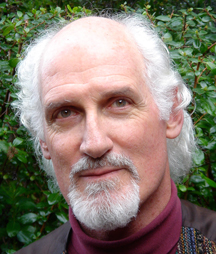
The Story is Everything

For many of us, our early experiences with language came through the stories read to us by our parents, caregivers, and teachers. Even nursery rhymes tell a story. This is important for therapists to understand because as language is acquired in the brain, it is inextricably paired with a narrative structure. Language is one of the primary mechanisms by which we understand our universe and process our various and continuing sensory experiences. All the sciences are our best attempts to create a story about the universe in which we live. We have observed that gravity pulls objects towards the center of the earth, so it makes sense to us when our phones fall out of our hands and smash on the ground by our feet. Were our phones, upon being dropped, to fly upward and into space, we would truly be disoriented. It is not random; there is an explanation for the phenomena we encounter, and that is the core function of story—it is everyone’s explanatory language.

Storytelling as an approach in and of itself dovetails quite nicely with such popular approaches as Cognitive Behavioral Therapy (CBT), Dialectical Behavioral Therapy (DBT), Narrative Therapy, and Eye Movement Desensitization and Reprocessing (EMDR), to name a few. Regarding DBT in particular, aside from its documented effectiveness, Dr. Marsha Linehan’s life story is intimately connected to how and why she developed the approach.

As you read, I’d like to tell you a story about some of my own thinking that went into this piece. I do not present myself as an expert on this subject, but rather as an excited student. My hope is that you find these concepts energizing and useful in sessions, and they increase your ability to help your clients deal and heal. The story I’m telling myself is that if you know I am writing with humility in my heart, even if any hubris shows up on the page, you’ll give me the benefit of the doubt. Ok (deep breath)…that felt good to write. I’m also telling myself that you will be very sick of the word “story” by the time this is over.

Understanding through Stories

We understand everything under the sun in more or less a linear fashion, proceeding in time from past to present, with a clear beginning, middle, and end. Most of our stories, real and imagined, are populated by heroes, villains, allies, and red herrings, and they follow fairly predictable rules in terms of plot development, character arcs, climaxes, and resolutions. There are exceptions in narrative form, of course, and many great works of art have played against the observer’s expectations. Think of Salvador Dali’s paintings, the films of David Lynch, or any number of time-travelling scenarios depicted in literature and film. Works of art without clear linear narratives are often stimulating, if confusing, because we are very accustomed to viewing things through this narrative lens. They challenge our ingrained perceptions of how things are supposed to play out.

Just as it is difficult to imagine watching a movie with no coherent plot, character arcs, or resolution approaching (I’m looking at you, Lynch), imagine living your own life under similar conditions. This is to imagine a life without progress, goals, structure, or narrative cohesion. Many of our clients come to us in this state, whether it is recognized as such or not. It is common for clients who have experienced trauma, for instance, to show up in session with a fragmented narrative, reflecting perhaps not only literal missing information but also an unconscious belief that the universe itself is chaotic and unpredictable. They are not quite sure how or why the traumatic event happened, or how to prevent it from happening again. These narratives can contribute to feelings of fear and powerlessness. It is also common for trauma survivors to show up in session with a finely crafted, fixed narrative—one that puts themselves in the position of blame. These stories can contribute to feelings of shame and resignation.

One of the great strengths of approaches like CBT, DBT, Narrative Therapy, and EMDR is that they compel us to admit that there are several ways to look at any one event in our lives, even if they achieve this feat through differing approaches. Fortunately, we have been doing that on our own for millennia, well before these approaches existed. These disciplines discovered something new about humanity while tapping into something very old within us. We can help our clients access this endless reservoir and capacity for reflection when life presents with challenging events. This is one of humanity’s true superpowers—deciding how we see something.

Viktor Frankl understood this well as he developed logotherapy, which is focused on making meaning in life. Meaning springs forth from narrative. In Dr. Frankl’s case, his ability to make meaning helped him to endure the Holocaust rather than give in to despair. He had a reason to live, and this gave him purpose. Part of that purpose included telling the stories of those who perished in the concentration camps. The crafting of a compelling story was central to Frankl’s own survival and success after the war. He was not tinkering with his thoughts myopically; he was looking at the grand, sweeping current of his entire life. His frame was large, not small.

Our work with clients must include helping them to shape a coherent narrative that promotes health and mastery within their lives, and it must by necessity also keep the large arcs of their lives in mind, even as we address the smaller phenomena of their daily experience. If my client gets mugged on the street, is the story built around how they should never walk down that street again, or is it built around how they should study martial arts after that event? Will this story close possibilities or open them? When a loved one passes away, do the loved ones construct their story around the missed opportunities or the wonderful times that were experienced with that person? Does this narrative focus on what is missing or what was present? If my client is rejected by a potential partner, does it mean they are unlovable…or is the other person missing out? Does the story provoke a shame response or result in ego integrity? It is not difficult to see how certain narratives tend to arrive at certain conclusions, and those conclusions are accompanied by a series of decisions and behaviors that will have very real impacts on any person’s life. Using a storytelling approach in therapy considers that a narrative must be crafted, or in many cases altered, before a person’s outward reality can be improved.

Anticipating Resistance

Anecdotally, I have encountered some resistance in my clients to the rubber-meets-the-road work of CBT: identifying negative cognitions and self-limiting beliefs and building awareness of when those thoughts show up, so they can actively replace them and practice thinking in new ways. Once I had experienced the work as a client myself, I understood…it just seemed small. When we are dealing with powerful internal and external realities that are shaping our lives, it can feel somewhat uninspired to be examining the tiny and ethereal thoughts that flit through our minds like innumerable hummingbirds through the hedgerows. It can be hard to even catch one sometimes. A similar resistance can arise when attempting to utilize narrative therapy techniques with clients; it is not necessarily evident or intuitive to everyone that changing one’s story can result in the reduction of suffering. We must be able to demonstrate and then apply this concept to their real lives.

Before this resistance shows up, we can utilize the power of human storytelling by doing some simple psychoeducation, encouragement, and proactive framing. When conducting our intakes and assessments, we can already begin to introduce elements of storytelling and narrative structures with our clients. This could be as simple as saying “I am very interested to hear your life story,” or “Tell me about how your journey brought you into this office.” Such statements are already starting to prompt the client to see life through a narrative lens, which means that there will be a story with some coherence no matter who walks in the door. This gets them thinking about when the problems started, the times before there was a problem, and how their behaviors or choices have changed in relation to or because of the problem. It gets them thinking about other things besides the problem, such as their joys, their successes, the love they have had in their lives. Because all of that is part of the story.

We must have a story to understand our relative universes. In terms of what we find helpful as a species, this tendency in us predates the field of psychology by tens of thousands of years. The field of psychology is the quaking autumn leaf in the aspen grove that is human storytelling. Before we developed symbols to write and record language, the only way human beings passed on any intergenerational information was via storytelling. People are good at this, and it has been working to soothe primate psyches for, well, a long time.

Encouraging Storytelling

There is a truth that I have naturally come to understand myself: For better or worse, in the absence of a coherent, explanatory narrative, the average person will craft one.

We know there is going to be a story. I see storytelling and meaning-making as powerful tools in facing whatever the malady may be. I want clients to understand it is in their DNA to create and interpret stories, so we are accessing an inherent human strength immediately. Most people show up to therapy as strong storytellers, and we are doing incredible clinical work if we slow down enough to hear the story…to listen to the themes, to identify the allies, the mentors, the heroes, and, more often than we would like, the villains.

If you are with me so far, then you have heard three main ideas by now. The first is that we understand the known universe through stories. Science is a story. The universe is composed of planets and stars made up of various elements that sit all together in a big stew we are all in, and a part of. That is comforting, right? It sure beats my saying “Nobody has any idea about anything.” The second is that there are any number of stories a person can tell about one singular event. A past tragedy can be the reason a person is struggling now, or it can be the source of their strength. The third is that people will create stories to explain their experiences, even if those stories are inaccurate or damaging. Trauma survivors will often blame themselves for incurring the trauma, even if the outside observer can plainly see that they bore no fault. In the absence of a coherent explanation, we will certainly craft any explanation so as not to be left in the emotional purgatory of narrative nihilism.

Accessing Imagination

It has taken me many years to even begin to understand the role that our imaginations can play in relation to our experience of suffering or thriving. I think Mark Twain may have captured this best when he said, “I've lived through some terrible things in my life, some of which actually happened.”

Most of us can easily recognize the absurd validity of this statement; so much of what torments us is generated in our imaginations. We are somewhat prone to believe in the more negative aspects of our imaginations and discredit some of the more positive aspects. People ruminating on worries often believe they need to do this to be ready or prepared for a bad outcome. The same person may feel incredulous if you ask them to visualize positive outcomes, even though this is fundamentally the same exercise in reverse. Some of this is adaptive; we need to be prepared for threatening or uncertain outcomes, whereas we do not always need to prepare for positive outcomes. If it’s going to rain, I’ll need to bring a raincoat. If it’s going to be sunny, I don’t really need to do much ahead of time. Our prefrontal cortexes are always running simulations for us so that we have good information available when we need to make decisions. We are evolved to give our perceived problems more real estate in the grey matter.

To communicate the power of imagination to clients, there is a simple way to have them practice calling on this resource to produce very short-term, minor distress or calming properties and regulation. With their permission, and for clients who can tolerate some distress, we can have them visualize the last time they got into an argument or a conflict and report the sensations they feel in their body. Unsurprisingly, they tend to report feeling their heart beats faster, maybe getting hot, and feeling tension in their chest, neck, or back. All they did was imagine something, and then physiological changes showed up. Next, we can ask them to take a couple of deep breaths, settle into the chair, and describe their favorite place on earth in detail. Usually, they report feeling calm and pleasant at the thought, with more or less an associated reversal of those physiological changes. Doing these exercises together in this way helps to illustrate that, depending on how we employ and deploy them, our imaginations are quite effective at both increasing and decreasing our suffering. Having had the visceral experience, it becomes easier for clients to integrate the idea that our imaginations can be harnessed for positive outcomes that support their goals. We can use our imaginations to reduce our distress and create powerful emotional connections to the imagined lives we have for ourselves.

I have more than once pointed out to clients that they seem to have no reservations about using their imaginations to be miserable, but they seem hesitant to use them for joy. I communicate my curiosity about why they have come to believe in this one-sided relationship. This can help to motivate clients who sometimes believe that positive thinking or visualization is somehow naïve or unrealistic. We know intuitively that people feel better when they believe they did the best they could (control, finality, resolution) when compared with thinking that they should have done more (overwhelmed, unresolved). The vast difference in these two mental postures, and eventual behavioral outcomes, comes down to how they are imagining themselves in that situation.

A Brief Case Study

Martin (not his real name) was a 37-year-old man who came to counseling to grieve over his mother’s death and address powerful feelings of shame and anger, and what he termed a “budding alcoholism.” Martin was highly intelligent and sensitive to those around him. He had grown up in a family full of addiction, conflict, broken trust, and insecurity. He was grappling with the legacy of his mother, who was both very dear to him and alternatively a source of great pain.

Martin’s story was that he had come from poor genetic source material, as evidenced by his family’s struggles with addiction and the broken home to which he was accustomed. Martin believed he was destined to be an angry alcoholic, like a few people in his family. We discussed much of the arc of his life, from early memories to current events. He could easily recall that when he was a child, he still believed in himself. He was able to recognize that as a teenager, this confidence began to slip, and as he accumulated the large and small traumas of adolescence, the story he told himself began to change. He began to lower his expectations of himself as his awareness of his family’s dysfunction became clear. As the story changed, so did his behavior in the world. He began to skip school more often, which resulted in his grades suffering. His parents’ addictions further alienated him from them, despite his attempts to stay in relationship with them. He was physically abused at times.

When Martin came in, he believed he was no good, and that just by having born into the family he was, he had no chance of happiness or success. A large part of our work involved rewriting his story and bringing his adult life experience and perspective to bear on his upbringing. Ten-year-old Martin had a very hard time understanding why his parents were unreliable and alternatively loving or abusive. In many ways he blamed himself, crafting a very damaging narrative for himself in the absence of a more obvious one…one that the older Martin could grow to see. The grown version of Martin spent significant time in sessions contextualizing his experience, taking numerous incidents from his past and processing them. I would ask him things like, “What if that ten-year-old kid was your nephew? Would you blame him for the dysfunction of his parents?”

Like so many of our clients do, he was able to conclude that kids aren’t responsible for what their parents do. His work then became about telling versions of his origin story that incorporated his present insights. He started to believe that despite his suffering, he had done the best he could, and his tumultuous upbringing became a source of connection with others. He was capable of a very deep level of empathy based on his experiences, and his peers sensed and valued this. He also desired connection with people; having been deprived of it for much of his life, he was a ready and willing friend to most. The difficulty of his early life had instilled these qualities, and hard-won as they were, he came to appreciate them.

What Does It All Mean?

It is important to help our clients from the very beginning of therapy to craft meaningful stories that assist them in regaining control or that foster some sort of learning, and therefore adaptive behavior. In Martin’s case, the story he ultimately crafted was that his difficult upbringing had helped him develop into a better human being in relation to others. He could have easily landed on any number of conclusions that would have fostered healing in him. There are in fact innumerable adaptive options to almost any problem. Adaptive learning weaves in with healthy changes and progressions in narrative quite beautifully, and this can all occur when our clients understand what conditions were present and how sequences of events in their lives have played out. I am fond of diagramming aspects of any story or event with clients, as once an event is thoroughly examined, numerous opportunities for learning and growth present themselves organically. Anything with a beginning, middle, and end can be comprehended. Patterns can be interrupted, future mistakes can be avoided, future opportunities can be seized.

EMDR makes great efforts in the direction of making sure the client lands on a healthy story, which is healing in and of itself. It is critical that clients actually change their beliefs (story) about how the trauma happened and what it means for them to successfully reprocess it. We can wave the wand around all we want, but if the client still thinks “I am unlovable” at the end of the session, not much healing is going to take place. We simply must get to “I am lovable,” and other positive cognitions ad infinitum.

Conversely, we need to be vigilant and cautious to not overinterpret our clients’ narratives or inject too much of our thinking and biases into that process. This can be a very fine line indeed. Our desire to help can become its own blind spot, and managing our own countertransference is critical to fostering positive narrative outcomes in therapy. Clients do not need to overcome our traumas as clinicians, nor do they need to satisfy our own narrative expectations. I really like my own ideas, but they may not be the best for my client. I will often ask how my clients come to the conclusions that they do, and inevitably, the answer comes back in story form. This provides a wonderful opportunity for strengthening therapeutic alliance, as we acknowledge and validate the client’s experience. Our empathy for our own clients is deepened as we encounter more and more of their story. We can understand how a person who experienced x can easily end up believing y and, significantly, engaging in behavior z as a result. This also provides ample opportunity to put those CBT and/or Narrative Therapy caps back on and start to draw connections between the clients’ thoughts, feelings, behaviors, and decisions.

For example, I might say to a client, “I’ve noticed that every time you think [x], you tend to feel [y], and then you often go and [z] to try and get some relief. From where I’m sitting, I am wondering about what if you decided to think about [a], and then feel [b], which would likely lead you to go do [c]. People mostly come in because of their [z]’s and [c]’s, so it’s important to make sure those are good.”

Or, “Ok, so the story is you can’t walk down that street anymore. Some people would conclude they should study martial arts, or that walking down the street on Tuesday is the real problem, or that they should only go if they are with friends. Tell me more.”

I am putting the client in a position to give external voice to their internal reality, where we can examine it together in a safe and supportive way. I’ve also not-so-sneakily thrown in the possibility that there could be several ways to interpret whatever they are about to tell me, which might prompt some reflection prior to the tale’s coming out.

Bringing it Home

What’s really exciting about utilizing a storytelling approach in therapy is at least partially that it is easy, and it works. Personally, I find the following question to be layered and motivating: What story do I want to tell about my life?

It really should not be too hard for us to help anyone become interested in the story of their own lives. The complexity captured in that question is unmistakable, but it is also imminently attainable. Because we humans are all good at stories, therapists have a natural, inherent strength to draw on from the first minute of the first session. People are desperate and willing to rewrite their stories; they are positively crying out for it. As one of the oldest known mediums for communication that we have, story is beautifully layered with significance, feeling, and memory. It is infinite in the sense that there is no limit to how many ways it can be interpreted or integrated…even if it has a grand finale, as all our stories do.

I believe therapists do exceedingly well in how they continually draw out their clients’ stories, week after week. Where I aim to orient the reader is this: perhaps we should not think of storytelling as a smaller intervention to use in the course of CBT, or Narrative Therapy, EMDR, and DBT. Rather, we should think of those disciplines as interventions to use during the course of storytelling.
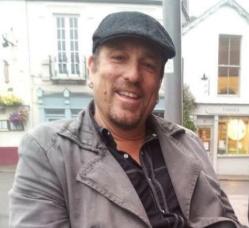
 

David Nylund on Narrative Therapy, Curiosity and Queertopia

Narrative Therapy 101

Lawrence Rubin: Thanks for sharing your time with our readers, David, some of whom may not be familiar with Narrative Therapy. Can you give us an overview that would do it justice? Narrative Therapy 101, so to speak.
David Nylund: Well, that’s a challenge, but I’m going to give it a go. I imagine if you asked me at a different time, I might have a different take on it. Narrative Therapy is based on a narrative metaphor and the idea that people are multi-storied. And people get locked into a singular story which tends to be deficit-based and internalized. The job of the narrative therapist is to create a conversational context, usually through questions, to trace these thin, deficit-based stories that contradict the dominant stories that are always apparent. The job of the narrative therapist is not to coach them or help them build skills, but to trace those alternative stories that are always present but, as Michael White would say, “thinly known.” And through different narrative practices like questions and letters, to help thicken that story so it begins to gain some momentum and density. And when people can step into that story, they come to maybe a different version of who they are.
LR:

Narrative Therapy is based on a narrative metaphor and the idea that people are multi-storied.

You make it sound as if it’s a process of rewriting a life script in which the therapist is a co- editor or the editor. How do they work together to rewrite this story?

DN: I like the idea of a co-editor, where it’s a collaborative inquiry. The therapist is decentered, but is definitely influential, attending to certain things and not others. It’s based on a critique of individualism. It’s a very anti-individualist approach, and it’s very much informed by post-structuralism and thinking relationally. People are always in relationship to others, to a larger cultural narrative. I think narrative pays a lot of attention to how people’s stories are shaped by larger cultural narratives, or what Foucault would call discourses. I think one of the aspects of narrative that really drew me to it was its focus on how peoples’ problems and struggles are not their own, they’re shaped by the larger culture. So, it leads narrative into a certain kind of arena of social justice, which is what I was drawn to as a social worker.
LR: So, the job of the narrative therapist is to disabuse people of those deficit-based stories they’ve been told or have come to believe are true about themselves? How directive is the narrative therapist in moving the person off center in their cherished story?
DN: The intention of the narrative therapist is to not be impositional or directive. I would refer to it as invitational.
LR: Invitational?
DN: And yet, the narrative therapist is informed by a couple of basic premises: that people are multi-storied and many of these stories contradict each other; that people always have skills and abilities and values that run in contradiction to their dominant story that is often very deficit-based or problem-focused; and that problems are separate from people. For Michael White,

the problem is the problem, the person is not the problem

the problem is the problem, the person is not the problem. Peoples’ lives and problems are always relational and informed and shaped by the larger culture, especially around issues like normative ways of being related to race, class, gender and sexuality. And some of those dominant norms help shape peoples’ lived experiences and can contribute to their problems. So, the narrative therapist enters through an invitational conversation from a stance of curiosity about these alternative stories and what they might mean. I think the job of the narrative therapist is not to determine whether these alternative stories are good or bad, but to invite their client to become curious about them. And that might be an entry point into some new stories, and that entry point is often referred to as a unique outcome.

LR: It doesn’t sound like you’re trying to be a car salesman, but you’re visiting a car lot with a person and considering new colors and new models, psychologically. So, from a traditional and individualistic perspective, a client diagnosed with depression might be referred for medication and cognitive behavior therapy. How would a narrative therapist approach that same depressed person?
DN: The first step would be to be curious about depression. Perhaps you would externalize the depression, and then you’d be curious about what the depression means to the person, to the client. I don’t want to assume some clinical DSM version of what depression is. I want to understand it from the client’s perspective and their meaning around it. Now that it’s externalized, we might explore the effects of the depression on their life. I might ask questions like, “How is the depression affecting your thoughts about yourself?” “How it is affecting your relationships?” “Who’s in league with the depression?” “What supports depression?” “If you look back on your life, were there some people or experiences that contributed to depression’s hold over your life?” Through these questions, which are referred to as deconstructive questions or relative influence questions, we always find some contradiction or gap, because no story is seamless. There’s always some event or disruption; one day, one moment where the depression wasn’t as strong. It might be the client reached out to a friend. It could even be the act of coming to therapy is a unique outcome.I might start out by asking, “Did depression want you to come to the session today?” “I’ve worked with many clients with depression, it tries to convince them that therapy won’t be helpful. So, do you think it tried to do some of that?” “How did you defy depression’s dictates to come to the session, and what does that reflect about your hopes, your values, your ethics?”

I don’t want to assume some clinical DSM version of what depression is. I want to understand it from the client’s perspective and their meaning around it

One of the things that is important in Narrative Therapy, but also one of its challenges, is that it requires clinicians to rethink some taken-for-granted ideas in our field, especially around identity. From a modernist perspective, therapists like Jill Friedman and Gene Combs refer to internal states of identity. It’s based on this idea that identity is fixed, it’s static, it’s inside the person. It’s often linked to biology, and it’s outside of language and history and context. From a narrative perspective, it’s more of what I like to call intentional states of identity.

LR: This reminds me of Kenneth Gergen saying, “We come bearing multitudes” when referring to the difference between an individualistic and relational definition of identity.
DN: I like to think of identity as fluid, performed and in context. It’s relational, and about people coming to know themselves in relationship to others and in relationship to what’s important to them, their values, their ethics, their hopes. And so, a narrative therapist is really curious about their clients: their hopes, their intentions and their values that run in contradiction to, in this case, depression. And that leads to a very creative use of language and questions to help that alternative story, maybe anti-depression, to become thicker through reauthoring questions. And these re-authoring questions might be circulated to other folks in their life such as, “I imagine some of your folks in your life have an outdated version of you. What do you think is the best way to bring them up to date in terms of your journey away from depression?”The two challenges to the narrative therapist are to rethink and to challenge some core assumptions that we’re trained in our field and in the larger culture to believe. But your main tool is the use of creative questions that come from a stance of curiosity. This is very different from, for example, CBT or some of the more traditional models where the therapist is more of the expert helping coach people to develop skills. They might make more direct statements. They might interpret the client’s experience for them. In narrative, you’re influential but you’re decentered; maybe you lead from behind and you keep up that stance of curiosity. I think therapists are curious, but

narrative therapists practice a kind of curiosity about how things might be other than what they have been – a curiosity about hope and possibility

narrative therapists practice a kind of curiosity about how things might be other than what they have been – a curiosity about hope and possibility.

LR: It’s a very optimistic type of therapy, a liberating practice in a sense.
DN: Yeah! At the same time, I think narrative gets associated with positive psychology or solution-focused; or in my field of social work, a strength-based perspective. To me, it’s much more than that. It’s like these alternative stories that speak to a whole possibility. Values are always present. There’s evidence of it, and it’s inviting people to speculate about their significance. So, it isn’t like you’re having to find them or search for them, and it’s not about applause and cheerleading. It’s like coming from that place of honoring peoples’ experience, and there’s always things that stand outside the problem.
LR: Helping the person to widen their gaze to see instances in their life when they did stand up to the story that has previously defined them. So, you’re not a cheerleader on the sideline, you’re out on the field, playing with them.
DN: That’s a great metaphor. Definitely.

The Narrative Therapist

LR: What are some of the core qualities of a clinician that would make them a more effective narrative therapist? Not all therapists favor the use of metaphor or consider themselves to be particularly creative.
DN: I think one quality would be a real ethical stance of curiosity and respect for the client. I think there must be the ability to entertain multiple perspectives and not get captured by one singular truth. It might mean having to give up some of our training of being an expert. It also might be a commitment to social justice. And I think what often what attracts folks to Narrative Therapy is its demand to be intentional. If you look at most models, like CBT, for example, you won’t see much attention placed on how, let’s say, thought distortions are shaped by racism or the larger culture or dominant norms. It’s just very highly focused on the individual. I think there’s this commitment to seeing things within the larger social context, which then opens up this ethic of justice. Narrative uses language that can be social justice-oriented. The person is not oppressed, the problem is oppressive. The narrative therapist might ask, “Is it fair that the problem of oppression is cutting you off from your hopes?

a lot of narrative therapists also have this experience of standing outside the norm in their own lived experience, in a good way, like a rebel or an outlaw

As a social worker, I have a commitment to social justice. A lot of narrative therapists also have this experience of standing outside the norm in their own lived experience, in a good way, like a rebel or an outlaw. You know, like a commitment to a broad notion of queer. It’s not necessarily tied to gender and sexuality, just this broader definition of queer as a critique of norms and of normativity. I know that a lot of narrative therapists are committed to critiquing taken-for- granted assumptions or norms. I think that a narrative therapist is also drawn to new ideas and staying curious. It requires not just learning, but kind of more of an unlearning. It can be really challenging for people, especially if you’ve invested time in a model like CBT. It can be hard to give that up a bit.

LR: Do you think it’s more important that graduate social work and other clinical students learn first before they unlearn, or can we teach them first to unlearn before they can learn?
DN: It’s a great question. My preference is to start with unlearning. I don’t think I’m the majority there. I think my classes are as much about unlearning as learning, and I tell my students that. For example, last night in my class, I was presenting an overview of different family therapy models, and most of the students are also in a class to learn the DSM.But then I said, “Here’s another way of doing assessment.” And I introduced them to Karl Tomm’s ideas of assessing relational patterns, not people. So, a lot of my teaching is offering alternatives to the ways one can do the work. It’s a kind of tension between learning and unlearning. I think everywhere in the States, you have to learn some of these dominant ways of working in terms of charting and having to do diagnoses for billing purposes. You might have to use the more traditional language as shorthand to connect with other colleagues. So, I think narrative therapists have to find a way to entertain multiple perspectives simultaneously, even if they contradict each other.

What Counts as Evidence?

LR: Narrative therapists must be subversive!You once said, “I believe in evidence, but I’m more interested in what constitutes evidence and who gets to decide what counts as evidence.” You and I well know that these days, if you’re not doing randomized controlled trial studies, if you’re not doing meta-analyses, if you don’t have outcome studies based on psychological tests, then your work is not considered valuable. How do therapists operate from this anti-evidence base that you talk about?

DN: It was a conference in Osaka, Japan, and on the panel was the top voice of CBT therapy in Japan, and he challenged me about, like, “Hey, this is all great, but what do you think of evidence-based treatment?” And that was in 2001. Evidence-based therapy is much stronger than it was even then. I don’t have an easy answer for that one. I think that you’re right, unless the way you work has evidence from that more traditional notion, quantitative meta-analysis, randomized clinical trials, it doesn’t get the same respect. And that’s been an ongoing journey and struggle for me and my work. I’m in a privileged position now because I’m a professor and I’m the clinical director of the Gender Health Center, which is an agency working with trans and queer communities, but when I was earlier in my career, I had to work in hospitals and other settings. County mental health, community mental health, hospitals at Kaiser, and I just had to learn to be subversive, kind of covert, and let the work speak for itself.And you know, I think one thing that we’ve done at the Gender Health Center is use some of Scott Miller’s ideas around feedback-informed treatment, which is considered evidence-based now and has been sanctioned by SAMHSA, Substance Abuse Mental Health Services Administration. They’ve done a lot of random clinical trials and meta-analyses proving or having evidence that it’s not the model, it’s more about the alliance.

And alliance starts with how the client is doing. You create a culture of feedback. So, it’s interesting that some of the core ideas of feedback-informed treatment line up with narrative, right? Creating a culture of feedback, checking in, privileging the client’s voice. So, that’s one of the ways, strategically, we’ve been able to give narrative a voice. We use those measurements and the online program that gives all this data.

To me, unfortunately, it’s a reality that you need to have numbers. So, that’s one way we do it, and then there is a growing body of research on the effectiveness of narrative. It tends to be mostly qualitative. So, there is some evidence, but again, qualitative doesn’t earn the same merit as quantitative.

LR: Of course.
DN: It’s an ongoing journey.

I think a lot of narrative therapists are just subversive

I think a lot of narrative therapists are just subversive, and they might also be able to work more independently in their private practices. It always helps if somebody in the agency who is a leader or director is supportive of narrative. That can help.

Narrative Thoughts on Gender

LR: I want to move into questions around gender and working with queer folk. I never thought of, and I love being challenged by new thoughts, that queer is a critique of normativity, whether it’s queer racism or queer gender or queer religiosity.
DN: Right.
LR: Queer is an adjective, it’s not a noun.
DN: Right.
LR: Interesting. So, my question, David, is in what way does narrative therapy lend itself to working with gender queer folks?
DN: Okay. And when you say gender queer, are you referring to folks who identify as non-binary or are you talking more just—
LR: Yes, around the work that you’ve done.
DN: Often, what you just referred to is a term that’s used and that comes out of queer theory and queer scholarship, is heteronormativity. The norm that heterosexuality is the only sexual orientation and that the gender binary male/female is the only healthy way of being. So, I think what you’re referring to is everybody who stands outside that heteronormative way of being in their identities or practices. I think narrative therapy lends itself well to that because narrative therapy comes from this deconstructive lens, so it really is curious about these taken-for-granted assumptions, in this case, about gender and sexuality.

Narrative Therapy is informed by post-structuralism, and one of post-structuralism’s theoretical allies is queer theory

Narrative Therapy is informed by post-structuralism, and one of post-structuralism’s theoretical allies is queer theory, so there’s this connection between queer theory and narrative, because both are informed by social constructionism and post-structuralism, which pay close attention to dominant norms and language that can oppress folks.

So, it opens up that kind of dialogue about who gets to decide what’s normal. A lot of the conversations will be around these deeply entrenched gender norms, like masculinity, femininity, and around sexual identity. And I think it gives you some vocabulary; narrative offers a vocabulary to have those conversations.

LR: Can you give an example, David, of a recent client you’ve worked with whom you helped to challenge the heteronormative discourse that’s plagued them and maybe stood between them and becoming who they are from a sexual/gender perspective?
DN: At the Gender Health Center, we often do what has traditionally been called reflecting teams or outsider witnessing. Some folks refer to them as response teams. So, I’ll be interviewing a client in the presence of my colleagues, and my colleagues will then have a conversation amongst themselves while the client and I observe or listen in on that, and they’ll reflect on what stood out in the conversation, where did it take them? The comments are situated in trying to attend to the alternative story. So, I was doing that just yesterday with a 32-year-old person who was assigned male at birth who identifies as a trans female. However, she is in a family that comes from a very conservative faith tradition, and that’s held her back because she’s afraid of losing support from her parents.So, she’s really holding back on moving forward with her transition, meaning like hormones or surgery, because of her fears of how her family and her support network will handle it. So, instead of focusing on those issues, I was really curious about how, in spite of the religion that she was raised with, she was able to challenge that. What gender norms did she have to defy in order to even come to see me? And what did that say about her hopes for her life? I asked, “When you think about a person who comes from that background like yourself, and they’re beginning to consider that they’re trans, would you have respect for that person? Do you think it would take some bravery or courage?” And then, I started to ask questions like, “Who in your life might support this idea that you’re brave?”

And from there, she discussed a friend who supports her gender identity. And that led into some of the restraints and limitations of masculinity and toxic masculinity. I just kind of hovered around that, and then I said, “If you were to get a further appreciation of your bravery in living the counter story, what difference will that make towards your next step?” And that led to a conversation of coming to one of our programs at the Gender Health Center. It’s a respite program. It’s often more of a social context for trans folks who are feeling really isolated and disconnected to meet. You know, three days a week, they have this respite program. It’s for six hours and just kind of a place to hang out, relax, be yourself. They do some narrative work there, but it’s more just a meeting place.

So, by the end, she was open to going to that place. And then we talked about her ability to be more overt in her gender expression, and I noticed that she was wearing painted fingernails and earrings. We then talked about what those acts meant about her and ability to navigate her world, given that her parents wouldn’t be supportive because of their faith. I asked her to consider, “If I move forward, does that mean I’m no longer sinning?” And these kinds of discourses. That was the conversation, and then we had a reflecting team. And of course, in the team, there was various therapists who were queer or trans, so now this client is seeing community and support. One even shared that they also came from a deeply conservative religious tradition, and they talked about their journey and how they were able to move forward in their own life. So, that kind of gave the client some hope and inspiration.

Even Well-Meaning Therapists…

LR: In a sense, you’re helped this client connect with an external reflecting team, but also helped her to consider the internalized reflecting team that has been oppressive and could now be challenged.You’ve worked with and written about transgender oppression and suggested that even well-meaning therapists can further contribute to transgender marginalization through internalized transphobia and cisgender privilege. I find that fascinating. What do you mean that otherwise well-meaning therapists can contribute to the marginalization through those two things?

DN: Most therapists, most social workers I know, including my students, come from a place of ethics and wanting to help and might see themselves as open minded and progressive. When it comes to issues around LGBTQ, however, that acronym doesn’t account for the different hierarchies of worthiness, like gay white men have more power and privilege than, let’s say, lesbians, and then bisexuals are kind of held in somewhat of a suspicious or more marginalized status, and then T is at the end. Often, the T is rendered invisible or not really discussed. So, people will say, “I’m an ally for the LGBT community,” but not really know what T means, never having worked with folks who identify as trans. And so, they might go into a session with somebody who identifies as trans with these predetermined, taken-for-granted ideas of gender.

when it comes to issues around LGBTQ, however, that acronym doesn’t account for the different hierarchies of worthiness

The client might identify as a trans woman but be expressing their gender in a way that’s read as masculine in our culture. And so, what the well-meaning clinician might do is mis-gender the person by not using the pronouns that the client identifies with. The therapist might not share their own pronouns, it’s sort of taken for granted that there’s a normal gender. They might focus more on voyeuristic curiosity about genitalia and might have normative ideas of what it means to be trans. And for trans folks, there’s no one monolithic trans experience.

And then, I think the therapist who’s cisgender–this being a term for somebody whose gender identity is congruent with the sex they’re assigned at birth–may have a lot of unearned privilege in many areas. I am cisgender and don’t get misgendered. If I go to a doctor, the forms are very clear for me. My gender is right there, I click the box male. I don’t have to worry about spaces like restrooms and public bathrooms. I don’t have to worry about questions about my genitalia or dating or all that sort of stuff. Cisgender people don’t necessarily have to worry about being harassed in public because of their gender presentation. So, I think therapists who have cisgender privilege often don’t really take that into account in their work with transgender people.

Another thing that I’ve been really thinking about a lot more lately is the Black Lives Matter movement and some articles I’ve read around transgender allies. I see myself as an ally, but I’ve been reading some material asserting that simply being an ally is not enough. It becomes an identity, a noun, not a practice, and you know the ally almost gets centered, and people build their whole career on being an ally and profit from it, but not necessarily helping the community. That was really hard for me to look at because I do good work. I try to use my voice to support marginalized communities like trans folks. I’m writing a book on it, I do speaking engagements, and so it got me to rethink about what is my role? Am I putting myself out there? Is there any sacrifice? And so, there’s these new ways of rethinking allyship and referring to being an ally as more of a co-conspirator or an accomplice. And that’s happening in Black Lives Matter movements. We don’t want white allies, we want white co-conspirators, where you hold your white colleagues and friends accountable. So, it would be like me, as a cisgender person, really holding other cisgender people accountable for when they make transphobic comments. So, I think those are some of the things that might contribute to well-meaning therapists who are cisgender inadvertently imposing certain ideas that are cisnormative or transphobic.

LR: Elegant answer, David. Elegant. My mind is spinning with possibilities. What is queertopia, and if, in some wonderful future, we can live in that queertopia, would there be a need for therapists?
DN: That’s a great question. I don’t think so. I’m going to take that position of a queertopian, through a queertopian lens. A colleague of mine, Julie Tilson and I, wrote some about queertopia, and I’ve given some speeches on it. One was at an event called the Transgender Day of Remembrance, which is an international event – it’s a very somber, moving event about honoring and recognizing all the folks who were trans or gender nonconforming who were murdered over the past year. So, one of the years, I was asked to do a talk about what it’s like to be cisgender and then about what a queertopian world would look like.

In a queertopia, we would dismantle the gender binary. There would just be multiple genders.

In a queertopia, we would dismantle the gender binary. There would just be multiple genders. There wouldn’t be a need to police sexuality, you know, these hierarchies of gay and straight. There would be a loosening up of these strict identity categories, because I think identity categories can be useful, but they also impose restraints and limitations.

If somebody comes out as gay, there’s all these normative ideas of what it means to be gay. So, it can become another opportunity for policing and surveillance. There would be more of a loosening up of these identity categories. There wouldn’t be a DSM. There would be more work in the communities and community work rather than just individual clinical work. I think it would also be intersectional, so there would probably be a lot of focus on anti-racism and looking at some of the ideas about what it means to be male. There would be a loosening up of those ideas. And there would be a lot of just understanding of people’s identities and lived experiences, not necessarily related to their biology, their genitalia. Those are some of my thoughts about what a queertopia would look like.

LR: In queertopia, therapists might not be cloistered away in private practices behind closed shades. They’d all be social workers, they’d be co-conspirators, they’d be advocates, they’d be out in the community. There’d be more conversation about all the different ways of expressing oneself.
DN: It would be more like a deprivatization of the culture.

Hierarchies of Worthiness

LR: It’s ironic, almost paradoxical, that you have this forward-thinking vision of a queertopia, deprivatization and removal of gatekeepers of normativity. But one of the things that you do in your practice is psychological assessments for trans folks who want to pass through the portal of acceptance. Do you find yourself on the wrong side of the gate when you’re doing these assessments?
DN:

the standards of care when working with trans folks have moved a bit more towards depathologizing trans identities

We have this queertopian vision where mental health would get out of the way of people’s journey or transition, but that’s not the reality. Things are better. The standards of care when working with trans folks have moved a bit more towards depathologizing trans identities. In the DSM-IV, there was Gender Identity Disorder, now it’s Gender Dysphoria. The WHO (World Health Organization), in their next ICD – version XI, will no longer include gender dysphoria in the mental health section. It will be in the sexual health section. So, there is this movement forward. There are more trans voices, including trans folks who are providers, therapists. So, that’s the ideal, where it’s moving. But there still is this requirement by insurance companies and by physicians to diagnose a person with gender dysphoria. It needs to be medicalized in some way or psychiatricized, and since that’s the reality, I’m going to try to use my privilege, my credentials, to help make that gatekeeping as painless as possible, to not go through too many hoops.

What that might mean for me is that instead of a trans person having to see a mental health professional for a three to six session evaluation–which is a big cost and presents a barrier for so many folks, because this population is underemployed or unemployed–I don’t charge them if they need a letter. And I do it as fast as possible. I don’t really question them around whether they have a legitimate trans identity. I’m just using the letter to be an advocate, using letters as another form of co-conspiracy. It’s me saying, “You need this, I’m going to do it as fast as possible. One day, I hope we don’t have to do this, but in the meantime, you know, this is a way I’m trying to help support you.”

LR: A subversive gatekeeper.
DN: And then what I do for trans youth is to write a second letter. So, there’s the traditional clearance letter/assessment in which I diagnose them and say why they need hormones or surgery out of medical necessity, but then I’ll also write a counter letter, a narrative letter that is more about their own standards of care, their own appreciation of their gender journey, so they get two letters.
LR: That’s neat. So, you’re representing both sides of the fence, so people pass through it more easily.
DN: I think over time, I’ve figured that out. So, in my assessments, I’ve focused less on “Do you meet the standard, the criteria?” I’ll even say, “You know, I’m supposed to ask these questions. Why do you think I’m not going to ask them?” And they’ll say, “Because I already know that stuff. I know what hormones do. I know what the side effects are.” So, I focus more on their journey, on their narrative. I was working with this trans youth, where I asked him, “In your journey, have you thought about the kind of masculinities that you want to take up?” A lot of the conversations are more along those lines: their hopes, their visions of their own life, their gender identity.

Final Thought

LR: If we were to finish this interview up by trying to touch on kids, can you say a few words about what a therapist should know about working with trans kids?
DN: So, in working with trans children and teens, one thing that is really important is that young people are pretty clear about their gender identity. There are these discourses that they’re not capable of making decisions, I’m talking more teenagers where they might want to start taking hormones or hormone blockers. There’s this idea that they’re not capable and mature enough to make those decisions. As a narrative therapist, I look at how there’s a lot of discrimination like youth oppression, not honoring their voices. One thing is just to really honor their version of their gender identity and not to begin from the notion that they’re confused about their identity. That would be one thing, in terms of working with trans youth.I think another thing is to have conversations about how is it that they’re able to navigate this in spaces like schools that can be pretty tough and where there can be a lot of bullying. It is about helping them develop strategies to advocate for themselves and protect themselves. I use them a lot as consultants to other trans youth.

I’m working with one young trans man who then consulted another one of my clients and their parents because they’re earlier in their journey and had some questions. The dad is really concerned about hormones and their effects. So, I’ll use my other families’ experiences to help each other. I find that in my work with queer and trans youth, I’m always amazed and honored about how they’ve had to live their life and that they have these amazing ideas we can learn from as adults.

LR: Empowering them.
DN: Around how to look at gender and sexuality differently.
LR: Because of their honesty.
DN: Exactly.
LR: David, I’m going to draw us to a close. Thank you for a couple of things. You’ve been inspirational to me through your writings, truly. And as I did the reading and preparation for this interview, it further deepened my affection for narrative and strengthened my reserve. It’ll make me a better teacher and clinician, and I trust that our readers will also benefit, so I thank you for all you do on both sides of the fence.
DN: Thank you. I appreciate that.

Therapeutic Fanfiction: Rewriting Society

In our work as geek narrative therapists, we’re often asked if we actually use fanfiction in session, and the answer is yes, we really do! For those who are unfamiliar with the term, “fanfiction” refers to creating one’s own stories based on beloved characters from existing pop culture narratives. Using fanfiction in therapy enables clients and therapists to rewrite the hero’s journey using narrative techniques. Since fanfiction is most often character-driven—getting inside the head of a character and asking “what if”—we can do the same with our clients, asking them to explore “what if” scenarios for themselves. For many clients, seeing themselves as the hero feels unfamiliar, and this is where fandom attachment or parasocial relationships can be uniquely helpful. Clients can use their emotional connection with fandom characters to create therapeutic fandom avatars and craft a fanfiction story that mirrors their own lives. With therapeutic support, they can begin to see their own heroism from the perspective of these beloved characters.

Like what you are reading? For more stimulating stories, thought-provoking articles and new video announcements, sign up for our monthly newsletter.

Such was certainly the case for Cas (an amalgamation of several actual clients), a 25-year-old gender non-binary individual (biological gender female) of Ashkenazi Jewish descent, struggling with anger management issues and the fear that they would always be other. During our first session with Cas, they verbally noted our Adventure Time BMO, short for ‘BeMore’ tea mug, commenting that they had never seen a tea mug that was “quite so square.” We took this as an invitation to begin using therapeutic fanfiction early in our work. We shared that BMO, the gender nonbinary robot and video game console, was one of our favorite characters in Adventure Time, and asked Cas if they, too, enjoyed this cartoon. Cas eagerly explained that they loved this cartoon and that BMO resonated with them because BMO is on a journey to be “both a little living boy and girl who drinks tea.”

In the next few sessions, we fully employed the narrative tool of externalizing a problem via everyone’s favorite green superhero, The Incredible Hulk. This conversation was again initiated by Cas who remarked on the Hulk painting displayed on our wall: “Ha! That’s really true: mad does make sad.” We engaged Cas in a narrative therapy discussion around Bruce Banner, a.k.a. The Incredible Hulk, explaining to Cas that just as Bruce was not Hulk, they, i.e. Cas, were not their anger. We explained that understanding themselves as both connected to, but distinctly different from, their anger, might help them start to understand anger’s presence and reason for being in their lives. We then used the language of the Hulk comics to process their recent angry outbursts.

In subsequent sessions, we used the increased insight that Cas was gaining around both anger and the events that trigger anger to help them create a fanfiction action plan using Bruce Banner/Hulk as a stand-in for Cas. As part of this work, Cas was to pay mindful attention to their mood state, and when they noticed that they were beginning to feel angry, to place themselves into an Avengers fanfiction story in the role of Bruce Banner. They were to imagine that the team was working on a case and to ask themselves who was needed most—Bruce Banner or Hulk—playing out both scenarios to determine who would be best equipped to resolve the situation at hand. If the answer was Hulk, then they were to give themselves permission to feel anger without shame. If the answer was Bruce, then Cas was to engage in deep breathing and call upon their inner Black Widow to say soothing words to calm the inner Hulk. This was effective not only because this type of verbal play added a feeling of fun and whimsy to therapy, it also helped Cas maintain enough distance from anger so that shame was not triggered. Over the next three months of weekly sessions, Cas was able to continue the use of therapeutic fanfiction to both develop and implement strategies to de-escalate feelings of anger and to increase their frustration tolerance. They felt more in control of their inner Hulk.

At first blush, fanfiction and the hero’s journey may feel like disparate concepts for clinical work, but we have found that these concepts are not only congruous but incredibly healing in a therapeutic setting. Because there are fewer pop culture narratives made specifically for queer audiences, and because of queer marginalization in general, these conversations are all the more important and powerful. Therapeutic fanfiction allows queer clients to pick up the red editor’s pen and begin to adapt the story of their lives, creating a narrative in which they are the hero.   

Michael Hoyt on Brief and Narrative Therapy

The Interview

Victor Yalom: I’m really pleased you agreed to join me today for this conversation. I’m going to try to pick your brain in the short time we have, to really find out about you as a therapist and as an innovative thinker in this field.
Michael Hoyt: I appreciate the opportunity to meet with you. I wanted to start by asking you a question, if I could: What was your particular interest in inviting me to participate in this exciting series?
VY: My vision for this interview series for Psychotherapy.net is to present therapists that are doing really innovative yet practical work, despite the pressures that we are all facing on various fronts. I’m most interested in those who are finding a way to be excited about what they’re doing. I’ve had a sense from your work that you fit in that camp.
MH: Thank you. I’m delighted to be included. I’m very excited to participate.

Narrative Constructivism: Is it All in the Mind?

VY: So, you’ve written a new book.
MH: Yes, it’s called Some Stories Are Better Than Others. It was just published two weeks ago by Brunner-Mazel Publishers.
VY: How did you come up with that name? Obviously, it has a lot of meaning for you.
MH: It does have a lot of meaning. I’ve become, in the last several years, more and more interested in what is sometimes called narrative constructivism, how people put their story together. Rather than having the idea that we discover our reality, or that it’s an objective thing that we find, we are oftentimes creating it. How we look at things affects what we’ll see; and what we see affects what we’ll do. I think that as people live their lives, they may generally be doing fine, but when they get stuck it’s often because they’re telling themselves a story or constructing a world view or a narrative that isn’t satisfying to them—it isn’t self-fulfilling in a good way, but instead it’s frustrating. And people will come to therapy looking, in essence, for a new story, a new way of understanding, a new perception—which can lead to new behaviors and new outcomes. So some stories are better than others—because some stories give people more of what they want in life, where other stories will be more self-limiting. My recent influences include the work of Don Meichenbaum, Michael White, and Steve de Shazer, and other constructivist thinkers going back centuries.
VY: Just this morning, I was reading a book by Zerka Moreno about her late husband Jacob Moreno. That’s what he said about psychodrama—that it’s used as a way for people to construct their life. Existentialists thought the same thing: we’re here, we have to create our meaning, we create our lives with the resources we have. In that way, you’re following yet another tradition.
MH: It’s a long tradition. As I begin to say a few names of the people who’ve influenced me recently, I begin to think of all the people I haven’t mentioned, including Irvin Yalom, George Kelly, and a whole host of people. I think it’s important to realize, though, that this idea of narrative or story is not the entirety of people’s experience.Some people have misunderstood constructivism as meaning “it’s just in your mind” or “that’s your opinion.” Yet, it’s very important to recognize the realities that people are living in. To use the title of one of Michael White’s books, Narrative Means to Therapeutic Ends: the narrative is a means, it’s a vehicle

VY: There is a quotation in your book; something to the effect that social constructivism does not mean that external reality is irrelevant.
MH: Yes. As obvious as that is to say, there’s been a lot of misunderstanding, I think, and it’s become a kind of tiresome argument. We’re not saying that there’s nothing outside. We’re saying the knower has to know the reality, and that knowing involves construal, construction, mean-making, and so on. It gets filtered, mediated through our consciousness, and that we can affect consciousness The situation that people are in can be very significant.Existence determines consciousness as well as consciousness determines existence. Salvador Minuchin has spoken a lot about this. Take the example of people in terrible situations of oppression and poverty—a radical constructivist might say it’s all in the way they’re looking at it—but that would be an absurd position to take, not really appreciating the horribleness of their situation. So obviously we have to take into account social and economic issues, not just internal, intrapsychic processes.

VY: What you are saying, and relating it to the current reality of the therapy world, and what’s driving the idea of this website, is exactly this. Many therapists feel very oppressed, very disillusioned by the phrase, “realities of practicing therapy today”—managed care, a glut of therapists in many urban areas, lower fees. And the story that some therapists tell about themselves is that “we’re in the wrong profession at the wrong time, and there’s not much opportunity.”
MH: I’ve seen and experienced some of that personally as well. There’s a lot of demoralization. I think at the extreme psychotherapists are somewhat of an endangered species. On the one hand, there’s the pressures of managed care: Get it done real quick, keep it on the surface and get it done quickly. Then there’s the pressures of biological psychiatry: Use medication and you don’t have to talk too much about it. It’s a very hard time. It’s an interesting coincidence that we’re meeting here at the Evolution of Psychotherapy Conference. “Evolution” requires pressures in the environment, and some kind of genetic variability, and then some new things can emerge. You don’t want to become extinct; you want new things to emerge.I wrote a different book, in 1995, called Brief Therapy and Managed Care. At that time, I expressed the view that there are ways of working with managed care. And I still think there are ways of working with some managed care, but more and more I’ve heard too many horror stories that have impressed me with how much difficulty managed care—especially in the for-profit sector—has been thus far in the world of psychotherapy. Managed care has not yet produced the promise we were hoping for, of being more efficient and distributing services to more people.

It seems managed care has mostly been cost containment, which has meant cutting people off, rather than finding new ways to help people.

The Archaelogy of Hope

VY: How does your recent book shift your focus?
MH: Well, the reason I called my new book Some Stories Are Better than Others is because I think we’re going to need to have a real shift in the field, in many directions, including looking more for clients’ strengths and resources, not just focusing on their problems, pathologies, and pain. The “archeology of hope” (to borrow the subtitle of the 1997 book Narrative Therapy in Practice, edited by Gerald Monk et al.) involves looking for competencies, strengths, overlooked possibilities, latent joy, and other little nuggets that we can pluck and bring forward. So when I say Some Stories Are Better Than Others, I think it’s going to be incumbent upon therapists more and more to see the whole person, not just the problems. I think it’s going to be much better if we’re competency-oriented, more collaborative, somewhat more future-oriented.
VY: I think, going back to Freud, the model is “what’s unconscious is usually bad.” A seething pit of conflict and aggression. While those things certainly exist, my experience has been that some of the most powerful changing moments in therapy are when people discover positive things about themselves that they didn’t know, that may have been repressed, or forgotten, or dismissed. Often therapists are looking for problems, they’re looking for pain and conflict, rather than helping the client develop the capacity to sit with positive feelings which is no easy feat either. If a client comes in with something happy or joyful, the therapist may redirect them into the pain, rather than help them sit with it and explore and really experience something positive, at a deeper level–almost running from the joy. Yet, staying with the positive can lead to profound awareness shifts and life change.
MH: As one of my colleagues quipped, most of the people in this field have been trained as “mental illness professionals,” not mental health professionals. We spend so much time pursuing illness and pain. Somebody will say, “I had a couple of good days, but then some bad things happened.” “Well, tell me about the bad things.” If somebody mentions pain, or sorrow, or looks sad or angry, we feel that’s where the meat is. We’re supposed to go for that. It would be interesting to me, not just to take a history of the present problem, but to take a history of the person recovering. “What in your past, what little clues or keys might help you deal with this better?”
VY: Or simply, “How have you overcome difficult circumstances in the past?”
MH: “How have you dealt with difficult circumstances? How have other people? Role models? Parents? People in your ethnic history? Are there examples you can draw upon? Ancestors you can call upon? Can you project yourself into a time in the future when things will be better? Imagine that time, and how are you going to get to that time? Thinking of times when things are better, a time that inspired you, can that give you some energy, some courage to go toward that?”

Some Stories Are Better Than Others

VY: Can you think of your work with a client where you helped them get to a better story?
MH: I’m thinking of a woman, I’m thinking of how to respect her privacy and confidence, thinking of how to say this – OK, a woman I’ve known for some time who developed a terrible case of multiple sclerosis. Over a number of years she became very incapacitated, to the point where she’s barely able to speak, incontinent, bed-bound. At one time she had been a fashion model—quite a lovely young woman.
VY: Pretty heartbreaking.
MH: Very heartbreaking, but that’s not the whole story. There is a lot of sorrow there, and we cried together over that. But if we see her as only an “MS victim,” then she’s really stuck. Then she’s been terribly delimited. I began visiting her in her home when she couldn’t come to the office. She has cats all over her house. So we started talking about the cats—they’re sitting in my lap—and I found out that even though she’s very limited, she’s doing animal rescue. She’s a phone counselor and helps place animals. I also discovered that she has a whole world of artistic and aesthetic interests. So we were able, over time, without denying the medical reality, to at least enlarge the picture. That she’s not just somebody with MS, but that she’s an animal lover/activist, she’s an art appreciator.She sent me a Christmas card last year—her condition has even worsened—in which she said—if I could think of the exact words it would be better—I’m so choked up thinking about it that I’m blocking on it. It will come back to me.

VY: What’s the feeling of being choked up?
MH: he feeling is that of being deeply moved. I love heroism, and heroine-ism. People triumphing over adversity. People who somehow, despite the odds, find a way to be happy. I met a kid recently down the street, a little boy who had some serious medical problems and he was in a wheelchair. In one way, you could look at him and see all the physical problems he had. And this little boy was laughing, and he had a balloon, playing. He was, at that moment, in a certain way healthier than I was. I was fussing and worrying about something, and he was experiencing the joy in life. I’m very interested in finding ways to bring out that joy for people.And sometimes it’s very hard. And it’s getting harder for therapists. Most of us, I think, went into this crazy business—this wonderful, strange business—for very good reasons. We want to make the world a better place, we care about people. And oftentimes we get suspected: “You’re doing this out of some neurotic need,” “Aren’t you co-dependent?” or “You’re on a power trip” or something like that. The term “countertransference” has gotten to the point now where therapists are sometimes concerned about themselves too much. (See references for Hoyt, 2001a, 2001b, 2001c 2002.) I think it’s very important for us to keep remembering the positive reasons we’re in this field. Otherwise, I think it’s a sure burnout.

VY: I think one way of doing that is to really be able to celebrate the triumphs with our clients. Were you able to emotionally share that joy with the woman you just so movingly described?
MH: Yes, and we both experienced it as a natural, genuine human encounter, not as a technique It’s very important for us to anchor, reinforce, praise, acknowledge, celebrate—whatever terminology you like—our clients’ successes and forward movements. In this case, our relationship has become very important to both of us. She had sent me a note and I wrote back thanking her for the session. I told her that there had been a couple of times that I had been very worried about something, and I thought of her example and it gave me courage.She inspired me: if she could find a way to live her life meaningfully and have joy in it, given the challenges she has, then that inspires me to do the same in my life. And for me not to tell her that would have felt inauthentic and incomplete.

VY: That’s wonderful! I think one way to avoid burnout is to give yourself permission as a therapist to really be human. So much of the training in our profession runs counter to this and teaches us to hold back so much of ourselves.
MH: It’s a fine line. Because I don’t want her to feel that she has to take care of me, or “I can’t tell him I’m having a problem because he’ll be disappointed,” so I think we have to be judicious.
VY: Yes, we don’t want to self-disclose simply because it feels good. You always ask yourself “Is it for the benefit of the client?” In this case it seems like a no-brainer that sharing your joy about her triumphs is a good thing to do.
MH: Yes. I can see ways it would not be if it became her obligation; if she needed to prop me up somehow. But most of the time I think we’re much too invisible; if we’re a blank screen then we’re not real. A colleague of mine, David Nylund, and I have developed an interesting exercise. It’s in my new book. We interview therapists, but we interview them as if they were one of their patients. So, you would interview me as though I had been this patient. And you would ask, “What was it like working with Michael Hoyt? What was helpful and what wasn’t helpful? What did he do that was really good for you? Did you ever let him know that you appreciated him?” There’s a whole series of questions which are useful in evoking the internalized client that we all carry around. We’ve used this in a lot of workshops, and people often say it’s a breath of fresh air, or “it’s like getting a different take on myself.” Particularly if we make it very real, if we start to ask a lot of specific questions. We all internalize our parents, our clients, our friends—all sorts of people. And I think they’re a source of revitalization. You can be reinvigorated if you can find a way to access what inspires you. And this particular young lady really inspires me.Hey, now I remember what the card said: “Memory is what God gave us that we might have roses in December.”

VY: My – how very sweet.
MH: Yeah!

Goals and The Discovery Process

VY: I want to go back to some of the other things in your work, in the brief /strategic/solution-focused types of therapy. One of the concerns I have involves the emphasis on goal-setting. How the hell can you set a goal with a client in the first session, when it is often the case that clients don’t really know what they’re there for? Their presenting problem is often so vastly different than what you’re working on four sessions later.
MH: I think that most clients do know what they’re there for, at least initially. And so I might say, “What’s your goal at this time?” or “As we start today, what do you think would be helpful? What would you like this to be like? How will you know this has been useful?” And then, now and then in the course of the therapy—whether it’s one-session therapy or 10 sessions or 100 sessions—I’ll ask “How’s this going for you? Where are you at now? How have we done in terms of the initial things we were talking about? What should be our focus now?”
VY: “How are we working together?”
MH: Yes. And “What’s next? Do you feel this has been adequate and sufficient? Do you think there are other things?”I think there’s a danger that we can act as though we know more about the client, or what’s best for the client, in ways that actually dis-empower the person. Jay Haley wrote a great paper many years ago called “The Art of Psychoanalysis.” You can keep saying to the patient, “You think that’s the problem, but there’s a deeper level.” Oral interpretations trump. You can always go “deeper.” You can say it was pre-Oedipal: “You’ll have to have years to absorb me, because we can’t even talk about it.” And you can kind of undermine the patient’s sense that they really have autonomy, and they really know what’s best for them. I think sometimes people come in and it’s not the goal I would pick; it seems to me too superficial. Or it’s just skimming the surface. And I’ll ask them, “Does that work for you?” And if they say it really does, I’ll say it’s fine. I might say—if I think they’re taking a solution that’s not really in their best interest — “I was thinking some other things that might be of some interest to you. Does that sound like something you might want to look at?” I might try to open some space. If the person says, “Nah, I don’t think so” or “Maybe someday,” I’ll say, “I just want to let you know it would be available. I’m not necessarily saying it’s good for you, or even true for you, but it might be something to consider.” I don’t want to give people the message, “You think you’ve dealt with this, but you really haven’t,” where you keep undermining their sense of self-control and autonomy.

Often times I think we’ve had the idea that we somehow have superior knowledge. And even if in some ways we know a lot, I think by following the client closely, rather than leading the client, in the long run, the person will become more empowered and more of a person.

You become a “person” by making “personal” decisions.

VY: I agree with a lot of what you say. We can’t know more about our clients, regarding the content of their lives, or in terms of what their actual goals should be. What we bring to the table is that we’re process experts. We can see ways that they’re holding themselves back, how they’re defending themselves. And we have real skills to help deepen their awareness, to deepen their inward searching abilities.
From another angle, one limitation of the question, “What are your goals?” is that it’s a cognitively framed question, and you’re going to get a cognitive response. A few sessions later the goals and the awareness can get larger if they’ve explored new territory and are starting to think and feel differently about themselves or their body.
MH: Yes. We’re using certain metaphors: “superficial vs. deep,” “cognitive vs. in your heart.” And they can be useful metaphors, sometimes. So my deconstructive mind says, “What do we gain and what do we lose?” I’m familiar with the “deep” concept, and I sometimes think that way. I might, even in a brief therapy, say, “Does that solution fit all the way through? I know it sounds good in the ‘top of your head,’ but how does it set in your gut?” or “Does it fit all the way in your life?” or “Is there any part of you that doesn’t feel right with that yet?” We have all sorts of language—we say “the tapes are playing,” there’s an “unconscious,” and all these different metaphors. They all can be useful. I think it’s critical, to try and stay as much as I can in the client’s frame, in the client’s phenomenology.I am not an expert at everything by any means. But I am something of an expert at asking questions. We want to help create a discovery process, and we can ask questions that will open vistas, that will get people to look at things differently, without necessarily directing them. Not “You should do this and this and that.”

For example, you might say to a depressed client: “What you call depression, what else might you call it? Some people would call that sadness. Or some people would call that oppression rather than depression. Is something putting you down or holding you back?”

Managed Care… Or is it ‘Mangled Care’?

VY: Let’s switch to some practical issues. You’ve worked at Kaiser, a large HMO that gets a lot of bad rap from psychotherapists, as any HMO or managed care company does. How have you dealt with that? Obviously you care passionately about the field, and it’s clear from this conversation that you do deep, meaningful work. And yet I’ve heard so often that at Kaiser you have to average 5-6 sessions or less per client. Also, you might see them for the first session, and then your schedule is so booked you can’t schedule a follow-up session for three weeks. How do you work within such a system?
MH: I’m not here as a Kaiser spokesperson, but let me respond to several things you said. It’s true I’ve worked at Kaiser for 20 years, and I’m certainly aware of people’s comments, that it’s “get them in and get them out.” I think the pressures of managed care are affecting everyone, unless you have private pay patients and their income is such that they don’t have to worry about the economics of it and can come as often as they want. There is a major distinction between the for-profit HMOs, who generate most of the complaints, and the not-for-profit HMOs, of which Kaiser is one. No system can be everything for everyone, but it’s the for-profits that rake a large profit off the top rather than putting it back into services. Many years ago I coined the phrase “mangled, not managed care” to describe what some companies often wind up providing. According to all the polls—Time andNewsweek and U.S. News and World Report and various newspapers—Kaiser has actually gotten excellent ratings within the HMO world.There’s also a conflating or confusion between the idea of length of treatment and depth of treatment. There are some patients that I have seen once or twice or three times and it was “deep” or “heart” work or whatever one would call it. And other patients I’ve seen for long periods, it never really had much soul or passion in it. So I don’t think that length of treatment is always the indicator of what is better.

What I have tried to do is a number of things. I’m fascinated with people, and I’m almost an anthropologist at times. I’m curious how people got to be who they are, what makes them tick, what their hopes are.

VY: How does that work in your brief therapy?
MH: For me, the hallmarks of brief therapy are the development of a collaborative alliance and an emphasis on clients’ strengths and competencies in the service of an efficient attainment of co-created goals.In brief therapy, people can get unstuck, or get back on track, get their process going, but I usually don’t get to hear the whole story. I might get to hear one or two chapters or an interesting pivot or turn and then they carry on and do their work without me. I think it’s one of the differences between more traditional longer-term versus briefer treatment. At the risk of oversimplifying it, with the former, the therapist goes well down the road with the patient, around lots of turns, with this shared idea that, “eventually we’re going to terminate.” Whereas the brief therapist, as soon as things really start moving, they’re saying, “We’re only going to meet a couple more times, let’s talk about relapse prevention.”

VY: So you can do some very useful things within the constraints of the system. And certainly it is better than no progress at all. But in terms of what feeds the soul of the therapist, and prevents us from getting burnout, that may be harder. We have a lot of difficulties in our professional life. We’re dealing with lots of people with pain. We’re not making as much money as a lot of other equally intelligent professionals. So we want the emotional gratification/satisfaction that the work brings.
MH: Freud said somewhere that the therapist should have the most satisfying personal life that he or she can have, so they won’t look to their patients to make their life meaningful, to give them satisfaction. And I think some therapists have a strong need—I don’t quite call it “addiction” or “co-dependency”—but there’s some emotional reliance on the experience of getting close and being trusted. It’s beautiful when it’s happening. But sometimes I would ask, “What and whose needs are really getting served? Is it my need to be a long-term therapist for the gratifications—maybe not financial ones—
VY: —or maybe financial.
MH: Yes, maybe financial. I think there are some monetary incentives as well.
VY: Of course it cuts both ways. Clearly, as a private practitioner, there are financial incentives to keep patients long term. There’s no way around that. And, conversely, in managed care, where someone has a pre-paid health plan, or a capitated contract, it’s to the institution’s economic incentive to keep the treatment shorter. So the economic incentives are there; we live in a free market economy; we know the impact of prices and money. And I think private practitioners need to be aware of the point you just raised, just as managed care needs to be aware of the converse dilemma.
How do managed-care therapists and companies deal with this? Weren’t you in the management end at one point? How do you deal with that? To know that you’re doing that right thing, and not being coerced by economic pressures from up above?
MH: As well as being a full-time clinician, I was the director of adult services at a large Kaiser facility for many years. I stopped being the director a few years ago because I had some other interests I wanted to pursue. I think it’s a complicated question. I address it at length in two chapters on likely future trends and attendant ethical dilemmas in my book, Some Stories Are Better than Others. There are lots of thorny issues, and 40 or 50 pages of discussion. I think we have to find ways to continue to function as professionals, with the intertwined implications of competency, autonomy, responsibility and ethicality.
VY: We certainly have to try to.
MH: As much as we can. And there is the fact that “he or she who pays the piper calls the tune,” to some extent. Although it’s true that that we are economic animals, that we’re trying to make a living, we have to safeguard what we think is best for clients, whether we’re working in fee-for-service, managed care, or in whatever arena.This long pre-dated the managed-care issues. Imagine if a patient came into a private practitioner’s office with a long list of issues and problems that obviously required long-term intensive treatment. And imagine he or she says “But I don’t really have any money—I can only pay you $300 total.” Many well-intentioned practitioners would say something to the effect of, “Well, I can see you two or three or four times.” They might do sliding scale, and maybe pro bono for awhile. But sooner or later they would also say, “If you can’t pay, I’m not going to be able to give you professional services on an ongoing basis.” So sometimes I’ve wound up in a situation discussing with patients—whether it’s in an HMO or in a private setting—”How do you propose to pay for this? This is a professional service. For consideration of a certain amount of money you’ll get a certain amount of service.” It becomes a very complicated thing, because you don’t want to just cut people off—but you also need to make a living

Hoyt Under Pressure

VY: Let me put the pressure on you a little bit more.
MH: Good!
VY: I know that at HMOs like Kaiser, and others, in their benefits they give up to 20 sessions per year, and then if you read the fine print, it says, “As needed per medical necessity” Where do you draw the line? Five sessions versus 17 sessions? And what’s “medical necessity”? It’s not really a medical treatment to begin with.
MH: I have a big objection to the term “medical necessity.” I much prefer to call it “clinical necessity.” And they have defined clinical or medical necessity in terms of four dimensions, in general: One is a legitimate DSM-IV Axis I diagnosis. A second is “likely to show significant improvement,” meaning “it’s necessary because it will really help.” A third is “necessary to avoid a worsening,” meaning that if we don’t do it, the patient is going to wind up worse. And the fourth, which has a lot of slimy politics around it, is that some companies are using the DSM-IV, Axis V, the Global Assessment Functioning, just setting a number: they have to be below a 55, or below a 50, or below a 60.
VY: Whatever that means!
MH: Whatever that means. It’s semi-operationalized. But, how low do they have to go? How sick do you have to be? It’s counterproductive and, in my mind, stupid, to say that you have to really fall apart, and then we can start therapy.
VY: There’s an incentive for therapists to make the person look worse! An incentive to game the system.
MH: Right. What happened a long time ago is that we, as a field, made an alliance with the medical model. And insurance has been treated as an entitlement: “I’m entitled to my 20 sessions,” or “I’m entitled to as much as I want.” Whereas it has been written, in contracts, that only if it’s a diagnosable “illness” and a “necessity” will treatment be covered.
VY: By doing that we signed a pact with the devil, if you want to call it that. But whoever bought into that is saying, “I’m going to agree that this is the illness model, the medical model.” I agree with you: If we’re going to go for that, we play by those terms.
MH: And then we’re in the language of DSM pathology, the language of the medical model, and then we’re into “Axis I,” “presenting complaint,” and “symptom resolution.”
VY: And all that jazz.
MH: I do think it can be useful, to a point, at times. It depends what we’re doing therapy for. When people are having panic attacks, and it’s turned into panic disorder, it’s a fairly circumscribed thing. Sometimes diagnosis is not a bad thing. Other times, people want to come to therapy for a kind of growth therapy, or personal enhancement. I’ve been in therapy for those reasons, more than once. It’s a question about whether insurance should pay for it. “I wasn’t there to treat DSM IV, I was there to grow Michael Hoyt.” Insurance is for one thing, but this was a different process. HMOs and other managed-care companies are needing to specify what will and will not be covered, and for how long. (Hoyt, 2000, Some Stories Are Better than Others, Ch. 4, “Likely Future Trends and Attendant Ethical Concerns Regarding Managed Mental Health Care” and Ch. 5, “Dilemmas of Postmodern Practice Under Managed Care and Some Pragmatics for Increasing the Likelihood of Treatment Authorization” (with Steven Friedman); and Hoyt (2001d). Also see “The Squeaky Wheel: Don’t Let Managed care Shortchange Your Clients.” Family Therapy Networker, 25(1), 19-20.)
VY: But that’s such a hazy line. When you talk about the woman with MS, you talk about despair and hope and inspiration. Where is the line between treating illness and symptoms, and growth?
MH: Yes, and one of the ways that treatment was justified to the insurance company was that there is some well-known research, with 50 or 60 replications, that good psychotherapy services reduce unnecessary medical utilization. That’s one of the ways to sell it to the HMOs, showing them the bottom line. And so, if she could have some visits with the psychotherapist, there weren’t going to be so many visits to the internist and the emergency room and the internist. We may have to be “bilingual,” so to speak.I could articulate “symptoms” and “enhancing coping” when I had to, but when I was with her, I wasn’t doing medicine, I was doing humanity.

Words of Wisdom

VY: Before we stop, any words of wisdom or advice or inspiration to the hordes of therapists, many of whom are feeling disillusioned with the field? What do you say to them?
MH: hope these are words of wisdom; they’ve been wise for me, and they may fit for somebody else. I think it’s good to get more training and read books and go to workshops. I think that’s helpful, but what we really need to do is remember why we came into the field, and honor it. We need to come from our heart. We need to come from our soul. We need to follow our passion, as Joseph Campbell used to say. Sometimes there is a lot of pressure and unpleasantness. That’s true. But don’t let the bastards get you down.Don’t let them define your reality completely. Work hard and keep hope alive—right livelihood is worth it.

I think another word of wisdom is that it’s important to be multi-theoretical, to have different lenses you can look through. The other word is “eclectic,” but I don’t like that word because it sounds like “chaotic” and “electric” in the same breath, like when you throw techniques at someone and you don’t know why. But I think it’s important to be “multi-theoretical.”

We’re in this wonderful, strange business: we go into small rooms with unhappy people and we try to talk them out of it, so to speak. We’re here at the Evolution of Psychotherapy conference. The first speaker was brilliant and right on. And the second speaker was brilliant and right on, and completely contradicted the first. And the third said something really brilliant and right on and had a very different perspective—and each of them and their proponents have helped thousands of clients. Not everything is equal, but there are different ways to go, and nothing works all the time.

I think when you’re stuck — and we all get stuck every day — we don’t quite know what to do or the therapy isn’t going anywhere—the first thing I’d do is consult my client. “How is this working for you? What am I missing? I don’t think we’re looking at this the right way. What are your thoughts and ideas?”

VY: Instead of peer consultation?
MH: Yes, I would start with the client, rather than assuming the resistance is in the client.The first place resistance exists is in the therapist. We have a resistance—we are looking at things a certain way that doesn’t let things go forward. I would start with the resistance being in me, than I would look at the resistance in the interpersonal field, that is, something not working between us right. And finally, and only finally, I might ask, “Is the resistance in my client?” Too often, when it’s not going where we want it to go, we say “”Oh, they were Axis II,” ‘or “There’s secondary gain,” or “They didn’t really want to change,” or “They really like suffering,” or “They’re too attached to their negative affect because of their early experiences with abuse.” We’ve come up with something to explain it, as though the other person is the problem rather than the difficulty is in our understanding them better.

VY: “If it doesn’t work, it’s their fault.”
MH: Right.
VY: “And if it works, it’s our doing.”
MH: Yes. There’s an old saying, “When you point a finger at someone, there are three of them pointing back at you.” So I would take this and say, “What’s going on with me? What am I missing?” That’s one thing I would do.I would also suggest talking to people who have a different theoretical orientation than oneself. If you’re psychodynamic, go talk to a cognitive behaviorist. If you’re a cognitive behaviorist, go talk to a Jungian. If you’re a Jungian, go talk to someone who does biological psychiatry, and so forth. Because the way you’re looking at it, your lens, your frame, your conception, may not allow you to see the client and to see solutions in a way that’s going to be helpful for this person. We often want to go talk with someone we really trust, someone we went to school with, because we had the same professors and the same books are on our shelves. Sometimes it’s like talking to a mirror. You almost know what they’re going to say; they’re going to confirm your pre-existing beliefs, because they have the same frame. It’s OK to do that, because sometimes you get ideas. But if you’re not getting the ideas that are going to move the therapy forward, it’s time to talk to someone from a different orientation. How you look influences what you see, and what you see influences what you do. And if you’re not seeing something helpful, get some new glasses. Some stories are better than others.

VY: Thanks, you’ve helped expand my perspective and greatly enriched my understanding of what your work is all about.
MH: I really appreciate your interest, trying to follow some passion and bring some energy and life into the field by interviewing different people about what turns them on. I would encourage people to look at this whole set of interviews, not just the people they may already be acquainted with. All the people who are going to be interviewed have something to say; if you can hear it. It’s important to stay curious.I used to think that if something didn’t turn me on, it meant that it wasn’t good. I have now discovered that if it doesn’t turn me on, and (especially) if it turns lots of other people on, maybe it’s something I’m not hearing.

VY: Again, the three fingers are pointing backwards.
MH: Thank you for the opportunity.
VY: Thank you so much.