Setbacks in Psychotherapy

Introduction

When I was in graduate school learning about psychotherapy, I read a lot about how to do therapy, but I found myself yearning to see clinicians doing the work as models to emulate or reject. Now that I am a university professor training graduate students in clinical psychology, I expose my students to as many clinical video recording demos as I reasonably can. In my first-year interview and psychotherapy courses and in my second-year practicum, my grad students watch hours of clinicians doing psychotherapy. In turn, they seem to really benefit from watching the work and seeing the full range of styles, techniques, and theoretical approaches. We all agree that seeing clinicians in video demonstrations makes our readings on assessment and psychotherapy come to life as we appreciate and critique excerpts from my library of videos. Like me, they find it helpful to see models of how this kind of work is done. Moreover, they also have a yearning—like I had in graduate school—to actually see work that does not go well, in order to discern how clinicians react and recover when there are setbacks in the course of psychotherapy.

To this end, as the creator of the Collaborative Assessment and Management of Suicidality (CAMS), an evidence-based framework for effectively engaging and treating suicidal risk, I can now satisfy and promote my early yearnings to see and understand what to do when faced with a clinical setback. However, this particular article is not about extolling the virtues of CAMS or its extensive supportive evidence base (including nine published clinical trials, five published randomized controlled trials, and a rigorous and convincing meta-analysis of nine CAMS trials). Rather, my emphasis here is focused on an aspect of a training video that has been offered for several years by our training company, CAMS-care, LLC.

The Setback Session

Over the course of my career, I have routinely done live roleplay demonstrations, recruiting someone out of the audience to roleplay a case they know well. Obviously as an unscripted and spontaneous demonstration, it always puts a bit of pressure on me to “perform” with a variety of different roleplay “clients” that I encountered. There have been many times over the years when a volunteer audience member plays an especially difficult or provocative case, and everyone then gets to watch me squirm and struggle—just like what happens in real life! Beyond my early yearnings to see clinical demonstrations, I also wanted to see demonstrations of things not going perfectly as well—just as in real life. Overwhelmingly, most clinicians at my workshops have appreciated these live roleplay demonstrations and my taking the risk to demo techniques even when they do not go perfectly. It follows that when CAMS-care moved to scale up our training of CAMS, we shot a 12-session role play video in a studio with a former grad student—now colleague—named Dr. Kevin Crowley, who played a difficult client he saw during his VA internship.

Over two days in the studio, we shot unscripted segments of the first session of CAMS, portions of the second session, a latter interim session, a rather provocative setback session (where the patient has a major suicidal crisis), and the final outcome disposition session of CAMS. This online course has proven to be quite popular and has held up quite well over the years since we shot it. It has now been viewed by thousands of clinical providers being trained in CAMS around the world. Moreover, we know from an unpublished doctoral dissertation project defended last year that this three-hour online course has a notable and meaningful impact on clinicians learning to use CAMS within our integrated training model.

But, getting to the point of this article, what has been most popular—and contentious—about this online course has been Session 9, the “setback session.” I would say overall that 80-90% of those we train praise, appreciate, and feel quite positively about the setback. In contrast, there is a small minority who emphatically do not like the setback demo and share critical comments, with some even feeling offended by it! In any case, the setback session evokes a lot of strong reactions. I have often reflected on why this might be.

The online course provides overview portions of me talking about the model, but most of the course features various demo excerpts of Sessions 1-12, depicting a successful course of CAMS-guided care. My “client” Kevin plays a tricky case—he behaves peculiarly and is extremely wary of being in therapy at all. What emerges is a significant trauma history and a lifelong preoccupation with suicide. More to the point, he does not generally trust people, as he has experienced extensive interpersonal betrayal, one of his “drivers” of suicide (in CAMS parlance) and thus a major focus of his treatment. After making steady clinical progress, depicted in the video training over the first eight sessions, Kevin comes into the ninth session of CAMS angry and belligerent after a series of disappointments since his previous session that evoked an acute suicidal crisis. Clearly upset, Kevin immediately goes on the attack, accusing me of “lying” to him, “letting him down,” and “not having his back.” At first, I patiently hear his accusations but gently observe that he did not follow his CAMS Stabilization Plan, which involves engaging in predetermined coping strategies and ultimately contacting me on my cell phone. But as he repeatedly accuses me of lying to him and betraying him, I became increasingly angry myself. As my voice raises, I point out that he did not even give me the chance to have his back—a critical therapeutic issue within his suicide-focused treatment.

There is an awkward pause in a kind of “gotcha” moment, and his head drops in shame as he sees that we are experiencing a re-creation of a dynamic that he has experienced repeatedly. Seeing this clear shame response, I immediately drop and soften my voice, regroup, and apologize and endeavor to clarify the therapeutic moment: that we can do this differently and it could be a corrective experience! The session quickly settles down, eye contact is regained, and we both discuss and learn about what did and did not happen. I also quote my research mentor, Marsha Linehan, who famously would say in such situations, “The patient never fails the treatment, only the treatment fails the patient!” I have to work hard to move Kevin from a position of embarrassment and shame following this contentious exchange. By the end of the session, we clearly do come back together with smiles and an obviously increased bond for having weathered the intensity of our intense exchange. In our final outcome-disposition session (Session 12), when asked what made the difference, without hesitation Kevin notes the breakthrough in Session 9 and the insights gained in that setback session.

Takeaways

So what exactly are viewers reacting to when they see our setback demo? Many say they like how real it is and that my anger shows how much I care. Others are relieved to see an expert lose their cool because it has happened to them, and still others appreciate my recovery and reasserting of the model in a therapeutic manner. Detractors of the setback are not happy with my getting angry at the patient and raising my voice and shaming the client. There are sometimes comments about my being a privileged white male who is asserting my power in a paternalistic way. There are some native cultures in Australia and the United States who find my approach offensive towards a vulnerable client. My UK colleague and friend Dr. Zaffer Iqbal reviewed the setback in isolation (not having seen the previous sessions) and noted, “Oh, the Brits will never go for that!” Incidentally, while we have heard some negative feedback from our UK colleagues, the overall take has been quite positive (also, seeing the setback within the context of a demo of a full course of care is very important). Still others object to my personalizing the crisis and focusing on Kevin’s not calling me on my cell—and notably many clinicians are not comfortable sharing their personal cell phone number. And some say it is never okay to let the client see the clinician get upset.

Recently for suicide prevention month (September 2020), our training company posted a new video on our website of the same setback session, with Dr. Crowley reprising his role of Kevin. But this time the clinician is Dr. Blaire Ehret, who is a VA Staff Psychologist (Dr. Ehret got her Ph.D. at Catholic U and worked in my lab and is now a CAMS-care consultant). The goal was to show that within this same provocative session, a different clinician could handle the same situation quite differently and still adhere to the CAMS model. Dr. Ehret did an outstanding job; she never once lost her cool. She was empathic to Kevin’s anger and validated his feelings of betrayal with no particular pushback. Kevin the client eventually comes around and responds to her earnest appeals to look more closely at what has happened. I watched it and marveled at how reactive I still felt towards Kevin’s pointed attacks of the clinician, and I appreciated her composure and patience. We have received very positive feedback about this redo of the setback session, and it shows there is more than one way to do this kind of work and the model still prevails in both versions. And unlike my version, it is hard to imagine anyone being offended by the way Dr. Ehret does the same session!

So what is the point? The setback clearly evokes a lot in those who see it. Do I regret having reacted so strongly in the original rendition? Yeah, a bit; I wish I had not raised my voice quite as much as I did. But then again, no, because it is me—warts and all—and who among us is perfect at doing this? I certainly know that I am not perfect! How about you? What is plain to me is that being real, earnest, honest, and responsible matters a lot. My reaction was real, my attempts to apologize were earnest and honest, and I calmed down and recovered. I gently pushed to achieve a therapeutic breakthrough, and, in the end, I think I was quite responsible, owning my imperfection but still endeavoring to achieve a “teachable moment” which my client ultimately appreciated as the turning point within this demo of using CAMS.

*****

Who among us is perfect at doing something as complex as psychotherapy? Is it better to train by showing relative perfection, or is it better to be real in showing a setback and then recovering? Clearly, I favor the latter. But I respect those who disagree and have strong opinions otherwise. Perhaps it is useful to reflect on the evolution of psychoanalysis during the 20th century. Early analysts saw clinicians’ reactions (like becoming emotional) as countertransference and evidence of poor training (i.e., time to go back into analysis to rid oneself of such reactions). Then there was a notable shift as drive theory psychoanalysis split off into various relational models (e.g., the British School of Object Relations and Self Psychology).

I am a fan of these relational models, particularly as they relate to the evolving notion of countertransference, as increasingly such reactions have been seen as data about the client. What the client evokes in the therapist can be helpfully used to directly inform and shape interventions. Rather than being admonished as an imperfect clinician in need of further psychoanalysis, the relational models emphasize using the clinician’s own reactions as a valuable part of the therapeutic exchange. Perhaps not surprisingly, I love Kohut’s argument that invariably there will always be empathic failures; the key is how one handles such failures in order to create a therapeutic moment. Believe me, such a view is music to the ears of beginning clinicians. And for my part, I want the people I train to see that while all of us are imperfect, there are appropriate ways to work within our imperfections for therapeutic good. Should beginning clinicians and even seasoned clinicians actually see a setback and consider the range of ways of responding? There is no doubt in my mind. And until I finally master being perfect, I will continue to show struggles in my trainings and how such struggles can ultimately be made into therapeutic gold!

Joseph Burgo on Shame, Narcissism and the Art of Empathy

A Personal Journey

Lawrence Rubin: You’ve been a practicing psychotherapist for over 30 years and have authored several best-selling clinical books. You seem fascinated by the clinical concept of shame. What’s its appeal to you personally and professionally?
Joseph Burgo: I guess it begins personally because for the last 15 years I’ve been coming to terms with my own shame, learning to recognize the role it has played in my life that I didn’t quite understand even at the end of my analysis. During that time I’ve been applying my new understanding to my clients in my clinical practice, and writing a book about it that would be helpful to people who aren’t necessarily in therapy. So, I suppose it’s the case that when you’ve been researching, and writing and thinking about something for a while, it takes a central role in your life.
Right now, it seems to me like shame explains almost everything
Right now, it seems to me like shame explains almost everything.
LR: It seems to be a really elastic concept that can be applied to all forms of pathology and client presentation. What kind of therapist do you think you were before you worked through your own shame issues?
JB: I was a blank-screen, classical sort of psychoanalyst trained in the object-relations school—Melanie Klein, Donald Winnicott, those people. I focused on issues of need and dependency because, from the object relations framework, everything is viewed in the context of maternal-infant relationships—what it’s like for a baby to depend upon her mother and the emotional impact when dependency doesn’t go very well. This is when the infant must protect itself from unbearable feelings of pain and disappointment.

That was the old paradigm. I wouldn’t say that I don’t think that way anymore, but I focus more now on shame and self-esteem. I don’t like the word self-esteem but it’s the word we’re stuck with. I focus more on shame and defenses against shame, the way we protect ourselves against feelings of defect and unworthiness, rather than defending against feelings of neediness and helplessness. 
LR: If your personal work on shame has allowed you to be freer of its pull, would you say that, irrespective of the type of therapy you practice, you’ve become a better or different therapist as a result of your own resolved shame issues?
JB: I like to think so. I’ve become a more empathic therapist for sure. I’ve always been empathic and had the ability to empathize with what my clients were going through, but for too many years I regarded that as information I needed to use in order to formulate interpretations. I still do that, but often now it means that I need to say something a little more personal or more directly empathic like speaking to the agony of their shame and letting them know that I have felt that way too. I understand what they’re going through in a way that isn’t distant, isn’t intellectual, but is immediate and authentic.
I’m much more likely to communicate my affection for my clients because I think that feeling joy and interest from another person is a very healing experience
I’m much more likely to communicate my affection for my clients because I think that feeling joy and interest from another person is a very healing experience. It isn’t enough just to make interpretations.
LR: That’s interesting because somewhere in my readings about or by you, you said that clients must wait for their therapists to grow enough to be able to help them. Is that what we’re talking about here?
JB: It is, and when I wrote that I was thinking in particular about two of my very long-term clients who went through a fallow period in their therapy until I addressed my own shame, and then understood shame better and could help them address theirs. That took a while. And it’s interesting that one of them will sometimes refer back to that period when I hadn’t quite figured it out as a fallow period, when we were kind of spinning our wheels.
LR: That fallow portion of the therapy was in part influenced by the growth that you had not yet made!
JB: I think eventually I was able to communicate that to them. However, in the beginning of that fallow period, I defended myself. I had been giving the correct interpretations, but they weren’t making use of them. I didn’t say that, but I think that was my attitude, and it was a somewhat blaming attitude.
LR: It must have been very empowering for you and those particular clients to reach out of that fallowness and find your ways to growth.
JB: It was. It was very productive. It was very moving and relieving that we found a way through that impasse.
LR: You also mentioned that you’ve been most successful in helping those clients whom you have found endearing. Has your own growth around shame allowed you to find clients more endearing and maybe, by association, have you felt more endearing?
JB: I don’t think so. I think this has been a feature of my work from the very beginning. The longest-term client I’ve dealt with, who I’ve mentioned in some of my writing, is very difficult, very volatile, probably in the realm of borderline personality disorder. And yet, endearing to me from day one for some reason. I don't know why, and that was many, many years ago.
LR: Do you find that you’ve become more endearing as a person and a therapist as a result of the work you’ve done on your own shame?
JB: It’s something I hadn’t thought about before. I know I’ve become warmer, more accessible, less intimidating for sure. I don't know if I’ve become more endearing. I think to my closest friends, yeah, probably. They will remark on how I’ve changed.
LR: What are some of the signs that a therapist is being overly influenced by their own shame to the point that it’s adversely affecting their work?
JB: I would say that one of the most common ways is for the therapist to hide behind their professional role and to allow clients to view them in an idealized light–as if they’ve got it all together. This sustains a therapist’s own defenses against their shame. I think this is common, and you hear about therapists who are amazing to their clients, adored by them, and their personal life is a disaster.

The Value of Shame

LR: What do therapists need to understand about working with clients whose pathology is shame-based? Clients don’t come in wearing t-shirts saying, “I’m shame-based.”
JB: I think there are several things. First, I think we need to expand our idea of what shame is.
We’re stuck in this paradigm in which shame is viewed as this uniformly bad thing
We’re stuck in this paradigm in which shame is viewed as this uniformly bad thing, and it usually has to do with some intolerant social perspective, some way that people are influenced by perfectionism and intolerance in the broader culture, and the work of John Bradshaw and toxic shaming. That’s the way we view it. That’s one of the things I try to challenge in my new book, to help people, both clients and therapists, look at shame as something else. The other thing I’m trying to do in that book is to look at the ways that everybody defends against shame. There are a consistent set of defenses that people use when shame is unbearable in their lives. I talk about as avoiding shame, which is in the realm of social anxiety; denying shame, which focuses on narcissistic issues; and controlling shame, which is more in the realm of masochism and self-deprecation.

I think you have to learn to recognize a defense against shame, understand what it is, and then help the person to gradually, over time, defend less against it, understand what it is that they’re running from and learn from it. Sometimes, when we’re behaving in ways that we don’t respect, we have a lesson to learn about our behavior, and shame is a message to us that we need to take a look at ourselves. Sometimes shame is telling us we need to try harder and that we’re not holding ourselves accountable. Sometimes shame is telling us that we have some room to grow. That’s a way I really try to reframe shame as an opportunity for growth rather than this uniformly bad thing.
LR: If we look at shame as part of being a human, we can then consider whether it is serving us and how we can develop a new relationship with it so that there’s more room for growth.
JB: I think so. I think that’s a good description.
LR: You wrote about a client named Caleb, the one we highlighted in the excerpt on this site in a chapter called “Superiority and Contempt.” Upon reading, I didn’t like him and know that you struggled to feel connected with and empathetic toward him. What impact did he and clients like him have on you?
JB: It’s a challenge working with a client like that because your own feelings of worth are impacted. Intentionally and inevitably, when a client like Caleb is in flight from their own shame and defending against it, they will often project it onto other people and then hold them in contempt as inferior and defective. Even though I’ve evolved a lot, I still see the transference and the working relationship between therapist and client as a microcosm of the client’s issues, and often the best way to address them.

Caleb was always trying to make me feel inferior, that he was better than me, that I wasn’t very smart and that I wasn’t very insightful
Caleb was always trying to make me feel inferior, that he was better than me, that I wasn’t very smart and that I wasn’t very insightful. If you’re not aware it’s very easy to become defensive and to make the sort of interpretation that might be shaming to the client, or to sort of shore yourself up, and end up in a tit-for-tat relationship. It’s a conversation that’s being had beneath the conversation in therapy.
LR: Exactly. This very morning, I had to decide to delete a contact from my phone contact list, a guy that I’ve known for 50 years. We are in a constant tit-for-tat, but it seemed that at the core was his need to shame me. He finally stopped communicating with me, and then I texted him on his birthday and got no response. I texted him again yesterday with no response, and this morning I was thinking, and this was my own shame talking, “What can I say that will shame him the most deeply?” And I came up with a perfectly crafted text that would have probably put him through the roof, but instead I decided that that’s sort of a poison you take waiting for someone else to die, so I just said “the heck with it,” and deleted his contact.
JB: The difficult thing about that experience is when someone doesn’t communicate with you and ignores your texts, what they’re saying to you is that you are unworthy of their attention, which is shaming. It’s painful when you express interest in somebody else and they don’t return it. That’s a kind of shame, and it’s natural for people to want to retaliate in kind and to say, “No, you’re the one who ought to feel ashamed.” But you did really do the right thing, which was to recognize that you wanted to shame him, and then decide not to do it.

The Flip Side

LR: We seem to be in a golden age of narcissism. A few years ago, you wrote, The Narcissist You Know. Why are we all so fascinated by narcissism? 
JB: Well, I will start off by saying that nobody wanted a book on shame. I originally tried to sell a book on shame about 10 years ago. It was called Learning from Shame: The Less Traveled Road to Self-Esteem, and nobody wanted it. I was told by agents and editors that the book was a downer and that nobody wanted to read about shame. So, I said, well okay, I will then write a book about narcissism, which I see as the flip side of shame, because everybody’s interested in narcissism right now.

I think that
as a culture we’re fascinated by narcissism in the wrong way. I think we’re not horrified enough by it
as a culture we’re fascinated by narcissism in the wrong way. I think we’re not horrified enough by it. We’re not repelled enough by it. We’re fascinated by it because we really enjoy these images of people–particularly celebrities–who seem to have it all, who are beautiful, rich and successful, and we like to believe that somebody actually does get to have that ideal life. Then we spend our time on Facebook, Instagram, and Twitter convincing everybody else that we’re leading this incredible life, that we have these amazing vacations, and we go to these fantastic parties, and here’s this amazing meal I’m having at this incredible restaurant. It all feels really unhealthy to me. 
LR: So, narcissism is a destination for people in hopes that once they are on display and revered, they will be able to escape shame? So, as you say, narcissism the flip side of shame?
JB: Yes it is. It’s the primary defense against shame, to disprove to everybody else and yourself that you’re damaged in any way.
LR: What’s interesting to me is that both are equally illusory and not tangible, though both can have tangible impacts on the body and mind. They seem so illusory but so powerful in their ability to just take over a person and deprive them of a true sense of self.
JB: Well, I agree. I think the problem is that for the narcissist, shame feels like an actual condition, an actual state of being in which they’re damaged, defective, ugly. It’s felt on an almost physical level to be a real sort of damage, a deformity, and that’s unbearable. So, they try to create this opposite steady state, this idealized self, that’s perfect and complete, which completely denies the existence of that other steady state: shame and the sense of being damaged.

That’s the problem I see.
The quandary for the narcissist is that either you’re perfect and you’ve got it all together—you’re fabulous; or you’re so damaged and defective that you’re beyond hope and there’s nothing to be done
The quandary for the narcissist is that either you’re perfect and you’ve got it all together—you’re fabulous; or you’re so damaged and defective that you’re beyond hope and there’s nothing to be done. 
LR: And it makes sense that the dichotomy of shame and narcissism are part of borderline functioning, this either-or, black or white, idealized or brutalized images of others.
JB: Absolutely.
LR: Is that why in your writing and thinking you’re drawn to borderline pathology–because it is the epitome of this dual narcissism-shame quandary?
JB: I also see the same issue in bipolar disorder. You see people vacillating between thinking that everything about themselves is so damaged, so screwed up that it’s hopeless, and then going on a manic flight into some magical state in which none of that’s true; they’re super powerful, super capable, they can do anything. I see the polarity not only in borderline symptoms but also in bipolar symptoms.
LR: We seem to be so caught up in seeing bipolar disorder as a so-called emotional disorder of dysregulation, so we medicate people for it. But the medication is not going to modify the core dynamic that drives the bipolar behavior, which is the vacillation between shame and narcissism.
JB: Exactly.

The Challenge of Treatment

LR: What are the clinical challenges of working with narcissistic clients, especially those whose narcissism is considered toxic? It must be very trying and demanding for a therapist.
JB: Well, yes. But the truth is that the people who have extreme narcissistic symptomatology usually don’t come for therapy. They think they’re fine or they’ve got some other mechanism for dealing with it that doesn’t involve acknowledging their own difficulties and asking for help. But when they do come, it is a challenge, whether or not you’re dealing with someone like Caleb, the therapist client we were talking about who projected shame into me, or some of the clients who struggle with borderline symptom.s People who have struggled with borderline symptoms are challenging because they go back and forth between idealizing you and hating your guts. As the transference gets underway, it’s a very volatile and emotionally immediate relationship in which what’s going on between you and how you’re viewed is at the core of the work. It’s very painful to have clients say, “Fuck you. I hate your guts. You’re a leech feeding off my neediness,” and on and on and on. I’ve had clients say the most vicious things to me over my career, and the hard part is that the clients I’m describing often are very insightful in certain ways, like they’re able to identify something true about you but use it against you in a really hurtful way. So, your own issues get stirred up. Are you going to defend against that because it’s so painful? Or are you going to hear it and maybe learn something from it yourself? I don't know. I would say
I’ve grown the most with my clients who were the most difficult
I’ve grown the most with my clients who were the most difficult.
LR: I can imagine that a therapist who’s not done their personal work around shame and whose self-esteem vacillates would have the most difficulty and be caught up in the most damaging counter-transference relationships with clients like this.
JB: I think so, and I think those clients probably don’t stay very long with that type of therapist.
LR: I briefly had a client who I really messed up with because he was like Caleb, but younger and much more energetic, and I constantly found myself trying to prove myself. And there are some clients I’ve had that I wish I could call now and say, “I’ve grown. Can you come back and give me another try. I think I could help.”
JB: Oh, do I know that feeling. And the shame of failure. I feel that.
LR: Some people reify therapists, perhaps out of their own shame and inadequacy. We are the mental health celebrities, the equivalent of the celebrity athletes who they idolize. Then when we fail in their eyes we also fail in our own.
JB: Yes, absolutely. It’s kind of nice to be idealized in the beginning. It can easily feel great that somebody thinks you’re a really together person, and you’re full of insight and empathy, and they look up to you and want your attention. That’s flattering, right?
LR: Until it’s not.
JB: Until it’s not. Until they flip to the other side.
LR: You got that little thing there, doctor, in your teeth and now I’m going to just tear you to shreds.
JB: Exactly.
LR: It seems that working with these complex, characterologically involved clients is not about going to an evidence-based manual and pulling out a couple of techniques drawn from a meta-analysis. It’s not that kind of approach. Can you say a few words about the orientation, beyond technique, that’s necessary to work with narcissistically damaged or shame-influenced clients?
JB: It’s a very personal experience for the therapist because inevitably you’re going to be triggered and your own narcissistic issues are going to be stirred up. So, working with that kind of client means that you have to be paying a lot of attention to yourself. You have to be learning and growing from your shame experiences and acknowledging when you’re off base, when you make a mistake, when your interpretations aren’t helpful, and modeling a kind of ability to tolerate shame experiences and to learn from them for your client. So, it’s really personal, I think.
LR: I’m just sort of wandering back to this morning and how I spent 15 minutes crafting the most toxic, shaming message I could to someone who seemed hell-bent on diminishing me over the years, five decades, and how liberating it was, although painful, to delete his contact. Not that I couldn’t find him if I needed to, but the symbolic gesture of saying to myself, “I won’t allow myself to be shamed in this way anymore because I don’t need to pursue shame.” It came with the package.
JB: But they key element there, I think, is that you said it was painful.
Too often I think we want to take flight into some sort of superior position where we don’t feel any pain
Too often I think we want to take flight into some sort of superior position where we don’t feel any pain. We want to think “In fact, they weren’t worth wanting anyway. They were a terrible friend and I don’t really care about them.” That’s an understandable position to take. I always think that allegory of the fox and the grapes explains so many things. That’s one position we can take but what you said is, “Look, this isn’t good for me because this hurts me.”
LR: The allegory of the fox and the grapes?
JB: It’s the “sour grapes” story. There are some grapes hanging over the wall and the fox keeps jumping up to try and get them because they look so yummy. And then when he can’t he finally decides, well, they were probably sour anyway, I didn’t want them.

Rebuilding Esteem

LR: You have been interviewed by countless folks like me. You’ve offered your words in a public venue. You’ve written, so your words are out there. Does this feed your narcissism in a good way or bad way?
JB: I’d say both. In my new book I talk about how the real antidote to deep feelings of shame is to behave in ways and achieve things that build self-respect and pride to sort of off-set this sense of defect and damage. That has been absolutely true for me. I was at a low point in my life following the economic downturn in 2008 and 2009, following the end of my first marriage. I was just feeling bad about myself. The temptation was to sort of give up and to sink into despair. But I worked hard instead to build my website, rebuild my practice, write my first, second and third books, and to become an authority in some sense on a number of subjects that matter to me. I would call that healthy narcissism, building pride and self-respect, and I feel so much better about myself now than I did 10 years ago.

At the same time there’s a part of me that wonders: Why aren’t I Brene Brown? Why don’t I have my TED Talk?
At the same time there’s a part of me that wonders: Why aren’t I Brene Brown? Why don’t I have my TED Talk? And why aren’t I a public authority who’s making lots and lots of money off very similar ideas? So, I think there’s an unhealthy sort of narcissism that wants me to be bigger and better than I am. 
LR: I understand in ways that sort of transcend this interview. My work with Psychotherapy.net came at a really good time for me. I was a low point professionally, just tired and drained. Teaching but not giving, more withholding than anything else, and wondering how much I really knew and protecting what little was left of my energy and empathy. I feel good about what I do know and what I’ve learned. I feel better about myself, so I think there are those of us who, like you said, embrace opportunities to escape shame and others see shame as sort of a deceptive friend that we can’t quite let go.
JB: That illustrates exactly what I’m trying to say in the book. There was a choice point in your life. You could have continued in that kind of ungiving way. You could have abandoned your profession and looked for something else, or you could find this opportunity that allowed you to apply everything you knew in this new framework where you felt good about yourself. You built self-esteem by doing something you feel good about.

Exploring Defenses

LR: We’ve been talking about shame and narcissism, your training, and your own professional evolution. It seems that at the core of your understanding and your work is the notion of defense mechanisms. You wrote a book called, “Why Do I Do That?: Psychological Defense Mechanisms and the Hidden Way They Shape Our Lives.” Is it always necessary to attend to a client’s defense mechanisms? And if we don’t, is the therapy doomed to a lesser level of effectiveness?
JB: No, I don’t think so. We all have defenses. We couldn’t get through life without our defenses, and some defenses are healthy and helpful. I don’t think those need to be pointed out or challenged. But, when defense mechanisms are deeply entrenched and pervasive, they get in the way of everything. And that’s why we have to draw our clients’ attention to them and help them understand what they’re defending against, so that they can deal with the pain in a more constructive way. For example, narcissism is a defense against shame, and we need to help our clients see how their defenses—their narcissistic behaviors that are meant to defend against shame—are causing all sorts of trouble in their lives, and that the solution is worse than the problem.
LR: So, if a therapist is not psychodynamically trained, and does not understand how to work with defenses and is themselves shame-based or defended against shame through narcissism, is the therapy doomed to a lesser level of positive outcome if for whatever reason defenses don’t get acknowledged or worked through? Is it just going to be patchwork?
JB: I think that a lot of growth and development can occur even if somebody doesn’t think the way I do. Even if they don’t view people in terms of their defensive structures or they don’t see shame in narcissism the way I do, lots of growth can occur. There are a lot of great cognitive behavioral therapists who are helping people, but certain issues aren’t going to get addressed, that’s all. I think that the deeper, more profound issues aren’t going to be addressed. That doesn’t mean it’s not helpful.
LR: The book itself is a self-help manual. I agree, as you said, that a lot of good work has been done by CBT therapists. There are apps for CBT. There are self-help manuals for CBT. Is a self-help manual for dealing with defense mechanisms really going to be helpful without the supplemental work with a real live therapist?
JB: I have clients who have asked me the same question and challenged me on having written self-help books. I don’t know. I do know that I hear from people all the time who have read my book saying how helpful it was to them and how it opened their eyes to themselves and they saw things they hadn’t seen before. You know, I just feel that most people can’t afford therapy. That’s the bottom line. Are we just supposed to say, “Well, you can’t afford therapy, so you’re doomed?” Or do we try to find some way to bring these ideas that inform our practices into a book that people can read, and offer them exercises that they can work on? I feel kind of obligation to do that.

Digital Empathy

LR: As we wind down, I want to draw attention to your involvement with distance therapy for these last five years. What are some of the advantages and disadvantages that you see in this delivery method?
JB: Mostly I see advantages because it gives people the opportunity to have contact with a professional when there isn’t anybody they can see face-to-face. I’ve worked with ex-pats in other countries where there isn’t anybody available. I’m thinking of a client I work with who is married to a Japanese woman and lived and taught in Japan. He couldn’t find anybody there that really would be able to understand him and his culture. So, there’s that great advantage, or there are places where there just isn’t anybody.

It’s usually very convenient for everybody involved, but sometimes there are obstacles. The client might live with somebody else so privacy can be a challenge. When I was in analysis it was really time consuming because I had to leave enough time for traveling and parking. When you do it digitally, you can log on and have your session and then you’re done with it.

Other therapists are often very skeptical about the fact that you’re not in the same room and feel that that might mean there’s a lack of immediacy and lack of a real personal empathic connection. I understand that, and I understand that’s got to be true to some extent but, especially after researching how empathy works in my last book, it’s not magic, and it doesn’t necessarily have to do with physical proximity. When we empathize with other people, we are reading their emotional experience on their faces, and we are unconsciously bringing our own facial expressions into alignment with theirs, which stimulates an echo of their experience inside of us. You can do that on a video screen, and I do.
I do feel a deep empathic connection with my clients when we’re face-to-face over a computer
I do feel a deep empathic connection with my clients when we’re face-to-face over a computer. I have worked by telephone. I won’t do it anymore because it’s so inferior if you can’t see somebody’s face.

The other thing is there’s often an extra bit of information that comes with seeing a client in her own milieu that you don’t get when they come to your office. That’s your terrain, right? I wrote an article for The New York Times about some of my clients who have pets and who connect from their homes, and how I get to watch them interact with their animals and I learn things about them that way. You learn things about people by what they choose to include in the video frame for their sessions. You sometimes have intrusions from people who forget that your client is in session then and they’ll come into the room or there’ll be sound from another room in the home. There’s all these extra bits of information that make it a very rich experience.

I do understand the reluctance of some therapists to work this way, and the sort of mystical view of empathy as this kind of ESP that happens when people are physically in the same space, but my experience tells me otherwise.

One of the personal bonuses of working in distance therapy is just this exposure to all these people I never would have had the chance to meet and work with on the west side of Los Angeles. It affords me the freedom to transcend the only thing I have never liked about my job, which is that I’m stuck in one place. I spent two months in Europe this summer and I worked the whole time. It’s always been my dream to not be a tourist but to just go somewhere and have my daily life there. I would do what I would normally do but at the end of the day rather than being home in Los Angeles or Palm Springs, I’d be in London or Paris, which is what I did, and it was fabulous.
LR: So, doing distance therapy can be liberating in that you’re in many places by virtue of the clients with whom you’re working, but you can also be in many places and sort of get filled up in that way.
JB: That’s a good way of putting it.
Distance therapy feeds me, and it makes me a happier therapist to be able to do that
Distance therapy feeds me, and it makes me a happier therapist to be able to do that.
LR: A happier therapist is a better therapist.
JB: Yes.
LR: Has it expanded your world view as a therapist in addition to making you a happier therapist?
JB: I like to think so. It’s kind of a humbling experience. I remember I was working with a man who came from a wealthy family in India. He had grown up in India, then been educated at boarding school in England, and was presently working in a family business in Dubai. There were so many aspects of his experience that I had to keep reminding myself that my set of cultural assumptions really weren’t going to hold true for this guy. I just had to listen and learn a lot about his experience and not try and impose my own fully Westernized values on him. It was challenging.
LR: I would imagine that the ability to rise to that challenge is based on one’s humility, but as you said, it is about empathy–the willingness to open yourself to others no matter who they are, where they are, and how they struggle.
JB: People might have different sets of cultural values and assumptions but their faces all express emotion in the same way. That’s biological.
LR: I guess that is as good a place to stop as any. Thanks so much for your time today and the wonderful conversation.
JB: I really enjoyed this interview, it was different from many that I’ve had before. Thank you for reading my books and for giving me the opportunity just to go on at length about subjects that mean a lot to me. This was very enjoyable.

Louis Cozolino on the Integration of Neuroscience into Psychotherapy—and its Limitations

Neuroscience or Neuro-psychobabble?

Sudhanva Rajagopal: Lou Cozolino, you are a psychologist and professor of psychology at Pepperdine University, where you were a teacher of mine. You’re a prolific writer and researcher on topics ranging from schizophrenia, child abuse, the long-term effects of stress, and, more recently, neuroscience in psychotherapy and the brain as a social organ.As a clinician in training, it seems like there is a lot of neuroscience talk out there in our field, and it gets used to legitimize anything from specific interventions to whole theoretical orientations. My first question to you is, for the clinician in training, how do you recommend that we see through the noise of all that to what is actually helpful in the room with a client? How does knowledge of neuroscience play out in the room and what is actually important for the clinician to know?

Louis Cozolino: There are two main realms where neuroscience can aid clinicians. One is case conceptualization and the other is for clients who aren’t really open to a psychotherapeutic framework or an emotional framework. For them a neuroscientific explanation or conceptualization of their problem is often something they can grasp while they can’t or won’t grasp other things.

People who learn a half a dozen words about neuroscience think they’re neuroscience literate.

But there’s so much psychobabble and neuro-psychobabble out there, and the thing is if you say something is the amygdala as opposed to saying it’s anxiety or fear-based, you haven’t really upgraded the quality of the discourse. You just substituted one word for another. So the risk is that people who learn a half a dozen words about neuroscience think they’re neuroscience literate.

Learning neuroscience takes dedication. It takes work to get beyond the cocktail level of conversation and clichés. It took me ten years to feel like I had any sense of what was going on and I studied it pretty intensively. So I think we all have to be careful, but even more importantly, just because you know some neuroscience doesn’t mean you know anything more than the therapist who doesn’t. It’s really about how you use that information to upgrade the quality of the work you’re doing.

SR: In your book, Why Therapy Works: Using Your Mind to Change Your Brain, you say that science in many ways is just another metaphor. Do you think there are dangers to people using neuroscience to legitimize their work?
LC: Well, sure. There’s a fellow, Daniel Amen, who does these SPECT scans of people and he’s been selling them for thousands of dollars for probably 20 years now. It’s hard to know whether any of his data has any meaning. All we know is he’s made a hell of a lot of money doing them. The danger is in selling things before you know that they have any legitimacy, so you have to watch out for snake oil salesmen just like you do when you’re buying carpets and used cars.
SR: So how do you recommend that someone like me goes about finding and learning about neuroscience in a way that’s helpful? How do I avoid the snake oil salesmen?
LC: It’s important to realize that knowing neuroscience doesn’t make you a good clinician—in fact it doesn’t make you any kind of clinician at all. So I would say for beginning therapists, it’s probably best not to pay too much attention to neuroscience.Learn a few things about it but focus on getting the best supervision you can in a recognized form of psychotherapy—psychodynamic, cognitive, behavioral, family systems, etc. And avoid the passing fancy of all of the new therapies; every day there’s a new therapy with a new set of letters in front of it.

SR: Yeah there are so many different kinds of therapies these days.
LC: Try to learn something that isn’t just a fad, because the fads—I’ve watched hundreds of them come and go over my years. But if you cleave to psychodynamic training and cleave to cognitive behavioral, Gestalt, family systems training—those are the things that you can hang your hat on. Then you can learn the fads to add to your tool box. The fads are very sexy and they create the illusion of understanding because they’ve got fancy terms and nice workbooks and such, but really you’re not a thinker when you’re doing those things, you’re more of a mechanic.Now neuroscience is sort of like a sidecar to conceptualization, but you’ve got to remember the motorcycle is the real tried and true way of thinking about clients. You know, what is a particular problem? What is mental distress or mental illness? Where does it come from developmentally and what are the tried and true ways of approaching it and treating it?

Every Therapy is Embedded in Culture

SR: Speaking of tried and true ways of thinking, you say in your book, “Psychotherapy is not a modern invention, but a relationship-based learning environment grounded in the history of our social brains. Thus the roots of psychotherapy go back to mother-child bonding, attachment to family and friends, and the guidance of wise elders.” My question is, where do you think psychotherapy fits in to the context of healing traditions that have been around for millennia?
LC: Well, I think one thing that seems to be different over the last hundred years in psychotherapy is a kind of structured recognition of the fact that the therapist is imperfect and contributes in a lot of different ways to the problems. The tradition of wise elders was one of an authoritarian stance: This is the truth and I’ll take you on this journey with me to change you into my likeness. To whatever degree psychotherapy has evolved past that has to do with the self-analysis of the therapist and the recognition that whatever pathology exists in the relationship between client and therapist, some—hopefully not the majority, but some—pathology in the relationship comes from the therapist.That type of recognition is a step forward. There are probably some steps backward too. Often psychotherapy is ahistorical and acultural—or at least tries to be—but every therapy is embedded in culture. There is a kind of pretense about an objective scientific stance that is just a fantasy. So in some ways, wise elders in a tribal context with a long history are probably advantageous for some people as compared to psychotherapy.

SR: I was flipping through the index of your book and noticed the word “culture” appears exactly once, though you do talk about the wisdom of the ancients, about Buddhism and Confucianism and some of the Indian traditions. Seems to me that once we start relying on these kind of generalized, evolutionary, and biological forces as explanations for things, there’s a risk of painting people’s lived experience with a pretty broad brush. What’s your take on the importance of culture as it relates to neuroscience and psychotherapy?
LC: From an evolutionary perspective, a basic principle is biodiversity, and culture is too blunt an instrument to understand people because there are so many differences within culture. I think in terms of every individual being an experiment of nature. Every family is a culture in and of itself, and the more different someone’s cultural background is from mine, the more there is for me to learn. I think that culture needs to be interwoven into every sentence of every book, not just included in some special chapter of a book.
SR: From my point of view, many of these older cultural practices have been repackaged and rebranded as psychotherapy theories and techniques. The “mindfulness revolution” and transcendental meditation are based on ancient cultural traditions, but they are marketed as if they are especially effective because they are “new” and “evidence-based.” What is your stance on that?
LC: Having studied religion and philosophy and Sanskrit starting back when I was in college in the 70s, the self-awareness of meditation has been part my worldview since long before it became a cottage industry. But even back then there was the Maharishi Mahesh Yogi and the Beatles, and it was coming into the cultural context. Now people have figured out how to package it as a way to sell more therapy, which isn’t all bad, but runs the risk of becoming “the answer.”

I think we’re in a race between global destruction and global consciousness, so we’ll see who gets to the finish line first.

What I’ve been hoping for since I first discovered Buddhism in the 1960s, is that as the world gets smaller and as people from different cultures communicate more, the wisdom of the ancient Eastern philosophies will be interwoven with Western technology and we’ll come to some higher level synthesis of understanding and consciousness. I think we’re in a race between global destruction and global consciousness, so we’ll see who gets to the finish line first.

SR: Can you say more about that?
LC: Well, it’s a slow evolutionary process for the types of awareness that people four or five thousand years ago discovered in India and Tibet, in China, in Japan, to penetrate Western culture. The Western world view is so different—for so many people it’s almost impossible to conceptualize an internal world; everything is external. Everything is about creation, growth, and, in a more destructive sense, conquering and genocide.So there are forces of destruction—of each other and of the planet—on the one hand and then there are the forces of consciousness and wholeness and a sense of oneness of the species on the other. So will we understand that we’re all brothers and sisters on a spaceship before we destroy the spaceship?

“There only needs to be a piece of you that’s a psychologist”

SR: How can psychotherapy play a positive role in this race you’re talking about? Or psychotherapy as we know it in the Western world?
LC: Well, one of the problems with psychotherapy as I see it is that psychotherapists tend to be sort of passive—they retreat from the world of leadership and create very insulated relationships in their consulting rooms. But for the field of psychotherapy to have any impact, it has to be expressed politically and socially. The types of ideas and theories that we’ve researched and studied, like the importance of early child rearing, self-awareness, authoritarian personalities, positive psychology and so much else, need to become part of political discourse both to elevate it and also have an impact on how resources are distributed.

One of the problems with psychotherapy as I see it is that psychotherapists tend to be sort of passive—they retreat from the world of leadership and create very insulated relationships in their consulting rooms.

Evolution is a slow, meandering process. All you have to do is watch the Republican debates to see that. It reminds me of junior high school in the Bronx in New York where we used to engage in chop fights, which was all about humiliating the manhood of other guys just to get a one-up. It doesn’t make me optimistic about the evolution of consciousness, but we’ll see what happens.

SR: I want to move onto something you said in your preface that I liked a lot: “Like monks and soldiers, therapists of all denominations assume that God is on their side.” What do you think are the limitations of psychotherapy and where does it come up short against the human condition, cultural walls or seemingly immovable, systemic injustice? In other words, when do we have to admit that psychotherapy is just not helpful or effective?

LC: The risk with psychology and psychotherapy is that it can lean too much in the direction of helping people tolerate rather than fight against oppression. Self-awareness and self-compassion are crucial experiences and skills that we foster as psychotherapists, but there needs to be a balance there. You can’t become too much of a psychologist. There only needs to be a piece of you that’s a psychologist and there’s another piece of you that has to be willing to go out and fight for systemic change.

As I said before, psychologists tend to watch from the sidelines, and that’s why as a field it has relatively little impact. In fact, the profession gets a lot of bad press because there are plenty of famous psychologists who do staggeringly immoral and unethical things. They are the basis of the cartoon version of the therapist nodding their head and going, “uh huh.”

SR: You talk about psychology as being an essentially solitary profession. Are there people you can think of who aren’t standing on the sidelines?
LC: Psychologists you mean?
SR: Yeah, psychologists.
LC: No. Can you?
SR: Not off the top of my head.
LC: Psychologists are really good at telling other people they should do something. It’s sort of like life by proxy.
SR: Indeed.
LC: Another problem in psychotherapy is a lack of appreciation or respect for anger; anger is always something you’re supposed to manage. Or you’re supposed to learn how to behave appropriately in society, but that’s not always an appropriate response, especially if you’re a member of an oppressed group. It’s really important sometimes to go on picket lines and carry bricks and defend yourself and make a lot of noise.I very much respect the Black Lives Matter movement and I watch them in these Trump rallies, and they’re getting pushed around. It breaks my heart because it reminds me of a lot of bad memories from childhood during the Civil Rights Movement. And I’m sure you’ve seen pictures too of what happened in India with the British, of people being hosed and slaughtered. There’s a tendency in human behavior to objectify differences and we really need to fight against and not tolerate that. I’m hoping that, given that Trump is consolidating and activating the anger of people in this culture against immigrants and foreigners and God knows what else, that it also energizes the liberal base and brings out a new progressive movement as well.

SR: Absolutely, but this idea of psychologists carrying bricks and taking up arms seems really at odds to me with this image we have of psychologists as dispassionate observers, people who are sitting in their therapy chairs saying, “uh huh.”My interests lie in political action as well and I do remember, at least from my dad’s generation and my grandfather’s generation, thinking about British rule and the independence movement in India and the idea of people really taking a stand. But that doesn’t seem like something psychologists really do. Even in the room with a client, we’re not taught to take a stance on things, you know?

LC: In fact it’s the opposite. Everything that we believe is interpreted as countertransference and non-neutral. It creates a real rift in people. It’s hard to imagine that a lot of younger psychologists with any sort of a political drive would be attracted to psychology. It will continue to attract people who want to stay on the sidelines in the world or avoid the conflict.
SR: How is that going to change?
LC: In truth I don’t know. In the 60s we had something called community psychology, which was very radical at the time and which still exists, but it’s not prominent at all anymore. One of the main focuses of community psychology was to identify those people in the community or in the tribe that other people went to for assistance—people like hairdressers and bartenders and cab drivers. These are the people that folks in trouble tended to talk to, so community psychology emphasized educating people in the community that were sort of hubs of interaction. The field has gotten so much more insular since then.

Transitioning From a Beta to an Alpha

SR: I want to go back to something you said about anger that intrigued me. I’m just thinking back to discussions and supervision I’ve had in training, and whenever anger comes up, you’re told there’s something “behind” the anger. You know, there’s shame behind the anger, or sadness behind the anger. How do you feel about anger as just a primary kind of emotion? And do you think it has value both for the therapist and for the client?
LC: If you’re going to become empowered, if you’re going to transition from a beta to an alpha in your life, you really need to be able to get back in touch with your anger because it can be very propulsive, very helpful in life. It evolved along with caretaking and nurturing because it’s not just necessary to feed and nurture babies, but to protect them.Anger is the only left-hemisphere emotion that we consider negative, but anger is a social emotion, unlike rage. It can be engaging, relational, constructive. In order to combat the social programming that leads to shame, we have to get at least somewhat angry—at both the voices in our head and out in the world that shame us, disempower us, keep us from speaking up.

When I think of somebody like Gandhi or Martin Luther King, Jr., I think of the courage it took to walk into angry crowds. It’s so moving to me and such a powerful act. We can’t just be passive about these voices in our head and in society. We have to get angry because our anger and our assertiveness and our power are all interconnected. If you give up your anger, you give up your power.

SR: Agreed. Tell me a little bit about your idea of the social synapse.
LC: The more I studied different physiologies, social psychologies, organisms, the more I realized that there is a very complex highway of information that connects us via pupil dilation and facial expression and body posture and tone of voice, and probably a hundred things that we haven’t even discovered yet.What we’re doing in psychotherapy, and in any relationship where we’re trying to be soothing and supportive and nurturant, is connecting across the synapse between you and someone else. You’re trying to create a synergy between the two of you and have an effect on their internal biochemistry that enhances their physical health, their brain development, their learning. If you’ve ever been with a really good teacher, you know that in part because you feel a lot smarter because you’re connecting with someone who’s stimulating your brain to work better. If you’re with a bad teacher, you feel dumber, and you get pissed off and angry. And there are not a lot of good teachers out there so you’ve got to cleave to the good ones.

But also there’s a different chemistry between different people. Someone who’s a good teacher for one person may not be a good one for another. Same thing with therapists. Every therapeutic relationship creates a new organism—a dyadic field— and sometimes it works and sometimes it doesn’t. The chemistry part we often don’t have any control over.

SR: Going back to the brain and neuroscience, where do you think we are in right now in the field and where are we headed?
LC: Well, we’re all over the place in brain science, but there is a great deal of focus right now on genetics. In other words, looking at the relationship between experience and interactions and how the molecular level of the brain gets constructed and changes over time in relation to the others and the environment. I think that the translation of parenting and relationships in psychotherapy into actual protein synthesis and brain building is an incredibly complicated but very important paradigm shift that is going to be playing out probably over the next century at least as we uncover those things.Another shift in neuroscience is getting past the phrenology of looking at individual brain regions related to specific tasks and starting to look at these new technologies that measure brain connectivity. In other words, how do different areas connect to regulate each other and synergize? The next step will be figuring out how two or more brains interact and stimulate each other.

I don’t know where the technology to research that is going to come from but I think it’s on the horizon. We’ve got to get beyond thinking about brains as individual organs and think about how they weave into relational matrices so we can understand human connection and have a scientific view for the types of things that Buddhists and Hindu meditators and Tibetan scholars have been thinking about for the last several thousand years or so.

Why Does Neuroscience Matter?

SR: How would you explain to an existential psychotherapist why these advances in technology and in brain science are at all important to what they do?
LC: I don’t know if they are important to what they do. I don’t think neuroscience is more important than Buddhism—it’s basically just another narrative.
SR: Interesting.
LC: It’s just another way of looking at things. Think about when you’re at a museum looking at an exhibit and you’re walking around it trying to experience it and appreciate it from a number of different angles.That’s pretty much what reality is. We walk around it and we have these different ways of thinking about it and explaining it that are partially satisfying and partially unsatisfying. Buddhism is incredibly satisfying a lot of the time and very unsatisfying some of the time. So when you get bored with one way of looking, you want to look at something in a different way. For me it’s interesting to combine and integrate different perspectives but I don’t think that you have to subjugate one to the other.

In the 1950s Carl Rogers was talking about how to create a healing relationship. Fast forward 65 years and now neuroscience is discovering pretty much what Rogers was talking about. Am I better off talking about it from that perspective than listening to Carl Rogers? I don’t know. But it makes me appreciate what Rogers says even more and in a deeper way when I can see it from this scientific perspective.

SR: That makes sense.
LC: If Buddha were alive, he’d say, “Of course,” right? “There’s 5,000 research studies you did, but all you needed to do was read the Sutra and you would have figured it out.”But I think it’s interesting to just keep learning about life from as many points of view as possible. When have your read enough novels?

Each novel you read is a new way of capturing the universe, and they’re entertaining and stimulating and make you feel human. I feel the same way about the sciences, which is why I love reading E.O. Wilson’s work on ants, because I learn a lot about humans by reading about ants. So many things we do are very ant-like. Plus, ants are interesting.

Nobody Has the Answer

SR: Ants are very interesting. That’s a great way to look at it and I completely agree. Moving away from neuroscience for a moment, I’m curious about how your clinical work has changed over the years.
LC: It’s changed constantly. When I started as a student of pastoral counseling at the Harvard Divinity School, Carl Rogers was one of my teachers, so my first real training was Rogerian. The reason I got interested in counseling in the first place was reading Fritz Perls’ Gestalt Therapy. Then when I ended up at UCLA I realized you have to learn cognitive behavioral therapy whether you like it or not. So I was trained in that. I did a couple of years at a family therapy institute in Westwood in L.A. My supervisors were psychodynamic and my therapist at the time was a Jungian, and then I had a couple of other therapists who were psychodynamic and Gestalt.I was working with people who had been severely traumatized as kids, so I got interested in neuroscience through a study of memory, trying to figure out what the heck was going with the memories of people who’d suffered severe trauma.

Since then, my heart is more in the object relations world, I think mostly because it matches my personality and the type of relationships I like to create with people. But I’ve woven in neuroscience, attachment theory, a bit of EMDR, some meditation and self-awareness exercises. It’s a hodgepodge of all the different things that I’ve learned, but I don’t really feel like I’ve got a hammer and everybody who comes in is a nail. It’s more like I’ve got a toolbox of 30 or 40 years of things that I’ve been collecting and I try to figure out how to match as best I can to the needs and the interests of the client.

SR: Is there a certain population or certain pathologies that you’ve been working with more lately or that you’re more interested in?
LC: Not really. My practice is pretty general and I like to keep it that way. I don’t really like to see the same problem over and over again. I always think of psychotherapy as kind of like a collaborative research project. People come in and we work together to figure out what’s going on—how did it arise? Is there any hope of making it better? I really like having problems I haven’t dealt with before.
SR: What do you wish you’d known as a beginning clinician?
LC: When I started, I was looking for an answer and I wanted to know who had the answer. So

I tried to become a disciple of one person or another person. It took me quite a while to realize nobody has the answer. Everybody has a little piece of it.

And what I’ve got to do is just learn the best I can and then sacrifice and move on. This is a very ancient Rig Veda philosophy—every day you wake up, you sacrifice the day before, you move on, you create a new reality.

Had I understood this, I would have spent a lot less time worrying about finding the truth and being acceptable to whatever godhead I happened to run into at the moment. I think idolatry is the problem. Idolatry and objectification.

SR: It’s hard to avoid being exposed to that as a student. At least in my experience, in every new class you’re exposed to something people think is the answer, the best way to look at things.
LC: In my experience, the degree to which someone is enthusiastic and adamant about having “the answer” usually reflects the degree of insecurity they have and their lack of ability to tolerate their own ignorance. If we’ve learned anything, especially when it comes to diversity, it’s that we have to embrace our ignorance and be curious as opposed to leading with certainty.Jacob Bronowski was a physicist who died about 20 years ago, but he did this wonderful documentary about visiting Auschwitz, where his whole family was slaughtered. He waded into the mud behind the crematory and grabbed a handful of mud, realizing that his ancestors were part of this soil, and said, “This is what happens when we’re certain.”

Certainty leads to ideological beliefs that supersede humanity. At a less dramatic level, we get so enamored with our philosophies and our therapeutic beliefs that we miss our clients because we’re so convinced that we’ve got to convince them we’re right about the things we believe should be true.

SR: So last question here; where do you think the field as a whole is going?
LC: Well, I don’t think mental distress is going anywhere. I think that more and more people are going to be having psychological problems as society and civilization become increasingly crazy. No matter how many therapists the schools pump out, the world is creating plenty of suffering, so there will always be a need for therapy.And though there will always be therapists trying to create revolutionary new therapies with great acronyms, I think that the tried and true methods will remain strong and stay strong because they’re tapping into fundamental constructs in human experience—the need to connect with other people, to be able to leverage our thinking to modify our brains, to ask questions about ultimate meaning and existence.

Where the field is going to have to upgrade its sophistication and quality is in the areas of like pharmacology, epigenetics, psychoneuroimmunology, diet. All of the actual mechanisms that create and sustain our brains will have to become part of the dialogue about how we help people sustain and maintain health. This might just be my Eastern philosophy bias, but we’ll probably be moving in the direction of more holistic, integrated thinking and treatment—not just combining East and West, but integrating scientific discoveries into our case conceptualizations and treatments.

Finally, I hope that psychology becomes more integrated with education. I have a book series that I’m editing for W.W. Norton which is on the social neuroscience of education, and we’re pushing to have psychologists, neurologists, neuroscientists and educators communicate more so that the things we’re learning can be integrated into each field.

SR: Well that seems like a great place to end. Thank you so much for taking the time to share a bit about your work and your life with the readers of psychotherapy.net.
LC: It was a pleasure, thank you.

Jill Scharff on Object Relations Therapy with Couples

What is Object Relations Therapy?

Rafal Mietkiewicz: Jill, you are a renowned psychiatrist, psychoanalyst and object relations therapy expert. You’ve written and edited many books on object relations therapy so I’m wondering if we can start with just a basic overview of what object relations therapy actually is. It can seem like rocket science to beginning therapists.
Jill Savege Scharff: It’s an unfortunate term, “object relations,” but it was chosen in deference to Freud’s use of the term “object,” which refers to the object that the drive to be in relationship attaches to. Freud talked about the sexual and aggressive drives later in his life, the life and death drives. Fairbairn, who introduced the term “object relations theory,” talked about people’s main motivation being to be in relationship, not only for love an security, but also for a sense of meaning. Giving meaning to existence.

It’s not just the mother who gives meaning to the baby, but the baby who gives meaning to the mother, who becomes a mother because she has the baby to relate to and care for. Object relations refers to the internal psychic structure that develops from these early experiences.

RM: And as therapists our job is to search for these internal structures in our clients?
JS:
Intimate relationships provide an opportunity to rediscover the internal object relations in a new dimension—one that may help it grow and change.
You don’t have to search very far because that internal structure is written large in external, current relationships. The internal relations operate as a kind of design that leads people to repeat it in their current relationships—partly because it’s familiar, and they want to recreate what they know, and partly to have new experiences that, if they’re healthy and interesting and challenging may encourage new learning so that modifications in the original object relations can be made. Intimate relationships provide an opportunity to rediscover the internal object relations in a new dimension—one that may help it grow and change. Same is true in therapy. Does it still sound like rocket science, Rafal?
RM: Yes, a little bit. It seems like it would take a long time to unwind these long-term patterns, and that the therapy would go quite deep.
JS: It does take time to create deep character change. It can take a couple of years with couples.
RM: I am a working therapist, and I have my own experiences in both individual and marital therapy, but the idea of working with a couple for a couple of years sounds challenging, to be honest.
JS: Well, that’s more for couples who are looking for radical change. Some couples come in and just want a little adjustment. They want to settle a fight, or they want to decide whether or not to have a child, and it’s just a developmental intervention. A developmental challenge has got them stuck, and after few sessions they’re on their way. But others who have tremendous difficulties relating, communicating, establishing an intimate sexual relationship—these therapies take longer.
RM: So you distinguish between a developmental intervention and deep therapy.
JS: Well, you never want to do too much. You just want to do what people are looking for and what they need. With an object relations approach, which does operate in depth, even in a few sessions you can show a couple what that approach could offer them if they chose it, if they chose to invest in something more substantial.
RM: When you see a couple, what are the initial stages?
JS: First we do a consultation—not therapy—because I want to give the couple a chance to decide if they think we’re a good match, and I want to show them my style of working. Not every couple chooses to work in an object relations framework, which is basically psychoanalytic framework. Some are looking for a shorter-term approach, or a more structured approach, or a more direct of approach, in which case I’ll refer them.
RM: So the first stage is consultation.
JS: Yes, I’ll meet for maybe two or three sessions. Some people will meet with one partner once, the other partner once, and the couple once. But unless there’s a specific indication to do that, I usually prefer to just work with the couple.
RM: What would be the special indication?
JS: If there is an autonomous individual psychiatric problem, such as a deeply established substance abuse problem, I might want to meet with that individual to assess the extent of it and decide if individual treatment is a better option, maybe even a rehab program. Another indication is the wife or husband of a therapist. Sometimes, you’ll find that non-therapist is so far behind the one who is trained as a therapist, in terms of communicating emotional experience, that they sometimes need an individual session away from the therapist-partner in order to find the words to speak to the therapist partner.
RM: Can a couple’s therapist join these two functions, and do individual therapy with one person from a couple, while also doing therapy for the couple?
JS: That can happen as long as you’re very aware that your commitment is to the couple and that anything you do with the individual comes back into the couple meeting. That the confidentiality, for instance, pertains to the couple, not to the individual member of the couple. So let’s say the individual tells you about an affair that they haven’t told their partner, you would not reveal that personally, but you would suggest they bring it up in couples therapy. If they can’t do it, you probably find yourself unable to work with the couple because if you have a piece of information that you can’t use, it blocks you from being able to respond to all the clues that lead to that conclusion, which you can’t then make.
RM: You also can’t free associate, because you’re blocked from going in certain directions.
JS: You’re absolutely right. I was in Poland last week, and I heard that the Family Therapy Association is working on a statement about confidentiality and how it pertains to couple and family therapy.

The Couple’s Unconscious Life

RM: How do you assess whether a couple is suitable for object relations therapy.
JS: I’m looking for how they respond to any interpretations I make, to my overall presentation, to any links I make between the current struggles and the past. If I get someone who doesn’t want to deal with the past, who says “The past is the past and I don’t want to think about it,” they aren’t likely a good candidate for therapy with me.
If I get someone who doesn’t want to deal with the past…they aren’t likely a good candidate for therapy with me.
So I might say, “Well, okay, I can try to work with you just on the present, but I know that everything that happens now is informed by what happened before, so I don’t think that this kind of therapy will suit you. Do you want to try it and see it what it can do for you, or would you prefer something else?”

I always like to work with couples who can work with their dreams, but not all couples are willing to do that. Some think their dreams are very private to the individual. To me, once an individual tells a dream in couples therapy, it becomes a dream of the couple that the couple has shared with me and that helps me have access to the couple’s unconscious life. The whole of object relations therapy is geared to getting access to the impact of the unconscious on the relationship.

RM: What’s your technique for working with a couple’s dream?
JS: Well, first of all, I listen to the dream from the individual. Then I ask the individual what has occurred to them about the dream. Then, I ask the partner what comes up for them in relation to the dream. Then, as a couple, they’re now talking about this dream, and I look for their associations, my own associations, the feelings it elicits in them and myself, and I construct an interpretation of the dream and what it conveys about the current of their relationship and what they hope for, what they wish for, for themselves in the relationship.
RM: I have always found that working with dreams is great in individual therapy, but this opens a new ocean of possibilities working with couples. Once you’ve done the consultation sessions, and you’ve got the couple on board for treatment, what next?
JS: We agree on the frequency of therapy, which will be once or twice a week. I like my sessions to be 45 minutes, but for couples who come a long distance, we might work for an hour or an hour and a half, whatever suits them. But by arrangement, not just running over time; we agree ahead of time what will be the best format. I don’t do questionnaires. I just ask them to come into the room. They sit.

Can you see my room? [Interview is being done via Skype]

RM: Of course, I see two armchairs.
JS: There are two red chairs over there. They sit in those chairs. I sit back here near the desk. There is a couch down that wall, past the printer. Some couples will sit together on the couch. Sometimes one will sit on the couch in a rather narcissistic way while the other will perch on the chair. However they sit, it’s of interest how they relate themselves to me, how they relate to each other, in spatial terms.

And then I just ask them to say whatever they want to say. Just come in and start. I don’t ask questions. I just listen, and I respond. I think my manner is sort of socially appropriate, unobtrusive, nondirective. It’s not remotely analytic as we’ll sometimes imagine analysts to be. And I’m not saying all the time, “And what do you think about that?”

A Couple's State of Mind

RM: You’re not?
JS: “And how does that make you feel?” No, it’s more that we’re just having an open space conversation, really. And then, every so often, I’ll arrive at a construction of what I think has been happening and show them their repeating patterns of interaction and how they connect to their early experiences. How they treat each other as people from the past were treated or treated them. I’m very interested in helping them as a couple to develop what Mary Morgan calls “a couple’s state of mind.”

You get some couples who used to think as a couple, plan as a couple, and who, because of the strains and stresses of their life and the emergence of negative aspects of their characters, have lost that ability. And then other couples come in who have never actually had it.
You get some couples who used to think as a couple, plan as a couple, and who, because of the strains and stresses of their life and the emergence of negative aspects of their characters, have lost that ability. And then other couples come in who have never actually had it. They come as two individuals. Each one thinking what he or she is doing and not understanding that the marriage is a thing in and of itself that they each contribute to the shaping of, the nurturing of, the maintenance of. If they can learn to do that, then the marriage offers them a great deal.

It’s not just that the partners take care of and love each other, but also the partnership or marriage that they construct. I’m not saying they have to be married in a church or anything, but if they made a commitment to be together, and they nurture that relationship, it will then nourish them and support them through the life cycle and through the various challenges of having the first child, the first child leaving home, retirement—whatever comes through life.

RM: Is one course of therapy enough for a couple or do they tend to come in and out over time?
JS: I think most couples, if they work for a couple years and get to the appropriate developmental level, then they have the tools they need when challenges come up. But you can never predict what life will throw in the way of a couple, and some things might overwhelm their capacity to adapt. If that’s the case they may come back for another session or series of sessions.

The Death of the Couple

RM: What techniques do you use? Do you give interpretations?
JS: I’m a little bit allergic to the term “techniques.” It sounds like they’re little things you apply in various circumstances.
I tend to think of technique more generally as a way of listening, observing, waiting, holding anxiety, not jumping to action, not becoming directive, of always following the affect.
I tend to think of technique more generally as a way of listening, observing, waiting, holding anxiety, not jumping to action, not becoming directive, of always following the affect. It’s very important to always be listening for the feeling behind the words. We do that by listening to the tone, the rhythm of the speech, the hesitations in speech, pauses, slips of the tongue, of course. I’m always interested in any dream material that comes up that will give more access to the unconscious. Then we look for repeating patterns of interaction. We name them and ask the couple to think about why they need this particular pattern. In other words, what defensive function does this pattern serve and what is the anxiety that lies behind it? And there’s always another anxiety that lies behind the most conscious anxiety—fundamentally, the main anxiety is death of the couple. That is the main anxiety.
RM: Death of the couple?
JS: Yes.
RM: Can you say a bit more about that?
JS: Couples are usually not consciously thinking about it, but fundamentally it’s what every couple is worried about. The individual worries that his or her pathology will destroy the couple.
Every couple tries not to remember that one of them will die first.
They consciously worry that they’ll be left, abandoned, rejected, tossed aside, but fundamentally they’re worried that the couple will be destroyed. Every couple tries not to remember that one of them will die first, and no couple knows which one will die first, and no couple knows which one will be left when that happens.
RM: It’s frightening, of course.
JS: It’s very, very frightening when it begins to come to consciousness. As people, maybe in their 40s, they start to maybe lose one friend, or they’ll lose a parent, and they see what happens to the one who is left, then it starts to bear in on them, and they become conscious of that fundamental worry.
RM: How do you work on developing the couple’s state of mind?
JS: The therapist must develop the capacity to be impartial to each individual—or to be equally partial to both of them—but with an overarching commitment to the couple relationship. It’s keeping that in mind that marks the more advanced couple therapist. Someone who isn’t pulled to take sides but who remains neutral, or, if pulled to take a side, latches onto it and can interpret what has just happened. Name it as a skewing of the original intention that reflects a characteristic of the individual who initiated it and the partner who allowed it to happen—since it will likely be a pattern that happens in the relationship. And there you have it, in the laboratory of the couple therapy, where you can see it, examine it in relation to yourself, a couple therapist who doesn’t have all the investment of being a life partner.
RM: Do you have all these concepts in your head when you talk to a couple?
JS: No. I think we do all that theory as background, and if we get stuck in our work with a couple, then we pull out the theory and see if it can help us. But, there’s something very important that you haven’t asked me about, which has to do with sexuality.
RM: By all means….
JS: I’ve found that a lot of couples—or rather couples therapists—don’t actually ask about the couple’s intimate relationship. If a couple presents with a sexual problem they’ll respond to it of course, but they don’t always ask about it as part of the assessment, and I think it’s important to do that, and to not be inhibited about it. It’s just part of the couple’s life and should be considered along with all other aspects. Now, if there is a specific sexual problem, then the object relations approach, which is analytic primarily, has to include a behavioral component.
RM: I know this is hard to quantify, but can you talk about one of your biggest successes and one your biggest failures as a therapist?

JS: That’s really hard to do off the cuff. I mean, there are couples that break up—and in one way, that’s a failure of the couple therapy. In another way, that is a recognition of their differentiation and that the therapy has helped them to reach this very painful decision. Whether you call that a success or a failure is really debatable.
The couple that quits in a rage at you or in disappointment with you—that feels like a failure.
The couple that quits in a rage at you or in disappointment with you—that feels like a failure. It’s also a tremendous loss because you didn't get the opportunity to work with them on these intense feelings which, had they come back to work on them, could have been very useful to their relationship. As it is, they just go off with an idea of putting the bad object into you as if it will stay there, and they’ll be relieved of it. Of course, the bad object always returns, and they won’t have had a chance to really work on it. That feels like a failure to me.
RM: It’s painful, yes.
JS: Success is any couple that goes off, and you never hear from them again because they’re coping. You hope that is a success, but you never really know because part of our policy is not to do follow-up, not to intrude on people’s lives after they have ended their contract with you. That’s one of the sad things about being a couples therapist, is not knowing what happens with them—unless you hear about a couple by chance or unless they return as parents of a child, and they want you then to see their child. They’re doing okay as a couple, but because of the period that they went through when they weren’t doing okay as a couple, their child has built in certain personality characteristics that are hampering that child. So you see the residue of the couple problem in the child.

You can work with the child to get them back on developmental track, but at the same time, you see the couple as parents and how well they are doing both as a couple and as parents, and that’s very gratifying. You could call that a success.

RM: What’s your advice to new therapists?
JS: Get into treatment.
RM: Get into treatment.
JS: And get supervision. And then you can study and take courses. It’s constant work. And if you find a couple daunting, you are not alone. Couple therapy is the hardest work we do because a couple has such a tight bond. They are together because they fit at conscious and unconscious levels.

Success is any couple that goes off, and you never hear from them again because they’re coping.
As the couple therapist, you often feel either you’re breaking a boundary by entering the bedroom, as it were, as if you were a child in an Oedipal situation, or you feel terribly excluded because you can’t get in. You feel guilty about trying to get in. You feel confused, puzzled, rejected. It can be very uncomfortable working with a couple, and this is the reason many people don’t do it, I think. That’s why I say get into therapy and supervision. It takes a lot of personal therapy on the part of the therapist to understand how their own personality is constructed and how they tend to express themselves not only in their personal relationships, but in relation to the couples and families they work with.
RM: Jill, thank you very much.
JS: You’re so welcome. Delightful talking to you.

David Wallin on Attachment and Psychotherapy

Only connect

Randall C. Wyatt: It’s good to be here with you, David, to talk about Attachment in Psychotherapy, which is also the title of your new book. We want to focus on the clinical meanings of attachment, and how focusing on attachment and mindfulness makes psychotherapy different—for the therapist, for the client, for change.
David J. Wallin: Gotcha.
RW: But let’s start with a quote from the very beginning of your book, from E.M. Forster: “Only connect. That was the whole of the sermon.” Can you speak to what this quote means to you?
DW: When I first read the quote and was drawn to it, I thought what it meant was “only connect to other people,” but actually, I think what Forster had in mind was to connect the various parts of oneself. I liked the ambiguous, double meaning of that: how we connect or don't connect to other people, but also the ways in which we connect or don't connect to various aspects of our own personalities.

RW: How did you first come to be interested in how attachment ideas affected psychotherapy?
DW: My own development as a therapist traced a pretty common pathway from a classical psychoanalytic approach, then to ego psychology and object relations theory, self psychology and the intersubjective and relational perspective. I felt I'd found a home when I'd found relationality and the intersubjective perspective, because it seemed to speak to the essentially relational quality of the practice of psychotherapy.

I'd read John Bowlby as an undergraduate, and I'd probably dipped into Bowlby at various points along the way, but I was not terribly familiar with attachment theory. Then I began subletting hours in my office to Nancy Kaplan, who happened to be one of the three authors of the Adult Attachment Interview. I went out to lunch with her one day and said to her, “I wonder, is there a particular book or an article that you would recommend to me to begin to wrap my mind around attachment theory? Because I'm very interested in it.”

And Nancy said, “Well, I can't really think of a particular book, but let me pull some stuff together for you.”
The next day I came to my office and there was a grocery bag full of books, a stack a foot and a half high of chapters and articles.

So I started reading, and very quickly I realized that intersubjectivity theory and attachment theory were a conceptual marriage made in heaven. Attachment filled in the largely missing developmental and diagnostic dimension of intersubjectivity theory, and intersubjectivity filled in the largely missing clinical dimension of attachment theory. So wedding the two provided a framework for understanding what goes on in development, psychopathology, and psychotherapy.

Intersubjectivity and attachment

Victor Yalom: What was missing in attachment theory that intersubjectivity provided and vice versa?
David J. Wallin: Attachment theory was and is primarily a theory of development. Secondarily, it's a theory about how development goes awry and results in what we might call psychopathology. It's also generated a lot of research. But it's not primarily a clinical theory.

Bowlby had written a book called A Secure Base, where he talks about attachment theory in relation to psychotherapy, but he doesn't go that far with it. Attachment theory is a relational theory about how we develop in the context of relationships. Intersubjectivity theory and the relational perspective are theories about how people change in psychotherapy. If you transpose a lot of what the relational, intersubjective theorists have to say about how the therapy process works to the developmental context provided by attachment theory, you've got an extraordinarily rich framework for guiding your interventions in psychotherapy. At the same time, that way of putting it, I think, makes it sound like one's work as a therapist is probably more guided by theory than in fact it is.
RW: In a certain way, both intersubjectivity and attachment ideas are about two-person relationships, whereas initially in psychoanalytic thought, there was the idea of the blank screen, one patient projecting onto the neutral therapist. The mother/child and the therapist/patient, they’re both about very close relationships that seek to facilitate development of the child or patient.
DW: Precisely. I think that's part of the important meaningfulness of both theories. Indeed, Bowlby was very discontent with the analytic explanations of his day, which seemed to explain development and psychopathology exclusively on the basis of what went on inside people, and their fantasies about what went on between them and other people.
RW: Intrapsychically more than interpersonally.
DW: Exactly. The focus was on the child's fantasies and how those shaped the course of development, and the focus in psychotherapy was on the patient's fantasies and how those shaped the unfolding transference-countertransference situation. Bowlby realized that that was a ridiculously incomplete way of thinking about what actually happens in relationships between parents and kids, or patients and therapists. Similarly, intersubjectivity theory is a very lengthy retort to Freud's notion about the necessity that the therapist function as a blank screen, surgeon-like, staying above the fray, which I think is impossible.
VY: I think many people have a general sense of attachment theory in Bowlby’s ideas or attachment work, but didn’t delve into a whole shopping bag. When you did, what were some of the ideas that excited you?
DW: I think the short version is that it was the research that I found interesting. It wasn't so much Bowlby's books as the work of people like Mary Main, Peter Fonagy, Mary Ainsworth—others who were testing Bowlby's ideas and extending them, in ways that had tremendous clinical usefulness.

Mary Ainsworth initially identified two ways in which development goes awry in childhood, what she called avoidant attachment and ambivalent attachment. Mary Main discovered a third way in which development goes awry: disorganized attachment. And those scientifically researched variations on the developmental theme I found very compelling, and certainly more compelling than conventional diagnosis, which had once been very interesting to me.
VY: You’re talking about DSM-type diagnosis?
DW: I'm talking about hysterics, obsessives, borderlines, schizoids, paranoids, and so forth.
VY: The DSM point of view is pretty descriptive, where attachment categories are more of an underpinning to what forms these take in relationships.
DW: The attachment categories gave me a way to both understand the states of mind in which my patients seemed to be lodged at particular times, or the states of mind in which I seemed to be lodged at particular times—and also to imagine something about the childhood relationships that might have given rise to those particular states of mind.

For example, I began to think about the patients in my practice who might be described as dismissing. The dismissing state of mind is the adult corollary to the avoidant attachment classification in infancy. I found myself thinking about these patients who seemed to be remote from themselves and remote from other people as adults, who as children had needed to remain at something of a distance from their parents, but also from aspects of their own internal experience that might have driven them to try to get closer to their parents.

I was able to look at my patients' experiences through a theoretical lens that was orienting and helpful—and, ultimately, in my thinking through of this whole matter, allowed me to come up with some theoretical guidelines for how one might helpfully intervene with a patient who's in a particular state of mind with respect to attachment. I also had to think about my own states of mind with respect to attachment, in ways that seemed to have some implications for how I might attempt to conduct myself.

Putting words to our experience

RW: So you’re saying that certain states of attachment—dismissive, avoidant, disorganized—or secure, for that matter—point to different ways to intervene with patients based on this way of looking at them? Can you give an example of a dismissive patient and what you might do?
DW: That's right. For example, somebody who is fairly dismissive, seems very cool, who begins the session, by saying, “How are you doing?” “I'm okay. And yourself?” “Fine. Doing fine” despite things going poorly in their life. With somebody who's really at a distance from his or her own internal experience, emotions, bodily sensations, and so on, I tend to assume that I'm going to have to learn about what's going on in the patient in significant measure on the basis of what I become aware of going on inside myself.
VY: I notice you gesture a lot, which the readers won’t be able to see, but when you gesture with your hands that your patient is pushing you away, is there a visceral sense that you often get?
DW: I think that's true. I think with a patient in a dismissing state of mind—I notice I'm making that same gesture—I think one can feel pushed away. This might be somebody for whom connecting in psychotherapy to what's going on inside is going to be very important to the patient, but the patient is often not going to be able to do that on his own. Everything inside the patient and in the patient's history works against making those connections between their conscious self and their internal experience.

I also tend to assume that what we can't allow into our awareness of our experience—which also means what we can't talk about, what we can't think about—we tend to evoke in other people. So I'm inclined to believe that by paying attention to what's going on inside myself, I may get some clues as to what's going on that is most salient inside them.

I might be feeling pushed away because the patient's pushing me away. But this is, I guess, that old standby, projective identification. Often what I find myself experiencing is in some way a reflection of what the patient is really experiencing, in Freudian terms, in a kind of a preconscious way. In other words, it's kind of on the tip of the patient's tongue, emotionally speaking, but he or she is out of touch with it.
RW: And you think there’s great value in speaking what’s preconscious or preverbal for the patient. Why, or how, do you think that’s valuable?
DW: I think that when we lack words for our experience, our experience tends to be much more gripping, much more overwhelming. I think having words is a way to communicate about our experience, so that putting hitherto unverbalized experience into words allows us to feel less alone with it. And feeling less alone helps us to feel less overwhelmed.
Putting experience into words is a part of how we integrate experience.
RW: I think most therapists would go with that. The traditional therapist, over time, would ask the client, “Well, what are you feeling? What are you thinking? What are your free associations? Tell me your dreams,” to get at that. But you are clearly saying that the therapist should voice some of those thoughts and feelings. What’s behind that?
DW: Number one, it creates an emotionally live exchange, which is a big part of what I think can be missing in the therapy with patients in this dismissing state of mind. Therapy can be a conversation of talking heads—low on life, low on emotion. So when the therapist leads with his or her own emotional experience, that can open things up for the patient. I think there's a kind of modeling there: it may be safer for the patient to think and feel, or safer to feel certain things, than he or she may have thought possible. And if the therapist models that, it opens up possibilities for the patient.

There's this great quote from Bowlby, where he quotes Freud saying that, for the patient who is discovering what he previously believed forgotten, there's almost always the same sensation, or the same words might be spoken, which are I've always known that, but I never thought it.
RW: Kind of knew it pre-verbally, bodily.
DW: Yes. Christopher Bollas, with his book, The Shadow of the Object: Psychoanalysis of the Unthought Unknown, may well have read that same passage in Freud. In any case, the idea there is that patients often know more than they can put into words about their internal experience. So when the therapist articulates some aspect of what's going on in experience, the patient often recognizes it.
RW: Can you give us an idea of a particular patient that this was relevant for?
DW: I remember talking to this one patient—this was a guy who had me feeling, first of all, like he was about to walk out the door any minute. He was only in therapy because his wife insisted that he get into therapy.

Virtually from the beginning of therapy, I had had this sensation that I was only able to describe to myself by the third session. The sensation was that
I was on the witness stand dealing with an exceptionally brilliant and aggressive prosecutor, and my language had, consequently, to be bullet-proof.
I was on the witness stand dealing with an exceptionally brilliant and aggressive prosecutor, and my language had, consequently, to be bullet-proof. At a certain point, I felt like the patient was probably going to quit anyway, so I might as well say what was on my mind. So I told the patient that this was my experience. And he said something like, “That's incredible. You're describing my experience.” But he had never been able to put anything remotely like that to me previously, so that was the point at which something clicked in the therapy, and the patient wound up sticking around for a couple of productive years.
RW: It reminds me of hearing a song that really connects about loss, love or life and feeling like the singer knows just what you feel, that is powerful, it means a lot. More to your point, the therapist’s subjective experience can be a valuable part of the equation in the client’s understanding their subjective experience.
DW: Absolutely. I think the therapist's subjective experience when working with patients is almost always a valuable resource.
VY: Whether it’s spot-on or not.
DW: Yes, whether it's spot-on or not.
VY: If it’s not quite right, they can say, “Yeah, that doesn’t feel quite right; that’s not quite my experience,” and then elaborate.
DW: Exactly. And sometimes what I have to say really rings a bell, strikes a responsive chord, and other times, although more rarely, it doesn't seem to fit. It's my sense that there is almost always a meaningful, rather than an accidental, relationship between what the therapist is experiencing in the session and what the patient is experiencing.
VY: Now, going back a bit, when you told that story, that was a great image about the patient as a prosecutor. I think these images come up all the time to therapists, whether we express them or not. But you said he was about to leave anyways, so you didn’t have anything to lose. And then you say, “Well, I might as well take a risk.” And yet, why does it have to get to that point? Why not express those feelings more freely? I think there’s been a bias in our profession not to show that.
DW: Yeah, that's a good question. That's for sure. And I think that, as time has gone on, I've been personally less and less gripped by that bias, but there are certainly times when I'm still enthralled by it and may hesitate to disclose something of my own experience.

For what it's worth, I have found that when I have disclosed my experience, far, far more often than not, it seems to have a fruitful outcome. In other words, the emotional involvement of the patient and me seems to deepen, or we get into some material around which some meaning seems to emerge that hadn't previously been apparent to either of us.

I must say, though, that
there have been a handful of occasions on which it's kind of blown up in my face
there have been a handful of occasions on which it's kind of blown up in my face, but generally that's happened when the disclosure has come out without the slightest reflection and bursts forth, perhaps angrily, from my side. And there have been a couple of occasions when that's turned out to be extremely problematic.
RW: I guess that’s where clinical judgment will come in. Because sometimes you disclose—any of us, any therapist—and it could be a mistake or not have the intended effect, and how to deal with that is part of it too.
DW: But of course that's true of any intervention.
RW: It’s true of being silent and listening and not saying anything.
DW: Or interpretation, or a joke, or advice, anything.
VY: Yet the most common complaint I hear about clients who have seen previous therapists is they didn’t say enough.
DW: “You're not one of those therapists who never says anything, are you?” (laughter)
RW: “Do you interact with your clients?” they ask.
DW: I've heard that question before.
RW: Do you have any rules of thumb for self-disclosure or judgment in that respect?
DW: The primary criterion for me is, “Do I think this is going to be in the patient's interest?” How I gauge whether or not it's in the patient's interest is probably difficult to say.

Certainly there are some disclosures where you blurt something out. And sometimes that's okay and then comes spontaneous interaction; it's probably a healthy feature of many successful therapies. But I think if I'm considering in my own mind, “Is it going to be useful to say something about my experience here with a patient?” generally the criterion is, “Can the patient make use of this? Do I expect that the patient will be able to make use of my experience? How is the patient going to be able to make use of this?”
RW: That is part on an intuition developed over time, or personal experience, in life and therapy.
DW: I think there's a real skill involved in presenting one's experience to the patient in a form that's usable. I think there are the nuances of language that come pretty automatically to me, which I think wind up having the patient feeling that what I'm contributing, what I'm disclosing, is not a threat. It's not a criticism.
It's not a demand. It's something for the two of us to see together if we can make use of or not.
It's not a demand. It's something for the two of us to see together if we can make use of or not. But I think those same nuances in language are probably vitally important when you're making an interpretation or asking a question, or whatever. There's ways to talk that are more or less easy to listen to.

How is a therapist like a parent?

RW: Let’s move to another key attachment idea, expressed where Bowlby wrote, “The therapist’s role is analogous to that of the mother who provides her child with a secure base from which to explore the world.” Jeremy Holmes (John Bowlby and Attachment Theory) wrote from a bit of a different angle, “So what good therapists do with their patients is analogous to what successful parents do with their children.” These seem to be foundational to your applying attachment theory and research to psychotherapy. How do you think about this connection?
DW: When you write a book, it can be a wonderful magnet for other people's responses. I got an email out of the blue from Louis Breger, whose book, From Instinct to Identity, I had read when I was a graduate student at The Wright Institute in the ‘70s. He liked my book very much, but he raised the question,

“To what extent do we make the mistake of assuming that there's no difference between the adult patient and the baby?”


My response was that if we think about therapy as kind of a new attachment relationship, it's a new attachment relationship that's between two adults, but also a relationship between the therapist as parent and the patient as baby. Or maybe, in some ways, it's also a relationship between the therapist as baby and the patient as a baby—in other words, those baby parts of our selves. You know, we don't leave those behind entirely.
RW: The vulnerabilities, certainly.
VY: Fears, anxieties.
DW: And the preverbal experience that remains inside us undigested. We bring those yearnings, those fears, to adult relationships. I think it's meaningful to think of that as, in a sense, the baby part of us. When that very young part of us can come alive in the relationship with a therapist, there's an opportunity for that part of us to change and to develop.

The other thing that I have found useful is to think about the research on the features of the most developmentally facilitative parent/child relationships, and use that research as a springboard to some ideas about what's most developmentally facilitative to bring to the relationship with the adult patient. There are lots of other writers—Holmes, Allan Schore, Winnicott—who've pointed to the symmetry between what we provide as good parents and as good therapists.
RW: A good-enough mother. A good-enough therapist. In what sense do you as a therapist try to embody that connection, that idea? I mean, you’re not a parent in this role, you’re a therapist.
DW: Yes, of course. In my book I lay out four ingredients of growth-promoting relationships in childhood from which one can draw lessons for psychotherapy. One of them is the fact that the relationships between parents and kids that seem to generate the healthiest, the most flexible, the most secure, the most resilient offspring, tend to be relationships that are maximally inclusive. In other words, they make as much room as possible for the depth and breadth of the kid's feelings, desires, views, behavior. The kid is allowed to experience a whole lot of himself in the context of a relationship with a parent who is curious about that kid's experience and is making room for that kid's experience.

I think the same thing is true of psychotherapy. You can look at psychotherapy as a relationship in which the therapist, as an attachment figure, is attempting to make room for experiences the patient's original attachment figures couldn't make room for. So to that end, I'm interested in getting to know as much as I can about what the patient is feeling, hoping for, afraid of; what the patient wants from me, what the patient's sense of our relationship is at any given moment, what's going on inside the patient's body. I just want to make as much room for that as possible, because I think it's conducive to the integration of previously dissociated experience.
RW: Previously dissociated experiences… Can you talk about that and how it might play out in therapy?
DW: Mary Main as well as Bowlby and a host of psychoanalysts makes the clinically useful point that we can think of the internal world as a registering or duplicating of what has occurred in our first relationships. But Main goes on to add that there's another way to think about the internal world, which is as a registering of rules for processing information.

In our first relationships, we learn what's ruled in and what's ruled out: what we can safely feel, speak, and want. I think of dissociated experience as experience that has been ruled out on the basis of what's occurred our early relationships. It is also a consequence of experience that is traumatic, whether it occurs in the context of early attachment relationships or later attachment relationships or, for that matter, outside the context of attachment relationships.

A lot of us are most profoundly affected, although often in ways that lie outside our awareness, by dissociated experiences that we've never been able to fully know
A lot of us are most profoundly affected, although often in ways that lie outside our awareness, by dissociated experiences that we've never been able to fully know, experiences that we've never been able to fully think about or feel, or be articulate about. Dissociated experience often really has a grip on us. It determines a lot of what we do and don't do, say and don't say, feel and don't feel, think and don't think. So as a therapist, I always have my eye out for what the patient doesn't seem free to think, feel, want, know and so forth.

In therapy, dissociated experience is often an experience the patient can't put into words, or an experience that can't even be put into thoughts or feelings. My attention often is on what is being evoked in me, because I think what people can't own and articulate, they often evoke in others. I've also got my attention on what's being enacted between me and the patient, since that's another way in which dissociated experience gets expressed.

Finally, I've got my attention on what's going on in my own body and what's going on in the patient's body, because I think often what can't be consciously known, the body knows. In some way, it becomes part of the person's somatic experience: the way he carries himself, the sensations in his body.
RW: It’s pretty profound, that is, your attention to the therapist’s experiences as an important source of information about what is dissociated in the patient related to attachment, their past, and therapy.
DW: I refer to it as somatic countertransference—what's going on in the therapist's body. I think these categories—what's evoked, what's enacted, what's embodied—tend to overlap. Sometimes what's evoked in the therapist, what the therapist experiences is a bodily sensation.
VY: And some therapists are much more in tune to their body, some are more in tune to their emotions, and some their thoughts.
DW: Yes. I remember a number of years ago, I went to a presentation by Elizabeth Mayer who died a few years ago. She was making the point that different therapists have different resources, as you say. Some are really good at paying attention to what's going on inside the bodies in the room, and some are really good at paying attention to dynamics of transference and countertransference, and others are really, really good at working with dreams. And whatever your resources are, that's what you bring to bear on the encounter.

Psychotherapy with an attachment focus

RW: Your work is focused on how to enhance and increase one’s skill and engagement in this attachment world. So what is different about your work?
VY: Another way to ask this might be, “If you’re a fly on the wall watching an attachment-oriented therapist, would it look any different?”
DW: That's sort of a hard question to answer because I don't know how other therapists work.
VY: That’s the mystery of our profession.
DW: So, in a way, all I can say is how I work.
RW: A very honest answer. Let me thank you for not acting like you know distinctively what’s so different. That said, something guides you and makes you attend to different things than others.
DW: Right. I think there's probably a pretty close relationship between what an attachment-oriented therapist, on the one hand, and a relational, or intersubjectively oriented, therapist, on the other hand, might do. The primary similarity is that there's a lot of attention to what's going on in the here-and-now relationship, what's going on in the patient right here, right now, and what's going on in the therapist right here, right now.

When I'm working at my best, I'm very inclusive and integrated. There's a focus on my own internal experience. There's a focus on the patient's internal experience. There's a focus on evocations, enactments, embodiments. And then there's also a focus on this whole matter of my relationship to my own experience as I'm sitting with a patient and the patient's relationship to his or her own experience as we're sitting together. The whole question of mentalizing and mindfulness is one that's very often on my mind as I'm sitting with and working with a patient.
RW: Now, you said a lot of things there: the client’s experience, your experience, our experience. To raise a more practical question, are you also working with the person on their divorce, or job loss, or panic, and so on? How is the content or context of the patient’s life brought in?
DW: Of course. I have a couple thoughts about that question. One is, as a therapist, I'm sure I have a lot in common here with psychoanalysts like Owen Renik (see Interview with Owen Renik) or Michael Bader, who write about the importance of symptom relief in therapy.

Very often, I'll find myself saying to the individuals or couples with whom I'm working that I tend to work at two related levels. One is a practical level: what's troubling you? What's getting in the way? What's bothering you? What can we do about that together?

And then there's another level which is more psychological, having to do with the relationship between what you're experiencing that's difficult and what you've experienced growing up, the ways you've learned to think and feel, and what you've come to believe about yourself and other people. I think if I'm leaving one or the other out, I'm not doing you any favors. So I'm going to be trying to focus on both of those goals.
RW: To go a step further, your assumption—and your experience, I would think—is that focusing on the psychological, the interpersonal, the intersubjective affects the patient’s lives in terms of depression, panic, relationships.
DW: Absolutely. I think of these as two intertwining braids of the same rope.

I always feel like I have to start where the patient is, so I'm trying to get a sense, sort of intuitively throughout any given session, what's most emotionally salient for the patient? What's most interesting or troubling? Or if the patient seems far away from any experience, as if nothing is interesting or nothing is troubling, that gets my attention. But I think the focus on starting where the patient is at means that you're focusing largely on what's bothering people.

The therapeutic relationship and the patient’s relationships

RW: How does the therapeutic relationship get translated to their own relational world—in their relationships, in love, in parenting?
DW: I think there are probably a bunch of ways in which the practical level of things is ameliorated through a focus on what's going on in the therapeutic relationship. For one thing, we're talking about somebody's relationship to himself or somebody's relationship to other people, generally, that's what bugs people. That's what troubles people.

It's my relationship with myself: I'm feeling depressed, I'm always getting anxious. Or it's my relationship with other people: I'm always feeling insecure with other people, or I just feel really distrustful of other people, or I'm angry at other people, or I feel let down by other people, or other people seem more important and smarter than I am, or whatever it might be. It seems like people are bugged by aspects of their relationships with themselves or relationships with other people.

If I, as a therapist, start to pay attention to what's going on in my relationship with a patient, it provides a kind of here-and-now experience of aspects of the patient's relationship to other people, or the patient's relationship to himself, that are troubled.
RW: Can you give us an example of this from your work?
DW: I am thinking of man who has a hard time feeling close to his wife and I notice is somewhat remote from me and remote from his own feelings. If I can find a way to talk to the patient about the fact that—for example, “God, we're talking about this very troubling stuff and you seem utterly unaffected. I asked you what you're feeling about it and you say ‘I'm thinking' or ‘I'm reflecting,' but you're not feeling it. I just have to wonder what's going on there; whether you don't feel safe to have your feelings when you're with me or whether you are having a hard time connecting with what you're feeling generally.”

And then later I might say something like, “If you're not feeling a whole lot about some stuff I've been saying that I would imagine would evoke a whole lot, it leaves me feeling sort of disconnected from you.”
VY: What happens when you make those kind of statements?
DW: Ideally, I think the patient gets really interested: “Wow. God, I seem to be emotionally cut off from experiences that, at least according to you, ought to be really getting to me. I wonder what that's all about?”
VY: And after they get interested?
DW: As time goes on, often bridges are made between what goes on in the therapy relationship and what goes on in other important relationships the patient has; some of those bridges are made to the past. As the patient talks about his or her experience, the therapist has ways of being with that experience, tolerating that experience, that allows the patient's experience to deepen.
RW: So that’s the secure base that the therapist is seeking to provide in the relationship with the patient.
DW: That's a part of it, providing a secure base. I think that means generating a relationship in which the patient feels both safe enough, challenged enough, engaged enough, understood enough, accepted enough to venture where he or she has previously felt it was too dangerous to go.
RW: I had a client who, in the first few sessions, revealed a lot of painful stuff about trauma and childhood and abuse in his family, and then soon after, he told me he was just horrified that week, from nightmares, everything…
DW: As he connected with his traumatic experience.
RW: As he connected to the traumatic experience, which was very overwhelming. And then he wrote a song about it, starting out, “I was born in living hell” and it sounded like it. At first he felt he just wanted to run away from the therapy: “This therapy thing is too much. Hey, I had a few sessions of therapy and now I’m overwhelmed.” He stuck with it, though, and explored his life, which was, for him extremely risky, and I certainly sought to provide a space to do this.
DW: Right. I think patients have to sort of figure out, on the basis of their experience with us, whether, in fact, it is safe. Do our responses allow the patient to feel understood, accepted, or not? There is a kind of common experience with patients who have been traumatized, that it's extraordinarily difficult for them to feel safe, and I think they often manage to find unsafety in situations that we might imagine are safe. For example, they might feel that we're seducing them into a relationship with us, which they expect, on the basis of their own experience, to actually and inevitablybe a dangerous experience, a dangerous relationship.
RW: So it’s a real risk they’re taking that needs a lot of safety to dive in—not to be underestimated.
DW: Based on my experience with a lot of different patients, confronting trauma almost invariably raises questions about the safety of the relationship with the therapist. Often these are two intertwining processes: so when you're dealing with the question of safety or danger in the relationship with the therapist, that regularly reels in issues of past trauma.

I think there's a common model, which has some meaningfulness, that we create a relationship of some safety, which provides a container within which, at some point, the patient will feel appropriately secure enough to confront the traumatic experience of the past. But I think that that model makes a whole lot more sense if you think of this not as two-stage process but rather as two facets of one process that you're going through over and over and over and over again.

In other words,
if you're paying attention, you are repeatedly noticing the patient's concern with issues of safety and danger in a relationship
if you're paying attention, you are repeatedly noticing the patient's concern with issues of safety and danger in a relationship with you on the one hand, and you're repeatedly either hearing echoes of or explicit references to the patient's traumatic history on the other hand, and you're going to be touching on one and then the other, for a good long time.

The role of mindfulness

RW: You’ve made mindfulness central to your work with patients. Let’s focus on the important role you see for mindfulness in therapy.
DW: When I first contemplated writing this book, mindfulness had no place in my thinking whatsoever. And it was only very accidentally—or maybe there's some synchronicity at work here, or grace, or God knows what—that i stumbled upon the whole matter of mindfulness. I just happened to be thinking one day about some of the ideas that I was writing about at the time. I was thinking about some of Fonagy's ideas…

I remember I was sitting out on my deck and I was feeling very relaxed when I had this fanciful image of three concentric circles. The outermost circle represented external reality. Within that, there was a second circle representing the representational world of mental models, and so on. And then within those two circles was a third, which stood for what Fonagy calls the reflective self, which is that part of the personality which is capable of reflecting on the relationship between the representational world and external reality.

And as I was thinking about these three circles, what seemed like the inevitable questions came to mind: Who or what is it that is doing the reflecting on the relationship between the representational world and external reality? What is the reflective self? Who or what is doing that reflecting? What's the reflective self made of?

And as I asked myself these questions, I got an answer, not in the form of a conceptual understanding but an experience.
I had this sort of dizzying sense of an imploding self.
I had this sort of dizzying sense of an imploding self. It's very hard to describe, but it was as if my ordinary sense of self was collapsing down to a single point, which represented nothing but impersonal awareness. And so it seemed like the answer to the question, “Who's doing the reflecting?” was, no one, or no personal self.

Maybe a year after this, I was watching this movie, Fierce Grace, which is about Ram Dass post-stroke. He talked about his first psychedelic experience in which he'd had an almost identical implosion of self, a disappearance of a sense of personal identity, personal history, in which his self seemed to be reduced to nothing but awareness.

As I was having this experience, I also felt this tremendous sense of well being, a much-enhanced feeling of connection to other people. I began to feel like, you, I, and everyone we know, and maybe our pets, are all basically the same at their core. So there was this much-enhanced sense of connection to other people. There was much-reduced defensiveness.

All in all, it was a powerful and liberating kind of awareness that I was able to hold onto for probably a couple of weeks; at first I couldn't stop talking about it because it was so compelling. And it seemed like the people who understood what I was talking about were people who were meditators or had some kind of spiritual practice, as it's called. And so I ended up becoming a committed meditator because it seemed to me this state of mind was devoutly to be sought. It also seemed to me that this state of mind I experienced was associated with what in the Buddhist tradition, is called mindfulness.

Meditation seems like a route to that awareness of awareness, and it seems to be a route to a capacity to be present with a modicum of acceptance. Mindfulness also fits in perfectly with the whole idea which has been so thoroughly researched in the attachment field: the idea that people's experience is changed to the extent that their relationship to their experience is changed.
VY: What was the link, then, from this amazing experience to attachment ideas?
DW: In the attachment research, there's been a lot of work done on the impact of the development of what's called a reflective stance–what Mary Main calls a metacognitive, and Peter Fonagy calls a mentalizing stance—toward experience. And what seems to be true is that
a reflective stance toward experience buffers one against the worst impacts of trauma.
a reflective stance toward experience buffers one against the worst impacts of trauma. This stance also seems to ultimately be capable of allowing those of us who have experienced inauspicious beginnings of the sort that might be predicted to lead to insecurity, to raise secure kids.

So a big part of the thinking that went into my book on psychotherapy and attachment was around this whole concept of a reflective, mentalizing or mindful stance as one that transforms our relationship to our experience in such a way that we are liberated from many of the constraints that are generated in the course of our personal histories. So I'd refer sort of fancifully to mentalizing and mindfulness as the double helix of personal liberation or psychological liberation.
RW: Is that something that you talk to clients about or you just use it indirectly—mindfulness and mentalizing?
DW: Mostly I use it indirectly. There are a handful of patients at any given time in my practice with whom I begin each session with maybe five minutes or so of meditation. There's a somewhat larger number of patients to whom I suggest that meditative practice might be of use.
RW: How do you approach your own sense of mindfulness in the session?
DW: I think the whole matter of mindfulness is one that's almost always with me in any given session. I'm thinking about the extent to which I'm actually capable of being present with a patient at any given moment, or am I somewhere else. Is the patient present or is the patient somewhere else? I'm attempting to do what I can to be present, and I'm attempting to be mindful. And I'm attempting to do what I can to help the patient be present—also known as helping the patient to be more mindful—in the same way that I'm attempting to help people become more effective mentalizers of their own experience.
VY: Certainly this idea of mindfulness is present in many schools of psychology. I studied very closely with James Bugental, and what he called presence in the client and the therapist seems quite similar.
RW: I would agree, as in presence, or being versus becoming, noticing versus evaluating. But it goes even further, I believe. Mindfulness seems to have roots in every major religion in a way—thinking of Islamic surrendering, Christian grace, mystic prayers, Buddhist acceptance, Jewish sense of God’s will, or Hindu karma. There seems to be something really powerful about a client accepting, “I was traumatized,” or “I’m experiencing something in my body now” or “I’m depressed and afraid”—just noticing and being with whatever is.
VY: Or “I’m feeling right now, in this relationship, x and y.”
RW: While I think it is all good and fine to learn and grow, it seems to be freeing to be here now, as Ram Dass used to say.
DW: Yes. Yes. Yes. It's very interesting to me that, even as we speak about mindfulness, I feel more present with the two of you.
RW: Yes, I noticed.
DW: Isn't that remarkable? And when I teach about this stuff or focus in this way with a patient, it's like once I start talking about it, if I can get mindful, things change. It's a little magical.
RW: There’s something freeing about it; it loosens up possibilities to accept life as is.
DW: When I get mindful or when you guys get mindful, I think part of what happens is we get present. And what that means is that, among other things, subjectively speaking, the past and the future are sheared away, which I think tends to reduce a lot of anxiety, depression. Because often, where we are in the present moment is not that bad. It's not that dangerous. It's okay. So I think there's a measure of emotional or internal freedom that comes with this presence.
RW: I’m thinking now that such mindful living and being able to be present might actually increase the secure base?
DW: Oh, exactly, precisely. I tend to think that as you meditate, or just have the experience over and over and over again of being present and noticing, and especially when you become aware over and over again of awareness, that has the potential to become a version of the internalized secure base.
VY: I think for some clients—the withdrawing, schizoid person—meditation doesn’t always help. They can retreat into that world of meditation and it does not necessarily help them connect more with others.
DW: I think you'd have to look at the nature of their meditative practice. Yet, I do think that what you're talking about is a reality. In certain communities, that's talked about as spiritual bypass: they're bypassing their own internal experience by spacing out or dissociating. That's a different animal, it seems to me.
RW: You address spiritual bypass well in your book—that it’s about a yin and yang balance. You’re not suggesting mentalizing or mindfulness so you can avoid life. It is the engagement and connection to oneself and others. As you said, you had your experience and then you were very connected. It wasn’t an escape. If it is merely an escape, that is another matter.
DW: Yes. Sometimes what I'll do actually between sessions is meditate for even just a few minutes. That often grounds me in such a fashion that I'm actually capable of being more present with the people with whom I'm working.

Three pearls for therapist practice

VY: I know you do a lot of teaching these days. Before we wrap this up, what are the important points about your work that are most crucial to convey to those you are teaching about an attachment approach?
DW: There's a book that I've been asked to be part of that is going to be coming out in the future, which is called something like Clinical Pearls of Wisdom: Essential Insights from Leading Therapists, and I was asked to offer my own clinical pearls.
VY: We want a preview, then.
DW: Okay, here you go. For me, the clinical pearls are as follows: First is that the therapist's own attachment patterns are frequently, if not always, the primary influence shaping his or her potential to be of help as a therapist. In other words, our own attachment histories and the dissociations they have imposed, and the way that we have worked through some of those dissociations—all of that generates the therapist's potential to be insightful as well as vulnerable to being stuck in an impasse with a patient. So I'm talking about the centrality of the therapist's own psyche as both a facilitator of and a constraint upon what he or she is capable of doing with patients that's going to be helpful. Secondly…
VY: Would you be willing to share one thing about yourself—in understanding this better—that helped you be a better therapist?
DW: Sure. And I'll try not to cry. This idea became extremely vivid for me in the context of work with a particular patient with whom I had felt myself to be stuck. This was a patient with a history of trauma and some very serious obstacles that he was introducing into his own life that were very much limiting his capacity to have a decent relationship and to know himself.

At roughly the same time, I was working in my own personal therapy, in such a fashion that I bumped up against some extremely painful, difficult feelings about myself that had to do with experiences I had when I was very young—experiences that left me with a set of feelings about myself that were profoundly shameful and practically unbearable, and had me thinking some very self-destructive thoughts. And in the course of working through this experience in my own therapy, I've gotten somewhere that's been very useful.

Around the same time, I was in a peer consultation group describing my feelings of anger and envy in relation to this traumatized patient. He happened to be an extraordinarily wealthy guy who could just about do whatever he wanted to do. And one of my consultants said, “Okay, we really have a sense of what it's like for you to be with this patient, and we have a sense of who the patient is today, but you haven't said a word about his childhood, how he got to be the way he is.” And it was that question that prompted me to make bridges between my own experiences and the experiences of this patient.

As I talked about the trauma this patient had experienced as a child, I started to cry. I became aware of the ways in which I identified with this patient—how the impasse in which I found myself with him was in some ways a product of my own experiences.
I didn't want to drag the patient into that particular torture chamber that I was getting to know so well.

And the rather remarkable thing is that the next time I saw the patient, practically before I could say a word, I had a sense that the encounter that we were having was occurring at a deeper level. I was able to see the patient not as somebody toward whom I felt angry and envious and whose power I was very much aware of, but instead, I was able to see the patient as a kind of scared, humiliated young kid.

The awareness of the ways in which I was avoiding—I mean, this is the nutshell version—inviting this patient into an encounter with his own feelings of shame as a function of my own difficulty moving into that terrain—that was keeping our therapy stuck. And once I began to integrate that part of myself, I was able to make room for that part of the patient in the therapy.
RW: Beautiful and poignant. Two other pearls?
DW: Okay. So the second pearl is a question to ask when you are trying to figure out how your own attachment patterns are having an impact on the therapy. The question to ask yourself is extraordinarily simple: “What am I actually doing with this particular patient?” It's not always a question that you can get a complete answer to, because the answer is often hidden in the foggy realm of the dissociated, but I think you can certainly see the tip of the iceberg when you ask yourself, “What am I actually doing with this patient?”

I think the literature on enactments often focuses on what it is about the patient that is being enacted that's hooking something in the therapist. What I'm suggesting is there's a much more direct route to understanding what's going on in our enactments with our patients, which is simply to ask ourselves, “What am I actually doing with this particular patient?”

And then the third pearl is that often getting into a mindful state of mind is an aid to answering that question in a productive fashion. If you can actually get present and ask yourself, “What am I doing with this patient?” often there's a clarity that wouldn't otherwise be available to you.
RW: Thanks for sharing your pearls with us today. We didn’t get a chance to get to everything about your work today, but quite a bit, I’d say.
DW: Thanks, yes, we got to a lot.
VY: Thanks for sharing this wealth of knowledge and wisdom.
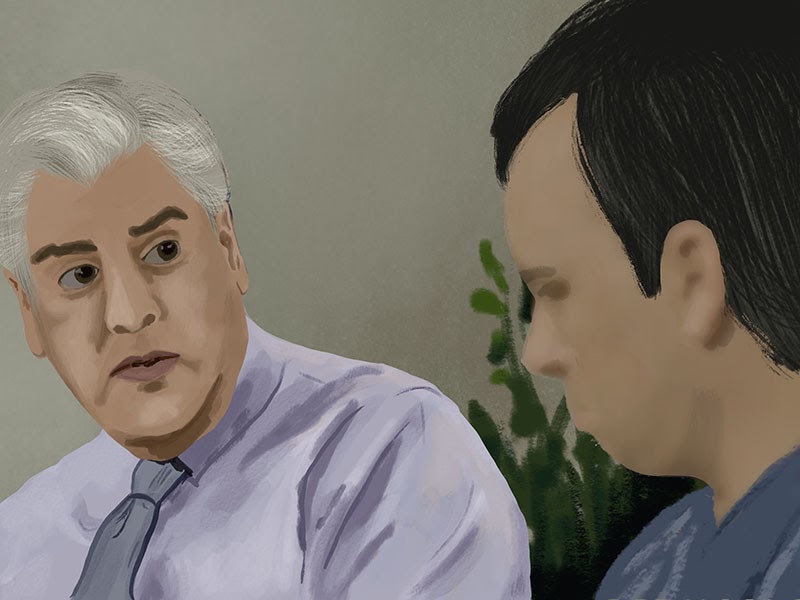

Otto Kernberg on Psychoanalysis and Psychoanalytic Psychotherapy

The Interview

Chanda Rankin: I’m Chanda Rankin, and it’s a real pleasure to have you here for this interview today with Psychotherapy.net. Earlier you mentioned you were born in Vienna, Austria. I wanted to know how much sociocultural influences at that time affected and influenced you to go into the field of psychotherapy and analysis.
Otto Kernberg: To begin with, I left Austria when I was ten years old. My parents and I had to escape from the Nazi regime. We did so at the last moment and immigrated to Chile. I trained in psychiatry at the Chilean Psychoanalytic Society. I came to the States for the first time in 1959 on a Rockefeller Foundation fellowship to study research in psychotherapy with Jerry Frank at Johns Hopkins. Then in 1973 I moved to New York, where I was at Columbia. Now, I'm Director of the Personality Disorders Institute where we're carrying out the research of personality disorders.

Certainly my cultural influences are Austrian, German, and that has influenced me in many ways. But my psychiatric training was integration of classical descriptive German psychiatry and psychoanalytic psychiatry/psychodynamic psychiatry. Later I became immersed in ego-psychology and Klein's work. I also visited Chestnut Lodge where I became acquainted with the culturist orientation, Sullivanian, Frieda Fromm-Reichman as well as the ego/object relations psychologists, Edith Jacobsen and Margaret Mahler. So it was natural to try to synthesize an object relations approach between the great ego psychological Kleinian and so-called British 'middle group' or independent approaches. Then many years later, to this was added a certain influence from French psychoanalysis.

Kernberg’s Gold Mine

CR: I’ve always been very curious about what is it about working with personality disorders do you find so compelling that you’ve made this the focus of your life’s work?
OK: It was a combination of various influences. First of all, perhaps the most important one was that the psychotherapy research project at the Menninger Foundation that I joined and eventually directed consisted of the treatment of 42 patients—21 treated with various types of psychotherapy from a psychoanalytic basis, and 21 patients were treated with standard psychoanalysis. Now, it so happened that many of the patients sent to the Menninger Foundation suffered from severe borderline conditions. Severe personality disorders, right now called Borderline Personality Organization…the concept had originally been developed there by Robert Knight and his coworkers. Many patients with severe personality disorders were included in that project, and the diagnosis was made very, how shall I put it, tentatively or fleetingly. When the project started in 1954, there were no clear-cut criteria being used. It was very helpful because it turned out that half of the patient population on the therapy side, and half of the patient population on the psychoanalysis side suffered from severe borderline conditions.
CR: How fortunate for the researchers.
OK: Yes. And each of these cases had typed process notes of each session, of treatment over many years. Big fat books. So by the time I got there, I had 42 cases studied in detail, and it was just a gold mine! I noticed regularities about what happens in the treatment, what would have facilitated the diagnosis, so I combined my interest in object relations theory with the interest in clarifying this group, to develop some hypothesis about treatment. We then did the statistical and quantitative analysis of the project. It provided me with important confirmations and disconfirmations of the hypothesis.
CR: And this population was not well understood at the time.
OK: No, so I was very lucky to have this patient population. And when I started out, I wasn't aware myself that I was getting into a very interesting subject.
CR: How did you become involved with the study of narcissistic personality disorders?
OK: Just by chance. One of the patients who I saw in a controlled analysis while I was a student at the Psychoanalytic Institute in Santiago, Chile, had been diagnosed as an obsessive-compulsive personality. I was unable to help him—he didn't change one inch over years and his memory persecuted me. Then, I perceived that he was very much like other patients I saw at the Menninger Foundation. Hermann Van Der Waals, who had written an important article on the narcissistic personality told me, 'These are narcissistic personalities.' Nobody had described these characteristics in the literature well.

I then took another patient into analysis, exactly like my previous one, and on the basis of my then-developing psychoanalytic knowledge, I developed a particular thesis on how to treat that patient. And this is how I developed the treatment of narcissistic personality, the diagnostic observations, the differential diagnosis between narcissistic and borderline typology, the generalization of the concept of borderline personality organization. So it was a combination of luck and interest.

CR: A very rich time, and a confluence of things coming together to make that happen. What or who influenced your clinical style which seems to be neutral in many ways but not passive or impersonal?
OK: One individual who I have not yet mentioned, who is very little known at this point, although he was a leader of American psychiatry, is John White, the Chair of Public Psychiatry of Johns Hopkins when I was there. He developed a method for clinical interviewing that inspired me for developing structural interviewing. He was the best interviewer I've ever seen. He would start talking with the patient, and the interview would go on until he had a sense that he knew what he wanted to do. It went on for two or three hours. John White had a way of putting himself into the background, disappearing, so to speak. He was very direct, very honest, and understood something about people, in depth. No showmanship. Just raising questions that permitted the development of the patient. He had a tremendous capacity to permit the patient to develop his present personality, rather than asking what happened 50,000 years ago. That also influenced me in interviewing. Sharpened my approach to the study of the present personality.

But, perhaps also what has been very important to me is the excitement with the fact that there you have these patients with severe distortions, that ruin their lives. No doubt about it. This is not phony pathology for wealthy patients who have nothing to do but to go to a psychoanalyst. These people have not been able to maintain work, a profession, a love relation. And with the psychoanalytic psychotherapy and psychoanalysis you are able to change their personality, improve their lives. I think that is an extremely important contribution of psychoanalysis. And we need to do empirical research on this. One of the things that I have been very critical about is the lack of systematic and empirical research within the psychoanalytic world.

How People Change!

CR: Do you think that there’s any one specific thing, if at all, that contributes more than any other thing to change with a personality-disordered patient?
OK: People change in many ways with common sense, with friends, with help, with luck, with good experiences in life. I think that psychoanalytic psychotherapy and psychoanalysis are probably the methods that promote the best changes in case of severe personality disorders, through the mechanism of analyzing of the transference, the split off, dissociated, primitive object relations that determine and are an expression of identity-fusion, bringing about normalization of the patient's identity, integrating his self and concept of significant others. In that context, permitting the advance from primitive to advanced defense mechanisms, and strengthening of ego function in terms of increased impulse control, moderating affective responses, and facilitating sublimatory engagements.

So I think that's probably the best approach nowadays to bring about fundamental personality change. There are indications and contra-indications; not all patients can be helped. I think that the prognosis depends on the type of personality disorder, on intelligence, on secondary gain, on the severity of anti-social features, on the quality of object relations, on the extent to which some degree of freedom of the sexual life has developed or not. So there are many features that make indication, contra-indication and prognosis for the individual cases different. We are in the middle of trying to spin all of these out.

“Psychotherapy Training is Going Down the Drain”

CR: You often emphasize the importance of training, really making sure that the therapists know what they are doing and what they are dealing with in terms of the patient. Can you speak to that issue?
OK: First of all, yes, I am very critical of chaotic gimmickry in treating patients based upon chaotic theory. Each person who invents a treatment method invents his own ad hoc theory for treatment. I find that this damages the field, the treatment, the patients. It's bad science, on top of it. One thing I like about psychoanalysis is that it's an integrated theory of development, structure, psychopathology, that lends itself to develop a theory of technique of intervention. I'm not saying it's the only one, but that's one of its strengths.

I think that when people apply various techniques from different theoretical models, they cannot but end up in a chaotic situation in which transference and countertransference is going to drive the relationship in one direction or another. I'm not saying that you can't help patients with this. But you cannot learn how to develop a certain approach. I've seen so many bad consequences from that. Because then you don't match technique with the needs of the patient. And you don't give patients as much. So I prefer to have a cognitive-behavioral therapist, let's say, a well-integrated general theory that applies to his field, rather than one of these esoteric schools everybody has. In this field there is so much voodoo and so much fashion and quackery. It's paid for, and of course, it requires research. Now, unfortunately, most of the research that's been done on short-term psychotherapy done by non-therapists with non-patients in university settings, to grind out papers… so the real treatment that is done clinically has only been researched in a limited way… I think that's our major task. And I believe that we need to develop manualized treatments for long-term psychotherapists, whatever their background. And test them scientifically.

So, regarding training, I think that training should focus on theory of personality, personality change as a basis of technique. And then, apply it to clinical situations.

CR: What do you think of the impact of managed care on psychotherapy?
OK: Psychotherapy training is going down the drain in this country, under the corrupting effect of managed care, this terrible system for profit that goes under the mask of 'managed care,' but really it's managed cost. Under its pressure, long-term psychotherapy is now reserved for those who can pay for it privately. So we are depriving a significant segment of the population of treatment. I trust that that system is going to explode by its own corruptive effects and structure. This is already occurring. And that in the long run, our knowledge and our scientific development of psychotherapy will restore an optimal level of psychiatric practice and psychotherapeutic practice. I think that in the meantime we live in a happy-go-lucky, democratic fashion in which everything goes. Which creates distrust in the public, cynicism in the profession, and is not healthy to patients.
CR: Have you considered ways to reverse this trend?
OK: I think the solution is, in the long run, scientific research.

In my own Institute of Personality Disorder, we're trying to contribute in a modest way by carrying out empirical research. We have randomized three groups of 40 patients each, all of them with the diagnosis of Borderline Personality Disorder. One group to be treated with transference-focused psychotherapy, which is a psychoanalytic psychotherapy that we have developed and tested. The second group by DBT, Dialectical Behavioral Therapy, developed by Marsha Linehan for suicidal Borderline patients. And third, supportive psychotherapy based on psychoanalytic principles. We're going to compare these treatments, not simply in a kind of horserace, but we're trying to study what process mechanisms are connected with what mechanisms of change.

I don't believe that one treatment is 'better' than the others, but there are specific types of patients who respond better to one or another or that treatments may be equally good on the basis of different mechanisms of change. In this regard, I'm very critical of the assumption that non-specific aspects of psychotherapy are by far the overriding cause of its effectiveness. Because all the studies on which these conclusions are based are short-term psychotherapists of very questionable nature. Nobody has studied yet the comparison of long-term psychotherapists from the solid bases, as I have tried to define.

Critiquing the Media and Pop Culture

CR: To go back to something we were talking about earlier, I was wondering if you could say something about psychotherapists portrayal in the media? What are your thoughts on how psychotherapists are portrayed in movies and television? Along those same lines, you have noted how eclecticism in the field is leading to a diffusion and misrepresentation.
OK: In general, psychotherapists are portrayed in simplified and almost caricatured ways in movies. What is very fashionable in this country right now is the so-called intersubjectivist approach, in which the therapist lets 'everything hang out' and people are impressed with how real the therapists are. I think that reflects a dominant culture of doing things quickly, immediately, the culture of faith, good faith, warmth, belief in the human being helps everybody along. Which is different from the reality when we treat patients who suffer under severe regressive conflicts, whose major need is to destroy the therapeutic relationship, who envy the therapist's capacity to help them—those kinds of cases we don't see in the movies, except that by the time we see that kind of patient, they are shown as monsters and people get horrified. And there is a strong cultural critique of psychoanalysis that is not new, but now takes the form of "psychoanalysis is lengthy, expensive, hasn't demonstrated its efficacy and effectiveness, and patients can be helped by brief psychotherapists." Often they present psychotherapy as shamanism.

At the same time, the combination of the important development in biological psychiatry, the financial pressures reducing availability of psychotherapeutic treatment, the cultural critique of subjectivity and wish for quick solutions, adaptation—all that has tended to decrease the participation of psychodynamic psychiatry and psychodynamic psychotherapy and the training of psychiatrists. It has brought about the old-fashioned split between biological psychiatry (centering on basic research and psychopharmacological treatment) and psychotherapy (pushed off to other professions and being disconnected from medicine and psychiatry). I think that's unfortunate. That leads to a kind of mind/body divide when they should come together.

CR: Can you say more about this mind/body divide?
OK: The impact of the new neurosciences on psychotherapy is very misunderstood. I think there is a lot of premature, reductionist excitement with all these new findings. We have important new findings of the central nervous system, as an effect of psychotherapy, correlations between psychiatric disorders and brain functioning. But these new developments do not, as yet, have any practical implications in terms of both theory and technique, technical interventions, so we have to keep that in mind.
CR: How do you view issues of the mind/body applying in the clinical situation?
OK: Of course you could say that it applies insofar as psychopharmacological drugs derived from our better understanding of neurotransmitters. That is certainly true for the case of schizophrenia, major affective disorders, syndromes of depression and anxiety in general, but it's not true for personality disorders, the many sexual difficulties and inhibitions that go with them. And, to the contrary, there, medication has a very limited symptomatic effect on anxiety and depression, but not at all on the basic psychopathology. The illusion that eventually everything is going to be cured by a pill is an illusion that has existed for a long time, and I think that there are good theoretical as well as practical, clinical, reasons to question it.

The Question of Love

CR: I want to turn to a different interest of yours which you explore in your new book Love Relations: Normality and Pathology. I was very curious how that came about, and in the body of all your other work to be writing a book on love seemed like such a drastic change. What was the impetus for this book?
OK: As I mentioned in the Introduction to the book, I have been accused of being only concerned with hatred and aggression, so I thought it would be fun to write about love!
CR: Was it fun to research and write this book?
OK: It was fun, but it was also difficult, because when I got into the subject, I realized how complicated it is, and how I had to renounce exploring many areas that I would have loved to explore. So the book has important limitations. I observation that the degree of pathology of the personality disorder, of one or both participants of the couple, does not permit us to establish a prognosis of how the couple would do. Two perfectly healthy people get together and it's like hell on earth; two extremely troubled people get together and have a wonderful relationship! So that clinical observation created my curiosity, because of course it's a problem that borderline patients face—establishing couples, getting married.

I also became interested in the subject of sexual relations, because I found out there were two types of borderline patients—I'm using the term loosely to mean severe personality disorders. One with an extremely severe primary inhibition of all sexual capacity, no capacity for sensual activation or enjoyment, no sexual desire, no capacity for masturbation. These patients had a bad prognosis because in the treatment, as everything was consolidating, more repressive mechanisms inhibits that sexuality even further. On the other hand, you had those with wild promiscuous sexuality—polymorphous perverse, invert, pan-sexuality, with masochistic, sadistic, voyeuristic, exhibitionistic, fetishistic, homosexual, heterosexual, everything…those with such a chaotic sexual life seem to have a terrible prognosis, but the opposite was true. These patients did extremely well, once their personality was functioning better. So it raised my interest, why this extremely severe sexual inhibition, what could be done about this? And, also, a more basic question about how much a couple can contribute to inhibit each other or to help each other to free themselves sexually. That's it, in a nutshell.

What are Good Therapists and Analysts Made Of?

CR: Do you have any thoughts about personality characteristics that an analyst or a therapist needs to have in order to work with severe personality disorders, or even mild personality disorders?
OK: That's a good question. As I look at our experience, we've trained many therapists. We've had 20 years of training and supervision. I think that people with very different personalities can become very good therapists. I don't have anything deep or new to say about this that couldn't be said by anybody with some experience in this field. I think it's important, first of all, that the therapist be intelligent, it helps. Second, that they are emotionally open. That they be a personality that is sufficiently mature, on the one hand, and open to primitive experience, in contrast to someone who is extremely restricted. It helps not to be excessively paranoid, infantile, or obsessive-compulsive. Although, I'm saying excessive because we have all kinds of therapists—all basically, honest with themselves and others, with a willingness to learn. Therefore, it helps not to have too much pathological narcissism. If you are too narcissistic, you don't have the patience to work with very troubled patients, and your capacity for empathy is limited.
CR: But it also seems like you need a healthy dose of those things.
OK: Yeah, some of us are exploring that. I really don't have a good answer to that. But there are some people who have a talent for it, like people have talent for playing piano. I don't know whether experts would say, what personality does it take to play the piano? There are some people who have the talent. Some people are able to do it almost without any training. It's almost frightening that they know things before we teach them. It's bad for our self-esteem! I've had therapists with whom I've had a sense that there is such an inborn capacity that with little…they would flourish. And others who never learned, even though they were intelligent and hard-working. And I'm not able, at this point, to spin out what it is. But, we can discover it.

Very simply, we tell people who want to train, "Bring us a tape. The best tape you have, of any session that you are carrying out, a videotape with a patient in treatment." And we have developed methods of the psychotherapeutic interaction by which we can sort out who does have the talent for doing it. We can evaluate very quickly with manualized treatment whether the therapist is able to adhere and whether the therapist is competent. Competence is seen by the therapist talking, focusing on what is relevant, focusing on what is relevant with clarity, doing it relatively quickly and in depth. Relevance, clarity, speed, depth. The combination of them tell us who is a good therapist. It's terribly simple, and it works.

And I'll tell you, some experienced psychoanalysts are terrible; and some young trainees are very good. This creates the problem: does one have to be a psychoanalyst to do this kind of treatment? I would say it helps to have psychoanalytic training, but it's not indispensable. There are some people who have so much talent they can do it without psychoanalytic training, although, a personal psychotherapeutic experience always helps, particularly if people have a kind of "blind spot" in a certain area. Sometimes a psychoanalytic treatment or psychoanalytic psychotherapy helps.

CR: You have written about the importance of therapist safety. It really hit home with me, and I had not actually heard anyone articulate that clearly before. The ability to be able to sense when safety is an issue seems so primary. So all the things that you’re talking about—your own self-awareness, to be able to have the insight into these areas, to know when something is a problem. It’s very important for safety as a therapist and also the amount of safety you can provide for your patient.
OK: Exactly right. It permits you to maintain the frame of the treatment. It's absolutely essential. The therapist has to maintain the control over the therapeutic situation. The therapist has to be in charge. There is a realistic authority of the therapist that has to be differentiated from authoritarianism, namely, the abuse of that authority. There is kind of a cultural move toward "democratization" of the psychotherapeutic relationship. I think that's just silly. Because patients come to us because of a certain expertise, otherwise they wouldn't come to us, and they shouldn't. There's a difference between authority and authoritarianism. And part of the authority of the therapist depends on the therapist's being able to maintain the frame of the treatment. And our own safety is essential in this regard. When you treat severe personality disorders it becomes crucial…physical, psychological, legal safety, in this country which is so litigious. It's the most paranoid culture that I know within the civilized world. I've not been in the jungle…
CR: We might be close!
OK: Perhaps so, we live in a very paranoid culture.
CR: Thank you so much for your time.
OK: You're most welcome.