Jessica Stone on Play Therapy in the Digital Age

Crossing the Digital Divide

Lawrence Rubin: Hi, Jessica. Thanks for joining me today. How did you become interested in digital play therapy, which really is cutting-edge and somewhat controversial with children?
Jessica Stone: I kind of straddle a few worlds here. I am a licensed psychologist with a specialty in play therapy. Within it, digital play therapy has become one of those areas of interest over the last 20 years, stemming from experiences with my own kids, who had this whole portion of their world that I didn't really understand, know about, or enter into. It struck me as a little bit ironic and maybe even hypocritical that here I spend my time at work and my energy learning and doing play therapy with children and entering their world, while my own kids have this whole portion of theirs that I was putting no effort into understanding. And so, I kind of had to smack myself upside the head and say, all right, I need to learn more about this. Why is this important to them? Why are they interested in it?

Long story short, I ended up entering into an online game called Runescape that my oldest two (of four children) were both playing at the time. I am no digital native by any means, and I was not very good at these games, but the point was that I was taking interest. I was listening to them. I was asking them questions. We were having conversations about what happened in the game, what quest they were working on; things that were important to them that prior to my entering their world, I couldn't participate in or even understand. I began to see that because this co-play was so impactful with my own children, I needed to incorporate it into my work, which really opened the door to what I have been doing for all these years.
LR: So, you recognized that technology was so important and present in your kids’ life that you would be almost doing a disservice to your young clients if you didn't cross that bridge into their digital world. Tell me, what exactly is digital play therapy?
JS:
I am no digital native by any means, and I was not very good at these games, but the point was that I was taking interest
Digital play therapy is a modality that is based in speaking the client’s language through what I call the four C’s, which are competency, culture, comfort, and capability. These are basic elements of therapy in general, but digital play therapy in particular is couched within the broader context of prescriptive play therapy, which taps into what Charles Schaefer calls the therapeutic powers of play. So the point is that there is a foundation for it. It's not just, oh, let’s just jump on this bandwagon and start throwing these digital things into what we’re doing. We as clinicians need to have a very firm and solid foundation in what it is we’re doing and why we’re doing it regardless of our theoretical foundation, therapeutic modality, and interventions, or whether the platform is virtual or face-to-face. And as in all therapies, we must ground our interventions in solid case conceptualization and treatment planning.
LR: I know that Charles Schaefer co-founded the Association for Play Therapy and has written extensively on play therapy, but can you tell our readers what he means by the “therapeutic powers of play?”
JS:
it's not just, oh, let’s just jump on this bandwagon and start throwing these digital things into what we’re doing
If you can close your eyes for a minute, imagine a graph with four quadrants that represent what he calls the core agents of change. These are facilitating communication, fostering emotional wellness, increasing personal strength, and enhancing social relationships. In turn, each of those quadrants consists of the 20 therapeutic powers of the play. For instance, in the quadrant of “facilitating communication”, we have self-expression, access to the unconscious, direct and indirect teaching. In the quadrant of “enhancing social relationships,” we have the therapeutic relationship, attachment, social competence and empathy, and so on. I think what Dr. Schaefer has done is given us a really amazing foundation from which to then tailor and customize it as fit for whatever our modality and our theoretical foundation would be.
LR: So when working with children, it's important to consider their communication skills, their emotional development, their strengths, and their social connectivity, and then if you choose to work digitally with them using an app, a video game, or even a virtual reality platform, you are doing so from a solid theoretical foundation and justification for that intervention.
JS: Right, and one of the things that I wanted to add was
there are three levels of digital play therapy: at the first level, you are simply open to it, including it in the conversation, and trying to understand why it's important for that client
that there are three levels of digital play therapy. At the first level, you are simply open to it, including it in the conversation, and trying to understand why it's important for that client. The second level would be when someone brings in, for example, a YouTuber that they are interested in, or a game, and they want to show you a video of it, or together you're looking up information about it. So you're using a digital tool, but it's to learn more about it and to share in some aspects of your client’s life. The third level would be all of the above and would also include actually meeting with your client within a game (whether you are with them in the room or virtually) or using an app together. And so, in order to have digital play therapy, you don’t have to be in the Roblox game with them. You could be at level one or level two, talking about it, asking questions about it, or having your client show it to you, or taking a tour of it.

If Not for the Legend of Zelda

LR: And that becomes part of the treatment plan as well. And you may not even know which level you're going to be entering into until you know the child a little better. Can you give an example off the top of your head of a level three experience that you had with a client?
JS: Absolutely, but I’ll sanitize all over the place for obvious reasons. I had a little elementary school age guy who came in to me because he was selectively mute. He didn't speak to any adults, including his teachers. He spoke to his parents, but he didn't speak to any adults outside of his home.

We had this amazingly intricate way of playing the physical game Guess Who, not the digital version. We came up with this whole worksheet with all the different options that he could point to and we were really proud of ourselves for having gotten to that point. But then he wanted to move on and saw that I had a Nintendo Switch sitting on my shelf. He pointed to it, and I said, “Oh, yeah. You know, I have this Switch, and really the main game I have on there is Legends of Zelda.” I listed the other games I had, but the main one that the kids really wanted to play at the time was Zelda: Breath of the Wild, and so he wanted to play it. By the way, I have the “regular” Nintendo Switch, the one with the two removable handset controllers and central viewing screen that both players can see.

We each had a controller, and I said, “But what we have to do now is to figure out how we’re going to communicate, because one of the handsets controls where the person is looking, and the other one controls where the person is walking. So if we’re not communicating, we’re going to go off a cliff, or we’re going to run into an enemy, or, you know, something is going to happen because we’re not explaining to each other what our agendas are, or what our desires are.”

it was a breakthrough that I really don’t know that we would have had it were it not for Legend of Zelda
He also had a tablet that he could type on to communicate so he indicated that he would point because he was the walker, and I would be the looker. As we were playing, we came to this dangerous thing and it became this frenzied moment because we were going to be attacked. All of the sudden, he screams out at me, “Look over there!” While I had never heard his voice before, I didn’t want to make too big of a deal of it.

I was like, okay, play it cool, but inside I was so excited. Out of the corner of my eye, I see his hand fly up over his mouth, like, oh, my gosh, I can’t believe I just did that, right? And I said, “Oh, I’m so glad you said that,” and I looked where he told me, averted the danger and we went on. I said, “You really saved us. I’m so happy that you talked to me to tell me that because we would have totally been attacked.” After that pivotal moment, he would chitchat, and there weren’t any communication lapses. It was kind of like, well, the cat is out of the bag, and I didn't make it an unsafe environment for him to do so, and it was a breakthrough that I really don’t know that we would have had it were it not for Legend of Zelda, the two controllers, and the need to communicate with each other. It's amazing.

The 4 C’s of Digital Play Therapy

LR: That was a breathtaking moment. How does it capture those 4 C’s of digital play therapy you referred to earlier on?
JS: The first three—competency, culture, and comfort really culminate with the fourth, which is capability.

Competency is those core skills that derive from our theoretical beliefs, experience, and continued education, regardless of our discipline of practice. It is within the professional. It is what we bring into the therapeutic space.

Culture is very interesting to me and something that we’ve talked about for decades as being important to incorporate into our clinical work. It has blossomed and expanded from religion, race, and place of origin to include other facets of peoples’ experience, like music, food, and interests, and of course their digital involvement.

A while back, I was invited to speak at a PAX convention, which is like Comic Con but for people who enjoy gaming. There were literally thousands of people there, all of whom shared this common experience and who have historically been characterized as “other,” with all the stereotypes that go along with gamers, like spending days in their mother’s basement playing video games.
LR: They don't fit in.
JS: They don’t fit in. And while I don’t want to perpetuate any of those damaging and non-appropriate stereotypes, there I was with thousands and thousands of people and I was the “other.” I’d never felt like the other in my life, but in that moment, it really struck me that it is such a disservice to think of people who have digital interests as “others.”

First of all, it is quite hypocritical, because at any given moment, most of us have a device near us. We have a phone we don’t leave our house without. We have our computer, and millions of people play very casual games like Bejeweled or Candy Crush on their device. So, it's quite hypocritical for us to say, “Oh, those people are others,” when really, there are simply different levels of gaming. So, the culture piece is really important to me, and we can’t simply reject portions of our clients’ lives—in this case their digital interests.
LR: If technology is so significant a part of our culture, why is there still a seeming reluctance on the part of some clinicians to incorporate it into therapy, and in this case play therapy with children?
JS: That actually brings us into the next C, which is comfort, the importance of which is that we be genuine and congruent within ourselves, and that's something that I think that a lot of therapists don’t have about technology. I talk to people, and they're like, “I don't know how to get my photos off my phone. I don't know where to find them.” So first, I think it's just basic knowledge and comfort. We know that at the beginning of the pandemic, people were freaking out. They didn't know how to use a platform like Zoom or, you know, whatever it is that they're using. Where do I get the link? How do I get into the app? How do I talk to people? What if they can’t hear me? As therapists, regardless of whether we are working with adults or children, we have a lot of things to think about when we’re in session, including, how does this fit into our case conceptualization and align with our treatment goals?
LR: How do I validate it?
JS: So
when a new anything is added into that therapeutic mix, like technology, it throws everything else off kilter a little bit so that we don’t feel secure, we don’t feel congruent
when a new anything is added into that therapeutic mix, like technology, it throws everything else off kilter a little bit so that we don’t feel secure, we don’t feel congruent, and now we are not only worrying about the logistics, but also whether I am doing the right thing for my client. And so when you package all that together, it's like, oh, I don’t even want to touch that because it’s too risky. It's too scary. In my book, Digital Play Therapy, I refer to this as techno-panic. We can point to so many different points throughout history, such as Socrates saying that the written word was going to destroy the oral word. Radios are going to destroy… TV is going to destroy… Video is going to destroy…
LR: So techno-panic results in people, and perhaps in our case therapists, keeping their distance from technology because of anxiety, worry, and insecurity.
JS: Yes, I’m going to keep my distance, because that has enough in it to scare me but not enough to inform me.

And by the way, the fourth “C” is capability—something to bring the other 3 C’s together. Capability means continually striving and reaching forward throughout one's career to embrace, or at least consider new modalities, concepts, and techniques to discover, explore, and practice.

The Virtual Sandtray: Origins

LR: This conversation reminds me of an experience I had a few years back when I encouraged a fellow play therapist, Deidre Skigen, who had been using the SIMS program as a virtual sandtray, to write an article for Play Therapy magazine. Soon after it was published, a veteran sandtray therapist (and purist) sent in a 32-page paper lambasting the idea of using a simulated sand tray. According to your 4 C’s model, this veteran clinician could probably not check off any of the C’s. With that said, please tell us about your groundbreaking app, the Virtual Sandtray.
JS: Sandtray is amazing and has been around for just about 100 years.
Dr. Margaret Lowenfeld started with the World Technique in the 1920s while working with kids after the war
Dr. Margaret Lowenfeld started with the World Technique in the 1920s while working with kids after the war. She really wanted to understand more about their experience and, in particular, their resilience. She understood that the sand tray is a creative, projective way of working with people either nonverbally or verbally. Traditionally, it's a tray with a blue bottom, and depending on the clinician’s theoretical orientation, can be made in different sizes. It can be populated with various objects and figures, which when placed in the sand create a symbolic representation of the child’s external world, their unconscious conflicts, fantasies, and projections.

It can be freeform, and then it becomes the clinician’s job to understand what that client is expressing. Sometimes people will tell a story and narrate it. Sometimes they won’t. There’re so many things that will depend on where someone’s theoretical foundation is coming from with regard to sand therapies. This is the foundation and fundamental aspect of doing sandtray therapy—your client is creating a world, a microcosm right there with you.
LR: And your Virtual Sandtray app?
JS: In 2011, following a devastating tsunami in Japan, my very good friend and colleague, Dr. Akiko Ohnogi, co-founder of the Japanese Association for Play Therapy put out a plea, “Please send us materials. We have all these people.” She and her therapist-colleagues needed materials to work with people impacted by the tsunami.
no matter what you do, sand is bulky and heavy and will escape whatever you put it in, no matter what, so an alternative was needed


I got together a bunch of stuff, and I sent it over feeling quite proud of myself for contributing to all of this but then thought to myself, how are they going to do sandtray without a sand tray? While sand trays are very popular in the United States and come in many varieties, portable kits are clumsy at best, and how were we going to get all the necessary miniatures to them? No matter what you do, sand is bulky and heavy and will escape whatever you put it in, no matter what, so an alternative was needed.

As it happened, I had received an iPad for Mother’s Day that was pretty cool to have, but it wasn’t getting much use until I thought, “It should be on an iPad.” And then I started thinking about how it could be used by clinicians and interns in hospitals and schools, in crisis situations as well as in traditional therapy spaces, whether in-person or online. A virtual sand tray could be used with immunocompromised people and clients who were traumatized and would be triggered by the sensory contact with the sand. Interestingly, my husband had taught himself to program when he was a teenager. He said enthusiastically, “You know, I’m going to start that project for you.” Being married, I had of course heard that line before, but he proudly proclaimed, “Oh, that sand tray project.” It just bloomed from there.

the Virtual Sandtray started out as a touchscreen app so that you could have the kinesthetic experience of the creation of the tray
Dr. Schaefer invited me to his annual retreat/think tank, so I was able to share my thoughts and receive excellent feedback from my play therapy colleagues. And Drs. Linda Homeyer and Daniel Sweeney, who wrote the definitive book Sand Tray Therapy, offered to beta test it and provide additional feedback. So, I was very fortunate to have such amazingly educated and experienced people giving us information, knowledge, and feedback on our app.

The Virtual Sandtray started out as a touchscreen app so that you could have the kinesthetic experience of the creation of the tray. I also did a lot of research and reading into Dr. Cathy Malchiodi’s art therapy work about the inclusion of digital-art representation and symbolism and I am so proud to say that we have recently partnered with the Lowenfeld Trust, who endorsed our product and the way it has stayed faithful to the basic tenets of her original work with the sandtray.

The Virtual Sandtray: Applications

LR: So what exactly can you do with the Virtual Sandtray app, and what clients is it best suited for?
JS: So, I'll say this as a nutshell and then put it to the side. There are a lot of administrative features that we’ve built in for the therapist which are separate from the actual clinical uses. It is also important to note that the app is atheoretical, as is use of a physical sand tray. The Virtual Sandtray app is like all other materials in the playroom, a tool that is adaptable to the clinician and the client, regardless of presenting issues. It is also useful for any age, as is a physical sand tray.

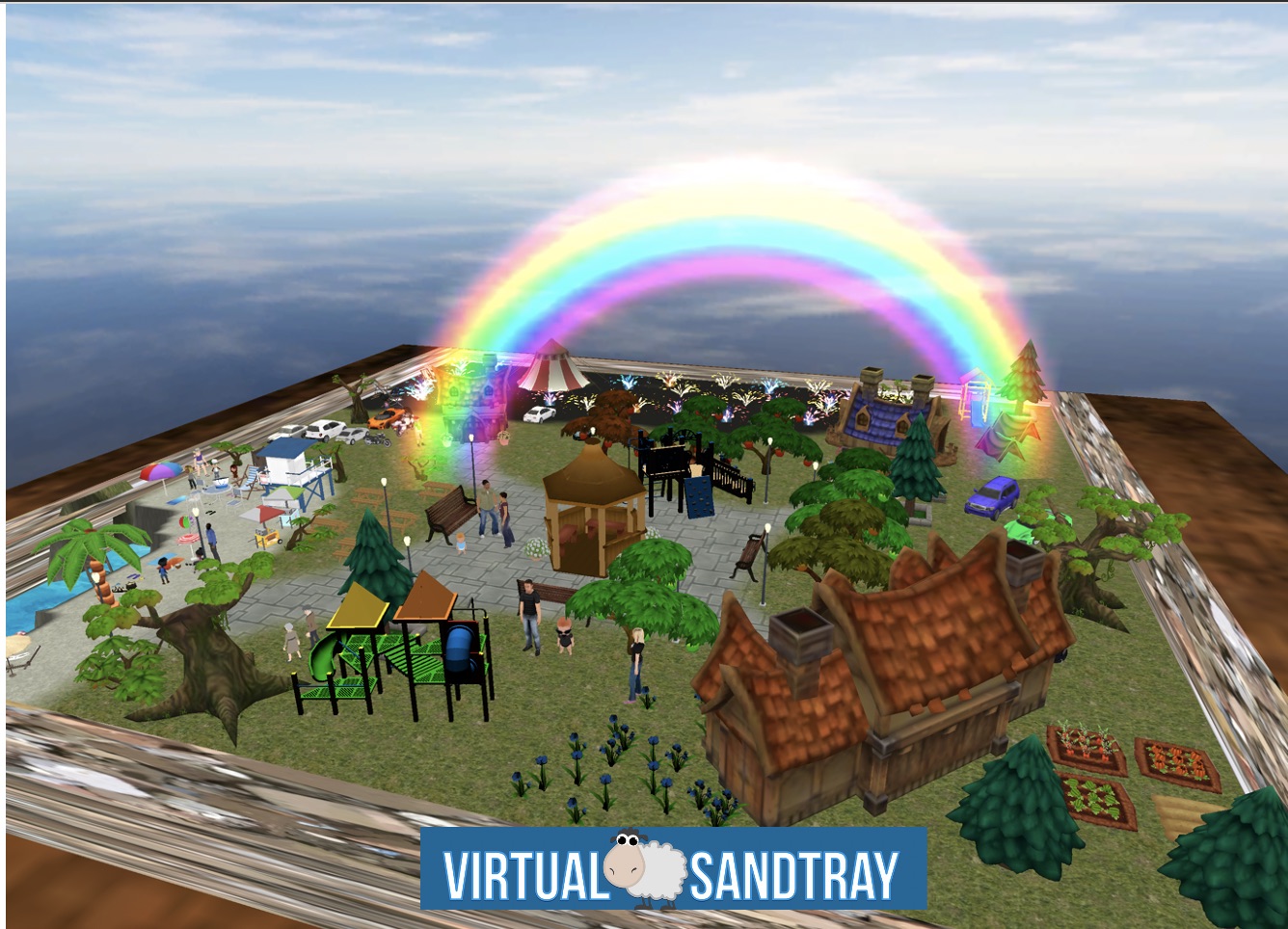
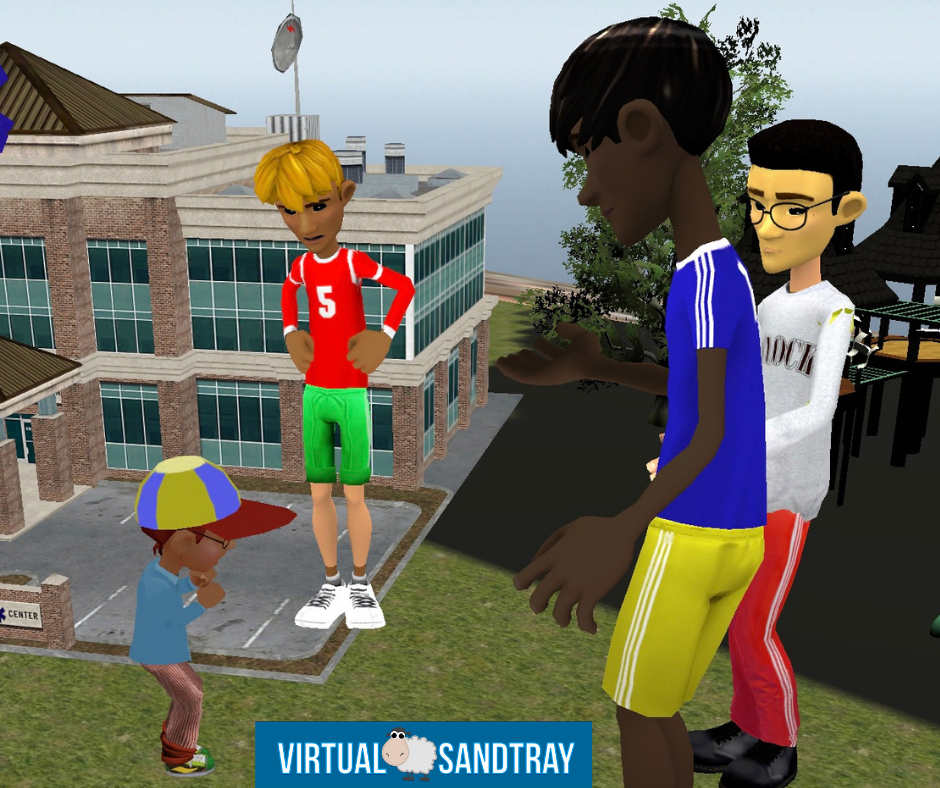
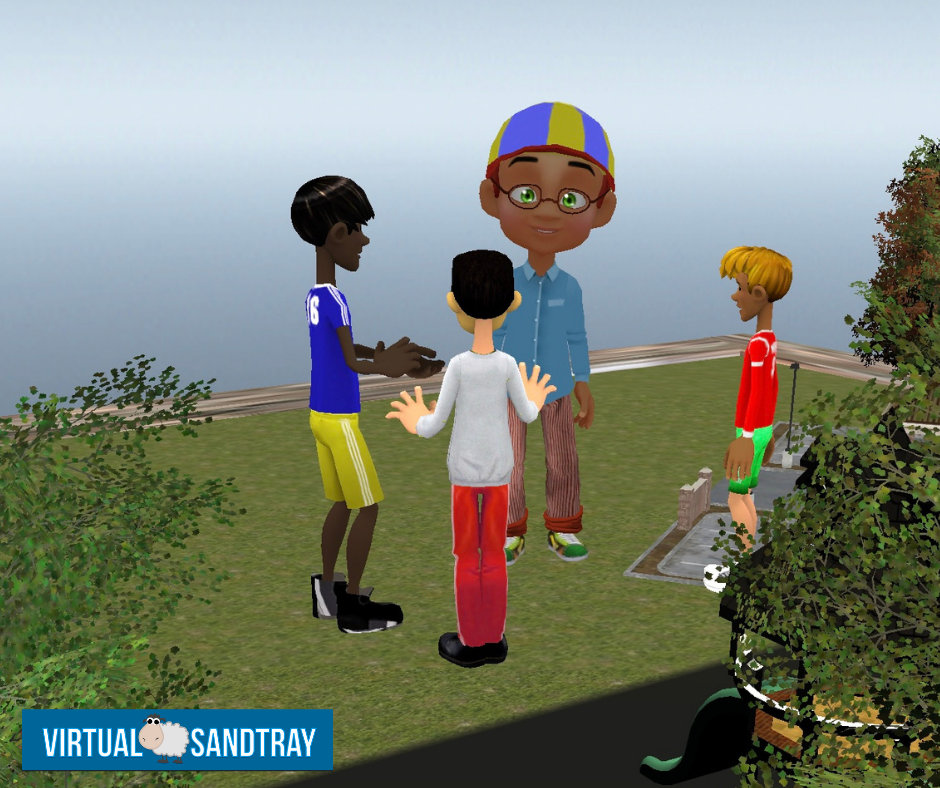
You can dig in the sand. You can build up the sand. You can paint it, add grass, or water, or cobblestone, or you can have it be sand color. You can place 3D models in it, rotate the tray, and navigate at any angle. Like a physical sand tray, it is three-dimensional in every regard.

a happy-go-lucky scene of rainbows, butterflies, and unicorns can be created against a dark and foreboding background


You can make the models bigger or smaller, turn them around, move them, and knock them over. You can blow them up. You can change the background. A happy-go-lucky scene of rainbows, butterflies, and unicorns can be created against a dark and foreboding background. Congruence between the main scene and the background is relative. You can dig down in the sand, paint the inside of the tray blue so that the bottom of the tray is like water.


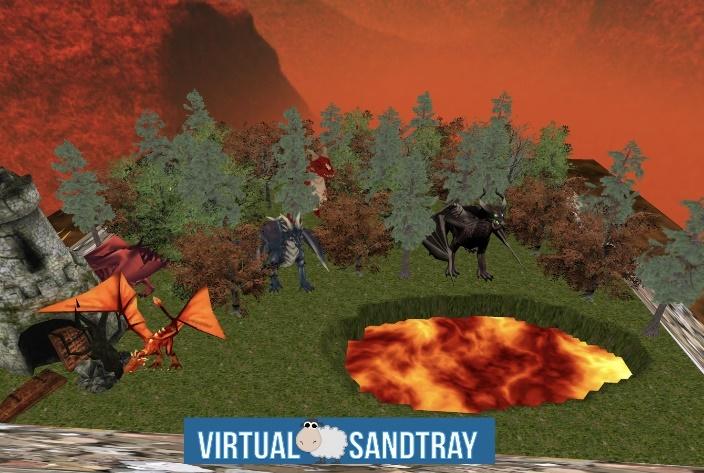
11 Year-Old: Safety and Security with Unicorns and Fence, but Danger (Dragons) Lurking


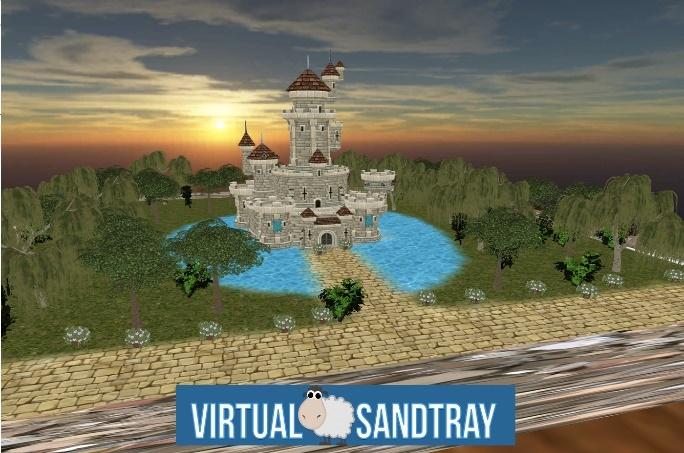
Adult: Castle as Calm Space/Sanctuary


You can create a multidimensionality in the sand so that, for instance, two layers would just be sand, but the third layer is liquid. So, in the happy-go-lucky scene I mentioned above, you can change the liquid layer to lava. So now we have a multilevel, multidimensional depiction of this world for this client. We also have camera filters, so you can make it look like it's snowing, or raining, or you can invert the colors. You can do night vision, like it’s seen by aliens or something like that.


9 Year-Old: Red Dragon Scene- Danger, Missing Scary, Unsafe, Trauma


Therapist Process Tray: Sadness Over Missing out On 4th of July Due To COVID

LR: Jeez.
JS: One of my current favorites is this one called “broken,” and there’s a couple different broken varieties, but if you can imagine a scene where the person has created a scene depicting their family and then they use the camera filter so it appears shattered. This might reflect how that client feels about their family.

By the way, you can save trays and load previously saved trays to work on again. The clinician can review and compare/contrast the in-person with the online sessions. In the secure, encrypted remote mode with a free client version, no personal health information is collected, and there are multiple language and accessibility features and well over 7,000 3D models available.

Sandtray with a VR Twist

LR: In your book, you talk about the virtual reality version of your sandtray app.
JS:
In VR with the Virtual Sandtray, you can be either up in what's called God mode, where you're up above the tray, looking down, or you can come down to the level of the sand tray and interact with your creation
In 2016, I started learning more and more about VR. I remember thinking, "Mental health is going to explode with virtual reality." So my husband created a version of the app for virtual reality. In VR with the Virtual Sandtray, you can be either up in what’s called God mode, where you're up above the tray, looking down, or you can come down to the level of the sand tray and interact with your creation. So imagine a child is depicting a theme in which they have been bullied at school, or an adult client is interacting with their spouse and that interaction has been traumatic. Unlike with the Virtual Sandtray app, the client can go right down to the level of the depicted scene to walk and interact within it. It is an entirely different level of immersion. You can certainly crouch down in a traditional tray and become more physically engaged—grab the items and narrate, and move them around and all of that. But in VR, you're staring them in the face. The thing is right there. It's a really powerful, amazing, immersive experience to use the virtual reality version of it, and I’m really proud of that.


Animated Bullies Looking Down on Child Who is Much Smaller/Crying


Bullied Child As He Would Like It To Be—He Is Now Bigger and Talking To Them


VR Version of Sandtray of 11 Year-Old’s Sandtray Scene From Above

LR: Readers may be familiar with the use of virtual reality in cognitive behavioral therapy, in exposure and response prevention. And this isn’t necessarily used for exposure in an anxiety or trauma reduction sense, but it's adding another level of immersion into the play.
JS:
VR could be used in an exposure play therapy format by putting a big spider in the tray or scene
VR could be used in an exposure play therapy format by putting a big spider in the tray or scene. I can make that thing enormous, and then it becomes a challenge to the client, who has to ask themselves, “How do I manage that? How do I keep myself safe? How do I titrate toward, or away, or whatever it is?” I use VR in my clinical practice for a variety of reasons. I’ve used it with adult women for empowering them. I’ve used it with all ages for identifying safe places and spaces.

I even have a job simulator. I have a kid whose life is very regimented, and she comes in, and she just destroys the whole office. She chooses the job of being an office worker, and she goes in and dumps the coffee, and throws things, and just makes this huge mess, and it's so cathartic for her to do this with no real-world consequences.

Synchronicities

LR: What’s the difference, Jessica, between synchronous and asynchronous telemental health play therapy?
JS: This conversation that we’re having right now is synchronous. We’re both here at the same time, speaking to each other, even though we’re in different locations. If you have synchronous learning, it's the educator and the student in the same place at the same time. Asynchronous is when we were emailing back and forth. Or it may be an online platform where the educator and the student are not in the same realm at the same time. In therapy, it would be the therapist and the client were not in the engagement at the same time. So when we give a client homework, or when they're going to draw something or create something, or make a list, or whatever it is, that would be asynchronous.
LR: In face-to-face (live) play therapy, the clinician has all the goodies right there in the room—the drawing materials, blocks, sand tray, clay, papier mâché, and dollhouse, to name a few. How is this done online in a synchronous format?
JS: There are just so many different things that people are doing, and it's just wonderful. The resilience of human beings is amazing. A lot of clinicians have either identified what the client has on their end and what the therapist has on their own end, and then they can each use their materials when they see each other; for example, they could play Uno. And we’re talking about, like, traditional play materials. If we’re talking about digital, there’s a way to do so many things digitally.

Other clinicians have created play therapy kits that the client can pick up or that get delivered, so both have similar materials in their respective spaces. In a sense, it’s parallel play. I’ve had a couple of clients just say, “Okay, let’s draw a whatever-it-is,” and then on my end, I do it, and on their end, they do it, and then I hold it up and they hold theirs up and we show each other. If you’re doing it digitally, you can screen share. What it boils down to is using the tools and materials that have clinical significance and relevance and that meet the needs of the client and their treatment, and that ties into your therapeutic modality of choice.

And this brings us way back to that fourth “C,” capability, because if we really understand what we’re doing and why we’re doing it, then we are able to identify those components and find alternate ways to employ them, but if we don’t have them identified, what the hell are we doing?
LR: What you're describing seems parallel to your experience at the PAX conference where there was this alternate mainstream, and you were the “other.” I imagine that there are some therapists out there who fall into this “other” category, as well as those who are curious and in need of training and exposure, and a third group that has already embraced digital play therapy.

As we come to an end, Jessica, can you name five apps that you have found most useful therapeutically with children?
JS:
I will say that the Nintendo Switch has been an amazing resource for me in therapy, whether through telehealth or in person, and the same goes for my use of virtual reality platforms
Like you said, the Virtual Sandtray would be my tippy top. I have found a lot of therapeutic value in VR programs, and that, again, can open up a whole ‘nother conversation. I will say that the Nintendo Switch has been an amazing resource for me in therapy, whether through telehealth or in person, and the same goes for my use of virtual reality platforms. Underneath that, Roblox. While I know a lot of people who let out a collective groan about Roblox for a number of reasons, I would ask techno-curious readers to watch YouTube videos. Learn more about it. Play some things yourself. It's not as scary and awful as a lot of people think it is. You have to be savvy and have some digital citizenship.
LR: Digital citizenship.
JS: There’s hundreds and hundreds of options to choose from, different varieties and genres that you can then tailor to your client’s needs and interests. It's like Disneyland, you know, for options. Then we have Uno Freak. I mean, that's really basic. We’re just going to play Uno. Like, you put a card. I put a card. You put a card. I put a card. Draw cards. You know, just really basic, fundamental. I actually like the Uno Freak version of Uno better than the card version.

There’s Board Game Arena, and there’s a couple other board game types, as well, traditional games like chess, checkers, Othello. Battleship is a good one, but there are hundreds of other games that you may never even have heard of that you can explore, and they each have little tutorials to walk you through it. So I would say those are really fundamentals that people could start with. Certainly, if people want to know more about some of the other arenas, then I’m happy to do that. Skribbl is there if you want to play something like Pictionary. You both join. You draw. You guess. You laugh. You engage. You learn a lot about people’s frustration tolerance and their coping skills and styles, as well as their interpersonal skills and styles.
LR: Maybe the greatest takeaway from this conversation, Jessica, is that, while this may be scary and new and even evoke techno-panic in those who are probably prone to techno-panic anyway, it really is worth becoming more aware of, because there’s probably not as much of a divide between digital play therapy and nondigital play therapy as people fear or think. Anyway, the real healing comes in the relationship between the therapist and the client and how we use whatever we have or whatever they bring to help them to get where they're going.
JS: I really would like people to think of it as an "and", not an "or". And that we can take all those fundamentals and use them in really powerful ways, whatever the medium is.


LR: And I think, on that note, we’ll stop. Thanks so much, Jessica, for pointing us to the bridge between the digital and non-digital world of therapy and, in particular, play therapy.

Strengthening the Online Counseling Relationship: Helpful Tele-Tips

The COVID-19 pandemic has had many impacts on our lives, including changes in how we connect with others. For myself and many of my fellow counselors, this has meant shifting to working remotely, whether through online video platforms or over-the-phone support. Since March 2020, my own counseling practice has almost completely shifted to online video conferencing. Connecting with people using video platforms had already been a small part of my counseling role, but it has now become the main way I provide support. This no longer feels like a stopgap to get through the pandemic; it will likely continue to shape and influence how I think about counseling. This hit home at the end of a session with Jay, when they said, “I’m so glad we’ll be able to continue our regular online sessions when I move out of the city—I can’t imagine having to start over again with someone new.” There is abundant evidence that one of the central ingredients to any successful counseling experience is the quality of the relationship and connection between counselor and client. This is one of the most robustly studied aspects of in-person counseling, and it also appears central to providing support remotely. At first, I worried that the shift to online counseling would cause my connection with clients to suffer. I was concerned that it would be too hard to do well, and that the usefulness of counseling for people would lessen as a result. Despite my concerns, I have been pleasantly surprised to find that many of my clients enjoy it, and some even prefer connecting online rather than having to meet at my office. Jay is a prime example. They described thinking about counseling several times over the last number of years, but always felt too anxious to risk talking to a stranger. In fact, Jay rescheduled our first session twice before we finally connected. In our first session, they were able to sit in their home with their beloved dog on their lap. Jay described this as a key step for allowing them to take the risk of opening up while struggling with the additional stressors of the pandemic. Many clients with whom I work do express missing the opportunity to meet in person. There has been a lot of grace and acknowledgement that we are all adapting and doing the best we can. However, this comes along with a lingering sense that this way of living is temporary. Although many of my clients say that online counseling is better than not meeting me at all, what if this continues to be how some would prefer to engage with counseling in the future? How can I (and we) ensure that we’re building the strongest counseling relationships possible while working remotely? 3 Areas to Strengthen the Online Counseling Relationship In my own clinical experience and based upon the research I’ve done, I have landed upon a few tips for providing online counseling. These have contributed to creating a foundation for supportive connection that I want to share with fellow clinicians. Set the tone and establish boundaries. The environment I create through my online “meeting space” has greatly supported a feeling of ease, consistency, and safety for both myself and my clients. Ways I have established this online environment include:

  • Considering the lighting and environment. I make sure my face shows up well, without too many shadows. I have pleasant colors and images in my background.
  • Being mindful of privacy, as it is of course paramount for ethical counseling work. Privacy can also ensure freedom from distraction so focus can be maintained on the interaction at hand.
  • Reducing distractions from other devices. I make sure notifications are turned off and displays are out of my sight line. This has helped me provide full attention to my clients, so they feel truly listened to. It has also improved my ability to guide difficult conversations.
  • Pacing the interaction well, to allow space between asking a next question or waiting for the client to respond. Some cues that tell me when a person is about to speak, or they need time to reflect, will be harder to read. Going a little slower than I would in person helps me and my clients to avoid speaking over each other or missing an opportunity for the client to respond.
Create conditions for trust. At the center of a positive and successful counseling connection is the trust between client and counselor. A key way I have created the conditions needed to build trust is through the quality of my presence and attention. Here are some aspects of communicating with my online clients that have enhanced and conveyed presence to clients:
  • I consider how the client will see me and have paid attention to how much of me is visible in the video’s frame. Seeing all of my face and some of my shoulders has allowed facial and body language to be conveyed through movements, gestures, and expressions. It also ensures that I am comfortable, so that I can be grounded and steady in my presence.
  • I pay attention to how close or far I am from the camera. If I am too far, I may seem detached and unreachable; too close, and I may seem more intense and in their face.
  • I practice giving eye contact. Although it is uncomfortable and sometimes threatening to have too much direct eye contact, without some sense of being able to really see and be seen, there can be less of a connection. I toggle between looking at the image of my client on the screen and directly into the camera, so they have the experience of direct visual acknowledgment.
  • I try using earbuds or headphones. This makes me less likely to strain to hear, and the sound often feels more immediate and intimate.
Practice collaborative communication. My counseling relationships that have the most benefit include a sense of collaboration between me and my client. This includes ensuring there is a consistent opportunity for the client I am supporting to use their voice and have choice in the course of setting goals. It has been important to feel like I am negotiating together what is focused on and to build on the client’s strengths. Some ways I have done this include:
  • Taking time to check with my client about all the areas mentioned above. For example, I discuss the lighting, my distance from the camera, how well we can hear each other, and the privacy of our environments. These extra steps have helped me to create a joint space for the counseling work.
  • Verbalizing or narrating more often what I am thinking about or how I am sensing how my client might be feeling as we interact. Following this up with curious and open questions to check my observations has not only helped me learn to read and listen to my client in this different medium, but has also assisted the client in becoming more aware of these things. It has made the unspoken more explicit.
  • Regularly asking my client what the experience of online counseling is like for them. What are they noticing? Also checking in to see how they feel before and after sessions helps us both track their experience. These transitions may be very different if they are connecting from their home, office, or car. Creating plans together for helpful ways to prepare for an online session, as well as how to shift gears afterward, can support the overall feeling of a well-contained and supportive counseling relationship.

***

The use of online or other remote methods for counseling has become more common and is likely here to stay. Applying practical knowledge from known methods of creating an environment, tone, and collaboration that promote a strong counseling relationship has greatly helped me adapt to and use this modality well. Regardless of how I interact with my clients, positive outcomes rest on the development and experience of a solid and positive connection. Jay and I now regularly include updates on their pup, and together we monitor the health of my office plants in my background. We joke about guessing each other’s height and that we don’t have to worry about wearing matching socks. These unique small steps of our shared virtual “room” and connection have become a protected space and the threads of our relationship. I don’t know if I’ll ever meet Jay in person—however, their impact on my own learning continues to leave a lasting impression. I am hoping that what I have learned about online counseling and the tips I have shared in this essay will be of use to my fellow colleagues.

How an Anti-Tech Group Therapist Became a True Believer

Therapists’ offices have always intrigued me. Much like the artwork on the jackets of old vinyl records, they secure my memories with pleasing visual touchpoints. Pre-and post-session rituals marked my weekly appointments: stopping off at the same deli for a coffee, sitting on a park bench, browsing the poetry section in the corner bookstore; such places served as footholds for the different phases of my psychological awakening.

First Wave

After twenty-three years in my own cozy therapy office, it was time to say goodbye. The downtown institute that housed my practice went bust, and the landlord heaved dozens of veteran therapists out onto the cold winter streets of Manhattan.

As I packed up my books, rolled up my oriental rug and wall tapestry, and wrapped my Buddhist knick-knacks in newspaper, everything in my office took on meaning; the spider-cracks in the plaster ceiling that I had planned to paint, the well-worn grooves in the carpet from my trusty Aeron chair, the slight sag in the center of the couch that held so many stories.

I considered my attachment to my cozy therapy office as I closed the door behind me for the last time. Walking home that night, I realized that all my personal therapists and their offices were gone too. Soon after, the pandemic hit.

Second Wave

When New York City shut down, I thought that I had no choice but to shut down, too. As a group therapist, I couldn’t see how my groups could survive. Individual patients would have phone sessions—but therapy groups? Over the years, I had amassed ten weekly, ninety-minute groups, consisting of over 100 individuals. What would happen to them?

So I phoned a fellow group therapist and asked if she planned to shut down. She guffawed:

“Why on earth would I do that?”

“But how will your groups meet?”

“I moved them to Zoom.”

I paused and asked in all earnestness: “What’s a ‘Zoom?’”

When Worlds Collide

Could therapy exist without walls? Would I be able to sense unspoken feelings from patients from a flat two-dimensional image? Could a screen transmit subjective and objective countertransference, induced feelings, subtle body movements, and the endless emotional tics and hiccups that appear in face-to-face sessions? I bristled at the thought of moving my practice online. But the pandemic forced me to face a stark reality: evolve or face extinction.

When I told my group members that we were moving online, their reaction was mixed. The older patients responded with cranky disapproval.

“How could you degrade the group in this way?” one asked me.

“I share your concerns, Alan. Let’s give it a try and see how it goes.”

I left out that I had two college tuitions to pay, a home mortgage, elderly in-laws to support, insurance premiums, and countless other monthly expenses that the pandemic wasn’t shutting down. To my great relief, the younger people accepted the proposal enthusiastically. “What’s your URL?” they asked.

“I’ll get it to you soon,” I replied. I immediately searched “URL” on the internet and discovered that it meant “uniform resource locator.” What the hell was that?

Boomer to Zoomer

With the help of my teen daughters and a nine-year-old MacBook crammed full of family vacation photos, I learned the basics of Zoom and patched together a weekly schedule.

Next, I had to consider the background for my sessions. Visually, my home presented a minefield of challenges. Every wall and bookcase overflows with family pictures, children’s artwork, and cardboard boxes containing my old office and my daughters’ dorm rooms. So, I dragged an old film projector screen out of storage, erected it behind me, and turned on my computer video camera.

It was my first visit to my cyberspace office—me floating in a wall-less white space.

The big day finally arrived. I sat in front of my computer, took a deep breath, and logged on to Zoom. My anxiety kicked in, and I found myself forgetting nearly everything my daughters taught me. Messages like “Samantha is in the waiting room” popped up, and I clicked. One by one, group patients began to appear in their square “Brady Bunch” boxes.

“It’s so good to see everyone.”

“I missed group!”

“I’m glad we can still meet.”

I immediately pleaded for patience with my computer skills; the group members delighted in my vulnerability. “Don’t worry, we’ll get you through this.” Soon everyone was chatting and catching up like old friends.

To my surprise, the group was flowing—disjointedly, yes, but flowing. I discovered that many members were scattered throughout the country, unable to travel back to the city. One woman was participating from the Czech Republic, which wasn’t allowing flights in and out of the country. I marveled that online sessions make it possible for members to attend from nearly anywhere.

“Hey, where’s Steven?” a younger group member asked. “He never misses group.”

Steven, a grey-bearded father figure with a sunny disposition, was the oldest and longest-running group member. Anxieties about his health were being expressed when a message popped up: “Steven is in the waiting room.” I clicked on it quickly. I was getting good at that.

When Steven’s gaunt face appeared, group members gasped; his eyes were sunken, and his usually bright outlook was dimmed beyond recognition. He had COVID.

“I’m so…happy…to see you all,” Steven wheezed. As he related his journey from a mild cough to high fevers and the ER, the group hung on his every word. “I’m so scared, Stephen said, “I don’t want to die. Not now.”

Soon tears were flowing, and cyber hugs were being dished out. By the end of the session, Steven managed to smile again. “You guys…are a…miracle, ” he said as he gulped air, “This is the first time I felt hope since…this nightmare…began. Thank you. Thank…you all.”

As we signed off, another miracle occurred: I had become a true believer.

New Standards

After a few weeks, I could feel the online groups start to lose vitality. Immediacy, the beating heart of group, was waning. Instead of an exhilarating experience that challenged ingrained characterological traits and inspired emotional intimacy, the online groups devolved into lackluster support sessions. Members stopped relating to one another and were monologuing about themselves. Energy dwindled, attendance ebbed, and newer members dropped out.

My office was gone, and my groups would be, too, if I didn’t take action. To succeed in cyberspace, I had to reinvigorate my leadership skills and set new standards. I needed more energy, focus, and clarity.

I launched an entirely new set of pre-group rituals. Thirty minutes before every session, I set aside time to review each group members’ development. I reviewed their histories, revisited their goals, and considered new ways of challenging them. I even incorporated group members into my daily Buddhist practice. Every morning, I reviewed my groups, targeted each group’s member’s emotional growth in my daily meditation, and considered new ways to engage them.

I became determined, from the moment I signed onto Zoom, to hit the deck running. I pushed members to take more risks and focus. I scanned their faces constantly for any emotional shifts and evidence of unexpressed feelings. I confronted any signs of repression.

“Samantha, what was that thought?”

“Steven, you seem distracted.”

“Alan, can you put that frustrated look into words?”

No sooner had my groups slowly jump started to life than I realized that they were suffering from another problem: a loss of boundaries. Group members became voyeurs. During sessions, members gave tours of their homes and showed off their living spaces, partners, pets, or children. Such distractions ran wild and fueled resistance to relating. During the first few weeks, members also signed into the group while snuggling in bed, eating meals, feeding their dogs, smoking cigarettes, baking bread, or casually sipping a tumbler of whiskey.

One young woman greeted her group from her bathroom, fresh from a shower. As she towel-dried her hair, her bathrobe fell open, revealing her bare shoulders and the tops of her breasts. “Oops! Sorry!” she crooned as group members ogled her.

It was time to reassert boundaries. I firmly reminded everyone that the group rules applied online: no eating, no walking around, no texting. Anything that distracted from relating to one another was banned. I also instructed members to pick a spot in their homes and sit for the entire group, no more multitasking.

And finally, I requested that every member prepare for group by revisiting their intentions and considering the following three questions.

  • Why did I join the group?
  • What are my feelings toward my therapist and fellow group members?
  • What emotions am I holding back?

To my surprise, group members expressed relief. The reassertion of boundaries lowered everyone’s anxiety and quickly brought the relationships in the group back into play.

A Cure Through Love

As of this writing, it has been ten months since my groups began meeting online, and I’m delighted to report that they are bustling with new members. Yes, my cyberspace therapy office isn’t cozy, but I have learned that therapy isn’t about places—it’s about relationships. As long as relationships remain the central focus, therapy can thrive nearly anywhere.

Freud suggested that in essence, psychoanalysis is a cure through love. The pandemic continues to test my mettle as a psychotherapist but doesn’t quell my love of the work, a love that I’ve learned can transmit through a computer screen. Not only is love limitless—it’s officeless, too.
 

Anastasia Piatakhina Giré on Teletherapy, Borders and Building Bridges

In Different Tongues

Lawrence Rubin: When I first contacted you to schedule this chat, you had said that you needed a little time to wind down after your therapy session, which I completely understood. But you just now told me that your previous session was in Italian, and now you're speaking with me in English. It’s more than winding down, it’s completely shifting gears, so to speak. What is that like for you inside?
Anastasia Piatakhina Giré: I also had a quick chat with my daughter in between in French. I’ve gotten used to it, but it’s tiring, of course—it's code switching all the time. But on the positive side, it creates a very clear boundary between clients and their stories. The cultural context that we talk about and we're immersed in during the session is different. If I’m with a British client, the therapy will be in English, and then for the next client I might have to switch to French. It's not just switching from one language to another; it's switching from one cultural context to another, one story to another, one person to another. In a way, it helps to switch languages with different clients because it’s like you're opening one book and then putting it down to open another. If the book is in a different language, it's easier in a way to connect with the book you're reading at that moment.
LR: Do you find that you are equally effective as a therapist as you switch languages because it sounds incredibly complex.
AP:
it helps to switch languages with different clients because it’s like you're opening one book and then putting it down to open another
That’s a good question that I've often asked myself. I remember working with my first client in English. I was terribly anxious and wasn’t sure I would be able to make it, but I didn't have a choice. I already spoke with clients in Russian, Italian and French, but I was living in Spain and I wanted to expand my practice in English. So I did it. And now, after a lot of practice, I find that I am more comfortable doing therapy in English because it's really a question of distance. It gives me enough distance from the context, the cultural context.

I remember talking about this with a British client who lived in Great Britain, so I was quite familiar with their cultural context. We were talking about what it was like for me being on the fringes. I'm not completely inside. I'm not immersed in their cultural context, but I'm familiar enough to understand them. And that gives me a very interesting distance, a very interesting position. I'm pretty sure that's the experience of many therapists whose lingua franca is English. It takes some work, of course, but it's interesting. I do think that I'm a slightly different therapist in English than in Russian, which is my mother tongue. Better? Worse? I don't know, but slightly different, certainly.
LR: A different therapist! When I'm in therapy, I may switch orientations and techniques depending upon the circumstances of my client's life. But it blows my mind to think of your being a different therapist in different languages. Are you more client-centered in one, more solution focused in another, more cognitive behavioral in another? How do the languages align with your therapeutic orientation in the different tongues?
AP:
I'm probably bolder in Italian, more cognitive in French, and funnier in Russian
I'm probably bolder in Italian, more cognitive in French, and funnier in Russian. I can come up with a lot of differences. I also have clients, and that's probably my favorite situation, where we have a few languages that we share. And this goes to the topic of expatriation and working with displaced groups. My clients often do speak several languages, and they evolve in contexts where they have to learn a second language, or third or fifth. And their having a few languages really helps, because we can code switch from one to another during the session. This is one of the tools that I'm lucky to have, and I use it a lot.

I find that it really benefits therapy, really benefits the client. I often bring it up during the intake where we discuss the question of language. Sometimes, multilingual clients have a choice of which language they want to do therapy in. For example, one of my new clients speaks a few languages and previously had therapy in Japanese, but her native language is Russian. She came to see me with a very clear idea about wanting to work in Russian, which is my first language. We also share English because she used to study in England and spoke English for a while. Basically, language was the topic of our first session. So the choice of language becomes a tool that brings therapy forward. It's really interesting.
LR: Being multilingual along with your clients raises this notion of tools to a whole new level, because just as you switch therapeutic orientation in different languages, they access different parts of themselves as they move through different languages with you. It's almost like this potential for a multitude of conversations between two people.
AP:
I think the conversation becomes a polyphonic process, like multiple dialogues or a choir
I think the conversation becomes a polyphonic process, like multiple dialogues or a choir because my Russian part will connect with the Russian part of my client, but our English-speaking parts are also there and they also participate. And my client who speaks Japanese still brings it in because she knows that I'm open to it. I welcome her Japanese even if I don’t understand it. ; I ask, “How do you say it in Japanese?” or “How was that with your Japanese therapist?” It's like welcoming all those parts, which is obviously very inclusive and often very therapeutic in itself. I also work with Arabic-speaking clients, and while I don’t speak the language, it is a rich and beautiful language. I always welcome their quoting of the Qur'an or their favorite books or a family member or husband.
LR: So even though you may be with an Arabic client who is speaking in, or recollecting a memory or recounting a dream in Arabic, you can empathize with the feeling that's being expressed? You can help the client to interpret it in their mother tongue but also translate it so you can understand it? It seems like what you're doing is on the fringe of something so creative, so dynamic and rich that it almost transcends individual therapy. It's like this other level of interaction between two people that is so layered and so deep. I can't even follow it myself, and we are speaking in the same tongue and I'm not even in therapy with you.
AP: It's a lot of fun, and I'm very lucky to have all these languages and to do online therapy. It's all about access, right? It broadens access for the clients. And we know that with COVID, it was the only choice for all of us? But I've been working online for years and years, well before COVID. For people who are displaced—both my clients and myself—doing it online has been the only way to get therapy. It brings these unbelievable diversities to my practice. If I were only working in Paris, I could work with a lot of American and British clients, but I would never have seen the diversity that I see working online. Working with clients from Saudi Arabia, Iran, Russia, China and India is so enriching.

Fellow Travelers

LR: You were born in Russia, lived in Italy, and now live in France, so you are personally multicultural. And you say that working with this mélange of clients has enriched you as a person and therapist? 
AP: You put it beautifully. This is a process that nourishes me. Working with this diverse population enriches me and makes me a better therapist every day because it's challenging and challenges me in my view of myself.
When I see a client like the Russian one I described, it puts me in front of my own Russianness
When I see a client like the Russian one I described, it puts me in front of my own Russianness. After all I have experienced since leaving Russia, how Russian am I now? After all this, what's still Russian in me, what's left? Or what is my relationship with my second culture which is French? My husband is French. I live in France. My daughter is half French. What is my relationship with this context, with this culture? And all these questions are always there as I work with these people. I have to face them again and again and again, and that obviously impacts my relationship with myself all the time. So, it changes me as a person all the time.
LR: I know that there's a sense of being unsettled in those who are or have been expatriated. Do you ever have the sense in yourself that you're never quite settled internally even though you are settled externally?
AP: I have a very settled life now with my family, but I'm very unsettled and fidgety in general. I have to move, I have to change. I'm not planning to move any time soon, and with COVID it's not possible anymore; but I'm constantly traveling with my clients. I'm so aware of this because of the lockdown. Being trapped in my apartment, in a way, was really hard. I love to move. During the lockdown, my clients allowed me to travel to many places simultaneously. I was locked down in Rome, in Venice, in London, Saudi Arabia and in Russia.
LR: I wonder if in working with you, your clients who are locked down—partly because of the pandemic but also perhaps because of living in an oppressive, inescapable society—if they get to travel with you and through you in a way that is therapeutic and liberating.
AP: Absolutely! Traveling together is therapeutic. Irvin Yalom said "we're fellow travelers," right? And it's absolutely true. Existentially, we're all in the same boat and traveling together towards the end. That's a little corny, but it's true. I think I have a very heightened notion of this because the clients I work with in oppressive or very difficult regimes often feel trapped; like the people who I work with living in Saudi Arabia or Iran or Russia or some parts of China. Some people can feel trapped in Texas—a person can feel trapped in any kind of personal situation.
I become a gate, I become a window. Online therapy becomes a window to something that feels like freedom or a different place, a different reality
I become a gate, I become a window. Online therapy becomes a window to something that feels like freedom or a different place, a different reality. And it works both ways. It works sometimes for me when I feel a little trapped in my reality and we connect and travel together for an hour. And it's liberating sometimes to give that hope and means to survive.
LR: Related to the notion of fellow travelers, would you explain what you mean by Expat Therapy, the name of your website and practice specialty?
AP: I'm not really attached to that name. I was moving between countries almost a decade ago from Jersey, a very small island in La Manche in the Channel between France and England, to Spain. I had to create my practice in Spain from old pieces, and as I said, I didn't speak Spanish well enough or feel confident enough to work in the language. But I had to create a website and start a practice and was looking for a name that would make sense. The domain name “Expat Therapy” was free, so I took it—it was really on a whim. It was just, okay, let's do expat therapy.
I don't say I work with expats but prefer to say that I work with displaced and highly mobile individuals
I don't say I work with expats but prefer to say that I work with displaced and highly mobile individuals.

The term makes sense to me because it is very inclusive which I think is very important. Displaced people include those who have left their home country, but one can also be displaced internally. We can be displaced in so many different ways, but the experience deep down, the existential experience of displacement, is always there. There are certainly differences between internal and external displacement in terms of context and experience, of course, but I prefer to see it as a continuum. There's voluntary displacement on the one hand—expatriation—and these are the people I refer to as “expats,” those who wanted to leave. On the other end, you have refugees and migrants whose displacement is forced and who did not have a choice.

The experience of displacement goes deep down psychologically. I love quoting Grinberg and Grinberg, who wrote Psychoanalytic Perspectives on Migration and Exile, first published in 1984. It really made sense to me at the time and still does. They say migration or exile are traumatic experiences that involve so much stress and loss, no matter if one leaves even just for a year or two. It is about learning a new language, losing your friends and all that you know. It could be a student who does an exchange to study abroad for a year or a migrant who's forced to move because of the climate crisis, fire or flooding, war or hunger. They're each different, of course, but deep down the psychological experience is similar.
LR: Not just loss of place, but loss of language, loss of identity, loss of physical surrounding, loss of familiarity and significant others. Do you find that much of your work with displaced people, whether voluntary or involuntary, centers around grief and loss?
AP: There is a lot of that, but the work with many of my fellow travelers also involves a lot of creativity. We lose a lot, but we also find a lot because we usually move for a better life, at least we hope, right? People usually leave when they have a choice, although sometimes they don't have much of a choice for a better place, for a better life. But I have found that there's a lot of hope. They're also very good at adapting. These travelers are very resilient, or they develop this resilience that makes them very special.

these travelers are very resilient, or they develop this resilience that makes them very special
We have to turn obstacles into opportunities. Online therapy is a lot about that. I think a lot of my fellow therapists who had to work online or move online during the COVID probably experienced something like, “Wow, we don't have the client in our room. We lost the couch, we lost so much, but here we go; we can still do the work, and we can sometimes do it better and be more effective and be bolder.” That's resilience.
LR: For every displaced client who finds their way to your electronic couch, there must be a hundred or a thousand who don't have the privilege or the luxury or the resource. And they suffer in their displacement and never get the help of therapy. Does that make you sad?
AP: Of course, it's very sad, and I am very aware of this which is why I'm advocating for online therapy and have been for a long time, and am writing a book, blogging, trying to convince my fellow therapists of the importance of this work. And you know, broadening access is absolutely key. I'm at a stage where I'm also advocating for trainings, because I don't know one training in this world about online therapy around displacement, cross-cultural, or multi-lingual work. Nothing! This is exactly why I'm writing a book, because I realized that there's nothing out there. I’m also doing peer supervision and educating more therapists in cross cultural/multi-lingual work.

All on the Move

LR: When you put it that way, the work that you're doing with displaced people is the equivalent of Doctors Without Borders, the work of the United Nations and The World Health Organization. It's advocacy at a grassroots level. It's not just helping one person with depression or the anxiety related to displacement, it's advocacy at a global level.

I have seen statistics suggesting that much of the world's population is on the move.
AP: Lawrence, we're all on the move.
LR: Please say more about that, Anastasia.
AP: There's the existential part, obviously, but in the end, we are all moving towards something, right?
LR: Or away from something.
AP:
I don't know one person today who would say, “I feel perfectly settled, perfectly fine.” I would be concerned about his or her mental health.
Or away, exactly! We are dynamic beings. Life is dynamic. Everything's changing, every single moment is unique. And the world is a very unsettling place. You had said something about my being unsettled, but I think nobody's settled right now. I don't know one person today who would say, “I feel perfectly settled, perfectly fine.” That would be really weird to me. You know, I would be concerned about his or her mental health. There's the pandemic, fires, climate crisis, and that displaces us even more, right? We're trying to explore other planets and see if we can expand somehow. Humanity is in a crisis, and crisis means displacement which is the reaction to crisis. People leave because they experience a crisis.
LR: What about people who are not physically forced out of their home place but are obstructed from leaving their home place? What are some of the struggles of these “internal emigrants?”
AP: I grew up in the Soviet Union. We couldn't leave. I was young, but I remember very, very well the feeling of being trapped. I became interested in languages and learning French for example from very early on. But it was absolutely impossible, unthinkable, to go to France. I remember I had a map of Paris in my room and dreamt of living there. I read Hemingway and fantasized but I couldn't go. I absolutely couldn't go. My parents had never traveled until I made them travel. That experience stayed with me, and I have become very sensitive to people who experience that. There are so many obstructive regimes that trap people, but there are many more subtle examples when we feel stuck inside, unable to leave or needing to leave because our needs are not fulfilled or met in the place or context we are in.

there are so many obstructive regimes that trap people, but there are many more subtle examples when we feel stuck inside
And yet we cannot leave that context which brings us to the experience of “internal emigration.” That's where we go inside to withdraw from the outside, which can come out as depression. I think this involves a lot of shame because you feel like you're stuck and disempowered, different, and unaccepted.

As a young person, I remember feeling like I didn't fit where I was, but I couldn't leave. Homosexuals in today’s Russia, for example, evolve in a context where they know they're not accepted. They have to find a way out without being able to leave physically. So what do they do? They go inside, and they withdraw into a bubble. And that's a very difficult psychological setup.
LR: Where do they go if they can't come out, literally or figuratively?
AP: Coming out in some cultural and social contexts can be equal to a death sentence.
LR: What is coming out figuratively if they can't come out and enjoy who they are, whether it's religiously or sexually or politically?
AP: This is such hard work. They live a traumatizing experience, and I often feel traumatized after a session with somebody like this. But again, it's that window that I can offer them of acceptance, of understanding, of fresh air to connect with a different context. A context where it's acceptable to be seen and accepted as they are, and that makes a difference.
LR: You can offer them a window, but not necessarily a doorway.
AP: Exactly. It's not a door, it's a window. It's working within the limitations. It's like you can enter their dark room and open a window. You cannot get them out, but you can stay with them there for a while and help them to reorganize their dark room, put some lights on and invite friends in sometimes when it's possible. There are ways. And the Internet obviously opens a huge window because I'm not the only one sitting in that window; they can connect with other people just like them and that helps them to cope with internal emigration, because they're not alone.
LR: When they're in their dark place and thousands of miles away from you with no connection beyond you, how do you handle being pulled into that dark room with them? You said it's traumatizing for you. Can you give me an example of how you might deal with working with someone who is so trapped and how it affects you?
AP: Those days are hard, and I don't sleep well. But again, somebody has to sit there with them for a little bit, at least. I really rely on the relationship. I rely on human resilience and creativity. And what I find is that creativity is often a way out. It's not physically a way out, but it's a way out.
LR: Can you give me an example of a client with whom you worked where creativity was the bridge for them?
AP: I love art and am very sensitive in that way. I grew up in a very artistic family, so
I use a lot of art and artistic means when possible to help clients who are trapped in their realities to expand their reality
I use a lot of art and artistic means when possible to help clients who are trapped in their realities to expand their reality, to make something out of it. I use a lot of writing, for example, journaling and creating poetry. That's where the second language of therapy, English, for example, becomes a liberating tool—because what can be unsaid in their native language, whether it is Japanese, Arabic, or Russian, can be expressed in English.

I often invite them to explore their experience by writing an essay or piece of poetry in English. And they write wonderfully. It can also be a painting or drawing or collage, which are wonderful tools. I use anything that is available to them. It can be pictures. I may ask them to take their phone outside to take pictures of the place where they live and share that with me. Relationship to the place where they are trapped is very interesting to explore in therapy because they often have an ambivalent relationship with it. 
LR: You had mentioned that you have enjoyed the work of Irvin Yalom, who often uses dreamwork with his clients. How does dreamwork play into your online therapeutic work with displaced and mobile clients?
AP: Like in any therapy with anybody, I think dreams also have an important place with this population. There's so much that is out of reach or that we cannot grasp cognitively or voice or verbalize or even be aware of. Dreams open that window. It's another window and the more windows we can open, the better.
LR: The more you can access the psyche.
AP: Exactly! More air, more light. With the displaced individual in particular, dreamwork can be very powerful and important. The multilingual brain is slightly different from the monolingual brain. I will ask clients which languages they dream in. It's really interesting. I remember, for example, dreaming in Italian or in French and seeing my parents speaking Italian in my dream which is weird because they don’t speak Italian in reality.

I often invite the client to tell me their dream in their mother tongue, and even if I don't speak the language, I will pick up key words and they will translate them for me. It gives that additional layer of depth to the work we can do. It's really interesting. It's also a way for the clients to tell me something they cannot always convey directly in English or that is not yet in their awareness; it's a way for them to invite me into their world and their culture.

The Shame of Moving Away

LR: As I was reading some of your work, I got the sense that there might be a similarity between clients who are being physically or sexually abused in their families from whom they can’t escape, except perhaps through dissociation or substance use, and internal emigrants who are traumatized by their living circumstances, such as an oppressive regime or family, and are also incapable of escape.
AP: I know what you mean. What probably makes those experiences feel existentially similar is that in both situations, the person feels that there is something very wrong with them. If they are abused by their father or a family member and there is silence and secrecy in the family, then that's shameful, right? That triggers shame, because the only way they can make sense of it is by believing that something's wrong with them or that they’ve done something wrong. Very similar things happen, psychologically speaking, with people who feel that they don't fit into their context.

They feel like outsiders—different from everybody else, and that triggers shame. Something's wrong with me. To be the only white person in the room, the only man in the room, the only Russian in the room, that triggers shame. The levels can be different, but the experience is the same, and it's a continuum. And that's what we work with in therapy. Any therapy with a displaced person, regardless of the circumstances, has to deal with shame at some point.
LR: Our readers are familiar with the work of Joe Burgo, who wrote a wonderful book called Shame. Would you consider shame an existential dilemma for people? Does it tie into those core challenges that displaced people feel?
AP:
I'm really interested in shame in general, and think it is part of the human experience, as much as death or loss
I'm really interested in shame in general, and think it is part of the human experience, as much as death or loss. It is one of the major things that make us human. Somebody without shame doesn’t feel human to us, because shame is really part of our experience of being human. It's one of the first strong emotions that we feel when we are babies, so I think that in any psychological struggle, shame is somehow a part of any kind of psychological discomfort.
LR: Someone who is taught all their life to love the motherland or fatherland and doesn’t must struggle terribly inside with a sense of disloyalty and shame as if they've done something wrong.
AP: Have you seen clients who really struggle when they talk about their parents who were not perfect? To acknowledge their parents' shortcomings or abuse is so hard for them. That sense of loyalty and the shame that comes with it is terrible. It's so important to sit there with the client and help them to realize that it's okay to feel that way. It's okay to say, “My father abused me or was distant and disconnected or not good enough sometimes…but was still a father, and I can still love him even if I have to recognize that he did some damage.” And that is exactly the same thing that happens when we deal with a country or motherland that is not good enough. Right now, in this moment, many people probably experience their motherlands like this. I’ve certainly experienced that being Russian; I'm not always very proud of my motherland. In some ways I am, but in other ways I'm not, and that's a really difficult experience. It creates a problem.
LR: It's dissonance.
AP: Absolutely.
We are taught or told that we have to love that entity, whether a parent or a country, but we cannot because it's bad for us, because we are being mistreated or damaged in some ways. And that can create shame.
LR: It almost seems that in this sense, dislocated people are moving along the developmental pathway to autonomy, freedom of thought, freedom of communication; but that there’s a feeling of there being something wrong with them for doing so.
AP: I absolutely agree. Grinberg and Grinberg talk about this displacement—but they don't call it displacement. They call it migration or exile, but they see it as an existential issue and an existential experience. And of course, any move to a new place can be seen and perceived as a lifecycle event. It really is developmental work all the way around because, for example, people who come to see me here in Paris often come in their first year of expatriation. This might include an American who comes to work or follows a partner and settles in Paris.

And after a few weeks or months, they start to experience psychological discomfort. The place isn't as welcoming as it should be or as nice as they thought it would be. And there's this kind of disconnect between what they imagined or dreamed and the reality of their new life. People cope with that in different ways. Some write books—there are a lot of wonderful books written by American expats about Paris, for example. And that's a way of dealing and coping with a challenging, potentially traumatizing situation, but not everybody's a writer. So that's where journaling is really useful, and therapy also is very useful. So, that's what we do. Basically, we write that book together.
LR: You co-author.
AP: Exactly. We co-author the story about their emigration, displacement and expatriation. And it’s developmental work, of course. Hopefully at the end of that work, they're closer to being more autonomous and more resilient. Fluency in the new language is ideal. But that's kind of what the scope is, to bring them to that point.

Final Thoughts

LR: I had asked you earlier in the interview about your own sense of being unsettled. And it seems from our conversation thus far that you're there as a welcome agent of sorts at the gate that separates them from wherever they want to be. You're inviting but also challenging them to take a step into a space of shared discomfort and distress in hopes of feeling a bit more settled wherever they may be.
AP: There's a lot of modeling in the process of course. I have been displaced in my own life and in that therapeutic moment with them am again being displaced. It creates a kind of a kind of kinship—we're in this together, we understand each other, and that makes our work easier, in a way. It's difficult for me at times, because my own stuff comes up, of course. It gives us a shortcut, because they don't have to spell it out to me. They know that I know. Jung’s idea of the wounded healer.

we co-author the story about their emigration, displacement and expatriation
What’s interesting is that many clients come with some previous experience of therapy which sometimes was really good. And often it was absolutely not—in that they never addressed their displacement experience. I keep being bewildered. I have clients who come after four or five years of therapy who had never discussed their experiences of displacement.
LR: And that type of therapy just perpetuates their sense of…
AP: Alienation.
LR: Alienation and dislocation.
AP: Exactly. So being that welcoming space, co-creating that inclusive experience, helps them to learn how to do that for themselves.
LR: It's almost like you're a travel agent.
AP: I am, absolutely.
LR: Internal travel agent.
AP: Yes, traveling together. I love to see it that way.
LR: Your own experience allows you to cut to some of the stuff with your clients that others might not be able to get to as quickly. Do you find a challenge in how much to disclose of yourself?
AP: I have my website, and that's my kind of travel agency advertisement, and potential clients are welcomed into that space. I say a little bit about myself there, so when they come to see me they usually know that I've traveled, and they know about the languages and often come to see me because of that.
LR: Seek you out?
AP: Exactly. My average client seeks me out. We talk about it in the first session. Sometimes it's very conscious and very mindful of a choice. Sometimes it's less cognitive. Sometimes it's an intuitive choice, and we find out later why they chose me. Some guess quite quickly; sometimes they don't yet know. As we start, I work in English with some Russian clients because that's their preference. And then at some point, I try to switch and move to Russian, because obviously that was the hidden agenda.

Having that kinship, that shared ground, is obviously a shortcut. It often helps us to do better work, and I'm comfortable self-disclosing to get there. I obviously have to think about it, but usually I intuit when it's actually helpful to the client. But people rarely ask me any questions. Usually what's on the website is enough for them. After a long period of therapy with me, they will see me in different contexts, and I will have seen them in many different contexts. I may have seen them changing countries a few times, or they have seen me in my holiday house. At some point, obviously, they know a bit more about me, but that happens naturally.
LR: Have you worked with transgender clients who emigrate between genders in a culture that makes it that much more difficult for them to do so?
AP: I have worked with clients for whom it wasn't an option. Technically they couldn't do it, so it was internal work. It's extremely interesting but really tough work. It's a lot of traveling together internally, and there’s a lot of shame involved in the process. It’s kind of building that resilience in the face of a history of shame. It’s also about working on the relationship with their own bodies and their cultures and their place simultaneously, so it's a lot like relational work.
LR: What advice do you have for therapists who are venturing into the world of online therapy, especially with those who have been displaced either externally or internally? I don't see it as something that just everyone can do.
AP: It is my hope that some therapists will stick to their rooms, because that’s also needed. I love having my chairs and working here, too, because it's really important to keep with physical reality. I don't think you will always have the kind of massive migration to online therapy that has been imposed by COVID. But I don't think it should go away. Maybe therapists who score high on openness might be better suited for this niche work. Maybe it would be fun to do research looking at the difference in openness between therapists who voluntarily and involuntarily move online, shifting from a familiar to an unfamiliar space.

It helps to trust the process, the therapeutic relationship, the client and ourselves. It gets much easier once we’re in the process, because clients are pretty good at guiding us so we're not alone. Younger clients are wonderful guides.
LR: From our conversation, I think one of the greatest gifts that you bring to your work is providing clients with the sense that they're not alone. Even if they're isolated within themselves, within a house, within a geographical region, within a political party, within a religious group, they're not alone when they’re with you.
AP: I feel inspired after some good work done with the client. It's kind of like writing a book that has a lot of voices in it, and those are the voices of my clients.
LR: The voices inside of you as well.
AP: It's a choir, but a noisy space sometimes.
LR: As we finish the interview, Anastasia, I am curious about how this traveling we did together was for you?
AP: I'm having so much fun. I could keep going on and on. Thank you. It's fascinating, and thank you for not sticking to the book. I would have struggled. I really am most comfortable in a natural relationship, so I was a little anxious about this.
LR: I was a little anxious too. My questions are usually just a guide for me, and it’s a sign of a good relationship when conversation flows and ideas are shared freely. Whether it's a therapeutic conversation or an interview conversation, we get to the same place together.
AP: Thank you for creating that space, because I really feel that it was a very, very safe space. And I really appreciate it. Thank you, Larry.
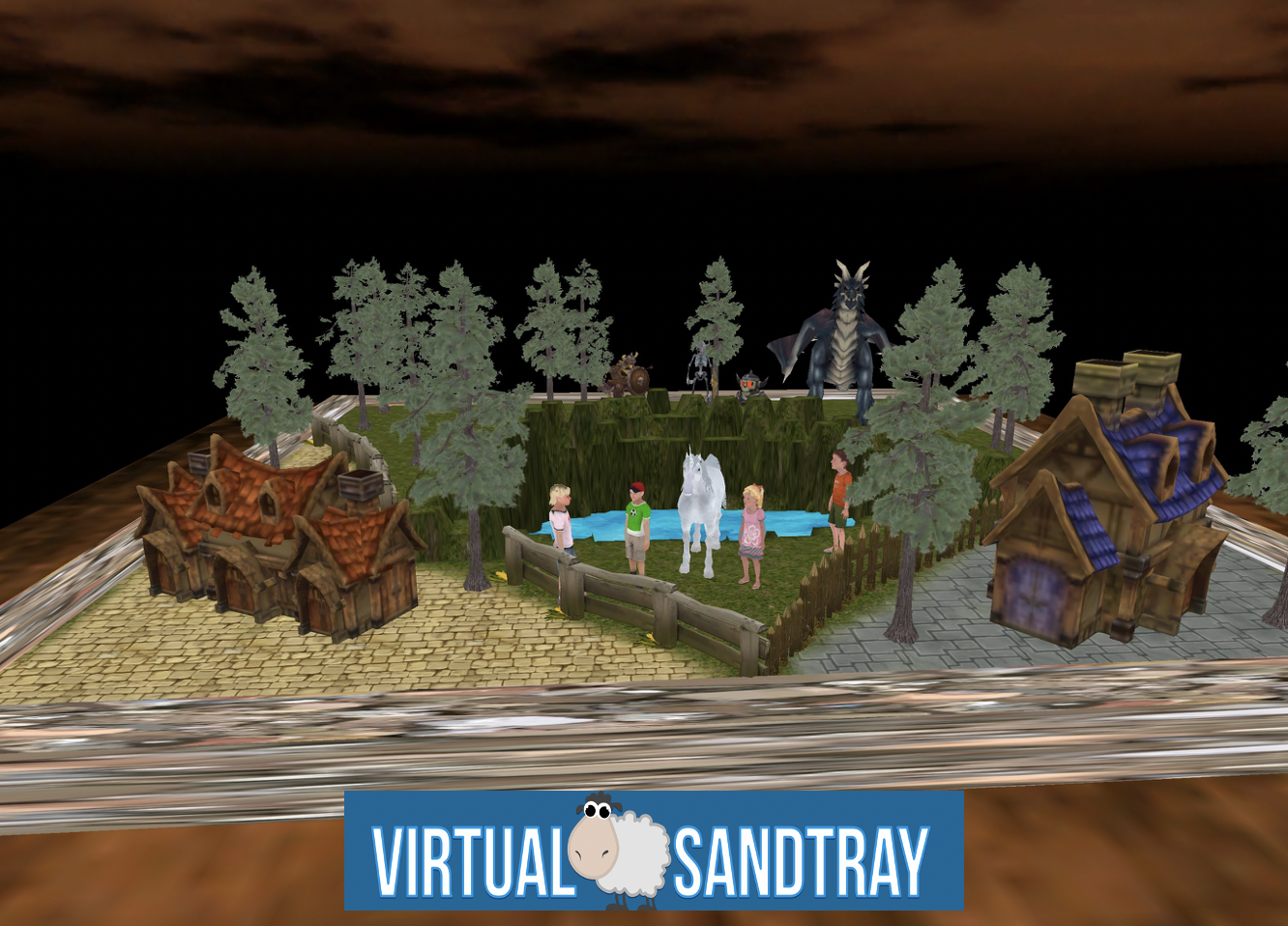
Consigned to Virtual Therapy

Tensions had been mounting inside and around me. “It is time,” I decreed to no one listening. “I need to call Estelle, it’s time to get back into therapy.” As always, Estelle responded immediately. Always there for me. We traded availabilities and landed on an appointment. I felt an ever-so-faint welling sensation of relief. I couldn’t wait to get back on the couch, both literally and figuratively.

Then came the blow. “I’m seeing clients virtually,” she said.

Like what you are reading? For more stimulating stories, thought-provoking articles and new video announcements, sign up for our monthly newsletter.

I first met Estelle when, nearly three decades earlier, I had, with her help, finally extricated myself from a very painful and self-destructive relationship. Ever since, I have been seeing her on an as-needed basis, during fair and foul emotional weather, for issues great and small, and at times just for a well-check. I have followed her from one location to the next, until she finally landed in a charming little 1920s Florida cracker house in the old-town section of Fort Lauderdale. Aptly named “Serenity Place,” Estelle’s office was inviting and warm, a throwback to a past era. Wood floors, rattan furniture, and that wonderfully perfect, just-short-of-mildew smell of “old” that permeated houses of that period.

It was a comfortable little space where I felt room and permission to spread out in all directions. While Estelle practiced a disarming blend of client-centered, Gestalt, existential, and systemic techniques, she was in essence, an Estellist; competent, genuine, and genuinely caring. She knew my backstory. It was her warm, confrontational, engaged, and creative personae that attracted and kept me coming back to that place of serenity. It was a package deal—therapist and space, inextricably bound. And it was to that space I wanted to return when I reached out to her for an appointment.

But virtually? No Serenity Place? No rattan couch, no creaky wooden floors, no lush foliage vying for my attention just outside her windows? And what about the basket of scarves she would cajole me to choose from to express my feelings? And how would she walk behind me to offer a counterpoint to the self-defeating prattle in my head?

Ironically and in the interim, I had taken on two former brick-and-mortar clients with whom I had worked over the years. COVID and all its related discontents had worn them down. When I first met with each of them, I had, of course, asked them how the transition to the small screen was for them. One, a physician who had expanded his telehealth services, and the other, a university professor granted the privilege of teaching from home during the pandemic, concurred that they were “used to it.”

The small screen had become second-nature to them, as it had for me as therapist, teacher, and editor; for in the latter role, I had and continued to solicit articles for Psychotherapy.net on the transition to virtual therapy. And a reading of the various blogs and essays on this topic indicated that therapists “out there” have, of necessity in many cases, adapted to the many challenges of this new mode of service delivery. For others, it was already a part of their therapeutic tool box. But I don’t think any of those who have written on the transition to telemental health have shared personal experiences of being a client during this new wave. Sure, they’ve shared some of the challenges of working with particular clients online, but that is as far as it has gone.

My hope is that each of them has created the space in their therapeutic work to explore the changed dynamics of intimacy between themselves and their clients, rather than presuming that all clients have adjusted similarly or optimally. The closest any of the therapists has come to addressing this was Matthew Martin and Eric Cowan, who wondered about the I-Thou relationship in the era of telehealth.

So here I am, now at this juncture in my 30+ year relationship with my own therapist, wondering if the “I” of me can still connect as deeply and intimately with the “thou” of her, or even if I want to try. I know the therapy outcome literature, particularly the key roles that alliance, collaboration, congruence, and empathy play; and I embrace the burgeoning literature on the efficacy of teletherapy compared to face-to-face encounters.

I acknowledge the privilege of having my choice of therapists, the money to pay her handsome fee, and the state-of-the-art technology to do so. The double standard is not lost on me, but I want to wail on Estelle’s couch, and I want to stand before her, eye-to-eye, as we role-play, and I want to have the option of refusing those gut-wrenching Gestalt exercises before petulantly conceding.

I wonder what will be sacrificed in that seemingly artificial moment, or what will be lost in the existential “here-and-now,” should I decide to pay a digital visit to Estelle. And along the way, I hope that therapists out there wonder the same.

The I-Thou Relationship in the Age of Telehealth

Clinicians have long understood the therapeutic relationship to be the most powerful meta-intervention supporting client change and transformation. As Carl Rogers observed, the prerequisite for therapeutic change is that the client and therapist be in psychological contact. But when a computer mediates between counselor and client, how much does that impair this contact and obstruct the potential for therapeutic movement? In a world increasingly reliant upon telehealth services, we are challenged to preserve the authenticity of meeting if we hope to effectively combat the challenges to real connection inherent in technology-mediated relationships. Luckily for us, philosopher Martin Buber dedicated his entire life to uncovering the invisible potential embedded in relationships, and much of what he discovered can help us to remedy some of these relational complications in the age of telehealth.

Like what you are reading? For more stimulating stories, thought-provoking articles and new video announcements, sign up for our monthly newsletter.

Martin Buber believed that we have the capacity to relate to each other in two distinct ways. When we actively and authentically engage each other in the here and now, Buber believed that we open up to ourselves and orient towards another as a “Thou,” which he characterized by mutuality, directness, presentness, intensity, and ineffability. He saw the I-Thou relationship as a bold leap into the experience of the other, while simultaneously being transparent, present and accessible to one’s own experience. I-Thou encounters in therapy occur when we are able to truly “show up” for our clients, which then affords them the possibility of embodying themselves. Martin Buber designated this meeting between I and Thou as the most important aspect of human experience. He viewed our capacity to confirm and be confirmed in our uniqueness by others as the source of growth and transformation that structures the foundation of our shared humanity.

However, to confirm another as a Thou is no simple task. We must be willing to embody the fullness of our own experience and release ourselves to the ambiguity of the moment if we are to open up the space for an I-Thou relationship. Instead, we tend to slip into seeing the person as an “It.” When we do this, the other person is experienced as an object to be influenced or used, or a means to an end. The world of I-It can be coherent and ordered, even efficient, but inevitably lacks the essential elements of human connection and wholeness that characterize the I-Thou encounter. When an extreme I-It attitude becomes embedded in cultural patterns and human interactions, the result is greater objectification of others, exploitation of persons and resources, and forms of prejudice that obscure the common humanity that unites us.

Buber emphasized the importance of holding a balance between these two necessary poles of existence. However, in the current age of telehealth, the computer itself fundamentally alters the medium through which an I-Thou meeting can emerge and tips the scale towards an I-It interaction. As technology pulls interactions toward I-It orientations, we increase the risk that our clients will miss the authentic growth and transformation that blossoms out of a real meeting between client and therapist. The process of trusting another person with one’s vulnerabilities and sharing a lived-in experience held and expressed through one’s body is much more dimensional than two talking heads communicating through a screen with words and ideas only. We must resist the danger inherent in telehealth, so the therapeutic encounter does not become abstracted, experience-distant, and limited to language spoken from the neck up.

I feel the gravitational pull towards I-It orientations when I find myself leaning into the comfort of familiar habits while facing a client on my computer screen. The presence of the technology tends to pull me into thinking about all the relevant interventions I could implement with my client in order to help them remove their suffering. This orientation is useful at times; however, it also encourages a lack of presence in the teletherapy session that bends attention away from the invisible elements of therapy that foster human connection and growth. Instead, therapy becomes centered on the visible elements of practicality that can distract client and therapist from the deeper therapeutic aim. However, I’ve noticed that I can counter this natural bending of attention by remaining centered in my body and trusting my intuition to guide me. Technology inherently obstructs the therapeutic relationship, but it does not destroy its potential. There still exists an invisible bond that can survive the medium of pixels, a power that can be actualized if we can trust our intuition to guide us towards opening up spaces for its potency. To do this, our presence must remain oriented towards the possibility of an I-Thou encounter.

However, I find that this new technology-centered therapeutic process can be much more draining than in-person therapy because of the extra effort needed to attend to elements that would otherwise be naturally apparent and expressed. The lack of ease in reciprocity in engagement is also dually draining for the therapist, as the usual “beats” of body-to-body communication are absent. I must remember to replenish myself with moments of deep connection and meaningful engagement outside of the therapy room if I am to sustain spaces for I-Thou encounters during the age of telehealth. Though the demand for therapists to pull clients into real participation requires us to hold an age-old responsibility in a new and complicated way, the taking up of that responsibility has the power to foster a type of healing that extends far beyond the therapy room. As Martin Buber once said, “In spite of all similarities, every living situation has, like a newborn child, a new face that has never been before and will never come again. It demands of you a reaction that cannot be prepared beforehand. It demands nothing of what is past. It demands presence, responsibility; it demands you.”

***
 

Part 2 will continue the conversation on how Martin Buber’s philosophy can help to remedy some of the relational complications in the age of telehealth, while expanding his concepts to include challenges from a client’s perspective, personal examples of my struggle to remain faithful to the I-Thou relationship, and the broader sociocultural implications of technology-mediated relationships.

Family Therapy in the Age of Zoom: What a Long Strange Trip It Has Been

If there is no plan, nothing can go wrong
Kim Ki -Taek — Parasite

It’s not the strongest of the species that survive, nor the most intelligent, but the one most responsive to change.
Charles Darwin

It’s recycling day, can’t we just put the kids outside on the curb?
Parent — Pandemic, week five

Dude!…You’re Glitching!
Fourteen year old girl on Zoom session

Long Strange Trip

The pandemic has changed the larger world forever and will forever change the world of therapy. Our therapeutic ecology — how we practice our craft, where and with whom — will never be the same. It’s as if we’ve clicked into a science fiction show and can’t change the channel because we’re in it — clients and therapists have become talking heads, connecting as best we can and collectively feeling the fatigue attrition that accompanies the absence of being in person. The Grateful Dead were right: it’s been a long strange trip, especially for the empaths.

Michael is a single man in his thirties. He’s suffered a lifetime of painful shyness and being overweight. His job requires computer skills, so he spends most of his time in his cubicle, with little socialization on the phone or with co-workers. He’s described breaks and lunch as “torture.” Prior to lunch, he would get revved up with good intentions and then, he said, “I’m like Wile E. Coyote chasing the Roadrunner — I hit the wall.” One time, he got the gumption to attend a meet-up group for shy people, and no one showed. Yet, despite these challenges, he’s determined to be more social. Then, something happened. At our last Zoom therapy meeting, he was more confident and relaxed, like he’d just put on old slippers — smiling and even cracking jokes. For me, it was a kind of optimistic disorientation. At first, I thought that it was the combination of medication, his Wile E. Coyote resolve and hopefully some of the therapy that, like the British Baking Show, had produced a slice of Magic Pie. It wasn’t — it was the pandemic.

Because of “social distancing,” Michael paradoxically experienced being together with people while he was apart. Everyone now shared his life — now he could enter conversations with the knowledge that others also shared the taut, jangled wiring of his interior. It was as if he became an Italian apartment-dweller sheltering in place with his neighbors and singing together with them off their shared community of balconies, everyone listening with hearts joined in the absence of judgement and the voices of hope. Better still, because of the imposed distancing, Michael could now be safely social.

The Zoom Era

And what about therapists — what is this doing to us? Many are working from home. Those of us with children, pets or partners and who don’t have a home office have to find a “quiet space.” Ha! Good luck with that basement, people! Or, if we’re lucky and the landlord isn’t banning entry, we can go into our off-site office space — but that, too, has its own set of Zoomy consequences, not the least of which is “Zoom Fatigue.” By day’s end, sessions can feel like you’re in the front row at a lecture on sofa cushions where the speaker can see you. Just as you start to blissfully nod off, your head suddenly jerks back, and you snort loudly and say something weakly therapeutic like, “really..?” and then wipe the drool onto your sleeve — très embarrassing.

Zooming our client’s home space is not without merit. Back in the day when I was a probation officer in Cabin Creek, West Virginia, and then a social worker doing school evals, and then a research therapist on a project with heroin addicts and their families, I was blessed with being both witness and participant in the amazing diversity of the human condition. You learned to go with the flow and, you swam in the deep end of the family pool — dogs, cats, kids, babies, ferrets, frogs, multiple TV’s, radios blaring, grandparents, people who just showed up whom you didn’t know, dinner on the stove, or a silence that also spoke to you — all this before the age of the Internet. It was so powerful that when I first started my private practice, I would ask families to invite me to dinner and a family session at their home. “Now, we have Zoom — welcome to the shallow end. But we can all still learn to swim.”

You can observe a lot by watching.
Yogi Berra
Peter Lopez, a family therapist on the board of The Minuchin Center for the Family, is a home-based family therapist. On one of his Zoom visits, he wanted to speak to both parents and have an enactment with them that would increase the parent’s executive capacity and demonstrate to themselves and their kids that Mom and Dad were on the same page. In a moment of inspiration spurred by there not being enough headphones for everyone, he asked the parents to “move closer together so you can share…”

Another family therapist, a young woman who works with a diverse population of low-income families and mandated, substance-abusing high-risk teenagers, finds that being “in & not in” someone’s house can diminish her connection and, in some cases, embolden teens to challenge her — like the fifteen year old teenager who greeted her on FaceTime lying in his bed with his shirt off. “Would you do that in my office?!,” she asked, incredulous. “Uh, no, but I’m not in your office….” “Well, when we meet on Facetime, you are in my office!” And then, softer — “So when you put your shirt on we can start, and you can tell me how you’re doing.”

She still delineates the boundaries — for the kids she sees, her office is their safe space. To compensate for the in-person absence, she’s upped the amount of between-session “homework” that she and her clients then share at the next session. Trauma and disconnect are prevalent. A young girl being raised by her grandmother whose mother is absent provided a path in between sessions. Together they came up with an assignment to come to sessions with a weekly playlist of songs that emotionally spoke to the client. The girl picked “How Could You Leave Us?” by NF, which should come with a warning label and tissues — it’s remarkable.
We have to be inter-connected with everyone and everything.
Thich Nhat Hanh

You cannot solve a problem from the same level of consciousness that created it.
Albert Einstein

An informal survey asking therapists to describe their experience of practicing Zoom therapy in the pandemic seems to break into two distinct groups: one, maintaining a kind of Buddhist perspective of acceptance –— that life is suffering and impermanence in which every day is an opportunity to practice mindfully — to another, a bit less accepting — “I fucking hate it!”

A Third Way?

Which begs the question — is there a third way? The short answer is “Yes.” And it’s not without precedent. Einstein’s quote is like learning a brilliant escape trick from a gifted magician. The magic is not what is seen or said but in what he doesn’t say. What he omits is the specificity of consciousness — it does not have to be higher or lower, just different. And we therapists are all about being different. To be effective, we access different aspects of ourselves that then activate different and more adaptive aspects of our clients. It’s what Minuchin described as the “differential use of self.” If we want others to be different, then we have to be different. For systems thinking and for family therapy, in particular, those differences in thinking were already in the works well before the pandemic.

Lynn Hoffman pointed out in Foundations of Family Therapy (1981) that “the advent of the one-way screen, which clinicians and researchers have used since the 1950s to observe live family interviews, was analogous to the discovery of the telescope. Seeing differently made it possible to think differently.” And by circular extension, thinking differently also comes from acting differently.

Up until now, we’ve relied on our in-session felt experience, one-way mirrors and videotaping to guide ourselves as instruments of change. One recursive emotional and visual distinction between the now and the then of the one-way mirror’s transformative introduction, is that families could not see the people behind the glass, nor could the people behind the glass see themselves being seen. Videotaping sessions, however, offered a “third” answer, giving therapists the capacity of “seeing” themselves and the family’s patterns in context. It shined a light on how to experiment with adapting interventions systemically and collaboratively. While inventing Structural Family Therapy, for example, Minuchin, Jay Haley and Braulio Montalvo invited family members behind the mirror. They recognized cultural and class differences between themselves and the “natural healers” from the minority community that they were training to be therapists. Minuchin realized that “in order to join, we needed to change.”

“With Zoom however, there is a binding irony that holds therapists and clients in its’ grasp. It is as if we share front row seats watching a mystery play”. The opening scene’s roiling dense fog and dim lights mask the fullness of detail, so we squint, holding our breath hoping to see what’s really there. We’re doing our parasympathetic best to figure out the plot. It’s the work of it that fatigues us and leaves us wondering if this is as good as it gets.

Therapy is therapy as therapy does, but how we use ourselves in this new environment re-boots an age-old clinical question; what exactly is both necessary and sufficient to produce change? Montalvo called the position from which we work “The possibilistic premise.” Meaning that regardless of the location of the family’s pain, we are still faced with respectfully challenging the system’s homeostatic “stuckness.” We know that we can effect those changes in person. When Zooming, however, it can sometimes feel as if we’re “Major Tom,” floating in space, attempting to weld the hull as we circle the earth.

So, as Bowlby, Susan Johnson, the Gottmans and our own families have shown us, the quality and kind of our earthly and relational attachments are important. While we may feel even more like Russian Dolls, breathlessly stacked within each other’s context and the context of the world writ large, it’s not a question of “if” we adapt and attach in different ways, it’s more a matter of “How?” Perhaps as Theodore Reik suggested, we should listen with greater clarity, not just with a “Third Ear,” but now with ear buds. We are finding ways to compensate for what’s lost with diminished sight and the absence of physical presence. Our adaptive make-up is yielding results. However because we are inherently empaths, we feel the absence of presence. But we shouldn’t feel bad entirely. Rumi’s poem, “Love Dogs,” reminds that “the howling necessity” implores us to “cry out in your weakness,” such that “the grief you cry out from, draws you toward union.”
It’s the end of the world as we know it, and I feel fine.
R.E.M.

Postscript from the Bunker

After not seeing our granddaughters at our house for eleven weeks, my wife and I share a grandparental Folie à Deux — an ache like an old injury that we’d come to accept, now reawakened with every primitively crayoned coloring book that hung on our walls like an in-home Children’s Louvre. As grandparents of a certain age, now when my wife and I see all their stuffed animals in a pile, we silently share the Buddhist themes of impermanence and suffering. It feels like a Christmas Story staging of Toy Story — our precious time together is ghosted in front of us as a reminder to our mortal selves that “this is it.” This perfect time of their lives, full of wonder and imagination, is just another pandemic curtain closing on the “Duck Duck Goose” show. Now our own mortality is awaiting, as quiet mourners do when “joining” family and friends on a Zoom funeral.
Alone together.
Dave Mason

Then there’s this — amidst all the noise, people find themselves and others. I see a recovering alcoholic/substance abuser in his thirties. He’s been in recovery for seven years. He has a great sponsor and a solid home group. As the pandemic continued, he began to miss the in-person connection with his group and his sponsor. So last week, with the intent of doing “Step work,” he and his sponsor sat safely apart on his sponsor’s back porch. As night began to fall, he said that without any cues, they both simultaneously became silent and quietly surveyed the backyard as darkness fell. He said it was one of the best conversations that he’d ever had.

Like the scene from Little Miss Sunshine, when on their way to the “Little Miss Sunshine” contest, Dwayne flips out after finding out that his color blindness has just destroyed his dream of joining the Air Force, getting away from the “fucking losers” that constitute his family and having a life of his own. He’s profanely inconsolable. His mother says, “I don’t know what to do!” Then his stepfather says to Olive, “Olive, do you want to try talking to him?” Without a word or hesitation, Olive gingerly makes her way down the embankment, ignoring the dust scuffing up her red cowboy boots, and squats down next to her big brother. She puts her arm around Dwayne, leaning her head onto his shoulder. She doesn’t say a word. They both sit together as one in the silence. Quietly, as if whispering a confession, Dwayne says, “O.K., I’ll go.” He then helps Olive up the hill and says to his family, “I apologize for the things that I said, I didn’t mean them.” They load in the van and continue on.

“Off in the distance is a billboard, the message faded but visible, “United We Stand.” We can hope”.

Internal Emigration & Online Therapy

“I was born in the wrong place,” one of my online clients told me. She is someone with fidgety feet and a knotty relationship with her homeland. Growing up she had felt out of place in her native town, tucked in the middle of Pennsylvania. I keep hearing different versions of this harsh statement, from clients from various cultures and social backgrounds.

Like what you are reading? For more stimulating stories, thought-provoking articles and new video announcements, sign up for our monthly newsletter.

The feeling of not fitting in, not belonging to their original environment, is shared by many emigrant writers. Edward Said’s account of this experience is probably the most quintessential: “There was always something wrong with how I was invented and meant to fit in with the world of my parents and four sisters. Whether this was because I constantly misread my part or because of some deep flaw in my being I could not tell for most of my early life. Sometimes I was intransigent and proud of it. At other times I seemed to myself to be neatly devoid of any character at all, timid, uncertain, without will. Yet the overriding sensation I had was of always being out of place¹.

Said’s experience of being deeply flawed, his constant uncertainty and confusion about his own worth, are all indicators of various degrees of feeling shame related at least in part to his sense of not fitting in.

Joe Burgo, a psychotherapist and the author of a recent book Shame, insists that: “Unreciprocated affection or interest will always stir emotions from the shame family. As part of our genetic inheritance, we want to connect with a loved one who will love us in return; when our longing is disappointed, when we fail to connect, we inevitably experience shame, however we name the feeling². The motherland, which does not love us back, is similar to a parent that fails to meet our expectations of love. Both unfortunate situations naturally result in feeling that something is deeply wrong with us.

One of the ways we can cope with such circumstances is by leaving our original place altogether. For some, the decision to emigrate, often a difficult one, is unconsciously driven by the need to avoid shame provoked by the discordance between who we are and who we are expected to be in order to fit in. In many cases, the choice to leave home is the best survival strategy. The most obvious examples are queer individuals from countries that pathologize and punish homosexuality: they flee their homes in order to be able to freely live their lives in the way that feels right to them.

But such physical escape is not always possible. Individuals who grow up feeling that they do not fit in countries that they cannot leave for various reasons (e.g., an iron curtain of any kind, family situation, physical handicap, economic dependence) feel trapped and disempowered in the face of such an unresolvable conflict. Not being able to escape the place that is rejecting them only reinforces the feeling of shame triggered by a constant experience being different and not fitting in, and of being excluded.

When emigrating outwards is impossible, the only way of fleeing such reality is inwards. My own Russian culture offers abundant examples of such a psychological strategy for subsisting in an unfriendly reality. Soviet history gave us not only the concept of internal immigration, as mentioned by Angus Roxburgh in a recent Guardian article on life in the 70’s, but also a rich cultural heritage, which thrived “underground” despite the intermittently tyrannical regime. Many artists—Shostakovich being probably the most striking example—lived a paradoxical experience of inner freedom in the middle of an oppressive outer reality.

Russian emigrant writers give us a powerful lesson of resilience in dealing with hostile but inescapable realities. Through their art, they created inner bubbles of freedom, and often had to evolve in parallel realities like Joseph Brodsky who, decades before emigrating, introduced the notion of an “indifferent homeland” in his early work inspired by the quintessential poet in exile, Ovid.

Emigrant writers such as Brodsky or Nabokov’s use of a foreign language for writing is emblematic and has deeper meaning: they claim a new freedom from constraints imposed by their culture. Committing to a chosen second language, despite the difficulties and losses that this choice implies, is a powerful affirmation of individual freedom. This second language, according to Kellman, becomes the tongue of the parallel inner world and a language of freedom.

The same is true for some of my clients living in the state of internal exile. They often reach out to a therapist who speaks English even though it is not their mother tongue. This choice certainly complicates their therapeutic journey, but also allows it some unexpected depth and richness.

When I meet with clients who evolved under an authoritarian regime (e.g., Saudi Arabia, Putin’s Russia, China), I recognize the strength of this coping strategy. Our sessions happen online through videoconferencing systems, as the clients are often unable to find a suitable support in their home countries. The regimes they live under have no love lost for therapy, which aims at empowering the individual; they usually opt for a kind of punitive psychiatry, which was so well developed in the Soviet Russia. Its aim was, in Brodsky’s words, “to slow you down, to stop you, so that you can do absolutely nothing…”

Evolving in self-created bubbles of parallel realities drives us even further away from those who share this harsh external reality with us. This further isolation can only deepen the shame that we already feel about being deeply flawed and not fitting-in. Those who are restricted to these self-created inner worlds often display some recurrent symptoms: depression, anxiety, low self-esteem, and constant self-doubt.

Online therapy can offer these inward emigrants a third space, located outside of their unfriendly environment, on the outskirts of their inner reality. In these two conflicting worlds, they are alone, but in the virtual space of therapy, they find a friendly person in front of them, open and curious to learn about their worlds. The online reality shared with their therapist eventually becomes a safe space to reflect on the painful discordance of their inner and outer worlds.

Communication media that online therapy actively uses for its own scope often play an important role in dealing with life in unfriendly inescapable surroundings. Many of my clients living in the state of internal emigration turn to social media on the internet to find like-minded peers and feel less alienated and less ashamed.

There is an intriguing parallel between the voices of the free radio that had offered an opening towards the other side of the curtain during the Soviet times, and the social media of today. The latter is more interactive by nature. During the Soviet times, one was only able to listen and feel connected by a stranger’s voice talking in one’s own language from the other side of the divisive wall, whilst modern technologies offer the possibility for a dialogue, often in English used as the lingua franca.

I have witnessed many situations in which such an outlet kept individuals sane: Saudi women who connect with each other in the ethereal space of freedom; a gay man from Siberia finding connection with those like him and acquiring some form of validation of his own experience; a queer young woman in Putin’s Russia working for a liberal news online platform and through her work connecting with those whose thinking she can share.

Online therapy with a transcultural therapist, who evolved on the other side of the wall, in a different and often freer reality, becomes an ultimate opening for individuals who experience their external realities as oppressive. In some lucky cases it can shake up the juxtaposition of the two incompatible realities the individual is locked in and offer something else—a less lonely space in which they can experiment with fitting in, belonging and imagining other, less lonely and shame-filled, and freer possibilities.

References

(1) Said, E.W. (1999). Out of place: A memoir. New York: Knopf.

(2) Burgo, J. (2018). Shame: Free Yourself, Find Joy, and Build True Self-Esteem New York: St Martins Pres. 

Talkspace: The New Therapy Room

I am always on the lookout for new opportunities and exciting options through which to share my mission of promoting positive mental health. I have been a psychotherapist for over 31 years. Working with adolescents has taught me many things, foremost among which is to expect the unexpected and be open to whatever is happening in the digital world. And it’s not like I’m a dinosaur who’s ignored trends in the digital world, but when did texting become the new form of talking, and can it possibly be an effective form of communication? For therapists?

Like what you are reading? For more stimulating stories, thought-provoking articles and new video announcements, sign up for our monthly newsletter.

Along came Talkspace (TS), a highly sophisticated digital therapy platform which provides for communication with clients through audio and/or video messaging and live video sessions. I thought it was an opportunity, but even more so, a resource, I could not ignore. The “on-boarding” process, as it is called, required a significant commitment including providing my professional credentials, proof of liability insurance and completion of their comprehensive Talkspace University+ training, so that I could understand and effectively use their digital platform. Yes, it is HIPAA compliant.

Clients provide informed consent along with emergency contact information. One hopes to never have to use the emergency contacts, yet it is reassuring to have them readily available, if needed. Talkspace handles all financial transactions, including insurance, private pay and EAP (employee assistance program) fees. Clients are paired with therapists or can choose their own clinician. They complete a general application outlining their presenting problem(s) which triggers an assessment designed to establish a baseline of the frequency and or intensity of the presenting problem(s). Once client and therapist are paired, the therapeutic relationship begins. Rapport building beings and expectations related to frequency and mode of communication are agreed upon. For me, it involves five twice-daily visits to my “room” each week. The client has 24/7 access to their “client room” which is where we maintain contact. The relationship can form surprisingly quickly compared to some of the typical live sessions I have had in my on-ground or in-school clinical work.

Has it been significantly different for me from the traditional face-to-face therapy that I have practiced for so long? Yes and no! The convenience for myself and my clients is incredible. If you have an iPhone or iPad with a wireless connection, you can provide psychotherapy through the Talkspace platform. Italy, here I come! Yes, that does make it sound easy, however just as I have in my on-ground office, it has been important to trust in and use the experience I have accumulated to read through the message in the messages. Do I miss the nonverbal cues? Well, yes! This introduces the challenge of asking additional questions that I might not otherwise ask in my face-to-face work. For example, “What are your feelings about this? How are you processing all of this?” Yes, you ask these questions in face-to-face therapy, however it is typically more in the flow while you are reading the client’s nonverbal cues that insight into their feelings is acquired.

Most of us do not audiotape/review our sessions, we use notes and memory, right? Think about what YOU use to recollect your session. The nature of this digital therapeutic communication is very similar to in-person communication, but the entire exchange is right there on the screen. Client and therapist can read re-read the entire communication. This has allowed me to use the CBT model with greater impact. I encourage my TS clients to reread and review some of our previous messages to reinforce interventions, sometimes cutting and pasting in order to highlight and reinforce a concept. Here is an example of part of an interchange I had with a client:

Client: “I value my friends a lot and I genuinely do whatever I can to make them feel as good as I can get them to be.”

Me: “I am wondering if you can apply that thought/ideal to yourself. I value me a lot and genuinely do whatever I can to make me feel as good as I can for myself. How would that statement/thought feel? Try it on.”

Of course, I asked my client permission to use this. Within my message to ask permission, I once again copied and pasted the previous message for the client—an effective way of reinforcing and restructuring some of the negative thinking that occurs for her. One of the advantages of this platform is the ability to go back with accuracy to reinforce while highlighting the possibility of change. Additionally, I like the use of visuals in therapy such as the CBT triangle (thought, behavior, emotion), but as yet, it has been a challenge to bring these into the Talkspace room. I’ll get there.

The one constant in life, and no less in my evolving professional role, is change. Talkspace has challenged my preconceived ideas about digital therapy and enabled me to bring my clinical skills into the digital sphere. I welcome the research and data to support this work. I recently asked one of my digital international clients to articulate their experience with me on Talkspace. She said, “I don’t know if this could be of any use, but face-to-face therapy here in Saudi Arabia is really limited…I was faced with ignorance and people didn’t know how to handle me.” She continued, “With Talkspace, I truly felt heard and comforted in ways I couldn’t in face-to-face therapy. I’m sure professionals here are extremely good at what they do, but I was blessed to have you as my therapist and like I’m taking a huge step into bettering myself.”

Face-to-face and digital therapy both include rapport building, the establishment of baseline through careful assessment, the development of treatment goals, the creation and implementation of interventions and assessment of treatment outcome. Talkspace has brought me and my therapy room to clients who I, more than likely, would never have had the opportunity to work with. The clinical effectiveness, affordability and accessibility of Talkspace have worked for both me and my clients, allowing me to continue my mission to promote positive mental health. Therapy is not about a room, it is about creating a space for connection and healing. Welcome to the new therapy room. 

Online Therapy: An Unexpected Space of Freedom

Taking Risks

The dramatic story of the Saudi teenager Rahaf al-Qunun¹, who fled her family and country in order to request asylum elsewhere, resonated with many people in different ways. The oppressive background in which women like her evolve is generally far from our eyes, but I have, through my online therapy work, experienced several very touching stories from women in the Middle East.

Engaging in therapy is something that even Westerners do not enter into lightly. It requires taking a risk in opening themselves to a stranger to exercise the power of vulnerability. For women from countries such as Saudi Arabia, this entails a completely different level of personal risk and exposure. The fear of being misunderstood, judged, medicated, or reported to their family and consequently punished harshly, makes it nearly impossible for them to reach out for face-to-face psychotherapy.

As I grew up in Soviet and then post-Soviet Russia, I have firsthand experience of feeling trapped in a place where state-imposed values and rules did not align with my own. The exercise of one’s intellectual freedom turns into a road to salvation when other freedoms are unattainable.

For women in hardline Middle-Eastern countries, online therapy offers a safe space in which to exercise intellectual and spiritual freedom—they can explore their religious doubts, talk openly about their sexuality, voice their frustrations and anger, and eventually find meaning in their experience.

In an interview in The Guardian, Rahaf al-Qunun points out that in her country, no matter their age and life experience, women are treated like children. In a society governed and controlled by men, they are stripped of all power and infantilized.

These women continually strike me with their courage and resilience. One such brave woman was Laila (an amalgam of Middle Eastern women with whom I have worked in online therapy).

Laila’s Story

Laila was 36 and unmarried. She had a stable and reasonably well-paying job at a bank. When she received a promotion, she was allowed to move out of the family home to a nearby town in order to take the position. She was allowed to do this because her youngest brother lived in the same town and worked at the same bank. He was also unmarried and they lived in the same block of flats. He drove her to work every morning, as she was not allowed to drive herself.

Her brother was much younger but had more rights. Laila “needed” him for assistance with the most routine tasks—for example driving her to work or for travelling out of the country for a professional conference. This is how things work: women are made to need men.

Laila was different. At a deeper level, she did not believe or feel that she needed men. She did enjoy the company of some of her male colleagues and rare friends, but she did not desire them. Leila realized this about herself as a teenager, when back at school she felt compelled to kiss the beautiful face of her female best friend.

One of the duties Laila was not able to escape was mandatory attendance at family gatherings. She would sit there, her face uncovered, surrounded by women talking about their children and their little sons running around—already enjoying their privileged status in front of their sisters—and painfully feeling how little she belonged there.

All this fuss around men felt ludicrous to her. It was an ironic situation after all—she had to uncover her face with women to whom she felt attracted and was expected to be separated from men who represented no risk to her emotional balance.

Laila knew that she would never be able to live the life that she dreamt of. She loved her brothers, despite often feeling angry with them. She also loved her father, even if he would not listen to her or take her achievements seriously. She knew that, for her family, she was “damaged goods” and she would remain so, as she would never marry and give them children.

Laila eagerly waited to get old enough to stop receiving proposals from men that she did not know, who, as she grew older, wanted her as a second or third wife. In the meantime, she had occasional moments of joy with her few female friends and secretly experienced excitement and lightness in the body-less company of her virtual friends from the online community of women just like her.

Autocratic states use mental health stigma to control their citizens.Laila was very scared of being accused of being mentally ill. This is exactly what happened to Rahaf al-Qunun who, in the statement released by her family after her escape, was labelled “mentally unstable.”

An Online Refuge

As a therapist who works online with clients, my personal background helps me to understand and relate to what these women experience. Mental illness was stigmatized in the USSR, easily exploited by the authorities to punish and isolate any individual not complying with the strict rules of collective functioning. Therapy was almost nonexistent and was considered a medical treatment for alienated sick people. Online therapy was not an option as it is now, offering an opportunity to reach out to someone from a different culture, which can be useful when someone is trapped in an unfriendly world.

The effects of living in an autocratic country on individuals’ mental health are many. My female clients from hard-line Middle Eastern countries suffer from depression, anxiety, insomnia, dissociation, and difficulty trusting others.

Their individual boundaries are constantly transgressed and violated. The psychological effects of being raised in such an environment are like those experienced by a child growing up in a narcissistic family: the needs of the parents’ system (the society) take precedence over the needs of the child (the individual).

The only way to avoid being mistreated by a narcissist is to limit their power over you or to stay as far away as possible. Oppressed women like Rahaf al-Qunun have every right to rebel and protest as do children of narcissistic parents—they entirely depend on their caretakers and cannot freely leave their country or their family.

Individuals raised in cultures where they must abide by a very strict set of rules that do not take into account their needs, learn how to hide, to keep secrets, to lie. This is a natural way of adjusting to a system that does not accept parts of you; it becomes a question of survival. Such secrecy leads to an impression of living a double life. The cost of such fragmentation is often a lack of intimacy with parents and disconnection from those who are not aware of the “other” life that quietly happens inside or in the online space.

In a way, as their therapist, I must play a part in this secret parallel world, as my clients also hide from their families the fact that they are in treatment. Therapy, especially with a Western therapist, is seen as a transgression. My clients must come up with a plausible pretext for isolating themselves with their computer in a private room within the family home without being disturbed. I am often presented as a colleague, or an online English teacher. Here, the fact that their older family members do not speak fluent English comes in handy. The second language creates the much-needed safe and private space, in which they finally can explore their inner worlds, and the conflicts with the outer world in which they live.

Behind the Veil

I do not share a mother tongue with many of my clients so we must speak in English. Such use of the third, neutral language plays an important role in how the therapy evolves. It facilitates sharing thoughts and dreams that are defined as unacceptable in the clients’ original culture. Speaking English also provides us with an opportunity to play on even ground—as fluent as we are in our second tongue, we are still both foreigners, negotiating our accents, sometimes looking together for the right word. This experiment in equality has an additional reparative value, as being fully recognized as equal is not an easily obtained right in these women’s world.

As a Western woman with a limited knowledge and experience of Middle Eastern cultures, I let my clients guide me through their personal stories shaped by the culture, family, and place into which they were born. With them, I become an avid learner as we move towards a shared goal—a better understanding of who they are and who they want to be within the limits of their world. As we advance, pushing these limits becomes an existential necessity. For any transcultural therapist, this is a rather familiar role, but online therapy expands this in an extraordinary manner.

I have also had the opportunity to work with some Saudi women living outside of their country in Europe or elsewhere. Those with liberal, well-to-do and open-minded parents can study abroad. The sudden freedom comes with another set of psychological challenges—these young women must adapt to the transition and find a place in this new world, negotiating an acceptable balance between their original cultural values and the norms and expectations of the new place and culture.

During this stressful time, therapy offers them a space for dealing with conflicts and dilemmas that arise along the way—to wear or not to wear a headscarf; how to explain to their foreign peers the values and rules they choose to abide by; how to deal with anxious parents’ visits and a stressful life in an unfamiliar environment. Interestingly, they still retreat back to the familiar online space—which feels safer—to find friends or develop romantic relationships.

“Why does it matter that we, freer men and veil-less women, understand the struggle of women in these regions of the world” where many types of freedom are restricted? Will our understanding of their condition and our empathy change anything for them? My intuitive answer is ‘yes’; otherwise I could not do my work as a therapist. But how so?

Humans are social creatures, and the way we are looked at by others very often matters. We all have secret stories about how bad or how exposed we felt when people around us looked at us, judging our looks, words, or differences. In these circumstances, we feel shame. People with a handicap, sexuality difference or cultural/ethnic difference, all those who differ in some ways from the majority know far too well the emotional toll of such unwanted exposure.

How can a woman wearing the full veil feel when walking in the street in a tourist area of a big Western city? She is entirely covered in a black veil, her face hidden. On both sides of the veil we feel uncomfortable. The veil is a barrier, and, when we do not see the face behind it, we struggle to empathize with the individual. Behind the veil, there is sometimes deep discomfort and a feeling of shame. They may feel trapped, and our misunderstanding of their condition and our judging them for choices they do not have, may add to their suffering.

To connect with others and to be understood, without their body being seen, can be a challenge for these women. It is another reason why the online communities of Saudi women are thriving. Probably this is also what makes online therapy a hopeful space in which they can develop a connection with a Western therapist who represents this “other.”

As with any therapist, I am here for those who have psychological difficulties and struggle with some form of conflict. Surely, many women living in the strict Middle Eastern countries are happy enough with their circumstances, and not all of them would relate to my clients’ stories. But even if women I meet in my practice are a minority, it is important for them to be seen and acknowledged in their struggle, and to be offered a safe space like online therapy in which they can feel recognized and strive toward a better life.

Resources
1 Rahaf al-Qunun: “I hope My Story Encourages Other Women to be Brave and Free