How to Focus on Emotions to Help Volatile Couples Reconnect

Suggested Tips for Practice

  • Develop flexible hypotheses for understanding family dynamics
  • Collaborate with each family member around therapeutic goals
  • Explore your countertransference around complex dynamics in family work.  
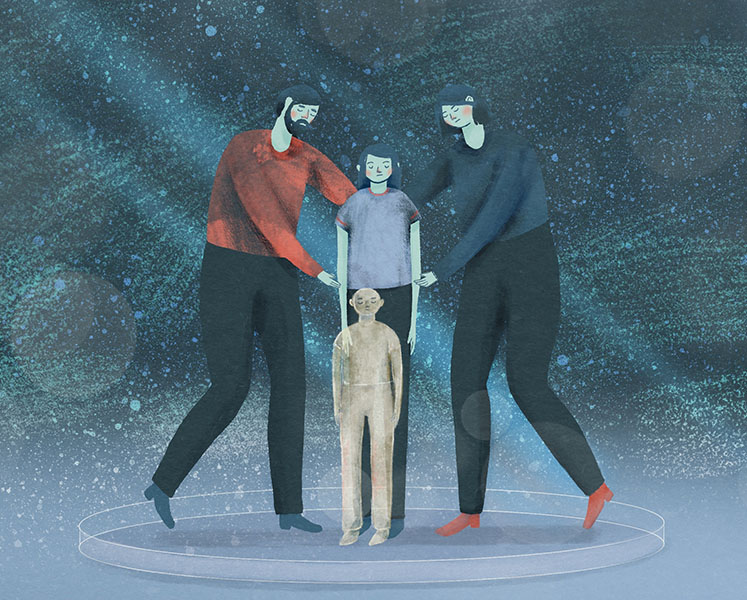
Camille and Lance had been married for about seven years when I first met them. Their daughter, Hannah, was four at the time. I typically saw Camille and Lance twice monthly for about nine months. Their central goal for therapy revolved around managing anger during conflict and responding without reacting with defensiveness, criticism, or emotional withdrawal. They each expressed that empathy, or an ability to hear, identify with, and validate each other, was lacking in their attempts to express and resolve conflict.

Conflict occurred for them in vicious, seemingly unavoidable, and endless cycles of attack and withdrawal. Neither Camille nor Lance experienced their relationship as supportive or safe, and both seemed to have little understanding of the cause of their conflicts or dynamics that kept them apart. Lance and Camille regularly experienced hurt and rejection, unable on their own to engage constructively with one another during moments or episodes of volatility. They reported a desire to grow in their marriage by experiencing togetherness, as well as understanding, in the midst of conflict. However, their pattern made it almost impossible to break or heal from these cycles, leaving each of them stuck in perpetual states of defensiveness, criticality, and ultimately the experience of rejection. Almost always, Lance and Camille seemed to be just a disagreement or wound away from their next blowout.  

Assessing the Problem

Camille often expressed her emotion through anger, criticism, or a vigilant effort to draw out an empathetic emotional response from Lance, while his go-to responses were anger, defensiveness, or withdrawal. They described a mutual experience of “hopelessness” regarding navigating and resolving conflict.

Adding to their pain was Camille’s and Lance’s disconnect from social support, as they lived a considerable distance from both of their families and had struggled to build social connections as a couple. There were also pressures related to both finances and Lance’s work schedule.

Camille, having close ties with her family, described her childhood as one in which she was nurtured and supported. Lance, who had very little contact with his own family, characterized relations with them as chaotic and he described a childhood in which he was left on his own for almost everything, including meal and school preparation and doing homework.

A Working Hypothesis

The more Camille and Lance were able to communicate vulnerably with each other about their own emotional hurt—which we distilled down as feeling “misunderstood, unsupported, and unappreciated” — the more they would experience love and mutuality (that is, feeling understood, supported, and appreciated) during conflict and in their marriage in general.

It was clear that Camille’s and Lance’s emotional experiencing during heated conflict occurred at a secondary, reactive level (anger or withdrawal) rather than out of the more vulnerable, primary dimension of their emotion (simply feeling misunderstood, unsupported, or unappreciated). How they expressed their needs for closeness or identity in their relationship determined the ensuing cycles of emotion by which closeness or identity was negotiated.

While it was likely that their current emotional styles and patterns of conflict response were rooted in past experiences, my therapeutic approach was focused primarily on the ways in which they expressed their hurt to each other in the here-and-now of their marriage, especially during conflict.

Clarifying a Goal for Therapy

The central goal of therapy for Camille and Lance was to reach a place where they could begin to experience mutuality and togetherness, as well as understanding and acceptance around their differences, especially regarding their experience of conflict management.

In reporting on goals, the couple agreed that they would “like to be able to set goals and boundaries together,” as they had prior difficulty in meeting common ground. They said of themselves, “we fight mean,” and “we can both be Dr. Jekyll and Mr. Hyde.”

To optimize chances for therapeutic success, every session and intervention would need to be grounded in the goal of facilitating more satisfying emotional experiencing between them, particularly during conflict. The work of therapy would involve increasing expressions of vulnerability in place of reactive expressions of defensiveness and criticism during conflict.

This change was to facilitate the delay of gratification in their individual desires to experience immediate validation, and in its place to nurture the development of a more meaningful and effective way of processing emotion and staying connected through hurt and nurturing intimacy.

Clinical Reasoning

An emotion-focused approach theorizes that couples experiencing difficulties in their relationship often are hiding and or repressing emotions such as fear or a need for attachment, and instead expressing emotions that may be defensive or coercive — primary” and “secondary reactive” emotions.

When these negative interactions solidify into patterns, couples often experience a loss of trust or a heightening of fear in their relationship, therefore further burying the primary emotions.

I theorized that Camille’s and Lance’s pattern of becoming angry or emotionally withdrawn during conflict was a pattern of conditioned defense, covering up primary emotions, cravings for understanding and support buried below the surface of their experiencing.

Clients with whom I have worked typically have internal resources for repair and growth in relationships. Their negative interactional patterns, which often are adaptive, coping styles can therefore be transformed into positive and healthy interactions. In these cases, couples counseling that focuses on emotions can result in transformative experiences.

As a therapist, I don’t see myself as an intrusive mechanic who fixes couples. Rather, accepting and validating clients’ self-experience is a key element in my therapeutic approach. Empathic attunement with couples also involves taking care to provide appropriate validation to one person without marginalizing or invalidating the experience of their spouse. It is a balancing act.

With Camille and Lance, I attempted to provide empathy and safety, as well as to engage in our relationship in a way that was collaborative and in which roles and expectations were clearly defined. Through many challenging and white-knuckled therapeutic hours with conflicted and often disconnected couples like Camille and Lance, I have found that a clinical environment marked by empathy, safety, and occasional structured directives provides the opportunity to build corrective emotional experiences and reconnection. By working in the here-and-now with them, and by integrating their at-home experiences into our in-session work, Camille and Lance became increasingly able to reflect on both their respective inner and relationship experiences in a far more adaptive way.

Intervention and Therapy Process

The family therapist Carl Whitaker advocated a nonrational, spontaneous, and creative experiential presence with clients as a means of engaging them at the hidden symbolic dimensions of their awareness. He said that for real change to occur, insight won’t do the trick. We need to engage each other emotionally.

While encouraging the spontaneous and creative side of therapy, Whitaker also understood the importance of providing focus and structure, “the experience of our being firm,” as he called it. With Camille and Lance, I attempted to use in-session directives that would drive the client-centered and emotion-focused processes in therapy. I also labored to redirect from more-of-the-same conflict cycles to processing the experience of emotion in their relationship.

If they were tempted to explain why they were angry, I let them know that they could choose between carrying on explaining, remaining in the safe position of knowing what they already knew, or exploring how they experienced anger, taking them to what they did not yet know. This was effective with Lance and Camille in facilitating a shift between defending, criticizing, or debating facts to sharing emotional experiences by exploring their own internal processes.

The following is an overview of the therapeutic process.

Sessions 1 & 2  

My hope for these early sessions was to establish a working relationship with Camille and Lance, to open up the space for them to tell their story, to nurture understanding and relationship with them by listening empathically, and to begin to establish a therapeutic vision. At this time, I was focused on noticing and stirring curiosity about emotional experiencing in their marriage.

Camille and Lance described their reason for coming to counseling as “conflict.” They described the early family contexts that shaped them and theorized about their problems in marriage. They described their cycle of conflict as erupting when Lance experienced Camille as being “nagging, preachy, or undermining.” Camille compared Lance to her father many times, which frustrated him. She said she wished, in some ways, that he were more like her father.

Camille and Lance had, in these sessions and in sessions thereafter, described successful experiences of empathy during conflict. Early on, they communicated that when they experienced feeling heard or understood, they felt closer with each other and experienced more successful conflict. I hoped to begin to interact with and facilitate experiences of empathy between them, not merely by talking about these successful experiences of conflict but enacting them in-session.

Session 3 & 4 

My approach during these sessions was to facilitate in-session interaction with their emotions in conflict. During the third session, Camille and Lance reported having a “not-so-good last couple of weeks.” They found themselves frequently getting into heated arguments around Camille, forcing Lance to have conversations with her about subjects that he did not want to talk about.

Lance described feeling “like my whole life is ‘I’m sorry,’” because Camille always “nagged” him about the things that she thought he should be doing. Lance described the conflict as being over “small things,” while Camille argued that they were over “bigger things.”

Lance frequently felt overwhelmed when Camille approached him about multiple concerns at once. Lance said he needed “time and space to breathe and think.” Camille said she wanted to process through these issues immediately.

A large portion of the third session was spent negotiating between them a way of giving mutually satisfying time, space, and understanding while in the heat of conflict. Between sessions three and four, I had them work together on a list of “rules for fair fighting,” which was used as a way of engaging them to establish boundaries and appropriate responses for conflict, a goal that they expressed early on.

Camille and Lance came to our fourth session still emotionally charged from a fight. Both described not feeling heard. I coached them to listen actively, and they reported feeling more heard by the end of session as a result of a slower, less reactive style of communicating around feelings.

Session 5 & 6

A goal during these sessions was to provide in-session experiences of communication between Camille and Lance, exploring and interacting with their emotional processes through emotion coaching strategies. Camille and Lance talked about the patterns of their fights and how they escalated quickly and got “off subject.” I facilitated the practice of active listening in an attempt to promote understanding and slow down arguments.

Session 7 & 8 

During these sessions, we focused on the pattern of conflict between Camille and Lance.

Together we explored body language and other forms of meta-communication. Camille said, “He feels threatened by my body language, and I feel threatened by his.” Lance reported that he was frustrated and felt disconnected. He reported that when conflict is present, “I don’t want to talk about it.” During the conflict, Lance experienced “tiredness, numbness, deadness.”

During session seven, Camille and Lance reported having a conflict around finances after a trip to a wholesale store, where Camille spent a lot of money on things that Lance did not think they needed. During the session, I encouraged active listening and communication between the two of them as a way of assessing and intervening in their emotional processes during conflict.

During session eight, they described “hopelessness” as a common experience during conflict. Camille communicated that she experienced hope and safety when Lance looked at her in the eyes when she wanted to talk to him about something, rather than tuning her out. Lance communicated that he experienced hope and safety when he was given emotional and physical space to sit in the disagreement and then communicate about it again later.

They reported that they had experienced some dramatic and disappointing conflicts as well as “breakthroughs” in the past couple of weeks. During “breakthroughs,” they felt mutually understood and supported. At the end of the seventh session, Camille noted that she kept a record of Lance’s wrongs. I suggested that during the following week she keep a record of Lance’s “rights.”  

Session 9 & 10 

During these sessions, we explored how their personality differences affected their conflicts. Lance expressed difficulty in developing close friendships right now and in speaking up in groups, including with acquaintances and with coworkers. He also expressed being overwhelmed right now in his life, being busy with work, marriage, and parenting, among other things. I shared similar experiences of my own to normalize his experiences.

I noticed a lighter interaction between Camille and Lance during these sessions, which I pointed out. Even while discussing conflict, their conversation was more introspective and less frustrating. Previous conversations, especially about conflict, were less thoughtful and more reactive. I noticed a fresh team-based attitude in their in-session interactions and shared my observations. I also had a brief opportunity to observe both of them with Hannah, who had been waiting in the lobby during our session. They seemed gracious and loving with her.

Session 11  

My hope for this session was to re-join with Camille and Lance after over a month’s break from therapy. Lance reported having begun taking medication for depression and social anxiety after communicating with his family doctor about his concerns. He originally began taking one medication but switched to another shortly after he began experiencing negative side-effects.

Camille and Lance reported having an argument while Lance was feeling “numb” from his medication. During the argument, Lance had not felt attacked by Camille. Feeling unattacked, he had been able to support and validate her, which turned out to be a meaningful experience for her. He reported that it was not meaningful to him because he felt “out of it.”

I explored the differences in the quality of their interactions during that conflict that created a more successful outcome. Camille identified that Lance’s non-defensive stance disarmed her reactive emotions, and they were both able to communicate more thoughtfully and vulnerably.

We explored the difference between primary emotions, such as hurt, sadness, or feeling misunderstood and unsupported, and secondary reactive emotions, such as frustration, anger, feeling “pissed off,” or feeling emotionally numb and withdrawn. After drawing a diagram of these dimensions of emotion, I explored the effects of communicating out of each dimension during conflict.

When one of them communicated out of anger or refused to communicate out of emotional withdrawal, the other either became frustrated or emotionally withdrew as well. During this sort of interaction, they mutually felt misunderstood and unsupported.

We then explored the possibilities of communicating vulnerably and honestly out of the oftentimes buried, primary emotion of feeling hurt or sad. When one of them chose to communicate non-defensively about an experience of feeling misunderstood or unsupported, the resulting mutual experience tended to be feeling “joined together” and “heard.”

Utilizing emotion-coaching and other experiential interventions, I hoped that they would begin to experience a restructuring of their patterns of interaction and of their experience of intimacy based on new understandings and meanings.  

Session 12 

Lance and Camille had a fight immediately before this session. Lance had been feeling exhausted and overwhelmed earlier in the day. When Camille brought him coffee as a gesture of love and support, Lance told her, “That’s the last thing I need right now.” This started an escalation, in which Lance quickly distanced himself and became emotionally withdrawn.

As I attempted to coach Lance to explore his own emotional process of wanting space, he seemed to become increasingly short in his responses and visibly uncomfortable. I found myself compelled to press for responses from Lance, almost demanding cooperation.

At some point, I began to come back to reality, noticing what had been a parallel process between my own experience of interaction and Lance and Camille’s. Changing course, I began to speak with Camille in a reflective way about what Lance may have wanted to say to her.

By the end of session, Lance began to speak for himself, became more engaged in dialogue around emotion, expressed regret for his own behavior, and was verbally supportive of Camille.

Session 13  

Lance and Camille had canceled three sessions since we had met two months prior.

At the beginning of this session, I invited Lance and Camille into a dialogue concerning their commitment to counseling. This carefully initiated confrontation carried a message with it: that they, the couple, were responsible for their investment in counseling, and that I was committed to being invested with them only as long as they were themselves invested.

It was clear that they had discussed this concern among themselves and were already considering termination due to both of their work schedules. I noticed myself feeling proud of my own investment in their therapy and, in retrospect, my own sense of disappointment at their shortage of attendance distanced me from the reality of the two persons before me. And so, I did not expect the explanation Lance would give.

He began to reflect on their experience in therapy over the last year, telling stories of how they had become more capable of engaging with each other in satisfying ways despite disagreement. Having more positive experiences with each other around personal differences and beginning to develop more meaningful social relationships, Lance and Camille expressed feeling less energy towards counseling and more energy in life itself and with each other.

Lance commented, “Before we came in today, I told Camille we might be in a place where it would be better just to sit down with each other over coffee and discuss our relationship by ourselves.” Even though they continued to experience conflict—in fact, they reported having a significant fight earlier in the day—they were becoming more able to be with each other in such a way that was growth-inducing, having developed an increasing ability to self-soothe and remain nonreactively present with one another, rather than growth-inhibiting, reacting defensively to one another out of anxiety experienced in the moment.

At the end of the session, after talking about their progress and increasing sense of responsibility and capability in their marriage, they chose together to terminate counseling immediately. I celebrated with them by discussing their exciting future.  

Reflections on Case Outcome

Camille and Lance, like so many other couples with whom I’ve worked, struggle in knowing how to manage the intense reactive emotions that they feel in the midst of conflict. They became better able to increase their capacities for emotional management and self-direction. They learned that they were not necessarily determined or defined by their impulses.

As Lance and Camille allowed me to sit with them in the midst of their anxiety, anger, and pain to search for bits of hope and seeds of change, I began to see a new paradigm evolving into being in their marriage: one marked by acceptance and stability and driven by intentionality.

Over the course of therapy, as we delved deeper into the intricacies of their emotional experiencing during conflict, Camille and Lance consolidated new positions, attitudes, and cycles of attachment behavior and began experiencing conflict in a more satisfying, growth-oriented way.

Lance and Camille began to take ownership of their own emotions and reactions. As Lance began to acknowledge and understand the ways that he withdrew from Camille at the whim of momentary anxiety, he began to act despite his anxiety, remaining engaged with Camille in an honoring way. As he did, he became more confident and less volatile.

As Camille began to acknowledge and understand the ways that she pressed for resolution on issues of difference, she began to make peace with anxieties that drove her behavior in the relationship. As she did, she became more confident and less volatile.

As intentionality increased little by little over time, confidence increased. As confidence increased, security, rather than anxiety, increased. As this security increased, Lance and Camille experienced an increasingly satisfying and loving relationship.  

Questions for Thought

  • What about the case of Camille and Lance challenged you?
  • What did you think about the therapist’s approach to working with them?
  • What are your own strengths and challenges when working with volatile couples?
  • What night you have done differently than the therapist in this case?
  • Did this case make you want to learn more or less about emotion focused therapy? 

Stephen Schueller on the Power and Promise of Mental Health Apps

Mental Health Apps 101

Lawrence Rubin: Thanks for joining me today, Stephen. I first became familiar with your work when I took a deeper dive into mental health apps and came across your work with One Mind PsyberGuide, a system for evaluating these tools. For those of our readers who may not yet be familiar with or worked with them personally or professionally, can you define a mental health app?
Stephen Schueller: A mental health app is essentially a software program that can support people in their mental health journeys. There are various kinds of mental health apps, with estimates suggesting that there are somewhere between 10,000 to 20,000 of them out there. Some of them are intended to be used on their own, so a consumer might use a product to self-manage facets of their own condition, like anxiety, depression, or trauma. And others are really meant to be used in conjunction with standard therapy.
So, for example, the Veterans Administration and the Department of Defense have developed a suite of different apps that are designed as adjuncts to standard evidence-based treatment. For example, CPT Coach for cognitive processing therapy. PTSD Coach for PTSD treatment. PE Coach for prolonged exposure. These are meant to be tools that help support a therapist and a client who are engaged in a specific type of treatment, like prolonged exposure or cognitive processing therapy.
LR:  Are the apps themselves subjected to the same type of empirical validation standards as the therapies they are adjunctive to?
SS: I think it is an appropriate question to ask. To consider what level of evaluation is needed depends on the type of product, the type of app. Those apps that are meant to be therapy adjuncts for example, are designed to replace worksheets or other supplemental content that would go along with an established evidenced-based treatments. Cognitive Processing Therapy Coach, developed by the VA and DOD, is meant to support cognitive processing therapy. Its various homework assignments, tracking components, and capacity to record the actual sessions so that clients can listen to them later and do some of the exposure exercises, all get done in the context of the app. And so, to the same degree that you probably don’t need to evaluate every new version of a worksheet associated with an established treatment protocol, you don’t need to undergo the same types of rigorous evaluations as you would do to the treatment itself.As opposed to apps that are therapeutic adjuncts, there are those that are meant to be more treatments unto themselves. And if they’re not some type of formal treatment like the ones I mentioned, they might be like self-help or self-management products, which opens some interesting questions. Like if these are replacing the self-help books of the past, do we need an evaluation of every single self-help book out there? Or is it sufficient that a self-help book aligns with evidence-based treatments and evidence-based principles if it does not have a formal evaluation?

And so, I think for these adjunctive apps, it’s important to distinguish between direct and indirect evidence. Direct evidence would entail an evaluation of the app itself that explores whether it has been subjected to clinical research studies that show effectiveness for the target condition or goal that that app is trying to change. Indirect research would be based off a pre-existing evidence-based practice, where we would be looking for fidelity of the app to that evidence-based practice.

In this latter case, the app would be evidence-informed rather than evidence-based. An app like that might be a digital CBT tool, that has some fidelity to Cognitive Behavioral Therapy principles. And I would argue that there are various levels of evidence that we should be looking at for with these apps. Obviously, I would love it if every app out there had a clinical trial showing its benefit, but I will tell you that’s not the case. Research suggests that about only 1 to 3 percent of mental health apps have any direct scientific evidence behind them. But I think if it doesn’t, an app that is evidence-informed is probably better than an app that is not based on evidence-based treatment. I think, again, it’s degrees of evidence, and that’s one of the things that we explore at One Mind PsyberGuide, is trying to look at the various degrees of evidence that are supporting various products.

LR: So, what you’re saying is that just as there is a hierarchy of what are considered highest levels of empirically backed treatment research, from randomized control trials down to anecdotal evidence, there are different levels of scientific evaluation that apps can be subjected to.
SS: That’s right. And I think I would add one other point, which is that in a lot of places we see that when treatments are adapted to new mediums, they often maintain their effectiveness. So, Cognitive Behavioral Therapy for depression has evidence that it works in person. It also works via teletherapy, in a group therapy format, as well as through self-help books. And so, to some degree, to continue to conduct the same level of studies as we move to new mediums may not be the most efficient use of our resources.When we’re taking something to new mediums and apps, is this really a new treatment, or a new practice that’s being developed through this technology? Or is it taking something that’s worked before and packaging it in a new way? And so, I think that’s the thinking around the evaluation of indirect evidence. That an established intervention already works in various realities and formats gives a lot of confidence that it would likely work in this digital delivery format, as long as it shows fidelity to those evidence-based principles that that treatment involves.

LR: We briefly mentioned self-help books. John Norcross, as an example, has done treatment outcome research at the highest empirical levels, but he has also written self-help books based on the same principles that drive his research. So that’s what you mean when you say if a therapeutic modality is robust and valid, we shouldn’t be that concerned with the transition into a different medium, such as digital technologies and apps.
SS: That’s right. Or at least we should be less concerned. The situations I worry most about are where new, innovative treatments are made possible using technology. I think those do need to meet really high standards of evidence to support their benefits.
LR: What would be an example of this?
SS: I think there’s a lot of work to do around chatbot apps, where you would interact with the app as if you’re chatting with a person, or potentially a therapist. Although they’re often based on evidence-based principles, I have some questions about the benefit of chatting with a computer program

And similarly, I’m also curious about some of these virtual care platforms using text message-based interactions with a therapist. Does that work? And what is the benefit someone gets from text-messaging back and forth with someone, even if they don’t have credentials? How do we distill evidence-based psychotherapy practices into these very brief back-and-forth interchanges?

So, I think there’s a lot of places where we do need new evidence to suggest that these things are beneficial. And I think that there is some promising evidence supporting both chatbots and text message-based interactions as potentially being clinically efficacious. But I do think these are places where we need more research to support these practices.

LR: Are these chatbot apps like virtual assistants, driven by artificial intelligence programs designed to provide human-type responses?
SS: There definitely are products like that. Three examples would be Woebot, Youper, and Wysa. All of these are apps where a user who downloads the app would be able to message back and forth with this virtual agent that is going to provide back full-text answers. Again, they’re often based on therapeutic principles. But I think that these are types of things that were not possible just a brief time ago. This is not like taking a self-help book and digitizing it. This is a very new type of thing that is possible because we have computer programs and software that can do these types of interactions.
LR: Would these types of virtual assistants be programmed with keywords that might be sent off to a therapist if the person is simultaneously working with a “live” therapist, or are they completely asynchronous standalone surrogates for therapy?
SS: It’s a little of both. You couldn’t take this program and bring it to your therapist and say, “Okay, I’m going to use this on the side, and it’s going to reach out to you if these certain words come up.” Some of the programs are designed to communicate directly with a therapist. Or they are a gateway. One way to think about these is as a low-intensity first step that can then introduce or connect someone to a therapist if necessary. And some of these programs do have that model, where if there is need for a therapist, they can step up to that higher level of care. But these aren’t the types of things where you as a client would say, “Okay, I’m going to use this in conjunction with a therapist I’m seeing.”
LR: I know that there are apps for medical care. For instance, those that monitor cardiovascular activity and then send that data to a physician or a physician’s assistant. Are there ways for some of these apps to communicate directly with a therapist, who then would respond to the client?
SS: There definitely are some apps that try to digitize measurement-based care, to allow some communication or transmission of data based on symptom tracking or logging, or other types of things that people would be doing or as part of the treatment that they’re receiving and feeding that information back to their therapist.

The Wild Frontier

LR: In the “old days,” people crowded the self-help aisles at Barnes & Noble or other bookstores. Today, in contrast, e-consumers routinely scroll through platforms like Amazon. How do folks who may not be ready or interested in taking the step into therapy find their way through this labyrinth of 10,000 to 20,000 apps? Is there some sort of roadmap, or a central directory?
SS: I think it’s hard. And I’ll say that there’s no one centralized hub. But I think most consumers go to the app stores and they put in keywords like depression, anxiety, or stress, or whatever they’re struggling with. But I think that the app stores do a very poor job differentiating these products, because most of the search results bring up apps that have four-and-a-half to five stars. That doesn’t really provide a lot of information about the difference between these apps, or which are the evidence-based ones. Relatedly, a lot of people hope or think that the FDA is going to solve this problem. I will say that the FDA has cleared some mental and behavioral health apps, starting with Reset back in 2017, which was an app focused on substance use disorders. But since then, there’s only about a handful of mental health apps, about 10, that have been cleared by the FDA. But that’s 10 out of 10,000 to 20,000 over a period of about five years, which is about two products per year that are being evaluated and cleared.

There is a class of products about which the FDA has said that “they are exercising enforcement discretion,” which means, “We probably could regulate these, but given our assessment of the risk-benefit ratio, we’ve decided not to.” Examples of apps in that category are those that allow consumers with diagnosed mental health conditions to self-manage their own symptoms, such as by providing a tool of the day or different behavioral coping skills. A lot of people think that the FDA regulation shows that something is efficacious or effective, but in actuality the FDA is mostly concerned about safety. They’re looking at the risk profile of these products, and then clearing it based on that. This is all to say that FDA is not really doing much or has not done much in this space. At the beginning of the pandemic, they paused their review of products in this space given the potential need for digital services to help support mental health problems in the pandemic. So, this is a space that’s been traditionally messy and has gotten even more so over the past couple of years.

I think a couple of places that I would point to as being better able to provide more information for consumers are the Veterans Administration and the Department of Defense. While they are mostly focused on veterans, their apps and evaluation procedures are also useful to diverse consumers, especially for therapists who are providing some of these evidence-based practices. And my project, One Mind PsyberGuide, which really tries to collect and provide some of this information for consumers to help them make informed decisions.

LR: So, with the exception of the small handful of apps the FDA and the VA and DOD have approved, publishers of mental health apps do not have to post any black box warnings.
SS: That’s exactly right. There’s little regulation of this space outside of the area that the FDA decided that they’re going to regulate, which, as you mentioned, is quite small.
LR: What are some of the criteria that a consumer should be looking at when they go to the app store?
SS: I think there are three main buckets of elements that are important to consider when searching for a mental health app. Credibility or evidence base, user experience, and then safety, especially related to privacy and data security.Credibility or evidence base goes back to the conversation we were having earlier around the evaluation of the evidence behind these products. Is there either direct (evidence-based) or indirect (evidence informed) support of the app’s effectiveness?

User experience, which is subjective, is about whether the app is easy to use, easy to learn, aesthetically pleasing, free of technical glitches, engaging, something you would come back to? Based upon this criterion, users can narrow down a set of apps to a selection of three to four and then try each of them out to see which works better for their needs.

Lastly, safety and security issues are related to data security and privacy. What is their privacy policy? What do they do with your data? Who is it accessible to? A few years back, we did a review of security policies on 120 depression apps and found that about half didn’t have any policy whatsoever, so they told you nothing about what they did with your data, which was a major red flag to us. And of the half that did have data security and privacy policies, using our scale that we developed at One Mind PsyberGuide, half of these were deemed unacceptable. These apps didn’t provide their data security and privacy policies until after you already put in information about yourself. So, for example, you would create a user profile by putting in your personal information, only after which the app would tell you, “Okay, now we’ll tell you what we do with our data.” That would be a pretty easy red flag for a consumer.

LR: In this Wild West of the internet, what entities might data be shared with?
SS: Often, it’s back to some of the big tech companies—the Googles and the Facebooks, where one’s data might be used for advertising or other marketing purposes. That would make me a little uncomfortable with mental health apps, although, honestly, I do use products that are associated with those worlds. With some of these apps, consumers just won’t know.I talk a lot about the importance of transactional value for data in this space. So, what do I get back, and does that align with what I’m using the data for? With Google Maps, for example, I’m sharing my location information, but in return, it’s helping me navigate to somewhere based on my location. That’s the transactional value, but it feels a little bit different when it comes to mental health apps. Why do they need to know my location?

LR: And since the FDA has only regulated a very small percentage of the apps, I imagine the potential for consumer deception is very great.
SS: That’s right. I think another thing is that sometimes there is a misconception where some people assume that if there’s data present, these apps must be regulated under HIPAA. But it’s important to realize that HIPAA is related to data that’s coming from covered entities, which in our case would be traditional health care providers. If an app is sharing information with a health care provider like your therapist, it should be, and hopefully is, following HIPAA regulations. But if there’s not a covered entity, then a lot of these apps are not regulated by HIPAA regulations, and they can change their terms of services or privacy policies without having to get approval from you. I’m much more comfortable with apps that are not collecting or sharing data, like a lot of the VA and DOD ones that don’t collect or share your information.

LR: I would also imagine that if a therapist assigns or recommends a particular app to a client, there’s the issue of potential vicarious liability. It would therefore behoove the clinician to become aware of all these different elements of the apps, particularly their privacy policies.
SS: That’s exactly right.
LR: Have you found that there are particular mental health conditions or client types that are more amenable to the use of mental health apps?
SS: There’s a lot of evidence to support the use of these tools for depression and anxiety. That doesn’t necessarily mean that these conditions are more amenable to apps. It’s more a reflection of where the research started and what information has accumulated. What I often say is that everything that has been treated with a psychosocial intervention has a digital tool or app that might be useful.

LR: And relatedly, some of the most effective treatments for anxiety and depression are cognitive behavioral. Have you also found some useful trans-theoretical mental health apps or those that capitalize on other types of interventions like Gestalt, or Psychoanalytic, or Existential?
SS: A lot of the apps out there are based on Cognitive Behavioral Therapy principles, but I do think there are some that could be amenable to some of the other treatments like you mentioned. Especially if we think about some of the general aspects of some of these apps. For example, you might be interested in tracking your mood or your symptoms, or different goals or values you have over time. You could imagine an app like that could be useful in a variety of different treatments.It has more to do with the theoretically aligned goals that you’re trying to achieve in those treatments and what products might support those goals that you’re trying to accomplish. But you’re right in suggesting that a lot of the tools out there are CBT-based. We recently did a study in which we reviewed apps with different features of thought records for Cognitive Behavioral Therapy. Traditionally, a therapist using CBT would give their client paper thought records to keep between sessions.

Since there are now all these digital tools that are promising or promoting that they can do this, we went back to see how faithful they were to traditional paper-and-pencil thought records. What we found is that although the set of apps we reviewed all had some elements of thought records, very few had all the elements. So, I think this is an important call for, if you’re a therapist or if you’re a consumer, to look under the hood of the app and to see what’s present in it. Pilot it, so you know what’s there. Just because it says it’s a cognitive behavioral therapy app doesn’t mean it has all the elements that you would want to be using, either as a provider or as a consumer.

LR: Have you found that to be an “optimal consumer” profile for users of mental health apps, defined by a certain set of characteristics?
SS: I think we see that people who are young, tech-savvy, and motivated tend to do better with these apps, especially on their own. In my own experience, older clients or those with less digital literacy might be a little bit more challenging to onboard. If you can train them and work with them, essentially providing a little bit of digital literacy training, these particular clients become most excited and engaged in using one of these tools. And for some of these clients, some basic digital literacy training or support can be useful in other areas of their life. I often tell clinicians to do some sort of assessment of their clients regarding their digital literacy skills, their interests, their previous experiences using apps, and health apps specifically. That information would help clinicians guide clients to the most appropriate and useful digital tool.

If they’re interested and willing to learn and excited to do so, that person might become a client who would be a good fit for a mental health app. I don’t think these tools are for everyone, and I would never, nor should a clinician ever force them on anyone. These should simply be a tool in the toolbox. It’s not the only thing we have available. But don’t assume if someone doesn’t fit the perfect profile, that there might not be some other ways to support them in using these tools. They might eventually end up being a very great fit and a very great client for it.

Challenges

LR: So, young, motivated, tech-savvy—got it! What about marginalized clients? Those that have been and/or continue to be disenfranchised, whether due to SES, education, race, culture, age?
SS: Yeah, well, I’ll say this is a place that I think the field has really failed so far. There’s a lot of promise, and a lot of dialogue like, “Oh, we’ll build these technologies, and we’ll reach people who haven’t been reached otherwise. And we’ll expand access.” The reality of the situation currently is that a lot of these products are made for White majority individuals, in terms of the language (English), the imagery, and the style of the dialogue that’s present.I think that’s shifting a little bit. I think there definitely are developers and entrepreneurs who are creating products that are tailored for traditionally marginalized and underserved groups. And I think that’s important. It’s something we’ve seen in both research studies and in our experience talking to consumers. Products that are tailored to specific populations are more effective and engaging, and those consumers see them as more appealing. But I think the reality of the situation is if you try to find a Spanish-language app or one tailored to another underserved group, there are far fewer out there. So, I think it’s a place where it’s an unfulfilled promise right now in this space, and more work needs to be done.

LR: Sort of the digital equivalent of the finding that specialized populations need specialized services by professionals who are most familiar with their needs?
SS: I think that’s exactly right, despite there being a lot of rhetoric of like, “Oh, we’ll have these products, and it gets around this problem, because we don’t have to rely on the provider. We’ve got technologies. But you still have to design it. It’s not technology—the apps must be able to meet the needs of these distinct groups. It’s not just going to be a one-size-fits-all and we can create a product without consideration of racial, ethnic, and cultural diversity.
LR: And availability is a self-limiting issue, because not everybody has an iPhone. Not everybody who has an iPhone knows what to do with it. And not everybody has a computer. If they do, it may just be for simple functioning. I don’t know if I’m overstating it when I suggest that mental health apps and digital technology like this really favors the educated, the employed, the informed, the digitally familiar.
SS:  I don’t think it’s overstated. Even if we look at research studies, the most common participants are middle-aged White women. So, I think that’s the group we know a lot about who these tools work for.
LR: What role do you see mental health apps playing in working with suicidal clients or those in crisis?
SS: I think there’s a couple places where these tools can be useful. I think one is having these apps be collections of crisis resources. I know, for example, in the case of PTSD Coach that there was a safety planning tool and crisis support services tool directly in that app. And it was such a popular feature that they developed a standalone version of that containing provider resources. So, I think some of it is putting the resources in the pockets of people at the places and time that they need them the most and that they can save lives. I’ve been part of a team that has done a little bit of work in using these tools while a person is undergoing acute treatment. We were working with people who were on an inpatient unit, learning Dialectical Behavior Therapy skills, who used this app or got the app after leaving the setting as a reminder to use the tools.We often talk about these tools as being on-ramps and off-ramps to mental health care. On-ramps to introduce people to what is this whole therapy thing about, and what are some of the things I’m going to be learning in therapy? So, not replacing treatment, but getting someone ready so that they might be more willing to go and have started learning some of those skills. And then off-ramps being the booster sessions, or the reinforcement of the skills. And I think the same thing applies to individuals who are dealing with suicidal ideation or who have been through a suicide attempt, in that these tools might be ways to provide them reinforcement of some of the skills that might be able to help support some of the things that they learned.

LR: So, mental health apps can have a wide range of usages for suicidal clients and other clients in crisis, but not as standalone resources.
SS: I think that’s exactly right. And a great point, and I think that’s something I should really emphasize and just say directly. I don’t think that these apps are replacements for therapists. But I also don’t think this is an either/or. This is a yes/and. I think that these tools can be useful in the toolboxes of therapists, as well as in toolboxes to provide mental health services broadly. And that we must think about ways in which technologies can really augment and support therapists to give them skills. Or give them resources to do things that they weren’t able to do before. But in all, I think that putting resources in the hands of clients at the times they need them is one of the biggest potentials of these tools.
LR: There’s a wide body of research that examines the impact of therapeutic relational variables on treatment outcome. When it comes to apps, that relational connection is absent. How might mental health apps, especially those that are asynchronous or not connected to a therapist, take the place of relationship? Or is it, again, not an either/or, but a yes/and?
SS:Yeah, I think it is a yes/and. We’ve done a little bit of research, as have others, looking at relational variables or therapeutic alliance to these products specifically. And we find that people do form relationships to products—in this case, apps. I think that people have attachments to their phones. It’s something I do often during in-person talks. I might say, “Everyone, hold up your phone,” and everyone whips their phone out of their pockets and shows like, hey, everyone has one of these. And I’m like, “Okay, now pass it to the person on your left.” And everyone looks at me like, “Why would I do that? I’m not giving up my phone. I’m not letting someone else touch it.” We can form attachments or feelings… I mean, not the same that we would to a therapist, but there are relational aspects that occur. I think sometimes with these apps, it’s to the authority or the sense of who developed this, and do we trust them? There are various aspects that come up. So, I think that’s one aspect.

I think another aspect, and this applies more to the products that do have some sort of human support or human component to it, is that having the smaller interactions sometimes can actually create a sense of connection or relationship. There was a study that a colleague of mine did where they had someone reach out to people. And they referred to this as mobile hovering. It was a daily text message from a person—not a therapist, not their therapist, but just someone who checked in—and would start out with three questions. Did you take your medication today? Have you had any side effects? And how are things going for you? And those were the three messages they got every day, and they got a response back. This was what was called mobile hovering. They had their therapist and their psychiatrist as well. And at the end of the study, they asked about relational variables, and the person felt most connected to the person sending them those three text messages every day, because they felt like they were really invested in them, and they were checking up on them. We’ve also done some work with automated text messaging — just pushing notifications to people every day. And clients will respond to them. And they’ll say, “Thank you.” We’ll tell them, “Hey, no one’s monitoring this. This is automatic.” Like, “Yeah, I just felt like I had to respond.” So, I do think it’s not the same. But there are relational things that come up, even with automated programs.

LR: What about mental health apps for children and teens?
SS: Some research suggests that a lot of teens have used these types of tools. There was a nationally representative survey of folks 14 to 22, and about two-thirds had used a health app. And a lot of those were focused on mental health conditions, stress, anxiety, substance use, or were apps that used interventions that related to mental health, like mindfulness. Interestingly, if you looked at those with elevated levels of depression, those who met clinical cutoffs on standard measures, three-fourths of those teens had used a help app.So, we find that they’re using these types of tools. I think one thing that is disappointing to me is that there aren’t a lot of apps that are really tailored for teens. And this goes back to some of the conversation we had earlier around traditionally underserved or marginalized populations. And I think the same thing occurs for teens, which is that a lot of the products that have been developed were developed for adults. And we typically youthify it by adding different images without really designing it with teens in mind.

we need to develop more products that are specifically designed for teens, with teens

So, I think it’s a place where there’s a lot of promise, and there’s a lot of potential. You mentioned some of them. Teens are on their phones often. They’re digital natives. They’re comfortable using technology. But we need to develop more products that are specifically designed for teens, with teens, in ways to make them better fits for that population.

Evaluation

LR: Circling back to the early part of this discussion when we addressed the evaluation of mental health apps, can you describe what One Mind PsyberGuide does?
SS: I can refer to One Mind PsyberGuide like a Consumer Reports or Wirecutter of digital mental health products. We identify, evaluate, and disseminate information about these products to help consumers make informed decisions. And we operate a website that posts all the reviews that we’ve done on them. We evaluate them on three dimensions related to the categories I mentioned earlier. We look at their credibility, user experience, and transparency around data security and privacy. And we say “transparency,” not “data security and privacy,” because we don’t do a technical audit of the app. We review their privacy policies. So, for example, if an app says that their data is safe and it’s encrypted, we don’t try to hack into their system so we can say, “Is it really encrypted?” We say, “Okay, we’ll take that at face value.” Our guide is designed to be mostly consumer-focused, geared toward people looking to use those products themselves. But we also know that a lot of clinicians turn to our product to be able to better understand what the evidence is base behind these tools.We also provide professional reviews for some of the products that we review, by which I mean we have a professional in the field use the product, review the product, and write up a short narrative review about what are some of the pros and cons, and how might you use this tool in your practice or your life. That’s like a user guide or a user manual for these tools, because a lot of these apps don’t come with instructions like, “Well, this is how you might be able to use it to help benefit clients or yourselves.” So, we provide some of that information. And that’s one of the more popular sections of our website — those professional reviews around specific products.

LR: Like what the Buros Mental Measurement Yearbook provides for psychological instruments.
SS: That’s right.
LR: I know the APA, the American Psychiatric Association, has its App Advisor. Is that similar or equivalent to One Mind PsyberGuide’s system?
SS: Yeah, I think it’s similar. The difference between the App Advisor at APA and what we do at One Mind PsyberGuide is the App Advisor is a framework that talks about the different areas you should be considering when you are evaluating an app. At One Mind PsyberGuide, we’re doing some of the evaluation and providing scores. The two systems can be quite complementary. What I often recommend for clinicians and providers is that you might use One Mind PsyberGuide as a narrowing tool, to be able to go from those 10,000 to 20,000 to a smaller subset that might be reasonable for you to look at. And then you could use the APA’s framework, to pilot and evaluate them yourselves.

As I mentioned, or as we’ve talked about, there’s a lot of ways these are like self-help books. And I wouldn’t recommend a clinician to give out a self-help book if they hadn’t read it or at least looked at it. So, I think the American Psychiatric Association’s framework is a good way to think about when you’re evaluating and looking at these apps, to identify the different features that you should be considering in your own review and evaluation of it.

LR: As we close, Stephen, I recall your saying that you were working on and had just submitted a grant to SAMSHA. Are you at liberty to share what the grant was about?
SS: It’s loosely related to mental health apps, although it will be more exciting if we get the grant. SAMSHA is starting a Center of Excellence on social media and mental well-being. So, effectively, developing a clearinghouse to help summarize the research and the evidence-based practices that might help protect children and youth who are using social media and support them in being empowered and resilient in using those tools effectively. And providing technical assistance to youth and parents and caregivers and mental health professionals around what they might be able to do around children and youth and social media.I think that it will be a great resource to help better understand what risks that social media plays, and how we might better help kids navigate that space. Because I do think that it’s an interesting challenge that was not present in my youth, in terms of the dangers, but also the opportunities that social media presents.

LR: What are you most excited about now in this whole area of mental health apps? What really gets your blood flowing?
SS:One thing I’m really interested in is how we can better use these tools to empower people who are not professionals to be able to support people in evidence-based ways. Or to embed them with extra skills that they don’t have. So, something that I’m really interested in is, as we’ve seen a lot of peer certifications programs develop across the country, how we might be able to better empower peers to connect or use mental health apps or digital products in their support of other people to bring evidence-based practices into the work that they’re doing.

So, how do we really scale with technology? Because I think that the current technologies we have, the most effective ones are those that have some form of human support. Although there’s a promise of scalability in technology, it’s not currently actual. That’s one aspect that I think is really exciting.

And another aspect that just kind of touches on the place that we’ve talked about a couple times is, how do we develop better products for different populations? For ethnic and racial minorities, for youth, for LGBTQ individuals? And I think that there are a lot of really exciting groups that are supporting that. The Upswing Fund, Headstream, different funding, and innovation platforms that are really trying to empower people from these groups to develop and evaluate products to show their benefit. Hopefully in a couple of years, I won’t have to say this is an unmet promise of this field.

LR: In a related vein, is venture capitalism something that might really boost mental health apps to the whole next level? Or is it something that might undermine the quality of mental health apps?
SS: That’s a great question. Venture capital funding in this space has grown exponentially over the past decade. So, I am excited to see people excited. And excited to see people investing money in this space. But I think ultimately it will be determined whether this is going to lead to more effective resources for those in need.
LR: Stephen, I appreciate your time. But even more, your incredible breadth of knowledge and passion in this burgeoning field. I’m going to close by thanking you.
SS: I appreciate your interest in the area.

Re-Directing Clinical Passion: Benefits and Pitfalls

“I want to help people!”

This is a desire that motivates all therapists in one form or another. Through direct service, we therapists help one individual, one couple, one family, and one group at a time. Depending on our caseload at any given moment, that adds up to a relatively small number compared to the number of people in our geographic region. We may also help people indirectly through teaching, supervising, writing, and consulting. These activities may help larger numbers of people, although we are less likely to see the fruits of our labors.

Like what you are reading? For more stimulating stories, thought-provoking articles and new video announcements, sign up for our monthly newsletter.

Helping People on a Larger Scale

Through a series of chance circumstances, I had the opportunity to help, potentially, a much larger number of people. After being certified in hypnosis in 1997, I became interested in the growing academic psychological literature on virtual reality (VR). I noticed that hypnosis and VR have a number of elements in common, with both experiences giving access to alternative realities and both experiences feeling “real.”

While I was collaborating on research using VR, George Zimmerman was acquitted of Trayvon Martin’s murder. When some people responded to Black Lives Matter with “white lives matter” or “all lives matter,” I thought these comments reflected a profound lack of understanding of the lived experience of being Black in the U.S. (not that I presume to know the lived experience). I had the idea that VR could be used to help individuals understand the lived experiences of people different from themselves. I began discussing this idea with colleagues and others, offering my idea for others to do good in the world and to help people, if the idea was viable. To my surprise, a venture capitalist offered me enough money to do a proof-of-concept study to see whether the idea worked. I was thrilled. My hope was that if the data came out the way I hoped it would that I could make a difference on a bigger scale.

The study results were very promising and the reactions from participants were equally positive; we were able to change participants’ attitudes and deeply affect them so that they were more aware of how their biases affected others and were motivated and had new learning to treat people different from themselves more respectfully. These results left me facing a difficult choice. Should I close my practice and go full-time into the unchartered waters of building a company to provide this service as workplace training and the opportunity to make a difference on this scale, or let go of the idea and keep my practice open?

Values “High”

The opportunity to have a much bigger impact was enticing. In the language of Acceptance and Commitment Therapy (ACT), building a company to upskill employees for respectful and inclusive behavior, and making an impact on a large scale would be a values rush or high. How could I not choose to build the company?

If you’ve known entrepreneurs or start-up employees through your practice or personally, you know that startups are an emotional roller coaster. I’d seen it firsthand with clients and family members but living it myself was a different story. Yet I felt it was all worthwhile. What we were building was powerful and could help employees treat each other more inclusively. It felt like I was on a mission in a way I’d never experienced in my professional life.

The Downs

Right as we were about to launch the company to the public and start selling our program, COVID hit, with quarantines instituted for an unknown length of time. Work for most people moved from the office to the home. We struggled to adapt and survive. We figured out how to provide the VR experience so people could access it from home without a dedicated VR headset.

As we tried to sell our product to HR and DEI (diversity, equity, & inclusion) leaders, we found ourselves competing with higher priorities – companies were trying to address work fires about COVID-related remote work, as well as the murders of George Floyd, Ahmaud Arbery and Brionna Taylor and how these deaths affected employees. In the end, we didn’t get the traction that I’d hoped for.

The Values Crash

As the company’s money was running low and not enough was coming in, it was heartbreaking for me to realize that three years of work (and no income) would not come to fruition. Instead of a values rush, it was a values crash. In building the company, I’d felt a thrumming sense of purpose driven by the opportunity to influence many people on a deeper level. Now, I was looking at a return to doing clinical work, helping one individual, one couple at a time. I still loved my clinical work when I had left it behind three years earlier but returning to it felt like a let-down.

To me, to use a drug analogy, it was like going from a cocaine high to drinking weak tea. A bit of caffeine just didn’t cut it. I spent weeks, months, in a funk, doing an ACT values worksheet and felt that I had no values—at least not ones to which I wanted to take committed action. The fact that COVID continued to restrict life around me probably didn’t help my outlook. I knew I was grieving, but that knowledge only took me so far. I set a date for myself: come January, I’d start letting people know I was re-opening my practice.

In January, though, I was still struggling to find values and meaning in clinical work. Don’t get me wrong. I like doing clinical work and feel I’m generally helpful to people. But running a company was like directing a musical production with a full orchestra, while working directly with clients was like directing an intimate one-or-two-person show. Each activity is rewarding, but in different ways.

Talking with friends and family helped. Time helped. And getting intellectually stimulated about clinical work helped. I am someone who likes to do a deep dive into training and to learn a new set of skills or approach every few years. Three professional opportunities helped get me really excited about returning to clinical work.

Acceptance and Commitment Therapy
I had it in my sights to get more training in ACT, an approach to therapy that, in part, helps people articulate and then “live” their values. It seemed an apt fit, given my values crash. I had the good fortune to be accepted into an ACT peer consultation training group with experienced clinicians. This wonderful group of clinicians and the training spurred me to think about my eclectic approach in a deeper way. I became excited to use the ACT approach and techniques with clients.

Discernment Counseling
I also had the good fortune to watch videos of Bill Doherty, Ph.D. doing Discernment Counseling with a couple. Discernment Counseling is a specific modality for couples in which one or both spouses are considering divorce. The goal is to help the couple get clarity and confidence in the path they’d like to take their relationship. I’d received this training before starting my company but stopped when I closed my practice. What an honor to learn from him! The videos left me re-engaged and eager to see more couples for discernment counseling.

Ethical Lives of Clients
The third professional opportunity was hearing Bill Doherty speak about his recent book, which focuses on the ethical lives of clients that we, as therapists trained in an individualist culture, may not see or address. Reading his book and discussing his ideas with colleagues brought my systems training closer to the forefront, leading me to think more deeply about the ethical dilemmas our clients face that they may or may not see, and how to raise those issues.

Value Reflection

Although there are things I’d have done differently with my company, I’m proud of the work we did, and of what I learned. I know enough about the failure rate of startups to know that I’m in good company with the failure of my company.

I’m also thankful that I had the opportunity to re-find and re-commit to the values that initially led me to become a clinical psychologist and psychotherapist. It’s exciting to be re-energized by the work as well as intellectually stimulated. 

Useful References

Virtual Superheroes: Using Superpowers in Virtual Reality to Encourage Prosocial Behavior

Using Virtual Reality to Encourage Prosocial Behavior

VR for Civility Training: Envisioning a More Respectful Workplace  

Keeping or Ending Commitments, Excerpted from The Ethical Lives of Clients: Transcending Self-Interest in Psychotherapy

Keeping or Ending Commitments

A life without interpersonal commitments is a life untethered. Notice that I did not say a life without “relationships,” which can be fleeting. Commitment comes with obligations and an open timeline. It often involves sacrificing immediate needs. The person I am permanently committed to knows I’m invested in their well-being and makes life plans accordingly. However, if I’m in an intimate relationship that does not involve a permanent commitment, all I owe the other person is a respectful goodbye if I’m ready to move on. The same for most friendships: I don’t owe friends years of hard work (and maybe therapy) to maintain a relationship that has become hurtful for an extended time. In other words, committed relationships have an ethical dimension that simply being in a relationship does not. In the world of therapy, we have barely begun to take the ethics of commitment seriously as we work with our clients. To make this point more charitably: the therapy literature is rarely explicit about the moral dimension of commitment in how we work with clients in relationship difficulty. (There is scholarly work outside of therapy on interpersonal commitment—for example, Stanley, 2005, and Tran et al., 2019.). In this chapter, I focus on how therapists can support (and how they sometimes inadvertently undermine) commitment in two important relationships: marriage (by which I mean a lifelong, intimate relationship) and adult relationships with their parents (particularly as the parents become frail).

Therapy and Marital Commitment

Shortly after I finished writing Soul Searching in 1995, the therapy blind spot with the ethics of commitment came home to me in the form of stories I received from married people who were close to me. In telling their stories, which they gave me permission to do, I am aware that it’s possible that they misunderstood their therapists or did not recall the details correctly. However, they are all credible people to me, and their stories fit a pattern I have heard from many clients over the years about their experiences in therapy. This pattern includes stories from fellow therapists about their experience as clients. In other words, although I can’t vouch for the accuracy of any particular story, I can be confident in the overall trend.

Monica, a relative of mine, called from another city to say that she was stunned when Rob, her husband of 18 years, announced that he was having an affair with her best friend and wanted an “open marriage.”(1) When a shocked Monica refused to consider this alteration in their marriage, Rob bolted from the house and was found the next day wandering in a nearby wood. After 2 weeks in a psychiatric hospital for acute psychotic depression, he was released to outpatient treatment. Although during his hospitalization, he claimed that he wanted a divorce, his therapist urged him not to make any major decisions until he was feeling better. Meanwhile, Monica was beside herself with grief, fear, and anger. She had two young children to care for, a demanding job, and a chronic illness diagnosed 12 months before this crisis. Indeed, Rob had never been able to cope with her diagnosis or with his job loss 6 months after that.

Clearly, this couple had been through huge stresses in the past year, including a relocation to a different city where they had no support systems in place. Rob was acting in a completely uncharacteristic way for a former straight-arrow man with strong religious and moral values. Monica was now depressed, agitated, and confused. She sought out recommendations to find the best psychotherapist available in her city. He turned out to be a highly regarded clinical psychologist. Rob was continuing in individual outpatient psychotherapy while living alone in an apartment. He still wanted a divorce.

As Monica recounted the story, her therapist, after two sessions of assessment and crisis intervention, suggested that she pursue the divorce that Rob said he wanted. She resisted, pointing out that this was a long-term marriage with young children and that she was hoping that the real Rob would reemerge from his midlife crisis. She suspected that the affair with her friend would be short-lived (which it was). She was angry and terribly hurt, she said, but determined not to give up on an 18-year marriage after one month of hell. The therapist, according to Monica, interpreted her resistance to “moving on with her life” as stemming from her inability to “grieve” the end of her marriage. He then connected this inability to grieve to the loss of her father when Monica was a small child; Monica’s difficulty in letting go of a failed marriage stemmed from unfinished mourning from the death of a parent.

Fortunately, Monica had the strength to fire the therapist. Not many clients would be able to do that, especially in the face of such expert pathologizing of their moral commitment. I was able to get her and Rob to a good marital therapist who saw them through their crisis and onward to a recovered and ultimately healthier marriage.

In another case close to home for me, Jessie, a friend of my family, emailed me upset when her new counselor, whom she was seeing for depression and complaints about her marriage of less than a year, suggested that she consider a trial separation from her husband because an unhappy (but not highly conflicted) marriage was keeping her from feeling better. Jessie recounted the exchange: when she told her counselor that she was committed to her husband, the therapist kept repeating that she may not be happy again if she stayed in this marriage and that a “break” might help her. Upset with this counselor, Jessie turned to her priest, who also stunned her by suggesting that if her marriage problems were causing her depression, he could help her get an annulment, given the newness of the marriage. As with Monica, Jessie turned to me to ask whether this kind of undermining intervention was common in the field—and what she should do next.

In another example, the anxious wife of a verbally abusive husband who was not dealing well with his Parkinson’s disease reported that she was told at the end of the first therapy session in her HMO, which offered only brief therapy, that her husband would never change and that she would either have to live with the abuse or get out.(2) She was grievously offended that this young therapist was so cavalier about her commitment to a man she had loved for 40 years and who was now infirm with Parkinson’s disease. She came to me to find a way to end the verbal abuse while salvaging her marriage. When I invited her husband to join us, he turned out to be more flexible than the other therapist had imagined. He, too, was committed to his marriage, and he needed his wife immensely. That was the leverage, along with a change in medications, for him to start treating her better.

One of my students experienced serious postpartum depressions after the births of her two children. She told me that both of the therapists she had seen at different times challenged her about why she stayed married to a husband who did not understand her needs. (Her husband was befuddled by his wife’s moods and sometimes became impatient with her, but he was not, according to my student, a mean-spirited man). In the first session, one therapist said in a challenging tone of voice, “I can’t believe you are still married.” Although it’s fully possible that my student invited these responses by potent criticisms of her husband, it’s the job of a therapist to hold the presenting sentiments of a depressed, postpartum client with a degree of caution before giving advice about ending a marriage. However, as Schwartz (2005) observed, because of our empathic engagement, therapists are “powerfully drawn to our patient’s point of view in their assessment of others” (p. 276).

A final illustration involves a friend who went to a well-regarded therapist for his depression. After a number of months, the therapist requested that his wife come to a session. The following week after the conjoint session, the therapist recommended that, on the basis of what she had observed and heard from the client, he consider divorcing his wife. My friend responded emphatically that divorce was not on the table for him and that he loved his wife and was committed to her. The therapist persisted, maintaining that his marriage problems were complicating his depression. My friend pushed back even harder: “There is not an ounce of interest in my body for divorcing my wife.” The therapist’s final words were, “I’m just asking you to think about it.” As in the other stories, my friend contacted me for help in understanding what had just happened, wondering whether this was standard care in the field. In this case, part of his confusion was that he felt he had received excellent treatment from a therapist he had sought out because of her strong reputation. How could a therapist who seemed so thoughtful and skilled in treating his depression be so clueless and undermining when it came to his commitment to his marriage?

Why Many Therapists Approach Marital Commitment This Way

These illustrations should not be dismissed as examples of random bad therapy or incompetent therapists—or just the biased recollections of the clients. (As I said, although no doubt clients sometimes misinterpret their therapists, when similar stories come up repeatedly, including from colleagues as clients, they cannot be dismissed.) In my view, these stories reveal the challenge for many therapists of how to think about and address clients’ life commitments in situations when those committed relationships are sources of pain and distress. It’s not that therapists deliberately undermine marriages; the rub comes when the marriage seems to be harming their client or keeping them from achieving their therapeutic goals. As I have repeatedly argued, when we lack a way to think about ethical issues in everyday life, we fall back on the mainstream cultural priority of individual self-interest. We challenge clients to privilege their immediate self-interest over relational commitments. This looks like neutrality, but it’s a heavily value-laden stance, one the therapist is usually not conscious of holding in an individualistic culture.

I was not immune to this way of working as a young therapist. I learned to treat the divorce decision with what I thought was neutrality. I remember working with Mary Ann, a 35-year-old woman in an unhappy marriage who wanted individual help to decide whether to keep working to change her marriage or end it.(3) She and her husband had two small children. This was the height of the divorce boom in the 1970s, and a number of her friends had recently left their husbands. Mary Ann felt stifled in a bland relationship with a man who didn’t connect with her emotionally in the way she wanted and who expected her to do the lion’s share of the parenting and housework, along with her part-time job. Sound familiar as a marital complaint? As I sat with her, I realized that I’d never been taught how to work with someone on the brink of divorce. My training in marriage therapy started with the assumption that both parties wanted to stay together, at least for the time being. My training in individual therapy had taught me that my job was to help my clients clarify their feelings, needs, and goals and then make their own decisions without my values and viewpoints getting in the way.

So, I did a kind of rational-choice consultation with Mary Ann, helping her clarify what she’d gain or lose personally from her decision. “How would your life improve from leaving your marriage,” I asked, and “What might it cost you to leave?” I asked the same about staying: “What are the pluses and minuses of remaining in the marriage?” (I was studying statistics at the time and even imagined a two-by-two contingency table!) When she worried aloud about the effects of a divorce on her kids, I responded, “The kids will be fine if you’re happy with your decision.” Mary Ann ultimately decided to file for divorce and start a new life.

Even at the time, I felt odd about treating this client’s dilemma as if it were a decision that only affected her. And I felt sad that another not-so-bad marriage was biting the dust. Not that I’d have admitted this to a supervisor or peer, because a hallmark of a good therapist in my circles was to be cool about the rash of divorces we were seeing among our clients and peers. No one wanted to come across as a moralistic marriage saver. Divorce was a hard-won right and a legally supported, no-fault personal choice. At this point in the early 1980s, Putnam (2020) observed that “expressive individualism framed marriage as a limited liability contract dissolvable with a ‘no fault divorce’—‘expressive divorce’” (p. 152). The common wisdom was that a therapist should not get too involved beyond clarifying the options and supporting the client’s autonomy.

Looking back, I’m struck by my naiveté about what’s involved in leaving a marriage, especially one with children, and my innocence about my lack of influence on the outcome. Like most people facing this decision, Mary Ann was caught in a morass of ambivalent feelings and values. (Harris et al., 2017, documented the volatile ups and downs of divorce decision making). She’d made a lifelong commitment to her husband and now was considering withdrawing it. She wondered whether her expectations for this husband, or any husband, were realistic. She hadn’t done much psychological work on herself and didn’t have an idea of what good marriage therapy might accomplish. She worried about her economic future, and she was deeply concerned about the effect of a divorce on her children, who’d lose their daily connection to their father, take a financial hit, and face a series of substantial life changes. She also believed that her parents and friends would be shocked and upset with her if she left the marriage.

Mary Ann’s journey toward her decision was, like most people’s, highly unstable and marked by ambivalence (National Divorce Decision-Making Project, 2015; Vaughn, 1990). But despite this instability and the high stakes, I treated her as if she were thinking of changing jobs from Walmart to Target: what does each company offer you, and what would be the downside of staying or switching jobs? And, by the way, you owe nothing to your current employer as you make this decision. Maybe her choice of divorce was the best one, and maybe she would have made the same choice regardless of how I’d worked with her. But she deserved a complex therapy to match the complexity of her dilemma, not an oversimplified, “neutral” therapy that failed to engage both sides of her ethical dilemma. Her husband, children, and future grandchildren also deserved better from me. As the novelist Pat Conroy (1978) famously wrote, “Each divorce is the death of a small civilization.”

As therapists, we are midwives for relational deaths and rebirths, the shattering and rebuilding of committed intimate relationships that are at the heart of human experience. But you won’t find much training, writing, or even conversation among therapists about how we handle these moments in therapy. The result is that we’re each left to make things up on our own, mostly using the implicit ethical norms embedded in our culture and profession.

Adults’ Commitments to their Parents

Riding in an elevator once in Singapore, I saw a sign for one of the floors of the government center labeled something like “Parent Court.” When I inquired, I learned that it was a place where parents who felt neglected by their adult children could seek the help of the court to enforce filial obligations. I knew I wasn’t in Kansas anymore! In the United States and similar Western countries, adult children have no legal obligations to care for their parents (just as the parents have no legal obligations to their children when they turn 18). Adult familial relationships are voluntary in the ethical realm, not the legal one.

The field of psychotherapy has been hard on parents from the beginning, seeing them as primary sources of the pathologies in their offspring. Whether it’s toilet training in traditional Freudian theory or inadequate attachment bonds and authoritarian or permissive discipline in contemporary models, there are plenty of parent deficiencies to sort through with clients in therapy. However, I suspect that the working assumption among therapists was that you could work to recover from poor parenting in the past while still having a relationship with your parents in the present. That began to change in the 1980s with the rise of cultural interest in “the dysfunctional family,” including intrafamilial sexual abuse and codependency on problematic parents and other family members (Bass & Davis, 1988). Parents were not just toxic influences from the past; they were continuing to harm their adult offspring in the present. What’s more, they could be a threat to their grandchildren.

From the mid-1980s through at least the mid-1990s, many therapists joined the recovered memories movement in the field, believing without evidence, for example, in the near pervasiveness of multiple personality disorder brought on by intrafamilial sexual abuse (Acocella, 1999). I recall case consultations where therapists, again without evidence, said that 90% of women with bulimia had a history of incest in their families. The next wave was about the since-discredited claim of widespread satanic ritual abuse of babies and children. The upshot was a wave of therapist-encouraged cut- offs from parents and often from other family members who did not accept the claim of that abuse. Parents would receive “goodbye” letters, crafted with the encouragement of therapists, from their adult children, especially their daughters, who were more apt than their sons to be in psychotherapy. Our field got caught up in a huge wave of cultural negativity about family life (Wylie, 1993).

Eventually, there was a cultural pushback, highlighted by a New Yorker article and subsequent book by investigative journalist Lawrence Wright (1994) on satanic cult accusations and an acclaimed PBS Frontline episode, “Divided Memories” (Bikel, 1995), which featured a high-profile therapy clinic where nearly all clients were encouraged to achieve the goal of “detachment” by cutting off from their parents and, in some cases, from their spouses and even their children while they recovered their sense of self. In these and other cases around the country, the therapists involved were proud of their work and had a theoretical model behind it (if no research data). After successful lawsuits ensued, therapists quietly abandoned their practice of suggesting family abuse via recovered memories, and they stopped taking as accurate the notion of large numbers of dead babies as a result of satanic cult abuse.

But the idea of a therapeutic cutoff from parents (and siblings who ally with the parents) had been loosed in the field and continues in practice and books by therapists for the lay public, such as Campbell’s (2019) But It’s Your Family…: Cutting Ties With Toxic Family Members and Loving Yourself in the Aftermath. That author described in detail how she came to cut off all contact with her pathological father and mother, and she urged the same for her readers after they evaluated whether the criteria she offered fit their parents.

In the mid-1990s, as my own children were entering college, I gave a presentation to a group of college counselors that included interns and staff. The topic was the value of seeing college students as members of families instead of just as emancipated individuals. I will never forget an exchange with a junior staff therapist who asked, “Aren’t there times when the student’s family is so toxic, not only in the past but also still now, that it’s best that the student break off a relationship with them?” I replied that I had seen some tragic cases where the past abuse was not only denied but also continued with intensity and that in those cases, it can be useful for a young person to take a time-out from connecting with family. Then I thought to ask, “I’m curious. For what percentage of your caseload do you believe a family cutoff would be called for?” I froze in my chair when he said, “Maybe 40%.” The chill I felt was that I was soon to launch my oldest child to college—what if he developed emotional problems and saw this therapist? No one present offered a counterview, and we moved on after I mumbled something about this not being my experience. In retrospect, I wish I had challenged him about how he came to his perspective. It was a failure of nerve on my part that I vowed never to repeat.

I have heard many clients report encouragement by therapists to end relationships with parents and other family members, and I’ve seen this in my extended family. These days, whenever I hear about a definitive cutoff from family, I ask whether there is a therapist in the picture. To be clear, I believe that these therapists want to help their clients avoid unnecessary emotional pain by encouraging them to exit relationships that continue to cause this pain. It’s not that therapists hate families or that there are never situations that call for a strategic time away from abusive family members (in my mind, always with the hope for later reconciliation). Rather, these therapeutic interventions reflect a cultural orientation where all relationships are transactional—what is the benefit I am gaining versus the cost to my well-being? If the relative psychological cost of maintaining a family relationship is too high, the healthy thing to do is to end it. I later return to the case of Laura, whose story opened this book on the note of adult commitment to a difficult parent. Here I just note that Laura told me that she had several therapist friends who encouraged her to “ditch” her mother. Missing here are two ideas: first, that parent–child bonds are not psychologically disposable—they go on until the death of the parent and beyond—and second, that there is an ethical dimension to the parent–child (and other family) relationship. A permanent cutoff means that adult children have no moral obligation to respond to their parents’ current needs and the eventual frailty and end of life. These two levels—psychological and ethical— go together. Like it or not, we are emotionally tethered to our parents and they to their adult children. Therapists come and go, but not parents. As I’ve heard the psychologist Mary Pipher (2008) say, “Nobody calls out for their therapist on their deathbed” (p. 2).

I don’t have a one-size-fits-all formula for obligations to parents, especially when the parents are in need of support and help. There are so many factors, including the history of the relationship. Obligation to a parent who abandoned you at birth and has now reentered your life wanting support will look different from obligation to a parent who has shown consistent care and support over the years. How much to be involved personally, with openness and vulnerability, with a frail or dying parent will depend on how much emotional safety there is in the relationship. Then there is the complex issue of what forms of help are, well, helpful. As asked earlier in this book, when is taking a parent home to one’s own house the best decision for all concerned versus placing the parent in a care facility? Culture comes into play here: in some cultures, an out-of-home placement is seen as an act of cruelty, while in others, is it considered loving when done at the right time. My main point here is that the job of the therapist is to help the client navigate these difficult waters, discerning the interests of the self, parent, one’s spouse and children, and others. Moral foundation theory can help to sensitize us to competing ethical intuitions: care/harm, fairness/reciprocity, and respect for authority seem particularly relevant here. Good ethical consultation does not mean that the therapist has the answers but that the therapist honors the client’s commitment to parents in light of all the other factors involved.

The Craft of Ethical Consultation about Commitment

I use the LEAP-C (listen, explore, affirm, offer perspective, challenge) skills to demonstrate strategies for ethical consultation when commitment to a marriage or a parent relationship is on the table—that is, when a client is struggling about staying in a marriage or about cutting off or withdrawing support from a parent in need.

Listen

Listen for the ethical part of the client’s decision making. For marriage, it might be a dilemma over personal happiness versus the original commitment or the needs of the children. For adults with their parents, it might come out in the form of the client’s guilt, sometimes accompanied with resentment, over not doing enough for one’s parent. As with all forms of listening in ethical consultation, it’s important to give a full hearing to both sides of the dilemma and to how the client is expressing a number of moral intuitions in light of their life experience and their culture, including intuitions such as authority and loyalty that do not come readily to mind for a Western therapist. In Laura’s situation with her challenging, soon-to-be-frail mother, I listened carefully to her ambivalent feelings and thoughts: on the one hand, self-protective ones for herself in the face of current and future burdens (the current one focused on her mother’s criticisms, and the future one added caregiving) and, on the other hand, a sense that it would be wrong to cut off her mother. Her friends were listening mainly to the self-protective side of her ambivalence. Laura said she came to me for therapy because she believed I would also listen to the other side.

Explore

The nuances emerge during exploration. For parent dilemmas, these include the quality of the relationship now and in the past, the possibility of manipulation versus genuine need, the availability of other caregivers such as siblings, and the resources of the client to help the parent in light of other obligations. Often a decision will emerge from this exploration, one that the client can live with in terms of resolving the tension between personal needs and responsibility for parents.

For Laura, the exploration revealed the details underlying her sense that she could not just walk away from her mother: it didn’t seem right as the only child of a widowed parent. But she also lived with an emotional burden of listening to her mother’s weekly phone monologues about how others don’t treat her fairly, including her daughter. Her mother also offered critiques of Laura’s mothering (those hurt the most). I especially paid attention to how the client responded to her mother on these calls, uncovering how passive and annoyed she would become but not set limits. This exploration opened up possibilities for her to remain regularly in her mother’s life while building healthier boundaries.

In terms of marital commitment, the following is a series of exploratory questions that I developed for a specialized approach to couples work called discernment counseling, where at least one spouse is considering ending the marriage (Doherty & Harris, 2017):

  • What has happened to your marriage that has gotten you to the point where you are considering divorce? Notice that this is not framed as “What are the problems?” or “Why are you unhappy?” but in terms of the marriage being a major part of the client’s life that is now under question.
  • What have you or your spouse done to try to repair the relationship—to fix the problems before you got to the point where divorce is on the table? This question carries the assumption that marital commitment is worth an effort to find a way to maintain—the relationship deserves repair attempts if it’s broken.
  • What role, if any, do your children play in your decision making about the future of your marriage? This delicately crafted question brings the needs of the children into the conversation in a way that gives the client space to respond in a variety of ways.
  • What were the best of times in your relationship since the time you met— the times you had the most connection and joy? This question brings clients back to what they used to love about their spouse and what led to their original commitment.

The point behind questions like these is to show that exploring ethical dilemmas over commitment can involve more than “tell me about both sides of your struggle.” There are lots of nuances and often more than two stakeholders— for example, third parties such as children who will be affected by the decision. Laura, for example, weighed the effect of a parental cutoff on her children, who would grow up without contact with the grandmother.

Affirm

Affirming involves acknowledging and supporting the client’s ethical commitments. In Laura’s case, I explicitly affirmed her moral sense that she should not take her therapist friend’s advice to “dump” her mother like a bad boyfriend. I used words like these: “I appreciate that you want to do right by your mother even though she’s a difficult mother. It’s not easy, but you’ve decided it’s important that you stay in her life, especially at this time when she’s pretty much alone.” Laura sat up straighter in her chair and said, “Right. That’s the path I have chosen. Now I want to figure out how to do this and keep my sanity.”

Affirmations on divorce decisions are trickier because of the inherent volatility involved for many clients in coming to a conclusion. When clients bring up their ethical concerns, say, about their marriage vows or the children, I affirm them without suggesting that those concerns are determinative—they don’t necessarily mean staying in the marriage. It’s just that commitment has an important role in the decision. In contrast to how I used to dismiss these concerns, I’ve learned to simply acknowledge and accept them with language such as “I appreciate that you are taking seriously your original commitment to your marriage; leaving is not something you take lightly,” or “I hear your concerns about the children, and I’m glad you are taking these concerns seriously. There is a lot at stake all around.” By the way, many older clients with adult children and grandchildren are concerned about hurting these stakeholders. I affirm that concern as well. And, of course, I affirm the client’s right to think about their pain and harm to self from staying in a bad marriage and their concerns that a highly conflicted marriage can also be harmful to the children. That’s why it’s an ethical dilemma: there are legitimate needs and claims in tension.

Perspective

As mentioned, it’s often not necessary to share one’s perspective on an ethical dilemma because clients sort out how to proceed with the help of the listening, exploring, and affirming skills. In situations when commitment is in play, however, clients can often benefit from the therapist’s perspective on how to have a healthy, satisfying life while maintaining commitments to others, such as a difficult spouse or a burdensome parent. Self-sacrifice for the sake of ethical commitments can be difficult to sustain and, in some cases, may not be healthy or wise (as with an abusive spouse who will not seek help).

In the case of Laura, I shared a perspective this way:

ME: I hear you on your desire to be a supportive daughter to your mother—saying goodbye to her is not an option for you. Now let’s talk about how you can support her in a way that’s healthy for you. The current situation is not working: you feel burdened by her weekly calls, stressed for a day beforehand, and upset for a day or more afterward. You go through the week with negative thoughts about her and then feel guilty for being so negative. Do I have that right?

LAURA: Yes, exactly.

ME: So, your bind is that you don’t feel like a good daughter when you are in touch with her, and you would not feel like a good daughter if you abandon her. [Notice that I used explicitly ethical language— “good daughter”—because the client had been using that kind of language. I did not substitute nonethical language such as “responsive” or “measuring up”].

LAURA: Oh, my, yes!

ME: So, let’s think together about two things: what might be going on for your mother that she acts this way and how you can learn a healthier way to interact with her. Right now, it doesn’t seem as if you have good boundaries with her on the calls—you let her go on and on, and when she criticizes you as a mother, you’ve said you defend yourself and feel angry at her. My idea is that we would work to find a way for you to have healthy boundaries with your mother on these calls so that you feel you are there for her and protecting yourself at the same time. And by the way, it’s not healthy for your mother when she treats you poorly. So, a better-boundaried relationship would be good for both of you.

Here, I was offering a perspective on how Laura could take care of herself and her mother at the same time. Over the course of our work, she did find helpful ways to listen to her mother’s complaints about her life while at the same time setting firm limits when her mother started to offer personal criticism of Laura’s mothering. All of this was standard therapy work on my part. The point of emphasis for present purposes is that I framed this, in part, as ethical work, a way to resolve a moral challenge for the client who had wondered whether it was unhealthy of her not to walk away from her mother as others, including her therapist friends, had advised her.

In terms of offering perspective on divorce decisions, a key is to honor both sides of the ethical dilemma in two main ways:

  • Normalize the dilemma. It’s hard to know the right decision when dealing with ongoing personal suffering and hopelessness in a marriage, along with struggles about abandoning one’s commitment and putting one’s children at risk. And most people go up and down in their decision making.
  • Share concerns. When a client seems to be making an impulsive decision to divorce (say, right after learning of a spouse’s affair), the therapist can share some general wisdom about the value of slowing down in making a lifetime decision. I like to use the phrase of a wise collaborative divorce lawyer: “Divorce is never an emergency; it takes months to play out.” A separation can be an emergency decision when there is threat and risk, but deciding to divorce rarely has to be done immediately and in emotional turmoil. Another example of perspective is when a client seems to be downplaying a future consequence of a divorce. I recall a married man who thought that his adult children would readily accept his lover (because she was such a great person) if he ended the marriage to be with her. I offered an alternative perspective so that he could be more realistic in his decision making: the likelihood of resentment from his children, at least for some time. A final example was a client in a volatile marriage who said that he could just stay away from his wife until the last child left home in 6 years. I offered that I’ve seen this work sometimes for couples who already have a lot of distance and little conflict, but I wasn’t sure it would be feasible in his more engaged, high-conflict relationship, especially if it was his unilateral decision to stay married but be functionally single.

Challenge

To discuss challenges in intergenerational commitments, I switch to parent-to-child commitment because it’s more commonly needed there. Recall my discussion in the Introduction about Bruce, who was about to move away and abandon his children after his wife kicked him out of the house. When I asked him the exploratory questions of how he thought leaving his children would affect them, he replied, “I’m sure it will bother them for a while, but they’ll get over it before long.” Given the urgency of the risk (Bruce had come to what he said was a final session to wrap up our work before he left town), I decided to immediately challenge him with these blunt words: “I don’t think so. Walking out of their lives will affect them for a long time, even permanently.” Bruce soberly replied, “I know you’re right.” I asked why he thought what I said was right. “They will feel hurt and not understand why this happened. You know, I left my daughter in California the same way, and I think about how it affected her. I don’t want to do that again, but I don’t know if I can go back to that house and see my wife, not in the state that I’m in.” Bruce and I were now in accord that he wanted to keep his commitment to his kids. Our work now was to figure out how to do this while maintaining his fragile emotional equilibrium.

Ethical challenges require a caring relationship so that they don’t come across as judgmental. I recall a divorced father who learned that his 7-year-old son was calling his new stepfather “Dad.” My client felt terribly hurt and replaced. I empathized with his feelings. Then he told me that he had told his son that day that if he ever heard that he was calling his stepfather “Dad,” he would never see the child again. I was shocked and worried for the child, but I held on to the craft of ethical consultation by first connecting with my client:

ME: Joe, I know you are in a lot of pain about your divorce and scared to death about losing your kids’ love and affection. And I know that you would never intentionally harm your children. [Slight pause] I also have to tell you that what you said to Bobby probably hurt and wounded him and left him fearing that he could lose you. You are the only father he has, and he should not have to live with the fear that if he slips and calls someone “Dad,” he will lose you forever.

JOE: [Looking worried] Do you think he could feel that way? I just wanted to get through to him about me being the only one he calls Dad.

ME: I’m really worried for him right now. That was a big threat you made to him.

JOE: I can see it now. I was beside myself upset, and I took it out on him. What do I do now?

We went on to discuss how he could repair what he had done, beginning with contacting his son right after our session. We went over the words he could use to apologize and offer reassurance that his commitment was forever and not contingent on something his son would say.

Most therapists would be with me in cases of parent commitment to young children: ethical challenges can be appropriate there. When it comes to marital commitment, many therapists take a neutral stance on whether clients divorce and would be reluctant to go beyond sharing perspectives for the client to accept or not (Wall et al., 1999). My view is that while there can be good reasons to let go of a marital commitment, it’s a weighty ethical decision because it affects the welfare of at least one other person who made life decisions based on an expectation of continued commitment, and usually, there are additional stakeholders such as children and extended family members. Therefore, I am willing to challenge clients when I believe they are not including concern for other stakeholders in their decision making. Keep in mind that challenge generally only comes after using the other skills of listening, exploring, affirming, and offering perspective. Here are some examples:

  • Challenging a client to seek couples therapy. “I’m concerned that you are leaving your marriage without seeing whether it could become healthy again through good couples therapy.”
  • Challenging a client to let a spouse know the marriage is on the brink. “I realize you don’t think your spouse can change. Maybe so, maybe not. What I want to challenge you about is not signaling to her that you are so unhappy that you are considering divorce. It seems to me that she is owed a chance to see whether she wants to make changes that might preserve the marriage. She’s flying blind now.”
  • Challenging a client about ending a good-enough marriage when the client is depressed or in personal crisis. This challenge can take two forms: appealing to self-interest (“I’m worried that you will do something that you will regret when you are in a better emotional place”) and appealing to the interests of others (“This decision is going to affect a whole lot of people, such as your kids, and I’m worried that it’s hard for you to fully consider those consequences when you are feeling the way you do. You could look back with regret about the fallout”).

I end this chapter’s discussion of ethical commitment with words I wrote in Soul Searching:

Our therapy caseloads are like Shakespearean dramas suffused with moral passion and moral dilemmas. But we have been trained to see Romeo and Juliet only as star-struck, tragic lovers, while failing to notice that the moral fabric of parental commitment was torn when their families rejected them because of who they loved. We focus on the murder of Hamlet’s father and Hamlet’s own existential crisis, rather than on how Hamlet’s mother abandoned her grieving son. Commitment to loved ones, and betrayal of that commitment, are central moral themes in the human drama played out in psychotherapy every day. (Doherty, 1995, p. 46).

______

From The Ethical Lives of Clients: Transcending Self-Interest in Psychotherapy, by W. J. Doherty Copyright © 2022 by the American Psychological Association. All rights reserved.

References:

1. This case example is from “Bad Couples Therapy: How to Avoid Doing It,” by W. J. Doherty, 2002a, Psychotherapy Networker, (November/December), pp. 26–33 Copyright 2002 by The Psychotherapy Networker, Inc. Adapted with permission.

2. This case example is from “Couples on the Brink: Stopping the Marriage-Go-Round,” by W. J. Doherty, 2006, Psychotherapy Networker, (March/April), pp. 30–39. Copyright 2006 by The Psychotherapy Networker, Inc. Adapted with permission.

Will Your Treatment Plans Actually Survive a Doomsday Scenario?

As a practicing clinical supervisor, and when I have attempted to teach graduate counseling students the differences between the art and science of psychotherapy, I have been careful to flavor my guidance with what I hoped would be just the right amount of professional ethics. And sometimes for good luck, I would add a pinch of legal-speak. But what seems to have resounded most loudly from my lessons were those that were worst case scenario-infused examples of what to do in clinical work to avoid, or at least contend with what one of my supervisees called, “Dr. Rubin’s Doomsday Scenario.” And this particular form of supervision-by-terrorization centered around the simple question, “what if you had to defend your treatment plan and/or intervention on the stand to an overly aggressive plaintiff’s attorney whose aggrieved client claimed that your treatment had caused them harm?

Like what you are reading? For more stimulating stories, thought-provoking articles and new video announcements, sign up for our monthly newsletter.

With the exception of those students/supervisees who were subsequently influenced to reconsider their professional trajectories, the rest learned the importance of justifying their treatment plan and techniques by locating their foundation in the quantitative research literature and/or the position statements/practice parameters/best practices guidelines of respectable and respected clinical organizations such as the American Psychological Association, American Counseling Association, National Association of Social Workers, American Association of Marriage and Family Therapy, American Academy of Child and Adolescent Psychiatry.

So, when I recently met with one of my clinical supervisees who had implemented what seemed to be a creative, and as he related, effective intervention around trauma in a therapy group, I asked him the simple question, “Where did this technique come from?” Quite pleased with himself and the apparent sweet fruits of his empathetic and creative labors, he couldn’t quite recall the source of the intervention. “I did my research….I found it somewhere online,” he said sheepishly, knowing from his experience with me, that such a response would likely be met with less than positivity, enthusiasm, and accolades for his clinical decision making.

“Somewhere online,” I mused inwardly. Oy! Where had my lessons gone? Had I failed him? Had he failed his clients? Would he fail on the stand if even one of the clients in that trauma group complained about his intervention or its unintended aftermath? So, I asked for more feedback to which he responded by saying that he had chosen the exercise for the group because after reviewing their clinical files and having worked with them both individually and in group, and due to their shared histories of trauma, the intervention made sense at that juncture. And because these clients had other group activities throughout the day that did not rely on creative/expressive media, he thought that inclusion of such would be particularly appealing to them and provide them with an alternative means of expressing their trauma-related feelings, memories, and somatic experiences. He added that he had tried using this exercise in the past but was not successful because those clients were far less open about their trauma and generally treatment resistant. Further, past therapy groups had not gelled as did the current one with which the intervention seemed so successful. He concluded his justification non-defensively by saying that group members responded very well to the exercise, seemed generally and genuinely grateful, were able to express their vulnerabilities, and had even highlighted each other's strengths during the debriefing.

Truth be told, I was pleased with what I heard. And I was quite proud with the way he had accumulated his “practice-based evidence” (as opposed to evidence-based practice), had taken the time to study the clients’ individual and collective histories, drew from his experience with each off them and as a cohort, and then tailor-made the intervention to their collective needs. And while that fictitious plaintiff’s attorney might have torn him to shreds on the stand, even if the counterargument was made that this was a well-researched, deliberated, and implemented intervention, he demonstrated a scientific and artistic approach to clinical service delivery. And isn’t that what we hope our interns and counseling students will be able to do some day?

***

I remember something David Nylund once said when presenting at the 2001 Pan-Pacific Brief Psychotherapy Conference in Japan. He mused, “I believe in evidence, but I am more interested in what constitutes evidence, and who gets to decide on what counts as evidence. Is it professionals, licensing boards, researchers, and journal editors? Or is it clients? If a young person can reclaim his life from ADHD, for example, and we create and circulate a therapeutic letter about his experience, I consider that just as compelling as a randomized clinical trial.”

Well, I don’t think that Nylund’s constructivist rejoinder would satisfy that attorney, but it works for me, as did the intervention and justification my intern demonstrated.   

Need Management Therapy: A Clinical GPS for Couples Work

A new couple enters my office, and instantly I sense a faint but still discernible vestige of feelings dating to my early years as a fledgling psychologist. In those days, couples therapy struck me as overwhelmingly rife with complexities and sundry conundrums, all charged with intense, volatile emotion. Like the wild, erratic dance of a fallen power line, couples would fling verbal darts and threatening accusations at each other. On too many occasions, I felt stunned and intimidated under the full, onerous weight of my inexperience.

The Woes of Being Novice

My novice, impoverished clinical efforts were wobbly, halting and stumbling. I confess, there were moments where, not knowing how to helpfully involve myself, I froze in a stasis I called “interventional paralysis.” Even more regrettably, there was that notorious—and seemingly inevitable—disastrous session where, failing to harness the couple’s rage, both partners bolted inconsolably from my office, leaving me in their frenzied wake feeling deeply discouraged and clinically impotent.

Notwithstanding, these haunting professional nightmares ultimately proved to be de facto growing pains that richly informed me in crafting a treatment approach to couple’s therapy, a new GPS for navigating the craggy but fulfilling landscape of the couple relationship.

Too often, it’s been my experience that distressed couples present to treatment desperately teetering on a precipice of separation and divorce, compelling me to make a quick, hopefully effective “first-responder” application of treatment an urgency. But even under ordinary, non-emergency circumstances, it has become increasingly evident to me that the intimate relationship delivers a steady supply of challenges, some of which are Sisyphean-like in difficulty. Arguably, intimacy is in a league of its own, no other relationship compares in complexity, difficultly, nor fulfillment. Yet oddly, there are no formal institutions that prepare us for it, nor are there standardized marital manuals offering precise, dependable, science-based guidelines.

Nevertheless, despite its predictable ruggedness, intimacy still promises us life’s loftiest personal rewards and its greatest joys. The question is, what are the best tools for harvesting them? Both personally and professionally, I feel there’s a glaring need for a reliable GPS for navigating a successful, emotionally safe therapeutic route through intimacy’s uneven, often hazardous terrain, which is characteristically pocked with conflict, frustration, and disappointment. So, out of arguable necessity, this proposed GPS is intended to serve the practicing clinician, their couple clients, and, for that matter, anyone partnered within an intimate relationship.

A New, Brighter Day

Fortunately, things are much different for me today. Now, when couples present for treatment, my overriding feeling is best described as clinical self-assuredness, born, no doubt, of greater experience. However, I’m convinced the lion’s share of it derives from my growing confidence in the new couples therapy model I’ve added to my clinical tool belt. With equal portions of relief and gratitude, I’m now more prepared to helpfully intervene. Perhaps just as importantly, my clinical confidence is transmissible, that is, it can be emotionally infectious, like a positive contagion that boosts a couple’s confidence in the therapy process. Amusingly, Bruce Wampold alleged that the clinician’s conviction of the efficacy of their treatment strategies is, in itself, therapeutically powerful, likening it to a witch doctor’s “curative” influence. Similarly, at the risk of sounding clinically omniscient or lacking in humility, neither of which embraces scientific objectivity, I have come to feel especially prepared and confident in this approach. This GPS, as I’ve nicknamed it, was born largely of my earlier feelings of being lost and in need of firm grounding and direction when working with couples struggling with intimacy and embroiled in conflict.

If you were to join me in my office, looking over my shoulder, you’d see that I’m especially watchful of a common tendency among partners to target one another with vilifying, non-specific complaints and vague, undefined references to their cripplingly poor communication habits. Commonly, couples seem all too happy to showcase their partner’s faults, foibles and imperfections, but rarely their own. And the accuser’s finger-pointing is typically served up with an accompanying plateful of insinuations that their relationship would be better if only their partner were to change. Of course, this change is often defined exclusively by the partner making the allegation. Obviously, the couple’s ranting indictments of each other typically fail to bring significant, durable change, and finally out of growing despair and necessity, they drag their wounded relationship, kicking and screaming, into treatment.

So, frequently and to the couple’s surprise, I explain that they probably would not be at loggerheads with each other if either or both of them had brought invalid needs to the other. After allowing a moment for this thought to percolate, couples, almost without exception, accept the cogency of this premise, which, as can often be predicted, effectively prompts partners to ask themselves, “Why are we fighting, then?”

Next, with some active nudging, I encourage each partner to look below the attention-consuming mismanagement of their own need to their need’s deep taproot of legitimacy. For example, partners need to be heard in a respectful, sensitive way, which is without question valid, even sine qua non, but can easily be mismanaged, e.g., “You never listen to me!” Here, attention is drawn to the critical, judgmental tone of the complaint, which then mobilizes the taunted partner’s defenses, thus turning their attention away from the validity of their partner’s need to be heard.

Conversely, if the need to be understood were effectively managed, it would sound more like this: “When I feel heard, I feel respected, cared for, and I’d sure welcome your understanding now.” Clearly, there’s less economy of time and energy in the latter example, but its payoff is great and can be measured by increases in self and partner respect, and even an elevated probability of need gratification that rewards the added efforts of the need manager. I’ve found that partners who respect one another are more likely to gratify the other’s needs.

Need Management Therapy

Before I continue unspooling the specific steps of this model, be reassured that it has evolved over years in practice and flows from the work of pioneers in the field of couples therapy, including Aaron Beck, John Gottman, Sue Johnson, and Leslie Greenberg. My use of the acronym GPS is metaphorical, designed to be a catchy, descriptive epithet for the model, whose formal name is Need Management Therapy (NMT).

Theoretically, or perhaps ideally, a couple is composed of two individual selves. While this may seem obvious, what is not so clear is the very concept of “the self,” which is up for definitional grabs; it’s a theoretical construct, and there are several competing versions of it lining the shelves of the scientific and self-help marketplaces. So, cautiously exercising my own theoretical prerogative, I’ve stepped out on a limb and defined the self as a composite of circulating needs of varying types and magnitudes. Further, by my calculations, human needs are self-defining, self-constructing psychodynamic entities that require active management, including the management of the feelings orbiting about them. These concepts have significant diagnostic and therapeutic implications, especially within the rigorous context of the intimate relationship. Convincingly, optimal individual and couple health can be realized by the effective management of both individual and shared needs and feelings.

In its simplest, most encapsulated form, NMT teaches the couple the tools necessary for the effective management of their needs and feelings. So, here’s a brief preview, a quick synopsis of NMT punched out in a one-to-three stepwise form. Later, I’ll further flesh out the model’s three lynchpin steps while fitting each one to a concrete couple example for a clear demonstration of how the steps are applied.

Step one is “need identification,” which endows partners with the Socratic “know thyself” advantages of self-delineation and self-cohesiveness. Step two is “need legitimization,” which assumes that partners bring fundamentally valid needs to one another and encourages partners to actively represent them. Step three, “need representation,” centers around creating and preserving self and partner esteem—legitimate needs must be given voice along with the feelings associated with them. This expression of the emotions encircling a partner’s needs amplifies the personal meaning of the need, and more, creates a deep connection within individual partners, predisposing a better quality of connection between partners.

Need Identification: The NMT therapist encourages the couple to identify the personal needs that each partner brings to the other, especially those that ignite conflict. To illustrate, consider the case of Justin and Stephanie. What ignited their most recent skirmish and finally drove them into treatment was Justin’s non-negotiated demand to purchase a mountain bike—his identified need. Stephanie had other plans. Her identified need was to replace the family’s aging car, which she thought ought to top their list of spending priorities. At this point, both partners identified their manifest needs.

Despite its propensity for generating couple conflict, this active process of need identification effectively constructs the self, and again, a well-constructed self bodes well for personal mental health and the health of the partnership. Poorly defined needs are more difficult to manage. Moreover, the intimate relationship confers immeasurable benefits upon its constituents, but it can also be notorious for its ability to dismantle personal identities, as partners often under-manage or fail to adequately manage their own needs. Sadly, these failings can occur for reasons related to a partner’s lack of self-acceptance and/or for understandable but misguided attempts to preserve couple peace and harmony by dodging conflict and reducing friction, which is always ill-advised.

Need Legitimization: NMT trumpets this bold presupposition: most, if not all, individual needs are fundamentally legitimate at their most basic, irreducible level; therefore, they cry out for active, effective expression and management. For example, partners have a deep-seeded need for sensitive, respectful understanding of their needs and feelings regardless of the nature of the need or the inevitable surface-level disparities between their own and their partner’s needs. Moreover, a partner’s failure to adequately imbue their personal needs with this fundamental legitimacy predisposes the non-or-undermanagement of their needs, creating a potential breeding ground of self and partner resentment. For example, if I fail to manage the valid needs I bring to my partner, this self-imposed forfeiture of my needs diminishes my self-respect. I’ve become someone less than I optimally ought to be, or who I fully am. Now, as a lessor presence in relation to my partner, a chink develops in my personal identity armor, and as a consequence I don’t like who I am vis-a-vis my partner. Conversely, by deliberately imbuing my needs with positive status, I elevate the probability of their active management. And, perhaps of greater value, I simultaneously spawn self- and even partner-respect as I bring a more defined, fuller version of myself to my partner that also ferries the additional advantage of invigorating and nourishing my relationship.

Referring back to the example of Justin and Stephanie, each partner brings a valid need to the other, and therefore each one ought to legitimize the others need, as opposed to entrenching themselves in a competitive or adversarial argument in which one partner’s need is pitched as more important than the other’s. When couples purposely legitimize their own and their partner’s needs, they create a mutuality of respect that can be immediately conflict-preemptive and even lay down a longer-term prophylaxis against future couple warfare. Moreover, this atmosphere of mutual respect paves the way for the usual problem-solving conventions of compromise, negotiation, bargaining or other quid-pro-quo options for resolving differences. A qualifying caveat to this is that all too often, partners rightfully assume their need is valid but wrongfully assume it should be gratified on the spot because of the legitimacy it holds for them. This all-to-common need mismanagement pitfall fails to calculate the fundamental validity of one’s partner’s needs and can thus seed couple conflict.

Partners could conceivably lock horns in perpetuity because each, at least from their own perspective, brings a valid need to the table. Do couples fight for reasons that are not valid? Not likely. Partners believe and, more importantly, feel their individual needs have importance, or else why express them, much less defend them, or worse still, launch their version World War Three over them? Couples fight not because they bring illegitimate needs to one another but rather because they fail to effectively manage their own basic needs and adequately validate those of their intimate other. According to NMT, poor personal need management is the crucial point d’origine, the epicenter of couple rancor, dispute, and conflict. And when couple dissension is relentless and protracted, the accumulation of the toxic emotional by-products of poor personal need management—frustration, hurt, betrayal, anger, confusion, disillusionment, depression, to name a few—disease the relationship, until it can become moribund and dies. Extending this NMT logic, could every heated argument, or every fight, be framed as an instance of poor individual need management? If so, in a perfect couple-world, where needs are well-managed, fighting would be nonexistent.

Need representation: After greasing the wheels of communication by respectfully requesting a dosing of their partner’s time and understanding—a necessary preliminary—each partner is then encouraged to express their needs in clear, understandable terms. But with even greater emphasis, couples are strongly coached to express the emotions whirling about their needs. A need’s personal “weight of meaning” is conveyed through this accurate expression of the feelings connected to it. As needs and their related feelings are expressed with sufficient depth and accuracy, partners achieve a profound connection within themselves, which, in turn, serves as a precursor to a deeply emotional connection between partners. In briefer terms, “I can be no closer to my partner than I am first close to myself.”

Lastly, partners are taught to prioritize the effective management of their needs over their gratification. To be sure, I’m all in favor of need gratification, but it should come via the steps of effective need management and therefore be of secondary importance. NMT holds that it is in the effective management of our needs, and not their gratification, that we develop our emotional maturity. In stark contrast, like an untamed and feckless reflex, the pursuit of immediate personal need gratification can harm partners, as it puts one partner’s need above the another’s, thus risking the moment-to-moment health of the relationship.

Returning once more to the case of Justin and Stephanie, the third and final step of the model begins with a respectful investiture of partner respect prior to the expression of the need. For example, Justin might say to Stephanie, “Could I get a moment of your time?” or, “Are you real busy right now?” This common courtesy is a small investment in respect for Stephanie which literally credits Justin with a commensurate or reciprocating return of respect that can start the communicative ball rolling productively. Next, Justin makes plain his need for a mountain bike but, more importantly, he very purposely expresses the breadth and depth of his feelings related to his anticipated use of the bike. Lastly, and very importantly, Justin must strive to prioritize the management of his need for the bike over the immediate personal gratification of actually purchasing it. Challenging! But Justin’s goal is to learn that it’s the effective management of his need and not its gratification that ensures his maturation and growth and the preservation of the moment-to-moment health of his most prized relationship. The same exact process of effective need representation is repeated with Stephanie.

Adherence to this stepwise, simple orthodoxy of the NMT model can ensure growth in self and partner esteem as well as enhance the health of the relationship, meeting the highest needs of the individual. And, as an added incentive, good need management elevates the probability of personal need gratification.

A Personal Addendum

I have been deeply gratified and often immediately rewarded in “psychic dollars” as I’ve observed couples respond positively to NMT. Many times, within as few as one to five sessions, couple change occurs as partners learn to identify and validate the legitimacy of their needs by the deliberate, purposeful crowning of their needs with positive status. This process of self-generated validation of one’s needs can, and often does, encourage their active representation, and with it the door to a more fulfilled and maturing self is flung open.

Importantly, NMT theorizes that the intimate relationship is incomparable, like no other relationship because it creates the conditions by which the fullest maturation of the self can be realized. Outside its context, the same optimal emotional development may not be realizable. This is because of intimacy’s matchless features, chief of which is the endless stream of opportunities for personal growth through the development of effective need management skills.

By incorporating these simple, but compelling, principles into my treatment repertoire, I have been served a savory, delightful helping of clinical self-assuredness. But more importantly, I’ve witnessed the efficacy of this approach first-hand in the lives of the couples with whom I’ve worked. No more interventional paralysis, no more stumbling or bolting clients, and no more clinical nightmares!

The Secret to Successful Couples Therapy: Empathy Over Doubt

I sometimes forget that the work that I do with couples is actually effective.

Despite having seen many successful outcomes over the decade or so I’ve been doing this work, I can’t help but feel skeptical about the possibility of success in the face of challenging client situations. In part I think it’s due to sporadic bouts of impostor syndrome, which I have struggled with in small and big ways; and in part I think it’s just that on its face it sometimes just seems so unlikely that a couple can bridge the giant gap that separates them when they come in.

Take Molly and Grant. Molly wanted another child. Grant did not. When they came in for couples counseling, they were both pretty despondent about the possibility of working things out. Theirs was a stark difference of opinions to overcome, not to mention the impact of months of intensifying arguments over that difference which had left them frustrated, angry, spent, and dejected.

I doubted myself, but I plunged ahead with what my training, experience, and instinct told me: let’s build empathy, and then take a second look at the problem afterwards through a new lens. My style looks a little bit like Imago, a lot like Relationship Enhancement Therapy, and a bit like everything else too. (I tend to think that there are strengths in many different modalities, and I like to keep a variety of tools in my belt.)

Molly and Grant had one child so far, a mischievous and often oppositional three-year-old girl named Haley. They had their fair share of struggles with her, but both of course loved her deeply. Grant, however, had never really expected to be a father and still grappled with how exactly to fill the role; he had no need to double down on it. Moreover, he was afflicted with a physical disability that made him earnestly question whether he could physically handle parenting twice as many children as he was currently attempting to manage.

Molly’s emotional yearning for another offspring was diametrically opposed to Grant’s disinclination. She wanted it, needed it, pined for it. She considered leaving the marriage over it (knowing, of course, that at her age that would certainly not increase her chances of having another child).

Over the course of our sessions, we were able to illuminate (at least partly) the source of her powerful desire; it was no small matter. Her wish for a second child related to her worth as a woman, to her fraught family history, to the untimely death of her own sister years earlier, and perhaps most strongly, her profound wish to give Haley someone to rely on through thick and thin.

Whenever they began to cycle through the arguments for and against, we got nowhere. Instead, I guided them to focus on their feelings, their experience of life as parents, as spouses, as a man or woman, and to share those in a safe and structured space with each other.

Grant was skeptical. Molly was hopeful, and also doubtful, and kind of both at the same time. But they tried. They really tried. They failed a lot; then they tried again. I taught them to listen to each other. I taught them to talk to each other (rather than at or around each other). And soon each began to understand where their partner was really coming from. From there it was a short distance to caring about where their partner was coming from, and then to expressing that caring. I taught them to reconnect with their empathy.

It was somewhat astounding to me that after five sessions, they were savoring their connection once again. They thanked me for literally saving their marriage. They left with a deep commitment to each other and to the process. I trust that these will be assets they will use to continue the discussion around having further children. It reminded me of my own commitment to the process as well.

My work with couples, challenging as it often is, continually reminds me that relationships are never about the what, but about the how. When couples interact with each other on the basis of empathy, there is virtually nothing that stands in the way of deep connection (even in situations where the best thing really is to break up). Couples like Molly and Grant remind me of this truth. They give me something to hold onto when my impostor syndrome strikes. Like my clients, I’m not perfect. I don’t always say the right thing. I don’t always know the right answer. But I am pretty sure that empathy is the right way.

But I have no idea what, or if, they decided about having another child. After all, that was never truly the problem.

Full Container

Seldom or never does a marriage develop into an individual relationship smoothly without crisis.
There is no birth of consciousness without pain.


C.G. Jung
 

Too Soon?

Upon leaving my hospice support group on September 11th, I turned on the car radio and heard that the Twin Towers had collapsed. Jared, a boy we knew with neuroblastoma, had also died early that morning. I became more disoriented than I already was. I can’t say I was any sadder, because that would be impossible. I met a friend at Perkins for lunch, and everyone there looked dazed like me. I didn’t feel like an alien anymore. Now everyone knew what I had already known—that complete devastation can happen in the blink of an eye.

Two weeks later, I called Hedy Schleifer, a renowned psychologist I spoke with when my two-year-old daughter Jillian was diagnosed with cancer. I asked if she thought I could handle the Imago Relationship Therapy clinical training, starting in November. Jillian had died in June. I was hoping Hedy would say, “It’s too fresh, you’re too vulnerable to take on such intensity,” but she didn’t. “Do it,” she said. “If not now, when?” I knew she was right.

Harville Hendrix’s Imago Relationship Theory is based on the idea that we marry our Imago—the image of the person who can make us whole again. We are attracted to the perfect mate to help us regain what we lost in childhood. But this person pushes all of our buttons first.

It was actually Tom who urged me to do this. He agreed to join me for the three one-week sessions, scheduled over a period of months. Tom and I had taken the two-day couples therapy workshop, but this training would allow me to become a certified Imago coach. I hadn’t seen any clients since Jillian got sick. Now I would have to see clients in order to provide the required taped coaching sessions.

On the first day of training, there were sixteen chairs in a circle. Hedy had “accidentally” included an extra chair. The empty chair supported a blue balloon with a blue ribbon. Jillian’s favorite color was blue. Was it a sign of approval? On each of the subsequent sessions, there happened to be a blue ribbon somewhere in the room. After Jillian died, a neighbor placed blue ribbons on all of the mailboxes in our subdivision. When someone we love dies, we grasp for signs that they are okay. I believe that sometimes they give them to us.

Hedy would begin each session by saying something like, “Today is November 14, 2001. It is the one and only November 14, 2001. What are you going to do with it?” She would also say, “It’s a great day. When I woke up this morning, I recognized myself.” Her mother, who had Alzheimer’s, could not. Just being in Hedy’s presence raised my consciousness.

Since most of the other therapists came without spouses, Tom and I were often the demonstration couple. It was like free therapy. After the first session, I made a Freudian slip that I had never made before. I said, “There’s my heaven,” attempting to say, “There’s my husband.” That’s exactly how I felt. Our connection was closer than ever; it felt like heaven.

Release and Containment

We were both still raw from Jillian’s death. Hedy suggested that we alternate crying in each other’s arms once a week. So that is what we did. After we got home, every Saturday we would alternate crying in each other’s arms. One of us talked or cried while the other listened and held.

When your child dies, it is extremely difficult to be emotionally available to your spouse. You both need someone, like a mommy, to care for you. We took turns caring for each other.

We were at the Comfort Inn on Miami Beach. Instead of lying on the moist sand, inhaling the salty ocean breeze, Tom and I sat face-to-face on gray cloth and metal office chairs, inhaling the basement’s mildew. It was the third and final week of our Imago Relationship Therapy clinical training. While a semicircle of seven participants observed, Hedy sat inches away, coaching our every move in this process, aptly named the “Full Container.” A conduit to deep emotional pain rooted in childhood, this exercise allowed one partner to fully express his or her rage while the other partner created a quiet, welcoming space to contain all of it. A spiritual energy pulsated from Hedy’s regal posture and her wispy salt-and-pepper hair, even through her dangling bracelets and flowing black, white, and red pantsuit. The three of us formed a triangle as we sat in open postures with our hands on our thighs.

Tom cleared his throat, “Uhum. Well, Sylvia.” Nervous smiles sprouted on both our faces as he leaned forward. “We even talked this morning about the thing I’m going to be mad about and you had no clue what it would be. Seventeen years of marriage, and we both knew what yours would be.” Tom raised his hands and plopped them back on his thighs. “But you had no idea what mine would be. Get a job. Get a job.”

Hedy whispered, “And it pisses me off.”

Tom unleashed his anger. “It pisses me off. It really pisses me off on many levels. It pisses me off on many levels.”

Tom’s accusing tone cut through to the back of my throat. For an instant I was a frozen little girl again, watching my own father derail. Hedy had prepared me so well for this exercise that I snapped back to the present and returned to Tom with loving eyes, open to the full extent of his rage. I could see both the face of a little boy and a man as he ranted.

Tom’s hands bounced up and down on his thighs with increasing intensity as he shouted. “We got married, and you had a degree in engineering and decided you wanted to go into psychology. I put your ass through school. You didn’t have to work at all. You didn’t have to work at all. I put you through school.”

Although I was able to maintain contact with soft eyes, I wanted to scream, “What are you talking about? I began working the second year of graduate school and worked until Jillian was born. That’s nine years.”

Instead, I tapped Hedy’s leg, per earlier instructions. She cradled my right hand in her left and waved her right hand over my chest a few times, helping me return to the present. While maintaining eye contact with Tom, I silently prayed for God’s love to channel straight through me to him. My task in this process was to contain his rage with every fiber of my being, so that he could allow the full extent of his life force to emerge in a safe environment, as never before. I relaxed my face and felt the light in my eyes as they reflected my thoughts. “I’m here again, Tom. I’m here again. My job is to see it the way you see it. Yes, you put me through school. I certainly haven’t worked as much as I could have.”

He scowled and shook his head back and forth. “All I heard was your bitching and moaning about having to do papers. Aaaah,” he mimicked me in a high-pitched whine. “I can’t do this. I can’t do that. Waaaah.”

His caustic masculine voice returned. “While I was working, all I heard was your bitching and moaning the whole time. You graduated. We had your big graduation thing. You thanked every fucking person in the whole world, except me, who put you through school. I was so mad. I thought I got over it, but I didn’t. I’m still mad about that.”

While still holding my hand, Hedy said, “Again,” to Tom. Amplifying his rage and enabling me to support him was her role in this part of the process.

“That really pissed me off that you thanked every fucking person in the world at the thing, publicly, except me, who put you through school.”

Hedy’s expression intensified, “Again.”

His now piercing volume escalated with each repetition. “It really pissed me off that you thanked every fucking person in the world, publicly, except me who put you through school! And, oh, thanks to your Mom, who’s out there golden.”

His sarcasm stung. Although the onlookers had faded into the background, they popped back into my awareness and I wanted to slink off my seat. What must they think of me? I became defensive, developing a silent counterattack. “I thanked you profusely in the written part of my speech. And besides, are you forgetting my mother was dying of cancer at the time?” Struggling to get my frontal cortex operational again, I squeezed Hedy’s hand. The rational part of me gained control as I told myself, “Stay here with Tom, stay here and try to see it the way he does. I did forget to mention him when I began talking spontaneously.”

He raised his lanky arms and waved them at his sides. “But Tom, who worked his ass off while you’re going through school. Oh, and I’m not supportive. I wasn’t supportive of you that whole time. I wasn’t fucking supportive. I heard that so many fucking times. It just pissed me off. No, I wasn’t supportive of you at all. It just made me so fucking mad.”

Tom’s voice lowered just a notch. “Then we get to this thing and I see how you’re wasting your talent.”

Hedy released my hand and leaned back in her seat. She knew I could fly solo at that point.

Tom’s hands clenched his thighs, and he nodded his head back and forth rhythmically; it was not quite a yes, more like a turkey gobble. “It’s like I signed us up for the Imago thing. Presumably I did it to improve our marriage. And then I saw how good you were on the two tapes. And I knew you were not going to fucking use it. You were going to have one or two clients. You knew you were going to lose five thousand bucks a year or whatever. You have a Ph fucking D! You ought to have been making more money than me. You shouldn’t have been losing money every year. It pisses me off completely that you’re so irresponsible that everything has to be on me. That you don’t make any fucking money. That you don’t take any responsibility for yourself. You make excuses, about Jillian or whatever. Oh well, look at all the other years. There are other years in there. Yeah, you worked, and you piddled around. You could never collect your money. You could never do what it took to be responsible to take responsibility for yourself. To make some fucking money. To take some pressure off me.”

My insides trembled, and I wanted to jump up and shout, “The money loss began after Jillian was born. I only saw a couple of clients because I was a stay-at-home mother, then she got cancer and then she died. When was I supposed to be making money?” Hedy was right when she said, “One partner’s deepest need meets the other’s greatest defense in this process.” I wanted to put my defenses aside, to remain present. To see it his way, I was irresponsible with money and have never earned what I’m capable of earning.

I’ve seen Tom enraged before, but never as physically and verbally unrestricted.

“Oh yeah, and I’m going to send you to Spain. And I want to do that for you. But there’s another part of me that’s really pissed off that you never took responsibility for yourself, that you never took the pressure off of me, that you were never there for me, that you couldn’t decide to pull your weight, to do your part.”

Hedy thrust her fist forward. “I’m sick and tired of it.”

“I’m really fucking sick and tired of it,” Tom repeated.

Hedy leaned in, “Again!”

“I’m fucking sick and tired of it. I’m tired of being the accommodator. I know you don’t want me to be the accommodator, but I’m tired of being the accommodator, the one who provides all the support, the one who has to be reliable.”

I Lost a Child Too

Tom mimicked my voice again, “Oh, waah. I’m going to cry for nine months about Jillian. You get to stay home and cry for nine months and act like you’re the only one who lost a child. You know what? I lost a child, too!” Sadness cracked through Tom’s anger. “I lost a child, too, and you don’t know I lost a child, too.”

Hedy waved her fist and rattled, “Keep coming with the anger. Feel the sadness and keep coming with the anger.”

 “I lost a child, too, Sylvia, goddammit! You act like you’re the only one who lost her! You don’t know I lost her, too. I lost a child, too.” We both begin sobbing. “What about me? It makes me mad. You don’t see I was her father. I lay in that crib with her. I lay in that hospital bed with her. And you don’t see that I was her father.”

Hedy placed her hand on my belly and I took her hand. I breathed deeply and relaxed into the safety of her presence.

“You don’t see how much I loved her and how much she meant to me. But no, it’s all you, Sylvia, all that time. But, you know what? She was my child, too, and I loved her. You didn’t do shit.”

While still holding my hand, Hedy turned to Tom. “Feel the anger.”

“It’s all fucking your problem. I had to go to work every fucking day while you got to lay home and feel aaaah like shit, and I get to go to work every fucking day!”

His girly voice faded in and out. “Oh, I can’t go to work.”

“Well fuck it, Sylvia. You’ve done that the whole time we’ve been married. You’ve always had some excuse why you couldn’t pull your weight. Why is it all about you? It had nothing to do with me. Jillian was my daughter too. She was my daughter.”

Hedy leaned in toward Tom, “Unclench your jaw.”

He flailed his hands at his sides like he was having a seizure. “She was my daughter. I feel that pain, I feel that pain as much as you!” He screamed at the top of his lungs. “You heard me wail, didn’t you hear me wail? I miss her like hell! Goddamm, I miss her!”

Hedy leaned toward Tom, “Open up the jaw.”

“I miss her. I miss her more than you.” He stuck out his tongue like a 5-year- old taunting his sister. “Aaaaaaaaaaaaaaaaaah!”

Even though I was petrified, I smiled when I saw that little boy’s face.

His brow furrowed deeper than I’ve ever seen, and his jugular veins bulged as blood rushed to his face. “She was Papa’s girl. Fuck it. She was Papa’s girl. She’d say that, wouldn’t she? She saw that, too, how everything was all about you. How it was all about you. How everything was about you. It made me so fucking mad. It was all about you and your pain with Jillian. It was never about me. You were ready to fucking divorce me while we were going through that shit, do you remember that? All that crap we were going through. I’d have to be the supportive one. You were ready to kill me because you were in so much pain. Jillian was in so much pain. And you told me, when this is all over, I’m going to divorce you. You were attacking the crap out of me. Fuck that. I’m doing all that shit. I was there with her, too, trying to support you and her, emotionally, physically, and financially.”

Part of me wanted to leave my body, but another part fought to remain there with Tom. I remembered Hedy’s instructions, 10% of this is about me, while the other 90% had its roots in his childhood. I opened up a closed space within and made more room for him.

His voice softened as he alternated between mimicking my voice and his own. “It’s all over, Tom, when it’s over, which it wasn’t. We didn’t do that. But goddamn, that pissed me off. Fuck it. It’s going to be all over. Fuck it. It’s going to be all over. You’re dead. You’re nothing.”

I sat with loving eyes, in a meditative trance, palms facing up on my thighs, realizing that he had hit the existential statement that led him back to childhood memories.

“Made me so fucking mad that I’m nothing. I’m fucking nothing.”

“Again,” said Hedy.

“I’m fucking nothing. I’m nothing to you. “I’m nothing.”

“Yes, five times.”

“I’m fucking nothing.”

“Stand up,” Hedy said as she rose. “I’m nothing!”

Tom stood and leaned over me. “I’m nothing. I’m nothing. I’m nothing. I’m nothing. I’m nothing, NOTHING!”

“Let what comes with that come. Scream it out.”

“I’m nothing. I’m fucking nothing. I’m nothing. I’m nothing, I’m nothing to you,” he said, whimpering.

Hedy guided me to my feet. Tom and I stood inches apart.

He sobbed. “I was nothing, nothing, nothing, to my parents, to my mother.”

I took him into my arms. He pulled me in and whispered. “I love you. I love you.”

 From the corner of my eye, I notice the other therapists watching spellbound as Tom’s unspeakable pain flooded out on the floor in a torrent. A Kleenex box passed around the room and an occasional loud honking sound broke their silence. Tom and I were wired with microphones, but words were difficult to discern as Tom alternated between mumbling, moaning, and wailing.

Although my ego hung onto remnants of his earlier words, I decided to put it on a shelf until later. I patted his back. Hedy gently placed her hand over mine, to stop my automatic consoling. “Take all the time in the world. I’m right here,” she whispered.

I repeated her words in Tom’s ear.

“I was nothing to my parents. They never noticed me. I had to be invisible, this perfect little robot, responsible, reliable.” As Tom spoke between sobs, he transported us to a scene in his childhood. “I was all alone in my crib, crying. I was very lonely, but no one would come to comfort me. I stood in the crib, violently shaking it. The darkness and pit of loneliness in my gut stretched out to forever.”

“You were so little, so lonely, so afraid,” Hedy whispered.

As I repeated the words, Tom belted out a ghostly moan for several minutes before he began speaking again. “The crib slowly jerked across the wooden floor until it slammed into my bedroom door. The crib was just the right height to hit the doorknob and lock the door. I heard my father struggling to unlock it and push it open. My heart pounded. I stood quietly as my father managed to push the door open. He had a wild look in his eyes. I wanted to die.”

Tom moaned and moaned, I cradled his body with my eyes tightly shut. After several minutes, the crying stopped, but his breathing remained labored.

“How should it have been, Tom?” Hedy said.

I repeated her words in his ear.

“They should have heard me long before my crib made it all the way across the room to the door. They should have seen I was there. They should have held me when I cried. I would have felt safe and wonderful and that it was okay for me to be alive.”

As Tom wept, Hedy whispered in my ear, “That’s just how it should have been. Your parents should have come running when they heard a little peep from you.”

I whispered gently in his ear. “That’s just how it should have been. Your crib should have never shaken all the way to the door before your father came in. You should have been able to make the slightest peep and had your parents come and look in your eyes and know they had the most wonderful little boy in the world.”

“Peep, peep,” Tom said.

“Here I am,” I said, and we both giggled.

“Peep, peep,” he repeated.

“I’m still here.” I held him tight, now resting my head on his.

Hedy leaned in. “Reposition yourself slightly, so you can look in each other’s eyes and soak in all that you’re feeling.”
 

***

Tom and I gazed into each other’s eyes as time stood still. He looked different, more alive, somehow. I could really see him as I looked in his eyes, like clear pools, a direct link to the divine. The space between us felt sacred, alive with rejuvenated energy. Emerging from the invisible boy was the man I had waited for my whole life. He smiled a full, incandescent smile.
 

This article is excerpted from the unpublished book Why Jillian? by the author.

The Rest of the Story: Digging Beneath the Diagnosis

I remember sitting across from my client, wondering why we couldn’t make any progress with his depression. We had covered the terrain of cognitive distortions, the necessity of making behavioral changes, and even stepped outside the CBT stream in order to address insights he had experienced into the relationship between his childhood and current state of unmotivated listlessness. Nothing seemed to work.

Like what you are reading? For more stimulating stories, thought-provoking articles and new video announcements, sign up for our monthly newsletter.

He didn’t have the kind of sad, angry, irritable depression that practitioners commonly see in clients. His was the kind of depression that stripped him entirely of his energy. For him, it was a daily struggle to get out of bed in the morning, to make his own meals, to take out the garbage, or even to take on the seemingly insurmountable task of doing the laundry. But, I thought, or hoped, that with enough time, support, and psychoeducation, he might begin to budge in the right direction—in any direction. So I put my nose to the grindstone and retreaded familiar ground, covering cognitive distortions once again, revisiting the treatment plan, formulating habit-building strategies, and enlisting social support.

Our clinical stagnation seemed to give way during one session when we began discussing the clients’ interests. He shared that he was a huge sports fan. He religiously checked game stats, participated in online discussion forums, watched basketball, football, and soccer games. He devoutly followed his favorite teams and knew everything about his favorite players and coaches. It was really fascinating to observe the life flood back into my client when talking about this. Following my curiosity, I asked him to estimate how many hours of sports media he was consuming on a daily basis. He guessed that he was consuming upwards of 14 to 15 hours of sports media a day, every day. My jaw hit the floor.

It became apparent to me that my client was not suffering from depression, although his presentation was consistent with MDD, but was in fact addicted to media. So addicted that he had no time, attention, or energy for anything else. And since sports media is so pervasive and readily available in every platform and media outlet imaginable, my client’s addiction was readily fed, monetized, and maximized to the fullest extent. The problem was only worsened by a very forgiving, if not too forgiving, roommate. My client wasn’t working, nor pulling his weight regarding household responsibilities around his apartment. He couldn’t even recall the last time he took out the garbage. I asked if his roommate ever got upset; he said sometimes, but mostly he just ignored it or covered for him (like doing his chores for him and not pressing him on missing rent). That is one forgiving roommate, right?! Sadly, it was also a very enabling roommate. The roommate’s lax standards and minimum expectations were like gasoline to my client’s media addiction fire.

After exploring and reflecting on this new data set, we had a candid conversation—my client was coming to counseling because he wanted something in his life to change. He knew he needed to change. He wasn’t satisfied with the way things were going. Yes, he loved sports and couldn’t get enough of the latest sports news, but at the end of the day, he wasn’t satisfied. He had bigger goals for his life and felt like he was letting himself down by not getting a job, not pursuing his ambitions, and not contributing to the apartment. I put it to him rather bluntly that there wasn’t space in his life for his goals and that his sports media was a form of addiction; one or the other would have to go. He acknowledged that I was right but expressed fear of going “cold turkey” on sports media. So we devised an experiment: if he titrated his consumption of sports-related media down to something more manageable, he would feel more energy and motivation throughout his day? The thought of having more energy to accomplish his goals without the total loss of sports seemed to intrigue him. He committed to running the experiment and would report back his findings next session.

In my career, I haven’t had many spontaneous recoveries, but this, I am pleased and proud to say, was one of them. Something about the experiment clicked for him, and he realized that there was more to life than his media consumption addiction. His dissatisfaction with not making progress on life goals paired with lessened consumption of sport media carved out enough energy and motivation for him to make progress on smaller, more manageable alternate goals, leading to increased self-efficacy. He ran with the motivation boost and parlayed his newfound enthusiasm to accomplish bigger and bigger goals. Even getting outside to retrieve the mail felt good to him. Within a matter of weeks, he was doing household chores, grocery shopping and preparing his own meals, submitting job applications, and reconnecting with friends. I knew our therapeutic relationship was near its end when he got a job and joined a gym. He was feeling good and didn’t see the need for him any longer, for which I was grateful.

***

This clinical experience was an eye-opener for me. It was helpful to step outside the confines of my favored, tried-and-true therapeutic modality and the client’s presumptive diagnosis in order to consider contextual factors that often get ignored. This was the “rest of the story,” as broadcaster and commentator Paul Harvey so famously said, when digging just a bit deeper into the context beneath the headline, or in my case, the context beneath my client’s ostensible depression.

I now make it a regular practice to broach the topics of diet and nutrition, media consumption, social connectedness, feelings about current events, and finances, to name a few. In my better moments, I take time to consider what isn’t manifestly evident in my client’s clinical presentation that may be critical to address in counseling. What have I not thought of or asked about may make the difference for my client. What is going on in their life that they haven’t thought to mention, but may hold the key to their motivation, growth and healing?

Brooke Sheehan on Psychotherapy Behind Bars

On the Inside

Lawrence Rubin: Brooke, you are the director of the intensive mental health unit in a correctional facility in the Northeast with acute, subacute, and chronic clients. What are some of the greater challenges that you’ve experienced working therapeutically in this facility?
Brooke Sheehand: I think, for social workers or any clinical staff that decides to get into correctional work, grit, toughness, and the ability to roll with quick-moving and unpredictable changes are important. I’ll give you an example. You might have a schedule of clinical and therapeutic activities like individual and/or group therapy, when all of a sudden, there might be an ICS (Incident Command System) alert, which calls for an immediate response to some type of problematic event.

to get into correctional work, grit, toughness, and the ability to roll with quick-moving and unpredictable changes are important

A resident on the correctional side of the facility, what outsiders typically refer to as a prisoner, could be having chest pains, which obviously calls for immediate attention, or a piece of equipment goes missing, and you have to do a search for that equipment. These kinds of things, not to mention conflicts between residents, derail what you might have otherwise planned therapeutically for the day. I’m pretty lucky because I work on the mental health unit, as opposed to the correctional side of the facility, where the primary focus is on mental health events, and where we generally get to keep going. This shared focus really helps to maintain the stability of the therapeutic community, or milieu.

Another challenge is working with the residents on my unit for whom simply being locked in causes its own stress because they lack control over their immediate environment, their only world, at least for the present.

LR: I used to work in a forensic unit of a state psychiatric hospital, which had a very particular feel for me, and it wasn’t pleasant—far from it. What’s the “feel” of a mental health unit within a prison?
BS:

Unlike the correctional side of the facility, the mental health unit feels very familial

Unlike the correctional side of the facility, the mental health unit feels very familial, which is interesting because that’s not a term you’re usually going to hear from residents in a correctional environment. And I think the staff would say the same thing. Despite the wide range of residents from the acute to the chronically mentally ill, we seem able to create a balanced environment. For example, our longer and long-term residents are able and willing to check in with new or acute folks, which allows them to introduce them to the way that we do business on the unit. And oftentimes, that includes letting these new or acute folks know that we don’t get caught up in typical prison politics, like if someone brings you coffee, they’re not looking to have a favor in return. We really stress the importance of residents on the unit doing things for each other because they care about other people. You might not see this nearly as much on the correctional side of the facility.

LR: So the residents live in the mental health unit as opposed to visiting a clinic for an hour or so for individual or group therapy?
BS: Exactly. Folks end up doing treatment at different intervals that work for them and their clinician. We also have activity therapists, and they really help. If the clinician establishes a treatment plan, those activity therapists help with non-clinical activities, like social skills or physical activities that might be outside of the resident’s comfort zones. An example I usually give is that we have beachball bowling, which provides for social connection, teamwork, and goal-directed activity. And in addition, it’s fun for residents.
LR: Is the mental health unit comprised of both male and female residents, as well as mixed pathologies, from acute all the way to chronic?
BS:

most commonly, we see people with psychotic disorders, either acute or related to chronic conditions like schizophrenia, bipolar disorder, or schizoaffective disorder

Yes. I would also say that most commonly, we see people with psychotic disorders, either acute or related to chronic conditions like schizophrenia, bipolar disorder, or schizoaffective disorder. Those are all really common. And I would say most people who come into the facility are dually diagnosed, which is a very common and more recent trend; as well as both males and females.

LR: So, it’s not a substance abuse unit per se. But you might have people with substance abuse problems mixed in with other folks who do not abuse substances and who may be experiencing depression or bipolar disorder.
BS: Absolutely. We definitely have people who experience major depression, and those who experience anxiety—although I would say that’s a little less. More commonly, we have people who are actively delusional or for other reasons are unable to navigate the regular prison environment.
LR: What are some of the clinical or therapeutic challenges that the residents on your unit experience?
BS: Our unit is really a need-to-know unit, which is so unique in the correctional realm. So, for example, the correctional officers on my unit do have more mental health training, which is a cool difference from other facilities that don’t have a mental health unit. But, like all the staff on the unit, whether they are mental health-trained or not, everyone is involved in all aspects of treatment planning and implementation. You just don’t see that in a lot of other correctional facilities.
LR: So this is a true therapeutic milieu, where everyone is technically a part of the treatment team.
BS: Absolutely. Everyone, from the behavioral health techs to intensive case managers, to the clinicians, to the correctional staff.

A One-Stop Shop

LR: You have a DSW (Doctor of Social Work). What is your primary function?
BS: I do an array of things. In addition to individual and group therapy, I still have my hand in the less exciting parts of day-to-day management in terms of staff supervision and training, as well as helping with intake and discharge planning.
LR: Parenthetically, is this mental health venue common in the prison system in your state or, as far as you know, across the country? Because it sounds rather unique.
BS:

Our unit is also quite unique because oftentimes facilities attempt to expedite stabilization by quickly treating residents from the correctional side with medications

As far as I know, there is not another facility or unit that has something like this. We’ve had different people from different agencies even within our own umbrella trying to develop something similar. It’s really difficult if you don’t have a lot of stakeholders on board. Our unit is also quite unique because oftentimes facilities attempt to expedite stabilization by quickly treating residents from the correctional side with medications, getting them back to some baseline, and quickly sending them back. So their stay can also be very short. Our unit can take a little bit longer. These particular folks actually get a shot at trying to navigate their way out of the criminal justice system.

LR: So, some are referred directly from court into the intensive mental health unit, after which they go back into society? Or do they go back into the general population on the correctional side of the prison? Sorry to use television terms like “gen pop.”
BS: It can vary. I think that’s one of the other interesting aspects of our model, since we have those three levels of care (acute, sub-acute, and chronic) that for all intents and purposes, should not exist together in a single place.
LR: Where do folks go after completing treatment on your unit, if that is the correct term?
BS: To different gen pop settings, which could be a different correctional facility—whether that’s back to the county jail or to another state facility. We also have folks who will go to a state hospital. And then we also have folks who will be released.
LR: These gen pop residents are the ones who are not living in the intensive mental health unit, but rather what you refer to as the correctional side.
BS: I’m also thinking of that criminal justice realm, where they’re perpetually in this cycle which leads them out but inevitably back to prison for reasons that might be more related to mental health issues. We try to get them into outside settings that are really focused on mental health.
LR: Do you have a psychiatrist who works on the unit or just visits the unit and prescribes meds?
BS: We are fortunate enough to have a psychiatrist who is embedded in our team, which is wonderful. And they really are an essential part of the team. Because what is very different, I think, about an intensive mental health unit in a correctional setting, is that if and when the residents are acutely psychotic, they’re going to need a med adjustment, you know, at the drop of a dime. And we’re really able to do that because that prescriber is embedded with us.
LR: A one-stop shop.
BS: Yes. Exactly.

Working Within the System

LR: What are some of the nontherapeutic aspects of your work, when you’re not sitting in a session with a resident, doing traditional therapy?
BS: Entering into the world of the correctional environment as a clinical person can be quite distressing. You see people engaged in a broad array of challenging behaviors, including self-injury or hunger strikes. When people are confined, they can resort to some really desperate measures. And so I think that’s definitely one of the more challenging aspects of the job.
LR: So, there are issues that some of the residents bring with them into the facility, but some psychiatric behavioral issues that evolve as a result of being in the facility. What other kinds of behavioral and emotional problems develop as a result of being in the facility?
BS:

I’ve got a lot of folks I work with who are lifers or simply won’t outlive their sentences

I think one of the biggest components and barriers for these folks is the lack of control over their own life. I mean, I’ve got a lot of folks I work with who are lifers or simply won’t outlive their sentences. When they have people on the outside whom they’re still trying to be connected to, there’s so much that they miss or are not able to participate in, or celebrate, or grieve. This leaves many of these residents feeling absolutely cut off and without meaningful or rewarding outlets.

LR: What are some of the unique therapeutic challenges of working with a so-called “lifer”?
BS: That’s one of those predicaments where you have to be really comfortable being uncomfortable and able to walk together through this barrier of acknowledging that this person is in this very limited environment forever. And oftentimes, I’ve found that by just calling that what it is and not trying to tiptoe around it, you become better able to provide the necessary supportive interventions. These particular residents really just want to talk about that and acknowledge that this is a different walk and a different journey for them than for someone who might be getting out in nine months.
LR: How has your training in social work, as opposed to that of a clinical psychology background, prepared you to work in this particular environment?
BS: The fundamental difference that I often see is that our training as social workers is really based on a systems orientation as opposed to an individualistic one. I see systemic barriers and challenges more quickly on the unit and am prepared to think and act more quickly to address those.
LR: Can you explain that?
BS: The unique part of this type of job is that I’m working right there in the middle of the intersection, so to speak. We do a lot of work with families, especially in the world of mental health, because many of our residents still typically have connections, both on the inside and outside, and in many cases that includes family members who care. And for these family members, it can really be difficult to navigate the system of care that their loved one is embedded in. That can often leave family members on the outside feeling both hopeless and helpless. And the flip side is that working in the milieu requires constant attention to the politics on the unit, as well as the ebb and flow of policies that flow from the Governor’s office.
LR: In this context of the systemic orientation, what kind of family work are you able to do as a therapist in the facility?
BS:

even before the pandemic, we were able to do a lot of family work through Zoom and Skype

I worked with one of the residents and his mother who was actually able to come into the facility for visits. We were able to do some family work right there, which was pretty unique. And even before the pandemic, we were able to do a lot of family work through Zoom and Skype. And we are also able to provide extra assistance to those families who struggle due to enmeshment, which can be exacerbated by the confinement of one of the family members.

LR: Would you do family work with someone who is a lifer?
BS: Oh, yes. In fact, we do. And that’s been very therapeutic. One of our lifetime residents has family members who live out of state. It’s been a gift to be able to work with the resident and his family on a fluid, continual basis, through which they actually get to mend and work on enhancing their relationship even though they will never live under the same roof or close to one another again.
LR: Can you think of another family with whom you’ve worked that was particularly poignant for you as a clinician?
BS: One that comes to mind is a gentleman who was able to do some inner younger-child work that he really hadn’t been able to do when he was actually young. It was the safety of distance, both from his own childhood and his family members, that allowed him to work through these complex issues. And so, they have, let’s say, like a 30-minute video conference that they’re able to do. Doing it this way gave both sides the time and space between these remote sessions to sort through things.
LR: How did the isolation that COVID forced upon us impact the family work with some of these residents who depended on family members’ coming to the facility?
BS: It absolutely did have an impact. I think you’re right in saying that there are some folks who really are pretty fortunate. In my experience with folks in this system, particularly those with mental health needs, many have burned a lot of bridges, and they don’t have people who come anymore. But for the others, and a couple come to mind, not having those connections has been a challenge. But video conferencing has really lifted people’s spirits and allowed them to stay connected.
LR: In this context of connection, what are some of the benefits that you’ve found by doing group therapy with the residents?
BS: Before we even get in the room for group treatment, they’re all there. Everyone is there, which is so cool. I’ve worked in a lot of places and with other populations, and folks just don’t show up at the same rate for group therapy. They all really push each other to get outside of their comfort zones and be there for the group.
LR: Are your groups process groups, or are they psychoeducational groups, and are they unique to being inside of a prison?
BS: Working with this very interesting and mixed cohort means that we have to get creative a lot. We do a lot of processing, a lot of meeting people where they’re at during the day. And I’m telling you, that’s where the magic is. People really seem to connect with that and feel like they’re able to be heard. We’ll have people who—even if they’re chronic—still struggle with a lot of delusional thoughts. It’s amazing to watch group members patiently help these particular folks get back on topic. The group knows how to re-center itself and continue on.
LR: It sounds like an incredibly cohesive group of residents, despite the diversity of their psychiatric needs. Have you found any particular method or theory of therapy more useful with these incarcerated residents?
BS:

staff are always available and willing to respond to the residents’ needs, and quite honestly, the residents are very protective of the staff

When it comes to the work in this type of environment, I’ve never felt more successful or seen therapists be more successful then when they’re able to forge a relationship. And that takes that kind of grit that I was talking about earlier, because people can be afraid, coming into an environment like this. I have done a lot of work in homes and have even delivered meds to people, so I’ve seen the importance of connection. In here, staff are always available and willing to respond to the residents’ needs, and quite honestly, the residents are very protective of the staff.

LR: So, we’re not talking about CBT being preferred over DBT or being more appropriate than ACT—we’re talking about core relationship-building skills that you might find in client-centered therapy?
BS: Absolutely. But I do want to mention that we use all those other modalities as well. Because each has something to contribute, depending of course on where people are. But definitely, the relational aspect goes far and beyond.

Gendered Issues

LR: You’ve written a few blogs for us on some of the challenges of working with women around pregnancy, parenting, and even your own pregnancy while working here.
BS: Many of the women in here are on a new journey of their own. It has really tugged at my heart working with the women, because there were so many folks who are in the throes of losing their children or have lost children. And I have had both of my pregnancies while working here. I worked with a pregnant resident who understood that she was going to have to give up her child, which was very hard to witness. But being able to navigate those waters in a truthful way, particularly as I happened to be pregnant at the same time, I was grateful to be able to help her get to a place where she was like, “Looking at you is so difficult for me.” A lot of growth and healing came from that relationship.Being with the men can result in a range of unexpected and awkward questions. That has to do with the elephant in the room of human sexuality, which can also be very uncomfortable. I’ve gotten some really bizarre questions.

LR: Oh, that you got pregnant as a result of sexual activity and they’re not allowed to have sexual activity! I get it now. Does sexuality—sexual behavior, sexual behavior problems—come to the fore in your clinical work?
BS:

a lot of the men I work with have had really either horrific or very challenging relationships with women

I think that is a huge component in this type of work, especially from the vantage point of being someone who identifies as female and working with folks who identify predominantly as male, and who are constantly trying to figure out their own equilibrium. Oftentimes, a lot of the men I work with have had really either horrific or very challenging relationships with women. Or didn’t get any education around human sexuality. So they’re trying to guess how to piece this all together. Most younger males have gotten a lot of their sexual and even relational references and experiences through pornography. So that’s their lens, and they don’t have the context for how to have healthy interactions with women.

LR: Can we circle back to some of the issues that pregnant inmates experience?
BS: Postpartum depression and anxiety are huge. The depression piece, I think, is so important. I think, oftentimes once you have a child, the mom kind of gets left behind. And you can see that, too, in an environment like this where people are kind of like, “Okay. You’re separated. Now, let’s just move on.” But there’s so much there happening, you know, hormonally and mentally, that requires a lot of attention. Because, if you don’t, someone could end up suicidal.
LR: What about those residents who have lost access to their children, who lose their parental rights after they give birth, or who have—as a result of their criminal or mental health histories—lost connection to their own children? What are some of the challenges in working with them?
BS: This is one of the points I’m always eager to talk about. One thing that really jumps out is that most women who are incarcerated are here because of substances or some type of interpersonal relationship. It takes about 15 months from arrest to sentencing, which is the amount of time that it takes to be away from a child before an agency like a Department of Human Services would take away or petition to take away a child. So the system kind of sets these women up for failure and undermines their ability to build a relationship with their child.
LR: And the children lose precious and necessary early attachment to their mother.
BS: And so many of these folks are impoverished, which means that the bail system makes it that much harder for these women to reconnect with their children during that very sensitive bonding/attachment period.
LR: It sounds like there’s an inevitable cycle of attachment disruption, depression, alienation from the children, and attachment disturbance.
BS: BS: Absolutely.

Developmental Impairment

LR: You mentioned in one of your blogs that you work with incarcerated residents who are on the autism spectrum or have intellectual disabilities. What are some of the challenges that you face in working with these residents?
BS:

A correctional system is just not built for folks on the autism spectrum or with intellectual disabilities

A correctional system is just not built for folks on the autism spectrum or with intellectual disabilities, despite the fact that we’re seeing more people with these types of disabilities entering the system. I think this environment is really confusing for folks with such an obtuse vulnerability, because it’s really easy for other folks to take advantage of them by using them for their own gain. There’s a lot of data to support the idea that folks with these types of disabilities do better in smaller, contained units. And it can be really dangerous, because they are more easily victimized physically and emotionally, which contributes to their already fragile coping skills.

LR: I would think, then, that for these folks you would have to focus on life skills, survival skills?
BS: Absolutely.
LR: Why do you think that the residents on the autism spectrum or those with intellectual disabilities end up in prison as opposed to residential treatment centers on the outside? Have they committed crimes? It seems so complex.
BS: My experience has been that we have these gaps in our community services network, not only in my state but across the country. What I’ve seen happen is that someone with these particular difficulties who lives in a residential setting typically acts up in response to a stressor that is beyond their ability to cope with. They end up in emergency rooms or in police custody. And then, very quickly, charges are filed against them. And once they’re in the system, it’s really challenging to get them to where they need to be. Another thing we’re seeing is related to their difficulty navigating the sexual realm, where they may end up committing a sexual offense, albeit unknowingly.
LR: They don’t really understand what they’ve done. Are they amenable to corrective therapeutic work in your facility?
BS: You really have to find ways to teach the concrete skills—it’s almost like going back to middle school for them—and really helping them get that formative education on just, first, how to have a social relationship. And then bridging that with behaviors that are socially appropriate and what behaviors they need to have hard boundaries around.

Preparing for Re-Entry

LR: How do you prepare soon-to-be-released residents, and what are some of their psychological needs that need to be addressed in therapy before they go?
BS:

We definitely do a lot of normalizing around this huge gap that exists between the world inside and the world outside

We definitely do a lot of normalizing around this huge gap that exists between the world inside and the world outside. One of the things that I think has been most pronounced is technological advances. Sure, we use tablets in here, as I mentioned before, but there’s still a huge plethora of technological skills that they just don’t have, like chip cards, which seem so second-nature to us on the outside. Even cell phones have changed so rapidly and can be so very confusing. So we try to do a lot of practical things in these areas to prepare our residents who will need to catch up to the technology on the outside.

LR: With no experience in this domain, I think of the movie Shawshank Redemption and wonder about the psychological challenges of freedom from incarceration.
BS:

getting them ready to reconnect on the outside, we kind of try to wrap them back together and cinch them up

Absolutely. I think one of the biggest ones—and you kind of hit on it in your remark—is the anxiety that is inevitable upon their release and the temptation to push everyone away as they try to wrap their head around this very big transition. We really try to work with them to stay aligned with the values that make them individuals and some of the important insights and messages they got while they were inside. Many of these folks are kind and loving people who enjoy humor and relationships. So in getting them ready to reconnect on the outside, we kind of try to wrap them back together and cinch them up and allow them that space to move through this big impending change.

I think COVID has added a whole other layer to this, especially for those residents who will need to quickly connect with resources for substance abuse support on the outside, many of which are virtual. And these folks have been so accustomed to face-to-face groups on the inside. They desperately need continuity in their sense of community.

LR: What suggestions would you offer to fellow clinicians on the outside who might be working with these released residents?
BS: I love that question. I think one of the biggest things clinicians on the outside can do is to look at their own intrinsic biases about this population of clients. While a lot of momentum has been generated towards working with people who are incarcerated, I worry that many struggle with the idea that these folks are bad seeds. A lot of people, in their lifetime, have driven drunk or violated some rule. But there’s a fine line that is easy to overlook, especially in the United States where we incarcerate more people than anywhere else. Many of us are connected to someone in our family or close circle of friends who has crossed the line, so we really need to look at that and try to wrap our arms around these people.
LR: Have you come across any misconceptions or particular biases that clinicians on the outside have when they see the clients that you discharge?
BS: My residents are particularly challenging because they’re coming from an intensive mental health setting. I worry that clinicians assume that they’re automatically going to be violent, that they’re not going to be someone who follows the rules, and that they’re not going to be able to handle the treatment. You know, if you build that bridge, people are going to be able to meet you there. But it takes immense vulnerability to walk out of a correctional facility and try to get back into the world. So, if we could kind of build that bridge together, that would be huge.

Summing Up

LR: Brooke, how has working in a prison impacted you as a person, as a mother?
BS:

I think through this journey I’ve definitely been able to see people as fellow walkers in this life

That is an awesome question. I think through this journey I’ve definitely been able to see people as fellow walkers in this life. We’re all human beings. And I really, truly believe that no one should be judged on their worst day. And I’ve definitely worked with a lot of people who have committed a lot of different crimes and come with a lot of different baggage who will adamantly say that—we are really just fellow human beings. So it’s definitely changed my mindset to viewing the world as this place where we’re all just doing our best.

LR: You will have wonderful insights to offer your own kids when they’re old enough to appreciate them. Last question. What obstacles have you encountered as a woman coming into corrections in a clinical facility with a doctorate?
BS:

The challenge of being a female clinician is that people sometimes think I’m like a hug-a-thug or something like that

I think a correctional environment, just by sheer nature, was not designed to house women. When they first decided that they were going to have prisons in the world, they were really designed around men. So there’s that. Then, you have a hypermasculine environment, which is not a criticism. It’s a paramilitary society—so it’s very based on order. It can be very strict at times. The challenge of being a female clinician is that people sometimes think I’m like a hug-a-thug or something like that, where, oh, gosh, you’re just going to have no regard for the rules, and you’re definitely going to be someone who doesn’t have boundaries because you’re a woman. And that’s really not true. I think having a doctorate has also been a very interesting experience. Because I will be with a male colleague who also has this doctorate, and they will call him “Doctor” and me by my first name.

LR: Sounds like you’ve had your challenges, Brooke. But you’ve also found your stride.