Jennifer Baggerly on Disaster Response Play Therapy: Shelter from the Storm

Lawrence Rubin: I’m here with Jennifer Baggerly, Professor of Counseling at the University of North Texas, Dallas, a licensed professional counselor supervisor, and a registered play therapist supervisor. As an award-winning and distinguished leader in the field, she has trained thousands of graduate students to be competent counselors and play therapists. We will be speaking with her today about her work at the site of natural disasters. Welcome, Jennifer.


Jennifer Baggerly: Thank you. It’s wonderful to be here with you, Larry.


Navigating the Terrain


LR: It’s great to be here with you too. Some of our readers may be familiar with play therapy, some not. So, I’ll start by asking about your particular orientation to play therapy, and how it lends itself to working at the scene of a natural disaster?
JB: Typically, when I’m working with children in private practice in the United States who have experienced trauma, I use a child centered play therapy approach in which I’m allowing the child to direct the play. In this non-directive approach to play therapy, I’m trusting their self-actualizing potential. I’m providing a protocol of therapeutic responses during their play and trusting that through the therapy, the therapeutic relationship, and their play, I can facilitate self-understanding that promotes their emotional understanding and eventually their healing.

Along with this child-centered, or in a broader sense, this person-centered play therapy approach, I will sometimes add some psychoeducation in the form of children’s books that may be relevant to their particular presenting problem or to something else that they may need. So that’s typical in my private practice in the United States.

Disasters, and natural disasters in particular; however, require a different therapeutic approach. There, I work from a disaster response therapy perspective, which is a trauma-informed disaster response/play therapy perspective. There’s a whole protocol for this that is reflected in some of my earlier work around preparing play therapists for disaster response and cultural adaptations for play therapy after Hurricane Maria in Puerto Rico. Just recently, the Association for Play Therapy has developed disaster response guidelines for play therapists.

That’s very helpful because it takes into account the particular setting and scene of a disaster. There are many different types of protocols you must follow. For example, the number one protocol is you do not go to disaster to provide disaster response for children unless you have been invited by a particular organization. When you get that invitation, you’re going to be following the incident command structure, depending on whether it’s been a very recent event such as a hurricane that just happened.

Many families will be staying in shelters. You also need to be able quickly oriented to the particular culture that you’re working with which means that you need to work closely with the contact person on the ground who is helping you to understand the social and political issues that are occurring. And from there, it is important to be able to adapt your clinical approach.

That’s the preparation stage of the work. And then when you get there, the primary goal is to do no harm. We’re not going to do a big assessment looking into their past traumas and such. We’re just focused right there, at that time, and that’s where child-centered play therapy really fits well.

We’re just looking at that child in the moment and giving them a safe place to play. We also have to be aware that every child comes with a family who may need some help and guidance while the child is in their play session. Sometimes they need a little bit more structure, or perhaps they need some psychoeducation about typical responses after a disaster. Sometimes they need coping strategies to calm themselves down and get themselves back into the window of tolerance of being able to emotionally self-regulate. We provide that as well as opportunities to play. It’s a much bigger picture in disaster response that you have to navigate compared to the work you do in an office.
The Very Serious Work of Play
LR: Non-directive play therapy focuses on allowing the child to guide the play, to choose the objects to, and to play out whatever theme is important to them. The therapist is a supportive guide and reflective presence. Is the therapist more directive and directing at the site of a natural disaster?
JB: We’re using the child-centered play therapy within the trauma informed disaster response. So we provide a lot more structure leading up to the actual play sessions. But when we do provide the sessions, we often take a mobile play therapy kit in a suitcase which we’ll have available for a local response.

For example, I did some responding after the tornadoes in Oklahoma and Texas. If the events are local, I can bring more equipment. Like I might bring the bop bag, often known as Bobo. What you bring depends on the setting you’re going into, and I prefer to be in a setting that is a little bit more contained like a school or a place of worship where they have rooms and there’s not a lot of people going back and forth. That way you can set up a play area, particularly for the child and provide privacy.

However, sometimes you have to be very, very flexible. For example, I’ve done disaster work in shelters where I’ve just had the corner of a room, where we set up chairs to make a boundary for the therapy space from the people walking by. In those spaces, our typical play kit will have the aggressive release toys and nurturing toys, as well as toys and materials for creative expression.

One time, we were using dart guns which upset some of the parents and disaster shelter folks, so we had to put them away. It was the same with the bop bag, or Bobo doll. While we knew therapeutically that these kids were releasing some aggression and gaining a sense of power and control, we had to respect the others around. After Hurricane Katrina, I was working with some children in Louisiana who were playing in a classroom with the dart gun. In that instance, people were not walking by, so we had a bit more freedom. A boy grabbed the dart gun and jumped up on the table, “okay, we’re going to shoot the monster that’s coming toward us.” He was referring, of course, to the hurricane. They played out what we would call a trauma reenactment.

They were, in a sense, shooting this monster hurricane that had impacted their community. That particular child had been at the Superdome where he had witnessed actual shootings. Had that play occurred in the corner of busy shelter rather than a private room, that group would not have been able to play out that particular scene out of concern for re-traumatizing others in the immediate vicinity. That’s why understanding and working within context is critical.

LR: that pretend play gave them a sense of power and control; a sense of mastery over this terrible thing that they had experiencedIs the play of children who have been traumatized by natural disasters different from the play of children who have not been similarly traumatized?

JB: Sometimes, yes but it a lot of it depends on the exposure they had to the particular incident and their history. Important factors include whether they were impacted by the death of somebody that they knew, being close to that person as they were dying, their own resilience, and their own history of trauma.

Many times, you will see more direct reenactment of the incident through what we call traumatic play. For example, I was working with a group of children in Florida after a major hurricane. There, because of the setting, it was not possible to have individual sessions. On their own, this particular group of children decided to make a circle and then have one kid in the middle pretend to be the hurricane. The kid would spin around while going around the group which worked together to push the hurricane back. Those kids loved that game that they created and eagerly took turns being the hurricane. That pretend play gave them a sense of power and control; a sense of mastery over this terrible thing that they had experienced.

LR: In that instance, you witnessed what I might call resilience-oriented play where the kids were working through the trauma creatively, spontaneously, and in their own way. What do you look for in kids’ play that suggests resilience and healing?
JB: For example, if the monster is coming at them and they’re shooting or something like that, I’m looking to see if they have a sense of resolution. Can they overcome this? Many times, kids will play good versus bad, kind of a cops-and-robbers type of idea. But then maybe, they will play the bad guy or the bad thing, in this case the hurricane and will get to the point where they are the superhero that comes in to rescue everyone. And so, I often look for the rescue to happen as a sign that they are working through the trauma in a healthier way.

LR: When it’s time to leave the community, how do you ensure that treatment or healing can or will continue? In other words, what seeds are you planting both with the children and within the community?

JB: That’s why disaster response play therapy often includes a group session where we teach some coping strategies like deep breathing, some self-soothing, or distraction through a song of resilience like, “I am safe, I am strong.” We teach those coping strategies so that the child feels a sense of empowerment which is a more directive approach as opposed to typical non-directive, child-centered play therapy. That . We have to give the kids actual coping strategies along with psychoeducation about what they can expect, it’s part of the trauma informed disaster response play therapy protocol. And we want them to know that they will be OK.

We also want to extend that to the families, many of whom need a more direct psychological first aid approach to help them de-escalate, to become more emotionally regulated. Some parents are just not able at that particular time to provide the care and nurturing for their children. After Hurricane Katrina, there were displaced families I saw at a shelter––people who didn’t know where they were going or how they were going to survive. I respected the fact that the parents were in survival mode; fight, flight, or freeze! They simply couldn’t attend to their children in that state.

That’s when disaster mental health responders can be helpful to their children by providing them support the parents can’t. After Hurricane Maria in Puerto Rico, in spite of the fact that some time had passed since the storm, many people were still struggling. We went to a place of worship where families came together. There was a sense of community. The church leader gathered the parents around in a circle where they held hands and prayed. I thought that was a great example of using the community structure and its own built-in sense of resilience and support.

After we worked with children whose parents were most severely impacted, we went back to those parents or caregivers to give them a debrief about the progress their child(ren) made. We were giving a warm handoff back to the parents and providing them with some support. Sometimes those parents just need to talk and get that comfort from the play therapist. But we were also carefully watching those children for signs of serious trauma so we could refer them to local counselors and mental health professionals in that area. For example, I worked with one mom whose daughter was in a community that had been hit by a tornado. It seemed that the child was okay as there were signs of resilience. But the mom was really struggling because she had been on the phone with her older daughter when the phone went dead. She was terrified that her daughter had died. While it turned out that she was okay, they were out of contact for about 24 hours. That mom needed some extra help which we were able to provide. We were also saying to that mom that she would benefit from having someone else in her community to work through this trauma. In that instance, the child was more stable than the mom.
LR: These disasters bring death, so grief is an ongoing process that transcends your presence there. Have you had the opportunity to use the play to create a death scenario or mourning activity?
JB: Yes. Many of the portable play therapy kits that we bring have a sandtray the size of a laptop computer, maybe a bit bigger, that can accommodate the miniatures kids like to place in there. That’s where a lot of kids will play out death scenes. I’ve had kids create scenes in the sand that are knocked down by a hurricane. In those scenarios there may be a burial. Some of the kids do it quite quickly, while others are almost in a trance type state while they are doing it. That’s where the play therapist comes in, so that they can process that scene with the child by reflecting their feelings and helping them to understand their beliefs through reflective feedback.


The Stress of Deployment

LR: Shifting a little bit to the clinician, what are some of the challenges you’ve witnessed to the therapist at the site of natural disasters?
JB: I’ll back up a bit to the preparation phase of deployment because we anticipate there will be challenges for the clinician. And because we know that each person will feel overwhelmed at some point, each play therapist has to do an inventory of how they will cope and what their self-care plan is; emotionally, physically, relationally, and spiritually. That is an essential part of the protocol. Before my team took off to Puerto Rico after Hurricane Maria, we talked about what each person needs to do when they become dysregulated.

If, for example, somebody says, “well, my back’s been acting up,” or that, “I’ve got a problem with my diabetes,” or “I have difficulty with some other ailment,” then that’s also not the time to go. Someone may have had a recent death in the family or be experiencing family issues, so those are also reasons for not going. And we also have to think financially, because deployment is not remunerated, and some people can’t afford to take the time away from work. And that reminds me of another disaster response protocol which is that you never go alone; you always go with the team.

At the scene, some people may get a little snappy, some people just may withdraw. Some people may just cry. So, we identify what dysregulation means for each member of the team and then the team will intervene and help the person develop what we call a “NAP” or non-anxious presence. That’s just basically getting yourself into your window of tolerance, de-escalating, getting yourself back, emotional regulation, and/or implementing your strategies. One person may say, “Look, I just was really overwhelmed by this one kid’s story of death,” so the team debriefing cuts down that sense of isolation and despair that often comes in the presence of death and dying.

LR: Eliana Gill and I wrote an article about countertransference play, or how clinicians can use the play materials to work through their own countertransference response. Have the clinicians you’ve worked with found it useful to play in order to work through the stress of being there?

JB: That’s a great point and very helpful. To the extent possible, many play therapists will do a sandtray or an expressive arts activity. One such activity is drawing a circle with words expressing feeling overwhelmed on one side of a piece of paper. On the other side of the paper, the therapist draws a circle with words through it suggesting hope or resilience. The circle provides a sense of containment for the feelings evoked by the words within it. It can even be a group play activity, where the therapists stand in a circle and hit a ball back and forth. Or it can be as simple as enjoying a meal together.
LR: One of the themes that’s run through our conversation is the importance of working through play within the cultural context. In Puerto Rico, for example, were there any indigenous healing rituals that you were able to tap into?


JB: Well, there there’s a real sense of Puerto Rican pride which was a beautiful thing to witness. There’s that deep sense of shared identity—we are Puerto Rican; we are a strong people. We would often see signs like that in peoples’ yards or common areas. Another thing that we did with a group of children was to sing songs about being safe and strong, which was similar to one of their own songs about a chicken. All across the island, there was singing, dancing, and the sharing of food.

LR: Jennifer, as we wrap up, can you offer any particular resources or organizations that child therapists or play therapists can visit to learn more about this process and perhaps how to get involved?

JB: Absolutely. As I mentioned, the Association for Play Therapy just came out with their practice briefs on disaster response for play therapists. I think that’s a very important document to see. They make it very clear that APT is not in the business of deploying people. So, for that part, therapists who are interested in disaster mental health and disaster response play therapy would need to link themselves with other entities. 

he American Red Cross would be another resource, as well as many other non-governmental organization. I also did a couple videos, one of which is called Disaster Response Play Therapy. So, there are opportunities, but the play therapist needs to be intentional in making those network connections prior to the incident. 

LR: Jennifer, thanks so much for sharing your expertise and experiences with our readers and for the incredible work you and your teams have done at the sites of these natural disasters. It’s been a pleasure.

JB: Thanks Larry. I enjoyed this time with you.

©2025, Psychotherapy.net

Bio

Jennifer Baggerly, PhD, LPC-S, RPT-S, is a professor of Counseling at the University of North Texas at Dallas. She is a Licensed Professional Counselor Supervisor and a Registered Play Therapist Supervisor with over 25 years of play therapy experience. Dr. Baggerly provides counseling and play therapy at Kaleidoscope Behavioral Health in Flower Mound Texas. She served as Chair of the Board of Directors for the Association for Play Therapy from 2013-2014 and was a member of the board from 2009-2015. She has over 70 publications and is recognized as a prominent expert in children’s crisis intervention and play therapy.

References

Baggerly, J. (2018). Children and adolescents in disasters: Promoting recovery and resilience. In J. Webber & B. Mascari’s (Eds.), Disaster mental health counseling: A guide to preparing & responding (4th ed., pp. 149–164). American Counseling Association.

Baggerly, J. N. (2013). Trauma Informed Child Centered Play Therapy. (Video). Microtraining Associates and Alexander Street Press.

Baggerly, J. N. (2006a). Disaster Mental Health and Crisis Stabilization for Children. (Video). Microtraining Associates and Alexander Street Press.

Baggerly, J. N., & Green, E. (2015). The mass trauma of natural disasters: Interventions for children, adolescents, and families. In N. Boyd-Webb’s (Ed.), Play therapy with children and adolescents in crisis (4th ed., pp. 315–333). Guildford Press  

Hide & Seek: Evoking Desires to be Seen, Heard, and Found

Separation and Reunion

Hide-and-seek is a universal game enjoyed by children across different cultures and ages. It reflects the ongoing interaction of separation and reunion that begins in infancy. As children develop emotionally, they transition from infancy to toddlerhood and eventually to childhood, engaging in various play activities such as peekaboo, chasing, and hide-and-seek. These games help children navigate developmental challenges, allowing them to experience loss and learn how to manage the dynamics of separation and reunion while forming close relationships with others. Playing peekaboo and hide-and-seek help children transition from relying on the physical presence of their caregivers to developing mental representations of them that they can recall when the caregivers are not around.

Play allows a child to make sense of their experiences. Play Therapy provides a therapeutic environment in which children can explore the unconscious independently. Children inherently strive for growth and healing. Our role as play therapists is simply to create the right therapeutic space and setup, enabling them to express and address what needs to be transformed or resolved. This is why play therapists don’t have to actively introduce concepts; children naturally initiate hide-and-seek themes on their own in the playroom.

Attachment and Loss

The presence of repetitive hide-and-seek in play therapy suggests the child may have experienced an inability to master the developmental task of emotional constancy, had (or has) a break in attachment where the child did not feel wanted or desired, or weak attachment bonds.

A major task of childhood is achieving emotional constancy. Emotional constancy is the ability to have an inner conviction of being ‘me and no one else’ while also respecting and valuing the separateness of others. Achieving emotional constancy enhances one’s ability to manage emotions during change or in response to anger, disappointment, and frustration. Hide-and-seek is essentially the child’s attempt to overcome and work through the earlier developmental need to understand that people can disappear but then return.

Boy who wanted to be found

Jeremy is an 8-year-old boy who faced medical complications at birth and continues to live with a rare heart condition. He was separated from his mother and spent several months in the Intensive Care Unit before his parents could bring him home from the hospital.

As we entered the playroom, he looked at me with the biggest smile on his face. I looked back with glee.

“You’re excited to play today,” I said.

“Yes. Because I am going to hide now, don’t look,” he shouted! “Close your eyes,” he added as he ran toward the other end of the playroom.

With my eyes closed and my hands over them, I waited while he hid. After some time, I softly walked around looking for him.

“Oh, where are you,” I asked. “Where did you go?”

Before I could make my way around the playroom, he popped out.

“Here I am!”

“Oh, there you are. I was wondering where you went.”

He shook his head in agreement.

“Again, find me again,” he quickly directed!

Jeremy played variations of hide-and-seek with me, and also in the burying and unburying objects in the sand during our time together in the play. He often struggled to stay hidden during the process, popping out or revealing himself before I could find him (or the object) suggesting he struggled with the tensions of aloneness and deep down feared no one would notice or “find him.” Across time and throughout the sessions, he was able to spend more time hidden and eventually developed confidence in sitting with tensions of oneness and separateness. I was careful to attune to his desire to be seen, heard, and found.

***

For Jeremy, and others his age and developmental level, hide-and-seek symbolizes the universal human desire to be seen and heard. Play therapy allows children to explore, restore, and practice the concerns that occupy their inner world. Engaging in hide-and-seek with me helped him to manage anxiety, while also fostering a sense of mastery and reinforcing his self-worth.

Questions for Thought and Discussion

What childhood games have you effectively utilized in therapy?

What are your impressions of the way this author used hide-and-seek?

Given the child’s presenting issue, what might you have focused on in the playroom with him?

Through the Eyes of the Childlike Empress: Play Therapy with Refugee Children

A Newcomer to the Reception Center

Rayan’s story has so much in common with those of hundreds of children I (IC) have met over the years when I worked for a major humanitarian organization as a social worker and head of social services. When I met him at the Reception Center (“Center”) for asylum seekers and refugees, I knew nothing about what had happened in his life and that of his family before they sought asylum in Switzerland. I would simply receive a referral, confirm the possibility of hosting the family, record basic data, and read observations from professionals they met before me.

Rayan was a 5-year-old boy from a conflict-torn area, the eldest of four siblings. Before he had lived for short periods of time in many different locations where no one spoke his native language or shared his culture of origin. Reading the few notes about him reminded me that we might have to deal with a little “Hulk,” the fictional character from American comic books who, when angry, loses control and unleashes superhuman strength. Those notes read, “The child is unsettled, too reactive but too insecure, he is already behind on everything. He is unmanageable and dangerous to other children; he cannot be included in a formal preschool program or in group activities. He has already broken two chairs; we can’t risk having him with us.”

As had happened to me before, I had the feeling that much of the world around this child was constantly reminding him that he did not fit in, and that he had now accumulated a series of labels: clumsy, dangerous, unsuitable, incompetent, irredeemable. Can anyone be cumbersome, unlovable or lost at 5 years old? Some time ago, my colleague (and co-author of this essay) Claudio said to me, “It’s okay for a little child to have never won anything, but it’s not okay for others to make him think he’s already a loser.” Simple as it is, this statement resonates perfectly with what I believe.

What Rayan had (or had not) learned so far did not make it any easier for him in this new context. He had come to a safe place, but his life had not really improved his feeling of safety. Compared to peers, some opportunities were blurring in front of him: play and recreational activities, kindergarten, afternoons in the park with other children—nothing was within his reach yet. He was spending some time in adult contexts, discourses, and rhythms. A vicious cycle was in place: Rayan seemed to be inadequate for any activity, his learning opportunities were reduced, and consequently he became less and less adequate to benefit from future activities.

In my work at the Center and in international crisis contexts, I grasped that one of the main goals of an intervention with displaced children was to help them improve the quality of their lives, and that this depended on having more opportunities and choices in daily life. This is positively influenced by having the chance to acquire new knowledge and skills (1). As with other children, Rayan’s difficulties did not end once his family filed for asylum. On the contrary, the world seemed ironically to be closing down his possibilities.

Even Bastian Did Not Feel Worthy

With the parents’ consent, we started Child Centered Play Therapy sessions. While I was setting up the playroom in anticipation of Rayan’s seventh visit, I wondered what he would come up with today. Would he throw the toys all over the room? Would he want to hit me with the sword very hard? Would I have to use again all my skills and patience to get him out at the end of 40 minutes? Wait a minute, I thought. Was I too, treating him the ways others had in the past?

There he was. Mom holding his hand. They were late and she seemed to be dragging him a little. He was sullen. I couldn’t tell if he had put his sandals on wrong or if he was actually twisting his feet a little. The tight tank top highlighted his few extra pounds. He glanced at me furtively. His eyes were hazel and his hair short and very dark. No, this was not “public enemy number one,” not to me at least. While very dynamic and physically strong for his age, he was, after all, just a 5-year-old.

As I kneeled to greet him, Rayan immediately sat beside me. In that moment, I reflected that it is experience that changes people, and for Rayan, a key aspect of those experiences so far in his little life was being seen differently, a bit like Bastian in The Neverending Story, by Michael Ende. Bastian did not feel he could be part of the adventure. He was afraid of the unknown, of being laughed at, of not being right. He felt he was not brave enough, thin enough, and handsome enough, and yet in the eyes of the Childlike Empress, he suddenly saw himself reflected in a new way: the image of a young prince, proud, agile, and competent, cut out for adventure.

I think Rayan needed new eyes that reflected a different image of him, one that would allow him to put aside the collection of refusals and negative labels and instead be able to develop his full potential.

A Very Special Play Time

Before we started our seventh play therapy session, I repeated to Rayan, “We are about to enter the special playroom. In this room you can do almost anything you want, if there is something you cannot do, I will tell you.”

Even though we already had a few visits, perhaps he didn’t fully grasp what I was saying. I opened the door and this time, rather than walk in, he paused for a few moments in the doorway. I would have loved to tell him:

This is a space of exploration and knowledge where you can do what you want as long as it doesn’t hurt you. Here, you can be whomever you want despite what some think of you. This is your space, and I am not going to tell you what to do and what to change. In your own time, you can discover who you are, who you want to become, and have the adventures that make you feel your best. I am here for you.

All human beings need to be co-regulated, let alone this little boy about whom I knew so little, and whose future was so incredibly uncertain.

“You’re not sure what you want to do today. You’re interested in those swords. You’re intrigued by those little cars.”

Suddenly, Rayan fell to the ground in a very theatrical way. I tried to understand as quickly as possible what he was communicating to me. Feeling that I had been invited into an imaginary play, I rescued him.

“Oh no, something has happened! Here I am, putting a bandage on you.”

I applied a bandage to his ankle and Rayan stood up. He looked around, took a few steps and again fell to the ground.

“Oh, it happened again, here I am, here’s a special medicine,” I said.

After a few moments, he got up and suddenly said aloud, “Help!” and threw himself back on the ground, stretching his arms and legs. I was again ready to rescue him and to respond in the way that seemed most appropriate.

Although I have the recording of this session, I never counted how many times he threw himself to the ground. Possibly 20 times in half an hour. Each time I rescued him as if it were the first. Was he representing a real-life moment? Was he testing my ability to play along and my resistance? Was it a way to elicit attention, care, protection, or a combination of all these things? Trying to understand what children are communicating to us is important, but what matters most is that they feel that they can let go, be themselves, and “tell their wordless story” (2). I wanted to be predictable, attuned and accepting so that Rayan realized that he could feel fully himself and find in me a valuable ally. As with Bastian, he deserved the time and space to tell his story, to create a tailored world in which he was the protagonist.

Facing the Bah

I repeated the initial play session structuring formula before opening the door. We were in the eleventh session and by then, it was clear to him what I was communicating.

“There’s a bah,” Rayan said to me out of the blue.

I had no idea what it was, but from his tone of voice and facial expression, it sounded like something scary, so I showed fear. But Rayan was no longer the same destructive and insecure child. He had begun to recognize his monsters and was now able to face them. In fact, he harnessed a sword, ran in the direction of the front door, and started a thunderous battle. Then he came back to me and let me know that he had defeated the bah. Suddenly this character reappeared, but this time, Rayan entrusted a sword to me too (the smaller one!) and we became allies against the bah.

We fought again and again, the bah moved, disappeared and then returned, and multiplied. At one point, something happened that I perceived out of the ordinary for our play. After a long battle together, Rayan turned to me and told me that the bah was me, and he suddenly hit me on the leg. The script of this version of the story as I understood it, was different. I was surprised, and feeling a bit emotionally hurt, mistakenly exclaimed, “I am not the bah!”

In looking back on that moment, I now realize that Rayan probably felt ready to see the scary character materialize in front of him, so to expand the play, he inserted a variation. Either hypothesis is good news while the video showing my mistake (a definitely directive reaction in a non-directive setting) appears to be useful in our trainings, producing laughter and relieving students’ tension before mock sessions, but above all it raises reflections on the complexity of the methodology, the role and awareness of the therapist’s person and feelings.

As the session continued, Rayan repeatedly called for reinforcements like the police who nevertheless never arrived. It was the two of us who had to defend ourselves. He had very clear ideas: he placed a dollhouse in the center of the carpet and carefully closed all the doors and windows and approached with swords and guns. Something didn’t convince him it was safe, so he slipped under a toy worktable and invited me in, but unfortunately, I didn’t fit. He spotted a large transparent box and emptied it on the ground making a loud noise, sat in it and invited me in. I succeeded but could only stand. Rayan looked around and found a black mantle, made me sit on the ground next to the box, and covered both our heads. Here we were finally in our safe space.

We stay down there, two allies whispering in amusement. Rayan was satisfied, courageous and creative. The bah was not defeated yet but had found a worthy opponent who had an ally who believed in him and would never betray him.

Recovering Lost Play Time

Like other children, Rayan took part in the project “Recovering Lost Play Time” (3) that we developed within Reception Centers for asylum seekers and refugees. After 12 individual sessions he gradually took part in a small group where he had the opportunity to further develop his initiatives and interests, but also to join other children’s play and got involved in several activities.

Mindful that what happens outside the therapy room is just as important as what happens inside (if not more so), the aim of our program was to initiate processes to expand the range of positive experiences in as many contexts as possible including family, school and recreational settings (4).

Many children like Rayan who face migration or protracted difficult circumstances learn that certain events and conditions can make them feel helpless, incapable, fearful, inadequate, unworthy. For them, recovering lost play time means regaining a feeling of safety and possibilities and accumulating, in their own time, different and positive ways of perceiving the world, others and especially their own worth.

References

(1) Cassina, I. & Mochi, C. (2023). ‘Applying the therapeutic power of play and expressive arts in contemporary crisis work. A process-oriented approach’. In I., Cassina, C., Mochi, & K., Stagnitti (eds.) Play therapy and expressive arts in a complex and dynamic world: Opportunities and challenges inside and outside the playroom, Routledge, 6–27.

(2) Damasio, A. (1999). The feeling of what happens. Body and emotions in the making of consciousness, Harvest Book Harcourt, Inc.

(3) Cassina, I. (2023). ‘Recovering lost play time. Principles and intervention modalities to address the psychosocial wellbeing of asylum seekers and refugee children’. In I., Cassina, C., Mochi, & K., Stagnitti (eds.) Play therapy and expressive arts in a complex and dynamic world: Opportunities and challenges inside and outside the playroom, Routledge, 50–68.

(4) Cassina, I., & Mochi, C. (2024). ‘Polyvagal-informed practice to support children and caregivers in war: Toward the creation of a huge and reassuring playroom’. In P., Goodyear-Brown, & L., Yasenik (eds.) Polyvagal power in the playroom. A guide for play therapists, Routledge.

Analyzing the Intersection of Play and Existential Therapies

Before there was “empirical” support for the use of play in therapy, and long before the discipline was formally established, play’s clinical value was broadly recognized. And the value of play as an important element of human development dates to antiquity. The notion of Homo Ludens (man, the player) captures, at least for me, the idea that play is an intrinsic characteristic of humanity. Interested readers can sample offerings from the International Journal of Play Therapy and the American Journal of Play.

Like what you are reading? For more stimulating stories, thought-provoking articles and new video announcements, sign up for our monthly newsletter.

But I digress! My purpose in writing this essay stems from a friend and fellow clinician’s recent dream about an (as yet perhaps) unwritten book with the title, “Existential Questions Children Would Ask.” It immediately brought me to the mental intersection of play and existentialism, which was only a short distance from the idea of play therapy qua existential therapy (I’ve always wanted to use the word qua in my writing!). Interestingly, and going briefly back to the realm of empiricism, it is child/client-centered play therapy (CCPT) that has received the most empirical support of all modes of play-based treatment.

What about this particular form of Play Therapy has attracted so much clinical attention and held up so well under the bright light of empirical scrutiny? I think it is because this particular form of intervention capitalizes upon and provides fertile clinical space for the expression and core existential concerns and existential practice. But first, a quick look at CCPT.

Child Centered Play Therapy as an Existential Laboratory

Virginia Axline described eight cornerstones of her approach to play therapy, She believed that the therapeutic space for children should be a safe one, grounded in acceptance, warmth, freedom of expression, and patience with and respect for their capacity to make choices and solve problems.

If we consider that these core elements of child-centered play therapy align quite nicely with the basic benefits of free, or unstructured play in general, it makes sense that this mode of intervention has historically enjoyed widespread use while also withstanding the harsh and often fickle winds of empirical scrutiny. As such, it is, based on my experience, the ideal existential laboratory, or playground, in which children—of all ages— a can express, address, and work on, and occasionally through some of their deepest concerns that they might not otherwise recognize, acknowledge or talk about. When these children come to us, it is usually at the behest of their teachers and/or parents who can’t quite understand why their child is aggressive, sad, unregulated, or any number of other behaviorally expressed concerns.

Irvin Yalom identified four core existential challenges that clients (and non-clients) experience throughout their lives. For Yalom, freedom, with its promise of limitlessness and choice can also be threatening, as it taps into a fundamental fear of loss of structure and foundation. Isolation, not to be confused with independence or autonomy, is about feeling alone and disconnected from the world of people. When meaning is perceived as a linearly navigated destination rather than a circuitous and often confusing journey, the traveler often wearies, wanders, and worries their whole life. And finally, and in every sense of the word, death as a final frontier, leaves so many clients fearful, un-completed, and regretful. Paraphrasing Yalom, many of us don’t take the loan of life (live fully) for fear of the ultimate payment, which is of course, death.   

If we now think of the client- (or child-)centered play therapy as a space created for and with the child that satisfies Axline’s criteria, then that space becomes an existential laboratory in which the client, with the clinician’s agenda-free guidance, is free to explore those four elements of existence.

Exploring the Four Existential Dimensions through Play

Josiah was a young adult who had long struggled with the physical and emotional challenges of a congenital illness that factored heavily into the decisions he had to make as he left adolescence behind. Finally free of the many demands college made of him, he weighed the choices ahead with a sense of gravitas. He wanted a career and a long-term intimate relationship but had so parsed them in his mind that having both seemed impossible.

While he wanted the freedom to choose both goals, Josiah believed that pathways to both were distinct and that he could not pursue one until the other was accomplished. The freedom to choose was blocked by the structural mental barrier he created. I asked him to show me the challenge in the sand tray, and his depiction appears in the figure below. Through our play in the sand tray and other creative-expressive media, Josiah took down the invisible barrier he built that separated the two goals he sought along his path to freedom.

Devon was eight when his parents brought him to me for occasional aggressive behavior towards his younger sister. A strong academic student, sociable child, and typically loving family member, his behavior seemed to change soon after the death of his grandfather. Overcome with grief, Devon’s parents struggled to open family conversations around their deceased patriarch. As a man who had held such a prominent place in the family, the grandfather had literally disappeared from their lives. Devon’s attempts to ask or speak about his grandfather were met with resistance and confusing dismissals. Devon began lashing out at home and at school.

Our play took many forms, but Devon particularly gravitated to an old-fashioned game of marbles, one that he had learned from his grandfather. He set up difficult obstacles and goals for himself as the “shooter,” often becoming frustrated when his shot missed its intended mark. In one particular round of marbles, Devon decided to seek some heavenly inspiration, so to speak. He named his shooting marble, the biggest one on the floor, the “grandfather marble.” Almost at once, his accuracy improved as he moved effortlessly around the floor, skillfully guiding the marbles to their destinations—with the help of his “grandfather marble.” I did not feel the need to literalize the metaphor of the grandfather marble, although Devon began talking about his beloved grandpa. Conversations began to open in the family, and Devon’s aggressive behavior, its roots finally exposed, diminished, and both he and his family began sharing their feelings and stories about their lost loved one.  

Micah, age six, was small for her age, and very shy, both at home, but particularly at school where she was occasionally bullied by one of the “bigger kids.” She would often come home crying and began resisting going to school in the morning. Her sleep was also increasingly affected. When she did go to school, she would keep to herself on the playground and rarely initiate conversation or play with others. As much as she wanted to interact, Micah became increasingly isolated. When the parents finally found out the details of the bullying, they took swift action, and changes were made at the school.

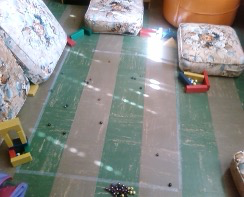
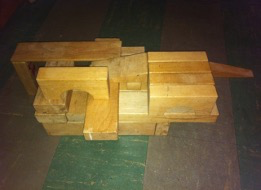
As with Devon, Micah’s play took many forms including art and dollhouse play; however, she particularly liked building solid structures out of blocks into which she would hide a particular toy car. The structures were elaborate and impenetrable, and once erected, remained so for the balance of each of our meetings. I did not want to impose my words or thoughts on Micah, but instead gave her the time and space to play through what I thought was the need to build protective enclosures for their small vehicular inhabitants. As we built and rebuilt these bastions, we talked of safety, danger, fear, and courage. And as the bullying stopped, and as weeks of play passed, and with the support of her parents, Micah took down the walls once and for all and freed their inhabitants from their previously protective isolation.  

Sianna was soon to leave adolescence behind, hopefully with a greater sense of purpose and self than had characterized her earlier years. She never quite fit in, nor did she seem to want to. Perhaps she did, at a deeper level, but she seemed quite content being alone with her art. Through her drawings, both on paper and her skin, Sianna expressed both frustrations over and wonder about what lay ahead. She had the sense that her purpose lay beyond traditional education, but no clear sense of what that was or would be. While she found art to be a meaningful endeavor, she was not quite sure how to channel it into a sense of purpose.

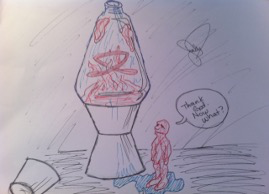
I enjoyed Sianna’s drawings, which she readily shared as she discussed the challenges of being in this no-person’s-land on the doorstep to whatever would come next. She seemed to lack a coherent sense of self beyond her drawings. I had a wonderful lava lamp in my office during our work together, which was always percolating during our sessions. One day, she brought in this image, which said it all. Finally freed from the inchoate mass of bubbling lava from which it sprang, this little formless creature looked back at its previous entrapment and said, “Thank God, now what!?” That said it all for her, and I felt no need to impose interpretation.

***

Like most other forms of contemporary play therapy, client-centered work carries with it no assumptions other than freedom to express, freedom from judgment, and freedom from scripted technique. As such, clients are encouraged to work on the deeper existential issues related to freedom, isolation, meaning, and of course, death. It doesn’t rush, it doesn’t judge, it doesn't impose, nor does it rely on specific agenda, per se, other than the play therapist’s presence, patience, attention, and caring. These four case snippets and their accompanying images nicely demonstrate that, at least for me, this unhurried form of intervention is in many ways an existential playground.

Questions for Reflection and Discussion

What are your impressions of the author’s connection between CCPT and existential therapy?

What existential concerns have you noticed in the play of your young clients?

How do you address these concerns when they are expressed through play?  

How to Create Positive Outcomes in Play Therapy: Following the Child’s Lead

I’m an over-preparer. I want to be prepared for whatever happens. Not just in life, but in the therapy room too. I want to be prepared when a client doesn’t have anything to say. I want to pull out that worksheet and be like “No worries! Let’s work towards your therapeutic goals!” (Not in those words, but you know what I mean.) I do come prepared, no doubt, but I think my desire to be prepared can come from a deeper place of needing to feel in control. In a sense, I want to control what happens in the session. I think as therapists we all desire some control within our therapy space. Think about it. We tend to think we know it all; the perfect theory, the perfect worksheet, the perfect intervention for our clients.

Like what you are reading? For more stimulating stories, thought-provoking articles and new video announcements, sign up for our monthly newsletter.

But I often stop long enough to ask myself, “Is this really what my client needs right now?” I think this desire for control can become especially hard to ignore when I work with child clients. This desire for control could be due to many different things such as pressure from parents to “fix my kid” or my assumption that child clients don’t know what they need, and I think I do know what they need. I am the expert after all…right?

But I also have to ask myself what happens if I let go of my assumptions, my agenda, myself, what could happen? What if I listened to that tiny voice in the back of my head saying, “Just go with it”? Letting go of myself and my desire to control was a difficult lesson to learn. However, I discovered that when I did let go, when I did listen to that voice saying, “Just go with it,” incredible things happened. And I learned this all from a 6-year-old boy I’ll call Adam.

What a Therapist Learned from her Young Client

Adam was having some emotional regulation difficulties in his first-grade classroom, so he was referred to me, the school counseling practicum student. As I got to know Adam, I learned that he loved video games. And that was all he would talk about. I was very aware, thanks to the elementary school counselor, of all of the difficulties Adam was having at home. Yet, when I would ask Adam about how home was, he would always say “Good,” and change the subject to…you guessed it…video games.

I tried many different interventions with him including sandtray, creative art, and as a last resort, talk therapy. Nothing worked. I was beginning to get discouraged because I felt that I wasn’t “helping” him, and he was still having the same issues in his classroom. I was not seeing progress.

When I brought this up to my practicum supervisor, she suggested an intervention based on Adam’s love of video games. The intervention was to create a video game controller and to create buttons based around coping skills and his difficulties. Then, the child would use this controller to “control” the therapist. The therapist would follow the child’s instructions and act out the buttons the child was pushing on the controller. This intervention was to give the child “control” of a scenario based around his issues. To my relief, Adam agreed to participate in the activity. However, when I tried to steer him in the direction I thought he needed to go, such as creating buttons based around coping skills and emotional regulation, Adam was quick to turn me down. Instead, he created buttons for running, jumping, fighting, and throwing erupting cupcakes at an invisible perpetrator.  

Throwing erupting cupcakes was not what I had in mind for this intervention. However, there was a voice in the back of my mind saying, “Just go with it.” So, I did…despite my other thoughts saying, “Nope, this isn’t going to work. He’ll never get better if you keep this up.”

But listening to this voice in the back of my mind would become imperative to what happened next.

Before my next session with Adam, the elementary counselor informed me that someone had tried to rob Adam’s home. She said that he had briefly mentioned it to her in passing and she wanted me to know just in case it came up in our next session. Well, during our next session when I asked Adam if he needed to talk about anything, Adam simply said, “Nope,” and continued to eat his lunch. I could feel tears welling up in my eyes. I simply wanted to help Adam, and I could tell there was still some resistance. However, I tamped down my desire to pry and to push and moved on to explain the plan for our session.   

“So, Adam,” I said, “Remember the controller we made together during our last session?” Adam nodded. “Well, we’re going to use it today.” I reviewed the button meanings with Adam and when we were finished, I said, “Okay, here’s what’s going to happen. You’re going to give me a problem and using the controller, you’re going to control me to help me solve the problem.” Adam began jumping up and down excitedly. “So,” I continued, “What’s the problem you want to use?” Now you should know that my idea of the type of problem I wanted Adam to come up with was “A friend beat me at a game” or “I got a bad grade on a test”. I wasn’t prepared for what came out of his mouth next.

Adam thought for a minute and then finally said, “You’re being robbed.” Without thinking, I said, “Well, let’s think of a different problem…maybe one that happens in everyday life.” Adam looked disappointed but started to think. Suddenly, an alarm went off in the back of my head and I realized what Adam was trying to tell me: He knew exactly what he needed; he needed to process the break-in he had experienced. The voice in my head was shouting: “Alicia, JUST GO WITH IT.”  

So, I listened and I pivoted. I said to Adam, “You know what? Yeah, let’s go with that. I’m being robbed.” Adam began jumping up and down excitedly. And then fun ensued. Adam pushed the “jump” button, and I jumped around the room. Adam pushed another button, and I threw erupting cupcakes. I ran and hid, I fought my perpetrator, all the while Adam was jumping up and down and laughing his little head off. Finally, after I was completely exhausted, Adam said, “You did it! You fought him off! He’s gone forever!” With relief, I plopped down in my chair as Adam erupted into applause for my performance.

As I reflect on this session, I notice how close I was to missing what Adam was trying to tell me. I was blinded by my own agenda. I thought I knew what was best for him. But in that session, Adam was trying to process something that was very real and scary in his world. And I almost missed it.  

Since then, I’ve learned to use my intuition and to listen to that little voice in my head saying, “Just go with it,” particularly when it comes to working with children. I listen to the child when I introduce an intervention, and they say “No,” I let them pick up the sandtray to play with because I understand that that is what they may need in the moment. I let them do my interventions in their own way. I allow them to control what happens in the therapeutic space because there’s a good chance that they don’t get that anywhere else.

All I can say is that I’m glad I let go of my agenda and my desire to control during my session with Adam because when I did, healing took place. And I want more of that. I want more than anything to help children process things they don’t understand. I want to be the conduit they use to control what is outside of their control. I want more laughter, more fun, more silliness. And overall, I want more healing to take place in the therapy room. Adam taught me a valuable lesson: To let go of myself and just go with it.  

Questions for Reflection and Discussion

How does the author’s reflections on her play therapy work resonate with you?

What do you appreciate about the author’s clinical work with Adam?

What might you have done differently with this particular child?  

Integrating Generative AI and Digital Play Therapy into Clinical Practice

The Chicken Lady

When my now almost 30-year-old son and his brother were in elementary school, I took on a new role—the Chicken Lady. I didn’t intend to achieve that title, but it is one I hope I always remember because it symbolizes a pivotal moment in my time as a mother and a therapist. May we all have our own Chicken Lady experiences.  

AI generated image of a chicken in armour
Image created by Photoleap

The Chicken Lady was born soon after I realized my children were speaking a language I didn’t understand in the backseat of the car on the way home from school. They were having a very in-depth conversation about a game they had recently started to play—RuneScape, which is classified as an MMORPG (Massively Multiplayer Online Role-Playing Game). It is essentially an expansive fantasy world where players can engage in interactions, quests, combat, and skill-building activities. 

RuneScape emphasizes problem-solving and social interaction within a richly detailed environment. Typically, we would all chat together on the way home from school, discussing things that had happened during the day, what we would be doing over the weekend, and other such family-type things. When I began noticing that the conversations had shifted and I no longer understood the content, I felt a bit of sadness. To be clear, I am quite aware that kids will have their own interests and conversations. Individuation is an important developmental process.

In that moment, I thought about whether or not I would just leave this to them as their brotherly bond. I asked them questions about the game and one of them said, “You should just play it, mom.” And so, I did. This was the birth of my exploration into discovering the therapeutic value within all things digital. I witnessed the connection, the interaction, the executive function engagement (and more) within the play for my children, and I knew there had to be value within my work as a therapist as well.

Artificial Intelligence: A Brief Overview

Artificial intelligence (AI) is a very broad field of computer science focused on creating systems capable of performing tasks that typically require human intelligence, such as learning, reasoning, organizing, problem-solving, and understanding language. The term is attributed to John McCarthy and the Dartmouth Summer Research Project in 1956. As an aside, many people disagree with the term “artificial intelligence,” as they feel it does not accurately describe what this tool and process is. It is unfortunate because the connotation of intelligence that can mimic human processes often diverts conversations in ways that can be distracting. Science fiction writer Ted Chiang offers Applied Statistics as a very viable alternative. I am inclined to agree with him and his proposal of the term. 

Generative AI

Generative AI refers to a type of artificial intelligence designed to create new content such as text, images, stories, and more—to generate content through programs such as ChatGPT. Unlike traditional AI systems that follow predetermined rules, generative AI uses complex algorithms, often based on neural networks, to learn patterns from large datasets. This allows it to generate original and unique outputs that can mimic creativity and problem-solving skills.

It can be used for numerous day-to-day administrative (letters, session notes, treatment plans) and training tasks (learning objectives, quiz questions, slide decks, presentations) to create personalized therapeutic content (images, storytelling) and a variety of interventions and exercises. By integrating generative AI into therapeutic practices, therapists can offer more tailored and personalized experiences for their clients. In this regard, I offer the following table.

Aspect Description Therapeutic Application
AI Learning Process AI learns from large datasets including therapy concepts, psychology texts, articles, and more  Reading and collating large volumes of data 
Text Generation AI creates written content for therapeutic use  Writing personalized stories about overcoming anxiety 
Image Creation  AI produces images based on descriptions  Visualizing a client’s experience 
Language Understanding  AI analyzes and interprets context in communication  Grasping underlying emotions in client responses 
Customization for Therapy  Adapting AI for specific mental health applications  Training on therapy techniques, adjusting vocabulary 
Prompt Creation  Therapists and clients learn to craft effective questions for AI  Components and iterations inform the client’s conceptualizations 
Continuous Improvement  AI refines outputs based on feedback over time  Learning over time provides improved responses 
Multimodal Integration  Advanced AI systems work with text, images, and audio  Combining written responses with generated images 
Ethical Considerations  Prioritizing client privacy and data protection  Ensuring the use incorporates confidentiality, secure data storage, and client protections 

Administrative Uses

AI provides a way to complete administrative tasks quickly in therapeutic practices, streamlining processes such as letter writing, case notes, treatment planning, and business analyses. For instance, AI-powered tools can draft and format professional letters, saving therapists valuable time while ensuring consistency and accuracy, or even help finding a synonym as I have done in this paper from time to time using ChatGPT. APA has even addressed how to cite the use of ChatGPT.

AI can transcribe session case notes, summarize key points, and organize information, allowing therapists to focus more on their clients and less on paperwork. This can also assist in treatment planning, creating templates and formatting documents as desired. Additionally, AI can assist in creating personalized, evidence-based, formatted plans by analyzing sanitized client aspects and suggesting potential interventions. 

For therapists who provide trainings, AI can assist in the creation of required proposal content. If the trainer inputs a description of the training, the slide deck, or any other details, AI can generate elements such as training descriptions of specific lengths, trainer bios, learning objectives, quiz questions, and more. By providing the desired format (APA, multiple choice, true/false), prompts can guide AI to provide the information in ways that will minimize necessary alterations. All material should be evaluated and edited for accuracy. This is an area where the therapist’s expertise is critical to alter, amend, and/or add information. AI is here to format and collate information for the user, not to replace the therapist’s experience, expertise, or knowledge.

The Many Uses of AI in Therapy

Generative AI is transforming therapeutic practices by enabling the creation of personalized and vivid representations of a client’s experiences, narratives, hopes, dreams, fears, and visions. Generative AI can turn descriptive narratives (prompts) into detailed creations, providing a tangible representation of a client’s inner world. These aids are incredibly beneficial in therapy, helping clients articulate and explore complex emotions and thoughts that might be difficult to express verbally. By depicting their personalized experiences, clients can gain new insights and perspectives, facilitating deeper self-understanding and emotional processing.

Images

Visual representations can both represent and communicate important components of a client’s life. AI image generation allows for the creation of personalized images based on descriptive prompts provided by the client or therapist. These images can depict complex emotions, significant life events, or abstract concepts that might be difficult to express verbally. For instance, a client might struggle to articulate feelings of isolation, but an AI-generated image can visually convey their personalized essence of this experience.

By providing a tangible representation of a client’s inner world, these images serve as powerful therapeutic tools. They facilitate deeper emotional exploration and understanding, enabling clients to gain new insights and perspectives. This visual aid not only enhances the therapeutic process but also empowers clients by giving them a new medium to express and process their emotions.

Stories  

AI can create powerful therapeutic stories; it can craft personalized narratives based on a client’s experiences, dreams, or visions, creating rich and immersive stories that resonate deeply. These AI-generated stories can serve as powerful therapeutic tools, allowing clients to see their personalized situations from different angles, have a more objective view of representation, identify patterns in their behavior, and/or explore alternative outcomes. Narrating their experiences through AI-generated stories helps clients externalize and reframe their thoughts, leading to potentially greater clarity and emotional relief. 

Interventions

Generative AI can be invaluable in discovering interventions tailored to individual clients. By analyzing a client’s unique experiences and responses, AI can suggest personalized therapeutic strategies and interventions. These AI-driven recommendations might include specific therapeutic exercises, coping mechanisms, or behavioral techniques that align with the client’s needs and preferences and the therapist’s theoretical foundation. This tailored approach ensures interventions are highly relevant, enhancing the overall therapeutic experience and outcome. Integrating generative AI into therapy not only personalizes the treatment process but also empowers clients by providing them with tools and insights uniquely suited to their personal journey. 

Prompt Creation with AI

Creating effective prompts is arguably the most crucial aspect of integrating generative AI into therapeutic practices, particularly when exploring a client’s experiences, emotions, self-concept, identification, and representation. In the context of generative AI, a prompt is a carefully crafted input or question that guides the AI to produce relevant and meaningful output/responses. These prompts serve as catalysts for AI to generate content that mirrors the client’s inner world, whether through prompt creation, image generation, or narratives.

A prompt can capture the essence of a client’s priorities, experiences, perceptions, thoughts, and feelings. Depending on the client and the therapeutic needs, the client or the therapist could create the initial prompt with iterations and changes guided by the client. Prompts act as powerful projective tools, revealing underlying therapeutic material. As the process unfolds, subsequent iterations allow for deeper understanding for the client and therapist. By refining the initial prompt to more accurately represent their internal landscape, clients engage in a valuable process of self-discovery and expression. 

The iterative nature of prompt creation significantly enhances its therapeutic value. Each refinement can unveil new facets of a client’s self-representation, offering a fluid, dynamic, and evolving view of their inner world. As clients fine-tune their prompts, they embark on a journey of self-reflection, identifying and articulating aspects of their experiences that may have previously been unconscious or difficult to express. This process not only helps clients gain clarity but also allows therapists to track changes in the client’s self-perception and emotional state over time. By engaging with the AI-generated output—accepting, modifying, or rejecting it—clients further refine their self-understanding, benefiting both themselves and the therapeutic process.

The therapist or client, or a combination of both, can lead the prompt generation process. For example, to help a client visualize a calming environment, a therapist may ask the client to “describe a place that feels safe.” This can include colors, items, people, animals, weather, and many other aspects. A client-driven image may include a request for something which depicts “a sad little boy with brown hair, brown skin, and brown eyes who is all alone in a storm.” Aspects which do not fit the criteria can then be changed through iterations, thereby revealing the client’s experience or desired depiction.

Prompt creation can serve as a projective exercise along with the desired creation. Each version of the creation, whether initial or refined, holds valuable insights. The evolving nature of prompts encourages ongoing dialogue between client and therapist, fostering a collaborative and exploratory therapeutic environment. When used skillfully and ethically, it can significantly enhance the therapeutic process, providing both clients and therapists with tools to advance the treatment plan forward.

The Ethics of Using AI in Therapy

The integration of generative AI in therapy presents significant ethical considerations, particularly regarding the protection of personal health information (PHI) and maintaining client confidentiality. Therapists must ensure that any data input into AI systems omits identifiable information as a safeguard of a clients’ privacy. This involves adhering to strict guidelines for data anonymization and being vigilant about the types of information shared with AI tools. Ensuring that all generated content complies with privacy regulations, such as HIPAA in the United States or GDPR in the United Kingdom, is essential to maintaining trust and ethical standards in therapeutic practice.

As mentioned earlier, of key importance is the therapist’s expertise, experience, and training. While AI can provide valuable insights and tools, the therapist must have the final say in what is included and presented to the AI tool, and the decision regarding what type of output is generated within the therapeutic interaction. Therapists need to explore programs in advance and critically evaluate AI-generating programs, ensuring they align with therapeutic goals. This requires an understanding of both the technology and the therapeutic context, emphasizing the importance of ongoing education and supervision regarding the use of AI applications within therapy.

Case Example

Emily is a 16-year-old transgender girl who presented for play therapy treatment during the transitional process of altering her gender identification and representation. She utilized generative AI to explore and articulate her experiences through image and story generation. Emily was assigned male at birth but discovered her identification as female. Among other approaches and interventions, her therapeutic process was enriched by the use of generative AI. She was able to visualize and narrate her journey of self-discovery, family acceptance, and social representation.

Emily began her therapeutic gen AI journey by creating representative therapeutic images. She crafted complex prompts and many iterations that helped her create images which depicted her true identity as a female. Despite being born with male anatomy, these images allowed Emily to see herself in a way that felt authentic and congruent with her internal sense of self. The visual representations were a powerful tool in helping her recognize and affirm her identity, providing a sense of validation and clarity.

“Gay Pride Event Many Happy Teenagers”
(Created with Photoleap, numerous prompt iterations -representations of Emily’s Work)

Therapeutic Outcomes

Through the use of image and story generation, Emily achieved several therapeutic outcomes: 

1. Self-Representation: She was able to see a visual representation of herself that was congruent and customized to her experience.

2. Narrative Creation: Emily created a narrative that represented her journey, helping her process and make sense of her experiences.

3. Sharing with Others: She produced content that could be shared with others, both known and unknown, fostering understanding and support.

4. Prompt Iteration: Emily learned to determine the important components of her experience and represent them accurately through prompt creation and iterations.  

A Beginner’s Guide to Generative Artificial Intelligence

Generative AI is a type of artificial intelligence that creates new content, like text and images, based on patterns it has learned from data. Unlike traditional AI, which follows set rules, generative AI uses complex methods to generate original outputs.

Key Concepts of Generative AI:

1. Neural Networks:

  • Think of neural networks as layers of connected “nodes” that process data, similar to how our brain works.
  • They help the AI learn patterns in data, enabling it to create new content. 

2. Training Process:

  • AI learns from large amounts of data, such as texts and images.
  • AI goes through the data multiple times, adjusting its internal settings to improve accuracy.  

3. Generative AI in Action:

  • Text Generation: AI models like GPT can write coherent text based on a given prompt. They are used in chatbots and content creation.
  • Image Generation: AI tools can create images from descriptions, helping visualize concepts.  

4. Applications in Therapy:

  • AI can create personalized narrative content, like personalized storytelling.
  • AI-generated images can help clients visualize their emotions and experiences.  

Important Considerations:

5. Data Quality: The AI’s performance depends on the quality of the data it learns from.

6. Privacy: It’s crucial to keep client information private and secure.

7. Understanding Limitations: While powerful, these AI models have limitations and can sometimes produce biased and incorrect results.  

Concluding Thoughts

Integrating generative AI into Digital Play Therapy™ marks a significant evolution in the field of mental health care. Through blending advanced technology with psychotherapeutic expertise, therapists can enhance their practice in multiple ways—from creating personalized therapeutic content to streamlining administrative tasks and discovering tailored interventions that resonate with each client’s unique experiences.

Just as I embraced the world of Rune Scape to connect with my children, therapists today can embrace digital tools, including generative AI, to form deeper connections with their clients. This technology offers unparalleled opportunities for creating vivid visual representations, crafting personalized narratives, and developing customized therapeutic strategies that cater to individual needs.

However, the integration of AI into therapy must be approached with careful consideration of ethical responsibilities. Ensuring client confidentiality, maintaining rigorous training standards, and critically evaluating AI-generative programs are essential practices that uphold the integrity of therapeutic work. Therapists must balance innovation with ethical responsibility to protect clients' privacy.

Thoughtful and ethical use of AI can allow therapists to enhance their practices by offering clients more options for engaging, insightful, and effective therapeutic experiences. The future of therapy is bright with the possibilities that generative AI brings. As we continue to learn and adapt, we can utilize these technologies to transform the therapeutic process in profoundly positive ways.  

Postmodern Play Therapy: Helping a Child Overcome their “Trouble Energy”

When I was deeply entrenched in research, writing, and play therapy practice that incorporated superheroes, I learned about the importance of the origin story — the backstory narrative. It is no different in the context of this article, which is about what I call “postmodern play,” a term I use to describe play-based interventions rooted in Narrative Therapy. As a brief but related aside, I had just finished a book on the use of superheroes in counseling and play therapy when I was contacted by MSNBC to come on air to discuss what they, NOT I, called Superhero Therapy. When I sat excitedly in front of my television that night to watch myself, I noticed a chyron beneath my image that said, “The APA does not endorse Superhero Therapy.” Fifteen minutes of infamy, I guess.

Like what you are reading? For more stimulating stories, thought-provoking articles and new video announcements, sign up for our monthly newsletter.

Ironically, I had never used the term, “Superhero Therapy” in my writing, nor did I profess my clinical work with superheroes to be evidence based. And so, it is here! The APA will never endorse postmodern play, nor will it ever attain evidenced-based status. And I aspire to neither.

But, as Irvin Yalom suggested in his Gift of Therapy, nonvalidated therapies are not (necessarily) invalidated therapies. So it has been for me, and postmodern play. In my child therapy work, particularly involving play, I have noticed that positive changes in the child’s world, both inside and outside of the therapy space, could often be explained by some of the core principles of Narrative Therapy, one of the postmodern approaches to therapy — which also includes Brief Solution-Focused Therapy. These core principles included a(n):

  • Strength-based orientation rather than one based on deficiency
  • Focus on the child as an agent of change
  • Externalization of the problem
  • Collaborative orientation to treatment that includes parents and teachers
  • Author-editor relationship between therapist and child
  • Future orientation that draws upon past successes
  • Articulation of preferred identity through storying
  • Personalization of outcome measures
  • Understanding that children have islands of competence

Channeling Trouble Energy in Play Therapy

As an example, I recall 8-year-old Liam, who came with his parents for help with “his” problems of stealing food, his mother’s jewelry, and temper tantrums — exclusively at home when he was confronted with his misdeeds. Born in Asia, Liam was adopted in early infancy and seemed to be progressing nicely through his developmental journey. But something was happening that was giving rise to this relatively new spate of behavioral problems. During the intake, the parents and I wondered together if the racial/cultural difference between him and his parents was contributing to an emergent and distressing sense of “otherness” — they rarely, if ever, discussed the adoption, Liam’s origin story. We wondered if he was trying to process the loss inherent in the adoptive process, stealing as a way of filling a gap. We wondered if the marital tension between them was creating a bed of unrest and insecurity for Liam. We wondered!

When Liam came to my office the following week, I was met by a very poised, articulate, and interesting child whose vigorously shaking leg suggested that deeper currents of emotions ran just below the surface of this very seemingly contained boy. Drawn in by that current, I wondered aloud about the “energy” in his leg, and asked in what other parts of his body does he sometimes feel such energy. He played right along and said how sometimes that energy goes to his stomach, and sometimes arms, and together, we called it “body energy.” We explored this body energy when it started and whether he liked it, whether it got in the way sometimes and what he typically did with it once it appeared.

From there we launched into a conversation of other possible types of energy that he had, and as I asked him to describe some of his interests, which included history and origami, I asked him if he could label that energy, to which he responded, “art energy and learning energy.” A bit later in the conversation, when our conversation turned to the concerns his parents had around his stealing and angry outbursts, he quite spontaneously came up with the notion of “trouble energy.” I asked him to pick a colored piece of Play-Doh and show me how big trouble energy could be in his life, and he offered an apple-sized ball of Play-Doh in his little hands. That was the sum total of our intake and treatment plan.

The clinical work in the following weeks consisted of:

  • Play therapy with Liam using the sandtray to act out play out scenes of family separations and reunions
  • Playful conversations about trouble energy in his life, and what he wanted to do with it and its influence
  • Liam sharing his vast knowledge of world history and “trying” to teach me origami
  • Discussing simple behavioral methods for the parents to use when Liam expressed anger and took things
  • Collaboration with his teacher around additional sensitivity to his needs, and
  • Occasional family drawing time during which Liam and his parents expressed themselves freely.
  • Referral of Liam’s parents to a marital counselor which they happily agreed to.

I never doubted that Liam was content with allowing trouble energy to rule his life, and I always had confidence that his parents and teacher could and would work together to support him and bring out the best in him. As a tip of my hat to readers who might be wondering, “well, what was your outcome measure(s),” I offer the following which is Liam’s depiction of trouble energy at the time of our last session at right, in contrast to trouble energy at the beginning of our work, at left.

I also offer the words of David Nylund, speaking at the Pan Pacific Brief Therapy Conference in Japan in 2001, regarding outcome measures in a postmodern, narrative play therapy context. He said, “I believe in evidence, but I am more interested in what constitutes evidence, and who gets to decide on what counts as evidence. Is it professionals, licensing boards, researchers, and journal editors? Or is it clients? If a young person is able to reclaim his life from ADHD, for example, and we create and circulate a therapeutic letter about his experience, I consider that just as compelling as a randomized clinical trial.”

***

My work with Liam and his family was complete, satisfactory to all involved. His tantrums subsided, the family re-visited and openly discussed the story of his adoption, and his feelings about it, and the stealing ended. I trust that my description of the work adequately captures the core principles and methods of what I call postmodern play therapy. Chyrons not withstanding!

Questions for Reflection and Discussion

What are your impressions of this author’s work with Liam?

In what ways have you found narrative therapy to be helpful?

What about this approach do you find interesting? Helpful?

Using Play Therapy (and Movies) to Heal Attachment Wounds in a Young Child

A Troubled and Troubling History

Peter was four. He had just started Head Start programing when his mother announced she was pregnant. It seemed almost immediately after that Peter became non-compliant with any authority. He experienced a disturbance in sleep and appetite, withdrew socially, refused to wear a seatbelt in the car, and misbehaved in public until his mother had to bring him home. Peter hit, bit, threw things, broke toys, and screamed to get his way, and developed an excessive need to be in control.

Like what you are reading? For more stimulating stories, thought-provoking articles and new video announcements, sign up for our monthly newsletter.

More alarmingly, Peter engaged in harmful behaviors, riding his bike across the street in front of traffic, running over a two-year-old with his bicycle, putting a pillow over his mother’s head telling her to die, and deliberately putting toys on the floor to make his grandmother fall.

Peter’s mother reported that at eight months of age, he had rolled out of the bed, resulting in an ER visit and a report of suspected child abuse. During that ER visit, Peter’s grandmother was asked to help restrain him while they took X-rays, which revealed a broken knee cap. DCFS took custody of Peter and charged the mother with neglect. He spent two days in the hospital and one night in a foster home before being returned to his mother.

I concluded that Peter’s school referral and his mother’s pregnancy had triggered the medical trauma, separation, and attachment issues that were contributing to his behavioral and emotional difficulties. In that assessment, I identified several issues for treatment, including (1) intense fear and anger at separation from attachment figures, (2) inconsistency in setting limits/boundaries and consequences for misbehavior, and (3) the use of behavior, rather than words to express himself. At the time of developing Peter’s treatment plan, I noted that his favorite act of defiance was to run outside in his birthday suit (naked). Our first task in behavior management was to have him put on his underwear before his appointment began!

Growth and Understanding through Play

Peter’s mother and grandmother were nurturing and invested in his growth and development, as well as my support team during our home play therapy visits. Books, toys, and movies were abundant in the home. Working with children, I had come to understand that they find comfort and a sense of security in the predictability in movies. Peter was no exception and movies were frequently playing when I arrived.

Using a client centered approach that incorporated themes from movies his parents had allowed him to watch like, Honey I Shrunk the Kids, Titanic, and Jaws, Peter was able to process his experience and communicate very aptly the chaos he felt both internally and externally. He would play these movies, or parts of the movie during appointments, while he built his creations, including his parents and myself with his toys, and then act out the scenes. I saw the parallels between the movies and his life experiences.

He built an elaborate shrinking machine in the living room which, I believe, reflected his feelings of being totally overwhelmed with his world and the multiple changes he was experiencing. As he adjusted to school and the birth of his sister, his shrinking machine became smaller and disappeared.

Titanic reflected the family’s chaos during the time his mother worked away from home, which took her away for extended periods, and other times resulting in her return home after Peter was in bed. The grandmother was left to assume all parenting and childcare responsibilities. Peter would rewind and replay the moment the ship would break in half and sink into the ocean in a perfect parallel to the absence of his mother. He wore out the tape! His mother quit the job.

The presence of Peter’s grandmother in his classroom as an aide helped to heal the attachment wounds that had occurred during his early infancy. She took him to school, remained in the classroom and brought him home. As Peter adjusted to the structure and routine of school and gained confidence in the return home, he became challenged by the learning process and his desire to learn took precedence over his misbehavior. Both parental figures read to him and the social stories of The Bernstein Bears, and his ability to understand and apply what he heard helped him adjust to new and changing social situations.

Peter became able to verbally express his dislike for his sister but never intentionally attempted to hurt her. He would simply pick her up and move her, even when she would unintentionally destroy one of his play creations. One of my repetitive phrases during appointments was “Use your words!” Feelings of resentment disappeared when he was able to use his words and tell his mother and grandmother he did not like his sister because she was messing up his creations. They in turn made more conscious efforts to keep her away from his projects, and to listen when he used his words.

In his play around the themes from the movie, Jaws, Peter was the captain of an imaginary boat in shark infested waters. He brought all the people and things important to him into the boat, his mother, grandmother, sister, and me to protect us. He acted out the shark attack addressing his fears about his safety and nurturing needs. He would replay this scene many times. As the boat became bigger and bigger, the shark infested waters grew smaller and ultimately disappeared. So did his disruptive and aggressive behavior.

***

Peter was phased out of treatment. His mother and grandmother were learning that withholding his movies could quickly bring misbehavior under control, while their nurturance, consistency, and attention to his safety and security needs helped to strengthen and support his positive and social behaviors. Peter was able to play with new friends and enjoy all of the experiences of school.

How to Use Inner Processes in Play Therapy to Help Traumatized Children

I am a Safe and Sound Protocol provider (SSP.) In my clinical experience with the protocol, I have worked with children who have experienced severe trauma including physical abuse, sexual abuse, neglect, disruptive behaviors, dysregulation, and the disparities accompanying rural living. I have also worked with individual/family needs associated with neurodivergence.

In this work, I have relied heavily upon Stephen Porges’ Polyvagal Theory because I have found that looking at behavior through this particular lens provides a framework that depathologizes clients and emphasizes safe relationships. This lens also promotes an understanding from within the client and between the systems in which the client is embedded. James is one such client.

Like what you are reading? For more stimulating stories, thought-provoking articles and new video announcements, sign up for our monthly newsletter.

A Tale of Therapeutic Attunement

Seven-year-old James (a fictitious name) was referred for his disruptive and aggressive behaviors. James was being raised by his paternal grandparents as his father died by suicide when James was young, and his mother was unable to care for him due to her complications with mental illness. James’ behavior with me was often the exact opposite of what the adults in his life reported.

Outwardly, he appeared calm, engaging, sociable, and playful. What, I wondered, was going on with this seemingly cherubic child to provoke him to rage and violence against his grandmother? What might be happening within the family system — within him?

James had experienced significant losses, so anger made sense. But, in spite of his placid and seemingly sociable demeanor, he was also quite emotionally disconnected; a protective strategy that helped him to feel safe and secure amidst all of the changes and losses he experienced. For many years, it was safer for James to simply not feel the pain of all these stressors. Not until we started play therapy, that is. James and I played together almost every week for many months.

Being a client-centered therapist and a play therapist, I allowed James to guide me in and out of his world, in his own time, with his own stories, items, and creativity. I noticed how he would go into a deeper part of himself, but only after many months of building emotional safety, and then it was only for a brief “nugget” of time. As I began to learn about James’ story, his past and his present, I learned to go with and trust the “ebb and flow” of the process that unfolded for him and between us in the playroom.

I recognized the importance of matching my pace to his, which can be difficult because there is a temptation to more immediately address the disruptive behaviors. I knew how vital it was for me to regulate myself so that both he and I could “dive deep” together into that private inner world he so fiercely protected.

As I worked with James, I often calmly and patiently reflected on what he was showing me through his chosen play activities which included Sandtray-world-making, art therapy, or even video games. Over the course of a few particular sessions, I noticed what is referred to in Polyvagal theory as Polyvagal countertransference — my own physiological response to the process between myself and James as we played together.

James might, for example, briefly create a sparse scene in the sand before abruptly bouncing to another activity. As this pattern continued, I patiently tracked him, monitoring my own internal physiological state so as not to become dysregulated or distracted by the rapidity of his changing play. In one particular session, a shift occurred. He created an elaborate, deep and lengthy sandtray scene, replete with a wide variety of miniatures.

I noticed myself becoming very excited, mirroring his own physiological state, and thought, “he is finally going to ‘let out’ a large piece of his trauma story.” For a brief moment, my own inner experience bordered on fight-or-flight, not as much because I felt fear or that I was scared, but because I was excited with and for James. I recall also sensing danger arising from his play, likely a mirroring of his own fear as the trauma story became revealed.

Fully connected and engaged in that amazing moment, our nervous systems met. He brought all of him, I brought all of me. If only for a moment, it was in that sliver of spacetime that healing was happening. In that space I could say to James, I see you. I see your pain, I see your loss. I see this anger, confusion. I see all of it in this story that you just told me. I see how this big storm came and wiped out the entire town, and how your mom was swept away. How you tried to save her, and how you still want to save her.

In that magnificent moment, all of James’ heavy and painful feelings finally surfaced. I was able to contain those emotions for James because my own nervous system was responding to his. And that level of attunement was not shown with words but through and with a shared energy. The within and between.

Questions for Discussion and Thought

How have you used the work of Stephen Porges in your clinical work with children? With adults?

What about the way the therapist worked with James do you appreciate? Why?

How might you have worked differently with James?

Using the Power of Play Therapy to Free a Frightened Child

Play is the child’s language and toys are their words

Garry Landreth   


Play therapy hasn't always been taken seriously in academic and clinical settings. After all, it has play in its name. However, those who regularly use it in their clinical work and/or are trained as registered play therapists fully understand its healing power. I have always been attracted to play as a natural medium for self-expression in which the child can address and work through complex and often painful feelings, conflicts, and experiences in a place of safety and security, free of judgement and pressure. I have been particularly drawn to the non-directive approach to play therapy pioneered by Virginia Axline and later Garry Landreth, which relies on building a trusting therapeutic relationship with the therapist and letting the child lead the play without adult direction.
 

Like what you are reading? For more stimulating stories, thought-provoking articles and new video announcements, sign up for our monthly newsletter.

Jasmin

Four-year-old Jasmin* was referred for play therapy to the children’s hospital outpatient clinic in Dubai, United Arab Emirates where I work. She was struggling with severe anxiety and was unable to tolerate being around other people, including family members. She experienced panic attacks if someone spoke to her and was unable to play in crowded areas. Jasmin’s mother was deeply concerned that, because her daughter had missed her chance to start school, she would not be able to live a normal life or have friends.

I gathered from her history that Jasmin’s life journey had begun in the shadow of severe separation anxiety. Her parents were immigrants from a neighboring Arab nation and had extended family living nearby, ultimately settling down in Dubai where Jasmin was born. Jasmin experienced many medical complications directly after her birth: she spent almost four months in the neonatal intensive care unit (NICU), with only one day out of 100 with skin-to-skin contact. Jasmin’s mother became highly protective of her fragile infant daughter, shielding her from other people and giving her anything she wanted. This was likely related to guilt from the experience that they shared ever since Jasmin’s birth.

In our earliest play therapy session, Jasmin’s mother was fearful and pessimistic that her daughter could be helped to overcome her — or perhaps I should say “their” anxiety and fears. Jasmin arrived for that session crying, screaming, and saying she wanted to go home while hiding her face and clutching her mother in intense fear. She did not accept any direct communication from me.

In the coming weeks I maintained a consistency in my quiet and patient presence, with hopes of reducing Jasmin’s fear and providing a predictable environment for her. Eventually her crying stopped, and Jasmin seemed more comfortable in my presence, showing a burgeoning interest in some of the toys and materials in the playroom. Perhaps the seeds of trust were being sown.

In the following five to ten sessions, she once again began hiding her face and regressed to avoiding any direct speech on my part, instead choosing to hold on to her mother. I’m not sure what changed this early course of “progress” for the better, but after a few more sessions in which I was consistent, respectful of her need to withdraw, and validating in small verbal and non-verbal ways, Jasmin once again shared eye contact with me. However, she continued to only communicate non-verbally despite this progress.

After a few dozen sessions — which may seem like a lot to those who have not relied exclusively on a non-directive approach — there was a breakthrough. Jasmin spoke! She seemed to slowly accept my presence, engaged in play, grew more visibly comfortable in our relationship. From that session onwards, she laughed, giggled, asked me to draw, commented on my drawings, and shared her toys with me. She began speaking openly about her thoughts and feelings, and at one point, even gave me a high five! Yet, while these were indeed huge steps for Jasmin, she was still speaking only through her mother, telling her what she wanted to play instead of asking me directly. It’s important to note that during the initial sessions, Jasmin used the sand tray to explore and express her thoughts and feelings.


My Play Therapy Room


Puppets


Musical Instruments

As our time together went on, Jasmin slowly solidified her confidence, using puppets to speak for her so that she might maintain a safe distance from her problems. Similarly, she became increasingly comfortable using the creative arts materials, paint, and messy play to work through the difficult feelings she was experiencing, mostly around fear. After four months of attending play therapy, Jasmin felt safe enough to physically separate from her mother and join me unaccompanied. She was testing the limits of her coping skills and taking a brave step towards a new level of security and developmentally appropriate autonomy. Towards the very end of our work together, Jasmin used the baby doll to role play the nurturing mother, while also addressing her feelings around friendships through parallel enactments of shared play in the playground/school yard.  

Jasmin now attends our sessions and often proclaims that she is the teacher, stating that “it is now time for a music lesson!” She plays the instruments, sings, dances, and performs with confidence. It has been such an incredible transformation! At the beginning of this journey, Jasmin’s mother did not think it was possible for her daughter to change or live a normal life. But with the right environment, trust in the process, and using play as a medium to bring us together, alongside clear communication and teamwork between the parent and child, such seemingly unattainable goals became achievable. 

 Testimonial

Jasmin’s mother wanted me to share some words about her experience of play therapy:

“Play therapy simply took me out of the darkness into the light. At the beginning of the journey, I was not completely sure that I would reach my goal and that my only daughter would be like the rest of the children. But I had faith in Allah that made me take the risk. In my first meeting, I saw everything that was said like a dream that was difficult to achieve. The therapist told me that in a year from now, Jasmin will be in school. I muttered to myself ‘just a dream. Allah, please help me to achieve it.’ My child was diagnosed with severe anxiety.

The next day, the journey began with the therapist, Gemma. When I looked into her eyes, my eyes filled with tears. I waited for her to confirm what the doctor had said; that the diagnosis was anxiety and not something else. Gemma greeted me with a smile that gave me hope that my daughter would be cured of that anxiety. Every day while she was assuring me that we would arrive at that goal, my patience was tested.

On our daily trip for the whole year, I saw the light coming from a small gap, and that gap started to widen more, and I saw that light growing stronger. It was a challenge getting to the sessions every day at nine in the morning, on time and in the same chair awaiting victory.

I believed in play therapy. I stuck to it, as a child clings to her mother, and I held onto it with all my strength. Gemma's whispers of confidence never left me. Her support, clarification and understanding were so important. While she was treating my child, she did not realize that she was doing so in a very culturally sensitive and experienced manner, embracing the mother and child together.

Yes, there were many challenges, with those many moments of Jasmin closing her eyes and crying when she saw Gemma (therapist), ending with her running towards Gemma. Yes, it's play therapy but don't underestimate the word. It’s a new hope for every child who is suffering.

And now, after a year, I am looking at the end, exactly as they promised me. My child is now entering her first school year. It is an amazing treatment that is not based on the use of chemical medicines, especially with such young flowers.”   

*Names have been changed for anonymity