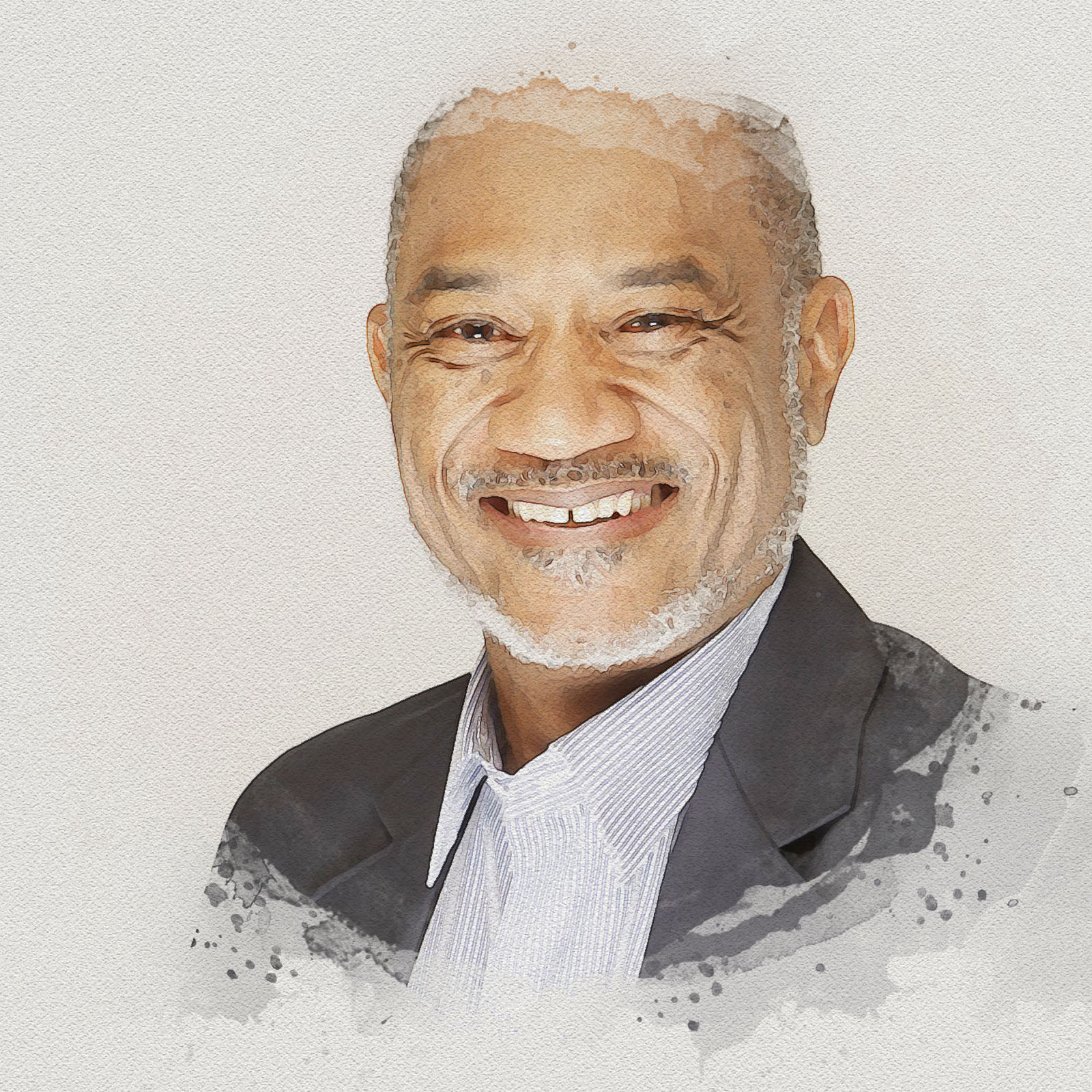
Makungu Akinyela on Testimony and the Mattering of Black Therapy

Lawrence Rubin: Hello, Makungu. I first became aware of your work through conversations with Drs. David Epston and Travis Heath, both of whom have worked clinically and written within the Narrative Therapy sphere. However, they've also made me aware of different approaches to narrative storytelling, including the oral tradition of West Africa, and your work. And that led me to an interest in Testimony Therapy. With that said, what is testimony therapy and what is testifying? 

Testifying and Testimony Therapy

Makungu Akinyela: Testimony Therapy is a discursive therapy, related to Solution-Focused Narrative Therapy, and any of those therapies that we think about that focus on privileging people's stories about their lives. I tell people that testimony is a narrative therapy with a small “n” because testimony and testifying come from my tradition — the Black cultural tradition, to testify. The way Black folk use it is to tell your story but also to tell the story that you want told about you, to give your testimony. It has some roots in the Black church experience. Folks who are from the South or have been to the South and maybe to a Black church, might have witnessed a testimony service or folks testifying in church where they get up and tell a story. There are parts to testifying it. Usually, a testimony starts out with what I call a doom-and-gloom story. For folks who are into Narrative Therapy, Michael White and David Epston used to call it a thin telling of the story.
testimony therapy is a discursive therapy, related to Solution-Focused Narrative Therapy, and any of those therapies that we think about that focus on privileging people's stories about their lives
So, it starts off with this real doom-and-gloom narrative that goes something like, “Well, I woke up, and the doctors told me that I had cancer and I was going to die. And I've been sick ever since and in bed and I couldn’t get up. And that’s what my life is about.” That's the doom-and-gloom telling. But then usually a testimony begins to sound like, “But if it had not been for my friend or my neighbor, who came to give me support and help…” The important thing about that testifying process — the dialogue — is in Black orality, which is that orality that we are grounded in, the oral telling of stories.
And that call and response becomes a community telling of the story. It's not just the storyteller telling the story
There's also call-and-response. As the “testifier” begins to tell that doom-and-gloom story, there is a response to the call. The “witnesses” let them know that they're listening. “Wow! Really? Well, okay. Amen. I get you.” And that call and response becomes a community telling of the story. It's not just the storyteller telling the story. The witness to the story, by engaging with the story, also helps to shape where the story goes. The testifying usually goes from doom-and-gloom to the call-and-response, and then all in the “community” begin to identify what I call the “victorious moments” in the story.

Narrative Therapy might say those victorious moments contradict the thin telling of the story. And as you get to those victorious moments — if it were in a church ceremony, as people begin to give that feedback, that response to the call — they begin to say things like, “Yeah, it wasn't so bad. It was good.” And then people might start seeing the blessings in their lives in the middle of the doom-and-gloom.

The story begins to become a little stronger and a little more positive. By the time the story finishes and all have experienced victorious moments, transformation has happened, and the testimony becomes, “This is the story that I want people to have of me. This is the story that I want.” It uses narrative ideas, and for folks who are familiar with Narrative Therapy, the preferred outcomes have replaced the doom-and-gloom, thin story.

the critique that testimony gives to narrative therapy is that all storytelling and all ways of telling stories are not grounded in the metaphor of literacy
The important thing about testimony therapy is that it is a discursive therapy. I consider it a narrative therapy in the sense that it's a storytelling therapy. I agree with the narrative therapist, that people use stories to constitute their lives, to describe and explain the meaning of their lives. The critique that testimony gives to narrative therapy is that all storytelling and all ways of telling stories are not grounded in the metaphor of literacy. Narrative therapy, the therapy that was developed by Michael White, David Epston, and that is contributed to so strongly by all those other great people — you know, Steve Madigan, Jill Combs, and Gene Freedman – all those ways of doing narrative therapy are particularly grounded in the metaphor of literacy.   
LR: Storytelling in a linear kind of way. 

Oral Culture: A Different Kind of Listening

MA: Exactly, in very linear ways, even the metaphors that are used such as “Turning over a new page, re-authoring our lives.” So, the metaphors reflect the culture that it comes out of, which is primarily a culture whose consciousness is developed through literacy. What testimony therapy says is, “What about those people who come from cultures that are predominantly oral cultures, grounded in orality?” Like the culture of Africans from West Africa, where my folk come from, the culture of so-called African Americans who, basically, trace our lineage and heritage back to West Africa?

Our cultures are primarily oral. So, the thing that shapes our thinking, the way we talk about and think about relationships is grounded in that orality. Storytelling will look different, and the meaning that's given to the story is different. And so, within testimony therapy, rather than being grounded in the metaphor of literacy, I ground it in the metaphor of orality and musicality. Does that make sense? 

LR: As a narrative therapist but also as a client-centered therapist, I would be validating. I would be using nonverbal gestures. I'd be highlighting unique outcomes. I would be listening to elements of the client’s story, which are doom-and-gloom-centered, and asking for counter-stories. What would I be doing differently if you were my therapist in this interaction and coming from that oral tradition? Now, what would we be adding as therapists in this moment? 
MA:
I'm paying attention to the rhythm and the beat of a conversation
I'm paying attention to the rhythm and the beat of a conversation. So, it's not just the words of a conversation that are important, right? It's not just listening to the words that are coming out of your mouth. It's how the words are coming out of your mouth. I'm paying particular attention to things like the relationship between bodily space and the words, the rhythm that's created through bodily space. I'm paying attention to things like the expression on your face because those are all things that also begin to define orality.

In other words, people from oral cultures don't just use the words out of their mouth. It's the tone of the word. You know, where there might be three or four ways that I can use the same word, depending on the tone, it means something different. Also, it might be even the way I might use my body. You know, sometimes people make jokes about Black women. You know, if a Black woman is talking to you and she starts snaking her neck…what's the meaning of that? So, no matter what the words are that she's using, that body motion, the way she takes up space, begins to define the rhythm of the conversation –   

LR: So, what feedback would you be giving me in the moment?  
MA: I would be getting in rhythm with you, right?  
LR: You would be mirroring? 
MA: I might be mirroring, or I might be thinking, “Wow, he's really agitated here. And I might even slow down my rhythm, and I might begin to speak more slowly. And I might even become a little more reserved, again, because I'm believing that the rhythm and the beat of our conversation is just as important as what you're saying. I might be taking note of and become curious about what the emotional content of your speech might be at that moment, and I’d bring that out.

I'm a testimony therapist whoever I'm working with, just like narrative therapists
I was talking to a couple just the other day. Now, this couple happened to be White, but I'm a testimony therapist whoever I'm working with, just like narrative therapists. A narrative therapist, whoever they work with, they're simply using their cultural understanding to engage the work. And that's what I talk about with this. I don't believe that “techniques” in themselves fix things or do things.

But with that couple, there was a conversation going on. In this case, it's a heterosexual couple. The husband listened to the wife say something, and it felt as if she was saying he was the problem. But he was his usual calm demeanor, almost a flat effect. But he began to describe how he was resentful that she was making him into the problem. Sometimes, not always but sometimes therapists are really afraid to engage emotion, particularly “negative” emotion, right?   

LR: I'm on the edge of my seat. So, how did you manage yourself with that White couple?
MA:
one of the things I point out is that oftentimes, particularly for Black people, we're encouraged to suppress our emotions
First of all, I validated what he had to say. And then I said, “You know — ” Let's call him George. Not his name. “George, I get the feeling that you are real pissed off about right now. And I'm really appreciating that. I'm really glad that you got pissed off enough to say that.” In other words, rather than running away from the emotion, to name the emotion — because I also believe that all our emotions are important. You may have read one of my articles, and one of the things I point out is that oftentimes, particularly for Black people, we're encouraged to suppress our emotions.
LR: Especially anger. Especially anger. 
MA: Right, especially anger! You're not supposed to do that. I believe that my work as a therapist is creating a space where all emotions are safe, and all emotions can be validated and understood and experienced. Because one of the things that I'm trying to do when I'm working with my clients is — and again, these are my philosophical understanding of this work — that, under conditions of oppression or suppression, people are alienated from their emotions.

A lot of the ideas that I work with come from the psychiatrist, Frantz Fanon. And Fanon talks about alienation, which comes with colonization. And when people are alienated from their emotions, they don't feel their emotions. They don't experience their emotions. So, the emotions control them rather than them being in control of their lives. And so, a lot of the work that I do is about helping people to feel their feelings, to experience their feelings, and to dis-alienate themselves from that.   

LR: So, going back to George and his wife, you highlighted what you surmised to be George's emotional reaction, his alienation from his emotions. And you helped encourage a conversation around that. How is that different from what a good Rogerian therapist or a linear narrative therapist might do? 
MA:
one of the big complaints that I often get if I am referred a Black client, who maybe has previously had a White therapist, is the cultural uncomfortability that they felt in those relationships
That's a good question. And one of the emphases that I make is that this is not about trying to find something that on the front looks like a radically different practice. It's about worldview and understanding. One of the big complaints that I often get if I am referred a Black client, who maybe has previously had a White therapist, is the cultural uncomfortability that they felt in those relationships. It's like that person just didn't seem to get them. They say, “Well, they just sat there and listened. They didn't say anything.” You know, they didn't say anything.” Sometimes they'll even say, “They didn't tell me what to do.” And I'll say, “Well, you know, I'm not going to tell you what to do either.”

But again, it's just that interaction, that responding in those conversations in oral ways as opposed to this kind of a linear conversation. I ask you a question, and then I quietly wait for a response. And then I assess that response. “Okay.” And then I ask another question. And then I wait for a response. That's that linear conversation. Even when I'm doing supervision, I don't want therapists to try to be like me. In this field, that's what a lot of people do, particularly from our generation. You know, we used to go to those demonstrations, and we would be mesmerized by the experts.

LR: Nobody could be Albert Ellis, regardless of how hard they tried.  
MA: Yeah. But, again, when I talk about Testimony Therapy, I'm talking about a conceptualization of the work that we're doing, which is grounded in a philosophy. In a very similar way, when Michael and David began to develop Narrative Therapy, for the most part, they were grounding their therapeutic work in the philosophies of Michel Foucault, in other words, a conceptualization of the meaning of the word. Does that make sense, what I'm saying?

So, you know, human interaction is human interaction whatever the culture, but there are conceptualizations that define the meaning of the interaction. There's a difference between people who come from oral cultures and, again, how stories get told and the meaning of those stories, and people who come from literary cultures.   

LR: What about when you're working with a Black client, a Black couple, a Black family who don't identify with their ancestral roots, who have no connection to the oral tradition of West Africa? Does that make a difference? 
MA:
I believe that when Black people say, “Hey, I know I'm Black. I'm Black,” that's not about having some deep sense of West African culture, because culture doesn't work like that. You see, the culture of African American people is African, I believe
I think you're asking a philosophical question. Just off the top, I say, okay, probably that couple that you're describing in that way wouldn't even be coming to see me, right? But also, I think this is about a perception of what culture is and what culture means. I believe that when Black people say, “Hey, I know I'm Black. I'm Black,” that's not about having some deep sense of West African culture, because culture doesn't work like that. You see, the culture of African American people is African, I believe.

It's African in the context of 300 years of colonization, but it's still African. And that doesn't mean that people go around every day thinking, “I'm African. I'm African.” They just are. They're being what they're being. Using Frantz Fanon once again, he once said, “A tiger doesn't have to proclaim its tiger-tude. It just is what it is.”

I described the whole idea of a Black church testimony service, right? That's African. Those are African ways of engaging. People don't name it that, but that's what it is. You know, the way that we talk, right? When we talk about Black ways of speech that we call Ebonics. I guess the more professional way is AAVE, African American Vernacular English. I'm speaking to you right now in pretty standard English. But if it wasn't you and it was somewhere else, I would be talking in Ebonics. But the thing about the way that I speak — I call it my grandmother's language — is that it’s grounded in a mixture of African and English vocabulary, but primarily West African syntax and grammar. It comes from there. 

And this gets far beyond therapy, but we've got tons of research that shows the continuities, the continuations, the relationships between the cultures of African people in the western hemisphere, who are here because of enslavement and other things, and Africans on the west coast of Africa. So, when I'm talking about culture, I'm not talking about something that's this kind of mechanical thing that is easily identifiable. I'm talking about what we understand about the nature of culture, which is constantly moving, changing, and growing. Does that make sense?  

Double Consciousness

LR: It does. Is there an implicit assumption or a presumption that an African American client, a Black client, has experienced or has internalized colonization and is living a story that really is one of adapting to those colonializing practices, whether or not they acknowledge it or feel it or resent White people?
MA:
every Black person has two souls in one dark body, an American soul, meaning White, and a Negro soul. And they're constantly fighting and struggling against each other
Absolutely. And, again, I ground my ideas in, like I said, Frantz Fanon and W. E. B. Du Bois, who was probably one of the greatest minds of the 20th Century — from the whole 20th Century because he wrote his first book in 1903, and he died in 1964. But he wrote a book called The Souls of Black Folk. In there, he defines this idea that's called double consciousness. Basically, he calls us Negros, but he says every Black person has two souls in one dark body, an American soul, meaning White, and a Negro soul. And they're constantly fighting and struggling against each other.

That's something that I could never explain probably to you because you've never been through that. But to be a Black person who is constantly doubting their Blackness but also affirming their Blackness at the same time, right? If I told you, as a little boy — we're about the same age — one of my favorite shows used to be Dennis the Menace. Remember Dennis the Menace?   

LR: I remember Dennis the Menace.  
MA: And wanting to be Dennis the Menace but also saying, “Wow. I wish I had hair like Dennis,” or, you know, “Wow. How come my mom doesn't stay home and bake cookies all the time? My mom is up working,” right? You know, “My dad doesn't wear a tie except on Sundays,” right? But it's also giving meaning to that. Or growing up — again, we're in the same age group – remember Tarzan on Sunday afternoon, the Tarzan movies?
LR: I do. Johnny Weissmuller, yep. 
MA: – and identifying with Tarzan more than the so-called natives? And, as a matter of fact, not wanting to be the native. That's the double consciousness that Du Bois talks about. Fanon calls it the zone of nonbeing.
LR: The zone of nonbeing? 
MA: And Fanon, going from Hegel's master-slave hypothesis. I don't know if you're familiar with that.
LR: Familiar only by name. 
MA: Fanon says that's about the idea of recognition and consciousness, that we become conscious of ourselves by being recognized by others. Now, that's fine, but Fanon says, in a colonial situation, the colonizer never recognizes the colonized as human, right?
LR: And the colonized don't recognize necessarily that they have been colonized. 
MA:
In the colonized relationship, the third person is always in the middle of the relationship
Sometimes. Exactly. But also, what he says, in the zone of nonbeing, the colonized is never able to have a “normal” relationship.” Because a normal relationship is this, Larry: I and thou. I see you. You see me. We recognize each other. We are conscious of each other. In the colonized relationship, the third person is always in the middle of the relationship. 

So, in describing another person, and this is using me hypothetically, I might say, “You know that guy over there? He's dark-skinned, but he's handsome.” So, in other words, there's another measuring stick to that person to help me describe that person. “You know that guy? He is really dumb for light-skinned dude.” So, there's always these relationships that are in the middle of our relationships. These are the things that affect relationships.

I'm a family therapist, right? These are the things that begin to affect relationships even when they're unspoken. And if you're not aware of the nature of those things, that's what testimony therapy brings to the forefront, that these are also things that are important to think about in these situations. When I've got a husband and wife come in, it's not just the problems they have. It's the problems they have that have been exasperated (sic) in the everyday lived experience of just being a Black person growing up in America.   

LR: Is there a presumption that all Blacks, all African Americans have this double consciousness whether they're aware of it or not? 
MA: Absolutely. Can you be Black in America and not always have this small voice in the back of your head? For Black women, the decisions about how they fix their hair is a political decision and not just a daily decision. The choice. How they do that. Decisions about how we speak and how we are heard, right? If we speak and our speech sounds too Black, or if we speak and our speech sounds too White, right?
LR: Or not white enough. 
MA: The clothes that we might choose to wear. All of those are decisions which are grounded in, “How will I be perceived?” And it's not just how I will be perceived. Also, I'm concerned about how other Black people are perceived because I'm afraid that how they're perceived also may have some effect on how I'm perceived.
LR: So, the Black person is always being evaluated. And if they're not receiving overt criticism, there is this other consciousness in which they're either comparing themselves unfavorably to other Blacks or unfavorably to Whites. So, your clients, to the one, your Black clients experience oppression whether they are conscious of it? 
MA: Even if it is not named that. There's always this question of… For instance, I was at a conference last week. And my wife and I were about to open our hotel door. I was kind of casually dressed, had a nice little jacket on. You know, my wife is super colorful and flamboyant. So, she had some colorful clothes on. There was a White family about three doors down, and I think they were locked out of their space. And we went to our door, and we opened it up, and one of the women said, “Oh, it's down here." She's telling us, “It's down here.” And we kind of looked confused. And she says, “Oh, never mind.” [laughs]
LR: They thought you were the help opening – 
MA: They thought we were the help. [laughs] You know, I wasn't dressed in any kind of uniform or anything like that. And so, now, the part of that is, you know, my wife kind of got a little… She's like, "Argh.” I said, “Look.” As I thought about it, I was like, “Wow. Why?” What was that about? Why would they assume that I was the help? What is there about me that looked like the help? I wasn't dressed like the help or anything else. But there was that quick assumption. That's what the young people call everyday microaggressions. It's like those things that make you wonder. Now, you're not quite sure, but it's, again, to always have those thoughts. It is not an unusual thing for me to have conversations with my clients, and in some way experiences like that come up in the conversation. Or ideas like that come up. And, again, this is not about people being hyper-politicized or understanding. This is the everydayness of life.
LR: Black life. 
MA: What testimony therapy is about is about having a framework to understand that and to understand the meanings of that and a framework that allows us to engage those conversations in ways that feel safe and also are not committed to having you just basically fit in. You know, our traditional training as therapists is to help people fit in. Do we really want people to fit in to that experience of life, or do we want to give them ways of challenging that and seeing themselves in more powerful ways? 

Therapy Embraces Culture

LR: Is psychotherapy with Blacks/African Americans diminished if the therapist does not take a testimony-oriented approach or that does not focus on that double consciousness?
MA:
I don't get into the wars about what approach to therapy is best
No. The reason I'm not going to say that is because I don't think just taking a testimony approach, even though I think that the things that I talk about are valid and should be dealt with, is critical because I don't get into the wars about what approach to therapy is best. But I do think that the dominant Eurocentric approaches to therapy are oppressive in that they try to force people to fit into a cultural context that is not their home. That is the subject of the book that I'm working on which is about decolonizing therapy, and that idea of decolonizing and dis-alienating the work that we do away from that kind of therapy which basically assumes Western ideas and cultural values. Eurocentric ideas are the norm and, in that context, the best way to help people's mental health is to help them better be able to fit into those norms. And so, we use those Eurocentric approaches to fit people in.
LR: I appreciate this and am very excited by this conversation, and I see how animated you’ve become — your gestures, your tone, your body movements. And I guess, if I was doing a testimony-type therapy, we would be talking about this experience between the two of us. 
MA: This is what I do in my therapy room.
LR: So, if you believe that all Black America has double consciousness, is therapy with Black folks less than good enough therapy if we don't touch on the issues of double consciousness and colonialization? Is it incomplete therapy by definition? 
MA: If we are not aware of that reality, yes! I believe that the reality of double consciousness, the zone of nonbeing, as Fanon calls it. But there has to be a consciousness of the lived experience of Blackness in the West.
LR: Living in a Black body. 
MA: – and how, as a family therapist and systemic therapist, that impacts relationships. That's always the undercurrent of relationships. Even when it's not spoken, even when it's not something that people are consciously aware of in sophisticated ways, it's impacting the way they think. 

There's always this comparison. When we talk about Black male and female gender relationships, there's always that under thing. You know, it's always racialized. When you have Black men who don't like Black women, they say specifically, “Black women ain't shit.” Black women may be thinking, “You know what? I can't stand Black men. I'm thinking about dating out of my race because these men…”

It's all of them, right? And the thing that defines them is their Blackness. That's what makes them Black. So, it defines those relationships. When people are afraid of how their kids look. “I don't want you braiding your hair like that. People are going to think you're a gangbanger or something.” 

LR: Or have “the talk” with them. 
MA: So, this lived experience shapes relationships. And, again, so th

Using Common Sense Problem-Solving and Worry Containment to Subdue Ruminations

The Devil of Rumination and Obsessional Thinking

I often wonder how I as a therapist can best help clients who torture themselves by overthinking and over-analysing in a cyclical manner that essentially gets them nowhere. If it is not possible to help them purge themselves of such burdensome thoughts, is it at least possible to help them make peace with the “unwelcomed devil” of rumination?

I’ll start by reframing rumination as the devil we know, which may still remain a devil, but maybe less scary than the devil we don’t know.

Rumination is a form of obsessional thinking characterized by excessive, usually unwanted, and repetitive thoughts or themes that hijack other mental activity and it is a common feature of obsessive-compulsive disorder and generalized anxiety disorder. It is also dwelling on negative feelings and distress, and their possible causes and consequences. Furthermore, the repetitive, negative aspect of rumination can contribute to the development of depression or anxiety and can worsen pre-existing conditions.

Ruminative states, even for non-depressed people, are directly associated with negative affect. In fact, the more clients ruminate, the more they are likely to throw fuel on the cognitive fire, so to speak, and become entrapped in a vicious cycle, making them feel even worse. My experience with these clients has been that they ruminate in all three time zones of their lives — past, present, and future — on events of both real significance and seeming significance.

A method for tackling rumination that I have found to be particularly useful with these clients is to use problem solving, pondering, and positive reflection. If rumination is overthinking a problem and worries related to that problem, it makes sense to take a positive stance and use problem-solving skills to find the optimal solution that rumination seems to seek, and that could put it to rest. Furthermore, problem-solving strategies can be even more effective when they actually aim to resolve the problem the rumination seeks to magically dispel.

Classic problem-solving models in organizational psychology suggest a series of stages in problem solving culminating in the implementation of action, which can help individuals to either confirm that they are moving in the right direction or think about what changes they need to make in their plans — the verification stage. I also believe that linking problem solving and positive reflection with the specific actions can help to enhance clients’ confidence and sense of efficacy and help them to break the repetitive cycle of rumination.

Applying a Solution Focus

Integrating the above perspective into Cognitive-Behavioral Therapy and Solution-Focused Therapy, I may ask my client to identify and engage in a (small and feasible) first task related to the content of their rumination and plan to complete it as soon as they realistically can. For example, if an individual ruminates about their upcoming “job performance,” they could identify one or two minor work-performance-related tasks and aim to complete them initially.

This first step would not necessarily mean that they have found all the answers to their worries, but it would help them feel that they have at least done something, even quite small, which brought them closer to the achievement of their goal (a positive job performance review in this example). Moreover, from a positive reinforcement perspective, they could also plan to reward themselves with something enjoyable that they “deserve to do” (since they will have managed to take some action, instead of overthinking or freezing).

For certain types of rumination (such as work-related stress or perfectionism), I have found this approach particularly useful as my clients find it easy to find a series of actions or tasks that help them develop a sense of moving forward — and slowly moving away from the gravitational pull of rumination. However, there are other frequent types of rumination that, by their nature and content, do not lend themselves directly to interlinked specific actions, such as “is this the right job for me or not?” or for those clients who don’t have the practical or mental resources at a given time to explore how their rumination could be translated to any specific plan.

In such cases, I invite them to “take a break” from their laborious, constant effort to find a “solution,” which would cease the seemingly incessant pressure to ruminate. This suggestion, of course, is often challenging for them as it directly opposes the very nature of rumination — the underlying implicit, irrational belief that “I need to keep analysing a specific concern, until I find an answer or a solution that I am completely happy with.”

The client’s resistance to pause their overthinking may be underpinned by another implicit belief that “there is no way I will be able to relax and find mental peace until I get everything outstanding done and dusted.” This notion is sometimes effective to help clients increase their motivation to fight procrastination and eventually solve problems and achieve their goals. Nevertheless, at other times, it will just not be possible to solve something as soon as possible, nor to even envision the solution — leaving the client feeling even more frustrated, anxious, and predisposed to continued rumination.

In these situations, the biggest trap is not that they will still have “unfinished, disturbing (pragmatic or emotional) business,” but that they will have trained their brain to believe that it is possible not to have any unfinished business, not to have any more intrusive worries and that “when there is a will, there is always a way.”

However, this otherwise helpful and motivating attitude can often just fuel further excessive worry and rumination. The curious question then becomes, “how can the normally reasonable aim to solve problems as quickly as possible become a problem on its own?”

A Pragmatic Approach to Rumination

In my experience, western culture values a proactive, problem-solving approach that rewards and encourages taking responsibility, a sense of agency, and ownership of our lives, as opposed to being passive and reactive. My aim here is not to explore this cultural notion as such (which would entail a much broader philosophical discussion), but rather to highlight its limitations and to reflect on the ways that we can contain our excessively proactive stance, and the worries and perpetuated rumination that often accompany it.

I have come to believe that as important as it is to be proactive and to take responsibility, it is equally important to fundamentally acknowledge that we only have certain emotional and pragmatic capacity at any given time to deal with our goals and our relevant worries. Thus, we may need to decide that we can only deal with just one of our concerns at a time, while we may also endeavour to teach ourselves to tolerate and bracket all other ones.

Rumination by nature “demands” immediate answers and solutions. In contrast, I encourage my clients to allow their intrusive thoughts to emerge and claim their space, while at the same time, challenge them to fight their urge to engage thoroughly with them in-the-moment (which only fuels further and futile rumination). I encourage them to slow down and allow some time to observe their worries as they emerge naturally and unfold in their mind. At the same time, I ask them to make an “appointment” with that urge a few days later, at which time they can, if they choose, respond to their demand for their attention. During that appointment, they can calmly reflect on which of their worries really matter, which ones require more time to ferment, and whether there is any proportionate course of action they can take (or not?) in response to them. When they manage to gain some distance from the urge to ruminate, or from the rumination itself, they may find out that — not surprisingly — several of their worries no longer claim much of their attention.

Of course, this is much easier said than done. Worries are unrelenting. They have their backhanded way of persevering and drawing clients into their dark, seemingly bottomless pit without offering even a glimmer of light or hope that might otherwise offer a solution that feels “good enough,” and without offering the slightest means of escaping their gravitational pull.

An additional strategy I have found useful to help my clients with rumination has been to invite them to implement an easy, positive distraction at the time when their urge to ruminate emerges. This is indeed one of the common techniques, along with other ones such as mindfulness. However, positive distractions seem to be most useful when they are combined with a “reassurance” to our worries that we will indeed come back to them at a more appropriate time, when we will be better prepared and have the mental space to deal with them.

In this context, I have had clients set an appointment with their worries and I actually encouraged them to take this appointment quite seriously. Thus, when clients actually engage in these appointments, they often find that some of these worries have been impatiently awaiting their arrival and are still adamantly demanding their attention, while others have not. At that point, and only at that allotted time, the client is better prepared to address those worries, having built the patience and mental space to do so. As therapy itself is an ongoing process as is problem resolution, clients come to appreciate that it is not necessary to respond to the siren call of worries when they first arise. Pandora’s box will always be there waiting for them in the therapy room, and they will choose when to open it or not.

Most of the above points were at play in the work I have done with one of my favorite and long-term clients. Stuart, as I will call him, was ruminating equally about “small things,” like the slight slope on the floor of his Victorian-age house; and big things, like the dilemma of whether he would ever find a more meaningful job and career. I knew that saying to Stuart something like, “don’t think about this,” would just make him think about these concerns even more.

Instead, I said to Stuart, “you can think about this as much as you want, but could you possibly give up on finding an answer to your worry in-the-moment? And maybe, as you will still be thinking about it, could you also try to do surface research online about any jobs that are out there, that could potentially be meaningful for you in the future?’’ This intervention was a combination of a positive distraction, patience, and looking forward. When Stuart came back for his next session, he told me that even though his ruminations were still there, he was much more able to contain them. Was he then able to “become friends” with them? Well, not necessarily, but by practising to sit with them, slow down, and possibly add a positive distraction in the mix, his ruminations certainly became a more familiar, less scary, and more tolerable devil.

Stuart was a willing worker, as are many of my clients. But it was as important to build a relationship of trust and hope with him as it was to help him build a sense of hope and confidence that he could eventually subdue his ruminations and live freely.

Bret Moore on Military Psychology and Getting the Mission Done*

Challenges During the Pandemic

Lawrence Rubin: Good afternoon, Dr. Moore, and thank you for sharing your time with us today. Much has obviously changed in the world since the time we scheduled this interview. My understanding of the role of the military psychologist is that they serve the mental health needs of veterans and active personnel. What clinical challenges have you noticed in light of the COVID crisis?
Bret Moore: We often think about service members deploying and helping overseas, fighting wars and those kinds of things. But they actually have quite a strong mission stateside as well. So, in episodes like the COVID-19 pandemic, many military members are tasked to help support local response efforts in states like New York and California that have been been hit the hardest. You have probably seen the news where certain units have been activated to support those efforts — whether it be quarantine or getting supplies to individuals that are sometimes done by National Guard service members or active duty service members.

In the case of the COVID-19 crisis, one of the challenges to military clinicians is having to shift our practice to telehealth
In the case of the COVID-19 crisis, one of the challenges to military clinicians is having to shift our practice to telehealth, just like civilian practitioners are having to do. Obviously you have to be concerned about privacy and not violating HIPAA, and other related issues like what if the video's not working. Can you do the session over the phone, and how much good can you do without seeing each other and having that visual interaction, those visual cues? So, again, not so much unique to military psychologists, but it's something that we're struggling with. You did mention at the beginning that military psychologists provide mental health care to military members. But that is really only one small part.

We also provide consultation to commanders about morale and unit cohesion. In a way we also function as consultants and industrial organizational psychologists. We not only focus on individual wellness; we focus on unit wellness. We focus on organizational functioning. That's what I really like about military psychology. It is a very diverse field, and it is very difficult to get bored being a military psychologist. 
LR: Telehealth is a transition that military and non-military clinicians are making right now, feverishly trying to catch up, get up to speed, so to speak. Do you think that providing telehealth to military personnel, either active or veterans, is a different challenge at this point to military clinicians than it might be to non-military clinicians?
BM: I think the transition to telehealth may be a little bit easier from the standpoint that the VA has been doing telehealth for over a decade. All branches of the military — but primarily the army seems to have had the most sophisticated behavioral telehealth infrastructure for at least a decade, so we are somewhat used to it. Even clinicians within the VA and military systems who don't provide telehealth on an ongoing basis are certainly familiar with certain aspects of telehealth. So, providing telehealth during this crisis is not a shock. It's not a huge amount of adjustment for clinicians within those systems as it is to some of my friends and colleagues who were practicing outside of the federal military system and who are asking questions like, “What system do I use?” “Is it secure?” “How do I get paid?” “How do I bill insurance companies?” The nice thing about the VA and the DOD is that they are really somewhat of a socialized healthcare system. We're not billing insurance companies per se, so clinicians aren't really having to struggle as much with answering those kinds of questions that our civilian counterparts are.
LR: Is telehealth something that a military clinician might use for someone who is deployed, if that clinician is not deployed with them?
BM:
Telehealth has been provided in places like Afghanistan and Iraq, and we have telehealth services that are being provided currently to Germany. Wherever there's a connection
Telehealth has been provided in places like Afghanistan and Iraq, and we have telehealth services that are being provided currently to Germany. Wherever there's a connection, theoretically you could provide services. I think the VA has done very nicely, and I do believe that the Department of Defense is going to be coming online with providing care from federal hospitals, VA clinics, or Department of Defense clinics to patient's homes. Now the VA has been doing that for quite some time and I think we are going to be moving toward in the future. It's important for the VA mostly because so many veterans live in remote areas. When I worked in North Dakota for two years and when I needed to go see and check in, have a physical with my doc at the VA, I literally had to drive four or five hours. So, it is important to be able to provide these services in the home, and hopefully the Department of Defense will come online with that at some point.
LR: What advice might you offer civilian clinicians in our audience about what may be gained after this pandemic passes as opposed to what will be lost?
BM: Well, that's a tough question. It is an excellent question, but it is a tough one because that is something I have been thinking about over the past several weeks. What I hope to see is a deepening of relationships, maybe — certainly within the immediate family. We're spending all this time together and you see memes and jokes like, “We're going to end up killing each other because we're spending all this time together.” I think the opposite is probably more likely, in that people are starting to reconnect and rekindle some of the things that brought them together in the first place. And dads are learning more about their daughters, and mothers are learning more about their sons.

Hopefully, we are developing deeper bonds. But what I really hope is that we develop some compassion and connection with people we have never even met, with larger society in general. We watch the news and we see everything that's going on and it's hard not to feel some kind of connection to the people who are suffering the most right now. So, I am hoping we gain a sense of greater compassion. And I just really wish that we would stop fighting each other. And I wish our politicians would set a good example by showing how we can all play together nicely and respect each other and get along with each other.
But I do hope that we see a deeper connection between individuals once this is all over
But I do hope that we see a deeper connection between individuals once this is all over. 

Trained to Solve Problems

LR: If we want to call the battle against the pandemic a war, would you say that from the standpoint of a military psychologist, service men and women are uniquely prepared to address some of the mental health challenges that crises such as this one create? 
BM: Oftentimes I am asked if there is a certain type of person who joins the military. And the short answer is no. I mean there are a lot of shared characteristics, but there is a lot of individual variability. There is a strong sense of public service and patriotism that you see obviously within the military population. And those individuals who join tend to have people within their immediate family that have served in the military. So, there is a sense of something that is passed down from generation to generation. I will also say, to generalize, I think individuals who join the military already tend to be fairly resilient individuals. And I think that the hard work and training they do in boot camp strengthens their resilience, whether or not they are eventually deployed.

You're probably aware of some of the research that Martin Seligman has done with comprehensive soldier fitness, and how the military has made a strong effort to strengthen the cognitive reserve, cognitive strength and emotional, psychological, physical and spiritual strength of service members. I am not going to speak for that particular program, but I think in general,
our men and women in uniform are some of the toughest individuals you'll ever find. and probably are more equipped to deal with the anxiety and stress that comes with something like the pandemic we are dealing with now
our men and women in uniform are some of the toughest individuals you'll ever find. and probably are more equipped to deal with the anxiety and stress that comes with something like the pandemic we are dealing with now.
LR: Would you anticipate that the levels of anxiety, depression and fear that have been reported in the civilian population might be lower in the military because of their preparation, resilience and the skills that they bring to service?
BM: I would think so. Even though we're not in necessarily active conflict right now, many service members have done deployments, and in some cases, multiple deployments in some of the most stressful environments that you can imagine, where every day is filled with new anxieties and new tensions and new fears. So, yes, just based on that, I think from a larger standpoint or from a broader standpoint, these individuals would be better equipped to deal with the anxiety and tensions that we see today. Absolutely.
LR: Do you think that this preparation and hardened resilience might make it difficult for some military personnel to address the potential lethality of the pandemic? Might they downplay it or minimize the risk because they are accustomed to being ready and prepared for war and death?
BM: No, I don't think so. I think it is more of understanding what the challenges are, because military members and veterans are trained to be problem solvers. You identify the problem and you come up with several solutions. You pick the best solutions, implement them, and then if that doesn't work, you implement something else. So, it is really a calculated approach to things. But no, I don't think that they would under-appreciate the significance and the risks that are associated with something like this. If anything else, I think they may appreciate it more.
LR: So, although not prepared to handle pandemics per se, you're saying that military members, by virtue of their training, by virtue of the resilience and problem solving skills are uniquely prepared to help each other and civilians to address the challenges of the virus.
BM: Yes, absolutely.

The Caretaker’s Perspective

LR: During this crisis, what concerns do you have for the mental health of military clinicians?
BM: There's been a few studies out there looking at provider burnout, compassion fatigue, vicarious trauma.
In general, the stress for clinicians comes with managing their large caseloads, which are made up of trauma
In general, the stress for clinicians comes with managing their large caseloads, which are made up of trauma. A third or a half of their cases are post-traumatic stress. I think it's not so much which area you practice in. I think it's the kind of disorders and presentations that you see, just like a social worker who treats child sexual abuse cases nonstop. If you have clinicians that are constantly treating post-traumatic stress disorder, combat-related trauma, military sexual trauma, whatever the case may be, I think that's going to take a toll more so than someone who's treating adjustment disorders, or even depression or panic disorder. So, I don't think it is any different, but I think it is something that is shared across the profession. So, you know, working with trauma survivors can be very challenging, and I think we probably have a similar rate of burnout and compassion fatigue that you would see across the system.
LR: You had mentioned earlier that by virtue of their training and resilience, service men and women are perhaps better suited than the average person for dealing with crises like this one. Do military clinicians bring a unique blend of characteristics into their role during times like these?
BM: You have military psychologists who, like me, were in active duty for five years. I did two and a half years in Iraq providing services to service members. And then I transitioned back to the civilian world as a civilian psychologist for the Department of the Army. So, my experience is going to be a little bit different than someone that comes out of internship from a university and has never worked with this population, and steps into an internship working with combat veterans. You know, I think over time there is a strength that these clinicians build if they stay within the system long enough.

I do think that those who choose to enter the VA to work as psychologists or the Department of Defense oftentimes have a strong sense of public service and a strong sense of patriotism. One of the webinars I provide is on military mental health and how to treat PTSD and related conditions. I get a lot of clinicians saying that they like working with veterans because “my dad was a veteran.” “My uncle was a veteran.” “I used to sit on my grandfather's lap, and he would tell me stories about what it was like serving in World War II.” So they come with their own experiences, even though they may not be direct experiences. 
LR: When you made that transition from a combat to non-combat military psychologist, did you notice any changes in the way you practiced, or what you brought from the combat sphere into the non-combat sphere?
BM:
I trained as an Adlerian, which involves insight-oriented work and a focus on the past; but I had to shift. You do not get to spend six months doing in-depth insight-oriented work with veterans.
I trained as an Adlerian, which involves insight-oriented work and a focus on the past; but I had to shift. You do not get to spend six months doing in-depth insight-oriented work with veterans. A lot of times, at least with active duty military personnel, you may get four to six sessions. So, I had to shift my approach and, when needed, to be solution-focused. I had to work collaboratively with the service member and identify what it is that we needed to correct, to “fix,” so that they could continue to do their job.

My job as an active duty army psychologist was to care for the wellbeing and emotional health of the personnel, but it was also to make sure they could continue in the fight. You know, a soldier's job is to fight, to win wars. So, if they are not psychologically and emotionally healthy, they cannot do their job. So, not only do I have to take care of them emotionally and psychologically and help them, but also, I have to get them to return to the mission so they can finish what they started. And sometimes people who don't understand the military all that well have a deep conflict with that because they ask, “How can I as a psychologist try to patch people back up just to send them back out to fight?” Well, what is the alternative? Just send them back out to fight and not patch them up? They're soldiers. They're going to have to go to war. So, I need to be able to do whatever I can to make sure they can do their job to the best of their ability. 
LR: If you thought a particular combatant was not fit to continue, did you have the flexibility to send them back stateside, or was there a mandate to patch him up, get them back? In other words, was the threshold lowered because the mission was the mission, and your role was to get him back into the battle?
BM: No, I didn't experience the pressure at any point in my active duty days. The psychologist, the mental health professional in general, has a lot of power, a lot of control and influence over what happens with service members who may be struggling and are not mission-ready. Ultimately, it is usually the commander's call to decide whether to send a soldier away from the fight, maybe back to the States so they can recover. But in general, a commander,
a good commander will listen to his docs and say, “okay, if my doc is telling me that sergeant so-and-so is not fit, I am not going to put him back out there
a good commander will listen to his docs and say, “okay, if my doc is telling me that sergeant so-and-so is not fit, I am not going to put him back out there. Because not only does that put him at risk, it is going to put the rest of my unit at risk.” So, yeah.
LR: Did you ever feel caught between that conflicting obligation toward the military to continue the mission versus the person who might not be ready to get back in the fight?
BM: Near daily. Over two and a half years of being deployed, probably most every day I wrestled with that to varying degrees. Brad Johnson and Jeff Barnett have written a lot of great stuff about that. There is always that push and pull, and you have to find a balance, and you can't be overly rigid. This is not a black and white game. You have to think in various shades of gray and you also don't want to work in a vacuum. So, that's why if, when I was an active duty army psychologist, I got on my high horse and said, “all right, I'm just sending this person home, this person home, and that person home, I don't care what you think,” I wouldn't have lasted very long. There had to be some trust that developed through consultation and education, which oftentimes was an important part of my job, was to educate commanders about the impact of mental illness and mental health conditions on functioning. With that proper education, I was able to resolve most all conflicts in a rapidly short period of time.
LR: So, that moral conflict servicemen and women experience can also be experienced by the military clinician who struggles with the morality of where to send them in or send them back.
BM: Absolutely. I trained as a psychologist. I wanted to help people. If it would have been up to me, we would not have been there in the first place. But it was not up to me, and if it were up to me, I would send everybody home. But I knew I couldn't do that. That is not my job, not my responsibility. So, yeah, it was a challenge.

Military Clinical Competencies

LR: I would like to drop back to some of the core questions I had initially prepared because many of our readers will not have experienced military psychology. I recently did an interview about multicultural competence, and since the military is its own culture, I'm wondering if there might be core clinical competencies that a military clinician must have or develop in the course of their training and service?
BM: The core clinical competencies include being a generalist. The military and the VA definitely have specialists, including neuropsychologists, aviation psychologists, as well as behavioral medicine specialists. But to be a military psychologist, you have to be a generalist because, for example, you may find yourself deployed or in a remote location where you may be the only person available. So, you do not have the luxury to knock on the door of the specialist down the hallway.

There are some good articles and chapters out there about this notion of the distinctiveness of the military culture. In 2008, Greg Reger and colleagues wrote an article in The Military Psychologist in which they talked about the ethical challenges that military psychologists face that are not fully understood by the average clinician. The military has a unique language and a certain class caste system, a socio-economic status of sorts within the military that distinguishes the officers from the lower enlisted.

The lower enlisted have different responsibilities from the senior enlisted versus the officers. So, there is a hierarchy that must be understood.
Sometimes things in the military are not about fairness and it is not about the individual, it is about collectivism and working as a team
Sometimes things in the military are not about fairness and it is not about the individual, it is about collectivism and working as a team. You know, if you think about our current society, we put a lot of emphasis on individual rights and what is best for us. You know, what is best for me. If I take care of myself, I can take care of other people. You hear us say that as clinicians quite often. But in reality, that is not necessarily the mentality within the military. You take care of your group and then as you take care of the group, you are also taking care of yourself. 
LR: So, a commitment to a more generalized approach to intervention and an appreciation for the collectivism that is part of the military. Are there any other core competencies that you can think of that distinguish military clinical competence from non-military clinical competence?
BM: I think comfort with and being well trained in the treatment of trauma-related conditions. Combat trauma is a lot different from civilian trauma, meaning motor vehicle accidents or natural disasters and sexual assault. Combat trauma is more along the lines of complex trauma and multiple traumas. There is generally not one specific incident that leads to post-traumatic stress. For a combat veteran, it could be a year or years-long worth of traumatic events. So, it is about having a comfort to work with very trying and difficult cases, presentations and diagnoses, and being versed in evidence-based treatments. You know, the VA and the DOD are very focused on providing manualized evidence-based therapies for PTSD, like prolonged exposure and cognitive processing therapy. You also must be comfortable with a solution-focused, problem-oriented approach to care. Again, a psychodynamic psychotherapist is going to struggle a bit more than someone who is more of a behavioralist or cognitive behavioral clinician.
LR: Might a non-military clinician working with military personnel be more susceptible to compassion fatigue or vicarious trauma more so than a military psychologist who has worked side by side with these military personnel?
BM: I think that is a reasonable assumption to make. I'm not aware of any data to support that, but
plenty of friends and colleagues who have never served in the military or have never even worked within the military system, but who are private practitioners who take veteran patients, tell me, “Oh my goodness, how do you deal with this on a day-to-day basis?”
plenty of friends and colleagues who have never served in the military or have never even worked within the military system, but who are private practitioners who take veteran patients, tell me, “Oh my goodness, how do you deal with this on a day-to-day basis?” Some of the cases are very overwhelming, as they must listen to the horrific traumas that some of our men and women experience. And the military can be a difficult environment to work in. You know, there is no eight-hour shift for the most part. You work until the job is done. The mission comes first, whether it’s to complete training or to win a war. And that means everything else must come second, third, fourth and fifth, including family, friends, socialization and even self-care.

Non-military clinicians may say that these types of conditions and stresses are an unfair position to put clinicians in. How do you expect them to be happy when they are living in such a stressful environment? And so, I think compassion fatigue and an increased level of frustration are certainly going to impact the non-military clinician. And I think that is normal and to be expected that you are going to find yourself frustrated not only working with this population but with the system that you have really never been a part of. They may be hearing second hand the difficulties of working within that system, but not necessarily the benefits of working in the military. 
LR: It almost sounds like the clinician, whether military or non-, who is working with military personnel has to readjust their relationship with Maslow’s hierarchy of needs because in active military combat, there's not a hell of a lot of time for self-actualization.
BM: No, that is way down on the list.

The Privilege of Prescribing

LR: You are in a unique position because you are a prescriber, one of an elite group, so to speak, in a nation where very few states provide prescription privileges to psychologists. How has this added privilege been a benefit in working with the folks you have had to serve?
BM: It has reduced the number of referrals I have had to make. I will tell you that. I do a lot of medication management as well as administration. About half of my time is research and administration and half of my time is clinical work. I am not a huge proponent of medication and believe in using it sparingly, smartly and only in cases where psychosocial interventions have not worked. But as a clinician who trained initially as a psychotherapist, I know that sometimes psychosocial interventions don't work, or they don't work well enough, and then medications are warranted. I might at times have to refer to somebody else and lose that patient because they resist psychosocial intervention, but also resist having to start over and believe that they have to tell their stories over and over again, especially trauma victims.

So, I might lose patients once I attempt to refer, or if I could obtain a referral while convincing them to stay in treatment, it could be three months before there's an appointment. But, as a prescribing psychologist, I get to do both my therapy and medication management. I have the ability to provide a level of continuity of care that you don't get, I think, in any other mental health profession — even psychiatrists. You know, psychiatrists obviously can do medication management, but very few choose to or can do psychotherapy. So,
I really think prescribing psychologists are in a good position to show that continuity of care is important, that collaborative care is important, because we do best as professionals when we collaborate
I really think prescribing psychologists are in a good position to show that continuity of care is important, that collaborative care is important, because we do best as professionals when we collaborate. I collaborate with primary care physicians and other healthcare professionals. I do not operate in a vacuum. But I have become more effective, I think, as a clinician, and I have grown to truly appreciate the complexities of human nature and psychological presentations and have come to appreciate how powerful psychotherapeutic interventions can be as well. 
LR: Have you found any particular challenges prescribing to service men who are either predisposed to substance abuse or who have histories of substance abuse? Or who are actively using substances while serving?
BM: Not so much substances. My guess is that the rate of true substance use disorders in the military is probably equal or a bit lower than you would see in the general population. The challenge you tend to find as a prescriber within the military system is that there are medications that are not conducive to serving in a harsh environment. So, medications that require careful monitoring and updated laboratory values might not be the most appropriate during times of active combat. Medications like benzodiazepines — Valium and Xanax — can reduce a person's focus and concentration and can lead to drowsiness, so you don’t want someone who is rappelling off a tower on high doses of one of these types of drugs. But there are mechanisms in place if you put someone on one of these medications. Commanders are alerted that hey, these are some limitations that you need to follow while this or that soldier is on this or that medication. That is the biggest challenge.
LR: Are there difficulties certain service men or women have who are prescribed during active combat, and then return home or are transferred into a non-combat area?
BM: I kind of see it as the opposite. The need for meds is limited in a combat environment except for sleep meds. Sleep meds are very, very useful for service members who are working very long shifts in a very noisy environment where it is very difficult to sleep even when allowed to. So, what I find stateside is there's more time to ask the existential questions, even though you would think you would be asking these questions on deployment. But it's so busy and the operational tempo is so fast that you don't really get a chance to sit back and do a lot of introspection about the meaning of life, and why am I not happy, and what's this anxiety that I'm dealing with? When deployed soldiers return home to relative comfort and regular days, we start to see more anxiety and maybe more dissatisfaction with life.

I think transitioning medication from non-deployment to deployment is the bigger challenge — getting them off the medication so that they can be aware, alert and not have any cognitive deficits related to medication so they can really focus on the task at hand
I think transitioning medication from non-deployment to deployment is the bigger challenge — getting them off the medication so that they can be aware, alert and not have any cognitive deficits related to medication so they can really focus on the task at hand. I'll give you a concrete example with nightmares. There is a medication called Prazosin that’s used for nightmares. It's been shown to be really effective. And if you're taking that stateside, that's fine. But when you deploy and take it, one of the side effects is that if you get up too fast, you can faint and hurt yourself. So, yeah, if you are sleeping and a rocket comes in, you hop up out of bed too fast, you could fall and hurt yourself. There are just some medications that aren't conducive to a combat environment. 
LR: It sounds like in your training for prescription privileges, there were specific components of that training that addressed the issues of transitioning from deployment to non-, from non- to deployment, and to the use of medications in combat. Is it that specific during your prescription training?
BM: Not during the formal educational/clinical training. On the job training, yes. One of the nice things about the military is they tell you what they want you to do. There is no shortage of regulations and memos and guidelines to follow. So, there's definitely guidelines for which medications are a go versus no-go, and for what to do if a person is on a medication and they're getting ready to deploy or transition from one base to another base. So, there's definitely plenty of guidelines out there to help clinicians make those decisions.

Myths and Misconceptions

LR: Are any popular misconceptions about the military persona, the military psyche? 
BM: There are some popular misconceptions out there, likely based partly on some truth. Back in the day, the only people that went into the army were the people who went before the judge who said, “Hey, you either go to the army or you go to jail.” But it's not like that anymore. Actually, there are more people joining the military right now who are from the middle class. People tend to think that they’re from lower SES groups. So, it is more of the middle class, middle America that really serves. And the military can be a springboard for very successful careers, not only in the military, but after service ends. You can serve 20 years and get out at the age of 38 with a full retirement and then have another career set aside for you. I guess my point is the idea that people join the military because they don't have any other options is no longer accurate. It's just not true.
LR: Choice versus default. And it is the default conception that leads people to think that military personnel are unstable or simply do not have anywhere else to go.
BM: Sure, there is going to be a segment of military people that join because they do not have any other options. They may come from a small town where either they work at the sawmill or they go into the military. College isn't always an option. And the great thing about the military is it has a very robust college opportunity where if you serve, you basically can go to college for free. And there are some people within inner cities that say, “You know, I've got to get out of this. This is an opportunity for me to make a life of my own.” I don't want this to sound wrong, but it's not the bottom of the barrel of our country that joins the military by any stretch. It is people who come from hardworking families and the middle class, from across the country. And again, many who have a strong patriotism, a love of the country and want to serve others.
LR: You'll probably find the most misconceptions coming from those who are most removed from the military.
BM: Absolutely. Another misperception or conception that I think that some people have post- 911 or post-Iraq and Afghanistan, is that our soldiers are broken, busted, unhinged, crazy. It really, really troubles me. I know they've made great stories for media, but anytime a veteran does something that's not good, you know, a shooting or a high profile crime, they always lead with “combat veteran does this” in the heading — they don't lead when a non-veteran that does something bad, they don't lead with “non-combat veteran does this.” I think it's done to create some of the sensationalism. But I think it feeds into that wrong narrative that our service members are busted and broken, and they are really not. If you look at the vast majority of service members, they don't return home with post-traumatic stress disorder.

And if they do, they go on to lead very healthy and successful lives with symptoms of PTSD. We look at our World War II veterans, you know, the level of post-traumatic stress that these men and women dealt with — primarily men — they helped build this country into what it is today. And they didn't get a lot of treatment. They didn't get a lot of services, but they still found a way to live with those experiences. And that has led me to another area that I am really interested in, which is post-traumatic growth. Working with Rich Tedeschi and Lawrence Calhoun, we have found that
not only do returning soldiers experience symptoms following trauma, they experience growth
not only do returning soldiers experience symptoms following trauma, they experience growth. You can actually become a stronger, better, person following trauma and lead a more rewarding and fulfilling life because of what happened to you. 

Challenges to Military Families

LR: What are some of the challenges that military clinicians typically confront when working with the children and partners or spouses of deployed personnel when they come home, when wheels go down, as you say in one of your books?
BM: When the spouse stays home, it’s typically the female partner. The military member maybe took care of everything when they were home. But again, each household differs. What I found is that the stay-at-home partner or the partner that didn't deploy, the non-military partner, has to take on the responsibilities previously handled by the military member of the family, which creates a significant level of stress, feelings of being overwhelmed — “I'm doing this by myself. I'm having to raise the kids, but now I also have to take care of everything else that you were taking care of.” So, there can be a bit of anger, frustration and animosity toward the service member who is deployed, and when they return home.

But, I have also seen the transition from that frustration and animosity to a new sense of independence. After a year of paying the bills, after a year of making sure the home was being maintained and the cars were maintained, the partner who remains home might feel something like, “I'd like to keep doing this” or “I want to keep doing this.” So, now when the service member comes home and believes that they are going to take over their former responsibilities, there can be a bit of a conflict, as the stay-at-home partner feels, “I don't want to give this back up. I am more capable than I originally thought. I can actually handle a lot.” It's hard to turn that back over. I think non-military clinicians who want to work with couples, especially couples that had at least one party deployed, should understand that this kind of military-related conflict may be a common occurrence. 
LR: What are some of the issues that you've noticed in the parent-child relationship between the deployed and now-returned veteran and the child(ren)?
BM:
One of the complaints I hear from the returning service member is feeling disconnected from their family, especially if they were away for a long time
One of the complaints I hear from the returning service member is feeling disconnected from their family, especially if they were away for a long time, and the only previous contact was through Skype or phone calls. There is a sense of disconnection, and sometimes it is connected to post-traumatic stress, while other times it is outside of the realm of post-traumatic stress. I am not really clear on where that disconnection comes from. It probably has something to do with being separate for so long. And sometimes the children mature and develop in their own ways. So, that tends to be a struggle.

This is certainly true from an adolescent standpoint, particularly if the service member was a strong disciplinarian before deployment, and returns to an older and more independent child who feels something like, “They come back and tell me now what to do,” or “I've been taking care of mom or the sister or brother for the last year while you were off at war, so don't come home and start bossing me around.” The same thing may occur for the spouse, who feels, “Don't come home and start bossing me around. I'm the one that's been taking care of the household for this long.” But again, the nice thing is that with good counseling, marriage counseling, couples counseling, family counseling, this can be corrected. That is because a lot of times it's just a matter of understanding how expectations have changed and understanding how people are feeling, and helping these individuals discuss what they're feeling and what they would like to see happen going forward.
LR: So, is being a well-trained family or couples therapists enough to work with families of returning veterans, or is there additional training they should have in order to work with military families that are reunited after deployment?
BM: I think being a grounded and solid couple or family therapist is important, but also having some additional training. It doesn't have to be formalized training. It could be a CE activity or even reading a couple of books on military culture. Family therapy is family therapy is family therapy.
If the clinician can pair their skills as a couples therapist or family therapist with their newfound awareness of cultural, military cultural aspects, then I think they will be just fine
If the clinician can pair their skills as a couples therapist or family therapist with their newfound awareness of cultural, military cultural aspects, then I think they will be just fine.
LR: If, as we close, you could send a message to those military psychologists, military clinicians working in the combat theater or at home, what would you say to them?
BM: Well, first of all, thanks for doing such an incredible job over the years, and that's directed toward those that have been doing this for a while, because I think we have had a challenge providing for the many needs that our families and our service members have experienced over the past decade and a half. And for those that are new to this field and are just starting to work with veterans and military members, don't give up. You are going to feel frustrated. At times you are going to question, “Why in the world am I doing this? Why would I work with families or individuals that I really don't have a strong connection to?” Because as a civilian provider, you can oftentimes feel like an outsider if you don't have military experience.

Military experience and military service is valued by service members and military families, but it is not a requirement for helping them. But in honesty, in all honesty, it is valued. But for the non-military clinician or clinician who has no experience in the military, ask when you don't know something — don't try to fake it. If you don't understand what the terminology means, let the service member teach you. Let the family teach you. Develop a collaborative relationship, and don't give up. Just work through the frustration, because we have plenty of veterans and families that need the help of good clinicians. 
LR: Stay in the fight.
BM: Stay in the fight. Get the mission done.


* The views expressed herein are those of the interviewee and do not reflect the official
policy or position of U.S. Army Regional Health Command-Central, the U.S. Army Medical Department, the U.S. Army Office of the Surgeon General, the Department of the Army and Department of Defense or the U.S. Government.

The Miraculous (or not) Efficacy of Solution-Focused Therapy

For years solution-focused therapy approaches have been all the rage; the popularity of this distinctively brief therapy method is unarguable. Beginning in the 1980s, solution-focused therapy hit the mainstream and many mental health providers (and third-party payers) continue to sing the praises of its brevity and effectiveness. For example, in a 2009 book chapter Sara Smock claimed, “. . . there are numerous studies, several reviews of the research, and a few meta-analyses completed that showcase [solution-focused therapy’s] effectiveness.”

Solution-focused counseling and psychotherapy has deep roots in post-modern constructive theory. As Michael Hoyt once famously articulated, this perspective is based on “the construction that we are constructive.” In other words, solution-focused therapists believe clients and therapists build their own realities.

Ever since 2003, my personal construction of reality has been laced with skepticism. If you recall, that was the year President George W. Bush included 63 references to “weapons of mass destruction” in his State of the Union address (I’m estimating here, using my own particular spin, but that’s the nature of a constructive perspective). As it turned out, there were no weapons of mass destruction, but President Bush’s “If I say it enough, it will become reality” message had a powerful effect on public perception.

From the constructive or solution-focused perspective, perception IS reality. Nevertheless, as much as I’d like to ignore all evidence contrary to my own beliefs, I also find myself attracted to old-fashioned modernist reality—especially that scientific research sort of reality. Consequently, over the years I’ve often wondered: “What the heck does the scientific research say about the efficacy of solution-focused therapy anyway?”

Well, here’s a quick historical tour of scientific reality.

• In 1996, Scott Miller and colleagues noted: “In spite of having been around for ten years, no well-controlled, scientifically sound outcome studies on solution-focused therapy have ever been conducted or published in any peer-reviewed professional journal.”

• In 2000, Gingerich & Eisengart identified 15 studies and considered only five of these as relatively well-controlled. After analyzing the research, they stated: “. . . we cannot conclude that [solution-focused brief therapy] has been shown to be efficacious.”

• In 2008, Johnny Kim reported on 22 solution-focused outcomes studies. He noted that the only studies to show statistical significance were 12 studies focusing on internalizing disorders. Kim reported an effect size of d = .26 for these 12 studies–a fairly small effect size.

• In 2009, Jacqueline Corcoran and Vijayan Pillai concluded: “. . . practitioners should understand there is not a strong evidence basis for solution-focused therapy at this point in time.”

Now don’t get me wrong. As a mental health professional and professor, I believe solution-focused techniques and approaches can be very helpful . . . sometimes. However, my scientific training stops me from claiming that solution-focused approaches are highly effective. Although solution-focused techniques can be useful, psychotherapy often requires long term work that focuses not only on strengths, but problems as well.

So what’s the bottom line?

While in a heated argument with an umpire, Yogi Berra once said: “I wouldn’t have seen it if I hadn’t believed it!” This is, of course, an apt description of the powerful confirmation bias that affects everyone. We can’t help but look for evidence to support our pre-existing beliefs . . . which is one of the reasons why even modernist scientific research can’t always be trusted. But this is why we bother doing the research. We need to step back from our constructed and enthusiastic realities and try to see things as objectively as possible, recognizing that absolute objectivity is impossible.

Despite strong beliefs to the contrary, there were no weapons of mass destruction. And currently, the evidence indicates that solution-focused therapy is only modestly effective.
 

Insoo Kim Berg on Brief Solution-Focused Therapy
White Rats to Social Work

Victor Yalom: You were not born in this country?
Insoo Kim Berg: You think so? (laughter)
VY: Your vita says that you went to college in Korea.
IB: Yeah, yes I did.
VY: How did you end up coming to this country?
IB: To go to school, of course. To get better educated. I came in 1957. I was a pharmacy major in Korea. I came, supposedly, to continue my pharmacy studies. And my parents let me go.
VY: That was a way to get out of Korea, or get out of the family?
IB: To get out of the family, yes. But I thought seriously I wanted to study pharmacy, further my education. One thing led to the other. I did quite a bit of work as a tech because of my pharmacy and chemistry background. I was very comfortable working in an animal lab. I worked for a guy who did stomach cancer research at the medical school. I was very tempted to stay because I was getting good money. I was writing papers with him. I have to tell you, though, I did a lot of work with white rats—surgery on white rats! And I was very good at it because of my delicate hands. They have such a tiny, tiny veins. And you have to cannulate them.
VY: Which means?
IB: You cut a little slit in the throat and put a tube into the bleeding vein. I was pretty good at it! That kind of stuff is fun. One of the things I learned working with white rats is that the rats die on you sometimes. And if you stop at about 2 p.m. it’s too late to get started with a new rat because it takes so many hours for the real experiment to get going. Sometimes I worked there until 8, 9, 10 o’clock at night, because once you get going you really want to stay with it. Sometimes you just say, “I’m so tired….” So I found out that if you put a little air into your vein, it kills you. It does.
VY: Their veins right, not yours?
IB: You know if you shoot air into them it kills them.
VY: So I’ve heard.
IB: So, I would do that. At 1 o’clock or so, I’d say, “I’m done for the day. I’m going home.” That’s my confession. I hope I didn’t kill too many rats. I didn’t keep track. That’s one of my secrets that nobody knows about; but here I am telling you!
VY: So you had such a good scam going, what encouraged you to go into social work, which is much harder work?
IB: Yeah, and much less pay! I really did have a good scam going. I could make my own hours, work late if I wanted to.
VY: So how did you get interested in social work and therapy?
IB: I had never heard of social work before. I got into pharmacy studies because my family was in the pharmaceutical manufacturing business. That was one of the reasons I was selected to be the family pharmacist—that was the scheme of things. I was really shocked when I first came to this country and talked to people younger than I was. They would talk about how they decided they wanted to study something.I thought your parents decided for you and then you obeyed your parents’ wishes. Students in the US had a choice in their area of studies. I was absolutely shocked by that. The idea just blew me away. And so then I got this idea: my parents are 7-8,000 miles away. They have no idea what I’m doing here. So maybe I could do the same. It kind of slowly dawned on me. So I actually switched to social work.

VY: What attracted you to that?
IB: The idea of helping people.
VY: Rather than killing rats!
IB: Rather than killing rats. Make up for all the rats I’d killed! So I switched majors, and I didn’t tell my parents. I thought, “They won’t know.” I didn’t tell them for about two or three years. Eventually I did tell them, and they had no idea what social work was. They’re dead now, but I think even until they died, they had no idea. Pharmacy they understood. Medicine they understood. The rest of the stuff—all the soft stuff, they had no concept of that. So I got away very easy. They didn’t give me any grief. I didn’t tell them about anything. Why talk about something? Why create tension? So I just did my stuff. It was pretty nice. Coming to the United States was a good thing personally as well as professionally.

Phenomenal Failures

VY: What was your initial training in social work and therapy?
IB: I went in the direction of family therapy. That really attracted me. I commuted to Chicago for a couple of years after I got out of graduate school. Those were exciting days in family therapy—the late ’60s and early ’70s. Haley’s work, MRI work, and on the East Coast people like Lyman Wynne were doing some amazing stuff as well.
VY: So your initial training was in some of the briefer, strategic therapies?
IB: Not at all. During my initial family therapy training I had to keep a family in treatment for a year. That was a condition for graduation. It’s very hard to do with a family.
VY: That’s a different incentive. Your approach now is to solve the problem as quickly as possible.
IB: Absolutely.
VY: But your mandate at that point was to keep them in treatment as long as possible.
IB: Yes, and I did. I had one family in treatment—I have no idea how I did that. Of course, I didn’t meet with them every week. One year could have been maybe 10 times. But I did it.
VY: Today you make a point of not continually asking about clients’ problems. Instead, you focus on asking them how they’ve been solving their problems. But at that time you had to keep making sure they had enough problems to keep them in treatment.
IB: In those days, family therapy was still very much like Murray Bowen’s ideas. It’s a literal translation from psychoanalytic concepts to family concepts. So, he had stuff like, what was the word? “Undifferentiated ego mass —if that isn’t psychoanalytic? So that’s what was available in those days. That’s all there was. People who were pioneers in family therapy came from that kind of psychoanalytic background themselves. It was a natural transition. Of course, I was trained in that as well, so it was a very comfortable transition for me.
VY: When did you realize it did not fit for you?
IB: I realized that it was just not helping the families, not helping the clients. I pretty much worked with working class families. I don’t understand all of it, since I come from a fairly financially well off family background, but I felt so comfortable working with working class families. They’re not interested in “insights” or “growth,” or “development”—they’re interested in getting the problem out of the way. Here I was using a very psychoanalytically-oriented family therapy model with these clients.It was such a bad fit. It wasn’t working very well. So I had some phenomenal failures with families, which disturbed me terribly; I wasn’t used to failing. Academically all my life I had been successful, and here I was with all this education and I felt like I was such a failure. I couldn’t stand it.

VY: Where did your ideas go from there?
IB: So I searched and looked around and came across Jay Haley’s writings. It just blew me away. Because I was raised as a Presbyterian. I read the Bible many times, because that’s one of the things you do when you’re a Korean Presbyterian! Anyway, Jay Haley had this article called, “Power Tactics of Jesus Christ.” I said, “What the hell is this?” It’s such an upside-down way of seeing the old Bible stories about Jesus that I had grown up with. I thought, wow, what is this? I became fascinated with this. I just kept reading and reading. And then I came across the MRI approach. I lived in Wisconsin and commuted to Palo Alto, California, to train there. That’s where I met up with Steve; he was living in Palo Alto at the time. He came from Milwaukee, so somehow we got together.
VY: You’re referring to your husband, Steve De Shazer?
IB: Right. He says I put a spell on him. But somehow I convinced him to move to Milwaukee. Can you believe that? Palo Alto to Milwaukee! And he did. And we formed a little group, a team of us. That’s how we got started. Our initial goal was to create a Midwest MRI, in Milwaukee.

Solution Focused Model

VY: This is probably difficult, but can you say in a nutshell what are some of the basic principles of solution-focused therapy?
IB: Instead of problem solving, we focus on solution-building. Which sounds like a play on words, but it’s a profoundly different paradigm. We’re not worrying about the problems. We discovered, in fact, I don’t say that just for an audience today, but we discovered that there’s no connection between a problem and its solution. No connection whatsoever. Because when you ask a client about their problem, they will tell you a certain kind of description; but when you ask them about their solutions, they give you entirely different descriptions of what the solution would look like for them. So a horrible, alcoholic family will say, “We will have dinner together and talk to each other. We will go for a walk together.”
VY: These are the solutions.
IB: Yes. We kept hearing this and we asked, “What is this?” No matter what the problem is, the solution people describe is very similar. Whether it’s depressed people or people who fight like cats and dogs, they still describe the solution in a similar way. They will get along, talk to each other.
VY: The solution being the outcomes. But to get from A to B,that must vary a lot from person to person.

The Miracle Question

IB: That’s where we learned the miracle question, as the quickest way to get there.
VY: And the miracle question is?
IB: “Suppose a miracle happens overnight, tonight, when you go to bed. And all the problems that brought you here to talk to me today are gone. Disappeared. But because this happens while you were sleeping, you have no idea that there was a miracle during the night. The problem is all gone, all solved. So when you are slowly waking up, coming out of your sleep, what might be the first, small clue that will make you think, ‘Oh my gosh. There must have been a miracle during the night. The problem is all gone?'” And that’s the beginning of it. People start to tell you, and they add more and more descriptions.”How could your husband tell that there was a miracle for you during the night? What about your children? What would your colleagues do?” You keep expanding the social context wider and wider.

VY: So then they can start to visualize some concrete steps that could get them to a better place?
IB: Right. Then the followup is, “What do you have to do to get this started?”
VY: To play devil’s advocate, these people may have had other people in their life give them very sensible advice, or asking them, “Why don’t you try this?” or “Why don’t you stop drinking?” Evidently, they have not been able to make those changes, up to the point of seeing you.
IB: Right. That’s why they show up.
VY: So, it sounds so simple.
IB: It is.
VY: So, but why haven’t they made those changes already? How does asking these questions help?
IB: Because we are asking them about their own plan. Not my agenda for you, but your plan. You didn’t even know you have a plan. You actually don’t when you first walk in. You tell me you have no idea what to do. And then in the process of talking, you start to gradually, through this building process, to develop a blueprint.
VY: So you think people have some kind of blueprint to help them grow and change?
IB: No, I think they have all the necessary bricks and lumber, somewhere lying around, but they don’t know how to put it together. I think that talking to me helps them figure out how to put it together. Not only create the blueprint, but which lumber goes where, which piece goes where. That’s how I see it.
VY: Isn’t this somewhat similar in its underlying philosophy to, say, a humanistic approach to therapy? That people have these innate abilities inside them for growth that somehow are blocked.
IB: Yes, I suppose. I’m not familiar with the humanistic approaches. As I said, my background is very psychodynamic.
VY: Well, even from a psychodynamic point of view, people have various strengths and capabilities. But the psychodynamic approaches tend to focus on what the defenses are, or what the blocks are, to people growing and blossoming, and then attempt to help clients remove those blocks. And that’s very different than your approach. You don’t focus on the blocks.
IB: Right. We assume people want to have a better life. We trust that people want to have a better life.
VY: Some people would criticize your approach by saying that clients may not be ready to make those changes, or they may not feel understood. They’re feeling depressed and hopeless, and you’re talking about all the things they can do—or you’re helping them talk about it. But perhaps they need you to first understand how depressed and hopeless they feel. When I see you on videotapes, you’re very optimistic, you’re very enthusiastic. Some people would say you’re not meeting clients where they’re at. How would you respond to that?
IB: That’s not my experience of clients.Clients don’t complain to me, “You don’t understand. Why don’t you listen to me?” They feel very listened to. Because I think that when they decide to do something about their problem, they already recognize that whatever they’re currently doing is not working. So there is this hopeful side of them. If they didn’t have any hope that this could be solved, for example, they wouldn’t even bother. But they must have hope, otherwise why would they go to the trouble of calling up for an appointment, showing up, and paying for it. So I am addressing the hopeful side of them. Otherwise they would have given up a long time ago. Some of these people have been suffering from the same kind of problem for years and years.

VY: So you are allying with their strengths and their hopes.
IB: Absolutely! Right.
VY: I think you have an unusual ability, because you have a natural kind of energy, enthusiasm, and hopefulness that is contagious.
IB: I’m not aware of that. People tell me that, but I’m not aware of that.
VY: I guess another danger that could occur in Solution Approaches is that it is focused so much on techniques: the miracle question, scaling, and so on. Do you think there’s a risk that, like any technique, a therapist could grab onto the technique and apply it without a greater context?
IB: Sure, but that’s the first step. When you learn piano, you have to teach finger technique first. Then after they master that, then go to the next level, the artistic side of it. But without the technique, how can you get to the artistic side of it?
VY: You work with some very difficult clients. Do you think this approach is generally useful for all types of clients? Or do you think there are some types of clients it’s not as useful for, who would benefit more from longer-term approaches?
IB: Steve talks about this. I wasn’t there, but he was doing a workshop for two or three days, and at the end of the workshop somebody raised their hand and said to Steve, “Does this work with people with normal problems?” (laughter) So Steve said, “No,” with his usual humor, “It will never work with normal problems.”So that’s what makes me laugh. So, yes and no, it depends on what you mean by work. If work means, they are going to be living happily ever after, then no. We have a very narrow sense of the goal. We really insist on that from the beginning: very small, achievable, realistic goals. So our job is to carry the client to there. No happily ever after. Then, at least we got them on the right track. The rest of the journey is on their own.

VY: And what happens if someone wants to shoot for a larger change, say, someone who has never been in a successful relationship due to character difficulties. They want to make some more fundamental changes in how they relate to people so they can have a successful, intimate relationship. Would you work with someone like that? Or do you think other types of therapies may be better suited for that?
IB: I would work with that person. Let me give you an example of how I would do it with such a client. I would say something like: “You want to have a good relationship with someone of the opposite sex. So tell me what’s been good about the relationships you’ve had. How did you get that to happen? (Then I negotiate with that.) So you know how to get involved with a relationship?”The client might say: “I am able to get into relationships but they never work out. The beginning is fine, I know how to do that.”

I would respond with something like: “So it’s the middle part of the relationship and onwards that’s bad. Okay, I want you to go out and meet someone that you are serious about. Come back and talk. You do the first part, and we’ll do the second part together.”

That how I do it. So I don’t have to hold their hand every step of the way. Why would I hold her hand when she knows how to do the first part?

VY: Why not?
IB: Why? Why would you want to do that?
VY: It can be helpful. If someone never had a positive, trusting relationship in their life and they can spend 50 minutes a week with one person who can help them, what’s the harm?
IB: I suppose. So if a female client were coming to me with that kind of problem I would say, “How do you know this is a positive relationship? What will tell you that it’s a positive relationship?”And she responds, “Well, he would not steal money from me. He will not two-time me.”

Leading me to say, “That sounds pretty reasonable. So you know how to look for those?”

She says, “Yeah, I think I can tell how to look out for those.”

So I’m trying to be as minimalistic as possible, not so intrusive: “What you have going is wonderful. It just needs a little helping hand.” That’s what I do. I’m not interested in overhauling personality, because what’s wrong with her personality? Most people just have a little quirk here or there that doesn’t work.

Dr. Rubin Joins In

VY: Are there other areas of your work with solution focused therapy that I have not addressed that you think are relevant?
IB: I don’t know. I can’t think of any. (Dr. Berg then turns to speak to Bart Rubin, Ph.D., a psychologist and family therapist who has been observing the interview). Do you have any questions you’d like to ask?
Bart Rubin: Starting where Victor was at when he was playing devil’s advocate. The solutions model is so different than traditional models, and for you it makes so much sense. You throw out so much. You don’t bother with it. And other people are bothering with that stuff as if it’s really important. So I guess I wonder what do you know that they don’t know? What do you make of all these other people who are doing that other stuff?
Insoo Kim Berg: I don’t try to persuade them or try to compete with them. What they’re doing works, and that’s helpful for some people. What I do works and it’s helpful to some people. I’m not 100% successful. We’re still trying to figure out what is the other 20% that it’s not successful with. We have no idea.
BR: When you have self-doubts about the model, what are the doubts that you have? Can you critique it yourself?
IB: Well, self-doubt has to do with, let’s see…in the middle of December there was this brief therapy conference in Orlando. I felt that these people would be really similar to where I am, to how I’m thinking. I tried to attend as many of the other people’s presentations as possible. Those are the kind of times that make me doubtful, when it seems like the whole world thinks like this. And I’m way out here all by myself.
VY: Even among brief therapists?
IB: Yes, I’m way out on the left side. But at the same time there were some disturbing things about what I was seeing and hearing. They were just doing case presentations, going on about what’s wrong with these people.Especially the panel discussions I watched—it was like they were competing with each other about how much they each knew about what’s wrong with the client. I was very discouraged by that. That we’re still, in this day and age, we’re still talking about what’s wrong with people. So on the one hand I got very upset and discouraged by it, and on the other hand, I thought, “Do they know something I don’t know? Do they know something I should know?”

That used to be the way I thought about clients, but I have since I rejected all of that, turned my back on all of that. I have tried not to look back. Most of the time I don’t. But the big name therapists and presenters, they all seemed to be there. In a way, we have come a long way, but in another way we haven’t come very far. So that was pretty discouraging, and at the same time it made me wonder, “Oh, my God. Am I so way out there?” (laughter)

BR: Am I a radical pioneer, or am I missing the boat?
IB: Right. I was thinking about that. I still come back to, “No, I don’t want to join that pack.” It’s so distasteful. They were just going on and on and on and on about what was wrong with this client and that client. How is that going to be helpful? If the client were sitting there in the audience, listening to them talk about him, I wonder what he would say? I think he would get very upset. That’s not how they see themselves.
BR: In your work the therapeutic relationship seems to be important to the extent that you need to do the work.
IB: What’s the relationship for? It’s to do your work better. To do your job better. That’s what it’s for. You’re not paid to bond with someone. You and I are never going to be bonding for life, why would I want to do that? You should go out and have some real life out there.
VY: But when you’re doing longer-term work where you’re doing character or personality change, for lack of a better term, you can examine the relationship. It can give you a lot of data that can help you understand more what’s going on in that person’s relationships.
BR: One model assumes understanding is terribly useful; and another model would see understanding as not necessarily useful.
IB: You’re right. But you get a lot of feedback from the people around you, right? Your neighbors, your co-workers, your friends tell you about how you come across to them.
VY: People don’t usually tell you as directly as in therapy.
IB: But people let you know you’re an ass, right? You get the clue that you’re an ass, that they think that. They don’t invite you to go out to lunch together, that kind of stuff. So you don’t think that you get that?
VY: Well, yes, I do think people in life can give you feedback if you’re an ass. People usually don’t know why they don’t have friends. They may know something very basic. But say in a relationship you find that that person is very dependent, they’re always looking to you for the answers, or they put themselves above other people. Experiencing and understanding that relationship in the room with the client can really bring those issues alive to really help them in their life outside therapy.
BR: I think that in a long-term model, one would spend a lot of time talking about why you don’t have friends, whereas in your model you’d be focusing to get them to started on making friendships work.
IB: Yes, for the most part, we want to get them moving.

Cultural Similarities Matter More than Differences

VY: Let’s switch gears. You travel around the world a lot and teach in many different cultures. And you’re from a different culture originally than most of your clients, I assume.
IB: Yes.
VY: So what have you learned about applying these techniques in different cultures? How do you have to modify them?
IB: I think there are some modifications. Small ones. Again, I have a lot of gripes about the way that cultural differences are talked about in this country.My main gripe has to do with emphasizing the differences between cultures—what is different between you and me, instead of talking about what is similar between you and me. That we are all human beings with the same aspirations, same needs, same goals. When I look at those things, it’s very easy to translate. It’s the same everywhere you go. Everyone wants to be accepted, validated, supported, loved, and to belong to a community. That’s not different at all, no matter where you go.

It’s a different way of belonging to the group, but that’s a small difference. But even among the same culture, like among the white middle class, there’s so many variations. Just because you went to college and I went to college doesn’t mean we came from the same kind of families. Even some Jewish families, some Korean families are so different.

So I think too many people talk about culture/ethnicity as being a bigger difference than is necessary. I feel very comfortable no matter what culture I go. I just look at you as another human being rather than I am this group and you are that group. I think it’s very divisive. So that’s my main gripe.

VY: So you don’t pay a lot of attention to it.
IB: I don’t pay attention to that. People ask me, “Aren’t you feeling discriminated against because you’re Asian, and a woman?” I think “so what?” Some people get discriminated against for being too short, too tall, too blond. So what? It’s not that different from any of those things. I don’t really pay attention to that.
VY: So you focus on the solutions.
IB: Yes, on what works. Because that works. If you didn’t like me, if you really hated where I come from and couldn’t stand it, we probably wouldn’t be good friends very long anyway. I know there are some friends I like, I’m thinking of a couple I know; I love the wife but I can’t stand the husband. So I don’t see the two of them together very often. So we solved that problem that way! There are different ways for getting around that.

Living and Dying with Meaning

VY: I heard that you’re 68 years old, although, I would never have…
IB: Don’t say that! (laughs)
VY: One would never know it by your energy and enthusiasm!
IB: Yes, I am.
VY: So what do you think you know about life and about therapy that you didn’t know 20 years ago? Or 30 years ago?
IB: Oh, a lot. There are good things about getting old. You are much more comfortable with yourself.Take me or leave me, I’m an old hag. What do you expect? I’m old. Take it or leave it. I feel more comfortable with myself than when I was younger. That’s very nice. I figure if you don’t like me, well, that’s too bad, I’ll somehow go on, and you will go on. That’s kind of a comfortable feeling. I think you get a different perspective about life, too. You become much more aware of your body; it’s not what it used to be. I get tired easier. I used to be a very energetic person. I still am, but used to be even more so. I’m one of these very high-energy people; I’m just made that way. But I can tell I need to slow down a little bit more than I used to. You think about end of life more.

VY: What kind of thoughts do you have about that?
IB: How do I want to die? As if I have any control over that. I don’t have any control over that, unless I decide to commit suicide. That’s the only control I could possibly have. But I don’t think I would do that. I don’t have any control.So I’m still trying to accept that, that I don’t have control over how I die.

VY: You learned the trick with the white rats!
IB: I suppose I could use that! I may do that, because it worked! But you think about what is the meaning of life in a very different way when you get older.
VY: For example?
IB: What am I living for? What is the purpose of living on? What do I want to do with the time I have left? That kind of stuff. I’d like to be able to… I don’t know whether I’ll have the opportunity or not… to say on my deathbed (this picture of one dying, surrounded by friends and family…who knows? It may never happen that way). I’d like to be able to say I had a good life. And what’s the definition of a good life? I made some difference. That’s it. If I could just say that. I’ve made some difference because I’ve been here in this world. Life is a little bit better and I contributed to that. I think that would be a good life.
VY: You look a little bit emotional right now as you say that.
IB: Yeah,I’m getting tearful about that because I think it’s really important. I’d like to be able to say that to myself, and believe it, that I lived a good life. I don’t know if I’m going to do that or not. We’ll see.

VY: If you had to answer that using the scaling question that you ask so many people, on a 1 to 10 scale, where would you place it right now?
IB: I don’t know about people like you… you learn something and then you quickly turn it! (laughter)
VY: I didn’t think I was turning it against you!
IB: I don’t know about that.
VY: You can take a pass. You can email me your response.
IB: I am going to take a pass on that, for now at least.
VY: To step back to your life’s work, what do you see as the qualities that therapists need to become really seasoned, skilled therapists, and what are the ways to develop these qualities?
IB: Just keep doing it, doing it, doing it. Like a pianist, for hours and hours and hours. We did that. We used to work from 9 am to 10 pm at night; we’d have cases, cases, cases. We’d be exhausted, go home and collapse, and start over again the next day. Again and again. I tell you, we did that for years. I think that’s what it takes.
VY: How have you used whatever life learnings or wisdom that you’ve acquired to become a better therapist?
IB: Oh, God. You assume that I’ve acquired some wisdom.
VY: Well, some, I would certainly imagine. How do you think you’re a better therapist than you were 20 years ago?
IB: When I was younger I used to think that I was very accepting of people, because of my training. I’m realizing that I still have to learn a lot, and to let people be themselves and let go of that idea. If anything, I think I’m still learning to be more accepting of other people as they are. I’m just learning all the time.
VY: So maybe being less confident that you know so much makes you a better therapist.
IB: Maybe. I think that’s one of the marks of our profession is being very accepting of the other person, where they’re at right now. That’s been something that we try to instill in our students in our trainings. Golly, it’s really hard.
VY: You can’t learn that in a weekend workshop.
IB: I don’t think so. It’s a lifelong learning.

“I am Korean… You Dumb Ass”

BR: In terms of you learning over the course of your career, are there ways in which your earlier experiences with psychodynamic work affects your work now, or lead to your being more solutions-focused?
IB: Yes. Having been there, it’s easy for me to turn my back on that. Having had that experience, and those failures with cases.One experience was especially important. It was in the mid 1970s when soldiers started coming back from Vietnam. I went to Menninger for training in group therapy to work with a Vietnam vets group. We had a horrible case. One young man thought that the Viet Cong was coming after him. So he always slept with a shotgun under his pillow. And in the middle of the night, he shot his wife who was sleeping next to him. I thought, my God. I was a teenager when the Korean War started and was in the middle of it. So I had some experience of being in the middle of a war. I volunteered to work with these returning Vietnam vets because they would not go to VA hospitals. I organized this group. I sit with them week after week after week, and they tell horrible stories. About how they themselves killed women and children, how their buddies next to them had their heads torn off, and that kind of stuff.

VY: What did you do with these groups?
IB: I didn’t know what to do with them. So I made a videotape of a session and took it to Menninger, to a supervision group. This very famous psychoanalytic supervisor was there. I showed him the tape and said, “I need help. I don’t know what to do for these people.”He turns to me and says, “What is your countertransference issue?” I said, “What? What are you talking about?”

I was sort of shocked by this because I was asking for help. He said, “These are veterans, these are people who shot and killed your kind of people.” I was just absolutely floored. Never expected something like that. To turn my plea for help, to turn it around and suddenly it became my problem, that it was my countertransference issue. I thought, “You ass. My kind of people — I’m Korean! These are Vietnamese! You dumb ass.”

I thought, that’s it. That was the beginning of my end with psychoanalysis.

VY: Well perhaps it’s good that you walked away from that, because it allowed you to create a model of therapy that obviously has helped many people, and resonates with your personality. It’s been a pleasure talking with you today.
IB: It’s been a lot of fun.