Acknowledging the Impact of Cancel Culture on Therapy

As therapists we are taught to shy away from making assumptions, and to do the hard work of bringing to light our patients’ inner thoughts and feelings. Unfortunately, the current social climate has cast a chill on posing such questions. Cancel culture is making its way into therapy sessions, to the detriment of all involved. The antidote to cancel culture is trust, not agreement.

Like what you are reading? For more stimulating stories, thought-provoking articles and new video announcements, sign up for our monthly newsletter.

Cancel culture is a term that is widely used and not always well understood. It is an attempt to ostracize a person or group for behavior or values that another person or group deems to be offensive. It can manifest as shaming on social media or an attempt to have a person fired from a job. To be canceled is to be persona non grata. The problem, of course, is that what is offensive to one person may not be offensive to another person.

Assumptions abound in this current climate, assumptions that can feel like the third rail in therapy and come from both ends of the political spectrum. Living with litmus tests and fear cannot be good for either the therapist or the patient. Working from assumptions, patients may think they know how I vote, how I feel about book banning or the pronoun “they,” but failure to actually explore these issues can lead to misunderstandings. Every patient I saw the day after Donald Trump was elected sat in my waiting room crying. They felt safe, assuming everyone had a similar response to the outcome. In fact, I know I have some patients who voted for Trump and who hold many conservative beliefs.

Increasingly, I find myself in a delicate dance with patients about what is acceptable to say or to ask. Early on in treatment, patients will often curse and then quickly apologize. I assure them that it’s fine with me if they use profane language, and I use it, too, if I sense it is not offensive to the patient. If patients use language that I find offensive, I may challenge them to examine this choice. It can be as simple as referring to grown women as girls or something more dramatic, such as slurs that evoke harmful stereotypes.

Not surprisingly, when patients are speaking freely, they may voice many beliefs which I don’t share. Keeping the focus on the clinical material is critical, but it cannot be divorced from the current culture. I am thinking of one patient in particular who was very angry with his employer, a white woman like myself. As a white man, he felt discriminated against and resented the perceived preferential treatment others were receiving at his company. He accused me of not being able to understand his outrage because as a woman, I must have benefited from similar inclusive policies. Working to maintain respect for one another and keep the focus on his treatment rather than debating the issues of the day was a true challenge for me. There were times that I worried his unbridled anger might be turned against me and hurt my professional reputation.

Agreement is never the goal of therapy, and yet not agreeing with people now feels much riskier. In particular, the discomfort that comes from disagreement extends to fear when there is a true risk that holding a different stance can lead to being “canceled.” For therapists it may come not merely in dropping out of treatment but in the form of bad reviews on social media or complaints raised with therapists’ employers, or, most dramatically, as a threat of malpractice.

The nuanced, complex work of a therapy relationship naturally has ups and downs over time. Having patients leave a session unhappy, or even angry, might be a consequence of treatment, but not necessarily a sign of bad therapy. But if the therapist or patient is biting her tongue in fear of retribution of some kind, it can impede doing our best work. In a related format, we have seen the unfortunate impact of this dynamic in academia, where untenured faculty, consciously or not, give higher grades to students in hopes of getting better course evaluations and saving their jobs.

To mitigate the impact of cancel culture on therapy, I suggest naming it as a real issue early on in the treatment. It may come up because of a patient’s worry about something in their life, such as speaking out within a friend group, or because of how they vet the therapist on certain issues. If either the clinician or the patient find themselves holding back from speaking openly, this needs to be aired out. Certainly, a neutral stance is not always warranted, and true violations of others’ rights deserve some form of consequence. But for that to happen productively, it is best if it can be an in-person conversation without veiled threats.

In the case mentioned above, I set very clear boundaries around the difference between blowing off steam and making personal attacks. I supported my patient’s need to vent his anger and listened carefully to the root of his hurt feelings. At the same time, there were professional boundaries that needed to be respected if we were to continue to work together. I presented this not as a threat, but as a teachable moment. If I couldn’t feel safe in the room, I couldn’t help him.

To reiterate, the antidote to cancel culture is trust. By establishing trust in the therapy relationship, or any relationship for that matter, the opportunity for understanding improves. People are more willing to listen when they feel heard. Opinions may not change, and feelings may still get hurt, but if the relationship has established enough trust, then we can learn from each other and deepen our connections rather than sever them.

“Insta” Therapy on Social Media: Caveat Emptor

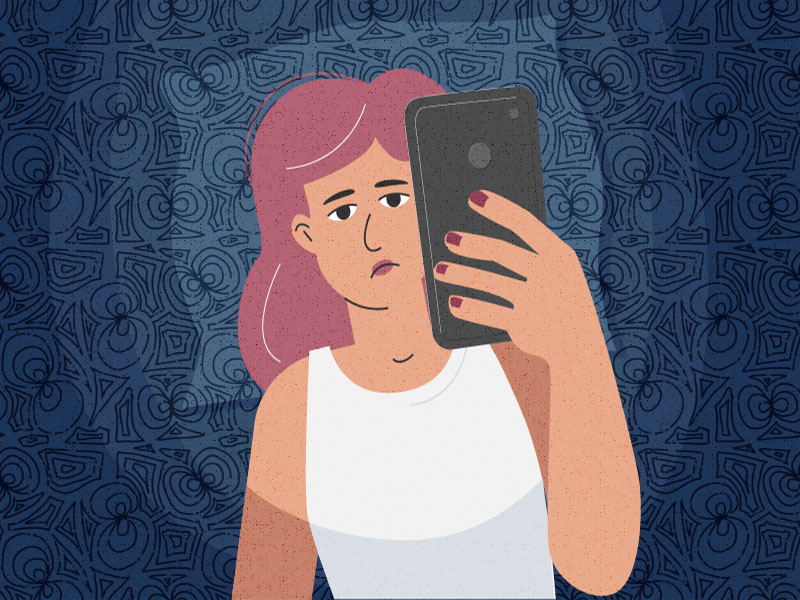
A client whom I had been seeing in couples therapy recently contacted me with an urgent question. She anxiously asked, “Could my husband be cheating?” Catching her breath for the briefest of moments, she explained that she follows various “other” therapists on TikTok and Instagram, so she sent me an email with videos she had viewed from one of their sites. The video was quite concerning to me because the “therapist” did not provide any citations for the material she used and made authoritative, expert-sounding statements about which types of people engage in infidelity. This particular therapist went on, without clear context, to intertwine various concepts from different popular theoretical models. These concepts, which included attachment styles, triangulation, the unconscious, and enmeshment, were drawn from the corresponding theoretical models of Emotionally Focused Therapy, Bowenian Family Systems Theory, Psychoanalytic Theory, and Structural Family Therapy. The resulting statements describing the “typical” unfaithful partner were a discordant patchwork quilt, which from a distance seemed to be an integrated whole, or the blanket prediction a fortune teller might offer—something like “there will be change in your life,” or “you are seeking answers to important questions.” This particular experience, along with other recent similar ones with other clients who have asked follow-up questions about information that they obtained from therapists they follow on social media platforms, has prompted reflection upon some questions related to how social media is the “new self help.” These include:

  • How are our clients to evaluate the credentials of therapists, life coaches, trainees, and even graduate students who post on these social media forums? And, relatedly, what is our ethical/professional obligation (or not) to “educate” our clients in doing so?
  • How can our clients verify whether the content they are reading, and perhaps integrating into their lives, is accurate? And relatedly, what is our role and obligation to help them in doing so, especially if what they are reading is at cross-purposes to the clinical work we are doing with them?
  • What are the clinical implications of having an uninvited co-therapist on our treatment team?
  • When might it be our ethical/legal obligation to report one of these “well-intentioned” clinicians who want to democratize the therapeutic process?
  • How can we explore the influence of these other voices on our clients’ experiences and perceptions? And relatedly, should we? Must we?
  • What is the legal responsibility and ethical obligation of therapists who have followers on these platforms if a person who is not their client follows their “advice” and has an adverse outcome? I have not seen disclaimers on most sites that these sound bites are not a substitute for therapeutic services.
Despite the above concerns, I do believe that there are certain benefits to therapists offering online information and general guidance to their audience, although disclaimers, risks and benefits, and the sources of this information and guidance are important to include. Additionally and once vetted, therapists can offer these sites, their information and videos as they might utilize bibliotherapy or cinematherapy. But in the final analysis, we should both practice and teach our clients the therapeutic version of caveat emptor.

I Simply Don’t Want the Agita

Having recently retired from my decades-long university clinical training position, and having significantly reduced my private practice, I no longer feel tethered. While my use of the word “tethered” may suggest a state of involuntary constraint, all has been quite by choice and fortunately, according to plan.

As part of my elaborate and strategic exit plan, I crafted a clever, professional, and appreciative “gone-golfing” out-of-office memo with the university and left no forwarding address. But because I have, in the past, received clinical referrals through that encrypted email server, I have not completely separated myself mentally from my role of teacher, supervisor, and clinician. I still occasionally check that email, partly out of separation anxiety, partly out of FOMO, and partly in hopes I might still receive something interesting—a challenge, an offer, an invite, or even the possibility of a few unanticipated bucks.

Like what you are reading? For more stimulating stories, thought-provoking articles and new video announcements, sign up for our monthly newsletter.

Then, just the other day, one of those enticements arrived. An out-of-state attorney asked if, as a clinician, educator, and play therapist, I would be interested in serving as an expert witness in a malpractice case against a clinician, also out-of-state, who, according to the plaintiff, had erred in their treatment of a young child while providing play therapy services and divorce/custody-related assessment in the shadow of an acrimonious divorce.

I guess those old circuits had not completely faded, because within moments I had created a litany of considerations and possibilities, and applied a “valence of acceptability” (VOA) to each (1=highly acceptable, 5=highly unacceptable):

  • Divorce, malpractice, and court-related meant high fees and up-front payment for anticipated work involved, from record review to expert testimony (VOA=1)
  • Excitement, intellectual challenge, professional reinvigoration, opportunity to put my extensive clinical/assessment experiences to use (VOA=2)
  • Rapid amortization of the above (VOA=5)
  • Sacrifice of free time (VOA=5)
  • Diminution of already-fragile golf course concentration (VOA=5)
  • Concern over of subsequent litigation against me (VOA=5)
  • Random, unanticipated, but highly likely agita (VOA=5)

Total average unweighted VOA=4.0

Decision=Decline Invitation

Follow-up=Increase Daily Dosage of Vitamin N (No), Play More Golf

With this decision made, I re-contacted the lawyer, who politely asked me for the basis of my determination. Rather than share my entire mental litany, I simply said, “Thanks so much for the invitation to work on this case, but at this stage of my career, I simply don’t want the agita.” He understood and interestingly, revealed his own age, shared the toll these kinds of family law cases take on all involved, and wished me luck on the golf course. Funny thing is that I never mentioned that I played golf, so assume he associated that with retirement and the fact that I live in South Florida. I did not bill him for the 45 minutes of rumination and 15 minutes it took to compose the email.

As a clinician/evaluator, and in particular play therapist who has worked in the shadows of court orders, as well as with young children, their warring parents, and typically zealous, although more often aggressive, non-family-oriented attorneys whom I later found out had their own shares of painful early childhood experiences, the decision made complete sense to me…and still does.

I knew from my own clinical experiences that while the first victim of divorce and custody-related battles is the truth, my own peace of mind typically ran a very close second. And while a sense of gratification often attached to having done a good job, the ensuing sense of relief and goodwill rarely extended to the players in the respective case, and the children continued to suffer the slings and arrows of the parent’s (and attorneys’) unfinished business. And all of this came rushing back as I made my decision.

***

In my previous blog, “Are We Really Ever Off Duty,” I wondered aloud whether I will really ever be fully able to simply cover that “third ear” and re-enter “civilian” conversational life without the desire, need, or intent to somehow help by offering an unsolicited psychotherapeutic salve to soften scars and mend wounds. This particular sense of wondering related more so to that part of my career when I was on active duty, so to speak. But what about when the “gone golfing,” or “gone fishin,” or gone wherever I want to go” sign is officially hung on my door? When will I no longer be drawn to the enticements, at least those of a professional type? Stay tuned, I’ll let you know.

How to Survive Pandemic Pandemonium in Nursing Facilities

“We were left too alone at times, in these incubators of COVID at the nursing home, and we experienced true fear, and that fear is still present for me.”
 

“I’ve learned that if you allow yourself to go arm in arm with someone else, you can really accomplish something.”
 

The COVID-19 pandemic has had a tremendously disruptive impact on multiple aspects of personal life and on society across the United States. Yet the impacts in hospitals and in nursing facilities have been especially catastrophic, with shocking numbers of deaths, and severe effects on care providers.

Like what you are reading? For more stimulating stories, thought-provoking articles and new video announcements, sign up for our monthly newsletter.

Nursing facilities continue to experience dramatic changes because of the pandemic. As a psychotherapist providing treatment in these facilities, I lost many therapy clients to coronavirus, as 20 residents died in this facility, 30 in that, and 36 in another facility, for example.

In the spring of 2020, during the early stages of the pandemic and as the level of risk rose, my employer placed us on a temporary furlough. Many workers at the facilities, though, had to persevere in the face of cascading catastrophes. I felt so relieved to be home and to feel safe, yet I felt guilty to not be in the facilities when the need was greatest. I recall the anxiety I felt upon returning to the devastated facilities as I dressed in surgical gown, mask, face shield, and gloves before entering the buildings—something I’d never done before.

Plastic sheeting covered the entrances into some of the units, and at one facility the doors of residents’ rooms were covered with plastic sheeting with a zipper in the middle. A 55-year-old man with schizophrenia unzipped the plastic as I approached and handed out two dollars, asking if I’d get him a soda from the vending machine in the staff lunchroom.

A 51-year-old female resident had recovered from COVID infection and was aware of many fellow residents having died, yet she asked me if I really thought it (COVID) was real—she was strongly influenced by ill-informed and insincere information she’d gathered on TV and on social media, despite her direct experience. Such fearful spellcasting continues unabated, and I, along with my fellow workers have had to rely on critical thinking skills to help dispel, or de-spell, malign messaging wherever it appears.

As a mental health professional, I know that isolation can be kryptonite for persons experiencing mental health issues, and yet, to protect vulnerable persons from imminent danger, we needed to subject them to unprecedented degrees of isolation—weeks at a time closed in their room, months with no dining room, no group activities, and no family visits.

There was an early rise in mental health and behavioral symptoms in these facilities, and then an unexpected phase of collective self-suppression—passivity and apathy—as an apparent mode of coping. I was puzzled as one resident after the next stated that they were “okay” when they were immersed in this unusually unpleasant and lonely and anxious time. Were they okay or collectively experiencing a blunting of affect as an element of PTSD, or a type of useful detachment linked with dissociation?

It is still too soon to measure or appreciate the scale of the impact, as facilities continue to experience occasional positive tests for staff or residents. Many facilities have achieved a semi-normal state of daily activity, yet staffing has been decimated, and the need for new staff persons too often goes unfilled. Many TV and print news reports have described the negative impact of the pandemic on hospital staffing, yet few have examined the erosion of staffing at nursing facilities.

In some nursing facilities in Massachusetts, we have National Guard men and women in uniform performing non-clinical tasks: helping in the kitchen, folding laundry, and mopping floors, among others. It is wonderful that the Governor of the Commonwealth of Massachusetts has provided this support, yet it is shocking to see their presence and to know how much they are needed. Some facilities are leaning heavily on the National Guard’s men and women, and on expensive and budget-busting agency staffers. From where will the much-needed workers be found when the National Guard departs?

I admire the valiant, and exhausted, workers—the nurses, aides, directors of nursing, administrators, social workers, housekeeping, maintenance, laundry, food service, and floor care workers grinding on daily through risk and hardships. Call them heroes and they’d shake their head and roll their eyes—dead tired and just trying to get on with it, they’d say, instead.

It’s a challenge for my employer to hire enough clinicians to cover the needs for behavioral health service at the nursing facilities. Some clinicians seem to shy away from nursing facilities, and too many psychotherapists have migrated to telehealth jobs. We are still awaiting the phoenix phase of the pandemic, the rebirth of a personal and a shared sense of mission, as individuals recover from severe and sustained burnout.

For this article, I asked two questions of several residents and staff persons at different nursing facilities. Their responses vividly illustrate the range of poignant human reactions.

What has it been like to live through this period of pandemic in the nursing facility?

Resident: “It was a life changing situation. I’ve had to learn to survive—through all my mental issues; it’s been difficult.”

Resident: “It’s been frustrating, because of the repeated COVID testing.”

Director of Nursing: “It has been awful, stressful, and heartbreaking. But it was impressive to see, in the early stages, how all the people in the building came together to take care of the residents. I still feel like I haven’t coped with it, like I have post-traumatic stress disorder. I’m getting better, but I’m not yet coping as well as I want to.”

Director of Social Work: “It has been very traumatizing, actually, with so many residents passing away and being urgently sent out to the hospital in those early days of the pandemic. We had residents getting sick so quickly, and ambulance and fire people who wouldn’t go up to their rooms to get them—we had to rush sick residents down to the lobby in the elevator to get them out.”

Social Worker: “There’s been a heaviness about it, with unending changes and a sense of not-knowing every day, and a lot of fear. But also a lot of people who have stepped up with great compassion. We were left too alone at times, in these incubators of COVID at the nursing home, and we experienced true fear, and that fear is still present for me.”

Director of Nursing: “It has been extremely difficult for me, emotionally and professionally.”

Resident: “It has been a mixed experience. On one hand, I received good care from the aides—at least in the early stages, and when I was sick with COVID, and I got good physical therapy, and that got me walking again. I also got a little insensitivity, at times, because the workers needed to take care of their needs rather than mine, or so it seemed.”

Social Worker: “It has been sad, and challenging. We lost so many residents. Two years ago today, I came down with COVID. When everyone was in isolation we used Facetime, and we took photos of residents and posted them online, and the families were very grateful. But many of those pictures turned out to be the last ones of their family members. It is still very traumatic for me [said with a quavering voice and streaming tears].”

Administrator: “It has been extremely challenging and emotional. I’ll never forget family members visiting their loved ones—separated by glass windows, talking on the phone, and crying. It has been life changing, and points out things we often take for granted.”

What lessons have you learned from coping with the pandemic?

Resident: “To be kind, to ask for help, to reach out to other people, to accept my circumstances for what they are, and that every day is a new adventure.”

Resident: “You just try to keep your distance from people who are coughing and sneezing.”

Resident: “Being ill with COVID was rough for me, and I learned a lot by surviving it. I was grateful to be in a nursing facility rather than an assisted living program because of the greater amount of care I got here.”

Resident: “I guess I’ve learned that you’re stronger than you thought you were—or we all are.”

Social Worker: “I’ve learned that if you allow yourself to go arm in arm with someone else, you can really accomplish something. I’ve learned tolerance, especially around faulty systems, and I’ve learned to be more grateful than I ever have been.”

Director of Nursing: “That it is okay to feel vulnerable, and not strong; and how important is the gift of life, and how family is the priority.”

Director of Social Work: “I have learned the importance of teamwork. It taught us to work together, and to lean on each other for support. It is important to surround ourselves with a support system when dealing with such unfortunate circumstances.”

Nurse’s aide: “I learned more about a new disease, and that added to my knowledge. It has encouraged me more in my job. When I recovered from COVID , it made me stronger, and made me want even more to help people through my work.”

The process of asking these questions of staff and residents was emotionally powerful. It prompted me to spend time reflecting on my own reactions to the pandemic, and it pointed to the need for additional support to help staff persons manage the pandemic’s impact. So I developed a plan for “Pandemic Processing: In Search of Healing” support groups. Management staff at each of the facilities where I work were keenly interested to hold such groups. The meetings start with a simple relaxation exercise, then comments to set the context for conversation, and then a list of uncompleted sentences that act as springboards to the sharing of emotions.

The purpose of the support meetings is to step from coping toward healing. Coping is short-term efforts to function amidst an enduring stressor. Healing is a gradual process leading to lasting relief. Even while we continue to battle this enormous dragon of COVID, we need to reach out to one another and exchange support and encouragement so that we may emerge as stronger, more resilient, and more compassionate individuals—persons readier and more willing to devote themselves to the service of others.

What Root Canal Surgery Taught Me About Being a Therapist

Although I don’t have a full blown case of dental phobia, suffice it to say that I wasn’t looking forward to my root canal surgery that morning. I maturely prepared for the morning’s activity by queuing up a psychotherapy podcast, thinking that listening to it would distract me from the unpleasant sounds and smells of the offending tooth being drilled. While the endodontist had previously assured me that I would feel no pain, my eternal skepticism left me in doubt.

Like what you are reading? For more stimulating stories, thought-provoking articles and new video announcements, sign up for our monthly newsletter.

As the procedure progressed, I found it increasingly difficult to relax—if relaxation is even possible during a root canal. My garbled responses and feeble hand gestures were futile attempts to communicate with the surgery team, and it quickly became clear that my brilliant distract-by-podcast plan wasn’t quite as practical or effective as I had hoped.

So I removed my AirPods, and without a conscious choice, found myself turning my attention inward, focusing on my bodily sensations, and trying to relax as deeply as I could. Although I consider myself fairly attuned to my somatic being—and I use that attunement in my therapeutic work—the length of the procedure and its intensity motivated me to increase and deepen my level of focus.

I first tuned into my breathing, and then into what I can best describe as “energy flow”—although as I write this I worry it will sound a little too “woo-woo.” But whatever one wants to call it, it is something I regularly experience quite viscerally: the sense of energy flowing through my body, often stopping or disappearing at certain locations, such as my waist or hips when seated, but at other times like a creek which goes underground only to resurface later, reappearing in my calves or ankles.

I attended to this current of energy, noticing its ebbs and flows, and its associated sensations: pleasure, tension, openness or closedness, as well as the degree to which I was fully immersed in the experience. Then I began to have images and associations, most particularly related to table tennis, a sport which I’ve been playing for a few years (switching from tennis after developing tennis elbow) and had just played the previous evening at a local club. I’ve been getting coaching from an elderly Salvadoran man who played on his national team half a century ago, and am struggling to take the nice, relaxed forehand topspin shots that I can occasionally execute during our practice sessions and bring them into the matches at our club, only to find myself tightening up during my stroke and hitting the balls into the net. Yet as much as I tell myself that the stakes couldn’t possibly be any lower—what difference does it make if I win or lose one of these matches?—I find it extremely hard to change these habits. And there I was, in that chair, trying to do pretty much the same thing at the receiving end of the endodontist’s drills, picks, and pokes—focus, relax, let it happen.

And here my mind goes off in a number of directions. First, how hard it is to make any changes, and how the essence of who we are is so embodied. Think of anyone you know, and then how they move, whether it’s walking, dancing, or doing one sport or activity. If you see them again 10 or 20 years later, you can probably recognize them just by these movements alone.

And then I think about how we as therapists receive just about zero training in attending to the body, both our own and those of our clients. Sure, we may have been taught at one point how to lead a client in a relaxation or body-focused mindfulness exercise, but that’s likely about it. That’s barely scratching the surface. I realize that in recent years I’m much more attuned to my own bodily sensations when I am doing therapy. Sometimes it’s in the form of an emotional response in my heart or chest or throat, which I assume to be some form of empathic resonance. Often I share it with my client, not as a definitive statement, but merely as an observation, often with a question such as “I notice I feel some emotion swelling up in my chest; am I picking something up from you?” Other times I don’t share it but make a mental note for later consideration. This may take the form of something like, “Hmm, I find myself feeling ___________ (fill in the blank: softer, more vulnerable, tired or restless) with this client and wonder what might be happening between the two of us.”

There are indeed various somatic-oriented “approaches”—but these are far from mainstream, or from being taught in most of the grad programs which focus on “evidence-based” therapies. But there is no firewall between mind and body, and it’s patently absurd that therapeutic approaches should be Balkanized into separate fiefdoms: cognitive vs. emotionally focused vs. somatic. One hears about integration and flexibility as being hallmarks of mental health; if so, we therapists and our battles between theoretical schools aren’t doing a very good job of modeling this.

As I finish this blog a few days later while waiting in the San Francisco airport for our flight to depart after a four-hour delay due to leaking hydraulic fluid, I am grateful that this glitch was discovered on the runway before takeoff. I check into my body and feel the impending relaxation that comes with vacation, despite the false start on the runway. My shoulders are relaxed, my ankles warm, and I feel the energy flowing despite a slight constriction in my crossed legs. I notice a slight sadness, or perhaps melancholy, but am not sure what that’s about. Maybe I’ll sit with that a bit and see what I discover. Or maybe it will just fade away and remain a mystery.

Clients Deal with Ethics Too

If you use the phrase “ethical issues in therapy,” every therapist on the planet will assume you mean the ethics of the therapist—confidentiality, client autonomy, duty to warn. Licensure renewal typically requires ongoing continuing education in ethics. Ethical questions show up in our clinical consultation groups in the form of our obligations to our clients and how we make sure we don’t inadvertently harm them. Ethics and our ethical obligations to both clients and the profession are ubiquitous in the fields of psychotherapy and counseling.

Like what you are reading? For more stimulating stories, thought-provoking articles and new video announcements, sign up for our monthly newsletter.

Here’s a new thought: clients have ethical concerns, too. And a related thought: we therapists have approximately zero training in how to help clients address these ethical concerns. A partial list of ethical dilemmas that clients bring to therapy includes whether to: stay in a difficult marriage or divorce, maintain a secret affair or end it, cut off or stay connected to a difficult parent, tell a non-vaccinated loved one to skip a family gathering or let them come, keep a family secret or reveal it. And then there are ethical issues that the therapist sees but the client may not, such as when a divorced parent is undermining a child’s relationship with a despised and destructive ex-spouse.

As someone trained in the 1970s, I can tell you how I was taught to deal with these ethical dilemmas. Keep the focus on the client’s personal needs and desires (“What do you need to do for you?”) and steer the client away from the other side of their ethical dilemmas—their sense of responsibility to others. In the language of the day, we learned to discourage clients from “shoulding” themselves.

This “do what works for you” paradigm came crashing down for me in the 1990s, when I worked with a distressed, newly-divorced father I’ll call Bruce, who was about to abandon his children by moving away and starting a new life. He had already done the same thing after his first divorce in another part of the country. He came to a session to wrap up our work and say goodbye. I knew I had to try to influence him to do the right thing by his children, but nothing in my training had prepared me for that conversation. What skills could I call on to navigate between the Scylla rock of silent neutrality (“What do you need to do for you now?”) and the Charybdis whirlpool of prescriptive moralizing (“Just do the right thing for your children”)?

That case, along with readings about the cultural impact of “value-free” individualistic psychotherapy, helped me to realize that the therapy field has a blind spot when it comes to ethical issues in the lives of clients. In this context, “ethical issues” refers to client behavior that has consequences for the welfare of others. We either see clients’ ethical struggles in strictly psychological terms, like the punitive superego, or as something we ought to steer clear of lest we impose our values on clients.

A problem with either of these default positions is that they do carry an implicit ethical message: that the only moral stakeholder is the client. An exclusive focus on asking, “What do you need to do for you?” carries the message that complex ethical dilemmas involving tension between self-needs and obligations to others really come down to one dimension: the needs and desires of the self. For years I told clients agonizing over whether to divorce that “your kids will be fine if you do what makes you happy.” My point is that when clients bring us their ethical dilemmas, we are ethical consultants, like it or not. So I decided it was time to get good at it.

In my recent APA-published book, The Ethical Lives of Clients, I articulate five skills in ethical consultation, using the acronym L.E.A.P.-C: Listen, Explore, Affirm, offer Perspective, and (sometimes) Challenge. Therapists use these skills all the time in our work. Now I am applying them to the client’s ethical issues: listening for the client’s sense of how their actions are or potentially are affecting others, exploring their ethical concerns and the roots of those concerns, affirming their willingness to confront an ethical dilemma, offering perspective on the tension between the client’s needs and responsibilities to others, and, in some cases when there is imminent, foreseeable harm, challenging the client to consider the impact of their actions on others.

After decades of doing this work and teaching it to therapists, I am convinced that skillful ethical consultation not only does not drive clients away—a common therapist worry—it empowers them. With Bruce, I listened to and explored his pain and worries, I affirmed him as a father, I offered a perspective on his importance to his children and the likely consequences if he abandoned them, and finally, when he minimized the impact of his exiting their lives, I challenged him by saying that I was worried that he was treating a short term problem (his distress over the divorce and his desire not to have to deal with his ex-wife anymore) by risking long term damage to his children. I offered to be there for him to deal with his current personal crisis, which I was confident he could get through.

Bruce made a decision that had integrity for himself and his children—he stayed with them and later reconnected with his older children from his previous marriage. In the years since that case, I’ve learned that while there is tension in the short run between needs of self and ethical responsibilities to others, in the long run, human flourishing comes from facing the tension and finding authentic ethical integrity. Helping people in this crucible is part of our job as therapists, so let’s get good at it.

In Praise of Termination

I don’t think I’m the only one, at least I hope not, who feels an immense pressure to produce a “win” with every client. I feel like I owe clients a positive outcome and if I’m not able to produce, then I’ve let the client down. This pressure leads me to put the blame, if that’s the right word to use, on myself. If the client is struggling in any way; if they aren’t seeing results; if they aren’t motivated; if they aren’t putting in the effort to complete their homework or follow the steps in their treatment plan, I am the one who failed, according to that lingering, irrational neural circuit. All that changed after one fateful conversation with a colleague.

Like what you are reading? For more stimulating stories, thought-provoking articles and new video announcements, sign up for our monthly newsletter.

I remember unburdening my woes on a colleague regarding a couple I was working with. I told her that every week the couple would spend their time complaining about each other. We would discuss their relational problems ad nauseam, inevitably arriving at the same place when they would proclaim some version of “If only we could just do X, then everything would be better.” They would get so excited, and I could hear their thoughts as if broadcasted; this idea was their silver bullet. The excitement was palpable as they left the office with an action plan, only to return the next week to tell me they hadn’t done anything we’d discussed. This pattern repeated week after week. I found this baffling. But, as I told you, the reason had to be that somehow I dropped the ball. So each session I’d go into overdrive and dissect what didn’t work and strain every last neuron in that circuit to come up with yet another dazzling idea, which, as you guessed also wouldn’t work.

I finally finished telling my colleague about the couple and downloading all my feelings when she looked at me and said in a matter-of-fact tone, “You’re way more patient than me. I would have fired them long ago.” “Huh?” I replied. Fire my client?! I had never done this or even considered this as a possibility. As I asked her more questions, she explained that when you have a client like this, the problem may not be you, or even them. Maybe the timing isn’t right. Maybe they aren’t in a place to make change. Maybe it’s easier to dream about change than actually doing it. Maybe the fit isn’t right and they would be better served by another clinician. Or maybe I needed to draw a line somewhere, and tell them that I could no longer work with them if they were not willing to follow through.

My colleague was making this pretty clear, but I honestly needed her to spell it out for me. She told me to make continuation of the therapeutic relationship contingent upon their completing their homework. If they said they would commit to a date night once per week, then I needed to raise the stakes and make doing the date night actually matter. They clearly valued coming to therapy every week since they were willing to pay for something that wasn’t producing the results they allegedly desire. The fact of the matter is, she went on to explain, that there could be a hundred different reasons why they weren’t actually following through, but in the final analysis, I was not doing them any good by smoothing over their failure to complete the homework or follow through with other therapeutic suggestions.

Yeah, I had to sit back in silence and take a few minutes to digest this. My first thought was, “Well, isn’t this kinda mean? Or, at the very least, won’t my client think I’m being kinda mean?” My colleague disabused me of this idea rather quickly. Holding my client accountable does not have to be a mean thing to do, nor does it mean that I am being so. This can be done in a very professional and respectful manner, and even in a way that may at some later time lay the foundation for real therapeutic progress—you know, planting seeds! Besides, I would hold myself to no less of a standard. I would not let myself off the hook if I committed to something and then never followed through. So why the double standard? Why do I look the other way with clients, but not with myself? Further, my clients most likely hold themselves to this standard when outside the office. So, why the double standard? Why do they look the other way when it comes to their relationship?

This question was very challenging, but incredibly helpful. I went back to my couple, nervous but motivated to put these new ideas into practice. I let them know, respectfully, that I noticed a pattern of them not following through on homework. And that if they wanted to continue working with me, we needed to agree that doing so was dependent upon their completing homework. My heart was in my throat when I said this, but to my surprise, they had little to no pushback. Despite their agreeing to the terms, the next week they had not completed their homework. As I said I would, we decided to wrap up therapy.

Fast forward a few weeks.They called me asking if they could come back, but they said this time would be different. They would not only agree to the homework-related conditions for termination, but they committed to actually doing their homework. Suffice it to say, they did, and the change they so badly wanted started materializing.

***

In reflection, I learned a lot from this couple and from my colleague’s insight. This lesson has stayed with me and affected my work with virtually every client since. I no longer place immediate blame on myself for clinical failure (although I do reflect often on how I can do better). Rather, I am more broadminded when things aren’t working. I’m more open to the option of terminating the therapeutic relationship, and, in fact, I see it as a potentially important step in the healing journey of some clients. I share with my clients that termination can be an act of empowerment. If the client feels like they aren’t getting what they need from a therapist, they should not feel beholden to stay for the therapist’s benefit. Instead, I encourage clients to broach the topic of termination, to explore other options, and to find what works for them, as I am now in the habit of doing.
 

Through the Looking Glass: Helping Clients with Retirement

When I began my practice over thirty years ago, more than half of my clients were older than I was. Now, in my sixties, only a handful of my clients are older than I am. When I look back on my early work, I cringe at my rudimentary understanding of how aging changes one’s outlook and opportunities. What was once an academic understanding of this stage of life has morphed into a personal one. Recently, I have taken more of an interest in learning about what makes for a good retirement and how to help my clients manage this transition. My interest is fueled by the age of my clients and the impact of COVID-19 on people’s work lives. In addition, my husband, along with a number of our friends, recently retired, which brings the topic close to home. Through my research, I’ve learned that there are two major paths for retirement. They are typically labeled the “cliff” versus the “transition.” There are positives and negatives about each one, but the path taken is not always a function of choice by the retiree. External circumstances, including the type of job one holds, play a major role in how one will cross the threshold into retirement. The cliff version of retirement was more common when the mandatory age for retirement was 65. The advantage of this type of ending is that it is clear and expected. You can make plans for the days and weeks after. I have seen people prepare for the cliff by relocating, joining volunteer organizations, and/or planning long-awaited travel. One patient of mine, a physician, left the day after his retirement on a six-week cross-country road trip with his wife. What he wanted most was not having to plan or live by a schedule after years of being bound to a pager. After their adventure, he returned with a new perspective about how he wanted to spend the next chapter of his life, one he could never have conceptualized while he was fulfilling the demands of his job. You can prepare if you know you are going cliff-jumping, but when the cliff appears unexpectedly due to illness or a layoff, it can easily lead to depression or anxiety. Another patient of mine was forced out of her job three years earlier than she expected due to a change in leadership at her company. As a single woman with no children, her work life doubled as a major component of her social life. To make matters worse, most of her friends were still working, so she suddenly found herself with empty days and no social contact. COVID-19 protocols exacerbated how isolated she became, and doing more things on Zoom was not an antidote to being home alone every day. Together we mourned an unceremonious end to her career and brainstormed how she could continue to feel relevant and engaged in the world. The transition path, one most therapists in private practice seem to choose for themselves, allows for cutting back on one’s hours while still working in the same position. Not all careers are flexible in this way, and sometimes a decision to go part-time means losing more than just income, but stature in the workforce as well. The positive side of transitioning into retirement is that it allows one to try out new endeavors slowly and to ease into a different schedule. The risk is that a gradual leaving can feel more like fading out rather than having a capstone moment to acknowledge one’s work life. Retirement is a phase of life and not a solitary moment in time. The retired clients I see who have fared the best have found a cohort group. Similar to Maslow’s hierarchy of needs, if health and finances are in order, then the next step is building community. Whether it’s meeting a walking partner or offering to read to young children, being counted, and counted upon, can help counteract depression and isolation. Like most therapists in private practice, for me, deciding when to retire has always felt like a decision that would be in my control. But, now older and wiser, I have seen colleagues forced to retire unexpectedly either for personal health reasons or to become caretakers for loved ones. Unfortunately, I am also privy to a few rare cases where therapists did not retire soon enough and their performance at the end of their careers was substandard. Sometimes clients ask me directly when I am planning to retire. They ask the question with a mix of curiosity and trepidation. I have promised them that unless there is a dramatic change in my health, I will give them a year’s notice. The depth of our work as therapists warrants allotting time for a thoughtful ending. The pandemic has certainly impacted my thinking about when I will retire. On the positive side, the ability to work remotely has changed the calculus around some of the aspects I like least about my work (commuting, for example) and made the thought of working longer a real possibility. On the negative side, the current mental health crisis makes finding appropriate referrals for clients right now seem impossible, which by default extends my sense of responsibility to my clients. Thinking about my own retirement, I am aware that unlike other life experiences that have shaped my work as a clinician, ironically, I will not be able to draw on my personal experience after the fact to the benefit of my clients. Whenever my last day of work is, I hope it will be my choice. Turning out the lights and saying goodbye will not be easy. Despite that reality, I hope that the way I prepare both my clients and myself for the end of our work together will be an opportunity for growth for each of us.

Whose Exposure Is It, Anyway?

My guess is that most therapists, even if neither trained in or actively practicing CBT, are familiar with the technique of Exposure with Response Prevention (ERP). Simply put, it is one in which the client, typically struggling with OCD, is systematically exposed to thoughts, objects, images, or situations that fuel their anxiety, which in turn triggers their obsessions and compulsions. As they are guided through the exposure scenarios, which can be imaginal, “real,” or more recently through the use of VR technology, they are provided with alternative skills for coping with and reducing the triggering anxiety. Over time, the anxiety diminishes, as do the obsessions and compulsions.

Like what you are reading? For more stimulating stories, thought-provoking articles and new video announcements, sign up for our monthly newsletter.

I had been working for a relatively short time with my newest clinical supervisee, S, who shared a heartrending account of a childhood scarred by parental instability and early sexualization, profound feelings of vulnerability and insecurity, and his subsequent trajectory beginning in adolescence along a painful path of sexual compulsion and risk-taking behavior, including high-risk sexual hookups with strangers.

This was quite distressing to hear, considering that he was working in a treatment facility with highly disturbed clients, half of whom were referred for “mental health” issues and the other half for substance use disorders. Triggers abounded for this emerging clinician, who thankfully and much to his credit was simultaneously receiving counseling, attending Sex Addiction Anonymous (SAA), and supervision with me.

And then came C, an attractive, thirty-something, HIV-positive client with an early family history not very different from S’s, and who like him was a self-described “sex addict,” was involved in a BDSM relationship with someone considerably older, who worked in a sex shop much like the ones S historically frequented, and who also sought sexual hookups with strangers like he had (up until only recently).

While my primary obligation was to my supervisee, I was also technically accountable to his client. And in light of the similarity of their early adversities and subsequent behavior, I was compelled to carefully monitor what I considered to be the inevitable emergence of countertransference.

As a clinician, clinical educator, and supervisor, I am familiar with the many manifestations of countertransference, especially among freshly-minted therapists and those who may not yet have met, let alone confronted, their own demons. And I know that although clinicians sometimes benefit psychologically from their work with clients, there is a powerful edict in our field that says, “thou shall not use your clients for self-healing.” But it happens, and sometimes, as they say, the universe sends us the clients we need, although it remains important that the clinician not use or exploit the therapeutic relationship for their own psychological gain.

At the outset of his work with C, and much to his credit, S immediately recognized similarities between his and his client’s story and problematic behaviors. He knew that a minefield lay ahead, saying to me, “My mind was racing 100 miles per hour when he told me about his life.” C was the kind of person—young, attractive, needy—that he might have hooked up with on the outside, although he very quickly recognized that crossing this particular boundary would be career suicide and would leave everyone devastated in its wake. While he wasn’t concerned that he might cross that particular line, S was deeply concerned that his client would trigger him to act out in his own life, so had to be vigilant for feelings and thoughts that heightened his own anxiety and which were historically triggers for his compulsive use of pornography and search for hookups. I was very relieved that he had broached this difficult topic with his own therapist, was sharing it with me in supervision, and had been attending a local SAA meeting.

Along this path of inquiry, I have conceptualized S’s treatment of C as his own, rather than his client’s exposure with response prevention (ERP). In this case, the ERP is not being used directly, or even consciously, in the service of the client’s sexual obsessions and compulsions as it might otherwise be, but instead as S’s own means of monitoring the triggers that the therapeutic work has evoked, and thus as a way to mitigate the impact of those triggers within himself so he is able to control his own sexual obsessions and compulsions. While I initially thought it might be more effective to keep this insight to myself, I decided that sharing it with S might aid the supervision, and in turn positively impact his therapeutic work with C.

And so, I inquired and learned that in addition to his own therapeutic and supervisory work, S was doing some powerful internal work when in the room with C. Like himself, C had survived, albeit scathed, from a traumatic earlier life and had stopped growing in early adolescence. It helped S to conceptualize him as a vulnerable teenager who needed a deeply supportive and empathetic clinician who could relate, although not project. Only in this way could he simultaneously help C to develop more mature, effective, and developmentally appropriate intrapsychic and behavioral coping skills for addressing his own intra and interpersonal challenges. My supervisee and his client, both wounded and fragile in their own right, are growing together.

***

As of this writing, I have yet to speak with S’s therapist and may or may not, but I am very appreciative to know that together they are discussing, among his other issues, countertransference matters and how they are factoring into his therapy with C. I felt and still do that it is my role to carefully explore the countertransference for the purpose of helping S recognize not only the triggers in the therapeutic work, but to become as aware as possible of the ways they impact not only that work but his own personal life.

The Subtle Art of Therapeutic Rudeness

Beginning therapists typically struggle with a particular issue that can be the cause of much consternation given that they tend to be “nice” people. You might already know where I’m going with this—therapists struggle with interrupting, cutting off, butting in, or engaging in any kind of behavior with clients that might be perceived as rude.

Like what you are reading? For more stimulating stories, thought-provoking articles and new video announcements, sign up for our monthly newsletter.

Under what conditions would a therapist ever need to resort to anything that resembles rudeness? I could give you a number of reasons, but I’ll limit myself to just one. A client could consciously or unconsciously avoid a certain topic for fear that it will be overwhelming for them, or because they don’t want to own up to something or acknowledge the impact of X on their life. A “nice” therapist will not want to upset their client; they will indulge the client’s avoidance by following the client-led conversation along a subject-hopping surface-level path. But ultimately, this is not to the client’s benefit.

We are not in the business of being nice, we are in the business of healing. And healing can hurt. If I am truly committed to the healing of my clients, I have to be willing to be rude, or at least act in a manner that may strike the client as such—to interrupt their avoidance and redirect their attention, sometimes kicking and screaming, to the topic they are sidestepping. My motivation is not to be sadistic, for I know that those areas that clients avoid are usually those that contain the greatest potential for growth and healing. But by indulging in their avoidance, I potentially infantilize my client. I reinforce the implicit notion that they are weak and incapable of facing the issue. Therefore, I have to notice the niceness tendency within myself and purposely tell myself that what feels comfortable is not for the ultimate good of the client. I then have to step outside of my comfort zone and act out a behavior that in most circumstances would be considered rude. This might include talking over my client by raising my voice and refusing to stop until they relinquish the reins of the conversation.

Now, this is where the art comes into play. When interrupting, I am trying my best to be artfully rude, but never disrespectful. I never denigrate or judge my client. I never put them down or do anything that undermines their dignity. Rather, my rude interjection comes from a place of empathy and understanding. I get it! I avoid hard stuff, too! It’s painful to look in the metaphorical mirror and face yourself. But avoiding the mirror only elongates my problems; it only gives more time and space for my issues to grow. So, if I truly love myself, I must drag myself over to the mirror and force myself to look. I need to love my clients in the same way.

I remember working with a middle-aged mother who had recently suffered a number of setbacks in her life. I remember looking at her and thinking to myself that she seemed so sad. Despite my best efforts to focus on and build up the positives in her life, no footing could be found in anything resembling hope. I remember one session in particular, where she kept talking about her knitting group and one group member’s relationship problems. I asked why it was important to discuss this person and not what was going on in her life. She said she was worried about her friend and was really trying to help her. I kept pressing my client to get a better sense of what she was thinking and feeling.

Over the course of our conversation, it became clear to me that my client felt as if her life was over—she had no sense of a future, and she was just trying to help someone, anyone, before she took her own life. She didn’t say this outright, but I could read between the lines that my client was considering suicide. I felt an internal panic when I realized this. I really liked this client. She reminded me of my own mother in some ways. I also felt a tremendous urge to keep the conversation away from the topic of suicide, to indulge my client’s wish of focusing on her friend in the knitting group. I also knew I could not let her leave my office without assessing her risk level. I took a deep breath, and as kindly as I could, I interrupted her and asked if she had been or was currently thinking about hurting or killing herself. The tears started rolling down her cheeks. What followed was a very helpful conversation that involved a safety plan, engaging with a support network, providing contact information in case of an emergency, and pulling in additional services. The conversation shed light on her under-the-radar risk for suicide that had developed over the last few weeks and provided a space for planning and support. That conversation needed to happen.

And I thank the art of rudeness for giving me the insight and words to respectfully interrupt my client and ask a tough question.