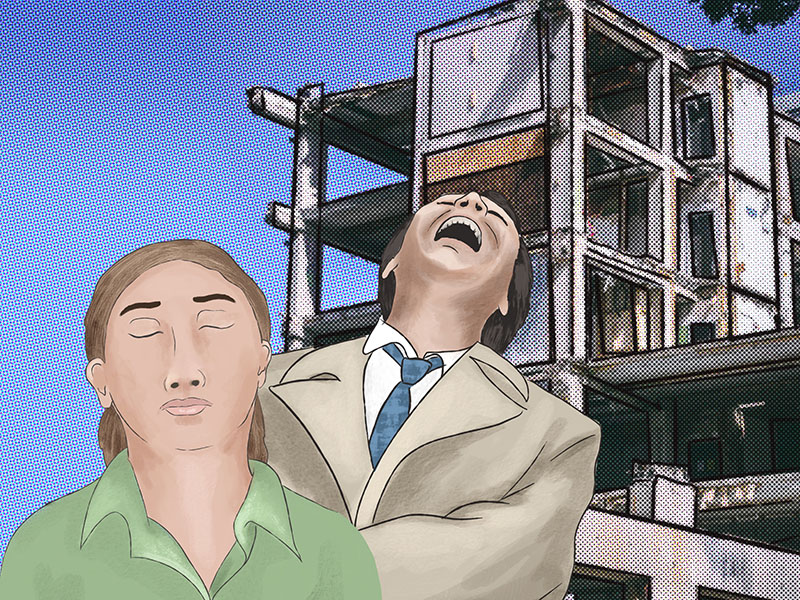
Existentialism and the Environmental Crisis: The Urgency of Meaning

Many years ago, while taking a summer class at a local university, I happened upon a copy of Existential Psychotherapy by Irvin Yalom, a title which appealed to me given that I was a newly graduated philosophy major. Reading that book was the tipping point in my decision to go to graduate school. Throughout my graduate studies, I kept searching for a faculty member or practicum site supervisor to engage me in mutual exploration of the existential concerns that were elaborated in that work. Unfortunately, those discussions never really materialized in the way that I envisioned or hoped, as at that time Cognitive Behavioral Therapy was emerging as the predominant school of thought informing most psychology graduate programs.

Like what you are reading? For more stimulating stories, thought-provoking articles and new video announcements, sign up for our monthly newsletter.

Since then, my clinical work with children, adolescents, and adults who have experienced complex trauma has brought me face-to-face with these fundamental human concerns, in particular with the need for meaning and purpose and for a sense of belonging in a sustaining community where we work out our identity and contribute to the welfare of others. Many of the leaders in the trauma field have emphasized the critical importance of these most basic human needs, which have also been identified and expanded upon by the work of clinicians, teachers, and researchers in the fields of constructive developmental psychology, mindfulness, and social neuroscience.

Recently I have started re-reading Existential Therapy, motivated by the ever-increasing number of clients with whom I have worked who struggle with existential concerns arising out of the unfolding environmental crisis. While my own understanding and confrontation with the “givens of existence,” as Yalom refers to them, has evolved significantly over the decades, his work and that of others such as Frankl and Buber assume heightened significance for me today. Clients struggling with often debilitating anxiety in the face of climate change span a wide range of ages, occupations, socioeconomic statuses, and cultures. Perhaps they are somewhat over-represented by younger adults and adolescents, but questions of meaning, purpose, and belonging are common, pressing concerns for many persons who have sought psychotherapy with me.

The COVID pandemic, the ongoing traumas associated with colonialism, systemic oppression, discrimination, and marginalization of people of color and others, political and social unrest, economic injustice, and now the invasion of Ukraine, impact our individual and collective health and well-being in significant and interacting ways. As such, I realize that I cannot isolate the environmental crisis apart from other highly stressful conditions of our time that my clients share with me. I believe, however, that the environmental crisis is unique in that it serves as the broader context or background against which other challenges play out, and that its impact on these other factors is both pervasive and at times subtle, factors which invite us to avert our gaze from the potentially catastrophic and irreversible effects of climate change. This latter dynamic heightens the distress felt by many.

While I approach diagnosis with healthy doses of skepticism and caution, I believe that a good argument can be made for a new DSM diagnostic category, “existential anxiety disorder,” one that recognizes the serious, traumatic impact of climate change on mental health—an impact that I believe will only increase in the coming years. I think it important that psychotherapists recognize and address the very real, oftentimes terrifying, fears and anxieties associated with climate change that clients bring into therapy.

***

Co-authored by 270 prominent researchers from 67 countries, the most recent report (2022) from the United Nations’ Intergovernmental Panel on Climate Change is a 3000+ page document with which a surprising number of my clients are familiar. They are aware of the disproportionate impact of climate change due to social factors such as economic inequities, marginalization, and colonialism, especially for indigenous peoples and those whose basic daily needs are directly dependent on the local ecosystem. The report addresses the unsustainability of natural resources related to both consumption and production, and how this contributes to a situation where half of the world’s population experiences water shortages, where increased incidence of flood and drought lead to acute food insecurity and malnutrition, as well as where forced displacement and immigration have disproportionately impacted those parts of the world with the least ability to supply basic infrastructure needs and provide a safety net for residents. Issues of justice and morality are evident here, and I often witness aspects of moral injury as my clients recount their struggles living as witnesses to and participants in actions that they find ethically and morally unacceptable.

This situation is only going to grow more urgent as the reality of an ever-degrading environment finally breaks through our collective denial and we can no longer avoid the reality of what we have wrought upon ourselves. Several of my clients have expressed a fear that as a species, we are collectively committing suicide, and they struggle with hopelessness, despair, depression, and a genuine lack of purpose and motivation. For many of them, existing meaning-making narratives are inadequate to the task of grounding oneself in a time of great uncertainty. At the core, these clients are experiencing a crisis of meaning, one that calls to mind the words of William Butler Yeats from The Second Coming:

“Things fall apart; the centre cannot hold;
The best lack all conviction, while the worst
Are full of passionate intensity.”

It has been personally challenging for me to serve these clients, especially as the collective “we” are all facing the same increasingly dire situation. My ability to maintain consistent self-care and sustaining connections with others, and my own spirituality and meaning-making narratives, are frequently challenged.

***

I do not believe that manualized treatment protocols targeting cognitive distortions and maladaptive schema are up to the task of adequately addressing our clients and their fears over the possible extinction of humanity. I suspect that this might be a very opportune time as a profession to refamiliarize ourselves with some of the grounding ideas of existential psychotherapy that have been elaborated in the fields of psychology, philosophy, and spirituality.

As an illustration of what I am seeing in my practice, let me introduce Maria, a young professional who initially came to therapy describing herself as “quite anxious” and concerned by increasing difficulties in maintaining focus and motivation at work. At the time, she was employed as an organizational consultant in a field that she finds intrinsically rewarding, and until recently had found her work highly satisfying. In the initial session she described a tendency to “overthink everything,” a gnawing self-doubt that was both new and troubling, anxiety related to health concerns, and a vague sense of purposelessness.

Maria also shared that she had started asking herself the question “Is this all there is?” when reflecting on her chosen career and lifestyle. Maria had begun to seriously question notions of hard work, productivity, and success in life and career, questions that cast doubt on the inherent value of the ideals of progress, advancement, and acquisition underlying our capitalist society. Indeed, as her awareness of the factors contributing to the environmental crisis broadened, she had given voice to a growing conviction that this worldview was itself toxic, unsustainable, and as it has played out, immoral. Her developing recognition of the interdependence of people, and indeed of all life and the planet itself, had further served to catalyze her current crisis of meaning.

Aware of the disproportionate burden that residents of the world’s least resourced countries are bearing, she became increasingly uncomfortable with her privileged position. She was actively involved in advocacy efforts at raising awareness of the need for more urgent, far-reaching and impactful action to protect our environment through comprehensive, long-term adaptation planning and implementation. Nonetheless, Maria often felt an almost paralyzing guilt that, coupled with the realization that she could do very little to directly affect significant change, had seriously impacted her ability to appreciate life. Maria’s anger over the lack of resolve on the part of world leaders and governments alternated between increased irritability and open expressions of frustration, and times where she felt stuck, powerless, and hopeless. She and her partner also struggled with the question of whether to become parents, painfully aware of the moral implications of bringing children into a world where the future appears so uncertain.

Throughout the course of our work, Maria has explored questions of purpose and meaning, of personal values and considerations of social justice, and how these might guide her daily life. Against the finitude of human existence, the question of whether and how our individual lives matter has been a prominent theme. While not religious, she is a deeply spiritual person, and this has been an important aspect of our work together.

Questioning the dominant Western view of the autonomous, independent self and developing a more nuanced appreciation for human altruism and the self within the context of neuroscience have challenged traditional notions of the “selfish” self by providing Maria evidence that one’s sense of self can contribute to a broader social cohesiveness. Finally, recognizing the impact of small, personal acts of kindness flowing outward like ripples on a pond, interacting with other ripples, changing one another as they interact and spread out across the water, have all been important aspects of a therapy seeking to address existential concerns arising out of the environmental crisis.

***

Like Maria, many of my clients are struggling to fashion a coherent framework for meaning-making, one that accounts for our interrelatedness with the Earth and her creatures, one that recognizes and honors that we are part of an interdependent whole, a living organism where the fate of one is tied inextricably to the fate of all. They recognize, some explicitly, others on an intuitive level, that many of the religious traditions that they are familiar with do not adequately address these relational, contextual realities. Neither do the guiding myths of hard work, resource exploitation, unsustainable consumption, and success that are embedded within capitalism. Not in a world where these notions have run amok and have brought us collectively to the precipice of an unimaginable environmental crisis, which is simultaneously a crisis of meaning and purpose.

It is my hope that professional training opportunities will develop to help prepare therapists for what I suspect is going to be a growing number of clients who are struggling with issues of meaning, hopelessness, and despair as they attempt to find the motivation to get out of bed in the morning and put one foot in front of the other. I am constantly running into these issues in my private practice, and I suspect that I am not alone.

 

Taking Care of My Own Mental Health

In August 2021, history was made at the rarely visited intersection of the worlds of Olympic sport and mental health. Renowned gymnast Simone Biles intentionally chose to self-select out in an effort to protect her emotional well-being. Wow. Just wow. She respected that she was not strong enough emotionally to be able to perform at her best and decided to support her team from the sidelines.

I often ask myself, “When was the last time that I, as a clinician, ‘sat out’ because it was creating too much of an emotional struggle for me? And what does it mean to ‘sit out’ as a therapist? To not take on a new client? To limit the time I spend in my practice? To block out thoughts of clients when I am not with them? To do less? To be less?” While it may not always seem so, especially when clients are not in crisis, therapeutic stakes are typically high for them most, if not all, of the time. And I don’t want to do less at the cost of the therapeutic relationship, let down my guard or put either my client(s) or myself at risk or in a potentially libelous situation. Yet how this constant pressure to perform at the highest clinical and professional level does impact my physical and mental health.

Like what you are reading? For more stimulating stories, thought-provoking articles and new video announcements, sign up for our monthly newsletter.

Being a caretaker to my patients, my practice, and my own personal and familial obligations requires an ongoing Olympian effort. No breaks, no holidays, no weekends, no sick days. Always on. Always watching. Always watched. I don’t often have the luxury of turning off my mind, letting the next steps or decisions play out on their own. I don’t easily turn off my mind as I am always thinking about the next step or, even worse, what could happen.

I can’t just turn off and not take care of my patients, my child(ren), my family, my job, my house. And I don’t typically ask myself to make big shifts, as they can be too scary and abrupt. Instead, I try to think about changing the way I can more seamlessly (when possible) build in mental and physical breaks. I’m not suggesting that I regularly schedule weekend yoga retreats or hours at the spa. That kind of thing doesn’t work for me, although it sounds lovely. And these activities aren’t realistic for me at this point in my life.

My concern is with burnout, which I have come to recognize in myself in the following ways. It’s not an all-or-none thing, as I may experience variations on these themes at different times:

  • Fatigue
  • Agitation
  • Feeling sad
  • Difficulty formulating thoughts or sentences
  • Struggling to make simple decisions
  • Feeling waves of anxiety without a known trigger
  • Overeating
  • Undereating
  • Waking up in the middle of the night and not being able to return to sleep
  • Not being able to turn thoughts off at night
  • Staying busy and distracted all day
  • Feeling overstimulated—it’s too loud, it’s too bright, feeling over-touched
  • Not being able to start and finish a task
  • Noticing daily routines, like showering, seem complicated and laborious

Shifting My Mindset

As a psychologist who has a strong sense of responsibility, I set unrealistically high standards for what I “should'' be doing on a daily basis. I am often anxious in my attempts to stay on top of it all. I attempt to anticipate and accommodate the needs of my children, family, friends, my employees, and my patients. You could call me an over-functioner. My natural tendency is to give, give, give, and I have a hard time receiving. This mind contributes at times to a feeling of being burned out, depleted, and resentful. These are some of the mental tactics I have tried:

Instead of thinking…“I have to get this done today.”
I try to think…“If I don’t get this done today, I will get it done tomorrow or the next day.”

Instead of thinking…“I didn’t get enough accomplished today.”
I try to think...“I got as many things as I could get done today, and that is good enough.”

Instead of thinking…“I didn’t anticipate that well.”
I try to think…“I’m not a fortune teller, and I will manage whatever situation arises as it arises.”

Instead of thinking…“I can do more.”
I try to think…“I need to stop when my body and mind tell me I’m done.”

Instead of thinking…“Everyone needs me.”
I try to think…“I need to satisfy my own needs first so that I can be there for others. I need to fill my cup first.”

Case Example

I have been working with a particular woman, a mother of two children with special needs whose anxiety mimics mine. Sometimes her anxiety triggers mine. She is often in tears during a session and feels like the demands of her world are many and overwhelming. She is burned out from her daily internal high demands that she believes she simply can’t meet. She feels that she has a “role” and “job” to complete each day, which is to tend to her children, husband, mother, siblings, friends, and her children’s school as a PTA member. Her self-care is forced and difficult for her to implement. During our sessions, I am very aware of how her experiences are very similar to mine, and how difficult it is to help her find good outlets for her anxiety and to help her set boundaries in her life. I often think, “I can dish it, but it’s so hard to take my very own advice.”

Find Boundaries and Set Them

Setting boundaries has always come hard for me when it comes to choosing myself over others. However, I have had some success with practice in saying (and sticking with) practicing some of the following:

  • “Thank you, but I’m going to pass.”
  •  “I appreciate you thinking of me, but not this time.”
  • “Thank you, but that’s not going to work for me.”
  • “That sounds good, but I’m going to take a raincheck.”
I have often learned the hard way that there is no reason for why I can’t do something for myself without apologizing or feeling the need to apologize. I’ve learned that it’s okay to decline joining the PTA committee or whichever school committee I know is going to take big chunks of my time and energy. It’s okay to not agree to host a family event at my home if I know I don’t have the time or energy for it. It’s even okay if I decide not to join the next professional meeting. It’s okay. It’s just okay.

Setting boundaries has also come for me with a ton of guilt. I have come to expect these feelings and so have learned to respect them, honor them, and let them pass. I have resisted the urge to return to the person I said “no” to and change my response. And the more boundaries I set, the more comfortable I have become. It has gotten easier. These have been important lessons that I have been able to impart to some of my clients who are willing to try to be different—for their own sakes. Sidestepping my own burnout has been the payoff. Helping my clients do the same is a bonus.

Data Mining: The Brave New World of Mental Health

‘There will come a time when it isn’t ‘They're spying on me through my phone’ anymore. Eventually, it will be ‘My phone is spying on me.’

Philip K. Dick
 

Our smartphones spy on us day and night. They know where we go, who we know, what we buy, what we read, how much we exercise, our vital signs, the meds we take, even our patterns of sleep. So it's no great leap for savvy tech entrepreneurs to hype the idea that our smartphones can be the missing link to better mental health.
 

Like what you are reading? For more stimulating stories, thought-provoking articles and new video announcements, sign up for our monthly newsletter.

Numerous therapy apps are already available. Most were developed for profit, with greatly varying quality, little testing, and no regulation. Commercial apps often push outlandish claims: “Once you download our app, our technology starts to get an idea for how you tap, scroll and type on your smartphone—a new way to measure things like your stress, mental health symptoms, and well-being.” “You can track your measurements in the mobile app, and they’re shared with your clinical team, so they can provide you with more personalized care.” Therapy apps are pretty scary stuff, but it’s the mining of big data sets using machine learning that really terrifies me.

The idea seems so superficially appealing. Machine learning allows computers to analyze huge data sets, revealing patterns too subtle and obscure to be picked up by us mere humans. Promoters promise a brave new world of more rapid, rational, and personalized diagnosis and treatment for mental and substance use disorders. Why depend on error-prone humans when we can substitute the precision of hi-tech data science?

The possible benefits are so obvious.

Tracking how people use the internet might identify who has psychiatric problems even before they become aware of them; might help prevent suicides or violent behavior; might determine risk factors for mental illness; might improve treatment selection; and might be used to evaluate progress and identify relapse.

The hype is so easy to spin. Data mining is an inexpensive way to improve the individual patient’s mental health and the overall mental health of our society. Machine learning can even predict the future—identifying people at risk for later mental disorders, allowing us to intervene to prevent them.

Well, folks, what looks too good to be true is almost never true. In my view, mining big data sets with machine learning to diagnose psychiatric disorder is a disaster waiting to happen.

Why is it so scary and potentially evil? First off, follow the money. Big private equity money is being put into the big data mining startups. This encourages the exuberant “fake it until you make it” hype pumping up future technical potentials and ignoring obvious risks. The main customers for findings of big data analytics will be drug companies, insurance companies, and big healthcare systems—industries that have in common a terrible track record when it comes to choosing greedy profit over patient welfare.

Second, the hype is hype. Screening for psychiatric disorders in the general population has a long and doleful record of inaccuracy, misuse, and misallocation of scarce resources. There is always a huge false positive rate, falsely identifying as mentally ill individuals who have some psychiatric/psychological symptoms, but not at a level of severity or duration to produce clinically significant impairment or to require professional attention.

My nightmare scenario: the worried well will be misidentified as psychiatrically sick and start receiving repetitive pop-ups announcing that their pattern of smart-phone use suggests they may need mental health help. Soon they are flooded with ads promoting therapy apps, treatment centers, and psych medications. An incredible 12% of adults already take psychotropic medication, many without clear indication, often causing more harm than good. Data mining will help dig out an ever-larger pool of people stigmatized by false diagnosis and mistreated by psychotropic over-medication. And meanwhile, services for people with severe mental illness (who desperately do need help) will continue to be shamefully underfunded (because there’s no profit to be gained in treating them).

And finally, data mining digging for psychiatric disorders is an incredible invasion of privacy and a very slippery slope toward a dangerous surveillance state. The idea of an ever-vigilant Big Brother monitoring your every click to determine your state of mind terrifies me and should terrify you.

It is very easy to make diagnostic mistakes, very hard to correct them—and people are often haunted for life by the mislabels they carry. Rather than improving precision, I fear that machine learning will provide a pseudo-precise profusion of mistaken mislabeling. Diagnoses should always be individual, cautious, carefully done, and written in pencil—not based on untried, unregulated, overinclusive, obscenely profitable, computer algorithms.

Reclaiming Our Artistry, One Session at a Time

“Who, me, an artist? But I’m not going to drop an album, release a book, or be in a movie anytime soon.”

Yes, you, an artist! Hear me out before you wave this one away, as did Irvin Yalom when I initially posed the question to him at a Psychotherapy Networker conference. I had asked him if he realized how he had taught so many therapists to be artists like himself, when he quickly demurred that he wasn’t really an artist in the way we usually think of it and in the way he admired so many artists himself. In a subsequent communication, he acknowledged the connection I had attempted to make when I posed the question to him at the conference.

Like what you are reading? For more stimulating stories, thought-provoking articles and new video announcements, sign up for our monthly newsletter.

Wait, master clinician Irvin Yalom doesn’t see himself as an artist, either, at least not in the traditional sense or strict definition of the word, or the way in which I am asking you to consider in this essay? That’s right, even the best therapists out there don’t always appreciate the “artistry” in what they do. Sound familiar?

So many of us fail to see ourselves as artists, and yet it’s also crucial so we remain solidly confident and regularly inspired in our day to day work. And don’t even get me started on how it cushions against the rampant burnout happening on both sides of the couch during this pandemic.

We conduct intakes for a reason. We are implicitly asked all the time to figure out the unique music our clients are playing without even having a score or knowing the key, tempo, or composer. Imagine yourself as a jazz player reading the chord changes, making something interesting and musical out of the sadness, anxiety, fear, pride, and desire all trying to express themselves in your client’s unique pain and possibility.

Isn’t this what we do?

Every day, we summon ourselves like actors into the role of deeply imagining and empathizing what our clients are experiencing and playing it back to them, so they can vary it and try on new roles, so they can have more freedom, fulfillment, and hope.

It’s easy for us to see ourselves as authors, helping clients tell their stories more fully, switching back from present drama to flashbacks and, of course, the future dreams they only wish someone could help them see more clearly. What is it that I really wish to happen, and why, like a dream, can’t I grasp it? We write and revise with and alongside our clients, and it’s about time that we see ourselves as the artists we truly are.

Starting to get convinced? Don’t feel bad, even the high-level musicians I work with at the Manhattan School of Music don’t see themselves as artists, either. In their personal lives, that is. As a culture, we lop off our personal creativity from our artistic creativity and only reserve the term “artist” for a small subsegment of the population: painters, actors, musicians, dancers. But this is a disservice, not only to the general public but even more so to we therapists who need to lead the way, showcasing mental health as the art of living life creatively.

Therapists, like artists, make new forms out of old, familiar ones and, better yet, they take liberties and become subversive with them. Think Bansky. His punny painting Show Me the Monet reimagines and refashions Monet’s iconic Waterlilies strewn with toppled grocery carts and a jarring orange construction-site cone. It’s a tour de force commentary of the ways in which humankind pollutes the environment it wishes to glorify and how we overconsume and lose contact with what is most essential. And yet it also echoes and builds on the work of the masters, paying homage to Monet’s capacity to see the beauty in his world and challenge it with his realism. As therapists, we, too, help our clients to both connect and complicate what is both possible and real in their family stories, relationships, and unfolding selves.

We are neurologically built to be artists, as Pablo Picasso once noted when he suggested that all children start out being artists but merely forget as adults. Our right brain’s capacity for imagination, empathy, metaphor, humor, and dreams is the true maestro, to paraphrase writer Iain McGilchrist, and our left brain, the home of our vaunted logic, language, and linear view of ourselves, is the emissary. Albert Einstein once said, “The intuitive mind is a sacred gift, and the rational mind is a faithful servant. We have created a society that honors the servant and has forgotten the gift.” Nowhere is this more important and more lacking than in therapists.
We need to reclaim the notion of our work as art and take pride again in the unique music, narrative, and drama that our work produces, and how it changes us, them, and our world, one session at a time.
If not now, when?

Do Psychotherapists Need to Buy DSM-5-TR?

There is no need to waste $156 buying DSM-5-TR, the minor text revision of DSM-5 that went on sale on March 18th of this year. All its codes are exactly the same as those already provided in DSM-5, and the nine years since DSM-5 have produced no new research justifying publication of a revised edition. Planned obsolescence is the sole purpose of DSM-5-TR, tricking people into buying more books so that the American Psychiatric Association can reap even greater publishing profits.

Like what you are reading? For more stimulating stories, thought-provoking articles and new video announcements, sign up for our monthly newsletter.

There’s only one significant change in DSM-5-TR, and it is a big mistake: adding the new diagnosis “Prolonged Grief Disorder.” There can never be a uniform expiration date on normal grief, and APA should not feel empowered to set a limit of one year. People grieve in their own ways, for durations that vary widely depending on the person, the loss, and cultural/religious practices.

Mislabeling grief as mental disorder stigmatizes grievers, exposes them to unneeded psychiatric medication, and insults the dignity of their loss.

The decision to declare “Prolonged Grief” a psychiatric disorder was based on minimal research by just a few research teams, has not been field tested in a wide array of practice settings to smoke out harmful unintended consequences, and, perhaps most importantly, creates many new problems while serving no useful purpose. If a diagnosis is needed for prolonged grievers, “Major Depressive Disorder” and “Adjustment Disorder” are already available.

My belief that DSM-5-TR is worthless, and my numerous previous critiques of DSM-5, do not in any way put me in the same camp with those who say all psychiatric diagnosis is worthless. Quite the contrary. I equally distrust clinicians who worship DSM and those who deride it.

Psychiatric diagnosis is never sufficient for creating an accurate case formulation and choosing the best treatment plan—but it is always necessary. Psychotherapists who don’t know their clients’ psychiatric diagnoses will have worse results and sometimes do a grave disservice to their clients.

The crucial step in differential diagnosis is to ensure that symptoms are primary—i.e., not due to a medical illness, to a medication side effect or withdrawal syndrome, or to substance intoxication or withdrawal. Primary causes of psychiatric symptoms are missed far too often, putting to lie the claims of some psychotherapists that diagnosis is unnecessary. Psychotherapy doesn’t work well when the client’s problems are caused by a compromised brain—and neglecting the primary problem can lead to devastating medical consequences.

Treatment planning is never fully determined by psychiatric diagnosis, but it is always heavily influenced by it. The range of suitable treatment techniques and durations will vary greatly depending on whether the diagnosis relates to anxiety, mood, eating, substance, sleep, psychotic, personality, or other disorders. DSM disorders are heterogeneous both in presentation and treatment choice, but diagnosis helps establish the most likely best approaches.

DSM diagnosis describes features clients share with other clients. It is complementary to, not competing with, formulation, which describes what is unique in each person’s presentation. Diagnosis without formulation is general and vague. Formulation without diagnosis is often off point.

So good formulations begin with accurate diagnosis, but don’t end with it. It is essential to know DSM diagnosis, but also its limitations—and also to know a lot more about the client beyond the diagnosis.

DSM-5-TR is a publishing trick, not the least bit essential to good psychotherapy practice. If you already use DSM-5, you can safely ignore DSM-5-TR and put its hefty purchase price to some far better use.

Feedback-Focused Couples Counseling

In couples counseling, I often share with clients that feedback functions like a two-way street in intimate relationships. There’s a steady flow of information traveling in both directions. If that flow of information were to stop and the cars metaphorically crashed, it would be cause for concern and immediate redress. Therefore, in order to maintain the vitality of their intimacy, each partner must be open to feedback and willing to give it. Most importantly, the goal of feedback is to positively and constructively share needs, requests, desires, and observations for the benefit of the relationship. Yes, there is an element of influence taking place, but it's important to distinguish influence from manipulation. The simplest way to draw a line between these two concepts is by pointing out that influence comes at a cost. To influence your partner, you must, in turn, be willing to be influenced.

Like what you are reading? For more stimulating stories, thought-provoking articles and new video announcements, sign up for our monthly newsletter.

Some time ago I was texting back and forth with a prospective client on whether or not he should engage in counseling. He didn’t see the need for sessions but was willing to do so in order to prove to his wife that he didn’t have a problem. Great reason for counseling, right?! I texted him, “If it matters to the ones who matter to you, then it’s worth doing.” I think the candidness of my message and the practical wisdom behind it caught him off guard. He quickly texted me back and said that was reason enough to try.

Intimate relationships can be catalysts for personal growth. We develop as a people and attune to the rhythm of our partners to greater and greater degrees. Certainly, there are limits to this idea—if your spouse is asking you to become a drug dealer, terrorist, or contract killer, then yes, maybe rethink the relationship. However, couples often get stuck and struggle to really listen to each other when there is a request for change on the table. At these stuck points, I purposely slow the pace of conversation and ask my clients to boil down what their partner is saying. If someone can get past their defensiveness, they realize their partner is, in actuality, asking them to be more consistent, be a better listener, follow a budget, back them up on parenting choices, or equally contribute to household chores. When blame is removed and defensiveness is quieted, partners are typically offering genuine feedback and making reasonable requests of each other. I remind couples that feedback is offered with the intent to make the relationship better, not subordinate one partner to the whims of the other.

Back to the story of the client I was texting. His wife wasn’t willing to continue the relationship because she viewed his behavior as abusive. He strongly disagreed. If he wanted to keep his marriage, he was going to have to reevaluate his behavior. This, as you can imagine, would be a difficult and or challenging thing to do. He asked again why he should do this. I repeated what I said to him in the text: “If it matters to those who matter to you, then do it.” My text exchange was enough to intrigue him, and his wife was impressed with his openness to my challenges, so they decided to come in for a “trial run.”

Sitting down with the two of them, I made the case that out of all people we have to change for, why not your spouse? Every day, we make constant adjustments and changes to our behavior and routines for co-workers, bosses, family members and friends, but when it comes down to spouses, we throw a fit? How does that make sense? I went on to say to the husband, if you aren’t going to receive your wife’s feedback, then who are you going to listen to? She of all people he should trust, especially since she had his best interests in mind. He struggled to receive what she said not because of what the feedback was or who it was from, but because he perceived her feedback as a threat and attack, which always put him on the defensive. He couldn’t hear what she was trying to say. He couldn’t understand the intent behind her words. She gave the feedback that he was not a good listener and it hurt her when she felt unheard. Instead of trying to understand, he’d argue that was actually an excellent listener and it was her fault they couldn’t communicate. That, in fact, she was the problem, not him. His comments betrayed his underlying, hidden assumptions. He did not believe that his relationship was an opportunity for growth, or that he had anything to improve upon. He did not think feedback was necessary for a vital relationship. He could not see the noble intent behind his wife’s feedback. Sad to say, their relationship did not survive.

I keep this unfortunate case in mind when I work with couples. It serves as a real-life example of how important feedback is to the vitality of an intimate relationship. This case motivates me to impress upon my clients early in the therapy process the absolute necessity of feedback.

Attending to Attachment in the Treatment of Incarcerated Women

It was a sunny August day when I took a brisk walk across campus to get to the part of the facility that housed the incarcerated women with whom I would soon be working. I remember feeling fully ready for this new endeavor and eager to have a new clinical experience. As I entered the facility, waiting to be buzzed in through the double locked and heavily-reinforced doors, I immediately noticed how bustling the unit was. Looking around, I saw women hustling to their textile-industry jobs, rushing to their various group rooms, meeting for education classes, and heading outdoors to play volleyball. Taking in all of these varied activities, I became poignantly aware of one of the obvious similarities among the residents—most of these incarcerated women were of child-bearing age.

Like what you are reading? For more stimulating stories, thought-provoking articles and new video announcements, sign up for our monthly newsletter.

In my clinical experience with incarcerated men, I have worked with some invested fathers, but the theme around children has tended to be less pronounced than it has been when working with their female counterparts. With the women, I conducted more grief and loss groups than I ever had before, with waitlists that never seemed to get any shorter. In those groups, I became immersed in the nuances of the lives that lead women to lose their parental rights. My heart broke for these women who found themselves in the position where they were perpetuating family traumas despite their best efforts not to.

Jillian, I will call her, was a woman similar in age to myself, whom I worked with up until her release. She and her child’s father both struggled with substance use, having been consumed by the nation’s opioid epidemic. Jillian came from an impoverished family in a rural area that was severely under-resourced, often having to make the decision between paying the electric bill or being able to afford prescription medications. Jillian was very candid that she used illicit drugs, but that she was drawn to selling them because doing so was a direct road to fast money, which in turn allowed her to provide for her daughter in a way that she had not been provided for herself. Jillian and I would meet weekly in sessions that almost always focused on her daughter. She was fortunate enough to have her daughter reside with a family member rather than lose custody of her, but in essence, she was one fragile relationship away from losing that precious custody, and that weighed on her like a boulder. I remember one conversation in which Jillian shared, “I’m so worried about my mother. She doesn’t have enough money for gas, her prescriptions, and the heating bill. If she doesn’t get her prescriptions, she will get sick and could end up not being able to take care of my daughter. If she goes to get the prescriptions, she won’t have money for both that and the gas to get there.”

Jillian is but one representation of the near-constant fear that incarcerated mothers experience. If they have a sentence longer than 15 months, it is completely likely their parental rights will be terminated, and most sentences for drug offenses, which are often non-violent crimes, typically carry more than 15 months. Pair this with the glacially slow legal system which leaves women like Jillian in limbo, waiting for their sentences to be assigned all the while knowing the custody of their children is at risk.

If you are both a therapist and parent, the following is likely not difficult to appreciate. In my clinical experience, mothers who lose custody of their children are at risk to reoffend because they lose what is very often their entire sense of purpose. Oftentimes, although women such as Jillian use and sell drugs—which is obviously an unsafe atmosphere in which to raise children—they engage in far less risky behavior than if they were childless. Not uncommonly, the women with whom I have worked in correctional custody have been victims of human trafficking, sometimes even prostituted by their own family members while adolescents. Many of them grew up in poverty, having experienced horrific abuse, multiple pregnancies, school dropout, addiction, and the absence of their own parents, who were often imprisoned.

To highlight the dark hues of this already bleak picture, I remember a client I will call Mary-Beth, who took a five-year sentence rather than accepting probation so that she would have a chance of being able to spend some quantum of time with her mother, who was also incarcerated and would be released within nine months. Mary-Beth had her own daughter at home, but this did not waive her choice to take a prison bid over probation, because she was that entrenched in trying to have an interaction with her mother.

It has been relatively easy for me to see how the patterns of familial and often multigenerational trauma have played out in Mary-Beth’s life, and the lives of other women who have desperately tried to salvage their parental identities and bonds while behind bars. Had Mary-Beth not spent her childhood chasing her mother out of bars, waiting in cars in the dark while her mother turned tricks, or watching her use substances in between prison bids, Mary-Beth might have been able to develop an identity grounded in secure attachment that could have protected her from imprisonment and resulted in a tangible, rather than ephemeral, relationship with her own child. Now as a young woman, she is perpetuating the same scenario she experienced in the past with her own daughter, which inescapably manifests in pathology around abandonment and paves a direct route to addiction high-risk relationships and self-destruction in seemingly futile attempts to fill the void left by disrupted attachments.

***

I learned more than I ever would have thought possible from this clinical work with incarcerated women and mothers. Whenever possible, I work on parenting skills and psychoeducation around attachment theory with these clients so that together, we prioritize maternal and self-care skills they can utilize upon release. The additional work of helping promote mother-child bonds, even from behind bars, is critical in helping them break the vicious cycles that will inevitably undermine the attachment security of future generations. The last I heard, Jillian had completed her probation, maintained a job in the community, and was upholding her parenting responsibilities. She seems to be one of the lucky ones, and the implications for her daughter will hopefully be tenfold. The next chapter in Mary-Beth’s story is yet to be written.

Encouraging Clients to be Preventative

Stephen Covey, author of The 7 Habits of Highly Effective People, said in his book, 

Look at the word responsibility—“response-ability”—the ability to choose your response. Highly proactive people recognize that responsibility. They do not blame circumstances, conditions, or conditioning for their behavior. Their behavior is a product of their own conscious choice, based on values, rather than a product of their conditions, based on feeling.

Covey is not a psychotherapist, but as a therapist I find it beneficial to take a page out of his playbook. I encourage clients to assume a proactive stance when it comes to the challenges they may face in life. I do this in a sober-minded manner, not sugarcoating the fact that they will indeed face hardships. In my own practice, I’ve found that upon hearing this uncomfortable message, clients find hearing the truth spoken ennobling, even if it hurts. Clients bring an abundance of untapped strength, fortitude, and resilience, which can be accessed and drawn forth in therapy, a fact that motivates me to candidly share with clients that problems only get worse when ignored. My goal is not to be obvious or annoying, but to lovingly embody the role Socrates played, to be the gadfly in the ointment; to assume the role no one wants to play, the bearer of bad, but truthful, news.

Like what you are reading? For more stimulating stories, thought-provoking articles and new video announcements, sign up for our monthly newsletter.

Out of a sense of compassion, I ask my clients to directly face those ignorable “what-ifs.” In the absence of a plan, in the absence of daily health-promoting routines and rituals, what will happen if a client misses too many days of work? What will happen when a client’s spouse finds them drunk again? What will happen when a client forgets to pick their kid up at school once again? What will happen if a client consistently shrugs off opportunities to support their closest friends? Clients may rationalize and answer that yes, they are prepared to face certain contingencies. But when a problem is up close and personal, I’ve witnessed client after client ignore and avoid problems at all costs. Why do clients do this? Despite my best efforts, clients manage to play out the same pattern of avoidance, over and over again. Don’t get me wrong, I understand that clients are scared. To admit their marriage is struggling, to acknowledge their addiction is out of hand, to recognize their imperfect parenting, to confess their social shyness is causing isolation and loneliness, is truly terrifying. Facing a problem comes with the necessity of change, so, it’s easier to pretend like the problem isn’t there. I see this fear manifest in clients in one way or another, but I see it most clearly with couples.

In my experience based on the clients with whom I’ve worked, and in discussion with colleagues, couples tend to engage counseling services six years after the problem has been going on. Six years! That’s a long time to live with a problem. That kind of time allows resentment, bitterness, and hurt to accumulate to the point of no return. Neurologically speaking, allowing a problem to go on like that creates reinforced neural pathways that are hard to rewire. Relationally speaking, permitting a harmful relational pattern to persist unabated leads to irrevocable harm to intimacy, trust, and communication. So what’s the solution? How can I navigate this and motivate my clients to nip a problem in the bud? My way of approaching this issue is to encourage clients to be preventative, to seek a solution when the problem is in its infancy.

For example, couples who proactively work towards solutions before problems have reared their ugly heads make a commitment to attend maintenance sessions with a therapist once every few years or sooner. They do this habitually not because of a crisis, but because they want to make sure they are on the right track. That’s the ideal scenario, but not every client is at that stage. To get my clients thinking along these lines, I ask clients to take a moment and reflect on the fact that they see a dentist every six months for a cleaning. Why should they attend these appointments if they aren’t experiencing any dental problems? If you don’t have a toothache, why go? I usually get a range of answers, but the theme is usually prevention. It takes little effort to understand the benefit of preventing physical issues, but this logic fails to map onto mental health. So I gently nudge my clients to consider the logical contradiction, asking them to be consistent and apply the same logic to mental, emotional, and relational issues.

The alternative to being proactive is being reactive, I explain to clients. Reactivity, as I have observed over the past several years of doing clinical work, is defined as jumping to conclusions, being on the defense, only seeking solutions when problems are reeling out of control. In other words, it’s a bad strategy that doesn’t work, and it’s no way to live your life. I make the case to clients that if they are being reactive, they are only adding to the problem instead of working towards a solution; reactivity compounds problems. It is so much easier to fix a problem before it starts or in its infancy, instead of when it’s lingered, done damage, and been compounded by time and resentment.

I remember working with a mother and son who lived in a small apartment in the rough part of town. Their relationship could be defined as challenging. Mom fought the urge to not feel disappointed, but she felt like everything her son did made her mad. She was angry at him for getting poor grades, hanging out with the wrong crowd, playing too many video games, and getting into fights at school. She found that it was easier to be mad at him than to look at her own behavior and examine the reasons why their relationship had gotten so rocky. Keeping the focus on him kept the focus off her. Deep down, she was terrified to look in the mirror and acknowledge how her past and present actions had affected her son. I cautioned her that if things didn’t change between them, his behavior would likely worsen. I made the case that she had to come to the table and work on herself and the relationship before having any expectation of seeing him shape up. Despite my urging and pleading, I couldn’t convince her to let go of the blame and evaluate her behavior. Over time, the strain on their relationship grew too strong. He decided to move out of his mother’s apartment, drop out of high school and live with a friend whom she felt like was a bad influence. The day he left, they didn’t even say goodbye to each other.

***

So I urge you to encourage your clients to avoid living a life of reactivity and instead, to adopt a proactive, solution-seeking, adaptive, contingency-based, response-ability mindset towards current and future problems. You will find that when they do, they will be happy, and you will feel gratified.

Excerpt from: The 7 habits of highly effective people: Powerful lessons in personal change (25th Anniversary Edition). Rosetta Books.

Healing Wounded Images of Self and God

Carl Jung famously reflected that many of his older patients suffered due to disconnection from religion and sought to find or re-establish a spiritual outlook in later life.

Like what you are reading? For more stimulating stories, thought-provoking articles and new video announcements, sign up for our monthly newsletter.

Grace was 103 years old and living in a rest home. She was referred to me for psychotherapy for possible depression. “You know what it’s like to be 103,” Grace said.

“You’ll have to tell me what it’s like,” I responded.

“I don’t know if I’m depressed or not, I just can no longer do all the things I love. I love to read but my eyes are bad, and my fingers can’t hold a book or turn the page,” she said and held up her fingers gnarled by arthritis. “I always did needlework, knitting and crocheting, but look, I can’t do that anymore.” Using her walker to get to the bathroom was a slow and painful excursion for Grace because of her arthritis.

“I do have something I want to tell you, but I don’t want you to think I’m crazy,” Grace said. “I have a vision, it’s the same thing over and over, and it’s not a dream—it happens when I’m awake, like this, sitting up in bed. There is an old man standing in my door, and he slowly shuffles to the foot of the bed, and in a deep voice that sounds like it’s coming from under the earth, he says, ‘We have to get together in the midst of this pain and work it out.’ Well, this same thing keeps happening again and again,” Grace explained.

Grace had earlier referred to her history of religious faith and her current questions. I inquired further about her beliefs and doubts. She had always been a person of faith, yet now she felt inadequate and unlovable because she could no longer be the active and productive person she had previously been. We explored what the visionary experience might mean for her if she considered it in light of that cluster of feelings and thoughts. Perhaps she might come to consider that God was mirroring her current pain and asking to be close to her in its midst, and to allow that, rather than judging and dismissing her worth. This might be the solution to her troubles. With that understanding she suggested, “I think I’ll be okay now, Tom, I don’t have to think I’m no good just because I’m not like I used to be.”

Larry was 74-year-old who had spent the last three years in a nursing home. He was nearing the end of his life and was dreading it. He was born with a deformed hand. He said his father had been alcoholic and abusive. Larry both loved and hated his father. During nearly every psychotherapy session, he made comments about hating God. If his earthly father had been so cruel, how could he trust a heavenly father? Psychologically, he could partly hold onto the affectionate side of his father-conflict by projecting the hurtful side upward.

“But I did see the light one time, Tom,” he said. Larry had been scuba diving, doing restoration work beneath a large ship—and he became stuck, ran out of oxygen, and knew he was about to die. “Suddenly there was a beautiful light all around, and I had never felt better in all my life, and I was loose, and I came to the top.”

“Did that change any of your thoughts about God,” I wondered?

“Aw, no, I still hated God; but I did see the light two more times.” Larry went on to describe two additional near-death experiences, with bright light and peaceful feelings—but he was not able to consciously draw comfort from those experiences as he neared the end of life.

Chris was a 64-year-old resident in a nursing facility, and in one therapy session shared an essay he’d written about mental illness and religious faith. “In our struggle with schizophrenia, we have much to contend with. The many highs and lows, confusions and crises in the life of a schizophrenic. We try medication, psychiatrists, and the like. These work to a degree, but are not something that sustains you or makes you stable. God is good for the mentally ill. The only concern is we have to be careful not to confuse spirituality with our mental illness. Mental illness makes it difficult to believe in God. We are so confused and not sure what to believe anyway with hallucinations and such. God is aware of this and He knows the plight of the mentally ill.”

Ah, but there’s the rub—how to distinguish mental illness from spirituality? Certainly, some persons with a mental illness do confuse the two. So what might be characteristics of a wholesome religious outlook versus psychopathological distortions? The unhelpful and pathological elements may be characterized by fear, anxiety, avoidance, grandiosity, aggression, subjective idiosyncrasy, irrationality, and hatred. Whereas productive and encouraging spiritual viewpoints might include humility, patience, peace, insight, fortitude, and may be conventional, doctrinal, rational, and foster love.

***

I have worked with many thousands of clients over my 40-year career, the great number of whom have passed away. For many of these clients, facing death was always more distressing for those lacking a religious outlook. Many of them, as well as my current clients of all adult ages, have also struggled to endure disability, and/or chronic pain, or past trauma, and sometimes profound loneliness. When asked how they survive, and where they find encouragement, the common response has been—“God.” It has been quite rare for someone to disavow all questions of religious faith; more commonly, these individuals struggle with unexamined doubts and spiritual conflicts associated with past relationship issues. We often hear the phrase “the fog of war,” referring to the challenge of sustaining clarity during moments of danger and chaos. Many of my clients encounter a fog of faith as they grapple with spiritual doubts made worse by illness and isolation.

The unanswered questions and doubts are invariably present and may be withheld if I don’t notice or respond to their indirect emergence. I find that I can aid the conflicted client in their quest for new perspective, for a renewed outlook that might offer them meaning and hope. Faith was regained for Grace when she humbly allowed God’s comfort to overtake her fears of being unlovable due to infirmity. Dozens of my clients have reported near-death experiences, and all of them described spiritual comfort and a dissolution of their fears of dying; all, that is, except for Larry, who had been wounded too deeply and too early in life. Chris had a major mental illness, but also a vibrant religious faith and the wisdom to understand the need to keep each as distinct as possible.

In psychotherapy with these clients, I have followed the lead of the spiritual symptoms, signals, questions, and comments, and helped them to sort through possible distortions in order to create space for a life-affirming and personality-broadening outlook on our shared existential challenges regarding illness, aging, and death.
 

Psychotherapists Do Not Cry Here: Hope During the War in Ukraine

Alina

Over the last few days, she has slept and eaten very little. She advises her audience to see the bright side of everything. “I just discovered that I have cheekbones,” she says with a sense of unanticipated pleasure. Her voice is otherwise quiet and calm, with slow, thoughtful tones that strike a peaceful chord in me and no doubt the rest of her audience, like a friendly and familiar echo. Her name is Alina, and she is a fellow psychotherapist who works in Ukraine. Though her face reveals neither panic nor despair, there is something more profound and deep about her that hints at fatigue and sorrow, but also of hope.

Like what you are reading? For more stimulating stories, thought-provoking articles and new video announcements, sign up for our monthly newsletter.

Alina webcasts live every day in order to support her people. To support those who need to be in the presence of a kind and compassionate face in the midst of pitch-black darkness. You can almost feel the touch of her cold hands, which she desperately tries to warm by clutching a mug of hot tea. “You need to drink a lot of water, friends, it helps to fight against the stress,” she says, while at the same time listening to the sounds of regular explosions, whose proximity she tries to determine in order to decide whether to rush to the nearest shelter. In her webcast, Alina is “ready to take tender care” of any suffering soul, regardless of nationality or current place of residence. “Please just don’t swear in the chat. Everyone is suffering right now. I understand all of you, but please let’s love and take care of each other,” she says so gently, as if she is gently stroking each one in her audience.

Mikhail

“I don't know what to talk about…,” Mikhail, my own client, says after a long pause. And along with the words, tears that were just moments before frozen within him melt and cascade freely. Yet he cries in complete silence. His face is twisted by pain and horror. But I can see by the position of his neck, shoulders, and arms that something inside of him has been released, opening a space which later may be filled with something other than those tormenting feelings. Three days ago, he found out that his only son had died in Kharkov. From that day, he has known nothing of the simple comforts of sleeping, eating, or any other “normal” part of his previous life. He only knows that his child was killed. “He… was… ki-i-i-illed… killed…” Again, a speechless yet deafening grief which starts my own hands trembling, so I hide them away from the screen. “What would I do if Mikhail was actually sitting right in front of me?” a thorny voice echoes from deep within me. Mikhail blames himself. It was he who left his child in Kharkov several years ago when he moved to Moscow for work. It was he, the father who could not protect his son. It was he who did not die in place of his son.

Long before I became a therapist, my own great-grandmother told me how she had survived the orphanage, World War II, the evacuations, tuberculosis, breast cancer, and her only husband by 50 years. She was the most cheerful and resilient person I have ever known. She always had something to tell me, something to share. However, she almost never talked about the war, only briefly mentioning it. Whenever I cried over some trifle, she would look at me in surprise with her gentle blue eyes and admonish: “Why are you crying? Has a war begun? No. No reason to cry, then, right?” “Okay,” I remember thinking at the age of seven, “should the war start, I’ll cry then to my heart’s content.” That calmed me.

Now I can't cry. During the worst of my life’s upheavals, I have never cried. This has helped in my work. Who needs a tear-stained psychotherapist?

Alina

While Alina's voice sounds more subdued over the following days, there is an increasing power in it. She sniffles but does not cry. Maybe it’s just a cold. Alina will not leave her homeland. Ukraine is her home, this is where her family is with whom she will stay to the end, and “this is not a subject for debate.” Alina promises to go live whenever possible. This is how she chooses to create, or perhaps re-create, the world around her. And there are more and more participants with each of her webcasts, which means the boundaries of her world are getting wider, rather than smaller. This is her contribution, her mission. Over the ensuing days, it seems harder for her to choose words, but they are becoming more precise, and her message is becoming clearer. “Take care of your loved ones, hug them, take care of yourself.” It is amazing how much sense shapes these simple messages. “Do your everyday routine, physical exercise, drink herbal teas.” During one of the live chats, someone asks, “Do you drink tea with or without sugar?” Alina replies, “I drink mine without sugar.” Suddenly, her eyes widen and twinkle as she says, “You know, the most delicious tea is served in trains! There it is served with sugar and lemon. I normally don’t drink tea with sugar, but I just love that one they serve on the trains! You are traveling somewhere far, far away with your tea in tea cup holders…” It is not only the Ukrainian audience that is warmed by the cordial human flame that is Alina. This flame spreads well beyond her Ukrainian audience. By the end of the nearly two-hour webcast, someone who is not from Ukraine suddenly calls in and says, “It is we who should support you, not the other way around.” Alina shrugs it off and sends air kisses.

Mikhail

Again, Mikhail doesn't know what to say. The pauses are the longest we’ve had in our sessions. I hear my heart pounding in anticipation of what he will say. Even through the screen, I seem to be able to hear his heart as well. I follow his chest as he slowly but rhythmically draws in and then out. It seems labored and pained. I know from our work together that he needs a doctor and medicine. But right now, he is here. And I'm here with him. I feel the urgency of helping right here and right now. “And you are,” an inner voice confirms that I am, indeed, already helping. Although I am a cognitive behavioral therapist as a last resort in the most difficult situations, I reach far up my sleeve now and pull out what I believe will be the most useful therapeutic offerings—trance techniques, light hypnosis. Slowly and carefully, I calibrate my voice and tone. I follow his facial expressions, his posture. It is as if I am conducting open-heart surgery. He starts following me. Or perhaps it only seems so to me? No, he is definitely following, his eyes are closed, his lower jaw has slightly slipped down. Good. We go ahead.

That 60-minute session with Mikhail seems to last for weeks. Towards its end, I ask him about his feelings or whether he has anything he wants to say. “When I closed my eyes, I saw his face so clearly, as if he was standing in front of me. I was asking for forgiveness; asking again and again.” At that very moment, Mikhail’s face falls below the sweep of the camera, and he quietly slips away from view. My hands shake, but this time, there is nobody to hide them from. After an instant, I see Mikhail's face again on my screen. He says, “…and you know what? He forgave me, my son forgave me.”

Alina

Alina did not go live today. In the chat, she hurried once again to calm everyone in her audience. “Don't worry, my friends, the connection is acting up. But know this! I believe we will all meet in person in some wonderful place and hug each other.”