A Universe Opens: Reflections On My First Session as a Therapist

“Know all the theories, master all the techniques, but as you touch a human soul, be just another human soul.” —Carl G. Jung

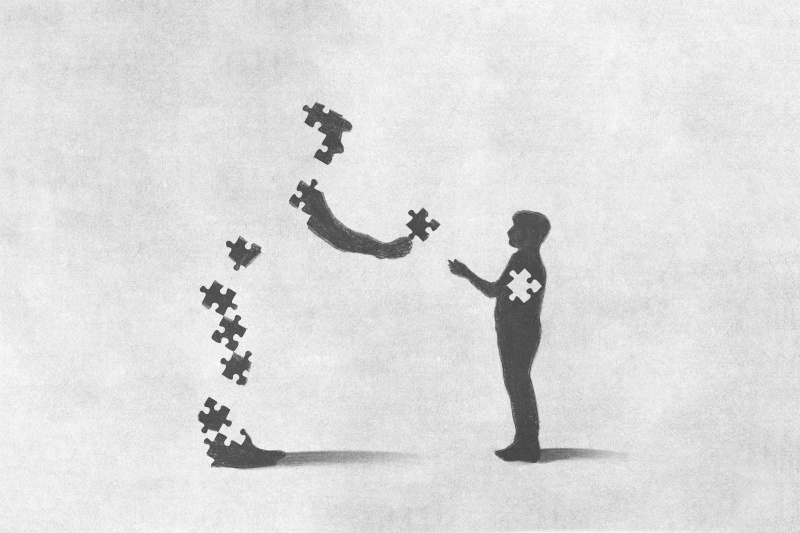
As I stare down at the piece of paper holding a few clues to the vast mystery that will be my first-ever client, I feel a universe come into existence, a wide expanse full of potential and possibilities. The past year-and-a-half of didactic and experiential training has culminated here, in this very moment. All that I had previously read and thought about were finally lifting off the pages, out of my mind, and into the here-and-now in the form of a dynamic, real-life therapist-client relationship. As Sanmao, a Chinese feminist writer, put it, “What I learned on paper, I felt, was knowledge that had not yet been tested.” There I was — hours away from testing the knowledge I’d accumulated on a real-life, non-pretend client—sitting in the tension of opposing “what ifs:” “What if I forget everything I learned?,” “What if I’m terrible at being another human soul?,” “What if the theories are wrong?,” “What if none of the theories are applicable to me, or the client?,” “What if the theories are right?,” “What if it actually works?!”

Like what you are reading? For more stimulating stories, thought-provoking articles and new video announcements, sign up for our monthly newsletter.

To alleviate some of the angst-citement—a cocktail of angst and excitement I was feeling, I decided to reach out to a handful of therapist friends—some licensed supervisors, some only a few months ahead of me—and solicit tips they might offer an intern who was about to go into their first-ever session, things they wish a mentor had told them as they were stepping into their role as a therapist for the first time. Here’s a mosaic of what they shared:

  • Check your excitement and adrenaline at the door. As exciting as it is, you are ultimately there for them.
  • Be genuine and be yourself. You don’t need to be a blank slate or do anything to prove yourself. If you’re an expressive person, allow yourself to be expressive!
  • Relate to the patient and be kind. If nothing else, focus on making yourself and the client comfortable. Validate however the client shows up in the therapy session—there’s no such thing as too much or not enough. Follow your curiosity and get to know them.
  • Ask them what they want to work on or change in their life, and then work on what they are ready and willing to work on.
  • Sit with them in their feelings. Don’t try to make them feel better. Instead, help them better feel by exploring and understanding their feelings.
  • Give them permission to feel. You can say, “I imagine if I were in your position, I might feel… Do you feel any of that?” This helps them feel less alone for something they might be feeling but are unable or afraid to name.
  • Don’t be afraid to create space. If you get flustered and don’t know what to say, you can say, “I just want to sit with this for a second before deciding where to go next or what else to explore.” You can also say, “I don’t know where to go from here,” and ask them if they have a sense of where they’d like to go next. Silence doesn’t always need to be filled. Space is comfortable and useful when it is intentional, and we make it intentional by acknowledging it: “I want to take a breath around that before saying anything. That’s a lot that you’ve been holding.”
  • Less is more. Provide a space for them to share. Bear witness to their unfolding. You don’t need to interpret, fix, advise, or do much.
  • Help your client cross the river by feeling the stones. Set small, achievable goals so they feel like progress can be made.
  • Take a moment to remember it afterwards. It’s your first one, and that’s exciting!

***

Upon wrapping up my first session, I felt a tremendous sense of relief—relief that my client hadn’t asked me whether this was my first session (though if they had, I was prepared to say something along the lines of, “If it were, what does that bring up for you?”), and relief that I’d made it to the other side of what felt like a tipping point in the evolution of this career and calling. Reflecting on the random scribbles I’d made during the session, a few twinkling stars began to emerge against the dark expanse of a nascent universe—the dawning of a new constellation, of a new relationship, with all its mystery and magic.

Watch this Movie and Call Me in the Morning

I am a self-professed “scripter,” but not in the echolalic sense. I am also quite fond of popular culture, particularly movies, and have written extensively on integrating their fruits into clinical practice, training, and supervision. Put these two peccadillos, passions, or pastimes together, and you have me, or at least part of me: someone who can seamlessly integrate movie lines into conversation. As much sense as doing so has made in my life, I must admit that dropping a line from Rocky, Downton Abbey, or Toy Story into a lecture can leave students dumbfounded, and that asking a client if they have seen so-and-so movie has often been met with a quizzical and apologetic, “Sorry, I haven’t.”

Like what you are reading? For more stimulating stories, thought-provoking articles and new video announcements, sign up for our monthly newsletter.

Nevertheless, I believe in the therapeutic power of cinematherapy (the prescription of movies, or parts thereof) to help clients disentangle inner conflicts and have, at times, when therapeutically appropriate, prescribed the likes of Steel Magnolias or Ordinary People to a client who was wrestling with loss, or assigned Good Will Hunting, The Snake Pit, or One Flew Over the Cuckoo’s Nest to counseling trainees to help them better understand clinical theories and applications. While popular culture, whether art, music, or movies, has often been relegated to the basement of culture studies, I believe that its stories, songs, images, and words are non-gilded reflections of the human experience.

Oh, I forgot, I love golf, and devote a good deal of time to learning it, practicing it, playing at it, and dreaming about it (worrisome by many standards, I know!). And just today, as I was reflecting on the loft angles of the various “wedges” in my bag with my teacher, the image of Nanny McPhee came to mind. What I found interesting was that at the moment I asked her if she had seen the movie, my prescient instructor knew exactly what I meant. That is because the relationship between Emma Thompson, as Nanny McPhee evolves from the outset, when she is not wanted by the children she is hired to care for, to the end, when they cling to her as she prepares to leave them. To paraphrase, she says to them, “When you need me but do not want me, that is when I will be there; but when you want me but no longer need me, then I shall go.”

I guess at that moment I was wondering when the time would come to let go of my teacher, “who has taken me from crayons to perfume” (sorry, couldn’t help it, for all of you “To Sir with Love” fans). I have also reflected on this particular movie line when working with clinical trainees in order to help them understand the vicissitudes of the therapeutic relationship.

Clearly, I could go on and on and on about the multitude of movies that have etched themselves deeply into my neuronal pathways, and how I have used them, their characters, and their “lines” in both the therapy room and classroom, but instead I direct you to a website called Therapy Route, created by South African clinician Enzo Sinisi. There you will find a veritable cornucopia of cinematic gold which you can mine in your own clinical practice and/or clinical training.

There, and in Enzo’s words, you will find “links to pages that contains a list of films that address mental health concerns/issues [and a] brief description and an abridged version of the relevant diagnostic criteria to help the reader get a sense of how these disorders are defined and what their symptoms look like.” Enzo, in the creation of this impressive compendium, will lead you to the doorstep, but the next step will be yours, and how you use this resource in your own work will be up to you.

Don’t forget the popcorn! 

The Flash Technique: A Useful Tool in Treating Trauma

I first heard of the Flash Technique (FT) in March 2019 when attending Dr. Philip Manfield’s therapy training on Eye Movement Desensitization and Reprocessing (EMDR) in Oakland, California. Unlike EMDR, FT does not require the client to commit to a lengthy process, nor does it require the client to focus on the traumatic memory for an extended period of time. The FT process starts with the client’s identifying a memory or fear and ranking the level of disturbance they are feeling in that moment. The scale, which is known as SUDS (Subjective Units of Distress), ranges from 0-10, with 10 being the most disturbing. Next, I ask the client to think of something positive or exciting that they can talk about for the next 10-15 minutes (i.e., a hobby, a pet, a movie, a trip). This is known as the Positive Engaging Focus (PEF). When FT was first developed, the therapist would say “flash” while the client discussed the PEF and instructed them to briefly think of the target memory. It later became evident that this was not necessary, and now when the therapist says “flash,” the client is instructed to blink instead of flash on the target memory. Once the PEF is identified, I demonstrate for the client how to cross their arms over their chest (a butterfly hug) and tap their arms. They tap while describing the PEF, during which time I periodically ask them to blink several times in rapid succession. After five or so sets of blinks, I ask them to pause and reflect on the target memory/fear. They rank the disturbance and tell me what they notice about the memory. Usually the target is less vivid and harder to pull up. Then we continue with the PEF accompanied by more blinking and tapping, after which we pull up the target again. This process continues until the target is no longer disturbing. FT can be used as a part of EMDR treatment or on its own. I thought FT was an interesting tool and started using it along with the standard EMDR protocol. Sometimes I use FT to lower the intensity of the target, and then process the remainder by using traditional EMDR. My practice has been both online and in person, and I have used FT with both virtual and in-office clients. I have found no major difference between in-person or virtual use of FT. I show the client how to cross their arms and tap the same way virtually as I would do in person. My interest in FT grew over time as I was observing positive results. As of this writing, I have used FT with dozens of clients for two years. I have found it easy to use and very effective when working on a variety of disturbing memories and fears. It usually takes about 15 minutes to implement FT, making it very easy to fit into the standard 50-minute session. In contrast to conventional trauma therapy interventions like EMDR, FT is minimally intrusive, in that it does not require the client to consciously engage with the traumatic memory. The client can therefore process traumatic memories without feeling distress. In the following session, usually a week later, I recheck the target memory or fear to see if there is still any disturbance. Some targets resolve in one session and the results hold over time. Typically, the easiest cases are single-incident traumas—an event that took place at one time and does not have any related memories. For example, someone who was in a car accident once and developed a fear of driving can often process the incident in one session without any need for additional work. In other cases, usually where there are many related memories, it generally requires additional sessions of FT or EMDR to fully resolve them. Multiple incidents can also be processed but may require additional sessions. I should note that FT, like EMDR, does not completely remove all fear. I would not want my clients to put themselves in unsafe situations following FT. Rather, FT and EMDR aim to relieve the extreme disturbance associated with a traumatic event. The client still remembers that the event took place and experiences a normal level of anxiety in appropriate situations. FT does not provide superpowers or magical thinking. It helps remove the irrational fear so that the client can comfortably engage in everyday activities. Below is a case example of my use of FT with a client who had been mugged. Della, a 33-year-old Caucasian female, was mugged seven years ago on the street. Since then, she had been unable to walk alone at night. She always had to have someone walk her places after dark, or she avoided going out altogether. Della lived in a safe suburb and did not have an urgent need to go anywhere at night. She stated, “I want to be able to walk alone at night if I need to.” Recently, Della’s company offered to relocate her to Paris. She was excited about the opportunity but realized that she needed to work on this fear if she was going to move to a big city. We discussed the mugging in more detail. The incident happened when she was in college. She was studying late at the library and drove home to her apartment at around 2 a.m. She had parked her car in a garage a block away from her apartment. As she was walking home, three people came up behind her, kicked her to the ground, grabbed her backpack containing a laptop, and drove away. When asked to rank the disturbance associated with this memory, Della stated it was a 9 on the SUD scale. For FT, we chose Paris as her PEF. “I’m excited to move there,” Della said. After five sets of FT which took about 10 minutes, Della ranked the SUD at 1 before the session ended. Two weeks later, Della reported that she had chosen a safe area in her suburb as a test for an evening walk. She walked alone at around 8 p.m. Della stated, “This is something I haven’t been able to do since the mugging seven years ago.” She said that it felt good to walk around and look at the lights. “This time, I didn’t have any physical symptoms,” said Della. She described that she did feel a little nervous, ranking the SUD at 1-2. However, it felt like a normal amount of anxiety compared to the paralyzing fear she had experienced previously. She felt good about the outcome. “I wanted to be able to walk alone at night if I had to, and now I can do that,” Della remarked.

***

In addition to the previous case, I have successfully used FT with other clients, focusing on a variety of negative memories and fears. Some examples include a parent’s suicide, childhood bullying, extreme fear of bugs, chronic pain with fear of becoming disabled, fear of contracting COVID-19, sexual assault, car accident/fear of driving, and near drowning/fear of swimming. In some cases, the problem resolved after only 15 minutes of FT, with no resurgence. In other cases, FT provided some benefit, but additional EMDR work was required to fully re-process the event and maintain results over time. To date, I haven’t observed any negative experiences with FT. Most clients have found FT to be helpful and enjoyable. I should note that FT, like any therapeutic intervention, may not be effective for every client or situation. Clients should be aware of potential risks and limitations of FT before starting therapeutic treatment. Useful Articles Related to the Flash Technique: EMDR and The Flash Technique: A Match Made in Heaven? Manfield, P., Lovett, J., Engel, L., & Manfield, D. (2017). Use of the flash technique in EMDR therapy: Four case examples. Journal of EMDR Practice and Research, 11(4), 195–205.

Sometimes I Also Feel Lazy: A Clinician Reflects on Self-Disclosure

“Sometimes I also feel lazy,” I calmly mentioned to Chris. I noticed his chest instantly decompress with a sigh, as a slight smile took shape at the corner of his mouth. As a clinician, I make calculated decisions about how and when to disclose to my clients.

Chris is a Black man in his early 20s who struggles with symptoms associated with anxiety and persistent depressive disorder. He is currently living with his parents and saving to purchase a condominium. He works in the highly competitive industry of data analysis and takes an interest in both playing the guitar and learning new languages. However, Chris has ongoing thoughts and concerns associated with where he “should” be in life compared to his peers.

Like what you are reading? For more stimulating stories, thought-provoking articles and new video announcements, sign up for our monthly newsletter.

My self-disclosure came after multiple sessions of hearing Chris berate himself, thinking he is not “doing anything with my life.” According to Chris, he should be earning more money and proactively searching out new places to live. We have all dealt with clients who appear to be doing better than most but seem to treat themselves as if they are the worst.

At the moment and in looking back, I felt conflicted. Should I have revealed how proud I was of him? No, that might be taken as gratuitous praise that he believes I “say to everyone.” Or should I have simply sat back and normalized his thoughts and concerns? Well, I tried that in previous sessions. This time I had a different idea.

I recalled how Chris had seemingly put me on a pedestal in the past. He had sometimes made remarks about how “you own your own business” and had “written books.” Now was a moment that I could come across as more relatable. I have noticed that power differentials present significant challenges when working with male clients.

Chris mentioned feeling “lazy” due to his perceived lack of initiative. I responded briefly with, “Sometimes I also feel lazy.” I aimed to be succinct so that my intervention was not taken as an attempt to monopolize his session.

Self-disclosure is not without controversy. Some colleagues argue that it helps, while others suggest that it may be harmful. With Chris, I wanted to convey that I go through periods of indolence as well. As it turned out, this led to a rich discussion about how routines might work better for him than relying on motivation.

One of my concerns prior to disclosing was my experience that mental health disorders are often associated with stigma, and this may delay clients from entering therapy. Chris could have suggested that it was “easy” for me to say that I go through periods of inactivity, as I don’t struggle with anxiety and depression (though inaccurate, I was not willing to take up his session with my issues).

I have found that self-disclosure —when used appropriately—has been a powerful tool in my practice to reduce some of the stigma associated with mental health issues and their treatment, normalize my client’s experience, offer different ways of thinking and behaving, and deepen the connection between me and them.

Below are some considerations for the appropriate use of self-disclosure that I have found in my clinical work:

Cultural Sensitivity

The use of self-disclosure can be problematic if I make assumptions about my clients based upon a real or perceived similarity with them. Culture goes beyond race and ethnicity. Chris and I are of the same race, but that does not mean we have the same worldview, so I must be careful to disclose only after having a thorough understanding of the cultural factors that impact his worldview.

Authenticity

My clients appreciate me when I am real, which is also when I think I am doing my best work. I fear that my professional licensure and other symbols of my presumptive clinical expertise sometimes create distance as opposed to allowing clients to connect with me. Sharing something about myself—when relevant—can help minimize this barrier. My clients come for the clinical interventions but stay for the relationship.
Client-Focus

My goal is always to help my clients meet their needs, as opposed to having my own needs met. The above-mentioned session could have easily become a discussion about me. However, this is not what Chris was there for.

Brevity

It is their session, not mine. I do not want to elicit a caretaking response from my clients. I have written elsewhere that good therapists are in therapy themselves. Another point is that disclosure should not happen frequently, for the same reason mentioned above.

Eliciting feedback

I have found it to be important to carefully observe my client’s reactions (facial expressions, tone of voice, and body language) in order to obtain a sense of how my self-disclosure affects them. It helps when I ask clients directly how they perceive my disclosure. I was able to pay close attention to Chris’ bodily response and noticed that he found comfort in my disclosure. Further, my observation was validated by asking him what the disclosure was like for him.

Some questions that I have found helpful prior to self-disclosing include:

  • What need is driving me to share this information (is it for me, or is it for the client)?
  • How might this information be helpful?
  • Is this helpful to share now (perhaps the disclosure may be better suited for a later time)?

I have also discovered that my use of self-disclosure has not always been as helpful as I had intended. One example stems from a time when I tried to normalize medication compliance with one of my clients who was diagnosed with schizophrenia. I mentioned the fact that I have asthma and am required to take my inhaler regularly in order to maintain optimal health. The client responded by saying that he would much “prefer asthma over schizophrenia.” I attempted to salvage the moment by admitting that it was not appropriate for me to compare asthma to his lived experience. I also allowed the client to give me feedback on how the disclosure made him feel (I learned that it came across as slightly dismissive). I have found that these lapses in clinical judgment have actually strengthened my alliance with clients when I am willing to admit them. Through self-awareness and honesty, these moments have become opportunities for a deepening in my therapeutic relationships and for my client’s self-awareness and growth.

***

In my clinical experience, carefully planned self-disclosure has been a transformative tool in the relationships with several of my clients. Chris viewed my personal revelation as a breath of fresh air, and it made our work together more effective. He respected and appreciated my authentic humanity—even if it meant I was sometimes lazy.
 

Gratitude to the Anonymous Client: A Poem

I meet you every Thursday evening at 5pm,

sitting in front of my polished laptop screen,

wearing my serious, white shirt on top,

but my purple tartan pajamas underneath.

I am an actor stepping up on a half-stage,

marginally nervous until I cite my first line,

as you ponder along the tightrope of your lifeline.

Like what you are reading? For more stimulating stories, thought-provoking articles and new video announcements, sign up for our monthly newsletter.

Every Thursday at 5pm confirms we are both alive,

As I creep into the delightful maze you take me.

I appreciate you keeping me existentially wake,

as I stretch my soul to keep up with your dreams.

You always bring a full agenda of splendid topics,

and you ferment my words as tender dough,

before you mold them into a delicious cloud,

aromatic but not edible, true yet ineffable.

And thus my evenings unfold in front of my laptop screen,

as I travel into clients’ kitchens, attics, or garages,

as they secretly enter into my own crossroads and daydreams,

keeping me wondering, “will I have an answer this time?”

All my laptop world becomes a stage,

with men and women having their exits and their entrances.

They play their part, give a splendid speech,

and glow as a one-day living whitefly,

before they move gracefully backstage.

They come and go, land and flee away,

and I can never really know,

whether there’s still something alive there,

after my laptop screen shuts down

Could it be that only an empty space,

sprawling as a therapy encounter ends,

can be filled with the presence of “me” and “thou”? 

Reframing the Legacy of Ancestral Trauma as Resilience

Linda, a client I’ve seen for years who has struggled with anxiety and depressive symptoms, returned for sessions with me to revisit coping strategies for a new job. We found ourselves talking about her insecurities, how she learned to cover up her neighborhood accent, how she was taught to “be twice as good to get half of what white people have” and to be “perfect” in order to “get out.” Growing up and looking back, she shuddered at the memory of her dad telling her not to be like her friends who had working class backgrounds because they would “not amount to anything” and her mom telling her that braids were “unprofessional.”

Like what you are reading? For more stimulating stories, thought-provoking articles and new video announcements, sign up for our monthly newsletter.

But the truth is, as a dark-skinned Black woman, Linda was just now learning that these were not necessarily truths, but were instead passed-down beliefs and trauma-born messages from her parents and grandparents. This was not easy for me, a clinician who is a light-skinned Black Haitian with a white parent, to relate with. I must constantly acknowledge the privileges I hold in being light-skinned while also challenging the beliefs and acknowledging the racially unjust context in which we live. However, bringing up the subject of my light skin in therapy with Linda and my difficulty relating with her experience as a dark-skinned Black woman has not only helped her, but has also opened a space in which she can challenge her beliefs.

Linda struggled to participate in the Black natural hair movement and to show up for work with braids, as she would often experience comments from White coworkers about her hair. “What would your grandmother think of your braids?” I asked her. “She would hate them.” Linda was sure in her response. But it was missing acknowledgement of the societal and racial context in which her grandmother lived in the decades between 1930 and 1970. “What caused Grandma to resist natural hair?” I wondered aloud.

I then asked Linda to reflect by saying, “So your coworkers may still comment on them, but they are not telling you not to wear them. Let’s keep that in mind while I ask you this next question. Why did Grandma feel so strongly against braids?”

“Because afros and braids were dangerous to have back then. You couldn’t get ‘good’ jobs and you were seen as too Black.”

“So, let’s say your grandmother, your mother and your father were all passing down some form of ancestral trauma to you, and although it was born of pain, suffering and social marginalization, it may also have been a means of survival, if not physically, but mentally and emotionally—a form of resilience.”

Linda was resistant to considering this theory, likely because it was hard for her to believe that something positive could be associated with these negative messages that her ancestors passed on to her.

“But I do have to be twice as good,” she protested.

“That may be true, but can you see how it harmed you? Something can be protective and help you at the time, and be harmful later.”

I explained to Linda that these “rules,” or perhaps survival skills and beliefs, might have been passed down to protect her and to promote survival, even though they ultimately caused unintended distress. “I work so hard, but don’t take care of myself,” she recognized. “I am tougher on myself than I need to be. I can understand how my parents and grandparents might have been trying to protect me with their hard-earned survival tips—their wisdom.”

Linda and I wondered together if it was indeed possible to acknowledge that these restrictive messages, born of trauma, might lay the foundation for a new set of messages, ones of resilience and strength, to use in her own life and possibly even pass down to her own descendants. Linda agreed to keep her braids in for work the next day, and to wear them to her family reunion the following weekend.

Together, we prepared planned statements for whomever might make negative or hurtful comments about her hair, whether family members at the upcoming gathering or from white, AAPI, Latinx or Black people at work. Linda decided that she had some freedom to wear her hair however she wanted, even though her ancestors did not, and that she could also honor the pain and lived experiences they had during far harsher racially divided times.

***

Linda has a long way to go in undoing Anti-Blackness from her belief patterns and freeing herself from the trauma-based experiences of her ancestors, but she is on track to self-empowerment by honoring her ancestry while, at the same time, reframing their pain as resilience.

Pandemic Lessons for Introverts (and their Therapists)

Melissa* is a professional in her early thirties. She is married and has two dogs and a cat. She is also a self-described introvert. “What that means,” she said when we first started working together “is that I like people, but I don’t like socializing. I’m happiest when I’m at home with my husband and my pets. I prefer working in my garden to being around other people.”

Melissa is one of many self-described introverts for whom the COVID-19 pandemic has provided a surprising and often welcome respite from the difficult demands of everyday interactions with others. The concept of “introversion,” popularized by Carl Jung, is often described as a reserved or shy person who enjoys spending time alone. As with most descriptions of personality, introversion and extroversion exist on a continuum, with most of us experiencing a mix of these characteristics, and many people who consider themselves more on the introverted side of the extrovert-introvert continuum have still had difficulties during the pandemic. But, as a recent New York Times article suggested, forced separation from their hectic lives has given some people the opportunity to see just how hectic those pre-pandemic lives were (1). After reading the article, Melissa resonated with the example of Josh Bernoff, a public speaker and author who lives in Arlington, Massachusetts, who acknowledged how stressed he had been prior to the pandemic as he was constantly traveling, planning his next on-the-go meal, and forced into socially awkward conversation with veritable strangers.

“That’s exactly how I felt,” she told me. “I hadn’t thought about how hard I work all the time to do social stuff that other people find so simple.”

Years ago, individuals who were quiet and reserved were often admired, but today, at least in the United States, according to Susan Cain, author of Quiet: The Power of Introverts in a World That Can't Stop Talking, introversion and its often-associated characteristics of sensitivity and shyness has become synonymous with some type of personality flaw (2).

Melissa, who had grown up in a world that admires the outgoing extrovert, spent much of her life feeling ashamed of herself for preferring solitude to social interaction. “I’ve always thought there was something wrong with me,” she told me early in our work together. “So, I’ve worked hard to be more outgoing, even though it’s never been comfortable.”

The reality for Melissa, as for many self-proclaimed introverts, was not quite as black and white as it might have appeared at first. During the pandemic, even as she was enjoying her time alone, she found herself thinking that it might be nice to spend a little time with one friend or another. But as the world has begun to open, Melissa is taking stock of some of the lessons she has learned about herself during the pandemic.

“I don’t want to get caught back up in that crazy social schedule I had before,” she said. “I want to be able to find time for myself, to read, listen to music, go for long solitary walks. But I also want some time with people I care about.”

I asked her to talk to me about what appealed to her about spending time with those people. “That’s a really interesting question,” she said. “I don’t think I’ve ever taken the time to think about what I like about being with them, because I’m always so busy either forcing myself to spend time with someone when I don’t want to or pushing people away because they want to spend time with me when I want—need—to be alone.”

I asked her to tell me about what she liked about being with friends and family she cared about, and as she tried to explain it to me, she realized that she actually enjoyed her time with other people when it was her choice to be with them.

I said, “You need more quiet time than some of your friends and family, and more time alone. But it’s not that you don’t like being with people at all.”

“You’re right,” she said. “I just realized that one of the things I’ve really liked about the pandemic—and I hate that so many people are suffering from it, and I kind of feel guilty about the fact that I’m enjoying anything about it—but one of the things I do enjoy is that when I talk to a friend or my sister or my mother or a colleague on Zoom, it’s for a limited time. Most of us just can’t stay on Zoom forever, so it has a natural limit that’s probably much more like my own personal limit.”

We were both silent for a minute, digesting this idea. I was wondering if there was a way to carry this new information about herself into the world as it opened up and had just started to ask her that question when she said, “I’m trying to figure out if there’s a way I can use that knowledge about myself moving forward. I have to go back to work, and I have to start seeing my friends and my family again. But can I set some kind of limits with them? Or will I just fall into the same habits as before, going along with what seems right to them and then fighting to find my time and space?”

As the apparent slowing down of the pandemic leads businesses to re-open and social life to ramp up, Melissa, like other clients who have enjoyed the time on their own, faces an interesting dilemma. She put it this way in one of our discussions: “I’ve learned a lot about myself during this time,” she said to me. “Now I want to see if I can incorporate my sense of peace about myself as a less outgoing person with my desire to be connected—but on my own terms.”

Many clients who do not consider themselves introverted at all have also told me that they learned to appreciate time on their own more than ever before. As another client put it, “It seems like some of the activity in my life was doing stuff because I was afraid of feeling left out. It felt really good to slow down, to be on my own, and to do things that I wanted to be doing, not because I was driven to be part of the crowd.”

The gradual ending of the isolation resulting from the pandemic has brought on some concerns, including what Melissa and several other clients call “fear of re-entry,” that is, fears about returning situations in which interpersonal interactions stir up discomfort and anxiety. But one important takeaway for therapists and clients has been to pay attention to and respect what they have learned about themselves during this time. We therapists can help clients recognize and respect their own needs and shift away from always pushing themselves to engage in social activities. Recognizing the “power of introverts” can lead to acknowledgement that it can be useful to respect their own qualities, even if they do not meet the demands of an extroverted culture. And many clients might also discover for themselves what Melissa recently told me: “As I allow myself to take the time alone when I need it, I find that I’m able to engage in the social interactions that I want to engage in much more easily.”

*Names and identifying information changed to protect privacy

References

(1) Richtel, M. (2021) The U.S. is opening up. For the anxious, that comes with a cost. Retrieved from https://www.nytimes.com/2021/03/17/health/US-reopening-anxiety-ocd.html?action=click&module=RelatedLinks&pgtype=Article.

(2) Cain, S. (2013) Quiet: The power of introverts in a world that can't stop talking. Crown.

Additional Writings on Introversion

Buelow, B. and the Introvert Entrepreneur. (2012) Insight: reflections on the gift of being an introvert. Introvert Entrepreneur.

Dembling, S. (2012). An introvert's way: Living a quiet life in a noisy world. Penguin Books.

Helgoe, L. (2012) Introvert power: Why your inner life is your hidden strength. Sourcebooks. 

Imagining the Way to Self-Compassion Using the Ideal Parent Figure Protocol

“I know I’m supposed to be self-compassionate, but I don’t know how to do that, and that makes me feel even more like crap!”

My patient Sally has struggled with years of chronic depression. Through hard work in therapy, she understands that her rough childhood has set her up with a tendency to be harsh with herself. She understands that energy wasted on self-criticism and negative emotion leaves her less free to take initiative and connect with others. But when she wakes up in her apartment alone, all that wisdom seems to fly out of her head, and she feels crushed by a load of self-loathing.

Much the way we learn language, we learn patterns of relating to ourselves early in life. John Bowlby and researchers who followed him described this process as the formation of secure or insecure attachments to a caregiver. People lucky enough to have warm and sensitive parents can develop a secure attachment, which leads to the development of kind and encouraging ways of being with oneself. This inner soothing and encouragement support brave engagement with the world that helps reinforce a sense of the self as capable, and of the world as responsive to one’s needs. A smoothly functioning emotional system allows wise choices in response to the present situation in accord with one’s values.

For those who did not internalize a relationship with a sensitive and encouraging caregiver, life is harder. They can become overwhelmed with feelings of shame, helplessness, anger, and fear, or they may feel depressed, deadened, or cut off from experience. Unregulated or silenced emotions inhibit healthy exploration, which reinforces negative images of the self, generating further negative emotion and inner harshness. Self-compassion can seem like a strange and distant land.

Enter the Ideal Parent Figure visualization protocol, developed by Daniel P. Brown, PhD. as a method for healing attachment disturbances in adults (1). His method relies on the fact that the unconscious mind does not distinguish between images that derive from memory and those that come from the imagination (in fact, most images that we think of as memories are imaginary reconstructions of events). With deliberate visualization practice, we can come to “know” something we did not directly experience. In this method of treatment, I ask Sally to visualize herself as a young child and to imagine ideal parent figures that are perfectly suited to her and responsive to her needs. From there, I ask her to imagine herself playing and exploring with the ideal parent figures offering perfect support and encouragement. Once that imagery has been established, we will have her use these Ideal Parents to respond to her in moments of distress, giving her a visceral sense of an attuned, soothing, and encouraging relationship, and a vivid sense of how she can treat herself.

Sally was dubious. “That sounds kind of cheesy,” she told me. “Also, I can’t really imagine what ideal parents would be like.”

That’s exactly the point. Kids who grow up with parents who were unable to provide good-enough care will stop hoping for something that never comes. We protect ourselves by not thinking about what we can’t have, which reduces the pain but, if practiced repeatedly, can create a deliberate (though unconscious) failure of imagination. The Ideal Parent Figure visualization protocol seeks to reverse that. It turns out that no matter how terrible and abusive one’s childhood was, each of us knows what we needed to thrive. I find this to be a wondrous and hopeful thing.

Ideal Parent Figure visualization uses the process of exploration to discover the kind of support that fosters further exploratory behavior. This method provides a solution to Sally’s frustration of “not knowing how” to be self-compassionate: she will explore until she comes upon the experience. As the therapist, I will provide her with support and light guidance as she navigates this uncharted territory. I’ll be prompting her to imagine Ideal Parent Figures who have five key features: 1) The Ideal Parent Figures are reliable and consistently present—they provide a deep sense of safety and refuge that creates a secure base from which to explore. 2) The Ideal Parent Figures are perfectly attuned; they see us and accept us exactly as we are, which sets us free to be completely and authentically ourselves. 3) The Ideal Parent Figures know exactly how to soothe us, so if we get distressed or over-excited in our exploration, they help us settle down, so we can return to pursuing what is interesting and meaningful to us. 4) The Ideal Parent Figures are delighted by us. We can see their faces light up when they connect with us—not because we have achieved or accomplished anything, but because of our being ourselves. 5) Finally, the Ideal Parent Figures understand we are growing and developing, and they encourage us to become our best selves.

Importantly, the specific imagery comes from the patient herself; she is tapping into the wisdom of her own imaginal experience to create parent figures ideally suited to her. And because these figures are ideal, they will provide a source of support and resiliency more effective and powerful than anything a fallible, human parent or therapist can provide.

Insights during Ideal Parent Figure work often have the feel of a lightbulb turning on. The insights my patients have experienced have included the following:

“My parent figures would NEVER hurt me. They are strong enough to protect me.”

“When I feel safe, I naturally get curious and want to explore.”

“My ideal mother figure understands my mistrust, and she doesn’t pressure me to come close before I am ready.”

“My parent figures don't turn away while I am angry. They stay interested and want to know why I am upset. It’s okay to be angry.”

“My ideal mother figure is delighted by me, even when I am being bad and she is setting limits—I can see it in her eyes.”

In our first few sessions, Sally quickly became frustrated. “Nothing is coming up, I can’t imagine anything.” This frustration is normal and is a sign that she has come to the “edge of her imagination.” Exploration requires trying things, running into blind alleys, trial and error, persistence. “That’s good, keep going,” I encouraged her. “Imagine that your ideal parent figures are with you, sensing exactly what is wrong and responding in exactly the right way. They love being here with you as you explore. They know you can figure this out, and they will stay with you as long as you need, for hours, days, weeks, or even years. Imagine what that would be like.”

In our fourth session, Sally’s imagination “popped.” “They know I can get this!” she said with a smile, “that’s how they can be so patient. They’ll stand by me as I figure this out.” Her expression changed, and what followed was an eruption of grief she had missed out on when she was little. She broke into deep sobs while imagining being held, forever if she wanted, by her ideal mother. The moment was anything but cheesy. Afterward, she felt an unusual sense of peace and hopefulness.

After that point, when that feeling of frustration or sadness emerged during visualization practice, she could reliably call up the image of her ideal mother to soothe herself. Becoming more confident, she started to have fun and looked forward to visualization sessions. Meanwhile, she reported that her mood improved, it had become easier to get things done, and she was reaching out more in relationships. “Well,” she told me with a smile, “I think I’ve figured out how to be self-compassionate.”

References

(1) Brown, D. P., & Elliot, D. (2016). Attachment disturbances in adults: Treatment for comprehensive repair. W. W. Norton and Co.

Many thanks to George Haas of mettagroup.org for his exploration of the language of encouragement.
 

Help-Seeking-Rejecting Clients and The Therapist

I realized the other day that over the course of my lifetime, I have probably joined and cancelled gym memberships about 25 times. I always enter these contracts with a bright sense of optimism and hope—“This is my year!” I usually proclaim proudly. I may even go a few times before my motivation starts to dwindle. My pattern then dictates that I consult with a personal trainer. The personal trainer is always very optimistic and willing to help. However, after I beg the trainer to push me in the workouts and give me at-home routines, it usually takes about a week or two before I am back in the manager’s office asking to cancel my membership. It is never that I do not want the help, but rather that binging television shows and napping on the couch will always feel better in the short term than sweating through my pants while trying to pretend that I am not as winded as I look.

I relate this experience to my work with the patient who ostensibly seeks but ultimately rejects help. I often find myself frustrated and overwhelmed by that person who comes in asking for help but does not seem to be interested in the coping skills and practices I offer to support them in their improvement. In a sense they seem stuck, and, in turn, I feel stuck right along with them.

I have worked with patients before who continue to stay in their romantic partnerships despite their feelings of unhappiness and desire to date other people. I can remember one patient in particular who had been in a romantic partnership for over two years despite describing herself as unhappy. She noted that each time she engaged in sexual intercourse with her partner, her vulva burned and spasmed. She noted that when she engaged in extramarital affairs with other men, such a reaction did not occur. Despite trying different positions, lubricants, and doctors, the problem persisted. It was discussed that the relationship was making her so unhappy that her body was physically rejecting her partner. Sessions focused on processing the meaning of this relationship and noting why it was so hard for her to leave this person. They also focused on exploring feelings related to the breakup process and using effective communication strategies to foster mutual respect. However, as time continued and the extramarital affairs increased, it was clear that this was not the right time for the patient to end the relationship. At one point I became so frustrated that I myself wanted to grab her phone and send a break up text! The more I have reflected and thought about my reactions, the more I realize that they have more to do with my own ego than with the patients and their progress, or lack thereof.

Each time I encounter a help-seeking-rejecting patient, I want to hear that they have used the coping skills offered that week, and their lives have changed for the better because of those actions. I want this outcome not only because I want them to live happier and more authentic lives, but also because it would mean I have been successful in some way. It would mean that something I did or suggested mattered and helped change an outcome. Clearly, it is difficult not to personalize my patients’ wins and struggles as my own. As if I really had some power to control what happens! It is ironic because it is also me who frequently recites the common therapist phrase “You cannot control others; you can only control yourself and your reactions/perceptions.”

And so I realize it is my job as a therapist to meet patients where they are, letting them know that sometimes it is okay not to be able to or want to change right now. Just as it is okay for me to cancel a gym membership I am not using, sometimes it is okay to be stuck. That is not to say that this patient cannot and will not change in the future (I will keep joining gyms, and one day it may work for me!), but more to accept that patients are not always in a place in their lives where they can (or want to) change. Sometimes clients, like therapists—me included—must accept they are doing the best they can in the moment with the tools and circumstances they have.

I think it is great when patients improve in some measurable, objective, and defined way. However, I do not think therapy is an exact science, and I have come to learn (and accept) that clients will experience lapses, relapses, and periods of stagnation. In doing so, I am better positioned to help them find a sense of peace in a world that tries to shape and change them beyond what they can do.

Strengthening the Online Counseling Relationship: Helpful Tele-Tips

The COVID-19 pandemic has had many impacts on our lives, including changes in how we connect with others. For myself and many of my fellow counselors, this has meant shifting to working remotely, whether through online video platforms or over-the-phone support. Since March 2020, my own counseling practice has almost completely shifted to online video conferencing. Connecting with people using video platforms had already been a small part of my counseling role, but it has now become the main way I provide support. This no longer feels like a stopgap to get through the pandemic; it will likely continue to shape and influence how I think about counseling. This hit home at the end of a session with Jay, when they said, “I’m so glad we’ll be able to continue our regular online sessions when I move out of the city—I can’t imagine having to start over again with someone new.” There is abundant evidence that one of the central ingredients to any successful counseling experience is the quality of the relationship and connection between counselor and client. This is one of the most robustly studied aspects of in-person counseling, and it also appears central to providing support remotely. At first, I worried that the shift to online counseling would cause my connection with clients to suffer. I was concerned that it would be too hard to do well, and that the usefulness of counseling for people would lessen as a result. Despite my concerns, I have been pleasantly surprised to find that many of my clients enjoy it, and some even prefer connecting online rather than having to meet at my office. Jay is a prime example. They described thinking about counseling several times over the last number of years, but always felt too anxious to risk talking to a stranger. In fact, Jay rescheduled our first session twice before we finally connected. In our first session, they were able to sit in their home with their beloved dog on their lap. Jay described this as a key step for allowing them to take the risk of opening up while struggling with the additional stressors of the pandemic. Many clients with whom I work do express missing the opportunity to meet in person. There has been a lot of grace and acknowledgement that we are all adapting and doing the best we can. However, this comes along with a lingering sense that this way of living is temporary. Although many of my clients say that online counseling is better than not meeting me at all, what if this continues to be how some would prefer to engage with counseling in the future? How can I (and we) ensure that we’re building the strongest counseling relationships possible while working remotely? 3 Areas to Strengthen the Online Counseling Relationship In my own clinical experience and based upon the research I’ve done, I have landed upon a few tips for providing online counseling. These have contributed to creating a foundation for supportive connection that I want to share with fellow clinicians. Set the tone and establish boundaries. The environment I create through my online “meeting space” has greatly supported a feeling of ease, consistency, and safety for both myself and my clients. Ways I have established this online environment include:

  • Considering the lighting and environment. I make sure my face shows up well, without too many shadows. I have pleasant colors and images in my background.
  • Being mindful of privacy, as it is of course paramount for ethical counseling work. Privacy can also ensure freedom from distraction so focus can be maintained on the interaction at hand.
  • Reducing distractions from other devices. I make sure notifications are turned off and displays are out of my sight line. This has helped me provide full attention to my clients, so they feel truly listened to. It has also improved my ability to guide difficult conversations.
  • Pacing the interaction well, to allow space between asking a next question or waiting for the client to respond. Some cues that tell me when a person is about to speak, or they need time to reflect, will be harder to read. Going a little slower than I would in person helps me and my clients to avoid speaking over each other or missing an opportunity for the client to respond.
Create conditions for trust. At the center of a positive and successful counseling connection is the trust between client and counselor. A key way I have created the conditions needed to build trust is through the quality of my presence and attention. Here are some aspects of communicating with my online clients that have enhanced and conveyed presence to clients:
  • I consider how the client will see me and have paid attention to how much of me is visible in the video’s frame. Seeing all of my face and some of my shoulders has allowed facial and body language to be conveyed through movements, gestures, and expressions. It also ensures that I am comfortable, so that I can be grounded and steady in my presence.
  • I pay attention to how close or far I am from the camera. If I am too far, I may seem detached and unreachable; too close, and I may seem more intense and in their face.
  • I practice giving eye contact. Although it is uncomfortable and sometimes threatening to have too much direct eye contact, without some sense of being able to really see and be seen, there can be less of a connection. I toggle between looking at the image of my client on the screen and directly into the camera, so they have the experience of direct visual acknowledgment.
  • I try using earbuds or headphones. This makes me less likely to strain to hear, and the sound often feels more immediate and intimate.
Practice collaborative communication. My counseling relationships that have the most benefit include a sense of collaboration between me and my client. This includes ensuring there is a consistent opportunity for the client I am supporting to use their voice and have choice in the course of setting goals. It has been important to feel like I am negotiating together what is focused on and to build on the client’s strengths. Some ways I have done this include:
  • Taking time to check with my client about all the areas mentioned above. For example, I discuss the lighting, my distance from the camera, how well we can hear each other, and the privacy of our environments. These extra steps have helped me to create a joint space for the counseling work.
  • Verbalizing or narrating more often what I am thinking about or how I am sensing how my client might be feeling as we interact. Following this up with curious and open questions to check my observations has not only helped me learn to read and listen to my client in this different medium, but has also assisted the client in becoming more aware of these things. It has made the unspoken more explicit.
  • Regularly asking my client what the experience of online counseling is like for them. What are they noticing? Also checking in to see how they feel before and after sessions helps us both track their experience. These transitions may be very different if they are connecting from their home, office, or car. Creating plans together for helpful ways to prepare for an online session, as well as how to shift gears afterward, can support the overall feeling of a well-contained and supportive counseling relationship.

***

The use of online or other remote methods for counseling has become more common and is likely here to stay. Applying practical knowledge from known methods of creating an environment, tone, and collaboration that promote a strong counseling relationship has greatly helped me adapt to and use this modality well. Regardless of how I interact with my clients, positive outcomes rest on the development and experience of a solid and positive connection. Jay and I now regularly include updates on their pup, and together we monitor the health of my office plants in my background. We joke about guessing each other’s height and that we don’t have to worry about wearing matching socks. These unique small steps of our shared virtual “room” and connection have become a protected space and the threads of our relationship. I don’t know if I’ll ever meet Jay in person—however, their impact on my own learning continues to leave a lasting impression. I am hoping that what I have learned about online counseling and the tips I have shared in this essay will be of use to my fellow colleagues.