An Opportunity Amidst the Crisis: Moving Your Practice Online

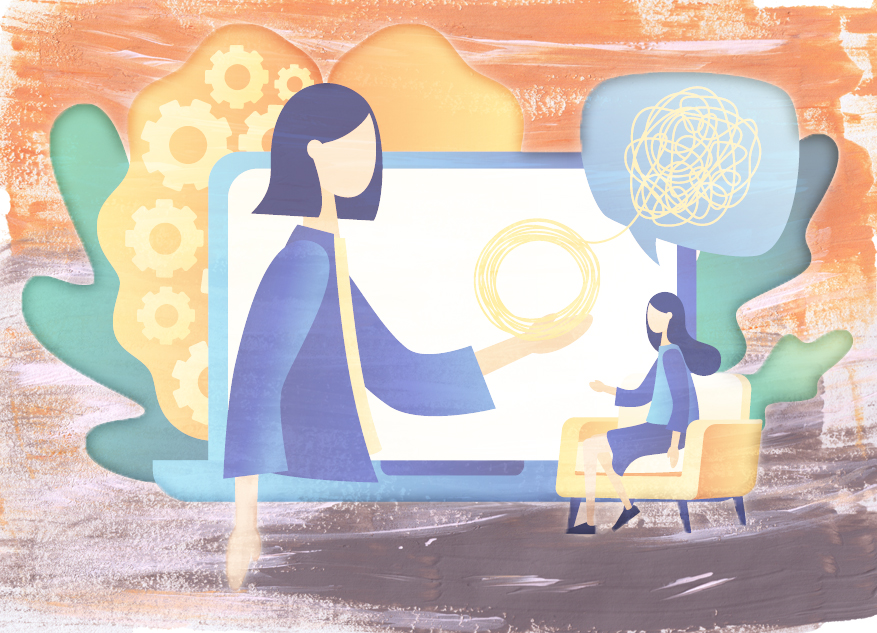
In the current climate, shaken by the COVID-19 pandemic, therapists, like other professionals from the mental health field, are scrambling to adapt to the sudden transition of their services online.

Battered by this frenetic rush, many therapists may feel reluctant about the move. The pressure and an impending sense of urgency do not help the transition, which would otherwise be achieved over a longer period and in a more natural way. The Loss of the Couch, which I started implementing a decade ago (I am still well, thank you!), can feel more painful and frustrating: it happens in the middle of other losses that the pandemic has thrown at us.

Like what you are reading? For more stimulating stories, thought-provoking articles and new video announcements, sign up for our monthly newsletter.

Stoic philosophers — as timely as ever — taught us that the obstacles that we encounter are actually fuel for action and change. Marcus Aurelius wrote that “the impediment to action advances action,” and “what stands in the way becomes the way.” In other words, every crisis is an opportunity, and in every problem there is an element of a solution. Why not face this crisis-imposed transition in a stoic way?

What can help you turn this crisis into an opportunity for you and your clients?

  • Re-focus on the relationship. If you believe in the centrality of the therapeutic relationship, you may wonder whether it works online in the same way as it does in person. The good news, recently described by Mick Cooper, is that it does. As you negotiate this transition together with the client, it is natural to refocus on your relationship. Moving from the physical room to the screen is like changing the lens on your camera — from a wider angle to a close-up lens, that remains static, unlike the usual ‘shoulder camera’ effect of the normal human eye. The acuteness of the face-to-face closer shot may surprise you at first, with its unexpected intimacy. Why not use it for an active exploration with your client?
  • You and your client are both having to deal with the same major crisis. In normal circumstances, the client is the one bringing up an issue and the therapist helps her to cope with it. This time you are in the same boat. This unprecedented situation has a rich modeling potential. How you are dealing with this extraordinary situation will offer your client some information about you as a person, but also a precious example of how to cope with a crisis. This is a good time to think about self-disclosure. What information about your handling of the crisis could be useful to your client?
  • Another side effect of the transition online is the sudden shift in the power dynamics. In the traditional therapeutic setup inherited from psychoanalysts, sessions take place on the therapist’s premises. He has all control of the surroundings, chooses the disposition of the chairs (and therefore the distance between him and the client), the lighting, water, tissues… Online, this power is equally shared with the client. Each party has to make the same kind of choices about where to sit, how to position the camera and the light, what to drink. In addition, the client can make you disappear with one simple mouse click. This sudden redistribution of power, if addressed properly in therapy, can be extended to other client’s relationships and eventually become a source of empowerment.
  • Yes, in this transition we are losing the couch, as well as the possibility to offer our clients tissues and a glass of water. But as a compensation, it also brings some new sources of additional data. In the traditional setup, the client comes into your universe, or at least the one you created in your therapy room. By connecting in an online video session, you literally open a window into your client’s physical realm. This is a new source of valuable information otherwise not available to the therapist. Pay attention to where your client chooses to bring you — which part of his life he shows, and make the most of this rare access.
  • We all know how crucial the first session is. This is when we first engage with a new person, discover how it feels to be in the same room with them, hear for the first time about their life. Usually, we have only one shot at it. But your first online session with your old client will be a renewed first experience. This is a brilliant opportunity to shift the focus to the here-and-now and, maybe, even ask the questions that you were a little too tired or too settled into your shared routine to ask before.
  • The so-called online disinhibition effect addressed by John Suler in CyberPsychology and Behavior¹ can propel therapy forward. When meeting online, clients do bring up important material more quickly and discuss difficult, shame-triggering information more readily. The therapist has to be prepared to take it on, not to shield away from this unusual immediacy facilitated by the medium.

The pandemic is also a good time for things we have been postponing forever and ever. The kind of advice we generally give to our clients works for us as well. Consider peer supervision or an online peer support group, reflexive practice, or training in some area worth improving. Reach out to an expert in the field. Exploring the online medium within a safe peer relationship, especially if it is new for you, will help you get more confident and efficient in using it with your clients.

Once this acute crisis is over, many therapists will return to their therapy rooms, relieved to be reunited with their clients in the same physical space after a prolonged confinement depriving us of touch and smell senses. But many, once adapted to the new ways of connecting, will want to maintain some part of their practice online. After all, it will have allowed them to keep helping their clients during these difficult times.

This is an opportunity for the profession to catch up with technology and make therapy more widely available for those who are displaced, have a restricted access to healthcare, or who are just reluctant to come in person. The wisest of us will improve their skills and become more agile online to help their clients even more.

References

Suler, J. (20-4). The online disinhibition effect. CyberPsychology & Behavior, 17(3), 321-326.

 

The Healers: Therapy in the Time of a Pandemic

We are therapists. We’re the healers, the modern-day shamans who have taken millions of people on heroic journeys of self-discovery. We have treated the wounds of countless individuals, couples and families, and have provided invaluable assistance for people to lead better lives, love themselves more and become the best versions of themselves.

Like what you are reading? For more stimulating stories, thought-provoking articles and new video announcements, sign up for our monthly newsletter.

And now, due to COVID-19, we’re seeing something new. Beneath the rubble of our seemingly collapsing culture, we are also simultaneously seeing an increase in introspection, self-reflection and the very pace of therapeutic movement. Before I discuss these hidden opportunities of the pandemic, I’d like to mention a phenomenon that I’m seeing among therapists and patients: We are all along a non-linear spectrum in relation to the impact of the coronavirus. Here are the phases I have noticed:

· Shock, with a big dose of despair and incredulity
· Panic – hoarding and fear of becoming ill and dying
· Dealing with fundamentals and the Big Adjustment

Where do we shop? At the store, online?
How to set up the home office? The home school?
How do we re-divide chores?

· Settling in – it takes weeks to establish the new normal
· Questioning our values, choices (including our spouses), and behavior
· Seeing the opportunities for growth, maturity and change

In the recent past, I have seen couples talk about important, formerly ignored issues. They are aligning their priorities and seeing the bigger picture, overlooking “the socks on the floor” naggings and replacing them with gratitude and a greater generosity of spirit toward one another.

Couples with children are eating dinner together, in some cases for the first time in years. I asked one couple, who is walking more, to each take one of their two children on walks. I suggested: Get to know them better and give them the opportunity to know you. Tap into your strength by giving them guidance but acknowledging your own fears and concerns. Attune to them by validating their feelings – whether that it’s a good thing for mommy or daddy to be home more often or the terror at the thought of what might happen to them.

In my work with individuals, I’m witnessing how most of my patients are questioning their values and way of life. They wonder if they’re treating other people fairly and are seriously considering the fact that they have seen people as objects to gratify their own needs. But now, even the more narcissistic patients are contemplating that “where object was, subject shall be.” Now they’re expressing the desire to meet their own needs and at the same time consider other people and their needs – Adler’s notion of enlightened self-interest.

These individuals are questioning their motives, looking at their actions, and are introspective on a scale that I have never witnessed in my 28 years as a therapist. And there are metaphors and ideas that can be incorporated into your practice to help patients to grow and change.

Infection as a Metaphor

Infection and the concomitant need for physical safety is a growing concern for many. One patient wants to get a home alarm system – he’s worried about “other,” and, at a time when crime rates are going down, his fears are, at least in part, a concretization of a metaphor.

Wearing this lens, I asked my patient – as you can ask yours – "If you’re feeling a lack of physical safety, could it be a metaphor for a lack of psychological or emotional safety? What are some other areas where you feel vulnerable? What is the nature of the perceived or actual threat? Have your boundaries been violated, and if so, what did you, your partner, or your parents do about it? Were they the perpetrators?"

Hoarding as a Metaphor

I have been working with patients who hoard to look for the metaphorical aspects of hoarding; a mirror of living amid refuse and/or the safety of “things”. When they have been faced with challenging experiences in the past that involved an element of helplessness, fear, and uncertainty, what have they done to maintain a sense of control?

The over-buying that is happening as a result of the virus can be used to gain a greater understanding of the DSM diagnosable hoarders in our practice. With our own fears of not-enoughness (I didn’t buy 24 rolls of toilet paper until I saw that others were doing it), we can develop greater understanding and empathy for the fear, panic and concern that our hoarding patients feel every day: Not having enough protective stuff. We can honestly tell them that we understand the terror they feel about possibly losing the security of what envelopes them. We can now more fully understand their responses.

The metaphor of hoarding can also be applied to the newly-hoarding individuals who are collecting their water, toilet paper and Purell. If they’re insecure or untrusting, do they obsessively geo-track their spouses or go through the history of their spouses’ phones? Do they covet their friendships to the point where they’re threatened if two mutual friends get together?

Educate your patients about concretization and at the same time show them empathy – that although hoarding ostensibly looks like the need for more material objects, to hoard is an attempt to feel safe, even if those objects prove elusive in providing safety.

Encourage Negative Capability

This time is also an opportunity to help patients learn to have a greater capacity to tolerate ambiguity. It’s what the poet Keats called “negative capability,” which is the ability to live with uncertainty. For those patients, I ask them to live in the question and find the liberation in helplessness. The latter concept means that patients, when faced with a high degree of ambiguity, can either panic and wail, “What can I do?” or they can let it go and say, this time with a shrug, “What can I do?”.

Support Transformational Experiences

This may very well be the perfect time to help patients understand their wish for a “transformational experience” – that thing outside of themselves that they think will make them happy – to be the folly that it is.

Until now, people could fool themselves with this anticipated metamorphosis of “I’ll be happy when.” I’ll be happy when… I get my driver’s license, when I’m married, when I have kids, or when I’m rich.

Sadly, the only patients who already know the falseness of this notion are those who were not changed by these experiences. The wealthy, for example, are the only ones who truly know that money can’t buy happiness. Sadly, many patients still seek changes from the outside rather than from within. This time period may be the window that just opened up to help our patients understand what a true transformative experience is. Ironically, it is this virus and other crises that ARE potentially life changing. And we have a golden opportunity for radical transformation among our patients.

Find Meaning

To extend our capacity for healing, use the knowledge that human beings are meaning-makers. Some patients may unfortunately view the virus as the cop on the side of the road – the one they slow down for but begin speeding up once the motorcycle is no longer visible in the rearview mirror. Or we can use this disease to help our patients to change in a more focused, accelerated way.

Many of your patients may not be ready to hear this. But it’s a way for you to approach the material. What matters now is that you are ready, because we need to help people make positive meaning out of this crisis. To that end, I suggest the book Man’s Search for Meaning by Viktor Frankl – a survivor of Auschwitz – for you and your patients to read.

Prepare to Help Patients in The Future

Yes, this virus is awful, isolating and devastating. But these hidden opportunities can create greater connectedness, compassion and insight.

Millions of people will emerge from the rubble of our former culture in need of our assistance, whether it’s from depression, anxiety, life-changes or post-traumatic stress. They will need us, and we will be there for them.

We are the Healers, the alchemists who can turn this tragedy into an opportunity for growth. Caring, compassionate individuals make up a compassionate society. And we’re in exactly the right profession to make it happen.
 

Good Enough

Global Pandemic! These frightening words have changed lives and livelihoods in countless ways. For some, the resultant isolation is intolerable, while for families and roommates cooped up together, alone time is sorely missed. Anxiety rules the day for many who are uncertain if they will have funds to cover rent, mortgage or food. Medical advice and warnings, some sound, some not, fill airwaves and social media feeds. We are all being challenged to be creative in how we spend days that seem to morph into each other, and the calendar has become a good friend. We are living in an invisible society of bare grocery shelves, boulevards absent of pedestrians, and identities hidden behind medical masks.

Like what you are reading? For more stimulating stories, thought-provoking articles and new video announcements, sign up for our monthly newsletter.

Many of my clients, like those of so many of my colleagues, had already been struggling with anxiety, depression and existential angst pre COVID-19. Now they have the added burden of trying to cope in a fear-laden world – a world that for many seems to be spiraling out of their control. Working with clients to find areas of their lives they can still control has been extremely valuable to them. Teaching people relaxation and breathing exercises, encouraging connectivity via video platforms, phone calls and texting, and emphasizing the importance of physical activity has also been helpful. I suspect that many of you are utilizing similar techniques. What I have been noticing, however, is that the focus of sessions has varied across client populations.

What weighs most heavily on my more senior clients is fear of contracting the Coronavirus and ending up hospitalized or isolated in their homes. Deciding which family members, close friends or trusted neighbors they’d feel comfortable reaching out to in an emergency has been part of our work. But for a handful of others, there’s the frightening realization they’ve lived their lives without an adequate support system. Some clients have yet to create a will or DNR order. For these particular patients, end of life plans were not a subject to be broached with loved ones, let alone thought about. In our sessions, we have begun the hard task of working through their discomfort.

A large part of my practice is devoted to working with ethical vegans. These clients are finely attuned to the suffering we humans inflict on non-human animals. While the actual origin of Covid-19 may never be agreed upon (bat, Pangolin, or other animal), there has been lots of speculation that it originated in one of the wet markets in the Wuhan Province of China. Video footage of these outdoor markets, where diverse species are trapped in tiny cages or crammed into dirty pans of water, is being widely circulated on social media. Seeing these suffering creatures, which reminds my clients of the many animals living in wretched conditions on our factory farms, has been extremely triggering. Additionally, with so many people being laid off from their jobs, my clients are concerned that people may decide they can longer afford to keep their animal family members and will resort to abandoning them at shelters or worse, on the streets. Relaxation and visualization exercises, as well as a good deal of venting, have been a big focus with this population. Identifying actions they can take to help animals has also been key, and some have decided to foster a dog, cat, or rabbit or donate money/supplies to the many animal organizations now in dire straights.

Another sector of my client base are those people with children, and concerns vary depending on the child’s age. Those with younger children are reporting being very overwhelmed with having to home school, work remotely, and stay on top of household chores. Clients with college-age kids are now dealing with young adults who have gotten used to calling the shots in their lives. They may have returned to childhood bedrooms, but they’re far from eager to return to childhood routines and restrictions. Parents who were beginning to adjust to their empty nests and clutter-less spaces are once again contending with towels strewn across bathroom floors, laundry baskets piled high, and diminished privacy. For these clients, creating boundaries and house rules has been essential. I’ve also been emphasizing the importance of alone time, which of course is much easier to implement for those living in houses or large apartments, where doors are now prized. While time alone in smaller spaces is more challenging, setting up a daily schedule where for a specified amount of time each family member won’t be disturbed can be an alternative.

Whether client or practitioner, we can get through these trying times with a little creativity, a lot of patience, and a mantra of, “good enough.”

New Futures for Older Clients: Psychotherapy as Art

Joan comes for therapy at 60 because she feels lost and unsure of herself. Mary Jane sits in my office because she is sad and wishes her marriage of 30 years hadn’t ended. Corine feels bad about her body and finds her menopausal hot flashes unbearable. Lulu is depressed because she’s made mistakes in her life and doesn’t see anything changing.

Like what you are reading? For more stimulating stories, thought-provoking articles and new video announcements, sign up for our monthly newsletter.

Psychotherapy dictates that I take their histories, assign diagnoses based on their symptoms, mine the past for the cause of their distress and, if appropriate, use cognitive behavioral skills to examine and manage their thoughts and emotions.

But what about creating new lives that Joan, Mary Jane, Corine and Lulu can grow into?
What might that look like? And who or what does one grow into at 50, 60 or 70 years old?

There are very few psychological theories addressing the developmental stages of life from 50 until death. The ones that do are vague and need updating. There seems to be a lack of imagination about what we can expect from life between “grown-up” and death.
There’s even more confusion about the role of psychotherapy when it comes to aging. Years ago, when my husband was in his mid 40s, he was told by a psychoanalyst that he was too old for therapy. Supposedly his development was over, and his psyche was too fixed for change.

How do we help clients understand and navigate the experience of aging if we don’t understand it ourselves? Recently, at 61, I considered doing another round of therapy myself. My wish was to evolve, perhaps transcend. But all that was offered to me was more digging into my past to “figure things out.” I don’t want to figure out that which has already happened. I want to figure out what to do and who to be next. Beyond symptom amelioration, what is therapy for? Is it just to fix? And why does it seem to always turn to the past?

Imagine a therapy for older adults that is future-focused and creative. What if therapy were more like art? A culture without art would be stuck and unchanging, doomed to repeat and remain fixed in the already known. A culture without art limits our unique potential. To infuse psychotherapy with the spirit of art is to make it about creating instead of repairing — keeping it future-focused and more than a review. Here are four bold challenges for psychotherapy with aging clients.

We need new visions and roadmaps for the stage of life between grown-up and dying.

What it can mean to be an older adult needs a radical reformulation and new, diversified visions. Our life spans have increased by about 40 years since 1900. This longevity supplies us with the opportunity for one or more life stages to make meaningful and of value. This requires psychotherapists to use their imaginations. If we are going to hold the space for others to think outside the box and reinvent what it means to age, it’s just as important to flex our own thinking, confront our own ageism and encourage beliefs and actions that shine light on paths not yet worn. In The Big Shift, Mark Freedman calls life stages “social construction projects.” He goes further to say, “What’s abundantly clear is that life stages don’t just emerge… They are… big projects requiring vision, language, leadership, institutions, and often social movements with multiple thinkers dissecting the same key questions”¹. Psychotherapists can have a critical role in constructing new life-stage possibilities for clients to live into.

Psychotherapy that focuses on the past is not enough to help us evolve.

Our stories, our memories, our experiences can serve our futures. We use the present to pull through the threads of our past lives and weave a fabric that will make something new. If we want to make change, if we want to evolve, we must look forward and stop trying to revisit and reset an elusive past. We are prospectors by nature. Martin Seligman in Homo Prospectus explains we are not doomed to repeat our pasts over and over. We are not stuck in stasis until the past is changed or until the traumas are resolved. Instead, we are creators of what lies ahead. We are activators, activists and authors of what is next. A psychotherapy that engages clients as makers rather than reactors will open doors to what else is possible for us all.

Individuals 50, 60 70, 80 and beyond would be best served with a psychotherapy that is future-focused.

Does this really sound so outrageous? Do you automatically think it makes more sense to serve older clients with a therapy that sums up the past and wraps up the narrative? Putting the affairs in order, so to speak. While reviewing the past as an exercise is indeed satisfying and can be beneficial in so many ways, wouldn’t it be much more potent if it included a future-focused purpose? The story is not over, after all.

A recent public health study by the Journal of American Medical Association (JAMA) demonstrated that subjects over 50 with a strong purpose lived longer and experienced better overall well-being. Purpose is future driven and motivates action and growth. To be alive is to grow, until we take our last breath. Psychotherapy could serve to enrich lives and extend longevity via a future-focused therapy.

All the above could be achieved by reconceiving psychotherapy as art (and not just a science).

In Art Thinking, Amy Whitaker says, “If you are making a work of art in any area of life, you are not going from a known point A to a known point B. You are inventing point B. You are creating something new — an object, a company, an idea, your life — that must make space for itself”². To socially construct new possibilities for individuals 50 and beyond, we use our imaginations, write new scripts, practice alternate identities and encourage bold action. Reimagining psychotherapy as art becomes a process and not just a product. It becomes and serves the process of becoming.

Joan’s therapy could be a design project. She can imagine her future self, strategize and act to become her. Mary Jane’s 30-year marriage is over, but Mary Jane is not. Her grieving can include dreaming and crafting a new identity and direction. She can rehearse new ways to be in and see her world. Corine’s menopausal symptoms are painful and disruptive. We can identify them as a portal for transformation and a new stage of life. Corine’s therapy can focus on locating her physical struggles in a narrative that gives them meaning and momentum. And Lulu’s regrets, even the devastating mistakes, can be composted and re-composed into a rich story that provides self-compassion and universal acceptance of our human experience.

Together, as a culture, with our clients and with each other, we can move from stuck and confused to innovators who create a new vision in the space that our longevity provides.

References

(1) Freedman, M. (2011). The Big Shift. Philadelphia, PA: PublicAffairs.

(2) Whitaker, A. (2016). Art Thinking. New York, NY: Harper Collins.  

When Home is Not Where the Heart Is

Whenever we invoke the archetype of “home,” we are expected to conjure up Hallmark scenes of happy families sharing a bountiful meal together. Unfortunately, this is a far cry from reality for many. Social distancing, along with hand washing, is the best course of prevention the medical community has to offer at this point in time. These practices deserve and require our full support to promote physical health. But a close cousin to social distancing, social isolation, is the antithesis to supporting mental health.

Like what you are reading? For more stimulating stories, thought-provoking articles and new video announcements, sign up for our monthly newsletter.

Social distancing is defined as staying a minimum of 6 feet apart from others. Social isolation, on the other hand, is a psychological state of mind. It can occur when people are alone or in a crowd, with strangers or family. Whenever and wherever we can’t reveal our true feelings or don’t feel safe to share our thoughts, we are socially isolated. The mental health ramifications of social isolation are well documented. But in these unprecedented times, a much larger group of people are at risk of suffering from this condition.

For my patients who live alone, there is concern for both their mental as well as physical health. One patient, a physician, is a young, healthy woman who has created an independent life. This view of herself is an important part of her self-esteem; but her denial that she herself is at high risk for getting the virus is impeding her decision-making. During our last session, I repeatedly pressed her about what she would do if she got sick. Although she was seeing patients in the hospital too sick to get up, she couldn’t imagine being in that condition herself. Her only plan was to order delivery to the lobby of her apartment building to retrieve takeout food or medications if she needed. By the end of our session, I had her name three people who she would call and ask to be her emergency contacts. Her homework this week is to connect with each of them and ask if they are willing to serve in this capacity.

But those living alone are not the only ones suffering from social isolation. I have patients stuck in dysfunctional marriages; others are estranged from their roommates. Many young adults have moved home, to everyone’s dismay. Injunctions to stay home fail to acknowledge the harsh reality that for some people, home is where they feel most isolated.
One patient who lives apart from her husband, within their home, now finds herself at home with him all the time. She asked him, “Can we put aside all the ways we’re not who we want each other to be for the time being?” He has been depressed for years and unwilling to get help, but she feels a renewed sense of responsibility to look after him during the pandemic. For privacy during our session, she sat in her parked car. She wonders if “the door will have closed” for her to move forward with her own life by the time the pandemic is over.

A number of my patients have moved their sessions to early in the day so they can talk while their children are still asleep. One patient, a mother of two young children who is barely speaking with her husband, locked herself in her bathroom with the fan running while we spoke. She was afraid to ask her husband to take time away from his work to watch the children for an hour.

I am particularly worried about the families I know with children living at home who used to be in residential educational settings. Oftentimes these children need a level of care that is beyond the capabilities of the parents, especially if the parents are expected to be working from home. Families living with special needs children face extreme challenges. One patient in this situation is working from home, and so they are all living in close quarters. We talked about how he needs to stay aware of his anger and to find outlets like physical exercise before he loses his temper. Feeling uncomfortable around his own child makes him depressed and disappointed in himself. If financial worries pile on top of this situation, I fear it could become explosive.

To complicate matters even more, in many homes there is a disturbing new reality, where adult parents are working (often from home) and their young adult children aren’t. Home from school, taking at most a few hours of online classes a day, disappointed to have lost out on a spring semester or graduation, waiting for summer or permanent jobs that may never materialize, they are facing an economic downturn which is disrupting normal developmental milestones. Their sleep patterns are often opposite those of their parents. Negotiating time spent on screens, chores that need to be done and rules of behavior are challenging in the best of times. Although the physical space may be the family home, oftentimes it is not the place these grown children think of as home anymore. Taking directives from their parents is an affront to their own budding, developmentally appropriate independence.

One college senior I work with called in tears from his parent’s home. One week earlier he had been living in an off-campus apartment with his two best friends, planning a spring break and interviewing for jobs after graduation. Now he is home, connecting with his friends remotely and trying to avoid his parents as much as possible. They are working from home and were forced to cancel their own travel plans. I counseled him not to view his parents as the source of his disappointment and sadness. In time, I may do a family session to help with communication patterns in the home. This never would have happened had his college years ended as expected.

A patient who is in the food industry has already been laid off and her prospects, once very bright, now look dim. Her parents, who were never supportive of her career aspirations, are pressuring her to move home to save money. In tears she told me, “To move home now makes financial sense; but I fought so hard to leave the first time, I’m not sure I’ll have the energy to do it again.”

As the consequences of the pandemic worsen and the financial fallout continues, many people are at risk for losing the actual place they call home. These legitimate worries are worse for those already without a strong financial foothold, but by nature of a pandemic, no one will be completely spared. As one patient said, “My sense of peace has splintered. I am looking for a way to reground myself.”

To move forward wisely in these uncertain times, it is imperative that we recognize how we can help each other. We need to combat social isolation just as fiercely as we practice social distancing. By reaching out through phone calls or virtual visits, standing 6 feet apart at the end of a driveway, whatever it takes to strengthen our interconnectivity.
People with heart issues are at greater risk from Covid-19. We should expand that category to include all those whose hearts are suffering emotionally. None of us know how long we will be home, nor what home will look like when we are finally free to leave. If we increase our social connections, be it within or outside the house, we may lessen the heartache of those suffering isolation.

Therapy from Home: Dress Shirt and Sweatpants

The pace of change that we have all experienced since the pandemic began has been both staggering and destabilizing. In the span of two weeks, I went from running a full-time, successful private practice in a beautiful office to doing video sessions on my phone in my poorly lit basement. The logistics of the transition aside, my pervading sense of anxiety, worry and deep sense of loss have made it increasingly difficult to focus. I careen between my roiling emotions in search of a ballast, something to give me hope that normalcy will soon return.

Like what you are reading? For more stimulating stories, thought-provoking articles and new video announcements, sign up for our monthly newsletter.

March break is a slow period in my practice, and I had been looking forward to an increase in clients (and income) when the World Health Organization declared that the Coronavirus had been classified as a pandemic. One of the first things I noticed was the cancellations spreading across my online booking system. There was also a nearly complete cessation of new clients contacting me. Within this unsettling context, I had to figure out how to transition my practice from face-to-face to online therapy in a matter of days. I had thankfully been using a software platform that allowed me to conduct secure video sessions through my existing client portal. I emailed my active clients and reassured them that I would be there for them and that therapy would continue, though strictly through a screen for the foreseeable future.

Before COVID-19 struck, I had been resistant to accepting clients who only wanted online therapy. I was worried that I wouldn’t be as effective, that the alliance would be harder to establish, and that I wouldn’t enjoy the work as much. While I am still acclimating to doing sessions on my phone, I have been pleased to see the familiar markers of a good therapy session: clients expressing emotions, gaining insights, and developing new patterns of thinking and behaving. I still feel connected to my clients through this new medium, but I do admittedly still struggle to feel comfortable with the process. I have faith that I will become more accustomed to conducting therapy online and it may even allow me to further expand my business once this frightening situation is over.

In the transition to online therapy, I have had to figure out a practical location to conduct my sessions. Walking to my office in the mornings with only dog walkers as my companions reminded me that I should probably not be leaving my home. That meant I would need to run my practice from home, where I live with my wife and three growing teenagers. Finding a room where the Wi-Fi was stable enough for a session proved surprisingly difficult and led me to try sessions in my wife’s upstairs office, my bedroom, and then finally my basement. I started out wearing nicer shirts during my sessions (while still wearing sweatpants) but have primarily let go of this pretense and now just wear clothes I find comfortable. Navigating the different online formats for sessions has forced me to become comfortable with Skype, Zoom, and therapy by phone.

Managing my own fluctuating emotions during this uncertain period has also been a struggle. Each morning brings new closures, growing red infection circles inching towards my province, and further suffocating restrictions on how we can live our lives (“Kids can go outside but don’t touch anything or play with anyone!”). I have needed to prioritize my self-care to feel grounded. Exercise, journaling, baths, mediation, practicing guitar, and reaching out to friends and family have helped me get through the days. Depending on how long this situation lasts, I may even finish the book I have been avoiding writing.

In the last few days, I have seen glimmers of hope. Slowly, my regular clients have been returning, giving me a deep sense of comfort when I survey my filling calendar. I am also acclimating to online therapy and can see some advantages (sweatpants). I still very much fear for the health of my family, friends, and society at large, both in terms of the health consequences but also for the lost jobs and economic stress. I take comfort in the idea that we are a resilient species, supremely adaptable and capable of overcoming enormous challenges when we work towards a common challenge. We will get through this; perhaps more aware of the gifts of good health, our loved ones, and our shared reliance on one another.
 

Fellow Travelers During the Coronavirus Pandemic

My father Irvin Yalom used the term “fellow traveler” to describe an existential take on the therapist–client or doctor–patient relationship. Inherent in this is the idea that we are all in the same existential soup together, including the fact that we are all mortal beings, and struggle with the same fears and anxieties. Yes, we as therapists have certain skills to help our clients navigate the vicissitudes of life—but we ourselves are in no way immune to them! We struggle along with our clients, dealing with family traumas, relationship breakups, financial stress, and a quest for meaning.

Like what you are reading? For more stimulating stories, thought-provoking articles and new video announcements, sign up for our monthly newsletter.

The history of our profession, starting with Freud—a neurologist by training—in Victorian Vienna, has contributed to therapists being separated from our clients. This is true whether we consciously adapt the psychoanalytic blank slate model, or the various iterations which have filtered down into other approaches with codewords like “boundaries.” These constructs can be helpful—in moderation—but tend to separate us from our patients, and make us the “experts,” as if we are somehow above the fray.

One thing this pandemic makes clear is that therapists do not live in a privileged world. We are in the exact same situation as our clients: fearful for ourselves, our loved ones, and the world at large. We are worried about our health, and our financial security, and are rocked by the unchartered waters we are collectively sailing through. We don’t know what tomorrow or the next day will bring, and this uncertainty is extremely unsettling.

If indeed we are fellow travelers, then some will ask: “How can we help our clients if we are struggling with the same things they are?” This is a serious question, and a good one—but it assumes that we must somehow have overcome our issues or those inherent to the human condition in order to be of help. Somehow this hearkens back to this idea in psychoanalysis of the “fully analyzed patient” or other counterparts found in religious or self-help systems where someone achieves enlightenment, fully resolves their conflicts, or some other such silliness.

Yes, there are some folks who seem to have a good perspective on things, usually emanate kindness and ease, and generally seem to navigate life with equanimity. And there are others who seem to bathe in a state of perpetual psychological torment. But life is fluid, and no one is fully immune. Take a happily married, seemingly secure individual, have their spouse fall sick or die, have their economic security or physical security torn apart by a virus or a war or a revolution, and see how he or she fares. Most will not do so well.

But I digress. Getting back to the idea of fellow travelers…there is nothing like a pandemic to put us on equal footing with our clients! To even pretend otherwise, to not acknowledge to our clients that we are living on the same planet, that we are going through this epic crisis along with them, seems to me entirely disingenuous.

Simply put, we as therapists are not superhumans. The empirically validated truism that it is the relationship that heals still applies. And the relationship must be a genuine one, which I daresay isn’t possible with superhumans. We can’t and don’t want to be above the fray entirely—but when we are in our consulting rooms (or on our screens) with our clients, we must strive to be above the fray enough, for those 50 minutes or so, that we can put our worries aside and attend to our clients’ needs. We don’t even have to do this perfectly—we just have to do the best we can—to turn a phrase from Winnicot, we have to be a good enough therapist.

The basic principles apply: we are there to help our clients. Decisions about self-disclosure as always should be informed by what will best serve our clients. In general, it would seem that acknowledging that our lives are disrupted, that we are concerned, fearful or anxious about this pandemic is probably therapeutic, in the sense that it will normalize our clients’ experiences. For those that are quite isolated during this time, it adds to their sense of “we are all in this together.” Therapists often fear that self-disclosure may lead clients to wanting to inquire more and more about us, but that is rarely the case, as they are there to deal with their own anxieties. They just want to know that we are real. But should they want to shift the focus to ourselves, again we should keep the mindset of what is most helpful to them, and as always, attend to the process, not the content of their inquiries.

For example, you might say “I am appreciative that you are asking about how I’m doing; that shows the reservoir of empathy that you have, which is one of your great qualities. I’m getting by as best as I can, but it’s really frightening what is happening to the world.” And then see how they respond to what you say, and follow up with something like “How is it to be with me, and feel concerned about me? What reactions did you have to my response?” Or “I’m in a bit of a shock. I never imagined I’d live through something like this. And frankly, my work with clients like you is one thing that keeps me somewhat grounded; it helps me to know there’s something I can do to be of help.” And then again, wait, see how they respond to that, or ask them how your statement impacts them.

This is just one short example; this exchange would obviously vary widely among clients and therapists, depending on so many factors, including the therapeutic relationship, and the realities at the moment (Has the client lost her job? Does she know people who are sick, dead or dying from COVID-19?) And of course it’s not just one exchange; it might be a much longer conversation, or something the two of you return to as this crisis evolves.

We are fellow travelers. And we’ve chosen on this journey to be healers. Not witch doctors, not magicians, but psychotherapists, attending to our clients’ psyches. Clients may wish or even long for us to be the stabilizing force and voice of equanimity during these times of terror. And we certainly wish that for ourselves as well. Let it be an aspirational goal, but let us have self-compassion if we are all too human.
 

Play Therapy and the Pandemic:

The worldwide events of recent weeks have affected everyone, and one of the most affected populations is our children. Young people often receive the “trickle down” effect of fear because of the reactions of adults around them to national and world events. The fear generated by this current crisis is magnified by the rapid change due to disruptions in daily lives. School, church, synagogue and play-space closings, and cancellations of team sports and organizational meetings hit people, and particularly children, on a deeply personal level. For children who get a lot of their sense of safety by watching the reactions of adults around them, seeing angry and fearful adults is unsettling, to say the least. As a play therapist, I see the need for play now, more than ever, to help our young people develop coping skills and express their fears.

Like what you are reading? For more stimulating stories, thought-provoking articles and new video announcements, sign up for our monthly newsletter.

“We Can Still Have Fun”

Last week I met with 9 year-old Steven, who was very worried about everything going on. His mother had called prior to the appointment to make sure our office was still open, and expressed relief that it was. As he entered the office he exclaimed, “At least something in this world is normal! We can still have fun!” For the next 55 minutes, he captured robbers, protected a city from the “evil stuff,” and built towers “where nothing bad could get the people inside.” For this little person, play was a way to make order out of chaos and feel safe. He kept saying to himself, “Everything is going to be okay.”

Playing Outside the Box

Telehealth has made it possible for the delivery of psychotherapy services to continue during this time of quarantine and office closings. Play can still be used in the telehealth format, although it may look a little different. Because I’ve worked with many kids over the years with autoimmune issues and other illnesses that make them home-bound, I’ve used play in telehealth with some modifications. Puppets, stuffed animals, or LEGO minifigures are great to use to tell stories, and building materials and mediums like Play-Doh and clay work well. As the child builds, the therapist reflects content and meaning as technology breaks down the barriers of distance. Often, just hearing the familiar voice of the therapist and seeing our face brings a sense of connectedness and comfort. Many of the telehealth platforms allow screen sharing where the child and therapist can share drawings and pictures, and some will even allow drawing together on a virtual white board.

Journey to the Unknown

Sebastian, age 10, has worried about viruses for a long time. Born with an autoimmune disorder, he has spent a lot of time in hospitals and doctor’s offices. He is no stranger to being homebound, and he remarks to me during an online session that this pandemic is much like a “journey to the unknown.” During our telehealth session, Sebastian made a spaceship out of LEGOs and told the story of a group of brave explorers who must leave their planet because it is dying. “It is not going to be easy,” he remarks, zooming the ship around in front of the camera. “We are journeying into the unknown.” Using the dynamics of our online setup, Sebastian suggested that I play the role of “Mission Command.” “You’re stuck back on the dying planet and I’ll be the guys on the ship.” Back and forth we went, with me commenting on the importance of the mission and bravery of the explorers, while Sebastian played out repeated scenes of danger and overcoming challenges.

Welcome to My World

Stephanie, age 8, has a vast stuffed animal collection. During a telehealth play session, Stephanie introduced me to several of her favorite stuffed animals. As our session progressed, she made a hospital “for the ones that got sick.” “Oh no, there are some sick ones; good thing there is a place for them to get better,” I responded. “Yes, I really hope that some of them don’t…you know…get really sick,” she said, making a coughing sound with a fuzzy elephant. “You’re worried about the ones that get really sick,” I reflected. After a moment, her face brightened. “Even if they, you know…die, the doctor has a way to make them alive again.” Despite distance and connected only through a screen, play was still able to give Stephanie a way to play out troubling feelings during stressful times.

Help for Families

Play is a powerful tool during this time when many families are homebound. Parents can use play to build deeper connections with their children and allow the child to express emotions and work through internal conflicts. Play can be a space of safety, bonding and communication. Helping the parents of kids we work with see the usefulness of play can also help the parents feel as though they are helping their children during this dark time. I tell many parents that one of the most important parts of playing with their kids is simply “creating space” for the play to happen. Usually, the kids take it from there.
While this time of crisis is certainly taking a toll on all of us, let us remember our children, and how play never stops being a bridge to better coping and making sense of a chaotic world.
 

Closing the Deal: The Art of Selling Yourself to New Clients

For new therapists and even experienced veterans, the first session with a new client creates that anxiety buzz in your gut. You feel pressure to do a good job, to "hook" the client, and that pressure is real. Studies show that most folks wind up going to therapy only one time. Is there pressure? Yeah.

Like what you are reading? For more stimulating stories, thought-provoking articles and new video announcements, sign up for our monthly newsletter.

But making that first session work, regardless of your clinical orientation, is about salesmanship. Like it not, you need to sell yourself – your personality, your approach – to the client. If you do a lousy job, the client won't be coming back. Here are some tips for closing the deal:

1. Understand their goals.

If you've ever bought a car or refrigerator, you know that the first thing that a good salesman asks you is what you are looking for. Price range, size, manual or stick, side freezer or a bottom one? She then knows what she has to offer, what to zero in on.

The same is true for therapists: What's the problem the client wants fixed? Some clients do a better job of defining their needs than others, but your job is to drill down and get a clear understanding of what the client wants to get out therapy: improve communication in their marriage, reduce their anxiety, know how to help their tantruming child. If you both are on the same page about the goal, you're most likely to work towards accomplishing it and perhaps to reach it. If it's vague or the clinician veers off track for their own reasons, it's too easy to wind up where the client didn't want to be.

2. Understand their expectations.

Clients have some vision of what the therapy process is going to be like. You are going to ask about their childhoods and help them unravel them; you are going to teach them anxiety-reduction skills, you are going to be like Dr. Phil and let them know in 20 minutes what they need to do most. If clients have been in therapy before, ask about that experience, ask why they decided not to go back to that therapist. This gives you instant information about what they didn't like, did like, what you need to do differently.

And if they have not been in therapy before, this is a good time to explain your orientation and how you do therapy – that you are psychodynamic and you explain what this means, that you are a bit like Dr. Phil and behavioral and give homework. This is like the salesman showing you what she has to offer.

3. Stay in lockstep.

One of the things a good salesman does is stay in lockstep with you along the way. She shows you a car that is a bit over your budget but explains that it gets good gas mileage so that you'll quickly make up the price difference in gas savings. Or this refrigerator has a bottom rather than side freezer but explains how you'll be able to easily fit that Thanksgiving turkey inside it. And then she waits to see what you do next: You say you can't afford the extra car cost, that you never would need to freeze a turkey, or you say little but grimace. Depending on your reaction she adjusts – shows you the car in your price range, goes back to the side freezer. What she is doing is staying in lockstep with you. She wants to get solid yesses all along the way towards the close.

You want to do the same. You mention that you do a 3-session evaluation and make sure the client nods his head. You make an interpretation and you see if it hits home and resonated with the client or whether she makes a face or looks confused. Like the salesman, you want to stay in lockstep with your client throughout the session.

4. Watch the clock, control the process.

Unlike the car salesman, you have limited time, and to use that time effectively you want to watch the clock in order to control the process. Here you don't let Henry rant about his wife for 20 minutes, because that leaves you with too little time to hear his partner's side of the story and for you to mop up. Similarly, you don't want to run the clock up the middle of your evaluation questions and have no time for your summary, pitch and feedback.

Here it's helpful to think of the first session in thirds: First third, opening – rapport building, client story; second third, your assessment – what you need to know to confirm your hypothesis; last third, closing – your summary, client feedback, next steps.

5. Make your pitch.

This is about bringing together Parts 1 & 2 – the client's goals and expectations with your own gathered information. Here you provide a summary, you educate them about your approach to anxiety, you provide a preliminary diagnosis and outline of your treatment plan. Think of what your family doctor does after she does after her physical assessment. You do the same, and if the client has been in lockstep with you all along the way, you'll hopefully get a green light to go ahead.

6. Handle objections.

Or not. Your family doctor suggests seeing a specialist and you ask why. The car shopper test drives the car but then says he'll think about it. You lay out your treatment plan and the client says she isn't sure about her schedule or needs to think about it and will get back to you.

It's okay if clients have reservations or objections, but leave time to answer them. Regardless of what they may say, always respond with "That's fine" but then ask if there is anything else they need to know. You are looking to find the problem under the objection and counter with information.

7. Define next steps.

Provide a preview: I'd like to split the next couple session and see you both individually; here's some homework I'd like you to try; I think it would be helpful if you brought your son in with you next time. By laying out next steps, you build momentum and reduce anxiety by letting clients know what to expect and by showing leadership.

Undoubtedly you have your style, your own format for first sessions, but the key to successful first sessions is about avoiding a cookie-cutter-one-size-fits-all, going-on-autopilot approach. Think about what works for you, what doesn't. What do you need to tweak in terms of time management, your assessment, your pitch, so that clients not only have a clear impression of you and your approach but also leave feeling better when they walk out than when they walked in, believing that you're the right person for the right job?

***
 

So, have I successfully sold you on the idea that therapy is in some ways like selling? That an effective therapist must master not only therapy, but saleswomanship? Have I pitched too hard? Not hard enough? In either event, I hope that I have given you something to think about. Now, what will it be – the side-by-side or freezer-on-the-bottom? The 2-door or 4-door? CBT or, perhaps, something a bit less directive?

Moving Your Practice Online During the Coronavirus Crisis

When fellow therapists learn that my entire practice is online, I usually get a look of surprise, followed by the question, "But doesn't that take away from the work?" I'm happy to report the answer to that is a big "Nope." Providing virtual support during an event like the COVID-19 pandemic has been an effective way to both help clients during times of heightened anxiety and stress as well as to continue to work. If you're questioning if now the time is to go virtual for this or another reason, chances are you're ready.

Like what you are reading? For more stimulating stories, thought-provoking articles and new video announcements, sign up for our monthly newsletter.

Transitioning to virtual support has been made easy by those who have come before us in the remote therapy world, and we now have a straightforward check-list to use when preparing. The main question I get from clinicians is how to make the process feel positive, supportive, caring and individualized for clients. Here are some useful ways that I have found to make the transition reflective of the great work you already do in your office.

Continue building your therapeutic alliance

  • Don't apologize for the transition. This is not a loss for your client, this is a wonderful opportunity for people to remain connected and continue with the work during a time that might otherwise feel quite stressful and alienating for your client.
  • A beautiful way to frame this is by expressing your continued dedication to your client by offering comfortable, safe, ongoing, individualized care through the transition to a virtual session. You can do this in session or in an email, making room for any type of response the client may have.
  • Don't make this a big deal. It doesn’t have to be and may reflect your uncertainty more than that of your clients.
  • Allow time in the session before transition for any questions your client may have.
  • Create a written safety plan you can share with clients that includes any changes necessary if the session is not happening in your office. For example, if a client needs hospitalization and you would normally do this from your office, outline a different way to support this circumstance from their home.

Make the Most of Your "Home visit"

  • Generally, your client will be taking your session somewhere in their home. This is a powerful opportunity for you to experience some of what you talk about in session in real time with your client. For example, a client struggling with insomnia and difficulty with nighttime anxiety may have listened when you suggested a mindfulness or restorative yoga practice in session, but what does that actually look like in your client's room?
  • Use the client's comfort in their own home to practice different skills that may be less achievable in an office. If you use any guided mindfulness, meditation, or somatic techniques in your work, allowing the client to find the space that feels comfortable for them and to use their own pillows, blankets, and any objects of comfort to help can be really wonderful.
  • Pets! In-home therapy animals. My clients respond well to having their cat or dog pop in and out of session, or even curl up on their lap when talking about particularly difficult topics. One of my clients even has an iguana who has made some surprise appearances – an in-home co-therapist of sorts.
  • Be open to anything your client may want to share about their home environment. This is a great way to learn more about who you've been working with.

Make the Tech Comfortable

  • Create a clear, organized email that has all necessary instructions for your client to access services, including links to the HIPAA compliant video platform of your choice. Bullet points are your friend here. Practice first by logging on to the platform as if you were your own client – include instructions based on your experience. Helpful information includes: Does the client need to provide any demographic info? Can they access the video platform on their phones, or just their computer? Do they need to download anything first?
  • Have a video platform backup. Frequently tech doesn't work the way we intend. Have two video platforms available so that you can switch if needed. Provide this information to the client in the email you send.
  • Plan for your first virtual session to start 5 minutes early. It might take the client some time to get things sorted on their device and it really helps to have this time built in, so the session doesn't feel rushed.
  • Add a section to your consent form around teletherapy that your client can sign electronically. Again, this is straightforward and doesn't need to be anxiety-provoking. You can even purchase paperwork for this from private practice consulting groups.

Get Creative

Expanding the ways we are able to connect with clients also opens the door for innovative ways to engage in our work. Experiment with a shared online journal, have your client securely email you an art therapy exercise, try having a session in which your client can be by an open window, or even outside in a safe and private space by a patio or balcony if the weather is good.

The Case of Jane

For many of my clients, a virtual connection allows them to express emotions more readily. For example, Jane came to therapy seeking support around a relationship she found to be unsatisfying in ways she had difficulty articulating. I sensed that there was something Jane wanted to share and was very aware of my efforts to provide safety, so that she felt comfortable doing so. It wasn’t until she was alone in her home during a video session, sitting comfortably on her couch, that Jane was able to share some of her feelings around her sexual identity that she had never expressed before. She later remarked that the ability to experience therapy in the safety of her own space allowed her to access a part of herself that she had been struggling with acknowledging.

***

Overall, transitioning to virtual support has had little impact on my work. In fact, being able to provide safe continuity of care during such a challenging time has enhanced what I have been able to do with my clients.