Finding Healing Through Art: A Case Study in Art Therapy

Art Therapy is a powerful form of psychotherapy that uses creative expression to help individuals explore emotions, process trauma, and find pathways to healing. Unlike traditional talk therapy, Art Therapy offers a non-verbal outlet, allowing clients to express feelings that may be difficult to articulate. By tapping into the subconscious, art can reveal hidden emotions, facilitating self-discovery and growth. In this case study, I’ll explore how art therapy transformed the life of Julia, a young woman struggling with anxiety and self-doubt.

Julia’s Journey to Art Therapy

Julia, a 28-year-old woman, came to therapy seeking help for anxiety. She described herself as “constantly on edge,” plagued by feelings of inadequacy and fear of judgment. She had tried various coping mechanisms, but none provided lasting relief. When talk therapy didn’t yield the progress she hoped for, Julia decided to explore art therapy as an alternative. Although Julia had no formal art background, she had always been creative. As a child, she enjoyed drawing and painting but had abandoned these hobbies as her responsibilities grew. During our initial session, Julia was open but hesitant. She expressed concerns about her lack of artistic skill, unsure if she could convey her feelings through art. I reassured her that Art Therapy wasn’t about creating “good” art, but rather, about expressing oneself freely and authentically. Together, we embarked on a journey to explore her inner world through colors, shapes, and symbols.

Session One: Laying the Foundation

To ease Julia into the process, I introduced her to a simple exercise called “Art for Emotion.” She was given a set of colored pencils and paper, and I asked her to draw how she felt at that moment. Julia chose dark, muted colors—black, gray, and navy. She created a swirling, chaotic pattern, which she described as a “storm” in her mind. This storm, she said, represented the anxiety that constantly loomed over her, making it difficult to focus and connect with others. As we discussed the drawing, Julia began to open up about the ways anxiety affected her life. She described feeling as though she were “drowning” in her responsibilities and unable to meet her own high standards. She admitted that she was often overly critical of herself, which only fueled her feelings of inadequacy. Together, we explored how these swirling emotions manifested in her daily life, from her job to her relationships.

Session Two: Exploring Symbols

In the second session, I introduced Julia to clay. Working with clay allows clients to engage with tactile sensations, which can be grounding and soothing. I encouraged her to create a symbol that represented her anxiety. After some thought, she molded the clay into a small, tightly-wound spiral. The spiral, she explained, was a representation of her tendency to overthink and get trapped in cycles of self-doubt. As we discussed her creation, Julia had an insight: she often felt like she was “spiraling” out of control when faced with uncertainty. By externalizing this feeling through clay, she was able to examine it more objectively. We talked about how anxiety is a natural response, but when it becomes too intense, it can feel like being caught in a relentless loop. Julia began to see her anxiety not as a personal failing, but as a reaction to stressors in her environment.

Session Three: Redefining the Self

By the third session, Julia seemed more comfortable with the process. She was starting to embrace the therapeutic benefits of creative expression, and her initial reluctance had faded. This time, I suggested a self-portrait exercise, asking her to draw herself as she currently saw herself. Julia spent a long time working on this piece. When she was finished, she showed me a drawing of a woman standing on a cliff, looking out over a vast, empty sea. The woman appeared small and vulnerable, dwarfed by the landscape. Julia described the scene as representing her feelings of isolation and uncertainty. The cliff, she explained, symbolized the constant pressure she felt to maintain control and avoid falling into despair. Through this self-portrait, Julia was able to articulate her fear of failure and the pressure to keep up appearances. She expressed how exhausting it was to always be “on guard” and how much she longed for peace. In our discussion, we explored the symbolism of the cliff and the sea. Julia admitted that the sea, while initially representing emptiness, also held a sense of possibility. She recognized that the vastness of the ocean could symbolize potential rather than just fear. This shift in perspective marked a significant turning point. For the first time, Julia began to see her anxiety not as an insurmountable obstacle, but as something she could navigate and overcome.

Session Four: Reclaiming Inner Strength

By this session, Julia had begun to show a marked improvement. She appeared more relaxed, and there was a newfound sense of confidence in her demeanor. For this session, I introduced a collage exercise. Julia was provided with magazines, scissors, glue, and a canvas. I asked her to create a collage that represented her ideal self—a version of herself free from anxiety and self-doubt. Julia took her time with this exercise, carefully selecting images that resonated with her. Her final piece was vibrant, filled with images of nature, people laughing, and symbols of strength like lions and mountains. She explained that the collage represented the qualities she wished to embody: resilience, joy, and courage. We discussed each element of the collage, and Julia shared how creating it made her feel empowered. By envisioning her ideal self, she began to see her potential beyond the limitations of her anxiety. She acknowledged that while she might always face challenges, she could choose how to respond to them. This realization helped Julia redefine her relationship with anxiety, no longer seeing it as a defining characteristic, but as one part of her broader experience.

Session Five: Reflecting and Moving Forward

In our final session, Julia and I revisited her earlier pieces. We discussed her journey through the Art Therapy process, from the initial storm of emotions to the empowered collage. Julia reflected on how far she had come, expressing gratitude for the opportunity to explore her feelings in such a unique and transformative way. She described how the process helped her develop a greater sense of self-compassion, allowing her to accept her imperfections without judgment. Through art therapy, Julia found a new way to manage her relationship with anxiety, one that didn’t involve fighting or suppressing her emotions. Instead, she learned to embrace her feelings, understanding that they were a natural part of her experience. She left therapy with a renewed sense of self, ready to face the challenges ahead with resilience and creativity.

***

Art Therapy offers a unique path to healing, one that goes beyond words and taps into the power of the creative mind. For Julia, the process of expressing herself through art provided insights that traditional talk therapy hadn’t been able to access. By working with symbols, colors, and textures, Julia was able to confront her anxiety in a safe and supportive environment, ultimately reclaiming her inner strength. Her journey is a testament to the transformative power of art and the human spirit’s capacity for growth and healing. [Editor’s Note: Please see our interview with Judith Rubin, Bringing (Art) Therapy to Life: An Interview with Judith Rubin, the preeminent pioneer in the field of Art Therapy.] 


Impactful Encounters: The Truth About Therapy in Nursing Homes

What do you imagine it might be like to spend a day doing psychotherapy in a nursing home?

Well, no, it would not be like that.

Like what you are reading? For more stimulating stories, thought-provoking articles and new video announcements, sign up for our monthly newsletter.

In some nursing homes, there are many patients from age 40 to 70, with disabling or sometimes terminal diseases and medical conditions, who might likewise suffer from major mental illnesses, a history of trauma, and/or substance use disorders. And all of this can play out in the social dynamics between clients and sometimes understaffed, overburdened, and maybe inadequately trained caregivers.

Staff persons often turn to behavioral health clinicians with complaints about the “behaviors” of clients. A key part of my work is to help staff persons see how “behaviors” might be trauma reactions, or manifestations of pain, or psychiatric disorders, or medical conditions, or simply responses to the style of approach used by that staff person.

Challenges to Nursing Home Psychotherapist

While I am protecting my clients’ basic confidentiality, as a consultant psychotherapist, I understand that I am not practicing in a vacuum. I am seeking to relieve the symptoms of my clients while helping the staff to better understand and respond to the needs and symptoms conveyed through sometimes troubled and troubling behaviors.

The 10 clients I met with on this particular day each had major medical and psychiatric needs, were facing the end of their life, were actively grieving. Many had histories of difficult personal relationships. The clients were all in their 60s and 70s. Many were socially avoidant and isolated, some tended toward paranoia, and were argumentative, while some experienced auditory hallucinations. Nevertheless, and almost to the one, all were lonely, fearful, and frustrated by a loss of control.

I encountered each of these individuals in the vividness and complexity of their situation, tried to help them gain new perspectives on their experiences, better recognize their available choices, and to consider alternate ways of thinking and acting. Therapy can support persons facing the end of life and can help them better appreciate the psychiatric nature of peculiar subjective experiences. It can also widen the focus of attention from their medical condition to their whole self.

Nursing homes provide settings for meaningful, challenging, and beneficial psychotherapy, and I strongly encourage therapists to consider practicing where the need is so greatly concentrated. Look, you are not going to find such dynamic cases in any other setting.

At the end of this day, I got in my car, and I felt tired and drained. But why, I wondered, should I interpret my tiredness as being heavy stress? None of the clients I saw that day would say the encounter had been stressful; they would each say it had been relieving and encouraging. The encounters ended with expressions of thanks, handshakes, and comments about looking forward to the next session.

As I drove home, I could look back in my mind’s eye at each client and see ways I had helped them or eased their burden on that day. Was the work stressful? Sure. But I chose to maintain perspective and balance, and take care of myself, while enjoying a rewarding sense of fatigue from a day’s good work.

Questions for Reflection and Discussion  
What is your first reaction to the author’s message about working clinically in a nursing home?

What personal and professional challenges would you anticipate in this setting?

What countertransference reactions might you have in this kind of work?  

Analyzing the Intersection of Play and Existential Therapies

Before there was “empirical” support for the use of play in therapy, and long before the discipline was formally established, play’s clinical value was broadly recognized. And the value of play as an important element of human development dates to antiquity. The notion of Homo Ludens (man, the player) captures, at least for me, the idea that play is an intrinsic characteristic of humanity. Interested readers can sample offerings from the International Journal of Play Therapy and the American Journal of Play.

Like what you are reading? For more stimulating stories, thought-provoking articles and new video announcements, sign up for our monthly newsletter.

But I digress! My purpose in writing this essay stems from a friend and fellow clinician’s recent dream about an (as yet perhaps) unwritten book with the title, “Existential Questions Children Would Ask.” It immediately brought me to the mental intersection of play and existentialism, which was only a short distance from the idea of play therapy qua existential therapy (I’ve always wanted to use the word qua in my writing!). Interestingly, and going briefly back to the realm of empiricism, it is child/client-centered play therapy (CCPT) that has received the most empirical support of all modes of play-based treatment.

What about this particular form of Play Therapy has attracted so much clinical attention and held up so well under the bright light of empirical scrutiny? I think it is because this particular form of intervention capitalizes upon and provides fertile clinical space for the expression and core existential concerns and existential practice. But first, a quick look at CCPT.

Child Centered Play Therapy as an Existential Laboratory

Virginia Axline described eight cornerstones of her approach to play therapy, She believed that the therapeutic space for children should be a safe one, grounded in acceptance, warmth, freedom of expression, and patience with and respect for their capacity to make choices and solve problems.

If we consider that these core elements of child-centered play therapy align quite nicely with the basic benefits of free, or unstructured play in general, it makes sense that this mode of intervention has historically enjoyed widespread use while also withstanding the harsh and often fickle winds of empirical scrutiny. As such, it is, based on my experience, the ideal existential laboratory, or playground, in which children—of all ages— a can express, address, and work on, and occasionally through some of their deepest concerns that they might not otherwise recognize, acknowledge or talk about. When these children come to us, it is usually at the behest of their teachers and/or parents who can’t quite understand why their child is aggressive, sad, unregulated, or any number of other behaviorally expressed concerns.

Irvin Yalom identified four core existential challenges that clients (and non-clients) experience throughout their lives. For Yalom, freedom, with its promise of limitlessness and choice can also be threatening, as it taps into a fundamental fear of loss of structure and foundation. Isolation, not to be confused with independence or autonomy, is about feeling alone and disconnected from the world of people. When meaning is perceived as a linearly navigated destination rather than a circuitous and often confusing journey, the traveler often wearies, wanders, and worries their whole life. And finally, and in every sense of the word, death as a final frontier, leaves so many clients fearful, un-completed, and regretful. Paraphrasing Yalom, many of us don’t take the loan of life (live fully) for fear of the ultimate payment, which is of course, death.   

If we now think of the client- (or child-)centered play therapy as a space created for and with the child that satisfies Axline’s criteria, then that space becomes an existential laboratory in which the client, with the clinician’s agenda-free guidance, is free to explore those four elements of existence.

Exploring the Four Existential Dimensions through Play

Josiah was a young adult who had long struggled with the physical and emotional challenges of a congenital illness that factored heavily into the decisions he had to make as he left adolescence behind. Finally free of the many demands college made of him, he weighed the choices ahead with a sense of gravitas. He wanted a career and a long-term intimate relationship but had so parsed them in his mind that having both seemed impossible.

While he wanted the freedom to choose both goals, Josiah believed that pathways to both were distinct and that he could not pursue one until the other was accomplished. The freedom to choose was blocked by the structural mental barrier he created. I asked him to show me the challenge in the sand tray, and his depiction appears in the figure below. Through our play in the sand tray and other creative-expressive media, Josiah took down the invisible barrier he built that separated the two goals he sought along his path to freedom.

Devon was eight when his parents brought him to me for occasional aggressive behavior towards his younger sister. A strong academic student, sociable child, and typically loving family member, his behavior seemed to change soon after the death of his grandfather. Overcome with grief, Devon’s parents struggled to open family conversations around their deceased patriarch. As a man who had held such a prominent place in the family, the grandfather had literally disappeared from their lives. Devon’s attempts to ask or speak about his grandfather were met with resistance and confusing dismissals. Devon began lashing out at home and at school.

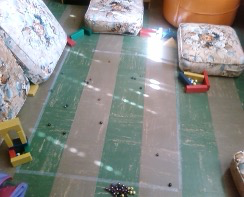
Our play took many forms, but Devon particularly gravitated to an old-fashioned game of marbles, one that he had learned from his grandfather. He set up difficult obstacles and goals for himself as the “shooter,” often becoming frustrated when his shot missed its intended mark. In one particular round of marbles, Devon decided to seek some heavenly inspiration, so to speak. He named his shooting marble, the biggest one on the floor, the “grandfather marble.” Almost at once, his accuracy improved as he moved effortlessly around the floor, skillfully guiding the marbles to their destinations—with the help of his “grandfather marble.” I did not feel the need to literalize the metaphor of the grandfather marble, although Devon began talking about his beloved grandpa. Conversations began to open in the family, and Devon’s aggressive behavior, its roots finally exposed, diminished, and both he and his family began sharing their feelings and stories about their lost loved one.  

Micah, age six, was small for her age, and very shy, both at home, but particularly at school where she was occasionally bullied by one of the “bigger kids.” She would often come home crying and began resisting going to school in the morning. Her sleep was also increasingly affected. When she did go to school, she would keep to herself on the playground and rarely initiate conversation or play with others. As much as she wanted to interact, Micah became increasingly isolated. When the parents finally found out the details of the bullying, they took swift action, and changes were made at the school.

As with Devon, Micah’s play took many forms including art and dollhouse play; however, she particularly liked building solid structures out of blocks into which she would hide a particular toy car. The structures were elaborate and impenetrable, and once erected, remained so for the balance of each of our meetings. I did not want to impose my words or thoughts on Micah, but instead gave her the time and space to play through what I thought was the need to build protective enclosures for their small vehicular inhabitants. As we built and rebuilt these bastions, we talked of safety, danger, fear, and courage. And as the bullying stopped, and as weeks of play passed, and with the support of her parents, Micah took down the walls once and for all and freed their inhabitants from their previously protective isolation.  

Sianna was soon to leave adolescence behind, hopefully with a greater sense of purpose and self than had characterized her earlier years. She never quite fit in, nor did she seem to want to. Perhaps she did, at a deeper level, but she seemed quite content being alone with her art. Through her drawings, both on paper and her skin, Sianna expressed both frustrations over and wonder about what lay ahead. She had the sense that her purpose lay beyond traditional education, but no clear sense of what that was or would be. While she found art to be a meaningful endeavor, she was not quite sure how to channel it into a sense of purpose.

I enjoyed Sianna’s drawings, which she readily shared as she discussed the challenges of being in this no-person’s-land on the doorstep to whatever would come next. She seemed to lack a coherent sense of self beyond her drawings. I had a wonderful lava lamp in my office during our work together, which was always percolating during our sessions. One day, she brought in this image, which said it all. Finally freed from the inchoate mass of bubbling lava from which it sprang, this little formless creature looked back at its previous entrapment and said, “Thank God, now what!?” That said it all for her, and I felt no need to impose interpretation.

***

Like most other forms of contemporary play therapy, client-centered work carries with it no assumptions other than freedom to express, freedom from judgment, and freedom from scripted technique. As such, clients are encouraged to work on the deeper existential issues related to freedom, isolation, meaning, and of course, death. It doesn’t rush, it doesn’t judge, it doesn't impose, nor does it rely on specific agenda, per se, other than the play therapist’s presence, patience, attention, and caring. These four case snippets and their accompanying images nicely demonstrate that, at least for me, this unhurried form of intervention is in many ways an existential playground.

Questions for Reflection and Discussion

What are your impressions of the author’s connection between CCPT and existential therapy?

What existential concerns have you noticed in the play of your young clients?

How do you address these concerns when they are expressed through play?  

How to Create Positive Outcomes in Play Therapy: Following the Child’s Lead

I’m an over-preparer. I want to be prepared for whatever happens. Not just in life, but in the therapy room too. I want to be prepared when a client doesn’t have anything to say. I want to pull out that worksheet and be like “No worries! Let’s work towards your therapeutic goals!” (Not in those words, but you know what I mean.) I do come prepared, no doubt, but I think my desire to be prepared can come from a deeper place of needing to feel in control. In a sense, I want to control what happens in the session. I think as therapists we all desire some control within our therapy space. Think about it. We tend to think we know it all; the perfect theory, the perfect worksheet, the perfect intervention for our clients.

Like what you are reading? For more stimulating stories, thought-provoking articles and new video announcements, sign up for our monthly newsletter.

But I often stop long enough to ask myself, “Is this really what my client needs right now?” I think this desire for control can become especially hard to ignore when I work with child clients. This desire for control could be due to many different things such as pressure from parents to “fix my kid” or my assumption that child clients don’t know what they need, and I think I do know what they need. I am the expert after all…right?

But I also have to ask myself what happens if I let go of my assumptions, my agenda, myself, what could happen? What if I listened to that tiny voice in the back of my head saying, “Just go with it”? Letting go of myself and my desire to control was a difficult lesson to learn. However, I discovered that when I did let go, when I did listen to that voice saying, “Just go with it,” incredible things happened. And I learned this all from a 6-year-old boy I’ll call Adam.

What a Therapist Learned from her Young Client

Adam was having some emotional regulation difficulties in his first-grade classroom, so he was referred to me, the school counseling practicum student. As I got to know Adam, I learned that he loved video games. And that was all he would talk about. I was very aware, thanks to the elementary school counselor, of all of the difficulties Adam was having at home. Yet, when I would ask Adam about how home was, he would always say “Good,” and change the subject to…you guessed it…video games.

I tried many different interventions with him including sandtray, creative art, and as a last resort, talk therapy. Nothing worked. I was beginning to get discouraged because I felt that I wasn’t “helping” him, and he was still having the same issues in his classroom. I was not seeing progress.

When I brought this up to my practicum supervisor, she suggested an intervention based on Adam’s love of video games. The intervention was to create a video game controller and to create buttons based around coping skills and his difficulties. Then, the child would use this controller to “control” the therapist. The therapist would follow the child’s instructions and act out the buttons the child was pushing on the controller. This intervention was to give the child “control” of a scenario based around his issues. To my relief, Adam agreed to participate in the activity. However, when I tried to steer him in the direction I thought he needed to go, such as creating buttons based around coping skills and emotional regulation, Adam was quick to turn me down. Instead, he created buttons for running, jumping, fighting, and throwing erupting cupcakes at an invisible perpetrator.  

Throwing erupting cupcakes was not what I had in mind for this intervention. However, there was a voice in the back of my mind saying, “Just go with it.” So, I did…despite my other thoughts saying, “Nope, this isn’t going to work. He’ll never get better if you keep this up.”

But listening to this voice in the back of my mind would become imperative to what happened next.

Before my next session with Adam, the elementary counselor informed me that someone had tried to rob Adam’s home. She said that he had briefly mentioned it to her in passing and she wanted me to know just in case it came up in our next session. Well, during our next session when I asked Adam if he needed to talk about anything, Adam simply said, “Nope,” and continued to eat his lunch. I could feel tears welling up in my eyes. I simply wanted to help Adam, and I could tell there was still some resistance. However, I tamped down my desire to pry and to push and moved on to explain the plan for our session.   

“So, Adam,” I said, “Remember the controller we made together during our last session?” Adam nodded. “Well, we’re going to use it today.” I reviewed the button meanings with Adam and when we were finished, I said, “Okay, here’s what’s going to happen. You’re going to give me a problem and using the controller, you’re going to control me to help me solve the problem.” Adam began jumping up and down excitedly. “So,” I continued, “What’s the problem you want to use?” Now you should know that my idea of the type of problem I wanted Adam to come up with was “A friend beat me at a game” or “I got a bad grade on a test”. I wasn’t prepared for what came out of his mouth next.

Adam thought for a minute and then finally said, “You’re being robbed.” Without thinking, I said, “Well, let’s think of a different problem…maybe one that happens in everyday life.” Adam looked disappointed but started to think. Suddenly, an alarm went off in the back of my head and I realized what Adam was trying to tell me: He knew exactly what he needed; he needed to process the break-in he had experienced. The voice in my head was shouting: “Alicia, JUST GO WITH IT.”  

So, I listened and I pivoted. I said to Adam, “You know what? Yeah, let’s go with that. I’m being robbed.” Adam began jumping up and down excitedly. And then fun ensued. Adam pushed the “jump” button, and I jumped around the room. Adam pushed another button, and I threw erupting cupcakes. I ran and hid, I fought my perpetrator, all the while Adam was jumping up and down and laughing his little head off. Finally, after I was completely exhausted, Adam said, “You did it! You fought him off! He’s gone forever!” With relief, I plopped down in my chair as Adam erupted into applause for my performance.

As I reflect on this session, I notice how close I was to missing what Adam was trying to tell me. I was blinded by my own agenda. I thought I knew what was best for him. But in that session, Adam was trying to process something that was very real and scary in his world. And I almost missed it.  

Since then, I’ve learned to use my intuition and to listen to that little voice in my head saying, “Just go with it,” particularly when it comes to working with children. I listen to the child when I introduce an intervention, and they say “No,” I let them pick up the sandtray to play with because I understand that that is what they may need in the moment. I let them do my interventions in their own way. I allow them to control what happens in the therapeutic space because there’s a good chance that they don’t get that anywhere else.

All I can say is that I’m glad I let go of my agenda and my desire to control during my session with Adam because when I did, healing took place. And I want more of that. I want more than anything to help children process things they don’t understand. I want to be the conduit they use to control what is outside of their control. I want more laughter, more fun, more silliness. And overall, I want more healing to take place in the therapy room. Adam taught me a valuable lesson: To let go of myself and just go with it.  

Questions for Reflection and Discussion

How does the author’s reflections on her play therapy work resonate with you?

What do you appreciate about the author’s clinical work with Adam?

What might you have done differently with this particular child?  

Legendary Psychotherapists Share Their Secrets to Longevity

The Pioneers of Psychotherapy Lived Long, Productive Lives

Several years ago, I authored three books and a string of articles featuring contributions and interviews with some of the greatest therapists in the world. At the time, I searched for commonalities that might be relevant. Recently, I revisited those commonalities and noticed one factor, seemingly unrelated to the psychotherapeutic process, that stood out: advanced longevity. This subject seems to be of increasing interest today.

Like what you are reading? For more stimulating stories, thought-provoking articles and new video announcements, sign up for our monthly newsletter.

By examining the experts featured in my books and articles, and adding a few more world-class therapists to the mix, I reached a striking conclusion. Simply put, many of these professionals enjoyed or continue to enjoy extremely long and productive lives. Here are some examples:

  • Albert Ellis lived to be 93 and completed his interview with me at age 89.
  • The father of CBT, Aaron T. Beck, made it to 100.
  • Muriel James, who penned the transactional analysis and gestalt classic Born to Win, lived to 101. For context, only 0.027% of Americans reach 100. Muriel was 86 at the time of our interview.
  • Ray Corsini, editor of Current Psychotherapies and one of the top psychologists of the last 150 years, was 94 when he passed away.
  • Suicide and thanatology expert Ed Schneidman lived to 91. Did you know Edwin Shneidman coined the term “suicidology”?
  • Career counseling guru Richard Nelson Bolles, author of What Color is Your Parachute? the best-selling career choice book of all time, lived to 90.
  • William Glasser, the father of reality therapy with choice theory, died at 89.
  • Viktor Frankl, the creator of logotherapy and a Holocaust survivor, lived to 92.
  • Robert Firestone, the father of voice therapy, was 94 and still active as I wrote this blog, but sadly passed away prior to its publication.
  • Irvin Yalom, an expert in group therapy, humanistic therapy, and death and dying, is 93.  

The Masters Share their Secrets to Longevity

If this phenomenon is the norm, what is responsible? Just what constitutes the magic bullet? Is helping others beneficial for the helper? Is listening and empathy advantageous to human physiology? Is it frequent sitting? (Certainly not according to any expert I have ever heard!) Is it getting up from the therapy chair, simulating an air-squat repetition performed at the beginning and end of each 50-minute hour fountain of youth? Have therapists stumbled onto their own brand of interval training? Could the benefits come from the intellectual stimulation from thinking and analyzing client behaviors?

When I asked Ellis about his secret to remarkable longevity, I jokingly asked if he had the water at his institute spiked with vitamin E or something. I inquired if he was into herbs or cranking out crunches while his clients shared their tales of woe. Was it the REBT thinking that kept him youthful?

Ellis shared that he had good heredity. His mother and her whole family lived into their nineties. His dad lived until age 80 and was one of the earliest to die in his family. Ellis insisted he didn’t use anything special, just worked on his emotional problems and avoided upsetting himself about things. He added that learning new things, helping people, and engaging with music kept him going.

But could the secret lie outside the therapy sessions? Or to put it a different way, could the answer be found in what therapists do when they are not actively engaged in the practice of psychotherapy or after the point in their career where they are no longer seeing clients?

Consider my exchange with Muriel James a while after our interview; when I inquired about whether she was still doing individual and group therapy, she told me she had branched out.

“What do you mean, branched out?” I asked.

She explained that she would get up early surrounded by a cup of java and about 50 history books. (Did she say 50 books? Yes, Howard, she said 50!)

She had discovered, at least at the time, that female history authors were discriminated against and therefore she was writing the texts using a male pseudonym. Talk about practicing what you preach. In my mind Muriel was using Born to Win self-therapy 2.0.

Yes, some luminaries in our field left us too soon, and for the 1000th time, correlation is not causation, but this phenomenon is certainly something to ponder. Just ask any therapist!

Questions for Reflection and Discussion

What are your impressions of the author’s connection between success and longevity?

How do you stay focused and sharp as you age in your clinical career?

Which one of these elder statespeople do you admire and why?  

Embracing Technology in Counseling: Innovative Tools for Enhanced Client Support

In recent years, technology has become more pervasive, entering many fields, including, for our purposes, counseling. And for better or worse, it has provided innovative tools that enhance therapeutic experience and offer new, convenient, and accessible avenues for clients to access a variety of mental health supports. From telehealth sessions to digital resources and AI-driven interventions, the possibilities are vast and increasingly accessible.

Like what you are reading? For more stimulating stories, thought-provoking articles and new video announcements, sign up for our monthly newsletter.

The Importance of Technology in Counseling

In the wake of the COVID-19 pandemic, telehealth has emerged as a key instrument for the delivery of mental health services. It offers clients flexibility and accessibility, removing barriers such as geographic distance, transportation issues, or scheduling conflicts. Telehealth platforms allow for face-to-face interaction through video calls, creating a space for meaningful therapeutic engagement. This approach has been particularly beneficial for clients who feel more comfortable in their own homes or who may struggle with anxiety related to in-person meetings.

Email and secure messaging platforms provide an invaluable extension of the counseling relationship. Clients can now send a secure message through a client portal. These tools allow clients to reach out between sessions for support, clarification, or to share progress in a timely and secure manner. This continuous line of communication can help maintain therapeutic momentum and provide timely interventions when needed. However, it's crucial to establish clear boundaries and guidelines around digital communication to ensure both client and counselor well-being.

But the real big one, the humdinger, is artificial intelligence (AI). It is emerging as an asset in the therapeutic process. AI-driven tools can assist in creating personalized therapy homework assignments, offering clients tailored exercises that align with their treatment goals. For instance, AI can suggest cognitive-behavioral strategies, mindfulness exercises, or journaling prompts, providing clients with structured ways to work on their issues outside of sessions.

Moreover, AI can serve as a practice partner for clients working on interpersonal skills. For example, a client preparing to engage in conflict resolution with a spouse might use an AI-powered chatbot to role-play scenarios. This practice can help them build confidence and refine their communication strategies before addressing real-life conflicts. While AI cannot replicate the nuances of human interaction, it offers a safe and controlled environment for clients to experiment and learn.

So, yes, the possibilities might just be endless, but I would like to give you one, real-life, actual example of a client using technology for their benefit.

Technology as a Lifeline for Bipolar Disorder

One case involves a client of mine diagnosed with Bipolar 1 disorder, who used technology to build a support network. Recognizing the importance of communication and preparedness, she created a detailed Google Drive document outlining her mental illness. The document included descriptions of her symptoms, warning signs of a potential episode, and specific suggestions on how her friends and family could support her during difficult times. Additionally, she listed emergency contacts and step-by-step instructions for what to do in a crisis.

This proactive approach has had a hugely positive impact on her life. By sharing the document with her close friends, she empowered them to better understand her condition and respond effectively when needed. This not only provided her with a sense of security but also strengthened her relationships with her support network. The ease of access and the ability to update the document as her needs evolved demonstrated the power of technology in fostering a supportive and informed community around her.

I found this use of technology by my client helpful for a number of reasons. There’s a level of sober self-awareness that a person needs to have if they struggle with Bipolar 1. The nature of the disorder comes with manic highs where sometimes the trigger of an upswing can be identified or even anticipated. But this is not the case for everyone. Sometimes the upswing comes without warning and takes over someone’s life with destructive consequences. If that is the case for one of your clients, planning and brutal honesty is critical.

I am in the habit of saying to clients, “forewarned is forearmed” (I stole this from one of my graduate school professors). Meaning, I want clients to be honest with themselves about how powerful their symptoms can be, and how they are not always in full possession of their mental faculties during the onset of an episode. Therefore, it is imperative they plan for those times. And to primarily focus on preemptively equipping their support network with information and resources on how to support them when they struggle to care for themselves. This wisdom applies itself broadly to clients struggling with a variety of mental health disorders, not just Bipolar 1.

***

There is wisdom in knowing your limitations and preparing for difficult moments. For clients who struggle with chronic, persistent, and severe mental health disorders, they absolutely need a strong support network. I strongly encourage my clients to think about the strength of their support network as a measure of their recovery, maintenance, or long-term wellness plan. And, thanks to technology, fostering and empowering that support network is easier than ever.

Questions for Reflection and Discussion

What challenges have you experienced bringing this level of technology into your practice?

What reservations do you have integrating AI into your clinical practice?

What techniques and methods would you like to learn moving forward?  

Successful Use of Haleys Strategic Model of Family Therapy

As a marriage and family therapist, I often find myself drawn to the road less traveled. In a field dominated by well-known approaches like Cognitive Behavioral Therapy and psychodynamic therapy, I’ve discovered the beauty and power of a model that, while rarely discussed in contemporary literature, possesses a distinctiveness that sets it apart: Haley’s Strategic Model.

Challenging the Traditional Model of Therapy

At first glance, this approach might seem unconventional, even daring. Its directive nature challenges the traditional therapeutic stance of non-directiveness, opting instead for a proactive, solution-focused approach. This alone makes it a rarity in today’s therapy landscape. But it’s precisely this departure from the norm that makes it so intriguing and, in my experience, incredibly effective. This therapeutic method stands out for its bold departure from traditional therapeutic approaches as it challenges the status quo of non-directiveness and passive exploration. Numerous clients shared with me the allure of a solution-focused approach, which they did not think was possible given the passive exploration they had come to expect from psychotherapy. What truly sets this model apart is its emphasis on strategic interventions. Rather than probing into the depths of past traumas or exploring abstract concepts, this model is all about pinpointing the problem, devising a plan of action, and executing it with precision. It’s like a finely crafted puzzle, where each intervention is strategically placed to unlock the path to change. But make no mistake — this approach isn’t for everyone. It takes a certain type of therapist, one who isn’t afraid to roll up their sleeves and dive headfirst into the complexities of family dynamics. It requires a keen eye for patterns, an intuitive understanding of systems, and a willingness to challenge conventional wisdom. More importantly, it takes a deep sense of empathy and compassion. Despite its directive nature, Haley’s model is rooted in collaboration and understanding. It’s about meeting clients where they are, acknowledging their struggles, and empowering them to take control of their own narratives. Using this therapeutic method isn’t just about following a set of techniques; it’s about embodying a mindset — a mindset that sees problems not as obstacles, but as opportunities for growth and transformation. It’s about embracing the uncommon, the unconventional, and the uncharted territory. In this model, two key techniques stand out: strategic interventions and paradoxical techniques, each serving as powerful tools in the therapist’s toolkit. So, what does it take to steer the ship in Haley’s Strategic Model? Effective implementation hinges on a blend of qualities and skills that go beyond the traditional therapist toolkit. Patience, creativity, and adaptability are essential, as is a keen understanding of family dynamics and systems theory. Being able to think on your feet and pivot strategies as needed is crucial, especially when faced with complex and ever-changing family dynamics. Balancing the directive nature of Haley’s approach with collaboration and empathy requires finesse. While strategic interventions are at the core of the model, it’s equally important to create a safe and supportive environment where clients feel heard and understood. I’ve found that taking the time to build rapport and establish trust lays the foundation for successful therapy. It’s about finding the delicate balance between guiding clients toward change and empowering them to take ownership of their journey.

Clinical Application of Haley’s Model

Strategic interventions are precisely targeted actions designed to disrupt dysfunctional patterns and facilitate change within the family system. I recall a client, let’s call her Sarah, who sought therapy for her strained relationship with her teenage daughter. Sarah felt overwhelmed by her daughter’s rebellious behavior and constant defiance. During our sessions, I introduced a strategic intervention by prescribing a specific communication exercise for Sarah and her daughter to complete together. This task aimed to improve their communication skills and foster a sense of understanding and connection. As they engaged in the exercise, Sarah and her daughter began to open up to each other in ways they hadn’t before, leading to a breakthrough in their relationship dynamics. Paradoxical techniques, on the other hand, are seemingly counterintuitive strategies used to evoke change by embracing resistance or amplifying symptoms. In another case, a couple, let’s call them Mark and Lisa, sought therapy for their constant arguing and power struggles. Despite their initial reluctance, I introduced a paradoxical technique by prescribing a “fight schedule” where they were only allowed to argue at certain times of the day. This approach initially seemed absurd to Mark and Lisa, but as they adhered to the schedule, they began to realize the futility of their constant arguing and started to communicate more effectively outside of their designated “fight times.” Of course, navigating the directive approach isn’t without its challenges. Resistance from clients can arise, whether it’s skepticism about the effectiveness of strategic interventions or discomfort with the idea of change. In these moments, patience and perseverance are key. I’ve learned to approach resistance with curiosity rather than confrontation, exploring the underlying fears or concerns that may be driving it. One striking example of overcoming resistance involved a young boy, let’s call him Max, who was brought to therapy due to behavioral issues and defiance at school. Max had a history of pushing back against authority figures and was initially resistant to the idea of therapy. He viewed it as just another attempt by adults to control him. Instead of adopting a traditional authoritarian approach, I decided to honor Max’s self-determination and autonomy. I engaged him in collaborative discussions, allowing him to voice his opinions and preferences. Together, we set goals for therapy that aligned with Max’s interests and values, empowering him to take an active role in his own treatment. As therapy progressed, I introduced strategic interventions tailored to Max’s unique needs and preferences. For example, instead of prescribing specific behaviors for Max to follow, I invited him to brainstorm alternative solutions and encouraged him to take ownership of his choices. Over time, I witnessed a remarkable shift in Max’s attitude towards therapy. His resistance softened, and he became more open to exploring new perspectives and strategies for managing his behavior. By honoring Max’s self-determination and empowering him to be an active participant in his therapy, we were able to achieve meaningful progress and foster a sense of agency and empowerment within him.

***

From its directive nature and emphasis on brief interventions to its strategic focus on systemic change, Haley’s model has provided me with a refreshing alternative to traditional therapy approaches. By harnessing the power of strategic interventions and paradoxical techniques, I have been able to navigate complex family dynamics with precision and creativity, fostering meaningful change and empowering my clients to lead more fulfilling lives. While a bit intimidating earlier on in my career, I have enjoyed, and my clients have benefitted from embracing the innovative and the unconventional and daring to explore new horizons in my practice. With this therapeutic method as my guide, and of course, my clients’ willingness to trust me and enter into new territory with me, new opportunities for growth and transformation have revealed themselves. Questions for Reflection and Discussion In what ways have you traveled unfamiliar roads as a therapist? What model of family therapy works best for you and why? What do you find most rewarding and challenging in doing family therapy?

Managing Post-Election Despair in Therapy: A Clinician’s Conundrum

Managing Therapist Post-Election Despair in Session

I consider myself a liberal Democrat, living in a blue pocket of a red state. As a licensed MFT (Marriage and Family Therapist), I also identify as female, white, middle class, and heterosexual. Like many Americans, I stayed up all night to watch the presidential election result come in. My grief and devastation, along with my fears and anxieties about the future, made sleep elusive. After a mere two hours, it was time to get up, resume my role as therapist, and try to figure out how to work with clients on their concerns about this. I had spent weeks working with clients on election anxiety. But this day was different: it is unusual to be experiencing something so distressing that your clients may also be simultaneously experiencing.

Like what you are reading? For more stimulating stories, thought-provoking articles and new video announcements, sign up for our monthly newsletter.

Typically, I manage my self-of-the-therapist by practicing self-care and working on it outside of a clinical setting. But, on this day, I was going to have to find a way to work with clients on concerns I had barely begun to process myself. Should I even go see clients when feeling such sadness and despair? What could I possibly say to alleviate anxieties they might have about deportation, eliminating the education system, reproductive rights, etc.? How would I respond to real concerns that they could lose their healthcare or Medicare under this new administration, thereby losing access to their therapy services? How could I reframe people’s concerns, when I could not think of anything positive about the future? I had rarely felt less like going into work.

9:00 AM. Couple therapy session, mid 30s, White heterosexual couple, liberal Democrats. Both expressed their anger, frustration, and powerlessness about the results. They described their frantic research to determine if they should move their family to another country. I began the session listening, validating, and empathizing. However, our discussion soon shifted to all the ways that the election discussion between them paralleled other dynamics we have been addressing in therapy.  

How did his high anxiety and spiraling thought process relate to her role of staying strong, presenting the calm facts to the children, and managing his anxiety? What messages do they want to give to their children about their election response? What would need to happen for them to take his idea of moving internationally and make that a reality? What is their biggest fear? We ended the session with the couple pondering how they might take their powerlessness and turn it into activism by volunteering to help turn the electorate around in two years.

10:00 AM. Couple therapy session, mid 40s, heterosexual Latino couple, she identifies as Democrat, he identifies as Republican. They began the session with their intense argument about the results. She described him as smug and being a “sore winner;” he described her as bitter and naïve for thinking the outcome would be anything else. Using Gottman’s ideas of the 4 horsemen of the apocalypse, we explored how their interactions with each other reflected these problematic patterns. How did these character attributions relate to their negative affect? How did they display defensiveness, contempt, and criticism? How was their interaction about the election different than their other interactions? How could we shift this discussion on value differences to a more respectful one? How do they manage their perceived differences in values?

11:00 AM. Individual therapy session, male, White, Jewish, mid 60s, presenting problem of anxiety. He entered therapy agitated and began to pace the floor. Due to the nice weather, I suggested that maybe we do something different today and take a walk in the park. He agreed. We walked and explored his anxiety: What would happen with Israel? What if he loses his Medicare and senior benefits? How would he cope with this level of uncertainty? What if his young daughter had an unwanted pregnancy? He ended the session with his own suggestion of avoiding any more election coverage and how taking a break from social media would probably help him the most right now.   

12:00 PM. Individual therapy session, African American female, early 50s, presenting problem of grief. She focused on her anger towards voters and her fear that the results were a result of racism and sexism. She expressed concern for her transgender son and what changes might affect him. What would her deceased mother have said to help ease her fears? What other losses do these results bring up for her? What personal experiences has she had with racism and sexism that this is evoking for her?  

1:00 PM. Individual therapy session, early 20s, White man, unsure party affiliation, presenting problem of depression. This was the only session of the day where the election was not discussed, and we had a session much like previous ones. It could have occurred on any other day.

2:00 PM. Couple therapy session, early 50s, White, Jewish, Republican. They began the session talking about how happy they were about the election results and their shared optimism for what the future holds. They described how they bonded over their relief that Israel policy would likely be beneficial. Using Solution Focused Therapy, I focused on these moments of exceptions: what was different about their shared experience last night? How could we expand upon what was working between them last night? When else have they been able to connect like that?

3:00 PM. Individual session, African American female, late 20s, Independent, presenting problem of co-parenting challenges with her ex-husband. She shared how disappointed she was in the results and was struggling to make sense of them. For the first time today, a client asked me directly, “What was your response to these results? Make it make sense for me!” What do I self-disclose and how much? What could I say that is genuine, brief, and helpful to our relationship? I paused and said, “Yes, I was very disappointed also. The way that I make sense of it is that I think that most people want similar basic things: to be financially stable/not stressed about money and want the best for the people they love.

“People in this election took different paths to what and who they think will give them and their family the best outcome on these measures. It is easy to look at this and see all the ways that the path they chose might not actually do that for them. We can’t control what happens from here, so my personal challenge is to figure out how to cope with it and manage my own fears around what could happen.” She was satisfied with my response, and the session moved on.

***


4:00 PM. I am exhausted. I complete my notes and head home. Today was a difficult day, but I am proud that I was able to self-disclose appropriately, take election talk that could be viewed as “venting” and weave it into therapeutic work, and find a way to work effectively with a topic that I am still processing. I am confident that this will not be the last time I face such a challenge.   

Questions for Thought and Discussion

In what ways do you resonate with the author?

How have you addressed election/political/emotionally laden issues like politics with clients?

To what extent would you have self-disclosed as did the author? Differently or at all?  

Reflecting on Domestic Violence: How One Therapist Made a Difference

I loved my work in community mental health, but I hated office politics—the best way to avoid them was to spend as much time outside the building as possible. I accomplished this for over 10 years by providing in-home services.

Like what you are reading? For more stimulating stories, thought-provoking articles and new video announcements, sign up for our monthly newsletter.

Making a Mental Health Impact in the Community

My very favorite program under the in-home umbrella was referred to as “Mother House.” It was a joint program between a Christian based church that wanted to make a difference in the community and the child & family team of the community mental health center (CMHC) where I worked.

The church owned and maintained a four plex, two-bedroom apartment building, the purpose of which was to provide safe shelter for women with children leaving domestic violence relationships. To qualify for the housing, they required the mother and a child to have a diagnosable mental illness and to be receiving treatment for that illness. They asked the CMHC and particularly the child/family services program to provide mental health treatment.

The CMHC where I worked was very traditional in their orientation to service programs; separating adult services from services for children. An adult parent needing mental health services was seen in the adult division, while the child was seen in children’s services. Never the two should meet. “It can’t be done” they said. “One therapist cannot work with both adult and child service programs at the same time.”

By that point in my career, I had worked in every type of mental health program you could imagine—inpatient, outpatient, day treatment, rehab, adult and child case management, and crisis intervention. By then I was the senior clinician in the agency. I was a perfect fit and said, “Watch how it can be done.”  

Making a Domestic Violence Shelter Work

Over the course of the project, I had anywhere from four mothers, and 8 to 11 children of all ages in treatment under one roof at any time. Mothers were occasionally asked to leave the program when they could not honor the rules. One parent and one child in treatment and no men were permitted to live in the building. I had the independence to do whatever I needed to do keep them functioning; grocery shopping, bill paying, doctor’s appointments, school meetings, and therapy.

I loved the constant challenge and the variety of individual, family, or group therapy. I loved the unplanned picnics, holidays, water balloon fights, family feuds, wars with the neighbors, and the continual challenges of keeping men from moving in on the women. I did not care for the police calls. When the police did come, they sent four squad cars and for hours they screwed up what I could have settled in 30 minutes. Things ran far more smoothly when I was in the building.

One of my first families was a mother with a severe mental illness who had lost or given up custody of her four children. The first to come home was her 13-year-old daughter, Wendy. She came home angry, defiant, and rebellious. She had a lot to be angry about and a right to be angry. She was not a bad child, just an angry one. I did not think therapy was successful for her, but she had her anger to keep her going.   

The mother had to leave the program after the fourth child came home because the apartment was not big enough. We lost touch clinically but through sources in the system, I continued to hear of what was happening in the mother’s life and those of her children.

Fast forward to 2021. The picture of a young woman came through my Facebook page, and although the last name was different than I remembered it when working with the mother and four children, I knew it was Wendy. That 13-year-old girl, now in her thirties, was married, a mother, and looking to connect. I responded to her, and she replied. While she had created that post over two years before, we decided to meet at a local restaurant—she, her mother, and me.

When I arrived, she greeted me as soon as I walked through the door, jumping up from the table to wrap me in a big warm hug before I could even sit down. She did not bring her mother because she wanted to let me know personally and privately that she was sorry for the horrible way she treated me while they were living in the apartment. “I was so angry.” I respond, “You were, but you had a lot to be angry about.”

Wendy shared her story, and what a story it was! She had experienced her share of struggles and challenges, several of which I had heard through my mental health grapevine. She was happily married to a good man and together they had a huge family of “his, mine, and ours.” She had turned out to be a wonderful mother, and a loving and caring daughter to her mother.

***

I subsequently reconnected with Wendy’s mother with whom I met occasionally for lunch. Surprisingly, she recalled that her time at Mother House with her four children, and when she later came home with them, was one of the best times of her life. She said, “We were all like family in that building and you were part of the Family!”

Questions for Reflection and Discussion

What are your impressions of the Mother House project?

What challenges might you experience working with this population?

How might you have worked differently with Wendy under similar circumstances?    

Using Four-Legged Friends as Metaphors in Therapy

The Clinical Challenges of Adoption

As an adoptive parent and psychologist, I’ve long been drawn to all clinical aspects of the adoption process. I began this part of my journey with my wife, who, as an adoption social worker, referred home studies to me. A home study is basically a psychosocial evaluation of the prospective adoptive parents with recommendations about their “readiness” or “fitness” to adopt. Through those many intimate visits with clients, who, for a variety of reasons ranging from infertility to choice, I learned of the frustrations, despair, and hope that accompanied the decision to raise another person’s child.

Like what you are reading? For more stimulating stories, thought-provoking articles and new video announcements, sign up for our monthly newsletter.

The home studies laid the foundation of the post-adoption placements with those new parents who were fortunate enough to meet the often-stringent requirements for domestic adoption, and even more demanding requirements that accompanied adopting a child from another country. While those visits were often accompanied by the joys of new parenthood, they also came with a myriad of unanswered and unanswerable questions about what lay beyond the luster of that new status. From those visits, I learned of the many challenges that new parents faced, peppered in with the often-irrepressible joy they experienced.

From the child, especially when I was privileged to work with them in therapy, I witnessed firsthand the “primal wound” that Verrier described as a core dynamic in adoption. For as much as is gained by an adopted child, so too have they experienced loss, even when that loss was necessitated by birthparent neglect, abuse, and/or abandonment. I even had the opportunity to work with those birth parents before and after placement, where the experiences of grief and loss were clearly on display.

The Therapeutic Value of a Puppy

I remember 8-year-old Amber and her 4-year-old brother Asher, siblings who had spent most of their childhoods in various foster placements following removal from their biological parents due to severe neglect. My work with them began right around the time that their out-of-state adoption was being finalized, so I knew that my time with them would be short. Since they were, in every sense of the word, fellow travelers, I met with them together in play therapy, themes which revolved around family life.

I was able to loosely track the chronology of changes they had experienced in their short lives through their dollhouse and sandtray play. What stood out the most was the issue of loss, impermanence, and change, issues that were always at the forefront of their lived experiences. One of our sessions revolved around planting a small tree in front of the office. Metaphoric and literal conversations about growth, hope, and vitality were plentiful. Gardening and nature-based metaphors are among my favorites in therapy, made even more so when I have been able to literally get my hands dirty with clients.

And then the day of our last session came. Amber and Asher would be traveling the next day for what would hopefully be their permanent placement. I was very anxious. What could I possibly offer them in those last minutes of our short-lived relationship? What could I say that could even be mildly reassuring?

As I drove up to the office (and I promise that I am not making this up), there was a puppy sitting on the doorstep—very young, very lost, and thankfully, very affectionate. I knew at once what shape the final therapy session would take as I quickly scooped up this little lost creature and brought it inside.

The children came only moments after I got settled, so I thought it would be a good idea to include them in the welcoming of this puppy—water, a soft towel to lay on, and some of the resident cat’s kibble. We had to manage with what we had on hand, but no one, especially the puppy, complained. Asher and Amber fell instantly for the dog, taking turns gently holding it, assuring it that it was safe and loved, and that it would be cared for. We talked about fear, hope, loss, adoption, and forever homes that day, and we never used any of these words. This furry, four-legged metaphor was all we needed to help launch these children on the next leg of their own journey.

***

Take whatever lessons you’d like or need from this story into your own clinical work, whether it be with children, adults, or any of your clients that have been lost and seek welcomed rest stops along their own journeys.

Questions for Thought and Discussion

What have you found to be some of the greatest challenges in working with adopted clients?

What are your impressions of the author’s approach to this case?

How have you used metaphors in therapy?