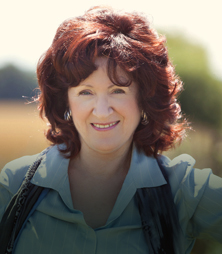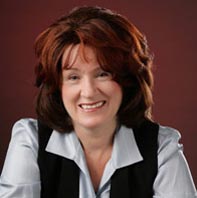
Victor Yalom: Sue, it's great to be with you today. We might as well start with the basics. Can you just say a bit about what is emotionally focused therapy or EFT?
Sue Johnson: EFT is an approach that was developed in the '80s to work with couples, that now has a very strong empirical base. It's been tested. There's lots of outcome data. We know that we get results with lots of different kinds of couples. We know how we get results. As its name suggests, it's an approach that focuses very much on how people deal with their emotions and how they send emotional signals to their spouse, and then how this emotion becomes the music of their interactional dance.
It's an attachment-oriented approach. Attachment is a broad theory of personality and human development that focuses, also, very much on emotion. It's an attachment approach, so it assumes that we all have very deep needs for safe connection and emotional contact, and that when we don't get those needs, we get stuck in very negative interactional patterns; the dance music gets very complicated.
It's an attachment-oriented approach. Attachment is a broad theory of personality and human development that focuses, also, very much on emotion. It's an attachment approach, so it assumes that we all have very deep needs for safe connection and emotional contact, and that when we don't get those needs, we get stuck in very negative interactional patterns; the dance music gets very complicated.
VY: Of course, humans are complex creatures. Emotions are an essential component, but we also have cognitions. Why do you focus on emotions?
SJ: We focused on emotion, in some ways, because they were pretty much left out of interventions, particularly systemic interventions—interventions that looked at relationships. Emotions were really considered the enemy. They were the things that people had difficulty with. Particularly, anger and conflict were considered the enemy. So there was a lot of focus on just teaching people skills to control emotion—to be nicer to each other.
And what we tried to do is say, "No, focusing on emotion and helping people send key emotional messages to each other that help the other person feel safe is the most important part of a relationship. It's the key part of the attachment bond. And we really need to teach people how to do that." So that's why we focused on emotion.
And what we tried to do is say, "No, focusing on emotion and helping people send key emotional messages to each other that help the other person feel safe is the most important part of a relationship. It's the key part of the attachment bond. And we really need to teach people how to do that." So that's why we focused on emotion.
VY: And how did attachment theory become such a central component?
SJ: Really, couples taught us how to do EFT. We started looking at how couples got caught in being overwhelmed by their emotions, or numbing out their emotions, or putting very negative emotions out to each other, and getting caught in really negative cycles. But we didn't understand why these cycles were so powerful, took over the whole relationship and induced such distress in people. We knew there was something powerful here. And we learned how to help people get out of these negative dances and move into positive, trusting, more open dances with each other.
So we discovered how to do that, but we didn't really understand why this dance was so incredibly powerful, why it had the effect it did until
So we discovered how to do that, but we didn't really understand why this dance was so incredibly powerful, why it had the effect it did until
VY: And when you refer to the dance, you’re referring to the patterns that couples get into.
SJ: Yes, I think of the patterns of interaction in a relationship as a dance. And I like to think of emotion as the music of the dance. I think that is a shorthand way of talking about how powerful emotions are. It’s very difficult to learn skills and do a new dance that’s about tango when there’s waltz music playing. You end up going on with the music in the end. That’s what happens in relationships with emotion.
VY: What do you mean?
SJ: If I'm really hurting and really upset with you, and I'm vigilantly watching everything you do, waiting for some sign that I don't really matter to you and you are about to turn away from me, I discount the positive things you say, for a start. I wait for you to raise your left eyebrow and say something negative. And when you say that, I'm ready—I have all these catastrophic ideas and feelings in my body, and this felt sense of falling through space and insecurity. And I react like crazy. And you turn to me and you say, "But I was so sweet to you yesterday. Doesn't that count?" And if I'm honest, I would say no. So our emotional realities are very powerful.
VY: The kind of situation you just described is something that therapists often get tripped up on. When we’re in the room with a couple, things happen so quickly, even before we understand what’s happening and they’re off to the races.
SJ: That’s right.
VY: So how does the theory help us? How do you understand that?
SJ:
I started to realize after we'd done the first outcome study that the logic behind these emotions was that they were all about attachment and bonding, and our deep human need for that secure bond.
It really helps to understand that you're dealing with an attachment drama. You're dealing with dilemmas in human bonding.
It really helps to understand that you're dealing with an attachment drama. You're dealing with dilemmas in human bonding. So the emotions that you're dealing with are high-voltage emotions, because your mammalian brain sees these emotions—these situations—in terms of life and death: "Does this person care about me?" It looks like we're having a fight about parenting, but, in fact, if you tune into the emotions, oftentimes two minutes after the fight started—or two seconds after the fight started—the fight ends up being about attachment issues like, "Do you love me? Do I matter to you? If I hurt do you care? Are you there for me? Will you respond to me? Can I depend on you?"I started to realize after we'd done the first outcome study that the logic behind these emotions was that they were all about attachment and bonding, and our deep human need for that secure bond.
VY: How did that come to you?
SJ: It was a flash of insight, I’m afraid. It sounds corny, but it was one of those traditional corny "Aha!" things that just hit you in the head.
VY: How did that happen?
SJ: Actually, I was at a conference. We'd done the first outcome study of EFT. It had worked amazingly well. I couldn't really understand how it had worked so well, and I was at a conference listening to Neil Jacobson talking. And Neil Jacobson, who was really the father of cognitive-behavioral marital therapy, was giving a talk and basically saying that relationships are rational bargains, so what you have to do is teach people to negotiate. His theory was that you can negotiate almost anything, including affairs. And this was the theory of relationship underneath the behavioral approaches: you teach people communication skills so that they can problem solve and bargain better.
Afterwards, I and my colleague Les Greenberg, who originally helped me put together EFT for couples, were sitting in a bar, and he said, "He's wrong." And I said, "Of course Neil's wrong." And he said, "Well, why is he wrong?" And I said, "Oh, he's wrong because an adult love relationship is an attachment bond, and you can't bargain for basic responsiveness and safety and love." And that was it. And then suddenly the whole of John Bowlby, who I'd read, but who I'd never made the links—it was like somebody hit me with a sledgehammer.
I went home and wrote an article called "Bonds or Bargains," which ended up being in the Journal of Marriage and Family Therapy, even though Alan Gurman sent it out for review four times, and each time he got two people who hated it and who said that adult relationships were not attachment bonds like the bonds between mothers and children. They were adult friendships, and they were rational, and dependency was a problem, and we got over it. And the other half of the people said, "Oh, this is really new and interesting." And Alan Gurman finally said, "I can never get people to agree. They either hate it or love it. So, Sue, I like it so I'm going to publish it"—for which I bless him forever.
That was the first article—it came out in '86. And in '87 Hazan and Shaver, who were social psychologists, bought out their first little study of adult attachment. Bowlby always said adults had attachment, but we'd never really done anything with his remarks.
Afterwards, I and my colleague Les Greenberg, who originally helped me put together EFT for couples, were sitting in a bar, and he said, "He's wrong." And I said, "Of course Neil's wrong." And he said, "Well, why is he wrong?" And I said, "Oh, he's wrong because an adult love relationship is an attachment bond, and you can't bargain for basic responsiveness and safety and love." And that was it. And then suddenly the whole of John Bowlby, who I'd read, but who I'd never made the links—it was like somebody hit me with a sledgehammer.
I went home and wrote an article called "Bonds or Bargains," which ended up being in the Journal of Marriage and Family Therapy, even though Alan Gurman sent it out for review four times, and each time he got two people who hated it and who said that adult relationships were not attachment bonds like the bonds between mothers and children. They were adult friendships, and they were rational, and dependency was a problem, and we got over it. And the other half of the people said, "Oh, this is really new and interesting." And Alan Gurman finally said, "I can never get people to agree. They either hate it or love it. So, Sue, I like it so I'm going to publish it"—for which I bless him forever.
That was the first article—it came out in '86. And in '87 Hazan and Shaver, who were social psychologists, bought out their first little study of adult attachment. Bowlby always said adults had attachment, but we'd never really done anything with his remarks.
VY: So the interesting thing is you developed the theory and practice of EFT before you conceptualized the centrality of attachment in it, and it worked without that understanding.
SJ: It worked because, I think, we were Rogerian, and we understood how to create new interactions from a systemic point of view. But we didn't really understand why these new interactions worked so well.
And don't forget, also, in those days not much was written about adult attachment. Since then there have been hundreds of studies. It's a very rich literature now—lots of studies on adult attachment linking adult attachment to better health, feeling better about yourself, better ability to deal with stress. But in those days—in the '80s—nobody was writing about adult attachment. So there wasn't a literature sitting there that I could go to and say, "Oh, this is it." I just understood suddenly what I was looking at between adult partners, and how this paralleled the between the bonds between mothers and children, which many people still find very difficult to accept. They say, "No, they're totally different."
And don't forget, also, in those days not much was written about adult attachment. Since then there have been hundreds of studies. It's a very rich literature now—lots of studies on adult attachment linking adult attachment to better health, feeling better about yourself, better ability to deal with stress. But in those days—in the '80s—nobody was writing about adult attachment. So there wasn't a literature sitting there that I could go to and say, "Oh, this is it." I just understood suddenly what I was looking at between adult partners, and how this paralleled the between the bonds between mothers and children, which many people still find very difficult to accept. They say, "No, they're totally different."
VY: It certainly goes against the strong sense of psychological independence that we cherish in the West and is so central to so many of our conceptions of psychological health.
SJ: Yes. I think what we've done is we've pathologized dependency. If you really think about it, though, how on earth do we get to be independent anyway?
In psychology and in therapy, we often see a little piece of the picture, and we go with that because that's all we can see. Then when the whole picture suddenly evolves, we can put things together in a different way.
Bowlby basically said for a child to really become independent, he has to be dependent first.
Bowlby basically said for a child to really become independent, he has to be dependent first. He has to be able to turn to other people and reach for them, and know how to connect with others in order to build this sense of self and in order to deal with how your self evolves and how big the world is. In other words, Bowlby basically said we're mammals. We need other people. A strong sense of self and the ability to be separate are tied to how connected you feel. They're not opposites—they're both the two sides of the same coin. We made a mistake in that.In psychology and in therapy, we often see a little piece of the picture, and we go with that because that's all we can see. Then when the whole picture suddenly evolves, we can put things together in a different way.
VY: So you don’t like the ideas of co-dependency or enmeshment?
SJ: Well, enmeshment confuses anxiety about closeness and coercion, for one thing. It's a very vague concept, and a lot of it came out of watching families where adolescents were in deep trouble and the therapist was trying to help the adolescents assert themselves with the parents. There's nothing wrong with the word "enmeshment" if you put it in a very particular context.
Co-dependency came out of the addiction literature, and we used it as a global blame for people without understanding that we have amazingly powerful emotional links with the people we love. To say you shouldn't have those links is craziness. Those links are wired into our brains by millions of years of evolution. Bowlby says if you're a mammal, there's no such thing as real self-sufficiency. And there's no such thing as real over-dependency. But there are massively anxious behaviors around dependency.
What healthy people have is effective dependency, which means—and there's lots of research behind this now—the more you know how to turn to other people, the more you can trust other people, the more you can go inside of yourself and access, for example, your loved one's face when you're feeling upset or distressed, the stronger you are as a person, the better you feel about yourself and the more able you are to take autonomous decisions.
Co-dependency came out of the addiction literature, and we used it as a global blame for people without understanding that we have amazingly powerful emotional links with the people we love. To say you shouldn't have those links is craziness. Those links are wired into our brains by millions of years of evolution. Bowlby says if you're a mammal, there's no such thing as real self-sufficiency. And there's no such thing as real over-dependency. But there are massively anxious behaviors around dependency.
What healthy people have is effective dependency, which means—and there's lots of research behind this now—the more you know how to turn to other people, the more you can trust other people, the more you can go inside of yourself and access, for example, your loved one's face when you're feeling upset or distressed, the stronger you are as a person, the better you feel about yourself and the more able you are to take autonomous decisions.
The more you know how to turn to other people, the better you feel about yourself and the more able you are to make autonomous decisions.
And I'm not making this up. I can quote you study after study, and you see it in therapy.VY: I know that you can. And I know you can talk passionately and animatedly about the attachment literature for hours—
SJ: Yes, I can. It’s the best thing to ever hit psychology and therapy in the last hundred years, so there you go.
VY: Yes, you’re not one shy of opinions!
SJ: No. Life's too short to not put out what you think. And if someone can show you you're wrong, that's good.
VY: How did it change your thinking and the technique of EFT when you had that "aha!" moment and started to understand the significance of attachment in adult couples?
SJ: I think it helped me understand, on a deeper level, how powerful these emotions were that I was seeing in the couple. It helped me understand the power of fear in a couple—fear of abandonment, fear of rejection. It helped me understand the logic behind some of the apparently self-destructive positions people take in relationships.
VY: Can you give an example of the fear or the self-destructive positions?
SJ: For example, one of the classic ones in relationships is, "I feel lonely. I feel unsure that you care about me. I don't even know quite how to put that into words because I'm an adult—I'm not supposed to feel that way. But I somehow feel like I'm starving emotionally. And I decide that what I'm going to do is I'm going to make you respond. Ironically, I'm feeling all these feelings inside of abandonment and loneliness and fear, and what I say to you is, 'You never talk to me.'"
VY: What you're describing is what's underneath, unconscious, as it were—not what the person's actually saying, but what you posit is driving their behavior.
SJ: You don't have to posit it if you slow people down, and you say, "In the second before you get angry and tell your husband that he's ridiculous because he can't talk to anyone—in the second before you attack him to get his attention and to make him listen to you—what's happening to you?" If you just slow people down, there are enormously powerful universal patterns that you can see, and they fit very well with what John Bowlby saw in situations between mothers and infants.
There are only so many ways we have of dealing with our emotions. If I'm in a relationship with somebody and I want them to respond to me, and suddenly I'm not getting responsiveness and connection, I've got to reach for them and say, "Where are you? I need you." If somehow I'm afraid to do that or that doesn't work too well, then there are really only two alternatives. I get angry and shriek—children shriek or they get mad or they get aggressive with the mother, and so do we. We say, "Why don't you ever talk to me?" Unfortunately, if that gets to be a habitual pattern, I end up pushing you away. And in classic marital distress, the other person hears, "I'm being rejected. I'm disappointing. I'm messing up. I'm not pleasing this person. I don't know how to please this person. This hurts like hell. I want this fight to stop. I'm just going to stop talking."
There are only so many ways we have of dealing with our emotions. If I'm in a relationship with somebody and I want them to respond to me, and suddenly I'm not getting responsiveness and connection, I've got to reach for them and say, "Where are you? I need you." If somehow I'm afraid to do that or that doesn't work too well, then there are really only two alternatives. I get angry and shriek—children shriek or they get mad or they get aggressive with the mother, and so do we. We say, "Why don't you ever talk to me?" Unfortunately, if that gets to be a habitual pattern, I end up pushing you away. And in classic marital distress, the other person hears, "I'm being rejected. I'm disappointing. I'm messing up. I'm not pleasing this person. I don't know how to please this person. This hurts like hell. I want this fight to stop. I'm just going to stop talking."
So one person numbs out. And the more he numbs out, shuts down, shuts his partner out, the more his partner gets angry and pushes.
So one person numbs out. And the more he numbs out, shuts down, shuts his partner out, the more his partner gets angry and pushes. And that is the most classic dance of relationship distress in North America. It's a hot number. We all do it a lot.VY: This is what you refer to as a cycle?
SJ: That's a cycle. And in Hold Me Tight, which is the book I wrote for the public a couple of years ago, it's one of the main "demon dialogues." What's important is if you understand that that drama is not about communication skills or your personalities, or that you're deficient somehow, but rather that drama is about both of you being caught in feeling disconnected from each other and not knowing how to handle it—if you understand that, what we first teach people to do in EFT is to basically understand they're scaring the hell out of each other. Then we teach them how to step out of the negative patterns, and then deliberately learn how to reach for each other—which is what mothers and infants and bonded partners and people who love each other in positive relationships naturally do—learn how to reach for each other and create loving, responsive, open emotional communication where they can get their needs met.
VY: Sounds nice.
SJ: It is nice. It’s fun to do, as well. As a therapist, it makes you feel like you’re actually really doing what you wanted to do in grad school when you decided to be a therapist.
VY: So how do therapists do that? The first thing, I guess, is to start to be able to identify, in your own mind, this dance—this cycle.
SJ: Yeah. At this point, we’ve been doing EFT for 25 years. We’ve set it out pretty clearly and we’ve even done research on what you have to do to make this work. First of all, you’ve got to create safety in the session.
VY: Okay, safety is number one. So how do you do that?
SJ: You do that by being empathic and by being emotionally present. Really, this is a Rogerian therapy. So you do that in the traditional Rogerian way, but I think it's more intense than Rogers really created because you also help the couple understand the drama that they're caught in. So you're a relationship consultant. You follow the couple's drama. You make it clear to them the steps they're doing in the dance.
VY: That's "Rogers plus," because you're not just reflecting back—you're starting to explain to them what you see that they're doing.
SJ: I think you have to do more than explain. You have to give them a felt sense.
If you're always telling me that you don't want to hear me because I'm so angry, after a while all I show you is anger. And all I see you do is be cold and indifferent. And what we help people do is talk about the softer feelings that they don't even know how to name sometimes, and certainly don't know how to share. So the reactively angry partner will start talking about how "I feel lonely. I don't know what to do. I do get angry. I do get critical because underneath I'm so scared I don't matter to him."
And we will help her not only access that and work with those feelings, regulate them differently, integrate them so she can talk about those softer feelings—we'll help her turn and share with her partner in interactions where we scaffold the safety in. We help her share that, and we help her partner hear it—because one of the reasons you need a therapist is that sometimes you do give these clear emotional messages to your partner, and because of the negative music playing in the relationship, your partner doesn't even hear it. Your partner doesn't trust, doesn't respond to it.
You have to catch it as it's happening, and you have to help them see the dance they're caught in and how it leaves them both alone and hurting.
You have to catch it as it's happening, and you have to help them see the dance they're caught in and how it leaves them both alone and hurting. You also have to help them see that underneath this dance they're both in pain, and that this pain is just built into us. It's part of who are as human beings. So that is key. You have to create safety in the session. You have to help people explore their emotions so that they can talk about some of these softer feelings.If you're always telling me that you don't want to hear me because I'm so angry, after a while all I show you is anger. And all I see you do is be cold and indifferent. And what we help people do is talk about the softer feelings that they don't even know how to name sometimes, and certainly don't know how to share. So the reactively angry partner will start talking about how "I feel lonely. I don't know what to do. I do get angry. I do get critical because underneath I'm so scared I don't matter to him."
And we will help her not only access that and work with those feelings, regulate them differently, integrate them so she can talk about those softer feelings—we'll help her turn and share with her partner in interactions where we scaffold the safety in. We help her share that, and we help her partner hear it—because one of the reasons you need a therapist is that sometimes you do give these clear emotional messages to your partner, and because of the negative music playing in the relationship, your partner doesn't even hear it. Your partner doesn't trust, doesn't respond to it.
VY: When you say you help them share these feelings with their partner—this is what you refer to as enactments, á la Minuchin, right?
SJ: Yes, although they’re much more emotional than Minuchin’s enactments usually were. To really summarize it, the EFT therapist creates safety, deepens people’s emotions using the attachment frame, to the soft feelings, the fears, the sadnesses, the hurts, sometimes even the shame underneath their reactive responses to each other, and then helps them send clear signals to their partner in very powerful interactions about their fears and their needs. Really, we teach people to help each other deal with these difficult emotions in a way that brings them closer.
VY: So if all goes well, you identify their pattern, you help them feel safe, you observe their pattern, you help them identify it, and then you help them start to express their deepest, vulnerable, unmet needs with each other. Then what happens?
SJ: It's basically the prototypical corrective emotional experience. And the reason it's so powerful is that we have these key change events in the second stage of EFT. In the first stage, we de-escalate the negative patterns so that people can stop and say things like, "Hey, we're caught in that thing again—that thing where I get angrier and angrier and you get more and more silent. This is the place where we both get hurt." And they start seeing the dance is the problem.
So they can have control over the negative interaction pattern, but that's not enough. I think lots of couples therapies get people there one way or another. The important bit for me is the second stage, where we actively use an attachment frame to help people to distill their attachment fears and their attachment needs, which in the beginning of therapy they are often not even aware of. And then we help them share that.
When that happens and the other person can respond,
So they can have control over the negative interaction pattern, but that's not enough. I think lots of couples therapies get people there one way or another. The important bit for me is the second stage, where we actively use an attachment frame to help people to distill their attachment fears and their attachment needs, which in the beginning of therapy they are often not even aware of. And then we help them share that.
When that happens and the other person can respond,
sometimes for the first time in people's lives they actually feel that another person is there for them, that the other person cares, that they matter to someone.
sometimes for the first time in people's lives they actually feel that another person is there for them, that the other person cares, that they matter to someone. This is a huge event. It starts to redefine the relationship as a secure bond. And it's incredibly positive for people because we have mammalian brains.VY: It can be. But take the example where one of the partners gets to the point where they can be incredibly vulnerable and open and express their unmet needs, and the other partner has their own intimacy issues and blocks, and that’s too much for them, and they reject it or they withdraw.
SJ: First of all, the therapist is there dealing with that. Secondly, you titrate the risks people take in EFT. You don’t ask people to take huge risks before they’ve done Stage One. So ideally you don’t let people get into that position. But, nevertheless, if someone shares and the other person can’t respond, the good EFT therapist will go in and help that person slow everything down. See, emotion’s fast. If you want people to regulate it better and integrate it and deal with it differently, you’ve got to slow it down.
VY: Yeah, and I’ve seen you work and you’re very good. You track people very carefully, and you’re very good at slowing it down.
SJ: Yes. So in that case, I would turn to the person. I would say, "Could you help me? Did you see your partner just turned to you and said, 'I am scared. I am. And that's when I get into my tank, but inside I'm always so terrified that you never really chose me. I never understood why you married me. I'm always terrified by the fact you could leave me any minute'—did you hear your partner say that?"
You'd be amazed at what people hear sometimes. I had one man who basically said, "I heard that she can leave me any minute." So you have to slow it down. You have to help people get clear, and then you have to say to the person, "What happens to you?" And often people don't know what to do with it, so they'll go cognitive. They'll say, "Well, she had a very difficult family, and it's really not my fault." And you say, "No, I'm going to slow you down." So you help people focus on what matters. You support them. And I help the person hear it. I might say "My sense is that's hard for you to hear."And then the person will slow down and focus and say, "Yes, I don't see her that way. It's so strange for me to really see that she's afraid of me. I can hardly take it in. I see her as so powerful. I don't even know what to do with it. It confuses me. I actually feel dizzy. I feel like there's no ground under my feet. I've been with this person for 30 years. I never see her as—you mean she's vulnerable and scared? I don't know what to do with that."
So you listen to him. He's going to the leading edge of his experience. I'm keeping him there and helping him process it. Then I help him distill that and say, "Could you tell her, please?" And he says, "It's so hard for me. I don't quite know what to do with this new message. I don't know what to say when you tell me that. And I almost don't know whether to trust it. That you would be scared of me—that's so strange for me." And that's fine.
You'd be amazed at what people hear sometimes. I had one man who basically said, "I heard that she can leave me any minute." So you have to slow it down. You have to help people get clear, and then you have to say to the person, "What happens to you?" And often people don't know what to do with it, so they'll go cognitive. They'll say, "Well, she had a very difficult family, and it's really not my fault." And you say, "No, I'm going to slow you down." So you help people focus on what matters. You support them. And I help the person hear it. I might say "My sense is that's hard for you to hear."And then the person will slow down and focus and say, "Yes, I don't see her that way. It's so strange for me to really see that she's afraid of me. I can hardly take it in. I see her as so powerful. I don't even know what to do with it. It confuses me. I actually feel dizzy. I feel like there's no ground under my feet. I've been with this person for 30 years. I never see her as—you mean she's vulnerable and scared? I don't know what to do with that."
So you listen to him. He's going to the leading edge of his experience. I'm keeping him there and helping him process it. Then I help him distill that and say, "Could you tell her, please?" And he says, "It's so hard for me. I don't quite know what to do with this new message. I don't know what to say when you tell me that. And I almost don't know whether to trust it. That you would be scared of me—that's so strange for me." And that's fine.
VY: This is where, as a therapist, you have to be very grounded to stick with it.
SJ: Yes.
VY: And really go slow with them, be patient, but also persist in insisting that he not withdraw.
SJ: Yes, that's right. And we're pretty systematic now. We've got training tapes, we've got a workbook, we've got the basic 2004 text. It's laid out in a lot of detail, and we have a whole procedure for training therapists and registering therapists. You can watch people do this on a tape. But you're right. EFT takes a lot of focus, and you have to be able to work with people's emotions, and help them stay with them and develop them and deepen them. You also have to be able to track interactions, and help them create these new interactions with their partner.
So it's a collaborative therapy. You're doing it with people, but it's certainly not a laid-back reflective therapy. It's a therapy where you're dancing alongside your client, and the music's going, and you understand the music, hopefully. But it's an active therapy, because there's so much going on.
So it's a collaborative therapy. You're doing it with people, but it's certainly not a laid-back reflective therapy. It's a therapy where you're dancing alongside your client, and the music's going, and you understand the music, hopefully. But it's an active therapy, because there's so much going on.
VY: I understand that you’ve put a lot of thought into how to train therapists and set up a systematic program of training, ranging from your externships to supervision, et cetera. What do you find are the most difficult things for therapists to learn?
SJ:
I think our profession has developed a profound distrust of dependency, and we don’t understand it.
I think our profession has developed a profound distrust of dependency, and we don’t understand it. We still are hung up on, "We have to teach people to regulate their own emotions, be independent and separate, and define themselves." I think that’s one thing. We don’t really understand people’s deepest needs. VY: So just conceptually having a shift in this idea of dependency, autonomy—that gets in the way.
SJ: Yes. You’ve got to be able to accept that we’re interdependent and we need each other. Otherwise, you’re going to have a hard time with EFT. You’re not going to be able to listen to and validate people’s needs. You’re going to blame them for their needs. But the second one is you have to get used to staying with emotion and deepening it. There’s a beautiful quote by Jack Kornfield. He writes about Buddhism and he says something about, "I can let myself be borne along by the river of emotion because I know how to swim."
I think therapists have been traditionally quite scared of strong emotion because we haven’t really known what to do with it. And at this point in psychotherapy in general, and in EFT, I think, there’s been a big revolution understanding emotion and human attachment. And we do know what to do with it. There’s nothing illogical about emotion. And, actually, there’s not very much unpredictable about emotion if you really know how to listen in to it. But many of us have not been trained in how to really stay emotionally present with somebody and track emotion, how to deepen emotion and use it. I think that’s the biggest one that people struggle with in EFT.
I think therapists have been traditionally quite scared of strong emotion because we haven’t really known what to do with it. And at this point in psychotherapy in general, and in EFT, I think, there’s been a big revolution understanding emotion and human attachment. And we do know what to do with it. There’s nothing illogical about emotion. And, actually, there’s not very much unpredictable about emotion if you really know how to listen in to it. But many of us have not been trained in how to really stay emotionally present with somebody and track emotion, how to deepen emotion and use it. I think that’s the biggest one that people struggle with in EFT.
VY: So it’s just being more comfortable with emotion and trusting yourself to stay with it.
SJ: That’s a big part of it.
VY: That’s in terms of the comfort of the therapist. In terms of the techniques to help people work with it, what are the hardest things for therapists to learn?
SJ: I don’t think the techniques are hard per se. They’re a combination of Rogerian empathic reflection, validating, asking process-oriented questions like, "What’s happening for you right now? How do you feel when this person says this? How do you feel in your body? What do you tell yourself in your mind? Do you tell yourself this means this person doesn’t love you?"
VY: What I see is the skill that refer to as "slicing very thin"—tracking emotions on a very minute, moment-to-moment level. Not just asking someone how they feel, because many people, as you know, can't articulate that.
SJ: No.
VY: So you go at it from many angles.
SJ: Well, we know what the elements of emotion are. The elements of emotion are initial perception, body response, a set of thoughts, and then an action tendency.
VY: Now you’re sounding like a behaviorist.
SJ: No, I'm not. That comes from the emotion literature. A good EFT therapist will go and ask simple questions about the basic elements of emotion. Somebody will say, "I don't know how I feel right now." And the EFT therapist will say, "How's your body feel?" The person will say, "I feel tense." And the EFT therapist will say, "What do you want to do?"—because there's an action tendency in emotion. The person says, "I want this to stop. I want to get out of here." So you know what's happening—there's some version of fear going on. So the therapist will ask simple questions, and constantly empathically reflect to help people hold onto their emotional experience and continue to work with it.
Sometimes a therapist will interpret—add a piece. "This is very difficult for you. Could it be a little scary?" And then the therapist will help somebody hold their emotion, distill it. And then will create an enactment: "Could you turn and tell your partner, 'When we start to talk about this some part of me just wants to run away'?" You make the implicit explicit. You make the vague concrete. You make the vague vivid.
It's much better, from a relationship point of view, for me to turn and say to you, "Victor, I don't know what to do with what you've just said, but there's something a bit scary about it and I just want to run away." That's much better than for me to just feel that and not be able to talk about it, and turn and leave the room. If I turn and leave the room and you are a mammal and you're in a relationship with me, your brain says that's a danger cue. "This person who I depend on can walk away from me any time." And you start to get really upset—whereas if I turn and say to you, "I don't know what's happening with me. This is a bit scary. I just want to leave," you're probably going to feel compassion towards me.
It's all about helping people learn how to hold on to that emotional connection. Our mammalian brains experience emotional connection as a safety cue. There's lots of neuroscience behind this now, by the way. This emotional attachment stuff is creating a revolution in our field.
Sometimes a therapist will interpret—add a piece. "This is very difficult for you. Could it be a little scary?" And then the therapist will help somebody hold their emotion, distill it. And then will create an enactment: "Could you turn and tell your partner, 'When we start to talk about this some part of me just wants to run away'?" You make the implicit explicit. You make the vague concrete. You make the vague vivid.
It's much better, from a relationship point of view, for me to turn and say to you, "Victor, I don't know what to do with what you've just said, but there's something a bit scary about it and I just want to run away." That's much better than for me to just feel that and not be able to talk about it, and turn and leave the room. If I turn and leave the room and you are a mammal and you're in a relationship with me, your brain says that's a danger cue. "This person who I depend on can walk away from me any time." And you start to get really upset—whereas if I turn and say to you, "I don't know what's happening with me. This is a bit scary. I just want to leave," you're probably going to feel compassion towards me.
It's all about helping people learn how to hold on to that emotional connection. Our mammalian brains experience emotional connection as a safety cue. There's lots of neuroscience behind this now, by the way. This emotional attachment stuff is creating a revolution in our field.
VY: I just heard David Brooks speak. He’s done a great job with his book, The Social Animal, summarizing a lot of the attachment research, but he also warned of the danger of over-reading brain science. He said something to the effect that brain science is in such a state of infancy that to draw any definitive conclusions from it can be riding the next wave of popularity, but to make precise conclusions from it is overreaching.
SJ: I agree with David Brooks that you can't draw conclusions. Sometimes when I listen to people and they say, "Oh, we change the brain in psychotherapy," I don't know. I just feel like saying, "Well, you know, eating an ice cream changes your brain."
On the other hand, when you look at research like my colleague, Jim Coan, has done, that if you lie alone in a computer in an MRI machine or you hold a stranger's hand, your brain goes berserk when you see a sign that you're going to be shocked on your feet. And when your partner, who you feel safe and connected with, holds your hand and you can see that signal that tells you you're going to be shocked on your feet, because you're holding your partner's hand and you feel connected to them your brain does not go berserk, and the way you experience the shock is much less painful.
Now, David Brooks is right. We're not quite sure what it all means. But it's fascinating stuff, and it's taking us into new territory. And, just by itself, that one study supports all the hundreds of studies that have been done on adult attachment and infant and mother and father attachment that says that we have connections with very special others, and that it's basically all about safety and danger. We use that connection as a safety cue. And what I just said has huge implications for couple therapy, psychotherapy in general, education for society. So, yes, David Brooks is right and we are in the middle of a revolution.
On the other hand, when you look at research like my colleague, Jim Coan, has done, that if you lie alone in a computer in an MRI machine or you hold a stranger's hand, your brain goes berserk when you see a sign that you're going to be shocked on your feet. And when your partner, who you feel safe and connected with, holds your hand and you can see that signal that tells you you're going to be shocked on your feet, because you're holding your partner's hand and you feel connected to them your brain does not go berserk, and the way you experience the shock is much less painful.
Now, David Brooks is right. We're not quite sure what it all means. But it's fascinating stuff, and it's taking us into new territory. And, just by itself, that one study supports all the hundreds of studies that have been done on adult attachment and infant and mother and father attachment that says that we have connections with very special others, and that it's basically all about safety and danger. We use that connection as a safety cue. And what I just said has huge implications for couple therapy, psychotherapy in general, education for society. So, yes, David Brooks is right and we are in the middle of a revolution.
VY: Speaking of that, I hear you’re writing a new book on the science of love.
SJ: Yes, because we really do have a science of love. It's in its infancy, but it's a strong, bawling little infant. It's not a fragile child.
And it's so important. I was just looking in my local newspaper today, The Globe and Mail in Toronto, talking about how the Canadian government is struggling with the fact that there are rising levels of anxiety and depression and we can't deal with it in our healthcare system. Well, I know what John Bowlby would say. John Bowlby would say, "Absolutely, because we're facing less and less social connection, less and less community connection, and 50 percent of us divorce. We haven't learned how to create these safe, loving bonds. We need to belong." And the way to deal with that sort of thing, from my point of view, is not for the pharmaceutical companies to get better pills. It's for us to really understand our need for human connection, and start educating people for that and understanding how crucial that is in terms of basic mental health problems like anxiety and depression.
We really do have a science of love. It's in its infancy, but it's a strong, bawling little infant. It's not a fragile child.
When I think about it, in the last 15 years our understanding of our most important adult relationships has absolutely gone crazy. It is a revolution.And it's so important. I was just looking in my local newspaper today, The Globe and Mail in Toronto, talking about how the Canadian government is struggling with the fact that there are rising levels of anxiety and depression and we can't deal with it in our healthcare system. Well, I know what John Bowlby would say. John Bowlby would say, "Absolutely, because we're facing less and less social connection, less and less community connection, and 50 percent of us divorce. We haven't learned how to create these safe, loving bonds. We need to belong." And the way to deal with that sort of thing, from my point of view, is not for the pharmaceutical companies to get better pills. It's for us to really understand our need for human connection, and start educating people for that and understanding how crucial that is in terms of basic mental health problems like anxiety and depression.
VY: Can you give a little sneak preview of your book? One or two morsels?
SJ: I'm going to talk about oxytocin, the cuddle hormone. I'm going to talk about how sex is an attachment behavior. I'm going to talk about how we're basically monogamous and that those people who say that we're not suited for monogamy are out of their minds. I'm going to talk about all the science behind what happens when you have one of those little arguments with your partner in the morning that ends up wrecking your whole day, so that when five o' clock comes along you're not even sure why you married this person. That's what I'm going to try to talk about.
VY: We'll look forward to that coming out. Thanks for taking the time to talk today.
SJ: You're welcome.