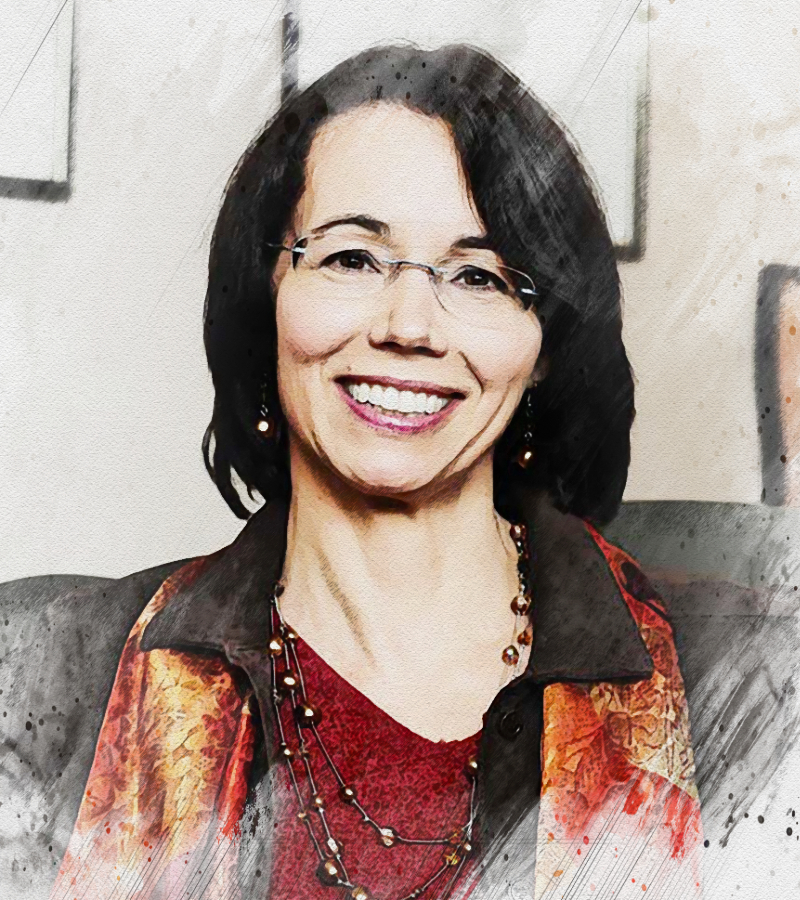
Jennifer Baggerly on Disaster Response Play Therapy: Shelter from the Storm

Lawrence Rubin: I’m here with Jennifer Baggerly, Professor of Counseling at the University of North Texas, Dallas, a licensed professional counselor supervisor, and a registered play therapist supervisor. As an award-winning and distinguished leader in the field, she has trained thousands of graduate students to be competent counselors and play therapists. We will be speaking with her today about her work at the site of natural disasters. Welcome, Jennifer.


Jennifer Baggerly: Thank you. It’s wonderful to be here with you, Larry.


Navigating the Terrain


LR: It’s great to be here with you too. Some of our readers may be familiar with play therapy, some not. So, I’ll start by asking about your particular orientation to play therapy, and how it lends itself to working at the scene of a natural disaster?
JB: Typically, when I’m working with children in private practice in the United States who have experienced trauma, I use a child centered play therapy approach in which I’m allowing the child to direct the play. In this non-directive approach to play therapy, I’m trusting their self-actualizing potential. I’m providing a protocol of therapeutic responses during their play and trusting that through the therapy, the therapeutic relationship, and their play, I can facilitate self-understanding that promotes their emotional understanding and eventually their healing.

Along with this child-centered, or in a broader sense, this person-centered play therapy approach, I will sometimes add some psychoeducation in the form of children’s books that may be relevant to their particular presenting problem or to something else that they may need. So that’s typical in my private practice in the United States.

Disasters, and natural disasters in particular; however, require a different therapeutic approach. There, I work from a disaster response therapy perspective, which is a trauma-informed disaster response/play therapy perspective. There’s a whole protocol for this that is reflected in some of my earlier work around preparing play therapists for disaster response and cultural adaptations for play therapy after Hurricane Maria in Puerto Rico. Just recently, the Association for Play Therapy has developed disaster response guidelines for play therapists.

That’s very helpful because it takes into account the particular setting and scene of a disaster. There are many different types of protocols you must follow. For example, the number one protocol is you do not go to disaster to provide disaster response for children unless you have been invited by a particular organization. When you get that invitation, you’re going to be following the incident command structure, depending on whether it’s been a very recent event such as a hurricane that just happened.

Many families will be staying in shelters. You also need to be able quickly oriented to the particular culture that you’re working with which means that you need to work closely with the contact person on the ground who is helping you to understand the social and political issues that are occurring. And from there, it is important to be able to adapt your clinical approach.

That’s the preparation stage of the work. And then when you get there, the primary goal is to do no harm. We’re not going to do a big assessment looking into their past traumas and such. We’re just focused right there, at that time, and that’s where child-centered play therapy really fits well.

We’re just looking at that child in the moment and giving them a safe place to play. We also have to be aware that every child comes with a family who may need some help and guidance while the child is in their play session. Sometimes they need a little bit more structure, or perhaps they need some psychoeducation about typical responses after a disaster. Sometimes they need coping strategies to calm themselves down and get themselves back into the window of tolerance of being able to emotionally self-regulate. We provide that as well as opportunities to play. It’s a much bigger picture in disaster response that you have to navigate compared to the work you do in an office.
The Very Serious Work of Play
LR: Non-directive play therapy focuses on allowing the child to guide the play, to choose the objects to, and to play out whatever theme is important to them. The therapist is a supportive guide and reflective presence. Is the therapist more directive and directing at the site of a natural disaster?
JB: We’re using the child-centered play therapy within the trauma informed disaster response. So we provide a lot more structure leading up to the actual play sessions. But when we do provide the sessions, we often take a mobile play therapy kit in a suitcase which we’ll have available for a local response.

For example, I did some responding after the tornadoes in Oklahoma and Texas. If the events are local, I can bring more equipment. Like I might bring the bop bag, often known as Bobo. What you bring depends on the setting you’re going into, and I prefer to be in a setting that is a little bit more contained like a school or a place of worship where they have rooms and there’s not a lot of people going back and forth. That way you can set up a play area, particularly for the child and provide privacy.

However, sometimes you have to be very, very flexible. For example, I’ve done disaster work in shelters where I’ve just had the corner of a room, where we set up chairs to make a boundary for the therapy space from the people walking by. In those spaces, our typical play kit will have the aggressive release toys and nurturing toys, as well as toys and materials for creative expression.

One time, we were using dart guns which upset some of the parents and disaster shelter folks, so we had to put them away. It was the same with the bop bag, or Bobo doll. While we knew therapeutically that these kids were releasing some aggression and gaining a sense of power and control, we had to respect the others around. After Hurricane Katrina, I was working with some children in Louisiana who were playing in a classroom with the dart gun. In that instance, people were not walking by, so we had a bit more freedom. A boy grabbed the dart gun and jumped up on the table, “okay, we’re going to shoot the monster that’s coming toward us.” He was referring, of course, to the hurricane. They played out what we would call a trauma reenactment.

They were, in a sense, shooting this monster hurricane that had impacted their community. That particular child had been at the Superdome where he had witnessed actual shootings. Had that play occurred in the corner of busy shelter rather than a private room, that group would not have been able to play out that particular scene out of concern for re-traumatizing others in the immediate vicinity. That’s why understanding and working within context is critical.

LR: that pretend play gave them a sense of power and control; a sense of mastery over this terrible thing that they had experiencedIs the play of children who have been traumatized by natural disasters different from the play of children who have not been similarly traumatized?

JB: Sometimes, yes but it a lot of it depends on the exposure they had to the particular incident and their history. Important factors include whether they were impacted by the death of somebody that they knew, being close to that person as they were dying, their own resilience, and their own history of trauma.

Many times, you will see more direct reenactment of the incident through what we call traumatic play. For example, I was working with a group of children in Florida after a major hurricane. There, because of the setting, it was not possible to have individual sessions. On their own, this particular group of children decided to make a circle and then have one kid in the middle pretend to be the hurricane. The kid would spin around while going around the group which worked together to push the hurricane back. Those kids loved that game that they created and eagerly took turns being the hurricane. That pretend play gave them a sense of power and control; a sense of mastery over this terrible thing that they had experienced.

LR: In that instance, you witnessed what I might call resilience-oriented play where the kids were working through the trauma creatively, spontaneously, and in their own way. What do you look for in kids’ play that suggests resilience and healing?
JB: For example, if the monster is coming at them and they’re shooting or something like that, I’m looking to see if they have a sense of resolution. Can they overcome this? Many times, kids will play good versus bad, kind of a cops-and-robbers type of idea. But then maybe, they will play the bad guy or the bad thing, in this case the hurricane and will get to the point where they are the superhero that comes in to rescue everyone. And so, I often look for the rescue to happen as a sign that they are working through the trauma in a healthier way.

LR: When it’s time to leave the community, how do you ensure that treatment or healing can or will continue? In other words, what seeds are you planting both with the children and within the community?

JB: That’s why disaster response play therapy often includes a group session where we teach some coping strategies like deep breathing, some self-soothing, or distraction through a song of resilience like, “I am safe, I am strong.” We teach those coping strategies so that the child feels a sense of empowerment which is a more directive approach as opposed to typical non-directive, child-centered play therapy. That . We have to give the kids actual coping strategies along with psychoeducation about what they can expect, it’s part of the trauma informed disaster response play therapy protocol. And we want them to know that they will be OK.

We also want to extend that to the families, many of whom need a more direct psychological first aid approach to help them de-escalate, to become more emotionally regulated. Some parents are just not able at that particular time to provide the care and nurturing for their children. After Hurricane Katrina, there were displaced families I saw at a shelter––people who didn’t know where they were going or how they were going to survive. I respected the fact that the parents were in survival mode; fight, flight, or freeze! They simply couldn’t attend to their children in that state.

That’s when disaster mental health responders can be helpful to their children by providing them support the parents can’t. After Hurricane Maria in Puerto Rico, in spite of the fact that some time had passed since the storm, many people were still struggling. We went to a place of worship where families came together. There was a sense of community. The church leader gathered the parents around in a circle where they held hands and prayed. I thought that was a great example of using the community structure and its own built-in sense of resilience and support.

After we worked with children whose parents were most severely impacted, we went back to those parents or caregivers to give them a debrief about the progress their child(ren) made. We were giving a warm handoff back to the parents and providing them with some support. Sometimes those parents just need to talk and get that comfort from the play therapist. But we were also carefully watching those children for signs of serious trauma so we could refer them to local counselors and mental health professionals in that area. For example, I worked with one mom whose daughter was in a community that had been hit by a tornado. It seemed that the child was okay as there were signs of resilience. But the mom was really struggling because she had been on the phone with her older daughter when the phone went dead. She was terrified that her daughter had died. While it turned out that she was okay, they were out of contact for about 24 hours. That mom needed some extra help which we were able to provide. We were also saying to that mom that she would benefit from having someone else in her community to work through this trauma. In that instance, the child was more stable than the mom.
LR: These disasters bring death, so grief is an ongoing process that transcends your presence there. Have you had the opportunity to use the play to create a death scenario or mourning activity?
JB: Yes. Many of the portable play therapy kits that we bring have a sandtray the size of a laptop computer, maybe a bit bigger, that can accommodate the miniatures kids like to place in there. That’s where a lot of kids will play out death scenes. I’ve had kids create scenes in the sand that are knocked down by a hurricane. In those scenarios there may be a burial. Some of the kids do it quite quickly, while others are almost in a trance type state while they are doing it. That’s where the play therapist comes in, so that they can process that scene with the child by reflecting their feelings and helping them to understand their beliefs through reflective feedback.


The Stress of Deployment

LR: Shifting a little bit to the clinician, what are some of the challenges you’ve witnessed to the therapist at the site of natural disasters?
JB: I’ll back up a bit to the preparation phase of deployment because we anticipate there will be challenges for the clinician. And because we know that each person will feel overwhelmed at some point, each play therapist has to do an inventory of how they will cope and what their self-care plan is; emotionally, physically, relationally, and spiritually. That is an essential part of the protocol. Before my team took off to Puerto Rico after Hurricane Maria, we talked about what each person needs to do when they become dysregulated.

If, for example, somebody says, “well, my back’s been acting up,” or that, “I’ve got a problem with my diabetes,” or “I have difficulty with some other ailment,” then that’s also not the time to go. Someone may have had a recent death in the family or be experiencing family issues, so those are also reasons for not going. And we also have to think financially, because deployment is not remunerated, and some people can’t afford to take the time away from work. And that reminds me of another disaster response protocol which is that you never go alone; you always go with the team.

At the scene, some people may get a little snappy, some people just may withdraw. Some people may just cry. So, we identify what dysregulation means for each member of the team and then the team will intervene and help the person develop what we call a “NAP” or non-anxious presence. That’s just basically getting yourself into your window of tolerance, de-escalating, getting yourself back, emotional regulation, and/or implementing your strategies. One person may say, “Look, I just was really overwhelmed by this one kid’s story of death,” so the team debriefing cuts down that sense of isolation and despair that often comes in the presence of death and dying.

LR: Eliana Gill and I wrote an article about countertransference play, or how clinicians can use the play materials to work through their own countertransference response. Have the clinicians you’ve worked with found it useful to play in order to work through the stress of being there?

JB: That’s a great point and very helpful. To the extent possible, many play therapists will do a sandtray or an expressive arts activity. One such activity is drawing a circle with words expressing feeling overwhelmed on one side of a piece of paper. On the other side of the paper, the therapist draws a circle with words through it suggesting hope or resilience. The circle provides a sense of containment for the feelings evoked by the words within it. It can even be a group play activity, where the therapists stand in a circle and hit a ball back and forth. Or it can be as simple as enjoying a meal together.
LR: One of the themes that’s run through our conversation is the importance of working through play within the cultural context. In Puerto Rico, for example, were there any indigenous healing rituals that you were able to tap into?


JB: Well, there there’s a real sense of Puerto Rican pride which was a beautiful thing to witness. There’s that deep sense of shared identity—we are Puerto Rican; we are a strong people. We would often see signs like that in peoples’ yards or common areas. Another thing that we did with a group of children was to sing songs about being safe and strong, which was similar to one of their own songs about a chicken. All across the island, there was singing, dancing, and the sharing of food.

LR: Jennifer, as we wrap up, can you offer any particular resources or organizations that child therapists or play therapists can visit to learn more about this process and perhaps how to get involved?

JB: Absolutely. As I mentioned, the Association for Play Therapy just came out with their practice briefs on disaster response for play therapists. I think that’s a very important document to see. They make it very clear that APT is not in the business of deploying people. So, for that part, therapists who are interested in disaster mental health and disaster response play therapy would need to link themselves with other entities. 

he American Red Cross would be another resource, as well as many other non-governmental organization. I also did a couple videos, one of which is called Disaster Response Play Therapy. So, there are opportunities, but the play therapist needs to be intentional in making those network connections prior to the incident. 

LR: Jennifer, thanks so much for sharing your expertise and experiences with our readers and for the incredible work you and your teams have done at the sites of these natural disasters. It’s been a pleasure.

JB: Thanks Larry. I enjoyed this time with you.

©2025, Psychotherapy.net

Bio

Jennifer Baggerly, PhD, LPC-S, RPT-S, is a professor of Counseling at the University of North Texas at Dallas. She is a Licensed Professional Counselor Supervisor and a Registered Play Therapist Supervisor with over 25 years of play therapy experience. Dr. Baggerly provides counseling and play therapy at Kaleidoscope Behavioral Health in Flower Mound Texas. She served as Chair of the Board of Directors for the Association for Play Therapy from 2013-2014 and was a member of the board from 2009-2015. She has over 70 publications and is recognized as a prominent expert in children’s crisis intervention and play therapy.

References

Baggerly, J. (2018). Children and adolescents in disasters: Promoting recovery and resilience. In J. Webber & B. Mascari’s (Eds.), Disaster mental health counseling: A guide to preparing & responding (4th ed., pp. 149–164). American Counseling Association.

Baggerly, J. N. (2013). Trauma Informed Child Centered Play Therapy. (Video). Microtraining Associates and Alexander Street Press.

Baggerly, J. N. (2006a). Disaster Mental Health and Crisis Stabilization for Children. (Video). Microtraining Associates and Alexander Street Press.

Baggerly, J. N., & Green, E. (2015). The mass trauma of natural disasters: Interventions for children, adolescents, and families. In N. Boyd-Webb’s (Ed.), Play therapy with children and adolescents in crisis (4th ed., pp. 315–333). Guildford Press  

Insight into the Clinical Challenges of Adoption

What does it mean to truly embrace the journey of families made by adoption? This question has both intense personal and professional significance for me. I am both an adoptive parent of BIPOC children and a play therapist who has taken the journey with many adoptive families as my practice has moved into the worlds of complex trauma and attachment issues. Adoption has long been seen as a solution—the miracle, that solves the problem of child abuse, neglect, and abandonment. During the era in which my husband and I were building a family, it was our solution to pregnancy loss and challenges to fertility. The miracle version of the story has inspirational, even profoundly spiritual overtones in many families. The idea of bringing together caring adults who want to be parents with children who have lost the care of their first parents through some version of tragedy and harm is an inspirational narrative. To the degree that it replaced the secrecy and shame of earlier decades’ approach to child placement and adoption, or overtaxed, harmful group institutional care, it represents a significant step forward in the lives of children and families.

Beyond Happily Ever After

Despite being a child mental health professional, I was not well prepared as a parent for the “what’s next” part of the adoption journey. However, neither was I alone. Many of the families that I have come to work with over the years have struggled to balance their own “miracle” language with the realities of the trauma and attachment loss for the child, even when placement and adoption occur early in life, before the so-called “age of memory.”

Thanks to Bessel van der Kolk and others, we are increasingly aware of the importance of somatic memories built implicitly in the earliest months of life, even in utero. When the preverbal or early in life trauma experiences compound with attachment loss and disruption, it make the realities of emotional and behavioral regulation deeply challenging. Parents, like myself, struggle to respond adequately to a day-to-day reality quite different from “the happily ever” after version of the adoption miracle story.

In this space, a trauma and attachment-focused play therapist who enters the family system can have such a profound impact. We have to be ready to challenge the miracle narrative and, in its place, use the best clinical tools we have to help the child feel supported in the unfolding of their own true and three-dimensional story. This story includes a recognition of the emotional, and often cultural, dislocation and disruption that is at the core of this adopted child’s life journey.

It also must address an understanding of the messages from the most fragmented parts of the self that are communicated through the body. Attempts to deny, dress up, or over-soothe these losses and disruptions can land badly. When loss and adversity are left unprocessed and unresolved, this can lead to the intense emotional dysregulation some children display, and for others, can lead to a ticking time bomb for a crisis of worthiness, belonging, and the capacity to form deeply satisfying attachments over the life span.

For children with multiple disruptions as they moved through the foster care system, the complicated wounds to their attachment exact a painful and complex cost, as there are so many missed opportunities for adults to keep their part of the attachment bargain—that every little human born into the world deserves to have their basic needs met, to be enjoyed and nurtured. By the time the adoption happens, these forever caregivers may have a lot to prove and the negative energy they get from the child is the cumulative effect of others’ failures.

Many of my clients’ parents with whom I’ve worked have despaired that their efforts to connect with, and shape, the behavior of their dysregulated and insecurely attached adoptive child(ren) are met with rage and rejection, instead of responsiveness. Often, I have felt those impulses as well, during struggles to make the child’s response make sense in a cause-and-effect, logical consequence version of the parent-child relationship. For a child who missed out on the basic building blocks of the serve and return part of secure attachment, consequences are perceived as threats, and may work to grow the most defensive and rageful parts of the child’ personality.

A Layer Cake Metaphor for Adoption-Based Therapy

One of the attachment concepts I find so useful in these moments is based on the notion of mentalization, and the ability of caregivers to create and sustain an attuned mental map of what is going on inside the child. Peter Fonagy and others have been writing for many years about mentalization and the impact on reflective functioning in the attachment between parents and children. In my own experiences, I have come to realize that clinging to the “miracle” narrative can sabotage mentalization.

Why does this happen? So often the impulse to spare children the hard parts of their own story or soothe away uncomfortable information leads to a real phobia of their own child’s distress and the resulting failure of mentalization. The answer to this challenge is for therapist—and the adoptive parent—to help the child make sense of their story, including the hard parts; expand the family system’s capacity to hold the distress without minimizing it, and do this work with the parent as an active participant, with support from the therapist.

In attempting to teach a group of clinicians about weaving together of all the things that seem important in therapy with families, I came up with the metaphor of the layer cake. Play therapy, trauma/attachment work, dissociation theory/parts work and family therapy are all a part of this multi-layered work, even as we try to help our clients eat the “whole thing,” bite by bite.

I think of my work with a child who was adopted from an orphanage in the developing world as a preschooler, and the complicated, but beautiful layers of how the therapy unfolded for him a few years after his adoption in the US.

Play Therapy Layers

Like many children, offering open and child-centered play in the playroom, led to the emergence of post traumatic play narratives, giving clues or hints to the preverbal experiences. One example was many narratives around characters fighting over scarce resources, as well as abandonment stories played out with dinosaurs, video game characters, and superheroes.

Dissociation/Parts-Work Layer

Dissociation is the infant/child’s solution to the unbearable threat of betrayal by the original caregiver whether through overt abuse, neglect, sexual exploitation, or attachment loss. To fragment and isolate that chain of painful associations and emotional/somatic stress is a very adaptive way to cope. By the time this child entered therapy, these dissociative patterns had resulted in some fragmentation, including rageful episodes and “baby” parts who were almost incapable of receiving soothing from the parent. The parent admitted to a lot of dysregulation herself in the early months after placement and compounded the effect with threats, yelling, spanking. It was clear that we needed to playfully befriend these dissociated parts through some expressive work. Using a lot of drawing and flexible sand tray creations, we involved the parent experientially in play scenarios apologizing to the hurt parts of the child that she had frightened.

The EMDR/Trauma Protocols Layers
Bridging from trauma content held implicitly in play into first person narrative work, while staying grounded in the present is a tricky business. I used a flexible and playful approach to adding EMDR processing in the playroom for short periods, especially when the adoptive parent was able to support and bear witness to that work. This often served an additional purpose of shifting angry and embittered caregivers into empowered and compassionate ones.

As they come to see their child’s story through their eyes, it increased their reflective capacity and attunement. This parent struggled at times with her own impulse to soothe—she and I talked of her desire to “put a bow on it” and keep the child from feeling the intensity of his losses and rejection as he grew older, and became more aware by following my lead in the playful EMDR sessions.

Anti-Racist, Anti-Bias Icing on the Cake

This is an area of great challenge for adoptive parents who may have limited experience with the day-to-day realities of being Black or Brown, especially in the White majority spaces where many adoptive kids are growing up. In this case, the parent had really minimized the impact of cultural dislocation for her child, but as I insisted on broaching the subject directly, we discovered a lot of distress for him around looking different from her, navigating racial/cultural groups of peers, and as we began to work through the hard parts of his own story, anger at the birth country for “throwing away children” arose.

Permission to feel big feelings was needed throughout that work, and collateral work with the parent on her own biases and perceived need to soothe and minimize these experiences of microaggressions was crucial. Given the polarization and negative narratives in the wider culture, this work will likely be ongoing throughout his development, but the work so far has helped them both to have a framework in which to stick together, and build the parent’s capacity to move past the “miracle” of coming together into the power of growing together through adversity.

***

As my own children have moved from adolescence into young adulthood, I continue to marvel at how unfolding layers and the expanding capacity hold the hardest parts of their stories. I never cease to be humbled by my own invitation to that process, in my own family, as well as in my psychotherapy work, and even the potential to act in a wider culture that needs that capacity now more than ever.

Hide & Seek: Evoking Desires to be Seen, Heard, and Found

Separation and Reunion

Hide-and-seek is a universal game enjoyed by children across different cultures and ages. It reflects the ongoing interaction of separation and reunion that begins in infancy. As children develop emotionally, they transition from infancy to toddlerhood and eventually to childhood, engaging in various play activities such as peekaboo, chasing, and hide-and-seek. These games help children navigate developmental challenges, allowing them to experience loss and learn how to manage the dynamics of separation and reunion while forming close relationships with others. Playing peekaboo and hide-and-seek help children transition from relying on the physical presence of their caregivers to developing mental representations of them that they can recall when the caregivers are not around.

Play allows a child to make sense of their experiences. Play Therapy provides a therapeutic environment in which children can explore the unconscious independently. Children inherently strive for growth and healing. Our role as play therapists is simply to create the right therapeutic space and setup, enabling them to express and address what needs to be transformed or resolved. This is why play therapists don’t have to actively introduce concepts; children naturally initiate hide-and-seek themes on their own in the playroom.

Attachment and Loss

The presence of repetitive hide-and-seek in play therapy suggests the child may have experienced an inability to master the developmental task of emotional constancy, had (or has) a break in attachment where the child did not feel wanted or desired, or weak attachment bonds.

A major task of childhood is achieving emotional constancy. Emotional constancy is the ability to have an inner conviction of being ‘me and no one else’ while also respecting and valuing the separateness of others. Achieving emotional constancy enhances one’s ability to manage emotions during change or in response to anger, disappointment, and frustration. Hide-and-seek is essentially the child’s attempt to overcome and work through the earlier developmental need to understand that people can disappear but then return.

Boy who wanted to be found

Jeremy is an 8-year-old boy who faced medical complications at birth and continues to live with a rare heart condition. He was separated from his mother and spent several months in the Intensive Care Unit before his parents could bring him home from the hospital.

As we entered the playroom, he looked at me with the biggest smile on his face. I looked back with glee.

“You’re excited to play today,” I said.

“Yes. Because I am going to hide now, don’t look,” he shouted! “Close your eyes,” he added as he ran toward the other end of the playroom.

With my eyes closed and my hands over them, I waited while he hid. After some time, I softly walked around looking for him.

“Oh, where are you,” I asked. “Where did you go?”

Before I could make my way around the playroom, he popped out.

“Here I am!”

“Oh, there you are. I was wondering where you went.”

He shook his head in agreement.

“Again, find me again,” he quickly directed!

Jeremy played variations of hide-and-seek with me, and also in the burying and unburying objects in the sand during our time together in the play. He often struggled to stay hidden during the process, popping out or revealing himself before I could find him (or the object) suggesting he struggled with the tensions of aloneness and deep down feared no one would notice or “find him.” Across time and throughout the sessions, he was able to spend more time hidden and eventually developed confidence in sitting with tensions of oneness and separateness. I was careful to attune to his desire to be seen, heard, and found.

***

For Jeremy, and others his age and developmental level, hide-and-seek symbolizes the universal human desire to be seen and heard. Play therapy allows children to explore, restore, and practice the concerns that occupy their inner world. Engaging in hide-and-seek with me helped him to manage anxiety, while also fostering a sense of mastery and reinforcing his self-worth.

Questions for Thought and Discussion

What childhood games have you effectively utilized in therapy?

What are your impressions of the way this author used hide-and-seek?

Given the child’s presenting issue, what might you have focused on in the playroom with him?

Josh Coleman on the Roadmap to Healing Family Estrangement

Lawrence Rubin: I’m here today with Joshua Coleman, a psychologist in private practice in the San Francisco Bay area, and a senior fellow with the Council on Contemporary Families. He’s the author of numerous articles and book chapters, and has written four books, the most recent of which is The Rules of Estrangement. Welcome, Josh.
Joshua Coleman: Thank you for having me. Pleasure to be here.

The Face of Family Estrangement

LR: I’ll just jump out of the gate by asking you, why do you describe estrangement within families as an epidemic?
JC: Well, there’s a variety of reasons for that. One is, and I don’t know about you in your practice, but in the past few years, my practice, as well as those of my colleagues, has become flooded by clients dealing with this estrangement. Another reason comes from a recent survey by Rin Reszek at Ohio State, who found that 27% of fathers are currently estranged from a child. That’s a new statistic. While we haven’t really been tracking these statistics, non-marital childbirth is also a big cause of estrangement, which is 40% currently compared to 5% in 1960.Divorce is also a very big pathway to estrangement, especially in the wake of more liberalized divorce laws. When you look at the effect of divorce on families once there’s been a divorce, the likelihood of a later estrangement goes way up. This is especially so when you add social media as an amplifier, our cultural emphasis on individualism, influencers talking about the value of going ‘no contact’ after the divorce, and family conflict around politics, especially in the recent election. All these point to a rise in family estrangement, particularly parental.
LR: in the past few years, my practice, as well as those of my colleagues, has become flooded by clients dealing with this estrangementI know the there is a historical rise in divorce. Is there a parallel rise in estrangement with the rising divorce rate?
JC: I don’t think it’s a 1 to 1 relationship, but I think both occur in the culture of individualism, which prioritizes personal happiness, personal growth, protection and mental health. Prior to the 1960s, people would get married to be happy, but more often for financial security, particularly for women as a place to have children. But today, people get married or divorced based on whether that relationship is in line with their ideals for happiness and mental health and the like.The relationships between parents and adult children are constituted in a very similar way, people don’t stay in touch or close to their parents unless it’s in line with their ideals for happiness and mental health. It’s what the British sociologist Anthony Giddens calls pure relationships. Those are relationships that became purely constituted on the basis of whether or not they were inline with that person’s ambitions for happiness and identity. So, it’s a parallel process. I don’t think it’s completely dependent on divorce because there’s many pathways to estrangement.
LR: if the adult child cuts off the parents, they also cut off access to the grandchildren which can cause marital tensions for couples that are still marriedWhy is estrangement so different from other problematic family dynamics?
JC: Because of how disruptive it is to the adult parent and because of the cataclysmic nature of event and its consequences for the rest of the family. Once there’s an estrangement, it isn’t just between that adult child and that parent. It also can cause one set of siblings, or one sibling, to ally with the parent, another with the adult child. Typically, if the adult child cuts off the parents, they also cut off access to the grandchildren which can cause marital tensions for couples that are still married. So, it’s really a cataclysmic event in the whole family system.
LR: In your clinical experience, are there identifiable risk patterns for the eventuality of estrangement?
JC: Divorce is a huge risk, especially when it is accompanied by parental alienation, where one parent poisons a child against the other parent. Untrained or poorly trained therapists sort of assume that every problem in adulthood that can be traced back to a traumatic childhood experience. There seems to be no shortage of those therapists who think everything that is problematic in adulthood is due to some kind of family dysfunction or trauma.Another pathway to estrangement is when the adult child married somebody who’s troubled and says, “choose them or me.” Mental illness in the adult child is also potentially destructive. And last, when parents have been doing something much more psychologically destructive over the years, certain adult children just don’t know any other way to feel separate from the parent beyond cutting them off.
LR: Before we move forward, can you give us a clear definition of estrangement?
JC:  It’s when there is little to no contact. If we’re just thinking of the parent-adult child relationship where there’s little to no contact, and underlying is some kind of, complaint or disruption in the relationship, the adult child is typically the one initiating the estrangement. They determine that it’s better for them not to be in contact with the parent or to grossly limit the contact. Maybe they send a holiday card or something, otherwise they have no contact with their parent.
LR: t’s a complete cut off.
JC: Complete cut off, or a nearly complete cut off. Exactly.
LR: the adult child may not be as motivated to solve the problem as the parent isAnd is the focus of your clinical work mostly on estrangement between adult children and their parents?
JC: Typically, because they’re the ones who are reaching out to me. Occasionally, I’ll have siblings reach out to me, but more typically it’s the parents who are estranged. From their perspective, they’re the ones who are in much more pain. The adult child may have cut off the parent because of their pain, but by the time the parent reaches me, the adult child has concluded that it is in their best interest to estrange their parent. So, the adult child may not be as motivated to solve the problem as the parent is.
LR: Do you have estranged grandparents reaching out to you?
JC: Yeah, and a lot of grandparents say, ‘look, I could probably tolerate estrangement from my child, but not from my grandchildren.’ This feels intolerable, particularly for those who have been actively involved with their grandchildren, as many of these grandparents have been.
LR: This “grandparent alienation syndrome” must be particularly tormenting for them. Have you experienced different cultural manifestations of estrangement?
JC: The data from the largest study, which was by Rin Reczek at Ohio State, found that, for example, Black mothers were the least likely to be estranged. White fathers are the most likely to be estranged. Latino mothers are also less likely to be estranged than White mothers. Fathers in general are very much at risk for estrangement regardless of race.There’s relatively low estrangement in Latin American families as well as Asian American families. And similarly, within Asia, we assume that there’s not a lot of estrangement because the culture of filial obligation is still quite active. So, estrangement tends to predominate in those countries and cultures, like ours, that have high rates of individualism and preoccupation with one’s own happiness and mental health.

Detachment Brokers

LR: That’s interesting. So, there’s a parallel between estrangement and the value particular cultures place on either individualism or commutarianism.
JC: Exactly. Some are much more communitarian, emphasizing the well-being of the family and the group, while others are much more individualistic, like we are here. The sociologist Amy Charlotte calls American individualism ‘adversarial individualism,’ which is the idea that you become an individual through an adversarial relationship with your parent, or you rebel against that. But not all cultures have that kind of adversarial positioning as the way that you become an adult.
LR: You had mentioned earlier that some therapists can actually make things worse.
JC: I think that all therapists want to do good, but some simply don’t think through all of the factors. We have to not only think about the person in the room, but also the related people, because estrangement is a cataclysmic event that affects many beyond the person sitting in front of you. Grandchildren are involved and get cut out from their grandparents’ lives. Siblings typically get divided into those who support the estrangements and those who don’t. It’s also very hard on marriages. It’s easy to get sidetracked into focusing on the mental health of the adult child who is cutting off their parent(s) in the name of self-care and self-protection. We have a rich language in our culture around individualism, but a poverty of language that’s oriented around interconnectedness, interdependence, and care.It’s easy to pathologize someone’s feelings of guilt or responsibility for a parent that may just be a part of their own humanity. By giving them the language and moral permission to cut off a parent without doing due diligence on whether or not that parent really is as hopeless as their client is making them to be, contributes to this kind of atomization.Therapists can contribute to the tearing apart of the fabric of the American family, acting as accelerants to that process. We become what the sociologist Allison Pugh calls detachment brokers in her book, Tumbleweed Society. When we support clients’ absolute need or desire to estrange their parents due to their need for happiness and personal growth, we help them detach from the feelings of obligation, duty, responsibility that prior generations just assumed one should have.

LR: Do you ever encourage or facilitate estrangement as a solution?
JC: The same way that I would never lead the charge into divorce with a couple with minor children because of the long-term consequences, I wouldn’t charge ahead with estrangement either. But I do try to help the person to do their due diligence on the parent. Let’s say the parent who is completely unrepentant and constantly shames the adult child about their sexuality, their identity, who they’ve married, or what their career is every time that adult child is around the parent. It’s sort of hard for me to ethically say, “give them a chance!”But I do think it’s our responsibility to ask them: what other relationships will be impacted if you decide to go no contact, is there some way to sort of have some kind of a relationship where you are protected from their influence, or why don’t we think about why is it so hard on you? A newly reconciled adult child recently suggested to me that, ‘if the adult child is insisting that your parents are the ones that need to change to have a relationship, maybe you’re the one that needs to change.’ I liked that because I don’t think everybody has to stay involved with their parents.I do think parents have a moral obligation to address their children’s complaints and empathize with them and take responsibility. Just like the adult children have a moral obligation to give their parents a chance. I work with parents every day who are suicidal or sobbing in my office, and that really gives you a different view of this.
LR: I imagine the most deeply wounded adult children are the most difficult ones to work with around reconciliation. Can countertransference enter the clinical frame at that juncture?
JC: There have been a few occasions where the adult child was so self-righteous and contemptuous of the parent, despite the parent’s willingness to make amends for their so-called crimes––which were more on the misdemeanor side than the felony side––they remained unforgiving. Even when the parent showed empathy and took responsibility in the ways that I insist that parents do, the adult child remained in this very censorious, self-righteous, lecturing place.There haven’t been very many times when I felt provoked on the parent’s behalf, but there have been a couple times where the adult child was earnest, open and vulnerable, and the parent was not willing to do some basic things at the request of the adult child, like accepting basic limits. The parent was insistent. I just felt like you can’t have it both ways. I remember thinking, ‘You can want to have your child to be in contact with you, but you’re going to have to accept the limits that your child is setting, otherwise, I can’t really encourage your child to stay in contact with you in the way that you want me to.’ The transference is worked on both sides of the equation.

A Roadmap for Change

LR: Is there a roadmap for healing estrangement as you suggest in your book?
JC: Typically, if the parent has reached out to me for the reasons I was just saying, the roadmap begins with taking responsibility and the willingness to make amends. I ask that they try to find the kernel, if not the bushel of truth in their child’s complaints. They can’t use guilt or influence or pressure in the way that maybe their own parents might have used with them, and they can’t explain away their behavior. They have to show some dedication to reconciling. It must come with some sincerity. The challenging part for parents is often that they can’t really identify with what they’re being accused of, particularly since emotional abuse is the most common reason for these estrangements.A lot of parents say, ‘wow, emotional abuse, I would have killed for your childhood.’ The threshold for what gets labeled as emotional abuse is much lower for the adult child than it is for the parents. So, a lot of the roadmap for the parent is just accepting that difference and learning how to understand why the adult child is labeling it as such and not really debating it with them or complaining about it. Instead, that roadmap includes a way to empathize with that and understand that those are the most key aspects.
LR: What about when the road to reconciliation has been damaged by physical/sexual abuse?
JC: You have to go there if you have any chance of healing the relationship. If a parent is lucky enough to get an adult child in the room after that child being a victim of more serious traumas on the parents part, the parent has to be willing to sit there and face all the ways that they have failed their child and how much they hurt and wounded them.And it’s not an easy thing to do, typically, because hurt people hurt people. There is high likelihood that the parent who did the traumatizing was traumatized themselves, but if anything is going to happen, it’s going to be because the parent can take responsibility and do a deeper dive and not sweep it under the rug. And that’s very hard work, especially for the adult child who must expose themselves.
LR: Would you work with the adult child separately from the parent and then together by collaborating with all the players in the same room?
JC: Typically, I will meet with each side separately because I want to see what the obstacles are, what each person’s narrative is, assuming that I think everybody’s ready to go forward, I’ll bring everyone together. I usually don’t keep them separate for more than one session, but not everybody is ready to go forward at the same time. If I think that people are sort of ready to engage, then I’ll do a session separately and then everybody together. I tell parents that this is not marriage therapy. The therapy is around helping the adult child feel like their parent is willing to respect their boundaries and accept versions of their narrative sufficiently that they feel more cared about and understood. It’s not going to be as much about the parent getting to explain their reasons or decisions, at least not early into the therapy. If therapy goes on long enough, and people are healthy enough to have that conversation, then it can happen. But it doesn’t always.
LR: What do you consider to be a successful outcome, and at what point do you say that’s enough for now?
JC: I think when they’ve all had enough time outside of therapy, and they were able, to debrief if there was conflict, and if I feel confident that they have the tools to walk them themselves through the conflict and resolve it. I try to help each person set realistic goals and let them know that they are going to make mistakes going forward. The goal isn’t to be perfect, but instead to communicate around feelings and taking each other’s perspectives so all members feel safe and skilled enough to overcome whatever conflict arises. I don’t want anyone feeling discouraged and helpless.
LR: What protective factors do you look for when working with estrangement? The glimmers of hope that you search for with your therapeutic flashlight?
JC: The biggest one is a capacity for self-reflection on the part of both the parents and the adult children. In the parent, I look for a willingness to take responsibility, the capacity for non-defensiveness, vulnerability, and tolerance for hearing their child(ren)’s complaints without being completely undone. For the adult child, I look for acknowledgment that what they’ve done is difficult for the parent, and that their own issues might have contributed to their decision to estrange them.I look for an adult child to say things like, ‘I acknowledge that I was a really tough kid to raise,’ ‘I’ve been a tough as an adult,’ ‘I can give as well as I get,’ or ‘I know that I have an anger issue.’ Those help me, as the therapist, to feel like, ‘okay, you’re not just here to blame and shame the others.’ It’s about a willingness and ability to come to a shared reality, which is important for these dynamics.
LR: At what point might you suggest stopping with a client?
JC: I’ll keep working with people as long as they want to get somewhere. I don’t usually fire clients. But, for example, if I have an adult child who is just insisting that their parent has to change, and it’s clear to me that the parent has changed as much as they’re going to, my goal would be helping them shift towards radical acceptance, rather than to keep beating their head against the wall. And similarly with a parent, if their adult child is just not willing to reconcile, then it isn’t useful for the parent just to keep trying and banging their head against the reconciliation wall either.
LR: Recognizing not only your own limitations, but those that the family system brings to you.
JC: Exactly! I think an important part of our work is to help people to radically accept what they can’t change and influence. As painful as that is to reckon with.
LR: What does radical acceptance mean in this context?
JC: The term came from Marsha Linehan who developed Dialectical Behavior Therapy. It’s not sort of a soft acceptance, but instead a deep dive that you have to do. She has a great quote that says, ‘the pathway out of hell is your misery.’ It’s a great quote because you must first acknowledge that you’re miserable and accept it and maybe not even hope for change. But it does mean you have to acknowledge that you’re currently in hell. And unless you can really accept that reality, nothing good is going to come of it. The other saying that I like that comes from mindfulness or Buddhism is that pain plus struggle equals suffering. That the more you fight against the pain, the more you’re going to suffer. So, I think those are useful concepts.
LR: In this context, at what point does grief and loss work enter the clinical frame?
JC: Grief work is really part of it. Even if I can’t facilitate a reconciliation, it is important helping parents to feel like, ‘yeah, I think you’ve turned over every stone here.’ At that point, it is important to help them accept it and focus more on their own happiness and well-being, and on other relationships. This would include working on self-compassion while mourning the loss of the relationship that may never be.
LR: In closing, Josh, can someone who’s trained in individual therapy do this kind of work?
JC: If you are an individual therapist, you can’t just sort of suddenly start doing couples therapy. You have to have some facility at keeping two subjectivities in your mind at the same time. You know, being able to, to speak to both people in a way that shows that you’re neutral, even when you’re temporarily siding with one person over the other. I think it’s important to have a sociological framework for this part. You also need to set your own limits and boundaries. Doing family work is a very different sort of orientation and requires a unique skill set.
LR: On that note, I’ll say thanks. Josh, I appreciate the time.
JC: It was my pleasure, Lawrence.
*******
Joshua Coleman, PhD, is a psychologist in private practice in the San Francisco Bay Area and a Senior Fellow with the Council on Contemporary Families, a non-partisan organization of leading sociologists, historians, psychologists and demographers dedicated to providing the press and public with the latest research and best practice findings about American families. He is the author of numerous articles and chapters and has written four books: The Rules of Estrangement (Random House); The Marriage Makeover: Finding Happiness in Imperfect Harmony (St. Martin’s Press); The Lazy Husband: How to Get Men to Do More Parenting and Housework (St. Martin’s Press); When Parents Hurt: Compassionate Strategies When You and Your Grown Child Don’t Get Along (HarperCollins). His website is www.drjoshuacoleman.com/.

The Challenge of Therapy During War: Psychotherapy in Ukraine

The Emotional Ravages of War

The ongoing crisis in Ukraine has placed immense psychological strain on its population, creating a heightened need for mental health support amidst war, displacement, and uncertainty. Therapists working in Ukraine face unique challenges requiring resilience, adaptability, and innovative approaches. The war has caused massive, widespread trauma with millions displaced and exposed to violence. Therapists working either face-to-face or remotely with their clients encounter acute and chronic PTSD symptoms, anxiety, depression, and grief due to loss of loved ones, homes, and stability. There is also considerable intergenerational trauma in families with histories of oppression.

While Ukrainians have a history of resilience, the impact of intergenerational trauma and mental health stigma persists. Many of my clients attempt to minimize emotional distress or express it through physical symptoms. They have historically hesitated in seeking help, viewing it as a sign of weakness. However, online therapeutic platforms like Soul Space, the one through which I work, offer easily accessible and safe resources for support and self-help tools that empower these individuals.

The Challenge of Therapy During War

Therapists, such as myself, often face secondary traumatic stress (STS) from absorbing clients’ pain, leading to symptoms similar to PTSD. High caseloads also contribute to burnout and emotional exhaustion. Therapists often work with limited supervision, professional development opportunities, or access to private therapy spaces. Displaced populations pose additional logistical challenges to on-ground clinicians. Balancing professional neutrality with personal feelings about the war, while addressing clients’ immediate needs and maintaining a therapeutic frame, are frequent concerns that challenge clinicians under these circumstances.

While teletherapy has been invaluable to Ukraninans under seige, and has allowed me to support more clients than had I been on the ground, power outages, poor internet connections, and client inexperience with technology often impede its effectiveness. It has also been critical for me to prioritize self-care, emotional hygiene, peer support groups, and supervision to process my own emotional experiences as I serve those devastated by the war. I have also found it useful to limit daily trauma-focused sessions to prevent emotional fatigue. Techniques like grounding and meditation have helped me to maintain strength and clinical endurance.

I have learned to respect clients’ cultural coping mechanisms in order to build trust and support empowerment, resilience, and self-efficacy. I have relied on trauma-informed approaches that begin with safety and stabilization techniques such as grounding exercises and psychoeducation about trauma, while also processing with practical problem-solving to meet clients’ immediate needs. Soul Space provides psychoeducational workshops to maximize reach, provide structured, and self-guided mental health resources.

Case Example

A displaced family of four sought therapy after relocating from a war-affected region. The parents reported anxiety, irritability, and hypervigilance; while the children displayed regressive behaviors and nightmares. My approach required the establishment of safety and routine in therapy, psychoeducation to normalize trauma responses, and activities that built resilience and mutual support. Nighttime relaxation rituals helped the family with wartime-related sleeplessness, while gradually igniting bonds of trust and security due to invasive interruptions of regular routines. The parents practiced simple grounding techniques to contend with their own anxieties.

The parents learned about trauma responses in adults and children, and were increasingly able to reframe the children’s behaviors as survival mechanisms instead of simply seeing them as defiance. Several grounding exercises were also introduced to the children utilizing sensory modalities by asking them to say five things they see, hear, or touch when feeling overwhelmed.

To strengthen family bonds, I introduced therapeutic play and storytelling to allow the children to articulate issues of fear in a safe and imaginative way. The parents were given the chance to have planned conversations to foster emotional conversations and model healthy expressions for fear and grief. We also created a “Family Strengths Tree” where they could record examples of salvaged resilience to remind themselves of their survival capacities.

The family finally began processing their experiences. The children created a storybook representing their journey, necessitating a shift in the focus from fear to resilience. The parents explored their guilt and grief using cognitive processing techniques, reframing self-blame into self-compassion. Throughout the intervention with this family, and as with other wartime displaced clients, I integrated formal online training available through Soul Space with my direct face-to-face work.

During our work together, the family experienced reduced anxiety, improved communication, and renewed hope. The mother’s panic attacks became less frequent, and the father started to emotionally reconnect with his children. The daughter began socializing again, and the son had a drastic decrease in nightmares and bedwetting. Coping mechanisms and family bonds improved. Working with this family, as with others, I have come to rely upon additional training courses in trauma-informed interventions, networking, and the importance of adapting my therapeutic techniques to meet the realities of life in conflict zones, including shorter sessions or combining therapy with referral for humanitarian aid.

Questions for Thought and Discussion

Whether or not you’ve worked with clients in war-torn areas, how do you resonate with the author’s sentiments?

Which of the challenges raised by the author are similar or different from those you have experienced with traumatized clients?

What are some of the core techniques that you have found successful in working with traumatized clients?

The Art of Effective Couples Therapy: Negotiation, Compromise, and Sacrifice

As a therapist, the language I use can shape the way clients navigate their relationships as it provides a framework where thinking and behaving can take place. In couples therapy, my main goal is to help clients cultivate, commit, and execute on their shared vision. Over the past two decades, I have found that helping clients redefine negotiation, compromise, and sacrifice is essential for fostering healthier dynamics and building a sustainable strong foundation for the future of their relationship. These are terms that are often misunderstood yet widely used and profoundly impact the quality of their relationships.

Clarifying Expectations: A Foundational Practice

In casual, low-stakes situations, many individuals tend to effectively clarify expectations. For example, hiring someone to paint a house involves clear discussions about the scope, timeline, and payment. Yet in personal relationships, particularly romantic ones, expectations are often unspoken or assumed.

Couples often bring different goals, values, and assumptions into their shared lives, which can lead to misunderstandings unless explicitly addressed. When the vision for a relationship is not clear and agreed upon, it can leave room for mismatched priorities regarding resources, which could lead to further conflict in a relationship. For instance, one partner may dream of moving to a new city, while the other wants to stay near family. Similarly, one might desire children, while the other feels uncertain or uninterested. Financial priorities can also differ, with one valuing saving for the future, while the other emphasizes enjoying life in the present. On a more conceptual level, one might define privacy and secrecy very differently than the other person.

These principles, however, extend beyond romantic relationships and can help clients navigate workplace relationships, friendships, and family connections. Making these distinctions is critical. Specifically, when working with singles or couples to carve out their shared vision, understanding these concepts is essential to fostering healthy dynamics and avoiding long-term resentment. Addressing these needs, visions and expectations thoughtfully is crucial, as they directly influence resource allocation and life priorities.

Negotiation: A Daily Practice

Negotiations are what we do daily to navigate life when we are partnering with someone (where to go for dinner, who picks up the kids, etc.). Usually the stakes are not as high depending on the sensitivities within a coupledom, and some couples might not even call it that. When I bring up the word negotiation, depending on the cultural context of the clients, they might be surprised and sometimes even offended thinking: this is not the language we use in loving relationships, and it is best to be left to the business world where transactions happen.

The way I expand on the concept of negotiation and help clients to come around, is to explain that, in any relationship, there are certain currencies involved (again, going back to the language we use, many people think that currency is only applicable to monetary entities). Based on social exchange theory, we are all looking for an exchange of some sort when we are interacting with the outside world. This might not be conscious or intentional; nonetheless, it is always present.

Therapeutic Insight: Negotiation provides clients with a sense of agency, it helps individuals learn how to take accountability over what they desire in life, show up for it, and articulate it with their partner. Otherwise, we all have seen cases that one went along with the other only to find out somewhere along the way that “this is not what I wanted,” while the other person didn’t have a clue. As a therapist, I can coach clients to approach these conversations as opportunities for collaboration, encouraging them to listen deeply, receive what is offered, and then formulate their responses in a thoughtful and authentic manner.

Compromise: Balancing Individual and Shared Needs

Compromise often involves ensuring both partners feel their needs are valued. This step helps partners identify areas of alignment and divergence, usually without resorting to defensiveness or rigidity. It requires mutual give-and-take and intentionality to avoid one-sided concessions. It is not always meeting in the middle as it is believed to be, because healthy relationships are not based on equality or 50/50 as many of us working with couples would agree. They are based on equity where everyone involved is satisfied in their own ways.

Therapeutic Insight: It’s crucial to remind clients that compromise doesn’t always mean equality in the moment—it’s about creating equity over time. I encourage them to assess whether the “currencies” being exchanged feel worthwhile and sustainable.

Sacrifice: When It Becomes Unhealthy

Sacrifice often involves one partner giving up something significant, which can lead to resentment if done without open communication or equitable acknowledgment. For instance, one relocates for her partner’s job, leaving behind her career and community while not having a chance to assess her own needs in short and long term and without continued communication as things evolve with this move. Without mutual appreciation and a plan to address her needs, resentment may develop, impacting the relationship’s health.

Therapeutic Insight: Help clients reflect on whether a potential sacrifice aligns with their values and long-term goals. Sacrifice should be a conscious, collaborative decision rather than an expectation.

Cultural Context and Relational Dynamics

When I’m talking about relational dynamics, I am also talking about what defines them for individuals and couples. Cultural, religious, and gendered expectations often influence how clients perceive negotiation, compromise, and sacrifice. For one couple, sacrifice might be the way to go (and might even be expected of a good wife) and for another, it might just be a figure of speech while in reality the description of the dynamic resembles a negotiation pattern for the therapist.

I have found that exploring these factors is essential to helping clients identify patterns that may unconsciously shape their behavior. Meet them where they are and empower clients to define their relational values and vision, rather than defaulting to inherited scripts.

Some Practical Applications for Psychotherapy

These are some practical ways I have incorporated the above strategies into my clinical work with couples:

With singles, I encourage clients to clarify their non-negotiables and flexible areas before entering relationships. This self-awareness equips them to negotiate and compromise effectively when building connections.

With couples, I guide each to regularly revisit their shared vision—perhaps at the start of a new year or on anniversaries. This practice ensures their goals evolve alongside their individual and collective growth.

In the broader context, I try to apply these principles to familial and professional relationships, helping clients navigate complex dynamics with greater intentionality and respect.

Case Application

Rory and their kids loved skiing, while Hunter despised it—not just the sport but the cold and all the logistics involved. Before they had kids, this wasn’t an issue. They simply did their own things in winter, and no one thought much of it. However, once their kids reached skiing age, the dynamic shifted. Rory planned to spend every winter weekend skiing with the kids, and Hunter realized what this would mean for him.

In the first year of ski school, Hunter found himself waking up at six in the morning to help pack lunches, wrangle the kids’ gear, and drive 80 miles to the mountain. Rory and the kids thrived on this, but Hunter was miserable. He felt he had no options: staying home without a car wasn’t fulfilling, and joining in was even worse. To Hunter, it all felt like an unwelcome sacrifice.

Entering the second year, Hunter and Rory recognized that their dynamic wasn’t sustainable. They began to negotiate in earnest. Rory explained her perspective:

I grew up skiing; it’s my passion. It’s really important to me to pass that on to the kids because they love it too. I hardly get to see them during the week, and bonding with them over skiing feels really meaningful. I don’t want to give this up, but I also don’t like feeling guilty all the time. I know this isn’t working for you. Is there a way we can make this work for both of us?

Hunter shared his struggles and feelings of resentment, and through multiple conversations and creative problem-solving, they found a solution that worked for both of them. Rory took over 90% of the labor involved in ski school, including handling all the gear and logistics. Hunter agreed to pack lunches and have dinner ready when they returned. Rory bought a second car, so Hunter had options on weekends. Hunter decided he would join them for a few ski trips each season for family bonding, but otherwise enjoyed rare, unstructured time to himself—a precious commodity as a stay-at-home dad.

This arrangement worked beautifully. Rory was able to share her love of skiing with the kids, which was incredibly meaningful to her, while Hunter gained much-needed personal time and no longer felt trapped in a situation he despised. Hunter and Rory’s story illustrates how healthy compromises work; neither partner “won” nor “lost.” Instead, they both gave a little and got a little. Through negotiation and compromise, they reached a solution that felt equitable and allowed them to move forward with confidence and mutual respect.

***

Negotiation, compromise, and sacrifice are integral to shaping a life together. By teaching clients to differentiate these concepts, I hope to empower them to engage in relationships as active participants rather than passive followers. Healthy relationships require adaptability, mutual respect, and clear communication. Whether clients are building a life with a partner, strengthening family bonds, or deciding on a career path, these tools equip them to foster meaningful, sustainable connections. As a therapist, my role is to guide clients in creating these shared visions with intention, ensuring their relational choices align with their values and aspirations.

Questions for Thought and Discussion

  • How does the author’s work resonate with your own couples therapy?
  • Which of the three elements of change do you use in your clinical work with couples?
  • What additional or different interventions do you use with couples?
  • How would you have worked differently with Hunter and Rory?

Teaching Clients Active Listening Skills to Improve their Relationships

One of the most common questions I am asked when people learn that I am a therapist is, “How can you listen to all those people?” What prompts that question is a fundamental misunderstanding of what it actually means to listen to another person. In my work, I strive to make my patients better listeners, not just better at self-expression.

It is imperative that we challenge the assumptions people make about what it means to listen. Truly listening to another person so that they feel heard improves the quality of conversation and enhances the opportunity for understanding. It does not guarantee agreement, nor does it necessarily entail problem solving or changing anyone’s mind. Unfortunately, it seems that these days, people are far more interested in talking than listening, even if no one is listening to them.

As one patient said to me, “Once we stopped caring about facts, I was at a loss about what to say. Why bother to listen if the loudest person in the room always wins?” This can lead to what feels like a forced choice between joining the argument or leaving the conversation. Given the cacophony of disinformation and vitriol infecting our lives, strong listening skills are more critical than ever if we want to strengthen our connections.

It takes effort to be a good listener, but with practice the results can be truly life changing. Learning how is a teachable skill and foundational to good mental and physical health. There are five foundational components of active listening.

Five Foundational Components of Active Listening

First, an active listener must have a genuine interest in the other person, a curiosity to hear what they have to say. Too often we think we know what the other person will say before they speak, so we spend our time preparing our comeback rather than listening to what the speaker says. Or we write people off as soon as we learn one thing we don’t like about them, and refuse to listen to anything else they have to say. Consequently, our world gets smaller, and we have less intimacy.

Feeling trapped in this dynamic is a common complaint about familial interactions. For example, one patient shared, “Before I’ve even taken off my coat, my father will tell me that I must be so happy with my job. It’s because he is happy that I went into law like him. I brace myself before I get there for his greeting.” After many failed attempts to have a more nuanced conversation, she no longer tries to dissuade him of his belief but is saddened by how superficial their relationship has become.

Second, active listeners understand that agreeing to listen does not assure agreement. This needs to be recognized by both the speaker and the listener. If my goal as a speaker is agreement, I must make that clear up front. When a patient tells me about a fight they had with their spouse, I use my words to express understanding of their hurt feelings, not to say they were right and their spouse was wrong. Whenever we frame a conversation as having a winner and a loser, the quality of the relationship suffers.

Third, active listening is actually hearing what the speaker has to say and trying to understand their needs. Too often people attempt to show they are listening by trying to solve a problem. This often feels patronizing and may devolve into an argument. For example, a patient of mine reports, “When I come home from a bad day at work, all I want is for my wife to listen, not tell me what I could do differently. Tomorrow, when I am rested and have some distance from the situation, I might be ready to listen to suggestions for how to do things differently, but at that moment I just want understanding. Is that too much to ask?”

One strategy that can be helpful in these situations is for the listener to ask, “Do you want to be hugged, heard, or helped?” By clarifying the unstated need of the speaker, the listener knows the desired outcome for the interaction and what will feel like effective listening to the speaker.

Fourth, active listening involves acknowledging feelings as well as facts, without conflating the two. There is a truism in psychology that anxious people can’t listen, to which I might add, neither can enraged people. Communicating that I understand the depth of a person’s emotional state is a necessary precursor to understanding what has upset them so much.

Recently, a patient called to share that she’d been diagnosed with breast cancer. Before I asked her the stage of her cancer or what her treatment protocol would be, we discussed how she felt hearing that she has cancer. Asking about her feelings was essential to providing care for her. Later we would brainstorm how she could get the best medical care possible, but until she felt heard she couldn’t process the onslaught of medical information her physicians were sharing with her.

Finally, active listening requires listening to ourselves as well as others. By setting a time limit or voicing discomfort if someone is using offensive language or yelling, allows us to take care of ourselves as listeners and increases the likelihood we will be willing and able to engage in active listening. When being a better listener, we will hopefully find ourselves in more meaningful conversations that will enrich our lives.

***

Active listening can make us feel vulnerable. Sometimes the divide is too great and ending the conversation or ultimately the relationship is the right decision. But, hopefully, more often our efforts to listen will increase our understanding of one another and bring us closer. In our fragile world we need to honor the power of listening.

Questions for Thought and Discussion

How important is it for you to “teach” your clients to listen effectively?

Which of the author’s five components of active listening is most resonant with you?

Can you think of one of your clients who would benefit from improved active listening skills?

Through the Eyes of the Childlike Empress: Play Therapy with Refugee Children

A Newcomer to the Reception Center

Rayan’s story has so much in common with those of hundreds of children I (IC) have met over the years when I worked for a major humanitarian organization as a social worker and head of social services. When I met him at the Reception Center (“Center”) for asylum seekers and refugees, I knew nothing about what had happened in his life and that of his family before they sought asylum in Switzerland. I would simply receive a referral, confirm the possibility of hosting the family, record basic data, and read observations from professionals they met before me.

Rayan was a 5-year-old boy from a conflict-torn area, the eldest of four siblings. Before he had lived for short periods of time in many different locations where no one spoke his native language or shared his culture of origin. Reading the few notes about him reminded me that we might have to deal with a little “Hulk,” the fictional character from American comic books who, when angry, loses control and unleashes superhuman strength. Those notes read, “The child is unsettled, too reactive but too insecure, he is already behind on everything. He is unmanageable and dangerous to other children; he cannot be included in a formal preschool program or in group activities. He has already broken two chairs; we can’t risk having him with us.”

As had happened to me before, I had the feeling that much of the world around this child was constantly reminding him that he did not fit in, and that he had now accumulated a series of labels: clumsy, dangerous, unsuitable, incompetent, irredeemable. Can anyone be cumbersome, unlovable or lost at 5 years old? Some time ago, my colleague (and co-author of this essay) Claudio said to me, “It’s okay for a little child to have never won anything, but it’s not okay for others to make him think he’s already a loser.” Simple as it is, this statement resonates perfectly with what I believe.

What Rayan had (or had not) learned so far did not make it any easier for him in this new context. He had come to a safe place, but his life had not really improved his feeling of safety. Compared to peers, some opportunities were blurring in front of him: play and recreational activities, kindergarten, afternoons in the park with other children—nothing was within his reach yet. He was spending some time in adult contexts, discourses, and rhythms. A vicious cycle was in place: Rayan seemed to be inadequate for any activity, his learning opportunities were reduced, and consequently he became less and less adequate to benefit from future activities.

In my work at the Center and in international crisis contexts, I grasped that one of the main goals of an intervention with displaced children was to help them improve the quality of their lives, and that this depended on having more opportunities and choices in daily life. This is positively influenced by having the chance to acquire new knowledge and skills (1). As with other children, Rayan’s difficulties did not end once his family filed for asylum. On the contrary, the world seemed ironically to be closing down his possibilities.

Even Bastian Did Not Feel Worthy

With the parents’ consent, we started Child Centered Play Therapy sessions. While I was setting up the playroom in anticipation of Rayan’s seventh visit, I wondered what he would come up with today. Would he throw the toys all over the room? Would he want to hit me with the sword very hard? Would I have to use again all my skills and patience to get him out at the end of 40 minutes? Wait a minute, I thought. Was I too, treating him the ways others had in the past?

There he was. Mom holding his hand. They were late and she seemed to be dragging him a little. He was sullen. I couldn’t tell if he had put his sandals on wrong or if he was actually twisting his feet a little. The tight tank top highlighted his few extra pounds. He glanced at me furtively. His eyes were hazel and his hair short and very dark. No, this was not “public enemy number one,” not to me at least. While very dynamic and physically strong for his age, he was, after all, just a 5-year-old.

As I kneeled to greet him, Rayan immediately sat beside me. In that moment, I reflected that it is experience that changes people, and for Rayan, a key aspect of those experiences so far in his little life was being seen differently, a bit like Bastian in The Neverending Story, by Michael Ende. Bastian did not feel he could be part of the adventure. He was afraid of the unknown, of being laughed at, of not being right. He felt he was not brave enough, thin enough, and handsome enough, and yet in the eyes of the Childlike Empress, he suddenly saw himself reflected in a new way: the image of a young prince, proud, agile, and competent, cut out for adventure.

I think Rayan needed new eyes that reflected a different image of him, one that would allow him to put aside the collection of refusals and negative labels and instead be able to develop his full potential.

A Very Special Play Time

Before we started our seventh play therapy session, I repeated to Rayan, “We are about to enter the special playroom. In this room you can do almost anything you want, if there is something you cannot do, I will tell you.”

Even though we already had a few visits, perhaps he didn’t fully grasp what I was saying. I opened the door and this time, rather than walk in, he paused for a few moments in the doorway. I would have loved to tell him:

This is a space of exploration and knowledge where you can do what you want as long as it doesn’t hurt you. Here, you can be whomever you want despite what some think of you. This is your space, and I am not going to tell you what to do and what to change. In your own time, you can discover who you are, who you want to become, and have the adventures that make you feel your best. I am here for you.

All human beings need to be co-regulated, let alone this little boy about whom I knew so little, and whose future was so incredibly uncertain.

“You’re not sure what you want to do today. You’re interested in those swords. You’re intrigued by those little cars.”

Suddenly, Rayan fell to the ground in a very theatrical way. I tried to understand as quickly as possible what he was communicating to me. Feeling that I had been invited into an imaginary play, I rescued him.

“Oh no, something has happened! Here I am, putting a bandage on you.”

I applied a bandage to his ankle and Rayan stood up. He looked around, took a few steps and again fell to the ground.

“Oh, it happened again, here I am, here’s a special medicine,” I said.

After a few moments, he got up and suddenly said aloud, “Help!” and threw himself back on the ground, stretching his arms and legs. I was again ready to rescue him and to respond in the way that seemed most appropriate.

Although I have the recording of this session, I never counted how many times he threw himself to the ground. Possibly 20 times in half an hour. Each time I rescued him as if it were the first. Was he representing a real-life moment? Was he testing my ability to play along and my resistance? Was it a way to elicit attention, care, protection, or a combination of all these things? Trying to understand what children are communicating to us is important, but what matters most is that they feel that they can let go, be themselves, and “tell their wordless story” (2). I wanted to be predictable, attuned and accepting so that Rayan realized that he could feel fully himself and find in me a valuable ally. As with Bastian, he deserved the time and space to tell his story, to create a tailored world in which he was the protagonist.

Facing the Bah

I repeated the initial play session structuring formula before opening the door. We were in the eleventh session and by then, it was clear to him what I was communicating.

“There’s a bah,” Rayan said to me out of the blue.

I had no idea what it was, but from his tone of voice and facial expression, it sounded like something scary, so I showed fear. But Rayan was no longer the same destructive and insecure child. He had begun to recognize his monsters and was now able to face them. In fact, he harnessed a sword, ran in the direction of the front door, and started a thunderous battle. Then he came back to me and let me know that he had defeated the bah. Suddenly this character reappeared, but this time, Rayan entrusted a sword to me too (the smaller one!) and we became allies against the bah.

We fought again and again, the bah moved, disappeared and then returned, and multiplied. At one point, something happened that I perceived out of the ordinary for our play. After a long battle together, Rayan turned to me and told me that the bah was me, and he suddenly hit me on the leg. The script of this version of the story as I understood it, was different. I was surprised, and feeling a bit emotionally hurt, mistakenly exclaimed, “I am not the bah!”

In looking back on that moment, I now realize that Rayan probably felt ready to see the scary character materialize in front of him, so to expand the play, he inserted a variation. Either hypothesis is good news while the video showing my mistake (a definitely directive reaction in a non-directive setting) appears to be useful in our trainings, producing laughter and relieving students’ tension before mock sessions, but above all it raises reflections on the complexity of the methodology, the role and awareness of the therapist’s person and feelings.

As the session continued, Rayan repeatedly called for reinforcements like the police who nevertheless never arrived. It was the two of us who had to defend ourselves. He had very clear ideas: he placed a dollhouse in the center of the carpet and carefully closed all the doors and windows and approached with swords and guns. Something didn’t convince him it was safe, so he slipped under a toy worktable and invited me in, but unfortunately, I didn’t fit. He spotted a large transparent box and emptied it on the ground making a loud noise, sat in it and invited me in. I succeeded but could only stand. Rayan looked around and found a black mantle, made me sit on the ground next to the box, and covered both our heads. Here we were finally in our safe space.

We stay down there, two allies whispering in amusement. Rayan was satisfied, courageous and creative. The bah was not defeated yet but had found a worthy opponent who had an ally who believed in him and would never betray him.

Recovering Lost Play Time

Like other children, Rayan took part in the project “Recovering Lost Play Time” (3) that we developed within Reception Centers for asylum seekers and refugees. After 12 individual sessions he gradually took part in a small group where he had the opportunity to further develop his initiatives and interests, but also to join other children’s play and got involved in several activities.

Mindful that what happens outside the therapy room is just as important as what happens inside (if not more so), the aim of our program was to initiate processes to expand the range of positive experiences in as many contexts as possible including family, school and recreational settings (4).

Many children like Rayan who face migration or protracted difficult circumstances learn that certain events and conditions can make them feel helpless, incapable, fearful, inadequate, unworthy. For them, recovering lost play time means regaining a feeling of safety and possibilities and accumulating, in their own time, different and positive ways of perceiving the world, others and especially their own worth.

References

(1) Cassina, I. & Mochi, C. (2023). ‘Applying the therapeutic power of play and expressive arts in contemporary crisis work. A process-oriented approach’. In I., Cassina, C., Mochi, & K., Stagnitti (eds.) Play therapy and expressive arts in a complex and dynamic world: Opportunities and challenges inside and outside the playroom, Routledge, 6–27.

(2) Damasio, A. (1999). The feeling of what happens. Body and emotions in the making of consciousness, Harvest Book Harcourt, Inc.

(3) Cassina, I. (2023). ‘Recovering lost play time. Principles and intervention modalities to address the psychosocial wellbeing of asylum seekers and refugee children’. In I., Cassina, C., Mochi, & K., Stagnitti (eds.) Play therapy and expressive arts in a complex and dynamic world: Opportunities and challenges inside and outside the playroom, Routledge, 50–68.

(4) Cassina, I., & Mochi, C. (2024). ‘Polyvagal-informed practice to support children and caregivers in war: Toward the creation of a huge and reassuring playroom’. In P., Goodyear-Brown, & L., Yasenik (eds.) Polyvagal power in the playroom. A guide for play therapists, Routledge.

Bethany Brand on the Identification and Treatment of Dissociative Identity Disorder

Lawrence Rubin: Bethany Brand is a professor of psychology at Towson University. She’s an expert in trauma, specializing in trauma related disorders, including post-traumatic stress disorder and dissociative disorders. She also maintains an independent practice in clinical psychology in Towson, Maryland. Doctor Brandt serves on international and national task forces developing guidelines for the assessment and treatment of trauma disorders. Welcome, Bethany. Thank you for joining.

Bethany Brand: Thank you so much for having me.

Right Place, Right Time

LR: What got you interested in dissociative disorders, trauma, and ultimately dissociative identity disorder from a personal perspective?

BB: It was a number of things. One of the early experiences I had as an undergraduate at the University of Michigan was working in a shelter for women who’d been battered, which is what it was called back then—not interpersonal violence like we call it now. I started hearing about trauma and remember being very interested in it. In my first semester of graduate school, I was doing a psychological testing practicum at Johns Hopkins Hospital on the kids’ unit. This was in the late 80s, so many of the kids had been abused or neglected according to their charts. I asked my supervisor how that experience might be reflected in their psych testing—how would they be different? And there we were at Hopkins, one of the premier institutions in our country, and she did not know.

To her credit, she acknowledged that and asked her supervisor, who later gave us this fascinating off-the-cuff talk about trauma and his experience with traumatized kids. It was so compelling that I decided that was what I wanted to do my master’s thesis on. I was lucky enough at the time that Frank Putnam, one of the legends in the field of dissociation, called my graduate program, asking for students who might be willing to volunteer on his project—a longitudinal study of girls who’d been sexually abused. I was incredibly lucky to be at that right place at the right time, working with a pioneer.

To be honest with you, I wasn’t sure about the whole idea of dissociative identity disorder because we didn’t see that in the lab and that was not what we were studying, even though Frank was studying it at the National Institute of Mental Health. When I later went on internship at George Washington University Hospital, a woman there said she had multiple personality disorder, with whom I had done the testing.
The treatment team was a little skeptical, but my supervisor referred me to Judy Armstrong at Sheppard Pratt Hospital in Baltimore who offered to review the data with me. After she did so, she said, “You know what; you actually might have somebody with MPD.” After that, it was just luck because I got a postdoctoral fellowship at Pratt, where they had just opened up a trauma disorders unit, and where I did my dissertation on trauma. I remained there and began working very heavily with folks with DID, and other serious, complex trauma disorders. Right place, right time, and fortunately, amazing training with amazing clinical supervisors.

DID and the Dissociative Spectrum

LR: Before I ask you what readers most likely want to know, which is, “What actually is DID,” why the transition from “multiple personality disorder” as a label to, “dissociative identity disorder?”

BB: There were a lot of reasons, but just to be very brief; by calling it multiple personality disorder, many clinicians thought it was a personality disorder like borderline personality disorder, and it’s not in that category. The experts in the field wanted to emphasize it was a trauma related disorder connected to dissociation, not a disorder of personality. The name change was an attempt to reflect that.

LR: Well, I guess relatedly—and I may get back to my initial question—does the DSM’s characterization of DID as a complex post-traumatic developmental disorder, ‘capture it?’

BB: It’s a terrific start. It’s a foundational start, because it implies that it starts in childhood, which is what developmental disorder means. The research strongly points to very early severe chronic child abuse as the cause. But we also know that there is genetic tendency towards dissociation. And often these clients who end up as individuals who develop DID also have attachment problems because they didn’t have secure attachment. There are multiple things going on, but trauma really has an early childhood foundation.

LR: In your writing, you discuss TRD or trauma related dissociation and suggest that DID is almost always related to early childhood trauma and severe disruption of the attachment relationship. Is there such a thing as a NTRD, or non-trauma related dissociation?

BB: Yes! We all dissociate to some extent, so normal non-pathological dissociation can occur. It can be going into a state of automatic pilot. For example, when we’re driving down the highway and we’re really thinking about something, and barely remember the drive when we get home. Or we’re driving down the highway and we miss our exit because we’re so preoccupied, not because of traffic, but because of our mental disconnection from what we’re doing.

It can also happen at moments of peak spiritual experiences or athletic experiences when people can disconnect from their bodies or feel out of their bodies and have this incredible experience. But none of these experiences interfere with functioning.

LR: I imagine getting lost in a book or a song or a movie or a conversation containing elements of dissociation, but on the left side, or benign side of the spectrum.

BB: Exactly. Those are called absorption, and some people are very prone to absorption. We know from research that the more somebody is prone to absorption, they may be more at risk for dissociation. There’s been some debate over whether absorption should be called dissociation or not? For now, it is understood as one of the lower levels, not-so-problematic types of dissociation, which comes from self-report measures.

LR: Is it clinically useful to think of a dissociative spectrum with absorption type experiences on the left or benign side, and DID as the most extreme and pathological form all the way to the right?

BB: Yes, I think it is. But I’ll say that with awareness that some people living with DID really resent that, because understandably, this was an adaptation to horrendous, overwhelming circumstances. And so, I completely get it and respect that they had a brilliant way of adapting and getting through what would have been just harrowing experiences. The research actually supports exactly what you said.
As I said earlier, all of us dissociate to some extent. And then when you start studying dissociation and different psychological disorders, there’s a range of scores that people have on the different, self-report questionnaires. And it starts out with people having [scores] a little bit above what might be for people who are not struggling with any emotional disorder.

And then it gets at the highest level is folks with DID. And in between, there might be people with eating disorders and maybe borderline personality disorder, because there’s often a lot of trauma in those people’s background, and then you start getting into PTSD. And then the dissociative disorders indeed are at the end with the highest levels of dissociation.

LR: I would think that someone who is engaging in non-suicidal self-injury or someone who is in the middle of an intense food or substance binge is in an acute state that requires a certain amount of dissociation to be able to inflict that level of harm on to yourself.

BB: Is there some dissociation that goes on during those moments? The answer is yes! Often people are somewhat disconnected from their bodies. An example is a client who, with DID or severe dissociation, may be cutting and not feel it and be kind of fascinated with what they’re seeing under their skin, like really extreme cutting with the detachment. And they don’t feel the pain.

LR: Is it possible that someone with DID could be cutting while there’s another element of that personality that’s watching? Am I using the right nomenclature for the other “states?”

BB: There are people in the field that are really pushing for those parts to be called dissociative self-states. In the literature, they’re alternatively called identities, personalities, parts, and alters. We’re really trying to emphasize that whatever they’re called, that they’re all parts of one person. They’re self-states. They’re not different people. That’s why we’re encouraging that name to be adopted in the next DSM.

LR: I find myself gravitating toward more questions that may be more of a popular culture artifact, but I’ve heard that different self-states can have symptoms of a particular medical illness or disease while another is asymptomatic. Is that possible in your experience?

BB: It depends on what illness you’re talking about. We know that, depending on our emotional state, our blood pressure may change, right? And Frank Putnam, who I referred to earlier, did some of the early research showing that different self-states have different EEG patterns.

Simone Reinders in the Netherlands has done a bunch of research studying neurobiological differences among some self-states. She’s tried having professional actors impersonate self-states while they were hooked up with all kinds of biological markers, including brain scans. They could not emulate different self-states.

It’s remarkable. It’s not magic. It’s a disorder that is linked to neurobiological changes and differences. And of course, these different self-states are going to include the traumatized self state, the one that remembers trauma and has all the symptoms that go with that PTSD. When they’re scanned, of course you might expect their heart rate to be much faster and for them to have more activity in their limbic system, versus a part that’s very detached and doesn’t recall that trauma. The heart rate of that self-state is not going to be as elevated. And they’re not going to have the intense amygdala activation.

LR: I can see that if someone is in a moment of active sexual abuse, sexual trauma, that it’s in the body’s interest to down-regulate the heart rate and cortical activation.

BB: Yes. There are studies about that, talking about how animals go into survival mode and, you know, like the faint mode or the feigning death mode. There are some animals that have that response of total disconnection from their bottom up to allow them to survive attack. Well, there’s some parallels with humans that have been horrendously abused repeatedly. Their brains shift into dissociation as a survival mechanism.

Their access to memory can be quite different as well. One of the diagnostic requirements is that there be amnesia for some of their life experiences, that are not due to drugs, alcohol, or head injury. Or they may not remember key autobiographical events, like their own wedding. We call that dissociative amnesia.

LR: What are some of the myths and misconceptions about DID that clinicians should know about?

BB: There are a lot, unfortunately. One is that DID is exceptionally rare. On and across different prevalence studies, at least 1% of the general population meets criteria for DID. That’s the same prevalence rate roughly as bipolar disorder and schizophrenia. So, it’s not rare, but there have been some critics.

Critics of the whole notion of dissociation and DID have been putting it out for a long time in articles that are published in journals. And that has found its way into psychology textbooks that undergrads and grad students read that put forward that myth so that unfortunately, many people, even mental health clinicians, think it’s rare. Another myth put forward by the critics is that DID folks exaggerate their symptoms or are prone to create false memories of abuse.

When you actually compare people with DID to people with PTSD to what are called healthy controls, people who don’t have any emotional problem, and professional actors who try and emulate all of this stuff, there are some studies we’ve done that show that people with DID
are no more likely than people with PTSD to develop false memories.

The important thing that most mental health clinicians have not been trained to know is that they are highly symptomatic across a bunch of different domains. They don’t just have amnesia and different dissociative self-states. They also have PTSD. And we know PTSD is a complicated disorder with 17 potential symptoms. And so, at times they’re flooded with traumatic intrusions, pictures, awful memories, awful nightmares. And then there’s periods where they’re shut down and avoid it because it’s so awful to remember and feel that stuff.

And then there can be incredible periods of irritability and sleeplessness and feeling like they’re an awful person and different from the rest of the world. There’s a lot of research showing that dissociation is very common among people with PTSD. They also have major depression and because living with all these symptoms is so brutally difficult, many of them have substance use problems.

They try to knock out the memories by drinking too much or using drugs. They often also have eating disorders because they have a very difficult time tolerating their bodies. They blame their bodies for their abuse, and so they try and get really big so that nobody’s ever attracted to them or—and they often go back and forth, or they get really anorexic and starve themselves hoping to die or to look unappealing that way.

All of that is shown in the literature. And with regard to feigning DID, one of the ways that you look for malingering is when somebody is reporting too many symptoms or reporting exceedingly severe symptoms. They are much more likely to be classified as potentially malingering on some of the evidence-based measures and interviews for malingering. I’ve developed research that helps mental health clinicians and forensic experts know how to differentiate when somebody has true DID and when somebody is attempting to simulate it.

The critics also don’t really understand complex trauma. They are typically not clinicians or academics. But because so few mental health folks are getting trained in the evidence-based information about DID, they come away with these stereotypes out of textbooks that are just wrong. They’re just flat wrong. And myths.

LR: Is there a short list of the cardinal presentations that differentiate DID from some of the other severe forms of psychopathology?

BB: Back when I was trained, I was taught that if you hear voices, you are psychotic. But more than 75% of people who have DID hear voices.

LR: Schizophrenic?!

BB: Yes, schizophrenia or maybe the psychotic phase of bipolar disorder. I would encourage therapists to not automatically assume that hearing voices means psychosis. There’s a whole bunch of research, including people who don’t have DID, experience voice hearing, and this is strongly associated with trauma exposure. There have been meta-analyses that support this, so I suggest that clinicians always ask every client, no matter the setting, if they have been exposed to trauma. So, learn how to do a good trauma assessment.

If somebody endorses having experienced trauma, then ask about PTSD symptoms and dissociative symptoms. Ask about the different types of dissociative symptoms. Ask about depersonalization. Does the person ever feel numb when they should have feeling? Does the person ever feel like their body doesn’t belong to them? Do they ever see themselves at a distance, like outside of themselves, like they’re watching a movie? Those are three common symptoms of depersonalization, and there’s a range of other symptoms they can ask about, like do you sometimes feel like you’re younger or not your own biological age. Ask about voice hearing.

LR: What’s your gut feeling about why there’s such resistance among clinicians to embrace the reality of DID?

BB: It does sound farfetched, right? But that’s because people are misunderstanding the disorder. It is impossible for people to have multiple people inside themselves. It is impossible. Right. But, Lawrence, you don’t have a little Lawrence running around in your brain, and I don’t have a little Bethany running around in my brain. How do you know you’re not me?

LR: I’ll have to check.

BB: I stump my students when I ask that question. You know who you are because you know that you have a cat and that you’ve been married and lived in Michigan, and that you like Hello Kitty, and that you like certain kinds of music and food, and you have knowledge and memory of family and life experiences. But people with DID don’t always feel like all that.

First of all, they have periods of time missing. And so, they’re confused about who they are and what’s happened in their lives. But they’re not different people inside. Now, I’m going to say that, and some of the readers who have the idea are going to object to what I just said, because some people with DID do feel like they are different people.

That is their perceived experience, but people with DID don’t literally have little people running in their heads either. Our personalities are based on the neural firing of networks in our brains. And like we were saying earlier, there’s a neurobiological pattern that is characteristic for trauma related self-states versus ones that are very detached and don’t remember the trauma.

So, I think a lot of mental health people are mistaken and don’t understand what they have heard. It’s rare and I’ve been told this so many times, “Doctor Brand, I’ve been in the field for 30 or 40 years, and I’ve never seen a DID patient.” But I guarantee you, if they’ve really seen a lot of clients, they actually have, but missed it because perhaps they’re looking for dramatic presentations like Sybil. If it was that obvious, then when people switched states, it would be easy to diagnose. But that’s what movies do to make it look right to the audiences. That is not actually what DID really looks like.

A Tiered Approach to DID Intervention

LR: What is a multi-phasic approach to intervention with DID, and why is it considered the gold standard?

BB: It means that clinicians who work with DID and other serious dissociative disorders are realizing that there needs to be three stages of treatment. When somebody comes into treatment with complex trauma, and especially if it’s very serious, there needs to be an initial stage of stabilization of their symptoms. At this early stage, they may be suicidal, self-harming, drinking and using drugs, or engaging in some other kind of addictive behavior.

They often have really high levels of hospitalization, so they need to learn other ways of regulating themselves that are safe and that they can do out of the hospital. If and when they get stabilized, they begin learning how to regulate emotions in ways that ground them, which is the opposite of dissociation.

Once they’re stable and want to go on to stage two work, we are talking about trauma processing. That’s where they may then talk about some of the trauma so that gradually they can heal from that and not have so many intrusions of nightmares and flashbacks and horrible memories or feeling numb to it.

It’s an awful thing to feel like you’re deadened inside. That would be stage two work, which can take a very long time. So can stage one, by the way. And then comes stage three. For complex trauma—and I’m not just talking DID now—but in general, the person works more on developing their life, their friendships, their career goals; they’re no longer so focused on the past and trauma, but integrating into whatever kind of life and relationships they want.

LR: Is this in line with your “Finding Solid Ground” program?

BB: Yes. The program I’ve created with colleagues called “Finding Solid Ground” is a staged stabilization approach where we help clients learn about, first of all, grounding. But it’s not just for people with DID, but also for people with complex PTSD, and what in the United States is called the dissociative subtype of PTSD.

Our research is showing it helps all these folks, not just DID, but they learn to be more present to their emotions and deal with emotions in healthier ways. They learn about how to deal with PTSD so it’s more contained and not so intrusive so they can sleep better so that they’re not having these awful images pop into their mind and interrupt their functioning all day.

We help them learn to separate past and present. When somebody has very bad PTSD, the brain cannot really distinguish the difference between a flashback and the present moment. It feels to the person it is happening now. So, we teach them how to catch their warning signs that they may start being close to being at risk for intrusions of PTSD, that they might start dissociating, that they might start drifting towards self-harm, and then find ways to get out of that cycle. Among other things, we teach them a little bit about the neurobiology of trauma and that it’s not their fault.

LR: Is integration of self-states the absolute end goal for treatment?

BB: When I first accepted that postdoc at Sheppard Pratt in 1993, the emphasis in the field was integration of personality states. And yet that’s not what I was hearing and seeing was happening very often. I was the leader of a study where we asked experts around the world how many patients had they integrated in their careers. It was small numbers.

That may not sound like a jolt of lightning to readers, but it did lead us to rethink whether that was very achievable for most patients or not?

At the same time, many people living with DID do not want to integrate their parts because they have lived often for decades with these parts. And that helps them function from their perspective. That is who they are. They value their parts, or eventually you hope that therapy can help them learn to respect and value their parts rather than be at war. Some of the self-harm and suicide attempts are about one part trying to kill off another. At the time, they don’t recognize they will all die if they commit suicide. So now I have a different perspective and I think there are different options. I think clients should have the right to choose what they want their endpoint to be.

And that may change over treatment. In the beginning, some clients absolutely say get rid of these parts, but they don’t understand. They can’t. I use the metaphor that you can’t live by cutting out your heart or your liver. And it’s the same thing with self-states. You have survived because of the self-state. You can’t get rid of one. You can learn to work as a coherent collaborative group like a business or a healthy family rather than being at war.

DID and the Family Connection

LR: Are there useful systemic interventions that involve family, spouses, children?

BB: Of course, as a therapist, I’m teaching them, but I don’t want their spouse or partner to be doing therapeutic things. Right! But it gets really messy. If they have children who see them switch, and mom or dad doesn’t seem to remember things they’ve said or done, I find ways to explain DID to the kids in an age-appropriate way.

It is incredibly important that they’re not switching a lot in front of their children. Parents should be consistent no matter what, no matter who they are, whether they have DID, bipolar disorder, or PTSD. Children need consistency. So I would work with a client to help them develop the parenting parts and having them learn to look similarly and act similarly with the kids, so they’re not confusing the kids.

LR: In this context, can a person with DID voluntarily call on another self-state, rather than it “taking over” during a time of crisis or trauma-related moment?

BB: Yes. So that might be something that we’d work on, to go back to that last example, when they’re around their children. You would want them to work towards having parts that can be very supportive, caring, loving, consistent parents. And the parts that are little, that feel as if they are young children, terrorized, traumatized themselves, would be in the back of the mind.

All this is metaphor, however, right? There are no little people, right? But metaphorically, those self-states are taken care of internally so that they are consistent. Same thing with work, same thing when they’re driving.

LR: You said earlier, Bethany, that invariably, dissociative states and DID in particular are born out of severe trauma in childhood and attachment disruptions. At what point might a clinician begin to suspect dissociative identity disorder in childhood?

BB: Really good question. Some of the same symptoms that later develop and become more severe in adulthood can be seen in little children with the beginning stages of a dissociative disorder. One thing I haven’t mentioned is that adults with DID can go into trance states where they’re not responsive to the outer world.

Little kids start showing attention and zoning out. They’re often misdiagnosed as having ADHD. So again, we need all clinicians to be trauma-informed and trained. Not that they’re expecting to see a dissociative kid, but they might, especially if they have symptoms of PTSD like nightmares and flashbacks, or report having imaginary friends. Some talk about that for a second.

Developmentally, it’s normal for children to have imaginary friends. But if imaginary friends start to be frightening, or upsetting, or tell the child to hurt their sibling or a pet, or to destroy their toys, that’s not a “normal” kind of scenario. Little kids usually stop talking about imaginary friends around age seven. But people with DID report that they never went away. Those actually linger as parts of their dissociative self-states.

Keyword, Avoidance!

LR: There are clinicians who believe that if we look hard enough for trauma, we will find it. Is it similar for dissociation and DID?

BB: It might be! During medical training, students commonly think they have all the different disorders. The same thing may be happening in our field. For 26 years, I taught a course on differential diagnosis and interviewing. At the beginning of the class, I warned the students that they were going to be tempted to diagnose themselves along with everybody they loved or hated. It is a normal phase of learning the DSM but I asked them to be respectful and stick to the diagnostic criteria, so they don’t go telling people they’ve got borderline personality disorder.

There is a normal stage of training in which, at least for a while, we may overuse certain concepts as we’re learning them. But again, if clinicians are well-trained in differential diagnosis they will be less likely to overdiagnose certain symptoms and disorders—in this case, dissociation and DID. This is one of my research streams.

There is a lot of research out there, and I’ve written a book about how to assess dissociation and how to distinguish it from other symptoms and disorders. Here is where training is critical. The ways you treat schizophrenia and bipolar disorder are very different from the way you treat DID. Schizophrenia and bipolar are the two disorders that people with DID are most often misdiagnosed with.

People with DID don’t need mood stabilizers or heavy-duty antipsychotics. Instead, you do a trauma-informed stabilization approach. Two of my earliest DID clients were misdiagnosed with schizophrenia and treated accordingly for years. One passed away and gave me permission to share her story. By the time I saw her, she had horrible tardive dyskinesia. She had been disfigured by the treatment for schizophrenia that she didn’t have. Once we started working together, she got a lot better— not cured, but a lot better, and she was much more functional. She had dropped out of school and midway through high school, she went back and became a minister in her community.

LR: What do you see as the core elements of training that need to be incorporated into graduate programs so that DID can be correctly identified, and interventions designed?

BB: Only 8% of APA-approved doctoral programs require a course in trauma. That’s gotta change. Information about trauma should be a required part of graduate training in psychology, social work, and related fields. As part of that training, they also need to learn about dissociation and the range of dissociative disorders, and how you assess for dissociative disorders, and how you do differential diagnosis. And, of course, something about evidence-supported treatment. There’s only one program so far based on randomized controlled trial data that shows it helps people with profound dissociative disorders. But they should hear about that. That should be in the textbooks.

LR: What do you think is contributing to that incredible avoidance by the APA of mandating graduate-level trauma training at graduate level?

BB: A group of us have been pushing for different guidelines about working with complex trauma that finally got approved by the APA this last summer. But there is pushback. And a lot of us think there’s a political issue. Let’s just think about what PTSD means. The required criteria center around avoidance. You nailed it there!

Even people who’ve been traumatized don’t want to think about it. It’s human nature not to want to know, think, and talk about trauma. Believe me, it’s a hard part of my job. I do it, and of course I know how to do it. But hearing the stories of what has happened to little children is incredibly difficult.
And there’s some real doubters out there when it comes to thinking about child abuse. Maybe they should read a little bit about child pornography and child trafficking and how rampant they are, because we’ve got plenty of evidence that that happens. Some individuals report that part of their abuse was being the victims of child pornographers.

So, I think we don’t want to think about that stuff!

LR: Avoidance on a large scale.

BB: Avoidance. You nailed that.

LR: Not to get sidetracked, but I wonder if this is what Bessel van der Kolk experienced when he tried to get his developmental trauma disorder approved by APA.

BB: I’m sure that’s some of it, but not-unshockingly, it likely goes back to financial issues.

LR: It’s hard to imagine.

BB: At this point, the National Institute of Mental Health has never once funded a study of the treatment of DID. So, I have literally had to get donations to fund my studies. Do you think cancer researchers do that? Do you think researchers of any other disorder must have bake sales and pass the plate at college?
Where is the money in trauma right now? It’s in the Veterans Administration. I’ve heard this from various people who work there. They do not recognize DID, and they don’t want anybody in the VA system being diagnosed with DID, because that’s a real problem for our military, right? Everybody there has a dissociative disorder. Although believe me, I have assessed people in that system and helped them get honorary discharge. Anyway, there’s a huge amount of funding that goes to VA research and they emphasize working with adults. They want to keep the soldiers “strong” and ready to go or whatever the branches to ready to fight. Yeah. The childhood trauma.

LR: It’s hard not to introduce politics into conversations at this level. But do you have any concerns about funding for dissociative and other disorders as the incoming administration takes form?

BB: I do, and I think many, many researchers are very concerned about funding for new science research in general. But then when you get into groups like research on women, research on children, research on traumatized people, research on any kind of minorities, but especially LGBTQ groups, people are very worried. My funding has always been a problem. But I do have many generous donors.

Wrapping Up

LR: There’s so many big sales you can have, and winter is coming.

BB: So, we’ll have some hot chocolate sales and some coffee. Yes, there is a group called the International Society for the Study of Trauma and Dissociation (ISSTD). They do lots of multi-level, face-to-face and online training for dissociation and children, adolescents, and adults. They also supported RCT studies for our Finding Solid Ground program.

I’m strongly urging clinicians to learn about that program. We’ve got two books out there. One for people living with the disorder, and one for therapists. Our research shows that the Finding Solid Ground program works best when the therapist knows the program and the clients working with the therapist who knows the program.

LR: Has counter transference entered into your work with any particular client?

BB: For anybody working with complex trauma, there is going to be countertransference and traumatic countertransference. And the client will experience transference. There’ve been times I felt like I wanted to rescue somebody because they’ve had such a hard life. But you’ve got to keep the boundaries strong. I consult with a lot of therapists. One of the mistakes I hear from therapists is they do try and rescue, or they go too far. It’s not uncommon that therapists will see a DID client for free and become very burned out. I don’t ever advise that.

The psychotherapy research shows that people benefit from treatment more if they’re paying something. It’s also common for therapists to alternate between feeling helpless, like the child was back during trauma time, and at other times harsh and mean which the client may experience as harsh and mean, almost like the perpetrator or a non-protective bystander. Those three roles are extremely common in the treatment, so I teach a therapists to watch for that, to work on that, and to make that understood.

Something they actually talk about with their clients so neither get stuck in those spaces and can learn from it. It’s part of the healing, rather than becoming the point where the treatment comes off the rails.

LR: I think that we could talk for hours, Bethany. It’s been a fascinating conversation for me as I hope it was for you. Is there anything I’ve left out?

BB: Yes. There are people out there who have died because of this disorder, but there is hope, even despite the tremendous suffering. It’s important that these people know that they are not alone, and neither are their therapists. It’s important that therapists convey that they’re not alone, it’s not their fault, and that they are not weak or dumb. They don’t have to suffer endlessly, and neither do therapists need to feel powerless. There’s hope.

LR: I think the clinical world is a smarter place for your presence in it. Thank you, Bethany.

BB: Thank you!

When to Use Unexpected Techniques with Emotionally Overwhelmed Adults

“Name it to tame it” has become a popular phrase among parents and those working with children. It denotes the principle that we can help emotionally overwhelmed children feel better by helping them put their feelings into words. Daniel Siegel provides an example of this principle. Bella, a nine-year-old girl, watched the toilet overflow after flushing it, “and the experience of watching the water rise and pour onto the floor left her unwilling (and practically unable) to flush the toilet afterward.” Her father later sat down with her and encouraged her to tell the story, allowing “her to tell as much of the story as she could,” and helping her “to fill in the details, including the lingering fear she had felt about flushing since that experience. After recalling the story several times, Bella’s tears lessened and eventually went away.” Putting these experiences into words, Siegel writes, “allows us to understand ourselves and our world by using both our left and right hemispheres together. To tell a story that makes sense, the left brain must put things in order, using words and logic. The right brain contributes to bodily sensations, raw emotions, and personal memories, so we can see the whole picture and communicate our experience.”

Putting Theory into Action in Therapy

I repeatedly experienced the power of this principle during the six years I worked with children in an elementary school. After I transitioned to working with adults, I would sometimes forget the principle. I can remember a session with Mary, a 55-year-old woman who could not bring herself to leave Harlan, her emotionally abusive husband of 30 years. She had entered therapy to find the resolve to leave, something her friends and even her grown children had long encouraged her to do. I spent the better part of the session encouraging Mary to give voice to that part of her that wanted change. She followed my lead and asserted her rights and needs. After speaking with passion for several minutes, she suddenly stopped talking and looked off into space. “I know everyone thinks I should leave Harlan, and I know their hearts are in the right place.” Her eyes fell to the ground, all the energy that had animated her just moments before now gone. “We were basically kids when we got together. We grew up together. There’s something about Harlan and me that others just don’t understand. There’s something that I just can’t put into words.” There was a heaviness to her words. She seemed to be saying, ‘Yes, on paper there are good reasons for leaving him, but these other reasons possess a power that ensures that things can never change.’ I had given Mary the space to share her story, but she was now telling me that part of her story could not be shared. She was suggesting that this part of her story, perhaps because of its ineffability, exerted a hold over her from which she could not escape. Consequently, she felt she could not move toward the goal that had motivated her to start therapy. As the session ended, her despair seemed contagious, and I too felt that she would never be able to articulate that part of her story. I thought about our session over the next week and couldn’t avoid feeling that I had failed her. Yes, I had empathized with her, and I think she felt that, but I had failed to give her hope. I shared my feelings with my own therapist, and she said something that reminded me of another popular principle among parents, one often described as, “the power of yet.” I hadn’t helped Mary put words to her feelings —yet! She and I would again talk about Harlan, and she would again say that there was something about their relationship that others didn’t understand, something she just couldn’t put into words. I would add that simple, powerful word. “There’s something you can’t put into words—yet.” Not unlike a parent, my job as a therapist is to sometimes help others find words for their experiences. Helping them find their words is not the answer to every problem, and indeed words cannot fully and adequately describe the depth of many important experiences. Yet. Helping clients put words to their most difficult experiences can be profoundly helpful. Mary could not describe a crucial part of her relationship with Harlan—yet. My work was to help her find those words. I thought back to my clinical supervisor’s statement that, when his clients struggled to describe their inner experience, he would ask if an image or even a color came to mind. The goal was not for them to provide a precise, granular description of their feelings at first, but to try to take steps in that direction, little by little, one word at a time. I now had hope, and I knew I would be able to share my hope with Mary. It might take time to get there, but with my encouragement, she would vocalize that aspect of her relationship that had never before been vocalized. And when she did so, she would feel less isolated and more empowered. I did not know what she would feel empowered to do, and neither did she. Yet. Questions for Thought and Discussion In what ways does the author’s message resonate with you? Not resonate with you? Based on the readings, do you agree that the author initially “failed” with Mary? How might you have addressed Mary’s decision to remain with Harlan?