When the Therapist Turns Out to be Human

A Therapist Looks Inward

This year has been one that has proven challenging career-wise and personally. While these challenges have offered opportunities for growth, reflection, and introspective experiences, they have arrived at a point in my career as a therapist I had never anticipated. This has been the place where I have questioned my professional identity to the point that it affected my competence and well-being.

A large part of my therapeutic identity resides at the intersection of my race and gender. With much pride, I relish identifying as a Black female therapist because it gives me a unique lens of empathy, therapeutic alliance, co-regulation, and strength in my approach to psychotherapy. So, when that identity became weaponized against me in the therapy room, I wondered how that would influence my trajectory as that Black female therapist providing mental health services to clients of intersectional identities.

If They Knew I Was Black Beforehand, Would They Want Me as their Therapist? 

Racial encounter experiences with clients often stick out in my mind and linger, leading me to wonder how many uncomfortable clinical experiences fellow Black female therapists have had like mine. Having a name that one may consider “white-passing” with a “different accent,” I often found my racial and ethnic identity a point of curiosity for new clients, particularly White clients. A few showed overt shock on their faces when they saw I was Black. Over a period, however, I have arrived at the more useful question, “If they knew I was Black beforehand, would they still have moved forward with having me as their therapist?”

A supervisor at that time called on me and a colleague with whom I had recently seen a new family for an initial co-therapy session. She told us that the parent of the identified child client expressed her desire to change therapists along with accompanying discomfort — without apparent or stated reason. My supervisor immediately expressed support for us knowing that race had to do with the parent’s choice. The atmosphere of the room was filled with laughter to “ease” the intensity of the discussion; however, at the same time, that faux lightness felt belittling to me and my own personal and professional struggles as a Black woman.

Following that early encounter with the parent of the “distressed” child, many similar experiences have occurred. These included clients requesting to change therapists due to me being “direct,” “challenging,” “a woman,” and many other reasons that had racial overtones which could easily be missed due to the ease with which these issues could be missed.

These common microaggressions directed at me as the therapist can and often have been difficult for me, as I suspect they can be for fellow clinicians in similar circumstances. I have always considered my primary role to be one of providing a brave space for clients to work towards a better and more improved mental health trajectory — while considering, when necessary, our racial differences.

I recall a former White client whom I had been seeing for a year expressing to me her desire to change therapists because my accent was not “American enough” for her. This came after a year into our work, which I thought was going well. I quickly — perhaps too much so — expressed that while I was American-born, I had not been raised in the US.

I wondered what being American enough really meant, knowing once again I was experiencing racial discrimination and prejudice. Experiences like these have often traveled alongside me. These particular clients are blind spots, as I attempt to re-focus, or perhaps shift the focus to the basic, familiar, and comfortable principles of therapy, at the clinical expense of dealing with the racial issues head-on, in –the moment.

The Importance of Community for Black Female Therapists

My road to growth, acceptance of vulnerability, and wisdom as a mental health professional has been paved by the nurturing, direct, and protective guidance of other Black women. Through their lessons and guidance, I have come to appreciate the importance of community for Black female therapists.

When I think of community, I think of phrases like safety, transparency, guidance, mutuality of goals, productivity, culture, support, open-mindedness, and encouragement. If any of these notions are also useful to other Black female therapists, then more communities need to be established for therapists with marginalized intersectional identities.

Psychologist Ariane Thomas has highlighted the importance of community for her professional growth as a private practitioner and educator. She stated, “My career started with Black women taking care of me and mentoring me into the roles that would distinguish my career as a private practitioner and educator. Two incredibly important Black women ushered and mentored me into those roles, and I will be forever grateful to them both. I have found that in both roles, I've come to the point in my career when I'm able to pay it forward. I take great pride in my ability to support and mentor young Black women entering the field both as an educator and as a clinician.”

Thomas expressed the importance of paying it forward for other generations of therapists like me and Aisha Popoola, who shared her views with me on the pressure on Black female therapists to present as role models. She said, “Being a minority in the field, I often feel the pressure to serve as a role model for aspiring Black mental health professionals, and I also want to be the best at my job in order to prove my competence as a therapist.”  

The complexity of how Black female therapists show up in the therapy room is further proof of the importance of community for Black female clinicians. Having this sense of community as a clinician is particularly important in validating the core shared, and often very challenging, experience of navigating the professional demands of the work world.

Clinician and now clinical educator, Laura Dupiton, has often raised awareness of the impact of professional growth not taught in graduate school. She said, “none of my diversity courses gave me a blueprint for holding space for someone who questioned my humanity. Learning how to hold space and boundaries that protected my personhood was pivotal to my work.”

My Boundaries Come First

Author therapist Nedra Tawab described boundaries as “expectations and needs that help you stay mentally and emotionally well.” Establishing professional boundaries as a therapist is hard enough, let alone as a Black female therapist. I have often been faced with personal and societal expectations to be cooperative, pleasant, and easily available to my clients. However, when my boundaries have been violated, and I have asserted their importance by setting limits with clients around what I will and will not accept, strong, and often negative reactions ensue.

Such was the case with a recent therapeutic encounter I had with a White client that centered around microaggression. When setting the boundaries and expressing expectations that my client respects my racial identity by bringing awareness to the insensitive and prejudiced remarks she made, I was initially met with resistance and the expectation to appease her. I felt it necessary in that moment to provide unsolicited, and more than likely unwanted racial psychoeducation.

Laura Dupiton referenced the stereotype of “The Mammy Myth,” which portrays the Black woman as subservient and happy to first meet the needs of her superiors. Laura stated, “As a supervisor and professor, being in a position of power challenged me in new ways. I was surprised to be met with entitlement, an expectation for me to be lenient and nurturing despite unethical behavior or not meeting basic expectations. I was expected to play the role and stereotype of the Mammy. This process unlocked more of a need for me to create new boundaries and expectations for myself as a leader.”  

The importance of setting a tone from the beginning of treatment as well as in work environments is expected for the Black female professional. Clinician Aisha Popoola explains, “I have learned that from the outset that setting clear and transparent boundaries with clients regarding session times, communication channels, and the scope of therapeutic involvement is always helpful. And consistently upholding these boundaries can help maintain a professional and structured therapeutic relationship.” With such stereotypes as the Mammy Myth, setting boundaries has often proven to be difficult in my experiences as a Black female therapist

The Power of Genuine and Affirming Intersectional Identities

When I asked how each of these women would describe their Black woman experience as therapists, I was met with colorful descriptions, such as a learning experience that comes with navigating stereotypes and biases, microaggressions and racial stress, trust and rapport, representation, and role modeling, and balancing professional and personal identities. Other descriptions have included “paradoxically sacred, powerful, heartbreaking, and terrifying,” and “a charmed experience that is different now than it was then.”

In my experience, some factors that contribute to this “paradoxically sacred, powerful and terrifying” experience, come from the interactions that occur between intersectional identities of me, the therapist, and those of my clients. A complicated example would be a BIPOC cis female, disabled, Christian therapist from a high socio-economic background, working with a White, non-binary, Seventh-day Adventist client from a low socio-economic background.

Ariane Thomas shares the power of genuine and affirming encounters of intersectional identities in the therapy room as she stated, “I think race, gender, and all our intersectional identities if incorporated genuinely and with affirmation into our work, can only enhance the relationships we have with clients. It is also essential that we work to find power within all their identities. I cannot imagine expecting a client to bring about change in their lives if I believe their race and gender render them basically powerless”.

She further states, “What has surprised me most that I was not taught, but that I now teach, is that in the process of engaging with a client in a way that celebrates and affirms all the identities we bring to a relationship, I learn and grow as well. I believe that in the protected space we create in a therapeutic relationship, it is important to value those aspects of our identities as strengths and sources of power”.

What Thomas highlights here is the need to recognize humanity even in professional relationships like that between the therapist and client. It is important that Black female therapists as well as others with intersectional identities be given the same respect as that which is afforded their clients. I have personally experienced collective growth between my clients and me in the therapy room which has led to a stronger therapeutic alliance and productive clinical work. 

A Most Challenging Clinical Experience

More recently, I suffered from a therapeutic experience I believe to be common among the Black woman’s struggles at work and in career-driven environments: downplaying her value to make others comfortable, proving her competence and ability to navigate explicit racist or sexist encounters.

Following this experience, I began struggling with self-doubt, motivation, imposter syndrome, and my commitment to being the best culturally sensitive and competent therapist I could be. I quickly realized that well beyond being a clinician, I was human, which led me down the path of exploring how race, racism, and discrimination happen to the therapist in the therapy room. Through that experience and that of other respected Black female therapists, I examined the importance of community, boundaries, and the impact genuine and affirming intersectional identities play in the Black female therapist’s experience.  

As I sat during my session with my long-term client with whom I had built a strong therapeutic alliance, I experienced a chilling feeling; one I liken to feeling “small.” I sat and listened as my client recounted the difficulties and challenges of being a White woman from a middle-class family with nothing more than an undergraduate degree. She made comparisons between herself and other White colleagues whom she described as more privileged; hence, why she was more deserving of financial and professional promotions than other colleagues, including the Black ones. Additionally, she expressed feeling tired of jobs that required her to serve racially marginalized communities and stated that she has given back as much as she could.

I sat in disbelief at what I was hearing, recounting the recent incidents I had with this client where my boundaries as a Black therapist were not respected. I noticed that it became difficult for me to engage in further conversation with this client about the presenting issues that brought her to therapy as my own ruminations and feelings of just experiencing racial prejudice and ignorance came to the surface. I thought it was fortunate for this client, with whom I had a longstanding relationship, to be able to raise this racially charged topic, and in doing so, bring to their awareness the bias and ignorance in their remarks. I soon learned that I was wrong!

I took what I thought was a golden opportunity with her to say, “I am currently struggling to be present in session with you as your therapist because I could not move past some of the offensive statements that were previously said about your Black colleagues. As a Black woman who happens to be your therapist, I must bring that up with you as it is currently clouding my judgment and making it difficult to be professional.” In all honesty, I felt small, shocked, hurt, and responsible for what was happening. While trying to hold my tears and hide my fear, my immediate thought was to put my client’s needs first despite her negative reaction to me pointing out what was going on.

This client went on to respond defensively and immediately dismissed and minimized my feelings as she expressed, not understanding why I would feel triggered by the statements she made about deserving more professional benefits than her Black co-workers. She consistently put the responsibility on me to explain to her why my feelings and experiences of her racial ignorance were valid. The more I felt spoken down to, the more fear I experienced. As I tried to make sense of the interaction while remaining professional, I began experiencing physical symptoms like a headache, tightness in my chest, chills, and stutters.

I expressed to her that I needed time to process what I was experiencing with her, as it would be unfair as her therapist to carry on our work in light of this therapeutic rupture. And this rupture, I believed, was directly due to her failure to recognize and take ownership for making remarks that were racially ignorant and biased — and that hurt me deeply. The conversation became slightly heated as she persistently asked me to tell her that she was not a racist and often made apparent attempts to induce guilt because I “[was] the ‘therapist’ in the situation.” I recall stating that despite being a therapist, I was also a human being with real marginalized experiences that often led me to feel unsafe, and that I was experiencing those feelings in session with her.

I had to make the difficult decision to terminate my relationship with her, but not before and without seeking comfort and encouragement from amazing Black female supervisors who validated my experiences of guilt, responsibility, emotional dysregulation, and anxiety.

Some other experiences I had following this incident were a lot of doubt in my competency as a professional, hyper vigilance with other White clients, low mood, lack of motivation to be diligent in my work, and struggles with controlling emotional responses. Overall, as difficult as this experience was, it led me to a reflective season that birthed “the human therapist.”

After much-needed supervision, time, and education, this client and I were able to mutually terminate our professional relationship. In addition, she seemed able, or at least willing, to take accountability, which highlighted the growth she experienced in our work. It helped teach me the importance of forgiveness — even during racial encounters — and reiterated that in therapy with her, it was not about being right or wrong, but on making intentional spaces to learn from one another to be better humans.  
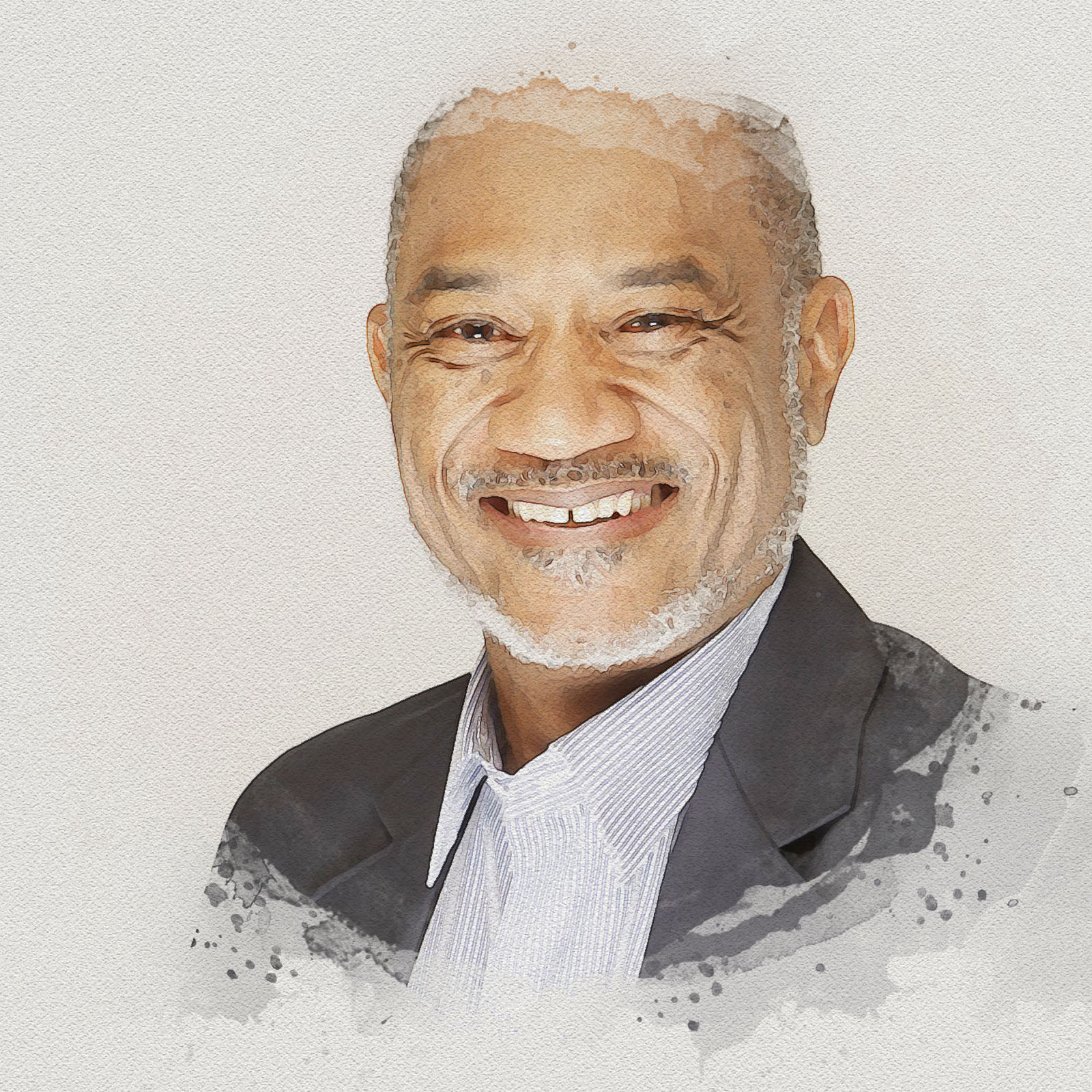
Makungu Akinyela on Testimony and the Mattering of Black Therapy

Lawrence Rubin: Hello, Makungu. I first became aware of your work through conversations with Drs. David Epston and Travis Heath, both of whom have worked clinically and written within the Narrative Therapy sphere. However, they've also made me aware of different approaches to narrative storytelling, including the oral tradition of West Africa, and your work. And that led me to an interest in Testimony Therapy. With that said, what is testimony therapy and what is testifying? 

Testifying and Testimony Therapy

Makungu Akinyela: Testimony Therapy is a discursive therapy, related to Solution-Focused Narrative Therapy, and any of those therapies that we think about that focus on privileging people's stories about their lives. I tell people that testimony is a narrative therapy with a small “n” because testimony and testifying come from my tradition — the Black cultural tradition, to testify. The way Black folk use it is to tell your story but also to tell the story that you want told about you, to give your testimony. It has some roots in the Black church experience. Folks who are from the South or have been to the South and maybe to a Black church, might have witnessed a testimony service or folks testifying in church where they get up and tell a story. There are parts to testifying it. Usually, a testimony starts out with what I call a doom-and-gloom story. For folks who are into Narrative Therapy, Michael White and David Epston used to call it a thin telling of the story.
testimony therapy is a discursive therapy, related to Solution-Focused Narrative Therapy, and any of those therapies that we think about that focus on privileging people's stories about their lives
So, it starts off with this real doom-and-gloom narrative that goes something like, “Well, I woke up, and the doctors told me that I had cancer and I was going to die. And I've been sick ever since and in bed and I couldn’t get up. And that’s what my life is about.” That's the doom-and-gloom telling. But then usually a testimony begins to sound like, “But if it had not been for my friend or my neighbor, who came to give me support and help…” The important thing about that testifying process — the dialogue — is in Black orality, which is that orality that we are grounded in, the oral telling of stories.
And that call and response becomes a community telling of the story. It's not just the storyteller telling the story
There's also call-and-response. As the “testifier” begins to tell that doom-and-gloom story, there is a response to the call. The “witnesses” let them know that they're listening. “Wow! Really? Well, okay. Amen. I get you.” And that call and response becomes a community telling of the story. It's not just the storyteller telling the story. The witness to the story, by engaging with the story, also helps to shape where the story goes. The testifying usually goes from doom-and-gloom to the call-and-response, and then all in the “community” begin to identify what I call the “victorious moments” in the story.

Narrative Therapy might say those victorious moments contradict the thin telling of the story. And as you get to those victorious moments — if it were in a church ceremony, as people begin to give that feedback, that response to the call — they begin to say things like, “Yeah, it wasn't so bad. It was good.” And then people might start seeing the blessings in their lives in the middle of the doom-and-gloom.

The story begins to become a little stronger and a little more positive. By the time the story finishes and all have experienced victorious moments, transformation has happened, and the testimony becomes, “This is the story that I want people to have of me. This is the story that I want.” It uses narrative ideas, and for folks who are familiar with Narrative Therapy, the preferred outcomes have replaced the doom-and-gloom, thin story.

the critique that testimony gives to narrative therapy is that all storytelling and all ways of telling stories are not grounded in the metaphor of literacy
The important thing about testimony therapy is that it is a discursive therapy. I consider it a narrative therapy in the sense that it's a storytelling therapy. I agree with the narrative therapist, that people use stories to constitute their lives, to describe and explain the meaning of their lives. The critique that testimony gives to narrative therapy is that all storytelling and all ways of telling stories are not grounded in the metaphor of literacy. Narrative therapy, the therapy that was developed by Michael White, David Epston, and that is contributed to so strongly by all those other great people — you know, Steve Madigan, Jill Combs, and Gene Freedman – all those ways of doing narrative therapy are particularly grounded in the metaphor of literacy.   
LR: Storytelling in a linear kind of way. 

Oral Culture: A Different Kind of Listening

MA: Exactly, in very linear ways, even the metaphors that are used such as “Turning over a new page, re-authoring our lives.” So, the metaphors reflect the culture that it comes out of, which is primarily a culture whose consciousness is developed through literacy. What testimony therapy says is, “What about those people who come from cultures that are predominantly oral cultures, grounded in orality?” Like the culture of Africans from West Africa, where my folk come from, the culture of so-called African Americans who, basically, trace our lineage and heritage back to West Africa?

Our cultures are primarily oral. So, the thing that shapes our thinking, the way we talk about and think about relationships is grounded in that orality. Storytelling will look different, and the meaning that's given to the story is different. And so, within testimony therapy, rather than being grounded in the metaphor of literacy, I ground it in the metaphor of orality and musicality. Does that make sense? 

LR: As a narrative therapist but also as a client-centered therapist, I would be validating. I would be using nonverbal gestures. I'd be highlighting unique outcomes. I would be listening to elements of the client’s story, which are doom-and-gloom-centered, and asking for counter-stories. What would I be doing differently if you were my therapist in this interaction and coming from that oral tradition? Now, what would we be adding as therapists in this moment? 
MA:
I'm paying attention to the rhythm and the beat of a conversation
I'm paying attention to the rhythm and the beat of a conversation. So, it's not just the words of a conversation that are important, right? It's not just listening to the words that are coming out of your mouth. It's how the words are coming out of your mouth. I'm paying particular attention to things like the relationship between bodily space and the words, the rhythm that's created through bodily space. I'm paying attention to things like the expression on your face because those are all things that also begin to define orality.

In other words, people from oral cultures don't just use the words out of their mouth. It's the tone of the word. You know, where there might be three or four ways that I can use the same word, depending on the tone, it means something different. Also, it might be even the way I might use my body. You know, sometimes people make jokes about Black women. You know, if a Black woman is talking to you and she starts snaking her neck…what's the meaning of that? So, no matter what the words are that she's using, that body motion, the way she takes up space, begins to define the rhythm of the conversation –   

LR: So, what feedback would you be giving me in the moment?  
MA: I would be getting in rhythm with you, right?  
LR: You would be mirroring? 
MA: I might be mirroring, or I might be thinking, “Wow, he's really agitated here. And I might even slow down my rhythm, and I might begin to speak more slowly. And I might even become a little more reserved, again, because I'm believing that the rhythm and the beat of our conversation is just as important as what you're saying. I might be taking note of and become curious about what the emotional content of your speech might be at that moment, and I’d bring that out.

I'm a testimony therapist whoever I'm working with, just like narrative therapists
I was talking to a couple just the other day. Now, this couple happened to be White, but I'm a testimony therapist whoever I'm working with, just like narrative therapists. A narrative therapist, whoever they work with, they're simply using their cultural understanding to engage the work. And that's what I talk about with this. I don't believe that “techniques” in themselves fix things or do things.

But with that couple, there was a conversation going on. In this case, it's a heterosexual couple. The husband listened to the wife say something, and it felt as if she was saying he was the problem. But he was his usual calm demeanor, almost a flat effect. But he began to describe how he was resentful that she was making him into the problem. Sometimes, not always but sometimes therapists are really afraid to engage emotion, particularly “negative” emotion, right?   

LR: I'm on the edge of my seat. So, how did you manage yourself with that White couple?
MA:
one of the things I point out is that oftentimes, particularly for Black people, we're encouraged to suppress our emotions
First of all, I validated what he had to say. And then I said, “You know — ” Let's call him George. Not his name. “George, I get the feeling that you are real pissed off about right now. And I'm really appreciating that. I'm really glad that you got pissed off enough to say that.” In other words, rather than running away from the emotion, to name the emotion — because I also believe that all our emotions are important. You may have read one of my articles, and one of the things I point out is that oftentimes, particularly for Black people, we're encouraged to suppress our emotions.
LR: Especially anger. Especially anger. 
MA: Right, especially anger! You're not supposed to do that. I believe that my work as a therapist is creating a space where all emotions are safe, and all emotions can be validated and understood and experienced. Because one of the things that I'm trying to do when I'm working with my clients is — and again, these are my philosophical understanding of this work — that, under conditions of oppression or suppression, people are alienated from their emotions.

A lot of the ideas that I work with come from the psychiatrist, Frantz Fanon. And Fanon talks about alienation, which comes with colonization. And when people are alienated from their emotions, they don't feel their emotions. They don't experience their emotions. So, the emotions control them rather than them being in control of their lives. And so, a lot of the work that I do is about helping people to feel their feelings, to experience their feelings, and to dis-alienate themselves from that.   

LR: So, going back to George and his wife, you highlighted what you surmised to be George's emotional reaction, his alienation from his emotions. And you helped encourage a conversation around that. How is that different from what a good Rogerian therapist or a linear narrative therapist might do? 
MA:
one of the big complaints that I often get if I am referred a Black client, who maybe has previously had a White therapist, is the cultural uncomfortability that they felt in those relationships
That's a good question. And one of the emphases that I make is that this is not about trying to find something that on the front looks like a radically different practice. It's about worldview and understanding. One of the big complaints that I often get if I am referred a Black client, who maybe has previously had a White therapist, is the cultural uncomfortability that they felt in those relationships. It's like that person just didn't seem to get them. They say, “Well, they just sat there and listened. They didn't say anything.” You know, they didn't say anything.” Sometimes they'll even say, “They didn't tell me what to do.” And I'll say, “Well, you know, I'm not going to tell you what to do either.”

But again, it's just that interaction, that responding in those conversations in oral ways as opposed to this kind of a linear conversation. I ask you a question, and then I quietly wait for a response. And then I assess that response. “Okay.” And then I ask another question. And then I wait for a response. That's that linear conversation. Even when I'm doing supervision, I don't want therapists to try to be like me. In this field, that's what a lot of people do, particularly from our generation. You know, we used to go to those demonstrations, and we would be mesmerized by the experts.

LR: Nobody could be Albert Ellis, regardless of how hard they tried.  
MA: Yeah. But, again, when I talk about Testimony Therapy, I'm talking about a conceptualization of the work that we're doing, which is grounded in a philosophy. In a very similar way, when Michael and David began to develop Narrative Therapy, for the most part, they were grounding their therapeutic work in the philosophies of Michel Foucault, in other words, a conceptualization of the meaning of the word. Does that make sense, what I'm saying?

So, you know, human interaction is human interaction whatever the culture, but there are conceptualizations that define the meaning of the interaction. There's a difference between people who come from oral cultures and, again, how stories get told and the meaning of those stories, and people who come from literary cultures.   

LR: What about when you're working with a Black client, a Black couple, a Black family who don't identify with their ancestral roots, who have no connection to the oral tradition of West Africa? Does that make a difference? 
MA:
I believe that when Black people say, “Hey, I know I'm Black. I'm Black,” that's not about having some deep sense of West African culture, because culture doesn't work like that. You see, the culture of African American people is African, I believe
I think you're asking a philosophical question. Just off the top, I say, okay, probably that couple that you're describing in that way wouldn't even be coming to see me, right? But also, I think this is about a perception of what culture is and what culture means. I believe that when Black people say, “Hey, I know I'm Black. I'm Black,” that's not about having some deep sense of West African culture, because culture doesn't work like that. You see, the culture of African American people is African, I believe.

It's African in the context of 300 years of colonization, but it's still African. And that doesn't mean that people go around every day thinking, “I'm African. I'm African.” They just are. They're being what they're being. Using Frantz Fanon once again, he once said, “A tiger doesn't have to proclaim its tiger-tude. It just is what it is.”

I described the whole idea of a Black church testimony service, right? That's African. Those are African ways of engaging. People don't name it that, but that's what it is. You know, the way that we talk, right? When we talk about Black ways of speech that we call Ebonics. I guess the more professional way is AAVE, African American Vernacular English. I'm speaking to you right now in pretty standard English. But if it wasn't you and it was somewhere else, I would be talking in Ebonics. But the thing about the way that I speak — I call it my grandmother's language — is that it’s grounded in a mixture of African and English vocabulary, but primarily West African syntax and grammar. It comes from there. 

And this gets far beyond therapy, but we've got tons of research that shows the continuities, the continuations, the relationships between the cultures of African people in the western hemisphere, who are here because of enslavement and other things, and Africans on the west coast of Africa. So, when I'm talking about culture, I'm not talking about something that's this kind of mechanical thing that is easily identifiable. I'm talking about what we understand about the nature of culture, which is constantly moving, changing, and growing. Does that make sense?  

Double Consciousness

LR: It does. Is there an implicit assumption or a presumption that an African American client, a Black client, has experienced or has internalized colonization and is living a story that really is one of adapting to those colonializing practices, whether or not they acknowledge it or feel it or resent White people?
MA:
every Black person has two souls in one dark body, an American soul, meaning White, and a Negro soul. And they're constantly fighting and struggling against each other
Absolutely. And, again, I ground my ideas in, like I said, Frantz Fanon and W. E. B. Du Bois, who was probably one of the greatest minds of the 20th Century — from the whole 20th Century because he wrote his first book in 1903, and he died in 1964. But he wrote a book called The Souls of Black Folk. In there, he defines this idea that's called double consciousness. Basically, he calls us Negros, but he says every Black person has two souls in one dark body, an American soul, meaning White, and a Negro soul. And they're constantly fighting and struggling against each other.

That's something that I could never explain probably to you because you've never been through that. But to be a Black person who is constantly doubting their Blackness but also affirming their Blackness at the same time, right? If I told you, as a little boy — we're about the same age — one of my favorite shows used to be Dennis the Menace. Remember Dennis the Menace?   

LR: I remember Dennis the Menace.  
MA: And wanting to be Dennis the Menace but also saying, “Wow. I wish I had hair like Dennis,” or, you know, “Wow. How come my mom doesn't stay home and bake cookies all the time? My mom is up working,” right? You know, “My dad doesn't wear a tie except on Sundays,” right? But it's also giving meaning to that. Or growing up — again, we're in the same age group – remember Tarzan on Sunday afternoon, the Tarzan movies?
LR: I do. Johnny Weissmuller, yep. 
MA: – and identifying with Tarzan more than the so-called natives? And, as a matter of fact, not wanting to be the native. That's the double consciousness that Du Bois talks about. Fanon calls it the zone of nonbeing.
LR: The zone of nonbeing? 
MA: And Fanon, going from Hegel's master-slave hypothesis. I don't know if you're familiar with that.
LR: Familiar only by name. 
MA: Fanon says that's about the idea of recognition and consciousness, that we become conscious of ourselves by being recognized by others. Now, that's fine, but Fanon says, in a colonial situation, the colonizer never recognizes the colonized as human, right?
LR: And the colonized don't recognize necessarily that they have been colonized. 
MA:
In the colonized relationship, the third person is always in the middle of the relationship
Sometimes. Exactly. But also, what he says, in the zone of nonbeing, the colonized is never able to have a “normal” relationship.” Because a normal relationship is this, Larry: I and thou. I see you. You see me. We recognize each other. We are conscious of each other. In the colonized relationship, the third person is always in the middle of the relationship. 

So, in describing another person, and this is using me hypothetically, I might say, “You know that guy over there? He's dark-skinned, but he's handsome.” So, in other words, there's another measuring stick to that person to help me describe that person. “You know that guy? He is really dumb for light-skinned dude.” So, there's always these relationships that are in the middle of our relationships. These are the things that affect relationships.

I'm a family therapist, right? These are the things that begin to affect relationships even when they're unspoken. And if you're not aware of the nature of those things, that's what testimony therapy brings to the forefront, that these are also things that are important to think about in these situations. When I've got a husband and wife come in, it's not just the problems they have. It's the problems they have that have been exasperated (sic) in the everyday lived experience of just being a Black person growing up in America.   

LR: Is there a presumption that all Blacks, all African Americans have this double consciousness whether they're aware of it or not? 
MA: Absolutely. Can you be Black in America and not always have this small voice in the back of your head? For Black women, the decisions about how they fix their hair is a political decision and not just a daily decision. The choice. How they do that. Decisions about how we speak and how we are heard, right? If we speak and our speech sounds too Black, or if we speak and our speech sounds too White, right?
LR: Or not white enough. 
MA: The clothes that we might choose to wear. All of those are decisions which are grounded in, “How will I be perceived?” And it's not just how I will be perceived. Also, I'm concerned about how other Black people are perceived because I'm afraid that how they're perceived also may have some effect on how I'm perceived.
LR: So, the Black person is always being evaluated. And if they're not receiving overt criticism, there is this other consciousness in which they're either comparing themselves unfavorably to other Blacks or unfavorably to Whites. So, your clients, to the one, your Black clients experience oppression whether they are conscious of it? 
MA: Even if it is not named that. There's always this question of… For instance, I was at a conference last week. And my wife and I were about to open our hotel door. I was kind of casually dressed, had a nice little jacket on. You know, my wife is super colorful and flamboyant. So, she had some colorful clothes on. There was a White family about three doors down, and I think they were locked out of their space. And we went to our door, and we opened it up, and one of the women said, “Oh, it's down here." She's telling us, “It's down here.” And we kind of looked confused. And she says, “Oh, never mind.” [laughs]
LR: They thought you were the help opening – 
MA: They thought we were the help. [laughs] You know, I wasn't dressed in any kind of uniform or anything like that. And so, now, the part of that is, you know, my wife kind of got a little… She's like, "Argh.” I said, “Look.” As I thought about it, I was like, “Wow. Why?” What was that about? Why would they assume that I was the help? What is there about me that looked like the help? I wasn't dressed like the help or anything else. But there was that quick assumption. That's what the young people call everyday microaggressions. It's like those things that make you wonder. Now, you're not quite sure, but it's, again, to always have those thoughts. It is not an unusual thing for me to have conversations with my clients, and in some way experiences like that come up in the conversation. Or ideas like that come up. And, again, this is not about people being hyper-politicized or understanding. This is the everydayness of life.
LR: Black life. 
MA: What testimony therapy is about is about having a framework to understand that and to understand the meanings of that and a framework that allows us to engage those conversations in ways that feel safe and also are not committed to having you just basically fit in. You know, our traditional training as therapists is to help people fit in. Do we really want people to fit in to that experience of life, or do we want to give them ways of challenging that and seeing themselves in more powerful ways? 

Therapy Embraces Culture

LR: Is psychotherapy with Blacks/African Americans diminished if the therapist does not take a testimony-oriented approach or that does not focus on that double consciousness?
MA:
I don't get into the wars about what approach to therapy is best
No. The reason I'm not going to say that is because I don't think just taking a testimony approach, even though I think that the things that I talk about are valid and should be dealt with, is critical because I don't get into the wars about what approach to therapy is best. But I do think that the dominant Eurocentric approaches to therapy are oppressive in that they try to force people to fit into a cultural context that is not their home. That is the subject of the book that I'm working on which is about decolonizing therapy, and that idea of decolonizing and dis-alienating the work that we do away from that kind of therapy which basically assumes Western ideas and cultural values. Eurocentric ideas are the norm and, in that context, the best way to help people's mental health is to help them better be able to fit into those norms. And so, we use those Eurocentric approaches to fit people in.
LR: I appreciate this and am very excited by this conversation, and I see how animated you’ve become — your gestures, your tone, your body movements. And I guess, if I was doing a testimony-type therapy, we would be talking about this experience between the two of us. 
MA: This is what I do in my therapy room.
LR: So, if you believe that all Black America has double consciousness, is therapy with Black folks less than good enough therapy if we don't touch on the issues of double consciousness and colonialization? Is it incomplete therapy by definition? 
MA: If we are not aware of that reality, yes! I believe that the reality of double consciousness, the zone of nonbeing, as Fanon calls it. But there has to be a consciousness of the lived experience of Blackness in the West.
LR: Living in a Black body. 
MA: – and how, as a family therapist and systemic therapist, that impacts relationships. That's always the undercurrent of relationships. Even when it's not spoken, even when it's not something that people are consciously aware of in sophisticated ways, it's impacting the way they think. 

There's always this comparison. When we talk about Black male and female gender relationships, there's always that under thing. You know, it's always racialized. When you have Black men who don't like Black women, they say specifically, “Black women ain't shit.” Black women may be thinking, “You know what? I can't stand Black men. I'm thinking about dating out of my race because these men…”

It's all of them, right? And the thing that defines them is their Blackness. That's what makes them Black. So, it defines those relationships. When people are afraid of how their kids look. “I don't want you braiding your hair like that. People are going to think you're a gangbanger or something.” 

LR: Or have “the talk” with them. 
MA: So, this lived experience shapes relationships. And, again, so th

Spitting Truth from My Soul: A Case Story of Rapping, Probation, and the Narrative Practices- Part II

Recapitulation

This is the second part of a two-part case story that focuses on a 24-year-old African American client named Ray who was referred to me (TH) by probation services. In this brief introduction I will try to summarize what transpired in Part I. Whenever possible, I will attempt to provide phrases or “pieces” of Ray’s language so the reader can begin to get a “feel” for him and our work.

Rap music was introduced as an entry point to our work. After our first session Ray could probably best be described as equal parts skeptical and intrigued. He enjoyed sharing rap songs that were meaningful to him as well as having the opportunity to create rhymes of his own.

We rather quickly discussed ways in which rap music was misunderstood (“Adults throughout my whole life telling me it’s violent and the music of the devil . . .”) and how others could not or were not willing to hear the important messages that can be contained within certain songs. We proposed a pair of magic headphones (“Magic Beats”) as a way to help those who would not listen begin to hear rap’s message. This idea will prove particularly important as our conversation progresses in Part II.

As our first conversation continued, we started exploring the sociopolitical implications of rap music and hip-hop culture. We framed rap as a kind of philosophy (“But without all the white cats . . .”) that served as a voice for the voiceless. We also stumbled across a connection between Ray’s grandmother and rap music (“I’m rapping about the same s**t she’s saying but in my own way . . .”). This struck him as perplexing (“That’s crazy bro . . .”) and also enlightening (“I never thought of it like that . . .”) given the disdain she had expressed for rap music throughout his youth. Our first meeting came to a close by having a conversation about our conversation.

We explored the difference between just talking and rapping, to which Ray responded, “It’s like when I rhyme . . . I spit truth from my soul.” We both agreed that inviting rap to our future meetings would be of benefit. More specifically, we discovered that rapping might serve as a pathway to liberation (“Remove the shackles from my soul . . .”). I invited Ray to consider composing a rhyme that paints the part of the picture that probation services doesn’t see. He responded enthusiastically but seemingly nervous that probation services would discover the way we were working and somehow veto it (“You’re the weirdest shrink they have ever sent me to. Not weird like bad, not bad at all, but does probation know you do this?”). We then decided that calling our work together a “studio session” was a better fit than therapy.

Ray picked up in our second meeting directly where he left off in the first. He came prepared with a rhyme that would be the foundation of a counter-story. He noted in that rhyme the importance of challenging rules (“Just because these are the rules you play the game by doesn’t mean these are the only rules . . .”). The conversation evolved into looking at whether or not Ray had found some ways of challenging rules more effectively than others. He then traced the relationship between rap and anger (“It’s like my anger would leave my mouth through my rhymes . . .”). Part I concluded with a pensive Ray searching for a rhyme that captured this most important function of rap music as an antidote to anger and aggression. The following rhyme picks up where our original story concluded.

An Antidote to Anger

Judicial system mad puzzling

DA presents two options
Jail cell or rat on my cousin
Death sentence if I’m released
Seen on the streets
All free
They’ll be like “who you dropped a dime on g’”
Obscene language make them ends
So I’m squeezing my pen
That’s mightier than the blade
Not trying to see death
Strategize and not be so impulsive
Quiet cats survive
Bullets for the ones boasting
Friday night drive on Colfax
Enjoying the madness
That was created by fascists
Reagan-nomics took our tools away it’s so savage
Regardless of politics
This my Mile High life
Shout out to my bail bonds-man.

Travis (T): What speaks to you in this verse?

Ray (R): The line, ‘So I’m squeezing my pen, that’s mightier than the blade,’ is the main one. I mean, the rhyme talks about the stress, the penitentiary, but then boom (begins rapping) So I’m squeezing my pen, that’s mightier than the blade.

T: Did you fight with your pen instead of your blade before you ended up on probation?

R: Usually, yes. But there are these times where I just lost it.

T: The pen was knocked out of your hand?

R: Yeah, you could say that.

T: What happens when the pen gets knocked out of your hand?

R: It’s like I’m a different person. I do these things I know are stupid, but I just do them, anyway. It makes no damn sense.

T: But when you have the pen?

R: I can do anything.

T: Would it be accurate to say that when you have the pen you can spit truth like you said in our last meeting and that’s when Ray The Philosopher comes out (I uttered the term Ray The Philosopher without giving it much thought and certainly without an understanding of how it would later be adopted in our work together)?

R: For sure. That’s kind of a dope name right there, brother… Ray The Philosopher (said with gusto)

T: Do many people in your life know Ray The philosopher?

R: My homies do.

T: Is there anyone else you can think of?

R: No, not really.

T: What do you think would happen if we introduced more people in your life to Ray The Philosopher and his rhymes?

R: I think it would be good, but like I said last time, nobody wants to listen. They think rap is corrupt.

T: What if we were to inform them that when you can think ahead and fight with your pen through rap it helps you avoid anger and thus probation? Do you think they know this about you?

R: Nah, they don’t know that. I still don’t know if they would hear me.

T: Even if they knew that it would help you avoid future relationships with probation, they still wouldn’t hear you?

R: (silence for 15-20 seconds) Maybe. I mean, I hope so.

T: What do you think your grandmother would think about rap as a way to fight with your pen instead of your fists? Have you spoken with her about how you and rap have this kind of relationship?

R: No. I’ve never spoken much about my rhymes at all with my grandmother. I’ve just always known how much she hates rap. Like if I bring it up, I know she’s going to roll her eyes at me.

T: Do you think the kind of rap she hates and the kind of rap you’re tight with when you’re fighting with your pen are different?

R: Oh, yeah! She thinks rap music is just about cursing, talking about hoes and drugs and shit like that.

T: If she truly knew how rap music unshackled your soul do you think she might begin to have a change of heart?

R: Yeah, I still just don’t know if she would listen, though.

T: What if we created a space in here where you could perform for her, and we constructed a marquee (points upward) that lights up and says Ray The Philosopher!?!

R: (Laughs)

T: If you rapped for her and she could feel the words instead of just hearing them, what do you think might happen?

R: I really don’t know.

T: Would you say that your grandmother’s wisdom finds its way into your rhymes?

R: Oh yeah, I know it’s in there a lot.

T: Can you think of an example in the rhyme that you shared with me at the beginning of our conversation today?

R: My grandmother has always wanted the best for me. That’s why I started out that first line with her. You know, (begins rapping) Grandma said I should reconsider law school. I was sampling from another rhyme that starts with mama instead of grandma, but it’s because I know she wants the best for me and that’s why she’s always bothering me about school.

The thing is, she also taught me to be street smart, which is why I like to challenge the whole foundation that student loans and shit are built upon. It’s like a scam for poor people. You know what I mean? I would have never thought about shit in these terms if it weren’t for her. I would have never looked deeper. And that’s what that second verse is about, too, with people on TV commercials acting like they can save your life and shit. You ever watched TV at like 2:00am?

T: I have a few times, yes.

R: Then you know what I mean, right? There’s these cats trying to sell hocus-pocus. They are saying shit like, (changes voice to that of a highly embellished television salesperson) “For 20 years now I’ve been helping people change their lives. For only three easy payments of $99.95 you can get the 7 secrets that will make you rich. Order now!”

(Both bellowing with laughter)

T: I didn’t know you were an actor, too, Ray?!

R: (Laughs)

T: In all seriousness, if I’m hearing you right, Ray, your grandmother’s wisdom is everywhere in your rhymes, and she doesn’t even know it?

R: Yeah, I guess you’re right.

T: Do you think we might be able to invite your grandmother to see, hear, and feel that rap can be a philosophy of street smarts and wisdom and not just a form of music that young people like to listen to?

R: I think so.

T: If we are successful do you think this would be sort of like putting the Magic Beats we talked about on your grandmother’s ears?

R: Yeah, but the rhymes will need to be just right.

T: Perhaps we should take some time in here to get them where you want them?

R: For sure.

Turn Up the Sound

Ray and I spent our next two conversations focused on taking the various rhymes rapped during our first two meetings and worked on creating a mega-anthology. It was a scintillating process that saw KRS-ONE, Tupac Shakur, and other artists rapping in unison through Ray’s mouth. I brought in my laptop computer to help with the process, and Ray made it do things I did not know it was capable of.

He turned my computer, and my office along with it, into a fully functioning recording studio. I even created a marquee (clearly the work of a second-rate artist) that read “Ray The Philosopher,” which always led to a hearty chuckle from Ray every time I hung it up at the beginning of our meetings.

“Yo, Travis. Turn up the sound a little bit,” Ray said as I scurried over to the computer. “Yeah, that’s good right there,” he reassured me making an ‘a-ok’ sign with the finger and thumb on his right hand. I watched, often in awe, as Ray meticulously perfected his craft. He was locked in his element, and I was an enthusiastic fellow traveler.

“Nah, we need to change up that baseline a little bit,” he said shaking his head and taking a swig of water. “It doesn’t quite pop. I need more time.”

I have had the great fortune of working on similar projects with people who had sought my counsel in the past, but this was among the most ambitious ventures I had encountered. As we started to make our way toward the end of our fourth session together, I started to wonder if perhaps we had bitten off more than we could chew. Now I knew that Ray had similar feelings. It wasn’t as though we hadn’t been aware of time but more like we had lost ourselves in it.

T: Ray, the last thing I want to do is rush you through this process.

R: But I only get to come here one more time.

T: Well, I know that’s the initial agreement you had with probation, but I can see you as many times as we think would be best.

R: What about you, though? I don’t want to be a leach?

T: What do you mean?

R: You’ve got to get paid, man. This ain’t no charity. This is your livelihood, bro.

T: I really appreciate you thinking of me, Ray. Tell you what, how about I give probation a call and tell them a bit about the situation and see if we can get some more time? In the past this is something they have often been willing to do.

R: What if they’re not?

T: Then we will see the work through to its completion anyway, Ray. As long as it takes. This is just too important. Don’t you agree? Besides, I have been thinking about something. Would it be okay if I shared it with you?

R: Of course.

T: I know your grandmother is going to come in at the conclusion of our work to celebrate with us. I was wondering what you thought about perhaps inviting other people to meet Ray The Philosopher? Is there anyone else you who you think it might be good to invite to wear the Magic Beats?

R: Hmm… I haven’t really though about it too much.

T: I’m just thinking out loud here, Ray, so stop me if this doesn’t make sense, okay?

R: Okay.

T: What do you think would happen if your probation officer were introduced to this idea of you fighting with your pen instead of your fists?

R: I mean, I’m sure he would like it. He just wants me to keep my hands clean for the next year.

T: What do you think would be the consequences of us not bringing him up to speed on this?

R: I don’t know.

T: As it stands now, do you think your PO views you as someone who is going to fight with his fists and get into trouble again or someone who is going to keep his hands clean?

R: (Laughs cynically) I damn sure don’t think he trusts me. I think he believes I’m going to be out gang-banging (a hip-hop term for engaging in violent acts as a member of a street gang), and I don’t even do that shit.

T: How has it come to be that you don’t even do that shit and yet your PO thinks you do? Do you think we should try and set the record straight and let him know how rap allows you to fight with your pen instead of your fists?

R: But he’s going to give me that same old bullshit about how I don’t take responsibility and blah, blah, blah (uses his right hand to imitate a talking mouth).

T: Do you think if you rapped for him and let him know how rap can strangle the advances of anger and aggression, he would look at you as more likely to keep your hands clean or less likely?

R: (Pauses for 10-15 seconds) More likely to keep my hands clean.

T: What do you think the consequences would be if we weren’t to set the record straight?

R: Yeah, I get what you’re saying now.

T: How do you mean?

R: Like, it’s not enough for just me to come up with this plan if he still thinks about me a certain way… like I’m a criminal.

T: Do you believe this is an opportunity for Ray The Philosopher to replace the other names that have been placed on you in the past like criminal?

R: Now that you mention it, yeah, I guess so.

T: Would you say that sometimes your PO is a tough nut to crack?

R: C’mon, now! That dude is like impossible to crack.

T: Do you think then that we might have to prove to him just how effective fighting with your pen can be?

R: Sure, but how the hell are we going to do that?

T: How long have you seen me for now, Ray?

R: (Pauses to think) Like about a month.

T: I know this is a tricky question because I’m asking you to guess what another person might be feeling, but do you have any sense for how your PO would say this last month has been for you.

R: I actually talked to him about this last week. I’ve been squeaky clean. Not one single issue, homie.

T: What do you think he would have told me about how things were going if I had talked to him prior to you coming to see me?

R: Man, he was always in my grill about shit saying I was defiant, I was going to go to jail, and this and that.

T: Fair to say then that he believes things are going better now?

R: No doubt.

T: Has one month been enough to convince him that you are on the right track?

R: Hell no! It’s like he’s just waiting for me to fuck up.

T: How many months do you think it might take to convince him that you are on the right track and ready to end your relationship with probation?

R: I mean, I still have over a year of this.

T: Do you think it will take all of that time to show him just how effective fighting with your pen can be?

R: Probably so.

T: What if we were to invite him in here, bring him up to speed on your philosophy of fighting with your pen and not your fists, and then make a commitment to this going forward?

R: I don’t know if he’ll believe it.

T: You make a good point. Like you’ve told me, he can be a bit stubborn and so can your grandmother! Even as tough as it is going to be, are you willing to fight with your pen and prove to your grandmother, your family, and your PO the true character of Ray The Philosopher? You already have one-month under your belt!

Ray paused after my question. I started to wonder if perhaps my query had pushed him a bit too far. His face remained stoic as the silence continued beyond 30 seconds. Just as I started to ponder my next move fearing I had lost him, he replied, “I’m down (a hip-hop term voicing agreement).”

After the conclusion of our fourth session Ray and I agreed that it would be good to check in with his PO together. We decided that in addition to talking about the need for more sessions, we would also let his PO know (a signed release was already in place) about how Ray had been fighting with his pen instead of his fists. The PO acknowledged that things were going better the past month, but he remained skeptical. He agreed to get payment covered for half of every session for the next month. The way the following month was structured it would afford us five more weekly meetings.

Two Different Stories

Ray seemed somewhat relieved that more sessions had been granted but also a little bit ticked that his PO was still unconvinced. He felt his PO was “playing games” and “testing me.”

Our next three meetings were spent wrestling with these feelings. Ray began discovering that restoring his reputation burned nearly as many calories as he was taking in. Instead of being consumed by anger towards his PO, Ray stayed true to his word to fight with his pen. He remixed a song by the artist Common:

We should name the block poverty
That rock stole our humanity
You hear that glock pop?
For dough we perform beastiality
“Fucking each other over
What you expect they animals”
Then act like they the ones offended
When TMZ release the audio
If life’s a game
They withhold that playbook
But playas make that scratch
We get the itch
Run your shit
This a jook
Or a lick
See that’s a stick-up if you down with my click
We starving in the darkness
Force upon us they man made eclipse
Is it a curse?
Mad poisons in our blood?
My pops tried to disinfect it
Chugging that rum
And I do the same (word?)
Like father like son.

Ray no longer waited for me to inquire about the lyrics. He would deconstruct them now almost as a natural part of our process. “See, this is what he (probation officer) doesn’t understand. I was born behind the god damn eight-ball. No father. Poor. I’ve always had to hustle to survive. He doesn’t know my pain. Does he even care to know it? But that don’t even matter. Is he testing me? I’m going to pass that test.”

Ray began rapping the second verse from this song:

To my reflection I scribed
What I be feeling inside
Can’t leave it buried in the dirt
Gotta breathe it and give it life
My neighborhood taught us no self-control
That boom-bap made us feel like it’s our right to explode
No positive role-model
The hustlers were our fathers
Rappers instructed us to spit rhymes
And don’t bother
With the life of an outlaw
It’s a trick to keep us blind
And deny our title as God
Preventing our rise
They been doing this for centuries
Stolen lands from our North and South American fam
Jews burnt
Japanese thrown in determent camps
Hatred can hide
Right in front of our eyes
But I flipped that same hate
Used it as fuel to survive
I’m of a mind that believes love will conquer hate
They be seeing black and white
While my crew is dazed by all the gray
So gather around the fire
Light it up
Continue the cipher
Cause in the darkness of nights
Our stars still shine brighter
This is my dream!

T: Ray, are there two different stories in the two beats you have shared with me today?

R: Yeah, the first one is the pain and strife. The second is what happens when I look ahead and fight with my pen.

T: Pain and strife and fighting with your pen… both of those are rhymes that you brought into our work earlier, right?

R: Yep.

T: Would it be right to say then that these last two verses are a sort of remix of all of the beats we’ve heard in here so far?

R: Pretty much.

T: Would these verses be good to share with the folks who join us for our final celebration of the work you’ve accomplished in here?

R: Yeah, but I might tweak them throw in a couple of other verses from different rhymes to get it just where I want it.

Our second to last session was a dress rehearsal. Ray came with the beats he wanted to perform and refined them. We also talked about how he wanted our final celebration to commence, what would happen, and who to invite.

He joked that it “would be kind of like a block party, but where a therapist lives in the house on the corner.” We also decided that those in attendance would have an opportunity to voice their support of Ray’s efforts over the past two months as well as hopes and dreams for the future. As this session came to a close I could detect a nervousness that was following Ray.

T: Ray, I could be wrong here, but I am wondering if some nervousness is hanging with us right now.

R: Yeah, I guess so.

T: Do you mind if I ask you what kind of nervousness it is? People I’ve worked with before have taught me that there are different kinds? Do you know what I mean?

R: You know, I’m not like a professional rapper or anything like that, but I’ve performed in my neighborhood before. It feels like that. Like, you think you have a good rhyme, but you never know for sure until you get on stage and the crowd is feelin’ it.

T: What gives you confidence that the rhyme you have created in our work together will deliver just the message you hoped it would?

R: I put my whole heart and soul into it. I didn’t leave one drop.

T: Do you think the people who are here with us next time will feel your heart and soul coming out through your lyrics?

R: (Pauses for 10 seconds or so) I really think so.

T: Do you remember when I first asked you about what would happen if you rapped for your grandmother or your probation officer?

R: Yeah, I said they wouldn’t hear it.

T: Are you saying that you feel differently about that now?

R: Yeah, I guess so.

T: What would you say has shifted?

R: These rhymes are me but just in lyrical form.

T: And you don't believe your grandmother or those who love and care about you would reject this gift that is a lyrical manifestation of you?

R: No, my grandmother always tells me that she’ll never run out of love for me.

T: Hey, something just struck me, Ray. Would it be okay if I share it with you?

R: For sure.

T: I wonder if you just discovered the Magic Beats?

R: What do you mean?

T: Do you believe that when you create a rhyme that fully represents you and comes from the deepest depths of your soul that even those who don’t prefer rap music could still hear it?

R: (A smile overwhelmed the now dwindling doubt on his face as he nodded affirmatively)

T: Ray! This is great! What an incredible discovery you have made!

Ray often tried to minimize any expressions of emotion, but even he smiled loudly at this development. In our excitement we almost instinctively exchanged daps (gesture similar to a handshake) with our right hands before giving one another a quick hug. With this we had established an unspoken agreement that we were ready for Ray’s performance and celebration next week.

A Celebration of Hope

Ray and I agreed to meet about a half an hour before everyone else to prepare the room for the celebration. As we moved tables and chairs and geared up the laptop computer everything was coming together. “Alright, I think we’ve got it,” I said looking in Ray’s direction. He then shook his head ‘no’ and looked upward to indicate to me to direct my gaze towards the ceiling. “What?” I said with a perplexed look.

He nodded upward once more. I stared skyward still trying to decipher what Ray was communicating. Then I realized that in my haste to make sure there were enough chairs for everyone I had forgotten to hang up the marquee. Like a dog with his tail between his legs I went back to my desk in the back room and removed from the top drawer the “Ray The Philosopher” marquee. I dashed back out to the main office and hung it up in its customary location. “Now we got it,” Ray asserted.

Soon, Ray’s grandmother, his sister, and a few other people from his neighborhood began making their way into the office. There was a sort of nervous excitement that filled the room. Lost in conversation, time had escaped me. I

reached into my pocket and pulled out my phone to take a quick look at the time. In doing so I noticed a message was waiting for me from Ray’s probation officer. Oh no, I thought to myself. He had left me a message stating that something had come up and he wasn’t going to be able to make it. Just as I was about to hold the phone to my ear to listen to it, he lumbered through the front door. “Sorry I’m late,” he said. “Did you get my message? I got caught up with a few things at the office.”

Relieved that everyone was now here, I looked at Ray to see if he was ready to go. Ray had asked that I start by saying a few words to give folks a sense of what today’s meeting was all about. After welcoming everyone and thanking them for attending, I began discussing a bit about Ray’s journey.

“During our two months together, Ray has reaffirmed how rap music can be an ally in helping him be the person he wants to be. He has composed a series of beats he would like to perform for you today. Ray suggested that

Spitting Truth from My Soul: A Case Story of Rapping, Probation, and the Narrative Practices- Part I

The Rap That Binds

“This kid really doesn’t get it,” a clearly frustrated voice blared so loudly that I moved the phone’s speaker a couple of inches from my ear to avoid any future hearing loss.

“He just won’t take any responsibility for his actions, and he doesn't give a shit…and he has 16 more months until he’s off probation! I just don’t think he’s going to make it. I don’t even think you want this one!” I recognized this voice as that of a probation supervisor I had worked with a number of times over the years, but never had I heard frustration get the better of him in such an obvious way. “I’d be happy to see him,” I said. “Send him my way.”

When I put the phone down, I wondered if my enthusiasm might have been misplaced and I would have been wiser to tell him I was overloaded and couldn't take on any more work at this moment. No more than 24 hours later I received a phone call from Ray, a 24-year-old young man who told me his probation officer had passed on my phone number to him. I was intrigued by how polite and soft-spoken he sounded over the phone, and we set up an appointment for later in the week.

My work with people involved with the justice system, whether on probation or otherwise, began nearly 13 years ago when I was just a 22-year-old graduate student in Los Angeles, California. After years of agency work, I now operate a small private practice where probation officers, schools, and word of mouth drive young people like Ray to my door.

In community agencies I had worked in the past, I met with people twice a week as mandated by their sentences. More recently, I have started getting short-term referrals, which often allow for between 4-8 meetings with people. In the case of Ray, we ended up seeing each other 9 times. Probation assumed responsibility for payment for 5 meetings only.

After that, our time was up. However, Ray indicated that he wanted to continue to attend on his own volition. This is something that happens with a surprising number of cases. I have learned that if we call the probation officer on the case, the Department of Justice will usually pick up at least half of the cost for the remaining number of sessions, something they were willing to do for Ray.

Three days after first talking to Ray on the phone, he walked into the office wearing blue jeans, a red hoodie, and had headphones dangling around his neck. As he sat down across from me, I had an intuition that he was not a stranger to this process often called “therapy,” a fact he would confirm as we began talking.

It was as if he was bracing himself for what was to come. He sat back in his chair, both of his hands tightly grabbing on to an arm almost as if he was at the mercy of a neophyte airline pilot preparing to practice landing a massive 747 for the first time. Perhaps he was expecting a barrage of advice disguised as “psychoeducation?” Or was he steeling himself for inquiries about what might be neurochemically “wrong” with him? Everything about how he was composing himself suggested to me that this young man had heard it all before.

My first query was clearly not one he was expecting. “Do you mind if I ask what you are listening to?” gesturing to his headphones. Ray raised his head up to look me in the eyes for the first time since walking into the room, his gaze a blend of skepticism and curiosity. “Styles P and Pharoahe Monch,” he replied.

“How old are you again?” I said as a smile crept on to my face.

“Why?” he inquired.

“It’s just that most 24-year-olds I have spoken with aren’t keen to the ways of Styles P and Pharoahe Monch,” I said still smiling knowing the album he was referencing was over a decade old and was not one many young men of his age were typically in step with.

“A lot of this new shit ain’t real. I can feel what Styles and Pharoahe are saying,” Ray declared.

And with this, we were off. I had been granted the great privilege of riding shotgun in Ray’s lyrical journey. For the next forty-five minutes we listened to music on his phone and critically examined the verses he found most meaningful. What follows is an example of one such verse:

I Supreme Lord and Master (ISLAM)
But at times,
The words ring empty
When I see another homie blood splattered
Dreams get shattered
Family fractured
Ugly reputations is what give television ratings
Problem story plastered
Learn the science of our plight
These depictions keep penitentiaries packed tight
But only God can judge me
Once I fade away from life.

Yet another example:

How many Super Bowls passed
My mind’s eye showing possibility so I grasp
Of a hood block,
With no patrolling cops
No empty baggies once holding rocks
Shells from a glock
But the wisdom I've acquired allows us to question what was taught
Pause in the moment
The impulse can be stopped.

During the conversation that followed I learned that not only did Ray have an affinity for rap music, but he also wrote some rhymes of his own.

A Voice to the Voiceless

Travis: Listening to you today, Ray, I have a hunch that you and rap music have been homeboys for a long time and you both share a long and storied history together. Am I right or wrong?

Ray: Yeah, I mean, I can’t remember my life without rap. It’s like it was with me from the moment I came out of the womb. You know, I’m sure that’s not true, but that’s what it feels like.

T: Wow! Are you telling me that no one has been a friend to you longer than rap has? (He nods his assent) This seems like a really important relationship. Would it be okay with you if I tried to understand the relationship you and rap share a bit better?

R: Sure, go for it.

T: I’m curious to know if anyone has ever asked you about your relationship with rap before?

R: (pauses 10 seconds or so) I mean, not really. My homies and I cypher back-and-forth about it, but… you know… I haven’t really broken down my relationship with it if that makes any sense.

T: It does make sense. Thank you. Other than your homies, does anyone else ask you about your relationship with rap?

R: No, except for like teachers and probation and other adults throughout my whole life trying to tell me it’s violent and the music of the devil (takes his index fingers and makes horns over his head) and shit like that (laughs).

T: So, if I’m hearing you correctly, Ray, those adults don’t really ask you about your relationship with rap, but rather tell you the sort of relationship you should have with it?

R: Exactly! It’s like they don’t know shit about it but want to tell you it’s the root of all evil.

T: This is really remarkable to me, Ray! Would it be okay if I asked you a few more questions about it?

R: Oh yeah, no problem.

T: If it gets boring to you or you would rather go in another direction just tell me, okay?

R: Word (a hip-hop phrase that in this context verbalizes agreement).

T: What do you think the adults you just mentioned, like former teachers or people involved with probation, could stand to learn from your relationship with rap?

R: They would never learn anything because they won’t listen. Their minds are already done made up.

T: Do you mind if I ask what kind of headphones those are, Ray? (pointing to his neck).

R: These? Oh, man, these are Beats (a popular brand of headphones).

T: Now I heard you say that those folks wouldn’t listen, and I want you to know that I absolutely believe you. Even still, I want to invite you to imagine for a second that we could take a pair of Beats, maybe even magic Beats, and slip them on to the people that can’t or won’t hear while they were sleeping, and the message would sneak through their ears and permeate their minds whether they wanted it to or not. Imagine now that they have woken up. What education would rap have given them?

R: Man, I wish you could pick me up some of those headphones (said laughing)!

T: That would be pretty cool, right? Maybe that’s a project we can work on later (both of us laughing).

R: For real! What I think they would learn is that there are a lot of people in the world who don’t have a voice. If you are someone in the world who does have a voice, you know, that’s great. Good for you. And by voice I mean, you know, we all have like a voice box that works. What I mean when I say voice is a voice that others can hear or will really listen to. My whole life I’ve never really had that voice because I’m poor and black… except when I rap. This is true, you know, for like pretty much my whole crew in my neighborhood, too. Rap is our voice.

T: Are you of the opinion that the people who won’t listen that you referenced earlier would learn from the “magic Beats” that rap could serve as a voice for the voiceless?

R: Exactly. I mean, if everyone listens to everything you say anyway, then fine, you don’t need something like rap. (Begins rapping):

The more I wild out
Allows me to achieve that street clout
While lives are turned into tools
Did dominant narratives actually raise a bunch of fools?
Our escape from a jumpshot or a hip-hop plate?
While theirs is school?
But either one of us can lose
Trying to chase what Lupe articulated as The Cool,
White men in suits don’t have to jump
Still a thousand and one ways to lose with his shoes

R: You know, that line, “White men in suits don’t have to jump,” that’s what I’m talking about.

T: Right, there’s that old saying, “White men can’t jump,” when it comes to basketball. Did those lyrics do something clever with it?

R: For sure. White men don’t have to jump to make money and white men don’t have to rap to be heard. Don’t get me wrong, I write rhymes because I love to. Sometimes when I write it’s just about partying or females or something light. But I also write because it allows me to have a voice. You know, it’s like rap says to the world I’m going to say shit how it is whether you like it or not.

Of Protest and Freedom

It was becoming increasingly clear that Ray’s relationship with rap, and the hip-hop culture in which it resided, was one of protest, freedom, and inspiration. As our conversation continued to traverse the electrifying and winding roads of rap music, we alternated between listening to songs on Ray’s phone and discussing, almost philosophizing, at the conclusion of each. That served as inspiration for the following exchange:

T: Do you think rappers are philosophers?

R: No doubt. Rap is philosophy but without all the old white cats (said laughing).

T: Socrates is not the father or first philosopher of rap?

R: No! (Laughs harder)

T: Who do you think is?

R: Probably KRS-ONE.

T: What in your opinion is the job of a philosopher?

R: To make people think, like hold a mirror up to the world so they can see how foolish they are. (Begins rapping):

Peep the crucifix
Comes across mysterious
With I(j)ehova hanging from the partisan nails of politics
The origins
Governing men of Romans
Did agree to its means justifying capital punishment
For the minds
They despised
To keep all the sheep in line
While revolution sparked divine
Christ
But check the rhyme
What if they lynched him hanging from the branch of a tree
Then burned him half alive
Peep manipulation B
We would pray to a tree
Then human torching eventually
Fire associated with hell
Overstand irony
When a bullet burns its way into your brother's physical
Laid to rest in a wooden casket
Damned its cyclical.

T: What do you hear in these rhymes?

R: It’s like it exposes hypocrisy, you know what I mean? People believe things about God or religion or whatever without even opening up a book or thinking. They just accept a history they like or feel comfortable about or that some cat on TV tells them is right.

T: Are you of the opinion that there are multiple histories?

R: Oh yeah, no doubt. The history that you get in history books is the only one most people read, though.

T: Where do these histories come from?

R: Usually from your teacher and books in school.

T: Where does the information in those books come from?

R: I mean, that mostly comes from white people and their ancestors. You know, I took a philosophy class in college like 4 years ago and I don’t think we talked about one brother the whole time. That’s part of the reason I never fit in there.

T: And the fact that the only history that was discussed was from a white perspective, what does that mean for the other histories?

R: You see them in like Roots (a television mini-series from the 1970’s depicting the life of a black slave in the United States) and shit (laughing). We had to watch that in high school. That shit is so weak.

T: What would be a stronger portrayal?

R: You just heard one (in the previous rap). But it’s like I told you earlier, people don’t want to listen to those.

T: Do you believe you are a philosopher?

R: I never really thought about it like that. I know I’m a writer. But I guess that means I am a philosopher.

T: Do you mind if I tap into your own philosophical expertise?

R: Sure. I know what you’re go to say next (said with a wry smile). You are going to ask me about my philosophy on shit.

T: You know me too well already, Ray!

R: My philosophy is simple. It’s to see the truth even when they try and obscure it. It’s to go deeper. If you don’t, you’ll believe a lie.

T: How do you see deeper?

R: You have to do what my grandmother says: ignore the noise. You can’t believe everything you hear. You can’t even believe everything you think you see.

T: Is your grandmother a wise philosopher, too?

R: She’s the wisest person I know.

T: What has her philosophy taught you about the person you want to be?

R: She always says I didn’t raise no fool.

T: Would you say that your grandmother’s philosophy and the philosophy of KRS-ONE are similar?

R: Hmm… (pauses for 10-15 seconds) that’s crazy, bro. I never thought of it like that, but I guess so.

T: In what ways would you say they are similar?

R: Both of them are encouraging me to think in my own way. To be my own person. Basically, just be wise to the ways of the world.

T: Do you think that it would be helpful in our work to call on the ideas of great philosophers like your grandmother and also KRS-ONE as we try to navigate the situation that brought you to see me?

R: Yeah, it’s just crazy though because my grandmother hates rap. Like she thinks it “corrupts the youth” (fingers on both hands raised to make air quotes).

T: If only we had those “Magic Beats.” Do you think she would be more open to it then?

R: (Smiles and then laughs) Yeah, and maybe she would see that I’m rapping about like the same shit she’s saying but in my own way.

T: Have you ever thought that maybe the spirit of your ancestors and their struggles can be channeled through your raps? Maybe rap is like your history book?

R: I mean… that’s deep! I ain’t never thought of it quite like that, but yeah, my raps are about me, where I came from, and where my people came from.

T: Would it be okay if we cracked open your rap’s history book in our work together?

R: Yeah.

T: Do you think it might provide us with some stories that the regular history books miss?

R: Oh, no question! Stories that regular history books wouldn’t even touch!

So engrossed did we both become in the progression of this conversation that time itself seemed to melt away. Ray continued writing his own history through various rhymes and interpretations of them.

Removing the Shackles

At one point Ray could not conceal his enthusiasm for a verse he located on his phone. He said he had been listening to it for a few weeks with a great deal of frequency. It moved him so much that he immediately stopped the music after it had played and rapped the verse himself again.

With these I see
Crimson stains on this project concrete
Yellow tape barricade
Homie wrapped in white sheets
It's a struggle just to eat
So how the fuck do they rationalize judging me or my deeds
Grab a pen
Clear the phlegm
Then commence to bless the beat
Give ya'll a tour of my life
Without walking on my streets
It's my life!
Being scribbled on they college ruled pages
Escape when we cipher up
That type of freedom is amazing
My life!

I watched him intently and took a few deep breaths before breaking the silence we had both fallen into by my first query.

T: Ray, I noticed that you listened to this verse and then stopped the music and rapped it. Were you, by any chance, deepening your relationship with the lyrics by rapping it yourself?

R: I do this all the time. What I like to do is take a verse that someone else wrote and then just add my own flavor, kind of like sampling (a hip-hop term for taking an older song and mixing it with a new one) or remixing.

T: Do you mean that you take the original rhyme and add your own story?

R: Exactly.

Ray was so engaged that by the end of our conversation it was as if he were a different person than the one who walked through the door an hour before. Certainly he was a poor match for the description of the detached and uncaring young man who lacked any semblance of motivation that the probation officer had provided for me earlier in the week.

The fact there wasn’t much sand left in the hourglass of our first meeting had sneaked up on both of us. My mind was left spinning with possibilities for where our future conversations could go. With just five minutes remaining, I invited Ray to reflect with me on what had transpired which broke us both out of our enthrallment.

Travis: Would it be all right if I asked you a little bit about how our meeting today is going?

Ray: That’s cool.

T: Thank you, as I know I have asked you a lot of questions today. I appreciate you hanging in there with me. I’ve noticed that it’s very different when we are just speaking as opposed to when we invite rap to the party. Have you noticed this?

R: Yeah, for sure.

T: How do you understand this?

R: It’s like when I rhyme… I spit truth from my soul.

T: How is rapping with your soul different than talking with your mouth?

R: When I talk, I think. I thought that’s what we’re supposed to do in therapy, anyway. That’s what all those other fucking shrinks did.

T: Would it be all right if we made up our own therapy and put aside other kinds of therapy you have been through or heard about?

R: Yeah (said with a chuckle and skeptical eyes).

T: What can your soul rhyme that your mouth sometimes might have trouble saying?

R: Freedom. It’s like when I’m rapping I can feel the words come through my body. It’s natural, like I don’t have to think about it.

T: By that do you mean to say that rhymes remove the shackles that are attached to your soul?

R: Right (said turning his head to one side as if in deliberation and then nodding).

T: I saw your face light up. I wonder if inspiration is brewing in your soul this very moment? I know I am guessing so I could very well be wrong.

R: No, it’s just that I thought of a verse. (Begins rapping):

It's like we being played
When they say
Strive for a slice
Of they cake
They filthy hands holding hate
Choke out fate
But the rhyme melts the shackles
Oppression disintegrates
Even just for one moment
When we flowing on stage
It goes on and on and on…

T: Have you had shackles on your soul that rap music helps you break free from?

R: Yeah, sometimes it feels like rap is my only way to break free.

T: I notice when you rap that your whole body changes. For example, when we were just talking earlier you were kind of slumped down in your chair. But when you rap, your back straightens up, your face lights up, and your hands are active. It’s almost like I can see you breaking free right in front of me. What do you think would happen if rap made more frequent visits to your life?

R: I would feel more alive and like I have a voice, you know what I mean? Like being on probation it feels like I have no voice. I just get told what to do and it’s like they tell everyone the same thing and don’t really care what really makes someone tick. It’s like we are cattle just being pushed through the gates.

T: Do you think Rap music could be a great way for us to understand what makes you tick?

R: The best way!

T: I get the sense you have many important stories to rap about. Would you be willing to write a song between now and next time that paints the part of the picture that probation and maybe other people in your life don’t get about you?

R: (Nods affirmatively)

T: Do you know what I mean?

R: Oh yeah, for sure. I already feel a couple of ideas (pointing to his head). Like people automatically assume I’m stupid and like I’m some kind of bad person or criminal or something. They don’t even know me.

T: Might writing a rhyme about the parts they don’t know release the shackles from your soul?

R: Yeah, but not all the way.

T: It might take more than one rhyme to release them all the way?

R: Yeah.

T: Do you have many stories to tell?

R: Oh yeah!

T: I want you to know that I will support you in writing as many rhymes as it takes.

R: You’re the weirdest shrink they have ever sent me to. Not weird like bad, not bad at all, but does probation know you do this?

T: Do what? Ask people to rap?

R: Yeah!

T: They know I help people find the kinds of therapies that best work for them. Do you think this one we’ve come up with today might work for you?

R: Oh yeah, but I don’t even know if this is really therapy.

T: What would you call it?

R: It’s like a studio session where I’m making beats with my homies or something.

T: Should we have a studio session once a week together?

R: (Smiles and laughs) For sure.

Spitting From My Soul

Ray returned for our second conversation with his black New York Yankees hat turned to the side looking somewhat, but perhaps not yet completely relaxed as he sat down. He reached into his pocket and pulled out a folded piece of paper as his right leg bounced up and down. He quickly unfolded it and scanned over its content. “Here are a few lyrics,” he said quietly but with conviction as he handed the document to me. I was feeling a bit caught off guard that Ray had picked up so quickly where we left off in our last conversation.

T: Ray, I have to be honest, I feel so privileged to hold this is my hand right now. I wonder if I am holding a gift from your soul?

R: You could say that (kindly smiling at me).

T: I just had an idea and I’m curious if it would be okay if I shared it with you? (Ray nodded in the affirmative). Last week you told me that rhymes come from your soul when they are rapped. I could be wrong here, but I’m just wondering if I read the rhyme on the paper if it might lose some of its soulfulness? And the last thing I want to do is strip the rhyme of its soulfulness.

R: I’ve got a baseline for this (pointing to his phone). It’s dope (a hip-hop term that means good or of high quality) You want to hear it?

T: I would be honored, Ray.

As the music percolated through the small speakers on his phone I noticed I couldn’t help but bob my head. I looked up and Ray was doing the same. Our eyes caught and Ray smiled slightly with the left side of his mouth. In this moment I pondered whether or not I should invite him to rap, but I hesitated not wanting to make him feel uncomfortable in our second conversation. A few seconds later, Ray reached his hand out indicating he wanted the document with the lyrics on it back from me. I obliged. Ray bobbed his head a few more times and said, “This still needs a little more time in the lab, but…”

What happened next as Ray began to “spit truth” was almost like a detonation. The words rhythmically rolled off his tongue with an intensity that made me suspect something important was transpiring. I didn’t just listen to what he said, I felt it. Ray’s passion was palpable, and I could feel its infusion through my body. We now bobbed our heads in unison and for a brief time it was as if the world had shrunk and we were the only two people that now could fit in it. It was the kind of attunement and connection with another person that was equal parts mysterious and exhilarating.

Grandma said I should reconsider law school
That means I wear a suit and bend the truth and feel awful
Hell no, got a degree but what that cost you
You make a good salary just to pay Sallie Mae
That's real as ever
Ducking bill collectors like a Jehovah's witness
When they showed up at your door at Christmas
Praise God it's hard to stay spiritual
How they got these people on the TV selling miracles
You mean to tell me everything gonna be fine
If I call your hotline and pay 29.99
Well damn, why didn’t you say so
Take this check and ask God to multiply all my pesos

T: I am so captivated by what just happened, Ray! Would it be alright if I tried to understand your rhyming genius a little better?

R: For sure.

T: May I ask what is it about this rhyme that reveals a part of yourself that other people often fail to get?

R: People think that because I don’t have a college degree I’m stupid. They make that judgment up front. Now I’m not trying to say that college is always a bad thing (said looking at me knowing that I’m also a college professor), but, you know, sometimes it’s like a scam. Like, I'm a poor kid. Think about how much debt I would rack up by going to college. Dude, it’s astronomical. I tried community college for a year. Is that even a good investment? You know, I think a really good rhyme exposes the way people think. So that first part is just like a challenge. You know, just because these are the rules you play the game by doesn’t mean they are the only rules.

T: Do you think rhyming helps you create your own rules while also challenging the rules people tell you that you should follow?

R: No doubt. And sometimes you challenge rules in rhymes just to make people think.

T: Is that like what you were saying last week about rap as a philosophy (I asked Ray this very much hoping the conversation meant as much to him as it had to me).

R: Exactly, like KRS-One!

T: (Feeling relieved that we seemed to be catching up right where we left off last week, I continued) Can I tap a bit further into your rhyming knowledge here, Ray?

R: Sure.

T: Are you of the opinion that challenging rules is a good thing? (Ray nods in the affirmative) And why do you think it’s a good thing to challenge rules?

R: If no one challenges rules, shit gets stale. You know what I mean? Like people start to take things for granted. Sometimes a good rhyme is just like grabbing someone and going (pretends like he’s physically shaking someone). It’s like, wake up, yo!

T: Do you believe there are different ways to challenge rules?

R: A lot of different ways.

T: Are some ways of challenging rules more effective than others in your experience?

R: Yeah, I mean, look how I ended up here on probation.

T: How do you mean?

R: Ever since I was a kid, I would find myself in certain situations where I would get angry and step (a hip-hop term that means to challenge someone physically, often to a fight) to someone. Yeah, and it’s stupid, I know. I’ve been getting that lecture my whole life.

T: How do you understand the relationship between rap and anger?

R: When I would write rhymes, they would keep me out of trouble. Like if someone was pissing me off, I would just go home and make a beat about it. It’s like my anger would leave my mouth through my rhymes.

T: Let me see if I’m hearing you correctly, Ray, because I don’t want to get this wrong. Are you saying that rap is able to put anger in its place?

R: Yeah, I don’t end up doing something stupid.

T: Maybe this is a long shot, Ray, but do any rhymes come to mind that capture what we are talking about here?

R: No, not really… (pauses in a pensive fashion for 30 seconds or so)…actually, yeah, one does (he composes himself and then begins rapping):

References

Ancestral Narrative Building: A Path to Healing Generational Trauma

“I am so afraid to be like the men in my family when I am angry. I find myself holding in so much rage because I do not want to be like my dad or my grandfather. I also refuse to be part of the angry Black man stereotype.”
“What didn’t you like about their rage?” I ask my client to examine his narrative of his ancestors’ rage in order to understand his own.
“The way it was framed in my family is that it got them in trouble. It got them both killed.”

Like what you are reading? For more stimulating stories, thought-provoking articles and new video announcements, sign up for our monthly newsletter.


We take time to process these situations about the men in my client’s lineage. Both his father and grandfather had been killed at the hands of the state, and my client began to believe at an early age that if he had less rage inside of him, he would live longer and safer.

I tell him I am not convinced that their rage was unwarranted, knowing that the United States has unjust systems that impact the lives of Black and Brown people daily. I believe that micro- and macro-aggressions pile up and that our reactions, or non-reactions, to them can be survival tactics or indications of insidious trauma. And we can still create new narratives around their deaths and “rage.” We have to understand the social and physical contexts they were born into and living in, to make sure we can make these claims about their rage, since it is coming up in therapy. Although I can guide him through it, my client needs some deep ancestral healing, and he has to do it himself. He has to be the one who is committed to researching, asking questions, and making meaning.
 

I start by creating a reading list for the client. I read the books, too. At first, he doesn’t quite see the point. I explain that we have to study the time and place in which both of these ancestors lived. We read Isabel Wilkerson’s The Warmth of Other Suns, Langston Hughes’ The Ways of White Folks, James Baldwin’s The Fire Next Time, and Zora Neale Hurston’s Their Eyes Were Watching God in order to get a sense of the time periods his family lived through. We research articles from the relevant time periods in the cities his family resided in and take a deep look at the cultural climate of the cities. We find research about the impacts of Jim Crow laws, the GI Bill, and redlining, policies that impacted his family directly and indirectly.

“I have only heard the stories and the warnings from my mom, aunts, uncles, and grandma. Stay inside! Stay calm! Don’t be too forward! Don’t speak up! We don’t want you to get killed out there! Reading about other people from the same time period gives me more information than what was passed down to me. Black people were unsafe even if they did stay calm and remained inside. My family was so fearful of more death that they played into the respectability politics—‘Be good and nothing will happen.’ But the truth is, things still happened.”

This kind of ancestral digging creates a new narrative that allows the client to build, expand, and contextualize his sense of self. Prior to our research, he had limited information from which to make sense of his childhood and the messages he received both implicitly and explicitly. The messages he received growing up are important and tell him a lot about his lineage, but he needs to do more digging to get a fuller story. Intentionally getting new information about people similar to him and his generational trauma allows him to make space for new framing of his paternal lineage.

“I learned about the political climate my grandfather was living in. I saw an article about a man killed for looking at a White woman the wrong way in the city we lived in. I realized that my grandfather might not have been angry, he might have been just living his life, and that there are not actually any stories about him being angry or reactive at all.”

Though he has limited people alive to discuss this with, we create a list of questions he has for his extended family. My client is able to make new meaning about his father by doing some interviewing of distant family members. He asks about the time periods, the rituals they had in their family related to his Black American culture, and anecdotes about his grandfather and father. He records their responses to his questions in order to keep a record of what he found for his future son. He reckons with the fact that after his grandfather was unjustly killed by the county police, his father became an advocate to make changes in his community. His father became an activist and fought for the rights of Black Americans in his city.

“My mom always made it sound like when we speak up we are likely to be hurt, because we are putting ourselves at risk, but that is because she had trauma from my dad’s dying during a protest. She always seems so strong, but my aunt told me she was different after my dad died. She didn’t want him to go that day, and he told her he had to make a better life for his kids. Understanding that my father was fighting for what is right has totally changed what I understand about my anger.”

***

The old adage of becoming your parents is more than just a saying. Clients and therapists alike carry forward and live ancestral history and messages that have the power to impact and influence triggers. We may find ourselves reacting similarly to our ancestors, or reacting completely opposite from the way they did, without a lot of knowledge about why they acted the way they did in the first place.

Ancestral trauma impacts us in ways we don’t realize, and we need to investigate our lineages, whether we have direct access or need to gain access through texts and articles, to make sense of who we are and who we want to become. And therapists, along with developing an anti-racist framework that appreciates the racial climate of the country in which the client resides, must guide the ancestral trauma towards ancestral resilience when the client is ready to do their deep exploration.

Reframing the Legacy of Ancestral Trauma as Resilience

Linda, a client I’ve seen for years who has struggled with anxiety and depressive symptoms, returned for sessions with me to revisit coping strategies for a new job. We found ourselves talking about her insecurities, how she learned to cover up her neighborhood accent, how she was taught to “be twice as good to get half of what white people have” and to be “perfect” in order to “get out.” Growing up and looking back, she shuddered at the memory of her dad telling her not to be like her friends who had working class backgrounds because they would “not amount to anything” and her mom telling her that braids were “unprofessional.”

Like what you are reading? For more stimulating stories, thought-provoking articles and new video announcements, sign up for our monthly newsletter.

But the truth is, as a dark-skinned Black woman, Linda was just now learning that these were not necessarily truths, but were instead passed-down beliefs and trauma-born messages from her parents and grandparents. This was not easy for me, a clinician who is a light-skinned Black Haitian with a white parent, to relate with. I must constantly acknowledge the privileges I hold in being light-skinned while also challenging the beliefs and acknowledging the racially unjust context in which we live. However, bringing up the subject of my light skin in therapy with Linda and my difficulty relating with her experience as a dark-skinned Black woman has not only helped her, but has also opened a space in which she can challenge her beliefs.

Linda struggled to participate in the Black natural hair movement and to show up for work with braids, as she would often experience comments from White coworkers about her hair. “What would your grandmother think of your braids?” I asked her. “She would hate them.” Linda was sure in her response. But it was missing acknowledgement of the societal and racial context in which her grandmother lived in the decades between 1930 and 1970. “What caused Grandma to resist natural hair?” I wondered aloud.

I then asked Linda to reflect by saying, “So your coworkers may still comment on them, but they are not telling you not to wear them. Let’s keep that in mind while I ask you this next question. Why did Grandma feel so strongly against braids?”

“Because afros and braids were dangerous to have back then. You couldn’t get ‘good’ jobs and you were seen as too Black.”

“So, let’s say your grandmother, your mother and your father were all passing down some form of ancestral trauma to you, and although it was born of pain, suffering and social marginalization, it may also have been a means of survival, if not physically, but mentally and emotionally—a form of resilience.”

Linda was resistant to considering this theory, likely because it was hard for her to believe that something positive could be associated with these negative messages that her ancestors passed on to her.

“But I do have to be twice as good,” she protested.

“That may be true, but can you see how it harmed you? Something can be protective and help you at the time, and be harmful later.”

I explained to Linda that these “rules,” or perhaps survival skills and beliefs, might have been passed down to protect her and to promote survival, even though they ultimately caused unintended distress. “I work so hard, but don’t take care of myself,” she recognized. “I am tougher on myself than I need to be. I can understand how my parents and grandparents might have been trying to protect me with their hard-earned survival tips—their wisdom.”

Linda and I wondered together if it was indeed possible to acknowledge that these restrictive messages, born of trauma, might lay the foundation for a new set of messages, ones of resilience and strength, to use in her own life and possibly even pass down to her own descendants. Linda agreed to keep her braids in for work the next day, and to wear them to her family reunion the following weekend.

Together, we prepared planned statements for whomever might make negative or hurtful comments about her hair, whether family members at the upcoming gathering or from white, AAPI, Latinx or Black people at work. Linda decided that she had some freedom to wear her hair however she wanted, even though her ancestors did not, and that she could also honor the pain and lived experiences they had during far harsher racially divided times.

***

Linda has a long way to go in undoing Anti-Blackness from her belief patterns and freeing herself from the trauma-based experiences of her ancestors, but she is on track to self-empowerment by honoring her ancestry while, at the same time, reframing their pain as resilience.

Being Black and a Clinician During 2020: A Trainee

It is now the year 2021. Vaccines have been released. People are getting vaccinated. And yet, the death toll from COVID is still staggeringly high, particularly in the United States. 2020 was a year that humbled many of us, and as a Black graduate psychology trainee, I was no exception. To say that 2020 was a “hard” year is almost facetious. The truth of the matter is, for many people, particularly those who look like me, 2020 was a series of struggles at the hands of two pandemics, one that was novel and the other that was not. To be frank, 2020 was arguably disproportionately more difficult for Black people than any other group. Black people living in the United States were hit harder than any other group by COVID-19 (1). If this were not bad enough, the main culprit of these disparities was systemic racism. While a more thorough explanation of the factors attributable to systemic racism that made Black people more susceptible to COVID-19 infections and subsequent deaths is not within the scope of this piece, it is important to note that factors such as minimized access to healthcare, food deserts, and results of housing inequality over the years contributed to this trend.

Along with the detrimental effects of systemic racism and COVID-19, the pandemic of systemic and structural racism also manifested through televised, media-streamed reports and depictions of brutality against Black people. Names and stories of individuals such as George Floyd, Ahmaud Arbery, and Breonna Taylor (among others) incited global unrest and placed a spotlight on the undervaluing of Black lives. As a Black person living in America, this was not surprising. And yet, I’d be dishonest if I said that a video of a Black man crying for his mother with a knee on his back didn’t take my own breath away.

Considering the totality of these factors, the question becomes: where does this leave Black clinicians? I identify as an African American woman, and I am currently living, learning, and working in a part of the country that has not always been welcoming or kind to people who look like me. Throughout my training as a clinical psychology graduate student, many of the training experiences I have valued the most were when working with racial/ethnic minority clients, particularly those identifying as racially Black. For me, it was interesting to see the nuances of the Black lived experience manifesting through my clients. However, 2020 very explicitly placed a spotlight on the struggles associated with these lived experiences.

In their candid ethnography-based article, Lipscomb and Ashley (2) provided a direct look into the struggles of working as a Black clinician in 2020. While it is not within the scope of this blog to give the totality of their narratives, a few important points stuck out: 1) as Black clinicians working in 2020, the authors felt overwhelmed, 2) the authors felt challenged to mitigate countertransference in providing space to validate the feelings of their Black clients while managing their own feelings, and 3) the authors felt uncomfortable at times with their White clients’ desires to share their sentiments regarding the racial injustices of 2020. While it would be unrealistic to insinuate that these authors or myself know and can speak to the lived experience of all Black clinicians working during 2020, I feel a commonality between my own experiences and those of the authors.

As a clinical doctoral trainee, the trends Lipscomb and Ashley found amongst themselves almost feel exacerbated within me. As many of the readers of this blog might know, operating as a graduate student trainee is often plagued by holding opposing positions. For our clients, we are regarded as “authorities” on mental health, though we are only students, learners, and supervisees in the eyes of our supervisors. We are encouraged to develop and cultivate our professional autonomy and identities, but are also frequently and subtly (or sometimes not subtly) reminded of the hierarchical structure of higher education. As a Black graduate student trainee, these juxtapositions often feel jarring and have felt increasingly dissonant throughout 2020, as civil unrest and health care disparities have become blindingly apparent. Admittedly, I resonate very strongly with both the COVID-19 and racial injustice pandemics. To plainly illustrate this point, I faced the unfortunate reality of losing my grandmother on the same day in May that the story of George Floyd went viral.

At the time of my grandmother’s passing, I only shared the news with a limited number of faculty within my program, but, as things tend to do, the news spread. Whereas faculty members and some student colleagues were reaching out to me with condolences for my grandmother, hours later they were contacting me again with gingerly worded messages attempting to lend support in the wake of the civil unrest following George Floyd’s murder. While well intentioned, the onslaught of messages felt emotionally, mentally, and psychologically overwhelming. The dual pandemics also affected me as a Black trainee in my clinical work. With my Black clients, I struggled with allowing them the space to articulate their hurt, pain, and fear, while also validating them and not allowing my own feelings to seep into my clinical work. This is something that I have since become better at reconciling, but it at times felt like a hard barrier to overcome, particularly during the late summer months.

I have a client with whom I have been working for about two years. She also is a young Black woman, and we have found throughout our work that we tend to be extremely aligned personality-wise. After my grandmother died this past summer, I took two weeks to return home and be with my mother, who after the death of my grandmother had just lost her last remaining parent. What this meant is that when my client was struggling with the fallout from the death of George Floyd, I wasn’t there. When I eventually returned, despite our having a treatment goal that we were working on, I entered the virtual session (another thanks to 2020) and could see that she was visibly distressed. She began speaking about the topics we’d listed on our treatment plan, and I responded by gently stopping her and asking if she needed the space to just be Black and “feel.” In that moment, the client visibly deflated and became emotional. For 50 minutes, we spent the session with me listening and providing affirmation. I did not try to guide the session. While I’ve been taught that guided processing is an often-effective therapy tool, I did nothing of the sort. I let the client be Black, in a space with another Black woman who intimately could understand and validate what she was feeling. I won’t pretend I’m not potentially biased, but I’d argue that session was one of the most impactful sessions I have had with that client in our two years working together.

In concluding this blog, I leave a few takeaways for fellow clinicians and a quote I was particularly moved by from the Lipscomb and Ashley article.

  • For Black clinicians: It is important to create your own spaces for self-reflection and emoting. This could look like having your own mental health professionals you can engage with to process your feelings (I have one, and let me tell you, that level of being able to just “be” is unmatched).
  • In working with Black clients: As noted by Lipscomb and Ashley, “there are no words to heal the pain of systemic racism, oppression, and racialized trauma…” (2). Be kind, graceful, and validating of the lived experiences of Black people you might be professionally engaging with.
  • In working with majority group clients who might want to discuss racial injustice: One of the hallmarks of effective therapy is creating a safe therapeutic space. Fear of making mistakes, expressing microaggressions, or in some other way making blunders when discussing racial injustice could impact the ability for White clients to engage and benefit from therapy. Considerations should be made to transparently, directly, and yet compassionately, address these topics.
  • For Black trainees: Give yourself grace. Graduate school is often an isolating experience for Black trainees. Being one of the only Black people in a field that prides itself on empathy and emotional intelligence is often a hard feat, particularly during times of civil unrest. Take time to engage with your communities of support, and don’t feel bad about taking breaks from engaging in sympathies expressed by majority group colleagues and faculty.
  • For majority group individuals engaging with Black clients, trainees, clinicians, and/or colleagues: Validate. Don’t try to assuage guilt or get caught up in “saying the right thing.” Listen and affirm. Also understand that while your attention might be uniquely piqued to race issues in 2020, for Black people and other people of color, racial injustice is a generational lived reality. Your current sentiments are appreciated, but continued engagement and investment on your part to these matters would be appreciated even more.
  • For the field at large: There are no evidence-based models, manuals, or diagnostic criteria available to guide work with Black clients living through COVID-19 and exacerbated racial injustice. This places even greater importance on the role of therapists of color during these times and highlights the notion that work should be done to recruit, acquire, and retain more therapists of color moving forward.

“…Black people can only heal as much as the larger society allows for them to; as long as injustices continue, Black individuals cannot fully heal” (2).

Reference
 

(1) Yancy, C. W. (2020). COVID-19 and African Americans. JAMA, 323(19), 1891. doi:10.1001/ jama.2020.6548

(2) Lipscomb, A. E., & Ashley, W. (2020). Surviving being Black and a clinician during a dual pandemic: Personal and professional challenges in a disease and racial crisis. Smith College Studies in Social Work, 90, 221-236. doi: 10.1080/00377317.2020.1834489 

What the APA Apology Means for Black Psychiatry

On January 18, 2021, the world of psychiatry experienced something historic when the American Psychiatric Association acknowledged and issued an apology for their part in a history of racism¹. There is no doubt it was time for this monumental moment, which markedly took place on this year’s celebration of Martin Luther King, Jr. Day.

This apology doesn’t erase all of the history that is behind it, and it doesn’t solve everything that may come. Yet after the history that has led to the APA’s need for an apologetic statement, this is an important step forward. This is a milestone for Black psychiatry and for all of us, really, in the African American community. I believe it may even deserve its own place in the history books.

For Black American, the history of our country has been paved with injustices, many of which have had a lasting effect on every facet of mental health, from assessment to treatment. The trauma of the African American community goes back many generations to slavery. The history behind the need for the APA’s apology goes deep into our past and can still be seen in the current practice of psychiatry². Going back all the way to the very beginning, the necessity of this apology is painfully clear.

The roots of racism in the psychiatric field go back a very long time. Diagnoses of mental illness were used to justify the view of Black slaves as inferior human beings. A supposed mental illness invented by Samuel Cartwright called “dysaethesia aethiopica” was used to explain a slave’s “laziness” and disinterest in their forced lifestyle³. In those days, the work of mental health professionals was only used to harm Black Amercians, not help, as it is meant to do.

The APA was meant to be an institution that kept racism from being fully actualized. The organization should have been there for the mental health support of all Amercians. Instead it was founded on principles that allowed Black patients and White patients to receive separate and vastly different levels of quality in care. It should be clear who was given real support, and who was left to suffer.

Time and time again, injustices were suffered by the Black community, and APA was among those who remained silent. Again and again, the mental health of Black Americans was both damaged and neglected while society stayed silent. Racism remained an issue within American psychiatry and someone should have spoken up, but APA didn’t.

APA repeatedly did not support civil rights legislation meant to improve psychological conditions for Black people. They neglected at the most crucial of times to do anything more than offer mere consolation to the people who were really hurting. Regardless of how widespread race-related inequality was at the time, the APA has missed many opportunities to speak up before this recent apology.

This history has piled onto the state of mental health for Black patients today, and it is about time that we hear the APA take accountability for its actions and inaction. Racist beliefs were integral to the damage that has been caused in the long history of Black psychiatry in this country. African Americans were declared biologically inferior, and that bias never fully went away. From Cartwright’s categorization of an entire race of people as simple and lacking emotional complexity, to the still very recent disproportionate diagnosis of schizophrenia in the BIPOC (Black, Indigenous, and People of Color) community?, systematic racism runs through the field of mental health and has done so for a very long time.

The APA’s apology is a small step in the right direction. The damage done has been far too great, but this is not insignificant. Truly, it represents something incredible. Mental health treatment is so important for people, especially for those in the Black community. This is the work that helps people heal from trauma and address the disorders and mental struggles that make everyday life difficult. With the apology we have received from APA, we can gladly find ourselves so much closer to reaching what the mental health system in this country should be.

What this represents is hope. We have made it a great deal forward, and now we can continue to find hope for better in our future. On the day that I saw this apology, I celebrated, not just for the moment itself, but for what this means for what may come. While I’m glad for the APA’s apology, I’m excited to see more medical organizations stepping up to do the same. I have hope that this is only the beginning, and that this apology truly represents a positive move towards improved mental wellness in our community.

References
American Psychiatric Association. (2021, January 18). APA apologizes for its support of racism in psychiatry. American Psychiatric Association. https://www.psychiatry.org/newsroom/news-releases/apa-apologizes-for-its-support-of-racism-in-psychiatry.

American Psychiatric Association. (2021, January 18). Historical addendum to APA's Apology to Black, Indigenous and People of Color for Its Support of Structural Racism in Psychiatry. American Psychiatric Association.
https://www.psychiatry.org/newsroom/historical-addendum-to-apa-apology.

In 1851 a scientist “discovered” a disease that caused slaves to run away, this was the prescribed cure… (n.d.). Watch the Yard. Retrieved 16 March, 2021, from https://www.watchtheyard.com/history/drapetomania-dysaesthesia-aethiopica/.

Schwartz, R. C., & Blankenship, D. M. (2014). Racial disparities in psychotic disorder diagnosis: A review of empirical literature. World Journal of Psychiatry, 4(4), 133–140. https://doi.org/10.5498/wjp.v4.i4.133

Standing Up to Microaggression: A Clinician’s Experience

Microaggressions (noun)—Definition: Everyday verbal, nonverbal, and environmental slights, snubs, or insults, whether intentional or unintentional, which communicate hostile, derogatory, or negative messages to target persons based solely upon their marginalized group membership. (1) Looking back, a racial enactment between myself, a person/clinician of color, and my white therapist seemed inevitable. In our very first session, my therapist made some statements that revealed what I perceived to be her “White Savior” complex. I was taken aback by my therapist’s apparent lack of awareness of her own racism, as she had explicitly advertised herself as working through a critical post-colonial lens, and so I called her out on it. My therapist was quick to own her racist statements and take full responsibility. Despite the initial wounding and because of the subsequent repair, I continued to work with her because she did model a good relational and clinical holding style in following sessions, and I felt that she was helping me with the issues for which I was seeing her. Towards the end of our sixth session, I was sharing with my therapist how someone had explicitly sought me out for clinical supervision, mentioning familiarity with some of my work and writings, and how that had filled me with professional pride and confidence. My therapist’s exact reply is now hazy, but she said something along the lines of, “I think they chose you to be their supervisor because, as a white person, they can learn how it is for you—from your experiences as a person of color”. These words landed on me like a bolt out of the blue, and I instantly felt objectified. My therapist had unnecessarily racialized my experience, my whole identity reduced to that of “a person of color.” I had a vivid mental image of Black and Indigenous people literally being put in cages and zoos to be “observed,” and another of a laboratory rat being poked and probed—an object to be studied, “an other” whose experiences (painful or not) were being observed. A part of me still wanted to deny that it was I who was feeling the pain—to mask it as simply identifying or empathizing with those who have suffered racism. My heart began to beat fast, while my mind was trying to digest what I had just heard. Knowing very well that I have historically tended to minimize or deny micro-aggressions committed against me in the past, I resolved to be present to this current painful experience. Curiously, my heart wasn’t pounding but rather flapping—like a weak fledging trying desperately to fly away, but not having the strength or ability to do so. Instinctively, I put my hand to my heart to calm and hold the young, hurt thing, a part of me afraid that it was actually going to fly away. Anger has always been easier for me to own, so I told my white therapist with visible anger, “I am trying to calm myself before I speak.” My heart was ready to flee—and escape the pain—the pain of the blow which was multiplied in its effect, having come so hard and unexpectedly in a place that was supposed to be safe. The rest of my body, however, was ready for a fight—“I will not back down!” For the whole week, I allowed myself to fully stay and experience what had occurred in that painful therapy session. Paradoxically, this experience of staying with the pain of the micro-aggression pushed me into a spiral of transformative growth and healing, with the words of Rumi now resonating with me:

“If you desire healing, let yourself fall ill let yourself fall ill.”

It broke through my thick wall of defenses which had protected me from feeling or expressing my painful feelings in the past—especially those feelings when I had been “put down” or been the target of hate. Until then, I had vehemently denied and protested ever being cast in the role of a “victim.” Now I owned and allowed myself to feel them ALL—the feelings of indignity, humiliation, sadness, hurt, and fear—some of which were being held by very young parts of me. I became my own therapist, healing these young parts, unburdening them from the pain and hurt they had carried for years—simply waiting to finally feel acknowledged and validated, but more importantly, to be held and healed with self-compassion.

“We are healed of suffering only by experiencing it to the full.” Marcel Proust

In the next session, I clearly let my therapist know how her racist words and projections had negatively impacted me. To her credit, she took full responsibility for her racist remarks without trying to defend them in any way. This time we agreed that this was not a rupture that could be “worked through” or repaired to allow the therapeutic relationship to survive or grow stronger. Basic trust and safety had been violated by my therapist’s unexamined racist views and beliefs, and we agreed to terminate our relationship. However, having my therapist witness and listen to the impact of her words on me and take full responsibility for it was healing to me, and I did communicate that to her. In those moments, I recognized that as a therapist, irrespective of race, I have an ethical obligation not to perpetuate individual and systemic modes of oppression and racism, especially with my clients, and to pay attention to asymmetric power dynamics and intersecting identities to provide a safe relational context in therapy. I see how I have been guilty of protecting the status quo of white supremacy in my defensive denial of acts of aggression towards me (within and outside therapy settings) in the past. I have now vowed to directly challenge and dismantle oppressive thoughts and systems of power by speaking up against such micro-aggressions. Here is a list of defenses based on Internalized Racial Oppression from the People’s Institute for Survival and Beyond workshops shared with me by Nalini Kuruppu, LCSW, that I have found useful in my own self-reflections. My own defenses are highlighted. Defenses of Internalized Racial Superiority (for white-identifying people): White = Normal (unconscious understanding that white is the standard of humanity), White Denial, Intellectualizing, Individualism, White Distancing, Perfectionism, Entitlement, “Professionalism”, Expect Comfort, Rationalize, Minimize, Dominance, Demanding, Tokenism, White Saviorism, Self-Congratulations, Appropriation/Theft, Color Blindness, Addictive Behaviors, Defensive White Anger, Paternalism, White Tears, Dismissive, Arrogance/Expertism, Silence, Indifference, Need to be in control Defenses of Internalized Racial Inferiority (for Black-Indigenous-Persons-of-Culture BIPOC): Distancing (from race/ethnicity), Mimicking, Assimilation, Code Switching, Denial, Shame, Worthlessness, Fear/Hypervigilance, Guilt, Self-hate, Hopelessness, Ethnocentrism, Colorism, Protectionism (of whites), Tokenism, Invisibility, Exaggerated visibility, Addictions, Tolerance, Avoidance, Exceptionalism (the “model minority” myth). What about you? Do you directly speak to the asymmetry in power and the dynamics due to intersecting identities in sessions? Can you identify how you may be perpetuating oppression and racism? References: (1) Sue, D. W. (2010). Microaggressions in everyday life: Race, gender, and sexual orientation. John Wiley & Sons Inc.

Us Versus It: Racism, Family Treatment, and Eco-Systemic Considerations

As an Eco-Systemic Structural Family Therapist (ESFT), I help families establish and learn new patterns of interactions both within and outside of their homes by creating a contextual frame in the form of “Us versus It.” Using this frame, which refers to the family (Us) versus the impacts of racism (It), I attempt to help each member of the family to view their problems and possible solutions in the context of broader issues related to race and racism. Hence, here I will reflect on my work in the therapy room from the perspective of my child client, their caregivers, the therapists, and the ESFT model.

The Child

“It should not be like this; it should not be like, this Miss Paula.” I sat quietly as I listened to my 14-year-old Hispanic client Valentina express her agony over the recent killing of George Floyd, the racially charged incidents surrounding police brutality, and the global protests in support of the Black Lives Matter movement. As I sat quietly, listening to Valentina’s innocence being diminished at this sensitive stage of development where her sense of self, identity, and beliefs about herself and the world are being shaped by the horrific reality of what she described as “not normal,” I began reflecting on my role as a therapist of color. Identifying the truth of Valentina’s distress did not bring me comfort as I realized uncomfortable conversations about race and racism needed to be had.

Not knowing what response I was expecting from this 8th grader who wants to live in a world where she does not have to be “the adult” in her father’s household and where her mother does not have to devote all her time to working multiple jobs in order to take care of her and her younger brother, I asked Valentina, “What do you understand about what is going on in the world today?”

As we discussed the differential treatment of people of color, Valentina began to identify that she herself belongs to a marginalized group. Drawn to tears, I felt empathetic as I heard Valentina describe her hurt over possibly being racially profiled or being told to “go back to her country” because she speaks fluent Spanish. With the decades of individual and systemic racial injustice and inequality that people of color, specifically black people, have experienced in the United States, a significant negative impact on the mental health and wellbeing of the members of this racial outgroup has occurred as well.

From differences in socioeconomic status, to impoverished conditions of living, to discrimination within organizations where there are limited opportunities and resources for African Americans to grow professionally, racism is very much still prevalent today, as affected families are still disproportionately disadvantaged in their access to opportunities for wealth, education, employment, and housing.

As a black female myself, as I reflected on this not-so-surprising inequality and injustice black people are subjected to, I thought about the families who come each week to my therapy office looking to change systems and patterns within their family and establish better attachments with their children. A significant portion of these families are African American, and in one form or another are a representation of the experience of all black people in America. Early in his life, my 10-year-old African American male client learned social cues signaling to him that he was different from his classmates from other racial groups simply because he looked different from them. My 6-year-old female client refers to her mixed-raced skin color as “ugly” and her white mother’s skin and hair as “pretty.”

The Caregiver

The more I have felt challenged to create the space to conceptualize my clients from a broader sociocultural perspective, the more I have acknowledged the “hard truths” that my African American family clients bring into the therapy room every week. Some of these hard truths include my 12-year-old African American male client Andre’s grandmother/legal guardian, who has been raising him since he was a toddler, sharing her fears about raising two African American men from different decades. She experienced the same fears for Andre’s father when she was raising him that she now experiences while raising Andre.

I recall feeling cold as I listened to Andre’s grandmother narrate her feelings as she recalled watching and re-watching the video recording of the killing of George Floyd. I personally could not bring myself to watch the complete video, as I was overwhelmed with sadness and hurt from the injustice and perpetration of violence against black people—especially black men—by the police and criminal justice system. However, I sat in the session hearing my client as she narrated the events that occurred in this video as if it were Andre’s father or Andre. As I heard her, I saw her “hard truth” that she saw Andre’s father and Andre in George Floyd.

Discussing her feelings about raising a young African American male in a world where racism is not only prevalent but inescapable because it is being recorded, she expressed how much effort she has put into raising a “kind, caring, intelligent” young black boy, but also how that is not enough to guarantee his safety or access to the best opportunities. It appears that Andre’s grandmother may have some regret around how she raised Andre’s father, as she recalled “sheltering” him out of fear, which contributed to his not being responsible or self-sufficient.

To understand why Andre’s grandmother felt that it was safer to “shelter” his father when raising him helped me to better understand the connection between impoverishment and segregation, and the high levels of crime, substance abuse, mental illness, and violence that she had attempted to protect Andre’s father from and was now trying so desperately to protect Andre from.

When I think about impoverished neighborhoods, I also think about my 13-year-old African American female client Tracy’s biological mother, who lost her son in a “suspicious” car accident a few years back about which my client reports, “There is more to the story we will never know.” Tracy’s mother, who since losing her son became very active in seeking justice for him and other young black males like him, has also acknowledged that her son often got into trouble and that their “unsafe” neighborhood had a significant impact on how he lived his life.

Although well aware of the effect one’s environment and upbringing can have on them, I still found it difficult hearing Tracy’s mother express the disadvantaged conditions of living she and her family have experienced, and how they cost her the life of her son. Tracy’s mother’s grief sits with her every day, as this was not only her child, but a child whose life she continues to prove to anyone who will listen…mattered!

The Therapist

As the recent racially charged incidents in the country made me reflect, perhaps anew, on what role I am currently playing as a therapist of color in and outside of the therapy room, I went back to the ACA Ethics Code, which says, “The primary responsibility of counselors is to respect the dignity and promote the welfare of clients.” It also directs counselors to actively understand the diverse cultural backgrounds of the clients they serve, and to explore their own cultural identities and how these affect their values and beliefs about the counseling process. These words are the core of competent and compassionate multicultural practice.

In the context of these ethics, “it is even more important for me to see my clients not how I want to see them, but rather how they want to be seen”. If I have a African American single mother of two who is managing two jobs and unable to remember session times, my first conceptualization of that client should not be of her as “lazy” or “forgetful,” because it may just be she is a mother trying to provide for her family and may need a little extra support from me, such as a twice-weekly rather than weekly session reminder.

Former NFL player, motivational speaker, and pastor Miles McPherson believes that every consultation should be a race consultation. The problem comes when you have assumptions based on a social narrative stemming from your own beliefs and upbringing. Putting them aside and having a race consultation allows us to let our clients tell us who they are. I view McPherson’s ideology as a positive and useful one in that it allows me to enter the therapy room viewing it as a “race consultation” with the goal of setting aside my preconceived race-related notions about my clients. This orientation also frees me of the fear of acknowledging my “blind spots” because it gives me room to learn as well as see where I may be falling short. Not acknowledging the racial elephant in the room is like being comfortable doing the wrong thing.

I have come to realize the importance for therapists who belong to non-black racial groups, specifically white racial groups, to be more knowledgeable around the historic and systemic disadvantage African Americans have experienced for decades and how that plays a role on their mental and physical health. Culturally competent therapists who are knowledgeable around the impact of systemic and intergenerational racism may be in a better position to “buy-in” with their clients, that is, to recognize their own privilege and take the extra step, like making an extra phone call to a client when needed, advocating for a client who needs extra resources from the community, or exploring their own cultural identities beliefs as they help their client identify their own.

The Model

The Eco-Systemic Structural Family Therapy (ESFT) framework identifies certain overlapping and interacting individual, systemic, and societal patterns that contribute to the interactions, hardships, and coping strategies of the African American families with whom I frequently work. This framework posits that the symptomatic child is reflective of the breakdown of family life as an adaptive response to hardship. Using this collaborative, strength-based, and trauma-informed model, my work with families applies the four pillars of ESFT—attachment, co-caregiver alliance, executive functioning, and self -regulation—to help develop caregiver-to-child attachment, strengthen the level of functioning and skills caregivers have in order to perform day-to-day tasks for managing their lives and the lives of their child, identify social support systems that help the family build caring and stable environments, and observe how the family makes meaning of and copes with emotional and affective experiences.

Take, for example, my 9-year-old African American male client Tyree, whose “Core Negative Interactional Pattern” (CNIP) includes Tyree’s getting “easily frustrated” and instigating fights with his sister, which leads to Mom yelling, Tyree being punished, and then Tyree’s “shutting down” or engaging in emotional outbursts such as yelling, crying, or screaming.

When I think about what hardship, tragedy, and trauma that may contribute to these presenting problems Tyree exhibits, I think about his witnessing domestic violence between his father and mother on several occasions. Additionally, his father is currently incarcerated, and his mother now occupies the single-parent role and is busy ensuring that she is able to financially provide for Tyree and his siblings. Given these changes in Tyree’s family system, it is useful for me to recognize his interactional pattern within the family as a reaction to the loss of having his father in the home and the burdens on the entire family unit against the racial/cultural backdrop of their lives.

In such cases where caregivers may suddenly take up the role of single parent or have been upholding the role for a very long time, ESFT promotes executive functioning and caregiver-to-child attachment with concepts like “Ennoblement,” where caregivers are able to view themselves as competent, caring, and able to keep their child safe. For instance, my work with my 11-year-old African American male client George’s mother included a consistent level of “Ennoblement,” as she needed a reminder and affirmation that she was competent, caring and able to keep George safe even though she did not currently have the support from his father. Because of the hardships experienced by George and his mother, many sessions with this family included George’s mother expressing the difficulties of being a single mother and lacking a support system.

I have learned that it is essential for African American mothers and their families in particular to be empowered, as research indicates that most African American homes are female-headed homes helmed by mothers, grandmothers, and aunts. According to the United States Census Bureau, the percentage of White children under 18 who live with both parents almost doubles that of Black children. This data is very reflective in my therapy room, as a large proportion of the African American families I see are single-parent families which are female-headed.

***

In thinking about the various children and family members with whom I have and will work and reflecting on my role as a therapist of color using the ESFT model, I aspire to bring deeper and more meaningful racially-informed conversations into the therapy room. I hope to do so by creating a safe space for more racially-sensitive and race-oriented conversations between caregivers and their children. In doing so, I also hope to join more authentically and empathetically with African American families while together we construct more adaptive narratives.