How to Use Inner Processes in Play Therapy to Help Traumatized Children

I am a Safe and Sound Protocol provider (SSP.) In my clinical experience with the protocol, I have worked with children who have experienced severe trauma including physical abuse, sexual abuse, neglect, disruptive behaviors, dysregulation, and the disparities accompanying rural living. I have also worked with individual/family needs associated with neurodivergence.

In this work, I have relied heavily upon Stephen Porges’ Polyvagal Theory because I have found that looking at behavior through this particular lens provides a framework that depathologizes clients and emphasizes safe relationships. This lens also promotes an understanding from within the client and between the systems in which the client is embedded. James is one such client.

Like what you are reading? For more stimulating stories, thought-provoking articles and new video announcements, sign up for our monthly newsletter.

A Tale of Therapeutic Attunement

Seven-year-old James (a fictitious name) was referred for his disruptive and aggressive behaviors. James was being raised by his paternal grandparents as his father died by suicide when James was young, and his mother was unable to care for him due to her complications with mental illness. James’ behavior with me was often the exact opposite of what the adults in his life reported.

Outwardly, he appeared calm, engaging, sociable, and playful. What, I wondered, was going on with this seemingly cherubic child to provoke him to rage and violence against his grandmother? What might be happening within the family system — within him?

James had experienced significant losses, so anger made sense. But, in spite of his placid and seemingly sociable demeanor, he was also quite emotionally disconnected; a protective strategy that helped him to feel safe and secure amidst all of the changes and losses he experienced. For many years, it was safer for James to simply not feel the pain of all these stressors. Not until we started play therapy, that is. James and I played together almost every week for many months.

Being a client-centered therapist and a play therapist, I allowed James to guide me in and out of his world, in his own time, with his own stories, items, and creativity. I noticed how he would go into a deeper part of himself, but only after many months of building emotional safety, and then it was only for a brief “nugget” of time. As I began to learn about James’ story, his past and his present, I learned to go with and trust the “ebb and flow” of the process that unfolded for him and between us in the playroom.

I recognized the importance of matching my pace to his, which can be difficult because there is a temptation to more immediately address the disruptive behaviors. I knew how vital it was for me to regulate myself so that both he and I could “dive deep” together into that private inner world he so fiercely protected.

As I worked with James, I often calmly and patiently reflected on what he was showing me through his chosen play activities which included Sandtray-world-making, art therapy, or even video games. Over the course of a few particular sessions, I noticed what is referred to in Polyvagal theory as Polyvagal countertransference — my own physiological response to the process between myself and James as we played together.

James might, for example, briefly create a sparse scene in the sand before abruptly bouncing to another activity. As this pattern continued, I patiently tracked him, monitoring my own internal physiological state so as not to become dysregulated or distracted by the rapidity of his changing play. In one particular session, a shift occurred. He created an elaborate, deep and lengthy sandtray scene, replete with a wide variety of miniatures.

I noticed myself becoming very excited, mirroring his own physiological state, and thought, “he is finally going to ‘let out’ a large piece of his trauma story.” For a brief moment, my own inner experience bordered on fight-or-flight, not as much because I felt fear or that I was scared, but because I was excited with and for James. I recall also sensing danger arising from his play, likely a mirroring of his own fear as the trauma story became revealed.

Fully connected and engaged in that amazing moment, our nervous systems met. He brought all of him, I brought all of me. If only for a moment, it was in that sliver of spacetime that healing was happening. In that space I could say to James, I see you. I see your pain, I see your loss. I see this anger, confusion. I see all of it in this story that you just told me. I see how this big storm came and wiped out the entire town, and how your mom was swept away. How you tried to save her, and how you still want to save her.

In that magnificent moment, all of James’ heavy and painful feelings finally surfaced. I was able to contain those emotions for James because my own nervous system was responding to his. And that level of attunement was not shown with words but through and with a shared energy. The within and between.

Questions for Discussion and Thought

How have you used the work of Stephen Porges in your clinical work with children? With adults?

What about the way the therapist worked with James do you appreciate? Why?

How might you have worked differently with James?

Building on Family Strengths to Solve the Puzzle of Child Protection Work

Information is a difference that makes a difference.
                                               — Gregory Bateson

In nature, it is said that whenever there is a poisonous plant, there can be another nearby which contains its antidote. When it comes to helping families, the same is true that for every problem identified, the resources for resolution can be present somewhere in the family’s ecology.]

Unfortunately, especially for underserved families, competition among divergent treatment philosophies, practices, and limited resources create an unintended conspiracy within the mental health and social service delivery systems — perhaps a benevolent one, but one which nonetheless curtails the identification of systemic homeopaths. The unfortunate consequence of this inability to use potential “antitoxins” naturally present within the client’s ecosystem is inefficiency for the service delivery system, stressed-out workers, high turnover, burnout, and a spiral of reduced possibility in which hope’s grasp is tentative at best, and non-existent at worst.

Mental health and social service clinicians working within the childcare system must search for strengths and solutions that are present, though perhaps hidden, in clients’ ecosystems. The approach is based on systems thinking and the idea gleaned from the practice of Structural Family Therapy (SFT) that change in any system, whether it be a family system or a social services agency, is best affected by the lived experience of doing.

Crossword puzzles as a paradigm stresses thinking and doing as an “out of the box” means to a problem-solving end. This practice mines the strength-based belief of creating a “virtuous circle” — one which recognizes clinicians’ and supervisors’ capacities and creativity, like those of the families they serve.

In resource-poor environments, when the goal of training is the enhanced ability to search for strength, this is not simply a training “add-on.” Rather, it is a foundational principle that requires the same persistence and consistency that Minuchin and other family therapists demonstrated was present in the natural environment in which clients and their families are embedded. The naturally occurring strengths in clients’ ecosystems can be uncovered by robust “doing,” which is an optimistic and energetic search for resources and resilience within both the family and the larger ecosystem of change.

Collaborative Case Planning

Like the proverbial butterfly catcher with net in hand, human service organizations have long been involved in a quest to capture the elusive chrysalis of change. What distinguishes efforts at reform and the ability to succeed is an ecological, “whole systems” approach. Children, families, problems, and possibilities are viewed in toto — economics, social, political, educational, gender, vocational, racial, location, class, and psychological elements are all in play. It acknowledges the margins and builds accountability.

The human and fiscal expense of doing otherwise speaks to the futility of programs that do not account for the organic and sometimes chaotic environment that families attempt to survive and thrive in.
As the 19th century Prussian Field Marshal Helmuth Carl Bernard Von Moltke reminded us, “No plan survives contact with the enemy.” In this instance, the enemy of high-quality service delivery is the tendency to replicate the existing system rather than undergo the reformation needed to absorb the family’s own healing powers.

Another systemically inspired practice that infuses underserved families with greater choice, and ultimately health, is collaborative case planning. This time-honored intervention gets all the major players to the table — including the family — and in the process, becomes a kind of exercise in agency topography that borrows from the tradition of Hartman and her colleagues, who pioneered ecomapping of family systems for adoptive placements.

By using the wide-angle lens of mapping families in all their contexts, resources and potential pressure points can emerge for their potential effect on the child and family. From the agency perspective, efficiency and collaboration are increased with an ecomap; everyone can see who is doing what and when and how it is being done. As a form of “observational therapy,” an ecomap can have the same heliotropic potential. However, as business has learned, outcomes can be improved, but not always for the reasons one might think.

Unfortunately, the promise of systemic work and its healing potential as envisioned by therapists who worked in the family trenches is not always realized in the battles to transform larger systems. For clinicians in the human services, or for those who train them, the pitch of a systemic perspective too often mirrors the president throwing out the first ball of baseball season — well intended, lots of hoopla, but doesn’t reach the plate. Without a clear picture of where they fit in the larger service-delivery system or a sense that they can make a difference, workers can feel overwhelmed, disempowered, and disheartened.

The financial cost to the system in turnover and lost productivity can be measured. The loss of wisdom, the discontinuity of care, and the loss of hope, however, are beyond calculation. In that regard, the experiences of child welfare clinicians mirror the isolation that can permeate the system within which they work and the families that they treat.

It is for this reason that systems of care were re-designed to “wrap” services around families and to minimize the dilution of family processes that occur as a by-product of traditional service delivery. In a sense, “wrapping” can enrich underserved families with a wider net of resources in the way families of higher classes can choose their providers and supports more selectively.

Capitalizing on Strengths

In tracing the strands of effective, systemically inspired service delivery, there is one constant thread: strengths. Thank goodness! But just as it was found that a rising economic tide does not raise all boats, so too can the tidal waters of strength not elevate the all-too-often porous vessels of bureaucracy.

What is amazing is how far a little strength can go, even in conditions that are wanting. There are, after all, some quite beautiful plants that flourish in the shade. Sadly, however, in the wrong bureaucratic hands, even strengths-based practice can invite the agency equivalent of Frankenstein picking flowers with the little girl — it’s a nice idea, but eventually the monster kills it.

How, then, to help clinicians to see that “It’s the difference that makes a difference”? Is there a way to aerate the sometimes root-bound tangle of the childcare bureaucracy so that its ability to heal can be given the room to breathe and prosper? How to give clinicians — especially those just out of school — the understanding and confidence to “trust the process” of searching for strengths, both within disrupted families and the systems designed to serve them? Moreover, are there ways to create a culture of caring and learning transfer so that clinicians see themselves as “action agents” within the larger bureaucratic tangle?

Part of the answer lies in family therapy’s history and co-development with cybernetics — the study of how systems developed the concepts of circularity, non-linearity, recursion, the process of self-correction, and the ways family and organizational systems maintain stability/homeostasis while balancing that with change and transformation. Gregory Bateson and his colleagues at the Mental Research Institute (MRI) in California, along with other early adapters, were the pioneers in this new way of thinking that set the stage for family therapy as we know it today.

Using a notion central to Structural Family Therapy (SFT) about strength and extending it to conceptualizing strength as a verb can be unintentionally overlooked when children and families in dire need get lost within the morass of bureaucracy. The SFT concept of healing is more about thinking of strength as a verb. It’s not so much a matter of finding strengths within the family’s ecosystem as it is strengthening the resources that are hiding in the weeds, so to speak. In that regard, it is more of a leap of faith — that whatever challenges a case presents, health can prevail.

Businesses and non-profits share a challenge: getting their message through environmental “clutter,” or the glut of choices that compete for our attention. How, then, can human service organizations solve the multiple staff training dilemmas they face?

The skills and belief set needed are interwoven and important: ensure the safety of the child and family, reduce decision clutter, increase the active search for strengths, attend to and nurture family connections, expand the problem-solving lens to include extended family, community and idiosyncratic, home-grown resources, and get paperwork in on time. One path on the way toward answering this organizational koan is this: increase experiential capital by linking the worker and their day-to-day decisions with the larger mission of the organization.

Thinking Outside the Therapeutic Box

Bridging the gap between what we know and what we do, however, is no small feat. In Why Didn’t You Say that in the First Place: How to Be Understood at Work, Richard Heyman unravels this knotty problem with a question and a refreshing answer: “Why is it that ‘a picture is worth a thousand words?’ The picture is not talking about something — it is the thing the talk is about.”

From this perspective, to truly “get” the uber-goal of searching for strength and translating that into action, workers must experience the “felt sense” of search and discovery —finding something where apparently nothing exists. This experience is analogous to an “enactment” in SFT, in which the family is guided by the therapist in an interactive experience between members that is designed to offer them new opportunities to use underutilized strengths.

Many consider enactments to be the heart of Structural Family Therapy. The value of enactments is two-fold. First, as a “real-time” assessment tool, and second, for their change-producing potential, both of which scaffold nicely for training in human services.

Enactments between family members during therapy can principally occur in two ways, either spontaneously or through the therapist’s direction, and they are used in two ways, to assess family patterns and to promote change. Spontaneous enactments are readily available ways of interacting that might be thought of as familial “tells” (like the poker player whose nervous smile foretells the bluff), showing habits of relating in which relational organization is embedded. While some might consider these patterns to be so deep as to be unconscious, another way to think of them is as learned ways to relate and survive in the world.

The persistence of patterns can transcend the pull of context. Habituated behaviors tend to reveal themselves in multiple settings— a therapist’s office, a restaurant, school, work, or home. The persistence of these patterns can be linked to the tendency to reduce anxiety through prediction and habit. As the pioneer family therapist, Virginia Satir notably said, “Most people would prefer the misery of certainty over the misery of uncertainty.”

Like an artist who steps back from the picture they are painting, clinicians have the capacity to use themselves differentially, moving in and out of the family system to gain perspective. Minuchin described this as “use of self,” in which the therapist positions themself with the family from “proximate, median or distant” perspectives.

Harry Aponte has written about how therapists can make use of their own personalities, family of origin, and life experiences to guide clients during enactments in the “then and there” of limiting patterns so that they experience themselves and one another with increased possibility and hope.

Like a music student first learning scales as a prelude to improvisation, experiential training can evolve into a more responsive, “whole systems, both-and” approach in which requirements and innovation can co-occur. For example, when supervisors at one county office of a state child welfare agency were asked about their staff’s training needs, their response was, “To be able to think on their own/to think outside of the box.”

Their request comes from the experience of guiding their workers through the complicated bureaucratic and interpersonal seas of child protection. As Mumma wrote in his insightful piece about his agency training in systems work, “Taking these concepts (ways of thinking) and making them work in a particular agency setting is the real work of training.” The analogy of crossword puzzles can make that work a bit easier.

Finding Best Clinical Practices

Just thinking about all the aspects of a case — its who’s, what’s, and how’s — can be a bit overwhelming. Cases in the investigative and early treatment stages, particularly for newer clinicians and social workers, may seem all forest and trees, abounding with unanswered questions.
Over the years, agencies have found genograms, ecomaps, and structural maps to create a set of “blueprints” that graphically represent families and agencies in a way that quickly sorts out relationships and priorities. These tools have been essential in widening the practice/thinking lens to include others who may have clues to potential resources.

The rise in “manualized” treatment and the emphasis on evidence-based treatments has helped to sort through these difficult choices and prescribe “best practices.” While this is a necessary step in the right direction — much like learning scales is in music — it can be insufficient to encompass the unpredictable nature of cases. There needs to be a “both-and” approach that brackets safety, consistency, and growth with improvisation. Thinking in terms of crosswords can do just that.

In its own way, a blank crossword puzzle graphically resembles a complex clinical and, in this case, social services-related case — lots of questions, some inter-related, some not, and just to make it interesting, a few black boxes. As President Clinton said in the crosswords-based movie, Wordplay:

Sometimes you have to go at a problem the way I go at a complicated crossword puzzle. You start where you know the answer and you build on it and eventually you unravel the whole puzzle. And so, I rarely work a puzzle with any difficulty, one across and one down all the way to the end in a totally logical fashion. A lot of difficult, complex problems are like that. You must find some aspect of it you understand and build on it until you can unravel the mystery you are trying to understand and then you build on it and eventually you unravel the whole puzzle.

When one acts as if the answers are there, though perhaps hidden, the puzzle’s resolution moves from the shakier, contingent ground of “if” it will be resolved, to the more possibilistic ground of “how.”

Crossword Puzzles as Metaphor in Child Protection Work

Do you think I know what I am doing?

That for one breath or half-breath I belong to myself?

As much as a pen knows what it is writing,

Or the ball can guess where it’s going next.

Rumi

When a case opens in child protection, the most compelling, sometimes unanswerable question is “Who will keep this child safe?”
If an injury has occurred in the home, the prima facie answer may seem obvious: “no one.” In this instance, unless resources are surfaced, the child will need to be placed outside of the home, “in the system.”

Starting the exploration of strengths from a crossword paradigm assumes that like the printed puzzle, all the answers may not be initially apparent, but once safety is established, one can begin to answer the eternal risk-safety dilemma: Can the person(s) who caused or permitted harm now be responsible for safety? If one only looks at the alleged abuser, then the likelihood is that the answer to the question will be “no.” If more contextual factors are also considered, so, too, are possibilities.

The work becomes both retrospective and prospective, invoking Einstein’s dictum, “You can never solve a problem on the level at which it was created.” The “who” and “when” questions are now also answered by “how.”

The “how” to find and fill those potential strength-based empty boxes begins with questions like “Who else watches the kids when you go out?” or, “When you are having a rough day, who do you talk to?” or, “Who are some of the people you count on?” These ground-level questions are more than a set of techniques, they are the personal implementation of a larger policy that has the capacity to both be safe and value the child’s primary connection.

Enacting Possibility to Help Families in Crisis

Like the Zoysia grass, the grass/weed whose initial plugs merge over time into a uniform carpet, training from a Crosswords perspective can grow the seeds of organizational interpersonal attachment. One way to underscore the marriage of mission and method is to give training participants a felt sense of difference.

The enactment of possibility begins when participants fill out a blank crossword on their own. After five minutes of working alone in silence, the trainer helps the participants process their “silent” experience at multiple levels: What did you notice? Did you fill in the boxes you knew first, or did you have a system? What did it feel like? Did any of you get stuck? How did you get out of that — what did you do? Typically, people report a range of answering strategies — some very methodical, “I do every ‘across' first, then I start with the ‘downs,’” others more radiant, “I just see which ones I know and then go from there.”

Next, the trainer asks the participants what it felt like to do the puzzle. What did they notice about their mental/emotional and physical states? “It was quiet.” “I kind of got into it.” “It was frustrating.” “I felt tense.” “I was worried other people would see how much I didn’t know.” “I kind of enjoyed it.” “It’s like Solitaire or Wordle, I just got lost in it.” All their answers provide abundant raw material to talk about their work, their stresses, successes, and the strategies they use to problem solve. And it sets the stage for helping them think “out of the box” by using the other boxes.

To widen the lens, the trainer may provide another enactment. This time, they can ask participants to form small groups of six or fewer, telling them that they have another five minutes to work on their puzzles, but this time, together. People begin to talk, share their answers, laugh, and fill in the blanks as they see how quickly they can solve the new crossword together as a team.

When the time is up, the group is asked to process their experience and compare it with doing the puzzle alone. Inevitably, they notice the energy level, productivity, speed of producing answers, and their own internal experience of connecting while connecting the dots. In future puzzling cases, this brainstorming model can supply added, shared resource clues to support and, most importantly, help the clinician in their search for resources within the family and larger system.

Materials Needed: Copies of a Crossword Puzzle

Total Amount of time: 10–20 minutes

Lessons Learned: Start with strengths within and around the family, fill in the answers you know to discover the answers you don’t.

One does not need to know all the answers to get all the answers.

A “wrong” answer is eventually corrected by the context of right answers.

Just like a case, one does not know all the answers when starting — answers emerge over time often from unexpected sources.

Persistence pays off — but so does taking a break and getting help.

A Family Crossword Comes Together

The first time I (LPM) met Kyla and her mother, Teresa, was across a cold table in an institutional room. Kyla had been in the residential treatment facility for almost ten months following a series of escalating behavioral incidents in her previous foster home. I thought back to my meeting with the family’s caseworker, who told me that Teresa and her partner Linda’s relationship was volatile and created an unsafe environment in the home. Kyla’s father, according to the caseworker, was out of the picture.

During my first several months working with the family, I felt as if very little progress had been made. Each week, I’d pick Teresa up and drive her to the residential facility for family sessions. Dutifully, I went to family court, holding space for an equally enraged and devastated Teresa on the way home each time reunification was pushed back. I consistently showed up for the family, and despite good rapport with both mother and daughter, Kyla’s behavior remained a challenge and our family sessions felt focused on the crisis of the week, as opposed to addressing underlying family dynamics and struggles.

One day, Teresa unannouncedly brought her partner Linda to session. From that point, treatment changed almost immediately, as both Kyla and Teresa seemed more engaged and open during family therapy, and we began to focus less on minor incidents and more on boundaries and communication within the family system.

Still, somehow, it felt like a piece of the family puzzle was missing. I could sense that Teresa and Linda were holding something back, particularly when we discussed their co-parenting practices. This final piece fell into place one day when I went to pick up Teresa and Linda and Robert, Kyla’s father, eagerly and unexpectedly hopped into the van. It quickly became clear that Robert had been actively involved with the family all along.

I finally could see the full picture of the family structure and their dynamic. Teresa, Linda, and Robert were in a polyamorous relationship. Robert had been understandably hesitant to engage with the child welfare system out of concern that the polyamorous relationship would be condemned, and reunification denied.

The case that had “simply” been presented to me as an unreliable mother with a violent partner unable to meet the emotional needs of her unstable daughter was actually one where a child had three caring adults who wanted to support her. With all the pieces in place and the entire family finally engaged in treatment, meaningful therapeutic work ensued, Kyla’s behavior improved, and she came home.

Conclusion

“The solution to pollution is dilution.”

Using crossword puzzles as a conceptual framework and training method opens workers and the organization to both the learned and the lived experience of complexity, strength, possibility, and the importance of connective relationships when working in child protection. We know that systems can mirror the systems that they treat. For instance, In Child Welfare, the insidious nature of poverty is such that it can quietly, but inexorably, leach into the soil of good intentions in such a way that the attachments between worker and family, workers and other agencies, worker and supervisor, and workers themselves, can suffer the pollution of despair.

This is not to say that using crossword puzzles will wall off the effects of these potential systemic toxins. It is to say, however, that healthy, connected relationships can be grown and nurtured and, over time, create “the difference that makes a difference.”

***

The author would like to thank my friends and colleagues who helped me fill in the blanks, both across as well as up and down. A special thanks go to Lauren McCarthy (LM) for providing the case of Kyla.

In the Shadow of COVID, It’s Play Therapy to the Rescue

Kevin’s Worried Parents

In March of 2021, families were emerging from almost a year of isolation due to the COVID pandemic. As a Licensed Professional Counselor Supervisor and Registered Play Therapist Supervisor in private practice specializing in children, I was flooded with requests for services.

During one particular intake interview, the parents of a four-year-old boy I’ll call Kevin asked me a fair question. “How will our son’s development and mental health be impacted by this year of isolation?” I immediately reflected their feelings with, “You are really worried about the long-term impact on your son.”

Their worry was understandable given the emerging research showing increases in children’s anxiety and depression since COVID began. Yet, multiple factors of genetics, parents’ behavior, peer interaction, and available resources contribute to children’s developmental and mental health trajectory after a crisis. To respond to their fair question, I needed more information from them.

I asked, “What is concerning you the most?” Both parents had college degrees and were well read so they had valid concerns in mind. “Our son has not seen, much less interacted with, another child for over a year. He is our only child. Even though we took him to the public playground, as soon as another child got within 20 feet of us, we would leave quickly.” I thought to myself, risk factor one — no peer interaction during a critical developmental period.

Preschool is when children learn to tune into peer facial cues, scaffold their own physical and cognitive learning by watching other children, negotiate sharing, and so on. I needed to provide some hope to the worried parents, so I tried to normalize the fact that most of his peers had a similar experience. I replied, “Some children’s social, physical, and cognitive development may be a bit delayed during COVID. Fortunately, children are resilient and can learn together, starting from where they left off.” They nodded with seeming understanding.

Then Kevin’s parents said, “Our son could tell we were stressed when we were working from home and paying bills with less money. We tried to play with him, but we had many conference calls. He didn’t understand and thought that we were ignoring him. He became clingy and we became irritated, occasionally speaking to him more harshly than we desired.”

I thought to myself, risk factor two — parent behavior that was interpreted by the son as anger, resulting in increased anxiety. Being a parent myself of an only child who also has ADHD, I empathized and normalized with a compassionate groan. “I get it. I experienced something similar with my child.

We can feel so disheartened, trying our best to juggle it all, and losing our temper more than we want. We are human, not superheroes. We need self-compassion. That’s why I go by the 80-80 rule of parenting. About 80 percent of the time, I try to do about 80% of what I know to be helpful. But during COVID, I lowered my standard to 70-70 because that is passing.” They laughed!

The parents added with a heavier tone, “We are also concerned about his anxiety because we both suffered with anxiety during our childhoods.” I thought to myself, risk factor three — genetics. Research shows a strong genetic influence on the development of childhood anxiety disorders. Again, the parents needed some hope. I reflected, “You both know the pain and struggle as a child with anxiety. You love your son so much that you want to intervene as early as possible. You are wise to do so. I can help with that. Research shows that play therapy can decrease children’s anxiety. Together, we can work to build those limbic system neural networks toward calmness rather than fight or flight.”

Yes, the risk factors for this child were compounded during COVID. He had no peer interaction for a year, stressed and distracted parents, and a genetic predisposition toward anxiety. Yet, he also had the biggest protective factor we could hope for — caring and proactive parents. This plus mental health treatment, interventions of parent guidance, twelve sessions of Child-Centered Play Therapy (CCPT), and psychoeducation could shift this boy’s development and mental health toward a more positive path.

Prior to beginning my work with Kevin and his parents, and to gauge the level of his behavioral and emotional difficulties, I sent his parents a link for the web-based child version of Achenbach’s System of Empirically Based Assessment (ASEBA) Child Behavior Checklist for ages one and a half to five. The results revealed a pattern of emotional reactivity, anxious and depressive symptoms, and sleep problems. While Kevin’s scores on the DSM-related scales for Autism and ADHD were in the normal ranges, his other scores were consistent with DSM anxiety and depressive symptomatology. These results corroborated his parents’ concerns.

The parents’ main goal was to decrease Kevin’s anxiety so that he could calmly engage with others without clinging to his parents. Their prior attempts to reassure him through reason were ineffective. Using Daniel Siegal’s Hand Model of the Brain, I explained strategies to calm the lower regions of the brain through deep breathing, rocking, and soft voice rather than trying to reason with his prefrontal cortex, which was “offline” during his anxious times.

To reinforce these concepts, I asked Kevin’s parents to watch a parenting video by Tina Payne Bryson called 10 Brain-Based Strategies: Help Children Handle Their Emotions, and to read Siegal and Payne Bryson’s No Drama Discipline. These two resources helped them improve their ability to calm their own anxieties so their son would co-regulate with their calmness. To deal specifically with anxiety, I also recommended Calming Your Anxious Child: Words to Say and Things to Do by Kathleen Trainor to guide them in the step-by-step process of systematically desensitizing his fears.

A World Opens

In the waiting room prior to his first play therapy session, I greeted Kevin, commented on his red tennis shoes and matching shirt, and said, “It is time to go to the playroom. Your mom will be waiting right here.”

I smiled with friendly confidence, moving toward the door, and gestured for him to follow me. “We have lots of toys there.” His curiosity was stronger than his anxiety, so, he followed me. Kevin’s eyes opened wide seeing my play therapy room filled with carefully selected toys for nurturing (dolls, doctor’s kit), creativity (puppets, paints and easel, dress-up clothes), real-life mastery (kitchen, tool bench), and aggressive release (swords, bop bag, army men). As we entered, I said, “In here you can play with all the toys in most of the ways you like.”

Kevin was hesitant and stood near me, asking questions. “What do I do first?” Given his anxiety, this was not surprising. “In here you can decide.” He moved his eyes but not his body. I view this as a “freeze” state, a survival response for people perceiving threat and feeling overwhelmed. The threat was not necessarily coming from the playroom but from being separated from his parents or close family members for the first time in over a year. I reflected his feeling with reassurance, “You are a little scared being in a new place,” and role modeled taking a deep breath. I waited patiently so he could sense my calmness and confidence, thereby communicating this was a safe place.

Kevin moved toward some small cars on the shelf and pushed them along the floor. This action with familiar toys gave him a sense of security and mastery. I reflected his feelings by saying, “You enjoy seeing how far you can push those cars.” My statement reassured him that he really was welcome to play and built his confidence. He said, “Yes, I have a blue and red one at home that I like to race.” I gave him credit for his skills, “You are an experienced car racer!” He smiled and pushed the cars toward the four-foot red bop bag, named “Bobo.” Kevin lightly pushed on it to see how quickly it moved. “What’s this for?”, he asked. I returned responsibility to him with “You are curious what you can do with that. In here, you can play with it in most of the ways you like.”

Little by little, he courageously experimented with different actions from punching it, sitting on it, hitting it with a sword, and shooting at it with a dart gun. With each step, his sense of power grew. Toward the end of the session, he expressed creativity by painting a picture of the bobo. I ended the session with 10 minutes of psychoeducation on managing stress. I demonstrated and guided him through deep breathing, progressive muscle relaxation, and a self-soothing butterfly hug. After walking Kevin back to the waiting room, I prompted him to demonstrate his new skills for his parents and asked them to practice at home each day.

Bugs All Over You

In the fourth session, Kevin began with rolling cars again followed by punching Bobo, providing him with a familiar rhythm and routine. Once he established his sense of mastery and power, he collected toy spiders, snakes, and bugs and put them on my legs, hands, and shoulders. “You have bugs all over you. You can’t move.” I stated, “You are showing me it is scary to have bugs on me and not be able to move around.”

He exclaimed, “Yes, you are going to be stuck there forever.” I responded, “It seems like it will never end!” Eventually, Kevin decided to rescue me by knocking off the bugs with a sword. His symbolic play reflected his experience during the pandemic of feeling scared and trapped. Yet now he was in charge, rather than being the one trapped. He was gaining an emotional understanding to master his traumatic experience of COVID isolation.

At the end of the session, I engaged him in a children’s book that illustrated listening to his body to notice when he may need to take deep breaths and seek soothing sensations such as rubbing his hands and legs. This combination of child-led restorative play reenactment plus the intentionality of anxiety management skills strengthened his ability to emotionally self-regulate.

Mommy Dies

By the sixth play session, Kevin had gained enough comfort in the playroom that he was ready to play out a hidden fear — mommy dying. He approached the playhouse and put the “daddy doll” upstairs in the office to do his work. The “boy doll” was downstairs by himself watching TV. The mommy doll ran out of the house to go to a work meeting on a nearby table. Kevin drably said, “Mommy went out of the house, got COVID and died.” I reflected, “Super scary and so sad she died.” Kevin quipped, “Yup. Now who’s going to make dinner? Daddy is busy working.The boy will have to go out and hunt for food.”

I responded, “The boy feels all alone AND he knows how to get some of what he needs.” Eventually, Kevin brought in the army to help him hunt for food. I facilitated understanding: “There were strong people out there who could help the boy when he needed it. They kept him safe.”

Underlying Kevin’s fear of his mother dying was the basic existential question of “Will I survive?” Through play, Kevin created his answer — letting strong people help him. During the last 10 minutes of the session, I facilitated psychoeducation by playing a detective game with Kevin. “Let’s list lots of things many kids are worried about these days.” Kevin said, “Losing their favorite toy and their dog running away.” I added, “Family members getting sick, going to the hospital, and dying.”

Then I challenged his all-or-nothing thinking. “There are 100 kids. One kid loses their toy. Does that mean every kid loses their toy?” “No.” “There are 100 dogs. One dog runs away, does that mean everyone’s dog will run away?” “No.” “There are thousands of people. One person may get sick from COVID and die. Does that mean everyone will?” “No. If someone gets sick, they go to the doctor and the doctors do their best to help them.” “Let’s think about all the kids who are playing with their toys, dogs, and family members. What would they be doing?” “Playing fetch.” “Yes! I love to play fetch with my dog.” Since Kevin was calm, he could engage in basic reasoning that most people will be OK and the importance of focusing on the positives in the here and now.

Doctor Superhero

In the tenth session, Kevin walked in with confidence. He rolled the cars, punched the Bobo, and took the baby to the doctor. “Your baby is sick. I am the doctor.” He used the stethoscope, took the temperature and blood pressure, and gave the baby a shot. I reflected, “You knew how to doctor the sick baby and get the baby better.” He got the cash register and declared, “That will be $10,000.” I paid up — a small price for his victory.

Then Kevin put on the Superman costume and flew around the room “saving everyone.” I enlarged the meaning: “You are an important, powerful person who can help so many — even yourself.” With his chin tilted up, he said, “Yup, I’m not scared anymore!” Indeed, his parents had confirmed that he was no longer sleeping with them, and he was willing to stay with a babysitter for them to have a date night.

Reflections

From a Child-Centered Play Therapy perspective, Kevin was experiencing incongruence between his ideal self as a confident, engaging boy, his current self as an anxious boy, and his experiences of isolation and fear during the COVID pandemic. He was not accurately symbolizing the behavior of his parents and other adults in that he interpreted their cautions as a lack of confidence in him. Over months of physical and emotional isolation, his self-concept was of a timid, weak child who was unable to move forward in his world.

Kevin’s time in the playroom with me along with his parents’ support provided him with a developmentally appropriate intervention in a safe playroom with an empathic play therapist, representing a microcosm through which he could master his world. He was able to come to an emotional understanding that his past anxious experiences were about an illness doctors were trying to heal and not about him. His self-concept strengthened to see himself as a strong, powerful boy who knew how to get help, help others, and help himself. Parent consultation, Child-Centered Play Therapy, and psychoeducation were the healing components of treatments that showed such love to this family. Kevin emerged from his isolation and anxiety. He flies like Superman toward a more positive developmental trajectory.

Parents and children experienced suffering during COVID. Many experienced existential anxiety from recognizing mortality, confronting pain and suffering, and struggling to survive. Mental health professionals were trained to support people in crises such as COVID. Yalom and Josselson remind us, “No relationship can eliminate existential isolation, but aloneness can be shared in such a way that love compensates for its pain.”

Reference

1. Yalom, I. D., & Josselson, R. (2011). Existential Psychotherapy. In R. Corsini & D. Wedding (Eds.), Current psychotherapies (9th ed., pp. 310–341). Brooks/Cole, Cengage Learning.  

Using the Power of Play Therapy to Free a Frightened Child

Play is the child’s language and toys are their words

Garry Landreth   


Play therapy hasn't always been taken seriously in academic and clinical settings. After all, it has play in its name. However, those who regularly use it in their clinical work and/or are trained as registered play therapists fully understand its healing power. I have always been attracted to play as a natural medium for self-expression in which the child can address and work through complex and often painful feelings, conflicts, and experiences in a place of safety and security, free of judgement and pressure. I have been particularly drawn to the non-directive approach to play therapy pioneered by Virginia Axline and later Garry Landreth, which relies on building a trusting therapeutic relationship with the therapist and letting the child lead the play without adult direction.
 

Like what you are reading? For more stimulating stories, thought-provoking articles and new video announcements, sign up for our monthly newsletter.

Jasmin

Four-year-old Jasmin* was referred for play therapy to the children’s hospital outpatient clinic in Dubai, United Arab Emirates where I work. She was struggling with severe anxiety and was unable to tolerate being around other people, including family members. She experienced panic attacks if someone spoke to her and was unable to play in crowded areas. Jasmin’s mother was deeply concerned that, because her daughter had missed her chance to start school, she would not be able to live a normal life or have friends.

I gathered from her history that Jasmin’s life journey had begun in the shadow of severe separation anxiety. Her parents were immigrants from a neighboring Arab nation and had extended family living nearby, ultimately settling down in Dubai where Jasmin was born. Jasmin experienced many medical complications directly after her birth: she spent almost four months in the neonatal intensive care unit (NICU), with only one day out of 100 with skin-to-skin contact. Jasmin’s mother became highly protective of her fragile infant daughter, shielding her from other people and giving her anything she wanted. This was likely related to guilt from the experience that they shared ever since Jasmin’s birth.

In our earliest play therapy session, Jasmin’s mother was fearful and pessimistic that her daughter could be helped to overcome her — or perhaps I should say “their” anxiety and fears. Jasmin arrived for that session crying, screaming, and saying she wanted to go home while hiding her face and clutching her mother in intense fear. She did not accept any direct communication from me.

In the coming weeks I maintained a consistency in my quiet and patient presence, with hopes of reducing Jasmin’s fear and providing a predictable environment for her. Eventually her crying stopped, and Jasmin seemed more comfortable in my presence, showing a burgeoning interest in some of the toys and materials in the playroom. Perhaps the seeds of trust were being sown.

In the following five to ten sessions, she once again began hiding her face and regressed to avoiding any direct speech on my part, instead choosing to hold on to her mother. I’m not sure what changed this early course of “progress” for the better, but after a few more sessions in which I was consistent, respectful of her need to withdraw, and validating in small verbal and non-verbal ways, Jasmin once again shared eye contact with me. However, she continued to only communicate non-verbally despite this progress.

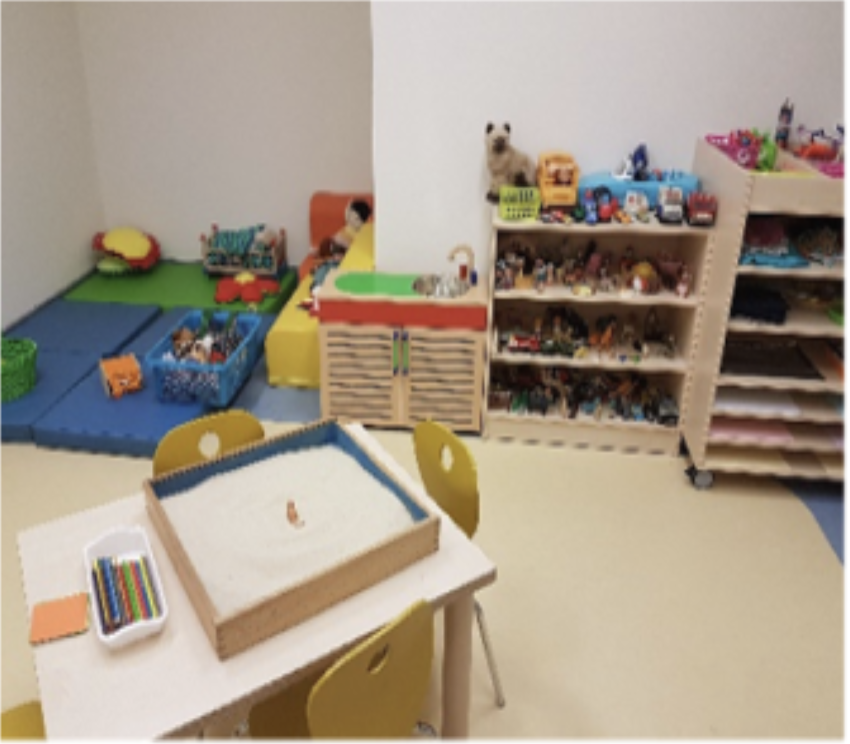
After a few dozen sessions — which may seem like a lot to those who have not relied exclusively on a non-directive approach — there was a breakthrough. Jasmin spoke! She seemed to slowly accept my presence, engaged in play, grew more visibly comfortable in our relationship. From that session onwards, she laughed, giggled, asked me to draw, commented on my drawings, and shared her toys with me. She began speaking openly about her thoughts and feelings, and at one point, even gave me a high five! Yet, while these were indeed huge steps for Jasmin, she was still speaking only through her mother, telling her what she wanted to play instead of asking me directly. It’s important to note that during the initial sessions, Jasmin used the sand tray to explore and express her thoughts and feelings.


My Play Therapy Room


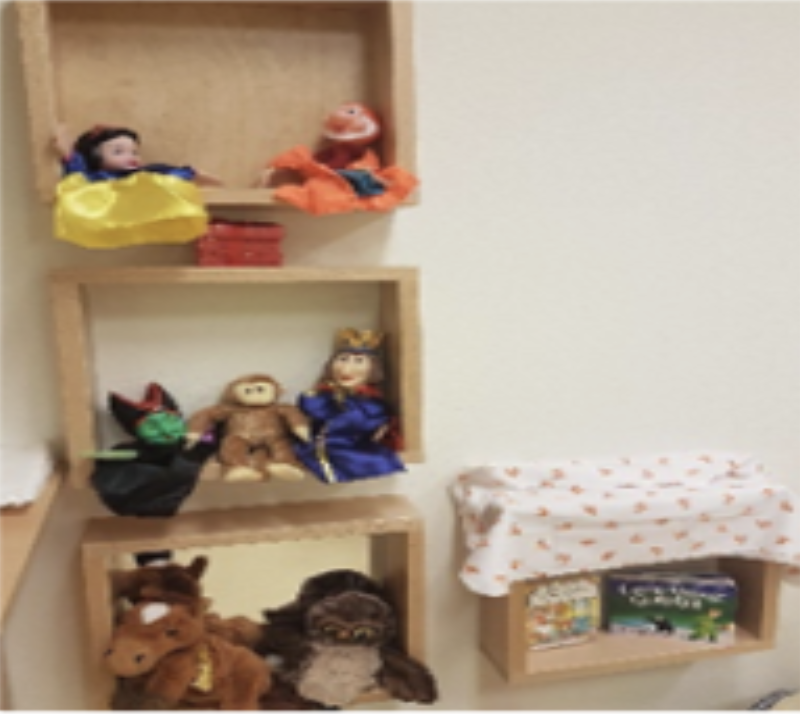
Puppets


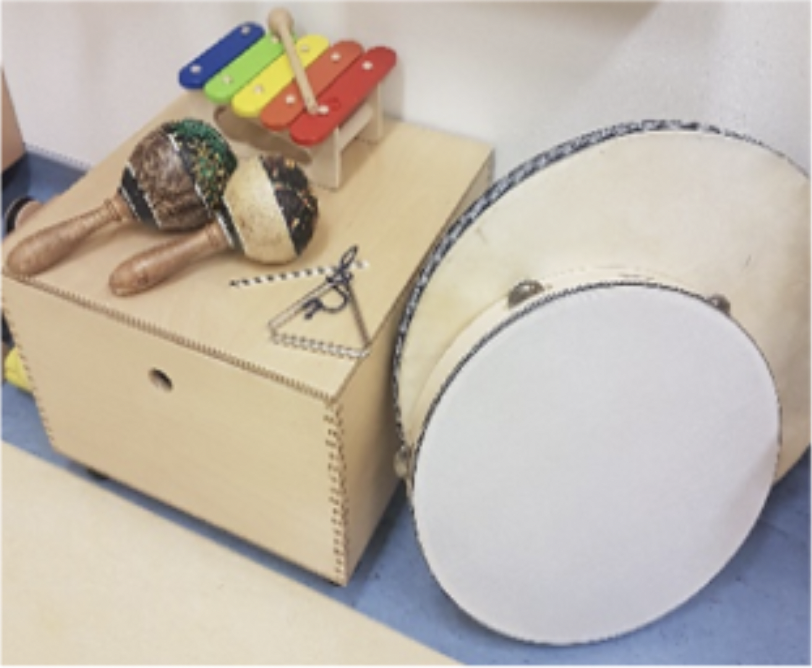
Musical Instruments

As our time together went on, Jasmin slowly solidified her confidence, using puppets to speak for her so that she might maintain a safe distance from her problems. Similarly, she became increasingly comfortable using the creative arts materials, paint, and messy play to work through the difficult feelings she was experiencing, mostly around fear. After four months of attending play therapy, Jasmin felt safe enough to physically separate from her mother and join me unaccompanied. She was testing the limits of her coping skills and taking a brave step towards a new level of security and developmentally appropriate autonomy. Towards the very end of our work together, Jasmin used the baby doll to role play the nurturing mother, while also addressing her feelings around friendships through parallel enactments of shared play in the playground/school yard.  

Jasmin now attends our sessions and often proclaims that she is the teacher, stating that “it is now time for a music lesson!” She plays the instruments, sings, dances, and performs with confidence. It has been such an incredible transformation! At the beginning of this journey, Jasmin’s mother did not think it was possible for her daughter to change or live a normal life. But with the right environment, trust in the process, and using play as a medium to bring us together, alongside clear communication and teamwork between the parent and child, such seemingly unattainable goals became achievable. 

 Testimonial

Jasmin’s mother wanted me to share some words about her experience of play therapy:

“Play therapy simply took me out of the darkness into the light. At the beginning of the journey, I was not completely sure that I would reach my goal and that my only daughter would be like the rest of the children. But I had faith in Allah that made me take the risk. In my first meeting, I saw everything that was said like a dream that was difficult to achieve. The therapist told me that in a year from now, Jasmin will be in school. I muttered to myself ‘just a dream. Allah, please help me to achieve it.’ My child was diagnosed with severe anxiety.

The next day, the journey began with the therapist, Gemma. When I looked into her eyes, my eyes filled with tears. I waited for her to confirm what the doctor had said; that the diagnosis was anxiety and not something else. Gemma greeted me with a smile that gave me hope that my daughter would be cured of that anxiety. Every day while she was assuring me that we would arrive at that goal, my patience was tested.

On our daily trip for the whole year, I saw the light coming from a small gap, and that gap started to widen more, and I saw that light growing stronger. It was a challenge getting to the sessions every day at nine in the morning, on time and in the same chair awaiting victory.

I believed in play therapy. I stuck to it, as a child clings to her mother, and I held onto it with all my strength. Gemma's whispers of confidence never left me. Her support, clarification and understanding were so important. While she was treating my child, she did not realize that she was doing so in a very culturally sensitive and experienced manner, embracing the mother and child together.

Yes, there were many challenges, with those many moments of Jasmin closing her eyes and crying when she saw Gemma (therapist), ending with her running towards Gemma. Yes, it's play therapy but don't underestimate the word. It’s a new hope for every child who is suffering.

And now, after a year, I am looking at the end, exactly as they promised me. My child is now entering her first school year. It is an amazing treatment that is not based on the use of chemical medicines, especially with such young flowers.”   

*Names have been changed for anonymity  

Stefani Goerlich on Becoming a Kink-Affirming Therapist

Defining Our Terms

Lawrence Rubin: Hi, Stefani. Thank you for joining me today. I’m just going to get right into it and ask you—especially for those readers who may not be fully aware—what is kink?
Stefani Goerlich:
kink is nonnormative sexual and relational expression
Kink is a very broad term, but at its most basic, simply means any sort of sexual or relational expression that falls outside of the social norm or mainstream for the people who are engaging in it. What is normal, obviously, varies from culture to culture. But kink is nonnormative sexual and relational expression.
LR: Are there certain standards for normative sexual behavior across cultures that make a place for kink?
SG: When it comes to relational models, polyamory versus monogamy here in the States for example, polyamory is considered a form of kink expression. They’re often sort of rolled in together. But if you go into parts of Europe or the Middle East, polyamory is a cultural norm. On the other hand, things like sadomasochism and sensory exchange tend to be considered somewhat atypical across the board. So there are some things that lend themselves more towards universal kinks and others that are much more culturally contextualized.
LR: For some of our readers unfamiliar with these terms, what are “sadomasochism” and “sensory exchange?”
SG: Within kink, most of what people talk about is BDSM, which actually encompasses several different, smaller sorts of acronyms. It’s a multipurpose concept that includes bondage and discipline, which is an exchange of control. Usually this means control of movement, control of behavior. Then, there’s DS—dominance and submission—which I explain as an exchange of authority between the partners. This may or may not include control of behavior. But often, authority involves decision making sort of power. S&M is sadism and masochism, which we as clinicians think about as pain, giving and receiving pain.

But pain is a very subjective term and varies widely based on the individual. When I’m training other professionals, I talk about sadism and masochism as the exchange of intense sensation. So, within kink relationships, we’ll have one or more of those three—an exchange of control, an exchange of authority, or an exchange of sensation.
LR: So, that exchange of sensation does not necessarily include sexual sensation—direct stimulation of the genitals, which is only one subset of sensory exchange or pain?
SG:
We tend to assume that kink is sexual. But kink, in its most basic, is relational
Absolutely. That’s actually true for all three. We tend to assume that kink is sexual. But kink, in its most basic, is relational. Kink can sometimes be sexual in how it’s expressed. But ultimately, it is a relational form. So you’re right that the exchange of sensation might never involve sexual contact. It could be temperature. It could be impact. It could be electrostimulation. There’s a wide variety of sensations that can be exchanged that never involve removing one’s clothing.

50 Shades of Confusion

LR: How has American pop culture impacted consumers’ (therapists included) understanding of BDSM?
SG:
I think that pop culture has definitely sexualized BDSM
I think that pop culture has definitely sexualized BDSM, but I also think that is true historically. I’m working on a new conference talk and potentially a new journal article that looks at 500 years of how BDSM practices have been portrayed in popular media. And they’ve often been conflated with deviant sexual behavior regardless of whether the people engaging in kink view it as sexual. So that lends itself to this perpetuation of kink stigma. We typically see BDSM signals or cues, like leather or somebody wearing a collar, and immediately sexualize those in a way that they perhaps might not mean for themselves and their relationship.
LR: I go immediately to my only pop culture experience with BDSM, 50 Shades of Grey. Given that therapists are certainly part of the consuming public, did the movie and book help or undermine our understanding of BDSM?
SG:
Unfortunately, the actual relationship the 50 Shades books portray is incredibly abusive
I’m deeply conflicted. I have a conference talk that I offer—or, now, in COVID times, a webinar—called “Kink Affirming Practice: What Your Clients Wish You Knew but Are Afraid You’ll Ask.” And I noticed that my rooms started becoming much fuller after the 50 Shades book and then the movie came out.

On one hand, E. L. James did a great job of bringing kink dynamics into the mainstream, where soccer moms, housewives, and school teachers were reading about this kind of relationship. It was no longer the secreted experience of buying the pulp novel from behind the counter at the adult bookstore. So from that perspective, it was fabulous.

Unfortunately, the actual relationship the 50 Shades books portray is incredibly abusive. It is not a healthy model of kink. And in fact, the only time I mention it in my intro talk is as a case example where I walk people through a case study and offer a few different scenarios. I then ask the participants to tell me if the various scenarios represent consensual kink or domestic violence. At the end, I ask them if they recognize my case study, which is 50 Shades. So, it’s done wonders for normalizing conversations about and knowledge of BDSM. But I think it’s done a lot of harm in terms of how people understand BDSM relationships to actually be.
LR: So 50 Shades sort of limited our understanding of BDSM by grabbing our focus and making it sexual and, as a result, the line that separates BDSM from intimate partner violence was blurred.
SG: And its normalized dominance as a form of coercion, as opposed to dominance as a gift that the submissive gives to their partner.
LR: This may seem like a weird analogy, but when the movie 101 Dalmatians first came out, the breeders were going wild breeding dalmatians. And around Halloween, black cats are oversold and many later abandoned or abused. Did 50 Shades of Gray drive people to the therapists’ office, partners wanting to experiment and their partners not being open to it? Did it increase your practice?
SG: I saw an increase in my conversations with members of the BDSM community who expressed frustration with an influx of people who had read these books and had decided that they wanted to explore kink, but who were coming into it with this unhealthy understanding of what kink should look like. And so a lot of my already kinky clients were very, very frustrated and upset with the sort of change in the zeitgeist of the community, and the way new dominants were expecting submissives to respond or were expecting behaviors to be okay that are not. And newly-identified people who wanted to explore their submissive side seeking out really unhealthy dynamics because they weren’t clear on what healthy kink looks like. So what I saw in my practice was long-time kinksters being very frustrated with the sort of new people that 50 Shades brought into that world.
LR: And I wonder if it also resulted in an influx of clients with already very disturbed patterns of relationships who now wanted to incorporate kink without having a sound, healthy relational foundation. I’d imagine that there needs to be a reasonably healthy pattern of communication and awareness of power dynamics before adding in kink.
SG:
the problem is when people who have never identified as kinky before start to take on a BDSM identity as a way to rationalize or contextualize their already problematic behavior
Absolutely! I think that in general, there is a lot that the BDSM community can teach the vanilla world about negotiation, about consent, about communication, about after-care. But the problem is when people who have never identified as kinky before start to take on a BDSM identity as a way to rationalize or contextualize their already problematic behavior.

When somebody who has struggled to form relationships because they have abusive patterns now decides, “Well, I’m a dominant and so the way I have a relationship with a partner who won’t leave me is to find a partner who likes being mistreated.” That sort of mindset misunderstands what it means to be submissive and also misunderstands what it means to be dominant.
LR: So this kind of person might say, “All these years, the people I’ve dated have called me abusive, but I’m really not. I’m just a dominant. And they’re not understanding. So, I need to find just the right submissive.”
SG: Exactly.

Kink-Affirming Practice

LR: Shifting gears a bit here, Stefani, what exactly is kink-affirming clinical practice?
SG:
Kink-affirming practice understands that kink is its own distinct subculture, with strengths and resources and things that we can use in clinical work with our clients
Kink-affirming practice is the understanding that kink is not just something that we need to know about. Most clinicians that I encounter will say that they are kink-aware. They know what BDSM stands for. They have a general understanding of the idea of kink. But that’s about where their knowledge ends. Kink-affirming practice understands that kink is its own distinct subculture, with strengths and resources and things that we can use in clinical work with our clients, and that we can leverage their kink identities in our treatment planning, in our intervention strategies, and really work with that in the same way that we would use any other aspect of our clients’ identities. So it’s taking it beyond “I understand this” and moving it into “This is a key part of your identity. And we are going to weave this into our work.”
LR: Just as a clinician working with any client is interested in tapping into their resources, you’re saying that a kink-aware therapist uses the person’s kink identity as potential for resources. Can you give me an example of what kind of resources for healthy relationships kink clients bring to you as a therapist?
SG: Sure, but I want to clarify—that’s what I mean when I say, “kink-affirming.” Kink aware therapists understand what kink is, but they might not necessarily have a structure for using that in their work with their clients. They just know enough about it to not cause harm or to stigmatize their clients for being kinky.

In kink-affirming practice, we would look at the use of protocols and rituals to enhance the work that we’re doing with clients perhaps with a trauma history or with a rejection dysphoria. Working daily protocols with their partner into their treatment planning can be really positive for them. If we’re working with somebody with disordered eating, for example, working with their partner—their dominant partner—to help establish rules around that so that they have accountability in their relationship in a way that doesn’t feel focused on their eating but becomes an act of service to complete a meal, can be a really healthy reframing for them.

Another great example for a dominant partner would be—I had a client who struggled with their own med management, blood pressure medication in this case. But they were very busy, and because it wasn’t a huge priority for them, their health was compromised. So we actually worked together to make it an act of service for their partner to remind them of their meds. It became, “Sir, it’s 6:00. It’s time for you to take your medication.” In another context, or one that was not kink-affirming, this reminder could have felt bossy or nagging, controlling. But we played to the strengths of their dynamic and made it something that felt like service to them. Both of these examples reflect a DS context.
LR: These two scenarios are perfect examples of how kink and BDSM are not necessarily about sexual gratification, sexual stimulation, or sexual experiences. It’s about a relational process. One aspect of which might be sexual. You brought up trauma, which is a whole other area. But it made me wonder if it might be a dog whistle to a kink-unaware or non-kink-affirming therapists to search for trauma in the history of these folks who bring their kink identities or practices into therapy?
SG:
One of the biggest misconceptions and biases is that people who identify as kinky are kinky because they have a trauma history
One of the biggest misconceptions and biases is that people who identify as kinky are kinky because they have a trauma history. Actually, when you look at the research and the data, it’s fascinating because people who identify as kinky do not have—they don’t report a trauma history any more than the general population. So trauma within the kink community is on par with trauma in the general community. Where we see a difference is that people within the kink community tend to report higher rates of PTSD than vanilla people. And what that tells me is that you don’t necessarily have more traumatized people who identify as kinky. But what you have is a group of people who have found an outlet and a cathartic modality that works for them who are then coming to kink as a way to further their own healing. So, I can understand why on the surface if you’re working with a heavy population of PTSD, you might make that corollary that, oh, kink is more prevalent in people with trauma. That’s statistically not true. But more likely, people with PTSD may be using kink as an outlet to process those feelings.
LR: What do you mean in your book when you say that consensual BDSM for trauma survivors can be an effective way of processing trauma memories?
SG:
Kink is not, in and of itself, therapy
I want to be really clear. We don’t have enough evidence to say that BDSM play is an intervention. We have some people who are doing that research. But we’re not there yet. Kink is not, in and of itself, therapy. But my background is with sexual assault and trauma survivors, and for a lot of people who have had their control taken away, who have been in situations where they have lost agency, lost autonomy, literally lost physical control over their bodies and their voices, kink can be very powerful. Being able to put themselves in a situation where they can say, “These are my limits. This is what I want. This is what I don’t,” to know with absolute certainty that if they say stop, things will stop. It can be very, very healing to put themselves in situations that offer similar sensory experiences to their trauma in a controlled, safe setting. So it works almost similarly to exposure therapy with a phobia. But it’s self-directed and self-controlled.
LR: When you talk about the healing potential of kink, I think about people who have had chronic health conditions or who have had to undergo medical procedures that have involved involuntary intense pain or submission to painful procedures.
SG:
illness and medical trauma can often be supported and processed through the use of intentional sensory experiences like BDSM
Emma Sheppard is doing some phenomenal work around using kink as an outlet for chronic pain treatment and using intentional chosen pain to offset and to recontextualize pain that perhaps we don’t choose. I know Lee Phillips, in Virginia, does a lot of work around chronic illness and BDSM. So there is a growing sort of small but strong number of voices working on exactly that—on recognizing that illness and medical trauma can often be supported and processed through the use of intentional sensory experiences like BDSM.
LR: If there’s anything I want the readers to take from this interview, it is the importance of that simple finding from research and practice that BDSM and kink in general are not necessarily about sexual gratification, which was the misconception you mentioned earlier. Are there other kink-related myths and misconceptions?
SG: I think there are a number. One of the big ones that I encounter is the idea that people who identify as sadists are intentionally or are diagnostically problematic and that we need to be vigilant around these sadistic clients because they are more likely to be offenders who are sublimating this violent urge into their relationships. Which, on one hand, if that is true for a given client, I would argue that’s exactly what we want them to be doing.

If they have a consenting partner who enjoys receiving the kind of aggressive sensation they want to be giving out, then, yay, we all win, and nobody’s consent is being violated. But we also need to recognize that there is such a thing as prosocial sadism—people who enjoy evoking these reactions in willing people who, in turn, enjoy receiving these sensations. We need to be mindful as clinicians to not assume deeper social or psychological implications here simply because our clients enjoy giving or receiving these intense sensations.
LR: I know that as a clinician, you’re also a certified sex therapist, so would assume that some clients seek you out for sex-therapy related issues, and others do not. What are some of the main concerns that clients bring to you?
SG:
people that perhaps are kink-unaware or kink-uninformed rush to assume that you’re kinky because you’re depressed, or you’re depressed because you’re kinky
I would say that even within my general mental health clients, a sizable number of them come to me because they know that they are kinky and depressed or and anxious or considering divorce. They want to work with somebody who is not going to tie threads that don’t need to be tied. So often—and this comes back to the question you asked about myths—people that perhaps are kink-unaware or kink-uninformed rush to assume that you’re kinky because you’re depressed, or you’re depressed because you’re kinky, or you’re anxious because you’re kinky, or you want to get divorced. Sometimes my clients just need a clinician who understands the way they like to have relationships or the way that they like to have sex, and that this is not necessarily connected with their mental health issues.

Another good chunk of my practice is people who are experiencing desire discrepancy between themselves and their partners, mismatched fetish interests, mismatched kink dynamic interests. I’m starting to look at those sorts of cases more as a mixed-orientation marriage than as a libido issue, because when we look at things as a desire-libido issue, we’re operating from the assumption that one person’s libido needs to be adjusted. When instead we look at it as a mixed-orientation relationship, neither person is wrong. Neither person needs to be fixed or corrected or medicated. We simply need to find the Venn-connection between their common erotic maps. So helping these couples through a mixed-orientation framework has become a big part of my practice.

And the last group is couples and individuals who are newly aware of or newly willing to discuss their interest in kink or polyamory. They’re coming to me for guidance and for a place to talk through and process these new ideas and new experiences as they start to enter into those initial sort of explorations and community engagements.
LR: So a kink-unaware therapist or a therapist who might be conflicted around their own sexuality or relational dynamics might be predisposed to see a red light flashing over the head of a client when kink comes into the room, rather than sort of hold it as just one of the other elements of the person’s identity.
SG: Exactly. There’s also just the resource knowledge. If we have a client who’s struggling with a substance use issue, if we have somebody that’s perhaps overusing alcohol, we can—most of us—have a conversation around several different treatment options for them. We can talk about AA versus Smart Recovery versus Dharma Recovery. We can talk about intensive outpatient versus going to rehab. But if you’re not kink aware or kink affirming, and a client comes to you and says, “I really want to explore this side of me and I don’t know where to start,” most of us are totally unprepared to talk about what conferences are best for somebody who’s curious about pet play versus age play versus BDSM, where somebody can go for educational content without an expectation that there’s going to be any sort of public play component versus somebody who’s interested in polyamory but maybe not swinging. Those are resources our kinky clients need to have access to. And as clinicians, we need to be able to have those conversations with them in the same way we would about any other community resource.
LR: Might there be a profile of the clinician who might be more susceptible to countertransferential responses to a kink client—a kink-practicing client?
SG:
The clinician who is more philosophically conservative and wedded to the sex addiction model is more likely to struggle when working with kinky clients and to pathologize BDSM and kink
I don’t know if I could say there’s an evidence-based profile. I can tell you anecdotally what I’ve encountered. The clinician who is more philosophically conservative and wedded to the sex addiction model is more likely they are to struggle when working with kinky clients and to pathologize BDSM and kink. I have several local colleagues who have told me, verbatim, that I’m the one they send the weird sex stuff to, which is fascinating because the weird sex stuff they send me tends to be masturbation.
LR: Oh, my! Blindness next, right?
SG: I mean I have a lot of conversations with referrals who are sent to me because they’re told they have very problematic sexual behavior. In their intakes, I’m like, “You are well within the margins of normal. Nothing you are telling me is at all concerning to me.” And I’m not saying that as a kink-affirming clinician. I am saying that just as a sex therapist.
LR: One of the things our readers will not be able to appreciate unless they look you up is that you have pink hair, you’re sitting in a pink chair with a statue of Wonder Woman next to you, and that behind you is a beautifully colored floral wreath. I don’t know if it’s macramé.
SG: Embroidered lace I brought back from Romania as we were fleeing Europe ahead of COVID.
LR: So I wonder if a therapist who is not as comfortable in displaying themselves as freely as you or who is struggling in their own relationships is going to have much more difficulty accepting kink clients.
SG:
I try very hard to be very cheerful, very colorful, very approachable, so that I don’t look like what people picture when they picture a kink specialist therapist
It’s interesting that you bring up sort of the color palette of things. Because one of the things I very intentionally try to do in my practice is to be very approachable to avoid that sort of black metal, sleek chrome look—I don’t want my office to look like a dungeon space. I want to look friendly and cheerful and approachable, partly because it’s so important to me to normalize these relationships for my clients, for my colleagues. And a huge part of that is looking normal in the work that I do. I mean the pink hair, I suppose, is maybe a little bit atypical. But I try very hard to be very cheerful, very colorful, very approachable, so that I don’t look like what people picture when they picture a kink specialist therapist.
LR: I wonder if clients who are on the verge of experimenting with or beginning to wonder what kink is, and who approach a therapist who is not particularly approachable—if the relationship will not work.
SG: I will say that every single year, I ask my accountant if I can write my hair dye off as a marketing expense because I hear from so many people that I look friendly and like somebody they could talk to because I had pink hair.
LR: Stefani, I’m going to be presumptuous here and say that I think you need to explore the power dynamics with your accountant. Perhaps you should be telling your accountant what is to be written off and push your accountant into a submissive position when it comes to that. A practice-what-you-preach sort of thing. Sorry, I couldn’t resist that one.
SG: I’ll let her know you said so.
LR: Is the therapist who has not practiced kink at any level capable of working with a client who either is kink practicing or contemplating kink practice or experimentation?
SG:
I don’t think it’s fair to ask our clients to pay us to use their therapeutic hour to teach us what we need to know to do the work with them
I think so. I think that, in the same way that I don’t necessarily have to be gay to work with a gay male couple, I simply need to be willing to educate myself and empathize with them and respect them, that other people can work with kinky clients if they’re willing to do that same work. I actually think it can sometimes be easier because when I’m doing case consultation with peers who themselves are kink-identified, that’s where I see countertransference. That’s where I see, well, the way that their relationship is set up or the way that they’re doing kink isn’t the way I think that kink should be done. And so we have to have conversations around your kinks, not their kink. But that doesn’t make their kink wrong. At times, it might actually be easier to have somebody who is very affirming, but not necessarily kinky themselves, doing that work.

I think that one caveat I would add is we need to be willing to let clients teach us about their dynamic and the way that they do kink. I do not think we should be looking to our clients to educate us about kink in general. We need to be pursuing continuing education. We need to be reading books or watching documentaries or attending conferences written by members of the kink community. We need to be educating ourselves, and then asking our clients, “What does this look like for you?” I don’t think it’s fair to ask our clients to pay us to use their therapeutic hour to teach us what we need to know to do the work with them.

Hard Places and Soft Spots

LR: When should a therapist consider referring a client who may be reconsidering their relationship style and/or sexual practices to include kink practices?
SG: I think, if it’s not something that you’re willing to—if it’s outside your scope of practice and you’re not willing to do the work of learning, then you need to refer. And it’s okay to be uncomfortable with something. I’ve worked with clients whose individual practices or particular fetishes made me uncomfortable. I’ve referred a couple of people out whom I simply know I can’t provide unconditional positive regard to. Not because there’s anything wrong with them. But because I just know where I’m at. So if you are encountering a client you are unprepared to work with and unwilling to educate yourself to do the work with, you have an ethical obligation to them to connect them with somebody who can and who will.
LR: You said that you will refer some clients and you talked about fetishes. Are there some fetishistic behaviors that go beyond your level of moral acceptance? I mean, when would a person’s fetish be such that you would need to refer them, since I’m sure you have seen and heard it all.
SG:
Moral is tricky because my clients, both kinky and non-kinky, engage in all sorts of behavior that I have moral issues with
Moral is tricky because my clients, both kinky and non-kinky, engage in all sorts of behavior that I have moral issues with. If somebody’s stealing from their employer, I have a moral issue with that. I think that we tend to ascribe socially greater moral weight to sexual things than to nonsexual things. But that doesn’t make it any more or less moral. So I don’t know that I want to define it as a moral thing.

But for me, in terms of comfort, really diving into the details of somebody’s experience, where I’m able to sit and hold space for a given narrative, people who are zoophiles—that’s something that I personally struggle with.

Thankfully, I have colleagues I can refer out to. And I do. And again, I’m not necessarily putting a moral weight on that. It’s just I can’t be what they need. I work with people who struggle with pedophilic urges. And I’m comfortable doing that. I’m a member of the Association for the Treatment of Sexual Abusers. I’m comfortable working with non-offending pedophiles. I don’t work with actively offending pedophiles. But for the most part, those are the two big ones for me. I have people that engage in a lot of niche fetishes that some of my peers struggle with, like coprophilia. So, most things I am fully capable of holding space with. For me, really, just in terms of being able to sit and hear the stories and process and be present for, those are the two that I refer out for, personally.
LR: So, like any competent clinician, you have your boundaries. What kinds of concerns around BDSM do you hear from parents who have concerns for their children and teens?
SG:
I have such a soft spot for kinky adolescents because they are completely adrift
I have such a soft spot for kinky adolescents because they are completely adrift. There are very few ethical resources available to young people who identify as kinky. And it’s tricky because when we interview kinky adults, most of them say that they first recognized an interest in kink starting around age 10, if not a little bit earlier. So, most people who are kinky knew they were kinky early.

And we have a huge population of young people who know that this is a part of how they form relationships, how they give and express affection. And yet they can’t attend kink conferences. They can’t go to BDSM events. And absolutely, we have to be aware of predators and of problematic situations. That’s because, when you’re talking about power exchange in young people, you want to make sure that they’re capable of consent. So, there are really no great answers. I think where I focus with parents is on recognizing that BDSM is a healthy relational expression, on normalizing BDSM as something that can be done in a safe, consensual way, on recontextualizing power exchange as not coercive and grooming behavior, but as a future relationship model their children may aspire to. Even though they’re not adequately able to enter into a dynamic like that now.
LR: Research tells us that children who are victimized by sexual and physical abuse are at higher likelihood of becoming abusers themselves. Is kink interest in children and teens a potential risk factor for them? Especially for trans youth, who are at even higher risk for adverse outcomes?
SG:
providing gender-affirming care to young people is so fraught and contentious that we haven’t even gotten as far as people being able to have a conversation around affirming kink identities
I honestly don’t know that I could speak to that. I don’t know that there’s been enough research. And I think right now, the conversation around simply providing gender-affirming care to young people is so fraught and contentious that we haven’t even gotten as far as people being able to have a conversation around affirming kink identities in gender nonconforming young people. I think that might cause heads to explode in ways that are not fair to young people.
LR: I’m wondering if there’s a hierarchy of kink practice and kink fetish that can be ranked in terms of likelihood of bringing ire to parents and people in general?
SG: SG: I think somebody’s gender identity is such a core aspect of who they are that that has to be supported and affirmed before any sort of relational preference or sexual expression could ever be hoped to act on. They can’t have a happy, healthy, consensual power exchange relationship or engage in a happy, healthy, sensory exchange relationship if they’re not happy and healthy in who they are as a human. And so their ability to engage in any sort of relationship model—kinky, vanilla, or otherwise—is really predicated on our first affirming them and their gender identity to start with.
LR: So healthy kink practice requires healthy personality development first.
SG:
I don’t know that we necessarily need to be rushing to include kinky young people in the broader kink community
Absolutely. As you know, the last part of the brain to develop is the area that controls cause and effect thinking, good and ethical decision making, and being able to anticipate outcomes. And all of those skills are necessary in order to truly negotiate with a potential partner and especially when it comes to BDSM and kink—in order to be able to consent to some of the things that kinky people do. So, I think that supporting young people in their identity formation, in affirming their gender identity, in teaching strong consent culture early and often and bodily autonomy and sex positivity—these are all ways that we can support kinky young people. But I don’t know that we necessarily need to be rushing to include kinky young people in the broader kink community. I think that we need to give them space to be able to have the adult conversations that kinky people have around negotiation of scenes and relationships.
LR: What might be the relationship between the age of the therapist and their capacity to embrace broader elements of identity like kink? Or is it more a matter of the developmental level of the therapist rather than their age?
SG: I don’t know that I would want to speak to that. I feel like it might be far more generational. I think that my son’s generation is so much more inclusive and eager to affirm and accept people with diverse identities and experiences in a way that my parents’ generation really struggles with. And I know that as a Gen-Xer, we try really hard to always get it right. So, I don’t know if it’s an age thing so much as it is a generational thing.

Unanticipated Outcomes

LR: That makes a lot of sense. From your own clinical experience, can you share an unanticipated success story and an unanticipated unsuccess story—I won’t call it “failure”—around working in the kink domain?
SG:
it broke my heart a little bit because they deserved to—whatever their identity was—be affirmed in that
When I first went into private practice after leaving agency settings, I was still in sex therapy supervision. And my very first gender nonconforming client was a person who had lived as a heterosexual man their entire life, who had always struggled with thoughts that perhaps they would be happier as a woman and had come to therapy to explore this. Being me, I was very, very, very excited to help explore this. And we had many wonderful conversations and I offered lots of activities and resources. One day, they came in and said, “I don’t want to do it. It’s too hard, and the payoff isn’t worth it. If I were to announce that I am a woman, I would lose my children, I would lose everything I have. I’ve been doing it this long, I can keep doing it. Sure, it would be nice. But, at the end of the day, the reward isn’t worth the risk and having these conversations is just too painful. So, I’m done.”

There was nothing I could say to that. You have to respect everybody’s process. But it broke my heart a little bit because they deserved to—whatever their identity was—be affirmed in that. Whether that was a heterosexual cis-man that just liked wearing dresses every so often, or whether that was a complete reshaping of their gender identity, I wanted them to be loved and accepted for who they were. And after having so many conversations about what it would be like if they could have that, to have them come in and say, “I just decided it’s not worth trying,” was really—it made me very sad for them.
LR: Perhaps it’s the therapist or supervisor in me that says, maybe it wasn’t really a failure. You created a space for the conversation. And they weighed the pros and cons and did what was best for them, even though you would have hoped that they could have done what was better for them, rather than just best. How about another experience from the—you’re glowing—oh, my God—this was wonderful and…
SG:
I am very much—as you might guess—not a kink-shaming person
I had a client who said that she was in a 24/7 DS relationship, but that it didn’t feel comfortable for her and she wanted to work through her feelings because her dominant was telling her that she wasn’t doing DS right. He wanted her to come to therapy to figure out how she could be a better submissive. And I am very much—as you might guess—not a kink-shaming person. But about two months into this, I paused mid-conversation and said, “I want to print something off, and I want to show it to you.” I went to my laptop and printed off the Duluth Model of Domestic Violence Wheel of Power and Control. I said, “I want you to tell me whether or not anything here looks familiar to you.” And she pointed out—I gave her a highlighter—and she started highlighting a whole bunch of things. And she said, “Well, yeah. But this says, ‘Power and Control.’ This is just what DS is.” And I said, “But how much of this did you agree to?”

I then asked her, “How much of this is okay, because not everything on here can be healthy. And sure, there are things on the Wheel of Power and Control that can be negotiated. Absolutely. Name-calling—absolutely. If that’s your thing, go for it. But there are some things like threatening to harm pets or children that are never a part of—and it seems sort of counterintuitive considering the conversation you and I have had.” Looking back on that powerful interchange, I was able to help somebody understand that they had been gaslighted by their partner into thinking that she was just a terrible submissive, and, if she was just a better submissive, they would have a great relationship. She understood at that moment that this was not kink, that this was a really abusive relationship—and that was very hard.

That was the start of about two years’ worth of work. She ended up moving out. He ended up making some threats to me. I had to have security walk me to and from my car for quite a while. And then she terminated. And I was worried about her. But last summer, out of nowhere, I got a text message saying that she had moved across the country and she had gotten her dream job and she had a new dog that she’d always wanted to have that he would never have let her have. It was a very lengthy text message. And she was just living her best life. And she told me that she would never have thought that she was capable of doing that if she hadn’t had me look at her and say, “This isn’t what kink looks like.”
LR: It is wonderful to have those kinds of memories. I could not possibly end this wonderful conversation, Stefani, without asking you the significance of the Wonder Woman action figure on your desk.
SG:
Wonder Woman originally was intended to represent a new vision of womanhood that was intended to challenge patriarchal norms
I love Wonder Woman. William Moulton Marston, the creator of Wonder Woman, not only invented the first lie detector, but he created the DISC personality profile, which is one of the first attempts to actually use the concepts of dominant and submissive. He tried to sort of codify what those personality types looked like. And Wonder Woman originally was intended to represent a new vision of womanhood that was intended to challenge patriarchal norms and to challenge relationship models and to give young people a new vision for what relationship dynamics could look like.
LR: Does Gal Gadot capture the essence of what Marston envisioned?
SG: As a Jewish woman myself, I love having a Jewish Wonder Woman. She is my favorite.
LR: There was an ad in a magazine in the ‘40s that featured Wonder Woman strapped to a lie detector. I wonder if that was a subtle domination image—not so subtle actually.
SG: Not so subtle. Golden Era Wonder Woman had some pretty overt bondage themes. Marston was in a DS relationship with his partners—a DS poly relationship with his partners.
LR: Well, we’ll leave our readers with that, and I thank you, Stefani.

Confessions of a Student Counsellor

Both Sides Now

At the time of this writing, I have one semester to go before completing my Master of Counselling degree, and I am sixty-five hours into the one hundred required hours of counselling contact hours of my student placement. I am still unsure as to who has received the lion’s share of therapy during these sixty-five hours, my clients or me?

This has not been my first exposure to the rudiments of counselling, however—I had some years of experience in addictions counselling and case management and no shortage of support work in various fields to ease me into the relative displacement of a professional counselling placement. At forty-seven years of age, I have undergone many transitions and life experiences.

Nevertheless, the Masters has been quite a proficient primer and prodder of the all-too-many things I didn’t (and still don’t) know about counselling practice, and of the myriad of things that I need to know in order to provide effective and ethical therapy for a range of concerns and to a broad demographic.

Having had experience in various counselling settings—and being quite familiar with both sides of the counsellor’s chair—together with the fact that I consider myself an avid collector of knowledge, particularly in this field, I still felt a strange cognitive dissonance of both excited preparedness and complete inadequacy to the task at hand at the commencement of my placement. But that was then. At sixty-five hours in, I am a worldly veteran!

The first thing that stood out to me about my placement experience was how pretty much every session turned into a countertransference case study from my ethics class, except that I was the subject. I knew about countertransference. I had studied it. Experienced it. Was consciously aware of it. Prepared, I thought. But I never really had that meta-cognition before that one develops, both while counselling and in the post-session self-flagellation…ahem, reflective practice.

Almost every session seemed like a mirroring of the personal life struggles I had faced, parallel processes of my current situations, relatables that were bone deep. The client I was sitting with was recounting the very relationship issues I had struggled with. Of course I was batting for him! My heart was filled with sympathy, my responses were, albeit textbook, empathetic, while my mind was firing off mostly Andrew-shaped responses ready for delivery. Often, I would catch myself before essentially counselling myself instead of my client. Sometimes I was too late and would realise, embarrassingly, later that day or week. More often than not, in supervision. Or because of past supervisions.

Or I could be sitting in front of the horrifying ghost of my mother-self. That is, this particularly triggering, discomforting, and disquieting quality that my mother possessed which I painfully one day realised I had inherited, now (mostly) exorcised out of me (thank you therapists circa 2000-2004, 2008-2009, 2012-2013 and 2020-2021; you know who you are). Noticing the life force draining from my being, I would sometimes sit across from the ghost-client in a sorrowful-seething state of frustration, compassion, bewilderment, intrigue, and hopelessness. I could swing between feeling annoyed and way out of my depths to such misguided compassion that I would feel the urge to take them home and care for them.

Going it Alone

Something I knew before but re-experienced in a fresh new light during my placement is that a significant part of learning to be a counsellor is essentially done alone. There is generally no direct supervision. There is no one in the room to monitor the minutiae of one’s work. There is no direct feedback loop. It is not as if your supervisor has a document to proofread. There is no material structure to assess for imperfections or to correct. No one is surveying clients at the end of sessions to establish trainee performance. No one is there to say, “Hmmm, maybe when you froze for a minute and a half with silence…” or “Perhaps Texas Hold ’em Poker isn’t the most appropriate game to play in a session with a six-year-old…” Of course, there are opportunities to be observed by colleagues and supervisors or to record sessions and review them. But this is limited in its scope and practicability. And daunting as hell! Or as daunting as having my own personal therapy sessions broadcast to the world, perhaps. Being utterly exposed. Vulnerable.

Sitting with clients who have just expressed something, there are a plethora of potential responses in any given moment of a therapy session. Sometimes they flow readily and easily. At other times they feel forced. And in some cases, when a response hasn’t felt right, an also potential plethora of self-reflective doubt and questioning can follow: “Did I say the right thing?”; “How am I going with this client? Doesn’t seem to be any progress being made”; “What is the correct intervention to use here?”; “They have been coming for three sessions now, why won’t they volunteer something… anything?!” Being left to one’s own devices (well, me to mine) can leave one unsure at times about particular interventions to use, ways of progressing through impasse, whether or not to refer, whether I am beyond my professional competence, and one’s capacity to be a counsellor, which can undermine self-trust and even self-worth.

And then at other times, when I am feeling in my flow, when I have recognised counselling greatness in myself—you know, when a client has expressed eternal gratitude or you witness a breakthrough or an insight emerges—then I can quite easily develop that very shiny, bulletproof sheen of self-satisfaction and self-congratulation, feeling like the king of the counselling castle! Either polarity can be both misguided and unhelpful to me, I have discovered, and, left alone with such musings, can be a potentially missed opportunity to see beyond my own perspectives and to develop my practice.

Thank goodness we are not completely alone during this, at times, trial by fire. Having practicing colleagues around is such a comforting and valuable scaffold of support. I am fortunate to be doing my placement in a medium-size clinic providing both psychology and counselling services, so there are usually at least a few others to talk to or debrief to if needed. I am aware, however, that others’ placements are more isolated and devoid of such support, and I have witnessed the emotional and psychological strain that this can take. I am very grateful to be developing in the kind of environment where I feel supported and not alone. Hmmmm, maybe there’s a market for a Tinder-like app for counsellors in isolation?

I think there is a limit, however, to how far collegial support can go. There are certainly limits to my own (and I am guessing other humans’) capacity to expose oneself in the workplace. Especially as an up-and-coming trainee counsellor, wanting to exude competence and confidence at every opportunity (I am willing to admit that could just be me, but I suspect not). Clinical supervision during my counselling placement has been a great support and I think the site of my most focussed learning during this Masters and certainly during my placement. I am fortunate to have both group and individual clinical supervision. They are both supportive, instructive and provide opportunities to develop and learn from others’ practice. I have found that it is in individual supervision, however, that I have the greatest opportunity to be vulnerable and to shed light on the more shadowy areas of my practice. It feels a bit safer than group supervision and I like its structure, containment, consistency, and predictability.

Maybe Not Completely

I am fortunate that I was paired with an external clinical supervisor by my university placement team whom I like and respect, but, most importantly, with whom I feel safe. Safe to say (almost) anything to. Safe to expose my insecurities and doubts to, to be able to tell them what I did and said in a session, for example, without any debilitating apprehension. They provide safety and security in calling me out when needed, ensuring I understand my limits and blind spots. Kind of like a parent’s love in providing firm and consistent boundaries to an overly exuberant child. They encourage me and validate me, sharing their own stumbles and falls. But the catch is, as I recognised a while ago, I must be willing to be vulnerable and uncomfortable and wrong, again and again, to gain the most from this. I must be willing to be a beginner again and again and again if I am to grow and develop as a person and as a therapist. But this is hard to do at times. For fear of judgement (self and other), feeling inadequate and for (the generally unfounded) fear of finding out that maybe I am not cut out for this profession. The most satisfying, albeit challenging, learning I have experienced during this placement, and the Masters too, has been exposing myself in supervision.

Like when I reluctantly discussed a client I had seen once whom I suspected to be beyond my scope of competence. Reluctant because I was personally and professionally very curious and they claimed they weren’t in a position to engage in costly treatment options and so I really wanted to keep working with them. And I suspected that if I spoke about them in supervision (and to my line manager) that they would advise referral. But I did. And it was right. And I referred. It was frustrating and challenging, but a great experience to have in the sandpit. And I incidentally had reflected to me my potential for a hero complex. Ouch! But yes, probably accurate. Or when I spoke about how I responded to an awkward situation with a child client and their mother, suspecting I didn’t handle it very well and wanting input. And then getting feedback that challenged as well as expanded me, reinforcing that I really do not know what I do not know as well as not knowing what I do know, too. These things can sting for a bit, but I am a better counsellor for it.

Just like when I have been in therapy myself, the more I am willing to be vulnerable and uncomfortable and reveal those shadowy parts of myself, so too in my counselling role (especially as a trainee), the more I allow this, the more space I make within myself to expand. I make the space for learning and growth and development and career and life satisfaction and ideally to be a more effective therapist and, of course, to do no harm.

***

I recall a brief conversation I had with a university lecturer this year, a seasoned counselling psychologist and academic. I was reflecting on the challenges of not knowing it all and bemoaning if I would ever feel competent as a counsellor. Their response was heartening to me, then and now. They related to this feeling, stating that they still occasionally felt this way. But they also knew that they are a damn good therapist and a valuable resource for their clients. Nice.

Russell Ramsay on Attending to ADHD in Adulthood

Three Avenues to ADHD

Lawrence Rubin:  Hi, Russell. Can you tell us about the typical clinical presentation of someone who has either been diagnosed with or is a good candidate for the diagnosis of ADHD in adulthood?


Russell Ramsay: Well, there’s a couple of different avenues.

If there is a history of ADHD or suspected ADHD they may think, 'All right, I’d better see somebody about this for managing adult life.'
The first is exemplified by somebody who may have been diagnosed in childhood or adolescence and is seeking out continuity of care in adulthood. They may not have come to us right out of high school but are usually making a transition, when all of a sudden and with increased chronological age, there are increased demands for self-regulation and self-management. Waking up and getting to class in college, managing homework, getting to a job on time, things like that. Usually, these clients will say things like, “You know what? I struggled with the same things over several years as I am right now and I keep starting anew, but I’m not making progress.” If there is a history of ADHD or suspected ADHD, they may think, “All right, I’d better see somebody about this for managing adult life.”

This may sound much more pessimistic than I actually intend, but there’s no end of the school year in adult life. You keep going, unless you're a teacher, whereas for children and adolescents, not that it’s any easy go, but if they can hang on until summer, everything stops. And then they can start over in the fall with a fresh slate—which also keeps some people from getting diagnosed until they move into adulthood. Maybe they can hold it together until the end of the school year when they say something like, “I should probably get an assessment,” followed by, “All right, I got through. It was okay and I started off the new school year okay. So maybe it was just last year.” But that gets repeated, and it becomes a continuity of care issue, with some people saying, “Okay, I had treatment in high school, and now I need some help in college.”

For people who do not come to us until adulthood and weren’t diagnosed in childhood or adolescence, we call them late-identified, not late diagnosis. With a full and thorough evaluation, we can usually confirm that there was emergence of symptoms in childhood or adolescence, even if they weren’t diagnosed at that time. And so people will come to us saying, “I’ve tried to make changes. I’ve made adjustments.” We’ve actually had college students who quit a sports team saying, “I have more time, but I’m not getting any farther ahead.”

a client may present in adulthood with repetitive difficulties managing what previously seemed to be manageable affairs
Or a client may present in adulthood with repetitive difficulties managing what previously seemed to be manageable affairs. And it is not all or nothing. It’s not like, “I never go to class. I never hand in homework.” The frustrating thing is, it’s something within reach, or there’s some documented evidence that “I know I can do this. The admission committee let me in the school. I did well in this class or I did well through midterms, but then I lost it later on.” That consistent inconsistency.

And that sort of drives some of the self-mistrust that can develop within these individuals. So, the second avenue is people saying, “I’m not fulfilling my potential.” We could have a philosophical argument about whether there is such a thing as potential, and if we’re not reaching it, is it reachable? But usually what people mean is, “I’ve done it well, but I don’t sustain it.” There are often college-related difficulties, dropping classes due to falling behind. And it’s not necessarily due to trying to be a physics major, then just finding out you’re not wired for physics.

In managing workplace affairs, even if it’s not a performance improvement plan, people might say, as one of my colleagues so insightfully described, that they’re “working twice as hard for half as much.” Or they might say, “People think I’m so dedicated because I stay late, but that’s how long it takes.” Or they do a lot of extra work on the weekends, which we are all familiar with, but it’s not because they are trying to get ahead so much as they are saying, “No, this is not me going above and beyond. This is me trying to catch up before Monday comes.”

The third avenue, which has recently gotten more clinical and research attention, is people experiencing the effect of ADHD on relationships, be it committed romantic relationships, parenting, or just keeping up with friendships. We see this occurring a lot after college, where people lose touch with people because it takes more maintenance to keep up with friends, as does scheduling and coordination.

We really need to think about ADHD as a problem of self-regulation
From the diagnostic standpoint, ADHD, the name, is probably not going to change. It’s a brand. The A and the H of ADHD are really red herrings. A friend and colleague, Russell Barkley, who is probably a leading, if not the leading figure in ADHD and other matters, has a great line for it. He says, “Calling ADHD an attention problem is like calling Autism eye gaze disorder or saying, ‘Oh, their eye contact seems to be okay, so it’s not autism.’” Some people, whether diagnosed with Autism or ADHD, can perform well in some circumstances. We really need to think about ADHD as a problem of self-regulation. How efficiently do you do what you set out to do?

And without diving too deeply into that, these folks can function pretty well some of the time, but there are enough recurring areas of difficulty. These include difficulties following through, usually towards deferred goals that take sustained effort to reach. And this could be retirement funds, papers for school, organizing behavior across time towards these ends.
LR: So ADHD, whether first recognized as an adult disorder or a continuity of a child/adolescent disorder, is a life management disorder based in part on continuous and pervasive deficits in self-regulation and executive function.
RR:
we’re probably not treating the symptoms of ADHD, we’re treating the life problems associated with ADHD
Right. As psychologists, we understand that medication use is evidence-based and that it can be very helpful, like prescription eyeglasses. And whether we’re speaking of medication or eyeglasses, some people will say that’s all they need. This is just like cognitive therapy for depression. I’m sure this isn’t empirically accurate, but the rule of thirds applies. One-third of people do well with meds only, one-third with therapy only, one-third with combined. A lot of people can do fine with medications alone. But even with a positive medication response, many people will say, “Yeah, but I still procrastinate,” or “I still don’t look forward to reading Beowulf or working on my income taxes, so I still put it off, but I can really pay attention to the sports page or whatever I’m reading.” So we’re probably not treating the symptoms of ADHD, we’re treating the life problems associated with ADHD.

Psychiatric Comorbidities

LR: You say in your writing that psychiatric comorbidity is the rule rather than the exception. What type of psychiatric syndromes or symptoms have you noticed in your work with this population?

RR: Well, both from my noticing it, and also from what has been found in the literature, the top three in ascending order are anxiety, depression, and substance use or addiction problems. And with that, we can probably even bundle in dealing with technology as a distraction.

Now, comorbidities are always interesting because anything could be a comorbidity, really. It makes sense that among these top three, anxiety, which we often see even in subthreshold form, is number one. I think that in the DSM-IV, this particular subthreshold phenomenon was relegated to the “not otherwise specified” domain. Now, in the DSM-5, it’s “other specified” or “unspecified.” In adult-identified ADHD, this anxiety is related to that consistent inconsistency, that uncertainty which is often associated with underlying fear and risk.

uncertainty creates the apprehension, and creating uncertainty is exactly what ADHD does. “I know I can do it, but I don't know if I’m going to be able to make myself
Uncertainty creates the apprehension, and creating uncertainty is exactly what ADHD does. “I know I can do it, but I don't know if I’m going to be able to make myself. I did fine on the midterm exam, but am I going to be able to study and retain and test well enough on the final to get a decent grade or pass the course?” Domains of difficulty can be layered with that uncertainty.

In some ways, anxiety is adaptive because it makes somebody pay attention more and focus on it, like gasoline on fire. But it can also lead to avoidance. And then depression is a sense of loss, so that can lead to disappointment. And that can create a cycle of avoidance, and then comes the self-fulfilling prophecy of, “Oh, you see, it didn’t work out well.” Or, “I tried my therapy and it’s not working, so nothing works for me.” And then comes disengaging.
LR: Hopelessness?
RR: And there’s hopelessness. And then the substance use problem seems to be tied in with the need to self-medicate or self-soothe or, in other cases, it’s maybe related to early initiation due to poor impulse control.
LR: So when you see these comorbidities like anxiety, depression, or substance abuse, is it more helpful for a clinician to conceptualize those as sequelae, with ADHD as the foundational deficit? Or can depression or anxiety or substance abuse lead to symptoms that mimic ADHD? Seems to be a nuanced differential diagnostic issue.
RR: Right. Taking that last point first, absolutely! And even going back to the executive functioning model or that self-regulation model, which addresses the importance of organizing behavior across time towards a delayed goal. We all have executive functions. Going back to Walter Mischel’s marshmallow study, we saw kids who were sitting on their hands during the study so they could earn the second marshmallow—that’s self-regulation. At age eight, sitting on your hands is self-regulation. Just like if those kids had marshmallow issues later on in life, not bringing marshmallows into the house so they weren’t tempted to snack on them would be an example of how this self-regulatory skill followed them forward in life.

So, just like attention problems are ubiquitous in the psychiatric emotional disorders, they’re also a symptom of pretty much every one of the disorders. If you’re in the midst of a major depressive episode, your executive functioning will go down. In the midst of an anxiety disorder, executive functioning goes down. If you have a sleep disorder, executive functioning goes down. In tracking these generally episodic conditions, it becomes important to ask these clients if these executive functioning problems or ADHD predate their emergence?

asking people later on in life which came first, the symptoms of ADHD or the trauma, can be a very difficult discrimination for them to make
One of the tricky ones is when there’s an early childhood trauma. Asking people later on in life which came first, the symptoms of ADHD or the trauma, can be a very difficult discrimination for them to make. Problems with attention and dissociation can both look very ADHD-like. They can also coexist, or the persisting executive functioning problems can exist and endure outside of specific triggering situations or a year with a teacher who might have been abusive and not effective in working with that client when they were younger. Experiences that occurred outside of the triggering situation and outside of any other explanation would warrant further follow-up about the possibility of ADHD.

Then there’s a second conceptualization, where we are simply seeing true coincidental disorders. This would be a clinical scenario where the disorders don’t necessarily or typically overlap, like panic disorder and ADHD, or maybe obsessive-compulsive disorder and ADHD. Social anxiety is another one, because sometimes the ADHD difficulties are very public, like the uncertainty and fear accompanying being called on in class.
LR: When evaluating a client for anxiety, depression, or substance abuse, would a clinician be well advised to also consider some sort of ADHD questionnaire, just to get a sense of executive functioning capacity and the possibility of a more pervasive underlying ADHD?
RR:
there are some good screening scales in the public domain for assessing the components of ADHD
I can be very liberal with heaping more work on some hard-working therapists out there, but there are some good screening scales in the public domain for assessing the components of ADHD. It’s important to remember that screening scales are designed, both for psychological psychology and medical practice, to cast a little bit of a wider net, trying to reduce some false negatives and maybe tolerate some false positives. But in order to identify potential follow-up as a differential diagnosis, sure, they can be helpful.

ADHD as Executive Dysfunction

LR: Okay. Let me drop back a step, Russell, because you’ve used a couple of terms that a lot of therapists out there may be familiar with but haven’t really connected to other disorders. You say that ADHD is an executive dysfunction disorder and a deficit in self-regulation?
RR: Executive functions pretty much are self-regulation, and as an umbrella term within the neuropsychology literature, they generally cluster around one factor. How efficiently do you do what you set out to do? And a lot of this comes right from some of the research of Russ Barkley, Martha Denckla, Tom Brown. There are several executive functioning scales out there, and they generally cluster around goal-focused behavior, referring to goals that we want—we have skin in the game.

Executive functions include task initiation, time management, organization, problem solving, motivation, impulse control, and emotional regulation. We now know that difficulty with emotional regulation within the domain of executive functions is a core feature of ADHD, even if it’s not in the DSM. And it’s not necessarily a mood or anxiety disorder itself. It’s managing the same frustrations and stressors in day-to-day life that we all face, but they just tend to be more disruptive and distracting for individuals with ADHD. And they have a harder time rebounding from them.

I use the example of taking your car in for an oil change, finding out that you need a whole new transmission, and having to decide whether or not to get a new car. Yeah, that’s going to be a little bit distracting, but most people can say, “You know what? When I get home, I’ll talk it over with my partner, and we’ll decide.” While somebody with ADHD may be more prone to say, “I have to look up things now and figure this out now and skip class or lose half a day at work.”
LR: Along these lines of executive dysfunction, which is associated with the frontal lobe, what are the implications of calling ADHD a neurodevelopmental disorder?
RR: I think it draws on evidence, on one of the more consistent findings, that within that particular category, there is a high genetic loading for ADHD. Whether or not genetics are destiny, the unfolding of that predisposition has a lot to do with environmental influences.

there is a high heritability rate in ADHD, which is tied with several interdigitating brain networks, particularly the prefrontal cortex, where the executive functions are housed
We also know there is a high heritability rate in ADHD, which is tied with several interdigitating brain networks, particularly the prefrontal cortex, where the executive functions are housed. It’s not a matter of justifying it one way, as genetic or environmental. I think where we are going with this is that there is going to be a predisposition, and these disorders that emerge in childhood might require some form of lifetime management. This would be similar to the case of diabetes in the medical model, which requires ongoing insulin or paying attention to one’s diet.

We all do that to some degree in the event of more chronic or lifelong conditions, but with ADHD, there might be more specific domains, a little different for each person, that require ongoing, intentional management. Another term in the literature related to this discussion is that ADHD is a quantitative difference, not a qualitative difference, particularly with regard to executive functions. The difference with somebody who, for lack of a better phrase, has intact executive functions is that they have a relatively consistent baseline, while that baseline for someone with ADHD is more variable.

'Well, if you’ve seen one person with ADHD, you’ve seen one person with ADHD.'

It’s almost like the baseline for the ADHD client is a moving target, that consistent inconsistency. And there can be different domains of the executive functions, each of which has its own developmental timing and unfolding. In this sense, different people can have different rabbit holes that can pull them down. One of the lines in my field is, “Well, if you’ve seen one person with ADHD, you’ve seen one person with ADHD.”

Culture and Society

LR: Contemporary clinical practice revolves around an increasingly diverse client base. Does ADHD target any one culture, SES, or race more than it does others?
RR: From the available evidence, it seems like ADHD is equal opportunity. Wherever there are human brains, the risk factor for ADHD is probably around 1 to 3%. Now, what we will see is in terms of identifying ADHD and seeking help specifically for it, that can be where we will hear people of a certain age say, “I grew up in the ‘70s or ‘80s. We didn’t have ADHD back then.” Actually, we did, but it probably just wasn’t as recognized. Or somebody will come from a different country, culture, or family system where they say that mental health issues were not first on people’s minds in terms of looking at what could be helpful.

I think there was an international study conducted around 2001 with college students. They might have found that there were zero Italian women with ADHD, but that was probably more of a cultural difference at that time. They couldn’t determine the differences in prevalence were culturally bound or related to gender. So, I think it would be safe to say that wherever there’s a brain, or a population of people with brains, there’s probably roughly the same prevalence of ADHD. But then there is a difference in rates of help-seeking behavior.
LR: Before we shift into some questions about treatment, Maggie Jackson’s book, Distracted, came to mind. Is the prevalence of ADHD somehow related to the complex, increasingly technology-dependent, fast-moving pace of our society? Or has it always been there, just waiting to come out, as would a previously latent viral threat?
RR:
even though ADHD is not environmentally caused, it is environmentally bound
You know what? It has always been there, because we see early accounts in the literature going back to the early 1700s. Even William James talked about attention and what grabs it. Now that said, even though ADHD is not environmentally caused, it is environmentally bound.

People say, “What about the anxieties and uncertainties in hunter gatherer or farming societies,” like forgetting to close a fence or things like that. When you start looking, there are different manifestations of it. But I would say from a diagnostic standpoint, and in the past 18 months or so of COVID reactions and working from home, there may be more people who are struggling with executive functions now than in the past. And where we rely on environmental scaffolding, like something as simple as going to the office, we can otherwise spend all day not working. But there’s limitations on what we’re going to do. Actually, there’s a term for that. It’s called presenteeism.
LR: Presenteeism?
RR: You’re at work but are nonproductive. This kind of phenomenon might be part of a thorough developmental review of different levels of academic achievement. Whether somebody was valedictorian of their high school class or, on the other hand, struggled with low or mediocre grades, people might have said, “You’re not fulfilling your potential.” You might even hear the class valedictorian say, “Well, my parents had to sit with me every night, even through high school.” Or somebody might have had mediocre grades whose parents said, “You’re not fulfilling your potential,” and they responded with, “No, I can do it. I choose not to. And I can pull it together, and I know what I am doing. And I do enough to stay on my sports team.”

we’re probably going to see some research on how this access to technology affects brain functioning for kids compared with other people
Bringing this back to issues like managing technology and whatnot, you’re right. The advent of digital technology is a unique watershed event in human history, this jump—I mean, humans have always had tools, but nothing like this. And so, that is part of the assessment. And even developmentally, children now have access to smartphones and tablets early on. And I think we’re probably going to see some research on how this access to technology affects brain functioning for kids compared with other people. Going back to self-regulation, there can be a lot of distractions, so it becomes important to ask about screen time and how much they are actually getting done. On the positive side, technology can help us to be more efficient and get more done in less time.

And then, somebody might say, “Yeah, I binge watched the show, I did all this, but when I was at work, I also got all my work done. And I’m on top of things. I clean up the kitchen when I say I’m going to.” It comes down to looking at that executive function. Someone might be struggling, and it could be ADHD that pre-dated COVID. And it’s just that the pandemic kicked it over in terms of their holding it together. But even in that case, they might say things like, “You know what? It was hard enough before. I was staying at work late and all these things. And now that I’m at home and have to make sure my kids are doing classes and things like that, that was the proverbial straw that broke the camel’s back.”

Shifting Focus to Treatment

LR: Russell, I’d like to shift gears a bit and chat about treatment by asking, what is it about CBT that lends itself so well to the treatment of ADHD in adulthood?

RR:
the initial and immediate appeal of CBT was its structured orientation and focus on performance and implementation outside of the session
I think the initial and immediate appeal of CBT was its structured orientation and focus on performance and implementation outside of the session. And not that other good therapies don’t do this, but that initial appeal came from the behavioral side and then along the way, seeing the role that cognitions play. And then we found that the emotional part, anxiety or discomfort, for example, were related to that “ugh” feeling. It’s like, “Ugh, I don’t feel like doing the lawn right now.”

It became important to help these clients to put words on the emotion. The cognitive piece plays a role in follow-through and emotional management. So, I think it started with the structure and the focus on behavioral follow through, setting up the environment differently, and then it became more nuanced over the past couple decades, including expanding into focusing on strengths and making the most of those as well.
LR: In what way does CBT specifically address the cognitive and emotional components of ADHD, including cognitive schema?
RR:
From the behavioral side, CBT’s value comes in helping these clients with engagement versus avoidance, because avoidance is probably the number one problem with adult ADHD
From the behavioral side, CBT’s value comes in helping these clients with engagement versus avoidance, because avoidance is probably the number one problem with adult ADHD. It’s not from a lack of caring, but instead they might say things like, “These things are difficult. It’s easy not to do them.” Their challenges can come from feeling overwhelmed or mismanaging time. There are a lot of ways that we don’t budget ourselves and end up spreading ourselves out.

From the emotional side, there is no single theme, but I think the main emotional task is avoidance and managing discomfort. The “ugh” feeling. Addressing the discomfort is very similar to progressive exposure for anxiety. We ask them, “How can you handle the discomfort by changing your relationship with it?” And we remind them that the discomfort doesn’t have to stop them and that they can then follow through with a plan for engagement and, by engaging, have the discomfort diminish. This is the proverbial, “Once I get started, it’s not as bad.” And then, hopefully, they can access their skills.

It’s not that they can simply think themselves into it. So much of it is about things we want to do and achieve, even if it’s stuff like homework that we just want to get out of the way so we don’t have to think about it anymore. But it can also be things that we want to do, like following through on an exercise plan or being able to play a sport.

it is important to remind them that even if ADHD is not their fault, it is their responsibility
If ADHD gets in the way of these goals, it may lead to disappointments and frustrations, and those then get turned back on the self in the form of negative self-talk and low self-esteem. One of the early popular books on adult ADHD was called You Mean I’m Not Stupid, Lazy, or Crazy? I think that’s very often the attribution that people have. While it is important to help these people with this negative attribution, it is important to remind them that even if ADHD is not their fault, it is their responsibility.

So we look towards coping strategies for ADHD that include reframing the mindset. That involves an understanding of ADHD, why things were difficult, and why some of the setbacks happened, and trying to set up systems and expectations moving ahead so that people feel more efficacious. I use that term decidedly because within cognitive therapy, different disorders have different themes. In depression, the cognitive theme centers around loss—loss of esteem, loss of opportunity. With anxiety, it’s dealing with uncertainty and the threat or risk that comes from that.

I landed on the recently-deceased Albert Bandura’s notion of self efficacy, which initially seemed too general. But in going through some of his writings, I came across the concept of “self-regulatory efficacy,” which is about one’s ability to stick through with all the dirty work that you have to do for those outcomes. I’ve got to sit down, I’ve got to study. I’ve got to write the paper. I’ve got to do something I don’t feel like, and that sort of gets to that emotional “ugh” feeling. It was virtually a rewording of the executive functions, without ever using that word.

And my sense of Bandura’s writings was that this capacity is assumed to be intact for most people. If somebody’s depressed and they have problems with efficacy, it’s more at the depression level. But I saw that as more of a fundamental feature for folks with ADHD. They know at some level that “I know I can do it, but I’m not sure I can get myself to do it when I have to do it.” And I think that’s what goes into the thoughts of procrastination: “I’ll do it later, and hopefully, at that time, then I’ll be ready to do it.” Interestingly, some of my colleagues have developed an ADHD cognition scale that actually includes distorted positive thoughts which lead to avoidance.
LR: Distorted positive thoughts?!
RR: They are permission-giving beliefs. A non-ADHD example is, “You know what? I’m going to have a second scoop of ice cream, and I’ll work out twice as hard tomorrow.” And if they do it, that’s fine. But these distorted permission-giving beliefs are things like, “I know this usually sucks me in, but I’ll just do it for a minute. Being impulsive is a big part of who I am. I work best waiting until the last minute.” Or these self-justifications for not now, later. And I think it is coming from that point of, “All right, I’m not feeling up to this now, but maybe I will be later.” But later then becomes now. What did George Carlin say, “‘Now’ is the only word in the English dictionary that changes definition every time it’s used?” But there’s always that “I’ll do it a little later, a little later, a little later” that then comes back to bite them.

Intention to Action

LR: Is this why you say that one of the core elements of CBT treatment with ADHD adults is converting attention into action?
RR:
we CBT psychologists are pretty good at helping people understand how they don’t do things
People say, “I know what I need to do, but I just don’t do it.” And there’s no trade secret about the strategies. I mean, it’s useful having different reframes or different ways to approach it, but we generally know what we need to do. And so, people say, “I know exactly what I need to do. If I could do all these things, I wouldn’t need you, psychologist. So what good is talking with you going to do about it?” And my answer to that is that we CBT psychologists are pretty good at helping people understand how they don’t do things.

Almost like a reverse engineering of the executive function. If we’re talking about procrastination, I’ll tell my clients, “You know what? You really need to start earlier.” Please, sue me for malpractice. But if we look at situations, and this is cognitive behavioral therapy in general, “Let’s reverse engineer it to understand how you procrastinated, because it could be a planning issue.”

If they say, “All right, I knew I had to do it, but I never made an appointment or told myself, ‘I really should do this Saturday at 10:00,’” in this instance, it could be organization. If they say, “I had the plan, but I lost it or didn’t check it,” it could be that they had the plan but didn’t feel up to it at the time and thought themselves out of executing it. The “ugh” feeling. Or they may say, “I just didn’t feel right, it was too uncomfortable or overwhelming,” or “I saw something else that needed to be done. Tell you what, let me clean up the kitchen, then I’ll be in the mood to work on taxes.” In actuality, they probably weren’t. If they were, that’s great.

I’m a big believer in the idea that there are multiple ways to do things well, which is what I mean by helping these clients to convert intention into action
I’m a big believer in the idea that there are multiple ways to do things well, which is what I mean by helping these clients to convert intention into action, by following our grandmothers’ rule of breaking it down into manageable tasks. But it is also sitting with somebody and being able to work through it. Like, how do I do that with this task to get to the point that they can say, “I can get started with that. This is manageable. It’s some sort of bounded task. I can see the end point and then I can work from there, reach the next end point, and then do it again and again.”
LR: Is this self-regulatory efficacy or lack of self-regulatory efficacy what you might consider a core schema underlying ADHD? And how do you address such an embedded belief system that is so potentially debilitating?
RR:

Core ADHD Schema

Right—that is my clinically informed hypothesis. And with that theme, within cognitive behavioral therapy, there’s the automatic thought, so we might ask the client, “What thought went through your mind at 10:00 on Saturday that led you to go mow the lawn rather than work on homework, or whatever it may be?” That’s like Freud’s notion of the preconscious, which is that there is a flow of thoughts or self-talk that we have going through our head. And if we pay attention to it—and that was one of Aaron Beck’s revolutionary ideas—then people can catch themselves thinking in this way and change it. You know, sort of promoting efficacy.

As the field of cognitive therapy for depression went forward and we saw that some people did really well, while others who didn’t had these core beliefs, it became clear that these nonconscious beliefs were probably being encoded emotionally. We could help people to become more aware of this process and catch themselves. This might sound something like, “You know what? If I feel okay, if it feels good, I can do it. Or if it’s interesting, I can do it.” This is the conditional rule. Or another version of that rule might be, “But if it doesn’t feel good, it must be bad, or I don’t do this.”

What we’re really doing is putting words on emotions. At the level of automatic thought, it becomes more about semantics. If we say the person has self-distrust thoughts, then it is a more localized process, as opposed to the embedded schema or global belief system around the notion of self-mistrust, which is more pervasive. They are related to each other.

in two studies of schema in adult ADHD, failure was the number one schema endorsed in both
In the case of ADHD, some people may say, “Hey, I know I’m good. I know I can do it, but it’s just, I really struggle in this specific domain at work.” Here, it’s relatively circumscribed, while for others, it extends beyond the workplace and is more pervasive. These people might believe, “I’m a failure. I’m no good.” Actually, in two studies of schema in adult ADHD, failure was the number one schema endorsed in both.

This makes sense, tying in with the efficacy. All the have-tos and many of the want-tos in adult life feel like, “I haven’t achieved as I ‘should.’” But when dealing with schema, we’re recognizing them—“All right, let’s put words on the old belief or the old frame.” And very often, it could be a failure belief of, “I haven’t done, and I can’t do, what I need to do, and nothing is ever going to work out.” That may be so, but it’s only one view.

Is there evidence to the contrary? And even if you say, “Well, no, I dropped out of school, did whatever”—all right, well, what do you want to do now? With getting treatments, medications, whatever it is for ADHD, what would you like to re-approach? And is there a different view you can have that’s like, “Okay, this has been difficult for me before, but I can at least give it a try and maybe put forth a better effort now that I have these supports and see what happens.” There may not be any guarantees, but it’s worth the try.

The Power of Framing

RR: There is support for this thinking from research on the power of framing. Just having a counterpoint of, “Is there something else I’m working towards or a different way of looking at this?” Even if we don’t buy it yet. It can feel like being an actor learning lines when the other ones had a head start. But at least now you doubled your options. There’s the, if you will, the failure outcome of this. But let’s come with at least, at the very least, the possibility view and consider how to manifest that. And then, nothing convinces like experience. Emotional, cognitive, behavioral—and each of them can change the other two.
LR: I can imagine, then, that a clinician can also draw on some of the techniques of Solution Focused Brief Therapy and Narrative Therapy to help a person draw out success experiences that they’ve had as a foundation for building future successes. How did you get yourself to class? How did you get that work done?
RR:
that’s the insidious thing about ADHD. It can overgeneralize and contaminate everything
Robert Brooks and Sam Goldstein talk about islands of competence. Sometimes, that’s the insidious thing about ADHD. It can overgeneralize and contaminate everything. It might be helpful to ask somebody who is really good at getting to the gym or really good at a sport, “How do you practice all the time?” or “How do you get yourself at the gym?” Or you might point out to them, “There’s got to be plenty of days you don’t feel like doing it. Is there any way you can translate that into getting started on whatever chore it is or homework? Just as an analogy, just have that mode that you go to.” And they may respond with, “All right, here’s something I can try, and this can be like the first 10 minutes on the treadmill. Where it’s like, okay, it’s not my workout yet, but I need to break a sweat. So, I can give myself 10 minutes to break a sweat on homework or something like that.” I think the restorying that happens with narrative therapy is relevant here.

As an aside, I did my doctoral dissertation on personal narratives, so that’s near and dear to my heart. The thing about editing a story in the here-and-now is equivalent to saying, “Okay, this is sort of like there’s been a plot change, with the diagnosis of ADHD. What do I want to do with my character now?” It can be very useful to build on positives and things that might have gotten short shrift, either projects or wishes, or passions abandoned prematurely at the first sign of trouble, before the knowledge of ADHD was there. Or maybe it’s about things that somebody previously said “I can’t do.” And I might offer something like, “You know what? I can’t guarantee anything. That might be true, but is that something you’re willing to give a chance or give a try? And what does that look like, and how can you do it differently now?”
LR: As we wind down, Russ, I wonder if some of the symptomatology—the behavioral, emotional, and cognitive patterns that you described in folks with ADHD—also complicate treatment by leading to treatment resistance or avoidance or not following through outside of session?
RR:
therapeutic alliance plays a big part, because the therapist who is familiar with ADHD can validate the difficulties and setbacks, but also the successes
I think this is why we try to set up early success experiences, which also comes from the change literature and specifically the stages of change model. It’s sort of like building up momentum or getting a running start. If somebody has some big issues, like a performance improvement plan at work or getting ready for a final exam, there may be smaller examples from their day-to-day lives, like unloading a dishwasher or submitting their room application for next semester, that also have to be done. In these instances, my line for that is, “We procrastinate on the small stuff the same way we do the big stuff.” So it’s not like we have to go through every single thing, like, “Okay, here’s how you procrastinate on income taxes. Let’s talk about how you procrastinate on your local taxes.” No, we can take some of those elements and then adapt them, they can generalize to other things. And that’s similar to what we were talking about before, the solution focused, “All right, what can you use here over there for help?” So we try to have some success experiences. I think this is where the therapeutic alliance plays a big part, because the therapist who is familiar with ADHD can validate the difficulties and setbacks, but also the successes.

And it’s important that the clinician focus on normalizing by saying, for instance, “You know what? As we move ahead, there will be areas of difficulty. But that’s the name of the game.” So two things are at play which go back to the cognitions. People with ADHD tend to compare themselves unfavorably to others, thinking that everybody else has it so much easier. It becomes therapeutically important to validate that taxes and homework, especially writing assignments, can be very challenging.
LR: For everybody.
RR: Actually, writing assignments among college students, ADHD or not, are the number one procrastination target. People procrastinate on writing assignments because writing is hard. And even that reframe of, “Okay, this is hard for everybody” can be empowering, because we know that misery loves company, and we can point out that it’s a matter of degree. ADHD makes it harder, but can we get in there and then, you know, tolerate the discomfort that may be associated with that?

most people just want a clearer, more consistent sense of cause and effect. 'If I put in the effort and the time, then I’ll be able…'
And there can be this overgeneralization. “If I can’t do this, then there are other things I can’t do.” We want to ask, ”Let’s find out what you can do. And can you do this better? And it still may be difficult.” Most often, people say, “If I can just get the assignment done, if I get a B, I’ll take it.” And it gets back to that notion of efficacy, in that most people just want a clearer, more consistent sense of cause and effect. “If I put in the effort and the time, then I’ll be able…” to submit the homework, finish my classes by the end of the semester, whatever it is. It may not be “I have to be the CEO of some Fortune 500 company.”

But it’s just attending to the more immediate cause-effect relationships, like, “Okay, I did the work and I got the outcome, and now it’s gone. I did it. Now I don’t have to worry about it anymore.” And that’s just a nice starting foundation for people finding out that they can do the things that they want to do, and then maybe even start to expand beyond that more.

We can almost look at this process through a medical lens. There’s “rehabilitation,” and that is getting back to a baseline, such as rehabilitating a knee. Then there is “habilitation,” which is making the most of it with whatever resources we have. Here, someone might say, “I don’t have dyslexia or anything, but I’m just a slow reader. I have to read things a couple times.” Whatever it may be. It’s like, okay, how are you going to work with that?

So there are ways that you can play to their strengths and things like that. And my own cutesy line is “abilitation.” Like, after you take care of managing the problems with ADHD, are there some things, maybe some newfound directions that you can go in?

It’s like, “Hey, maybe I can try this.” It could be going back to school. It could be trying a new endeavor. It could be somebody saying, “No, I don’t want to go back to school and read textbooks. But if I read a biography of my favorite athlete, maybe I can get back to pleasure reading.” Whatever, however people define it. And that’s how newfound avenues get unlocked.
LR: I think that’s a good note to stop on. I want to thank you so much, Russell, for sharing your wisdom and your experience with our readers who may be struggling to succeed with their adult ADHD clients.
RR: Sure thing. You’re welcome.

Unlocked: Online Therapy Stories

Laila

Riyadh, Saudi Arabia

Laila is very good at hiding. This is the first time we meet, and as her unveiled face appears on my screen, I can barely distinguish her features hidden by the thick darkness of the room.

From her initial email, I know that Laila is in her late 30s, unmarried and, as a result of these circumstances, is living in her parents’ house in a very conservative Middle Eastern country. She warns me straightaway that it has been a difficult and risky decision for her to engage in therapy, especially online and with a Western therapist. It is also her only option if she wants to keep it away from her family and confidential.

Privacy is an issue. Her parents’ house is vast and has many rooms, but her nine siblings come and go as they wish, following the rhythms of their prayers, meals and social obligations. Some of them are married, and their young children are constantly running around the house, untamed and loud.

Connecting with Laila for our first session, I automatically become an accomplice in her rule-breaking behaviour. Starting as partners-in-crime results in an immediate intimacy and a strange sense of kinship that usually takes time to create in therapy.

“Where are you now? Is this your room?”

“Yes, it is my room, and fortunately the door is locked.”

I overhear children’s voices and some music resonating from the bowels of the house. By contrast, her room is very quiet, and from the little I can see of it, rather spartan.

“I told them I was having a migraine and had to lie down.”

“Do you have migraines often?” She smiles sadly: “Yes, I do.”

As we would realise later, this was the only excuse she had found as a child to isolate herself and get some personal space. Nevertheless, Laila’s migraines’ ‘purpose’ does not make them any less real or painful. They can last for days, and self-isolating in a dark room has become a habit that her family accepts as another bothersome part of her character, alongside the irritating stubbornness that she displays on certain occasions. The recently installed lock on her door, which has caused many heated conversations with her father, is also the welcome consequence of her ‘condition’.

“I am not sure therapy can help me. Something terrible is about to happen …”

Before she can finish, we are interrupted by a strong knock on the door. Shaken by its invasive forcefulness and Laila’s abrupt backing away, I do not have time to fully realise what is happening, and she is gone. My screen suddenly goes blank.

For several days, I can’t stop thinking about this aborted session, worrying for Laila and wondering whether she will ever make it back to my virtual therapy room. In the meantime, Paris empties as a result of the lockdown. Bewildered Parisians watch its deserted streets from their windows or balconies. Their screens become the only way of maintaining a connection with others. The fleeting conversation with Laila is nearly forgotten when an email from her arrives. This time she is resolved to start working with me, as soon as I am free. We arranged to reconnect the following evening.

As Laila joins the video call, her face instantly fills my screen in an unexpected close-up. She is wearing a dark purple hijab neatly framing the beautifully defined features of her face. A fierce energy emanates from her. No distance or screen dampens that down.

Laila tells me that she has been postponing therapy for years, unsure of how to proceed. It started with her parents insisting that she consult a local psychiatrist, perplexed as they were by her moodiness and unwillingness to engage in any discussions about marriage plans. Laila hated it. One of her older brothers, chosen to drive her to the appointment (as she was obviously not allowed to drive), would wait for her in the corridor. She could feel his presence behind the door and his annoyance at what was just another time-consuming task for him.

***

The psychiatrist did not unveil anything (nor did Laila unveil her face in his presence). He did not seem very interested in her concerns and promptly prescribed antidepressants and a break from work. It convinced Laila not to come back to this or any other local doctor. Taking a pill would not make her problems go away. The risk of being forced to leave her job scared her.

She works as a nurse in the maternity ward of a large hospital and, strangely enough, her work has become her most cherished space in finding some privacy. There, she is valued for her skills, away from her father’s constant scrutiny.

“How do you feel about talking with me, a Western woman living thousands of miles away?”

“I do not know if I can trust you. But I have no choice.”

I tell her that confidentiality is the very basis of therapy, but I don’t know if my words are enough to reassure her.

So here we are – two women sitting in front of their computers in two opposite parts of the world – talking with each other through a screen, in a language that is neither one’s mother tongue. Having grown up in an autocratic state, I know too well that a foreign language can turn into a space of freedom, a boundary and a safety blanket, unavailable in one’s mother tongue.

Laila has to talk in a hushed voice. Her family members are constantly passing by her room, and sometimes I clearly distinguish their voices resonating in the tiled corridors of her parents’ vast house, approaching and vanishing again.

Do they speak English? Yes, a bit, but not as well as her. Laila has been passionate about learning English since her teens. She has always felt that this language offered her a space for free thinking and privacy, which she considers unattainable to her in Arabic. Her father has always scolded her for spending too much time reading in English or watching American films, but since she has had to study English for her nursing degree and, later on, to work at the international hospital, he has grudgingly conceded her this ‘frivolousness’.

Since her late teens, Laila has been avidly using social media, where she now has the majority of her meaningful social connections, her ‘online friends,’ as she calls these virtual bonds. In this parallel world, women are able to befriend men; friends can exchange unveiled pictures of each other, discuss intimate topics and even share their religious doubts.

“Last time we spoke, you said that something terrible was about to happen. What did you mean?”

Laila shoots a quick look towards the door as if to check that nobody is there to intrude her space, but the house is silent.

“My parents received another marriage proposal for me … they know that this is maybe the last chance to get rid of me.”

“Do you know this man?”

“No, but his mother is coming tomorrow to look at me.”

Laila lowers her head and slips away from the camera, so that only a part of her forehead, covered by the hijab, stays visible.

The marriage hunt started when she was eighteen, and her parents’ attempts to find her a suitable husband have become ever more determined and desperate. First Laila could highlight the flaws in the aspiring grooms that would make good deal-breakers: lack of a respectable career, a physical defect or, even more convincing for her parents, lack of religious fervour. As time went by, the suitors grew older, their flaws became more obvious, but her parents’ desire to finally settle their insubordinate daughter also became more urgent.

This time, it is an older cousin who is already married and is now considering taking a second wife.
“I am getting too old to be a first wife … but not old enough to be left in peace.” Laila’s voice cracks and she is close to tears.

That evening I find it hard to join in the conversation over the now-traditional online aperitif with friends. The mundane topics around COVID symptoms, current government strategy and facemasks feel far removed from what I am still struggling with: the prospect of a forced marriage on Laila.

This is one of those times when I almost physically stumble on the limits of what I am able to offer to a client; therapy can be an empowering force, but certain brute realities of existence can have a stronger adverse effect. I desperately want Laila to be free, and the intensity of my yearning is only a distant pale echo of what she is probably feeling, trying to get to sleep in her lonely room. The laughter of my friends and the jazz in the background are making Laila’s isolation even more blatant in my mind.

I grew up as an only child and, at bedtime, my desolate condition would usually feel cruel. I would lie in bed for hours, fantasising about potential siblings, little doll-like brothers and sisters to dress and feed. Laila, on the contrary, has many siblings but this did not make her any less lonely; none of them understood her stubborn rebellion against the family rules or arranged marriage. I imagine her sitting on her lonely bed, scrolling through on her laptop her online friends’ intimate messages. Would she be able to act on what we had plotted, maybe foolishly, together?

That night I dream that I am lost in a strange place – maybe an abandoned hotel or a school – unable to get out of its intricate staircases, endless corridors, and vast empty rooms. I am pacing through the rooms as a lonely ghost, unable to find an exit or someone to ask for directions. Rescued by the morning alarm, I have to lie down for a few seconds, trying to distinguish the harrowing dream from the nightmarish reality of another lockdown day.

During the day I find myself checking emails between sessions, hoping to hear from Laila, but she keeps silent. Or is she kept silent? In my current monotonous reality, Laila’s story starts to resemble a television drama with weekly episodes on my computer screen. I do not need Netflix, as my clients’ real-life stories are filling the void left by the lockdown which has robbed me of many of my daily joys. Laila’s distress washes me away in a powerful emotional wave that I am unable or unwilling to control; I find myself washed out on the shore of my balcony, covered with the debris of my own frustration, hurt and with a deep feeling of loss. I stand there contemplating the grey field of Parisian rooftops with hundreds of red chimneys erected in a frozen dance; birds are swirling in the still air, oblivious to the lockdown. For the first time I regret not smoking, as a cigarette would probably have been a good kick right now. My tea has become cold and tasteless. I go to the kitchen and pour myself a large glass of crisp white Burgundy.

By the time I go to bed – later with every passing day – Laila’s email is waiting for me in my inbox: “I barricaded myself in the room as planned. Did not come out when the man’s mother came. I don’t know what happened there. Have to go now, as my father wants to talk. Will write later.”

My heart starts racing; I know I should not be checking my emails at this time, but the lockdown seems to have altered many rules. I know that I have to do something. I go to the bathroom and wash my face with cold water. I look in the mirror and dislike what I see – an ageing woman with unkempt hair and puffy eyes. Since hairdressers shut down, my usually dark curls are showing more and more grey. I open the drawer, fetch the scissors and start cutting, methodically, until the sink is filled with hair. As I cut, I think about my husband telling me that he really prefers women with long hair; all the things I could not say no to come over me like a big wave. My own anger takes me by surprise; how can I have all this inside, after all these years of therapy, trying to heal? Then I realise that this is not just about me, but also about Laila. I am outraged and rebelling on her behalf.

***

Next time we meet online, the connection takes a while to settle, like the surface of a lake disturbed by the stone thrown by a child, and her bright face appears. She looks at me in bewilderment and I start thinking that something has gone wrong. But before I can utter a word, Laila takes her hijab off in a resolute gesture. This is the first time I see her head uncovered – she looks like a little girl, and her hair is even shorter than mine, she is almost bald. We stare at each other in amazement and the mirroring effect of our screen encounter becomes even more striking. She is the first to talk.

“I cut my hair. You did too?”

“Yes, I did.”

“If my father finds out, he will be really mad.”

“Do you want him to see it?”

She keeps silent for a moment, playing with her hijab, which is lying on her lap like a little dead animal.

“In a way I do, even if I am scared he may kill me.”

“Kill you?”

“I mean … I don’t know. I never did anything like this before.”

She looks directly into the camera; in her wide-open eyes I see a mixture of excitement and defiance.

Now it is my turn to feel scared.

“But does he really need to know?”

“No, maybe not yet.”

With her naked head she looks so young and vulnerable that I want to protect her, to make sure she is safe. But I have to remind myself that she came to me in search of empowerment. Trusting me, she took a risk, and it is now my turn to trust her. I feel like the parent of a toddler who is climbing a jungle gym for the first time, realising that the child could fall and hurt themselves, but also has to learn this new skill in order to eventually master it.

“My father called me yesterday after he learnt I did not show up in the guest room. He was very upset.”

“Is this over now or will she return?”

“Anyway, not before the lockdown is over.”

“Oh, good. This gives us a few weeks to figure something out.”

“Yes. I do not want to marry, ever.”

She stares at me with her intense dark eyes and I desperately look for words to reassure her, but I stumble as I am not certain that we can fight against her father’s will, the omnipotent power over his daughter given to him by his country’s tradition and law.

“Can you talk about it with your mother?”

“I tried. She keeps repeating that I have to marry and have children, otherwise I will never be happy. She does not know any other way.”

“What about your older sisters?”

“They all wanted to get married. Now they think I should too.”

“What about your online friends?”

“Yes, they understand. We talked about the ways out. They advise me to get ill or to lose a lot of weight. Just to gain some time.”

Laila shows me her room. It looks like a prison cell, although the bare necessities for a reasonably comfortable life are there. The only objects Laila cherishes are a few books on a shelf and a television. But even those tend to attract the unwanted attention from her family – why doesn’t she watch television in the common room? Why does she need all these American books?

The electric light is always on, even though the bright Middle East sun shines outside nearly all year around.

“We are strong on privacy here,” Laila explains.

The shutters are closed all the time, to prevent neighbours getting a glimpse of the women of the house. As a result, Laila has no access to the outside world. Before the lockdown, almost her only outings consisted in commuting to her workplace in her brother’s car, with tinted windows for the same reasons of privacy, making everything outside look bleak and slightly unreal. Laila recognises that often she feels like a ghost, as the familiar world turns into an uncanny copy of what reality is supposed to be. The days go by in a sort of depleted way, a succession of small familiar tasks, starting with making coffee for her father, ending with the evening prayer. Only then, as she finally locks her door behind her, taking off her hijab, does Laila feel that she is still alive.

After our session I gasp for fresh air. The balcony is not enough; I also feel a terrible itch to be moving. I put my running shoes on and venture outside after signing the compulsory ‘attestation de déplacement dérogatoire’ (‘self-declaration form for travel’). I feel rebellious again and, as I start running, I take my mask off my face and shove it into my pocket. The prospect of a police patrol stopping me only heightens my resolve.

The riverbanks are closed, but I ignore the warning sign as I sprint down to calm and vast Seine. As I follow the river, very close to the edge, I can smell its slightly rotten water, finally free of pollution. The water carries a sense of calm power, vague possibility and quiet hope. But Laila lives in a desert. I have not run properly for weeks and the air soon starts hurting my lungs. I ignore the pain and keep pushing towards the Eiffel Tower, looking ghostly and slightly out of place in the middle of the empty city.

***

The next time I connect for the session with Laila, it is with a palpable sense of dread in my stomach. I realise that Laila is late, which is unusual. I open Telegram, our prearranged back-up option, only to find a message from her asking to chat here instead. Of course, we can. This is not the time for worrying about strict boundaries.

“My father found out that I’d cut my hair and confiscated my computer. He thinks that it is all because of the American films.”

“How did he find out?”

“I think my mother told him. She tells him everything.”

“How are you doing?”

“It does not make such a difference to me. It is just that my door is locked on the other side.”

Using a chat room adds the option of staying hidden. Laila seems comfortable with this new set up; I am less used to sudden restrictions. She is so accustomed to things being taken away from her that it does not seem to throw her out of balance.

“For how long will you be punished?”

“I don’t know. It depends on his mood.”

“Has it happened before?”

“Yes. When I was a teenager I spent a lot of time in here, but I actually liked it. It gave me some peace … this is when I studied English.”

The language that she learnt whilst imprisoned has eventually become her space of freedom. Ironically, we use English for a therapy session, both being in breach of her country’s expectations. As we are chatting with our respective doors locked, it feels like two teenagers secretly communicating behind their parents’ backs.

“As a teen, did you have friends to talk with?”

“No. Not really. I did not have social media back then.”

Laila is sounding distant. Is she typing something to her friends simultaneously?

“Can I ask you about something?”

I am glad that she asks, whatever the question may be.

“Do you think about me sometimes?”

If she only knew how much I have, she would probably feel uncomfortable.

“I do. I worry for you. And sometimes I wonder how much I am really helping you.”

“You don’t know how much you have been helping me.”

I am regretting that this conversation is taking place by chat, but again, we have to settle for what we have. I would prefer to see her eyes, even if the screen turns eye contact into a weird imagination game. Doing with less, turning things around: these are lockdown lessons that Laila has had to master well before many of us.

***

It is the sixth week of lockdown and I am lying in bed at midnight, unable to calm down the frenetic flow of my thoughts. All the little things that my life ‘before’ was made of are spinning in my mind – a coffee with a friend in the nearby café, a chat with the friendly waiter at the bistro where I stop by for lunch, a stroll to an art museum, a quick drive to the seaside for a lunch of oysters, outside under the pale Normandy sun – all things made impossible by the need to keep away from others. In the end, life’s pleasures are a lot about being with or at least near others.

As I am quietly mourning all things lost, my phone buzzes, announcing a Telegram call. Before picking up, I notice that the screen displays an international number with a prefix I cannot place.

“It’s Laila.”

Her now familiar voice is filled with a mixture of dread and excitement; I suddenly feel completely awake, with a jolt of adrenalin rushing into my blood.

“Where are you, are you ok?”

“I am in Bangkok … at the airport. I ran away.”
“Are you alone? Does your family know where you are?”

“I don’t know. I am so scared … if they find me, they will kill me.”

Her voice is that of a little girl; the kind of voice my daughter would have when waking up from a horrible nightmare in the middle of the night.

“How can I help you?”

“You cannot. It is too dangerous. My online friends are helping.”

She keeps silent for a moment; I am waiting for her to reassure me that everything is ok, that she will be fine somehow. My heart is pounding heavily in my chest.

“Laila …? Are you there?”

“I have to go now! I just wanted to say goodbye and … thank you.”

Before I am able to respond, she is gone, her voice abruptly replaced by the long beep of a dead line. As I put down the phone, I suddenly understand all that I have been missing. Everything clicks into place. Laila had been preparing her escape all along. I feel betrayed, like an object that fulfilled its purpose and can now be discarded. After a few moments the hurt gives way to anxiety: what will happen to Laila now? I pick up my phone again and start scrolling the international news. No mention of a Saudi girl on the run. Not yet.

The next time the phone comes alive in my hands, it is past midnight. Laila sounds different, she talks with a new urgency that makes me sit up in bed, alert.

“Why didn’t you tell me about your plan?”

“I couldn’t. It was too dangerous.”

I can now hear some muffled male voices and a noise as if somebody is banging on a door.

“Where are you now? What is happening there?”

“I am in a hotel room, still at the airport. Look at the news.”

Laila disconnects or maybe the call drops out.

I return to the live news page still open on my phone screen: this time Laila is there. I recognise her frail silhouette in the slightly blurred images. A short video shows her walking through a dark corridor flanked by several men in uniform – Thai police most probably. They escort her somewhere. With her black t-shirt, a red backpack and an uncovered head, Laila could easily pass for a normal teenager were it not for the policemen with watchful looks surrounding her in a tight circle. She looks vulnerable but proud.

This time I call her back; she responds in a second.

“What is your plan?”

“To ask for asylum. I am not leaving this room until I see somebody from the United Nations.”

As we talk, I can hear the banging on the door and the voices getting closer again; something smashes loudly on the floor.

“They are trying to get me to unlock the door.”

“Are you sure they cannot break in and harm you?”

“I don’t know. I barricaded it with all the furniture that I had in here.” Her voice is trembling; I can sense her terror almost physically.

“Do you want us to stay on the phone? Is this helpful?”

She keeps silent for a second; I can hear her heavy breathing.

“Yes, please.”

I grab my dressing gown and, headphones in my ears, I go to the kitchen and make some coffee. I have to keep my hands busy to keep the anxiety at bay. The futile routine of making coffee contrasts with the mayhem in a Bangkok hotel room on the other end of the line; it is surreal. But Laila’s voice confirms that this is not just a bad dream of mine.

As we sit and talk, her online friends are rushing to attract as much attention as possible to her case. After just a few hours, social media is buzzing with her story, but it is still not enough to reach a high-ranking UN official. She keeps silent for a long moment and I can hear her tapping on her phone, fast and furious. I just stay there, listening to the noises from yet one more room where she has had to lock herself in. I hope this is the last time she has to do that.

Then Laila starts talking. She tells me all about how she has planned for this since the very first day of the lockdown. Her family was scheduled to have a holiday in Turkey and when it was cancelled, she managed to keep the travel authorisation signed by her father. The household was shaken by the lockdown, and the usually steady routine was disrupted as all family members had more time on their hands. With Ramadan starting a few days before, Laila knew that this was the right time for her to attempt the escape. The impending marriage, which now seemed inescapable, had left her with no other option than to act before the end of the quarantine.

“You have helped me to feel stronger, I have had hope again.”

***

That night, those who know Laila are not sleeping. After a few hours of social media frenzy, she finally receives a message from a French journalist.

“He wants me to record a video and post it on social media. To attract more attention.”

I see his point. The only images of Laila that are circulating online are blurred and vague; her scream for help has no face yet. But I also know what showing her uncovered face to the whole world would mean for her. Her family would never get over the shame; they would be unforgiving.

“Are you prepared to do this?”

She stays silent for a long moment. I listen to her accelerated breathing; she is hyperventilating.

“Laila, let’s try to breathe more slowly, breathe with me.”

For a few minutes we are inhaling and exhaling together, finding a shared rhythm.

“I am so scared,” she whispers.

“I know you are. I am scared for you too.”

“They will kill me.”

“Let’s make sure they cannot. Do you remember the first time you showed me your face?”

“Yes …”

“You did it then, even though it was risky.”

“I did.”

A few seconds pass and I finally hear her voice, trembling but clear. Laila tells the world about who she is and why she has barricaded herself in this room. She asks for asylum. As soon as she is done, the video of her talking to the camera appears in my Twitter feed. Then we both observe how her video makes a storm; it is also taken by this storm and propelled further and further around the virtual world. To watch this happening is fascinating. There is no way back for Laila after this, we both know it.

I suddenly feel exhausted; outside the sun is coming out from behind the sleepy buildings. Paris is waking up, oblivious to what has been happening to Laila that night. I make myself another coffee and take it to the balcony. As I watch the sunrise, Laila is crying, at the other end of the world.

I use my phone again, this time to photograph the sky and the rooftops, bathing in the pink light of pale morning sunshine. As she receives my picture, both of us already know that she will make it.

“I have to go and unlock the door … There is somebody from the United Nations here. Thank you for staying with me.”

“Yes, the world is waiting for you outside.”

We hang up, and back on my computer screen I watch her march out of the room under the glare of the waiting cameras, towards a future in which she will probably still have to hide for a while. As I contemplate my city slowly returning from a deep and troubled sleep, I hope that the days of locked rooms are over for Laila.

***

Unlocked: Online Therapy Stories was published by Confer Books on 20th January 2022 and can be found online at Amazon UK, Amazon US, and Karnac Bookshop.
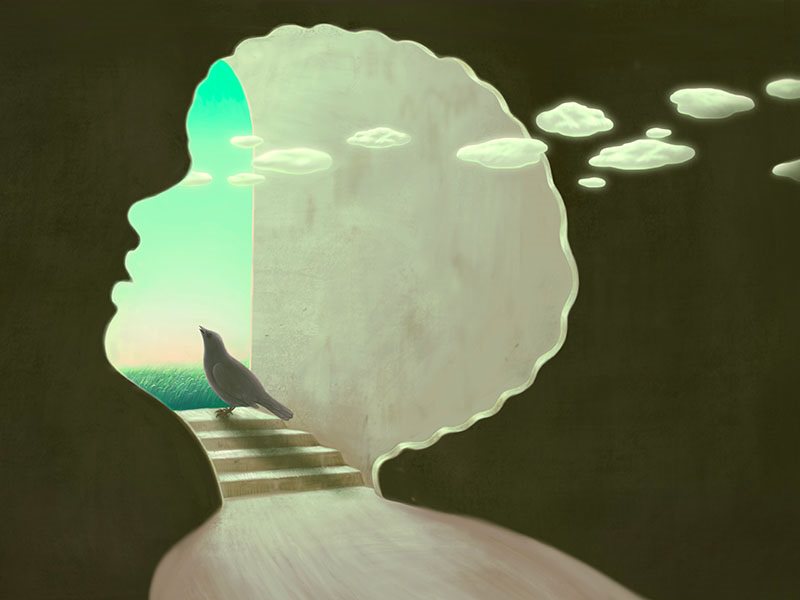
 

Therapeutic Reflections of a Former Gang Member

A Special Niche

“What population do you work with?” is a question that often induces mild anxiety in me. It seems like a convenient excuse for therapists to exclude groups that they don’t enjoy working with. As an example, I have heard several clinicians state that they refuse to treat people with personality disorders. While we have a right to choose (no one wants to be miserable at work), I think this attitude alienates those who may need our help most.

“Blasphemy!,” you might cry out, “We can’t be everything to everyone.” I understand. However, I got into this profession to help people. I try my best to accept people unless I believe I am unable to help from an ethical standpoint. There is something to be said about advanced training for more complex disorders. Even so, I believe that the therapeutic alliance is what matters most.

To tackle my resistance to the above question, I took a deeper look at my work over the past few years and came to realize that there is no specific population I focus on. Between private practice and a local outpatient clinic, I see clients ranging in age from five to 82 who have disorders across the mental health spectrum. If I were forced into choosing a specialty, however, it would be gang-affiliated children. I have been working with self-reported gang members since 2017, and even co-founded a clinical think tank to address their mental health needs.

Despite running the think tank and conducting individual psychotherapy with this population, I don’t consider it a niche. Instead, I view it as working with children who struggle with a wide variety of mental health challenges—especially trauma. However, admittedly, there is a part of me that may be failing to fully “claim” this population because of its associated stigma. Therapists often mention “I don’t work with those people,” or “that’s not my cup of tea,” when I share my work in this area. I also sometimes get reactions from them that appear to fetishize violence. It causes me to feel alone and ashamed.

While working with gang members may not sound appealing, it has been very meaningful for me. I credit my work with these clients as the reason for most of my clinical competency. Working with children is not easy in its own right, but working with children who are marginalized due to their gang status poses an even greater challenge. Another layer of complexity is that I, too, identify as a former gang member.

I Was a Gang Member

There is a common assumption that I might have more in common with these clients than other therapists. Sometimes this is the case, but often it is not. In fact, very few of my clients are aware of my former status. Though I am a big proponent of self-disclosure when it is useful, I rarely feel the need to disclose. The main reason is that most of what they bring to sessions are age-appropriate stressors just like other children’s: video games, struggles with parents, relationship issues. Their gang membership often comes up more as a cultural identity than an area of focus. Perhaps there could also be a small part of me that does not consider myself a “real” gang-member. After all, you can’t Google what I was a part of, and it neither made the news nor even extended very far beyond my local neighborhood.

Nevertheless, my past affiliation as a member (and leader) helps me to understand some of the nuanced challenges that these children face. I have experienced them myself. There are systemic barriers that are next to impossible to overcome, such as racism, oppression, and self-hate. My clients also share complicated feelings that they grapple with, such as feeling unwanted, constant fear, and pressure. Further, there is often confusion about who they really are.

At school I was viewed as a “nice” and “honest” child who showed respect to adults and completed assignments on time. I also had a side of me that could be aggressive and intimidating when I wanted to be. Was I the aggressive kid that some of my friends knew me as? Was I the nice child that aimed to please all of his teachers? This schism resulted in frustration about who I was and how I presented myself to different groups of people. My clients struggle with the same plight.

As I reflect on my personal experience in working with gang-affiliated clients, I often feel conflicted. I am cognizant of the ugly side of being in a gang. I am also aware of some of its benefits. This may sound distorted, but there are some strong emotional needs that are met from being gang-affiliated. For instance, I have not been able to replicate the sense of nurturance that I felt from knowing that there were multiple people willing to stand up for me at any given moment. My clients experience something similar.

I also learned leadership skills that I would later use to lead multiple organizations in the future. For example, there are ways to utilize your tone of voice to get almost any message across. I also learned the power of “the look”—a way of looking at people that makes them feel like they are the only person that matters in that moment. I would be negligent if I did not highlight some of these positive attributes. One of my clients recently told me that he watches for how people “squinch their eyes” to get a sense of who they are as a person. It took me back to my past as well.

The conflict continues. Do I act as a salesman who cleverly convinces these children to desist from gangs? The media and law enforcement would certainly suggest it. I know this is inappropriate. Gangs have been around forever, and they aren’t going anywhere; they also aren’t only present in urban neighborhoods. I know that my clients would stop trusting me if I tried to dissuade them. A break in trust could result in their losing a connection with the one person who “gets” them.

Instead, I utilize my unique skill set to help promote prosocial behaviors. For instance, I can convey that I am on their side. While I personally have not been able to replicate the sense of nurturance I felt while gang-involved, I try to help these particular clients realize that they can receive nurturance and loyalty outside of their gang. I offer a sense that I am willing to take on some of their emotional burden as we collaborate to figure things out together. I can read body language to get a sense of how I am affecting them. I can utilize self-disclosure in a manner that brings me closer to them.

The big question is, does it work?

I can only use my own experience and those of the clinicians in our think tank (it is next to impossible to find therapists that positively affirm that they work with these children). If we are using the metric of “getting kids out of gangs,” then no. However, when considering helping these children to open up, look at their lives more critically, and feel accepted in a society that is intolerant of them, then yes.

Some of the things I have heard recently from my clients are: “You’re one of two people that I feel like I can talk to,” “Talking to you eases my pain,” and even “I love you.” This is significant, considering that most of my gang-affiliated clients are impacted by stereotypical masculinity.

The Case of Jay

Jay is a thirteen-year old African American boy who struggles with symptoms associated with ADHD and Oppositional Defiant Disorder. Up until this point, he has been living with his mother and two siblings. However, due to his “attitude” and problematic interactions with his older sister, he was recently sent to live with his godmother, who lives nearby. He is engaged in school but has been declining academically. Some of his interests include playing basketball and internet gaming. While Jay has a difficult time opening up to people and is very easily agitated, he comes across as bored, disengaged, and angry.

I began working with Jay in 2018. During the first session, he sat slumped in his chair and sucked his teeth for most of the time (I later learned that Jay had a long list of therapists he didn’t like). Jay was described in the notes I received as “non-communicative” and “guarded.”

At the time of that first meeting, I was freshly out of graduate school and desperate to do a good job. “How are you?” I asked. Jay gave me a look of exasperation and continued staring off into space. Uncomfortable with silence, I proceeded to introduce myself and explained that I had been assigned to work with him (dumb move, but it helped to ease some of my anxiety). Jay didn’t budge.

This went on for the majority of the first session and the next. Anything I asked was either dismissed with one-word responses or ignored entirely. Somewhat desperate, I decided to do something unorthodox towards the end of the second session. I noticed he had been wearing some trendy sneakers that matched the rest of his outfit.

If I was going to get anywhere with this client, I had to relate with him. The only issue was that I had an unwritten, self-imposed, rule that I didn’t want to sound like some kind of camp counselor (I had some insecurities about being called a “counselor,” as it can easily be confused with a non-clinical role). I was there to be a clinician. I told myself, “Forget it!” (replace “forget” with an expletive) and went with my gut.

“I see you like to get fresh,” I noted while nodding my head and pointing at his sneakers. Something interesting happened.

“You like my drip?” (slang for nice outfit), Jay replied with a slight smile, and gave me a handshake. It was progress. I felt like a fool. Why hadn’t I tried this earlier?

Fast forward a bit. Although subsequent sessions remained generally anti-climactic, Jay did begin arriving to them a little earlier. Nothing dramatic occurred, and to an outsider, it may have appeared like wasted time. Jay insisted on telling me about the latest games he had been playing and eventually started challenging me to play him as well.

Once I felt like a strong rapport had been developed, I casually asked Jay why he thought he was in counseling. He revealed that he had been in counseling for several years before and that his family did not “like” him. He mentioned his perception of how he was disciplined more harshly than his other siblings.

Now we were getting somewhere. As time went on, the sessions oscillated between video games and minor disclosures about how upset he was with his family. “I don’t care” was one of Jay’s favorite responses.

One day I asked him to draw a picture of his family. It was not a specific intervention. I just knew, by this point, that it was one of the activities that younger kids enjoyed doing. The drawing looked like a few beetles, with his mother being slightly larger than the rest. He took the picture home with him without saying anything further.

During the following session, Jay revealed how drawing the picture helped him to realize how much he did care about his family. I was annoyed. Really? After all the sophisticated interventions I learned in graduate school, this is what stuck? I was happy with the small progress but was distressed by how random the occurrence seemed to be. Was this something that could be replicated with other clients? I soon learned that this was not necessarily the case; every client was different. Jay helped me to learn that.

A big milestone for us occurred when Jay asked if he could visit with me twice weekly at the clinic. This was not possible due to insurance restrictions, but it suggested that I had been doing something right. He became much more talkative about his life and what mattered to him.

It was not a miracle. Over time, Jay continued working well with me, but he also developed habits such as daily marijuana usage and decreased engagement in school. His mother also complained about his being “influenced” by the wrong crowd. He was no longer fighting with his older sister, but he also was not actively speaking to her either.

I could relate with his feelings of being excluded by most peers but included by other teens in his neighborhood. I told him this. Jay continued working with me as he realized I was not much different from him. I “got” him.

No Fairy-Tale Ending

This case does not have a fairy-tale ending. Due to scheduling conflicts, Jay was no longer able to work with me. Admittedly, he mentioned also becoming tired with counseling, as he had been working with therapists since he was ten. I respected it.

Jay mentioned that though he no longer wanted to continue therapy, he refused to work with anyone else (his mother was insistent upon his staying). One of the things he mentioned during our last few sessions was “you helped me control my anger,” and “now I know how to ignore people” in lieu of lashing out.

As I reflect on my work with Jay, I realized that most of what I learned in graduate school did not help me connect with him. He appreciated me for being real, being on his side (when the world—including other therapists—seemed to be against him) and disclosing parts of my life when it was relevant (i.e., the fact that I often felt unwanted in many social settings as a teen).

Further, and most importantly, I approached him as a child (now teenager) before a gang member.

I am still apprehensive when asked what population I work with. However, it is getting easier, as I remind myself of the gifts that these clients have brought to me as a clinician. My work with gang-affiliated clients has made me a much stronger clinician. I know what it is like to connect with “treatment-resistant” people. That has made me much better at connecting with clients overall.

Counseling Gifted Clients: Journeys through the Rainforest Mind

“What do you do with the clients you suspect are super smart?” You know, those who talk fast, think fast, and ask probing questions; those who are so articulate and seemingly high functioning that you can’t understand why they say they are depressed and anxious. How do we begin to understand, let alone help, those clients who are paralyzed by fears of failure and the pressures of their “great potential”; who have exceedingly high standards and expectations for themselves and others? They change jobs frequently, are continually questioning themselves, and express frustration, impatience, and confusion with slower thinking co-workers. How can we walk alongside those clients who feel such deep and unrelenting loneliness, even if they have many friends and are in partnerships, and who were perhaps bullied and bored in schooling situations when they clearly have (or had) an enormous passion for learning? How can we fully and deeply assist those clients who have an unusual number of sensitivities to sounds, textures, visual stimulation, chemicals, and emotions? Or even begin to co-construct a meaningful treatment plan with clients who feel a responsibility for making a difference on the planet, have extraordinary empathy, and feel despair and idealism about the future? And how do we stay intimately attuned with clients who have experienced serious trauma in childhood but appear to be unscathed, those who are so tuned into us in therapy that they can sense when our attention is drifting, are afraid of overwhelming us, and who, in fact, do overwhelm us with their intensity, depth, intuition, and levels of awareness?

These are some of the challenges I experience working with gifted clients. Perhaps you do, too.

What is Giftedness?

Defining giftedness is difficult and controversial. There are many theories and definitions. Concerns over justice and equality can make this discussion tense and uncomfortable. Here is one way to think about it: all humans ought to be valued and appreciated and are worthy of love and respect. All humans differ in their strengths, weaknesses, learning styles, intellectual capacities, sensitivities, preferences, talents, temperaments, experiences, cultural backgrounds, and desires. It can get tricky when we talk about intellectual differences. And yet, intellectual differences exist. Giftedness exists—in all cultures, races, religions, and socio-economic groups.

It can be easier to see giftedness in children because they are often reaching typical childhood milestones earlier. Their precocity can be apparent in their language, curiosity, interests, and questions. They often read before they get to school and have abilities and wisdom beyond their years. I consult with parents of gifted kids. Here are some examples of children I have heard about: the eight-year-old who wants to be Richard Feynman for Halloween. The five-year-old reading The Chronicles of Narnia. The four-year-old who cries when listening to Mozart because the music moves him. The ten-year-old whose favorite pastime is watching BBC documentaries. The six-year-old who refuses to eat meat for ethical reasons. The nine-year-old who rescues the grasshoppers on the playground. The ten-year-old whose poetry breaks your heart. The fourteen-year-old who’d rather read David Foster Wallace than hang out on social media.

Notice I did not describe the child who performs well in school. Gifted children may test well and get high grades, and they may not.
So, defining giftedness is complicated. But we don’t actually need a clear, concise, undisputed definition to serve clients who fall into this category in one way or another. We don’t need to give them a label. We just need to understand what they may be dealing with due to their gifted traits and how to help them.

Traits of the Gifted Client

These are some of the characteristics of gifted clients with whom I’ve worked:

  • Advanced vocabulary, existential questions and concerns from an early age, multiple in-depth interests
  • A range of deeper-than-normal emotions and sensitivities (often underground in men), advanced analytical abilities, need for precision in fields of interest, perfectionism
  • Rapid thinking, talking, and learning
  • Excessive worry, great empathy for all living things, unusual insight into themselves
  • Avid reading, unending curiosity, and passion for learning (not necessarily for schooling)
  • More complex ethical, moral, and justice concerns, insight about things that others don’t notice, tendency to argue for fun or for intellectual stimulation
  • Idealism, wit, imagination, creativity, questioning authority, and needing to understand the meaning of life
  • Loneliness, anxiety (particularly when bored or during extreme bouts of thinking), existential depression, self-doubt even with seeming successes
  • Difficulty finding friends, serious schooling frustrations, uneven development

The Rainforest Mind

I have discovered that one way to manage discomfort with the label and definition of giftedness is to use the metaphor of the “rainforest mind.” I was a teacher of gifted children before becoming a therapist, and many educators were not happy about identifying them as such. I suggested we think of it this way: people are like ecosystems. Some are like meadows, some deserts, some volcanoes, and some rainforests, for example. They are all beautiful and valuable. One is not better than the other. The client with a rainforest mind is the most complex: multilayered, intense, overwhelming, colorful, highly sensitive, full of complicated creativity, and misunderstood. I have many clients who have read my blog/books and come to me saying “I’m not gifted, but I have a rainforest mind.” These clients are often uncomfortable with the label, too, and many deny they are gifted.

You may be using your most tried-and-true therapeutic methods with these clients but feel something is not quite working. You feel you are missing a very important piece of their puzzle but do not know what. Your client says they are struggling, but they seem to be capable, compassionate, and insightful. At times like these, I have found it useful to consider that my client has a rainforest mind.

Giftedness is a phenomenon that has its own set of complications. These clients desperately need us to see all of who they are and all of who they want to be. They need to be able to feel safe to be vulnerable and to trust that you can handle their exuberance, intense emotions, questions, contradictions, complexities, fears, intuitions, sensitivities, and, yes, their brilliance.

Some of the Issues

The gifted clients with whom I’ve worked come to therapy for the same reasons most clients do. They might be dealing with depression, anxiety, PTSD, attachment issues, addictions, or childhood trauma. But there will likely be other issues that will need your attention. The following are some of the concerns I see in my office every day:

  • Unhealthy perfectionism that stems from early intense pressure to achieve. Healthy perfectionism that is often misunderstood and stems from an innate desire for beauty, balance, harmony, justice, and precision.
  • Multipotentiality, which is a desire to pursue many career paths and multiple interests. This is often mistaken for irresponsibility, inability to focus, or even ADHD.
  • Extreme difficulty with decisions due to the ability to see too many options and to worry about the implications of every choice.
  • Existential depression and despair, particularly rooted in an early and ongoing sense of justice and social responsibility.
  • Difficulty finding friends and partners because of differences in intellectual capacity and in emotional depth and sensitivity.
  • A history of bullying in school and boredom over many years in a traditional classroom where they already know the material. Great frustration with coworkers and supervisors who are less competent or less conscientious.
  • Being given too much responsibility for siblings and parents in a dysfunctional family. The tendency to be the counselor for family and friends with no reciprocation. A capacity for resilience when raised with abuse, masking serious self-doubt, self-hatred, depression, and anxiety.

What Can a Therapist Do?

These are some of what I hope will be helpful hints and strategies I have found effective with these clients.

  • Get familiar with the traits that often accompany giftedness. Explain these to your clients. Learn to differentiate the issues that come with giftedness from the effects of growing up in a dysfunctional family. Explain how having a rainforest mind can be challenging. Suggest books, articles, and websites.
  • Look for ways your clients are masking their pain because they are used to practitioners who assume they are just fine and often their friends and family members overly rely on them because they are so capable.
  • Allow them to talk a lot without being linear or chronological; take notes if it helps you keep track. Create a very large container to hold what is likely to be a great deal of intensity. Love their difficult questions, big emotions, deep dives, and quests for justice and a better world.
  • Be authentic and sensitive. Listen deeply. They are often particularly intuitive and will be able to sense when you are irritated, not feeling well, or distracted.
  • Get your own therapy. If you are also gifted, take time to explore the resources for yourself.
  • Be careful that you don’t misdiagnose—giftedness can look like ADHD, ASD, OCD, and even bipolar disorder. (Note: Some clients can be gifted and also have a mental health diagnosis or learning disability, called twice-exceptional or 2e. It will be important for you to know about this as well.)
  • Know your limits and notice if you are intimidated by their intelligence. Refer if you are frequently overwhelmed or uncomfortable.

The Case of Marilyn

For the purposes of this article, this case example will focus mostly on psychoeducation around giftedness rather than the childhood trauma the client experienced. This case description is adapted from my book, Your Rainforest Mind.

Thirty-year-old Marilyn, a graduate student in anthropology and women’s studies came to counseling because, as she said, “I reached the end of my own abilities to fix myself.” Marilyn’s mother had died a year earlier, and her intimate relationship was “faltering.” In describing her goals in counseling, she wrote, “I want to stop carrying the weight of my family’s legacy, to untangle the mess in my head, to be free.” Marilyn had a history of difficult relationships with partners and trouble finding emotionally healthy friends. Like many of my clients, Marilyn did not initially know that she was gifted.

She described a bipolar, physically and sexually abusive mother. Her father was kind and loving to her but didn’t stand up to stop the abuse. According to Marilyn, her parents were “spectacularly unsuccessful in the real world.” And when Marilyn was twenty-two her father died suddenly.

As a child in school, Marilyn was bullied. She was excited about learning, academically ahead of her peers, and a talkative extravert whom teachers dismissed with impatience and children rejected.

As with most of my clients, we worked on two main tracks. Track one was the long road to healing from severe childhood trauma. Convincing Marilyn through lots of counseling processes based in attachment theory and somatic experiencing that the abuse wasn’t her fault, that she was, in fact, worthy of love, was the more complicated task. Over time, Marilyn felt more trust in me and allowed herself to grieve the losses she had experienced for so many years.

Marilyn, like many gifted folks, had shown a powerful resilience. In spite of her rejecting, critical, abusing mother, Marilyn was a kind, loving, competent woman. The damage was evident, though, in her distorted view of herself, her existential depression, somatic symptoms, and her inability to believe she was worthy of love. It took time for her to feel safe enough in therapy to allow herself to grieve and to trust.

Like many gifted clients, Marilyn did much self-examination. She particularly enjoyed art projects and used journaling and other art forms to delve deeper. She was a big reader and was always looking for resources that would expand her knowledge, particularly in the areas of body image and women’s issues.

The second track is simpler but essential. Even though Marilyn had experienced academic success, she did not identify as gifted or understand the traits. She wrote about this: “There were—and still are—so many times in my life I felt an unbridgeable distance between myself and others, like I fundamentally see the world in a different way that I can’t even explain because we don’t speak the same language.” Even though Marilyn found friends, she felt extremely lonely much of the time. She was often the caretaker in the relationship, giving much love and support but not getting much back. She wrote, “I get hungry for people who are socially competent and intellectual and curious about literally everything and creative and broad-minded and motivated by justice…People who care and feel deeply but also think in complex wide-ranging ways.”

Even though she was an optimist, Marilyn felt despair over finding a truly loving and kind, intimate relationship. And with both friends and partners, Marilyn had difficulty setting boundaries and asking for what she needed. Being gifted, this was even more challenging, because it wasn’t easy finding other sensitive, intelligent souls. I referred her to my blog, books, and other articles about giftedness to reinforce that her difficulties with peers and her enthusiasm for learning outside of school were also typical traits of the gifted.

As time passed in our work together, Marilyn graduated with her Master’s degree. Her advisor may have been the first teacher who recognized and appreciated her giftedness, telling her she was the brightest student she had ever worked with. This was an important acknowledgement. Marilyn and I continued therapy as she looked for employment. Fairly quickly she found a job that was not in her field of study but that suited her well.

Marilyn was employed in social services as a case manager and was wildly successful. The combination of her rainforest-minded traits of sensitivity, empathy, energy, attention to detail, and intelligence worked well with the population of families she helped. She often took on extra responsibilities to keep herself busy and mentally stimulated. In meetings, she saw the big picture and solutions long before her colleagues. So she was restless in the job when she had accomplished her goals and was not recognized for her skills. These can be the frustrations of many rainforest minds on the job. It was likely that Marilyn would find more challenging, financially rewarding work as her confidence grew, but this position was satisfying her need to make a difference.

In many of our sessions, as we talked about relationships both personal and professional, I would remind Marilyn that some of her struggles were due to her complex intellect, high level of sensitivity, multiple interests, divergent thinking, very high standards, fast learning abilities, and deep empathy. In other words, her rainforest mind.

Over our years together, Marilyn made enormous progress. She could acknowledge how severe her losses had been and grew more and more self-accepting. Her self-criticism had decreased significantly, and she became able to recognize her many strengths. She began to imagine that she would find deep friendships and a kind loving partner. Eventually, she accepted the idea that she was, indeed, gifted.

Marilyn described her experience this way: “I keep hoping to meet people with whom I can relax and be just me, all of me, unafraid to let them see who I really am, in all my dorky, questing, art loving, social justice-obsessed, bibliophile, rebellious, intersectional feminist, world-changing glory.”

***

Marilyn is but one example of the many fascinating gifted clients with whom I have been privileged to work. If you can identify who among your clients is gifted, has a rainforest mind, and if you can listen to, understand, and explain the particular challenges that these folks often face, it will make a big difference in the effectiveness of their therapy. You will be seeing and knowing them in a way that very few others, if any, have. And that will change everything.

Helpful Resources

Books/Articles
The gifted adult: A revolutionary guide for liberating everyday genius™.
The Social and Emotional Development of Gifted Children: What do we know?
Your Rainforest Mind: A guide to the well-being of gifted adults and youth.
Journey into your Rainforest Mind: A field guide for gifted adults and teens, book lovers, overthinkers, geeks, sensitives, braniacs, intuitives, procrastinators and perfectionists. .
Webb, J. T., & Amend, E. R. (2016). Misdiagnosis and dual diagnoses of gifted children and adults: ADHD, Bipolar, OCD, Aspergers and other disorders. Great Potential Press, Inc.

Websites
Supporting the Emotional Needs of the Gifted (SENG)
Your Rainforest Mind
Gifted Challenges
Puttylike