When I do couple therapy, I bring partners in on my concerns about what is happening in the session. If I am concerned that one partner might feel I’m siding against him or her, I might say, “Ben, I’ve just realized I spent more time today developing Lisa’s position today than I have yours. Is that your sense, too? And if so, do you feel left out or sided against or ganged up on?” The person (here Ben) often responds with something like, “Well, I was wondering when someone would start getting interested in what I have to say” or “Lisa doesn’t talk about any of these things at home. I’m just happy it’s all coming out.”
If I’m concerned that the partners are not getting at what they need to get at, I say, “Are we talking about what we need to talk about or are there other things we should get to today?” or “Will you suddenly remember on the way home that there was something you wish you’d brought up?” I am trying to decrease the likelihood that they will raise important issues as they walk out the door, that is, when there is no time to talk about them.
If I can’t tell whether the partners are repeating the frustrating conversation they have at home (in which case I need to do something about it) or are covering new ground, I ask, “Is this the kind of conversation you have at home or are you saying some new things?” or “Are you getting something out of this fight—a chance to say a few things or hear a few things? Or is it frustrating and the kind of fight that you’ve come to therapy to stop?" or “In what ways is this conversation useful and in what ways is it not so useful?”
If I’m concerned that they are going to leave the session angry and alienated, I might say “We have only 5 minutes left and it looks like you are going to leave the session angry and alienated. What is it going to be like on the way home? How long is the bad feeling likely to last and how are you likely to work out of it?”
I get the partners’ help in figuring out what the session is about. At the end of each session, I ask, “What are you taking away from this session that’s useful, if anything, and what has been not so great about it?”
Some years ago Lynn Hoffman wrote about putting clients on the board of directors. That’s what I’m trying to do. I’m appealing to the partners as consultants in dealing with the problems I am having conducting the therapy. By appealing to them in this way, I am creating a perch (a platform, a metalevel) from which the three of us can look at what is going on in the therapy, providing a sense of safety (they’re not left wondering what I’m thinking; I’m telling them), modeling how they could confide in each other (a goal I have for them is to develop such a platform with each other), and doing something for myself (it’s relieving to be able to share the problem with the couple).
Category: Couples
Dan Wile on Collaborative Couples Therapy

Ruth Wetherford: Dan, thank you for agreeing to be interviewed for Psychotherapy.net. I’m delighted to be interviewing you to bring more information about collaborative couple therapy to the world. Let’s start with the question of how you got into psychology. How did that happen for you?
Dan Wile: Well, it was in the family. My mother is a psychiatrist, and my sister became a social worker. I was planning to be a psychiatrist myself. But when I went to the University of Chicago, I discovered that if I was going to be pre-med, I wouldn't be able to take the University of Chicago Great Books courses. So I decided at that point to be a psychologist.
RW: In your writing, you often credit the work of Berkeley psychologist Bernard Apfelbaum for contributing to your ideas. Do you have specific memories of working with him that stand out for you?
DW: A bunch of us would meet with him every month, we'd present all kinds of ideas and cases, and he'd always come up with a fascinating new angle for looking at the matter. He seemed to be thinking at a higher level than practically everyone else I knew. Whenever I do therapy, I think, "What would Bernie say about this situation?"
RW: The growing emphasis in psychotherapy on the quality of the relationship between the therapist and the client, more than on the accuracy of interpretation, has contributed to a cultural milieu perhaps more receptive to your ideas, and your approach is gaining more interest and attention in recent years. What is it about your work that makes it more appealing to people at this point in the development of the profession?
DW: I use my relationship with my client couples to improve the accuracy of my interpretations. I make guesses about what they're thinking and feeling but not saying, check with them whether these guesses are accurate, and revise my statements according to what they say. We figure out together what's true about them. And I use my interpretations to create a collaborative relationship with the partners. They like the fact that I take their view of the matter into account, and, in fact, make them the final arbiter of the accuracy of the interpretation. And they like that my theory of personality and relationships leads to interpretations that are non-pejorative. That was the problem with the old style of interpretations and what got them into disrepute—they were pejorative.
RW: Interpretations frequently imply blame, and have the pejorative connotations you just referred to. Your approach emphasizes the opposite of that: acceptance.
DW:
A big problem in couple therapy is that we react to clients in the same way partners do with each other when they fight.
A big problem in couple therapy is that we react to clients in the same way partners do with each other when they fight. When clients act in an arrogant, bullying, or other off-putting way, we get angry at them—though, of course, in a much milder way than the partners do with each other. Being angry, we think of these clients in pejorative terms, make pejorative interventions, and lose the ability to look at things from their point of view. When a client says or does something off-putting, you can stand back in negative judgment and say to yourself, "Well, this is borderline or sadistic or passive-aggressive,"—or you can imagine what it's like being in that person's position and what inner struggle the person is engaged in that's leading them to be stuck in this off-putting behavior. I spend a lot of my effort in couple therapy trying to recognize when I'm standing back in negative judgment so I can overcome it.RW: That process of putting yourself in the other’s position and seeing how it makes sense that they could be stuck—is that what you call empathy?
DW: Yes, that's a good way to put it
RW: Would you discuss the centrality of empathy in your work?
DW: A big problem in couple therapy is finding yourself siding with one partner against the other, feeling unempathic. And that's not a place where you can do therapy. So I try to think how to shift out of my pejorative view of this person and imagine what it's like being in their shoes and seeing the hidden reasonableness in their seemingly unreasonable and irrational behavior. If I can get myself in a mood where I'm not reacting to them, I can make a pretty good guess as to what that is or think of questions to ask that would bring it out.
RW: You’re pointing to the importance of self-control of the therapist’s own emotional reactions. Do you have some tools you can share or ways that you manage yourself internally?
DW: I have three tools. First,
One slogan is, "My job is to become spokesperson for the partner I find myself siding against." Another is, "What is the internal struggle this person is having?" It's great to ask myself that question because until I ask it, I don't think there is an internal struggle—I think that person is just enjoying being provocative. Another question I ask myself is: "What is the vulnerable feeling that, because the person can't express it, is causing this person to act in this off-putting way as a fallback measure?" Still another question is: "What can I say or ask that will enable the person to feel listened to?"
If these slogans and questions aren't enough to get me out of my adversarial state, the third thing I do is I try to get myself out of this state by expressing what I need to say to clear my gills, just as I try to get partners out of their adversarial state by helping them express what they need to say.
One of the advantages of couple therapy is you can move in and speak for the partner. I use a psychodrama kind of method—
just recognizing that I am reacting and viewing them in negative ways may be enough to shift me into a more compassionate place
just recognizing that I am reacting and viewing them in negative ways may be enough to shift me into a more compassionate place and enable me to begin to look at things from their point of view. If that isn't enough, the second thing is I have slogans—statements I make to myself or questions I ask myself—that remind me of my theory and help me shift to a more compassionate mode.One slogan is, "My job is to become spokesperson for the partner I find myself siding against." Another is, "What is the internal struggle this person is having?" It's great to ask myself that question because until I ask it, I don't think there is an internal struggle—I think that person is just enjoying being provocative. Another question I ask myself is: "What is the vulnerable feeling that, because the person can't express it, is causing this person to act in this off-putting way as a fallback measure?" Still another question is: "What can I say or ask that will enable the person to feel listened to?"
If these slogans and questions aren't enough to get me out of my adversarial state, the third thing I do is I try to get myself out of this state by expressing what I need to say to clear my gills, just as I try to get partners out of their adversarial state by helping them express what they need to say.
One of the advantages of couple therapy is you can move in and speak for the partner. I use a psychodrama kind of method—
I move over and kneel next to the person I am speaking for.
I move over and kneel next to the person I am speaking for. For example, if I'm reacting to how one partner seems to be bulling the other, I can move over and, speaking for that person, I can say, "When you get bullying like this, I just stop listening and wonder why I'm in this relationship." The partner I'm speaking for usually likes this, and I feel much better—so much so, in fact, that I'm suddenly able to look at things from the point of view of the bullying partner. My feeling of empathy has returned for that person and I move over and make a confiding statement for him.RW: What might that be?
DW: I might say for that person, "Well, I know that you don't listen to me when I come on strong like this. I feel helpless and get frustrated. I've lost some friends because I've come across this way. But there's something important I'm trying to say and I wish I could find a way to say it that doesn't blow you away." Of course, I would immediately check with this person to see which parts of this, if any, capture how he feels.
RW: You talk about the “leading edge,” and I know that’s one of your core concepts. Say more about the leading edge and how you try to elicit the couple to talk about this.
DW: Well, I figure that, at any given moment, there is a thought or a feeling each person is having that is who they are at the moment. It's what Marshall Rosenberg calls "what's alive at the moment." If there's going to be intimacy between the two partners, this is what each needs to confide to the other and feel that it gets across.
I'm looking, at any given moment, for the feeling the person needs to express that would make them sigh with relief and feel closer to their partner.
I'm looking, at any given moment, for the feeling the person needs to express that would make them sigh with relief and feel closer to their partner. And the term "leading-edge feeling" sort of captures what I have in mind.RW: It seems like at any given moment there could be any number of feelings that they’re having, such as, “I’d better keep my mouth shut—I’m scared.” Another one could be, “I feel lonely; I feel distance.” Another one could be, “I’m so angry—I don’t deserve this.” How do you determine which is the more salient or the one you want to focus on more?
DW: I may be wrong, but I think that there is just one leading-edge feeling at any given moment—but it can quickly shift from, to use your example, fear to loneliness to resentment. But you're right that if I ask partners a multiple-choice question, they might pick the leading-edge feeling they had two moments before, one moment before, or right now.
RW: A multiple-choice question.
DW: If people don't respond when you ask them how they feel, you can help them along by suggesting possibilities. I might say, "Let me make it a multiple choice question: Are you feeling, A, hurt, or B, angry, or C, lonely, or D, something else entirely?"
RW: You’re very clear that you want people to feel more connected by increasingly confiding their inner vulnerabilities in a way that can be understood by the other. But when you’re trying to get them to reveal those things and they’re presenting their default modes of anger or withdrawal, you don’t shy away from that. How does that work?
DW: Well, at times withdrawing or being angry is a leading-edge feeling. So I would help people capture that. I might help them express their anger in a way that is more satisfying to them and easier for their partners to hear. Moving over and speaking for them, I might say, "I'm still fuming about what you said ten minutes ago. I'm not even listening to anything you're saying. It wiped me out." I'm hoping that the person I'm speaking for will express a sigh of relief and, when I ask whether I got her feelings right, will improve what I said to make it more accurate. If a partner is withdrawing, I'd try to give words to that. I'd move over next to that person and, speaking for that person, say, "Well, when you say what you just did, I get despairing, and feel hopeless about us and kind of give up and don't have anything to say." A statement like this—if the person were able to make it—is the way for that person to be intimate at that moment.
RW: It seems like so much of your method is in the nonverbals: your tone of voice and your facial expressions that imply what you want is for them to get closer by being able to confide and have so-called “elegant conversation.” You seem to be equally accepting of rancor and disconnection—you believe it’s just as important to talk about that as well. Is that right?
DW: That's right. I'm looking for the leading-edge feeling of the moment, and it could be any feeling, positive or negative. I'm always thinking that there's a way of confiding it rather than just acting from within it.
RW: That reminds me of another thing you emphasize, which is the “relationship atmosphere.” Talk about that.
DW: My focus in a couple is whether they're in an adversarial cycle, which means fighting—either a quiet one or a loud one—or a withdrawn cycle in which they're disengaged, or an intimate cycle in which they're expressing their leading-edge feelings and it's getting across to the other person. Those are three different moods that a couple goes through. And my task is to shift them from the withdrawn or adversarial mood they're in, into the collaborative one.
RW: That’s where intimacy occurs.
DW: That's right. That's intimacy. And
sometimes I show them what it would look like by enacting the conversation they'd be having right then if they weren't angry at each other, but instead were feeling intimate.
sometimes I show them what it would look like by enacting the conversation they'd be having right then if they weren't angry at each other, but instead were feeling intimate.RW: By speaking for them.
DW: By speaking for them.
RW: You’ve written in your book, After the Honeymoon, that “a relationship is a busy place. It’s like an airport with lots of things going on and scheduled and unscheduled feelings arriving and departing.” Say more.
DW: In the metaphor of the airport, I was thinking particularly of the observation tower, where people up there would be looking at everything going on—the planes, or feelings, going in, going out. So the couple could be in that observation tower noticing how they shift among those three moods—how there's anger, withdrawal, and tenderness—and having an ongoing way of talking about what's happening in the relationship. The "permanent platform" is another metaphor I use.
RW: This has a lot of implications for your view of what constitutes intimacy. Do you have a summary about that, a distilled view?
DW: Yeah. It's that intimacy is each partner saying what's on their mind, their leading-edge feeling, with the other one understanding. And you could say that a goal I have in couples therapy is to get the partners to develop, or develop further, such a permanent platform from which they can co-monitor the relationship. Intimacy is created by the way partners talk about what's happening in their lives and, in particular, about what's happening between them. It's a consequence of their ability to be mutual confidants. That's a key point to my approach—the goal of the couple developing the ability to observe their own interaction patterns, the permanent platform.
RW: So it’s not about agreement or consensus—it’s about being more revealing.
DW: Yeah, it's having a way of getting in touch with what you need to say, what you're feeling, and having a relationship in which the other person is able to take it in, is eager to hear it, and has a confiding comment to make in return. And it doesn't become a fight, and the other doesn't withdraw.
When people are saying the main things on their mind, their main worries and concerns, their ache of the moment, and feel it's heard by the other person—well, that's the height of intimacy.
When people are saying the main things on their mind, their main worries and concerns, their ache of the moment, and feel it's heard by the other person—well, that's the height of intimacy.RW: The ache of the moment—that reminds me of your comment about the power of negative thinking. Say more about that.
DW: Well, that was my cutesy way of talking about the permanent platform, in that the couple would know that there are certain problems that arise, certain conflicts that they have, certain issues that keep coming up, and they have an ongoing way of talking about that in a collaborative way when it arises. That means you're not just trying to talk yourself out of the problem and look on the positive side, but are fully appreciating that it's a problem—that's the power of negative thinking.
RW: So you’re saying that couples who can go in and out of collaboration and intimacy are having conversations, not just about what they’re enjoying in their lives, but about what they’re not enjoying of the important things, including the relationship.
DW: Yeah. So it's an increasing ability, after a period of fighting or withdrawal, to have a recovery conversation where you figure out what happened and get together in an intimate way about what went wrong—which is one of the more intense experiences of intimacy that people can have, if they can have it.
RW: Tell me about the recovery conversation.
DW: It's inevitable that partners are going to fight and withdraw. Some couples are lucky to have the fight end without it escalating too much, and they wake up the next morning and go on as if nothing had happened. And maybe that works for them okay. But for some couples, that doesn't work. And there's a disadvantage anyway, because a fight or withdrawal is an opportunity for intimacy, in the discussion of it afterwards. But it's understandable that a couple might want to avoid having such a discussion, since it often gets them back into the fight. Having productive conversations is a skill that evolves over time. The goal of such a discussion is to end up with a picture of how each partner's position made sense and how the two of them got stuck in something. So it's a compassionate, commiserating, from-the-platform view of what happened in the fight.
RW: It’s been said that your compassion-based approach is compatible with attachment work. How do you see it being congruent with issues of secure and insecure attachment?
DW: Well, I'm trying to create secure attachment by enabling partners to confide their ache of the moment. When, in every given moment, or maybe in just enough moments, a person can confide their ache of the moment—this leading-edge feeling—and feel that the other understands, this increases the security of the bond between them.
RW: You know, one aspect of your work that you describe a lot is your role of being utterly non-defensive. Anyone who knows your work would say that. How can you be so non-defensive?
DW: I tell myself to be non-defensive and take pleasure when I succeed.
And if a client criticizes me, I'm grateful the person is doing that rather than just quitting therapy without saying anything.
And if a client criticizes me, I'm grateful the person is doing that rather than just quitting therapy without saying anything. And I believe that such criticizing is often a fallback measure the person engages in because they couldn't say something more vulnerable. So I don't want to make the mistake of reacting to the fallback measure when what I really want to do is help them discover the more vulnerable feeling underlying it, such as, "You know, I feel uneasy about the therapy for this reason or that reason," or "I worry that we're really not getting anywhere," or "I'm afraid that nothing can help me." Well, if they can't get that out, they may be stuck just blaming me for something. So I want to track back to the person's vulnerable feeling rather than react and defend myself.RW: Right. You’d call that “the pleasure of being non-defensive.” What’s pleasurable about it?
DW: Well, it's a goal I set for myself. Instead of feeling defeated or whipped, I have a certain amount of pride in being able to do that. Also, I find it enjoyable when we escape from polite conversation. So when a person is expressing some disappointment or anger at me that I could get defensive about, that person is likely to be saying something more direct than they've said for some time. For me—and I believe for others as well—there's some intrinsic pleasure in shifting from the level of politeness to that of directness. And so this would be a shift towards more directness—that would be enlivening, you'd get to feel more there. And you kind of slump when there's a movement in the other direction, of people saying things that are just polite and not engaged. Yes, there's more energy, more feeling, more aliveness with the escape from politeness.
RW: You describe things you tell yourself as slogans, implying you repeat them, you remind yourself frequently. And I know the repetition of thoughts and images that we want to acquire does lead to their acquisition. I would imagine that would be an important tool, to have some of these slogans that people can put in their own language and learn.
DW: Yeah—now that you say that, I realize a therapist's orientation can be thought of as developing from the slogans and questions that arise automatically in the individual's mind. For instance, one common automatic question or slogan in a therapist's mind is, "What family of origin issues could create the problem this person is having?" If that's one of the main questions you automatically ask, your therapy will go in a certain direction. Or, "What unconscious purpose does this serve?" Thinking that, your mind and your therapy will go in another direction. So there's the set of slogans and questions already in your mind. When I'm put off by a client's behavior, I can lose certain of my slogans that lead me to be compassionate.
RW: How does that happen?
DW: When I'm feeling okay, one of the questions I ask myself is, "What's the hidden reasonableness in what's going on?" But when I'm reacting to the person, I don't ask myself that—I just think the person is totally unreasonable. I lose the ability to do therapy, since therapy requires my appreciating how both partners' positions make sense. It's a temporary loss, because I get up in the tower of the airport as soon as I can, so I can notice what is happening and regain my ability to do therapy. Yeah, so in any given session, particularly with a difficult situation to handle, or with partners who might feel provocative, I can lose and regain my ability to do therapy repeatedly throughout the session. Hopefully I keep my mouth shut when I've lost the ability and only talk when I have it.
RW: And this is just like the couples—gaining and losing the ability to connect with each other over time.
DW: Exactly, yes.
RW: Well, we’re just about out of time. Is there anything else you’d like to add to this?
DW: You're a great interviewer—the questions you've asked got me more clearly in touch with my own theory. So between the two of us, we created a momentum where I became more able to get at it than if you'd asked other kinds of questions that would have taken me away from my theory.
RW: Thank you so much. We collaborated.
DW: Yes, we collaborated.
Susan Heitler on Couples Therapy
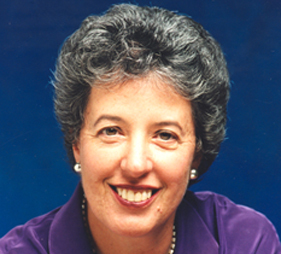
Randall C. Wyatt: Dr. Heitler, it’s good to have you here. Let’s start with how you first got into conflict resolution and marital therapy work?
Susan Heitler: I think this is a profession I have been in since I was 3 or 4 years old. When I was just a child, my parents would battle and I would be the one that would step in and bring some calm or reason to the situation.
RW: Were your parents a high conflict couple?
SH: My father was a high conflict individual and my mother would react but was somewhat clueless about what to do.
RW: So what did you do? How did you intervene as a 3-year-old?
SH: I have a sense of myself as having my two hands up – one facing him, one facing her, standing in the middle like, "Cut it out." Cut it out would be too strong; "enough," "calm down," "Stop, listen, listen!" would have been more like it. (Laughter…)
RW: As you grew up did your parents listen to you much? Did you get them to stop or quit arguing so much?
SH: I think on the whole they did. It is a little bit amusing now that they are elderly, 91 and 86. And when my mother introduces me, she will typically say, "This is my daughter, but she thinks she is my mother." I must say, though, that she was a marvelous, marvelous mother.
RW: Wow! That’s pretty amazing. We have interviewed several master therapists of all stripes on Psychotherapy.net and that is the earliest beginning we have heard. What began to influence you to get into couples work?
SH: I don't recall a single course in couples work being offered at NYU graduate school ('75) nor at my internships, where I got otherwise excellent training. The phenomenon of couples work just didn't exist like it does now. I was fortunate to work with a doctoral fellow from Israel who was studying at Denver and he knew a lot about family therapy and the beginnings of couples work. He suggested readings and we did cases together. And then the rest of my training has been either from seminars and workshops or from listening very closely to couples. Also, conflict resolution theory and techniques have mainly originated in the realms of business negotiation, international relations, and legal mediation, which I have incorporated into my work.
RW: When did conflict resolution enter the picture?
SH: I had the notion that what I was doing seemed to be about helping people to resolve conflict, both intrapsychic and interpersonal.
Yet the only time I heard about it was from a one-hour lecture by an organizational psychologist who talked about the new literature on conflict resolution in the world of business. It stunned me that here we were helping people resolve their conflicts and yet not a single therapist that I had met seemed to know squat about conflict resolution. So I filed it in my mind that maybe, someday, I would learn all I could and one day write a book about it, which I did – From Conflict to Resolution.
Yet the only time I heard about it was from a one-hour lecture by an organizational psychologist who talked about the new literature on conflict resolution in the world of business. It stunned me that here we were helping people resolve their conflicts and yet not a single therapist that I had met seemed to know squat about conflict resolution. So I filed it in my mind that maybe, someday, I would learn all I could and one day write a book about it, which I did – From Conflict to Resolution.
RW: In the business world, conflict resolution and communication skills are much different then when people are in love or married. Lovers and married folks can be very touchy and can quickly regress, suddenly losing all the communication skills they have ever learned
SH: Yes, I think it's a sad state of affairs that most people behave far more maturely at work than they do at home. Now, the good news is that means most people are bilingual. They do know how to talk in a civil way and, even if they are beginning to get agitated, they will calm themselves down and resolve conflict in a fairly cooperative way. The bad news is how sad it is that we use a lesser language – the language of arguing – at home.
RW: Why do you think it is that lovers, married folks – who begin with such caring and consideration – find they can’t talk about hard things without arguing or withdrawing? They become their worst selves.
SH:
Why do people become more degenerate, more argumentative, more agitated, and more aggressive at home than at work?
Why do people become more degenerate, more argumentative, more agitated, and more aggressive at home than at work? Early on we see the difference. Many children fight a lot with their siblings and yet when they go to school virtually never have a fight with anybody. Even in abusive situations, many abusive spouses handle work conflict in a more collaborative way. There are three main realms where we learn the language of interaction: interacting with siblings and parents, and watching our parents interact. And, there are many more decisions that need to be made in a family.RW: At home, it becomes a matter of the heart too and the stakes seem that much higher.
SH: Well, the stakes are higher and decisions need to be made about so much: money, whether to have kids, where to live, intimacy and sex, how to treat in-laws, how to treat children, how to spend leisure time, do we watch the football games on TV or do we have people over for dinner, or do we spend a lot of time going out together. Multiply that over and over again about all the decisions involved in making a life as a team, yoked together as partners. Those decisions are not only more quantitatively frequent but they are qualitatively different.
At work, you know for the most part who has power and what the expected roles are. At home, that needs to be negotiated. So, in families where everything becomes an issue, there are often underlying issues about how much power do I have, how much am I listened to? Or does he love me? Does she really care about me? We know that the more emotional intensity there is, the more likely people will regress in their collaborative dialogue skills.
RW: Clearly, as you point out, love is not enough since most couples love each other to begin with.
SH: Shall I give you the good news?
RW: Yes, the next question is: What can be done about that? What can you offer them?
SH: That's exactly what I was thinking about. I have come to see maturity as a function of skills. For example, as a tennis player, I have observed that there are plenty of people who just go out and play tennis. They never raise their skill level. There are others who go out and get some instruction or watch good players on TV or play with better players. Those people are definitely elevating their skills. It's much more fun for me to play tennis when I play better.
Living well as a couple means living with an excellent skill set – a skill set for dealing with conflicts, for dialoguing and sharing information effectively, for relaxing and enjoying life, and also skills for emotional self regulation. So, instead of getting agitated and angry, people stay calm and are able to use their skill sets to deal with difficult issues.
RW: It is nice when someone can communicate directly and calmly, but this seems unrealistic to expect people to just talk so directly and rationally. Some people tend to be more passionate, emotional, and some people are more private, more casual, shy, and some are super rational. People seem to have different ways of arguing and different ways of solving problems. Plus, there is a great deal of cultural variation in communication styles. How does your approach account for all these different ways since a lot of therapies want people to “speak directly, be clear, be rational,” yet that does not seem to fit everyone’s style so well.
SH: Right, there are certainly cultural variations, many of which are harmless. They are like the multiple flavors of ice cream. There are other cultural variations that have a major impact on how collaborative a couple is going to be or how likely they are going to be split off into separate realms. In some cultures, the roles between men and women are more defined and problems are dealt with indirectly instead of through direct communication. In most American couples, however, there is a lot of necessity for husband and wife to be able to make shared decisions, to function as a team. If the goal is to have a collaborative relationship, then there are certain principles of information flow.
I like to tell my patients I work on flow. A good analogy is traffic flow. Cars crash if the traffic is flowing too fast which is the equivalent to too much emotional intensity. Cars also crash if people don't follow simple traffic rules and guidelines.
RW: I have read that if traffic is going less than 30 mph there will be a traffic jam.
SH: This is exactly right. If you never get on the roads at all, you are not going to get where you want to go which is a mistake that many people make. They never even bring up the issues and talk about what is concerning them.
RW: Going another step: people seem to use communication skills and I-messages when they are calm but lose it when stressed out.
SH: The pivotal factor is that the more important the issue, the higher the level of agitation and emotional intensity, and the harder it is to have good communication.
It is just like driving a car, where speeding takes more driving skills but someone with excellent driving skills can still manage 90 mph. In terms of communication skills, most of us can go up to 30-40 mph with ease but we are in trouble when we go faster.
It is just like driving a car, where speeding takes more driving skills but someone with excellent driving skills can still manage 90 mph. In terms of communication skills, most of us can go up to 30-40 mph with ease but we are in trouble when we go faster.RW: So what should we do when our emotional speed is too hot and we are traveling out of control?
SH: I teach couples that as soon as they are beginning to get out of their effective zone, just take a break and get a glass of water, learn to calm oneself, and then we go through this step by step. I teach each person this shared choreography so they don't feel like the other person is walking out on them. The agreement ahead of time helps monitor their emotional intensity. And, each person is responsible for calming themselves down and rejoining the discussion.
RW: And what has your success been in working with couples to teach them these skills and resolve their problems?
SH: A significant proportion of my clients are referred by divorce lawyers. I also get newlyweds and people who are beginning to have some problems. I really like getting the 'last chance' cases. That's what I am known for in Denver, I am sort of the court of last resort. I would say, of those cases, the vast majorities end up with great marriages; they just never had the skill set.
What I hear over and over again is, "I wish someone had taught us these skills when we first got married. All those years and all that dreadful modeling we have done for our children wouldn't have happened. All those years of suffering, all those years of portraying how to make each other miserable wouldn't have happened if we had just known how to interact more maturely, more effectively."
Now does everybody do better? The reality is some people would rather stay how they are. My approach is a kind of a coaching approach to therapy and just like some people will prefer to stay beginners on the tennis court, some people aren't interested in learning in their marriages.
RW: So is learning the skills the whole of it for these couples?
SH: What you said earlier is very true. Once there are deeply felt issues, it evokes strong emotions even if people take breathers, that when they return they become so emotionally reactive on those issues or to each other that they will have a hard time using the skills. So a combination of skills training and therapy is really important.
RW: How and where does therapy enter into your couples work?
SH: In therapy, as people are getting hot, I would be more likely to help them see where their initial issue came from, their own marital issues or family issues from their past. I agree with the research that says skills alone won't work with difficult couples. First, the guidance of a coach who knows the skill set and, secondly, also knows traditional therapy skills of accessing family-of-origin material.
RW: You have questioned Gottman’s findings that often there are certain interpersonal problems couples have that will not be resolved, rather that over the years they will come to manage or work around these repetitive problems. How do you differ from this view?
SH: Yes, Gottman and I have had some dialogue in this regard and I have given him my books From Conflict to Resolution and The Power of Two. He has looked at them and said, "Yes, that's very interesting." I have been told by others that he refers to my work on conflict resolution in a positive way.
I have continued to hear Gottman say that some conflicts can't be resolved, that conflict resolution is an unrealistic goal. I take great exception to that.
I have continued to hear Gottman say that some conflicts can't be resolved, that conflict resolution is an unrealistic goal. I take great exception to that.RW: Let’s hear it.
SH: Gottman and others have contributed excellent research on marital communication skills, but his writings do not include the advances in the conflict resolution theory that enable fights to transform into cooperative problem-solving and conclude with mutually satisfactory, win-win solutions – this is where my work is focused.
If there are conflicts between two people who have the cognitive flexibility to really listen to each other and work together till they can come out with win-win solutions, then those conflicts can be resolved. Of course, I would say that we all know some people aren't willing to learn the skills of win-win conflict resolution, but that is the exception. For example, I get conflicts about whether to have children or how many children to have. I have had a number of those cases in my practice and they have always come up with excellent win-win solutions. You would think either we are going to have a baby or not have a baby and that should be a zero-sum game, right? Wrong! It's how you decide to have a baby or if you decide not to have a baby. So even that is quite amenable to a win-win conflict resolution.
RW: You and Gottman seem to agree that some couples don’t solve their problems, but you emphasize that with the motivation to learn, most issues can be worked through. I would like to see this debated with Gottman, but, for now, what are the most difficult conflicts that you find couples having?
SH: There are some conflicts that are inherently more difficult, the two most difficult issues being geography and religion.
RW: I thought it was politics and religion.
SH: Right now, politics – I have found, that if people have very good skills, that most people can listen to the underlying concern and let it go after awhile.
RW: So then what about geography and religion?
SH: There are deep attachments that people often form not only to their family that might live in a certain area but also to the land. Now, I do think the more mature and more flexible people are, the easier it is.
I am thinking of one poignant couple, for instance, where she was rather a brittle person who felt very much of a New Englander. Now, myself coming from New England, I can identify with that. She grew up in an old small subculture there and she felt safe there, she felt she belonged. Unfortunately, her husband, a lovely fellow who had been very successful in business, went through 3 or 4 years where he was unemployed. It was terrifying for him since he wanted to support his family. Finally, he got a job in the Southwest and she tried to move with him but just couldn't do it. She wasn't able or willing to make new friends. She strongly missed being away from her parents and felt they needed her since she was the only child. It was multi-dimensional and a very difficult issue to find a middle ground on.
Now, remember conflict can be at a shared decision making or conflict resolution level. Shared decision making is what we call the process if it's going smoothly. We call it conflict resolution if the couple is getting oppositional. In this case, they were going beyond oppositional to desperate because they each felt so strongly wedded to their own concerns and unable to embrace it in a broader way to take into account the concerns of their partner.
RW: A very difficult situation, certainly. I saw a couple recently where the man felt strongly that they should move to the country so the kids could have a more peaceful life in a small community. And his wife felt they should stay in the suburbs near her friends and family. They both believed strongly that God was leading them to follow their own path in this matter and they went round and round on it.
SH: With religion too, that is double trouble.
RW: Since they were so adamant, I said, “Maybe God wants you to get divorced, the way things are going.”
SH: And then that would pose problems for me because I see myself very much as a pro-marriage therapist.
RW: My comment was tongue in cheek, said to make the point that they were falling into a trap of using God to support their personal preferences as a fixed solution that they had both become entrenched in; yet it was not merely an either-or solution.
SH: So this situation is extremely difficult.
RW: They actually share many of the same values and goals, but have different ideas about how to accomplish them. Understanding their shared values brought the conversation to a manageable level.
SH: Excellent! And again, if they are flexible, they would find some way to go to the country for the summers and live in the city during the school year.
RW: Yes, they are going in that direction for now at least – they live in the suburbs and go hiking and camping more often.
SH: And that takes both cognitive flexibility and financial flexibility that some people realistically just don't have. So, are there always options? Yes. Are they always within what the couple realistically can do? Once in a while, you find a real difficulty.
RW: Can you speak briefly on religion and marriage?
SH: Religion brings on non-negotiables. For instance, if you are an orthodox Jew, you just don't drive on Saturdays. You don't eat certain foods in certain places. You don't bring certain kinds of food into your home. As a reformed Jew, you can have greater flexibility in these matters. Basically the choices are doing things the more religious person's way, or finding someone whose lifestyle is more like your own. Now even that's not 100% true because there are plenty of orthodox Jews who think flexibly and creatively, who have married less observant spouses, and they find some way to accommodate each other's needs.
RW: You have done lots of consultations with therapists and trainings. What do you find are common mistakes therapists make in working with couples
SH: I see the same pattern everywhere. First, even experienced therapists are quite clueless about how to do conflict to resolution approaches. Second, virtually everyone takes too long to intervene with couples. So when I demo a case or when people watch my video that demos a case, one of the first comments I virtually always get is…
RW: I have seen the video, so it is striking to see how quickly you intervene and interrupt the arguing.
SH: If I am on my toes, they would never argue in my office because I intervene preemptively. Do you intervene after a car has rolled off a cliff or do you intervene when it begins to hit the soft shoulder? In fact, I intervene when they are just beginning to cross the line where there is still a little place before they go on the soft shoulder.
If a couple is accustomed to arguing, that means a lot of intervention. Intervention not just after they have argued but lots of setting them out to do it right. So, for instance, one person starts to says something… I can see the "b" of the word "but" forming on their mouth so I would interrupt them right there and offer alternatives.
RW: What is your thinking behind interrupting them and stopping their argument? Many couples therapists and writers will let them go on but try to help them argue better?
SH:
Well, I don't know what they mean by "argue better." It's an oxymoron from my point of view. Effective dialogue is almost always collaborative. Emotion and passion are fine but only up to a point.
Well, I don't know what they mean by "argue better." It's an oxymoron from my point of view. Effective dialogue is almost always collaborative. Emotion and passion are fine but only up to a point.I am referring particularly to what I call crossovers when people are labeling others or speaking for the other person versus people speaking for themselves. Are they listening to take in information or they are listening like a hockey goalie to bat it away? Did they digest what the other person said out loud or do they just move on to their own thought? So there can be a perfectly civil collaborative tone but each person ignores what the other says rather than what I call breathing the dialogue. The couple needs to have a positive experience versus just repeating what goes on at home.
Also, many people don't know how to ask good questions. In other words, the alternative to you-messages is not just I-messages, it's good questions. Good questions almost always begin with "What?" or "How?" and many people don't know how to ask those questions. Lastly, many couples lock into a tug-of-war over "I want X," – "No, I want Y." Many people don't know how to switch levels to the underlying concerns that fuel such tensions.
RW: Couples therapy involves the couple’s relationship and you have a relationship with them too. Are there times when you share your own reactions, personal feelings, your own life stories with clients?
SH: Well, I assume you might have noticed already I get tearful easily, so when I am touched, I am not going to fight it – it shows. And couples have often given me feedback later that my getting tearful in response was meaningful to them.
RW: What about anger coming out or other emotions that are not so tender?
SH: I do have anger. I am a human being and anger is very, very important as a feeling to know when something is wrong. So I use my feelings of anger to validate for myself when I feel that a couple or an individual is getting off track. For instance, I recently found myself getting very angry with a teenager in a family session with her parents. Did I act in an angry manner towards her? No! Did she hear some built-up tension and the firm manner of my voice? Yes! You could label her borderline or you could just say she had real difficulty self-soothing, very quickly misinterprets what is going on, and becomes angry and provocative; she had controlled her parents forever in this way.
So I used my anger in service of the work by allowing myself to feel my own anger and express my experience with her parents… that this girl evoked that response in me and does so with others as well, but the parents continued to enable this oppositional behavior. I essentially told them they needed to address it, talk quietly with her about this, and help her learn skills so she would not continue to be provocative in that way. But I showed them how anger could be used well instead of just going head-to-head with her.
RW: That is nice. It seems more and more therapists of various orientations are using their own reactions to bring about more immediacy in the session, which seems to lead to a more real and effective therapeutic engagement.
SH: That is a very good question for therapists: when and how do you share aspects of your life? The technique I most often use is if there is something in my own life that is relevant to them, I will talk about it in the third person or from a general perspective. At the same time, it's a little too complicated and risky to talk about oneself. But I don't have that as an ironclad rule. There are times when being able to share something about my own world facilitates the normalization of what they are experiencing. At the same time, it's their therapy, it's not my therapy. So that's got me wondering: do I not want to talk too much about myself?
RW: Too much or too little would be a problem.
SH: I think one can't err very often on the side of too little. If you never talk about yourself, I think that's fine. There are moments when something in my own experience could be very relevant and very helpful.
RW: Let’s go back to what you meant by pro-marriage. You said that you are pro-marriage and your website states that you specialize in saving marriages.
SH: Correct. Marriage happens to be good for people and there is very good research now out. For example, Linda Waite and Maggie Gallagher summarize the research very well. The research shows that people who are married are more fortunate than those who are not in terms of money, sex life, happiness, as well as physical and mental health. Now there are some exceptions to that. In general unmarried women do better than unmarried men. But, on the whole, marriage – particularly a good marriage – is a great blessing in people's lives. I think it's important to therapists to be unequivocal that marital health is good for people and marriage is a great blessing. And even the average kind of marriage seems to be far better for couples for the most part and particularly for men than a divorce.
RW: How does getting divorced or being single play into it?
SH: It's one thing to be single and it's another to be divorced. It turns out that people who have always been single adjust fairly well in life. More and more research is coming out showing not only negative consequences of divorce for the children, but also physical consequences for the couple as far as 20 years down the road. So, you can see why I am pro-marriage. 'Marriage friendly therapist' is the going term now. There is a new website at marriagefriendlytherapist.com.
RW: Marriage friendly therapist?
SH: Yes, my approach is friendly and supportive of marriage and I am dedicated to teaching people how to do it better. At the same time, nothing is simple. It is one thing to be rigidly against divorce and I certainly would not put myself in that category. There are definitely marriages that should be terminated. All people have the right to be safe in their marriage.
RW: So that’s what I was going to ask you, do you ever see couples and think, “Why did they even get married?” or “They should get a divorce.” What do you then?
SH: I lay it on the line to them. For instance, I remember one couple that I worked with over a period of months. She was a very fast-talking, highly energetic woman from New York, a very successful entrepreneur. He was a slow-moving guy, nice looking but kind of laidback Appalachian kid who had grown up in a dirt-poor environment. They had economic clashes plus educational, lifestyle and income differences. She was doing fabulously. He could barely hold a job. They used to argue a lot about everything since his way was radically different from her way.
Yet I was able to teach them some skills and help them to see their family of origin and cultural roots in context. But no real progress was made,
To my surprise, they came back the next week and said, "Thank you so much. That was so helpful. We have stopped fighting." They came a few more times and I did not see them for years. I ran into her downtown one day and she told me an amazing story. She said that about three months after they finished therapy, she was diagnosed with breast cancer and he was an angel to her. His real mission in life… this story still makes me cry when I tell it now…was to care for her. And he was so loving, so marvelous. That's really why she made it through. It makes me tear up just to think of them.
Yet I was able to teach them some skills and help them to see their family of origin and cultural roots in context. But no real progress was made,
and at some point, I said to them, "I hate to admit this but I truthfully can't see how I can help you make a real marriage out of this. I can't see how to bring the two of you together. I see on each issue that we discussed such radical differences. I don't see how it can work."
and at some point, I said to them, "I hate to admit this but I truthfully can't see how I can help you make a real marriage out of this. I can't see how to bring the two of you together. I see on each issue that we discussed such radical differences. I don't see how it can work." I apologized to them.To my surprise, they came back the next week and said, "Thank you so much. That was so helpful. We have stopped fighting." They came a few more times and I did not see them for years. I ran into her downtown one day and she told me an amazing story. She said that about three months after they finished therapy, she was diagnosed with breast cancer and he was an angel to her. His real mission in life… this story still makes me cry when I tell it now…was to care for her. And he was so loving, so marvelous. That's really why she made it through. It makes me tear up just to think of them.
RW: It seems you’re admitting how difficult their situation was and your sense of helplessness gave them a way to look at reality and do something about it. Plus, they rose to their life crisis in a way that transformed their lives.
SH: Absolutely. And this was maybe 10 years ago. I saw them recently and they said that they have continued to have a marriage where they both feel very blessed to have each other.
RW: What touched you so much about this couple?
SH: I think probably the limits of my own or of any therapist's ability to know what's good for another couple. They knew at a deep level that they were somehow meant to be together. So I could do what I could do, teach them a few skills, help them see the differences in their background and implications of that. I could go part of the journey with them and that was okay. And such a single limit of my… oh no I will start to get tearful again… of my ability to have to do more there, that there are bigger forces than therapists in the world and fortunately they take care of these things.
Now, at the same time, there are couples that the research would certainly say they ought to get divorced. If couples are fighting a lot, the research is unambiguous that it's better for the children for them to disengage; a climate of war in the house is not conducive to child rearing. Medved and Quayle partnered on a fine book called The Case Against Divorce where they outline 9 factors where divorce is indicated.
RW: What is your approach to seeing couples together and individually, and how do you deal with secrets?
SH: That's a very important question. I have written an article, Combined Individual/ Maritial Therapy: A Conflict Resolution Framework and Ethical Considerations, that sets me at odds from the conventional wisdom in the field. If a couple is in individual work with another therapist, I make it my policy not to see them in couples therapy unless the individual therapy is done with me. The individual and couples work needs to be under the guidance of one person or else it just doesn't work. If the therapy is split among therapists, they are almost inevitably going to have two different databases so that the therapist becomes a source of iatrogenic doctor-induced damage.
RW: I would think this is even more so with high conflict clients, though yes, it goes against the grain in the field.
SH: The therapist is unable to correct the distortions because they can't see for themselves what the other person is doing. The client in individual therapy presents as being so perfectly nice, very warm, very nurturing, very interested in changing… you see their healthiest side. Many times I saw this in working with just one person then was stunned to see what happens when they are interacting with their spouse.
RW: How do you set up who comes in to see you?
SH: If they are in a relationship or married, we encourage them to come in from the very first session as a couple. Then we will work out to what extent they do individual work, couples work, or some combination of both. Also, when you are stuck in the couples work, switch to individual and you will find out what the 'stuckness' is about. I recommend that they each do a similar number of individual sessions. The client is able to relax and speak more freely, take in new information, or experiment with new stances in a way they may not be allowing themselves to do while the other is watching. Then you have more leverage with that person when you return to the couples work. In real troubled couples, I will consistently see them both alone and together.
RW: What about keeping secrets and confidentiality in this flexible approach?
SH:
It is very important that a therapist have a policy and state it clearly in the first session. The prevailing policy seems to be that there are no secrets: if you tell me something in session, I have the option of disclosing it to the other.
I am truthfully horrified by this no-secrets perspective because it means that if one person really does have some information they don't want the other party to know about for whatever reason, they are not going to disclose it to me.
I am truthfully horrified by this no-secrets perspective because it means that if one person really does have some information they don't want the other party to know about for whatever reason, they are not going to disclose it to me.
After laying out the foundation of confidentiality, I turn to each of them and say, "When I work with either of you alone, the confidentiality that I am bound by limits keep me from saying to your spouse what we have talked about. Each of you can trust in that privacy." Then I explain that they are free to speak with each about their own therapy or to play the session tape because I audiotape every session and give them the tape so they can listen to it. I am the only one that's bound by confidentiality. The tape, by the way, radically increases a therapist's effectiveness since patients benefit greatly from listening to the session.
RW: Many experienced couples therapists I know take an approach that gives each person confidentiality in their own sessions. But I agree with you that the no-secrets approach seems to predominate in graduate training. New therapists are afraid of keeping any secrets for fear of becoming confused about who said what. My experience has been that people keep private things all the time in life and people appreciate it in therapy as well. You don’t necessarily tell one good friend what another friend said about them. With tact and permission, I find that most people want to bring out important issues in the couples session as well.
SH: Exactly. And people tell their spouse information and they don't expect them to tell others. Privacy and maintaining boundaries of privacy is an important maturity skill. I think I learned this lesson years ago when I saw one of my first couples and, sure enough, it was a situation where the man was having an affair. I don't know why it happened that he spoke alone with me at some point, but we had one session on the affair. Through that session, he realized, "I don't want to be having this affair. I want to get out but feel so stuck in it," which is so common. And so we role-played how you end such a relationship and he learned that skill set. He ended it and we subsequently went on to deal with their problems and concerns which we handled virtually immediately.
I saw them some 15 years later when I was downtown.
I saw them some 15 years later when I was downtown.
remember thinking, "Thank heavens I disobeyed the conventional wisdom of the time and did not insist that everything come out in the open."
remember thinking, "Thank heavens I disobeyed the conventional wisdom of the time and did not insist that everything come out in the open." My guess is he has never told her; it was one of those stupid mistakes people do. They have a wonderful relationship. They never wished for Humpty Dumpty to fall apart. And I at least have no responsibility for whether he told her or didn't tell her. I care that they have raised five wonderful children and have a great marriage.RW: On a different note, what have you learned from your own relationship and marriage to help you in being a couples therapist?
SH: A lot. If it doesn't work at home, I am surely not going to teach other people to do it. My husband has been my accomplice or coach in this whole practice of learning about what principles keep data flow moving comfortably, playfully, effectively. He's been wonderful about that.
RW: Do you have an example?
SH: There is the classic therapist dilemma which is when I know the rules and he doesn't in terms of effective dialogue. It's not going to work for me to coach him when we are in the middle of the discussion because that's what I call a crossover, telling him what to do. And what my husband taught me to do was use my own ideas with him. I can talk about myself or I can ask about him. But it's not for me to either examine his way of talking or tell him how to talk or what to feel or think. So all I can do is model it or ask "How?" and "What?" questions myself.
RW: What about for therapists who are married to one another; often people think they should have some perfect relationship…
SH: And they should.
RW: Really?
SH: If they can't do it at home, what are they doing talking to other people? Would you want a tennis coach who can't play tennis?
RW: We would want a tennis coach who can learn from his mistakes and could correct them, but I think therapists can overanalyze things to a point where it gets in the way of living life. Indeed, some coaches are so good at their sport that they become perfectionists and can’t coach beginners well. Some of the best coaches are just fair players.
SH: That would not be enough for me if he really wasn't good at the game. But yes, some great players have forgotten what beginners do. So I think one doesn't have to have a perfect relationship. One does have to have a good strong skill set, like my current tennis teacher, Charles, who I am very fond of.
RW: I can tell. What makes you so fond of him?
SH: He is a dear of a person, has a marvelous eye for what the next technique is that would move me to the next level of playing. And part of the fun is that although he is a good player, I can still win some points off him. He reminds me of what it is like to be a great therapist.
RW: Let’s hear more about that. What about his coaching is like being a therapist?
SH: As long as I feel like I am learning every single lesson from him, I feel like I still want to be taking lessons from him. He is actually a very unusual tennis coach in terms of where he came from in life. He is an African American fellow in his 20s who grew up in a very poor area where for years he was doing all the riskiest things in his life. But he has always been a very good athlete who had a great tennis coach. Eventually, the head coach at my tennis center found him and said, "Hey this guy is a gem," because he has strong skills and has an engaging charismatic, fun personality. Charles just lets himself be Charles out there. He is upbeat, full of enthusiasm when I do things well, like he really cares how I do. He's really in there, connected with me. So I think what I am saying is that therapy too should be skill-based work and fun.
RW: Good coaching and good therapy have lots in common. What other advice would you give for young to mid-ranged therapists?
SH: You can't coach if you have no skill sets, so a therapist has got to really be well-schooled in at least the main couples techniques that I set out in my book The Power of Two. To me, those are the skill sets that one needs to be a quality therapist.
RW: What about the ability to form a positive relationship or working alliance with couples, to be able to approach problems in a collaborative way?
SH: The ability to have an alliance with a couple is a function of therapist attunement to the couple. If you are only listening without also being a person there commenting on what you hear, then you don't have attunement or a relationship. So I spend very little time at the outset of therapy worrying about building a relationship. I build a relationship because I am an attuned and responsive human being as we talk about their problems. Within the first five minutes of seeing a new patient where we are interacting, I am in there with them.
RW: You are not building a therapeutic relationship, you are having one.
SH: I love that way of describing it.
Heitler's Hats
Heitler's Hats
 |
Coaching Hat: Teach people the skills that enable them to have successful relationships. These intrapsychic and interpersonal skills facilitate self acceptance, coping with stress, emotional self-soothing, and soothing of others. Couples can learn these skills, be prompted, and can reinstate them after failing to use them in a tense situation. |
 |
Healer Hat: Use traditional therapy skills to understand the patient's past, family-of-origins issues, understand depression, anxiety, anger, obsessive compulsive and addictive disorders and know how to reduce or eliminate the symptoms. |
 |
Mediator Hat: Walk people through their intrapsychic and interpersonal conflict. Help them to tolerate emotional exploration while using the dialogue and question skills that enable them to keep moving forward in the three steps of conflict resolution: express initial position, explore underlying concerns, and create mutually satisfactory solutions responsive to all the concerns of the participants. |
RW:
SH: Obviously after more than 30 years in the field…
RW: Obviously you have kept your enthusiasm in the field and it shows. What is it that still excites you about the work?
SH: Like with my tennis coach, I enjoy my clients and the work. I am playful, we laugh a lot, we have a good time. I don't think therapy has to be this deeply serious thing all the time. Certainly, there are issues that carry more emotional weight and need to be given their due. Even more than that, when I think of all the next generations that are benefiting from their parent's growth, because the skill sets get passed on from generation to generation. We therapists are very, very fortunate to be able to have this kind of impact on our world and the generations to come. And it's also a great fortune to be able to spend one's life making other people's lives radically better.
RW: Thanks for sharing your work and yourself with us today. I agree it has been fun.
SH: I have enjoyed it as well, thank you.
John Gottman on Couples Therapy

Randall C. Wyatt: Welcome, Dr. Gottman. Thank you for being with us today and sharing your insights and work with our readers at Psychotherapy.net. Many therapists are familiar with your couple’s and marital research, which you have written about extensively in several books and articles. Today I want to focus more on the therapist’s end of it as much as the couple’s end of it, because this is going to be going out to therapists of all stripes. You have often quoted Dan Wile, who said that when you choose a marriage partner, you choose a set of problems, a whole set of difficulties. That doesn’t sound very hopeful. Is that as pessimistic as it sounds?
John Gottman: Well, it's interesting. It changes the way you think about marital therapy.
When we brought couples back into the laboratory four years later to talk again about their major issue in their marriage,
69 percent of the time the couples had the same problems, same issues, and they were talking about them in exactly the same way
69 percent of the time the couples had the same problems, same issues, and they were talking about them in exactly the same way, so that the instability in the marital arrangement was enormous. Still, 31% of the problems had been solved.
When we looked at the masters in marriage, how did they go about solving these solvable problems? That's when we discovered this whole pattern of really being gentle in the way they approached solvable problems – a softened start-up, particularly guys accepting influence from women, but women also said things to men, it was a balance, they both were doing it. The ability – again as Dan Wile says – to have a recovery conversation after a fight. So it wasn't that we should admonish couples not to fight but that we should admonish them to be able to repair it and recover from it. That became a focus of the marital therapy that I designed.
In terms of the unsolvable or perpetual problems, we found two kinds of couples, and the optimistic part is we found a lot of couples who really had sort of adapted to their problems.
It's not that they liked it but they were coping with it and they were able to establish a dialogue with one another about it. Okay, you're not happy about it but you learn you can cope with it, have a sense of humor about it, and be affectionate even while you are disagreeing, and soothe one another, de-escalate the conflict. And then the other kind of couple who is really gridlocked on the problem. Every time they talked about it, it was this meeting of oppositional positions; there was no compromising.
RW: Many couple’s therapists, as you know, recommend “active listening” and “I messages,” and that’s pretty much the bedrock or the history of couples therapy in this country. Satir and Rogers, among others, advocated these approaches yet you’re critical.
JG: Well, I used to recommend it. The history of where it came from is that Bernard Guerney took it from Carl Rogers' client-centered therapy. Most of the techniques of marital therapy have come from extrapolations from individual therapy. Carl Rogers would be accepting and understanding and genuine and the client theoretically would grow and develop and open up.
RW: So each member of the couple could then be a therapist to the other person?
JG: Yes, suggesting that the same thing could be applied to marriages is a big leap because, first of all, there's a hierarchical relationship between therapists and client. The client is paying, the therapist isn't paying. Usually the client is complaining about somebody else, so it's very easy for the therapist to say: "Oh, that's terrible what you have to put up with, your mother is awful, or your husband, or whatever it is. I really understand how you feel."
But in marriages, it's different because now you're the target, and your partner is saying: "You're terrible," and you're supposed to be able to empathize and be understanding. We found in our research that hardly anybody does that, even in great marriages. When somebody attacks you, you attack back.
RW: “I feel you’re a jerk,” instead of “You are a jerk,” so the I statements are covert attacks?
JG: But that wouldn't really put the kibosh on active listening, because even if people didn't do it naturally, you could train people to do that. In the Munich Marital Study, a well controlled study, Kurt Hahlweg did the crucial test and he found that the modal couple after intensive training in active listening were still distressed. And the ones who did show some improvement had relapsed after eight months. It was the worst intervention in the Munich Marital Study! I'm not against empathy,
I'm just thinking active listening is not a very good tool for accomplishing it.
I'm just thinking active listening is not a very good tool for accomplishing it.RW: Tell me why, in particular?
JG: Well, it kind of makes sense. Let's say my wife is really angry with me because I repeatedly haven't balanced the checkbook and the checks bounce. I keep saying: "I'm sorry, and I'll try not to do it again." So finally she gets angry and confronts me in a therapy session. What would it accomplish if I say: "I hear what you're saying, you're really angry with me, and I can understand why you're angry with me because I'm not balancing the checkbook." That's not going to make her feel any better, I still haven't balanced the damned checkbook! So I've got to really change – real empathy comes from going: "You know, I understand how upset you are. It really hurts me that I'm messing up this way, and I've got take some action." Real empathy comes from feeling your partner's pain in a real way, and then doing something about it.
RW: Doing what you can do?
JG: Yes, doing what you can do.
RW: You may not be a good accountant but you can try.
JG: You can try, right. So I think it's really kind of artificial to just say: "I hear what you're saying, I can understand that, that makes sense to me, and then we switch back and forth." Have you really engaged in empathy?
RW: You might have to work a lot harder to show somebody you understand, that you know what they’re talking about, and that it matters.
JG: So here's what the secret is, I think here's what couples do who really are headed for divorce. They take the problem and they put it on their partner: "The problem is you, and your personality, your character; you're a screw-up." That's an attack, and that's the fundamental attribution error that everybody's making: "I'm okay, you're the problem, you're not okay." So then their partner responds defensively and denies responsibility and says: "You're the problem; I'm not the problem."
What the masters do is they have the problem and it's kind of like a soccer ball they're kicking around with each other. They say: "We've got this problem. Let's take a look at it, let's kick it around. How do you see it? I see it this way, and we kick it around." And all of a sudden I can have empathy for your position because you're telling me what you contribute to the problem.
RW: One person has to break the cycle and then –
JG: And move that from defense mode into a collaborative mode.
RW: So have you found that if one person does that, some momentum starts going and things start changing?
JG: Rarely. It usually has to be both people. So one person is admitting fault and saying "I'm sorry" all the time, the other person is saying:
"Yeah, you're a screw-up. No wonder you're apologizing, you need to apologize, you should get down on your knees and apologize."
"Yeah, you're a screw-up. No wonder you're apologizing, you need to apologize, you should get down on your knees and apologize." And then eventually that person who's saying I'm sorry all the time feels pretty angry and pretty much like it's not fair, it's not balanced. There has to be a real balance, I think, or has to be a perceived balance, it has to feel fair.RW: I remember Bill Cosby having a father-son talk on the old Cosby Show. His teenage son said: "My girlfriend is still mad at me, I screwed up! I said I was sorry, but she won't forgive me. What can I do, Dad? I want her back more than anything." And Cosby says in his Cosby voice: "Son, you're not done til' she says you are done." His son dejectedly says: "Well, how many times do I have to keep apologizing, Dad?" And Cosby says: "Until she begs you to stop." This sounds similar to what has been called your "Yes, Dear" approach, which has been lampooned on the Politically Incorrect TV show. It sounds cliche, but what are Cosby and you really getting at?
JG: There's this great Ogden Nash poem that I think gets Bill Cosby's point, and I'll paraphrase it:
To keep brimming the marital cup,
when wrong admit it,
when right shut up!
It's a great line. It's about respect, it's about honor, and the idea of giving in, of saying I'm sorry, that really honors both people. So what we find is that, first of all, just like Bill Cosby said, the husband is really critical in this equation because women are doing a lot of accepting influence in their interaction. That's what we find and it doesn't predict anything, because many women are doing it at such a high level. But there's more variability in guys. Some guys are really in there and these are the masters. They're not saying: "Yes, dear." What they're really saying is: "You know, I can see some points in what you're saying make sense to me. And there's other stuff you're saying I just don't agree with. Let's talk about it." Now that husband is a different husband from the husband who says: "No. I'm not buying any of this!" Then the husband becomes an obstacle.
If you don't accept some influence, then you become an obstacle and people find a way around you and you have no power. So the violent guys that Neil Jacobson and I studied, they're always saying: "No!" to offers to communicate better. No matter what was said, they would bat it back like baseball players at batting practice. Wham! And they turn out to be enormously powerless in their relationships. I think that's one of the reasons they resort to violence, because they have no influence in any of their personal relationships.
RW: And in couple’s therapy, oftentimes when dealing with the aggressor, they’re told to basically give up all their power, both illegitimate and legitimate, and so then they’re powerless again, and the cycle begins anew.
JG: That doesn't work either. Morihei Ueshiba, the Japanese genius who invented Aikido, had that very point, his whole approach to negotiating conflict, which is you need to yield to be powerful.
RW: When pushed, pull, when pulled, push, and roll.
JG: That's right. So it's not that the guys were saying: "Yes, dear," as the parody went, and, sure, "I'm sorry, I'm sorry, anything you say." They were saying: "I can see this point; let's kick this around. Here's my point of view. I accept some of what you're saying but not all of it." Usually the wives will be saying a similar thing. And then they really start persuading one another and compromising and coming up with a solution.
RW: You’ve used “masters” several times, by that you mean?
JG: I just mean people who stay married and kind of like each other. I have a low criterion for mastery, and I actually do have a lot of awe for these marriages. We've studied couples who have been together 50 years. We've looked at masters from the newlywed stage through the seventies, the transition to retirement people who are 70 and 80 years old now. When I say they're masters I really sit down and watch them, and my wife and I try to learn from what we've learned in the research and acquired in our own relationship.
RW: I was curious about that. In your own relationships in marriage and life, have you applied what you have learned personally in working with couples, and vice versa?
JG: Absolutely. For example, when Julie and I do our workshops with couples, one of the main messages we give is that we've found that really good marriages, people who are really happy, have terrible fights, where they're thinking at the end of the fight: Why did I marry this person?
RW: Not right before the workshop, I hope?
JG: Well, sometimes we have. We've had a fight the morning of the workshop and we're not talking to each other before the workshop. So one thing we did in the workshop is we processed our earlier fight in front of the audience. One time I got up in the morning and my wife had had a really bad dream about me. I was a real rotten guy in her dream. She was mad at me! I was being really nice to her in real life but in her dream I was a rotten SOB. So I try to be real understanding but she is still mad. And then finally I said: "You know, this isn't really fair because I didn't do this stuff" and so I got angry with her. She went in the shower and she's crying, and so I got in the shower and tried to comfort her. She wouldn't be comforted by me because now, I'd really made her angry. We talked about this in front of the audience for the first time: "We've had this fight, and this is not unusual. Periodically we have disagreements, stuff like this happens, and here's how we talk about it."
My wife and I once had a disagreement that took five years to resolve. It started out as a perpetual problem, a real big difference between us that wasn't reconcilable. We worked on it and we talked about it every day and we finally made a compromise. But it still wasn't fully resolved and five years later we actually solved this perpetual problem. It stopped being a problem, which happens occasionally in our research, too. But most of the time they don't get resolved at all. And somebody in the audience said: "Well, that's amazing that it took you that long. You guys, you're teaching this workshop." And we said: "Well, this is the way it is in good relationships."
RW: Why did it take so long? You’re both smart people, I am sure.
JG:
But she's so stubborn. You don't know what I have to go through. And that's what she says about me. That's what people are really saying.
But she's so stubborn. You don't know what I have to go through. And that's what she says about me. That's what people are really saying.RW: It seems there are three issues: prevention of fights when possible, how to argue when you do fight, and how to recover when it gets away from you.
JG: Exactly!
RW: You brought up the need to compromise. Dan Wile (see Couples Therapy: A Non-Traditional Approach) suggested that sometimes people compromise too soon even when they feel strongly about an issue. By the time they talk, neither one of them will compromise anymore. Each person has already compromised once, though their partner does not know that or appreciate it. And then both people come across as more stubborn then they actually are.
JG: Right, I think that's a very good point. I think Dan Wile is a very wise person, a wonderful therapist, and most of his insights are supported by the research I do. We have him come up to Washington every year and do a workshop for our therapists at our marriage clinic. I think one of the great things that Dan Wile said is people shouldn't compromise so much.
RW: Yes, that sometimes compromise is a solution that becomes a new problem.
JG: A lot of times they're giving up their ideals, they're giving up the romance and passion of their selves. They've giving up something really essential. That's what the secret is to ending the gridlock in these perpetual problems; to realize that there's a reason why people can't compromise. They have a personal philosophical ideal that they're holding on to and it's very essential to who they are as a person.
And
if you can make the marriage safe enough, you can take those fists and really open them up, and there's a dream inside of each fist, there's a life dream.
if you can make the marriage safe enough, you can take those fists and really open them up, and there's a dream inside of each fist, there's a life dream. When people see what the dream is and what the narrative story is, what Michael White would call the narrative behind it, the history of this life dream, usually both people want to honor their partner's dream.
RW: They may not be able to go along with it all, but honor is different than just kowtowing.
JG: Exactly. There are many ways of honoring someone's dream. You can support it, understand it, financially support it, or you can talk about it.
RW: Here’s another area where you go against the grain of couples’ therapy tradition. Often couples therapists begin their books criticizing romantic pop songs or idealistic romance movies or novels. You say “Don’t give up those dreams, don’t give up your fantasies, you may not get them all but don’t give them up.”
JG: I'm basing this a lot on the work of Don Baucom who has looked at this idea: Is it true that we have too high of standards and that's why we're unhappy and so should we lower our standards? He found just the opposite. He found people who have idealistic standards, who really want to be treated well and want romance and want passion, they get that, and the people who have low standards, they get that. It's better to really ask for what you want in a relationship and try to be treated the way you want to be treated.
RW: You’ve critiqued two pillars of the couple’s therapy accepted truths. Active listening is not the be-all/end all to accomplish empathy, and romance and hopes should not be cast aside as merely wishful thinking. So how do therapists respond to this? Are they shifting? What’s your perception?
JG: I think there's a certain kind of therapist that's real interested in what I have to say, those interested in scientific validation for ideas. Not every therapist finds it appealing. I've tried to create a psychology of marriage from the way real, everyday people go about the business of being married, instead of taking it from psychotherapy.
RW: You’ve done in vivo research, looking at couples in their homes, in the lab. Now you are doing the outcome studies. How does it look?
JG: We're now doing the outcome studies to see whether it will work. What came out of this way of studying normal couples, everyday couples as well as the masters of marriage, was a theory, and I think that's what therapists find useful. Pieces of it have some evidence, but it still needs more confirmation. For example, if you know that the basis of being able to repair a conflict is the quality of the friendship in the marriage, then
you can individualize therapy for each couple and that's the task that every therapist is confronting.
you can individualize therapy for each couple and that's the task that every therapist is confronting. We confront it every day in our consulting rooms.
We look at three profiles in every marriage – the friendship profile, the conflict profile and the shared meanings profile – which is creating a sense of purpose and shared meaning together. Then on the basis of that we think: Well, they need this kind of intervention and that kind of intervention, but it really emerges from the process in the consulting hour from what the couple brings.
RW: Many therapists want more than a cookie cutter type of therapy? they want to individualize their work with couples vs. using only one theoretical model.
JG: That's right. The interesting thing to me is that my research supports a systems view, that really is husband affecting wife and wife affecting husband in a circle. The existential view is supported because you can't just look at what these gridlock conflicts are about; you have to look underneath at what the life dream is. Then these dreams have narratives, so narrative therapy is supported, and they usually go back to the person's childhood and they go back to have symbolic meanings about the way they've been traumatized in other situations, so a psychodynamic point of view is also supported. You get a behavioral view supported because you find when you look at the evidence that often the best way to effect change is changing the behavior rather than trying to change the perception of a person, and perception often follows behavior. So all these different kinds of therapies are supported by this research.
RW: There’s something for everybody to be happy with.
JG: You have to really take a little from everybody to do good couple's therapy.
RW: When you went into couple’s research, you had certain views of marriage and relationships. Which ones were debunked, and which ideas do you still hold on to, despite the research?
JG: Well, I went in with an open mind. When Bob Levenson and I started doing this research, we decided on a multi-method approach. We thought perception must be important, so we showed people their videotapes and interviewed them about what they saw on their tapes. We interviewed them more globally about the history of their families – multi-generational perspective must be important. Asked about their philosophy of marriage, how they thought about the conflict and what their worldviews were about their relationship, what their purposes were. And we thought emotion must be important, so we scored facial expressions and non-verbal behavior and voice tone. We tried to look at everything. We looked at couples in all these contexts, whether they were conflicting or talking about how their day went or a positive situation, with no instructions at all, and we tried to see what would emerge from the data.
I thought active listening would be powerful. People just didn't do it. For a long time I thought we were getting evidence that it was happening, but it wasn't until I started doing workshops with clinicians that I couldn't find any examples of it. I went to my observational coding team: "Help me find some examples," and they went: "Oh, God, we don't know how to break this to you but we haven't found any examples." And I said:
"Why didn't you tell me?" and they said: "Well, we didn't want to hurt your feelings." So I was blown away by it.
"Why didn't you tell me?" and they said: "Well, we didn't want to hurt your feelings." So I was blown away by it.
RW: Researcher and assistant bias?
JG: That's right. So my staff was really protecting me. I saw that I was wrong about this and had written about it in print. I really had to eat my words. I think it's important to do that, to find out these things. I also thought that what would really work in conflict is people being honest and direct. Confronting each other saying: "You know, you do this and it really makes me angry," and the other person would not get very defensive. Boy, that wasn't true. The masters were not doing a lot of this clashing and confronting stuff. They were softening the way they presented the issue and giving appreciations while they were disagreeing.
RW: They can also hear some feedback. They weren’t just closed to it.
JG: They weren't closed to it, because the partner was using humor: "I appreciated you taking that drive, it was so nice and I know you were tired." And the other person wouldn't see that as gratuitous flattery, and say: "Thank you very much," and really appreciate those comments.
RW: Is this something that is in these happily married people before they were married? Did they learn it? It is part of their family background?
JG: Well, we know a little bit. We know that personality, the enduring qualities that people bring to their relationships accounts for about 30 percent of it, how conversations begin could be a moodiness and so on.
But then there's the fit between two people. Let's say I select somebody to marry and she's kind of a moody person, but it doesn't really bother me that much, I don't take it personally and we fit in terms of this. If she had married somebody else and if she comes in moody and all of a sudden they take it personally, that doesn't work.
Nathan Ackerman talked about this a long time ago in the thirties, saying that two neurotics can have a happy marriage if they don't push each other's buttons and they're respectful about what Tom Bradbury calls enduring vulnerabilities.
That's one thing we do in our therapy is really try to find out what are the enduring vulnerabilities in these two people, how does the marriage respect that?
That's one thing we do in our therapy is really try to find out what are the enduring vulnerabilities in these two people, how does the marriage respect that? How can we, in this marriage, not trample on those sensitivities so that person doesn't go nuts?
RW: It sounds like there’s sensitivity to each person’s vulnerabilities and meanings and not just an open-ended kind of experiential therapy. In the same way, how can the therapist appreciate what works for the couple already? It reminds me of – it will sound far afield, but since you mentioned baseball, stay with me – the old Boston player Carl Yastremski used to have his bat way up there, and some coach tried to change it. Maybe he holds his bat funny but it works for him. For couples, I fear that sometimes therapists have a view of just how things should be. The couple’s doing fine, it’s not a problem for them, and yet we’re trying to fix it, the problem that doesn’t exist.
JG: I think that's true. I think a lot of us come in with a sort of model of what good communication or intimacy should be, and it doesn't fit what this couple wants or desires or needs. We have to be very flexible and be able to move from one system to the other, and really speak in their language as well.
RW: What’s your next challenge in research? I see you have a book out on domestic violence and what works in couple’s therapy (When Men Batter Women: New Insights into Ending Abusive Relationships). What’s the next breakthrough on the horizon?
JG: The real challenge, I think, is to try to develop a therapy that fits certain kinds of people so that we're not doing the same thing for every couple. So we can do an assessment and say: "Oh, we need this kind of therapy for that couple, and this other couple doesn't need that, they need something quite different." We need to modify therapy to fit each particular couple.
And preventing relapse is the other challenge. We're trying to develop preventive approaches. We're doing things like arranging birth preparation classes to prepare people for what's going to happen for when the baby comes, because 70 percent of the time marital satisfaction goes down the tubes. We know marital conflict increases by a factor of nine.
Extra-marital affairs are another area where there hasn't been a single controlled outcome study, trying to help couples get over non-monogamy. At least if you're on the science bus you want more research-informed therapies. You can select from the clinical literature but it's hard to know which treatment approaches work best. Shirley Glass's is the one I really favor because it's based on more research. Another issue is co-existing problems like depression and marital trouble, or alcohol. O'Farrell and MacCready have approached alcoholism and marital distress and created an integrated program focusing on both issues in the same therapy; both were more effective.
RW: What is the most gratifying part of your work as a researcher, couple’s or marital therapist?
JG: I'm really in this for knowledge. The deal I made with God is that I wanted to understand things: how relationships work, how to make them work, and I'm hoping that eventually this knowledge becomes widespread and well known. Just like we don't know very much about the guy who invented Velcro, we just use it. One of the things that I've really learned in the past five years is to make research and therapy a two-way communication. That's what needs to happen because up until now therapists have been on the firing line – developing these ideas in isolation.
RW: One thing that people enjoy about your books and your work is that it does bring research from the ivory towers of academia to therapists, to other people, in an everyday language.
JG: I think it's absolutely true that if the people come alive from the theory, then you know that it makes some sense. If you can actually use the ideas and put them into practice, in some concrete way in your own relationships and in work with clients, then you know that maybe it makes some sense, it's useful.
RW: That would be a good thing. Thanks for taking the time to talk with us today.
JG: Thank you.
My, How Couples Therapy has Changed! Attachment, Love and Science
The revolution
Just a few short years ago couples therapy was cynically labeled as a set of techniques in search of a theory! Now researchers such as John Gottman and Kim Halford have suggested that even the accepted techniques of this field, such as teaching problem-solving and conflict-management skills, while beneficial, do not seem to get to the heart of the matter in terms of offering a pathway to lasting change in relationships and do not reflect how happy couples relate to each other outside of therapy.
If all this weren’t rough enough, everyone agrees that couples therapy can be very difficult to do. “Dealing with two people, two sets of hot emotions, escalating fights, and clients who hurt but don’t want to slow down, be more reasonable and negotiate is not for the faint of heart.”
Given all this, it seems almost reasonable that couples therapy is often ridiculed or maligned as ineffective in the media. But in spite of this, millions of couples persist in seeking out therapists, perhaps because, as recent surveys tell us, most people in North America rate finding a loving relationship as their main life goal, placing it ahead of career or financial success. It is fortunate, then, that the image of couples therapy painted above is not the whole story. In fact, this image is simply out of date.
Couples therapy is in the midst of a revolution. The key element in this revolution is the development of a new science of love and love relationships. As Yogi Berra told us, “If you don’t know where you are going, you wind up somewhere else.” Without a clear model of love and the process of connection and disconnection, it is difficult to know how to focus interventions on the defining issues and moments in a relationship. It is hard to know what changes will really make a difference and what the overall goal should be in couples therapy. If love is, as Marilyn Yalom in her book The History of the Wife suggests, “an intoxicating mixture of sex and sentiment that no one can understand,” then couples therapy is just appropriate sitcom material. As she suggests, sex and emotion do seem to be intrinsic to love, but it does not have to be a complete mystery.
There are many strands in this new science of love relationships, but they all come together in the growing literature on adult attachment, a relatively recent extension of the English psychiatrist John Bowlby’s work on the emotional bonds between mothers and children. The attachment perspective gives the couples therapist a meaningful and effective map to the drama of distress between partners. It guides the therapist in the pivotal moments in couples interactions and why they matter so much; it offers the therapist a guide to each partner’s deepest needs and strongest emotions. Even so, most therapists will ask, “But does it tell me what to do from moment to moment in a couple session?”
Many streams of research and theory have addressed these questions of late. My colleagues and I have explored these questions in what we call Emotionally Focused Couple Therapy (EFT), a systematic, rigorous, tested set of interventions based on the attachment view of love and bonding. I recently summarized attachment-based approaches in a manner that can be offered to clients and the public in Hold Me Tight: Seven Conversations for a Lifetime of Love . The great strength of this new scientific perspective is exactly that it offers a rigorous body of observation and research into what love is all about and how it changes shape and color. Moreover, it is a tested approach to intervention with excellent outcome data and clinical relevance. Clients also tell us that this way of seeing and working does indeed go to the heart of the matter. In this article I will summarize the attachment perspective and how it is supported by different strands of relationship science (these science strands will be in italics to find or avoid, as you wish!) and how it translates into practice in EFT.
A new scientific and practical theory of love
The multitude of studies on adult attachment that have emerged over the last decade tell us that the essence of love is not a negotiated exchange of resources (so why teach negotiation skills?), a friendship, Nature’s trick to get you to mate and pass on your genes, or a time-limited episode of delusional addiction.
“Love is a very special kind of emotional bond, the need for which is wired into our brain by millions of years of evolution.” It is a survival imperative. The human brain codes isolation and abandonment as danger and the touch and emotional responsiveness of loved ones as safety, a safety that promotes optimal flexibility and continual learning. Jaak Panksepp1, in his neurobiological studies, finds that loss of connection from attachment figures triggers “primal panic,” a special set of fear responses. As Bowlby notes, the words “anxiety” and “anger” come from the same etymological root and both arise at moments of disconnection, when attachment figures are non-responsive. This need for emotional connection is not a sentimental notion. The basic image of who we are and what our most basic needs are, namely that we are social animals who seek such connection, is reflected in health studies. For example, it is now clear that emotional isolation is more dangerous for your health than smoking, and that it doubles the likelihood of heart attack and stroke.
Attachment theory states that we need a safe haven relationship to turn to when life is too much for us and that offers us a secure base from which to go confidently out into the world. This is effective dependency. Many psychotherapy clients learn that their problem is that they are too close or undifferentiated from loved ones. The approach discussed here offers a larger picture. The evidence is that secure, close connection is a source of strength and personality integration rather than weakness. Studies show that the securely connected have a more articulated and positive sense of self. Eighteen months after 9/11, researcher Chris Fraley2 found that securely connected survivors, who could turn to others for emotional support, were able to deal with this trauma and grow from it, whereas insecurely attached survivors were experiencing significant mental health problems. Secure connection is shaped by mutual emotional accessibility and responsiveness. This is the heart of the drama that plays out in the couple therapist’s office. The fights that matter in a relationship are only superficially about the kids or money. Partners and therapists can spend many hours talking about these content issues instead of focusing on how the couple talk and more specifically, on the key attachment questions that drive a couple’s negative dance. “The key questions are: “Are you there for me?” “Do I matter to you?” “Will you turn towards me and respond to me?”” Partners often do not know how to ask these questions, and therapists often miss them or even see them as a sign of immature dependency.
Attachment theory tells us that emotion and emotional signals are the music of the dance between intimates. Many therapies encourage clients to go round strong emotion or replace it with rational thoughts or decisions. Emotion researchers such as James Gross now tell us that this not only increases arousal in the person who is inhibiting emotion but also creates tension in the other partner. An approach that focuses on attachment suggests that emotion is best acknowledged and listened to, so that emotional signals can be shaped in ways that make for safe connection. New emotional responses are also essential if therapy is to address each partner’s deeper longings, help partners formulate their needs and offer a path to the kind of compassionate loving connection that couples are seeking. “Secure attachment, not just conflict containment, is the goal of couples therapy here.” By the end of therapy, an EFT therapist, for example, wants to see his or her clients listen to their emotions, speak their needs clearly and reach for their partner in a way that helps that partner tune in and respond. Research into EFT outcomes tells us that when partners can do this in key sessions, they move into recovery from distress, and this recovery tends to be stable over time. Studies show that over 7 out of 10 couples reach this in EFT. Safe emotional connection then helps each partner deal positively with stress and distress, whether this stress arises from within or outside the relationship. Negative events then only make a relationship stronger. Jim Coan found that when women in an MRI machine were shown a sign that meant they might be shocked on their feet, their brains registered a high stress response, especially if they were alone and even if a stranger held their hand. But if they felt loved in their marriage and their husband held their hand, then these women’s brains were much calmer and the shock seemed to hurt less; holding hands with a loved one “calms jittery neurons” in the brain. As Bowlby predicted, there is more and more evidence that lovers are connected by a neural net. They regulate each other’s physiology and emotional lives. When they are tuned in emotionally, they help each other reach a physical and emotional balance that promotes optimal functioning.
If you look through the attachment lens, the negative spirals that distressed couples create and are victimized by are all about separation distress—the deprivation and emotional starvation that comes from emotional disconnection. “When we cannot get an attachment figure to respond to us, we step into a wired in sequence of protest, first hopeful and then angry, desperate and coercive.” We seek contact any way we can. My client tells me, “I poke him and poke him—anything to get a response from him, to know I matter to him.” If we cannot get a response, despair and depression come to claim us. This way of understanding the usual demand-withdraw cycle in a distressed relationship allows the therapist to help partners to see the game instead of the ball, and to come together against the common enemy of the isolation and the negative dance that is consuming their relationship. It also implies that unless the underlying attachment issues and primal panic is addressed, other approaches, such as insight or learning skill sequences, are unlikely to be effective.
Shaping a sense of safe connection
If we cannot find a way to turn towards our partner and shape a sense of safe connection, there are really only two other secondary strategies open to us and they map onto two emotional realities with exquisite logic. Strategy one is to become caught in fear of abandonment and demand responsiveness by blaming; unfortunately, this often threatens the other and pushes this person further away, especially if this strategy becomes habitual and automatic. Strategy two is to numb out attachment needs and feelings and avoid engagement (and conflict), that is, to shut down and withdraw. Unfortunately, this then shuts the other person out. Both these secondary strategies are ways of trying to hang onto an attachment relationship and deal with difficult feelings, but they often backfire. Over the course of EFT studies and practice, we have been able to chart the emotional realities of partners as they use these strategies. Once they can order and name their feelings, blamers speak of being alone, left, unimportant, abandoned, and feeling insignificant to their partner. Underneath their anger they are extremely vulnerable. Withdrawers speak of feeling ashamed and afraid of hearing that they are failures. They believe that they can never please their partner and so feel helpless and paralyzed.
Attachment-oriented couples therapy
Attachment theory offers a map to the dance of love and the powerful emotions that move partners in this dance. In moment-to-moment interactions, cognitive models of personal identity are also shaped. Each person is defined and defines themselves as lovable or unworthy and the other as trustworthy or dangerous. The map offered here allows the therapist to go within each partner and between the partners into the dance and its patterns. The therapist then, with EFT attachment-based interventions, shapes new interactions and new emotions, helping partners move from desperate anger, for example, to a clear expression of fear and longing that evokes caring and compassion in the other partner and creates the contact they long for.
EFT as an attachment-oriented therapy assumes that reshaped emotions and emotional signals and new sequences of responsive interaction are necessary to transform an attachment relationship. Couples therapy has rightly, from this view, been accused of ignoring nurturance and connection for a focus on conflict management, power and boundaries. This approach addresses this issue as core to forging satisfying and meaningful relationships. Attachment longings are wired into our brains and the tendency to reach and to trust and to comfort and care are always there, even if unrecognized or denied. The tendency to respond to hurtful disconnection by shutting down or attacking is also always there, and can become habitual for all of us.
Bowlby, like Carl Rogers, saw how we can all get stuck in dead-end ways of dealing with our emotional needs and with loved ones, but also believed that we can have a corrective emotional experience of safe connection that opens new doors for us and changes these ways. “What has to happen—or what is necessary and sufficient for a lasting transformational shift to occur in a distressed relationship?” My experience leads me to believe that a corrective emotional experience of safe connection that is then integrated into the self and the relationship is necessary. What does this look like?
We know from thousands or studies on attachments between mother and child and from studies of adult love that in secure relationships that people can become aware of and regulate their attachment emotions, accept their needs and express these needs coherently and openly to the other. They can accept comfort when offered and, in an adult relationship, offer comfort to the other. They can then use this sense of felt security to move out into the world, to explore and learn. In key change events that predict positive outcome in the second stage of EFT, when the therapist is guiding the couple into positive cycles of engagement and trust, this is also what we see. With both withdrawers and blaming anxious partners, the therapist helps them move into a deeper connection with their own fears and longings, and then express these fears and longings to their partner in a way that pulls the other close.
Withdrawers assert their needs for safety and can tell their lover what they require to stay emotionally engaged. David says, “I have to feel that I can win here. I can’t be walking on eggshells and get doubted and slammed every day. I want to be close. I need your help and a little trust from you.” More blaming partners can express their fears and also risk reaching for their partner. David’s wife, Sue, can say, “I am so scared of being let down, of going into freefall, but I need your reassurance. I have to know that I matter to you—that you will not let us lose each other.”
When couples can reconnect (or even connect for the first time!) in this way, immensely positive bonding events take place. Partners begin to see each other more fully and are more authentic and compassionate with each other. Their connection empowers each of them and opens the door to all the benefits that research tells us comes with secure attachment. Their way of engaging with their own emotions, their loved one and the world, which now contains a safe haven, shifts. The research on bonding suggests that as they make this kind of connection, lovers are likely flooded with the cuddle hormone, oxytocin. This is released during orgasm, breast-feeding or simply when attachment figures come close to us. Oxytocin is also linked to the release of dopamine, a natural opiate linked to pleasure, and down-regulates cortisol, the stress hormone. The neurochemical basis of bonding—the physical source of the calm euphoric feeling associated with love—is no longer a mystery. Once a couple can create these kinds of interactions, they can move into the final consolidation phase of EFT.
The practical application of attachment and associated research findings also leads into exciting new areas. It leads to a new understanding of how to create forgiveness for injuries in attachment relationships. A seven-step process has been outlined and tested (Johnson, 2004). New research also gives the therapist a guide to the integration of sex and attachment, helping us to understand Laumann’s recent survey results that the most satisfying sex occurs in long-term loving relationships. The passion of infatuation is perhaps just the hors d’oeuvre rather than the main meal. “Emotional presence and engagement are the keys to sex that remains thrilling, rather than seeking novelty or needing distance to spark desire” (see the chapter on this in Hold Me Tight). A new understanding of love also extends the reach of the couples therapist. EFT is used to create safe-haven relationships for those who are traumatized. If we can heal relationships, we can also create relationships that heal. A safe, loving relationship is the natural antidote to the emotional tsunami of trauma.
Sam and Kate: An EFT couples session
Let’s now look at some interventions in a small piece of couples therapy and see how all of this impacts the choices the therapist makes in a session. Kate and Sam are an older couple who have been very wounded in past relationships. Kate was wounded early by Sam’s reluctance, for the first few years of their relationship, to commit to her. He needed an “escape route,” to the point where she would feel humiliated and excluded by him, especially in social situations. They have come a long way. Sam is now expressing commitment and caring, but Kate just cannot bring herself to trust him and move in with him again. This session focused on addressing that impasse. Below is a list of a number of the interventions used and some examples of therapeutic interactions with Sam and Kate.
- Validation is used to create a safe haven in the session for both partners.
- Emotions are tracked, unpacked, and tied into key steps in the couple’s drama.
- Responses are framed and clarified within the new understanding of attachment.
- Profound core emotions are heightened and evoked to move partners into new, more responsive interactions.
- New enactments are shaped to help partners move into interactions where each one of them can reach for the other and respond caringly to the other.
Sam: We are fine and then we are not. She just gets so upset. It’s like, “Go to jail, do not pass Go” for me. It’s disheartening. Then I get scolded about all the past injuries and crimes. (He shrugs and throws up his hands.)
Therapist: (Chooses to focus on process—Sam’s emotions and how they move him in the attachment dance.) You feel disheartened, and like you are being scolded. Kind of hopeless, then? So then, what do you do here? Is this one of these times when you, as you have said, try to “explain,” give reasons for past actions, and end up “stepping back” a little? (Sam nods and so does Kate.) That must be so hard for you, Kate. (Therapist actively reflects this couple’s attachment pattern, validates and empathizes to create a safe haven in the session.)
Kate: I still don’t feel heard. I was expendable to him—I am hurt. (“New research on hurt finds that is it a mixture of anger, sadness and fear—the fear of being excluded, abandoned and rejected.”) We have talked lots but it doesn’t change. And then we went to that party on Saturday and then we fought. The hurt goes on forever. So I just say, “Just leave.” (She weeps bitterly.) Some days I see that he is struggling to be there, but . . . then we just withdraw from each other. I can’t trust and he just gives up on us.
Therapist: Some part of you sees that he is fighting for you, (she nods). But these moments–this hurt is still triggered and hits like a tsunami (heightening primary attachment emotions). The hurt is sadness? (She nods). There is some anger, and a terrible sense that this is unbearable. The only answer is for him to leave and you to protect yourself, not let him in? The hurt will go on and on–that is the scary part.
Kate: Yes. It’s sad and it’s terrifying. I will never feel safe here. I can’t risk with him.
Therapist: (Using the map of attachment emotions.) There is a panic. Can you feel that fear right now? (Kate murmurs that she does.)
Kate: It’s like I am in freefall.
Sam: I try. I try to tell you that I am here, that I want you to come to the party with me. I know that in the past parties were like a minefield. I know I kept you at arm’s length. Now I try to reach out to you, but you don’t trust it. So what can I do? (He again throws his arms up in the air and turns away.) You are so attractive, so competent. You are dangerous for me too.
Therapist: Sam, I want you to stay here right now—not turn away and get discouraged. I know it’s hard to be holding out your hand to Kate and have her not able to really reach out and take it. That takes courage. But can you see that she is scared? Lots of past hurts and fears are right there for her in these moments. (His fears are validated and Kate’s responses are clarified in the light of attachment vulnerabilities.) Can you tell her, “I want you to be with me at the parties; I want to reassure you and have you take in my caring, feel safe”? (Highlighting the attachment message, the invitation, coming from Sam.)
Sam: (Turns to Kate) Yes. Yes, I am reaching from my heart. (He puts his hand on her arm.)
Therapist: Kate, can you feel Sam’s hand on your arm? (She shakes her head.) You can’t feel the warmth in his hand? (She shakes her head again.) You are so scared that you go numb, is that it?
Kate: I go numb. At the party the other night, I was numb. So scared that the old scenario would play out. He would move away; act like I wasn’t his lady. My facade works but underneath . . .
Therapist: You are just so very scared of being hurt again, of feeling unimportant, expendable. (Kate nods.) So you numb out. You can’t feel his warmth then. You can’t take in his reassurance. Then he gets discouraged and begins to express hopelessness and that confirms your fear. Can you tell him, “I am so very scared of letting myself hope, of beginning to feel and need you again”?
Kate: (To Sam) I am just so scared. I want to believe that you are with me now, but when we do stuff like go to a party, all that old hurt comes up and I just numb out. Then when you do touch me, it’s like you are a million miles away.
Therapist: How can Sam help you, Kate? How can he help you with your fear, your doubt? (“Don’t know,” Kate murmurs.) Can you look at him? Do you see that he cares, that he doesn’t want you to be hurt or afraid?
Kate: (Looks at Sam intently.) Yes, I see that. I need him to listen to that old hurt I have and help me with it. I need him to help me heal it and to reassure me that it is okay to begin to put my trust in him again. (Suddenly she smiles and he moves closer and smiles back at her.)
Sam: Well, then that is what we will do. I am not sure quite how to do it, but here I am. (She leans forward and folds herself into his shoulder.)
In this moment, Sam offers Kate a felt sense of connection, and I see the neural duet that researchers describe when they speak of mirror neurons firing in the brain so that we feel within our bodies the moves and emotions of another. This sense of felt connection seems to create a state of resonance that physicists speak of. “In this connected state, two particles vibrate together and move into exquisite coordination, a natural synchrony of matching rhythms and responses, where intentions and moves are transparent and perfectly anticipated.” This kind of engagement can be seen in joyous moments between mother and child, father and child. It is also part of these moments between adult lovers such as Sam and Kate. This is perhaps the essence of love.
So, yes! couples therapy has changed. It is changing into a rich scientific discipline that has a central place for love and attachment. We have reached into outer space, to Mars and beyond. This science of human connection changes everything, allowing us to reach into the space within and between us… for the better.
Seminal References
Mikulincer, Marion and Shaver, Phil (2007). Attachment in adulthood. Guilford Press.
Johnson, Sue (2008). Hold me tight: Seven Conversations for a Lifetime of Love. Little Brown. (Or visit the Hold Me Tight website for more info.)
Johnson, Sue (2004. 2nd Ed). The Practice of Emotionally Focused Therapy. Brunner/Routledge.
Notes
1Panksepp,Jaak. (1998) Affective Neuroscience:The foundations of human and animal emotions. Oxford: Oxford University Press.
2Fraley, C., Fazzari, D., Bonanno, G., & Dekel, S. ( 2006) Attachment and psychological adaptation in high exposure survivors of the September 11th attack on the world Trade Center. Personality and Social Psychology Bulletin, 32, 538-551