Attending to Attachment in the Treatment of Incarcerated Women

It was a sunny August day when I took a brisk walk across campus to get to the part of the facility that housed the incarcerated women with whom I would soon be working. I remember feeling fully ready for this new endeavor and eager to have a new clinical experience. As I entered the facility, waiting to be buzzed in through the double locked and heavily-reinforced doors, I immediately noticed how bustling the unit was. Looking around, I saw women hustling to their textile-industry jobs, rushing to their various group rooms, meeting for education classes, and heading outdoors to play volleyball. Taking in all of these varied activities, I became poignantly aware of one of the obvious similarities among the residents—most of these incarcerated women were of child-bearing age.

Like what you are reading? For more stimulating stories, thought-provoking articles and new video announcements, sign up for our monthly newsletter.

In my clinical experience with incarcerated men, I have worked with some invested fathers, but the theme around children has tended to be less pronounced than it has been when working with their female counterparts. With the women, I conducted more grief and loss groups than I ever had before, with waitlists that never seemed to get any shorter. In those groups, I became immersed in the nuances of the lives that lead women to lose their parental rights. My heart broke for these women who found themselves in the position where they were perpetuating family traumas despite their best efforts not to.

Jillian, I will call her, was a woman similar in age to myself, whom I worked with up until her release. She and her child’s father both struggled with substance use, having been consumed by the nation’s opioid epidemic. Jillian came from an impoverished family in a rural area that was severely under-resourced, often having to make the decision between paying the electric bill or being able to afford prescription medications. Jillian was very candid that she used illicit drugs, but that she was drawn to selling them because doing so was a direct road to fast money, which in turn allowed her to provide for her daughter in a way that she had not been provided for herself. Jillian and I would meet weekly in sessions that almost always focused on her daughter. She was fortunate enough to have her daughter reside with a family member rather than lose custody of her, but in essence, she was one fragile relationship away from losing that precious custody, and that weighed on her like a boulder. I remember one conversation in which Jillian shared, “I’m so worried about my mother. She doesn’t have enough money for gas, her prescriptions, and the heating bill. If she doesn’t get her prescriptions, she will get sick and could end up not being able to take care of my daughter. If she goes to get the prescriptions, she won’t have money for both that and the gas to get there.”

Jillian is but one representation of the near-constant fear that incarcerated mothers experience. If they have a sentence longer than 15 months, it is completely likely their parental rights will be terminated, and most sentences for drug offenses, which are often non-violent crimes, typically carry more than 15 months. Pair this with the glacially slow legal system which leaves women like Jillian in limbo, waiting for their sentences to be assigned all the while knowing the custody of their children is at risk.

If you are both a therapist and parent, the following is likely not difficult to appreciate. In my clinical experience, mothers who lose custody of their children are at risk to reoffend because they lose what is very often their entire sense of purpose. Oftentimes, although women such as Jillian use and sell drugs—which is obviously an unsafe atmosphere in which to raise children—they engage in far less risky behavior than if they were childless. Not uncommonly, the women with whom I have worked in correctional custody have been victims of human trafficking, sometimes even prostituted by their own family members while adolescents. Many of them grew up in poverty, having experienced horrific abuse, multiple pregnancies, school dropout, addiction, and the absence of their own parents, who were often imprisoned.

To highlight the dark hues of this already bleak picture, I remember a client I will call Mary-Beth, who took a five-year sentence rather than accepting probation so that she would have a chance of being able to spend some quantum of time with her mother, who was also incarcerated and would be released within nine months. Mary-Beth had her own daughter at home, but this did not waive her choice to take a prison bid over probation, because she was that entrenched in trying to have an interaction with her mother.

It has been relatively easy for me to see how the patterns of familial and often multigenerational trauma have played out in Mary-Beth’s life, and the lives of other women who have desperately tried to salvage their parental identities and bonds while behind bars. Had Mary-Beth not spent her childhood chasing her mother out of bars, waiting in cars in the dark while her mother turned tricks, or watching her use substances in between prison bids, Mary-Beth might have been able to develop an identity grounded in secure attachment that could have protected her from imprisonment and resulted in a tangible, rather than ephemeral, relationship with her own child. Now as a young woman, she is perpetuating the same scenario she experienced in the past with her own daughter, which inescapably manifests in pathology around abandonment and paves a direct route to addiction high-risk relationships and self-destruction in seemingly futile attempts to fill the void left by disrupted attachments.

***

I learned more than I ever would have thought possible from this clinical work with incarcerated women and mothers. Whenever possible, I work on parenting skills and psychoeducation around attachment theory with these clients so that together, we prioritize maternal and self-care skills they can utilize upon release. The additional work of helping promote mother-child bonds, even from behind bars, is critical in helping them break the vicious cycles that will inevitably undermine the attachment security of future generations. The last I heard, Jillian had completed her probation, maintained a job in the community, and was upholding her parenting responsibilities. She seems to be one of the lucky ones, and the implications for her daughter will hopefully be tenfold. The next chapter in Mary-Beth’s story is yet to be written.

Healing Wounded Images of Self and God

Carl Jung famously reflected that many of his older patients suffered due to disconnection from religion and sought to find or re-establish a spiritual outlook in later life.

Like what you are reading? For more stimulating stories, thought-provoking articles and new video announcements, sign up for our monthly newsletter.

Grace was 103 years old and living in a rest home. She was referred to me for psychotherapy for possible depression. “You know what it’s like to be 103,” Grace said.

“You’ll have to tell me what it’s like,” I responded.

“I don’t know if I’m depressed or not, I just can no longer do all the things I love. I love to read but my eyes are bad, and my fingers can’t hold a book or turn the page,” she said and held up her fingers gnarled by arthritis. “I always did needlework, knitting and crocheting, but look, I can’t do that anymore.” Using her walker to get to the bathroom was a slow and painful excursion for Grace because of her arthritis.

“I do have something I want to tell you, but I don’t want you to think I’m crazy,” Grace said. “I have a vision, it’s the same thing over and over, and it’s not a dream—it happens when I’m awake, like this, sitting up in bed. There is an old man standing in my door, and he slowly shuffles to the foot of the bed, and in a deep voice that sounds like it’s coming from under the earth, he says, ‘We have to get together in the midst of this pain and work it out.’ Well, this same thing keeps happening again and again,” Grace explained.

Grace had earlier referred to her history of religious faith and her current questions. I inquired further about her beliefs and doubts. She had always been a person of faith, yet now she felt inadequate and unlovable because she could no longer be the active and productive person she had previously been. We explored what the visionary experience might mean for her if she considered it in light of that cluster of feelings and thoughts. Perhaps she might come to consider that God was mirroring her current pain and asking to be close to her in its midst, and to allow that, rather than judging and dismissing her worth. This might be the solution to her troubles. With that understanding she suggested, “I think I’ll be okay now, Tom, I don’t have to think I’m no good just because I’m not like I used to be.”

Larry was 74-year-old who had spent the last three years in a nursing home. He was nearing the end of his life and was dreading it. He was born with a deformed hand. He said his father had been alcoholic and abusive. Larry both loved and hated his father. During nearly every psychotherapy session, he made comments about hating God. If his earthly father had been so cruel, how could he trust a heavenly father? Psychologically, he could partly hold onto the affectionate side of his father-conflict by projecting the hurtful side upward.

“But I did see the light one time, Tom,” he said. Larry had been scuba diving, doing restoration work beneath a large ship—and he became stuck, ran out of oxygen, and knew he was about to die. “Suddenly there was a beautiful light all around, and I had never felt better in all my life, and I was loose, and I came to the top.”

“Did that change any of your thoughts about God,” I wondered?

“Aw, no, I still hated God; but I did see the light two more times.” Larry went on to describe two additional near-death experiences, with bright light and peaceful feelings—but he was not able to consciously draw comfort from those experiences as he neared the end of life.

Chris was a 64-year-old resident in a nursing facility, and in one therapy session shared an essay he’d written about mental illness and religious faith. “In our struggle with schizophrenia, we have much to contend with. The many highs and lows, confusions and crises in the life of a schizophrenic. We try medication, psychiatrists, and the like. These work to a degree, but are not something that sustains you or makes you stable. God is good for the mentally ill. The only concern is we have to be careful not to confuse spirituality with our mental illness. Mental illness makes it difficult to believe in God. We are so confused and not sure what to believe anyway with hallucinations and such. God is aware of this and He knows the plight of the mentally ill.”

Ah, but there’s the rub—how to distinguish mental illness from spirituality? Certainly, some persons with a mental illness do confuse the two. So what might be characteristics of a wholesome religious outlook versus psychopathological distortions? The unhelpful and pathological elements may be characterized by fear, anxiety, avoidance, grandiosity, aggression, subjective idiosyncrasy, irrationality, and hatred. Whereas productive and encouraging spiritual viewpoints might include humility, patience, peace, insight, fortitude, and may be conventional, doctrinal, rational, and foster love.

***

I have worked with many thousands of clients over my 40-year career, the great number of whom have passed away. For many of these clients, facing death was always more distressing for those lacking a religious outlook. Many of them, as well as my current clients of all adult ages, have also struggled to endure disability, and/or chronic pain, or past trauma, and sometimes profound loneliness. When asked how they survive, and where they find encouragement, the common response has been—“God.” It has been quite rare for someone to disavow all questions of religious faith; more commonly, these individuals struggle with unexamined doubts and spiritual conflicts associated with past relationship issues. We often hear the phrase “the fog of war,” referring to the challenge of sustaining clarity during moments of danger and chaos. Many of my clients encounter a fog of faith as they grapple with spiritual doubts made worse by illness and isolation.

The unanswered questions and doubts are invariably present and may be withheld if I don’t notice or respond to their indirect emergence. I find that I can aid the conflicted client in their quest for new perspective, for a renewed outlook that might offer them meaning and hope. Faith was regained for Grace when she humbly allowed God’s comfort to overtake her fears of being unlovable due to infirmity. Dozens of my clients have reported near-death experiences, and all of them described spiritual comfort and a dissolution of their fears of dying; all, that is, except for Larry, who had been wounded too deeply and too early in life. Chris had a major mental illness, but also a vibrant religious faith and the wisdom to understand the need to keep each as distinct as possible.

In psychotherapy with these clients, I have followed the lead of the spiritual symptoms, signals, questions, and comments, and helped them to sort through possible distortions in order to create space for a life-affirming and personality-broadening outlook on our shared existential challenges regarding illness, aging, and death.
 

The Challenge of Retirement: Finding Meaning and Self-Esteem in New Ways

The Ground Shifts

I retired twice, almost 20 years apart. The first time was the hardest. For almost a year, I missed everything and everybody who was part of my professional world, including the cleaning lady and the postman with whom I had daily chats. Because so much of my identity was tied up with my professional role as a psychologist, I felt totally lost when I left my university position as director of the counseling center. The phone seldom rang, no one seemed to need me, and I was left with a huge hole in my self-esteem. Traveling, while fascinating and worthwhile, couldn’t supply what was missing.

Fortunately, after nearly a year of feeling like I was wandering alone in a desert, I got a phone call from the university asking me to serve as acting dean of students for a year while they conducted a national search for a permanent dean. I accepted gladly and without hesitation. And the following year went by quickly with many challenges and accomplishments. I loved the job! It represented a perfect blend of clinical skill in dealing with students, professors, and college deans, and academic know-how, that is, how to navigate the academic environment.

But the year ended, and I was plunged into retirement once again. This time, however, I was much better prepared. I decided to expand my very small private practice, seeing individuals and couples, and began a twenty-year career working solo in a downtown office in Chicago. Once again, life was fulfilling, but as I began the decade of my 80s, some minor physical difficulties made a second retirement seem wise.

After this second retirement, I began asking myself what I had learned after more than 50 years of clinical practice. I had worked with different ages, races, cultures, sexual orientations, socioeconomic levels, and professions. In the mix of clients over the years were a 9-year-old pickpocket with a wide, girlish grin that lit up her face; a slew of lawyers, a number of whom were suicidal; a circuit court judge with family problems; a few physicians trying to resolve their romantic lives; a beautiful, light-skinned, African-American model who was rejected by her family for not having dark enough skin; a 15-year-old boy who accidentally shot and killed his brother; alcoholics of all kinds, and a politician running for statewide office whose wife accused him of domestic abuse. While such differences in descriptive trappings may seem profound, what stood out for me were their common ingredients.

Among the settings I worked in were mental health clinics, psychiatric hospitals, a home for delinquent girls, medical schools, private practice, and universities. In these diverse places, I performed many different functions, such as teaching, administering tests, directing programs, supervising students, and counseling individuals as well as couples. I worked on the East Coast and the Midwest; in small towns, medium-sized ones, and big cities; in small clinics as well as giant hospitals that stretched over many miles. In all these varied worlds, no matter the differences in local culture, skin color, tattoos, and garments, I found that people are more alike than different.

Besides the obvious physical similarities, I, along with many others, have realized that basically all of us have the same kind of needs, fears, defensive strategies, hopes, and dreams. Over the years, this became clear across all the varied roles I played, whether with administrators, students, colleagues, students, or clients. While everyone has a different viewing lens for perceiving the world that is shaped by unique biological, familial and cultural factors, we are fundamentally the same. We all want to be loved, appreciated, and understood. We want to matter to our friends and family and be special in some way to all those with whom we come in contact. We want to be self-sufficient and competent. We want space and time to be autonomous in pursuit of our own dreams. We want to belong to a group, neighborhood, church/synagogue/mosque, or community—a place of welcome and acknowledgment. All of us want to feel safe in the neighborhoods in which we live and to be reasonably stress-free. We also want some challenge in our lives, that is, some novelty to reduce the boredom of ordinary days. And we want to feel good about ourselves; we want to walk around with our heads held high and a liveliness in our steps.

People everywhere are afraid of the same kinds of things. We are afraid of being assaulted, either physically or verbally. Because both physical and psychological dangers are threatening (one to our lives and the other to our identity), both kinds of peril create fear, tension, and anxiety. Contrary to the old childhood rhyme we used to chant, “Sticks and stones may break my bones, but names will never hurt me,” names, especially the insulting ones, do hurt a lot. So do betrayal, bullying, humiliation, manipulation, and rejection, all of which bruise our fragile sense of self.

We are also afraid of having our inadequacies and our failings brought to light. When we are teased, taunted, or made fun of, our imperfections are made visible for all the world to see. We feel exposed as inadequate in some way and feel vulnerable; we are not as strong, smart or “in control” as we would like. Because vulnerability is scary and psychological assaults hurt, people develop fears about these threats and build self-protective mechanisms to feel safe.

Trying to be safe, we may hide in our rooms or in our heads, lie to ourselves or others, counterattack in person the assaulters or assail their carbon copies, keep others at a distance by obnoxious behavior, or pretend we are very talented, wise, good-looking, or famous. The hiding can be literal, as when a teenager spends all her free time in her room, or symbolic, as when a doctor, lawyer, or engineer keeps his personal self out of sight and remains ensconced in his professional role. Rather than acknowledge hopes, dreams, failings, and inadequacies to close friends and family, the professional recluse relies primarily on his work-related skills to navigate erratically the world of intimacy and relationships. In this manner, he hides from his vulnerability and winds up feeling safe and in control.

Hiding in our heads is a way of viewing the world from a vantage point above the fray. We can think all kinds of negative thoughts there, and nobody is the wiser. In this space in our heads, we are safe from counterattacks and free to be ourselves. Intellectuals, writers, academicians, and other creative souls are often in this group because thinking feels a lot safer to them than feeling. Emotions are often intense, chaotic, and unpredictable, whereas thoughts tend to be logical and manageable.

Other ways of hiding include addiction to computer games. There, ensconced in technology, we avoid the unpredictable world of people by focusing on dragon-slaying and war games. In that way, we maintain a pseudo-connection to others through computer identities that do not risk much vulnerability and yet satisfy our desires to be winning and in control. Addictions of all kinds are reliable hiding places, which often last until physical dysfunction appears on the scene.

Other protective strategies include power-hungry maneuvers such as boasting, bellicose rants, and dictatorial strategies. Braggarts fill the conversational air with their accomplishments in hope that no one will notice how empty they feel. Similarly, the bully and the dictator try to convince their worlds that they are powerful when, underneath it all, they feel helpless and insignificant. Angry, belligerent people who are adept at keeping people away are more comfortable with solitude because closeness to others is fraught with emotional danger. Being betrayed, criticized, disappointed, insulted, and/or rejected are just a few of the perils they try to avoid.

While all the preceding observations have been underscored many times in my clinical and personal worlds and written about elsewhere, several new insights have emerged from my experience, some of which are counter-intuitive. Some are different from those in the psychological literature, and others run counter to the prevailing culture in the US. Since I love to write, I decided to write a book of essays that focused on my clinical experiences and the new understandings gleaned thereof.

Positive Thinking

One of these new insights contradicts the American culture’s focus on the power of positive thinking. In contrast to this popular notion, I think it is safe to say that positive thinking is not always helpful. Platitudes (trite remarks used too often to be interesting or thoughtful) and happy talk do not prepare us for disasters lying just ahead. Every cloud does not have a silver lining, nor is there a pot of gold at the end of every rainbow!

Because the world is filled with all sorts of unhappy events, from disappointments and failures to losses, thinking only positive thoughts is delusional. Trying to maintain a happy face while tragedy engulfs us is unnatural, akin to trying to laugh when our hearts are breaking. Like Pagliacci, the clown who was intent on making others laugh while tears streamed down his cheeks, we shortchange ourselves when we fail to deal with negative events and emotions. For many patients who do not process their negative feelings at the time of a disturbing event, the failure to deal with these emotions may, and often does, lead to symptoms such as anxiety and/or depression. In addition, when positive thinking bypasses the processing of negative events, it can limit problem solving and result in impaired judgment about courses of action.

I have found that whenever there is heartbreak, no matter where it is coming from, the best way of getting through it for most of us is by acknowledging the sadness, disappointment, humiliation, or anger, and then working through it. In a healthy person, the processing of negative feelings goes through phases, much like the waves of emotion that accompany grief, until there is a personal resolution that uniquely fits the person. The problem arises when people get stuck in negativity and can’t move beyond it, which is where positive thinking and therapeutic strategies may prove useful.

Direct Expression of Anger

Another psychological reality that is infrequently articulated in the psychological and popular literature was dramatically conveyed in a few words by a patient. It jarred me when I first heard it. After weeks of catatonic behavior followed by a psychiatric hospitalization, a 40-year-old man intoned, “Madness is better than sadness” as his first words upon recovering. When he was asked what he meant, he responded, “When you’re mad, you can do something, but when you’re sad you can’t do anything at all.”

At this time in our culture when violence permeates the American scene in so many ways—there is video violence, domestic violence, street violence, school violence, and workplace violence—it is difficult to see how madness can be better than sadness. However, what the patient was communicating clearly was that anger is energizing and leads to action, while sadness is immobilizing and induces helplessness. Most of us would prefer to feel alive, in charge of our lives, and full of options, rather than depleted, stuck, and without possibilities. Discerning when and where the direct expression of anger is adaptive and when it is destructive would be beneficial to all of us.

Romantic Love

Another cultural misdirection is our obsession with romantic love. Via scores of dating sites flourishing on the Internet, we run blindly toward the Promised Land of Eternal Love. We buy romantic novels, read manuals devoted to orgasmic ecstasy, and watch sophomoric movies filled with hormone-saturated teenagers groping their way to fulfillment. And yet, all this cultural energy devoted to its arousal and maintenance does not alter the reality that romantic love (sexual feelings and emotional closeness) is ephemeral. Because it is fueled primarily by fantasy, novelty, and emotional arousal at the time it develops, romantic love is almost impossible to sustain. Unless it is replaced by a quieter respect, admiration, affection, or commitment (or has some of those ingredients to start with), romantic love quickly dies, fading away in the light of reality.

Vulnerability

Another idea that has emerged for me over the years is that vulnerable people are easier to relate to than assertive, self-confident ones. Vulnerability is an openness about feelings, successes, failures, strengths, inadequacies as well as hopes and dreams. While our society imbues self-confidence with high status and desirability, and the trait is clearly invaluable, vulnerability is more appealing and more likely to foster intimacy. Vulnerable people are more readily trusted (we know where they’re coming from), nonthreatening, and likable, whereas super-confident individuals earn our respect and admiration. We look up to confident people (they are our role models), but we are less likely to regard them as good friends.

Control

Other new counter-cultural understandings gained over the years include the following: One can’t control reasonably healthy people against their will without their feeling resentful. While punishment and torture work to some degree, they tend to create long-term resentment that manifests itself in sabotage and/or other passive-aggressive tactics. In addition, all of us possess a degree of autonomy that can’t be manipulated under any circumstance.

This powerful realization came from a testing case where I was to administer a battery of tests to a 15-year-old who had accidentally shot and killed his brother. As soon as the young man walked into the testing room, it was obvious that he was in no mood to be evaluated. He sat on the floor with his arms folded across his chest and refused to answer any of my questions. I tried everything I knew to reduce his defensiveness, but nothing worked. So after about 45 minutes, I gave up and started to pack up my testing paraphernalia, saying, “It is clear that I can’t make you talk to me,” as I stood up to leave. At this point, he asked, “What do you want to know?” and became fully cooperative with the evaluation. What changed his mind? Apparently it was his realization that he was in control of cooperating and that I couldn’t make him do anything.

Luck or Chance

Luck or chance have been badly underrated. And yet much of life (genes, parents, family, schoolmates, friends, teachers, roommates, romantic partners, jobs) is a function of timing and chance. Hard work and talent play significant roles in our achievements, but luck or chance is at least as important, if not more so at times. Whether or not we get accepted into our preferred college, get the dream job we always wanted, or win a particular sports event is dramatically affected by the other competitors and the biases of the decision-makers in that situation. Unless we accept that reality, we are likely to take too much credit for our accomplishments and too much blame for our failures, leading either to false pride or undeserved self-depreciation.

Other Insights

Other insights I have had over the years include the idea that healthy narcissism is quite different from the pathological variety. Healthy narcissism embellishes personal achievements with delight and enhances lovability with charm. It provides the joie de vivre—the joy of living—that adds just the right amount of zest to ordinary life. And finally, empathy, the most important of the relationship skills, enables us to relate to others with care and compassion, providing self-esteem enhancement that is deep and durable. It helps us develop friendships and maintain romantic relationships over the long haul.

In all, I am far wiser than I was when I began this journey of enlightenment, although it didn’t begin as such.

Ninety-Five Percent: Preparing to Work with Previously-Incarcerated Clients

On the heels of my previous blog about the stigma experienced by previously-incarcerated clients with mental illness, I find myself once again in a reflective state around the idea of re-entry for these challenged and challenging clients. I draw attention to the title of this writing, which reflects the staggering reality that, according to a recent congressional study, 95% of those who become incarcerated will return to the community. Let that sink in for a second. This means that almost everyone who is sent away to a penal institution will be back on the streets. Why, then, haven’t we pushed ourselves to view crime and the “criminal” as less of that individual’s moral failure, and more of a societal one that must be addressed upon their departure from incarceration?

Like what you are reading? For more stimulating stories, thought-provoking articles and new video announcements, sign up for our monthly newsletter.

It is easy to sit in judgment of others, especially those who have transgressed, and it takes only seconds to formulate a first impression of someone. Pair this with the biases and prejudices that incarcerated clients experience, and they leave prison or jail with a complete narrative that may very well not be their own. Clients returning to the world beyond prison gates live with these preconceptions from the moment they interview for a residence and/or job to the moment they seek follow-up services for physical, mental health or substance use treatment. And in my experience, these particular clients know full well that welcome mats, smiling faces, and open arms will not abound upon their release. That being said, unless clinicians acknowledge their own fears and judgmental attitudes towards these clients and fully lean into their own discomfort, the cycle that perpetuates stigmatization and diminishes rather than enhances their successful re-entry will continue to imprison them.

I recently worked with a client I will call Brennan, who has been diagnosed with a serious mental illness as well as a substance use disorder. Brennan is intelligent, resourceful, and sociable, but when taking his psychiatric medications tends to become more reserved, something that I have found occurs frequently with individuals experiencing psychotic or more severe mood disorders. Brennan does not have a lengthy history of incarceration, nor does he demonstrate an antisocial personality which would lead to a callous disregard for others. Instead, Brennan’s psychiatric challenges of late seem to have led him to correctional facilities, which, in turn, has made it difficult for him to re-engage with the world upon release. Recently, upon pursuing post-release community services, Brennan was left in limbo rather than being accepted into the program after he spoke honestly about an interest in smoking marijuana. Although he appropriately utilized the skills we taught him prior to release, Brennan was shamed and unable to successfully reintegrate into the community as he had hoped and, quite frankly, deserved.

As I continue to help facilitate re-entry for my clients and assist them in navigating the confusing labyrinth of providers, I’ve noticed that the doors for treatment do not fly open for them, which makes the struggle to resume or begin a life beyond the walls that much more difficult. Their psychiatric conditions, which often incorporate psychotic features, frequently lead to their presenting with strange or bizarre thought content that is even more evidence to community providers that they should be feared and turned away rather than assisted. One of the most potent interventions I’ve used when preparing these clients for life on the outside has been the process of reality checking and reality check sheets. For individuals with major mental illness, and especially for those who struggle with psychosis, this allows them to speak openly about whatever thoughts enter their minds in a safe space where they can receive supportive, rather than dismissive, feedback and learn that their thoughts do not have to be a source of shame or be given authority over their lives.

A client I will call Kent believed that he was related to a very powerful and influential celebrity. This was a persistent and fixed delusion. He did not typically converse openly about this except for when his paranoia was triggered, which could in turn contribute to erratic and sometimes volatile behavior. However, Kent felt safe with the staff members, who helped him to develop a small list of reality checks on printer paper in his cell. One such note asked him to respond with a “yes” or “no” to the question of whether he had been particularly invested or rigid in this belief on that particular day. He would then communicate his response to staff who could provide reality-based and instructive feedback for him while helping him to monitor himself. This intervention was effective because Kent trusted the clinical team, who always promoted safety as the most important value to the correctional community in which he lived. Kent exemplifies the importance of assisting these clients by providing concrete tools they can use once released and can share with providers on the outside.

***

What I wish for all of us is to continue challenging the status quo. To go outside of our comfort zones and take on the more complicated clients, the ones who keep us on our toes and challenge our clinical minds. I challenge you to push members of other professions, often the individuals we work with to establish services or provide housing, to do the same and, perhaps most importantly, to get more clinicians involved in services such as housing, substance use treatment, or community intervention upon intake. Let us truly meet people where they are on their journeys. There is no “perfect” client, and any client who says and does exactly what is expected of them is probably not getting all of their needs met either. Let’s keep our advocating voices strong and help those who need it the most, as in the case of the client who is trying to forge a life outside of prison walls.

Addressing the Relational Impact of Mental Illness

While it can be isolating, mental illness is not an isolated experience. It affects more than just the individual: it impacts friends, family, spouses, significant others, and co-workers. I recall working with a married man who developed Major Depressive Disorder around the time his wife had their second child. He became emotionally distant, socially isolated, lethargic, couldn’t focus, took time off work to the point of being fired, and lost interest in sex. His wife struggled bitterly. She felt completely overwhelmed with the care of two young children. Her husband, on whom she once depended, was no longer contributing. She felt like she had to care for him as well and try to keep the family financially afloat since she was the only one working. Despite the challenging circumstances, she tried to keep their intimacy intact, but he had no interest in sex, going out, connecting with their friends, and he struggled to track during conversations. As you can imagine, this put a strain on their relationship, which they eventually ended. Neither one of them wanted the divorce, but the wife hit her breaking point, and her husband couldn’t find the energy to fight for the relationship. This is a sad story that is reflective of how mental illness impacts a marriage, a career, parenting, and personal finances.

Like what you are reading? For more stimulating stories, thought-provoking articles and new video announcements, sign up for our monthly newsletter.

When working with clients, I try to keep in mind the relational impact of mental illness in all its facets. Mental illnesses, like depression, affect the individual in every sphere of their life, including the social/relational. The above example illustrates how lonely the man felt, and how inexpressible his psychological and physical experience was to his wife. There were no words that existed in his mind or in their relationship for him to utilize. He and she were left in a wretched state of ambiguity. And despite her best efforts, she could not intimately access the depths of his depression. She, too, had no words. She couldn’t prevent feeling shut-out, as if she had been barred from his heart. Her dream was to feel unimaginable connection and joy at the birth of their child, but what she got was facing single-parenting while married.

Needless to say, there is a ripple effect of depression. The man’s relationship with his child will forever be changed. Certainly, it is within his grasp to foster a loving and connected relationship with his child, but he will have to do so with additional barriers due to the divorce, physical distance, child support, navigating co-parenting, and potential co-step parenting.

From my perspective as a clinician, problems are compounded when family and friends don’t understand the nature of mental illness, however, this is not always obvious to my clients and their loved ones. When trying their best to understand their loved one’s struggle, some may conclude that they aren’t trying hard enough, that they don’t care, or that they are seeking attention. Without information, without a sufficient explanation, bad interpretations fill the void, which only lead to judgment and alienation. As a clinician, I step into that void with accurate and compassion-filled information. My aim is to coach clients who are struggling with mental illness as well as their family members and explain that they may be tempted to personalize or create a negative attribution for their loved one’s behavior. It is tempting, natural, and understandable why they would do this, and yet, it is often a mistake in judgment. I try to explain that if their loved one had cancer, they wouldn’t take it personally or judge. Certainly they might have big feelings of sadness or anger at God or the universe, but there would be no assignment of blame to the diagnosed individual. They wouldn’t think, “Why did she choose to have cancer? They must want attention.” That would be absurd, and the vast majority of people would never think this.

So why would a wife, husband, partner, child, friend, or family member personalize a loved one’s depression, anxiety disorder, or phobia? I encourage my clients and their social network to make a genuine effort at understanding mental health disorders. It is natural to want to know as much as possible about a disease when a loved one may be diagnosed with a medical disease. As a clinician, I encourage clients to take that same impulse and learn as much as possible about their loved one’s mental health diagnoses. Ignorance only creates barriers to relationships, and my hope is to remove any barriers to social connection in my client’s way, as well as within their social network. A client is only as healthy as their community. Therefore, I want to empower clients to empower their communities, to mobilize those around them to seek out information and more deeply understand the psychological realities they are dealing with. And to find that middle ground of embracing the mental illness of your loved one but resisting the urge to define them by it.

***

Thinking back to my client mentioned earlier, I wonder how things would have been different if both the husband and wife had more awareness about depression. I wonder how the two of them may have pulled together, rather than apart, if they had known earlier on that the husband was being affected by a mental health disorder. If they had only had the words and concepts to understand not only the husband’s experience of depression, but also the relational impact that depression brought to their marriage and family. The wife was just as much a sufferer of depression as was the husband. This new understanding could have been a catalyst for collaboration, support, mutual understanding, and shared problem-solving.

Harvesting the Fruits of Popular Culture in Psychotherapy

I heard a news report the other day about video games. It wasn’t about which new, must-have game would be flying off of the shelves during the holiday buying frenzy. Nor was it about which would be next in line for weaponization by the ladder-climbing politician du jour, a familiar trope dating back to the early 20th century around fears that radio, television, comics, and the movies would somehow pollute and derail our youth. Instead, the report offered a long view of the video game industry and the influential, mostly positive role video games have played in popular culture. It made me reflect on my work with the Popular Culture Association, my lifelong romance with popular culture, and the way I have integrated this passion into my clinical work.

Like what you are reading? For more stimulating stories, thought-provoking articles and new video announcements, sign up for our monthly newsletter.

During my editorial tenure with Psychotherapy.net, we have featured a few blogs demonstrating the creativity, resourcefulness, and appreciation for the way that the fruits of popular culture—film, comics, books, television, movies, and/or video games, could be utilized therapeutically with clients of all ages. In Watch this Movie and Call Me in the Morning, I highlighted the role that movies play in therapy and the work of South African clinician Enzo Sinisi, who created an encyclopedic website of movies related to mental health and illness. In The Queen’s Gambit and Me: The Surprising Similarity between Therapy and Chess, Vikki Stark shared her own burgeoning passion for the game and how it influenced her clinical work with a 28-year-old who hoped to make just the right move to improve her relationships. And then there is the work of the dynamic duo of Larisa Garski and Justine Mastin, who brought the fascinating world of fanfiction and its clinical application to our readers through essays such as Therapeutic Fanfiction: Rewriting Society’s Wrongs.

The children and teens with whom I’ve worked over the years have kept me tuned into the latest figures and stories of popular culture characters, particularly fictional ones. I’ve never drawn a distinction between the stories of real-life popular culture celebrities and fictional ones because their stories are often very similar, plus or minus tales of galactic apocalypse or alien origins. But even then, I have found that the most far-fetched narratives can be mined for metaphoric significance and clinical gold.

And so it was with 10-year-old Kiko, whose looming expulsion from his third-grade placement compelled his desperate parents to seek therapy for him. Kiko had a school-centered history of impulsivity, inattention, mild learning difficulties, and occasional aggressiveness—just enough to alienate peers and leave him feeling “dumb” and like an outsider. He had his gifts, but those were largely masked by the struggles he had keeping up and fitting in. And, like all such gifts, they were overshadowed.

Kiko and I spent our sessions together in the playroom, where his creativity, playfulness and intelligence were unfettered by the rigid demands of the classroom. It was in this shared space that Kiko’s passion for and encyclopedic knowledge of the Japanese anime character Naruto took center stage. In the beginning of our work, I didn’t know much manga or anime, and even less of this fictional bad boy who was orphaned at birth, mysteriously implanted with the nefarious Nine-Tailed Demon Fox who was ever ready to and often did break free, leaving mayhem in its wake, leaving Kiko that much more isolated if not feared.

In puppet play, vulnerable weaker figures were victimized by stronger predatory ones, with the latter feeling contrite after misbehaving, a reflection of their deeper desire to be liked and a part of, rather than apart from others. Anger and difficulty controlling it were clearly salient elements of not only Kiko’s inner narrative but that of his parents and their often-tumultuous, alcohol-riddled relationship. In the original Naruto story, Team 7 played a dominant role as the group of characters who shared much in common as well as many heroic adventures. Being a part of this group became important for Naruto, as did Kiko’s desperate need to feel a part of his peer group and to somehow unite his often-embattled family.

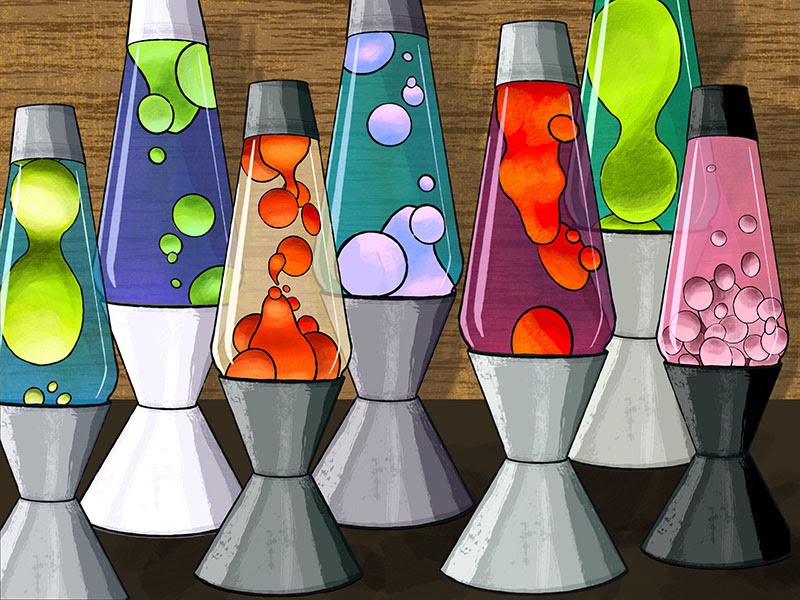
In addition to the various creative media available to Kiko in my office was a shelf of vintage lava lamps, each of which percolated at their own unique rate, and which I often used as projective tools to gauge young clients’ inner emotional states. Kiko was mesmerized by these lamps and instantly connected their various rates of flow with his own ever-changing and occasionally explosive emotionality. He even fashioned an amulet in the shape of a lava lamp, adding it to Naruto’s armamentarium to fight the inner Demon Fox, and so learned to better regulate his emotions, particularly at school.

I won’t say that Naruto saved Kiko, but this complex and compelling fictional character, whose trials and tribulations often mirrored his own, provided an unforeseeable and invaluable metaphoric therapeutic conduit for us. And the many adventures that Kiko and I shared along his own road to self-regulation and burgeoning self-awareness were a testament to the power of the rich and limitless metaphors available in the characters of popular culture.

***

As a footnote, I remember leading a workshop years ago on the use of superheroes in play therapy and counseling with children and teens. During these particular workshops, I would search the audience of clinicians for the invariable one or two clinicians whose knowledge of superheroes far exceeded my own, and who I could enlist as my sidekicks (although I often felt as if it was me who was the sidekick). During one particular sidekick search, a burly, tattooed biker in the very back row volunteered himself as my surrogate superhero expert. The man had superhero tattoos as far as the eye could see, and probably some even further than that. I asked him the seemingly simple question, “How have you harnessed superheroes and their metaphors in your own clinical work?” I was flabbergasted to learn that he had never crossed that line. He had never used superheroes in his work with children or teens.

So, I leave you with a question, what’s in your pop culture wallet, and how might you integrate its content into your own therapeutic work?

Listening for Meaning in the Voices Nursing Home Clients Hear

Several years ago, I worked with a lovely lady in her early seventies who resided in a nursing facility, and who heard the voices of her daughter and son daily. She had been delighted to be a young mother of two children but was ill with bipolar disorder and psychotic features that necessitated repeated psychiatric hospital admissions. Her husband subsequently divorced her, gained custody of the children, and remarried. The children bonded with the stepmother and cut off all contacts with their biological mother. One day I asked her, “If we had a new pill that would eliminate all voices, would you want it or not?” “Oh, no, Tom; then I’d have no contact with my children,” she answered.

Different Kinds of Voices

Over the next few years, I asked that question to hundreds of therapy patients in nursing facilities. I had initially assumed that most persons who hear auditory hallucinations would like to turn them off completely. To my surprise and increasing fascination, the majority, approximately 70–80% of those that I asked said no, they would not take a pill that would erase all voices.

Individuals with whom I’ve worked therapeutically have explained that there is indeed a negative aspect of the voices, usually involving insulting and hurtful remarks, but there is also a positive aspect—something that was pleasing, and they would not want to do without. For each person, the positive element was different, and was personally meaningful. “Tom, if it wasn’t for the voices, I’d be very lonely,” said a woman in her fifties with schizophrenia.

“I’d have no one to talk to if it weren’t for the voices,” said a male patient.

“I don’t really talk back to them, but I like them, and I listen to them; and it’s better than talking with people,” said a 73-year-old man with schizophrenia.

“I guess it’s a side benefit of schizophrenia: I can hear the voices of my dead relatives,” said a male patient.

“The good voices I think of as the children, and the bad voices are the adults; I’d just feel terrible if I stopped hearing from the children; they cheer me up,” said a different female patient.

“It’s easier talking to the voices than to people,” a man said.

Some believe they gain special knowledge from voices. “How else would I know what’s going on?” one man asked. “I read people’s minds; I can tell what they’re thinking because I can hear it.”

Some patients, though, do wish to eliminate all auditory hallucinations, and their psychiatric medications do offer symptomatic relief. Some patients tell me that they used to hear voices, but no longer do because of their medication.

Some individuals with whom I’ve worked have achieved insights through psychotherapy that helped them understand and manage the symptoms. I worked with a 74-year-old woman who had more than a 50-year experience of schizophrenia. She knew the name of the condition yet could not recall ever being educated about the symptoms of the illness. She believed that she had super hearing and could hear persons in different rooms saying nasty things about her. Often, she would yell out when passing by the nurse’s desk—because of hearing the nurse making insulting remarks about her. After months of therapeutic conversations about voices as symptoms of schizophrenia, she greeted me one morning by saying, “Guess what happened today, Tom? I was walking past the nurse’s area, and I heard them talking bad about me, and I realized; I’m hearing it, but they are not saying it!”

Troubled Journeys

Multiple factors might cause or contribute to one’s hearing an auditory hallucination—they can be associated with neurologic conditions, seizures, autism, bereavement, medication effects, drug effects, trauma and dissociation, borderline personality disorder, dementia, and/or postpartum psychosis. But for persons with a diagnosed psychiatric condition who hear voices, there may often be a pattern of additional, related life experiences that can further limit social functioning and productive activities.

Many patients who speak with me in psychotherapy about the voices they hear also report early-education learning difficulties, special education classes, and a growing sense in childhood of being different, with estrangement from peers and few childhood friends—and, therefore, reduced opportunities to develop and refine social relationship and communication skills.

Autistic elements are commonly identified in schizophrenic illnesses. Learning disabilities, likewise, are commonly associated with schizophrenic illness. Autistic features, learning disabilities, and mental illnesses can contribute to social estrangement and reduced development of adaptive social communication skills.

Affected persons may withdraw into substitute communications with voices, and that can in turn contribute to worsening of symptoms of depression—as can be manifested in the menace of some perceived voices—and to progressive depths of withdrawal, thereby adding to paranoid distrust of others.

My clinical experience suggests that many patients rely on an imaginary companionship through the voices and would like to minimize or eliminate only the malignant (the derogatory, or depression-reflective) voices. Yet other persons report significant relief when their experiences of hearing voices have been quelled by medication. If those persons had been asked prior to remission of auditory hallucinations/delusions (AH/D) symptoms, might they, too, have said they would prefer to retain the voices? I believe that relief from symptoms would better serve an individual than a pseudo-accommodation to them.

The Gifts of Therapy

I think there is a vital need for new and more effective medications, and for optimum application of presently available medications, along with psychotherapy and psychosocial interventions that can be applied by staff persons in the nursing facility.

Sometimes one learns in unexpected ways that a patient is experiencing hallucinations. I worked with a 48-year-old man with a diagnosis of bipolar disorder and no known experience of hallucinations or other psychotic symptoms. He often complained of pain and argued with staff persons. He was making vague remarks about something bothering him one day, and among other questions, I asked if he ever heard voices in his ears, anticipating he would say no. He surprised me by saying, “Not in my ears, I hear voices in the mattress; I hear the voices of the dead people who died on the mattress before I started using it. That’s why I don’t sleep at night.” The physical frailty that brought him to the facility for nursing care and rehab triggered underlying fears of dying.

Images in dreams typically hold specific and personal meanings that can be identified through sensitive personal conversation, and awareness of those meanings can improve a person’s understanding and coping with internal experiences. Hallucinations and delusions likewise contain personalized meanings and tend to provide protective psychological functions. Symptoms can be remarkably clever psychic creations that help balance an imbalanced psyche.

Many persons who don’t have a mental illness might entertain glorious daydreams of special accomplishments. Some persons with a psychiatric diagnosis develop grand delusions that protect against feelings of shame and disappointment over inadequacies. A 54-year-old man with schizophasia and thought disorders due to schizophrenia who found it difficult to communicate in ordinary ways with others once told me he had written the lyrics for many of the major rock bands.

Sometimes a patient will openly discuss their hallucinations during therapy yet deny having them when questioned by other care providers. “That was a red flag for me,” a 54-year-old female patient said about an initial conversation with a psychiatric consultant asking assessment questions. “I didn’t know who he was, and he was asking these personal questions, so I hardly said anything.”

Some patients say they do not report their internal (symptomatic) experiences, such as hearing voices, to other care providers because “they might not believe me,” “they might think I’m crazy,” “they might just think it’s not true,” “they might make fun of me,” or “they might send me to the hospital.”

I explain that in psychotherapy we are looking for the true personal meaning of the experience, so that they might better understand and manage those experiences—and, for persons hearing voices associated with dissociative conditions, so that they might better integrate the meaning of the perceptions. In therapy we talk about the difference between objective reality and subjective reality, so that the person might feel less perplexed and afraid, and more willing to discuss and examine their experiences.

The Other Side of the Sun

I met for weekly psychotherapy for two years with a 53-year-old man with schizophrenia who told me one morning, “I just got back to earth. For the last 30 years I was living on a planet on the other side of the sun.” He was upset because the staff had laughed and told him it was not true when he told them earlier that morning about his experience. I spoke with him about things that are true as shared realities and things that are true as psychological experiences that have symbolic personal meaning. We spoke of ways he wanted to fit in and get along with others, yet how that might be difficult and how he might sometimes feel far away from others. So far that it would be like being on a different planet; and how good it feels when one starts to feel better, and back down to earth, and better able to connect with people. This conversation helped him to speak more directly about the alienation he sometimes feels because of his illness.

In psychotherapy, some patients argue that the brain is not capable of creating convincing experiences that are not real. The following remarks represent a composite of conversational points from sessions with a few patients.

Therapist: Have you ever awakened from a dream and thought, wow, that dream was so real!

Patient: Yeah.

Therapist: And where did the dream come from?

Patient: Okay, it came from the brain, I see.

Therapist: Have you heard of someone taking LSD?

Patient: Yeah.

Therapist: What happened during the “trip?”

Patient: Oh, yeah; they heard things and saw stuff, and maybe went to another world.

Therapist: Those seemingly real experiences were caused by a chemical that triggered an imbalance of other brain chemicals.

Patient: My psychiatrist said my illness was a chemical imbalance in the brain.

Therapist: And psychiatric medications work to correct imbalances of brain chemicals.

Patient: Oh, so brain chemicals can make you hear and see things that are not there, except in your brain.

Therapist: Do you hear a high-pitched ringing sound?

Patient: No.

Therapist: I do, because I have a condition called Tinnitus. The ringing is not coming from outside of me, but from inside, because of a medical condition. It is subjectively real, because only I hear it. It would be objectively real if we both heard it at the same time.

Patient: Okay, so some things can be real for me on the inside, but not real between you and me; I guess that’s like mental illness.

Asking the Right Questions

Assessment questions using clinical terminology might trigger anxiety and reluctance to acknowledge internal perceptions and beliefs. “Do you hear auditory hallucinations?” might trigger a denial, yet asking “Do you hear voices or receive communications that are pleasant, unpleasant, both or neither?” might initiate conversation about one’s experiences. Asking if one feels paranoid might stir resistance, yet asking “Is it sometimes frightening or confusing to deal with people?” might lead to conversation about the thing’s others do that cause fear or mistrust.

What do auditory hallucinations compensate for? What do they replace? Do internal or out loud conversations with these voices represent a form of self-treatment for the patient? What type of adaptive skill training might address those needs?

Turning to the literature does not always result in answers to these enigmatic questions. I believe that additional research is needed to:

  • Improve awareness of the incidence of AH/D amongst persons with psychiatric diagnoses residing in nursing facilities
  • Identify how many patients have achieved remission of AH/D resulting from psychiatric medication
  • Determine how many persons experience auditory hallucinations without delusions
  • Identify the percentage of patients preferring to retain rather than eliminate AH/D
  • Elicit examples of personal meanings of AH/D
  • Develop educational guidelines to assist Activities Department staffers, including occupational and physical therapists, to teach and practice adaptive social communication skills
  • Gather ideas/suggestions from patients on how professionals might inquire about symptoms without causing shame or triggering denials

***

I have been and continue to be deeply moved by the trust and disclosures offered to me by the many vulnerable persons with whom I have been privileged to work. I ache with hopes that we find new ways to quiet their symptoms, relieve their shame, and help them deepen their willingness and capacity for ordinary social communications.

Battling Stigma: Serving Previously-Incarcerated Clients in the Community

Another week has ended. I am feeling those familiar pangs of disappointment—the kind that make me shake my fists and yell to the sky as I continue to battle decades and layers of systemic challenges outside of my control. I’ve watched my team work tirelessly to find yet another needle in a haystack which itself seems to be on fire. From a systemic standpoint, I work with arguably one of the most difficult-to-place populations—those with a history of incarceration and major mental illness. To be clear, this is not the fault of any of the clients I serve, but clearly a societal issue characterized by a continued and seemingly unrelenting stigmatization of its incarcerated citizens with mental health needs. It’s an ugly truth, but that doesn’t change that it needs to be confronted.

Like what you are reading? For more stimulating stories, thought-provoking articles and new video announcements, sign up for our monthly newsletter.

Ned (not his real name) is a man with a complex case history, not unusual to corrections. He is dually-diagnosed and no stranger to the criminal justice system. His supports are extremely limited, and he, not unlike most of his peers, feels that he has a real sense of community and care in the mental health unit at our facility. Ned once said something that profoundly impacted the staff who work with him. It was a typical day of patient care when Ned walked into the room full of clinicians and told the team members how simultaneously sad but wonderful it was that he felt so at home and cared for inside the correctional facility. This was not an easy win with Ned—it took much time and consistency in his relationship with the staff and unit to really feel that he was and is looked after.

Ned is an exceptionally charismatic and humorous individual who deserves the opportunity to have a life outside of the correctional system, no matter how well cared for he feels there. He is someone who responds to redirection and is the epitome of how and why Rogerian therapy can be so impactful, despite its many detractors. Building rapport and a strong therapeutic alliance with Ned has allowed the team members to assist him in moving forward in his life and to spend less time in the justice system than he may have without such extensive support.

The disappointing aspect of all this is that the community mental health system does not know how to respond to Ned. He deserves competent and caring outpatient mental health care, access to substance use treatment, and opportunities for vocational rehabilitation. He has many strengths and is much more likely to stay connected to providers if he feels they are genuinely invested in his well-being. However, despite all of his strengths, he requires a lot of contact with staff members Living in the time of COVID-19 has only made it more challenging for community providers to stay fully staffed and for resources to be obtainable; as a result, the patience that Ned deserves from community caregivers may not be as plentiful. Ned was removed from a community placement twice within the last year, and typically within a very short amount of time. Any time a community setting doesn’t work out, it’s hard to not let the disappointment set in because we are so genuinely invested in the outcomes and well-being of those we serve.

We live in a nation that incarcerates more individuals per capita than any other developed nation, which means that many of us and our clinical colleagues have had professional, or perhaps even personal contact with someone who has been incarcerated. Yet despite this fact, I have found that there is so much fear in the field of human services when it comes to working with previously-incarcerated individuals with mental health needs. Time and time again, the job of finding placements for these individuals has proven to be excruciating. Community providers often want assurance that these individuals aren’t too psychiatrically sick or require resources beyond their capability or willingness to provide. There may even be the implicit fear that previously-incarcerated clients, especially those with a history of mental illness, may be violent and/or physically dangerous. And these are but a few of the barriers for placement and treatment once these individuals are released from prison.

To be fair, we are living in the time of a pandemic, and staffing and resources in the human service world are at an all-time low. Closures are happening left and right, and the competition for resources has intensified. I appreciate the gravity of this, but the fact is that we were struggling with this long before the pandemic began. Deinstitutionalization had a direct impact on the criminal justice system, leading prisons and jails to become the largest providers of mental health in the nation. John F. Kennedy had the right idea with the Community Mental Health Act in 1963—unfortunately, America has never had the infrastructure to support the aftermath of deinstitutionalization in community settings. Pair this with the time of the pandemic, and people with mental health needs are becoming psychiatrically sicker and for longer periods of time, which has immense consequences on their long-term prognosis.

The weight of this has often felt crushing to me and my clinical colleagues in corrections. Agencies need to be equipped to provide treatment to individuals like Ned who have been incarcerated and also live with major mental illness. People reintegrating into society from prison or jail may need more assistance to get on their feet and figure out the fast-moving world that they were removed from and to which they are returning. Yes, individuals with major mental illness may require more staff time and patience. Yes, as those providers, we should step up to the plate and meet this challenge head-on. Furthermore, as clinical providers, we cannot expect marginalized people who often have become very adept at pushing others away or having people ignore them or reject them to instantly acclimate to new surroundings and not need anything from us.

***

So why do I write all this? I write this because I’m betting there are other correctional social workers and clinicians out there who feel the weight of this just like I do. Society has an interesting way of tucking away those it sees as “undesirable” and then looking away, assuming either that these individuals will not reintegrate into society or somehow magically will. These individuals will of course be walking down our streets with us, they may live next door, or they may stand behind us at the pharmacy. If we know people who end up incarcerated will return back into society, why are we not providing them access to services? If services continue to screen for those who are “high-functioning” and “less needy,” then we are truly perpetuating stigma and preventing people like Ned from having the opportunities that they not only deserve, but are fully capable of having. A friend of mine once told me, “We’re all just walking each other home.” I hope community, psychiatric, and correctional providers can work together to make this journey better for our fellow walkers.

Stefani Goerlich on Becoming a Kink-Affirming Therapist

Defining Our Terms

Lawrence Rubin: Hi, Stefani. Thank you for joining me today. I’m just going to get right into it and ask you—especially for those readers who may not be fully aware—what is kink?
Stefani Goerlich:
kink is nonnormative sexual and relational expression
Kink is a very broad term, but at its most basic, simply means any sort of sexual or relational expression that falls outside of the social norm or mainstream for the people who are engaging in it. What is normal, obviously, varies from culture to culture. But kink is nonnormative sexual and relational expression.
LR: Are there certain standards for normative sexual behavior across cultures that make a place for kink?
SG: When it comes to relational models, polyamory versus monogamy here in the States for example, polyamory is considered a form of kink expression. They’re often sort of rolled in together. But if you go into parts of Europe or the Middle East, polyamory is a cultural norm. On the other hand, things like sadomasochism and sensory exchange tend to be considered somewhat atypical across the board. So there are some things that lend themselves more towards universal kinks and others that are much more culturally contextualized.
LR: For some of our readers unfamiliar with these terms, what are “sadomasochism” and “sensory exchange?”
SG: Within kink, most of what people talk about is BDSM, which actually encompasses several different, smaller sorts of acronyms. It’s a multipurpose concept that includes bondage and discipline, which is an exchange of control. Usually this means control of movement, control of behavior. Then, there’s DS—dominance and submission—which I explain as an exchange of authority between the partners. This may or may not include control of behavior. But often, authority involves decision making sort of power. S&M is sadism and masochism, which we as clinicians think about as pain, giving and receiving pain.

But pain is a very subjective term and varies widely based on the individual. When I’m training other professionals, I talk about sadism and masochism as the exchange of intense sensation. So, within kink relationships, we’ll have one or more of those three—an exchange of control, an exchange of authority, or an exchange of sensation.
LR: So, that exchange of sensation does not necessarily include sexual sensation—direct stimulation of the genitals, which is only one subset of sensory exchange or pain?
SG:
We tend to assume that kink is sexual. But kink, in its most basic, is relational
Absolutely. That’s actually true for all three. We tend to assume that kink is sexual. But kink, in its most basic, is relational. Kink can sometimes be sexual in how it’s expressed. But ultimately, it is a relational form. So you’re right that the exchange of sensation might never involve sexual contact. It could be temperature. It could be impact. It could be electrostimulation. There’s a wide variety of sensations that can be exchanged that never involve removing one’s clothing.

50 Shades of Confusion

LR: How has American pop culture impacted consumers’ (therapists included) understanding of BDSM?
SG:
I think that pop culture has definitely sexualized BDSM
I think that pop culture has definitely sexualized BDSM, but I also think that is true historically. I’m working on a new conference talk and potentially a new journal article that looks at 500 years of how BDSM practices have been portrayed in popular media. And they’ve often been conflated with deviant sexual behavior regardless of whether the people engaging in kink view it as sexual. So that lends itself to this perpetuation of kink stigma. We typically see BDSM signals or cues, like leather or somebody wearing a collar, and immediately sexualize those in a way that they perhaps might not mean for themselves and their relationship.
LR: I go immediately to my only pop culture experience with BDSM, 50 Shades of Grey. Given that therapists are certainly part of the consuming public, did the movie and book help or undermine our understanding of BDSM?
SG:
Unfortunately, the actual relationship the 50 Shades books portray is incredibly abusive
I’m deeply conflicted. I have a conference talk that I offer—or, now, in COVID times, a webinar—called “Kink Affirming Practice: What Your Clients Wish You Knew but Are Afraid You’ll Ask.” And I noticed that my rooms started becoming much fuller after the 50 Shades book and then the movie came out.

On one hand, E. L. James did a great job of bringing kink dynamics into the mainstream, where soccer moms, housewives, and school teachers were reading about this kind of relationship. It was no longer the secreted experience of buying the pulp novel from behind the counter at the adult bookstore. So from that perspective, it was fabulous.

Unfortunately, the actual relationship the 50 Shades books portray is incredibly abusive. It is not a healthy model of kink. And in fact, the only time I mention it in my intro talk is as a case example where I walk people through a case study and offer a few different scenarios. I then ask the participants to tell me if the various scenarios represent consensual kink or domestic violence. At the end, I ask them if they recognize my case study, which is 50 Shades. So, it’s done wonders for normalizing conversations about and knowledge of BDSM. But I think it’s done a lot of harm in terms of how people understand BDSM relationships to actually be.
LR: So 50 Shades sort of limited our understanding of BDSM by grabbing our focus and making it sexual and, as a result, the line that separates BDSM from intimate partner violence was blurred.
SG: And its normalized dominance as a form of coercion, as opposed to dominance as a gift that the submissive gives to their partner.
LR: This may seem like a weird analogy, but when the movie 101 Dalmatians first came out, the breeders were going wild breeding dalmatians. And around Halloween, black cats are oversold and many later abandoned or abused. Did 50 Shades of Gray drive people to the therapists’ office, partners wanting to experiment and their partners not being open to it? Did it increase your practice?
SG: I saw an increase in my conversations with members of the BDSM community who expressed frustration with an influx of people who had read these books and had decided that they wanted to explore kink, but who were coming into it with this unhealthy understanding of what kink should look like. And so a lot of my already kinky clients were very, very frustrated and upset with the sort of change in the zeitgeist of the community, and the way new dominants were expecting submissives to respond or were expecting behaviors to be okay that are not. And newly-identified people who wanted to explore their submissive side seeking out really unhealthy dynamics because they weren’t clear on what healthy kink looks like. So what I saw in my practice was long-time kinksters being very frustrated with the sort of new people that 50 Shades brought into that world.
LR: And I wonder if it also resulted in an influx of clients with already very disturbed patterns of relationships who now wanted to incorporate kink without having a sound, healthy relational foundation. I’d imagine that there needs to be a reasonably healthy pattern of communication and awareness of power dynamics before adding in kink.
SG:
the problem is when people who have never identified as kinky before start to take on a BDSM identity as a way to rationalize or contextualize their already problematic behavior
Absolutely! I think that in general, there is a lot that the BDSM community can teach the vanilla world about negotiation, about consent, about communication, about after-care. But the problem is when people who have never identified as kinky before start to take on a BDSM identity as a way to rationalize or contextualize their already problematic behavior.

When somebody who has struggled to form relationships because they have abusive patterns now decides, “Well, I’m a dominant and so the way I have a relationship with a partner who won’t leave me is to find a partner who likes being mistreated.” That sort of mindset misunderstands what it means to be submissive and also misunderstands what it means to be dominant.
LR: So this kind of person might say, “All these years, the people I’ve dated have called me abusive, but I’m really not. I’m just a dominant. And they’re not understanding. So, I need to find just the right submissive.”
SG: Exactly.

Kink-Affirming Practice

LR: Shifting gears a bit here, Stefani, what exactly is kink-affirming clinical practice?
SG:
Kink-affirming practice understands that kink is its own distinct subculture, with strengths and resources and things that we can use in clinical work with our clients
Kink-affirming practice is the understanding that kink is not just something that we need to know about. Most clinicians that I encounter will say that they are kink-aware. They know what BDSM stands for. They have a general understanding of the idea of kink. But that’s about where their knowledge ends. Kink-affirming practice understands that kink is its own distinct subculture, with strengths and resources and things that we can use in clinical work with our clients, and that we can leverage their kink identities in our treatment planning, in our intervention strategies, and really work with that in the same way that we would use any other aspect of our clients’ identities. So it’s taking it beyond “I understand this” and moving it into “This is a key part of your identity. And we are going to weave this into our work.”
LR: Just as a clinician working with any client is interested in tapping into their resources, you’re saying that a kink-aware therapist uses the person’s kink identity as potential for resources. Can you give me an example of what kind of resources for healthy relationships kink clients bring to you as a therapist?
SG: Sure, but I want to clarify—that’s what I mean when I say, “kink-affirming.” Kink aware therapists understand what kink is, but they might not necessarily have a structure for using that in their work with their clients. They just know enough about it to not cause harm or to stigmatize their clients for being kinky.

In kink-affirming practice, we would look at the use of protocols and rituals to enhance the work that we’re doing with clients perhaps with a trauma history or with a rejection dysphoria. Working daily protocols with their partner into their treatment planning can be really positive for them. If we’re working with somebody with disordered eating, for example, working with their partner—their dominant partner—to help establish rules around that so that they have accountability in their relationship in a way that doesn’t feel focused on their eating but becomes an act of service to complete a meal, can be a really healthy reframing for them.

Another great example for a dominant partner would be—I had a client who struggled with their own med management, blood pressure medication in this case. But they were very busy, and because it wasn’t a huge priority for them, their health was compromised. So we actually worked together to make it an act of service for their partner to remind them of their meds. It became, “Sir, it’s 6:00. It’s time for you to take your medication.” In another context, or one that was not kink-affirming, this reminder could have felt bossy or nagging, controlling. But we played to the strengths of their dynamic and made it something that felt like service to them. Both of these examples reflect a DS context.
LR: These two scenarios are perfect examples of how kink and BDSM are not necessarily about sexual gratification, sexual stimulation, or sexual experiences. It’s about a relational process. One aspect of which might be sexual. You brought up trauma, which is a whole other area. But it made me wonder if it might be a dog whistle to a kink-unaware or non-kink-affirming therapists to search for trauma in the history of these folks who bring their kink identities or practices into therapy?
SG:
One of the biggest misconceptions and biases is that people who identify as kinky are kinky because they have a trauma history
One of the biggest misconceptions and biases is that people who identify as kinky are kinky because they have a trauma history. Actually, when you look at the research and the data, it’s fascinating because people who identify as kinky do not have—they don’t report a trauma history any more than the general population. So trauma within the kink community is on par with trauma in the general community. Where we see a difference is that people within the kink community tend to report higher rates of PTSD than vanilla people. And what that tells me is that you don’t necessarily have more traumatized people who identify as kinky. But what you have is a group of people who have found an outlet and a cathartic modality that works for them who are then coming to kink as a way to further their own healing. So, I can understand why on the surface if you’re working with a heavy population of PTSD, you might make that corollary that, oh, kink is more prevalent in people with trauma. That’s statistically not true. But more likely, people with PTSD may be using kink as an outlet to process those feelings.
LR: What do you mean in your book when you say that consensual BDSM for trauma survivors can be an effective way of processing trauma memories?
SG:
Kink is not, in and of itself, therapy
I want to be really clear. We don’t have enough evidence to say that BDSM play is an intervention. We have some people who are doing that research. But we’re not there yet. Kink is not, in and of itself, therapy. But my background is with sexual assault and trauma survivors, and for a lot of people who have had their control taken away, who have been in situations where they have lost agency, lost autonomy, literally lost physical control over their bodies and their voices, kink can be very powerful. Being able to put themselves in a situation where they can say, “These are my limits. This is what I want. This is what I don’t,” to know with absolute certainty that if they say stop, things will stop. It can be very, very healing to put themselves in situations that offer similar sensory experiences to their trauma in a controlled, safe setting. So it works almost similarly to exposure therapy with a phobia. But it’s self-directed and self-controlled.
LR: When you talk about the healing potential of kink, I think about people who have had chronic health conditions or who have had to undergo medical procedures that have involved involuntary intense pain or submission to painful procedures.
SG:
illness and medical trauma can often be supported and processed through the use of intentional sensory experiences like BDSM
Emma Sheppard is doing some phenomenal work around using kink as an outlet for chronic pain treatment and using intentional chosen pain to offset and to recontextualize pain that perhaps we don’t choose. I know Lee Phillips, in Virginia, does a lot of work around chronic illness and BDSM. So there is a growing sort of small but strong number of voices working on exactly that—on recognizing that illness and medical trauma can often be supported and processed through the use of intentional sensory experiences like BDSM.
LR: If there’s anything I want the readers to take from this interview, it is the importance of that simple finding from research and practice that BDSM and kink in general are not necessarily about sexual gratification, which was the misconception you mentioned earlier. Are there other kink-related myths and misconceptions?
SG: I think there are a number. One of the big ones that I encounter is the idea that people who identify as sadists are intentionally or are diagnostically problematic and that we need to be vigilant around these sadistic clients because they are more likely to be offenders who are sublimating this violent urge into their relationships. Which, on one hand, if that is true for a given client, I would argue that’s exactly what we want them to be doing.

If they have a consenting partner who enjoys receiving the kind of aggressive sensation they want to be giving out, then, yay, we all win, and nobody’s consent is being violated. But we also need to recognize that there is such a thing as prosocial sadism—people who enjoy evoking these reactions in willing people who, in turn, enjoy receiving these sensations. We need to be mindful as clinicians to not assume deeper social or psychological implications here simply because our clients enjoy giving or receiving these intense sensations.
LR: I know that as a clinician, you’re also a certified sex therapist, so would assume that some clients seek you out for sex-therapy related issues, and others do not. What are some of the main concerns that clients bring to you?
SG:
people that perhaps are kink-unaware or kink-uninformed rush to assume that you’re kinky because you’re depressed, or you’re depressed because you’re kinky
I would say that even within my general mental health clients, a sizable number of them come to me because they know that they are kinky and depressed or and anxious or considering divorce. They want to work with somebody who is not going to tie threads that don’t need to be tied. So often—and this comes back to the question you asked about myths—people that perhaps are kink-unaware or kink-uninformed rush to assume that you’re kinky because you’re depressed, or you’re depressed because you’re kinky, or you’re anxious because you’re kinky, or you want to get divorced. Sometimes my clients just need a clinician who understands the way they like to have relationships or the way that they like to have sex, and that this is not necessarily connected with their mental health issues.

Another good chunk of my practice is people who are experiencing desire discrepancy between themselves and their partners, mismatched fetish interests, mismatched kink dynamic interests. I’m starting to look at those sorts of cases more as a mixed-orientation marriage than as a libido issue, because when we look at things as a desire-libido issue, we’re operating from the assumption that one person’s libido needs to be adjusted. When instead we look at it as a mixed-orientation relationship, neither person is wrong. Neither person needs to be fixed or corrected or medicated. We simply need to find the Venn-connection between their common erotic maps. So helping these couples through a mixed-orientation framework has become a big part of my practice.

And the last group is couples and individuals who are newly aware of or newly willing to discuss their interest in kink or polyamory. They’re coming to me for guidance and for a place to talk through and process these new ideas and new experiences as they start to enter into those initial sort of explorations and community engagements.
LR: So a kink-unaware therapist or a therapist who might be conflicted around their own sexuality or relational dynamics might be predisposed to see a red light flashing over the head of a client when kink comes into the room, rather than sort of hold it as just one of the other elements of the person’s identity.
SG: Exactly. There’s also just the resource knowledge. If we have a client who’s struggling with a substance use issue, if we have somebody that’s perhaps overusing alcohol, we can—most of us—have a conversation around several different treatment options for them. We can talk about AA versus Smart Recovery versus Dharma Recovery. We can talk about intensive outpatient versus going to rehab. But if you’re not kink aware or kink affirming, and a client comes to you and says, “I really want to explore this side of me and I don’t know where to start,” most of us are totally unprepared to talk about what conferences are best for somebody who’s curious about pet play versus age play versus BDSM, where somebody can go for educational content without an expectation that there’s going to be any sort of public play component versus somebody who’s interested in polyamory but maybe not swinging. Those are resources our kinky clients need to have access to. And as clinicians, we need to be able to have those conversations with them in the same way we would about any other community resource.
LR: Might there be a profile of the clinician who might be more susceptible to countertransferential responses to a kink client—a kink-practicing client?
SG:
The clinician who is more philosophically conservative and wedded to the sex addiction model is more likely to struggle when working with kinky clients and to pathologize BDSM and kink
I don’t know if I could say there’s an evidence-based profile. I can tell you anecdotally what I’ve encountered. The clinician who is more philosophically conservative and wedded to the sex addiction model is more likely they are to struggle when working with kinky clients and to pathologize BDSM and kink. I have several local colleagues who have told me, verbatim, that I’m the one they send the weird sex stuff to, which is fascinating because the weird sex stuff they send me tends to be masturbation.
LR: Oh, my! Blindness next, right?
SG: I mean I have a lot of conversations with referrals who are sent to me because they’re told they have very problematic sexual behavior. In their intakes, I’m like, “You are well within the margins of normal. Nothing you are telling me is at all concerning to me.” And I’m not saying that as a kink-affirming clinician. I am saying that just as a sex therapist.
LR: One of the things our readers will not be able to appreciate unless they look you up is that you have pink hair, you’re sitting in a pink chair with a statue of Wonder Woman next to you, and that behind you is a beautifully colored floral wreath. I don’t know if it’s macramé.
SG: Embroidered lace I brought back from Romania as we were fleeing Europe ahead of COVID.
LR: So I wonder if a therapist who is not as comfortable in displaying themselves as freely as you or who is struggling in their own relationships is going to have much more difficulty accepting kink clients.
SG:
I try very hard to be very cheerful, very colorful, very approachable, so that I don’t look like what people picture when they picture a kink specialist therapist
It’s interesting that you bring up sort of the color palette of things. Because one of the things I very intentionally try to do in my practice is to be very approachable to avoid that sort of black metal, sleek chrome look—I don’t want my office to look like a dungeon space. I want to look friendly and cheerful and approachable, partly because it’s so important to me to normalize these relationships for my clients, for my colleagues. And a huge part of that is looking normal in the work that I do. I mean the pink hair, I suppose, is maybe a little bit atypical. But I try very hard to be very cheerful, very colorful, very approachable, so that I don’t look like what people picture when they picture a kink specialist therapist.
LR: I wonder if clients who are on the verge of experimenting with or beginning to wonder what kink is, and who approach a therapist who is not particularly approachable—if the relationship will not work.
SG: I will say that every single year, I ask my accountant if I can write my hair dye off as a marketing expense because I hear from so many people that I look friendly and like somebody they could talk to because I had pink hair.
LR: Stefani, I’m going to be presumptuous here and say that I think you need to explore the power dynamics with your accountant. Perhaps you should be telling your accountant what is to be written off and push your accountant into a submissive position when it comes to that. A practice-what-you-preach sort of thing. Sorry, I couldn’t resist that one.
SG: I’ll let her know you said so.
LR: Is the therapist who has not practiced kink at any level capable of working with a client who either is kink practicing or contemplating kink practice or experimentation?
SG:
I don’t think it’s fair to ask our clients to pay us to use their therapeutic hour to teach us what we need to know to do the work with them
I think so. I think that, in the same way that I don’t necessarily have to be gay to work with a gay male couple, I simply need to be willing to educate myself and empathize with them and respect them, that other people can work with kinky clients if they’re willing to do that same work. I actually think it can sometimes be easier because when I’m doing case consultation with peers who themselves are kink-identified, that’s where I see countertransference. That’s where I see, well, the way that their relationship is set up or the way that they’re doing kink isn’t the way I think that kink should be done. And so we have to have conversations around your kinks, not their kink. But that doesn’t make their kink wrong. At times, it might actually be easier to have somebody who is very affirming, but not necessarily kinky themselves, doing that work.

I think that one caveat I would add is we need to be willing to let clients teach us about their dynamic and the way that they do kink. I do not think we should be looking to our clients to educate us about kink in general. We need to be pursuing continuing education. We need to be reading books or watching documentaries or attending conferences written by members of the kink community. We need to be educating ourselves, and then asking our clients, “What does this look like for you?” I don’t think it’s fair to ask our clients to pay us to use their therapeutic hour to teach us what we need to know to do the work with them.

Hard Places and Soft Spots

LR: When should a therapist consider referring a client who may be reconsidering their relationship style and/or sexual practices to include kink practices?
SG: I think, if it’s not something that you’re willing to—if it’s outside your scope of practice and you’re not willing to do the work of learning, then you need to refer. And it’s okay to be uncomfortable with something. I’ve worked with clients whose individual practices or particular fetishes made me uncomfortable. I’ve referred a couple of people out whom I simply know I can’t provide unconditional positive regard to. Not because there’s anything wrong with them. But because I just know where I’m at. So if you are encountering a client you are unprepared to work with and unwilling to educate yourself to do the work with, you have an ethical obligation to them to connect them with somebody who can and who will.
LR: You said that you will refer some clients and you talked about fetishes. Are there some fetishistic behaviors that go beyond your level of moral acceptance? I mean, when would a person’s fetish be such that you would need to refer them, since I’m sure you have seen and heard it all.
SG:
Moral is tricky because my clients, both kinky and non-kinky, engage in all sorts of behavior that I have moral issues with
Moral is tricky because my clients, both kinky and non-kinky, engage in all sorts of behavior that I have moral issues with. If somebody’s stealing from their employer, I have a moral issue with that. I think that we tend to ascribe socially greater moral weight to sexual things than to nonsexual things. But that doesn’t make it any more or less moral. So I don’t know that I want to define it as a moral thing.

But for me, in terms of comfort, really diving into the details of somebody’s experience, where I’m able to sit and hold space for a given narrative, people who are zoophiles—that’s something that I personally struggle with.

Thankfully, I have colleagues I can refer out to. And I do. And again, I’m not necessarily putting a moral weight on that. It’s just I can’t be what they need. I work with people who struggle with pedophilic urges. And I’m comfortable doing that. I’m a member of the Association for the Treatment of Sexual Abusers. I’m comfortable working with non-offending pedophiles. I don’t work with actively offending pedophiles. But for the most part, those are the two big ones for me. I have people that engage in a lot of niche fetishes that some of my peers struggle with, like coprophilia. So, most things I am fully capable of holding space with. For me, really, just in terms of being able to sit and hear the stories and process and be present for, those are the two that I refer out for, personally.
LR: So, like any competent clinician, you have your boundaries. What kinds of concerns around BDSM do you hear from parents who have concerns for their children and teens?
SG:
I have such a soft spot for kinky adolescents because they are completely adrift
I have such a soft spot for kinky adolescents because they are completely adrift. There are very few ethical resources available to young people who identify as kinky. And it’s tricky because when we interview kinky adults, most of them say that they first recognized an interest in kink starting around age 10, if not a little bit earlier. So, most people who are kinky knew they were kinky early.

And we have a huge population of young people who know that this is a part of how they form relationships, how they give and express affection. And yet they can’t attend kink conferences. They can’t go to BDSM events. And absolutely, we have to be aware of predators and of problematic situations. That’s because, when you’re talking about power exchange in young people, you want to make sure that they’re capable of consent. So, there are really no great answers. I think where I focus with parents is on recognizing that BDSM is a healthy relational expression, on normalizing BDSM as something that can be done in a safe, consensual way, on recontextualizing power exchange as not coercive and grooming behavior, but as a future relationship model their children may aspire to. Even though they’re not adequately able to enter into a dynamic like that now.
LR: Research tells us that children who are victimized by sexual and physical abuse are at higher likelihood of becoming abusers themselves. Is kink interest in children and teens a potential risk factor for them? Especially for trans youth, who are at even higher risk for adverse outcomes?
SG:
providing gender-affirming care to young people is so fraught and contentious that we haven’t even gotten as far as people being able to have a conversation around affirming kink identities
I honestly don’t know that I could speak to that. I don’t know that there’s been enough research. And I think right now, the conversation around simply providing gender-affirming care to young people is so fraught and contentious that we haven’t even gotten as far as people being able to have a conversation around affirming kink identities in gender nonconforming young people. I think that might cause heads to explode in ways that are not fair to young people.
LR: I’m wondering if there’s a hierarchy of kink practice and kink fetish that can be ranked in terms of likelihood of bringing ire to parents and people in general?
SG: SG: I think somebody’s gender identity is such a core aspect of who they are that that has to be supported and affirmed before any sort of relational preference or sexual expression could ever be hoped to act on. They can’t have a happy, healthy, consensual power exchange relationship or engage in a happy, healthy, sensory exchange relationship if they’re not happy and healthy in who they are as a human. And so their ability to engage in any sort of relationship model—kinky, vanilla, or otherwise—is really predicated on our first affirming them and their gender identity to start with.
LR: So healthy kink practice requires healthy personality development first.
SG:
I don’t know that we necessarily need to be rushing to include kinky young people in the broader kink community
Absolutely. As you know, the last part of the brain to develop is the area that controls cause and effect thinking, good and ethical decision making, and being able to anticipate outcomes. And all of those skills are necessary in order to truly negotiate with a potential partner and especially when it comes to BDSM and kink—in order to be able to consent to some of the things that kinky people do. So, I think that supporting young people in their identity formation, in affirming their gender identity, in teaching strong consent culture early and often and bodily autonomy and sex positivity—these are all ways that we can support kinky young people. But I don’t know that we necessarily need to be rushing to include kinky young people in the broader kink community. I think that we need to give them space to be able to have the adult conversations that kinky people have around negotiation of scenes and relationships.
LR: What might be the relationship between the age of the therapist and their capacity to embrace broader elements of identity like kink? Or is it more a matter of the developmental level of the therapist rather than their age?
SG: I don’t know that I would want to speak to that. I feel like it might be far more generational. I think that my son’s generation is so much more inclusive and eager to affirm and accept people with diverse identities and experiences in a way that my parents’ generation really struggles with. And I know that as a Gen-Xer, we try really hard to always get it right. So, I don’t know if it’s an age thing so much as it is a generational thing.

Unanticipated Outcomes

LR: That makes a lot of sense. From your own clinical experience, can you share an unanticipated success story and an unanticipated unsuccess story—I won’t call it “failure”—around working in the kink domain?
SG:
it broke my heart a little bit because they deserved to—whatever their identity was—be affirmed in that
When I first went into private practice after leaving agency settings, I was still in sex therapy supervision. And my very first gender nonconforming client was a person who had lived as a heterosexual man their entire life, who had always struggled with thoughts that perhaps they would be happier as a woman and had come to therapy to explore this. Being me, I was very, very, very excited to help explore this. And we had many wonderful conversations and I offered lots of activities and resources. One day, they came in and said, “I don’t want to do it. It’s too hard, and the payoff isn’t worth it. If I were to announce that I am a woman, I would lose my children, I would lose everything I have. I’ve been doing it this long, I can keep doing it. Sure, it would be nice. But, at the end of the day, the reward isn’t worth the risk and having these conversations is just too painful. So, I’m done.”

There was nothing I could say to that. You have to respect everybody’s process. But it broke my heart a little bit because they deserved to—whatever their identity was—be affirmed in that. Whether that was a heterosexual cis-man that just liked wearing dresses every so often, or whether that was a complete reshaping of their gender identity, I wanted them to be loved and accepted for who they were. And after having so many conversations about what it would be like if they could have that, to have them come in and say, “I just decided it’s not worth trying,” was really—it made me very sad for them.
LR: Perhaps it’s the therapist or supervisor in me that says, maybe it wasn’t really a failure. You created a space for the conversation. And they weighed the pros and cons and did what was best for them, even though you would have hoped that they could have done what was better for them, rather than just best. How about another experience from the—you’re glowing—oh, my God—this was wonderful and…
SG:
I am very much—as you might guess—not a kink-shaming person
I had a client who said that she was in a 24/7 DS relationship, but that it didn’t feel comfortable for her and she wanted to work through her feelings because her dominant was telling her that she wasn’t doing DS right. He wanted her to come to therapy to figure out how she could be a better submissive. And I am very much—as you might guess—not a kink-shaming person. But about two months into this, I paused mid-conversation and said, “I want to print something off, and I want to show it to you.” I went to my laptop and printed off the Duluth Model of Domestic Violence Wheel of Power and Control. I said, “I want you to tell me whether or not anything here looks familiar to you.” And she pointed out—I gave her a highlighter—and she started highlighting a whole bunch of things. And she said, “Well, yeah. But this says, ‘Power and Control.’ This is just what DS is.” And I said, “But how much of this did you agree to?”

I then asked her, “How much of this is okay, because not everything on here can be healthy. And sure, there are things on the Wheel of Power and Control that can be negotiated. Absolutely. Name-calling—absolutely. If that’s your thing, go for it. But there are some things like threatening to harm pets or children that are never a part of—and it seems sort of counterintuitive considering the conversation you and I have had.” Looking back on that powerful interchange, I was able to help somebody understand that they had been gaslighted by their partner into thinking that she was just a terrible submissive, and, if she was just a better submissive, they would have a great relationship. She understood at that moment that this was not kink, that this was a really abusive relationship—and that was very hard.

That was the start of about two years’ worth of work. She ended up moving out. He ended up making some threats to me. I had to have security walk me to and from my car for quite a while. And then she terminated. And I was worried about her. But last summer, out of nowhere, I got a text message saying that she had moved across the country and she had gotten her dream job and she had a new dog that she’d always wanted to have that he would never have let her have. It was a very lengthy text message. And she was just living her best life. And she told me that she would never have thought that she was capable of doing that if she hadn’t had me look at her and say, “This isn’t what kink looks like.”
LR: It is wonderful to have those kinds of memories. I could not possibly end this wonderful conversation, Stefani, without asking you the significance of the Wonder Woman action figure on your desk.
SG:
Wonder Woman originally was intended to represent a new vision of womanhood that was intended to challenge patriarchal norms
I love Wonder Woman. William Moulton Marston, the creator of Wonder Woman, not only invented the first lie detector, but he created the DISC personality profile, which is one of the first attempts to actually use the concepts of dominant and submissive. He tried to sort of codify what those personality types looked like. And Wonder Woman originally was intended to represent a new vision of womanhood that was intended to challenge patriarchal norms and to challenge relationship models and to give young people a new vision for what relationship dynamics could look like.
LR: Does Gal Gadot capture the essence of what Marston envisioned?
SG: As a Jewish woman myself, I love having a Jewish Wonder Woman. She is my favorite.
LR: There was an ad in a magazine in the ‘40s that featured Wonder Woman strapped to a lie detector. I wonder if that was a subtle domination image—not so subtle actually.
SG: Not so subtle. Golden Era Wonder Woman had some pretty overt bondage themes. Marston was in a DS relationship with his partners—a DS poly relationship with his partners.
LR: Well, we’ll leave our readers with that, and I thank you, Stefani.

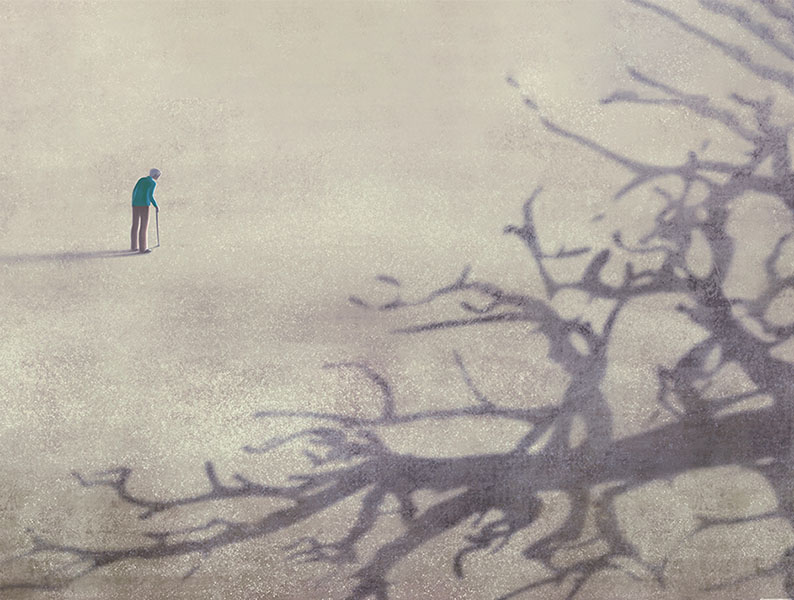
Melting Fear with Love

Walking up the back stairs, I heard someone yelling and cursing loudly. I pressed the red button releasing the door lock and came onto the third-floor unit. The fire of her fury had burnt out rapidly, and a 32-year-old young woman—I’ll call her Gwen—now sat hunched and sobbing in the nook at the end of the hallway. I thought if I spoke or approached too closely she would dismiss me, so I sat quietly 10 feet away. Her breathing slowed, she sighed and looked questioningly at me. I introduced myself and my role as a therapist, and she began to tell me of her frustrations: with her medical problems, her mood shifts associated with bipolar disorder, and feeling trapped in a nursing home with people ordering her around.

Like what you are reading? For more stimulating stories, thought-provoking articles and new video announcements, sign up for our monthly newsletter.

During her stay, Gwen had many similar fiery outbursts aimed at authority figures, and weekly conversations with me in which she spoke of being trapped and tormented as a child in foster care. She felt furious with her biological mother for abandonment, and with her abusers. As a child, her proficiency with math was a saving grace for Gwen, and her most keen desire was to teach young children about the delights of mathematical thinking. Gwen had been burned by betrayal as a child, and suffered inflammatory medical problems and destabilizing bursts of inflamed emotions that limited her progress in pursuit of her goals of a stable life and a teaching job. She loved being a teacher of young children and wanted to stabilize her physical and mental wellness so she might obtain an apartment and a return to work.

Yet Gwen could easily erupt in dragon’s breath fury when frustrated or challenged or limited by an authority figure. We talked of how her suffering as a child was unjust, and how her feelings of anger were understandable, yet how the heat, hammer, and anvil of her anger needed to be forged into steel-strength skills for successful adult functioning.

Watching the movie Frozen with our grandchildren, I was reminded of Gwen, and reflected further on the emotional themes she and the fictional character Elsa had played out in their lives. Each an orphan with a gift, overwhelmed by circumstances and emotional reactions to them and fleeing into unhelpful and alienating defenses—either with ice or fire—and as yet unable to assume full adult responsibility until brought home by love.

***

In the movie Frozen, the initially playful child, Elsa, has been endowed with special powers over the piercingly beautiful yet dangerous elements of winter.

In Norway, the setting for the movie, the freezing powers of winter exert tremendous influence over the lives of the Norwegians. It seems only natural to mythically imagine reversing the dynamic and exerting unique and personal control over cold, ice, and snow.

Elsa is not only endowed from birth with ice magic, but she is also likewise enlisted from birth to inherit grand royal authority as the Queen. Yet with a lack of parental or adult guidance or guardianship, she is left unprepared to understand or to cope with either form of power. With no guiding principles or instruction, she can only rely on her increasingly troubled and difficult-to- control emotions for direction.

In her journey from fear towards love, Elsa magically conjures two characters: Olaf and the Snow Monster, which represent differing elements of her character and of her reactions to the overwhelming circumstances enveloping her. Olaf represents the playful joy of Elsa’s childhood with her younger sister Anna, and the Snow Monster embodies the ferocious defensiveness Elsa has developed as a coping strategy.

Elsa learned only fear and cover-up as ways of managing her special gift. Added to that were the burdens of unresolved grieving over the deaths of her parents and her misguided estrangement from Anna. Under the additional burden of authority as a newly crowned queen, Elsa fails and flees; from the sister she ostensibly wants to protect—even when Elsa knows that Anna is actively endangered by a conniving scoundrel—and as well from her responsibility for the needs of the people she is destined to rule.

Elsa experiences an initial, albeit illusory, euphoric sense of release—which is anything but genuine freedom—as she isolates herself ever further inside a grand though chilling fantasy of solace through solitude.

Elsa, sadly, is not—at least not yet—a heroic figure. She never risks herself for the sake of another. Elsa is a tragically lonesome figure who withdraws from others into an ever-deepening coldness. Elsa even rejects her sister after Anna has come to call her back to family and community and responsibility.

The real heroine of the movie is Anna, who remains hopeful even while enduring a childhood of rejection and imposed isolation. Anna always believes the best about her older sister Elsa, and Anna departs immediately, and on her own, to find and rescue the sister who has run away.

Anna awakens love and heroism in the character Kristoff. It is their budding love for each other, along with the vestiges of Elsa’s hope and joy in the figure of Olaf, which prepares the way for Anna to give of herself to the end in a successful attempt to save Elsa through an act of true love.

***

Two years after my initial encounters with Gwen, I had the opportunity to work again with her in a different nursing facility after she experienced another medical flare-up. This time, her attitude and outlook were far more mature and optimistic than when we first met, yet she still struggled with unstable medical and emotional distress. She was considering the short-term goal of moving in with a family—a lady and her two young adult daughters—under a foster family care program. One morning she was crying heavily when I came to her room. Gwen said, “I know it’s different, it’s not the same as foster care when I was a kid, but it reminds me of that.”

The host family was patient and kind and invited her six times to their home, so she might gradually consider the option of living with them, without any rush to decide. Gwen reflected with me on each contact she’d had with the potential host family—what they said and did, and how kind they had been and how hard it was for her to trust that it might turn out well. However, she also felt reassured to learn that the host family would hold no authority over her, and that she would be free to move on from their home to her own when it became available. She could live in a house with a friendly family—with ordinary routines and with full opportunities and encouragement to pursue her dreams.

Here finally was a chance for the stability she yearned for without the need of flame-throwing defenses. For me, Frozen was the perfect illustration of the challenges of coping with losses and misfortunes and injustices, while learning to love and care for others and to responsibly develop one’s particular gifts. As a psychotherapist, I was able to draw from the riches of mythology, fairy tales, literature, and cinema to elicit analogies and insights to formulate broader understanding of the trials encountered by my client.

Two weeks after moving in with that family, Gwen returned in triumph to the nursing facility to share her relief and satisfaction. The gentle and loving support of the host family helped to melt her dreadful fear and allowed her to enjoy the ordinary, yet for her rare pleasures of family life.