Russian Doll as Case Study: Lessons for Therapists

Russian Doll is the mind-boggling Netflix series created by Natasha Lyonne, who stars in and also directs several of the episodes. Intensely psychological, the show explores the life and mind of its main character, Nadia, as she repeatedly emerges from death to relive her life.

Lyonne was famously addicted to heroin in her twenties, as a result of which she developed a heart infection requiring open-heart surgery. She recovered (she is now 39) to achieve acclaim as an actress, most notably in her role as the heroin-addicted inmate Nicky in the Netflix series Orange is the New Black.

Like what you are reading? For more stimulating stories, thought-provoking articles and new video announcements, sign up for our monthly newsletter.

Since Russian Doll is inescapably about loss, self-destruction and addiction, reviewers tend to focus on standard treatment bromides in their reviews, including the determinative role of trauma and the need for treatment. But in fact, the show is brilliant because it smashes all these therapy icons, replacing them with the truths of lived experience, human connection and purpose.

Here are those truths:

Trauma is not definitive. The series uncovers Nadia’s trauma, seen through a little girl’s eyes, in the form of her mother’s madness that causes Nadia to be taken from her. Nadia’s problem wasn’t an event, but the absence of a fundamental relationship in a child’s life, which family friend and therapist, Ruth (played by Elizabeth Ashley) jumped in to fill as her foster mother.

But the series is about overcoming trauma. Rachel Syme describes this existential recovery process in The New Republic:

“With every death scene, Lyonne peels back another layer to show us a new trick. After months of dying, Nadia finally wants to live. She wants more joy, more pain, more music, more dancing.”¹

Nadia’s recovery is also not, as some drug policy reviews of the series suggest, due to her inadvertently taking the therapeutic hallucinogen ketamine. That this drug caused her epiphany is refuted when her friend points out that they had taken ketamine together before. Besides, no one else at the party who consumed the drug went down her existential rabbit hole.

Lesson: Trauma is not a permanently life-altering event, but one experience people encounter on their life journeys.

Recovery occurs through lived experience. Nadia consumes many drugs, drinks heavily, and is addicted to cigarettes. But she undergoes no therapy, doesn’t enter rehab, and attends no 12-step groups. Nor does she embark on traditional recovery, announce that she’s an addict, or take a vow of abstinence.

Instead, after repeatedly dying, each time due to self-inflicted or seemingly random traumas, she seeks a path to affirm life. Having once been addicted is an experience that can add value to life, as Nadia illustrates through the twists in her tale as she ripens her personal pain into a valuable, worthwhile existence.

Lyonne herself followed this process, as suggested by Joy Press in a Vanity Fair piece, titled, “Natasha Lyonne Can’t Stop Living.”

“Lyonne has a way of making everyday life feel like a tremendous, defiant adventure. A larger-than-life personality, she wields wit like it’s an Olympic sport, and exudes a sense of hard-earned wisdom. I wouldn’t describe her as someone “at peace” so much as a person O.K. with where she stands.”²

There is therapy in Doll, as practiced by Ruth, Nadia’s surrogate mother. Ruth practices Eye Movement Desensitization and Reprocessing (EMDR) therapy as a way for her clients to unlearn trauma. But Ruth never administers this therapy to foster daughter Nadia. And she downplays its consequence to an EMDR client; when she releases the man into the street, she instructs him to convert what he has learned into actual life changes.

Lesson: Change occurs on the street, in life, not in the therapist’s office.

Recovery is built on human connection. Nadia constantly returns, after dying, to the bathroom of an apartment filled with “friends” with whom she is celebrating her 36th birthday. But she doesn’t seem to care about any of them, other than a polysexual female couple who are her best friends. Nadia lives alone–except for her missing cat, who has seemingly abandoned her. Yet she interacts with many people in meaningful ways, including a resident of Tompkins Square Park who cuts her hair and she provides with shoes, and a helpful, concerned, all-night deli-grocery store owner.

It is in this deli that Nadia finds her alter ego, a co-sufferer in her life-and-death-and-life syndrome, Alan (Charlie Burnett). Alan is also undergoing a life crisis stemming from loss, a loss that resulted from his own rigidity and personal limitations. Their shared experience is, understandably, a strong bond between the two existential argonauts. Thus, Nadia and Alan help one another. They cure themselves when they reverse their ingrained tendency to ignore other people’s pain and misery (including each other’s when they first unknowingly met). Their two-person support group involves each performing acts of unsolicited kindness for strangers.

When they emerge at the end, their cure is not centered around happiness.

“You promise if I don’t jump, I’ll be happy?” Alan asks.

“No, man,” Nadia says. “Absolutely not. But I can promise you won’t be alone.”

Lyonne herself acknowledges her indebtedness to many people, starting with series co-creators Leslye Headland and Amy Poehler. She shares her deepest intimacy with Chloë Sevigny, who plays her deranged mother:

“Chloë is my closest person in life, and there was really only one person that it felt like it was safe to entrust that role to. Probably the most incredible moment for me was walking home with my little director’s binder in the East Village and watching the sun begin to rise. And I’m like, this is a very different kind of sunrise than what I’ve experienced historically at this hour. This was the good guy’s version of that, and it was deep stuff. Chloë and I had walked those streets so many times, and now it was this world that we had built.”³

Lesson: Recovery occurs when people create rewarding worlds marked by control, connection, and purpose.

And this is exactly the journey therapists should undertake with their clients.

References

(1) Rachel Syme (Jan. 30, 2019). Russian Doll is a Spiky Comedy About Self Destruction. The New Republic.

(2) Joy Press (Jan. 31, 2019). Natasha Lyonne Can’t Stop Living. Vanity Fair.

(3)Kathryn Shattuck (Jan. 25, 2019). Natasha Lyonne Has a New Life: It’s Just That She Keeps Dying. New York Times.

Deliberate Practice in Psychotherapy

Editor’s note: The following is an excerpt taken from Mastering the Inner Skills of Psychotherapy, by Tony Rousmaniere, published by Gold Lantern Books © 2018 and reprinted with permission of the author.

“Could there be a better way for therapists to acquire the inner skills of psychotherapy?” To explore this question, let’s look to other fields. Most professions have developed specific exercises that help trainees acquire the capacity necessary for professional performance. For example, musicians rehearse challenging pieces repeatedly, so they will sound effortless during the actual performance. Pilot trainees spend hours intentionally stalling their plane, so they can practice recoveries. Athletes engage in physical conditioning, so they will have improved performance in competitions. In deliberate practice, therapists use practical exercises to build their inner skills and psychological capacity to improve their psychotherapy performance.

Deliberate Practice

I lead deliberate practice workshops around the world on developing therapists’ psychological capacity. Participants who are new to the idea of psychological capacity often ask, “How can this help me be more effective with my clients?” To answer this question, let’s begin with a case example of how deliberate practice helped me with a challenging case a few years ago.

My client was a man in his early twenties. He had recently been fired from his job and was discouraged about applying for work. He struggled with depression and had started to have thoughts of suicide. His goal for our work was to improve his mood and morale so he could find new employment.

My client and I formed a good working relationship in our first few sessions. However, despite my best efforts, he did not improve. Over the following weeks his mood gradually worsened, and he became more socially isolated. The outcome monitoring software I was using indicated that he was at a high risk of deterioration and possible suicide. With the client’s consent, I recorded a video of one of our sessions and showed it to my supervisor.

When we reviewed the video together, my supervisor noticed that the client looked disassociated during our session. He said, “Notice that after you ask your client a question, his eyes glaze over and he is slow to respond? Notice how he is nodding his head but not really engaging your questions? This could be a sign that your client is experiencing so much anxiety that he is disassociating. He may be politely going along with you but not fully understanding what you are asking him or benefiting from the therapy.”

As I watched the video closely, I could see what my supervisor was pointing out. My client’s eyes were unfocused, and his speech was slow. Although he was able to follow our conversation, his comments seemed superficial or compliant, like he was going along with me rather than really expressing himself.
I was surprised that I had not seen these obvious signs of disassociation in session with my client. I had learned about disassociation years prior and had successfully helped many clients with these symptoms. “Why was I unable to help this client?”

I said, “It’s so strange that I didn’t see these symptoms in session with my client. They seem so obvious when you point them out right now.”

My supervisor replied, “I wonder if you may be having an unconscious internal reaction that is blocking your conscious awareness?”

I said, “How can I tell if I am having such a reaction?”

He replied, “They often are accompanied by thoughts, emotions, physical sensations or behavioral urges. You can look for these as signals.”

“How?” I asked.

“I’ll show you,” he replied.

Seeing in Real Time

My supervisor said, “Play the video again. Turn the volume down low so you can hear the sound of your client’s voice but not get caught up in the content of the conversation in the video.”

I did as my supervisor instructed. It felt strange to watch the video without following the content of the conversation.

He continued, “Now, try to notice any thoughts, emotions, physical sensations, or behavioral urges you may feel while watching the video.”

I tried this for a few seconds and noted that paying attention to my internal experience while simultaneously watching the video was hard. I said, “My attention keeps trying to follow what the client is saying.”

“That’s normal,” he replied, “just keep trying.”

I watched the video while trying to tune in to my internal experience. After a few moments, I noticed I was clenching my fists. I told my supervisor.

“Great,” he said, “what else do you notice?”

“My chest feels tense,” I replied.

“What else?” he asked.

“I’m holding my breath.”

“What else?”

“As I tuned in to my internal world, I realized that I was having many uncomfortable reactions I had previously not noticed”. “My legs are tense, my mouth is dry, and my palms are sweaty. There’s also a slight ringing in my ears.”

He said, “Great that you can see all of these reactions within you. Let the video keep playing so you can continue. Do you notice any thoughts? You don’t have to tell me the details, but it’s important for you to see them.”

I noticed I was having strong doubts about myself as a therapist. How could I be effective if I was having all these unconscious reactions? Was something wrong with me? Should I give up and leave the profession? I felt some shame and didn’t want to reveal the details of all these thoughts to my supervisor. Instead, I simply said, “I’m having negative thoughts about myself.”

My supervisor could probably tell that I was experiencing some shame. He looked at me with kind eyes and normalized my experience, saying, “Great that you can notice those thoughts. Self-doubt, shame, or other negative thoughts about yourself are a normal and very common response to reaching your own psychological capacity limits. Consider these thoughts to be like how an athlete will sweat or get out of breath during a tough workout. It’s just part of the process.”

He continued, “Do you notice any behavioral urges? Again, you don’t have to tell me the details. Just try to notice them within yourself.”

I noticed I felt the urge to stop following his instructions. I was glancing at the clock out of the corner of my eye and hoping our consultation would end soon. I was also surprised to notice that I was starting to feel frustrated with my supervisor. This felt awkward, as I liked him a lot personally and trusted his advice. I didn’t feel comfortable telling him all of this, so instead I just nodded my head.

My supervisor paused the video. “Congratulations,” he said, “you were able to observe your own experiential avoidance in real time as you had it. This is not easy! However, it is a very important skill for effective psychotherapy.”

I took some deep breaths. I felt shaken from this experience and a bit confused. “How can this help me with my client?” I asked.

He replied, “Your ability to be empathic and attuned with this client is being limited by the discomfort and experiential avoidance that he stirs up in you. To address this, we need to increase your ability to see your own experiential avoidance in real time. This will let you downregulate your emotional state, so you can be more empathic, attuned and helpful.”

He continued, “You know how to assess and treat disassociation. You could write a paper about it. You can perform it proficiently with many of your other clients. You could teach it to beginning trainees. However, we have discovered that your proficiency in this skill is conditional on your psychological state. When you have particularly strong experiential avoidance—such as with this client—you lose your ability to be helpful. We call this your psychological capacity threshold.”

“How can I increase my threshold?” I asked.

He replied, “By practicing therapy skills with stimuli that provoke your experiential avoidance. This is called state dependent learning. For example, this video will work well for practice. I’ll show you how.”

Engaging the Client

My supervisor said, “You are going to practice engaging the client with anxiety regulation techniques while simultaneously noticing your experiential avoidance. Do you remember the somatic anxiety regulation techniques we reviewed last week?”

I replied, “The technique where I ask the client where he notices his anxiety in his body?”

“Yes, we’ll use that,” he said, “Start the video again at low volume. Now, while watching the video, take a moment to notice your internal reactions. Raise your hand when you notice any experiential avoidance.”

After a few moments watching the video, I noticed my chest tightening and breath restricting. I raised my hand.

“Good,” he said, “now use the first technique we discussed last week.”

“Just say it to the video?” I asked.

“Yes,” he replied, “just say it to your client in the video.”

Looking at the video, I said, “Right now, where physically do you notice any anxiety in your body?” I felt strange talking to the video.

“Good,” said my supervisor, “now watch the video for about twenty more seconds while noticing your inner reactions.”

My supervisor used his watch to count down twenty seconds and then said, “Now use the anxiety regulation technique again.”

“The same one?” I asked.

“Yes,” he said, “you can play with the words if you like.”

Looking at the video, I said, “Right now, where do you notice any anxiety, physically in your body?”

“Good,” said my supervisor, “do this process again: twenty seconds of self-observation, followed by engaging the client.”

I watched the video for twenty seconds while noticing my inner reactions and then said, “Do you notice any anxiety physically in your body right now?”

“Good,” my supervisor said, “again.”

I repeated the process.
“Again,” he said.

As I repeated the process, I noticed I had conflicting feelings toward my supervisor: I was simultaneously frustrated at him and appreciative of his help.
“Again,” he said.

I repeated the process and noticed I was starting to feel fatigued.

“Okay, pause,” he said. “What did you notice while repeating the exercise?”

“It got easier,” I replied.

“Great!” he said. “”You are building your psychological capacity to engage the client” while you have experiential avoidance.”
I asked, “Why does this client provoke such a strong reaction in me?”

He replied, “We don’t know yet. I’ll give you some deliberate practice exercises to do as homework, and maybe you’ll find out.”

Doing the Homework

My supervisor said, “Between now and our next supervision session, try to do an hour of the same deliberate practice exercise we just did together. Doing these exercises on your own may be more challenging than it was here with me, so try to be patient and self-compassionate. Remember that the goal is just to notice your reactions and practice engaging the video. Do not try to change or ‘fix’ any of your reactions.”

Over the following week I did the deliberate practice homework in three sessions of twenty minutes each. Doing it myself was much harder than it had been with my supervisor. I had to fight strong urges to avoid it. I scheduled practice in the morning but put it off until the afternoon. When I sat down to practice in the afternoon, I felt tired and decided to do it the following morning. The next morning, I was tempted to put it off yet again. However, I summoned the willpower and did the exercise.

When I started the video, I noticed a general tension throughout my body and fogginess in my mind. I kept losing track of time, so I set my phone to count down in twenty second intervals. I found it hard to say the anxiety regulation words out loud to the video. I felt awkward and had strong thoughts of shame and self-doubt. When I stopped after about twenty minutes, I felt discouraged by how much harder it had felt doing the exercise on my own rather than with my supervisor.

Two days later I did the exercise for a second time. Like my first practice session, this took considerable willpower. However, this time I had less fogginess and noticed more distinct internal experiences, including dry mouth, sweaty palms, and ringing in my ears. I felt clearer when saying the anxiety regulation words out loud. My shame and self-doubt were less pronounced. I ended the practice after about twenty minutes feeling more optimistic.

Three days later I did the exercise again. This time felt very different. As I watched the video, I noticed strong waves of tension rising from my stomach through my chest to my throat. I almost choked as I said the anxiety regulation words. The waves increased in intensity as I repeated the exercise. With surprise, I noticed tears forming in my eyes. “I felt a sharp spike in my shame and self-doubt and a strong urge to end the exercise”. However, I gathered my willpower and persisted. As I watched the video, I realized my client reminded me of times as a teenage boy when I had felt anxious and disassociated. I remembered the pain of those days, along with the social isolation and confusion. As I spoke the words of anxiety regulation to the video, I pictured saying them to myself as a teenager. I started crying out of sadness for my younger self as my shame melted into self-compassion. Resisting the temptation to stop the video, I continued with the exercise. I cried throughout the last ten minutes of the practice session.

Deliberate Practice Helped

This experience helped in multiple ways. First, my effectiveness as a therapist improved dramatically. I felt less tense and foggy sitting with the depressed young client whom I had videotaped. I was better able to help him see his own disassociation and use anxiety regulation techniques to reduce his anxiety. Over time, his mood improved, and he became more socially engaged. My effectiveness with other clients improved similarly.

Second, my morale and confidence as a therapist improved. I experienced less shame and self-doubt in my work. I felt optimistic about resolving other clinical impasses I was encountering and enthusiastic to practice more.

Third, the effects of the practice carried over to my personal life. I grew more open and engaged with my friends and family. I felt like I had further healed an old wound.

“The impact of deliberate practice on my personal life has been surprising”. I had previously done years of my own therapy, in which I had talked extensively about my teenage years. I assumed I had finished processing these old wounds. However, empathizing with this client stirred up painful memories that I had not recalled in my own therapy. Deliberate practice with my session videos helped me process those memories. After having many similar experiences myself and hearing of many from my trainees, I have come to see that deliberate practice with session videos can be a valuable tool for therapists’ personal growth. Deliberate practice helped me build my psychological capacity to be more effective with this client—and with my other clients.

Choice: My Lighthouse in a Wave of Disillusionment

I stared, hypnotized by the cursor, it’s pulsating blink, blink, blink strengthening my resolve. I had been working as a staff psychiatrist for 4 years and had become increasingly frustrated and disillusioned by what I and my colleagues were being asked to do. Sitting in front of my computer, hoping to squeeze in another patient note before the next family came into my office, I reaffirmed my limits.

“You either cooperate or get off the boat,” our newest administrator threatened during our last staff meeting. Anger, anxiety, sadness. They all battled for prime real estate in my emotional landscape. Our clinic helped underserved residents in our community who frequently came to us in crisis and despair. Their stories and lives were fragile and complicated. I often left work at the end of the day feeling depleted.

Like what you are reading? For more stimulating stories, thought-provoking articles and new video announcements, sign up for our monthly newsletter.

When I initially accepted this position, the clinic seemed visionary. I was inspired by its mission to offer the highest quality care to marginalized communities in an integrated healthcare setting. I felt empowered as one of the first child psychiatrists with the organization. In all my glittery idealism, I envisioned designing programs to provide families with care and resources in a safe and supportive setting.

Four years later, sitting in a cold, barren conference room listening to our new leadership, I felt defeated. Standing in starched, black and gray suits, individuals tasked with evaluating our work by how our practices impacted the bottom line, dictated edicts of how we would have to do more, in less time, for more people or “get off the boat.” Feelings of resentment, ineffectiveness and detachment from my work had taken root as I sat in my office each day. Sitting in the conference room, I visualized walking a plank in the middle of the Pacific Ocean, a gleaning silver saber jabbing impatiently in my back while I pondered my choice.

A choice. I still had this. With the beginning stages of burnout emerging, I felt a brief flash of optimism when I spotted this buoy of hope in the distance. I clung to this as I began considering my options for an uncertain future. Choice was my greatest asset in regaining control of my future and sense of well-being.

Research has revealed that one of the most significant triggers of burnout is the stripping away of personal control. In the workplace, loss of control grows from a loss of choice or sense of being an active agent in one’s professional life. For me, it started when, one after another, ideas that I thought would improve patient care and bolster employee morale were dismissed in favor of practices that increased revenue and patient census in the clinic. This was followed by greater external control on who I saw, when I saw them, how often and for how long. The pressure of these external forces threatened to extinguish the passion and fulfillment I derived from my work. Many physicians struggle with burnout from similar factors.

I chose to leave. Exhausted from treading water in a sea of uncertainty, I recognized that my lifeboat was the power of choice. Empowered by the knowledge that I had options, I chose to run away from increasing constriction and to run towards self-determination.

At first, I felt like this:

Self-doubt, anxiety, fear, excitement, and relief jockeyed for position in my mind. I realized that as with all choices, positive and negative outcomes were both possible.

What if my husband couldn’t work? What if I never figured out what I wanted to do? However, I soon discovered one important emotion absent from the torrent filling my head, regret. While I had chosen an uncertain future, I was assured about my path towards self-preservation. I was empowered through my choice and being an active agent in my future.

The seed of any worthwhile or important choice begins with a nudge rising from within that suggests, or more forcefully urges us toward change. It involves understanding your options and the benefits and drawbacks associated with those options. Finally, it involves accepting the outcome of your choice. As in the case of addressing burnout, these choices can have a drastic impact on emotional, psychological and physical well-being. While not all choices are as dramatic as quitting a job, every choice carries with it the weight of what we will gain and what we will lose. However, our choices give us power and that power allows us to be the navigators of our own lives.
 

Psychotherapy “Terminations” and Beyond

Often when I “terminate” with a client (what a horrendous term for the conclusion of a meaningful human encounter) I let them know that I don’t see therapy as some kind of permanent cure to the concerns that brought them in to see me. At best it offers some meaningful relief, and some expanded awareness and resources that they may draw on when they inevitably face future challenges.

I usually tell them I’d be happy to be of help in the future, whether seeing them again, or referring them to a colleague, often adding that I’d be delighted to hear from them with any update on how things are going for them. 95% of the time I never hear back, but of course certain clients run through my mind at various time. I may walk by a building that a client had done the architectural plans for. Or I am riding my bike, and I remember their joy in a bike tour they once took in New Mexico. Or a client springs into my mind for no apparent reason at all, and I wonder whether their marriage—that I had some role shepherding them into—gave them the love and sense of safety they craved.

And then there are those clients that I mark down on my inner scorecard as failures. Yes, I might have given them some support, maybe I helped marginally change the trajectory of their lives, but I felt that somehow I just couldn’t help them break through to achieve the types of changes that they desired—or I desired for them. How were they doing? Were they still as depressed as when we parted ways? Or worse…had they given up entirely? Committed suicide?

I notice that I hesitate before I type the word “suicide” as if somehow that reflects poorly on me that I’d even have this worry. Why the hesitation? Is it that I should be omnipotent, and never have clients, or even former clients that might commit suicide? Or is it that I shouldn’t admit that clients occupy my thoughts even years after I stop seeing them? Has the pernicious concept of therapeutic “neutrality”—one that we thought started and ended with psychoanalysis—become so rooted in our profession that we carry it with us without awareness? As if it’s wrong to care about our clients as actual human beings, as individuals!

There is one specific client that I do worry about from time to time—yes, worry whether he did decide to put an end to his tormented life—but I was somewhat reassured recently when I ran into a colleague at a conference whom I had entirely forgotten was the original referral source. She knew the client personally, and related to me that he was still alive, although still very much struggling day to day, but that she was grateful for the help I provided her friend. Given my feeling of failure with him, I was pleasantly surprised that my efforts were appreciated.

Just a few days ago I got an email out of the blue from a client I’ll call Penelope whom I saw several years ago. She said she just wanted to say hi, thank me for the help I had provided, and let me know that things were going well for her. She was a classical musician who was starting to achieve some success in her highly competitive field, and for the first time in a stable relationship.

I recall that the course of therapy was not an easy one—for the client, as well as for me. We all have our own tricks of the trade, some we like to think of as our own, or at least ones we’ve customized to fit our own personality. I like to work in the “here-and-now” when I can, drawing attention to how the two of us are engaging, with the idea that this will shed light on the client’s interpersonal relationships. Of course this is not a proprietary technique—I learned a great deal about this from my father—but I like to think that I have achieved some mastery in this.

In this case it failed repeatedly: Every time I asked Penelope how she was feeling towards me, she bristled, got angry, and didn’t see how this was relevant to her issues. I recall various responses on my part. One time I made an impassioned plea, relating her difficulty in trusting me to problems she was experiencing with a friend or co-worker. Or I would try to push back, again in the here-and-now, saying something like “I really sense that when I ask you how you feel towards me, it hits some sort of nerve for you. Can you tell me what is triggered?” Again, this got nowhere fast. Finally, I took this prized technique and stuffed it back in my toolbox where it belonged. Was that a failure? Or a brilliant realization that there is no one-size-fits-all in this work?

My memory is a bit hazy, but I recall we worked on and off for a year or so. I don't remember exactly how things ended, but it certainly wasn't one of those Hollywood therapy endings where her neurotic puzzle was solved, and I was left with a warm glow that I had performed my craft with precision. So thank you Penelope for being one of the 5% who let me know what has happened in your life. I go on faith that most of those I work with have some lasting benefits from our work, but it’s sure nice to hear it from you.

* * * * *

That was going to be the end of my musings, so I sent this piece to Penelope to make sure she felt comfortable with me publishing this (even though identifying details are changed). She wrote the following:

“I think that even though it made me pretty mad when you asked me how I was feeling towards you, I realize now that I was mad because that’s what I needed to work on. It took me a few more years to not get mad when people asked me stuff like that, but once I got more comfortable having conversations like that it was a lot easier for me to have close relationships.”

Wow! If I had known at the time that my apparent misfires would ultimately yield results, it would certainly have reduced my anxiety during the therapy. Would that have made me a better therapist? Perhaps not. Uncertainty is inherent to the process, and something we need to learn to live with. But how heartwarming it is to know now that my efforts with Penelope planted some seeds that are now blooming.

Bruce Wampold on What Actually Makes Us Good Therapists

The Zero Percent Difference

Greg Arnold: Bruce, you’ve been in the field of psychotherapy for over 30 years and have made a tremendous contribution to our understanding of psychotherapy from empirical, historical, and anthropological perspectives through what you call the “contextual model of psychotherapy.” Your fantastic book, The Great Psychotherapy Debate: The Evidence for What Makes Psychotherapy Work is in its second edition, and I highly recommend it to our readers.

I want to start right out with what I see as the most significant thing to share with our readers. In your research, you’ve found that the difference in effectiveness of various types of psychotherapy is zero percent. Is that right?
Bruce Wampold: With some qualifications. I would put the differences between various types of psychotherapy at very close to zero percent. That statistic comes from clinical trials comparing treatment A to treatment B—often CBT to another form of CBT or to a dynamic therapy, a humanistic therapy, an interpersonal therapy—and there we don’t find any differences that are consistent or very large. Sometimes they’re small differences. The other area of research, “dismantling studies,” takes out the ingredient that is supposed to be the most important element of the treatment. It turns out that treatment is just as effective without the particular ingredient.

But here’s the qualification. There are a number of trials that compare a coherent, cogent, structured treatment to what’s often called “supportive therapy,” where the patient just sits with an empathic therapist, but there’s no treatment plan, there’s no explanation to the patient about what they’re going to do in therapy to help them get better. And we know, all the way back to Jerome Frank, that we need a coherent explanation for what’s bothering the patient and a believable treatment for them—something for the patient to do so that they work hard to overcome their difficulties. Supportive therapies are a lot more effective than doing nothing, but they’re not as effective for targeted outcomes as those that have a coherent explanation and treatment plan.

As long as what they’re doing is believable, accepted, is given by a therapist who’s skilled and believes in the treatment as well, the treatment tends to go well.
So if a patient comes in with problems in interpersonal relationships, depression, anxiety, we have to come up with a cogent explanation and a believable treatment to overcome their difficulties. As long as what they’re doing is believable, accepted, is given by a therapist who’s skilled and believes in the treatment as well, the treatment tends to go well.
GA: Regardless of the treatment?
BW: That’s right. So that’s the long answer to your question about all treatments being equal. Of course, not all treatments are equal—there are harmful treatments. In my workshops, I show Bob Newhart doing “stop it” therapy.
GA: Yes, I’ve seen it. It’s hilarious.
BW: You can Google it on YouTube. He just keeps saying to the patient, “Stop it!” When we say all therapies are equally effective, we need to be clear that we are not talking about harmful or sarcastic therapy.
GA: Of course. So let’s take a case example, say someone with severe OCD. Most people think exposure with response prevention is far and away superior, its treatment rationale is better than anyone else’s treatment rationale, and that it’s the only therapy that will cure it.
BW: OCD is an interesting one to bring up.
Exposure and response prevention is pretty good, with some provisos, but it’s never been compared to another bona fide, legitimate treatment for OCD.
Exposure and response prevention is pretty good, with some provisos, but it’s never been compared to another bona fide, legitimate treatment for OCD. I would like to see a focused dynamic treatment for OCD, and I would predict it doing just as well.

The other thing about OCD is if you read the literature, outcomes are almost exclusively measured in terms of symptom reduction. There’s a failure to measure quality of life or interpersonal functioning. OCD is a terribly disturbing disorder, and the people who suffer from OCD often have a terrible quality of life—they’re isolated, they’re alienated from people, they’re not integrated into social networks because their disorder interferes, or they have other issues as well. So it’s very misleading to just measure targeted symptoms.
GA: It’s stacking the deck a little bit.
BW: I had a debate with a psychologist here in Wisconsin who has an OCD clinic, and he said the same thing: We know how to reduce symptoms. But the people are not back to work, they don’t have romantic or intimate relationships. So now we’re starting to augment the exposure and response prevention with vocational therapy and counseling for other issues. OCD is an area where we need to do more research.

The claims about CBT being superior to other treatments are not founded.
Another area where we thought CBT was the most effective treatment is panic disorder. But now Barbara Milrod and others have dynamic therapy for panic, and it’s just as effective. Social anxiety is another area. If you read the clinical trials carefully, there isn’t convincing evidence that one particular treatment is more effective. CBT folks have done some amazingly good research and have helped the field immeasurably. I don’t want to discount that, but the claims about CBT being superior to other treatments are not founded.
GA: Those claims are far and wide, deeply rooted. Given that, among the bona fide treatments, they’re all equally effective, then the medical model is not superior either, correct?
BW: Yes. In Western culture, we’re so indoctrinated by the medical model that we ignore the social factors that make psychotherapy particularly effective. Humans are evolved as social animals, and we’re influenced through verbal means. How many of us learn not to stick our fingers in electric sockets because of classical conditioning? Our parents didn’t put our fingers into the socket to learn by experience, or put their fingers in there and have us watch them writhe on the floor in pain. All the parent had to do is say, “that’s dangerous.” We have evolved in such a way that significant others have tremendous influence on us through social means. Psychotherapy very effectively does just that.

A skilled therapist makes a big difference no matter the orientation.
The medical model can have some unfortunate consequences. It leads us to think that a “cure” can come through specific “interventions,” that if a therapist follows some kind of protocol, they will have good outcomes. That’s a myth. A skilled therapist makes a big difference no matter the orientation.
GA: Which is good news, right? People are going to be happy to hear we make a difference.
BW:

Therapists Deteriorate Over Time

Yes, but it comes with responsibility. Let’s ensure that our outcomes are commendable, that they meet benchmarks, and that they improve. We just did a study where we looked at therapists over almost 20 years of practice, and the therapists did not improve. In fact, they deteriorated a bit.
GA: Sobering.
BW: It is. But it’s not surprising when you think about it. What other profession do you go into a room, do your work in privacy, aren’t really allowed to talk about it because it’s confidential, and don’t get any feedback about how you’re doing. How can we expect to get better? Would we go to hear a musician who only performed and never practiced? Do you think world class tennis players just play Wimbledon and the U.S. Open and Australian Open? No, they practice hours a day on particular skills. So becoming a better therapist takes a lot of deliberate practice.
GA: Can you talk a little bit about the therapist factors that make us better or worse that we could be working on—be it in consultation groups or in feedback informed therapy.
BW: For many years I said the fundamental unanswered question in psychotherapy was, “What characterizes an effective therapist? What do they do?” And we didn’t know. But we’re starting to get good scientific evidence about what effective therapists do, so I’ll run through it.
GA: Please do!
BW: Effective therapists are able to form a working alliance—a collaborative working relationship—with a range of patients. The motivated patients with solid attachment histories who easily form an alliance with you—those aren’t the ones that challenge us. The ones that challenge us have poor attachment styles, do not have social networks, they alienate people in their lives, they have borderline features, they’re interpersonally aggressive, they tell us we’re no good. A really effective therapist is able to form a relatively good collaborative working relationship with those types of patients. The therapist effect is larger for more severely disturbed patients, which makes sense.

Effective therapists are also verbally fluent, they can describe the disorder as well as their treatment rationale.
GA: They get the buy-in from the client.
BW: Yes, they’re persuasive as well as verbally fluent, so when they explain things, they do it in two or three sentences and it’s coherent. I have my students practice explaining what they’re going to do in therapy. It’s difficult to do and you have to practice until you can do it in three or four sentence.

An effective therapist can read the emotional state of clients even when they’re trying to hide it. And we know the patients hide what they’re feeling. It isn’t intentional; it’s part of their struggle in life. They suppress anger or they’re not allowed to express sadness. A good therapist can understand and respond to the patient affect. Good therapists also can modulate their own affect.
Can you be expressive and activated when you have a really depressed patient who just kind of sits there?
Can you be expressive and activated when you have a really depressed patient who just kind of sits there? Affect is really contagious. We know that from basic science.

On the other hand, if we have an extremely anxious patient, can we be relaxed and calm? Modulating our own affect takes some practice as well. Are we warm, understanding, and caring? You may think all therapists are warm, understanding, and caring, but it takes work. I had a student whose patient didn’t bathe, so it reeked when the patient came in. What would your facial expression be?
GA: It would be hard not to feel some disgust.
BW: Exactly. We had to practice not displaying disgust. Being warm and empathic is easy with some patients, but really hard with others.
GA: Do people lose faith when they realize that the medical model, that any model really, isn’t the X factor in therapy? Do they just throw in the towel?
BW: I wouldn’t say that. When therapists say, “My treatment is the best there is for X, Y and Z,” in a way I’m glad. I want people to believe in their treatment, as that is an element of effective therapy. But instead of thinking that treatment X is the most effective treatment, we should believe that treatment X as I deliver it to this particular patient is effective.

This is where the focus on outcomes is so helpful. Is this patient getting better? Are they reaching their goals? If so, you can have faith not in the treatment itself but in your use of the treatment with the patient who is getting better. If we’re rigidly attached to a treatment, that’s problematic. I dislike it when therapists say in the first session, “Here’s how I work. This is what we’re going to do here.” You haven’t even listened to the patient yet and understood how the patient wants to work.

You need to modify treatment for some patients, or you might have to abandon it and do something very different for particular patients. Flexibility is another characteristic of effective therapists. That doesn’t mean doing something different every week with them, which is confusing; we need to be consistent, but also flexible.
GA: Dogma gets in the way here, and you’ve shown that more fidelity to a treatment actually gives less positive outcomes.
BW:

The Sweet Spot

There’s a sweet spot. You don’t want to be so flexible that you lack coherence, as that is not effective either. We need to be kind of in that sweet spot where there’s consistency in what we’re doing so the patient feels like we’re working towards their goals with a logical treatment plan.

But there may be a crisis in a patient’s life or a dramatic event or they’re just resistant. One of the things I teach my trainees is to see the nonverbal signs of resistance—they’re not following through on activities or when we explain what we’re doing they look away. They don’t want to say, “No, that doesn’t make sense, you’ve got it wrong.” So we have to be really attuned to those signs and willing to explore them.
GA: Still, it seems like this contextual model kind of suggests that we don’t really need particular treatment models. That if we are naturally good at making alliances with all kinds of clients and verbally skilled, we don’t need to be steeped in a particular treatment model.
BW: Well that’s where coherence and clear articulation of a treatment plan come into play. You don’t have that without having some kind of approach. When we go to a doctor, we want to know what’s wrong with us and how we’re going to get better. CBT therapists are great at this. They incorporate psychoeducation into the treatment structure, so a coherent treatment plan is central to the work they do with clients.

Where CBT therapists can fall short if they don’t attend to it is the warm, empathic, understanding treatment expectation part of the contextual model.
If you administer CBT without warmth and understanding, it’s not going to be nearly as effective.
If you administer CBT without warmth and understanding, it’s not going to be nearly as effective. On the other side are the humanistic therapists who are often great at the warm, empathic part of therapy but don’t always have a coherent treatment structure. I think we all have to look at our practice and assess what we are really good at, what are the elements that seem to work well with our clients and then have a good hard look at the areas where we are falling short.
GA: Yes, for me it’s figuring out the fine line between non-directive and directionless.
BW: That a good way to put it.
GA: It sounds like we should all be multi-modal, integrative, competent in several modalities because different things are going to work with different clients. None of us should be one-trick ponies.

To what extent does this call upon us to be more educated and trained in multiple modalities? Training culture these days seems to be trending towards manualized therapies, those that have been shown to be effective with particular disorders, etc. How do you think students should be getting trained these days?
BW: That’s an interesting question. I’m a counseling psychologist, and in counseling psychology we usually start by teaching the basic interpersonal skills first. In clinical programs, they are more often these days teaching manualized treatment—CBT for panic disorder or exposure therapy for OCD. We need to integrate the basic humanistic skills that are necessary for effective treatments as well as learning treatment protocols.

I have no problem with treatment protocols. I think people should be relatively fluent in several. And we should recognize our limitations. If we’re psychodynamic and have a client who is more interested in doing CBT, or we think would be better served by a CBT therapist, we should refer them out.
We often have this belief that we can help everybody, but it’s really not true.

Look at how many treatment failures there are for widely accepted medical practices. We’re not going to help every psychotherapy patient, and maybe some other therapists could do a better job with particular patients. Flexibility is called for not just within a particular therapist, but within the community of therapists.
GA: One of the elements of effective therapy you cited was being able to create a positive working alliance with a variety of patients, and difficult patients, so how do you balance that with knowing when to refer out?
BW: Well, the really effective therapists probably don’t refer out much because they’re pretty good at accommodating their treatment style to the particular patient. And we have to be careful about referrals because if it appears to the patient that they’re just being referred out because they’re difficult, that can be very wounding. I’ve heard of difficult patients saying, “I didn’t really get better, but this therapist stuck with me, and that was really helpful to me.”

Some disorders are going to take maintenance therapy to keep people out of the hospital and functioning. So even though they’re not going to approach what we would call “normal” functioning, it’s still an appropriate use of therapy. The medical model doesn’t really support this kind of treatment though. It’s looking for a specific outcome in a limited amount of time.

In the United States we’re paid by the health delivery system, which is advantageous for therapists because they’re getting paid, and advantageous for patients because there was a time when only the rich could pay out-of-pocket for therapy. Those without resources simply couldn’t afford psychotherapy and now it is available to many more people, which is a great thing. But there are some unfortunate consequences of being forced into this medical model. Limitations on sessions is probably the one that impacts therapists and clients the most.
GA: This isn’t going to change overnight. It’s deeply embedded in our culture. But in order to change the culture, we need a positive vision for the alternative. What would that look like? I think the contextual model has the potential to really change the system because not only is it scientific, it’s more scientific than the medical model.
BW: That’s a fundamental question we have to address.
We know psychotherapy is remarkably effective. It helps many people. It’s as effective as medication, and longer lasting. But we have to influence policy makers.
Many of us are working hard to influence policy, and the way to do that in my view is to present the evidence. I’ve dedicated my career to providing the evidence for the humane delivery of mental health services. We know psychotherapy is effective. It’s remarkably effective. It helps many people. It’s as effective as medication, and longer lasting. But we have to influence policy makers. There are places where we’re making progress, and there are places where it’s frustrating as hell.
GA: I bet.
BW: But we also have to be making progress as therapists. We have a responsibility to provide effective services.
GA: It’s disheartening to hear that we aren’t getting better over the course of our own professional lives.
BW:

Coming Out of Isolation

We don’t, but as we learn more through research about what makes therapists effective, we can begin to incorporate what we learn into our training and professional development. I’m involved in a start-up company, TheraVue that’s dedicated to online skill building for psychotherapists. I think technology can play an important role in making not just therapy, but consultation and training more accessible to people.
GA: That’s hopeful to hear. So many people want to be in consultation groups, but it’s much harder to make happen than you would think.
BW: This is an isolating profession. We’re sitting one-on-one or sometimes with couples or families, but essentially we’re doing our work in isolation. We have to have that peer support to help us both fight the isolation and to get better, but it’s difficult. We work six, eight hours a day with patients and at the end of the day, we don’t want to drive somewhere for a peer consultation. We want to get home to our families and friends.
GA: So given that there are these challenges, how do we get more therapists to make consultation a regular part of the practice?
BW: Psychotherapy is not the road to riches. I think most of us are in this field because we’re dedicated to helping people, so I think there’s an intrinsic motivation to get better. I don’t think there’s going to be resistance when people really understand what it takes to be a better therapist. In fact, there’s going to be eagerness to improve if it’s built-in in a way that makes it accommodating. I think it’s absurd that we don’t give CE units for actual efforts to improve other than going to workshops and doing online courses. I’m a licensed psychologist, so I do them, and some of them are really good, but is this helping me become a more effective therapist? Tomorrow are my patients going to be getting better therapy than they got before I went to this workshop? So the training and accreditation processes need to support the activities that actually help therapists get better.
GA: So we know that workshops and online courses and reading books isn’t enough. We recently did an interview with Tony Rousmaniere on deliberate practice, although we haven’t published this yet. It’s a concept he learned from Scott Miller that involves literally practicing—like tennis players do between games—the skills of therapy outside of the therapy office. Videotaping ourselves, practicing how we talk, having mentors watch our work, trying to eliminate things that aren’t helping clients—weird idiosyncrasies we wouldn’t necessarily pick up without an outside observer. Are these the kinds of practices you are talking about?
BW:

Good Therapists Are Humble

Yes, exactly. You can’t just reflect and think about your practice, just do process notes or whatever. It’s important to do those things, and certainly one of the characteristics of effective therapists is professional humility. Good therapists, the ones that get better outcomes, are the ones who say, “I’m not sure I’m helping patients. I need to get better.” But Daryl Chow and Scott Miller did a study that revealed that people who work outside of their practice to get better actually have better outcomes.

Good therapists, the ones that get better outcomes, are the ones who say, “I’m not sure I’m helping patients. I need to get better.”
The skills I’ve talked about, you have to do them over and over again with feedback from somebody. This is what we’re doing with practicum students now. Often students will go, “I’m an advanced student now; these are basic skills you’re teaching.” No, we all need to practice these things. By the end, they often say, “this was the best practice class I’ve ever had because we actually practiced the skills we use in therapy.”
GA: So we can improve our skills through practice, get unambiguous feedback from someone we respect and hopefully challenge our own confirmation bias that we’re the best therapist ever, by cultivating some humility.

Still, if the motivation to get better was intrinsic, don’t you think more therapists would be doing these things? Sell us a little more on it if you don’t mind. Like, how much am I going to improve if I implement these new strategies?
BW: That’s a great question. In my presentations I use the example of baseball. The difference between a 300 hitter and a 275 hitter is not very much. In fact, if you watch the poor hitter for two weeks, they may have more hits than the 300 hitter. But if you look over the career, the 300 hitter helps his team immensely more.

A small improvement by each therapist would have a tremendous impact and benefit to patients.
An incremental improvement doesn’t have to be dramatic, but it has a tremendous impact on the number of patients who benefit from psychotherapy. I can give you the facts and figures because I love math and statistics, but a small improvement by each therapist would have a tremendous impact and benefit to patients. It’s quite remarkable.
GA: So that’s our call to action as a profession.
BW: Yes.
GA: We know what we need to do, the gains are there for the taking, and we need to keep pushing on policy to support those efforts. None of us are going to get rich doing it, but it’s hopeful that we can really make a difference as we improve and grow.
BW: I think it is hopeful. We have the strategies and the technology for continual improvement as therapists. Let’s get better. Let’s work at it. Let’s support each other. And let’s measure outcomes so that we know how we’re doing.
GA: That’s a whole other piece we hadn’t talked about: measuring outcomes.
BW: Yes, it’s very important. What the research seems to show is that at least for cases at risk for deterioration, feedback may improve outcomes. But it’s pretty clear that just getting feedback—this patient is improving; this patient is not—doesn’t help the therapist become more skilled.

But it is important to know if you’re actually helping patients, if you’re gradually improving over time. Look and see what types of patients you’re having difficulty with.
GA: Routinely.
BW: Yes, and I would add that, in my experience, and I think the research supports this, discussing the feedback with patients is helpful. What it communicates to the patient is that you are improving and that their feedback actually matters to you. But it also makes it clear that the focus is on, “Are you getting better?” I want to know that continually. We should all be discussing with our patients how therapy is going and how we can change to more readily support their goals. That’s a tremendously powerful message when we discuss that with patients. If we’re not meeting the goals, what can we do differently? Some would call that client-informed, but all therapists are client-informed. To a large degree, we should all be discussing with our patients how therapy is going and how we can change to more readily support their goals.
GA: There’s also an indirect benefit in that it communicates care in a new way to the client, bringing them in on monitoring outcome.
BW: It’s not indirect. It’s direct. In the contextual model, we don’t minimize these things as indirect. This is deliberate.
GA: The meat and potatoes.
BW: Absolutely. The focus on patient progress is central to what we do.
GA: So we have a call to action for clinicians, one for policy makers, what about for psychotherapy researchers?
BW:
My plea to all researchers would be, if you’re going to do a clinical trial, please include a quality of life measure because I want to see that your treatment actually has a significant benefit to patients in the quality of their life.
My plea to all researchers would be, if you’re going to do a clinical trial, please include a quality of life measure because I want to see that your treatment actually has a significant benefit to patients in the quality of their life. That’s why they come to treatment. I don’t want to just see targeted symptoms are reduced and therefore your model is best for a particular disorder.
GA: Any final words of wisdom you’d like to leave our readers from your years in the industry?
BW: I would say to therapists—to all of us—let’s work to get better, to continually improve over the course of our careers. It will benefit patients. It will benefit us. Our satisfaction with our work will improve as well. At this point in my career, I want to do whatever I can to help therapists do that.
GA: I am so grateful for the work you do, and I want everyone to go out and read your work so that we can all become better therapists.
BW: Thank you, Greg, it’s been such a pleasure talking to you.

Tony Rousmaniere on Deliberate Practice for Psychotherapists

The Other 50%

Victor Yalom: Tony, congratulations on your new book, Deliberate Practice for Psychotherapists: A Guide to Improving Clinical Effectiveness. We’ll get to the deliberate practice part later, and find out what that means, but let’s start with clinical effectiveness, which we as therapists all certainly strive for. You’re very candid and self-revealing in this book, which I think is admirable. And it seems the thing that got you started on your quest towards improving your own clinical effectiveness was the realization early on in your training that you were only helping 50% of your clients. Can you tell us about that?
Tony Rousmaniere: When I initially started training at my first practicum, I was working with high school students and I had a number of the clients respond very quickly. They had a range of different goals and whether it was anxiety, or feeling depressed, or wanting to do better at school, and they showed what is called in the research literature, “rapid gains.”
VY: That’s always nice when that happens. It makes you feel like you know what you’re doing, or you’re doing something helpful.
TR: I went into the field feeling like I could be good at this. I’m good with people, so I was optimistic, and the initial response from clients gave me a lot of optimism. But as time went on,
I gradually realized to my disappointment that a fair amount of my clients were not improving.
I gradually realized to my disappointment that a fair amount of my clients were not improving. And when I started to try to assess overall how many that was, it was about 50%. I call that “my other 50%.” There’s some of them who responded a little, and then just plateaued. There’s some of them who deteriorated—they actually got worse during treatment—and then there are also a fair amount, at least a quarter of them, who just dropped out.
VY: Dropouts are certainly a big problem for almost all therapists. I certainly recall, especially early in my career, I had a file of dropouts that came once or twice, and it was a pretty thick file.
TR: Yeah. It’s something we don’t always like to talk about but it is pretty universal across therapists.
VY: So you took the initiative to take a frank look at this, and what did you find?
TR: Well, I spent a number of years throughout my training trying to figure out what was going wrong and then how could I improve. Specifically, how could I reach the 50% of clients that I wasn’t helping effectively? And I started going back to the traditional method of clinical supervision. I was doing the same clinical supervision that pretty much every graduate student does, where they’re meeting weekly with their supervisor for an hour or two individually, and then also with a group.


I’d often feel like I was getting better, and I was learning the theory better, so I could write better papers about psychotherapy, or I could talk in more sophisticated ways about psychotherapy, but the percentage of my clients actually improving stayed the same.
I was very fortunate that throughout my training I had really good supervisors. I know that’s not always the case, but every year of my graduate training I had supervisors who were very open, very collaborative, very encouraging. They had really good advice and understood psychotherapy theory and technique well, but I found that though I was getting all of this great advice from them and my peers in group supervision, my effectiveness was not actually improving.

I’d often feel like I was getting better, and I was learning the theory better, so I could write better papers about psychotherapy, or I could talk in more sophisticated ways about psychotherapy, but the percentage of my clients actually improving stayed the same.
VY: It sounds like one thing you did was actually track your data, which is something most of us don’t do. We rely more on the second form of feedback you described: Do we feel good about what we’re doing? Can we talk about it intelligently? Do our peers seem to respect us? But that’s not really what we’re in the field for.
TR: Our whole field suffers from a lack of outcome data at the individual therapist level. We have lots of data from randomized clinical trials which show you how therapists do in these tightly controlled circumstances. And we have some data from research collaboratives where they’ll track a large group of therapists over time. But pretty much no therapist individually tracks their own outcome data, or reports it to the public. So nobody really knows how effective they or other therapists are. We know how well we can talk about therapy, or how well we can write about therapy, or how well we can theorize about therapy, but imagine if you could never see a basketball player play, you could only hear them talk about how well they played. Or you could never hear a violinist perform, you could only hear them talk about it.

Imagine if you could never see a basketball player play, you could only hear them talk about how well they played.
This is a real problem in our field. Imagine learning to paint, but you’re never able to show your paintings to anyone. You would just describe them to someone and say, “In this painting I used a lot of green. It might have been too much. Do you think I should have used less?”
VY: When I produced my first video, and then got in the business of producing training videos, what I used to say is, imagine a dental student going to a lecture about dentistry, or about a certain technique like doing fillings, and then going off to perform the filling in a private room, and then meeting with a supervisor a week later to discuss what they did. Would you risk getting a filling from such a person? That’s the problem we’re dealing with. And that was one of the things that motivated me to start producing videos of expert therapists doing therapy.

So you were aware of this problem and used the traditional tools available for developing skills as a therapist: clinical supervision, reading, talking with colleagues.
TR: Going to workshops.
VY: But you still found that your client outcome data wasn’t getting better. How did you track your client outcome data?
TR: I was using one of the simpler outcome measures called the “Outcome Ratings Scale” that as well developed by Scott Miller and Barry Duncan and others, and is part of what’s called “Feedback Informed Treatment.” It’s very accessible—it’s free and can be downloaded from their websites. It lets therapists over time track how well each client is doing, and then if they get enough data, let’s say 30 to 50 clients, they can look at how well are they doing as a therapist overall.
VY: Once you got your data, what did you do then?
TR:

Deliberate Practice

Honestly, I just started casting about, trying everything I could get my hands on. I went to lots of different workshops, read lots of different books and got supervision from different people. I was in a supervision group with you, as you well know, where we actually used some of the methods of deliberate practice, though we didn’t call them that. In retrospect, I can see that they were, and we can talk about that later on.

But there’s one supervisor in particular I found, Jonathan Frederickson, who was trained as a classical musician, and as a musician he used the method of deliberate practice. He integrated deliberate practice into his supervision and I found that working with him, using those methods, that it really improved my effectiveness more directly.
VY: Can you define what deliberate practice is and where it came from?
TR: Sure. Did you ever learn a musical instrument?
VY: Depends what you mean by learn, but I tried. And achieved a very low level of mastery with a few instruments.
TR: What instruments?
VY: Piano. Clarinet. Banjo. Harmonica.
TR: So imagine you went to your piano teacher and you said, “I want to be really good at piano. In fact, I want to be a professional pianist. But I just don’t have time to practice. I’m hoping you can assign me some books so I can get better. We’ll meet once a week, and then in a few years I’d like to have some performances.” What do you think your piano instructor would say?
VY: If I could say that with a straight face, I’m sure I’d be laughed out of the room.
TR: Exactly. As part of learning piano you did deliberate practice. Did you ever learn a sport in school or college?
VY: Sure. I played tennis and I’m engaged in some deliberate practice of tennis these days. I have a weekly lesson and am playing during the week and trying to get better, but it’s very difficult.
TR: Well, imagine you went to your tennis coach and said, “I want to play tennis at a professional level, but I just don’t have time to practice. I mean, who has time for that? So let’s meet once a week. Give me some books I can read and I’ll make it work.” They would, again, laugh you out of the room, right?

Most people have experience with deliberate practice, they just do it in other fields. Many fields use deliberate practice as a core part of training—not just to be a professional, but to achieve basic competence, to achieve moderate expertise, and then to achieve full expertise.
VY: So what does that mean in a psychotherapy practice?
TR: Deliberate practice is a term invented by K. Anders Ericsson and colleagues in the early ‘90s. They were trying to figure out how experts achieved their expertise across a broad range of fields—musicians, athletes, chess masters, pilots, you name it—and they isolated only one variable that predicted expertise: solitary deliberate practice.

Deliberate practice is based on five principles. The first is observing your own work. So in psychotherapy that would be watching videotapes of your own work, or having an expert observe your work.

Second is getting expert feedback on the work. So that’s supervision or consultation.

The third is setting small incremental learning goals just beyond our ability. In tennis, that is turning your wrist a little to the left, or in piano it would be just working on this one note.
In psychotherapy, we talk about broad things like trying to improve the working alliance, but there are a hundred skills that fall under that broad umbrella.

The fourth component is repetitive behavioral rehearsal of those specific skills. So when you’re playing tennis you’ve got the ball machine shooting balls at you and you’re just hitting the balls again and again and again. That’s your repetitive behavioral rehearsal. It lets you move the skills that you’re learning into behavioral memory, procedural memory, so that they can begin to happen automatically, which frees up your mind to think about more complicated parts of the game.

The fifth component of deliberate practice is continually assessing performance. That’s something we do subjectively in psychotherapy, but there’s a lot of research to show that our subjective assessments of client outcome are not terribly accurate.
VY: One thing you say in your book, which I find quite refreshing, is, “I am not a master clinician. I am not a master therapist.” Why did you write that?
TR: Well, I wanted to be very clear. This is not a book by an expert therapist and this wasn’t me imparting my wisdom about my therapy techniques. I am a beginner. I am relatively new to the field. However, I am obsessed with becoming a more effective therapist. I might not ever become an expert therapist. I might not ever become a master therapist. That’s okay. As long as I keep getting better, I feel really good about that. So I really wanted to frame this book from the very beginning as one about just trying to improve.
VY: How did you start learning about deliberate practice and then implementing it for yourself?
TR: Well, I should say that I actually found out about deliberate practice when I interviewed Scott Miller for Psychotherapy.net. In that interview, Scott Miller talked about deliberate practice for psychotherapists, and it was the first time I had ever heard of it. So he should get credit. He is the first psychologist to consider this for our field and he worked on this from the ground up.

My supervisor at the time only would supervise therapists who videotaped their work. He said the reason was that there’s so much nonverbal communication going on. A lot of it is totally unconscious. Unless we can see what’s happening in therapy, as well as hear it, we just don’t really know what’s going on. And as I showed him videotapes of my work, there were multiple instances where the transcript of the session looked like good therapy. It read like good therapy. But the nonverbal communication showed that the client wasn’t progressing at all.
VY: You give several examples of that in your book. Can you give us one now?
TR:
I found that I had a bunch of clients who were basically complying with me. They were pretending to go along with therapy.
I found that I had a bunch of clients who were basically complying with me. They were pretending to go along with therapy. They would answer my questions. They would think about themselves, but they weren’t really struggling within themselves. They were appeasing me and kind of assuming, “If I give Tony what he wants, somehow magically I’m going to feel better.”

And I was going along with this. In fact, sometimes I was even cutting them off. I was talking over them. That’s another thing you can’t see in a transcript. Sometimes my tone of voice was very strong. Theirs was very meek. You can’t catch that in a transcript. Sometimes I would be sitting forward, with a lot of intention in my seat, and they would be sitting back kind of passively. In psychodynamic therapy, we call these “transference dynamics.” Each model of therapy has a different way of discussing the relational dynamics between the client and the therapist, but I found that by watching video I was able to identify all kinds of mistakes I didn’t realize I was making.
VY: It takes courage to look at yourself and have someone else observe you.
TR: Thank you, but it felt more like desperation than courage. I got into this field because I really wanted to help people, and I had a lot of clients that I really cared about. I really wanted to help them but I wasn’t. Sometimes they’d drop out and sometimes they’d deteriorate, and that really pained me.

I could give you another example. Role-plays are another great way of getting direct observation of your work and we would do role-plays in the consultation group you and I were in together. You observed while I was role-playing with one of the other group members that my voice was kind of forced.
VY: Yes.
TR: Do you remember?
VY: I do remember it, yeah.
TR:
My voice sounded like someone trying to be a therapist rather than just being a real person.
I was trying to be a therapist. And my voice sounded like someone trying to be a therapist rather than just being a real person.
VY: Right.
TR: That would have never shown up in a transcript. What you advised me to do is to work on this specific skill. We isolated the specific skill. You said, “Just try talking naturally, Tony. Just try saying whatever you’d say naturally.” And if you remember, it was hard. It took a lot of practice for me to do that. I don’t know if I ever told you this, but I went back after that group and I watched video after video of my clients and I practiced just talking naturally to my clients in the videos.
VY: You just sat by yourself and practiced saying the words aloud?
TR: Yeah.
VY: Wow. So that’s an example of solitary deliberate practice. You were just sitting by yourself with a video and practicing speaking.
TR: Exactly. In most other fields, the bulk of the training actually occurs during solitary deliberate practice. So a professional musician might get coaching a few hours a week, but then they’re spending 20 hours a week practicing on their own. The same with an athlete. Same with a master chess player. And that is something that we do not have in our field. We spend time reading about psychotherapy a lot. But we don’t spend time practicing skills ourselves, so the skills don’t move into procedural memory, and then we’re often left floundering in session.
VY: I remember that term procedural memory from graduate school, but I don’t remember what it is. Can you refresh our readers about what it means and why it’s important?
TR: When you ride a bike you are using procedural memory. When you drive a car you’re using procedural memory. It’s when your body just remembers automatically how to do something, because you’ve done it so many hours. It’s automatic. So you can think about other things while you’re driving—like how to get to your destination—because your body knows how to make turns and yield and stop at the light.

Now, that can be a double-edged sword. My wife points out quite frequently that my driving is not always so great. But it’s in procedural memory, so I do it automatically. We want to get the skills into procedural memory, but then we want to also keep refining them throughout time, or else we stay stuck at the same plateau.
VY: Getting back to deliberate practice, so the first step is observing your own work, and one way to do it is through video. Getting expert feedback is step two, and you were getting some feedback from your supervisor about your work via video. The next step is setting small incremental learning goals just beyond your abilities. How do you do that?
TR: Ideally that’s done by the supervisor. In the group supervision we were in, you identified my voice being forced, which was something I couldn’t hear in myself. You showed me how to improve that and then let me practice it. In the group, you gave me little tweaks here and there. Try a little of this, a little of that. And then I took it home to practice on my own with the solitary deliberate practice. Ideally we’re getting that kind of corrective feedback that focuses on specific incremental skills throughout our careers. That’s how you learn pretty much any other skill.
VY: In any other field you’re getting constant feedback. If you’re a lawyer, you’re observing your senior try a case and you’re sitting next to him and maybe you’re getting up and doing some things and they’re observing you. If you’re in plumbing, you’re an apprentice plumber, you’re going to watch a master, they’re going to watch you. We’re about the only field that I can think of where that doesn’t happen on a regular basis.
TR: I think we actually work in one of the most secret fields on the planet, though not intentionally so.
I think we actually work in one of the most secret fields on the planet.
I mean, obviously there’s confidentiality rules and that kind of thing, but even CIA agents in deep cover every few years get some kind of performance review. But I could go the next 30 years without ever having anyone give a meaningful look at my work. We’re required to do continuing education units, but that’s generally about cognitive learning, which is valuable for learning new laws or new theories, but a lot of research has shown that it doesn’t translate to improved skills or effectiveness with clients.
VY: You cite a lot of evidence in your book that even years of clinical experience don’t lead to improved performance.
TR:

The Audience Can Tell the Difference

Researchers have been looking into this for decades. There’s literally decades of research and they’re trying every which way to show that experience improves performance. But except for isolated cases here and there—for example, experienced clinicians can do better with severely psychotic clients—experience is not associated with improved performance.

I think this can be possibly explained by the fact that we do not as a field engage with ongoing deliberate practice. You could take a professional basketball player and if you tell them that they’re not allowed to practice anymore, and then ask them to play 10 years later, they’re not going to be as good.

My friend plays for the symphony in Washington, DC, and she practices two hours a day, six days a week. She’s at the very top of her field and she still practices. She’s getting close to retiring. She still practices. I asked her why she still practices and she said, “If I go a day without practicing, I can tell the difference. If I go two days without practicing, my peers can tell the difference. If I go three days without practicing, the audience can tell the difference.”
VY: The evidence is compelling, but it flies in the face of what we as clinicians think. Most of us feel a lot more confident ten or twenty years into our practice. We feel like we know so much more, not only from our clinical work, but from our life experience. We can empathize with a broader range of clients because we have a broader range of experiences ourselves. We’re not so anxious in session, worrying about how clients are going to think of us, and whether they are going to see how young and inexperienced we are. So it just feels like we are much better therapists. Yet you’re saying that the evidence does not bear that out.
TR: Well, the evidence shows that there’s a lot of variability. Some therapists do improve in time. But some get worse over time. And because we’re typically not tracking our outcome data from an empirical perspective, it’s hard for us to know. We have a lot of cognitive biases, not because we’re bad people, but because it’s the way our brains were built. So it’s risky to trust your own private perception of your work over time without ever getting feedback.

Unfortunately relying on our clients’ opinions is not entirely reliable either. There’s been many studies showing that clients will routinely not tell their therapists when they’re not doing well. In fact, Matt Blanchard and Barry Farber at Columbia University did a study of over 500 clients and found that 93% of them reported having lied to their therapist. Negative reactions to therapy was one of the most common topics they lied about, including pretending to find therapy effective, and not admitting wanting to end therapy.

Now, almost every client I have in my practice has been in multiple previous therapies that they found to be marginally effective or not effective at all. They probably did not tell their previous therapist this. I can tell you, I have a lot of dropouts. I’ve had an overall 25% dropout rate across my career.
Almost none of my clients tell me that I’m not helping them before they drop out. They just leave.
Almost none of my clients tell me that I’m not helping them before they drop out. They just leave. These are the clients we need feedback from the most. Clients who are like, “Oh, this is helping so much!” are not as helpful with their feedback.
VY: Are you still using the same forms to get feedback from your clients?
TR: I use a variety of forms—the session rating scale and some others. I’m always experimenting with different ways of getting feedback from clients and also from experts—but what I do most now is record all of my sessions through video and then get expert feedback on the sessions.
VY: And when you have dropouts, if you look back on those rating forms, do you see warnings signs?
TR: Yes. There often are, but not always. Many clients feel pressure to be nice to their therapist. Look, when I’m at a restaurant and I don’t really like the food, and they come around and ask me how’s the food, I don’t often say, “It’s kind of crappy.” I usually say, “Oh, it’s fine.”
VY: So let’s get back to the final two steps of deliberate practice: engaging in repetitive behavioral rehearsal and continuously assessing performance. How have you gone about doing that?
TR:

Jazzing it Up

So the first three steps we’ve covered are usually pretty easy for therapists to understand, but I often lose them when I talk about repetitive behavioral rehearsal. They’re like, “Psychotherapy is a relational art. Every session is different. Every relationship is unique. This isn’t just playing chess and moving pieces around. It’s not football or basketball where the net is always in the same place. Our clients change their goals every session. We work in an infinitely complex field. So, how can we repetitively practice behavioral skills?”

A metaphor I like to use is jazz. Jazz is the kind of music that utilizes improvisation as an inherent part of the craft. But jazz musicians don’t just sit down and start randomly doing whatever they want on their instruments. To become a jazz musician, you actually go through very rigorous training where you’re learning standardized ways of playing your instrument. You’re learning the same notes as everyone else. You’re learning the same theory as everyone else. You’re practicing the same way as everyone else. And when all those musical skills are moved into procedural memory, you’re then able to improvise with other performers.
VY: That’s why I never got too far with clarinet, because I wanted to improvise. I just wanted to be able to improvise like jazz, but I wasn’t willing to spend the hundreds or thousands of hours playing the scales.
TR: There’s been a lot of research that shows that slavishly adhering to psychotherapy models, kind of following them cookbook style, or doing exactly what’s in the manual with every client, actually leads to worse outcomes. So that doesn’t help either.

There’s a tricky balance where on one hand you know the skills, you’ve internalized the skills, you’ve practiced the skills. But then on the other hand, you’re very adaptable and reflexive to the client.
VY: I think what you’ve pointed out is not obvious to therapists at all, because we just don’t have that in our professional culture, in our training. As you said, so much of the focus is on theory, on reading books, on writing papers, on being able to sound intelligent in class or seminars or group supervision. What are the actual skills to practice?
TR: Many people assume that since they’ve gotten lots of face-to-face hours with clients that that should count as practice. To get a degree and get licensed, typically you have to have hundreds or thousands of hours with clients.

It only counts as practice if there isn’t a real client in front of you.
Something K. Anders Ericsson and the other researchers on expertise found was that it only counts as practice if there isn’t a real client or real engagement in front of you. So a basketball player playing a game doesn’t count as practice. A musician performing doesn’t count as practice. A chess player playing a match doesn’t count as practice. That’s all considered performance. And the reason is that during performance you can’t isolate a specific skill, and you can’t repeat it again and again and again while getting feedback.
VY: I see that in tennis. I’ve spent years trying to learn a top-spin backhand, and yet when I play matches, I’m worried about winning the point. I default to hitting a slice. I don’t do what I’ve learned.
TR: Well that takes us back to procedural memory. When we’re in moments of what we call emotional arousal, your brain immediately goes to procedural memory. That is why it’s important to practice these skills behaviorally and repeat them hundreds and hundreds of times until they’re moved into procedural memory—so you can perform them in those moments of emotional arousal.

In psychotherapy, we work in states of very high emotional arousal. We help clients who are suffering intensely. And we feel that suffering while we’re sitting with them. So we will go almost immediately into procedural memory.
VY: We don’t have a lot of experience or knowledge about how to practice skills that are fundamental in the psychotherapy enterprise. How did you figure this out since there wasn’t a manual for you?
TR: Most fields have taken hundreds of years to figure out models and methods for deliberate practice. I’m hoping that we can start this. Because there wasn’t already a model or method for doing it, I focused on what’s called “facilitative interpersonal behaviors.” These are behaviors that have been shown by research to be effective in therapy across a wide range of models. You can think of them as the basics of psychotherapy. Many of them have to do with attunement with the clients in session, components of the working alliance.

A lot of research shows again and again that the quality of the working alliance in therapy contributes ten times more to outcome than the model or anything else. Bruce Wampold has written a lot about this in his books. He calls it “the contextual model for psychotherapy,” where he focuses on facilitative interpersonal behaviors. An example of that would be tone of voice. I’ve noticed that if I’m not careful I can start speaking louder than my clients. I can talk over them. I can basically overpower them with my voice. This is sometimes due to my own anxiety that goes up in session due sometimes to what they’re presenting, or my own counter-transference.
VY: How do you work on that?
TR: I sit with my own videos, especially videos of clients that I find stir up my own anxiety, and I will practice talking to the video in a level voice. I want to be engaged.
VY: You’ll literally be watching a video and just practice speaking?
TR: Yes. If someone saw me doing that, they would think I was crazy. But think of it like a basketball player shooting, practicing free throws. They’ll just sit there doing it again and again and again, and they might do a hundred a day. So I’ll spend 15 minutes just practicing speaking to videos of clients who I find I have some anxiety with when in session with them.
VY: So you’re experimenting with different tones of voice, and kind of get that into your body, into your procedural memory.
TR: Yes. Another thing I’ll do is I’ll watch videos where there’s clients who are stalled, deteriorating, something’s not going well. I’ll watch the sessions with the volume off. And I will take notes about everything I see in terms of their body language. And as I watch that, I’ll also notice my own anxiety. Does my own anxiety go up or down based on their body language?
VY: Your anxiety in the session, or your anxiety as you’re—
TR: Watching the video.
VY: Your anxiety as you’re sitting there watching the video?
TR: Yeah. I found this very surprising at first, but just watching my own videos was incredibly mobilizing of my own anxiety, my own feelings, and my own defenses. Every therapist I’ve talked with who watches videos of their own work also finds it to be quite challenging emotionally.

It’s exposing ourselves to ourselves, and in a way that we normally aren’t. And that’s one of the reasons it’s difficult to videotape and then watch your own work. So if I can sit there watching the video and noticing the body language and noticing my own anxiety, those are two different skills I’m working on. If I can do enough of that so it moves to procedural memory when I’m sitting with the real clients in front of me, it’ll be that much easier to do those skills in the background, so I can focus on something else.
VY: And what impact did that have on your work? How did you know or notice that that was actually helping you?
TR: Well, one thing I noticed is that I have a butt-load of anxiety with a lot of my clients. And I was shocked to find out. At first I was incredibly embarrassed. I didn’t want to tell anyone. And then I realized that some people could tell anyways when I talked about it with them. And then I thought, keeping it secret is not going to help anyone.
One thing I noticed is that I have a butt-load of anxiety with a lot of my clients. And I was shocked to find out.
And then I realized most therapists have some degree of emotional reaction. I’m a psychodynamic therapist; we call this “counter-transference.” But I also found that there’s a certain level of anxiety that’s kind of universal working with all of my clients. So I don’t know if it’s individual counter-transference from a certain client, or it’s just me.

Some of it might be a sympathetic reaction to what the client is bringing up. Some of it is just my own material. Some of it is wanting to do a good job. And there’s just a certain level of anxiety always going up and down within me during a session. I’m still not really good at this, but I’ve gotten better at tracking that in the background during the session. I can use it psychodiagnostically. So if a client is talking about something that really bothers them, but they’re good at hiding it in their words or even nonverbals, I can often feel their anxiety within me. A sympathetic reaction to their anxiety within me. There’s a clue there.
VY: Using yourself as a tool.
TR: Exactly. When I talk about deliberate practice, people often assume I’m talking about CBT or behavioral therapy, but that’s not accurate. The most benefit I’ve gotten from the deliberate practice methods has been with the more dynamic interpersonal/intrapersonal aspects of therapy.
VY: What do you mean by that?
TR: The more subtle, intuitive sense of myself and the transference roles being played out between me and the client, what I feel pulled to do with the client, how that might be repeating old problematic patterns from the client’s life. How my own counter-transference might be getting stirred up, and I might be guiding the client towards or away from material in ways that are unhelpful. How I might be retreating.

I’ll give you another example. A supervisor once pointed out that I was being critical of a client. I was horrified by this. Horrified. My job is to be empathic, not critical. And if you read the transcript, I was not coming across as critical. In the transcript, I was coming across as very supportive. But he said, “Listen to your voice. It’s critical right here.” I was embarrassed to admit it, but I actually had a sharp edge in my voice. And that was due to my own counter-transference.
VY: Whether you use the term counter-transference or not, or whether you work with a model that has transference or counter-transference or intersubjectivity, or as an important part of a theoretical model, those things are happening anyway.
TR: Yes.
VY: There are feelings between client and therapist that you’re feeling drawn orcompel us to do compelled with certain thing with certain clientsclients to do certain things, whether you act on them or not, whether it’s to support them, whether it’s to tell them what to do. Whether you feel detached or bored. Or whether they pull on your anxiety in one way or the other. Those types of dynamics are always occurring, whether you’re paying attention to them or not.
TR: Many of us know this from reading the theory, but we haven’t practiced actually noticing it in the moment. We practice it with real clients, but that doesn’t count as practice. So, one of the ways that I have addressed this is I’ll sit and watch videos of clients where, again, they’re stalled or deteriorating. And I will just write down what do I feel pulled to do. Do I feel pulled to save them? To criticize them? To support them? Or what role do I kind of want to be in with them?

And over time, doing this again and again, and again, I’ve built my ability to observe that as it happens in session.
VY: So the final idea in deliberate practice is continuously assessing performance. Usually we think that most of our training belongs in graduate school or early in our careers, when we’re interns or psych assistants, accumulating our hours. But you believe that if we want to achieve our maximum proficiency, we should be like other professions and keep doing whatever is necessary to get to the top of our game.
TR: In pretty much every other profession, professionals have to engage in continual deliberate practice throughout their entire career. And if they don’t, they stall, and then gradually decrease in effectiveness.
VY: Let me just challenge you on that. If you’re a professional athlete or musician, yes, you’re going to spend hours a day practicing. Most other professions, I think, you don’t do that. If you’re a surgeon, you do surgery. If you’re a lawyer, you do legal work. You’re not setting aside time to actually practice being a lawyer or a surgeon.
TR:

Competency vs. Excellence

Surgeons actually do set aside time now, and they engage in repetitive behavioral simulations. For other fields, including psychotherapy, it is possible to stay at a level of competence without deliberate practice. So I believe most therapists are competent. In fact, by the end of graduate training, most therapists are competent. Overall, the outcome data for psychotherapy is pretty good. It compares favorably to medicine in many ways. Our deterioration rate of 5 to 10% is actually not horrible. The rate of complications or side effects is very low. The rate of legal problems, people suing us, is relatively low. Overall, we perform a competent service, right? And you can stay an absolutely competent therapist your entire career without using deliberate practice.

Now if you’re an accountant, you might not need to get better. Being competent might be totally fine for your livelihood. Or if you’re a lawyer, being competent might be totally fine for your livelihood. And I’ve met musicians who don’t engage in deliberate practice. They’ve found a level of competence which works for them and they’re totally happy with that. That’s totally fine. For me, it’s not satisfying. It wasn’t satisfying. And it still isn’t satisfying. But that doesn’t mean that it has to be appropriate for everyone.
VY:
You can stay an absolutely competent therapist your entire career without using deliberate practice.
I know that for several years your wife got a job at the University of Fairbanks and you were up there with a lot of darkness. And you used that time productively by learning about deliberate practice and some of these exercises you’ve just described. For therapists that are reading this and are intrigued, and do have that desire to up their game, in addition to reading your book—which is wonderful and well-written and also very funny at times—what would you advise them to do in terms of utilizing these principles?
TR: I’d recommend a few things. One is record your work. Video is really the most effective way of doing that. Using video for consultation supervision is now becoming more and more recommended across the field, and I have advice in the book about how to start videotaping your work. I want to emphasize that this is especially true for psychodynamic therapists, who are traditionally the most resistant to reporting their work.
VY: A lot of therapists worry that their clients will be put off by that.
TR: There’s been a bunch of research on this, and they’ve found that clients in general don’t mind. The client wants to get better. That’s really what the client is thinking about. I don’t mandate recording video for all my clients. I always ask them and it’s always optional and 10 or 20 percent say they don’t want to do it. I don’t argue with them about it.
VY: So you think it’s the therapists who are more uncomfortable about it?
TR: The research shows that, absolutely. Mark Hilsenroth, a psychodynamic researcher, and colleagues did a study recently where they gave the clients questionnaires about using video, and most of the clients were like, “fine, no problem.” They just want to feel better. When I go to the doctor, I’m like “do whatever you got to do.” I want to feel better. That’s what I’m thinking about. However, they also gave the questionnaires to therapists, and they found that when the therapist was uncomfortable with video, the clients were more likely to be uncomfortable with video.

I almost got fired from one of my first supervision jobs because other supervisors were uncomfortable with me using video. Therapists can be very uncomfortable with it, which I find to be quite ironic. Because the clients don’t seem to mind much.
VY: How do you introduce it to clients?
TR: I’m very upfront with the client. I say, “ I’m a human being, I make mistakes like everyone else. And if we record the session, and I can look at the videos later, or show them to experts for consultation, I have a much higher chance of spotting my mistakes. And then we can address them and then I can help you more.”
VY: It makes so much sense. And as you say it now, I recall early in my career, maybe in my internship when we audio recorded our sessions, the idea that I might make mistakes, or that I was getting supervision or consultation, filled me with a lot of anxiety. I think that’s more reflective of the state of anxiety that many beginning therapists feel. And as you mature you realize you’re not perfect, that you don’t help everyone, that there’s always more to learn. Certainly a maxim in psychotherapy is that there is no end to what clients can learn about themselves. There’s certainly no end to what therapists can learn about themselves, including how to be a better therapist.
TR: I’ve found through watching years of my own tapes that if I work with a client for two or three sessions, I’ve already made a mistake. Honestly, I probably made a mistake in the first session, which sometimes can take two or three sessions for me to see. So if I’m not seeing my own mistakes by the third session, it means I’m missing something. And I’m okay with that.
I don’t think being an expert means never making mistakes.
I don’t think being an expert means never making mistakes. It means knowing how to spot your mistakes and correct for them in a timely way.
VY: All right. So you’d encourage therapists first to start video recording their sessions. And then what?
TR: To get expert feedback from someone that they trust. It’s got to be someone you feel good about it. A good supervisor is able to get under your skin. You were able to notice something in my voice. And that’s personal, that’s intimate. And it was okay because I trusted you. We had a good relationship. Without a relationship like that, it’s going to be hard to get the necessary feedback. Ideally it’s a long-term relationship. A lot of our trainings are these one-off weekends or series of two or three weekends, where you’re getting a big knowledge dump, but no one is looking at your work. You’re not getting individualized feedback. And then you’re not getting ongoing long-term feedback. But that’s what’s necessary for the skills to improve.
VY: I think that may be changing. Some of the approaches that we’ve just been making videos of—motivational interviewing and emotionally-focused couples therapy— actually have a lot of that integrated into their ongoing training, where you have to submit samples of your work and get feedback on it. But what you’re saying makes a lot of sense.

Research shows that most therapists think they’re well above average, which statistically is impossible. How do we then go about choosing a supervisor, a consultant, who is good?
TR: This is tricky because I don’t know any supervisor who tracks their outcome data or reports it to people who are approaching them for supervision. At this point all we can really go off of is our gut sense, and occasionally we can watch videos of our supervisor’s work. I found you because I met you and had a good feeling about you. And then as we did supervision together I found it was helpful. But ideally we’ll have a more empirically rigorous way of assessing that in the future.
VY: I tell therapy clients to meet with a therapist a few times. If it doesn’t feel helpful, you may want to discuss with them what feels good, what doesn’t feel good, and see if they’re open and receptive to hearing that. If they’re not, or the therapy doesn’t feel helpful, try someone else. It’s too important not to.

So get a coach, supervisor, a consultant. And then what?
TR:

Track Your Outcomes!

Another thing I recommend doing is tracking your own outcomes, and then using some kind of empirical measure to do that. The outcome ratings scale is a great measure to use. It’s free. It’s easy to use. There are dozens of other measures available. There’s the Outcome Questionnaire. There’s the Behavioral Health Measure. There’s measures made for different settings, like universities, or working with children. And accumulate your own outcome data over time. And over years you’ll start to get a picture of how effective your practice is.

One of the reasons I started doing this is I had a supervisor look at my work and she thought I was doing horrible work. In fact, she said, “You want to kill your clients.” I was shocked. I knew I had made mistakes but I didn’t think I was that bad. But I didn’t have any data; it was just one opinion versus another. This is one of the reasons I doubled down on collecting my outcome data. After a year I had enough outcome data to look at my practice and see that overall I was helping the majority of my clients.

I definitely still have dropouts and deteriorations, but it helped my self-assessment be more level. Before then, there were some weeks I felt like Superman. I felt like everyone was getting better. And then some weeks where it seemed like everyone was getting worse. Of course, neither was ever true.
VY: But we certainly have days like that. If you’re in private practice and you have a few dropouts, or a few no-shows, it’s hard not to feel like something is wrong with you. So getting long-term outcome data is kind of a buffer for that.
TR: I found that my outcomes at my private practice in San Francisco were pretty good. The outcomes at the university counseling center in Alaska were not as good.
The outcome data never looks all good. And it never looks all bad.
Maybe that was due to the setting, the clients, maybe it was due to the darkness. Maybe it was because I was on the edge of being depressed because I was in the middle of Alaska. I mean, it could have been any number of things. Back here in Seattle, the outcome data is looking a little better. But importantly the outcome data never looks all good. And it never looks all bad.
VY: So it’s not so bad that you think you should hang up your shingle. And it’s not so good that you think, “I nailed this. I can coast.”
TR: Yes. Correct.
VY: So people start recording their sessions, getting a consultant in a long-term relationship, but the rubber meets the road with deliberate practice. What would you recommend to help people get over the initial hurdle, because I imagine it’s a big hurdle to actually sit down and do some of these solo exercises that you recommend.
TR:

“It’s the thing I look forward to least in my day”

It is a big hurdle. It’s the thing I look forward to the least in my day. It’s the thing I put off the first in my day. I would rather go to the gym, pay my taxes. In the recent election I was making get out the vote phone calls, which is a very stressful thing to do, and I found that I would do that before my deliberate practice. So it is very, very stressful. And unfortunately in our field it’s not recognized. It’s not rewarded. You’re not compensated for it. Your clients don’t know you’re doing it. Your peers don’t know you’re doing it, or don’t care. A licensure that never asks, or doesn’t care if you do it.
VY: Your spouse may prefer that you go wash the dishes, rather than sit and talk to yourself on video.
TR: Exactly. And to add to that burden is the fact that there are not immediate payoffs. They call deliberate practice short-term effort for long-term gain. So here’s what I do: I think of the therapists who are really, really good who I want to be like. And I know from talking with them that they got that good by engaging in hundreds or thousands of hours of watching their own videos. I’m not smarter than them. I’m not more talented than them. If I ever want to be that good, I’m going to have to put in that time.

The same way that if I wanted to be a really good basketball player, or a really good anything else. It might not make me as good as they are, but it will definitely move me in that direction. I have a reminder that pops up on my computer every day that says, “How good do you want to be in five years?” Now, if that day I don’t really care how good I am in five years, I won’t do it. And that might be fine. I might feel like I’m good enough, and that’s totally fine. But as of today, I still want to be that much better in five years.
VY: Well, I admire what you’re doing. And I’m gratified that I was able to impart some wisdom that was useful to you. It’s lovely to have this conversation and to have been able to read your book and have the tables turned and to be able to learn some very valuable things from you, Tony.
TR: Oh, thank you. To be interviewed by you for your website, it’s a great honor.
VY: I would encourage anyone who finds these ideas interesting to go out and grab your book and read it. Although it is chock full of research citations to back up what you’re saying, it’s not just idle theory. It’s also chock full of funny stories, humorous anecdotes, and I guess I’d like to just leave our audience with one of them. Can you tell the story about the job at the university?
TR:

Professional Identity Politics

Sure. My wife was applying for a job at a university in the West that really wanted to hire her. It was a very small town, and it was full of therapists, so I didn’t think I could just start a private practice there. She’s a wildlife biologist and the ecology department at that university that wanted to hire her were trying to arrange what’s called a “spousal hire,” which is something traditionally done in academic circles when they want to hire a person and there’s a spouse. They call it the “two body problem.” So they went to the university counseling center and they said, “We will give you money, we will pay for the salary if you hire Tony for three years. Part-time. Just so we can get his wife. We don’t care about Tony, but we want his wife, and Tony comes with the wife.” In other words they could have had me as a part-time therapist for three years for free.

We’re more like religions than any kind of public healthcare service.
They asked me to submit videos of my work as part of the application process and I thought, “This is great. I’ve been videotaping my work for years now.” So I sent in some videos and went in for the interview and they were horrified by my work. The style of therapy that I do is short-term psychodynamic psychotherapy. It’s a bit more active and engaged and I work actively with the client’s feelings and defenses. They were doing a more traditional long-term, reflective approach of psychodynamic therapy. When we were watching the video they kept asking, “Do you think this is appropriate for the client?” I kept saying to them, “Why don’t we look at the client outcome data. Why don’t we look at how the client responded?”

It’s like we were having two different conversations. They weren’t really concerned with how the client was responding. They were concerned with the model of therapy I was using. It made me realize that we’re more like religion than any kind of public healthcare service.
VY: You wrote in your book that they weren’t interested in your outcome data any more than a church would want to see how many meals a Buddhist monk had provided to the poor!
TR: Exactly. If we don’t collect our outcome data, if we don’t look at our work, we get unmoored from the outcomes, and we get stuck in professional identity politics where have all these debates about obscure theory because we don’t have actual outcome data to look at. They actually liked me as a person. They said, “You’re such a nice guy. It’s a shame it’s not going to work out.” But they didn’t accept me, and so we couldn’t move there, she didn’t take the job.
VY: The interesting thing is you were both in the general rubric of psychodynamic therapy where oftentimes the clashes are most intense.
TR: Yes.
VY: I had a college roommate who was a Leninist and he would go to some Communist convention. Probably less than a very, very small percentage of the population consider themselves Communist. And instead of coming back with a Kumbaya feeling, he would come back and report to me the big clashes between the Stalinists and the Leninists.

And even now with this emphasis on evidence-based treatments, or so-called evidence-based treatments, there’s a clash often between modalities, not taking into account that the data finds that modalities and theories do not explain outcome.
TR: If anyone ever talks to you about evidence-based treatment, ask them whose evidence. If it’s someone else’s evidence, it is not correlated with your personal outcomes as a therapist. There’s been study after study after study showing that though the models are proven very effective in clinical trials, when taught to therapists they don’t improve the outcomes of individual therapists.
Until evidence means our individual evidence, we’re not really doing evidence-based therapy.
Until evidence means our individual evidence, we’re not really doing evidence-based therapy. We’re working from someone else’s evidence.
VY: Well thank you so much for taking the time to share your journey and your expertise with our readers. Even though you humbly claim not to be an expert therapist, you certainly have accumulated a great deal of expertise on how to become an expert or master therapist.
TR: Yeah, I am learning a lot about how to become one. And thank you for having me. It’s been wonderful.

Note: Tony’s latest article, "What Your Therapist Doesn’t Know," has been been published in The Atlantic.

Intuitive Therapy

Janice is sitting on the loveseat in my office. The sun slants through the Venetian blinds behind her, casting a warm glow that looks like an aura around her. She is a beautiful woman. This is just a fact.

“I was talking at a meeting at work. I really think the policy they’re considering is dangerous. I was ticking off point after point for some of the unintended consequences I see in the distance, and it’s like . . . like they weren’t even listening to me.”

. . . Because they all think I’m just a dumb blonde, are the words in my head that spilled into my awareness at the end of her sentence.

Where did these words come from? What do they mean? What do I do with them?

For many years in my career as a therapist I noted that the words popped up, and filed them away. Maybe somehow at some later point I’d understand their place.

Kimber is draped across the same loveseat. I’m absorbed in her posture, her rhythm, her tone of voice. “I want to go on vacation next month, but my boss told me that she really needs all hands on deck. She said I need to hang in there just another month.”

The word “boss” feels electric to me. It’s hot and bright. Where does that feeling come from? What does it mean? What do I do with it? File it away?

No, I say it out loud. “Boss. Can you talk about that?”

Kimber begins to unwind a long-standing schema that has been at the core of a lot of pain in her life.

Intuition has been the red-headed step-child of psychotherapy since Freud. While he publicly decried the occult, there are private correspondences in which he confessed that he thought that “telepathy” was an important part of his work.

In the world of risk-management and Evidence-Based practice, intuition is scorned. Even so, therapists have admitted in several studies that intuition is an important part of their clinical approach.

The good news for those clinicians is that there is growing research that, if not supporting the use of intuition, is at least legitimizing the existence of the phenomenon. Currently among cognitive psychologists there are two dominant models for what constitutes this phenomenon: the Heuristic model, and the Learning Theory model.

One of the better-known proponents of the Heuristic model is Kahneman. He has suggested that intuition is a quick-and-dirty problem solving strategy. Which variables get considered in this strategy are based on ease of retrieval. Ease of retrieval is highly influenced by emotional valence, which means that intuitive judgments are likely to be highly biased by emotion. Not too reliable, the heuristic camp warns.

The Learning Theory perspective has looked at the question from a different perspective, and has a different opinion on the reliability of intuitive judgments. From this perspective, intuition is the fast implicit processing of past experience and learning. These researchers suggest that “professional intuition,” or a judgment regarding an area of repeated experience and expertise, is often highly accurate.

Many psychoanalytic thinkers have developed an understanding of intuition as a form of unconscious communication. This communication can be explained by direct right-brain-to-right-brain communication, as the neuroscientist Allan Schore suggests, or by the operation of mirror neurons. In either case, the communication involves micro-expressions, or subtle changes in muscle tension and movement, along with para-linguistic aspects of speech such as tone, rate, volume, and prosody of speech.

There is one other theory that appears in the psychoanalytic literature. This is field theory. Field theory comes to us from the world of physics. Matter emits force. We know of two such forces: gravity, and electro-magnetism. The earth has a gravitational field that keeps the moon in orbit; the moon has a gravitational field that affects the tides on earth. The fact is, the force that the moon emits and the force that the earth emits intermingle. So really, both the earth and the moon exist in a force-field that is co-created by and effects both bodies. Some analytic theorists have suggested that this is a good metaphor for what happens in therapy. The existence of a co-created field allows therapist and client to be affected by each other’s unconscious processes and content.

I don’t know which, if any, of these theories is right. Maybe they all are. Maybe intuition is not just one thing. What I do know is that when I allowed myself to bring the words that pop into my head into the therapeutic conversation, when I repeat the “hot” words, or those that pop into my mind in my client’s voice, therapy goes deeper more quickly than it did when I kept these musings to myself.

Losing Faith: Arguing for a New Way to Think About Therapy

The Taxi Ride

When I finally made my way to the curb, my taxi was nowhere to be found. Luckily, a group of attendees kindly offered to let me squeeze into the back seat of their already overly cramped cab. I jumped in and we sped off, weaving our way through downtown traffic to Washington Reagan Airport.

From the lively conversation, I surmised that the people in the cab worked together or at least knew one another. I wasn’t paying close attention to what was being said—still thinking about whether or not I would catch my flight—but their sense of enthusiasm was so infectious that to not listen quickly became a chore.

The topic was the diagnosis of Post Traumatic Stress Disorder (PTSD) that had enjoyed a renaissance of popular and professional interest in the wake of 9-11. A new theory about the condition had been presented in one of the breakout sessions at the symposium. Something about how humans deal with trauma differently to animals and how this accounted for why our species developed PTSD and animals did not.

“Yeah,” one of the people went on to explain, “The presenter showed these excerpts from National Geographic films. You know, animals in Africa, on the Serengeti and stuff….” Eager to participate, another chimed in before the first could finish his thought, “Most of those animals are under constant threat by larger predators. But, even though they are hunted and chased relentlessly they don’t get post-traumatic stress disorder!”

Something about that last statement piqued my attention. I was feeling skeptical already and wondered, how do they, or the workshop leader for that matter, know that animals did or did not have PTSD? Anyone familiar with the literature knows that the diagnosis of the disorder in humans is tricky, with agreement between clinicians notoriously low. How could it be otherwise? There are 175 combinations of symptoms by which PTSD can be diagnosed. In fact, using the DSM criteria, it is possible for two people who have no symptoms in common to receive the same diagnosis!

“No, they don’t,” the first continued butting his way back into the conversation, “Because they shake it off.”

“Shake it off?” one of the others asked without a hint of skepticism in her voice.

“Yeah, they don’t repress their natural physiological response to traumatizing events the way we humans have been conditioned to.”

I could feel myself becoming agitated. “Here we go again, I mused, that old Freudian bogeyman, repression, dug up and represented in different words.” It was easy to see that I was the odd man out.

My mind raced back to lazy Sunday afternoons spent with my family watching Mutual of Omaha’s Wild Kingdom. I wondered, Had none of these people ever watched that program? Most of the animals on that and every other nature show I’d ever seen were so jittery from life on the plains it made me want to take medication.

Heads up and heads down, constantly checking, first here and then there, always on the lookout for the thing that might eat them. If anyone on the planet suffered from PTSD, it was those animals.

I turned back to the window, distracted by my inability to recall the name of the host of Wild Kingdom.

“So, what did he say you should do?” one of the group asked, and the second speaker began describing the treatment. To me, it sounded like a variation of the old abreaction technique. You know, helping people “discharge strangulated affects” by having them revisit unresolved traumas. The only difference was the shaking that followed the recollection or reliving of a traumatic event.

At this point, I started shaking—my head that is, from left to right, and back again. No, no, no, no, NO, I was thinking to myself with each turn. And if my response was any indication, it was clear that the “shaking” theory was bogus. I certainly didn’t feel any better. In fact, I was feeling more agitated.

Are you all daft? I wanted to scream. Use your heads, think critically for Heaven’s sake! Instead, looking out the window of the cab, I started imagining these well-intentioned practitioners trying out this new technique. Let me see if I understand your new approach, the sarcasm now dripping from my thoughts, you are working on a disorder that no one can diagnose with any reliability, using a method for which there is no evidence of effectiveness, based on an animal analog that in all likelihood does not happen in nature, and organized around an old Freudian idea that was discredited years ago. I was on a roll now, the invective flowing out of me. Hmm. Sounds great. Sounds like the history of “psycho” therapy…a never ending list of ephemeral fads applied to unspecified problems with unpredictable outcomes for which rigorous training is required. Great. Give it a go.

The intensity of my reaction took me by surprise. What was the matter with me? I wondered. It’s not as if I’d never heard such things before. Our field was full of this stuff: lay on this couch, talk to an empty chair, sit on this person’s lap, watch my finger wave back and forth, or one of my own contributions to the kooky cacophony, “Pretend a miracle happens….”

Where I was cynical, however, my fellow travelers were inspired. In response to any objection I might raise, I could hear them say, Well, maybe you just don’t work with enough of these people to see the value of the treatment. Then they would continue with the typical citation of the evidence used by clinicians to mute all such criticism: the much vaunted “personal experience.” Have you tried it? I did, and it works. At least that had been my experience whenever I made my doubts public.

We pulled up to the curb at the airport. After paying my fare, I muttered a quick “Thank you,” and bolted for the terminal. Sure, my connection was tight but I also wanted to escape. Believe me, it was nothing personal. Of late, I’d been avoiding conversations about therapy whenever I could.

The Epiphany

Before I knew it the pilot was announcing our final approach into O’Hare. And that’s when it hit me.

I could feel my chest tighten at the thought. I wasn’t burned out, depressed, or in the grips of a midlife crisis. It was something much worse. I’d lost my faith. I no longer believed in therapy….

The weeks and months following my epiphany were particularly bleak.

If I hadn’t been depressed before, I was certainly on the verge now. I’d been in love with the field. Now, the passion and commitment that had sustained me for nearly two decades of work as a therapist was gone. I had no energy, no zest. I felt completely adrift, purposeless.

Looking Back, Moving Forward

“Just stick with it,” my clinical supervisor, Bern Vetter, would say whenever I voiced my uncertainty, “everybody feels that way in the beginning.” At that point in my career the little experience I had made it abundantly clear that the practice of psychotherapy was a highly nuanced and complicated affair, requiring years of dedication and study to master. In short, it was not a profession for the impatient. The learning curve was long and steep. Given time, experience and, of course, further training, I had faith that the mountain could be scaled. Once on top, I’d be able to reach out with confidence and offer a helping hand to those struggling on their way up to a better, happier and more fulfilling life.

Looking back, I don’t believe my work as a beginning therapist was necessarily bad. I made a concerted effort to do all the appropriate therapist-like things I’d been taught—maintaining an “open” posture, reflecting feelings, avoiding advice giving, and so on.

I arranged my office to resemble those of experienced therapists I knew and admired, adding warmth and ambiance to the room.

For their part, my clients didn’t complain. Still, I wondered, Could they tell that I didn’t really know what I was doing? Did other therapists feel this way? If so, then why the hell didn’t they talk about it? Was their seeming self-assurance merely a confidence game? If not, then what was the matter with me? Why didn’t I get "it" the way others seemed to?

Bern would always counter, “This is a time to experiment,” in a reassuring voice. “Try some things on for size, see what fits, what the client likes and doesn’t like. In time, it’ll come.” I appreciated Bern’s patience and openness as my experience with other therapists wasn’t always as sympathetic.

I continued to explore, reading books and combing through the research literature. I also went to see everybody who was anybody on the lecture circuit: Barber, Ellis, Haley, Satir, Minuchin, Meichenbaum, Yalom, and Zeig—the entire therapeutic alphabet. As hard as I tried, however, my own work never seemed to equal that of these clinicians. Sometimes what I learned worked and other times it did not. On a few occasions, the new stuff I tried ended in unmitigated disaster.

Why wasn’t I getting “it” the way others—my co-workers, supervisors, book authors and workshop presenters—appeared to? Having always had a strong work ethic, I resolved to continue, reasoning that persistence would, as it often had in my life, eventually win the day. I still had faith.

I thought I’d died and gone to heaven when, shortly out of graduate school, I landed a job at the Brief Family Therapy Center (BFTC) in Milwaukee, Wisconsin. I’d been dreaming about working at the small, inner-city clinic ever since I read Steve de Shazer’s Keys to Solution in Brief Therapy in one of the supervision groups I’d attended. In the first chapter of that book, de Shazer described being “plagued” by the same question I struggled with, “how do you know what to do?” Seeking to answer that question was his stated raison d’etre, the focus of his career and work at the center. I couldn’t imagine a better workplace.

Forget what you know or have come to believe about solution-focused therapy. The mechanical version that exists today bears precious little resemblance to the work being done at the time I joined the staff. On the contrary, the process at BFTC was fluid and dynamic, the atmosphere positively electric. We spent hours watching each other’s work, staying late most evenings, and even showing up on the weekends to record, review and discuss sessions.

As time passed, the confidence I had long sought gradually began to build. I thought about my old supervisor, Bern. Now I recognized, or thought at least, he’d been right all along. With experience, it’d become easier to see patterns in the process, markers that helped me to understand what was going on, told me what would be best to say and do. Together with Insoo Berg, the co-director of BFTC, I even wrote about what I had learned in my first book, Working with the Problem Drinker: A Solution-Focused Approach. In what would become a pattern for me, I used the writing process to “work through” and clarify my feelings about and understanding of the work.

I can still remember one of the first cases I watched at the Center. Brother Joel, a capuchin living and working with the downtrodden in Milwaukee, brought a thirty-something homeless man in for a session. The guy was so high that several team members and I actually had to come out from behind the one-way mirror and walk him around the room in order to keep him awake. All the while, Insoo continued to work, skillfully and patiently weaving a therapeutic conversation into the client’s brief moments of lucidity.

Two years later, the man returned for a follow up interview. Honestly, we didn’t even recognize him. Gone were the dirty and disheveled clothes, the smell and grime of the streets. In their place was a clean-shaven, even dapper looking, businessman. We learned that he was in a committed relationship and planning to marry in the near future. He was now the owner of a small business, had a home, his own car, and money in the bank. I can remember thinking that our former client was, in many respects, better off than me. And, all in a handful of sessions!

With experiences like these a regular occurrence, you can imagine my surprise when, in 1992, two independent studies failed to provide much empirical support for the work we’d been doing. Mind you, the reports did not say we were ineffective, merely that we were no more effective than any other group or treatment approach. Adding insult to injury, the same studies showed that we were not any more efficient either. In other words, we accomplished what we had in the same amount of time it took everyone else—a major blow, you can imagine, for a group known around the world as the Brief Family Therapy Center.

The bad news continued. “In depth interviews with our successful clients revealed that the therapeutic map we’d spent so much time developing—including interviewing strategies, techniques, and end of session homework assignments and interventions—mattered little in terms of outcome.” Indeed, although not reported in the published study, the only time our clients appeared to remember the technical aspects of our work was when they were experienced as intrusive and ineffective!

Needless to say, the sense of assurance that had been building since I’d joined the team at the Center was badly shaken. For months, I struggled to make sense of the results. The challenge, or so it felt to me at the time, was not to throw the proverbial baby out with the bath water.

I vowed not to let the results obscure the bigger picture. What therapists did worked. I’d seen it myself on numerous occasions. My faith in the process of therapy was not misplaced. The problem was that the particular way we worked appeared to have little or nothing to do with our effectiveness.

In this regard, the two studies at BFTC had left me far from clueless about the ingredients of successful therapy. High on the list of strong predictors of a good outcome were the quality of the therapeutic relationship, the strengths and resources of the client, and the person of the therapist. The latter finding was particularly interesting. Despite the fact that all of the therapists at the center were practicing the same approach, outcomes varied considerably and consistently from one therapist to another. Most surprising of all, the two most effective therapists at the clinic were graduate students!

Revisiting Old Ground

Writing on this very subject back in 1936, Saul Rosenzweig, a psychologist in the same graduating class at Harvard as B.F. Skinner, suggested that the similarities rather than the differences between competing treatment models accounted for their effectiveness. Being a Lewis Carroll scholar, he labeled his findings, “The dodo bird verdict,” borrowing a line from Alice’s Adventures in Wonderland that reads, “All have won and therefore all deserve prizes.”

Picking up where Rosenzweig left off, Jerome Frank argued in 1963 in his highly influential book, Persuasion and Healing: A Comparative Study of Psychotherapy, that Western therapies worked in precisely the same way and for the same reasons as healing rites across a variety of cultures. Whether practicing as a licensed therapist in Milwaukee or a shaman in the jungles of Papua, New Guinea, healers inspired hope, giving people plausible explanations for their pain and rituals to ease their suffering.

By the 1980’s, the quest to identify a group of common factors underlying effective psychotherapy had come full circle. Based on forty years of data, researcher Michael J. Lambert identified and even estimated the contribution of four pantheoretical contributors to success. As we’d found in the studies at BFTC, the therapeutic relationship and client emerged as large contributors to success—accounting for a stunning 70% of the variance in treatment outcome.

Coming in last place—tied for insignificance with placebo factors—was the particular model or technique a therapist happened to use, contributing a paltry 15%.

Early in my training, I’d been exposed to and dismissed the research on the common factors view for a number of reasons. First, it wasn’t sexy. After all, how stimulating is the idea that all models work equally well and for essentially the same reasons? What about transference? The Oedipal complex? Denial? What about defense mechanisms, insight, family structure, systems theory, double binds, indirect suggestions, paradox, self-disclosure, the DSM, confrontation, empathy, congruence, getting in touch with your feelings, talking to an empty chair, dysfunctional thoughts, self sabotage, and the biochemical imbalance? What about all those important things they taught me in school?

Being cast as our culture’s equivalent to a shaman was another reason for dismissing the common factors perspective. Sure, I knew there were those in the field who readily identified their work with native forms of healing, but I didn’t see these people accepting chickens in lieu of cash for their services.

No sir, they were right there alongside all the other therapists, trading on their professional credentials, and filling in their forms in order to receive insurance reimbursement. Anyway, I was a scientist. I’d been to college and I was going to graduate school. When I finished, my diploma would read “Doctor,” not witch doctor.

With each of my professors committed to one model or another—eclecticism was especially disdained—I’d quickly forgotten about the research supporting the common factors. Yet, there I was, some nine years after starting graduate school and three years post PhD, feeling a little like a kid who has just learned that his parents bought and placed all those presents under the Christmas tree. Sure, the end results were the same but Santa was dead, better said a fiction. In short, there simply was no magic in the method, no missing ingredient, no right way to do therapy.

The Comfort of Companions

We talked about the problems and challenges facing the field, including the rapid proliferation of new methods and techniques, claims about the effectiveness of particular approaches, and the ever-widening number of behaviors and concerns cast as problems requiring treatment. We also talked about the field’s flagging fortunes. By this time, many therapists were feeling the pinch, struggling to make ends meet. The golden age of reimbursement had vaporized in the mushroom cloud of managed care. As a result, psychotherapists were fast becoming what Nicholas Cummings had predicted nearly a decade earlier, that is “poorly paid and little respected employees of giant healthcare corporations.”

The public’s appetite for mental health services also appeared to be changing. For example, the self-help section at local bookstores—once jammed with latte-sipping, self-help junkies—suddenly dwindled, within a short period going from several aisles to one frequently disorganized and poorly stocked shelf. Meanwhile, average Americans were trading away their mental health benefits at alarming rates during contract negotiations with employers.

Apparently, change in the pocket is worth two therapists in the bush. In relatively short measure, the discussion shifted. We were not cynics. We were pragmatists who believed in therapy, so we were talking about solutions. All agreed that the field did not need another model of therapy. Depending on how one counted, anywhere from 250 to 1,000 approaches already existed. What clinicians from differing therapeutic orientations might benefit from, we reasoned, was a way of speaking with each other about the critical ingredients—about what works—in helping relationships. Our different cultures and languages had left us Balkanized as a field, unable to share, fearful of crossing theoretical boundaries, even distrustful of one another.

Notes scribbled on a cocktail napkin turned into a flurry of articles and three books, including Escape from Babel, Psychotherapy with “Impossible” Cases, and The Heart and Soul of Change. To be sure, all were works in progress, as much statements about our development as clinicians, as they were summaries of the research about “what works in treatment.”

Using the common factors as a bridge between treatment approaches, we spelled out a basic vocabulary for “a unifying language for psychotherapy practice.” In essence, we were advocating for a kind of informed eclecticism. Rather than being dedicated to a single model or approach, we argued that therapists could avail themselves of any technique, strategy, or theory as long as it empowered one or more of common factors and, importantly, made sense to the client. With regard to the latter, the research was clear: therapy was much more likely to be successful when it was congruent with the client’s goals for treatment, ideas about how change occurs, and view of and hopes for the therapeutic relationship.

Our message apparently struck a chord with clinicians. The books sold very well. In fact, The Heart and Soul of Change became one of the publisher’s best selling volumes ever—going on to win the Menninger prize for scientific writing. Feedback at workshops was also positive—glowing even. Heady stuff.

On reflection, however, I decided that the response was not all that surprising. After all, figuring out how to use the knowledge and skills one had to meet the needs of individual clients was what practicing therapists did. If nothing else, it was good business practice.

In my own work, I was making a concerted effort to follow the advice we were giving to others: literally, to put the client in the driver’s seat of treatment. More than ever before, I worked hard at setting aside my own ideas and objectives, purposefully attempting to organize the treatment around the client’s goals and beliefs. I spent more time listening and less time talking or asking “purposeful” questions. I also made sure that the suggestions I gave, and any interventions I used, were derived from the interaction.

The Illusion of Progress

Of course, we’d hoped that presenting the factors as principles rather than mandates would circumvent the problem, providing therapists with a flexible framework for tailoring treatment to the needs of the individual client without creating yet another model of treatment. After all, the research showed that clinicians believe that their skill in selecting therapeutic techniques and applying them to the individual client is responsible for outcome. Unfortunately, the data indicate otherwise. Confidence in our ability to choose the right approach for a given client is simply misguided. Indeed, when combined with other studies showing little or no effect for training or experience on treatment outcome, the hope we’d felt at the outset of our work began to feel painfully naïve.

Around this time, I stumbled across an article I’d read a few years earlier while preparing to write Escape from Babel. A psychologist named Paul Clement had collected and published a quantitative analysis of outcomes from his 26 years of work in private practice. The results had alternately intrigued and frightened me. The good news was that 75% of his clients rated improved at the end of treatment, and quickly. The median number of sessions over the course of his long practice was 12. The bad news, however, was particularly bad in my opinion. In spite of believing—in fact “knowing” that he’d “gotten better and better over the years”—the cold, hard fact of the matter was that he was no more effective at the end of his career than he’d been at the beginning.

At this point, I recognize some readers might be thinking, “Hey, Scott, don’t miss the big picture here! What Clement did with his clients not only worked, but also worked in a relatively short period. So what if this clinician did not improve over time?” Who can argue with success? However, if we are to move forward to better, more effective practices, we need to understand why therapy works. The devil or for that matter, the saint, is in the details. The tradition of the field to pile model upon model and technique upon technique, year after year, has not answered the question. It deceives all of us into believing, as did Clement, that we are getting better when in fact we are not. An illusion of progress, in the end, is hardly progress.

And then the cab ride. The lightening rod. The flashpoint. The final straw that broke this therapist’s back. Alas, it seemed that we therapists would believe almost anything. The “shaking treatment” notwithstanding, the entire history of our field was proof.

Fashions of the Field

Just as studies were beginning to show a high casualty rate among clients in some of these popular experiential treatments, the field’s interest in “letting it all hang out” was reigned in and zipped up. From feelings, the field switched to behaviors and thoughts, then to dysfunctional families. Skinner, Beck, Minuchin, Palazolli, and Beatty among others, became icons; systematic desensitization, confrontation of dysfunctional thoughts, and self-help groups the best practice. The process only continues, morphing most recently from the “decade of the brain,” into a “greatest hits of the field” version known as the “biopsychosocial” approach. The so-called “energy therapies” are all the rage; drugs plus evidence-based psychotherapies now considered the “brew that is true.”

With the speed of therapeutic “developments” rivaling changing skirt lengths and lapel widths on a French fashion runway, who could trust anything the field said? We were like the weather. If you didn’t like the way things were, all you needed to do was wait five minutes. Chances are we’d be saying something different. Remember the multiple personality disorder craze? Where have they all gone anyway?

I’d completed one of my first clinical placements at a hospital that had an entire wing of an inpatient unit dedicated to treating people with “Dissociative Disorders.” The “multiples” were coming out of the woodwork. It seemed like an epidemic with the average daily census at the unit exceeding the total number of cases reported in the literature over the last 100 years!

I could go on and on. In fact, all the way back to Benjamin Rush’s time more than 300 years ago. With the same aplomb that we modern helpers tout the benefits of passing fingers back and forth in front of peoples eyes at regular intervals—don’t forget the “cognitive weave” now or it won’t work—the experts of the day were reporting “significant improvement” and “a return to normal life” in the majority of sufferers tied to a wooden plank and spun into unconsciousness, or blindfolded and dropped unexpectedly through a trap door into a tank of freezing water. Of course, we’d like to think that we’re different, that we’ve come along way since then, are more advanced now. And yet, that has been the claim of every generation to come along. Simply put, it is an illusion. “The same research that proves therapy works shows no improvement in outcomes over the last 30 or so years.” In short, we keep inventing the wheel; each era framing the causes and cure within the popular language and science of the day.

More Placebo Than Panacea?

Initially, I was hesitant about sharing my experience with other clinicians. I’m glad I eventually did as I quickly learned I was not alone. A few were even more discouraged than I was. Others still believed in therapy, but had grown weary of the hype attached to it. To these experienced therapists, the field lacked a memory. The old and forgotten frequently passed as new and the new just wasn’t that different. For many, what had started out as much a calling as a vocation had in time become drudgery, just another job.

The Therapist’s View

Sadly, for all the competition, genuflecting, and moaning about what therapy is, precious little attention has been paid to the client’s experience. No one in the cab that day, for example, asked, or even considered, what a client might feel about shaking like a wild animal. Would it be humiliating? Degrading? Helpful? Or, just plain nonsensical? Neither was there any discussion of what the client wanted, what they might like. No, it was all about us. Now, we knew what to do, what they needed. Even all the recent talk about client strengths and collaborating with clients smacks of “us.” Again, we are in charge, this time liberating client strengths and deciding that collaboration is a good idea. In fact, that’s what my journey as a therapist had been about from the outset: me, me, me.

Frankly, shifting my attention, changing the focus of my search away from me and toward the client, is what kept me from abandoning the field.

Is Client Feedback the Key?

Our own work is based on two consistent findings from the research literature:

1. Clients’ ratings of the therapeutic relationship have a higher correlation with engagement in and outcome from psychotherapy, than the ratings of therapists;

2. A client’s subjective experience of change early in the treatment process is one of the best predictors of outcome between any pairing of client and therapist, or client and treatment program.

Given these results, we simply ask clients to complete two very brief, but formal scales at some point during each session—one, a measure of the client’s experience of change or progress between visits, the other an assessment of the relationship. The entire process takes about 2-3 minutes per visit.

At this point, we’ve collected client feedback on some 12,000 cases—significantly more when our data is combined with that of other researchers following a similar line of inquiry using different measures. Consistent with the results from previous studies, we’ve found that the particular approach a clinician employs makes no difference in terms of outcome, including medication. On the other hand, providing real time feedback to clinicians has had a dramatic effect. Over a six-month period, success rates skyrocketed, improving by 60%. More important, these results were obtained without training therapists in any new therapeutic modalities, treatment techniques, or diagnostic procedures. In fact, the individual clinicians were completely free to engage their individual clients in the manner they saw fit, limited only by their own creativity and ethics.

Two large healthcare companies have moved in this direction and have eliminated the “paper curtain” that has been drawn over modern clinical practice. All I can say is, “It’s about time,” as none of these time-consuming activities have any impact on either the quality or the outcome of treatment.

Other intriguing results emerged. Recall the study cited earlier about the superior outcomes of the two novice therapists at the Brief Family Therapy Center? Combing through our own data looking for factors accounting for success, we noticed dramatic differences in outcome between therapists. Most, by definition, were average. A smaller number consistently achieved better results and a handful accounted for a significant percentage of most of the negative outcomes.

Similar differences were observed between treatment settings. Clinics that were in every way comparable—same type and severity of cases, clientele with similar economic, cultural, and treatment backgrounds, staff with equivalent training and the like—differed significantly in terms of outcome. When it comes to psychological services, it appears that unlike medicine, “who” and “where” are much more important determinants of success than what treatment is being provided.

If you are wondering what accounts for the variation in outcome between therapists and treatment settings, you’re not alone.

We did too. Yet, after parsing the data in every conceivable way, we came up largely empty handed. We did notice that therapists who were the slowest to adopt and use the scales had the worst outcomes of the lot. If the feedback tools are viewed as a “hearing aid,” this may mean that such clinicians didn’t listen, in fact were not interested in listening to the client. One therapist claimed that his “unconditional empathic reception” made the forms redundant.

Truth is, however, we really do not know what accounts for the difference. And frankly, our clients, the consumers of therapeutic services, don’t care—not a wit. They just want to feel better. For them, outcome is all that matters. It’s what they are paying for.

Intriguingly, our experience, and that of other researchers such as Michael Lambert and Jeb Brown, indicates that client feedback may be the key.

Does the client think that the therapeutic relationship is a good fit? Do they feel heard, understood, and respected? Does the treatment being offered make sense to them? Does the type, level, or amount of intervention feel right? Do any modifications made by the therapist in response to feedback make a difference in the client’s experience of the treatment? If so, is the client improving? If not, then who or where would be a better choice?

Let me say just say that I am not selling our scales. You can download the measures for free from our website; however, I’d be cautious about doing even that, as finding the “right” set of scales for a given context and population of clients requires time and experimentation.

The Future

It just doesn’t. Rather, one-by-one, clients and therapists pair up to see whether this relationship at this time and this place will, in the eyes of the client, make that all important difference. Sometimes it’ll sizzle, other times it’ll fizzle. Sometimes we’ll both want and be able to make the adjustments necessary to connect, other times we won’t. In some instances, a perfect match on paper will simply lack the chemistry needed to sustain it in reality. That is the nature of relationships. In the end, no amount of training or experience will enable us to “marry everyone we date.”

It’s true. I’ve lost my faith in therapy. Better said, my faith was misplaced from the outset. In part, because of my training, in part because of the broader “assembly line” culture in which we all live, I’d thought that day would come when, equipped with the tools of the trade, I’d finally be able to execute my job safely and effectively. We were like any other profession. Where physicians had a scalpel and prescription pad, we had insight and interventions; where a carpenter used a hammer and nails, I would use interviewing strategies, homework assignments, and the alliance to build my clients more satisfying lives. When that didn’t work, having never found solace in attributing treatment failures to client resistance or pathology, I would wonder as any good journeyman, what critical skill I lacked.

At length, I’ve come to accept that I cannot know ahead of time whether my interaction with a particular person on a given day in my office will result in a good outcome. Neither is all my knowhow, years of training and experience any guarantee. Our grand theories, clever techniques, even our best efforts to relate to and connect with others are empty—full of potential, yes, but devoid of any power or significance save that given to them by the person or people sitting opposite us in the consulting room. Thinking otherwise is not a demonstration of our faith, but actually conceit. The promises and potential notwithstanding, we simply have to start meeting and then ask, can they relate to us, to what we’re doing together at the moment? I know they will tell us. I now also have faith that, no matter the answer, the facts will always be friendly.

Acknowledgments

  The author wishes to thank his colleague and friend Mark A. Hubble, Ph.D. for his tireless and invaluable assistance in the preparation of this article. This article was originally published in Psychotherapy in Australia and is reproduced here by kind permission of the author.

References

Berg, I.K. & Miller, S.D., (1992) Working with the Problem Drinker: A Solution-Focused Approach, Norton.

Clement, P. W. (1994), Quantitative evaluation of more than 26 years of private practice. Professional Psychology: Research and Practice, 25 (2), 173-176.

Cummings, N.A. (1986). The dismantling of our health system: Strategies for the survival of psychological practice. American Psychologist, 41(4), 426-431.

Duncan, B.L., Hubble, M.A. & Miller, S.D., (1997), Psychotherapy with Impossible Cases: the Efficient Treatment of Therapy Veterans, Norton.

Fancher, R. T. (1995), Cultures of Healing: Correcting The Image Of American Mental Health Care: W H Freeman & Co.

W.H. Freeman. Frank, J. D. (1973), Persuasion and Healing: a Comparative Study of Psychotherapy: John Hopkins University Press.

Hubble, M. A.,Duncan, B.L. & Miller, S.D. (1999) The Heart and Soul of Change: What Works in Therapy: American Psychological Association.

Miller, S.D., Duncan, B.L. & Hubble, M.A., (1997) Escape from Babel: Norton.

Rosenzweig, S. (1936), Some implicit common factors in diverse methods in psychotherapy, American Journal of Orthopsychiatry, 6, 412-415.

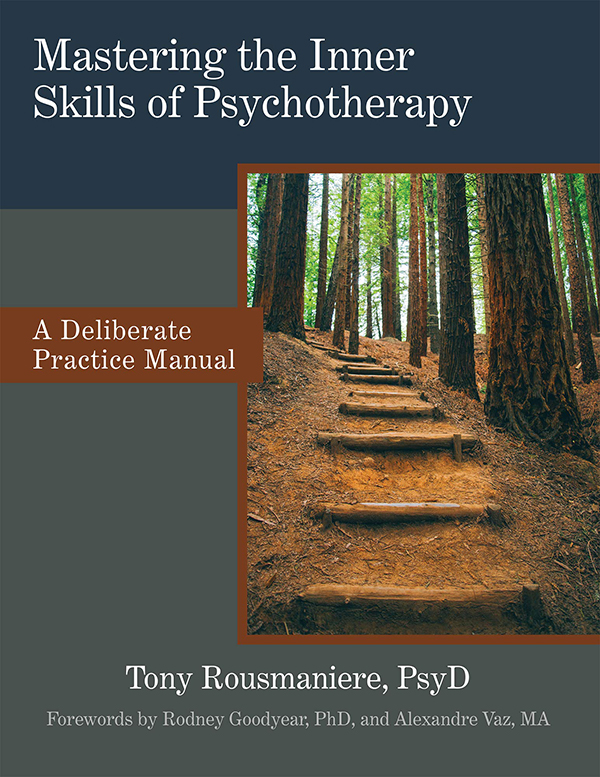
 

Fear and Consciousness: What I Learned from a Bike Accident

"Smile, breathe, and go slowly." — Thich Nhat Hahn
 

I got doored on Saturday night. I was riding my bike out to dinner with my husband and a guy in a big SUV opened his car door into the bike lane without looking and knocked me over. My face hit the pavement, I still don’t really know how my teeth weren’t knocked out, but my lips were cut and bleeding and my forehead was gashed and scraped. It happened so quickly and was so scary and weird.

Immediately kind people came up to me and asked over and over “are you ok?” “are you ok?” I didn’t want to answer yes because I didn’t really know. I was sitting on the street with blood all over me and I wasn’t sure if I was ok. I assessed my pain, my mind, my body. But when I didn’t answer immediately people began to say, “she’s in shock”; “she might have a concussion.” Although I was reluctant, the hostess at the Chapel bar across the street called the EMTs to come and assess me, and I didn’t argue.

When the EMTs arrived, they crowded around me, about four or five people, and began firing questions at me about what happened, “were you wearing a helmet?” “do you take any blood thinners?” “do you remember what happened?” “is this painful? is this?” Again I had the impulse to stay quiet and try to think before I answered questions, a state of being that was a bit unfamiliar to me, a person who normally anxiously blurts things out, responding as quickly as I can to anything that comes at me.

When they determined that I might have head trauma and drove me to the hospital on a back-board, an epic round of this activity began. At the trauma center people swarmed around me, some asking questions, some doing things to me, sometimes introducing themselves and explaining what was going on, sometimes not, questions, questions came one after another. I began to feel at home in my temporary (of course it was temporary) stillness. I was alive, I was still a human body, my man was with me, I was going to go home. I thought about the questions and answered them. At one point I said, “I need to cry a bit now” and I did. It was strangely wonderful.

And the funny thing was, the more chaotic it became the more calm I grew. I felt like a still, benevolent presence in my neck brace, slowly breathing and thinking about what was happening‚ exactly what is usually so hard to achieve internally. It was only when I was home and quiet later that I felt shaky, scared, and overwhelmed, but I think I had more tenderness for myself than I normally would. For instance, I would not let that internal voice berate me that the accident was somehow my fault. A breakthrough for sure.

What all these interactions reminded me of was nothing more than my own mind. It was as if by experiencing a state of high-anxiety all around me I was given some distance from that way of being in the world. All the pedestrians and EMTs and doctors were like representations of all my worries and concerns, they were each vying for attention so they could do their job, and so they could help and even save me. But what helped me was being safe in my own mind, feeling calm, thinking about what was happening and speaking when I knew something.

I greatly respect and feel gratitude towards all the kind people who helped me that night, they were doing their jobs wonderfully and I would not want them to behave any other way. What I mean to offer here is idea that life’s experiments with us can lead to a better sense of how we’d like to be present in the world.

I don’t recommend a bike accident to get to experience a tiny little shard of perception, but I bow to its terrible wisdom.
 

The Thousand-Armed Therapist

A typical desire for most therapists (at least at some point in their training or career) is “to save people;” because let’s face it: the majority of us are in this business because we care a great deal about others. There comes a moment, however, when almost all therapists eventually learn that trying to save people is exhausting. Actually, even trying to help others gain small amounts of awareness on a daily basis can be difficult and draining. Therapists are not the only group of helpers who can become worn out attempting to expand the consciousness of others, though. Religions of the world have provided us with many illustrations of how wearying an altruistic path can be.

In Buddhism, for example, Bodhisattvas are those who have reached the ultimate state of enlightment, but have renounced that state out of compassion for the many who have not yet awakened. Bodhisattvas choose to put aside their own needs and patiently set out to help others. Throughout the world, perhaps the most venerated of all Bodhisattvas is Avalokiteshvara. Within his story are keys to how we, as therapists, can find incredible strength and inspiration for what we do every day.

Bodhisattva of Compassion
When Avalokiteshvara was in his last incarnation, he was no ordinary person. He had spent years in meditation, action, and reflection. He exuded a level of compassion toward all creatures unlike anything ever seen in the history of beings. In his final life, by his awakening, he transcended the perpetual cycles of birth and death, and was headed straightway for the ultimate realm of connection with the Divine.

Legend has it that in the final instant before he reached the entrance of Nirvana, another awakening occurred, and it was in that moment in which he halted his passage through the gates and swore a vow: He would not enter the ultimate realm until he had helped all beings achieve awakening. Now a spiritual Bodhisattva, he turned, sat arms outstretched in a meditative stance with his back to the ingress of paradise, and began to radiate a beam of compassion to every living being in every corner of the infinite universe.

His work was magnificent. The awesome task he undertook freed countless inhabitants from suffering in the deepest layers of Hell. Being after being benefitted from the overwhelming compassion of Avalokiteshvara until the entirety of Hell was freed from the everlasting cycles of birth and death. His work was complete. Suffering had ended.

Avalokiteshvara turned with a sense of relief that his hard work had paid off and his meaning fulfilled. Only the imaginary, non-being tempter Mara remained. Myriads of every kind of being had been awakened and the underworld of pain emptied—but as the great Bodhisattva glanced back, his moment of relief changed so rapidly into a moment of terror that what he saw and experienced would not only transform him, but all life as well. You see, when Avalokiteshvara looked back, he saw uncountable legions of new beings entering Hell. The thought that his work of countless eons was still inadequate to relieve the ever-occurring suffering of the world struck his very core, and he shattered into many pieces.

Suffering continued. While the darkest regions of Hell filled and expanded, Avalokiteshvara lay broken. But just as light can pierce even the darkest corners of the world, it was out of this darkness the great Buddha approached the fragmented Bodhisattva. Buddha put Avalokiteshvara back together—stronger this time than before. He gave him a thousand eyes and arms to see and reach the multitudes. Buddha stayed as guru until he taught Avalokiteshvara the final knowledge of meaning: that any why can overcome every how.

Reborn in the highest realm, remade from the ultimate reality, and prepared with a meaning that gave him more than Sisyphean strength, Avalokiteshvara rose from the darkness, outstretched his many arms, opened his many eyes, and emanated an ineffable compassion that could be seen and felt then, now, and always. To this day, it is likely that more prayers per second go to Avalokiteshvara than any other deity. Om mani padme hum (“The jewel is in the lotus”) is chanted repeatedly with great hope of eliciting the help and beautiful compassion of the divine, thousand-armed Bodhisattva.

Avalokiteshvara and Modern Therapists
As therapists, we might not be able to comprehend what it means to vow to save every living being, but we certainly have chosen a career path that leads us toward helping others. We might not know the exact pain that shattered Avalokiteshvara into countless pieces, but we can most likely all identify with the feeling of being shattered from believing that things were “supposed to be” one way in our lives, only to find out that they were not as we “expected” them to be. We might not know what it is like to have a thousand eyes and arms, but who among us has not wished to be able to help more than one person at a time?

The story of Avalokiteshvara can be an encouraging tale for every therapist who gets worn out from time to time. Whether the quest to help others achieve peace is laid out on a small scale or a grandiose one, the pursuit is the same. When we find ourselves shattered, lost, and overwhelmed, we can rely on each other. After all, even Avalokiteshvara had the Buddha for support. For each of us individually, we have no more than two eyes and two arms; collectively, however, we have more than a thousand eyes and arms. As a unit, we can rely on each other for strength and inspiration.

When we turn to resources like psychotherapy.net, professional organizations, and libraries, we are able to draw on the knowledge of our fellow practitioners. By the wisdom we gain in books and videos, we can approach our clients with the strength of a thousand outstretched arms of our colleagues, past and present. Through constant learning, experience, insight, and support, we can extend loving-kindness to meet our clients where they are, and help them expand their consciousness on their own paths to peace. In short, we can let the “why” for what we do overcome the seemingly insurmountable “how.”

Regardless of how many clients we may have helped along the way, as long as our doors remain open, there will always be new people who walk through them. No matter how strong our desire, we cannot save everyone, but that is because we cannot save anyone. All we can do is extend compassion to others, offer some insight along the way, and observe. We cannot live life nor even make a single choice for anyone but ourselves. What we can do, however, is continue to pursue the path of helping others. We can choose to not give up no matter how difficult that path turns out to be. We can turn to each other for support when we need it. In the end, we can choose to be thousand-armed therapists by recognizing the limits, possibilities, and realities of our own two arms.