Using Psychotherapy to Heal a Lifetime of Pain and Shame

As a child, Darlene would change to lower-watt light bulbs in the small bathroom attached to her bedroom so that the light would be dimmer. “How can you see anything in here?” her mother would ask in dismay. But Darlene preferred to brush her hair, and later apply makeup, in subdued lighting.

Like what you are reading? For more stimulating stories, thought-provoking articles and new video announcements, sign up for our monthly newsletter.

As a young adult Darlene had lived for several years in a state psychiatric facility. One day the psychiatrist and a nurse sat with her and suggested that she apply to nursing school. She thought she was in trouble when the doctor asked to speak with her, and was surprised when he spoke of her potential — and the possibility of her living outside of the hospital. Darlene became a licensed practical nurse (LPN), got an apartment, and enjoyed a career working at a state school for persons with developmental disabilities.

Darlene had weathered a very brief and turbulent marriage that ended when her husband was physically abusive to her. “I don’t know why I ever married him,” she said. “Partly, my parents thought it would be good for me, and partly I was at least hoping I’d be loved.”

Now, as an elderly woman at the nursing facility, she mostly stays in bed, and typically prefers that the shades be down. While she attends a few group activities, Darlene feels relieved when she can finally get back into her bed and the low-lit security of her room.

Therapy as Sanctuary

One day as I sat next to her in her room during a psychotherapy session, Darlene asked that I raise the shades because she could hear it was raining outside. “This is the only time when I feel good, when the weather outside matches the weather inside me," she remarked.

Dim and dreary weather conditions had always matched Darlene’s moods, and provided a sort of comfortable retreat for her, whereas sunshine and groups of people could be anxiety provoking for her. Her Poe-like melancholy was matched by an attraction to poetry, and she would recite to me verses of poems she had long memorized.

Darlene also had a lifelong struggle with bipolar illness that mostly involved depressive episodes, and rare manic periods with grand persecutory delusions (“I’m being nailed to a cross, everyone’s looking at me!”). Oh, what could be more distressing for Darlene than to be under the glaring and judging eyes of others!

As she aged, Darlen suffered from macular degeneration with progressive loss of sight. She ate meals sitting up in bed, and often felt increasingly frustrated and embarrassed by the messy results. She was helped when her meals were changed primarily to finger foods, and she could be guided by touch more than by sight.

Dignity in the Shadow of Shame

Darlene also experienced problems with bowel and bladder incontinence. The need for someone to witness and attend to her humiliating problem felt horrible and shameful to her. She inadvertently made the matter worse, though, by her ineffective effort to clean or hide the results of a bowel accident — causing a staff person to come to me stating that Darlene was “playing with her feces.” After a conversation with Darlene, I could explain her predicament and her sense of shame to the staff, and they were then more helpful with keeping her clean while protecting her dignity.

One day at the nursing facility as I was pushing Darlene in her wheelchair through the hallway, we encountered a new female resident who loudly exclaimed, “Darlene, Darlene, it’s me, it’s Ellen!” With a panicked expression, Darlene looked at me and said, “Get me out of here, now!” Darlene explained that she knew Ellen and that they had both lived at the psychiatric facility at the same time. Darlene did not want anyone to know that she had once lived there, because she felt it was yet another source of shame.

Over the course of several therapy sessions, Darlene and I explored her reactions, and her underlying thoughts, feelings, assumptions, and beliefs as they related to her encounter with an old friend who had resided along with her at a chronic care psychiatric hospital many years ago.

We focused on reframing her story of time at the hospital from one of self-perceived shameful illness to a story of triumph. We discussed ways she had achieved many significant and meaningful successes: through her trust in her psychiatric care providers while at the hospital, through her education and attainment of a nursing license, with her subsequent career providing valued care to her patients, and by living in an apartment on her own during her working career.

Darlene was praised for the many triumphs in her life story. We spoke of how others might be impressed by and applaud her achievements, rather than look poorly on them, if she might be willing to share her story, to raise the shades, and let in the light!

Questions for Thought and Discussion

In what ways does Darlene’s story resonate with you personally and professionally?

How might you have addressed Darlene’s dilemma of encountering her “old friend?”

What clinical experiences have you had with the elderly and how have they impacted you?  

Death Cafes: You’re Going Where?

* If you or someone you know is struggling or in crisis, help is available. Call or text 988 or chat 988lifeline.org. Text MHA to 741741 to connect with a trained Crisis Counselor from Crisis Text Line.

The Death Positive Movement

In Victorian England, death was in the forefront of society. People would begin talking and planning for their death when they were young. By the time someone died, there was no doubt about what was wanted and how it was to be carried out. Women would even make their shrouds to be included in their wedding dowry.

Since that time, we have made a complete reversal in how we deal with death, from being the center of one’s life to rarely being discussed. However, continuing to ignore it will not make it go away. Death is coming for all of us.

Like what you are reading? For more stimulating stories, thought-provoking articles and new video announcements, sign up for our monthly newsletter.

In 2011, the Death Positive Movement began. Since then, it has been providing opportunities for people to talk more openly about death and dying. Its goal is to decrease the stigma of death. However, many people are still unaware of the movement and the activities associated with it. Perhaps one of the better-known activities associated with the movement is the Death Cafe.

Quite simply, Death Cafes are places that you can go, for free, to feel comfortable and safe talking about death. Actually, you do not even have to talk if you don’t want to. There is no planned agenda, and anyone can bring up a topic to discuss. It is free. Cake and tea are always served and sometimes other beverages. The Cafes are currently found in at least 80 different countries. Sometimes the group may be run by a mental health professional, though most of the time it is someone who has no training in groups or mental health.

While Death Cafes are not meant to be support or therapy groups, I have generally found that people who attend these meetings are warm and supportive of each other, sharing a common bond in accepting mortality. Other activities associated with the movement are Death with Dinner and Coffin Clubs. Often Death with Dinner consists of smaller groups who might get together at someone’s home for dinner and discussion about death.

Coffin Clubs have been popular in New Zealand, England and Ireland, although I am unaware of Coffin Clubs in the United States. People get together to build, decorate and try out their coffins. Members enjoy being with each other. It is a safe place to talk about their lives and future death. An additional benefit to the Coffin Club is the significant amount of money saved by building their own coffins.

Death Cafes and Therapy

Of the three activities, my clients and I have experienced the Death Cafe. I attended the first Death Cafe held in New Orleans and was amazed by the number of people who came. It was a mixed group, with some being from the medical and mental health fields, while most of the others were from the community. They had heard about the Death Cafe and came to see what it was all about. It was a unique experience.

You don’t usually find people sitting around talking about death. However, it was very encouraging. For over an hour, we introduced ourselves and talked about what had brought us to the meeting. Some came due to curiosity, some due to the loss of a loved one, and some with their own terminal condition. All were interested in discussing and learning more about death. It is good to be able to see that others have the same concerns and fears about dying as we do.

During the meeting, I began to reflect on the people in my practice who might benefit from this experience, and then I thought about Sarah. Sarah was a 74-year-old woman who came into therapy to talk about her declining health. She had been diagnosed with congestive heart failure, which was worsening. She felt that she would not be alive for much longer and wanted to talk about dying.

The problem was that her family did not want to accept her impending death or talk about it — an all-too-common experience. I talked with Sarah about considering attending a Death Cafe meeting. It didn’t take much to convince her.

The following week when she returned, she talked about her experience and how it was like a “breath of fresh air” for her. “People were so welcoming and open,” she said. “It was a relief to be able to talk about dying and not feel guilty. I’m glad I went. I feel like I learned a lot.”

The meeting seemed to empower Sarah. She decided that she wasn’t going to wait around for her family and that she just needed to take charge of all the planning herself so she could have everything just the way she wanted. She began to plan her funeral, the music, and the dress she wanted to be buried in. She picked out her gravesite and even designed her own headstone.

I have also encouraged trainees who were interested in palliative care to have the Death Cafe experience. It has been a great learning tool and helps them to be more comfortable when talking about death with others.

Tulane Medical school has also been in the forefront of utilizing the Death Cafe as a way to address burnout in medical staff who work in high death areas such as the ICU. The meeting I attended included medical staff who worked together on a surgical unit. A child had died in surgery, and the doctor who had performed the surgery was sharing the impact on him as well as the other staff present.

It was very touching to hear him. His pain was almost palpable. Perhaps most striking to me was the atmosphere of the group that allowed him to be open with his feelings of sadness and to cry at the loss of his patient. There are perhaps many different providers who work with the dying that could benefit from debriefing Death Cafes.

Of course, not everyone is enthusiastic about learning more about death. In my practice, I have found that women tend to be more open to the idea than men. There was one situation that has stayed with me for years that demonstrates the power that the fear of death can have: Patricia was brought to therapy by her husband at her doctor’s request. She had been quite ill and recently diagnosed with cancer. Her husband brought her in because the doctor said she was depressed.

It was hard to determine if she was more afraid of her husband, or of dying. One day, she told her husband what we had been talking about. He flew into a rage and would not let her return. It is this fear that speaks to the need for Death Cafes to normalize the process and free people up to talk about what is ahead for all of us.

The Death Cafe has a saying: “talking about babies won’t make you pregnant and talking about death won’t make you die.”

How to Help Clients Change the Narrative of Aging

'I want to tell people approaching and perhaps fearing age that it is a time of discovery. If they say – ‘Of what?’ I can only answer, ‘We must each find out for ourselves, otherwise it won’t be discovery.’

(Florida Scott-Maxwell, The Measure of My Days)

Psychotherapy and Ministry: Trafficking in Metaphor

Who doesn’t relish the odd adventure to spice life up, be it bungee jumping, looking for love online, or watching a thriller on TV? Major or minor, firsthand or vicarious, adventures are essential, it’s been said, to a robust sense of self.

But might aging itself be an adventure?! The very idea seems a contradiction in terms. Before I propose that it isn’t, let me make a confession.

Prior to becoming a gerontologist, I was a protestant minister. In that capacity, I did my fair share of counseling, seat-of-the-pants though my listening skills were, but I’m no psychotherapist. What follows, then, are thoughts from the sidelines alone and should be taken, if not with a grain of salt, then with this admission in mind.

My sense, though, is that the two fields, therapy and ministry, share a key thing in common. They both traffic in metaphor; by which I mean, for instance, that there is always the possibility for a chance turn of phrase leading to an image that can be enlisted to help someone gain insight into their situation and move forward with their lives.

Given the profile of the average congregation, those I dealt with were mostly older adults. This might well have turned me off, as it can some psychotherapists — the feeling being that they are simply too old, and their problems too entrenched to benefit from counselling of any sort. However, I had no choice. They were “my people” and it was my job to get to know them. What I realized, though, was that they were often the most fascinating to work with.

Compared to my younger parishioners, these older adults had richer stories to listen to and learn from. And in attending to them as closely as I could, less as a professional, really, than as a friend, I felt that I was providing them with something that was implicitly healing. I call it “narrative care,” a concept that takes in everything from full-on psychoanalysis to soulful conversation. And because they had that many more memories under their belts, they had that much more inner material on which an aptly deployed metaphor that emerged amid our exchanges might work its magic, enticing them to re-story a little their way of looking at life. The metaphor of aging as adventure, I suggest, can do just that.

Growing Old: A New Narrative About Aging

Since switching from ministry to gerontology, my appreciation for the role of metaphor in both language and life has only intensified. The best example is my 30-year interest in the metaphor of “life-as-story," or what Ted Sarbin calls the “root metaphor” of narrative. This led me into a sub-field known as narrative gerontology.

Drawing on insights from narrative psychology, Narrative Therapy, and (in my own case) narrative theology, narrative gerontology focuses on the biographical dimensions of aging as opposed, say, to its biological ones, dimensions to which gerontologists, certainly geriatricians, devote a disproportionate attention. It focuses on how human beings are hermeneutical beings — makers of meaning — and how our main means of doing so is by making up stories, big or small, about events, the world, and ourselves. And it focuses on how our self-stories, these meandering works of imaginative non-fiction, these myths by which we understand ourselves, change over time, and the effects of that change, for better or worse, on our overall well-being. It looks, too, at the storyline we subscribe to about aging per se.

Whereas gerontology remains dominated by a biomedical paradigm, which, with the best of intentions, pathologizes aging as a problem to be treated with all the anti-aging strategies we can muster, narrative gerontology represents a different starting point for exploring the complexities of later life.

Rather than defaulting to a storyline of aging as a downward drift to decrepitude and death, as an intrinsically tragic trajectory or “narrative of decline” (which older adults can unwittingly internalize, as can therapists too), narrative gerontology looks at aging through the lens of a more optimistic narrative, a better story. It views aging as a matter of growing old, potentially, and not simply getting old. It views aging as a way to the light and not the darkness alone, as a narrative not merely of decline but of discovery, of adventure.

Depression, Decline and Narrative Foreclosure

Before proceeding, let’s consider the narrative challenges that older people often confront. These can underlie and, if unaddressed, exacerbate the many other challenges that later life brings. Since I’ve written elsewhere on these challenges — which go by labels like narrative loneliness, narrative loss, narrative dispossession, and narrative imprisonment — I won’t go into them here except for one that deserves singling out. It is narrative foreclosure.

Narrative foreclosure is the premature conviction that our story has effectively ended, that no new chapters are apt to open up, no new characters or themes will thicken the plot and take it in fresh directions. While our life itself — talking, eating, going here, going there — continues apace, our “story” of it is over. Granted, narrative foreclosure can befall us at any age.

When you’re 20 and your lover bids goodbye, you can suffer an acute case of it, and hurling yourself into the river seems a reasonable course of action. Why go on? The story of you riding off into the sunset together and living happily ever after will not come true! But later life, I fear, renders us unduly vulnerable to this condition, and thus the depression we may be diagnosed with and the pills we’re prescribed, when a dose of narrative care might work equally well to re-open our story. Here’s how it happens…

We retire from the career that defined our identity and our self-story loses a vital source of support. Our children get work in other parts of the country, taking our grandchildren with them, and our story-world shrinks still more. Our life partner departs this life and with them goes our raison d’etre. Our vision and hearing, mobility and autonomy grow more limited until we’re relocated to a nursing home where our world is reduced to whatever we can squeeze into one little room.

Though our life itself keeps plodding along, “the story” is all but over. Intensifying our sense of loss is, of course, the narrative of decline that permeates our culture and quietly penetrates our hearts. But, real as the decline surely is, it’s not the only narrative in town. Our stories aren’t stuck in stone, in other words. We get to choose the ones by which we live and age.

Alternative Narratives of Later Life

In The Wounded Storyteller, sociologist Arthur Frank reflects on his time as a cancer patient and identifies three broad storylines by which people facing such conditions can make sense of their experience. First is the restitution narrative, where you reason “this too shall pass; I’ll be back to normal in no time.” Second is the chaos narrative, when the doctor says the tumor is inoperable and you have mere months to live, and the story of your life is thrown into a state of foreclosure from which you might never recover. Third is the quest narrative, where you interpret your illness, however serious, as — at the bottom — an opportunity to learn and an invitation to live life on a deeper level.

I’d like to build on Frank’s typology and propose that aging itself (often implicitly perceived as “a sickness unto death”) can be experienced in these three same ways. The restitution narrative goes like this: “If only I exercise more, do more puzzles, and drink less liquor, I will extend my life … indefinitely.” Such a storyline feeds emphasis on “successful aging” or “healthy aging” that are regularly promoted and obviously have their place.

Then there is the chaos narrative: “I’m old; I can no longer do X, Y, and Z, so my life is basically over.” This narrative can fuel the depression, if not despair, to which many older adults — especially men perhaps — may succumb. It's a recipe for narrative foreclosure.

Third is the quest narrative. “True, I can no longer do X, Y, and Z, but, as frustrating as it is, this is just one more chapter in my story. And there’s something to be learned in it, things to see that I couldn’t see before. This is new territory with new horizons to approach.” I see this narrative as underlying the positivity which, however “wounded” they might be otherwise, many older adults exude, despite (often because of) the troubles they’ve seen. It’s as if — as Wise Elders, perhaps? — they’ve taken those troubles and fashioned them into a good strong story: a narrative of adventure even…

Near Death Experiences and New Adventures in Aging

Aging as adventure — while not the whole story, I believe, warrants consideration. In fact, I’ve spent the past two years doing precisely that, reading and scribbling to where I have over 250 pages of single-spaced, typewritten notes that I hope someday to work into a book.

At present, these are grouped around four broad directions that I see the adventure leading: outward, inward, backward, and forward.

I’ve been toying with aging as adventure downward and upward too, but I’ll sketch just these four here. I see them, though, as tightly entwined. Movement in one direction is eventually movement in another. Also, movement in certain directions may come more naturally for some, with certain personality traits (like “openness to experience”) than for others. But I’ll leave such permutations and combinations for future reflection.

Outward and Inward

Depending clearly on our income and our health, aging can usher us into a phase of life where we’re open to fresh endeavours. This can mean, upon retirement for instance, if not bungee jumping, then learning a new language, or taking up the piano, or trying our hand at painting, or going on that long-dreamed-of cruise, and generally cruising outside our comfort zone. In the process, we may become acquainted with sides of ourselves that we barely knew existed, thus thickening the plot of our lives in ways not feasible when raising our families and keeping the wolf from the door — whatever form or forms that wolf takes.

Every person has their own unique kind of wolf and/or wolves. With each such venture, we open new subplots, welcome new characters, weave new themes into the stories we are. Our horizons keep widening, including our horizon of self-awareness.

Concerning the adventure inward, we have more time (if not inclination) to tackle what’s been dubbed the “philosophic homework” of later life, something that may be neither easy to do nor appreciated by those around us. Sooner or later, though, it is our duty, Jung insisted, to turn inward. The longest journey, the saying goes, is the journey inward. Longest, often loneliest, but perhaps also most pressing, and sooner or later, it has us looking back.

Backward and Forward

The adventure inward leads to the adventure backward. It leads to an examination of our past, or at least the stories in which we’ve enshrined it. It leads to life review, which for Erikson is a core developmental task of later life, and a very narrative one at that. I call it “the autobiographical adventure.”

This adventure — fraught, like any undertaking worthy of the word, with both revelation and risk, promise and peril — can come to us naturally, of course, insofar as time-past becomes more compelling for us to contemplate than time-future. But it may be prompted, too, by changes in our brains themselves, improved cooperation, for instance, between left and right hemispheres, plus increased openness to paradox and contradiction, to uncertainty, ambiguity, and metaphor — all of which, it’s argued, heightens the autobiographical drive.

Going with that drive and accompanied by a skilled listener, gazing back across the years, there are discoveries to make, patterns to discern, secret corners (not always cozy) to investigate, issues around trauma or abuse, legacy or grief to be acknowledged, and overall, pieces of the puzzle, positive or negative, to try and fit together. As we ponder “the mystery in my story,” to quote a former student, we may well find that we’d gotten the story wrong, that the past wasn’t as horrible as we’d assumed.

The adventure forward, however, could seem the most controversial, and cruelest, to consider. In what universe does aging as an adventure forward even make sense!? We’re born, we suffer, we die. End of story. What is there to look forward to?!

To speak of the adventure forward requires looking at the links between aging and spirituality. A few years ago, I did so in a public lecture in which, intrigued by literary scholars’ insights into the problematic nature of “endings” in narrative generally, and by research into Near-Death Experiences (NDEs), I mused on the process of aging as a near-ing death experience. As such, it possesses several of the transformative elements that NDE’rs routinely report.

Besides the panoramic life review that the experience commonly entails, these include a decreased attachment to material possessions, a deepened appreciation for the preciousness of life, a sense that this world is not finally our home, and a major reduction in our fear of death. Death is viewed as transition, not termination, as a horizon beyond which we can’t yet see, a doorway to an even greater adventure maybe; the very sort of view which, in one form or other, the world’s great spiritual traditions have long espoused.

More recently, I’ve been reflecting on aging as a process of going slower, deeper, and wider into the landscape of later life. By “wider,” I mean a broader horizon of understanding — a bigger story — that moves aging out of a biomedical worldview and situates it amid the multi-dimensional mysteries of the cosmos itself.

Narrative psychologist Mark Freeman, writes openly, for instance, about “the transcendent horizon of the life story,” a theme which, despite gerontology’s reluctance to broach it, theorists of “gerotranscendence” and “transpersonal gerontology” are more than open to entertaining. It is one, certainly, that author Florida Scott-Maxwell alludes to when, writing in her 80s, she asks rhetorically, “Is life a pregnancy?” To which she answers, “That would make death a birth.” And it is one which scientist-mystic, Teilhard de Chardin, hints at with his cryptic phrase, “the hidden mystery in the womb of death.”

If such language has any merit beyond that of fanciful phrasing or wishful thinking, then it points, I think, to the need for a significant reconfiguration — a major re-genre-ation, if you will — of what aging is ultimately about. A shift, in short, from tragedy to adventure.

Helping Older Clients Shift Their Narratives

These are early days in what, itself, is proving to be a vast adventure: an adventure of ideas. Who knows where it will lead me? I’m certainly uncovering many questions in my quest.

For instance, how to enlist the adventure metaphor in a group setting versus one-on-one, or with the deeply depressed, or those at death’s door? And where on earth is the “adventure” in dementia?! So, my efforts might well turn out to be a wild goose chase. We’ll see.

Is this not, though, the mark of a bona fide adventure? We set out with no exact knowledge of where we’ll end up. Amidst the twists and turns, setbacks and surprises that are invariably involved, we don’t know — can’t know — how things will turn out. Yet we press on all the same, with curiosity and courage, humility and hope … and hopefully a bit of wonder too.

Naturally, the metaphor of aging as adventure will not be everyone’s cup of tea, nor every clinician’s either. But as agents of restorying in your older clients’ lives, as story companions walking beside them for a while, whether you buy into it yourself, you might find them open to giving it a try. And why not? If it nudges them toward a more inviting myth by which to live and age, then what’s there to lose?

Questions for Reflection and Discussion

How does the author’s notion of the narrative of aging impact you?

How might his ideas help you in your work with elderly clients?

How does your own relationship with aging impact your clinical work with the elderly? The dying?

What countertransference experiences have you had with clients who are dealing with aging, mortality, and dying?

* Editor’s Note: While he is not a therapist, I asked Dr. Randall to write this essay with you (the therapist, the clinical supervisor, the trainee) in mind.

Psychotherapy with a WW II Survivor: Bearing Grief with Grace

An Incalculable Loss

Sakura was born in 1931, in the Japanese city of Nagasaki, a major port city and center for shipbuilding. She enjoyed a pleasant childhood with many friends and family. The early years of her adolescence were overshadowed, though, by the increasingly grim circumstances of her country being at war.

Like what you are reading? For more stimulating stories, thought-provoking articles and new video announcements, sign up for our monthly newsletter.

On August 9, 1945, the day seemed ordinary for the 14-year-old Sakura, until in a flash, nothing ordinary remained, after an atomic bomb was dropped on her city by the U.S. Upwards of 80,000 people were killed directly, and many more later. Nagasaki was attacked, in part, for its role in shipbuilding.

I felt a cold chill of fear the first time Sakura told me about having survived that unspeakably horrific event and its devastating, life-altering aftermath. I felt ashamed that she had suffered indescribable losses, and that my country had made that assault on her home city.

The Shadow of Grief

Sakura was in her late 80s and lived in a nursing facility where I was working. She always smiled, was impeccably dressed, and stayed active socially, having many friends among the other residents and the staff with whom she joined in on the many group activities. She was referred to me for psychotherapy, and although she had not been formally diagnosed with depression, she suffered depressive reactions during anniversaries associated with her losses.

Working with Sakura, I had assumed that she might feel great anger towards America and Americans. My assumptions were upended when Sakura shared that she had married an American soldier several years after the end of the war, that she had lived in America, raised her children and grandchildren here, and had enjoyed a mostly happy life. Sakura deeply grieved over the death of her beloved husband a few years earlier.

Sakura’s remarks about Nagasaki were always brief, factual, and matter-of-fact. I never heard her verbalize blame or vent feelings of anger, and I never saw her publicly display her most deep and personal (painful) emotions. Sakura would discreetly weep as she spoke of the sad events in her life during our private therapeutic conversations. On the occasions of major anniversaries, she would spend the day fully dressed while lying still and sad and silent on her bed. Thus, on August 6th, the anniversary of the atomic bomb attack on Hiroshima, on August 9th, the anniversary of the attack on Nagasaki, and on the anniversary of the death of her husband, she did not speak and would barely eat or move. Yet, she would be up and smiling and greeting others the following day. Those were the days she set aside for her most public showings of grief and perhaps even protest, although neither were likely her intent.

There were so many things I wanted to know about her wartime and life experiences, but I curbed my curiosity and attended to her choices of what to reveal or not. The importance of her dignity outweighed my inquisitiveness. I work with many persons who have been deeply traumatized, and for some, a probing therapeutic approach might undermine the fragile balance of their defense mechanisms. Some people have lost so much control it can be important to respect the choices they make about what or when to disclose or discuss traumatic topics.

I thought of Viktor Frankl and his comments about the many ways persons responded to the horrible circumstances they shared with him as prisoners in Nazi concentration camps during World War II — the same war that had forever changed Sakura’s life on the other side of the world. Frankl recalled how some prisoners turned against their own fellow sufferers, seeking advantages by aligning with their captors. Some collapsed inwardly and died soon after. Some chose an entirely different course by becoming the best person they could be.

Sakura was one of those remarkable individuals who could see good, remain good, and live fully, despite inexpressible suffering.


Krista Tippett on the Immensity of Our Lives

Dignification of the Person

Lawrence Rubin: Over these last two decades, your always fascinating and deeply provocative interviews on your show, On Being, have spanned the disciplines from genetics to cosmology. And despite the similarly broad range of thinkers and doers who have represented these disciplines, you’ve never strayed in your attempt to provide your global audience with answers to three seemingly simple questions: What does it mean to be human? How do we want to live? And who will we be to each other?Our readership is comprised largely of psychotherapists of varying disciplines, theoretical orientations, clinical specialties, and populations served, all of whom I think are attempting to help their clients, trainees, and students answer similar questions. My guess, however, is that most of them have not followed your podcast.

With that said, how do you think that your attempts to answer these three questions can guide psychotherapists in their clinical work? Sort of an open letter to psychotherapists.

Krista Tippett: I’ve heard a lot across the years from psychotherapists and from people who are in therapy, that therapists often recommend that people listen to On Being. I’ve been so honored by that, and I’ve also wondered about it. I’m told that some of the ways I listen and construct my conversations are in sync with things that one learns as a therapist, so that’s just kind of intriguing to me.I guess what I’m saying to you is that I’ve always been intrigued by the fact that my work does seem to be valuable for some people. What I’ve heard even from young journalists — which feels a little bit to be part of kind of a kindred phenomenon — is that I’m talking about things in a way in public that that kind of honors and elevates the basic struggles and challenges that we must figure out as we seek to understand what it means to be human, and then how that takes so many distinctive forms in any given life.

I also think that I try to have a conversation with the whole human being. So, I interview people who may be very well known, maybe not, but are just incredible influences and mentors in their disciplines or in their communities. And sometimes, these people who I interview are renowned for what they do or what they’ve done. I always try to get at the full dimensionality of who they are as a person and how they’ve learned and grown through these things that they know. I’m also as interested in the questions that they hold and the questions that keep emerging for them, as I am in the answers and the certainties and the knowledge that they possess.

I think the interviews I’ve had also model the reality and integrity, as well as the dignity and beauty of the adventure of being human. And isn’t this like the adventure that people are on in an individual way when they’re working with a therapist?

LR: As I’m listening to you and the way that you work with your interviewees, I recall a word invented by David Epston, the co-creator of Narrative Therapy — “dignification”. It is the process of seeking out and validating the dignity of the person on the other end of either the microphone or the couch. You are also intrigued by those that you interview which resonates with the work of good therapy — along, of course, with good listening. The last thing you said is that irrespective of how famous they are or how much they’ve contributed, you value the whole person. You seem to have this wonderful skill of finding the deep threads of humanity that run through all the people you’ve worked with. And I think that’s important for therapy as well.Ok, I’ll stop the shameless fawning and ask the next question. Existential psychotherapy attempts to help clients address fundamental issues related to being alive, to being human. What do you regard as some of the core existential challenges that we face as a species?

KT: What’s interesting as I’m letting that question kind of sink into my body, is how differently I think I would answer it right now, both in terms of where I am in my life now in my early sixties, but also where we are in the life of the world in 2023. So obviously sometimes — not always, but sometimes — at the very end of my interviews, my final question — and this kind of emerged a few years ago, this wasn’t always true — is “given this life you’ve lived and these particular fascinations you have, how would you begin to talk about what you’ve come to understand about what it means to be human?”But anyway, the thing is, as I said, it’s going to be a very partial answer because it’s vast. But the two things that come to mind to me, this time, is that the older I get, the longer I live, the more fascinating and perplexing the question of ‘what it means to be human’ becomes. I know that the discipline of psychotherapy understands this — how the crucible of our lives — our origins and original experiences and family lives so profoundly influence us. But also, that imprint doesn’t have to mean that they were shaped in a certain direction. Because there’s so much that can happen, with what that becomes, and what we do with it.

I think it’s fascinating that we’re in this century and at this juncture as a species where it becomes clearer and clearer to me that this matter of origins and telling the truth about the story of where we came from, and what we went through, and what our shadows are, and what we struggled with as individuals is also reflected in our national life, right? So, I think there is this never-ending dance with where we started, where we began, and what we do with that and make of it that defines our humanness. And there’s so much drama to that, and there’s so much possibility in it, but it never ends.

Getting back to this century and the post 2020 world we live in, I don’t know if it’s harder to be alive now as a general statement, or that we’re in a greater state of distress in 2023 than we were in 1918 or 1945. But the challenges before us, certainly our ecological one which gets at our bodily origins, is about being human in its most primal sense. Our challenges are truly existential.

And so, I actually have this feeling in myself, and I see it and others at this time, that the question of how to be present to the world has similarly become this existential question at an individual level. But I don’t think that we know what to do with it, but I think it’s become implicated kind of in the personal journey in a way that may be new.

Certainly, people before us have lived in times of war and genocide and holocaust, right? But now, in so many profound ways, we’re faced with those three questions both at the individual and societal level of what it means to be human, how we want to live, and who we will be to each other. And the answers to these questions get reflected at the personal and individual levels in how we behave, what we do, and how we orient ourselves in order to make the difference between surviving or finding a way to flourish.

The Science of Awe

LR: I think that “good therapy” is about helping clients understand and live in their stories, but to survive in society, I think it’s important to help them connect their stories to those of others. Instead, we isolate and divide ourselves along racial, cultural, age, and gender lines. I also think that your three existential questions might aid clients in this quest. From among the folks you’ve interviewed, which of their disciplines seem to be most closely related to the practice of psychotherapy?
KT: I always find it very hard when people ask me to think about a favorite interview, or even an example, because I’m usually very steeped in the most recent conversations I’ve had. So, what comes to mind is a conversation I had with a social psychologist, which is going to be featured in our first podcast of our new season.I’m not sure this is what you’re looking for, but there’s a lot of direct application of what I sometimes think of as spiritual technologies, like meditation, to mental health and to psychological growth. And I’ve seen that accelerate in these 20 years, in a way that is completely fascinating.

Dacher Keltner is a social psychologist who also works in neuroscience at Berkeley. He’s not a psychotherapist, but what strikes me is an offering towards vitality. He’s been working on the science of awe and wonder, and the neurophysiology and the immunological boost that we’re learning of experiences of awe and wonder, and kind of breaking that down.

They interviewed 2,600 people in 60 countries, around the range of the human experience of awe related to being in the natural world. It is very importantly about what they ended up calling our perceptions of moral beauty, which is the single most common thing that gave people a sense of awe. These researchers were blown away by the courage and resilience or acts of other human beings.

LR: Moral acts.
KT: Moral acts, right? But it’s also what they call experiences of “collective effervescence.” And it can be a sports event, or it can be singing in a choir. But it’s these experiences when we just know ourselves connected to other human beings, when we have this experience of being part of something larger than ourselves.

I’m completely fascinated by how science is taking aspects of human flourishing into the laboratory

And all these things I’m describing are aspects of psychological health and well-being, right? And so, I’m completely fascinated by how science is taking aspects of human flourishing into the laboratory. And what I love about this, this practice of awe is that we’re taking seriously an aspect of human experience and naming it as something that we can actively seek out. And that when we actively seek it out, we are investing in greater vitality.

I think you’ve alluded to this a little bit and it’s something we are in our time are filling out or correcting, is this bias towards attending to dysfunction and not attending to greater vitality and greater health. And what I love about the science of awe is that even the spiritual technologies, like meditation, that people have turned to in droves, also have physiological and psychological effects.

There’s so much being used remedially in lives of incredible stress, to get calm, to get grounded, to make it through the day, so what this other kind of science is doing is giving us tools for expanding, for not just getting calmed down, but planting the right life-giving kind of energy in ourselves.

A Place at the Table

LR: I love the idea of connecting with a sense of awe — a fascination with something so small as the heartbeat to the way the stars seemingly line up in the sky. I think you’ve answered that question quite nicely, without directly answering it. Krista, that’s the beauty of conversation, as opposed to just formulaic interviewing. Something new always happens, and I appreciate you for your willingness to be interested enough and awed enough in our conversation to make it grow.What have you taken away from your interviews with faith leaders and healers that might be useful for psychotherapists who traditionally have not incorporated faith or spirituality or religion into their practice?

KT: This was my big focus when I first started this work in the early part of this century. One of the things that’s been really fascinating in these decades is how this human experience of faith identity, religious identity, has been so rapidly evolving from something that not that long ago was just a given — you know, people were born into this. And it could be good, bad, or different, but depending on the tradition and the context, it was almost like genetic inheritance, right? This identity, these rituals, these communities.And especially in the US and in Western Europe — not everywhere in the world in the same way — but that’s just fallen away in such a short period of time. I think that’s one of the things that keeps rising in my conversation and then reintroduces the question of, “if this container for spiritual experience, for the human religious experience, is completely shape-shifting and falling away, then is there anything left? And I think the answer is yes that even the containers, the forms, the inherited identities don’t mean what they once did.

Then there’s this freshness to the question of, “what is this religious part of us?” And the experience of awe is one of those things that points people back to the notion that life is mysterious. I think mystery is a common human experience. And in some ways, we’re not as connected to the traditions that gave names to that and ritual to that, but that experience doesn’t diminish. I think to me the interesting question that we’re now able to pick up is, what is human wholeness, right? And this is an aspect of human wholeness. There is a lot of dysfunction in terms of official religion or the religious voices that are in the news or that become….

LR: Politicized?
KT: Right, what gets politicized, like the violence that is done in the name of religion. And that tends to be what people think of. And that is what respectable fields and intellectuals have distanced themselves from. But what I have sought out across the years are people who live this with deep integrity.In my mind, these traditions that have carried across time and generations are essential human experiences that we need, like rituals, like sacred stories. Stories that make sense. Community song. And really these traditions are a conversation across generations. And also, I think there is a deep, deep intelligence in this part of the human enterprise. Religion is a part of the human enterprise just as science is a part of the human enterprise. There’s a deep intelligence in language and practices around language, that we simply don’t have in other parts of our life together, that to me has never felt more relevant. Language like repentance, confession, lamentation, repair, mindfulness, and other language that emerges from religious and spiritual tradition.

And so, I’ve seen this fascinating thing happen. That even as these forms and the institutions are in total flux, there is essential intelligence, there’s essential vocabulary, and spiritual and social technologies that absolutely have their place in life together, in being fully human. And yeah, in living into the challenges before us, kind of communally as well as individually.

LR: I think that while the field of psychotherapy has evolved, there has been a reluctance to embrace spirituality and religion, aided perhaps by the polarizing effects of politicization. I think good psychotherapy, like if I can say good religion, is about going back to those basic existential and transcendent issues related to your three questions, what does it mean to be truly human? So, I’m hoping that some of the psychotherapists who are reading this interview will look a little bit more differently or openly into the possibility of seeing that psychotherapy is just one branch of knowing, one way of knowing the experience, and it really is diminished if it excludes others like religion and spirituality.

In COVID’s Wake

LR: In addition to the medical, of course, what does the field of psychotherapy need to focus on when it comes to the epidemic of anxiety and depression that has arisen and continues in COVID’s wake?
KT: As you were saying just a minute ago about, all our disciplines have kind of walled themselves off from each other others, right? And psychotherapy, the Academy, and journalism have been suspicious of religion for all kinds of good reasons that we can name. And those separations have been made culturally over the last few hundred years. What has intrigued me, and what I feel COVID has kind of called us to — a track we were already on — is for these disciplines to all agree that the other one is wonderful, and that we need them to be in conversation with each other. Each of these disciplines are essential aspects of this human enterprise. What I’ve become aware of in my investigations across these years of COVID, as I try to use my interviews, not just to be offering something up that would be helpful for my listeners, but even for me to investigate what was going on in my own body, my own psyche; is how there are these fields that have offered new insight about the human nervous system. All this wonderful research has been happening about the fear response, and the vagus nerve, and the stress response. And this is despite this being a little off to mainstream medicine, and I suspect a bit off to psychotherapy.

And yet I think when we’re talking about anxiety in this time, there’s as much that has happened in our bodies below the level of consciousness, below the level of anything that we know is happening — much less could talk about — that is interacting with what we can in a more traditional way identify as aspects of mental health. So, I think to me that’s felt like an urgent call. We’ve lived through this period where the ground shook beneath our feet. And we’re learning about the effects of uncertainty, which is as stressful for us as when something goes wrong.

All of this is happening inside our bodies, and some of it comes out and expresses itself psychologically. Additionally, we are not in the natural world, we are of the natural world. And I think that the ecological disarray of the natural world, of our planet, is something that we feel at a cellular level.

What we need in this time regarding anxiety is a whole analysis and for our disciplines to be talking to each other. We need to gather this scattered intelligence because there is so much coming together that can be healing in a broader way than we’ve been able to do. So, I mean, that’s what this time has surfaced for me.

On Death and Dying

LR: One way or another, clinicians, either explicitly or implicitly, address issues of death, dying, and mortality. Is there hope that we will get better as a society at allowing death inside our lives? And what can psychotherapists do to open the door to these universal concerns?
KT: I absolutely agree that that is imperative, and I am finding in new generations a real openness to this — a kind of insistence. All our disciplines in the West have bought into this weird idea of “up, up, up.” And with this came the idea that we were on this track of always forward progress, which meant denying that things end, and that we are so fragile. And along the way, we seem to have developed a very brittle understanding of human strength and success.I think that illusion just doesn’t hold anymore. And younger people, even pre-COVID — but Covid has certainly just intensified this big reality check. There are these things called “death cafés.” Have you heard about this?

our religious traditions have been the only place — again, in the human enterprise — that addressed mortality and finitude

There’s a movement that was led by people in their twenties who are now in their thirties called the “Dinner Party,” which is all about people bringing death and dying and grief, like, wearing it on their sleeves. That this is something that happens. Yeah, it’s absolutely fascinating. And our religious traditions have been the only place — again, in the human enterprise — that addressed mortality and finitude.

LR: And we’ve excluded them.
KT: And we’ve excluded it, right? We said, ‘no, we don’t want that, and we will pretend like it’s not true.’ So, there’s health in returning to this reality and honoring it. I do see new generations doing that because it’s just the truth. There are certain lies we’ve told in the name of progress that are exposed as fallacies now.
LR: Based on that, Krista, what advice would you give to therapists who work with clients whose focus on happiness comes at the expense of acknowledging their brittleness, their vulnerability, their mortality, and their limited time in this universe? Or am I being too morbid?
KT: No, I mean, again, it sounds paradoxical, but acknowledging fragility and things failing, as much as our strengths and things that go well, is how we become whole. This is how it works. I think one thing I’ve really been privileged by has been interviewing tremendously wise people. I think about somebody like the late Desmond Tutu, who absolutely had seen the worst of humanity, right? He knew what it was to suffer and lose, many times along the way to achieving something astonishing.It’s not like people who become wise and whole have it better than the rest of us, or had it easy, right? Like, hadn’t had the adversity? It’s what we do with that. It’s not about overcoming it so much as …

LR: Integrating it.
KT: Yes, how you walk with it and through it, and integrate it into your wholeness on the other side. I’ve seen that over and over and over again. I think about this Buddhist monk who actually started out his life as a scientist, a molecular biologist. He’s French, and his father was one of the great atheist philosophers of France. He’s talked a lot about happiness, this notion of happiness, and how in spiritual perspective — I would say in an enlightened spiritual perspective — happiness is not a state of being that you achieve, sustain, or return to. It is a way of moving through whatever happens, which will include sadness, loss, and failure. It’s an orientation. And you know, I think the language of flourishing is much more useful than that. I think, really, we have so many pathologies as a nation that are just out on the surface now, but I think it was probably a real tragedy for us, that the pursuit of happiness was given to us as a right when we don’t have…

LR: Tools?
KT: Yeah, and we don’t even have a working definition of happiness that is actually good for us. But psychotherapists and spiritual teachers owe it to each other to formulate that meaningful definition of what happiness can be.
LR: And it’s not just happiness — it’s not just about more.
KT: It’s not just about more.
LR: It’s not just about better.
KT: It’s not a mood. It’s not just about something you can achieve and then you have it forever. What a recipe for always being depressed and anxious if that’s what you think life is going to be like.
LR: The recipe that life begins when your symptomatology ends, as opposed to life is in part built on the stories that carry with them symptomatology. What tips would you offer psychotherapists, based on your intimate interviews with these people like Desmond Tutu that you’ve described as “wise.”
KT: I feel so humbled to be telling psychotherapists to do anything. But here’s what I want to say. I wrote an entire book called Becoming Wise, and I realized after I finished that I had not ever defined what “wisdom” was. So, when I went out talking about the book, people have asked me, “So what’s your definition of wisdom?”Achieving a state of wisdom is different from, say, becoming knowledgeable or accomplished. A wise person might be both knowledgeable and accomplished. Whereas I think the measure of a wise life starts with the imprint they’ve made on other lives around them. And if that is the measure of a wise life, then people who are wise are also at home in themselves, in their bodies, and their experiences. I never met a wise person who doesn’t know how to laugh and smile. And that’s not because everything is funny or they’re always happy in that simplistic way, but they understand that the capacity for humor and joy is actually part of our birthright. It’s part of resilience. It’s life giving, its resilience-making, and it belongs in a life alongside all the other things.

So, if that is a good life, then how do we talk and work towards that? Is it a different direction from feeling better every day? Or how do you accomplish your goals? I’m not saying those things become unimportant, but this is a different orientation, and it’s more fulfilling and grounding than much of what we aspire to and are better at training in each other. But it does not take us where we want to go.

My definition of spirituality at its best is befriending reality, and surely that’s also a goal of psychotherapy. But I don’t know if it’s what people come to psychotherapy for, so there’s a there’s a little challenge for your profession.

LR: Thank you so much, Krista. I can’t wait to share your wisdom with my colleagues.

Therapy in the Shadow of Death and Its Remarkable Privileges

Concerns Converging on Loss
 

“So, the doctor told me that it is cancer, and that there's nothing they can do. I just hope I have a little more time; my biggest hope is that my sons will reconcile with each other.”

Like what you are reading? For more stimulating stories, thought-provoking articles and new video announcements, sign up for our monthly newsletter.

“The doctor came to my room to see me. He held my hand and said, 'I'm sorry you have cancer, and I'll do everything I can to keep you comfortable.' And he said, 'From everything you've told me about who you expect to meet when you leave, I think that should be the best comfort for you,' and the doctor was right, my faith is a comfort to me.”

“My daughter, my beautiful daughter killed herself. There's just no answer to explain it.”

“Don't say goodbye, I'll see you in heaven; I've been there before (near-death experience) and it's beautiful.”

“Oh, Tom, can you see this client today, her son just died; they think it was a drug overdose.”

“They're all gone, my parents, my wife, my children, everyone; I'm the last one left. I don't know why, but I'm still here.”

“This is the third time my mother is in hospice. I wish she would die, but then I feel so guilty for wishing that. Then I wish she would get better, but I don't think she will; it's all just so difficult and confusing.”


Walking with My Clients
 

Over four decades, I’ve provided psychotherapy to residents in nursing facilities. I have worked with many thousands of clients, most of whom have died. I have been privileged to accompany so many on the last steps of their journey through this world. All persons die, and virtually all persons have lost someone, or many others dear to them. I have likewise been privileged to provide companionship to so many amid of their grieving. Speaking with someone with a terminal illness or someone grieving is a weekly, if not daily, or even several-times daily part of psychotherapy in a nursing facility.

Sometimes I know in advance, and can have sessions in which to work reflectively with the client as they approach the end. Other times I come to the room of a resident and their belongings are gone, and inquire of the nurse and am told they died. Sometimes, I receive an email telling me the sad news before I arrive, and sometimes a staff person will console me, “I know how close you were to her.”

For many clients who have a terminal illness, it is a comfort and relief to speak frankly in psychotherapy about matters of death and dying. The person's family members, and even some caregivers, might tend to avoid the topic, perhaps due to personal discomfort.

Staff persons might encourage continued socialization, yet the dying individual may be occupied with the internal work of preparation. A nurse asked me to “talk to” a dying resident because she thought her TV show was inappropriate. The resident was sitting up in bed while a television show for toddlers was quietly playing. While the resident sat facing the TV, she was clearly looking inwardly.

As I quietly kept her company between brief bits of conversation, I noticed how the TV show in the background provided a soothing backdrop. This particular resident, like others close to death, needed to pull away from the ordinary things of this world and reflect on their life, their relationships, and their eternal future. My father was lucky to die at home. As I visited him weekly towards the end, he would each time give me a book or another item of his. I thought of how I pack up when I am preparing for a journey. He was unpacking as preparation for his journey.

Sometime around 12 to 15 years into my 40-year career, I started to experience burnout; a result of too much trauma and human suffering. For me, it was a deepening of religious faith that allowed me to once again fall in love with psychotherapy and learn to practice without being harmed by it.


Of Greeting and Bidding Farewell
 

Some dying individuals are comforted by their faith, and some struggle with doubts. Everyone will have some fear of death, yet I notice how each person has their own kind of fear as they near it. For many of my clients, the fear is of God's judgment. Clients often voice worries about their mistakes and misdeeds in life — yet I regularly see how narrowly a person might look at their life experiences and influences, and how harsh and disproportionate is their judgment of themselves.

Many of my clients have been rejected by so many in life, they doubt there is a God, or let alone a God awaiting them with kindness and understanding. I feel a tenderness for each of my clients, yet often in therapy, sometimes as a client most severely chastises themselves, I feel a loving kindness in me that does not seem to begin in me. I notice a gentle feeling of wanting to reach out and touch their cheek, or a reassuring largeness of understanding that surrounds all the good and the bad of that person’s life, and I simply hold those ideas or sensations as aspects of my bringing a therapeutic presence to their suffering.

I have worked for many years in particular facilities; maybe 10 years in one, or 18 years in another. As I walk through the halls, I often think of the individuals who previously stayed in those different rooms, recalling their personalities and the challenges of their life.

Psychotherapy in nursing facilities is often a process of greeting, uplifting, supporting, and of saying goodbye. It can encapsulate and intensify the general experiences of life and death one might encounter in other settings or ordinary living. I am grateful for this work. When the time comes to retire, I will continue to see in my mind's eye the many people I have worked with and to thank them for their trust when they were most vulnerable.


Healing Conversations: Giving Life to the Life of a Person Who Died by Suicide*

If you or someone you know is struggling or in crisis, help is available. Call or text 988 or chat 988lifeline.org 

Rushing to work for an early start at the Shriners Hospitals for Children–Canada, I decided to listen to my messages in the event an important call had come in. I often have young people consulting me at 7 am, either because of an operation that day and a child needing help facing ‘fears’, or because a conscientious young person does not want to miss school. I knew I had one such conscientious person that morning. There was a call from the mother of a young woman I was to meet that morning. She had called late the night before.

Linda, can you call me back as soon as possible; this is an emergency.”  “Oh, no,” I thought to myself. I only gave the number to Shriners patients who talk of suicidal ideas because other calls could be screened by the hospital.

This young woman had expressed such ideas but had felt certain she would not act on them. As she was 21 years of age, and had assured me they were only ideas, not to be put into action, I had not informed her parents. We had worked out a list of people she could call if she felt unsafe, and she had said she would go to emergency if uncertain she could control such ideas. We had discussed vulnerabilities, as well as reasons to stay alive. “What could this emergency be?” I tried calling back, but there was no answer.


When I arrived at work, feeling extremely worried, I saw the young woman. She asked to speak to me immediately. “Linda, I want to give up my appointment this morning for Trevor’s parents”. She then hesitated before adding: “Trevor took his life early Sunday morning, and they really need your help”.

Trevor – Prologue

My thoughts flew back to the few consultations I had had with Trevor, a lovely and talented young man who had been so sad and disturbed about falling away from the Christian beliefs of his parents. He had just gone through an extremely complex and quite perilous chest surgery for a deformity. He had assumed such risks in order to live a better life. He was booked to see me the next day.

I was in shock and soon realized that I would have to immediately pull myself together for his parents. I urged myself on with deep breaths; “Be strong, be brave,” I instructed myself. Although I did not know Trevor’s parents, I could only imagine what they had been through these past weeks with Trevor so very despondent while not understanding what led to such despair in their son.

“They must be wondering why he had chosen to have this surgery if he had not wanted to improve his life and to live,” I thought to myself. I reminded myself to be curious about what they were thinking and feeling, to ask them how they were living through this experience and not assume that my thoughts were their thoughts.

The young woman introduced his parents to me in the waiting room. I told them how very sad and sorry I was. I asked myself, “What does one say in such a situation?” I made sure not to say that I was sorry for their loss. 

That was said to me when my sister had died, and at the time it felt very wrong, “Does that mean I can soon find her?” I had thought at the time. Little did I know that, yes, I could find her in a new re-membered way(1). I reminded myself to keep that in mind. 

I have accompanied parents through the death of a child in my work in palliative care(2,3) and also in oncology with unexpected deaths(4) but I had never accompanied parents through a death of a child by suicide. This had never happened to me.

My thoughts immediately went back to Trevor. I had helped so many other children make legacies when they knew they were dying, and I knew they were dying(2)  but I really had come to believe that Trevor was planning to live. I did not think from our conversations that he was planning to die. Yes, he had told me about feeling suicidal and even about those two weeks of desperation a month or so ago during which he made some attempts, but more recently in our sessions, he spoke so fervently about living.

He explained to me that when he tried to suicide, first by pills and alcohol, that combination made him feel terribly sick. His next attempt a week later by carbon monoxide poisoning involved driving into a garage on a cold Montreal night thinking he would just fall asleep. However, he began feeling so sick and dizzy that he abandoned his car. It was then, he informed me that he decided this was a message from God. He was fated to live!

He told his parents of his attempts and assured them that he had work to do in this world and must live. He was going to help other young people. His parents told the young woman, who had generously given up her session for them, about the suicide attempts and that was when she suggested he meet me for help.


Reading the medical notes in his file, I felt extremely sad since it was clear that he had had a very strong psychological reaction to his deformity, that had been expressed to the surgeon. This contact and discussion about his negative psychological reactions had occurred eight months prior and no one had made a referral for psychological support.

I regretted that we could not have met earlier. “If so, might he have found a way to keep on with his life?” I wondered. “Did I miss something? Did I do something wrong?” We had spent some of the first session talking about warning signs that a crisis might be developing. He talked of memories of his ex-girlfriend, who had said that she was Christian but was behaving in ways that he found immoral. He said certain smells, senses, and even songs might bring up the memory of her which could lead to suicidal thoughts.

This young woman was finding worrisome ways, according to Trevor, to secure money. Trevor was trying so hard to assist her to find another way to resolve her financial needs. He prayed at length as well as read the Bible. He told me that under these circumstances he was reluctant to consult his pastor as he might have for other matters to protect her confidentiality.


When God did not answer his prayers for a way to assist this woman, he began to doubt his God. The more he lost his faith, the sadder and more desperate he had become.

We also talked about what he had been doing to manage the thoughts recently. He mentioned running, playing video games with his best friend, watching movies, drawing and playing his guitar. I referred him to art therapy because of his interest in drawing.

At the end of that last conversation, he had stated categorically, “However, I will not try. Period! This is over”. When I asked what was over, he replied, “This trying to take my life is over.” 


He stated that he had felt very sad and hopeless after trying to bring this young woman, whom he felt in love with, to believe in Christianity in the way that he had been taught to believe in it. His decision for surgery had been because he had decided that he needed surgical correction to live and to help others, including his ex-girlfriend. 

Trevor did not know how to tell his parents that, although he still believed there was a God, he did not believe in the way they believed. “I am a theist,” he said. “There is a lot of good to follow in my previous learnings, being kind, forgiving, learning from mistakes.

Seeing the best in this world is something that I will not follow.” Trevor’s family belongs to a very close-knit religious community. He felt that leaving this faith would mean losing his family and friends. We discussed the subject of love and wondered together whether the love might be great enough to outlive a change in his beliefs. He decided it was a possibility.

Trevor did believe that he was loved. He related a story of another young man of his community who had left the faith and was still part of his family. However,
Trevor was still certain that he would disappoint his parents greatly with this loss of faith

He felt that his ‘deformity’ now with scars from the corrective surgery, (“deformity” was Trevor’s own word regarding his chest difference), would not be accepted by others. Thus, he felt with the loss of faith he also lost an accepting community regarding ‘deformities.’ We explored the possibilities that there are others in this world who accept ‘deformities’ even if they were not of his faith.

We wondered together what he might be able to do for Shriners Hospital for example, where every patient has a ‘deformity’ of some kind? We explored the implications of ‘deformity’ and how his negative feelings about having a different body from others might be culturally developed from our Canadian society and did not have to be taken for granted as true. That even the word ‘deformity’ is a culturally created word. He thought maybe he could be of help to other Shriners patients.


Regarding accepting deformity, I contemplated inviting a past colleague as an outsider witness(5) to speak with us. She is a young woman who is wheelchair bound, due to what is known colloquially as ‘brittle bone disease.’ She is currently studying to become a clinical psychologist.

As a prior Shriners’ patient and later part of our employee community, she had assisted me several times previously, telling her story of how she managed to escape from shame of deformity and fear of others’ judgements. Those consulting her had found these conversations helpful. She is such an inspiration and has many humorous stories. But now, he had died. Taking his own life. None of these ideas could be put into action. 


When Trevor and I had further conversations together we spoke at length about his plans for life and for living. We explored the idea that even with his altered faith, he was creating his own but slightly different moral code.

These discussions seemed to give him hope for finding a new life without his former religious beliefs. I had written in his notes that he had said, “I can take what I have learned and try my best to be a good person”.
When I asked how he thought he could use this new moral code he replied with, “I have to find new hopes.”

I learned that Trevor was a musician, an artist and a writer. He had planned to use his talents to promote his past faith and now he had lost his goal in life. I remembered in detail his creativity. “I was writing a book trying to get through my current life story troubles. My character had to redeem himself for mistakes he had made. That person is really me.”  “Are you thinking that you have made some mistakes for which you need redemption?” I asked. Trevor answered, “Maybe I could go and take fine arts at Concordia University.” I realize now that he did not answer the question of redemption and mistakes.

I now think that in a manner of speaking, I had been doing palliative care practices with him as might all narrative therapists in that we are always creating legacies. The book he was writing might now become a legacy that his parents could appreciate. Trevor had planned that his main character, really himself, who lived in a completely different Trevor-created world, would die. We talked of what the ending might be now that he planned to live.

He stated when he left this last session; “I have some ideas that I can use to write a new ending to this book. Do you want me to bring this to our next session?”  I replied with a hopeful, “Yes.”  Maybe I was too presumptuous. I truly expected to see him another time.


All these memories were going through my head in a whirlwind as I invited Trevor’s parents into the room. I felt that it was probably too soon to discuss legacies with his parents, even though Trevor and I had discovered resources, hopes and dreams, which could now allow him to leave legacies. He had written a book, he had his art, and he told me that he had recorded music with his guitar. There were the plans of finding a way to use these arts to help others.

However, in this beginning of our journey together with his parents, I needed to listen to their pain, listen to their story. We were challenged that morning, because at least three times there was a knock at my door. This was very unusual because when my door was closed, most of my colleagues knew I was with someone.

Finally, I answered the door since the knock was so insistent and persistent. I discovered my lovely supervisor standing just outside. She explained that she and my colleagues wanted me to know that they were there to support me at any time. This knowledge gave me strength to return to the room and have courage to start my uncharted journey with Trevor’s parents.


How does one start such a journey on the day after a child has died by suicide?

Linda and Brian – First Session

LINDA:
Again, I want you to know how sorry I am. How do you feel that I might be of help to you?

Trevor’s mother (MANDY): I need you to hear what happened. We were so sure he had decided to live. (I identified with that). He had made an appointment with you for tomorrow, and also made an appointment with the art therapist.

Trevor’s father (BRIAN), interjected: I asked him how strong the suicidal thoughts were, just Saturday morning, the day before he died. He died in the middle of the night sometime between three and four am. Trevor reassured me by saying, ‘Dad, you know I have decided to live’. And he went to the church youth group.

LINDA: It sounds like you were working really hard to be sure that he was safe. Is that so? (This felt like such a feeble response).  

However, Trevor’s dad’s answer seemed to suggest appreciation of this question:

I don’t know what else I could have done! He was sleeping in our room for the first few nights after he told us about his suicide attempts; then he asked to sleep back in his room. He had his computer set up there and he liked to play both games and his guitar late into the night, and we thought he was better. He seemed better. We had taken him to see a psychiatrist a few weeks ago and they kept him over night and then discharged him the next morning.

We figured if the psychiatrist thinks he can come home, he must be OK. Actually, two psychiatrists sent him home, first from our local hospital, they sent him home with medications, then we took him to the city psychiatric hospital, and they sent him home. We asked for a diagnosis and they said, ‘Well, here we are not big on diagnoses. They just suggested he keep seeing the psychologist.


LINDA: Would you say that you were trying your best to get professional help for him and thus thought you could relax a little and let him sleep in his own room?

BRIAN: He was almost 19 years old and had confided in us. We had to trust him at some point, though we would both wake up in the middle of the night and go down to his room and check on him. I asked him almost daily, ‘On a scale of 1 to 10…’ and every time Trevor answered with ‘Zero’. The local counseling center would call him every day and ask him how he was doing. His youth pastor contacted Trevor regularly and took him out to coffee to talk with him. I took him out a few times for coffee to talk to him outside of the home. We couldn’t keep him in our room forever.

MANDY: I woke up about three am that morning. I prayed and prayed to God to guide me in how to keep him safe. I prayed for nearly an hour. Then I got up. I thought of checking Trevor’s room and then I felt, no, he went to the church group last night, he said he was fine, so I decided not to check. In some ways I am so glad I did not check. I do not think I could have stood it, to find his room empty and know that he was dying while I was praying.

I thought it might be helpful for her to understand more about this.

LINDA: Mandy would you be willing to help me understand what it means to you that you prayed that whole time? 

MANDY paused as she considered my question, she seemed to want to think about this question: 

God was telling me that it was his time to go. Trevor had been suffering so. He could not stand it. That is what he said in his note. He told us not to blame ourselves, that we were good parents, but that he was suffering too much, so he had to go. The file where he wrote the note was called, ‘I am sorry’. I know that he is no longer in such pain, but I am in so much pain now. If only he had known how much I love him. 

I worry for my husband, Brian, who found him hanging in the garage and had to cut him down. He dropped Trevor because he was so heavy. I worry that my husband will not be alright.

BRIAN: I didn’t know how I would tell my wife. How will she stand this? She is not so strong physically and has many family members not so strong psychologically. I went to try to gently tell her and she insisted on seeing the body. She wanted to see him before we called the police. I didn’t want her to remember him like that.

MANDY: I had to see my son. I had to hold him one last time. 

LINDA: Does that mean you were showing him your motherly love or were you trying to figure out how your heart would not break, how to hold your heart together or something I totally could not even think of?

MANDY: I think it was a bit of it all. I didn’t want the police touching him and moving him but now I don’t know what to do because I cannot get that image out of my mind. That was not my son lying there on the floor. 

LINDA: Sooo that was not your son lying on the floor. What are your thoughts about what your son is like now, or where he is now?

MANDY: I know that he is with God. He is no longer in harm’s way; he is safe.

I tried to formulate my next question.

LINDA:  So, (so is a word I realized I use as I try to organize my thoughts and think of what I want to ask), if you wanted to replace the image of something that is not your son with another image that is your son, what image would you want to be thinking of?

Mandy paused and then she actually laughed. What a lovely sound for this moment. I truly felt it was not that the situation was in anyway lightened, but I could see her eyes go off to the side and she was for a moment somewhere else.

MANDY: He used to say, even sometimes recently, “Mum, look at me, see how fast I can run”. That is the image I want to hold on to. That was a bit of the Trevor that we lost when he was about 12 years old. He changed then. He withdrew from us, isolated himself in his room. Maybe something about his deformity at a time when boys care so much about their bodies. But sometimes he would come out of his room and say, “Mum watch me”. Just like that lovely little boy he used to be. That is my ‘true boy’. 

I do not know whether you know or not, but we have a lot of mental illness in my side of the family. I was especially concerned about his hatred of his brother. I thought he had experienced some trauma he was too afraid to share with us that kept him isolated and angry. He denied it when I asked him. I kept searching for anything else I could think of and asking everyone I could think of like doctors, counselors, social workers, other people who had sibling hatred in their family.

Yes, he had this deformity and I know that for teens that can be terrible. But it seemed to me to be something more. Then we found you, and I felt hope, he was coming for therapy; he was even going to start art therapy; he had seen a psychiatrist; he was going to get better. But then, it was too late.

LINDA:   If you could hold that image of that little boy, your ‘true boy’ and that young adult who is saying, “mummy watch me, see how I can run”, what difference might that make to this horrible pain that you are experiencing now, and that horrible image of something that is not your son? 

MANDY: Yes, it would make a big difference. That is what I need to remember.

LINDA: Would you be interested in having some more conversations so that we could re-member Trevor as Trevor used to be before he withdrew from you and to learn what you appreciate about him?

Mandy responded with a strong “yes.” Brian said that he felt that Mandy was the one who really needed the help.

BRIAN:  I think I will get the help that I need from my community and from my pastor.

I asked Mandy if she might want to bring some pictures, or other memories of Trevor to the next session, cautioning her to do so only if she wanted to and thought it might be helpful to her.

LINDA:    I don’t know that person who asks his mum to watch him run, your ‘true boy’, and maybe the pictures could introduce him to me.

After this session, I reviewed the chapter that Michael White(6) had written called ‘Engagements with Suicide’ to get some ideas regarding how best to work with this family. Michael stated that often the person who took his or her life could become invisible, and the suicide could be cloaked in shame. I did not want this to happen.

I thought about how I could discover from the parents the values or skills required of Trevor to both live and to take his life? What kind of decision would this have been to make? Was the suicide mindful of what Trevor gave value to throughout his life? And thereby, we could try to link his living life and the decision to take his life to what he stood for so these parents could still feel connected to Trevor.

I also remembered Michael saying that some cultures think differently than ours about death by suicide. I remember the old Japanese Samurai movies where suicide was considered an act of honour. And as Michael had suggested, perhaps it would be possible to investigate and honour the ‘insider meaning’ of suicide. 


I also wondered if a book I had co-authored with parents whose child had died of a medical condition, might provide helpful ideas for the family(7).


Trevor’s Created World

The next session, both parents arrived for our therapeutic conversation together. They wanted to know what Trevor had told me in our sessions together. Again, my thoughts went into a bit of a whirl. “Do I let them know that it was a change in faith that was troubling him? What about what he had told me about this girl who he was so worried about? They may know her.”

I decided to begin more generally and to refrain from discussing the information about the girl that Trevor did not want to tell the pastor about. I did not know whether they would have the right to read his file because we are a children’s hospital even though he had turned 18. I had given no such details. (I always work out with the adolescent I am consulting regarding what they agree can be placed in the medical file, after explaining the limits of confidentiality and the way we, at the Shriner’s Hospitals for Children, work as a team). I was conscious that this was all new to me.

I had never, even after many years of working with those who expressed suicidal ideas, experienced someone who had consulted with me end their life by suicide
. “How do I navigate this? What are Trevor’s rights? What difference does it make if I do not tell them about his change in faith? Could telling cause them potential harm?”  
 

However, I soon found out that they had read what was on Trevor’s computer. They knew about the young woman in Trevor’s life and how he felt so hurt because of decisions that she was making. They also knew that he questioned their faith. I decided to discuss the potential legacies that Trevor and I had discovered together. In particular, I thought of the book he told me he was writing. 

LINDA:   Did you find the book that he was writing, and the ‘Trevor-created new world’?

MANDY: No. We did not find that on his computer. I wonder where he put that book. I would love to read it. However, what I really want to know is what diagnosis you gave him. Did he have a mental illness?

It was evident that Mandy was interested in other things than legacies right now. In narrative therapy, we want to follow the lead of the person who is consulting us.

This question, however, produced another dilemma for me. I wondered what it meant to them to have a diagnosis.
Psychologists have the right to diagnose mental illness, but this is not my usual way of working and I had not been thinking in diagnostic terms but in therapy terms. When working with a young person I am aware of how diagnoses can make it hard to distinguish the young person from the problem(8). I wondered if a diagnosis could help these parents heal from their grief.

LINDA: What would it mean to you if there had been a mental illness? 

MANDY: Well, I have a sister who has been diagnosed with bipolar, an aunt and my grandmother had agoraphobia and my father may have had depression, so it runs in the family. Having a diagnosis would mean a lot to me because someone else who met with Trevor would have insight into his life and I so desperately want to know everything about my son, especially now that there are no new things to ever learn about him.

LINDA: Well Trevor and I named the problem ‘Trauma’. He felt that some of his experiences with his ex-girlfriend were very traumatic, and he felt that having a deformity was traumatic. When his ex-girlfriend did not want anything more to do with him after he tried so hard to help her, that felt like trauma for him. But he also told me in our last session, “It seems pretty amazing with all that ‘trauma,’ I still want to try to live”. Do you think, ‘trauma’ just got too strong for him? 

BRIAN: I think that trauma got stronger when he was playing his videogame with his best friend and the game died. His friend whom he was playing with said that the last thing Trevor said to him was that on his screen it said, ‘Fatal Error’. He then wrote a letter to the girl asking her if it was worth it not changing her life and doing wrong actions. He actually used much stronger language. That also was so unlike him.

We have another letter he wrote this girl that was just beautiful. Then he wrote us a most beautiful letter. He can write beautiful letters. In his goodbye letter he said he was only trying to survive so that he could join the military and die in battle. But he was too ‘tired of fighting’ and gave up and that is why he committed suicide. He had to have had the idea of hanging because we discovered that he had studied knots on his computer and he had a rope, so I don’t know if trauma was what it was or not?


LINDA: Might it help to think that ‘trauma’ had gotten too strong, and that the game ‘dying’, and ‘fatal error’ somehow gave trauma its hold on him and these ideas of suicide or something different?

Brian thought that this would be better than thinking he had planned suicide all along and was being devious to them all in making them believe he planned to live.

MANDY: The letter we have that he had written before is of grace and love and kindness and mercy. 

LINDA: Could it be a bit helpful to remember how he was able to write such beautiful letters? Could that be more helpful than trying to understand whether he was planning this or not? Or maybe, do you think Trevor was a ‘mindful’ young man? A ‘true boy’ of grace and love and kindness and mercy? It seems that ‘mindful’ might be a word to describe the beautiful letters and the having a rope and studying knots?

MANDY: I actually have his note here to his friend. He just said there was some sort of error. At 2:57, the game ‘died’ – I do not like that word anymore but that is what they use. At 3:08 he wrote to this girl. And at 3:21 he wrote to us. I think he was going through a spiritual battle. It was Trevor’s own will to go through with the decision of death. Yes, I think he was mindful all his life. But I think his death was really something like depression trapping much of him inside a sick mind. Maybe that was trauma caused.

LINDA: Might it be helpful to find your own term for this feeling of Trevor being trapped – trauma caused or something different?

MANDY: I woke up at three am that night and I prayed and prayed for Trevor. I prayed for angels to circle him wing to wing. Angels are ministers sent to help. I wanted them to help break the chains that bound him. I realize now that the angels were also for my benefit. The breaking of the chains I thought were to free him from pain. I just did not know that this freedom would be for him to die. I do need some help with the memory of his body and how it looked after the hanging. It haunts me.

LINDA:  Well might that be something that we can work on next session if that is something you would want? 

The Issue of Diagnosis

Mandy came to the next session with a photo book. She had created a photo book of her family every year and wanted to show me the year that Trevor changed. She also wanted me to see some of the pictures of the beginning of that year when he was the happy little, ‘watch me run mummy’ boy, her ‘true boy’.

There was a note to Mandy written by Trevor saying, ‘I love you the most in the hole world’. Written exactly like that. I discovered from Mandy that even his voice changed that year. He would speak, either in a robot voice or in a kind of baby voice when he was asking, ‘Mummy, come see me’. She discussed how she so much wanted to help her son. She had searched and searched for help. Mandy said that she and her husband had telephoned the psychiatrist from the psychiatric hospital which had kept Trevor overnight. The psychiatrist
stated that Trevor had been diagnosed with ‘major
depressive disorder’. Both Mandy and Brian seemed relieved to get such a diagnosis.  

(Trevor’s dad later explained the meaning of diagnosis for him:

Trevor’s suicide provoked not only trauma and grief, but an investigation. Suicide was not something we, in our wildest nightmares, would ever think our family would struggle with. Trevor was so talented, so full of life and self-confidence. He was the first to get a full-time job on his own, buy a car, buy his own cell phone, get a bank account.

When we got the diagnosis from the psychiatrist that he had a Major Depressive Disorder we felt that it explained so much to us. In his last weeks I saw his feelings of worthlessness and inappropriate guilt. He felt he was a failure. Suicide presents multiple layers of trauma and inquiry that are not present with a simple tragic death. 

During this session Mandy explained that she was feeling very upset having to live in this world where her son had hanged himself. She wished she had a chance to get help for him early enough. 

(Brian later recounted that he felt similarly: 

This has been hard for me too. Now that we have a diagnosis, every fatherly instinct in me craves the chance to go back in time to help him through this illness, and to explain it to him. He suffered all those years thinking he was just a jerk. He couldn’t help it. He was suffering and didn’t know it had a name. This had to play into his perception, somehow attaching to his deformity. He suffered alone, in my home, under my care, without any help. That destroys me inside. This is an added layer of severe grief in my heart, almost unbearable).

Mandy and I did some work around the image of seeing her son dead and how it made her feel that she failed because she could not save him. She also, in times of great distress, would feel that she was not loveable enough because it felt at times that Trevor did not love her. We discussed the possible relationship of this, ‘I am unlovable’ thought to her thoughts as a young child when her mother left the family for another man. 

Mandy wanted the little boy Trevor, who needed her to watch him run, to stay with her. She remembered again praying for her son during the time that he was organizing to take his life. She believed that praying was for God to protect him and to protect herself. She kept going over and over what Trevor must have done that night. But she came to the realization during our conversations, that she was praying him out of this life and into another life without pain and with God.

She stated that this realization was helping her feelings of panic reduce in intensity. She also explained that she believed it was Trevor’s responsibility to make his own decisions now that he was almost nineteen, and it was her responsibility to pray for him. 


When I arrived at work the next week, I had a telephone message from Brian. He was concerned that Mandy might have the same diagnosis as Trevor. She had been very upset that morning and wanted to climb on the roof to be closer to Trevor. Brian restrained her and asked her if she was feeling suicidal. She said that she was feeling sixty percent suicidal.

I phoned him back and suggested that Mandy might be feeling intense grief. I told him of other parents I had worked who had a child die explaining to me such very strong feelings, especially at first. It had only been a few weeks since Trevor died. I also stated after talking to Mandy, that
if either of them were worried about being suicidal they could go to the same psychiatric hospital where Trevor had been admitted. They did decide to go. 

God’s Peace

Mandy came to her next session saying that the psychiatrist told her that she was having a normal grief reaction. I was beginning to like the psychiatrists at this hospital who were not so ready to think of DSM diagnoses and medications. Mandy had been given Ativan by her family doctor after Trevor’s death and Mandy believed that maybe these medications were making her have suicidal ideas. She therefore had decided to take no medications for now and was feeling better. 


LINDA:  Mandy, are you worried for your life now?

MANDY:  No, I am not worried that I will actively do something, but I sometimes wish that I would get the Coronavirus and die. I have weak lungs and I could just die. I miss my boy so much.

LINDA:  Does that mean that you feel that you do not have reasons to live anymore?

MANDY:  That is exactly what my pastor said. He reminded me that it is not my time. That my work is not over here on earth. I have three other children and many other reasons to live. I am reminded that Mary, mother of Jesus, suffered too. She had to watch her son be tortured and to see him die tragically. I was watching my son in a different sort of torture. I just need peace. I just need God’s peace and I find that in scripture.

LINDA:  How can you live God’s peace?

MANDY:  Knowing that Trevor is in heaven with God, and I will be there with him some day, but he will be waiting so long, too long. I can read the Bible and it brings me peace. But that long time of waiting hurts me. However, I will see him again.

LINDA:  Do you believe that the time in heaven will be the same as the time on earth? Might it be that Trevor will only feel it as minutes when you feel it as years, or something at least differently than here?

MANDY:  Yesss. Time would be different. He is in heaven after all. And here I am and here I will stay, even if it will be hard to live in a world without Trevor. I know I tried. At least I do not feel guilty.

LINDA:  Do you see this as a gift, knowing that you did the best you could and tried so hard to help him?

MANDY: It IS a gift. I never thought of it that way. It is truly a gift; I tried so hard.

LINDA:  Mandy, what are some of the many ways that you think the pastor was thinking of when he told you that your work on earth is not over?

MANDY:  Well, we have decided to help others who might have problems like Trevor’s and use his life and him taking his life as an example and a message for others. We want to help parents to find help for their children. We are working on suicide prevention. Thank you for giving us that document that can be used in the youth group. We plan to have his funeral as both a homage to Trevor and as a message about youth problems and ideas for how to get help.

LINDA: Do you think this is showing some of your heart’s concern that you showed for Trevor now being used to help other young people in difficulty? Trevor wanted to help others as well.

MANDY:  Yes, I must not forget that this is my plan for life, and this was Trevor’s plan. I need to help other children to get the services that they need. 

Sun on Wood

Our fifth session started just after isolation for the coronavirus began. Mandy was having the telephone session in Trevor’s room where she could have privacy and thoughts of Trevor’s death felt very close to her heart. 


MANDY: I am having a lot of incorrect thinking. I wake up every night at the time he died. I am so sad. 

LINDA: Mandy, could you help me understand something? When ‘incorrect thinking’ tries to take over, what is it saying to you and how do you respond to it?

MANDY: It is that coronavirus idea thing. I could easily go into public and expose myself to the virus. ‘Incorrect thinking’ keeps saying, this could be good, this virus. I would probably die with my lung problems. 

LINDA: Might ‘incorrect thinking’ be kind of ‘missing Trevor’ thinking? You said last week, ‘I am here to stay’, but staying might still be pretty challenging? 

MANDY: Yes, I AM here to stay. I just don’t like a world that I have to stay in when my son died by suicide. We were looking for the book and for notes about it. We did find some little notes and a long letter. I printed them out. They are precious. That was my ‘true boy’- those notes and letters.

LINDA:    Mandy, I wonder if you would be so kind as to describe that precious ‘true boy’ for me?

MANDY:  I remember two-year-old Trevor with his red tennis shoes. He had a scooter, and he was so agile that even at that age, we put him on the scooter, and he rode in circles, his little shoes so eye catching. His bright blue eyes so sparkling. I always wanted a fair boy who looked like my side of the family, the others are dark haired. I began praying, asking God specifically if my next baby could please have blonde hair, and blue eyes, and if it weren’t too much to ask, curls on top of all that. God gave me it all!

He had a yellow and black coat. He was so happy and thoughtful then. He asked such hard questions about God. I am so blessed to have been his mum.

LINDA:  Is that one of Trevor’s legacies to you, to give you the opportunity to be so blessed to be his mum? Do you have some ideas how to get even closer to the reasons why you are so blessed to be his mum, while still living in this world that you have decided to stay in and find the precious ‘true boy’?

MANDY (very tearfully): I blogged daily, writing little stories about all my children. I was recording it for my family who were far away. They are invaluable now. I sleep with his two stuffies (soft toys) called Nache and Thunder that he always slept with. I kiss them on the nose and tell Trevor that I will take care of them for him. 

LINDA: Mandy what do the tears speak to?

MANDY:  That I forgive him. I am in his room and his smell is disappearing. That frightens me.

LINDA:   Do you have some ideas how you can keep his smell closer to your heart and soul?

MANDY:  I have no idea; it scares me. I am losing him.

LINDA:     Could you describe the Trevor smells?

MANDY:  The smell is a bit of outdoors, like sun on wood; it is warm skin, Trevor’s warm skin. Independence.

LINDA:  We are creatures of words. Would it be helpful if I write this down on a separate paper that I can give to you when we are out of this coronavirus isolation or mail to you now?

 (I always make notes during the session that usually those consulting me can take with them, but I am doing these sessions by telephone, and I wanted to write these beautiful ways of re-membering Trevor very carefully. I thought I might type or send all our re-membering in a written narrative letter 9-13 .

LINDA: Mandy, I am curious, what does independence smell like? 

MANDY:  It smells like sun on wood. That’s my ‘true boy’, independence. Oh yes, please write it all down.

LINDA: I am writing this, ‘sun on wood, a bit of outdoors, warm skin, Trevor’s skin, independence’. 

Do you think he can feel that forgiveness?

MANDY (very softly): Yes, he knows that I forgive him.

LINDA:   What do you think that would mean to Trevor to hear you saying that you will look after Nache and Thunder for him?

MANDY: He would know that there is nothing he could tell me that would make me love him any less. But it is a bit painful to think of bringing him back to hear what I am saying. I don’t want him to know that pain I feel of his loss. You know, a mother is only as happy as her saddest child.

LINDA:  You don’t want him suffering through knowing the pain that you feel. Do you believe that he is suffering now?

MANDY: No, he is at peace. His body and mind are healed, in the presence of God. HE NO LONGER IS SUFFERING. His place and his job is in heaven. But he left us with a job on earth.

LINDA: What is that job on earth?

MANDY:  My job now is, as is part of his job, to help others who suffer like him. I was reading Genesis 50:20. It is the story of Joseph. His brothers wanted to kill him, and he managed to escape and save Egypt. He said to his brothers when he saw them again, ‘You meant evil, but God meant it for good to bring this about’. 

LINDA:  Mandy, can you help me understand your meaning of Genesis 50:20?

MANDY:  Well, we are going to help others benefit from Trevor’s experience and his death. God meant it for good. I hope he knows now that what he did was not him but the illness, and we will help other young people who are suffering like he was. 

LINDA: If he were to hear you now, even though it is a bit painful as you told me, what might he think of your idea of carrying on his wish to help by helping other young people who might be suffering like he was?

MANDY: He would feel relief that he did not ruin our lives. If he could have stayed on this earth longer, he would have been able to turn around the voice of depression, he would have had more tools in the toolbox. If he only will know that his dying was not for nothing. That we are going to use his life and his way of dying to help others. He would know that he didn’t ruin our lives, and his life had meaning. He actually is going to help others live a better life than he was able to live.

LINDA:  Mandy, I can’t imagine a better legacy for Trevor than the one you plan to bring to us all. I am so curious about your ideas, how are you going to make Trevor’s life and death be helpful to other young people who are suffering. (I realized that in my role as a narrative therapist, I need to lead people to find their own legacies of their child. This was a much more powerful legacy than what I had first considered, which was the book Trevor was writing).

MANDY:  Well, we have developed this website. It is to help others find hope. We are discussing what tools he had and what tools we wish he had. We are going to give resources, where you might go. 

LINDA:  Yes, you told me about how you organized his service to be both a memorial to Trevor and a help to others. Would you be willing to describe this in a bit more detail?

MANDY:  Well, we had twelve counsellors come to be there for the young ones of our congregation. They are all so close we were concerned about them. The counsellors talked to the young ones on an individual basis and gave them ideas of where to go if they need help. We had moved here from another country and did not know what services existed.

The surgeon who did Trevor’s chest surgery asked if he could have Brian’s talk at the memorial service. Brian talked about what it was like to be a parent of someone with such problems that Trevor had suffered from. The surgeon hopes to use this in some way to help other children at the Shriners with deformities as a way to try to prevent such an outcome as happened to Trevor. 


LINDA:  Oh, I am very interested in how he might use this. I will talk to him, perhaps I can be of some assistance to your ideas and to his, in relationship to the Shriners Hospital for Children. 

What would you like to do about appointments?

MANDY: Well, I know you are so busy, Linda.

LINDA:   It is truly up to you.

MANDY:   I think I would be OK for two weeks. 

Keeping Her True Boy

Mandy called and cancelled her next session. I had planned to spend our last few sessions exploring ideas about how she and Brian could help other young people. We were still in isolation for coronavirus isolation when we began to co-write this article.

Mandy told me again about blogs when Trevor was so happy and living what she called a wonderful life. She was reading books to understand suicide and discussed them with me. She would still question the cause of Trevor’s challenges. She talked some more of all that she had done to try to find the cause when he was alive and to get help for him. With a few questions she came to the conclusion that Trevor died to protect his parents from more pain, pain that he lost his beliefs, pain that he couldn’t feel better.  

She also talked of her ‘true boy’ who could be around even later in life. For example, she mentioned how he wanted to be so independent, he wanted to pay for his own counselor. He even wrote in his ‘I’m sorry’ note that they could sell his car, perhaps to pay for his funeral.

She suggested this was his warmhearted way of showing that he did not want them to be in debt by his death. And most importantly she discussed how she believed Trevor had a healed mind and a healed body and that now he is free. She read to me his wonderful, kind letters. She told me beautiful stories of navigating the parenting journey as Trevor developed from childhood into adulthood and of walking alongside him even when he was making choices she would have preferred that he not make.

But mostly Mandy described her hopes and dreams for being of service to other youth, to follow Trevor’s hopes and dreams. She understood better what Trevor stood for. Mandy believed that God has a purpose for every life, and both her purpose and Trevor’s purpose was to call greater awareness to youth challenges and help youth with this calling. There was no more talk of catching the coronavirus and meeting Trevor sooner.

Mandy felt that she and Trevor now had a common, earthly goal that her husband and her complete congregation were getting involved with. She felt that this was keeping her ‘true boy’ in her heart and soul. Mandy requested that we do one last bit of work together when the isolation due to the Coronavirus was over.

This was to work to help her manage better some of what might be called day and night dreams of the last image of ‘her boy who was not her boy’. She planned to replace these images with her ‘true boy’ and with other young people who were living instead of dying. Finally, Mandy explained to me, that somehow, Trevor did not disappear but will live on in the helped lives of others.

Brian wrote to me when I asked him to edit this paper. In his letter he expressed words similar to those I have heard from others who have had a child die. They were so poignant and heartfelt that I wanted to honour his thoughts here. This is Brian’s perception of his particular experience of having a child die by suicide.

“I am not the man I was before February 8, 2020. When Trevor died my life changed. My wife changed. My family changed. I changed. And I’m trying to come to grips with the new me and my new world. Life has a different meaning. My faith has more gravity. My perspective on my life in this world has been elevated beyond the temporal in a way it has never been before.

When I walk beyond the curtains to grief and back into life where my heart and mind are released from the shadow of my son’s suicide, who will I see when I look in the mirror? My grief is not just grief. A transformation is occurring. A lot of people who lose children have a very difficult time getting past the loss, as if their legs have been cut off from under them, and they will never stand on their two feet again. I have been in the depths of these waters, but I will not stay there. I know that these ashes that cover me now will be redeemed by God.”

I feel so honoured to be a part of such conversations which could explore what Trevor gave value to and then to witness Mandy and Brian finding ways to use what Trevor gave value to help others. I was able to assist them to develop Trevor’s legacy and to carry it forward with their family and others who loved him. I feel that this journey that we took together was also a healing journey for me.

I got to know both parents so much more through our co-creation of this paper. I have co-written papers before with those who consult me and am always so appreciative of the experience. I am happy to add Mandy’s final remarks when she returned this final draft to me:

“I also just want to say thank you again. As I was reading through the paper as a whole, it helped to be ‘counseled’ again. In grief, your mind so quickly forgets what you've determined, or learned. Now I will have this paper to get a quick reminder of the progress and conclusions you've helped me with. Brian wants to say he really enjoyed working with you on this paper. Me too! Blessings.   

All names are changed at the request of the parents. The young man’s parents have read this version of the paper and feel comfortable for it to be published so others can learn how they managed to survive the almost unsurvivable and to carry on their son’s legacy wishes.

Reprinted with the consent and express wishes of the parents, Linda Moxley. and the editors of the Journal of Contemporary Narrative Therapy

[If you or someone you know is struggling or in crisis, help is available. Call or text 988 or chat 988lifeline.org]  

References 

(1) White, M (1988). Saying hullo again. The incorporation of the lost relationship in the   

            resolution of grief. Selected papers (pp. 37-46). Dulwich Centre Publications. 
 

(2) Moxley-Haegert, L. (2015a). Leaving a legacy. Using narrative practice in palliative care  

           with children. The International Journal of Narrative Therapy and Community Work, 2,  

           58-69. 
 

(3) Moxley-Haegert, L & Moxley Haegert, C. (2019). Little steps toward letting the legacy live: Fine traces of life to accompany families grieving the death of a child. Journal of Narrative Family Therapy, 28-53.  
 

(4) Moxley-Haegert, L. (2012), Hopework. Stories of survival from the COURAGE progamme: Families and children diagnosed with cancer. Retrieved from narrativetherapyonline.com/moodle/mod/ resource/view.php?id=577  
 

(5) White, M. (1995). ‘Reflecting teamwork as definitional ceremony.’ In M. White: Re-Authoring Lives: Interviews and essays (pp.172-198). Dulwich Centre Publications.  
 

(6) White, M. (2011). Narrative practices: Continuing the conversations. Engagements with suicide. (pp.135-148). Chapter 10. David Denborough (Ed). W.W. Norton  
 

(7) Moxley-Haegert, L. (2015b).  Petit Pas/Little Steps. www.hopitalpourenfants.com/patients-et-familles/information-pour-les-parents/petits-pas (French) and www.thechildren.com/patients-families/information-parents/little-steps (English)  
 

(8) Marsten, D; Epston, D., Markham, L. (2016). Weird science, Imagination lost. In Narrative Therapy in Wonderland; Connecting with children’s imaginative know-how. (Chapter 7, pp. 157-173). W.W. Norton & Company.  
 

(9) Bjoroy, A., Madigan, S., & Nylund, D. (2016). The practice of therapeutic letter writing in Narrative Therapy, In B. Douglas, R. Woolfe, S. Strawbridge, E. Kasket, & V. Galbraith (Eds.). Handbook of Counselling Psychology, 4th Edition. Sage Publications. 
 

(10) Epston, D., & White, M. (1992). ‘Consulting your consultants: The documentation of alternative knowledges.’ In D. Denborough (Ed.). Experience, Contradiction, Narrative and Imagination (pp. 11-26). Dulwich Centre Publications. 
 

(11) Ingamells, K., (2018) My romance with narrative letter: Counter stories through letter writing. Journal of Narrative Family Therapy, Special Release 4-19. www.journalcnt.com 
 

(12) Pilkington, S.M. (2018). Writing narrative therapeutic letters: Gathering, recording and performing lost stories. Journal of Narrative Family Therapy: Special Release 20-48.  
 

(13) Palijakka, S., (2018) A house of good words: A prologue to the practice of writing poems as therapeutic documents. Journal of Narrative Family Therapy, Special Release, 49-71. 


* Dedicated to the young man who chose to take his life and to his parents who chose to survive

his death.


Author Note: “Parents I worked with in palliative care co-wrote a resource document with me and the nurse practitioner in palliative care at the Montreal's Children's Hospital in Montreal. This might be a resource that could be added for reference if you thought it might be helpful to the readers.  


Questions for Reflection

How did this clinical narrative impact you?

What are your thoughts about the therapist’s approach?

Which techniques might you use in your own clinical work?

What about the way the therapists worked with Linda and Brian would you change? How?

What are your own strengths and challenges when working in the shadow of suicide?  

Full Container

Seldom or never does a marriage develop into an individual relationship smoothly without crisis.
There is no birth of consciousness without pain.


C.G. Jung
 

Too Soon?

Upon leaving my hospice support group on September 11th, I turned on the car radio and heard that the Twin Towers had collapsed. Jared, a boy we knew with neuroblastoma, had also died early that morning. I became more disoriented than I already was. I can’t say I was any sadder, because that would be impossible. I met a friend at Perkins for lunch, and everyone there looked dazed like me. I didn’t feel like an alien anymore. Now everyone knew what I had already known—that complete devastation can happen in the blink of an eye.

Two weeks later, I called Hedy Schleifer, a renowned psychologist I spoke with when my two-year-old daughter Jillian was diagnosed with cancer. I asked if she thought I could handle the Imago Relationship Therapy clinical training, starting in November. Jillian had died in June. I was hoping Hedy would say, “It’s too fresh, you’re too vulnerable to take on such intensity,” but she didn’t. “Do it,” she said. “If not now, when?” I knew she was right.

Harville Hendrix’s Imago Relationship Theory is based on the idea that we marry our Imago—the image of the person who can make us whole again. We are attracted to the perfect mate to help us regain what we lost in childhood. But this person pushes all of our buttons first.

It was actually Tom who urged me to do this. He agreed to join me for the three one-week sessions, scheduled over a period of months. Tom and I had taken the two-day couples therapy workshop, but this training would allow me to become a certified Imago coach. I hadn’t seen any clients since Jillian got sick. Now I would have to see clients in order to provide the required taped coaching sessions.

On the first day of training, there were sixteen chairs in a circle. Hedy had “accidentally” included an extra chair. The empty chair supported a blue balloon with a blue ribbon. Jillian’s favorite color was blue. Was it a sign of approval? On each of the subsequent sessions, there happened to be a blue ribbon somewhere in the room. After Jillian died, a neighbor placed blue ribbons on all of the mailboxes in our subdivision. When someone we love dies, we grasp for signs that they are okay. I believe that sometimes they give them to us.

Hedy would begin each session by saying something like, “Today is November 14, 2001. It is the one and only November 14, 2001. What are you going to do with it?” She would also say, “It’s a great day. When I woke up this morning, I recognized myself.” Her mother, who had Alzheimer’s, could not. Just being in Hedy’s presence raised my consciousness.

Since most of the other therapists came without spouses, Tom and I were often the demonstration couple. It was like free therapy. After the first session, I made a Freudian slip that I had never made before. I said, “There’s my heaven,” attempting to say, “There’s my husband.” That’s exactly how I felt. Our connection was closer than ever; it felt like heaven.

Release and Containment

We were both still raw from Jillian’s death. Hedy suggested that we alternate crying in each other’s arms once a week. So that is what we did. After we got home, every Saturday we would alternate crying in each other’s arms. One of us talked or cried while the other listened and held.

When your child dies, it is extremely difficult to be emotionally available to your spouse. You both need someone, like a mommy, to care for you. We took turns caring for each other.

We were at the Comfort Inn on Miami Beach. Instead of lying on the moist sand, inhaling the salty ocean breeze, Tom and I sat face-to-face on gray cloth and metal office chairs, inhaling the basement’s mildew. It was the third and final week of our Imago Relationship Therapy clinical training. While a semicircle of seven participants observed, Hedy sat inches away, coaching our every move in this process, aptly named the “Full Container.” A conduit to deep emotional pain rooted in childhood, this exercise allowed one partner to fully express his or her rage while the other partner created a quiet, welcoming space to contain all of it. A spiritual energy pulsated from Hedy’s regal posture and her wispy salt-and-pepper hair, even through her dangling bracelets and flowing black, white, and red pantsuit. The three of us formed a triangle as we sat in open postures with our hands on our thighs.

Tom cleared his throat, “Uhum. Well, Sylvia.” Nervous smiles sprouted on both our faces as he leaned forward. “We even talked this morning about the thing I’m going to be mad about and you had no clue what it would be. Seventeen years of marriage, and we both knew what yours would be.” Tom raised his hands and plopped them back on his thighs. “But you had no idea what mine would be. Get a job. Get a job.”

Hedy whispered, “And it pisses me off.”

Tom unleashed his anger. “It pisses me off. It really pisses me off on many levels. It pisses me off on many levels.”

Tom’s accusing tone cut through to the back of my throat. For an instant I was a frozen little girl again, watching my own father derail. Hedy had prepared me so well for this exercise that I snapped back to the present and returned to Tom with loving eyes, open to the full extent of his rage. I could see both the face of a little boy and a man as he ranted.

Tom’s hands bounced up and down on his thighs with increasing intensity as he shouted. “We got married, and you had a degree in engineering and decided you wanted to go into psychology. I put your ass through school. You didn’t have to work at all. You didn’t have to work at all. I put you through school.”

Although I was able to maintain contact with soft eyes, I wanted to scream, “What are you talking about? I began working the second year of graduate school and worked until Jillian was born. That’s nine years.”

Instead, I tapped Hedy’s leg, per earlier instructions. She cradled my right hand in her left and waved her right hand over my chest a few times, helping me return to the present. While maintaining eye contact with Tom, I silently prayed for God’s love to channel straight through me to him. My task in this process was to contain his rage with every fiber of my being, so that he could allow the full extent of his life force to emerge in a safe environment, as never before. I relaxed my face and felt the light in my eyes as they reflected my thoughts. “I’m here again, Tom. I’m here again. My job is to see it the way you see it. Yes, you put me through school. I certainly haven’t worked as much as I could have.”

He scowled and shook his head back and forth. “All I heard was your bitching and moaning about having to do papers. Aaaah,” he mimicked me in a high-pitched whine. “I can’t do this. I can’t do that. Waaaah.”

His caustic masculine voice returned. “While I was working, all I heard was your bitching and moaning the whole time. You graduated. We had your big graduation thing. You thanked every fucking person in the whole world, except me, who put you through school. I was so mad. I thought I got over it, but I didn’t. I’m still mad about that.”

While still holding my hand, Hedy said, “Again,” to Tom. Amplifying his rage and enabling me to support him was her role in this part of the process.

“That really pissed me off that you thanked every fucking person in the world at the thing, publicly, except me, who put you through school.”

Hedy’s expression intensified, “Again.”

His now piercing volume escalated with each repetition. “It really pissed me off that you thanked every fucking person in the world, publicly, except me who put you through school! And, oh, thanks to your Mom, who’s out there golden.”

His sarcasm stung. Although the onlookers had faded into the background, they popped back into my awareness and I wanted to slink off my seat. What must they think of me? I became defensive, developing a silent counterattack. “I thanked you profusely in the written part of my speech. And besides, are you forgetting my mother was dying of cancer at the time?” Struggling to get my frontal cortex operational again, I squeezed Hedy’s hand. The rational part of me gained control as I told myself, “Stay here with Tom, stay here and try to see it the way he does. I did forget to mention him when I began talking spontaneously.”

He raised his lanky arms and waved them at his sides. “But Tom, who worked his ass off while you’re going through school. Oh, and I’m not supportive. I wasn’t supportive of you that whole time. I wasn’t fucking supportive. I heard that so many fucking times. It just pissed me off. No, I wasn’t supportive of you at all. It just made me so fucking mad.”

Tom’s voice lowered just a notch. “Then we get to this thing and I see how you’re wasting your talent.”

Hedy released my hand and leaned back in her seat. She knew I could fly solo at that point.

Tom’s hands clenched his thighs, and he nodded his head back and forth rhythmically; it was not quite a yes, more like a turkey gobble. “It’s like I signed us up for the Imago thing. Presumably I did it to improve our marriage. And then I saw how good you were on the two tapes. And I knew you were not going to fucking use it. You were going to have one or two clients. You knew you were going to lose five thousand bucks a year or whatever. You have a Ph fucking D! You ought to have been making more money than me. You shouldn’t have been losing money every year. It pisses me off completely that you’re so irresponsible that everything has to be on me. That you don’t make any fucking money. That you don’t take any responsibility for yourself. You make excuses, about Jillian or whatever. Oh well, look at all the other years. There are other years in there. Yeah, you worked, and you piddled around. You could never collect your money. You could never do what it took to be responsible to take responsibility for yourself. To make some fucking money. To take some pressure off me.”

My insides trembled, and I wanted to jump up and shout, “The money loss began after Jillian was born. I only saw a couple of clients because I was a stay-at-home mother, then she got cancer and then she died. When was I supposed to be making money?” Hedy was right when she said, “One partner’s deepest need meets the other’s greatest defense in this process.” I wanted to put my defenses aside, to remain present. To see it his way, I was irresponsible with money and have never earned what I’m capable of earning.

I’ve seen Tom enraged before, but never as physically and verbally unrestricted.

“Oh yeah, and I’m going to send you to Spain. And I want to do that for you. But there’s another part of me that’s really pissed off that you never took responsibility for yourself, that you never took the pressure off of me, that you were never there for me, that you couldn’t decide to pull your weight, to do your part.”

Hedy thrust her fist forward. “I’m sick and tired of it.”

“I’m really fucking sick and tired of it,” Tom repeated.

Hedy leaned in, “Again!”

“I’m fucking sick and tired of it. I’m tired of being the accommodator. I know you don’t want me to be the accommodator, but I’m tired of being the accommodator, the one who provides all the support, the one who has to be reliable.”

I Lost a Child Too

Tom mimicked my voice again, “Oh, waah. I’m going to cry for nine months about Jillian. You get to stay home and cry for nine months and act like you’re the only one who lost a child. You know what? I lost a child, too!” Sadness cracked through Tom’s anger. “I lost a child, too, and you don’t know I lost a child, too.”

Hedy waved her fist and rattled, “Keep coming with the anger. Feel the sadness and keep coming with the anger.”

 “I lost a child, too, Sylvia, goddammit! You act like you’re the only one who lost her! You don’t know I lost her, too. I lost a child, too.” We both begin sobbing. “What about me? It makes me mad. You don’t see I was her father. I lay in that crib with her. I lay in that hospital bed with her. And you don’t see that I was her father.”

Hedy placed her hand on my belly and I took her hand. I breathed deeply and relaxed into the safety of her presence.

“You don’t see how much I loved her and how much she meant to me. But no, it’s all you, Sylvia, all that time. But, you know what? She was my child, too, and I loved her. You didn’t do shit.”

While still holding my hand, Hedy turned to Tom. “Feel the anger.”

“It’s all fucking your problem. I had to go to work every fucking day while you got to lay home and feel aaaah like shit, and I get to go to work every fucking day!”

His girly voice faded in and out. “Oh, I can’t go to work.”

“Well fuck it, Sylvia. You’ve done that the whole time we’ve been married. You’ve always had some excuse why you couldn’t pull your weight. Why is it all about you? It had nothing to do with me. Jillian was my daughter too. She was my daughter.”

Hedy leaned in toward Tom, “Unclench your jaw.”

He flailed his hands at his sides like he was having a seizure. “She was my daughter. I feel that pain, I feel that pain as much as you!” He screamed at the top of his lungs. “You heard me wail, didn’t you hear me wail? I miss her like hell! Goddamm, I miss her!”

Hedy leaned toward Tom, “Open up the jaw.”

“I miss her. I miss her more than you.” He stuck out his tongue like a 5-year- old taunting his sister. “Aaaaaaaaaaaaaaaaaah!”

Even though I was petrified, I smiled when I saw that little boy’s face.

His brow furrowed deeper than I’ve ever seen, and his jugular veins bulged as blood rushed to his face. “She was Papa’s girl. Fuck it. She was Papa’s girl. She’d say that, wouldn’t she? She saw that, too, how everything was all about you. How it was all about you. How everything was about you. It made me so fucking mad. It was all about you and your pain with Jillian. It was never about me. You were ready to fucking divorce me while we were going through that shit, do you remember that? All that crap we were going through. I’d have to be the supportive one. You were ready to kill me because you were in so much pain. Jillian was in so much pain. And you told me, when this is all over, I’m going to divorce you. You were attacking the crap out of me. Fuck that. I’m doing all that shit. I was there with her, too, trying to support you and her, emotionally, physically, and financially.”

Part of me wanted to leave my body, but another part fought to remain there with Tom. I remembered Hedy’s instructions, 10% of this is about me, while the other 90% had its roots in his childhood. I opened up a closed space within and made more room for him.

His voice softened as he alternated between mimicking my voice and his own. “It’s all over, Tom, when it’s over, which it wasn’t. We didn’t do that. But goddamn, that pissed me off. Fuck it. It’s going to be all over. Fuck it. It’s going to be all over. You’re dead. You’re nothing.”

I sat with loving eyes, in a meditative trance, palms facing up on my thighs, realizing that he had hit the existential statement that led him back to childhood memories.

“Made me so fucking mad that I’m nothing. I’m fucking nothing.”

“Again,” said Hedy.

“I’m fucking nothing. I’m nothing to you. “I’m nothing.”

“Yes, five times.”

“I’m fucking nothing.”

“Stand up,” Hedy said as she rose. “I’m nothing!”

Tom stood and leaned over me. “I’m nothing. I’m nothing. I’m nothing. I’m nothing. I’m nothing, NOTHING!”

“Let what comes with that come. Scream it out.”

“I’m nothing. I’m fucking nothing. I’m nothing. I’m nothing, I’m nothing to you,” he said, whimpering.

Hedy guided me to my feet. Tom and I stood inches apart.

He sobbed. “I was nothing, nothing, nothing, to my parents, to my mother.”

I took him into my arms. He pulled me in and whispered. “I love you. I love you.”

 From the corner of my eye, I notice the other therapists watching spellbound as Tom’s unspeakable pain flooded out on the floor in a torrent. A Kleenex box passed around the room and an occasional loud honking sound broke their silence. Tom and I were wired with microphones, but words were difficult to discern as Tom alternated between mumbling, moaning, and wailing.

Although my ego hung onto remnants of his earlier words, I decided to put it on a shelf until later. I patted his back. Hedy gently placed her hand over mine, to stop my automatic consoling. “Take all the time in the world. I’m right here,” she whispered.

I repeated her words in Tom’s ear.

“I was nothing to my parents. They never noticed me. I had to be invisible, this perfect little robot, responsible, reliable.” As Tom spoke between sobs, he transported us to a scene in his childhood. “I was all alone in my crib, crying. I was very lonely, but no one would come to comfort me. I stood in the crib, violently shaking it. The darkness and pit of loneliness in my gut stretched out to forever.”

“You were so little, so lonely, so afraid,” Hedy whispered.

As I repeated the words, Tom belted out a ghostly moan for several minutes before he began speaking again. “The crib slowly jerked across the wooden floor until it slammed into my bedroom door. The crib was just the right height to hit the doorknob and lock the door. I heard my father struggling to unlock it and push it open. My heart pounded. I stood quietly as my father managed to push the door open. He had a wild look in his eyes. I wanted to die.”

Tom moaned and moaned, I cradled his body with my eyes tightly shut. After several minutes, the crying stopped, but his breathing remained labored.

“How should it have been, Tom?” Hedy said.

I repeated her words in his ear.

“They should have heard me long before my crib made it all the way across the room to the door. They should have seen I was there. They should have held me when I cried. I would have felt safe and wonderful and that it was okay for me to be alive.”

As Tom wept, Hedy whispered in my ear, “That’s just how it should have been. Your parents should have come running when they heard a little peep from you.”

I whispered gently in his ear. “That’s just how it should have been. Your crib should have never shaken all the way to the door before your father came in. You should have been able to make the slightest peep and had your parents come and look in your eyes and know they had the most wonderful little boy in the world.”

“Peep, peep,” Tom said.

“Here I am,” I said, and we both giggled.

“Peep, peep,” he repeated.

“I’m still here.” I held him tight, now resting my head on his.

Hedy leaned in. “Reposition yourself slightly, so you can look in each other’s eyes and soak in all that you’re feeling.”
 

***

Tom and I gazed into each other’s eyes as time stood still. He looked different, more alive, somehow. I could really see him as I looked in his eyes, like clear pools, a direct link to the divine. The space between us felt sacred, alive with rejuvenated energy. Emerging from the invisible boy was the man I had waited for my whole life. He smiled a full, incandescent smile.
 

This article is excerpted from the unpublished book Why Jillian? by the author.
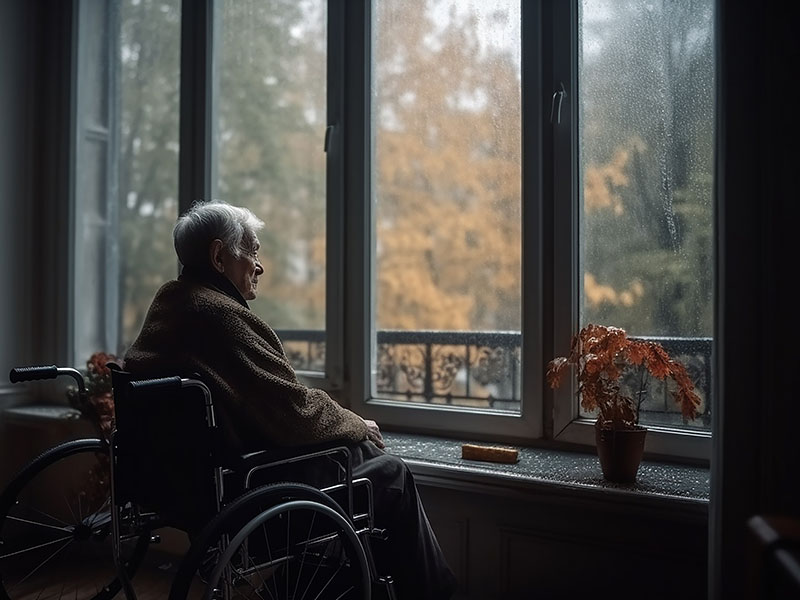
Dr. Shelley F. Diamond: A Psychotherapist Facing Death

How to Tell My Patients

My doctor at first thought my month-long pain was probably heartburn, and I said “No, I’ve had heartburn before, and this does not feel like that.” And she said, “Well, take some Prilosec for a week.” I did that, but the pain was getting worse. That’s when she said, “Well, let’s do some tests.”

They tested my urine and blood, which determined that I needed an ultrasound, and that determined that I needed a CT scan, and that showed I needed a biopsy, which diagnosed pancreatic cancer.

All that was very disturbing, of course—medically and existentially. Once I got that clear information, my first thought was, “Oh my god, I have all my patients!” and my first decision was, “I can’t deal with my personal issues until after I figure out what am I going to do about all my patients first.”

I’ve been a psychologist in private practice since July 1, 2006. It’s been over 15 years. I have a full seven day-a-week practice. I had to deal with all the patients that were currently scheduled and those calling for an appointment.

So I realized I had to come up with something to tell my patients. Each person is different, so how would each of these people need to hear this news? Certain patients do everything over email, including arranging appointments, and I realized—okay, certain people I can tell over email. But some people don’t do email.

I knew I would have to tell some people over the phone, and I was concerned this might cause them harm. One older woman only communicated through phone calls, and I knew I would have to tell her on the phone; I knew that would be the most difficult person to tell. In my own life I’ve been told that way that loved ones of mine were dying, and it felt like a horrible way to hear this news. And I didn’t want to tell anyone via text, so I just sent them a text saying “I sent you an important email. Please read it.” It required juggling several different communication methods.

Some of my patients were going through a bad time in their lives, and I knew I needed to wait a few weeks to see if there was a better time to tell them this bad news.

What I realized was that for most of my people, it would be best to compose an email message that I sent them the day before our scheduled session. I had a template with the first paragraph, and then I customized the rest of it for each person.

Most of the people received the subject line: “Bad News.” They needed to have a heads up so that before they opened it, at least they knew it was bad. It would be helpful for a lot of my people to prepare them to open the message.

Then I started out with their name and, “I have some bad news to tell you. I’ve been diagnosed with pancreatic cancer, and I only have a short time to live.” Then I said, “Please accept my apologies for this abrupt change in our relationship. It hurts me to have to share this bad news. I wish this wasn’t happening.” It was important to connect with them in a human way, because anyone knows this is a horrible thing to have to write.

The third paragraph was, “The only good thing is that I know you have learned a lot in the time that we’ve been talking together. We can still have our session scheduled for tomorrow, but that will probably have to be our last session. In the last session we will review the progress you’ve made, because I don’t want you to forget what you’ve learned.”

Each in Their Own Way

I had to send this to about 40 patients. There were a couple of people that I thought were going to need more than one final session. So, for a few of them, I wrote, “If you need more time we can have another meeting, but let’s see what we can talk about tomorrow.” But no one wanted more than one session. I think it was too painful for everyone. The one last session was so intense that they couldn’t open up again in another session.

They all expressed a concern about taking up my time, and I had to reassure several that it was important to me that we have that last session. There was one person who couldn’t respond at all, and just didn’t show up for the last session. I sent him a message saying, “I understand this was probably too much to deal with, and I have known you long enough to know how you feel, and it’s okay.” And then there was nothing else from that person. I knew he needed me to acknowledge that, because I DO know how he feels. I have several patients that I’ve been seeing for years. He was the kind of person who expressed very frequently, “Oh, I’m so grateful for our work together.” He didn’t need to repeat that, I knew how he felt.

I had a different relationship with each person, of course. Some of them needed to say things in the last session, and some of them didn’t. One woman was inappropriate, in that she had boundary issues. She said, “I looked up your home address on the Internet, and I want to come over and feed you soup, and I want to take care of you.” She had an “I’m going to smother you with love” kind of response. And so I had to make the boundaries clear and told her, “I appreciate your intentions, but that’s just not appropriate at this time.”

With her and several other people, I had to immediately connect them to another therapist. That was the other challenge I had—getting them referrals. Because I knew someone like her needed to transfer immediately to someone else. Luckily with her, I was able to identify a therapist I knew would be good, and she did connect with that person right away. Then I was able to say, “Talk to your new therapist about how you’re feeling. I know you’re grieving, and this is your way of trying to stay connected to me, and I know this is part of the grieving process. This is reminding you of all the people in your life who have died and you’ve lost connection with. There is a lot to talk about, and this will be a good way to connect to your new therapist.”

With some people, I had to help facilitate their taking their emotions and using them to be with someone else, because that I couldn’t do that with them anymore.

I’m taking this opportunity to say a little bit about what I did because when it happened to me, I had no idea what to do. Graduate schools and continuing education need to show therapists how to deal with such situations as I found myself in. It seemed up to me to reinvent the wheel, or perhaps even to invent it. The only good thing was that I was very aware that I had to figure this out. I had an intense feeling of urgency. I just used what I felt with my patients to guide me in sensing what each person needed from me in each moment.

And for people who I had seen for many, many years, I was able to say things like “I know you’re in a stronger place now than you were when we first connected, and I know you have the resilience now to deal with the ongoing challenges in your life.” I needed to reinforce some of the ways that I really did know that they had grown over time. To one person I said, “I know you have more confidence in dealing with the challenges in your life. It’s made me happy to see you grow and change for the better over time. I’ve seen you so many years, it feels bizarre that I won’t ever see you again;” validating the feelings that I knew they would have. I would add, “I’m glad I was able to be there for you during your long divorce process;” “I’m glad I was a witness to your changes in emotional maturity over time;” “I know you’re capable of commitment, and I hope you can find someone else who is capable of that.”

Email communication was good because it’s a document that they could come back to. I made sure that I wrote things to people who I knew used written materials in their process. In their last session, they said, “Oh, I’m going to keep this by my bedside, so I can read it again when I get discouraged.” That’s why I sent them these things the day before, and then in the last session reinforced this again. I said, “Let’s talk about your progress and how we can make sure that this grief doesn’t trigger a relapse into your old unhealthy ways of coping with things.” I said, “The only good thing is I know you’ve made great progress, and it’s been a pleasure to watch you free yourself from all the old patterns in your life.”

People responded with, “I’ve never talked to anybody about death like this before.” In the last session, I would ask them, “Who have you known that was dying or died. What did happen?” And 99% of the people said, “We never talked about it. It was just something that you didn’t talk about. It was always something to avoid as a terrible thing.”

One thing I do want to mention is that when I put my original notice to the San Francisco Psychological Association, with the subject line, “Telling my patients I’m dying,” I received an outpouring of support and messages from my colleagues who were wonderful. People were very kind.

One of my colleagues who responded shared that she had also faced cancer, and that she had talked to her patients and said, “I know that it’s scary to talk about cancer and death.” She added, “I’ve had some very good conversations, and it was important to talk about it, and it was helpful to them…We’ve had some profound conversations.” Her saying that really helped me become more conscious of what these last sessions could be. I realized, this is a therapeutic issue, and I need to think about how this could help them to talk about death. Because before that I was thinking, “Oh my God, I’m causing them harm by having to tell them this.”

I knew I needed to be thoughtful about not causing them harm. But my colleague’s message awakened me to the possibility that this discussion could be a profound therapeutic gift. And that is exactly what happened; I would say 98% of the people had an amazingly deep therapeutic session where they opened up about how talking about death was something they’d never done before. Even the men were sobbing. I’ve never heard the men cry like that before, even the very macho kind. They said things like, “I could never talk to my mother or grandmother like this when she was dying,” and, “I wish my mother had been able to talk about this”—they grieved not getting that opportunity before with various people in their lives.

They were able to talk about our relationship and what they had gotten out of being in therapy with me. And they were able to expand it to the idea of death in general, how we don’t talk about it, and were glad that we were able to do so. Some said, “I’m going to live a better life because of this. You’re helping me realize I can’t take each day for granted, and I can appreciate everything more.” “Because this has happened, I’ve reached out to my family and told them that I needed their support.” “Now I feel more connected to my support people because you’ve given me the courage to talk about this, so I’m going to talk about it more with them. You’re helping my whole family.” People were very effusive and heartfelt. I mean, many were sobbing. The only people who didn’t really cry were a few people from cultures that taught them not to show deep feelings, but I could tell they were shocked and saddened. Everybody was profoundly touched. Some said, “Thank you for being so honest about what’s happening,” and “I had people who died, but they just disappeared, and I didn’t even know what happened or why they died. There was no way to get any questions answered.”

Grokking the Infinite

There’s another kind of pain. I’ve almost died many times from eating nuts. I’ve always felt that I wasn’t afraid to die simply because I’d come so close to it before. It was always an experience of just letting go and surrendering to the process. Because what I learned from that is, don’t fight it, just relax. The best thing always in that situation for me was when I realized, “Uh-oh, I’m having anaphylaxis, and so I might die right now,” was to be as completely physically relaxed as possible, and sort of go into a trance. That’s really what helped me. I would go into what I would call a hypnagogic state, where I was conscious, but it’s an altered consciousness. Like just before sleep, for some people. I really use that time as I’m falling asleep or as I’m waking up, to hold onto that hypnagogic state. It’s an altered state, but it’s a very peaceful state. I always associate that with a dying experience because it feels like it’s between worlds.

I remember one of my early existential experiences, when I went on a camping trip with my family. We were outside at night under the stars. I remember I was with my father and we were looking up at the sky, and it was one of those places where there were no lights, so you really could see more stars than you could at my suburban home. And I remember looking at the sky, and at that time, they had this TV show called Ben Casey, M.D., and in the beginning of each episode a Dr. Zorba would write symbols on a blackboard, and say, “Man, woman, birth, death, infinity.” And I remember asking my dad, “Dad, what’s infinity?” And he just said, “Look up at the stars, that’s infinity.” He said something very simple like, “It goes on forever.”

I looked up at the stars, and I felt I could suddenly grok the idea of infinity. It was like the movie about Helen Keller learning the sign for water by feeling the water coming out of the pump. I must have been about eight years old, and I remember this intense awareness of the immensity of the universe. For a moment I felt it, and then the next it felt too intense, and I shut it down. But I always remembered that moment I did let it in, I could let it in, and it has stayed with me all these years. I can go to a planetarium and feel it in a way I couldn’t feel it when I was a little girl. Now I love to go to the planetarium and be absorbed into that immensity for an extended period.

To me that’s what death is, you get absorbed into that infinity, that immense infinity that our human brains are too small to comprehend, the totality of the cosmos. Humans are probably too fragile and limited to hold the voltage of that infinity experience, and so we have to kind of shut it down to some degree. Because when you really think about how vast it is, it’s beyond our capacities. We blow fuses.

As my Zen friend says, Death really is the Great Mystery. And I’ve always said it’s a mystery what the true cosmos is; I don’t believe we can comprehend it. Every human finds some way of explaining it for themselves, whether it’s a religion or a faith or a philosophy. I just think of it as all philosophy, of what helps them tolerate this ongoing uncertainty, that we’ll never know. We cannot know. But we need to know. That’s what being a human is. We want to know, we need to know. We need an explanation.

My recent experience has been sort of a building on that foundation, in that my experiential reality since I’ve been given this diagnosis is that I have a felt sense of my molecules preparing to disperse. It’s very hard to put into words, but I feel my—that’s the only way I can say it—my molecules are preparing to disperse into the cosmos. There’s some—it feels almost physiological, but it’s clearly a psychophysiological experience—it feels like my molecules are preparing to expand. There’s a sense that something is expanding and opening. Every single cell in my body is starting a journey.

It’s very subtle. I feel slight changes in every level: my body, my thoughts, and my emotions. I had to go through a process of understanding what’s been happening to me. I’ve been writing in my journals, and that’s been very good. In these hypnagogic states I’ve been trying to process, how do I conceive of this? I’ve always been prepared to die, from having had childhood medical problems; for so many years I was suffering a lot, and spent most of my life thinking that I would be so glad when I die and be done with all this suffering. I was always expecting to have no problem jettisoning everything.

But I’ve been feeling very good physically these last five years, and I’m 65 now, so I’m having a different experience, “I’m feeling good now! Oh no, I see why people don’t want to die. I’m having mixed feelings because I just figured out how to feel good and now, I must go?”

Another level of it is being aware that my sense of time has changed. I now live with a time reference point that other people don’t have. I talk to people and I’m aware they’re living in a time structure that I used to live in, and I’m not in that anymore. I’m in a different group now. Over the last five years, whatever happened, I’d think, “Well, I’ll do that someday. At some point I’ll get around to that. If it doesn’t happen this week, that’s okay, it’ll happen at some point soon.” I can’t use any of those reference points now.

I’m very glad I had those experiences with anaphylaxis from exposure to nuts, because I know I’m so much better prepared for what I’m going through than someone who’s never had that. And I can tell from talking to other people, the way they are imagining what this would be like is so different. It’s been interesting to talk to people. Some people say things like, “So now you know you’re going to live less than six months, do you have a bucket list? Are you going to go have fun and do whatever you never got a chance to do?”

No Bucket List, Just Gratitude

No. Number one, for my whole life I did everything I wanted to do because I knew I might not live very long. I’ve always done everything I wanted to do. I was never waiting for retirement to do fun things. That would never have occurred to me.

Number two, I have so many things I HAVE to do right now, I don’t have time to go have fun. I’m grateful that I am not going through any medical procedures, because the only suffering I have is pain. Other than that, I feel fine. I can do everything I want to do. My mind is sharp. I’m in charge of everything that’s happening. I’m juggling ten different things. I’m juggling attorneys, and accountants, and doctors, and who’s going to help with my patient files. I’m juggling so many different projects that I probably wouldn’t be able to do if I were sedated or going through some sort of medical procedure.

Another thing I am grateful for—and I spend a lot of time writing about what I’m grateful for—is that I am still mentally fine right now. I didn’t add more side effects from medical problems to my suffering. I have had a certain amount of time to get my affairs in order, for which I am truly grateful. Some people get this diagnosis and they’re dead in a week or other very short time. I’m grateful, I’ve had months, because when I first got the diagnosis, I thought I’d better act as if I were dying next week. “You better get into gear, overdrive, because you may be dead in a week. You have no idea how much time you have.” And so I’ve been very, very active, as much as I possibly could, from the day I got this diagnosis.

I’m grateful that I have lived as long as I have, because I thought I was going to be dead before I was 20. My father died when he was 60, and at the time I thought he was an old man. I was 19 when he died. At the time I thought that at 60, a person is old. And I remember people saying, “Oh, your father, it’s such a shame he’s dying at 60.” I thought, “What’s he going to do after he’s 60?” I remember I didn’t understand why people thought that was a short time to live.

For resources I recommend an organization called You’re Going to Die, which does public gatherings where people talk about death. They tell stories, sing songs, read poems, and they share whatever they need to talk about in terms of an awareness of the fact that “you’re going to die.” I think they are a beautiful organization. They’re here in the San Francisco Bay Area. During COVID they are doing it over the Internet, but they did do them in person.

They have a little coin they give out. On one side it says “You’re going to die,” and on the other side it says “You’re not dead yet.” The whole point of it is to raise your consciousness to be aware that yes, you’re going to die, and we need to be able to talk about the pain of knowing that is going to happen, but we want you to be aware that you’re not dead yet. You need to have both so that you can be present in the moment in a more helpful way.

I also recommend the Ernest Becker Organization (ernestbecker.org). He was a cultural anthropologist who wrote the ground-breaking Denial of Death in 1973. Another resource is Death Café (deathcafe.com), which I have attended in the past.

Thank you, dear readers. I will just say goodbye for now. I hope to encounter your spirit again.

Shelley Diamond, PhD
San Francisco, California, USA
 

***
 

Editor’s Note: Dr. Diamond closed this conversation by sharing the 2019 poem “You Will Lose Everything” by Jeff Foster, noting that she had shared it with people who said it was helpful to them. It begins with “You will lose everything” and ends, “Loss has already transfigured your life into an altar.”

This article was excerpted from a conversation between Dr. Shelley Diamond and Dr. David Bullard on January 23, 2022. 
 

Healing Wounded Images of Self and God

Carl Jung famously reflected that many of his older patients suffered due to disconnection from religion and sought to find or re-establish a spiritual outlook in later life.

Like what you are reading? For more stimulating stories, thought-provoking articles and new video announcements, sign up for our monthly newsletter.

Grace was 103 years old and living in a rest home. She was referred to me for psychotherapy for possible depression. “You know what it’s like to be 103,” Grace said.

“You’ll have to tell me what it’s like,” I responded.

“I don’t know if I’m depressed or not, I just can no longer do all the things I love. I love to read but my eyes are bad, and my fingers can’t hold a book or turn the page,” she said and held up her fingers gnarled by arthritis. “I always did needlework, knitting and crocheting, but look, I can’t do that anymore.” Using her walker to get to the bathroom was a slow and painful excursion for Grace because of her arthritis.

“I do have something I want to tell you, but I don’t want you to think I’m crazy,” Grace said. “I have a vision, it’s the same thing over and over, and it’s not a dream—it happens when I’m awake, like this, sitting up in bed. There is an old man standing in my door, and he slowly shuffles to the foot of the bed, and in a deep voice that sounds like it’s coming from under the earth, he says, ‘We have to get together in the midst of this pain and work it out.’ Well, this same thing keeps happening again and again,” Grace explained.

Grace had earlier referred to her history of religious faith and her current questions. I inquired further about her beliefs and doubts. She had always been a person of faith, yet now she felt inadequate and unlovable because she could no longer be the active and productive person she had previously been. We explored what the visionary experience might mean for her if she considered it in light of that cluster of feelings and thoughts. Perhaps she might come to consider that God was mirroring her current pain and asking to be close to her in its midst, and to allow that, rather than judging and dismissing her worth. This might be the solution to her troubles. With that understanding she suggested, “I think I’ll be okay now, Tom, I don’t have to think I’m no good just because I’m not like I used to be.”

Larry was 74-year-old who had spent the last three years in a nursing home. He was nearing the end of his life and was dreading it. He was born with a deformed hand. He said his father had been alcoholic and abusive. Larry both loved and hated his father. During nearly every psychotherapy session, he made comments about hating God. If his earthly father had been so cruel, how could he trust a heavenly father? Psychologically, he could partly hold onto the affectionate side of his father-conflict by projecting the hurtful side upward.

“But I did see the light one time, Tom,” he said. Larry had been scuba diving, doing restoration work beneath a large ship—and he became stuck, ran out of oxygen, and knew he was about to die. “Suddenly there was a beautiful light all around, and I had never felt better in all my life, and I was loose, and I came to the top.”

“Did that change any of your thoughts about God,” I wondered?

“Aw, no, I still hated God; but I did see the light two more times.” Larry went on to describe two additional near-death experiences, with bright light and peaceful feelings—but he was not able to consciously draw comfort from those experiences as he neared the end of life.

Chris was a 64-year-old resident in a nursing facility, and in one therapy session shared an essay he’d written about mental illness and religious faith. “In our struggle with schizophrenia, we have much to contend with. The many highs and lows, confusions and crises in the life of a schizophrenic. We try medication, psychiatrists, and the like. These work to a degree, but are not something that sustains you or makes you stable. God is good for the mentally ill. The only concern is we have to be careful not to confuse spirituality with our mental illness. Mental illness makes it difficult to believe in God. We are so confused and not sure what to believe anyway with hallucinations and such. God is aware of this and He knows the plight of the mentally ill.”

Ah, but there’s the rub—how to distinguish mental illness from spirituality? Certainly, some persons with a mental illness do confuse the two. So what might be characteristics of a wholesome religious outlook versus psychopathological distortions? The unhelpful and pathological elements may be characterized by fear, anxiety, avoidance, grandiosity, aggression, subjective idiosyncrasy, irrationality, and hatred. Whereas productive and encouraging spiritual viewpoints might include humility, patience, peace, insight, fortitude, and may be conventional, doctrinal, rational, and foster love.

***

I have worked with many thousands of clients over my 40-year career, the great number of whom have passed away. For many of these clients, facing death was always more distressing for those lacking a religious outlook. Many of them, as well as my current clients of all adult ages, have also struggled to endure disability, and/or chronic pain, or past trauma, and sometimes profound loneliness. When asked how they survive, and where they find encouragement, the common response has been—“God.” It has been quite rare for someone to disavow all questions of religious faith; more commonly, these individuals struggle with unexamined doubts and spiritual conflicts associated with past relationship issues. We often hear the phrase “the fog of war,” referring to the challenge of sustaining clarity during moments of danger and chaos. Many of my clients encounter a fog of faith as they grapple with spiritual doubts made worse by illness and isolation.

The unanswered questions and doubts are invariably present and may be withheld if I don’t notice or respond to their indirect emergence. I find that I can aid the conflicted client in their quest for new perspective, for a renewed outlook that might offer them meaning and hope. Faith was regained for Grace when she humbly allowed God’s comfort to overtake her fears of being unlovable due to infirmity. Dozens of my clients have reported near-death experiences, and all of them described spiritual comfort and a dissolution of their fears of dying; all, that is, except for Larry, who had been wounded too deeply and too early in life. Chris had a major mental illness, but also a vibrant religious faith and the wisdom to understand the need to keep each as distinct as possible.

In psychotherapy with these clients, I have followed the lead of the spiritual symptoms, signals, questions, and comments, and helped them to sort through possible distortions in order to create space for a life-affirming and personality-broadening outlook on our shared existential challenges regarding illness, aging, and death.