Eating Disorder Triggers and COVID-19: A Guide for Psychotherapists

“I don’t know why, I just feel more like using symptoms lately. There’s no particular reason,” Margaret said*. “Um…,” I ask, endeavoring and likely failing to keep my tone neutral, “…can you brainstorm anything that might be contributing?”

“Well, I haven’t seen my friends in several months. I’m not working right now. I don’t have anything to do all day. Except check Insta, where everybody’s on some kind of weight loss or exercise plan. I can’t go anywhere or do anything, and I have no idea how long this is going to last. It’s not too far-fetched to wonder if we’re all going to live in some horrible Mad Max dystopia. And, oh yeah, I might contract a lethal virus and die.”

Chris had a similar dissociative response to our collective trauma: “Ever since March or April, I’ve been really dissatisfied with my body. Maybe because of springtime, with the beach season on the way? Except of course this year I won’t be going to any beaches…so there’s that whole thing.”

Like what you are reading? For more stimulating stories, thought-provoking articles and new video announcements, sign up for our monthly newsletter.

Acknowledging Eating Disorder Triggers

As therapists, our job is often to connect dots that aren’t readily apparent to our clients. It might seem obvious that they will be affected by the events in the world but, as one of my clients put it, “It’s hard to remember that you’re actually human sometimes, and that you’re vulnerable to the same stuff everyone else is.” And so, when working with people who have eating disorders it is important to know that almost every aspect of this pandemic is rife with potential triggers. By understanding the multiple ways in which COVID-19 can affect our clients with eating disorders, we can help them to plan for healthier ways to make sure that their needs get met in this difficult time.

Dealing with Unstructured Time

Many of my clients with eating disorders have the sense that they just don’t know what to do with themselves. Without normal routines to rely on, the days have begun to feel like an endless void. For these clients, eating disorder symptoms offer a way to be engaged in something. For some, this might mean over-exercise and calorie counting. For others, overeating. Still others will cycle between back and forth between overeating and attempting to “compensate” for the intake. One college student I am working with has been using food to break up the time to give it more structure by eating on a very rigid schedule. Unfortunately, for her this means getting out of sync with her natural body rhythms and being able to listen to her hunger and fullness cues.

Helping clients to schedule their day can give them a sense of groundedness and prevent filling up the time with unhealthy behaviors. With Sara, we sat down with her day calendar and plotted out a week’s worth of activities. Sometimes the structure was as loose as “Thursday morning—TV in the living room”; “Thursday afternoon—reading in the bedroom.” Other times when she was really struggling, we went hour by hour—including meals. If you do this, be sure to include changes in location as a part of the schedule, and outside time if at all possible.

Addressing Role Overwhelm

For many other clients, unstructured time is not a problem at all. In fact, there may be a sense that there is no time at all. This is particularly true for parents who will no longer have the support of the school environment and are being asked to take a role in their child’s education that is outside of their expertise. Many are also attempting to care for their children while working from home, guaranteeing that they will be able to do neither effectively—a client of mine recently described a morning in which her three-year-old emptied all her kitchen cabinets while she was on a Zoom meeting. When she was done with the meeting, she had 8 or 9 follow-up tasks—plus an entire kitchen to sort out, all while entertaining her child. While moving quickly from meeting to caretaking to schooling and back, clients with eating disorders may leave their own needs on the back burner, forgetting to eat, cook nutritious foods, or take time for themselves.

Fighting Toxic Cultural Expectations

In our compulsively productive culture, having some time on your hands mandates you to do something with it to “improve yourself.” More benign manifestations of this drive include educational tasks such as reading the classics or learning to knit. For our clients with eating disorders, though, this train typically runs down the “perfect your body” track. They are reinforced by a spate of “COVID workout plans” and a social media frenzy of fears about the COVID-19 (as in, the nineteen pounds one can supposedly expect to gain during quarantine). “If I’m not getting thinner, I’m not getting better,” one client said to me. As therapists we can provide a counterpoint to toxic cultural messaging—by what we say, and through what we do.

Addressing Perceived Lack of Activity

Perceived lack of physical activity is very triggering for lots of people with eating disorders. They worry that if their routines change, they might gain weight. This in turn is correlated with immense shame and fear of being unlovable, lazy, or worthless. Some with eating disorders will restrict their food intake to supposedly “make up” for lack of activity, often wildly overestimating how much caloric cutting back would be equal to the actual amount of energy unspent. Others, because of black and white thinking, will begin to have difficulty caring for themselves in any way if they are not able to follow their previous routines. Helping clients to reality-check how inactive or active they really are can be tremendously helpful, as can helping them to sit with and manage the anxiety it brings up.

Avoiding Isolation

It’s difficult for anyone not to have access to their support systems. For people with eating disorders, this includes access to a treatment team and peer network that help to fight the eating disorder “voice” by providing context, reassurance, and normalization. Without this support it can be easy for someone with an eating disorder to be overwhelmed by their own thoughts. As therapists, we can provide an important counterbalance, but it’s also more important than ever that we encourage our clients to participate in healthy groups and online forums.

Ameliorating Anxiety

Whether or not somebody qualifies as having an anxiety disorder, this is a time of heightened anxiety for everyone. None of us knows whether we or our loved ones are going to get sick. None of us knows how this will affect our society or how long it’s going to last. Many people with eating disorders deal with anxiety by converting it—rather than feel uncertainty and dread about things that are outside of their control, they channel their uncertainty into worrying about food and body issues. Helping clients with concrete tools such as diaphragmatic breathing and progressive muscle relaxation can help them to better cope with these uncomfortable feelings and distressing concerns.

***


COVID-19 is very triggering for everyone, but our clients with eating disorders will be triggered in specific ways. By keeping this in mind we can help them to maintain their gains, avoid or minimize relapse, and continue to learn to nourish their bodies and spirits.


*All names are changed, all quotes are compilations 

COVID-19 and the De-Stigmatization of Therapy

“This is my first time in therapy,” Sean tells me in our first virtual session. He is among the many who have come into therapy for the first time with the onset of the COVID-19 pandemic.

Coming from parents who suffered from alcoholism and depression for his entire childhood, he is no stranger to mental illness. Growing up, however, therapy was looked down upon as something only “broken” people do—he was one of the many recipients of the damaging fallacy that strong people solve their problems on their own and seeking help means weakness. Fortunately, many of the clients with whom I work have made the decision to fight against the silent stigma against therapy. Clients like Sean are breaking the therapy stigma in the face of the COVID-19 pandemic for several reasons.

Like what you are reading? For more stimulating stories, thought-provoking articles and new video announcements, sign up for our monthly newsletter.

The Normalization of Therapy

Sean is seeing me for help with depression, which he says began right around the onset of the pandemic. COVID-19 left him unemployed and unable to see his friends, not unlike many others who have found themselves out of work and isolated. I have seen a rise in those seeking mental health services at this time, especially among first-time therapy go-ers! As Sean takes the leap with me to finally start working on his mental health, he is helping break the stigma against therapy simply by growing the population of therapy-consumers, making therapy more commonplace. He has also encouraged his sister, who has battled depression for years, to see a therapist. By doing so, he sends the message to his sister, “It’s ok to talk to someone. I do.”

Acceptance of Vulnerability

Although Sean usually doesn’t tell others in his life about his painful emotions for fear that they will reject him or he will make others feel badly, he tells me that he has been able to open up to his roommate and father like never before. Because they have also been struggling with the emotional consequences of the pandemic, Sean and those close to him have been having deeper conversations about what's really going on with them emotionally and behaviorally.

With so many others facing similar struggles, Sean has gained confidence that he will be understood and heard when he reveals what he has been experiencing. Because others in his life are more aware of the fact that many people around them, both near and far, are struggling, he feels safer to disclose his emotions and life struggles and has received an unprecedented level of acceptance and support. Sean is more emotionally open and aware of hardship in others’ lives, thus allowing him to risk being more vulnerable with others about his deeper feelings. And because he is feeling safer in expressing this vulnerability, Sean was able to come to therapy, knowing that he could expose his deeper feelings to a therapist without feeling “weak” or being judged for seeking help.

Realization of a Common Humanity

Like others who have visited with me, Sean has come to accept that he is not isolated in his suffering. Because those in his life are beginning to express similar vulnerability, Sean is beginning to realize the reality that life is hard for everyone. Instead of feeling isolated in his suffering, Sean is more in touch with a sense of common humanity. Knowing that he is not the only one who is facing a hard time, Sean felt increasingly connected and was able to take the leap to book his first therapy appointment with me. He continues to fully express his emotions without feeling that he is the only one who struggles in life.

***
 

Sean has learned that it is ok to not be ok and that it is ok to get help. In taking care of his mental health during this time, he, like others with whom I have worked, is becoming an advocate for therapy and breaking the stigma.  

Healing the Authoritarian Wound Through Writing: 8 Writing Exercises to Share with Clients

A Therapeutic Place for Writing

Therapists endeavor to help clients handle life’s problems and their particular difficulties, including those that have come about because of the way they were treated as children, adolescents, and adults. We deal with people, and we need tools that actually help people grow, heal, and change. One great tool at our disposal is inviting clients to write.

One of the areas that interests me is the consequences of authoritarian wounding, those wounds created by prolonged contact with a family bully, like a father, mother, or sibling, with a bullying mate, authoritarian mentor, teacher, clergyman, boss, or co-worker, or with any other authoritarian who is operating in one’s sphere. I’ve written extensively on this in Helping Survivors of Authoritarian Parents, Siblings and Partners (Maisel, 2018) and in scores of blog posts for Psychology Today and The Good Men Project.

A second area that interests me is the value of writing as a useful tool that therapists and coaches can use with their clients and offer to their clients. I’ve advocated for the wisdom of inviting clients to write, most recently in Transformational Journaling for Coaches, Therapists, and Clients (Maisel, in press). In this piece, I’d like to share with you eight writing exercises that I use in my work with survivors of authoritarian wounding.

I think you’ll see how these exercises can also be used with all clients, either as is or with some tweaking. I hope that your main takeaway from this piece will be that clients can make tremendous strides in self-awareness and in healing when they write in a focused way about what matters to them. These aren’t the “describe a tree” or “describe a sunset” writing exercises that you might encounter in a writing workshop. These are therapeutic exercises that invite clients to face their experiences, learn from their experiences, and move past their experiences.

Maybe you don’t currently invite clients to write between sessions or assign any homework. You might want to rethink that a bit. Many psychotherapy clients are smart, articulate, sensitive folks who may well already keep a journal or engage in some other reflective writing or who, even if they aren’t journal-keepers, are likely to be receptive to the idea of doing some writing. If you do decide that providing writing exercises might prove a valuable therapeutic tool, here are a few points to consider:

  • I let clients know that if a given exercise doesn’t speak to them, they can write on a prompt of their own choosing or, of course, not write at all. It’s wise to give clients who’ve been wounded by an authoritarian this sort of instruction and permission, since they will have had a long, difficult history with rules and especially with the consequences of violating or ignoring rules.

  • I explain to clients that perfect knowing isn’t the goal. If they increase their awareness a little bit or heal a little bit, that is a victory and a blessing. We all have the wishful hope that we can get from a muddy understanding of something to a crystal-clear understanding of it, but perfect understanding is more than elusive, it is unattainable. I remind clients that if they get even just a little something of benefit from the exercise, that is a welcome outcome.

  • I warn clients that the exercises may well prove provocative and emotionally difficult, and I give them real permission to stop if the going gets too hard or painful. You can tie this instruction to several of the tips in the tip box provided below, for instance to the ideas of creating a support system and staying alert for triggers. Clients should be helped to understand that this work is not easy and that stopping should be viewed as a self-care strategy and not a defeat.

Before I describe exercises I have found useful with clients who have been impacted by authoritarian relationships, I would first like to describe some of the long- and short-term impacts of authoritarianism on the individual. These include (but are certainly not limited to) lifelong relationship difficulties (including serially choosing authoritarian mates); existential despair rooted in feelings of worthlessness; a pessimistic, critical attitude that makes it hard to give life a thumbs up or people the benefit of the doubt; an anxious nature that plays itself out as indecision, confusion, and an inability to make clear or strong choices; a felt lack of safety, including in the therapy session; obsessive worrying and powerful feelings of overwhelm; and a pull toward addictive behaviors.
 

Eight Writing Exercises

Here are the eight writing exercises. Each comes with three prompts, as I find it useful to provide clients with choices.

Exercise 1. This really went on (you weren’t crazy)

We can almost believe that what happened to us didn’t happen to us, maybe because we did a lot of dissociating, because other people saw the authoritarian in a different light, because we wished so hard that it wasn’t true or that bad, or for some other reason. But it did happen. Please pick one of the following three prompts to write on (they are written from your point of view):
 

1. What exactly went on? Let me pick one experience that still deeply affects me and try to describe it as carefully as I can. I do want to know for certain that what I believe went on actually did go on!

2. I want to think a little bit about how it might be to remember some of those terrible experiences without having to re-experience them and without having to be flooded with bad feelings. Can I see a way to do that?

3. I have long thought that I must be a little crazy to believe that such awful things could possibly have gone on. But they did go on. So how can I completely let go of that feeling that I was “a little crazy” for believing what, it turns out, was completely appropriate to believe?

Exercise 2. You didn’t have a choice (you didn’t choose it)
 

If your experience of dealing with an authoritarian happened in childhood, it should be clear to you that you didn’t choose to experience that wounding. But as clear as that truth may be, it’s still easy to feel complicit or as if you deserved what happened to you, maybe because you weren’t “perfect.” Now is a good moment to get clear on the fact that you didn’t choose to be abused by that authoritarian. Please pick one of the following prompts to write on: 
 

1. Is there some part of me that still thinks that I did choose my situation? How can I still be thinking that? And what can I do to stop thinking that?

2. If I’m still dealing with an authoritarian today, do I have new choices to make? Different choices to make? After all, I’m not that child any longer!

3. Because I didn’t really have a choice in the matter, I think I may have gotten it into my head that I’m not entitled to make strong choices or maybe that I’m not equal to choosing. I think I’d like to do some reflecting on that possibility.

Exercise 3. You didn’t have allies (you had to go it alone)

It is hard to overestimate the extent to which you had to go it alone. Authoritarians can’t function if everyone around them says “No!” For the authoritarian to bully others, those others must be staying silent, not fighting back, tacitly accepting the situation, or even defending the authoritarian. Maybe you were lucky to have an ally in an aunt, a sibling, or someone else, but basically you had to go it alone—the proof is that no one ever successfully stopped the bully’s behavior. Please pick one of the following prompts to write on:


1. Did I or didn’t I have any real allies during those bad times? What was the exact nature of my situation with respect to allies and/or a lack of allies?

2. If I did have a real ally during those times and he or she is still living, do I want to reach out and say something to him or her? Or maybe say something to him or her even if he or she is deceased?

3. I wonder, what are the consequences of having had to go it alone? Did that make me independent or dependent? Did it make me love solitude or recoil from solitude? Let me do a little writing and tease out those consequences.

Exercise 4. You didn’t have power (you couldn’t fight back)

Grown-ups possess all the power. Children can dream about being powerful, fantasize about being powerful, and engage in small acts of strength, but they are essentially powerless in the face of adult abuse. This true powerlessness can produce lifelong feelings of powerlessness, even though you are now an adult with all the powers of an adult. Please pick one of the following prompts to write on:

1. I want to think clearly about the ways in which I was powerless in those terrible times, primarily for the sake of making absolutely certain that I do not blame myself for not taking actions that were just not available to me.

2. How would I describe the power I now possess? Surely, I do possess some adult powers! How would I describe them? And how do I use them?

3. What would it take to transform myself into a “real life superhero?” And what would I be able to accomplish then?

Exercise 5. You couldn’t possibly understand (how could you?)

You may blame yourself for not understanding what was going on, for being too innocent, for missing what was right in front of your nose. But how could you possibly have understood? Feeling that something was seriously wrong and fully understanding the complicated dynamics of the authoritarian personality are two different things. Really, how could you have understood? Please pick one of the following prompts to write on:

1. What do I understand now that I couldn’t possibly have understood back then?

2. What intuitions that I had back then about my situation and about what was going were actually accurate? Did I maybe have some understanding of the situation that I couldn’t quite access then?

3. What additional understanding is available to me now? Is there more for me to understand?


Exercise 6. You were genuinely afraid (of course you felt scared)

Authoritarians scare us. You may have spent much of your childhood terrified. Of course you were afraid. The question to grapple with now is, do you still have to be afraid today? Please pick one of the following three prompts to write on:
 

1. I want to remember what it was like to be frightened as a child, to validate that experience. I am going to go back in memory, remember what I felt, and honor that I had those terrible experiences. But I am going to go back very carefully.

2. I know that I’ve lived in a fearful way and that I’ve been scared a lot in life. What can I do to feel safer now?

3. I want to live differently. How can I live more bravely? What would such a life look like?


Exercise 7. You were truly harmed (there were real consequences)
 

To say that you were wounded isn’t to speak metaphorically. Something in you got seriously injured. Maybe it was your willingness or your ability to deal with conflict. Maybe it was your self-image, your self-esteem, or your self-trust. Maybe it was your ability to trust others or to deeply care about others. The list of possible injuries is long. Please pick one of the following three prompts to write on:
 

1. I want to calmly and patiently identify the consequences of that wounding. That’s the important writing I’m going to undertake.

2. I think it might pay off to describe some of the ways that those consequences played themselves out. This won’t be easy, but I think that drawing a direct line between the wounding and the things I’ve done in life might prove eye-opening—and maybe I can forgive myself a little in the process.

3. I want to write about my strengths, too. I think it might be a good idea to spend as much time writing about my strengths as my injuries.


Exercise 8. Healing is possible (in part, through writing)

You may have gotten into the habit of thinking that nothing can really change in life, including, and maybe especially, your own personality. But healing, change, and growth are possible. Use your reflective writing practice to help you make the changes you identify ought to be made. Please pick one of the following three prompts to write on:
 

1. I think I’d like to describe some daily practice that will serve me as I try to shed the psychological and emotional baggage of the past.

2. I want to create some firm-but-gentle action plans that support my intention to heal, grow, and live well.

3. I want to write about a better, brighter future, one where I feel less burdened by the past and more optimistic and passionate about the future. Let me write about that.


Eight Helping Strategies

In addition to inviting clients to write, you can also make the following suggestions and work with clients on the following issues:

1. Creating physical separation

Survivors of authoritarian wounding regularly report that only physical separation between them and the authoritarian in question allowed them to feel safe and provided them with the opportunity to heal. And the wider the separation, the better! You can have very productive conversations about the need for physical separation and the practical details of such separation.

2. Creating psychological separation

Survivors are likely to still love, or feel that they ought to love, their parents; be pressured by other family members to continue to deal, psychologically and emotionally, with their parents; and never quite be able to get their parents out of their head. You might try a guided visualization where your client is invited to escort the perpetrator out of her head once and for all.

3. Ventilating and eliminating feelings of guilt

Survivors typically experience guilt. Some feel guilty about not protecting their younger siblings from the family dictator. Some feel guilty about having failed themselves or not having lived up to their potential. Some feel guilty about physically or emotionally separating from their authoritarian parent. You can help your client ventilate these feelings and begin to think thoughts that serve them better, thoughts like, “This guilt isn’t serving me.”

4. Creating a support system

My client Maria explained, “I have to be able to handle things on my own because, growing up, I lost so much power and so much self-confidence that my goal for myself is to be powerful and self-confident. However, that doesn’t mean that I have to handle every single thing alone. So I’ve created a kind of informal support team. I don’t turn to them first thing—first, I want to trust my own resources. But I’m not stubborn, and I do turn to them just as soon as I understand that I could use some help!”

5. Staying alert for triggers

In the language of the 12-step recovery movement, a trigger is an internal or external cue that is likely to cause a person in recovery to relapse and resume the addictive behavior. A trigger might be the appearance of a certain feeling, like feeling overwhelmed, seeing someone in a film or a television show in a similar situation, relationship events that mimic family-of-origin events, or encountering a certain smell (like an aftershave lotion) or a certain sound (like a door slamming). You can help your clients identify their triggers and create a plan of action to deal with those triggers.

6. Communicating with and enlisting “healthy” family members

Survivors often express that maintaining contact with family members who saw the situation the same way that they did was their number one healing and survival strategy. A client and her sisters might support one another in validating their memories (“Yes, Anna, it was that bad!”) and standing together in mutual defense and in ongoing defiance of the authoritarian parent. You can help your client identify allies and begin the process of reaching out to allies.

7. Not accepting the vision of family members who do not see the situation as your client sees it

Other family members may have had a very different experience of Mom and Dad from your client’s experience. They may have entered the family later than your client did; maybe the authoritarian had mellowed by that time, and the younger sisters and brothers did not receive the same authoritarian wounding as your client did. Maybe her siblings were in fact just as abused and traumatized as she was, but they are currently in denial about their experiences or have followed in the authoritarian’s footsteps. You can help your client deal with her siblings’ demands that she be “nicer” to the authoritarian parent and with their accusations that your client is being disloyal or ungrateful.

8. Limiting contact

Your client may still be living with the family tyrant or may have returned to live with that parent, perhaps because the parent has become infirm. If complete physical separation is out of the question and complete psychological separation is unlikely, the questions you can pose to your client are “What’s the least amount of contact that you can have with your mom?” or “How can you stay out of your dad’s way most of the time?” You can help your client think through the practical details of limiting contact and the emotional consequences of remaining in contact.

Clinical Case Applications

Let me briefly describe two client situations where reflective writing helped my clients grow in awareness and make important life changes.

One client, John, a British professor of history, had never finished writing any of the many books that he’d begun. I invited him to get some thoughts down on paper about why this might have been the case. He shared the following journal entries with me:
 

I grew up with mean parents. After years of therapy, I think I’ve come to identify a kind of demon who comes into my consciousness and does not want me to be productive or successful. That demon was born in childhood. It somehow has to do with safety. It did not feel safe living with my parents, plus they told us that the world wasn’t a safe place. They filled our lives with continual anxiety and catastrophizing.

Here’s how that all plays out now. My creativity starts to flow and then anxiety floods in. I tear up the work, I tear myself down, and I abandon the project as no good. I’m also flooded with feelings of intense dread all the time, especially at night; and during the day, I’m always finding ways of avoiding entering my writing space. And my writing space is easy enough to avoid, as I have classes to teach, committee meetings, a bit of a commute, and all the rest. It’s supremely easy to avoid my study. And my study is so lovely. I wanted to write, ‘lovely and inviting,’ but it never does invite me.


In another session, he shared the following journal entries:
 

Those demons. The demons have made it harder for me to keep meaning afloat in my life, they’ve made it harder for me to keep despair at bay, they’ve made it harder for me to live my life purposes, and they’ve contributed to my anxiety and depression diagnoses. It’s all a piece. I’ve come a certain distance in all this and I can function, but I’m still searching for answers and I’m still wanting to finish some damned book.

I think that the bottom line for me is that the demon just won’t budge, because it is about core safety. Maybe I have to celebrate lesser forms of creativity where the emotional stakes and pressures are lower. An article, maybe, though articles aren’t easy either! I haven’t found ways to conquer the demons of darkness, but I do intend to continue to work on this block through some kind of inner demon work. I haven’t quite given up. Not quite!


John and I worked together for the next three years, chatting via Skype once a month. There were many downs, but also enough ups that John did manage to finish a draft of a book, deal with its several revisions, send it on its journey into the world of academic presses, tolerate the criticisms and rejections his book initially received, enjoy the moment when it was accepted for publication, and so on. I kept reminding him, “This is the process,” and at some point, he began to laughingly beat me to the punch and become the first to announce, “I know, this is the process!” And throughout the process, he used reflective journaling and writing prompts to hold important conversations with himself and deal with the demons that were never going to fully go away.

A second client was a Parisian painter, Anne. At the time we began working together, Anne was hiding out in Provence, licking her wounds after an unsuccessful show of her paintings at a prestigious Parisian gallery. She was barely communicating with the world and painfully wondering if she should continue as an artist. The fact that she has sold paintings previously, that she had had successful shows previously, and that she was still something of a darling of the art world seemed to amount to nothing. Not in the aftermath of what she dubbed “that monumental disaster.”

We chatted over Zoom. One of my goals was to help her change her perspective. Her career certainly had taken a hit. But for her to dwell on that “disaster” amounted to a serious mistake and a recipe for despair. Focusing on that event was only one lens through which to look at her career. I quietly and carefully explained to her that she was fortunate to have had the successes she had had, that this one event might or might not signal anything in particular or auger anything in particular, and that her best path was to get on with her life and get on with her art-making—the act of which, fortunately, had lost none of its luster for her.

I asked Anne to detach from the show results. I also asked her to invite a postmortem from the gallery owner. How brave that would be, to ask him why he thought the show had produced no sales! She wasn’t sure if she was equal to that. I explained that she might get “more equal” to that bit of bravery by doing some reflective writing, maybe on her turbulent childhood, maybe on her bullying father, a famous painter who always belittled and minimized her efforts, or maybe in a more “in the moment” way by writing about her feelings about communicating with Claude, the Parisian gallery owner.

We chatted a week later. It turned out that she had journaled every day that week using the prompt: “Do I dare write to Marcel?” She explained that she had learned a lot about herself in the process, especially about her habit of fleeing at the drop of a hat. In childhood, she hadn’t been able to flee. She had been watched, controlled, commanded, and punished for taking even the smallest step out of bounds. Now, as an adult, because she could physically flee situations, that’s what she did—and far too quickly, she now understood.

Indeed, she returned to Paris, bravely met with Claude, and had that painful conversation. It turned out that Claude had very little to offer by way of explanation. People “loved the paintings.” People were “wild for the paintings.” Many expressed what Claude felt was a completely genuine desire to make a purchase. Yes, nothing had sold. But, Anne explained to me with relief, Claude was not down on her, had no intention of reducing her presence in his gallery, and in fact expressed his intention to redouble his efforts on behalf of her and her paintings.

Over the months, I learned that several paintings from the show had sold for fancy prices and that her new suite of paintings were progressing nicely. She still had to endure all the challenges that creatives must regularly endure; but her “monumental disaster” seemed clearly behind her. “And I now have a sturdy tool in my tool kit,” she explained. “I now have conversations with myself in writing where the part of me that wants a good outcome can coax my wounded self in the right direction. I now have a friend who is nicer to me than I usually am. And that friend knows all about my tendency to flee! She knows all about it—and she knows how to talk me out of running away.”
 

***


It’s likely that many of your clients have been adversely affected by an authoritarian: by a close family member like a father, mother, sibling, or mate, by someone else close, like a mentor, teacher, clergyman, or boss, or by authoritarian leaders and others in high places.

What ought you try if your client is suffering from an unhealed authoritarian wound that has produced adverse consequences? You can try any of the tips I’ve provided, any of the tactics and strategies you routinely use, and the writing exercises I’ve described. By working in this way, you will help increase your clients’ personal power, aim them in the direction of useful daily practice, help them envision and plan for the future they want, and, in the process, help them upgrade their personality, heal, and grow.


References:

Maisel, E. (2018). Helping Survivors of Authoritarian Parents, Siblings, and Partners. New York: Routledge
 

The Virtue of Metaphors

If you were to tabulate the time you spent obtaining your graduate degree, license, continuing education, and specialty training, it would be measured in years or, for some, decades. That’s an enormous amount of time thinking counselor thoughts, speaking counselor words, and problem-solving from a counseling perspective. Certainly, these are the requisite building blocks of a professional career. We wouldn’t want a counselor thinking engineer thoughts, using plumber words, and problem-solving from a chemist perspective. Even so, there is a danger in becoming so enmeshed in our counseling worldview that we lose perspective. I must continually maintain awareness that my clients are coming from a different frame of reference. If I’m not mindful, I may use jargon, aka “counselorese,” which could run the risk that my interventions won’t connect with my clients. I may also disenfranchise and come off as irrelevant to my clients. This is the opposite of what I want. I want my clients to get excited by the ideas discussed in counseling and enthusiastically think about new patterns of behavior. What are some ways of circumnavigating the counselorese problem? In discussion with colleagues about this problem, a number of ideas usually get thrown around, such as matching your language with the client’s, understanding and utilizing the client’s frame of reference, or using movie or sports analogies to explain a concept. All these are great ideas, but it is only on the rare occasion that I hear someone comment about metaphors. Which I think is unfortunate, because I find metaphors especially useful and powerful, and, most importantly, an effective way to mitigate the counselorese problem. When done right, a metaphor relevantly connects with the client’s lived experience. Let’s say you are explaining to your client, who happens to be an auto mechanic, the benefits of self-care and the client just isn’t getting the concept. So you switch gears (did you pick that up?) and compare the client’s implementing a consistent routine of self-care to a car owner’s bringing their vehicle into the shop every six months for routine maintenance. The mechanic will certainly pick up on the logic and urgency of the metaphor. And with your help, they can connect the dots to their life. Specifically as they relate to language, metaphors get you away from using technical jargon. This is important because counselorese can, in the worst-case scenario, disenfranchise the client, and at best, undermine the effectiveness of interventions. For example, with the auto mechanic client, using phrases like “check-up,” “regular maintenance,” or “run diagnostic” relates to the client while achieving a clinical purpose. Finally, metaphors paint a vivid mental picture that allows the client to explore their experience. In other words, a metaphor is a mental picture that you can walk into in order to examine parts of your life that you have never looked at. The auto mechanic client may have never considered self-care as a part of his life, but once considering that his mind and body are kind of like a car, and self-care is kind of like doing maintenance, maybe there’s something else within the metaphor that will help him to examine his relationships, beliefs, or goals. However, metaphors are not perfect and may not work for everyone. You may be working with a client who is very concrete, on whom any kind of imaginative, thought-experiment-type of exercise could be lost. So be sensitive to who your client is and their needs. You will also want to be cautious about over-using or over-relying on metaphors. Furthermore, mixing your metaphors can diminish the power of any one metaphor. Be wary of stretching your metaphor too far—adding more and more to the metaphor could eventually decrease the effectiveness of the technique. Best to keep your metaphors uncomplicated and straightforward. I recall working with a client who had a hard time understanding my conceptualization of their presenting issue. They couldn’t understand how I saw their problem, and therefore, my recommendation on how to treat the issue was going nowhere. I had to try something different. Fortunately, I knew that my client was a runner. So I used a metaphor of a marathon to help the client understand her relationship to her daughter. I shared how she was getting fatigued by sprinting when she had miles and miles before the finish line. It would be better if she conceived of her relationship as a marathon. The client really connected with this idea. She realized had to pace herself when running long-distance, and she needed to “pace” her expectations. We then discussed how the client could make her expectations realistic, how change takes time and patience, and the need for regulating emotion when things get challenging. The metaphor powerfully connected with the client and enhanced our clinical work. As you can see in the example above, I was stuck. Certainly, there were a number of options I could have tried to get things moving in the right direction, but using a metaphor worked for me, and thankfully, it worked for the client. The metaphor provided a story in which the client could evaluate herself and envision new alternatives. It helped her see where she was making mistakes and allowed her to self-correct. It grounded her daily experience where she felt unsure and confused in a narrative where she was confident and knowledgeable. The medium was the metaphor, and the message was changed.

COVID, Counseling, and Caution: Ethical and Relational Concerns

It was a typical session on a normal day in late September; as typical and normal practicing therapy can be during a global pandemic.

Jonny, a Black male in his mid-50’s who worked in law enforcement, was referred to me by a former client. He was skeptical of therapy and the process. He decided to attend after several years of being cut off from his adult son, after his long-time partner gave him an ultimatum about committing to their relationship, and after his co-worker’s convincing him that the process could be useful for him. On this day in late September, it was our fourth session together.

Like what you are reading? For more stimulating stories, thought-provoking articles and new video announcements, sign up for our monthly newsletter.

I don’t recall anything especially memorable about that session. We explored his beliefs on parenting and delved into some of the history with his son. We paralleled this relationship to the one he had with his own father, discussed the type of relationship he wanted to have with his son and what was holding him back from doing so. Of course, we followed all the guidelines for COVID that we had previously agreed to. Jonny did not sneeze, cough, or exhibit any symptoms of illness during this session.

I have a small private practice in a community where the COVID positivity test rate had been under 3% for about 6 weeks, considered low community spread. The city has a population of 95,000, and the number of people in the city who tested positive had remained at 10-15 cases per day during this timeframe. Despite the low risk of encountering a client who was positive with COVID, all my clients were offered the choice of telehealth or in-person office sessions. Jonny would not have participated in therapy if the only option was telehealth, as he clearly explained to me, because he needed to be able to “read people.” For our office visits, we sat six feet apart and both wore face coverings. I have an air filter to ventilate the air, we keep the office door open for more air circulation, hand sanitizer is located in multiple sections of the office, and there are few other people in the office at any given time. Clients text me from their car when they arrive, and I text them back when it is safe to enter, so that they avoid mingling with anyone in the waiting room. I clean and sanitize the office between sessions, as well as have a weekly cleaning service. Clients and I both agree to inform the other if we are experiencing any symptoms, and they sign a separate COVID informed consent about the risks of conducting therapy in person during a pandemic. It was no different with Johnny.

About five days after that last session, I began to feel poorly. Although I did not experience the signs of COVID that we are generally taught to look out for, such as fever, cough, fatigue, and body aches, I did experience excessive nasal congestion, headaches and a sore throat. A few days after the onset of these symptoms, Jonny sent me a message to let me know that he had tested positive for COVID and was in the hospital receiving treatment. I made an appointment to get tested and learned 48 hours later that I was also positive. I experienced a mild case.

Ethical Dilemmas

The first ethical dilemma I encountered was that I needed to self -disclose my positive status to the clients who had potentially been exposed prior to learning of my status. I also needed to disclose to my other clients that any sessions while I was in quarantine would be done virtually. While therapists range in the amount of disclosure they do with their clients, I would rate my usual disclosure level at less than most therapists. I was fearful of disclosing to a few of them, as their anxiety about COVID had been high, prompting their seeking out services initially. How much information was necessary, and how much was too much? I prepared a basic speech with the facts and the importance of noticing symptoms and getting tested themselves. Some responded well; others less so. How to manage this anxiety? As clients check in with me about how I am doing, how much should I disclose? Will I feel differently towards clients who do not ask?

The second ethical dilemma I experienced occurred when the Health Department contacted me to gather basic information and begin the process of contact tracing. When they asked me to provide the name of the person whom I believed I had contracted the virus from, I was faced with the challenge of whether it was necessary to provide the client’s identifying information. Does this fall into the category of “harm to others,” one of the exceptions to maintaining client confidentiality? As my client was hospitalized, I felt confident that this information had already been sufficiently recorded, so I declined to provide identifying information and maintained his confidentiality. And yet, what if that had not been the case? When does public health outweigh the client’s right to confidentiality about receiving therapeutic services?

Relational Dilemmas and Further Questions

As of this writing, Jonny is still recovering, and I have not yet seen him again. I believe that he was unaware that he had been exposed and that he was in the asymptomatic stage of COVID prior to symptom onset. Due to this, I am not angry with him, I do not blame him for my exposure, and I am concerned about how he is feeling. And yet, what if I were less certain? Would I be able to continue working with him if I believed he suspected exposure or covered his symptoms and attended the session regardless? What if I viewed him as a “risk-taker” outside of our sessions, which prompted his exposure? If he experiences guilt over exposing me inadvertently, would that affect our relationship and work together?

Of the clients I contacted, only one family has tested positive, a 25-year-old daughter and 66-year-old mother who, ironically, were attending therapy because the daughter was concerned that her mother was engaging in too many risky behaviors regarding COVID and her health. Both are currently hospitalized. How will this experience affect our work together? Will they want to continue with me in therapy, assuming their health stabilizes? Although I have no way of knowing that I had been exposed at the time of their last session and was not exhibiting any symptoms, is there anything I could have/should have done differently?

Some of my colleagues believe that we should only be conducting telehealth sessions during this time, and many of them have not yet returned to live sessions. And yet, we are seven months into this pandemic, and the county is in Stage 3 of re-opening. At what point is it considered “safe enough” to resume? How many clients are not seeking services because telehealth fails to appeal to them? Black men as a group can be mistrustful of receiving therapeutic services, so what might be the ethics of refusing to offer these clients other format options? When do the benefits outweigh the risks?

* * *


We are encountering many ethical challenges during this time. As essential mental health workers, we are also on the frontlines of this crisis and play an important role in helping people to get through this time of uncertainty. These situations prompt few answers, only generating more and more questions to ponder.  

The Performance Trap

We’ve all been there! You assigned your client some homework to do over the week, and they didn’t do it. You might be like me in that upon learning they didn’t do it, your mind starts racing with thoughts like “There must have been a problem with the homework I gave them” or “The assignment wasn’t a good fit for them; maybe they just need another idea.” At this point, I feel a tremendous pressure to not shame the client by dwelling on what they didn’t do, and to come up with another brilliant homework assignment. I’ll then start generating a new idea that I think will work perfectly for their presenting problem. I’ll put a lot of effort and enthusiasm into describing the idea, how it could help them, and how they can practically apply the concept over the next week. The client agrees to practice the idea, record some reflections, and report the following week how it went. I breathe a sigh of relief that I quickly put that fire out and have full confidence that the client is motivated and will come back next week with a glowing report about how great the homework was… I do this only to be disappointed again.

Like what you are reading? For more stimulating stories, thought-provoking articles and new video announcements, sign up for our monthly newsletter.

So what is the right move at this point? Do I abandon all hope that the client will ever complete a homework assignment and therefore never give out assignments again? Do I make a paradigmatic shift and drop homework altogether from my clinical work? Or do I put my nose to the grindstone and continue generating ideas and homework assignments for the client?

Sadly, I’ve found myself stuck in the performance trap, which is the pressure to wow the client every week with a new idea. However, this option comes with many pitfalls. First, the pressure to wow the client is completely misguided. Rather than wowing the client, I should be holding them accountable. They made an agreement to do the homework, and I need to hold them to that. If the situation were reversed, I would have to be accountable to them. And, in fact, this does often happen in the clinical contexts. The client may want me to fill out some paperwork, forward their notes to another provider, provide them billing information, or email them a resource discussed in session. I agree or not, and then I am accountable to fulfilling my end of the bargain. This makes sense. That seems reasonable.

So why, then, do I drop this standard when it comes to the client? Secondly, moving on to another idea doesn’t provide any information as to why they didn’t do the homework. Maybe there is a clinically relevant reason why they didn’t do it. And, quite possibly, understanding why they didn’t do it could be the secret to unlocking the reason why they are seeing me in the first place. Thirdly, the pressure I felt to come up with great idea after great idea was removing the work from the client and placing it on myself. In essence, I was creating a context where my client was dependent on me, resulting in a situation where they didn’t value the work I was doing. Why should they have to act on an idea I suggested this week, when next week I may have something even better?

I can remember a couple with whom I had been working for a few weeks and found myself stuck in the performance trap. We had spent enough time building trust, gaining an understanding of the problem, exploring their story and relationship history that I thought they were ready to test out a few of the ideas we discussed. So I gave them a homework assignment, taking care to explain how it related to their presenting problems, how it would help them reach their treatment goals, and what the homework would look like using practical examples. The couple wholeheartedly agreed to do the homework, and the session ended with a buzz of excitement. When I asked how the homework went during our next session, they put their palms to their foreheads and said, “Whoops! We forgot.” I said, “That’s okay. No problem. Maybe the homework assignment wasn’t a good idea.” And then I proceeded to explore another idea from my therapist bag that could address the problem and get them closer to their treatment goals. Little did I know that this was the start of a trend that would last session after session. After months of getting nowhere, the couple terminated therapy. They said they liked me and appreciated my efforts, but they just weren’t getting anywhere. I now realize why.

As you can see from this scenario, I was fully engrossed in the performance trap. Sure, I felt like I was working hard for the clients, and they even appreciated my efforts, but that had no effect on their making real, tangible movement towards their goals. And that is the whole point. If my efforts are not getting the client closer to their goals, then that is cause for reflection and re-evaluation. So don’t make the same mistakes I did. Rather, follow these recommendations when giving your client homework: don’t abandon giving your client homework, keep your client accountable, understand the “why” when they don’t do homework, resist the urge to generate idea after idea, and (yes, it’s cliché but true) don’t work harder than your client. 

Anastasia Piatakhina Giré on Teletherapy, Borders and Building Bridges

In Different Tongues

Lawrence Rubin: When I first contacted you to schedule this chat, you had said that you needed a little time to wind down after your therapy session, which I completely understood. But you just now told me that your previous session was in Italian, and now you're speaking with me in English. It’s more than winding down, it’s completely shifting gears, so to speak. What is that like for you inside?
Anastasia Piatakhina Giré: I also had a quick chat with my daughter in between in French. I’ve gotten used to it, but it’s tiring, of course—it's code switching all the time. But on the positive side, it creates a very clear boundary between clients and their stories. The cultural context that we talk about and we're immersed in during the session is different. If I’m with a British client, the therapy will be in English, and then for the next client I might have to switch to French. It's not just switching from one language to another; it's switching from one cultural context to another, one story to another, one person to another. In a way, it helps to switch languages with different clients because it’s like you're opening one book and then putting it down to open another. If the book is in a different language, it's easier in a way to connect with the book you're reading at that moment.
LR: Do you find that you are equally effective as a therapist as you switch languages because it sounds incredibly complex.
AP:
it helps to switch languages with different clients because it’s like you're opening one book and then putting it down to open another
That’s a good question that I've often asked myself. I remember working with my first client in English. I was terribly anxious and wasn’t sure I would be able to make it, but I didn't have a choice. I already spoke with clients in Russian, Italian and French, but I was living in Spain and I wanted to expand my practice in English. So I did it. And now, after a lot of practice, I find that I am more comfortable doing therapy in English because it's really a question of distance. It gives me enough distance from the context, the cultural context.

I remember talking about this with a British client who lived in Great Britain, so I was quite familiar with their cultural context. We were talking about what it was like for me being on the fringes. I'm not completely inside. I'm not immersed in their cultural context, but I'm familiar enough to understand them. And that gives me a very interesting distance, a very interesting position. I'm pretty sure that's the experience of many therapists whose lingua franca is English. It takes some work, of course, but it's interesting. I do think that I'm a slightly different therapist in English than in Russian, which is my mother tongue. Better? Worse? I don't know, but slightly different, certainly.
LR: A different therapist! When I'm in therapy, I may switch orientations and techniques depending upon the circumstances of my client's life. But it blows my mind to think of your being a different therapist in different languages. Are you more client-centered in one, more solution focused in another, more cognitive behavioral in another? How do the languages align with your therapeutic orientation in the different tongues?
AP:
I'm probably bolder in Italian, more cognitive in French, and funnier in Russian
I'm probably bolder in Italian, more cognitive in French, and funnier in Russian. I can come up with a lot of differences. I also have clients, and that's probably my favorite situation, where we have a few languages that we share. And this goes to the topic of expatriation and working with displaced groups. My clients often do speak several languages, and they evolve in contexts where they have to learn a second language, or third or fifth. And their having a few languages really helps, because we can code switch from one to another during the session. This is one of the tools that I'm lucky to have, and I use it a lot.

I find that it really benefits therapy, really benefits the client. I often bring it up during the intake where we discuss the question of language. Sometimes, multilingual clients have a choice of which language they want to do therapy in. For example, one of my new clients speaks a few languages and previously had therapy in Japanese, but her native language is Russian. She came to see me with a very clear idea about wanting to work in Russian, which is my first language. We also share English because she used to study in England and spoke English for a while. Basically, language was the topic of our first session. So the choice of language becomes a tool that brings therapy forward. It's really interesting.
LR: Being multilingual along with your clients raises this notion of tools to a whole new level, because just as you switch therapeutic orientation in different languages, they access different parts of themselves as they move through different languages with you. It's almost like this potential for a multitude of conversations between two people.
AP:
I think the conversation becomes a polyphonic process, like multiple dialogues or a choir
I think the conversation becomes a polyphonic process, like multiple dialogues or a choir because my Russian part will connect with the Russian part of my client, but our English-speaking parts are also there and they also participate. And my client who speaks Japanese still brings it in because she knows that I'm open to it. I welcome her Japanese even if I don’t understand it. ; I ask, “How do you say it in Japanese?” or “How was that with your Japanese therapist?” It's like welcoming all those parts, which is obviously very inclusive and often very therapeutic in itself. I also work with Arabic-speaking clients, and while I don’t speak the language, it is a rich and beautiful language. I always welcome their quoting of the Qur'an or their favorite books or a family member or husband.
LR: So even though you may be with an Arabic client who is speaking in, or recollecting a memory or recounting a dream in Arabic, you can empathize with the feeling that's being expressed? You can help the client to interpret it in their mother tongue but also translate it so you can understand it? It seems like what you're doing is on the fringe of something so creative, so dynamic and rich that it almost transcends individual therapy. It's like this other level of interaction between two people that is so layered and so deep. I can't even follow it myself, and we are speaking in the same tongue and I'm not even in therapy with you.
AP: It's a lot of fun, and I'm very lucky to have all these languages and to do online therapy. It's all about access, right? It broadens access for the clients. And we know that with COVID, it was the only choice for all of us? But I've been working online for years and years, well before COVID. For people who are displaced—both my clients and myself—doing it online has been the only way to get therapy. It brings these unbelievable diversities to my practice. If I were only working in Paris, I could work with a lot of American and British clients, but I would never have seen the diversity that I see working online. Working with clients from Saudi Arabia, Iran, Russia, China and India is so enriching.

Fellow Travelers

LR: You were born in Russia, lived in Italy, and now live in France, so you are personally multicultural. And you say that working with this mélange of clients has enriched you as a person and therapist? 
AP: You put it beautifully. This is a process that nourishes me. Working with this diverse population enriches me and makes me a better therapist every day because it's challenging and challenges me in my view of myself.
When I see a client like the Russian one I described, it puts me in front of my own Russianness
When I see a client like the Russian one I described, it puts me in front of my own Russianness. After all I have experienced since leaving Russia, how Russian am I now? After all this, what's still Russian in me, what's left? Or what is my relationship with my second culture which is French? My husband is French. I live in France. My daughter is half French. What is my relationship with this context, with this culture? And all these questions are always there as I work with these people. I have to face them again and again and again, and that obviously impacts my relationship with myself all the time. So, it changes me as a person all the time.
LR: I know that there's a sense of being unsettled in those who are or have been expatriated. Do you ever have the sense in yourself that you're never quite settled internally even though you are settled externally?
AP: I have a very settled life now with my family, but I'm very unsettled and fidgety in general. I have to move, I have to change. I'm not planning to move any time soon, and with COVID it's not possible anymore; but I'm constantly traveling with my clients. I'm so aware of this because of the lockdown. Being trapped in my apartment, in a way, was really hard. I love to move. During the lockdown, my clients allowed me to travel to many places simultaneously. I was locked down in Rome, in Venice, in London, Saudi Arabia and in Russia.
LR: I wonder if in working with you, your clients who are locked down—partly because of the pandemic but also perhaps because of living in an oppressive, inescapable society—if they get to travel with you and through you in a way that is therapeutic and liberating.
AP: Absolutely! Traveling together is therapeutic. Irvin Yalom said "we're fellow travelers," right? And it's absolutely true. Existentially, we're all in the same boat and traveling together towards the end. That's a little corny, but it's true. I think I have a very heightened notion of this because the clients I work with in oppressive or very difficult regimes often feel trapped; like the people who I work with living in Saudi Arabia or Iran or Russia or some parts of China. Some people can feel trapped in Texas—a person can feel trapped in any kind of personal situation.
I become a gate, I become a window. Online therapy becomes a window to something that feels like freedom or a different place, a different reality
I become a gate, I become a window. Online therapy becomes a window to something that feels like freedom or a different place, a different reality. And it works both ways. It works sometimes for me when I feel a little trapped in my reality and we connect and travel together for an hour. And it's liberating sometimes to give that hope and means to survive.
LR: Related to the notion of fellow travelers, would you explain what you mean by Expat Therapy, the name of your website and practice specialty?
AP: I'm not really attached to that name. I was moving between countries almost a decade ago from Jersey, a very small island in La Manche in the Channel between France and England, to Spain. I had to create my practice in Spain from old pieces, and as I said, I didn't speak Spanish well enough or feel confident enough to work in the language. But I had to create a website and start a practice and was looking for a name that would make sense. The domain name “Expat Therapy” was free, so I took it—it was really on a whim. It was just, okay, let's do expat therapy.
I don't say I work with expats but prefer to say that I work with displaced and highly mobile individuals
I don't say I work with expats but prefer to say that I work with displaced and highly mobile individuals.

The term makes sense to me because it is very inclusive which I think is very important. Displaced people include those who have left their home country, but one can also be displaced internally. We can be displaced in so many different ways, but the experience deep down, the existential experience of displacement, is always there. There are certainly differences between internal and external displacement in terms of context and experience, of course, but I prefer to see it as a continuum. There's voluntary displacement on the one hand—expatriation—and these are the people I refer to as “expats,” those who wanted to leave. On the other end, you have refugees and migrants whose displacement is forced and who did not have a choice.

The experience of displacement goes deep down psychologically. I love quoting Grinberg and Grinberg, who wrote Psychoanalytic Perspectives on Migration and Exile, first published in 1984. It really made sense to me at the time and still does. They say migration or exile are traumatic experiences that involve so much stress and loss, no matter if one leaves even just for a year or two. It is about learning a new language, losing your friends and all that you know. It could be a student who does an exchange to study abroad for a year or a migrant who's forced to move because of the climate crisis, fire or flooding, war or hunger. They're each different, of course, but deep down the psychological experience is similar.
LR: Not just loss of place, but loss of language, loss of identity, loss of physical surrounding, loss of familiarity and significant others. Do you find that much of your work with displaced people, whether voluntary or involuntary, centers around grief and loss?
AP: There is a lot of that, but the work with many of my fellow travelers also involves a lot of creativity. We lose a lot, but we also find a lot because we usually move for a better life, at least we hope, right? People usually leave when they have a choice, although sometimes they don't have much of a choice for a better place, for a better life. But I have found that there's a lot of hope. They're also very good at adapting. These travelers are very resilient, or they develop this resilience that makes them very special.

these travelers are very resilient, or they develop this resilience that makes them very special
We have to turn obstacles into opportunities. Online therapy is a lot about that. I think a lot of my fellow therapists who had to work online or move online during the COVID probably experienced something like, “Wow, we don't have the client in our room. We lost the couch, we lost so much, but here we go; we can still do the work, and we can sometimes do it better and be more effective and be bolder.” That's resilience.
LR: For every displaced client who finds their way to your electronic couch, there must be a hundred or a thousand who don't have the privilege or the luxury or the resource. And they suffer in their displacement and never get the help of therapy. Does that make you sad?
AP: Of course, it's very sad, and I am very aware of this which is why I'm advocating for online therapy and have been for a long time, and am writing a book, blogging, trying to convince my fellow therapists of the importance of this work. And you know, broadening access is absolutely key. I'm at a stage where I'm also advocating for trainings, because I don't know one training in this world about online therapy around displacement, cross-cultural, or multi-lingual work. Nothing! This is exactly why I'm writing a book, because I realized that there's nothing out there. I’m also doing peer supervision and educating more therapists in cross cultural/multi-lingual work.

All on the Move

LR: When you put it that way, the work that you're doing with displaced people is the equivalent of Doctors Without Borders, the work of the United Nations and The World Health Organization. It's advocacy at a grassroots level. It's not just helping one person with depression or the anxiety related to displacement, it's advocacy at a global level.

I have seen statistics suggesting that much of the world's population is on the move.
AP: Lawrence, we're all on the move.
LR: Please say more about that, Anastasia.
AP: There's the existential part, obviously, but in the end, we are all moving towards something, right?
LR: Or away from something.
AP:
I don't know one person today who would say, “I feel perfectly settled, perfectly fine.” I would be concerned about his or her mental health.
Or away, exactly! We are dynamic beings. Life is dynamic. Everything's changing, every single moment is unique. And the world is a very unsettling place. You had said something about my being unsettled, but I think nobody's settled right now. I don't know one person today who would say, “I feel perfectly settled, perfectly fine.” That would be really weird to me. You know, I would be concerned about his or her mental health. There's the pandemic, fires, climate crisis, and that displaces us even more, right? We're trying to explore other planets and see if we can expand somehow. Humanity is in a crisis, and crisis means displacement which is the reaction to crisis. People leave because they experience a crisis.
LR: What about people who are not physically forced out of their home place but are obstructed from leaving their home place? What are some of the struggles of these “internal emigrants?”
AP: I grew up in the Soviet Union. We couldn't leave. I was young, but I remember very, very well the feeling of being trapped. I became interested in languages and learning French for example from very early on. But it was absolutely impossible, unthinkable, to go to France. I remember I had a map of Paris in my room and dreamt of living there. I read Hemingway and fantasized but I couldn't go. I absolutely couldn't go. My parents had never traveled until I made them travel. That experience stayed with me, and I have become very sensitive to people who experience that. There are so many obstructive regimes that trap people, but there are many more subtle examples when we feel stuck inside, unable to leave or needing to leave because our needs are not fulfilled or met in the place or context we are in.

there are so many obstructive regimes that trap people, but there are many more subtle examples when we feel stuck inside
And yet we cannot leave that context which brings us to the experience of “internal emigration.” That's where we go inside to withdraw from the outside, which can come out as depression. I think this involves a lot of shame because you feel like you're stuck and disempowered, different, and unaccepted.

As a young person, I remember feeling like I didn't fit where I was, but I couldn't leave. Homosexuals in today’s Russia, for example, evolve in a context where they know they're not accepted. They have to find a way out without being able to leave physically. So what do they do? They go inside, and they withdraw into a bubble. And that's a very difficult psychological setup.
LR: Where do they go if they can't come out, literally or figuratively?
AP: Coming out in some cultural and social contexts can be equal to a death sentence.
LR: What is coming out figuratively if they can't come out and enjoy who they are, whether it's religiously or sexually or politically?
AP: This is such hard work. They live a traumatizing experience, and I often feel traumatized after a session with somebody like this. But again, it's that window that I can offer them of acceptance, of understanding, of fresh air to connect with a different context. A context where it's acceptable to be seen and accepted as they are, and that makes a difference.
LR: You can offer them a window, but not necessarily a doorway.
AP: Exactly. It's not a door, it's a window. It's working within the limitations. It's like you can enter their dark room and open a window. You cannot get them out, but you can stay with them there for a while and help them to reorganize their dark room, put some lights on and invite friends in sometimes when it's possible. There are ways. And the Internet obviously opens a huge window because I'm not the only one sitting in that window; they can connect with other people just like them and that helps them to cope with internal emigration, because they're not alone.
LR: When they're in their dark place and thousands of miles away from you with no connection beyond you, how do you handle being pulled into that dark room with them? You said it's traumatizing for you. Can you give me an example of how you might deal with working with someone who is so trapped and how it affects you?
AP: Those days are hard, and I don't sleep well. But again, somebody has to sit there with them for a little bit, at least. I really rely on the relationship. I rely on human resilience and creativity. And what I find is that creativity is often a way out. It's not physically a way out, but it's a way out.
LR: Can you give me an example of a client with whom you worked where creativity was the bridge for them?
AP: I love art and am very sensitive in that way. I grew up in a very artistic family, so
I use a lot of art and artistic means when possible to help clients who are trapped in their realities to expand their reality
I use a lot of art and artistic means when possible to help clients who are trapped in their realities to expand their reality, to make something out of it. I use a lot of writing, for example, journaling and creating poetry. That's where the second language of therapy, English, for example, becomes a liberating tool—because what can be unsaid in their native language, whether it is Japanese, Arabic, or Russian, can be expressed in English.

I often invite them to explore their experience by writing an essay or piece of poetry in English. And they write wonderfully. It can also be a painting or drawing or collage, which are wonderful tools. I use anything that is available to them. It can be pictures. I may ask them to take their phone outside to take pictures of the place where they live and share that with me. Relationship to the place where they are trapped is very interesting to explore in therapy because they often have an ambivalent relationship with it. 
LR: You had mentioned that you have enjoyed the work of Irvin Yalom, who often uses dreamwork with his clients. How does dreamwork play into your online therapeutic work with displaced and mobile clients?
AP: Like in any therapy with anybody, I think dreams also have an important place with this population. There's so much that is out of reach or that we cannot grasp cognitively or voice or verbalize or even be aware of. Dreams open that window. It's another window and the more windows we can open, the better.
LR: The more you can access the psyche.
AP: Exactly! More air, more light. With the displaced individual in particular, dreamwork can be very powerful and important. The multilingual brain is slightly different from the monolingual brain. I will ask clients which languages they dream in. It's really interesting. I remember, for example, dreaming in Italian or in French and seeing my parents speaking Italian in my dream which is weird because they don’t speak Italian in reality.

I often invite the client to tell me their dream in their mother tongue, and even if I don't speak the language, I will pick up key words and they will translate them for me. It gives that additional layer of depth to the work we can do. It's really interesting. It's also a way for the clients to tell me something they cannot always convey directly in English or that is not yet in their awareness; it's a way for them to invite me into their world and their culture.

The Shame of Moving Away

LR: As I was reading some of your work, I got the sense that there might be a similarity between clients who are being physically or sexually abused in their families from whom they can’t escape, except perhaps through dissociation or substance use, and internal emigrants who are traumatized by their living circumstances, such as an oppressive regime or family, and are also incapable of escape.
AP: I know what you mean. What probably makes those experiences feel existentially similar is that in both situations, the person feels that there is something very wrong with them. If they are abused by their father or a family member and there is silence and secrecy in the family, then that's shameful, right? That triggers shame, because the only way they can make sense of it is by believing that something's wrong with them or that they’ve done something wrong. Very similar things happen, psychologically speaking, with people who feel that they don't fit into their context.

They feel like outsiders—different from everybody else, and that triggers shame. Something's wrong with me. To be the only white person in the room, the only man in the room, the only Russian in the room, that triggers shame. The levels can be different, but the experience is the same, and it's a continuum. And that's what we work with in therapy. Any therapy with a displaced person, regardless of the circumstances, has to deal with shame at some point.
LR: Our readers are familiar with the work of Joe Burgo, who wrote a wonderful book called Shame. Would you consider shame an existential dilemma for people? Does it tie into those core challenges that displaced people feel?
AP:
I'm really interested in shame in general, and think it is part of the human experience, as much as death or loss
I'm really interested in shame in general, and think it is part of the human experience, as much as death or loss. It is one of the major things that make us human. Somebody without shame doesn’t feel human to us, because shame is really part of our experience of being human. It's one of the first strong emotions that we feel when we are babies, so I think that in any psychological struggle, shame is somehow a part of any kind of psychological discomfort.
LR: Someone who is taught all their life to love the motherland or fatherland and doesn’t must struggle terribly inside with a sense of disloyalty and shame as if they've done something wrong.
AP: Have you seen clients who really struggle when they talk about their parents who were not perfect? To acknowledge their parents' shortcomings or abuse is so hard for them. That sense of loyalty and the shame that comes with it is terrible. It's so important to sit there with the client and help them to realize that it's okay to feel that way. It's okay to say, “My father abused me or was distant and disconnected or not good enough sometimes…but was still a father, and I can still love him even if I have to recognize that he did some damage.” And that is exactly the same thing that happens when we deal with a country or motherland that is not good enough. Right now, in this moment, many people probably experience their motherlands like this. I’ve certainly experienced that being Russian; I'm not always very proud of my motherland. In some ways I am, but in other ways I'm not, and that's a really difficult experience. It creates a problem.
LR: It's dissonance.
AP: Absolutely.
We are taught or told that we have to love that entity, whether a parent or a country, but we cannot because it's bad for us, because we are being mistreated or damaged in some ways. And that can create shame.
LR: It almost seems that in this sense, dislocated people are moving along the developmental pathway to autonomy, freedom of thought, freedom of communication; but that there’s a feeling of there being something wrong with them for doing so.
AP: I absolutely agree. Grinberg and Grinberg talk about this displacement—but they don't call it displacement. They call it migration or exile, but they see it as an existential issue and an existential experience. And of course, any move to a new place can be seen and perceived as a lifecycle event. It really is developmental work all the way around because, for example, people who come to see me here in Paris often come in their first year of expatriation. This might include an American who comes to work or follows a partner and settles in Paris.

And after a few weeks or months, they start to experience psychological discomfort. The place isn't as welcoming as it should be or as nice as they thought it would be. And there's this kind of disconnect between what they imagined or dreamed and the reality of their new life. People cope with that in different ways. Some write books—there are a lot of wonderful books written by American expats about Paris, for example. And that's a way of dealing and coping with a challenging, potentially traumatizing situation, but not everybody's a writer. So that's where journaling is really useful, and therapy also is very useful. So, that's what we do. Basically, we write that book together.
LR: You co-author.
AP: Exactly. We co-author the story about their emigration, displacement and expatriation. And it’s developmental work, of course. Hopefully at the end of that work, they're closer to being more autonomous and more resilient. Fluency in the new language is ideal. But that's kind of what the scope is, to bring them to that point.

Final Thoughts

LR: I had asked you earlier in the interview about your own sense of being unsettled. And it seems from our conversation thus far that you're there as a welcome agent of sorts at the gate that separates them from wherever they want to be. You're inviting but also challenging them to take a step into a space of shared discomfort and distress in hopes of feeling a bit more settled wherever they may be.
AP: There's a lot of modeling in the process of course. I have been displaced in my own life and in that therapeutic moment with them am again being displaced. It creates a kind of a kind of kinship—we're in this together, we understand each other, and that makes our work easier, in a way. It's difficult for me at times, because my own stuff comes up, of course. It gives us a shortcut, because they don't have to spell it out to me. They know that I know. Jung’s idea of the wounded healer.

we co-author the story about their emigration, displacement and expatriation
What’s interesting is that many clients come with some previous experience of therapy which sometimes was really good. And often it was absolutely not—in that they never addressed their displacement experience. I keep being bewildered. I have clients who come after four or five years of therapy who had never discussed their experiences of displacement.
LR: And that type of therapy just perpetuates their sense of…
AP: Alienation.
LR: Alienation and dislocation.
AP: Exactly. So being that welcoming space, co-creating that inclusive experience, helps them to learn how to do that for themselves.
LR: It's almost like you're a travel agent.
AP: I am, absolutely.
LR: Internal travel agent.
AP: Yes, traveling together. I love to see it that way.
LR: Your own experience allows you to cut to some of the stuff with your clients that others might not be able to get to as quickly. Do you find a challenge in how much to disclose of yourself?
AP: I have my website, and that's my kind of travel agency advertisement, and potential clients are welcomed into that space. I say a little bit about myself there, so when they come to see me they usually know that I've traveled, and they know about the languages and often come to see me because of that.
LR: Seek you out?
AP: Exactly. My average client seeks me out. We talk about it in the first session. Sometimes it's very conscious and very mindful of a choice. Sometimes it's less cognitive. Sometimes it's an intuitive choice, and we find out later why they chose me. Some guess quite quickly; sometimes they don't yet know. As we start, I work in English with some Russian clients because that's their preference. And then at some point, I try to switch and move to Russian, because obviously that was the hidden agenda.

Having that kinship, that shared ground, is obviously a shortcut. It often helps us to do better work, and I'm comfortable self-disclosing to get there. I obviously have to think about it, but usually I intuit when it's actually helpful to the client. But people rarely ask me any questions. Usually what's on the website is enough for them. After a long period of therapy with me, they will see me in different contexts, and I will have seen them in many different contexts. I may have seen them changing countries a few times, or they have seen me in my holiday house. At some point, obviously, they know a bit more about me, but that happens naturally.
LR: Have you worked with transgender clients who emigrate between genders in a culture that makes it that much more difficult for them to do so?
AP: I have worked with clients for whom it wasn't an option. Technically they couldn't do it, so it was internal work. It's extremely interesting but really tough work. It's a lot of traveling together internally, and there’s a lot of shame involved in the process. It’s kind of building that resilience in the face of a history of shame. It’s also about working on the relationship with their own bodies and their cultures and their place simultaneously, so it's a lot like relational work.
LR: What advice do you have for therapists who are venturing into the world of online therapy, especially with those who have been displaced either externally or internally? I don't see it as something that just everyone can do.
AP: It is my hope that some therapists will stick to their rooms, because that’s also needed. I love having my chairs and working here, too, because it's really important to keep with physical reality. I don't think you will always have the kind of massive migration to online therapy that has been imposed by COVID. But I don't think it should go away. Maybe therapists who score high on openness might be better suited for this niche work. Maybe it would be fun to do research looking at the difference in openness between therapists who voluntarily and involuntarily move online, shifting from a familiar to an unfamiliar space.

It helps to trust the process, the therapeutic relationship, the client and ourselves. It gets much easier once we’re in the process, because clients are pretty good at guiding us so we're not alone. Younger clients are wonderful guides.
LR: From our conversation, I think one of the greatest gifts that you bring to your work is providing clients with the sense that they're not alone. Even if they're isolated within themselves, within a house, within a geographical region, within a political party, within a religious group, they're not alone when they’re with you.
AP: I feel inspired after some good work done with the client. It's kind of like writing a book that has a lot of voices in it, and those are the voices of my clients.
LR: The voices inside of you as well.
AP: It's a choir, but a noisy space sometimes.
LR: As we finish the interview, Anastasia, I am curious about how this traveling we did together was for you?
AP: I'm having so much fun. I could keep going on and on. Thank you. It's fascinating, and thank you for not sticking to the book. I would have struggled. I really am most comfortable in a natural relationship, so I was a little anxious about this.
LR: I was a little anxious too. My questions are usually just a guide for me, and it’s a sign of a good relationship when conversation flows and ideas are shared freely. Whether it's a therapeutic conversation or an interview conversation, we get to the same place together.
AP: Thank you for creating that space, because I really feel that it was a very, very safe space. And I really appreciate it. Thank you, Larry.
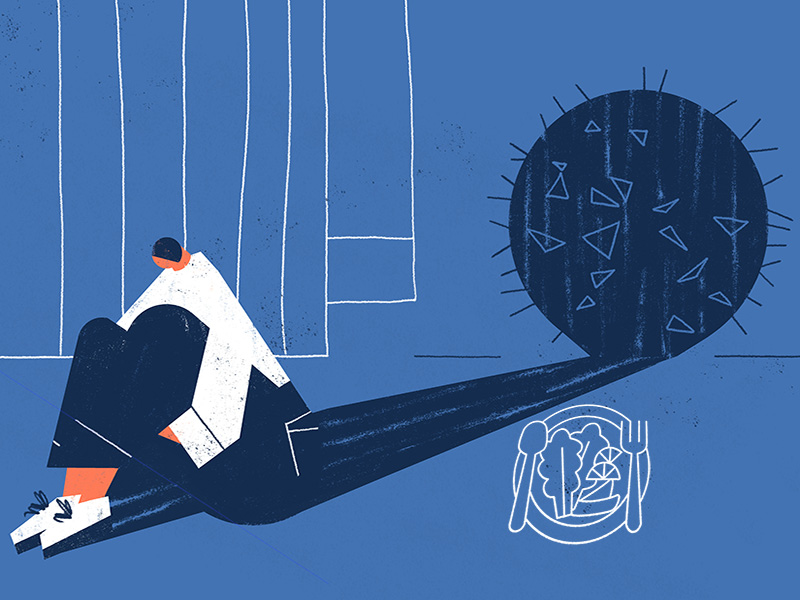

Treating the Narcissistic Injury of a Narcissist

What happens when a narcissist gets fired or loses an election? These are painful experiences for anyone. But for the narcissist, the primary need is to be the center of attention to support their fragile self-esteem. While healthier people are hurt by disappointment, the narcissist feels completely destabilized by it. They cannot easily get “back on the horse.” The narcissist cannot maintain their sense of worth and is dependent upon others for sustenance. If other people mirror the self-aggrandized self of the narcissist, they are included in the narcissist’s idealized bubble. Hence, people may report that their experience of a narcissist was that they were charming and flattering. But disagreement or criticism by another person, a Board of Directors, or an electorate is experienced as a narcissistic injury. Narcissistic injuries do not feel like hurt feelings, they feel like the narcissist’s very self is being attacked. The narcissist needs constant reassurance that they are special and can spin out of control and attack others venomously when feeling unappreciated. Patrick came to see me when he was fired from a large non-profit organization. He was referred to me by another patient, a close friend and who was concerned about his depression. Patrick arrived at the first session dressed in an expensive suit, although he was not working, and explained how unfairly he had been treated. But he wanted to come twice weekly to figure out what he may have contributed to the bad outcome at work. I concurred that it seemed that the process had been unfair and that coming twice weekly was a good idea. When the first session came toward the end, I explained to him that I charge for missed sessions. If I am not given at least 24 hours’ notice, the patient is charged. If I am given more notice, I offer a make-up time, but if the patient does not take the make-up, I charge for the session. I also explained that I give the patient a bill at the end of the month and expect payment the following week in the session. (This was before the coronavirus pandemic!) Patrick said he would not pay for missed sessions twice in a week—only one at most. “There is no way I can do that. What if I have to miss two sessions in a week?” he scoffed. I knew from the referring patient that he had been paid a salary of a million dollars per year and was collecting severance pay. His resistance to paying for missed sessions was not due to financial considerations. It was clear to me that Patrick needed to feel special. He refused to follow my rules because they did not suit him. This was the first diagnostic sign to me that Patrick might have a narcissistic personality. I could have insisted on my terms, but he would not have started the treatment. I decided to accept his modification. During the first month, Patrick vacillated between remorse about some of the decisions he had made before getting fired and rage at the board of directors for accusing him of making bad decisions. Each time I thought he expressed some remorse, he immediately became defensive and expressed contempt for the board. Clients with narcissistic personalities try to build a positively valued sense of self on the illusion of not having any failings. The admission of any wrongdoing exposes unacceptable shame. When the end of the month came, I handed Patrick his bill. He did not give me a check the following week or the week after. I brought up the fact that he had not paid me. He said that he gave the bill to his accountant, and it should be in the mail. I explained that Patrick needed to pay me directly in the session because payment was part of therapy and that the payment was late, but I could not analyze his accountant. “That’s ridiculous!” Patrick exclaimed. “I’ve never heard of such a thing! My accountant pays all my bills.” “I am not Con Edison or a credit card company. I am a psychoanalyst, and part of the therapy involves you paying me directly when I give you the bill.” Patrick laughed. Then he said, “That’s really not convenient for me. I prefer my accountant pay my bills.” “I understand that,” I said. “But that is not acceptable in therapy.” Patrick got up and left the office. I was not sure if he would come back, but he did. “I called my accountant, and she was late in sending you the check.” He handed me the check. “Thank you,” I said. “I don’t know how I will remember to carry my check book all the time…,” he muttered. “You don’t need to carry it all the time, only the session after I give you the bill,” I said. He chortled. “Can you tell me what you’re feeling?” I asked. “I’m annoyed. That’s what I’m feeling. I think you’re making a big deal out of nothing,” he said. “I want to talk about what happened to me and how to get over it, and you keep talking about your damn bill.” “You sound angry.” “I’m not angry. I’m just annoyed that you’re wasting my time on this,” he said. “You’re the one who’s angry because I don’t want to follow your rule.” Narcissistic patients typically idealize or devalue the therapist. It was clear that this patient was going to devalue me. He was trying to maintain his self-esteem and avoid feeling the shame resulting from having been fired. He was projecting his sense of defectiveness onto me. But it was going to be difficult for me to tolerate being devalued. Patrick was struggling with trying to admit some of his mistakes in judgement while he was CEO while maintaining his fragile sense of self. If I concurred in any visible way each time he began to explore an error in judgement, he accused me of blaming him and not helping him move forward. I was careful to stay silent and not show any signs of concurring when he admitted a mistake. But he could not contain the conflict; he kept projecting one side of it onto me. I felt drained and hopeless after sessions in which he blamed me for criticizing him and insisted I was not listening or helping. A colleague pointed out that Patrick was still coming to sessions, so he must have an attachment to me and feel I was helping him. Perhaps, my colleague suggested, his narcissism will not allow him to feel helped because that would shake his self-esteem. It took a while for me to fully take in that insight, but once I did, I was more able to stay connected to Patrick by imagining I was in a playground watching a little boy on a see-saw, teeter-tottering between shame and blame, the core of narcissism. The more I was able to stay removed from it, the more Patrick was able to share regrets with me and tolerate them. After 18 months, Patrick got another high-status job that restored his sense of self-worth. He left treatment still claiming that my payment rules were too rigid. He was going to find another therapist who would accept payment from his accountant and understand him better. At first, I felt defeated, then sad that we were not able to get further. Now I feel that maybe he will eventually recognize the important work we did in his transition period between jobs.

Introducing Grief: How My Clients and I Have Embraced the Exploration of Loss

An Unexpected Loss

A few years ago, while working as a clinical social worker at a community mental health center, I was asked to start a grief group at the clinic. My supervisor gave me a copy of Shneidman’s Death: Current Perspectives, which I took notes on with reverence and intention. I learned about the concepts of primary and secondary losses. I considered the sociocultural construction of loss and its many manifestations. I even began to think about my own losses, and the many ways that I might be trying to lend voice to them, both in the therapy room and through the very identity I had chosen as a helping professional.

A few weeks after I began my research on grief, I experienced a sudden and unexpected loss. Just before meeting with a supervisor, I received a voicemail message from the neighbor of Chester, one of my closest friends. “Stephen, can you call me? I noticed that Chester hasn’t picked up his newspapers from the front step in a few days. I know you have a key, so I thought you may want to go check on him.” My dear friend Chester was an older man who lived alone and was a voracious reader. And “to anyone who knew Chester well, a report of piled-up newspapers was understandably unsettling”. So I left work early, raced home on my bicycle, cut through the little one-way streets in our neighborhood, and unlocked his front door. Fearing the worst, I walked into the blaring of the local NPR radio station. Odd. I climbed the creaky staircase and surveyed the hallway, my heart sinking more deeply as I entered each empty room. I found my dear friend in his bed, dead, most likely due to complications from diabetes and poor diet. In the days that followed, I helped to plan his funeral, I wrote and delivered his eulogy, and two days later, I boarded an airplane with my love, Rebecca, for a long-awaited two-week trip to Amsterdam.

I was exhausted during the trip, still caught off guard by, and unable to reckon with, the loss of Chester. In light of the impact of his death, I realized that I would not be able to go forward with the plan for the grief group at the clinic. My supervisor was supportive and understanding. And although I never started the group, the coincidence of exploring grief professionally while experiencing it personally was formative for me. And it was this uncanny parallel process that solidified my clinical interest in grief and loss. In recent times, still relatively early in my clinical career, I have devoted myself more fully to developing my own perspectives on the use of grief and loss in the therapy room. From what I have seen so far, just the mere introduction of the words “grief” and “loss” can serve as a catalyst for client self-examination and positive therapeutic change.

Grief is in the Room

Consider the following tales of loss. Elizabeth, a woman in her mid-thirties, has an obsessional fear that her beloved dog, Daisy, will die, and questions whether she could justify continuing to live following the dog’s death. Richard, a man in his late twenties, harbors the shame of a disjointed and unfulfilling collegiate career that was lost to debilitating depression. He develops a subsequent, chronic fear of mis-stepping in both his professional path and in life in general. Finally, Melissa, also in her late twenties, enjoys a budding acting career; however, the exhilaration that accompanies this new journey serves as a constant reminder of her early years sacrificed to the oppressive agenda of the religious cult in which she was raised. These are the experiences of some of my clients, who have collectively spoken to the issues of loss and grief in their various forms. As I began working with each of them, I soon recognized how the stress and pain of loss was woven into the fabric of their daily lives. Over time, I came to see these stories as reflective of significant, and sometimes traumatic, grief.

These clients had one thing in common—none of them was seeking grief counseling. Each client sought therapy for a particular problem, such as depression, OCD, or general anxiety, yet narratives of grief and loss gradually emerged as they shared seemingly peripheral issues or stories. I began to see many of my clients’ experiences as forms of what has often been called complicated grief.

Complicated grief, also sometimes called persistent grief, is described in the DSM-5 diagnosis of complex persistent bereavement disorder (CPBD). This type of grief is characterized by chronic rumination, persistent challenges to accepting the loss one has experienced, and sometimes difficulty trusting others following the loss. I would like to note that before the DSM-5 was published, members of its advisory task force worked to address issues related to conceptualizing persistent grief as part of a disordered condition. The resulting diagnosis of CPBD was eventually placed in the chapter for diagnoses requiring further study. In keeping with the ambiguity and potential pitfalls related to the assessment and labeling of grief, I try to remain flexible when talking about grief as “complicated.” I also try to practice active curiosity by examining my clients’ personal cultural beliefs about grief and loss.

Often, when a client of mine identifies with the experience of complicated grief, they endorse persistent feelings of loss without a corresponding process of connection to life beyond the loss. Moreover, they often express a chronic doubt in the possibility of meaningful discovery during examination of their grief. Complicated grief often drives a person to fixate on certain associations of loss and to avoid other associations, which can make it difficult for one to do the kind of thoughtful narrative work inherent in the grief process. Elizabeth, for instance, spent so much time fixating on her dog Daisy’s potential medical issues and feeling guilty that she was often unable to connect and be in the moment when they were together. Such complicated grief may leave a person feeling anxious, empty, or hopeless about various aspects of life. This, in turn, often leads to existential blockages, because the grief-stricken person feels unable to engage with the meaning of life in one way or another. This makes me think of Richard, who felt so preoccupied with the idea of approaching life “the right way” that he often found his relationship with his values and his deeper motivations in life to be elusive. Exploring them in session often felt pointless and painful.

Identifying and understanding stories of loss and grief have been difficult processes for me, as loss often carries with it complex ambiguities with respect to the size and duration of its consequences. A client might think the following: “Was something, in fact, lost?” Elizabeth had difficulty understanding how she could be constantly mourning her dog Daisy while she was still alive. A client may also ask if they are destined to never regain or recover from that which was lost, as did Richard following his traumatic college experience. Finally, one may wonder, “What is the right way to feel about my loss?” Melissa often asked how she should feel about the loss of her religion and the accompanying metaphysical disorientation she experienced. The above questions can feel especially complicated when we consider clients’ attachments to abstract things such as identity, whose definitions can be less convenient to identify or communicate in therapy than, say, the death of a loved one. Regardless of any challenges, I have tried to see loss and grief in my clients’ stories and to talk about the impact of losses with my clients. In doing so, I’ve found that grief work is a deeply meaningful, effective, and surprisingly welcome therapeutic endeavor.

Recognizing My Grief Blindspot

Because the characteristics of complicated grief may coincide with the symptoms of OCD, generalized anxiety, PTSD, and major depression, at times I have initially failed to identify and appreciate grief as an experience in its own right. But the overlap between diagnostic features is not the only reason I have been slow on the draw. In 2011, I took my first mental health job as a residential counselor in a behavioral, CBT-focused residential unit for people with OCD. Treatment on the highly respected unit focused on the “here and now” of clients’ experiences, and I learned to deemphasize the narratives of grief and loss in treating patients. I was trained, tacitly, to see the nature of patients’ activating triggers as relatively unimportant, and I remained incurious about the source or meaning of patients’ obsessions and compulsions, including any possible connection to grief or loss. After a year or so, and after many in-depth discussions with patients, I became bothered by the lack of attention paid to the grief that many of the patients seemed to carry. I was frustrated with the fact that our treatment, which was evidence-based and internationally known, seemed to be limited to a focus on concrete OCD triggers and behavioral responses.

A colleague at the OCD treatment program once said, “”If we only treated OCD, this would be the easiest job in the world.”” His point was that our patients often came in the door with many co-occurring forms of distress and pathology, which made it difficult to concentrate optimally on the OCD symptoms. But the reality was that we did only treat the OCD. Meanwhile, many patients, in my observation, carried complex grief stories related to their illnesses. These stories, when expressed during private check-ins, or after dinners during quiet time, often reflected experiences of stigma and alienation, as well as deep feelings of inadequacy. Patients’ personal narratives tended to give voice to an experience so familiar to those with both OCD and chronic grief—the feeling of being stuck. For many patients, the longstanding grief, the stuck feeling, reflected a perceived lack of momentum in their lives, along with understandable challenges in accepting the way things had turned out for them. Their narratives were often anchored by the belief that they were inherently dysfunctional. And whether in treatment or at home, the patients I worked with often found little opportunity to confront their own grief narratives and to make meaning of the upsetting losses they experienced throughout their lives.

Grief and the Illuminating Power of Loss

Since I have begun working through a grief lens, I’ve absorbed two valuable pieces of wisdom: (1) a single event of loss almost always contains multiple losses, and (2) a current loss often triggers past losses. Recently, a client in her 40s spoke frankly to me about “feeling like a loser” when reflecting on her decision, ten years ago, to say no to a wedding proposal of a friend. She maintained a close connection with that friend, and one day, while in the midst of a severe depression, that friend ended his life. After I spoke frankly with my client about the idea of grief and the significance of loss and explored these concepts with her, she led us to discussions of more internal, personal losses. In addition to grieving the death of her friend, she was left struggling with the notion that the past 10 years of her life had been lost. “Would I have children now?” she asked. “Would I have had beautiful memories associated with a partnership?” Her feelings of loss were further stoked by the presence of a power struggle and of a cultural conflict: “What if I had stood up to my parents, who wanted me to marry an Indian man?” she once asked me.

My client then began to mourn what was to come: the future life she feels she will never have. “I believe, Stephen, that I have lost the best years of my life,” she said to me during one session. Very quickly, our sessions broadened from talking about a primary loss (loss of her relationship to her friend), to some secondary losses (loss of identity as a married person, as a parent to children, as a person of culturally normative social development/achievement). While my client struggles with depression and some obsessional tendencies, her stories of grief and loss led us most reliably to some of the more meaningful reparative work in her life, and also appeared to increase her investment in the therapy. She attended sessions more regularly, appeared more thoughtful and creative in her reflections, and gave me more feedback. I’ve noticed an increase in therapeutic engagement with other clients who embraced grief and loss as well. Taken together, grief work has demonstrated to me its wonderful ability to help clients examine a broad spectrum of relationships and perspectives ranging from functional to existential.

Another interesting example of how one grief exposes another involves the case of Elizabeth. Initially, she shared chronic health anxiety concerning her dog, Daisy. Her anxiety manifested as obsessions related to Daisy’s getting sick and dying and compulsions aimed at assessing her health. It wasn’t until later on, after I had introduced the concept of grief, that she decided to focus on something that had previously been peripheral to our work: the story of her birth. Elizabeth had shared with me, a year prior, that she had a twin brother who died in childbirth. Later on, when Daisy experienced more serious health complications, Elizabeth explored the connection between her mother’s guilt over her brother’s death and her own subsequent lifelong attachment to health anxiety. More specifically, she began exploring her preoccupation with the health and welfare of her dog, whose relationship to her was getting crowded out every day by her obsessions and fears. An important question emerged in one session. It was a question that my client had written on a white board in her apartment and looked at periodically during the day: How can I survive after my dog dies? The question, she said, was very activating, and ultimately cut to the core of her grief. At this core seemed to be a strong element of survivor’s guilt that was a part of her birth story. Directly addressing the recurring theme of survivor’s guilt helped to disrupt the obsessions that had taken the place of real grief processing and meaning making. Elizabeth began to report a more authentic, self-compassionate exploration of the events of her birth as well as of her relationship with her family and with her beloved dog.

Final Thoughts on Grief, Love, and Loss

Far from confining them to the examination of a single relationship, grief work has allowed my clients to journey beyond the scope of the lost relationships in order to circle back to the self. In excavating the internal devastation, like old wreckage, this work has helped my clients examine their histories, their early attachments, their developmental phases, their defenses, and their cultural backgrounds. Thinking about loss has also made me a more sensitive therapist. I am more aware of my power to trigger feelings of loss in therapy. Once, when a client notified me of a sudden insurance change, I wrote them back, stating frankly that we might not be able to continue working together. In the next session, she expressed feelings of rejection, and questioned whether I cared that our relationship might end. When I reminded a client that I would soon be leaving the health center where we had worked together for two years, he became very upset, accusing me of being just another provider who was destined to abandon him. His reaction came after a couple of months of his knowing I was leaving, and of seemingly being well-adjusted to the idea.

Sometimes I feel the loss as well. Recently, after raising my session fee, I received feedback from a client. In addition to worrying if she could afford to continue seeing me, she reported being upset by a change in her perception of me as an egalitarian-minded therapist. “I thought you were for the people, Stephen,” she said. Ouch. That really threw me off. I rode my bicycle home after that session, upset that maybe she was right, that maybe I had in fact lost a piece of myself.

I want to end by touching on an idea that can at once be liberating and invalidating: that not all losses cause grief, and that even losses that cause tremendous grief can also provide relief, instill curiosity, and provide new opportunities for growth and connection. At times, I’ve worried that this sentiment reflects some of the toxic positivity and anti-grief attitudes that I see in modern day American, consumerist culture, and sometimes in evidence based, solution focused modalities. But the truth is, we have a responsibility to explore the many associations our clients, and we ourselves, have with loss.

When my friend Chester died, I felt I had lost a significant older male role model. But at the same time, his death brought about this sudden and unexpected sense of growth and preparedness that I hadn’t experienced before; it was a coming of age moment, albeit at 30 years old, that had me thinking of myself as more of an adult, maybe even more of a man. And when my client accused me of being money hungry, it was an opportunity to examine my relationship with the ethics and philosophy of value exchange in therapy. It was also an opportunity to question my attachment to an identity I sometimes feel obligated to occupy—that of the selfless helper. “What if I’m abandoning my beliefs, or acting selfishly? What if I’ve lost myself?” I asked.

In the end, I am better for asking these questions, as they have brought me to a more engaged and fulfilling, albeit uncertain, place in my practice. And I think all of the experiences outlined above, those of my clients and of my own, lead to an important reflection: that maybe it’s possible for loss to lead to connection, or reconnection, with something of value. Reflecting on grief and loss may bring us back to a purpose, an identity, or even a community. And maybe the experiences of loss and the grief we hold can help bring about a reintegration within ourselves. After all, it is often these new, and renewed, relationships with the self that we have been searching for all along.

Eating Disorders, Couples, and COVID-19

COVID-19 is a perfect storm for worsening eating disorders. It leaves people with a great deal of anxiety and uncertainty, too much time on their hands, too little support and treatment disruptions. It’s also terrible for couples. Even for the healthiest among us, spending too much time with a loved one is a wonderful way to forget about the reasons you love them. Small issues become big problems, and big problems begin to seem completely overwhelming.

Like what you are reading? For more stimulating stories, thought-provoking articles and new video announcements, sign up for our monthly newsletter.

So, as a therapist who specializes in helping couples impacted by eating disorders, I see that my clients are twice hit. Take, for example, Lyndon and Jamie (not real names, of course). Jamie has been in recovery from anorexia for the past year or so. But when COVID began, her work went virtual. As a fairly efficient employee, she completed her tasks in much less than the assigned time. And then she had a good amount of extra time to think…and worry.

Some of her worry centered on the same anxieties that plague us all. Will I get sick? Will my loved ones get sick? Will we be able to come together as a society to do the things we need to get over this calamity? Some of her worry was an echo of old ways of thinking about herself. Jamie started wondering if, with all this time on her hands, she was being productive “enough.” This led to gut-level doubt about being “good enough”—a question that, for her, often disguised itself as panic about being “thin enough.”

Simultaneously, her treatment team had all gone virtual. She was able to talk to her therapist, but she couldn’t sit in the room and physically feel support and care surrounding her. There was no chance for “limbic resonance.” She was upfront about what she was going through and talked through her fears, but she felt distant and disconnected from her therapist. Her dietician was also no longer able to weigh her in person regularly, and so she had to go for longer periods of time without the “reassurance” that she was not gaining a significant amount.

Without access to the gym classes she regularly attended, Jamie perceived herself as less active than before (although she wasn’t). And so, she started eating “just a little bit less.” And then less, and then less, as the feeling of safety she had been seeking continued to elude her.

At the same time, Lyndon was also dealing with an escalation in anxiety—at the very same moment that he was losing access to his typical ways of dealing with it. His routine was disrupted as he moved to part-time telework. Financial stress mounted as his service-based job was impacted by the virus. He was becoming depressed as he had less structure to his days, and isolated as he was unable to visit friends and family. Worst of all, Jaime—his most important support—was becoming increasingly preoccupied and unavailable.

Because they were cooped up together 24/7, Jamie’s food choices were on full display to Lyndon. He noticed her eating less and working out more. He felt her absence as she pulled away emotionally. Because of the strain he was also under, he dealt with these changes about as poorly as you would expect. When the couple entered therapy, Lyndon was asking Jamie to report all her meal choices to him. It felt impossible for him not to comment as she pushed food around on her plate. He had considered asking her to weigh herself daily to ensure she wasn’t losing too much weight, but luckily had stopped short of that point and gotten himself and Jamie into couples’ therapy.

The couple had entered a fairly typical pattern—Lyndon responded to the eating disorder in some ways that made it worse, and the worsening eating disorder made him double down on these responses. Jamie’s restriction had also come to be representative for Lyndon—a stand-in for all the things in his life he couldn’t control. He felt that if he could just get Jamie to eat better, everything would be okay. But he couldn’t, and it drove him crazy.

Even with all of this going on, the practicalities of COVID were the very first thing we dealt with in couples’ therapy. We identified areas of Jamie and Lyndon’s apartment that would become “private spaces,” where they each could retreat from the relationship. The space was small, so Lyndon ended up taking time for himself on the balcony, while Jamie took long baths. This helped each member of the couple to regulate themselves emotionally. With some breathing space, they were no longer perpetually reigniting conflict.

Then we opened space to talk about the deep anxieties that the couple was dealing with. Jamie was worried that her parents, in a hot zone for the virus, could contract it. When she started talking about these concerns with Lyndon, he was able to contextualize her eating behaviors and understand that they were about fear and uncertainty, not anger and defiance.

With this understanding, Lyndon softened. He was able to acknowledge that his identity was too wrapped up in his professional success, which the fallout from COVID-19 had pumped the brakes on. He was able to notice, and to share with Jamie, how out of control and alone he felt. With support, Lyndon became much better able to sit with his vulnerability. This made him able to sit with Jamie’s vulnerability, too, and ask her about her feelings and experiences when he noticed her having difficulty with food. Feeling more supported at home and much closer with Lyndon, as time went by Jamie felt strong enough to challenge herself to eat more normally.

***

I offer this snapshot of treatment to illustrate the ways in which successful eating disorders treatment often have little to actually do with food. In this instance, food and lack of food represented control and lack of control, safety and lack of safety. Against the backdrop of COVID-19, these fears make a great deal of sense. This treatment also capitalized on the existing attachment relationship between Jamie and Lyndon. Allowing space for the existential and practical vulnerabilities that we are all addressing right now gave them each room to connect with their own humanity, and with each other.