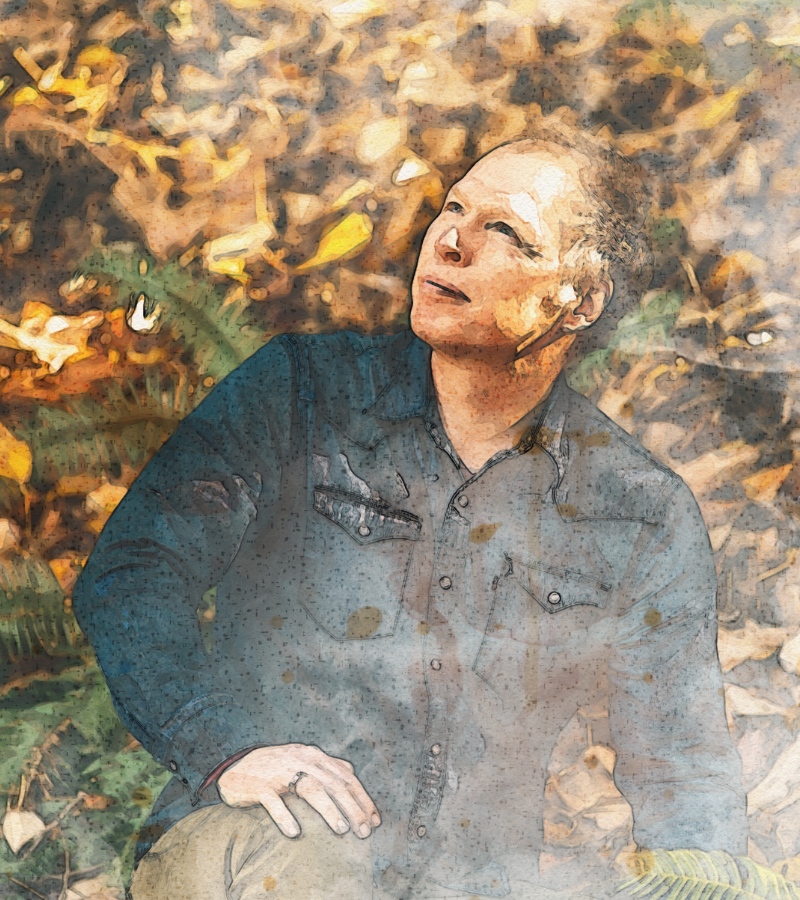
Advice for Young Therapists: A Long View

I am in my 70’s and still working full time as a psychotherapist. Psychotherapy has been my career, and never simply a job. It represents who I am and has never simply been a way of making money.

Like what you are reading? For more stimulating stories, thought-provoking articles and new video announcements, sign up for our monthly newsletter.

The world in general is always confounding, and the field of psychotherapy can be perplexing as well. There are so many schools of thought, treatment approaches, new ways of practicing therapy, and the potential of radically new types of intervention on the cultural horizon. I have become increasingly interested in how beginning clinicians feel that they fit in, and where and how they develop their personal and professional skills.

A Veteran Therapists Offers Wisdom to a New Generation

As I approach the late phase of my career, I feel a desire to share viewpoints and learned lessons with beginning therapists, regardless of their age. As a veteran therapist, I think it is important to pass the baton, and share key concepts that might clear some of the potentially confusing path forward.

As a therapist, I have strived to help my clients strengthen and broaden the range and the quality of their personal relationships and their active involvement in the world. Too often in therapy, the arrow of attention points inward on the individual, assisting them to forge their own way through the challenges of life. While that is often a right and necessary focus, it is not a complete view of the role, or the potential, of therapy.

I have learned to help clients focus that arrow outward towards relationships, skill acquisition, the assuming of roles, and building up the clients’ productivity and sense of purpose. It has never been solely important for me to help the client be better within, but also better with others, and better able to effectively contribute themselves to the wider world.

In writing this, I hope that early-career therapists participate in the development of psychotherapy, not simply in their own practice. Learning new techniques along the way is certainly important, but I have always valued the importance of filtering their value through tried-and-true perspectives and approaches.

I can’t overstate the important contributions of three particular therapists. Carl Rogers (On Becoming a Person: A Therapists’ View of Psychotherapy), Viktor Frankl (Man’s Search for Meaning), and Erik Erikson (Life Cycle Completed) have provided me with a firm foundation for a therapy career, and a yardstick against which to measure the value of newly emerging ideas.

Carl Jung suggested the therapist should learn everything, then forget it when they sit down with the client, but that learning should not be limited to the theories and history and techniques of psychotherapy. I have come to appreciate the importance of mythology, religions, folklore, theater, poetry, and literature — each of which have become resources in my personal and professional development. Absorbing the wider context of art and culture through history has helped me to view the client and their relationships in new ways. Yes, the dynamics of the psyche are important, but so too is the client’s (and therapist’s) place in the dynamics of a long and vibrant history of human culture and creativity.

The great 13th century Italian poet Dante, wrote the three-volume masterpiece “The Divine Comedy: Inferno, Purgatorio, and Paradiso.” At the beginning of the first volume, Dante becomes lost in a dark wood, midway through life’s journey. He was guided and tutored in his subsequent trek by the ancient Roman poet, Virgil, who is said to have represented human reason.

Lost in a dark wood during one’s journey. Talk about a universal experience! Life can be so complex, and so difficult at times — both client and clinician can find themselves lost on their respective journeys. Many of my clients have come to me for guidance and tutoring in their journey through the thicket of their hardships.

I have come to seek wisdom in my work as a therapist, as someone able to blend art and reason in my effort to accompany others through the descents and ascents of life. As a psychotherapist, I aim to guide and educate others through their darkest troubles, and towards recovery, and/or attainment of their fullest capacity for love and a purposeful place in this wide world.

Questions for Thought and Discussion

What impact does this author's words have on you as a person and as a clinician?

What have you learned thus far in your professional journey that you might want to pass on to others?

In looking back, what life's lessons have you brought into the therapy space?  

Avoiding Burnout Traps: Managing the Conflict between Empathy and Exhaustion

“The best people possess a feeling for beauty, the courage to take risks, the discipline to tell the truth, the capacity for sacrifice. Ironically, their virtues make them vulnerable; they are often wounded, sometimes destroyed.” – Ernest Hemmingway

As a beginning therapist, my first five years were spent in uncomfortable places. Maximum security facilities, county crisis centers, and emergency rooms. In these environments, I could feel stress in the air like it was coastal humidity, and chaos was the rule rather than the exception. I seemed to meet two types of therapists in these places. There were those at the beginning of their careers and those who were nearing their end. The clinicians in their middle chapters of their work had often left for administrative roles and private practices.

I found the new and veteran therapists to be different in some noticeable ways. The new therapists were often energetic and inspired. They were personally invested, and despite their lack of experience, they seemed to help clients make significant improvements. They didn’t make much money, but they didn’t mind having roommates or driving economical cars. They had a cause and that was more than enough.

The veteran therapists were less excitable. They were wise and calm, and they had witnessed how idealism can lead to painful lessons in therapy. Sometimes they were rough around the edges, but because they had the benefit of making a therapist’s salary for many decades, they drove slightly newer economical cars. Their vehicles had fewer miles, powertrain, and bumper to bumper warranties. The big leagues.

I had only been a therapist for a few years, but I quickly found myself losing my passion. I wasn’t sure I would grow into a seasoned therapist because I wasn’t sure I would remain a therapist for much longer. To manage my exhaustion and stress, my days became bookended between caffeine in the morning and alcohol at night. My sense of humor darkened, my wife worried, and my friends pulled me aside to express their concerns. I was changing, and those around me were whispering about it.

What I believed about therapy was changing, too. I started to believe that my clients who improved would have done so without my help. With my clients who didn’t make improvements, I started believing they simply couldn’t change. I was once a true believer, but I was becoming a skeptic. I was losing my faith in therapy.

I didn’t notice I was changing while it was happening. The process was gradual, and it didn’t have an obvious turning point. It felt like a current had pulled me down the shoreline and I lost track of my towel which was further up the beach. I had become someone different, and it wasn’t someone I wanted to be. I spent months asking myself how this transformation occurred, and eventually, I came back with my answers.

The Empathic Personality

In graduate school, I was taught that empathy was a vital part of therapy. I was told to pack my bags, leave myself behind, and join my clients behind their eyes. To be a therapist was to commute to the deepest feelings and perceptions of another. Empathy was interpersonal travel, and to be a therapist meant holding a passport that permitted me into deeply private conversations. It got me through customs.

At that time, I thought about empathy in the way I thought about kindness. I wanted to exhibit more empathy and kindness for the people in my life. Clients or not! These virtues seemed pure and uncomplicated, and it was hard to imagine an overabundance of either. But eventually, I started thinking about empathy as something more complicated than kindness. This tendency to be aware of others and to travel into their worlds wasn’t simply a virtue, but it was a temperamental characteristic. Unlike kindness, this personal characteristic came with risks.

It was this new understanding of empathy’s risks that unlocked the answers about what happened to me. It helped me understand why I transformed from an energetic therapist into a calloused one. It helped me understand why I hated my economical car.

I think that empathy can be separated into two different categories: there’s unmanaged empathy and managed empathy. Here’s how I think about the difference. When my empathy is unmanaged, I can join into the pain of others, but I can’t disconnect from it. This type of empathy has one step and so becoming glued to the suffering of others becomes inevitable. Alternatively, when my empathy is managed, I can join in the pain of others and then uncouple from it. Managing my empathy has been a two-step process.

My therapeutic training only focused on joining into suffering, but I was never taught how to uncouple from it. I never made the distinction between unmanaged and managed empathy. To be fair to my counseling educators, it’s not realistic to expect a seminar entitled, “Uncoupling from the Suffering of your Clients.” But because I didn’t learn to separate from suffering effectively, I relied on my unmanaged empathy. Joining into the pain of others had always come intuitively, and so I simply did with clients what I had always done in my personal life. This unmanaged empathy flowed by the gallon, but it eventually became a stream, and then it dripped and dried bare.

The Interpersonal Dynamics of Burnout

When my classmates and I studied to become counselors, we shared universal experiences. Nighttime classes, unrelated daytime jobs, and increased coffee consumption. At some point, my classmates and I purchased our first therapist uniforms. Horn-rimmed glasses for some and shawls for others. Some bought cardigans. It was Carl Rogers couture.

During this time, those in my personal life expressed an interest in what I was learning. I was asked for my perspective more often and I eventually became more comfortable giving it. People changed towards me, and I changed towards them. I gradually became a therapist in my own mind and in the minds of others. These changes in my social world weren’t always positive. I answered late-night phone calls when help was needed. I was cornered into awkward conversations at parties. During an argument with a friend, I was told, “You should know better — you’re a therapist.” I wasn’t yet, but fine. Checkmate.

After I finished my graduate program, I found my first clinical job. My empathic temperament had previously led me to help those in my personal life, but I was suddenly assisting clients, too. While it was once possible to have a private life filled with people I hoped to help, the new empathic demands of therapy led to working with suffering on all sides. There was no place to separate from suffering and I became a 360-degree giver. This was the first trap that led to unmanaged empathy and subsequent exhaustion. Mother Theresa could do it, but I couldn’t turn my life into Calcutta.

To practice managed empathy, I could no longer remain in the helper-role in my personal relationships. While my relationships with clients were characterized by one-way assistance, my personal relationships couldn’t remain this way. Most of the time, a simple conversation changed my one-sided relationships into two-sided ones, but occasionally more was required. Sometimes I had to use dials and levers. This was how I disconnected from the suffering of others, practiced managed empathy, and escaped this unmanaged empathy trap.

Restructuring the Interpersonal Dynamics of Burnout

I’ve never liked the word boundaries. The word has always seemed forceful and rigid, and to “set boundaries,” always sounded formal and severe. For me, this made the prospect of establishing limits less approachable. But the space between myself and others did need to be refereed, because it had become flooded with unrealistic and demanding people. It seemed that like nature, dysfunction abhorred a vacuum.

Rather than “setting boundaries,” I started thinking about using dials and levers. Here’s how this worked. When a relationship was one-sided, but the relationship was too important for me to end, I set the relationship on a dial. I reduced my involvement in the relationship by lengthening my distance in degrees. I took steps backward until I reached a comfortable interval. Putting a one-sided relationship at a greater distance made these relationships more sustainable. I could help when I was around, but I wasn’t around too much. But other relationships exhausted me regardless of the distance that I created. When I attempted to leave the helper role behind, some people didn’t go without a fight. Pro bono therapy was a hell of a drug. In these situations, I used levers to end the relationships entirely. I moved the lever from the “on” position to the “off” position. While the dials worked in degrees, the levers worked in absolutes.

I found distance by degrees to be preferable to absolutes, and eventually I was able to regain some measure of control in my relationships. When I changed my one-sided relationships into reciprocal ones, I could step back from being a 360-degree giver. Once I implemented dials and levers, this created newfound open space in my personal relationships, and in this space, I could practice the second step of managed empathy. I could uncouple from suffering there.

The Intrapersonal Dynamics of Burnout

My public roles and my private values have always been an important part of understanding myself. Part of my sense of self comes from being a spouse, father, brother, and the professional role that I play. The other part of my selfhood comes from the values that I’ve privately held dear. But problems emerged for me when there was a poor balance between the public roles I played and the private values I held, and this was a setup for the second unmanaged empathy trap.

In my earlier stages of counselor development, I viewed becoming a therapist as too central to who I was. I over-identified with my therapeutic role, and I lost part of myself. To understand how this occurred, I started noticing professionals who went through similar transformations. I also noticed the professionals who didn’t.

What I learned is when a public role elicits some amount of societal reinforcement, there’s a tendency to over-identify with it. Take the surgeon, for example. Most surgeons don’t think being a surgeon is something they simply do for work, but instead, being a surgeon is a central component of their identity. This is also true for professional athletes, executives, politicians, and lawyers. But it’s not true for those who stock vending machines or drive garbage trucks. These jobs don’t come with societal applause. When talking about their work, these folks often say things like, “It pays the bills.” The job serves a purpose, but it’s not the most important thing about them. They leave it off the dating profile.

While being a therapist doesn’t elicit the same societal reinforcement as being a surgeon, I think it comes with similar risks. It was often difficult to leave my therapeutic identity in the chair. I was a therapist when I drove into work, and I was a therapist when I left.

I think I underwent a charismatic therapeutic conversion. My identity had become consumed by my new public role, and my transformation into the therapeutic persona was too thorough. I became a therapist in every area. I read books about therapy and talked about therapy with my therapist friends. I attended therapy conferences and built my community around therapy. I even started talking in a therapeutic dialect: “reframe” this and “normalize” that. I became a born-again clinician. It wasn’t a good look for me.

When I allowed myself to be overtaken by my therapeutic role, I stepped into this second unmanaged empathy trap. I was always a therapist behind my eyes, and so I was never without clients. This meant there were fewer places in my life to separate from suffering. Luckily, there was a way out. I didn’t need to accept that my personal identity would be consumed by my public role, but instead I could learn to do something requiring just a bit less personal investment.

Restructuring the Intrapersonal Dynamics of Burnout

It was those who worked less emapthically-demanding jobs who taught me how to escape this trap. Like them, I learned to create space between my professional and personal identity by prioritizing my private life. The person who drove into work became different from the person who drove away.

This meant treating therapy more like functional work and less like a totalizing identity. To develop a sustainable therapeutic career, I needed to nurture and protect my non-therapeutic self. I needed to cultivate an identity that rested more upon my private values and not entirely upon my vocational role.

In order to do this, I adopted new endeavors that weren’t remotely connected to therapy. I also reconnected with old friends. These old relationships helped me remember who I was before I was a therapist. I didn’t use words like “schema” or “metacognition” back then. But in order to avoid the second unmanaged empathy trap, I had to avoid the charismatic therapeutic conversion. I had to cultivate a private life where my non-therapeutic self was expressed. It was when I allowed the part of myself that was disconnected from my therapy to engage the world around me that I could separate from suffering more easily. I could practice managed empathy there.

The Attachment Dynamics of Burnout

It seems that within human relationships there’s a spectrum of give and take. On one side of the spectrum, I’ve met the habitual givers. These folks are highly empathic and accommodating. As moons orbit planets, they orbit the lives of others. Orbiters rotate around the people in their lives and keenly discern and meet their needs. They’re natural satellites.

On the other side of the spectrum, I’ve met the habitual takers. It seems that these folks expect to be accommodated. They’re unaware or disinterested in the feelings of others. They often find it upsetting when others don’t adjust to them. They expect to be orbited. And of course, most of the people I’ve known fall somewhere in between these two extremes.

This spectrum became relevant to my eventual exhaustion because, like most therapists, I found myself closer to the cooperative patterns within the orbiters. The ability to assess and meet the needs of others had always come naturally, and so becoming a therapist was a perfect fit. Perhaps without knowing it, it was my cooperative predisposition that guided my professional direction.

Eventually, problems emerged because of this strong cooperative urge. When decisions were made, I often found myself deferring to the preferences of others. Instead of imagining what I might enjoy, I would comply to connect. When people asked about where to go for dinner, I might say, “Wherever, I’m easy.” When asked if I needed anything from the store, I would respond reassuringly, “No, I’m okay with whatever you pick up.” I was engaged in need-mirroring. I think of need-mirroring as the reflexive matching of the preferences of others, and while it increases cooperation in relationships, it also leads to a life that’s directed by others.

With my interactions often characterized by deference, I lost track of my own desires. My difficulties with a self-directed life became even more concerning when I tried to listen inward for my own preferences, but no inner voice responded. I could no longer locate what I sincerely wanted. It seemed that desire itself worked like a muscle, and because I hadn’t listened to myself for an extended period, this muscle eroded. I had undergone appetite atrophy.

Becoming locked into this orbiting orientation was the third unmanaged empathy trap that led to my exhaustion. It became difficult to separate from suffering when I was overly attuned to the perceptions and desires of others. While rotating around my clients was essential to my therapeutic work, when I orbited those in my personal life, it became difficult to know what I needed. But like the first two traps, there was a solution that helped me practice managed empathy. This strategy helped me restrengthen the muscle of desire, it separated me from the needs of others, and I became able to listen to myself once again.

Restructuring the Attachment Dynamics of Burnout

The path to overcome my orbiting style was to express my needs more regularly within my relationships. Prioritizing myself more allowed me to move closer towards the middle of the spectrum of give and take, and this restored the balance within my interactions.

There were problems at first. I had practiced need-mirroring for too long, and when I tried to track down my desires, I couldn’t find them. So, I tried something simple. Instead of searching for my needs, I invented them. I practiced having a preference. When I got it right, it sounded something like this:

Them: “Where do you want to go to dinner?”
Me: “Eh. I don’t care, – you know what, I feel like Mexican food.”  

When I was halfway through need-mirroring, I tried to express an invented preference, instead:

Them: “I’m headed to the store. Do you need something?”
Me: “I’m good, thanks. On second thought, can you pick up some gum?”  

My objective wasn’t to detect and convey my deepest desires, but to practice expressing any preference at all. This was effective because the strength of my cooperative impulse had anesthetized my desires, and to lift the anesthesia, I needed to increase my comfort with being less cooperative. When I practiced expressing an invented need, I was creating a moment where I stood apart from the desires of others. I was practicing a small act of non-cooperation. Slowly, as my comfort within this non-cooperative space grew, my desires eventually reawakened, and I was able to express these desires within my relationships.

It’s a strength to orbit clients in therapy because this can help me perceive unspoken needs and adjust on their behalf. Yet when this tendency ran free in my personal life, I lost the ability to direct myself, and my exhaustion knocked at the door. But when I practiced having a preference and become more comfortable standing apart from the needs of others, my desires could be once again detected. This created separation from the suffering of others and a return to managed empathy.

***

While I once thought that empathy was an uncomplicated force for good, my exhaustion led me to conclude otherwise. Empathy is something that’s effective when guided, but it’s harmful when it’s not. Empathy is like water. It’s beautiful in the river, but not in the flood. However, if the traps that lead to unmanaged empathy can be understood and managed, the wisdom of the seasoned therapist can be cultivated without losing the spirit of the new one. That has and will forever be my goal.

Psychotherapy Status Report: Past Achievements/Current Failures/Future Disruptions

A Very Brief History of Psychotherapy

Depending upon how you look at it, psychotherapy is among the oldest of professions — or one of the newest. Lacking effective active treatments, doctors always got by with some combination of supportive psychotherapy, magic, and placebo effect.

The Shaman in prehistoric times was the first psychotherapist — diagnosing and treating the mental and physical ills of tribal members by negotiating with the spirits on their behalf. In settled agricultural societies, priests assumed the same role, though the negotiation was with gods, not spirits. Then came the philosophers.

All the basic principles of CBT were laid out by the Epicurean and Stoic philosophers in ancient Greece and Rome. The Arab world, one thousand years ago, was the first to have a separate profession of psychiatry, whose practitioners developed techniques of psychotherapy quite similar to how we practice today. And Pinel substituted psychotherapy for chains in caring for the mentally ill in Paris 225 years ago.

Modern psychotherapy began with the few practitioners of psychoanalysis in Vienna 140 years ago — but psychotherapy quickly became a growth industry, both in the number of practitioners and in the wide variety of techniques they used in their practice.

One hundred years ago, there were very few people who would label themselves psychotherapists; now there are almost 200,000 in the US. About 60% hold a master’s degree, 40% are PhD’s; 70% are female; and average age is 45. Seventy percent of therapists provide mostly individual therapy; 30% also work with couples and/or families. Therapists in private practice usually see 20-25 patients a week; charge anywhere between $75-$200 for sessions that last 50 minutes; and on average, see patients for anywhere between1 and 12 sessions. The average wait time for a first appointment is several weeks.   

CBT is the most popular form of treatment followed by psychodynamic approaches. Two thirds of therapists feel deep satisfaction in their work, but half report having felt burned out at times during their careers. The US Bureau of Labor Statistics estimates that the number of therapists will increase by about 20% by 2030. You can find many more interesting statistics characterizing therapists and therapies here

My purpose in writing this piece is to provide my personal, and admittedly biased, view of the major achievements and major failures of our psychotherapy enterprise — and to provide some guesses of what likely future directions will be.

Five Major Achievements in Psychotherapy

The Therapeutic Relationship

The greatest paper in the history of psychotherapy was among the first — Saul Rosenzweig’s 1936 “Some Implicit Common Factors in Diverse Methods of Psychotherapy.” Rosenzweig correctly predicted that the most robust finding in all the later extensive psychotherapy research would be that “everybody has won, and all must have prizes.” His “Dodo Bird verdict” (borrowed from Carroll’s “Alice in Wonderland”) asserted that most comparisons of the efficacy of various forms of psychotherapy result in tie scores. Although therapies may differ greatly in theory and technique, the greatest contributors to good outcomes are the factors all have in common; the therapeutic relationship, patient and therapist positive expectations, healing rituals, catharsis, and regression to the mean with the passage of time. The success of any given form of therapy is not proof of its specific theories or practice, because so much of the variance comes from what is shared across therapies, not what is particular to each. This is not to deny that specific techniques have specific value for specific indications, but it does focus therapist attention on getting right the more general factors that cut across therapies. Rosenzweig guessed the Dodo Verdict without the benefit of any controlled studies, but many thousands of subsequent well-controlled, randomized comparison studies have proven him remarkably prescient.

Documenting The Efficacy of Psychotherapy

The most important thing I’ve ever done in my career was serving on the NIMH committee that funded the early studies of CBT and DBT during the 1980s. These were the early days in systematic psychotherapy research applying the model of clinical trials — the controlled, randomized comparison method that had already revolutionized medical research and efficacy studies of psychiatric medications. 

The few million dollars that supported research documenting the efficacy of CBT and DBT have since benefited millions of patients worldwide. In contrast, NIMH has since spent many tens of billions of dollars on brain and gene research that has provided little to no benefit to patients. The research success of CBT and DBT legitimized psychotherapy and led to their widespread acceptance as reimbursable treatments worldwide. Tens of thousands of therapists have subsequently received systematic training in CBT and DBT — and both have generated extensive professional literatures and also books aimed at patient education and self-help materials, virtual and written. Psychotherapy would not be nearly so widely accepted today if it lacked this demonstration of efficacy.

Expanding The Scope of Psychotherapy and Its Specificity

Modern psychotherapy began with Freudian psychoanalysis, usually conducted several times a week, with the patient lying on a couch and free associating. Within decades, innovative pioneers developed less regressive short and long-term psychodynamically-based therapies that eventually largely replaced the original model. Almost simultaneously, behavior therapy had its origin in Pavlov’s dog conditioning experiments and was brought into clinical practice through innovations introduced by John Watson, B. F. Skinner, and Joseph Wolpe.

Cognitive therapies developed independently by Albert Ellis and Aaron Beck became popular in the 1970s and dialectical behavior therapy was developed at about the same time. In subsequent decades, at least 50 different psychotherapies have been named and defined. This profusion of different therapies is not an unmixed blessing (as we shall soon see), but it has vastly augmented the toolkit of modern therapists and increased the specificity of psychotherapy techniques for depression, panic attacks, generalized anxiety, phobias, anorexia, bulimia, addictions, sexual, and many other disorders. 

Research Comparing Psychotherapy with Psychiatric Medications

The ultimate test of psychotherapies is not how they do against one another (because such comparisons routinely result in tie scores (actually, CBT is usually found to be more effective than others), but rather how they do against medications (when either might be indicated) and how they do against no specific treatment (when meds are not indicated). The evidence of hundreds of studies across different therapies, different medications, and different disorders is that psychotherapy and meds are about equally effective when both might be indicated and that the combination of both may be more effective than either alone. Meds work quicker (not entirely true); psychotherapy has more enduring effects. 
A useful rule of thumb is that psychotherapy alone may be indicated for most milder psychiatric problems; psychotherapy or meds, alone or in combination for moderately severe symptoms, and meds plus supportive therapy for more severe and enduring symptoms. Very mild and transient symptoms do well with watchful waiting (or, as prescribed in the UK, self-help materials or self-help groups).

Reducing Stigma

Mental illness had been more easily accepted before the urbanization that followed the industrial revolution. And in some cultures, the mentally ill had even been revered as a source of spiritual power and insight. But stigma increased dramatically when individuals with mental illness became inconvenient denizens of crowded cities. The typical expectation was that the mentally ill were all badly out of touch with reality; useless; in the way; untreatable; likely to deteriorate and become dangerous; and worthy only of warehousing in badly overcrowded, dingy, smelly, neglectful inpatient snake pits. This stigmatization of mental illness has been much dissipated with the expansion of disorder definitions according to the DSM; the inclusion in the DSM of much less severely impaired individuals; and the widespread experience of psychotherapy in the general population. Many people, especially in cities, have been in therapy or know someone who has.   

Five Major Failures

Lack Of Access

In the US, most people needing psychotherapy can’t get it or wait months on waiting lists. Some of this is due to a shortage of trained therapists. Some is due to lack of parity in insurance coverage and tricky ways insurance companies have of avoiding responsibility for reimbursement. Some is due to geographical distribution of therapists — people with psychiatric symptoms live everywhere, but almost all psychotherapists live in cities.

But economic inequality is by far the greatest culprit in depriving needed psychotherapy for the very people who are experiencing the greatest psychosocial stresses. Add to this that most therapists are white, come from middle class backgrounds, and have little experience with or empathy for (or deep understanding of) people of color, with diverse cultural experiences and values, and with the economically disadvantaged. It is a great failure of public funding in rich nations that the needs of the vulnerable, most in need, are so often neglected. 

Lack of access is exacerbated by the fact that most psychotherapists focus on doing the most possible for each individual patient, rather than having the public health ethos of striving to do the greatest good for the greatest number. Many psychotherapists exclusively conduct long term therapies with very ambitious goals, resulting in long waiting lists or no treatment at all for those frozen out of the system. Most patients want and need only brief treatments aimed at symptom relief. Long term therapy is valuable, but it should be the exception, not the usual first reflex.

Community mental health centers, often vastly understaffed and with therapists with less training, are expected to treat a crushing number of patients per week. And then there has been the emptying of psychiatric hospitals without needed therapeutic services, housing, and vocational support

Lack of Integration

There has been a tension during the past 50 years between the psychotherapy splitters (those who create an ever-expanding list of new psychotherapies) and the psychotherapy lumpers (those seeking to integrate psychotherapy into one coherent whole). Despite the best efforts of the lumpers (count me in here), the splitters are winning out. At last count, there are more than 50 named psychotherapies — a veritable alphabet soup. Most therapists are narrowly trained in one type of therapy and remain tribally loyal to it — applying the same techniques to all their patients rather than developing sound conceptualizations and treatment plans for each individual, integrating and flexibly applying the specific techniques most appropriate for that individual.

Most training programs are narrow in focus — locked into the techniques developed and taught by their founders, rather than teaching a wide array of the best techniques from across all models. Cognitive therapies are now by far the most prominent in the world because they have been by far the most flexible — over the past 40 years incorporating behavioral, psychodynamic, experiential, and recovery techniques and applying them flexibly to a widening range of symptoms within their theoretical framework

Losing The Battle with Drug Companies

Psych meds are essential for those with severe psych symptoms, and often necessary for those with moderate symptoms. Even though most people with milder symptoms would do better with psychotherapy or watchful waiting, a startling 20% of the general population are instead regularly taking a very often unnecessary psych medication.  

There are three causes of this overuse of psych meds and accompanying/underuse of psychotherapy; 1) drug companies spent billions of dollars promoting meds; virtually nothing has been spent promoting psychotherapy; 2) 80% of psych meds are prescribed by primary care doctors with little training and great eagerness to get a satisfied patient quickly out of the office; and 3) psychotherapists are so hard to access in most communities. This overuse of meds and underuse of therapy is bad for patients, bad for therapists, bad for society — it is good only for drug companies.

Underemphasizing Supportive Therapy

The flourishing of specific techniques of therapy has obscured the fact that supportive psychotherapy is valuable and should be part of every patient encounter, whether in a medical or a psych setting. With the exception of some psychiatric residency programs, there are few training programs teaching how to do supportive therapy, and few books and papers describing it. This, despite the facts that supportive therapy is the only helpful tool most doctors have had during most of the history of medicine, that psychotherapeutic support creates hope, reverses demoralization, and counters isolation, and that supportive psychotherapy requires more skill and empathy than the use of specific techniques.  

Failing To Include Evolutionary Perspectives

Darwin was the greatest psychologist who ever lived. He had three seminal insights that should vitally inform modern psychotherapy: 1) we have inherited many of our emotions and behaviors from our animal ancestors in the same way we inherited our bodily morphology; 2) we are unaware of the underlying motivations of our behaviors; and 3) many of our now maladaptive behaviors are relics of a time when they were much more adaptive.

An evolutionary perspective helps patients normalize their symptoms by better understanding where they come from and why they have them. It is normal to grieve as the price of love. It is normal to feel sad when we fail as a motivator to do better in the future. It is normal to have anxiety and phobias in response to dangers, to feel paranoid when confronted by potential enemies, to be dependent when in need of help, to overeat when delicious food is available, and so on.

Normal feelings and behaviors become problematic symptoms only when they are severe, prolonged, stereotyped, and not adapted to the current environmental contingencies. Understanding the normal roots of symptoms reduces the patient’s feeling of being uniquely damned and points the way to more adaptive responses. The valuable application of an evolutionary perspective toward psych symptoms has been described for 30 years — but most psychotherapists are woefully ignorant about it. Notably, one of Aaron Beck’s last papers did include an evolutionary perspective on depression. 

Five Future Trends

Teletherapy

Telemedicine has been around for 60 years, particularly for providing services in rural areas and particularly in psychiatry. But all this was on a small scale until Covid isolation protocols temporarily made telethetherapy the predominant way for psychotherapists and patients to communicate and for young psychotherapists to be trained. States temporarily relaxed licensing restrictions that had prevented therapists from extending their reach across state jurisdictions. The results were remarkable — many therapists (and patients) preferred zoom to in-person sessions because they afforded greater scheduling convenience, eliminated travel, allowed access to a greater range of therapists, reduced waiting time for first sessions, reduced therapist overhead, and achieved surprisingly high rates of patient and therapist satisfaction.

The lifting of Covid restrictions has made teletherapy something of a geographical jumble. Different states now have very different licensing requirements, some welcoming teletherapists from other states, some tightly restricting, and many in between. But the trend is clear — more and more, psychotherapy (like so many other aspects of life) will be done remotely via screens, rather than in person.

Text Therapy

Covid isolation also resulted in the explosive growth, increasing acceptance, and commercialization of text-based therapy. The convenience and advantages of easy and expanded access, flexible scheduling, efficiency, and low cost are clear. But texting as a psychotherapy modality also has some real advantages over in-person meetings. Patients are often more open in texts than face to face, and less likely to ignore or reject therapist’s comments. Writing gives them the opportunity to think through their problems, and texts can be read and reread and considered in a way not possible with fleeting verbal communication. One exception may be CBT, where clients are encouraged to take good notes of the most important points of the session.

The disadvantages of texting are also obvious — the lack of visual appraisal and non-verbal cues can lead to incomplete evaluations and miscommunication. We can’t really trust the few generally positive studies on texting as they may be biased, but my guess is that it will play an increasing role with the advent of a new generation of patients and therapists, who have grown up using texting as one of their major forms of relatedness.

Competition From Coaching

Life coaching is a fast-growing profession with over 70,000 coaches practicing worldwide. Theoretically, coaching and psychotherapy have different goals, practitioners, and consumers. Therapists receive more extensive training, require more formal licensure, and treat psychological symptoms that are diagnosed, coded, and compensated as “mental illness.” Coaches receive much less training, have much looser licensure requirements, and provide wellness training to improve business, interpersonal, organizational, or sports performance and to enhance life satisfaction. People with more severe problems need psychotherapists; those who are generally doing well but want to do better may seek coaching. Coaching has the advantage of less stigma (no DSM disorder required); but the disadvantage of not being reimbursed by medical insurance. As coaching becomes more available and well known, it will doubtless draw many people who would otherwise have seen therapists.

Corporatization

Psychotherapy began as mostly an individual endeavor — one practitioner contracting with one patient who paid out of pocket. Soon however, and particularly after World War II, psychotherapists increasingly began working in institutional settings — hospitals, outpatient departments, community mental health clinics, the military, and VA facilities. Especially beginning with managed care in the 1990s, psychotherapists have increasingly worked as employees of increasingly larger and larger private, for-profit groups.

Teletherapy has recently exponentially speeded up the concentration of psychotherapist — one company has accumulated a network including tens of thousands. This has the possible advantages of improving patient access and quality control but drains money from the system and risks creating inappropriate uniformity and decreased quality.  

Artificial Intelligence

I have previously written on the very real risk that computers will replace psychotherapists.  

Conclusion

It is the best of times and the worst of times for psychotherapy. Best because we have so many therapists and effective therapies. We can help most patients more than medication can and no profession is more interesting or fulfilling. I am a much better person than I otherwise would have been because my patients taught me so much. Worst because the field is so unnecessarily fragmented, so poorly compensated, and so at risk of being controlled by corporate interests and/or reduced by coaching or replaced by artificial intelligence.  

The best hope for the future, both for patients and practitioners, is to do our job well. We must integrate the hodgepodge alphabet soup of existing therapies by combining what works best from each within the context of a sound conceptualization. Therapists should no longer be trained in, and express fealty to, just one school of therapy. We should discuss, but rather feel comfortable applying techniques across all relevant schools, flexibly meeting the specific needs of each patient.

Psychotherapists have, since the dawn of time, provided comfort and solace to mankind. Labels change — shaman, priest, minister, doctor, psychiatrist, psychologist, social worker, counselor, nurse, occupational therapist, coach, and many more. But the essential function of explaining and healing human suffering has always, and likely always will be part of the human condition.  

The Benefits of Making Metaphors Meaningful in Psychotherapy

“Nature cocks the hammer and experience pulls the trigger,” said the presenter. Everyone nodded, in seeming understanding, that in the context of the presentation, eating disorders, too, are more complicated than learned behavior. Grinning at this clever metaphor, I slipped it into my back pocket for when the nature-nurture discussion would invariably arise in my abnormal psychology class.

Like what you are reading? For more stimulating stories, thought-provoking articles and new video announcements, sign up for our monthly newsletter.

Metaphors, as figures of speech, have various conversational and literary roles. They also offer powerful therapeutic opportunities for clients that, in my experience, have ringed unconscious bells and helped them to make connections and draw important conclusions. I have always enjoyed using them in treatment, particularly those moments when a well-chosen metaphor has breathed new life into a therapeutic relationship.

Fred: Testing Therapeutic Waters

Fred was a 25-year-old graduate school student studying earth sciences. He sought therapy because, according to his girlfriend, Heather, he was “in a funk again.” Heather, who accompanied Fred to his first session, also pointed out that he never spoke to her about how he was feeling during these “funks,” which strained their relationship. Overall, the couple had a lovely relationship, but periodically, particularly when school and work stress billowed, Fred lapsed into one of these brooding episodes, which could last days.

“Fred,” I began, “I see you just listening in over there. What do you say?”

“Why should I let my crap bother other people? It’s hard to explain when that happens, anyway. I’ll deal with it,” explained Fred, providing common “logic” often exposed in couples’ work.

“God! You think keeping your stuff to yourself is protecting me somehow,” cried Heather. “I don’t know what’s going on with you when that happens, and it hurts that you’re unwilling to let me in or at least try to talk to me. Now we’re in a therapist’s office. It doesn’t help me to see you suffer.”

To test the waters, I asked Fred what it was like listening to Heather say that. He leaned on the arm of the couch with his forehead in his hand, remaining reticent. Clearly there was room for improved communication, and I had to figure out how to provide Fred with a new perspective to help the couple gain momentum.

During a subsequent session, Fred looked particularly tired and noted that he “felt like deadwood” that afternoon. Noting his “dead” reference, a metaphor that took advantage of Fred’s interest in earth sciences took shape that might illustrate the benefits of communicating emotions.

As the session took shape, I awaited an opportunity to capitalize. The metaphor goddesses were with me, for Fred commented that his classes were draining him.

“Surely,” I began, “you’ve had a class studying the world’s great bodies of water,” getting Fred’s attention.

I continued, “You know, the Dead Sea and the Red Sea are both fed by rivers teeming with life, but nothing survives in the Dead Sea. Do you know what makes the difference?” Fred sat quietly, considering the query, and shrugged. “The Dead Sea has no outlet,” I finished.

Looking up, Fred, nodding, reflected, “It isn’t flushed out, so stuff stagnates and dies.”

The bell was rung, and the message was clear. He was periodically stagnating like the Dead Sea because he was not expressing his emotions and dealing with his conflicts, contributing to his “deadwood” feelings. In the rest of the session, Fred was able to start reframing the consequences of his internalized emotions and why communicating them was important.

Beth: Metaphors to Guide Diagnostic Conversation

While I have found metaphors to be therapeutically useful in guiding patients to new understandings, sometimes patients have used a metaphor to help me understand their experience. While I would never diagnose someone based on a metaphor, I have used them to guide diagnostic conversations.

Beth was a 31-year-old professional who sought therapy because she had been feeling increasingly moody and exhausted over the preceding few months. After being checked for Lyme, low iron, thyroid complications, and other medical causes, her physician suggested Beth meet with a therapist.

“I feel like I’ve been living on an emotional rollercoaster” she described in our first meeting. While more of an analogy than metaphor, I thought there might be a way to capitalize on this poignant description.

In my clinical experience, “emotional rollercoaster” is a common way that clients, or those in close relationship with them, have described the experience of bipolar disorders or borderline personality disorders. I have had to be cautious; however, not to jump to conclusions in instances like these. Afterall, jumping from a roller coaster can be hazardous to clinical health (I couldn’t resist). “Beth,” I replied, keeping with her description, “I don’t spend much time in amusement parks, but I know there are all different sizes and intensities of coasters. If your emotional experiences were actually a roller coaster, how would you describe the one you’re on?”

Chuckling at the idea of trying to guide me along, she explained, “It’s not fast with steep hills and loops,” she began, “but sometimes I feel totally unbalanced and like I’ll fall off, like my head’s just not on straight.”

“Tell me more about that ‘head not on straight’ description.” Beth shared that she frequently just couldn’t gather her thoughts and focus well, as if “nothing wants to germinate in my mind.” It took extra time to think things through, especially at work where critical thought was involved. Beth added that, at home, she felt lazy and zoned out much of the time, even if she might want to do something. “It’s exhausting,” she signed.

“That doesn’t sound like much motion; a roller coaster moves,” I observed. “What’s the emotional ‘ride’ you initially mentioned?

Beth continued, “Well, most of the time, I feel unenthused and tired, but I get irritated so quickly and can stew on something. It could be how I hate feeling like this. It might be at a friend I’m on the phone with and they don’t silence their dog in the background. It’s so annoying and rude! I’m just mad, and that irritates me more because it doesn’t feel good, and then I’m exhausted again.” Beth detailed that it often happened daily or just a couple times per week.

It seemed her mood changes were generally reactive and short-lived, superimposed on withdrawal and malaise. After more interviewing, she failed to describe anything indicative of the moodiness ever spiking into hypomania/mania or having psychotic symptoms. The fatigue, slow cognition, lack of enthusiasm and dysphoric mood that Beth described was indicative of someone who had been depressed for months. And there it was!

***

I have come to appreciate that planting a good metaphor is like cultivating the flower instead of pulling out all the weeds.

Thomas Doherty on Ecopsychology and the Ethical Imperative of Ecotherapy

A New Kind of Best Practice

Lawrence Rubin: (LR): Thanks for joining me today, Thomas. You are a clinical and environmental psychologist, the latter of which is probably unfamiliar to many practicing clinicians out there, maybe less recently. What is ecopsychology?
Thomas J. Doherty: (TD): Ecopsychology is a doorway into different ways of thinking about psychology and therapy. That’s a good way to think about it. You know, the term ecopsychology became popular in the 1990s, and it was used as a banner for a number of environmental thinkers and psychotherapy thinkers who were bringing an environmental mindset into psychotherapy, notably people like Theodore Roszak and Sarah Conn. And there were some anthologies of writings in the ‘90s on ecopsychology. It's a really heterogeneous group of different kinds of people, but united in a general sense of connection with nature, the natural world, consciousness of environmental issues, pollution, and other related issues.  

Now, this would also focus on concerns about climate change; although, I think in the ‘90s, climate change was not the pressing crisis that it is now. Ecopsychology kind of came about like a lot of movements — outside of academia and outside of the mainstream schools of psychotherapy. In some ways, it was a reaction to them in the sense of the lack of obvious presence or mention of nature, the natural world, and other species in classic psychotherapy, which, in the lingo, we’d consider more anthropocentric, more human-centric. These folks were more eco-centric; they were thinking more in terms of ecology. And so, once you start to think more ecologically, it does bring all this stuff up. All these ideas in ecopsychology are pretty understandable now and actually have gotten well into the mainstream.

It’s about people thinking of their ideas — their identity — in the sense of their connection with nature, and the value of, as you know, being out in nature for our mental health. A lot of the research has caught up with these ideas as well. There’s a very robust body of research on nature connections and mental, as well as physical health. And so, yeah, ecopsychology, at least up to recently, has kind of existed on the outside, as a commentary.

When I was teaching, I would distinguish between environmental psychology, which is a subfield of psychology, and was started by researchers that were studying how people interacted with places and with buildings, and with architecture and landscape design. Issues such as why certain landscapes are more pleasing or easy to navigate, studying things like noise and crowding.

And then, environmental psychology, in the late ‘60s and early ‘70s became more environmental in terms of thinking about environmental problems, the design of recycling programs and things like that. It’s also separate from clinical practice. It’s not a therapeutic or clinical field; it’s an academic research field. But with ecopsychology, and with my work, and with what’s going on now, these things are kind of coming together.

If you draw a box that’s labeled psychology, we can put all kinds of things in that box and study all kinds of things from a psychological perspective. You know, we can study relationships; we can study human development; we can study pathology. We can also study our relationships with the environment from a psychological perspective. But it’s a different endeavor to create a box that’s called ecology, and then put a smaller box in there called psychology. Then we’re actually practicing psychology from a different base.

It helps us realize that “wow, I didn’t realize that traditional psychology had such a human focus which is really tied in with the enlightenment and the idea of human superiority over nature. I like that idea of thinking of ecology as a larger sphere, and then the question would become, “What could or should psychology look like if it focused instead on people, not apart from or above nature, but as natural beings on the planet?” It’s pretty interesting philosophically. And then, unfortunately, the press and distress of environmental issues broadly, and climate change more specifically and in the short term, have really put a lot of pressure on people to start thinking about this, essentially whether they like it or not.   

LR:
ecopsychology is a doorway into different ways of thinking about psychology and therapy
Would you say that the heightened attention on climate change has elevated the relevance of ecopsychology?
TJ: In many ways, the ecopsychology thinkers were just a bit ahead of their time and ahead of the game. What I’m finding is that many therapists now are interested in this. Connection with nature, the natural world, dealing with disastrous climate change, is now becoming a general kind of a best practice to know something about, much like therapy takes in new ideas all the time, new issues, new social problems, new disorders, and then it becomes something that everyone needs to know a little bit about. So, the therapy field is having to train itself up, in general, across all the different orientations about these issues, not only because the public is interested in this, but because therapists themselves are also experiencing it. The commonality is what’s unique about working with environmental issues and in therapy, issues like heat or smoke are shared experiences of the therapist and client.

Therapists might have to learn about a new disorder, a new form of treatment, or a social phenomenon like different gender presentations. But the therapists themselves might not personally be experiencing any of these things. But with climate, with the climate crisis, therapists, like everyone else, are experiencing disasters: smoke, heat, flooding, storms. They’re going through it right alongside everyone else. So, there's a double urgency here. And then, what happens is that as people get involved in this, they begin to realize, “Oh, I didn't know there was ecopsychology and environmental psychology, and that people have been writing books and thinking about this for a long time.” So, they’re kind of rediscovering these things for a new generation. 

LR:
connection with nature, the natural world, dealing with disastrous climate change, is now becoming a general kind of a best practice to know something about
So it’s not about therapists just opening their window on a cool autumn day or a warm spring day and letting some fresh air in, but it’s taking therapy out of the office and beyond the individual, and literally inviting the therapist and the client to be part of the larger ecosystem, if you will, to consider their shared place in it, rather than solely focus at the intrapsychic level. Sort of like expanding psychology and psychotherapy to the eco-psychic level.
TJ: The neat thing about it is that it’s both. We don't need to check our intrapsychic experience at the door to embrace ecopsychology. What I find really fascinating about all this is that the intrapsychic stuff exists also, and in addition to, our relationships with the natural world. So, I find all the therapy lineages, all the different therapeutic orientations, and the history and the techniques, they all have something to offer in this area. You know, one of my sayings is, “We have issues and Issues.” We have capital “I”, the big Issues that we want to take on in the world, you know, the issues that we want to devote our lives to, like poverty or social justice or peace or social issues, or even our own families, our own communities.

And we have our lowercase “i” issues, which is our stuff: our own personalities, our own strengths and weaknesses, our vulnerabilities, our losses, our traumas, our neuroses. So, when I'm working with people, I'm trying to hold both of those things in conversation; people obviously resonate with larger social issues that have some relevance for them personally, and then that could be an obvious undoing process from their own background or work, dealing with their own traumas in a classic sense. Or it just resonates with their values, or they’re seeing it playing out in their communities. So, all that intrapsychic stuff is relevant. 

The Elephant in the Therapy Room

LR: Whether clients bring issues of the environment or climate change into therapy, or are even not aware of them, do you sometimes bring them up?
TJ: Yes and no. Our orientation to psychotherapy is changing in general. I was just reading a nice article in the APA magazine, The Monitor, on spirituality and therapy and ways to work with spirituality. We do bring these things up in therapy, which may have been taboo before. But then we kind of realized that, in some ways, therapy could have been just holding up a status quo of taboos that wasn't productive or healthy, right?

So, what exactly is healthy, and what is the role of psychotherapy in promoting it? What has been in the shadows and largely ignored in therapy like spirituality, has turned out to be quite important? I think it is the same with environmental issues. I work with a lot of therapists that are seeking to be climate-conscious. They're either wanting to get some basic skills or they’re even wanting to specialize in this area. And part of how you specialize in any area is that you advertise your specialty.

People wouldn’t seek you out for any problem unless they somehow got a signal that you worked in that area. There’s a permission giving. There’s a permission giving to say, “Yes, I'm open to talking about these kinds of things.” unlike in past years, just mentioning LGBT somewhere on your webpage to acknowledge that you work with people of different sexual orientations is common now. It gives permission for clients to know that you deal with spirituality or trauma or workplace concerns or substance abuse. You get the idea! And so, it’s like an experiment and I’ll even encourage readers to think about this. Just add ‘environmental concerns and/or climate concern’ to your list of services and you'll be surprised.   

LR:
in some areas of the country, it’s very difficult to find a climate-conscious therapist, but people are looking and will look
See what you get.
TJ: People will bring it to you. There's a whole Climate Psychology Alliance group in the US and in the UK, and they have directories. People are seeking help in some areas of the country, it’s very difficult to find a climate-conscious therapist, but people are looking and will look. I have people contact me from all over the world, because it’s not that easy to find. The public is interested. And you’d be surprised — there’s kind of a self-fulfilling prophecy with this; if you don’t bring it up and you don’t talk about it, then people don’t bring it up, and then you’re kind of stuck.

I think we have an ethical responsibility to talk about climate and environmental issues because they are the biggest public health threat that the world has ever faced. And it is only going to get worse. We know very well from science that more climate-related weather problems and disasters are going to occur all over the US and all over the world, and people are going to be affected by these. To not talk about the greatest public health threat in history seems odd to me. So, I think psychologists and therapists have a responsibility to learn a bit about this.

But the rub is that it’s politicized, so it’s not a clean topic, and that’s another part of the climate elephant. I use this metaphor of the elephant in different ways with climate change. It’s the elephant in the room, obviously. It’s something that’s not acknowledged for a number of reasons. Partly, it’s an inconvenient truth, as Al Gore says. It affects our entire economic and political system to talk about these things. I think it’s ethically responsible to know a little bit about it and to let the public know that you’re open to talk about this if people want to.

People can take it further if they want. A number of therapists I know are personally interested in this for themselves and find that it’s something they want to get more deeply into. Because of my background doing the Ecopsychology Journal, I’ve had to learn a lot about this stuff. These are like extra degrees that I’ve picked up over the years. And so, there’s just a wealth of information out there. It can easily be a specialty or even just a personal exploration for someone’s own identity and health. There are a couple of different ways to approach it.   

What is Ecotherapy

LR: What's ecotherapy, Thomas?
TJ:
ecotherapy would just be any kind of therapy or counseling that has some sort of ecological attribute or component
Well, that’s another one of those big terms that has different definitions for different people. But ecotherapy, I think, is related to ecopsychology but is a more general term. Ecotherapy would just be any kind of therapy or counseling that has some sort of ecological attribute or component. It could be working in a traditional office setting, but also bringing in people’s concerns about nature, the environment, or beneficial effects of doing a group with people on stress reduction and depression treatment using outdoor activities.

Essentially, bringing environmental issues into the therapy room would be a form of ecotherapy, as would taking the therapy process either outside in terms of walking sessions, or sessions that are done in an outdoor space where the actual natural environment is more a part of the process. So, it can go in different directions, but there's generally some sort of intent there to recognize nature and the natural world and our ecological connections.

LR: So, one can identify as a solution-focused therapist or dialectical behavior therapist, or even a psychoanalytic therapist, and still practice some variant of ecotherapy? 
TJ: Exactly. I love therapy, and all different schools of therapy, and I'm just really always fascinated by them all. You know, therapy and therapeutic styles can either be a broad orientation or a technique, right? So, I can consider myself a trauma therapist or a solution-focused therapist, and that becomes a broad orientation. I see all problems through these kinds of lenses, and that’s how I tend to approach all different kinds of problems. Or I could just be a therapist that will employ solution-focused techniques, or techniques that are known to help with trauma. I can integrate EMDR or DBT or various techniques into my psychoanalytic base, or whatever it happens to be. So ecotherapy operates on both of those dimensions as well. It can be a broad orientation, or it can just be one of your tools, one of your tools that you use along with other kinds of tools. That’s a flexible way of thinking about it.

Many therapists don't necessarily think of themselves as ecotherapists, but they’ve integrated outdoor and walking since COVID. I find walking therapy quite interesting because it’s kind of its own thing. It’s a technique, but some people think of themselves as walking therapists; it becomes kind of an orientation. I was just meeting with a therapy group this morning with people from around the US, Italy, and India. We were talking about walking therapy, and if you Google walking therapy, even in the last year, you’ll see how it’s exploded. Walking therapy doesn’t automatically have the deeper ecological thinking component of ecopsychology, though it can be practiced that way. What it shares with ecotherapy is a different view of the container of therapy, and also adds a movement and experiential component. It doesn’t have the environmental-political angle of ecotherapy, which tends to be environmental, in terms of environmental politics. But walking therapy is quite fascinating.

As a tangent, just think of the explosion of psychedelic therapies in the last couple of years. I was just at the American Association for Behavioral and Cognitive Therapy Conference here because it met nearby. I was speaking on a panel on some of these environmental issues there. But it surprised me to see all the psychedelic therapy work there at this behavioral therapy conference. Things change rapidly; walking therapy is more accepted, psychedelic therapy, more accepted. Ecotherapy is more accepted as well for all the reasons we’ve been talking about.   

LR:
there’s a walk in nature, and then there’s a therapeutic walk in nature
I had mentioned the walking that I do in a local nature preserve where and I find myself deeply reflective on issues of life, death, continuity, extinction, the passage of time, significance, and meaning. Is there's something about nature that naturally triggers existential issues?
TJ: Yeah, well, let's hold that thought. Let’s stay with what you were saying about walking because I agree that there’s a walk in nature, and then there’s a therapeutic walk in nature. So, part of it’s the intent; it's the mindset that we bring to it. So as a person, many people walk and go in nature for their own time and relaxation and reflection. And sometimes people will bring an intent to it, like I’m going because I'm grieving, or I need to think about something, or I need to rest or a break. Sigmund Freud walked with his patients around the Ringstrasse in Vienna. He had his daily walk. So, walking therapy is not a new thing.

When I help therapists think about walking therapy, it’s actually quite interesting. I haven’t really thought about it directly in existential terms, but it is because we think about our existence as a being in relation to other beings and in time and in weather: it’s inherently transpersonal in the sense that it takes us out of ourselves. So, we can think of walking therapy as transpersonal. We can think of it as existential. I tend to think of it as an embodied approach because when I am walking and moving, my body, my brain works slightly differently than when I’m sitting in a room. And so, I think of it as a brain-based approach because it activates things similar to EMDR; it’s activating the brain in bilateral ways.

You might experiment with reflecting on something in a room in a stationary setting, and then reflecting on the same content while you’re walking. It’s hard to describe, but it feels different, and it’s more empowering. There was a great story in Outside Magazine this writer Erica Berry interviewed me about. We did walking sessions, and she wrote about it. She had a great quote. She said, “It was hard to feel powerless when you were reminded with every step of your power.” As we were walking, she shared feeling empowered. So, I totally agree with what you’re saying is that this modality does add all kinds of things. It’s quite healthy, and it’s more therapy-friendly than you think in terms of all the different orientations that are likely to come into play.

LR:
disasters exacerbate existing vulnerabilities in the community or in the person
I like your idea of the difference between walking in nature and therapeutically walking in nature is one of intent. It’s parallel to a conversation you can have with a friend and a therapeutic conversation. It’s about intent, as you said earlier. Are there clients who come to you with specific concerns about the environment, like eco-anxiety and environmental grieving, or because you advertise yourself as an eco-informed practitioner?  
TJ: You’re right on track with all this stuff. All of your intuitions, I think, are right on track. You know, broadly, if you want to simplify things, there’s two broad areas of emotional distress regarding climate and environmental issues, and they’re either anxiety, fear, and threat; or grief, loss, and depression. There are two big areas there. Obviously, there’s a sense of unease and fear and concern about disasters, and things like that which is a form of trauma. It’s an environmental trauma: heat, smoke, all these things. Just like any other thing, disasters exacerbate existing vulnerabilities in the community or in the person. So, if I’m already dealing with any of these issues, it’s going to make everything worse.

And so, it does exacerbate people’s natural tendencies to be anxious, and with someone who already has trauma or other anxieties, or have experienced earlier disasters in their life, then new ones can really tip things over. Young moms, postpartum moms who are already highly protective of their young ones, are going to be hyperactivated by smoke and heat because it is literally dangerous to babies. So, you’ve got all that to cope with. And then, of course, people feel natural concern and loss about issues like extinction and lack of places, especially when certain iconic places are destroyed, like Lahaina in Hawaii, or from the fires in California. The Hawaii fires were catastrophic, not only locally, but many people had emotional connections with that place, these places they had visited, Maui and Lahaina. And so, it touched a lot of people.

So that grief and loss is right under the surface. It’s a chronic issue when I talk to people. When you get people to open up, these issues come up. I don’t think I’ve ever met anyone who doesn’t have some of this going on. So yes, it’s important. Erica later said, “As we continued up the hill, I tried to recall where my train of thought had stopped, but it no longer felt important,” because we had seen a bird, and we were listening to the bird. And she said, “I had been talking about suppressing climate sadness because I didn’t want to sound like an evangelist or bum my loved ones out. But now, I was thinking about the bird, and wasn’t that the opposite of doom brain, tuning into all that lived around me.”

She added, “This sort of reflection certainly wouldn’t happen in a therapy office, but it wasn’t a bad thing. You know, the bird had, for a moment, airlifted me out of my anxiety.” So that idea of being present in nature and walking gives us this expanded scope, and you can think about these things and contain them, but you’re also living. You’re also in the moment in a way that’s just quite different. So, there is a tie-in between eco-anxiety and some of these modalities. People do seek out therapists that can help them with eco-grief or anxiety, either because the person’s highly connected with nature, or they’re an environmental professional or a climate scientist, or they’ve dealt with a disaster; or it’s just a developmental stage for them.

There’s a concept called the “Waking Up Syndrome,” where people just become aware — they have an ecological awakening of some sort. Many people have this in school, when they’re in college or graduate school, or when they’re studying things, they realize, “Wow, everything is connected, and there’s a system here, and I just didn’t realize, and I never realized the scope of some of these things.” So, there’s a natural developmental experience that most every adult can speak to where they kind of woke up to the world. They woke up to the state of the world. They became adults. They became aware of the systems, and of justice and injustice and identity and all these kinds of things. And sometimes we have a container to hold that and someplace to process that—a mentor or parent or counselor. Many people don’t. It’s like a rite of passage.   

LR:
there’s a concept called the “Waking Up Syndrome,” where people just become aware — they have an ecological awakening of some sort
I can see how important it might be to explore clients where they are in the developmental trajectory of their own ecological awareness awakening. Might there be such a thing as ecological countertransference, where the therapist perhaps is so invested and always looking for the opportunity to raise the client’s ecological awareness that they impose on the clients, or they filter what the client is saying through that ecological lens?
TJ: That’s interesting. I definitely think that countertransference comes up in eco or climate therapy; but my issue mainly is more of the therapists being so reticent to bring it up. It’s the opposite, actually; they stay away from it rather than pushing it. Where it comes up in practice is with therapists who feel inadequate to address the issue. That’s one of the deeper barriers to this kind of work is that the therapists need to work it out themselves first. In my experience, therapists generally aren’t climate or eco advocates; they’re pretty good about that. So, countertransference, like most countertransference, it’s more complicated than you think. If you can understand it, it’s probably not countertransference.

Countertransference is unconscious, right. And so, it’s really that kind of conspiracy of, “I’m not going to bring this up because I don’t know how to handle it. “I don’t want to expose either of us to something that we can’t cope with,” right? I think that therapists are coming to grips with this. They’re people, and they have their own environmental identity, right? You were hinting at this in your earlier comments. So, we have a sense of our environmental identity, our sense of connection, our sense of ourselves as a human in relation and nature in the natural world.

It’s implicit for everyone until we talk about it, just like any other form of identity: our gender identity, sexual identity, cultural identity; we have all the values and beliefs in action, but unless we’re taught to think and have a metacognition about them, we can’t necessarily elucidate it. It is similar to environmental identity. When therapists start to understand their own environmental identity and feel comfortable with it, they can better understand how, when, and when not to bring it into therapy.

We’re not perfect. We’re flawed people. Everyone wants to do more. We’re in a tough system. Most people are constrained. We’re hostages to a system that’s quite unsustainable. We don’t control it. Once we learn to forgive ourselves and to be comfortable with our own environmental story, then we can sit comfortably with other people’s stories, right? And then we don’t have to solve climate change. You don’t have to solve climate change to cope with it.

We don’t have all the answers to our clients’ problems. That’s not our job. Our job is to support our clients while they’re seeking the answers. But to get to that level of comfort with the material in the room and let go of it so it can just be there, that’s where the developmental task is for the therapist. Some issues are so difficult, we’re never fully comfortable with them. But we learn to have the capacity to contain them and be with them. A lot of the challenge with doing ecotherapy is developing the capacity to sit with ecological issues in the therapy room, knowing that we cannot solve these things, and we may not solve them in our lifetime, but we do have values, and existentially, we do what we can and be our best self.  

LR:
once we learn to forgive ourselves and to be comfortable with our own environmental story, then we can sit comfortably with other people’s stories
I know folks don’t really talk about Maslow much anymore because it’s not “evidence-based”, but would you consider ecological awareness and ecological identity development to be up there on the top of that pyramid, or right at the bottom?
TJ: I think we can consider ecological identity development an attribute of self-actualization. I do think our coming into some understanding and relationship with our place in nature and the natural world is part of self-actualization, even in terms of our own mortality. It is existentially what the world is demanding of us. As I joke in this manuscript I’m working on, “Some are born sustainable, some achieve sustainability, and some have sustainability thrust upon them.” I mean, we have no choice. Just like the world brings other existential issues to our doorstep, that’s the rite of passage. That’s the hero’s journey.

So, yes, I do think, for many, many reasons that understanding our unique connection with nature and the natural world, the outdoors, is just generally an essential life task. We’ve forgotten that we’ve evolved on a planet. We are creatures. We are animals. We didn’t come from a machine. We’ve forgotten all these things. Some people would laugh and say, “Well, of course, we forgot. How could we not?” But this speaks to our society and our culture not our essential selves. So yes, I do think it’s part of self-actualization. I think of Maslow a lot, too — all parts of his pyramid a

The Disconnection of Depression: How to Restore Attachment Using Cognitive Interventions

“Despair is an ultimate or ‘boundary-line’ situation. One cannot go beyond it.” – Paul Tillich

“I don’t want to be a burden,” she told me. It’s a phrase that I’d heard many times, and it often came from my aging or depressed clients. Her words came from a selfless place. She didn’t want to hurt others with her pain. She didn’t notice that withholding her suffering meant she was introducing disconnection within her relationships. Or maybe she did. As she pulled away from the people in her life, her silent march towards death’s absolute disconnection had begun. It was an incremental, self-inflicted dying.

In the last entry, I shared how clients can experience the moral dimension of suicide. It’s important for me to notice when my clients feel like a burden, because suicide can appear like a strategy to protect others from themselves. In this context, I wanted to explore what my clients have taught me about how to avoid this trap, and how they were able to eventually reconnect to those they desired to protect.

Blended Truths: A Cognitive Intervention

When my clients have talked with me about being a burden, they usually point to a mountain of supporting evidence. They tell me they’re no longer able to work, that their spouse is earning the only income, and the kids are visibly confused. To make matters worse, they aren’t helping around the house. They tried to vacuum, but “the chord got tangled.” Then they tried to cook dinner, but they became “overwhelmed by the existential absurdity of shredding carrots.” So, back to bed they go. In their absence, their loved ones are suddenly forced to do it all, and they’re sure it’s their fault.

When clients present this way, I try to help by asking them to reconsider this belief. At first glance, the conviction that they’re a burden appears to have some merit. The people in their life are struggling to compensate for the consequences of their depression. That’s usually true. But one of the hidden mechanisms found within depressed thinking is the presence of blended truths.

Blended truths are thoughts that contain some amount of truth, but they also contain some amount of falsehood. Facts and fiction co-mingle. The problem with these blended truths is because they hold some amount of merit, they initially seem persuasive. Unable to argue with the apparent validities, clients are simultaneously baited into swallowing their inconspicuous falsehoods. The good goes down with the bad. Blended truths operate like a worm-hidden hook — or an Almond Joy.

But it’s true that their loved ones are affected by their depression. That’s the first part of the blended truth that’s factual. This is an unavoidable part of being a social animal, and it’s the cost of admission when we’re meaningfully connected to each other. But I’ve noticed that my clients believe something more than this. If they simply believed their loved ones were having trouble, this would create feelings of worry, but it wouldn’t create feelings of guilt. So where does the guilt come from? It comes from the second part of the blended truth. It comes from the belief that it’s their fault. This is the hidden falsehood within the blended truth. It’s the sharp hook. Or the chalky almond. This is where I try to help clients address their sense of burdenhood, and if I’m having a good day, it might sound something like this:

Therapist: You mentioned feeling like a burden, can you tell me more about that?

Client: Well, everyone is working to pick up my slack. My wife is exhausted. She’s working and doing the parenting while I watch reruns and avoid phone calls. I hate what I’m doing, but I can’t seem to get myself right.

Therapist: You hate that your family is affected by the depression. I mean, how could you not? It sounds like everybody is really struggling. I’m sorry to hear things have been so difficult.

My first step to untangle a blended truth is to validate the part that’s true. In the past I tried to reassure my clients that their loved ones couldn’t be struggling too badly. That was a mistake. It was a mistake because my clients knew I didn’t know their loved one’s experience, and when I feigned that I could, this made me less credible. My false consolations had led to lost credibility, and my lost credibility led to damaged rapport. What was intended to be a supportive sentiment, ended in a damaged therapeutic relationship. But despite the punishing grind and slothful speed that is my learning curve, I eventually learned that if I could acknowledge the part of my client’s blended truth that was true, I could earn credibility and tighten our rapport. Then with the relationship standing on firmer ground, I could initiate the second step of addressing these blended truths. I could invalidate the part that’s false:

Client: Yeah, so that’s what I mean by being a burden.

Therapist: I gotcha. Would you mind if I picked a friendly fight?

Client: Go for it.

Therapist: So, I don’t doubt that your family is struggling. That sounds undeniable. You make a difference in your family, and so your absence is going to be felt by them. But I’m not sure considering yourself a burden is completely fair.

Client: Well, it’s my fault that they’re struggling and so that’s what I mean by being a burden.

Therapist: Hm, that’s hard. Would you mind if I keep pushing?

Client: Fine.

Therapist: I think worrying about your family makes sense because it sounds like they’re having a hard time. There’s no getting around that. But the second part of what you’re saying — that it’s your fault – this sounds to me like it could be depression talking. So, with the risk of sounding obtuse, let me ask you directly. Are you choosing to be depressed?

Client: What? No, I’m not.

Therapist: Of course not. If you were choosing to be depressed, you could simply choose not to be. But that’s not exactly the nature of what we’re dealing with, is it?

There are a couple things I try to make happen in these moments. The first is I ask to pick a friendly fight. If I can characterize the impending disagreement as friendly, I can emphasize that challenging my client will occur between the cushions of our existing rapport. If I can get their permission to proceed, I can then introduce the idea that part of their thinking might be depression-inspired (“this sounds to me like it could be the depression talking”). This invites the client to depersonalize their thinking about being at fault, and if they can separate their authentic thoughts from the depressed ones, this can make challenging their depressed thinking more realistic. In whatever form it takes, “Is this really you, or is this the depression?” is a question I can’t do without.

This second step of invalidating what’s false is concluded by plainly asking the client if they’re choosing to be depressed. This is a ridiculous question. It’s like asking, “How many inches is the temperature outside?” But the ridiculousness is the point. This makes the implicit falsehood within the blended truth explicit, and it invites the client to sign on depression’s dotted line. When the falsehood within the blended truth is no longer hidden, my clients have a better chance to avoid digesting it.

Divide By Two: A Behavioral Intervention

Untangling blended truths is one way to explore the mental dimensions of the depression, but in some cases, I’ve found that the cognitive strategies don’t work. Sometimes my clients are overcome by their despair, and they lose any interest in thinking abstractly. In these cases, I think it’s better to start with the behavioral interventions.

I’ve found it can be useful to begin by identifying the behavior that’s connected to the client’s belief that they’re a burden. I’ll call this burden-behavior. Burden-behavior seems to present similarly across differing cases. Clients withdraw from their life in order to protect their loved ones from themselves. They hide out in bedrooms, run the fans on high, and bundle themselves in blankets. The judgmental Netflix algorithm keeps prompting them, “Are you still watching?” (What does it take to get some unconditional-positive-regard algorithms around here?)

But as each day passes, life becomes more difficult to reenter. When these determined clients make the choice to re-enter their lives, they quickly run into problems. They plan to go for a walk, but the front door appears miles away. They schedule time to meet with friends, but they immediately find reasons to cancel. As quickly as plans are made, they’re unmade, and their return to isolation occurs. Reentering life feels more like mountain climbing, and each attempt upward is followed by a slide back to the bottom.

In these situations, I try to show my clients that their plans are divisible. When they determine their plans are too difficult, instead of returning to the bedroom, they can learn to divide their plans. My aim is to interrupt the status quo of complete inactivity and to encourage them to find the outer rim of what they can handle. Then eventually, they can widen the circumference of their experience. To provide a sense of how this can work, and to show how much division can be done, here’s an example of how Divide by Two can sound:

Client: So, I tried to go for a walk around the neighborhood, but honestly my body just felt incredibly heavy, and I stayed home.

Therapist: That’s sound really uncomfortable. What did you do, instead?

Client: I just stayed in bed. I’ve been watching reruns of Cupcake Wars.

Therapist: Cupcake Wars? Yeesh. Things are worse than I thought.

Client: Tell me about it.

Therapist: On a serious note, it’s really difficult to feel cemented the way you do. Would you be open to a suggestion that might not apply?

Client: Sure.

Therapist: In these situations, I often suggest dividing by two. Here’s what I mean. If you plan to take a walk, but it becomes too difficult — divide by two — try going to the mailbox. This way you won’t find yourself trapped behind your bedroom door, beating yourself up for the plans you didn’t implement.

Client: This is going to sound pathetic, but the mailbox feels pretty far away, too.

Therapist: I bet it does. I’m glad you said that. The useful thing about this technique is that it’s flexible. You can always divide by two again. If the mailbox is too far away, determine if you can make it to the living room. If that’s too far, divide by two again, discover if you can make it to the nearest bathroom.

Client: If the bathroom is too far?

Therapist: It might be. Depression can be that way sometimes. But the trick is to do more division. Determine if you can put your feet next to your bed. If that’s too much, you guessed it — divide by two — practice a progressive muscle relaxation exercise while in bed. Too much? Start thinking about what it might be like to practice progressive muscle relaxation. The idea is to divide your plans until you find the outer range of what you can handle. Anyway, I’m sorry for preaching. Tell me about where this might not fit your situation.

With this behavioral intervention, I can invite my client to consider how to reenter their life after forfeiting their plans, and this can prevent them from sliding back to the base of the mountain. Instead of returning to complete inactivity, they can ask themselves what half-measures they can handle, and this can boomerang them back to the outer edge of engagement in their life.

The Five G’s: An Affective Intervention

Exploring the cognitive and behavioral parts of my client’s experience of being a burden is important, but so is discussing their emotional experience. This means exploring the emotion of guilt. Guilt has always carried a negative connotation for me. It makes me think about childhood religious guilt or being prompted to donate to sick puppies at the grocery store register. No thanks. Those puppies had it coming. I’m too familiar with the internal wincing that’s created by guilt. It’s an emotion that pinches the heart.

But my clients have taught me how to help them with their guilt. And in order to explore guilt’s excesses, I had to learn about its purposes. There’s a version of guilt that’s deeply important to wellbeing, and once I understood this, guilt’s surpluses became clear. What I learned is that guilt is an emotion that requires training. It’s an unbroken colt teeming with raw force. Nature doesn’t provide guilt with a safe level of calibration.

Without the right technique, it’s dangerous to the rider. This is the reason my perspective on guilt had previously been negative. I experienced guilt’s force, and it led to injury. The only colt that I had ever known had bucked me to the ground, and from the dirt I cussed and condemned it. I didn’t know it needed to be trained. I didn’t understand that before guilt could teach me anything, it needed to be taught by me. More on this in a moment.

I also used to think that guilt was an emotion that was only relevant to my past behavior. When I behaved in ways that were misaligned with my values, my guilt pain came after. Then I’d get stuck there. I’ve since come to understand that this fixation with the past is characteristic of untrained guilt. It can lead to injury. But when guilt is well-trained, it’s not only an emotion related to past regret, but it protects me from future regret, too.

The purpose of guilt isn’t to create suffering for the mistakes I made yesterday, but to prevent more suffering in my tomorrows. This guilt might take a moment to evaluate my mistakes in the past, but its additional purpose is to create fulfillment in the future. It seems that when guilt is well-trained, it’s equal parts retrospective and prospective.

This also seemed true with my clients. When my clients held unbroken eye contact with their past, they lost the ability to move forward. Focusing on their mistakes this way could lead to self-hatred, and this self-hatred would foment the conviction that others must be protected from themselves. When the retrospective was dominant and the prospective was absent, these clients would become convinced they were a force for harm in the world. But in order to join them in these difficult moments, I will try to introduce the 5 G’s. With it bit of luck, it can sound something like this:

Client: I don’t know, I’m just the worst.

Therapist: That seems harsh, and only one of us has that opinion of you, but what brings that forward?

Client: Same stuff. I just feel awful that I can’t get back to work. I tried to contact HR to figure out the process, but I started crying while I was drafting the email. My wife deserves better.

Therapist: It sounds like there’s a lot of guilt going on in there.

Client: Yeah, and I deserve it.

Therapist: Can we explore this guilt a little more? I have a few ideas.

Clients: That’s fine.

Therapist: I don’t believe guilt is harmful in every case, but in this one, I’m not so sure. Can I share a strategy to help you determine whether your guilt is useful or not?

Client: Go for it.

Therapist: So, I think we can assess guilt by using the 5 G’s. This stands for Good Guilt Gives Good Guidance. Yes, the alliteration is excessive but here’s what it means. When guilt teaches us something about how to succeed in the future, then I think it can be helpful. But when guilt doesn’t provide guidance, or if the guidance that it provides isn’t particularly wise, then the guilt is working in service to the depression. It creates an emotional environment where the depression can make itself more comfortable. But tell me what I might be overlooking.

Client: Well, I hate myself for being stuck, but my guilt is also telling me to go back to work. How is that not good guidance?

Therapist: Right. I think you’re close to identifying what your guilt is saying, but I think you might be missing two words. Tell me where this doesn’t fit, but is it possible your guilt is telling you to return to work right now?

Client: Okay, right.

Therapist: I’m wondering if you think that’s good guidance. What do you imagine would happen if you returned to work after lunch today?

Client: It would be a nightmare.

Therapist: We can probably agree it wouldn’t go so well. So, how might we update this guidance to make it more useful to you?

Client: I don’t know. Maybe I should tell myself to return to work eventually? But that doesn’t feel urgent enough.

Therapist: Hm. I can see how that might feel too open-ended. Can I submit a rough draft for your editing?

Client: Go for it.

Therapist: What about something like, “Do everything that’s possible to feel better today, because this will get me back to work as quickly as possible.” But take out your red pen, where should we make edits?”

This framework can help me to extract the wisdom within my client’s guilt. If I can ask them to evaluate their guilt along the lines of its guidance, this can nudge them away from looking backward and towards looking ahead. The client can travel towards their feeling of guilt, but for the purpose of returning with a new direction. This can bring the retrospective to the prospective, the colt to its bridle, and the feeling of guilt to its belated resolution. Once it’s well-trained, their guilt is a guide.

***

Working with clients who consider themselves a burden has been rewarding work. These clients have taught me that when they unravel their Blended Truths, Divide-by-Two, and implement the 5 G’s, they can release themselves from this conviction. Once their sense of being a burden is broken apart, disconnection from others can be incrementally reduced, and attachment to those they wanted to protect can occur once again.

[Editor’s Note: In the next and final installment in this five-part series, the author will address the challenges of balancing empathy and burnout]   

Finding Ways to Communicate with Clients About Their Symptoms

Some nursing homes tend to have few, if any, residents with major mental illnesses. There are other facilities that have many residents with a mental illness, and those are the nursing homes where I prefer to work.

Like what you are reading? For more stimulating stories, thought-provoking articles and new video announcements, sign up for our monthly newsletter.
Many of the clients I see for psychotherapy have a long history of mental illness. Few, though, report having been educated in helpful ways about the symptoms of their condition. When education has been presented, it may have been in technical language that might be perplexing or off-putting for the client. Finding ways to communicate effectively and sympathetically with a client requires artful attunement to the inner experiences of that person.

A 50-year-old lady with a diagnosis of anxiety, described her symptoms as “sweats, shaking, very nervous, and feeling pulled away from things.” A 72-year-old lady movingly described depression as “a heavy something that weighs on your brains, and you can’t think beyond that feeling — until someone helps bring you out of it.”

Asking someone to describe the symptoms of a mental health condition can be a helpful way to begin the process of deepening and clarifying their self-understanding. It can also be helpful to use some of the language and concepts of the client as a starting point, while avoiding sole reliance on technical jargon about mental illness. I’ve found that many clients have developed a defensive deafness to such language, anyway.

Helping Clients Understand their Symptoms

One way that I approach conversations with clients about their conditions and symptoms is through an exploratory series of questions:

How do you know when you are experiencing depression, (anxiety, bipolar symptoms, difficulty telling the difference between things real and unreal)?

How do others know when you are feeling depressed (anxious)?

Do you sometimes feel depressed, anxious, or have mood changes, or have maybe unreal experiences and others don’t notice?

What might others need to pick up on to recognize when you feel depressed, anxious, or afraid?

In general, individuals experiencing anxiety and/or depression may be interested in and receptive to education and discussion about their symptoms.

Yet many persons with a schizophrenic illness might deny the condition and rationalize the symptoms — due to stigma and shame, and due to limited capacity for logical reasoning. “I don’t have schizophrenia, I’m psychic; I get psychic attacks,” suggested Martha, who, nonetheless, is sometimes willing in therapy to directly acknowledge her schizophrenia, and her peculiar experiences as being symptoms.

Therapeutically educating a client about symptoms of schizophrenia might start with distinguishing things that are subjectively real from those that are objectively real. We might discuss inner perceptions and beliefs that may be real subjectively but may not be objectively real. Some already feel as though they live in a separate and inward world, somewhat apart from others.

Recently, I have begun experimenting with using a Venn diagram of three overlapping circles to illustrate differences between subjective and objective experiences. The first circle, on the right, is labeled as the client’s inner, or subjective world. In that circle are listed several of the specific symptomatic experiences already discussed in therapy, that the person might confuse as being real. The second circle, on the left, is labeled as the outer, or objective world. The overlapping middle circle represents the client and me in therapy, looking into each world to make connections and distinctions. Here is a compilation of some selected items from the right-hand circle for five clients: psychic attacks, mind-boggling thoughts, curses and accusations made by voices, paranoid thinking, anger, depression, anxiety, my make-believe world, messages received from the TV or radio or unseen persons. The list in the left-hand circle would include the facility, medical and psychiatric diagnoses, and related care and treatments.

I draw arrows to show, for example, how the experiences in the inner world circle are symptoms of the psychiatric diagnosis in the outer world circle, and how medications and psychotherapy from the outer world circle are intended to address the symptoms. Clients have shared poignant responses to lessons learned from this approach.

Cameron said, “This helps me understand mental illness. I feel relieved when we talk like this. I get it mentally, about what’s going on.”

Betty said that “Nobody ever told me this. It makes me understand what’s going on in my head better.”

“That means we’re on the same page, I appreciate that,” suggested Martha. “You understand what it’s like for me.”

Richard said, “Sometimes I think it’s real, and sometimes I don’t; it’s hard to tell. It relieves my mind when we talk about it.”

Donald said that “I’ve gotten a lot more mature and rehabilitated talking to you, Tom. I just don’t know what to say sometimes. It’s a big thing for me to get up to this level of reality. It’s your words that make me feel I’ve turned.”

For multiple reasons, it can be difficult to educate people with schizophrenia about the psychiatric nature of their subjective experiences. I had the impulse to try the Venn diagram with one client, and his response encouraged me to try it with a few others, as well.

***

I don’t use this approach with all clients, as some may be too delusional at the time to experience benefit. The people I have tried this with each showed some willingness to question the validity of their unusual subjective perceptions and beliefs. So far, I have only tried this approach with these five clients, and I have been pleasantly surprised, and touched, by their responses. Other therapists may wish to experiment, as well, with this simple, yet promising technique.

Questions for Thought and Discussion
What is your reaction to this therapist’s approach to explaining symptoms to clients?
What methods have you used to help clients understand their psychiatric symptomatology
With which clients might this approach be effective? With which others might it not?

The Wisdom of Therapist Uncertainty

“Uncertainty is your space for growth.” – Angela, psychologist

Work hours for many are unpredictable. Political divisions, pandemics, and extreme weather add further unknowns to daily life. In an era that challenges mental health, it’s easy to assume that therapists should be pillars of all-knowing sureness.   

One Fear to Rule them All

But growing evidence suggests that practitioners can benefit from leaning into their uncertainty in times of flux. Skillfully accepting and even embracing not-knowing is linked to better mental well-being and improved decision-making in both clinicians and their patients. “We need to help psychologists view uncertainty not as a horrible thing you need to minimize, but as an opportunity to learn and grow,” says Elly Quinlan, a senior lecturer in psychology at the University of Tasmania and a leader in the study of uncertainty in clinical practice.

How humans contend with the unknown is a topic attracting attention in clinical psychology. This critical capacity is measured by gauging people’s “intolerance for uncertainty,” or the degree to which they view unknowns and the unsureness they spark as threatening or merely challenging. (Sample assessment component: “Unforeseen events upset me greatly.”) (1) Importantly, being intolerant of uncertainty is now recognized as a transdiagnostic vulnerability factor for a range of disorders, including anxiety, depression, and obsessive-compulsive disorder. (2) As Canadian researcher Nicholas Carleton writes, this trait (and state) may be the “one fear to rule them all.” (3)

As a result, leading psychologists are targeting uncertainty intolerance as a promising new way to treat many mental disorders. By taking on more unknowns in daily life, patients gain skill at meeting life’s twists with a curious, open mind, rather than fearfully racing to eliminate uncertainty through denial or snap judgment. During one intervention, young adults tried answering their phones without caller ID. (4) An adult learning uncertainty tolerance in therapy challenged himself to delegate more at work. (5) Results are encouraging: in one recent study focused on bolstering uncertainty tolerance, worry and anxiety in people with generalized anxiety disorder fell after treatment to levels experienced by the general population. (6)

Now Quinlan and others increasingly see uncertainty tolerance as a needed skill for psychologists themselves to practice. Psychologists interviewed for a small quantitative study led by Quinlan reported primarily negative responses to situations filled with unknowns, such as an ethical dilemma or the challenge of selecting treatment for a high-risk patient. (7) The psychologists, who had diverse levels of experience, reported anxiety, feeling inadequate, frustration, and anger. Some avoided complex, ambiguous cases or left a client in order to escape uncertainty. “I actually could not resolve that uncertainty, so I shifted the client to another clinician,” said one.  

Such markers of an inability to manage uncertainty are associated with both anxiety and with burnout, conditions that undermine well-being and decision-making skill. In one study of 252 psychologists, their uncertainty intolerance in client care and in daily life predicted burnout (8), a form of exhaustion that up to 40 percent of mental health providers experience today. (9) Uncertainty intolerance is also linked to overtesting, according to studies in primary care medicine. (10)

The Importance of Uncertainty Tolerance

In contrast, psychologists who accept the intrinsic uncertainty of their work and see not-knowing as an opportunity for learning, as discomfiting as that may be, tend to have higher mental well-being. Angela, a psychologist who participated in another of Quinlan’s qualitative studies, advises younger peers to “treasure the darkness a bit. Uncertainty is your space for growth.” (11) Uncertainty-agile clinicians ask, “What is this ambiguity or my uncertainty telling me?” instead of rushing to bury or eradicate the unknown, says Quinlan, whose research has inspired her to assure her trainees that it's okay, and even helpful, to not know.

By recognizing uncertainty as a path to wisdom, providers gain time and space to consider nuance and alternative perspectives. In a speed-driven world where experts are expected to be all-knowing and ultra-decisive, psychologists often “long for the magic wand” of the quick, clear answers, observes educational psychologist Daniela Mercieca of the University of Dundee. But “it is only by allowing ourselves to be uncertain that we are open to shock and surprise … and complexity.” (12)

How can psychologists learn to recognize unsureness as an opportunity? Efforts to map uncertainty tolerance are so new that interventions to teach this skill set to practitioners are sparse in both psychology and in general medicine. One intervention found that training in non-judgmental mindfulness helped trainee psychologists become less stressed by uncertainty. (13) Other studies have shown that exposure to the visual arts or the humanities can boost uncertainty tolerance in medical students. (14) Quinlan plans to begin formally testing uncertainty-tolerance strategies for trainee psychologists in a few years. 

There may come a day when healthcare practitioners will be routinely taught to manage uncertainty as a way to improve their well-being and their efficacy. But until that time, perhaps clinicians can learn from the peers and patients around them who find wisdom in accepting life’s inherent unpredictability and in realizing that at any one moment they might not know.

Recently, two young practitioners found that openly admitting uncertainty in their practice felt unexpectedly liberating. The opportunity arose in 2020 as cognitive behavioral therapist Layla Mofrad and psychologist Ashley Tiplady worked with Mark Freeston of the University of Newcastle to develop a group intervention to teach uncertainty tolerance to patients just starting to receive care for a range of disorders. (15) To model the intervention’s content, they explicitly talked to one another and to patients about the program’s unknowns, ranging from outcomes of this novel treatment to how a tech outage might affect the day’s schedule.   

Most patients who completed the “Making Friends with Uncertainty” intervention showed significant improvements in their anxiety and depression and nearly half became more tolerant of uncertainty. Moreover, the facilitators themselves found that working with, not hiding from, uncertainty improved group solidarity and their own ability to be partners in care. “It’s easy as a therapist to jump into trying to make things feel more certain … we tried to hold back from that,” says Mofrad, adding that this approach returns therapy to its ideals. “The best therapy will always have an uncertain element, and the best therapists are those who will ask questions, be curious, and not stick to a rigid framework.”

Note: All quotes are from interviews with the author unless otherwise noted. Due to an editing error the references below have been updated as of 4/24/2024


Questions for Thought and Discussion

1. What were your impressions of the author’s premise about certainty and uncertainty?
2. How comfortable are you with uncertainty both professionally and personally?
3. In what ways might you carry forward the author’s research in your own clinical work?  


References

(1) Carleton, R. N.; Norton, P. J., & Asmundson, G. J. G. Fearing the unknown: A short version of the Intolerance of Uncertainty Scale. Journal of Anxiety Disorders, 21, 105-117.

(2, 15) Mofrad, L., Tiplady, A., Payne, D., & Freeston, M. (2020). Making friends with uncertainty: Experiences of developing a transdiagnostic group intervention targeting intolerance of uncertainty in IAPT: Feasibility, acceptability, and implications. The Cognitive Behaviour Therapist, 13 (49), 1-14.

(3) Carleton, R. N. (2016). Fear of the unknown: One fear to rule them all. Journal of Anxiety Disorders, 41, 5-21.  

(4) Unpublished material shared with the author by Stephanie Gorka and Nicholas Allan of Ohio State University’s College of Medicine.

(5) Keith Bredemeier Assistant Professor at the University of Pennsylvania Perelman School of Medicine Center for the Treatment and Study of Anxiety, in discussion with the author, September, 2023.

(6) Michel Dugas et al. (2022). Behavioral Experiments for Intolerance of Uncertainty: A Randomized Clinical Trial for Adults with Generalized Anxiety Disorder. Behavior Therapy, 53 (6), 1147-1160.

(7) Quinlan, E., Schilder, S., & Deane, F. P. (2021). `This wasn’t in the manual’: A qualitative exploration of tolerance of uncertainty in the practicing psychology context. Australian Psychologist, 56 (2), 154-167.

(8) Malouf, P., Quinlan, P., & Mohi, S. Predicting burnout in Australian mental health professionals: Uncertainty tolerance, impostorism, and psychological inflexibility. Clinical Psychologist, 27 (2), 186-195.

(9) O’Connor, K., Muller Neff, D., & Pitman, S. (2018). Burnout in mental health professionals: A systematic review and meta-analysis of prevalence and determinants. European Psychiatry, 53, 74-99.

(10) Korenstein, D., Scherer, L. D., Foy, A…Morgan, D. J. (2022). Clinician attitudes and beliefs associated with more aggressive diagnostic testing. American Journal of Medicine, 135 (7); also Lam, J. H., Pickles, K., Stanaway, F. F., & Bell, K. J. L. (2020). Why clinicians overtest: development of a thematic framework. BMC Health Services Research, 20 (1011),

(11) Fewings, E., & Quinlan, E. (2023). ‘It hasn’t gone away after 30 years.’: Late-career Australian psychologists’ experience of uncertainty throughout their career. Professional Psychology: Research and Practice, 54 (3), 221-230.

(12) Mercieca, D. (2009). Working with uncertainty: Reflections of an educational psychologist on working with children. Ethics and Social Welfare, 3 (2), 170-180.

(13) Pickard, J. A., Deane, F. P., & Gonsalvez, C. J. (2024). Effects of a brief mindfulness intervention program: Changes in mindfulness and self-compassion predict increased tolerance of uncertainty in trainee psychologists. Training and Education in Professional Psychology, 18 (1), 69-77.

(14) Patel, P., Hancock, J., Rogers, M., & Pollard, S. R. (2022). Improving uncertainty tolerance in medical students: A scoping review. Medical Education, 56 (12), 1163-1173.   

Terminally Ill Pediatric Patients and the Grieving Therapist

When asked about the favorite aspect of my (dream) job, I could talk for hours. I feel passionate about working in a pediatric hospital setting with chronically ill children and their families. Each day brings new challenges. I enjoy inpatient and outpatient sessions, parent consultations, family work, collaboration, and advocating for this population any chance I get.

On the contrary, when asked about the least favorite aspect of my job, my response is far less glowing and enthusiastic. I work with children from various departments within the medical center, including oncology, cardiology, trauma, and solid organ transplant. It is inevitable that I encounter children who are terminally ill. I will never understand why children die. Experiencing the death of a child is the most painful part of my job, and it will never make sense to me although logically, I know this happens. On the other hand, I feel honored to be a small part of the most vulnerable time in a family’s life, and to walk alongside them in their journey of grief and loss. Helping a family and their child during end-of-life care is arduous work. It has been impossible for me to not be deeply impacted working in this arena.

I will never forget the first patient with whom I worked that received a terminal diagnosis. I was an intern completing my graduate work. Because I speak Spanish, I was privileged” to work with more challenging cases. I remember sobbing to my mentor at the time, not understanding how a child could die. In response, my mentor neither chastised nor criticized me. She agreed with me and mourned with me. She supported me through that experience and reminds me even to this day that we are human. That support has stuck with me as I continue to mourn the deaths of children with whom I work.

When I was first asked to write a post related to working with terminally ill children and their families, I hesitated, perhaps not wanting to open old wounds and visit the pain that comes with this kind of work. But as I’ve experienced more child deaths over the years, I wanted to share my thoughts and feelings and am humbled to share my stories.

The Dying Child

The dying child has a variety of emotional, physical, and spiritual needs. They have questions and often want information about what is happening to them. The child who is terminal often feels unsafe and understandably anxious. One word I’ve frequently heard, particularly from the parent, is “brave.” In my experience, many parents of terminally ill children find inner strength in the strength of their own children. I remember one child who was aware of her prognosis comforting her parents, reassuring them that she would be “okay.” She arose each morning and worked hard to remain connected with her parents, family, and friends. I also try to remember, even in the face of their strength, that these children are scared. As I have discussed with many families, fear and bravery can, and often do co-exist. For me, bravery is moving forward even in the face of fear.

To Tell or Not to Tell

A glaring ethical question is whether a child should be told they are terminally ill and that they will die. In my experience, many medical providers and members of the psychosocial team believe a child should be informed of the severity of the diagnosis; whereas parents often do not wish for their child to know. Many parents believe children will “give up” if they are aware of the prognosis. To the one, children often know something is very different or not right. They may be confused and desire open communication to understand what is happening within their own bodies. It is my job to provide caregivers with this information and connect them to the Child Life department if they would like guidance regarding how to tell their child. It is not my job, however, to advise them on what to do or impose my own beliefs. The decision is ultimately up to the parents.

The Dying Child’s Family

The families with whom I’ve worked represent a wide range of cultures, faiths, religions, abilities, and beliefs. It has been imperative for me to work with them through a very focused lens of acceptance and understanding of end-of-life issues so that I can be as useful as possible. When learning about a family’s culture, it has been important to know and appreciate the family’s beliefs about the afterlife as this has guided me when discussing their child. Faith can be an important coping skill and protective factor when a family receives news of a terminal diagnosis for their child. However, challenges may arise because of a family’s faith. I have met with Christian caregivers who struggle with the balance of faith and science. Many worry that preparing for end-of-life care, such as transitioning to hospice, considering a DNR, or planning the funeral indicates they are not “good Christians.” Connecting families to spiritual care has been crucial when the family’s faith is important to them.

Families are often faced with challenging decisions regarding end-of-life care. Many parents process these decisions with the child’s therapist. Some parents worry that focusing on the child’s quality of life and reducing seemingly futile treatments will be perceived as “giving up.” I have often worked with caregivers who struggle with the continuation of treatments that are painful, and sometimes even agonizing, for their child. While they want what is best for their child, the decision to extend that child’s life can be tortuous.

Complex and anticipatory grief can make the adjustment to a terminal diagnosis that much more difficult. It is challenging for caregivers to be fully present while still grieving the impending loss of their child. In addition, siblings are often overlooked as a necessity for the dying child’s care. I recall the family of a dying child with whom I facilitated sibling play therapy. My goals during sessions were to connect with each child and help them connect to each other. During those sessions, the child with the terminal illness often felt ill and lethargic. The sibling first requested that the patient play with her in many ways. However, as sessions progressed, the sibling learned to allow her sister to lead. For example, instead of two chefs working at a restaurant, the sibling was the chef who served the tired patron a meal. The ability for families and siblings to find strength to cope always amazes me.

Hope vs. Denial

It is not uncommon for me to receive proclamations from the child’s medical teams that the family is in denial about their child’s diagnosis. I will never forget sitting down with a particular mother to discuss her child and family. She said, “I know what the team thinks. They think I don’t understand what is happening. I understand. I am just choosing to have hope. Hope in a higher power. I know my child’s doctors do not have the last say. I have hope that God will heal my child.” Hope is not denial. Hope is an adaptive and positive coping skill that bolsters a child and family during outstanding hardship.

The Challenges of Working with Dying Children

I was fortunate to be surrounded by deeply empathetic people during my internship, when I first experienced the death of a child patient. Since that time, I have met many medical providers who have been able to build an emotional tolerance for this kind of work out of necessity to care for their patients. I have always been thankful for their skill at addressing the physical and medical needs of these children and their families.

As a therapist, however, my role is to attend to the emotional needs of the family — their strengths and fears along with, of course, their presenting concerns. I have learned the importance of allowing space for all feelings, including my own, when a child’s death is imminent or has occurred. I used to believe I was not able to grieve the loss of a patient. My grief meant nothing compared to the limitless grief of the family, friends, community, and bedside staff. However, I quickly and poignantly came to see the disingenuousness of this belief. I have learned that the only way I can be fully present for the child and their family is by remaining firmly anchored in my own humanity and vulnerability.

I have certainly heard words like compassion fatigue, secondary trauma, contagious emotions, and empathy trauma bandied about, and how any of these experiences can lead to burnout. One extreme challenge I’ve experienced when meeting with a terminally ill child and/or their parents has been the pressure of meeting with a healthier patient immediately afterward. I will never forget receiving news a patient with whom I had worked for years died two minutes before a session with another patient. I still question whether I was able to offer unconditionally positive regard to that second patient as I struggled under the weight of what had happened moments before. Shifting those emotional gears was a challenge.

Over this and related experiences, I have had to learn ways of grieving to avoid burnout. Showing my own humanity and vulnerability within the boundaries of safe relationships and work friendships has made me a better therapist and afforded me an outlet for my own emotions. I remember working with a chronically ill child for over a year who received a terminal diagnosis. As her illness progressed, I transitioned to working with her parents. I learned to never schedule a session with another family or patient directly following these interventions. After these emotionally dense and intense sessions, I would schedule five minutes to cry. I would shut my office door and have a few minutes to allow myself to experience these heavy feelings and an emotional release. I have learned that by allowing myself to grieve, experience, and understand my own humanity, I have become a more empathic person. This has, in turn, allowed me to continue to work with this population and alongside grieving families.

Guilt and Perspective

There are several challenges and, not surprisingly for me, blessings when working with this population. One glaring emotion I often experience is guilt. When leaving the hospital for a vacation or holiday, I must inform the families of newly admitted patients that I will be gone for a few days. Many families say, “Have fun!” or “Merry Christmas!” The typical “you too” does not suffice in this scenario. The extreme guilt I felt as a young therapist was overwhelming. Then, with two healthy pregnancies and subsequent maternity leaves, and now, with two healthy children, I am often surprised by waves of guilt. Over the years, these waves have decreased in size and duration. I know I have a role to fill to support these patients and families, which will be impossible if I continue to focus on the guilt I feel.

On the other hand, I feel deeply grateful to work with these patients and families. Their strength and steadfastness are astounding. In addition, this job fills me with immense amounts of perspective. I recall a mother saying to me, “I don’t know how you do this — choose to come to work with these sick kids every day.” I replied, “I don’t know how you do this — show up for your family every day with vulnerability, strength, and support.”? Small arguments at home or my childrens’ typical tantrums seem so manageable when compared to the hardships families I work with endure. This often leads me back to guilt. It has taken me years to focus on the perspective and honor I feel instead of allowing guilt to overcome me. I realize this helps me be a better therapist for the children and families with whom I work.

Countertransference

Another challenge I’ve encountered when working with this population is countertransference. Loss prompts memories of past losses, with each new one potentially amplifying the pain of those that have come before. This has been extremely challenging for me when working with dying children, especially when I think of my own children. I recall working with a family whose child was nearing the end of her life. The parents and family wanted to make new memories by visiting Disney World, Six Flags, Disney on Ice, and birthday parties. I found myself planning with the parents during parent consultations ways to motivate their child to want to attend these events.

The child wanted none of these outings, instead choosing to remain home and stay close to her parents and siblings. In looking back on that episode, embarrassingly, I wondered if the child was exhibiting depressive symptoms. I naively believed that it would be to everyone’s benefit if she did those things with her family. During a subsequent parent consultation, I suddenly realized I was pushing my own agenda. I mentioned this to parents and that this was not what their dying child wanted. In that moment, I realized the potential power and influence of countertransference when working with dying children and their families. Therapy and supervision are key in instances such as that one.

Boundaries and Self-Care

I’ve always valued the importance and recognized the challenges of maintaining boundaries when working with this population. Our mission at Children’s Health is “making life better for children,” and I genuinely strive for this every day. However, I have encountered specific ethical dilemmas necessitating clear boundary setting. These have included coming in on a weekend or evening when a child is not doing well or nearing the end of their life, wanting to buy gifts or necessities for families who are struggling, attending funerals, crying in front of families, or sharing information with others outside of work. While buying gifts and sharing information outside of work lie within strict ethical parameters, attending funerals, coming to work when not scheduled, and crying with families lie more in the ethics shadows. Attending patient funerals is a particularly challenging ethical domain. Many providers simply do not attend funerals, while just as many others do. It has been important for me to determine if harm might befall the family if I attended their child’s funeral.

Showing emotions to family members is also a sticky issue. Many therapists have been told “don’t cry in front of families!” I have openly teared up with several families.

Therapist as Advocate

Over the years, I have discovered the importance of advocacy. If the patient expresses certain wishes, such as knowing details of their medical/health status or having friends nearby, I share these with the family and medical team when appropriate and after discussing this with the child. My role as advocate has also included helping the caregivers understand their child’s desires. As with the example of the client and her family mentioned above, I helped parents see their child’s perspective and, in turn, meet her needs during the end of her life. We were able to focus on the goal of togetherness and provide her with feelings of safety and connection the way she wanted. This was a difficult shift to focus not only on what the family wants but want the child desired. Legacy building through memory making is yet another form of advocacy, which can be built into the (play) therapy.

Postscript

Working with children who are dying has been emotionally strenuous yet deeply gratifying work for me. Staying present in my feelings while being fully present for the child and family has been particularly challenging. Utilizing rituals to remember and honor a child has been a helpful tool. Our hospital hosts a memorial service each year for employees to grieve patients who have died. Others plant a seed or add a bead to a bracelet for each child who passes. I choose to keep mementos given to me by patients and consider how each child impacted my life and changed me as a clinician. Moving forward is one of the hardest challenges for me as both a clinician and person. I have learned the absolute importance of surrounding myself with others who understand my experiences working with this population.

Avoiding the Adverse Impact of Electronic Communication in Couples Therapy

Although it is nearly impossible to break communication habits in the Internet age, I have had numerous therapeutic instances where clients only dig themselves deeper relational holes by attempting to resolve interpersonal issues by texting and messaging their partners. The nuances of tone, emotional body cues, facial expressions, and the imperfections of language that are a normal part of face-to-face interaction, are lost through these digital mediums. The result is often an exacerbation of ongoing communication difficulties. Through my informed voluntary consent at the outset of therapy, I make my position about texting and messaging outside of the therapy hour very clear. Because clients frequently do this, my informed consent includes these statements for reasons that will become clear in the cases below, but also because SMS creates the expectation of an instant response, which I am only prepared to provide in an emergency. I also encourage clients to deal with emotional issues with each other in person, or at least by phone. In this way, the nuances of non-verbal communication and precise language can be more readily perceived, clarified, and addressed.

Like what you are reading? For more stimulating stories, thought-provoking articles and new video announcements, sign up for our monthly newsletter.

Case Examples of Electronic Communication Gone Wrong

Brian and Samantha, a couple in their forties who had lived together for two years, presented the problem of frequent arguments over both trivial and deeper issues. These tensions regularly escalated into withdrawal, name-calling, and impulsive criticism, with old resentments resurfacing. I worked with the couple on the basics of communication, problem-solving, and behavior exchange, and explained the role of lingering resentments. They did well with practicing and understanding these issues, but resentments still lingered, and comments flared up.

After six sessions of rocky and frustrating, ungratifying conjoint therapy, I received copies of text exchanges between them. They each sent me the copies they received without their partner’s knowledge in hopes of proving to me the other’s abusiveness — ignoring my informed consent provision. In one thread, Brian apologized for commenting at dinner that a glass was dirty, saying that he was merely making an observation, not a criticism. Samantha replied, “If you don’t appreciate all I do for you, when you never do anything around the house, you can do it all yourself!” Brian then attempted to clarify his intent, to no avail.

I replied to Brian by text, indicating that my informed consent stated that I do not use the internet for emotional content such as this, and we could discuss it further in our next conjoint session. In their next “post-text debacle” session, Brian did not bring it up out of embarrassment. They continued for six sessions, working on the resentments that surfaced and terminated with improved overall skills; I never found out whether they were able to resolve past resentments.

In another case, I worked with a disgruntled individual client, Belinda, who was in a severely dysfunctional marriage with her wife, Lucy. Her goal was to obtain recommendations for dealing with the anger she felt for several reasons. I explored them cognitively and emotionally, having her align her values with her behaviors. Belinda sent me pages of exchanges going back eight years in which Lucy had historically berated her for everything she resented. Seemingly, Belinda wanted me to agree that she had indeed been emotionally abused.

When Belinda directly expressed outrage at home, Lucy said she “didn’t really mean all that,” to which Belinda told her she could not take it back and they should consider divorcing. In the next session, we explored her situation, and I told her that moving forward, I could not take an additional hour to go over all the comments her wife made in those electronic exchanges but could instead help her to consider some resolution of the contempt and disconnect she felt. I advised that they see a couple therapist, either myself for a 1-2 session consultation, or another therapist. She seemed to have a better understanding of her resentment and how to control it.

***

In looking back on these two cases, I understand the widespread use of texting and messaging in today’s electronic world. Although I discourage clients from using it to discuss emotional issues, I cannot prevent them from doing it, either interpersonally or with me. I believe it’s important for therapists to set an example — and boundaries — by not using electronic media for intimate communication.